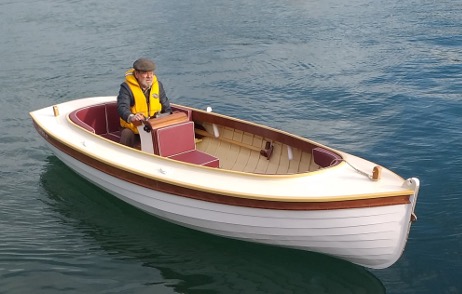
A REPLICA ERNIE LANE CLASSIC 1920 CLINKER

A REPLICA ERNIE LANE CLASSIC 1920 CLINKER

I’m a big fan of the Picton Clinker & Classic Boat Club, they seem to have the mix right when it comes the wooden boating community. Recently I was chatting to Roy Jones (Roysie) who among other things pulls together the clubs newsletter. Roysie mentioned a project he had been working on and promised a story – and today woodys we get the enjoy that story – I’ll hand over to Roysie to tell it.

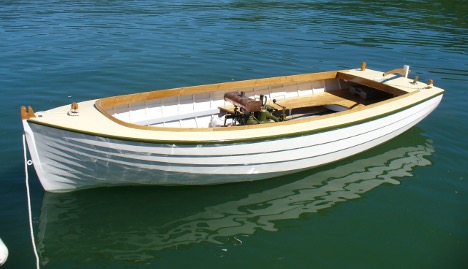
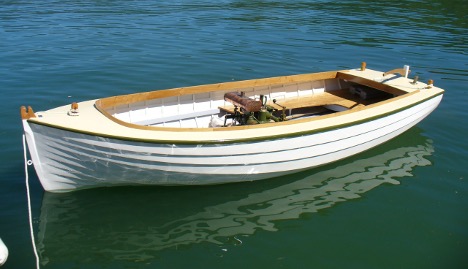
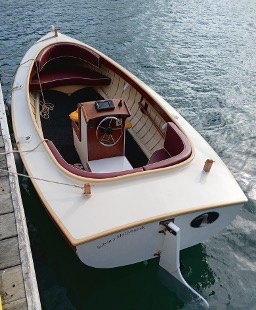
“Fifteen years ago The Picton Clinker & Classic Boat Club was gifted a 14ft clinker hulk which came with a remarkable provenance. Built by Ernie Lane in 1920 for Mr John Brownlee, son of the timber tycoon, William Brownlee of Havelock, the boat was in a sorry state and owned by Club Member, Noel Johnson.

Noel’s initial attraction towards Ruru was that, when he lived in Havelock as a child in the mid 40’s, he can vividly remember Ruru resting in the creek near the present causeway, whilst owned by the Havelock butcher, Mr Johnny Buncombe. Playing in Ruru, he would often be chased off and Noel miraculously relocated the boat again in 2003 on the Holdaway farm near Blenheim.

The Holdaway’s had purchased Ruru in 1948, from Johnny Buncombe for 100 Pounds, and who himself, had bought her from the Brownlee’s in 1933. 

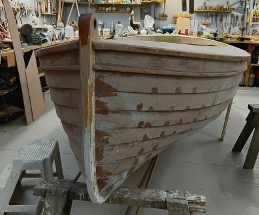
Now in a very sorry state, Barry Holdaway gave the hulk to Noel who intended to restore her. Aged 80, he realised it was beyond him, and Noel wisely gifted the craft to the Picton Clinker & Classic Boat Club in an effort to preserve her,  and it worked.

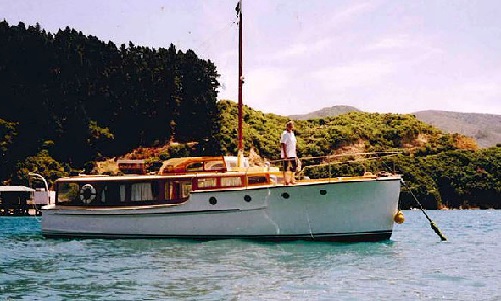
Ruru as restored in Jan 2010

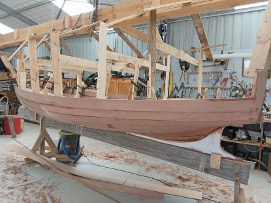
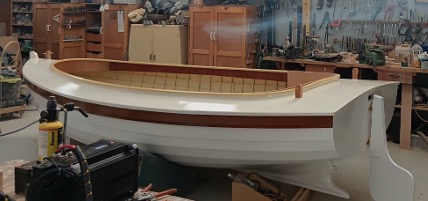
Ruru is the Club’s flagship and is utilised on all the club runs as such. Roy had a little to do with the restoration and always admired her lines as created by Ernie,  she was now available for all to view and admire. So last Christmas he borrowed Ruru for a week and after setting her up,  took her lines off and drew them up on the computer. From these he created a table of offsets and after lofting out, began construction early in the New Year.

Ernie created a built-down style of deadwood almost a bustle, presumably to ensure the engine could be low as possible and with a fairly level prop-shaft, but this was difficult to recreate. 

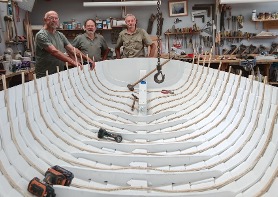
He must have steamed the kauri planks tightly to achieve the curvature around the stern deadwood rebate. Roy elected to use Meranti 9 mm marine ply rather than timber purely due to supply constraints. While gluing the lands removed the need for nailed and roved laps, it still required steamed American Oak ribs. This was the only job Roy required assistance with and co-opted a couple of retired members in the club to assist with the morning’s task. Peter Baker & Keith Henson willingly helped out and this is the norm amongst the Clinker Club members, advice and assistance is most often always freely available.

Propulsion System We originally installed a Stuart Turner P66 twin cyl. 10 hp engine in Ruru, but this was overpowered, so we swapped it for a P55 5 hp which  proved more appropriate, however, the Stuart Turner became  problematic for the numerous skippers in the Club. We have since settled upon a Lifan Chinese 6 hp and this has run well for 10 years, but is quite noisy. Roy considered this and, after speaking with new member, Tim Barton about his neat little electric 12ft’r, Billy O Tea, decided to also install an electric system in the Ruru clone.

With Tim’s advice on where to go for the Chinese supplier, Roy ordered a 4kw, 1000 rpm 48v dc motor and controller, which duly arrived about 4 weeks later without problem. At around $3,500 landed, he considered it reasonably economical.

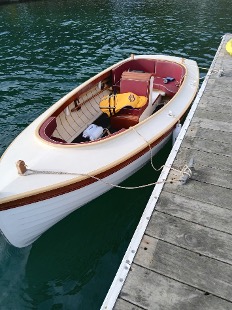
Subsequent to that major decision, he continued construction, framing the deck and glassing same. Unlike Ruru, he made the top strake varnished with a sub belting along the bottom edge in a more traditional style. Lacking more traditional hardwoods for the beltings, standard Quila timber decking was utilised and machined to suit; merely because it is readily available and reasonably economical.

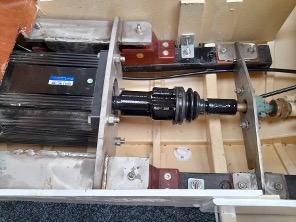
The dc motor is considerable, weighs about 30kg developing 39 N.M. 

The universal is a CV joint from a wreckers, and the thrust bearing just aft. The motor output shaft is 35mm!

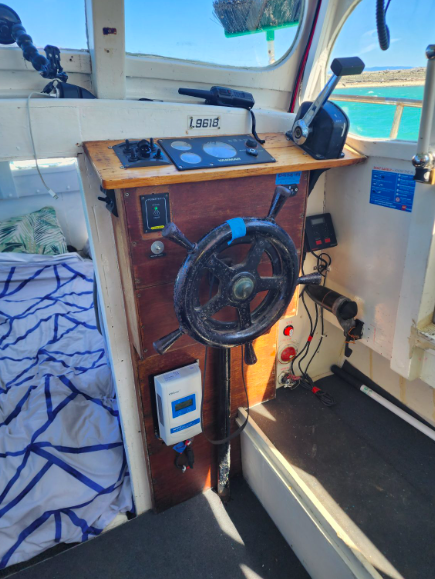
Having decided upon electric propulsion, Roy decided to throw the cat another goldfish and fitted hydraulic steering to enable comfortable curved seating in the stern without a the tiller interfering with guests seated there. 

Once again, Roy went online and researched hydraulic steering systems. Having been quoted over $2000 locally, it cost less than $500 for a full set imported and landed at the door in 3 weeks.

The short S.S. rudder tiller penetrates the transom quite unobtrusively, to the ram below deck and can be disconnected from the rudder when removing for trailing.

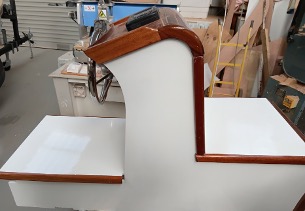
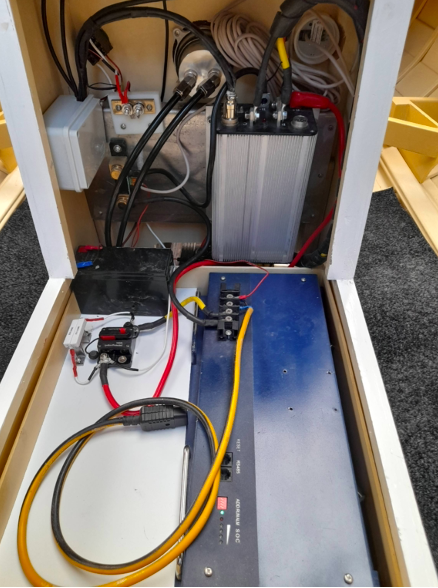
The Electric system enabled a centre console with motor and battery installed beneath, leaving a huge area amidships, where an engine is usually placed. A forward curved seat fits neatly behind the curved foredeck coamings. The large 48v lithium battery required is situated under the front seat of the console, while the motor and drive train is beneath the foot level lid below the helm.

The 48v 100 amp hr lithium battery is the blue item & takes up the full width of the compartment. The silver item is the motor speed controller that came with the motor. The yellow lead is for connecting to the 48v  HD charger.

Roy purchased the 48v 100 amp hour Lithium Ion Battery from Auckland along with the new trailer, driving up and back being cheaper than freighting both down to Marlborough.

He also installed a GPS Plotter & Sounder plus a Victron battery management system from Burnsco. This is a magic device providing a shunt in the neutral supply and thus determines the present battery voltage, the currently used amps & watts, plus provides a range in hours and minutes left in the battery. It is supplied with a 50mm gauge but the best method of readout is by Bluetooth to a cell phone enabling all the readings on one screen.

The greatest dilemma with electric boat propulsion systems is range anxiety, knowing how long you can actually cruise for, at the present power usage. Well, the Victron system diminishes this to a normal fuel level concern, if you run at full power then your fuel range will be minimal, but with sensible throttle use many hours are available. Roy intends to calibrate the range from GPS speed, Shaft rpm & amps drawn. These are shown further on.

Tim provided his figures, and for example at 3.3 knots Billy O Tea draws 5.2 amps, at 5 kts she draws 22 amps but at 5.4 kts, draws 50 amps indicating her best hull speed is just below 5 kts. i.e. 100 amp hour battery at 22 amps =  5 hrs motoring, and you can always slow down!

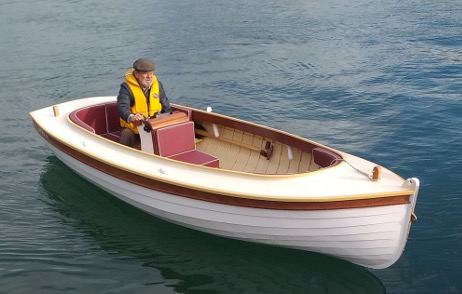
We used GPS speeds & digital tacho rpm figures with the Victron gauge providing the current drawn. Roy will do similar with Toroa EV,   (her new name now she is completed.) Toroa means Salvins Mollymauk (and the EV is electric vessel!).                                                                          

Ruru like most clinker hulls is a very seaworthy craft and it is on record that when Ernie Lane completed her, she was motored around from Picton to Havelock by a Mr Doug Pickering. This is a daunting trip for a 14ft Clinker, even today, and he is reported to have had fuel trouble near Cape Jackson, Doug simply tied Ruru to some kelp while he cleaned out the fuel line of shavings!  Ruru was fitted with a Scottish Kelvin of about 5 hp from new and to have motored the 60 odd miles around the Cape was an impressive feat 105 years ago!

When one considers that she was built shortly after the First World War, it is remarkable that it was obviously intended she would have an engine from new.   It wasn’t a retrofitted engine installation as is usually the case with this vintage. Perhaps this would indicate the wealth of the original purchaser, Mr John Brownlee?

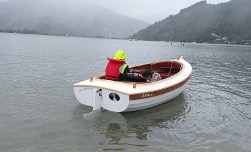
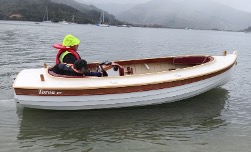
With the helmsman and passenger sitting in the stern sheets. Toroa EV rides high in the bow but with passenger forward she sits nicely to the waterline.

Roy advised that Toroa EV took 5 months to construct at old farts pace… i.e. 5 hr per day knocking off at rum o’clock. He takes great delight in creating clinker craft, believing if the boat is pretty, it will become a 100 year boat. (only pretty boats last 100 years because their owners love them!)

The Picton Clinker Club members own many small clinker & classic style boats and are committed to salvaging and restoring these wonderful small craft, often saving them from various scrap heaps or bonfires.

Toroa EV Performance

Revs                                   Speed                                Amps


350                              2.1kts                                 2.4

450                              2.6kts                                 3.5

650                              3.4kts                                 6.6

800                              4.1kts                                 11.7

970                              5.3 kts                                16

1070                                   5.4 kts                                21

1250                                   5.9 kts                                39


As you can see, any attempt to exceed 5 knots hull speed causes the amps load to dramatically increase, up to about 4.5kt is very economical indeed but a little more and range diminishes dramatically. Exactly the same of a combustion engine I guess.”

CLASSIC 1923 DOUBLE END LAUNCH BONITA – GETS A BIRTHDAY

CLASSIC 1923 DOUBLE END LAUNCH BONITA – GETS A BIRTHDAY

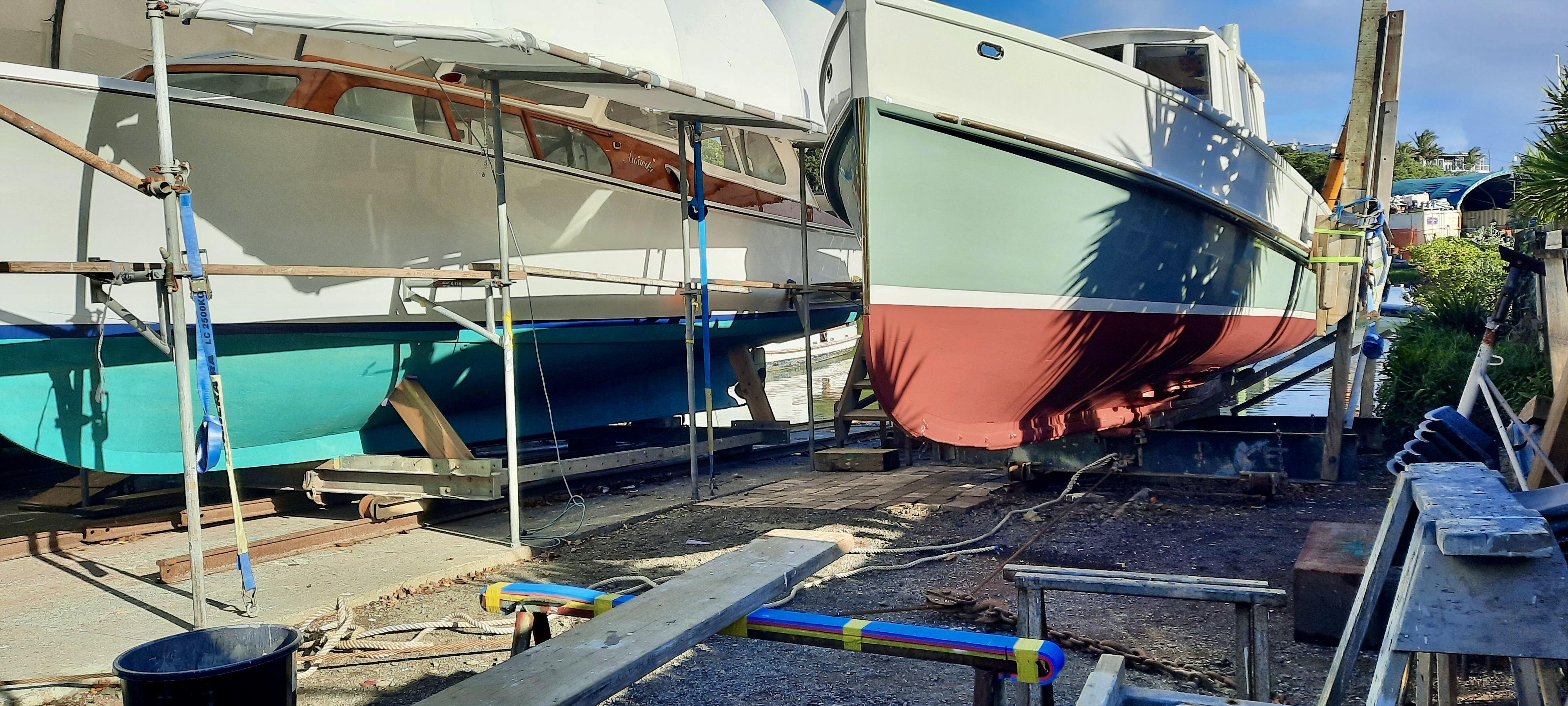
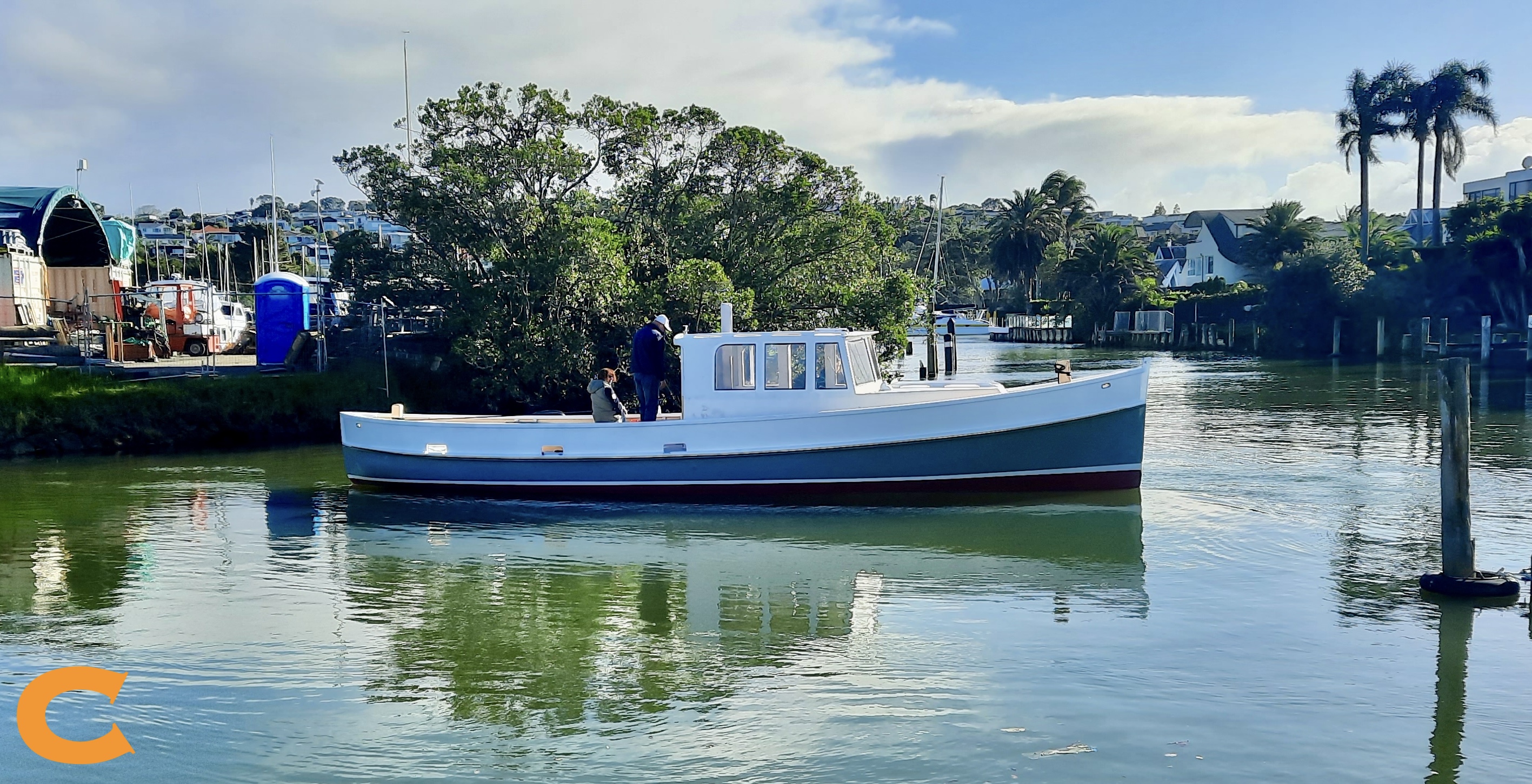
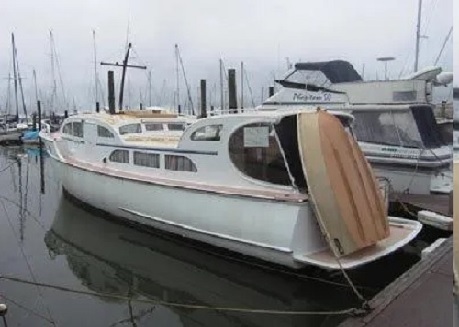
Over the last few weeks the 1923 Ernie Lane (Picton) built launch – BONITA has been getting some TLC at the Slipway Milford yard.

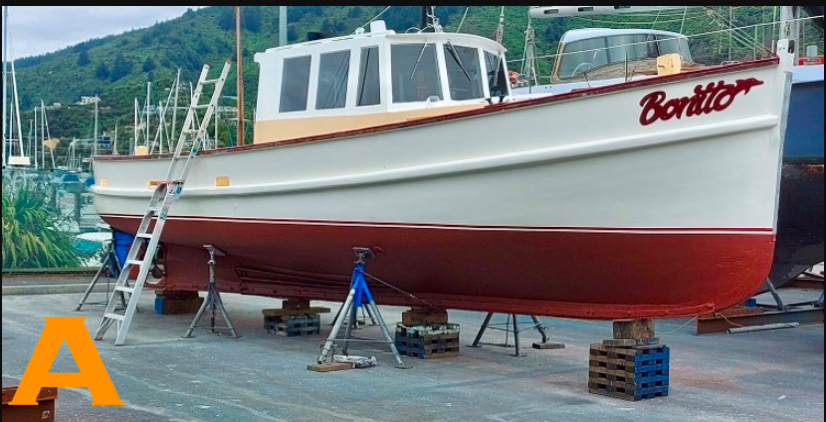
WW first spotted BONITA in Waikawa Bay, Marlborough Sounds in May 2022, at the time she was for sale, top photo below.

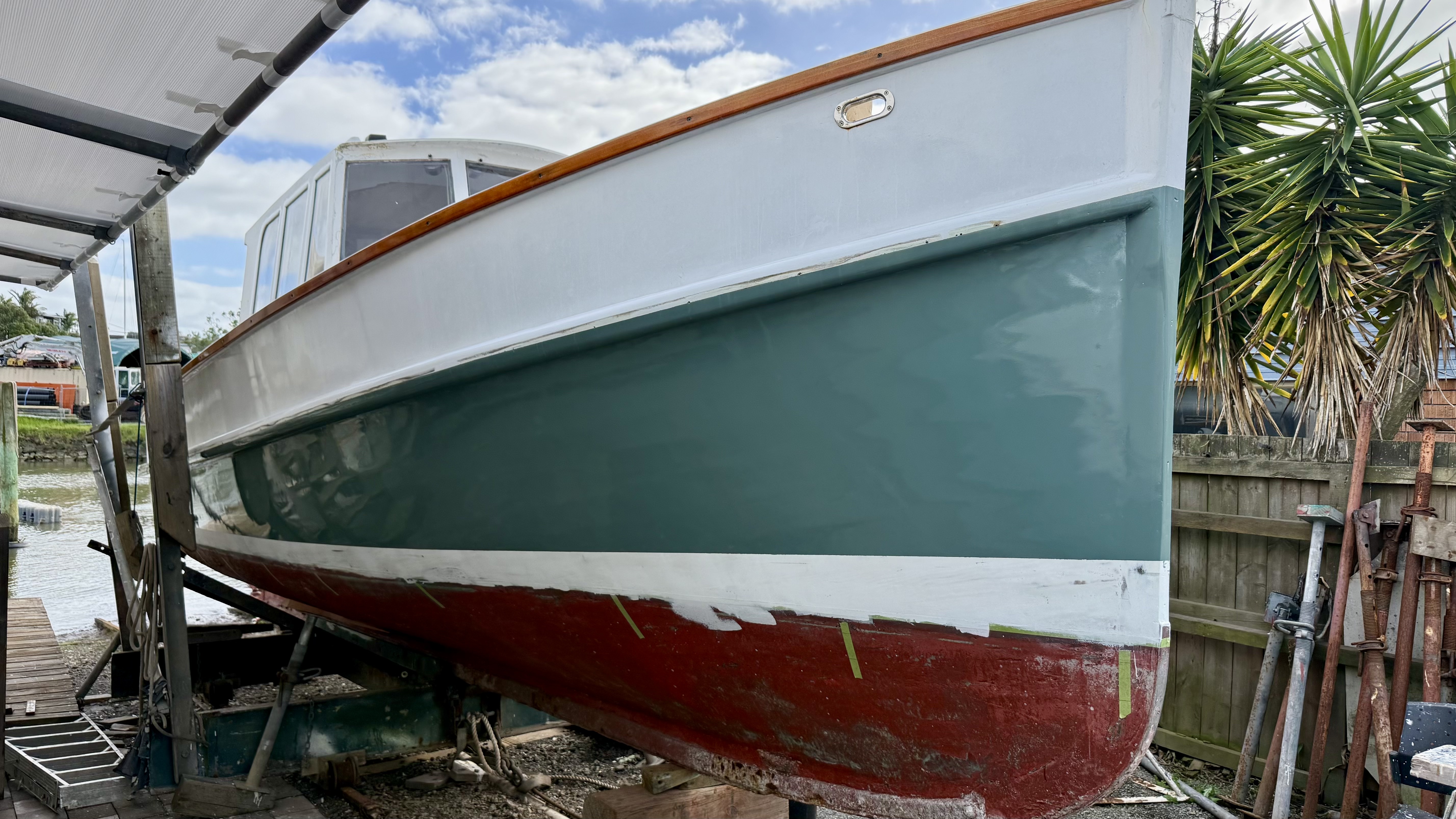
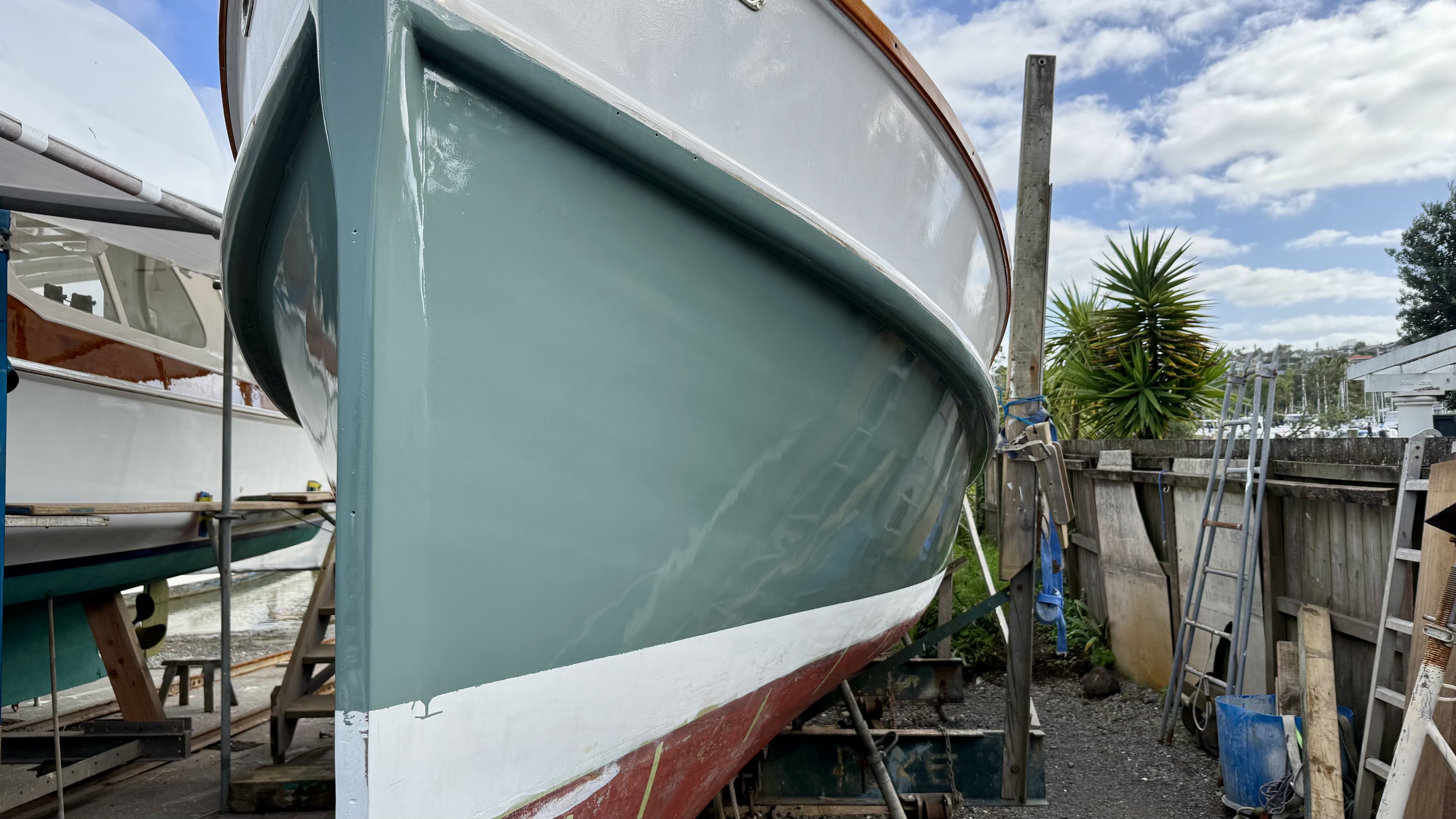
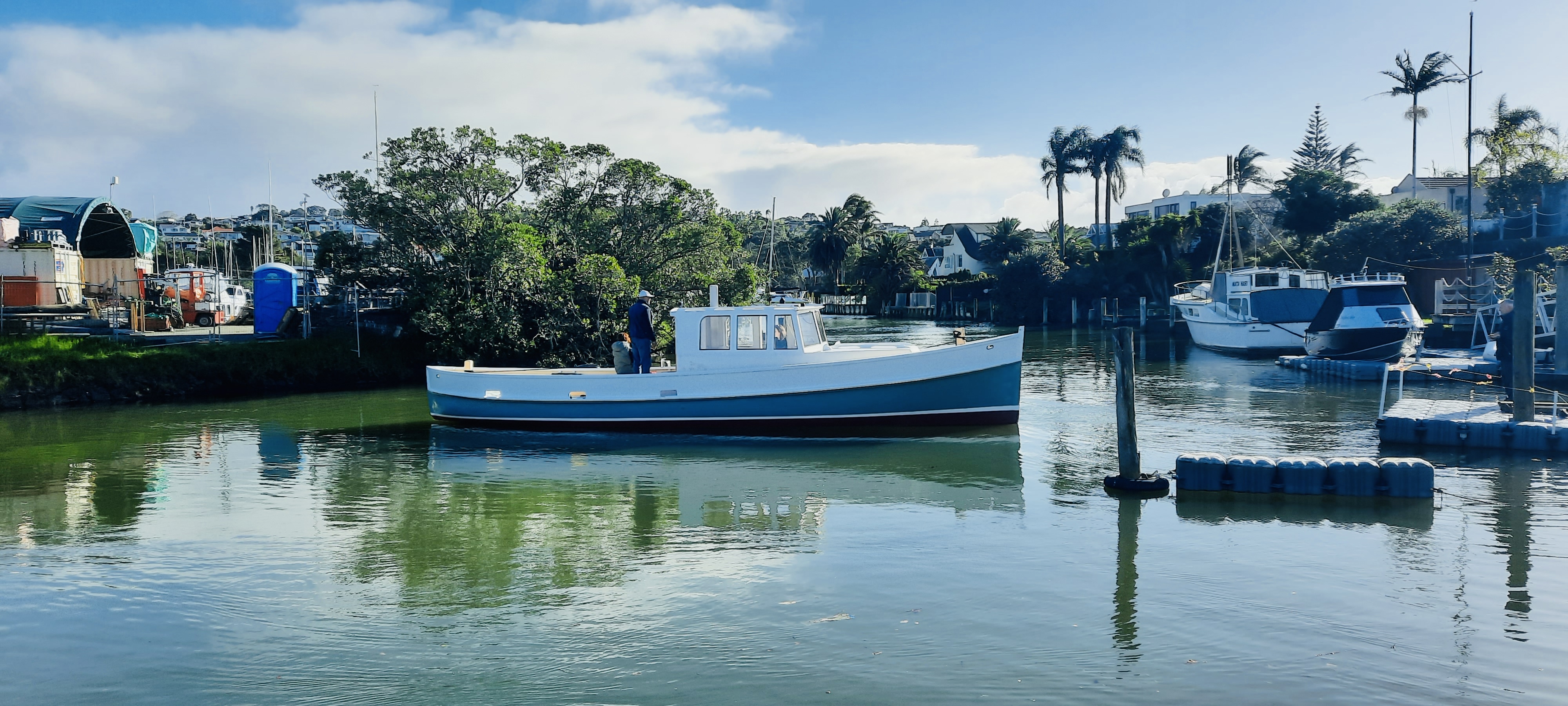
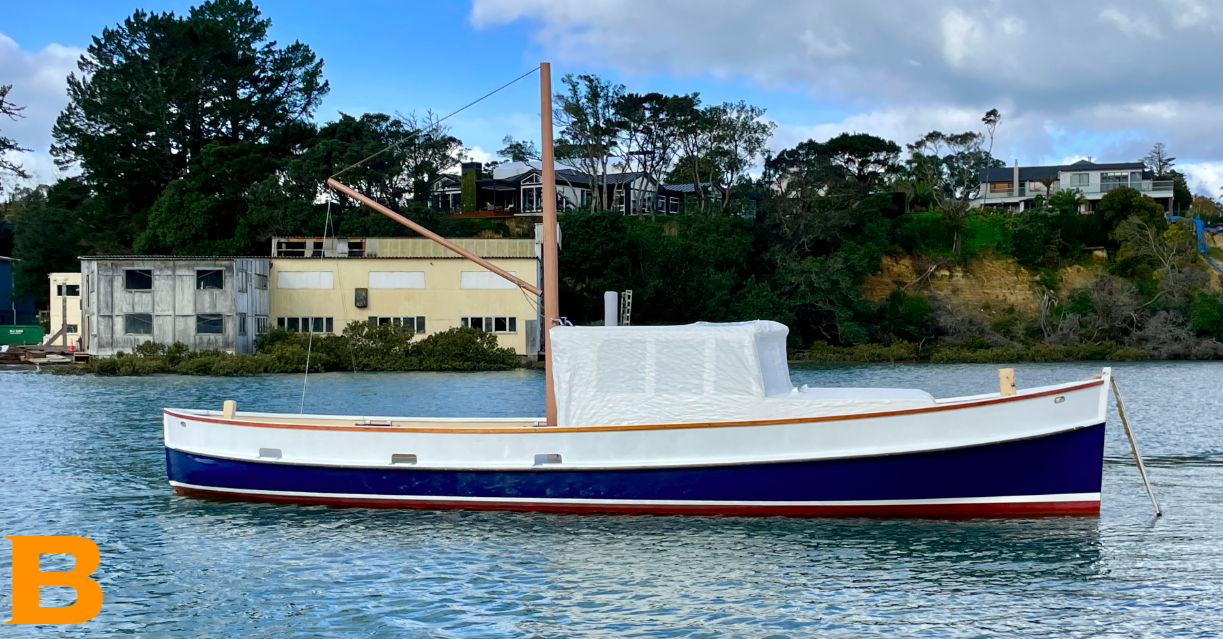
Fast forward to July 2024 and the launch was moored off the old Salthouse yard in the upper reaches of the Waitemata Harbour. Her new owner Chris Salthouse had transported her from the South Island to Auckland and given her a makeover which included a change of hull colour (blue) – as seen in the second photo below.

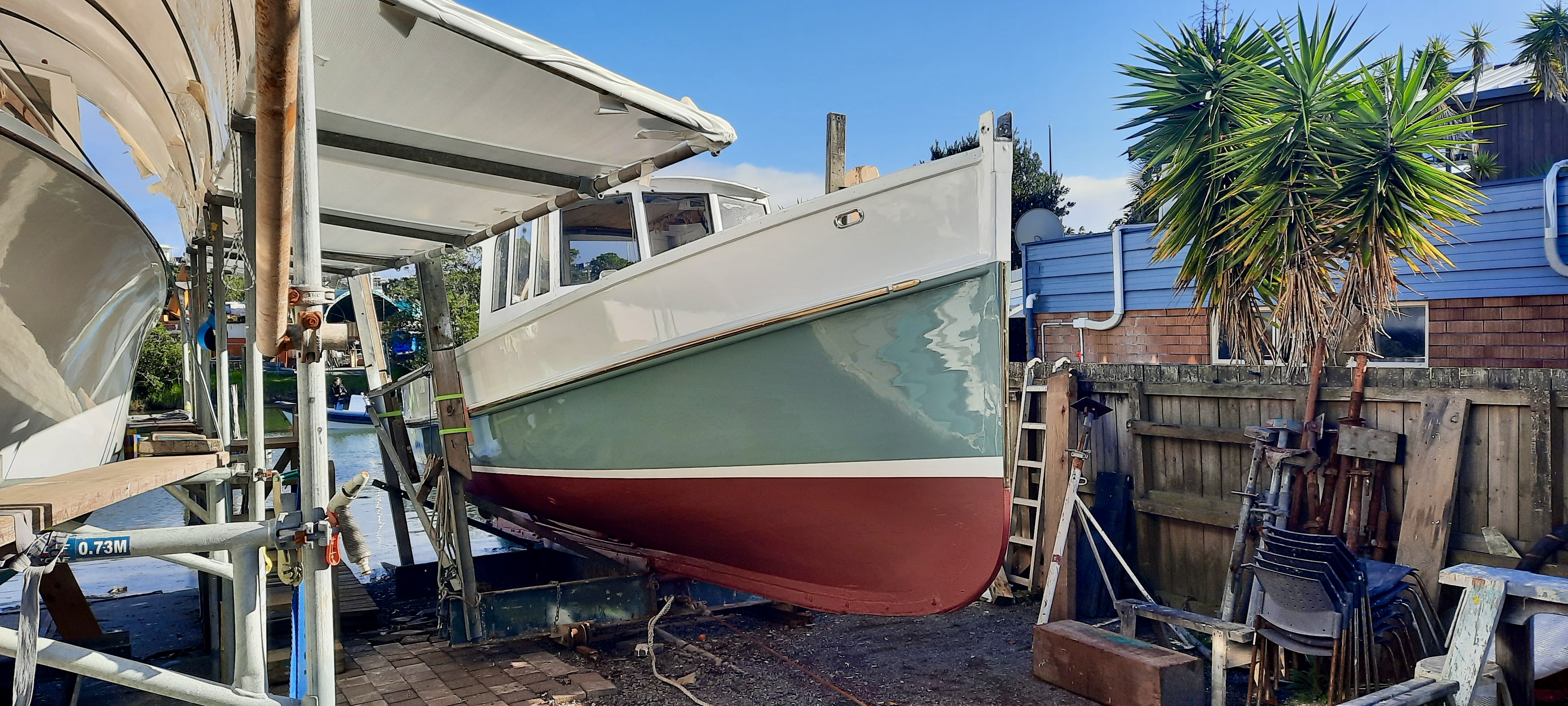
As part of the 2025 TLC the hull colour has changed again – this time a green sea mist colour. I like it but of the 3 ‘recent’ colours, the royal blue was my pick. I understand the dark blue was too harsh with the sun re seams opening up. TELL US YOUR PICK ON THE HULL COLOUR – VOTE BELOW

I understand that the next project is a new larger cabin.

There has been lots of chat on the correct spelling of her name – but it was BONITA when built and originally was working a Sounds passenger vessel.

Links below to past WW stories.

WW  May 2022 https://waitematawoodys.com/2022/07/07/borato/
WW July 2024 https://waitematawoodys.com/2024/07/02/spirit-of-tradition-classic-double-ender-wooden-launch/

CLASSIC WOODEN CHARTER BOAT – IRIS

CLASSIC WOODEN CHARTER BOAT – IRIS

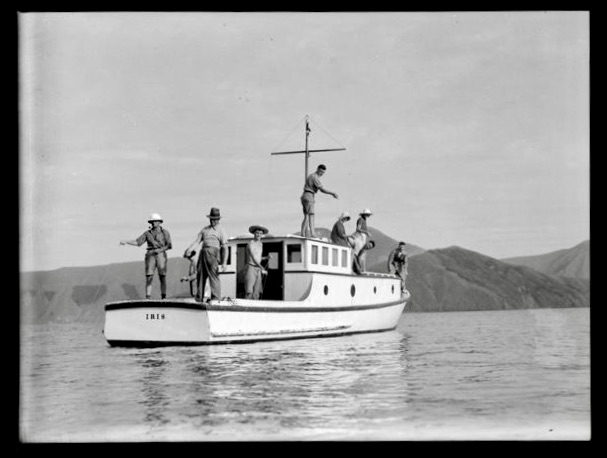
Back in March 2015 thanks to Chris Manning and Harold Kidd we had a wonderful insight into the 1923 Ernie Lane built 40’ launch – IRIS. Link here to view details and historic photos. WW March 2015  https://waitematawoodys.com/2015/03/19/iris/

Todays photo comes to us from the Nelson Museum via the Tauranga Library files, and is dated 1938.

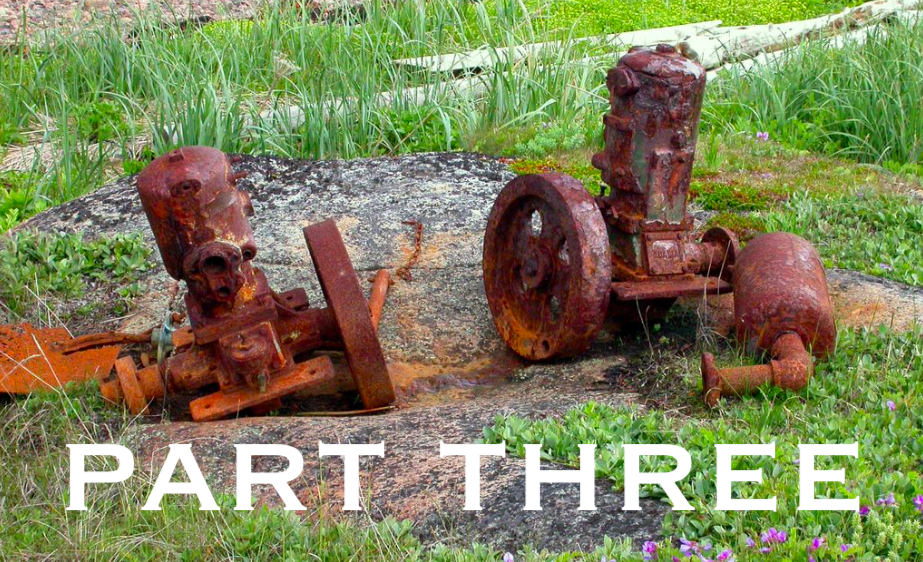
AN INSIGHT INTO NZ’S UNIQUE MARINE ENGINES – Part Three

AN INSIGHT INTO NZ’S UNIQUE MARINE ENGINES – Part Three

Todays WW story follows on from earlier stories – link below to Part One and Two 
As per pervious stories in the series the content has been pulled together by Ken Ricketts and ‘polished’ byPatrica and Ken’s daughter Corinne Pettersen. As always we have endeavoured to be as factual as possible but there will always by matters others will either know more about or be able to correct errors – so woodys do not hold back on commenting.

PART ONE – https://waitematawoodys.com/2025/04/04/an-insight-into-nzs-unique-marine-engines-part-one/

PART TWO https://waitematawoodys.com/2025/04/12/an-insight-into-nzs-unique-marine-engines-part-two/

ROLLS ROYCE MARINE DIESEL ENGINES

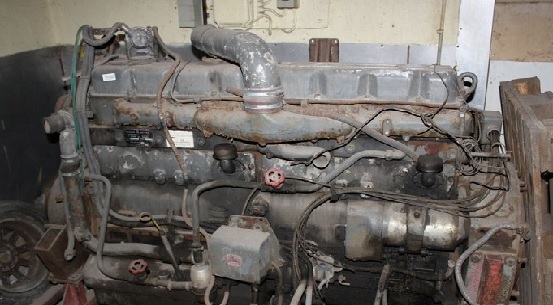
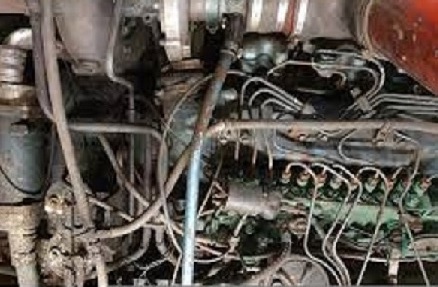
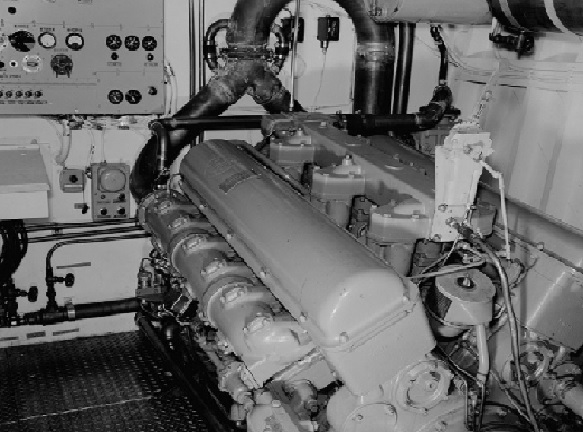
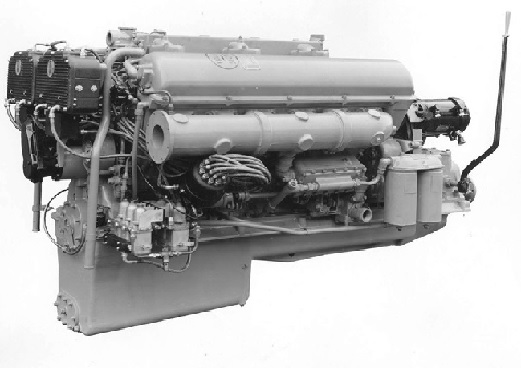
ROLLS ROYCE 275 HP MARINE DIESEL ENGINE

ONE OF THE 2 ROLLS ROYCES THE ORIGINAL ENGINES IN OHORERE

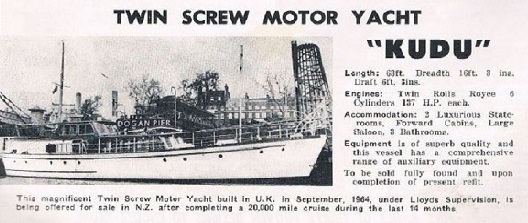
KUDU WITH HER 137 HP ROLLS ROYCE ENGINES IN 1966

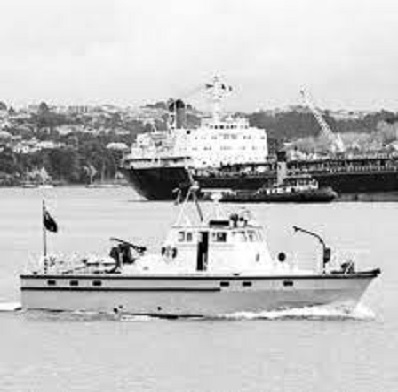
OHORERE WHEN NEW, WITH HER 2 X ROLLS ROYCE 6CYL. 275 HP DIESEL ENGINES

OHORERE AS AT 2025 WITH HER 2 X 770 HP MTU MARINISED MERCEDES BENZ DIESELS

MANAIA, WITH HER 2 X 6 CYL. 275 HP ROLLS ROYCE ENGINES

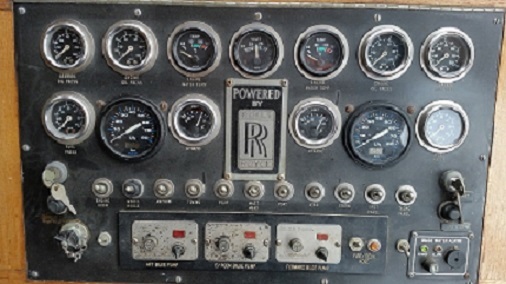
MANAIA INSTRUMENT PANEL

These are, as one would expect, a brand of engine that is quite rare, resulting from the cost of the engines to buy and the cost, equally, of parts for all maintenance. Also, while Rolls Royce has the name synonymous with perfection in all respects, it is my view that, in fact, Gardner engines are far superior in every respect, including noise, smooth running, longevity, maintenance necessity, and costs thereof. However, there are a few that are in the boats of today and yesterday. I personally know only three.

There is the KUDU, a large launch that, at one time, in mid to late 1966 to perhaps somewhere around the 1980s, belonged to the late Harry Julian. She is 63 feet long and powered by 2 x 137hp Rolls Royce 6-cylinder diesel engines. She was designed and built under Lloyd’s supervision in the UK in 1964 and sailed out to NZ as the end of a 20,000 km journey. However, the last time I saw her was on a visit to the Gold Coast in Australia, anchored in the middle of the center of Sanctuary Cove Marina.

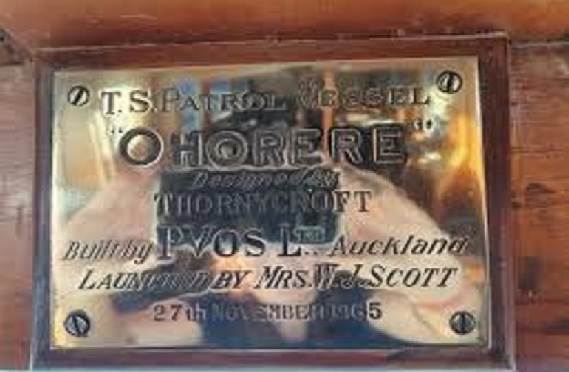
Another of the RR-powered boats is the OHORERE, built by Percy Vos in Auckland for the government of the day to be a high-speed fisheries patrol craft, and designed by Thornycroft in the UK. However, she never reached anything close to her anticipated speed projections as required in the order from the government to the designers and builders. Large sums of money were spent collectively by the designers, Rolls Royce, and the builders to give her better performance, but they failed miserably, and she was ultimately sold to private ownership, where she has been used for many years now for fishing charters in Tauranga. As of now, Rolls Royce’s were replaced about two years ago with 2 x 770hp MTU marinized Mercedes Benz diesels and is capable of around 30 knots.

There is one more pleasure craft, an ex-Whangarei pilot boat and that is the MANAIA, which has had from new, 2 x Rolls Royce 8-cylinder inline 16-litre diesels. 

UNIVERSAL BLUE JACKET 6 FLAT HEAD PETROL ENGINES.

THE UNIVERSAL RANGE OF 4 & 6 CYL BLUE JACKET RANGE OF MARINE ENGINES

OTAZEL WITH HER UNIVERSAL BLUE JACKET 6 PETROL MARINE ENGINE. MANSION HOUSE BAY, KAWAU ISLAND c.1951

I am aware of one of these in New Zealand, which was in the OTAZEL, owned by Arch Tucket, in the late 1940s to the 1960s. He was the head of the patrol craft section for T.E.A.L. at that time in Mechanics Bay, and he fitted it to her on the hardstand at Okahu Bay in the winter of 1950.

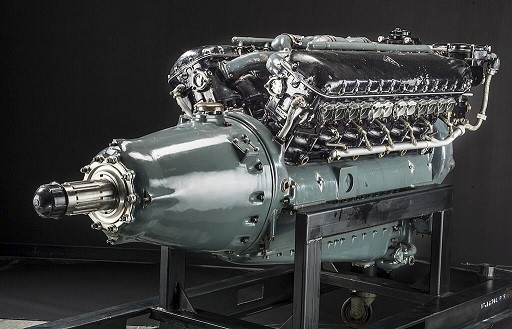
G.M. ALLISON 1450HP, HOME MARINE CONVERTED, V12 AIRCRAFT PETROL ENGINE.

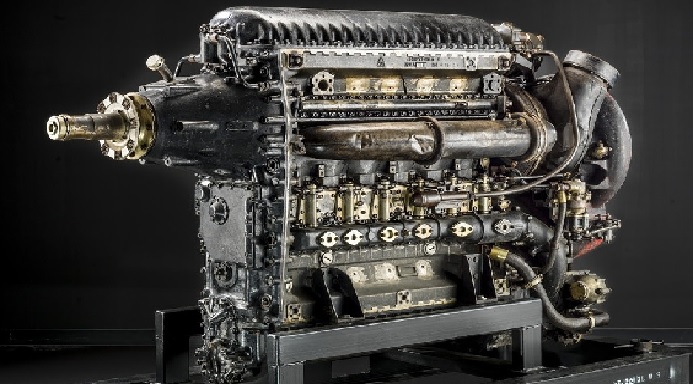
GM ALLISON V12 AIRCAFT ENGINE

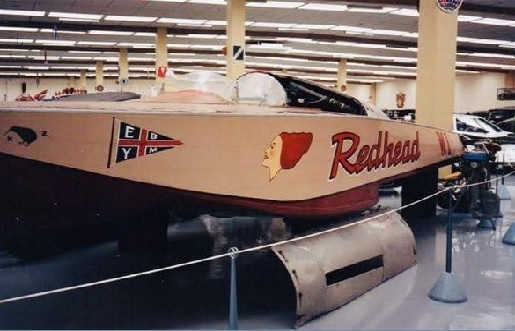
REDHEAD, IN THE SOUTHWARD TRUST VEHICLE  MUSEUM IN PARAPARAUMU, AS SHE WAS LIFTED FROM THE SEABED IN WELLINGTON HARBOUR, AFTER HER  PROPELLER LOSING A BLADE, WHILST RACING & SINKING AS A RESULT.  

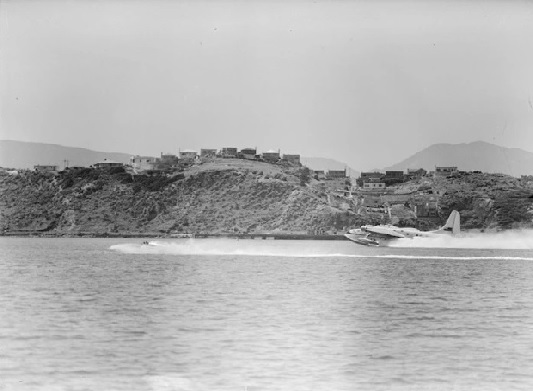
REDHEAD RACING A FLYNG BOAT ON WELLINGTON HARBOUR

The only boat I’m aware of that had one of these was Sir Len Southard’s champion racing boat, REDHEAD, which won, at one time or another, most of the cups and awards, as well as a huge number of races in her time. She was a real champion, designed, built, and raced by the late Sir Len Southward of Wellington, a brilliant engineer and philanthropist. John Bullivant tells has advised there was a second high-speed hydroplane racing boat built with a marine-converted V12 GM Allison petrol engine in the same era.

STERLING MARINE PETROL ENGINES

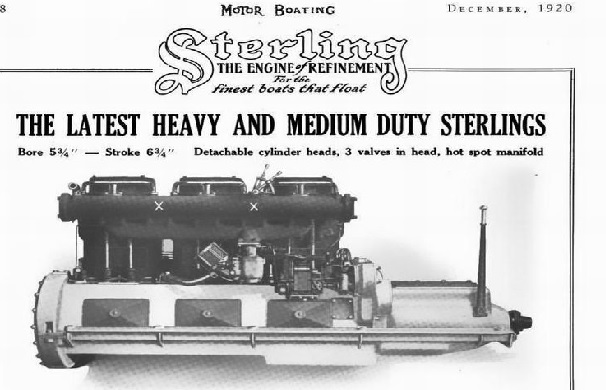
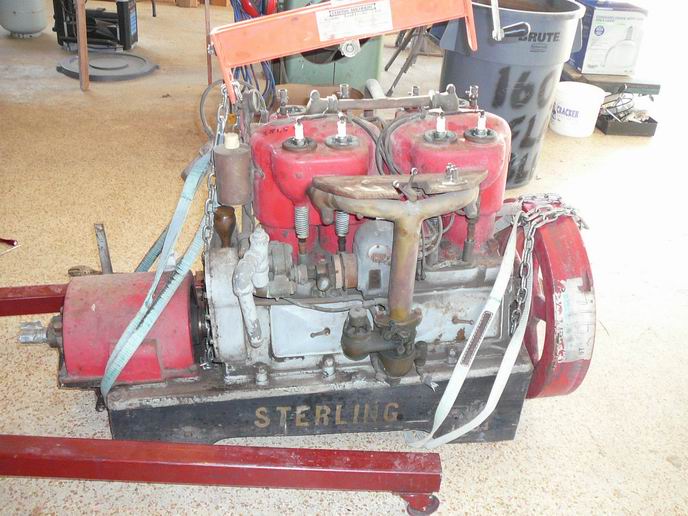
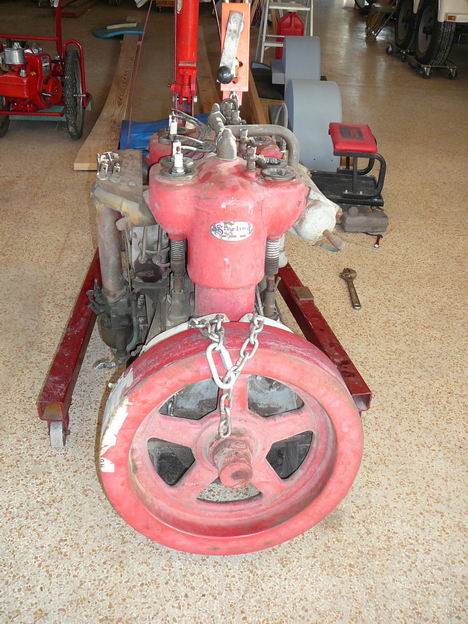
STERLING 6 CYL 1920 MARINE PETROL ENGINE PROBABLY SIMILAR TO THAT 

IN LADY STIRLING

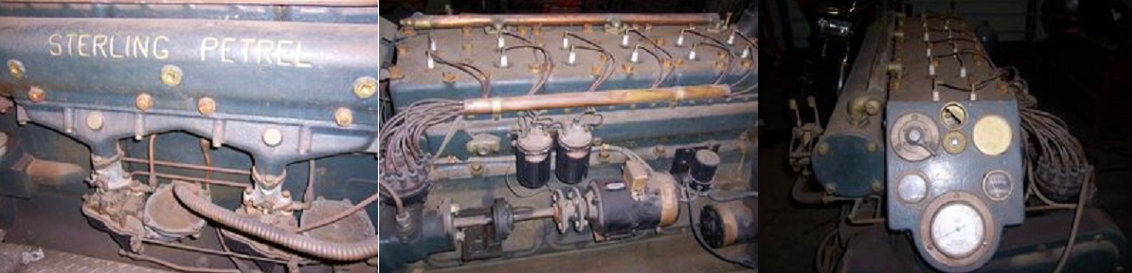
STERLING 115 HP U.S. NAVY WWII FLAT HAD PETROL ENGINE

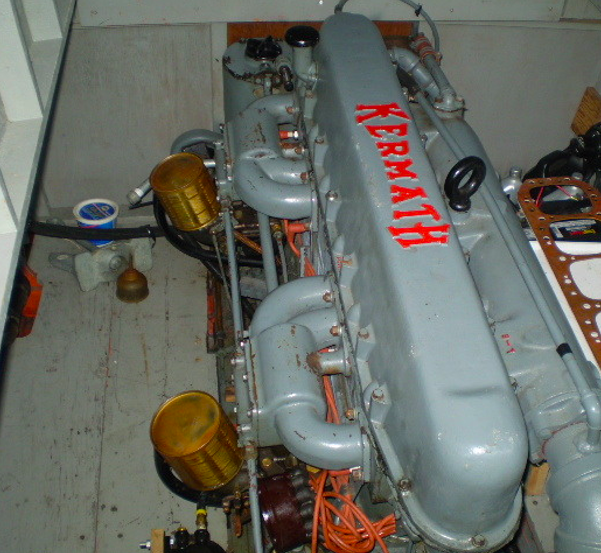
KERMATH 1928  225 HP SEA WOLF ENGINE IDENTICAL TO THAT IN THE TASMAN IN 1947

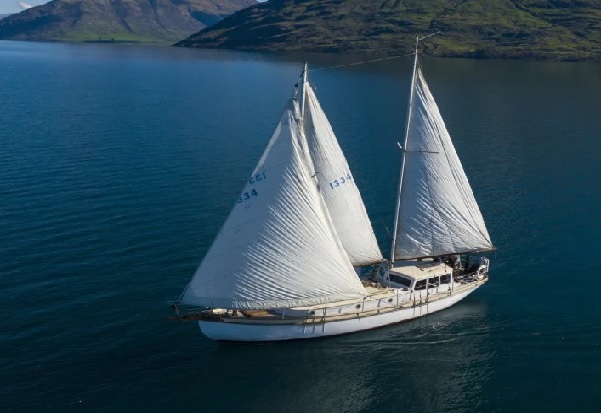
LADY STERLING IN QUEESNTOWN

TASMAN IN 1948 IN SCHOOLHOUSE BAY KAWAU ISLAND  

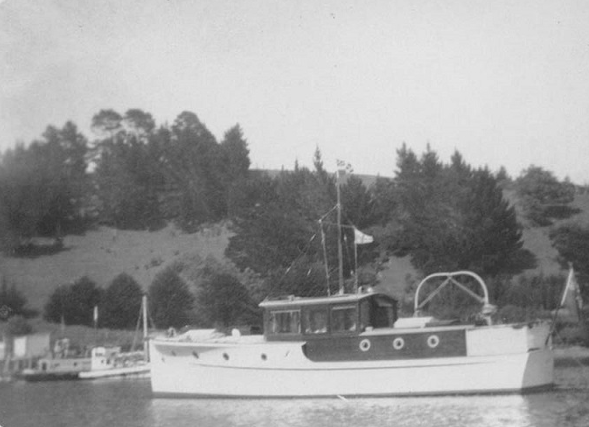
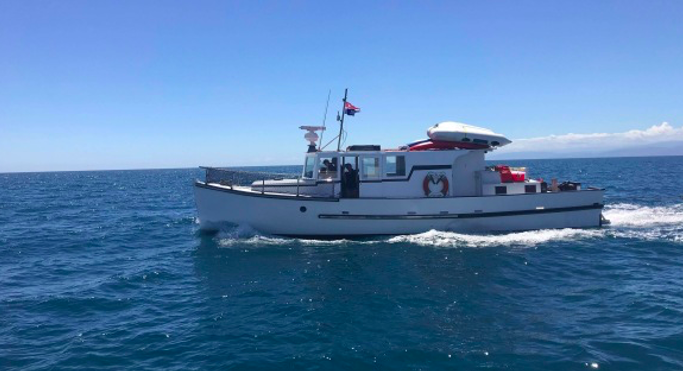
STERLING BUILT IN 1926 BY ERNIE LANE IN PICTON

LADY STERLING

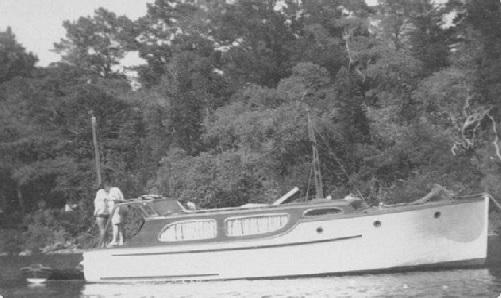
The 52-foot, 105-year-old Bailey & Lowe-built ocean-going yacht, built in 1920 is named LADY STERLING. This yacht had one of these engines originally, and there were other boats that had them in the earlyish 1900s. 

LADY STERLING has, in recent times, been in the Queenstown area, but she has traveled many thousands of sea miles, with numerous crossings of the Pacific Ocean in her long life. 

Around the end of WWII, she belonged to Stan Waters. She passed shortly after to Lloyd McIvor, a dentist, who sailed her several times a year to Fiji and other Pacific islands to attend to the islanders’ dental issues.

TASMAN WITH A STERLING 6CYL DUAL IGNITION 115HP WWII U.S. NAVY PETROL ENGINE.

A reference in part 1 of this series was made in the comments section by Denis O’Callahan, related to the TASMAN having had a WWII ex-US Navy 6-cylinder flathead Sterling petrol engine at some stage, pre-1975. I have researched this engine and found the following information and images related to it, which I am confident may well be the engine he was referring to.

A quote from Tom Ball in 2016: “I have acquired this engine recently. It is a six-cylinder marine engine with dual ignition. It is 115 HP with a water-cooled exhaust. These Sterling petrol engines were made in Buffalo, New York. The engine supposedly was in a naval ship of some sort and may have come from the naval yard there.” – unquote

As I also said in part 1, I was aboard TASMAN, Christmas 1947 with my father one day & owner, Jack Brooke, lifted the bridgedeck floor & showed us her huge bottle green 225 hp overhead valve Kermath Sea Wolf  petrol engine, identical to that in the above image.

I could see by its size & overall concept, it was a fairly old engine, & perhaps the original, & in the circumstances, I have taken what to me, is a logical view, that this engine was probably replaced around 1960ish by the Sterling, due to old age , &/or perhaps maintenance issues, as well as huge quantities of petrol it must have consumed. Also, it was usually pushed at high speed most of the time by Jack B who was a speed fiend, when it came to his boat, which must have given the engine a hard life.  

19-04-2025 INPUT ex RUSSELL WARD“I have a little input into Tasman when she had the Stirling engine in the early -mid ’60s. We used to describe it as a “Sterling Dolphin” in the day. My mother had a business connection with her then owner Dr Jim Sprott and I had the chance to see over Tasman and especially to view her engine. It was a four cylinder T head type engine -two blocks of two and quite tall. Certainly painted green with lots of brass -It ran delightfully smoothly and the owner averred that it was not too thirsty if throttled back. His suggestion was that the Americans installed the engine during the war to get more speed out of her. It certainly was a very old vintage- looking engine and had none of the looks of the more modern engines.

Dr Sprott later decided to replace it because of the petrol it used and maintenance. It was offered to MoTat who refused and my father wouldn’t allow me to have it and the word was that it was scrapped. RIP.”

26-04-2025 INPUT ex DENIS O’CALLAHAN – below further information regarding the Sterling engine in the launch – TASMAN

In 1970, TASMAN was purchased from Dr.Jim Sprott by my friend Allan Tyler and his dad Eric.

She had a Sterling 6 cylinder petrol engine with dual ignition and we were told that the original engine may have been a Kermath.

We had many adventures with this engine. One time at Tryphena she would not start and we found the Bendix Spring was broken. To our relief we found several spare springs in the locker so it must have happened before.

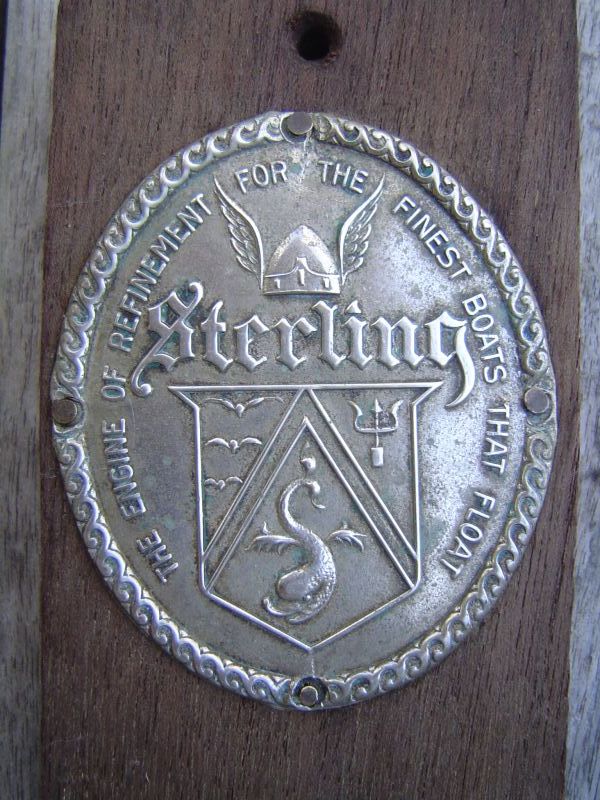
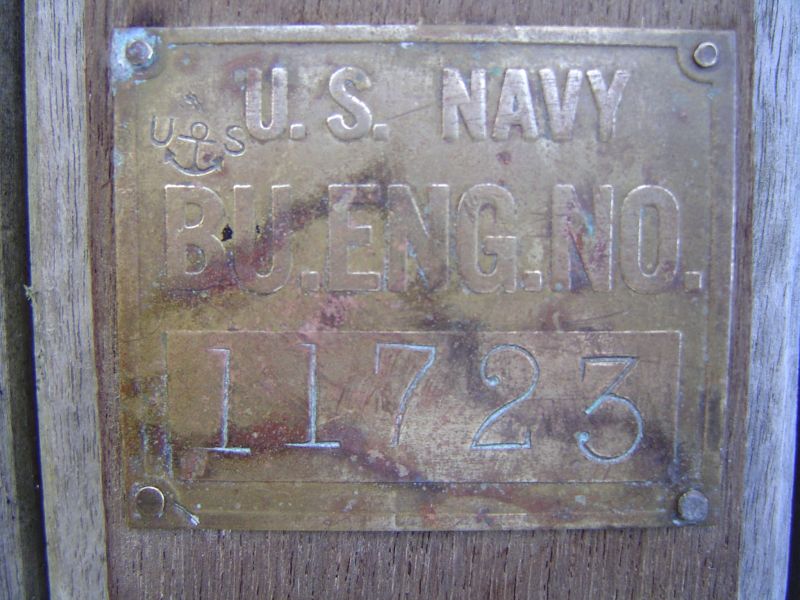
The Sterling was replaced in 1976 with a Lees Marine 6 cylinder Ford diesel. New stainless steel fuel tanks amidships replaced the old copper tanks under the aft deck which became the water tanks. The old Sterling engine went to scrap but we retained the name plates which were passed on to the new owner of TASMAN, Stephen Cashmore.

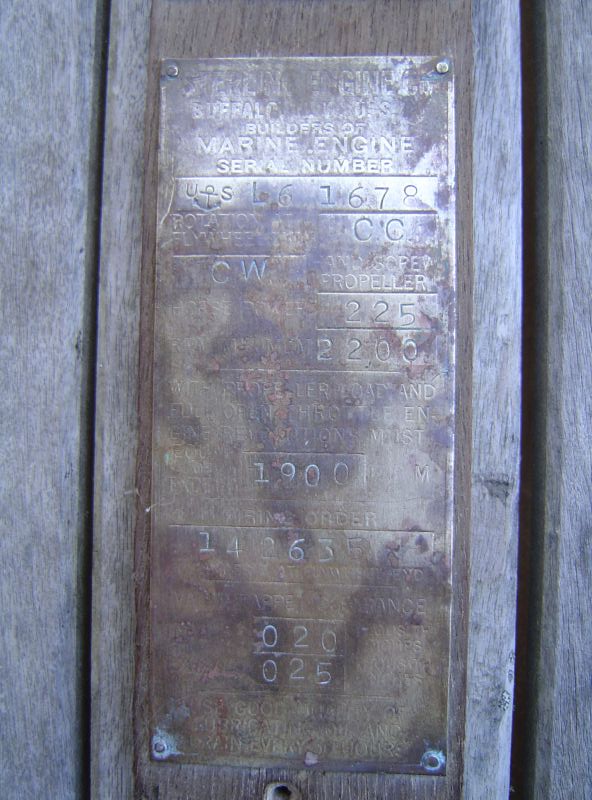
Photographs of these plates are below and the following is my interpretation:

Silver badge “Sterling”. THE ENGINE OF REFINEMENT FOR THE FINEST BOATS THAT FLOAT.

Small Plate. US NAVY. BU. ENG. NO. (Bureau of Engines Number) –  11725

Large Plate. STERLING ENGINE CO.

                        BUFFALO NY USA

            BUILDERS OF MARINE ENGINES

                       SERIAL NUMBER

                            US L61678

           ROTATION AT FLYWHEEL C.C. (Counter clockwise)

         C.W. HAND SCREW PROPELLER

                 HORSE POWER 220

                RPM MAXIMUM 2200

        WITH PROPELLER LOAD AND

            FULL OPEN THROTTLE

     ENGINE REVOLUTIONS MUST

     EQUAL OR EXCEED 1900 RPM

               FIRING ORDER

                 1 4 2 6 3 5

          TAPPET CLEARANCE

           INLET 020 THOUSANDTHS

    EXHAUST 025 THOUSANDTHS

In 2019 I visited Buffalo New York on a cruise through the Erie Canal and Great Lakes and looked for the old Sterling works.

I found that Sterling had been taken over by Phillips Petroleum in the late 1950s and the assets moved to Kansas.

The Sterling Company dates back to about 1903 and many speed records were held by boats with Sterling engines.

STERLING TEE HEAD 4 CYL PETROL MARINE ENGINE SIMILAR TO THAT AS DESCRIBED BY RUSSELL WARD ABOVE THAT HE COMMENTS WAS INSTALLED IN TASMAN IN THE 1960’S AFTER HER ORIGINAL KERMATH SEAWOLF

THE LAUNCH STERLING

I have researched extensively but have been unable to source an image of the 3-cylinder, 27 HP Sterling engine, as referred to below by Harold Kidd and in the launch STERLING as pictured above.  

Input from Harold Kidd: This STERLING was built by Ernie Lane in Picton in 1925 for L.J. Steele as a passenger vessel to carry 60 passengers and had a 1924-built, 3-cylinder, 27 HP (rated) Sterling marine engine with a bore of 4.5″ and a stroke of 5.5″. Dimensions are 34′ x 9′ x 3’9″.

HALL SCOTT DEFENDER V12 PETROL 630HP MARINE ENGINES

NGAROMA WITH HER 1 HALL SCOTT DEFENDER V12 PETROL ENGINE, & 1 GLENIFFER 8 CYL INLINE DIESEL ENGINE, WHEN OWNED BY JIM LAWLER

These Hall Scott Defender petrol engines were used in all Fairmiles during WWII wartime service. When sold into private ownership after the war, all were immediately replaced by diesel engines of various types, brands, and sizes, except for one privately owned Fairmile called the NGAROMA, owned at that time by Jim Lawler. This vessel retained one Hall Scott engine for around two years before replacing it with a second, opposite-handed, 8-cylinder inline Gleniffer Diesel to match the existing Gleniffer 8-cylinder engine he fitted when he purchased the NGAROMA, creating a matched handed pair.

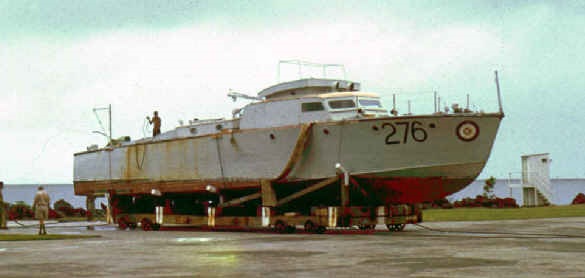
There were also two RNZAF MIAMI CLASS American patrol craft bought by the RNZAF around 1948. One, W275, was sent to Lauthala Bay, Fiji, by the RNZAF, while the other, W276, remained here. W276 had two Hall Scott Defenders mounted in the stern and vee driven.

W276 WITH HER 2 HALL SCOTT DEFENDER V12 PETROL MARINE ENGINES  

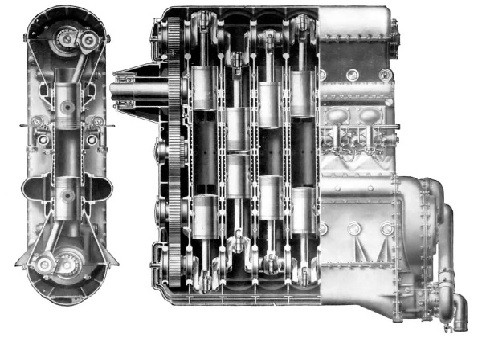
JUNKERS GERMAN DIESEL AIRCRAFT ENGINE TO BE HOME CONVERTED FOR MARINE USE 

JUNKERS DOUBLE ACTING DUAL PISTON 6 CYL estimated at c.1000HP GERMAN AIRCRAFT ENGINE.

This boat (W276) as featured above, was sold in the 1960s to a Mr. Canavan, a retired senior Air Force officer. He employed two marine engineers to convert two German two-stroke Junkers aircraft diesel engines (probably the same or like those in the image above), which, as far as I can interpret, seem to have been around 1,000 hp each. He acquired and converted them for marine use, replacing the two Hall Scotts with these engines. 

This was a long and very expensive task for Mr. Canavan. During this process, she was moored adjacent to the up-harbour end of the Naval Base and was still painted air force grey. During the installation she acquired four very large exhaust pipe holes near the deck line at the stern.

These engines, like the engine in the hydrofoil MANU-WAI, required hot engine oil to be pumped through them for 20 minutes before cold starts. The two engineers, as mentioned above, eventually finished the project and went off to find Mr. Canavan so he could be present for their first start. While they were away looking for him, he turned up, went out to the boat, saw that they were ready to go, and pushed the buttons. They started but immediately seized up as they had not had the hot oil process completed first.

When the two engineers came back, they were naturally furious that after all their hard work, it had all come to this. So, as one would expect, they just picked up their tools and walked off the job. Eventually, Canavan got two more engineers to rebuild the engines, and while they were in the process of this, one day, when they were brazing with bottled gas, the stern end of the boat caught fire, and the aft 20 feet or thereabouts was destroyed. 

The insurance company sold her “as is, where is,” and someone bought her, chopped off the burnt-out back end, and fitted her, in her now shortened form, with two 6/71 GM Detroit diesels, added new pleasure craft-type coamings, and called her the LADY SOMETHING? or SOMETHING LADY?. This work was all done on the hardstand at Half Moon Bay Marina.

With her back end chopped off and her new coamings fitted, she looked very short and fat.

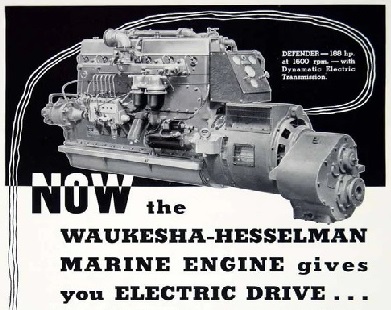
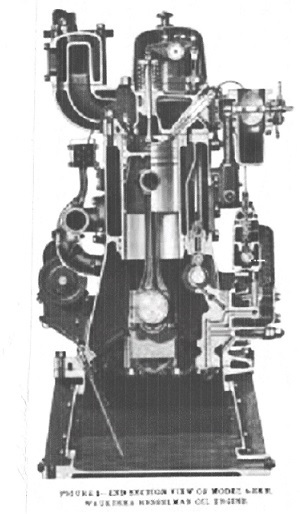
WAUKESHA HESSELMAN, LOW COMPRESSION, SPARK IGNITED DIESEL ENGINES.

WAUKESHA HESSLEMAN, SPARK IGNITED, 6 CYL DIESEL ENGINE.

WAUKESHA HESSELMAN SPARK IGNITED  LOW COMPRESSION DIAGRAMATIC VEW OF ENGINE DESIGN.

AWARUA WITH HER 6CYL WAUKESHA HESSELMAN DIESEL ENGINE.

LADY RAE, STANDING IN, FOR IDENTICAL SISTERSHIP, GALA LASS.

There were only two boats fitted with the 6-cylinder version of these engines, which had around 100+ hp. 

They were Ted Cooper’s built and owned AWARUA, which for the first couple of years had a Redwing petrol engine. He later replaced this with a Waukesha Hesselman 6-cylinder diesel, which she had for the remainder of his stewardship. A later owner, replaced it with a Ford diesel.

The other boat was the GALA LASS, which had an identical sister ship, the LADY RAE. 

GALA LASS had a Waukesha Hesselman diesel from new for the entire time of ownership by the original owner, Tony Hurt.  The LADY RAE had both one and two engines at different times, both with petrol or diesel, as was appropriate during her early years. I have not been able to locate an image of GALA LASS. I have substituted an image of LADY RAE in place of GALA LASS. 
STELLA – CLASSIC WOODEN BOAT SOS

20+ years ago

STELLA – CLASSIC WOODEN BOAT SOS

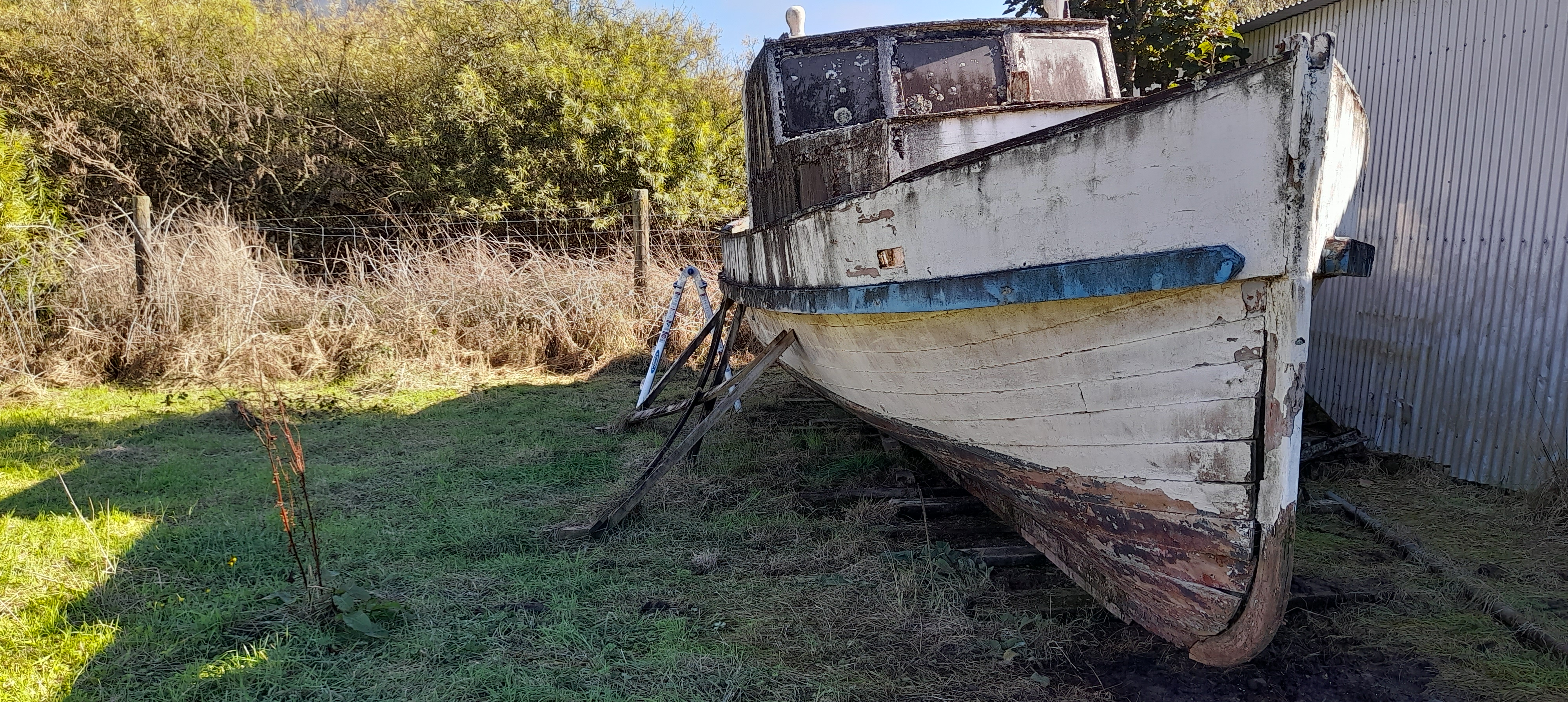
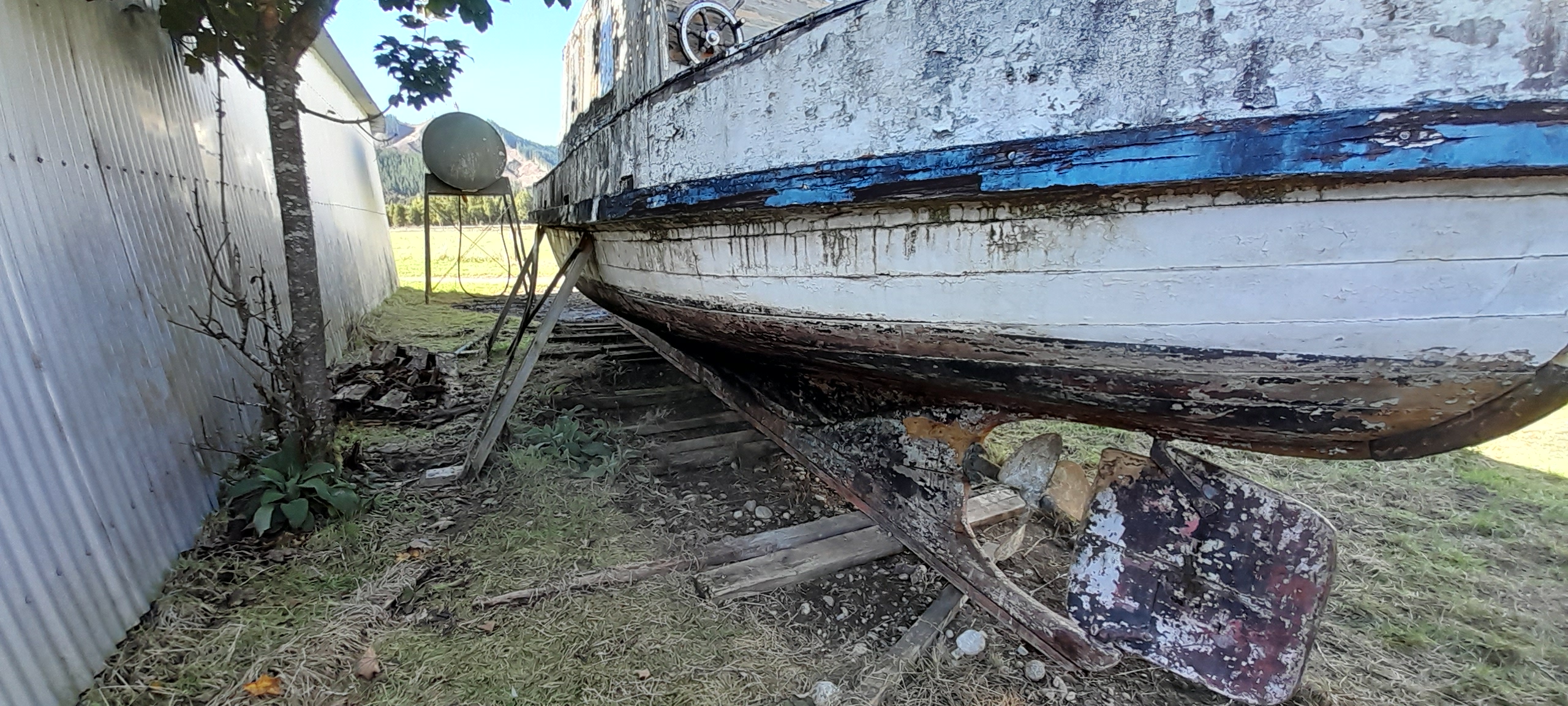
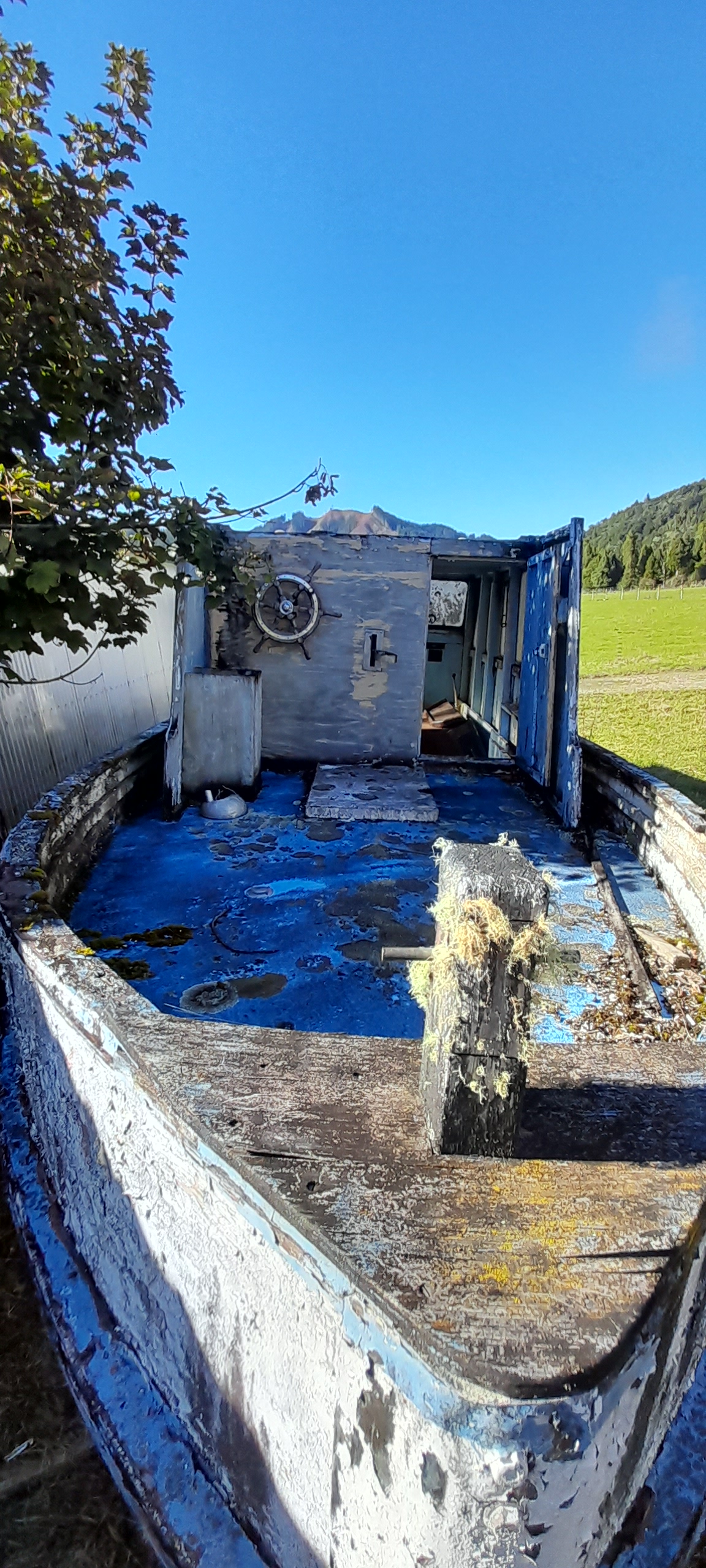
Last week Andrew Motte-Harrison commented on one of the stories that he had a old kauri launch ’currently deteriorating behind his farm hay shed’.
Andrew believes she was originally named STELLA and alsp possibly named TOILER at another time. Possibly built c.1910>15 by Lane Bros in Christchurch (thats a new one, was there such a place?). Andrew described STELLA as a line fishing boat.
Andrew also commented that when they had her up at the Nelson Marina, talking to an elderly boat builder up there years ago, he passed on what he understood to be some of her history.  He thought she had been working out of Bluff, Hokitika and perhaps Oban in years past (back then)

As the photos show the boat is in need of some serious TLC, starting with a few hours with a water blaster- inside and out. And maybe a session with a tungsten tipped chainsaw and then a new cabin. Her hull deserves saving.

The last photo was taken  over 20 years ago, before being hauled out.

So southern woodys anyone looking for a project, STELLA is located 20 minutes south of Murchison, approx. 2 hours out of Nelson.

INPUT ex DICK HALL – Built by Ernie lane in Picton for the Boese family with a low cabin and rails instead of bulwarks. Later purchased by well known fishing identity Jimmy Aldridge and converted by Jack Morgan with new wheelhouse, bulwarks and new air-cooled Lister. Jim crayfished mostly outside Tory Channel. Next owner Alex McKenzie from Blenheim who re-named her Toiler but after a few years sold her for a bigger vessel. Fished out of Picton all her life before going to Nelson for pleasure conversion. Her original name was Elaine then Toiler. Never Stella while in Picton

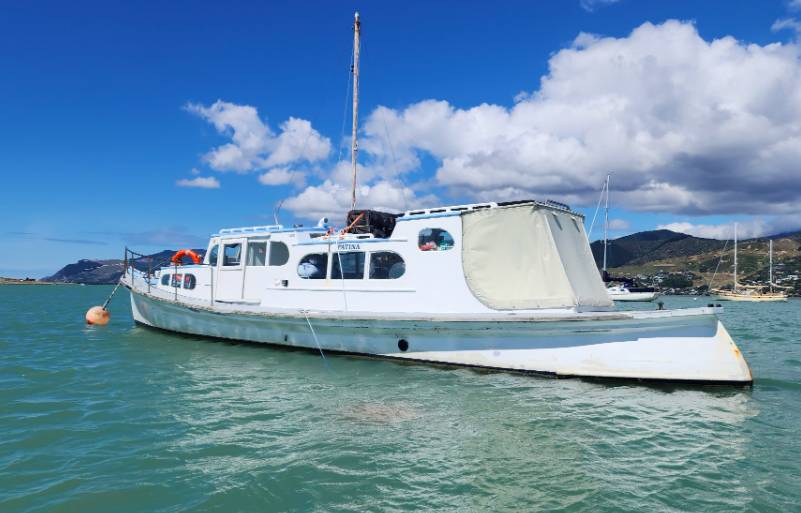
MYSTERY DOUBLE ENDER WOODEN LAUNCH – PATINA

MYSTERY DOUBLE ENDER WOODEN LAUNCH – PATINA

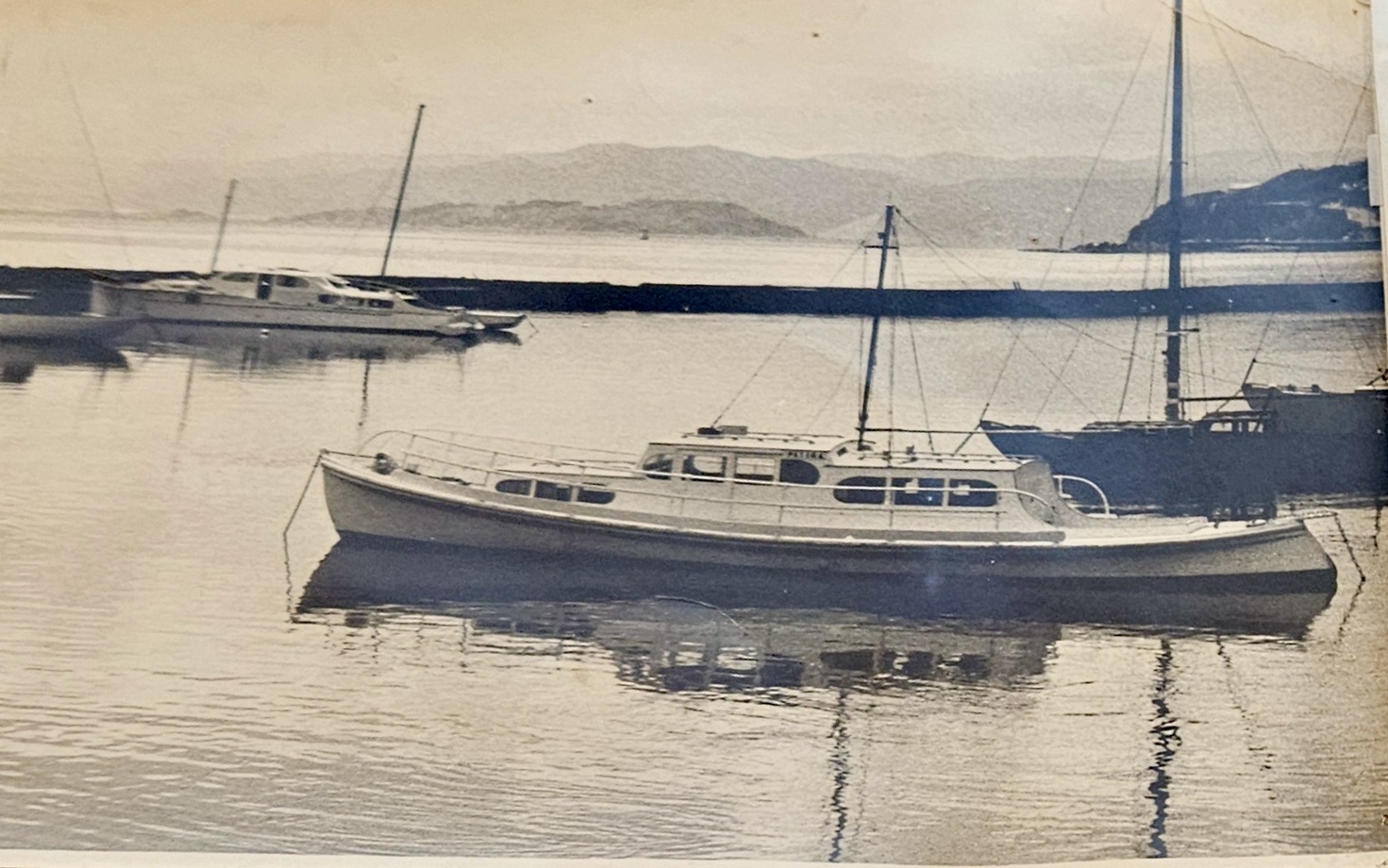
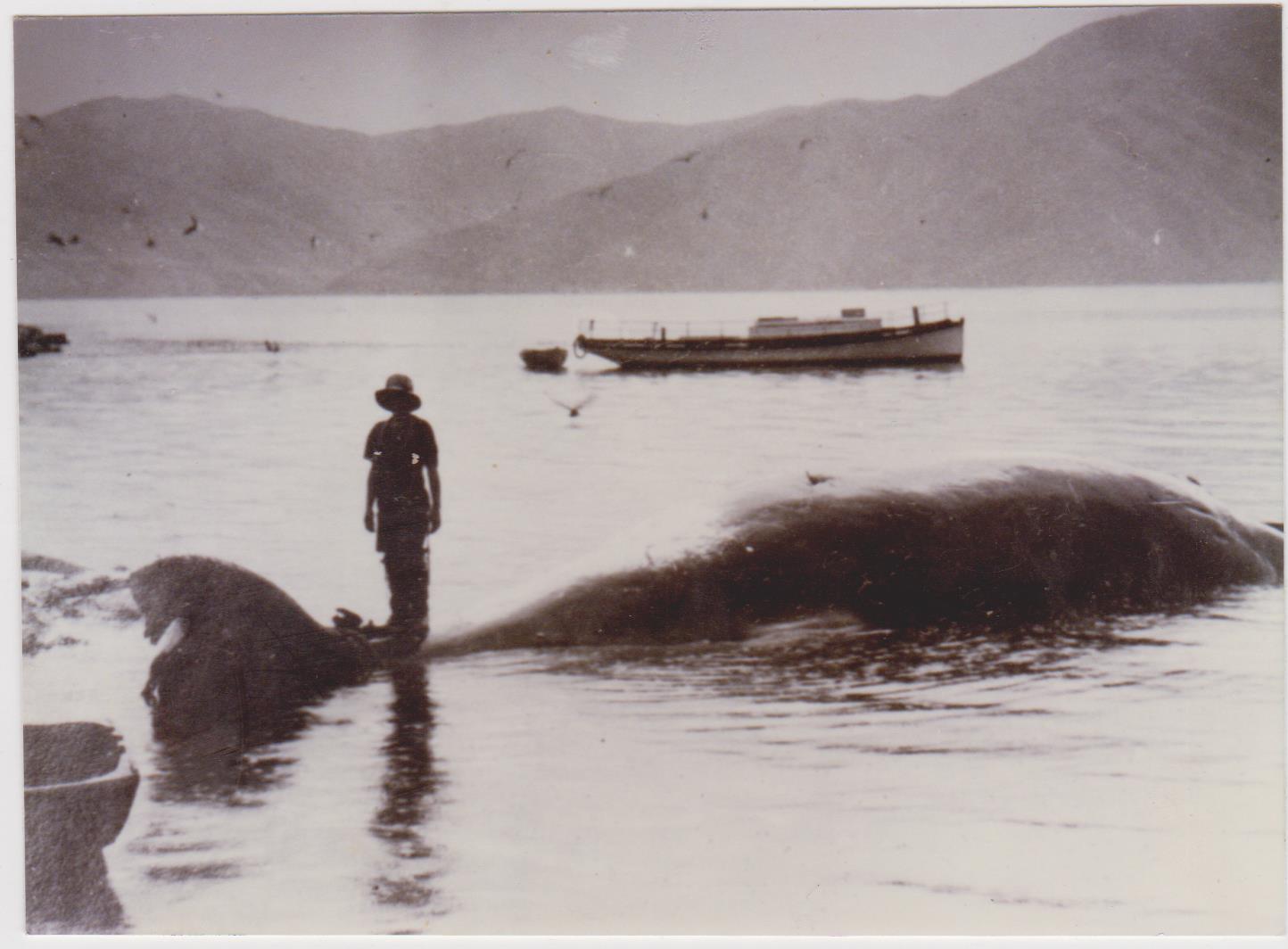
Todays photo was sent in by Heather Espin and comes to us ex a photo album from Bryan Walden. Walden was one of the first boat brokers in Auckland and he categorised the boats he sold. 

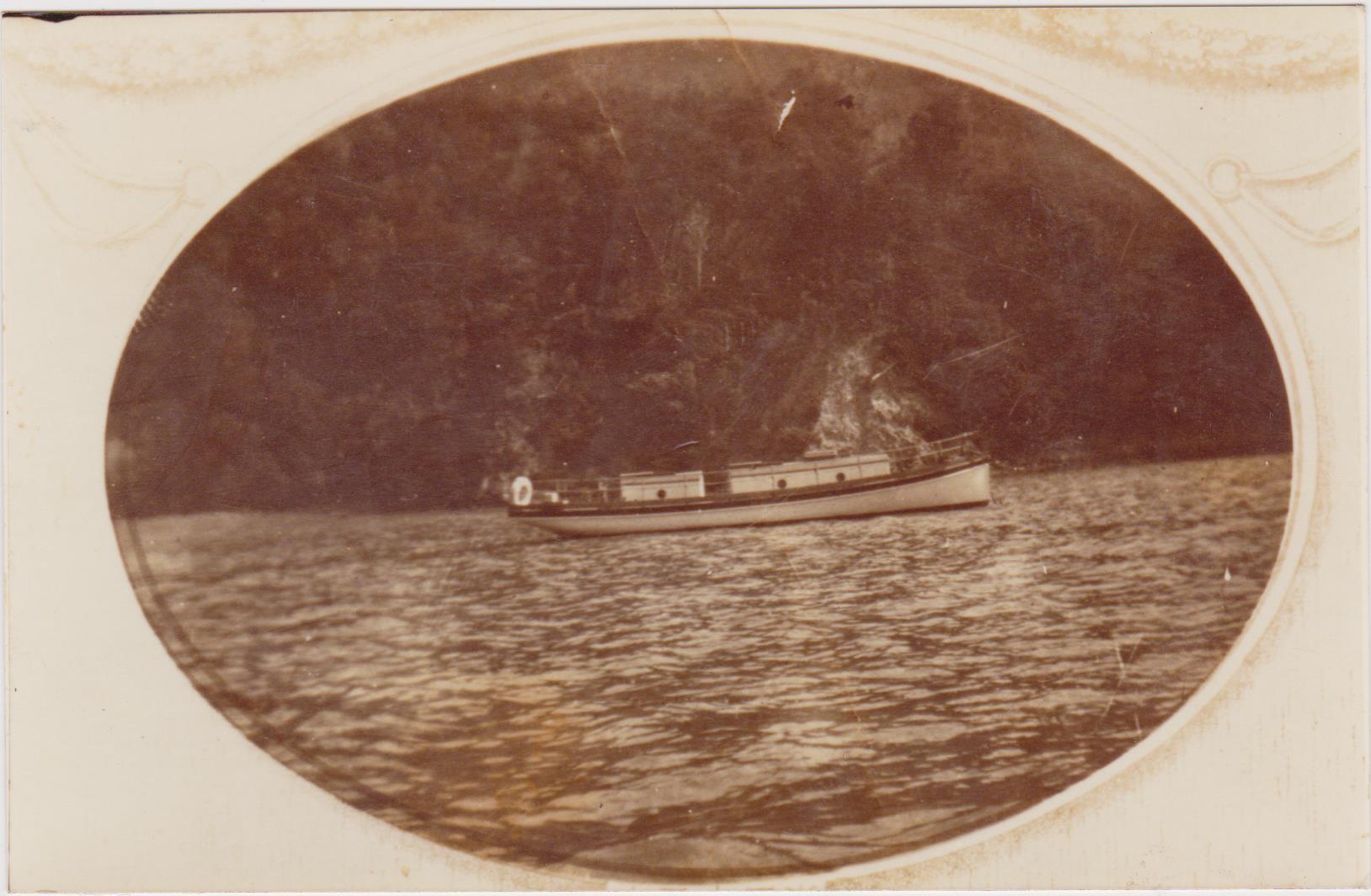
The location to me appears to be Wellington and the boat has a the distinct look (double-ender) of a vessel that would have crossed Cook Straight with ease.

Can anyone confirm the location and put a name to the launch.

The boats PATINA, built in 1913 by Ernie Lane in Picton – more here https://waitematawoodys.com/2024/10/17/classic-wooden-boat-patina-le-reina-a-peek-down-below/

CLASSIC WOODEN BOAT – PATINA (Le Reina) A Peek Down Below

CLASSIC WOODEN BOAT – PATINA (Le Reina) A Peek Down Below

The 39’ wooden launch PATINA, built in 1913 by Ernie Lane in Picton has made several appearances on WW but we have never had a decent gander down below. Today thanks to Ian McDonald and tme we do .

I have included a link below that will give you a summary of all the previous WW stories. 

Built from double skin kauri, when launch she was named LE REINE.

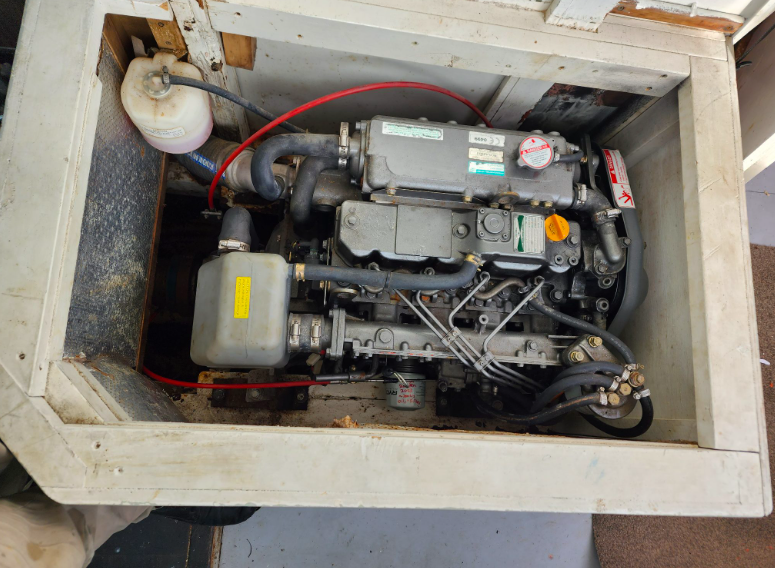
The forward motion is via a Yammer 54hp Diesel engine.

https://waitematawoodys.com/?s=Patina&submit=Search

An Epic Tale of Whalers, Fishermen,  Farmers & Commercial Launch Masters

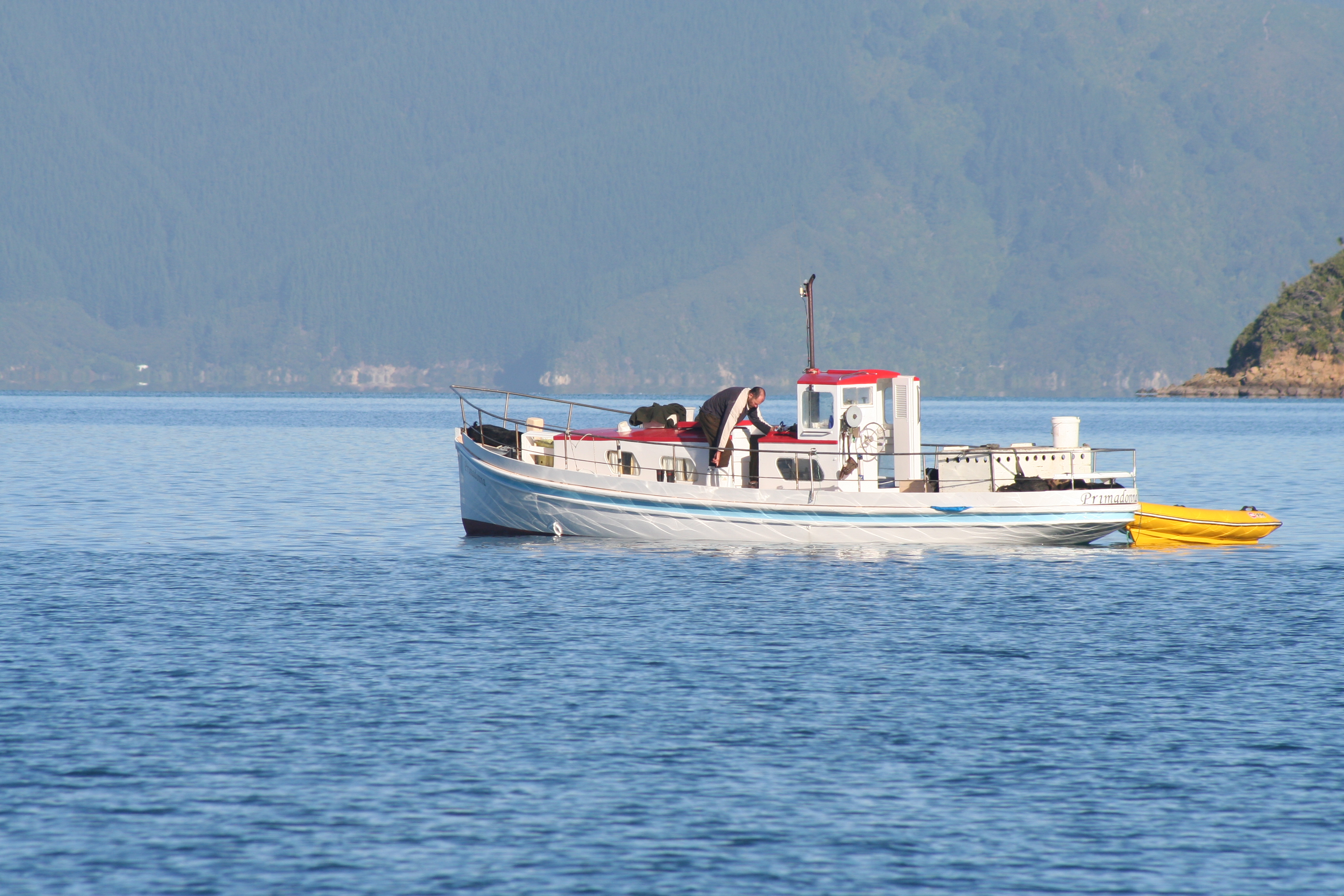
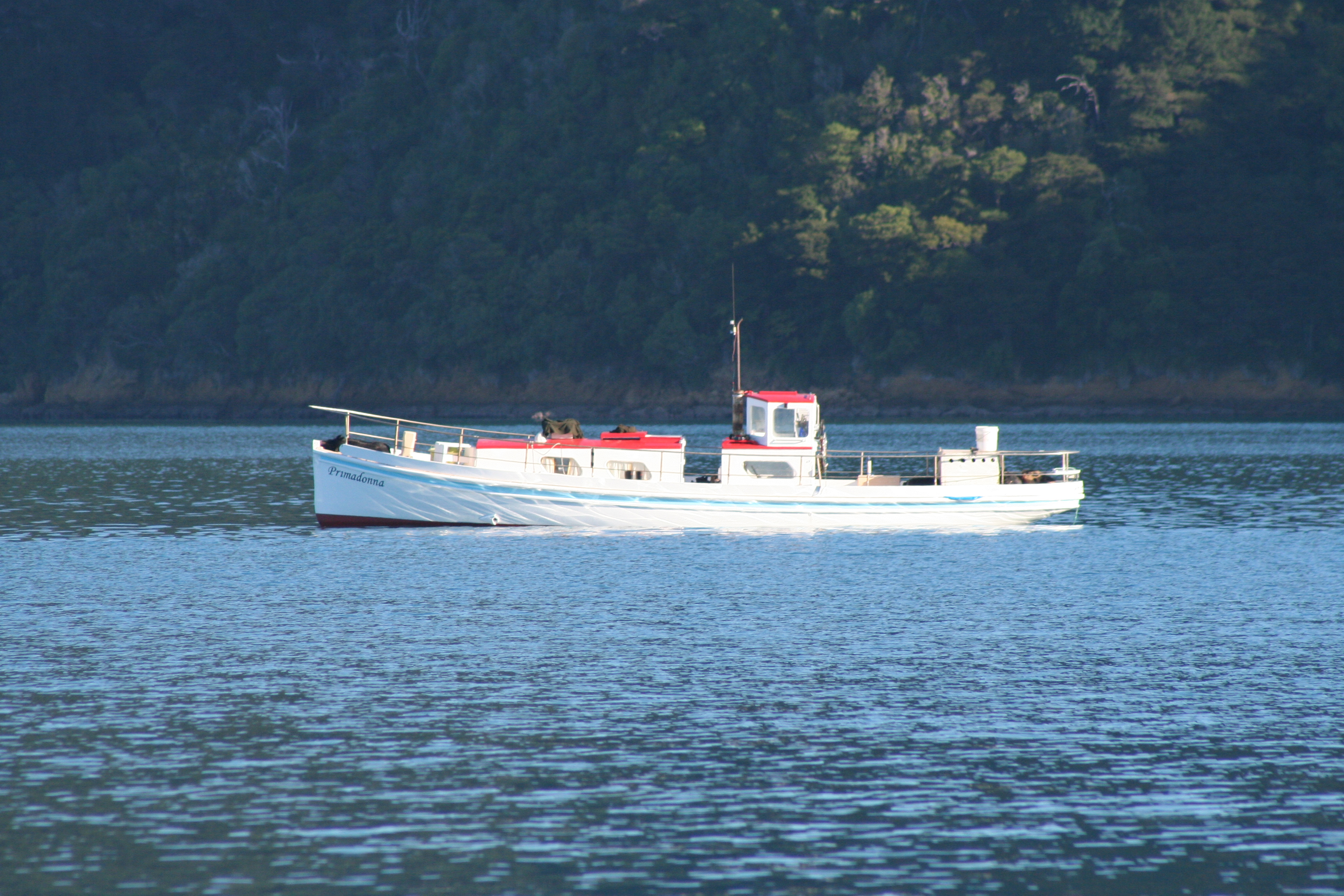
Prima Donna built by Lanes 1911 for Herman & Darcey Baldick 001

Primadonna built by Lanes for Ernie & Darcey Baldick 001

Primadonna and One of Bob Swansons boats 001

IMG_3581

IMG_3580

An Epic Tale of Whalers, Fishermen,  Farmers & Commercial Launch Masters
 

The story below without doubt is the best to appear on WW, author Pete Beech talks at one stage about writing a book – he needs to. Surely there is a funding channel available – what’s the literary equivalent of ‘NZ On Air’?

The story came about via the recent WW story on the ex whaler chaser – Primmadona and her relocation from the South to Aucklands Waitemata waters. I will let Pete tell you his story, as he told me – its a cracker – enjoy
 
As an aside I spotted Pete’s ‘work’ boat – Tutanekai, mentioned in the story in Queen Charlotte Sound two years ago, I admired her then, sadly I was too busy pushing bacon and eggs down the gullet at the rather swanky, Bay of Many Coves resort, to say hi – my loss, but I’ll be back. Photos of her at the WW link below:
 
Previous WW Primadonna stories:
PART ONE
Kia Ora Alan,
Thanks for making contact, I was sent a link to your site by my sister who lives on her yacht in an Auckland marina. She thought I’d be interested in your story on our old waka, Primadonna.
You and I obviously have a lot in common, 40 yrs ago there were a lot of old Sounds launches coming to the end of their days, my old dad worked for Ernie Lane as a young man then for Jack Morgan and Rodger Carey.
He and his old mates had been Sounds farmers, whalers , fishermen and commercial launch masters, when ever they got together conversation would always revert to “Boats ! “
We lived in a bay down the Sounds, old pa could identify the older boats by the sound of their exhausts, before they rounded the points and came into view. The old guys would tell you who built them, what year, how much they cost, what they were planked out of, some were sister ships (2 keels cut out of the same log) where the logs were sourced from for the planking, what timber they used for the ribs, what make of engine they used, how much it cost, what horse power they developed and how many GPH they burnt and  what revs  they run at.
They took pride in knowing the whole whakapapa of all the old waka, how many hours the engines did until they were worn out and rebuilt or replaced, in those days after 5/ 10 yrs they would replace with bigger more powerful engines, they would also tell you how the engine was taken out of one boat and put into another and so on.
I grew up hearing all these oral histories and like a couple of your writers mentioned the accuracy of some of these stories was lost in the telling, then my old dad passed on and I got to thinking that if someone doesn’t write down these oral histories within 50 years, they will pass from living memory and be lost to time.
So I went around and interviewed a number of the old timers and collected all the photos I could, so pleased I did because those old boys are all gone now and their kids tossed out their photos.
It was funny, they just loved to talk about their boats, often their wives used to ring me up and say “could you come back and talk to dad again, hes driving me mad ! “
For years I have fostered an ambition to compile a book using this material and feel a bit precious about it, however no one has a monopoly over history and it should be shared, who knows the millennials may have no interested in our nautical treasures .
I have been a mechanic, a marine engineer, a fisherman, a commercial launchmaster a boat builder and for the last 30 years have run an eco tour with our old waka the near 90 yr old Tutanekai. I used to think that the day would come when people would regard the old classics like they do vintage cars and would restore them.
However it hasn’t really happened here and sadly many of our old classics have  been sold out of the area many finding their way to Auckland, I will miss seeing the beautiful counter stern of the old Primmadonna on the Sound, she is so much part of our local history.
I’m so pleased to see the resurgence of traditional boats in Auckland and sure a lot of credit should go to you for the sparking peoples interest in the classic wooden boats.
I remember when she was sold to a feller up on the Foxton River, he eventually put her up for sale but no one wanted her, so he rang me up and said “I’ll sell it to you for bugger all, if you don’t I’m going to cut the side out of her with a chainsaw and turn it into a road side stall. 
I contacted Ian Baldick, nephew of the original owner and said that old girl is your family heritage, you should buy her back, he said OK boy , you’re right, I’ll do it on one condition, that you come with me to bring her back home.
So away we went, made the deal, checked out the old Lister, changed the oil and fuel filters and set off for home, when we got down close to the bar there was a big swell and old Ian said theres something wrong, she’s not lifting to the swell, he said pull her up, he went down into the front cabin, lifted up the bunk swabs and found that the whole forward section was full of river boulders, (this had been done because when you run the old lady on full throttle the stern would suck right down until the water was level with the deck and if you were steering from inside the cabin you couldn’t see over the bow).
We tossed all the boulders overboard and charged out over the bar, there were 3 very big waves, she rode up over the first then put her head down and dove under the second and in what seemed like an eternity finally lifted, rose over the third and burst out into the open sea, old Baldy said if we hadn’t thrown those boulders out she would of gone straight to the bottom !!!
He told me that she had been build too fine with not enough buoyancy in the bow, straight stemmed with no flare, he said that one time they we steaming out around Cape Jackson when they went thru the big rip where the Pacific and the Tasman seas meet there are often half a dozen big waves, he said that she responded the same way a stick does when you throw it into the water. He said you had to shut the throttle off and pull her out of gear,   she went down by the head and kept going down until her buoyancy finally made her shoot back out back wards just like a stick !  He said that on this occasion one of their mates was standing on the foredeck, he said that when this occurred he wrapped himself around the mast and held on for grim death, he said that when she popped out they went forward and couldn’t get their mate to let go of the mast, he said he had squeezed it that hard he ‘d squeezed all the sap out of it and they needed a screw driver to prize his finger nails out of the mast !
I also owned the old Fleetwing at one time, but that’s another story.
The old waka in my shed is a true classic launch, is just the bare hull and is in beautiful condition for its age, has been in my shed for 30 years waiting for attention, I’ll never get around to it , I only rescued it because I knew her history and wanted to see her preserved, she had a 5 HP Frisco Standard in her for years, shes only 6 ft beam, they didn’t start building them with 8ft beam until the twin cyl 8 hp Friscos came out in the 1920’s.
The Baldicks said that they flush decked her for gropher fishing and that when they were steaming around Dieffenbach Point in a strong southerly she would roll over that far that your shoulders would be in the water.!
What I could do is send you the story of her builder Ernest Berg who  was a real character, was bankrupted 3 times but kept reinventing himself, a real conman but he built beautiful boats, back at the turn of the century, 3 of them left that I know of.
That’s enough for now, Keep up your good work mate.
PART TWO
Kia Ora Alan,
My pleasure, always interesting to look at a series of photos taken of a wooden boat that shows how their superstructures  were changed to suit their roles and how their engines got bigger and bigger with advances in technology.
My old waka “Tutanekai originally had an 18 hp twin cyl Regal, that was replaced by a 40 hp 4 cyl sterling, then a 60hp, 6 cyl Hercules, a 110 hp  471 GM during the war, currently has a 120 hp GM and have a 6 cyl 340 hp Yanma  in the shed to replace the GM, ( but it refuses to die.)
My apologies, but I don’t know (or don’t remember )  what the original engines were in the Primadonna,  most of the early launches back in the 1920’s had 5 hp single cylinder Frisco standards when they wore out were replaced by 2 cylinder 8 hp Friscos, they were replaced in the 1940’s with car engines then in the 1950s with truck or tractor diesel engines like 4 cyl Fords or GM’s , (lucky ones had Gardners ! )
When Alf Baldick finished whaling he used the Primmadonna as a farm boat and for transport to and from town, there were no roads in the Sounds.
He sold to a guy McManaway who was a gropher fisherman, he did away with the rear wheel house to give him more deck space and fish hold, he built a pilot house over rear of front cabin. He sold to Rex Baldick, Alfs nephew, he was farming in East Bay and spent a lot of time hunting, you would often see her at the Picton wharf with stern deck covered with carcasses of pigs and deer.
Rex sold to Ken MacArther who fished her out of the Wairau Bar, she caught fire on him, he took the 4 cyl Ford out that Rex had put in and replaced with a three cylinder Lister.
That was the end of her commercial fishing era, she had several owners and more changes to her superstructure, they replaced the rear wheelhouse, when I had it she had a coal scuttle that stuck up above the cabin top so you didn’t have to duck , getting in and out of the cabin. Before Ian Baldick bought her back into family ownership he threw the Lister out and put a reconditioned 4 cly Ford back in her, cut the coal scuttle off and replaced with a sliding hatch, put a new S/S shaft in her and did a great job of tidying her up. When he retired he put a line hauler on her for gropher fishing and spent a lot of time out fishing and deer shooting, when he past on she was sold but a couple of owners latter his son in law bought her back again for running the whanau to and fro to their bach.
Sad that she has been sold out of the Sounds, but who knows some day she may find her way home, it has happened before !
Nga Mihi,
Pete.
Woody Classics Weekend #5 Riverhead
RSVP waitematawoodys@gmail.com

Alpheus – A Peek Down Below + Lady Ava In Trouble

Screen Shot 2020-06-03 at 4.43.19 PM

ALPHEUS – A Peek Down Below

Alpehus has previously made a brief WW apperance and today we get to have a peek down below. The 42’ carvel kauri planked Alpheus was built in 1962 and launched in 1963, thought to be a McGeady design, built by Ben Hipkins.
Power is via a 120hp Ford diesel that gets her along at 8>9 knots.
From the photos (thanks Ian McDonald for the tme heads up) she is very well fitted out, a little ‘dark’ for my taste but who am I to comment 🙂
LADY AVA
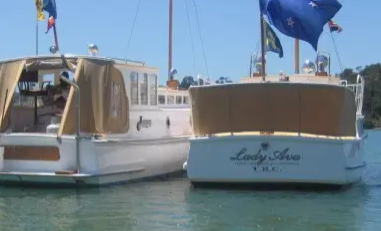
I have been advised by Cameron Pollard that Lady Ava has had a wee opps.  A fine ship in her day, good enough to have caught the eye of Harold Kidd. Lady Ava, built in 1931 by Ernie Lane (Picton) was once named Miss Ava has popped up on WW b4, links below. + recent photos below.

Screen Shot 2020-06-03 at 5.23.34 PM

2006 – Mahurangi – Jason Prew

Screen Shot 2020-06-03 at 5.24.39 PM

Auckland Harbour – John Wright

Screen Shot 2020-06-03 at 5.24.58 PM

John Wright

Screen Shot 2020-06-03 at 5.22.31 PM

2015 – Panmure River – Jason Prew

Update – photos below taken by John Bullivant in Feb 2019 of LA on the Tamaki River.

Sterling

image1


image2-1

STERLING
I have been contacted by Murray Wilson the owner of the 40′ ex workboat – Sterling, he bought her a couple of years ago and is in the middle of a ‘rolling’ restoration. Murray has been told that she was built by Ernie Lane in Picton in 1926 to tow logs out of the Sounds.
 

It’s rumoured that Sterling was involved in an incident in Tasman Bay in the 1960s or 1970s that involved the boat being found with a scallop dredge in the water, engine running and no one on board. When the dredge was lifted the skipper came up with it. 

 
Murray is keen to confirm and learn more of Sterling’s history.

Input from Harold Kidd – This STERLING was built by Ernie Lane in Picton in 1925 for L.J. Steele as a passenger vessel to carry 60 pax and had a 1924-built 3 cylinder 27hp (rated) Sterling marine engine bore 4.5″ x stroke 5.5″, dimensions 34′ x 9′ x 3’9″. The engine was changed to 27hp Ruston-Lister diesel by 1940 when she was owned by N.A. Steele and converted to a fishing boat under No. PN29. There was a Marine Dept enquiry in 1946 when she ran on rocks in the Tory Channel with the loss of two lives.

That 34ft loa was the MOT Thames measurement length. She was a 40 footer really.
Historical notes below from recollections of Lex Wells, recorded by Mike Davidson
Preface
Lex Wells has lived all his life in the Marlborough Sounds and has worked on and owned
many working boats in the fishing, scalloping and mussel industries. Lex is now over 80 and
has extensive memories and knowledge of many of the working boats and launches in the
Sounds. Arguably there is nobody better informed about Sounds vessels than he is.
History of the Motor Launch “STERLING”
1. The “Sterling” was built by Ernie Lane in the late 1920s for Matt Steel and joined his small fleet of passenger launches.
2. Matt Steel sold his fleet to Queen Charlotte Launches in the late1940s. Lex is not sure if
“Sterling” went to Queen Charlotte Launches as part of that deal; she might have been sold earlier.
3. In the 1960s or 1970s, “Sterling” was sold again and used for fishing and scalloping out of Nelson. One day, in the 1970s, the “Sterling” was found drifting, unmanned, on the scallop beds. The skipper had been working by himself. His body was found in the dredge when it was lifted.
4. After this accident, “Sterling” was sold to a new owner and went fishing out of Taieri
Mouth and was based there for many years.
5. “Sterling” was then bought by Ronnie Wells (a cousin of Lex’s) in the late 1970s or early 1980s and he brought her back to the Sounds. He used her for quite a few years in the scalloping and fishing industry, operating out of Havelock.
6. “Sterling” had a Gardner engine in it when Ronnie Wells bought it. At some stage
afterwards that engine was destroyed when an oil filter failed. It was replaced with a Russel Newbury (RN) engine. That engine was too old and had been poorly maintained and it eventually died one day when “Sterling” was working at sea. Lex towed her with his vessel into Havelock where a four cylinder Ford engine was put in “Sterling”.
7. Ronnie Wells then sold “Sterling” to Sunny Sunbeam and his business partner (might have been his brother). She was taken to Picton where a lot of work was done on her, including new top planks on the hull and a new and much larger cabin on the deck. She was taken back to Havelock soon after.
8. Sunny Sunbeam later sold her and she was taken away from the Sounds by her new owner.