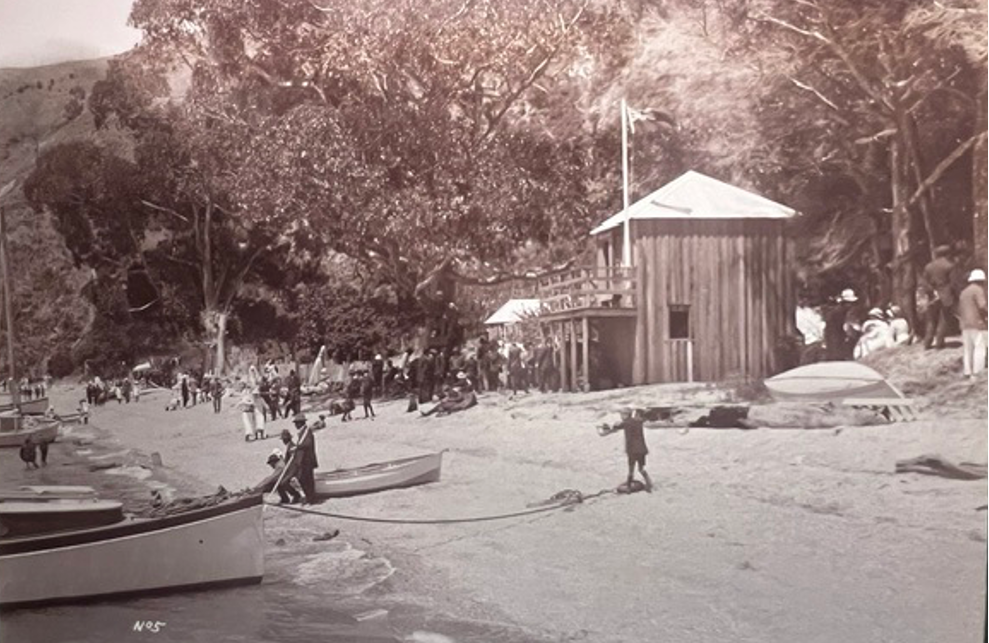
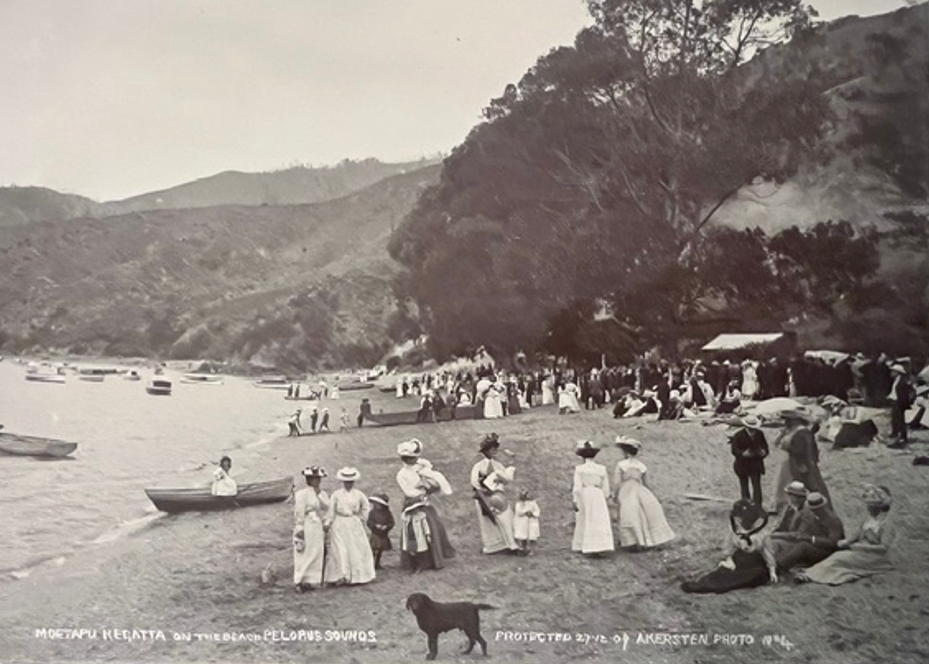
MOETAPU REGATTAS 1909 – 1919 – A REMARKABLE CLASSIC BOATING ARCHIVE

Slightly different format today that sees us featuring the Moetapu Regatta’s 1909 > 1914. Moetapu is located in Pelorus Sound, Marlborough. The story was shared with us by Roy Jones from the Picton Clinker & Classic Boat Club. Roy pulls together an amazing newsletter for the club and is one of my must read items each month.
Roy contacted WW last week following up on a WW story I ran, sourced from the clubs newsletter. At the time WW was seeking intel on an old photograph of a launch pictured at the Moetapu Regatta.
Roy commented that from a very distant source, they have determined an identity of the craft, ZEALANDIA.  Roy has cropped together (his words) a story on the Regatta’s for the clubs newsletter. And today we get to share it. Many thanks Roy 🙂

Moetapu Regatta, 26th December 1909 – 1914 – Roy Jones
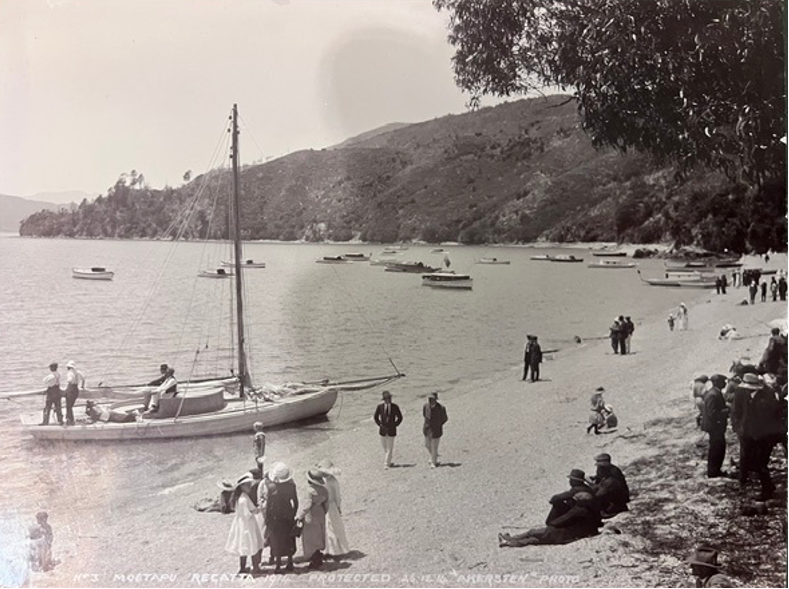
Some time ago we wondered at the name of a motorised craft featured at the Moetapu Beach picnic 26th Dec 1911.

I was contacted recently by Ms Victoria Gitting, who was sent a series of photographs and albums by a relative, Mr Ian Pinkerton, who is the great great great grandson of Mr William Ross Brownlee, the Havelock timber tycoon who established Blackball.

The albums are cherished by Ian and include a selection of photographs of the early Moetapu Regatta’s from 1910 – 1914

It was delightful to see the boat flotilla’s of so many styles and of the races they ran. The photo has a date of 27th Dec 1909
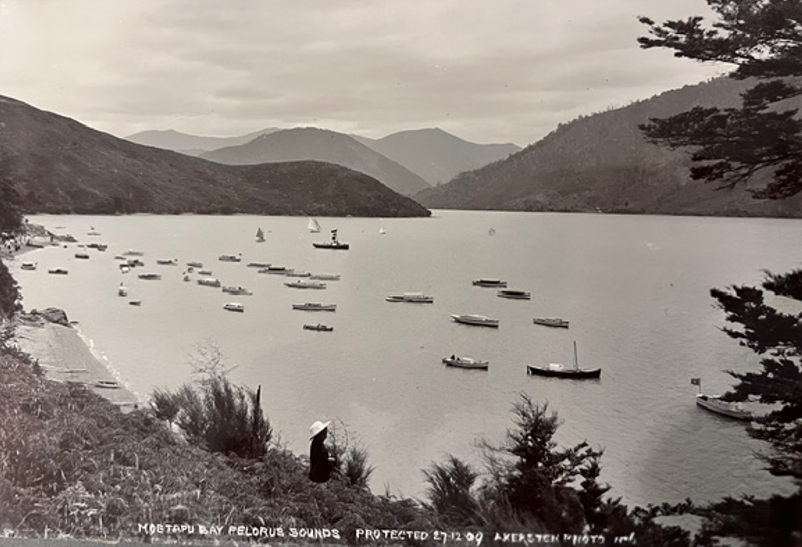
Considering the date of 1909 it is remarkable the number of motorised craft even then!

Attached is the article from The Pelorus Guardian and Miners Advocate newspaper with race results for the 1911 event.

I wish we knew the race course length to enable their speed to be calculated from the time elapsed in the race.

With the wonderful Glass Plate photos, we can zoom right in close without the modern day pixilation occurring and noting the flag on the stern of the craft below, and the race results, the only craft detailed shows it as Zelandia, the only named craft with ALA in the name.

A considerable crowd attended these regatta’s a scan be seen for the crowded steam boat Pelorus, the hulk of which is still seen on the side of the road at Blackball Harbour a short distance from Havelock on the road to Nelson.
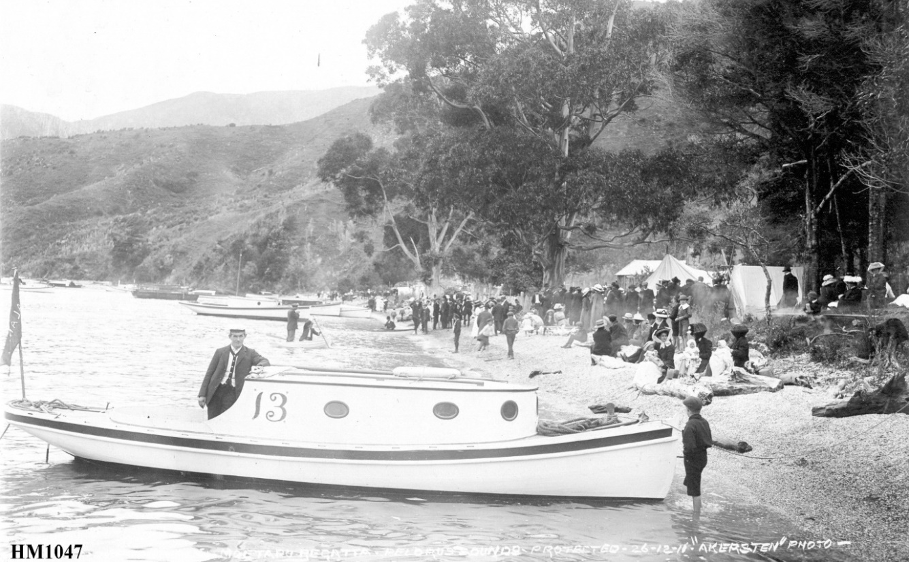
The craft that indicates ALA on the flag at her stern, suggests her name is Zealandia.
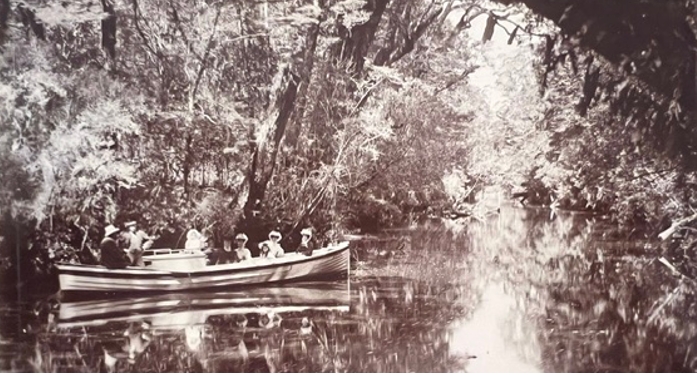
This is the Kaituna River which flows into Havelock and is now just a trickle by comparison.
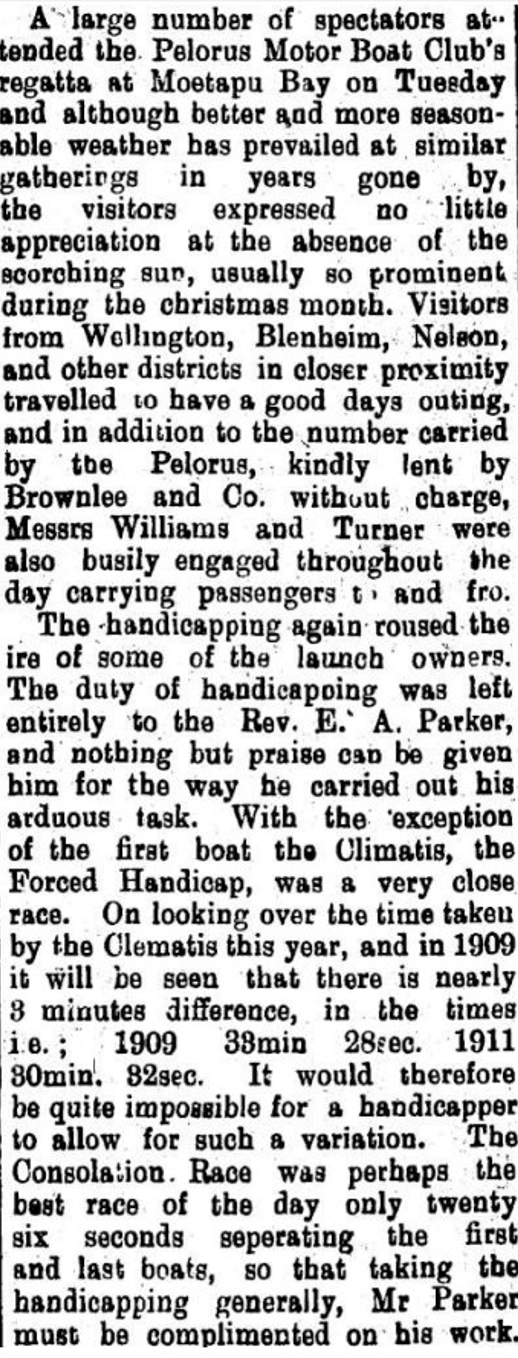
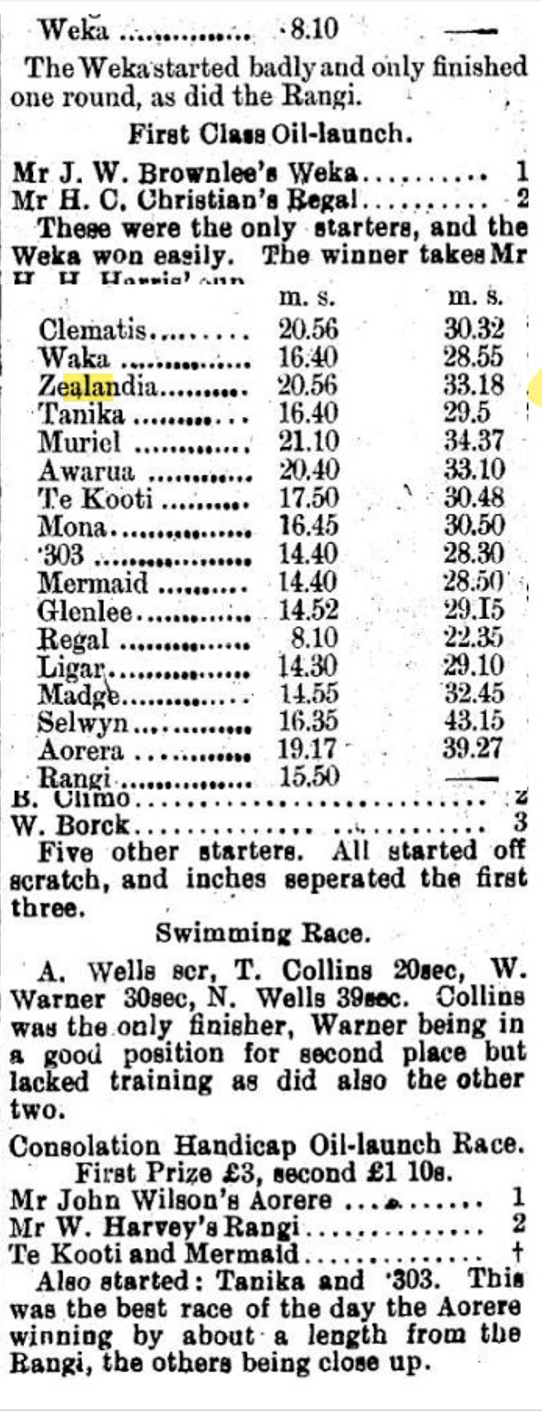
I notice that Mr J.W. Brownlee owns The Weka and is both mentioned as starting badly and only finished one round yet is mentioned as Weka winning easily, maybe there is a Weka and a Waka as both are mentioned. I presume that this is Mr John Brownlee who also commissioned Ernie Lane in Picton to build our Ruru in 1920. Ruru was also was fitted with an oil engine as it motored from Picton to Havelock shortly after being completed. There are some delightful old style photographs of early Marlborough and of how the locals enjoyed their recreation, watching yacht and speedboat races.

Dressed in their finery for the day out no matter how uncomfortable it would have been in frock jackets and formal hats to long dresses & wide hats. Kids too!Very little sign of food hampers.
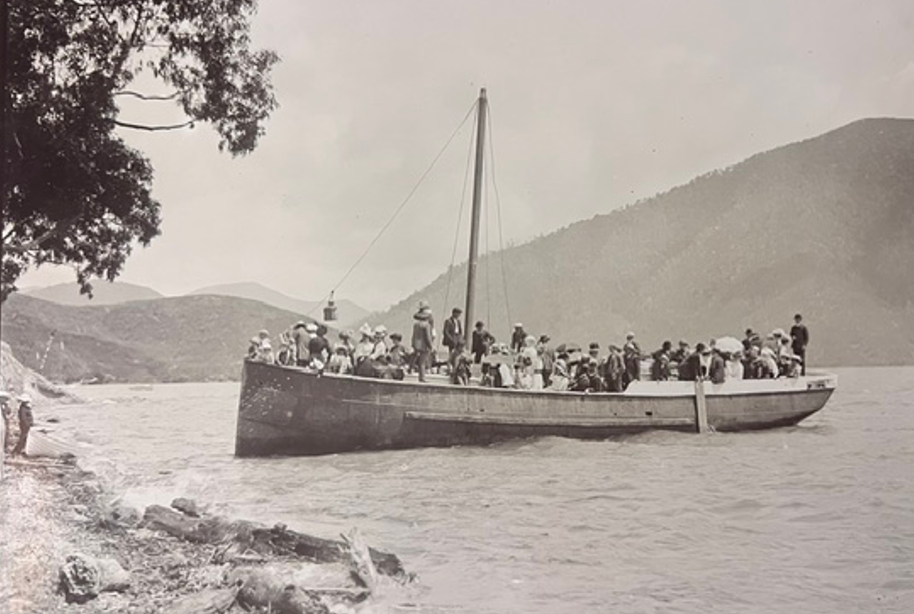
The steam tug Pelorus, used by the Brownlee Timber mill to tow sailing ships up the Pelorus River to Blackball.
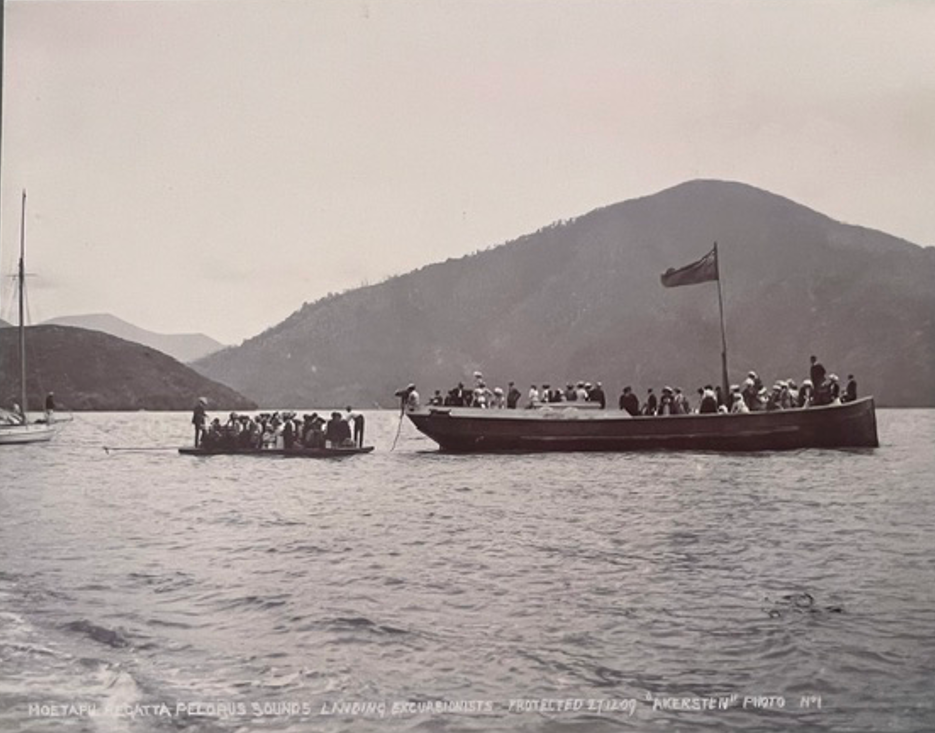
Gosh….   that punt is crowded and not a life jacket to be seen.
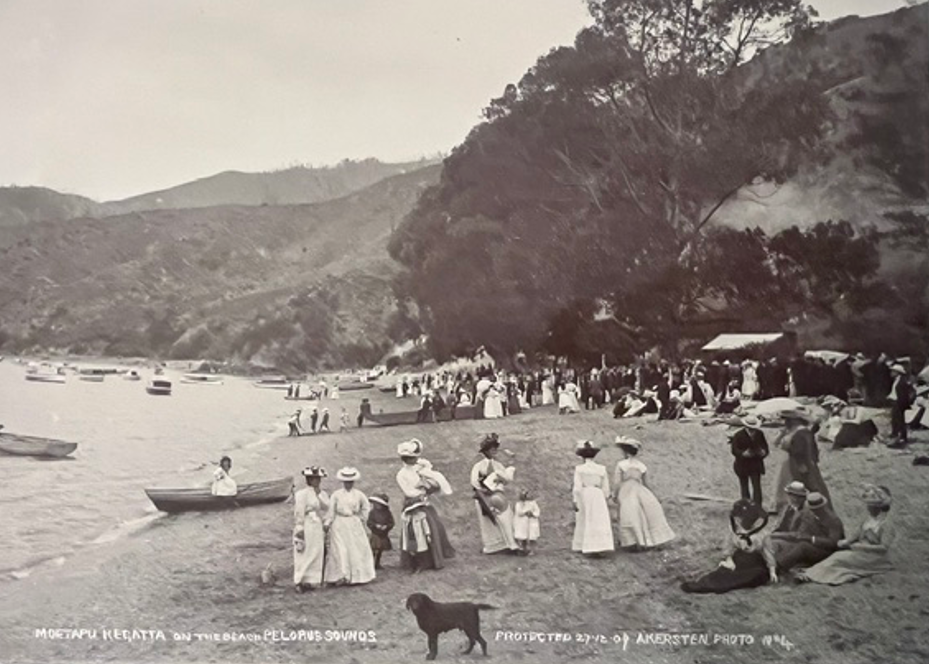
The beach Promenade
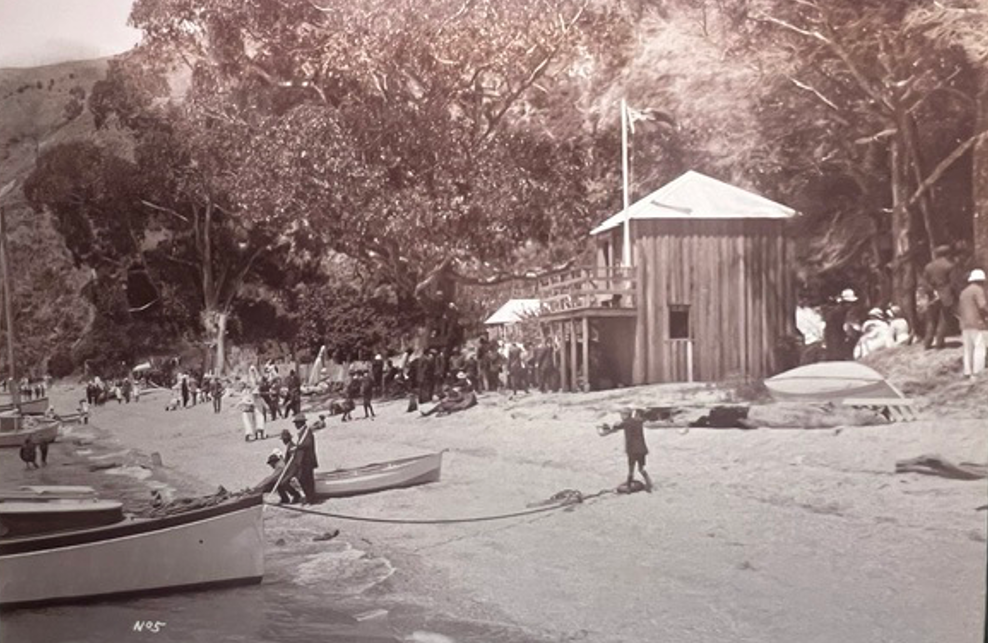
A fine Club house and starters box, is it the first of the Pelorus Boating Club rooms?
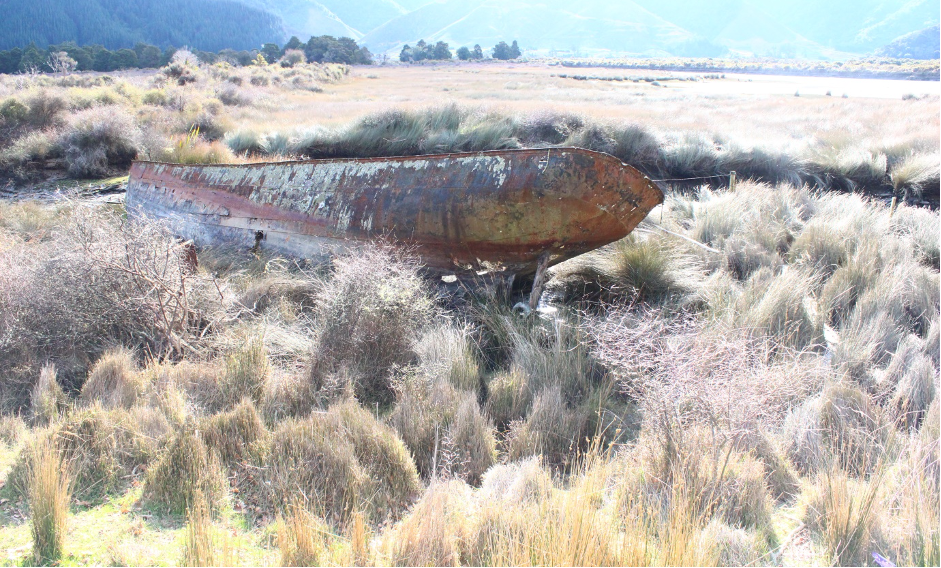
This is the current condition of the steam tug Pelorus, shown earlier in the article, lying alongside the road between Havelock and Nelson. The bank of the stream behind the hull is full of the offcuts from the sawmill that existed on this site at Blackball. One can walk the steam and see the ends of countless flitches discarded from the milling process.

In a more highly populated area than Marlborough, this hulk would be restored by a larger engineering company and be a usable steam tourist attraction.
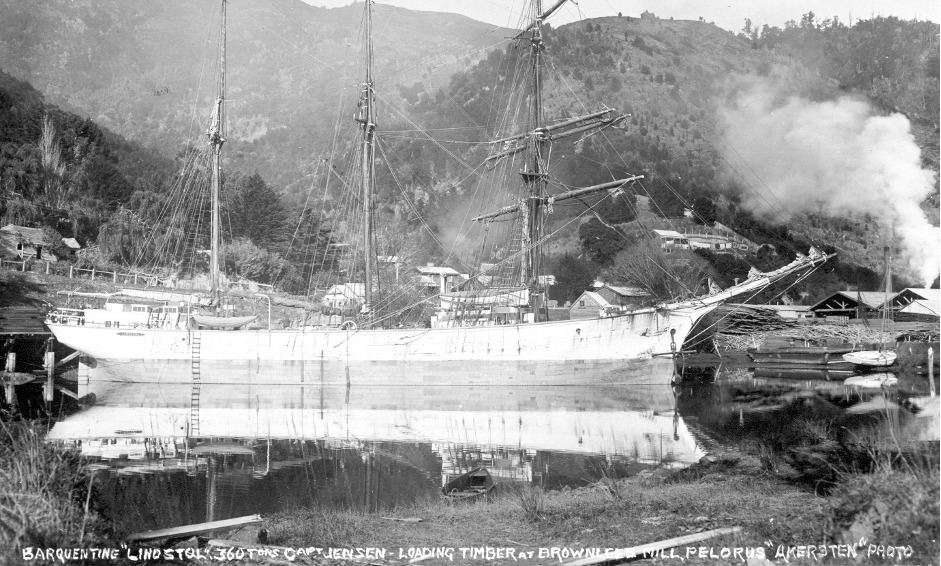
Pelorus lies about where the bowsprit of Lindstol sits in this photo.

HAROLD KIDD INPUT – There were many launches called ZEALANDIA, usually because they were fitted with a Zealandia marine engine built by Hoiland & Gillett in Auckland. Tom Le Huquet built at least two for Hoiland & Gillett and T M Lane & Sons did another for them in 1910; there was a twin-engined smart launch built at Riwaka by Arthur McNabb in 1912 (not the pictured boat at Moetapu), one in Rotorua by Robinson & McIntosh in 1909, one in Dunedin in 1910 and this one at Pelorus. There were probably others.

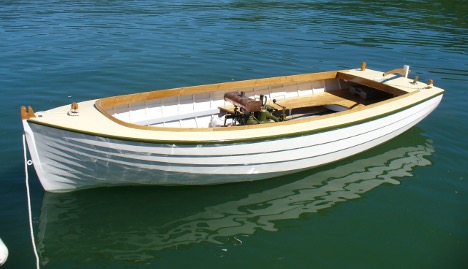
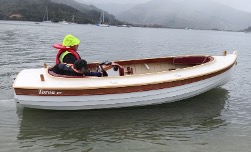
A REPLICA ERNIE LANE CLASSIC 1920 CLINKER

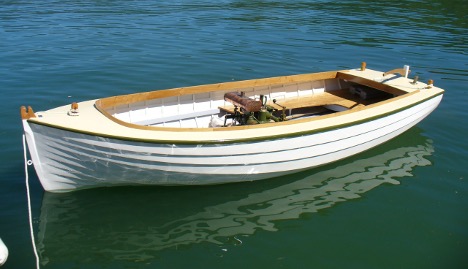
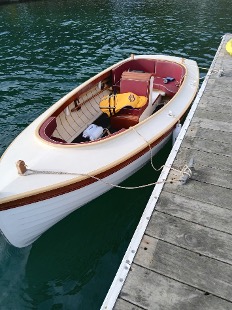
A REPLICA ERNIE LANE CLASSIC 1920 CLINKER

I’m a big fan of the Picton Clinker & Classic Boat Club, they seem to have the mix right when it comes the wooden boating community. Recently I was chatting to Roy Jones (Roysie) who among other things pulls together the clubs newsletter. Roysie mentioned a project he had been working on and promised a story – and today woodys we get the enjoy that story – I’ll hand over to Roysie to tell it.

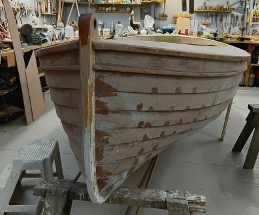
“Fifteen years ago The Picton Clinker & Classic Boat Club was gifted a 14ft clinker hulk which came with a remarkable provenance. Built by Ernie Lane in 1920 for Mr John Brownlee, son of the timber tycoon, William Brownlee of Havelock, the boat was in a sorry state and owned by Club Member, Noel Johnson.

Noel’s initial attraction towards Ruru was that, when he lived in Havelock as a child in the mid 40’s, he can vividly remember Ruru resting in the creek near the present causeway, whilst owned by the Havelock butcher, Mr Johnny Buncombe. Playing in Ruru, he would often be chased off and Noel miraculously relocated the boat again in 2003 on the Holdaway farm near Blenheim.

The Holdaway’s had purchased Ruru in 1948, from Johnny Buncombe for 100 Pounds, and who himself, had bought her from the Brownlee’s in 1933. 

Now in a very sorry state, Barry Holdaway gave the hulk to Noel who intended to restore her. Aged 80, he realised it was beyond him, and Noel wisely gifted the craft to the Picton Clinker & Classic Boat Club in an effort to preserve her,  and it worked.

Ruru as restored in Jan 2010

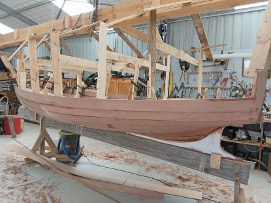
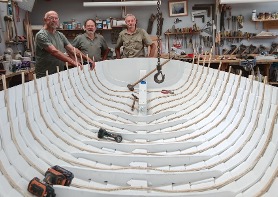
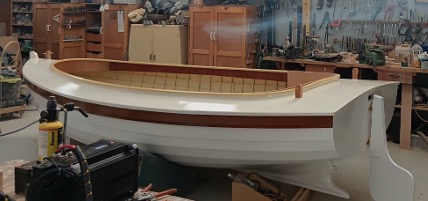
Ruru is the Club’s flagship and is utilised on all the club runs as such. Roy had a little to do with the restoration and always admired her lines as created by Ernie,  she was now available for all to view and admire. So last Christmas he borrowed Ruru for a week and after setting her up,  took her lines off and drew them up on the computer. From these he created a table of offsets and after lofting out, began construction early in the New Year.

Ernie created a built-down style of deadwood almost a bustle, presumably to ensure the engine could be low as possible and with a fairly level prop-shaft, but this was difficult to recreate. 

He must have steamed the kauri planks tightly to achieve the curvature around the stern deadwood rebate. Roy elected to use Meranti 9 mm marine ply rather than timber purely due to supply constraints. While gluing the lands removed the need for nailed and roved laps, it still required steamed American Oak ribs. This was the only job Roy required assistance with and co-opted a couple of retired members in the club to assist with the morning’s task. Peter Baker & Keith Henson willingly helped out and this is the norm amongst the Clinker Club members, advice and assistance is most often always freely available.

Propulsion System We originally installed a Stuart Turner P66 twin cyl. 10 hp engine in Ruru, but this was overpowered, so we swapped it for a P55 5 hp which  proved more appropriate, however, the Stuart Turner became  problematic for the numerous skippers in the Club. We have since settled upon a Lifan Chinese 6 hp and this has run well for 10 years, but is quite noisy. Roy considered this and, after speaking with new member, Tim Barton about his neat little electric 12ft’r, Billy O Tea, decided to also install an electric system in the Ruru clone.

With Tim’s advice on where to go for the Chinese supplier, Roy ordered a 4kw, 1000 rpm 48v dc motor and controller, which duly arrived about 4 weeks later without problem. At around $3,500 landed, he considered it reasonably economical.

Subsequent to that major decision, he continued construction, framing the deck and glassing same. Unlike Ruru, he made the top strake varnished with a sub belting along the bottom edge in a more traditional style. Lacking more traditional hardwoods for the beltings, standard Quila timber decking was utilised and machined to suit; merely because it is readily available and reasonably economical.

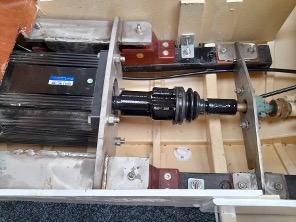
The dc motor is considerable, weighs about 30kg developing 39 N.M. 

The universal is a CV joint from a wreckers, and the thrust bearing just aft. The motor output shaft is 35mm!

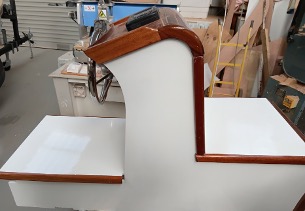
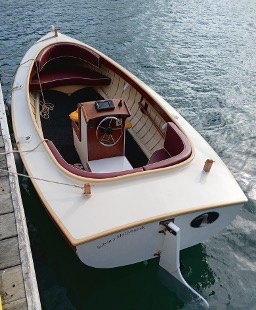
Having decided upon electric propulsion, Roy decided to throw the cat another goldfish and fitted hydraulic steering to enable comfortable curved seating in the stern without a the tiller interfering with guests seated there. 

Once again, Roy went online and researched hydraulic steering systems. Having been quoted over $2000 locally, it cost less than $500 for a full set imported and landed at the door in 3 weeks.

The short S.S. rudder tiller penetrates the transom quite unobtrusively, to the ram below deck and can be disconnected from the rudder when removing for trailing.

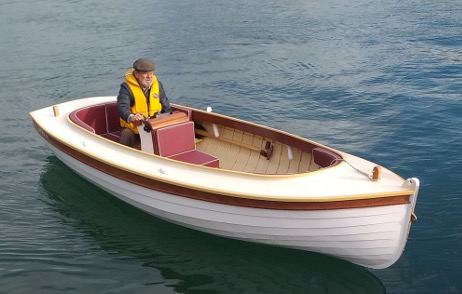
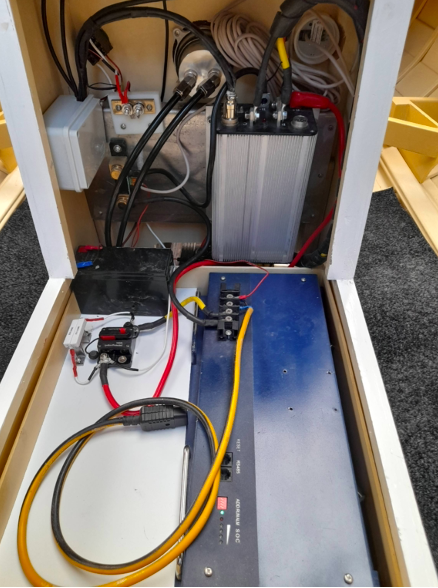
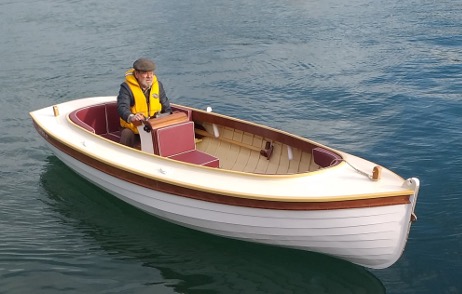
The Electric system enabled a centre console with motor and battery installed beneath, leaving a huge area amidships, where an engine is usually placed. A forward curved seat fits neatly behind the curved foredeck coamings. The large 48v lithium battery required is situated under the front seat of the console, while the motor and drive train is beneath the foot level lid below the helm.

The 48v 100 amp hr lithium battery is the blue item & takes up the full width of the compartment. The silver item is the motor speed controller that came with the motor. The yellow lead is for connecting to the 48v  HD charger.

Roy purchased the 48v 100 amp hour Lithium Ion Battery from Auckland along with the new trailer, driving up and back being cheaper than freighting both down to Marlborough.

He also installed a GPS Plotter & Sounder plus a Victron battery management system from Burnsco. This is a magic device providing a shunt in the neutral supply and thus determines the present battery voltage, the currently used amps & watts, plus provides a range in hours and minutes left in the battery. It is supplied with a 50mm gauge but the best method of readout is by Bluetooth to a cell phone enabling all the readings on one screen.

The greatest dilemma with electric boat propulsion systems is range anxiety, knowing how long you can actually cruise for, at the present power usage. Well, the Victron system diminishes this to a normal fuel level concern, if you run at full power then your fuel range will be minimal, but with sensible throttle use many hours are available. Roy intends to calibrate the range from GPS speed, Shaft rpm & amps drawn. These are shown further on.

Tim provided his figures, and for example at 3.3 knots Billy O Tea draws 5.2 amps, at 5 kts she draws 22 amps but at 5.4 kts, draws 50 amps indicating her best hull speed is just below 5 kts. i.e. 100 amp hour battery at 22 amps =  5 hrs motoring, and you can always slow down!

We used GPS speeds & digital tacho rpm figures with the Victron gauge providing the current drawn. Roy will do similar with Toroa EV,   (her new name now she is completed.) Toroa means Salvins Mollymauk (and the EV is electric vessel!).                                                                          

Ruru like most clinker hulls is a very seaworthy craft and it is on record that when Ernie Lane completed her, she was motored around from Picton to Havelock by a Mr Doug Pickering. This is a daunting trip for a 14ft Clinker, even today, and he is reported to have had fuel trouble near Cape Jackson, Doug simply tied Ruru to some kelp while he cleaned out the fuel line of shavings!  Ruru was fitted with a Scottish Kelvin of about 5 hp from new and to have motored the 60 odd miles around the Cape was an impressive feat 105 years ago!

When one considers that she was built shortly after the First World War, it is remarkable that it was obviously intended she would have an engine from new.   It wasn’t a retrofitted engine installation as is usually the case with this vintage. Perhaps this would indicate the wealth of the original purchaser, Mr John Brownlee?

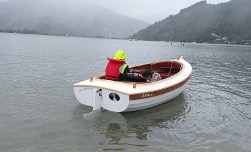
With the helmsman and passenger sitting in the stern sheets. Toroa EV rides high in the bow but with passenger forward she sits nicely to the waterline.

Roy advised that Toroa EV took 5 months to construct at old farts pace… i.e. 5 hr per day knocking off at rum o’clock. He takes great delight in creating clinker craft, believing if the boat is pretty, it will become a 100 year boat. (only pretty boats last 100 years because their owners love them!)

The Picton Clinker Club members own many small clinker & classic style boats and are committed to salvaging and restoring these wonderful small craft, often saving them from various scrap heaps or bonfires.

Toroa EV Performance

Revs                                   Speed                                Amps


350                              2.1kts                                 2.4

450                              2.6kts                                 3.5

650                              3.4kts                                 6.6

800                              4.1kts                                 11.7

970                              5.3 kts                                16

1070                                   5.4 kts                                21

1250                                   5.9 kts                                39


As you can see, any attempt to exceed 5 knots hull speed causes the amps load to dramatically increase, up to about 4.5kt is very economical indeed but a little more and range diminishes dramatically. Exactly the same of a combustion engine I guess.”

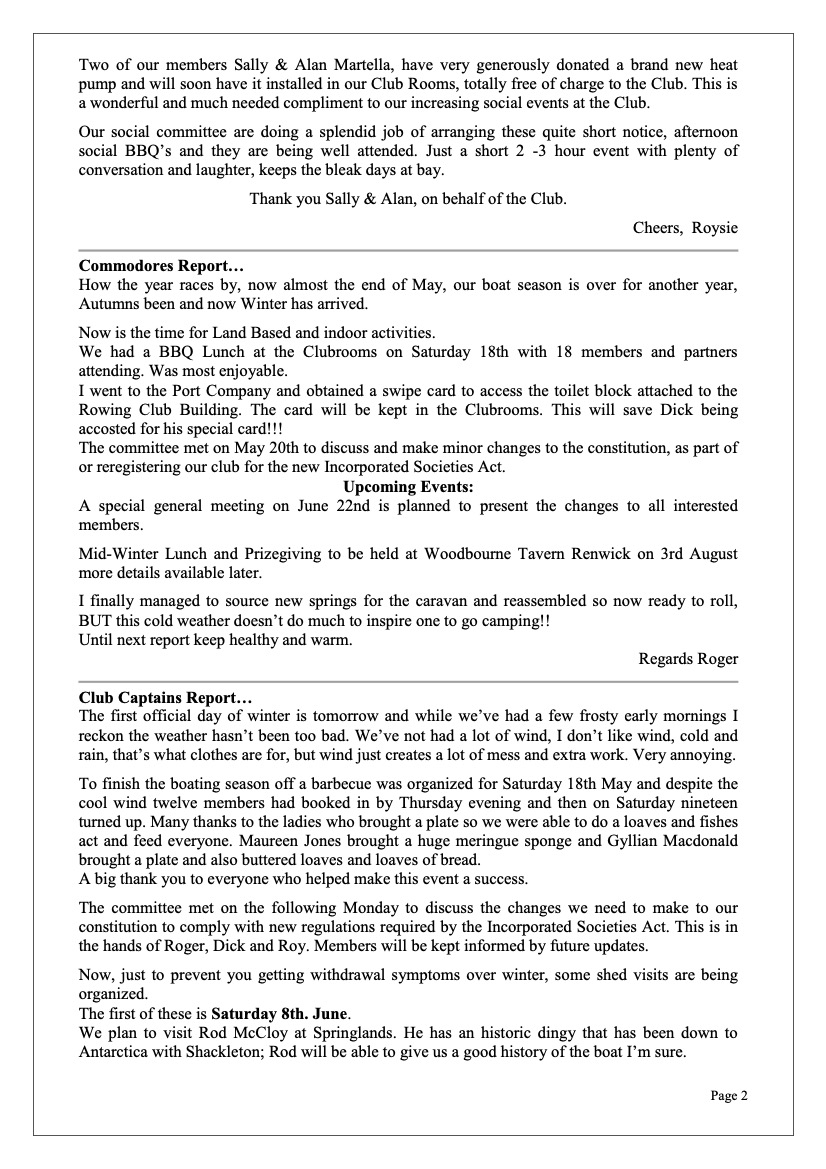
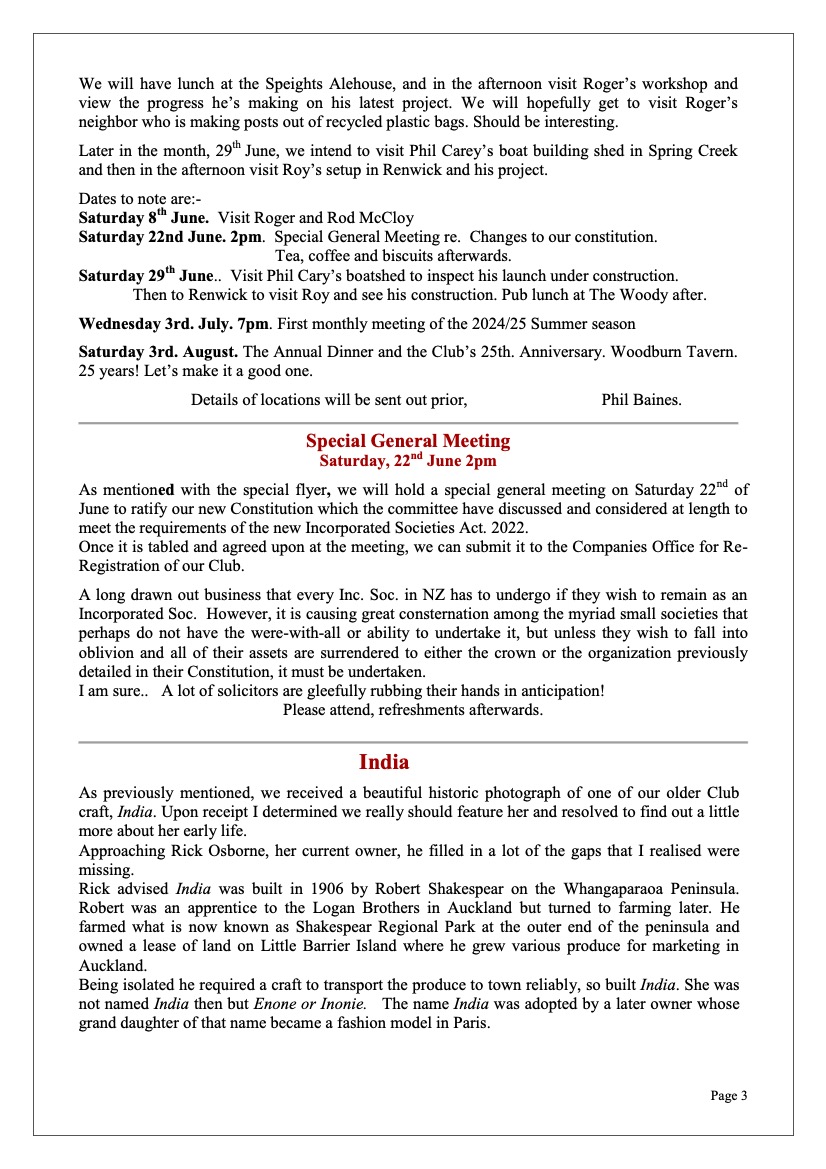
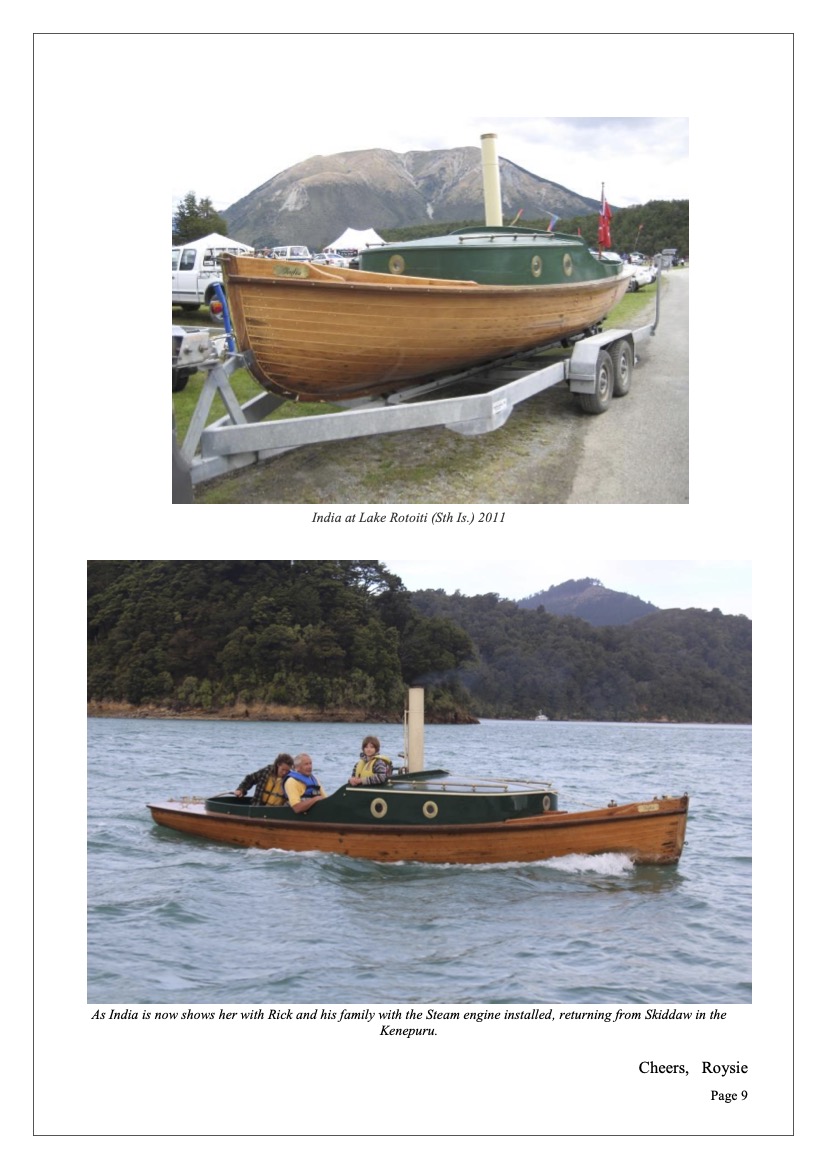
INDIA  – Picton Clinker & Classic Boat Club

INDIA  – Picton Clinker & Classic Boat Club

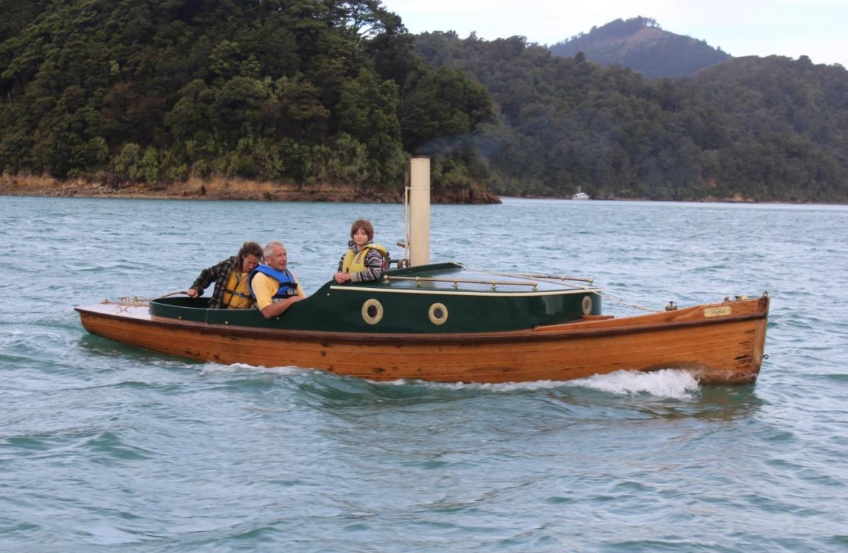
 Earlier in the week we were contacted by Roy Jones from the Picton Clinker & Classic Boat Club. Roy advised that he had come across a photo of the 1906 Robert Shakespear built launch – INDIA on WW.

INDIA these days is a very active member of the PC&CBC fleet so Roy undertook to pull together an article on INDIA that has appeared in the June 2024 club newsletter.

The PC&CBC is a very active club and meets regularly both on and off the water. This year they celebrate the 25th Anniversary of the club – well done.

If you are time poor fast forward to page 3 and get a wonderful insight into this amazing classic woody.