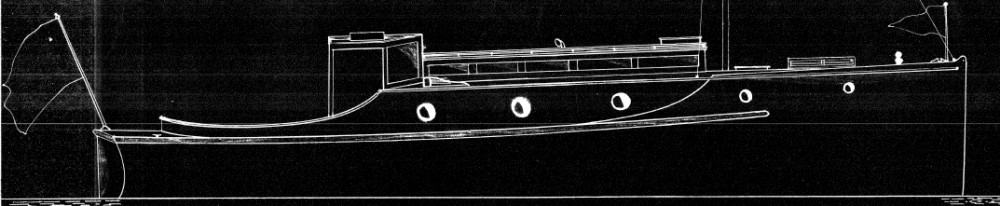
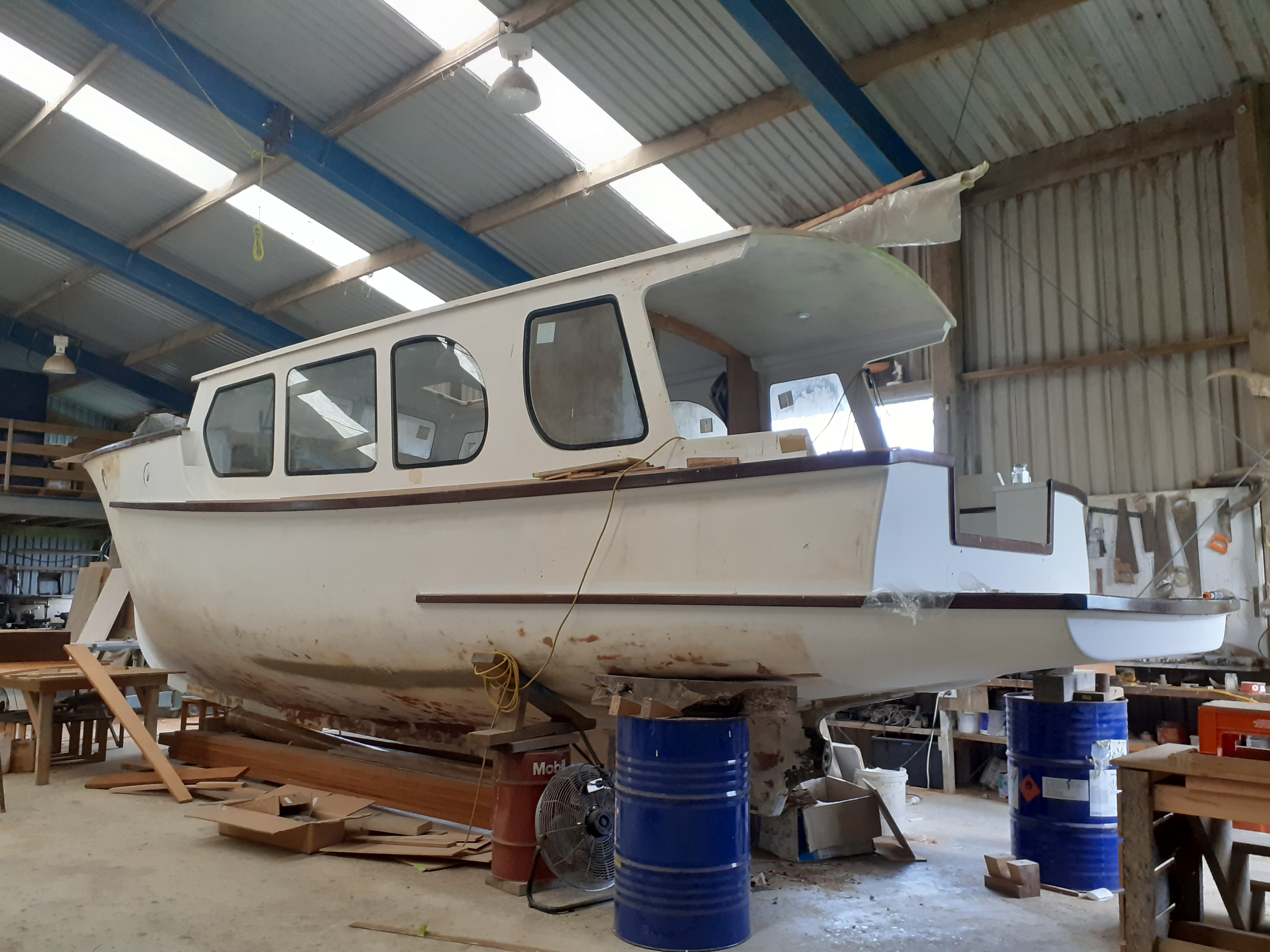
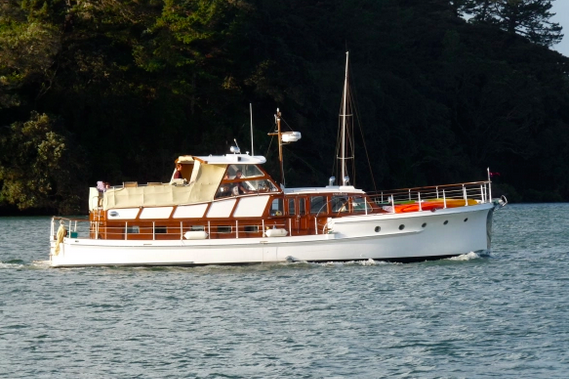
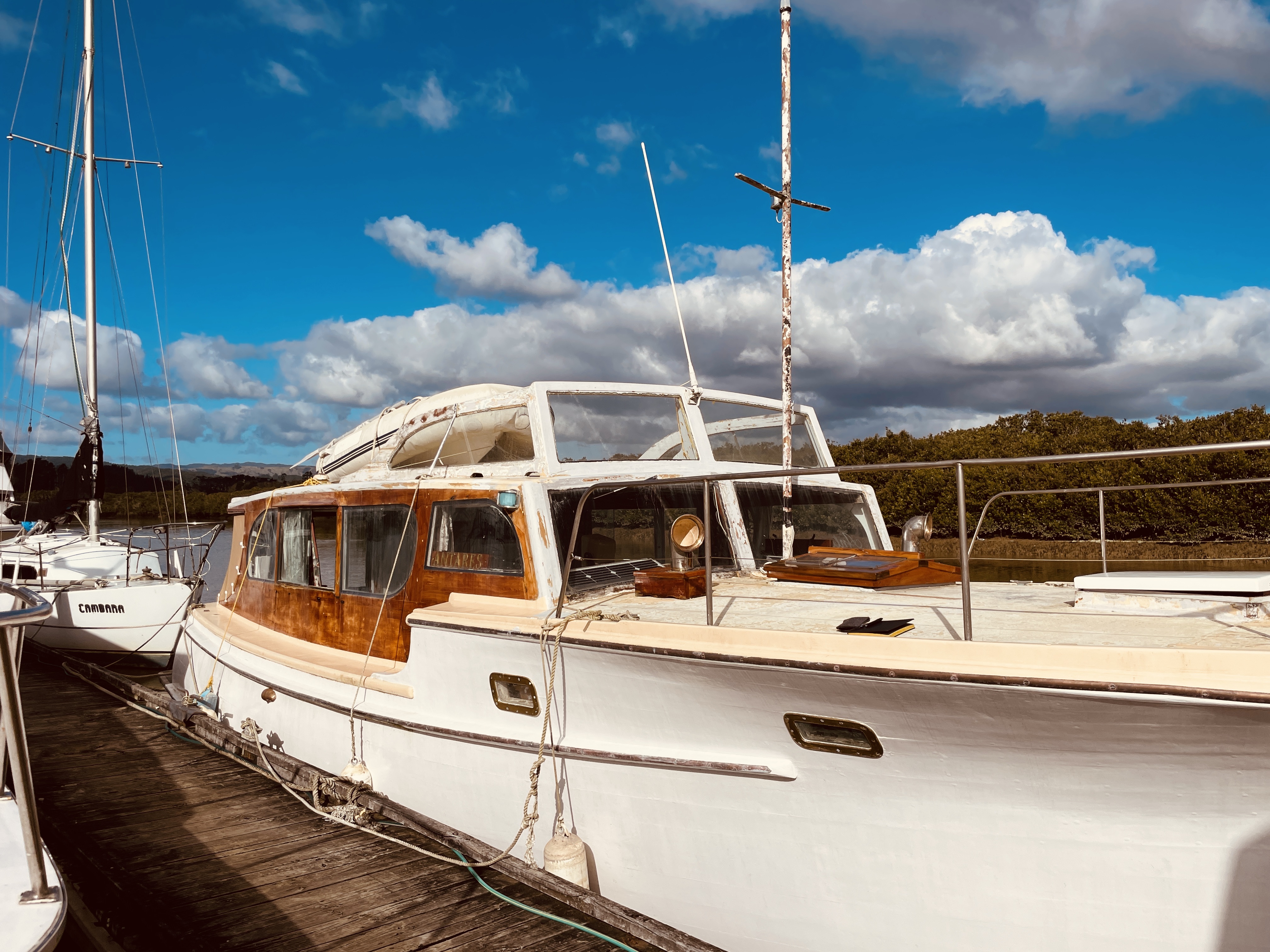
MEDWAY Taupo woody Paul Drake came across the launch Medway the other day, on the hard at Mana Marina (Wellington).Paul recalls that she was at Taupo in the 1960’s and is clearly a sister ship to Lidgard’s Monterey.
Previously on WW there has been discussion relating to three launches built at the same time, they were Monterey, Almaray & possibly Tangaroa. Paul wondered which of the last two Medway is, as there almost differently has been a name change. WW link below to Monterey, where you can see the Lidgard factory / shed at the time of building. https://waitematawoodys.com/2013/04/14/monterey-2/ Paul commented that although in great need of a thorough paint, her good bones show through and one would think that she will tidy up very well.
Input from Harold Kidd – According to the APYMBA records, MEDWAY was built by “Woods” of Auckland in 1952. In 1962 she was owned by Larry Bruce Johnston and then had a 100hp Ford diesel.
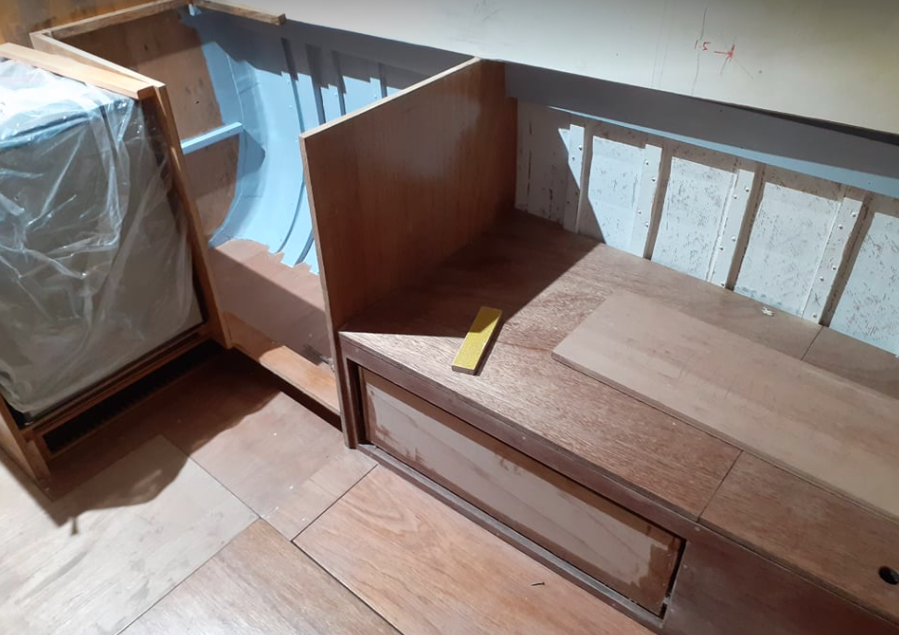
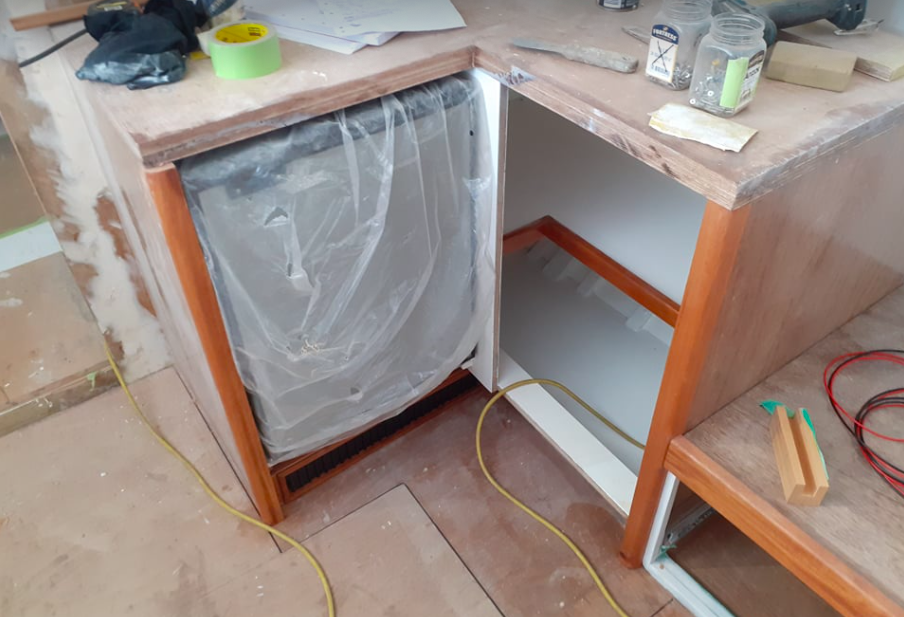
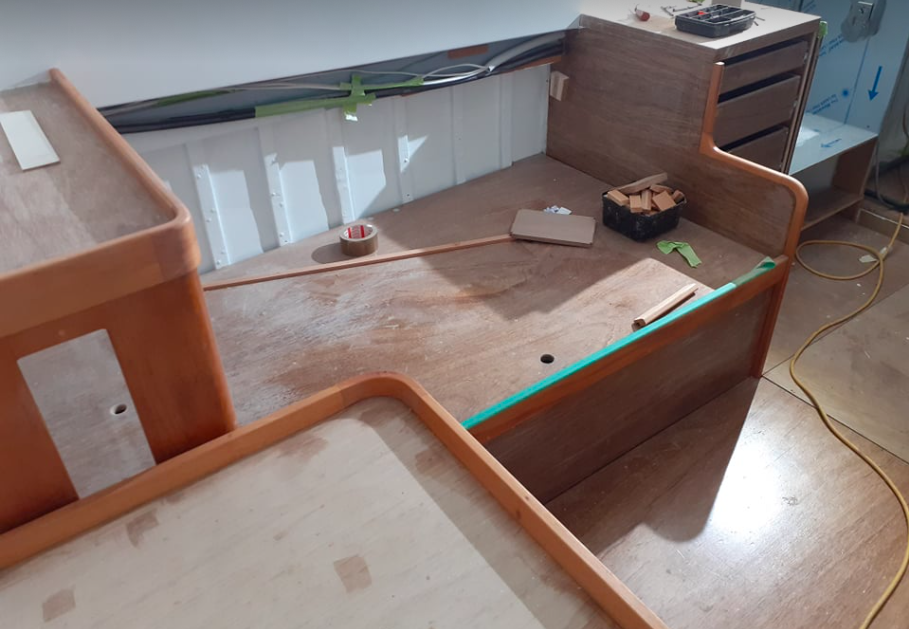
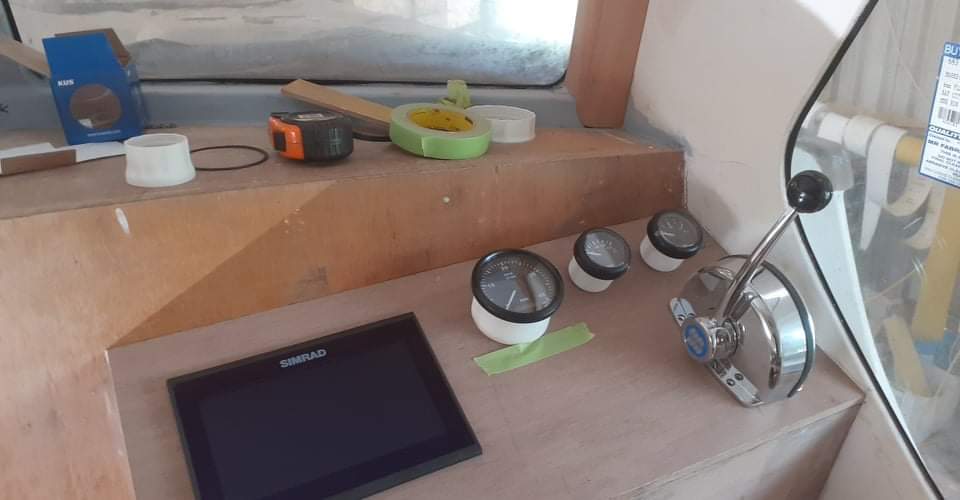
WAIONE RESTORATION UPDATE I was contacted recently by Daniel Taylor, the son of Steve Taylor who took over the restoration of Waione from Daniel’s late grandparents Jack and Missy McCabe . Daniel advised that his grandmother unfortunately passed away in September last year.
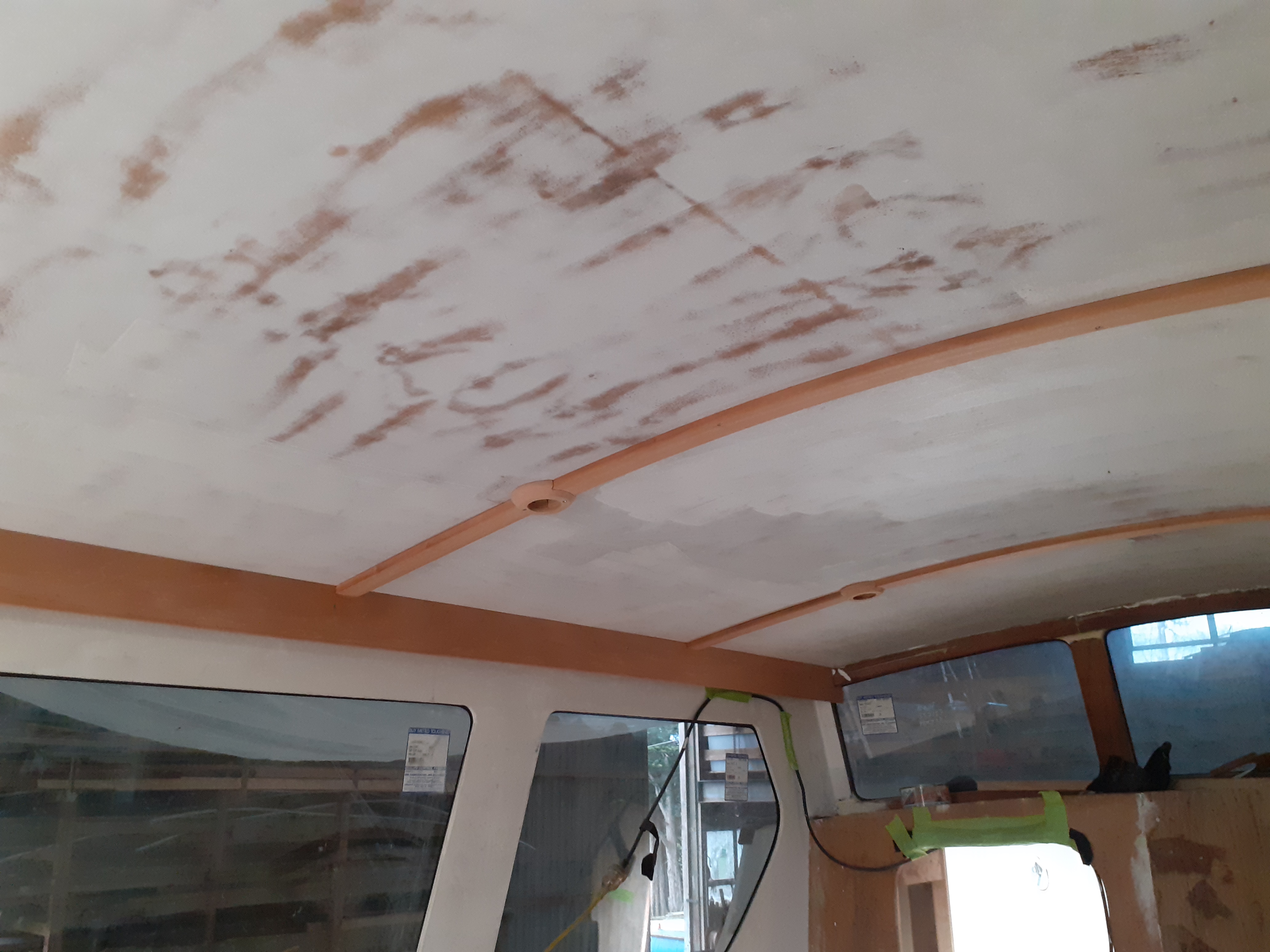
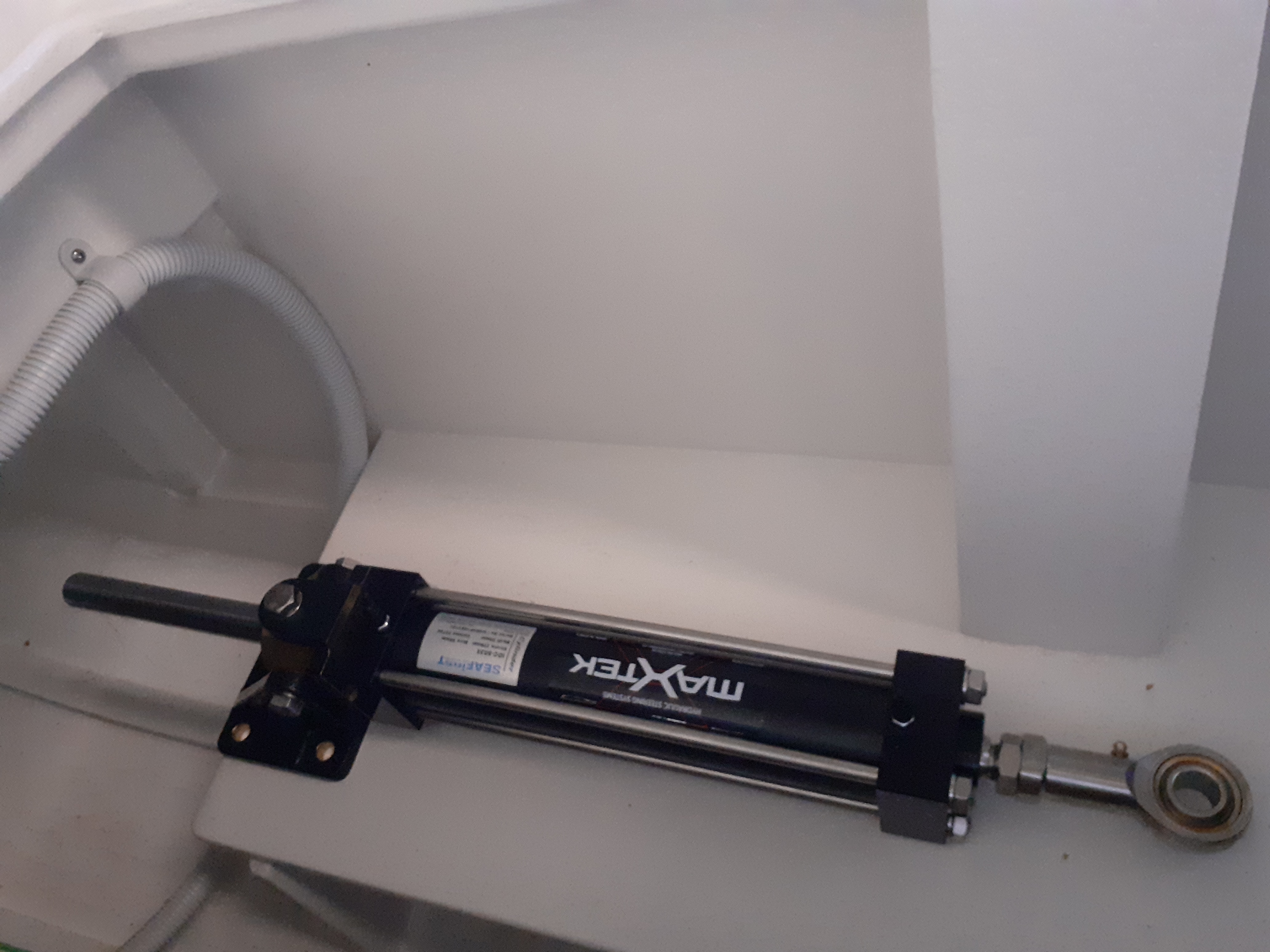
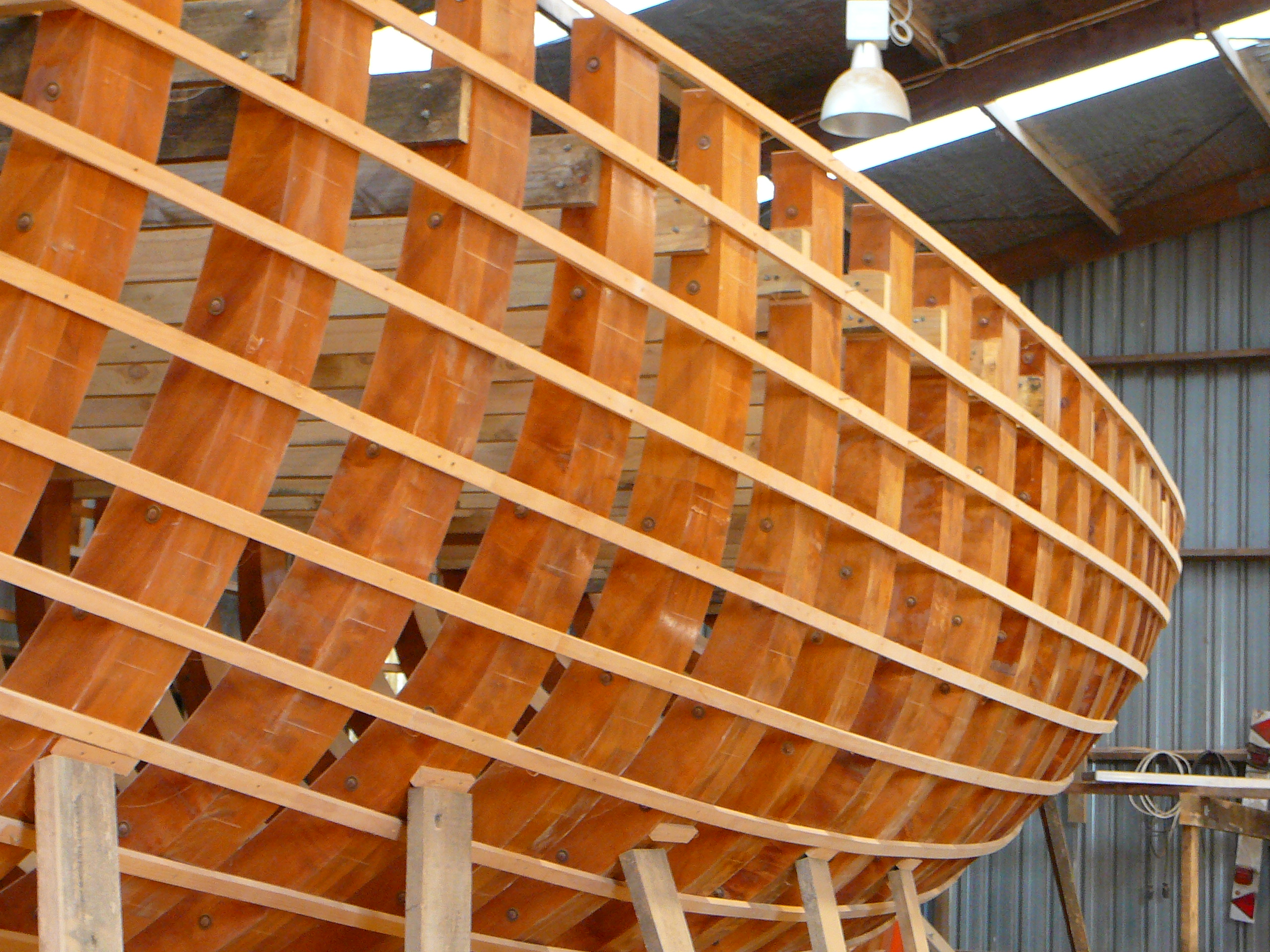
Daniel has decided to help his father who took over the project as of the start of this year. Waione is being finished by Daniel as he works in the marine electrical trade, also helping is the skilled team at Quayside Marine, Mahurangi . As we can see from the above photos, the interior fit out is well underway.She measures 32’ in length and could have been (thanks HDK) built by Joe Wheeler.
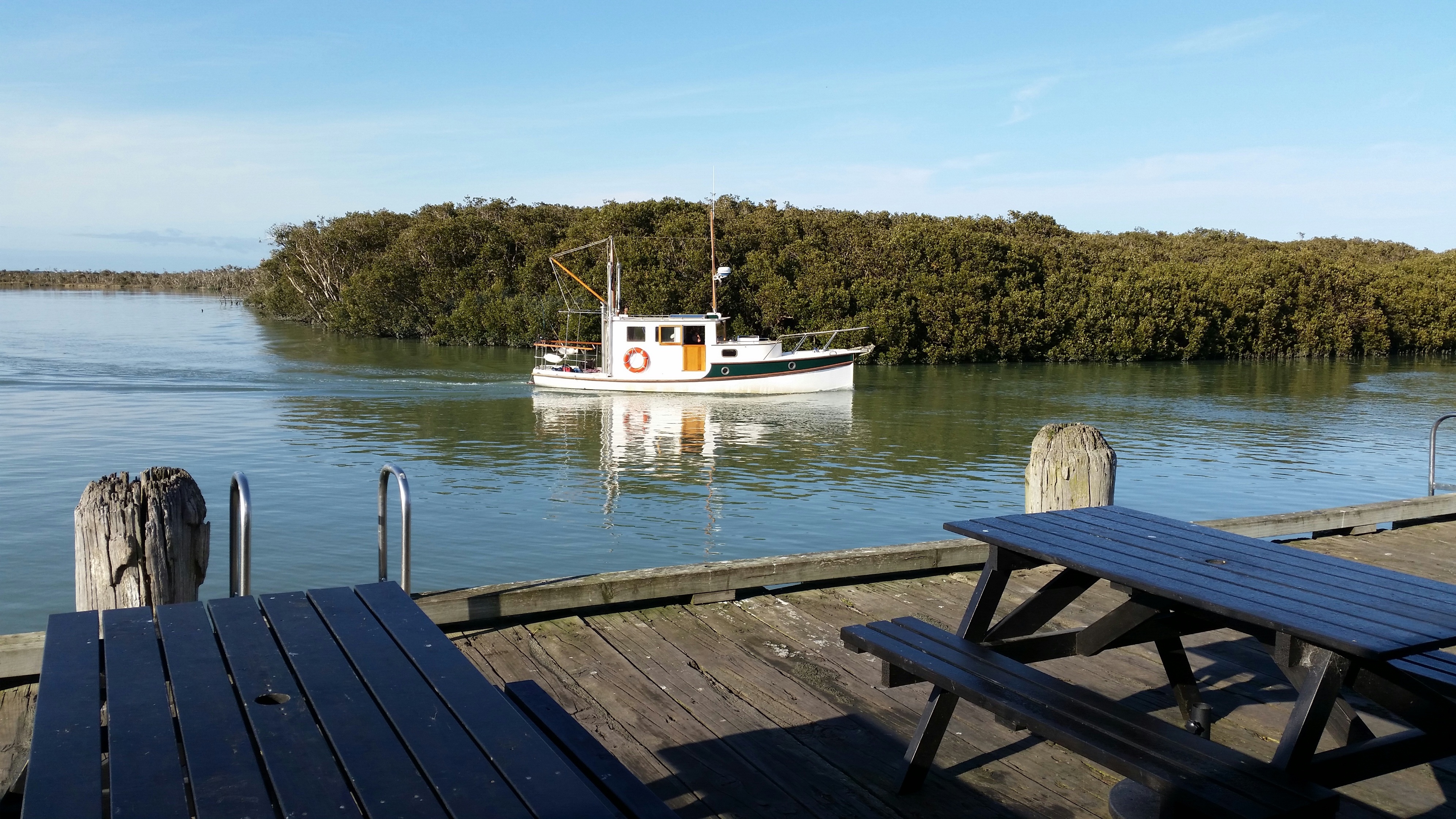
MARORO + SPECIAL INVITE TO VISIT BOAT BUILDER – PETER BROOKES SHED Thames woody – Brian Thomas, sent me the above photo of his launch Maroro, that he and his son have spent the last 8 years rebuilding at Kopu. Since her recent relaunch she now resides at Thames Marina. The above photo was taken of her from the Thames Wharf Cafe. In his note Brian mentioned a blog that featured the rebuild but I have been unable to trace it or get more intel from Brian, so today’s story is a bit of a ’name & shame’ i.e. hopefully Brian will see this and be in touch 🙂
From the photo it appears to have been a very smart restoration.
SPECIAL INVITATION – A Peek Inside One of Your Best Wooden Boatbuilders Shed
You are invited to an open afternoon at Brookes Boatbuilders, to view the restoration of:
Fife Yacht, Impala
Refit of K class yacht, Katrina II
Restoration of Launch, Amakura II
The many other wooden boats at the yard – Matia, Ladye Wilma, Kotiri, Pilot Cutter, Kenya II (Peter’s own classic launch)
DATE: Sunday 1st November
TIME: 2pm-7pm
ADDRESS: 108 Woodhill Park Road, Waimauku, Auckland These invites only happen every 3>4 years so woodys do not miss out, it will be an amazing afternoon.
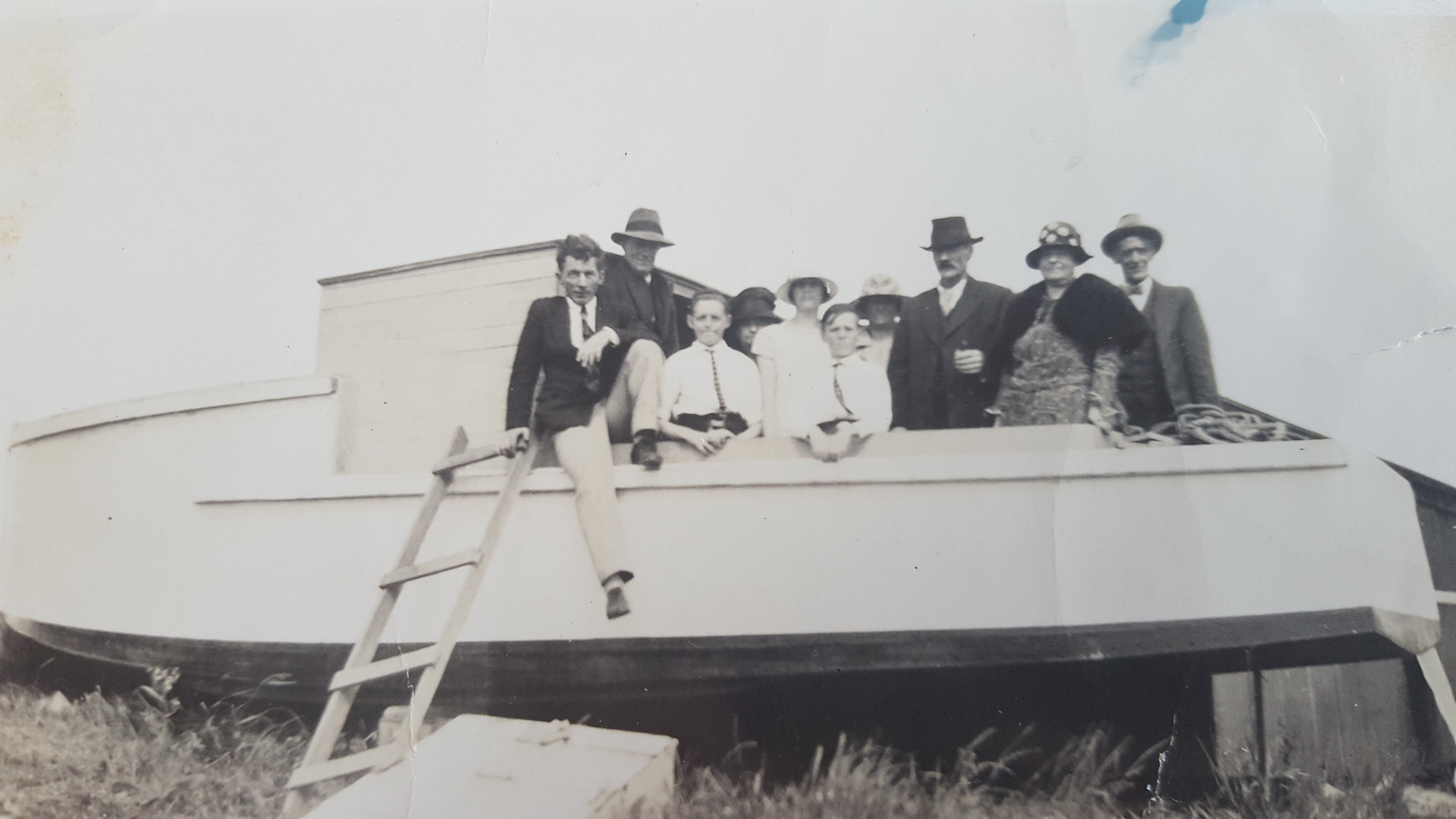
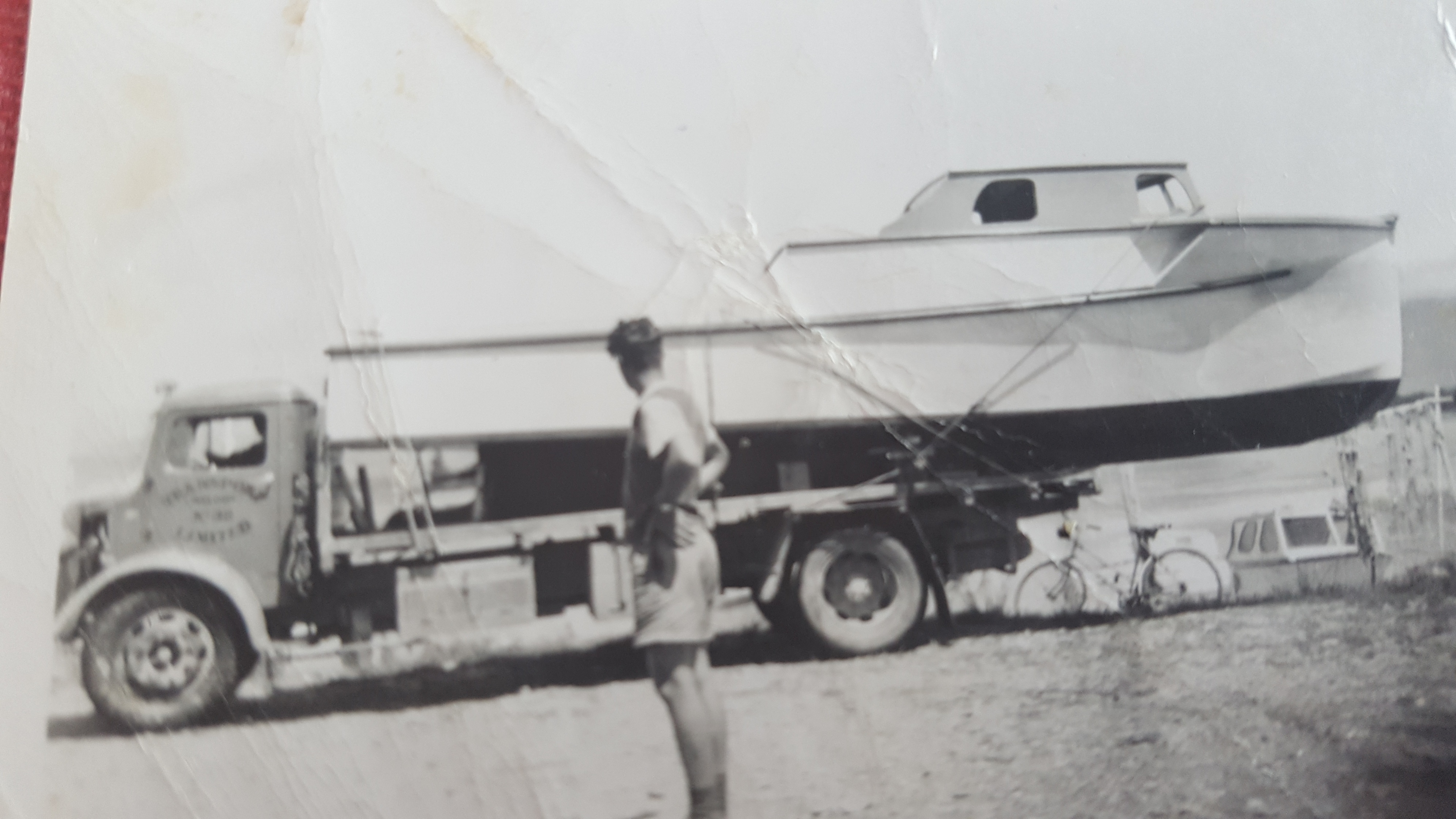
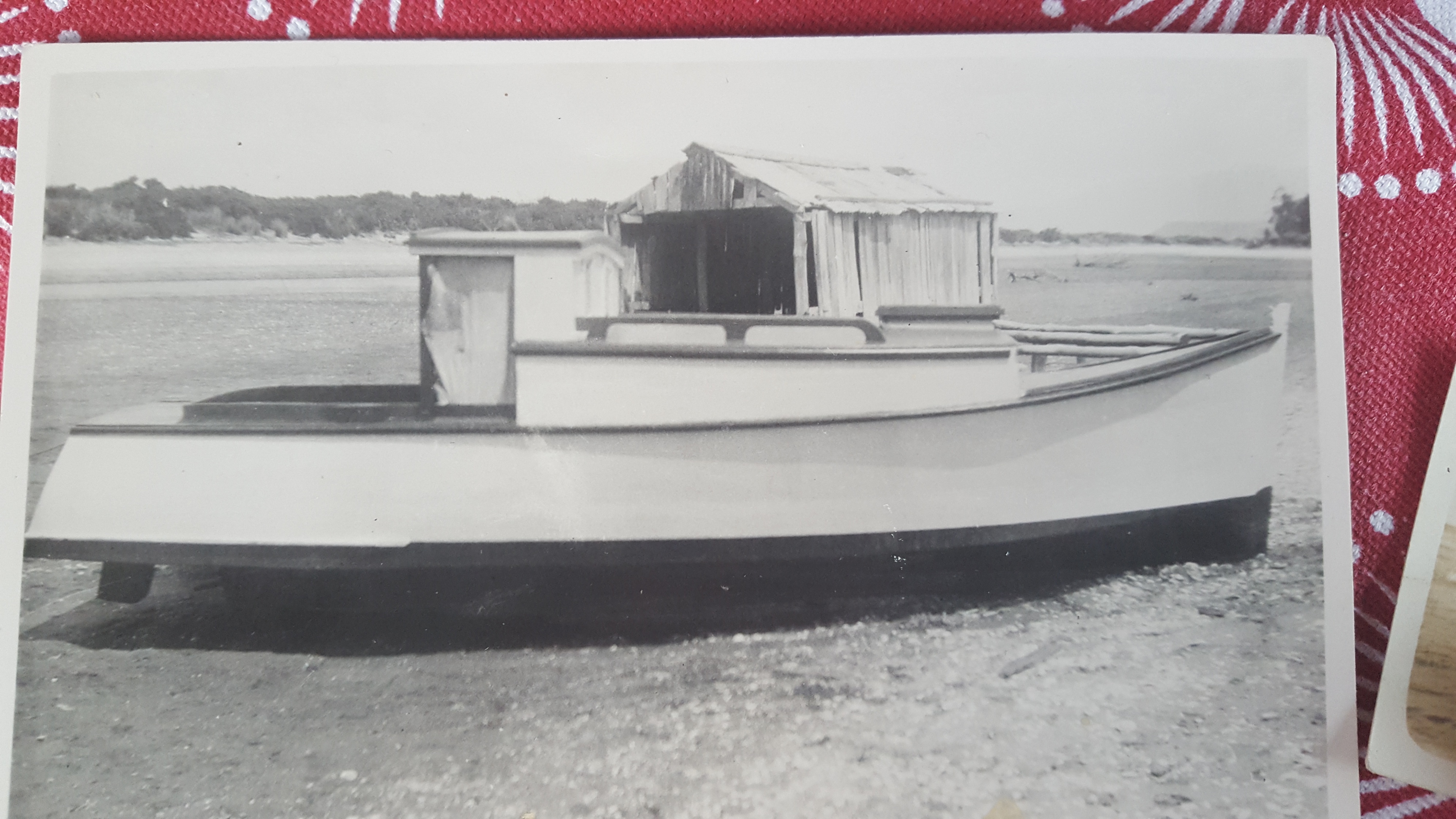
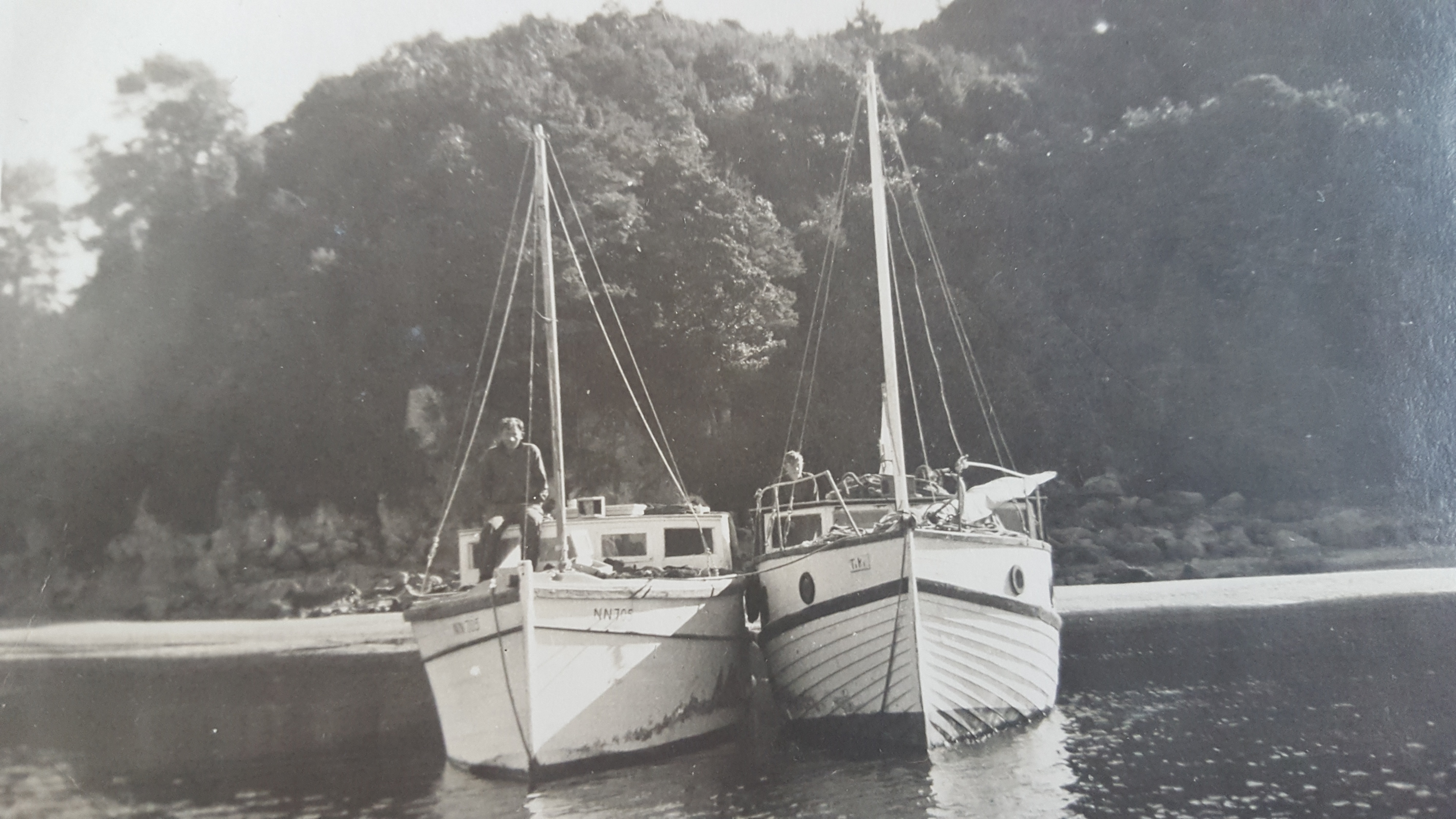
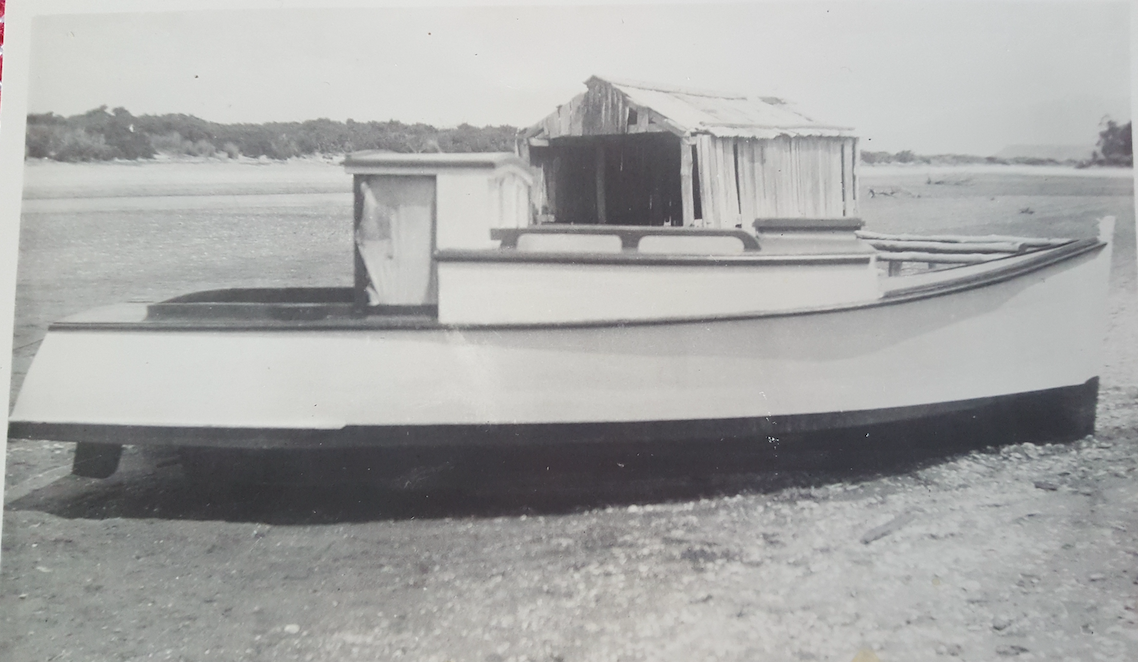
Can We Name These Classic Wooden Boats I have been contacted by Evelyn Whitell regarding the above photos from the South Island, probably the Abel Tasman area. Evelyn’s father Sid Giberston is pictured in the first photo on the left of in the dark suit, the large (Evelyn’s words) lady on right is his mother and his father Alex (Alexander Gilbertson – also known as Deacon) is beside her. Alex was a boat builder among other things and was the youngest son of Captain David Gilbertson, a pioneer in Nelson. Capt. David was a shipwright and builder of several trading schooners and ketches, including one of the first steam boats in Nelson. They ran from Nelson down the West Coast, up North and around the South to Lyttelton. Sadly most were shipwrecked eventually.
Evelyn’s dad, Sid, used to take groups of people down the bay for picnics in the Abel Tasman area. Evelyn commented that the steamship mentioned above was discovered around 1997 under a ton of sand near Wanganui and was going to be taken to a museum somewhere. Any Southern woodys able to ID any of these boats ?
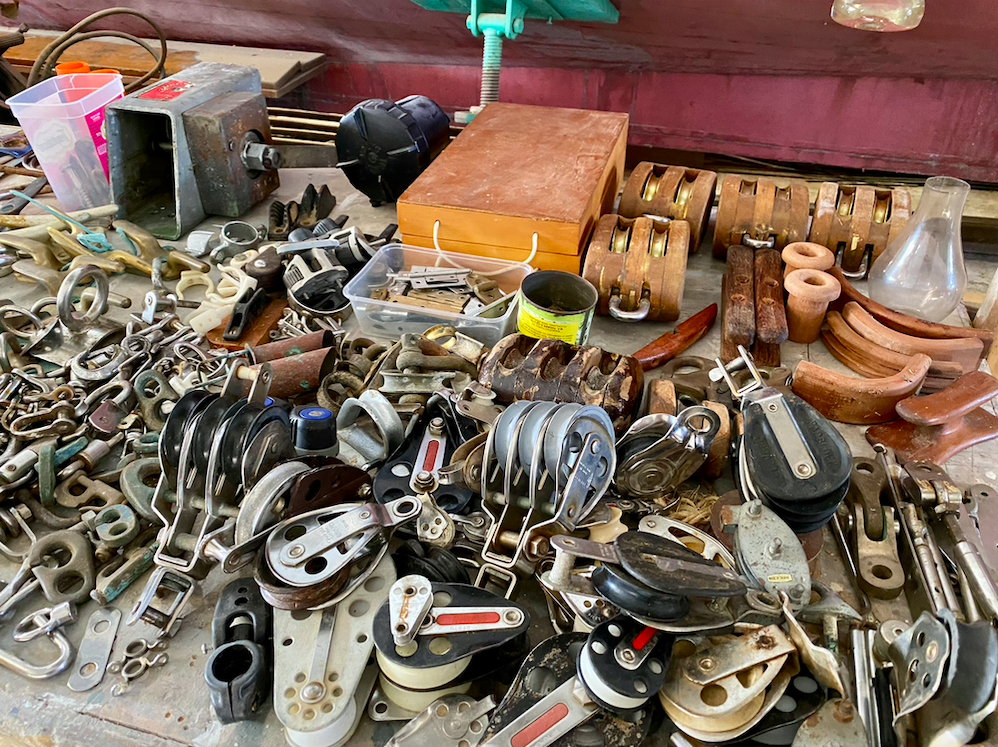
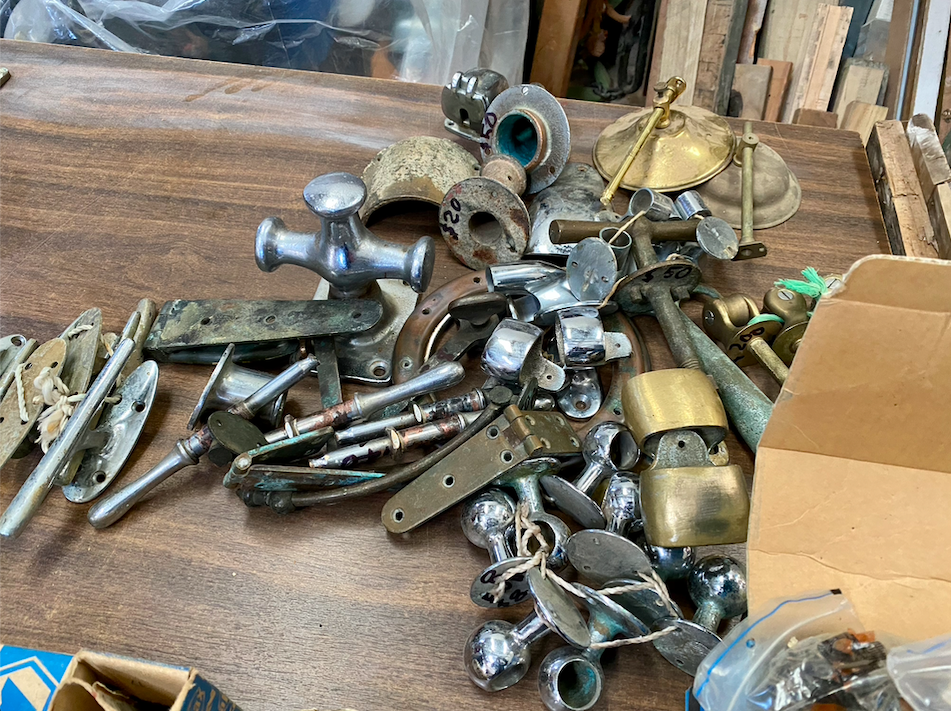
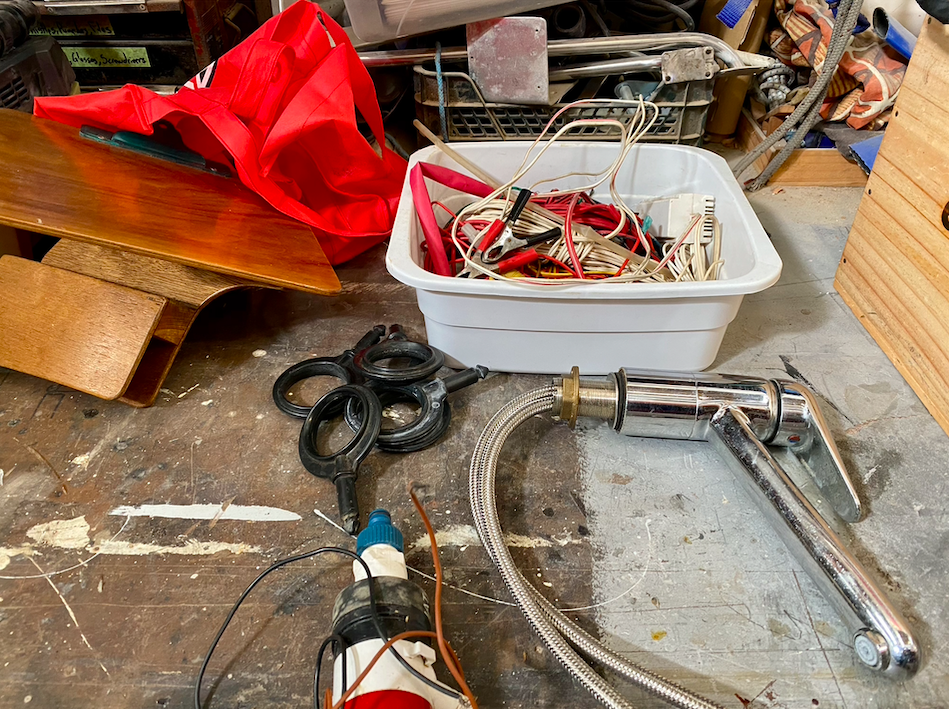
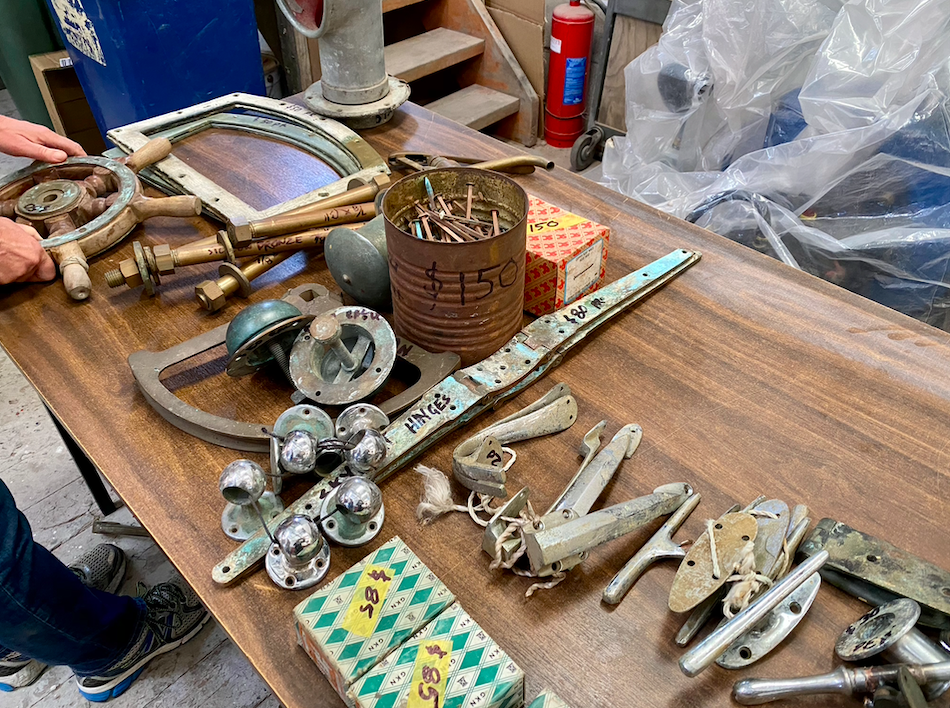
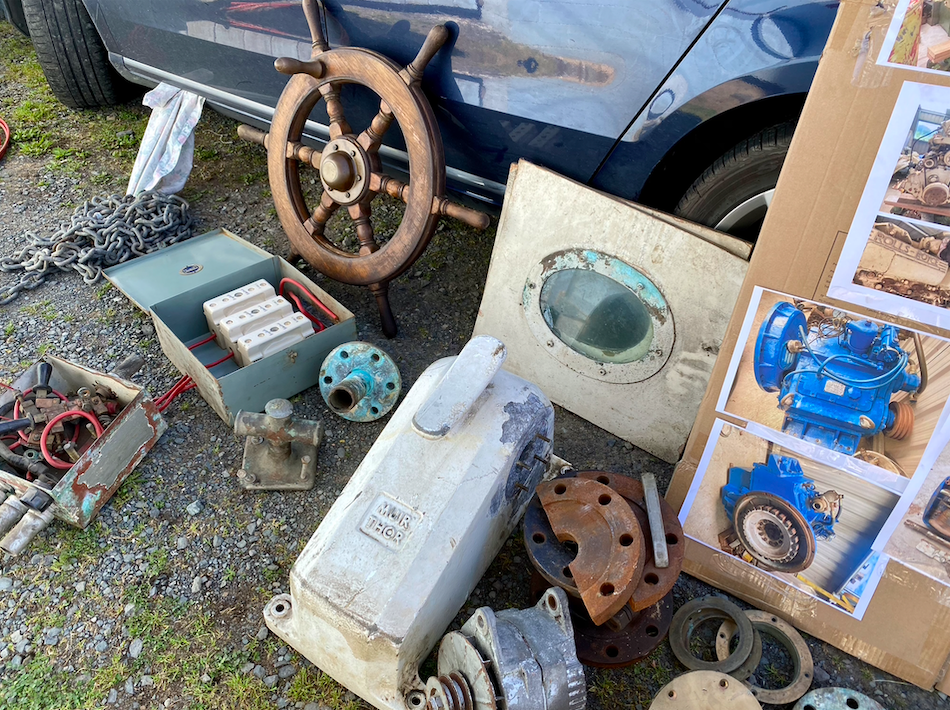
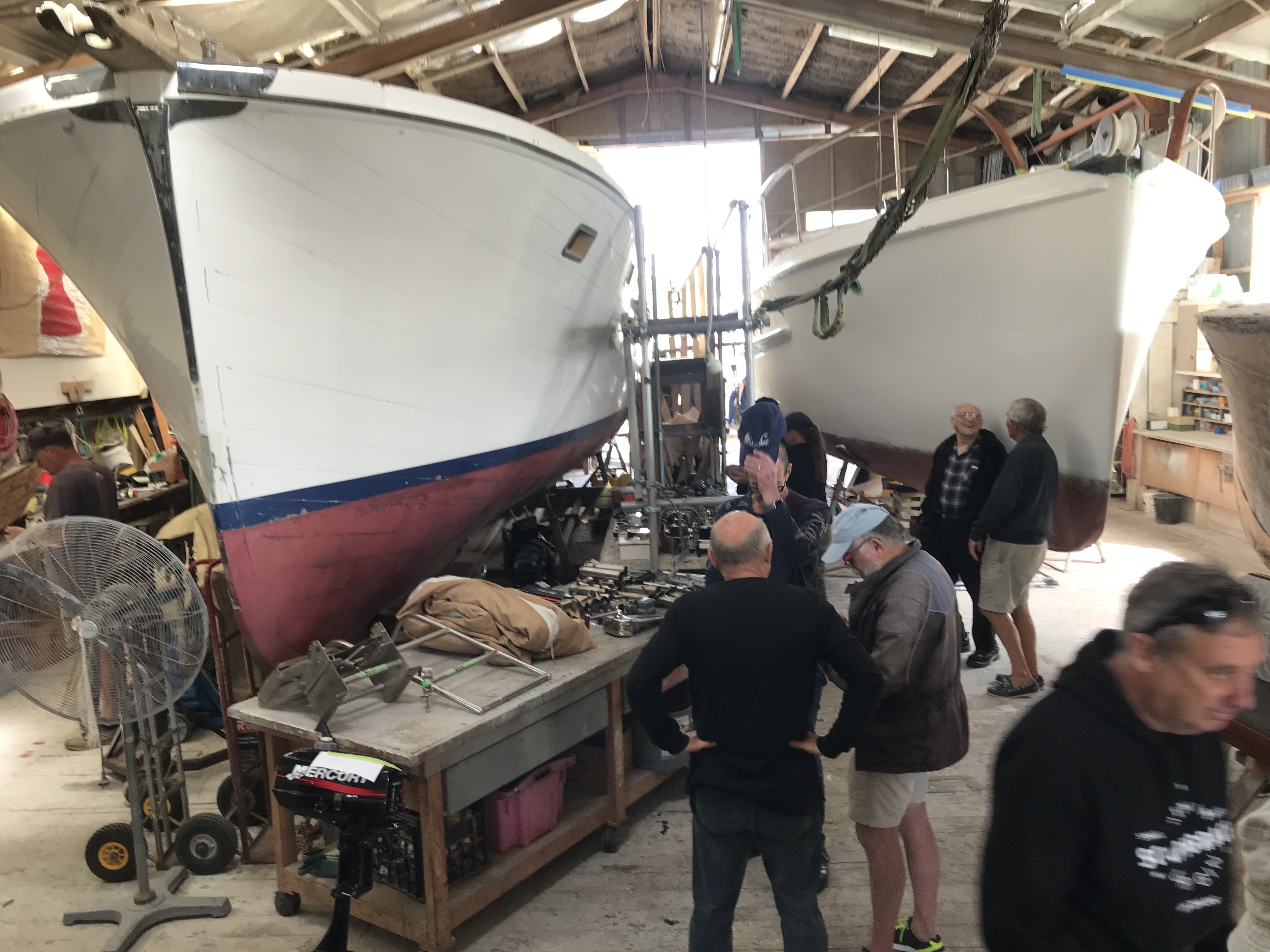
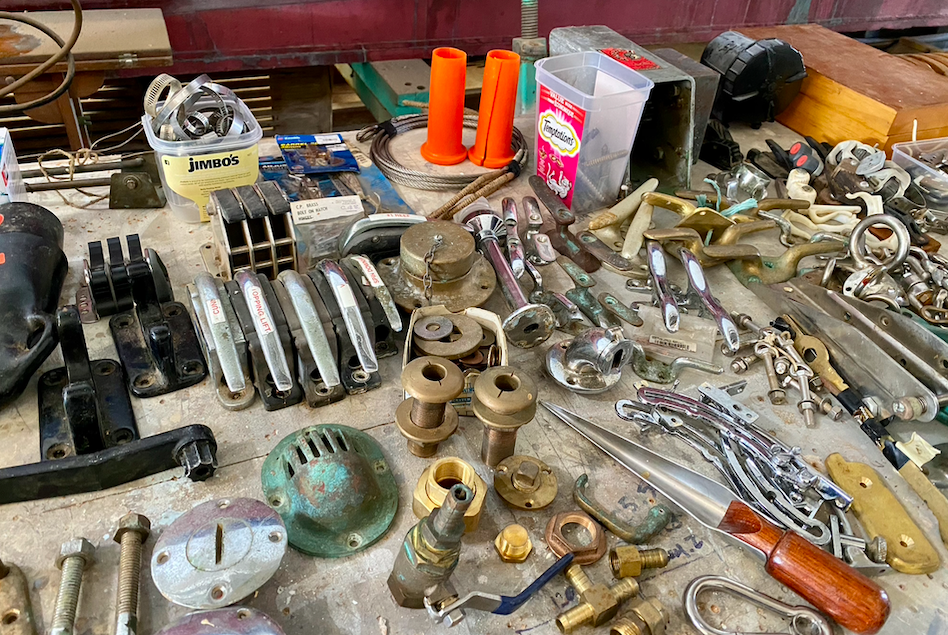
ONE MAN’S TRASH – ANOTHER MAN’S TREASURE Yesterdays boat boot sale at The Slipway Milford was a cracker. Of course I took nothing along to sell, I’m a collector, but I do give stuff away 🙂
Above is a snap shot of some of the goods on offer. Big thanks to the team at the Slipway Milford – Cam and Jason for hosting the event and providing the BBQ.
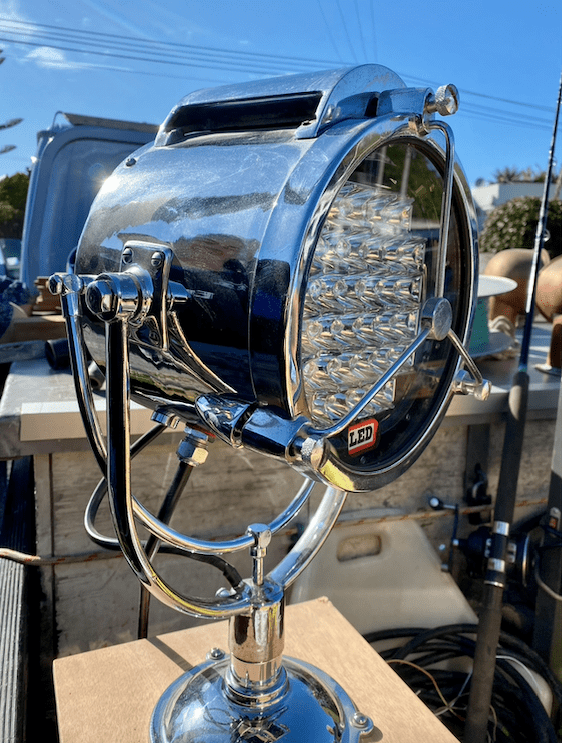
Bargain of the day – the very impressive search light, already converted to LED
Best shopper – telephone ‘bidder’ – Peter Mence for a piece of art – a 28Ib bronze anchor to grace the bow of Eileen Patrica.
Best Seller (the most stuff) – Jason Prew, I thought I had it bad, he is worse, for every item he sold, he bought something else 🙂 I can see this becoming a regular event 😉
Buying or Selling a Classic Boat Without sounding too much like the late Jacinda Ardern (“be kind”) – when people ask me about classic wooden boat ownership, I normally say that owning a woody has a positive effect on your life i.e. you end up forging a life you don’t need to escape from.
So woodys in the interest of your mental well being listed below a sample of some of the boats that are currently berthed at the virtual Wooden Boat Bureau Sales Marina. There are others for sale, some owners request privacy. To read more about the Wooden Boat Bureau – click https://waitematawoodys.com/2019/12/01/wooden-boat-bureau-advice-for-buyers-and-sellers/ The Wooden Boat Bureau is uniquely placed to offer impartial, up-to-date market information and objective advice to both sellers and buyers. So if you are looking for a wooden boat or considering selling – email us at waitematawoodys@gmail.com
The 1965 Salthouse built woody – Trinidad is currently tucked up in the Greg Lees Boatbuilder shed at Sandspit getting some botox i.e touch-up coats to the coamings and wheelhouse and a re-paint of the topsides.
Yesterday, the brains trust from the yard + Akzo Nobel (AWLWOOD MA & International Paints) + AWLWOOD MA Guru (Uroxsys founder) David Waddingham met to discuss the upcoming work on Trinidad, she is a bit like their in-house model. It was interesting to be a fly-on-the-wall and hear about the latest thinking on application / thinning / primer techniques and their newish line extensions eg the Multi-climate gloss finish. The product has come a very long way in the last few years. You can see from the last two photos that the GL’s boys only just manage to get the doors closed when Trinidad visits, very cozy.
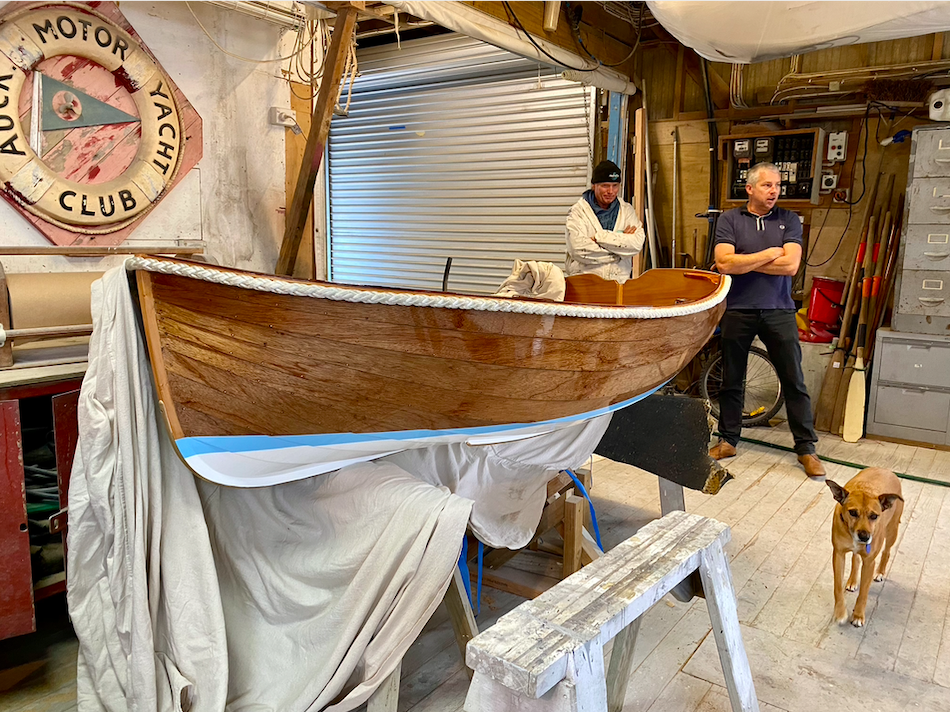
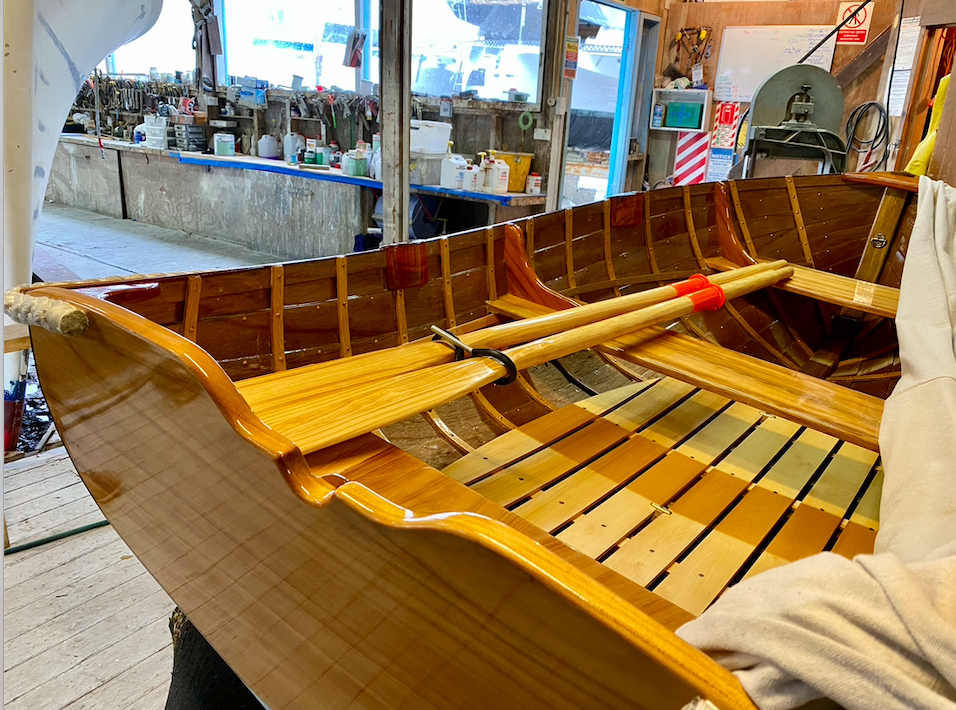
While there, foreman Dale Collins, flipped the covers on his recently completed clinker dinghy (photos below) – stunning and woodys its 4sale 🙂
WOODYS LUNCH CRUISE TO RIVERHEAD TAVERN – TIME TO RSVP
If you are planning on joining the fleet for the cruise up the Riverhead river to join fellow woodys for launch on Sunday November 8th – drop me a quick email with boat name and approx crew numbers waitematawoodys@gmail.com
The Refit Of Windborne Today’s story is on the schooner – Windborne, by John Gander, via Dean Wright, John and family refitted and owned Windborne for many years. Its a great read by one of our best woody boatbuilders. I’ll shut up and just let John tell the story – enjoy, I did 🙂 Remember – to enlarge a photo, just click on it 😉
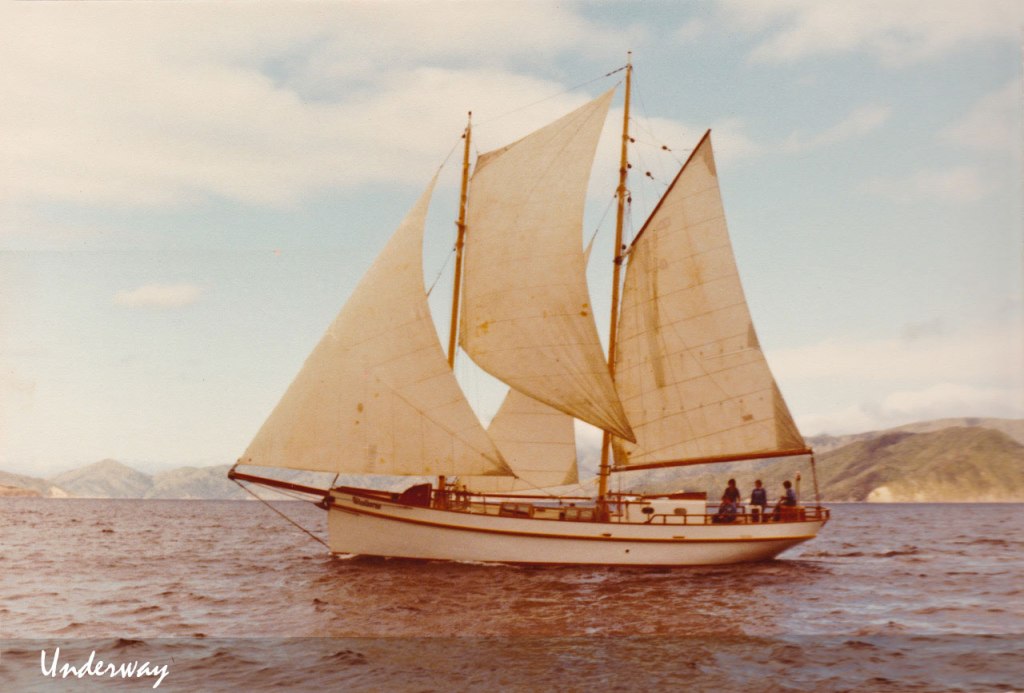
‘Windborne’ was built in 1928 by Cornish boatbuilders Gilbert and Pascoe at their yard in Porthleven and launched as the cutter ‘Magnet’ after launching she took part in the Fastnet yacht race. She again raced in the Fastnet in 1930 but this time re rigged as a schooner, and has continued with this rig.
On sailing to the United States her name was changed to ‘Huguenot’ and registered in San Diego. On being purchased by the Charleson’s a Canadian family from Vancouver, the owner wanted to retain the name Huguenot and she was renamed ‘Windborne’ a very fitting name for her, and she was Vancouver registered. On sailing her to the U.S. port of Blaine just south of the Canadian border Mike and his wife Karol began getting Windborne ready for a voyage to the south Pacific.
The family visited many Pacific islands during their cruising and then headed for New Zealand and on the last part of the voyage encountered heavy weather and Windborne suffered some damage to her bulwarks and rigging. Being designed on the lines of the Bristol Channel pilot cutters and soundly built she is a very sea kindly vessel and delivered the family safely to Auckland.
Bev and I had not long completed ‘Deepstar’ and were planning on building a large sailing craft for our family use, however time was getting on, so before it was too late and our children left home we decided to look around for a suitable vessel. We were introduced to Windborne on her mooring at Herald Island and went for an afternoon sail with the Charleson family, and could see she was worth and deserved an extensive refit.
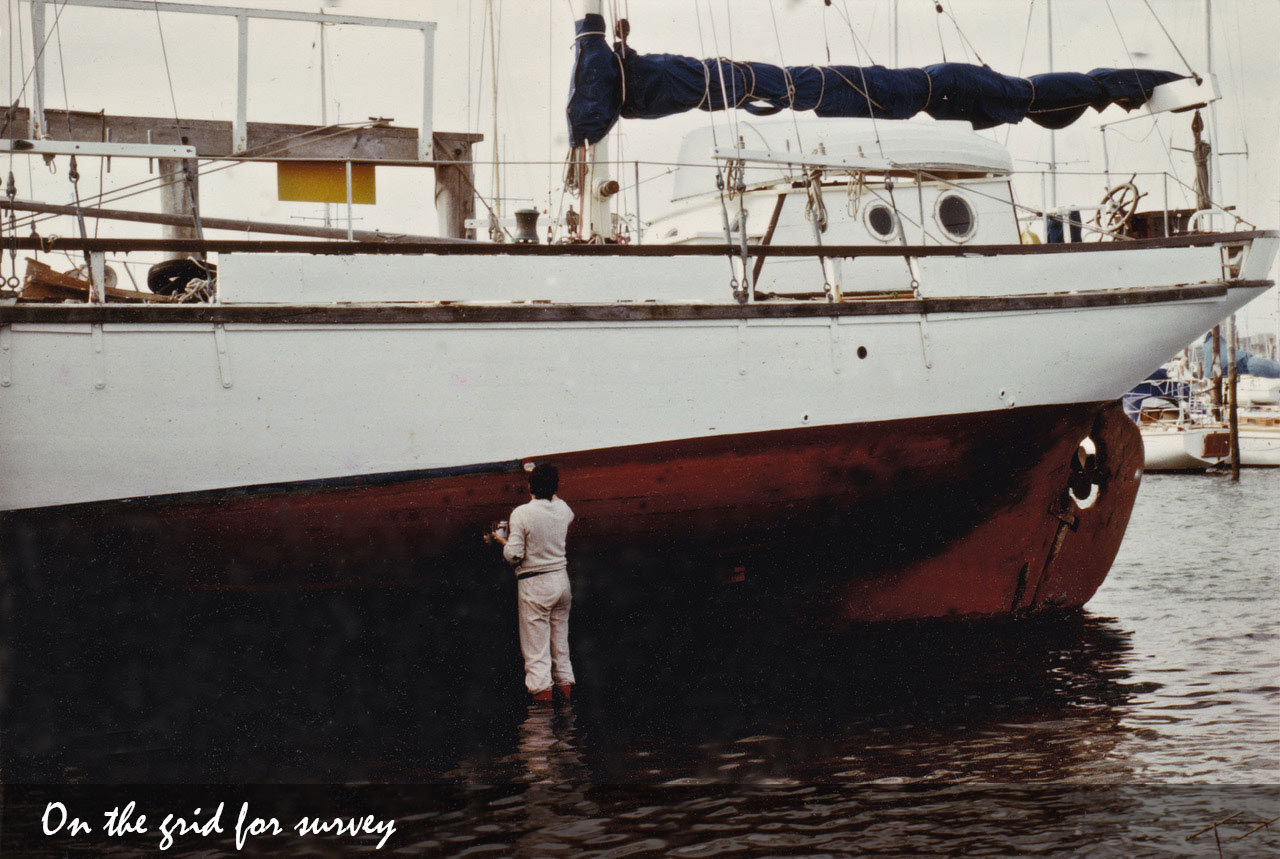
Her planking is Pitch Pine on sawn Oak frames fastened with galvanised soft iron spikes, I was not familiar with these timbers in our Picton boatyards so flew back to Picton to talk with Peter Jorgensen at his Waikawa boatyard. Pop as he was affectionally know, with his years of experience in Danish boatyards was of course very familiar with these timbers, iron fastenings and European construction, and his knowledge was very helpful when I surveyed her as I did on returning to Auckland and putting her on the grid at Westhaven.
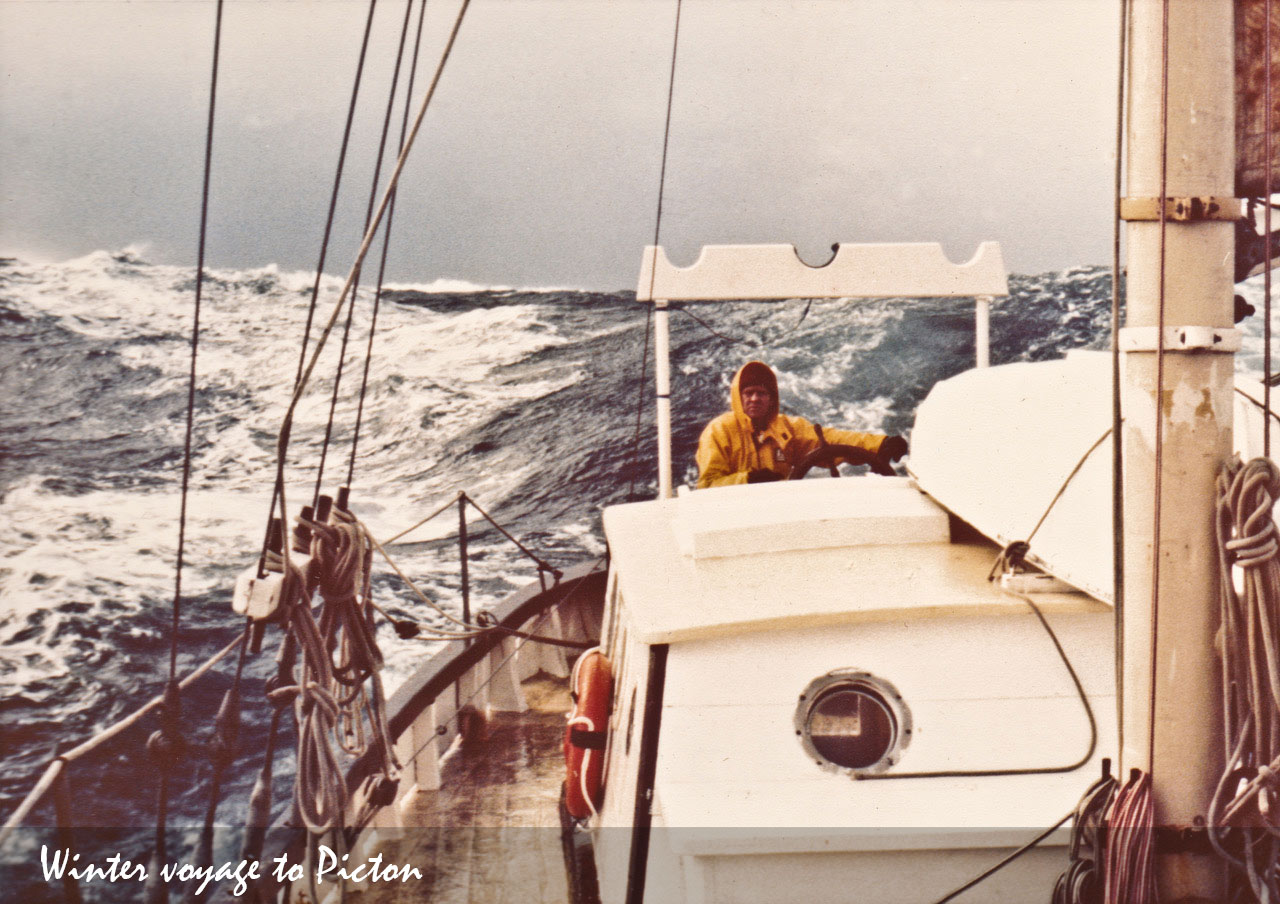
We took possession on the last day of July 1980 and made ready for the voyage to Picton and with a capable crew we sailed from Auckland on the 7th of August. Winter is not the always the best time to head down the east coast and it was somewhere off East Cape that we found that the forward skylight was only held in place by the shiplap joint and no through bolts. With a couple of sections of bulwarks missing and a good sea running this deficiency was made evident, and the hand bilge pump showed it’s worth. I always sail with a fairly comprehensive tool kit and with a selection of fittings and fastening in the ships inventory the skylight was secured in place.
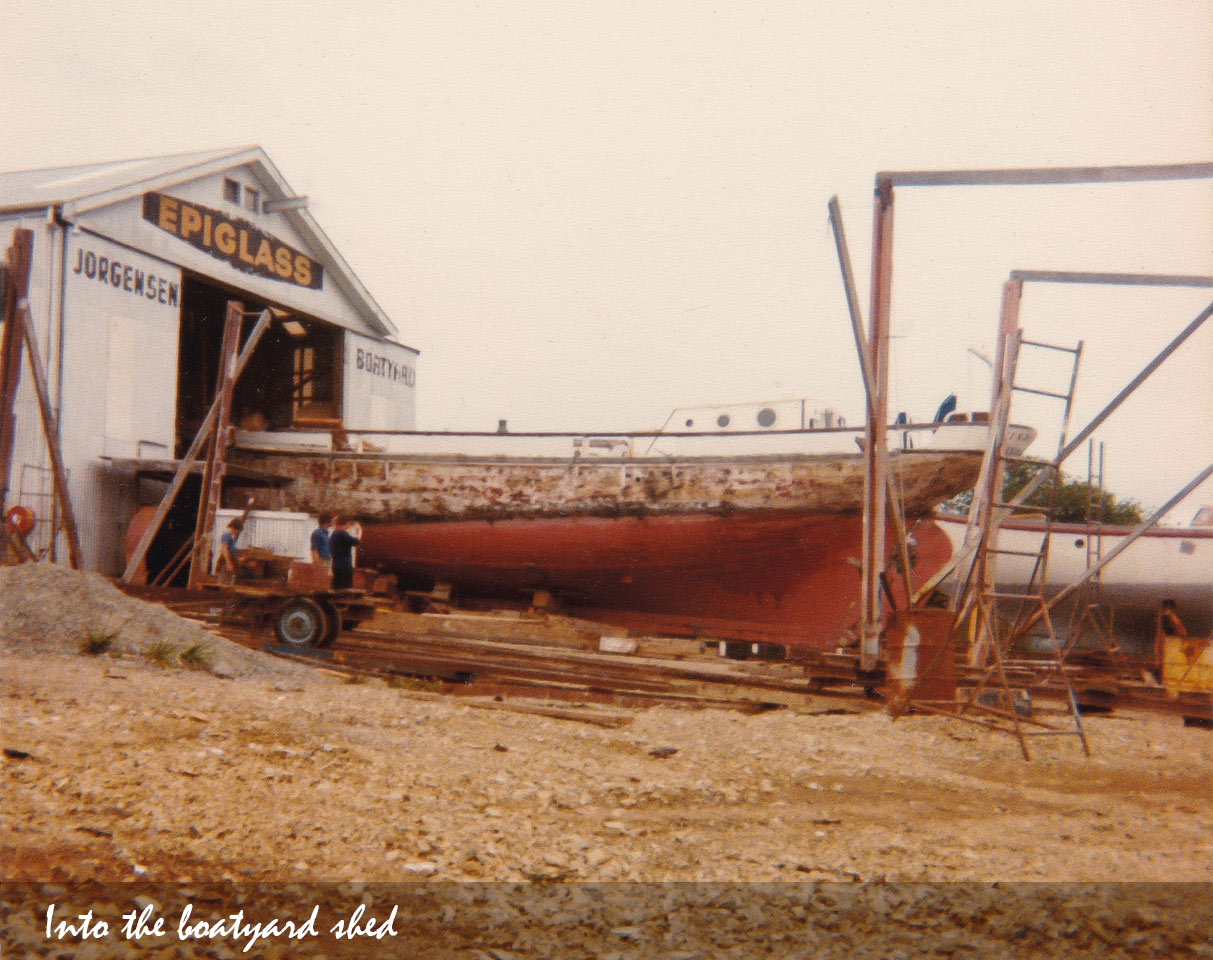
To undergo the refit I planned, we needed to have Windborne undercover and were fortunate to find we could have the use of Finn Jorgensen’s big shed at the Waikawa yard for a limited time before it was required for their next commission. On the 24th of December we hauled out and made ready to have the masts lifted out, and started the job of burning off the topside paint. As is often the case fastenings deteriorate around the waterline area but it was not possible to pull the old spikes out of the oak frames so additional galvanised ship spikes were driven adjacent to the original’s, two planks below and three planks above the waterline.
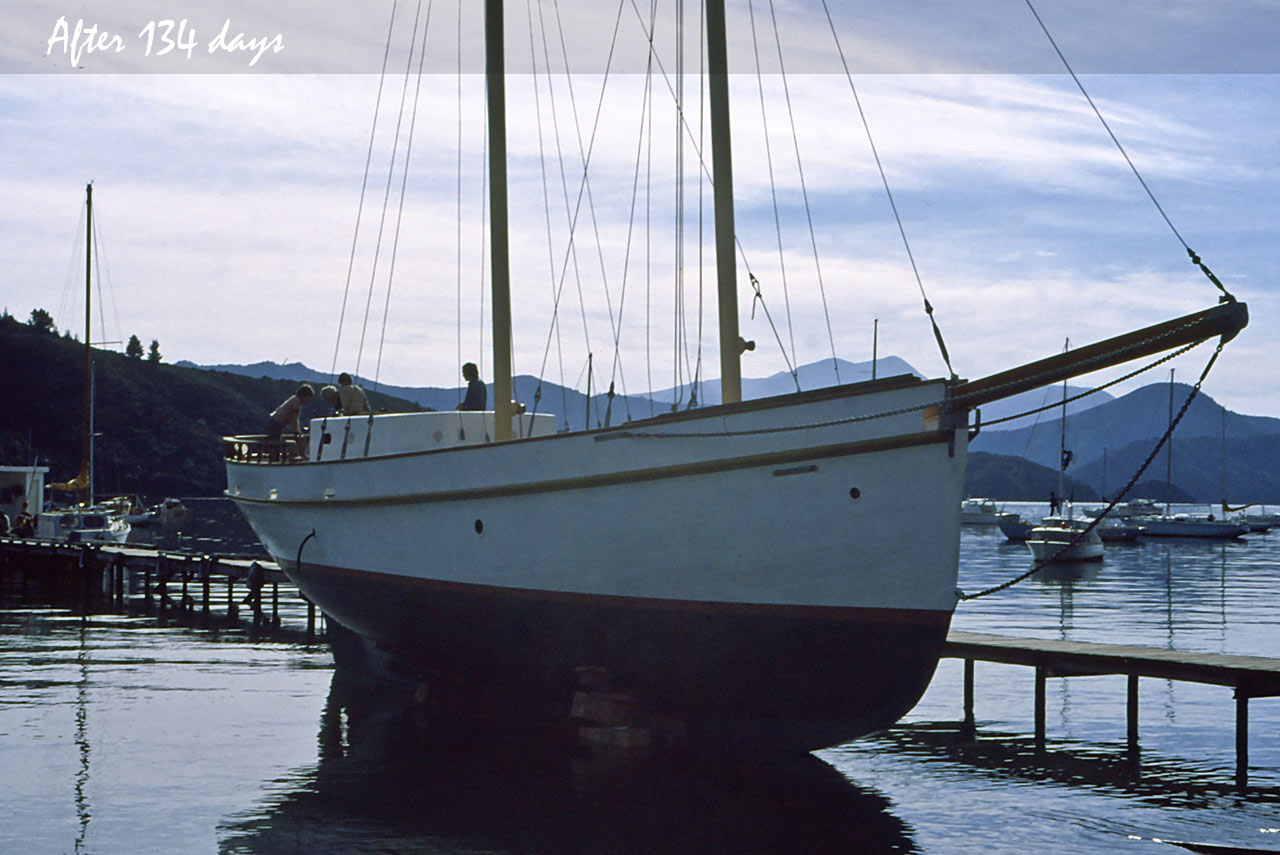
On the last day of December ‘Windborne’ was hauled up into the shed ready for the major refit, and what better way to spend new years day for a family than to spend it working with earnest tearing up the canvas like material covering the decks, I was suspicious that this was laid over the 2 inch Baltic Pine decks because of leaks, the ruination of many fine vessel’s. I was relieved to find the timber was in a good state of repair so the decision was made to retain the deck. Removal of the deckhouse was fairly quick and easy but more time was required to remove deck fittings, deck prism’s, and other deck furniture until we had a clean flush deck. The bulwarks were fastened to grounds over the covering boards with the frames extending to the cap, this is an area of potential leaks. On removing the damaged bulwarks and beltings and sawing off the frames at deck level, the new bulwarks were to be fitted on the outside of the sheer strake as was our practice at the Carey yard.
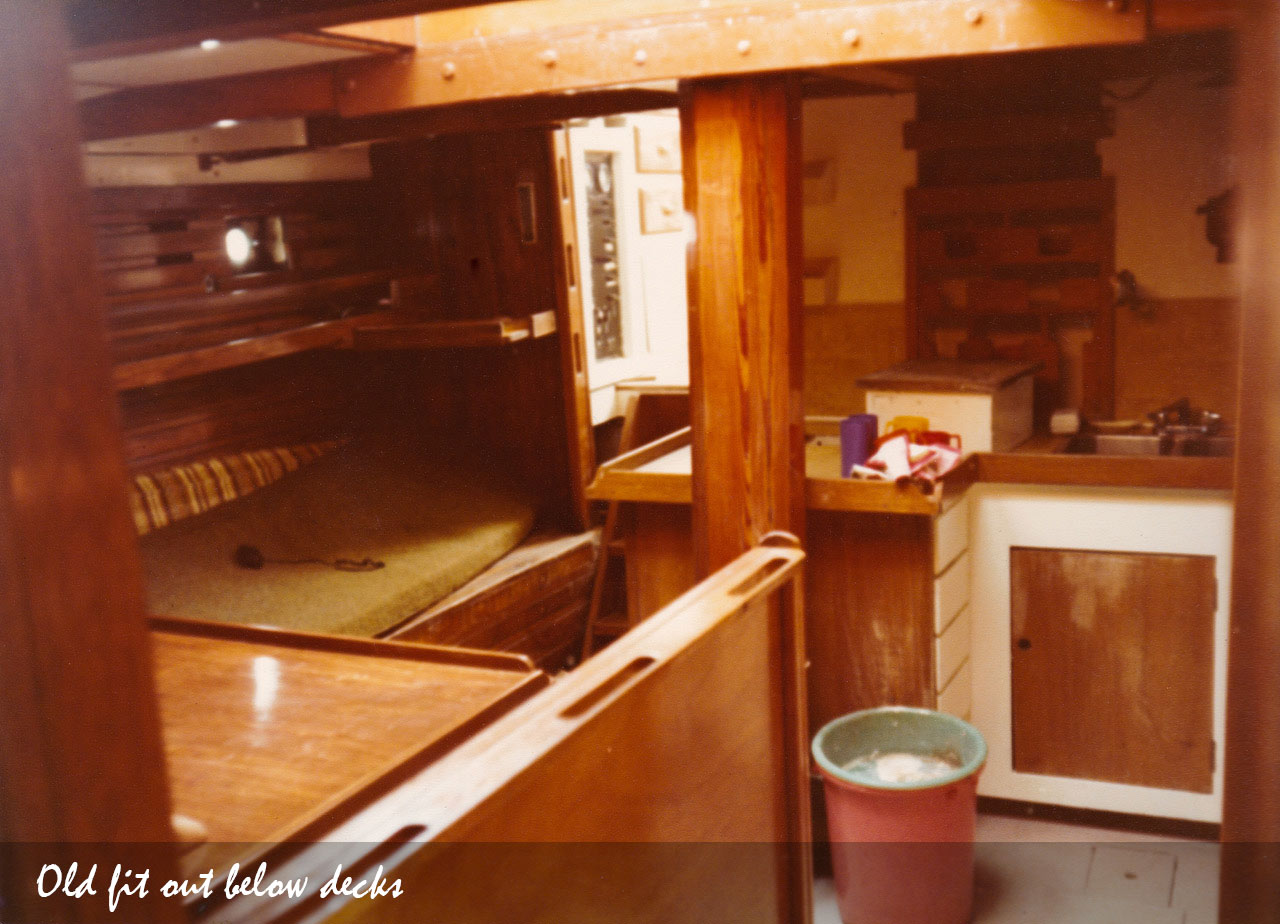
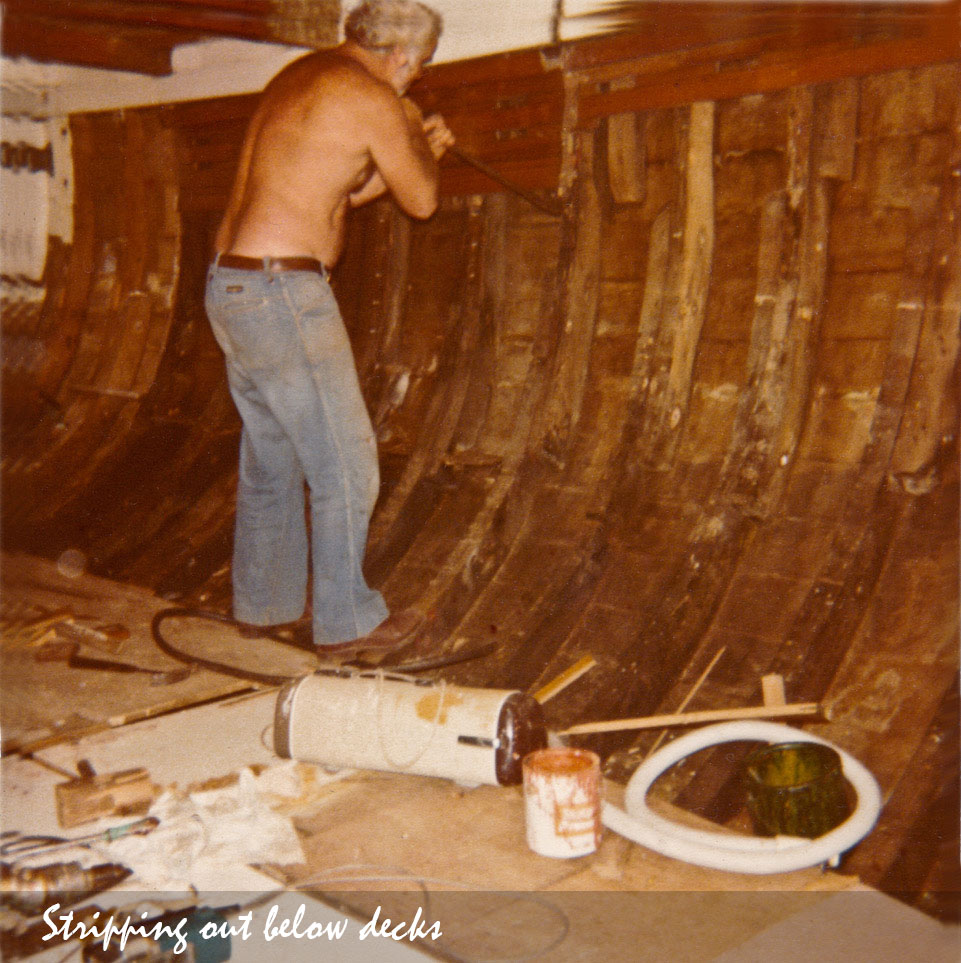
Next we moved below decks, unfortunately in later years any original furniture and fittings had gone to be replaced with ply, paneling and some pegboard, hardly befitting a traditional yacht, however we did expose the original tonnage and tonnage exemption carvings by removing layers of paint from the deck beams so we had something from her past. I had planned the layout we required so removed all bulkheads and the hull lining. This gave a good opportunity to make a thorough inspection from bilge to deckhead.
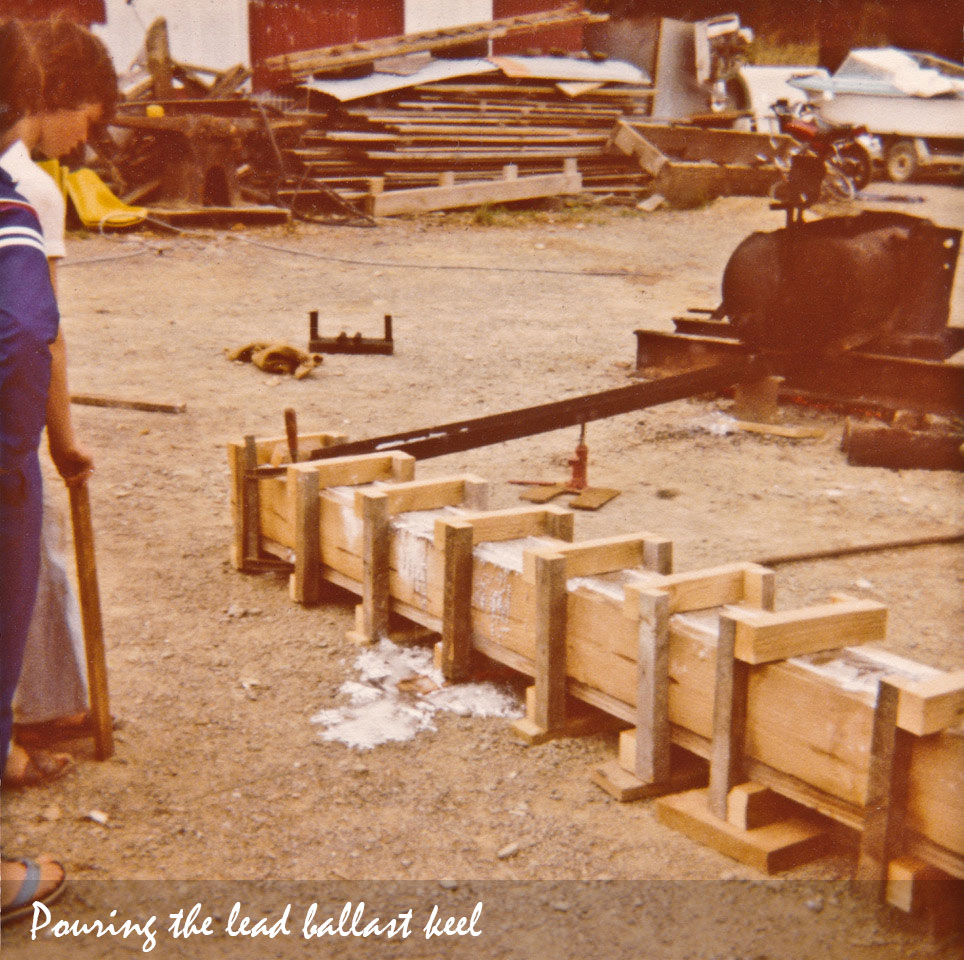
While I was fitting new bulkheads, Bev and our boys Wayne and Neville, began removing the rigging and paint from the spars. As is common in these vessel’s cast iron ballast is set in concrete between the floor timbers, however she also carried 2,775 lbs of lead ingots. At some time Windborne had been hauled out on a two bearer slip cradle and for a thirty five ton vessel this was grossly insufficient, the result was that she had damage to the underside of her wooden keel, so I made a casting box and we used the lead ingots to cast a blast keel to replace the damaged section. I next dressed off and sanded the the Baltic Pine decking and laid marine ply using epoxy glue to, and over the outside of the sheer strake.
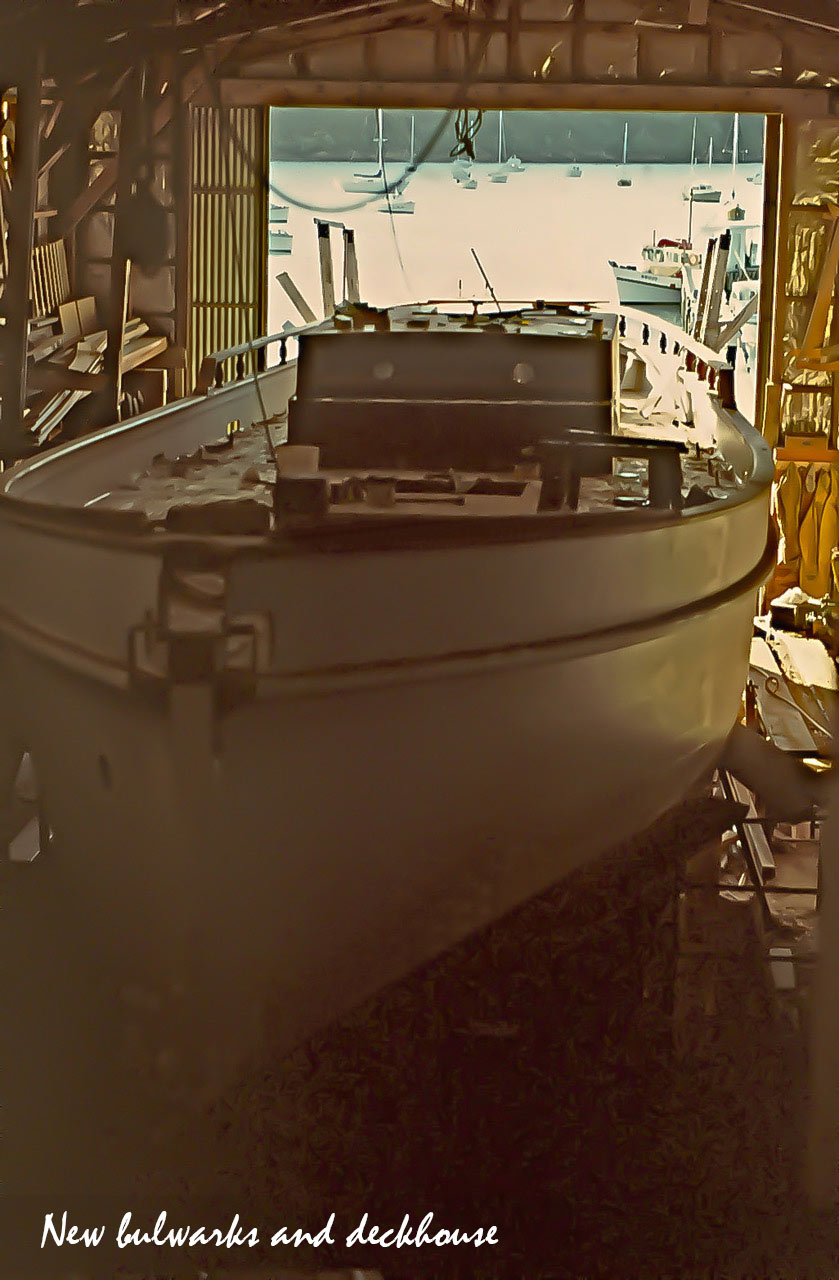
By late February we were ready to start the new bulwarks and to help with our time schedule Finn offered me the use of one of his men, I chose Keith Hansen, Keith had learned his trade at the Jorgensen Boatyard and Keith and I worked well together ( I hope he still agrees with my comment ). We started on the Bulwarks using double diagonal Matai with a hardwood stringer, followed with new hardwood beltings.
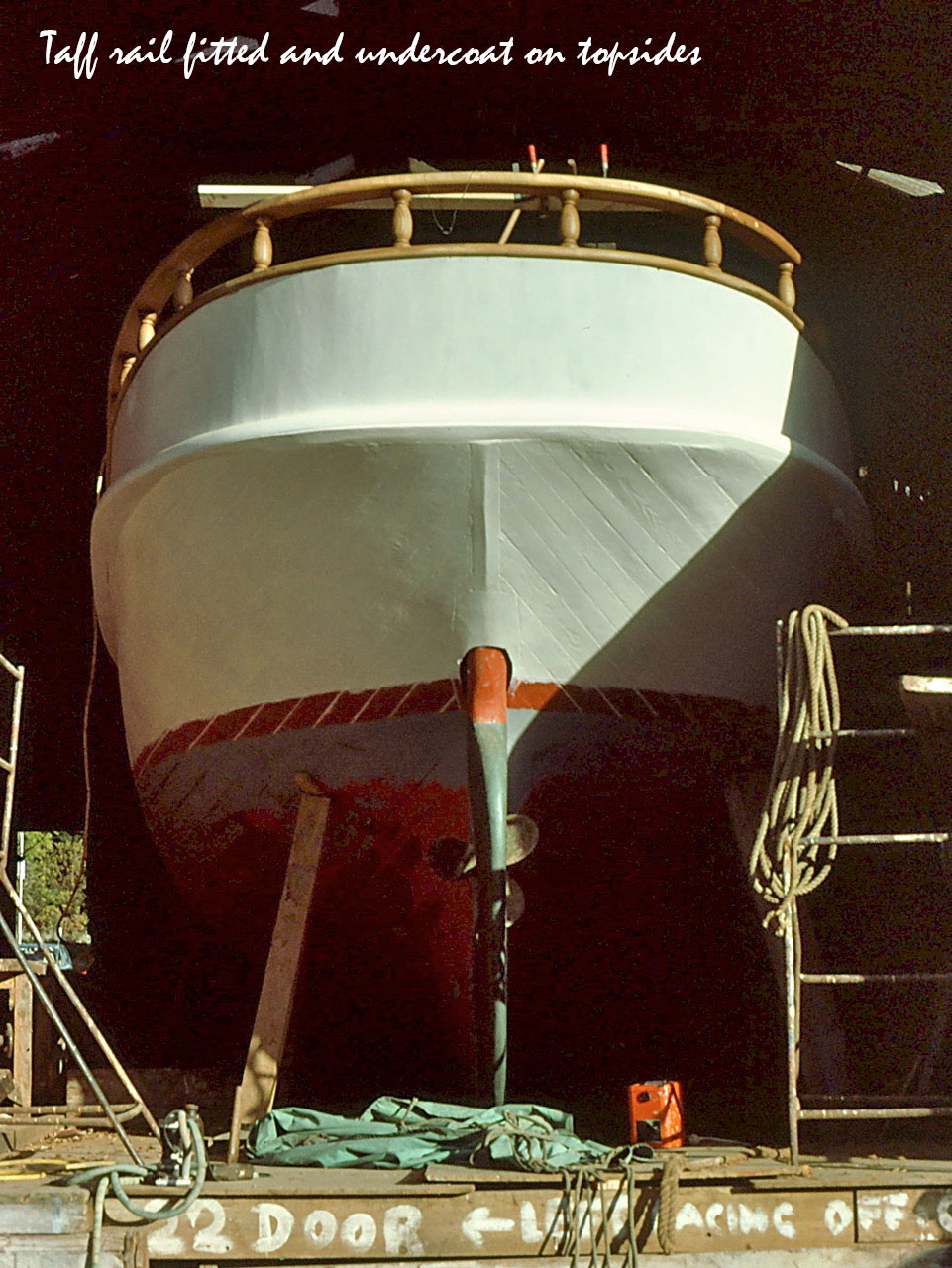
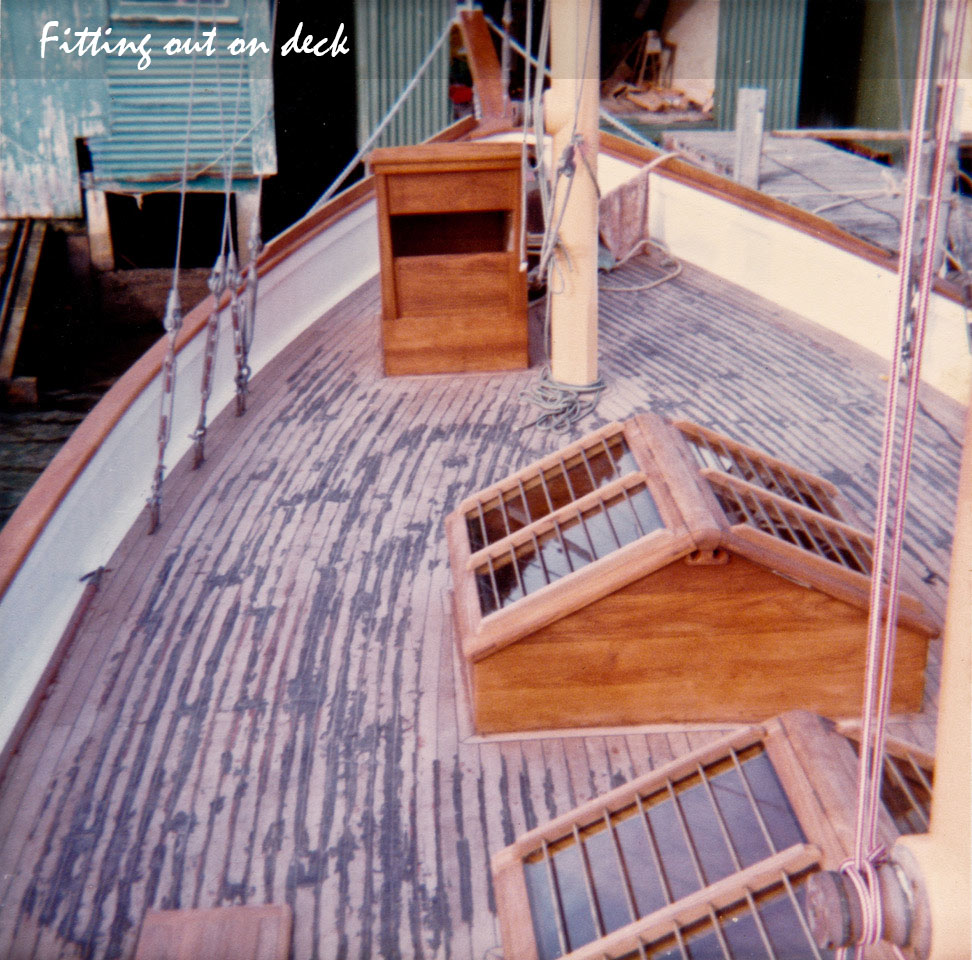
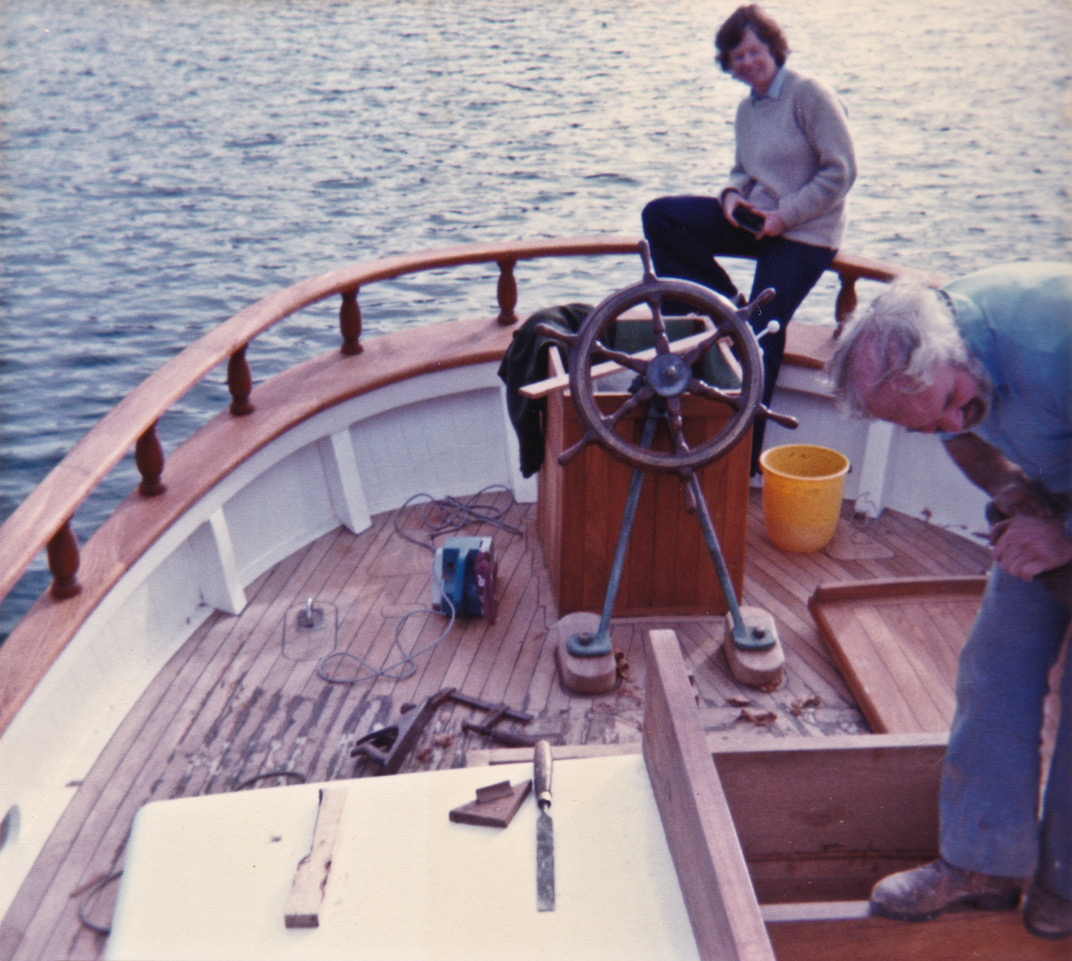
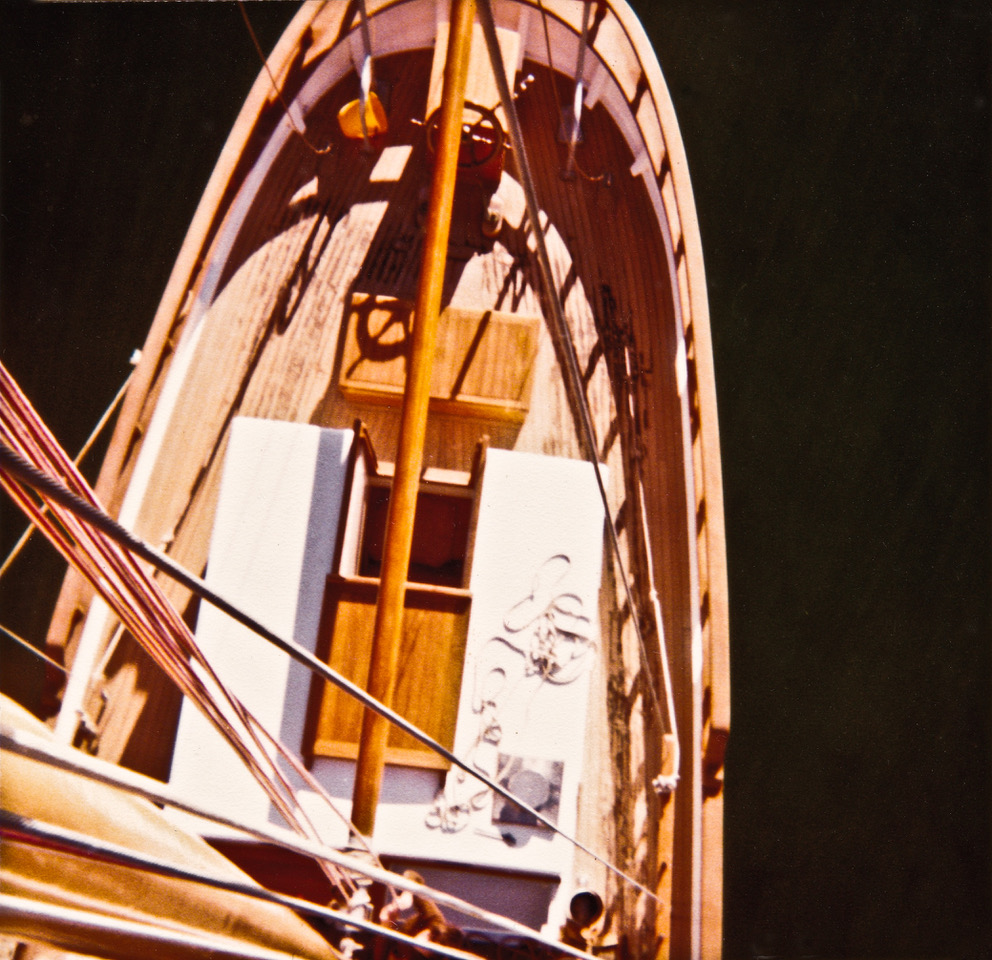
Laying the 5/8” teak deck was a slower job, I don’t like decking laid straight fore and aft and wanted to follow the deck plan as far as practical and run the decking into the king plank in the traditional manner and this means edge setting the deck planking. We departed with tradition when it came to caulking the seams and used thioflex polysulphide with the accompanying mess that follows while the product cure’s. Next it was onto fitting the new Teak Cap and Taff rails. The new deckhouse was built on Kauri coamings and sheathed in glass cloth, all other deck furniture is Teak.
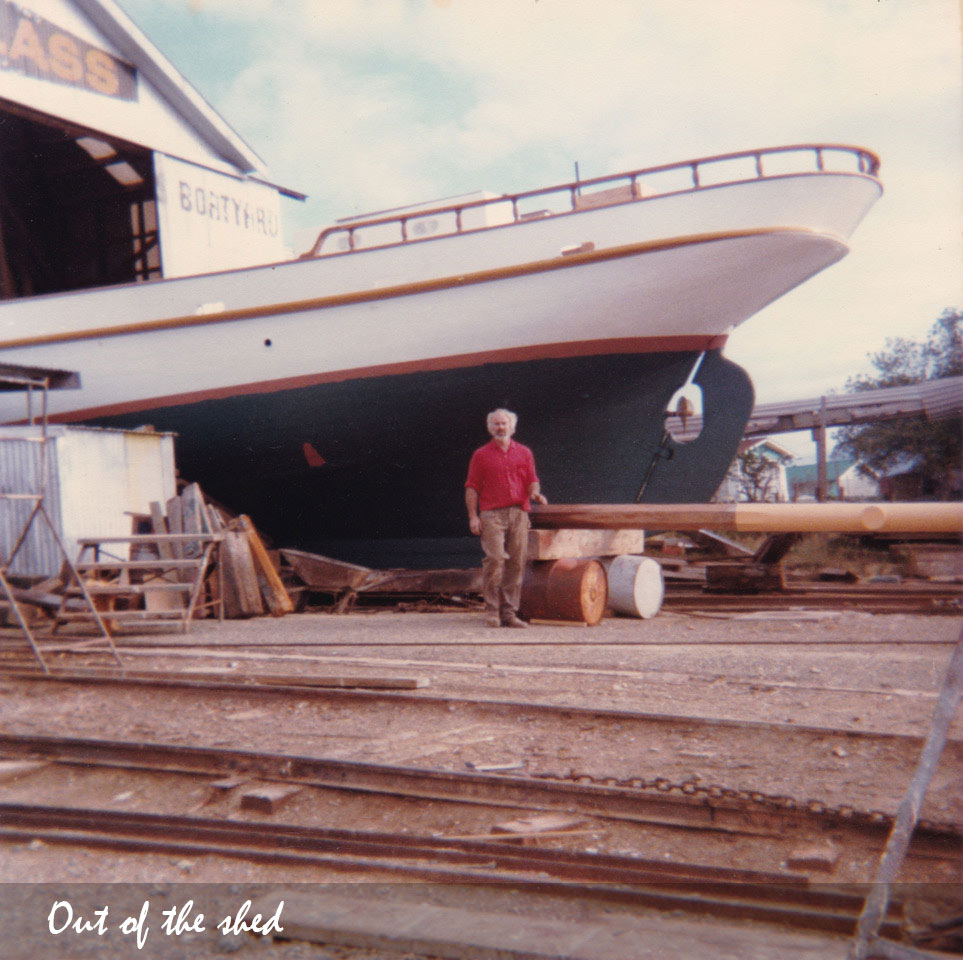
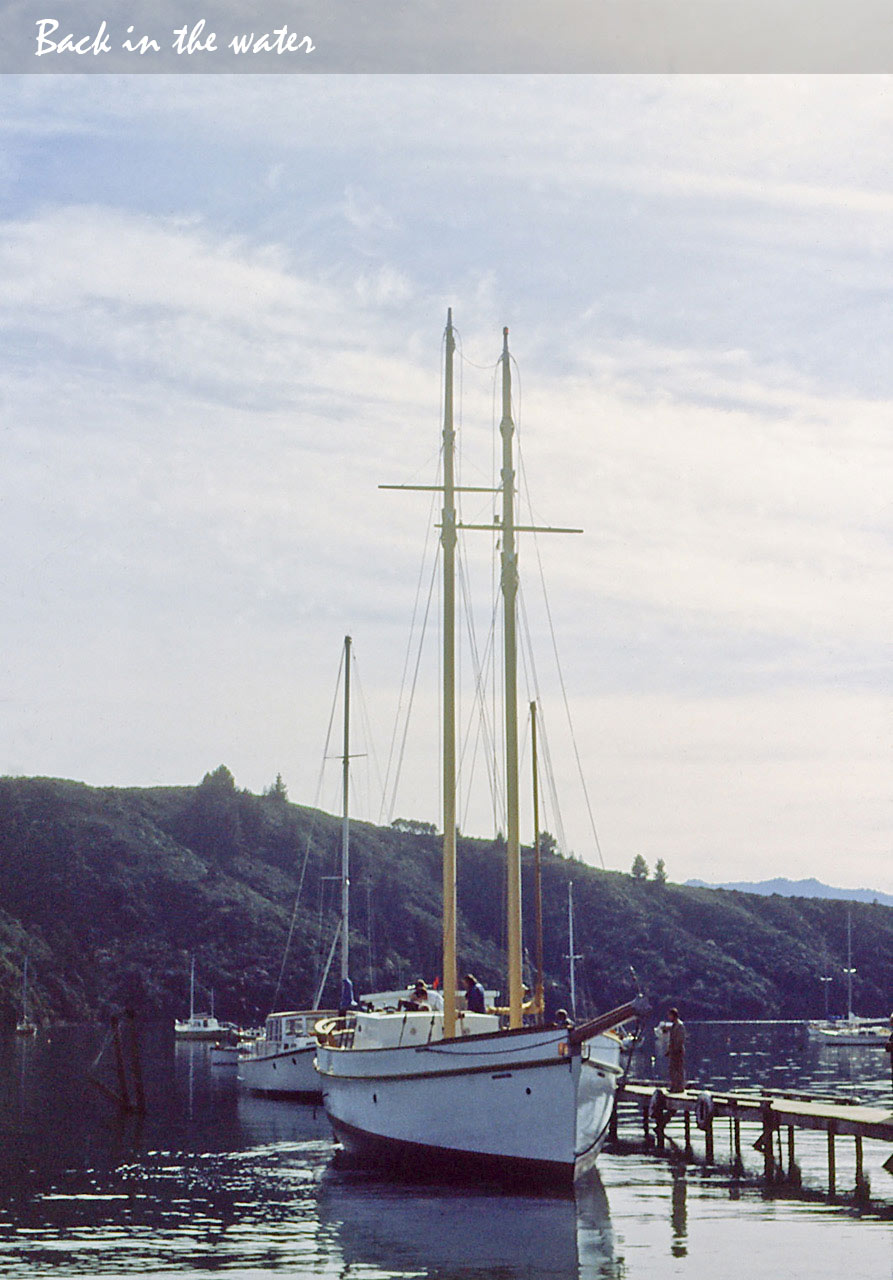
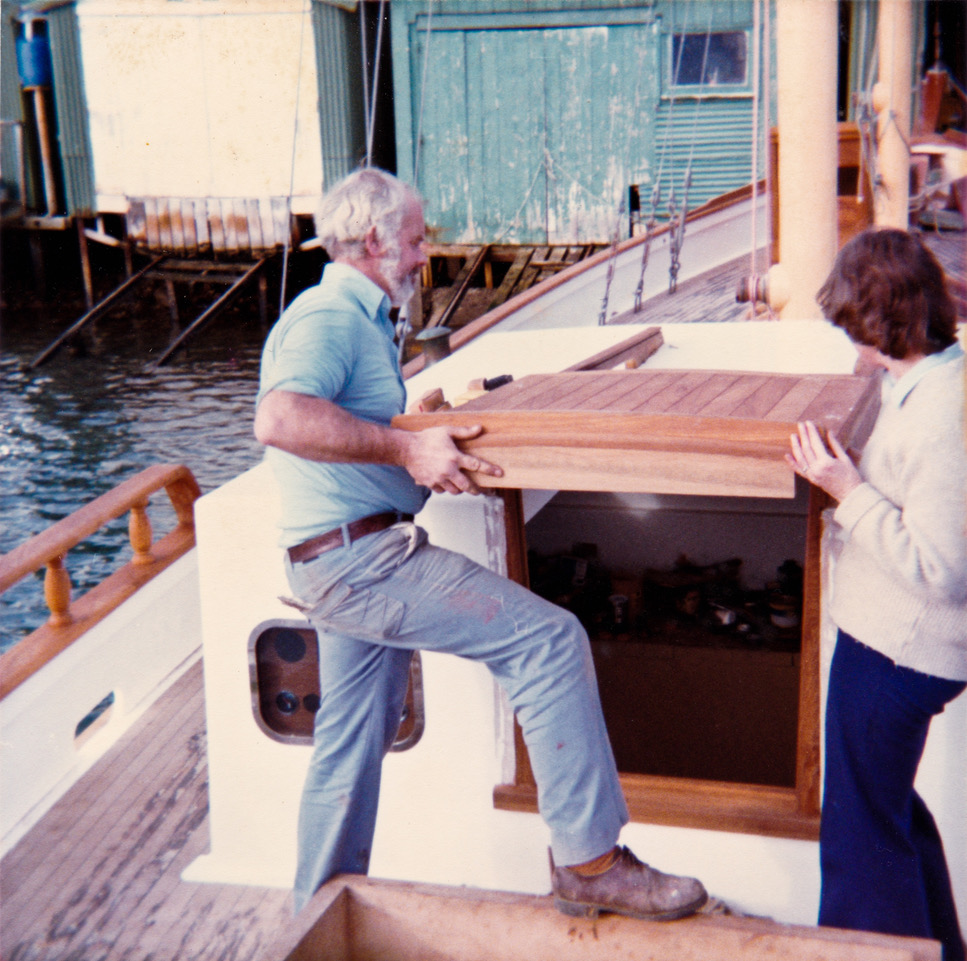
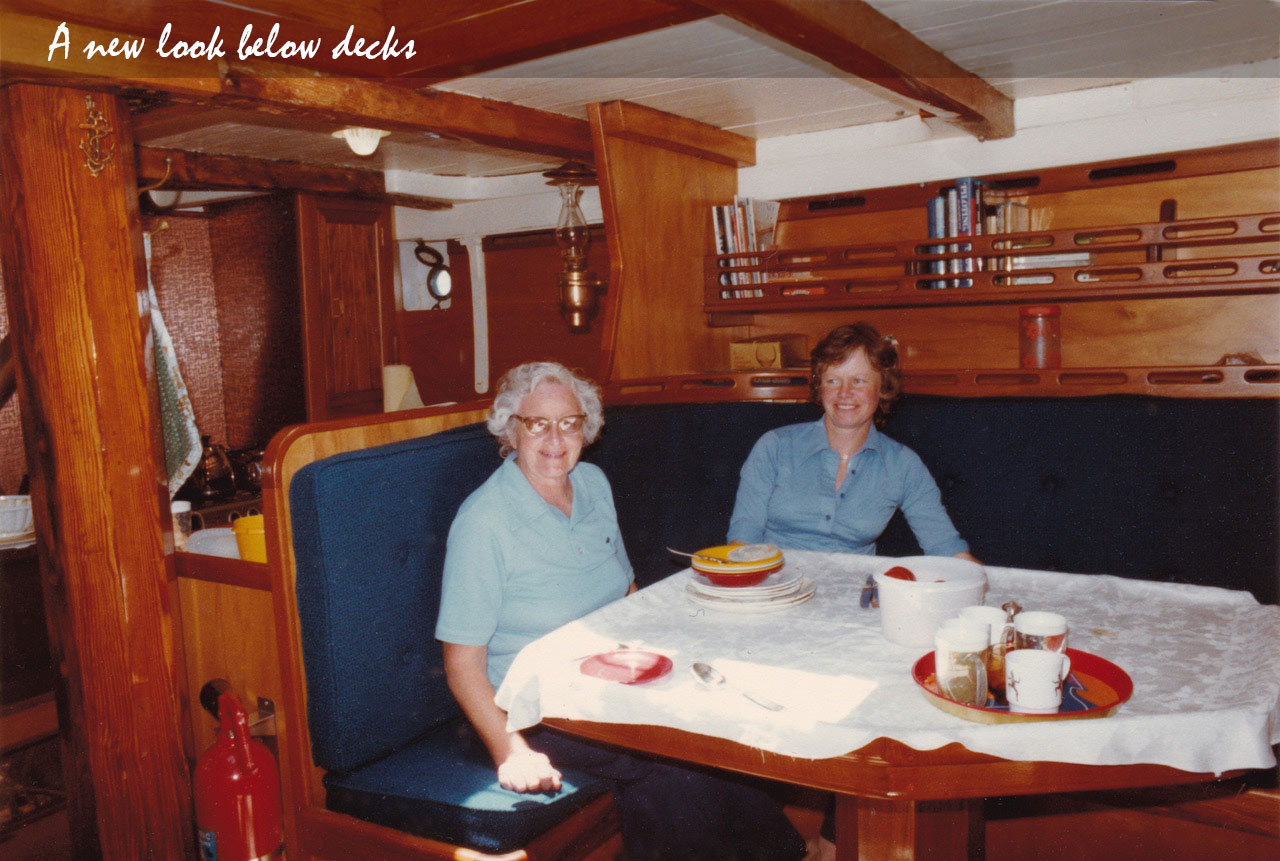
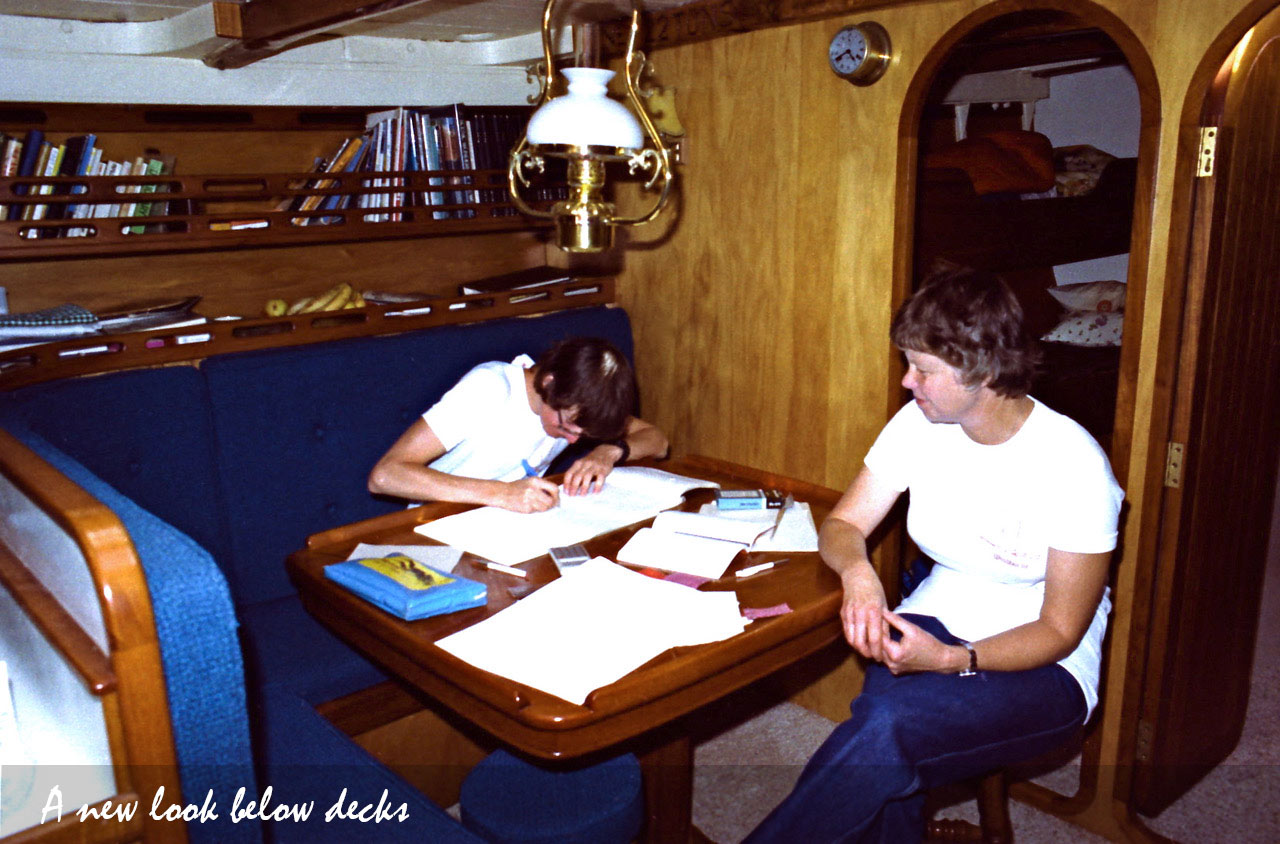
As our time in the shed was limited I was fortunate to be able to engage Bob Clerke a ships joiner, I delivered a load of teak at Bob’s workshop, and with measurements and patterns Bob set to and made skylights, hatches, a magnificent saloon table and other fitments to help with my fit out below decks all done in Teak and Kauri. The topsides were recaulked and my daughter Shirley stopped the seams with white lead putty in preparation to repainting. By the beginning of May the new look ‘Windborne’ was out of the shed.
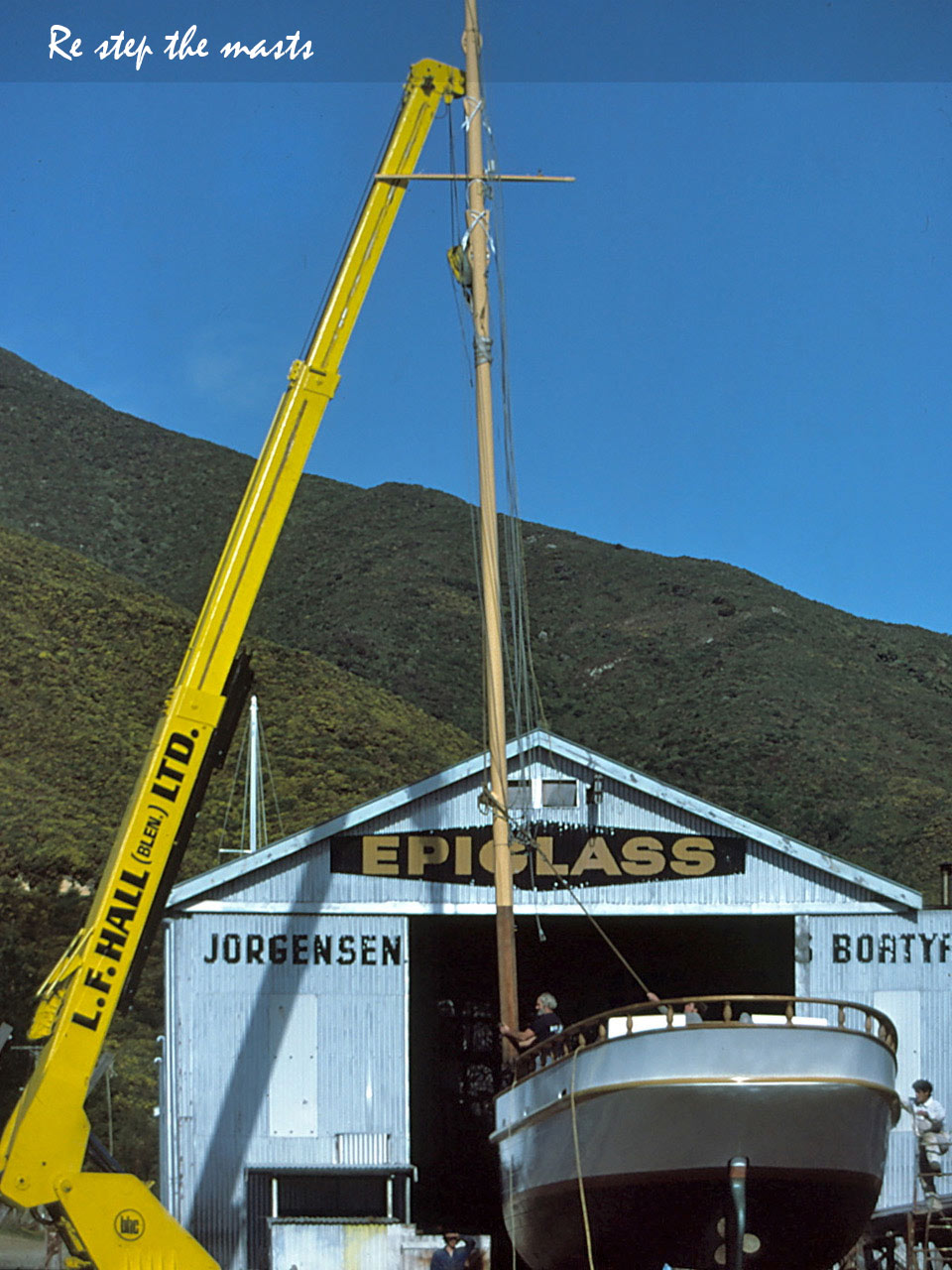
Masts were stepped with an English silver coin dated 1928 under her main mast and a Canadian coin under the foremast, and on the 6th of May at H.W. she was sent down the rails but remained in the cradle, the summer had been hot and dry and we had pumps ready, next day with a bit of oakum caulking in a couple of seams she was ready to leave the cradle and lay alongside the wharf at our boat shed to complete the fit out below decks.
A year or so later I removed the Isuzu engine and replaced it with a 4 LW Gardner. For the following eighteen years ‘Windborne’ carried our family on many adventures in all sorts of conditions. Roger Carey told us boys that wooden boats are built of living things, and every wooden vessel has a soul, I strongly believe this.
This last few weeks I have I have visited ‘Windborne’ out on the hard at Whangarei receiving care and attention from her owner Avon, he is doing a good job she’s looking good, being well ventilated and with salt water over her decks, the best thing ever.
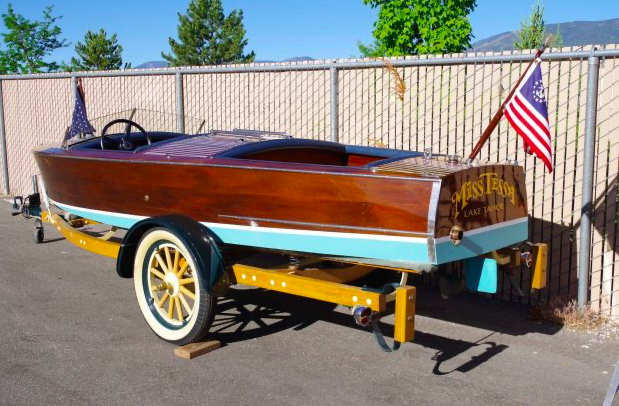
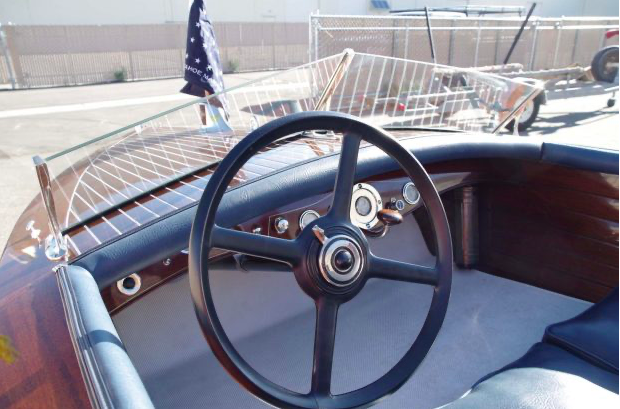
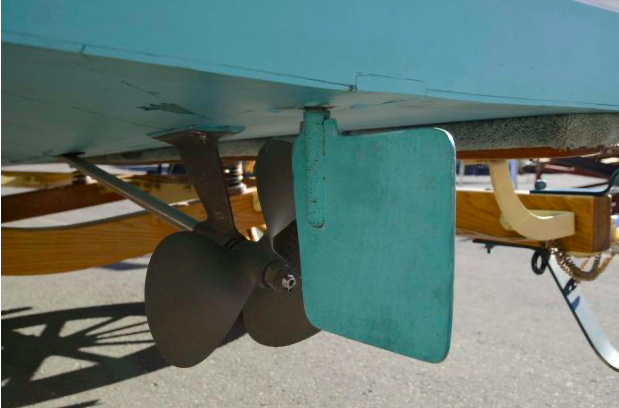
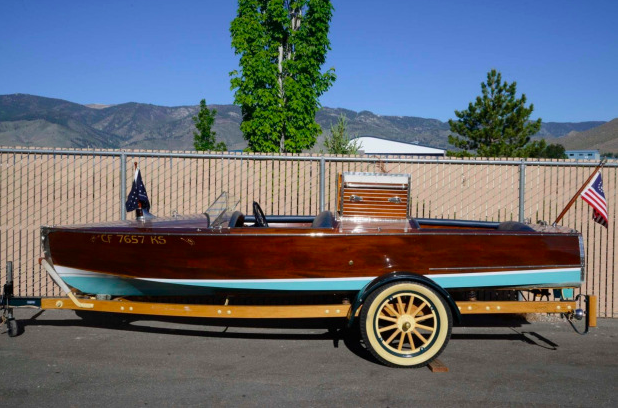
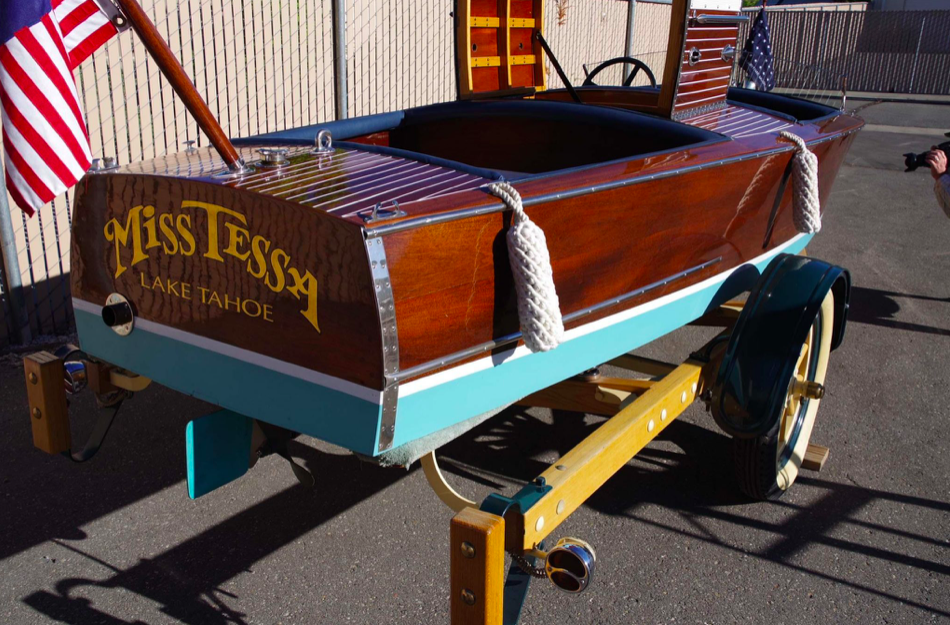
A Woody For The Lake Boys Kiwi woody Mark Erskine gave WW the heads up on Miss Tessa, currently for sale in the USA. This would have to be a great buy for one of the Lake Rotoiti gang, current bidding is sub US$6k.
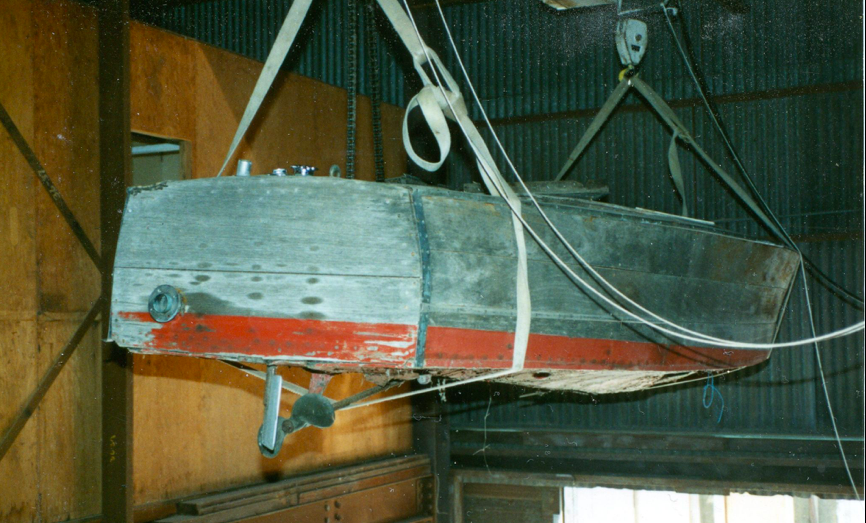
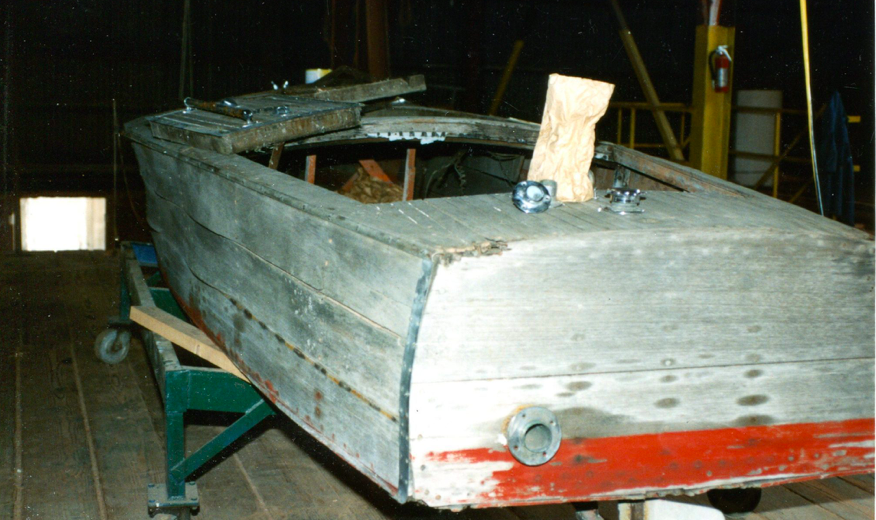
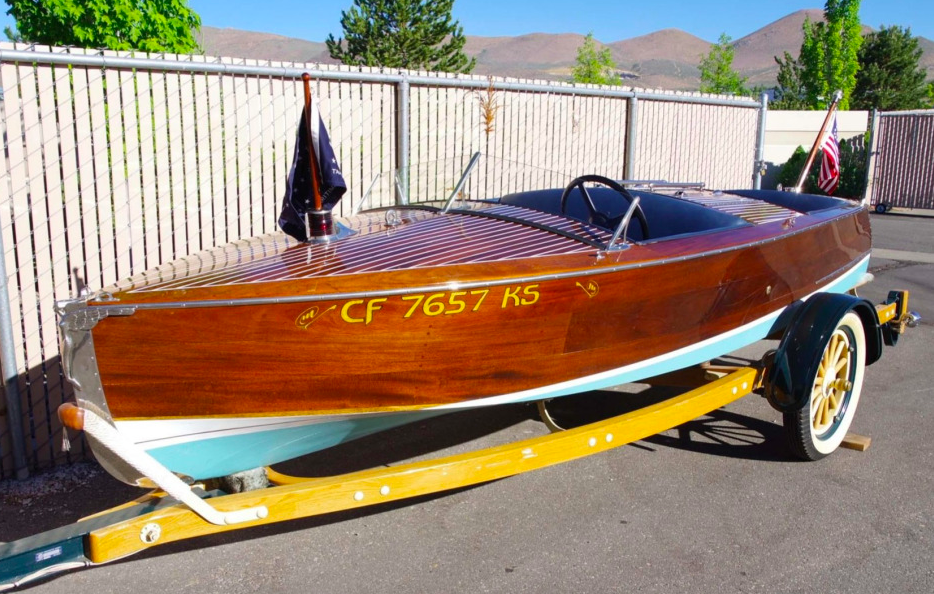
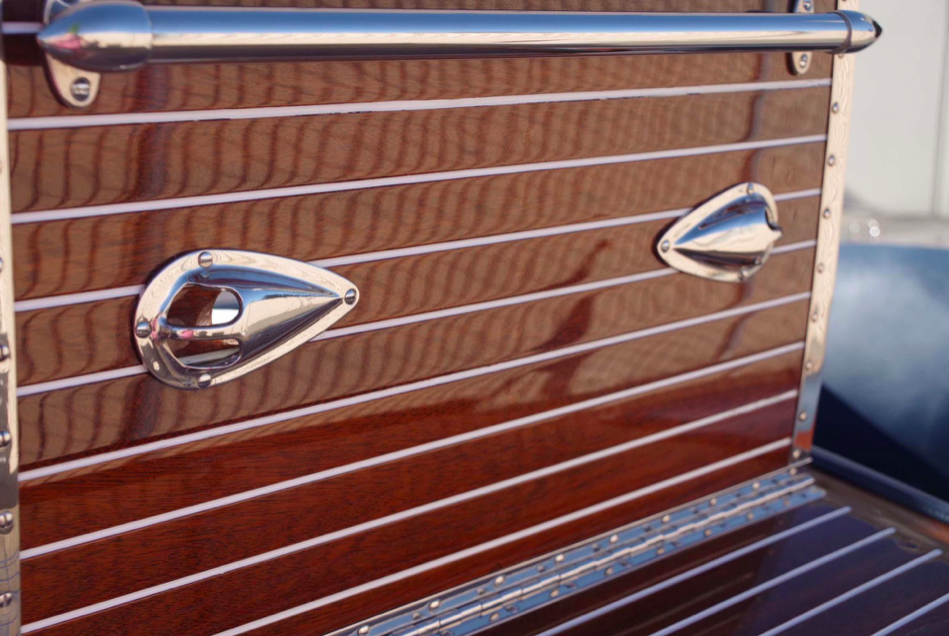
Miss Tessa is a 1930 Dodge* 16’ runabout with two cockpits separated by an engine compartment. The boat features a planing, seam-and-batten mahogany hull with spruce stringers and oak frames. Power comes from a Lycoming inline-four, and additional features include a forward/reverse transmission, double-planked bottom, two-piece windscreen, and blue vinyl upholstery. The Lycoming marine inline-four engine is mounted amidships and produced approximately 45hp when new.The boat was found hanging in a barn by the previous owner, who commissioned a restoration before donating the vessel in the early 2000s to the seller, the Tahoe Maritime Museum. Comes with a very cool trailer, which I imagine is only for off road use. *Horace E. Dodge Boat Works was started by Horace Dodge Jr., the son of Dodge automobile company co-founder Horace Dodge.
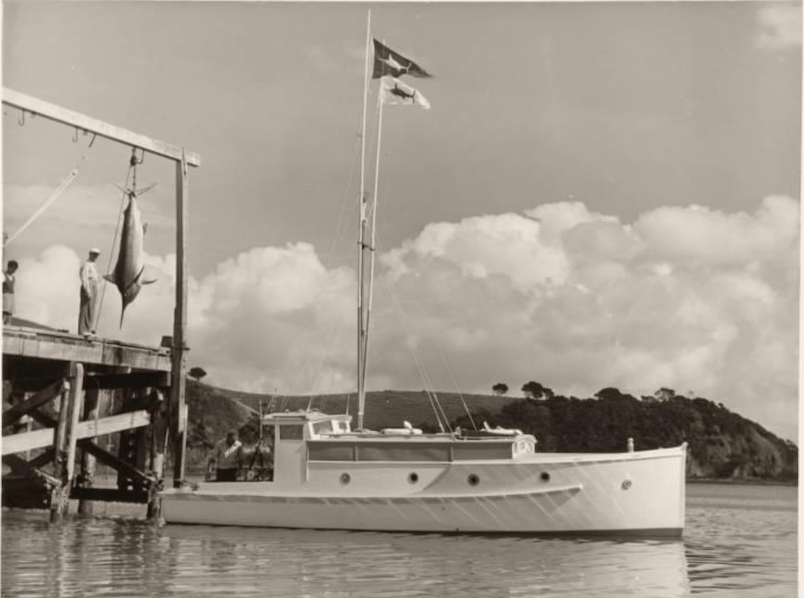
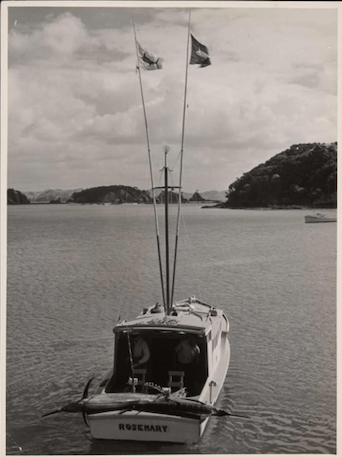
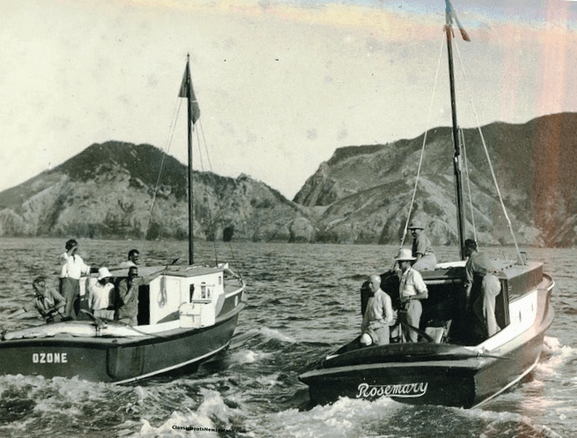
ROSEMARY – Leon Warne The above photo of the launch Rosemary popped up on Lew Redwood’s fb – the caption read ’the Rosemary, Feb 1950 at the wharf, Otehei Bay, Bay of Islands. Seen here ‘bearing the pennants of a striped marlin and black marlin’.
A little research via the WW comments section, un-covered input from Harold Kidd and Ray Morey that matches the above launch – in summary, that she was designed / built by Leon Warne in 1920 at St Mary’s Bay, Auckland and was approx. 36’ in length. Rosemary was prominent in game fishing in the B.O.I. . All that seems to match today’s launch, so we now have a photo of Leon Warne’s Rosemary in the 1950’s. Photo below of her in the 1920’s running alongside Ozone, built by Collings & Bell in 1912.


































 waitematawoodys.com #1 for classic wooden boat stories, info, advice & news - updated daily - 15+ million views