Wanderer II

WANDERER II
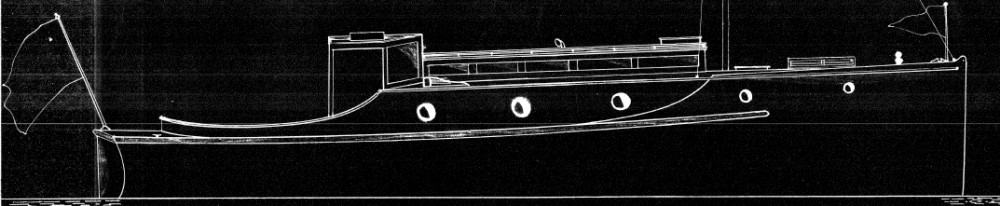
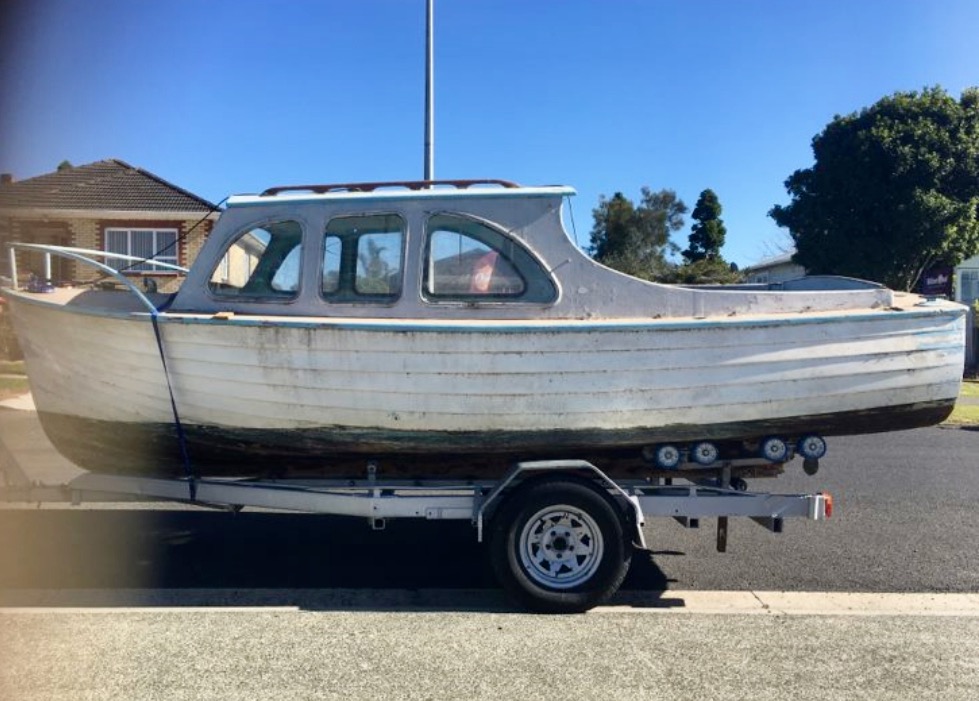
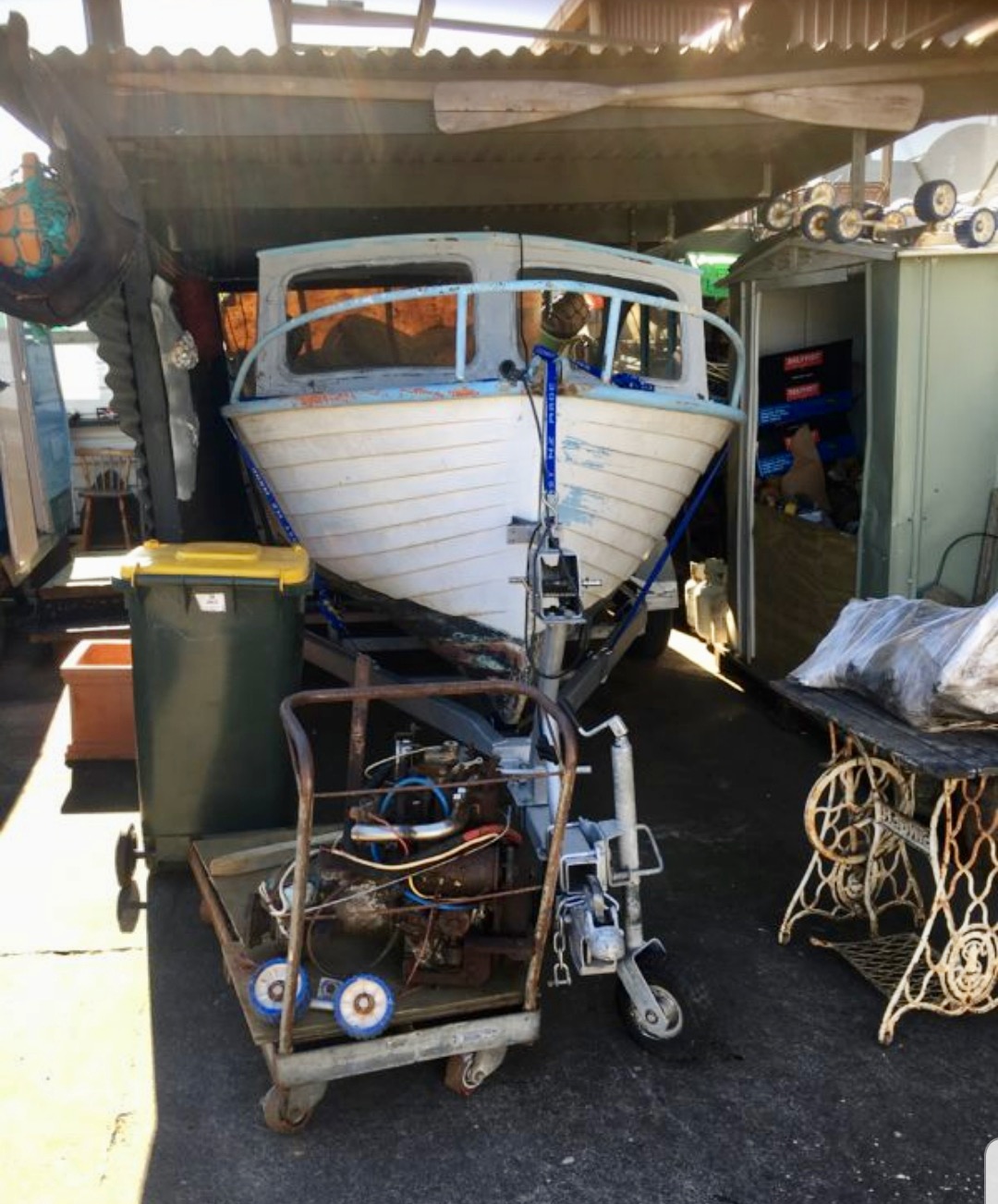
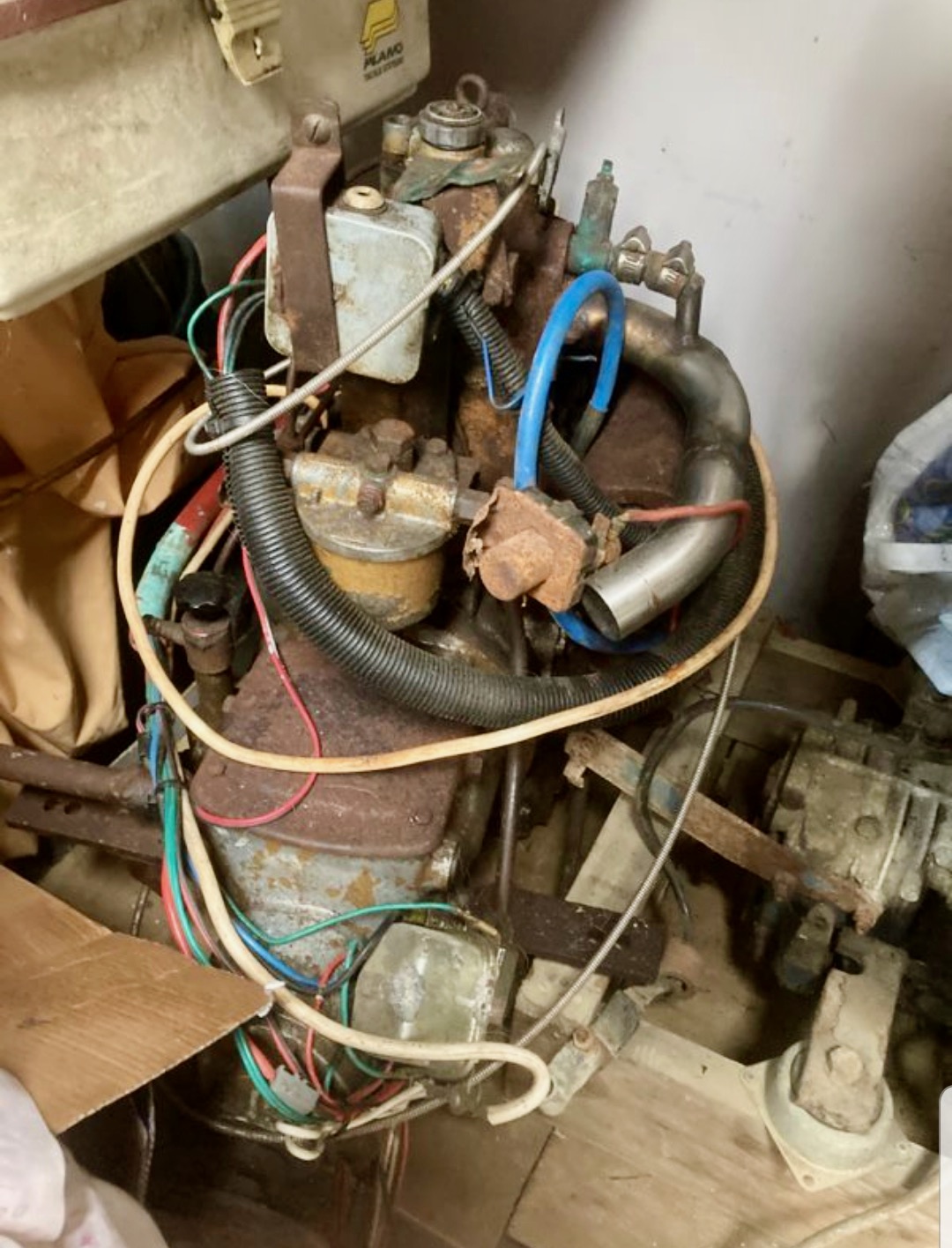
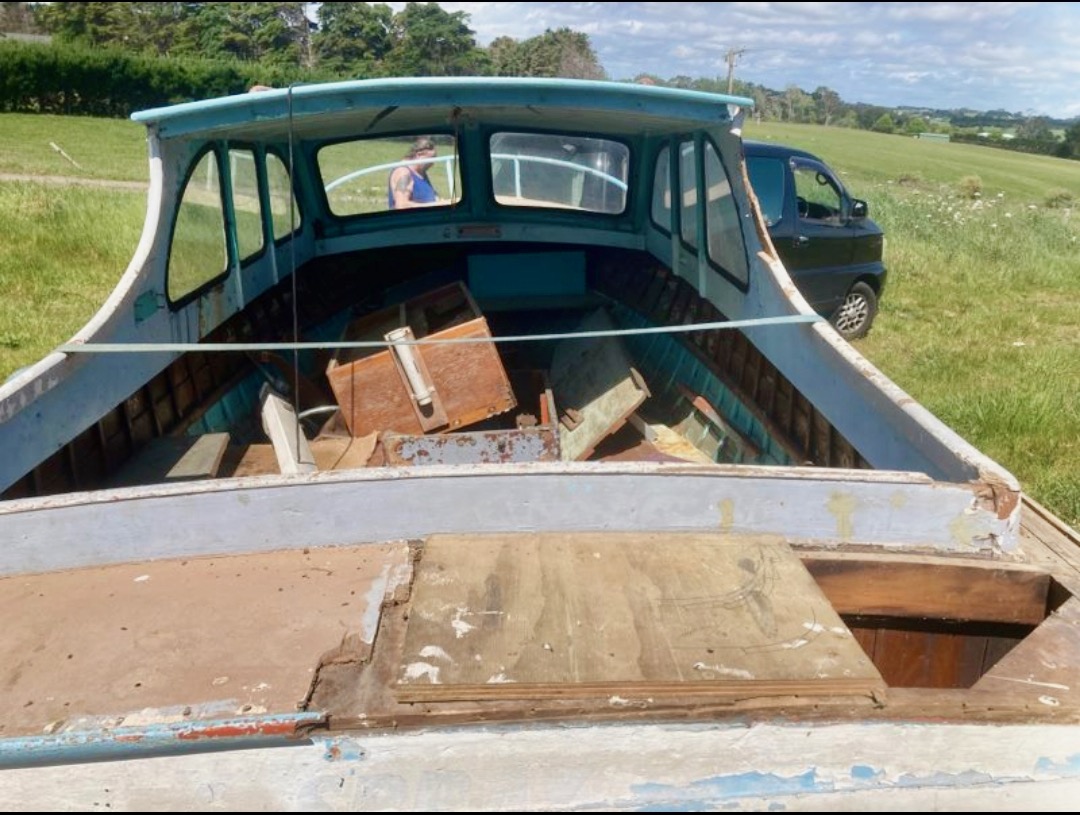
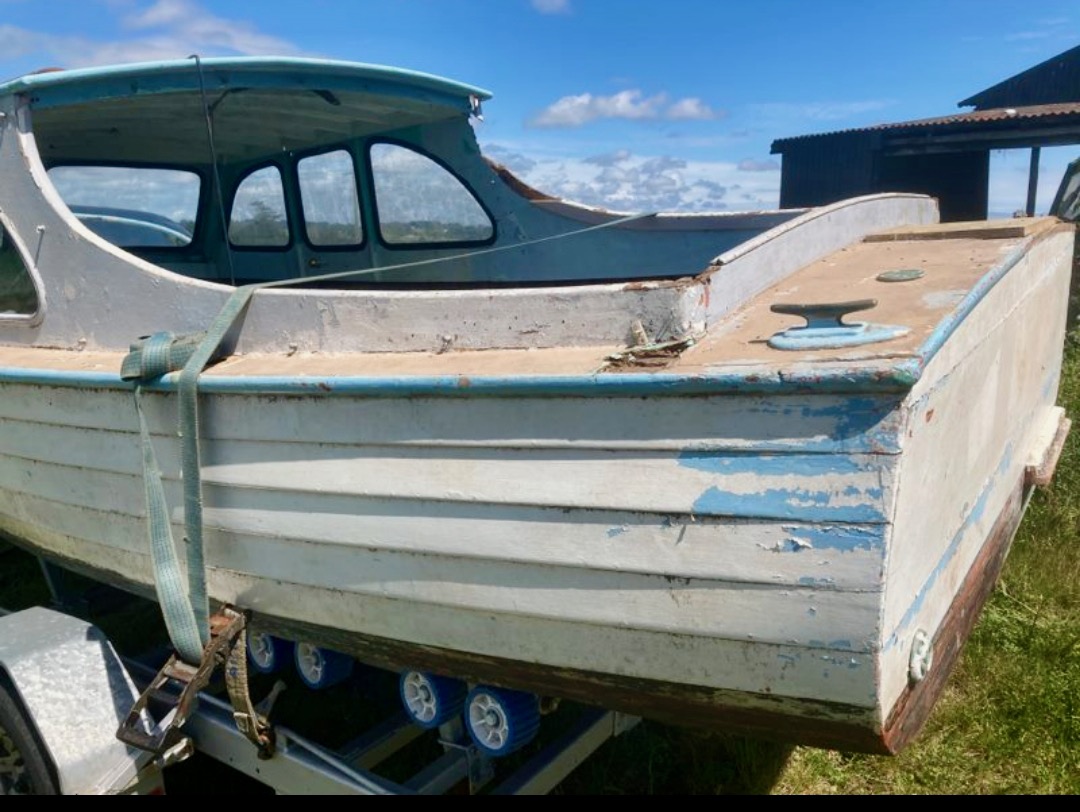
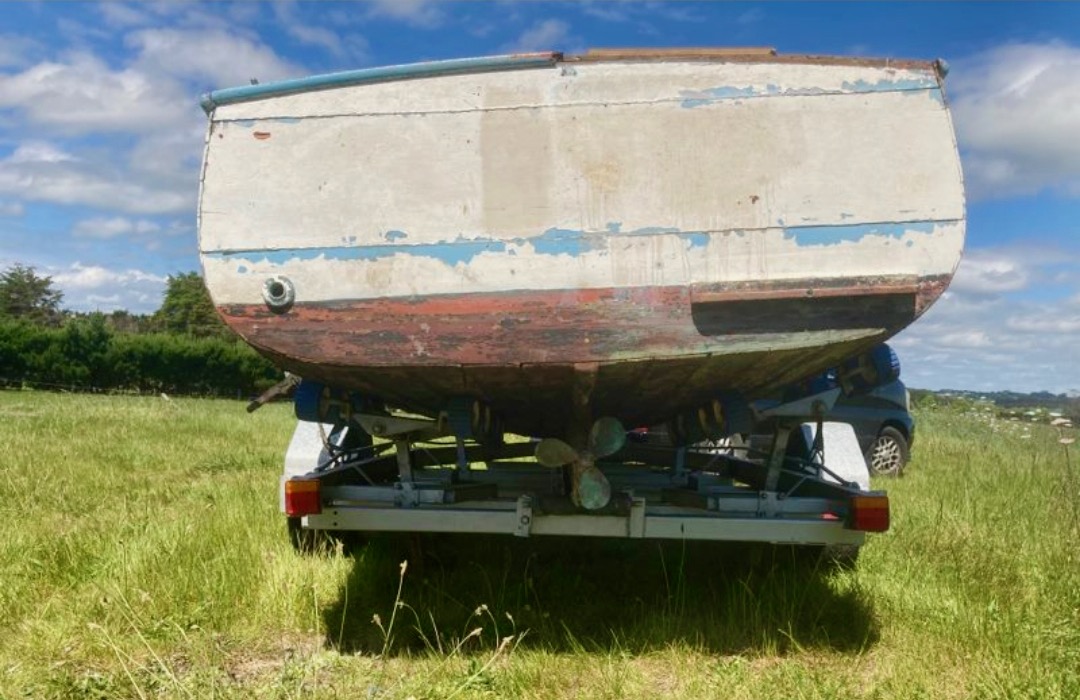
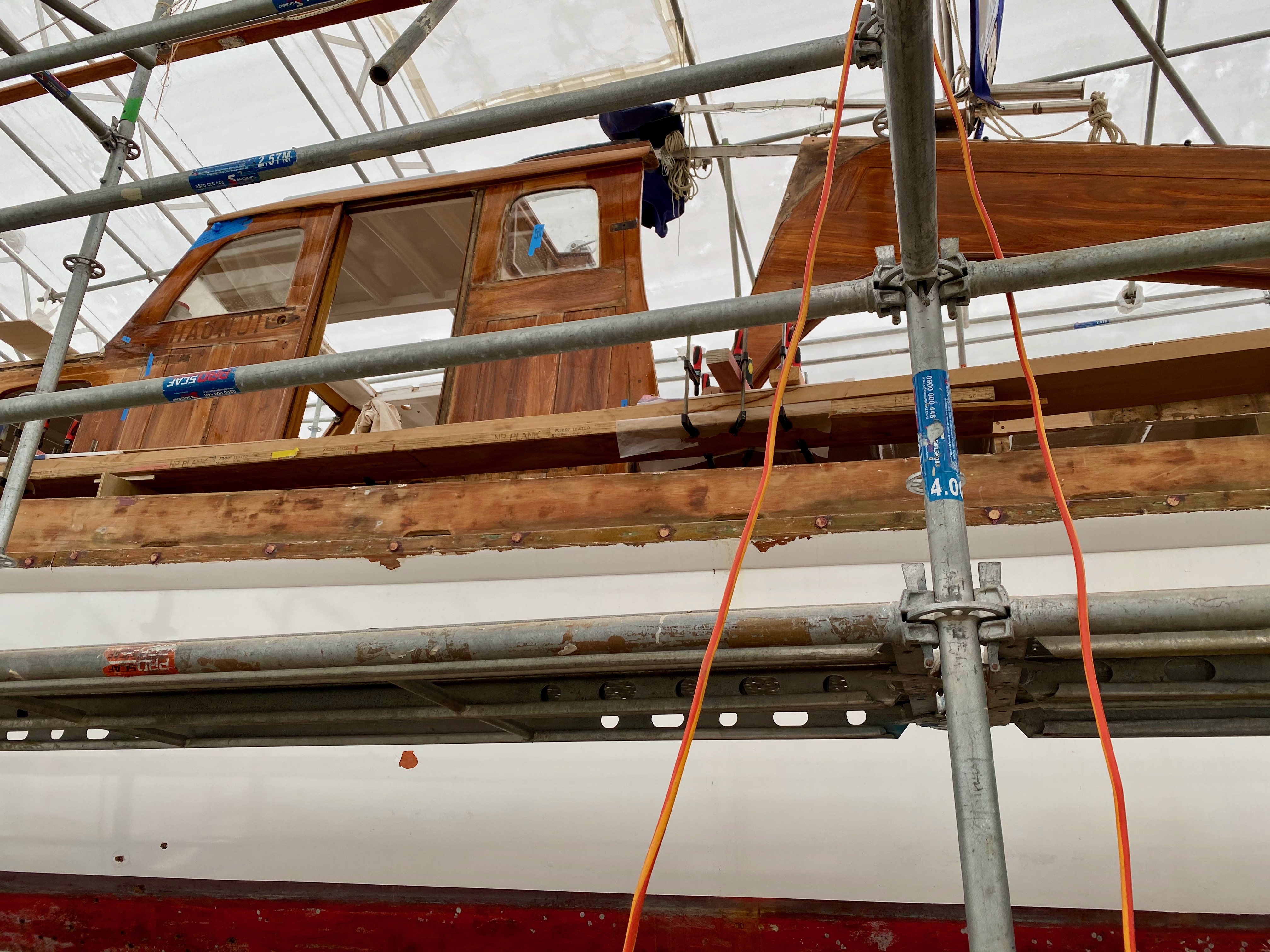
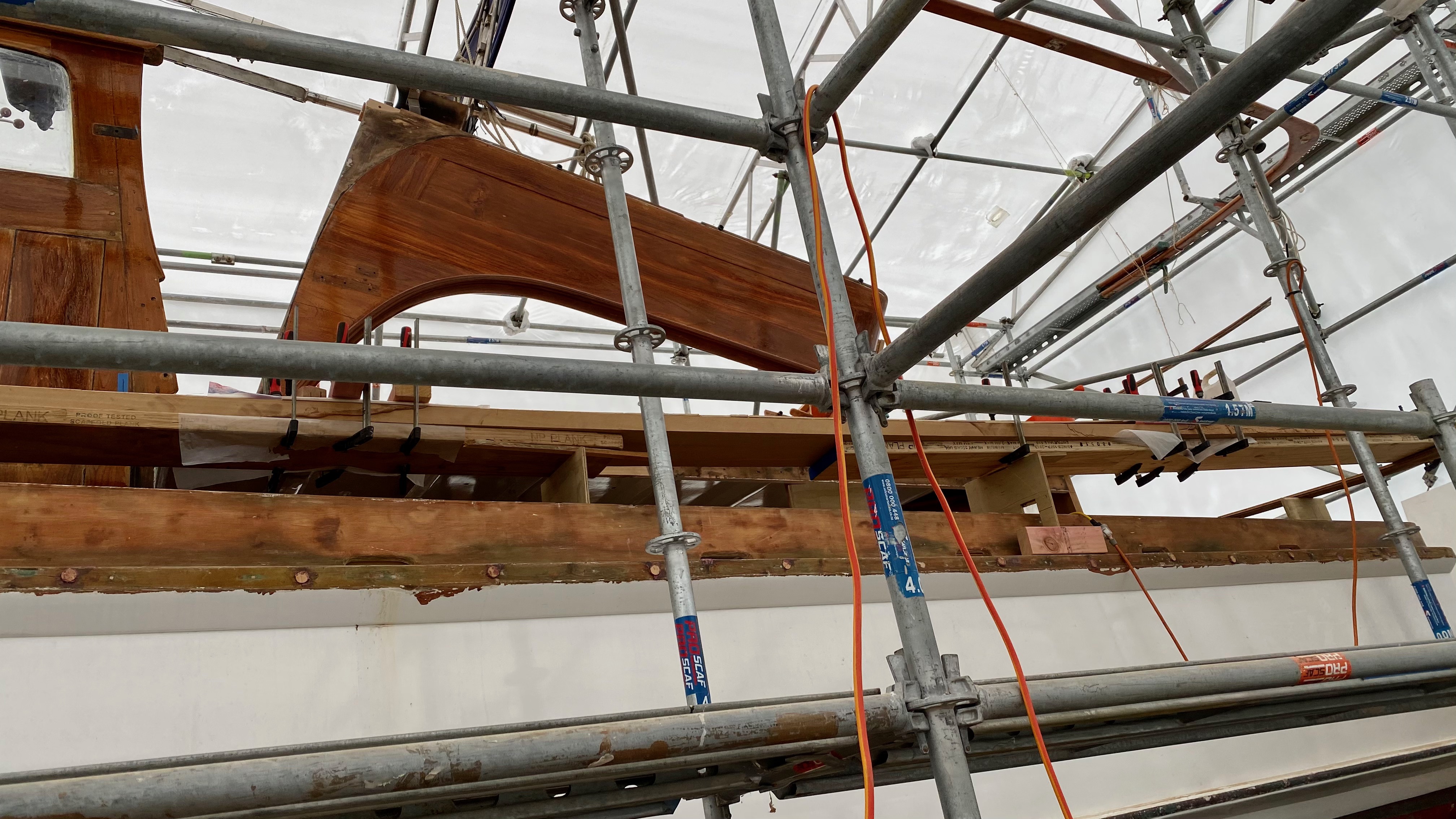
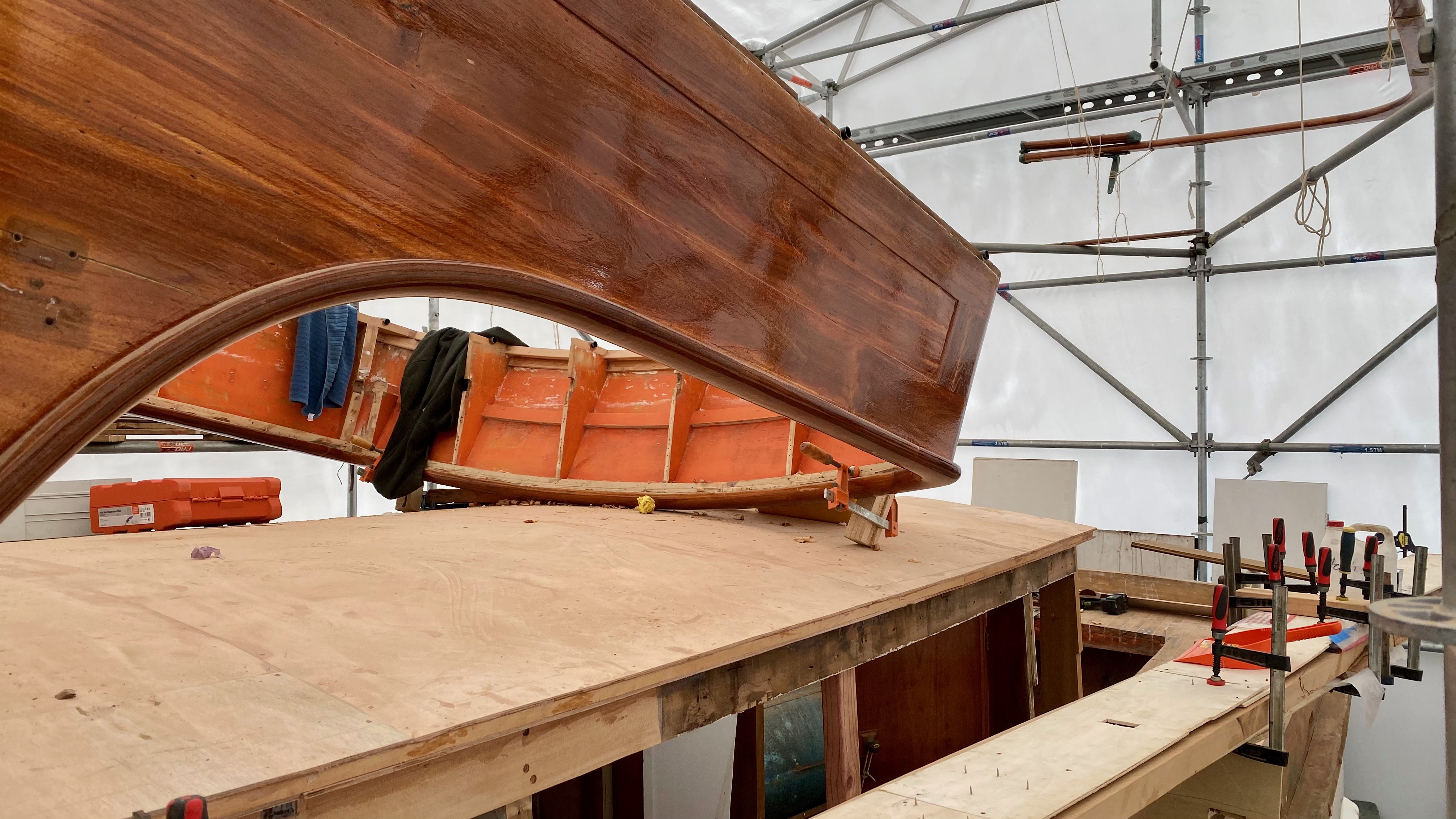
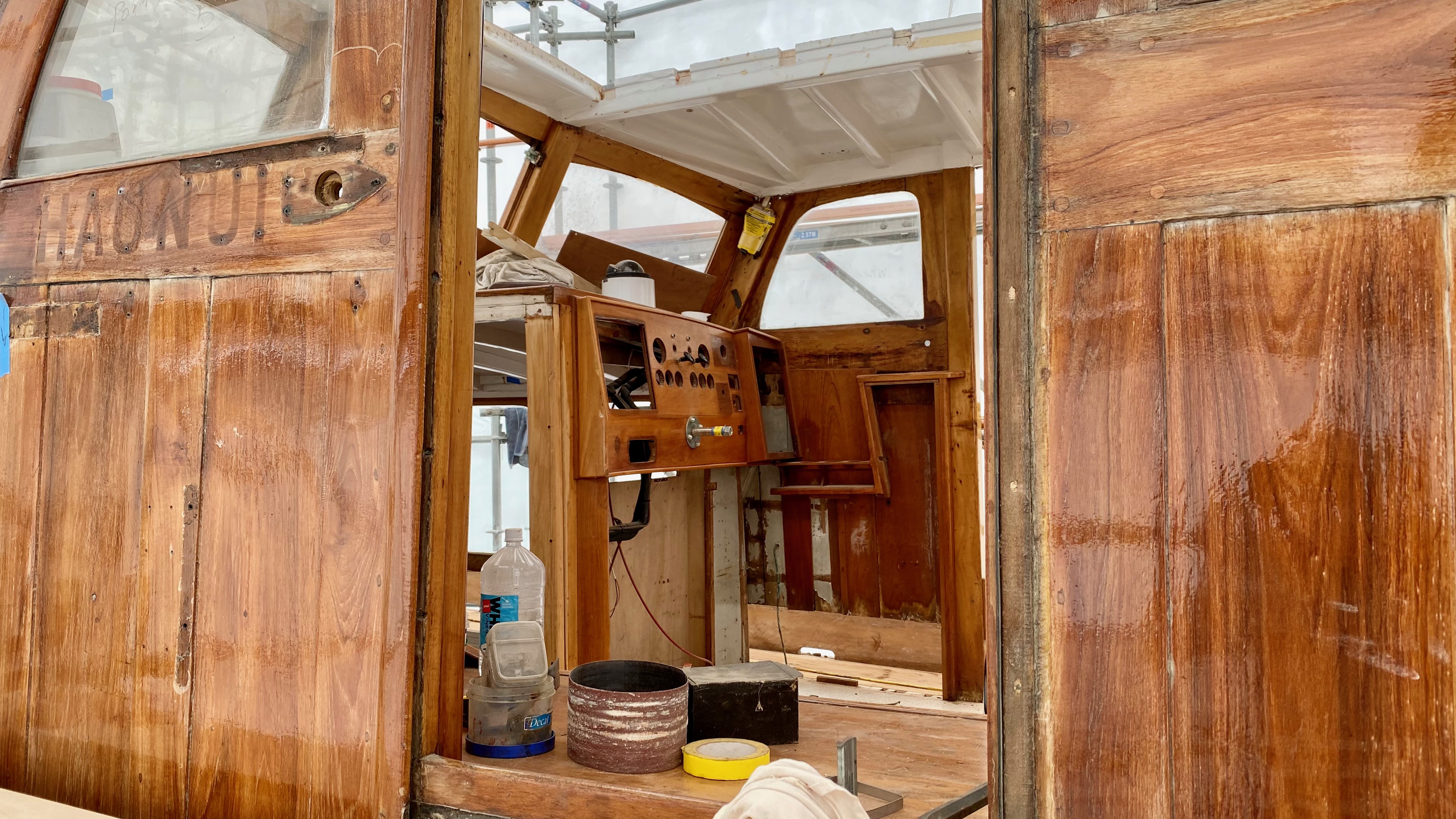
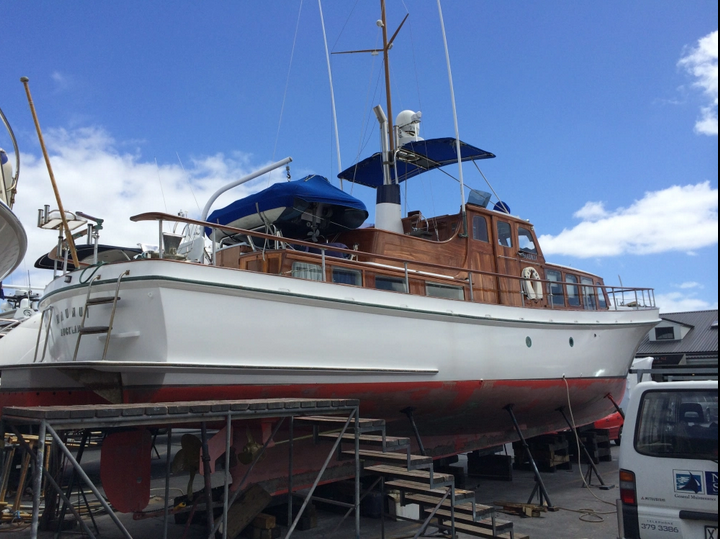
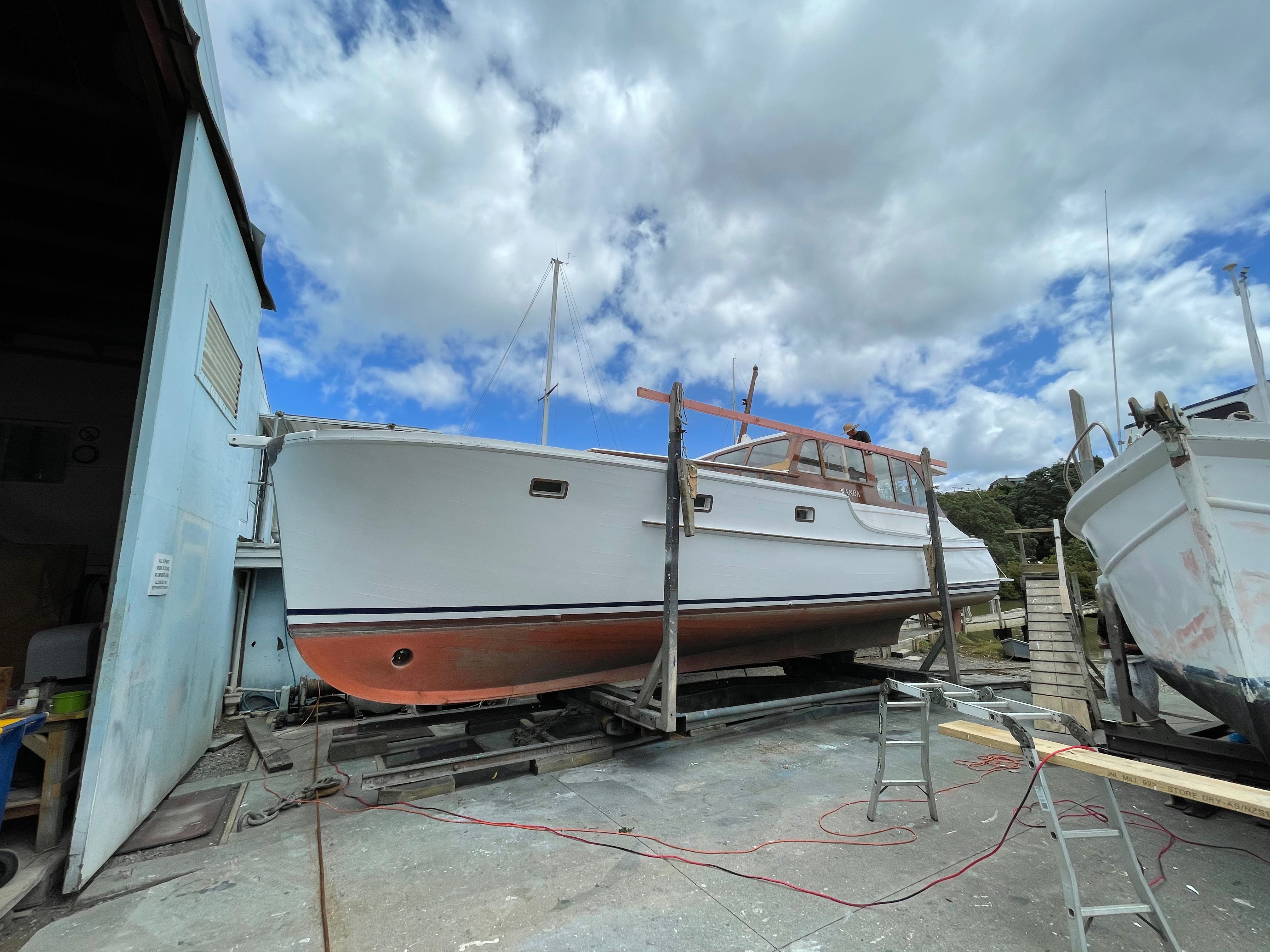
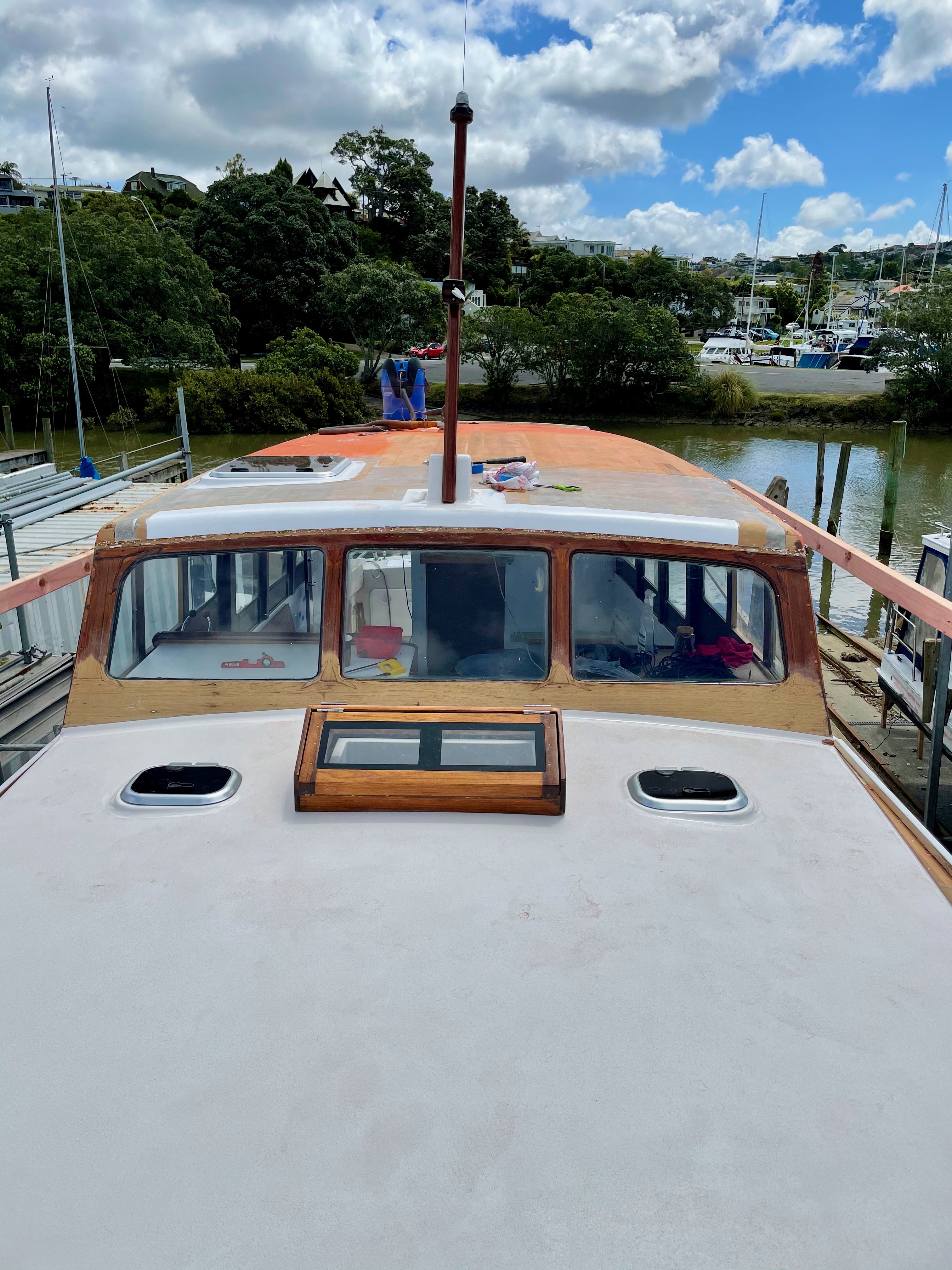
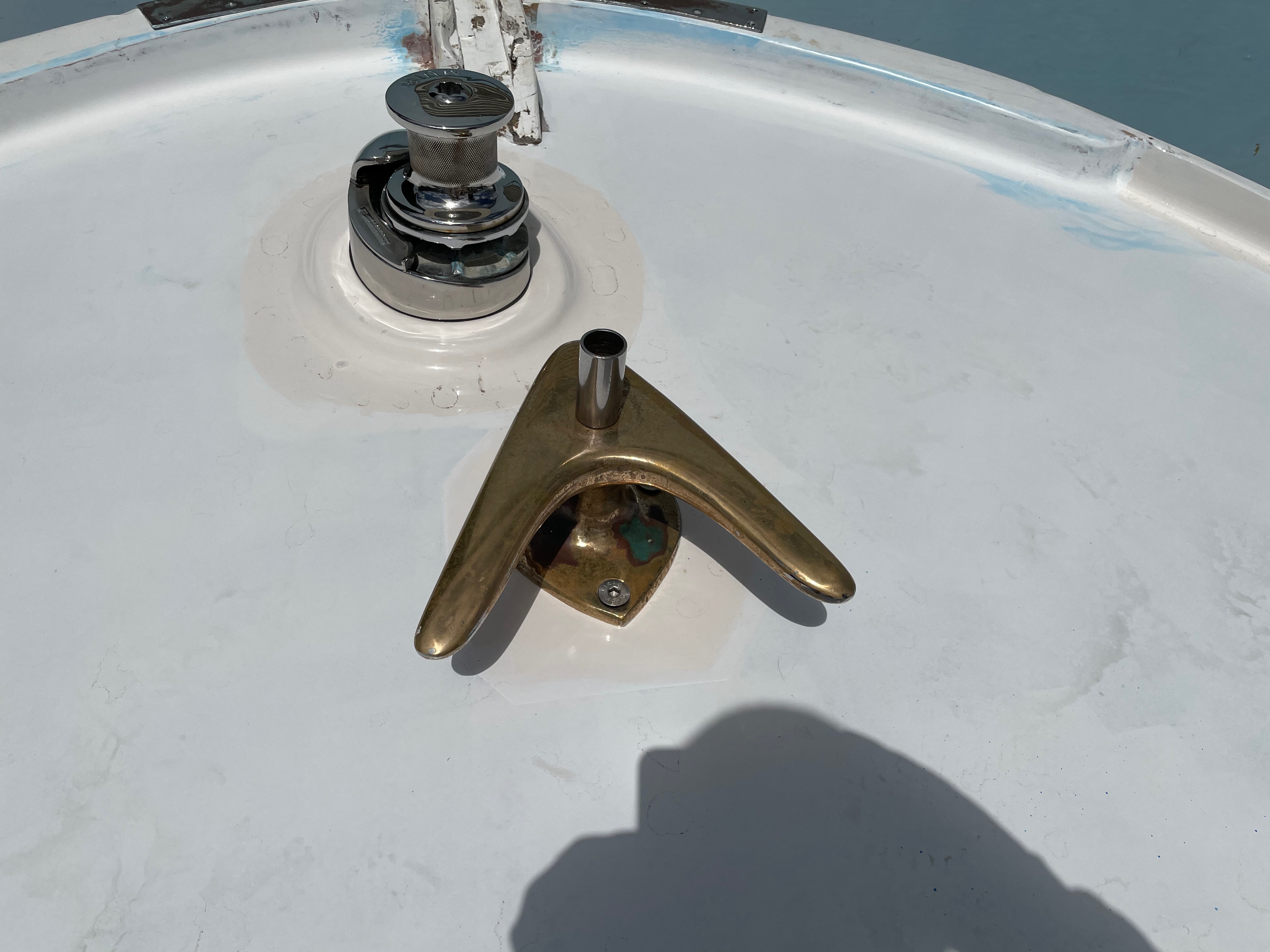
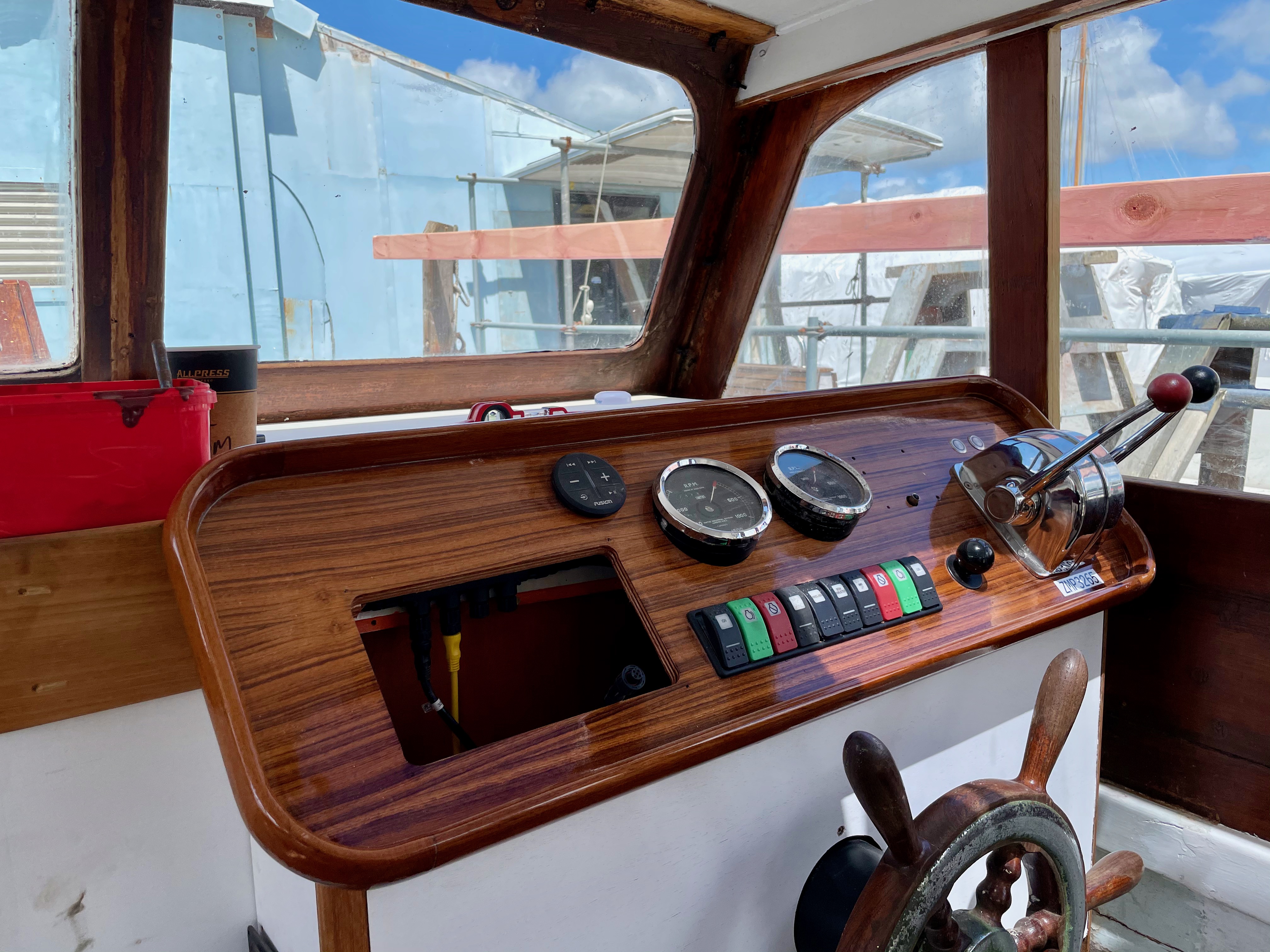
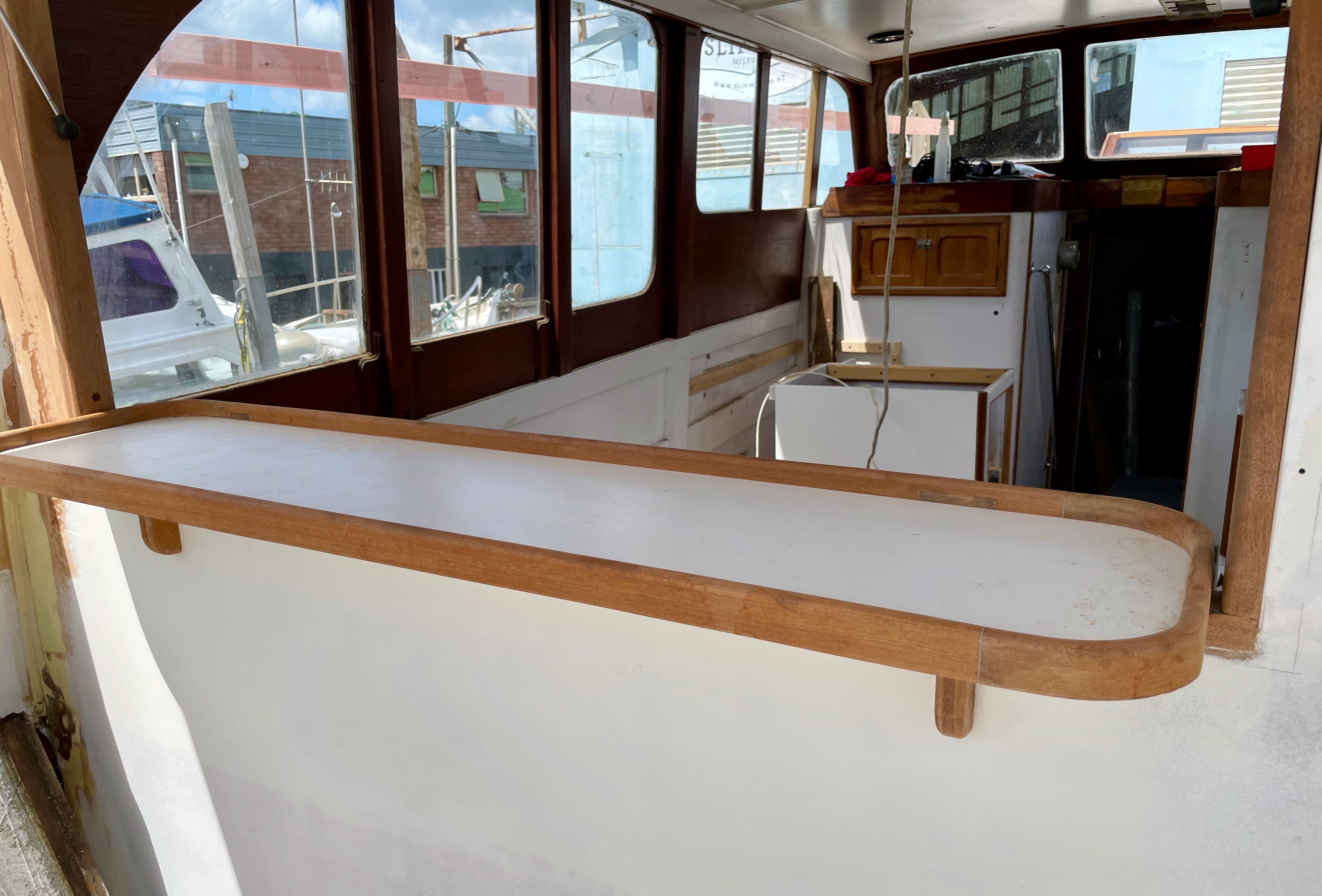
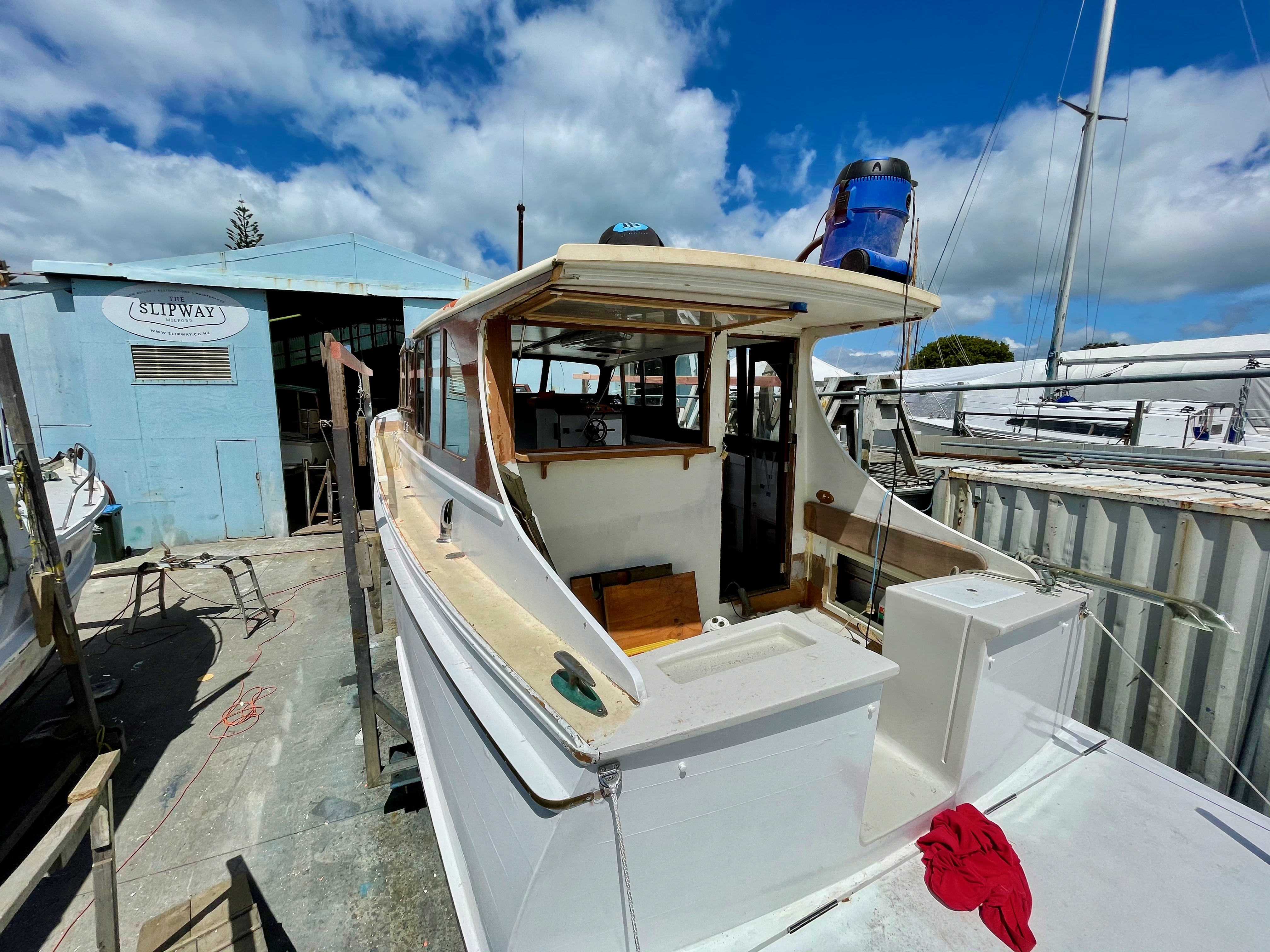
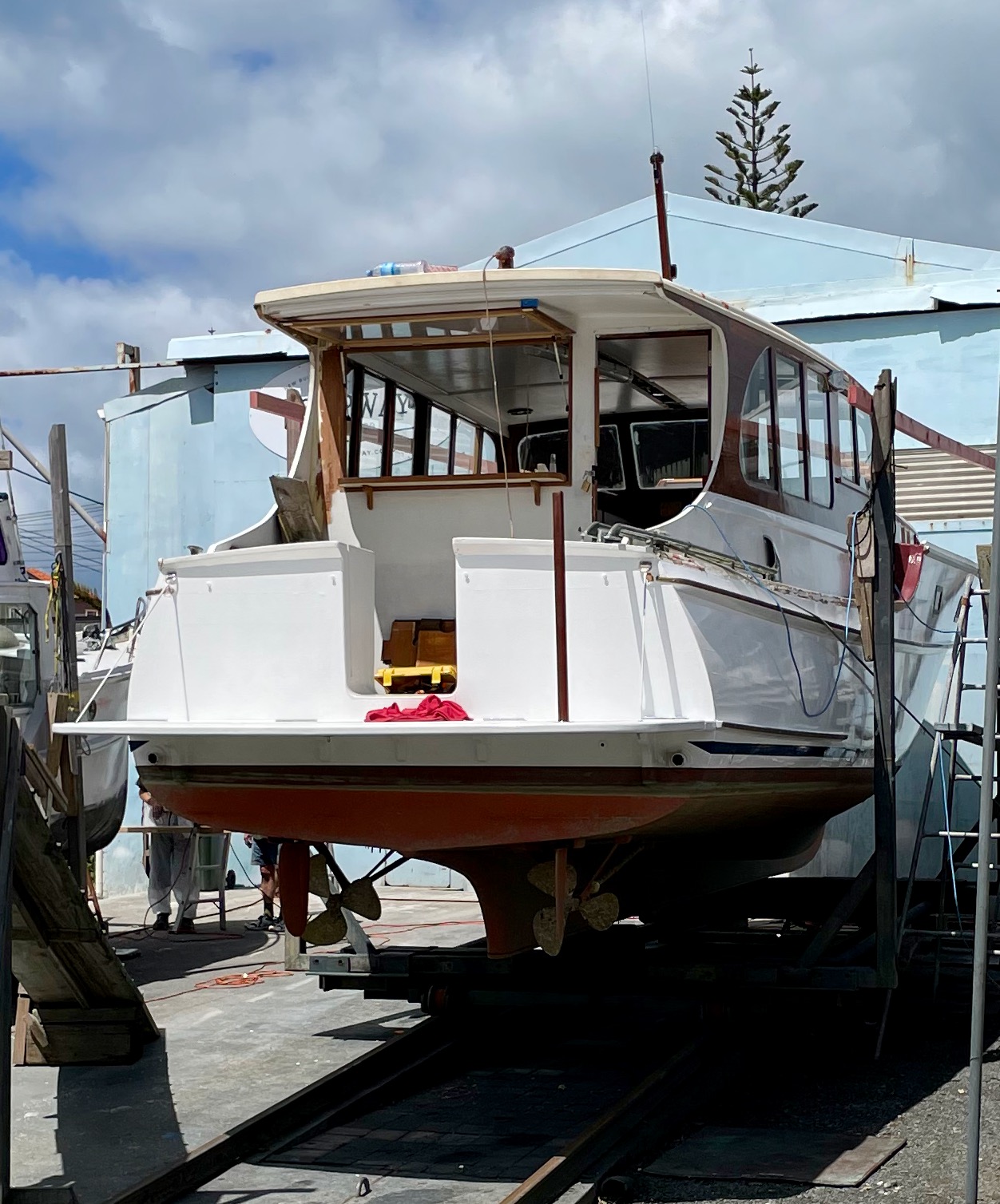
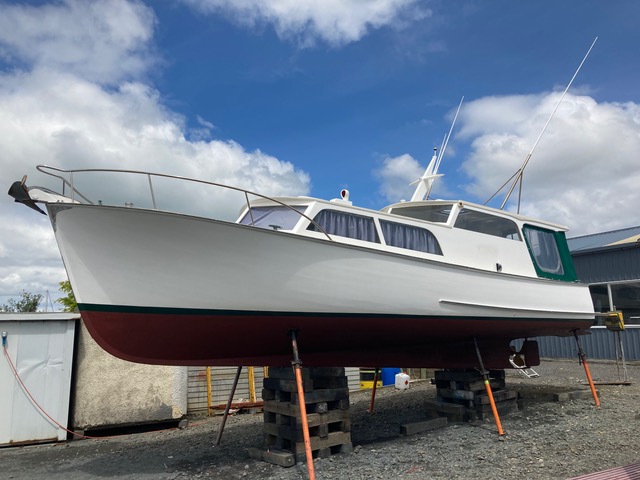
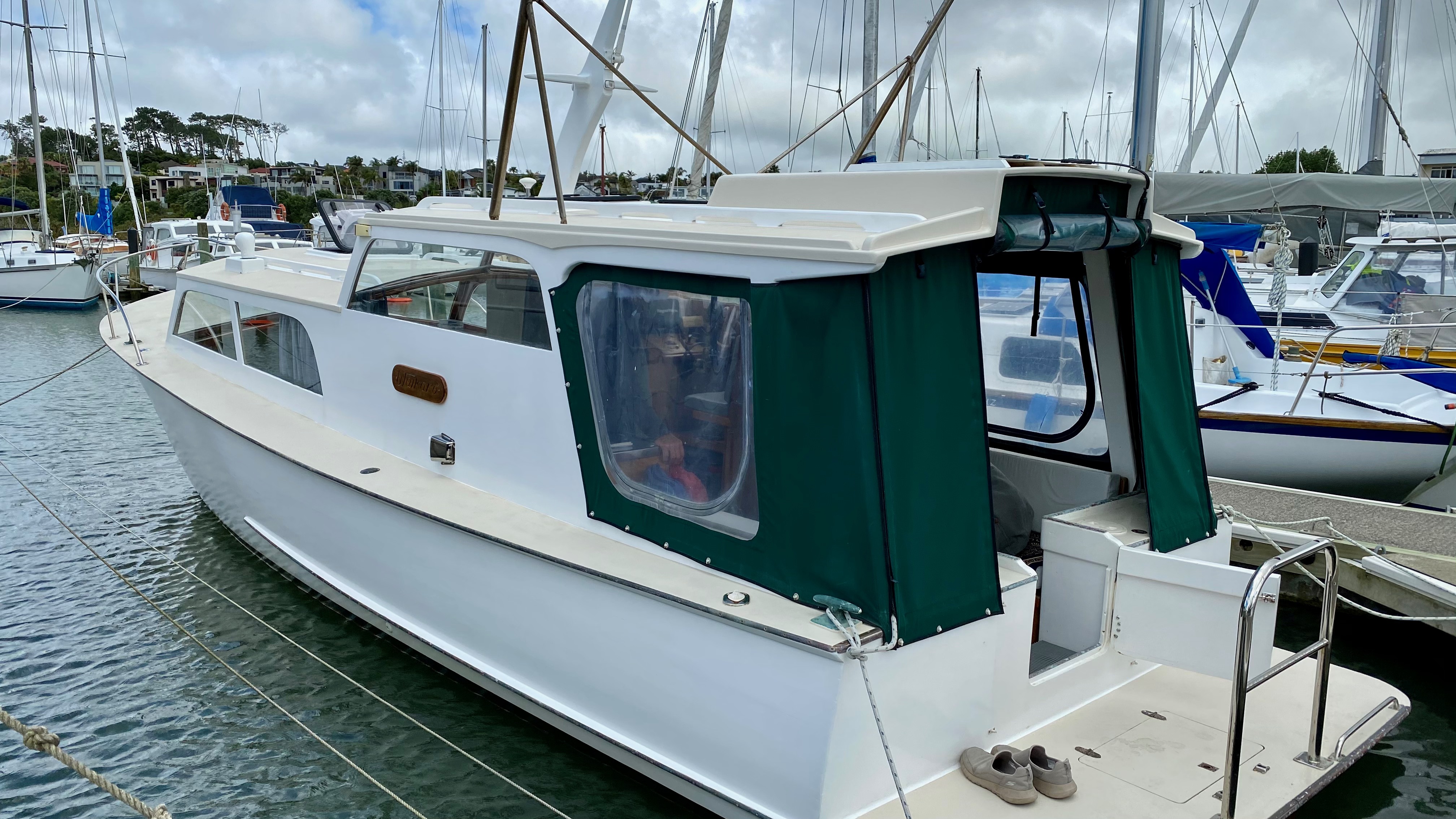
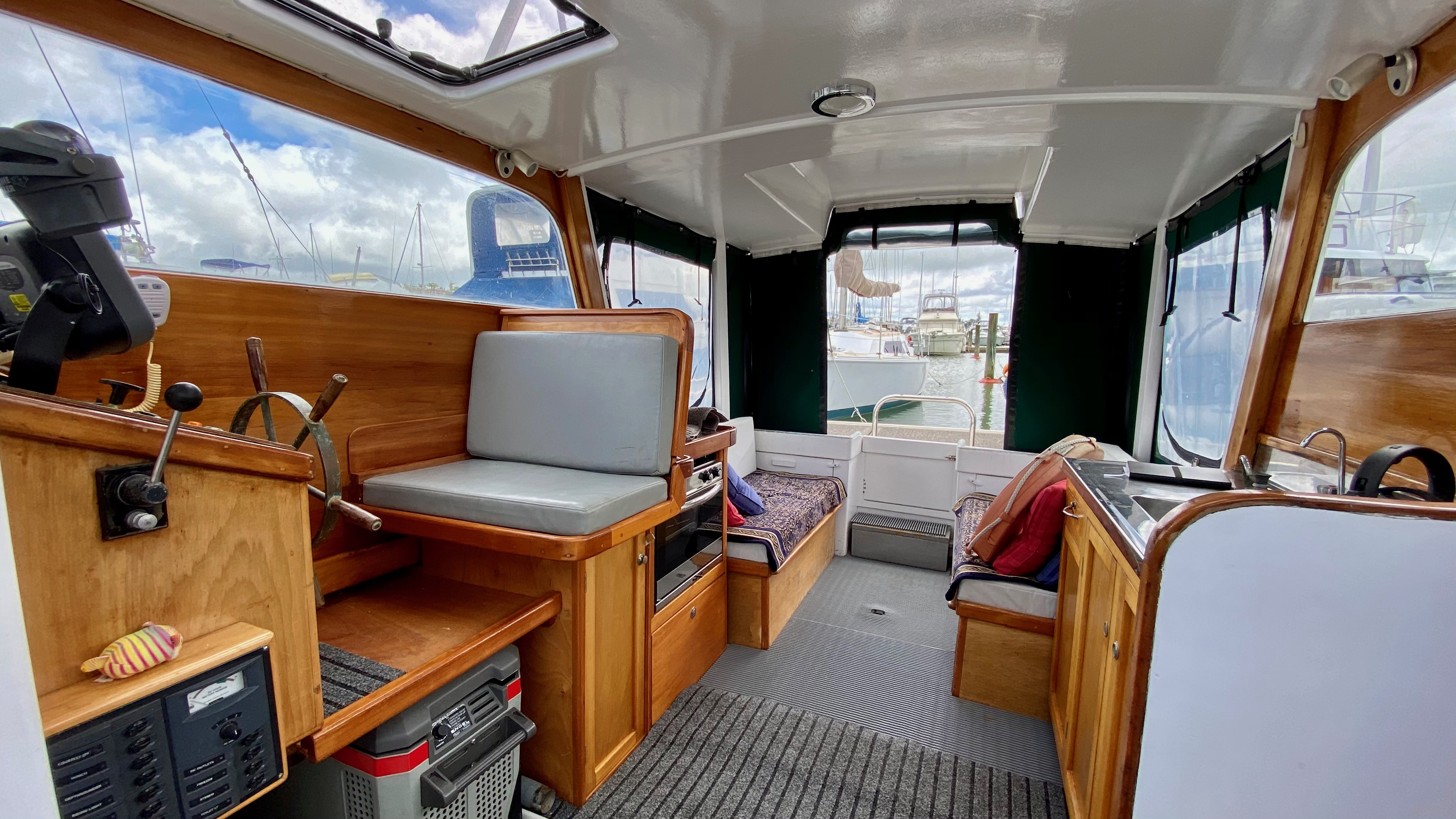
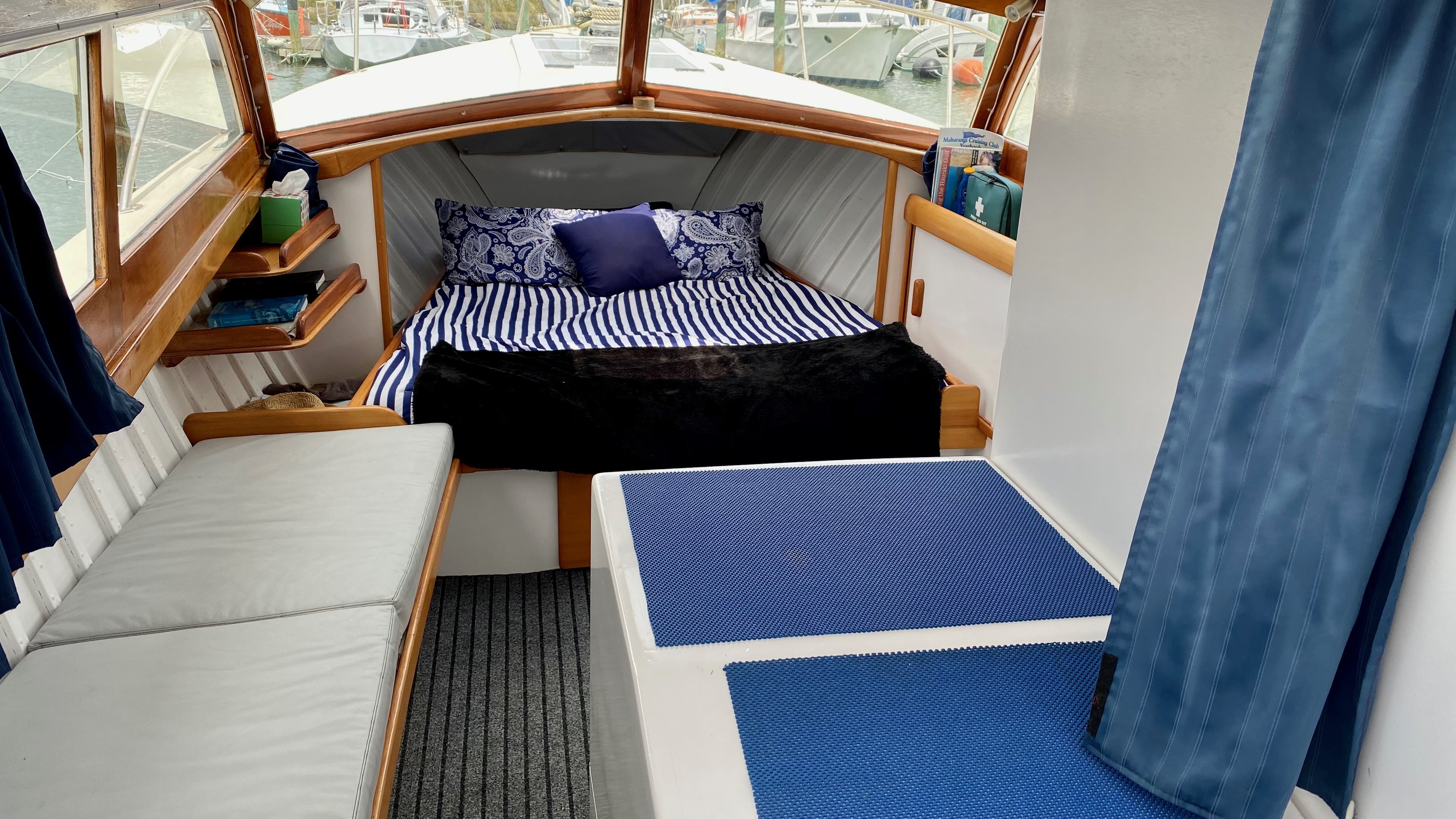
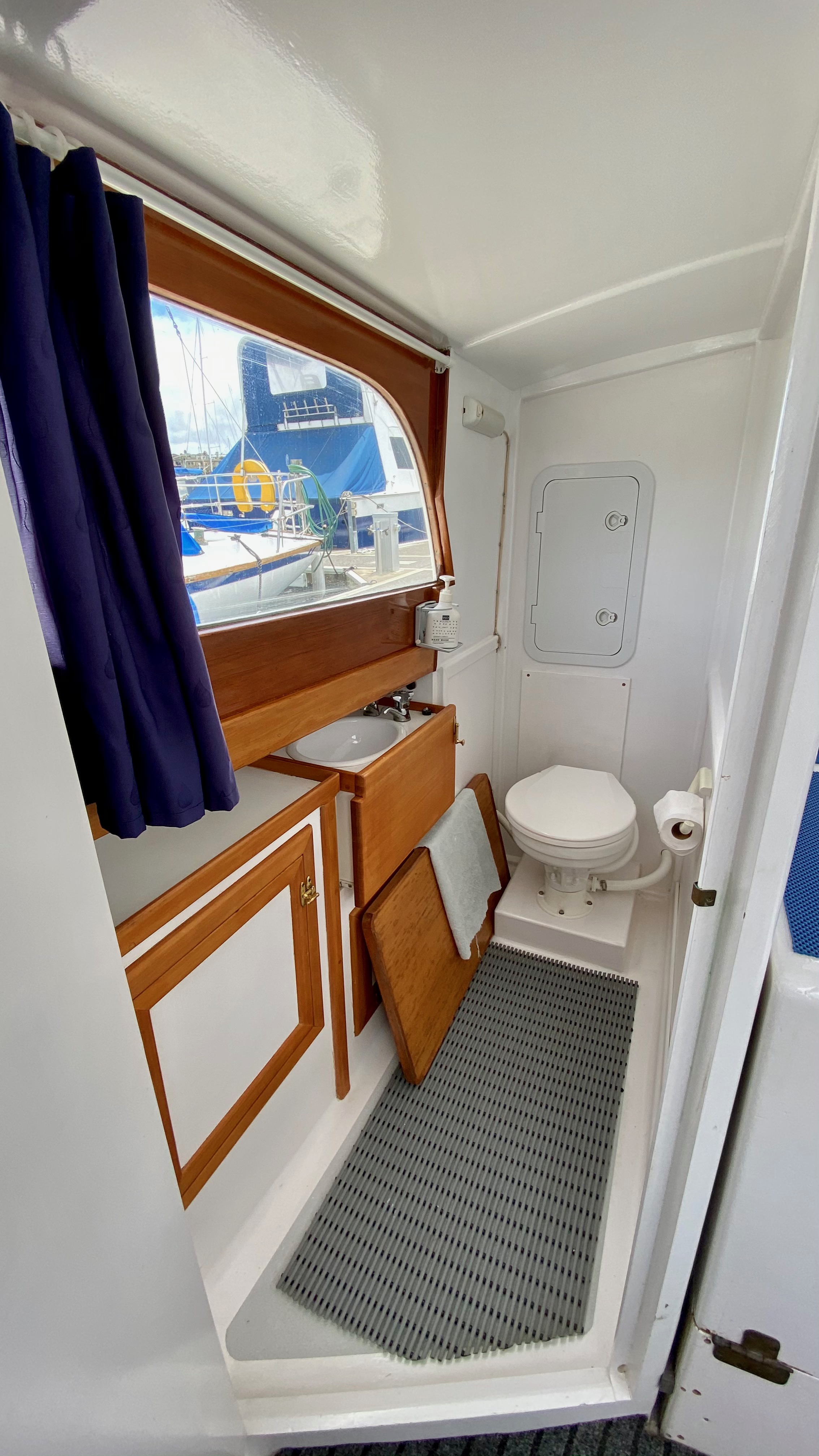
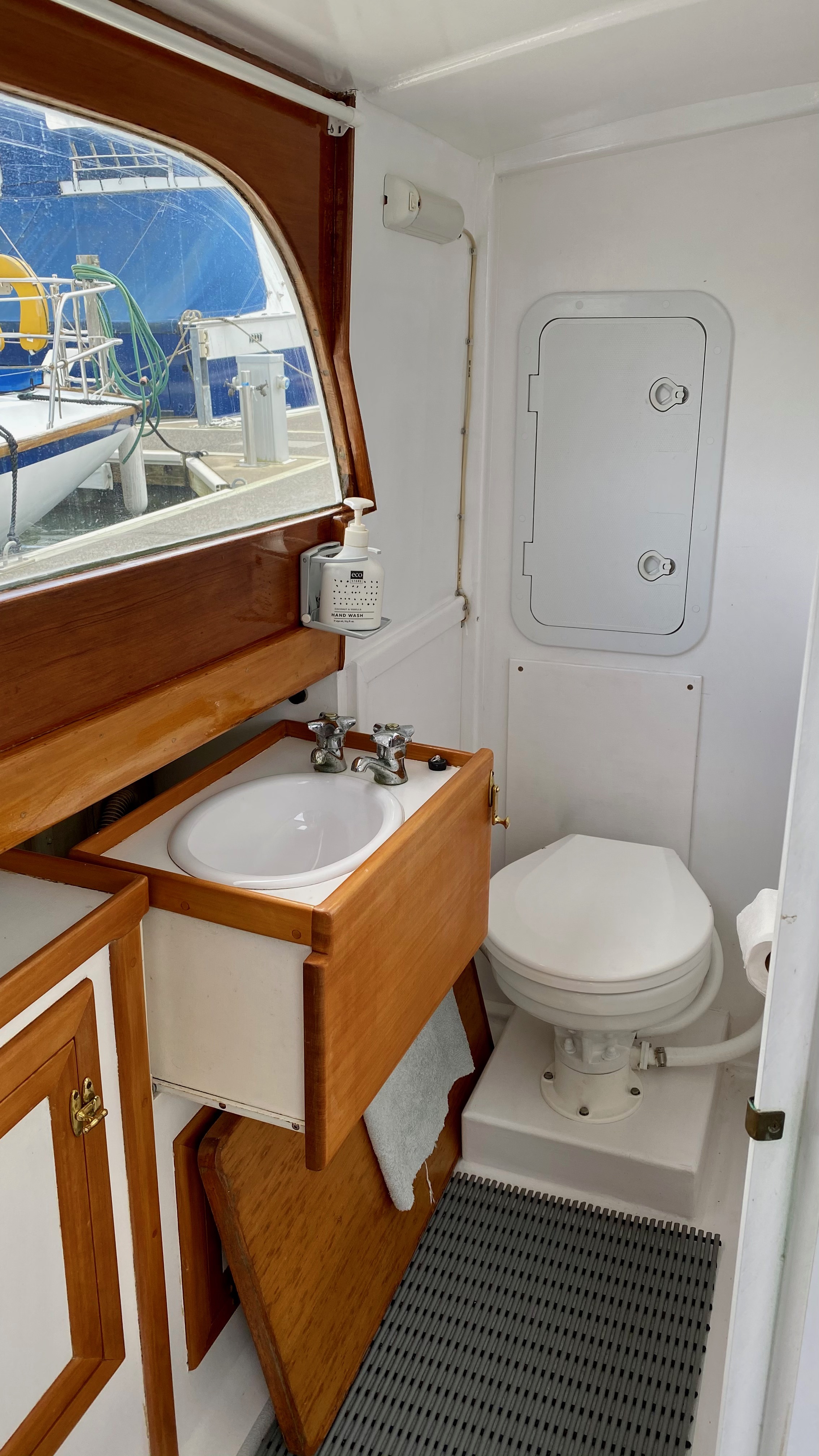
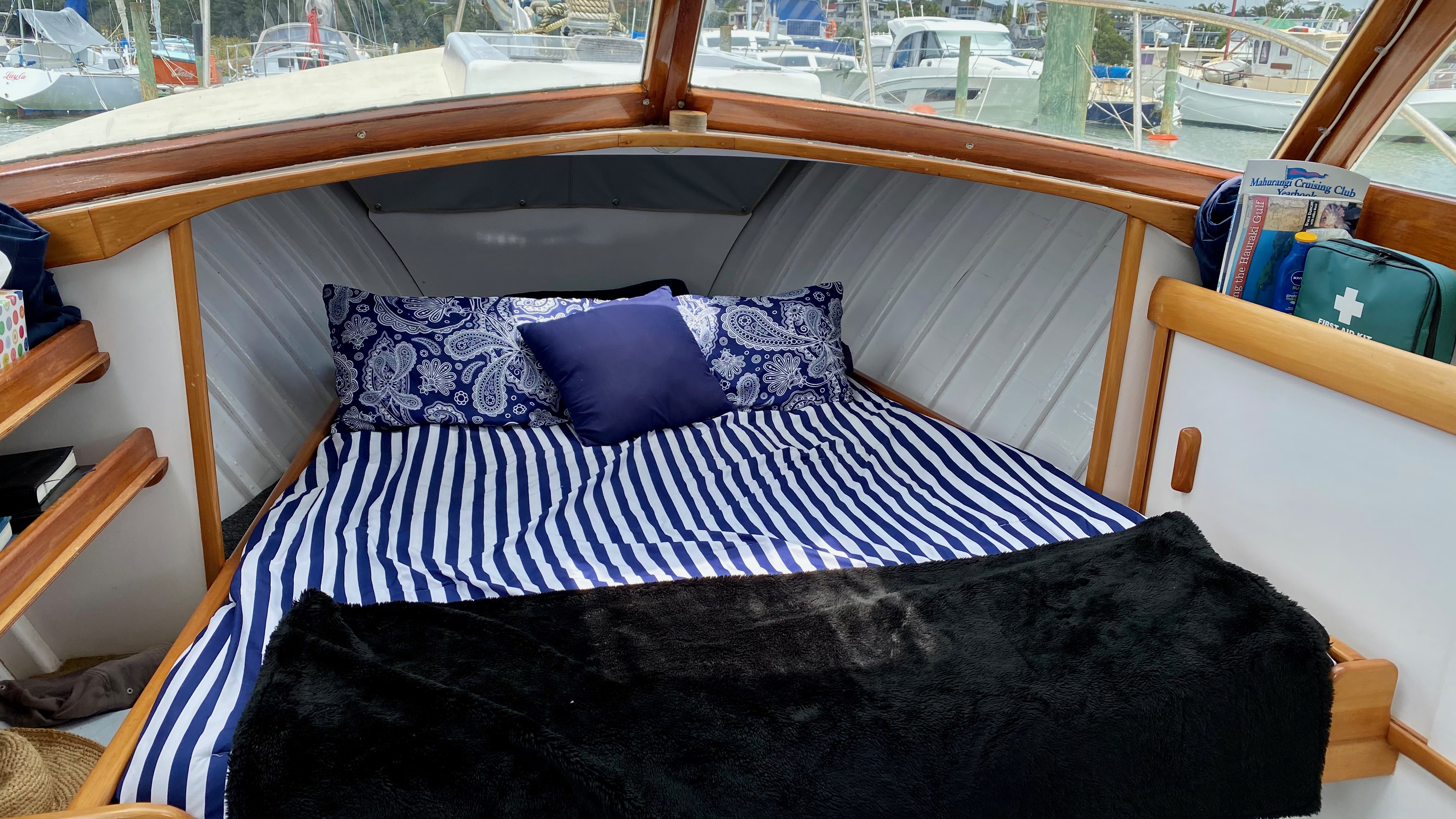
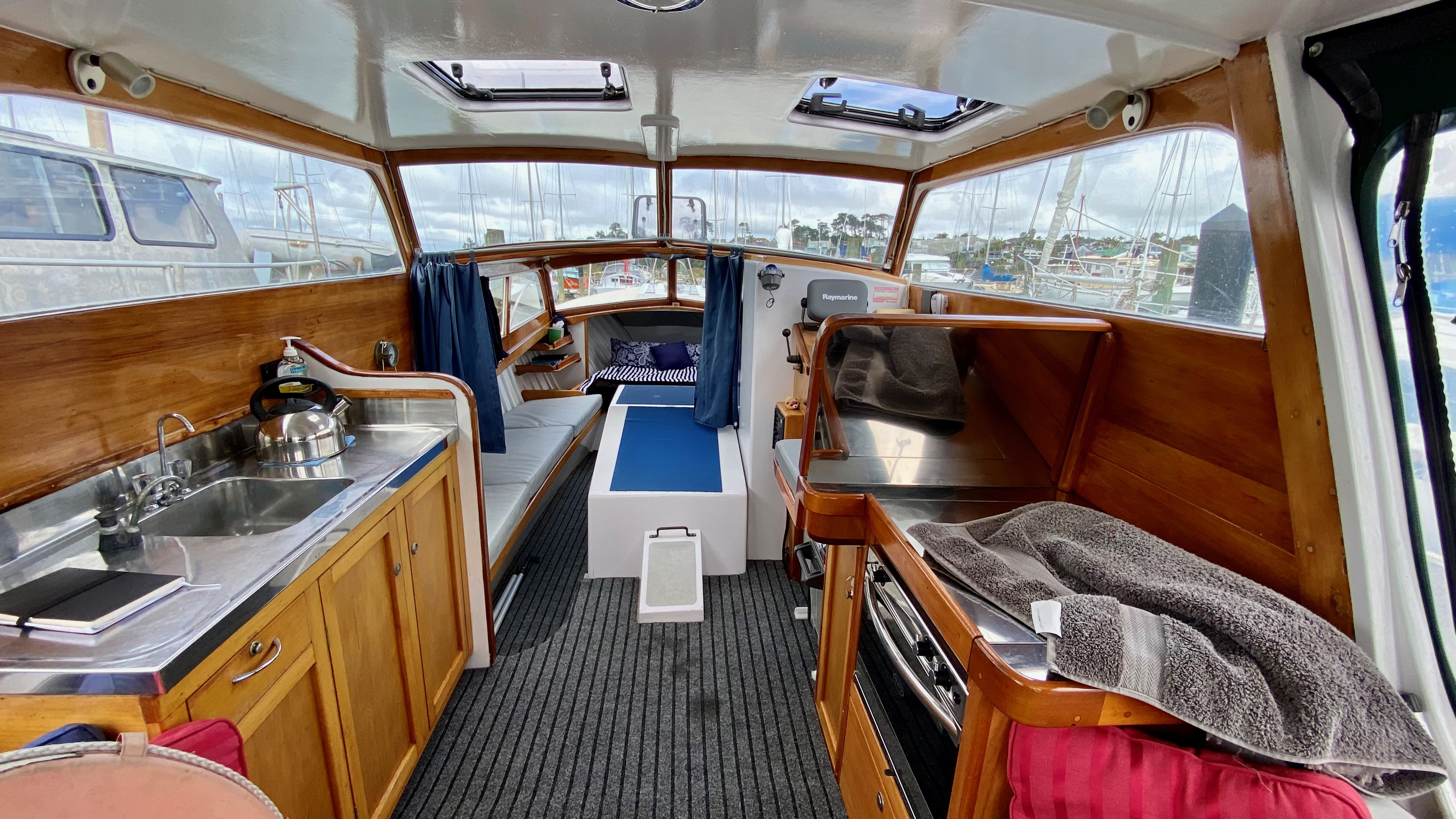
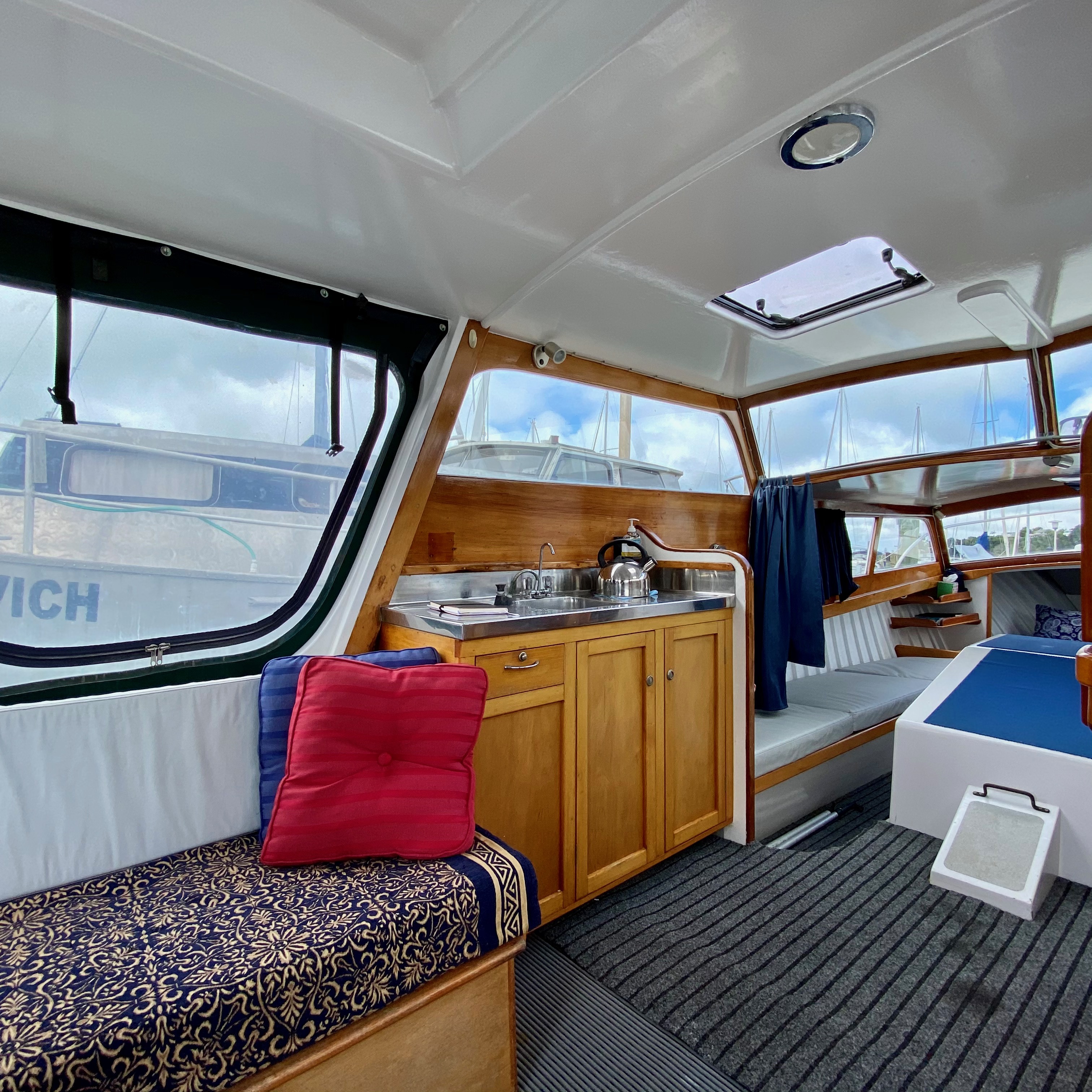
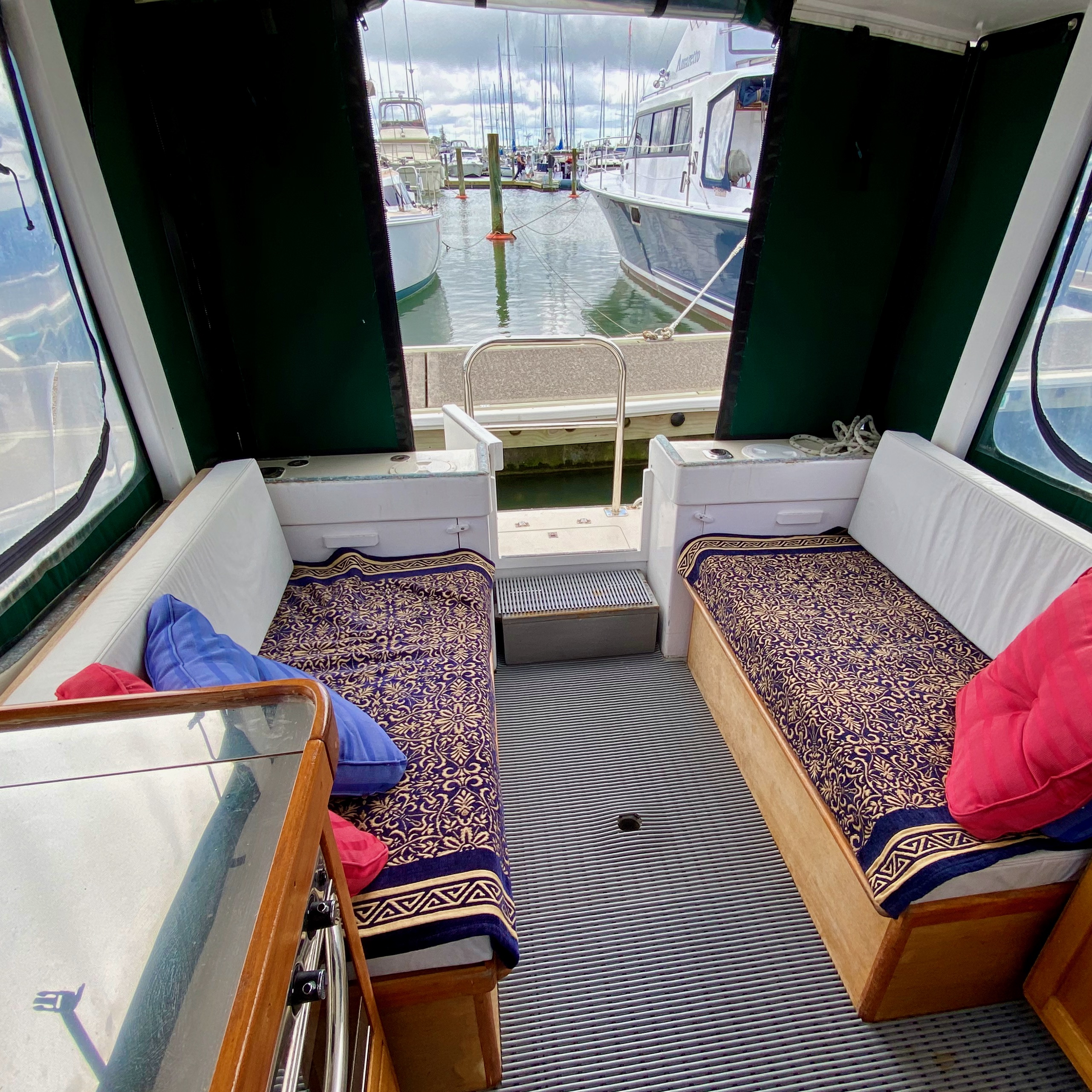
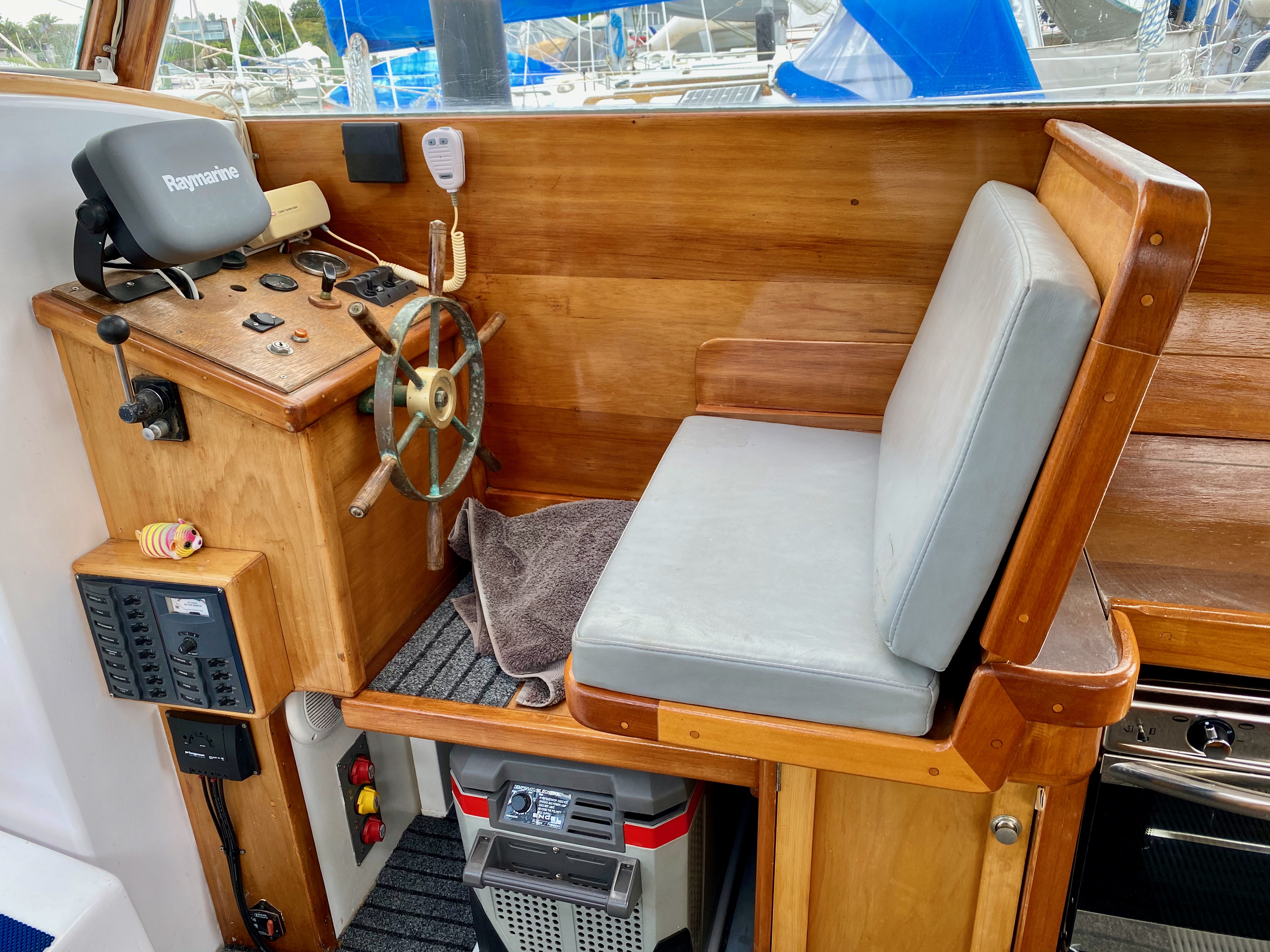
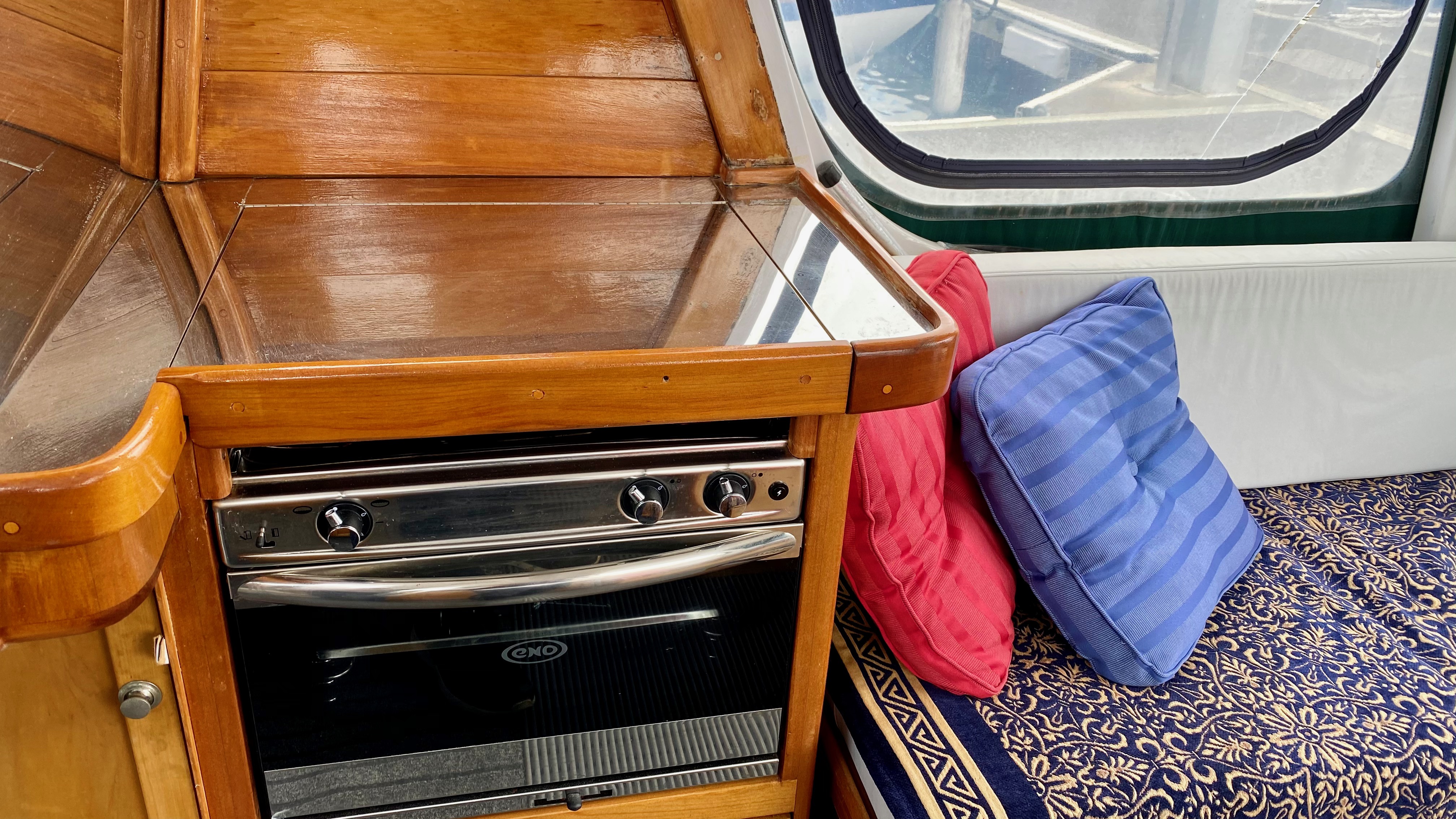
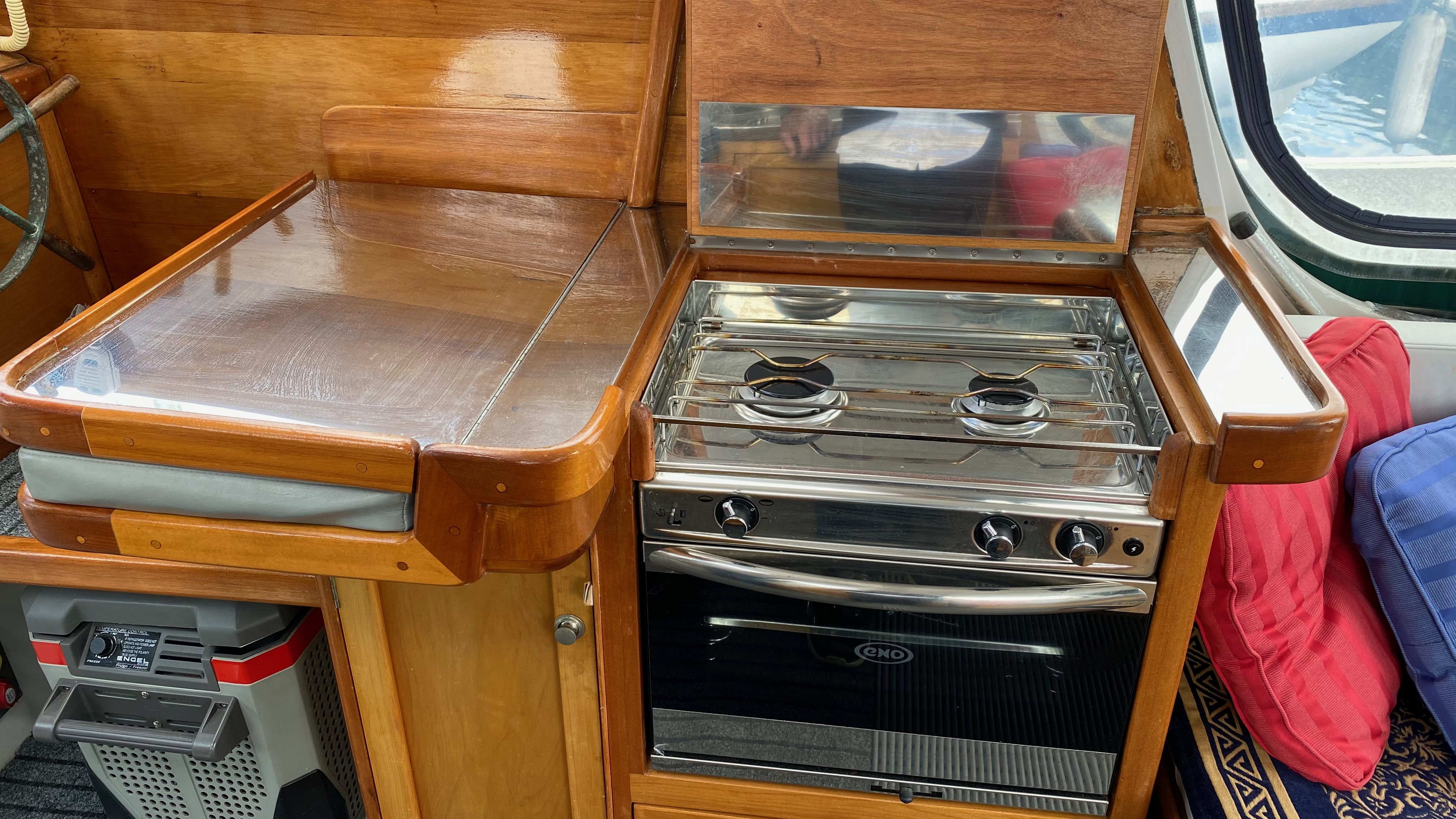
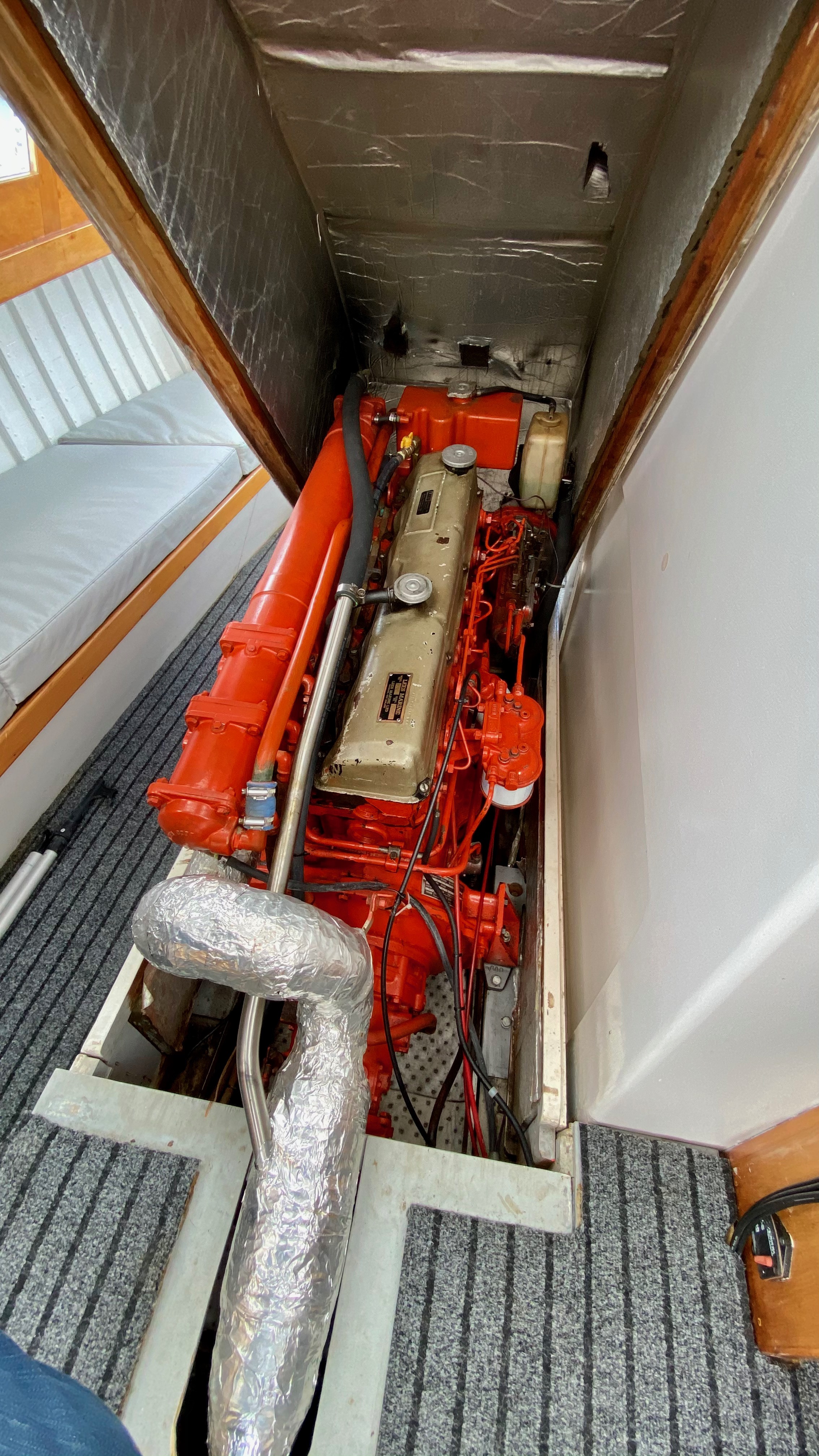
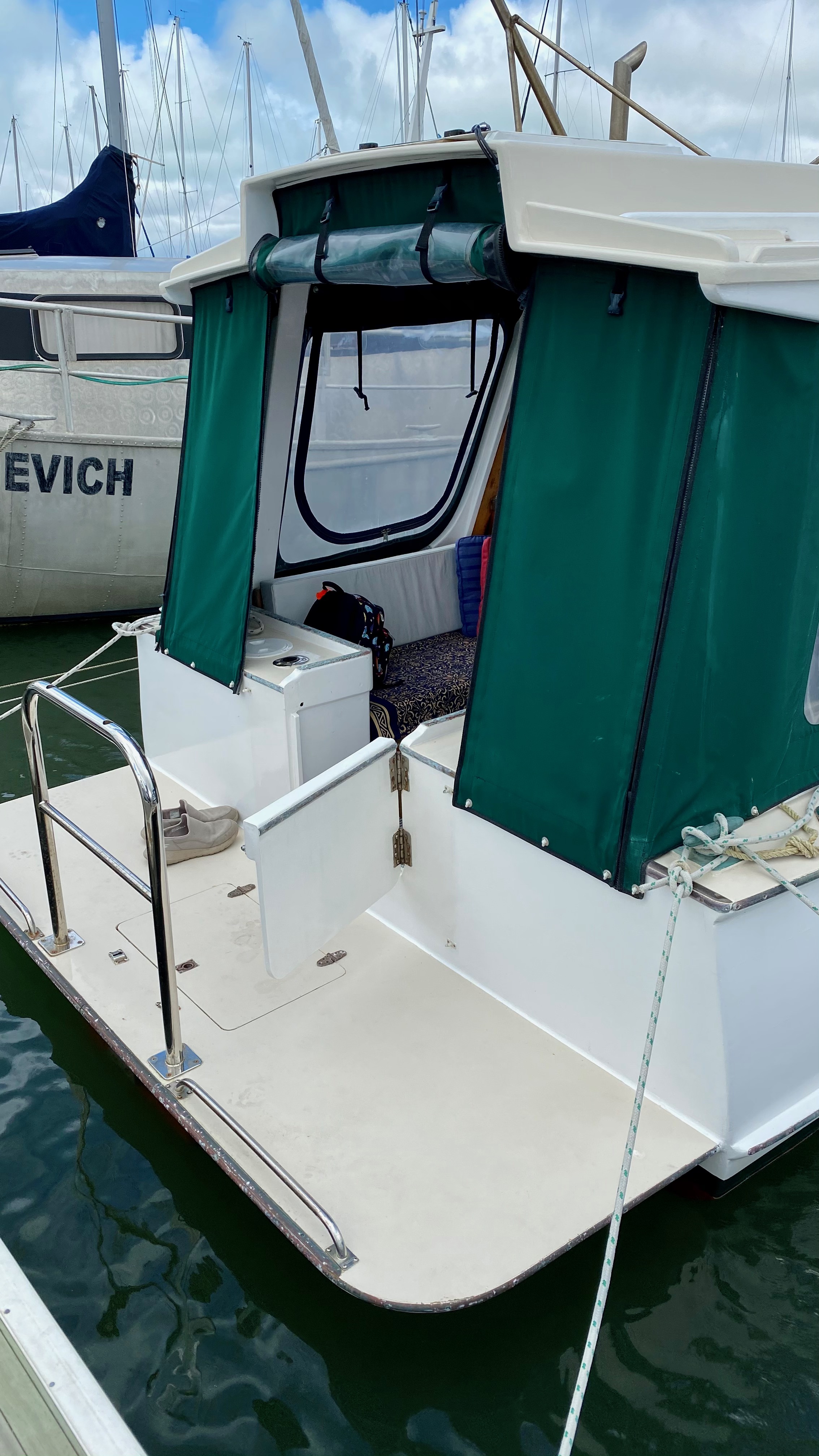
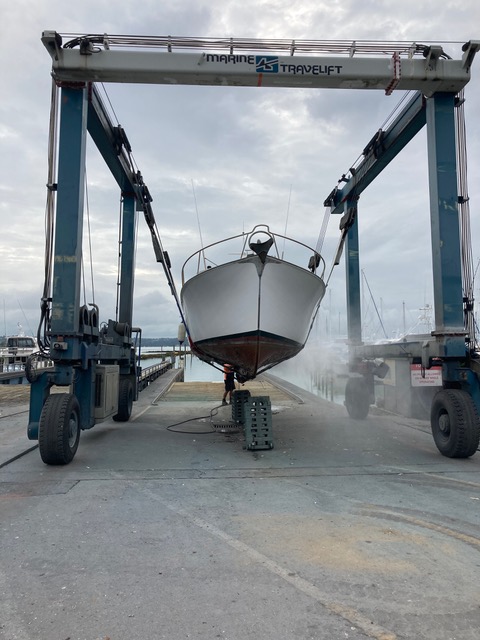
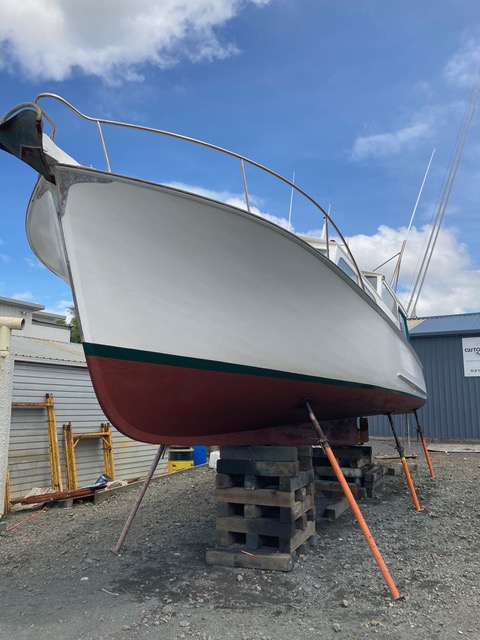
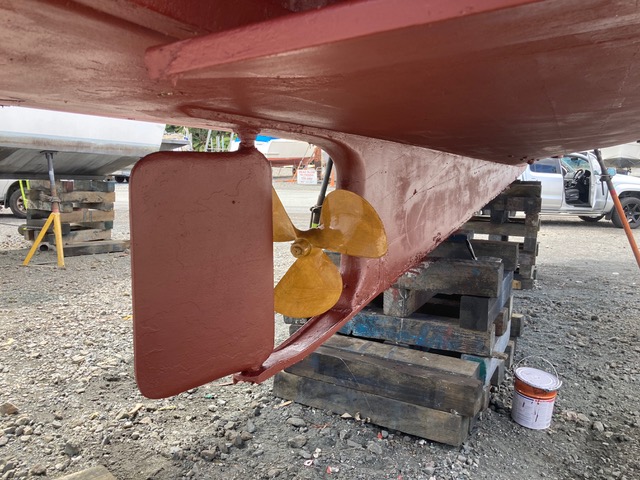
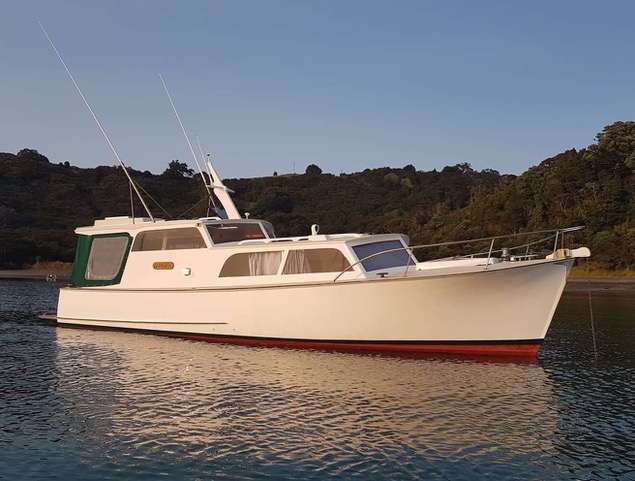
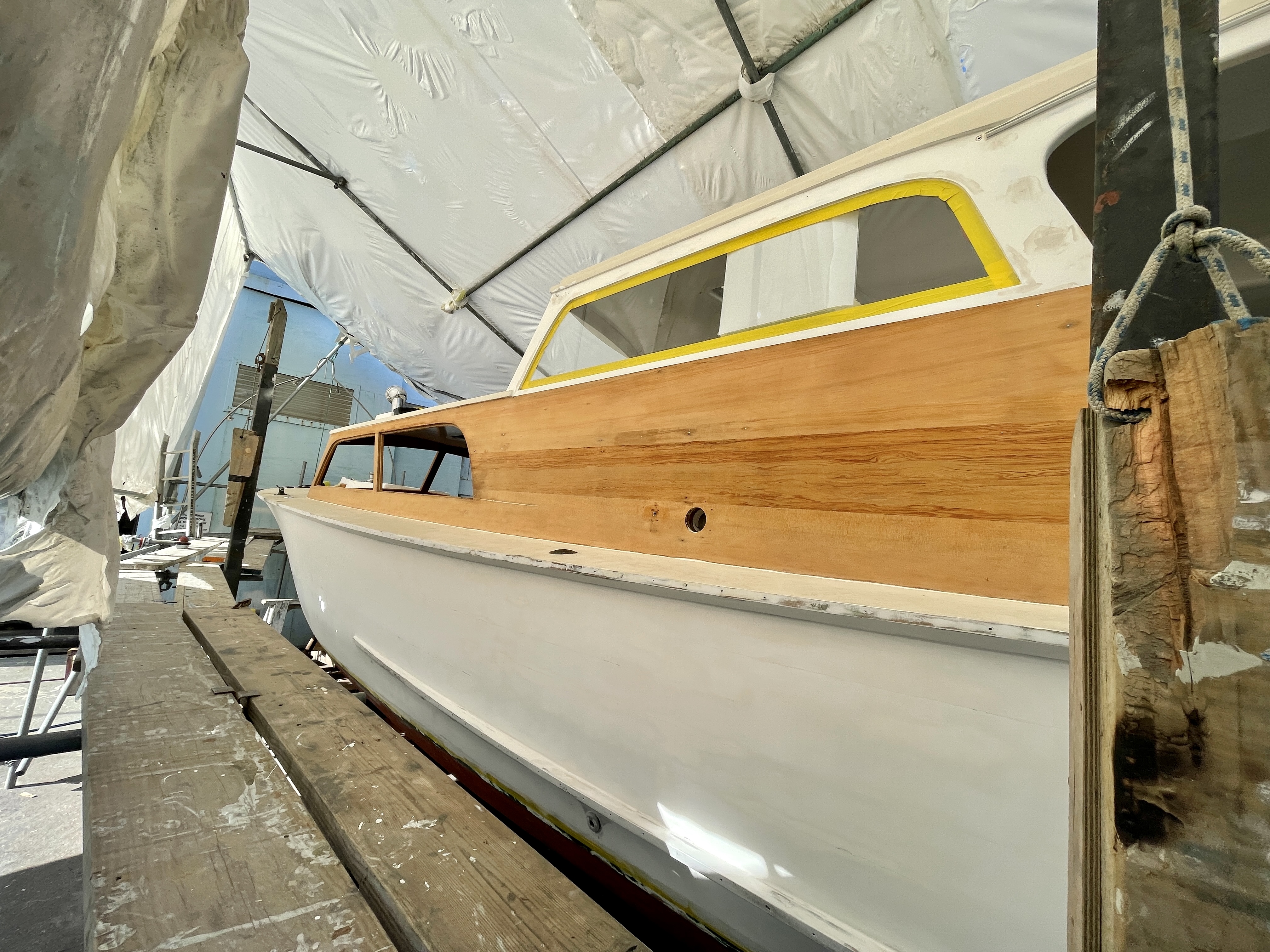
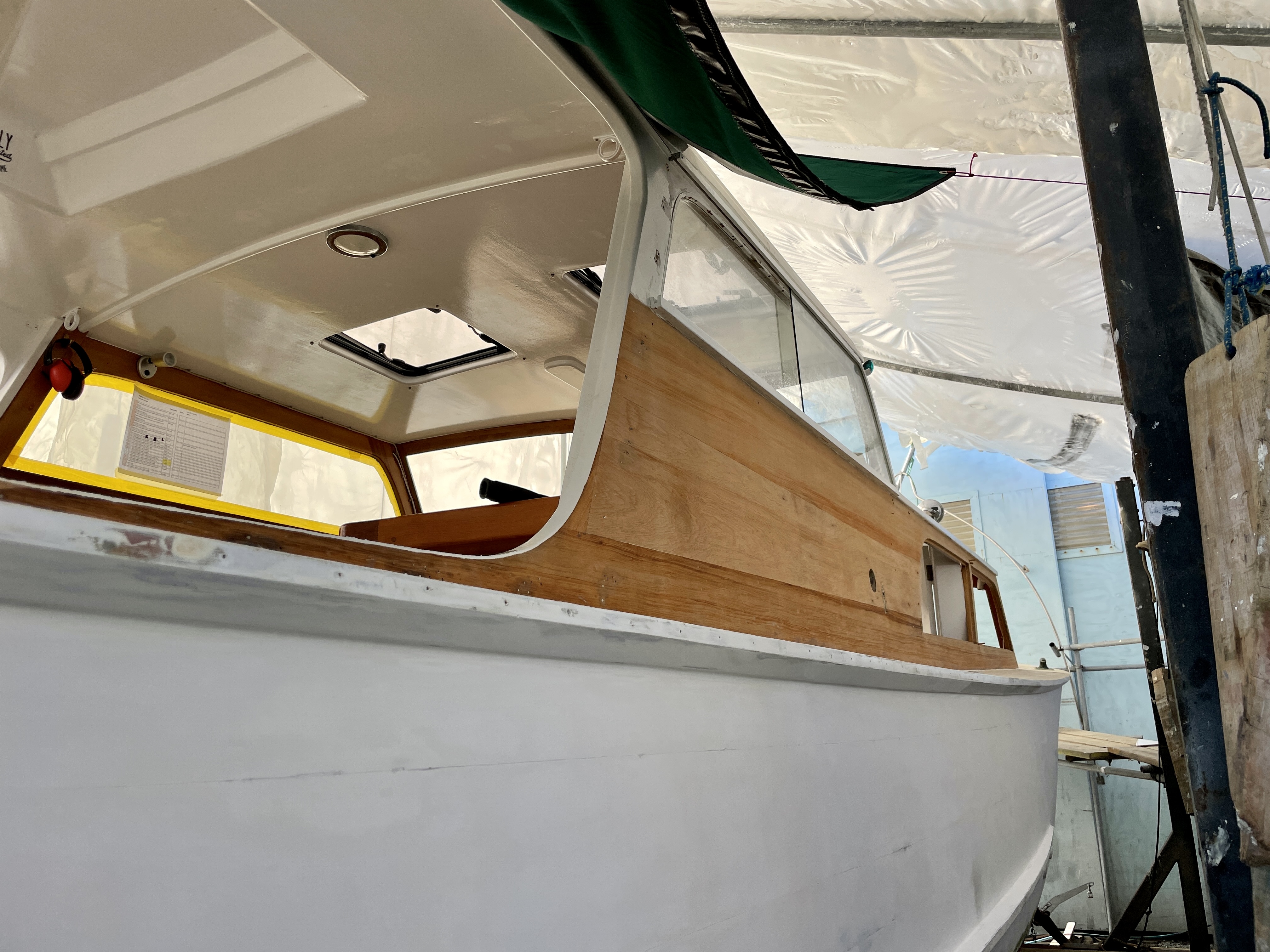
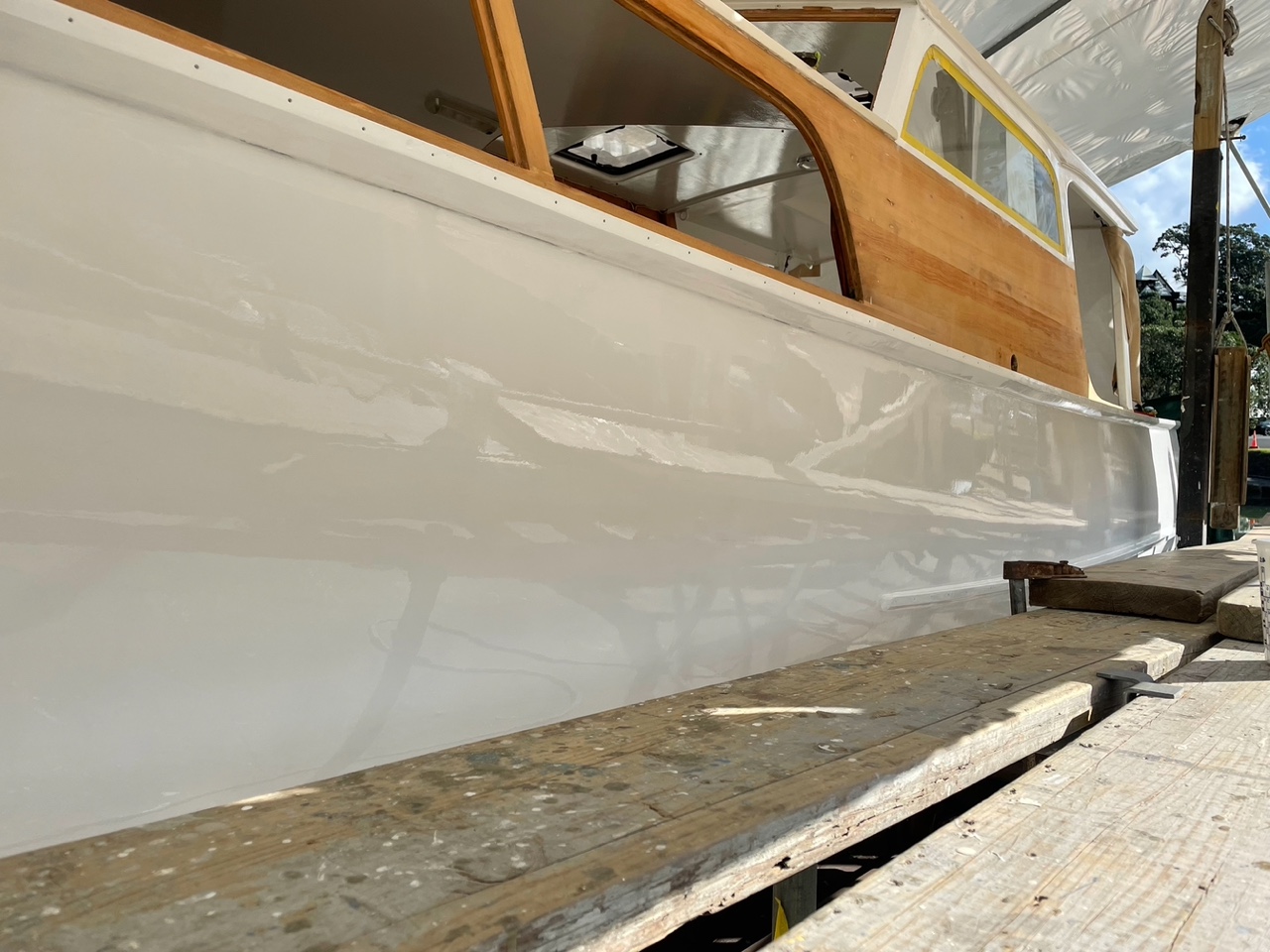
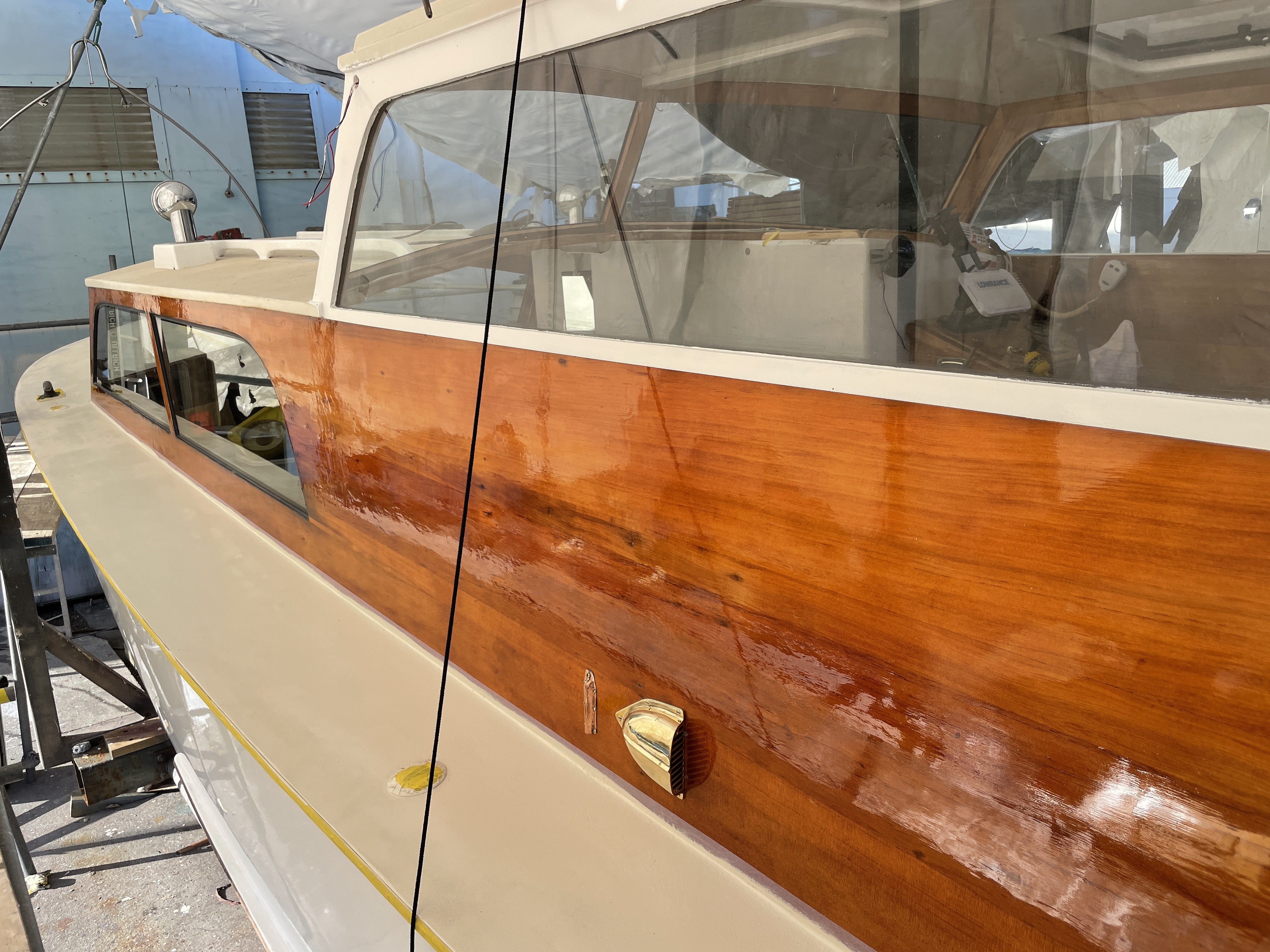
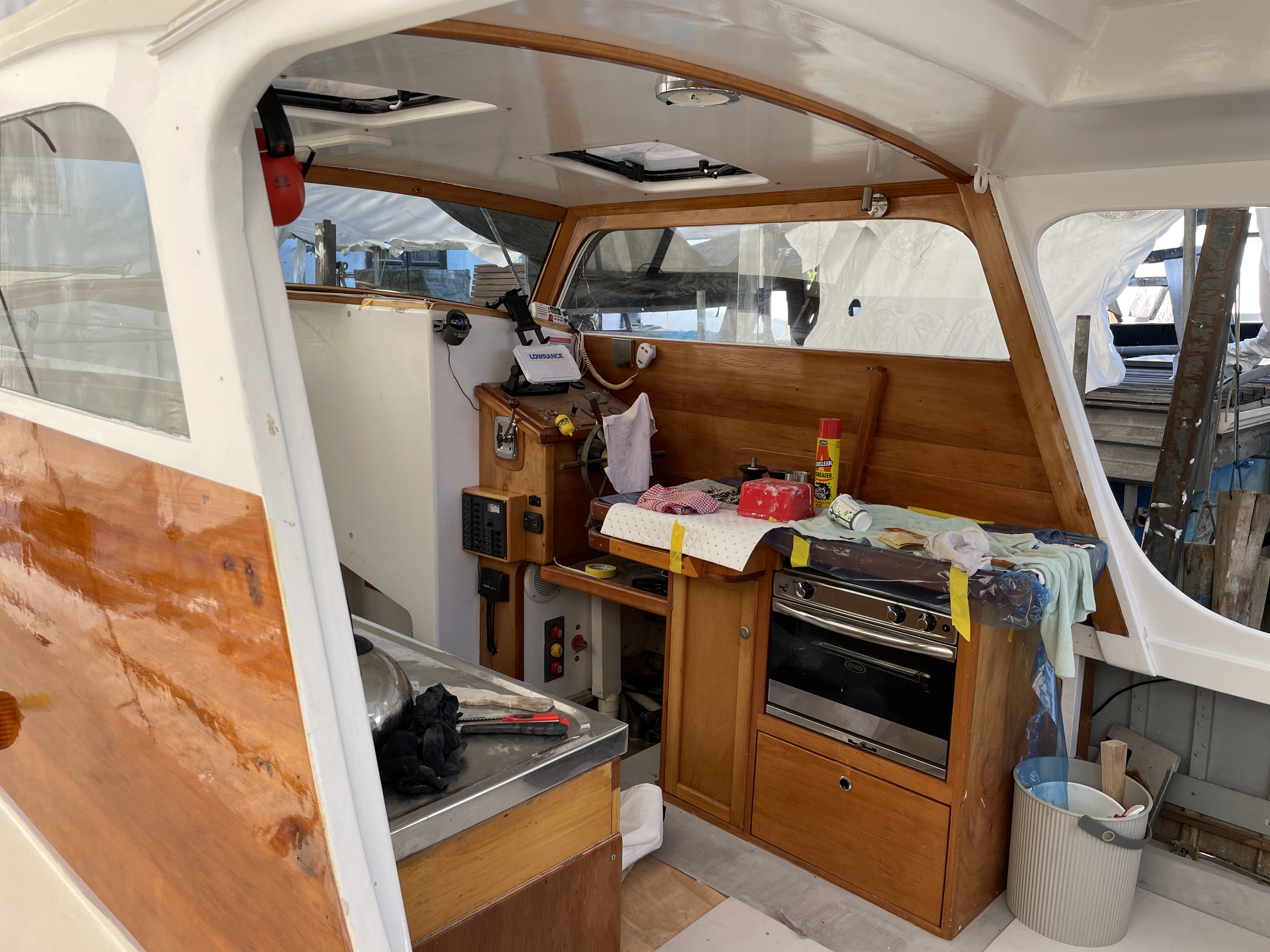
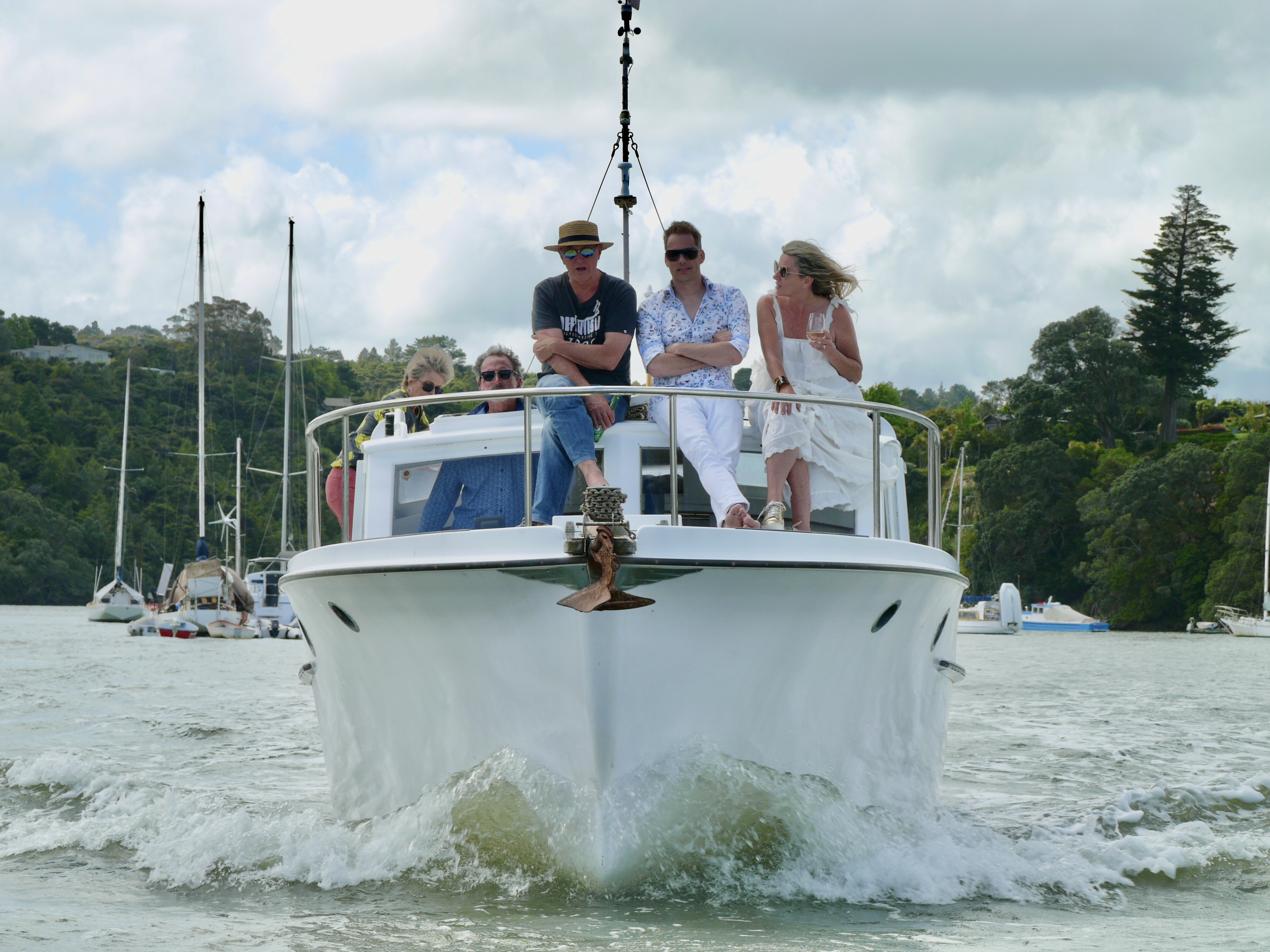
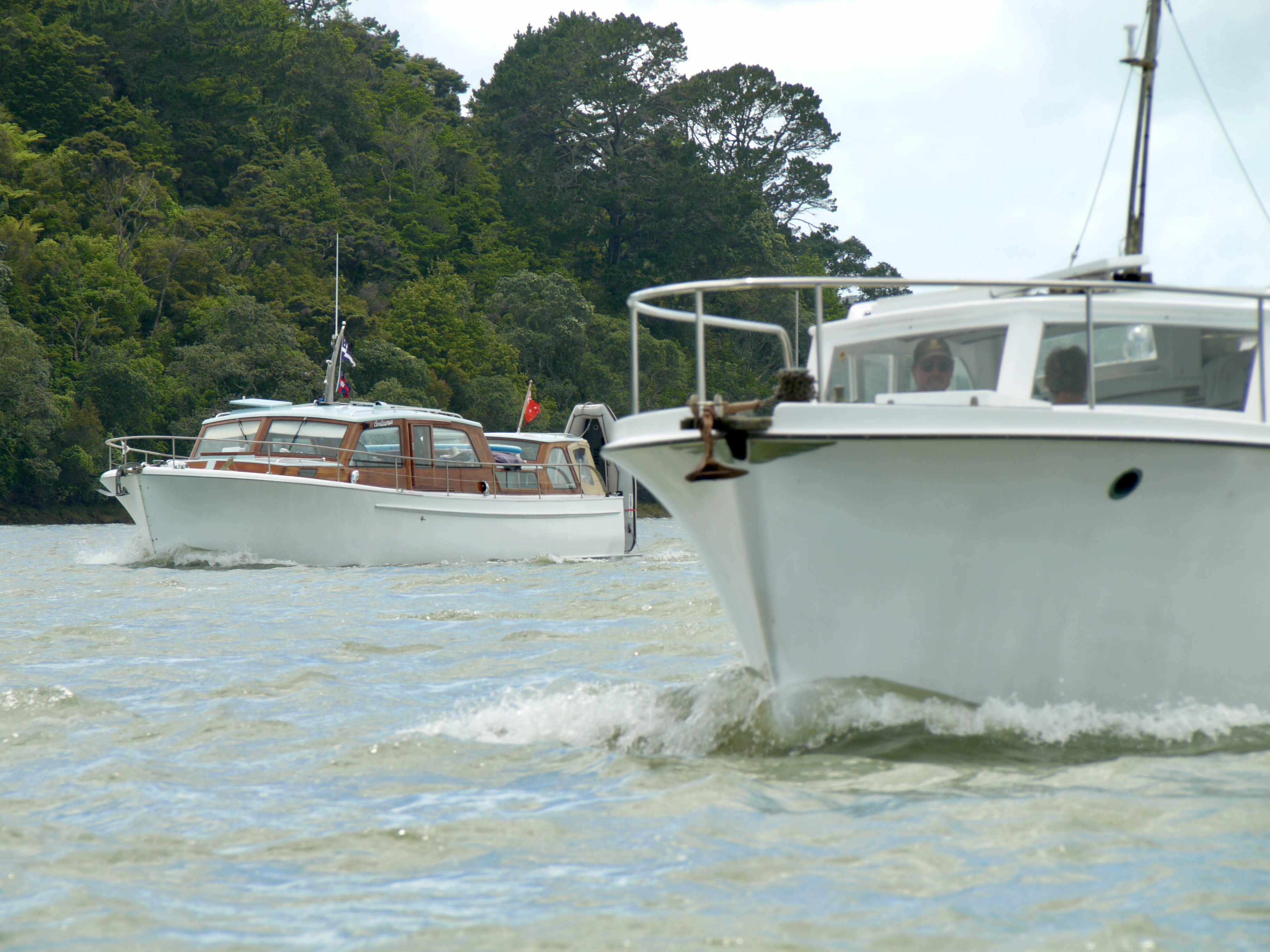
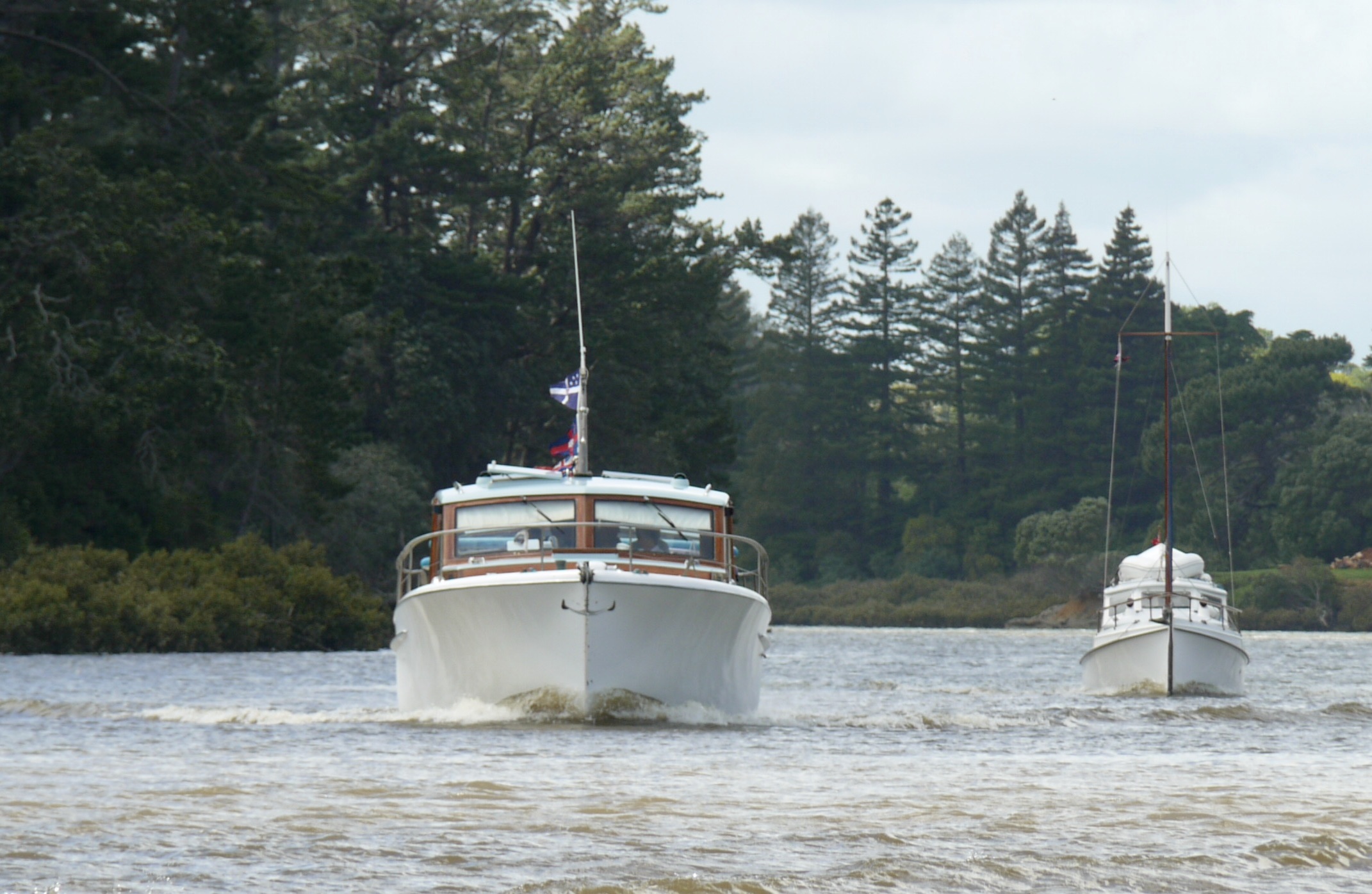
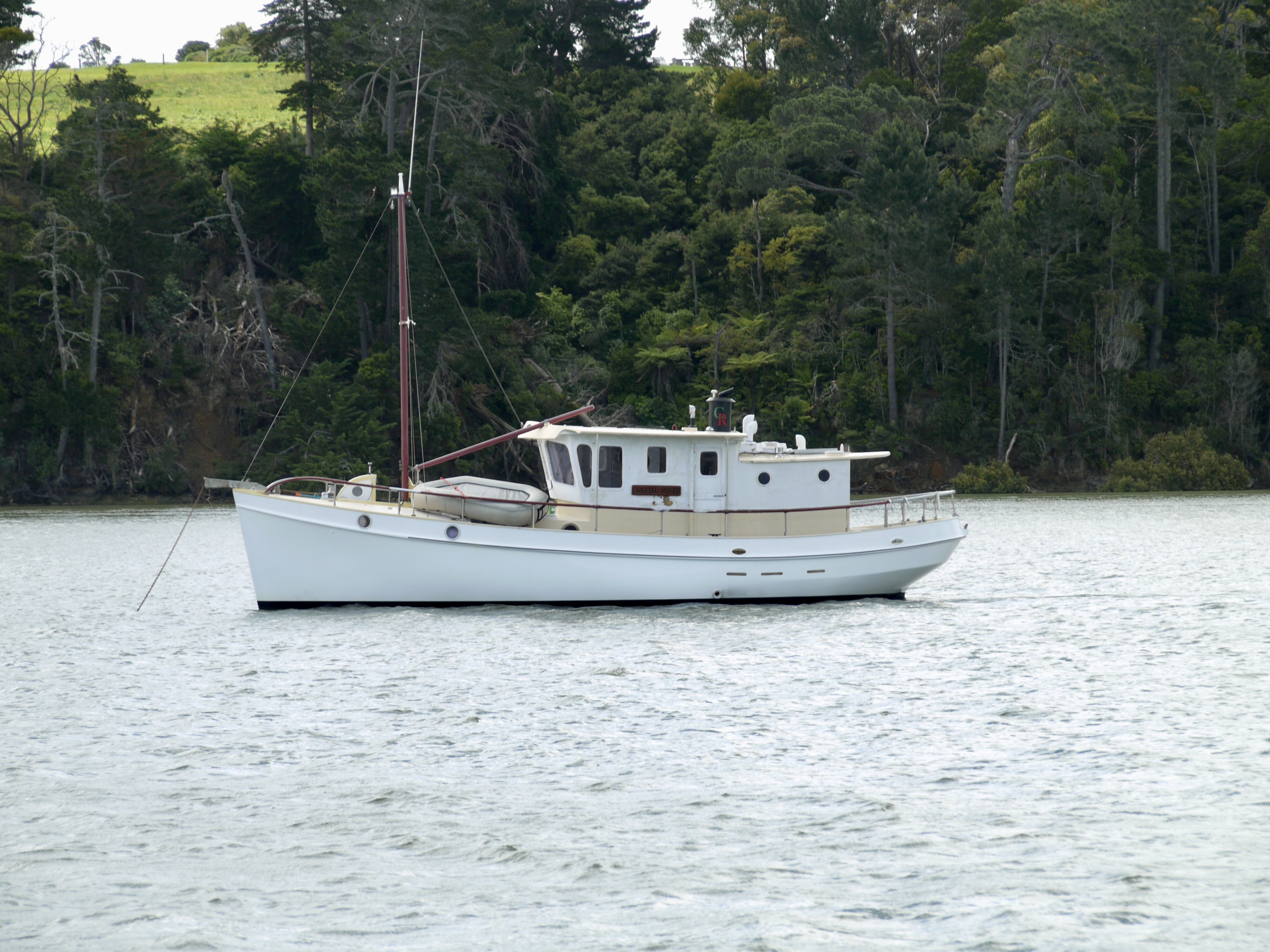
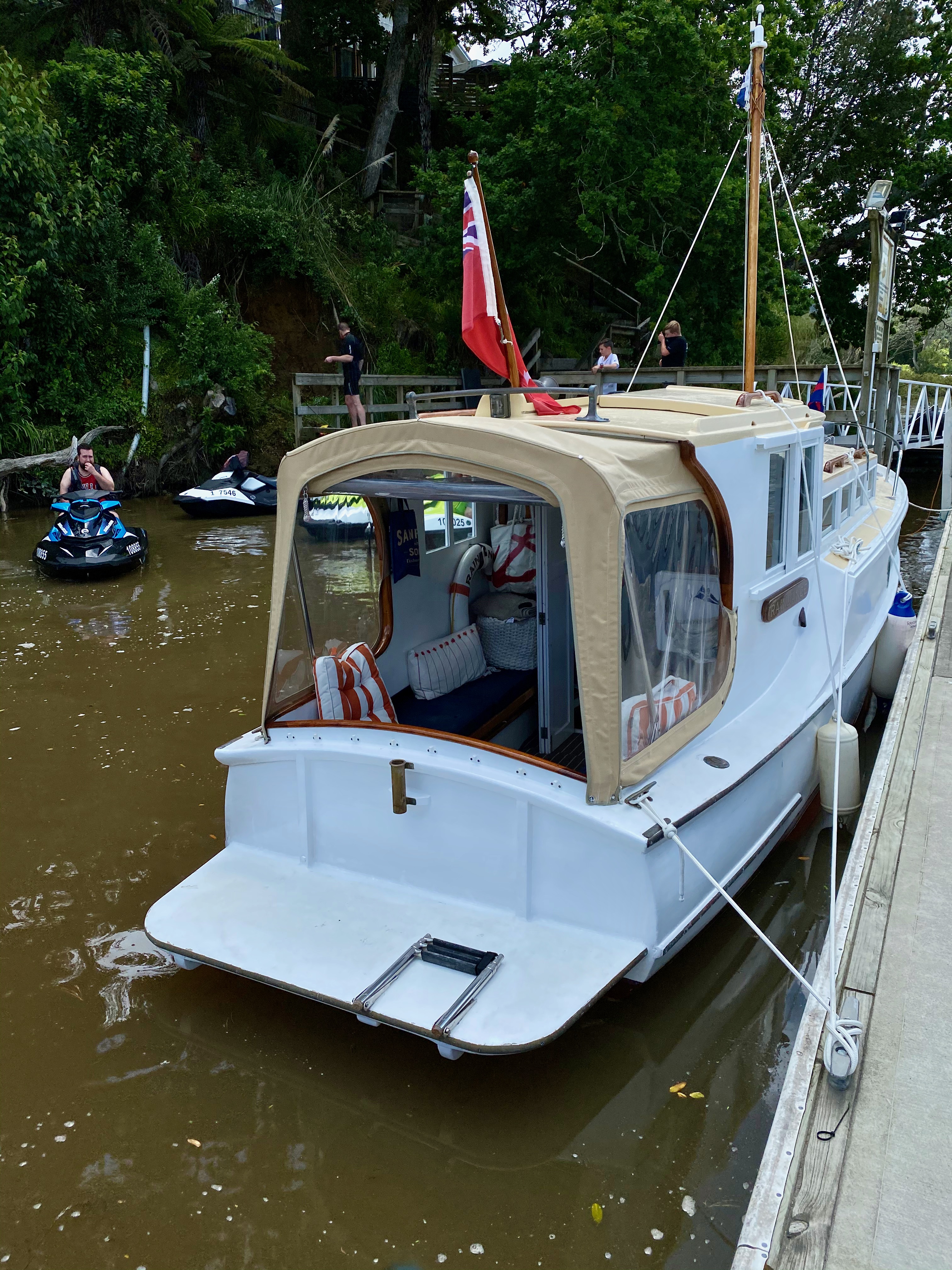
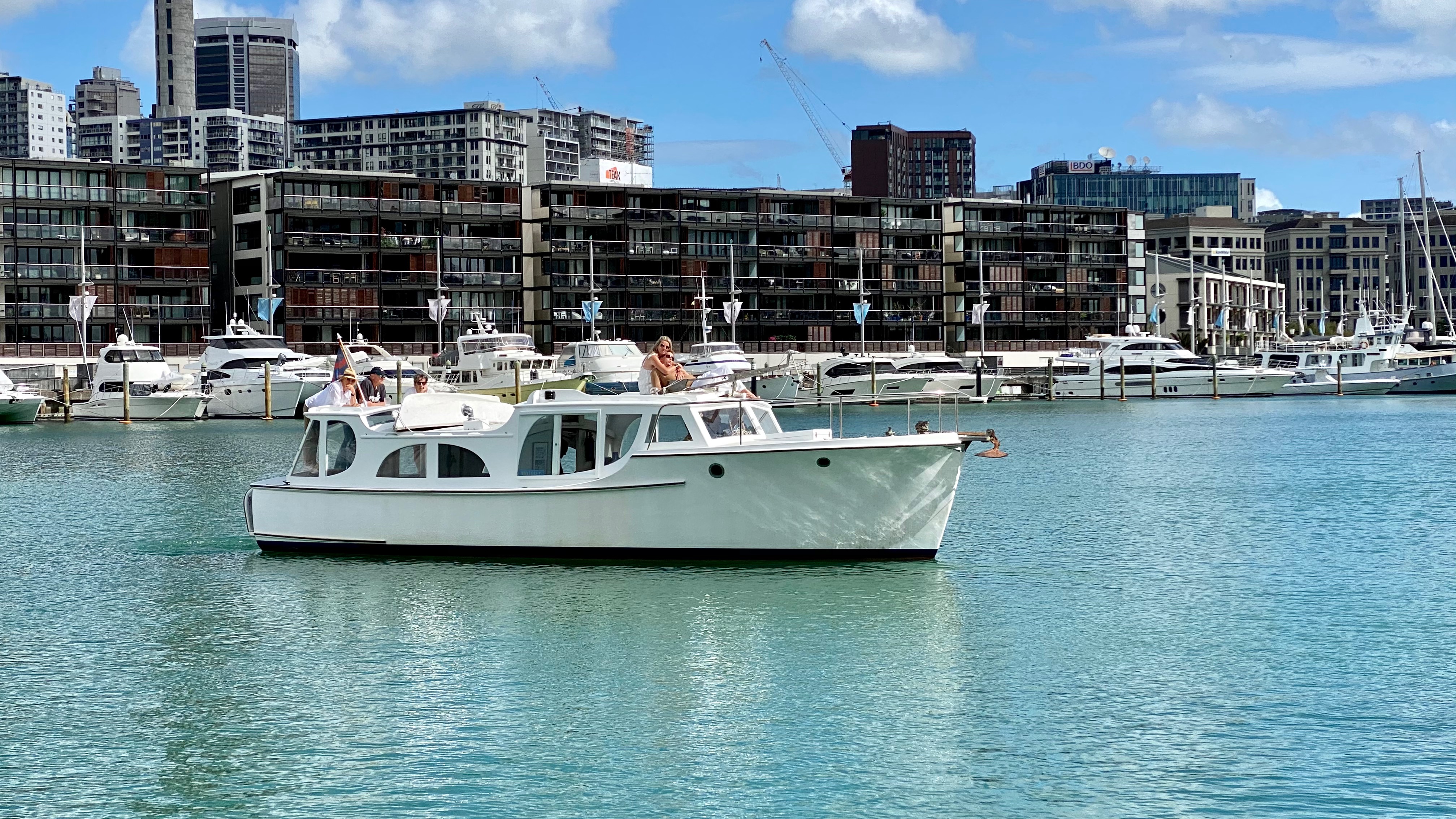
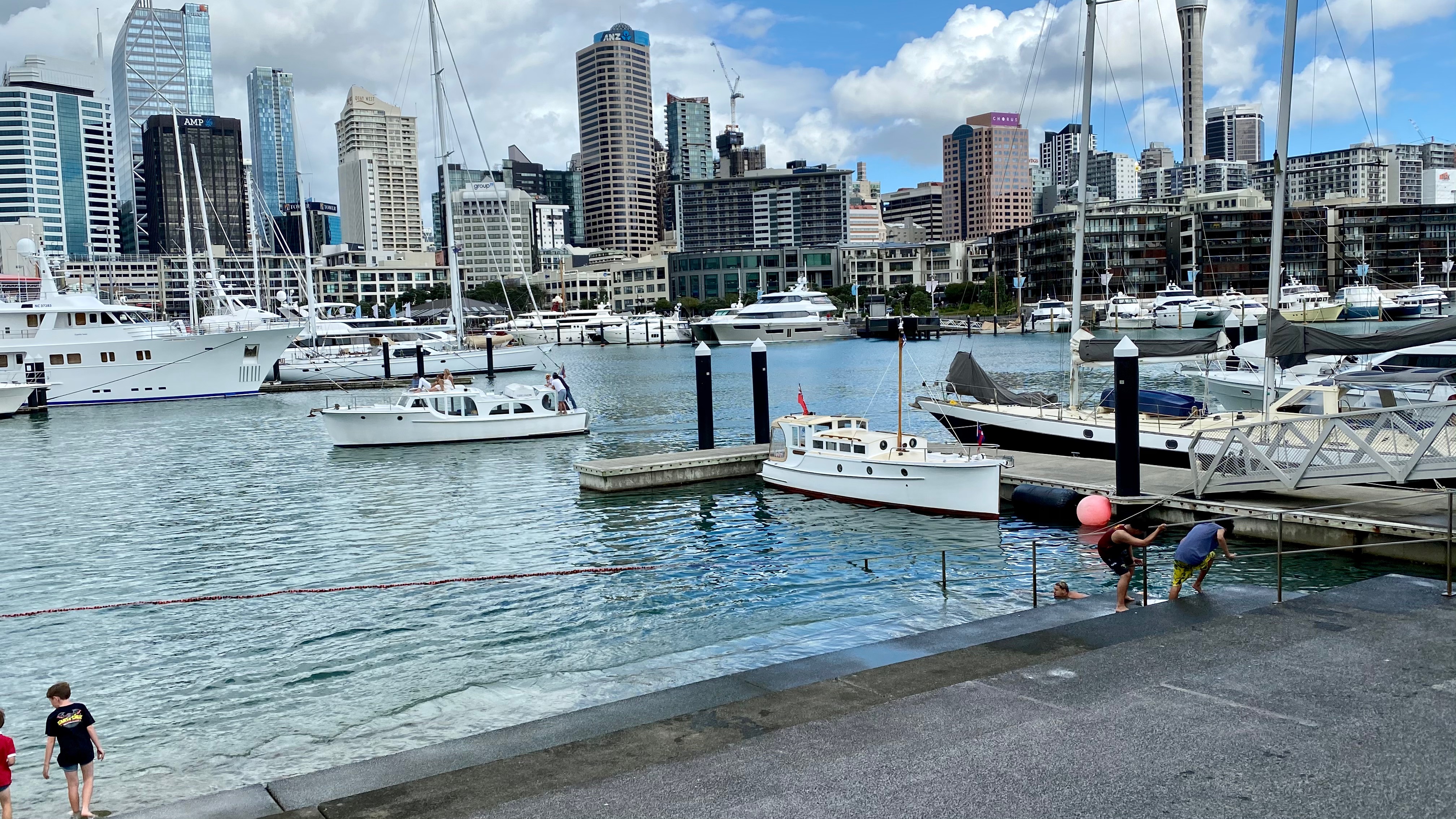
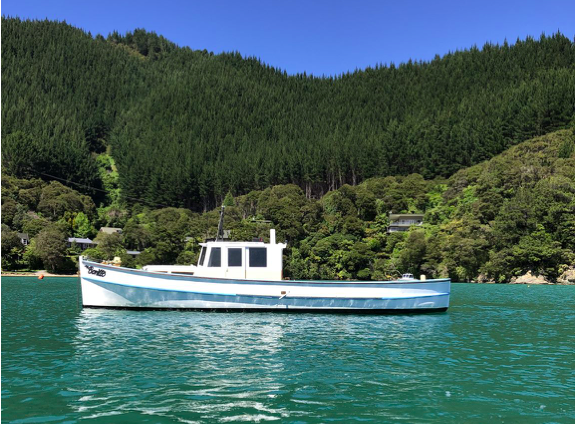
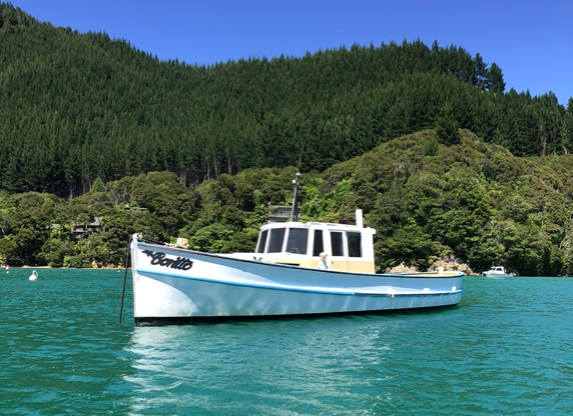
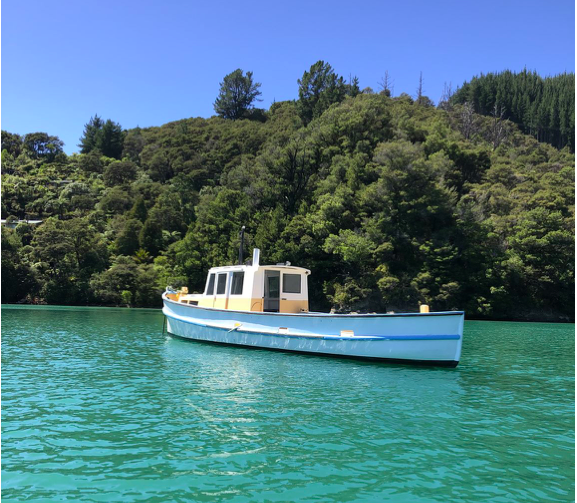
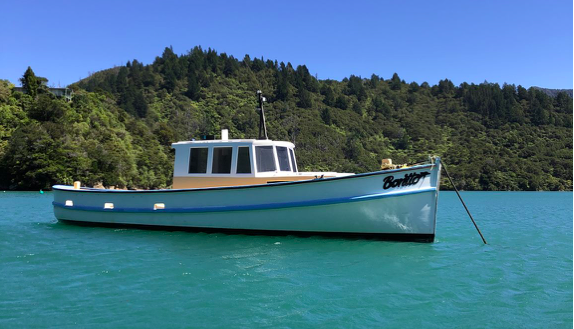
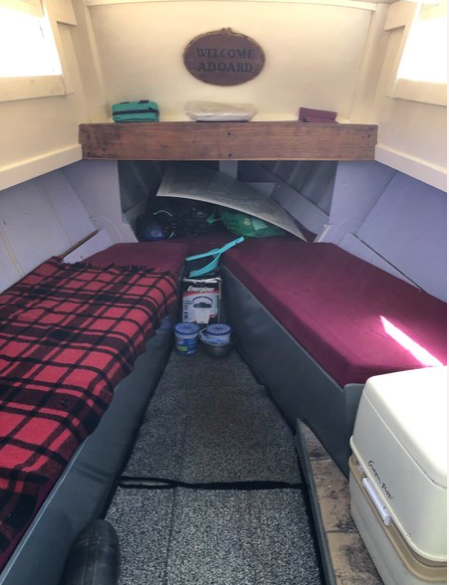
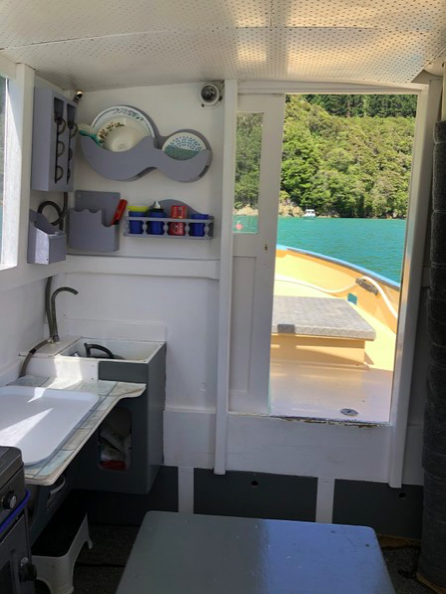
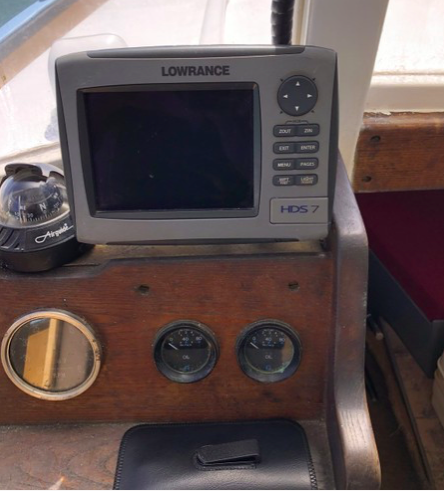
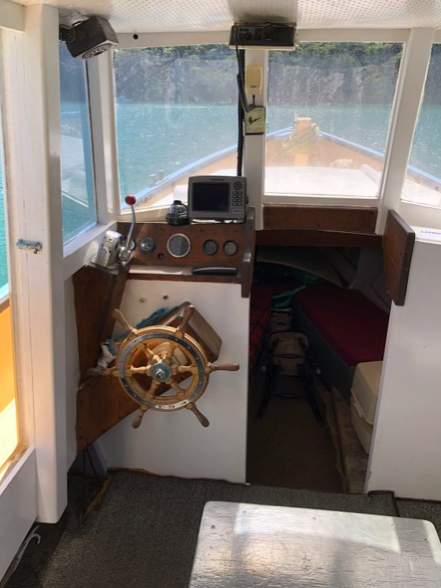
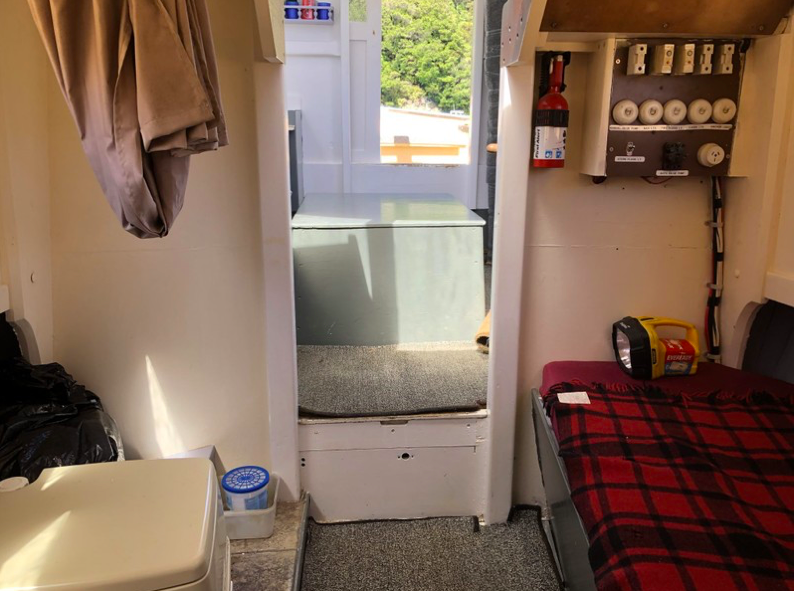
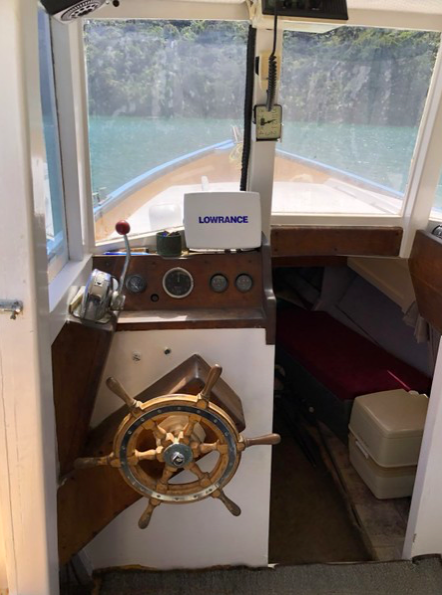
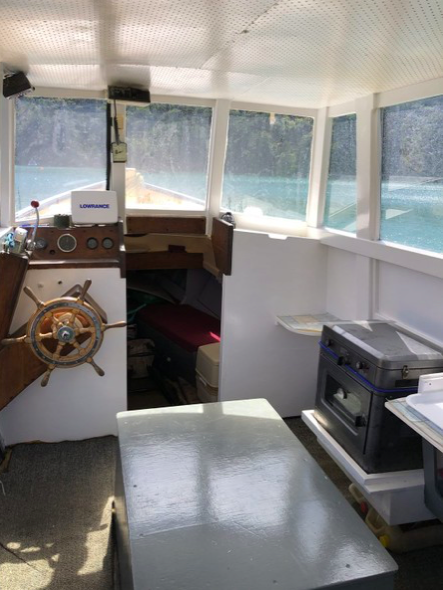
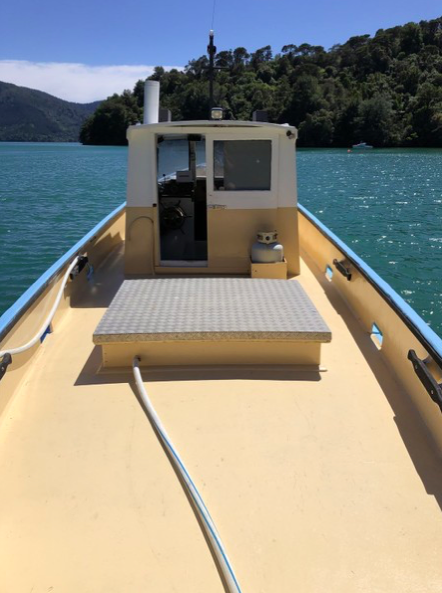
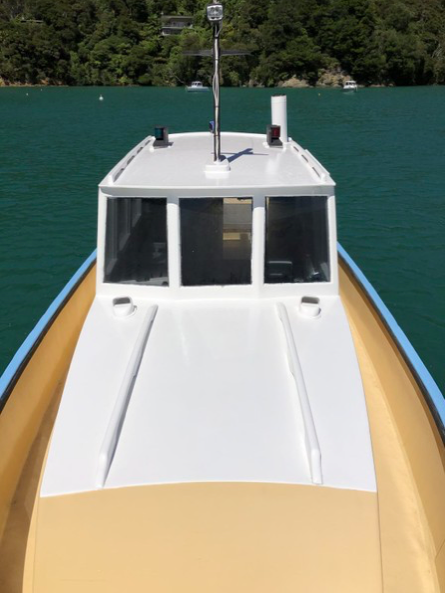
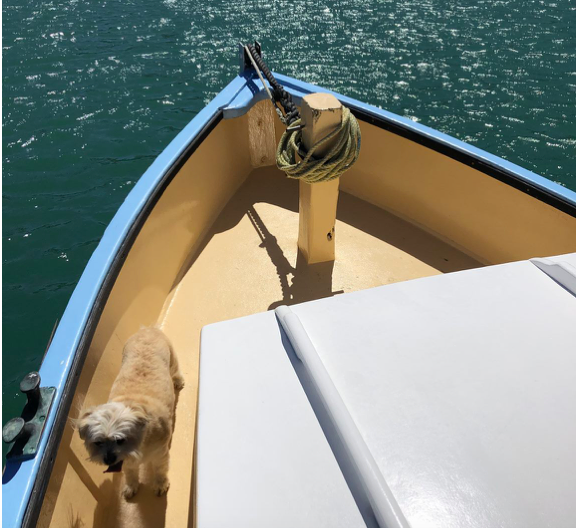
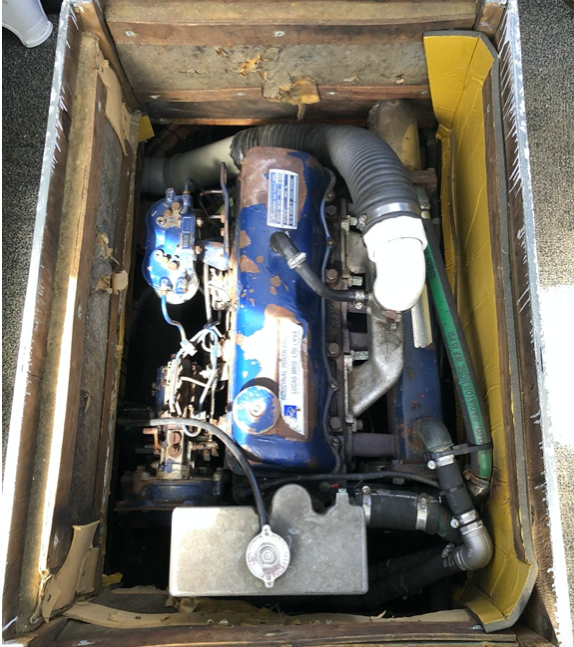
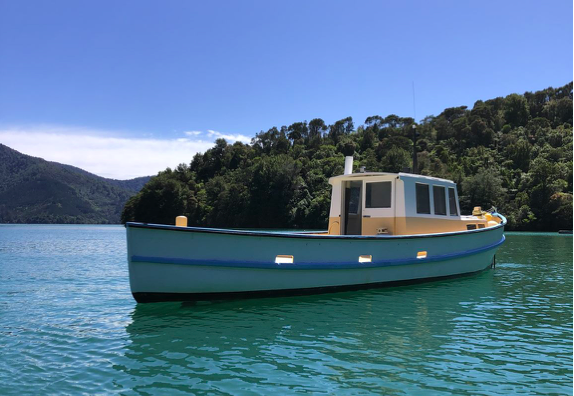
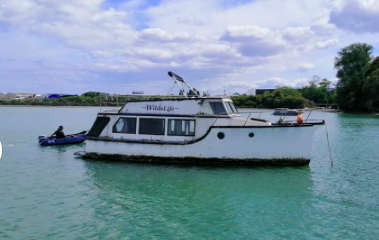
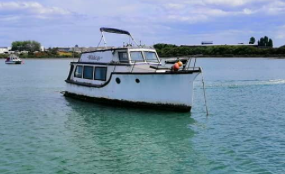
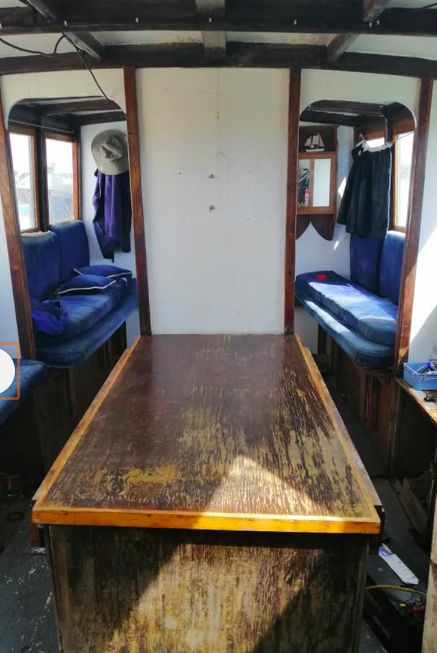
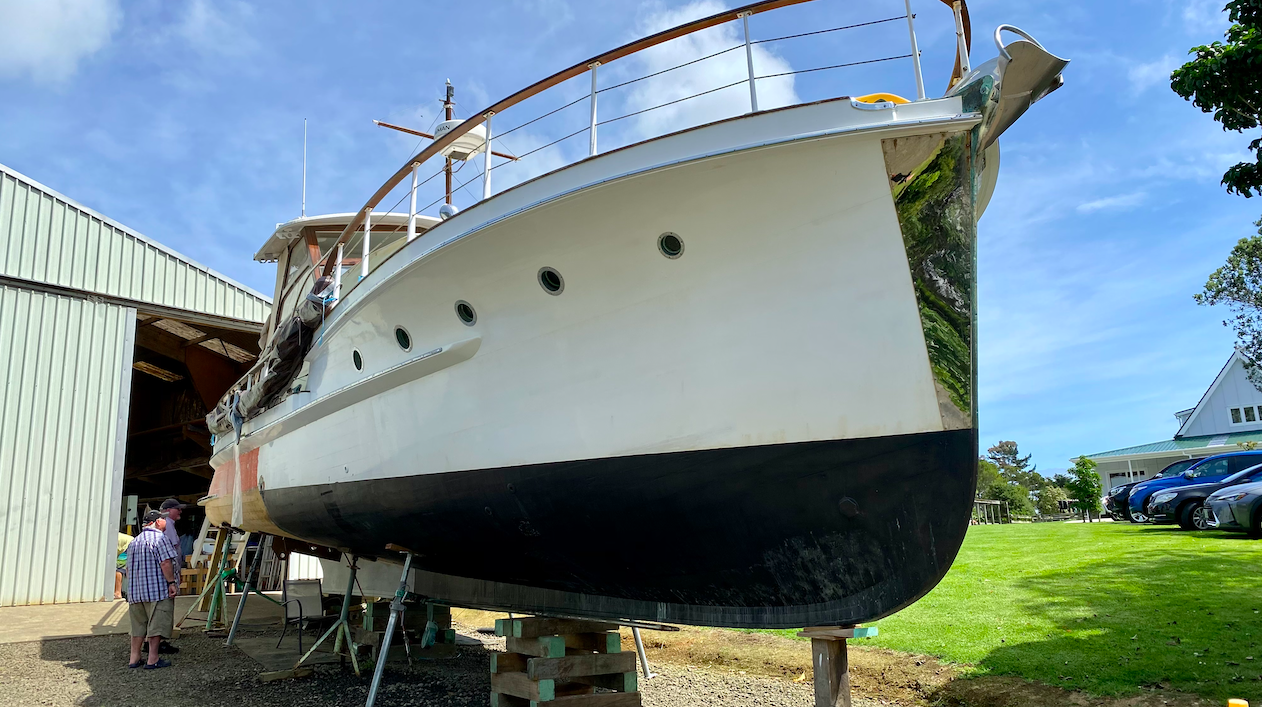
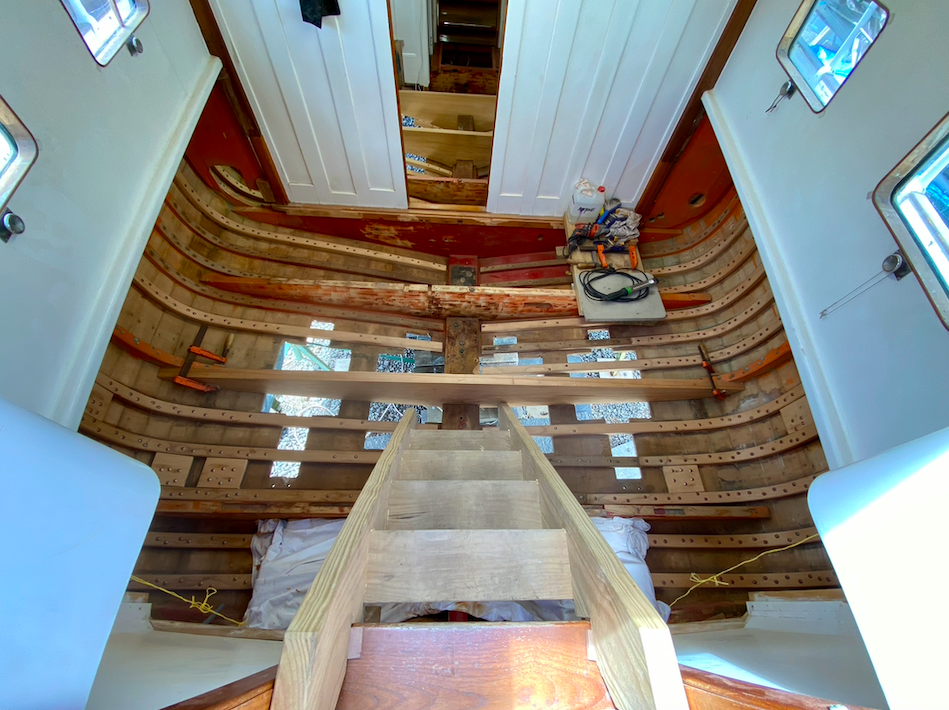
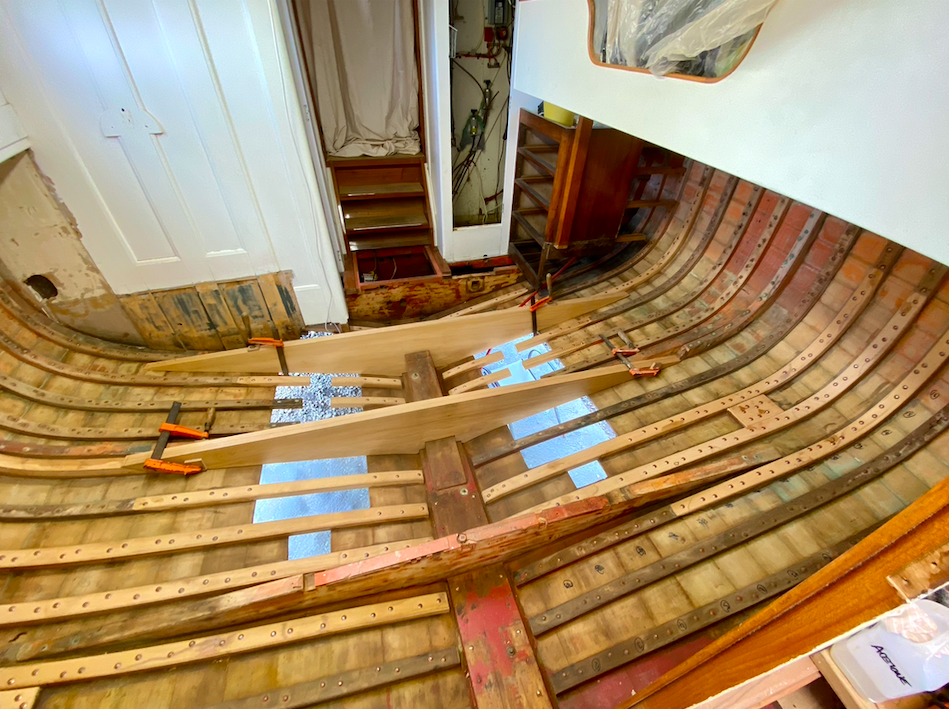
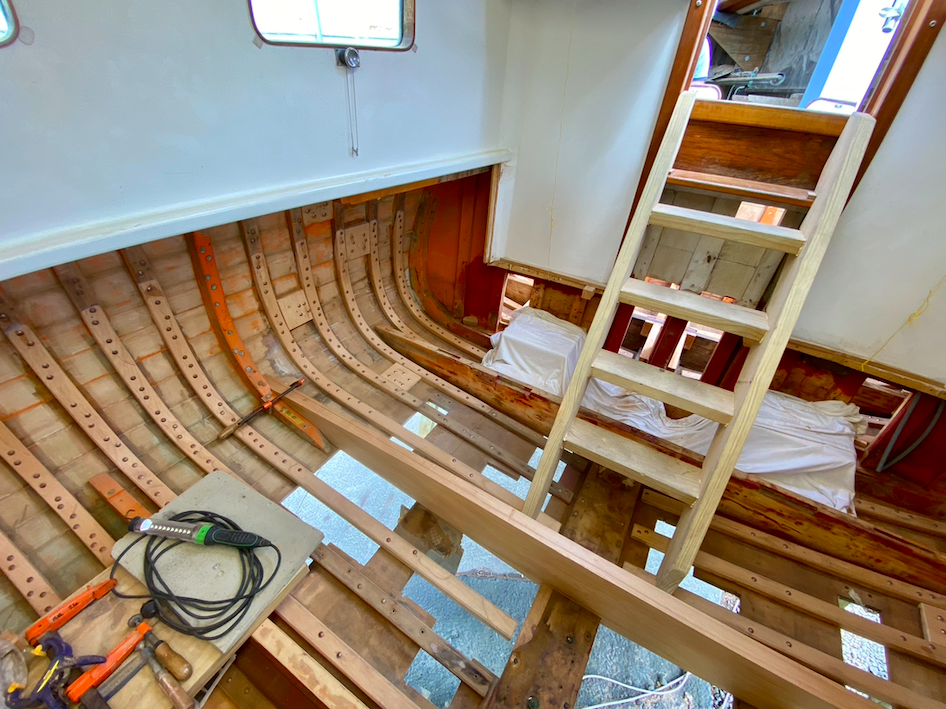
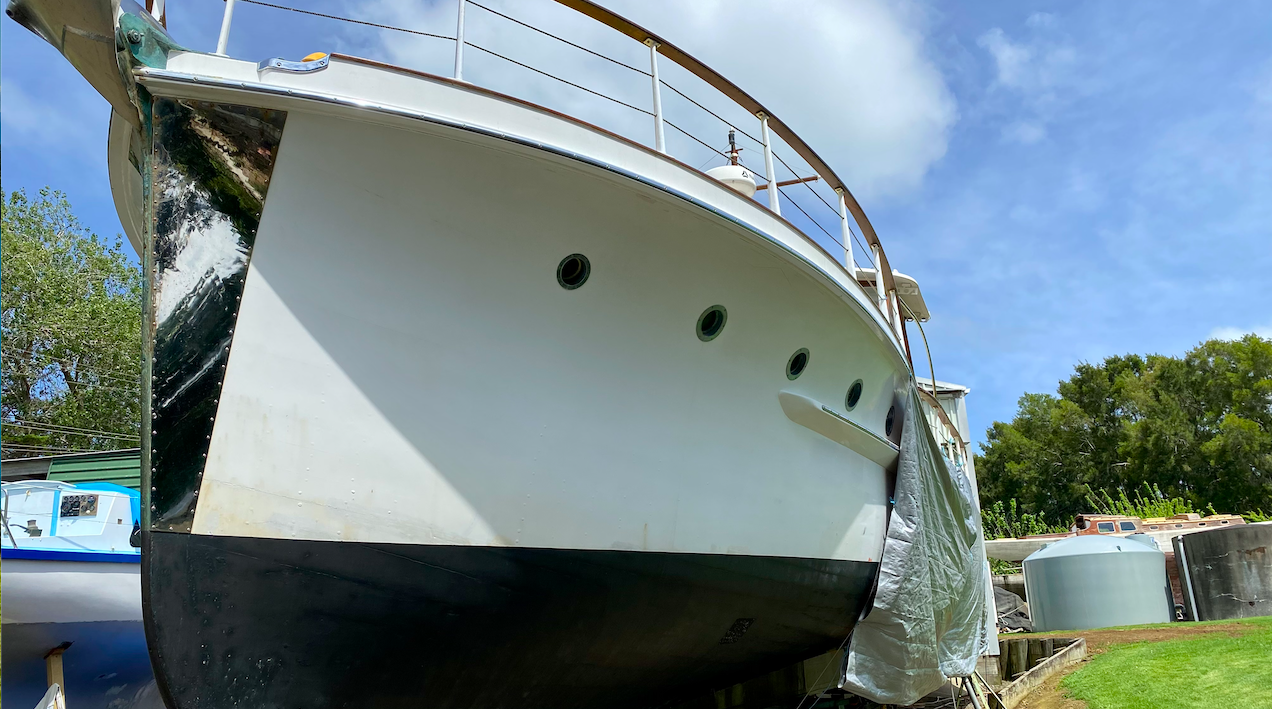
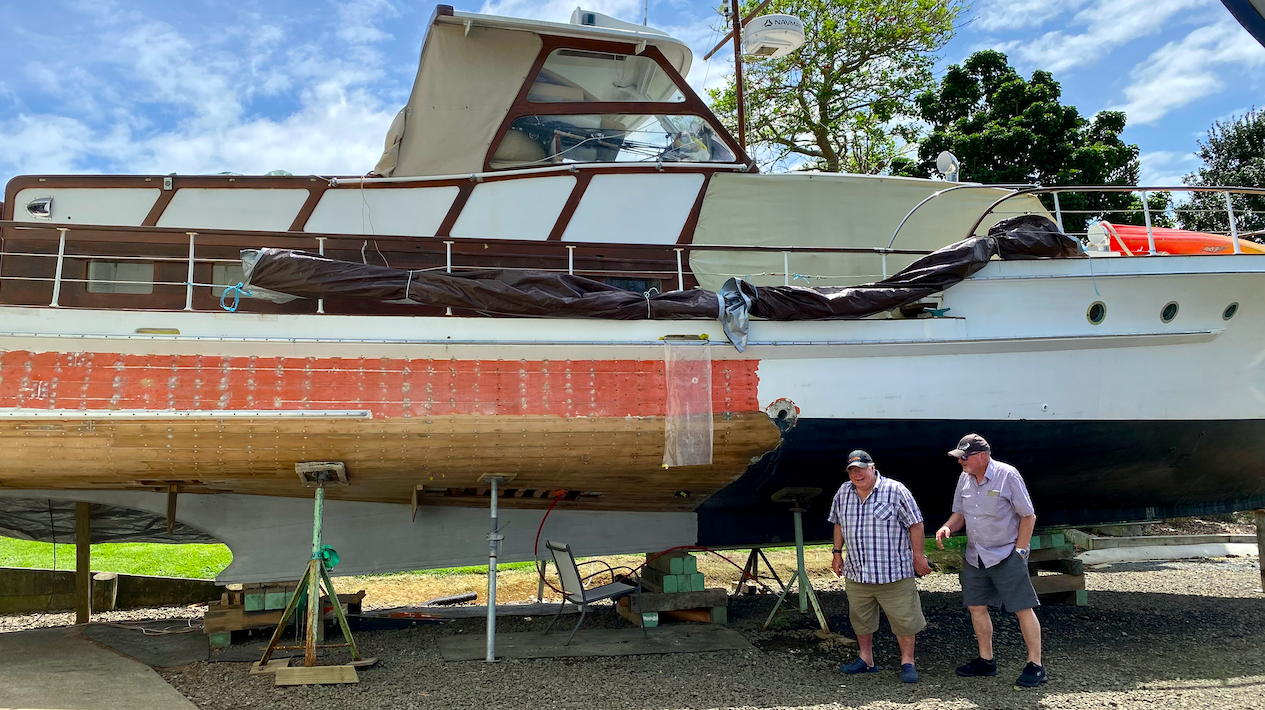
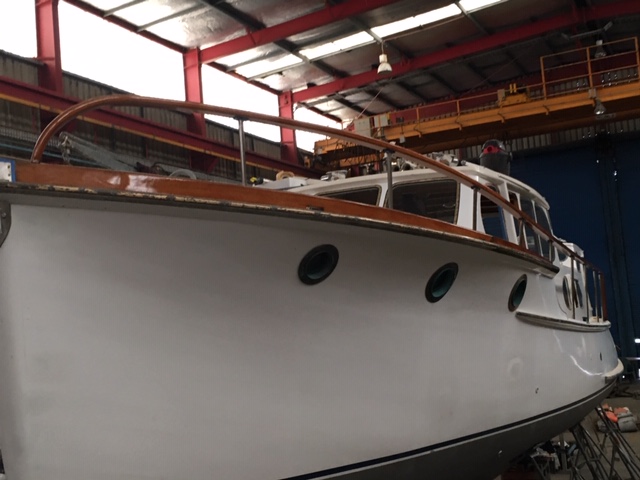
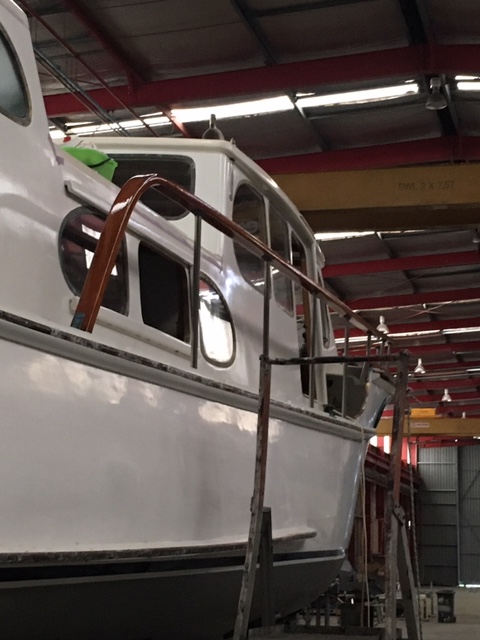
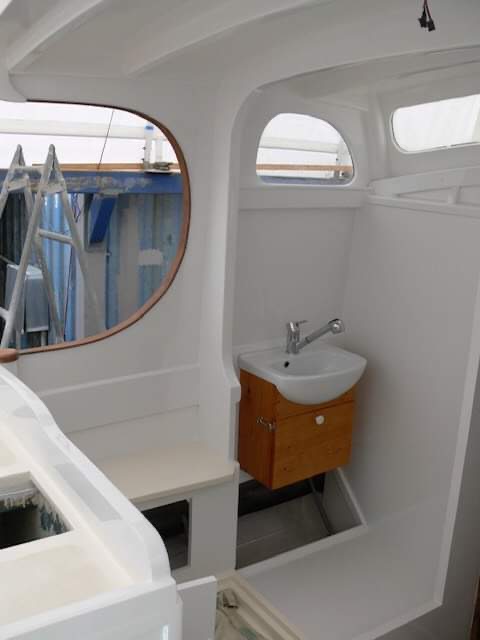
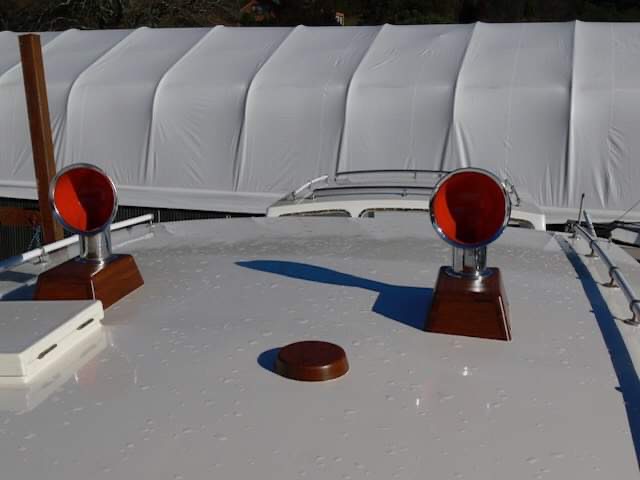
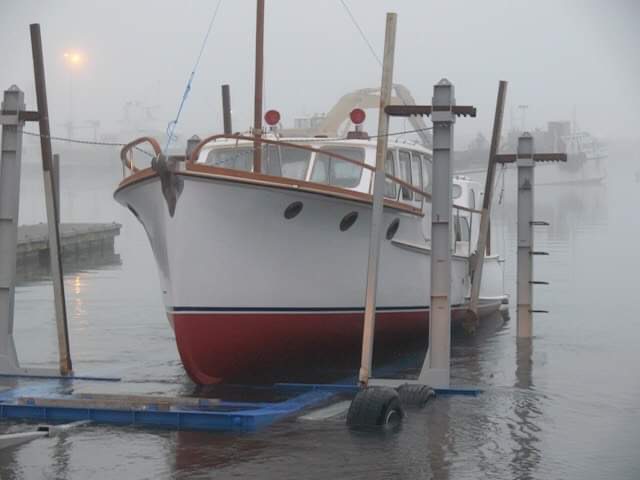
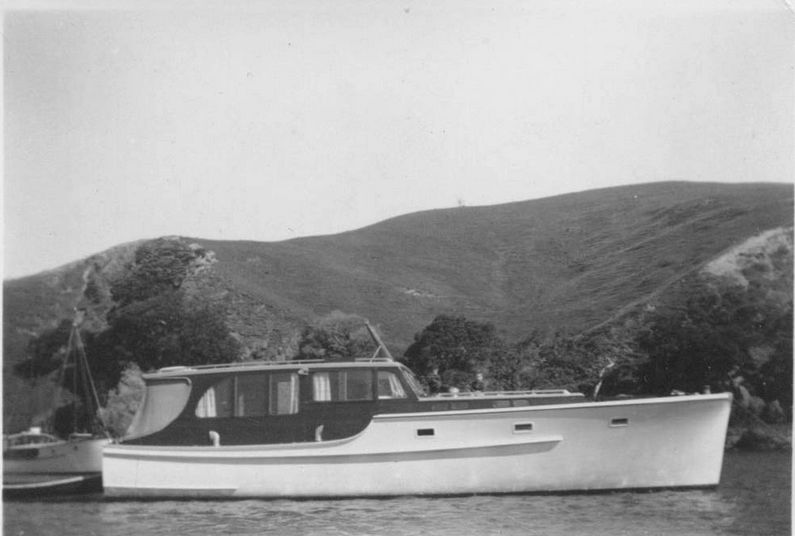
Wanderer II was built in 1965 by Owen Woolley and measures approx. 39’ with a 13’7” beam. Powered by a Ford Lees 100hp 6 cyl. diesel she gets along at a comfortable 8 knots. A recent addition to tme (thanks Ian McDonald).


Can we uncover where and what Wanderer II has been up to for the last 55 years?

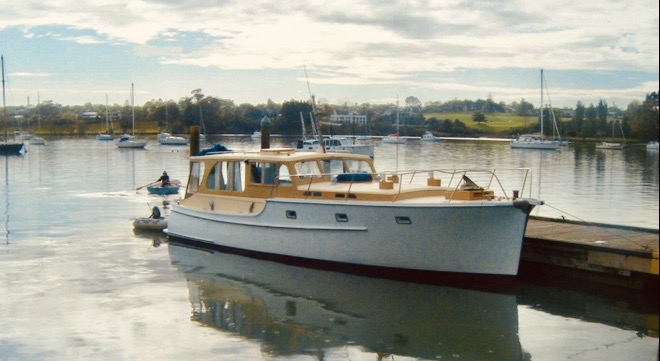
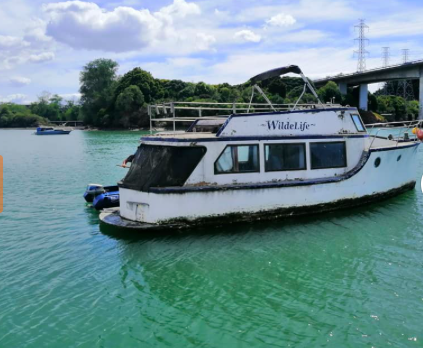
Input From Nigel Drake – Below is another photo of Wanderer 11, I am a friend of the present owner. The previous owner showed me this photo of her when he sold her 5 years ago. She is in her original colours. Not sure of the date but interestingly the name on the side is Wanderer not Wanderer 11. The previous owner had her for about 17 years to my knowledge and kept her in Doves Harbour, Bay of Islands. The owner before him, who was the 2nd owner, also had her for about 17 years apparently.

One Man’s Trash – Another Man’s Treasure

ONE MAN’S TRASH – ANOTHER MAN’S TREASURE
Yesterdays boat boot sale at The Slipway Milford was a cracker. Of course I took nothing along to sell, I’m a collector, but I do give stuff away 🙂

 Above is a snap shot of some of the goods on offer. Big thanks to the team at the Slipway Milford – Cam and Jason for hosting the event and providing the BBQ.

Bargain of the day – the very impressive search light, already converted to LED

Best shopper – telephone ‘bidder’ – Peter Mence for a piece of art – a 28Ib bronze anchor to grace the bow of Eileen Patrica.  

Best Seller (the most stuff) – Jason Prew, I thought I had it bad, he is worse, for every item he sold, he bought something else 🙂
I can see this becoming a regular event 😉

CLASSIC WOODEN BOATS FOR SALE

Buying or Selling a Classic Boat
Without sounding too much like the late Jacinda Ardern (“be kind”) – when people ask me about classic wooden boat ownership, I normally say that owning a woody has a positive effect on your life i.e. you end up forging a life you don’t need to escape from.

So woodys in the interest of your mental well being listed below a sample of some of the boats that are currently berthed at the virtual Wooden Boat Bureau Sales Marina. There are others for sale, some owners request privacy. To read more about the Wooden Boat Bureau – click https://waitematawoodys.com/2019/12/01/wooden-boat-bureau-advice-for-buyers-and-sellers/
The Wooden Boat Bureau is uniquely placed to offer impartial, up-to-date market information and objective advice to both sellers and buyers. So if you are looking for a wooden boat or considering selling – email us at waitematawoodys@gmail.com

Or call Alan Houghton 027 660 9999


SELECTION ONLY

NGARUNUI 🔻 48′ 1959 Jim Young- Asking Price TBA

Learn more – https://waitematawoodys.com/2025/12/08/classic-wooden-launch-ngarunui-a-peek-down-below-now-for-sale/

MARGARET ANNE 🔻 45′ 1960 Oliver & Gilpin – Asking Price TBA

Learn more – https://waitematawoodys.com/2025/11/10/classic-42-launch-margaret-anne-4sale/


VANESSA🔻 49′ 2005 Robbie Roberts – UNDER OFFER

Learn more – https://waitematawoodys.com/2024/10/23/ready-to-unwind-this-summer-classic-motorboat-vanessa-ticks-all-the-boxes/

MANURERE🔻 43” 1937 Miller & Tunnage – Asking price $136,000

Learn more – https://waitematawoodys.com/2024/06/03/manurere-a-peek-down-below-4sale/

ROMANCE II🔻36′ 1919 Bailey & Lowe – Price by negotiation

Learn more https://waitematawoodys.com/2023/11/20/quick-classic-launch-4sale-romance-ii/

KURANGI🔻35′ 1960 Builder tbc- Asking Price – TBA

Learn more https://waitematawoodys.com/2023/10/06/kurangi-2/

ANTARES 🔻36′ 1949 McGeady / Supreme Craft – Asking Price – $55,000 $45,000

Learn more – email waitematawoodys@gmail.com

RESTLESS 🔻40′ 1920 Alden/Tercel – Asking price – TBA

Learn more https://waitematawoodys.com/2023/03/19/restless/

MAHANUI 🔻42′ 1977 T Atkinson – Asking Price – TBA

Learn more https://waitematawoodys.com/2022/10/28/classic-42-sports-cruiser-mahanui/

ALLERGY🔻 58′ 1985 Denis Ganley / Pete Culler – Asking Price – $110,000

Learn more https://waitematawoodys.com/2022/10/21/allergy-aucklands-most-livable-woody/

TUAHINE 🔻 43′ 1957 Dickson

KIARIKI 🔻 40′ K CLASS, 1959 Designed by Jack (John) Brooke and built by John / Jack Logan and John Salthouse – Asking Price $60,000 Learn more https://waitematawoodys.com/2021/10/18/beautiful-classic-cruiser-racer/

TAWERA 🔻 >50′ 1935 Logan – Asking Price – on application Learn more https://waitematawoodys.com/2017/04/16/tawera-1935-logan-a18/

SOLD – Selection below, some names withheld at seller / buyer request:

ADONIS     45′ – Owen Woolley – 1965 launch

AROHANUI            48’ – Donovan/Hacker – 1965 launch

ATHENA     25′ c.1950 Couldrey launch

AWARIKI 32′ 1967 Owen Woolley launch

BALLERINA    28′ – Lidgard – 1951   launch 

BONDI BELLE 45′ 1901 CHARLES BAILEY JNR.

CAPLIN     35′ – Anderson & Sons (UK) 1937/8 -Gaff Yawl yacht

CASTAWAY            33’ – Dick Lang – 1947 launch

CENTAURUS         42’ – Bailey & Sons – 1967 launch

KAILUA                  36’ – Salthouse – 1960/1 launch

KOKORU               39’ – Jack Morgan – 1960 launch

KOTARE                 24’ – Kingfisher Boats – 1954 launch

LADY ADELAIDE    35’ – Dick Lang – 1922 launch

LADY PAMELA       59’ – Pelin Warrior – 1986 launch

MAHANUI               42’ – Keith Atkinson – 1977 launch

MANA-NUI 39′ 1913 Harvey & Lang

MATAROA 36′ Joe Slattery 1928 launch

MONTEREY 33’6” 1946 Lidgard bridge-decker launch

NGARO                   45’ – Lidgard – 1953 launch

PIRATE                    42’ – Leone Warne – 1938 launch

POCO LENTO         33’ – Roy Parris/Bagnall – 1979 launch

RANUI 48’ 1948 Lidgard

WAIKARO                33’ – Roy Parris/Bagnall – 1978 launch

WAIMIGA                 36’ – Robertson Boatbuilders – 1968 launch

SEA FEVER 34′ Salthouse – 1958 launch

SEQUOIA 36′ 1938 Lewis McLeod launch

SHALOM                  48’ – Keith Atkinson – 1973 launch

SILENS 38′ Harvey & Lang 1912 launch

TARANUI 36′ 1965 John Gladden Motor-salier

The Refit of Windborne

The Refit Of Windborne
Today’s story is on the schooner – Windborne, by John Gander, via Dean Wright, John and family refitted and owned Windborne for many years. Its a great read by one of our best woody boatbuilders. I’ll shut up and just let John tell the story – enjoy, I did 🙂 Remember – to enlarge a photo, just click on it 😉

‘Windborne’ was built in 1928 by Cornish boatbuilders Gilbert and Pascoe at their yard in Porthleven and launched as the cutter ‘Magnet’ after launching she took part in the Fastnet yacht race. She again raced in the Fastnet in 1930 but this time re rigged as a schooner, and has continued with this rig.

On sailing to the United States her name was changed to ‘Huguenot’ and registered in San Diego. On being purchased by the Charleson’s a Canadian family from Vancouver, the owner wanted to retain the name Huguenot and she was renamed ‘Windborne’ a very fitting name for her, and she was Vancouver registered. On sailing her to the U.S. port of Blaine just south of the Canadian border Mike and his wife Karol began getting Windborne ready for a voyage to the south Pacific.

The family visited many Pacific islands during their cruising and then headed for New Zealand and on the last part of the voyage encountered heavy weather and Windborne suffered some damage to her bulwarks and rigging. Being designed on the lines of the Bristol Channel pilot cutters and soundly built she is a very sea kindly vessel and delivered the family safely to Auckland.

Bev and I had not long completed ‘Deepstar’ and were planning on building a large sailing craft for our family use, however time was getting on, so before it was too late and our children left home we decided to look around for a suitable vessel. We were introduced to Windborne on her mooring at Herald Island and went for an afternoon sail with the Charleson family, and could see she was worth and deserved an extensive refit.

Her planking is Pitch Pine on sawn Oak frames fastened with galvanised soft iron spikes, I was not familiar with these timbers in our Picton boatyards so flew back to Picton to talk with Peter Jorgensen at his Waikawa boatyard. Pop as he was affectionally know, with his years of experience in Danish boatyards was of course very familiar with these timbers, iron fastenings and European construction, and his knowledge was very helpful when I surveyed her as I did on returning to Auckland and putting her on the grid at Westhaven.

We took possession on the last day of July 1980 and made ready for the voyage to Picton and with a capable crew we sailed from Auckland on the 7th of August. Winter is not the always the best time to head down the east coast and it was somewhere off East Cape that we found that the forward skylight was only held in place by the shiplap joint and no through bolts. With a couple of sections of bulwarks missing and a good sea running this deficiency was made evident, and the hand bilge pump showed it’s worth. I always sail with a fairly comprehensive tool kit and with a selection of fittings and fastening in the ships inventory the skylight was secured in place.

To undergo the refit I planned, we needed to have Windborne undercover and were fortunate to find we could have the use of Finn Jorgensen’s big shed at the Waikawa yard for a limited time before it was required for their next commission. On the 24th of December we hauled out and made ready to have the masts lifted out, and started the job of burning off the topside paint. As is often the case fastenings deteriorate around the waterline area but it was not possible to pull the old spikes out of the oak frames so additional galvanised ship spikes were driven adjacent to the original’s, two planks below and three planks above the waterline.

On the last day of December ‘Windborne’ was hauled up into the shed ready for the major refit, and what better way to spend new years day for a family than to spend it working with earnest tearing up the canvas like material covering the decks, I was suspicious that this was laid over the 2 inch Baltic Pine decks because of leaks, the ruination of many fine vessel’s. I was relieved to find the timber was in a good state of repair so the decision was made to retain the deck. Removal of the deckhouse was fairly quick and easy but more time was required to remove deck fittings, deck prism’s, and other deck furniture until we had a clean flush deck. The bulwarks were fastened to grounds over the covering boards with the frames extending to the cap, this is an area of potential leaks. On removing the damaged bulwarks and beltings and sawing off the frames at deck level, the new bulwarks were to be fitted on the outside of the sheer strake as was our practice at the Carey yard.

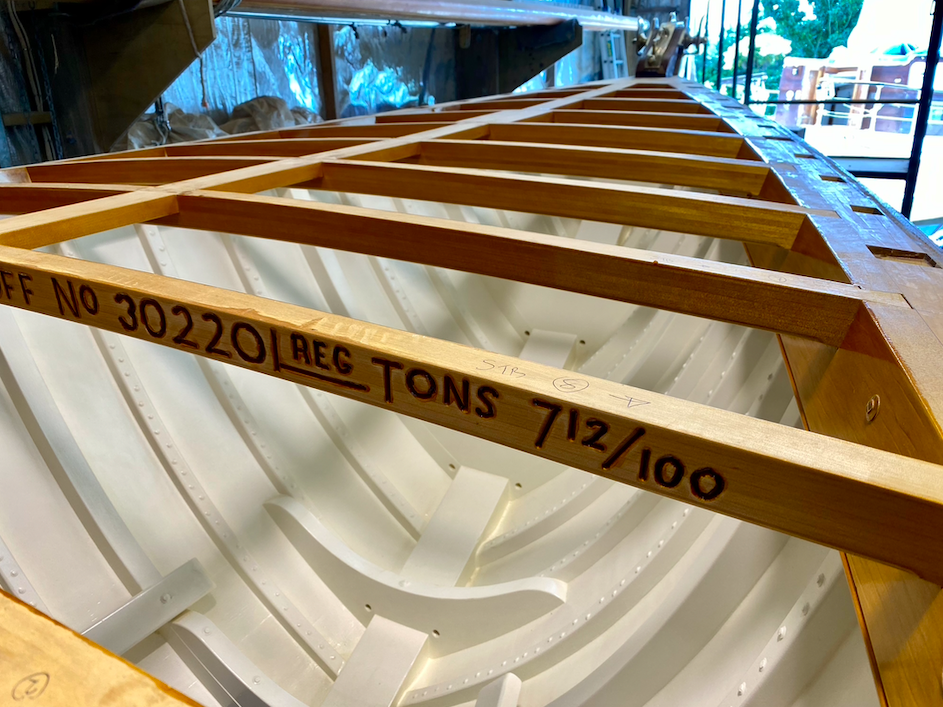
Next we moved below decks, unfortunately in later years any original furniture and fittings had gone to be replaced with ply, paneling and some pegboard, hardly befitting a traditional yacht, however we did expose the original tonnage and tonnage exemption carvings by removing layers of paint from the deck beams so we had something from her past. I had planned the layout we required so removed all bulkheads and the hull lining. This gave a good opportunity to make a thorough inspection from bilge to deckhead.

While I was fitting new bulkheads, Bev and our boys Wayne and Neville, began removing the rigging and paint from the spars. As is common in these vessel’s cast iron ballast is set in concrete between the floor timbers, however she also carried 2,775 lbs of lead ingots. At some time Windborne had been hauled out on a two bearer slip cradle and for a thirty five ton vessel this was grossly insufficient, the result was that she had damage to the underside of her wooden keel, so I made a casting box and we used the lead ingots to cast a blast keel to replace the damaged section. I next dressed off and sanded the the Baltic Pine decking and laid marine ply using epoxy glue to, and over the outside of the sheer strake.

By late February we were ready to start the new bulwarks and to help with our time schedule Finn offered me the use of one of his men, I chose Keith Hansen, Keith had learned his trade at the Jorgensen Boatyard and Keith and I worked well together ( I hope he still agrees with my comment ). We started on the Bulwarks using double diagonal Matai with a hardwood stringer, followed with new hardwood beltings.

Laying the 5/8” teak deck was a slower job, I don’t like decking laid straight fore and aft and wanted to follow the deck plan as far as practical and run the decking into the king plank in the traditional manner and this means edge setting the deck planking. We departed with tradition when it came to caulking the seams and used thioflex polysulphide with the accompanying mess that follows while the product cure’s. Next it was onto fitting the new Teak Cap and Taff rails. The new deckhouse was built on Kauri coamings and sheathed in glass cloth, all other deck furniture is Teak.

As our time in the shed was limited I was fortunate to be able to engage Bob Clerke a ships joiner, I delivered a load of teak at Bob’s workshop, and with measurements and patterns Bob set to and made skylights, hatches, a magnificent saloon table and other fitments to help with my fit out below decks all done in Teak and Kauri. The topsides were recaulked and my daughter Shirley stopped the seams with white lead putty in preparation to repainting. By the beginning of May the new look ‘Windborne’ was out of the shed.

Masts were stepped with an English silver coin dated 1928 under her main mast and a Canadian coin under the foremast, and on the 6th of May at H.W. she was sent down the rails but remained in the cradle, the summer had been hot and dry and we had pumps ready, next day with a bit of oakum caulking in a couple of seams she was ready to leave the cradle and lay alongside the wharf at our boat shed to complete the fit out below decks.

A year or so later I removed the Isuzu engine and replaced it with a 4 LW Gardner. For the following eighteen years ‘Windborne’ carried our family on many adventures in all sorts of conditions. Roger Carey told us boys that wooden boats are built of living things, and every wooden vessel has a soul, I strongly believe this.

This last few weeks I have I have visited ‘Windborne’ out on the hard at Whangarei receiving care and attention from her owner Avon, he is doing a good job she’s looking good, being well ventilated and with salt water over her decks, the best thing ever.

A Woody For The Lake Boys

A Woody For The Lake Boys
Kiwi woody Mark Erskine gave WW the heads up on Miss Tessa, currently for sale in the USA. This would have to be a great buy for one of the Lake Rotoiti gang, current bidding is sub US$6k.


Miss Tessa is a 1930 Dodge* 16’ runabout with two cockpits separated by an engine compartment. The boat features a planing, seam-and-batten mahogany hull with spruce stringers and oak frames. Power comes from a Lycoming inline-four, and additional features include a forward/reverse transmission, double-planked bottom, two-piece windscreen, and blue vinyl upholstery. The Lycoming marine inline-four engine is mounted amidships and produced approximately 45hp when new.The boat was found hanging in a barn by the previous owner, who commissioned a restoration before donating the vessel in the early 2000s to the seller, the Tahoe Maritime Museum. Comes with a very cool trailer, which I imagine is only for off road use.
*Horace E. Dodge Boat Works was started by Horace Dodge Jr., the son of Dodge automobile company co-founder Horace Dodge


View and read more here https://bringatrailer.com/listing/1930-dodge-runabout/

Kuri – A Peek Down Below

KURI – A Peek Down Below
The 44’ Kuri has made a guest appearance on WW back late December 2015, WW link below. Now thanks to her tme listing (thanks Ian McDonald) we get to have a peek below.https://waitematawoodys.com/2015/12/30/kuri/


Kuri was designed by Herbert Levi and built in 1929 by WG Lowe, she has had an honest life as a workboat and now resides in Picton snd converted to pleasure boating / live-aboard. Powered by a 115hp Gardner 6L3, she is very well fitted out (as are most southern boats). Depending on her condition its a lot of boat for $83k

Tamaroa

The History Of Tamaroa – as told by Eric Stevens

“I am writing this as the owner of Tamaroa from early 1994 to the middle of 2010. She was in a sad state when I bought her and it was only the quality of the original hull construction which warranted her restoration.

Tamaroa was built by Collings and Bell Ltd for A.E. Fisher of Whangarei. at a date which I have not been able to confirm. At the time of sale I was told that she was the last boat made by Collings and Bell. “They sent her down the slip and closed their doors after her”.  When I tried to confirm this story I found that there were quite a number of ‘last boats built by Collings and Bell’ And whatever Tamaroa might be, she was not that. I have been told she was built in 1953 but my enquiries suggested she may have been built in the late 1940s. She certainly was built at a time when Kauri was short and all the larger timbers in the cabin sole above the engines and the cabin sole planking in the stern cabin were Southland Beech. So too were many of the finishing timbers.

In the time I owned her I measured her up and made extensive CAD drawings to aid with her reconstruction. These show her as being 12.8 meters (42′) between perpendiculars and 3.3 meters (11′-10″) beam. By the time one took into account the strongman for the anchor and the boarding platform at the stern she was in modern NZMIA parlance 13.77 meters (45′) over all. Further, substantial strakes had been added to increase the width of the decks and these brought her overall beam up to a little over 4 metres (13′-1″).

When she was built she was fitted with what was reported to be a large Austin diesel engine. Irrespective of what the exact date of build might be, as far as I can tell, Austin were not at that period making diesel engines suitable for a boat of that size but they were using Perkins P6 engines. Also Perkins were supplying engine exchange kits to enable the fitting of the P6 engine to Austin trucks. The Perkins P6 was commonly used in larger boats at that time and it is most likely that this is what was actually used. Alternatively it could have been the almost contemporaneous and slightly more powerful S6.

At some stage Tamaroa was sold to a Mr Jeeves. Mr Jeeves was allergic to diesel fumes and had the original engine removed and two Scripps engines (marine conversion of the old flat head Ford V8) installed. This entailed fitting new shaft, tubes and logs to the hull. The engines were fitted with identical Borg Warner gear boxes with the results that both shafts turned in the same direction.

Tamaroa then passed through various hands until an Allan Brown bought her from a truck sales man whose name he can no longer recall. Allan Browne did not like the petrol engines and he started to convert Tamaroa back to the original diesel by replacing the port engine with a Nissan SD33 diesel engine. The Nissans come in a variety of configurations and this one was configured for industrial use in a forklift truck. For a time he ran Tamaroa with one engine diesel and the other petrol but not long before he sold it to me in 1998 he installed a second industrial SD33 identical to the first except that it had a slightly different flywheel housing.

When I bought her the interior was in a rather sad stripped-out and crudely rehashed state. However I had her surveyed by Jack Taylor and he gave a good report on the condition of her hull. The strength of the construction of the hull impressed him and was such that he took a lot of convincing that it was not a prewar boat. The cabin was a different matter: he kept repeating that they had left it to the apprentices. When I later got to replacing the glass in the cabin I found that the port side bore only a passing resemblance to the starboard with various nominally equal dimensions varying by several inches from one side of the cabin to another.

By the time I bought her most of the original furniture had gone and been replaced by a mish-mash of all kinds of strange things. There was a large armchair in one corner of the wheelhouse which in fact was a refrigeration cabinet. And when it rained the cabin leaked like a sieve.

I started the long process of fitting her out. When I removed what was not wanted I was left with a large empty space with a flush dunny on one side.  The engine changes over her life had caused the structural beams for the deck in the wheel house to be badly chopped around and I decided to replace the whole structure. This included the cabin sole in the wheelhouse. There was so little of the original left that I decided to refit the interior from scratch with a clean sheet of paper. It’s not original but it incorporate most mod cons and it works.

The aft cabin sole was planked and screwed down with immovable bronze screws. We had not been able to lift this for the survey. After I had bought her, all had to be laboriously cut out to give access to the hull. The completion of this work revealed a dreadful state of affairs. When the new shafts were installed for the twin screws. no sealant (tallow, pitch) had been run to fill the gap between the shaft tubes and the logs. The result was that over the years sea water had been seeping in past the stern bearing housing and evaporating through the timber of the adjacent planking and the shaft logs. The concentration of salt had given the timber the consistency of Weetbix and in places the sound planking was only 3mm thick. Nevertheless, as we had found at the time of survey, what remained was so hard that attacking it with large knife from the outside revealed no weakness. In the end more than 4 square meters of the bottom had to be replaced. This entailed new shaft logs, GRP tubes and shafts. Needless to say all this was sealed with copious quantities of epoxy resin.

The original central rudder had been retained when the two Scripps engines were fitted. At the same time two wing rudders were installed in the propellor streams in order to give better low speed steering. The rudder shafts and glands were in a sad state and the only reason they had not sunk Tamaroa at her moorings was that the glands were about 5cm above water. The general design and condition of all this was such that I decided to remove the original rudder and fit two new rudders to suit the new installation. Propellor calculations had suggested the original propellers were too small and spinning rather too fast for the Nissan engines. After much searching I decided to replace the original gear boxes with a pair of ZF which gave me a deeper reduction and allowed the use of larger propellers.

The evidence of the transom was that when Tamaroa had been first built the exhaust discharged through the transom on the port side. There was also evidence of a smaller exhaust along side the main exhaust suggesting she may have been fitted with a small auxiliary ‘popper’ engine of some kind. The original exhaust system was discarded when the two Scripps engines were installed. Instead each engine was equipped with its own ‘North Sea’ exhaust which discharged on both sides of the vessel at the water line. These employed large thin-walled bronze tubes fitted into the hull. I did not like these as they were old, had screw threads for securing nuts cut into them and most importantly, they had no seacocks.

I removed these and blocked one of the two holes on each side. Too the remaining hole I fitted a large bronze skin fitting with a gate valve for use as a sea cock. The two Nissans had been fitted with wet exhausts, the risers for which were just underneath the cabin sole which had become charred by radiated heat. Accordingly I had made for each engine a water cooled riser which discharged into a large rubber silencer.

The Scripps installation had required two additional outboard engine bearers which I thought were rather short. I had these extended to pick up the major framing bulkheads ahead and aft of the engines. The original water tanks were four, by now, battered 30 gallon hot water cylinders mounted in cradles underneath the wheelhouse. I found drinking warm, slightly green, tainted water to be unpalatable so I replaced these with stainless steel tanks to each side of the aft cabin. At the same time I had two aluminium 520 litre fuel tanks constructed which sat in the engine space on top of the forward end of the engine bearers.

Before Allan Brown had bought Tamaroa an attempt had been made to install an external steering and control station on top of the aft cabin. This used cable steering and holes were bored through whatever part of the vessel got in the way of the cable’s passage. Allan Brown had replaced this with hydraulic steering with a rather crude linkage at the rudders. A windscreen and dodger had also been fitted. I totally rebuilt all of this during the refit. I also installed dual Simrad navigation, radar and plotter control stations.

The refrigerated armchair was replaced with an electrically powered refrigerator and freezer. There was only one working alternator between the two engines and this was charging a very large lead-acid battery which tests showed was down to about 12% of its original storage capacity. With the increased electrical load had to totally rebuild the electrical system. I installed separate engine and house batteries charged by two alternators, one of which was of high capacity for the house battery, and installed two large solar panels on the roof of the cabin.

The galley was relocated from forward to the aft cabin. Two LPG cylinders were installed in a properly ventilated locker in the transom. A gas hot water heater was fitted to the aft cabin bulkhead and used to supply pressurised hot water to both the galley and toilet/shower area which now resides forward in the place where the galley had been.

Apart from up in the bows, all of the furniture is new. It was all designed to be held in place by screws so that it could be removed without any cutting and hacking. I had most of this work done by freelance boat builders.

The electrical side of the refit is a story on its own. There are literally kilometers of wiring throughout the hull and concealing this was a major task. I probably spent as much time on this as I did on everything else combined. Be warned, if you want mod cons in an old boat, there is a downside”.

Most of the photographs above of Tamaroa show her as she was when Eric sold her.

Centaurus Has A Birthday

Centaurus Has A Birthday

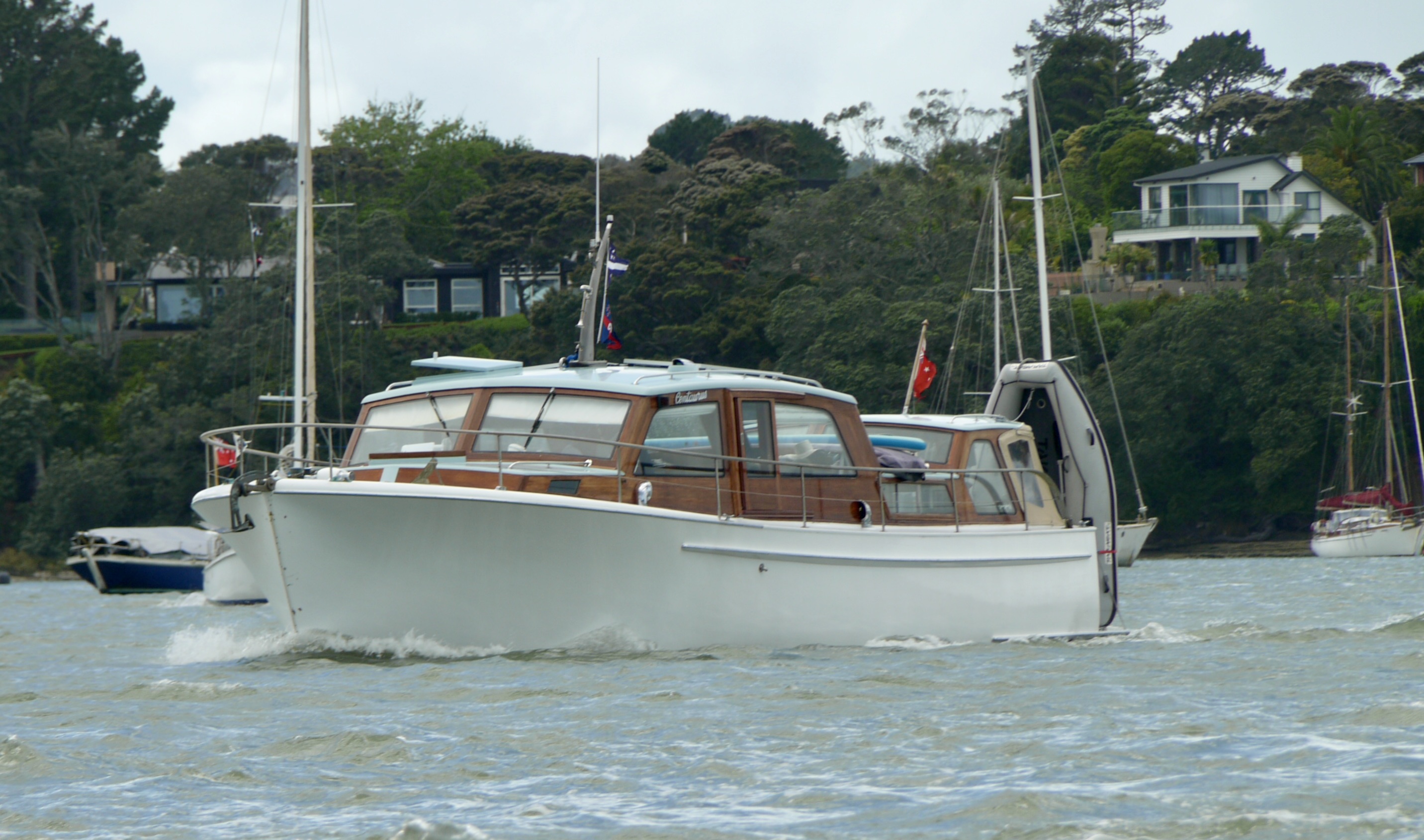
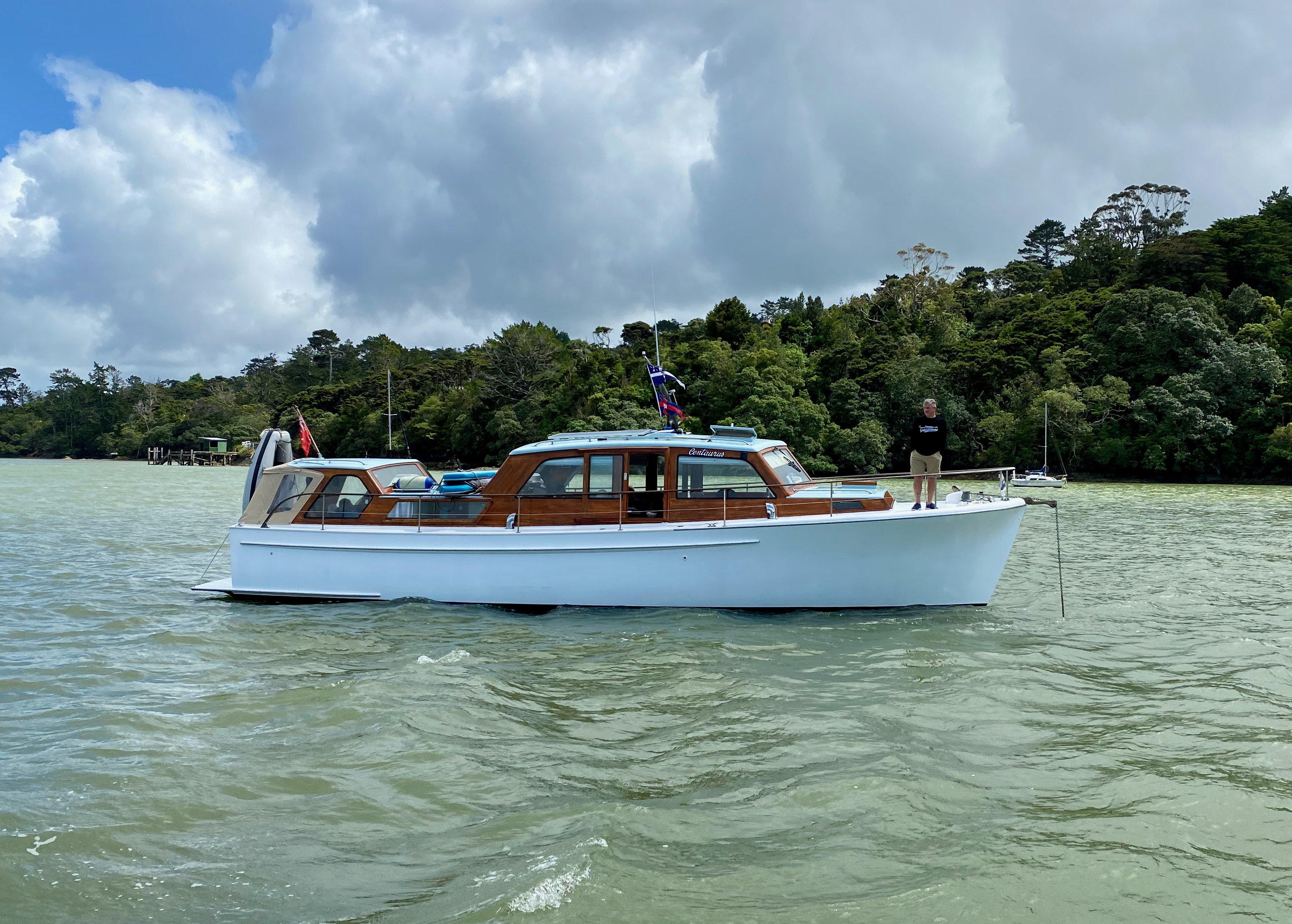
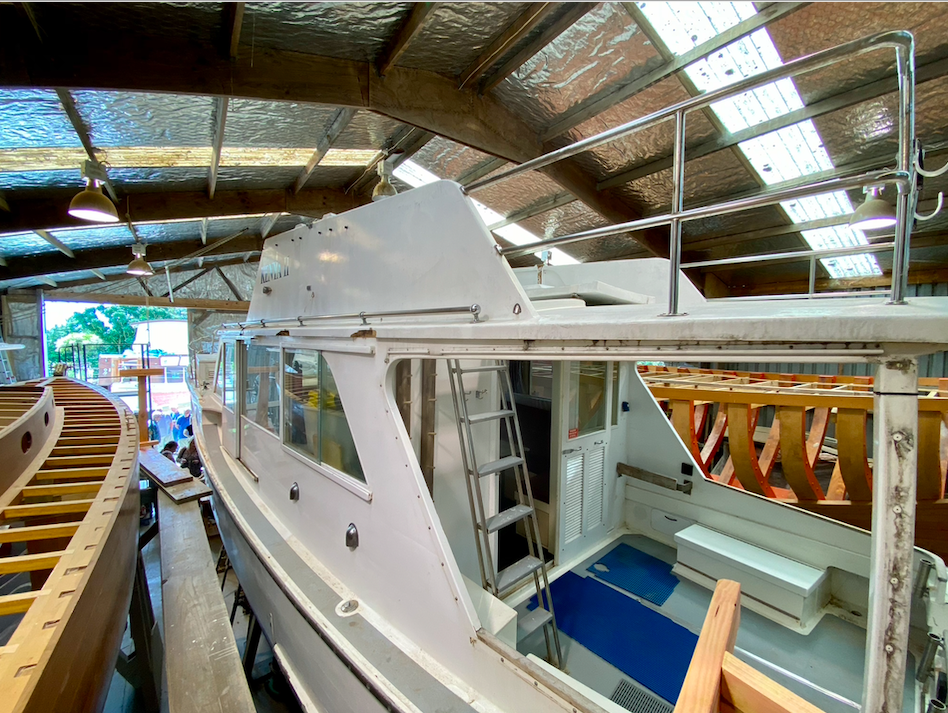
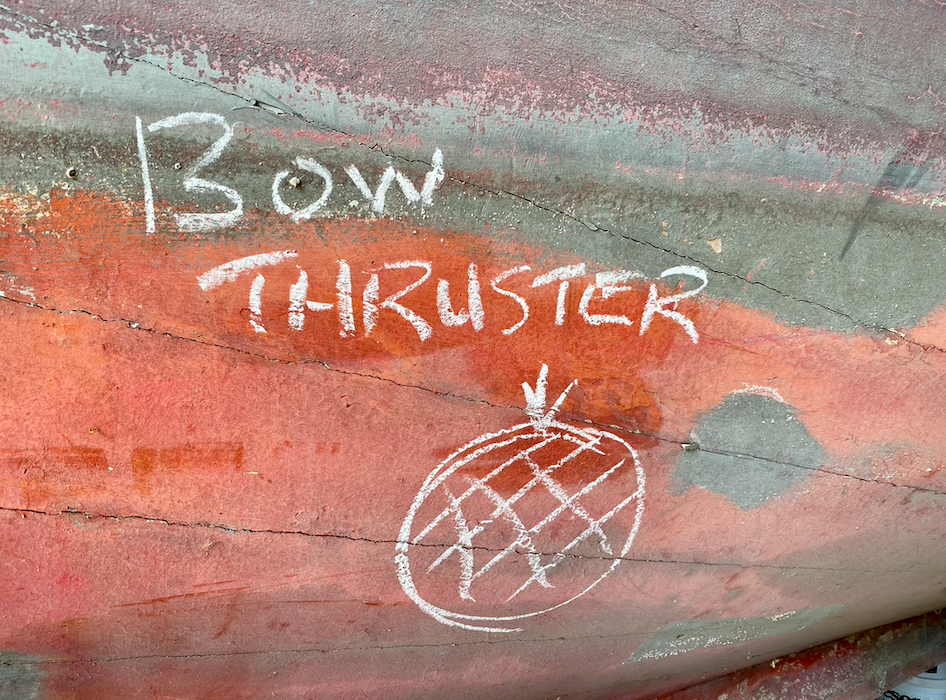
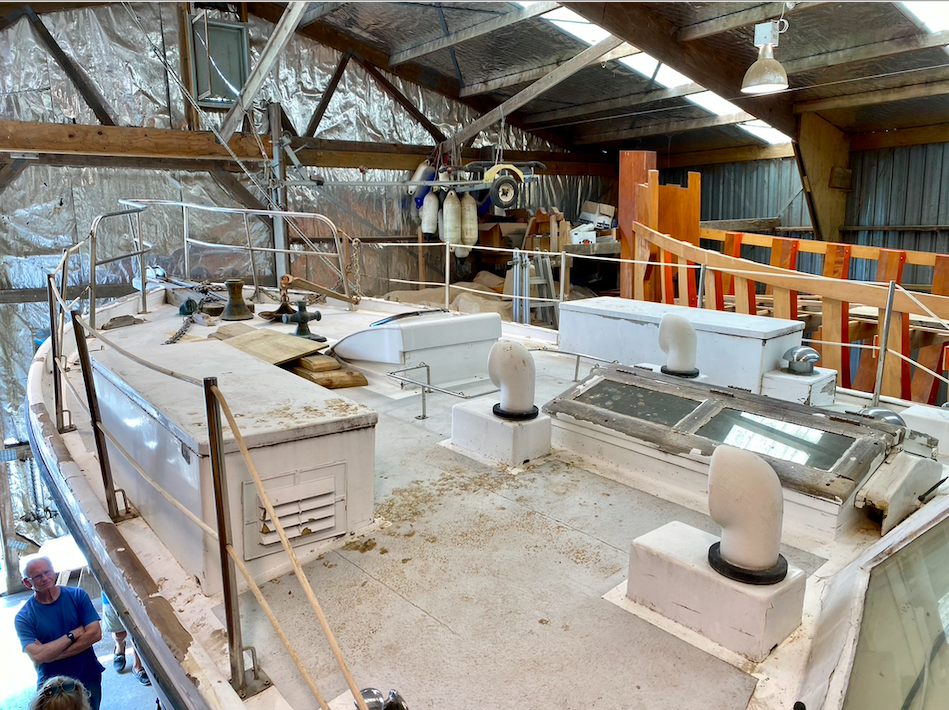
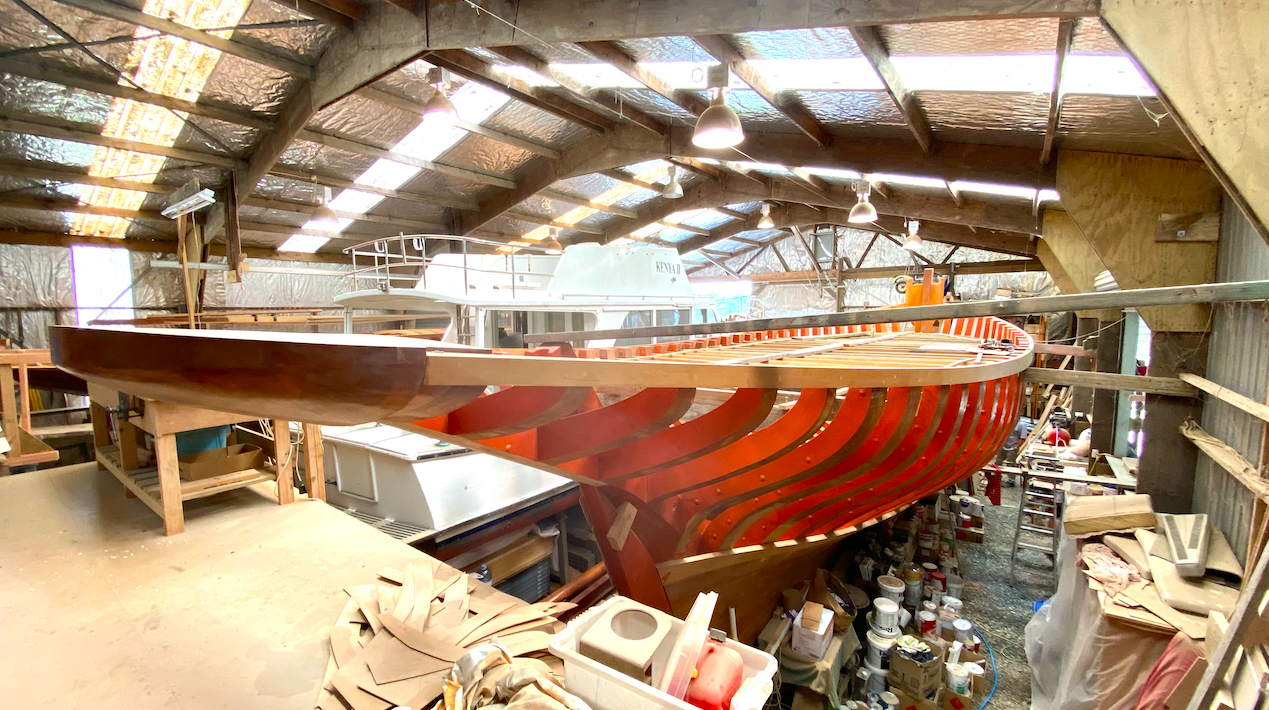
WW readers will recall that in late 2019 Angus Rogers purchased the 1967 1968 Bailey & Sons built bridge-decker Centaurus. After an extended summer cruise she was hauled out at Okahu Bay for a serious overhaul of her systems and to bring her presentation up to the Rogers standard. Last Friday she was eased back into the water (got to love that tractor unit) looking very sharp. One of the additions was a bow and stern water jet thruster set-up, very impressive piece of kits and remarkably quiet. More photos of the project soon.
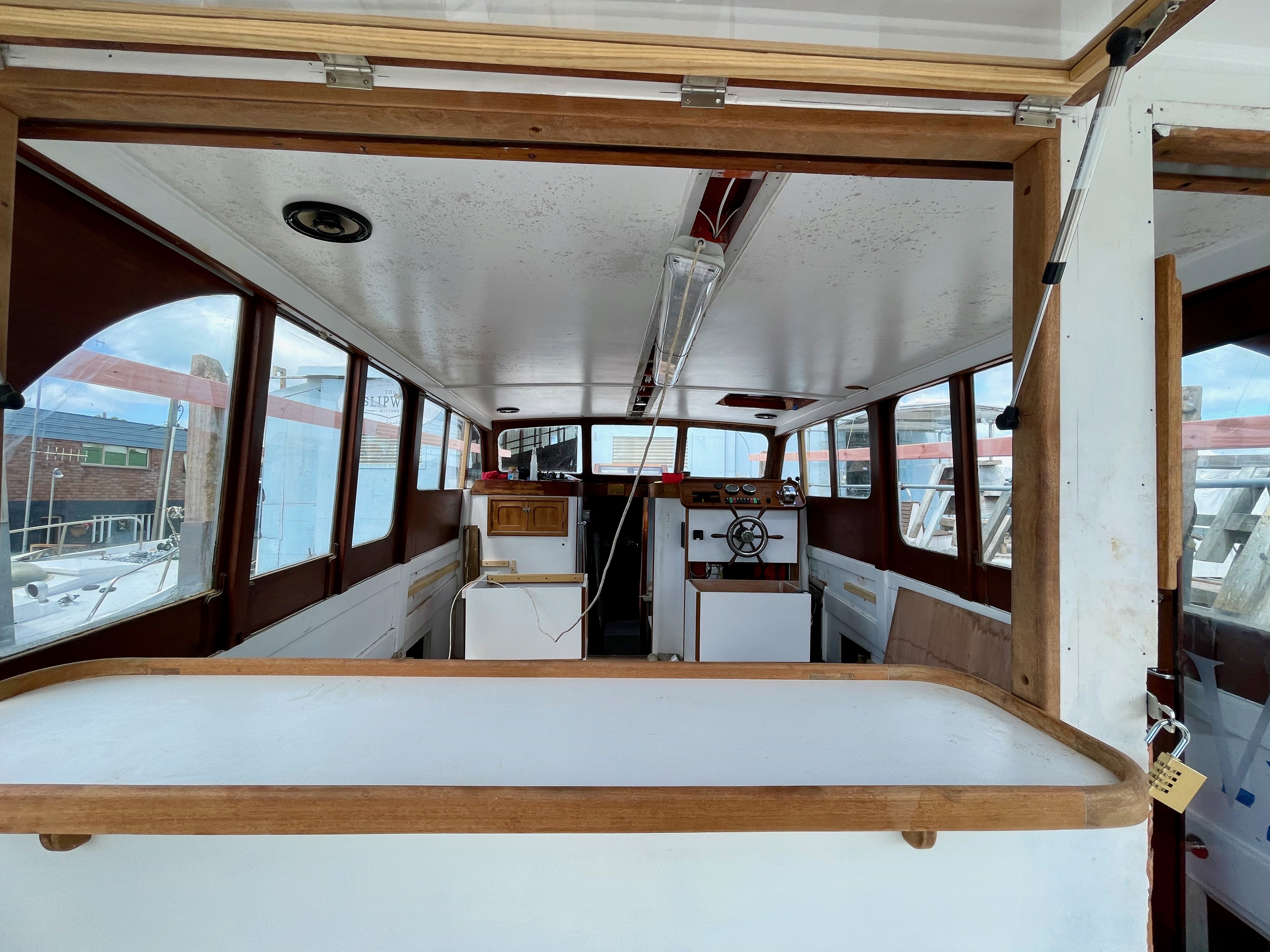
It will be a shoes off inspection for those woodys doing the Stillwater Woody picnic cruise next Saturday (26th) – I’d better ensure she gets a prime spot on the wharf 😉

Out With The Old – In With The New

Out With The Old In With The New

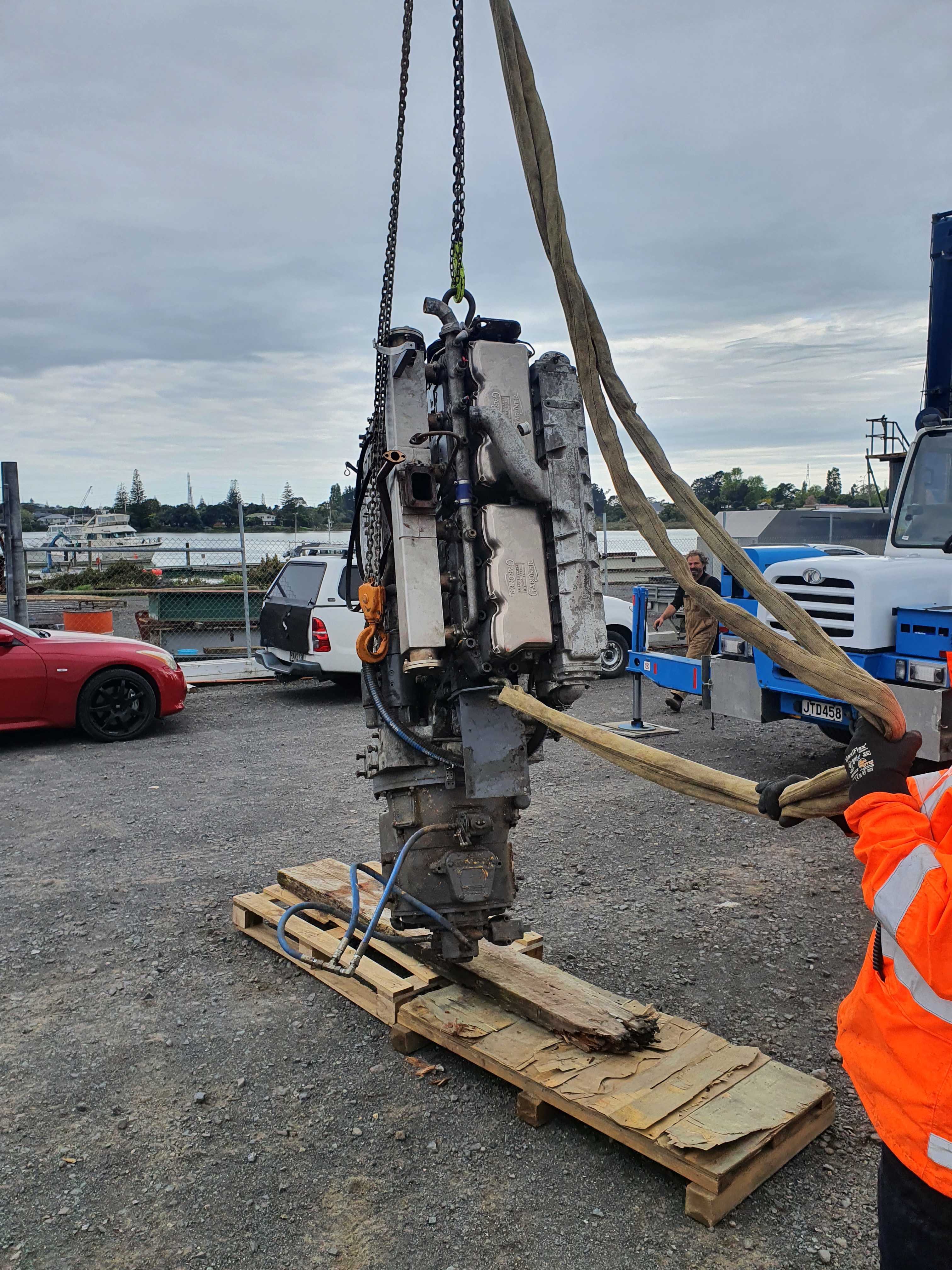
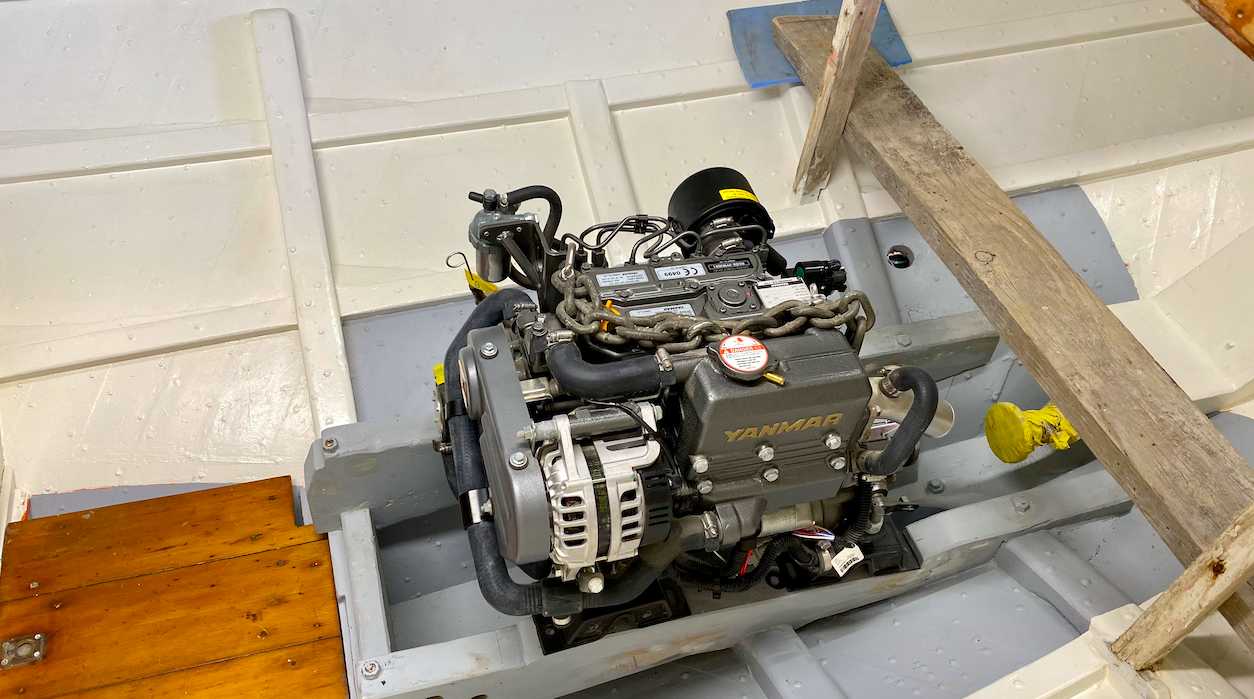
Nathan Herbert’s 1917 Joe Slattery built launch – Pacific, had a serious Jenny Craig session yesterday at Milford – out came the 2758 Ib. Lister (Freedom range) diesel engine, to be replaced with a brand new 992 Ib. 100hp FPT / Iveco (Italian) 4 cylinder diesel. That is a saving of over 800kg, thats like asking the All Black forward pack to get off your boat. I suspect the waterline will need an adjustment 🙂 
As always Jason Prew and The Slipway gang were on hand to help, with expertise and the loan of their Hiab truck to collect the new engine. We look forward to seeing the completed installation and relaid wheelhouse. I suspect we will not see Pacific at the Woody Stillwater picnic next Saturday (26th).

Marline Gets A Top Chop

MARLINE – Gets A Top Chop


Back in September 2019 I spotted the launch – Marline coming up Milford Creek on-route to The Slipway yard. As it turns out she was being hauled for a heart transplant – a wonderful new Yanmar 120hp was being installed. The top two photos above show here in the ‘creek’. At the time I thought – very nice woody, but ……….. pity about the low rise block of flats on top.

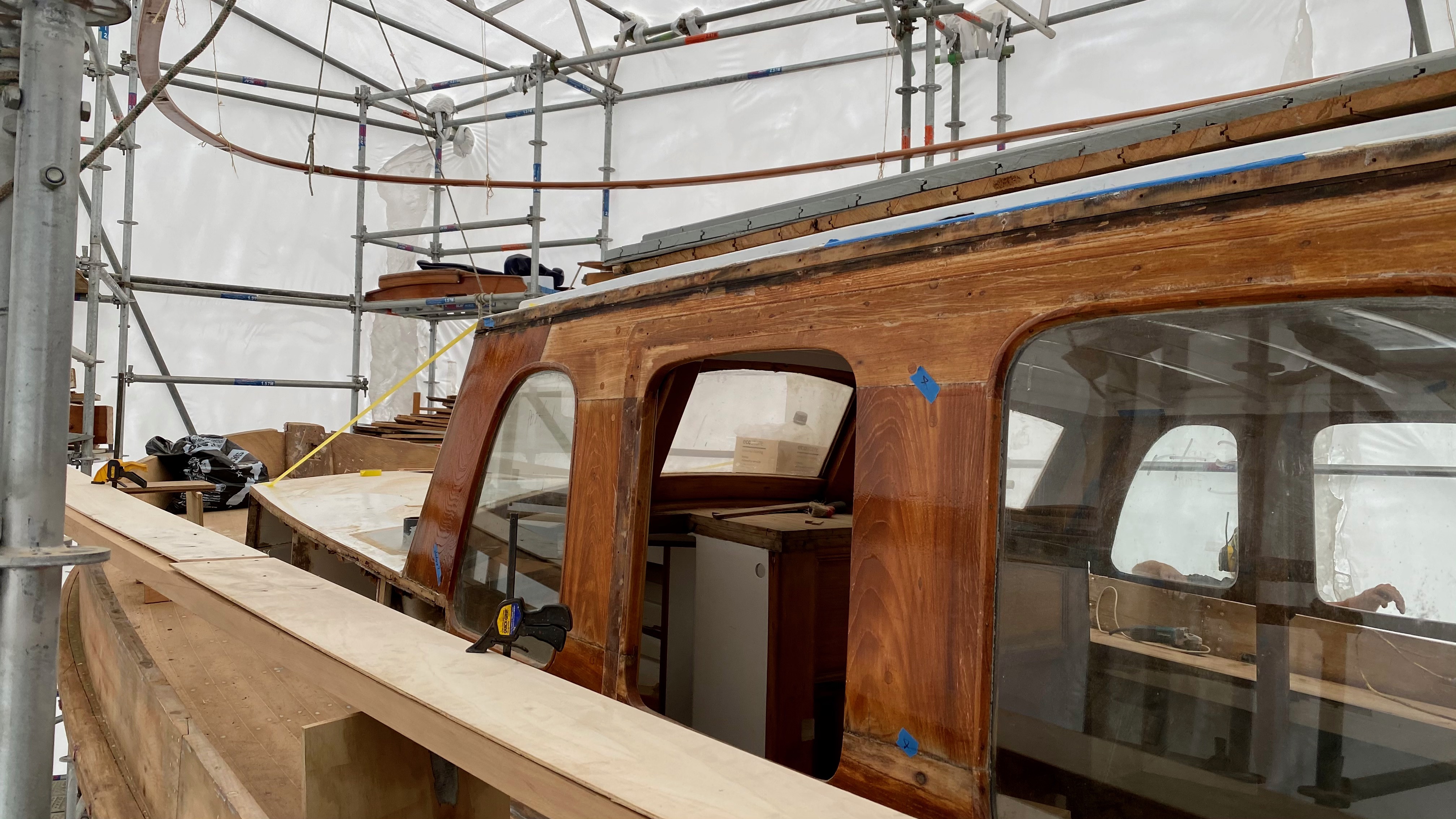
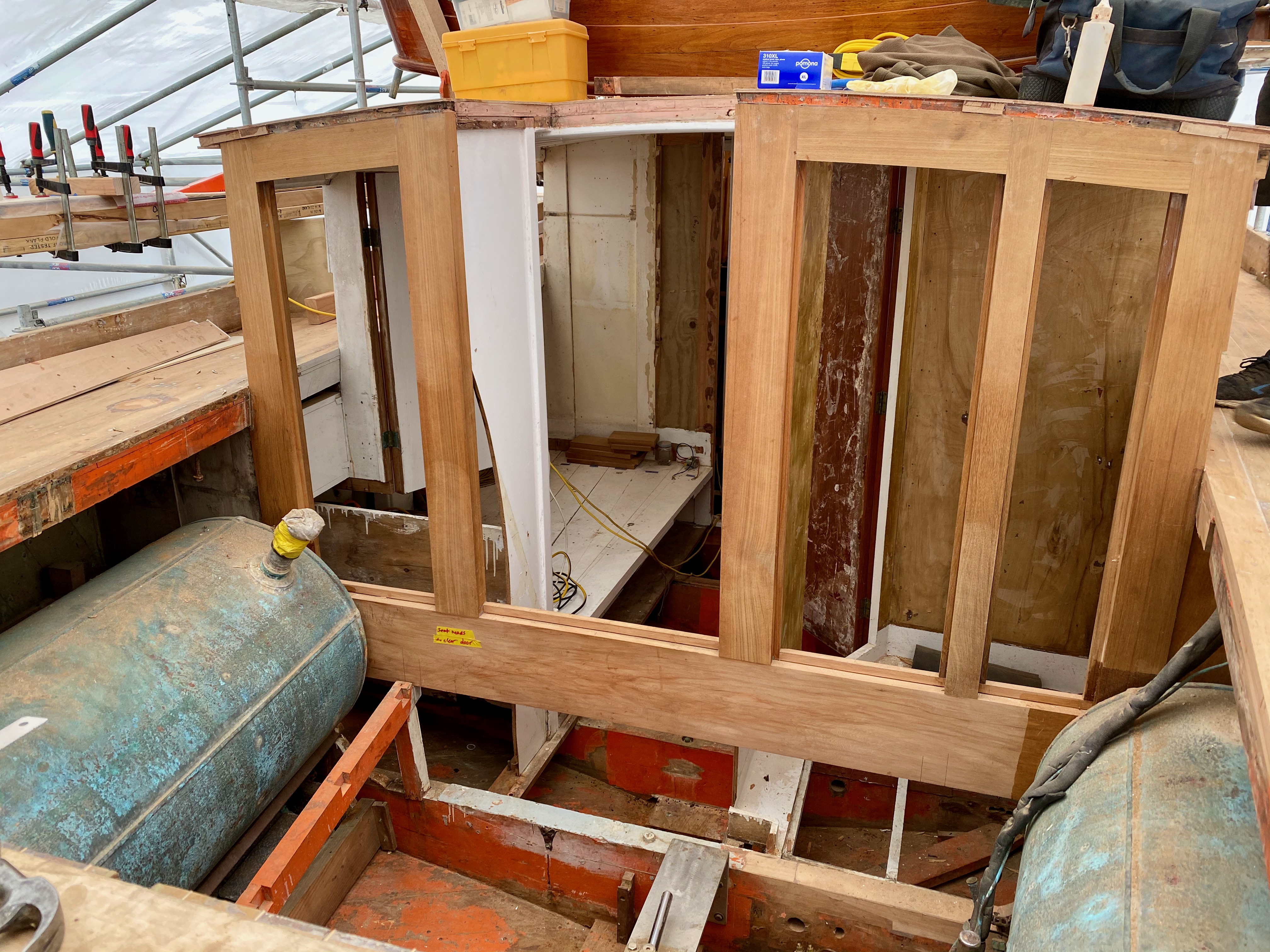
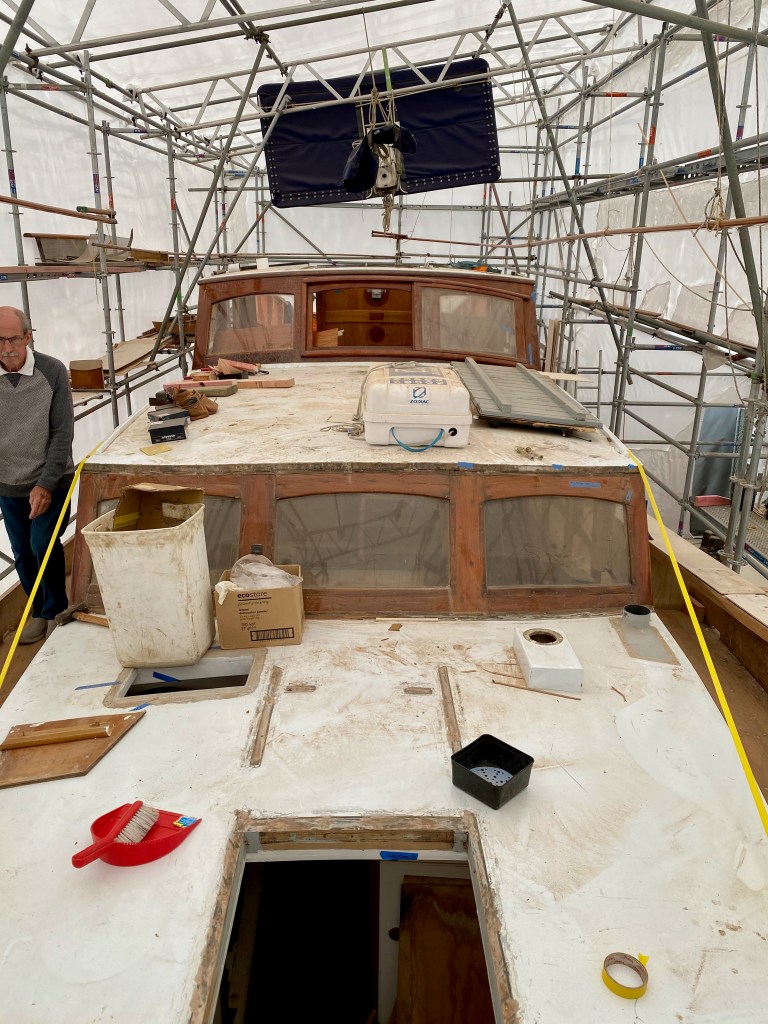
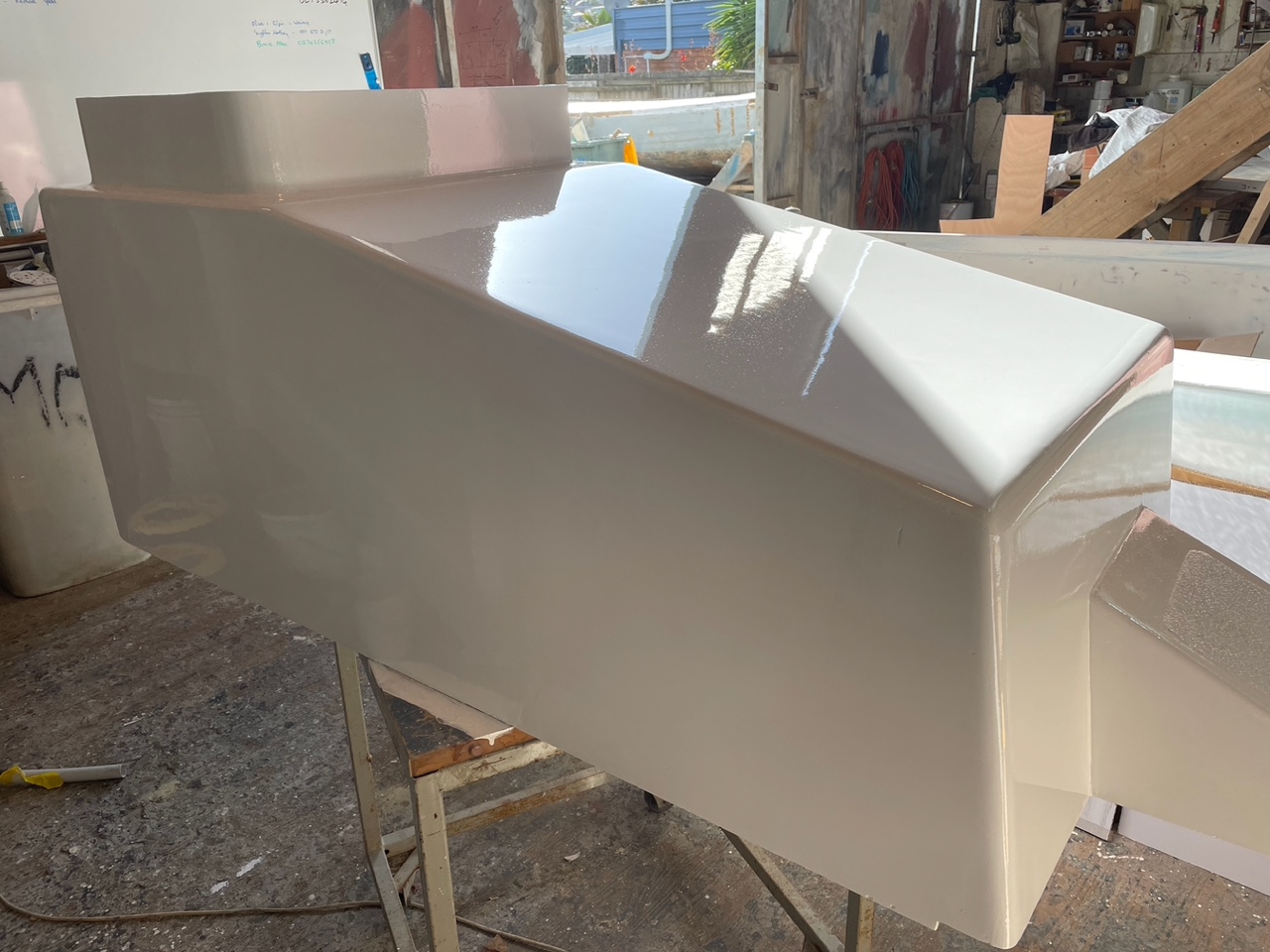
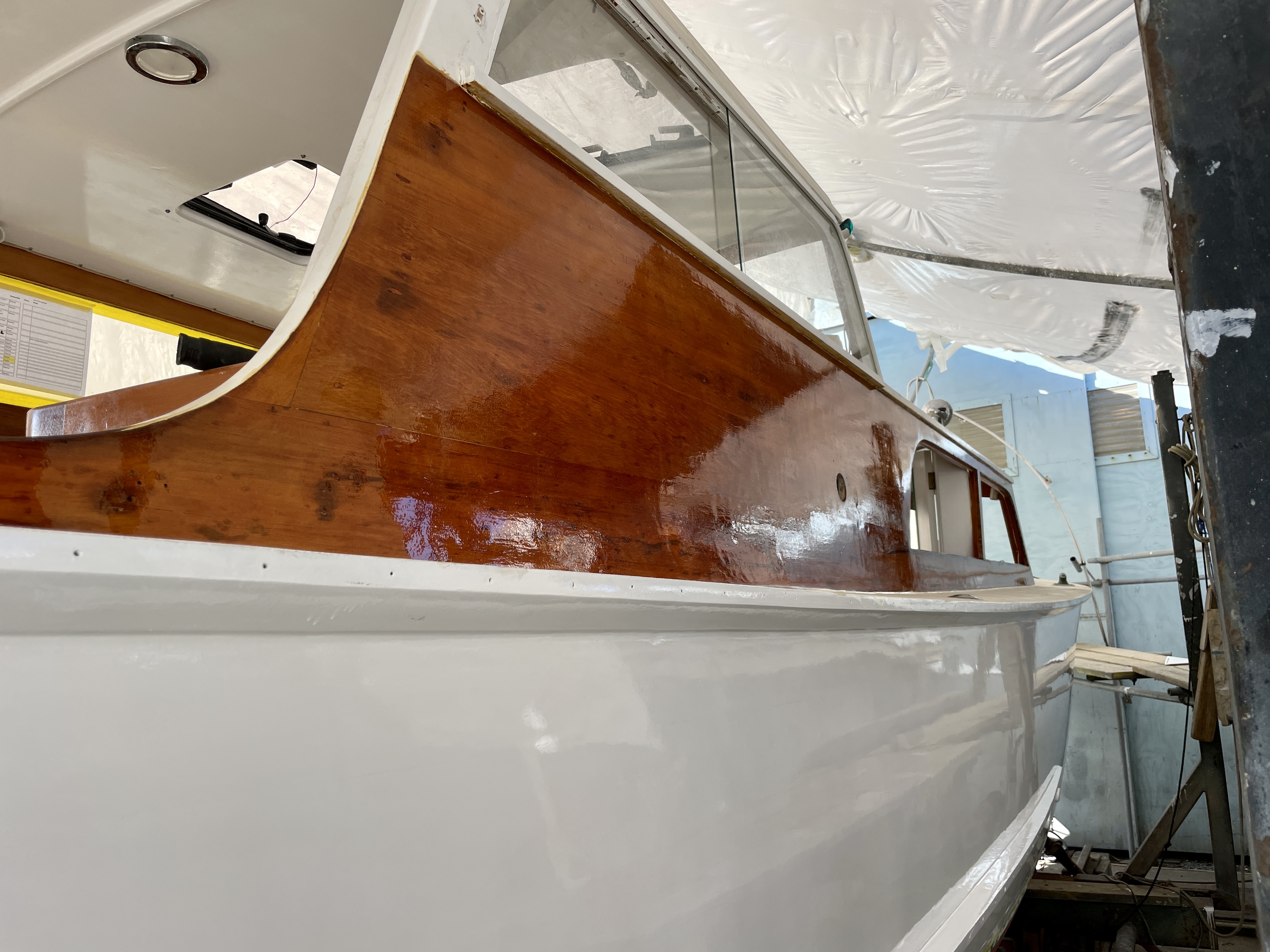
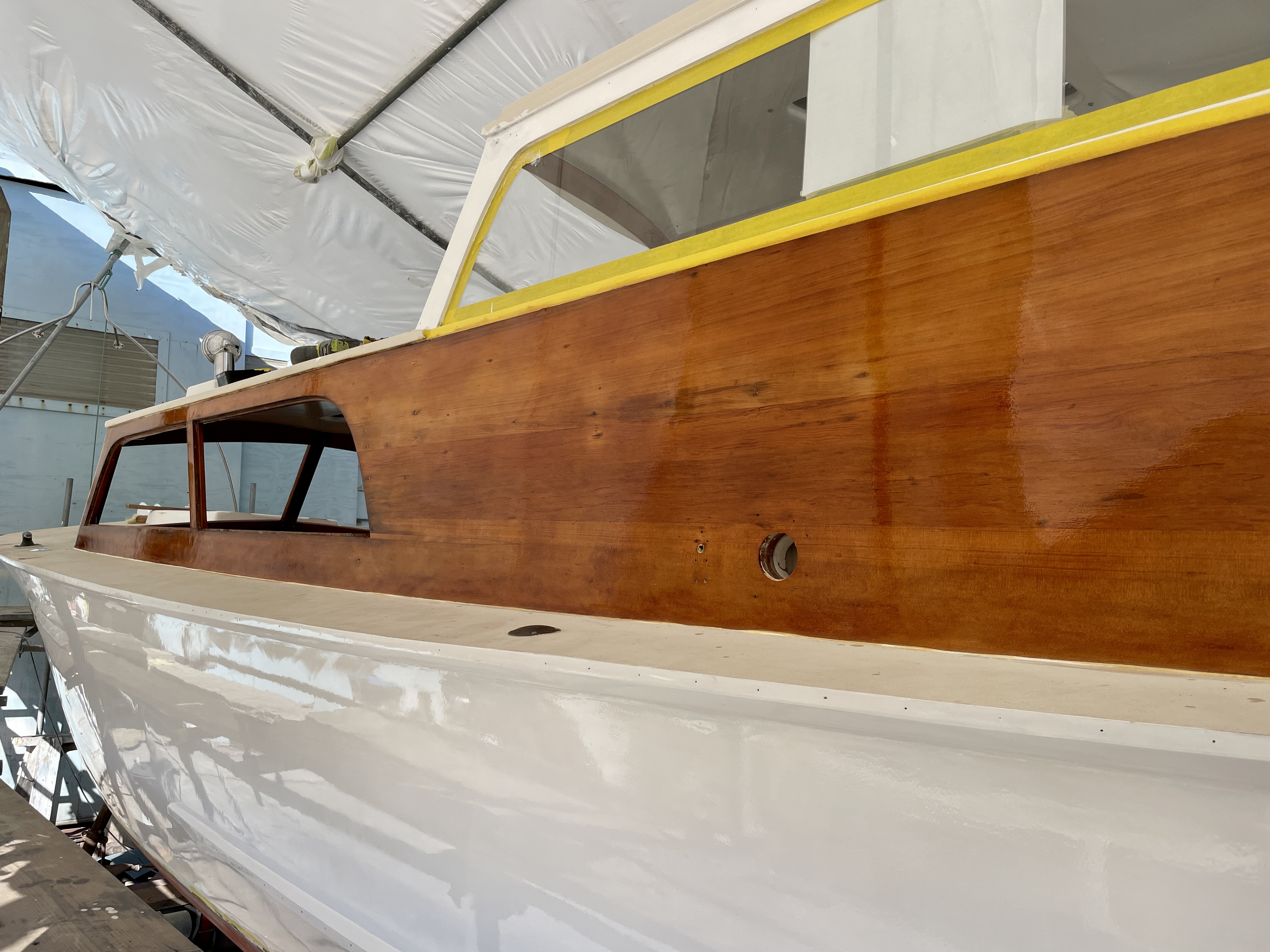
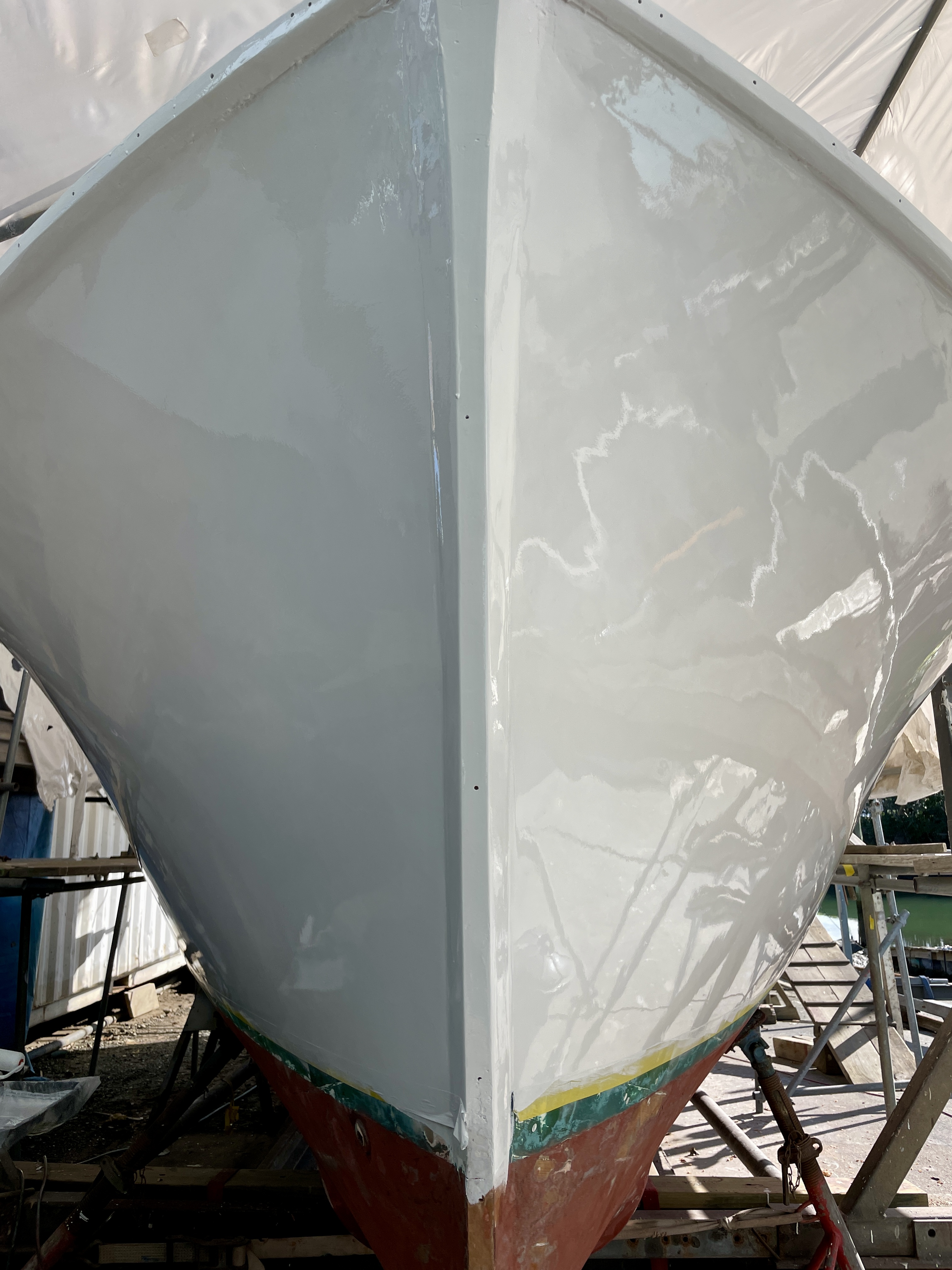
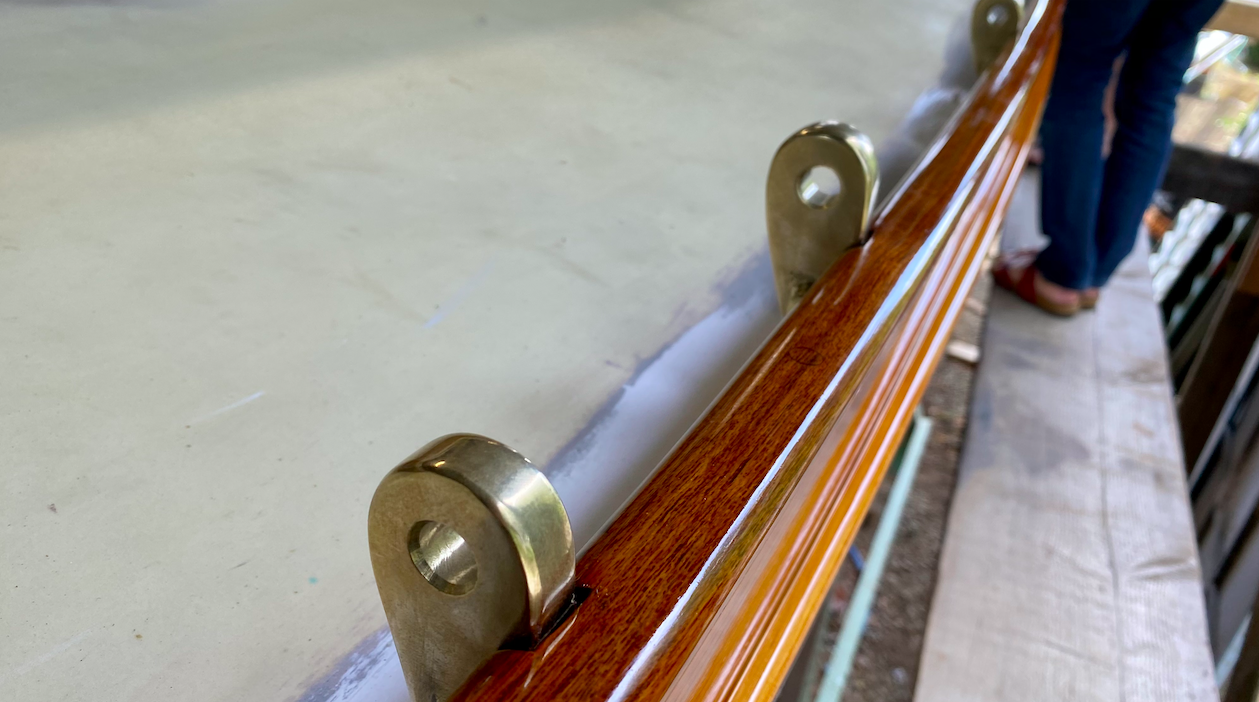
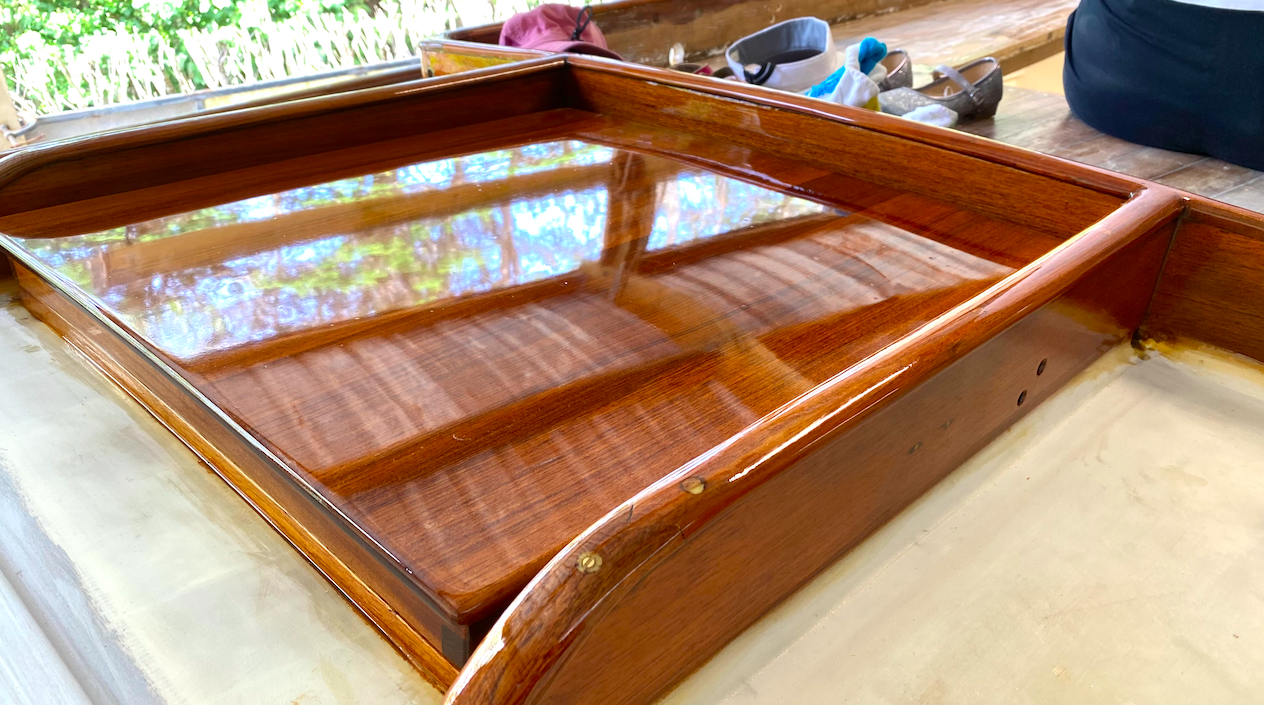
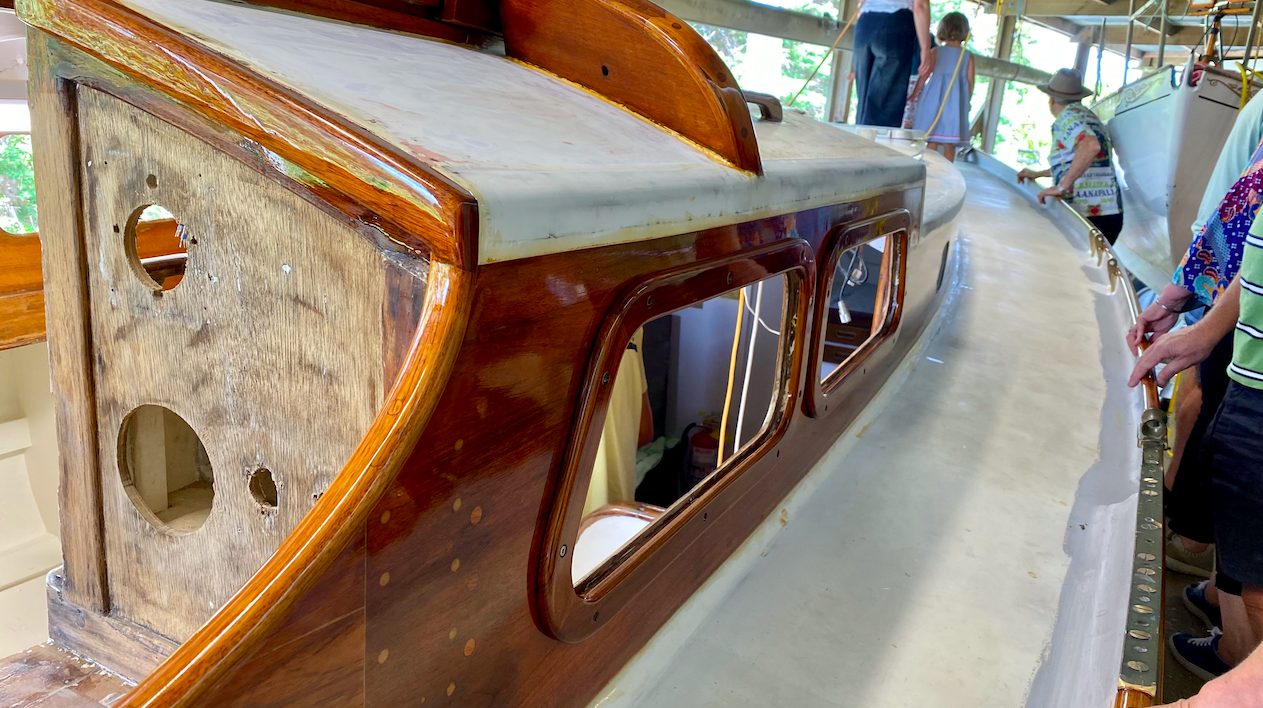
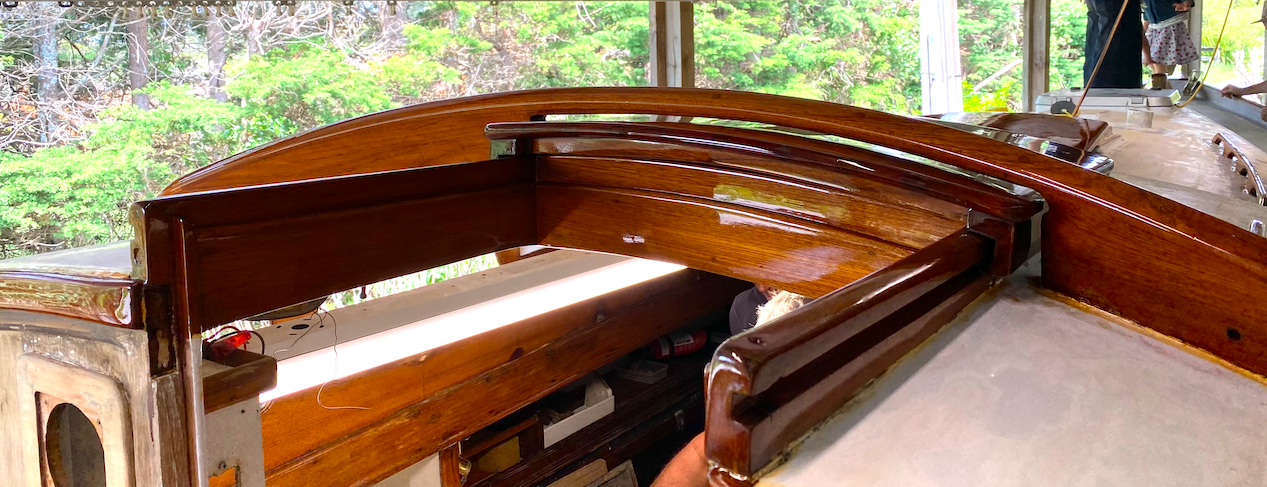
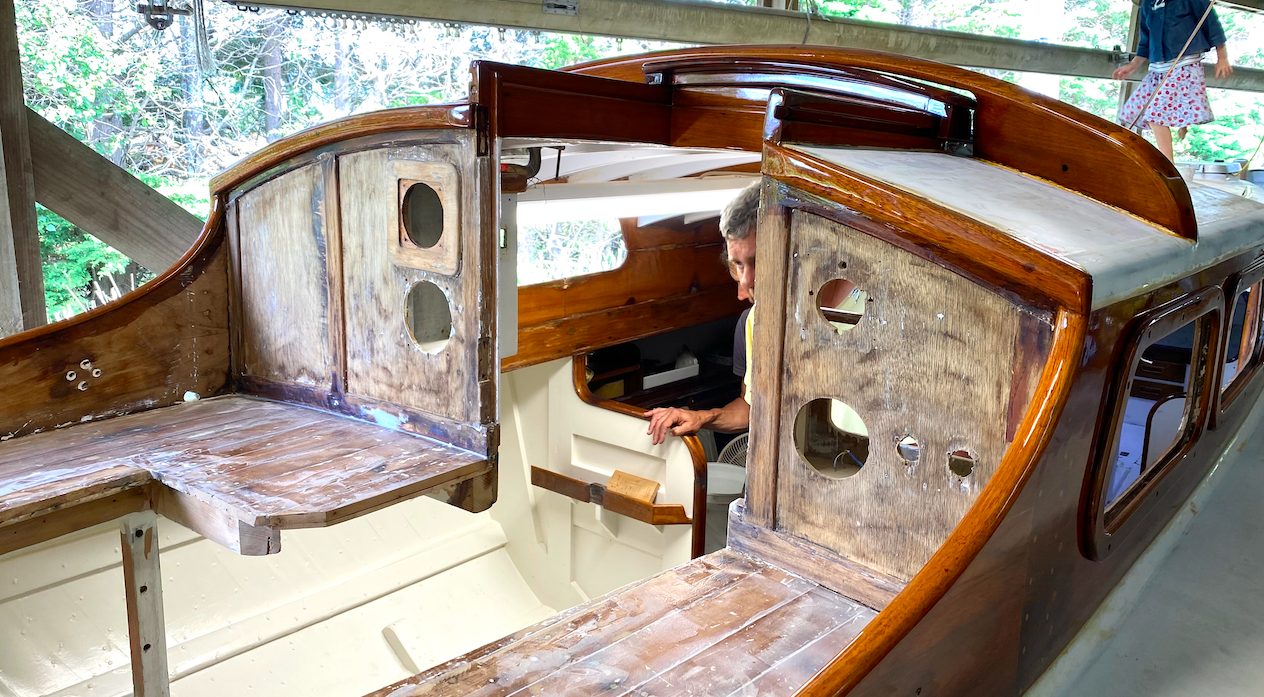
So you can image how pleased I was last Thursday to walk in to The Slipway shed and see a team in the process of demolishing the flats. Marline was built in 1950 by Leon Warne in St. Marys Bay, for his own use. Son Ken gave me a guided tour of the boat and detailed the work in-hand. And she will be returning to a more traditional configuration 🙂 Marline is approx 35’ x 11’ 4’ and draws 3’6”. She had a reputation as ’the party boat’ and once aboard its easy to see way – an 11’+ beam on a 35’ boat makes for a lot of living space.I love the original cabin lights – Leon Warne cast them, son Ken still has the mould……….. now that has got me thinking 😉


The gallery of photos below, ex Ken, give us a peek into her past, as you will see, she was successfully used for Game Fishing for many years, out of Tauranga