AN INSIGHT INTO NZ’S UNIQUE MARINE ENGINES – Part Three

AN INSIGHT INTO NZ’S UNIQUE MARINE ENGINES – Part Three

Todays WW story follows on from earlier stories – link below to Part One and Two 
As per pervious stories in the series the content has been pulled together by Ken Ricketts and ‘polished’ byPatrica and Ken’s daughter Corinne Pettersen. As always we have endeavoured to be as factual as possible but there will always by matters others will either know more about or be able to correct errors – so woodys do not hold back on commenting.

PART ONE – https://waitematawoodys.com/2025/04/04/an-insight-into-nzs-unique-marine-engines-part-one/

PART TWO https://waitematawoodys.com/2025/04/12/an-insight-into-nzs-unique-marine-engines-part-two/

ROLLS ROYCE MARINE DIESEL ENGINES

ROLLS ROYCE 275 HP MARINE DIESEL ENGINE

ONE OF THE 2 ROLLS ROYCES THE ORIGINAL ENGINES IN OHORERE

KUDU WITH HER 137 HP ROLLS ROYCE ENGINES IN 1966

OHORERE WHEN NEW, WITH HER 2 X ROLLS ROYCE 6CYL. 275 HP DIESEL ENGINES

OHORERE AS AT 2025 WITH HER 2 X 770 HP MTU MARINISED MERCEDES BENZ DIESELS

MANAIA, WITH HER 2 X 6 CYL. 275 HP ROLLS ROYCE ENGINES

MANAIA INSTRUMENT PANEL

These are, as one would expect, a brand of engine that is quite rare, resulting from the cost of the engines to buy and the cost, equally, of parts for all maintenance. Also, while Rolls Royce has the name synonymous with perfection in all respects, it is my view that, in fact, Gardner engines are far superior in every respect, including noise, smooth running, longevity, maintenance necessity, and costs thereof. However, there are a few that are in the boats of today and yesterday. I personally know only three.

There is the KUDU, a large launch that, at one time, in mid to late 1966 to perhaps somewhere around the 1980s, belonged to the late Harry Julian. She is 63 feet long and powered by 2 x 137hp Rolls Royce 6-cylinder diesel engines. She was designed and built under Lloyd’s supervision in the UK in 1964 and sailed out to NZ as the end of a 20,000 km journey. However, the last time I saw her was on a visit to the Gold Coast in Australia, anchored in the middle of the center of Sanctuary Cove Marina.

Another of the RR-powered boats is the OHORERE, built by Percy Vos in Auckland for the government of the day to be a high-speed fisheries patrol craft, and designed by Thornycroft in the UK. However, she never reached anything close to her anticipated speed projections as required in the order from the government to the designers and builders. Large sums of money were spent collectively by the designers, Rolls Royce, and the builders to give her better performance, but they failed miserably, and she was ultimately sold to private ownership, where she has been used for many years now for fishing charters in Tauranga. As of now, Rolls Royce’s were replaced about two years ago with 2 x 770hp MTU marinized Mercedes Benz diesels and is capable of around 30 knots.

There is one more pleasure craft, an ex-Whangarei pilot boat and that is the MANAIA, which has had from new, 2 x Rolls Royce 8-cylinder inline 16-litre diesels. 

UNIVERSAL BLUE JACKET 6 FLAT HEAD PETROL ENGINES.

THE UNIVERSAL RANGE OF 4 & 6 CYL BLUE JACKET RANGE OF MARINE ENGINES

OTAZEL WITH HER UNIVERSAL BLUE JACKET 6 PETROL MARINE ENGINE. MANSION HOUSE BAY, KAWAU ISLAND c.1951

I am aware of one of these in New Zealand, which was in the OTAZEL, owned by Arch Tucket, in the late 1940s to the 1960s. He was the head of the patrol craft section for T.E.A.L. at that time in Mechanics Bay, and he fitted it to her on the hardstand at Okahu Bay in the winter of 1950.

G.M. ALLISON 1450HP, HOME MARINE CONVERTED, V12 AIRCRAFT PETROL ENGINE.

GM ALLISON V12 AIRCAFT ENGINE

REDHEAD, IN THE SOUTHWARD TRUST VEHICLE  MUSEUM IN PARAPARAUMU, AS SHE WAS LIFTED FROM THE SEABED IN WELLINGTON HARBOUR, AFTER HER  PROPELLER LOSING A BLADE, WHILST RACING & SINKING AS A RESULT.  

REDHEAD RACING A FLYNG BOAT ON WELLINGTON HARBOUR

The only boat I’m aware of that had one of these was Sir Len Southard’s champion racing boat, REDHEAD, which won, at one time or another, most of the cups and awards, as well as a huge number of races in her time. She was a real champion, designed, built, and raced by the late Sir Len Southward of Wellington, a brilliant engineer and philanthropist. John Bullivant tells has advised there was a second high-speed hydroplane racing boat built with a marine-converted V12 GM Allison petrol engine in the same era.

STERLING MARINE PETROL ENGINES

STERLING 6 CYL 1920 MARINE PETROL ENGINE PROBABLY SIMILAR TO THAT 

IN LADY STIRLING

STERLING 115 HP U.S. NAVY WWII FLAT HAD PETROL ENGINE

KERMATH 1928  225 HP SEA WOLF ENGINE IDENTICAL TO THAT IN THE TASMAN IN 1947

LADY STERLING IN QUEESNTOWN

TASMAN IN 1948 IN SCHOOLHOUSE BAY KAWAU ISLAND  

STERLING BUILT IN 1926 BY ERNIE LANE IN PICTON

LADY STERLING

The 52-foot, 105-year-old Bailey & Lowe-built ocean-going yacht, built in 1920 is named LADY STERLING. This yacht had one of these engines originally, and there were other boats that had them in the earlyish 1900s. 

LADY STERLING has, in recent times, been in the Queenstown area, but she has traveled many thousands of sea miles, with numerous crossings of the Pacific Ocean in her long life. 

Around the end of WWII, she belonged to Stan Waters. She passed shortly after to Lloyd McIvor, a dentist, who sailed her several times a year to Fiji and other Pacific islands to attend to the islanders’ dental issues.

TASMAN WITH A STERLING 6CYL DUAL IGNITION 115HP WWII U.S. NAVY PETROL ENGINE.

A reference in part 1 of this series was made in the comments section by Denis O’Callahan, related to the TASMAN having had a WWII ex-US Navy 6-cylinder flathead Sterling petrol engine at some stage, pre-1975. I have researched this engine and found the following information and images related to it, which I am confident may well be the engine he was referring to.

A quote from Tom Ball in 2016: “I have acquired this engine recently. It is a six-cylinder marine engine with dual ignition. It is 115 HP with a water-cooled exhaust. These Sterling petrol engines were made in Buffalo, New York. The engine supposedly was in a naval ship of some sort and may have come from the naval yard there.” – unquote
As I also said in part 1, I was aboard TASMAN, Christmas 1947 with my father one day & owner, Jack Brooke, lifted the bridgedeck floor & showed us her huge bottle green 225 hp overhead valve Kermath Sea Wolf  petrol engine, identical to that in the above image.

I could see by its size & overall concept, it was a fairly old engine, & perhaps the original, & in the circumstances, I have taken what to me, is a logical view, that this engine was probably replaced around 1960ish by the Sterling, due to old age , &/or perhaps maintenance issues, as well as huge quantities of petrol it must have consumed. Also, it was usually pushed at high speed most of the time by Jack B who was a speed fiend, when it came to his boat, which must have given the engine a hard life.  

19-04-2025 INPUT ex RUSSELL WARD“I have a little input into Tasman when she had the Stirling engine in the early -mid ’60s. We used to describe it as a “Sterling Dolphin” in the day. My mother had a business connection with her then owner Dr Jim Sprott and I had the chance to see over Tasman and especially to view her engine. It was a four cylinder T head type engine -two blocks of two and quite tall. Certainly painted green with lots of brass -It ran delightfully smoothly and the owner averred that it was not too thirsty if throttled back. His suggestion was that the Americans installed the engine during the war to get more speed out of her. It certainly was a very old vintage- looking engine and had none of the looks of the more modern engines.

Dr Sprott later decided to replace it because of the petrol it used and maintenance. It was offered to MoTat who refused and my father wouldn’t allow me to have it and the word was that it was scrapped. RIP.”

26-04-2025 INPUT ex DENIS O’CALLAHAN – below further information regarding the Sterling engine in the launch – TASMAN

In 1970, TASMAN was purchased from Dr.Jim Sprott by my friend Allan Tyler and his dad Eric.

She had a Sterling 6 cylinder petrol engine with dual ignition and we were told that the original engine may have been a Kermath.

We had many adventures with this engine. One time at Tryphena she would not start and we found the Bendix Spring was broken. To our relief we found several spare springs in the locker so it must have happened before.

The Sterling was replaced in 1976 with a Lees Marine 6 cylinder Ford diesel. New stainless steel fuel tanks amidships replaced the old copper tanks under the aft deck which became the water tanks. The old Sterling engine went to scrap but we retained the name plates which were passed on to the new owner of TASMAN, Stephen Cashmore.

Photographs of these plates are below and the following is my interpretation:

Silver badge “Sterling”. THE ENGINE OF REFINEMENT FOR THE FINEST BOATS THAT FLOAT.

Small Plate. US NAVY. BU. ENG. NO. (Bureau of Engines Number) –  11725

Large Plate. STERLING ENGINE CO.

                        BUFFALO NY USA

            BUILDERS OF MARINE ENGINES

                       SERIAL NUMBER

                            US L61678

           ROTATION AT FLYWHEEL C.C. (Counter clockwise)

         C.W. HAND SCREW PROPELLER

                 HORSE POWER 220

                RPM MAXIMUM 2200

        WITH PROPELLER LOAD AND

            FULL OPEN THROTTLE

     ENGINE REVOLUTIONS MUST

     EQUAL OR EXCEED 1900 RPM

               FIRING ORDER

                 1 4 2 6 3 5

          TAPPET CLEARANCE

           INLET 020 THOUSANDTHS

    EXHAUST 025 THOUSANDTHS

In 2019 I visited Buffalo New York on a cruise through the Erie Canal and Great Lakes and looked for the old Sterling works.

I found that Sterling had been taken over by Phillips Petroleum in the late 1950s and the assets moved to Kansas.

The Sterling Company dates back to about 1903 and many speed records were held by boats with Sterling engines.

STERLING TEE HEAD 4 CYL PETROL MARINE ENGINE SIMILAR TO THAT AS DESCRIBED BY RUSSELL WARD ABOVE THAT HE COMMENTS WAS INSTALLED IN TASMAN IN THE 1960’S AFTER HER ORIGINAL KERMATH SEAWOLF

THE LAUNCH STERLING

I have researched extensively but have been unable to source an image of the 3-cylinder, 27 HP Sterling engine, as referred to below by Harold Kidd and in the launch STERLING as pictured above.  

Input from Harold Kidd: This STERLING was built by Ernie Lane in Picton in 1925 for L.J. Steele as a passenger vessel to carry 60 passengers and had a 1924-built, 3-cylinder, 27 HP (rated) Sterling marine engine with a bore of 4.5″ and a stroke of 5.5″. Dimensions are 34′ x 9′ x 3’9″.

HALL SCOTT DEFENDER V12 PETROL 630HP MARINE ENGINES

NGAROMA WITH HER 1 HALL SCOTT DEFENDER V12 PETROL ENGINE, & 1 GLENIFFER 8 CYL INLINE DIESEL ENGINE, WHEN OWNED BY JIM LAWLER

These Hall Scott Defender petrol engines were used in all Fairmiles during WWII wartime service. When sold into private ownership after the war, all were immediately replaced by diesel engines of various types, brands, and sizes, except for one privately owned Fairmile called the NGAROMA, owned at that time by Jim Lawler. This vessel retained one Hall Scott engine for around two years before replacing it with a second, opposite-handed, 8-cylinder inline Gleniffer Diesel to match the existing Gleniffer 8-cylinder engine he fitted when he purchased the NGAROMA, creating a matched handed pair.

There were also two RNZAF MIAMI CLASS American patrol craft bought by the RNZAF around 1948. One, W275, was sent to Lauthala Bay, Fiji, by the RNZAF, while the other, W276, remained here. W276 had two Hall Scott Defenders mounted in the stern and vee driven.

W276 WITH HER 2 HALL SCOTT DEFENDER V12 PETROL MARINE ENGINES  

JUNKERS GERMAN DIESEL AIRCRAFT ENGINE TO BE HOME CONVERTED FOR MARINE USE 

JUNKERS DOUBLE ACTING DUAL PISTON 6 CYL estimated at c.1000HP GERMAN AIRCRAFT ENGINE.

This boat (W276) as featured above, was sold in the 1960s to a Mr. Canavan, a retired senior Air Force officer. He employed two marine engineers to convert two German two-stroke Junkers aircraft diesel engines (probably the same or like those in the image above), which, as far as I can interpret, seem to have been around 1,000 hp each. He acquired and converted them for marine use, replacing the two Hall Scotts with these engines. 

This was a long and very expensive task for Mr. Canavan. During this process, she was moored adjacent to the up-harbour end of the Naval Base and was still painted air force grey. During the installation she acquired four very large exhaust pipe holes near the deck line at the stern.

These engines, like the engine in the hydrofoil MANU-WAI, required hot engine oil to be pumped through them for 20 minutes before cold starts. The two engineers, as mentioned above, eventually finished the project and went off to find Mr. Canavan so he could be present for their first start. While they were away looking for him, he turned up, went out to the boat, saw that they were ready to go, and pushed the buttons. They started but immediately seized up as they had not had the hot oil process completed first.

When the two engineers came back, they were naturally furious that after all their hard work, it had all come to this. So, as one would expect, they just picked up their tools and walked off the job. Eventually, Canavan got two more engineers to rebuild the engines, and while they were in the process of this, one day, when they were brazing with bottled gas, the stern end of the boat caught fire, and the aft 20 feet or thereabouts was destroyed. 

The insurance company sold her “as is, where is,” and someone bought her, chopped off the burnt-out back end, and fitted her, in her now shortened form, with two 6/71 GM Detroit diesels, added new pleasure craft-type coamings, and called her the LADY SOMETHING? or SOMETHING LADY?. This work was all done on the hardstand at Half Moon Bay Marina.

With her back end chopped off and her new coamings fitted, she looked very short and fat.

WAUKESHA HESSELMAN, LOW COMPRESSION, SPARK IGNITED DIESEL ENGINES.

WAUKESHA HESSLEMAN, SPARK IGNITED, 6 CYL DIESEL ENGINE.

WAUKESHA HESSELMAN SPARK IGNITED  LOW COMPRESSION DIAGRAMATIC VEW OF ENGINE DESIGN.

AWARUA WITH HER 6CYL WAUKESHA HESSELMAN DIESEL ENGINE.

LADY RAE, STANDING IN, FOR IDENTICAL SISTERSHIP, GALA LASS.

There were only two boats fitted with the 6-cylinder version of these engines, which had around 100+ hp. 

They were Ted Cooper’s built and owned AWARUA, which for the first couple of years had a Redwing petrol engine. He later replaced this with a Waukesha Hesselman 6-cylinder diesel, which she had for the remainder of his stewardship. A later owner, replaced it with a Ford diesel.

The other boat was the GALA LASS, which had an identical sister ship, the LADY RAE. 

GALA LASS had a Waukesha Hesselman diesel from new for the entire time of ownership by the original owner, Tony Hurt.  The LADY RAE had both one and two engines at different times, both with petrol or diesel, as was appropriate during her early years. I have not been able to locate an image of GALA LASS. I have substituted an image of LADY RAE in place of GALA LASS. 

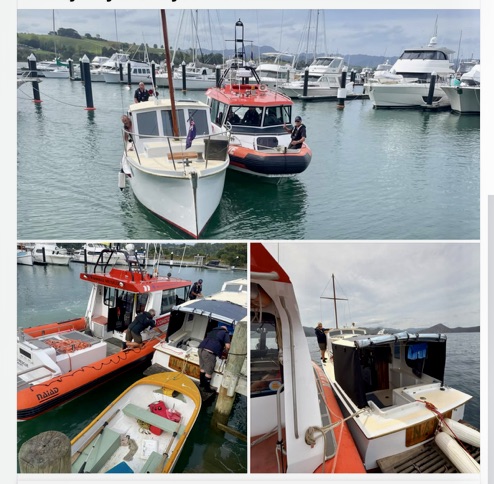
HOW DO THESE WOODEN BOATS STAY AFLOAT

HOW DO THESE WOODEN BOATS STAY AFLOAT

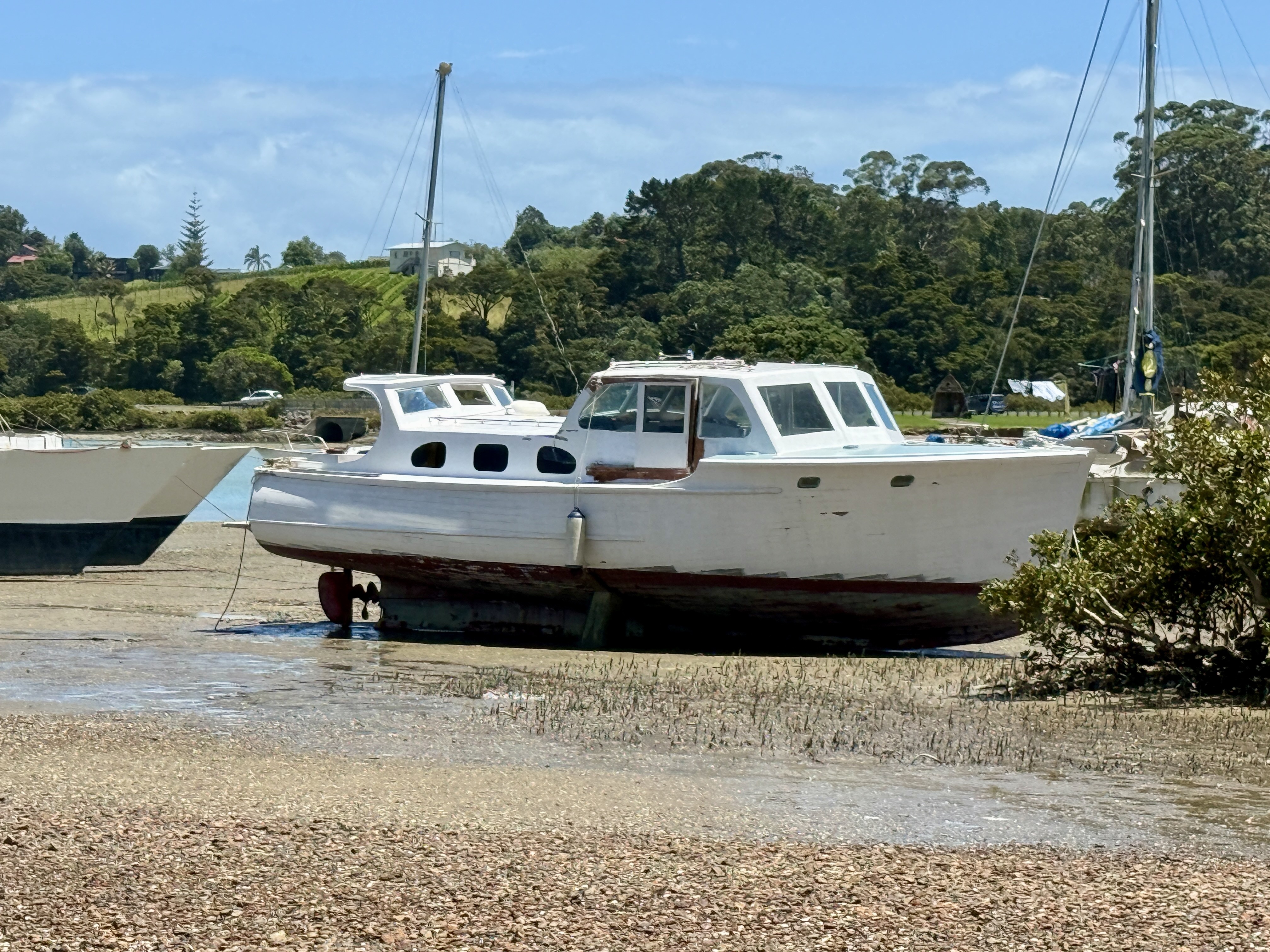
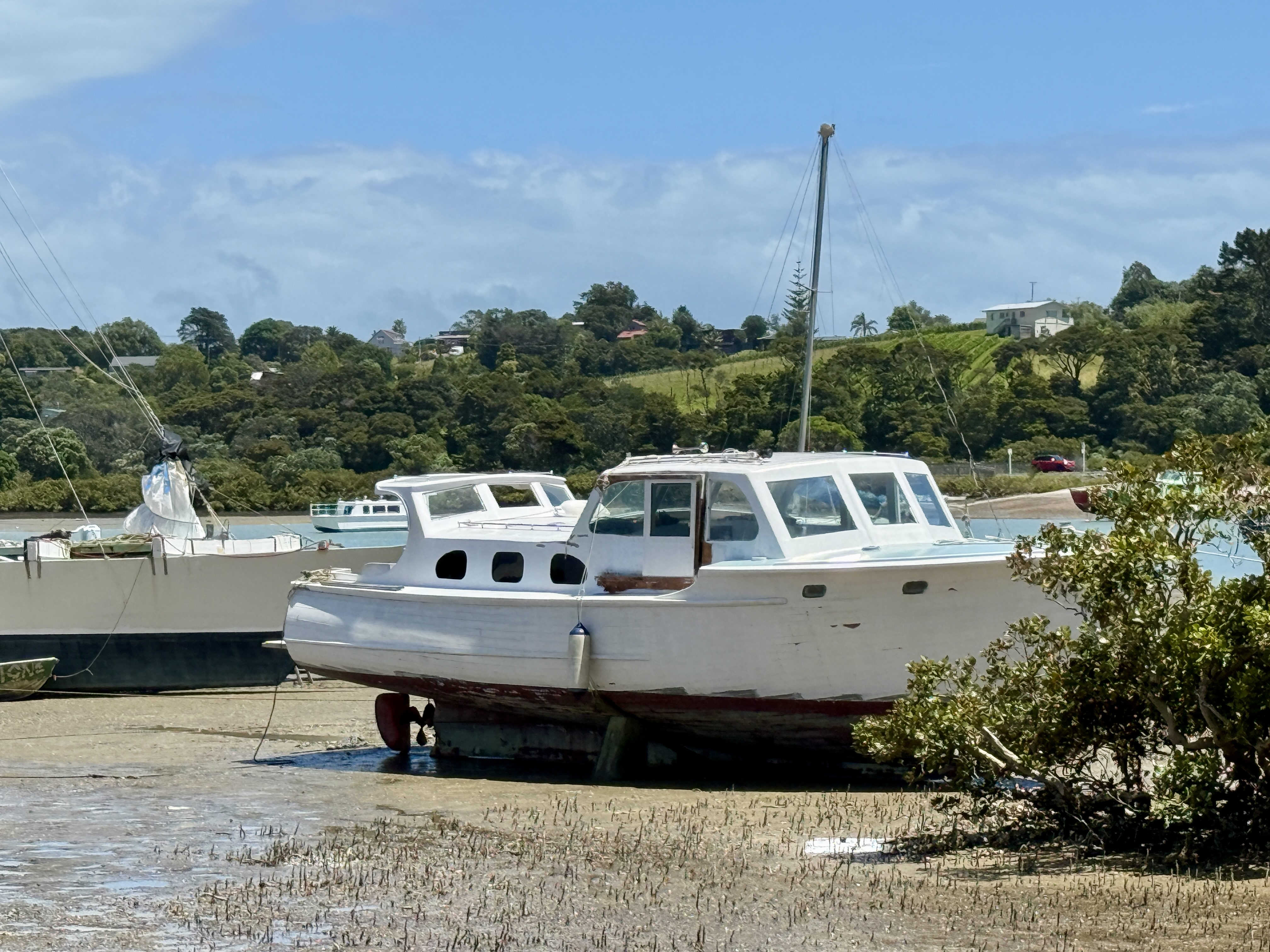
Recently Alistair Rowe sent in the two photos above of wooden vessels berthed at Westport marina.

Alistair described them as crusty old work boats, but I think he was being overly nice. If they were up any of the rivers, creeks in and around Auckland I think it would be a pretty safe bet that the Harbour Master would have removed them.

The boat in the top photo appears to have an oil/fuel boom around her, but the boom looks as old as the boat….

Forecast for the long Easter weekend is evil so leaving the marina will be a challenge – have already cancelled my mooring booking at Kawau Island.

You have to feel sorry for the Kawau Boating Club, seems of late every long weekend sees an unfavourable weather forecast . Fingers crossed things improve for the legendary ANZAC Day dawn service at KBC.

LOOKING FOR THE CLASSIC WOOLLACOTT YACHT – FAIRLIGHT

LOOKING FOR THE CLASSIC WOOLLACOTT YACHT – FAIRLIGHT

Late last year Chris Leech sent in a request re the Woollacott – Nada design yacht FAIRLIGHT. Sorry Chris this one fell between the deck cracks 🙂

At the time Chris supplied the above photo and commented that James Melling , son of Sam Melling who built the yacht at 37 Glen Road, Stanley Point, Devonport. Was looking for details on her where about.  James told Chris :-
My father was in the crew of the original ‘Nada’ when she was wrecked on the Cow, and is mentioned in the article*. Here is a much copied photo of Fairlight being towed (dragged) down to the Devonport Yacht Club from Stanley Bay for her initial launching. My father  by the truck with cigarette, John Woollacott on the left, and my uncle on right. No wheels, cradle dragged behind “Yorkies” truck. James also said that Sam came back from the war after being a POW in Germany for 4 years after being captured in Crete, and built Fairlight beside the house. Bert Wollacott was a bit of a mentor to him Sam’s mother, Val, said.

The *article mentioned above is on the yachtsman – Fred Norris and is from the book  ‘Devonport Yacht Club A Centennial History’ penned by Martin Foster. It is a great read so have included below – enjoy.

INPUT ex – IAN FRAME – Bruce Fallaver and i bought Fairlight in Wellington in 1980. We sailed regularly in RPNYC events and cruised extensively throughout the Marlborough Sounds and Tasman Bay. She always felt safe but never fast so we had our fair share of excitement slowly crossing Cook Strait. We had her cutter rigged with both staysil and yankee which worked well. The motor was a 10HP single cylinder Kubota diesel with a large flywheel and crank handle attached – very useful when the battery ran flat. Down wind we used a gennaker, before Team NZ discovered them in the 1990’s. We sold her in about 1986 to a guy from Christchurch and I last saw her moored at Redcliffs in the 1990’s. She was a great boat and much loved.

STELLA – CLASSIC WOODEN BOAT SOS

20+ years ago

STELLA – CLASSIC WOODEN BOAT SOS

Last week Andrew Motte-Harrison commented on one of the stories that he had a old kauri launch ’currently deteriorating behind his farm hay shed’.

Andrew believes she was originally named STELLA and alsp possibly named TOILER at another time. Possibly built c.1910>15 by Lane Bros in Christchurch (thats a new one, was there such a place?). Andrew described STELLA as a line fishing boat.

Andrew also commented that when they had her up at the Nelson Marina, talking to an elderly boat builder up there years ago, he passed on what he understood to be some of her history.  He thought she had been working out of Bluff, Hokitika and perhaps Oban in years past (back then)

As the photos show the boat is in need of some serious TLC, starting with a few hours with a water blaster- inside and out. And maybe a session with a tungsten tipped chainsaw and then a new cabin. Her hull deserves saving.

The last photo was taken  over 20 years ago, before being hauled out.

So southern woodys anyone looking for a project, STELLA is located 20 minutes south of Murchison, approx. 2 hours out of Nelson.

INPUT ex DICK HALL – Built by Ernie lane in Picton for the Boese family with a low cabin and rails instead of bulwarks. Later purchased by well known fishing identity Jimmy Aldridge and converted by Jack Morgan with new wheelhouse, bulwarks and new air-cooled Lister. Jim crayfished mostly outside Tory Channel. Next owner Alex McKenzie from Blenheim who re-named her Toiler but after a few years sold her for a bigger vessel. Fished out of Picton all her life before going to Nelson for pleasure conversion. Her original name was Elaine then Toiler. Never Stella while in Picton

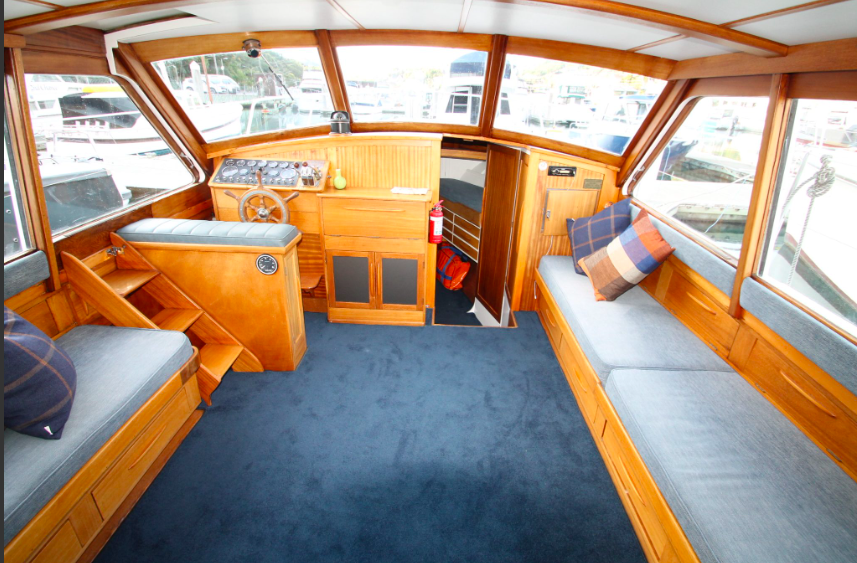
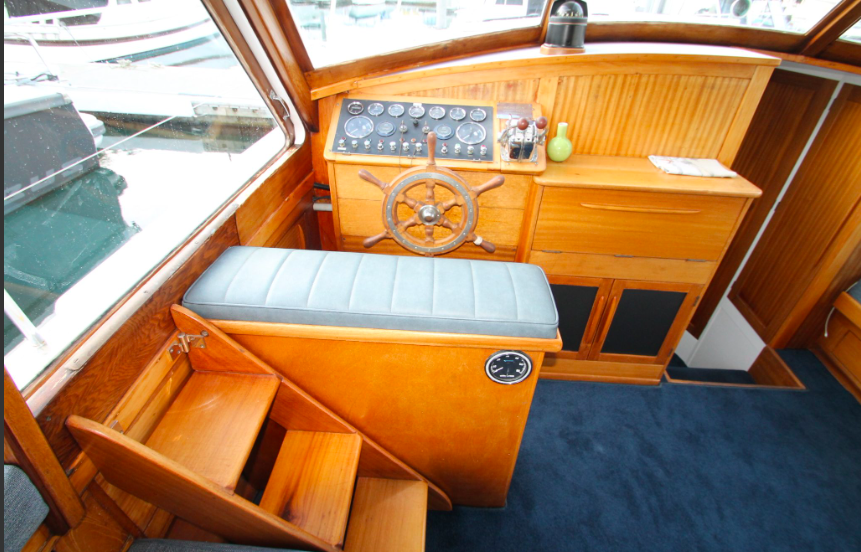
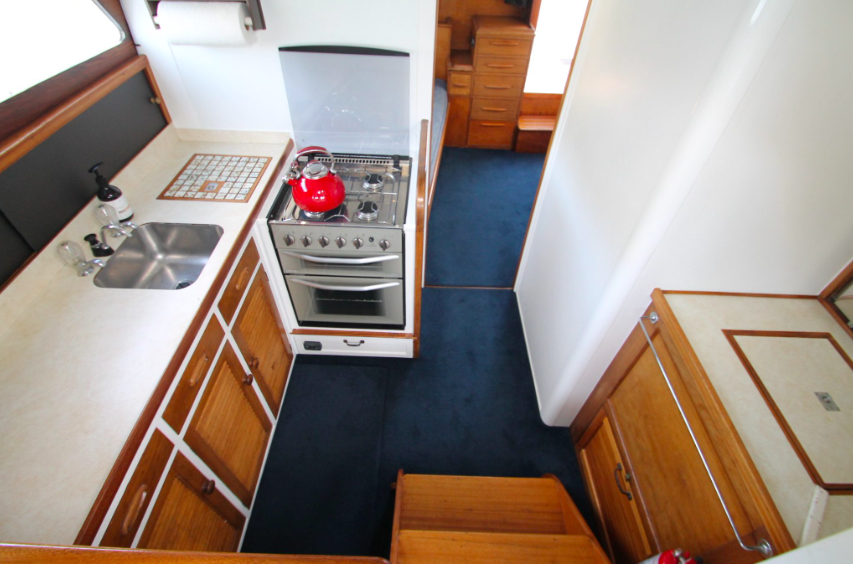
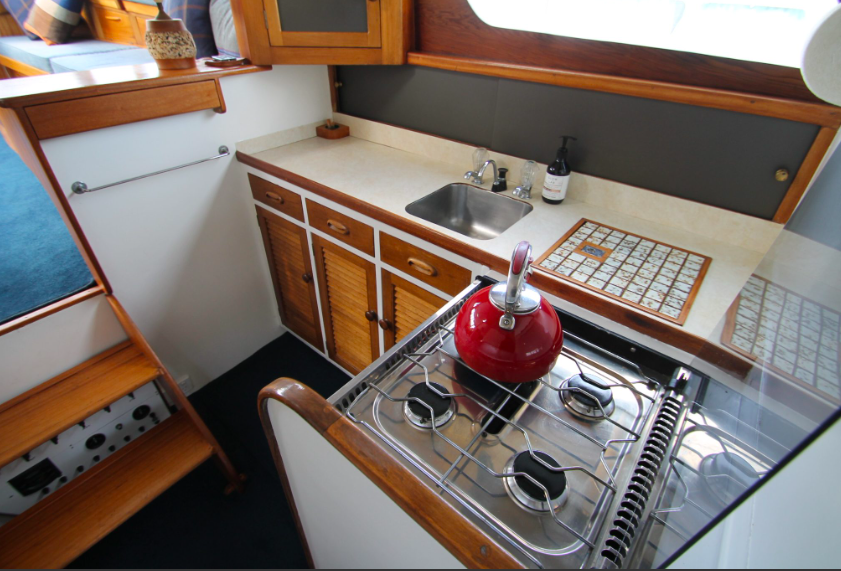
CLASSIC 52’ WOODEN LAUNCH – TRINIDAD – A Peek Down Below + A Call For Expressions Of Interest – SOLD

CLASSIC 52’ WOODEN LAUNCH – TRINIDAD – A Peek Down Below + A Call For Expressions Of Interest – SOLD

Regular WW readers will recall the owner of TRINIDAD, David Cooke, died in late 2024. David and Barbara were the custodians of this magnificent motor yacht  for over 25 years and the decision has been made to find the next custodian. 

There are only 5 classic craft in New Zealand that I would rate as A1 standard and TRINIDAD is pretty close to the top of the list. None of the other 4 are likely to come on the market in the foreseeable future – these craft only change hands in the 25>50 year time frame e.g once in a generation.

TRINIDAD has benefited from a succession of caring owners that have all maintained her in consistently exceptional condition.

The quality of materials, construction and craftsman ship is evident throughoutand attests to the fact that she has been well loved and cared for by her owners, past and present. Reflected by the fact that she always gathers admiring looks and comments when underway or at anchor.

She presents in suburb condition and retains her original aura, character and pedigree. At the same time careful integration of modern systems and technology ensures the very latest in comfort afloat.
TRINIDAD just ticks all the boxes: • 50’+ • Triple skin kauri planked • Built by John Salthouse, design influences from Colin Wild • Gardner engine • Off shore / NZ circumnavigation history • Fitted out for extended cruising • Diesel cabin heating  • Rigged for motor sailing

And the price – $400,000 – So woodys is a vessel like TRINIDAD on your bucket list – and if the answer is yes or even maybe – now is the time to act. If it’s not you, please forward todays story to friends and colleges that need TRINIDAD in their life.

Initial expressions of interest via email to garethcookenz@gmail.com

SOLD – sub $300k – The bargain of the last decade. New owner named Ian Walters. Anyone know his background ?

WHAT HAPPENED TO THE CLASSIC WOODEN YACHT – NAOMA

c.1961

WHAT HAPPENED TO THE CLASSIC WOODEN YACHT – NAOMA

As covered off in Fridays WW story, Mike Prigg is looking to learn what became of his father , John Prigg, old classic craft. John owned two woody’s in the 1960’s. We featured the launch – TINA MARIA on Friday and were successfully able to ID her as the launch – OCEAN QUEEN.

Today its the turn of his yacht named NAOMA, that was sold in about 1961. NAOMA was kept in Westhaven during John’s ownership.

The name NAOMA does not appear in WW search records, so both Mike and WW are keen to uncover more on her.

Link here to the Friday TINA MARIA > OCEAN QUEEN story 

15-04-2025 INPUT ex Jason Prew – Jason reports in that the above yacht is most likely under wraps at the Milford Boating Club yard – see below.

AN INSIGHT INTO NZ’S UNIQUE MARINE ENGINES – Part Two

AN INSIGHT INTO NZ’S UNIQUE MARINE ENGINES – Part Two

Todays WW story follows on from last weeks story – link below to Part One
Part Two is a little different in that while the story has been pulled together by Ken Ricketts, todays story has benefitted from a lot of editing and polishing from Patricia & Ken Ricketts daughter Corinne Pettersen. As always we have endeavoured to be as factual as possible but there will always by matters others will either know more about or be able to correct errors – so woodys do not hold back in commenting.

WILLYS JEEP WWII 4 CYL UNMARINISED FLATHEAD PETROL ENGINE

WILLYS JEEP 4 CYL PETROL ENGINE PREMARINISED

FAYE WITH HER MARINISED 4CYL WILLYS JEEP PETROL ENGINE c1951

It’s interesting to note how World War II surplus engines found new life in various applications beyond military use, particularly in an unknown number small craft and trailer craft in New Zealand. The experiences of individuals like Fred Steele and Des Donovan exemplify this trend, as they repurposed one of these engines to power their own launch – FAYE,, showcasing the innovative spirit of post-war boat builders. Their simultaneous construction highlights a fascinating moment in maritime history, where practicality and personalisation combined in the crafting of vessels that were shaped by both necessity and craftsmanship.

Fred S. successfully installed a Willys Jeep home-converted WWII 4-cylinder flathead engine, which provided reliable performance for several years before being replaced by a 6-cylinder diesel engine. This setup allowed her to achieve a cruising speed of approximately 7.5 knots, and during this time, my family enjoyed many weekend cruises with them, creating lasting memories on the water.

HERCULES DIESEL ENGINES  

HERCULES 6 CYL. DIESEL ENGINE TO BE HOME MARINISED, c100HP, SIMILAR TO THAT IN FAYE  

HERCULES UNMARINISED 275HP DIESEL ENGINE, SIMILAR TO THAT INSTALLED IN THE RAKANOA MARINISED, IN 1947-48.

FAYE WITH HER c100HP HERCULES 6 CYL HOME MARINISED DIESEL ENGINE

RAKANOA WITH HER 275HP HERCULES DIESEL IN NORTH HARBOUR PONUI ISLAND 1948.

Hercules was indeed a significant manufacturer of marine engines, supplying foundational engine units to various companies like Kermath, Chrysler, and others for customization to their specific requirements. While Hercules engines themselves were produced in smaller quantities and considered comparatively small-scale, the widespread use of their core engine designs across multiple brands highlighted the company’s crucial role in the marine engine industry during its era.

FAYE is an interesting vessel with its history of engine replacement, especially from a Willys Jeep petrol engine to a home-marinised C100P 6-cylinder Hercules diesel. This transition not only reflects an upgrade in power and efficiency but also shows the adaptability of boats to modern diesel technology. 

RAKANOA, a stunning 56-foot vessel built between 1946-7, originally featured a 165HP GM Detroit engine but was upgraded to a 250HP Hercules diesel after a year in the water, likely due to the engineering expertise of her first owner, Stan Parker & shortcomings he found with the GM Detroit engine. Despite the initial enhancements, there was a persistent starting issues with the Hercules, particularly when hot, leading son Ross to replace it with a Gardner 6L3 diesel in 1981, which remains with the boat to this day.

The decision to replace the original engine with a Hercules engine stemmed from the excessive noise produced by the Rootes blower and the GM Detroit engine, which was particularly problematic due to the loud high-pitched geartrain noise and the inherent loud exhaust of the 2-stroke GM engines, known for their sensitivity to exhaust back pressure unless equipped with specialized mufflers.

GLENIFFER PETROL & DIESEL MARINE ENGINES

GENIFFER 1940s 8 CYL. INLINE, MARINE DIESEL ENGINE IDENTICAL TO THOSE IN NGAROMA

GLENIFFER MARINE 6CYL 1920S 40BHP, (ABOUT 120HP) PETROL ENGINE, SIMILAR TO THAT IN THE LAUNCH – GLENIFFER

GLENIFFER THE LAUNCH, WITH HER GLENIFFER ENGINE, TAKEN WHEN SHE WAS ALMOST NEW, IN 1932

NGAROMA WITH HER 2 X 8 CYL IN LINE GLENIFFER DIESELS, TAKEN, ACTING AS MOTHER SHIP, IN A FIJI YACHT RACE IN THE 1950s

There is a rare type of engine that has a limited presence in New Zealand, with only a known petrol and diesel example known to me.. The mention of potentially more examples from the 1920s and 1930s suggests these engines might have been utilized in vintage boats that are either no longer in operation or have been lost to time. Such rarity adds to their historical significance and appeal among collectors and enthusiasts.

The GLENIFFER, a 40 ft bridge decker constructed by Bailey in 1929, has most recently served as a liveaboard in New Zealand’s South Island, showcasing its enduring appeal and adaptability over the decades.

 In the early to mid-1930s Ralph Ricketts was tasked with maintaining a boat for Trevor Davis. The boat had a critical issue where the sea water intake could airlock in rough seas, necessitating someone to lie on the floor under the bridge deck to turn a grease cup on the water pump to resume water flow, a challenging job made more difficult by poor conditions.

The ex-WWII Fairmile boat NGAROMA, formerly owned by Jim Lawler, underwent significant modifications after he acquired her from the Navy. Initially equipped with two Hall Scott Defender 630hp petrol engines, Lawler immediately replaced one with a Gleniffer 160hp diesel engine and later replaced the remaining Hall Scott engine with another Gleniffer diesel engine, both designed to be a matched pair with opposite hand configurations for optimal performance.

 BUICK 8 CYLINDER INLINE PETROL ENGINES

AOMA WITH HER HOME MARINISED BUICK 8 CYL. INLINE PETROL ENGINE AS ORIGINAL WHEN BUILT BY ALAN WILLIAMS

AOMA ON HER MOORINGS AT GT BARRIER ISLAND RECENTLY

AOMA, a 36-foot vessel built by Alan Williams around 1950 in Milford Creek, Auckland, was either commissioned by or later acquired by Len Pepper, a prominent builder from Takapuna. Initially equipped with a home-marinised 8-cylinder in line Buick petrol engine, AOMA reflects the craftsmanship and maritime heritage of its time, showcasing the evolution of boatbuilding in New Zealand.

Observations about the engine’s appearance and the “Buick Detroit Marine” label suggest it could indeed be a locally modified version rather than an official marine model from General Motors. The lack of verifiable references to a marine variant strengthens your hypothesis about it being a custom marinization. Such practices were not uncommon, especially in regions where specific adaptations for marine use were necessary, and the label may have been a marketing choice to lend credibility or appeal to customers.

AOMA’s design is a classic example of form versus function, where the elegant lines that defined her aesthetic have been altered for improved practicality. While enhancing the headroom may provide comfort for passengers, the modification to her coamings appears to have detracted from her original beauty. Such changes often spark debate among enthusiasts and owners about the balance between maintaining a vessel’s traditional design and adapting it for modern usability.

MASON MARINE 42 FOOT MASON CLIPPERS & CHRYSLER V8 MARINE DIESEL ENGINES WITH STERN DRIVES.

Tony Mason crafted a series of impressive boats like the ALIBI, characterised by their striking design and powerful performance, especially with the dual 6-cylinder diesel engines that presumably enhance their speed and efficiency on the water. These boats show cased both his craftsmanship and a commitment to quality, making them stand out in any marine setting. I am trying to find another of these boats, that one day was tied up to Mansion House Bay Wharf, in the early 1970s, when the boat was almost new.   She was amazing as ALIBI still is today, but the thing that intrigued me most was her 2 Chrysler V8 diesels, painted red, as with Iveco or Redwing, with her stern drives painted cream. The engines looked the same as Chrysler V8 petrol engines, except they had injectors not spark plugs, they were the only two of these engines I have ever seen.

LINK BELOW TO PART ONE OF THIS SERIES https://waitematawoodys.com/2025/04/04/an-insight-into-nzs-unique-marine-engines-part-one/

HELP NEEDED TRACKING DOWN THE WOODEN LAUNCH – TINA MARIA

TINA MARIA – c.1965

HELP NEEDED TRACKING DOWN THE WOODEN LAUNCH – TINA MARIA

WW has been contacted by Rob Staub (MV SURPRISE) on behalf of his friend, Mike Prigg who is hoping to learn what became of his father , John Prigg, old classic craft. Mike and Rob attended the Australian Wooden Boat Festival in Hobart in February and the festival triggered memories for Mike of the two woody’s his father owned in the 1960’s. And of course Mike’s eager to hear if they are still afloat today.

The launch is named TINA MARIA and was sold in about 1965. There is also a yacht but we will cover her off in WW’s Sunday story

TINA MARIA was kept in Westhaven during John’s ownership. And Mike understands she was originally kept in the Te Atatu River.

WW along with Mike are keen to uncover more on TINA MARIA.

UPDATE ex Nathan Herbert – well that was quick – Nathan has already ID’ed TINA MARIA as the launch OCEAN QUEEN that has made numerous appearances on WW and these days resides on Lake Taupo. Photos below ex Paul Stewart, and link to one of her WW stories. Keen to learn when the name change occurred. We learnt in the WW story that she was probably built by Joe Slattery in 1920 and was named OCEAN QUEEN when launched, so at some stage she has had a name change to TINA MARIA and reverted back. https://waitematawoodys.com/2019/08/05/ocean-queen-a-peek-down-below/

2019
2014

MYSTERY DOUBLE ENDER WOODEN LAUNCH – PATINA

MYSTERY DOUBLE ENDER WOODEN LAUNCH – PATINA

Todays photo was sent in by Heather Espin and comes to us ex a photo album from Bryan Walden. Walden was one of the first boat brokers in Auckland and he categorised the boats he sold. 

The location to me appears to be Wellington and the boat has a the distinct look (double-ender) of a vessel that would have crossed Cook Straight with ease.

Can anyone confirm the location and put a name to the launch.

The boats PATINA, built in 1913 by Ernie Lane in Picton – more here https://waitematawoodys.com/2024/10/17/classic-wooden-boat-patina-le-reina-a-peek-down-below/

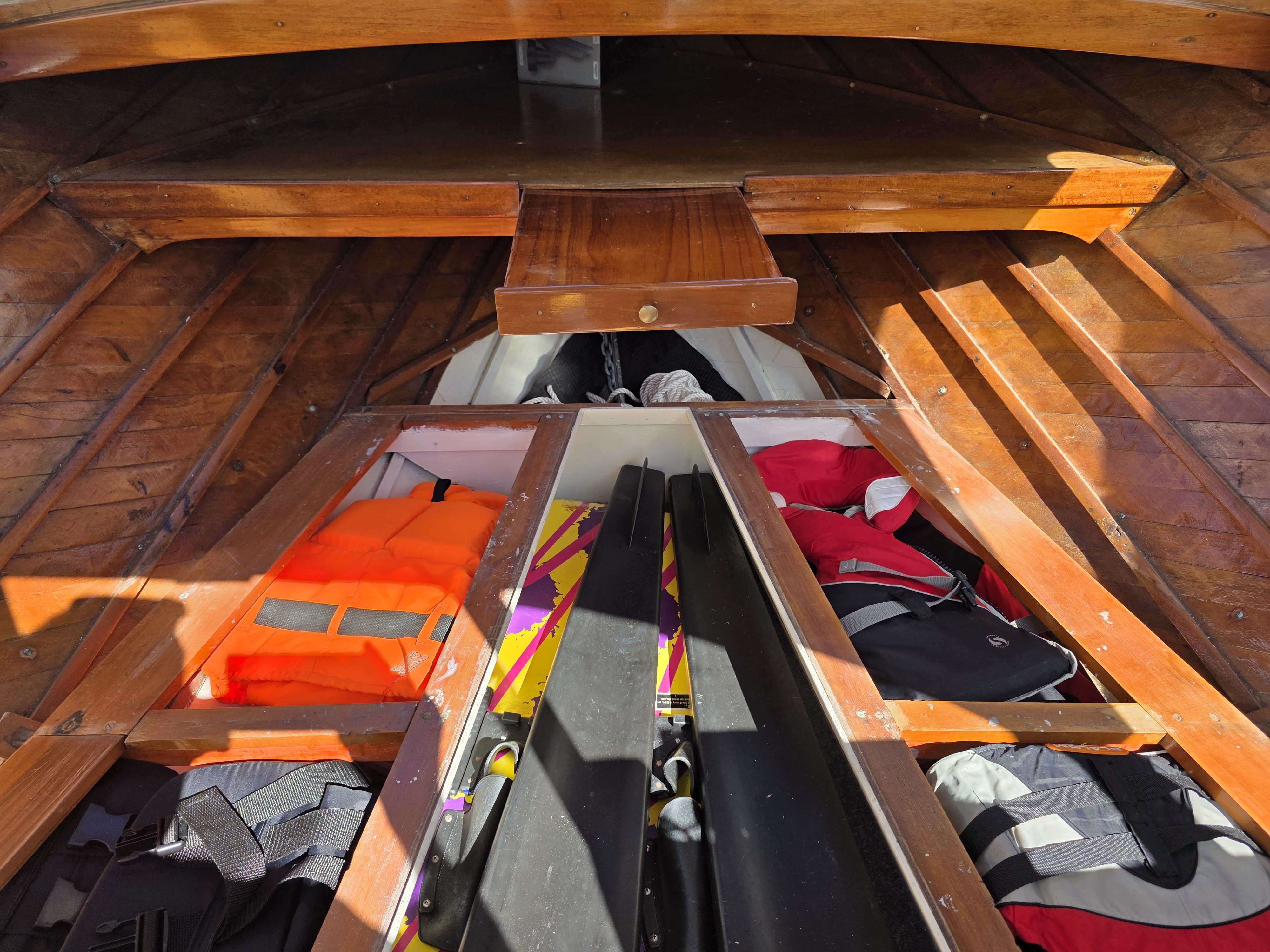
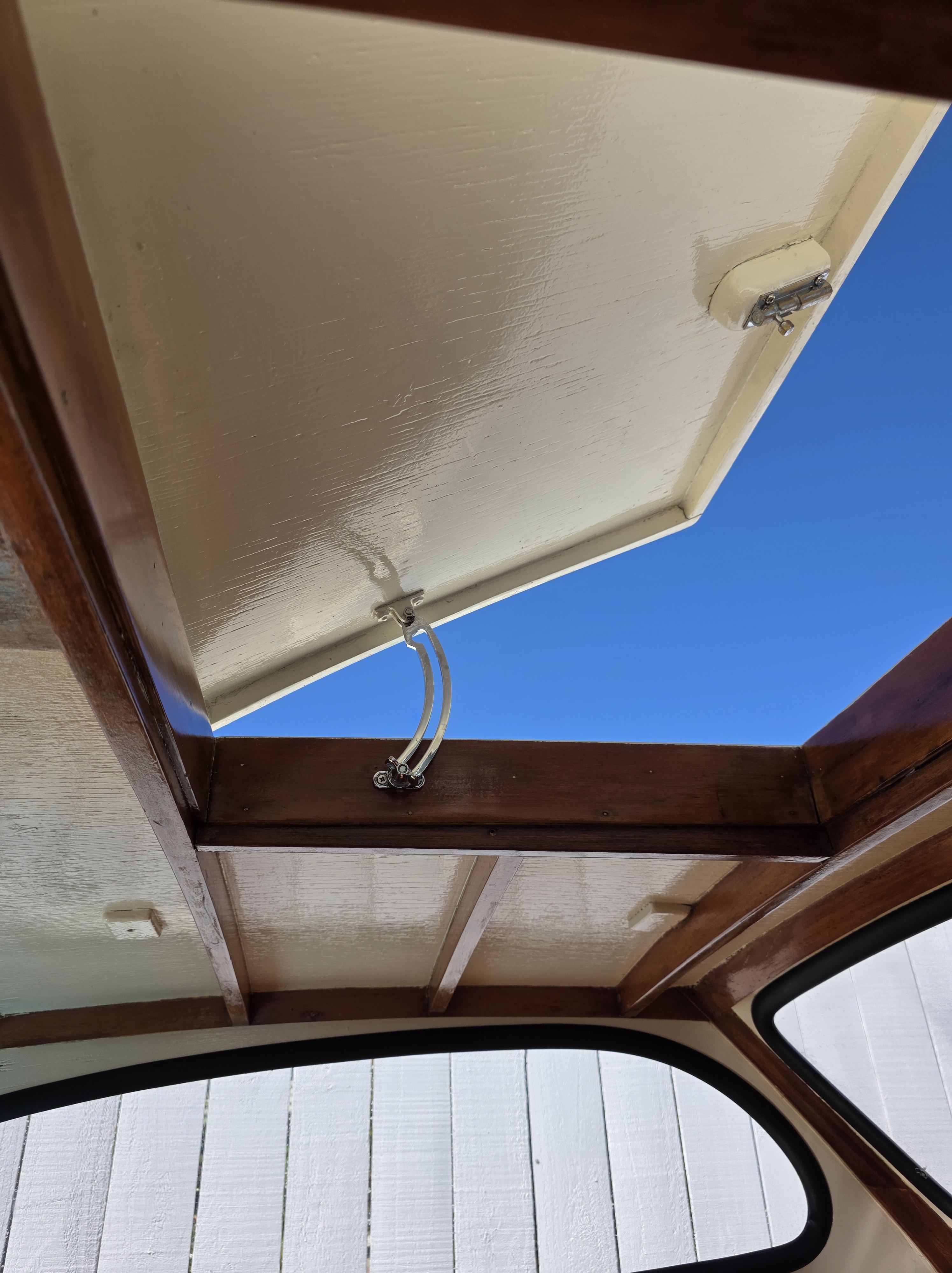
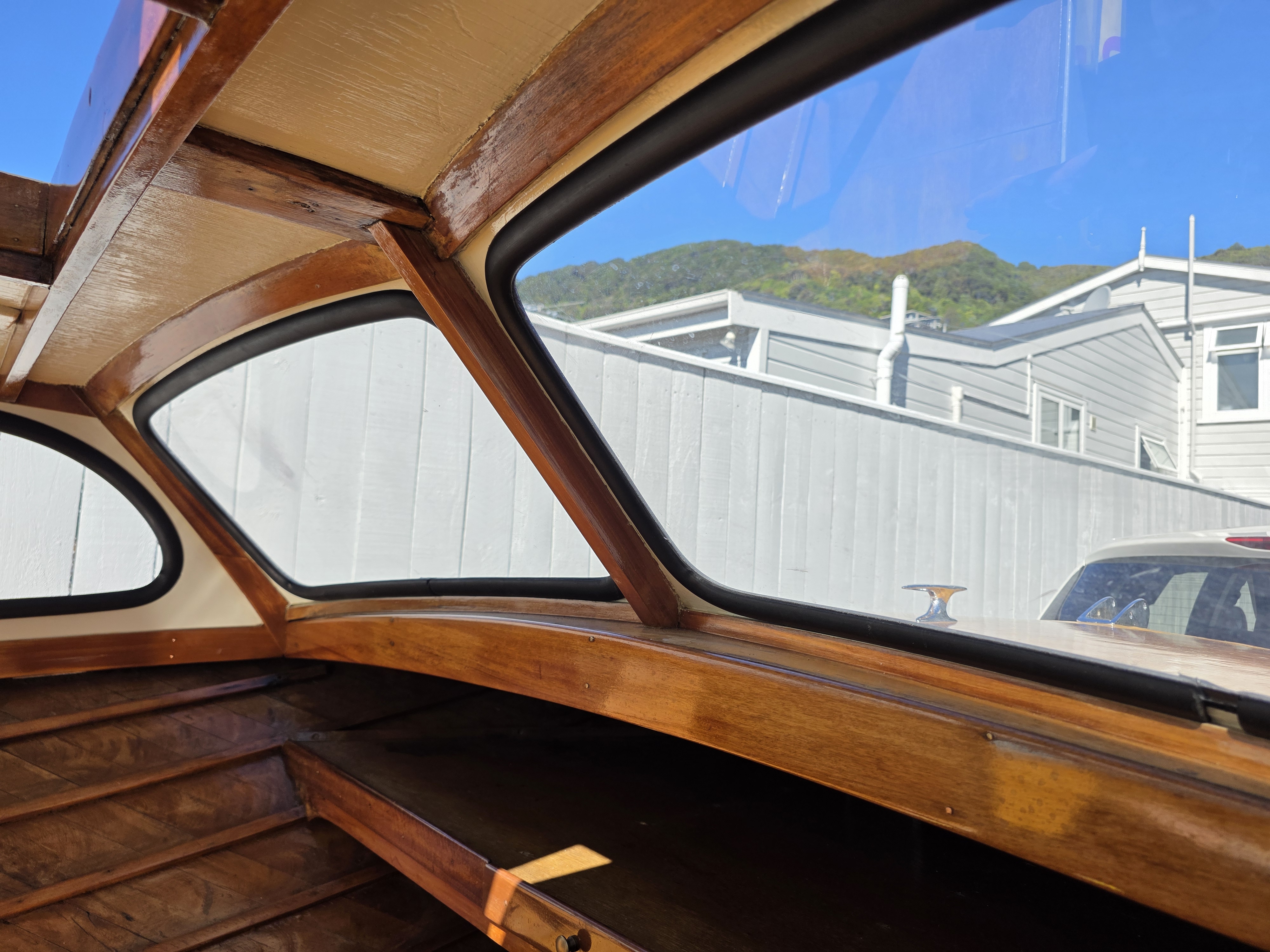
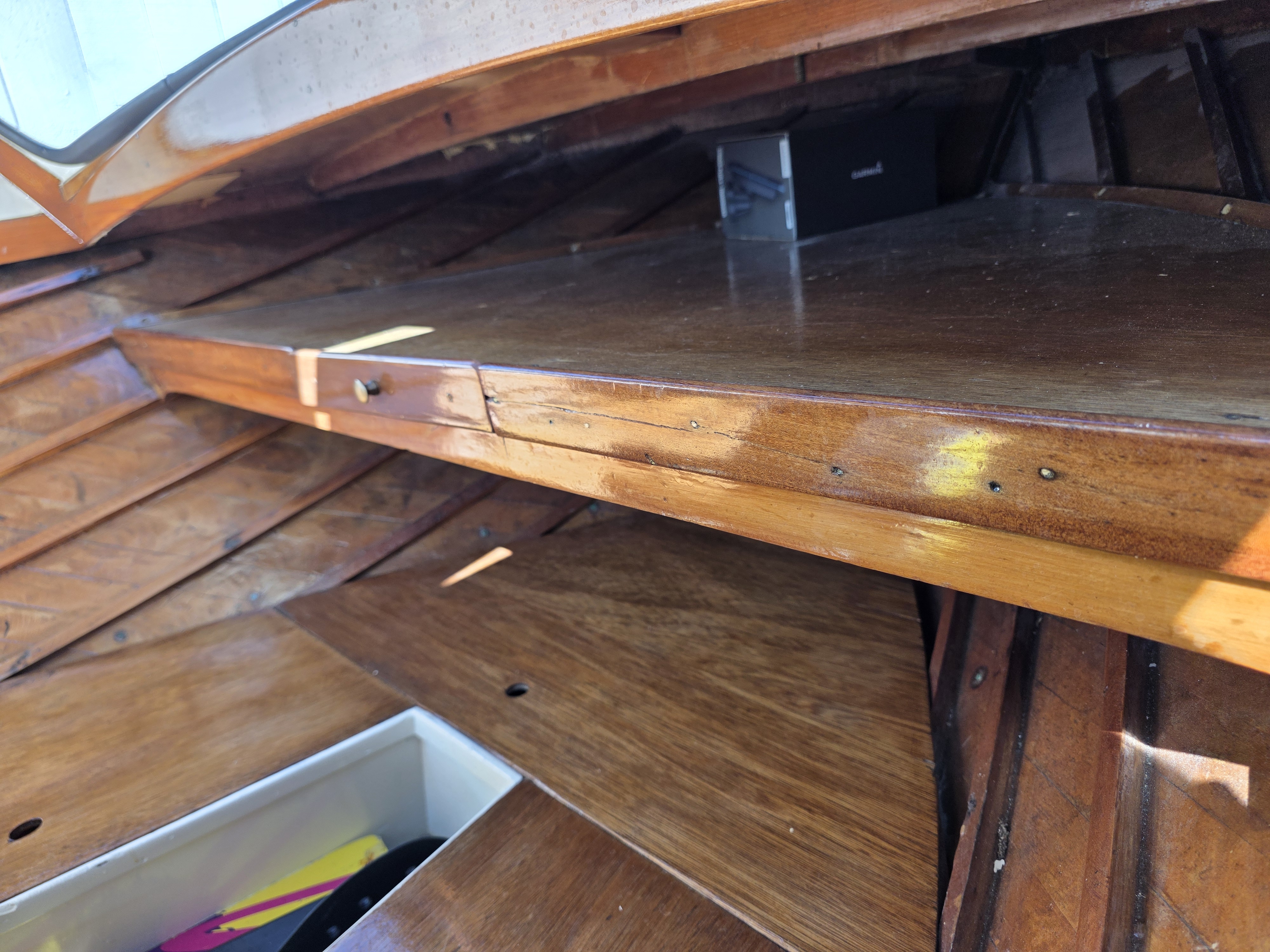
CLASSIC WOODEN LAUNCH – SEAFARER – A Peek Down Below + 4sale – SOLD

CLASSIC WOODEN LAUNCH – SEAFARER – A Peek Down Below + 4sale SOLD

Todays woody is very familiar to me having hauled out alongside her at Devonport Yacht Club on several occasions. Several times I contemplated asking to be not postponed alongside her – why? Well her owner is one of those people that can do just about anything on a boat and to a standard thats 10/10. I would be embarrassed with my efforts but her owner was very generous with his advice. 

Seafarer is for sale on tme and at $25k, is a bargain, if I was in the market I’d buy it without a survey, she’s that good.

Some background – SEAFARER has impeccable genes – was designed by John Brook and built by Walter Deeming of Deeming Bros. boat builders in Opua, Northland, using local kauri for its carvel construction. 27’6” in length she was launched as a motor sailor in 1963. Her owner has had her since 2012 and over the next several winters major restoration and overhaul was undertaken. This included the stripping of all internal and external paintwork and re-caulking the hull where needed. She was completely rewired with 2 new AGM house batteries and a new start battery. A new Beta 43 engine, new shaft, thrust bearing and prop were installed. A new toilet, holding tank and small refrigeration unit were put in.

SEAFARER has been used every summer to cruise the Hauraki Gulf and been on the hard every winter for ongoing projects to be undertaken.

If you’re in the market for smaller classic wooden launch- act quick, she will be gone very quickly. SOLD – IN A RECORD TIME- BUT I EXPECTED THAT ✔️