Magic

Screen Shot 2018-12-02 at 8.32.56 PM

Screen Shot 2018-12-02 at 8.30.49 PM

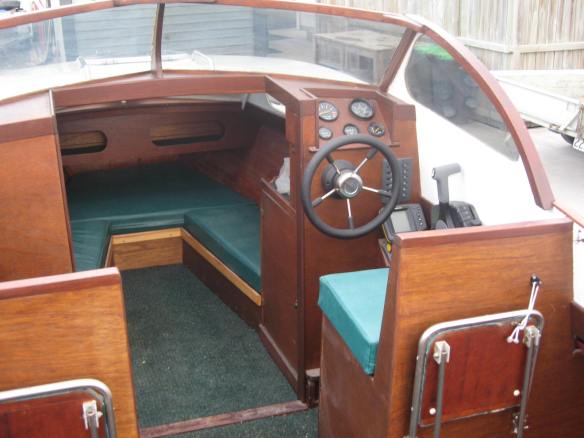
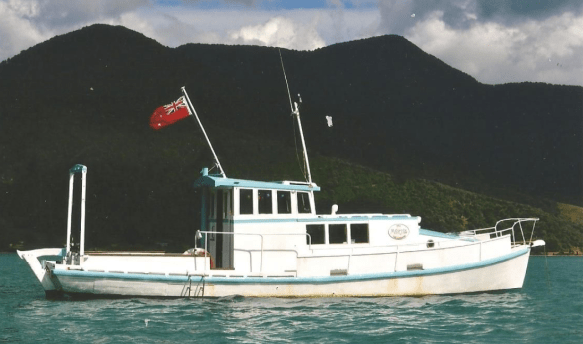
MAGIC

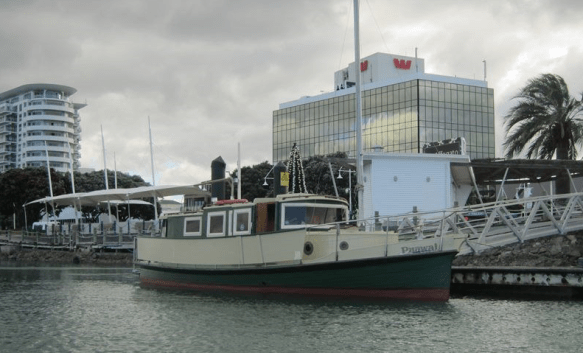
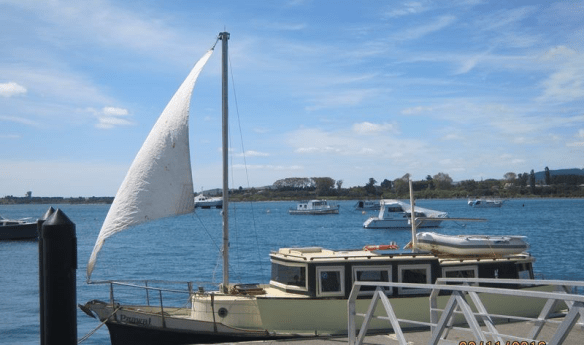
Magic is a rare boat in NZ coming from the Havorsen stable in Australia, these craft have a big cult following in Australia & normally sport a lot of varnish.
Just how & when Magic made the trip to NZ I don’t know. What I do know is that she was built in 1976, is 43’in length & powered by a single 120hp Ford diesel (her original). This set up sees her burning just 8 -9 litres an hour at a cruise speed of 7-8 knots.
She is well set up for extended cruising & currently listed on trademe (but sold subject to survey) for $129k ono, in my eyes not a bad price for a lot of boat. A serious sessions with a sander & a tin of varnish & she would be a very smart spirit of tradition classic launch. Current home port is Whitianga.
Read / view the story of the Havorsen boating building empire here

Ondine

Ondine 004

Ondine 011

ONDINE
 
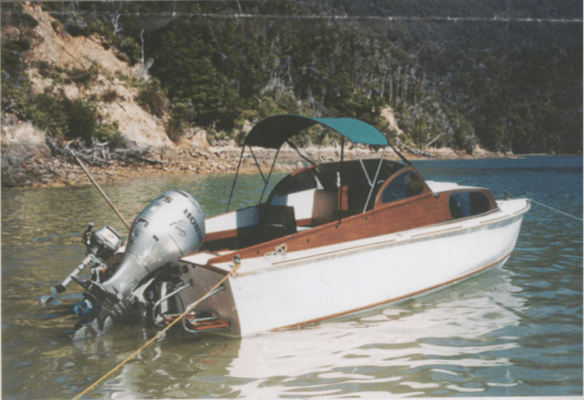
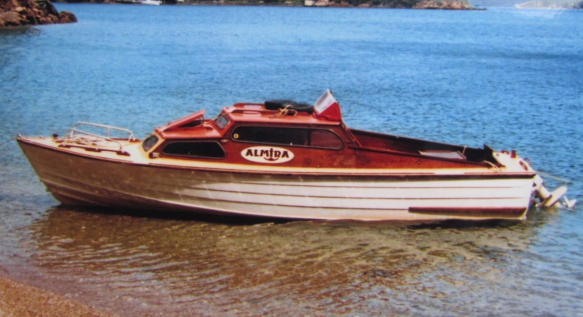
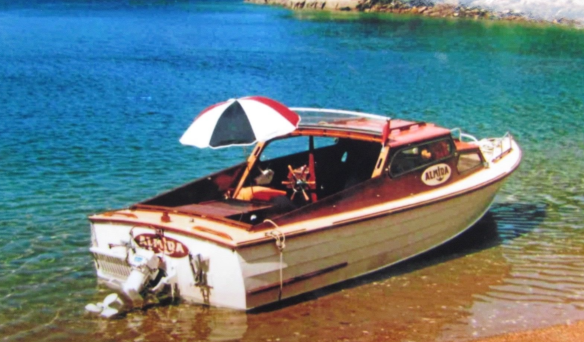
Thursdays story on Almda (Almida?) prompted Alastair Scott to send in details on another Jack Cropp woody. Alastair’s family owned Ondine for 57 years until he sold her to a new home in Wellington in 2017. The gallery of photos below the many propulsion configurations Ondine went thru. The photos also to me demonstrate how varnish can ‘lift’ a boat to another level of WoW factor 🙂 
I’ll let Alastair tell the family story:
 
“Jack built Ondine for my father – Laurie Scott  – in 1959. The construction consisted on long lengths of 1.1/2” cedar strips that were shaped over an internal frame that was removed when the hull was complete . These cedar strip incorporated a bevel and these were glued and nailed together with copper nails every 4”. This  method of construction produced some lovely lines along with the tumblehome shape at the transom. 
 
Whilst Ondine was used extensively in Akaroa harbour and the Marlborough Sounds over holiday periods, she has had an assortment of power units over the years.  Initially it was a pair of 30HP Evinrudes, then a pair of 35HP Gale outboards, then a Volvo 120HP inboard/outboard unit and lastly a single Honda 75 HP outboard. The Volvo was the most successful but we lost a lot of internal space thus the appeal of the outboards. Ondine was a very safe boat and one that would plane easily. My father always reckoned she was at her best when one of the kids sat on the edge of the bow at speed. Probably not a good H & S example in today’s PC world.”
Screen Shot 2018-12-01 at 4.22.03 AM
Screen Shot 2018-12-01 at 4.22.23 AM
Screen Shot 2018-12-01 at 4.22.34 AM

Myrtle

Screen Shot 2018-11-30 at 4.25.52 AM

MYRTLE 
Myrtle (White Heather) was launched in 1914 as a fishing trawler. Her original engine was a 10hp ‘Oil Motor’ so her main power was via a ketch rig.
In the late 1960’s she was re-powered with a freshwater cooled Fordson D92 , her ketch rig was discarded at this time.
Her trademe listing (thanks Ian McDonald) states she is approx. 46’ in length & designed/built? by Miller. Over the years a larger wheelhouse & saloon have been added.
Myrtle’s 65hp engine sees her cruising at 5.8knots.
Given her age, there must a lot of history around Myrtle – can anyone enlighten us more on her past?
Harold Kidd Input – MYRTLE appears to have been built as WHITE HEATHER in October/November 1913. She was 39ft loa, 9ft beam, 10hp engine. That’s 10 rated hp not 10 bhp so it was her main propulsion.She was for sale in Port Chalmers in April 1914. As for builder, the choice is between Knewstubb Bros, William MacDougall, Miller & Tunnage or Miller Bros. From then on there are so many MYRTLES and WHITE HEATHERS that it’s hard to pick her out.

ALMIRA – A Classic Jack Cropp Designed Motor Launch 

Screen Shot 2018-11-27 at 7.55.19 am

Screen Shot 2018-11-27 at 7.53.00 am

ALMIRA – A Classic Jack Cropp Designed Motor Launch 

The 20’ motor boat, Almira was built in McCormicks Bay Christchurch in 1965 with African Meranti marine laminated ply riveted & glued clinker plank. 
For sale on trademe, she is in totally original condition, with according to her listing, absolutely no rot. 
Powered by a Palmer & Doak marinised 1500cc Ford GT engine rated at 78 BHP driving through a stern drive. 

Included is a folder with a log from day one plus a letter from Jack Cropp about its construction etc. he comments on the fact that the engine has plenty of power to get on the plane. 
Jack was an Olympic yachtsman and won a gold medal at the 1956 games in Melbourne and well known for building quality well designed wooden boats. 
The boat is light and easy to tow, has been in dry storage all its life. Currently residing near Ashburton, Canterbury, South Island.

Sorry about the standard of some of the photos.

CYA PATIO BAY WEEKEND CANCELLED – SEE BELOW.

I have to question deciding to cancel an event, based on a weather forecast, in Auckland, 4 days before the event…………….. 😦

Screen Shot 2018-11-29 at 8.37.41 AM

Puawai – Needs A New Owner

Screen Shot 2018-11-24 at 3.00.39 PM

Screen Shot 2018-11-24 at 3.01.52 PM

Screen Shot 2018-11-24 at 3.01.15 PM

PUAWAI – Needs A New Owner
 
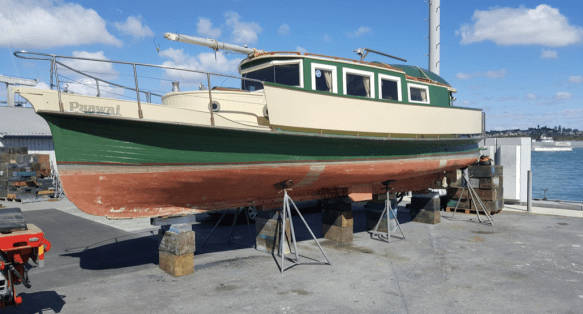
I was contacted by Warwick Marshall the owner of the kauri (double diagonal) planked launch Puawai who is wanting to sell her, Warwick’s circumstances have changed & he is planning on re-locating out of Auckland so ownership of a classic woody is not not part of the future.
I’m told he is open to offers around $10,000, she needs some work, but don’t they all. To me seems reasonably price & could be a very cheap live-aboard. On this front, she has stabilising pods so can dry out between tides without toppling. 
 
Puawai was built c.1908 & is a 33’ Forrester design – if you click the WW link below you can see & read more on her past life.
Warwick is leaving town soon & doesn’t want to leave her un-loved on a mooring, so woodys, anyone interested in her?
 
The boat has been out of water and on the hardstand in Bay 24 at Half Moon Bay marina. Check with owner first (021 876 167) before checking her out, as she may be back in the water.
While out owner has removed the fuel tanks as she had the diesel bug when he bought her. Tanks cleaned, fuel lines replaced and new glass bowl filter installed. Installed new reduction starter motor.  

Water tank removed and leak repaired. Bilges and hull under and behind tanks cleaned and painted.

Steering linkage cleaned, derusted and rust converter applied. Seized bolts replaced. Components checked for strength. 
 
Reconditioned engine (BMC Commodore 60HP) replaced by previous owner in November 2016. Unfortunately mechanic who did installation deceased so no history.
Boat repainted in November 2016 and antifouled January 2017. Boat builder examined the hull while it was being antifouled and declared hull sound. 


Naiad & Nifity – Woodys From Across The Ditch

20181119_171001

Naiad & Nifity – Woodys From Across The Ditch

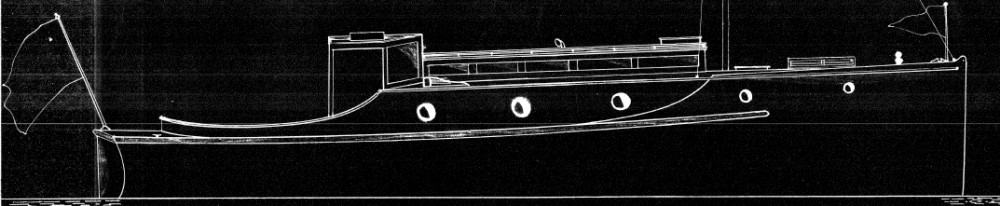
On recent work travels Adrian Pawson came across the very salty wee ship Naiad. Adrian was able to uncover that she is currently being restored by Pete Messenger  in a shed at Woolwich Dock in Sydney. She was apparently built locally in approximately 1949 by W.L Holmes at the McMahons Point boatyard in Sydney. She is planked in Oregon timber with a spotted gum keel. LOA is 28ft.

Recently she was sold in derelict condition as part of a deceased estate. Her new owner has commissioned a full refit including splining and sheathing in glass fibre. She currently has no engine.
The timing of the email from Adrian was a little scary as I had just received an email from Australian woody, Andrew Christie, who owns the stunning launch Folly III that recent appeared on WW via a youtube video. Andrew sent me details on the 21’ ex woodys work boat – Nifity, she was built in 1962 by Norman Wright & Sons. 
Andrew commented that Nifity was an ex ‘line boat’. Line boats had the job of collecting the ‘lines’ from incoming ships & bringing the lines ashore, at the same time as the bigger tugs were manoeuvring the ship. 
Check Nifity out on the video below.
UPDATE ON WAITEMATAWOODY T-SHIRT ORDERS – RESPONSE HAS BEEN HUGE, SO HUGE I WILL BE CLOSING THE ORDER BOOK EARLY – LAST DAY WAS NOV 30TH BUT I HAVE AMENDED THAT TO TUESDAY 27TH. IF YOU ARE THINKING ABOUT ORDERING, DO IT NOW. DETAILS HERE 
WW T's - Sky Blue:Denim

Awarua – Gets  A Make Over

AWARUA PAINT JOB 024

nov 2018 022

AWARUA PAINT JOB 052

AWARUA PAINT JOB 073 (640x640)

AWARUA PAINT JOB 078

AWARUA PAINT JOB 079

Awarua – Gets  A Make Over

Last year we featured the 1947, 36’ Roy Lidgard launch Awarua twice on WW, with photos of her afloat & even a ‘peek down below’(WW links below)

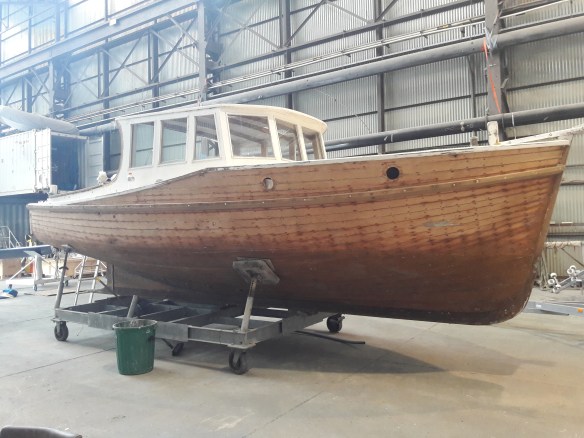
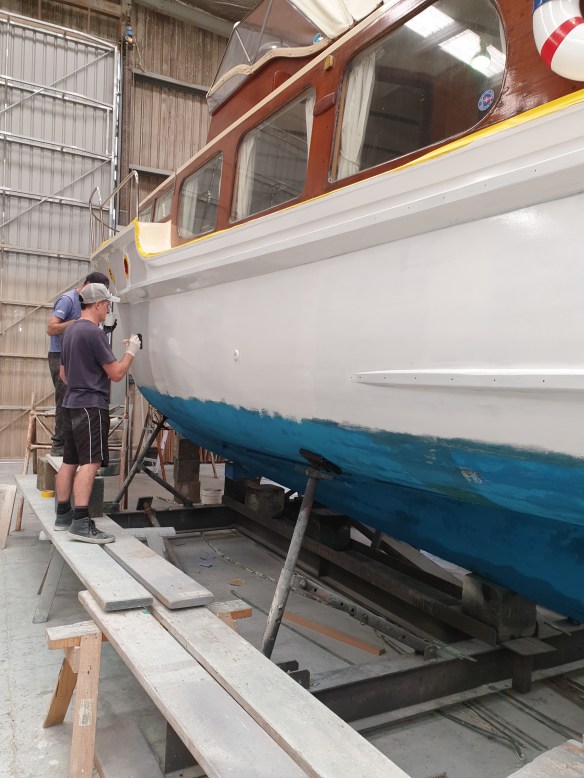
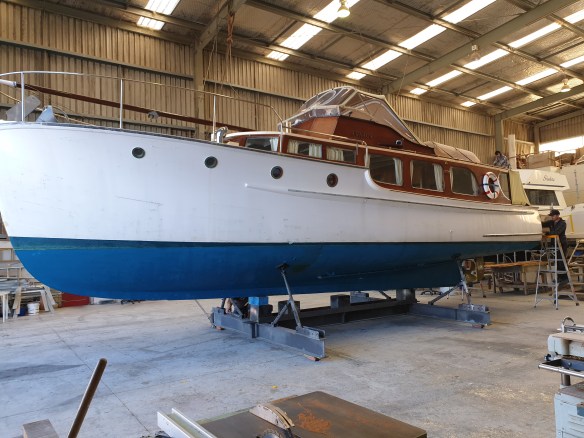
In recent chats with owner Ross Mason, he mentioned that he had hauled out at Pine Harbour & put her in the Harkins Boat Builders shed, where Jared Kirby & team were painting her topsides. A Altex alkyd 7 coat (roller & brush) system was used that consisted of –   x2 coats primer, x3 undercoats & x2 gloss coats. Prior to this the hull was sanded back to bare wood in places.

You will see in the above photos that her kauri hull was in excellent condition, a great testament to the kauri timber used & the skills of her original builders. Ross understands that the kauri used originated from the Naval Dockyards.

I’m (as is Ross) very impressed with the end results, she was always a very smart ship, now she is up there with the finest in our woody fleet. Well done to everyone involved & Ross for the biting the bullet & commissioning the work.

Awarua – A Peek Down Below

Awarua

Launch day video ex Ross , via Ken Ricketts

No Varnish Today :-)

20181120_201632

No Varnish Today 🙂

I received an email from Jake Bradshaw yesterday, Jake is from Southland, for the non Kiwi woodys that’s the bottom of the South Island. Jake was asking if any WW followers may know the  hull design of the woody runabout above that he has just acquired. The boat is 12’ & appears to have a marinised Vauxhall motor, from what Jake can work out.
And when a woody dies – the photo below is where we hope we will end up – looks like boating heaven.
Boat Heaven

Mariki

Screen Shot 2018-11-17 at 6.25.23 AM

Screen Shot 2018-11-17 at 6.25.33 AM

MARIKI
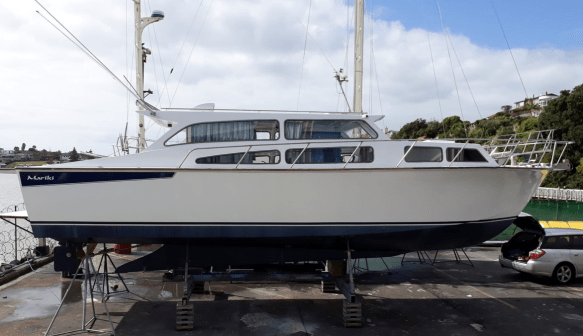
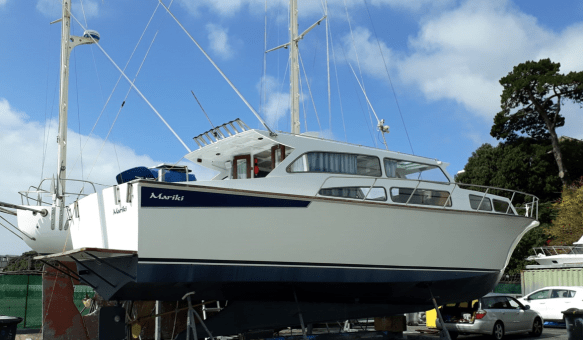
Now it’s not often that I will do a story on a 1975 boat & even rarer when its built from ply & glassed over BUT Mariki just jumped out at me from her trademe listing. Her owner deserves a big tick in terms of how to ‘finish’ a vessel. The combination of colours, wood trim etc make Mariki look like she is moving even when sitting in a cradle.
Mariki is a 36’ Pelin Empress, & powered by a 1965, 80hp, Ford D series engine. While I’m sure she would lift her skirt & dance with a bigger donk, with a cruising speed of 10 knots she only sips 1 > 1.25 gallons per hour, combine that with fuel tank/s capacity of 160g, you can go a long way between top ups.
If the cabin looks a tad bear – the squabs are away being re-upholstered.
A lovely boat – perfect for a woody looking for a low (ish) maintenance classic (can’t believe I used the word).

What Does Electrochemical Deterioration In a Wooden Boat Look Like

20181103_142047
What Does Electrochemical Deterioration In a Wooden Boat Look Like
 
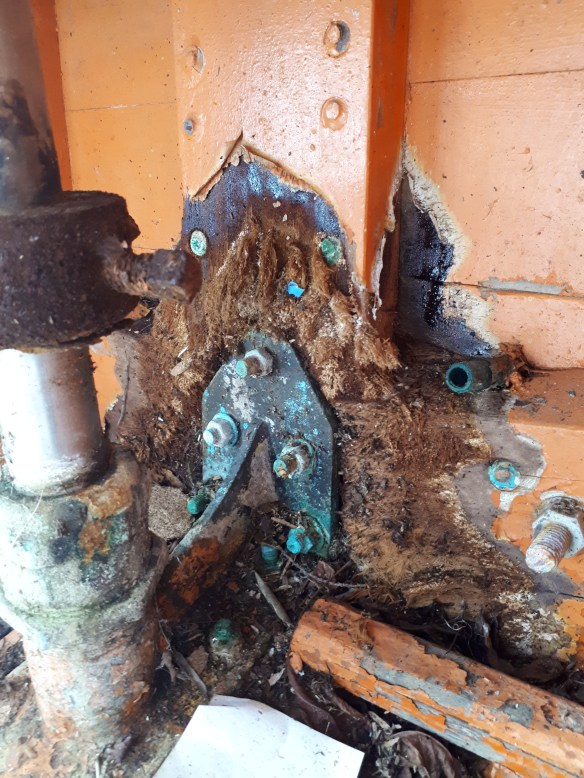
Todays story is in two parts – firstly the photos above were sent in by a concerned woody that viewed this boat, with purchase in mind. I share to highlight what electrochemical deterioration in a wooden boat looks like. This decay is the result of ignorance.  The builders of this launch would have used the best kauri and proper Aluminium bronze for the stern gear. Marine bronze does not require an anode but you can see where one has been mounted (rusty mounting) You can see the copper strap used to connect all the metals to the anode. A perfect example of what you should not do on a wooden boat. After about two years you will see discolouration of the wood around the so called protected metal , in ten years the wood will be soft and in twenty years uneconomical to repair. So woodys – read below an abridged version of Chris’s WW article. I do encourage you to take the time to review the long version as it appears on WW – link below    https://waitematawoodys.com/2016/04/28/electro-chemical-damage-in-wooden-boats/
 
 
Firstly I should point out that Chris repeatedly points out he is not a consultant and does not have a degree in chemistry. But his views are the result almost 60 years of working in boatyards. 
 
“If you connect a positive and negative metal in any electrolyte (sea water)  you will make a battery and create an anode and a cathode. The positive anode gives off Oxygen and Chlorine gas. The negative (protected) metal is the Cathode and this gives off Hydrogen gas.  That is why battery compartments have to be ventilated. Back to the Cathode. In sea water the Hydrogen from the protected Cathode mixes with the salt water and the by product is Sodium Hydroxide or Caustic Soda. Caustic Soda is used as paint remover and to pulp wood in the paper industry. Want that on your boat?
While a lot of boats may have no bonding, they do have anodes on the shaft. The shaft is in affect the bonding wire between the (+) Anode and (via the white metal bearing) the (-)bronze stuffing gland.  Zinc is at the bottom of the galvanic scale and bronze and copper could not be more dissimilar.  So there is your battery, the salt water is the electrolyte.
The Sodium Hydroxide is washed off the outside of the hull so you don’t see it but the chemical is trapped under huge pressure round the stuffing gland and slowly forces it’s way out. That is the white powder you see. Unfortunately, even if you remove the Anode the chemical will remain in the shaft log and soften the wood. 
A proper fix is to remove the gland and soak the wood in vinegar.
Cathodic protection is necessary on a steel hull but should never be used on a wooden boat. Marine surveyors round the world are now awake to this after seeing some ruined wooden boats.  Wooden Boat Magazine, Professional Boatbuilder Magazine and Classic Boat Magazine have all written on this subject. Some of the articles are thirty years ago, but few people in New Zealand seem to read this technical stuff and they fork out $ for anodes every year i.e. Loving their boat to death. Refer below re these articles”
 
For the people who doubt what I say about anodes and bonding. Please check out this article in the “ Professional Boat Builder” Magazine.  # 64 page 38 – 51 Here is the direct link https://pbbackissues.advanced-pub.com/?issueID=65&pageID=44  For any one with a wooden boat it is essential reading.
 
 
On a wooden boat it is extremely difficult to recommended bonding of any sort, due to the extreme problems created for any wooden structures in proximity to the noble fittings. Consider the following: In the galvanic couple created by bonding, the protected fittings are the cathodes and the remotely placed sacrificial zincs are the anodes. The water-soaked wood below the waterline is electrically conductive. In the area around each of the noble metal fittings (the cathodes) highly alkaline sodium hydroxide is formed, and the wood is destroyed. A white fluff is formed that looks like small ice crystals or snow, and is very caustic. The lignin is stripped out of the cellular matrix of the wood leaving only soft spongy cellulose behind. Sodium hydroxide, where found, can on the surface be neutralized with vinegar, but the problem is not cured. On a wooden boat, the system put aboard to protect the underwater metals eats the boat instead! 
 
Cathodically Protected Metal The formation of alkaline conditions at the cathode and the resulting wood degradation describe the phenomenon that occurs in wooden vessels around embedded metal that is being protected cathodically against sea water corrosion. It is common to protect the immersed metal on ships from corroding by cathodic protection. This is accomplished by attaching zinc or magnesium anodes to the vessel, and connecting these either directly or by a conducting wire to the immersed metal. The anode is a sacrificial metal, and it corrodes preferentially to the immersed metal. For a wooden vessel, the metal to be protected is purposely made the cathode. However, it is often overlooked that the alkaline reaction product at the cathode, in time, can result in loss of strength of the adjacent wood. The end result is that, although the metal does not corrode, the wood surrounding the fastener may fail. The vessel can literally “stew in its own juices.” It probably requires more than 10 years to produce conditions that can cause some loss in strength to the wood, and severe strength loss has been noted in wood vessels after 20 years’ service. Figure 2 shows some planking removed from a 20-year-old vessel. The wet hull planking was fastened to internal silicon bronze structural straps that were protected cathodically. Salts with a pH of 11 were found in the wood in contact with the bronze where the wood deteriorated. 
 
 
“You may be wondering why I say not to bond and others say to bond. Why should you believe me? It turns out my boat is very old. The things I am saying have been tested in real conditions on my boat for 50 years. For example, last year I replaced two bronze through hull fittings just because they were over 50 years old and happened to be the last two old fittings, the others having been replaced or removed for other reasons. As I said, bronze has a shelf life in salt water of about 100 years so I was giving myself a 2:1 safety factor. These through hulls had never been bonded in over 50 years. They have been in salt water the entire time and near the shaft and other metals I might add. We cut them in half in the process of getting them out. They were pristine. I could have left them in there another 50 years.”