AN INSIGHT INTO NZ’S UNIQUE MARINE ENGINES – Part Seven

AN INSIGHT INTO NZ’S UNIQUE MARINE ENGINES – Part Seven
Todays WW story follows on from earlier stories – link below to Part One, Two, Three, Four, Five and Six 
As per pervious stories in the series the content has been pulled together by Ken Ricketts and ‘polished’ byPatrica and Ken’s daughter Corinne Pettersen. As always we have endeavoured to be as factual as possible but there will always by matters others will either know more about or be able to correct errors – so woodys do not hold back in commenting.

PART ONE – https://waitematawoodys.com/2025/04/04/an-insight-into-nzs-unique-marine-engines-part-one/

PART TWO – https://waitematawoodys.com/2025/04/12/an-insight-into-nzs-unique-marine-engines-part-two/

PART THREE – https://waitematawoodys.com/2025/04/18/an-insight-into-nzs-unique-marine-engines-part-three/

PART FOUR – https://waitematawoodys.com/2025/04/26/an-insight-into-nzs-unique-marine-engines-part-four/

PART FIVE – https://waitematawoodys.com/2025/05/03/an-insight-into-nzs-unique-marine-engines-part-five/

PART SIX – https://waitematawoodys.com/2025/05/06/an-insight-into-nzs-unique-marine-engines-part-six/

GRAYMARINE 6CYL 4 STROKE MARINE DIESEL ENGINES 

GRAYMARINE 6CYL 4 STROKE MARINE DIESEL ENGINES 

THETIS with her twin Graymarine 4 stroke 6cyl diesel engines  

These are a very rare model of the Graymarine range, that was originally produced in WWII for the US military. All Graymarine diesel engines for general and normal marine use worldwide, including NZ, are based on the GM Detroit two-stroke engine, marinized by Graymarine. I believe the THETIS engines were the only two that ever came to NZ and were specially imported by Jack Butland for his 1955 Lane Motorboat built launch, THETIS. Here is a copy of previous comments I made regarding these engines, on Woodys.

26-04-2018 WW UPDATE

“Ken Ricketts reports that having recently spoken with Thetis’s owner that the 2 in line, 6 cyl, 4-cycle, 120hp Gray Marine engines, installed in 1960 (still there today) are a very rare model & type. They were manufactured during WWII for the American forces & could possibly be the only 2 in NZ. The owner believes her original owner Jack Butland in the later 1950’s probably reconditioned, & war surplus imported them.”

BELOW IS A REPRINT OF THE HERCULES SETION IN PART 2 WITH ADDED TEXT I HAVE TAKEN THE LIBERTY OF REPRINTING IN THE CIRCS. 

HERCULES 6 CYL c100HP DIESEL ENGINE AS FITTED TO THE FAYE

HERCULES 275 HP DIESEL ENGINE, SIMIALAR TO THAT PREVIOUSLY IN THE RAKANOA 

FAYE WITH HER 6 CYL HERCULES HOME MARINISED DIESEL ENGIINE

RAKANOA WITH HER  275 HP 6 CYL. MARINE/HOME MARINISED DIESEL ENGINE

Hercules was a manufacturer and supplier of a large number of basic engines to many marine engine companies for marinization by each company to its own specifications. This included names such as Kermath, Chrysler, Graymarine, Scripps, Chris Craft, and many more. However, engines sold under the Hercules name, based on my research, are comparatively very small compared to their total manufactured units.

There are two boats I know of in New Zealand that have engines both labelled under the Hercules name and are diesel engines. One is the FAYE, which is equipped with a home-marinized C100P 6-cylinder Hercules diesel engine. This engine replaced her original Willys Jeep petrol engine when she was about 4 or 5 years old. FAYE’s details are noted in her Willys Jeep listing in part 2 of this post.  

The other is the beautiful 56-foot RAKANOA, built in 1946–47, which had a 6-cylinder 250HP Hercules diesel fitted after she had been in the water for one year. This engine replaced her original GM Detroit 165HP 6-71 diesel.  

Her original owner, Stan Parker, was a brilliant engineer and owned a very large precision engineering business. 

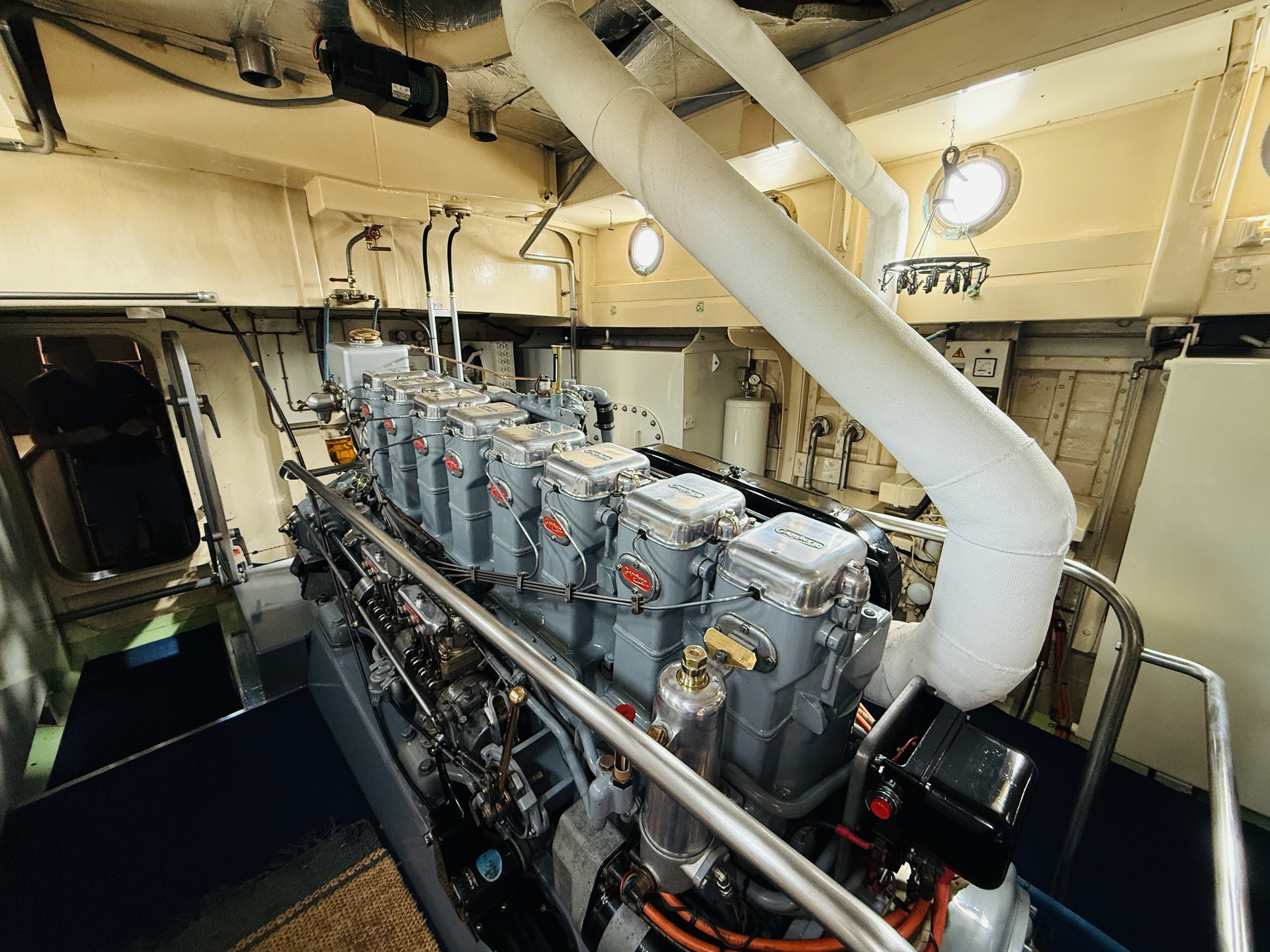
I am not sure if the Hercules engine was factory or home-marinized, as he would certainly have had the ability and equipment to do this. Stan, the original owner of RAKANOA, owned a large heavy engineering factory in Auckland. This business passed to Ross when his father passed away in 1961. RAKANOA retained this engine until 1981. Ross told me, after he inherited her many years ago, that they had always had trouble starting the Hercules engine, especially when hot. Many years after he inherited her, he eventually replaced the Hercules with a Gardner 6L3 diesel engine, which she still has to this day.

The Hercules engine was fitted because original owner Stan P., could not tolerate the very loud high pitched geartrain noise of the Rootes blower, combined with a loudish exhaust noise, she had with the G.M. Detroit

Unfortunately, I have not been able to find on research to date, any images of the 250 HP marinised version of the Hercules engine, however I have found what may be an unmarinised version, of RAKANOA’s engine.  

RUSTON HORSNBY DIESEL ENGINES.

HAIMONA ex MANGA, WITH HER ORIGINAL TWIN 6 cyl, FODEN DIESEL ENGINES

HAIMONA   –   HER TWIN RUSTON HORNSBY 6 CYL. 200HP DIESEL ENGINES

RUSTON HORNSBY TWIN CYLINDER MARINE DIESEL ENGINE AS USED IN THE MANOWAI

HMNZS MANGA AS ORIGINAL. 

HAIMONA IN HER PLEASSURE CRAFT GARB WITH HER 2 RUSTON HORNSBY DIESEL 200HP ENGINES, ON THE KAIPARA HARBOUR

MANOWAI IN HER RUSTON HORNSBY DIESEL ERA, AT HERALD ISLAND 

There are only two of these I know of in New Zealand in pleasure boats. One was in the 32 ft MANOWAI, during the second part of Claude Atherton’s era, from 1949 until at least the 1960s; it was a twin-cylinder version of the engines. 

The other boat was HAIMONA, formerly HDML MANGA, which was based in the Kaipara Harbour. Eventually, after a few years there, the only slip she was able to use for maintenance became unavailable, and she deteriorated badly before being destroyed by her last owners. 

When they bought her, a massive coaming structure was added, and they also replaced her original Foden engines with twin 200 HP 6-cylinder Ruston Hornsby diesels, which they removed prior to dismantling her.

FORD FALCON 4.1 LTRE 6 CYL. PETROL ENGINES

FORD FALCON 4.1 LTRE 6 CYL. PETROL MARINE ENGINE

VALSAN CHRISTMAS 1948 IN HER PRE-FORD-FALCON, PETROL ENGINE ERA

The 1938 Roy Lidgard-built VALSAN was bought by Arnold Baldwin around 1947, complete with her original engines, which were 2 x 100 hp flathead Graymarine petrol engines. He owned her for many years, and the time eventually came, after many of those years, when they had to be replaced, around 1970.

I was amazed that he chose 2 x Ford Falcon 4.1 L petrol engines as replacements, as these were engines usually associated with small day boats or runabouts, often equipped with stern drives or jet units. There were a total number of such engines unknown to me, and she is still the only launch I have ever heard of with these engines.

Things have, of course, moved on since then, and the last I heard, she had 2 x 4-cylinder Mitsubishi diesel engines post 2000.

CHRYSLER-MITSUBISHI CN-55TI 200HP 6CYL. IN LINE MARINE DIESEL ENGINES 

THE CHRYSLER-MITSUBISHI CN-55TI 6 CYL. DIESEL ENGINES PRODUCING 200hp @ 3150 RPM INSTALLED IN ALIBI

ALIBI – WITH HER 2 X CHRYSLER-MITSUBISHI CN-55TI DIESEL ENGINES PRODUCING 200HP @ 3150 RPM

ALIBI’s 2 “STERN POWER” STERN DRIVE UNITS, & NOTE BOTH ENGINES EXHAUST OUT THE SAME SIDE AT THE TUCK
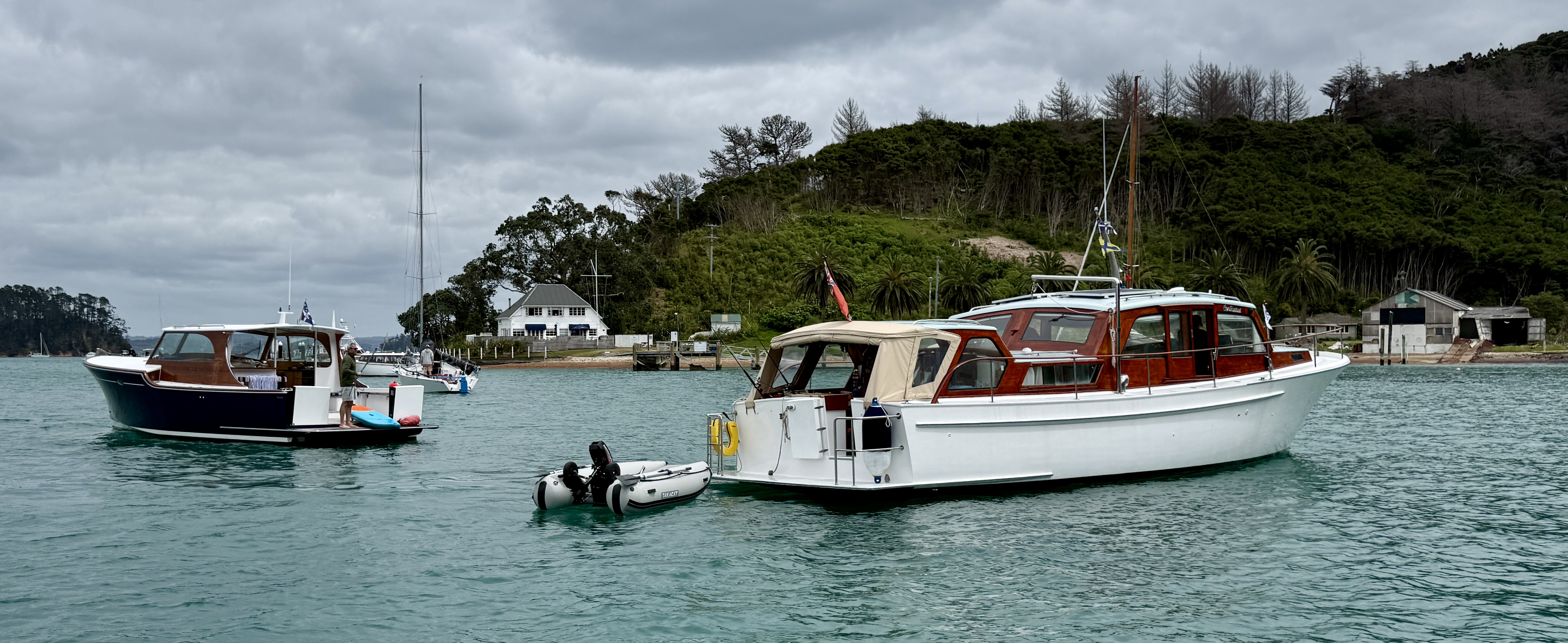
As readers of this series may recall, ALIBI made a cameo appearance in part 2 when I was seeking information related to her sistership, which I now know is or was called CRESCENDO, seen below on launching day, as I have seen the two V8 Chrysler-branded diesels CRESCENDO had when new. 

Thanks to the input of others, I have now also discovered that these engines were manufactured by another company, and simply sold under the Chrysler label, which seems to me to be a continuation of Tony Mason’s apparent tendency to use engines with the Chrysler label, as in ALIBI. 

However, since the previous cameo appearance of ALIBI, I now have full details of her engines, thanks to a lady named Juliet Hindman, who is very knowledgeable about the Mason Clipper range of boats. 

Her family has owned one of the two only 33-foot versions of the Mason Clipper, and she has now contacted me. 

As a result, and with the information she has provided, ALIBI now definitely falls into the “Unique” class of engines category, as specified above, as far as I’m concerned, and she now has her place in the group in her own right. 

ALIBI’S two CHRYSLER-MITSUBISHI CN-55TI DIESEL ENGINES, producing 200 HP at 3150 RPM, are driven through Warner gearboxes to “Stern Power” make, cream-painted counter-rotating outdrives. While the engines and gearboxes are both left-handed with a 1-to-1 ratio, outward turning counter-rotation of the propellers has been achieved by the gearing system in the stern drive units, which are also acting as reduction gears with a 1.5-to-1 ratio, driving Volvo 16 x 17-inch propellers.

I feel the engine-to-stern-drive setup with these engines, is superior to many others, in that the engines are obviously primarily produced for conventional drives, having the gearboxes attached to and as part of the engines, but can still be used either way, for stern drive units, or conventional drives, with the stern drives simply providing the drive to the propellers. 

Many manufacturers combine the gearbox and stern drive into one unit, which makes them much more complex and quite possibly much more expensive to maintain.

Additionally, the combination drive/gearbox units are often very “clunky” and jerky when selecting forward or reverse, whereas there would not be this clunk with the smoothness of hydraulic engine-attached gearboxes.

I have spent a great deal of time, trying to source a good clear image of these engines, but they seem to have disappeared from historical public databases, and the only image I have been able to source, is of ALIBI’S own engines installed in her.

It is, however, wonderful that she still has these original engines after all these years since she was built in the later 1970sA great testimony to Mitsubishi. Here are her details as received from Juliet H.:

“Released in 1979, the Clipper 42 was 12.8m x 3.7m with a draft of 900mm and, fully laden, displaced around 9 tonnes. Alibi was the prototype, built with a sandwich construction of strip-planked cedar, fiberglass on both sides. A mould was taken off the prototype so that all future boats could be full GRP with a balsa core. However, Crescendo was the only boat ever pulled from the mould.” 

I would recommend that readers revisit ALIBI’S cameo appearance in part 2 of the series to see some wonderful images of her exquisite finishing and interior.

A final note re CRESCENDO.   – She has been seen reasonably recently, in the South Island, I have been told, so any further help with information about her in any way, would be much appreciated. 

LISTER MARINE DIESEL ENGINES

I had considered including LISTER MARINE DIESEL ENGINES in the group, however, there are quite a good number of these engines that are or have been in use in NZ., in many work boats, fishing boats, tugs, & a few pleasure craft, & in the end I decided they fell just outside the scope of what I was about, so will just make a general mention of them, with a few images of the odd pleasure craft, all of which had these engines installed by Roy L.

Roy Lidgard used quite a number of them in various types of craft, the 1940s & 1950s, mostly 4 cylinder, & also had a 4cyl version of the Lister Diesel driving the Smeltinghouse Bay Kawau island sawmill, he set up & ran on his property, in the later 1940s & 50s, the remains of which are still there today. 

As just a brief mention, he installed Lister diesels, in the ROSE, (2 CYL) (later LA ROSA) Clive Power’s WAINUNU, (4 CYL) & TAWHIRI, a lovely sedan topper R Lidgard built in the mid/later 1940s (4 cyl) 

THE ROSE (NOW LA ROSA)

TAWHIRI BUILT BY R LIDGARD 1940s WITH 4 CYL LISTER MARINE DIESEL AS  ORIGINAL

WAINUNU WITH CLIVE POWER AT THE HELM, WITH HER 4 CYL LISTER DIESEL, WITH THE EXHAUST OUT THE TOP OF THE MAST. c1940s
Screenshot

ROY LIDGARD’S SAWMILL, SMELTINGHOUSE, BAY KAWAU ISLAND c. LATER 1940s

LISTER 1940s 3 CYL MARINE DIESEL ENGNE AS AN EXAMPLE OF THAT ERA

EPILOG:

Well, readers, we have come to the end of this seven-part journey, and I can only say that for me, it has been a wonderful ride, to share with all of you who have taken the time to share the ride with me, and to follow the seven parts of what I’ve learned throughout my lifetime.

So often, you know as much, if not more, than I do. While some may have learned a little from me, I have, in turn, learned much from many of you, as we have shared this journey together, & I thank you all, for the opportunity to gain this new knowledge from you. 

I especially want to express my humility and gratitude, for the kind words of thanks and appreciation, in some of your comments directed towards me personally.

I have done this most of all, to encourage us all, to share and record publicly, what we know about our New Zealand-based boats, with each other, and most importantly, to provide a public record, for the benefit of the boaties of the future. Those who will come after we old wrinklies have all gone, & will become the stewards of tomorrow. As a result of what we all write now, they will hopefully have the chance to understand what has gone before in all or many aspects of what will become their boats, the majority of which will surely live on long after we are not here.

CLASSIC RUN-ABOUT MARE-EE-AN RELAUNCHED
CLASSIC RUN-ABOUT MARE-EE-AN RELAUNCHED

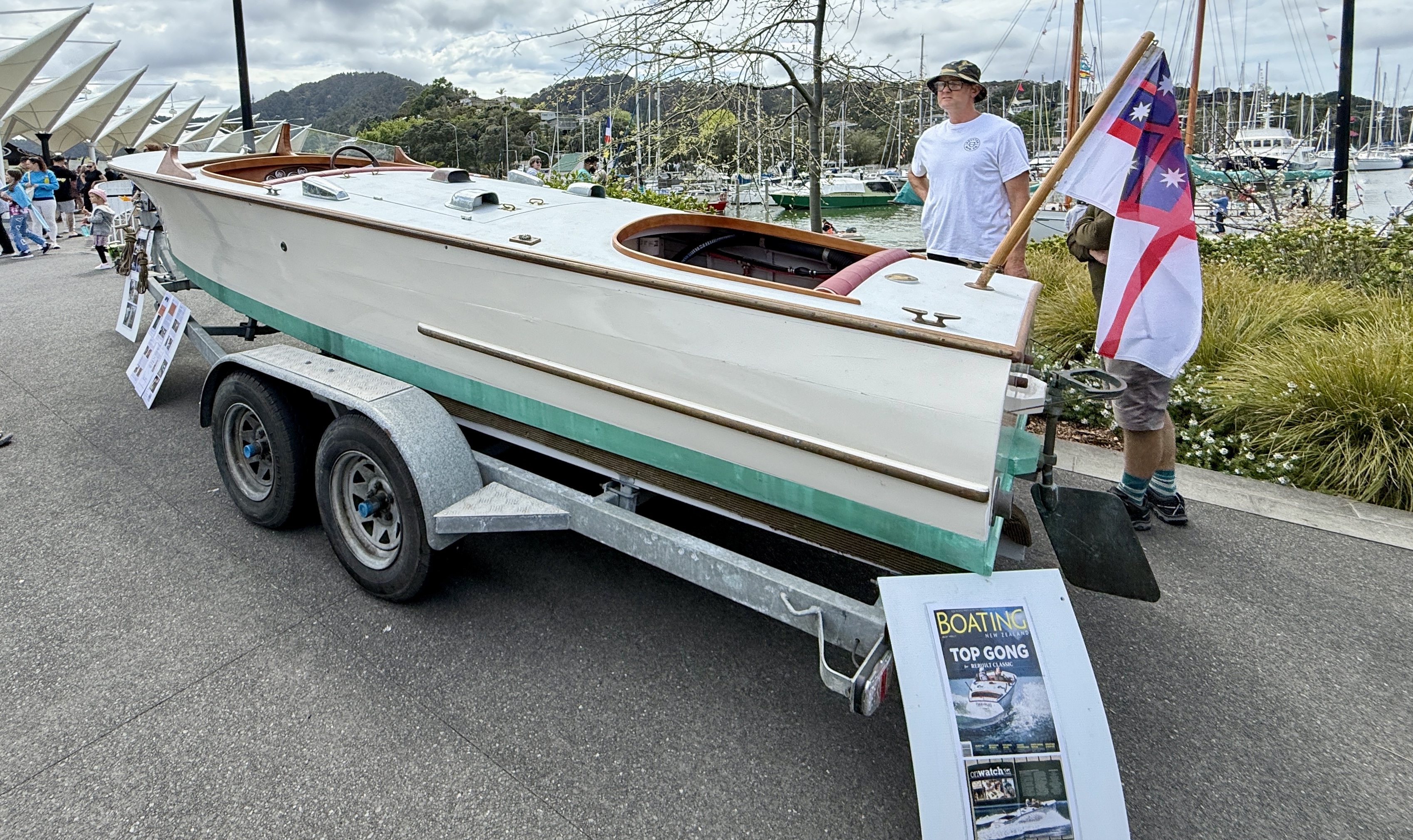
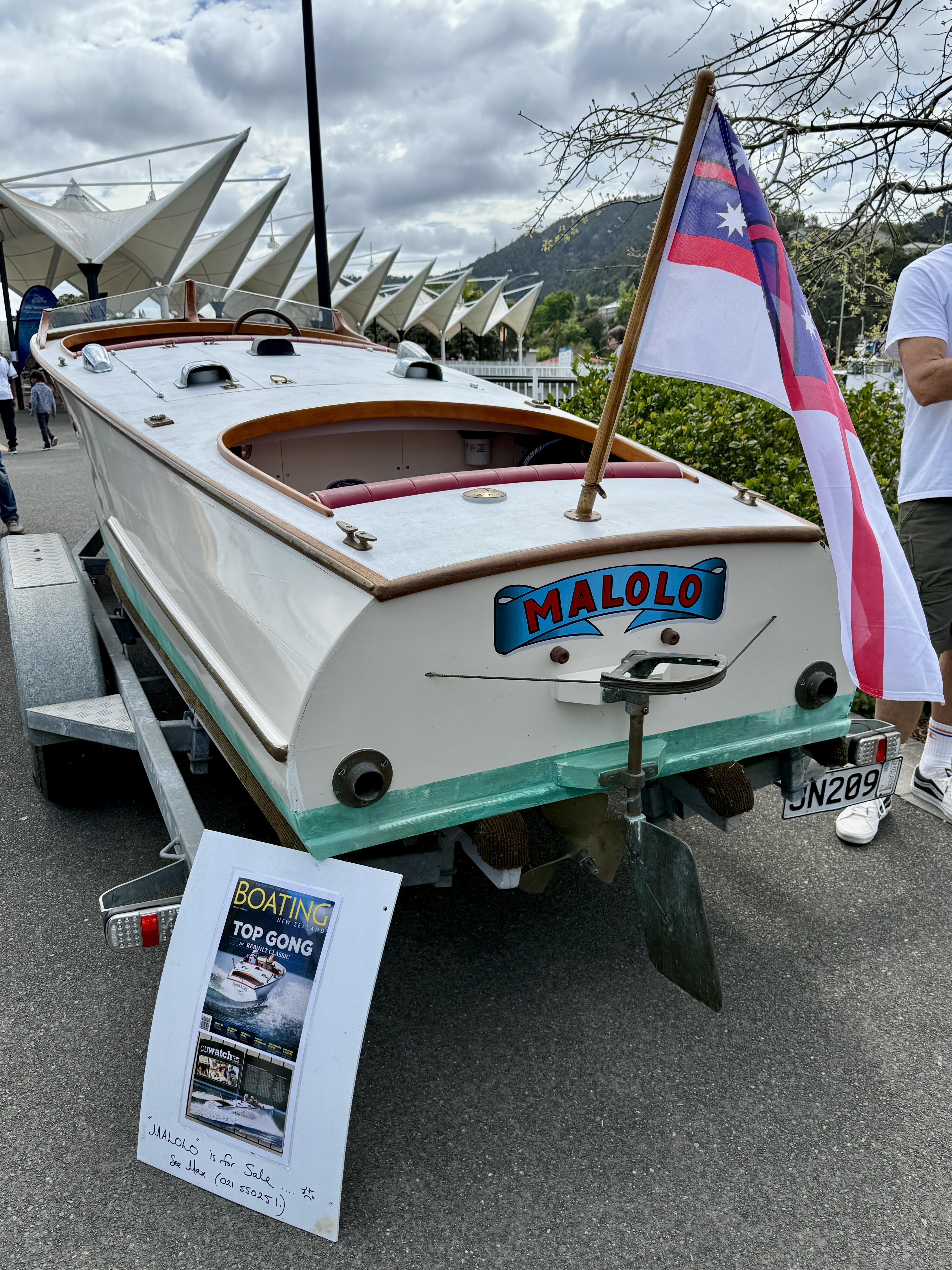
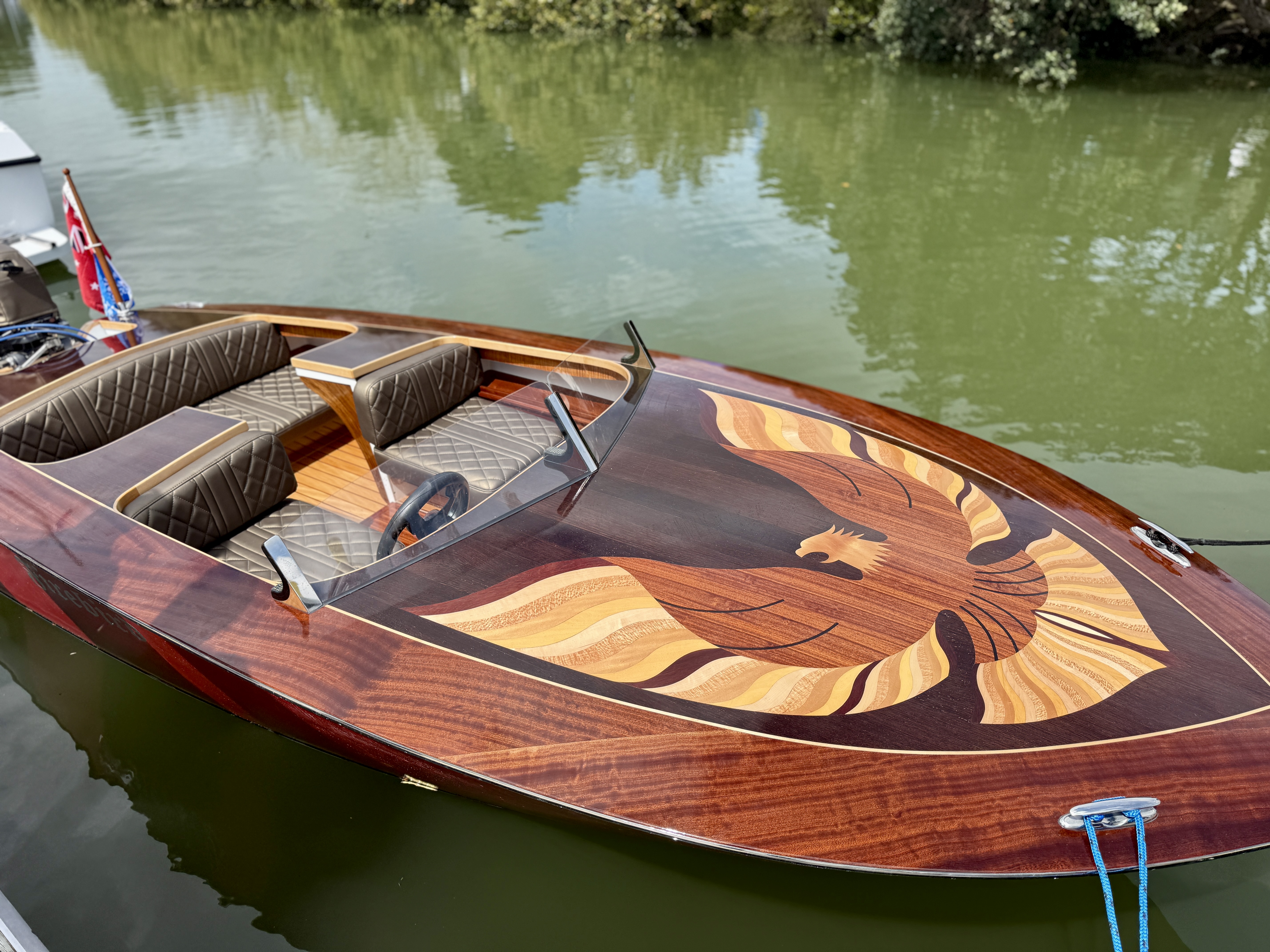
Back in 2023 WW was contacted by Tim Munro regarding the classic 16’ run-about MARE-EE-AN, at the time Tim was trying to locate a copy of her original Carl Augustin plans to help with an upcoming restoration. Thanks to Cam Malcolm at The Slipway Milford we were able to track down a copy. Last week Tim contacted WW to update us on the project – Tim tells the story below:

 “The boat was in pretty good condition other than needing a new transom and the top windscreen being constructed as at some time it had been taken off and replaced with a curved perspex one. The plans WW found for us came in handy for this.  The boat was refurbished in 2023/24 and re-launched back into the Kaipara 60 years to the day after it first being launched.The two black and white photos are of her when she was in the Epiglass 40 regatta in late 60s. The photo with the 1970 Atlantic 100 sticker is it in this race.  (For the 100 miler race Bryan McLeod (Tim’s father) needed to have a number in the 100s, so he just stuck some black masking tape either side if the number 8 for the 40 miler to turn it to number 181.) The older photo of it in front of the house with Bryan and his daughter is with them holding the trophies from these races. (Economy Class). The remainder of the photos are on the day of the re-launch into the Kaipara River.”

Tim also commented that that his wife, Janette McLeod had written an article for a local Helensville newsletter as Bryan lived his whole life in the area. I have reprinted the article below. 

“Our Dad, Bryan McLeod, built Mare-ee-an in the woolshed at our farm in South Kaipara Head in 1964. Built out of marine ply to a Carl Augustin design my older siblings (I was only one year old at the time) would be commandeered after school to hold the ‘dolly’ under the upturned hull while Dad banged in the copper nails, bearing Dad’s stern words when the dolly was out of position.       My understanding is that Mare-ee-an’s name came from the song ‘All Day All Night Marianne’ (Dad’s spelling slant applied) as opposed to being named after the neighbour’s daughters Mary and Anne.

Mare-ee-an has been involved in many fun filled escapades over her 60 years including fishing, waterskiing, diving, gathering mussels, regattas, ‘Epiglass 40’ and ‘Atlantic 100’ races (winning the economy classes), overnighters and various explorations – the Northern Wairoa and Hoteo River being particularly memorable. A terrifying crossing of the Kaipara Heads also lingers in my mind when an extra large wave came her way giving no time for us to turn around. Thankfully Dad was a skilled enough boatman to ride her over it…scarily, looking back on the event, none of us were wearing lifejackets at the time.

Over time Dad had made various alterations such as replacing the windscreen with a more protective one and attaching alkathene – I assume left over from one of his farming jobs – around the bow as a protector, all the time keeping up with other necessary maintenance. A new motor was required when Mare-ee-an’s was stolen while moored overnight in the estuary at Mangawhai Heads. Roller doors were fitted – too late – to the garage under the house after a second motor was stolen from her.

During my teenage years in the 70s it came time for Mare-ee-an to have a repaint and I suggested to Dad that we change the colour to the more modern tone of the day, orange. Mare-ee-an remained this colour until we recently had her refurbished (by Brendon Driskel of Sea to Shore on East Coast Rd, Albany) and returned to her original turquoise, the windscreen made as close as possible to the original from what could be gleaned from various photos and the alkathene removed. It’s thanks to my husband Tim for encouraging the refurbishment rather than putting Mare-ee-an out to pasture even though it has used up my inheritance.

The varnished timber sections at the stern have remained. Dad loved the timber grain and could not bring himself to cover it all with paint so left this region as a feature.

It was so very special for Tim and I to relaunch Mare-ee-an 60 years to the day in the company of my brother and sister-in-law Graeme and Janet and our nephew Lee along with one of Dad’s favourite tipple – Velluto Rosso.

Mare-ee-an is ready for another 60 years of adventures! I know Dad would be pretty chuffed.”

WHAT WE USED TO DO BEFORE BOAT HAULAGE CAME ALONG

WHAT WE USED TO DO BEFORE BOAT HAULAGE CAME ALONG

Todays woody photo was sent in by John Dawson who found the photo on a Paul Lishman fb post. Paul commented that the location was Vine Street, St Marys Bay, Auckland and taken by M. Friedlander.

In the comments section there was debate on both the design of the yacht and the possible date. Paul commented it was 1970 but others felt based on the cars shown it was more likely in the 1950>60’s period.

Comments that the yacht looked like a Townson design, possibly 30’.

Any woodys able to help confirm the approx. date and  design.

A scary observation – when this photo was taken you could have bought a house in Vine St for around $5,000 – did a search on a random number e.g.10 Vine St = $3,650,000 …………  

INPUT ex JIM LOTT – Definitely a Townson 30 with higher freeboard than the 26 ft earlier design. Looking in the Townson book, Magic Flute was finished by Alan Warwick who took delivery of the hull in 1966 and lived in Herne Bay. Des built all the hulls himself. Owners finished them off. Names include Firebird, Mercury, Falcon, Anitra, Finesse, maybe about 4 others, so probably 1967 or 68.
THE LIFE OF BOATBUILDER JACK GUARD

THE LIFE OF BOATBUILDER JACK GUARD

Earlier in the week, Rob Watt drew my attention to a YouTube video by Darren Guard on the life of his grandfather Jack Guard, one of New Zealand’s great boat builders. 

Pour yourself a coffee and sit back and enjoy the video,  lots of wonderful historical photos and footage. 

Make sure you hang in there to the end – there is a terrific poem titled – ‘Making It Back’ penned by poet Sam Hunt, a Jack Guard boat owner.

CLASSIC WOODEN LAUNCH – SEAFORTH – A Flash Back 

CLASSIC WOODEN LAUNCH – SEAFORTH – A Flash Back 

The classic wooden launch – SEAFORTH has made several appearance on WW, links below. In the 2015 story she was on a mooring in the Orakei Basin, then in 2022 we saw her hauled out at the Clevedon Cruising Club. Fast forward to Sept 2022 and she’s hauled out at the Stillwater Boating Club. That story prompted her new owner, Mikaela Thwaites, to make contact and update us on the status of the launch and supplied a few photos of the work undertaken. All in the links below.

WW JULY 2015https://waitematawoodys.com/2015/07/11/mystery-launch-11-07-2015/

WW AUGUST 2020 https://waitematawoodys.com/2020/08/13/mystery-clevedon-launch/

WW SEPT 2022https://waitematawoodys.com/2022/09/24/seaforth/

In 2024 Bryce Symonds made contact and advised that he had photos of SEAFORTH from the 1984>1986 period when he owned her. On one of my infrequent trolls thru the WW back files, I saw that Bryce hadn’t responded to the request to share the photos, so pinged off an email and jackpot Bryce shared the photos you see today. Quite a looker in her day with the varnished / painted coamings.

Despite lots of chat in the previous WW stories we haven’t been able to put a builder and launch date to her – anyone able to help.

AN INSIGHT INTO NZ’S UNIQUE MARINE ENGINES – Part Six

Screenshot

AN INSIGHT INTO NZ’S UNIQUE MARINE ENGINES – Part Six
Todays WW story follows on from earlier stories – link below to Part One, Two, Three, Four and Five 
As per pervious stories in the series the content has been pulled together by Ken Ricketts and ‘polished’ byPatrica and Ken’s daughter Corinne Pettersen. As always we have endeavoured to be as factual as possible but there will always by matters others will either know more about or be able to correct errors – so woodys do not hold back in commenting.

PART ONE – https://waitematawoodys.com/2025/04/04/an-insight-into-nzs-unique-marine-engines-part-one/

PART TWO – https://waitematawoodys.com/2025/04/12/an-insight-into-nzs-unique-marine-engines-part-two/

PART THREE – https://waitematawoodys.com/2025/04/18/an-insight-into-nzs-unique-marine-engines-part-three/

PART FOUR – https://waitematawoodys.com/2025/04/26/an-insight-into-nzs-unique-marine-engines-part-four/

PART FIVE – https://waitematawoodys.com/2025/05/03/an-insight-into-nzs-unique-marine-engines-part-five/

BENZ DIESEL ENGINE – BENZ OM59 55HP 4CYL DIESEL ENGINE PROBABLY SIMILAR TO THAT IN THE MANUNUI

MANUNUI WITH HER 55HP 6 CYL BENZ DIESEL ENGINE DURING WWII

MANUNUI AS BUILT AT SPEED WITH HER BENZ DIESEL ENGINE 

The MANUNUI was built for Percy Colebrook in 1939 by Bill Couldrey and had a medium / slow revving 6 cylinder 55 hp Benz Diesel engine fitted when built, which she retained until 1963 when it was replaced by a 100 hp Perkins Diesel. 

CRUSADER V8 MARINE PETROL ENGINES

TWIN CRUSADER ORIGINAL V8 PETROL ENGINES HAVING SERVICING, FROM THE RIVA TRITONE “LOLA,” WHICH ARE STILL IN HER TODAY. 

Crusader engines, while major marine engine suppliers in America and other countries, have only made a cameo appearance in New Zealand, with only a handful of these lovely engines in use here, as far as I can ascertain.

Overview: The only craft I personally know of for certain is the stunning 1962 Italian-built Riva Tritone, LOLA.

However, WINSOME II may have had one, back around the 1950s when owned by Andy Donovan. I know her previous Chrysler 8-cylinder inline engine was replaced around that time by a V8, that was either a Crusader, Chris-Craft, or Flagship. However, the memory banks have failed me, making it impossible to determine which of the three it is, so come on, you WINSOME II experts, help me out here!

In the 1960s, Crusader Marine Engines was a prominent brand worldwide, providing inboard power for many boats, particularly cruisers and sport fishermen. They were known for their premium quality and reliability, used by leading boat manufacturers like Chris-Craft. 

Crusader engines were based on standard automotive engines, but were marinized for marine use, with many of them based on Ford engines, and later with Hercules and Chrysler base units.

LOLA WITH HER 2 X CRUSADER 270HP PETROL ENGINES 

LOLA, the 1962 Italian-built Riva Tritone Aperto, has a LOA of 27 ft and is one of only 15 in the world. 

It is believed to be the only original Riva in New Zealand and a stunning example of boat restoration, all completed in NZ. Only 3,000 Rivas were built between 1950 and 1966, and she still has her original engines. She lives, or did live, in her own, purpose built, fully air conditioned boat shed, on the banks of the Marlborough Sounds.

WINSOME II – MAY HAVE HAD A CRUSADER V8 PETROL ENGINE IN THE 1950s /60s ERA – POSSIBLE ALTERNATIVES ARE FLAGSHIP & CHRIS CRAFT 

CHRIS CRAFT PETROL ENGINES.

CHRIS CRAFT 1950s 6 CYL FLATHEAD PETROL 135hp ENGINE SIMILAR TO THAT IN THE GLENIFFER IN THE 1950s

These are another brand of engine that is sold in huge numbers worldwide, particularly in America, where all genuine Chris-Craft boats are built. However, they have only made a cameo appearance in New Zealand, with most of them coming here in imported Chris-Craft boats.

There are a few New Zealand-built boats that have or have had them. I have only ever seen a petrol version, although naturally, they do produce diesel engines in their lineup. All the engines they produce are based on other major engine manufacturers’ base engine blocks and are marinized by them. Hercules is a major engine block supplier to them.

GLENIFFER WITH HER CHRISCRAFT 6 CYL FLAT HEAD PETROL ENGINE RUNNING ON KEROSENE IN THE 1950s – OWNER PERCY JENNINGS IS AT THE HELM.

Input copied from previous post, ex Harold Kidd.  – “Trevor Davis sold GLENIFER to P J Jennings of Paeroa in 1937 and he sold her to George Manktelow of Paeroa in about 1959. The Gleniffer was replaced by a 6-cyl Chris Craft (Hercules block) during the 50s, converted to run on power kerosene with a Model A Ford Zenith carb.”

FLAGSHIP MARINE ENGINES

FLAGSHIP 1958 250HP V8 PETROL MARINE ENGINE – BASED ON A CHEV BLOCK

There were a number of these engines that found their way to NZ in the 1950s/60s era and this is one of the possibilities for the V8 engine that was installed in the WINSOME II in that era by Andy Donovan who may also have had an agency for them, around that time.

AN INSIGHT INTO NZ’S UNIQUE MARINE ENGINES – Part Five

AN INSIGHT INTO NZ’S UNIQUE MARINE ENGINES – Part Five
Todays WW story follows on from earlier stories – link below to Part One, Two, Three and Four 
As per pervious stories in the series the content has been pulled together by Ken Ricketts and ‘polished’ by Patrica and Ken’s daughter Corinne Pettersen. As always we have endeavoured to be as factual as possible but there will always by matters others will either know more about or be able to correct errors – so woodys do not hold back in commenting.

PART ONE – https://waitematawoodys.com/2025/04/04/an-insight-into-nzs-unique-marine-engines-part-one/

PART TWO – https://waitematawoodys.com/2025/04/12/an-insight-into-nzs-unique-marine-engines-part-two/

PART THREE – https://waitematawoodys.com/2025/04/18/an-insight-into-nzs-unique-marine-engines-part-three/

PART FOUR – https://waitematawoodys.com/2025/04/26/an-insight-into-nzs-unique-marine-engines-part-four/

LINDA, AT CHRISTMAS 1948, TAKEN IN SCHOOLHOUSE BAY, KAWAU ISLAND, JUST AFTER HER LOEW-KNIGHT PETROL ENGINE HAD BEEN REPLACED, WITH HER GM DETROIT 165HP MARINE DIESEL.

COQUETTE, POST HER LOEW KNIGHT-ERA

I know of only two boats that have these very rare versions of the Knight sleeve valve engine. One is the 1928 Colin Wild-built LINDA, which was bought by Roy Swales just after WWII with her original Loew-Knight 6-cylinder petrol engine. I saw it running, and it was incredibly smooth, quiet, and looked very tiny in LINDA’s huge engine room. It was painted silver and had the name “Loew-Knight” in a scroll, cast into the inspection plates on the crankcase. 

Roy W. replaced it in 1947 with a 6/71 GM Detroit 165 HP diesel engine. 

The other boat was the delightful Logan-designed and built COQUETTE, with her sedan top, which was added many years later by Arnold Couldry. He kept her delightful lines perfectly with this addition. She had a 4-cylinder version of the Loew-Knight sleeve valve engine, also painted silver.  I tend to think this may have been her second engine because of her age, having been built in the early 1990s.

FODEN 2 CYCLE DIESEL ENGINES.

FODEN 12 CYLINDER 2 STROKE, MARINE DIESEL 256HP ENGINE – 2 X 6 CYL ENGINES SIDE BY SIDE ON ONE CRANKCASE IN 1 ENGINE  

FODEN 6 CYL 2 STROKE DIESEL ENGINE

FODEN 6 CYL 163HP, MARINE DIESEL ENGINE

ORIGINAL FODEN ENGINES IN THE HDML MANGA, AS SOLD BY THE NAVY

KUPARU NOW OWNED BY SCOTT PARRY BELIEVED TO STILL HAVE 2 FODEN DIESELS

 HMNZS KUPARU 

HMNZS MANGA

DEODAR IN PRIVATE OWNERSHIP AFTER HER DAYS AS THE POLICE LAUNCH

LADY MARGARET WITH HER 2 X 6 CYL FODEN DIESELS – (Built by Dick Lang)

MARNINE WITH HER 2 X 6 CYL 163HP FODEN MARINE DIESELS IN MARCH 1963

WHITE CLOUD LAUNCHING DAY WITH HER 4 CYL., HOME MARINISED FODEN DIESEL

There are only three pleasure launches that I know of that have these engines, and there are two with 6-cylinder versions. The LADY MARGARET (built by DICK LANG) replaced her original two Fairbanks Morse Diesels; the MARNINE, which had two of them from when she was built, had the same specifications and was installed at the same time as the LADY MARGARET. The third boat was the WHITE CLOUD, which had a 4-cylinder home-marinized version, fitted by or for, the managing director of Fodenway Motors, Penrose. They were the New Zealand agents for Foden engines at that time and had her built and baselined a generator set to convert the 4-cylinder Foden for marine use in his new boat. This installation took place at their Gt. South Rd premises after being built at 1A Summer St, Ponsonby, by McGeady (Supreme Craft).

In addition to these boats, all RNZN-owned HDMLs and the first of the Police Launches named DEODAR, (DEODAR I), had two of them installed. All were originally 6-cylinder versions; however, but with the HDMLs., some engines were later replaced with 12-cylinder versions in some boats, which were, in effect, two 6-cylinder engines side by side in one crankcase. These had one drive shaft and two crankshafts connected by a system of gearing. At least one twin x 6-cylinder installation is believed to still be in a boat & still surviving today. It is in the massively refurbished, now privately owned KUPARU, primarily located in Whangarei.

Foden engine manufacturing and parts supply were sold to Rolls Royce in the late 1970s, and production ceased when they took over the Foden manufacturing rights.

RAIRA – A Peek Down Below – SOLD

RAIRA – A Peek Down Below – SOLD

Todays classic wooden launch is the 1915 38’ McLeod Brothers Devonport built launch – RAIRA. RAIRA was built to a Collings & Bell design and like most woodys has had a few enhancements (good & bad) over the last 110 years. As she floats today RAIRA is a very handsome craft, but she has a big secret – her interior. Step below deck and you’ll be wowed by her fit out, as seen in the above gallery of photos.

Forward motion is via a Ford Lees 6cyl. 120hp diesel engine that was rebuilt in 2011. At the same time work included replacement of ribs, keel bolts, bulkheads, decks and full refastening and caulking.
Her systems and electrics are as expected for a vessel capable of extended coastal cruising + she sports a diesel cabin heater, so there’s the opportunity for RAIRA to be very comfortable live aboard.

If you haven’t clicked yet – yes RAIRA is for sale and at an asking price of $30k she is very good value for money and her next owner will get a very affordable entry to the classic wooden boating movement.  The asking price is a sad reflection of the boating (wood/glass) market at present. Believe me it will never be cheaper to by your dream boat.

Interested buyers initially to contact owner – Thomas via email at  gosi120@hotmail.com

(note: game poles in top photo, now removed)

THE SINKING OF THE WOODEN SCOW – KALAIA

THE SINKING OF THE WOODEN SCOW – KALAIA

Todays woody images come to us from Owen Aspden and show the auxiliary scow – KALAIA, built in 1909 by boatbuilder Davy Darroch.

Owen included an excerpt from the Court of Enquiry Report into the vessels sinking in 1936.

Owen commented that back then this was just part of the job for these tough sailors.

28-04- 2025 INPUT ex STUART JOHNSTON re STANMORE BAY – As a young fellow and regular holiday and weekender to Stanmore Bay  Whangaparaoa, I have memories from early/ mid 1950’s of Scows grounding in the shallows at the eastern end of Stanmore Bay loaded with red chip road metal (from McCullams Island I think) destined for Hopper Bros. Hoppers trucks, some being ex WW2 were loaded by on board Dragline before departing up what is now Stanmore Bay Rd destined for road seal and or concrete footpaths and foundations.

Whence this procedure terminated, scows were motored up the Wade River to the then new landing stage to feed the growing needs of the area which included a ready mixed concrete plant and later concrete building blocks and other construction needs. This was probably very late 50’s early 60’s. Are there any historical photographic records on the beached scows as this activity was instrumental in the growth of Whangaparaoa?

AN INSIGHT INTO NZ’S UNIQUE MARINE ENGINES – Part Four

AN INSIGHT INTO NZ’S UNIQUE MARINE ENGINES – Part Four

Todays WW story follows on from earlier stories – link below to Part One,Two and Three 
As per pervious stories in the series the content has been pulled together by Ken Ricketts and ‘polished’ by Patrica and Ken’s daughter Corinne Pettersen. As always we have endeavoured to be as factual as possible but there will always by matters others will either know more about or be able to correct errors – so woodys do not hold back on commenting.

PART ONE – https://waitematawoodys.com/2025/04/04/an-insight-into-nzs-unique-marine-engines-part-one/

PART TWO – https://waitematawoodys.com/2025/04/12/an-insight-into-nzs-unique-marine-engines-part-two/

PART THREE – https://waitematawoodys.com/2025/04/18/an-insight-into-nzs-unique-marine-engines-part-three/

PAXMAN V12 VALENTA RP200 – 3030HP MARINE DIESEL ENGINES

PAXMAN RP200 3033hp V12 MARINE DIESEL ENGINE AS IN THE RNZNs 4 COASTAL PATROL CRAFT FROM 1975-1990

 RNZN COASTAL PATROL VESSEL TAUPO, in 1975

 I’m only aware of four boats that used PAXMAN MARINE DIESEL ENGINES. They were all replacement vessels for the WWII HDML and Fairmiles, with the first, the Taupo, going into service on 29th July 1975. The second, the Hawea, arrived shortly afterwards, followed by the last two, the Rotoiti and Pukaki, which came a little after that. They remained in service until 1990 when they were sold off.

 KELVIN OLD MODEL MARINE DIESEL ENGINES

 KELVIN 4 CYL. OLD MODEL DIESEL ENGINE, SIMILAR TO THAT FITTED AT ONE TIME, IN THE MATAROA.

KELVIN 4 CYL MARINE DIESEL ENGINE SIMILAR TO THAT IN THE FERRY MAIRE

KAWAU FERRY MAIRE, WITH HER 4 CYL KELVIN DIESEL c 1950s 

MATAROA POST HER KELVIN DIESEL ERA 

Kelvin diesels are slow-revving, high-torque engines used mostly in commercial fishing and tugboats. The MATANUI is the only pleasure craft I am aware of that has, or has had, one of these beautiful engines, which run like a well-oiled sewing machine with an absolutely silent exhaust out the stern, well above the waterline. In the case of the MATANUI, even at cruising speed, all one heard was a very gentle hissing sound. The engine was painted a bottle green.

I went aboard her during the Joe Kissin era in 1946/47 and she had it then, having had it for a good number of years, notwithstanding that she had several engines in her long lifetime of over 100 years now. 

One unusual thing to note was that her Kelvin started on petrol and then switched to diesel after starting, which is unusual in pleasure craft.

KAWAU ISLAND TO SANDSPIT FERRY, MAIRE. 

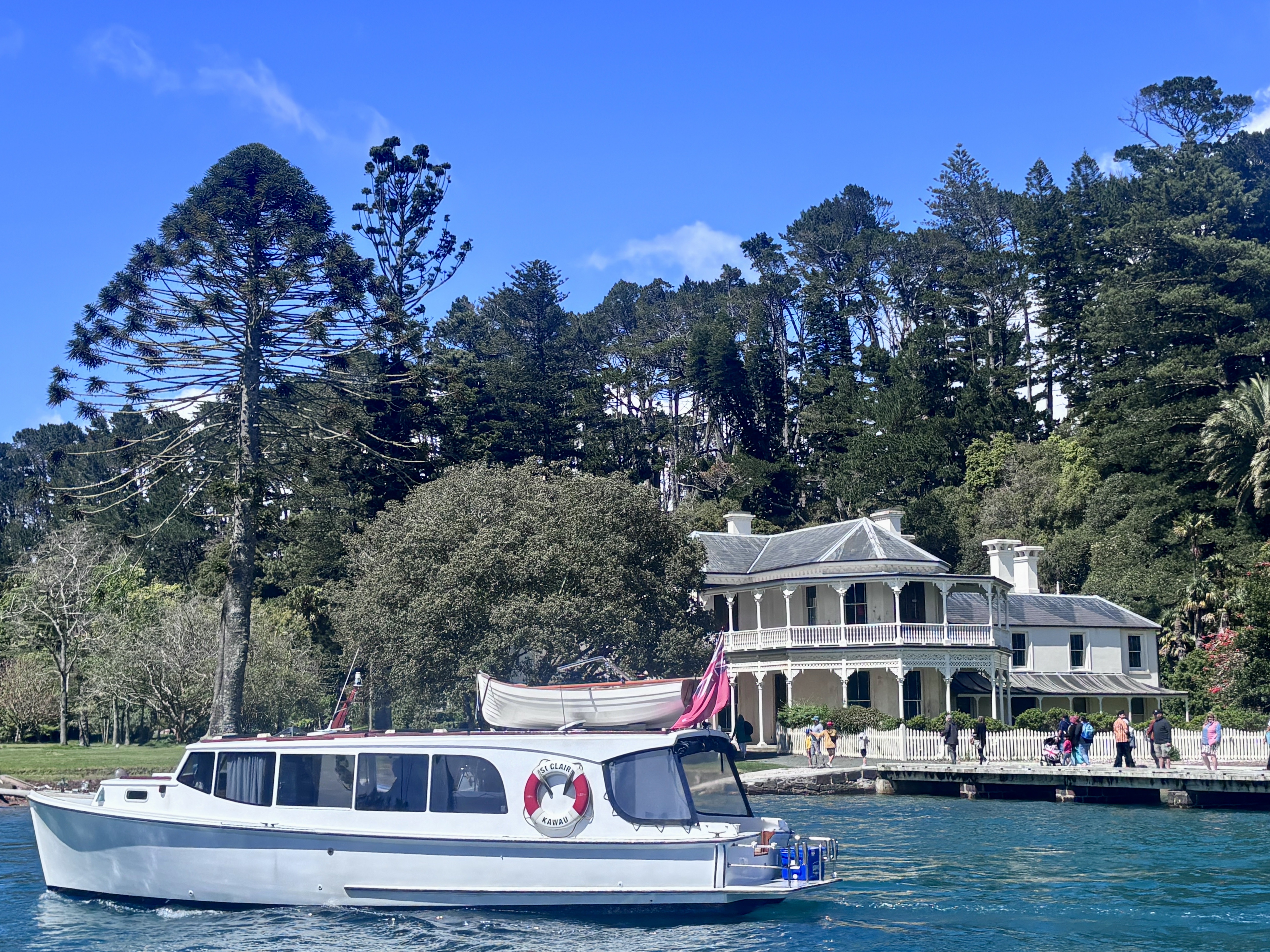
The Sandspit to Mansion House Bay Kawau ferry – MAIRE, was built by Roy Lidgard in his boat building shed at Smelting House Bay, Kawau, in the late 1940s for Allan Horsfall, owner of the Mansion House Guest House/Hotel. She was fitted with a 4-cylinder Kelvin Marine Diesel engine and was part of the ferry services to the island right up until the property was sold to the Historic Places Trust around 1977. 

I am personally only aware of two specific installations, I know that quite a number of these engines were fitted to some of the fleet of classic trawlers built from around the 1930s to the 1960s by boatbuilders such as P. Vos, R. Lidgard, Shipbuilders, and others. Some examples , which may or may not have had KELVIN engines include boats such as Eddy Mansfield’s WAIWERA, the Owens brothers’ (Gordon and Jim) KAIWAKA, WAIMANA, FOX II, DALMACIA, and COBRA, among others. I believe the two main engine brands of choice by the owners of those lovely classics were Gardner and Kelvin. Any knowledge of vessels fitted with KELVIN engines, would be appreciated.

The company that produced the KELVIN diesel engines was founded in the UK in 1904 and has undergone a succession of ownership changes over the last 120 years. It is presently owned by British Polar Ltd. However, notwithstanding all the various ownership changes, the name KELVIN has been retained up to the present day.

DOOSAN 6 CYL 200 HP MARNE DIESEL ENGINES

DOOSAN 6 CYL 200 HP MARINE DIESEL ENGINE AS IN THE NGARANUI

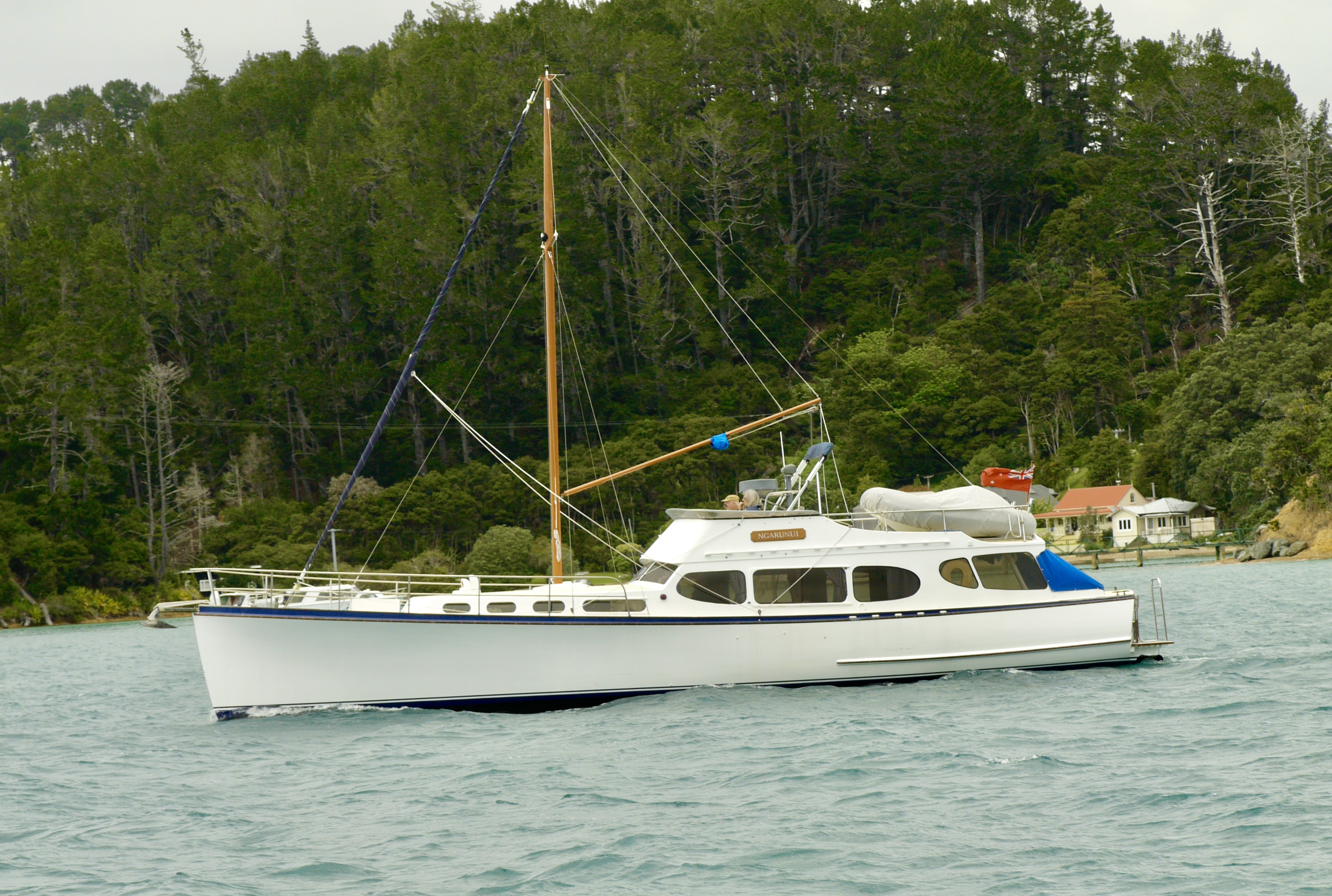
NGARANUI WITH HER DOOSAN 200 HP 6 CYL MARINE DIESEL ENGINE, which replaced a Detroit 6-71 marine diesel engine

NGARANUI SHOWING HER AUXILLARY PROP  

NGARUNUI was built in 1955 by Jim Young and started life, with a 1942 GM Detroit Marine Diesel engine (ex-war assets). It has now been fitted with a late model 200hp DOOSAN Diesel and has a Yanmar 20hp diesel auxiliary engine, with the prop for that engine mounted immediately above the main propeller. 

MERCEDES BENZ MARINE DIESEL ENGINES & M.A.N.& M.T.U.  MARINSATION VERSIONS OF THESE ENGINES.

MERCEDES BENZ MODEL OM321 6 CYL c100HP DIESEL ENGINE WITH 2 FITTED TO THE R LIDGARD BUILT, FLYING SCUD IN 1971, BY KEN RICKETTS

MAN MERCEDES BENZ V12 DIESEL ENGINE SIMILAR TO THOSE FITTED BY LEN SOWERBY TO THE NGAROMA IN THE 1960S/70S 

M.A.N. MERCEDES BENZ 600HP V10 MARINE ENGINES FITTED TO PACIFIC MERMAID WHEN BUILT. 

FLYING SCUD WITH HER 2 OM321 100HP 6 CYL MERCEDS BENZ MARINISED DIESEL ENGINES IN BIG STATION BAY, MOTUAPU ISLAND, IN 1972.

NGAROMA WITH 2 X V12 770HP M.A.N.MERCEDES BENZ MARINE DIESEL ENGINES – IN THE 1970S 

PACIFIC MERMAID WITH HER 2 X V10 600HP MAN MERCEDES BENZ MARINE DIESEL ENGINES.

Mercedes Benz, as the world knows, is a huge conglomerate with many divisions under various names and entities.

In the case of marine diesel engines, they are marinized under their own name and by various other marine engine companies, which have marinized them under their own company names. There is also a huge range of engine sizes and horsepower options. In New Zealand, we have had many installed in new craft built here for offshore owners. Most of these offshore exports, would have been under the M.A.N. or M.T.U. brands, as these brands of engines are typically of the larger horsepower ranges.

Regarding engines used in New Zealand, Im aware  of only five boats however, there are undoubtedly others. Nevertheless the total number of such engines remains quite small. So, if anyone knows of other craft in this group, please add them to the list.

The boats known to me include the PACIFIC MERMAID, a 105-foot super luxury motor yacht, fitted with two 10-cylinder 600HP., intercooled, artificially aspirated engines, with twin exhaust-driven turbines, marinised by M.A.N. She was built entirely in Auckland by Ken Winter and his family in South Auckland, with the build completed in 1989. He owned her until his recent passing, in Auckland. 

Ken W. usually ran her engines at a modest 1400 RPM, achieving a hull speed of about 10 knots.

PACIFICA MERMAID’s galley  distribution & control switchboard – starboard alternator in use. She has 2 x John Deer turbo 6 cyl. diesels driving 2 X 230/400volt alternators to supply her 230volt single phase 400volt 3 phase power supply, when away from her berth, which supply enough electricity for about 12 houses each

‘OHORERE AS AT 2025 WITH HER 2 X 770 HP MTU MARINISED MERCEDES BENZ DIESELS.

MTU MERECEDES BENZ DIESEL ENGINE – POSSIBLY SIMILAR TO THOSE IN THE OHORERE

OHORERE, was built by Percy Vos in Auckland, for the government of the day, to be a high-speed fisheries patrol craft, and designed by Thornycroft in the UK. However, she never reached anything close to her anticipated speed projections, as required in the order from the government, to the designers, and builders. Large sums of money were spent collectively, by the designers, Rolls Royce, who supplied her original engines, and the builders, to give her better performance, but they failed miserably, and she was ultimately sold to private ownership, where she has been used for many years now, I am told, for fishing charters in Tauranga. 

The 2 x 8 cyl. Rolls Royce’s were replaced about two years ago, with 2 x 770hp MTU marinized Mercedes Benz diesels, and is now capable of around 30 knots.

The engine in the image is used, which because of the huge cost of them new I feel it would be most likely & also most practical to install used engines.

The only other boat I know personally, is my own 1953 Roy Lidgard-built, 31-foot FLYING SCUD, which I bought in 1970, with her original twin Austin Skipper 100 marine petrol engines. 

I replaced them almost immediately with two OM321 100 HP Mercedes Benz 6-cylinder diesels. I sold her six years later, when I started building my 40-foot Vindex, TIARRI, and a later owner replaced FLYING SCUD’s Mercedes Benz engines with two Bedford diesels.

PERKINS DIESELS MODELS “S6” 6YL & 510 C.I. V8 MODELS ONLY 

 PERKINS MODEL S6 MARINE DIESEL ENGINE

TIARRI’S TWIN V8 PERKINS 510 CUBIC INCH DIESEL ENGINES  

TIARRI’S 510C.I. 165 HP PERKINS V8 DIESEL ENGINES IN PLACE

TIARRI AT SPEED OFF RAKINO ISLAND 1982 WHEN OWNED AND NEWLY BUILT FOR KEN RICKETTS BY BARRY JONES & REX COLLINGS OF MATAKANA & WHANGATEAU 

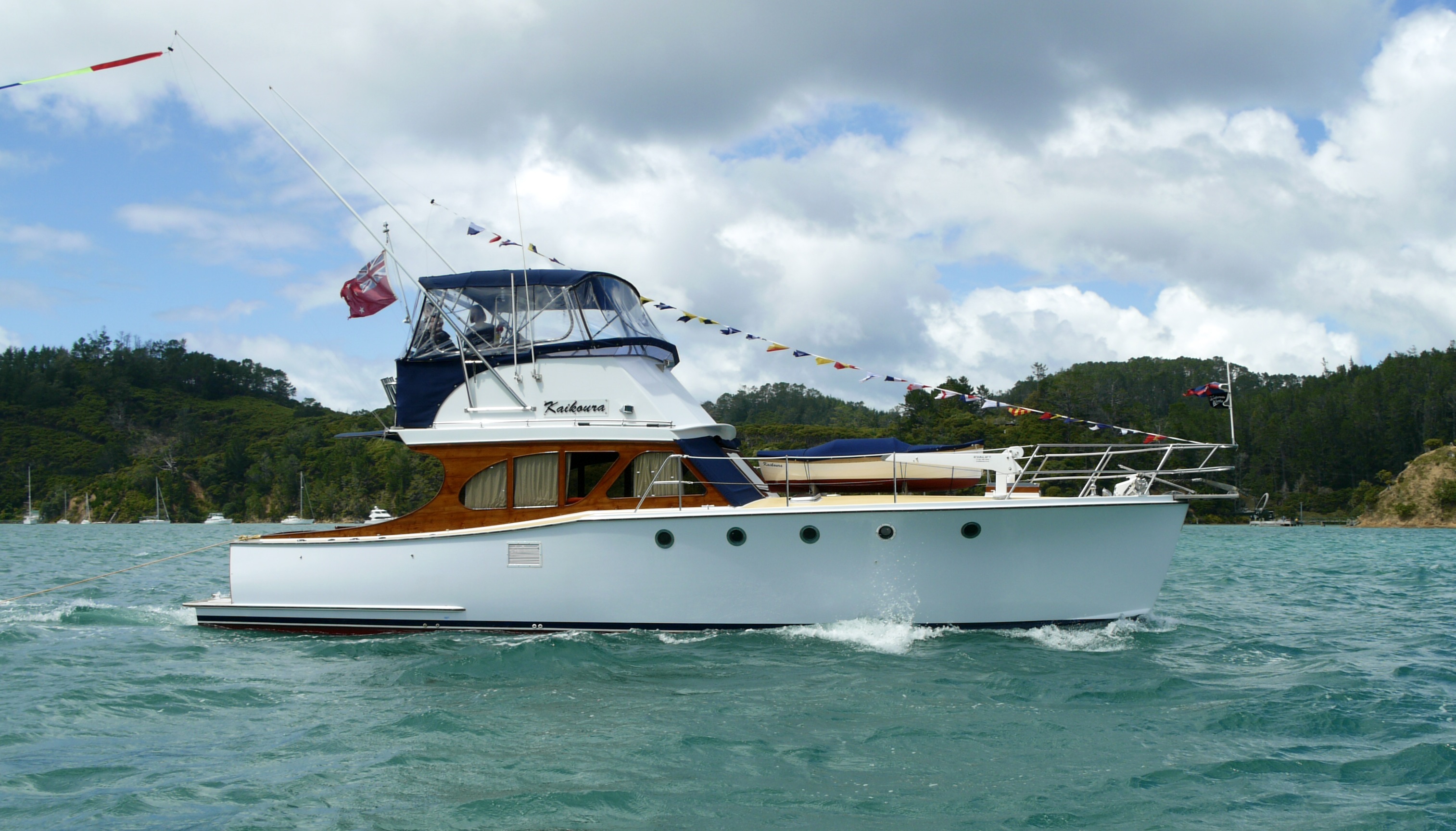
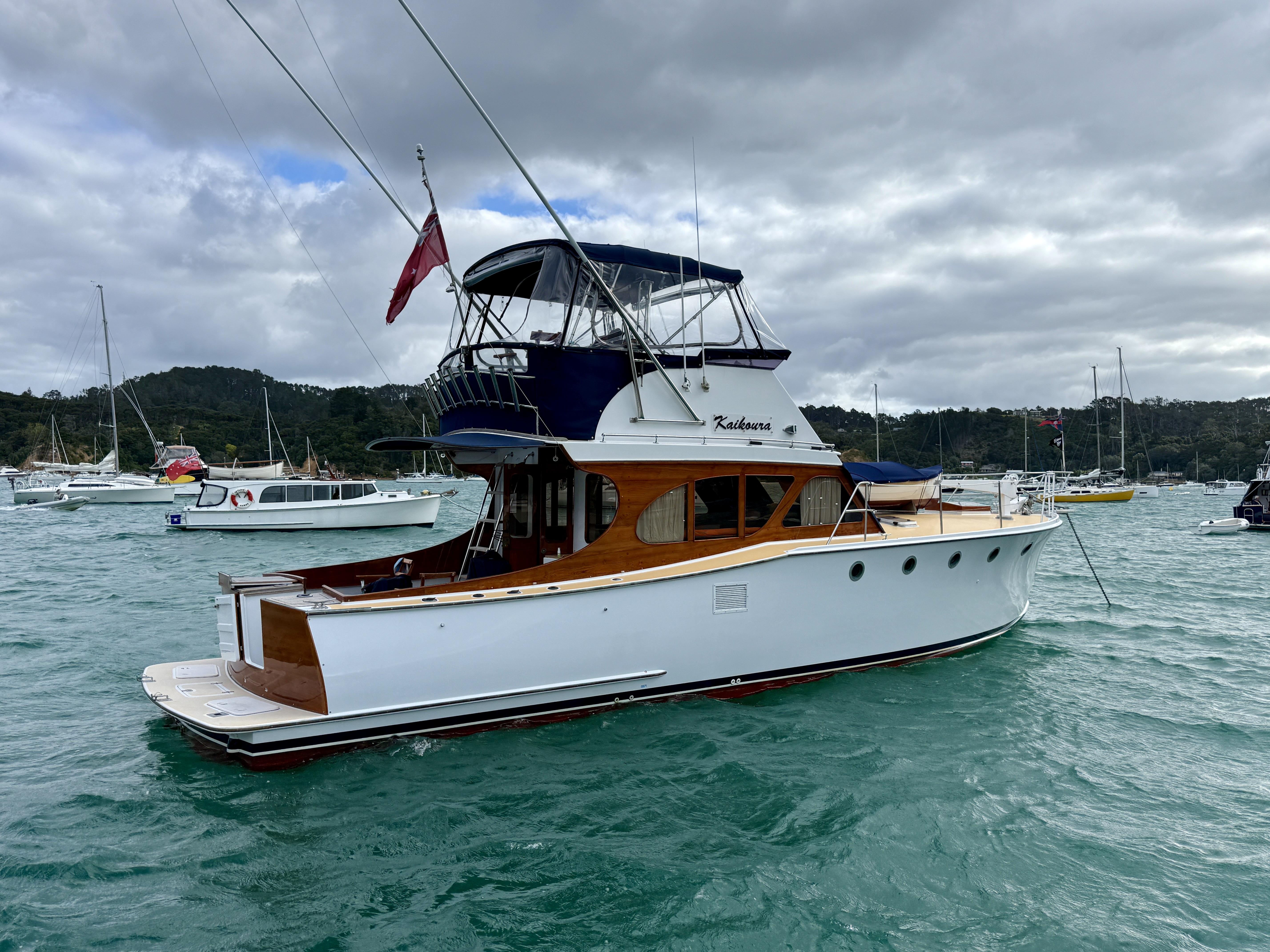
KAIKOURA WIH HER TWIN PERKINS V8 MARINE DIESELS IN BON ACCORD HARBOUR, KAWAU ISLAND c1984

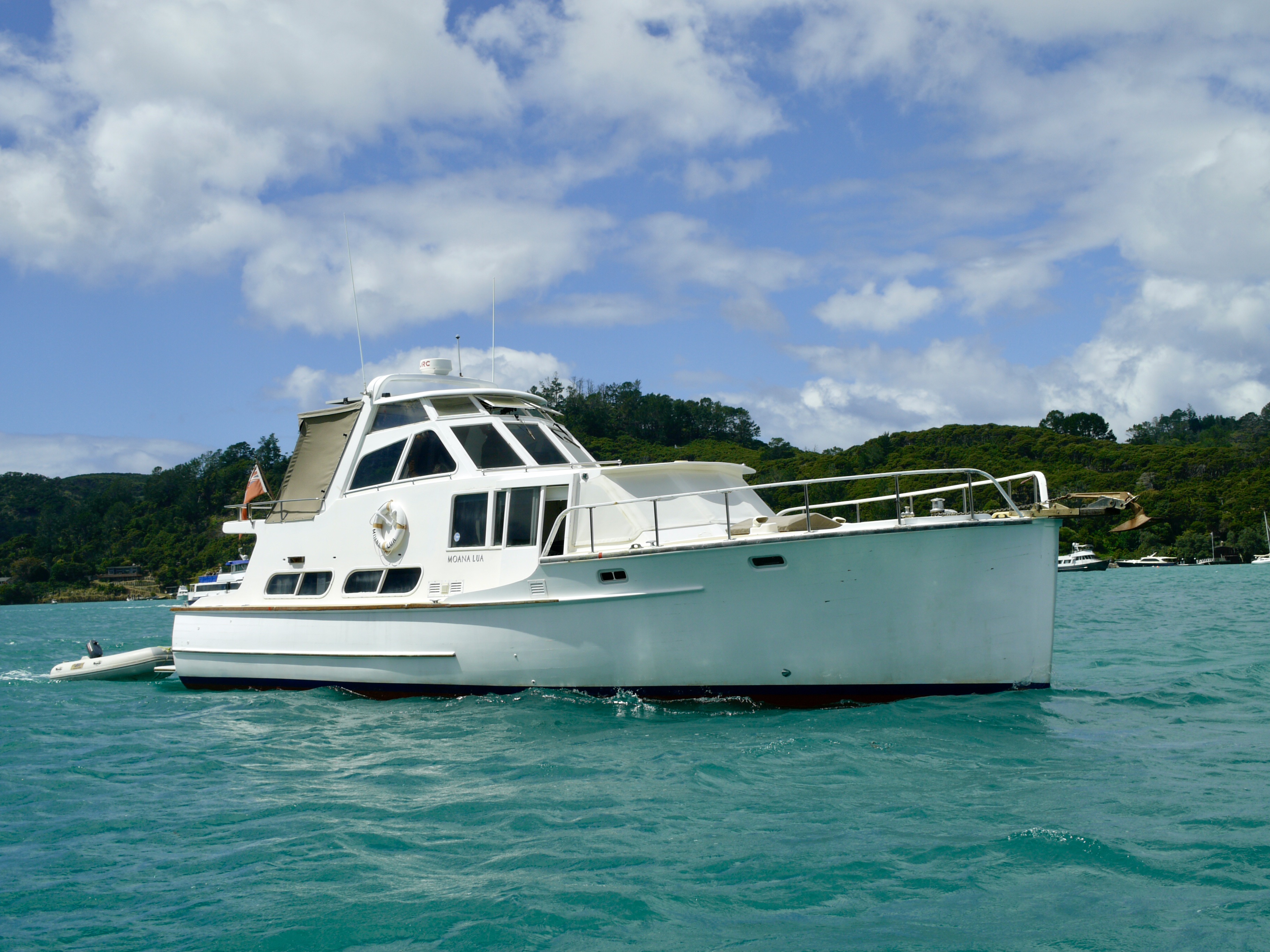
MOANA LUA WITH HER PERKINS V8 DIESEL ENGINE

LADY KIWI (EROS), POST HER PERKNS 510 C.I. V8 MARINE DIESEL ENGINE ERA

VALRAY WITH HER 2 X S6 PERKINS 6CYL MARINE DIESEL ENGINES

Whilst there are many thousands of Perkins engines in use in NZ of various types, the two referred to above are rare. The S6 engine was developed for the military in the UK during WWII, and Ray Hamilton, the harbour master for the Sandspit area at Warkworth, managed to import two of them a few years after the war. He kept them in a big, beautiful shed on his Warkworth farm for a good number of years until he eventually built his dream boat, the VALRAY, in that shed in the 1960s.

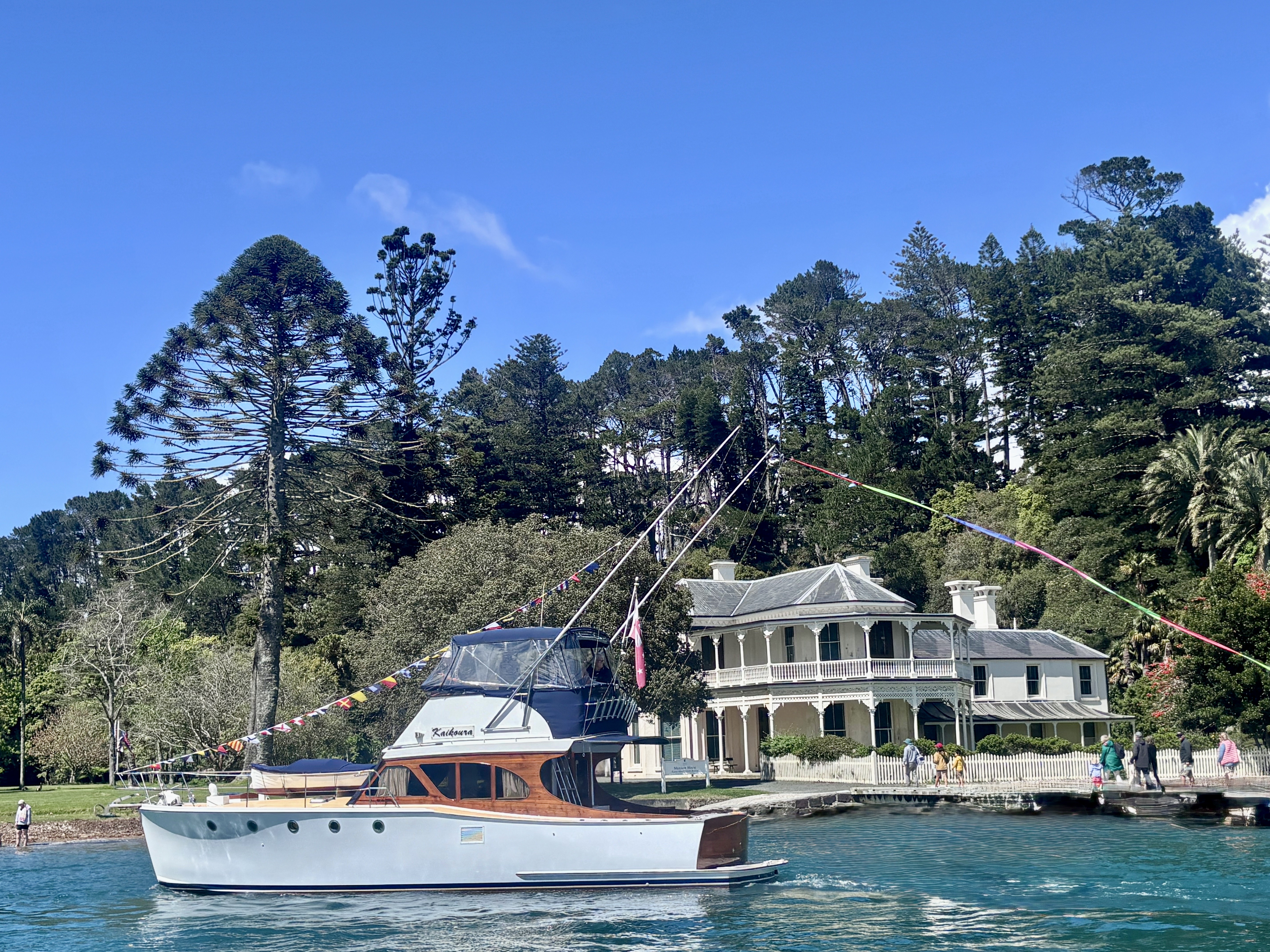
The 510 cubic inch, 165 hp V8 Perkins diesel engines are in only four boats that I know of. The Eros (Lady Kiwi) had two fitted when new, the Moana Lua had one fitted around the 1990s, I believe. I had two of them put in my own boat, TIARRI, a modified 40-foot Vindex, (we added an extra 18 inches of beam) when she was being built for me, and launched in October 1979. There is also the P Vos built KAIKOURA, which had her original two 165 hp Kermath Seamate Special petrol engines replaced by the Bridgeford family of Mission Bay, owners at that time, in the 1960s-70s. She has had two Perkins 510 c.i. V8s ever since. 

FOOTNOTE: I have not written about or included very small, very old engines and boats from the very early days of the 1800s to the early 1900s, where engines seemed to me to be mostly New Zealand-made, of one-, two-, and three-cylinder types. I have read some excellent, very knowledgeable writings from Harold Kidd, on these, and as he is an expert in this very specialized field.

INPUT ex ALAN SEXTON – Another great read from Ken and as usual a few comments following Ken’s sequence

Another relatively rare installation in NZ was the Cummins VT-370M, 785 cu.in turbo diesel. These were fitted to John Wiles Salthouse Giovanni II (since replaced with a Volvo), the Pelin Shikaree “Neureus”, owned by Haines Hunter’s Denis Kendall and twins were installed in the Wellington Police boat Lady Elizabeth II (the one that sank). This model engine was superseded by the Cummins VT-903M, approx 450hp, with a pair installed in ~55′ Pelin Eclipse “Trident” in the 80’s

Kelvin diesels – I believe there was a bit of a “Holden vs Ford” mindset between commercial fishermen when comparing Kelvin and Gardner diesels, I remember an ex fisho I worked for many years ago being a strong Kelvin man and very “dismissive” of Gardners

Doosans, Lees were selling these for a while. Another notable installation (a 320hp) was Conrad Robertson’s sedan launch Rampage , originally built for himself. I understand she has since been re-engined (Cummins?) and cockpit has been extended

The MAN V10’s from the 80’s mentioned were derived from a JV between Merecedes and MAN, https://www.curbsideclassic.com/blog/truck-history-the-man-18-3-liter-v10-the-last-on-highway-turbodiesel-behemoth-in-europe/ so are considered genuine MAN’s. Other notable installations include the Ted Ewbank designed “Kiwi Challenge” support boat for the 87 cup challenge and Neville Crighton’s Alan Warwick design Countach, both I believe 750’s. By the way Pacific Mermaid is advertised as being built by Salthouses.

The Perkins S6 was developed in the 1930’s for heavy trucks and was an enlarged version of the P series. https://archive.commercialmotor.com/article/21st-october-1939/26/perkins-ii-ices-new I believe the first installation in NZ was in Alan H’s “favorite” launch, the original Vindex. Wasn’t there for very long, replaced by the lighter and more powerful T6.354 in the mid 60’s

There was another launch written up in Sea Spray in the late 60’s which had a 160hp Perkins 504, cannot remember her name

Moana Lua has had quite a few engines in her life, I believe the current engine is a John Deere. When she was owned by Ken Burrowes from the late 60’s to early 80’s I understand she was originally equipped with twin petrol engines and then Ken replaced them with a “Torpedo” brand diesel engine (I thought he was pulling my leg when he first told me this), which i assume was from this factory https://tractors.fandom.com/wiki/Torpedo_(Rijeka)

Another quite common installation was the petrol Chrysler Crown, a marinised flat head Dodge. Eastern Star, Shipbuilders 32 previously featured here was built with one. This was replaced with a 75hp Ford in the early 80’s.

09-05-2025 INPUT ex JIM LOTT on Kelvin engines – Around 1981 I removed a Kelvin diesel from a yacht and replaced it with a Yanmar 2 cyl. The Kelvin had a crank start fitted and I don’t think there was an electric start at all. I am pretty sure it was 2 cyl. It was fitted in the 34ft Ladybird design (Bert Woolacott) named “Aorangi”. 

Aorangi was built by Ron Evans who lived at Bucklands Beach and Ron was a commodore at BBYC and later on manager at John Burns and Sailors corner. He built Aorangi late sixties or early 70s using full length kauri planks. The owner of Aorangi who I worked for was AAH Schulte, known as Hubert. The bottle green Kelvin was tucked under the cockpit driving through the quarter.

I was more interested in the new Yanmar I had to fit so I did not take too much notice of the Kelvin but I recall Hubert telling me he had given it to a transport museum. The Yanmar worked out fine and I moved the shaft to the centreline.

INPUT 04-08-2025 Perkins T12: A Wartime V‑12 Diesel Prototype

Purpose & Origin – Designed just before WWII, the Perkins T12 was intended for naval craft (motor launches, gunboats, torpedo boats) to replace petrol engines and free up Rolls‑Royce Merlins for aircraft use  .

Design & Specs A 55° V‑12 (two inline‑6 banks on a single crankshaft) with 6″ bore and stroke, giving roughly 33.3 L capacity. Each bank had independent systems (water, oil, fuel injection), enabling one half to run if the other failed  . Featured an unusual centrifugal supercharger driven from the crankshaft. Only 5–6 prototypes were built, with two installed in a Royal Navy launch (ML 570) from late 1942 through WWII  .

Performance & Fate It achieved the target ~1,000 bhp, but production never followed due to the availability of cheap American petrol engines  . After the war, one engine served as a stand‑by generator at the Peterborough factory into the 1980s  .

🔗 Links with Rolls‑Royce

Direct Association: The design was meant to replace Rolls‑Royce Merlin petrol engines in marine craft—similar size and layout for direct substitution  .

Personnel Connection: Perkins was founded by Frank Perkins and Charles Chapman—the latter previously worked closely with Rolls‑Royce founding engineer Henry Royce  . Chapman’s expertise evidently carried influence from aero‑engine principles into the T12 design.

Summary The Perkins T12 was an ambitious, Rolls‑Royce‑inspired diesel V‑12 project to militarize petrol-dominant craft space. Built quickly (~14 months) under Charles Chapman’s leadership, it showcased clever redundancy and performance—but never reached mass production, sidelined by US petrol engines. There does not appear to be any direct Rolls‑Royce technical design partnership—rather, the association comes from the T12’s role as a diesel counterpart to the Rolls‑Royce Merlin, not from a joint development.