Classic Wooden Boat Cruise – 72 photos

IMG_6530

_1080561

P1080594

S/S Romany

IMG_6582

IMG_6576

IMG_6568

IMG_6631

Arohanui

P1080595

P1080597

Trinidad

P1080581

Matira

P1080602

Ann Michelle

P1080609

Arohanui

_1080619

_1080621

Lady Crossley

Raindance CCC trip Aug2020

Raindance

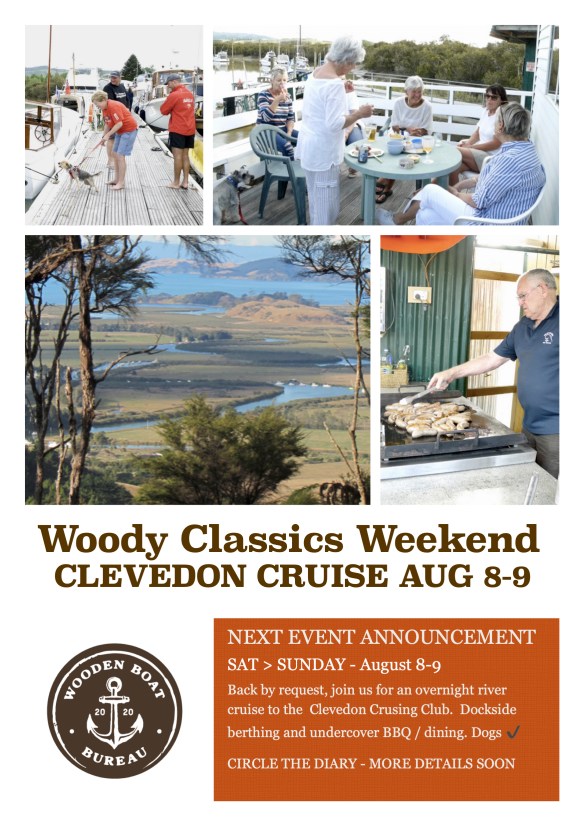
CLASSIC WOODEN BOAT WEEKEND CRUISE TO CLEVEDON  – 72 Photos 

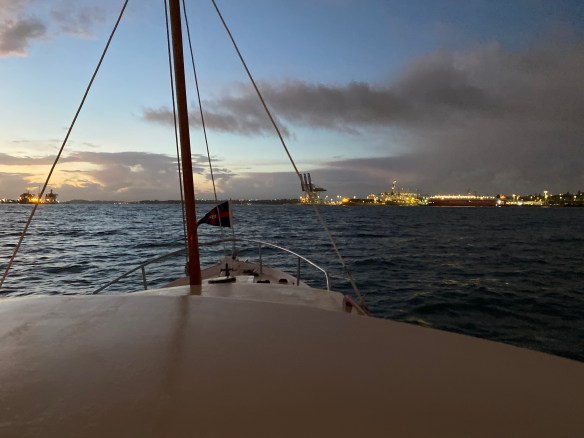
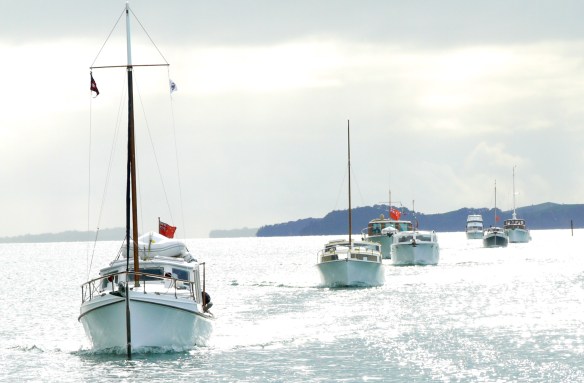
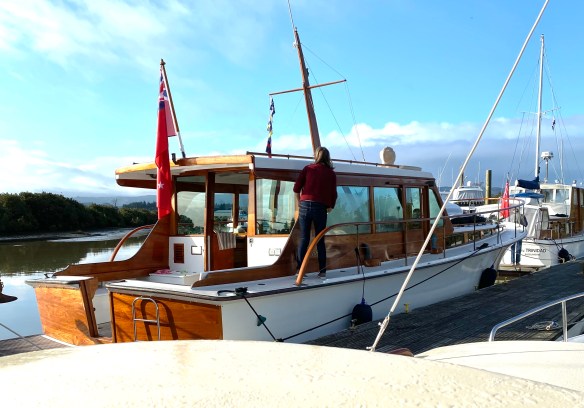
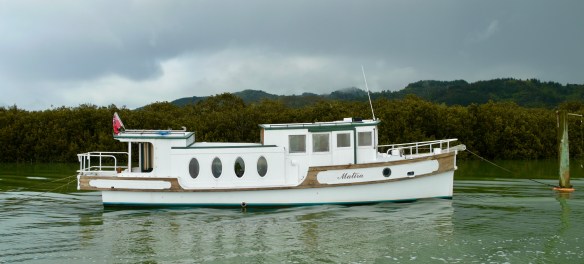
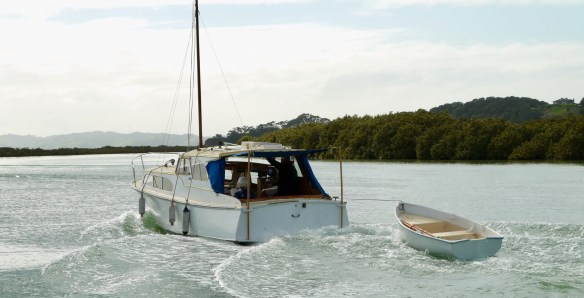
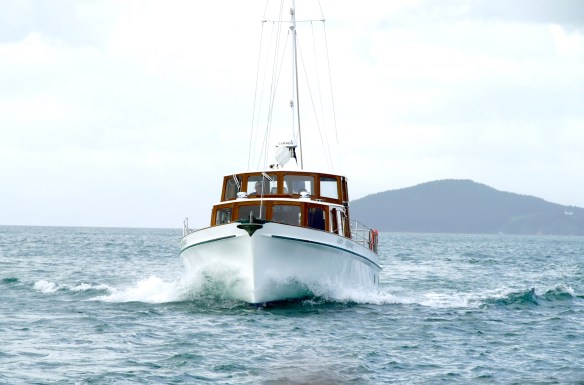
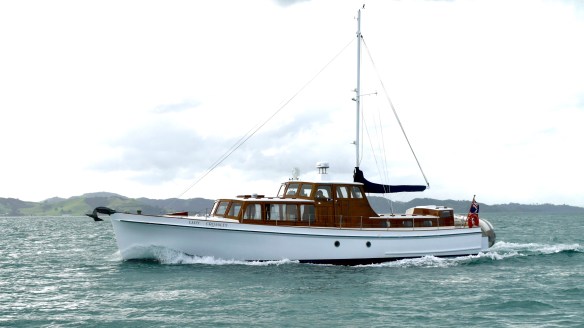
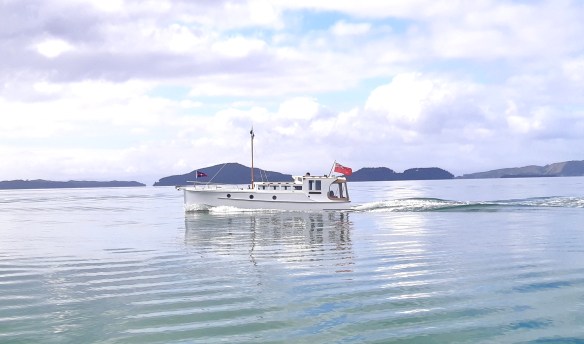
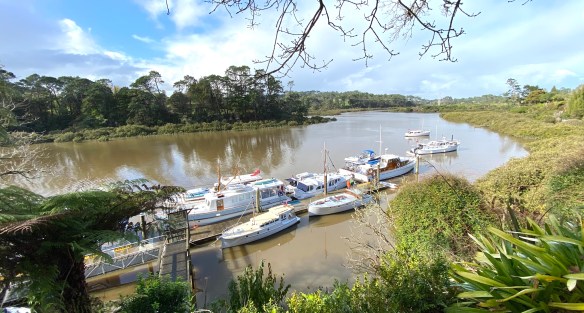
Lets be honest, a large chunk of 2020 has been very average – locked marina’s, no on-the-water boating and cancelled events. After spending the weekend on-board Raindance, cruising up the Clevedon river and over-nighting with 12 other woody boats at the Clevedon Cruising Club, I realised what I had missed the most was the sense of fraternity that comes with being in a space shared with people who love the same things as I do – woody boats. 
 
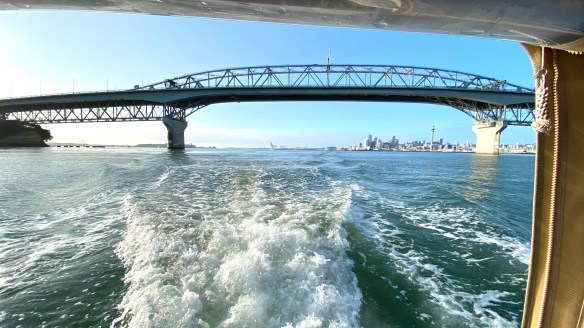
The trip up the Wairoa River revolves around a tide window, so it was a very early start for some of us, helped by coffee on-route, the smart ones left on Friday and were enjoying breakfast in a bay as we were sliding down the Tamaki Strait. We were meet at the river entrance by CCC member Barrie Abel who ‘piloted’ us up the river – no opps, so thank you Barrie.
 
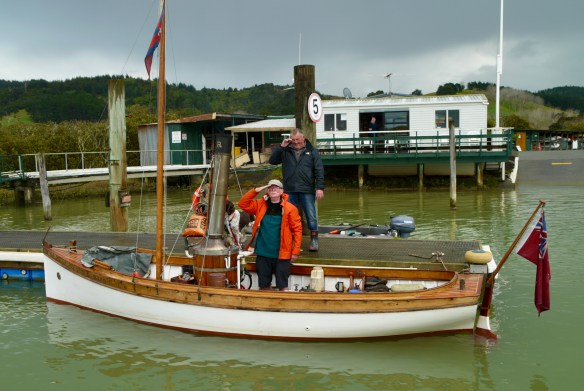
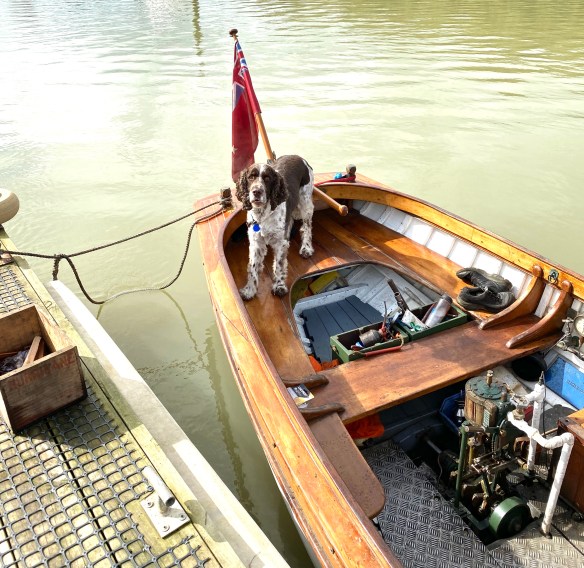
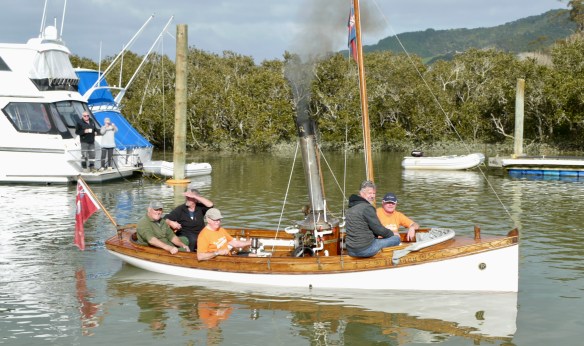
Awaiting for us at the CCC wharf was Russell Ward with his steam boat – Romany. The gent deserves a medal – all day Saturday and Sunday morning he was taking the CCC members and families + the woodys for rides. Romany is coal fired and as Russell tells everyone getting aboard – “if its metal – its hot, if its varnished – its dirty 🙂 . I’m a big fan of Romany, but the star was Cooper the English springer spaniel – I could have taken him home.
 
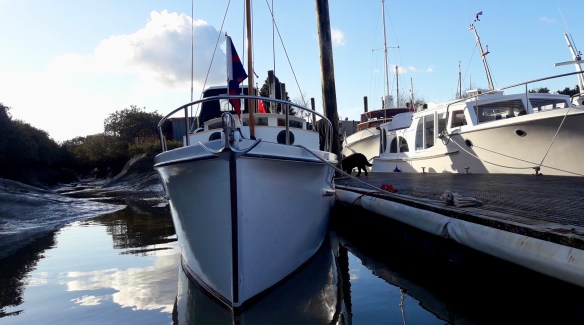
After some wonderful ‘air-traffic control’ we managed to get everyone either alongside the wharf or rafted to another boat that was alongside – soft bumper fenders along the entire wharf makes for very civilized berthing. However – no names, but one woody had to leave the Saturday night BBQ to check that their diesel fired on-board central heating outlet wasn’t roasting the fenders 😉
 
The day was very leisurely with most people enjoying a dockside lunch and CCC members dropping down to view the boats and people having steam boat rides. One woody took the opportunity to buy some fuel from the club’s dockside bowser, seems he forgot to check the level before departing, staring to become a habit……….
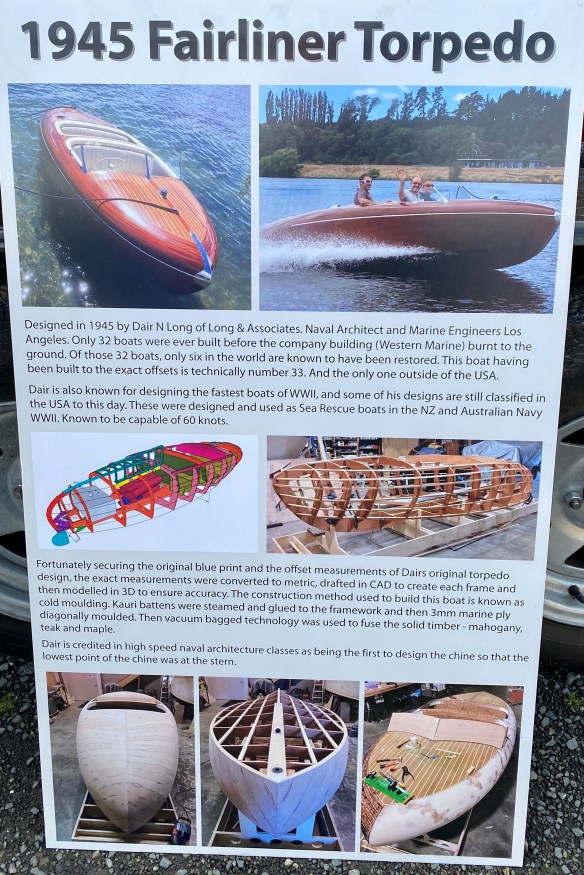
In addition to the activities afloat we were treated to some eye-candy in the car park – a stunning 1947 Ford Coupe and a replica 1945 Fairliner Torpedo speed boat.
 
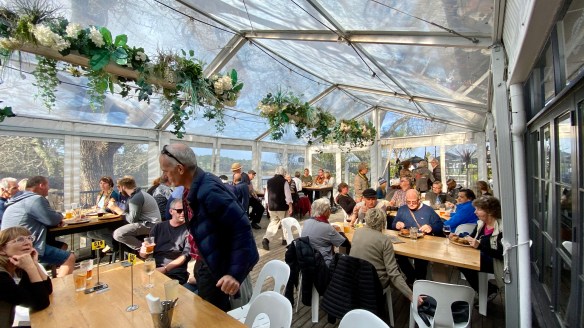
Come 4pm we invaded the CCC club house for the main event – as always amazing hospitality from the club and to use that old saying “a good time was had by all”. It was announced that our visit will be a compulsory event on the club’s annual calendar – so woodys – no excuses for missing out next year. Date to be advised.
 
Check out the outdoor heater – a piece of kiwiana and it worked a treat.
 
Overnight it was a tad nippy, with several re-filling the boat water bottles in the early hours of the morning. But we woke to a stunning day and departed at 10am for the trip home.
 
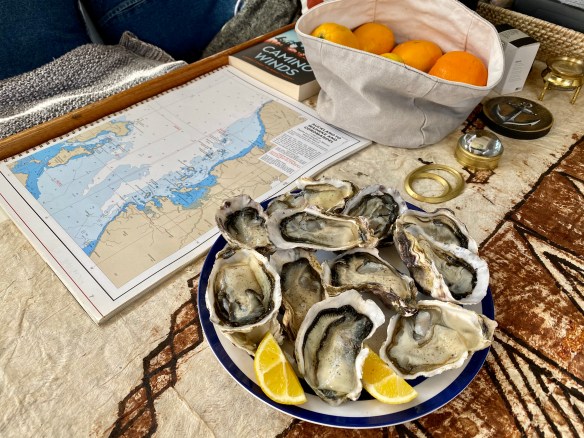
And the Clevedon Coast Oysters were divine – photo below was my lunch – another set were dispatched as a appetizer – 8.5/10 – not Bluff but on the day as good 🙂
Special note of thanks to David Cook (Trinidad) who is my sidekick pulling these events together 🙂
IMG_6567


Tides Out 🙂  (photo ex Alan Good)

CCC tide out

Southern Woodys – Work Boat Wednesday

IMG_0934

IMG_0829

Southern Woodys – Work Boat Wednesday
 

Iain Forsyth, owner of the 1961, 42’6″’, Miller & Tunnage built ex work boat – Meola, has recently returned from a trip to the other island. Ian commented that he stopped off at Carey’s Bay and saw Pakeha (recently featured on WW) on the slips after a large refit by Carey’s Marine and ready to launch.


Iain snapped the above gallery of workboats. It was opportune timing as the Bluff fleet were in port and getting ready for the season. Now I’m sure they aren’t all woodys but as per the NZ Classic Yacht Association rules (see below) metal is all good 🙂 
Screen Shot 2020-08-04 at 3.36.50 PM

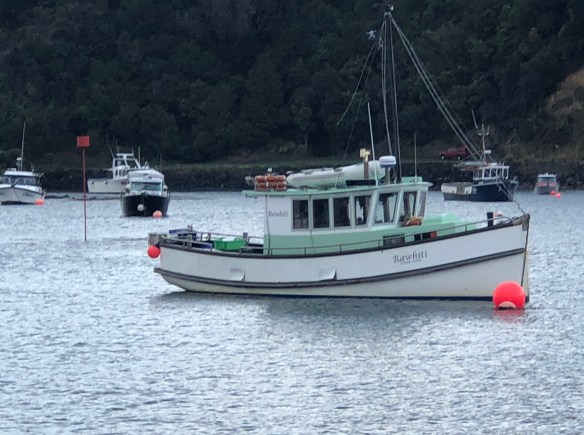
Log of The Rawhiti – bringing her home – Sydney to Auckland Passage

LOG of The RAWHITI – 1947 Sydney > Auckland Passage

The log is reproduced below via the generosity of the Mahurangi cruising club, who ran an abridged version in the 2020 year book. Click link below to read/view – its a cool story, enjoy

The Log of the Rawhiti

Today’s WW story is an amazing account of the return of the 1905 Arch Logan designed, Logan Bros built yacht – Rawhiti from Sydney, Australia to its place off birth – Auckland, New Zealand.

Almost immediately after her 1905 launch Rawhiti headed off across the Tasman to Sydney where she spent the next 41 years. Sadly the last 10 of those years saw her laid up on the hard, rapidly deteriorating.

Luckily for the yacht and all classic boaters in New Zealand, Sydney Ernest Marler (Hek to most) entered the scene and purchased Rawhiti and immediately made plans to sail her back to NZ. Some rather questionable repairs were undertaken and she set sail on December 17th 1947. Her crew for the passage was Hek + Peter Henley (navigator) Brian Lane (shipwright) Roy Johnson (bos’n and ships ‘surgeon’) Norman Vickery (signaller and radio operator)

The passage was recorded in the form of a ships log, written by Hek to his father Hank ((Henry Maitland Marler) outlining the voyage and the crew’s experiences. The trip took 11 days, said to be a record passage from Sydney to Russell, Bay of Islands, that was unbeaten until the 1970’s. 36 hours of the 11 days saw the yacht becalmed, so woodys she was greyhound 🙂

It would be an understatement to say it was a pleasant passage – Brian Lane is on record saying that they were very lucky, if the weather had got any worse they wouldn’t have made it, Rawhiti was hopeless at laying up into the wind. But very fast, built to race on the Waitemata Harbour not ocean passages. At times they trailed anything spare off the stern in an attempt to slow her down. Brian constantly thought she would split in two when coming down off a wave, no splash just a crash that Brian described as like being dropped off the back of a truck onto a concrete road. If he had known the yachts condition and blue water abilities, he would not have ventured past Sydney heads – but they did and Hek went on to raise a family with salt very much in their veins. Son Bruce and grandson Rod continuing the families association with wooden sailing craft.

In the mid 2000’s Rawhiti underwent a total rebuild / restoration while in the ownership of Greg Lee, Greg and master wooden boat builder Peter Brookes conducted the 7 year restoration. Without a doubt she is New Zealand’s finest restoration of a classic wooden vessel. If you search Rawhiti in the WW search box you will get an insight into the restoration.

I bet her crew on the passage back to Auckland in 1947 would not have imaged that 73 years later she would still be sailing and commanding a prime spot  on the world classic wooden boat stage. One of the worlds most admired (&selling) wooden boating items is the Calendar of Wooden Boats by Benjamin Mendlowitz and Maynard Bray. Rawhiti is centre stage in the 2021 edition for the month of March. As are two of our launches – Jason Prew’s – My Girl (April) and Peter Boardman’s – Lady Margaret (June). Owning 25% of that real estate is pretty good for little old NZ, but it comes at a price and that price is all the time that a small bunch of woodys put in making Ben and Maynard so welcome in NZ.

Copies of the 2021 edition are available at

 https://www.woodenboatscalendar.com/wooden-boats-calendar.html 


Help Needed Identifying Waiheke Launch

Screen Shot 2020-07-12 at 3.46.06 AM

Mystery Waiheke Launch

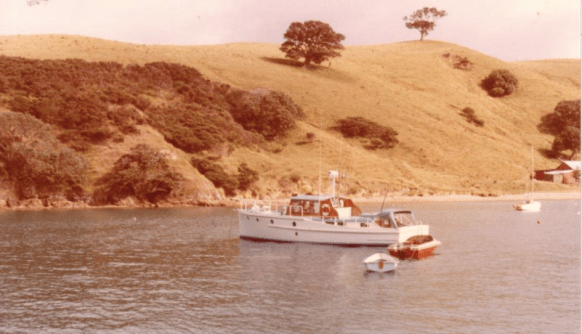
Today’s woody is seen anchored in Matiatia Bay, Waiheke Island and comes to us from the Williamson family collection via Mitchell Hutchings fb.
And that woodys is all we know. Looking for help on this one 🙂
Update ex Nigel Minn – She is Matanui – more here

Marne (Marie)

Screen Shot 2020-06-23 at 7.53.19 AM

Screen Shot 2020-06-23 at 7.53.46 AM

MARNE (Marie)
Today’s woody popped up on Lew Redwood’s fb, the photo is tagged Waitangi River, Bay of Islands and dated 07-01-1924. Those with 20/20 vision will note her bow displays the name Marie, but Harold Kidd has advised that when launched by Collings & Bell in 1919 she was named Marne.
She made a brief appearance on WW back in August 2013. Link below
Do we know any more about her?
Harold Kidd Input – She was built by Collings &Bell in 1919 as MARNE (although God knows why anyone who had been there would name a boat after that French battleground) for J Goodwill. No details of first engine but probably a Doman. That was replaced with a 4 cylinder (Doman?) when J Parker bought her in 1921. In Parker’s ownership she became MARIE and was fitted with a 40hp Fay & Bowen in 1923. The name MARNE stuck however through later owners. She was pretty well set-up and was valued at 675 pounds, a colossal amount at the time.
Alex Stewart bought her in the 1930s and called her MARGARET S.
see

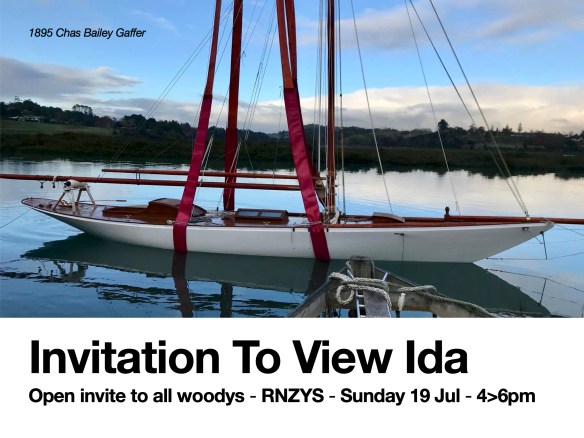
1985 Chas Bailey Gaffer – Ida – Invitation To View

Our greatest champion of classic wooden boating – John Street, has asked that I pass on an open invitation to all woody lovers to attend the official ‘christening’ of Ida, the 1895 Chas Bailey designed gaffer. The occasion will held at the Royal New Zealand Yacht Squadron on Sunday 19th July between 4 and 6pm.
The location provides a perfect platform to get up close to Ida and view the outstanding restoration by Wayne Olsen and the team at Horizon Yachts.
Ida is the latest addition to the majestic fleet of classic wooden craft under the guardianship of The Classic Yacht Charitable Trust.
Ida Invite
Woody Classics Weekend Clevedon #2 copy
RSVP waitematawoodys@gmail.com

Classic Wooden Boat Riverhead Cruise

IMG_6081


IMG_6100

IMG_6106

Classic Wooden Boat Riverhead Cruise

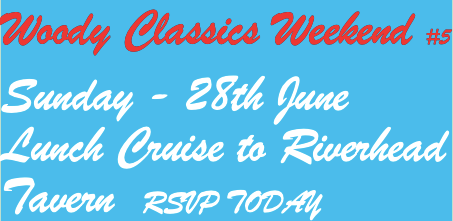
Yesterday’s creek (river) cruise to the Riverhead Tavern was another successful gig on the Woodys Classics Weekend calendar. 14 boats made the trip up the creek and with no ferries working, we had the wharf to ourselves. Always nice to be greeted at the wharf by the publican and woody boater – Stephen Pepperell. We enjoyed brilliant support and service from the rest of the team at the tavern insured the day went like clockwork and 85+people enjoyed a great catch up, chat and lunch. The sun shone at the right times (most of the day) so a good times was had by all. Wonderful to see the support from the people that made the trip by car.
Details on the next event soon 🙂
MORE PHOTO’S @ link below
My crew for the day Chris Miller has posted some great photos on his weblog, I was concentrating on helming the ship and given CM is a pro photographer I left the camera work to Chris. Enjoy 🙂

Te Kouma Woody Mooching

20200530_125010

20200530_124247

20200530_124110

20200530_124058

TE KOUMA WOODY MOOCHING

Dennis Macconaghie sent in the above collection of photos from Te Kouma Harbour. Dennis had just finished a charter and in his words ‘did a quick flick around the harbour to take a few picks of some local woodys’. Many thanks Dennis also good to see what’s wintering on the Coromandel side.
I have to say the all white double-ender (1st photo) is very salty – anyone able to enlighten us more on her?
Input from Jim Lott
The ketch shown in the photos is Aorangi II, a Bert Woollacott 34 ft design (Ladybird?). She was built by Ron Evans who lived at Bucklands Beach out of full length kauri planks over frames, launched late 60’s. From about 1977 until 2017 she was owned by AAH (Hubert) Schulte of Howick and berthed at HM Bay. Around 1980 the original Kelvin engine was replaced with a Yanmar and centre line shaft.
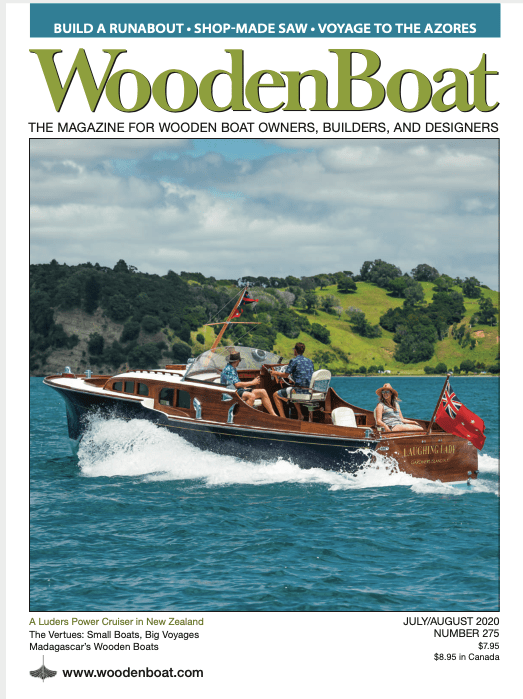
LAUGHING LADY STRUTS HER STUFF
Always look forward to getting the email from WoodenBoat advising my digital copy of WB is available for download – so pleased to see James Dreyer’s Laughing Lady has made the front cover of the July/August issue – well done James and everyone that rubbed up against her during her restoration.
Screen Shot 2020-06-12 at 5.54.19 AM
WCW Riverhead June2020
RSVP waitematawoodys@gmail.com

The Evolution of Pleasure Craft Communication

Screen Shot 2020-06-10 at 6.02.30 AM

THE EVOLUTION OF PLEASURE CRAFT COMMUNICATION

Next time you pick up a mobile phone to chat to another boat or log a trip report via the Coastguard APP, spare a thought for the boats of days gone by that had only one option (other than flags) for communications at sea. As a child I was fascinated by all these strange random words Zulu Mike Bravo Lima etc – my father being an ex-army comms man, morse was his thing. On holidays, myself and brothers were ‘made’ to listen to ships at sea and try to record the message, the winner i.e. most accurate, would win a chocolate.

WW follower Ken Ricketts is of an age that he has seen and experienced the evolution of New Zealand maritime radio communications and recently he wrote a comprehensive chronicle on the subject, which you will find below. It is worth a read to either educate or refresh yourself on the huge advances that have been made in the field. The story is peppered with a few tales directly relating some of our woody fleet (scroll over photos to ID the woodys) so hopefully that will keep those of you with a short attention span –  awake 🙂 Enjoy

Maritime radio-telephony in Auckland pleasure craft, had its first & humble beginnings in 1946, at which time, Ken’s father, Ralph Ricketts, entered the fray, with the second ever such installation, in Auckland, (the original first one was on the REHIA owned by Bill & Phyl Ryan at that time — who told RR about it) RR immediately bought, (as ultimately almost everyone did, once they knew about them ), an ex WW II war assets double side band, (DSB),  ZC1 MK II R.T., for  20 pounds, & fitted it to the Rickett’s launch – JULIANA, after which RR had a visit from a Govt radio inspector, who took diagrams of aerial format & layout, made various notes on his file of the installation, checked RR’s ability to use the set, made a test call himself, to “ZLD Auckland Radio,” sited  at Musik Point at that time, on the entrance to the Tamaki Estuary, & made sure RR had a “Restricted Radio Operators License,” which was required in those days, by all radiotelephone operators, on all pleasure craft, – now long since discontinued, & he allocated JULIANA the call sign of ZMYP.
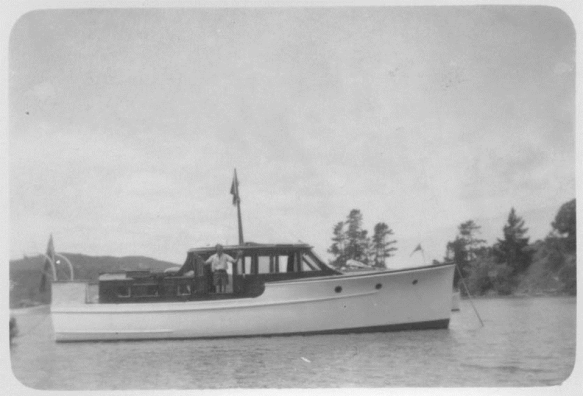
REHIA 1948

JULIANA & AOMA c1953

Originally, there was only one call frequency, & that was 2012Kh, in 1946, used for all purposes, but not too long after that, 2012  was reallocated exclusively for harbour control use, to the Auckland Harbour Board, & pleasure boaties were allocated 2182, the international distress frequency for initial calling to government shore stations, & 2162 for ship to shore working, & 2456 & 2638 for ship to ship gossiping. 

The 2162 working frequency, was later changed to a duplex frequency, with 2162 for listening to ZLD, & them receiving on 2207. 

The frequency of 2045, was allocated around 1950, for use for transmission between privately owned shore stations & boats, such has Port Charles Radio, (the legendary Jim Smith owner/operator ), Gt. Barrier radio , Awaroa Radio etc. 

These shore stations were used extensively, for many years, from around 1950, by many commercial fishing boats, working throughout the Gulf, many of whom, reported in daily their positions, usually around 6 pm. There were also many pleasure craft which used the service, & RR was one of them. He joined the Port Charles association for most of his boating life with legendary Jim Smith the owner/operator. RR or Ken would call Jim every evening at around 6pm & report in our position at that time. 

You paid a small annual fee usually, to join their non profit associations, to cover their running costs & they kept records of your locations, times of calls, assisted in any way they could, with any problems you may have had, etc., & these associations usually operated, for several set times, of about 15 to 30 minutes, each day. Ken thinks some may still exist on the VHF channels, possibly there is one on Gt. Barrier Island.  

Auckland Coastguard was also allocated the frequency of 2128, (from recall), for ship to Coastguard use. 

By the early 1950s ZLD had introduced a radio telegram service to land based recipients who had a telephone number available, as the address & the telegrams would be sent by ZLD to any entity via that phone number ( & later delivered in hard copy via normal post to the address of the phone number), & if a reply was quested, or anticipated, they would telephone it through immediately, whilst the ship waited on standby, & ZLD would call back with the reply ASAP. 

The cost, was fairly expensive for the era, & on a cost per word basis & the costs were charged to the landline phone number. This service stayed in place as far as Ken knows right through in to the VHF era.

Land based parties, could also send radio telegrams to boaties, with the address, via the P & T telegram phone number, which must include the call sign & was as follows; (as a example) Mr. Smith Vessel ZMYP JULIANA C/- ZLD AUCKLAND RADIO. 

ZLD at the end of its 3 or 4 hourly daily weather forecasts & shipping information, would give a list of all telegraphic traffic held for all vessels including of course, & very importantly, their call signs, & most would listen to these broadcasts, as often as possible, & advise friends on other boats, if they were near at the time, that  ZLD had a message for them.

By about 1983 this communication with the outside world was taken a step further, &  ZLD introduced a VHF radio telephone service, which many mature old time boaties may recall, where a ship could call ZLD, on channels 22 & 23, in the  Auckland region, give them a landline number, which they would dial & then patch your call to ZLD through, to enable you to talk direct, to the subscriber, which whilst it was a good service, it had its shortcomings & limitations, shall we say, as any boatie who by chance or otherwise, dialled into ch. 22 or 23 on his boat, would inevitably be privy to what were sometimes surprising, & very private conversations, also necessarily, only one party at a time in the conversation could speak, & the other had to listen, & one had to say “over,” at the end of each segment of conversation, to enable the other party to know when to respond, 

Calls to boaties from landlines could also be booked with ZLD & ZLD would call them back, when they were able to make contact the vessel, the land based party wished to contact.

There was one other form of radio communication which evolved & inevitably found its way in to the boating world for a period in the 1970s/80s & that was  Citizen Band (CB) radio transmitting communication equipment, for short distance communication, unrestricted in it use, & it could be used by any person, at any place for any lawful purpose, but it was restricted, to a very low aerial output power in all sets, which could be bought & licensed extremely cheaply, much more so, than proper marine  purpose built equipment, & this medium became popular for a period, in the  1970/80s, with some  boaties, mostly in the smaller cheaper craft range, where cost was a really important issue for some, but whilst it was cheap, it had many shortcomings, including its very short transmission range, & as there was no structured organisation of any type, either private or govt., monitoring it, one simply in event of distress, had to rely on someone within the range for your set, hearing your call, & helping as best they could, one way or another. So whist it was so very limited in its rescue value, nevertheless it was better than having no communication at all, if in need of help. 

These sets had a good number of preset channels  & operated on the HF 26.500 Mh band in NZ., which was a different frequency range to many other countries, including Australia, which used 27.500Mh), & call signs were allocated to owners on a regional basis, depending on where you lived.

Ken installed one on his 40′ launch TIARRI, when launched in 1979, in order to have maximum possibility of assisting boats, in times of distress or breakdown. TIARRI’S main call sign was ZM3199, which, along with the radio, Ken took from his first boat, FLYING SCUD, which was issued to F.S. in December 1953, when she was built & launched by Roy Lidgard, just after the advent of the letter number era – only 1100 numbers in to the new system.  
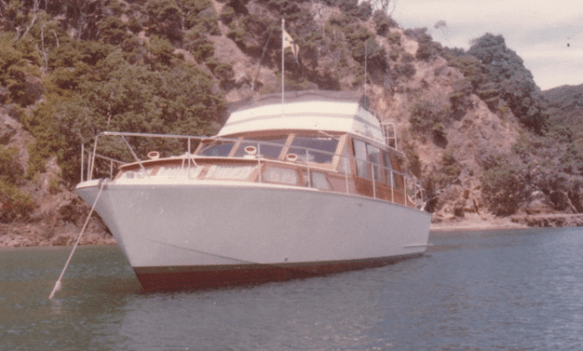
TIARRI

FLYING SCUD 1975

There were the very odd exceptions, to the above early days policy, & call signs, mostly around the 1940s era, almost all of which, were for boats, where they were owned by the owners of private islands, in the Hauraki Gulf & Northland, & perhaps the Sounds, where they had a licensed, private, island based set, on their island, & a special boat call sign allocated to their boats, for keeping in touch with their home bases, usually where these boats were their sole means of access, to the outside world, & these sometimes, were of a number letter combination, with just one or two numbers usually, & had just one specific frequency, to operate with.  

All transmitting in DSB & SSB sets was technically very accurately totally controlled, often by a plug in type internal “Chrystal Control unit,” or similar, for each frequency,& fitted to all sets for all transmitting frequencies. 

There were later several lower end of the High Frequency, (HF) band, frequencies added in the 3, 4, & 6, Mh bands, mostly used by off shore boats, out at sea. 

This cumbersome, & red tape process, of registration, continued for a good number of years, right through the initial era of “ Double side Band “ transmission, & in to the upgrading of that era, to “single side band” (SSB) transmission, circa 1970s

After single side band transmissions became compulsory, around the 1970s this required the purchase of a new set, & the only double side band frequency which was still legally usable, was the international distress frequency of 2182 Kh,  & this could only be used for calls to govt shore stations (ZLD for Auck)  or ZLW for Wellington, as examples),  for emergencies only, & craft which did not wish to outlay for a new SSB set, or alternatively still keep a 2182 set after they bought a VHF set after they were introduced, could modify & keep their old set, & were then reallocated a compulsory special “ZMX” based call sign, starting at ZMX2001.

These days ZLD has left Musik Point, & the government’s ZLD & ZLW (& ZLB in the South Island,) which all later came under the umbrella of Telecom, being the replacement that took over from the old P & T., which in turn, has now become a totally new entity, as “Maritime Radio,” & under the umbrella through various subsidiaries, to “Maritime NZ.,” being another different Govt Dept, with the  transfer becoming effective from midnight, & starting on the 1st October 1993 & the operators of which, are now all based in the Old Radio NZ Avalon building, in Avalon, Lower Hutt, Wellington, with transmission facilities, in Wellington & Taupo, plus a network of repeaters, scattered around the country monitoring the whole country, which is now all controlled from this one location.

In the later 1970s early 80s Very High Frequency, (VHF) maritime radio was introduced, which gave many benefits, with all its ongoing ever increasing refinements, & installation of shore based repeaters, on high ground, throughout the country, which  has now ultimately totally replaced the old Medium Frequency DSB & SSB sets, with many advantages to all users, for all local NZ & inshore boating, along with the discontinuation of licensing of individual operators, & inspections by govt inspectors, of all boats so fitted, with RT equipment. 

Also, Radio Spectrum Management, the govt department which these days controls allocates & administers all radio & TV transmissions, call signs & frequencies, has vested in NZ Coastguard, the authority to issue calls signs on its behalf, of a mixed letter number type, such as, (possible examples only), ZMQ 2947, ZMW4526, ZMR 2937, & so on, as a result of the huge demand for these, these days, & the time consuming process it used to be, for R.S.M.

Originally in 1946, this was all under the umbrella of the Post & Telegraph Department to later become Telecom, & remained so for many years, until 1987, when it all started to change & we have ended up, for a good number of years now, with RSM, as the entity in control.

The pleasure craft call sign evolution, & changes to it, are as follows;

As above, all craft up until c1953, were all 4 letters alone.

As they were beginning to run out of call signs, around 1953, the Govt. wrote to all pleasure craft owners, requesting they approve the replacement of their existing all letter call signs with a letter number combination, starting originally, with the first reissued call sign of ZM2001. 

It is important to note that the Govt., could not insist on this by law, & only request it, & if the owners did not consent to the allocation of a new call sign, the original then remained with the boat, & there are a few of boats that still have their original all letter call signs even today. 

Neither Ken’s father nor the owner/builder of GAY DAWN, Bill Waters, who RR bought the boat off in 1956, surrendered their original all letter call signs, for their respective boats, —  (see image above of GAY DAWN taken c1965, showing clearly, a typical DSB aerial set up as used for many of the DSB, SSB, medium frequency sets of that era), —  RR sold JULIANA in 1956 with ZMYP, (which was somewhere along the way, later either abandoned, or replaced, with letter number combo call sign), & now, as referred to below, is reinstated to her for life. RR bought in 1956 & sold in 1970, GAY DAWN, with ZMIV in place, which however, also later along the way, was replaced by persons unknown, with a letter number combo, at least once, note: ZMIV has now been reallocated to the Rickett’s family and used on the vessel ROSEANNE, which is owned by Ken’s daughter.

GAY DAWN C.1965

Such was the ever increasing size of the “snowball,” of pleasure craft sets, that it was not all that long, before the original issue of the ZM2001 to ZM9999 were all allocated, & we then saw the issue of  ZMA2001 to ZMA9999, followed by the final issue to the SSB era, which was ZMY2001 to ZMY9999. 

It is important to note, that all call sign issues right from ZM 4 letter, ZM+, ZMA, ZMY, & ZMX, & all Coastguard issued call signs are approved & provide for use of all VHF sets.    

All letter only call signs, which are all just 4 letters alone, must still be issued by R.S.M. direct, & are mostly reserved for all Govt vessels,(eg., all the Police DEODAR launches were & still are, all allocated ZMIH, during their term of service to the Police), also some very large off shore fishing vessels, & some NZ based pleasure boats, that cruise off shore, or are capable of cruising offshore have these call signs allocated as well. 

Other pleasure craft, that have some classic, historical, or other special significance, are also issued these, at the discretion of RSM.    

Ken has enjoyed a close & good relationship with RSM, for many years, & there are some interesting background stories relating to the issue of some of these special allocations of all letter call signs, which Ken has been associated with, & some of these are as follows. There are a tiny number of pleasure craft that were built prior to about 1953, where the owners did not approve replacing their original call sign, which the dept. would have requested, but could not insist upon in c1953. 

Two examples of this are as follows; 

One with its original 1946 issued call sign is RAKANOA, which still has her original call sign ZMTF as issued when new, & the other, is Owen Foster’s WAIRANGI, also with her original call sign of ZMTM.

RAKANOA c1948

WAIRANGI 2020

A fairly recent approval exception, is the issue of ZMPY, to Peter Loughlin’s Colin Wild built LADY MARGARET, which was first issued to her, in 1941, by the Navy, & is recorded as such on her British Ship registration, (see below), & as a classic craft, with this history of her call sign, Ken assisted Peter, to secure this for her for life, when he bought her.

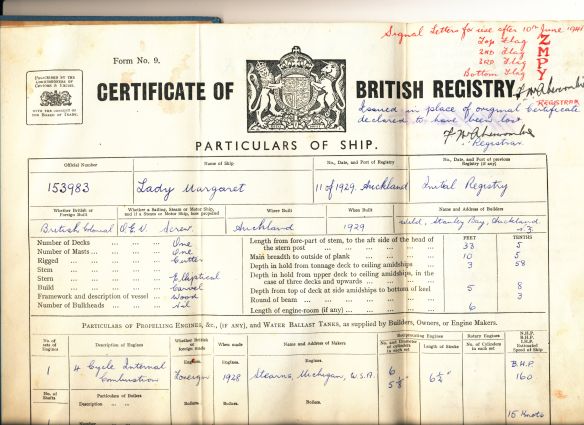
LADY MARGARET

LADY MARGARET Registration certificate P1 (TOP) jpg

Likewise Francis Uren’s “W1”, was issued with ZMWI in 2014, which is another detective story. W1 was originally brought to NZ by the Royal New Zealand Air force in 1941, as their extremely fast, & prize patrol craft, & given in the circumstances, the logical Air force number of “W1”, which has now been reinstated to her, as her name, by present owner Francis, after a long period of being known as CARROMA.  

W1 c.1942

As she is now W1 again, Ken approached RSM, gave them her history, & they in turn, approached their counterparts in the military, to see if they could uncover her original WWII call sign, but unfortunately all those records have been lost, so as an alternative, RSM offered Francis the call sign ZMWI. – They could not offer ZMW1 as international radio spectrum law, prohibits that type of call sign, worldwide, so she now has ZMWI for life, free of charge.  

W1 2014 - 1

El Capitan is another interesting story, as she now has ZMEC. It goes like this; She was built c1961, by a farmer, in a shed on his farm, to a Chris Craft design, in Ohakea, & he carted her around on a big trailer, & used her at Taupo, & the Sounds, until 1976,  after which time, she sat in a shed on his farm, never to move again, until bought by Tony Mitchell, of Lake Rotoiti, off his estate, post 2000. When Tony bought her, she had a Coden 2+ Mh multi channel, medium frequency, marine RT,  which would have been fitted almost certainly, when she was new, which has now been replaced with a VHF, but for which, there had never been a marine call sign issued, as the original owner, was also a radio ham, with a “ZL#### ham radio licence & call sign, which automatically allowed him to use this call sign for his boat. Ken provided on Tony’s behalf, all relevant info to RSM, & requested, & they approved, ZMEC (El Capitan), which she also has for life.

EL CAPITAN 2012

Ralph Rickett’s JULIANA, now renamed MARJORIE ROSA, now also of Lake Rotoiti, has been reallocated for her life, her original call sign ZMYP, as issued to RR in 1946. Ken told RSM of her history, as the second ever pleasure craft in Auck., to have marine RT, in 1946, & they have approved the reissue to her of her original ZMYP, to Fraser Wilson, her present owner, for her life. 
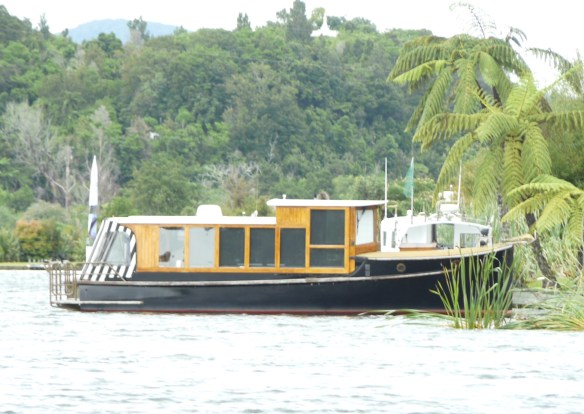
Marjorie Rosa : Juliana 2019

Marjorie Rosa : Juliana 2018

Story told by Ken Ricketts, edited by Alan H.
Tall Ships Regatta – Bay of Islands 2013/14

DW-140104_DSC5828

Ranui

DW-130105_DHW7886

Undine

ts-2013-2

Colonist

DW-140104_DSC5970

TALL SHIPS REGATTA – Bay of Islands 2013/14

 
Today’s photos come to us from professional photographer Dean Wright’s sailing archives and show a selection of woodys partaking in the annual BOI event.
Nice to see Ranui with all the washing on the line 🙂 , these days she tends to motor sail around the Hauraki Gulf.
 
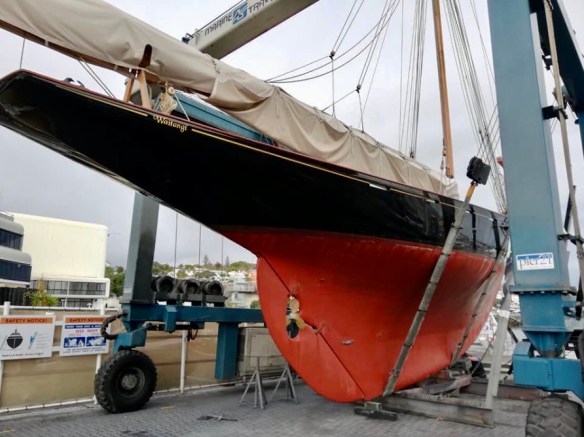
There are not a lot of yachts these days that look even better out of the water – one such beauty is hauled out at Pier 21 in Auckland at the moment – Waitangi , designed and built in 1894 by Robert Logan Snr. Like most of these old girls, a killer for marina fees i.e. 36’ waterline but 58’ on deck – with a 74’ sailing carrying length. Photos below ex Larry Paul
Screen Shot 2020-06-05 at 8.16.28 PM

Screen Shot 2020-06-05 at 8.16.01 PM

Screen Shot 2020-06-05 at 8.16.15 PM

Tradition

Tradition @ Mahurangi Regatta 2016

Tradition at the Mahurangi Regatta 2017

Screen Shot 2020-05-16 at 9.18.55 PM

The 'Bar'

The Bar

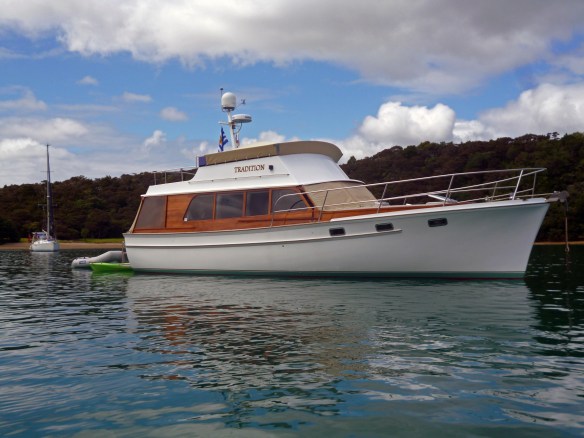
TRADITION

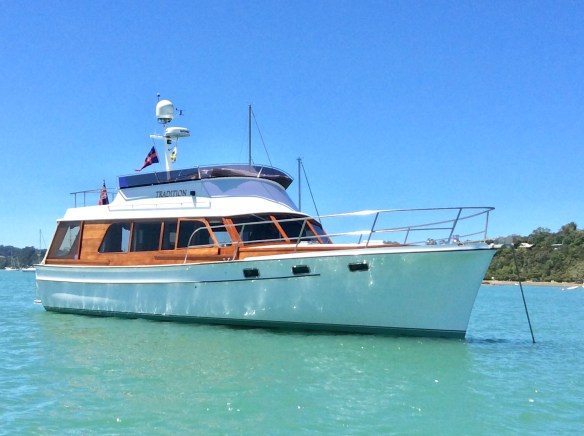
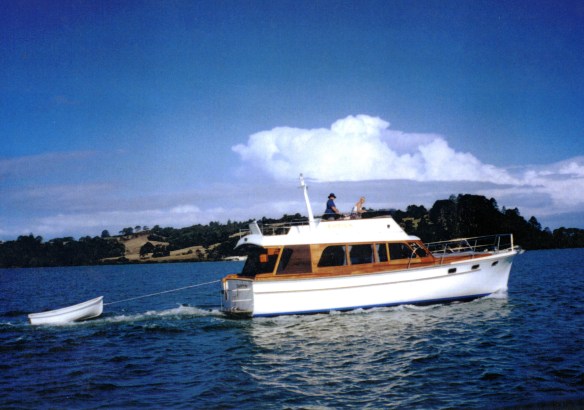
The 44’ launch Tradition slips comfortably into the woody ’Spirit of Tradition’ (excuse the pun) category – designed by Bo Birdsail and built by Geoff Bagnall, she was launched in 1990 for Rhys & Dick Boyd. Today’s WW story is a first for WW in that the format is an interview by Keith Busch (a former owner) with Rhys and Dick. Make yourself a cup of something and find a comfortable chair – its a cracker read and really showcases what a talented boat builder Geoff Bagnall is. Special thanks to Keith for pulling this story together – simply brilliant.  Full specs and ownership summary on the vessel at the end.

Keith : What do ‘Tradition’ and the Auckland pilot boat – Akarana, (designed by A. J. Collings & built by W. G. Lowe in 1960) have in common?*

Dick : I went into the fishing industry in the seventies. By 1985 I had a quota of my own and a purpose built long-liner – Kerama. Then the new owners of the company I worked for (Polar Seafood Co.) wanted me to come ashore and be fleet manager for all their trawlers.

Rhys : Anyway, one day he had just unloaded a catch and we were on our way home to our place near the Tamaki Bridge and he told me just how much he’d got per kilo for the fish he’d landed, and it was astronomical! Then he slipped in that he wanted to build a launch.

 Keith : So what year was this?

Dick : I would say it was 1985.

Rhys: So I said, ‘We’re not building a launch!’, and he said, ‘But I’ve got everything for it’, and I said,  ‘I don’t care, we’re going to buy another fishing boat, with prices like that we’re going to be loaded!’ So next day I go to work and on the way home I thought, ‘Oh that was a bit mean’. So he comes home that night and I said, ‘We need to have a talk’, and he said, ‘I’m going first. I’m building a launch!’, and I said, ‘I was just going to say that!’ So that was the beginning, it was like, ‘Oh I can’t do that to him, he wants it too much’. So we didn’t get rich, but we did get Tradition.

Keith : So where did you start, did you go for a builder or a designer first?

Dick : Well the designer was Bo Birdsall. I went to see John Lidgard first and I asked him to draw me a boat, but after a few sketches I wasn’t getting what I wanted. Then somebody, oh Roy Rimmer, said to me try Birdsall. So we met with Bo and he drew it up. We were real happy with his hull, it was great. But I still had a few questions about his topsides. Anyway, when we got Geoff onboard we thought we could start from Bo’s drawings and go from there, so that was the beginning of it. Bo was a real nice guy and extremely clever. He was good to work with.

Keith : So you were happy with the hull, how’d you end up with that beautiful topside?

Dick : Well what happened was, Bo drew it up and he didn’t include the sedan roof on the fore deck, so it was just the main cabin sitting on the deck. But when Geoff was building the boat the radius that had to go into the forward area to give head room, well it just didn’t work. Anyway Geoff came up with the idea to put a sedan roof on the forward deck and just that small addition balanced out the main cabin nicely. It’s one of those things with a good builder, he just put up some false frames, then let us have a look at it and it worked. He’s got a great eye for those things you know, always looking as he goes.

Rhys : We didn’t get a drawing of it and say, ‘Yes that all works’. All of us looked at her as we went.

Dick : Of course Geoff would have put a little more sheer on it, because that’s just Geoff, but I liked Bo’s idea of the hull. It’s very hard during a build, a lot of the time you don’t know what you’re going to end up with. We had ladders all over the show. You’d be climbing up and down and looking along the boat and trying to imagine what it was going to look like in the water. Later we were down the side of Waiheke and this guy passes and yells out ‘Geez someone made a great job of that!’, so I think it in the end she works.

Keith : So going back a bit, how did you get Geoff Bagnall as your boat builder?

Dick : Well okay, first we started talking with Brin Wilson’s boys Richard and Bob Wilson, because Bo’s wife was related to the Wilson’s. Bo said ‘it would be good if you got the Wilson’s to build it. I’d had nothing to do with them so I got a price from them and I though ‘Well we’ve struck a bit of a wall here!’. So I talked to Bo and he said ‘Okay, then try young Bagnall’. So I contacted him and he was interested at a price we could manage and we went from there.

Keith : ‘Young’ Bagnall! He’s just retired! How old was Geoff at this time?

Dick : Just around forty or something about that, because he had built – Nazareth and the yacht. He’d already built several boats, oh and he’d built the one that hit the bricks going over to Barrier (Onetunga?), oh and Katoa. He would have built about 8 or 9 boats by then and he designed some as well, I think he designed Katoa. His boats are a little hard edged to my eye. More ‘solid’ compared to Bo’s lines I think.

Keith : So where was she built then. Was Geoff off on his own?

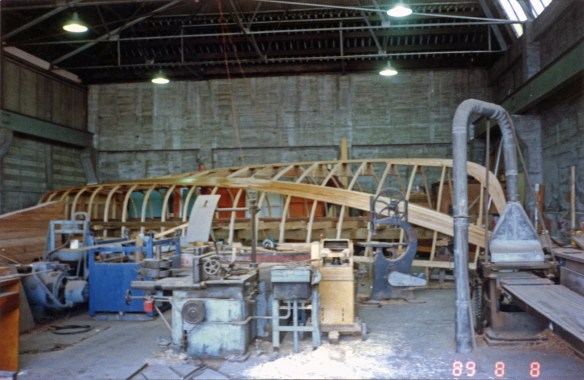
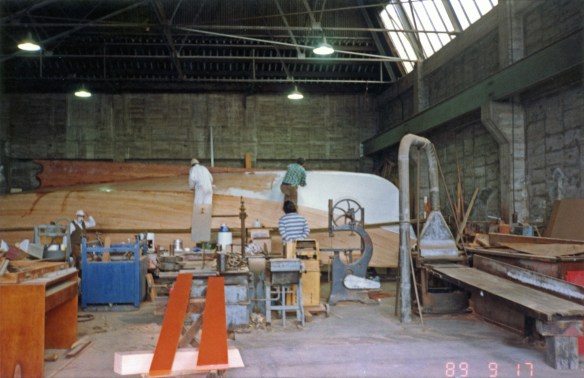
Dick :  When he did Tradition he built it in the old Harbour Board timber mill. The Harbour Board had just been privatised and they weren’t using their mill building at Westhaven, so Jack Fagan organised for us to use an area in the mill shed. That was real handy because all the woodworking equipment was in there so we could use it to deal with the timbers. All her timber work was done there in that mill building, except we sent the kauri out to a joker who did timber dressing in Rosedale Road and he did the whole lot. So it went out in flitches and it came back in nice dressed planks ready to go on the boat. The planks for the hull are inch and three-quarter by inch and a quarter heart kauri.

'Tradition' Construction-2

Work on Tradition commences in the Auckland Harbour Board Timber Mill building 1989

Keith : So where did the wood come from?

Dick : It came from Noel Mitchell who was the foreman at the Ports of Auckland slipway. When Akarana*, which was Auckland’s biggest pilot boat in those days, was being built, Noel had decided that a pilot boat could get smashed up real easy, so he bought enough kauri and teak for extensive repairs and put that aside to repair Akarana if she got crunched. There was talk of them selling this timber for houses but Noel said ‘No, it’s for boat building so we’re selling it for that. So that’s where we got the timber. We got all her heart kauri and the teak there.

Keith : So where exactly was the Harbour Board timber mill located?

Dick : Well, to the best of my memory, it was just past where ‘Sailors Corner’ is nowadays. On the left hand side of the road, well that was all Harbour Board land. Its where McMullen and Wing’s haul-out is now. The Harbour Board had three or four slipways there and they used to do all the work for us on the trawlers. They were close by so the company could keep the trawler crews employed by doing all the cleaning and paint-work and chip rust off the boats instead of spending all their time in the pub. So I knew Noel and it worked out pretty well.

Keith : So you got hold of Geoff and he was keen to take it on?

Dick : Oh yes. He had this old mate called Bert who used to sweep the floor and mix the glue and make the tea. Of course Bert has passed away now but he was a hell of a nice old guy and he worked on her as well.

Keith : Who else was involved in the build?

Dick : The wiring was Peter Galley, the painting was Mark Binney, plumbing was Alan Kemp, who was a Harbour Board guy. There was a lot of input from the slipway workers off and on and in their own time. Of course, I supplied them with fish non-stop so it was give and take, a bit of barter. The engineering was, oh well we did most of that stuff ourselves.

Keith : And the Ford engine was from Lees?

Dick : No, the engine was from Don Bernand,  Don is Mr Ford, he’s brilliant. I think we bought the engine in Tradition from Newlove in Whangarei and Don did the marinisation. He served his time with the Lane Motorboat Co. on the Tamaki River and when Lees got out of Ford he bought everything off them, all the patterns, moulds, that sort of stuff and set himself up at home. Don bought the new engine for me. It has a Newage Coventry 2:1 gearbox and the ‘get-home’ kit in it. At the time it was hard to find the gearbox we wanted but Don eventually found it and we fitted it. I can’t think who did the hydraulics, but it was all fitted by us.

Tradition Engine Room

Keith : So you gathered all her bits and pieces together. When did the build start?

Dick : It took me 6 years to put everything together before I got to the point where I could say, okay I’ve got enough to go and do it. During that time I had all the timber stored at home. At my son’s 21st we had the filches on sawhorses under the marquee so all the guests were sitting around on the kauri filches. They hung around for years reminding me to keep collecting stuff. The brass portholes in the cabin doors come from an old fish ‘n chip shop in Howick, while the ship’s bell is from the ill-fated ferro fishing vessel the – Trident.

Rhys : We’ll he’d been collecting things for a long time. He had some things ready to go. He’d probably told me he’d bought stuff for a boat but I hadn’t listened or realised it was enough to build a complete boat.

'Tradition' Construction-1

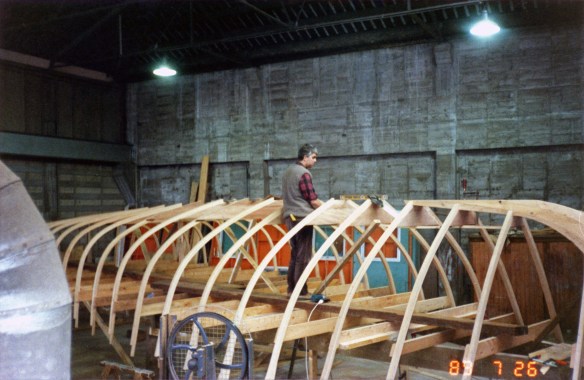
Boat builder Geoff Bagnall begins work, July 1989

Dick : The photo above is the laying out of the frames internally. You’ve got them all standing up there. That’s Geoff in his younger days. Geez he looks different there doesn’t he!

Keith : So the date on that photo is July 26th 1989, is that about the date she was started?

Dick : Would’ve been pretty close to it. Maybe a month before perhaps.

Rhys : Lucky the cameras had the dates on them in those days.

Keith : So tell us about all the effort of the construction.

Dick : Well we could lay 8 planks per day. So all the frames were stood up and we had the steam box ready for the planks there at the mill.

'Tradition' Construction-3

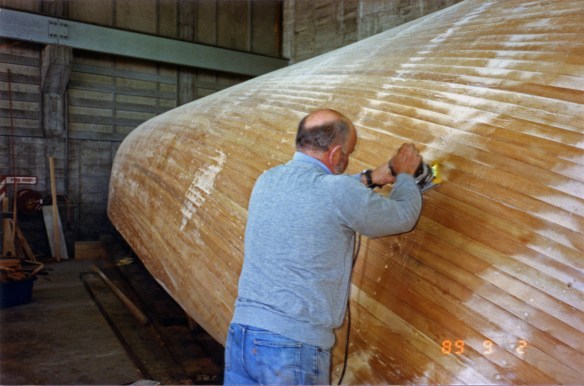
Original owner Dick Boyd sanding plugs on the hull, 1989

Keith : So you were coming down each day and helping Geoff?

Dick : I used to come in at night after work and do all the plugging. So Bert, cuppa tea maker and floor sweeper, he used to help Geoff during the day. They used to put the timber in the steamer and the following morning they’d come in and put those 8 planks up and then put another 8 in the steam box. So it was pretty slow going. I’d come in after work and do the plugs. But they were always in front of me because you couldn’t work on the planks that they had just put up that day because you’re driving the plugs in, so I was always a bit behind them plugging and sanding.

Rhys : Don’t forget you had to make all those plugs yourself too.

Keith : So how many were there? Did you count?

Rhys : He wouldn’t be brave enough to count, that would have been tear-jerking.

Dick : No, it was slow work. But the reason I plugged it was that sometimes you wake-up in the morning and you’re able to see every bit of bog that’s gone into a boat and you shouldn’t be able to see that with proper plugging.

'Tradition' Construction-4

Geoff Bagnall and assistant Bert working on the hull, 1989

Dick : Roy Rimmer used to pop in to make sure we were doing everything right. There was a lot of interest in the boat, because it was very handy to everybody in the harbour area.

Rhys : A lot of people would pop in after work and see how we were getting on.

Keith : So why did you choose to build her in wood?

Dick : Well you’re right, wooden boats were not being built at the beginning of the 90’s and a lot of people said ‘What are you bloody well building a launch that big in wood for?’ But, you know, it was what we both wanted. If I go back to the days of the old ‘Golden Kiwi’ tickets, my nom-de-plume was always 44’x14’, that’s because I was determined I was going to build a wooden launch that was 44’ long with a beam of 14’. Ha ha, I never won the Golden Kiwi did I! But even way back then I was thinking of her, I suppose it was my dream. And I’d always said I’d love a boat with proper teak coamings, teak decks and a hull of kauri.

Rhys : With a wife to varnish and look after it!

Dick : Yeah, I was lucky I had one of those!

'Tradition' Construction-5

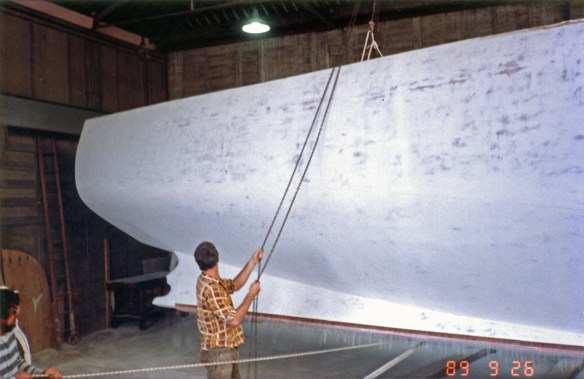
Geoff Bagnall turns the hull, September 1989

Keith : What were some of the comments you got when you were building her.

Dick : Well it was the materials of the build that attracted people. It’s a kauri strip planked boat, but the availability of kauri was getting very tight, even in those days. You just couldn’t go out and buy it. If you did happen to find some stacked up somewhere, it was really expensive. But because we knew the blokes at the Harbour Board and had feed them a lot of fish over the years, we got lucky with the source of the kauri we used. They gave it to us at a reasonable cost and there was also teak there that was meant to repair the old pilot boats, but they were being retired and the new ones were steel.  Colin Clare might know how old the wood itself was. I can’t honestly say, but it was already old when we bought it. I think it was milled on Great Barrier. Anyway, they were happy to see it go to build a boat and not end up in a kitchen cupboard.

'Tradition' Construction-6

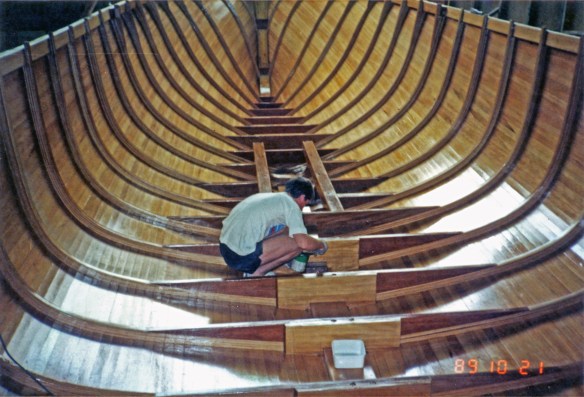
‘Bagnall’s work of art’.  Dick’s son Adam finishing the inside of the hull, October 1989

When I took Geoff in to have a look at the timber, there were stacks and stacks of 3’’x 2’’ kauri, but the sap wood was all full of borer. So we set those bits aside and all the stuff we bought were filches of heart kauri. The teak there was all 3’’, so Geoff split them and I think the cabin is inch and three-eights. Anyway, there’s a lot of teak in her topsides and a hell of a lot of kauri in the hull! What else? Well, there’s some totara in the keel, that came from the Salvation Army place down at Rotoroa Island. The guy who ran the ‘Kahino’ was a mate of Geoff’s and he provided that for us. Most of the keel and the engine bearers are Australian brushbox which is quite a hard, heavy, red coloured wood, but you have to watch it because it will get worm, that’s why it’s glassed over.

'Tradition' Construction-8

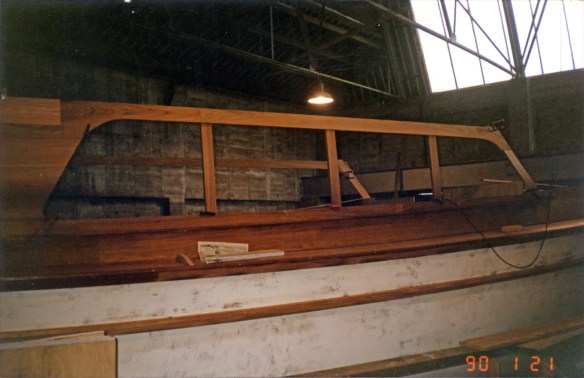
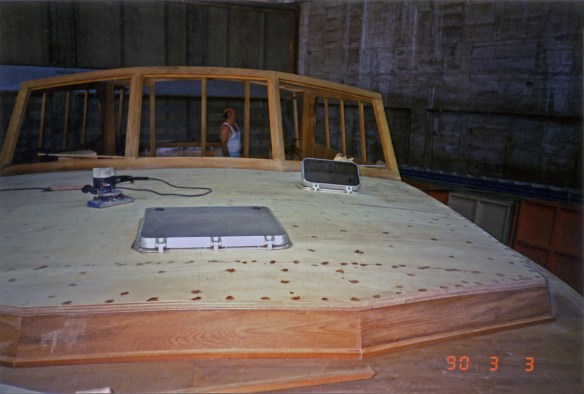
Topsides taking shape, March 1990

'Tradition' Construction-9

Dick Boyd checking proportions.

Keith : So how long was the build time.

Dick : Well what did we say, from mid1989 and it was launched at the end of 1990.

Keith : So all your mates and friends came and gave you a hand at some stage?

Rhys : Only Mary Smith came to help, the others came to drink! But Jack Fagan did some work on it, he was good.

Dick : It’s amazing how hard helpers are to find. The minute you mention sandpaper, they’re off, outta here! But Jack was one of the supporters of the whole project, he helped make things happen sometimes when we hit a wall.

Rhys : By the time we had the launching we were so exhausted from months and months of work we didn’t want her! We launched it and then everybody got so full of wine and drink that the next morning we had a shocking hang-over. We dragged ourselves out of bed and went round for breakfast at Westhaven and I said to Tich, ‘Do you want the boat’ and he said ‘Na’. Of course we didn’t really mean that, but oh it had just been such a big job and she wasn’t finished by a long shot. We didn’t have a stove or a fridge. We didn’t have squabs. We had a toilet and a shower, that was it! To top it all off we’d run out of money!

Dick : We had to follow Chris and Mary Smith around, because they had a launch called ‘Hukarere’ and they had a nice cooker onboard, so we used to follow them.

'Tradition' Construction-10

‘Looking for the Smiths’ – maiden voyage to Rangitoto, November 1990. Dick and Rhys Boyd on the flybridge.

Rhys : They also had a fridge so we kept our cold stuff in there.

Dick : Paul Nolan had a big Salthouse 53’ ‘Blitzen’ and he had a whole lot of squabs because he was replacing his so I said ‘don’t throw them out, we’ll be round to pick them up’.

Rhys : So we slept on those squabs and wherever Chris and Mary were, we were there. We couldn’t even make a cup of coffee! So they spent their time trying to lose us and we spent our time trying to find them. ‘Would you two like to come over?’ they would say, and we’d already be in the dingy heading towards them. And then after a while it was like, ‘gosh, can we even afford to finish her?’.

Dick : Anyway, over a few years we slowly pieced the rest of her together.

Rhys : Yes, there was still a lot to do. All the sanding inside is mine, every single inch!! You know I was a kindergarten teacher, so every school holidays, for two weeks in May and three weeks in August, and most weekends, we were on the boat doing something. I’d row out, hop on the boat outside our place in the Tamaki River and I’d get going on something. Lots of sanding, lots of varnishing.

Keith : So where did you take her on the first trips.

Dick : Well I liked the bottom end of Waiheke and over at Coromandel, Te Kuma.

Rhys : And we never managed to get to the Bay of Islands because we were working too much.

Dick : Also Waiheke. Oneroa was always popular because the Smiths were there. They still tell us when Tradition is in the bay. We have our spies! And she’s a notable boat anywhere you go, people respond to her and row over to have a yarn. Yeah, Geoff did a great job on her. One of his best.

Rhys & Dick Boyd on Tradition

Original owners – Dick & Rhys Boyd, Mahurangi Regatta, January 2017.

Owners of M.V. Tradition since Dick and Rhys Boyd 

1990-1996 > Dick and Rhys Boyd  – Moored in Tamaki River

1996-?        > Dave ? [clue – owned a pub in Mangere?]

19?? – 1998  > ?? Two guys bought it from Dave via a broker [information from Rod Middleton (Sailors Corner) They wished to take her south by truck to Mana Marina but after talking with Geoff they sailed her down the coast.

1998-2006 > Sold to Peter and Jenny Standish from Wellington and berthed at Mana. Cruised in the Marlborough Sounds.

2006-2007 > Sold to a Picton local. Moved to Waikawa Marina, Picton

2007-2011 > Sold back to Peter and Jenny Standish. Berthed in Waikawa Marina. Had a major refit at Frankins Boat Yard, Waikawa in 2009.

• Varnish stripped inside and two pot urethane used.

• New navigation electronics, TVs, sound system, stove, leather upholstery, carpets, covers and bow thrusters added.

• Bunks in forward V-berth removed, double bed built in.

2011-2019 > Sold to Keith Busch & Wiesje Geldof of Wellington. 3 years berthed at Waikawa Marina. Vessel trucked north to Tauranga from Mana Marina 2013. 3 years berthed at Bridge Marina, Tauranga. Hutchinson’s Boat Yard, Tauranga work :

• Stripped outside varnish and replaced with 16 coats of ‘All-wood’ urethane

• New teak plank deck installed. Boot topping strip repainted in light green.

• Fly-bridge helm station repainted. Holding tank and generator added.

3 years berthed at Hobsonville Marina, Auckland

Accepted into Classic Yacht Association in 2016 as ‘modern classic’.

2020 > Sold to Chris and Rae Collins of the RNZYS

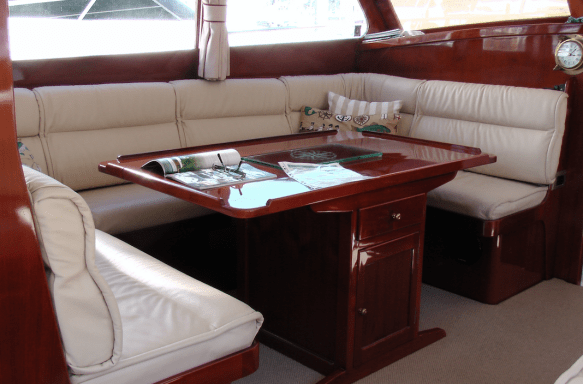
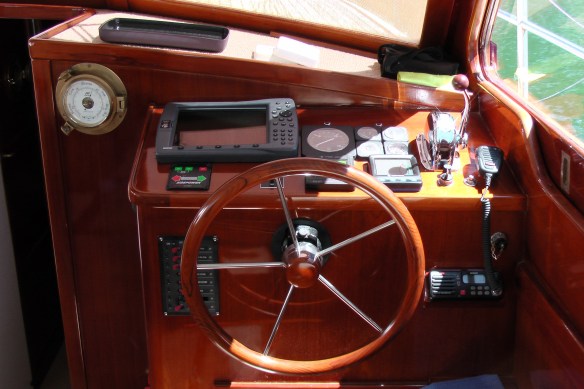
Lower Helm Station

Lower helm station

'Tradition'. BOI 2016

Bay of Islands 2014

Specifications of M.V. Tradition

Type : Saloon Launch

Designer : Bowden ‘Bo’ Birdsall

Builder :Geoff Bagnall, built at Auckland Harbour Board mill building, Westhaven

Launched : November 1990

Commissioned : Dick and Rhys Boyd of Tamaki, Auckland

Dimensions : LOA 44 feet, beam 14’ 3”, draft 4’6”, displacement 11.5 t

Engine : 1990 Ford 145hp ‘Marko’, cruises at 9 kts, max speed 11kts

Gearbox : Newage Coventry 2:1 gearbox

Construction : Kauri planked hull (inch and three-quarter by one inch, glassed-over), strip-teak deck, teak topsides, white hull with light green boot-topping, polished wooden topsides, white fly-deck.

Mechanical : Side-Power bow thrusters, Pugaro diesel generator, anchor winch

Electrical : 12V and 240V systems, auto-helm, radar, Garmin gps chart plotter, TV, stereo system, VHF (x2), 3 x house batteries, 2x start batteries, inverter

Accommodation : 2 cabins, Master (double) and Guest (2 single)

Galley : 4 burner gas stove, microwave, gas hot water system, fridge, freezer

Tanks : Diesel – 1 x 650 litres; water 2x 350 litres (700 litres) both stainless steel. Black water holding tank 300 litres in welded plastic

NOTE: Boat builder Geoff Bagnall is not retired, just no longer has the shed in Milford Creek.