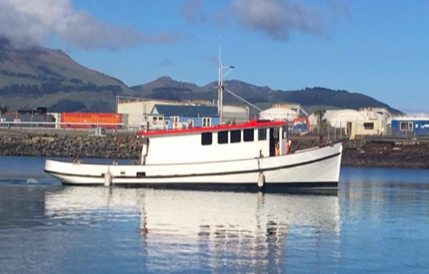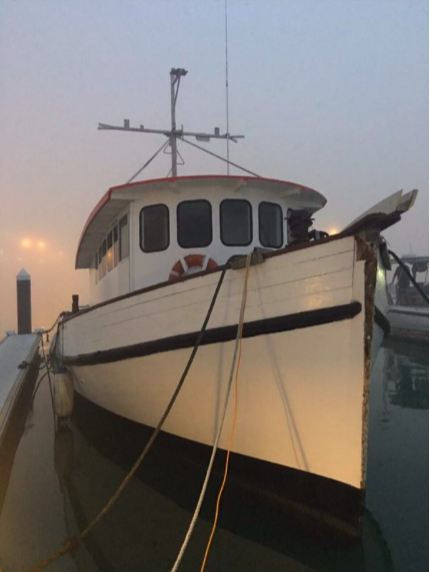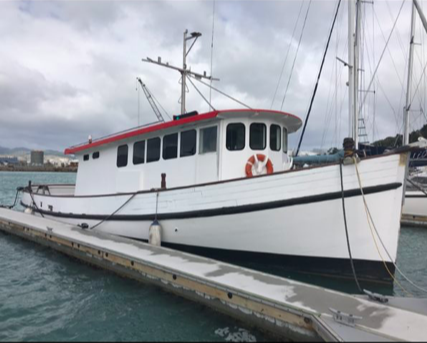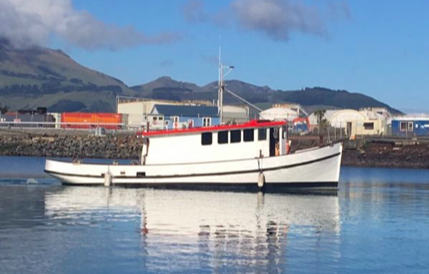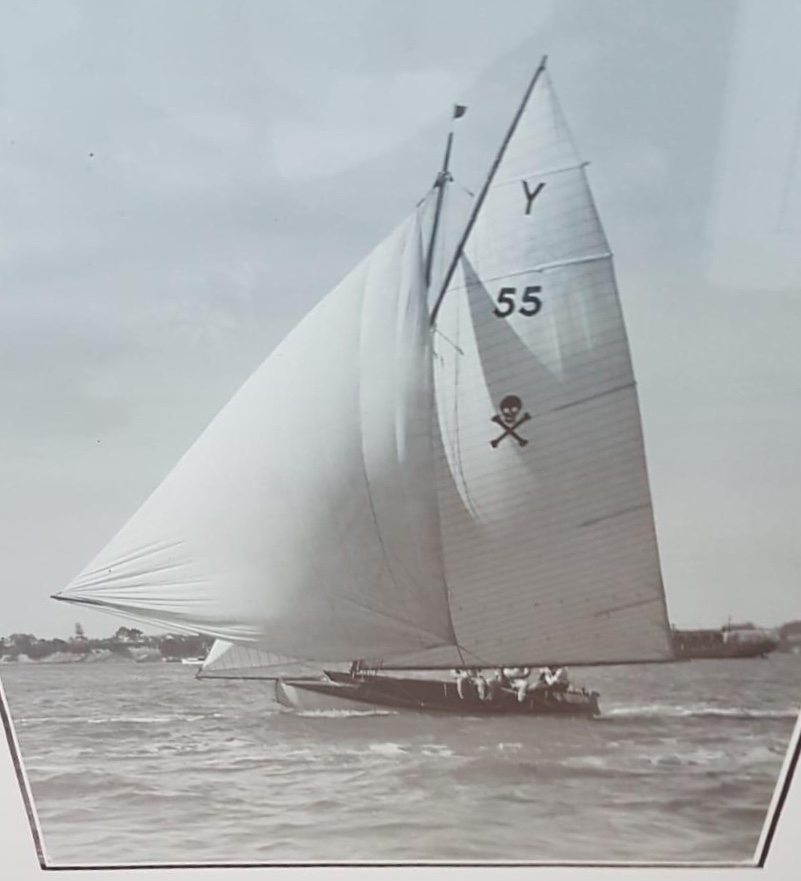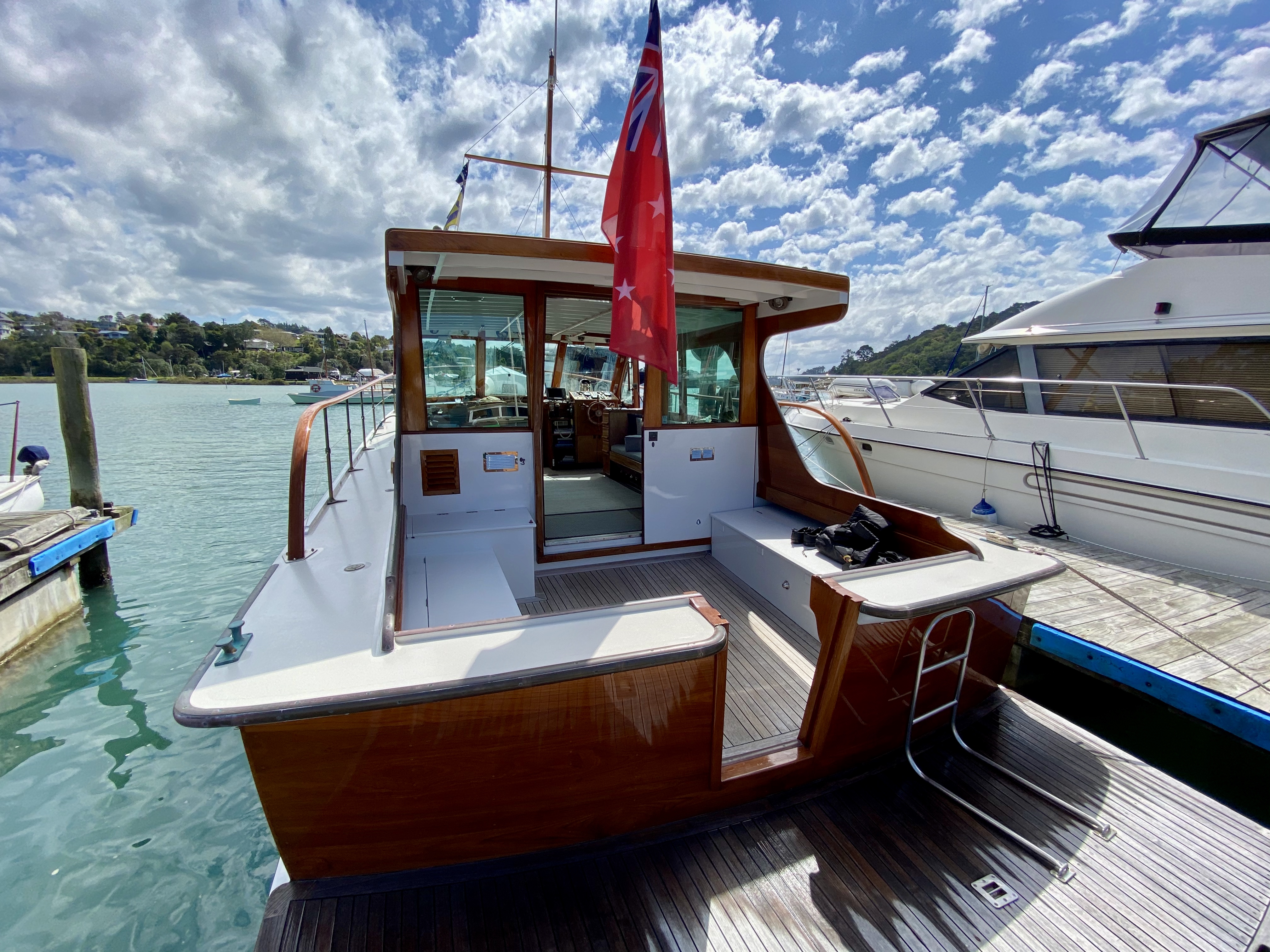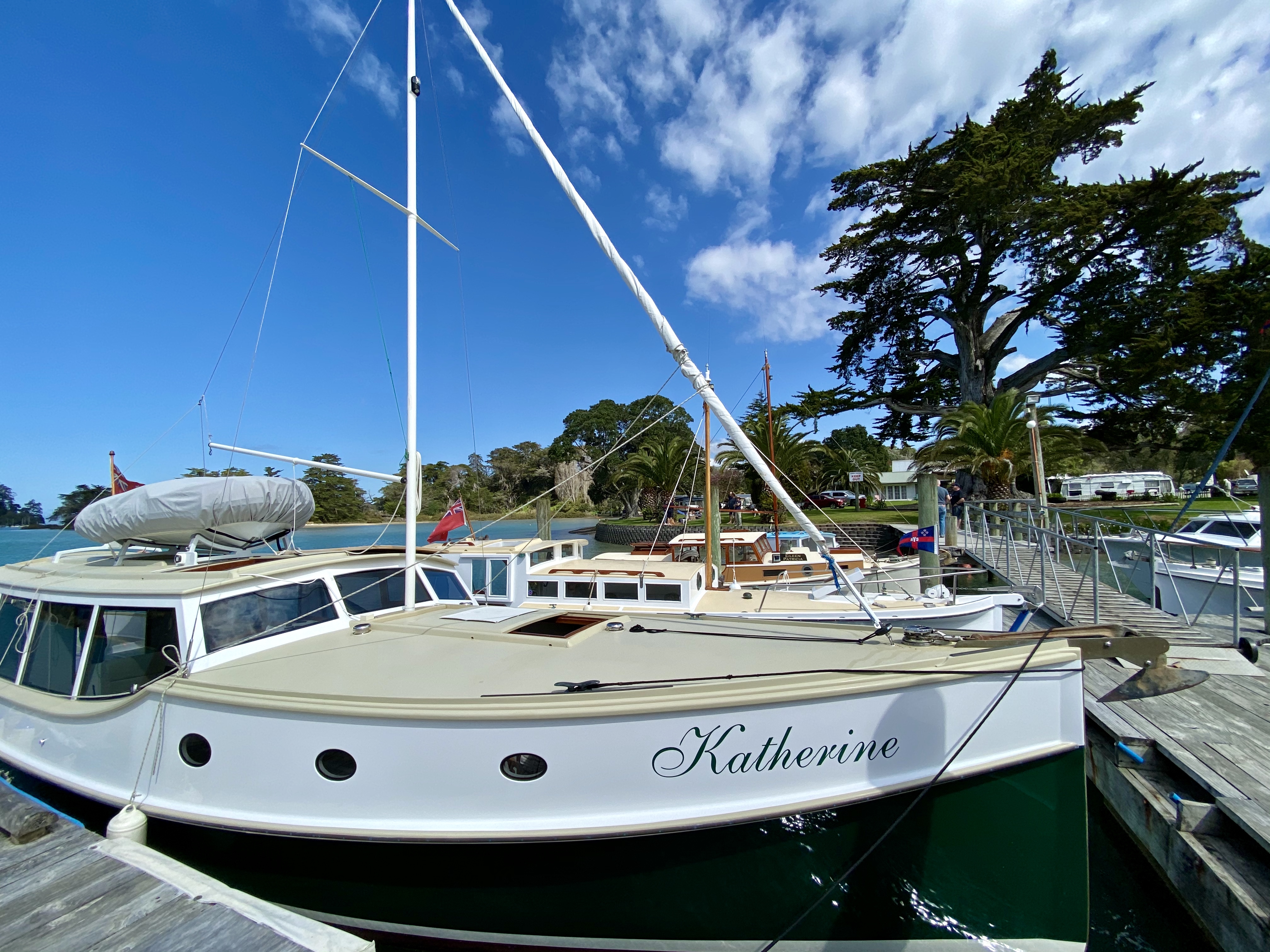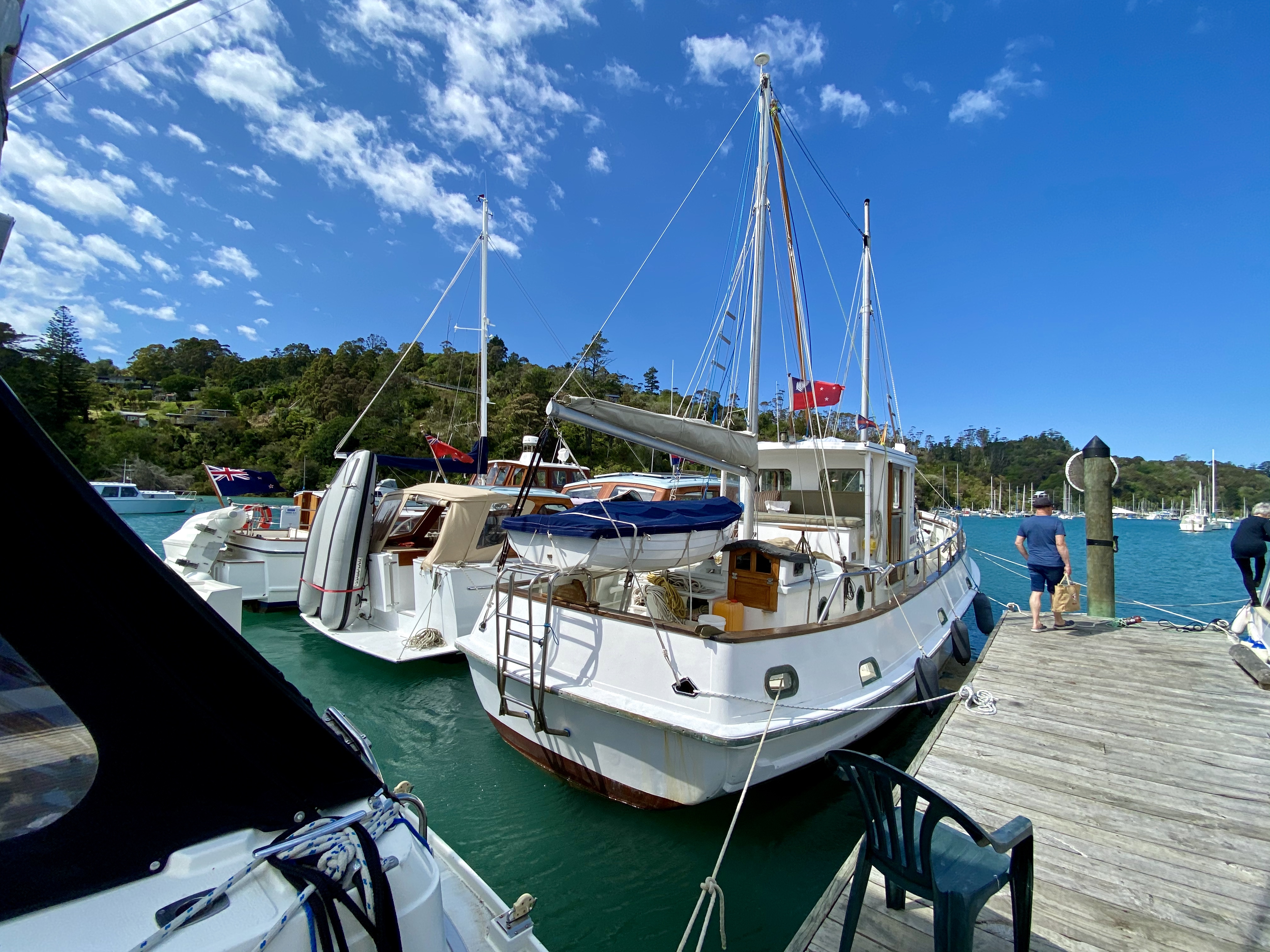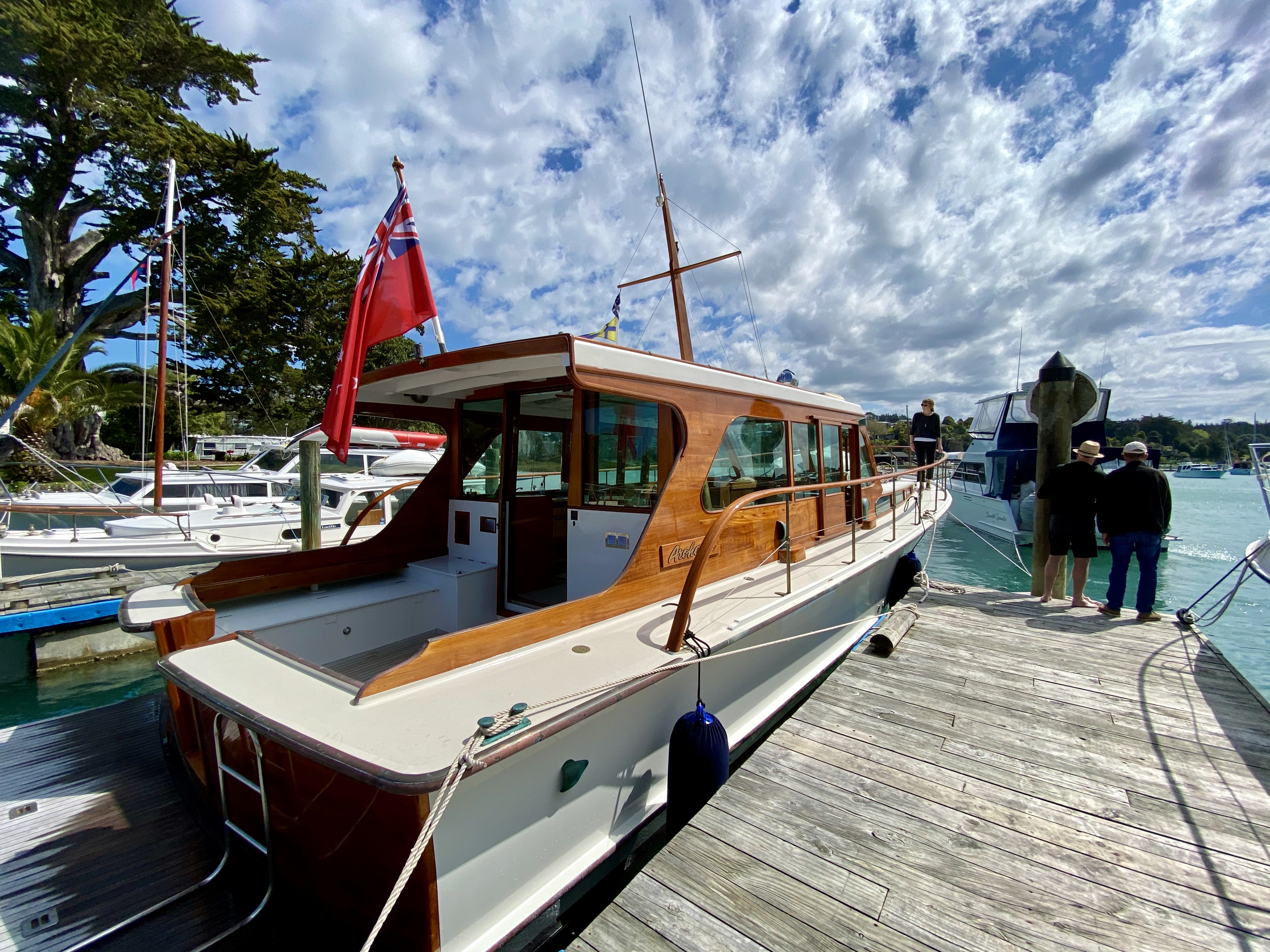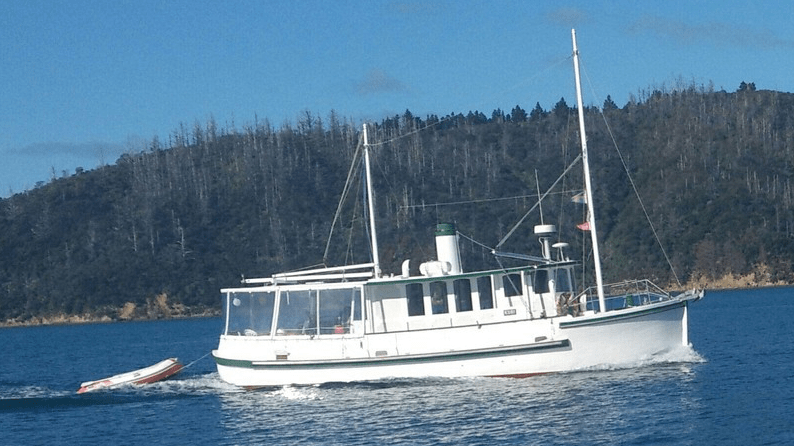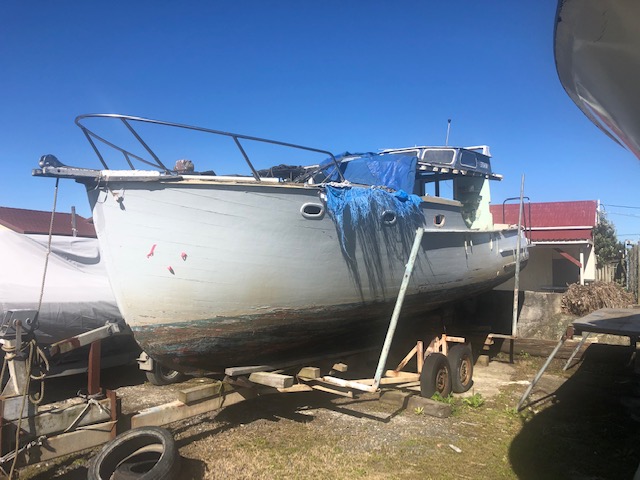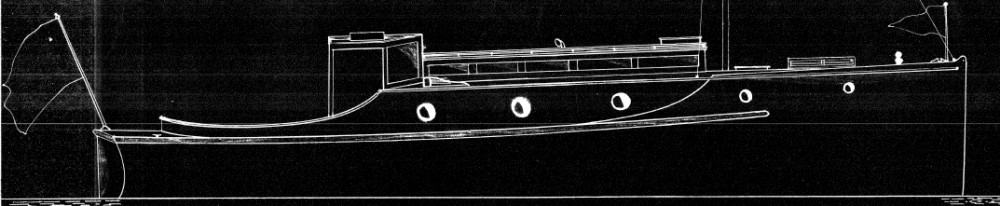
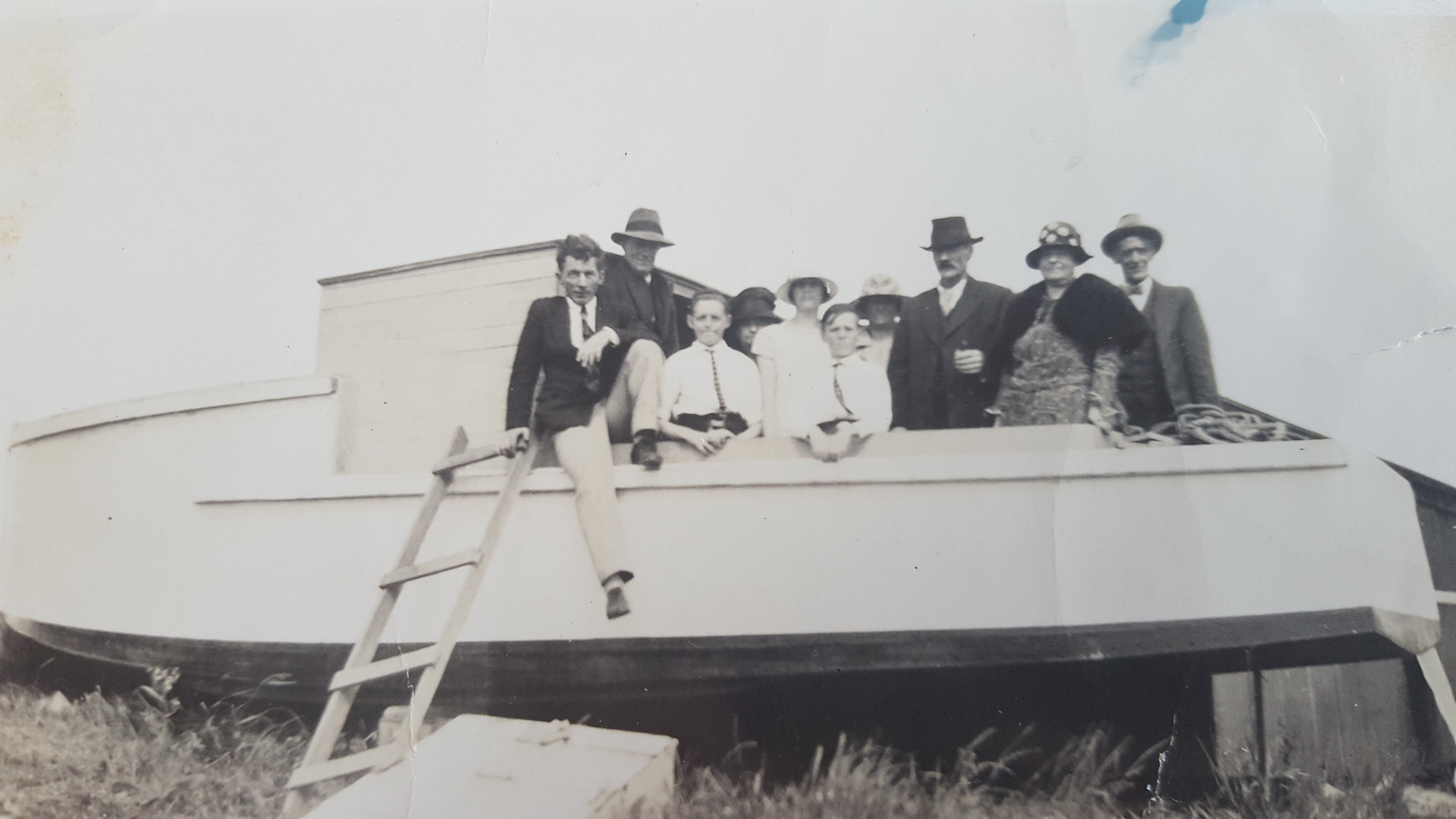
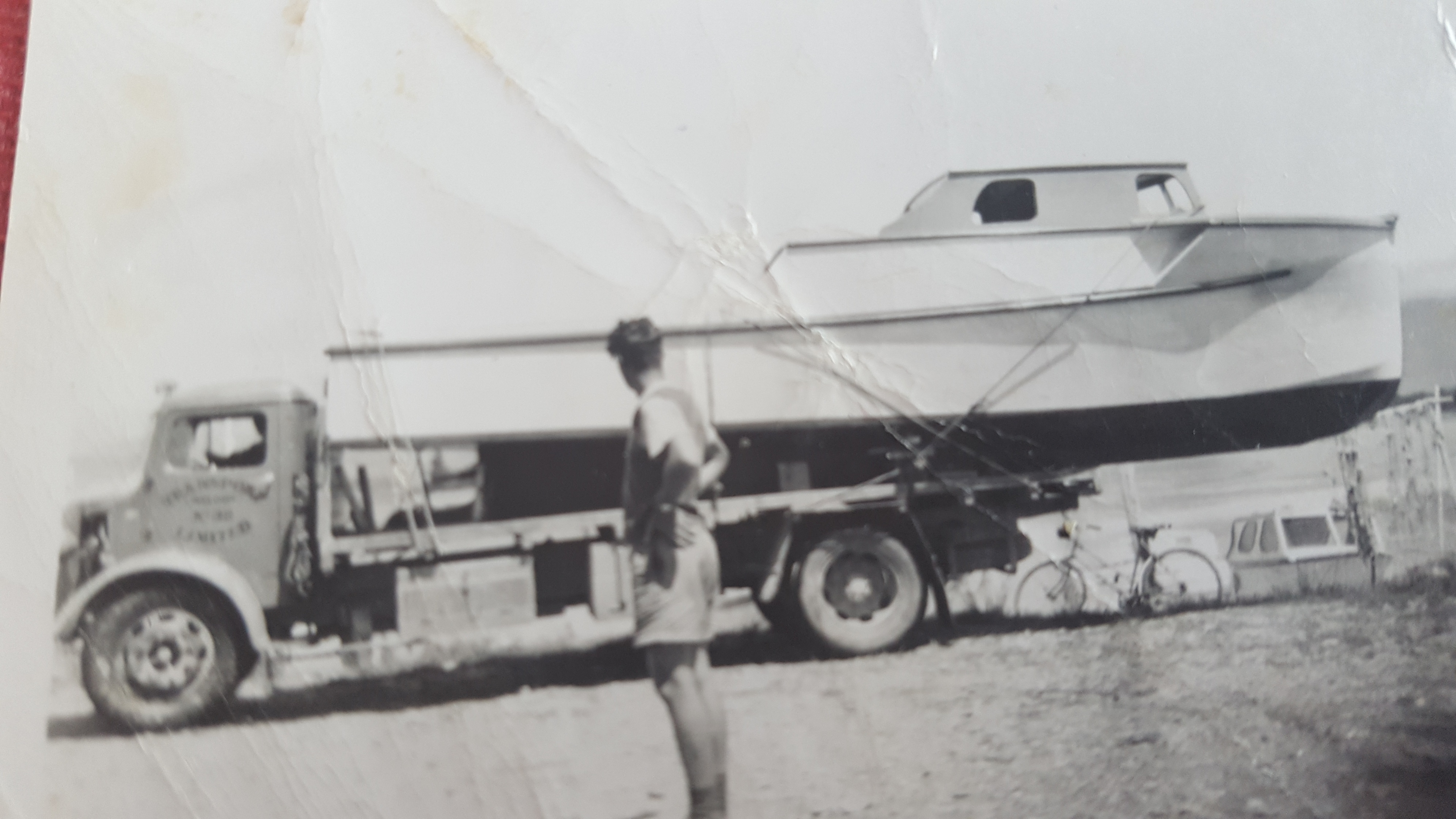


Shalimar

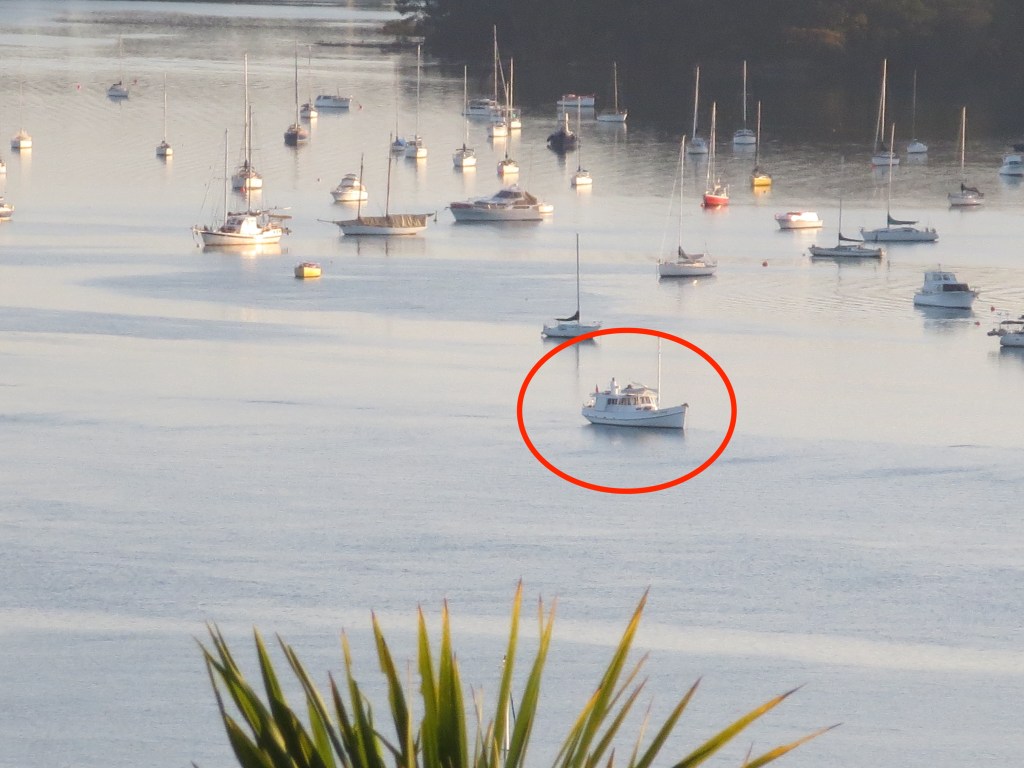
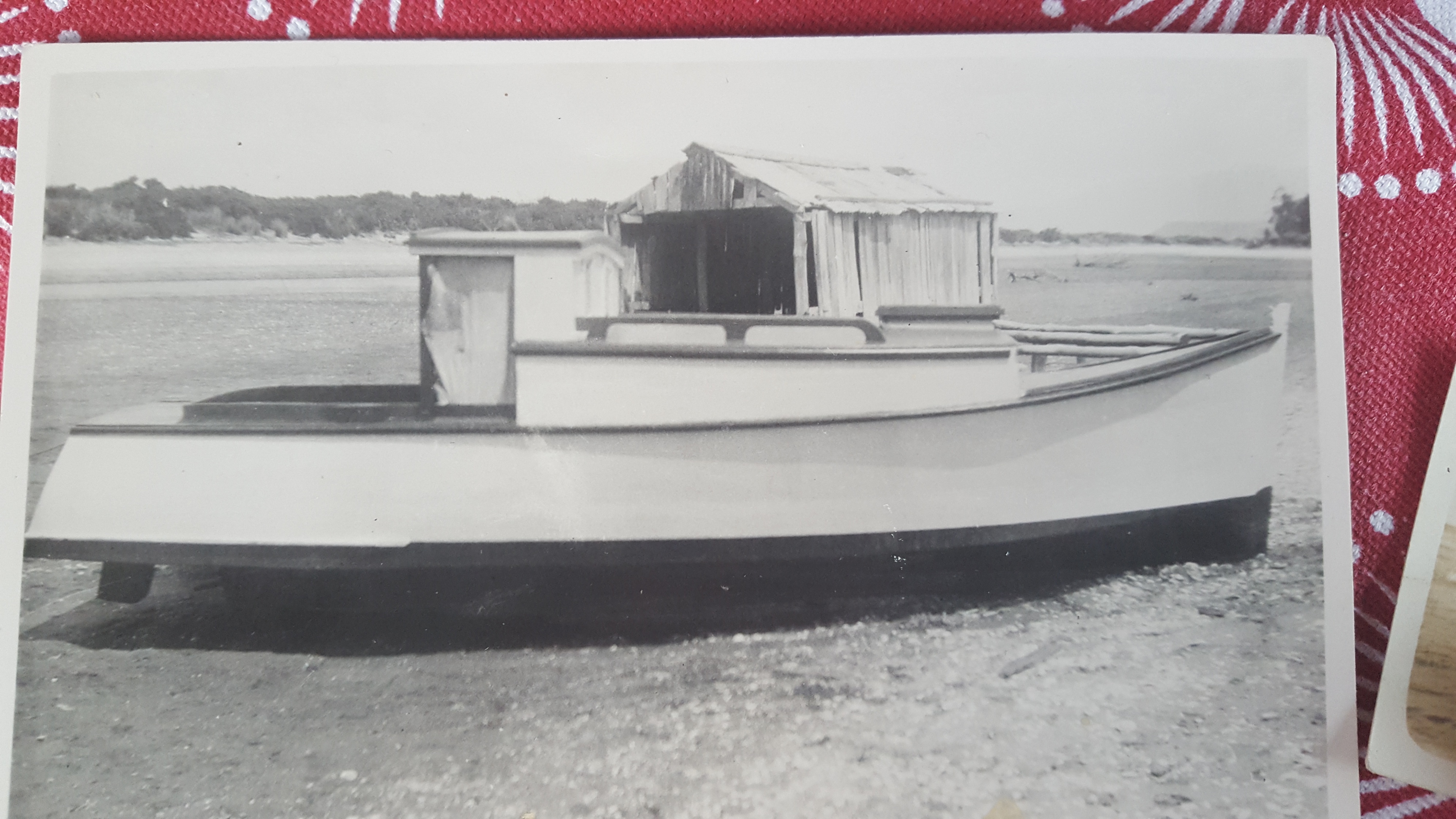
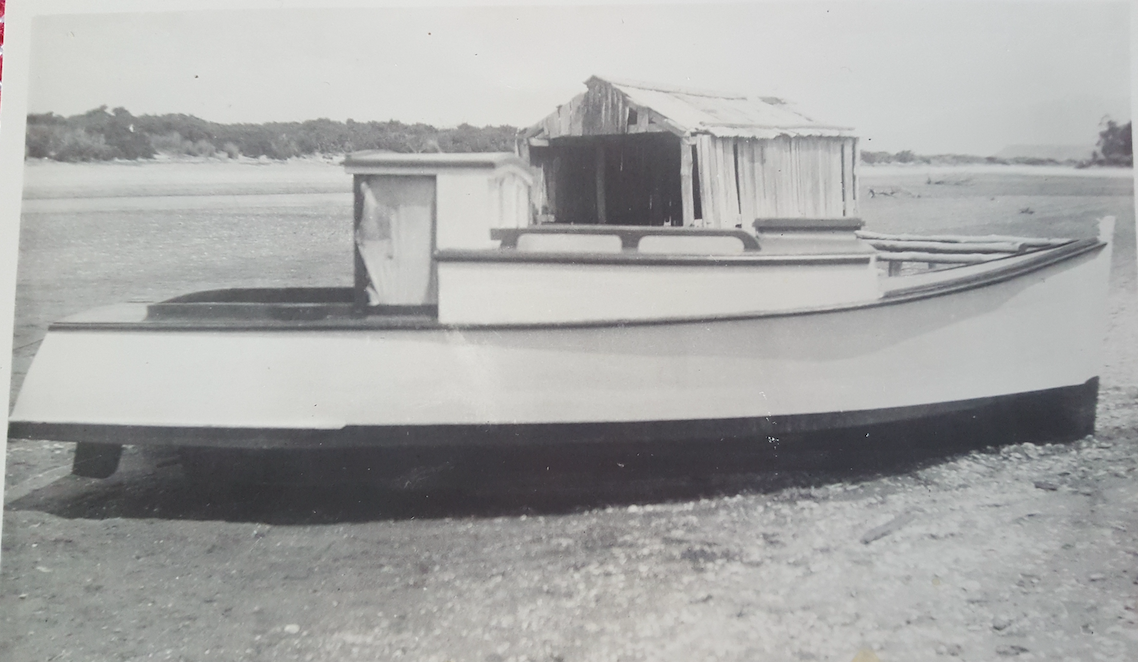
Mystery Work Boat Question
My Dad started Redvale Lime Co. from a small quarry 1km from the river.
He was also engineer on the Huia for a time and worked for Aspen Shipping Co. His first trip at sea was on the scow the Scot


Shalimar

Mystery Work Boat Question


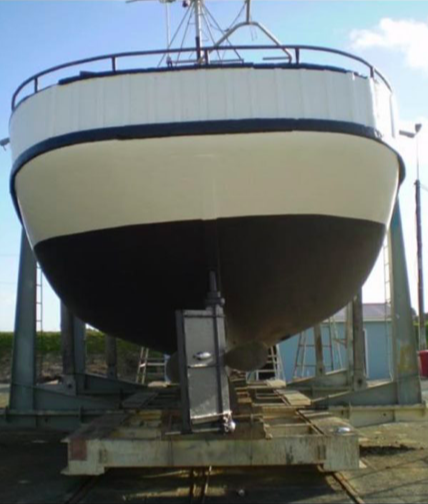
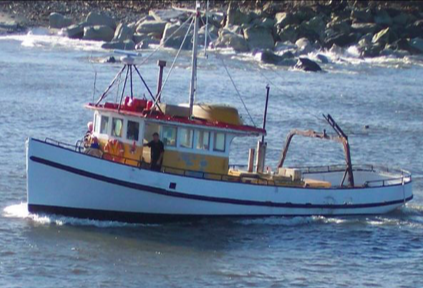
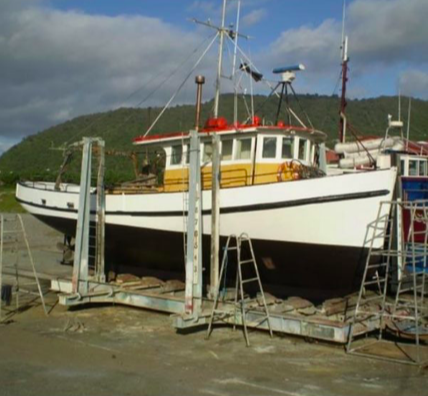
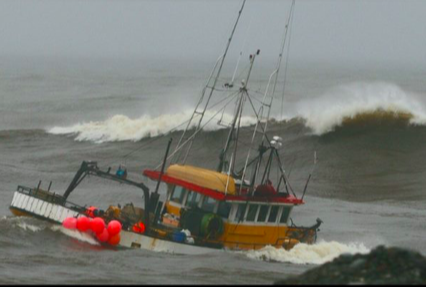
SHANDI
I have lots of question re Shandi

Update ex Ian MacDonald – Shandi is owned by the Sanderson family (Bruce & son Bruce Jnr.) Members of the Whangarei Game Fishing Club. Below is a link to a ’Northern Advocate’ article on Bruce Snr., check out the video.


ARAHI


REO MOANA
“I am prompted to write a few lines about Reo Moana after seeing her coming through the Albert Channel and arriving in the Bay of Islands, she looks so different with the extra top hamper that has been added. Her current owners have recorded that she was built by Roger Carey, this is not correct, see below.
I worked at the Carey yard and in 1963 we commenced work on a Roger Carey design of a 51’x15’8”x 7’ fishing boat for John Buchanan of Cascade River. She was carvel planked in karri and launched in 1964 named “Compass Rose” The moulds of this Roger Carey design were then taken across to another Picton boat builder Bob Swanson. Bob’s yard was directly opposite the Carey yard at the southern end of the harbour, it was formerly the site of Ernie Lane’s boatyard.
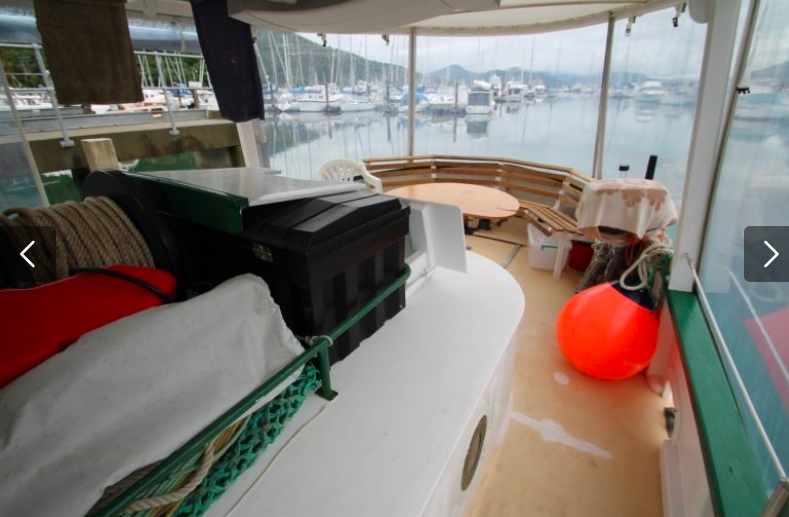
Bob was commissioned to build a boat to this Roger Carey design by Bill and Sylvia Kenny of Red Funnel Launches and an associate. She was built multi skin and was powered by a 6LX Gardner. There was talk that the boat was to do a Pacific cruise that was to include Tahiti but the cruise did not come to fruition. She was put into service with the Red funnel fleet, it was also at this time that the pine plantations in the Sounds were starting to be harvested and with a substantial tow post Reo Moana was regularly used to tow rafts of logs to Picton. Her spacious after deck also proved ideal for work in and around the Marlborough Sounds.
In the above photo she can be seen in the Red Funnel colours, I was involved with salvaging the fishing vessel Ascot that had sunk in Cloudy Bay and we used Reo Moana as the salvage vessel to tow Ascot into Port Underwood to pump her out and then continue the tow to Picton.
Seeing her now, photos below, I suppose she is handy for charters in and around Auckland, but with the windage from the considerable extra top hamper that she now carries, I think she would be more that a handful going alongside wharves in the Sounds in some of the extreme wind conditions that can be experienced at times.”


ALOHA KAI


CARAVEL

See the details and get the membership here and enjoy full membership privileges for 8 weeks. That means you’ll have access to over 1,000 videos and articles full of inspiration and know-how.

SS DUKE of MARLBOROUGH
I recently stumbled across the above photo of the steam ship – Duke of Marlborough and knowing nothing about her put a call into Russell Ward aka Mr Steam. The man is never embarrassed to speak so – take it away Russell, WW is all yours…..
“Once, 30+ years ago, I built up a steamboat called “Gypsy”. So pull up a chair, warm yourselves by the fire and I’ll tell you a story which isn’t about “Gypsy” at all, it’s about the “James Torrey” which became the “Duke of Marlborough”.
But, through “Gypsy”, I met one Lloyd Lewis of Lake Tarawera. He was an ardent enthusiast for steamy things (who wouldn’t be – living on Lake Tarawera.) Lloyd had made a steamer up out of a hull I had sold him a year or so previously and really had the steamboat bug badly. As the late Pete Culler (he wrote a lot about boats and he was a wise man) said “It’s awful, don’t go near it or you are hooked.” And you can’t argue with facts like that, folks. Suffice to say Lloyd got steam enginitis in a big way.
He had Wellington naval architect Bruce Askew design a hull for a 36’ steam vessel following the style of the early 1900 steam boats The steel hull was built in 1987 by Gordon Clark and Brian Starrock in New Plymouth and shipped to Rotorua for Lloyd to complete. He did a fine aesthetic job. She was launched as “James Torrey” and he used her to take fishing tours on the lake. The lads appreciated the warmth from the boiler at times.
Lloyd built the engine – an English design by A.A. Leake and a dashed good looker it is -a traditional open compound, driving a 28” by 42” propeller giving a service speed of 6 knots. A piston valve is fitted to the high pressure cylinder and a balanced slide valve on the low pressure one. It has cross-head driven twin feed pumps and air pump. Exhaust is through a feed-water heater to a keel condenser. There you feel a lot better for knowing that.
But to sum up, working on salt water, you have to condense the exhaust steam or you run out of feedwater real quick. Besides, condensing gives you a useful addition to the power through the vacuum created which, in essence, sucks the piston while the steam pushes.
The steam is provided by a Kingdon type boiler (1900’s Simpson Strickland design) built by Langley Engineering in the U.K and, since you didn’t really want to know, It is a vertical fire-tube type, 34 inches high by 30 inches diameter over lagging, has 3.4 square feet of grate area and has 84 square feet of heating surface. She burns coal and there is nothing better.
Lloyd had quite job actually getting Ed Langley to dispatch the finished boiler although it had been long since paid for. Ed had had his delivery problems over the years…. Legend has it that, in frustration (remember communication was all letters and phone calls that had to be booked well ahead in those prehistoric times); Lloyd flew over to the UK and turned up at the works just ahead of the receiver. Seeing the likelihood of his investment coming to nothing, he took matters into his own hands and loaded the boiler up himself. Lloyd just wasn’t the sort of man to argue with and got his boiler. It is a very handsome job.
Anyway after a number of years, Lloyd tired of his steamboat and Roger Frazer took her to Picton. He renamed her “Duke of Marlborough” and did a lot of restoration which is a credit to him. He has been taking passengers out of Picton for some time. I’m sure the passengers appreciate the boiler’s warmth even more that the Lake Tarawera types.”
I understand she may be for sale………
WoodenBoat Magazine Interview #3
This week WB editor Matt Murphy interviews Harold Burnham in a live discussion of how, for nearly three decades, he has been instrumental in revitalizing the shipbuilding and maritime culture of his region by designing, building, and rehabilitating traditional vessels for cultural tourism. Harold is an 11th-generation shipwright, and has, at various times, also been a sawyer, mariner, model maker, and sail maker.


HDML MANGA > HAIMOANA
In the interests of saving you from getting a sore neck from shaking your head – this boat ended up with a beehive restoration i.e. was put on the bonfire.
HMNZS Manga (Q1185) was one of 16 Harbour Defence Motor Launches (HDML) to be delivered to the RNZN in 1943. She was commissioned on 6 April 1943 and joined the 124th. ML Flotilla at Auckland. She was used in anti-submarine patrols in the port approaches and the Hauraki Gulf northwards to Cape Brett. On 11 October 1945 she paid off in Auckland and was placed in reserve. In early 1946 she was converted for army use, fitted with a towing bitt and transferred ‘on loan’ to the Army. She was renamed Bombardier and used by the RNZ Artillery for target towing and general transport duties for over 10 years. In 1948 she was reclassified as a Seaward Defence Motor Launch (SDML) and renumbered P3567. In November 1959 she was transferred back to the RNZN. In 1960 she was commissioned as HMNZS Manga (call sign ZMBJ) and joined the fishery squadron where she served until 1967. After a refit she was assigned to Wellington RNZNVR until 1973, and then re-joined the fishery squadron briefly, returning to Wellington in 1974. In 1977 Manga was restricted to sheltered waters and returned to Auckland in 1977. During the period from 1977 to 1981 she was attached to HMNZS Ngapona. She was withdrawn from service and sold in 1982 to Takapuna Contractors Ltd., and was later sold again and transported to Helensville for rebuilding.


Woodys On Tour – Halls Boat Yard, New York
A few years ago, woodys Jim and Karin Lott were ‘parked up’ with the masts on deck in their kauri ketch – Victoria, on the Hudson River. More specifically in the middle of New York State in a city called Albany. The Lott’s waited there for three weeks for the Erie Canal to open. Jim commented that Albany definitely does not feature on anyone’s ‘place to go’ list. They were not alone as Wellington old salt Richard Watt and his wife Enid anchored alongside them in their launch (photo below of both boats), as well as dozens of other impatient US and Canadian sailors.
To while away the time they hired a car and headed to Lake George to look at woodies at Halls Boatyard, one of the many inland homes of wooden boats in New York. Jim commented that floating boat garages are common in North America and they spent several hours admiring a sea of varnished ash, cedar, spruce and mahogany. There was a slipway and boatyard all under cover inside the shed complex. The yard specialises in rebuilding and restoring classic motor-launches but a few yachts were getting the same TLC.
After the long wait, the canal stayed closed so they had to forgo the Great Lakes and continued up the Hudson. Eventually they locked into Lake Champlain and down the Richelieu River to the St Lawrence near Montreal in Canada.