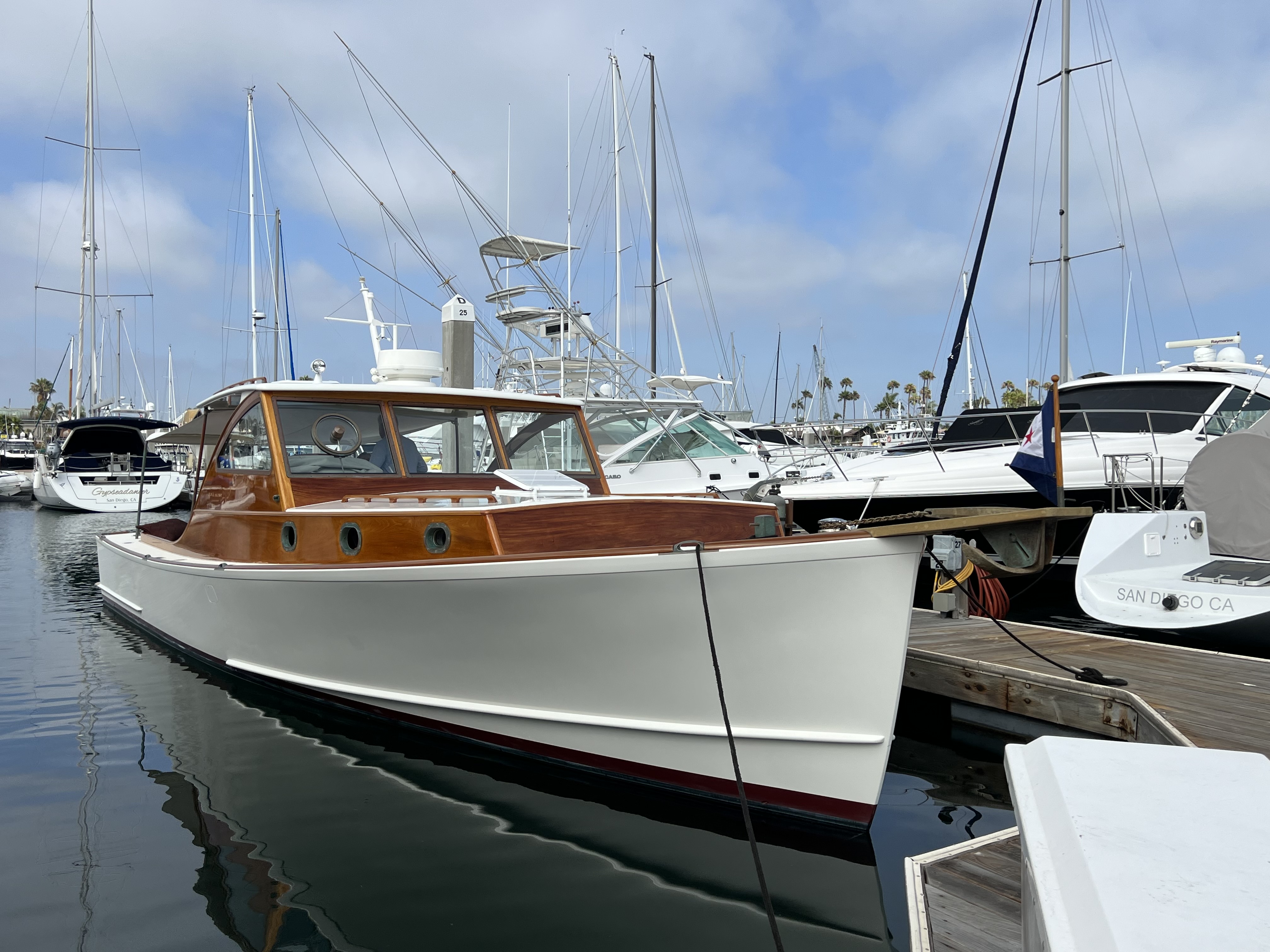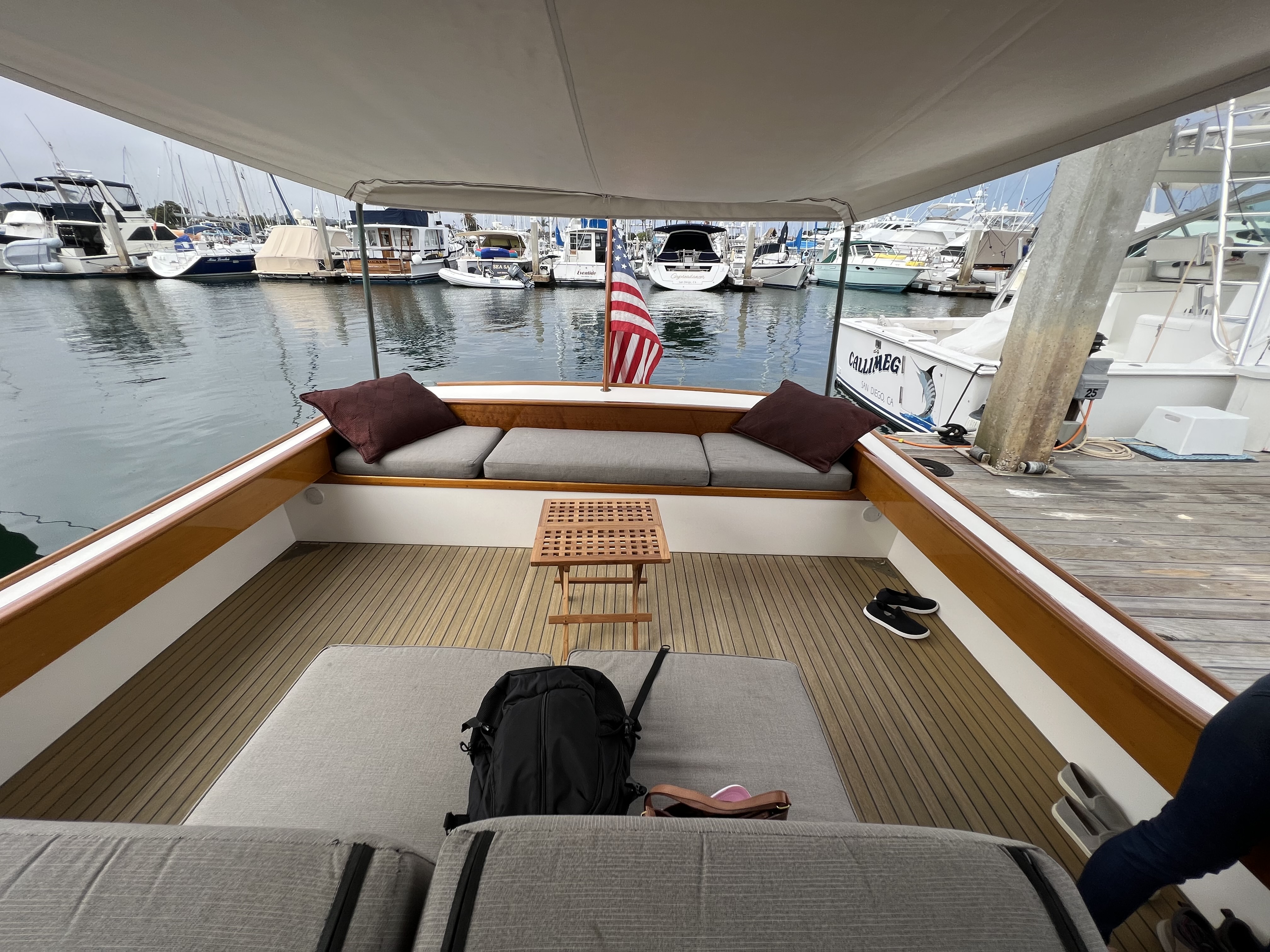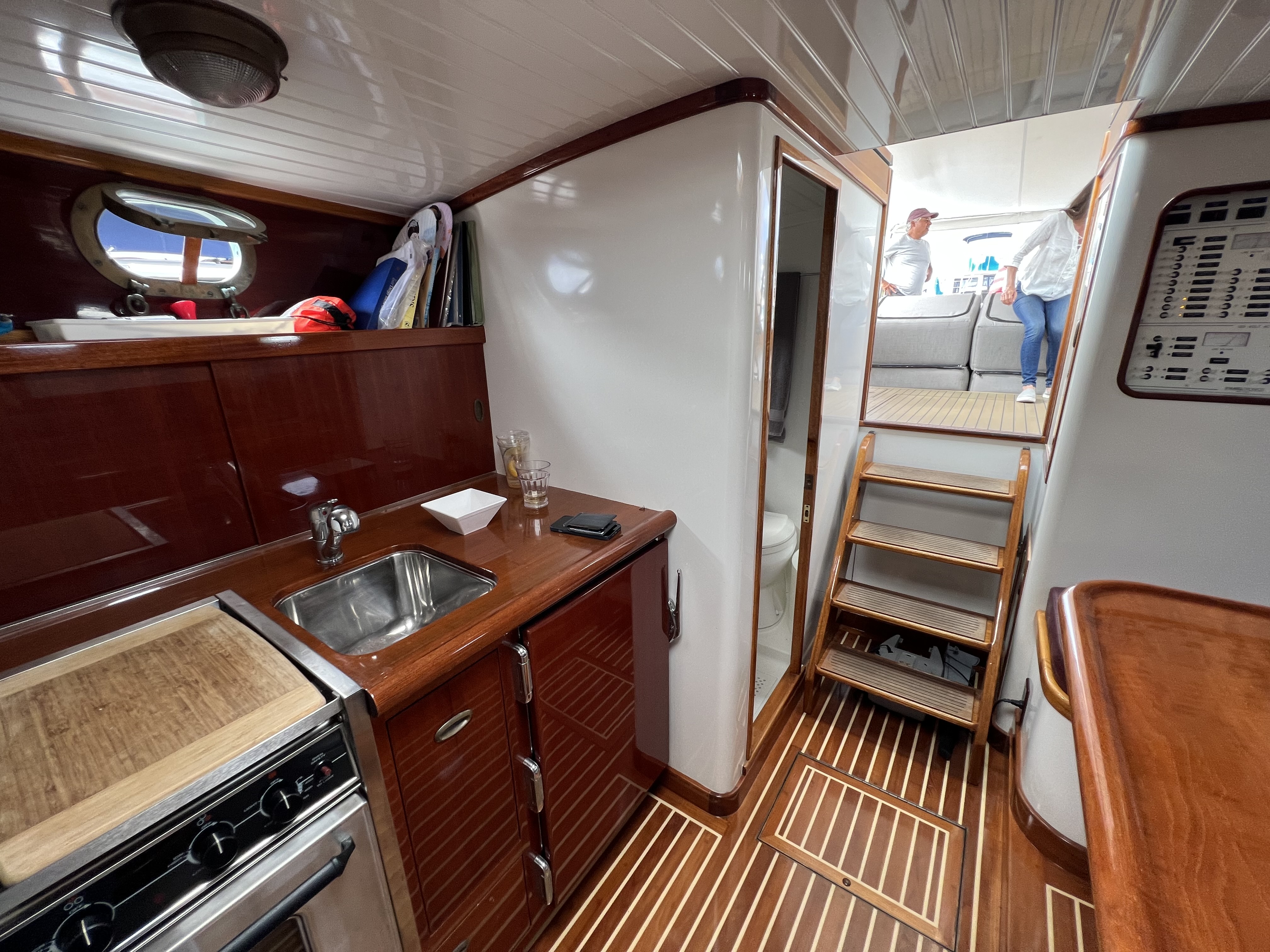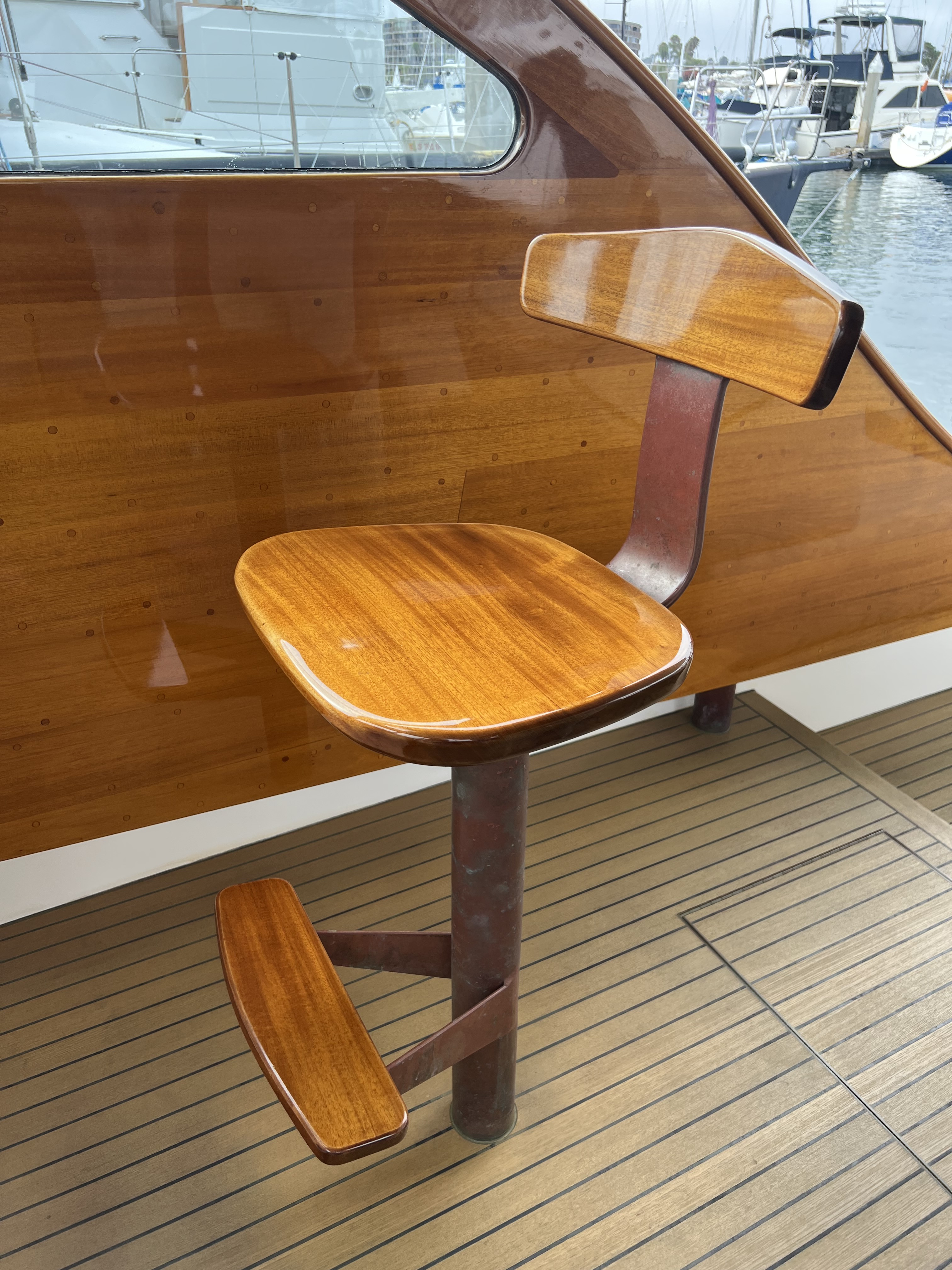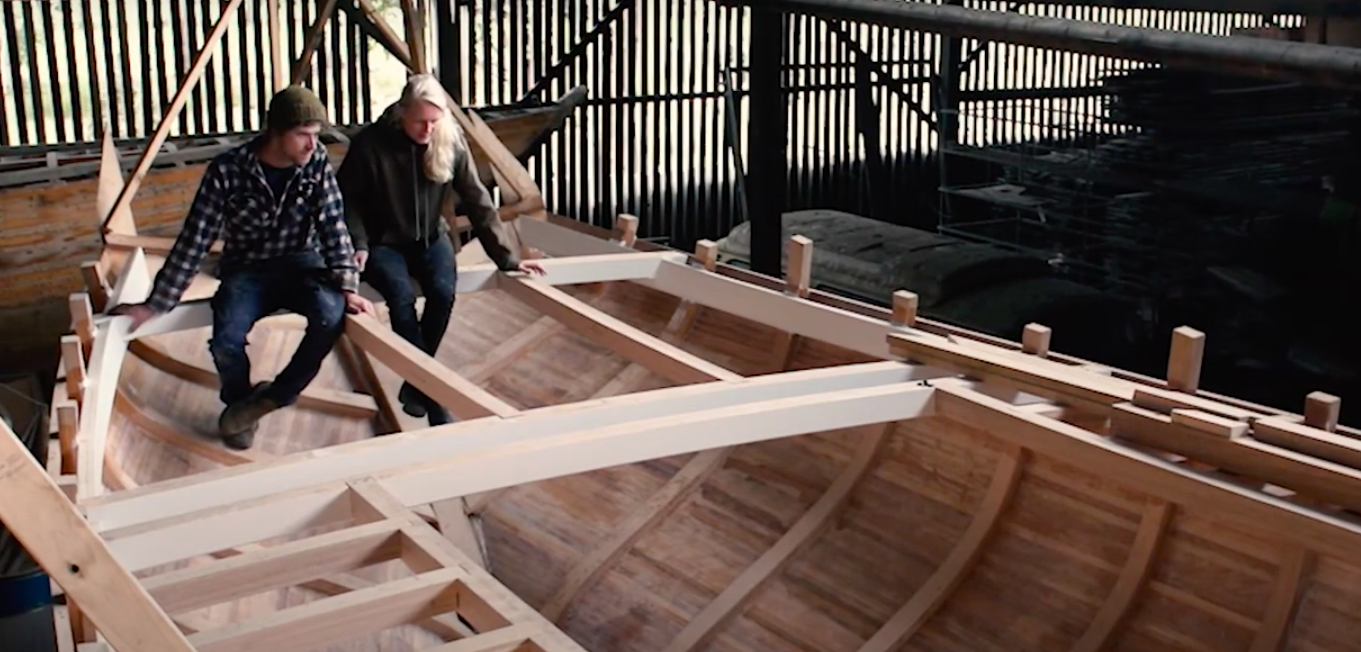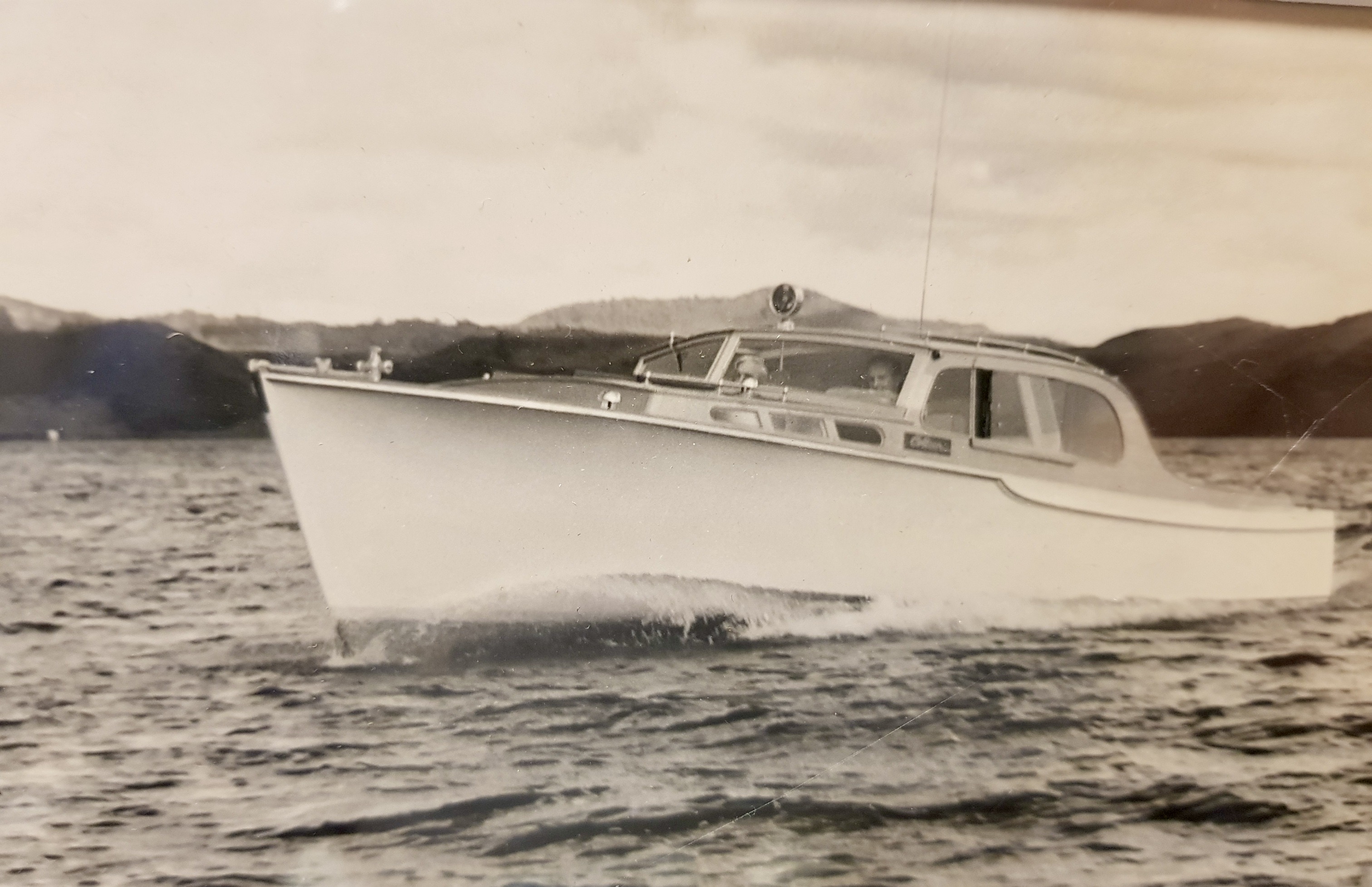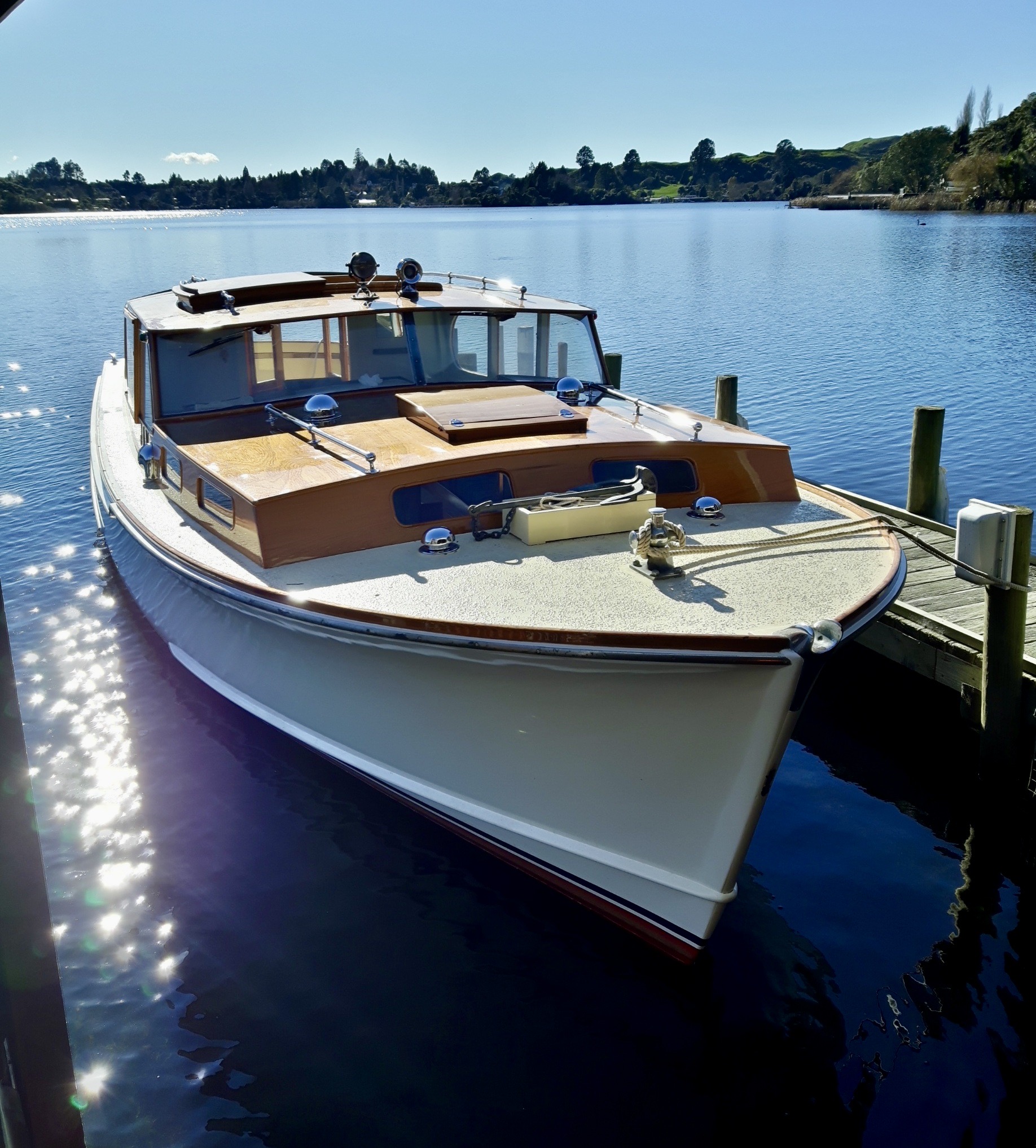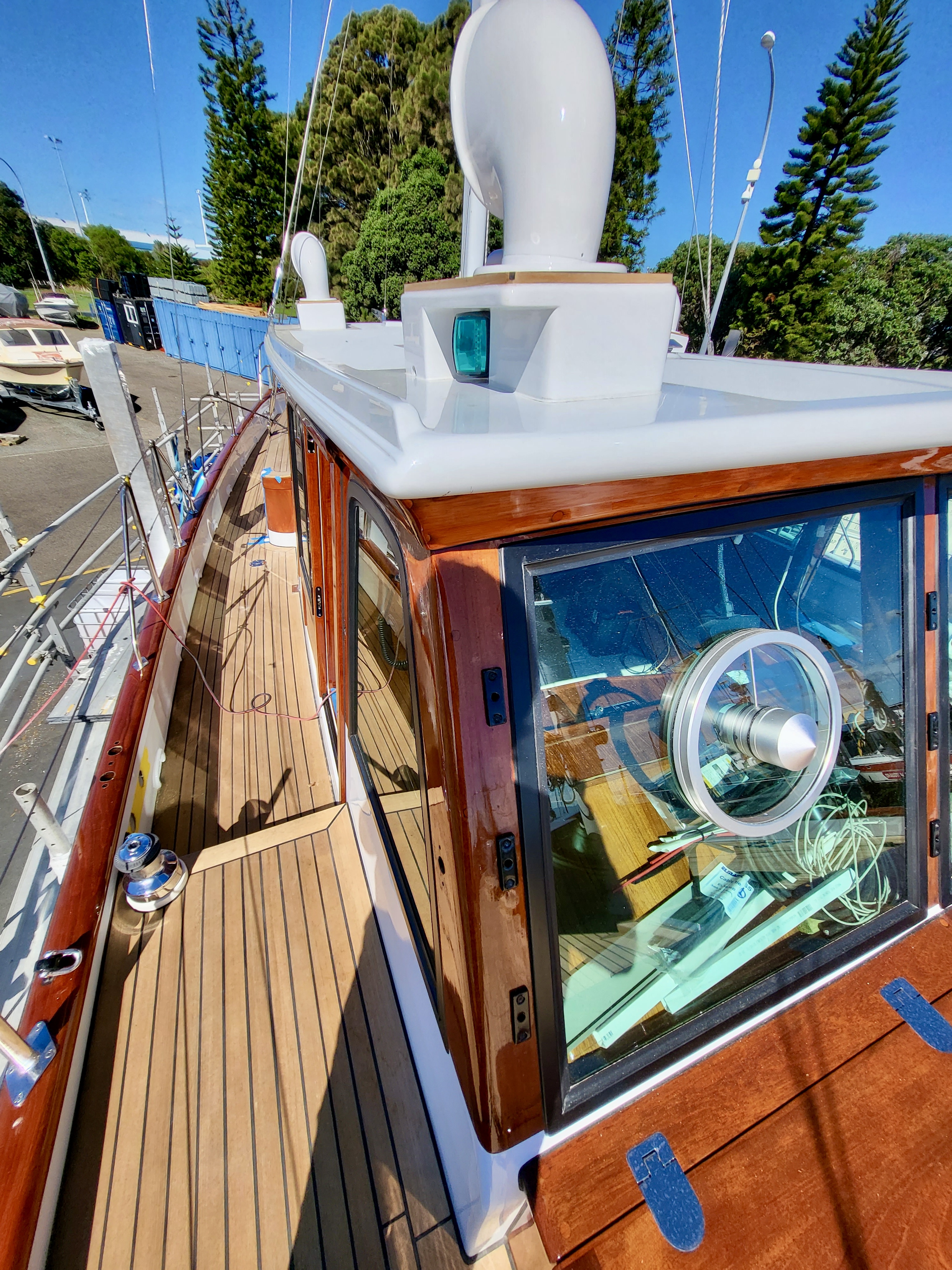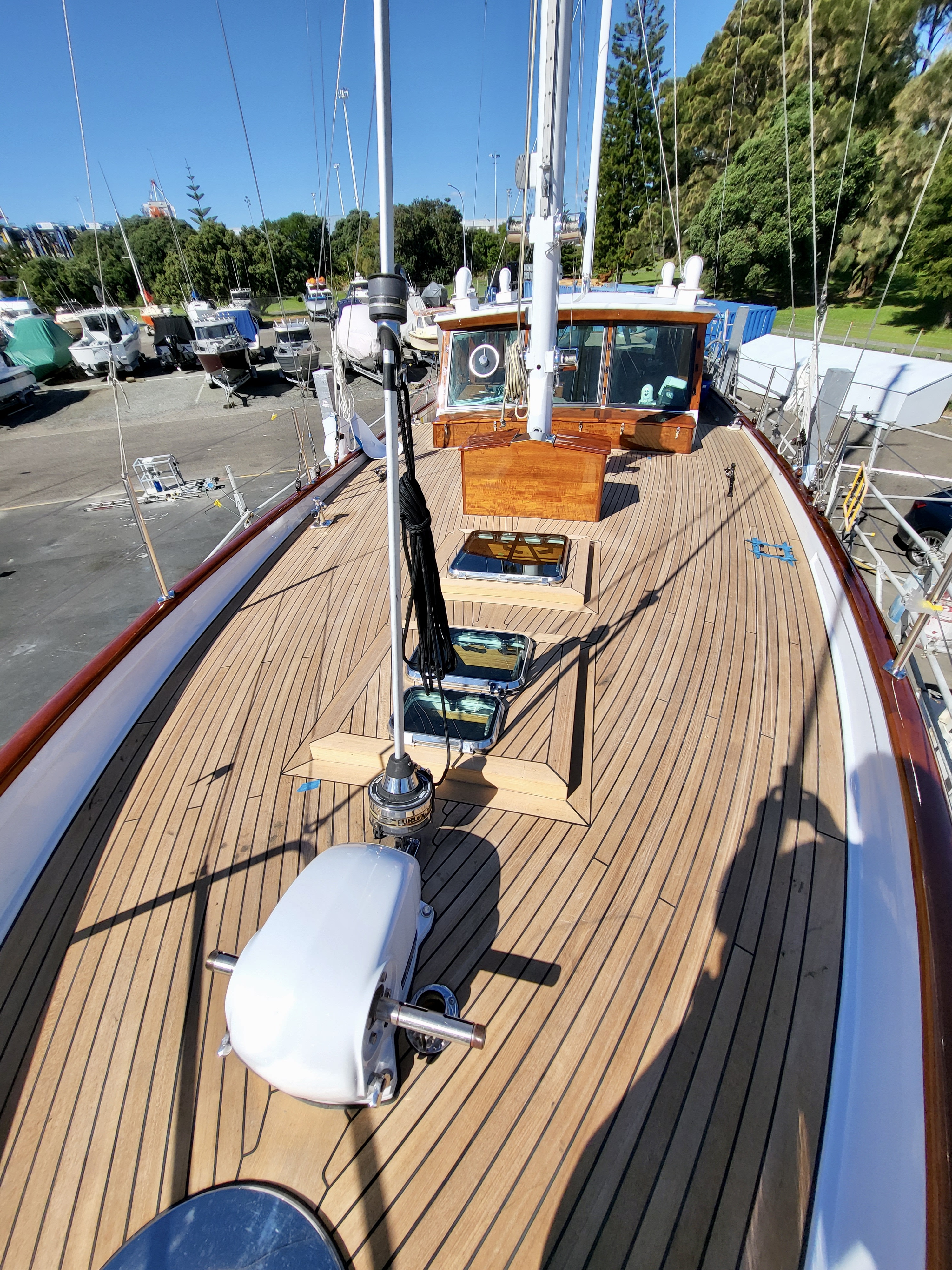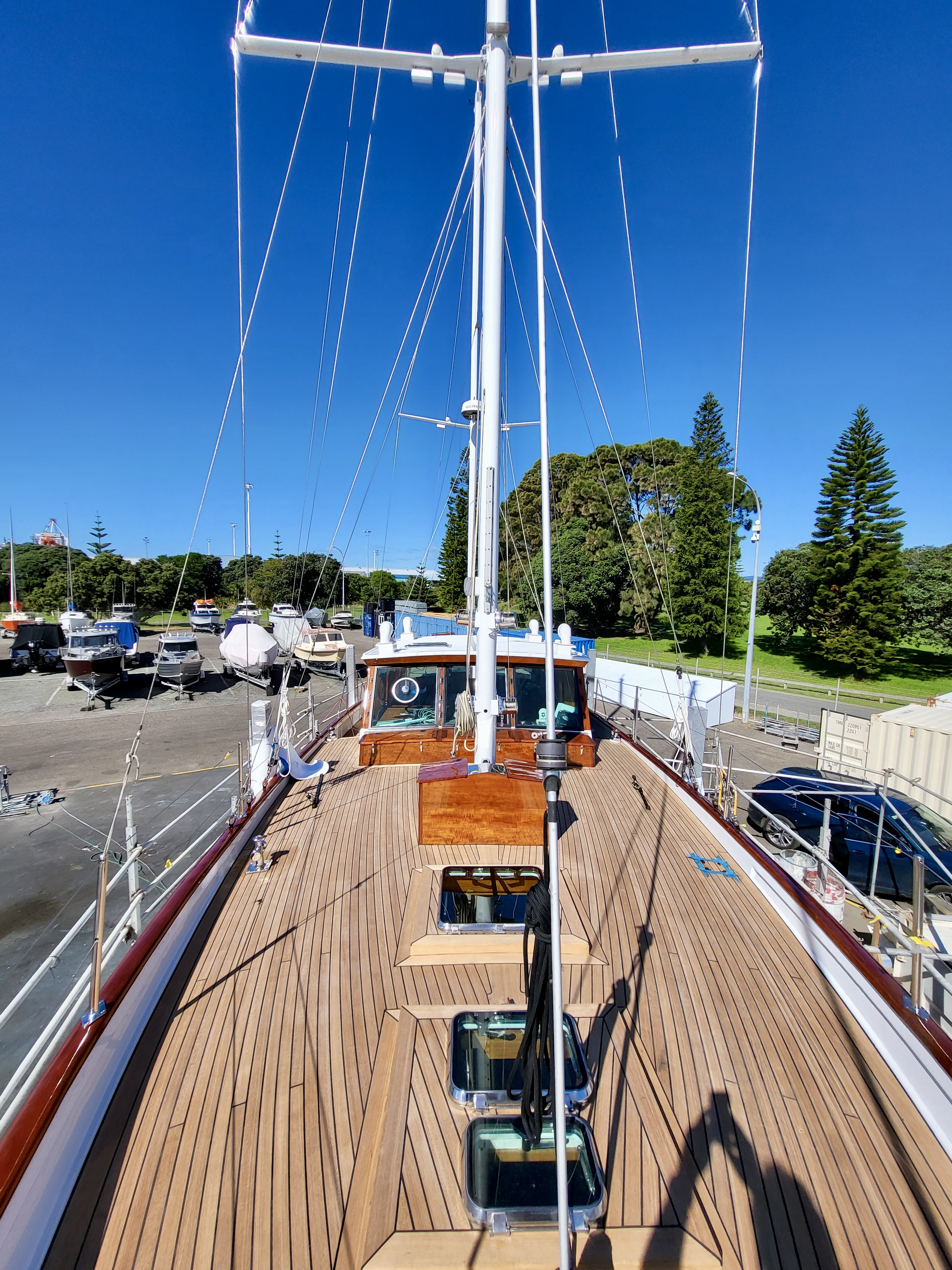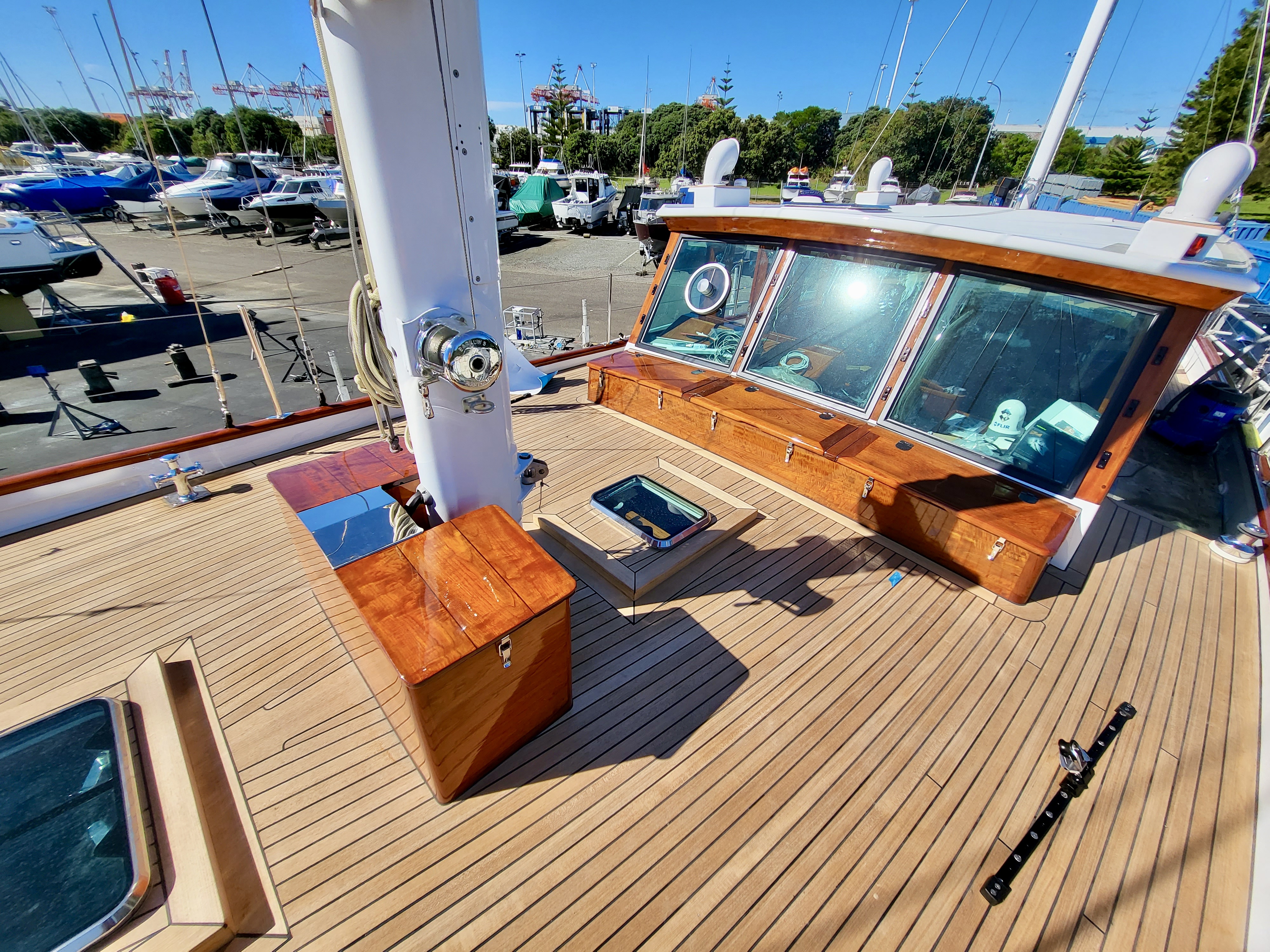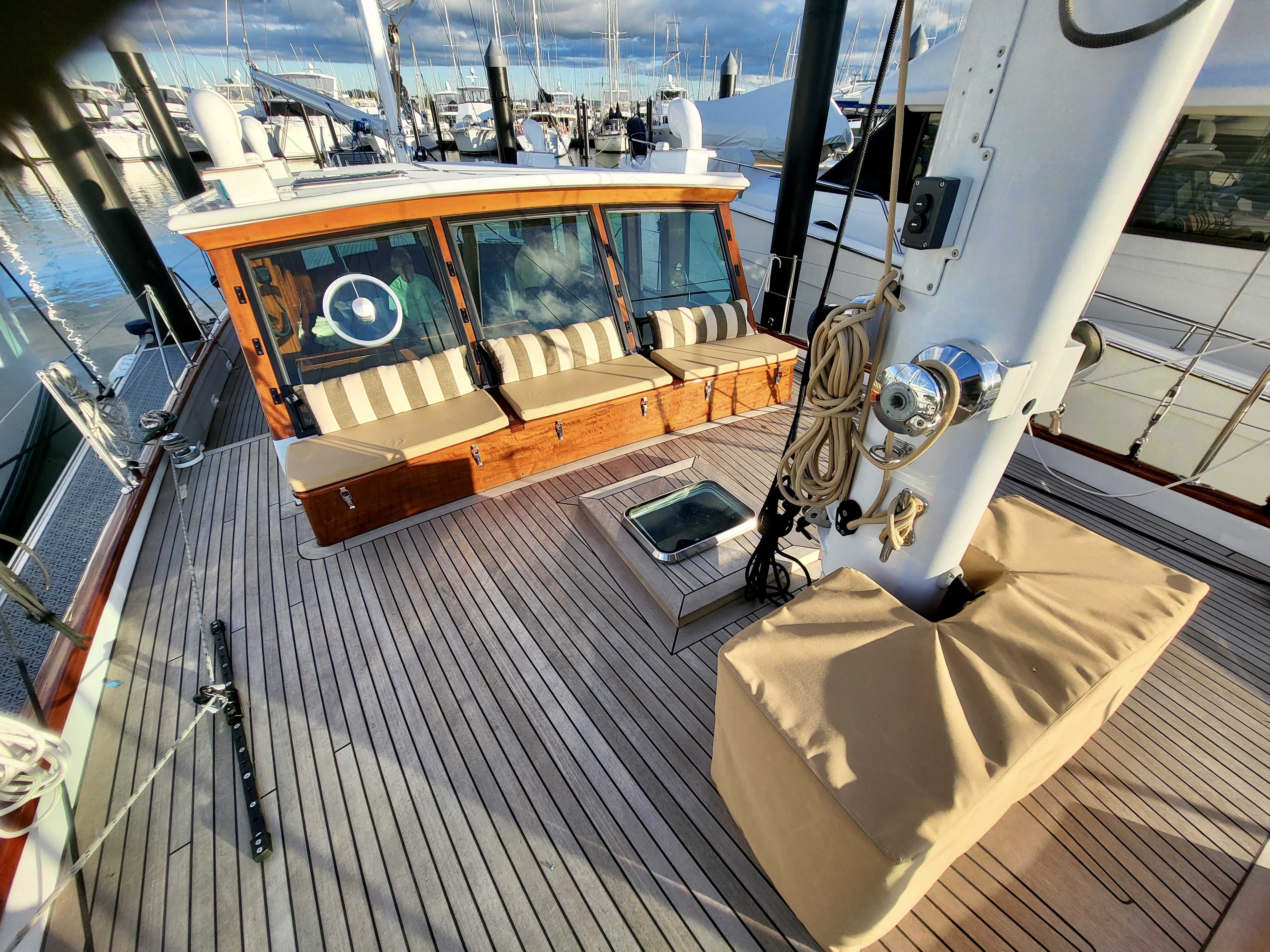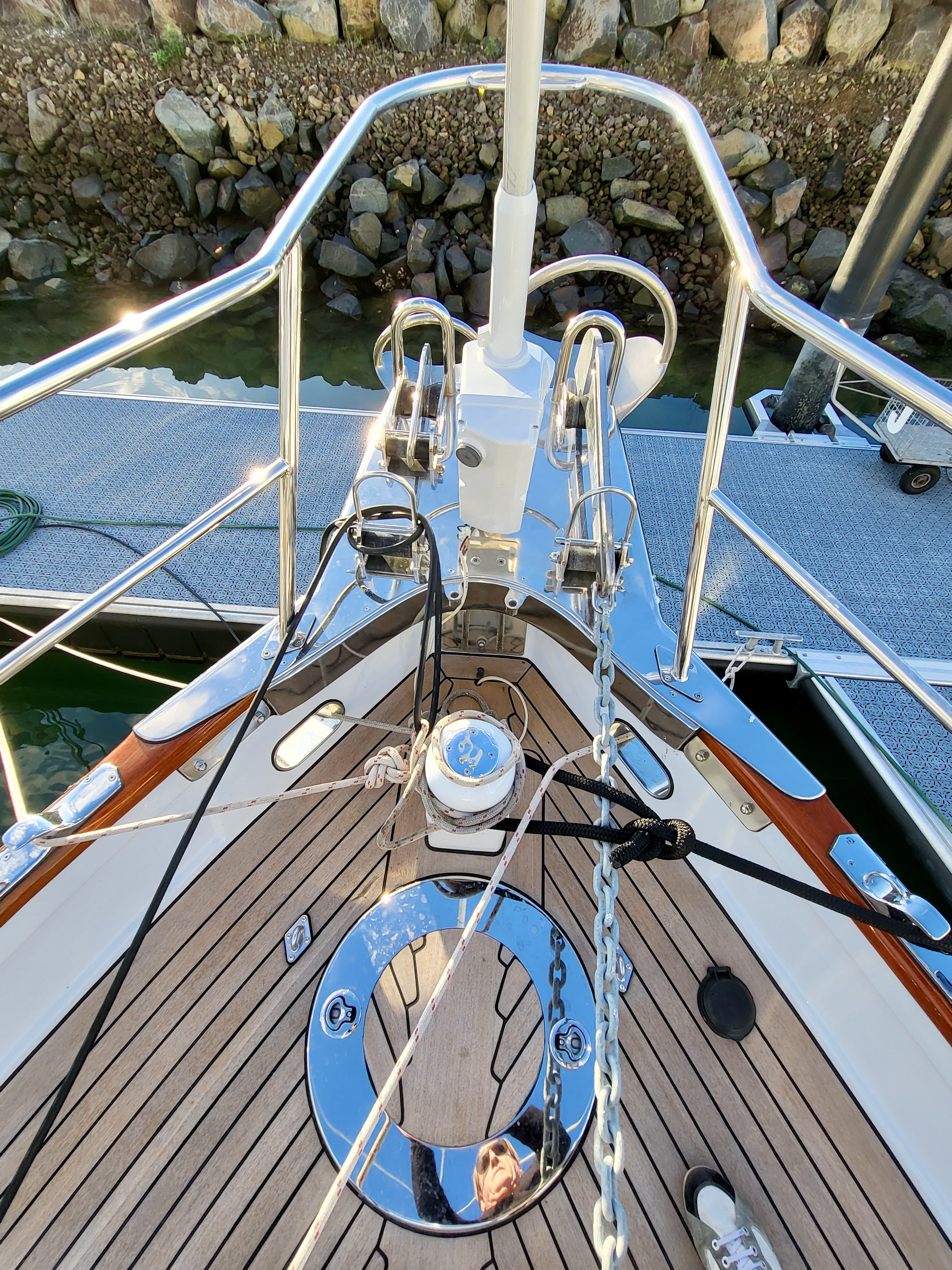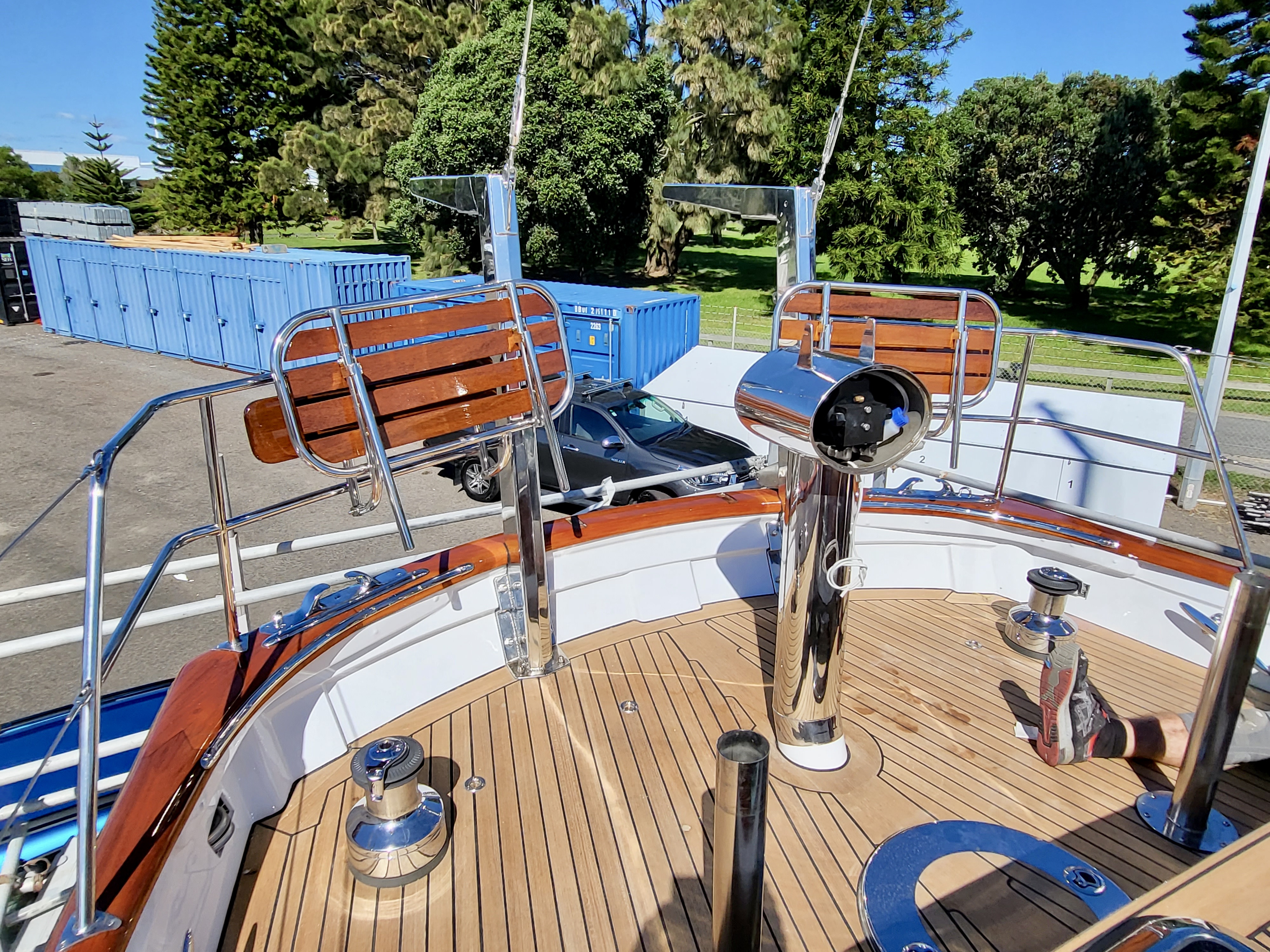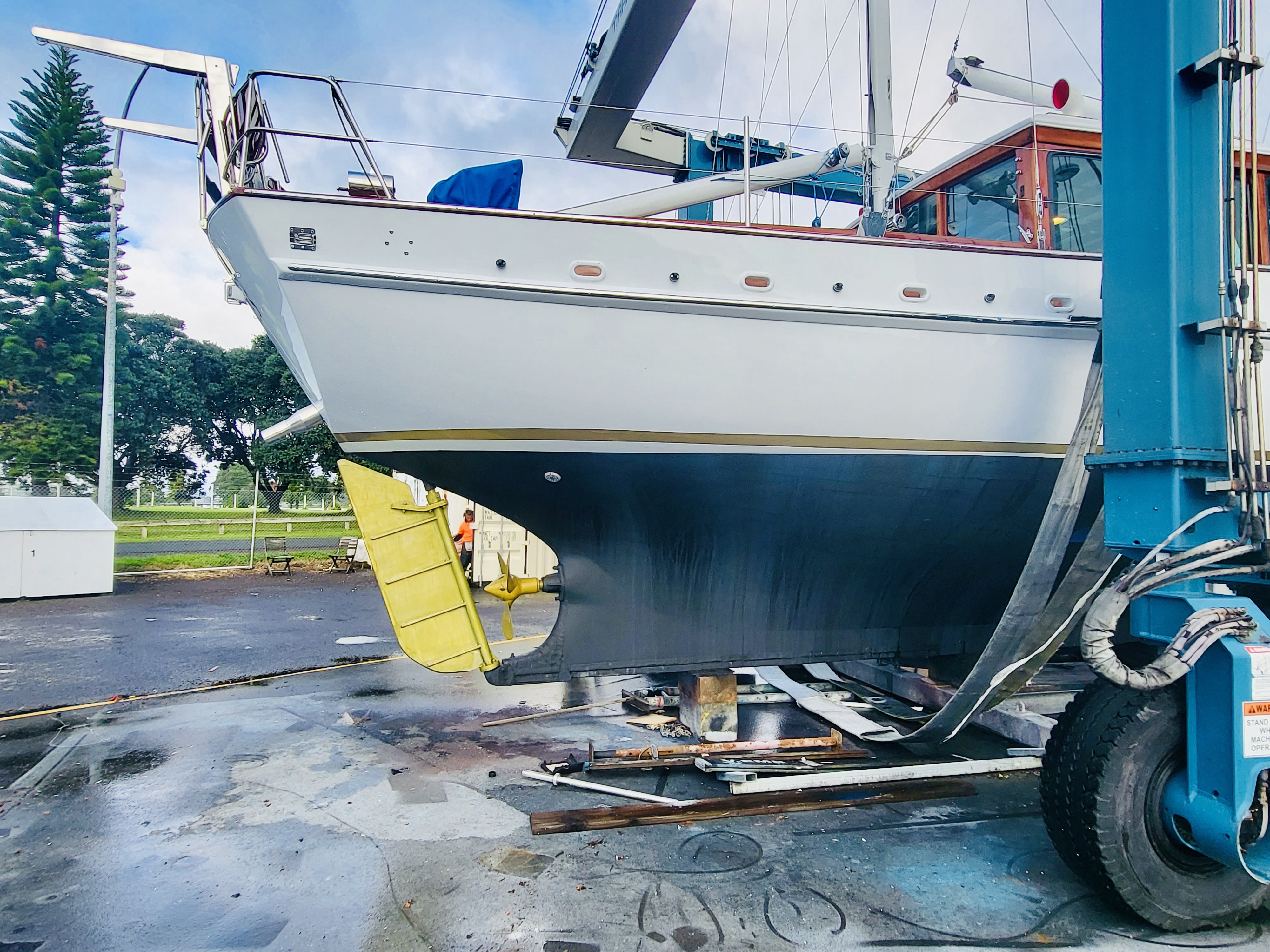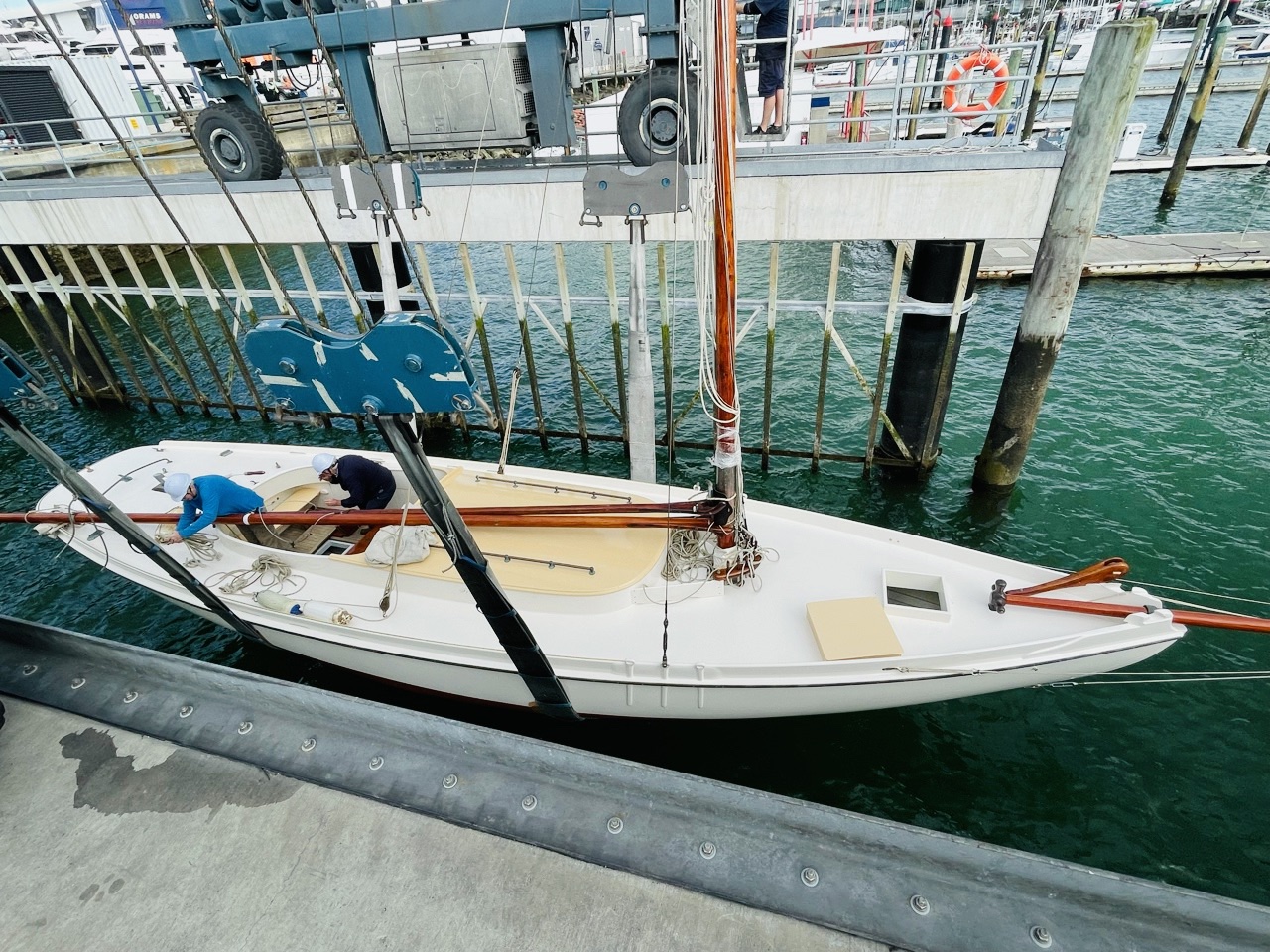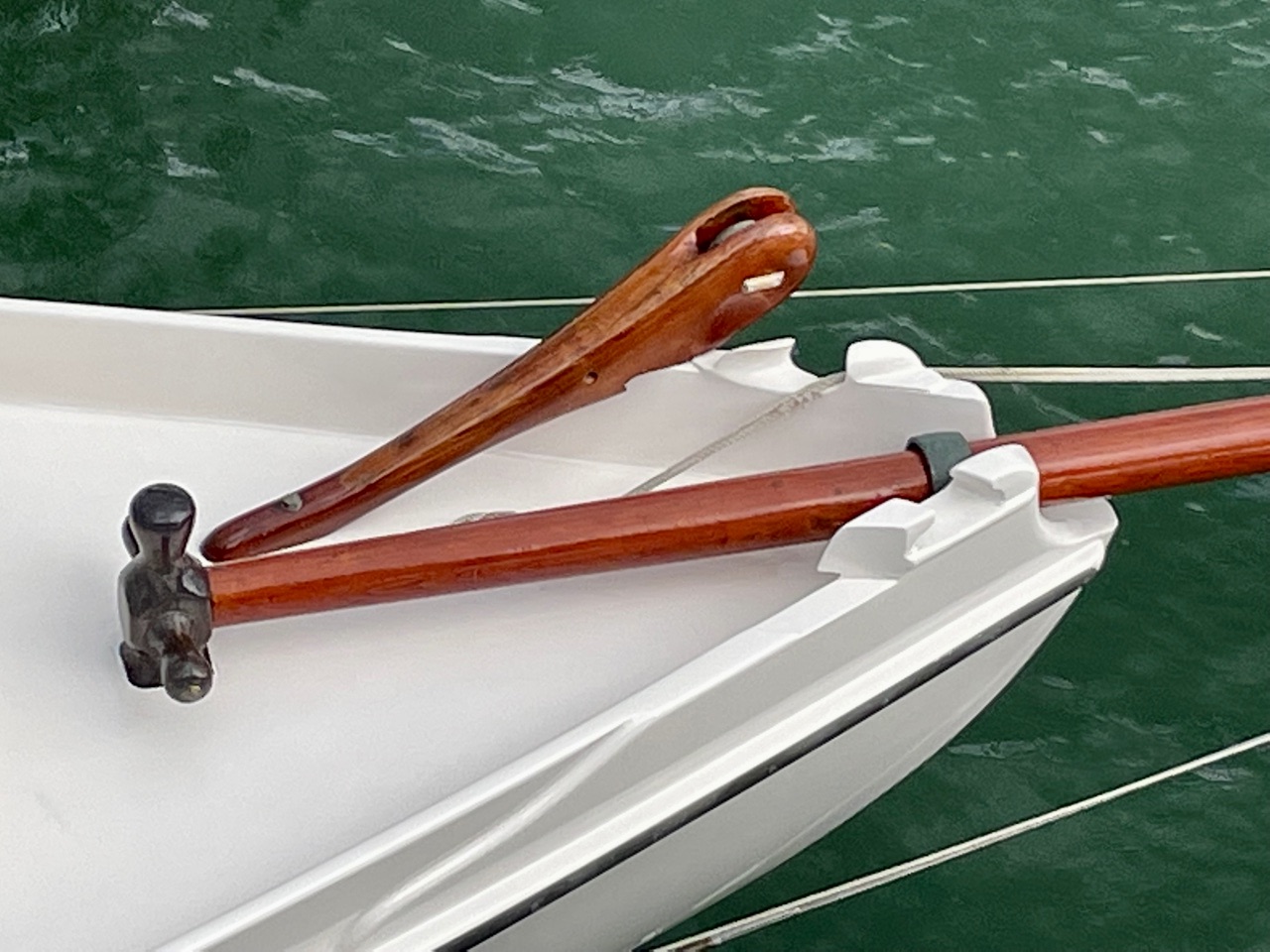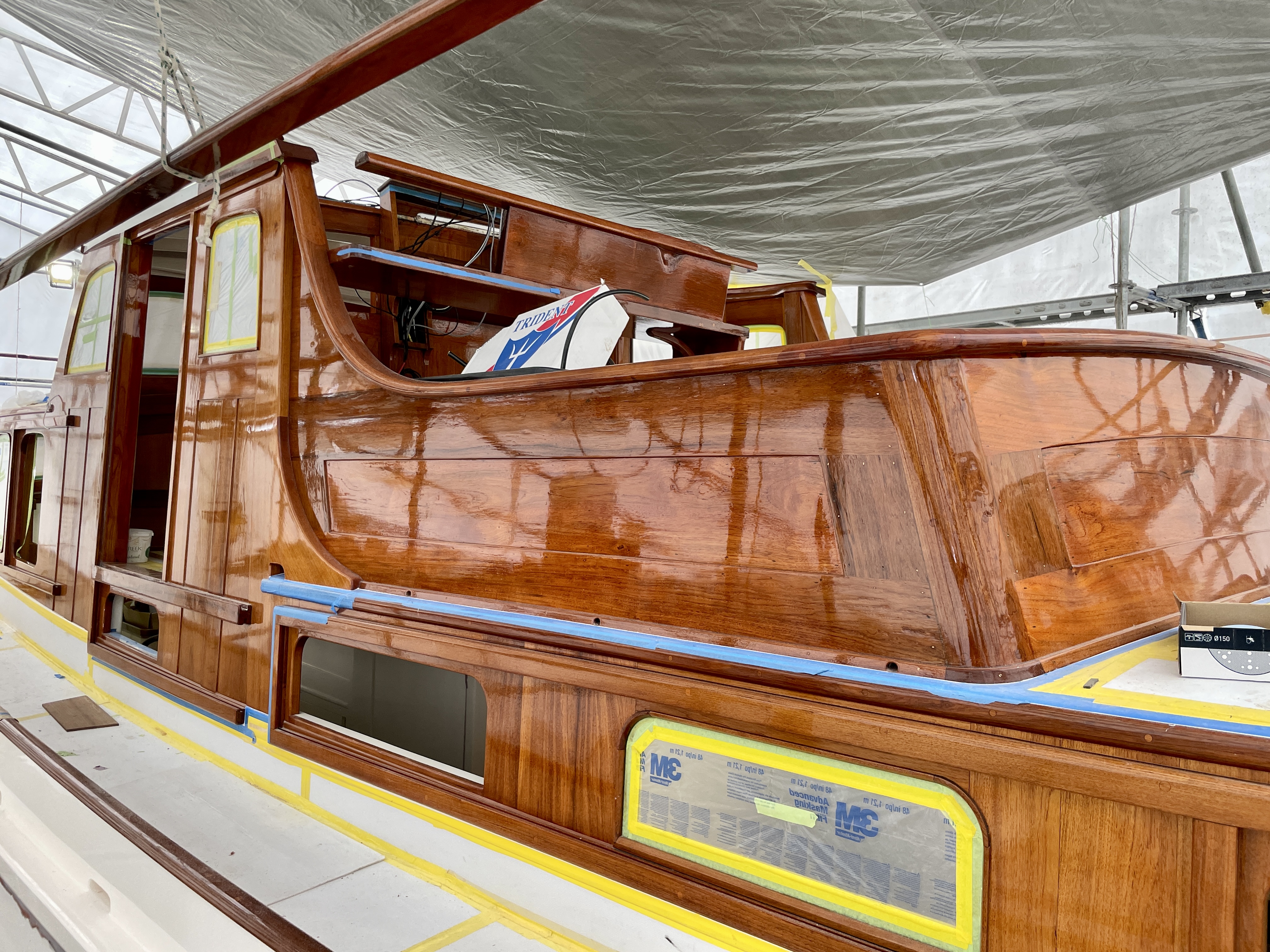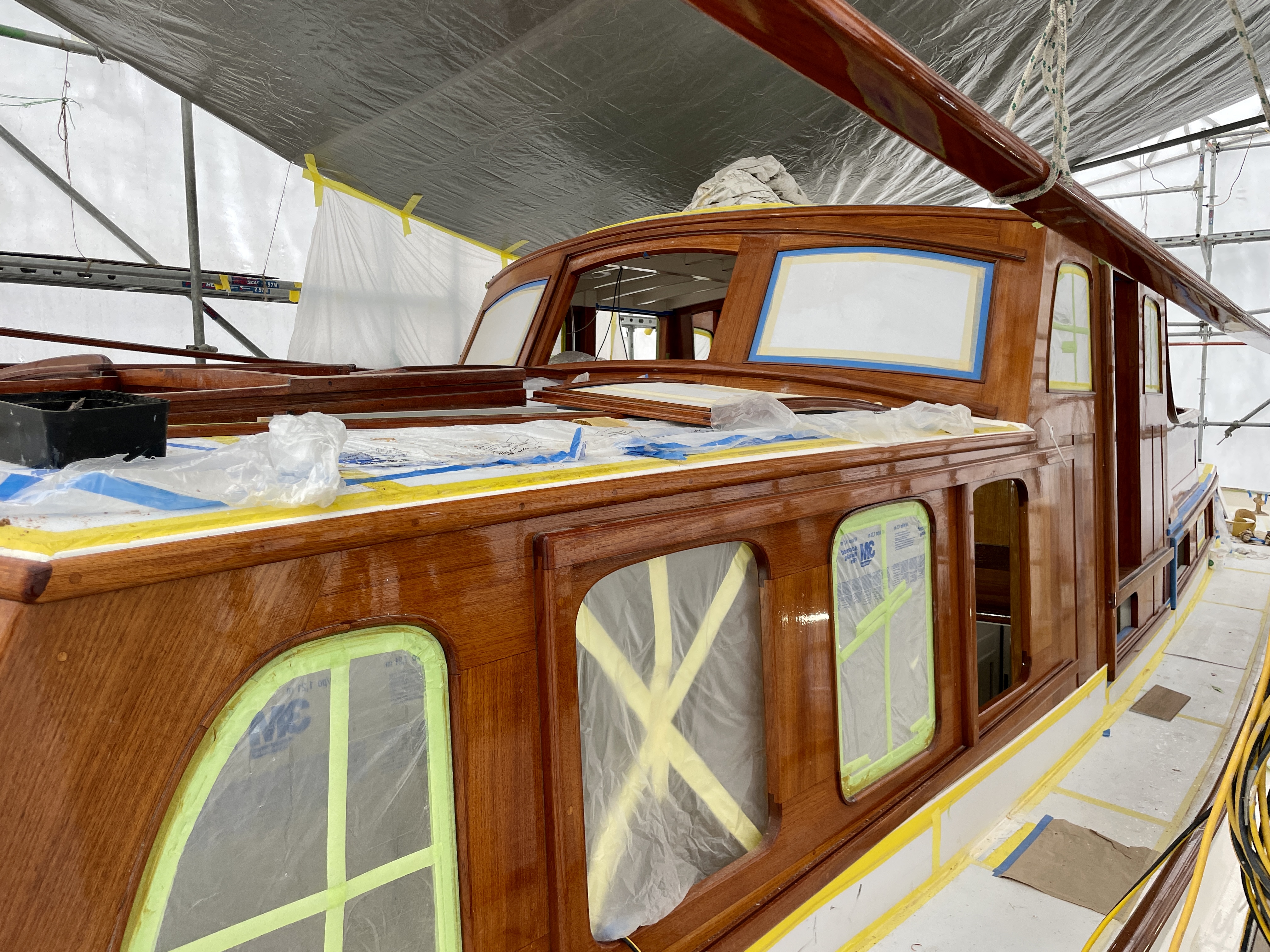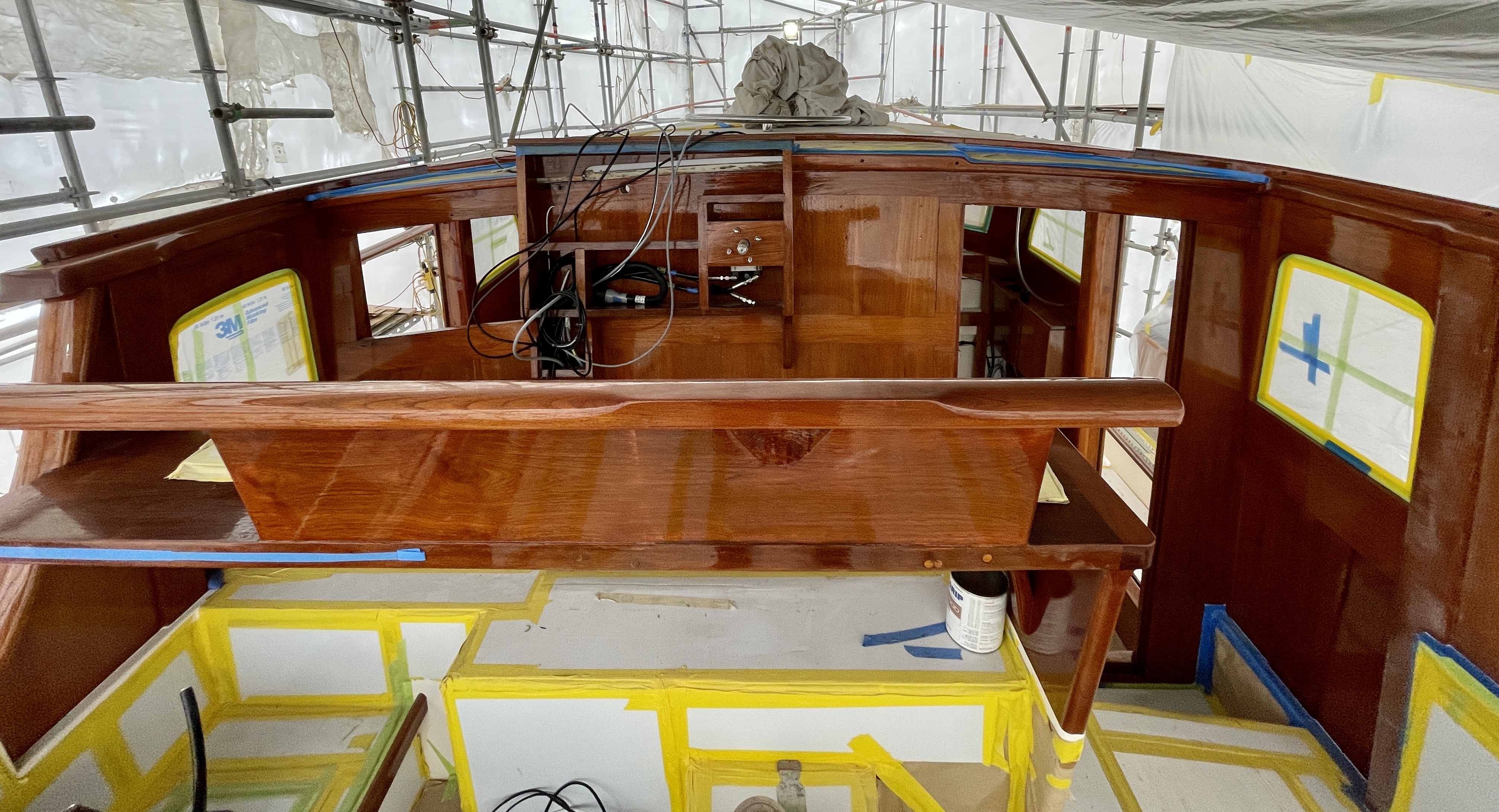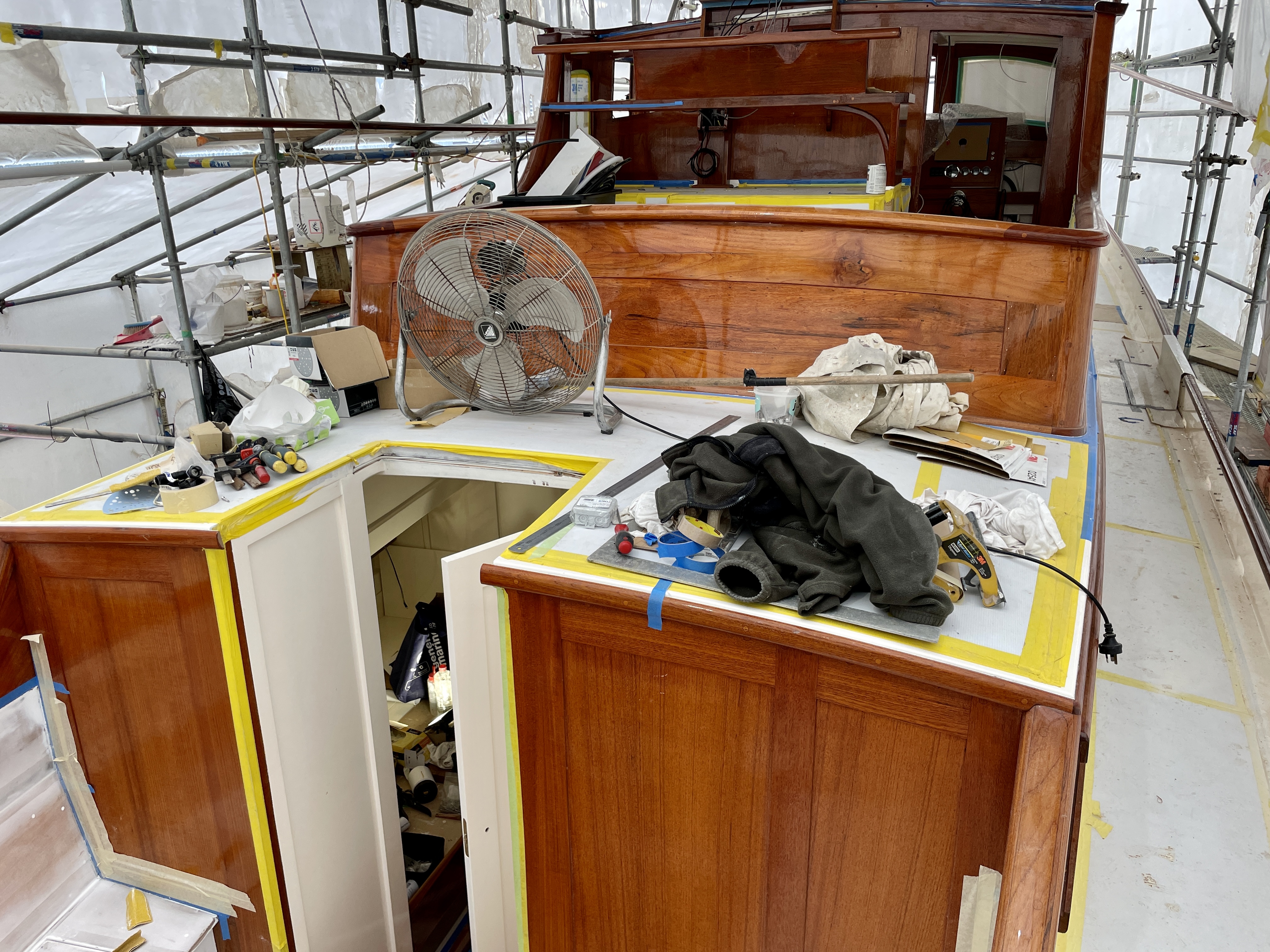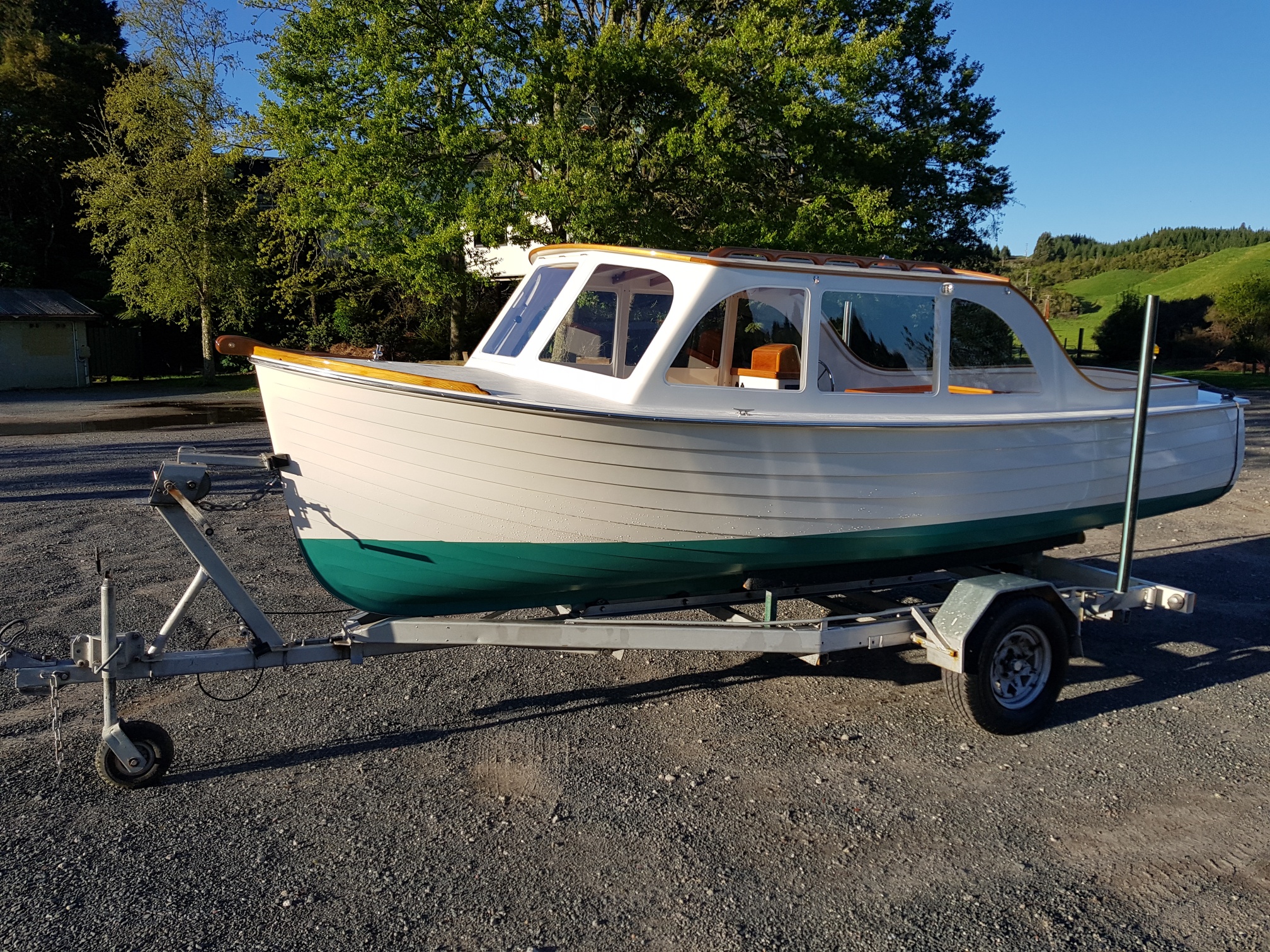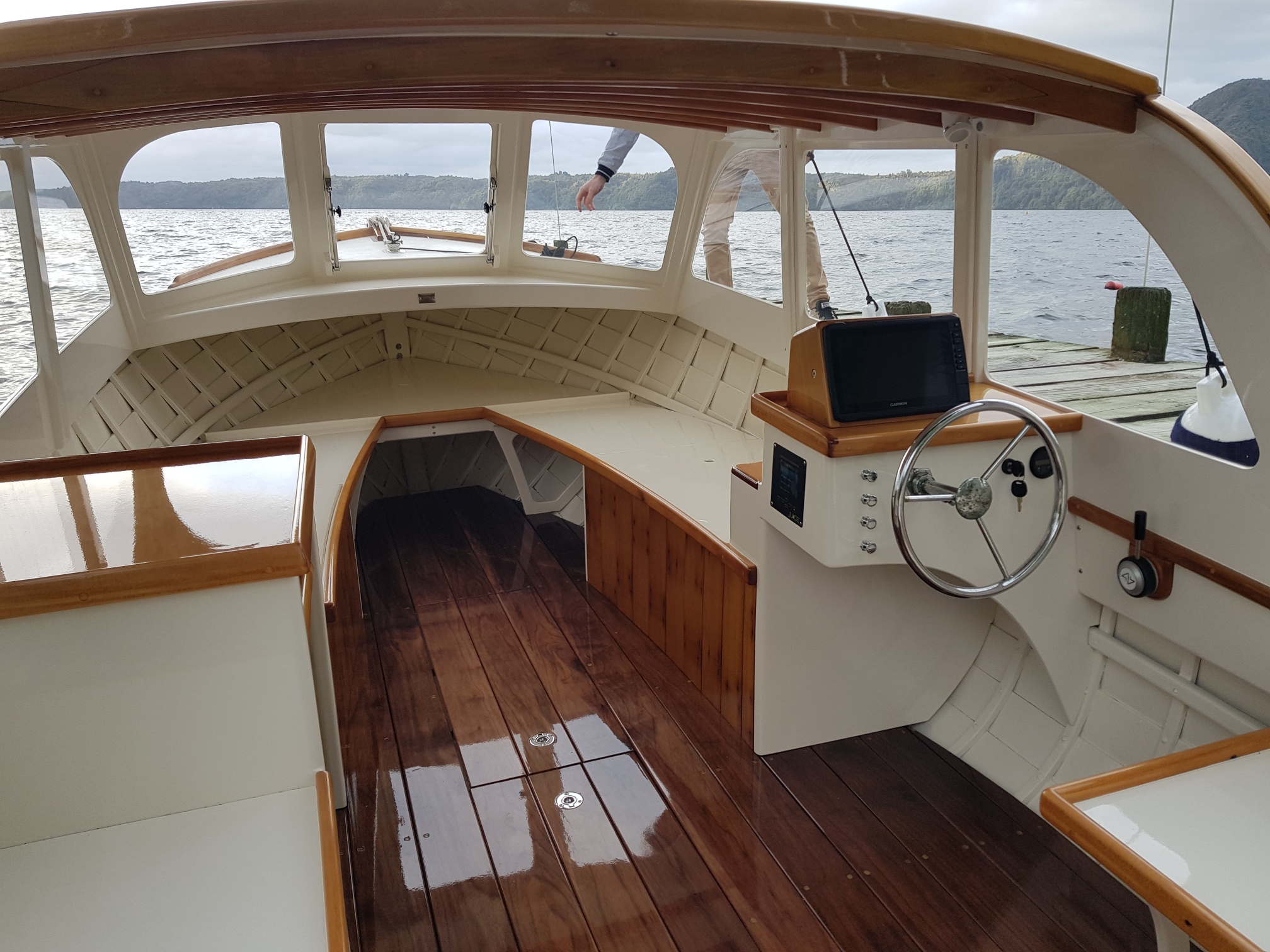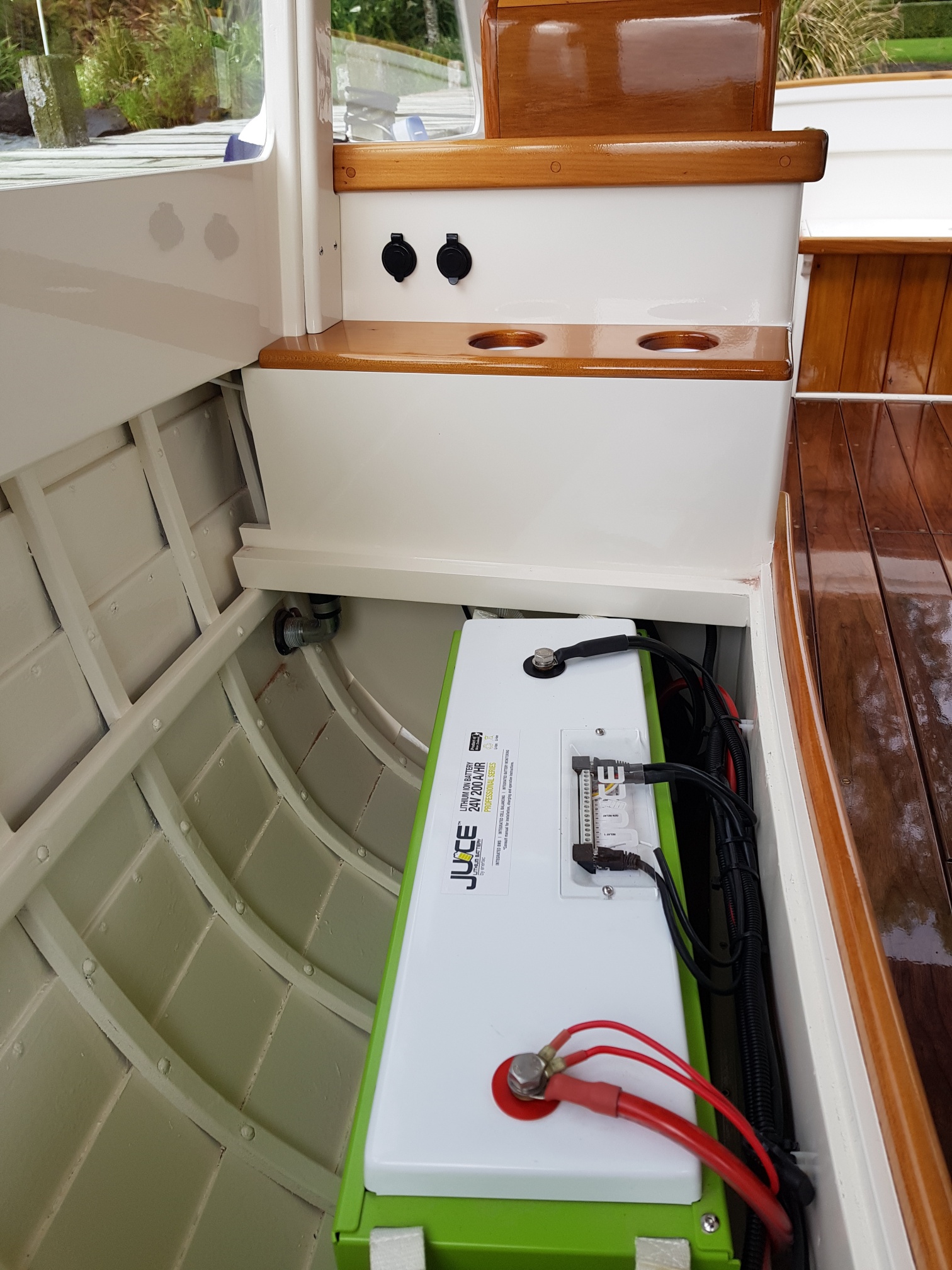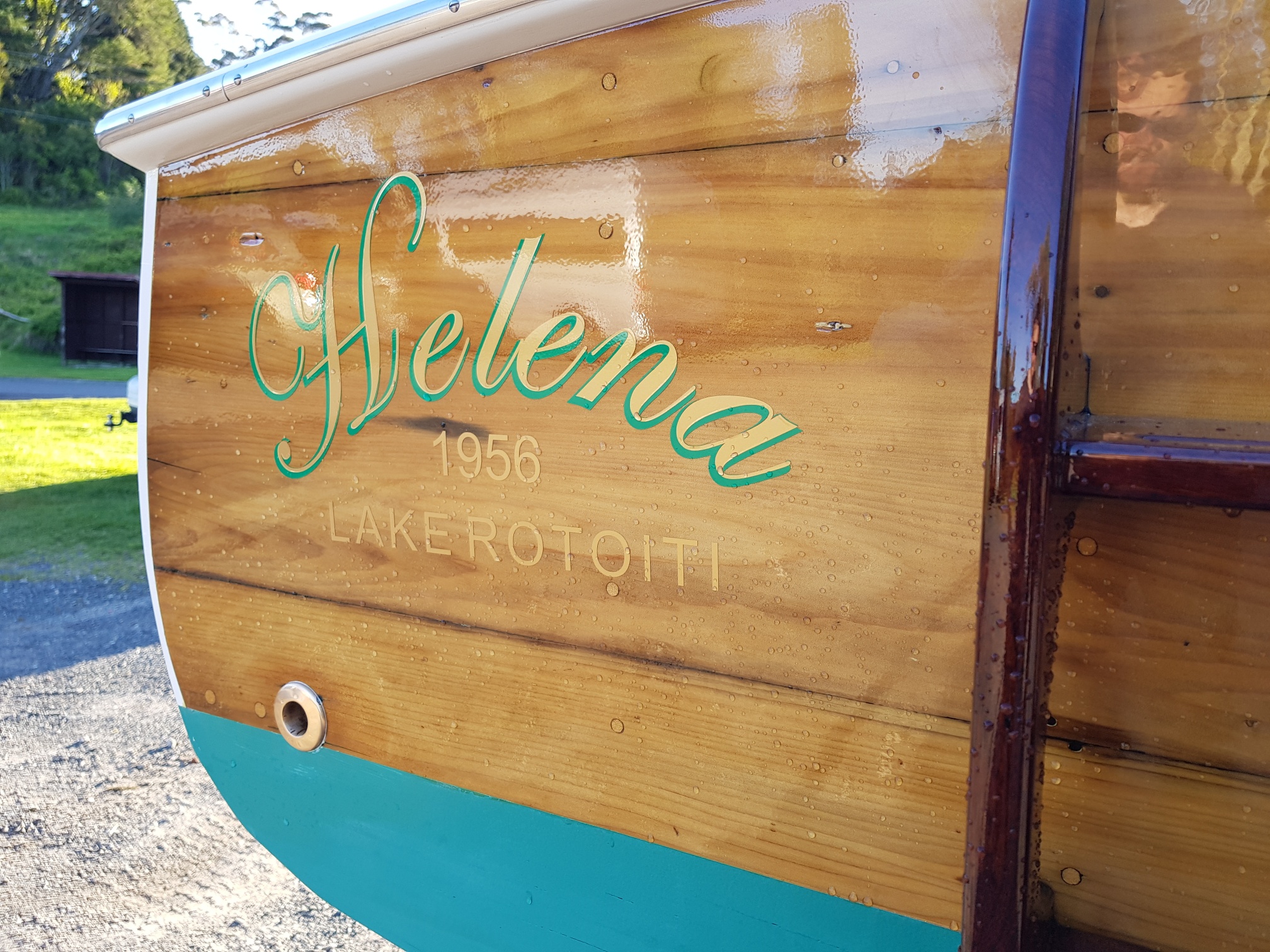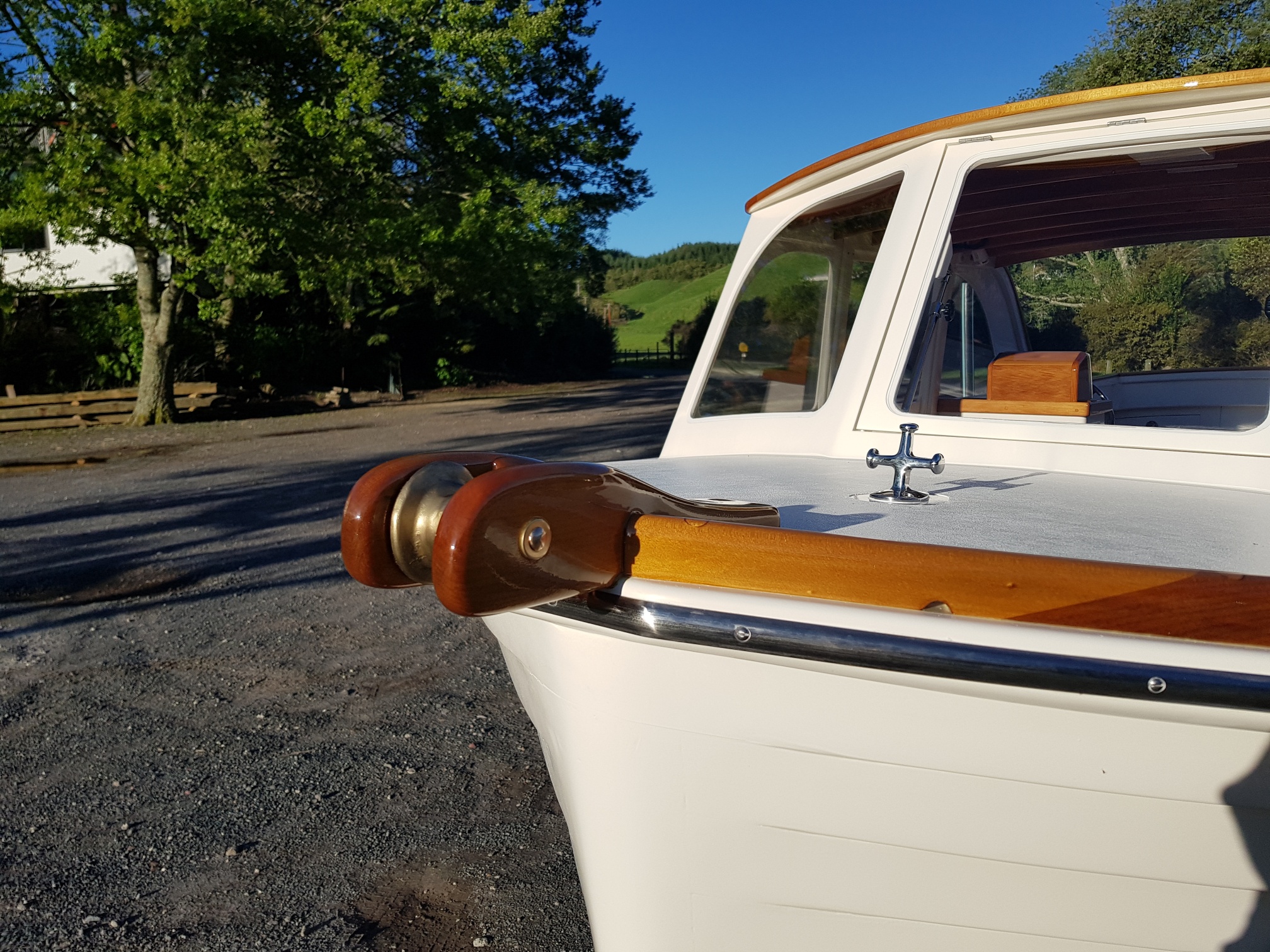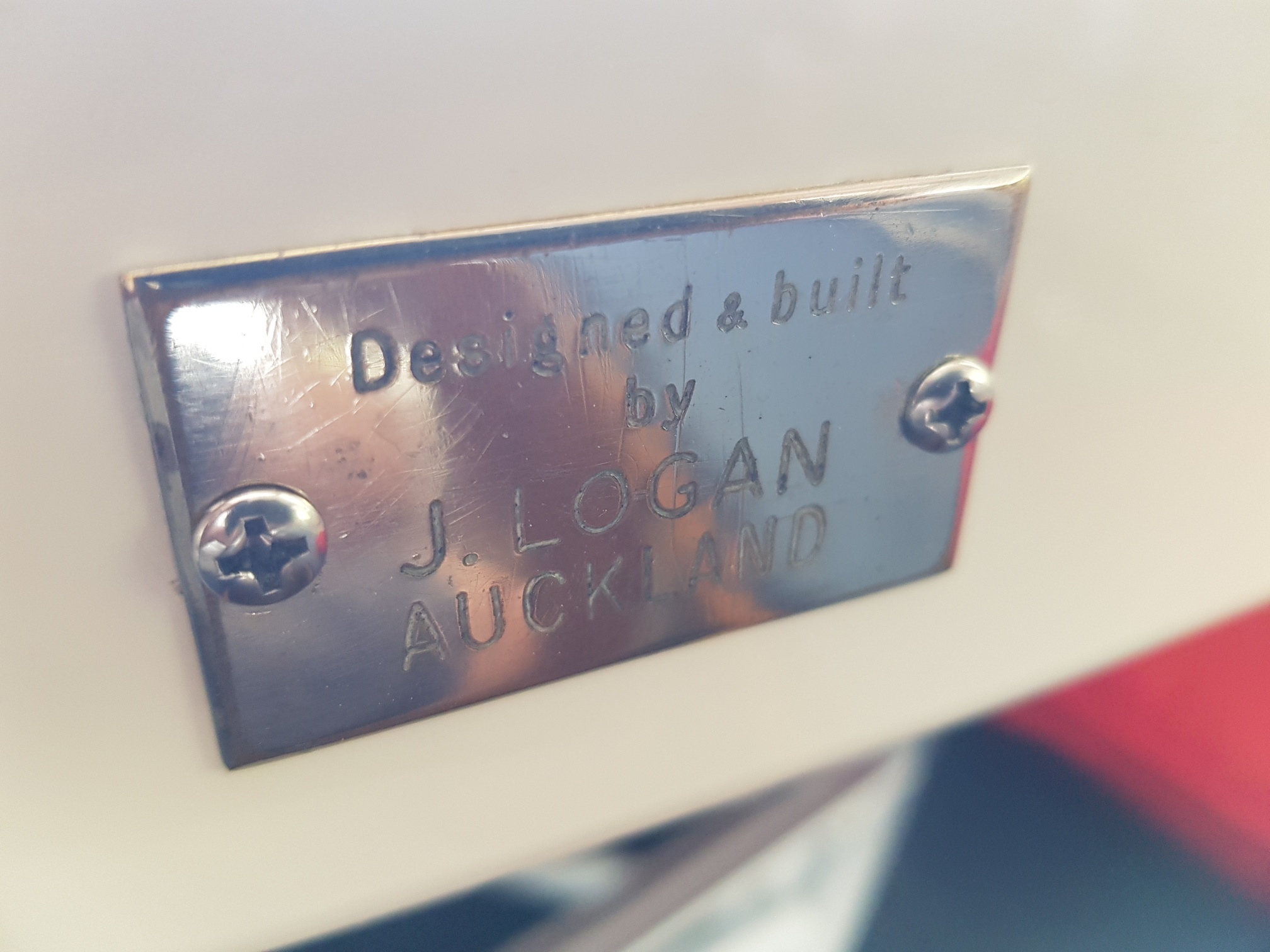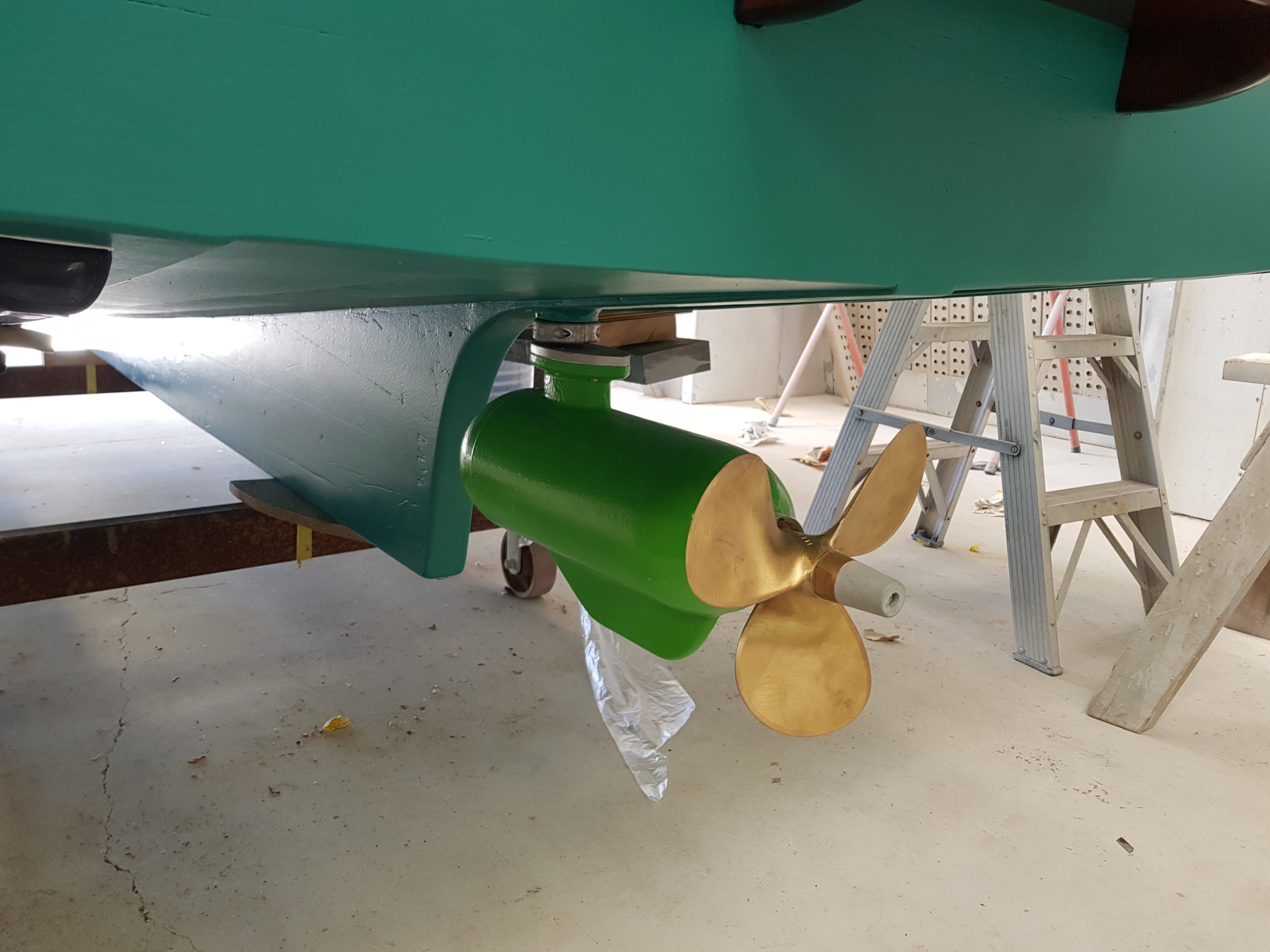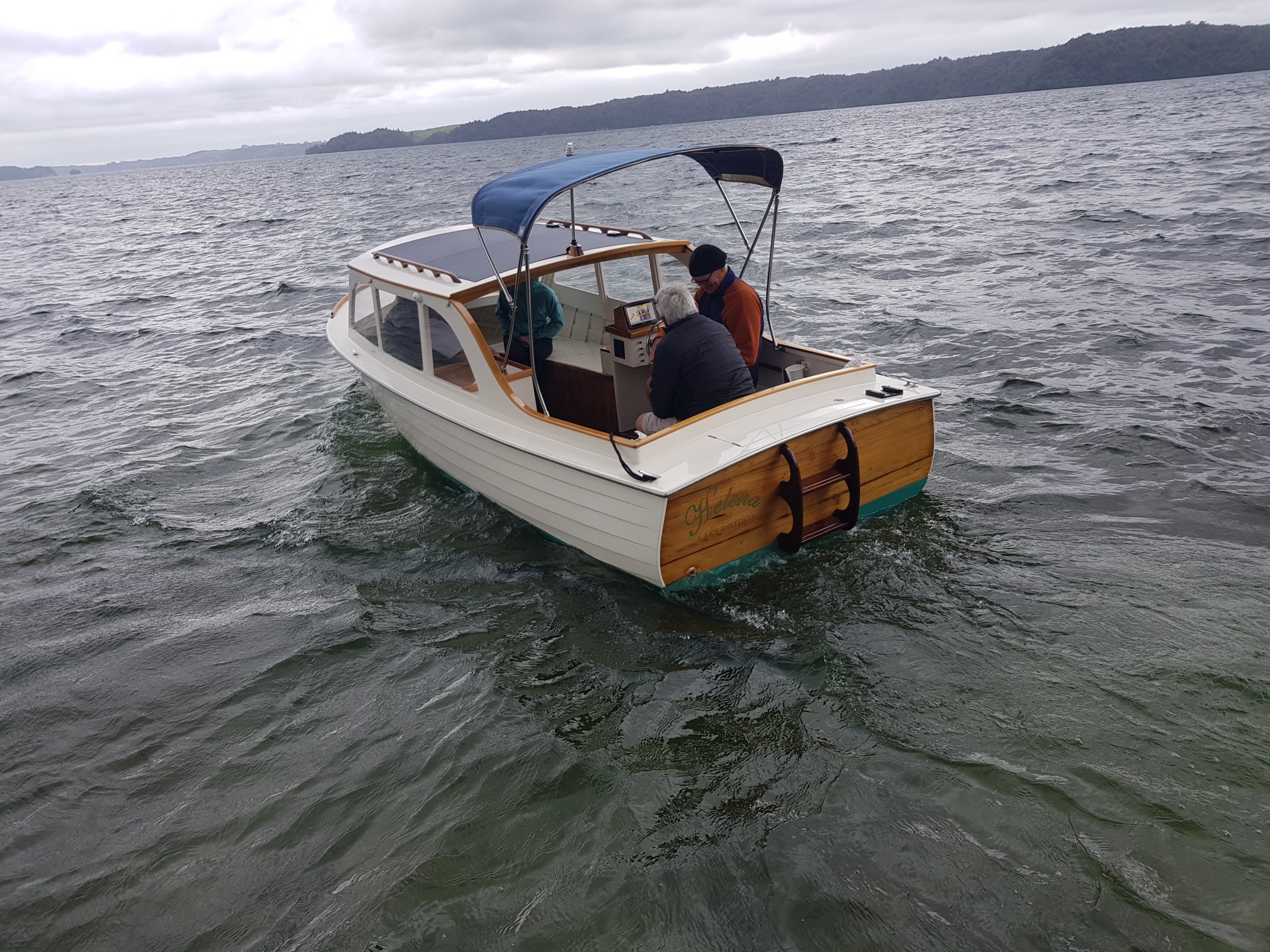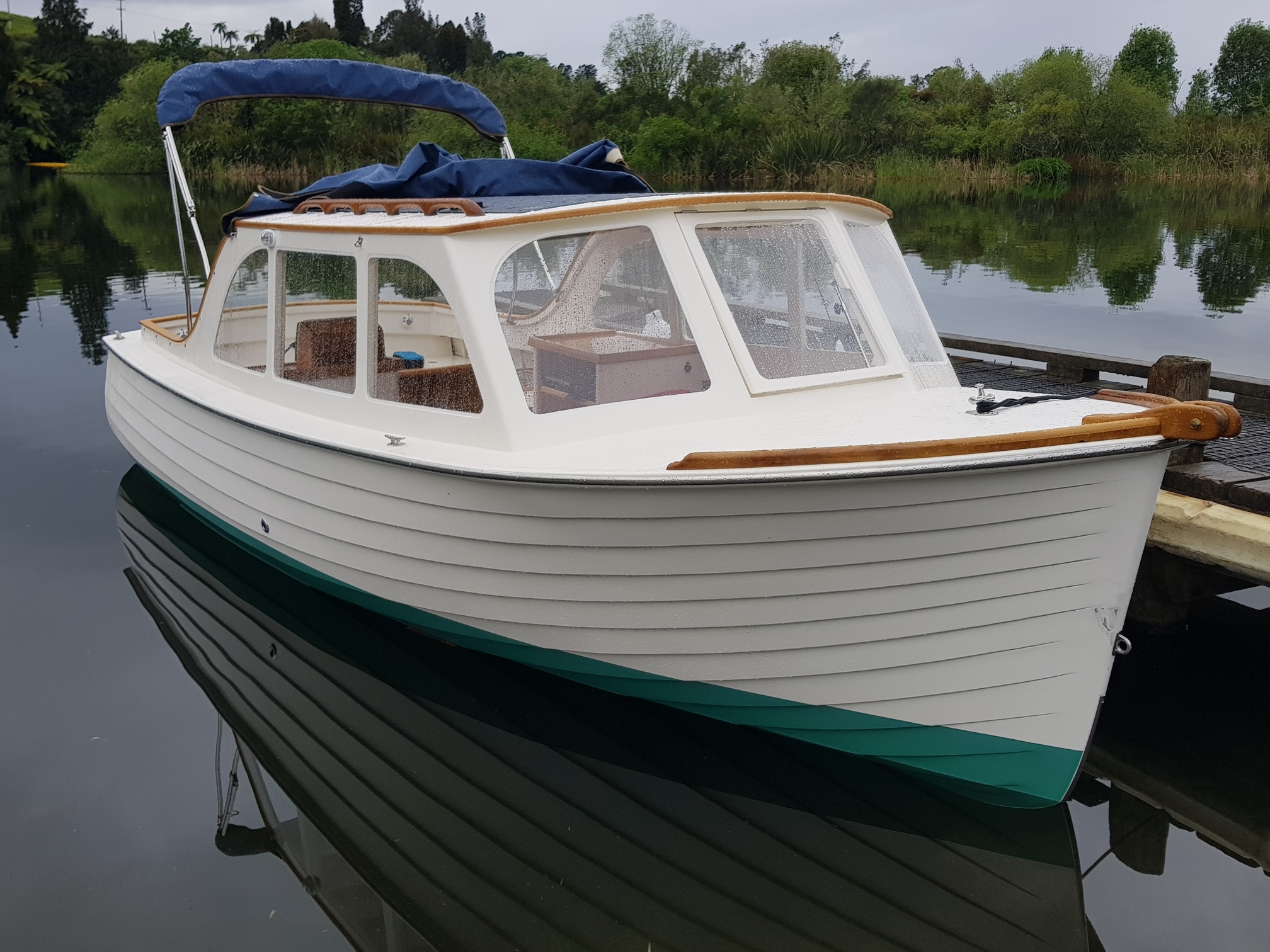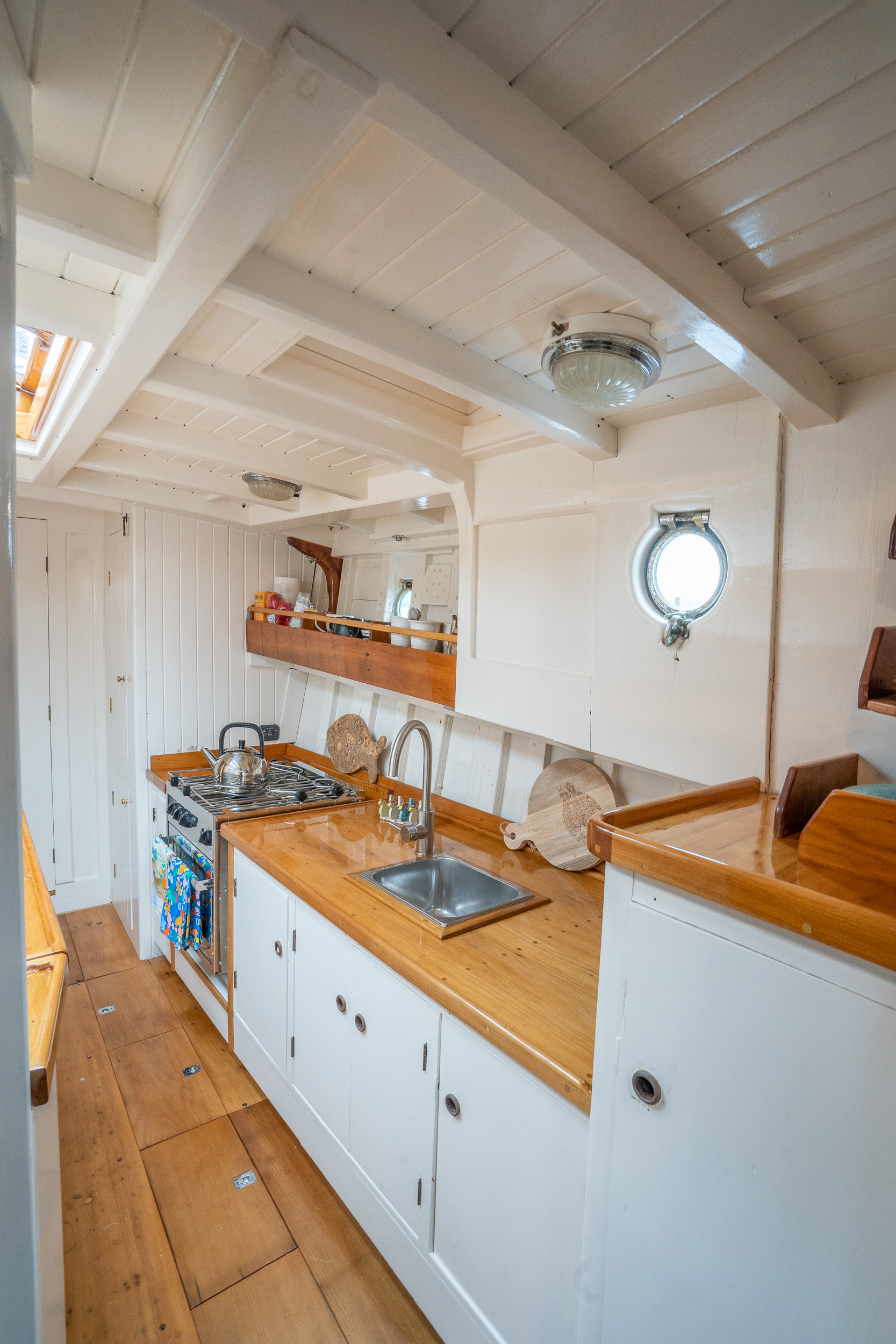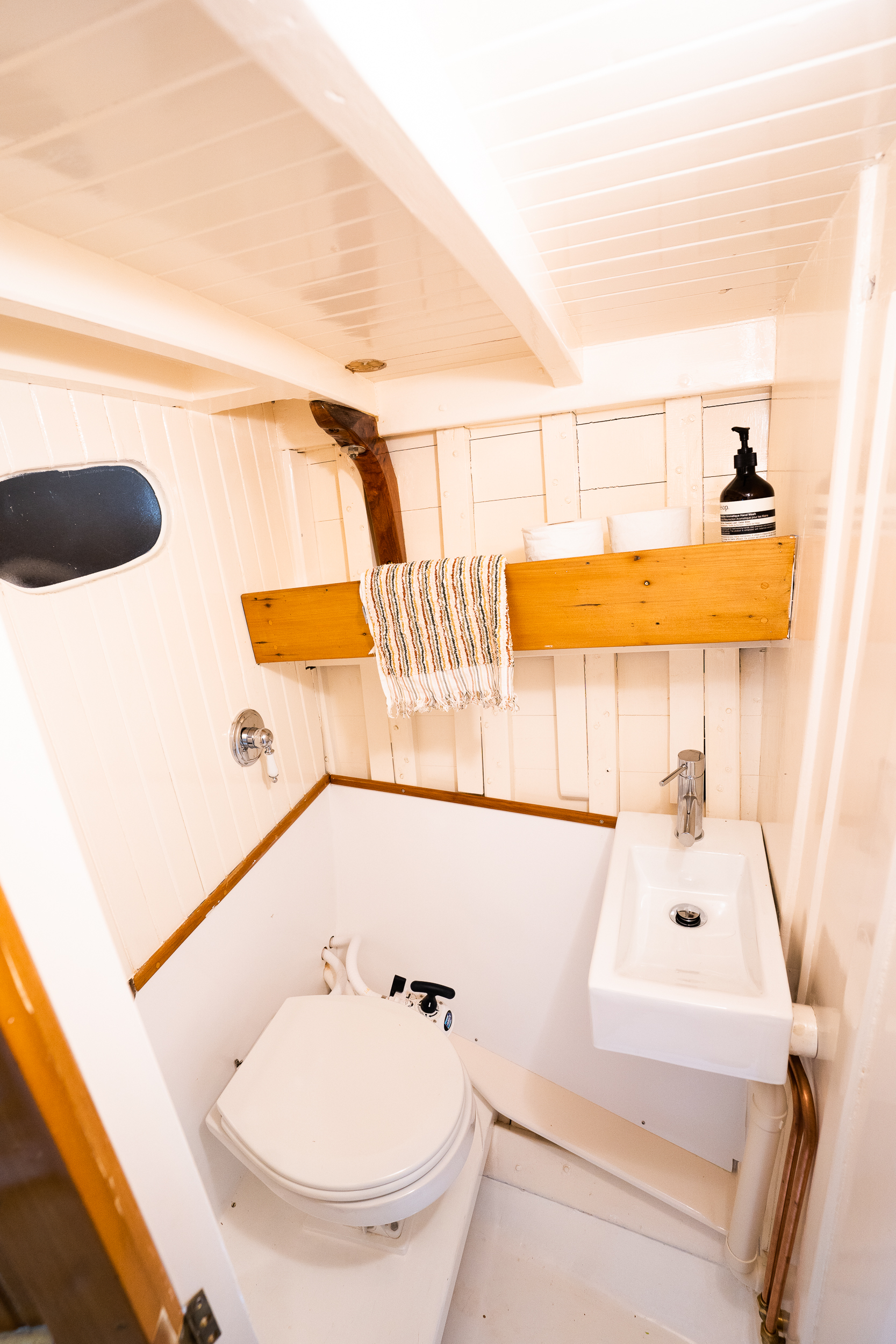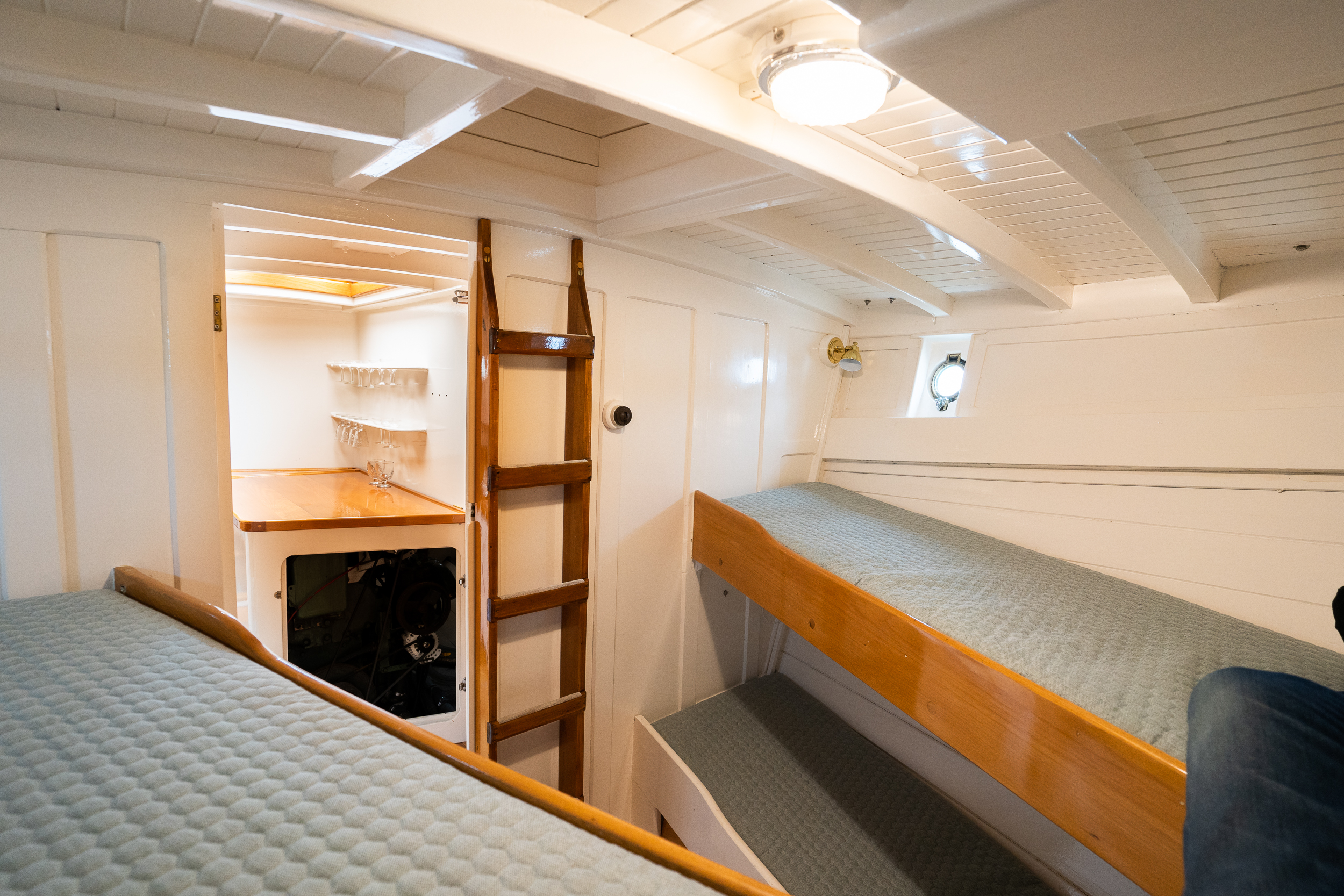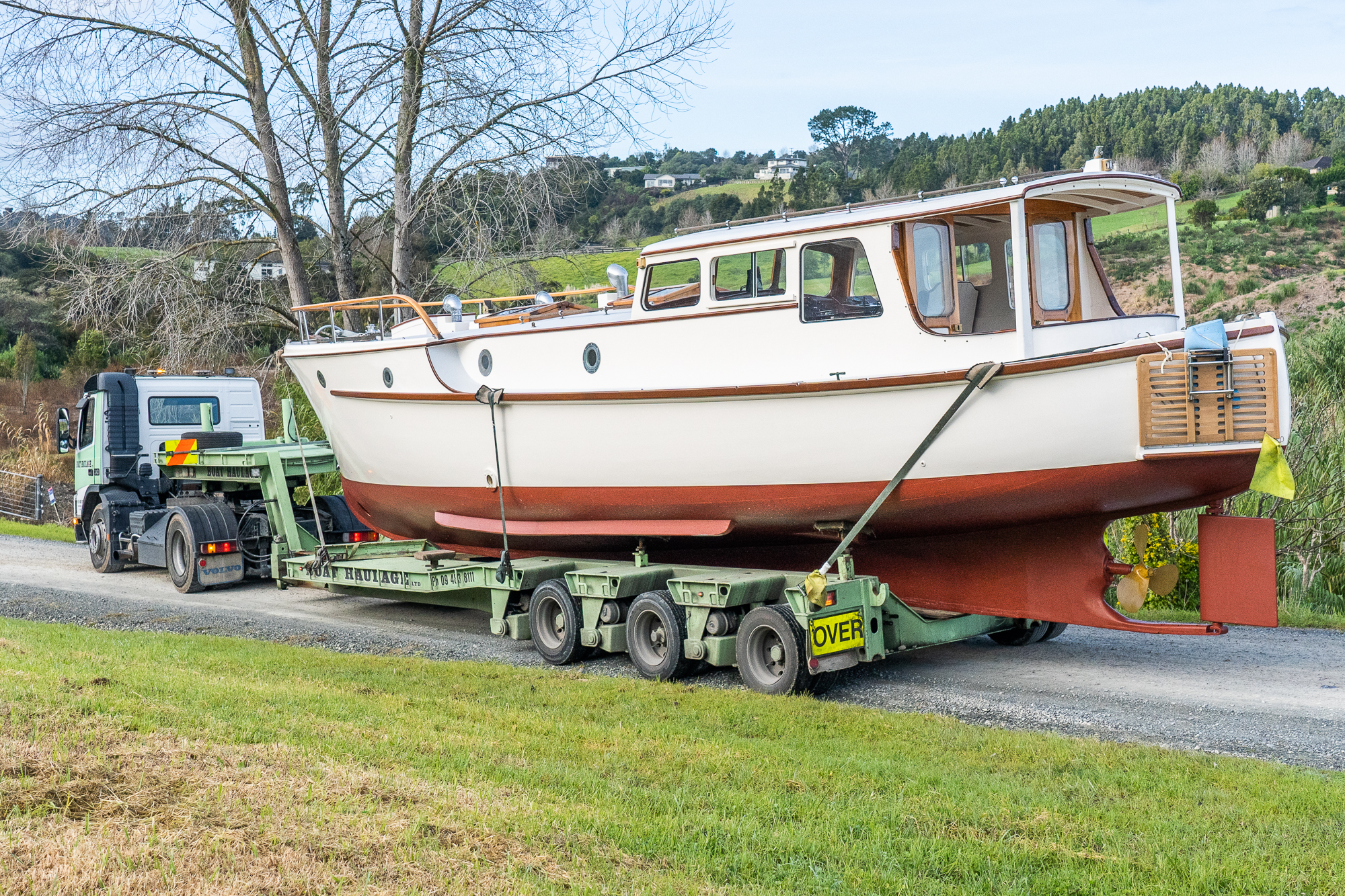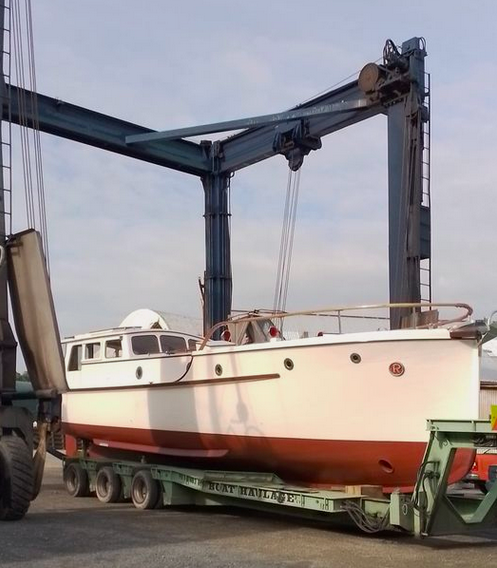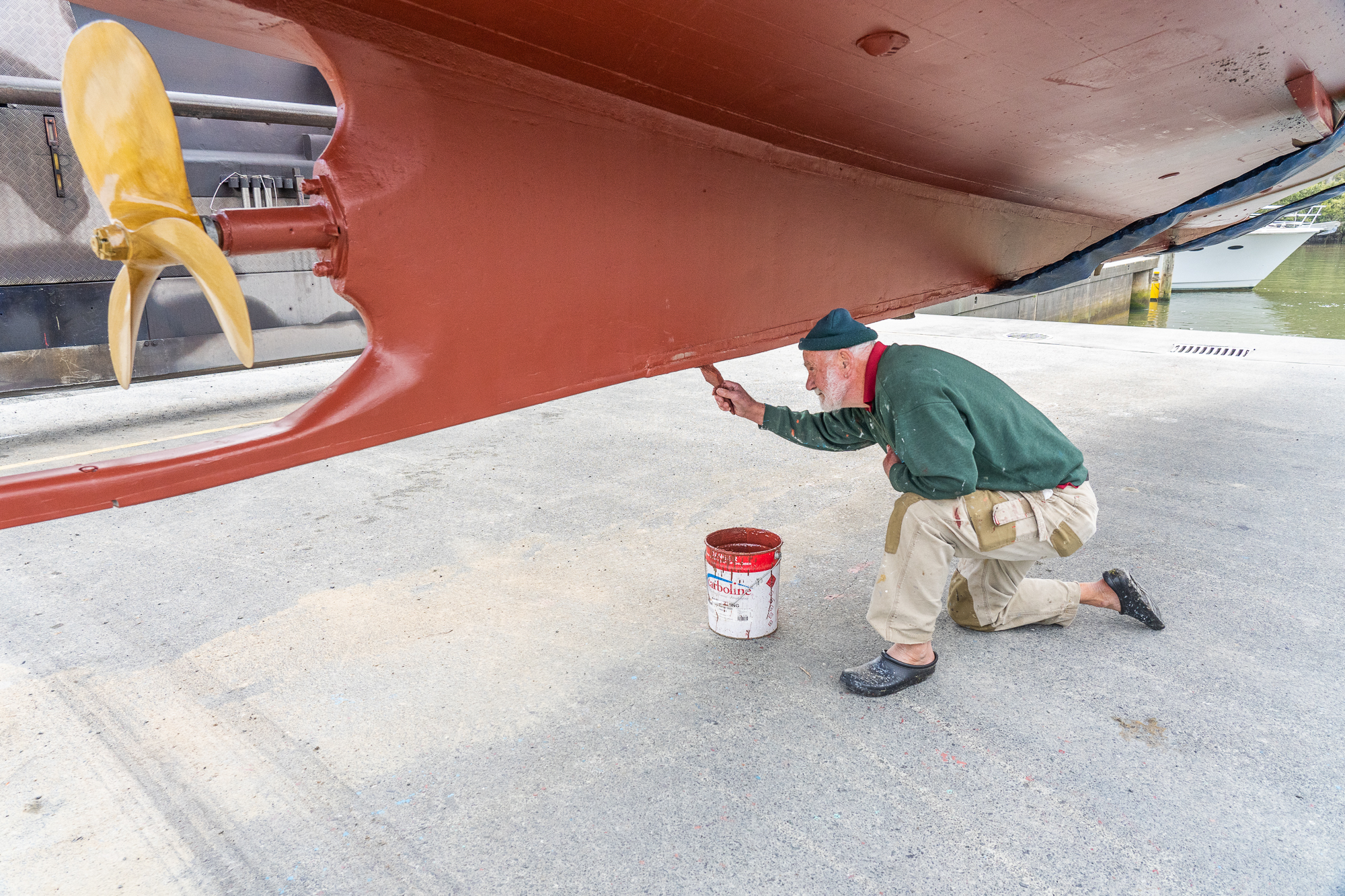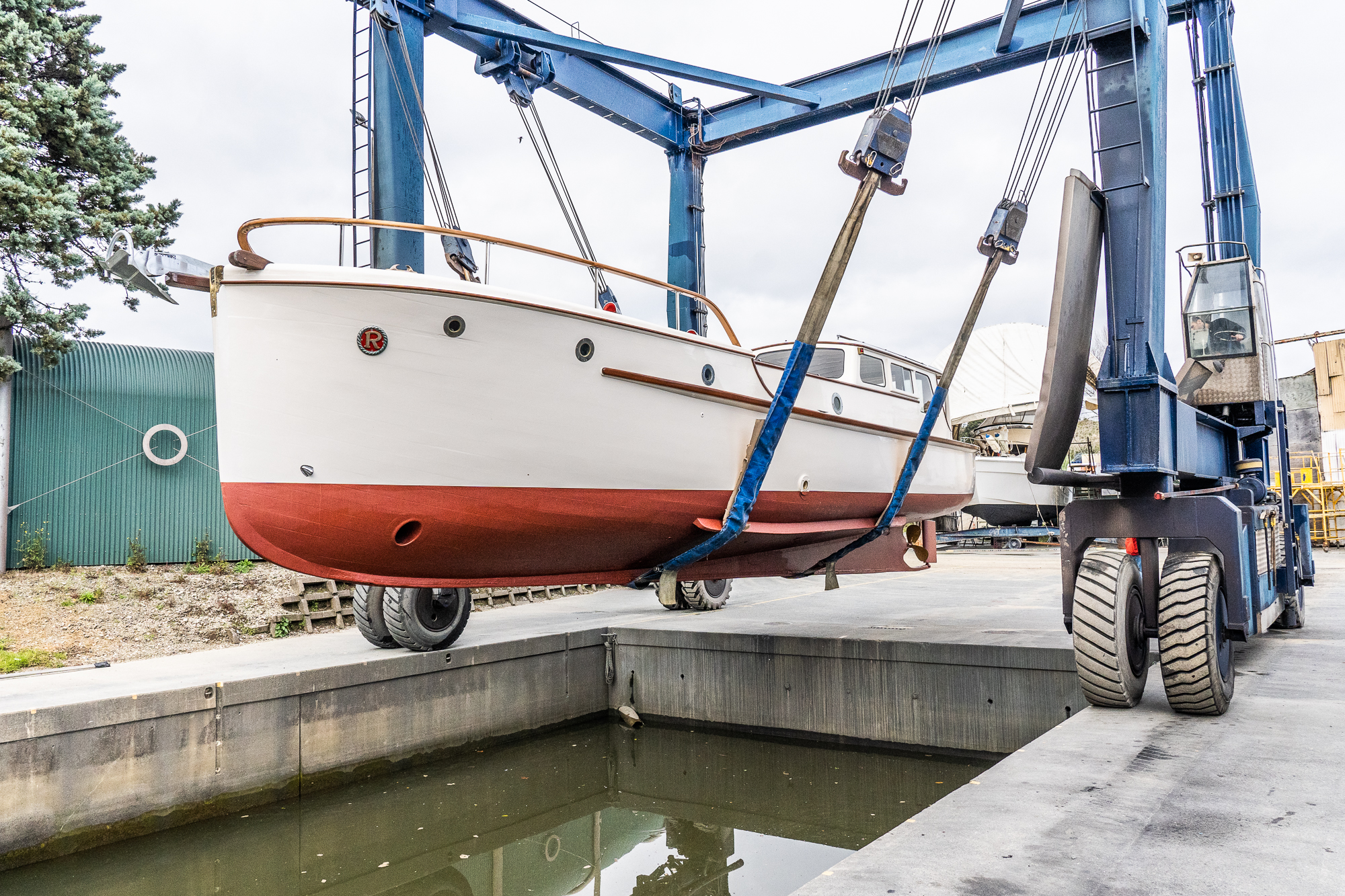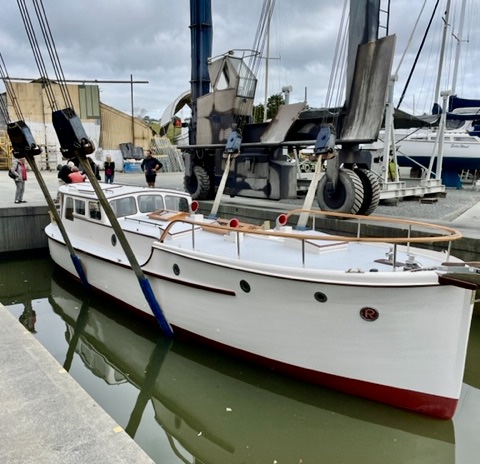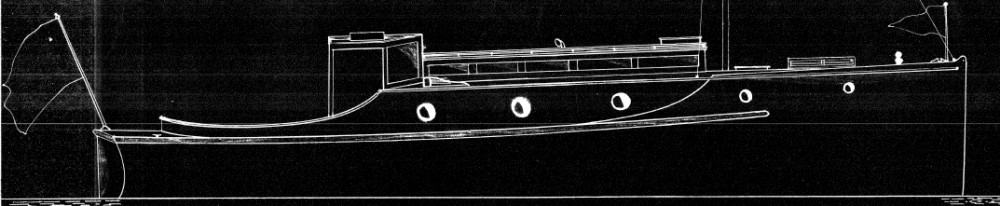
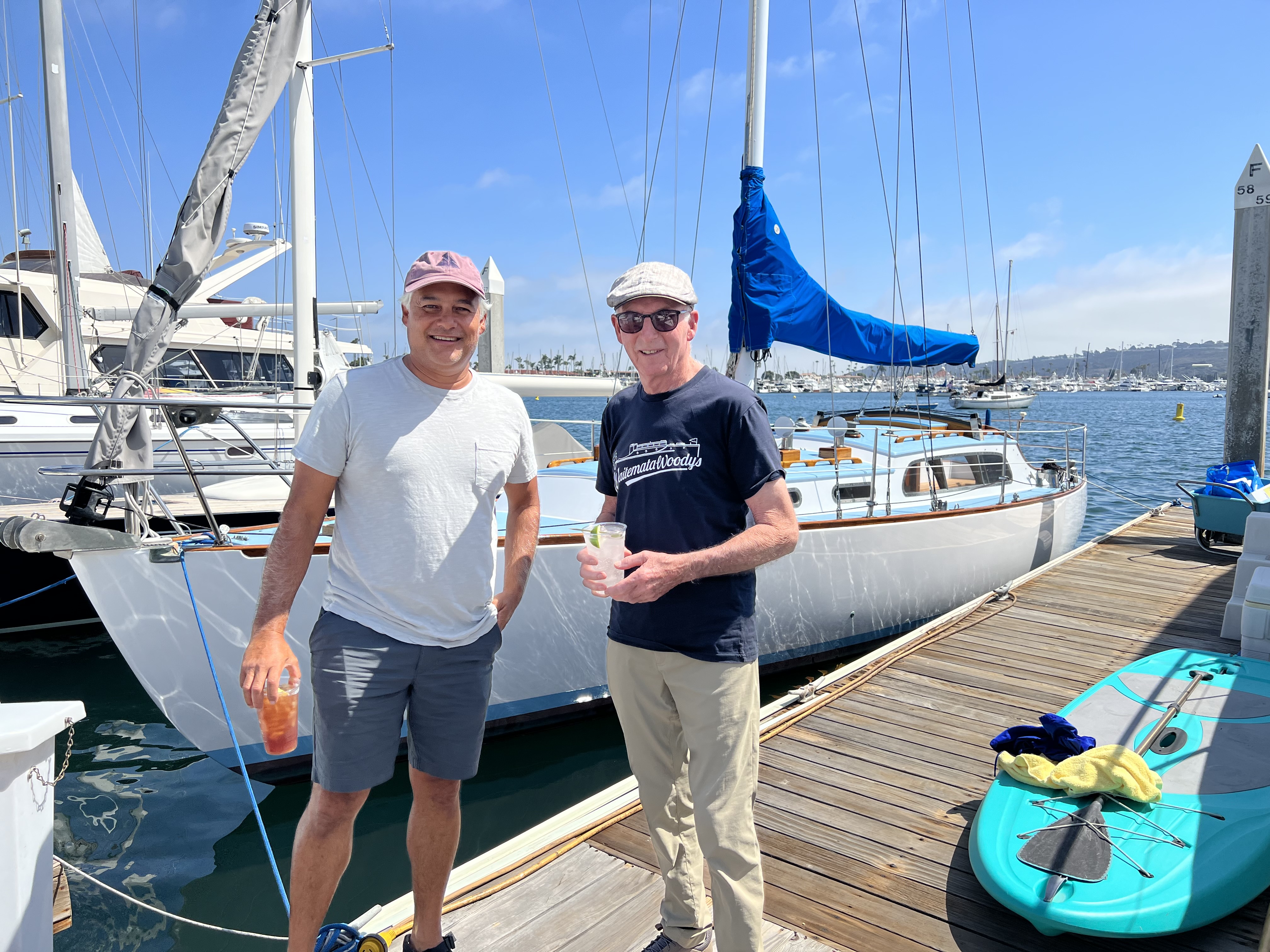
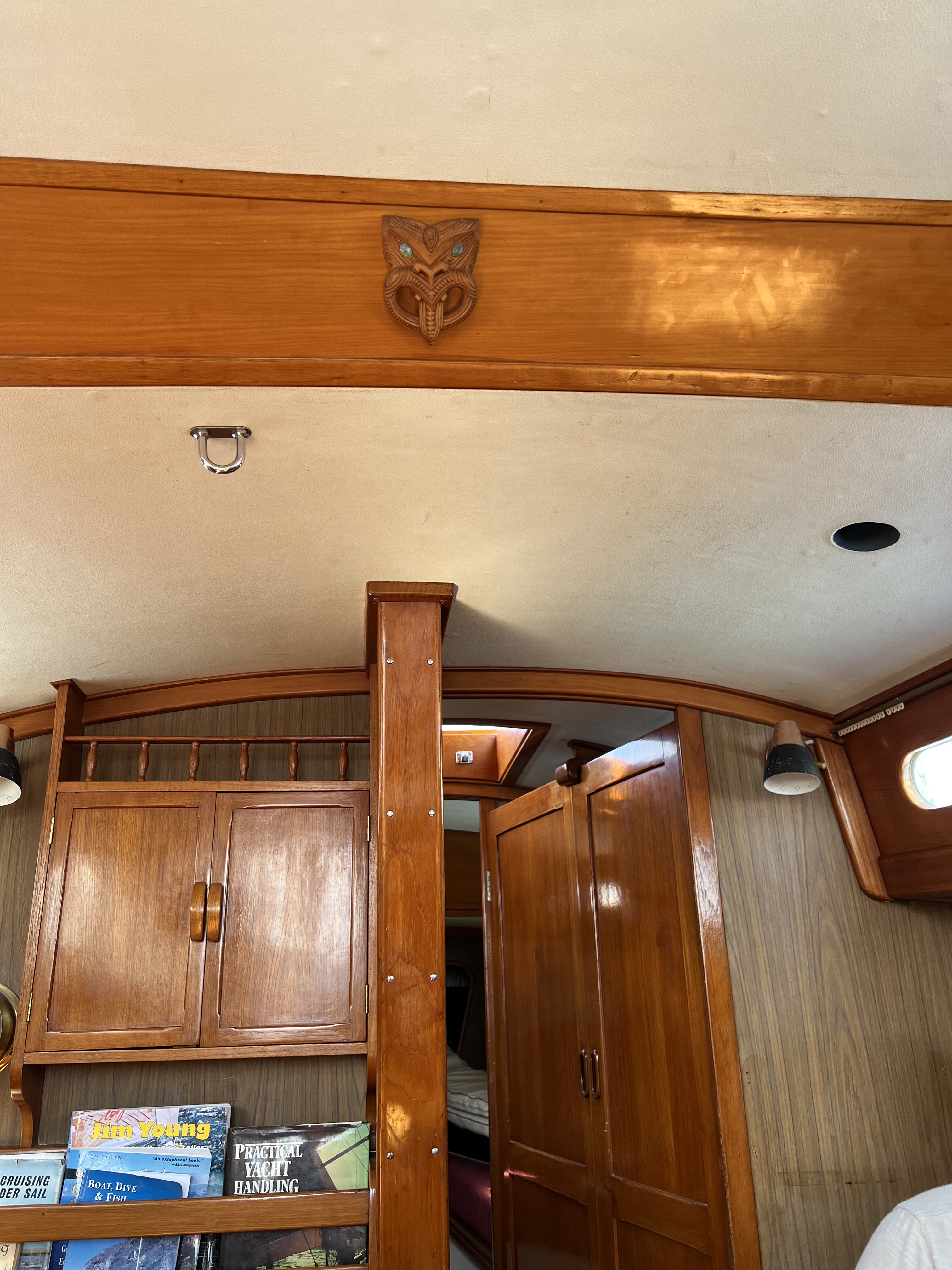
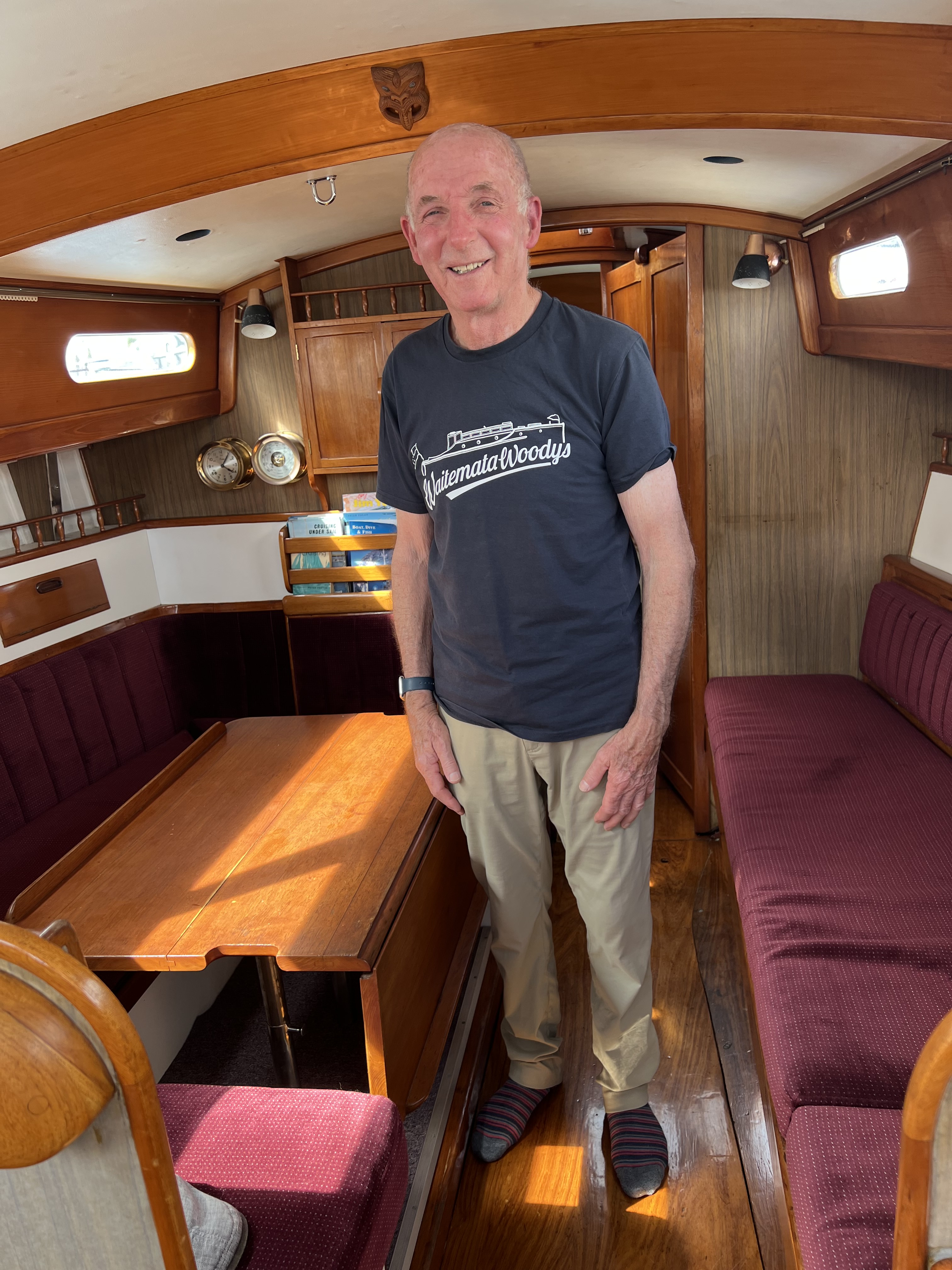
Todays woody has a very good pedigree in that she was built by Nelson master craftsman Peter Murton as his own boat. Peter’s business Murtons Timbercraft turn out stunning woodwork – from new boat builds and repairs, furniture and nautical art, a piece of which I have at home (photo below).
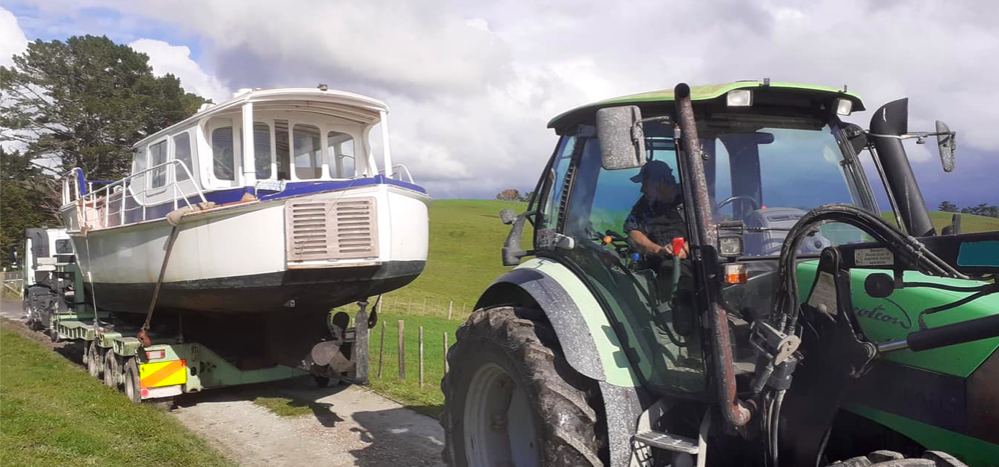
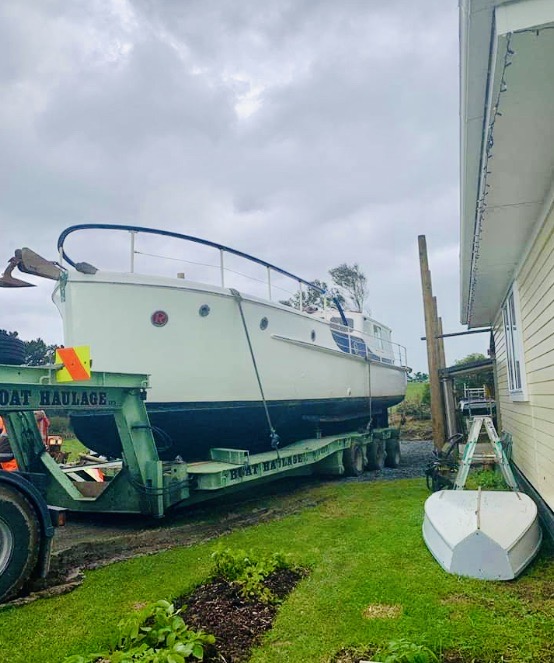
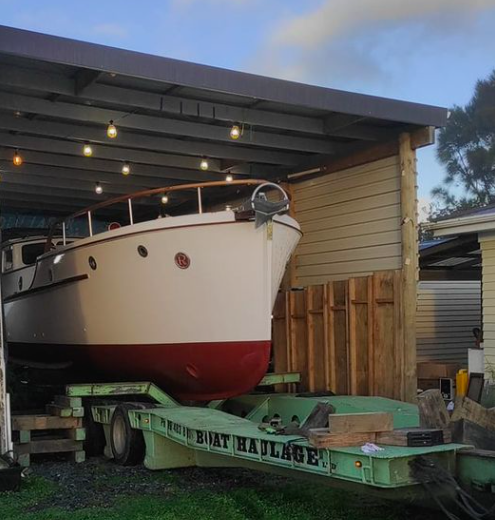
The launch is a 2018 Weston Farmer sea skiff, 28’ x 8’ x 2’ and is powered by a 60hp Yamaha outboard that cruises nicely at 7>8knots and tops out at 12 knots.
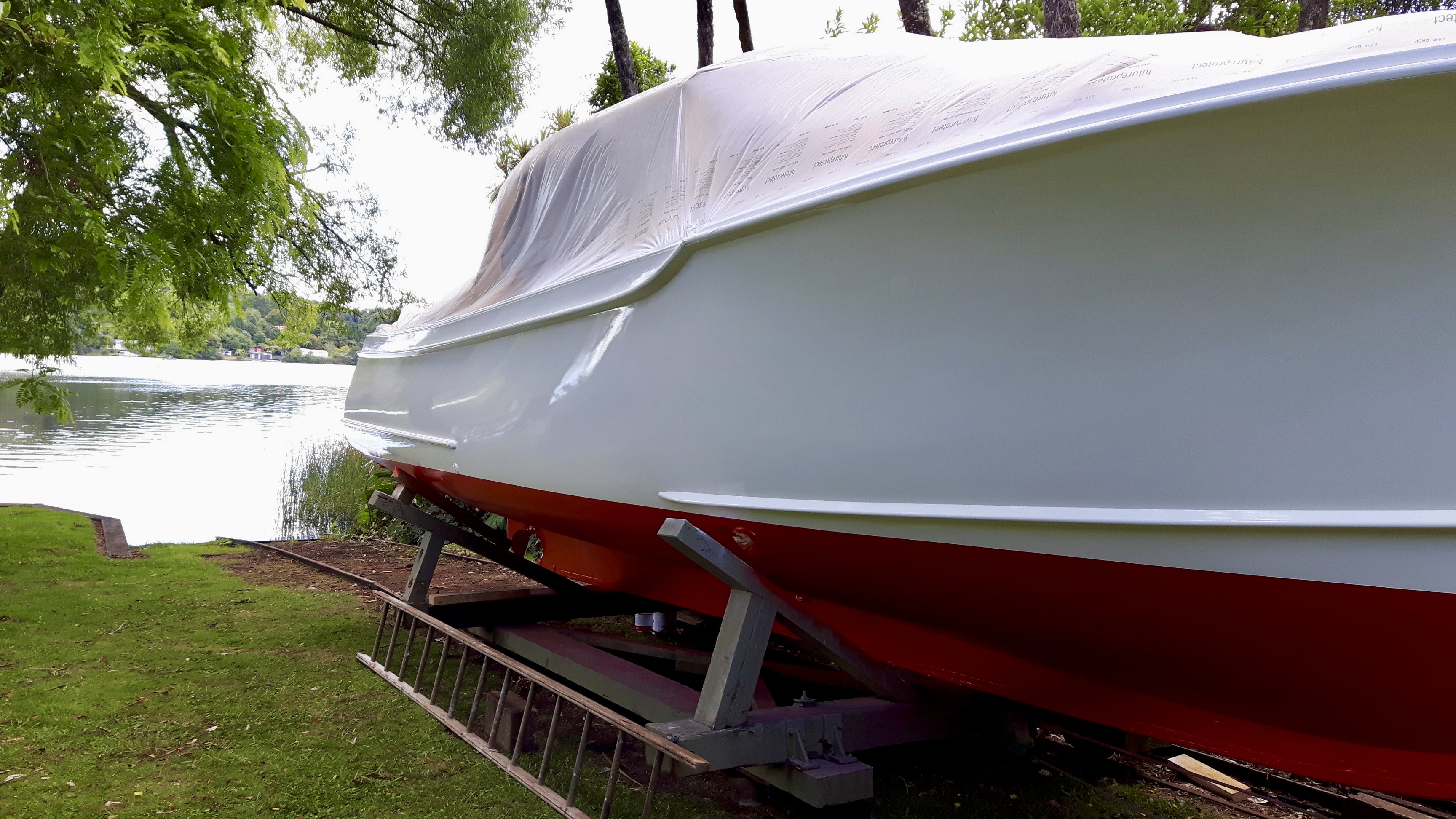
Her shallow draft and bilge keels allow her to navigate some interesting anchorages. An added bonus is the ability to haul out on a trailer for home storage.
The vessel recently popped up on tme so if you are looking for a salty looking, impeccably built spirit of tradition woody – Amelia could be the one.
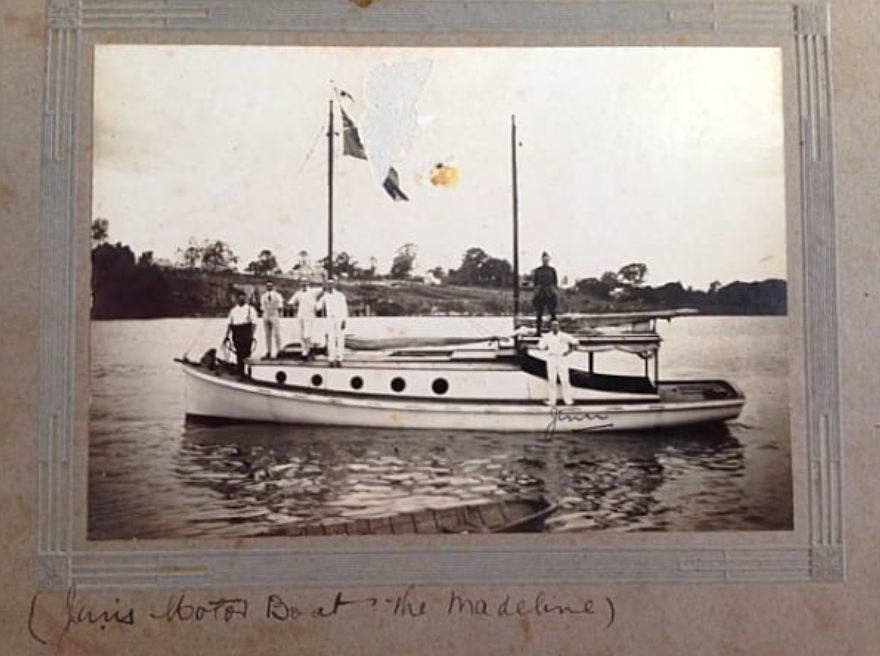
Todays story comes to us from John Gander via Dean Wright. John you may recall designed and built the two stunning double-ender 38’ kauri yachts Whisper and Time (sisters) that have appeared on WW. Today John shares with us the story of himself and Frank Derbyshire saving the 1935 Charles Bailey & Sons built fishing vessel – Joan from becoming firewood – I’ll let John tell us the story: (click on photos to enlarge)
“About November 1975 Frank Derbyshire and I arrived at Port Taranaki from Picton having successfully tendered for the fishing vessel ‘Joan’ and her equipment. ‘Joan’ was moored alongside the wharf when struck by the bulbous bow of the phosphate ship “Eastern Saga” as the ship was being manoeuvred in the harbour. Joan suffered extensive damage and was crushed about amidships.
Prior to our arrival the vessel had been lifted onto the breakwater wharf, her wheelhouse had been removed and her 6L3B Gardner engine was on beds in a wharf workshop having been stripped down, cleaned, reassembled and run.
“Joan” is a triple skin vessel of about 35 tonnes, and thanks to Harold Kidd it is confirmed that she was built by Charles Bailey and Sons and launched on 14th October 1935. We weren’t familiar with New Plymouth but soon learned that if you can see the mountain it is going to rain and if you couldn’t see the mountain it was raining, however we did experience some fine weather.
We were advised by a few sceptics to put a match to her, she will never go to sea again, however after a week or so into the repair and it was seen that we knew a bit about wooden boats some of those on local fishing boats and other workers about the wharf became very helpful when it came to advice on where best to procure some items we required during the repair. One person who was especially helpful to us was a retired fisherman Frank Roper. We learned that Frank was held in high regard by the local fishermen and was known to most on the wharf. He approached us saying in his retirement he needed something to do and could he help, and what a help he was.
After lifting the fuel and water tanks out it was Frank who chipped and wire brushed them, and applied a new cement wash to the inside of the water tanks and primed and painted the exterior, and while doing this he also stoked the fire for our steam box, this of course was when it wasn’t a problem to have a fire on the wharf at New Plymouth.
Prior to tendering for the vessel I had flown to New Plymouth for an inspection and made a note of the timber requirements to take to the job. For the inner skins we used Larch that was grown in the upper Awatere Valley Marlborough, and milled at Blenheim. Not such a common timber to use in New Zealand boatbuilding but we had the advice of Peter Jorgensen a Danish boatbuilder who knew Larch, we found it a good timber to work with and it steamed well.
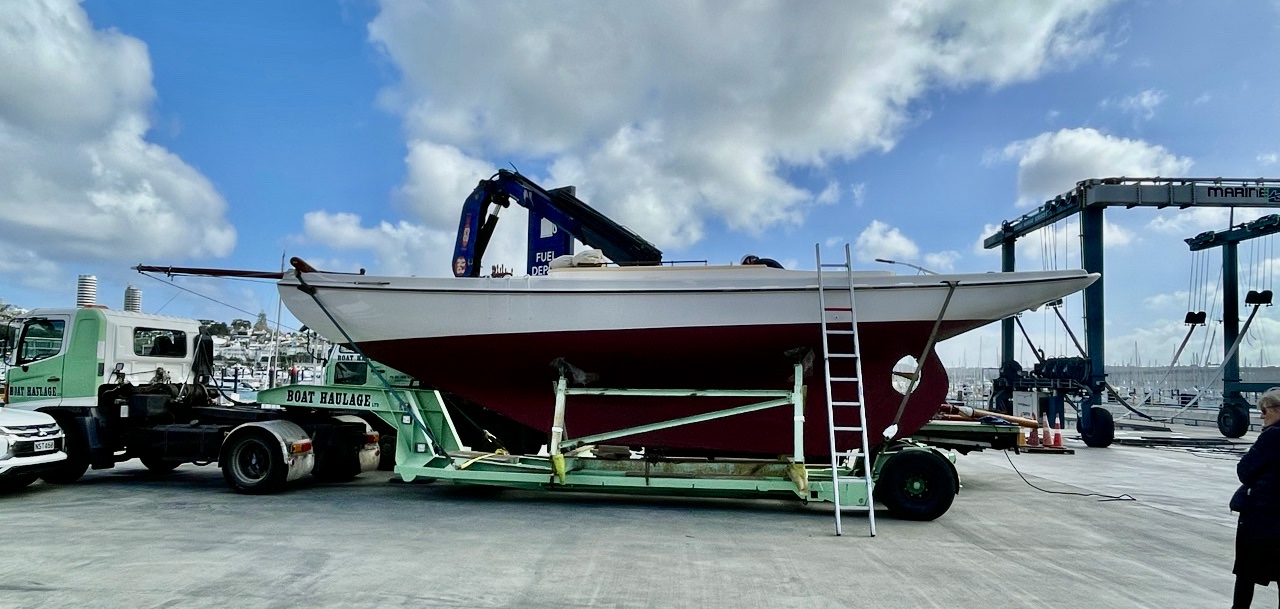
After the initial inspection by the Marine Department wooden boat surveyor Bill Salter we set about clearing away the damaged section, this also entailed removing the freezer compartment and the cork insulation, and cutting scarfs in the stringers and gunwale well forward and aft.
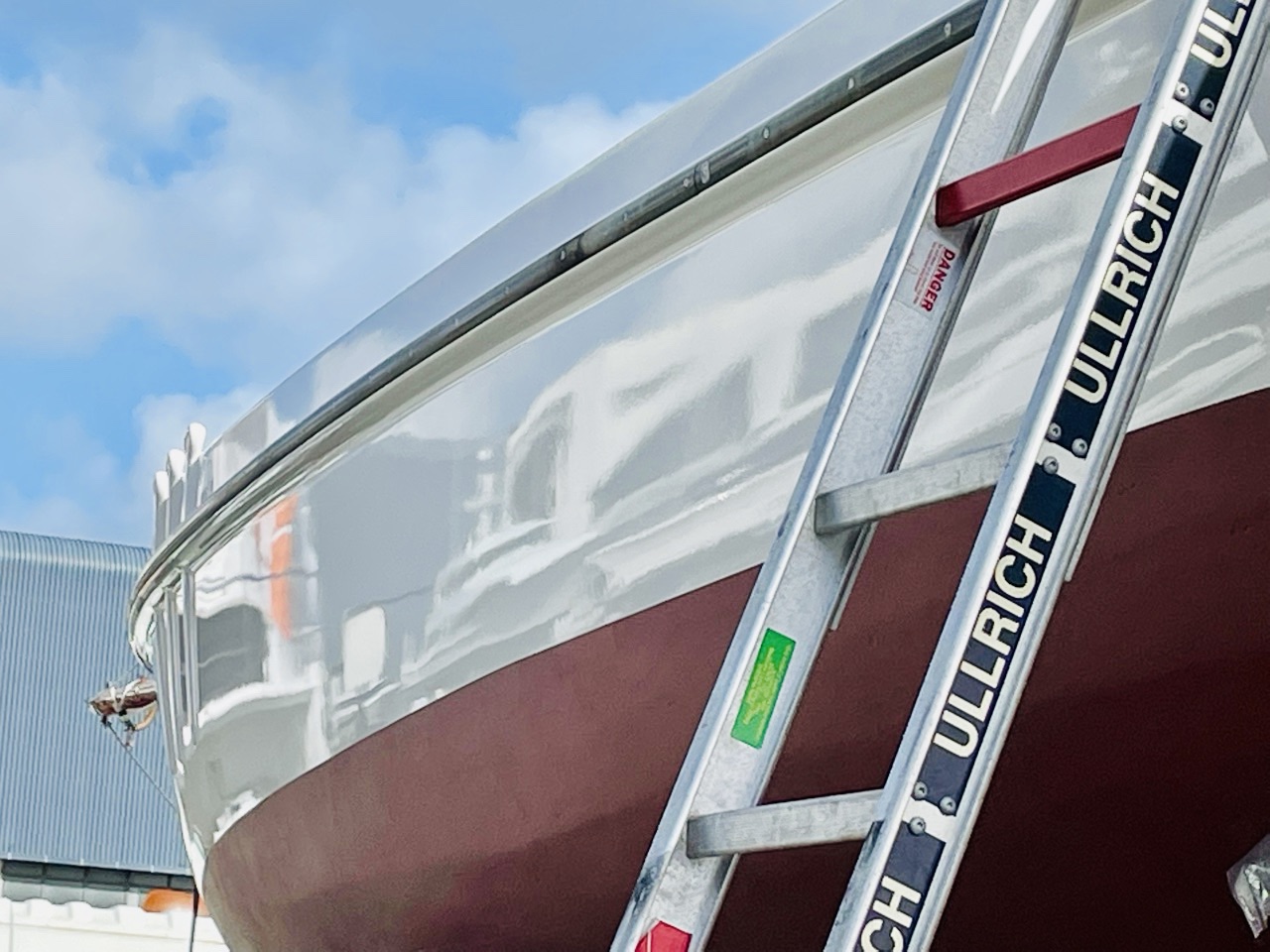
The deck covering board was forced up during the impact but not damaged, we pulled this down into place, repaired the bulwarks, and from memory I think we replaced the outer planking with White Pine ( Kahikatea ) and Australian hardwood for the new belting, Metalex was a good wood preservative we used in those days, and red lead for priming paint.
We did have our share of rain but a bigger problem was salt spray during heavy westerly weather, this was before RCD’s were in vogue and electric tools were mostly metal, when the seas hit the breakwater and the fine salt spray wet the tools, it made one jump around a bit. But looking back on the job now we were lucky imagine asking a Port Company now if you could have a fire for the steam box on the wharf run a few power leads, and spread wheelhouse, tanks, and other ships gear about, and all this without a dozen orange cones and danger notices, yet we survived without mishaps.
With completion of repairs and a new Marine Department survey we left New Plymouth late afternoon bound for the Marlborough Sounds with Frank Roper aboard. Frank had fished the coast south to Cape Egmont and he regaled us with stories of fishing in the days of long lining before depth sounders, when after catching the fish they cleaned and gutted the catch on the way home.”
NEW INPUT FROM Chris Waide – We have owned Joan for 8 years now, has a 4/71 Jimmy, the hull is tight and sound, those guys must have done a great job of repairing her back then. Although the mishap on the West Coast was also on the port side, she was repaired at Guards Ship Yard with kahikatea but sat out in the rain for a few years and went rotten. She was then bought by Doug Valk, (a local boat builder) he put her in a paddock and completely rebuilt and converted to pleasure, refer photos below. The port side damage was repaired using Lawson cypress this time and Doug was helped by Andrew Candler who is a traditional shipwright, and is still a commercial vessel surveyor here in Nelson.Joan’s home these days is Motueka.
03-05-2022 Input from Dean Wright – photos below ex Auckland Museum collection
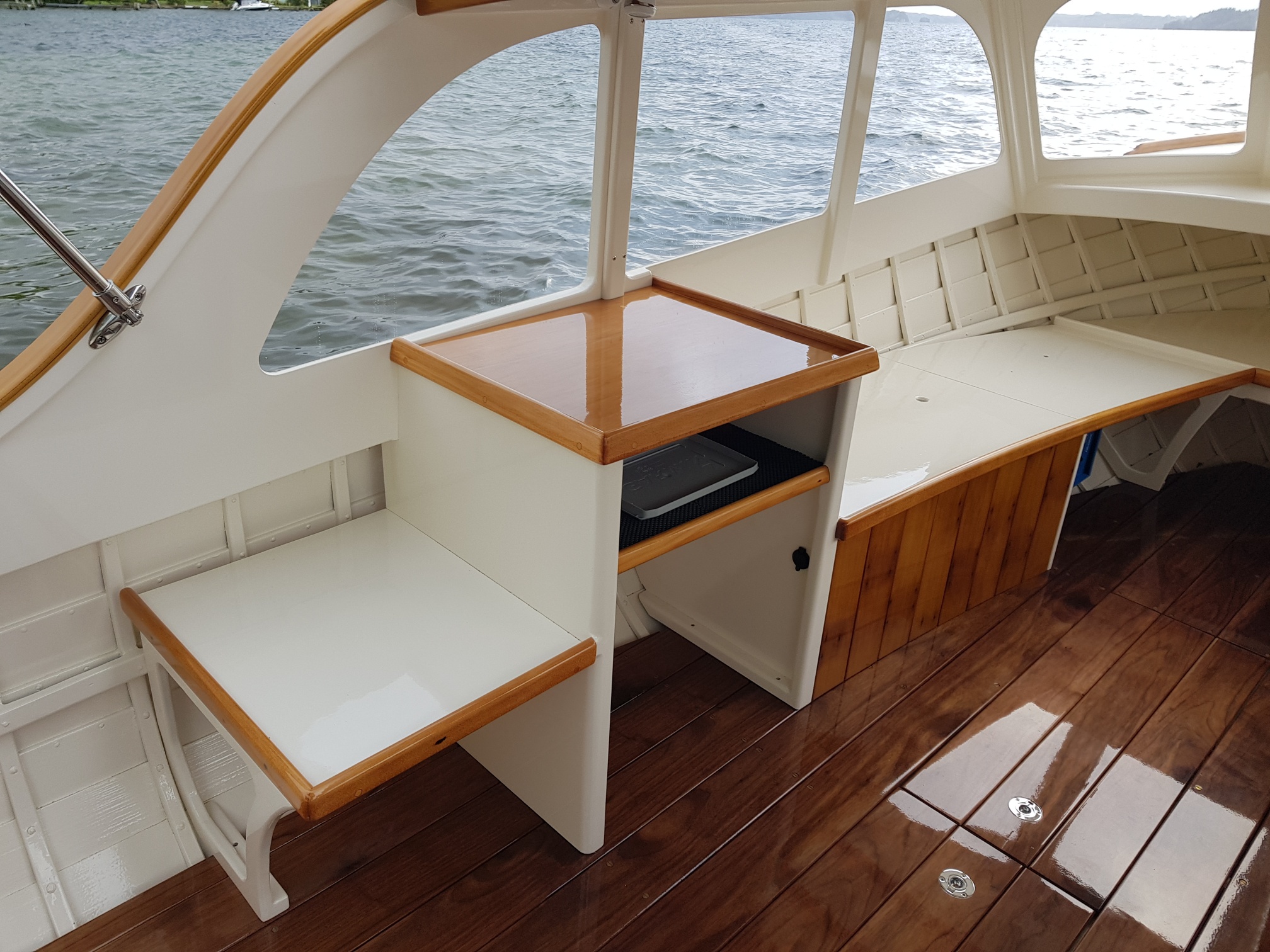
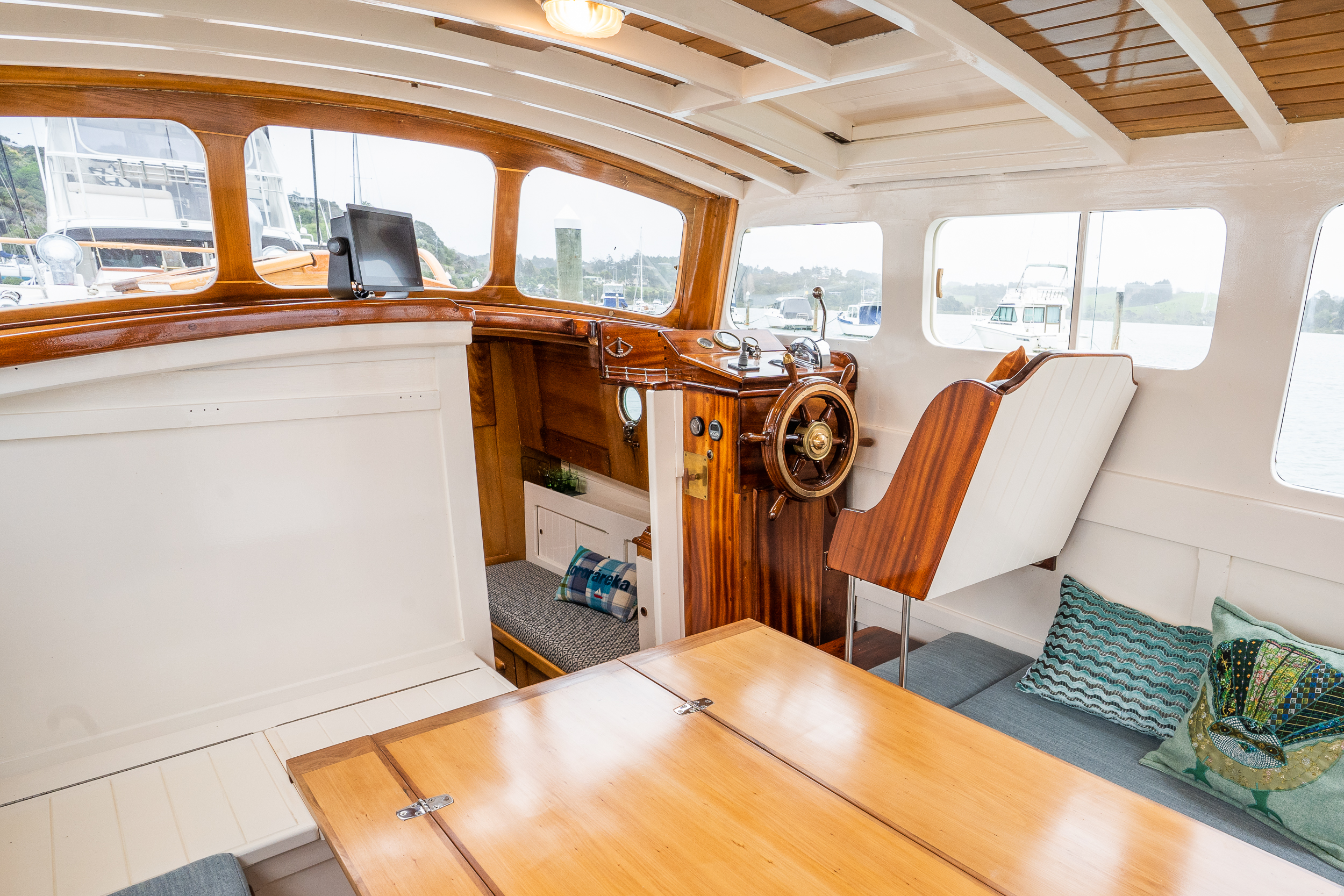
Being berthed alongside the Paeroa Maritime Park & Museum dock provided me the perfect opportunity to say hi and check out the amazing refit / restoration that took place over 8 years. She was re-launched in 2020 and was a cool father and son project. The pivoting helm seat was one example of the very well thought out utilisation of space.
Maroro has a very large chunk of iron in her engine by – the repurposed Dorman engine has previously had several lives ashore as an industrial work horse.
Her owners the Thomas family understand Maroro was built / launched c.1905, but her designer / builder is unknown, so any help with shedding some light on her past would be much appreciated.
Following on from Easters Woody Cruise up the Waihou River to Paeroa, today we get a sneak peak at the venue for the weekends activities – the Historical Maritime Park & Museum. The Museum is located just above the banks of the river on State Highway 2, just before the township of Paeroa, you can’t miss it. Map at the bottom of todays story.
The Museum building and the surrounding Park grounds hosts an amazing collection of memorabilia from both the area and New Zealand’s nautical past, do stop, you will not be disappointed.
This Saturday, 23rd, at 10am there is a once in a ‘long time’ auction of marine stuff, serious stuff, stuff that deserves to be on display at the entrance to a marina, or as an outdoor sculpture. Check out the photos below of two of the items – lots more – view here. https://auction.abauctions.co.nz/auctions/4-5OS4EN/engineering-woodworking-farm-auction
The address is 111 Riverland Road, Riverhead, West Auckland or bid on-line
Back in Dec 2021 we advised that the 1939 Colin Wild launch – Rehia had a new owner and that she was hauled out at the Slipway Milford for some pressing systems work before her summer cruise. Link here to that story. https://waitematawoodys.com/2021/12/18/rehia-finds-a-new-home/
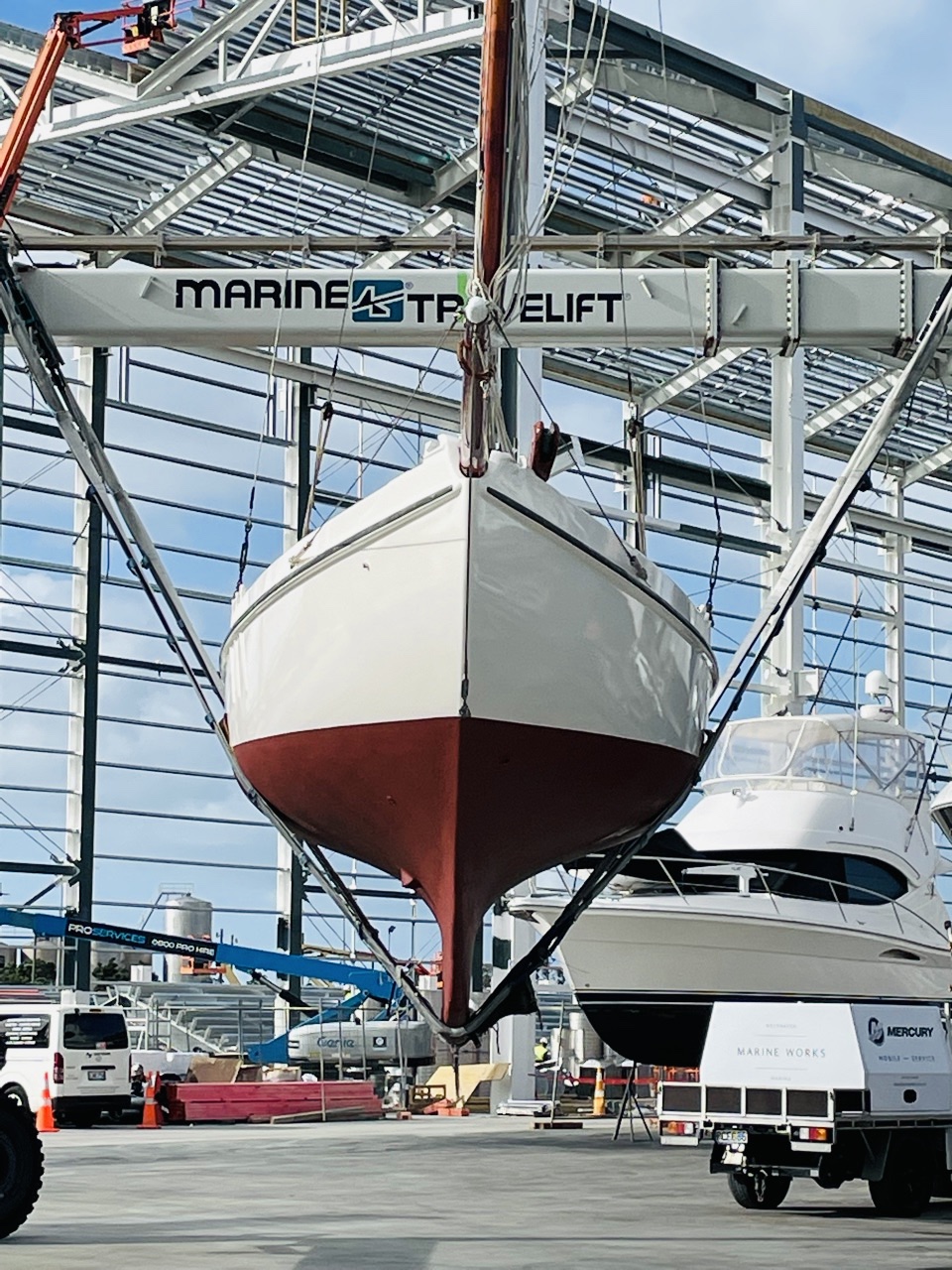
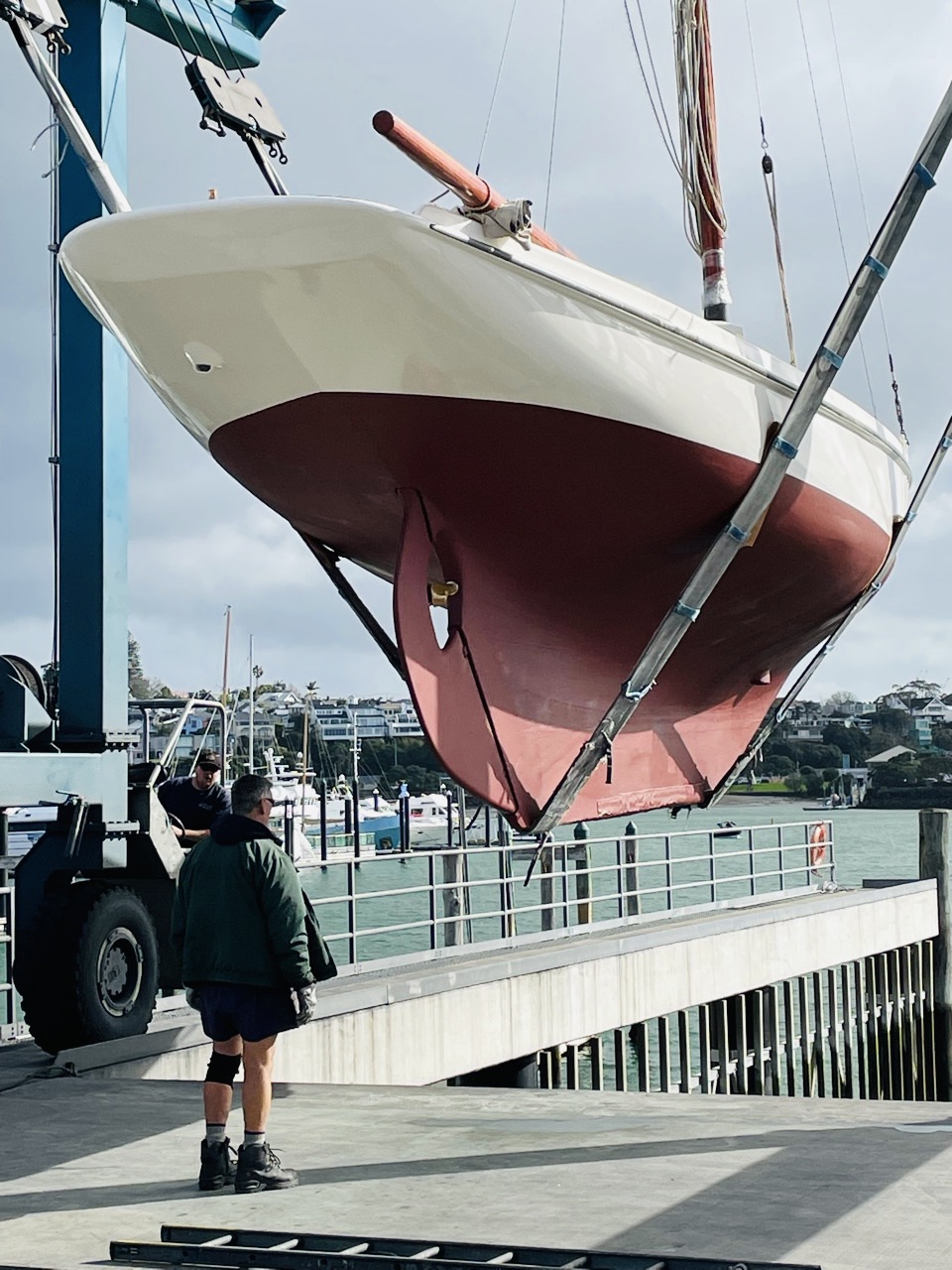
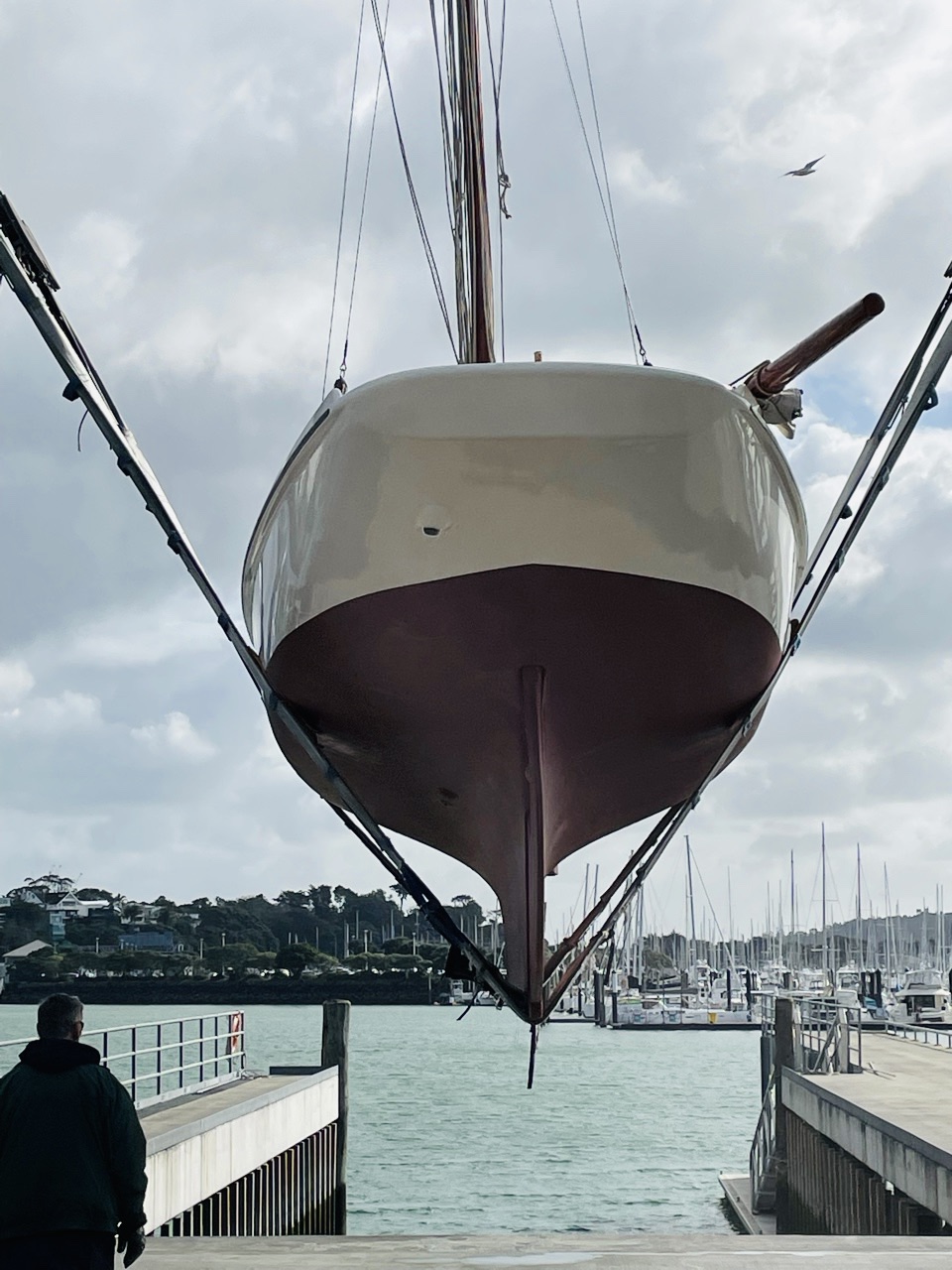
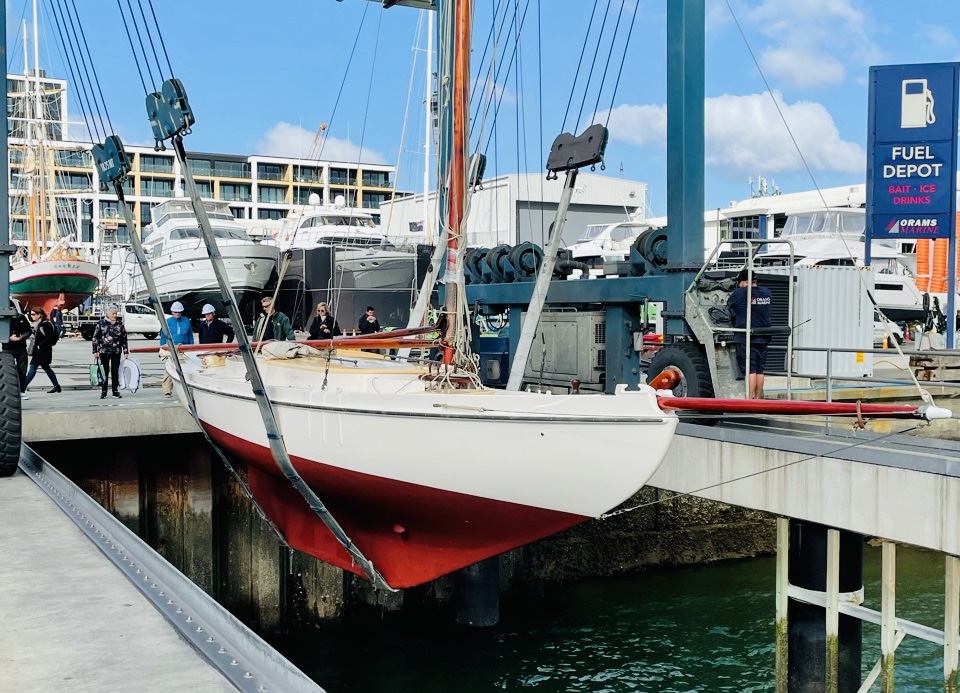
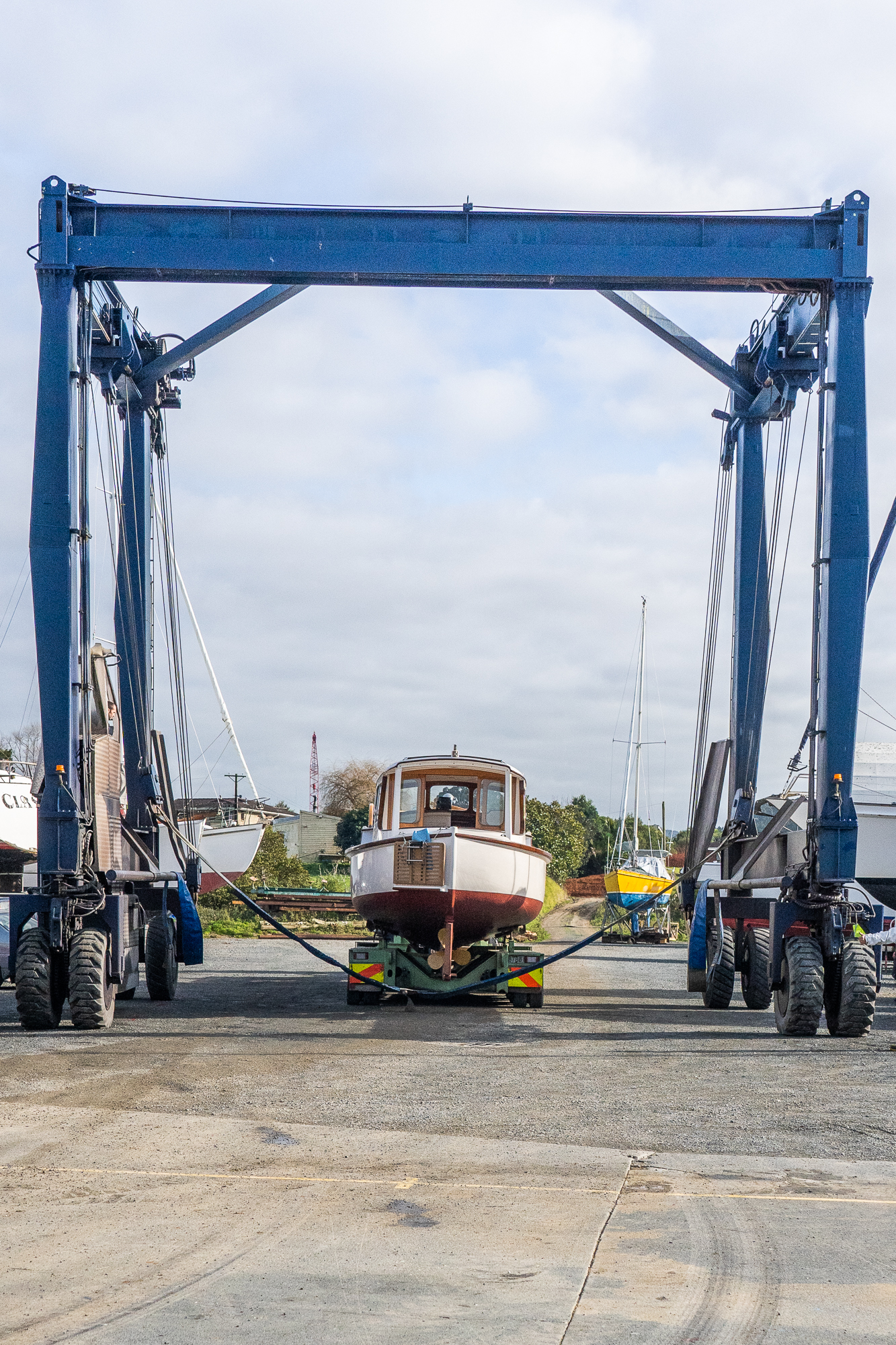
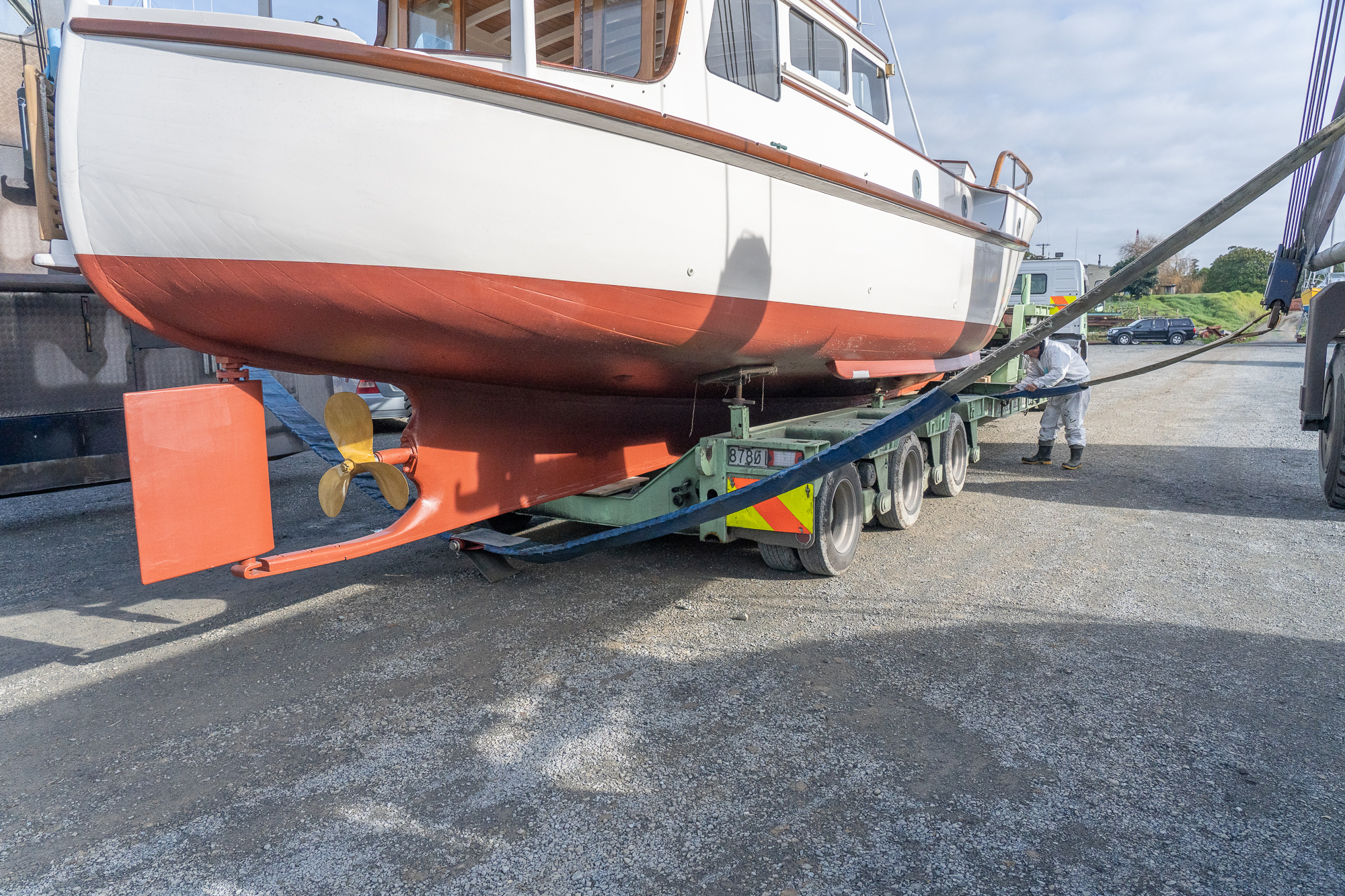
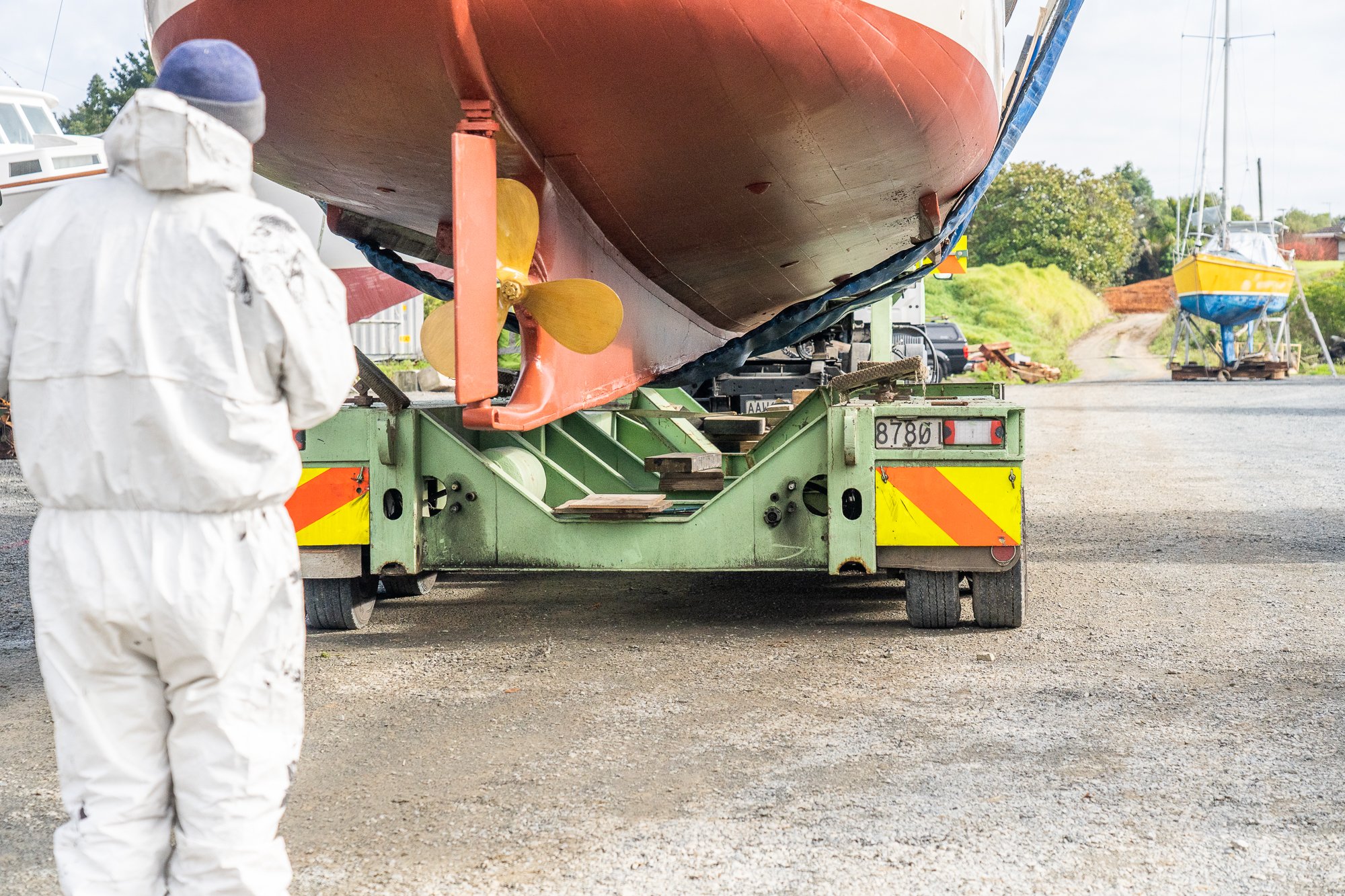
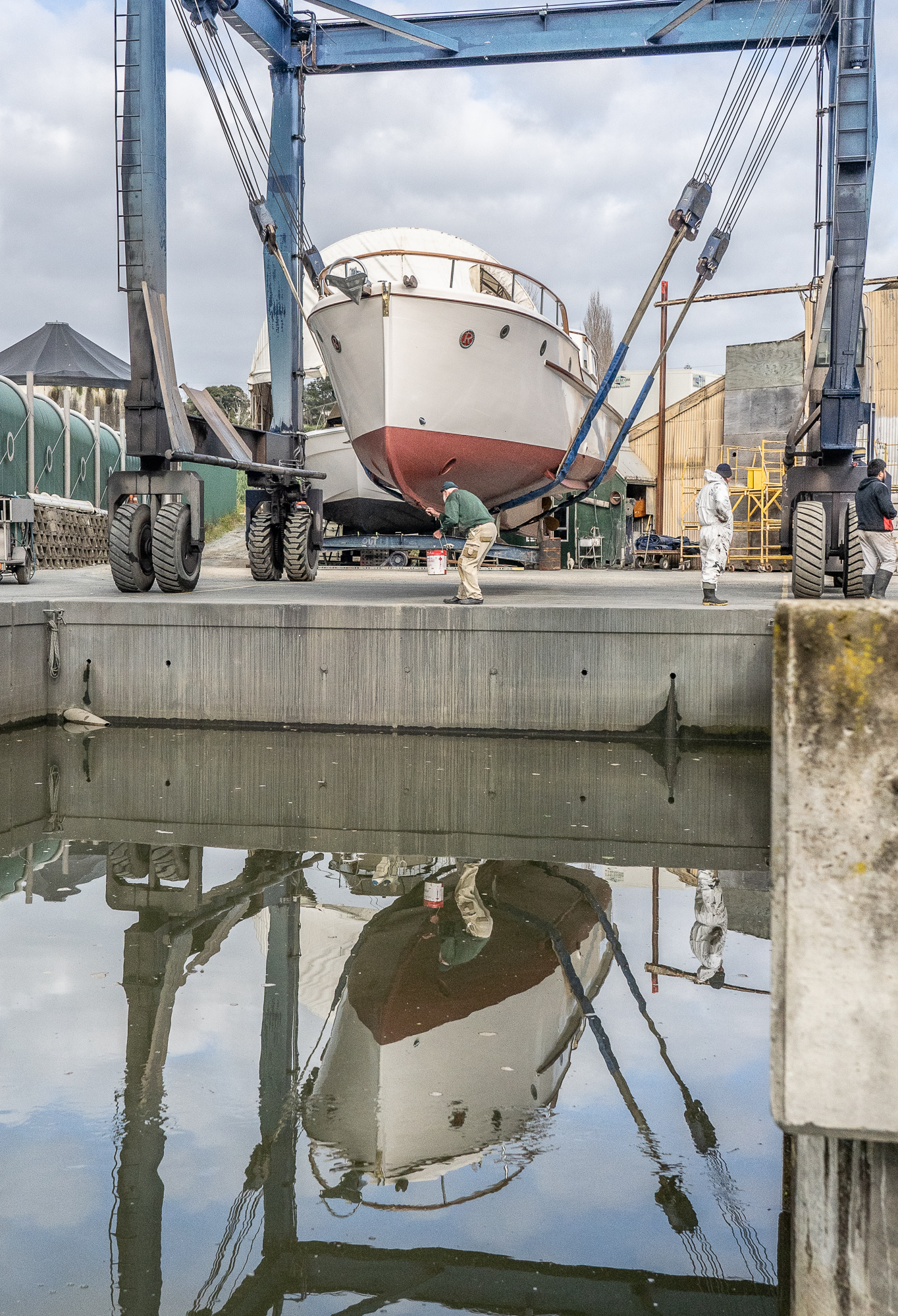
In the last month Rehia has been out again for a Jason Prew Paint Job (JPPJ) at the Slipway Milford, at the same time the ‘rolling’ maintenance programme continued – lots of bits added and removed to make family boating easier and more enjoyable.
When she slipped back in, she had quite a thirst and the mobile big sucker pump had to be brought on-board. Owner Joe spent a restless first night aboard, but the old girl settled down in the next 24 hours.
In the early days of WW the 1930, 38′ Lane Motorboat Co. launch – Falcon was all over the WW site. Her then owner James Mobberley (Moon Engines) hardly ever let the engine cool down.
Always a fast boat, James transplanted a 180hp Hino engine into her and she was probably the fastest in the classic fleet e.g. >18 knots.
When you have small children a fast narrowish classic woody is not that practical, so sadly James and family moved on to a big white plastic boat – but he will be back, that I’m confident about.
Falcon passed thru several owners and was starting to show her age on a swing mooring in Whangarei Basin.
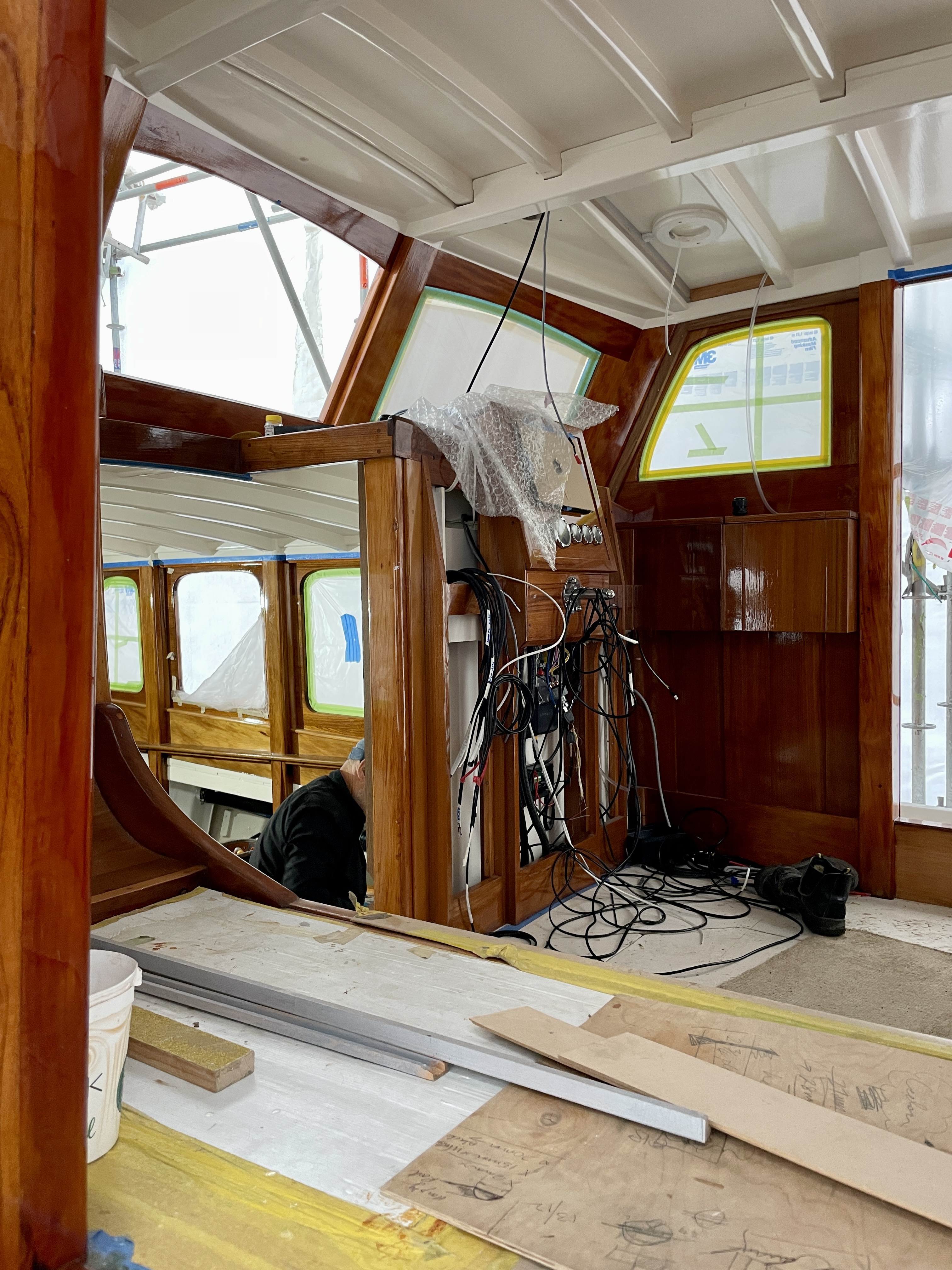
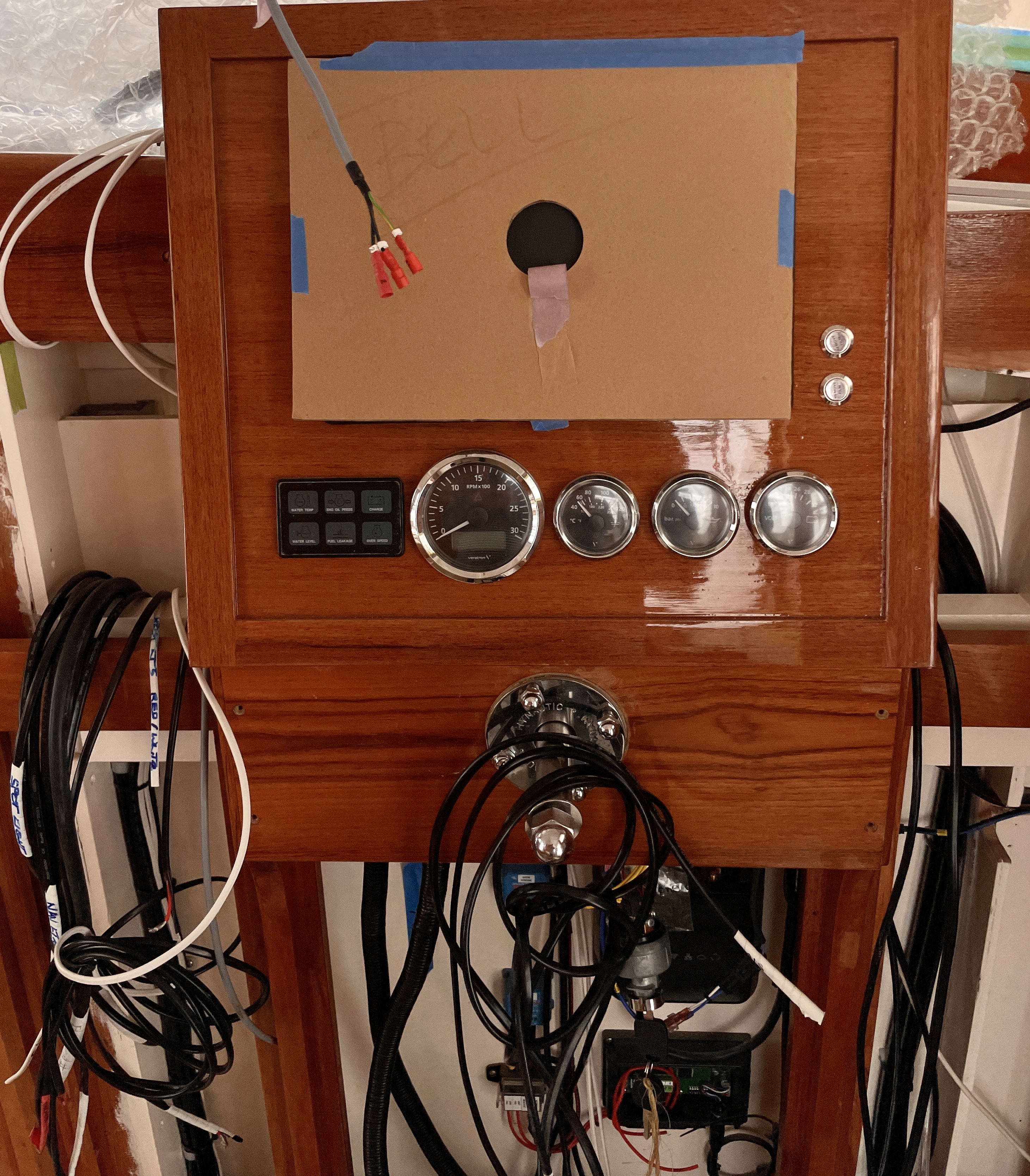
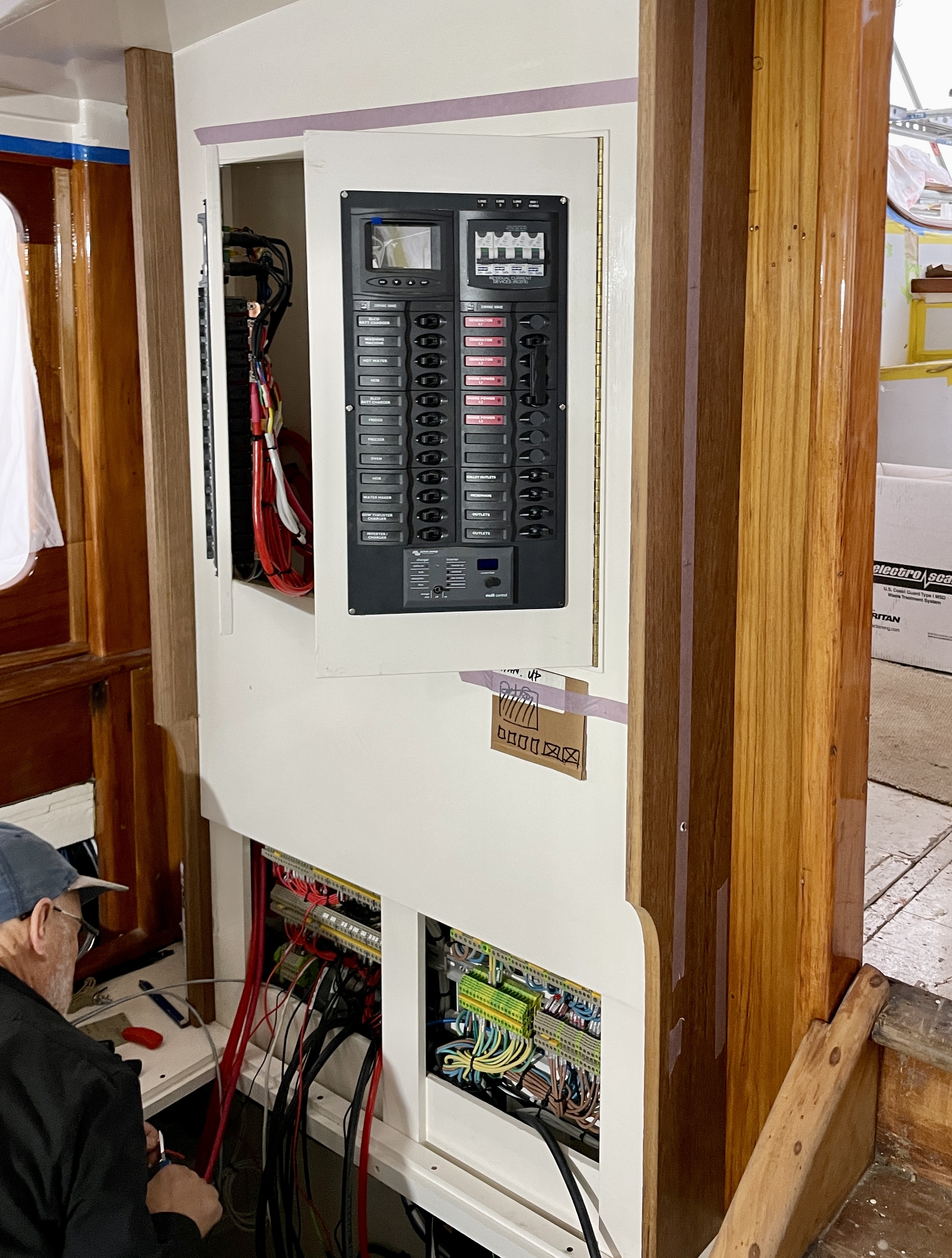
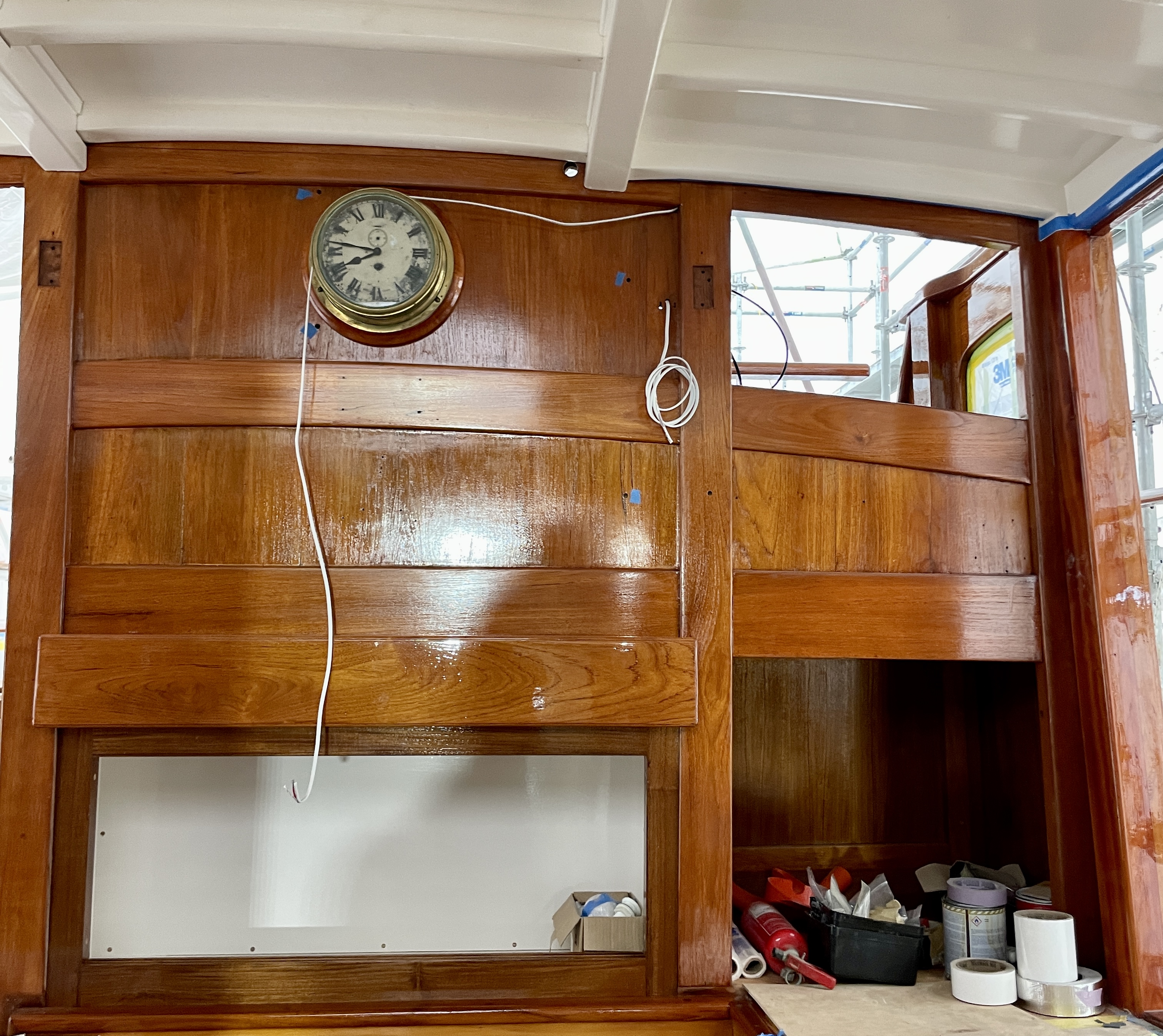
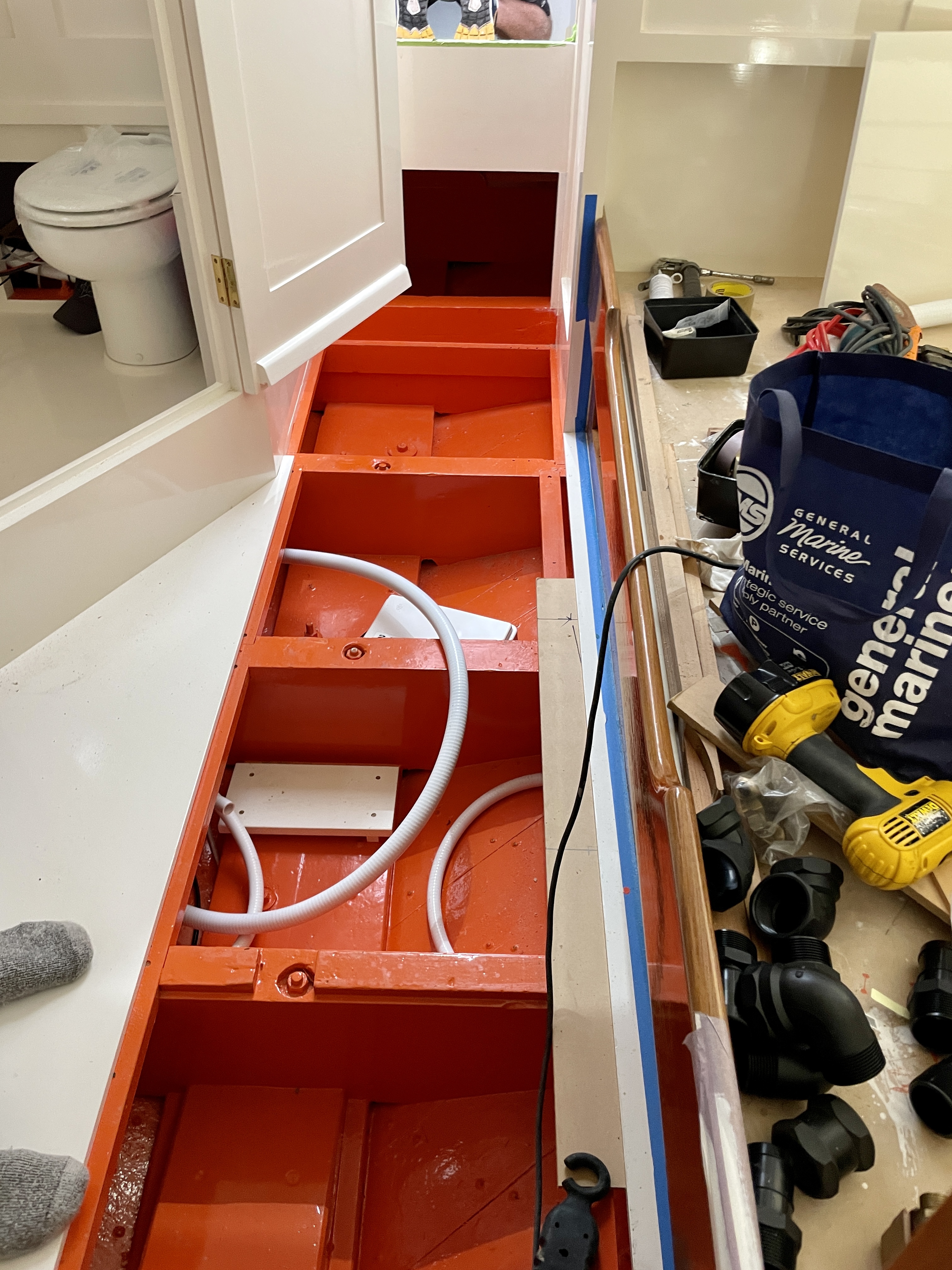
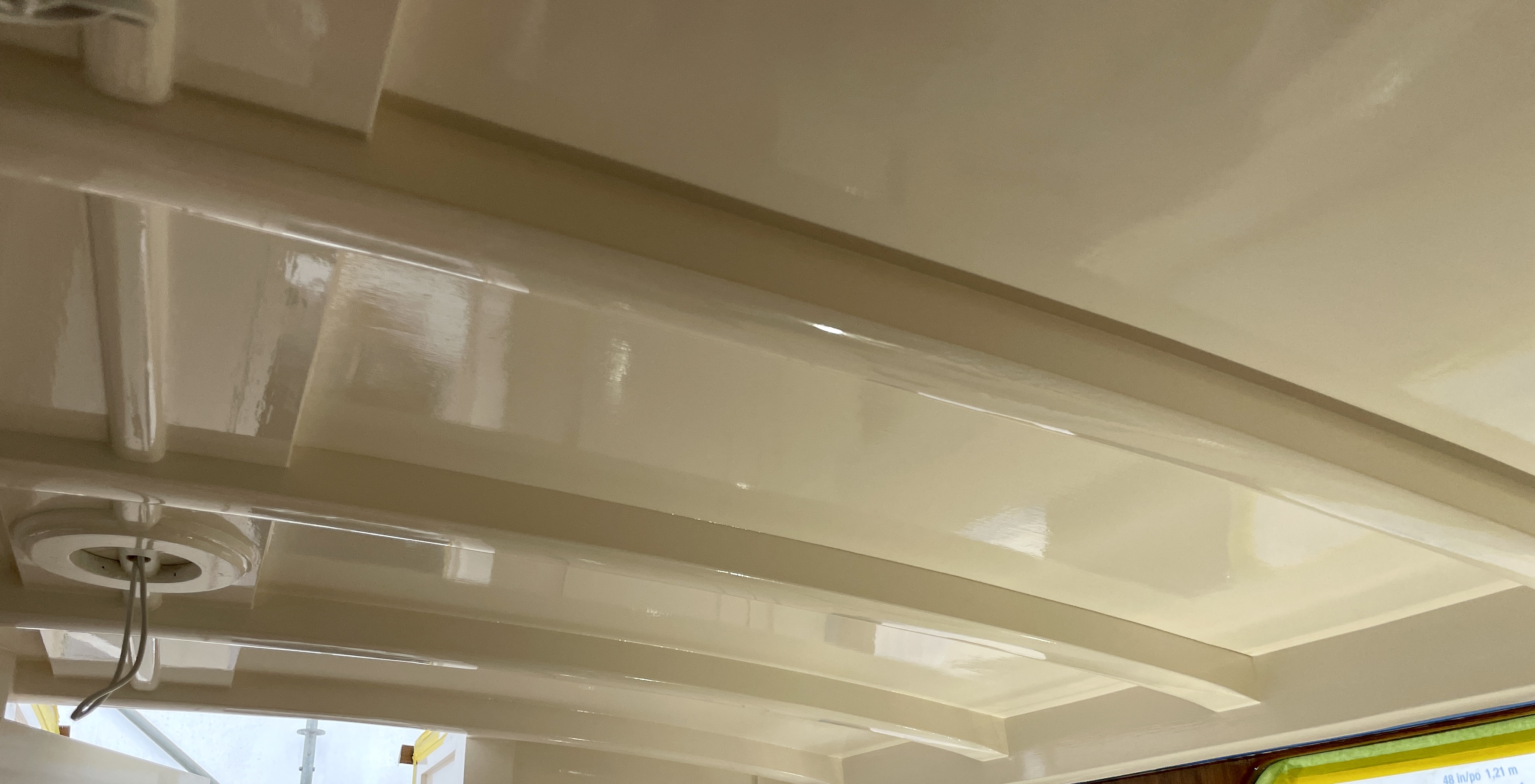
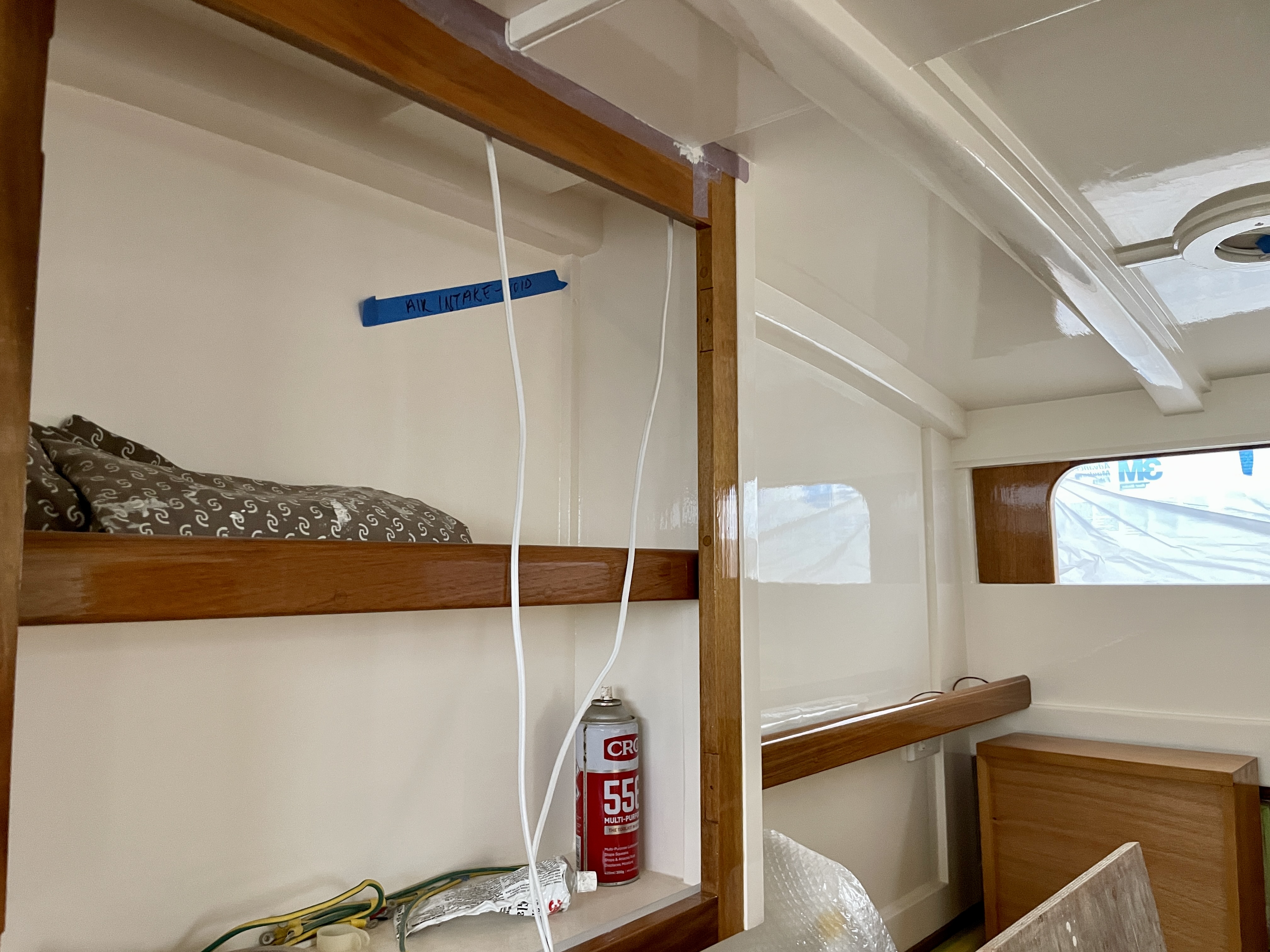
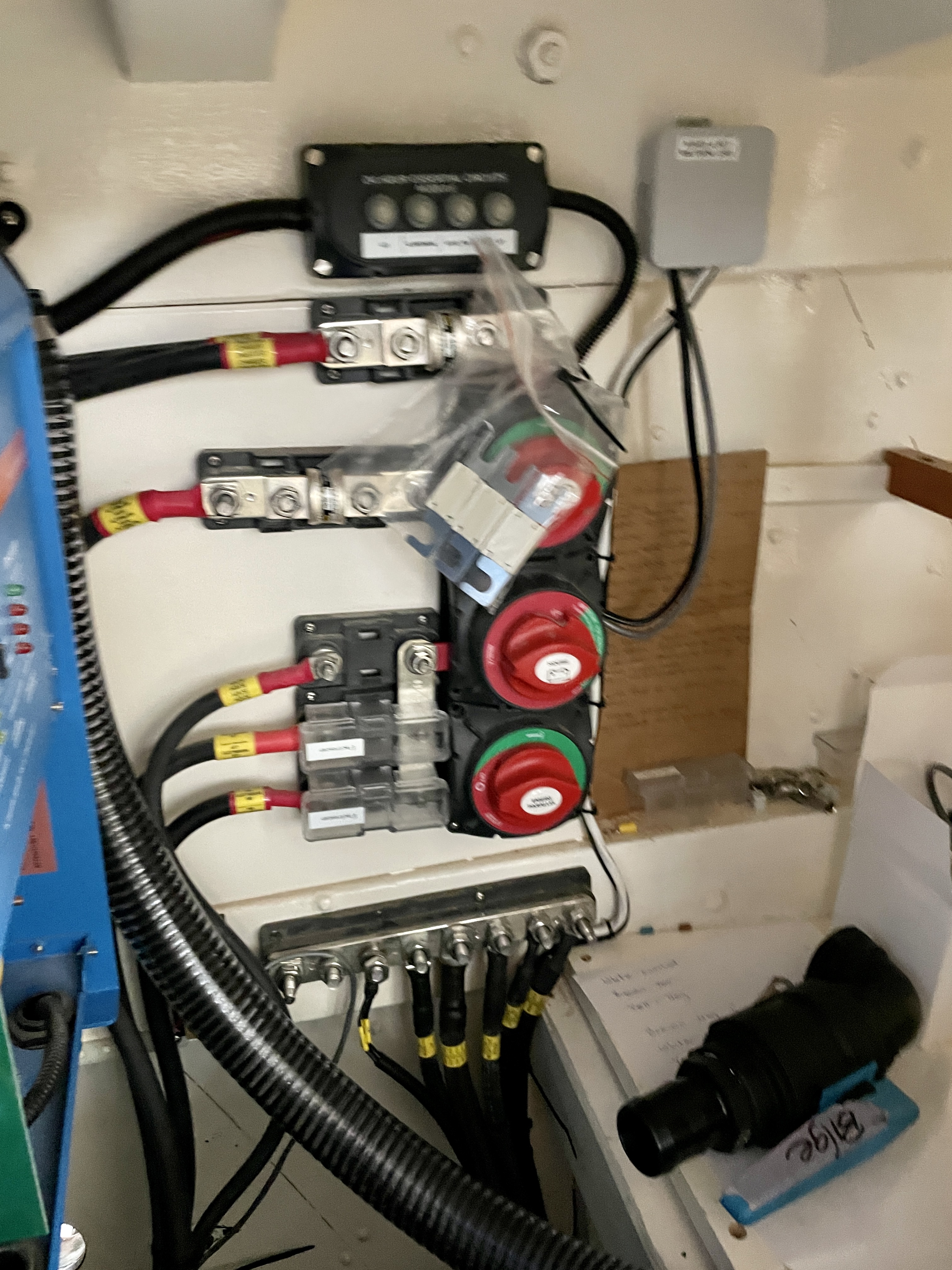
Then a good thing happened – one of Moon Engines talented engineers bought Falcon and relocated her back to Auckland. The next year was spent giving Falcon a makeover in terms of her running gear, systems and home comforts – the above photos give us a peek into how things should be done on a boat – still a little bit of tidying up, but a perfect opportunity to view the installation work.
Remember to click on the photos to enlarge 😉
WOODYS PAEROA RIVER RAID
One shows us how its done and another how it comes undone 😉
The 1949 Colin Wild designed and built launch – Haumoana has made several appearances on WW, primarily because its a Col Wild, so it is very special and secondly because its owned by a very nice Lake Rotoiti couple that kindly host us when we are at the lake for the annual Lake Rotoiti Classic & Wooden Boat Parade. Link below to past story. Haumoana measures 30’x9’5”x4’ and has undergone several refits in her life.
One of neat things about WW is when out of the blue you get an email like the one below from Doug Peacock whose father – Chris, once owned Haumoana and kept her at Half Moon Bay marina.
“My parents owned Haumoana from about 1990 through to mid 2000’s. I was showing my father your Waitamata Woodys site last night for two reasons, 1. I’m obsessed with your site it’s really incredible what you are doing telling the stories of all these wonderful boats with so much history, and 2. Because I’d seen there were some new photos of Haumoana on Lake Rotoiti that I wanted to show him.
Next thing he disappears down stairs for a while and came back with a photo album dedicated to Haumoana. I took a quick few iPhone shots of the photos to share with you, sorry they have a lot of reflection. He said he has heaps more stuff he couldn’t find last night.
Anyway I have great memories of summers away on Haumoana and am chuffed that it’s being kept in such great shape by it’s current owners.”
In the last photo above the lad on the left is Doug. Photos below of Haumoana on Lake front Rotoiti.
Amazing Restoration of 1912 Classic Lake Boat – Lion
How did I miss this story on fb from a year ago – back in August 2020 on WW we covered the amazing restoration of the 38’ launch built in 1912 by James McPherson in Dunedin for Hugh McKenzie of Lake Wakatipu (thank you HDK for the intel)
How today thanks to a fb post by the company that restored her – the Repair My Boat Yard (formerly Southern Classic Boats) in Invercargill, South Island, we get to see Lion, back on Lake Wakatipu, Queenstown.
Hats off to everyone that was involved in the project – she is up there with Rawhiti in terms of attention to detail and workmanship.
Where it started – if only the wind had been blowing the other way
KOKORU RAVAGED IN MARINA FIRE – A CALL FOR HELP
Late on the afternoon of 14-03-2022 I started receiving messages from woodys about a fire at east Aucklands – Pine Harbour Marina , that was / had desecrated 5 vessels. Looking at the early photos coming thru on social media – one of the vessels appeared to be a classic launch. Within minutes another image appeared that clearly showed that the woody was the 1960 Jack Morgan built 38′ woody – Kokoru. A woody that less than 4 weeks before I was crawling over taking photos of, post a 18+ month restoration that included her owners spending most of the CV-19 lockdowns working on her. On that day do not think I have seen more proud and happy boat owners and a week later they attended the Woodys Picnic at Stillwater and Kokoru was rafted up on the wharf for everyone to view.
While taking photos the owners asked that I just use only a few exterior ones on WW and that when she was 100% dressed up, I could reveal more. Well woodys sadly that day never came, as Kokoru was one of the vessels at Pine Harbour that through no fault of their own, was left in ruins by an onboard fire on a neighbouring boat – with the combined size of the insurance claim being seven+ figures I won’t speculate, other to say the dockside chat is that the explosion > fire was related to a battery installation.
I posted one photo of Kokoru the following day, but in respect to her owners, refrained from showing more.
Last Friday talking with the owners, who are still distressed with the whole affair, I was thrilled to be told that the decision had been made to rebuild Kokoru – a mammoth undertaking, that has some big hurdles upfront – the first being – where to find the kauri, that magical timber that sadly these days you can not just order from Placemakers.
So woodys todays story has two parts:
(1) to congratulate the owners on making the rebuild call – to quote them “you can’t take it with you but you can leave a legacy”
(2)to shout out to the classic wooden boating community for a source for the kauri Kokoru needs – which is approx 8 lengths approx 150mm x ideally 8 metres. But beggars can’t be choosers so it’s what ever can be found. Obviously prepared to pay – any ideas on who we can talk to – contact me onwaitematawoodys@gmail.com
Kokoru has made several appearances on WW before so I have included the links below to her back story. Its interesting to read that she is no stranger to incidents that would have been the end of most modern day vessels – back on 10th April 1968 during Wellington’s Wahine ferry disaster (loss of 51 lives on the day), Kokoru was one of the vessels that went out to assist the rescue of the passengers – after returning one load she headed out again and was rolled on her beam by a monster wave, the force of which ripped one of engines from its bed. Kokoru limped back to port, taking on water. But as a testament to Jack Morgan’s boat building skills, Kokoru was hauled out and repaired.
The gallery of photos below are reproduced purely as a record of the craftsmanship and mastery that went into the refit of Kokoru and to provide inspiration and reference during the rebuild. As always click on photos to enlarge.
When designed and built by Owen Woolley in 1968 the launch – Acheron started life at 38’ and the build took place in Woolley’s shed on the water’s edge of the Tamaki River, Pakuranga. She was constructed of single skin heart kauri with hardwood ribs. The design was a very popular concept for Woolley and he built several other boats later through a number of years that were more or less sisterships to Acheron.
Post launching Acheron spent 4> 5 years on a pile mooring in the Tamaki River, on the Panmure side of the river, near Ken Rickett’s parents house. Ken supplied the intel for todays story and the photos come to us from her current Wellington owner – Tim Prescott.
Harold Kidd has advised that Acheron was owned in 1973 by E & J Lane of Kohimarana, Auckland so given this date they may well have been the original owners.
Acheron’s past between approx. 1974 and 1991 is mostly unknown, until in 1991 she was relocated to Wellington by a Des Deacon, who had purchased her. Fast forward to 2005 when she was purchased by Tim Prescott. At this stage Acheron measured 44’ in length , with a 12’6” beam and draw 3’6’, the additional 6’ had been added to her stern giving her a bigger cockpit. In a December 2019 WW story on the launch Proteus, Neil Lineham commented he purchased Acheron in 1984 and had the extension done, by John Gladden, and with the additional 6’ she had a new top speed of 19 knots. Linehan owned the boat between 1984 and 1987.
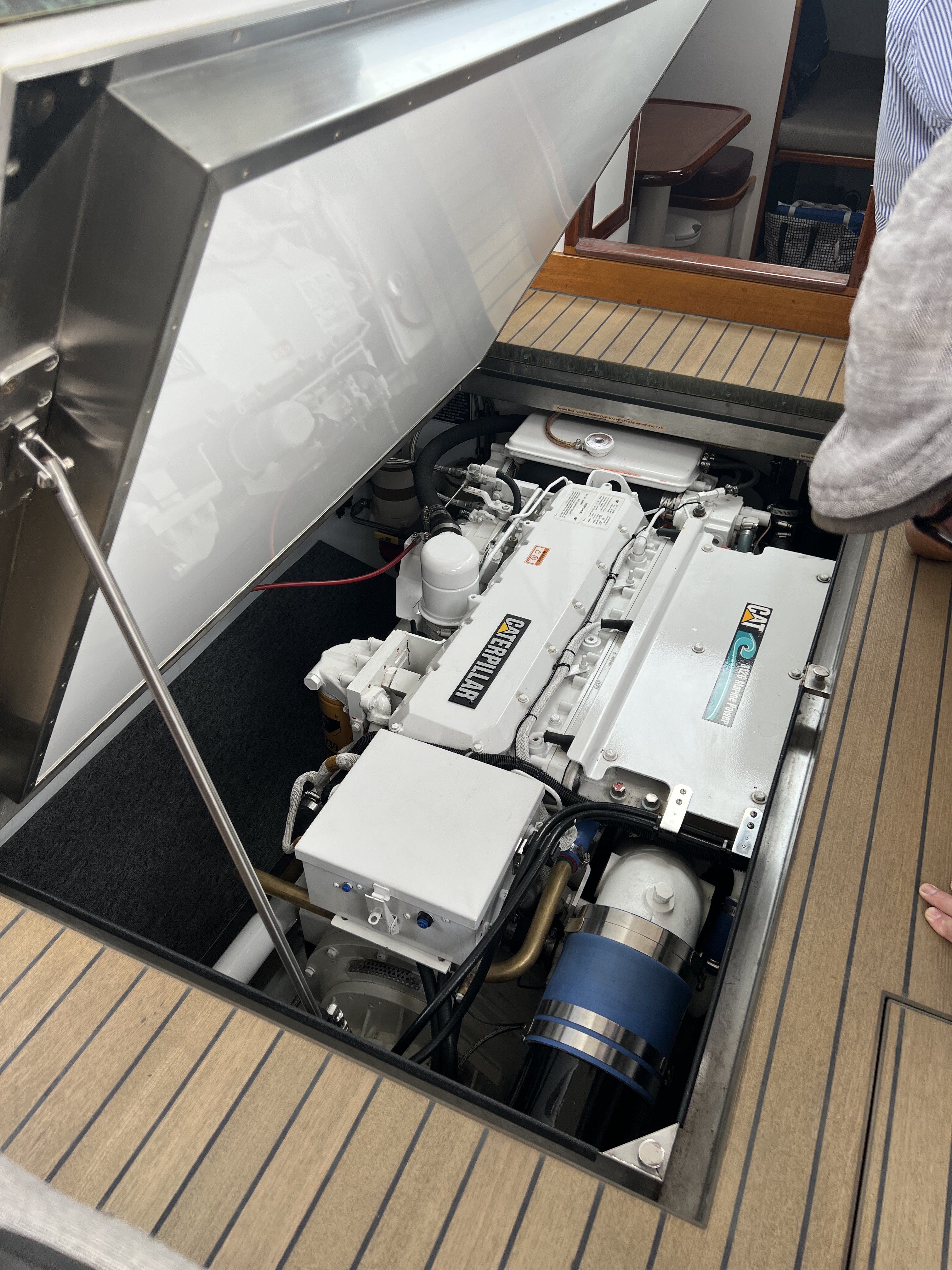
Acheron is powered by two TS3 model 3DB-215 Commer diesels, which have been in her since new. They drive thru two 22″ diameter x 21″ pitch 4 blade propellers. The current photos of the engine bay confirm that they have recently been taken out of the boat & had a major overhaul by a TS 3 expert.
Are we able to fill in more of the blanks in her past in the 1972 > 1991 period? Not sure Mr Woolley would approve of the radar arch ………………. but tastes change with time 🙂
Update ex Paul Holdsworth – Owen Woolley built Acheron for Eric Lane an executive at NZI Insurance, my farther an engineer worked on Acheron’s Commer diesels that had a distinctive rumble to them. Owen built a smaller launch for Eric before he commissioned Acheron which was very similar to Allen Williams Banshee design. Before having these Woolley designs built Eric owned the Colin Wild Talua with mooring in Okahu Bay which was immaculately kept and regularly haul out onto the handstand at Okahu.
Update ex Ken Ricketts – post a lot of ringing around and emails Ken believes below is an accurate record of the boats owners – Built by Owen Woolley 1968, owned by E & J Lane 1973, bought off a Mr Furness (probably off the Lanes) & sold to Neil Lineham in 1984. Sold by Lineham c.1987. We have a 4 year gap, then Des Deacon bought her in 1991 and trucked her from Auckland to Wellington.
In 2005 Tim Prescott, the current owner purchased her, possibly from the estate of Deacon.
As mentioned above Lineham had John Gladden extend the stern by 6’, this work was done by John Gladden. Lineham was an engineer and has a substantial knowledge of the Commer TS 3 engines, he went to much trouble upgrading the horsepower of Acheron’s engines and making them quieter than is usual, for these engines.
Her radar arch was fitted in Wellington by or for Des Deacon. It was Tim Prescott, who has had the latest refurbishment of her engines done, by Mark Erskine a very talented TS3 engine expert, who Ken believes worked on the engines in – Invader and possibly Royal Falcon. Her top speed is now around 13>14 knots.
19-03-2022 Update ex Alan Sexton – Acheron was described above as being single skin kauri, I doubt this, per the article (refer Sea Spray below) all this series were built with multiskin diagonal planking. One change on boats after Acheron, eg Proteus and Accolade was the addition of the topsides knuckle.
Annual CYA Round Rangitoto Race & Cake Day BBQ
I made a late call to mooch down to Issy Bay to catch the tail end of the annual CYA round Rangitoto Race and Cake Day BBQ. Well thanks to the loyal launch group the day wasn’t a waste of time, as what seems to be the norm these days – not one classic yacht bothered to attend 🙂 Pacific cleaned up the prizes – first in the race (i.e. closest finisher to their handicap time) and first for the best looking cake – well done Nathan, Darren and crew. I’m sure the other results will be on the CYA website. Got to love the judging panel – 3 very well behaved kids – I suspect their focus was on getting first dibs on the cakes 🙂 Special thanks to Jason Prew from the Slipway Milford for organizing the BBQ and prizes ex Manson Anchors and Lawson Dry Hills wines.