Strathallan

Screen Shot 2016-07-17 at 7.37.08 PM

Screen Shot 2016-07-17 at 7.41.20 PM

STRATHALLAN
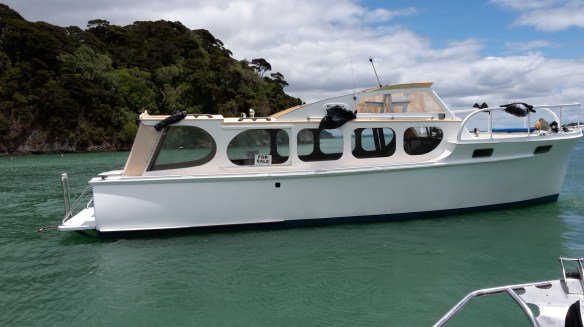
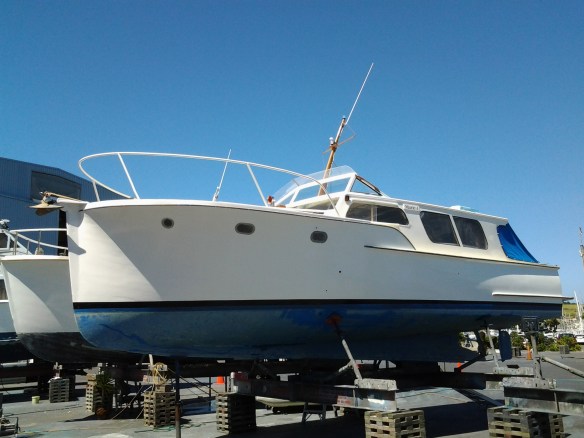
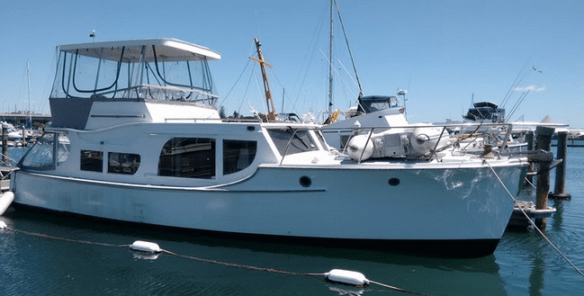
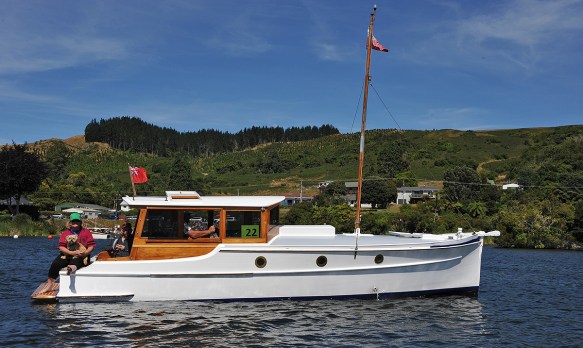
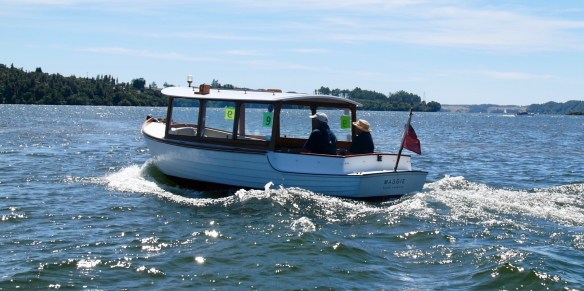
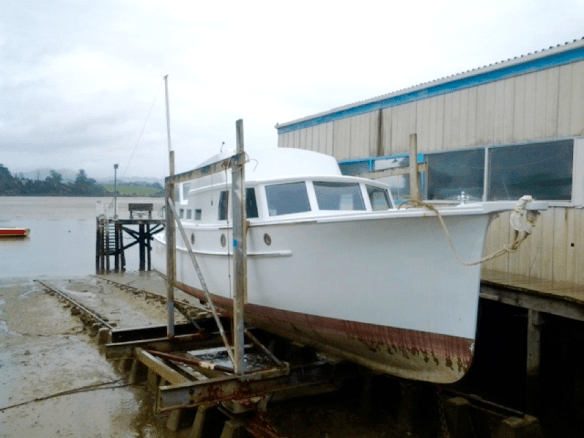
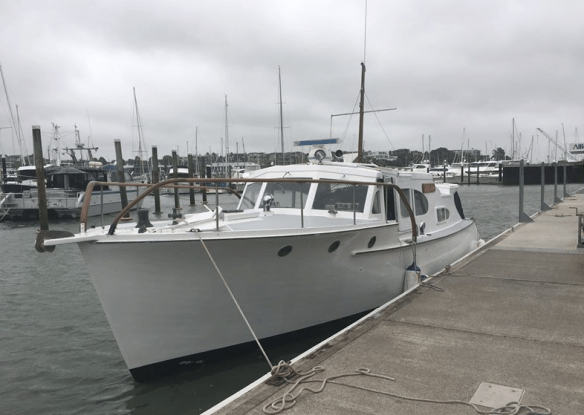
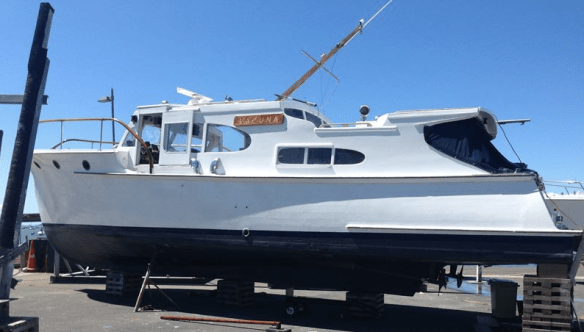
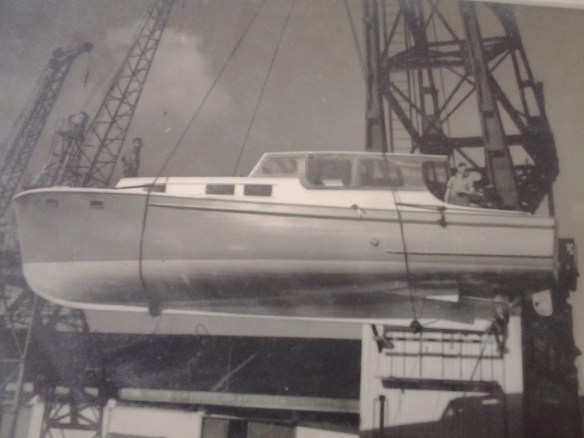
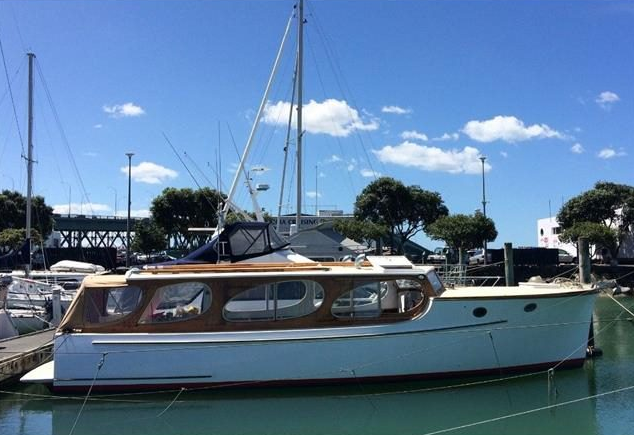
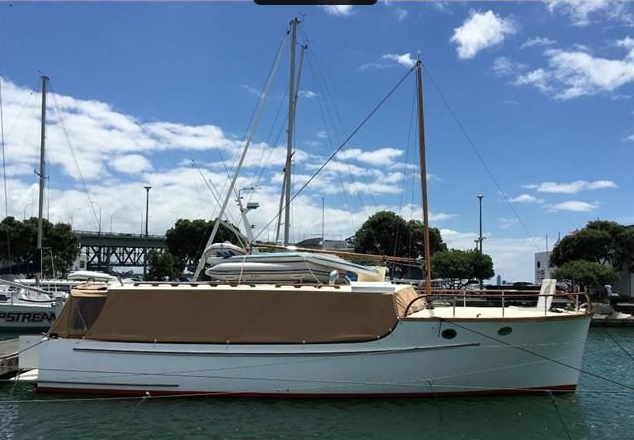
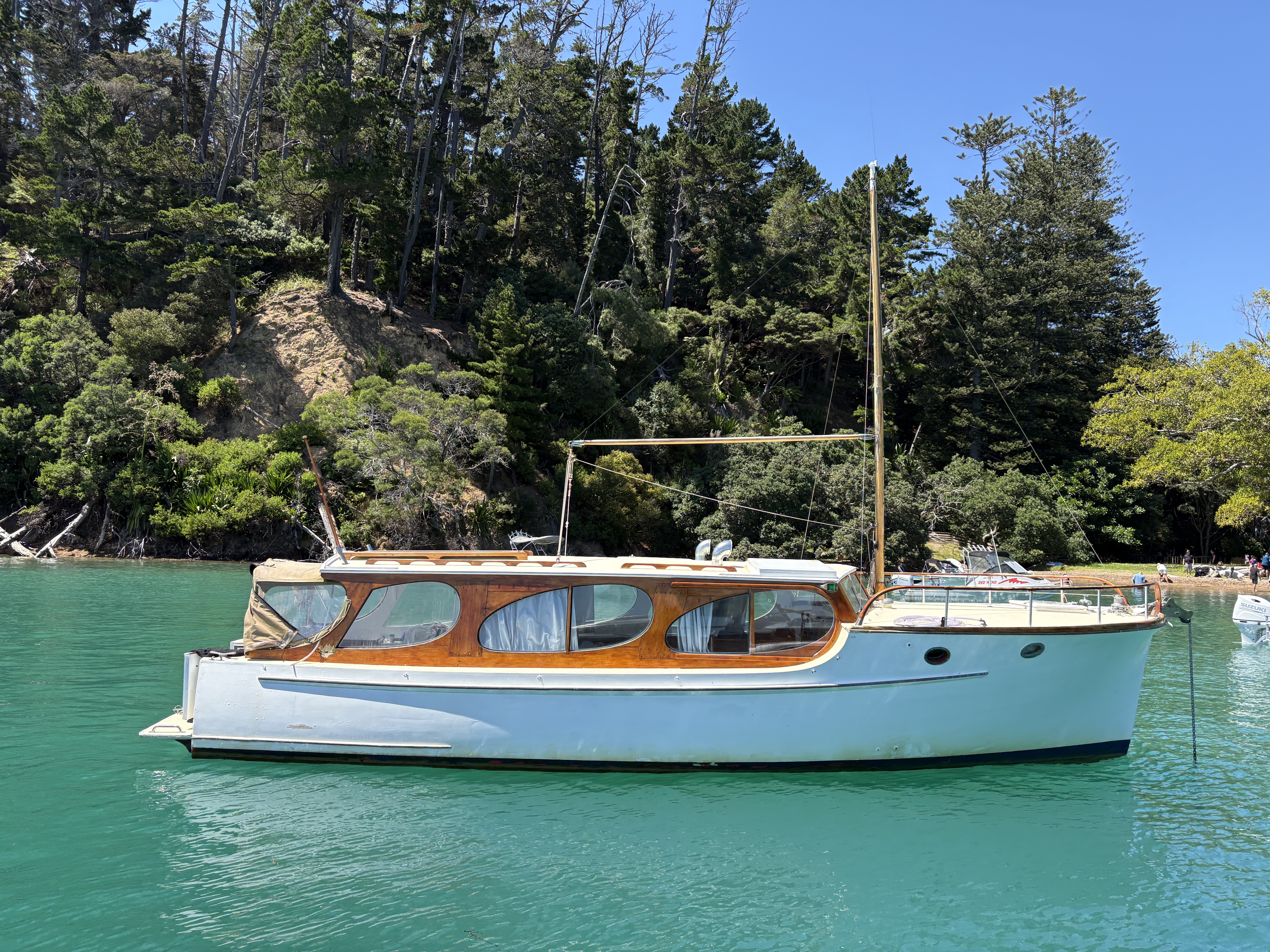
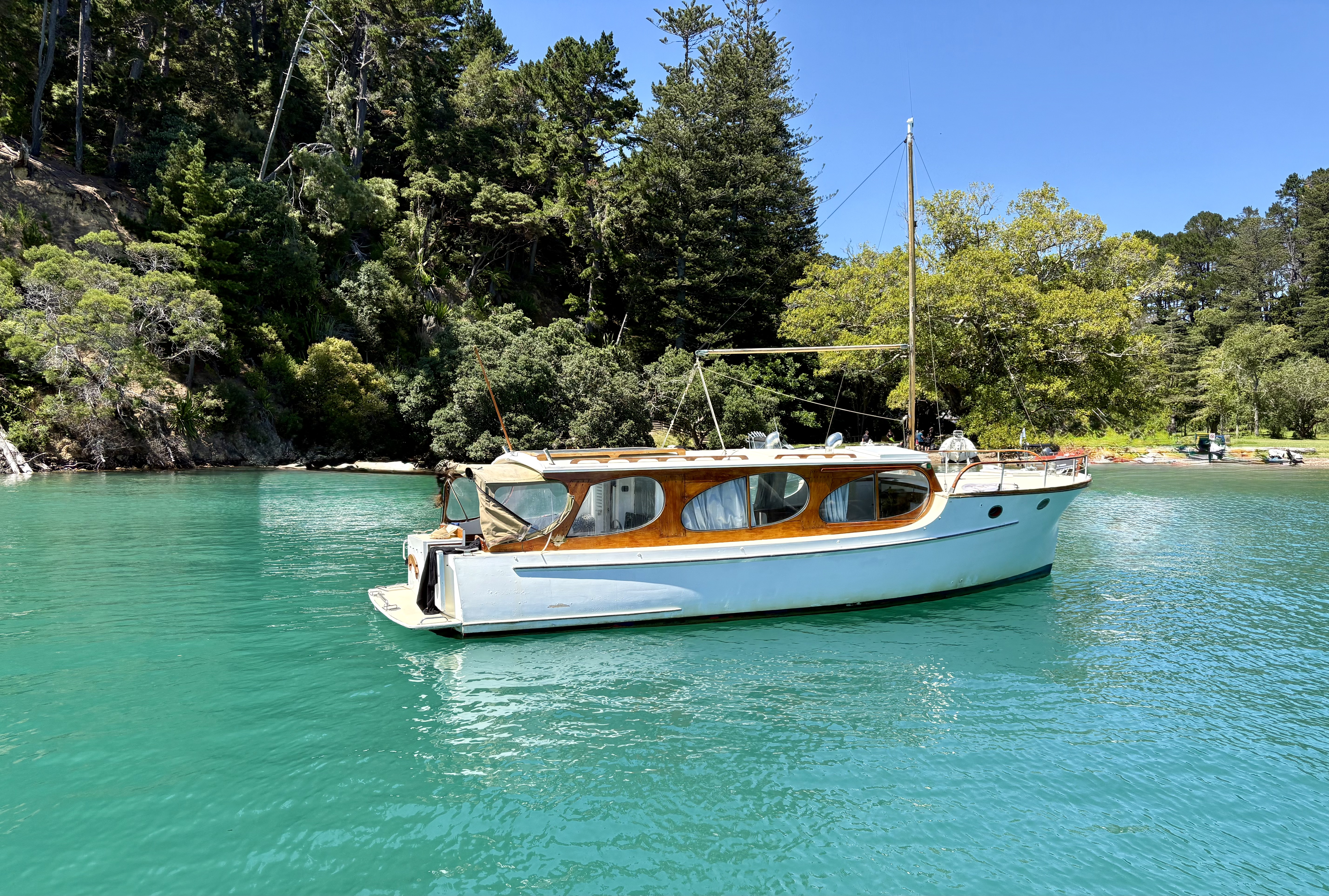
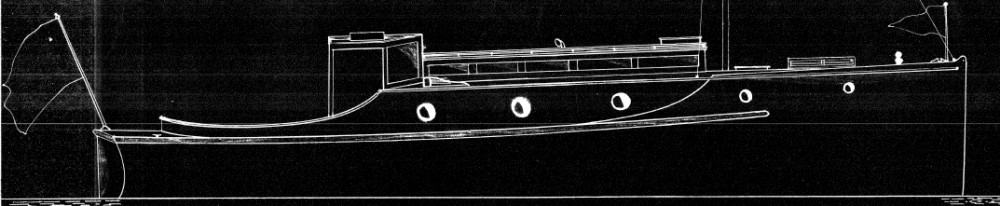
Strathallan was the name given to this Miller & Tunnage, kauri carvel built, double ender, ex pilot boat by the Timaru Harbour Board. She measures 46’6”” LOA & draws 6’5”. The traditional Scottish boat builder, Doug Robb built Strathallan in 1955 at his Timaru yard.

As you would expect from an ex work-boat the engine room is impressive & dominated by the 190hp, 8L3B Gardner. With a displacement of approx. 20 tons and being driven by the classic Gardner with a 3.1 transmission gives her a cruising speed of 8.5 knots at 810 rpm and max speed of approx. 10 knots at 990 rpm. Her size, design & power unit make her a powerful strong seaworthy vessel.

After being decommissioned as a work-boat in the 1990s she was converted to a cruising vessel. The main saloon, galley & engine room have full headroom & her walk-around decks are perfect for fishing. One of the hangovers from her commercial days is the exterior head with the door facing the stern; I can personally vouch for the view J

Strathallan is currently for sale & would be an ideal vessel for the boat owner who wants a classic, traditional boat that is a part of New Zealand’s maritime history. The asking price I understand is <$80k & at that price would be a good buy & still have the potential for a new owner to add their own touch to the boat in terms of decor.

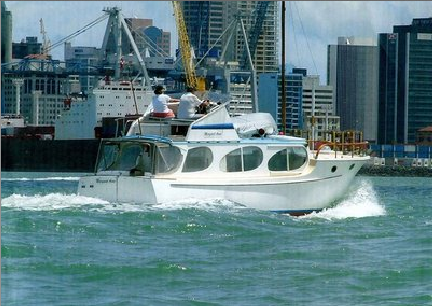
Photo below was taken at Mahurangi Regatta (2012?) by Chris Miller – slightly different paint ‘job’ back then.

Strathallan


Around The Yards – Neptune

20160507_150750[1]

20160608_160958[1]

NEPTUNE WINTER HAUL-OUT

Over winter, Neptune the 1956, 30′ motor sailer built by Fred Lidgard on Kawau Island, has been hauled out at the Whangateau boat yard for some TLC & some major work to realign her drive shaft. After buying Neptune, owner Greg was my marina neighbour at Bayswater last summer & on numerous occasions relayed that over a certain rpm Neptune was not the the most relaxing classic to be aboard 😉 Now it would be an understatement to say Greg is a perfectionist so at the earliest opportunity he slipped her & set to correcting the problem.  I’m sure Greg will added to this post the exact details of the work – hint hint Greg 🙂
Neptune slid down the ramp 2 weeks ago & is looking magnificent, see photo below on her mooring. Neptune has always been gifted with wonderful, caring owners & its awesome to see that Greg has taken her to a new high. Check out the ww link (blue) below to see more of this woody.

Neptune

(todays post photos ex owner)

20160705_101559[1]

Boating in the Late 1950’s & Early 1960’s

Boating in the Late 1950’s & Early 1960’s
story & photo ex Brian Mace

When gathering info on the recent ww story on Sobrine, Brian Mace passed onto Ken Ricketts the story below he once wrote titled ‘Memories of boating in the late fifties & early sixties’, with Brian permission we have reproduced the story on ww. Its a great story of life aboard the launch Sobrine owned by Brian’s father Gordon Mace. I have included a 1959 photo below of Sobrine. ww readers can view / read more on Sobrine here  https://waitematawoodys.com/2016/05/31/sobrine/

Enjoy the story, it will be very familiar to a lot of ww readers. The launch in the photo above was once owned by Brian but he can not recall its name – anyone able to help out? Also above is a 1959 photo of Brian aged 13 years  kitted out for diving, which would have been a big thing for a 13 Year old back then 🙂 Sorry for the lay out/big gaps between pages – these are original typed notes.

BRIAN MACE1

BRIAN MACE'2

BRIAN MACE3

SOBRINE c1959

Building the Mullet boat ‘Tamatea’ by Chris McMullen

Tamatea 17

1961 – the build begins @ 67 Waiatarua Road, Remuera

Tamatea 22

Tamatea 1

Tamatea 29


Building the 22’ Mullet boat ‘Tamatea’ – Sailing Sunday

photos & story by Chris McMullen. edited by Alan H

After Chris McMullen saw last weeks ww story on ‘Tamariki’ he contacted me re sharing his ‘Tamatea’ photos that had been languishing in an album kept for him by his dear mother, Vera McMullen. I couldn’t let Chris escape with just sending the photos to me, so I asked him (nicely) to write us a story. Now that’s something he is always a tad hesitant to do, why I don’t know he tells a good yarn. But being the great guy he is, he put pen to paper, in doing so Chris commented that he hoped that bringing these photos into the daylight may encourage others to share their boating or boat building history on waitamatawoodys.

Below is Chris’s story on the building, launch & sailing of the 22′ mullet boat Tamatea. Remember you can enlarge photos by clicking on them 😉

“In the early 1960’s I was apprenticed to boat builder, Morrie Palmer who was also an enthusiastic Mullet boat sailor. Sailing, cruising and Mullet boats were the conversation most lunch breaks.
Morrie had in mind to build a 22ft Mullet boat but family and business commitments at the time, delayed his plans. He had a new steel centre board plate, a profile plan and the offsets of a design for a hull that was supposed to be the Charlie Colling’s design ‘Tamariki’. I am not sure how he got these offsets but the original lines plan were in safe keeping at the R.N.Z.Y.S and not available to anyone at the time.

Morrie encouraged me to build this design and gave me his centre board plate and loaned me the offsets. I managed to scrounge some primitive basic machinery and set out to build the boat. As an 18 year old apprentice boatbuilder I had no money, no car and no girl friend but I was full of enthusiasm and wanted to go sailing. And yes, I had read Johnny Wray’s book. “South Seas Vagabonds” many times.
The Tamatea was built in my parent’s back yard at 67 Waiatarua Rd Remuera. These days such a project would not be possible due to the noise regulation’s but in the early 1960’s people were remarkably tolerant and it was not unusual to see half built boats on people’s quarter acre sections.

 Riveting of Tamatea at night was not really fair on the neighbours. I got one complaint by working too late. I had to enlist my friends to back up the nails with a dolly. If they came late, we worked late. I was desperate to get it done. Another source of irritation was my Fathers Desoutter electric drill. It had no suppressor and affected the people who had TV’s. I was the neighbour from Hell for a while.

Now to the photos.

The photos feature some of my friends who helped. Recognised in the photos are
John Jennings, Des Laery, Ken Wilding, Murray Napier, sorry but I can’t remember all the names but Alan Bell and Neil Gillard would have been there. In the dinghy sculling is ‘Snow’ (Neville Stacey) who was / is a well known helpful character; he loved boats and spent much of his time at the ‘Okahu Bay’ hardstand.
The young man painting the Tamatea in the colour picture is the late John Eastwood. In the same image but in the cockpit is a another young man, John Court, also since deceased. My Model A truck alongside the boat, used as a work bench. The sailing cockpit shot shows Ken Jaspers and with me on the helm. These three guys and John MacDonald built and loaned me gear and helped finish the boat. I guess this was the year after she was launched. I was grateful for their help as I could not afford to run the boat myself at that time.  

You may notice in some of the images, the concrete blocks on the roof of the shed. These allowed me to force rocker (bend) into the keel using a timber prop under the rafters, their weight prevented the roof lifting. Looking at it now, I am lucky the lot never collapsed on top of me.

I never lofted the hull; I just made the temporary frames (moulds) direct from the offsets and cut the plank rabbet’s (rebate) by eye using battens.
The hull was planked with kauri over temporary frames or moulds. The planks were tapered towards the ends like a wooden barrel. The garboard plank was steamed but most was bent cold and edge set. I broke some planks! They should have all been steamed but with my primitive steam box it would have taken too long and I was in a hurry and wanted to go sailing.  
The short planks left out in some of the photos are called stealers and have to be spiled. I remember the frustration of not having a thin plank to use for a spiling batten. I could have borrowed one from my boss but with no car or trailer, how could I get it from Devonport to Remuera on a motorbike?
The ribs were Tanekaha, all steamed and held with riveted copper nails. The centreboard case was demolition kauri held to the keel with galvanised bolts.

Some of the images show the most distinctive feature of a proper Mullet boat – the hollow sections aft and the deep built down deadwood. The boats are a built to certain design and scantling rules.

Tamatea was transported to the water using a trailer kindly loaned by Sandy Sands of Sea Craft and towed by a neighbour Mr Picket with his (at the time) huge truck. A dangerous load? Well maybe, but we got there!

Tamatea was the last planked 22 foot Mullet boat.

My boss, Morrie Palmer forced change to the class rules by building “Controversy” using 3 diagonal layers of ¼” kauri over stringers instead of carvel planking caulked over ribs. Now Mullet boats can now be built in G.R.P.

I was about 18 when I built Tamatea, she was rather amateur built as I was a second year apprentice and although, I thought I knew it all, I was very green. She was built under difficult conditions almost in the open and exposed to the weather, I had very primitive tools and no transport or money to purchase anything other than what went into the boat. Later, I replaced a damaged plank in the “Contessa” built by Cal Crooks and sailed on the”Patiri”built by Bob Harkin. Both these Mullet boats were beautifully built by apprentice boat builders but to be fair, they were older and more experienced than me.

I built the Tamatea for cruising and she was a raised deck Mullet boat. She was very spartan when launched. Second hand sails and a poor rig. We cruised north to Whangaroa the first season but some time later lost the first mast. Insurance paid Baileys to build a new box section oregon mast and my new crew of engineers made all new mast fitting and a set of backstay levers. Their efforts made a huge improvement to the yacht.
Leo Bouzaid (‘Sails & Covers’) built a new dacron mainsail and gave me a year to pay. That was in April 1962 I still have the original invoice for 126 Pounds!

I/we sailed in the Lipton Cup but with poor results. Since then the raised deck has been cut down to a conventional sheer and she has a modern rig. Sailed by others she has won the Lipton Cup a number of times.

Further – looking back to the early 1960’s to give my story some context :-
• I crossed the harbour every day usually on a steam ferry.
• There was six o’clock closing at all bars.
• There were few restaurants where you could buy a drink with your meal.
• A quart bottle of beer cost 2 shilling and sixpence or 3 shillings and sixpence at the   Mansion House, Kawau Island in ‘The Snake Pit’ sly grog bar.
• Many cruising boats carried a rifle on board.
• There were no imports except for essential industries or you could apply for special licence but it would be most likely declined. You could only buy a new car if you had overseas funds.
• A few importers had import licence and charged accordingly.
• There was death duties and high tax.
• There was black and white poor quality TV and manual calculators.
• There were No mobile phones.
• No double insulated power tools.
• No  epoxy  Glue.
• No GRP boats and very few synthetic sails
• No moorings in Matiatia.
• No marinas or travelift’s
• Most pleasure boats were hauled out for the winter.
• There were NO IMPORTED BOATS and you could buy kauri so wooden boat building was a competitive but viable business.”


Sobrine

SOBRINE c1959

c.1959

Sobrine &amp; Luana

Sobrine and Luana

SOBRINE c1989 ex Carol Stewart

C.1989

sobrine250

SOBRINE
photos ex Harold Kidd, Brian Mace & Carol Stewart. info ex Ken Ricketts, edited by Alan H

Following on from yesterdays post on Manuroa (Lady Doreen), Gordon Mac replaced her with Sobrine after selling Lady Doreen to Len Swan of Orakei in 1951, Swan immediately changed her name to Manuroa.

Sobrine’s hull was built by Jack Taylor in Onehunga & moved, after some disagreement with Taylor, to the Lane Motor Boat Co in Panmure, to be finished & she was launched in November 1956.

When launched she was 38′ but had her bow extended by approx 4′ by Shipbuilders Ltd., 1 > 2yrs later. When lengthened Mace moved her original stern exhaust to a short stack on one side of the rear of the bridgedeck cabin top, which had to be on one side because of her internal layout. In the interests of aesthetic balance he put a non active ‘look alike’ on the other side.

She originally had a Graymarine petrol engine when launched, which was replaced with a Gardner 6LW diesel, when she was very new. Gordon Mace’s son Brian advised she needed to have the bridgedeck cabin top cut off, in order to lower the Gardner in place.

In c.1962 the Mace’s had moved to Coromandel, along with Sobrine to live.

Mace sold her to a friend, Jeff Innes of Coromandel. The story goes that Jeff Innes had fallen in love with her Sobrine at first sight & had pestered Mace for some time to buy her. One day Mace on the spur of the moment accepted an offer from Innes & the boat was sold, much to the families disapproval.

Innes sold her to Bruce Stewart, of Thames in c.1980’s.

Stewart sold her in July 1992 to Roy Ladd of Auckland, who still owns her.

Note: The name Sobrine came about by one of lifes little oops moments – Gordon Mace’s eldest daughter, Aileen, when christening the boat mixed up the intended name ‘Sabrene’ (pronounced Sabreeny) with Sobrine & with her being very young at the time, the family decided to stay with Sobrine 🙂

The Mighty P Class – Sailing Sunday

THE MIGHTY P CLASS – Sailing Sunday
ex Yachting NZ

A pictorial history of New Zealand’s mighty P Class yacht

Whilst trolling around the Wellington Classic Yacht Trust facebook page I uncovered the above gem that utilizes the two formats of a slide show and video clips to showcase the history New Zealand’s mighty P-Class featuring images and footage from the 1920s to 2013.
The clip has been assembled by P Class expert and historian Gun Caundle, from photos collected while researching for his book ‘Our Secret Weapon’, a history and stories about the P Class. While 15 minutes long its great viewing & I’m sure most woodys will bothe relate to it & probably recognize some of the people featured. Enjoy 🙂

Awatere (mcgeady)

Awatere (mcgeady)


AWATERE (mcgeady)

Photos & details ex Peter Findlay

Today’s post on the 1954 McGeady built launch Awatere is a cracker & only came about as the result of a friend of Peter Findlay’s casually mentioning the waitematawoodys weblog to him. I have only lightly edited the story Peter sent me, it was just too good to muck around with – I’ll pass over to Peter …..

“I recently heard of your waitematawoodys from a good friend (Geoff Preston) who has seen Awatere over the years and was a salesman in my motor business in Henderson (Peter Findlay Motors) and helped with work I did on Awatere on moorings off the Akarana Yacht Club in Okahu Bay.

The above photo of her when in our family owner ship, shows me at the helm as her skipper, taken c.1965 near Rangitoto. The photo does not do justice to the varnished finish on her topsides. We always used Epivar 2 post varnish (which was new on the market then). Was a much longer lasting finish and fair superior to the white painted finish I understand she has had at times.

 Awatere was a Lloyds registered vessel & I still have a copy of the green embossed leather ‘Register of Yachts 1963, First Supplement’. Her number was – Ship No 611, 199080, which was carved in her beam aft cabin.

Awatere was in my eyes a class ship that I loved and improved and maintained her meticulously on her moorings at Okahu Bay, just below where we resided.

I also have her logbook that records me doing the detailing work as well as adding things to improve her including removing the English Parsons 4 cylinder diesel and installing the new Ford 6 cylinder 100hp diesel supplied through Auckland Ford dealer – John W. Andrew.

We bought Awatere on the 10th February 1962 off a Mr. Rex McCracken, who had her built by McGeady, Supreme Craft in Auckland in1954 . Apart from the new motor installation which we did, all the other major work was done by tradesmen at Shipbuilders, Freemans Bay, always to a high standard. They put in the aft stern boarding platform, which eased ship boarding, and I think the rear dinghy davits, which were great in a following sea.  I think they were there on purchase but not operational.  

Lots of interesting things we came across as well, e.g. when we fitted the new motor we were advised to replace the 5 blade prop 21X21 with 3 blade 22×20.  Unfortunately when going off the cradle down into Okahu Bay, I selected reverse on the new hydraulic gearbox gate and we climbed up the cradle having been sold the wrong prop rotation. Not very happy, so up again and re entered a few days later with the correct prop. The 5 blade had been smoother but not very good astern. However the main reason was to improve the over heating problem over 1800rpm which became endemic despite my efforts to improve. Changes were made to the heat exchangers etc, water pumps, thermostats changed rating, different types, even thermostat out.

Take her up very slowly to 2000rpm and we got about 12 knots whereas cruising at 1800rpm was 10 knots. Still an improvement on the old Parsons of 8 knots.  John W. Andrew were very helpful in all this period but I would like to know if it was finally solved or just endemic for that motor.”

Peter has promised to have a hunt thru the family files & see if he can uncover anymore photos from the past, he would also like to pass his kind regards to subsequent owners. He commented that she was a fine ship and he and the family had lots of lovely times aboard but the pressure of the motor business, Rotary, and the Henderson Borough Council + young children meant he did not spend as much time on-board as he would have liked.

When I first received Peters email I was scratching my head trying to place Awatere, it was familiar but I old mind was drawing a blank, even the trusty ww search box was not playing ball. So I banged a quick txt off tp Nathan Herbert & he pointed me in the right direction. Back in March we uncovered a raft of photos on her but other than Harold’s input mostly uncover little . So Peter Findlay’s email has rounded out what we know about Awatere & posed a few question for the woodys.

Below is a collection of photos over the years, including some of her in her current berth at Milford Creek or Wairau Cove as Murray Deeble likes to call it 🙂

You can read more about her & the photos of her at this link, make sure you scroll down to the comments section    https://waitematawoodys.com/2016/03/03/awatere-3/

AWATERE  c1950s OKAHU BAY

AWATERE - R.H.S. -  &amp; ALTAIR L.H.S. at OKAHU BAY c1950s

AWATERE WAKATAKATAKA BAY

DSC_0302


Before Awatere the family owned a Scripps V8 powered 32’ launch called Doraleen which they renamed Yasawa after his folks love of a beach over on Waiheke Island which took their fancy. A Mr. Bill Bright owned Doraleen before their ownership.

Yasawa is a nice little 32’ bridge deck launch,10’ 3” beam, sleeps 6 and very quiet but petrol 😦

Yasawa is pictured below & more photos and details can be viewed on this link.

Yasawa

Yasawa

Interesting In Input From Keith Ottaway

Have just read the above article by Peter Findlay .

What caught my attention is the comment that they replaced the 4 cylinder Parsons.

I know this sounds kinda unusual – but we acquired one of those engines (they are a bit rare – particularly those early 1950′ versions)  by a convoluted process  – that supposedly came from a re power of a launch about that time.cIf so this engine was a well loved and respected member of the family for many years.
It sat in storage till 1977  – then was in service till we sold the boat in  2009 – was finally replaced last year from the most recent information.
It did amazing service throughout that period – yes it had a few repairs – a bit of abuse beyond what should be expected . But was a very good unit.

One trip home from the Barrier in particularly nasty weather – I was ready the kiss that thing by the time we coupled up to the piles in the Panmure River . It had managed to get me and my  family home safe and sound. The boat was a mess – my wife and children were sick  – and I was hugging the engine trying to extract some heat out of it to warm me up. Can remember huddling over it and thanking it for what it had done. Was not a good day for boating.

So Peter may be able to either confirm or deny if it is the same engine.

So not sure if engines count on the woodies site – but this one deserved a good funeral – it had earned it.

Tangaroa (Seaway)

TANGAROA @ GH 26.4.16-9

TANGAROA (Seaway)
details ex Bill Burrill, photos ex Ken Rickets

According to Bill Burrill, Seaway was built in 1953 for Fred Brake, of Riverview Rd, Panmure, by the Lane Motor Boat Company, for whom, Fred, worked for about 8 years & which was right next door to his family home. Fred was also the harbour master for Panmure, in that era, & kept Seaway at the bottom of his garden on a pile mooring & slipped her on a railed electric slipway that he built on his property.
Fred B sold her to a Mr Gray who owned the station at Man o war bay Waiheke (which he later sold to the Spencers) in approx. 1955. He died in 1959 & Max Burrill bought her through the Guardian Trust, off the estate in 1959. He changed her name to from Seaway to Tangaroa upon purchase. Max Burrill died in 1984 &  Bill Burrill, his son, bought her off his mother. Bill sold her this year (2016) to Allen Heatley.
She was moored at Pine Harbour but is now berthed at Fairway Bay, Gulf Harbour. The Heatleys intend to live aboard for the next 12 months whilst they build a property in the area.

She was originally powered by a P6 Perkins diesel when built which was replaced around 1960 with a 6-305 6 cyl. Perkins diesel & 5 years later this was also replaced with a horizontal 6-354 Perkins diesel, to fit under the floor, thereby giving more cabin room. The 6-354 died in 2000 & Bill  replaced it with a 100hp 4 cyl. Yanmar turbo diesel, which she still has today.

05-09-2018 Update – Interior photos below ex trademe via Ian MacDonald

Update 21-09-2021 Photos added

Margaret Joy

Unknown_9

Margaret Joy MYSTERY LAUNCH 02-04-2016
photo ex Robin Elliott

Today’s photo is another that Robin has sent me from a collection of photos from the Whangarei Cruising Club Collection, as far as Robin knows, all are from the 1940’s early 1950’s & and were taken by Palmer Photography in Whangarei (1910-1999). Most by the late Graeme Palmer and possibly some older ones by his father.
The distinctive placement of the porthole window on the cabin sides might help ID her, she also appears to have a good turn of speed.

The Woollacott website http://www.woollacott.org.nz/ lists both a Ghost & a Wolf, the images of Ghost appear to be a smaller vessel. No photos of Wolf.

So woodys who can ID this one? The boat was ID’ed by Nathan Herbert as Margaret Joy

Mondays ww post will be a  trip report from James Dreyer (Laughing Lady) on the Palm Beach International Boat Show, in James words “I have kept the focus on wooden or partially wooden craft, with a little American excess and muscle thrown in for good measure.” – Make sure you check it out.

Miss Vauxhall

Miss Vauxhall

MISS VAUXHALL
photo ex Robin Elliott

Todays photo of the woody runabout, Miss Vauxhall, is from Robin’s collection of photos from the Whangarei Cruising Club Collection, as far as Robin knows, all are from the 1940’s early 1950’s & and were taken by Palmer Photography in Whangarei (1910-1999). Most by the late Graeme Palmer and possibly some older ones by his father.

While the boy at the helm is deep in concentration he no doubt is having the time of his life. Can any woodys ID the design of the boat & even better whose the skipper ?

16-01-2017 Harold Kidd Input

I’ve just come across an article in Sea Spray  (below) on Dick Hartley in which he discusses, most lucidly, the evolution of his designs. There is the same pic of MISS VAUXHALL as well as her sections, pointing out that he could just as well built her in ply in 1947.


16-08-2020 UPDATE ex Peter Morgan – HDK was correct the boat is a Hartley. Peter M has commented that his father – Jack Morgan, of Paine Bros (North Auckland) Ltd, General Motors dealers in Whangarei, in 1947 asked Richard Hartley, then a young (b. 1920) boat builder in the town, to design and build Miss Vauxhall. She was powered with New Zealand’s only Mercury 25-hp Thunderbolt in-line 4-cyl. 40 cu.in. outboard. Paine Bros stocked and sold Sea Craft clinker dinghies and Mercury outboards. In the above top photo the young skipper is Roger Morgan, aged 11. In the photo below (very low res), supplied by Peter M, taken in the early 1950’s at Russell in front of the Duke of Marlborough Hotel. Jack Morgan is standing in Miss Vauxhall, while son Roger is holding the transom. Miss Vauxhall had a top speed of 27 mph (23.4 knots), measured by timing between the ends of the Paihia and Russell wharves and measuring the distance off a hydrographic chart of the area. Miss Vauxhall could pull water skiers up from a deep-water start on a single ski.

Screen Shot 2020-08-16 at 4.17.26 PM