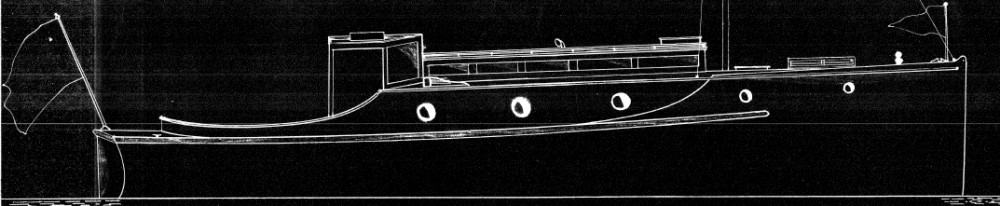
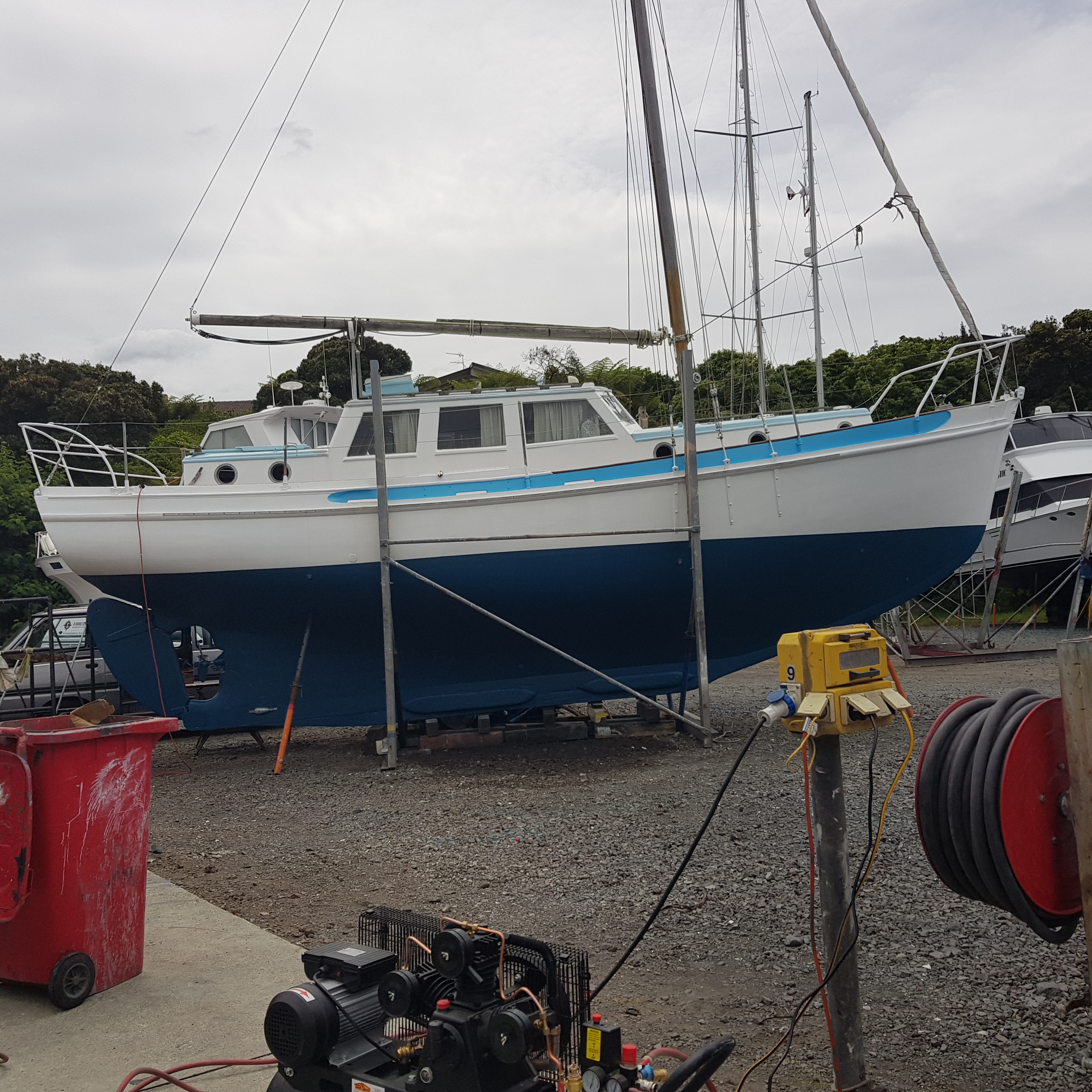
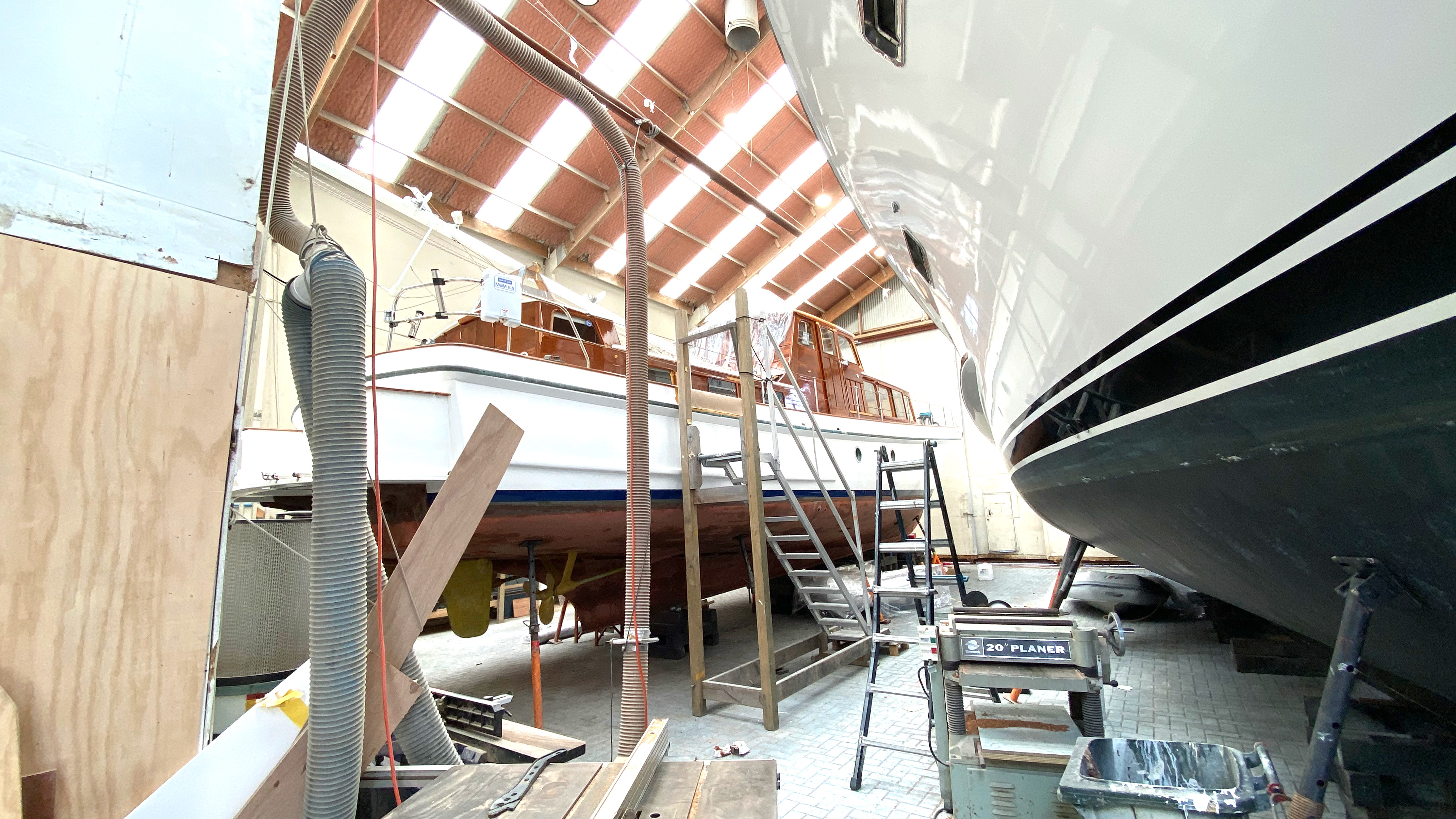
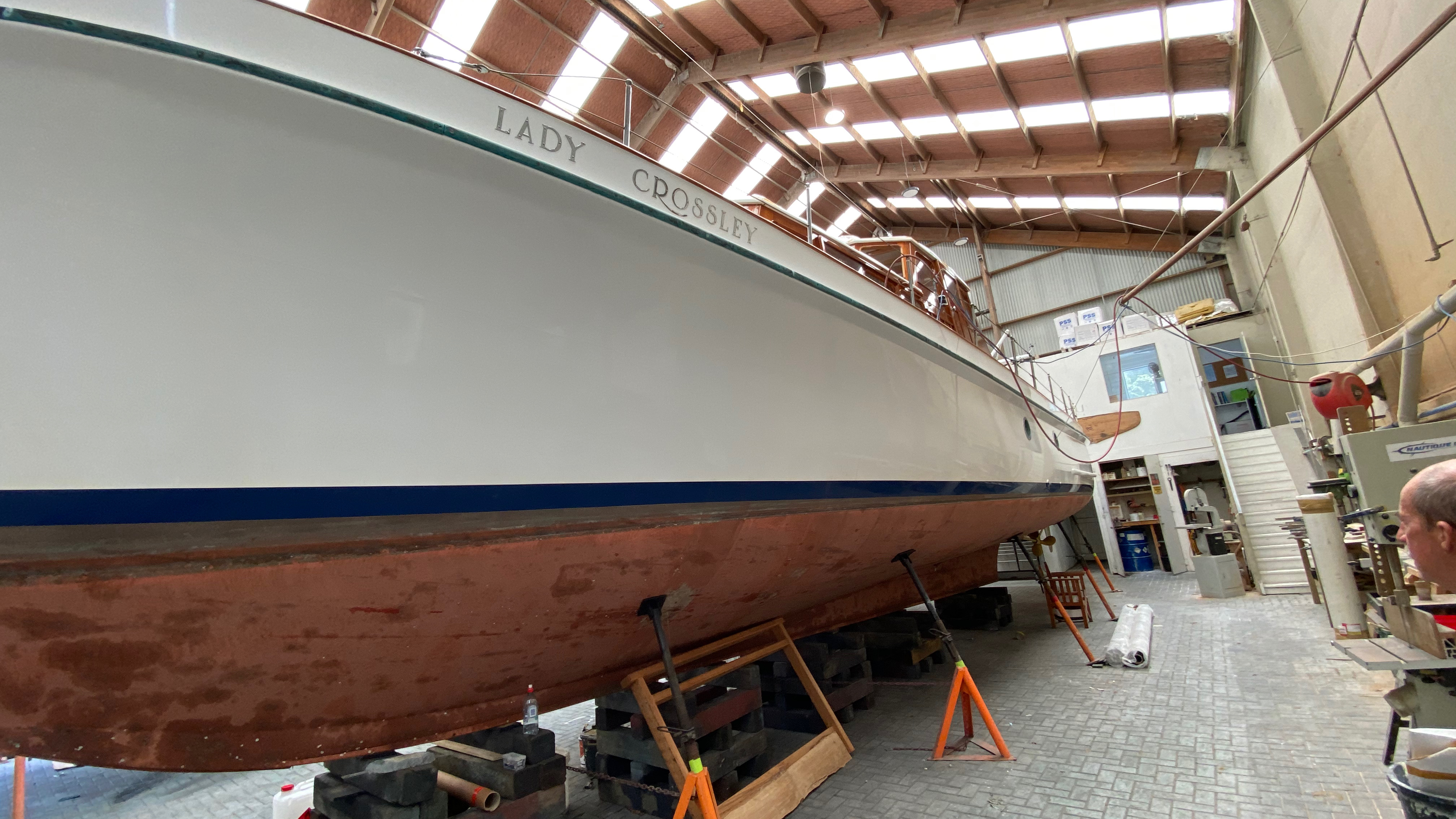
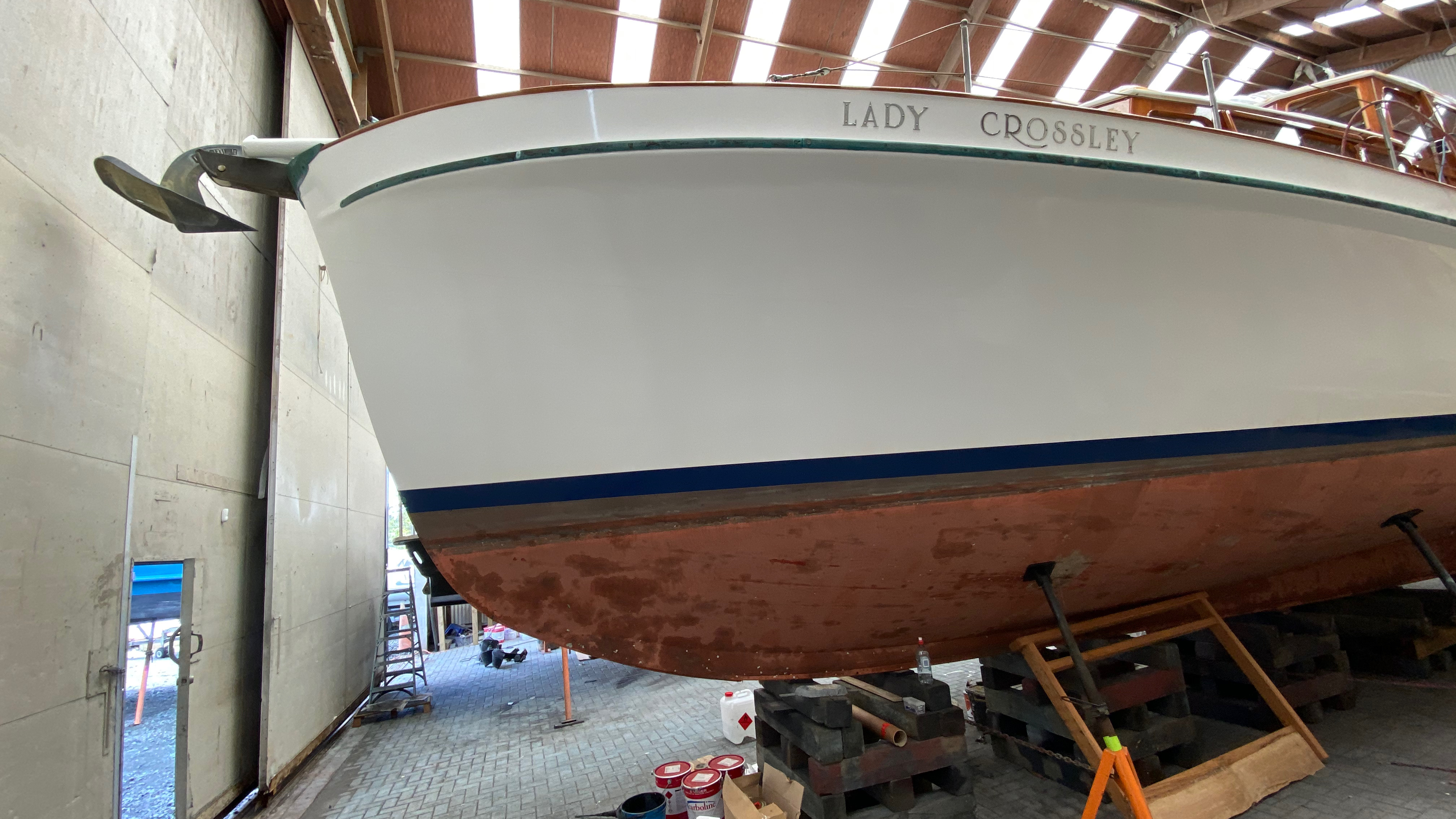
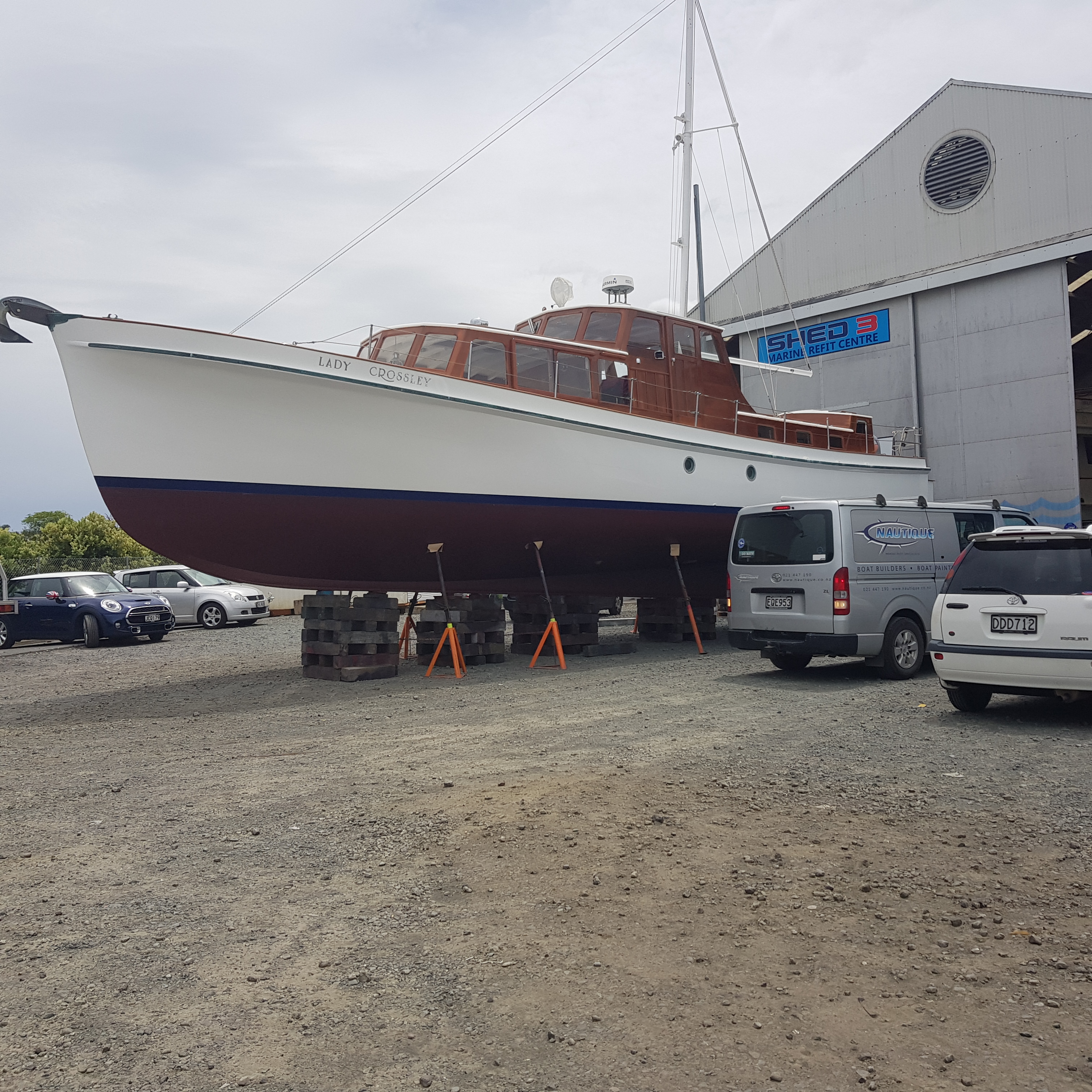
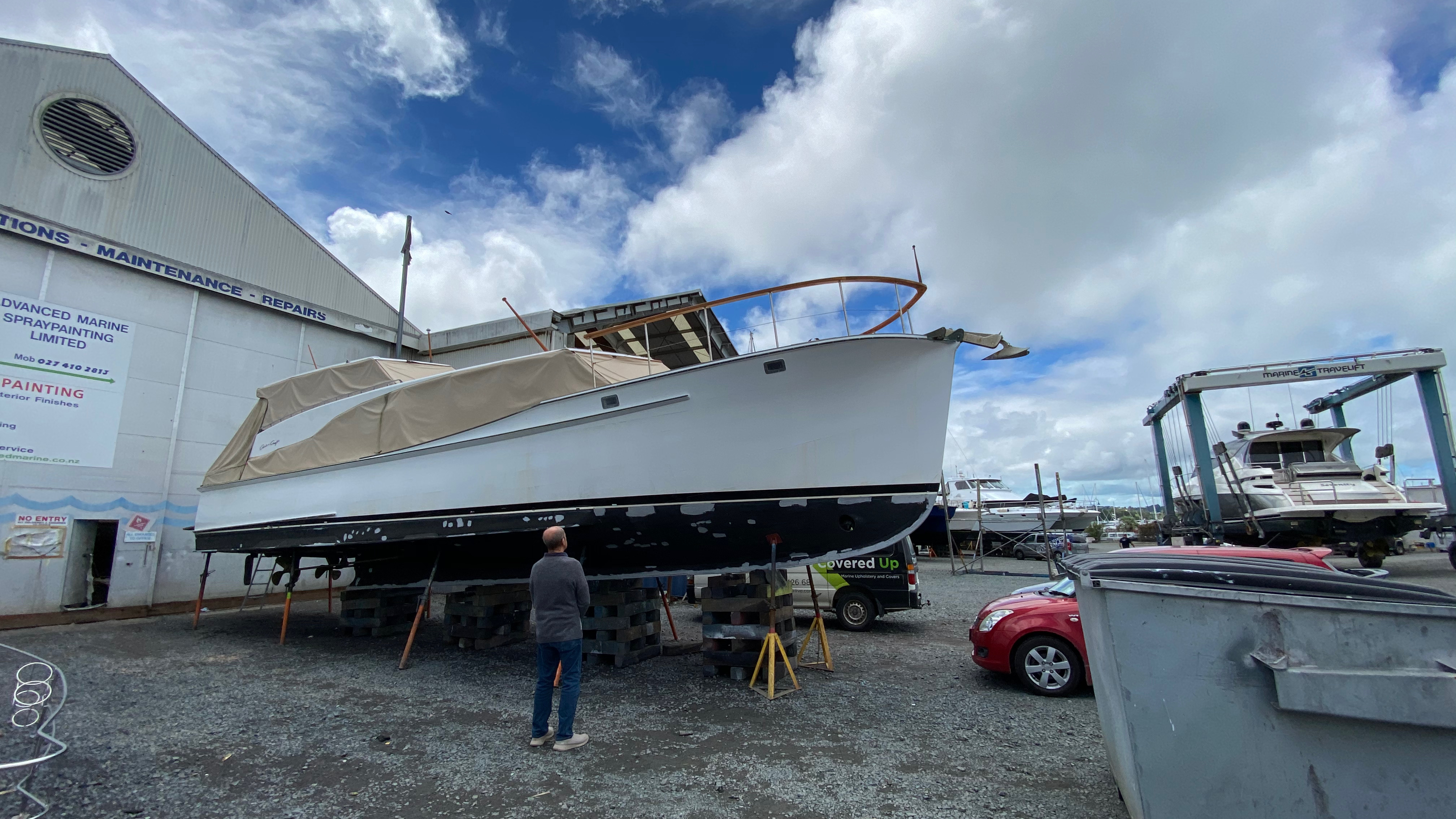
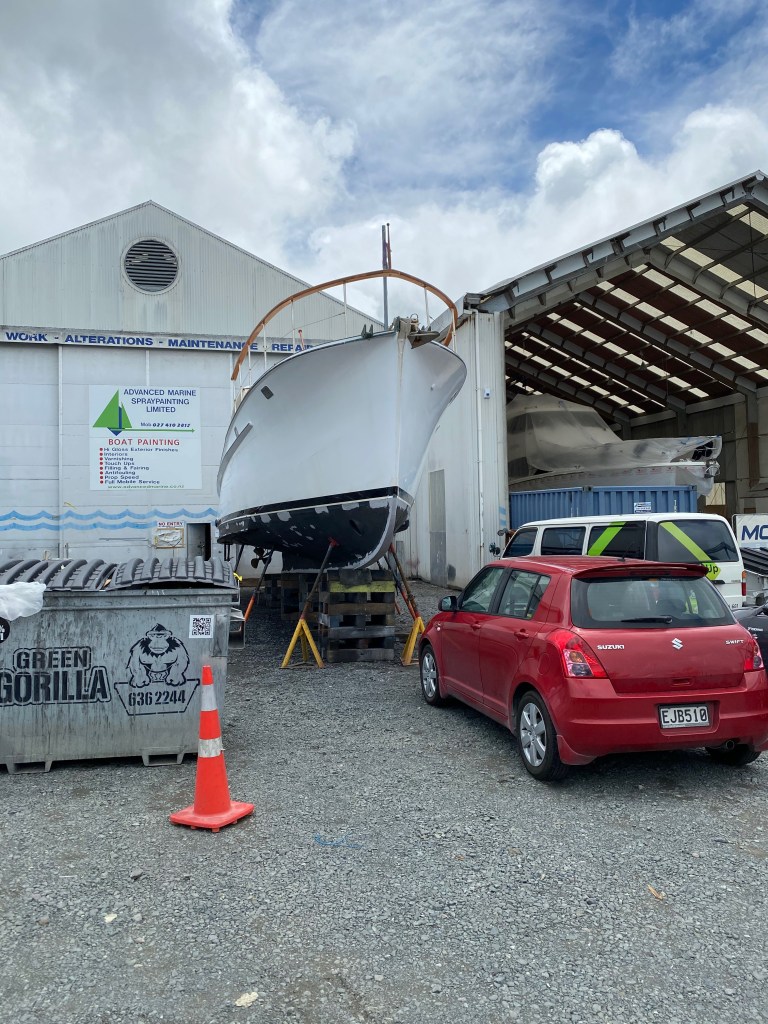
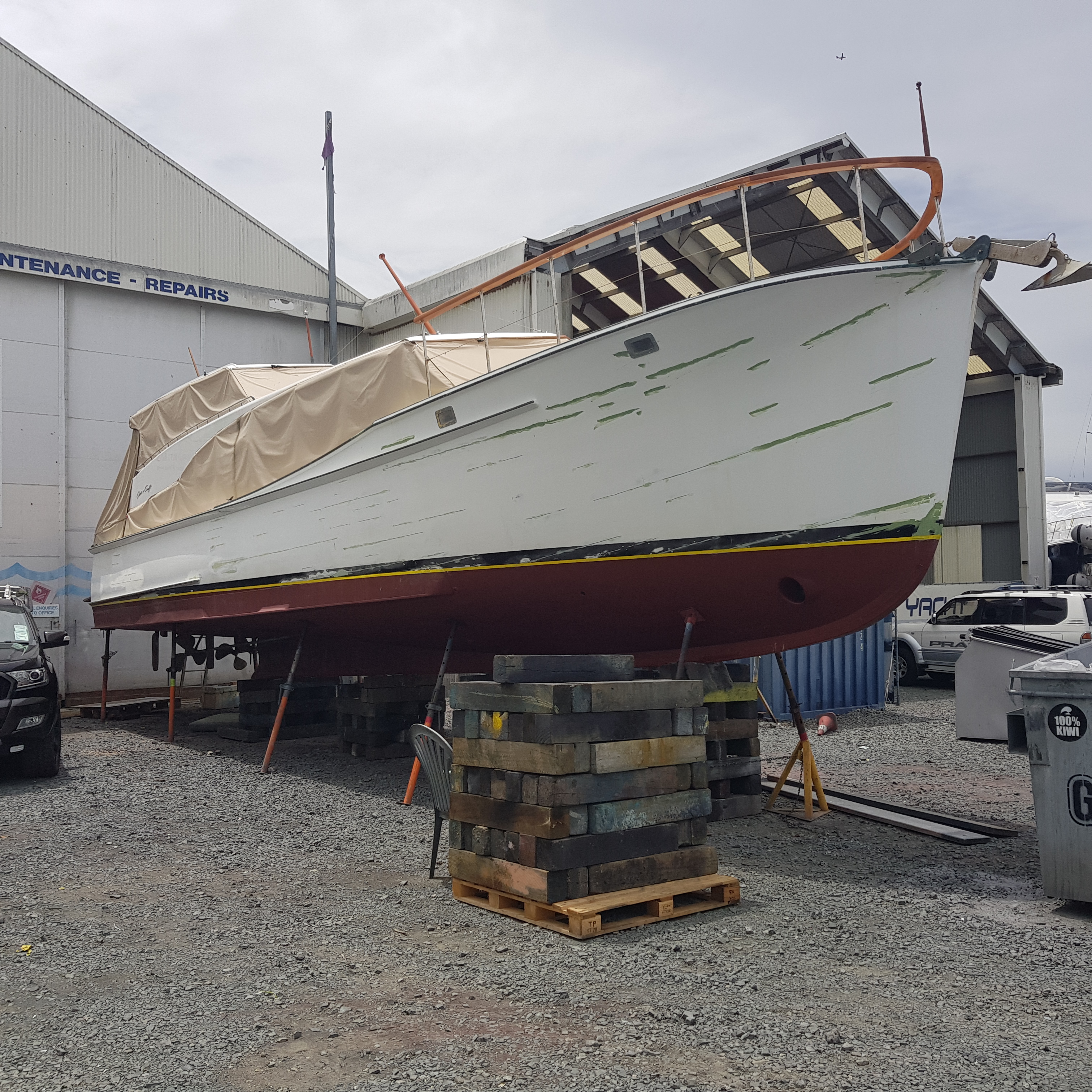
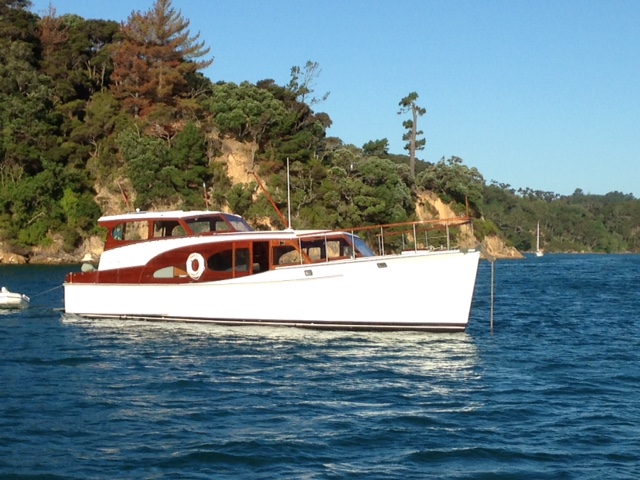
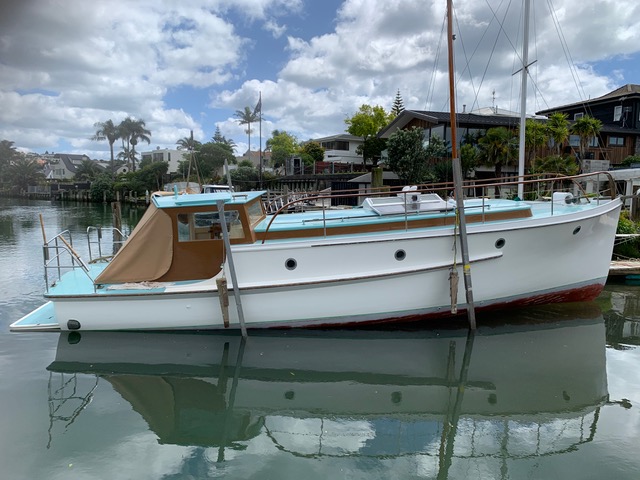
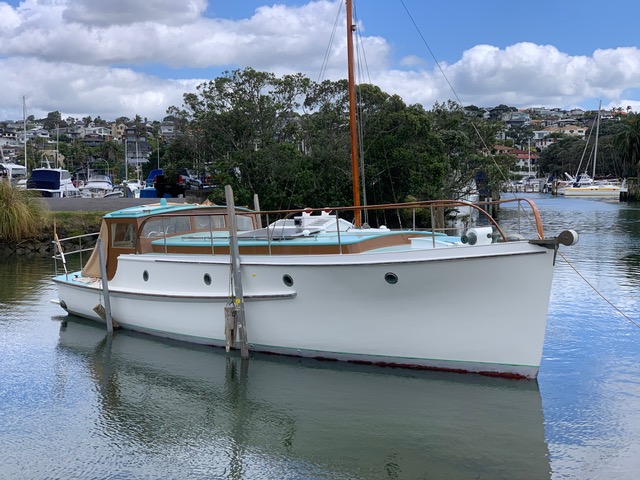
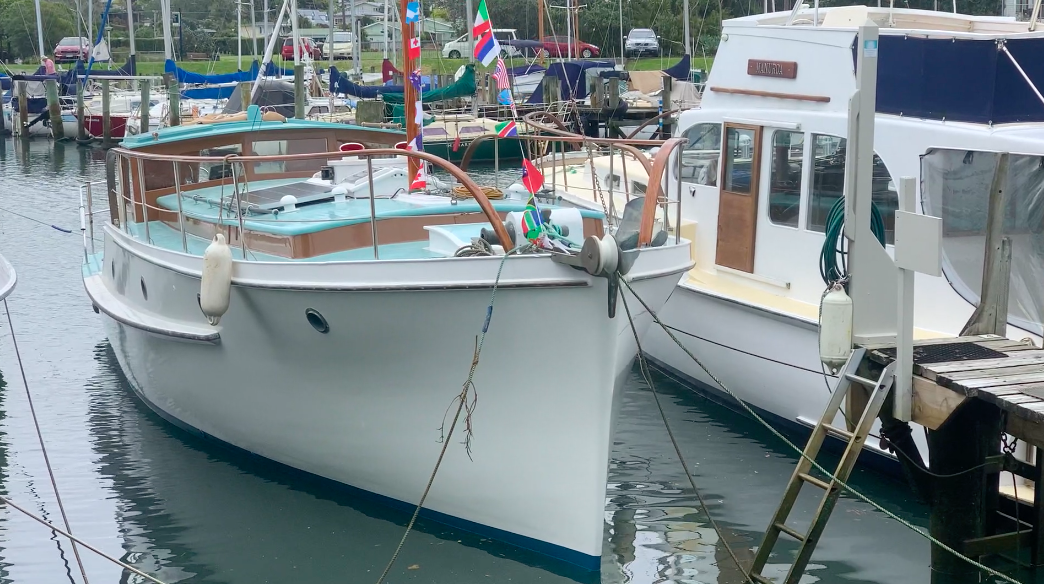
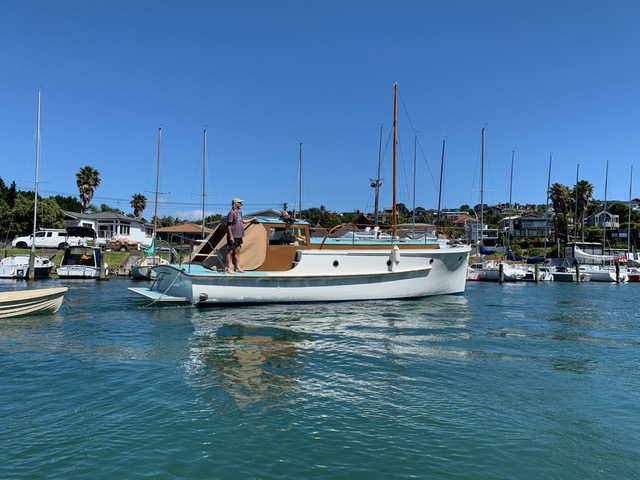
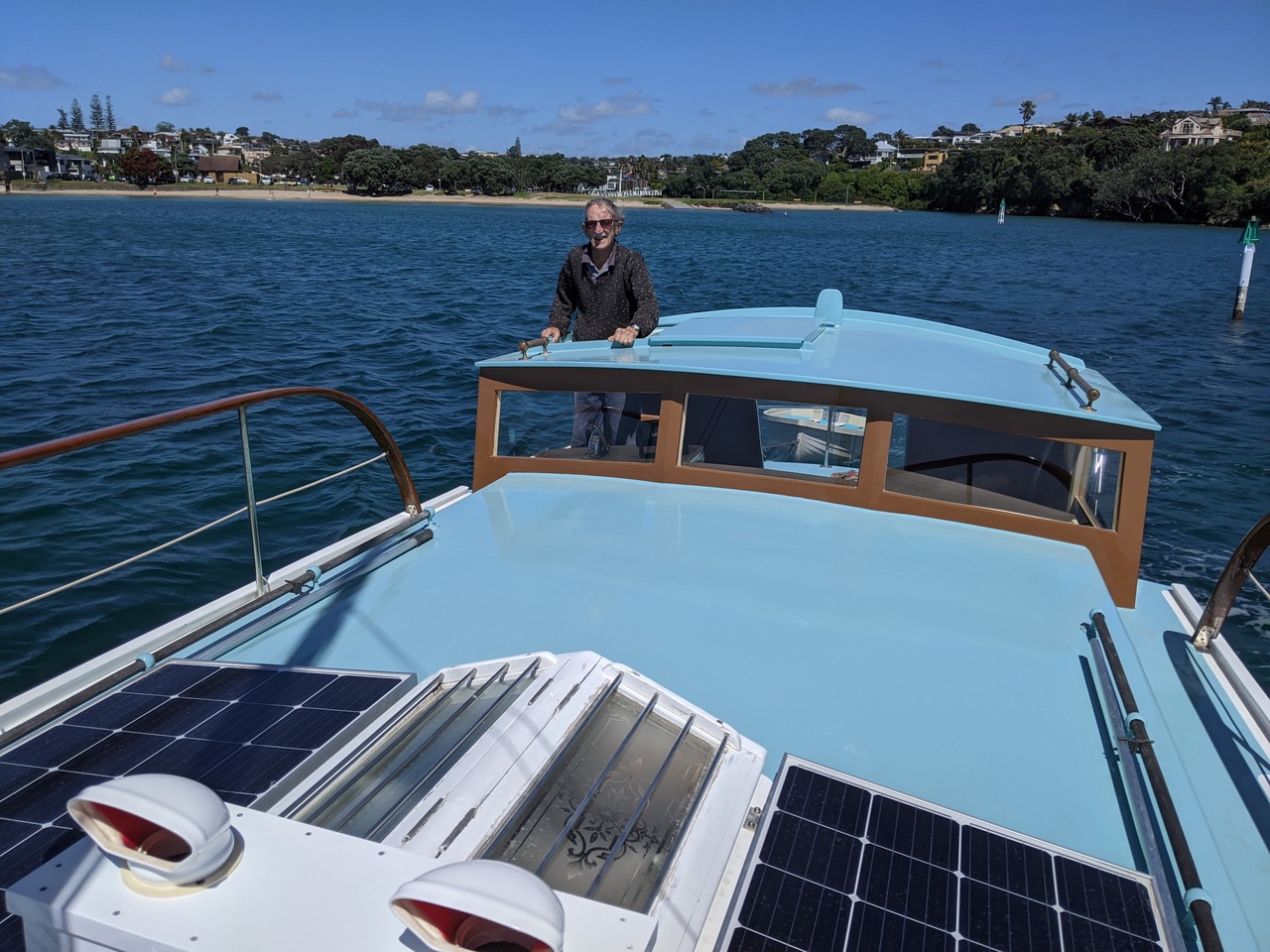
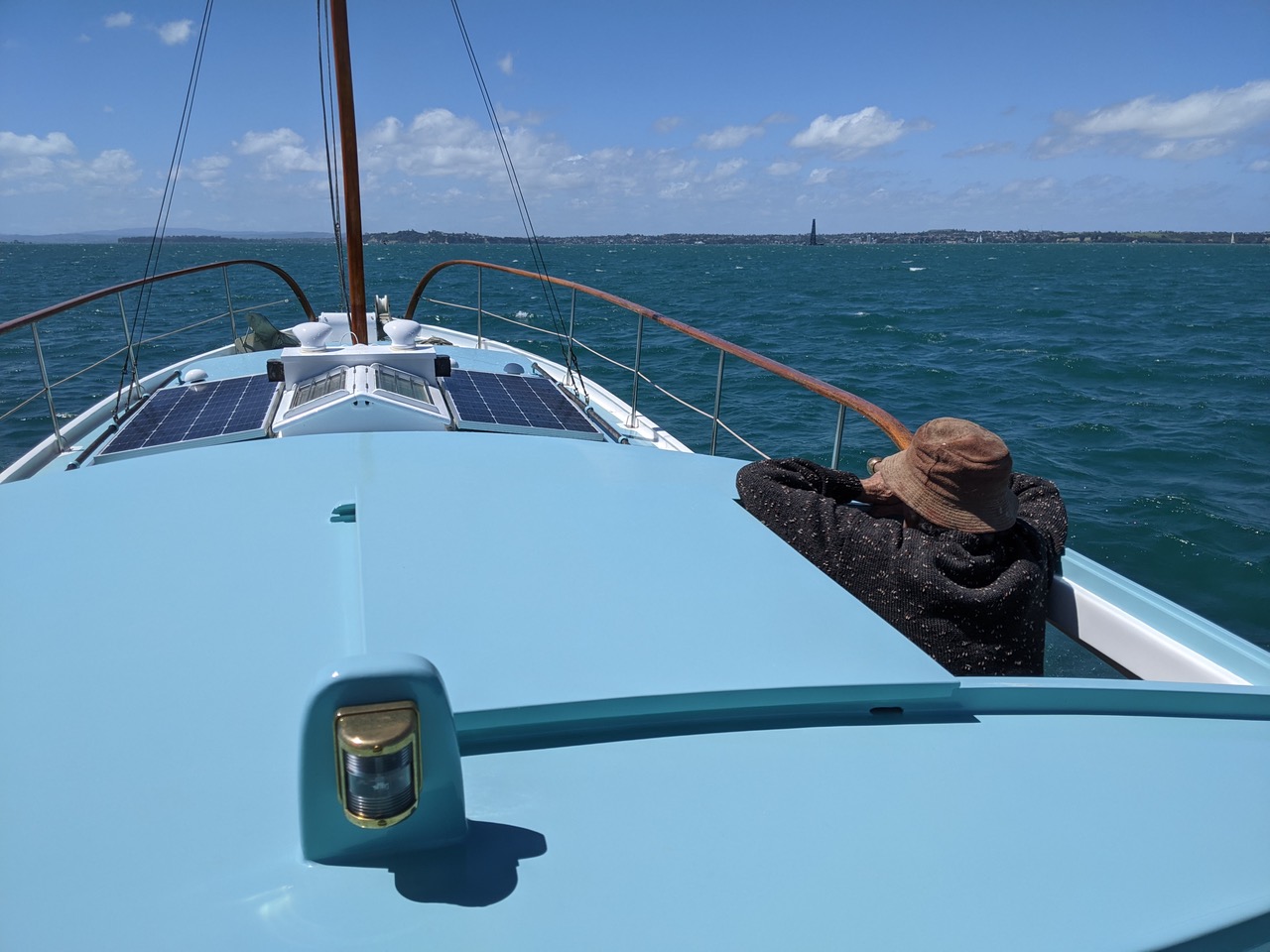
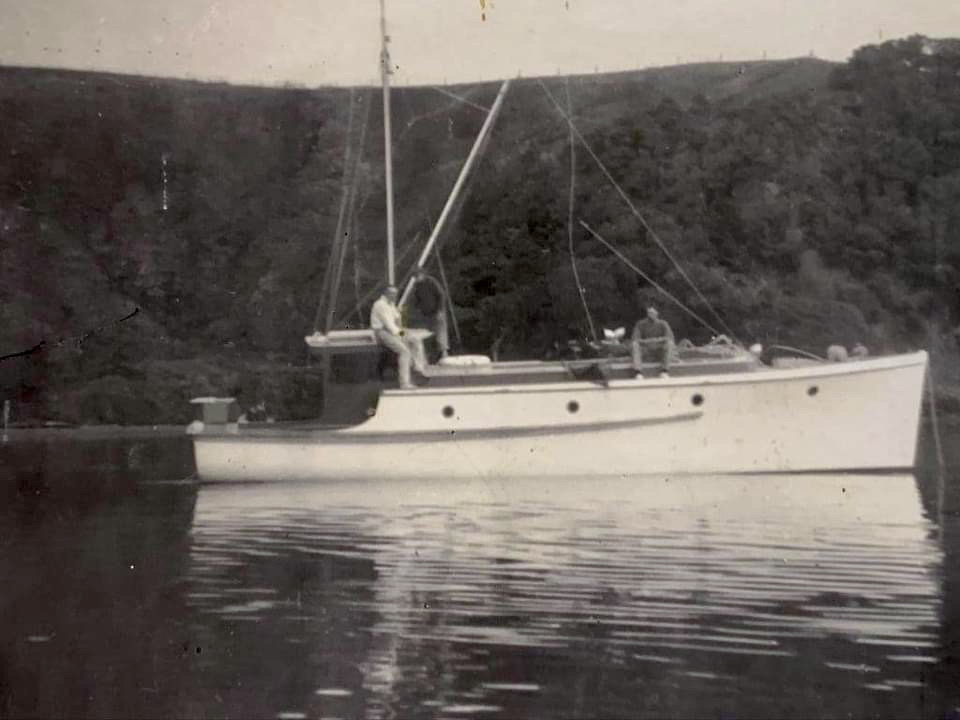
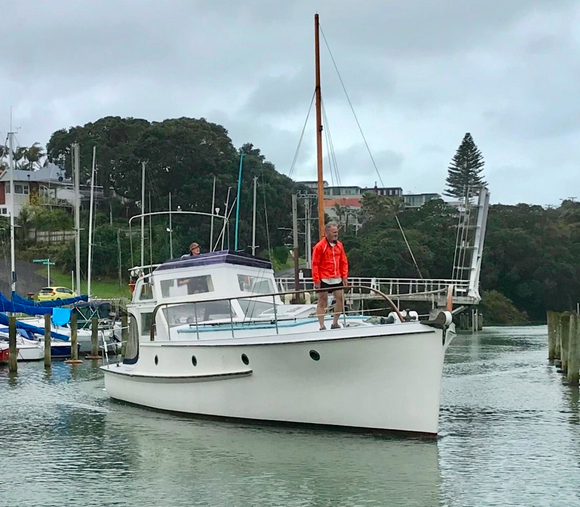
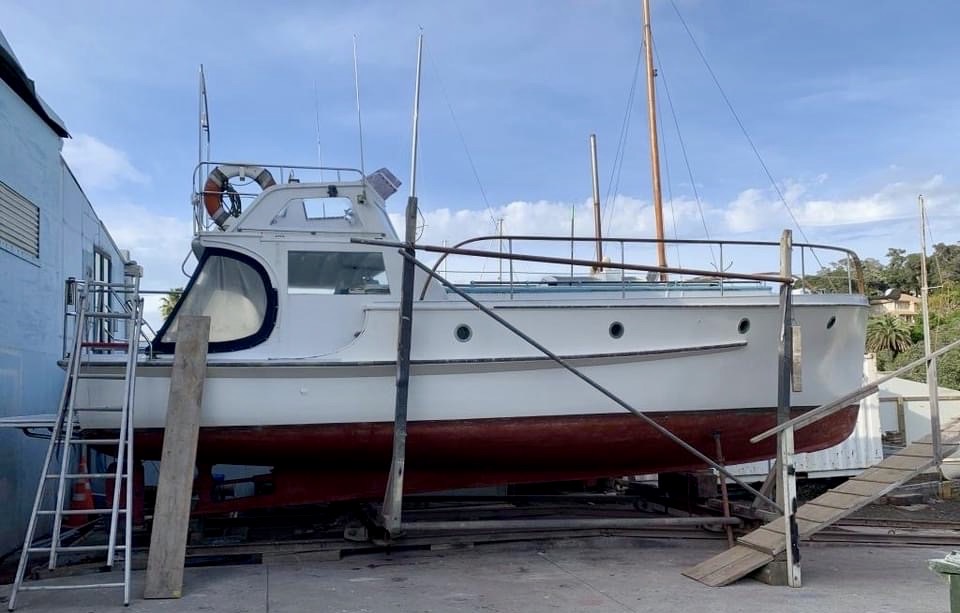
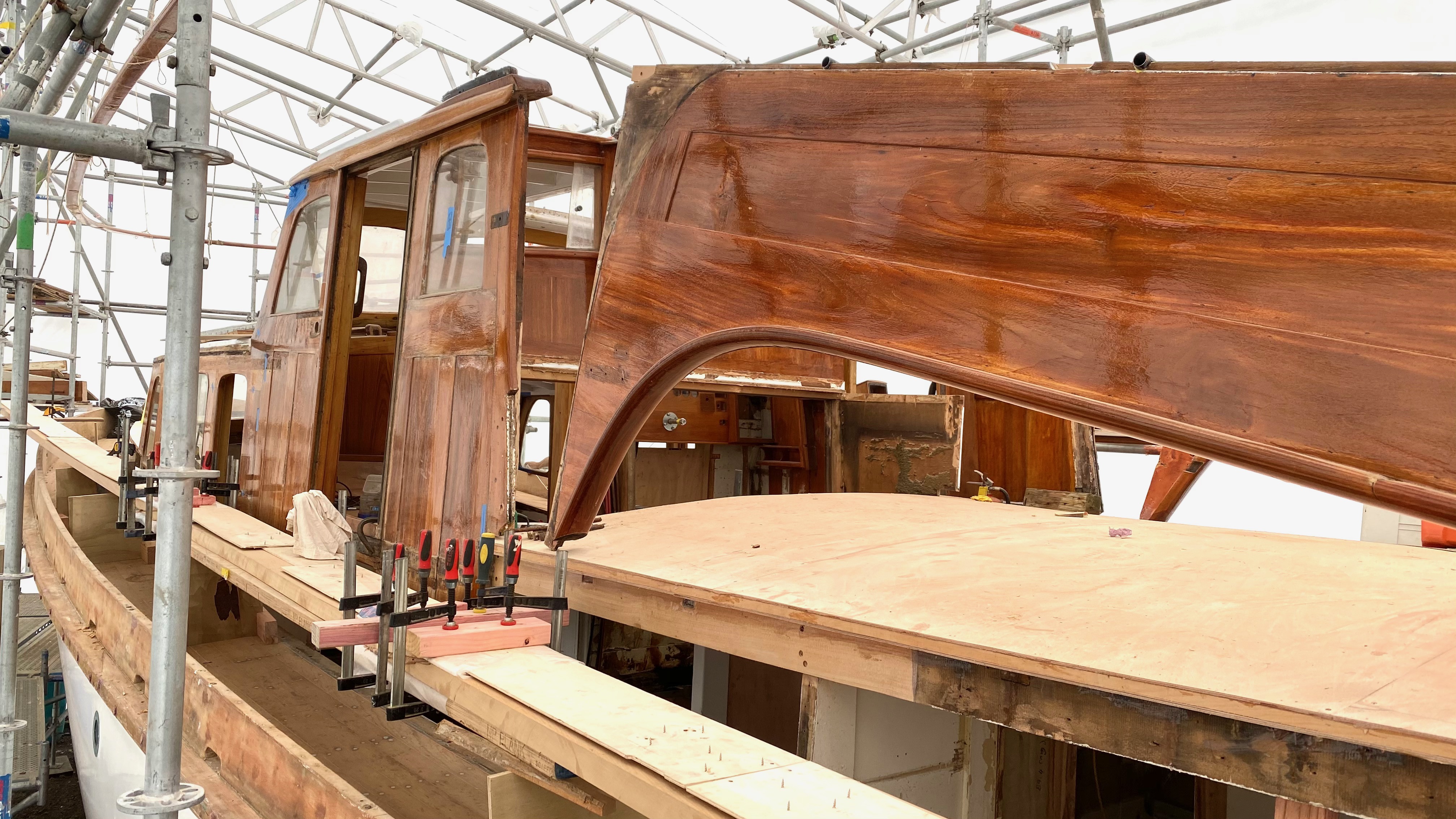
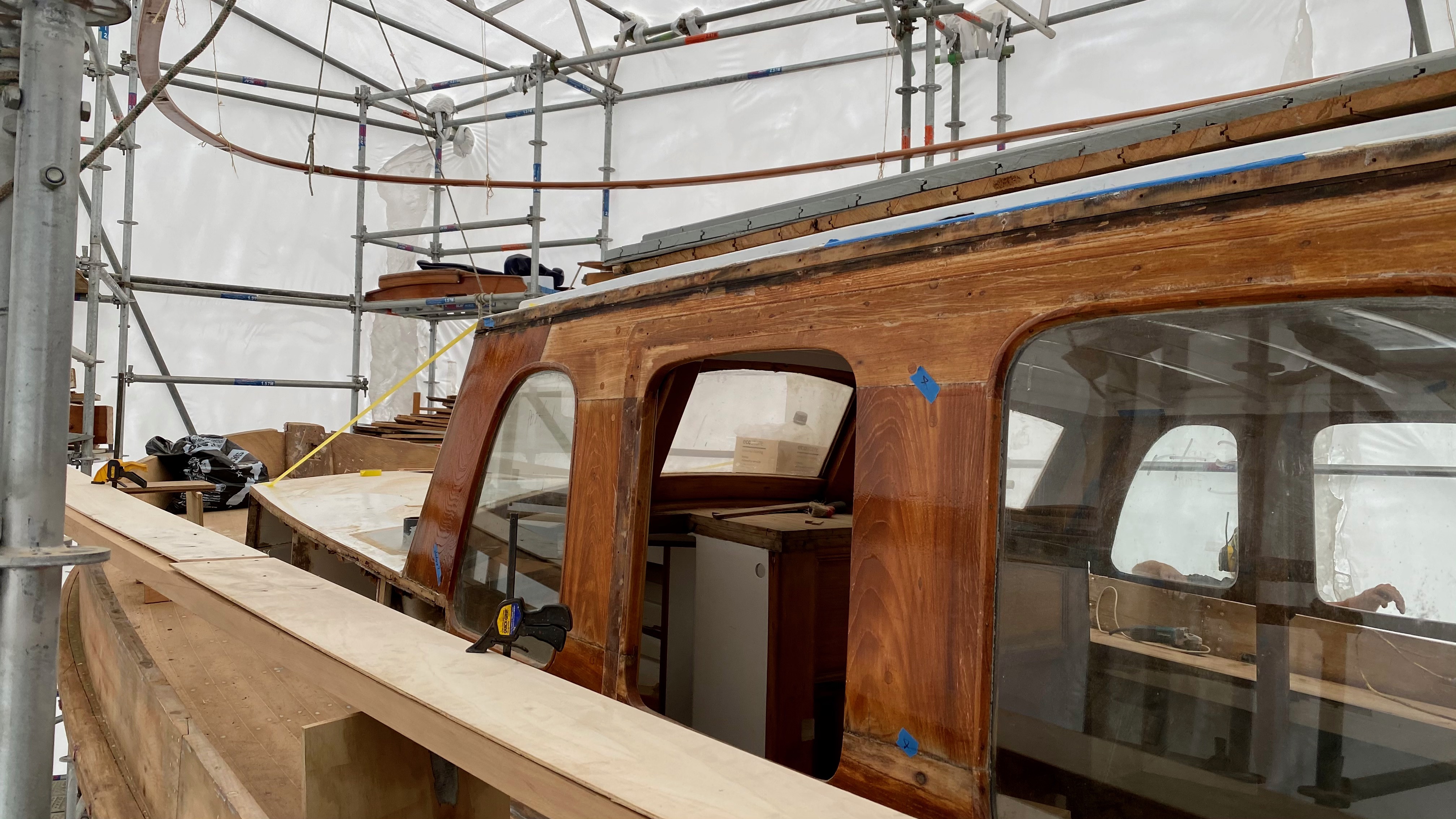
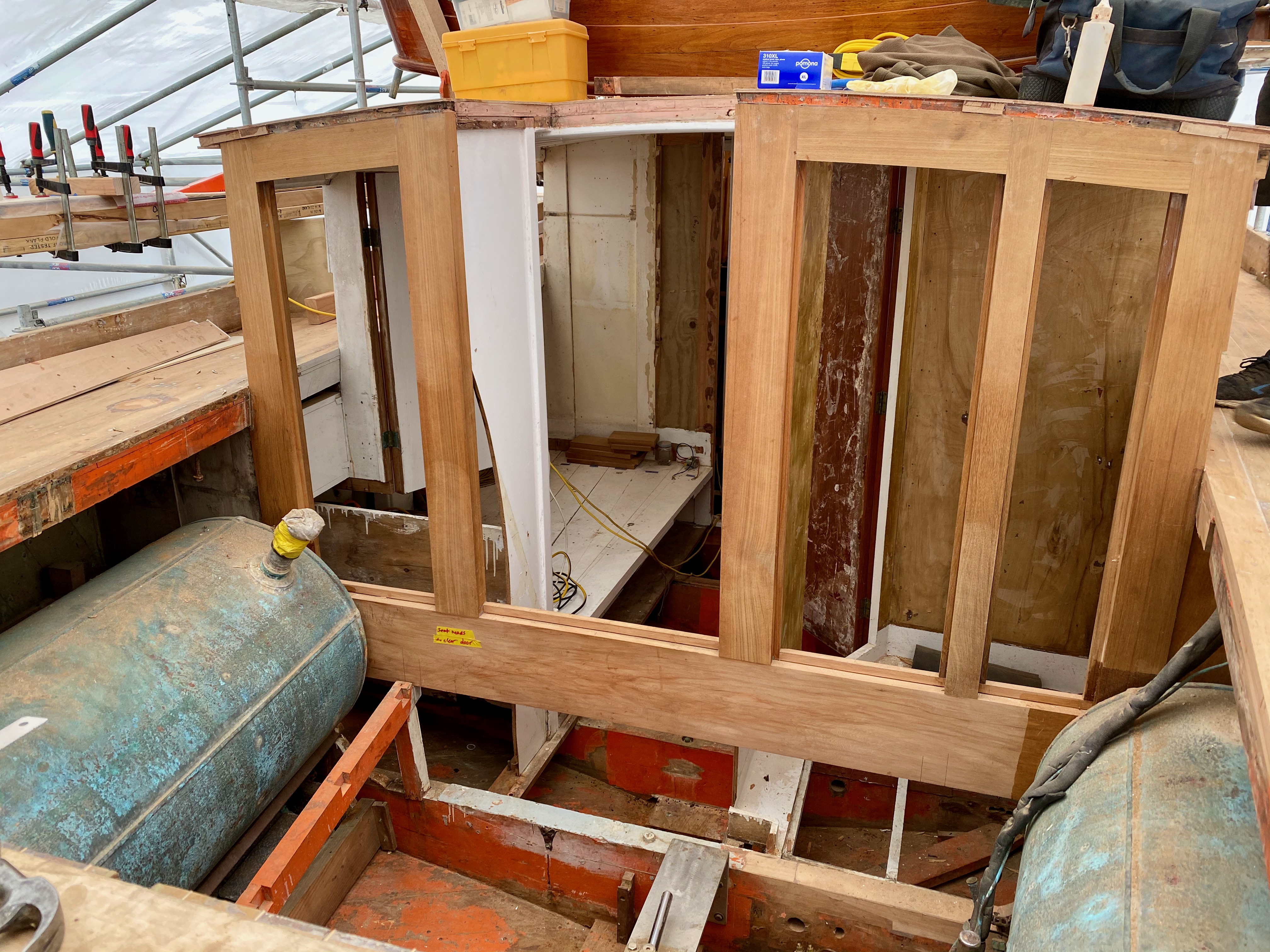
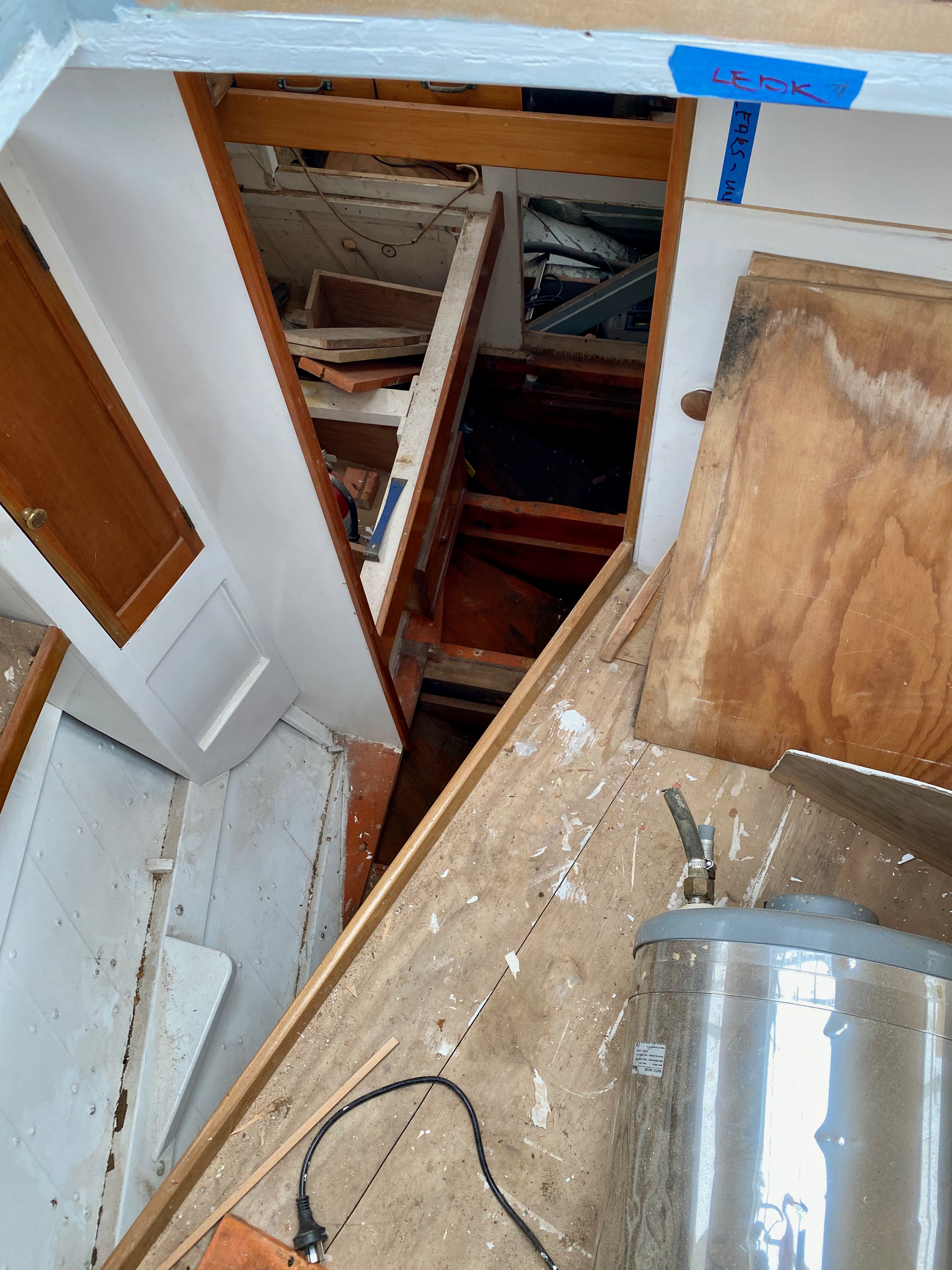
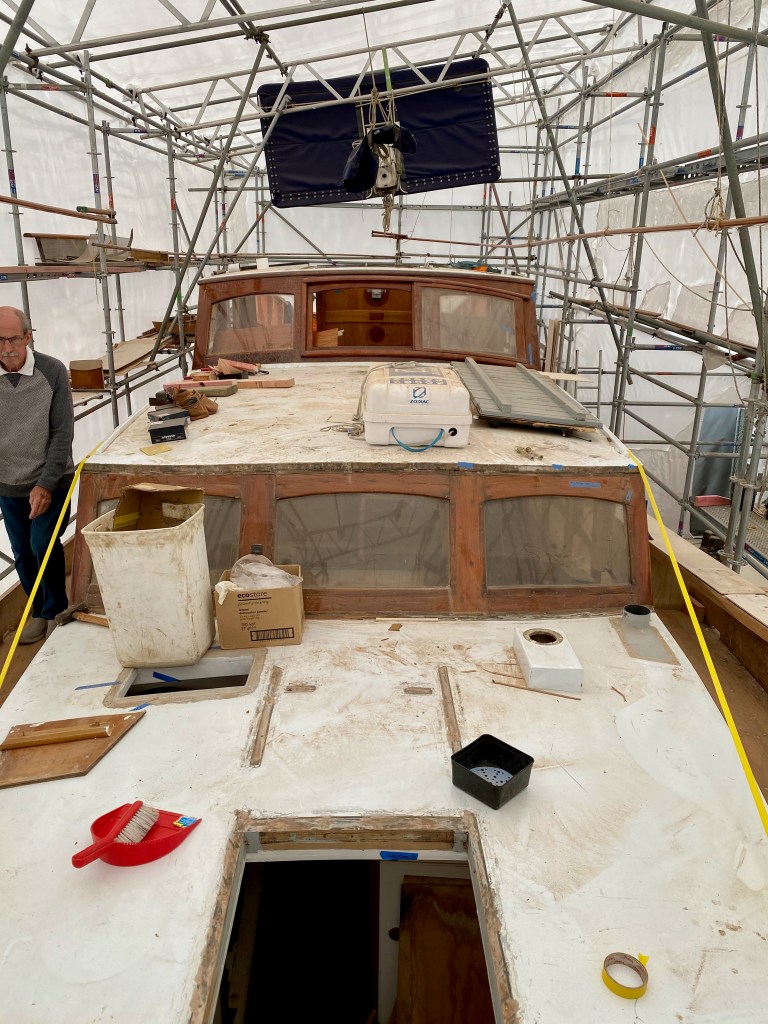
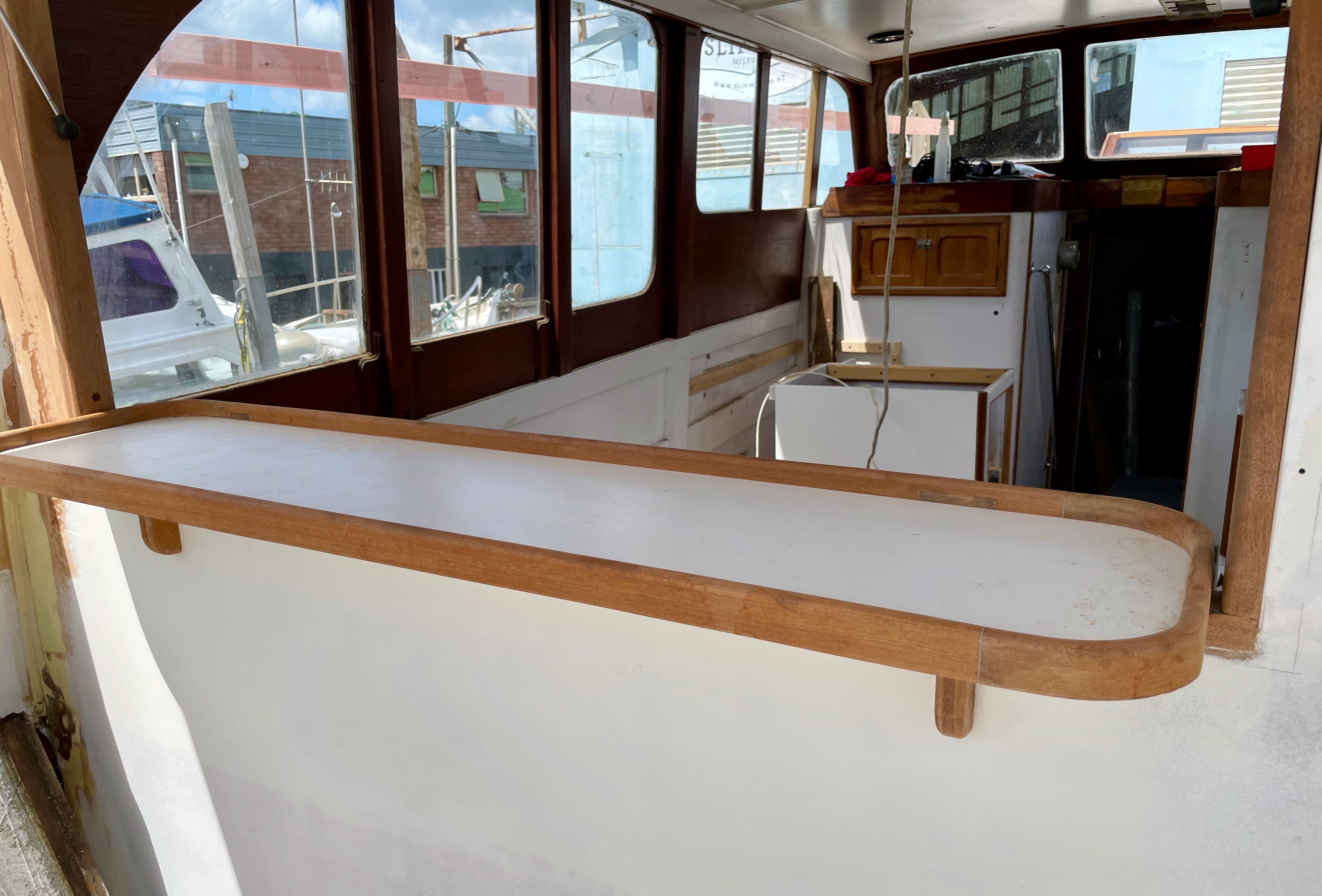
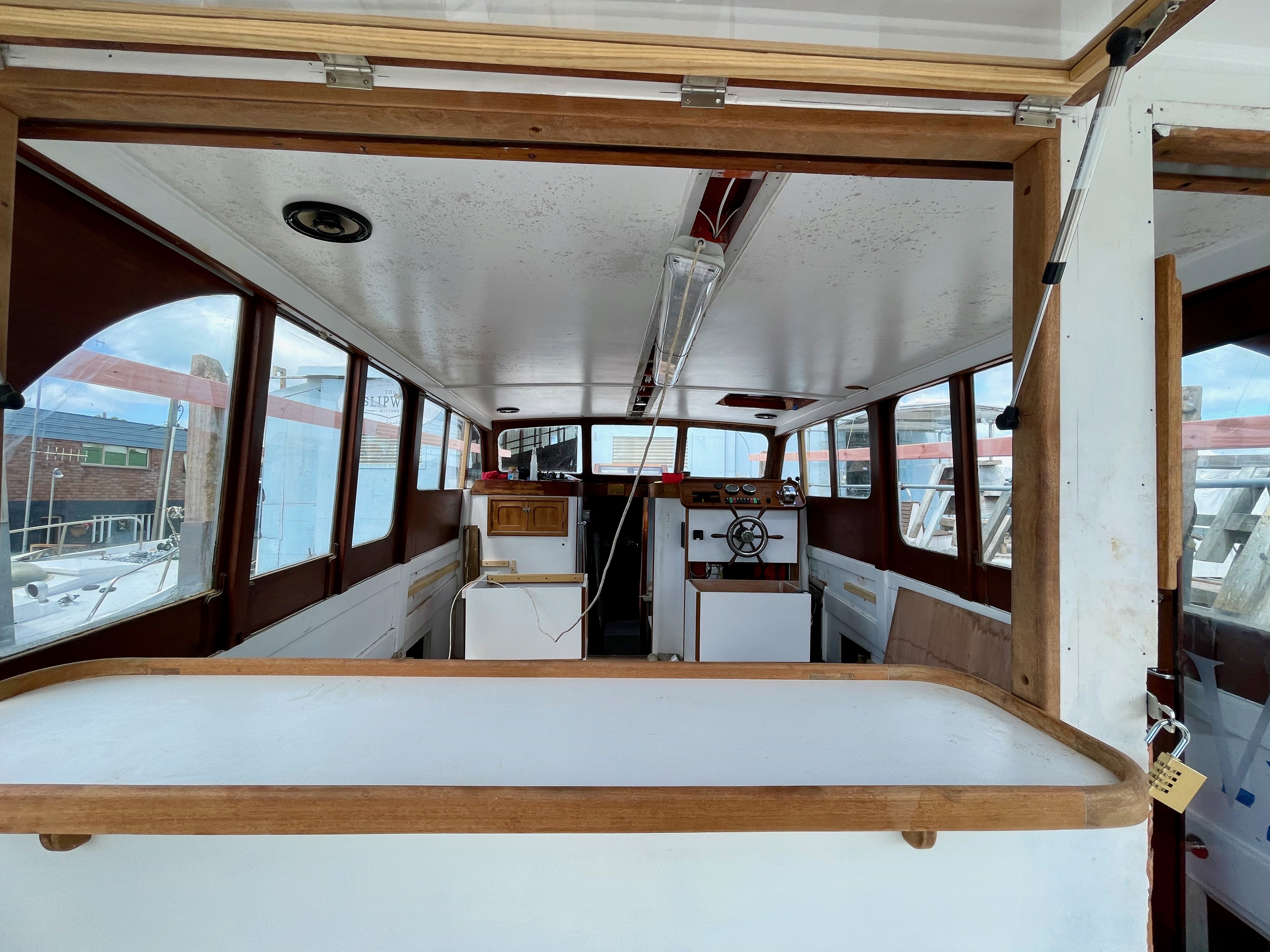
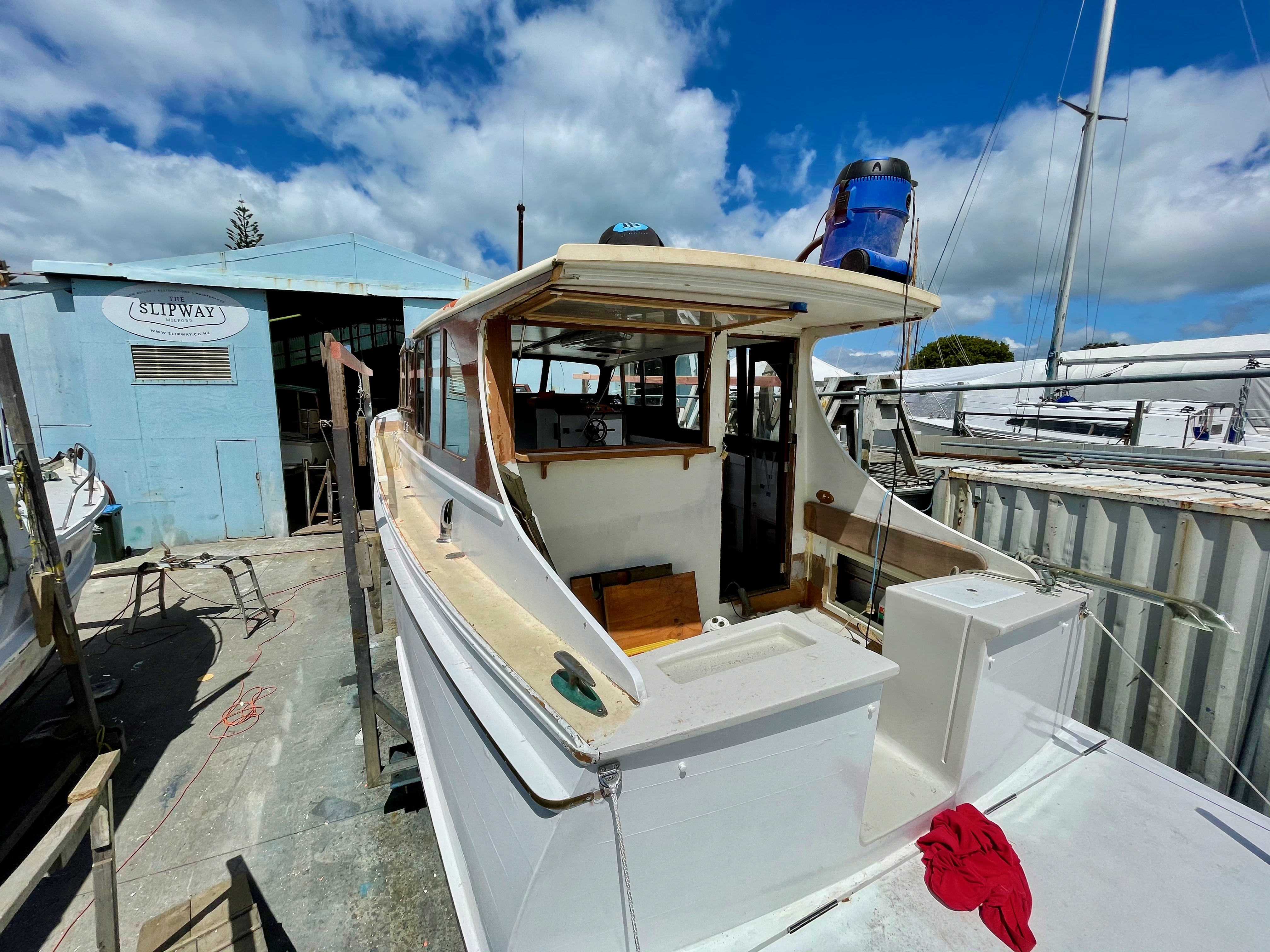
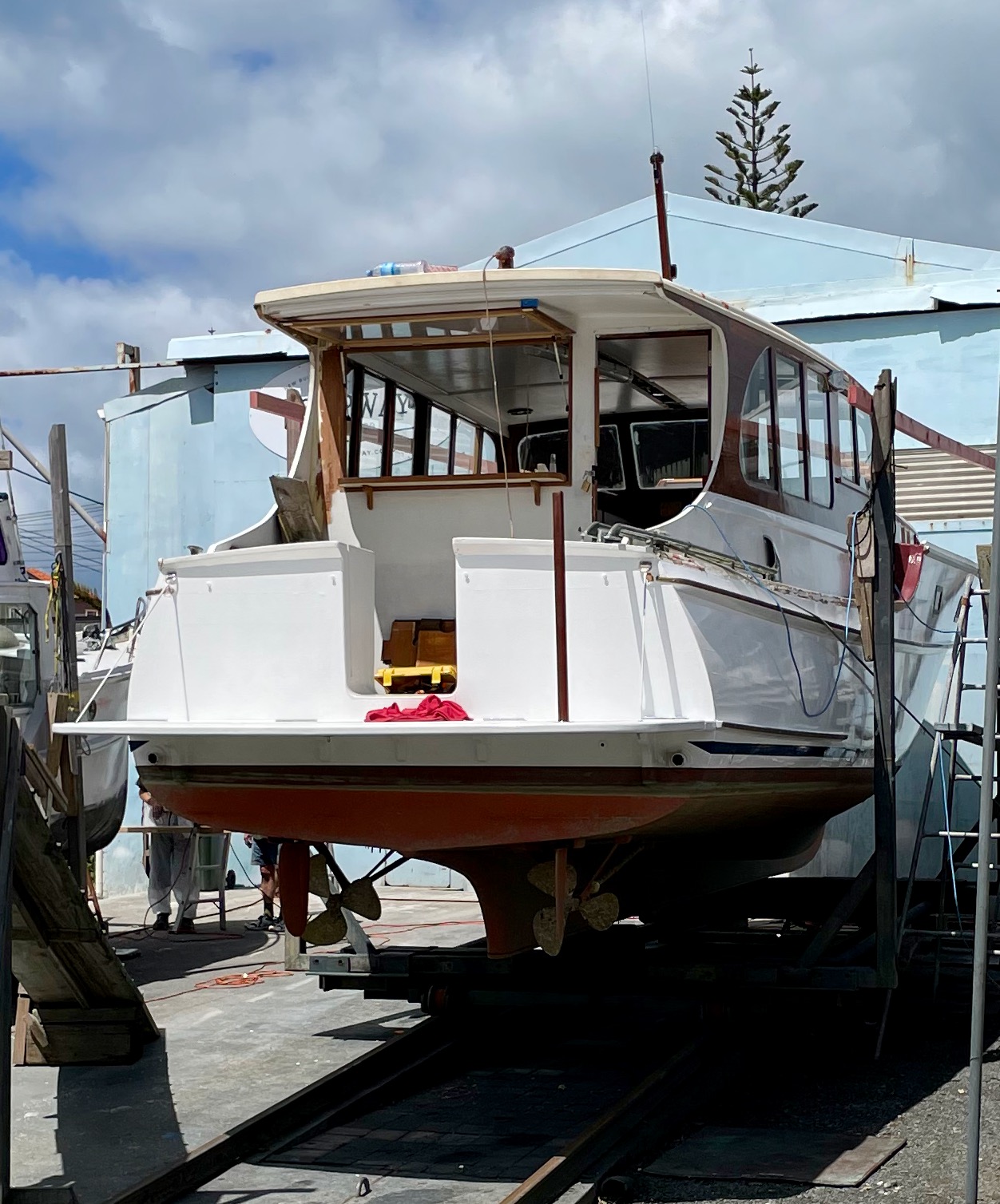
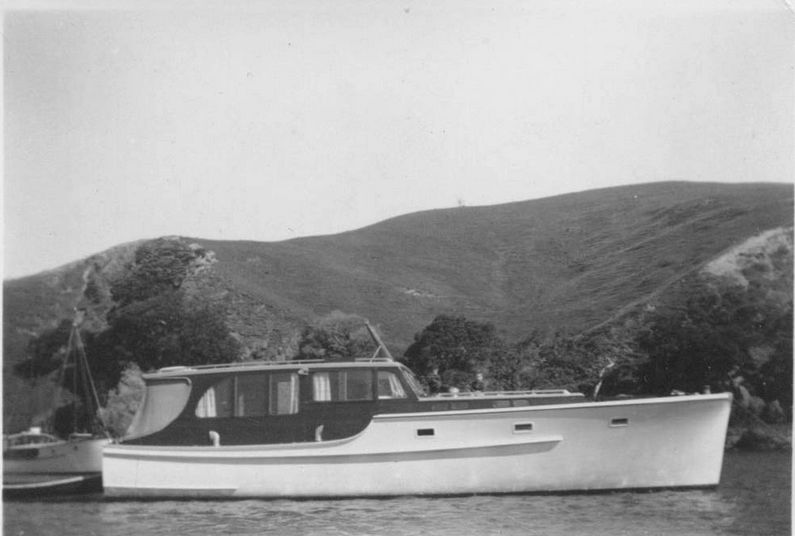
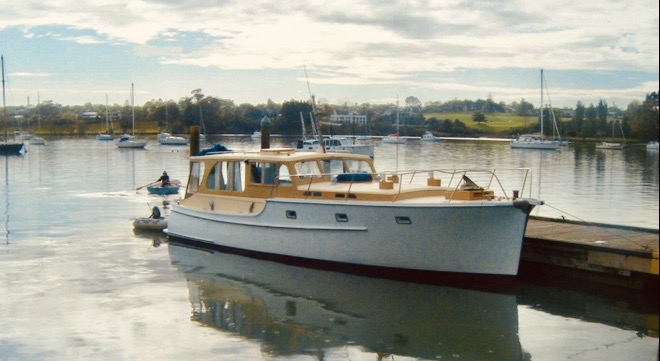
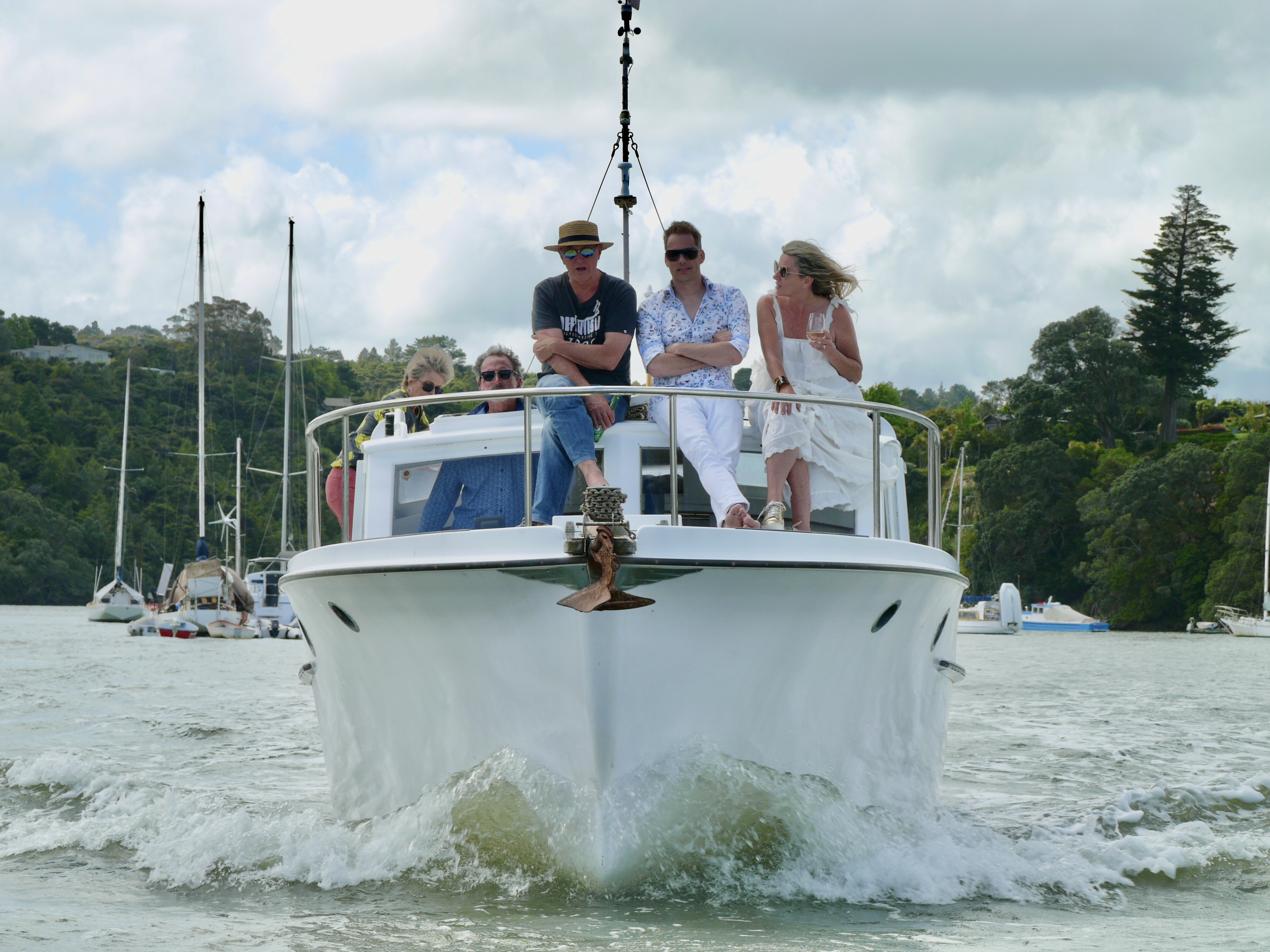
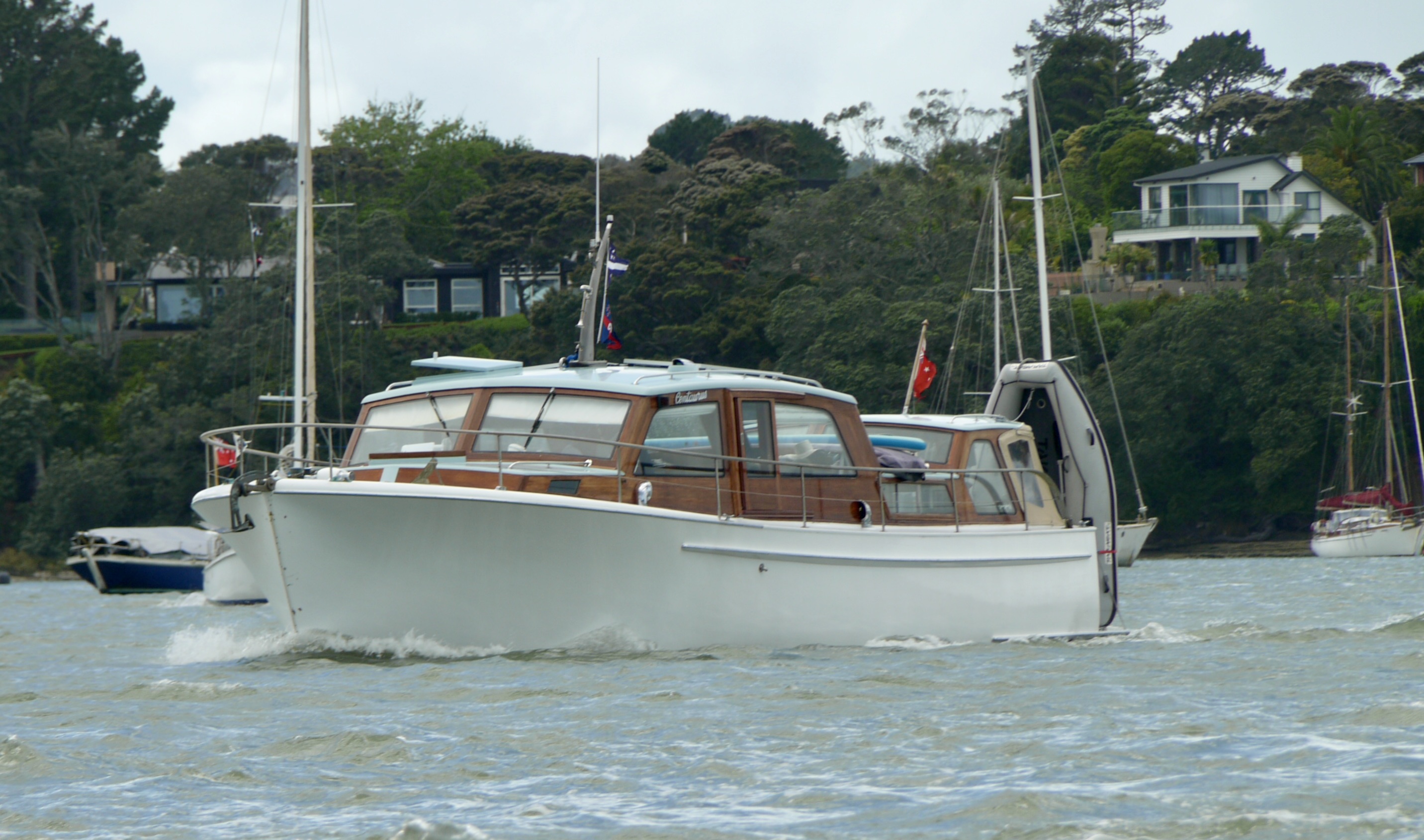
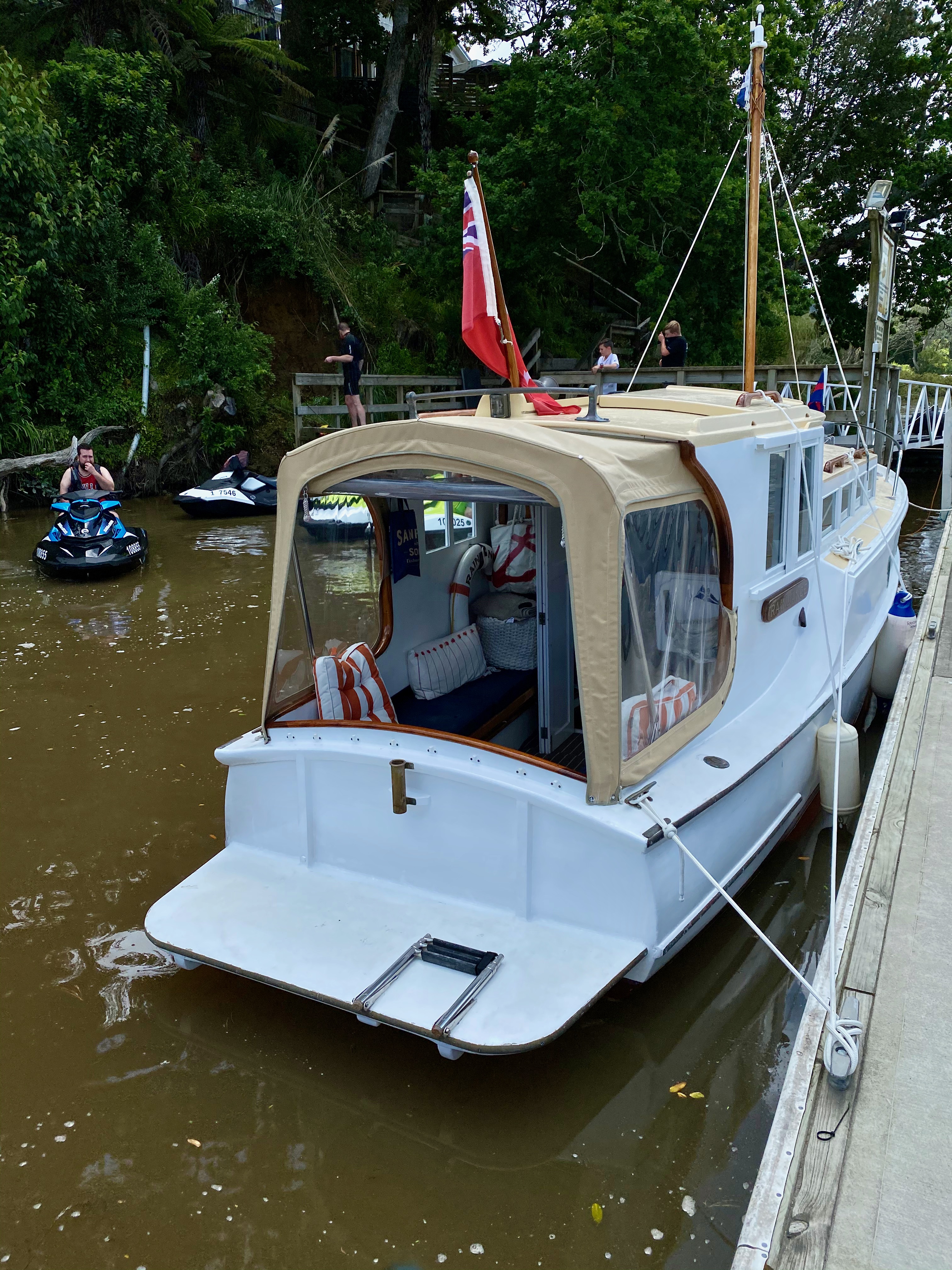
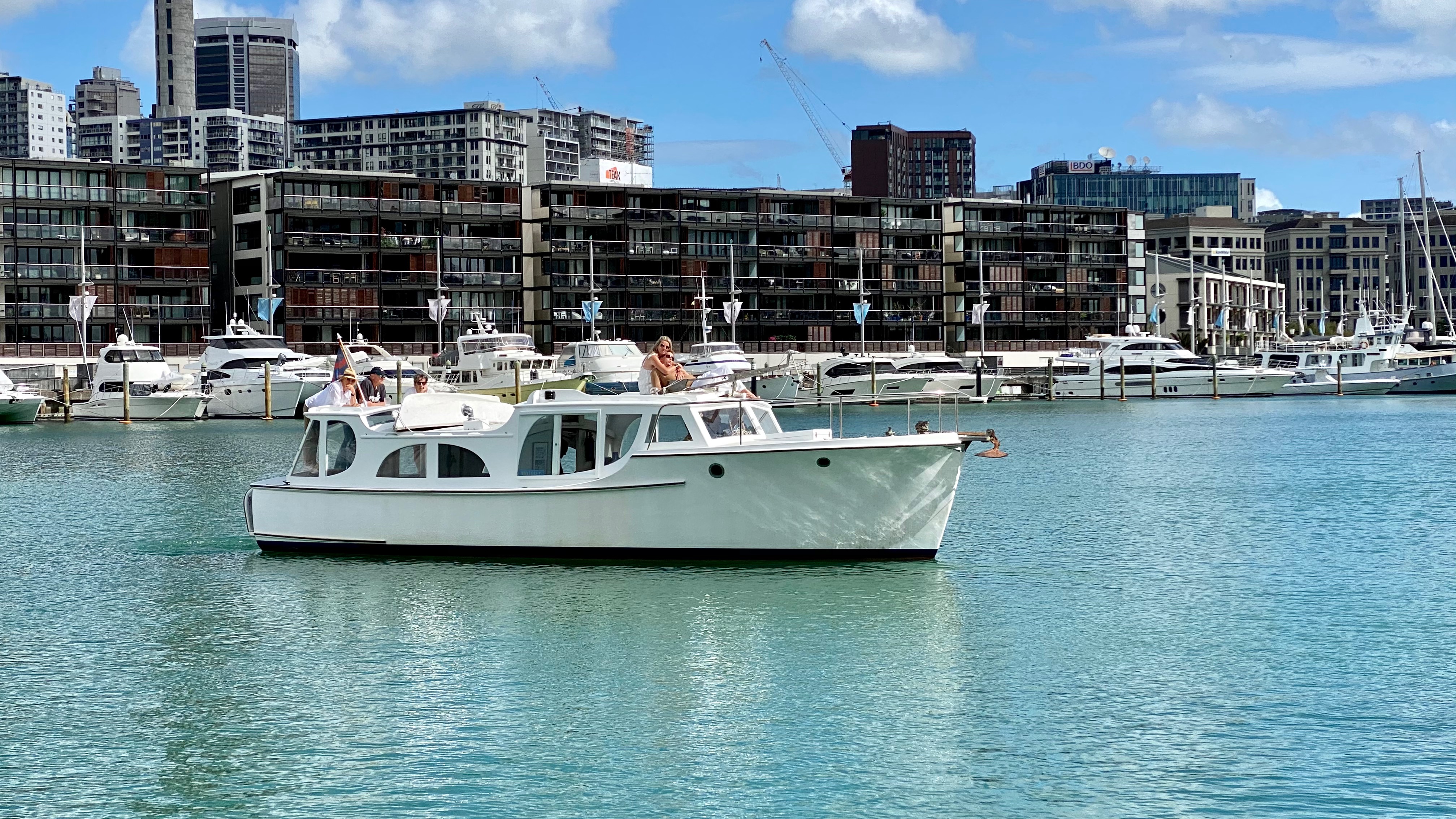
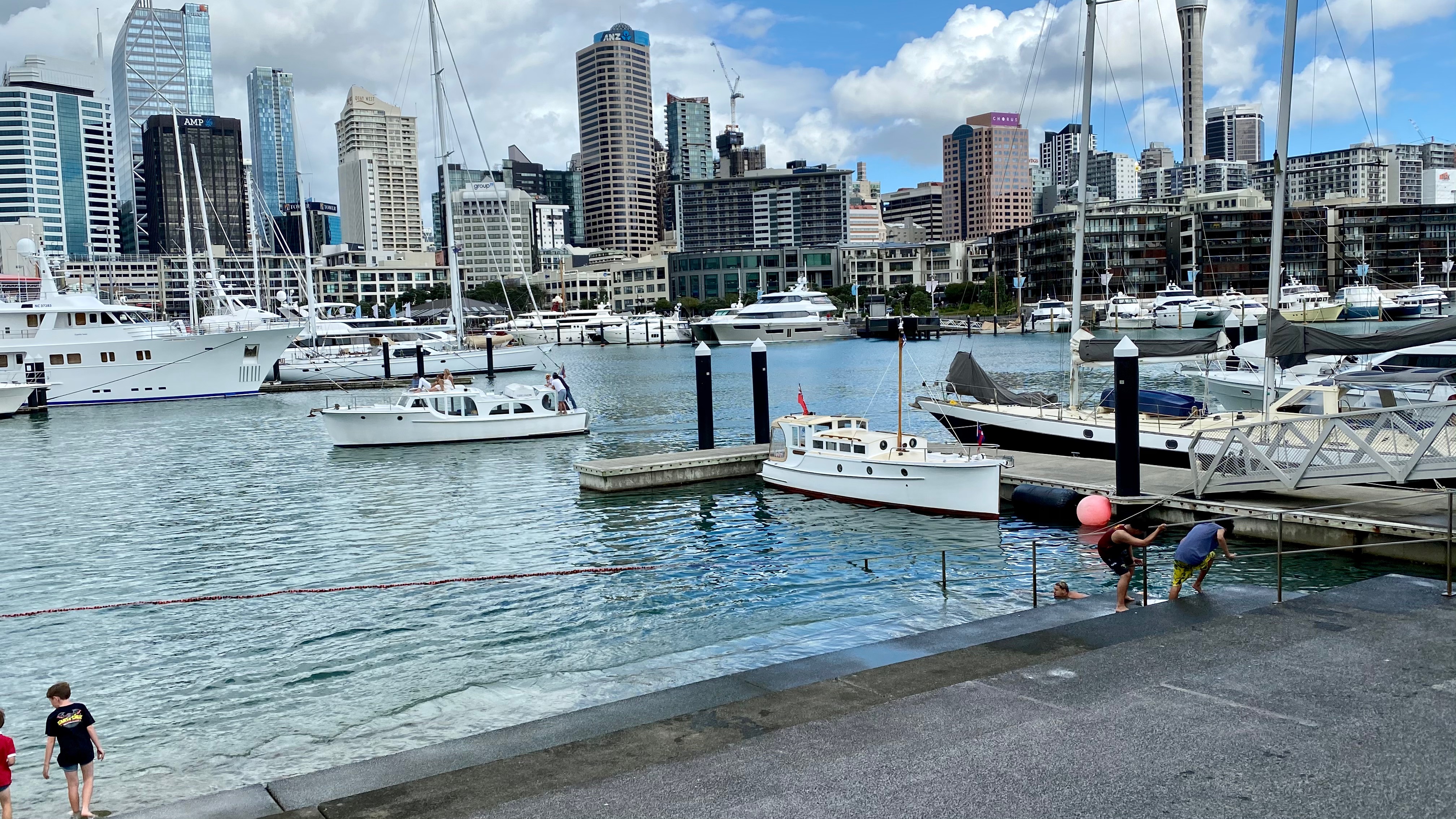
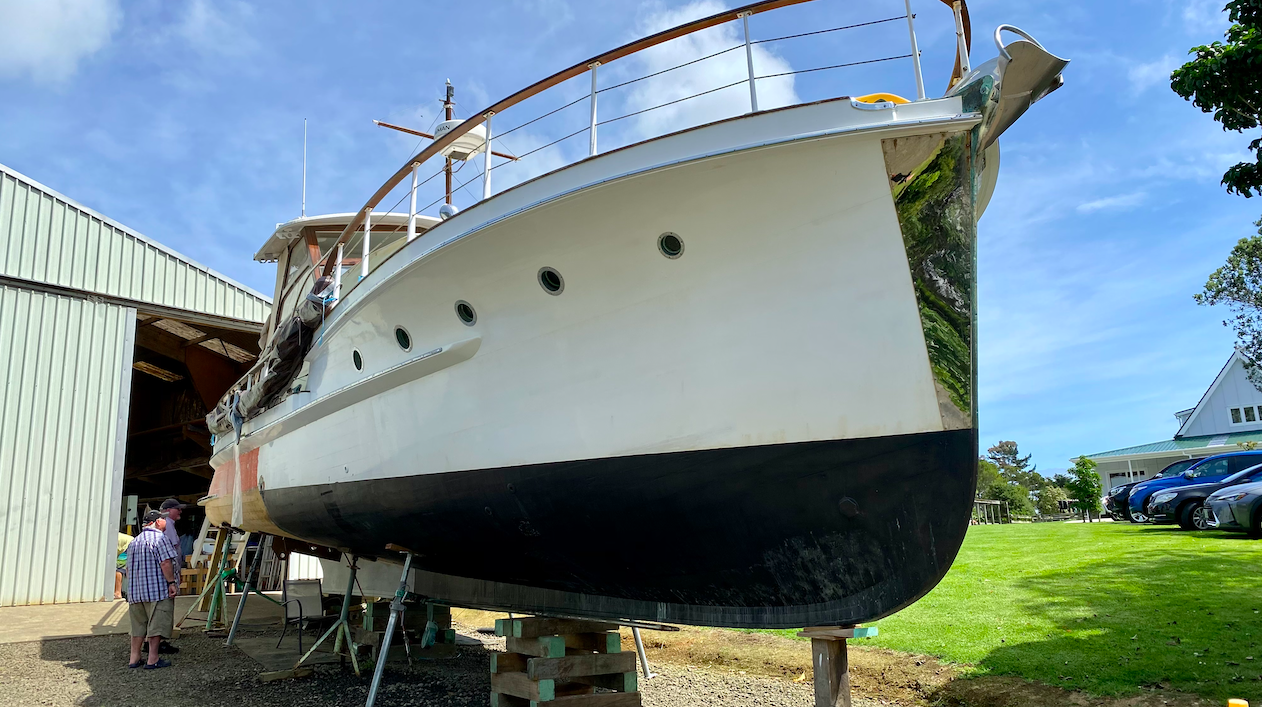
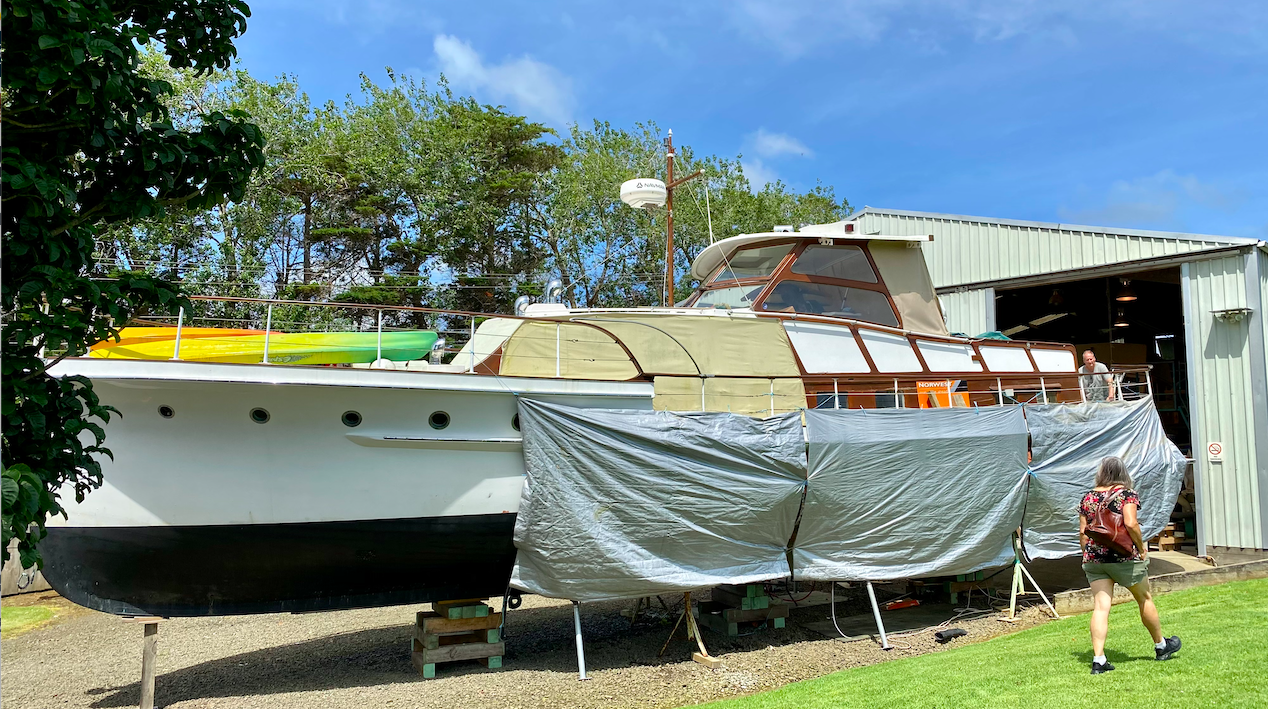
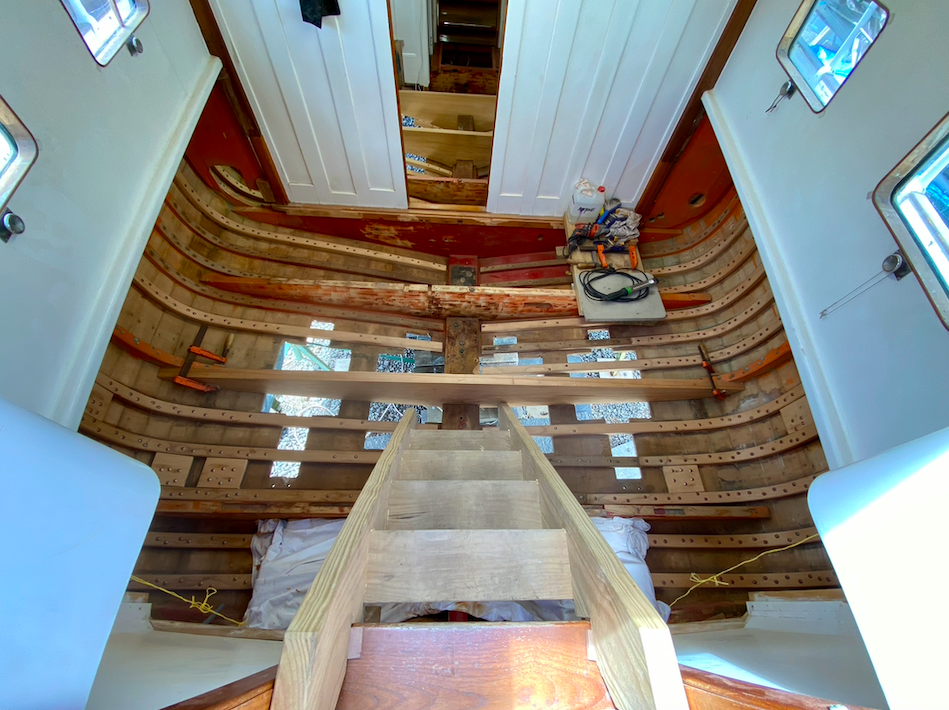
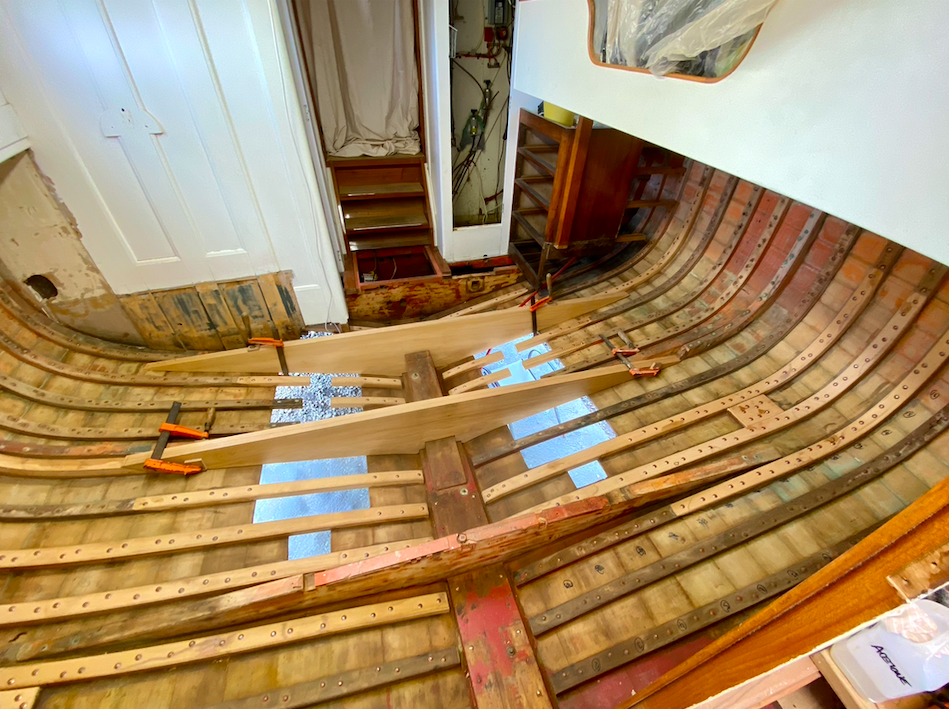
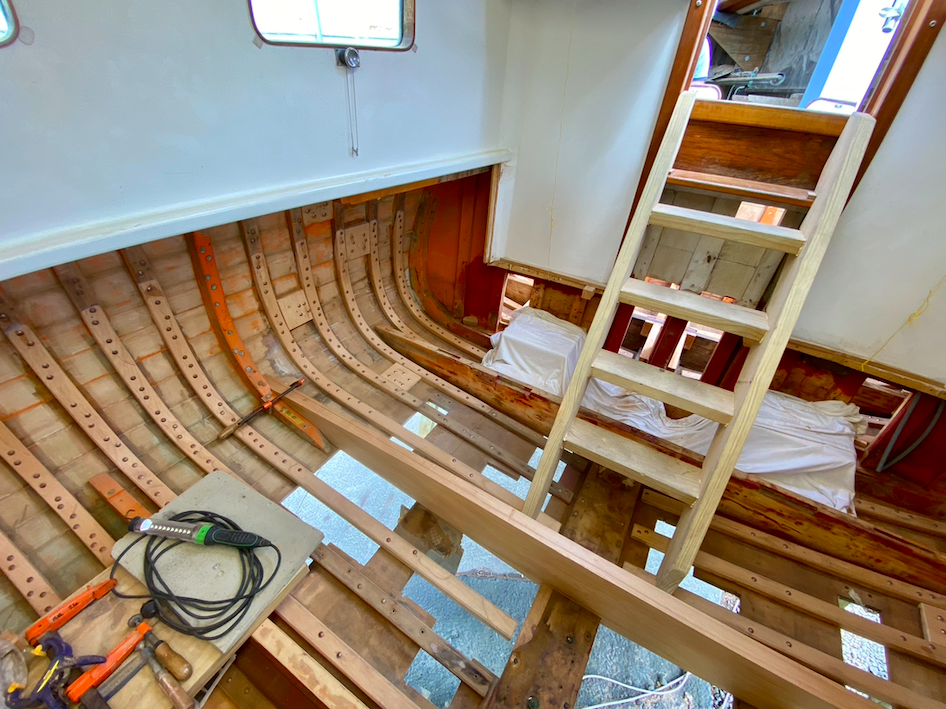
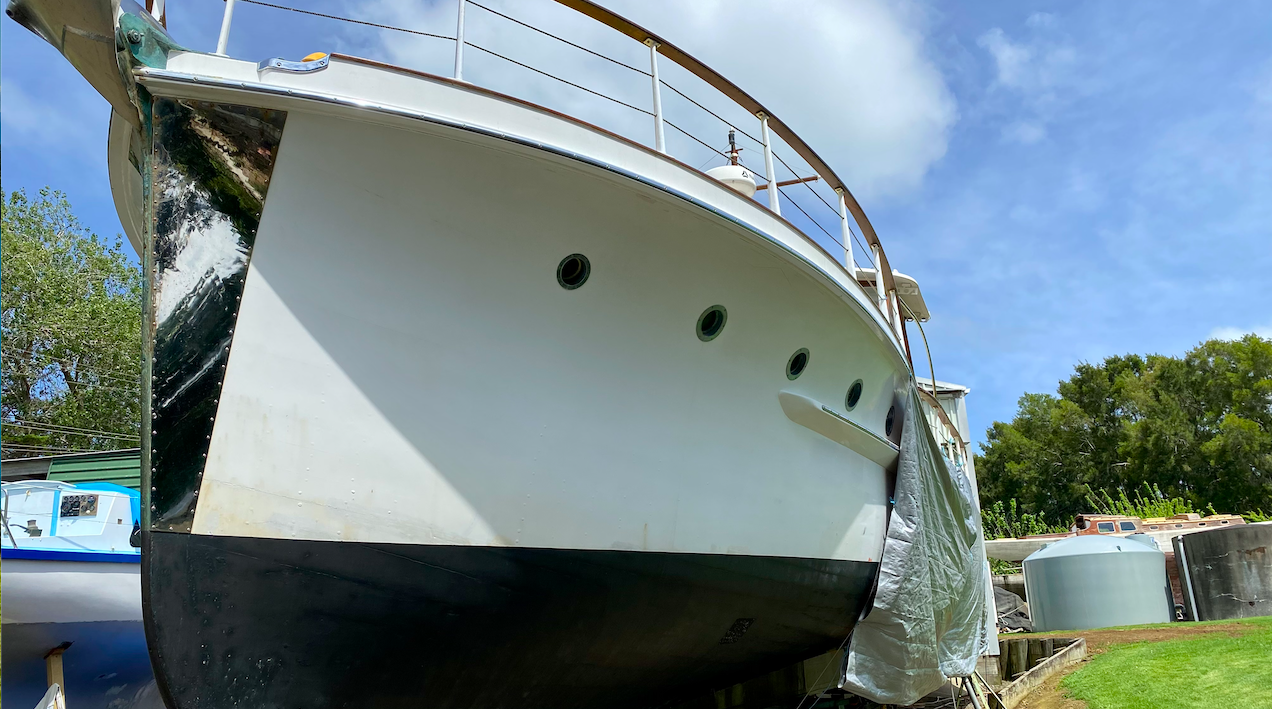
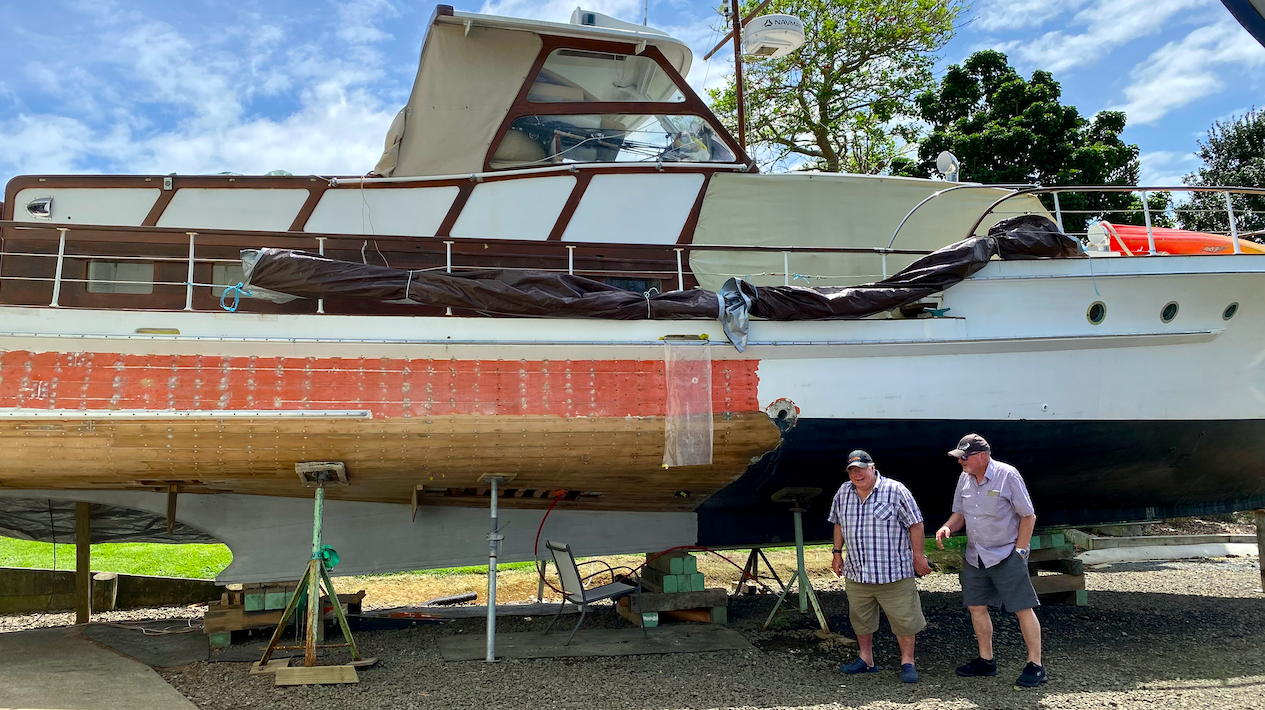
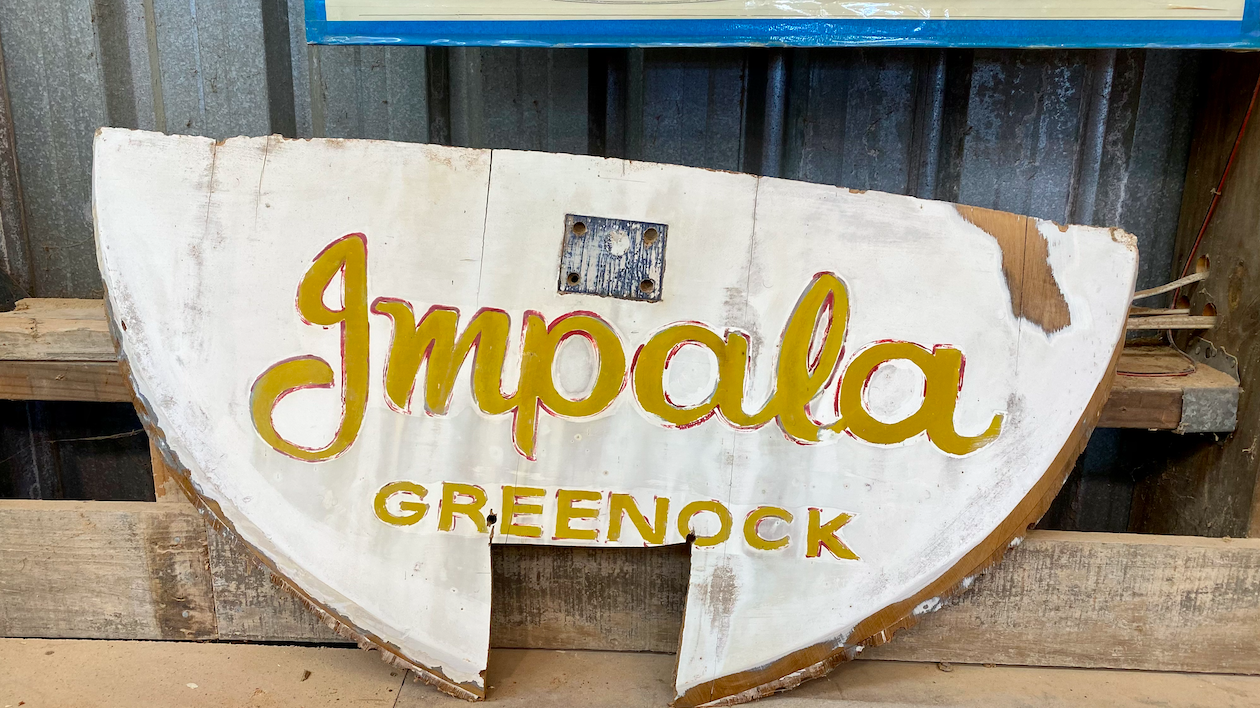
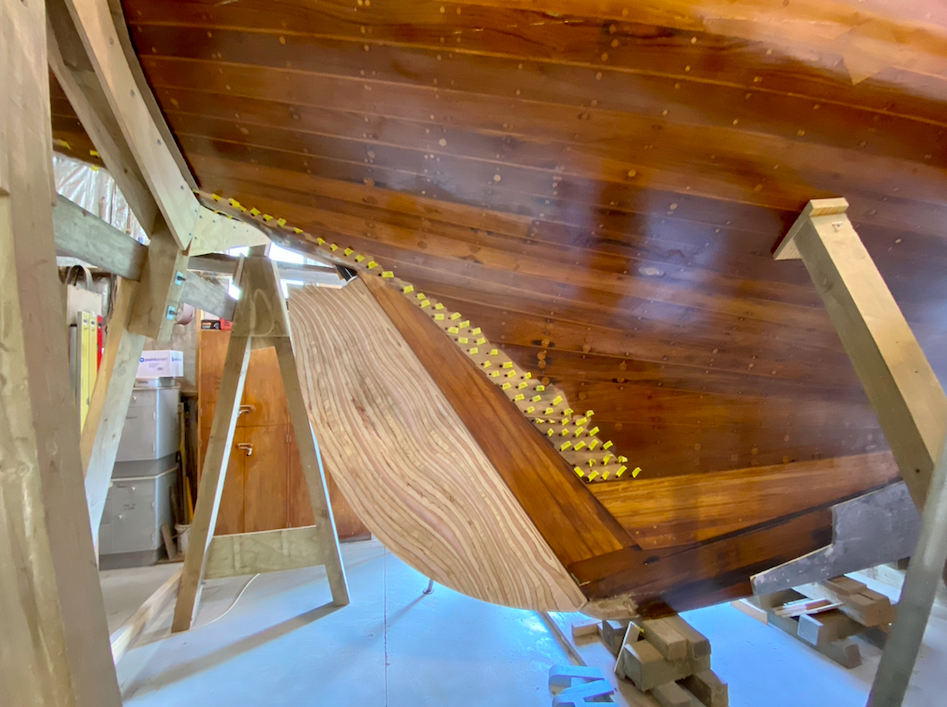
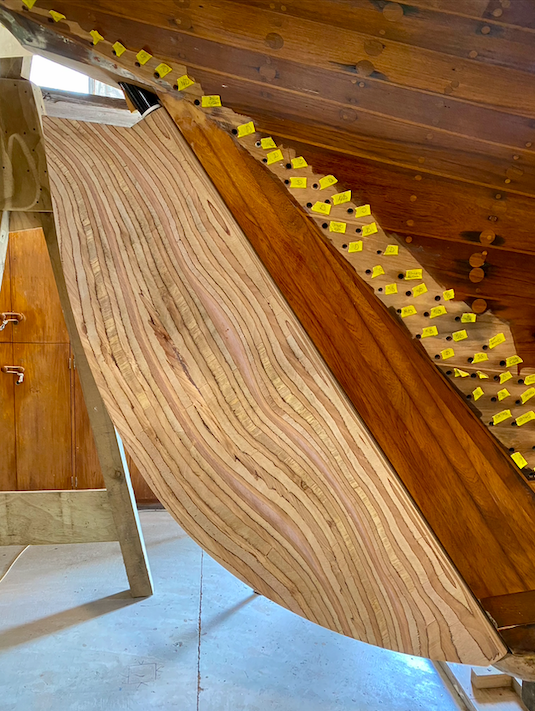
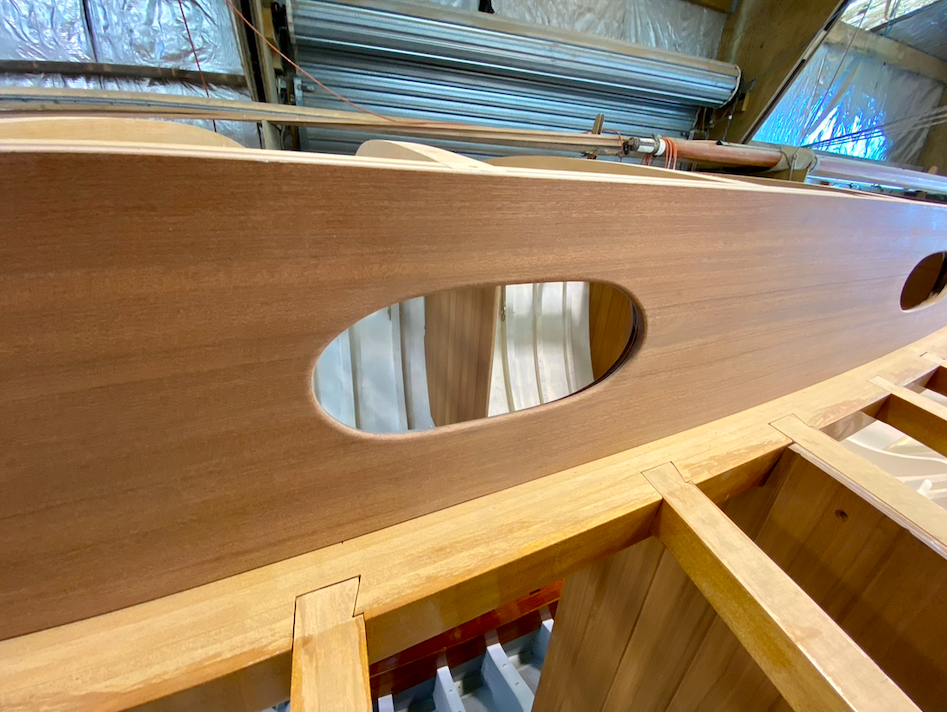
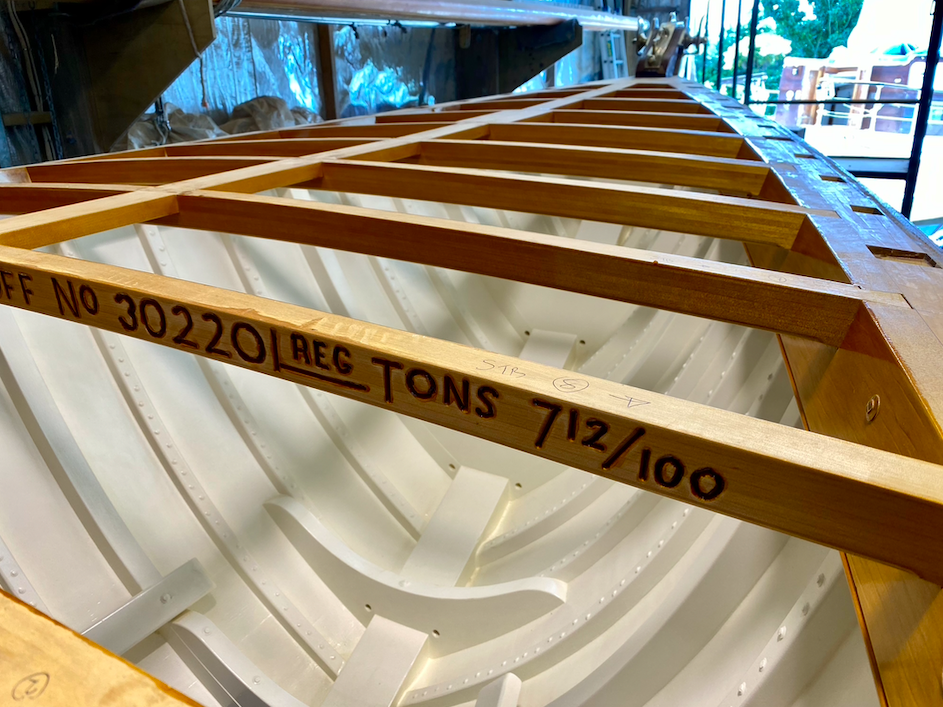
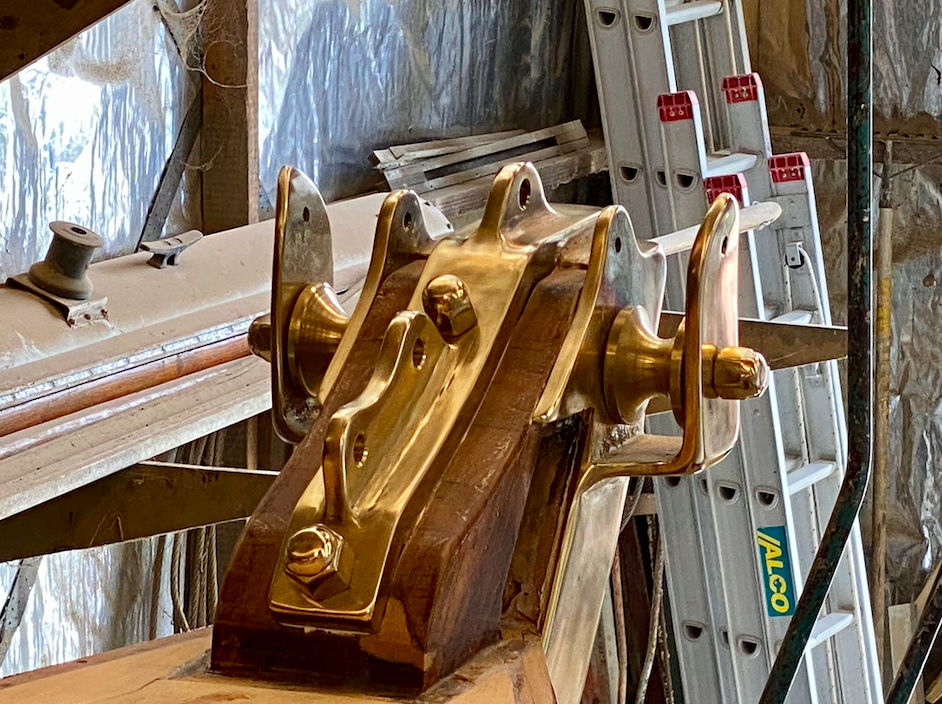
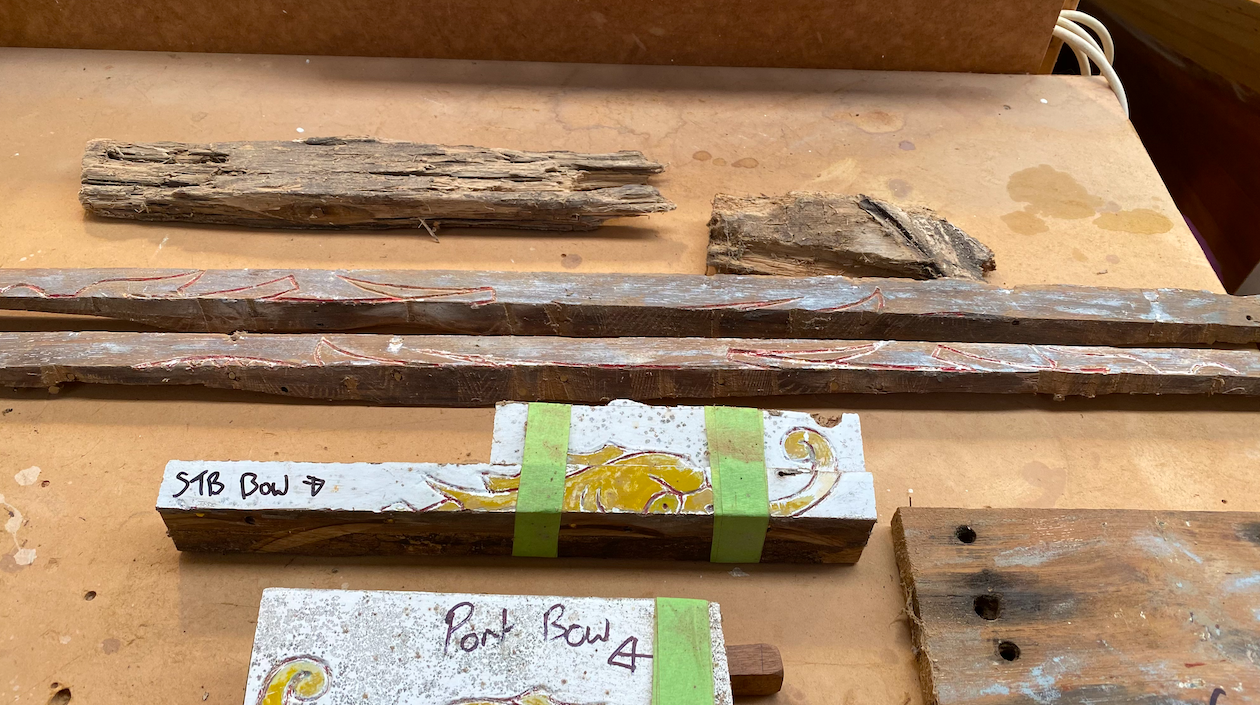
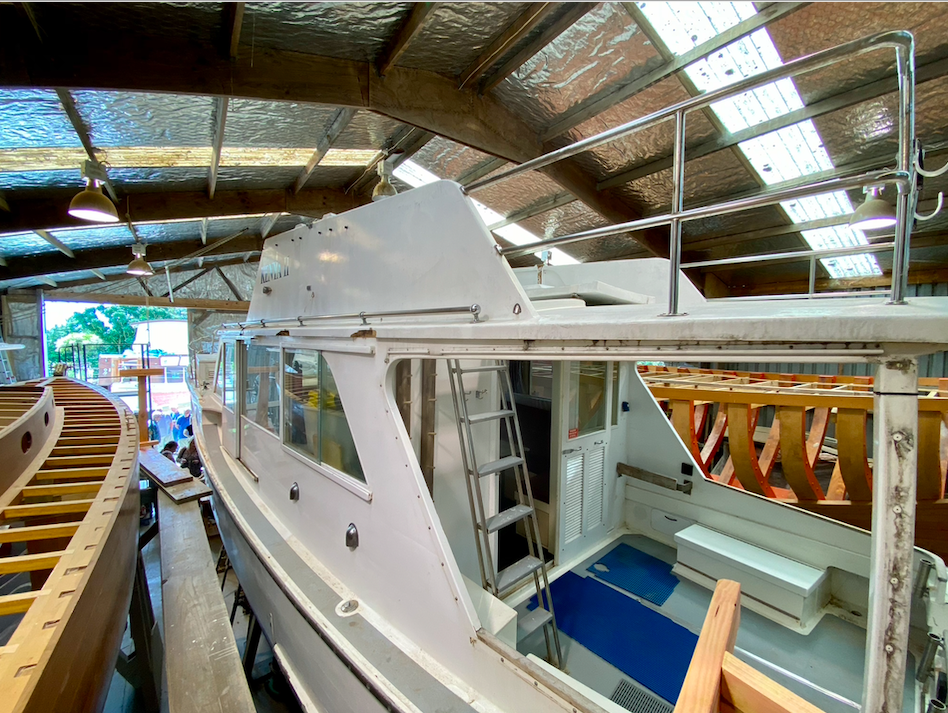
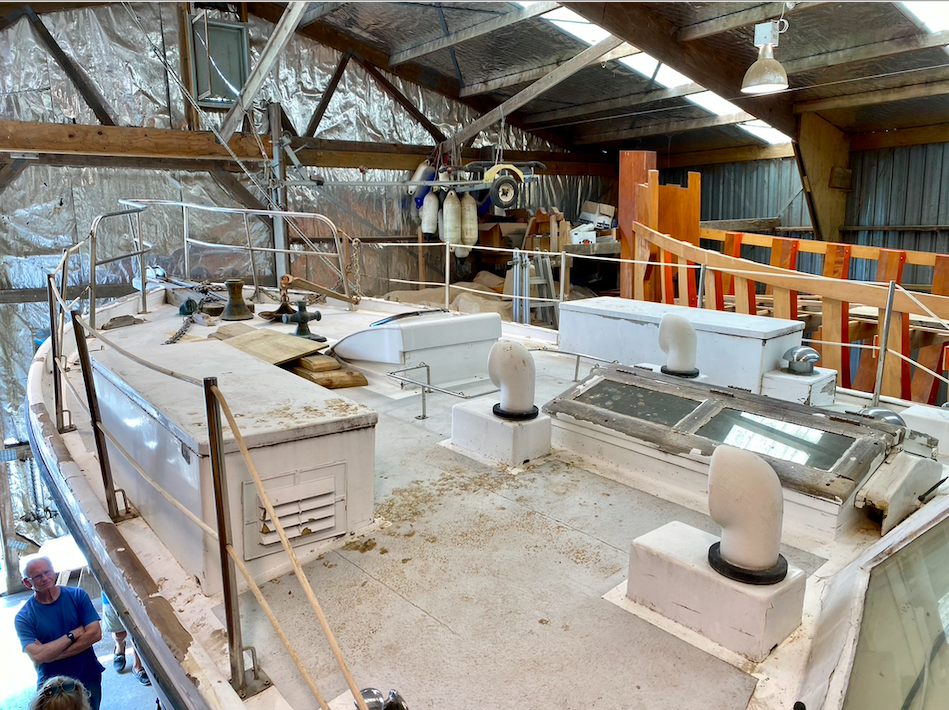
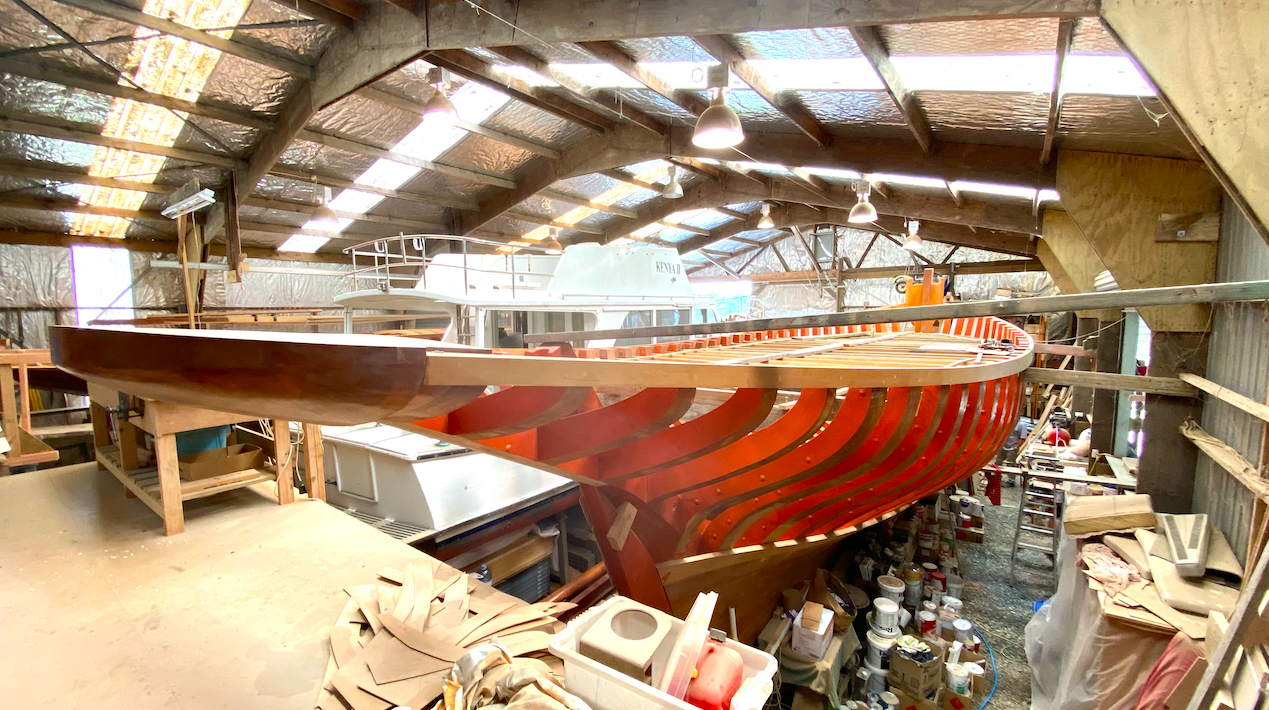
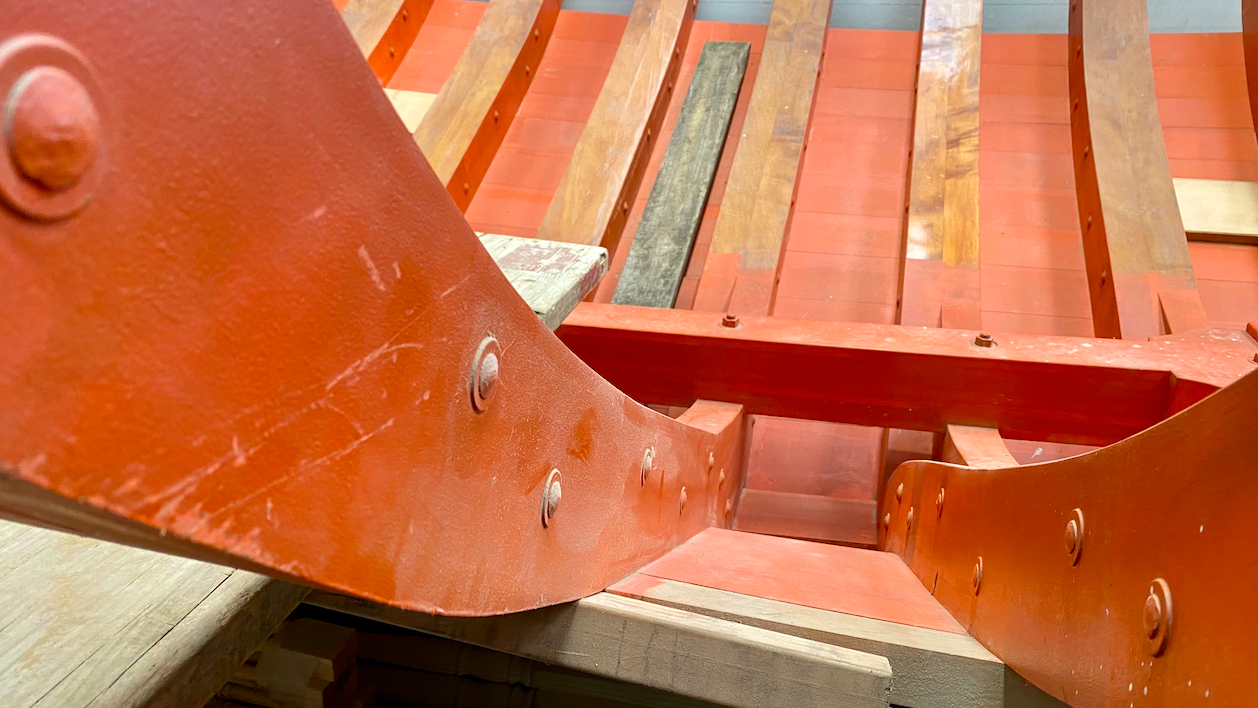
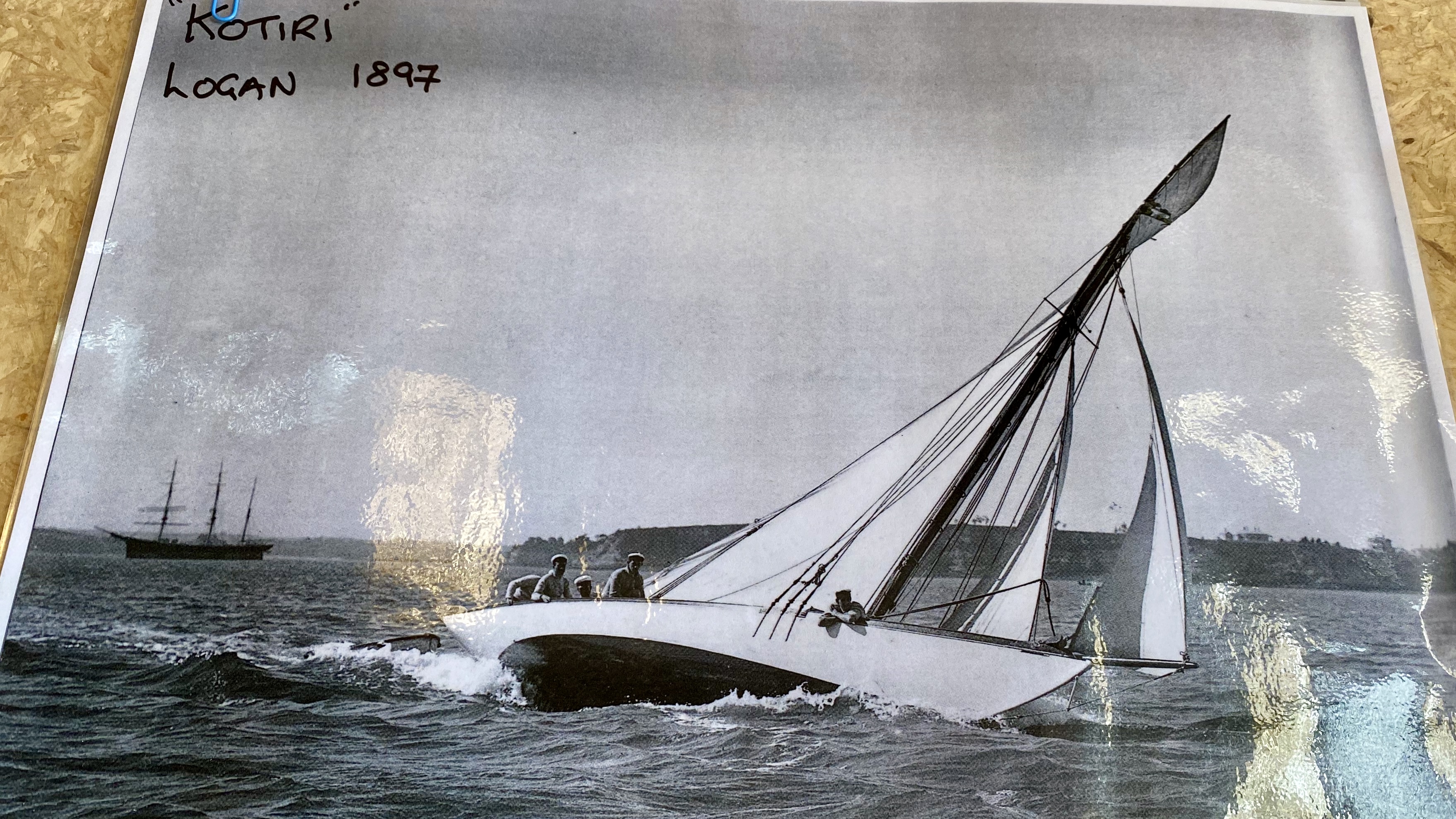
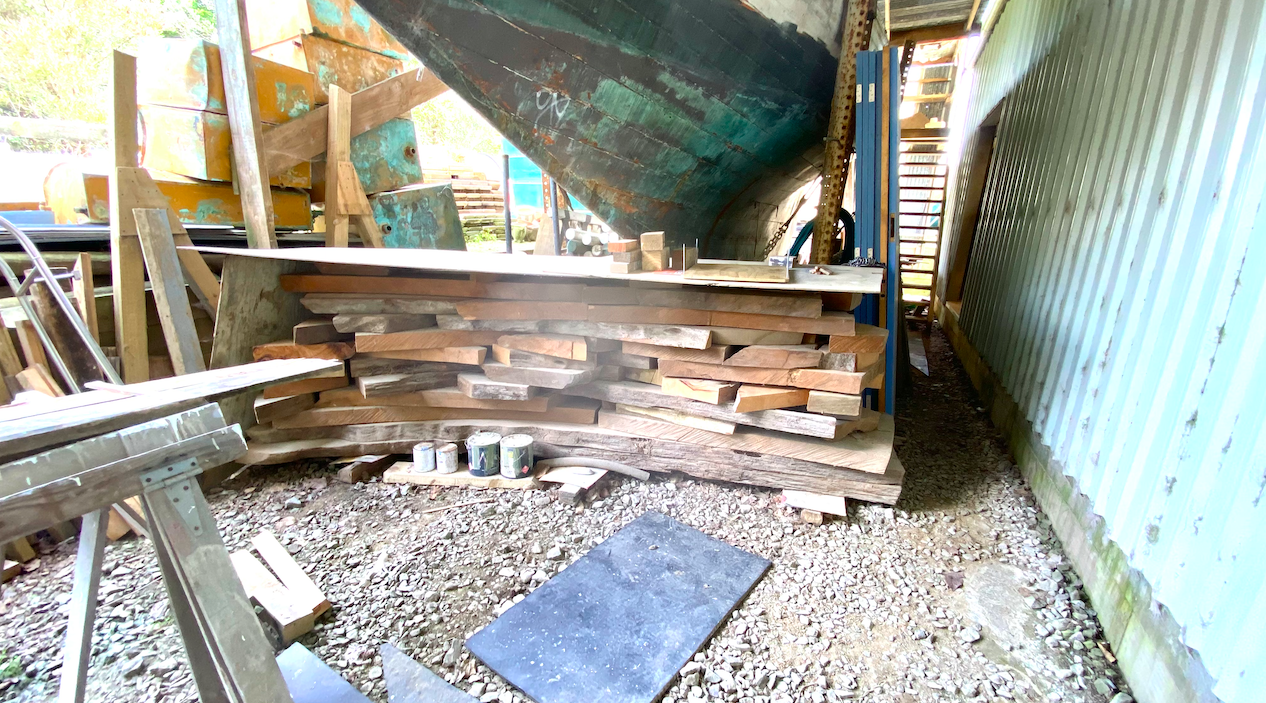
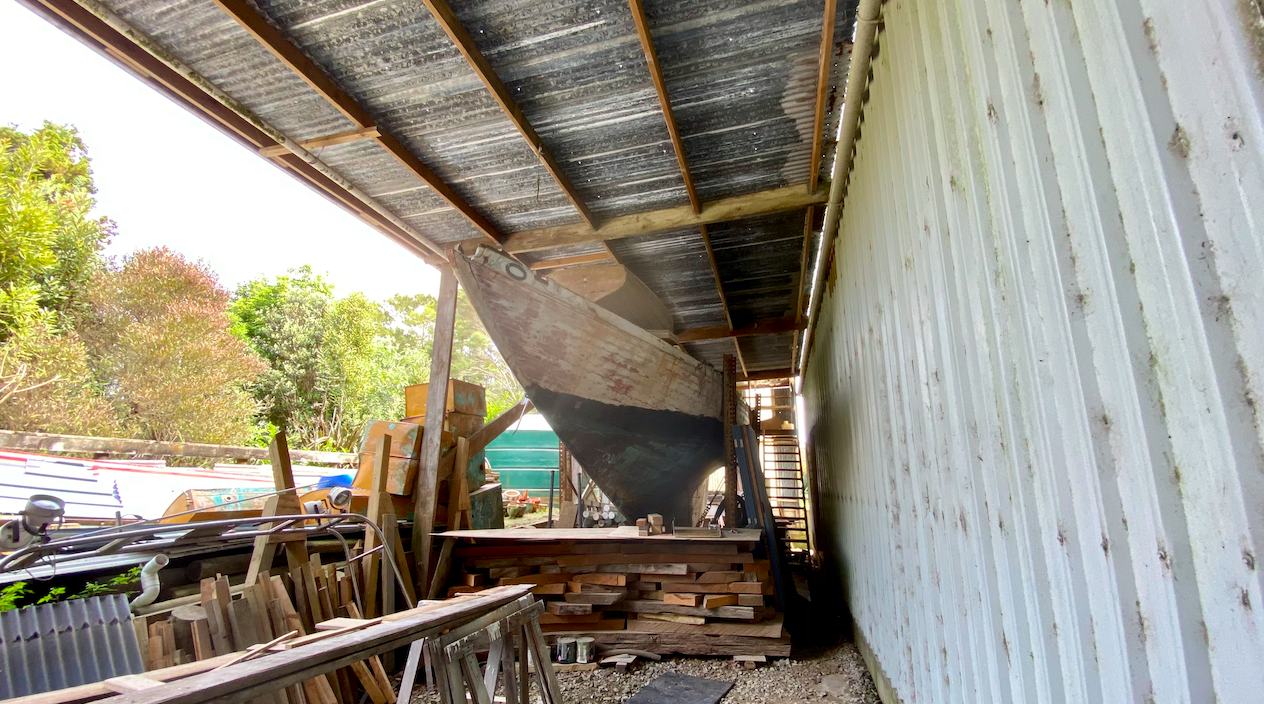
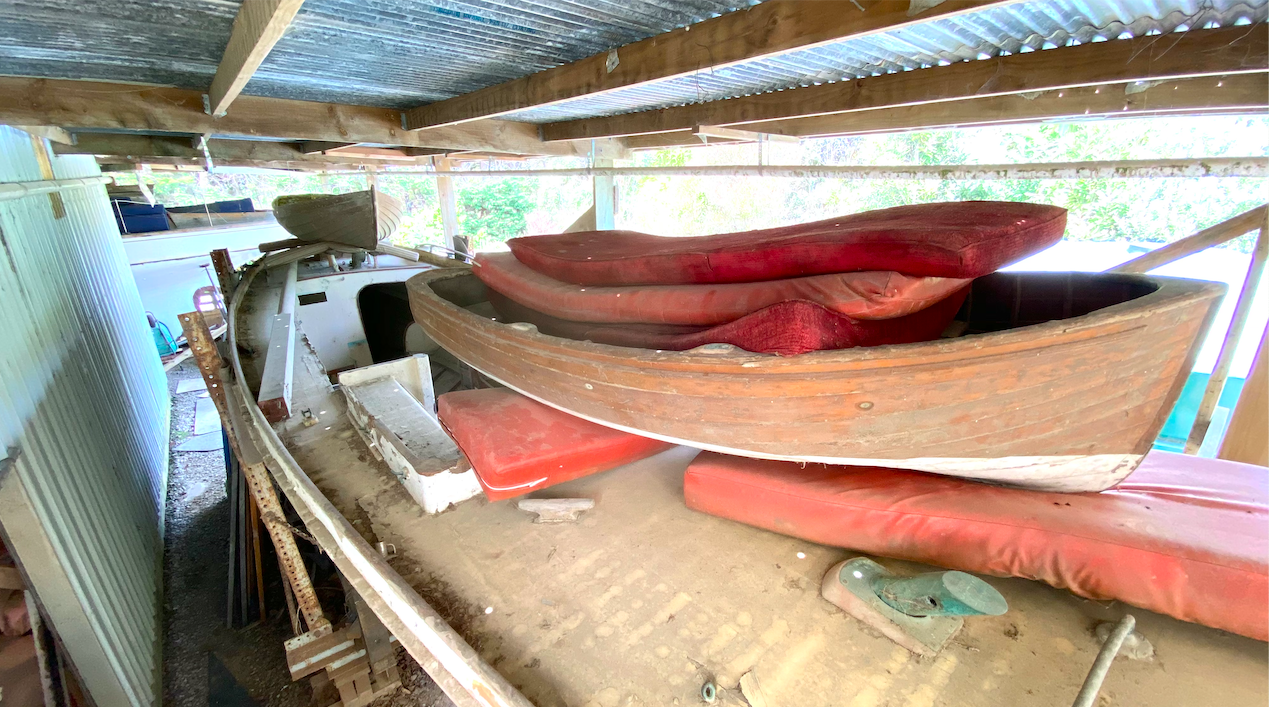
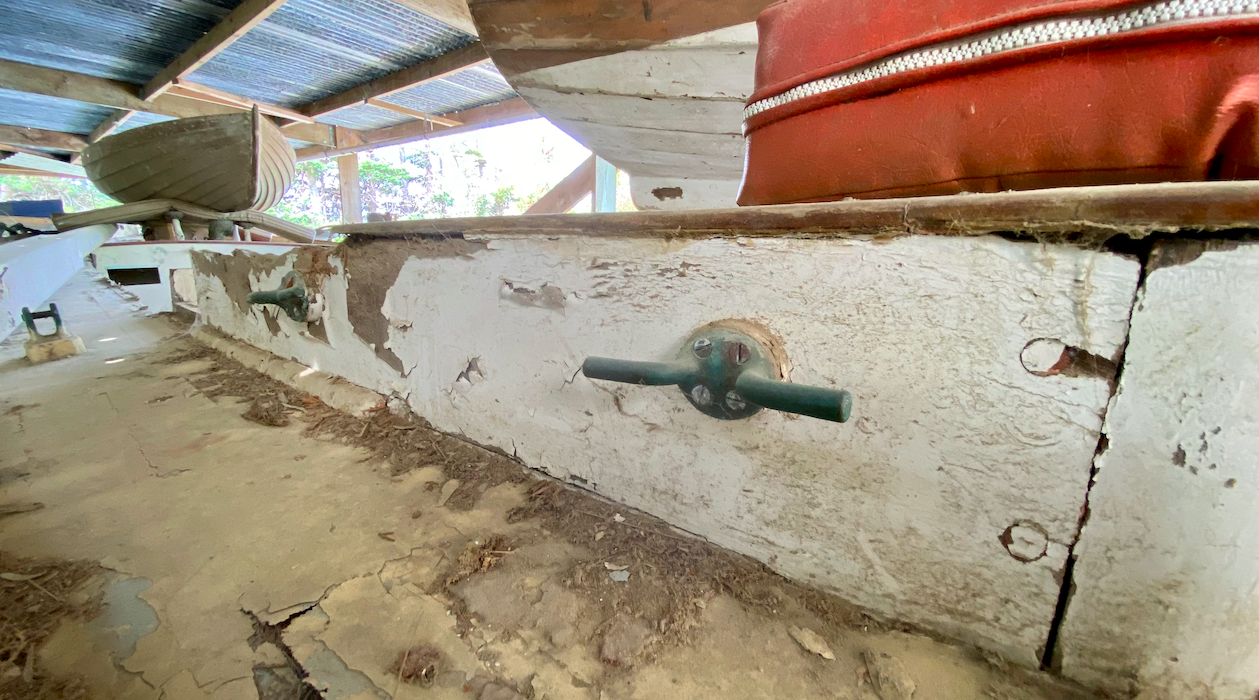
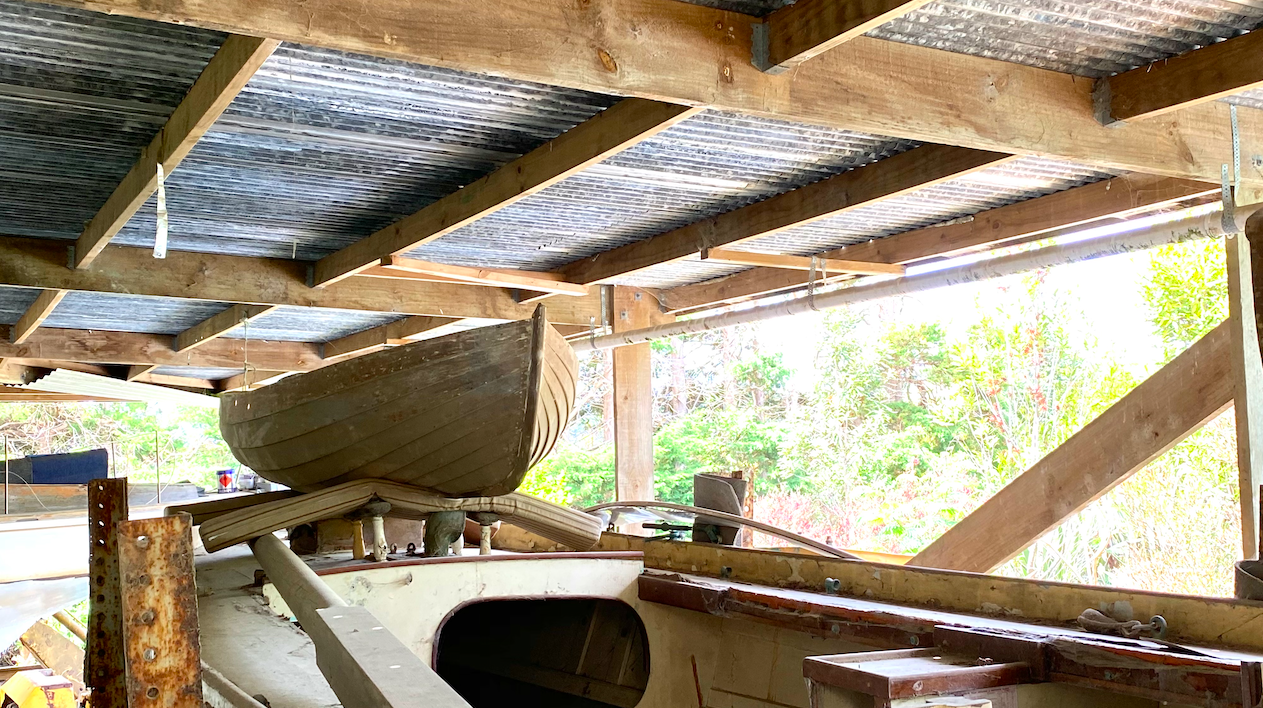
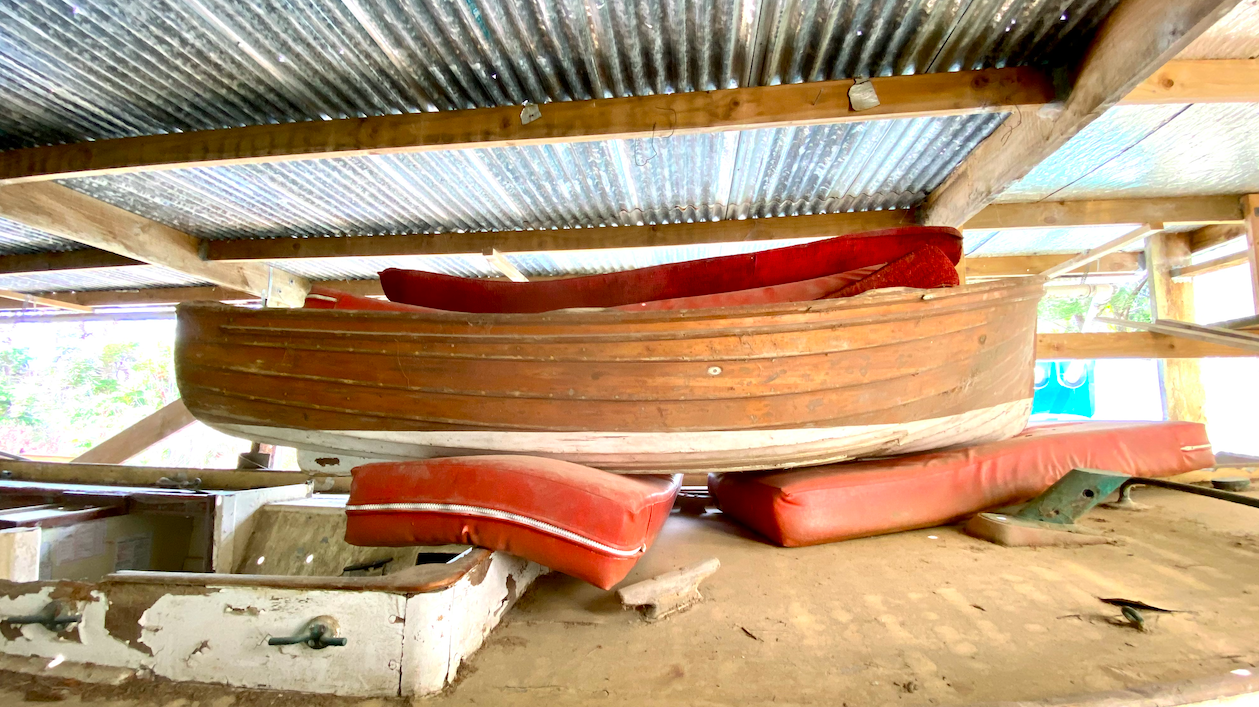
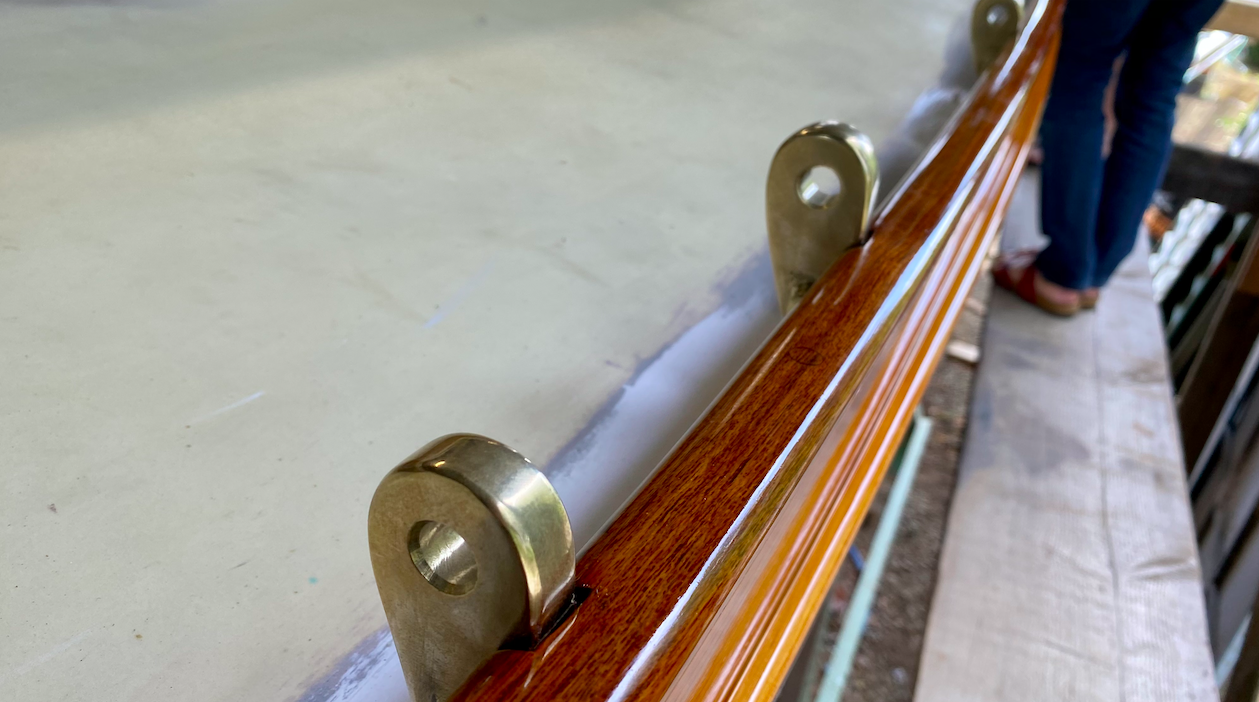
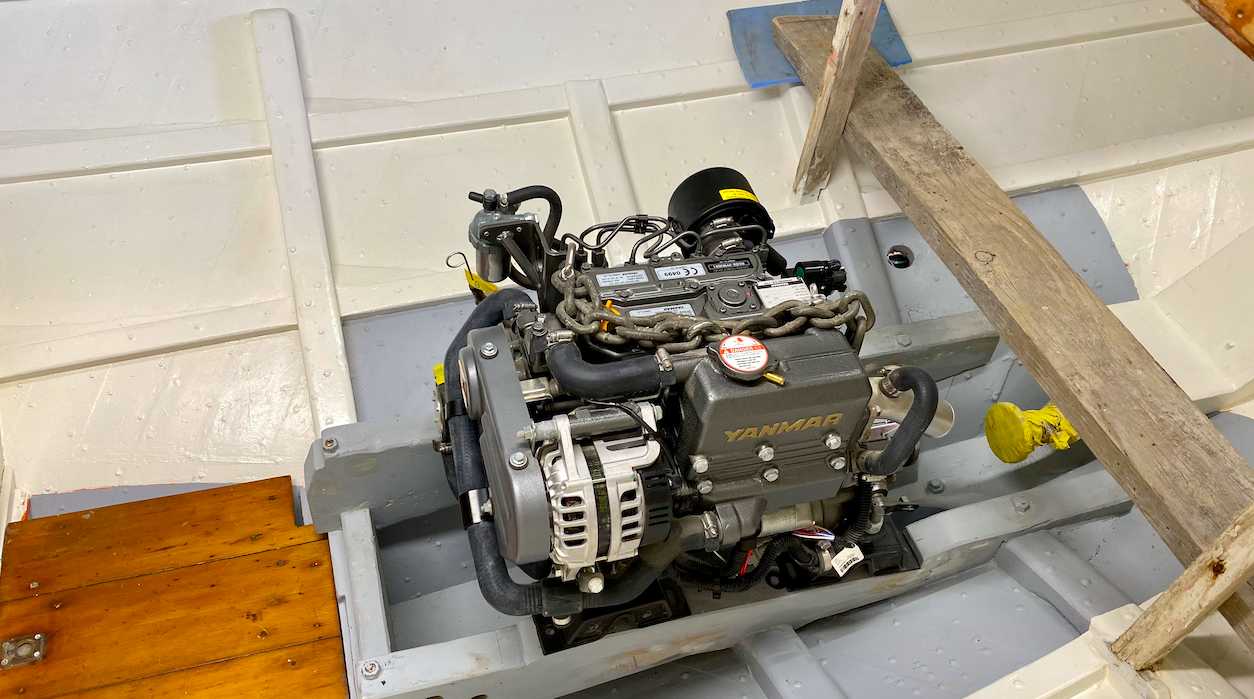
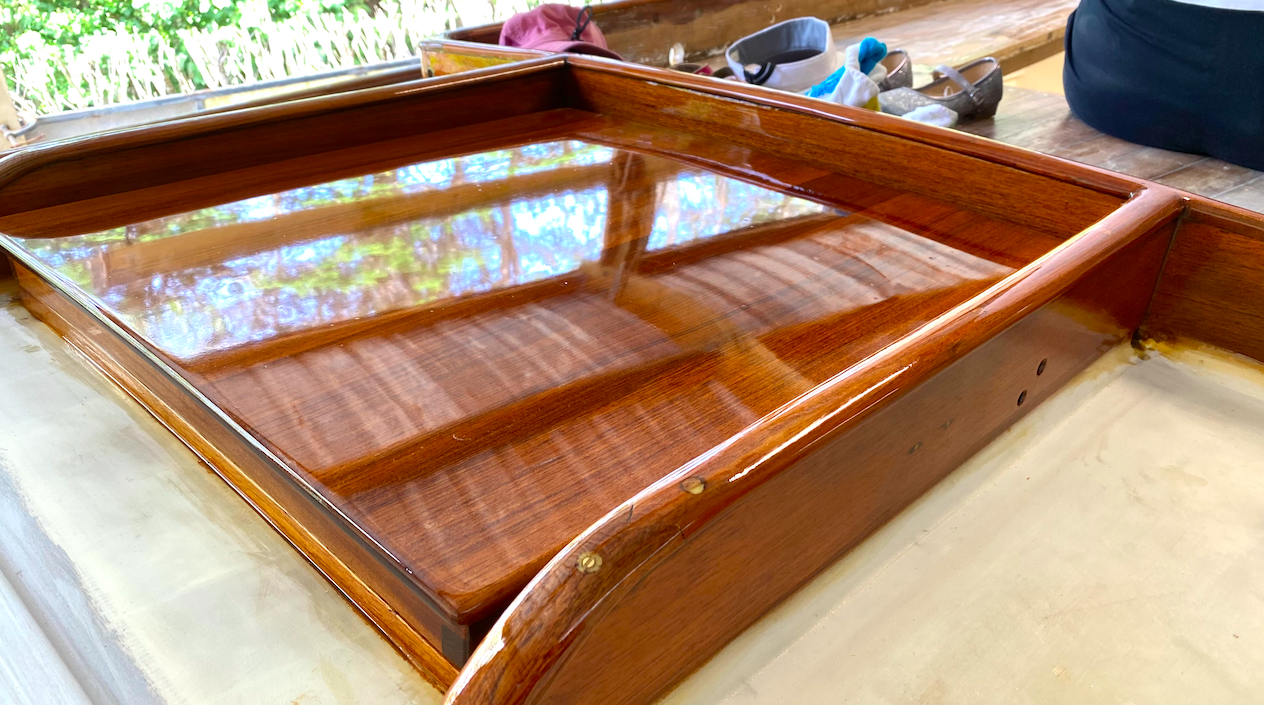
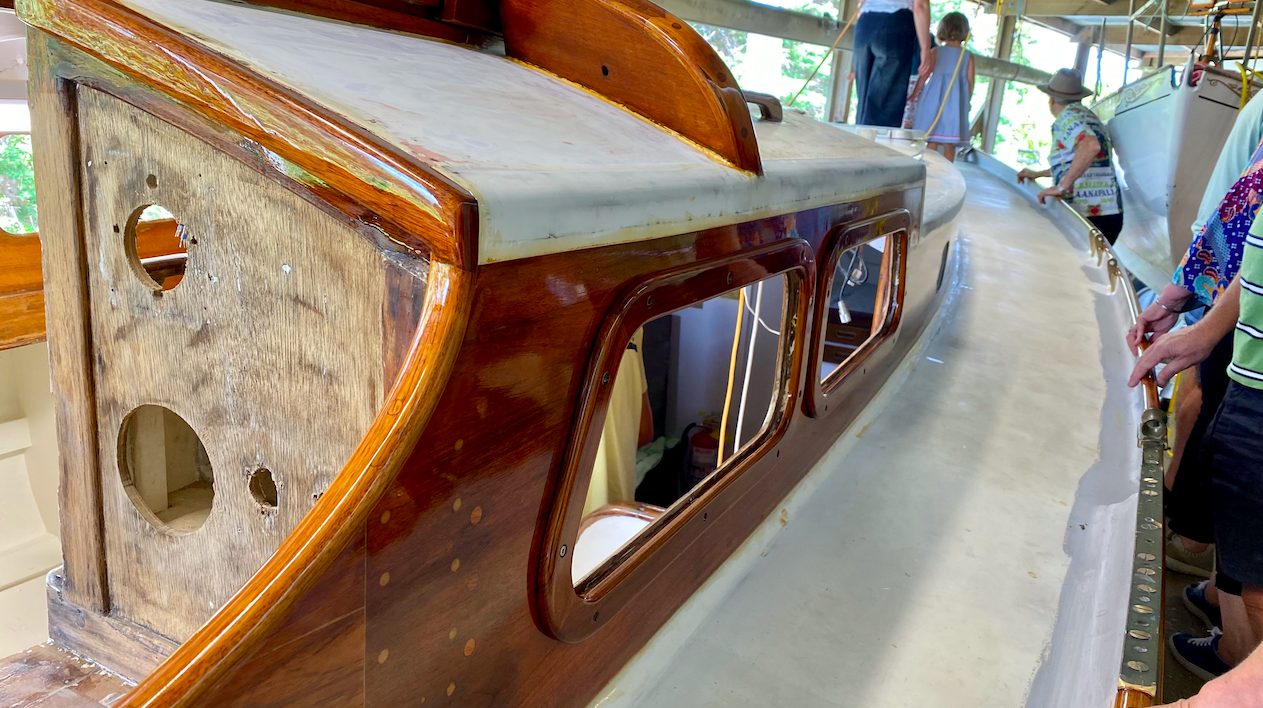
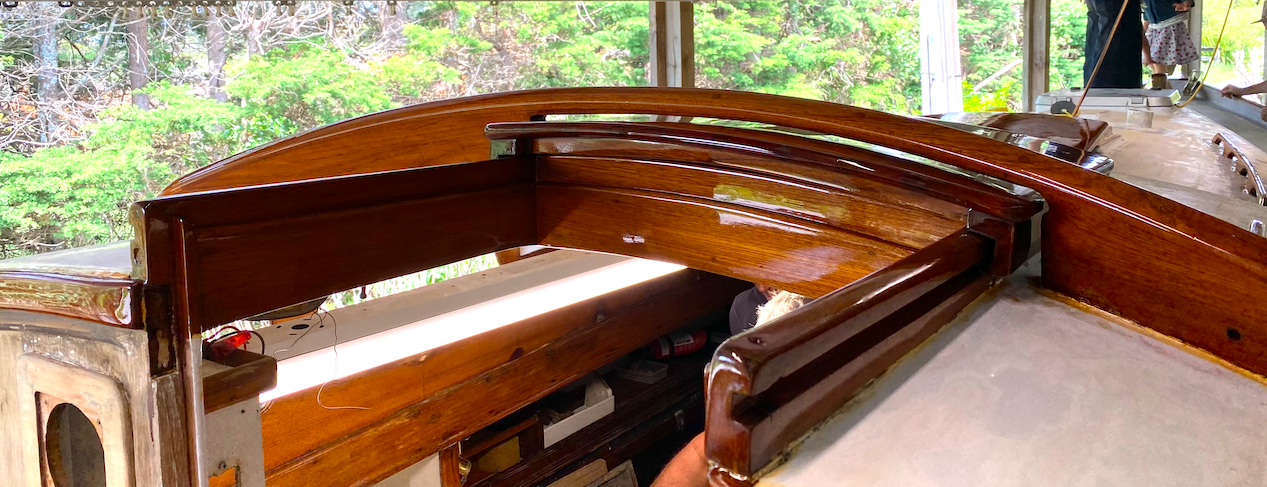
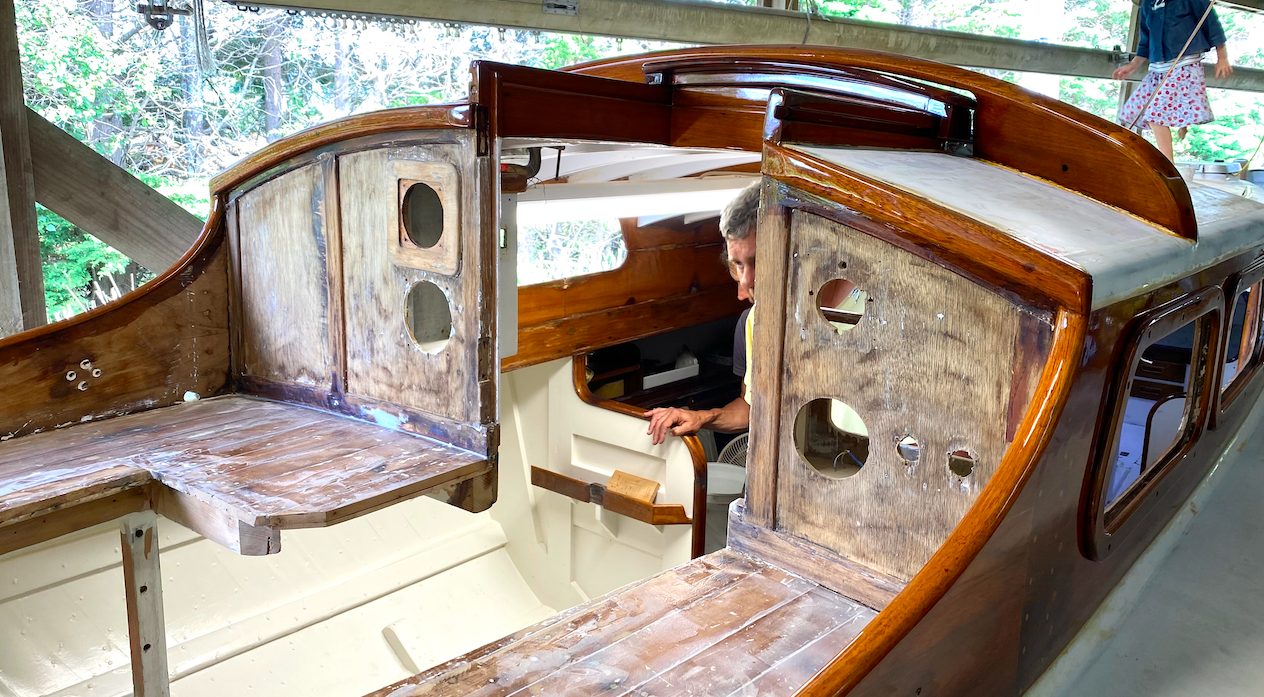
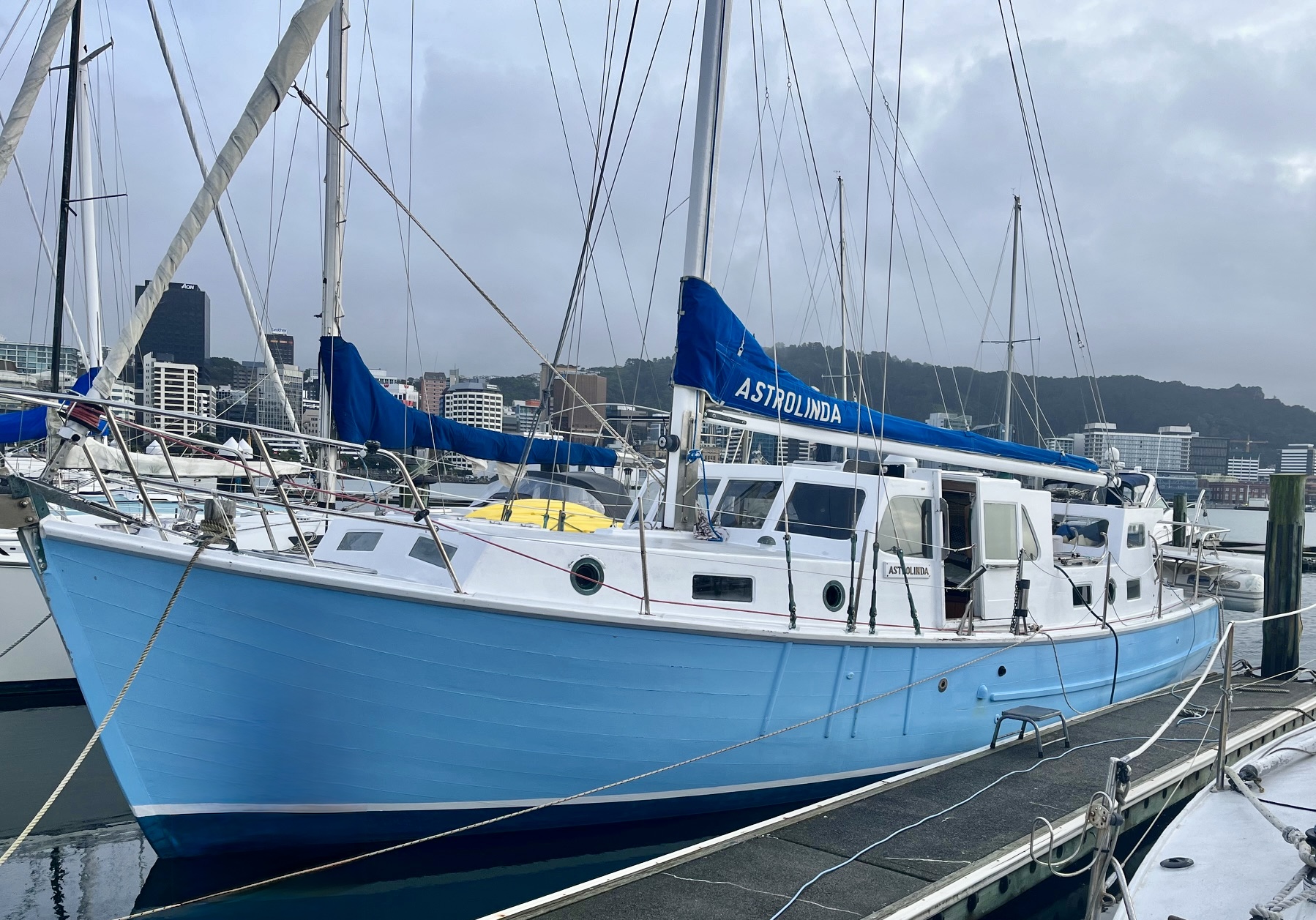
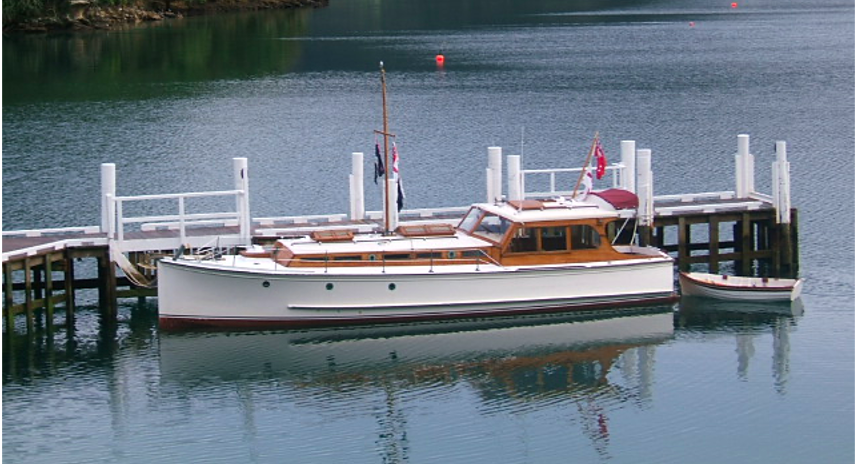
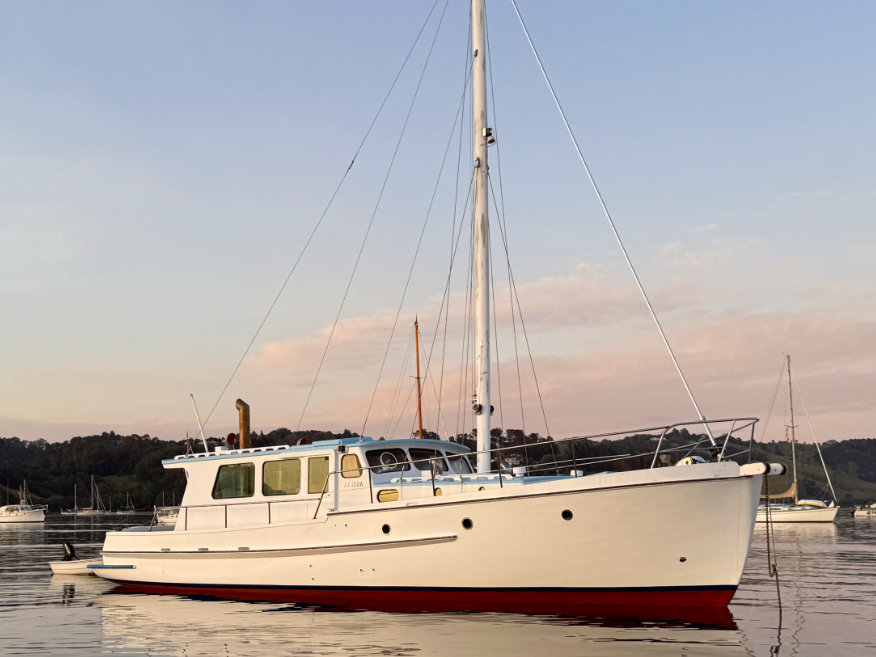
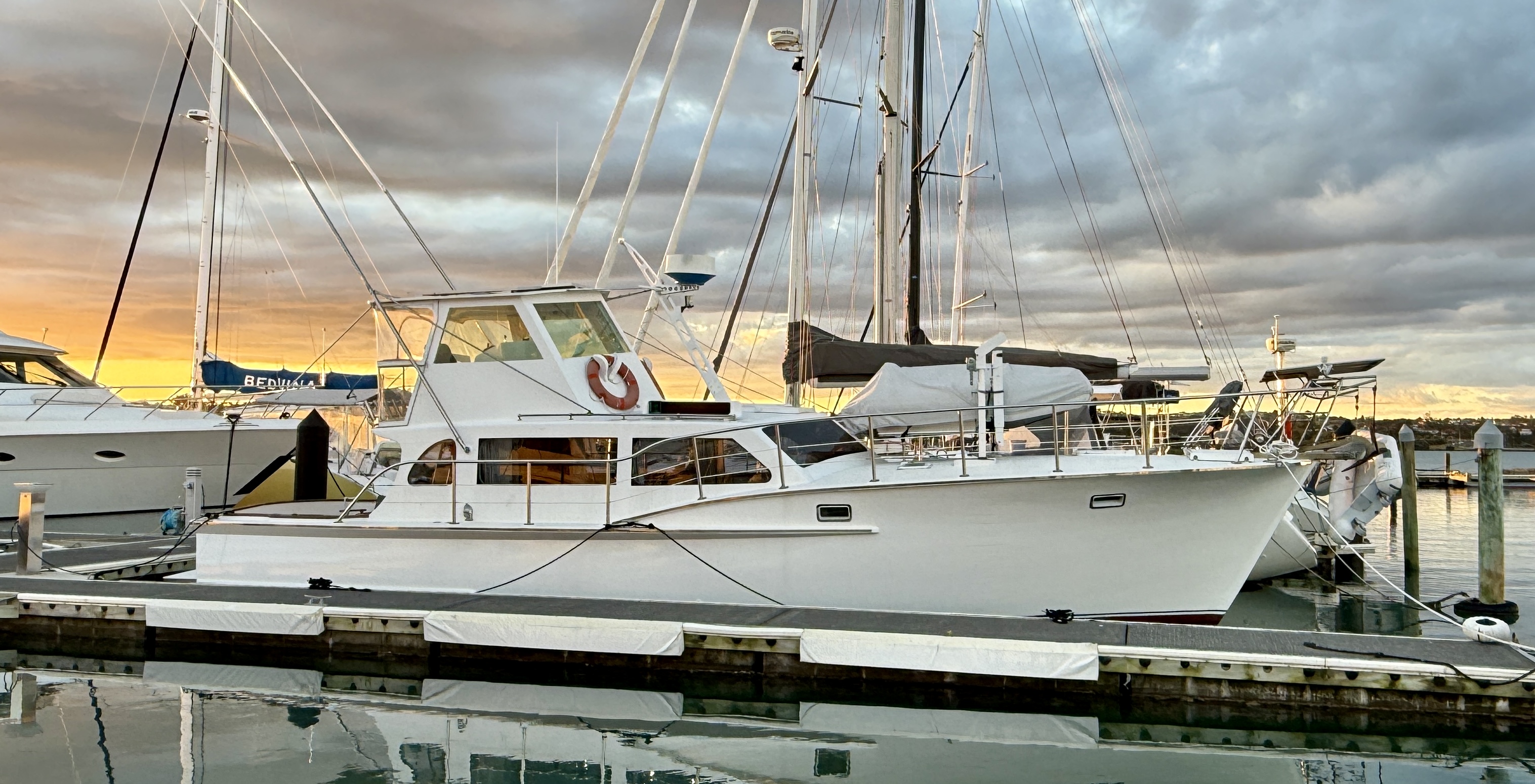
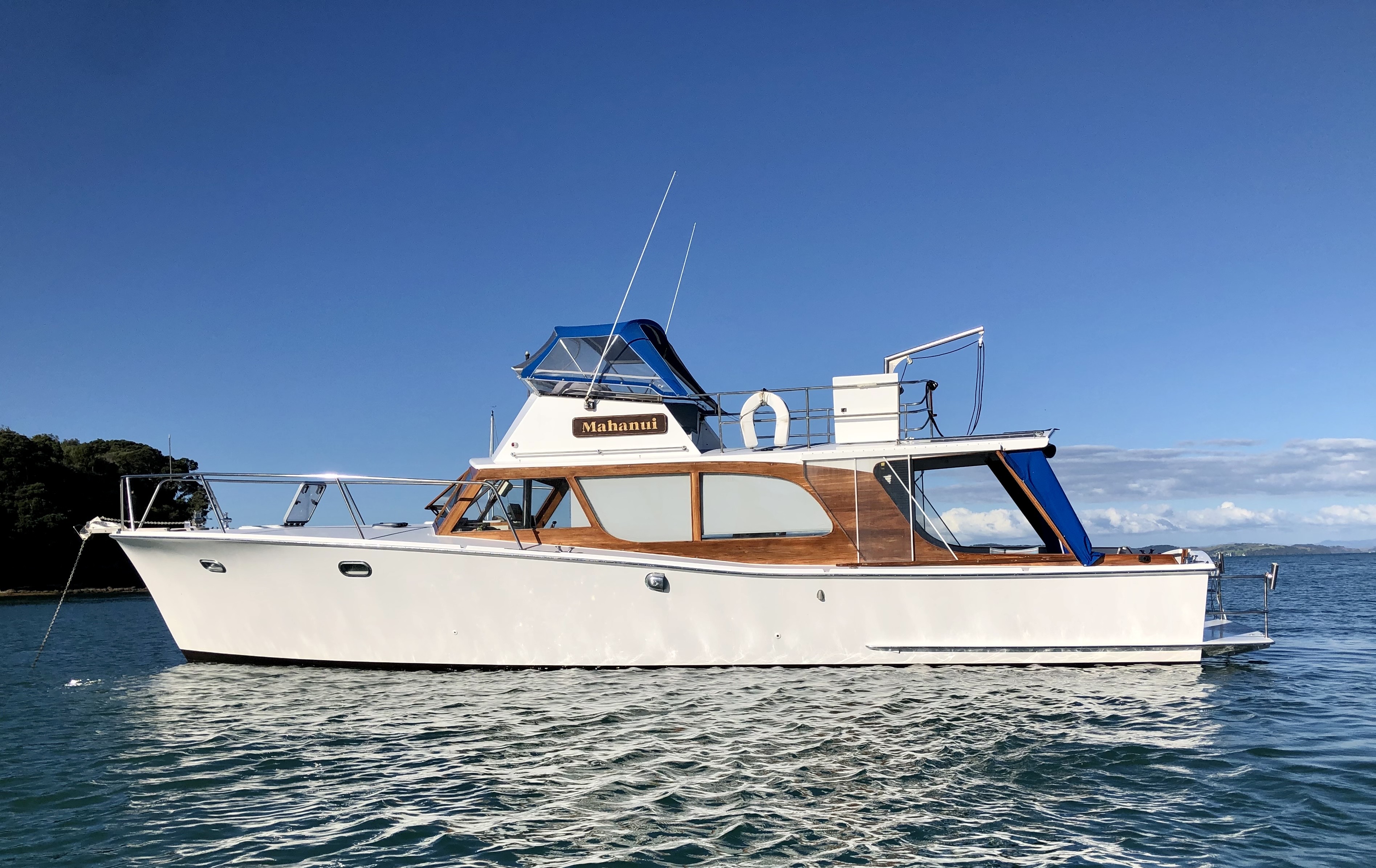
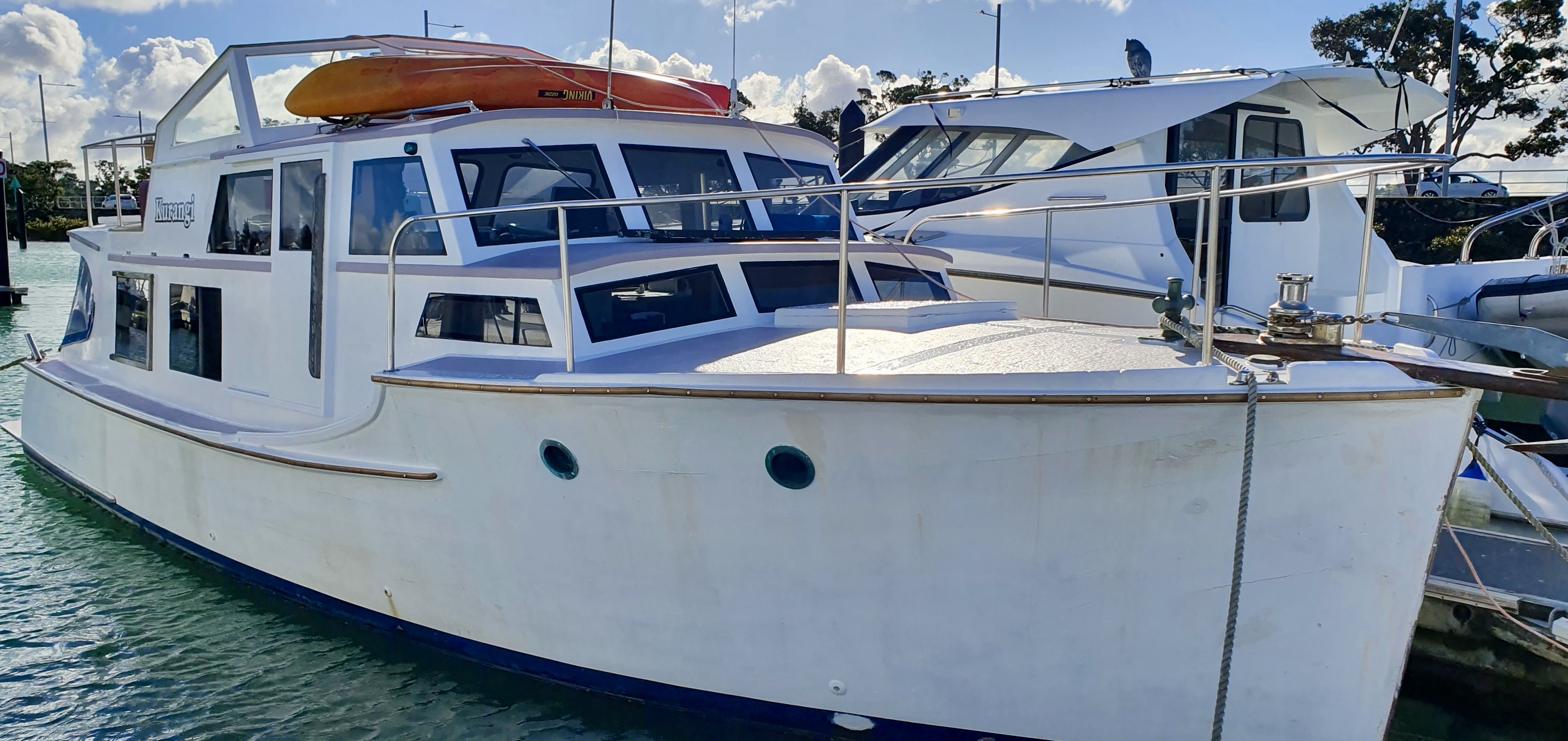
Wooden Boat Yard Mooching Hobsonville woody John Wicks sent me a bunch of photos yesterday from this home marina at Hobsonville. It reminded me that I had snapped a few myself on a recent visit, nice to see that the woodys had moved along and should be re-floating soon.First up the Athol Burns designed, Barney Daniels built – Taotane, which John commented – was being brought back from the almost dead. Then we see the very regal Lady Crossley, the 1947 Colin Wild motor-lunch, out of the shed after a lick of paint and varnish.Lastly above the 48’, 1948 Lidgard built Ranui , in for a paint job, and wearing my Wooden Boat Bureau cap – I have to remind you that she is for sale and ready for summer cruising. More details here
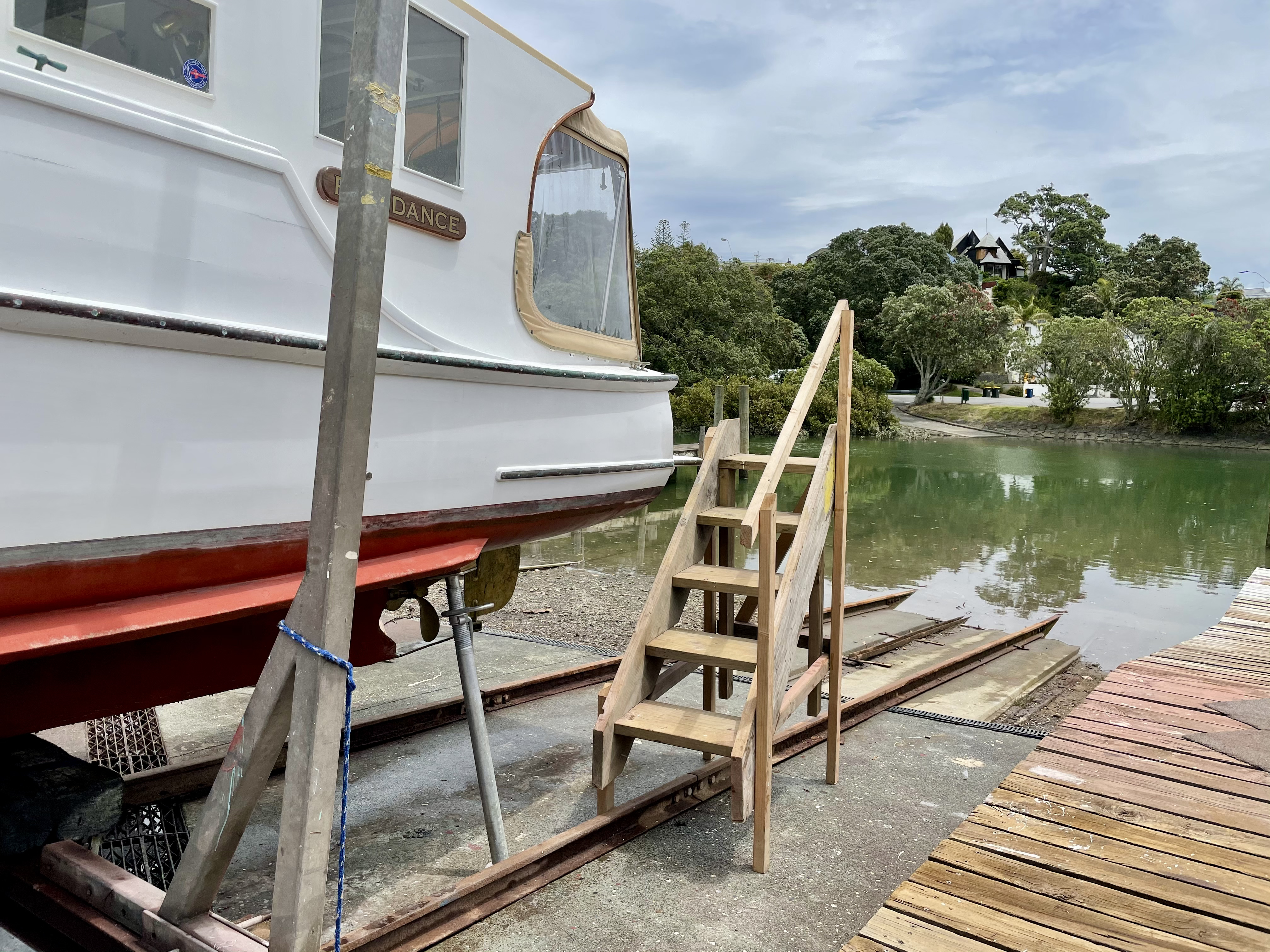
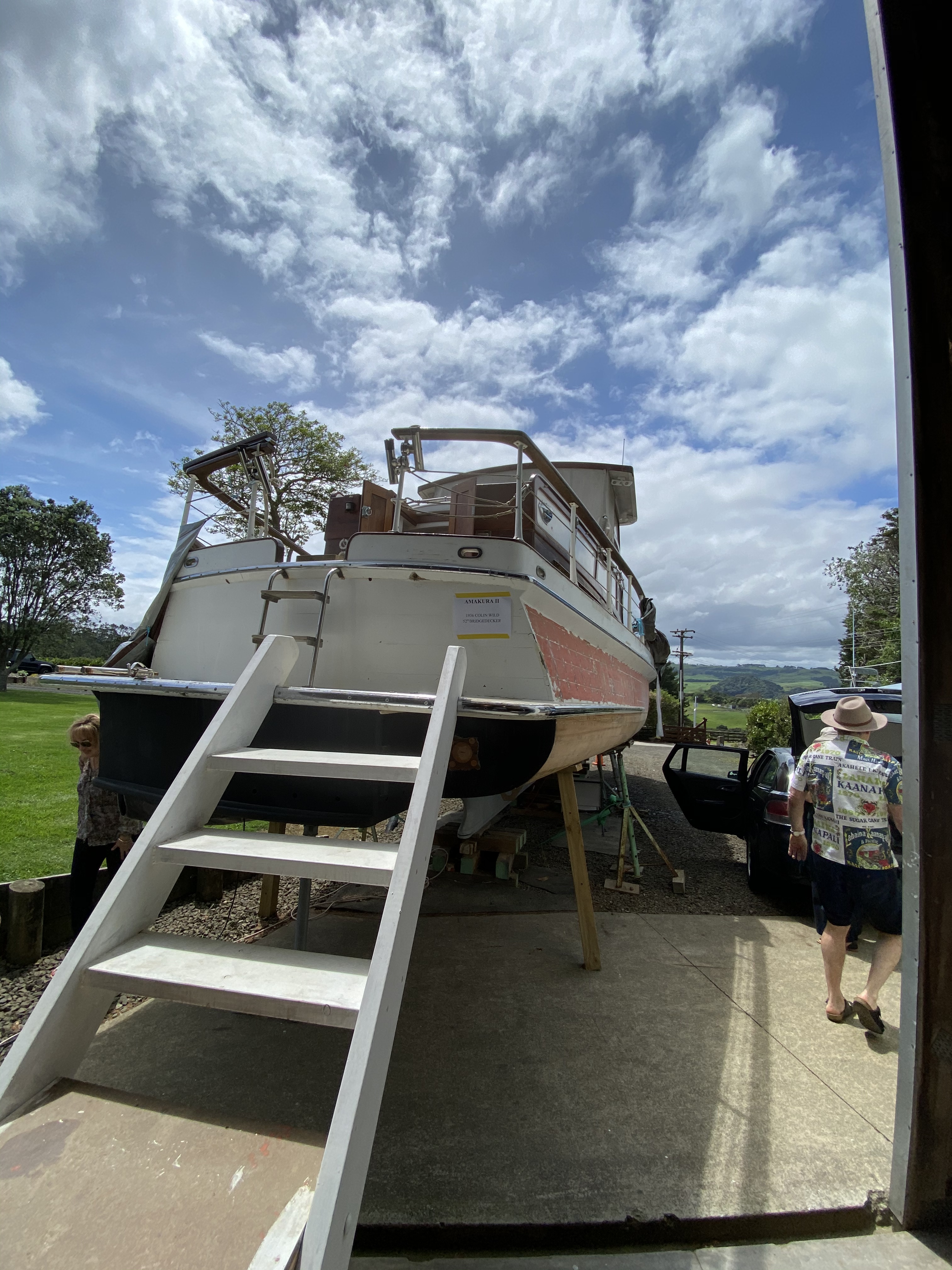
Things are getting a tad posh at The Slipway Milford, when I hauled out the other day, instead of a ladder, a set of stairs was waiting for me – much appreciated 🙂
Builders son – Ken Warne at the helmPost launching – photo ex Max c/o The Slipway Milford
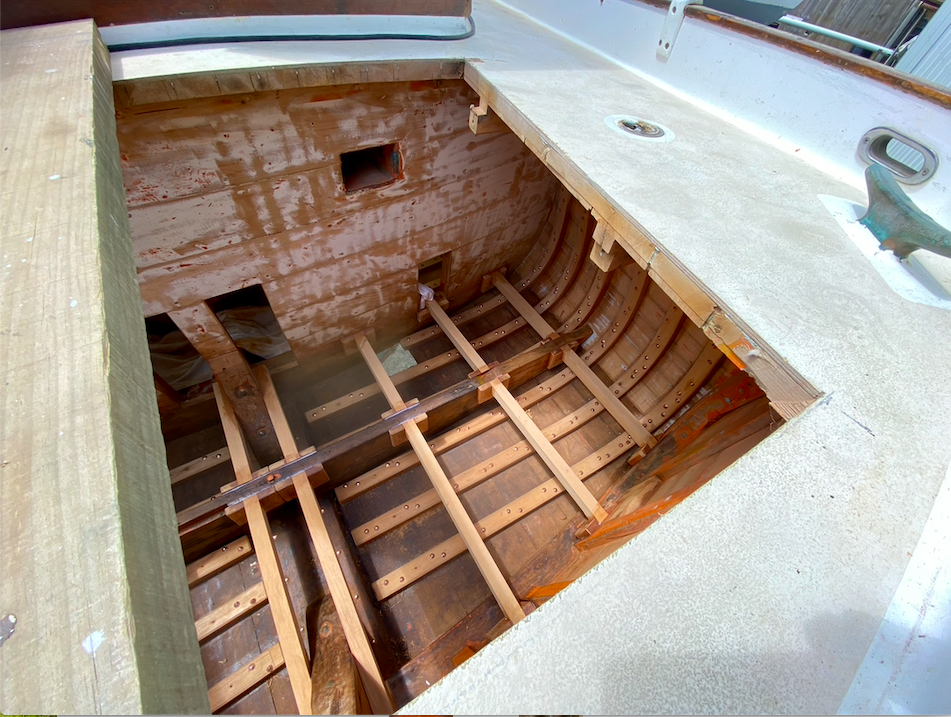
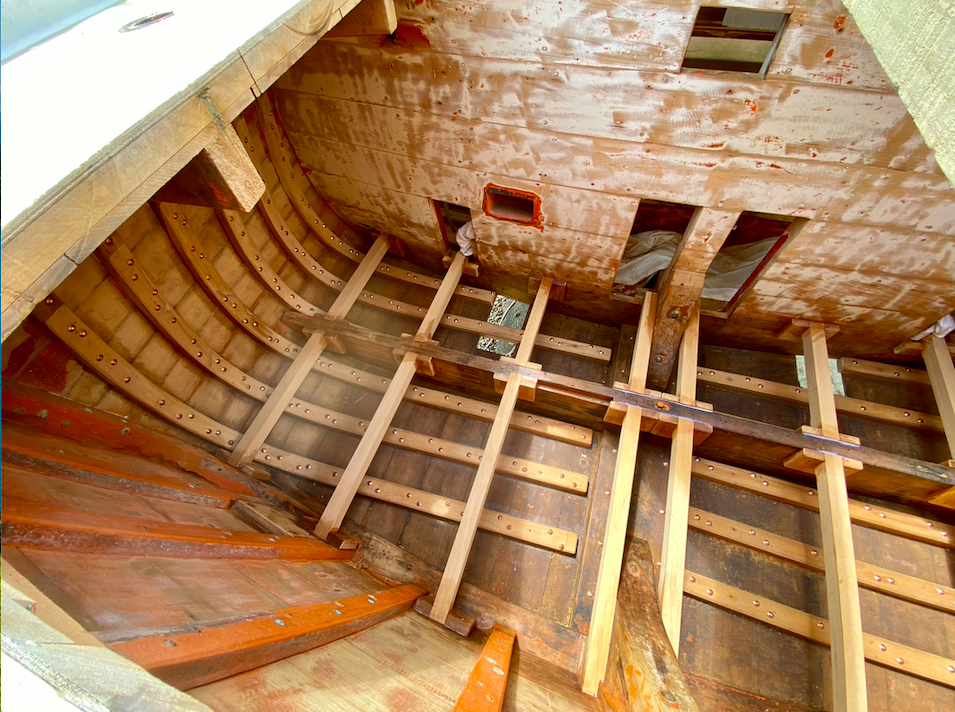
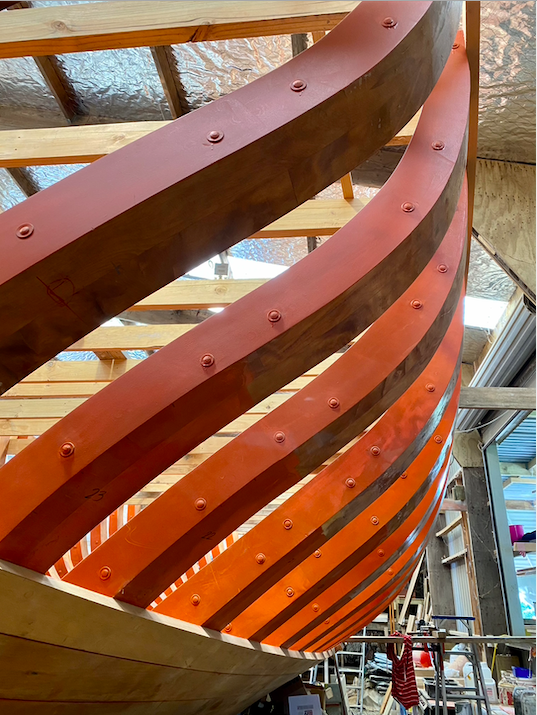
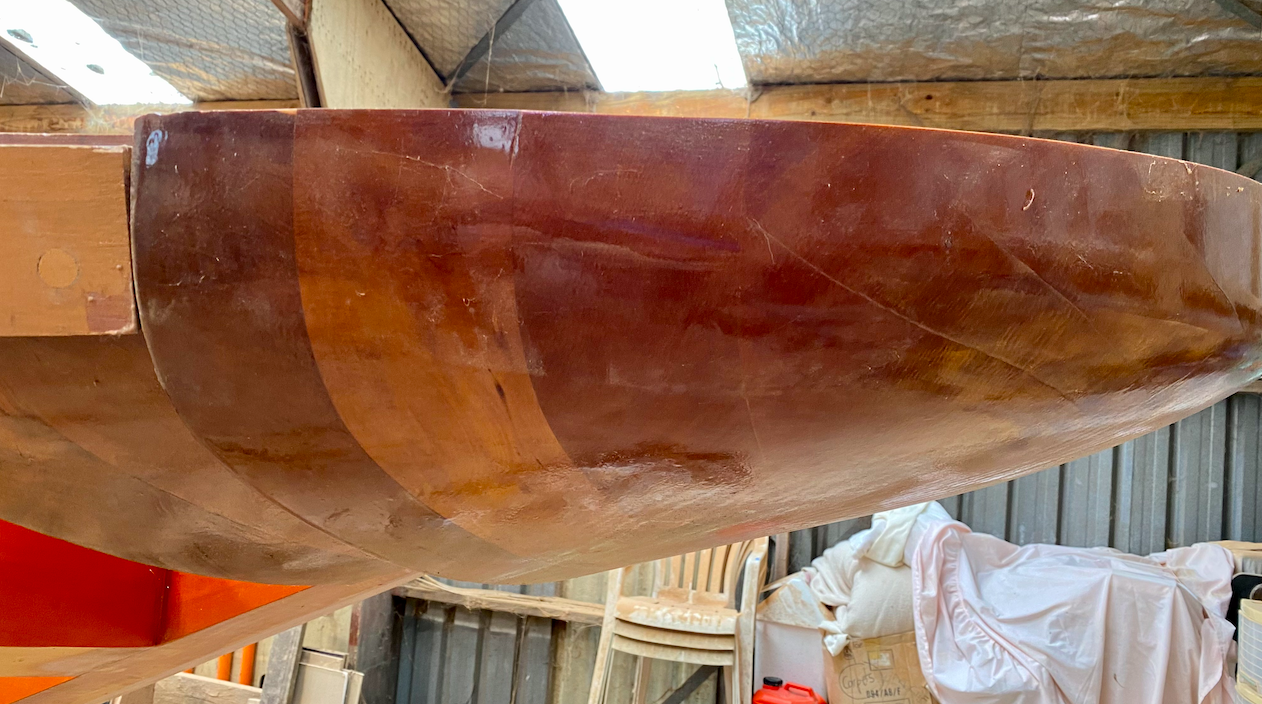
Marline Back In The Water Back in mid September we reported that the 35′ Leone Warne built – Marline was tucked up in the shed at The Slipway Milford getting a top-chop and the biggest dose of TLC ever. You can read and see photos from the process and lots of historical photos here https://waitematawoodys.com/2020/09/14/marline-gets-a-top-chop/
Last week Marline was quietly slipped back in the water looking rather cool with her back to the past make-over. I have seen a photo of her looking like Huia Falls after being hauled out after a brief – “have we got the waterline right” dip. But she went back in and 24 hours later the flow had abated. Below photos show her as launched and prior to the haircut.
16-05-2025 UPDATE ex CMC DESIGN – MARLINE out for some TLC prior to her 75th birthday later this year. As covered before she was built by Leon Warne in 1950 and to this day remains in the Warne family ownership.
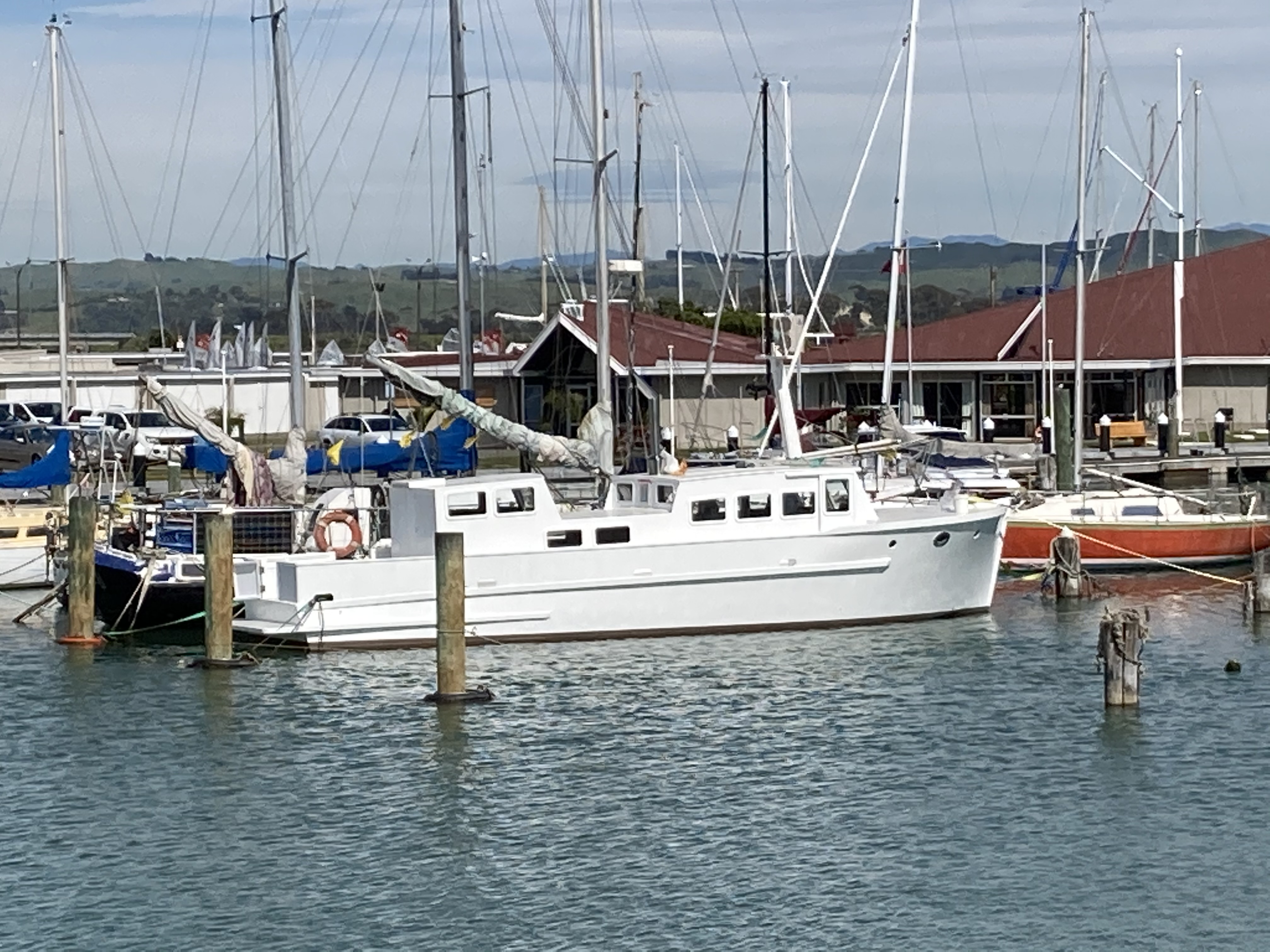
Today’s photo is another from the lens of Dean Wright, taken on a Napier marina walk-about. Looks familiar but I can not put a name to her – anyone able to help out?
Input from Michael O’Dwyer – This boat was called the Graham John when first purchased by the current owner Mark Parvin. Talking to his father Peter, he was told the boat was built by a farmer in Motueka around 1947. Originally 36 feet long it was extended aft to 43 feet when converted to a scallop dredger, hence the appearance of a somewhat droopy stern. Currently powered by a 170 hp Isuzu. Mark has completely overlaid the hull with a ply and glass.
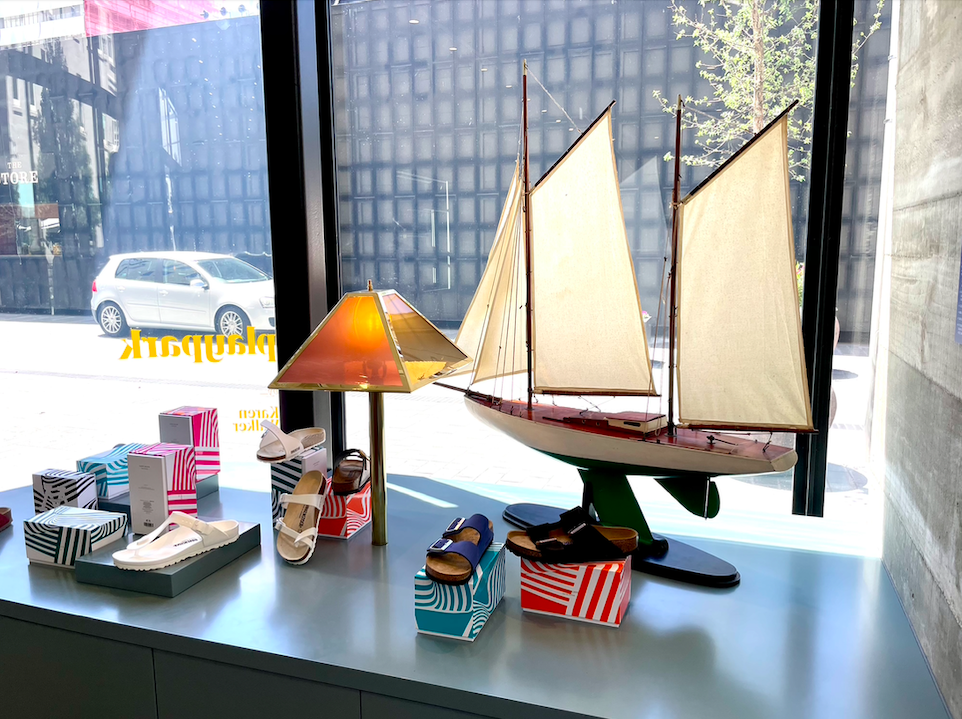
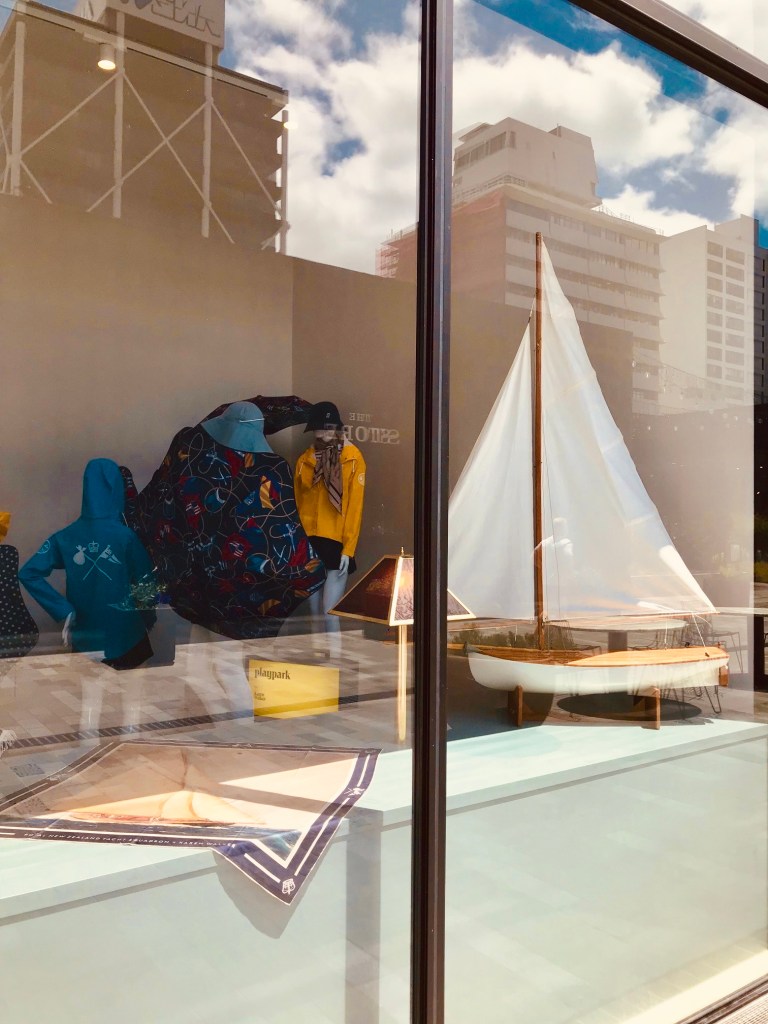
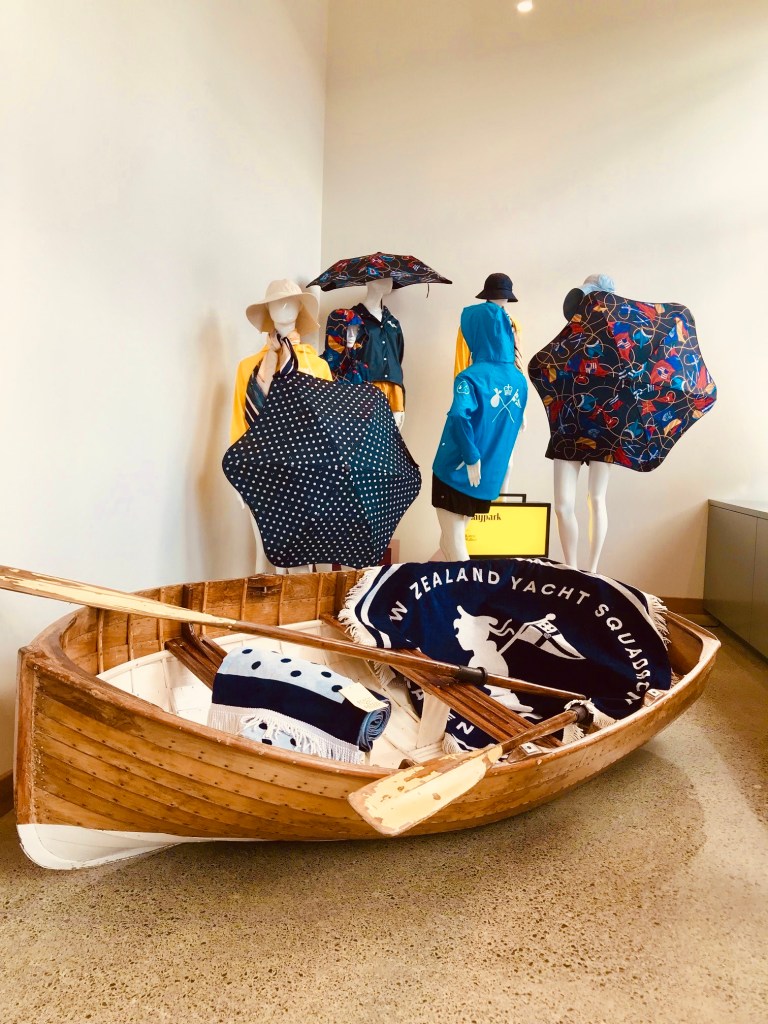
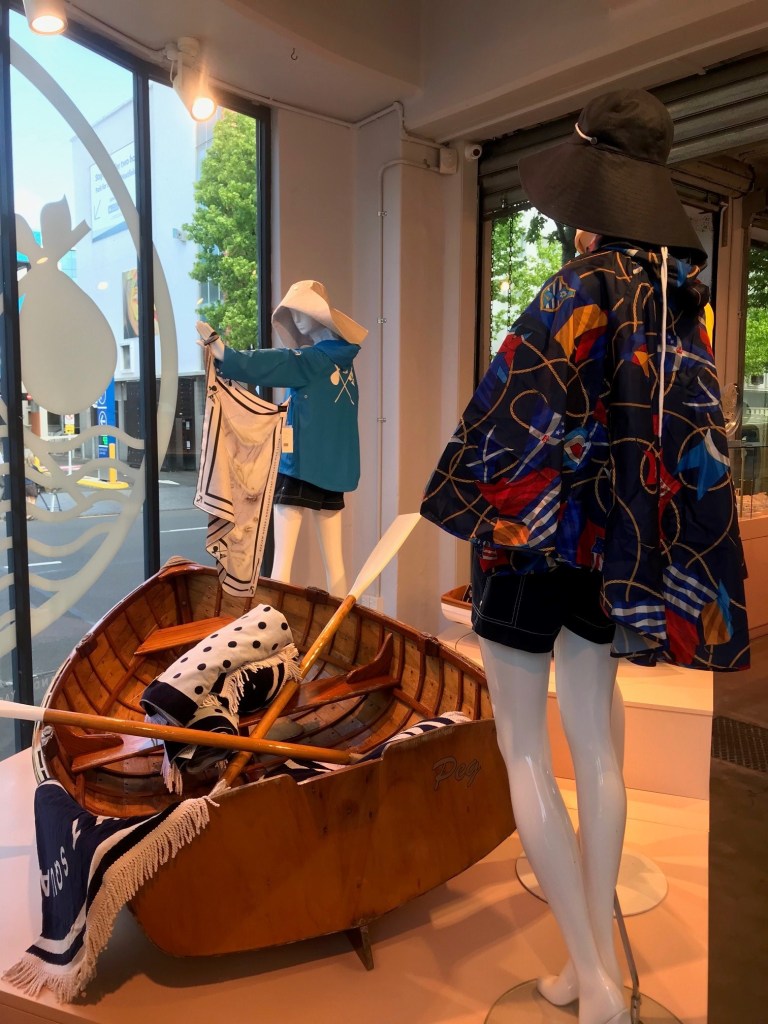
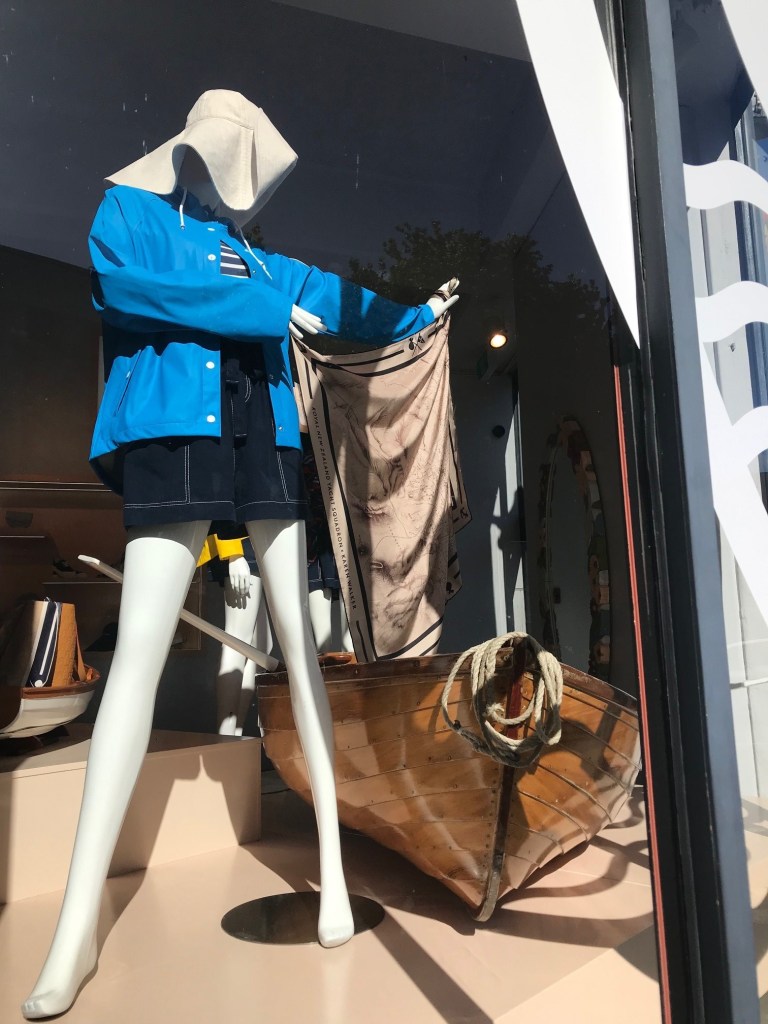
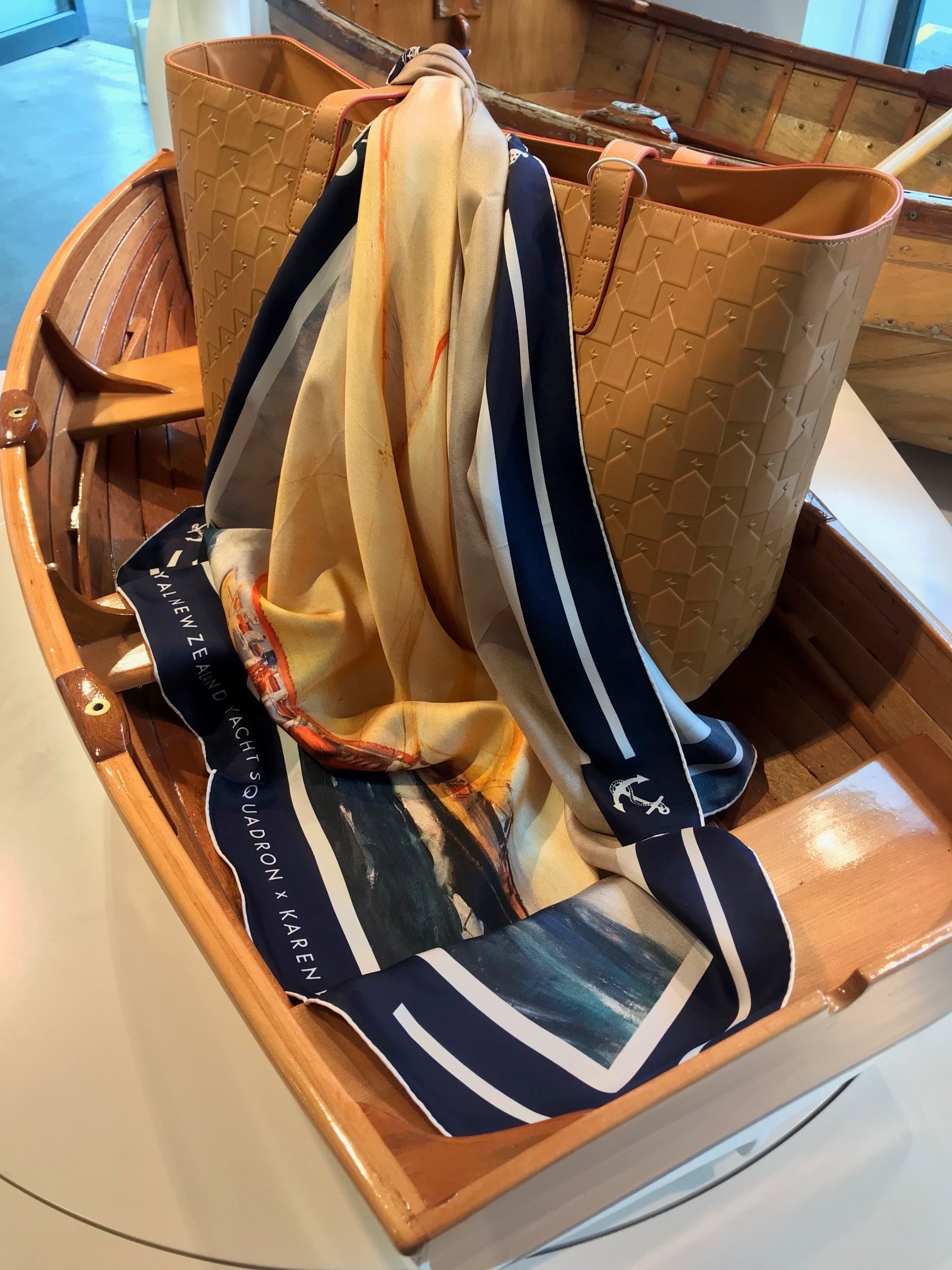
Woodys On The Catwalk
Well almost – Karen Walker in a collaboration with the Royal New Zealand Yacht Squadron has just launched a range of merchandise celebrating this extra special season – A-Cup and 150th RNZYS Anniversary. WW have supplied woody items – clinker dinghies, model yachts etc to support the collection in Karen Walker stores.
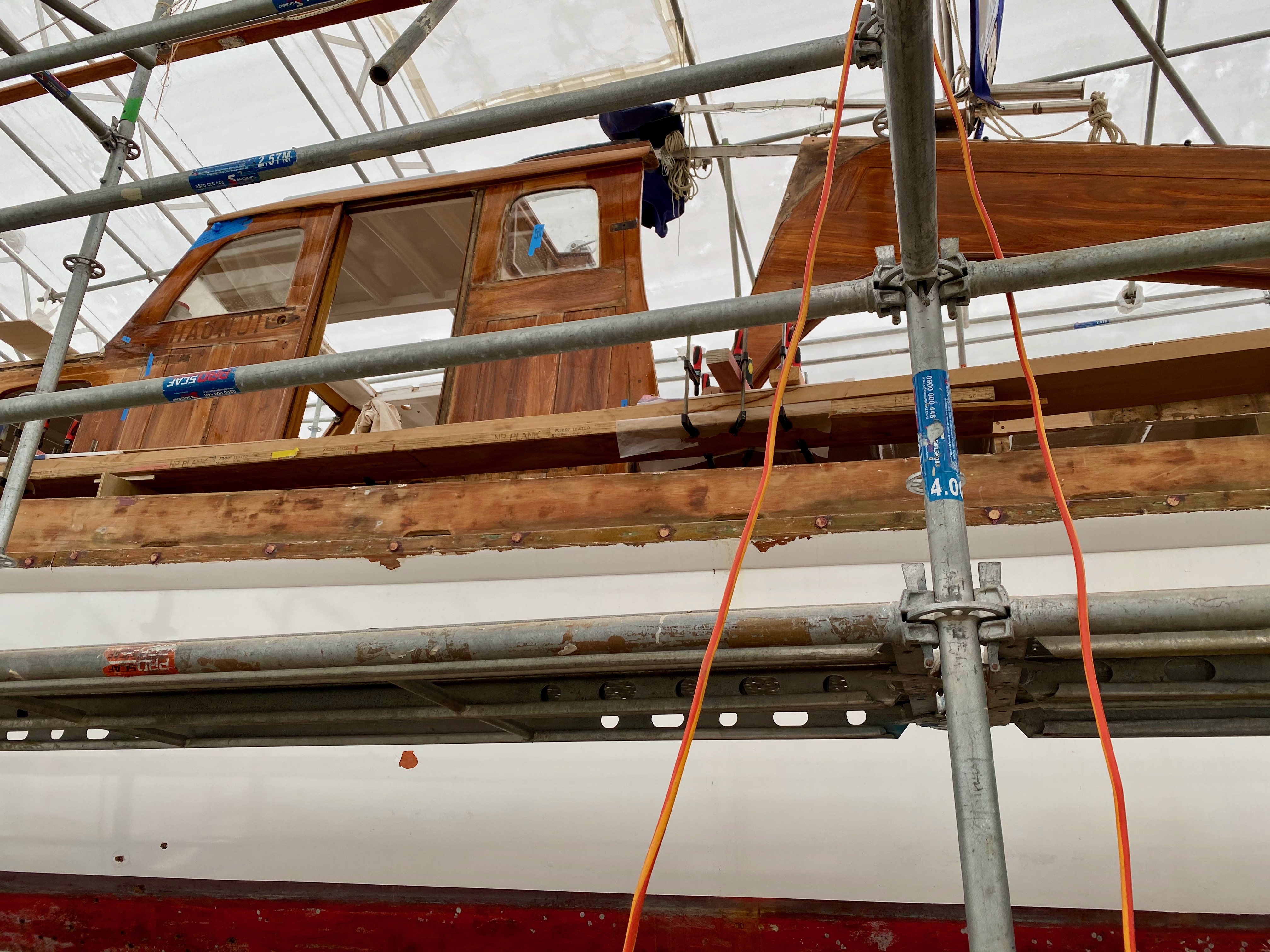
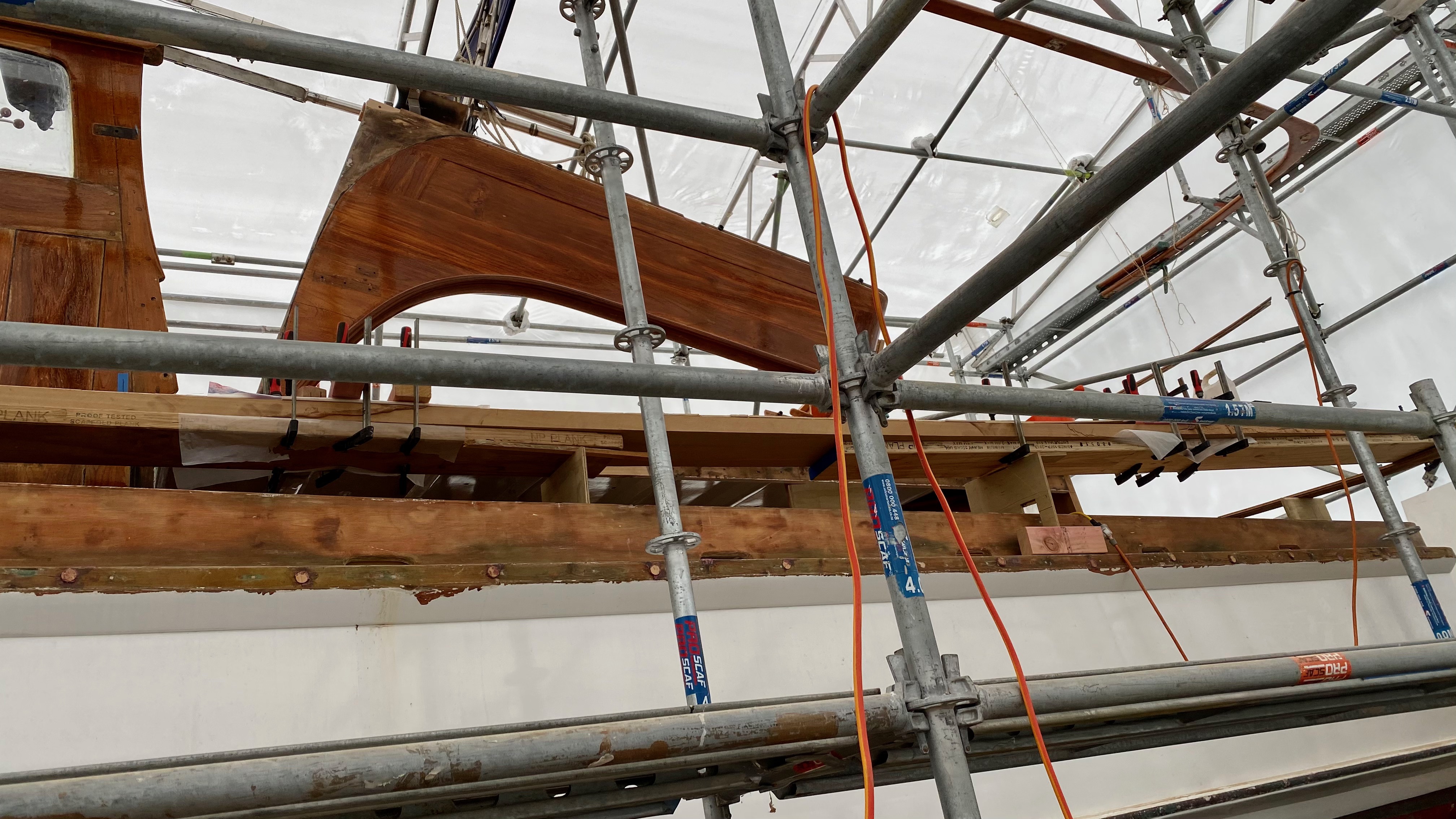
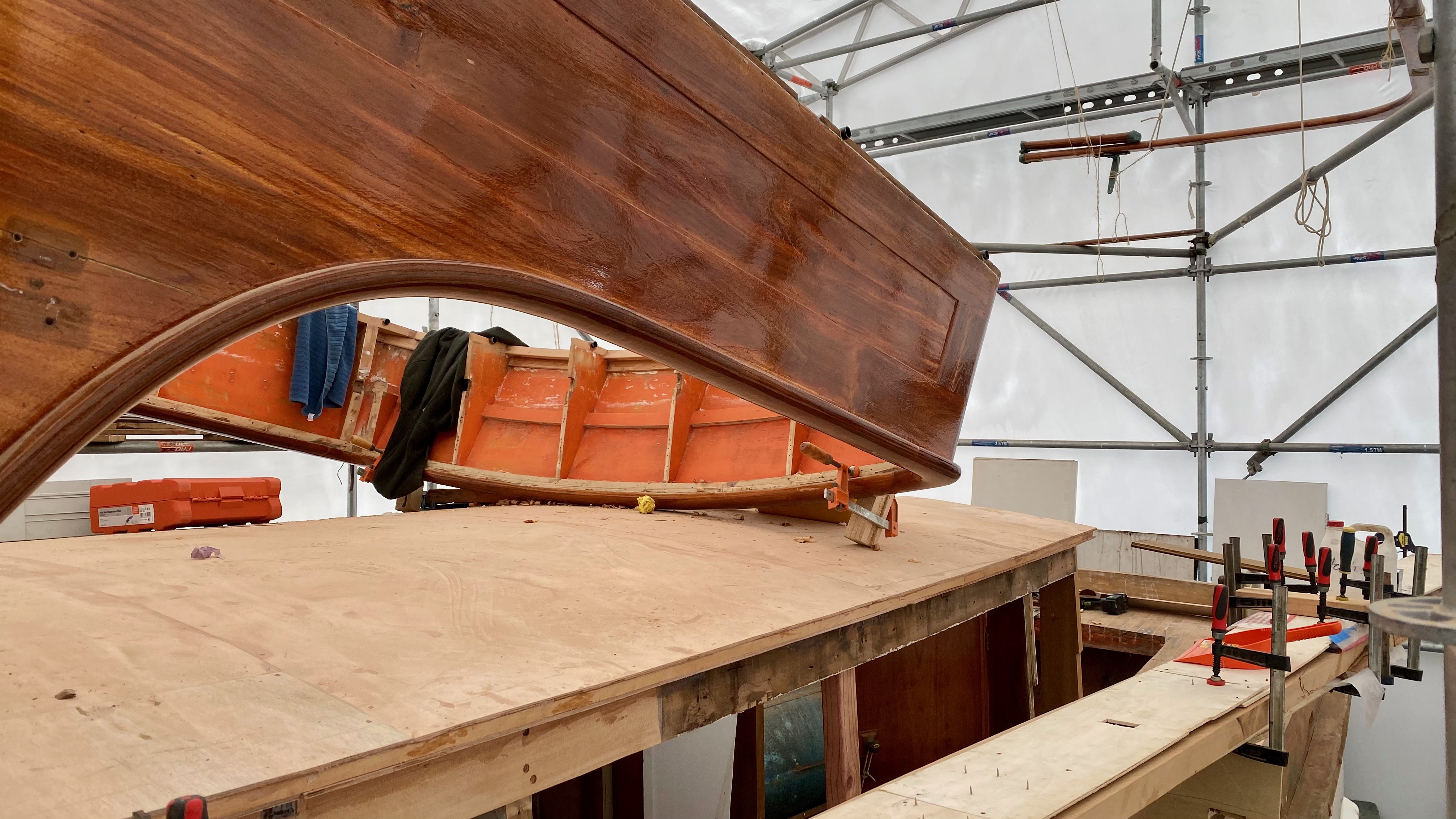
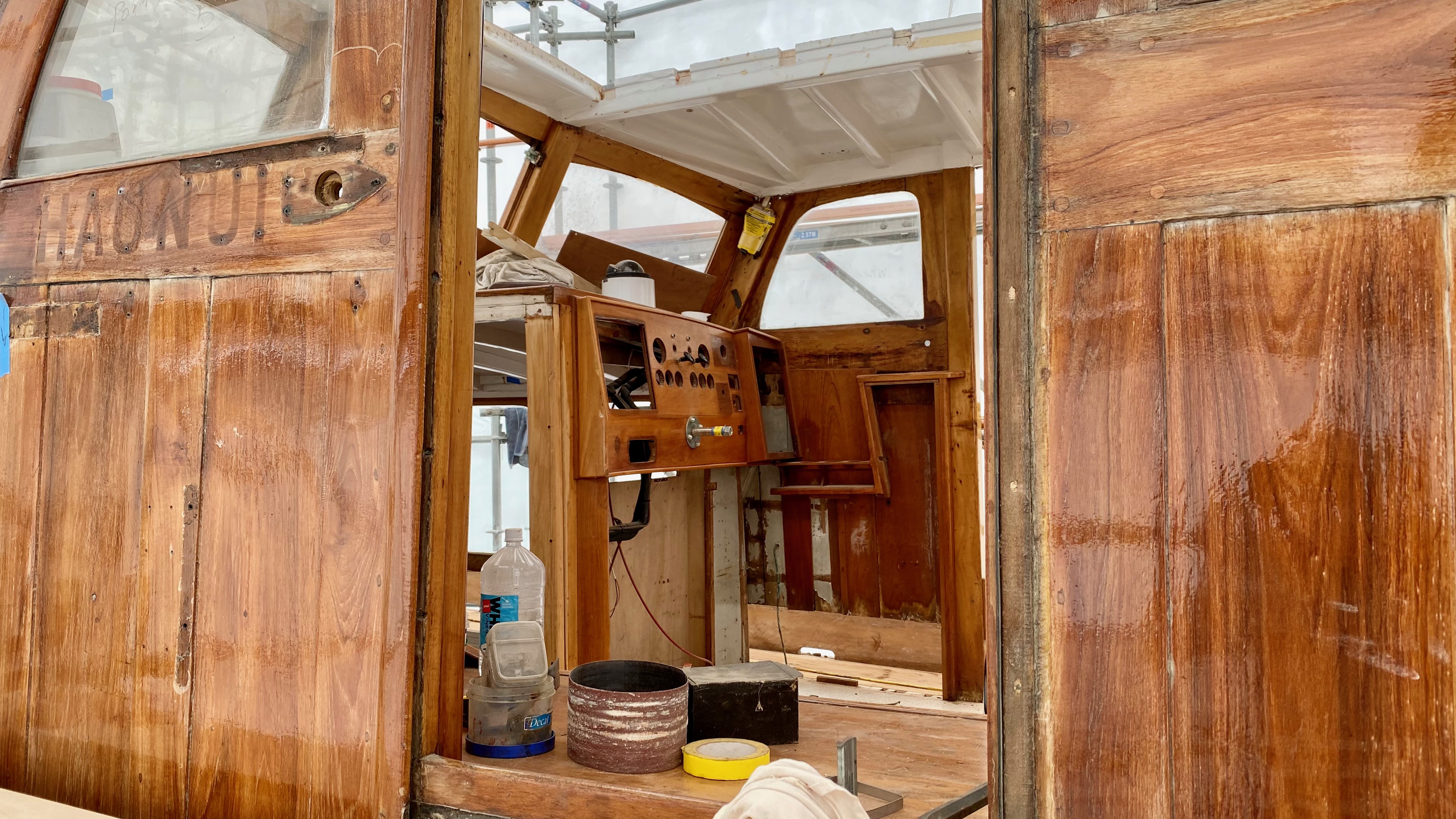
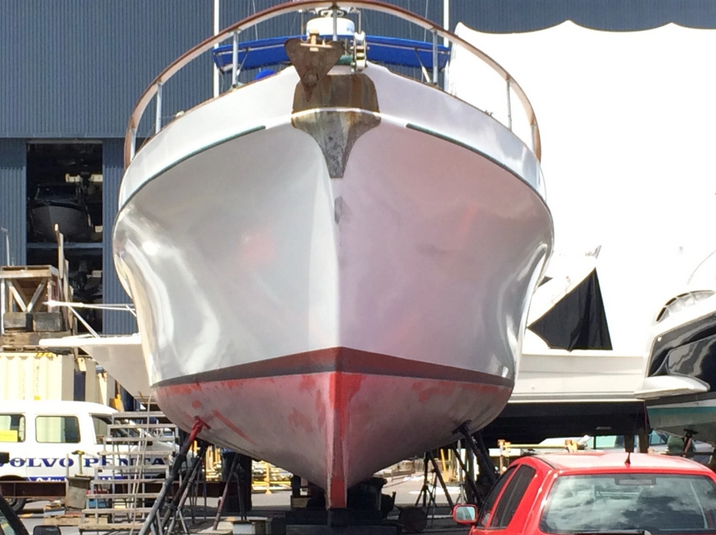
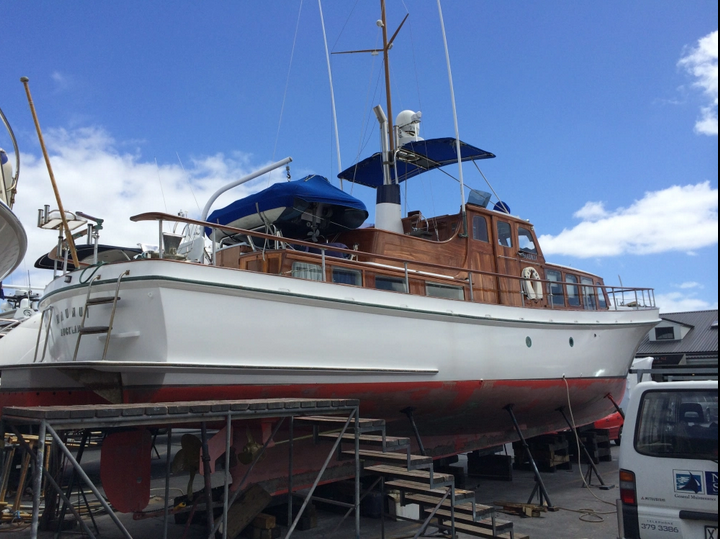
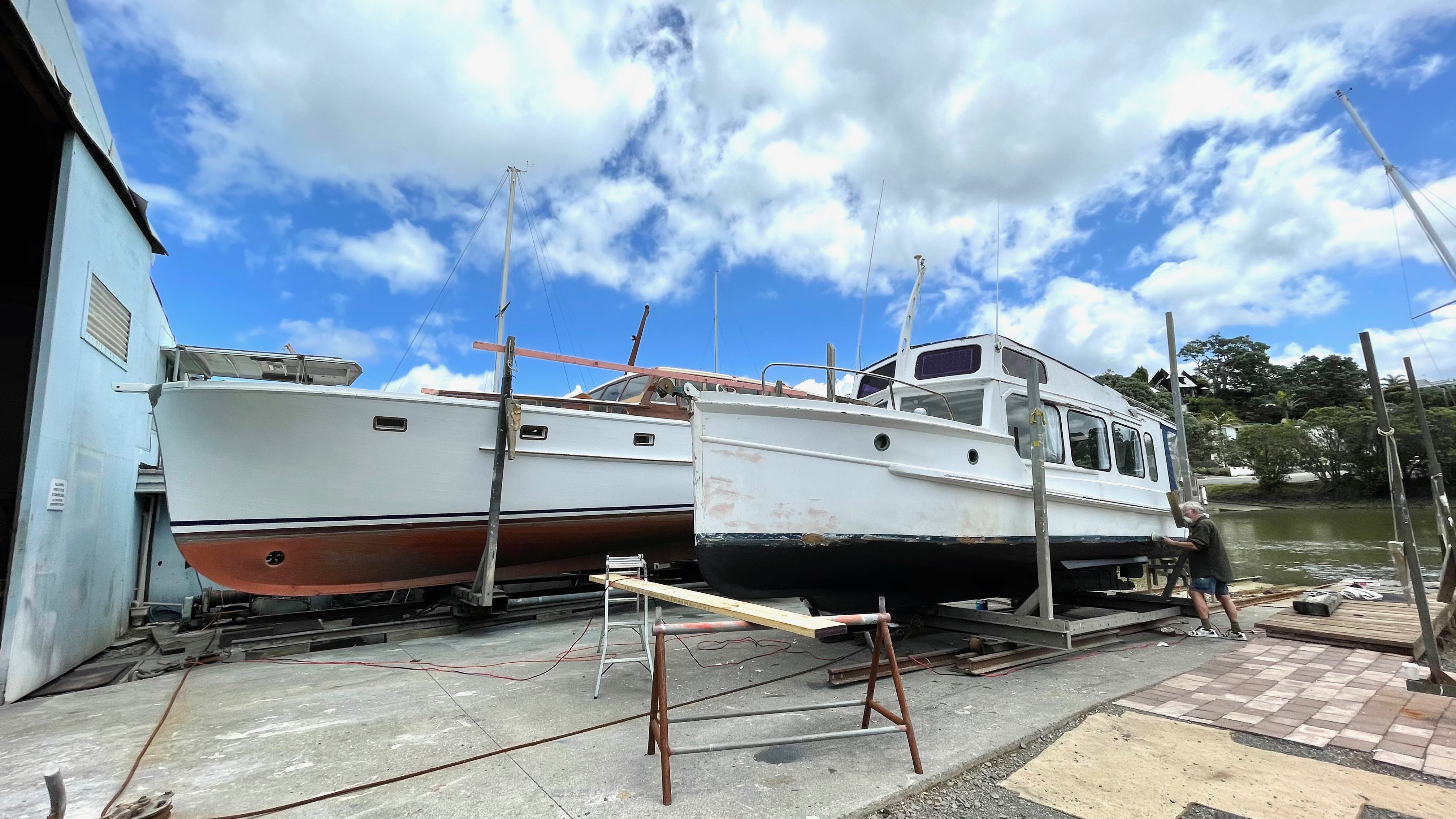
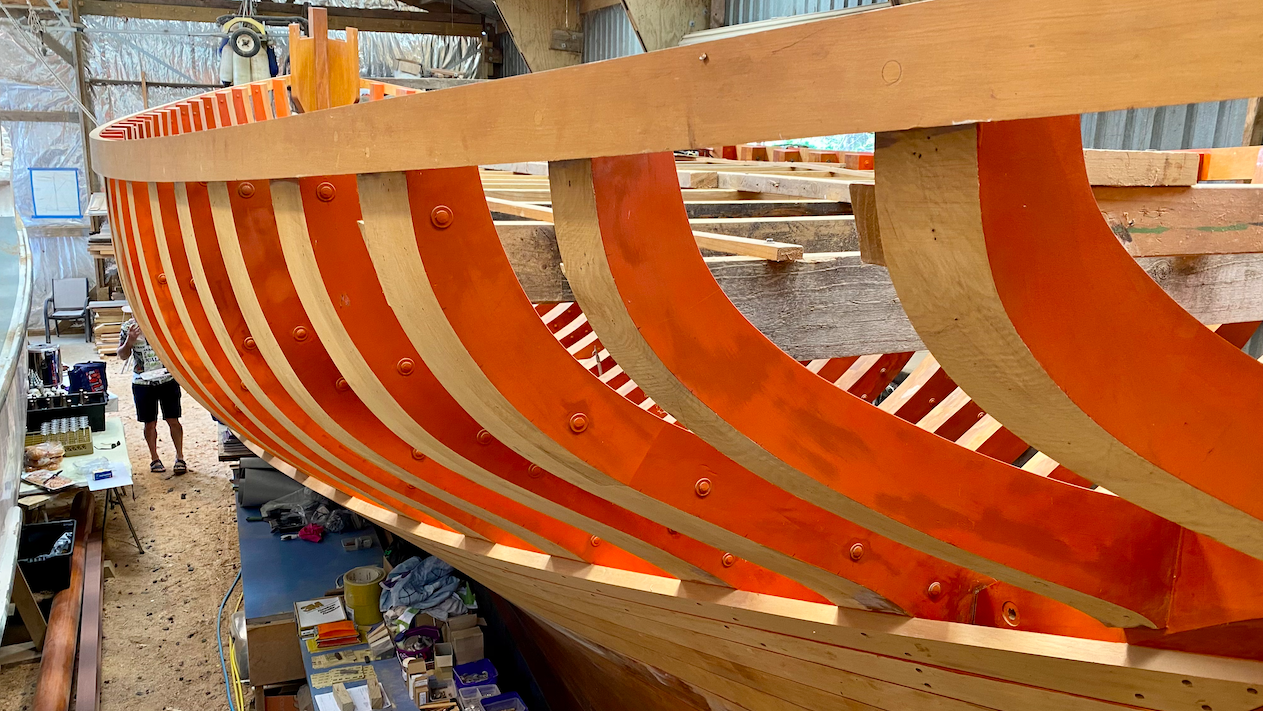
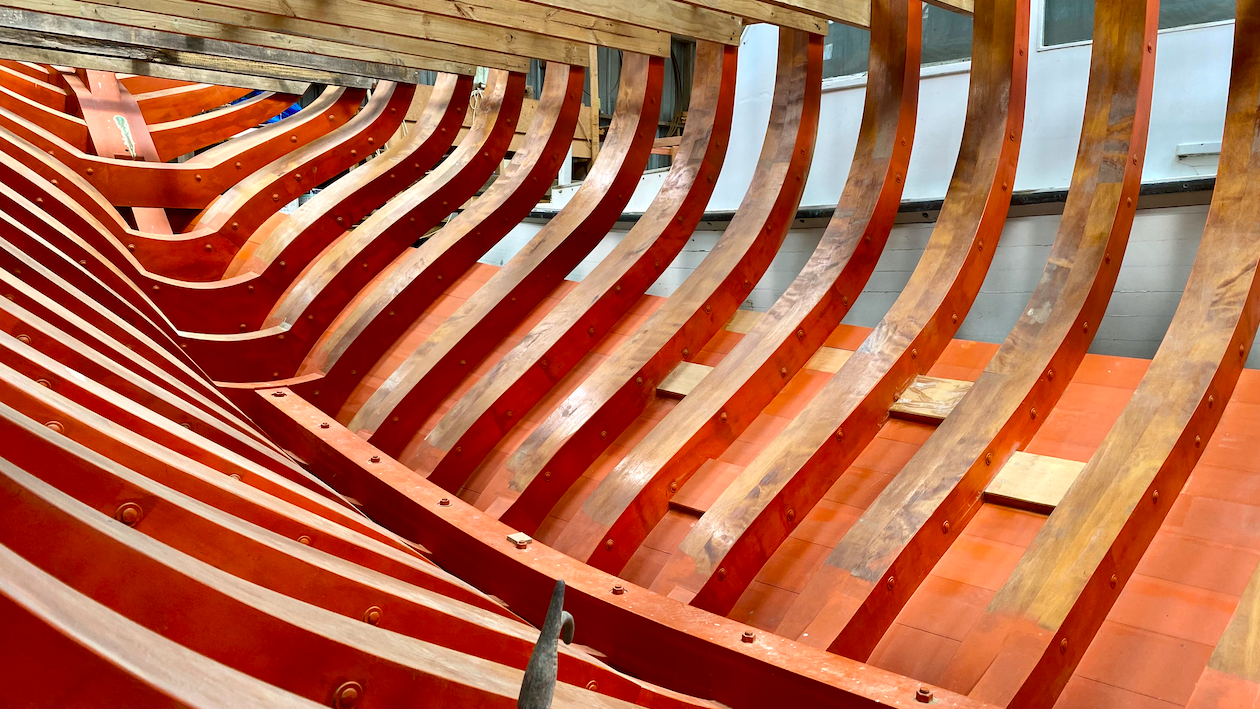
HAUNUI – RESTORATION In between the CV-19 lock-downs one of Auckland’s most beautiful classic wooden motor launches changed ownership – the Colin Wild designed and built 1948 launch – Haunui was sold by Owen Cashmore. In a previous life Haunui was owned by Harry Julian. Haunui was almost immediately hauled out at a private yard and master wooden boat builder Paul Tingey was engaged to return Haunui to her glory days. I showed her new owners over her ‘cousin’- Trinidad and they accepted the challenge to equal her presentation.
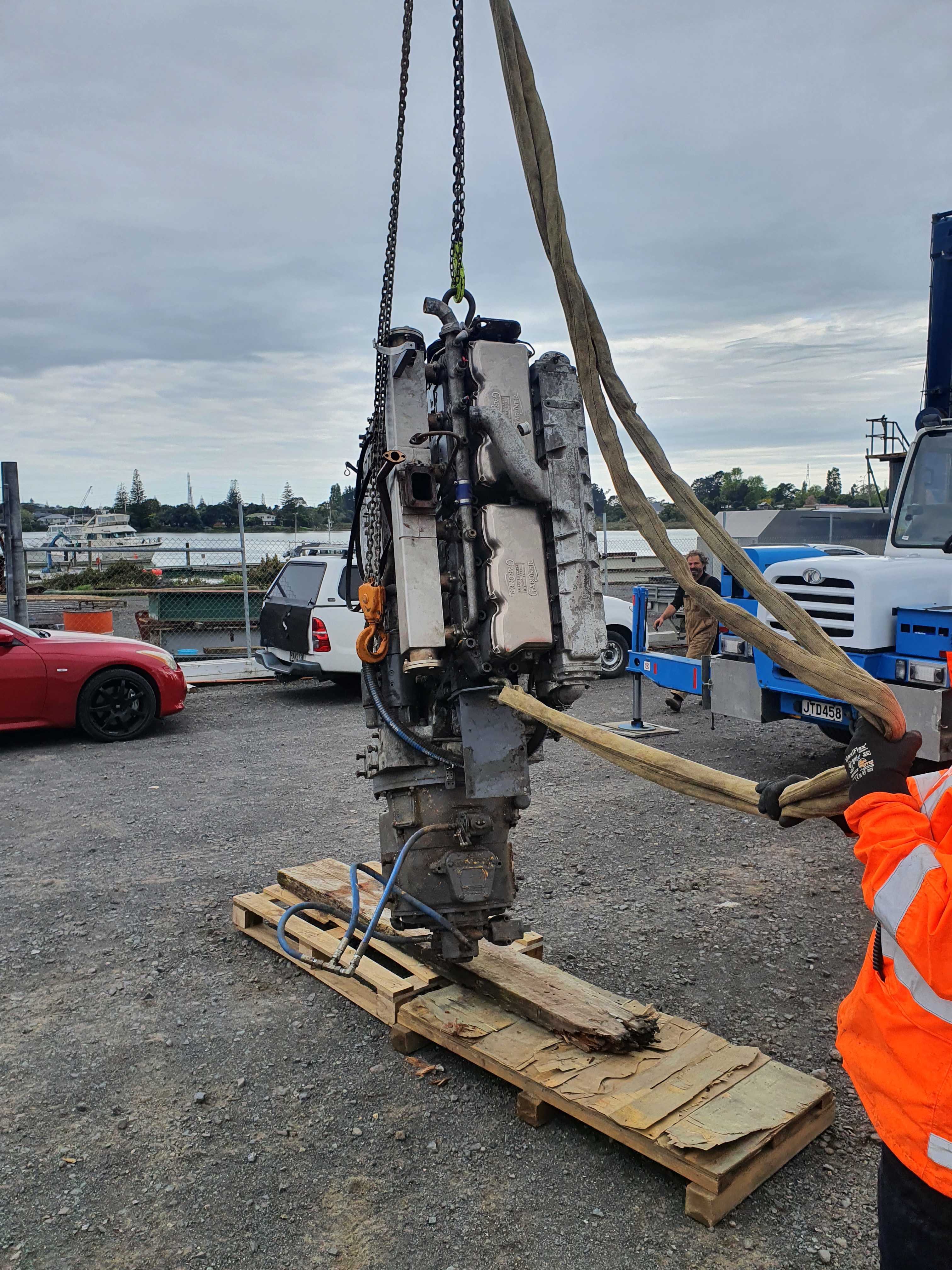
As can happen when dealing with 72 year old wooden artifacts, on close (pulling boards off) inspection the old girl had a few issues, so the decision was made to undertake a total refit, including engine. Haunui is single screw, but has a smaller auxiliary engine > shaft > prop on the starboard side. I believe an electric unit will replace the small diesel. The Gardner sadly is coming out, fyi – prior to going into Haunui, rumour is it came out of a Sydney Harbour > Manly ferry, so was very run in ;-). Her owner has told me they will restore the engine over time but the process involves utilizing a foundry that will have to custom cast the parts that are needed. In the meantime Haunui will receive a new heart transplant.
As you can see from my photos above, the refit is on a rather grand scale, but Mr Tingey is the man for the job. We will follow this project and keep you updated. As always, click on photos to enlarge 😉
The photos below are dated 2014, ex Rod Marler, and show Haunui hauled out at Orams yard in Westhaven.
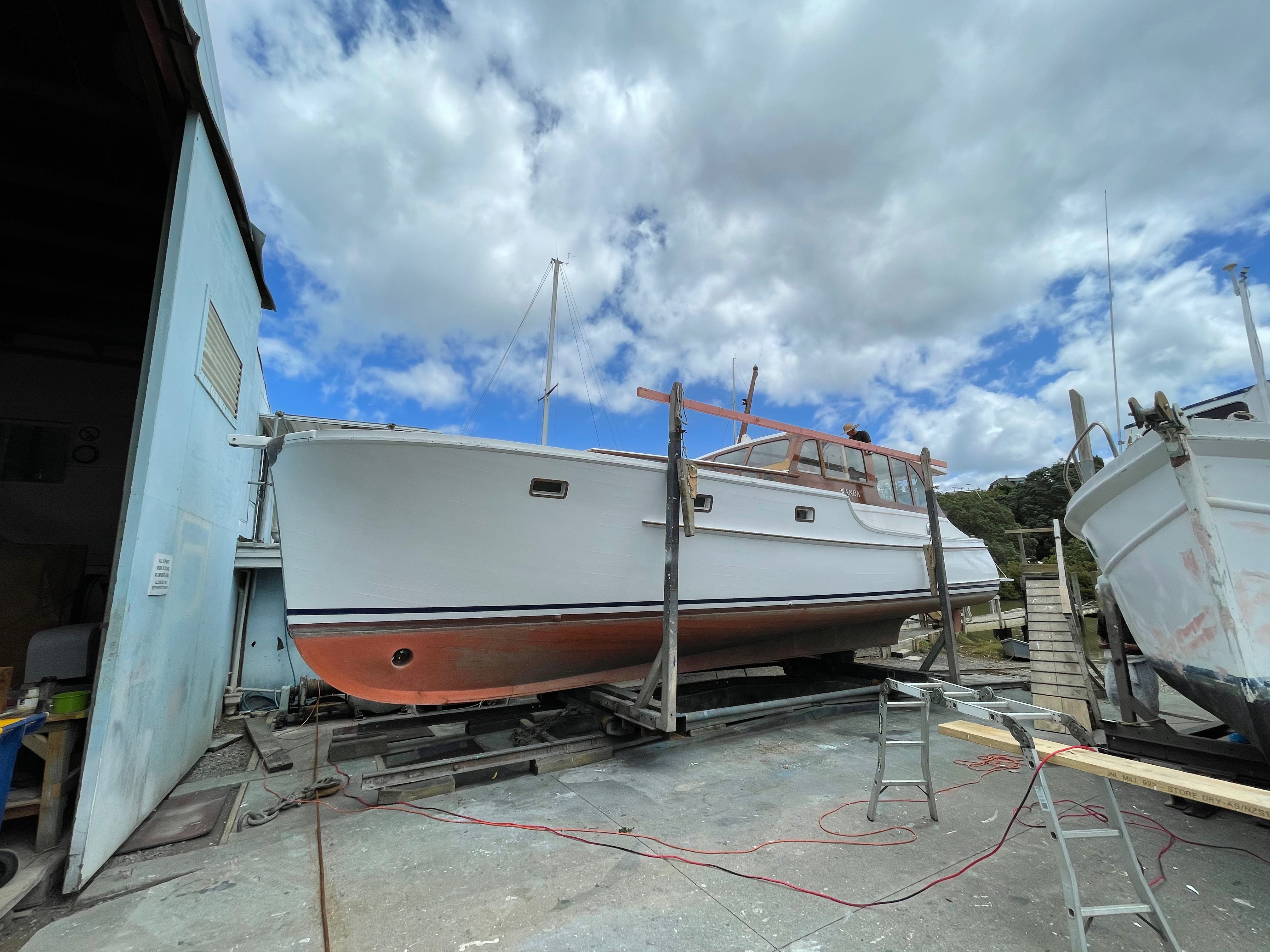
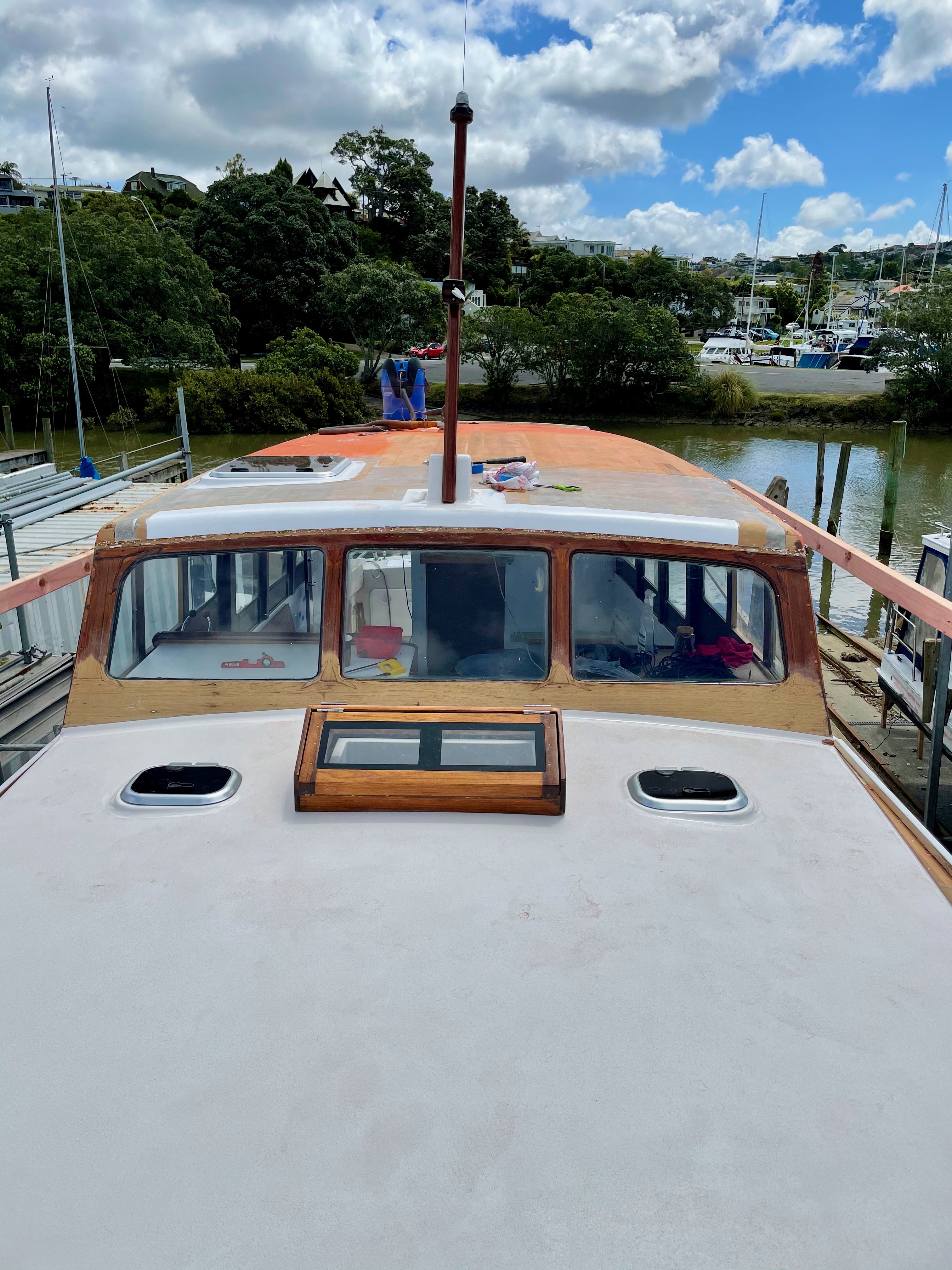
Mooching around The Slipway Milford yesterday I spotted a familiar looking shape, closer inspection revealed Wanda II was hauled out as part of her ‘rolling’ restoration. Previous WW stories tell us she was built in 1948 by the Lane Motor Boat Co. for Fred Porter. She measures 38’6’ and is powered by twin BMC Commodore 55hp diesel engines.
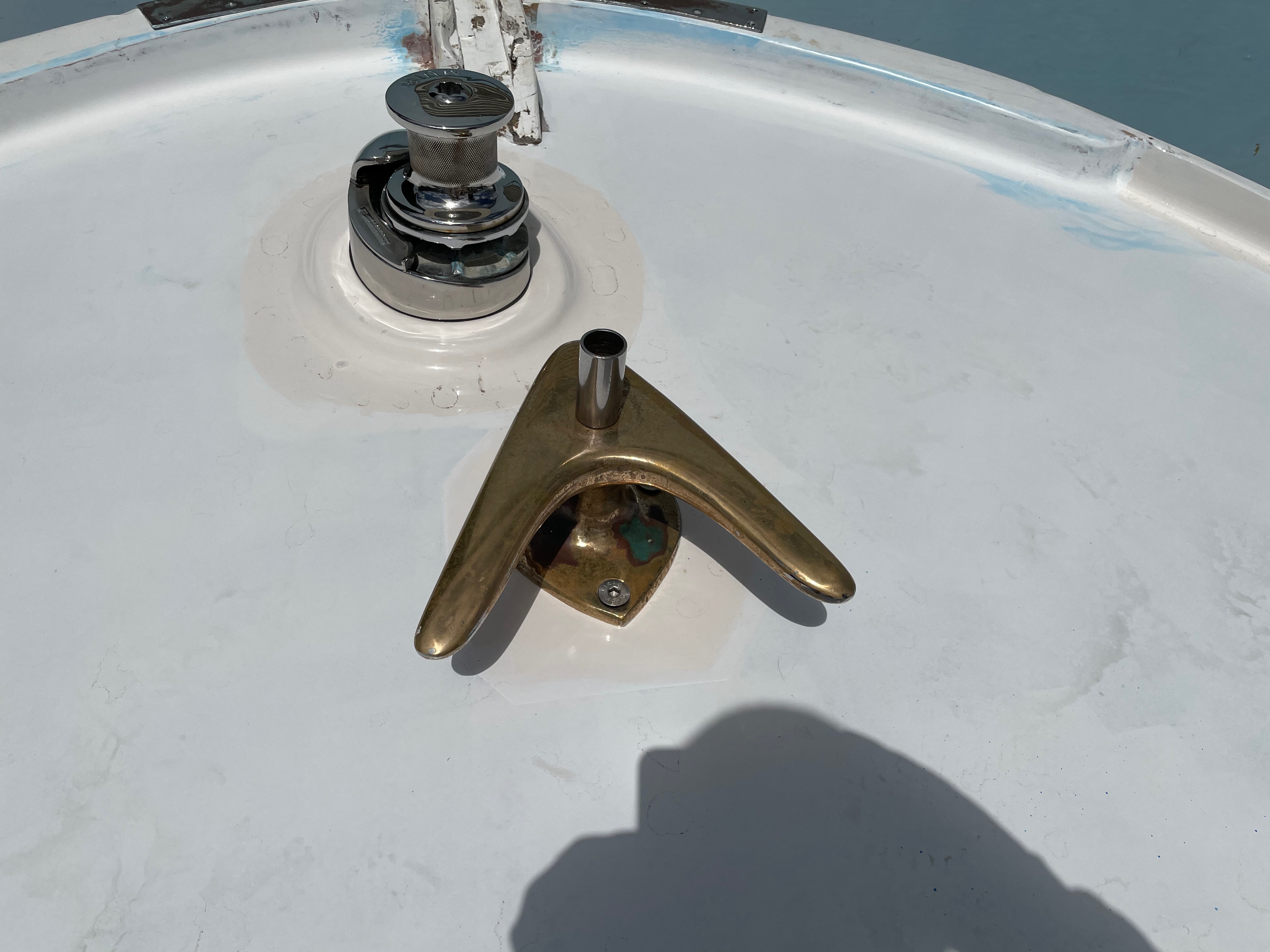
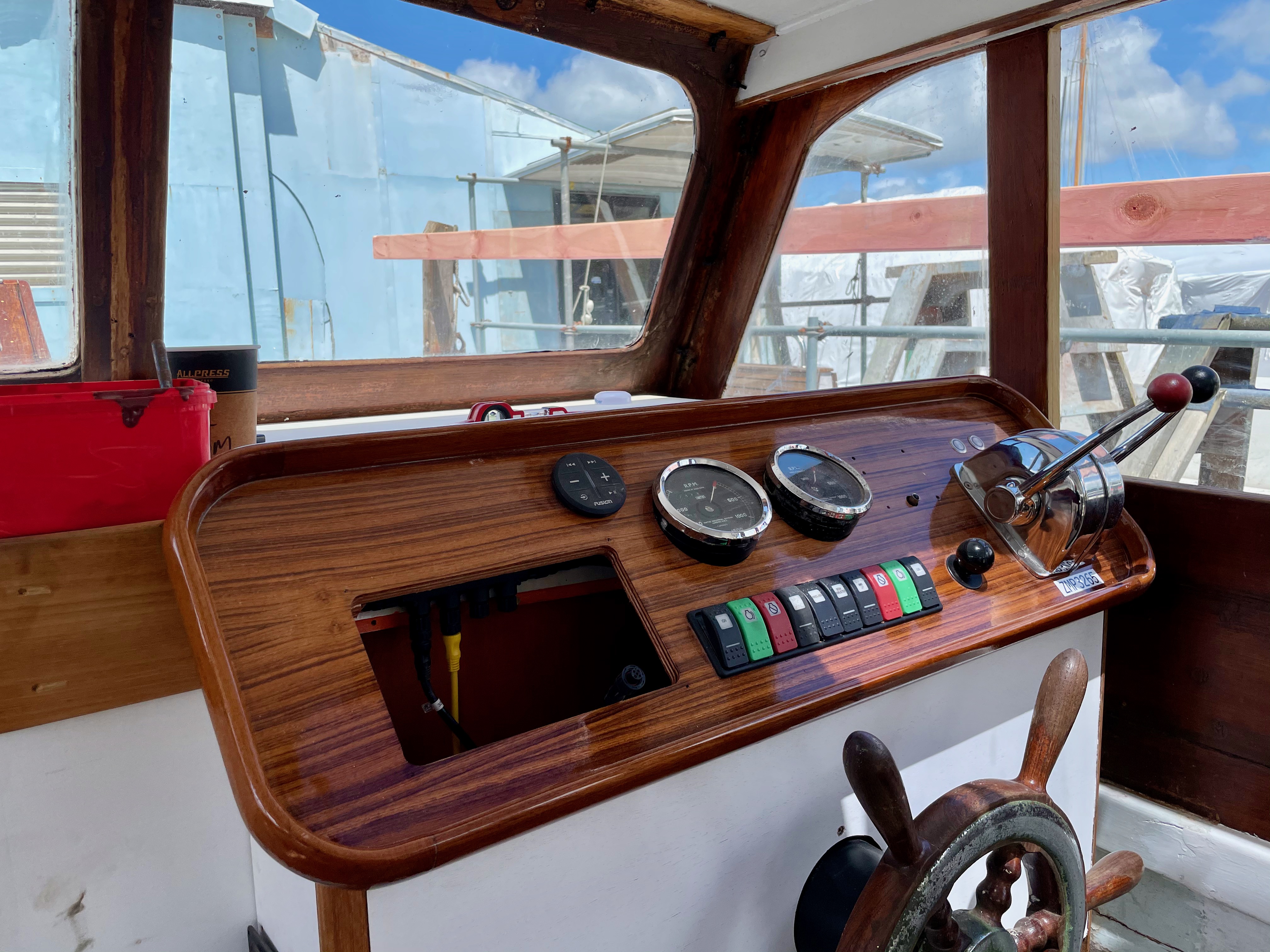
Her current custodian / owner has virtually gutted the interior and is refurbishing her to better match the demands of classic woody family cruising. Whilst the latest fittings and systems are being utilized, her owner has a very sympathetic eye to detail so I’m confident she will look fantastic.Milford wooden boat builder Geoff Bagnall was onboard while I was there replacing / sistering some ribs. I think that is what he was doing 😉
Great to see her at Milford, hopefully providing motivation to Cam Malcolm, head honcho at the Slipway, to accelerate the work on his – Connie V, one of 3 sister ships – Wanda II, Connie V and Doreen. Connie V is currently directly in front of Wanda II inside the shed.
In the top photo, the woody alongside Wanda II is – Uhuru Jack, getting some TLC. She would have to be one of the oldest residents of Milford Creek Marina.
photo ex Ken Rickets c.1940’sphoto ex Chris Horsley c.2014
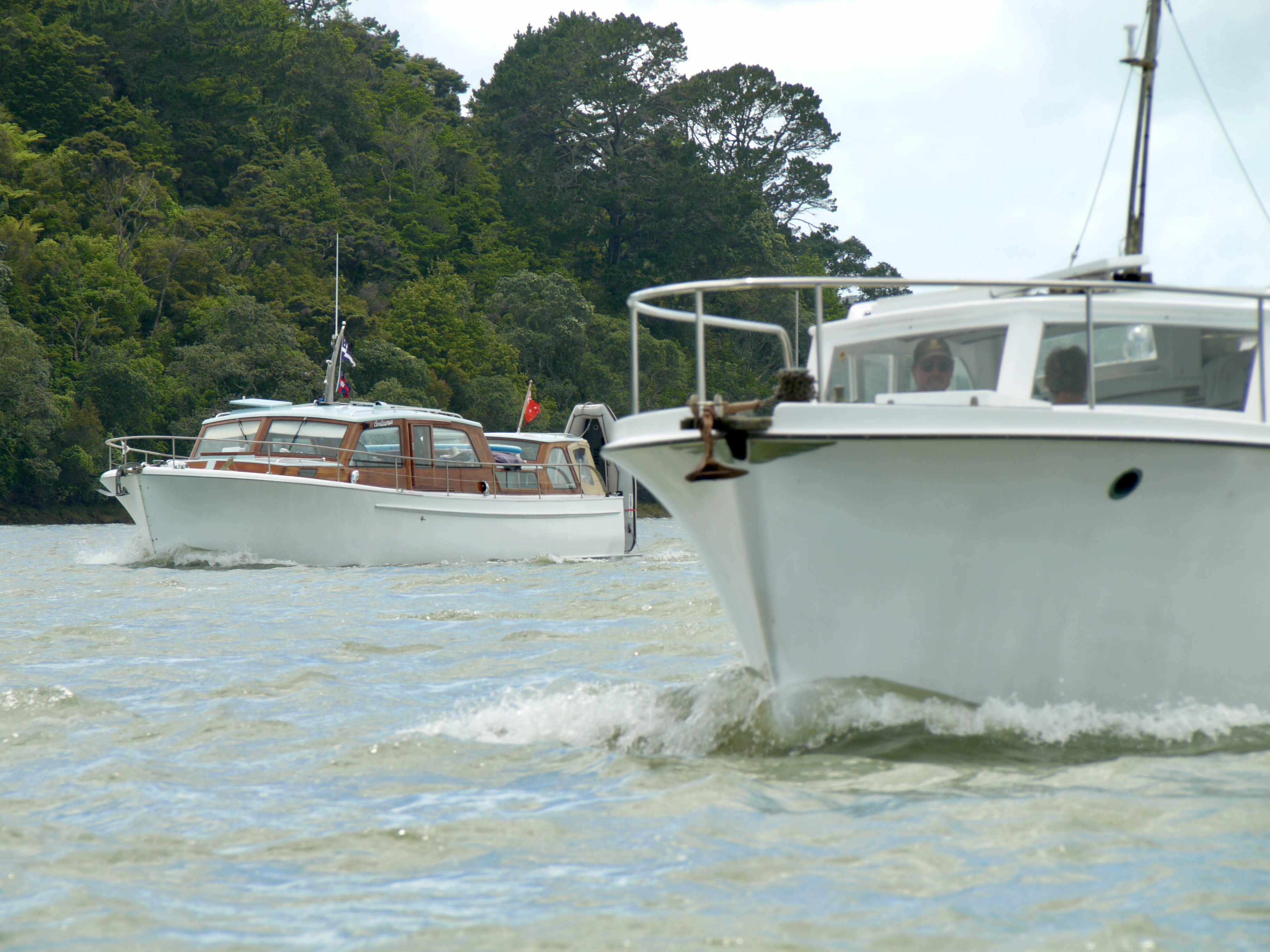
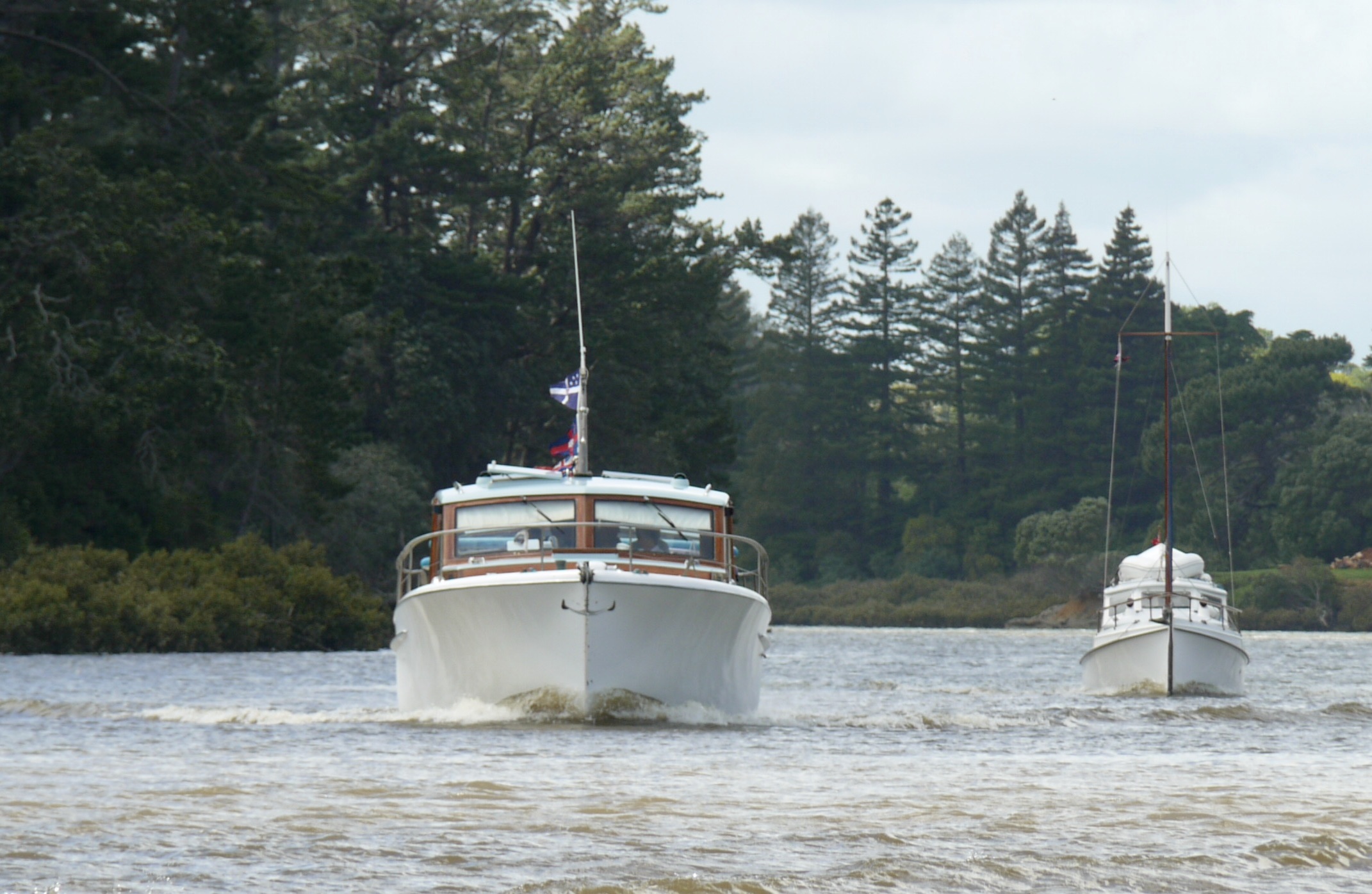
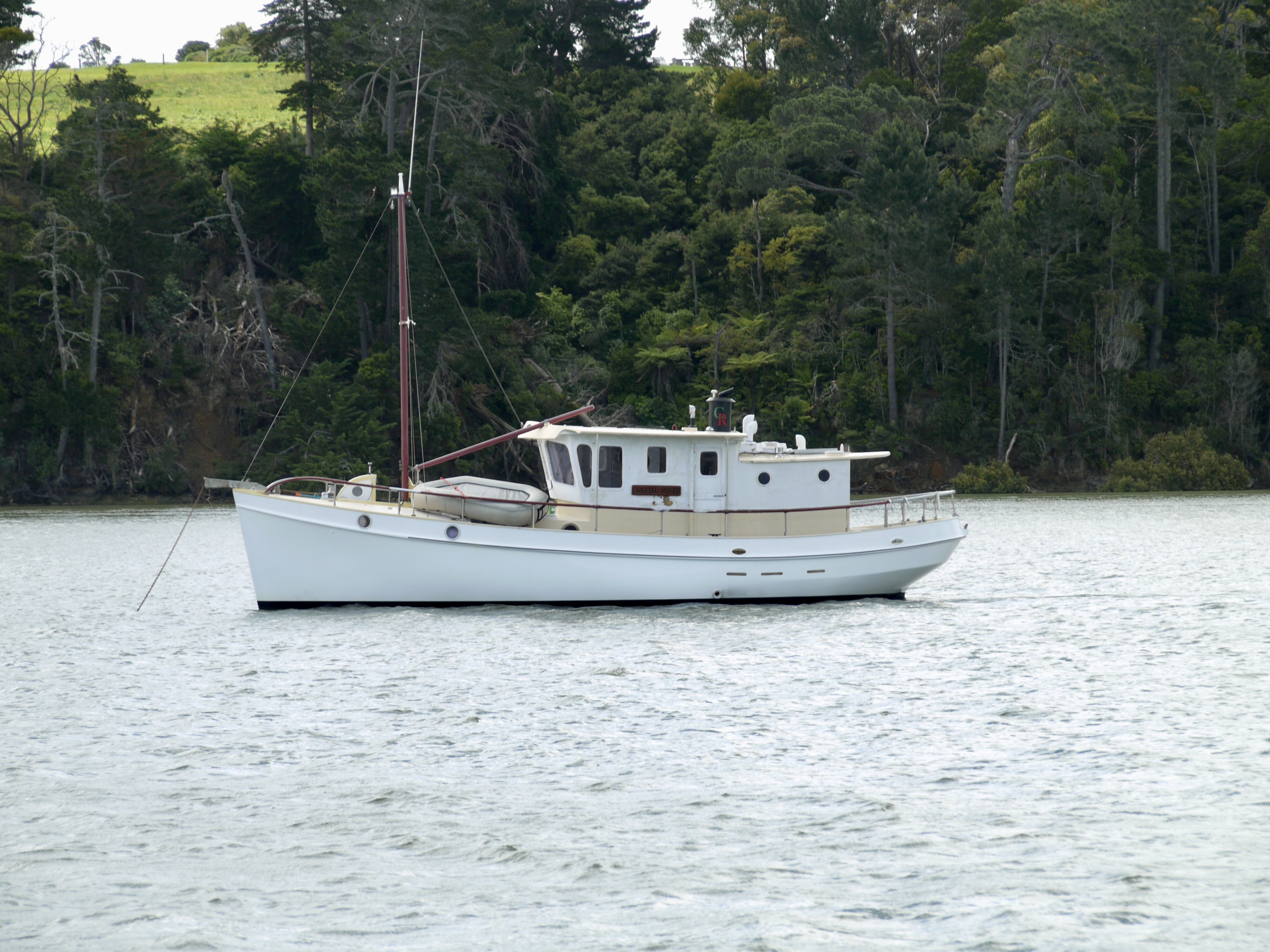
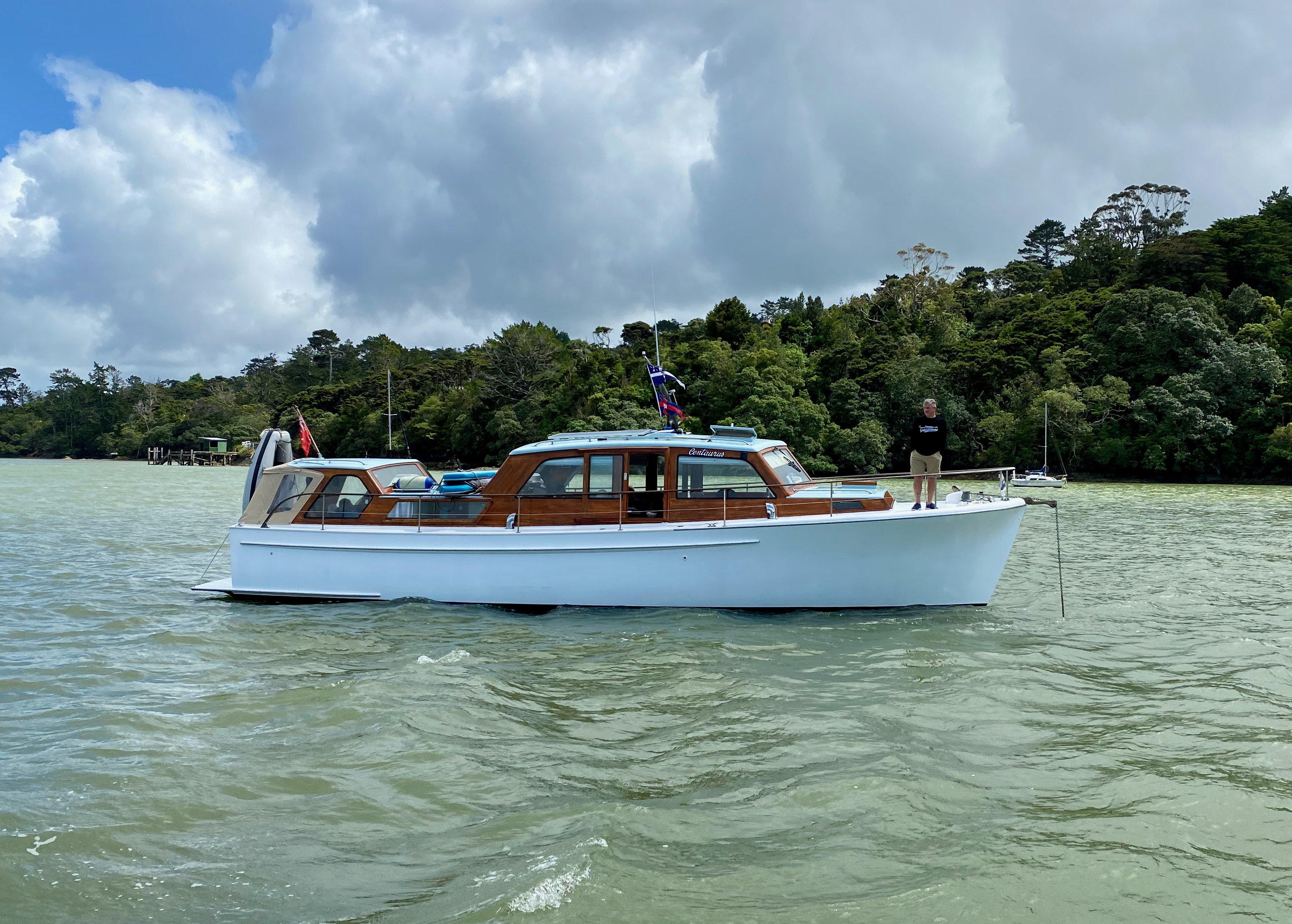
Woody Classics Weekend – Riverhead Tavern Lunch Cruise Saturday night in Auckland was evil, rain, thunder and lightening – up and down several times during the night, each time thinking – Sundays woody cruise will be cancelled. But once again the weather gods smiled on us and half way up the river the sun came out and stayed out all day. Saturday nights weather scared a few boats off making the trip but most decided to join in via car.
A very pleasant afternoon was had in the Tavern’s Boathouse, which we had reserved for the group. Wonderful to catch up with everyone and to welcome several newbies to the group.Hats off the Jim and Karin Lott who made the trip up the river in their 38’ Stewart yacht – Mokoia. Make a note yachties – sub 2m draft and you are all good 😉
You will notice from the upper river photos that after all the rain, the water was very muddy – worst I have seen it – makes you wonder about all the farm land ‘converted’ to high density housing in the area. When we first started woody trips to the Tavern, most of the surrounding land was either forestry or pasture.
Took a detour on the way back into the viaduct, almost feel embarrassed asking the bridge control to raise the bridge for Raindance 🙂 , to check on the John Spencer / Classic Yacht & Launch gig at Kairanga Plaza, Wynyard Quarter – scored a VIP berth, thank you Tony Stevenson.Not as many photos as normal , for once I spent most of the afternoon chatting, special thanks to Chris Miller who grabbed my camera a few times and snapped some goodies.
WIN A COPY OF ‘THE JOHN SPENCER STORY’ 64 PAGE BOOKLET
All woodys that answer the following question correctly, go into the draw for a copy of the above – As always, entry ONLY VIA EMAIL to waitematawoodys@gmail.com
Q – “What was the longest yacht John Spencer designed and built”?
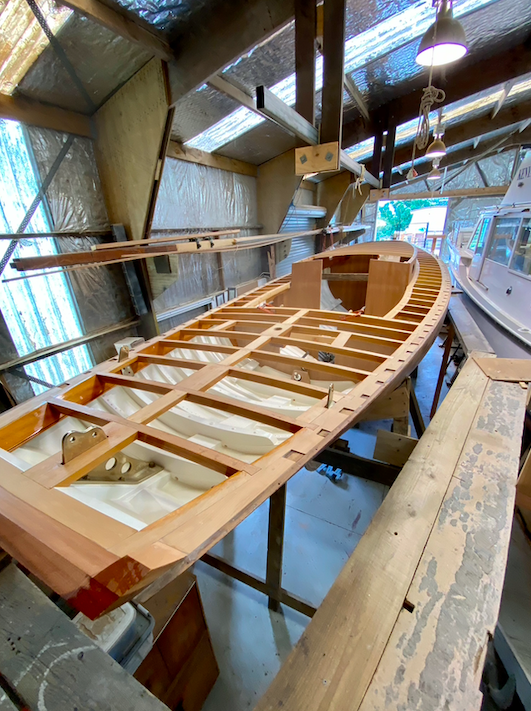
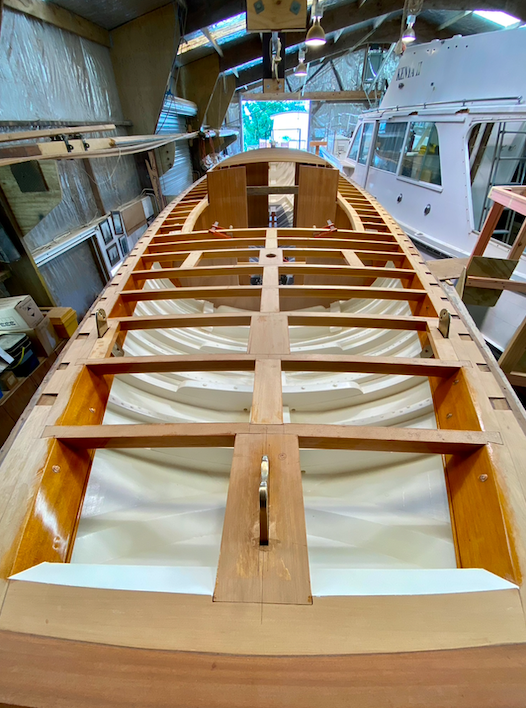
Yesterday afternoon, Auckland based woodys got to rub shoulders with an impressive collection of classic wooden boats at one of New Zealand’s leading wooden boat yards – the Peter Brookes ‘Brookes Boatbuilders’ complex in rural Waimauku, West Auckland. I have been privileged to visit numerous times but every visit is a treat, where else would you see over eight classic yachts and launches in varying stages of restorations.
I’ll let the photos tell the story, if I have a photo mixed up, let me know 🙂 – enjoy – remember as always if you click on the photos they will enlarge 😉
MEDWAY Taupo woody Paul Drake came across the launch Medway the other day, on the hard at Mana Marina (Wellington).Paul recalls that she was at Taupo in the 1960’s and is clearly a sister ship to Lidgard’s Monterey.
Previously on WW there has been discussion relating to three launches built at the same time, they were Monterey, Almaray & possibly Tangaroa. Paul wondered which of the last two Medway is, as there almost differently has been a name change. WW link below to Monterey, where you can see the Lidgard factory / shed at the time of building. https://waitematawoodys.com/2013/04/14/monterey-2/ Paul commented that although in great need of a thorough paint, her good bones show through and one would think that she will tidy up very well.
Input from Harold Kidd – According to the APYMBA records, MEDWAY was built by “Woods” of Auckland in 1952. In 1962 she was owned by Larry Bruce Johnston and then had a 100hp Ford diesel.
Buying or Selling a Classic Boat Without sounding too much like the late Jacinda Ardern (“be kind”) – when people ask me about classic wooden boat ownership, I normally say that owning a woody has a positive effect on your life i.e. you end up forging a life you don’t need to escape from.
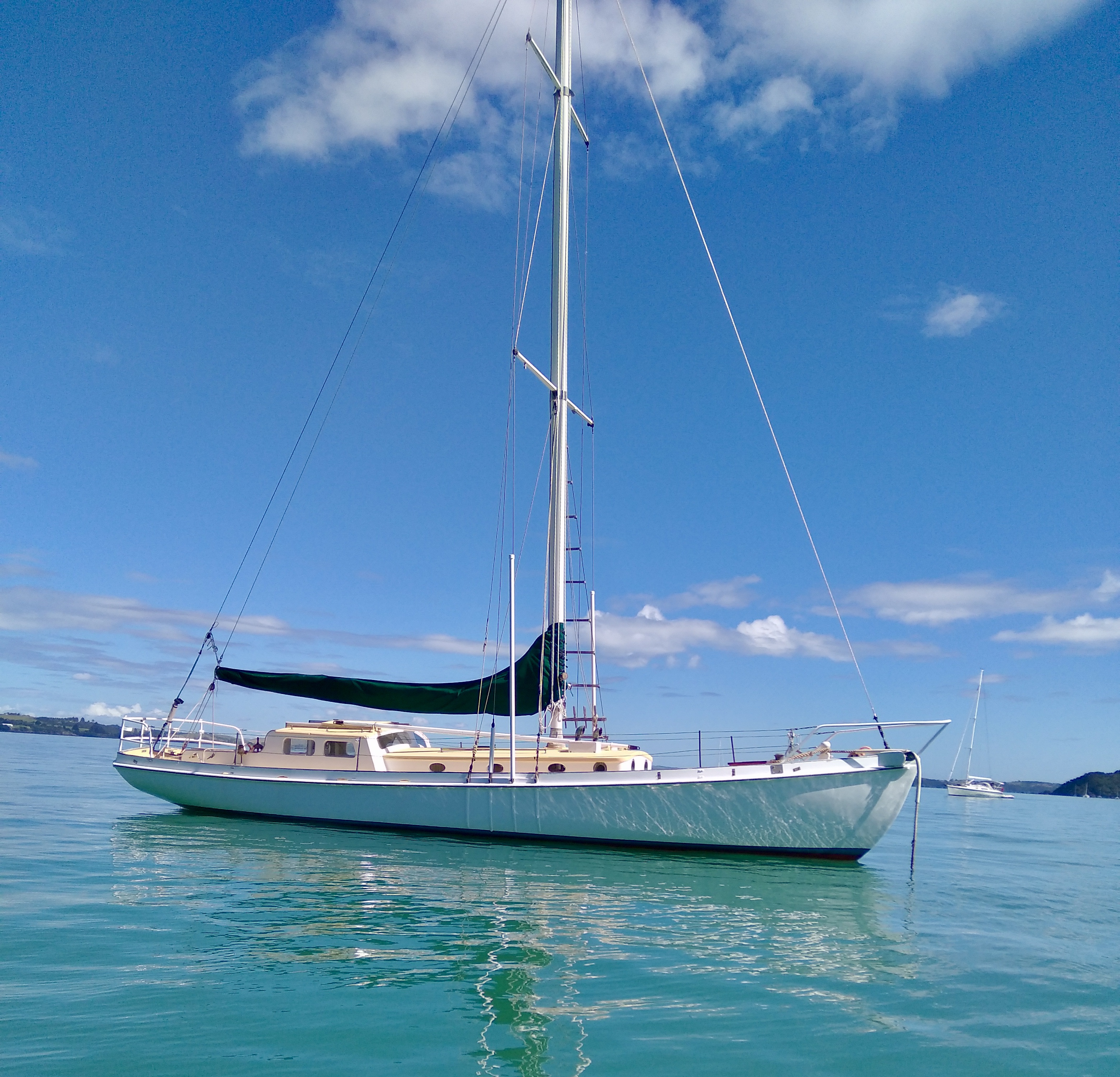
So woodys in the interest of your mental well being listed below a sample of some of the boats that are currently berthed at the virtual Wooden Boat Bureau Sales Marina. There are others for sale, some owners request privacy. To read more about the Wooden Boat Bureau – click https://waitematawoodys.com/2019/12/01/wooden-boat-bureau-advice-for-buyers-and-sellers/ The Wooden Boat Bureau is uniquely placed to offer impartial, up-to-date market information and objective advice to both sellers and buyers. So if you are looking for a wooden boat or considering selling – email us at waitematawoodys@gmail.com
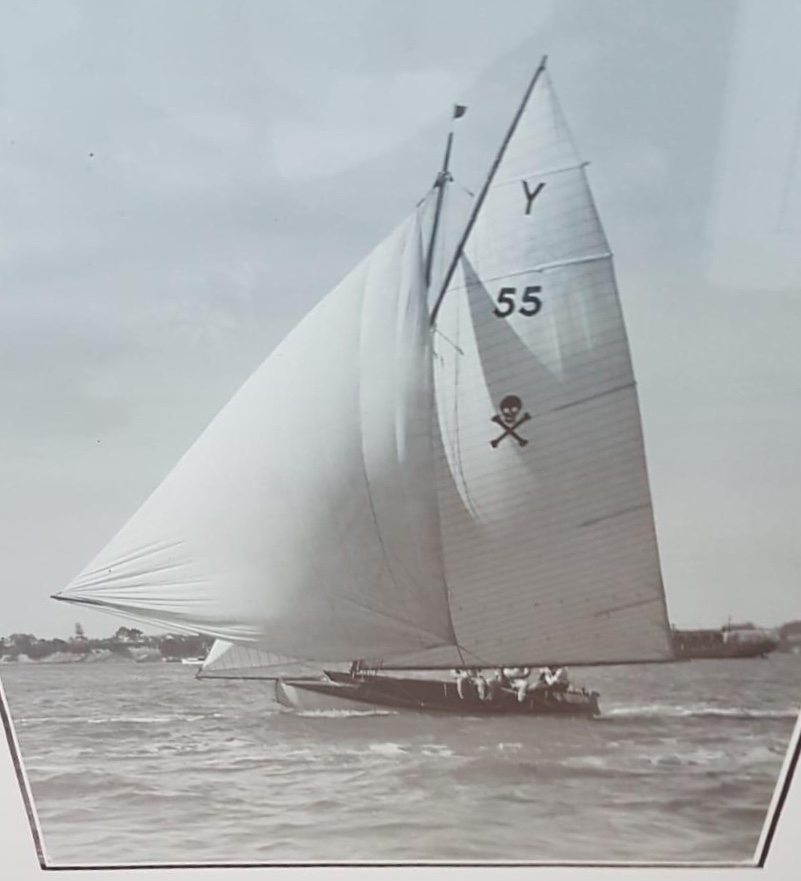
THE REBIE Y55 – Sailing Sunday David Campball-Morrsion sent in the above photo of the mullet boat – The Reble, which David’s father in law and a couple of mates owned before the war, his name was Arthur Coughlan (Buster) and they kept her in St Marys Bay in Auckland. The bridge motorway put paid to that area years later.The Reble had the skull and cross bones on the main as in the photo. Buster played for Ponsonby Rugby Club and became a NZ Barbarian just before the war and became a Ponsonby life member and an Auckland rugby selector, also an active member of the Ponsonby Cruising club.
After the war Buster and family moved to Dunedin for ten years which he claimed was his sentence, they then moved back to Auckland to take up the position of personal manager at Pacific Steel when it opened. David would take him out a number of times on the family yacht, then in their launch Arima, but David commented that fishing in his tinny at Coromandel was his love in his later years.
David is keen to learn what became of The Rebie post the Arthur Coughlan (Buster) ownership period.
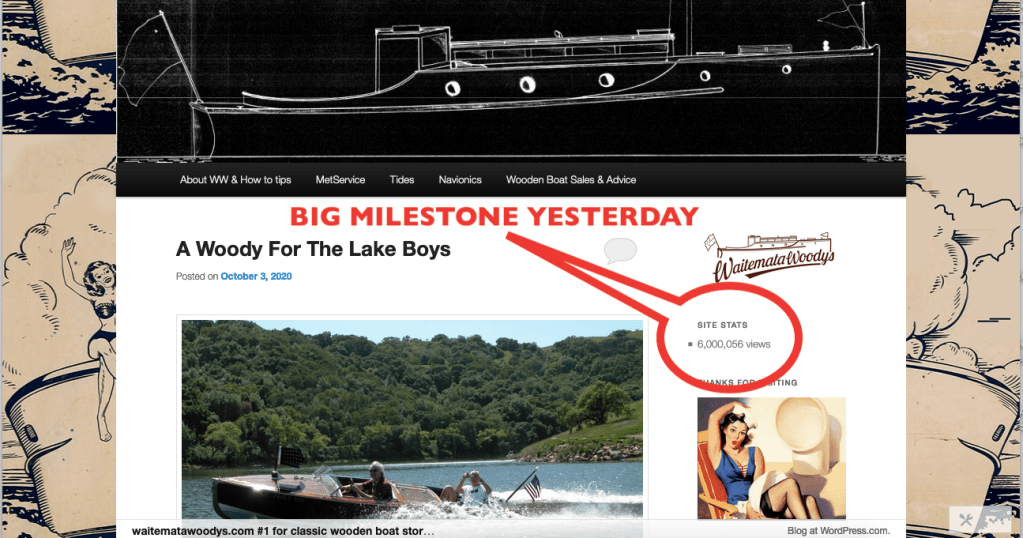
Big WW milestone yesterday, the odometer clicked past 6,000,000 views – I got so excited when it went into 4 digits, used to check it every 1/2 hr to see how many and who was visiting the site 🙂
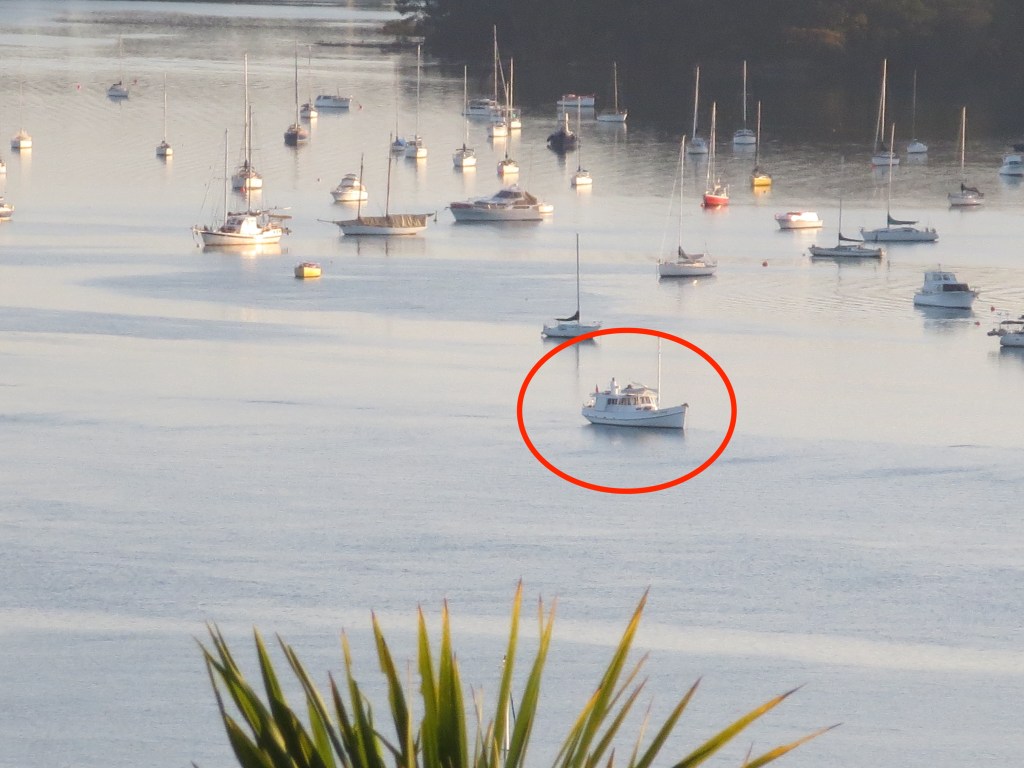
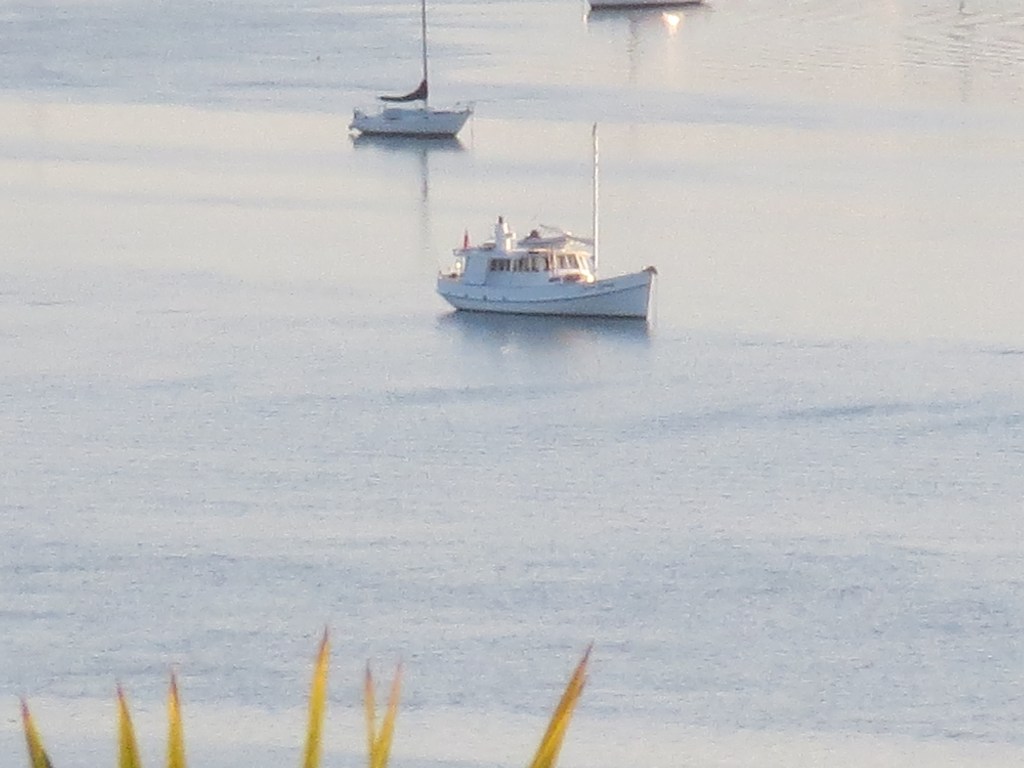
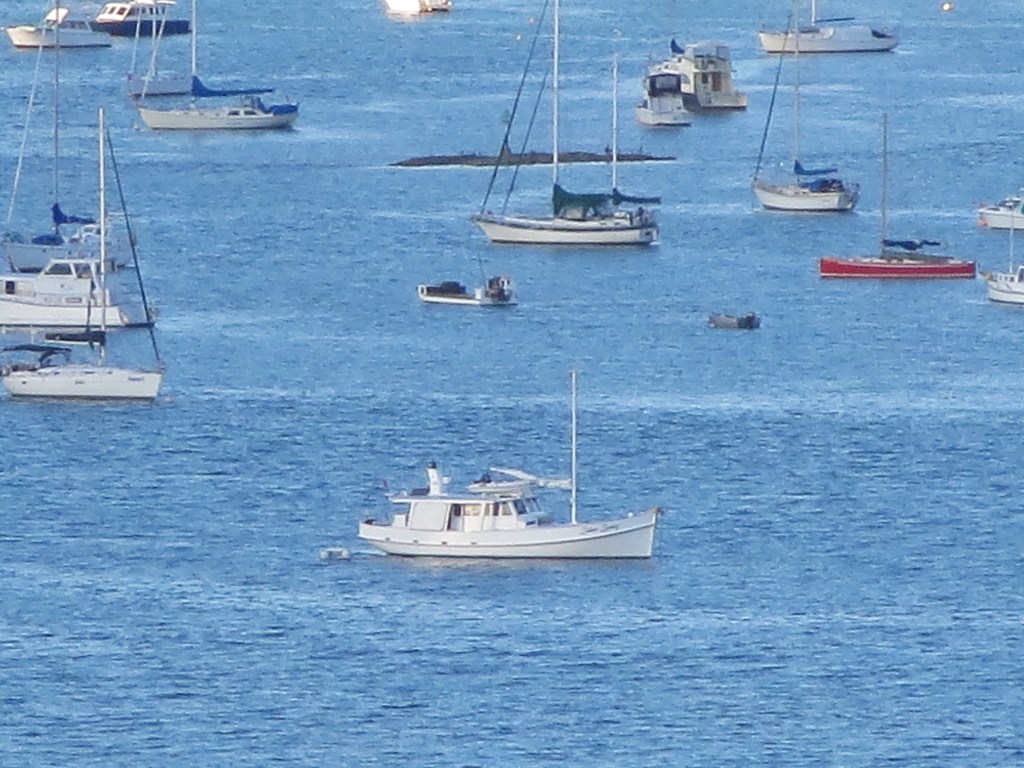
Can we put Russell Ward out of his misery? Russell sent in the 2 photos below of a boat named Silver Spray, that dropped anchor on Friday night below him, in Scotts Bay /Landing – from the distance she appeared to be approx. 40’, with a counter stern, slightly Wild Dock looking. Any one know the boat?
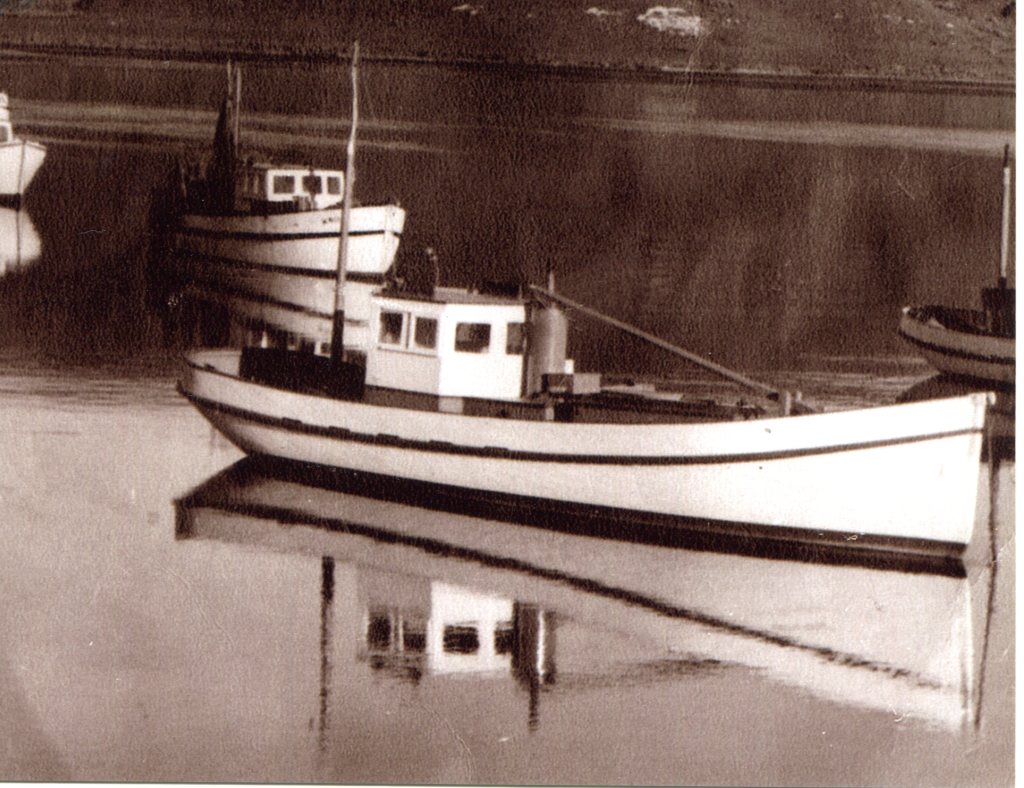
Silver Spray when an Island Bay fishing boat launched c. 1938 (photo ex Baden Pascoe)
22-12-20 Input from John Bullivant – Silver Spray at Half Moon Bay Marina. Owner advised she is powered by a GM671