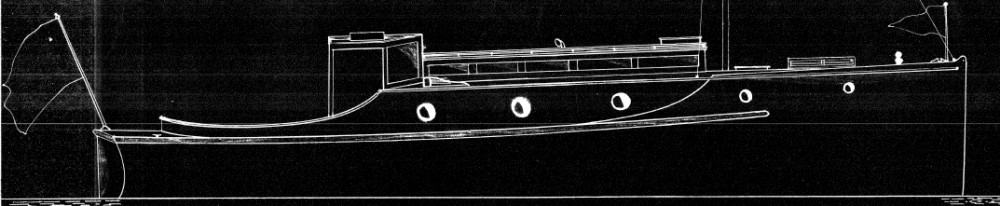
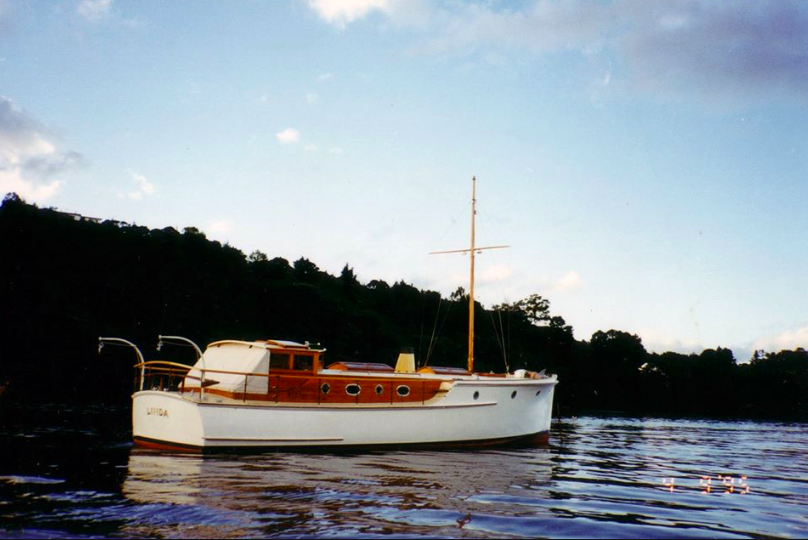
The Best of Colin Wild + Herreshoff Steam Launch The top two photos of the Brooke families 1927 Colin Wild launch – Linda comes to us via Mitchell Hutchings fb ex the Williamson Family Collection. Linda at the time was moored at Herald Island.
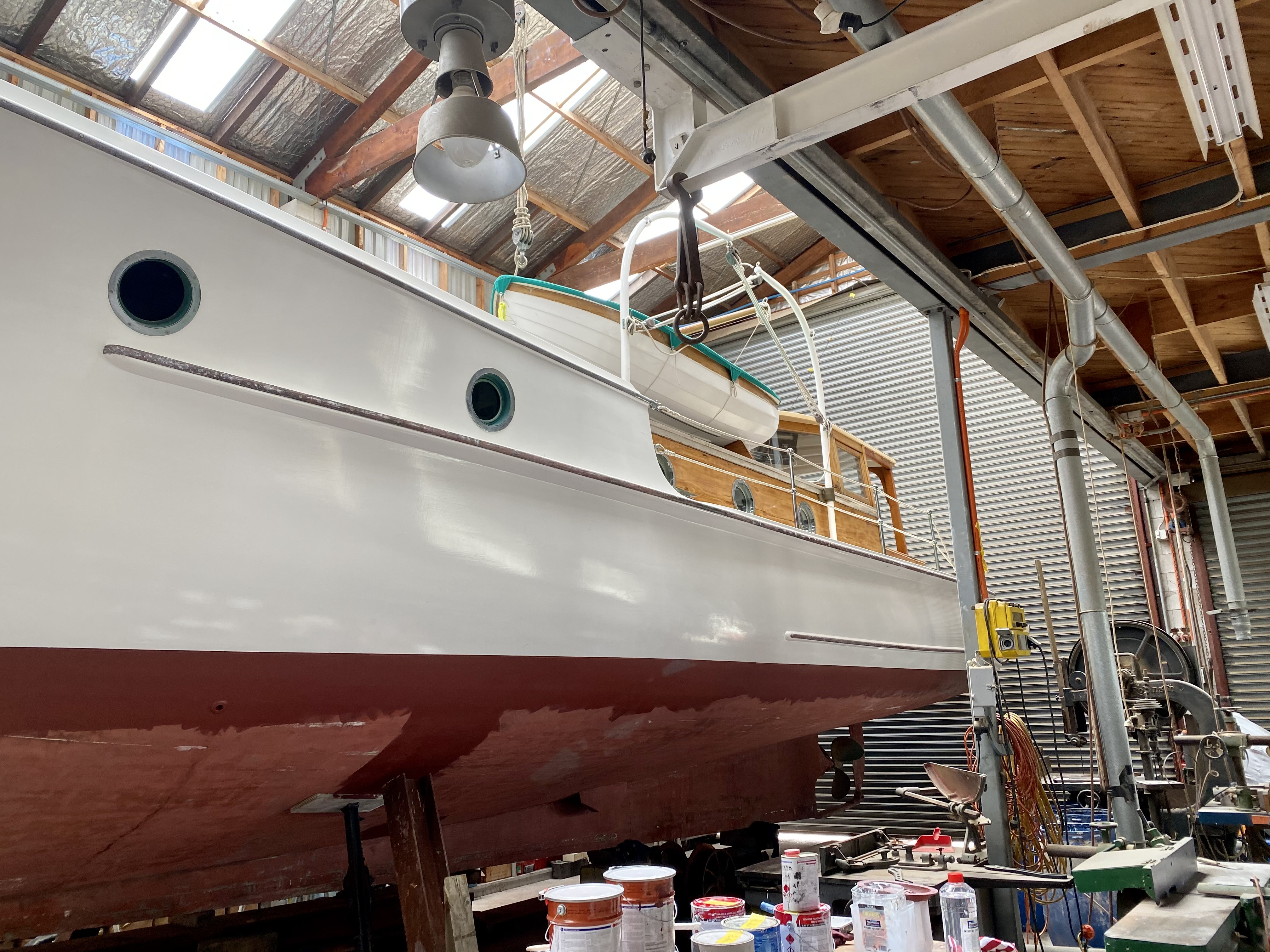
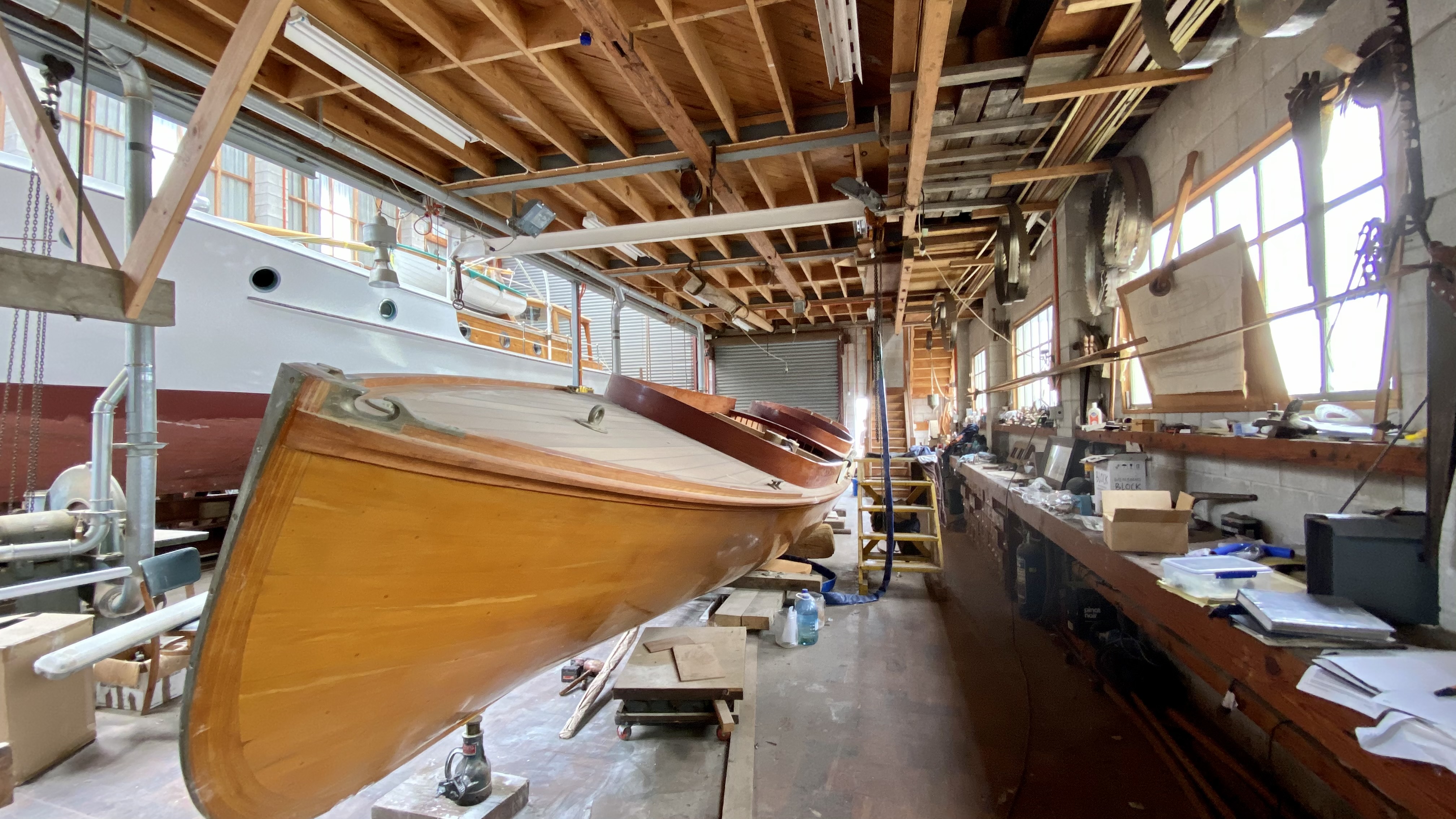
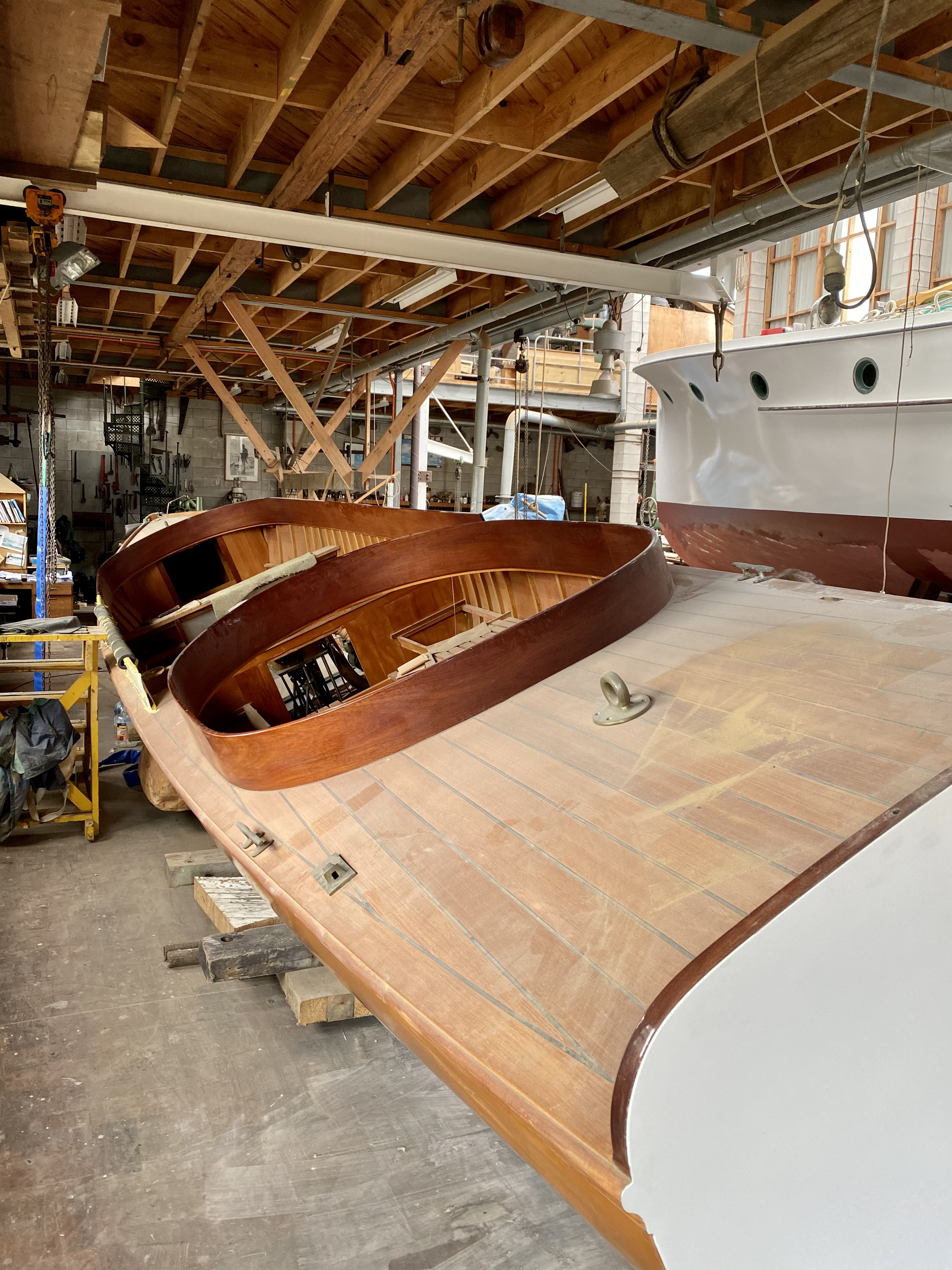
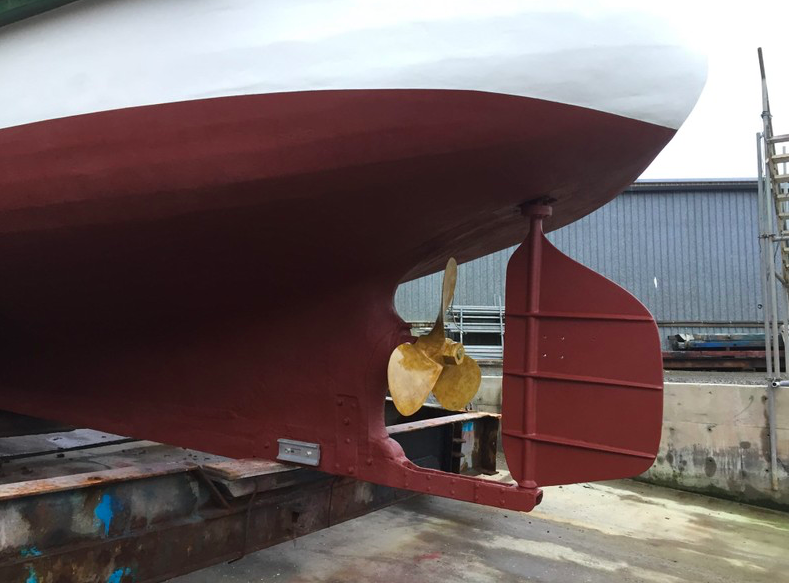
The bottom photo I took today of Wirihana tucked up in Chris McMullen’s shed for her winter TLC. Wirihana is another of Wild’s big motorboats, built in 1933.
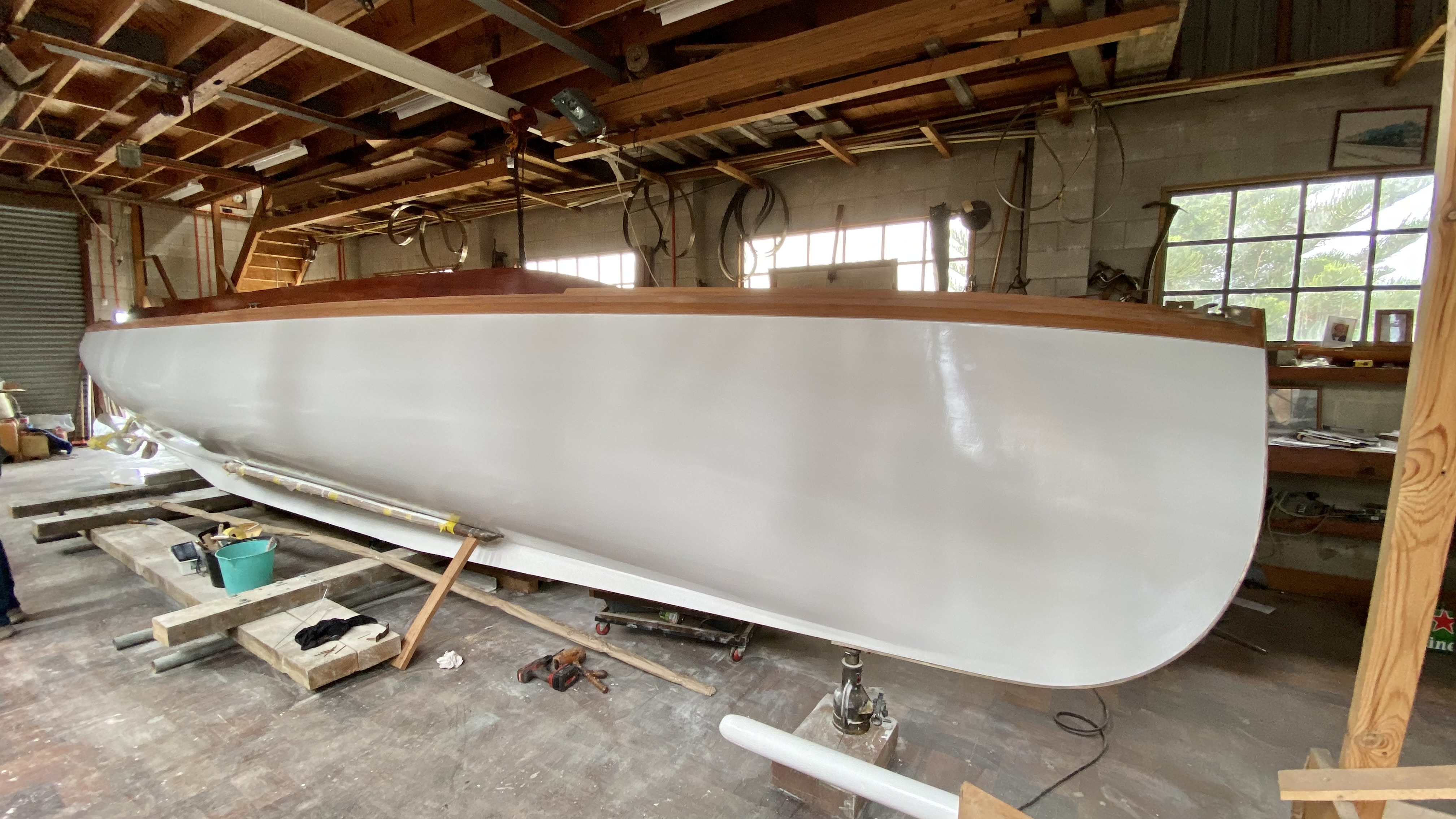
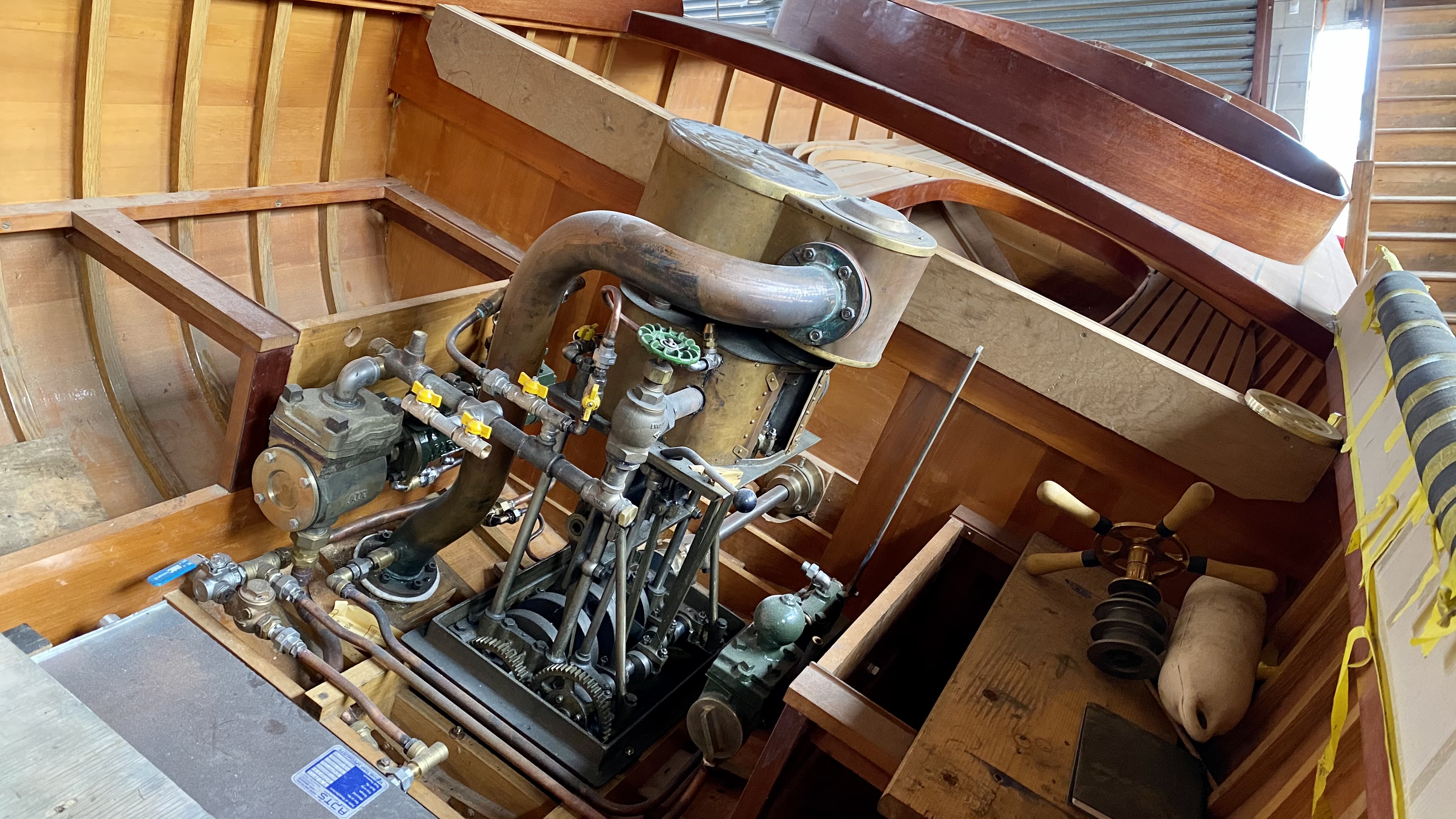
It was great to see that CMcM’s Herreshoff steam launch (below) is coming along – engine installed 🙂
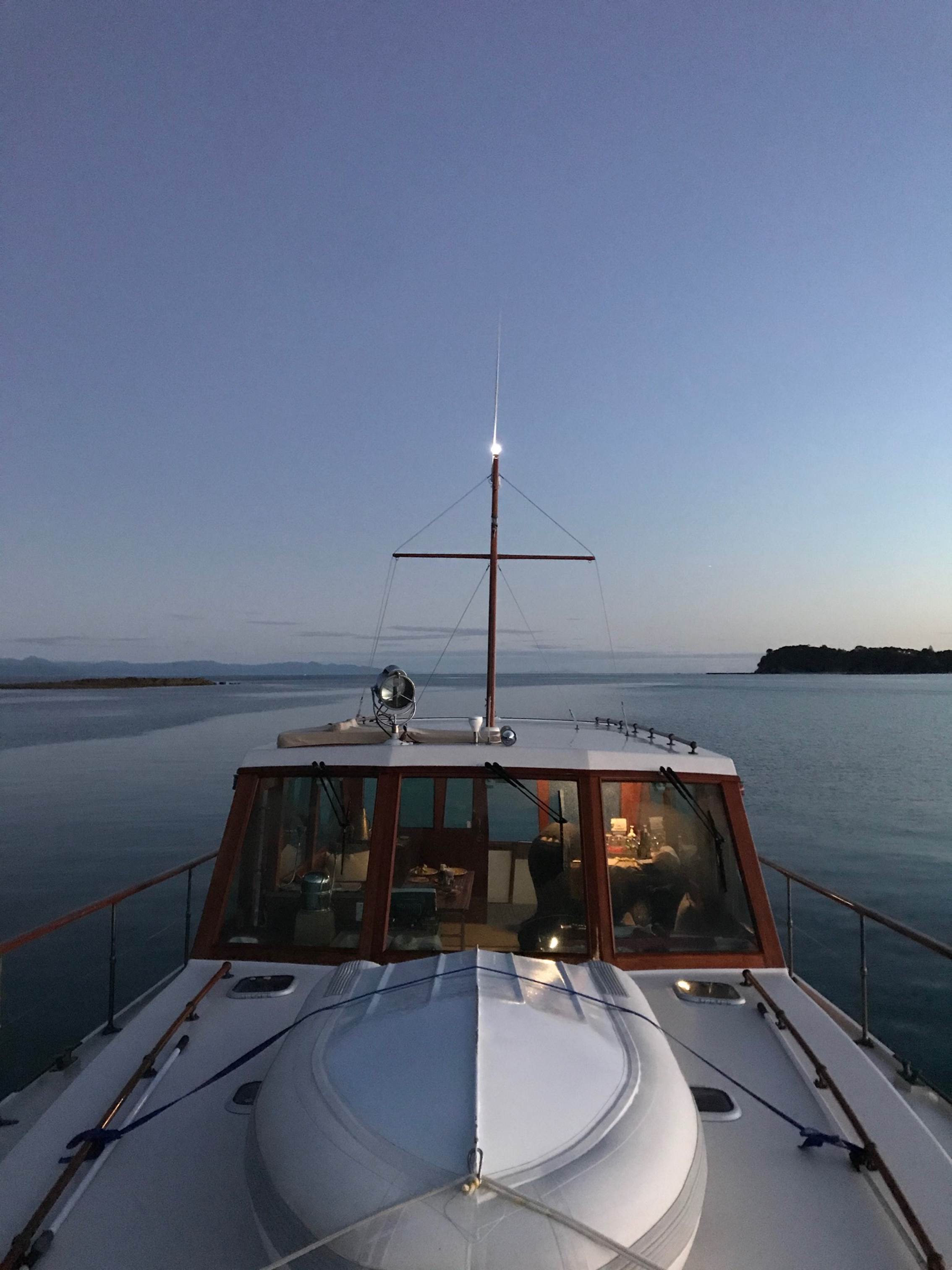
Labour Weekend Woody Cruise The last 3 days would have to be one of the best boating long weekends in a very long time, well thats if you own a motor-boat. The classic woody stick and rag boys racing in the Coastal Classic race to Russell in the Bay of Islands made very hard work of it – did any finish?, those I talked to pulled out on Saturday morning. A quick glance at the results show about 75% of the total fleet did not finish.
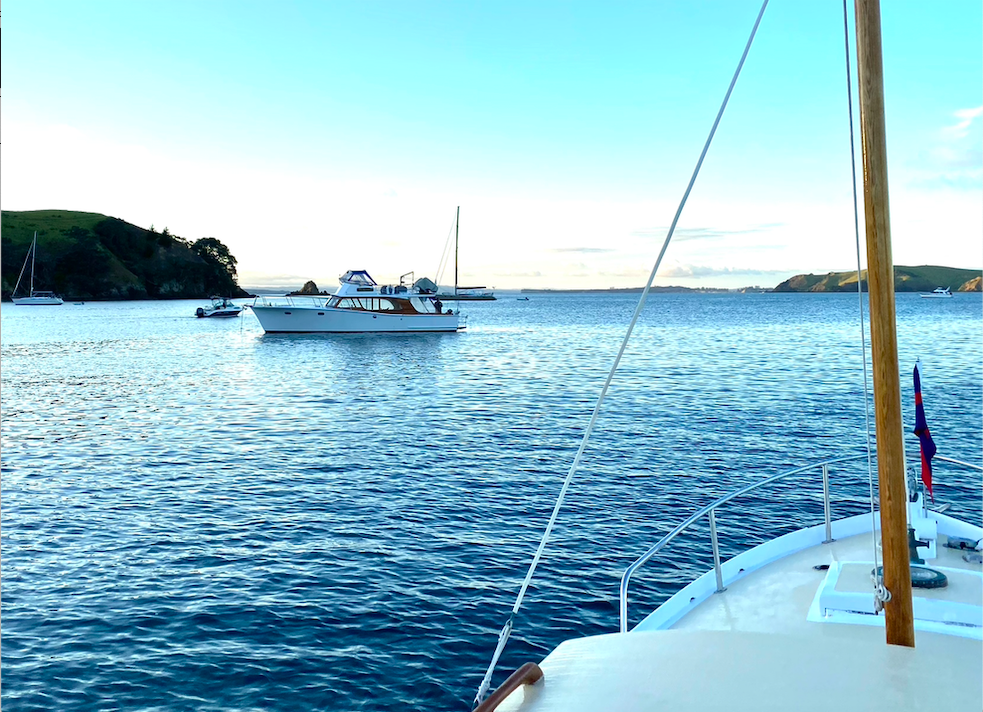
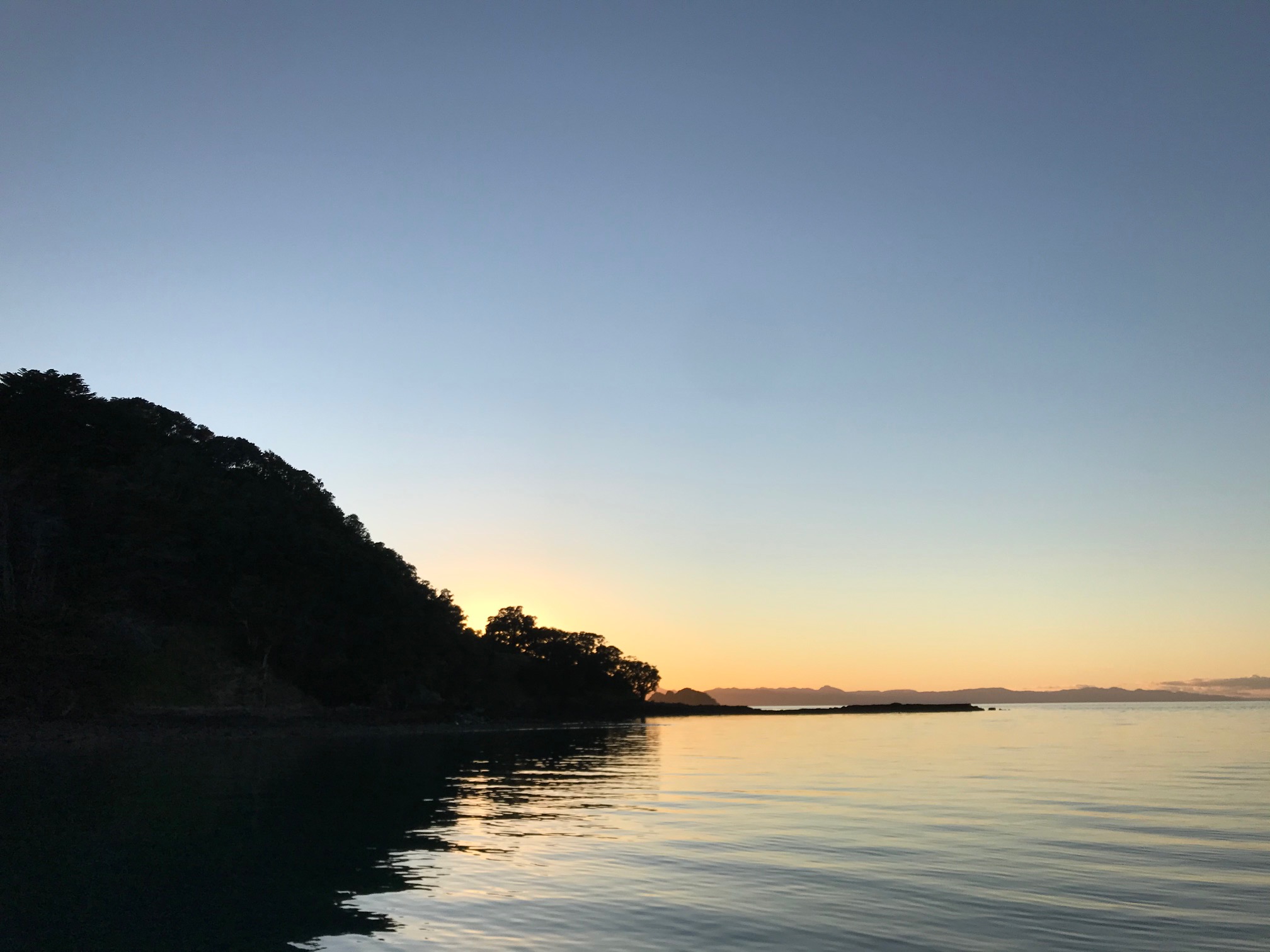
The biggest decision of the weekend was whether to turn left or right at North Head, I went left and made the right call, as the reports from the bottom end of Waiheke and Coromandel was it was a zoo 🙂 On the other hand Rakino was perfect – great weather and not too crowded. Only saw 3 other woodys – Gay Dawn and Juanita in Woody Bay and Mahanui just out from West Bay (very early Monday morning) and passed Felicitare
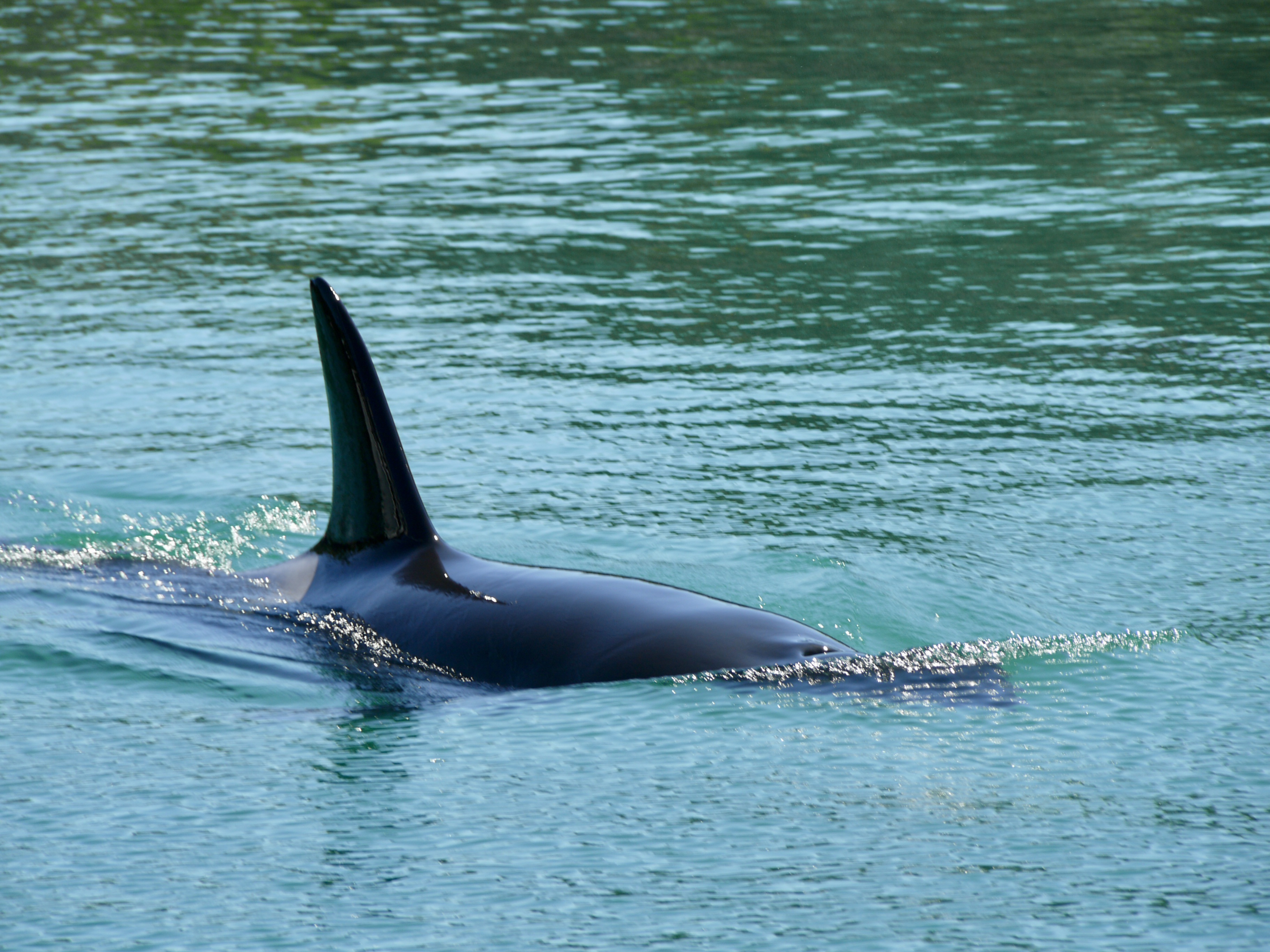
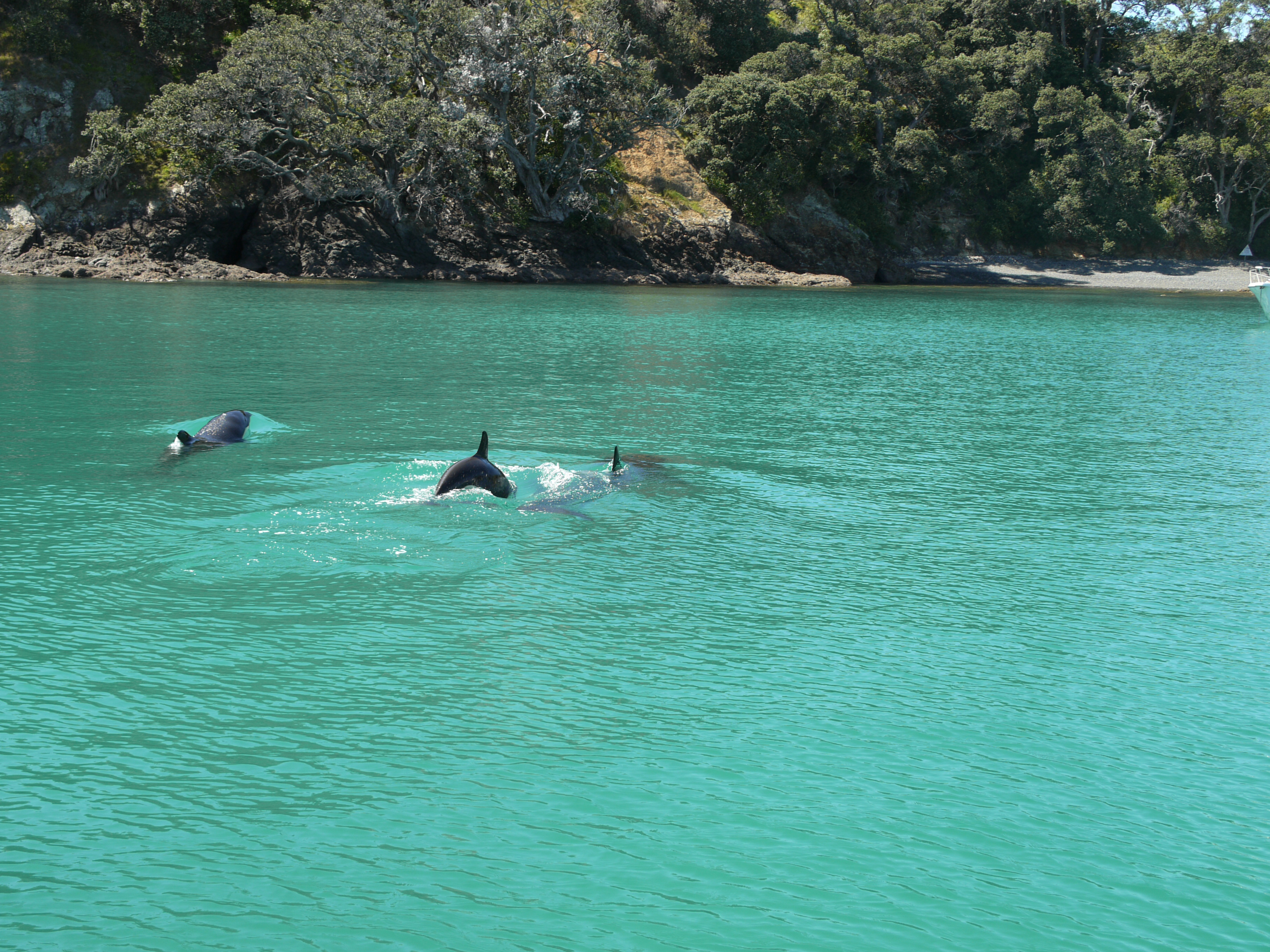
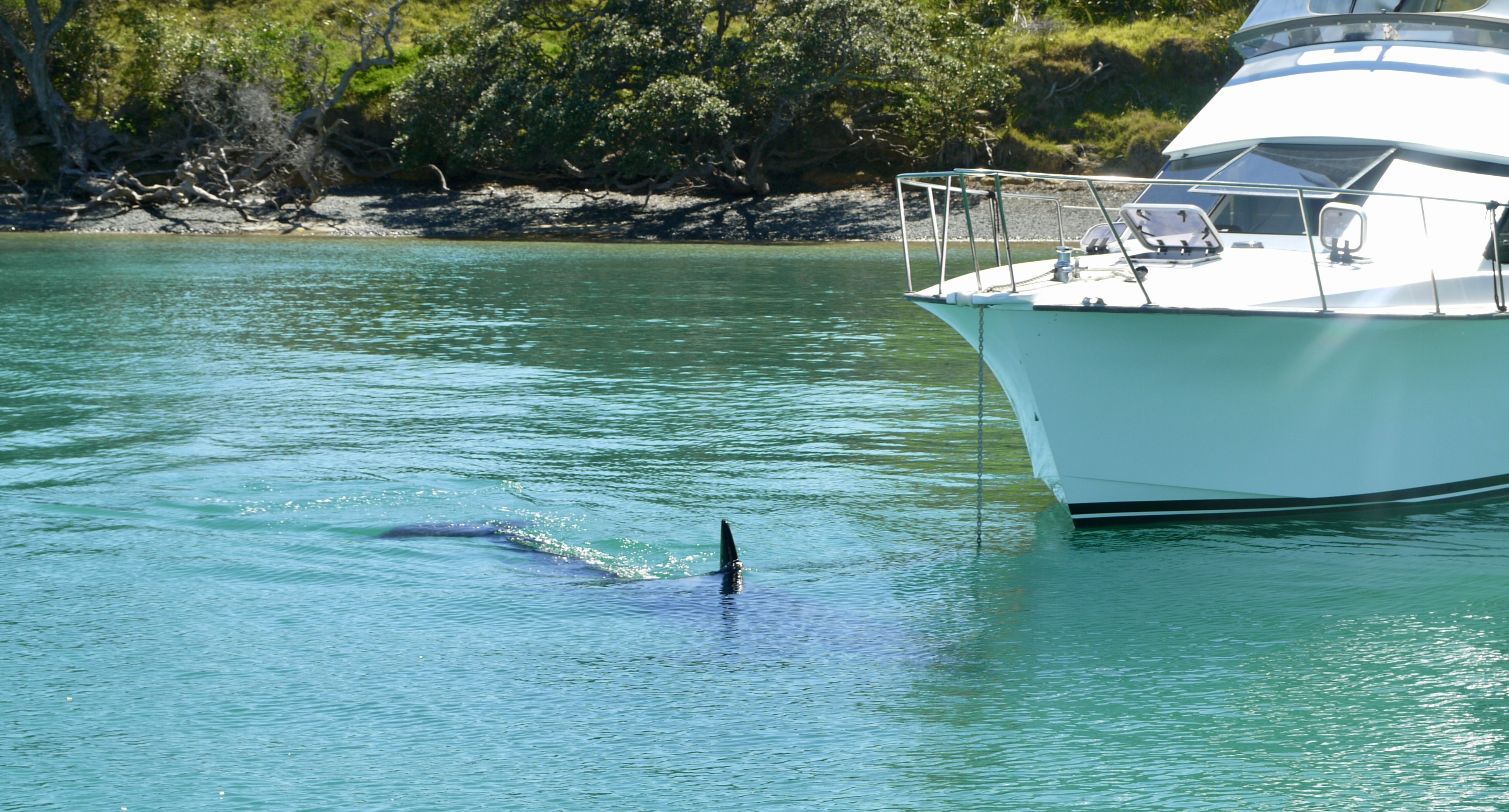
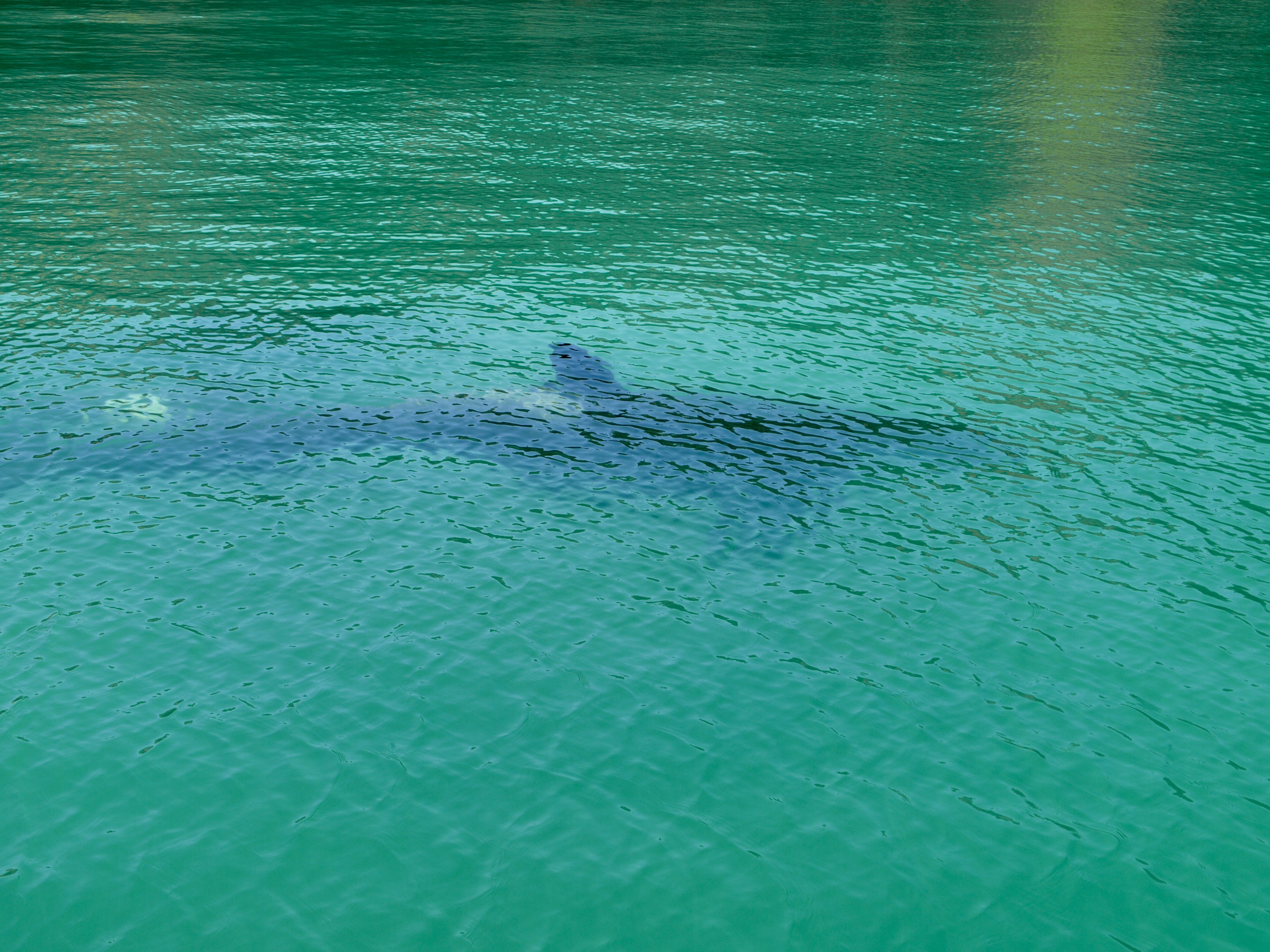
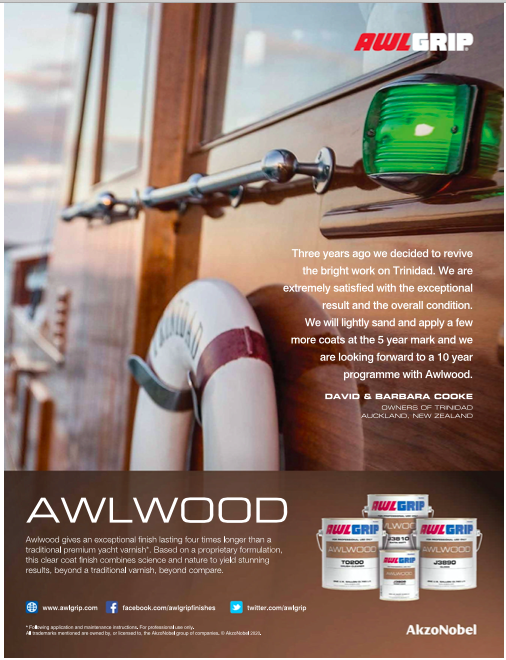
Highlight was a seriously up close encounter with some Orca while anchored in West Bay – they were rounding up a feed of stingray for lunch. I see Trinidad is making a star appearance in the AWLWOOD (Uroxsys) advertisements 😉
Update – Arohanui mooching around the bottom end of Waiheke and Coromandel
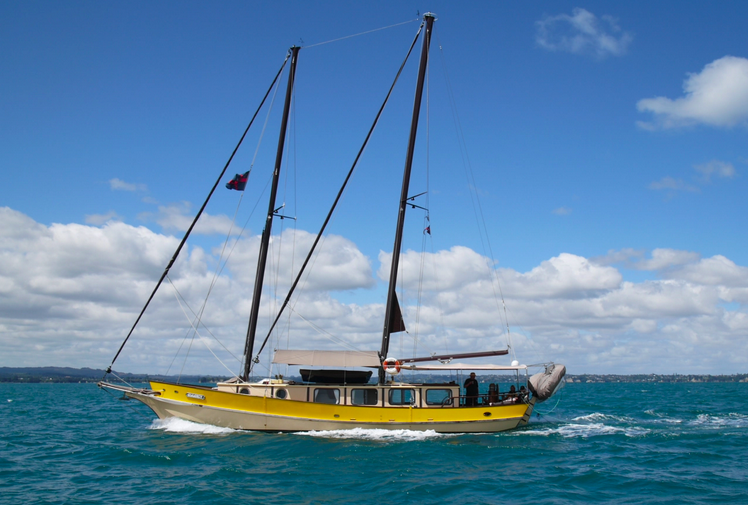
MYSTERY MOTOR-SAILER The photo above of the motorsailer is dated late 1960’s, early 1970’s. Location probably in/around Whangarei. Anyone able to ID the boat and tell us more about her past?
I know the answer, just hoping the arrival of this good quality photo will shift a few brain cells in some woodys.
Stuart Turner Engines One of the woodys was unable to attend Sundays boat boot sale – he has x5 Stuart Turner engines…1 P66 (10hp) and at least 4 P55 (8hp), for sale at a modest sum to a good home. One P55 and the P66 are intact, the rest in various stages of disassembly. Plus various manuals and technical articles. These wonderful little British 2 stroke engines run like a sewing machine….when handled by a knowledgeable operator!Once a very popular yacht auxillary but would be perfect for that restored classic clinker dinghy/open launch. If interested, I can supply contact details.
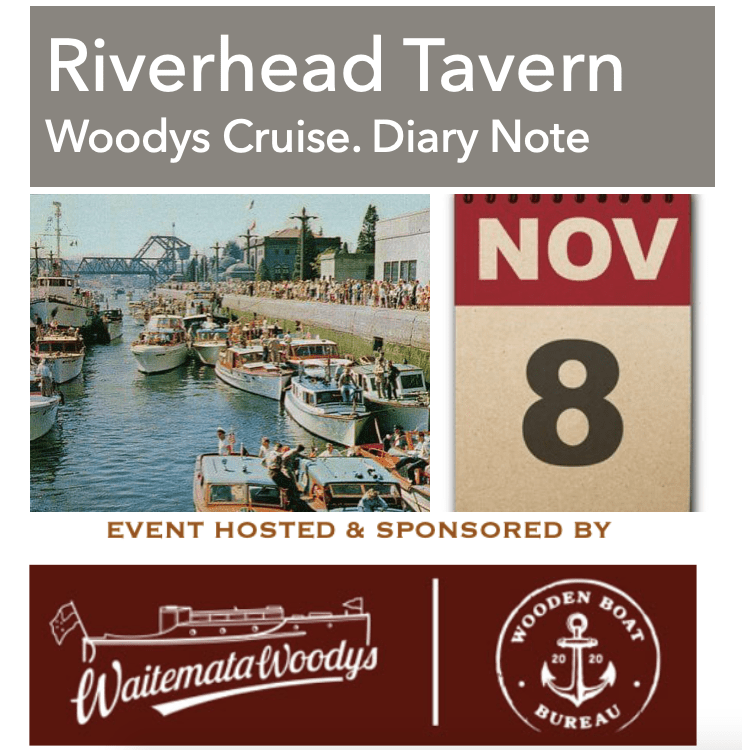
WOODYS CLASSICS RIVERHEAD TAVERN LUNCH CRUISE – RSVP TODAY Just need boat name and guesstimate of crew numbers – email to waitematawoodys@gmail.com
Buying or Selling a Classic Boat Without sounding too much like the late Jacinda Ardern (“be kind”) – when people ask me about classic wooden boat ownership, I normally say that owning a woody has a positive effect on your life i.e. you end up forging a life you don’t need to escape from.
So woodys in the interest of your mental well being listed below a sample of some of the boats that are currently berthed at the virtual Wooden Boat Bureau Sales Marina. There are others for sale, some owners request privacy. To read more about the Wooden Boat Bureau – click https://waitematawoodys.com/2019/12/01/wooden-boat-bureau-advice-for-buyers-and-sellers/ The Wooden Boat Bureau is uniquely placed to offer impartial, up-to-date market information and objective advice to both sellers and buyers. So if you are looking for a wooden boat or considering selling – email us at waitematawoodys@gmail.com
The Refit Of Windborne Today’s story is on the schooner – Windborne, by John Gander, via Dean Wright, John and family refitted and owned Windborne for many years. Its a great read by one of our best woody boatbuilders. I’ll shut up and just let John tell the story – enjoy, I did 🙂 Remember – to enlarge a photo, just click on it 😉
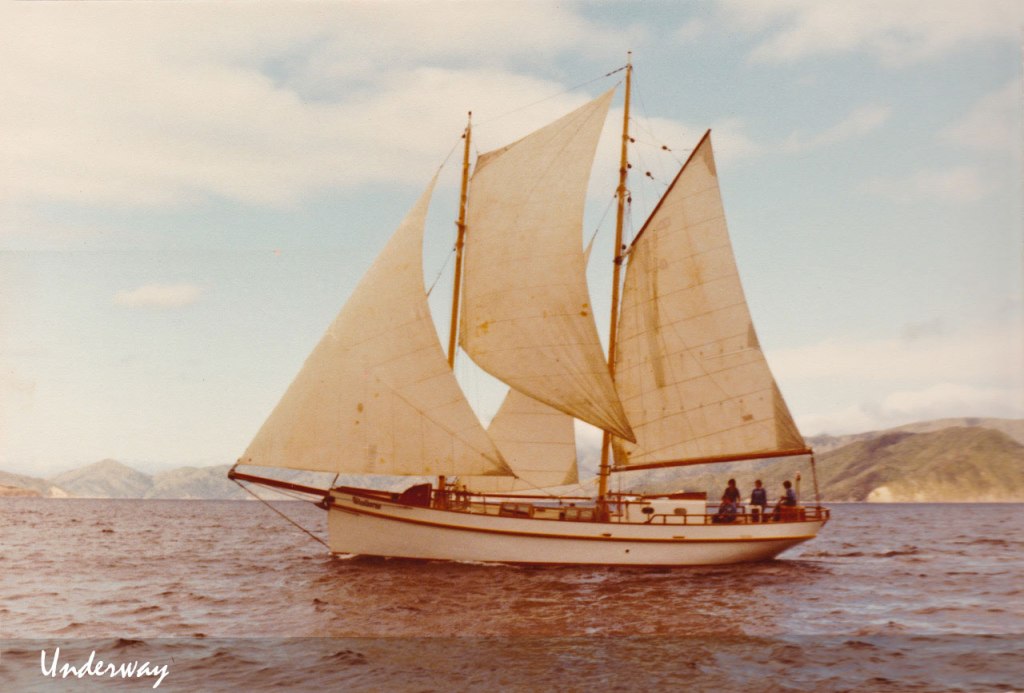
‘Windborne’ was built in 1928 by Cornish boatbuilders Gilbert and Pascoe at their yard in Porthleven and launched as the cutter ‘Magnet’ after launching she took part in the Fastnet yacht race. She again raced in the Fastnet in 1930 but this time re rigged as a schooner, and has continued with this rig.
On sailing to the United States her name was changed to ‘Huguenot’ and registered in San Diego. On being purchased by the Charleson’s a Canadian family from Vancouver, the owner wanted to retain the name Huguenot and she was renamed ‘Windborne’ a very fitting name for her, and she was Vancouver registered. On sailing her to the U.S. port of Blaine just south of the Canadian border Mike and his wife Karol began getting Windborne ready for a voyage to the south Pacific.
The family visited many Pacific islands during their cruising and then headed for New Zealand and on the last part of the voyage encountered heavy weather and Windborne suffered some damage to her bulwarks and rigging. Being designed on the lines of the Bristol Channel pilot cutters and soundly built she is a very sea kindly vessel and delivered the family safely to Auckland.
Bev and I had not long completed ‘Deepstar’ and were planning on building a large sailing craft for our family use, however time was getting on, so before it was too late and our children left home we decided to look around for a suitable vessel. We were introduced to Windborne on her mooring at Herald Island and went for an afternoon sail with the Charleson family, and could see she was worth and deserved an extensive refit.
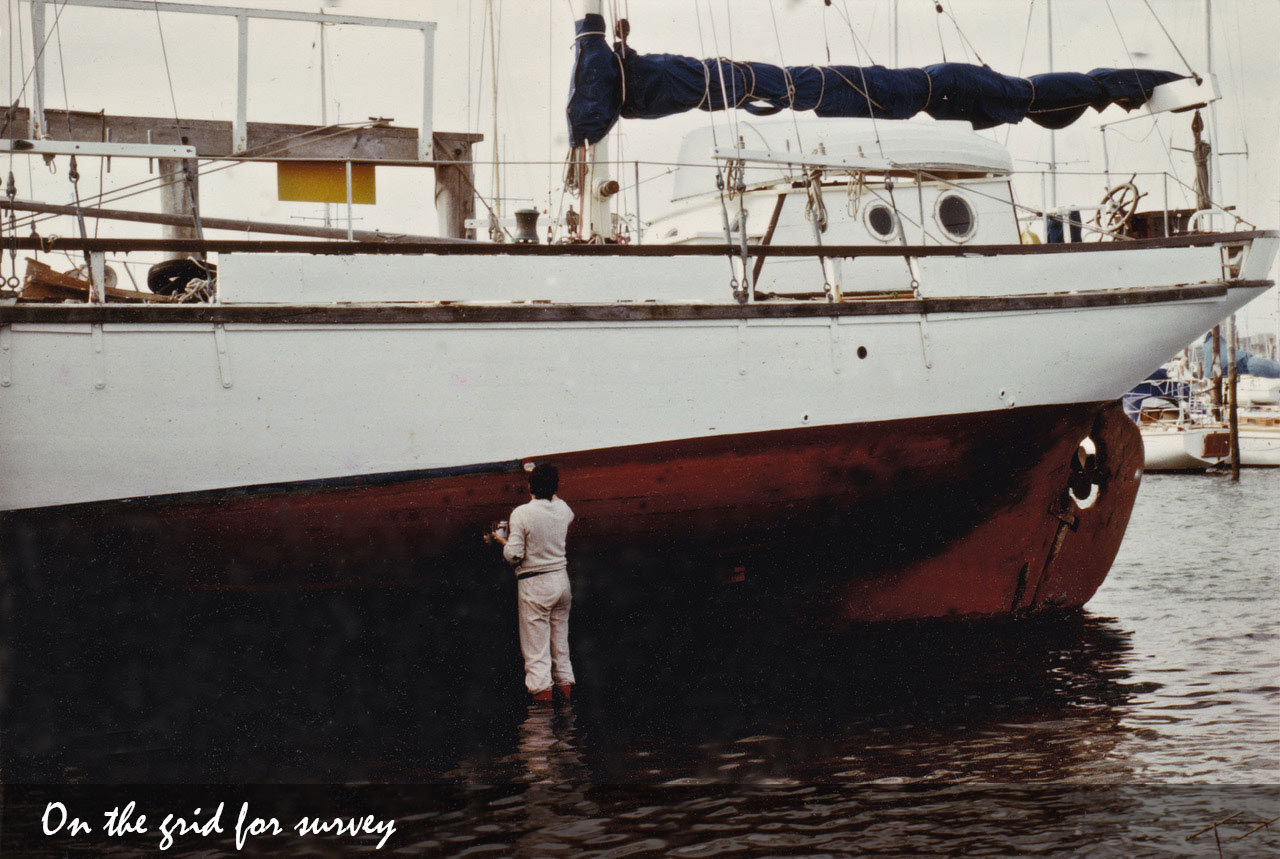
Her planking is Pitch Pine on sawn Oak frames fastened with galvanised soft iron spikes, I was not familiar with these timbers in our Picton boatyards so flew back to Picton to talk with Peter Jorgensen at his Waikawa boatyard. Pop as he was affectionally know, with his years of experience in Danish boatyards was of course very familiar with these timbers, iron fastenings and European construction, and his knowledge was very helpful when I surveyed her as I did on returning to Auckland and putting her on the grid at Westhaven.
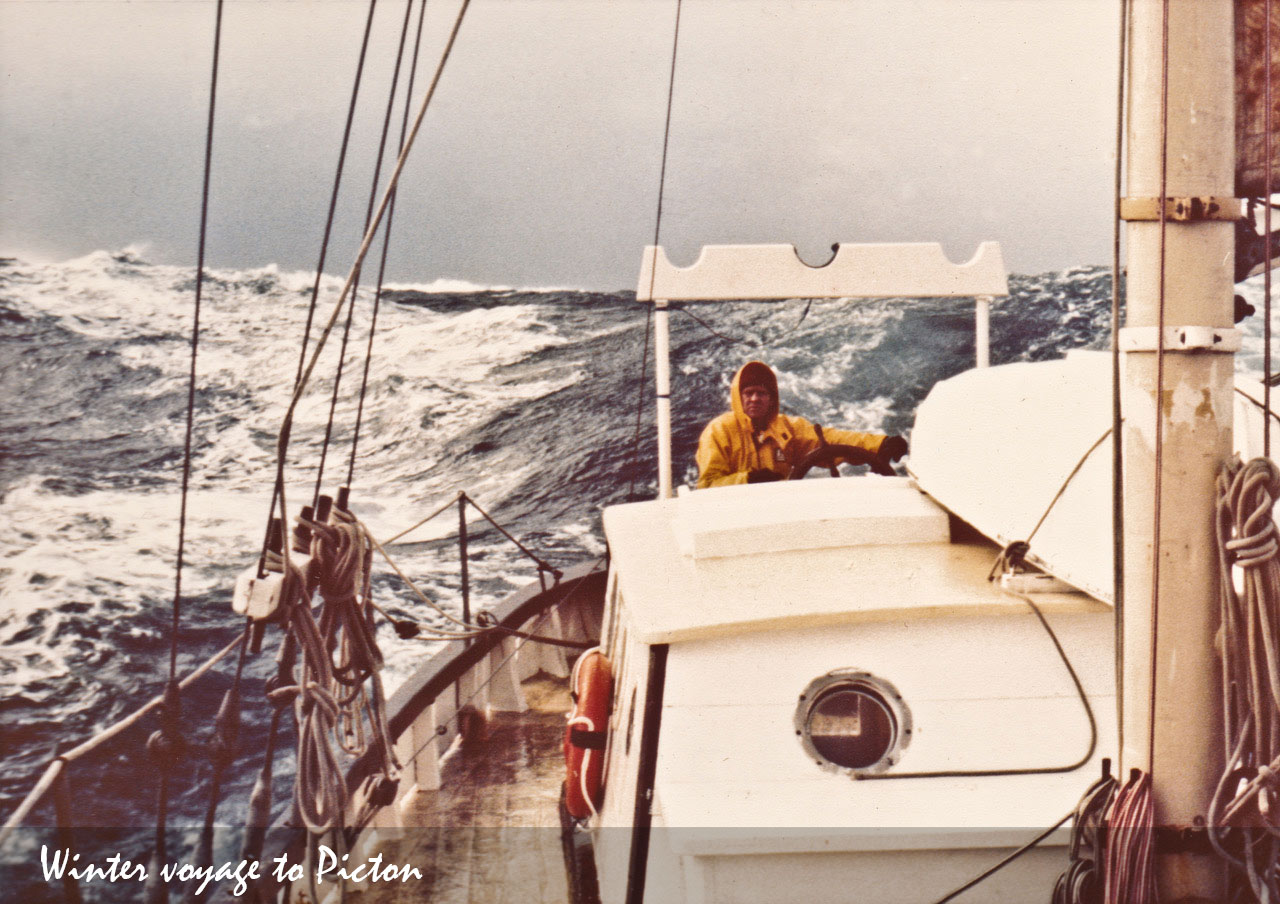
We took possession on the last day of July 1980 and made ready for the voyage to Picton and with a capable crew we sailed from Auckland on the 7th of August. Winter is not the always the best time to head down the east coast and it was somewhere off East Cape that we found that the forward skylight was only held in place by the shiplap joint and no through bolts. With a couple of sections of bulwarks missing and a good sea running this deficiency was made evident, and the hand bilge pump showed it’s worth. I always sail with a fairly comprehensive tool kit and with a selection of fittings and fastening in the ships inventory the skylight was secured in place.
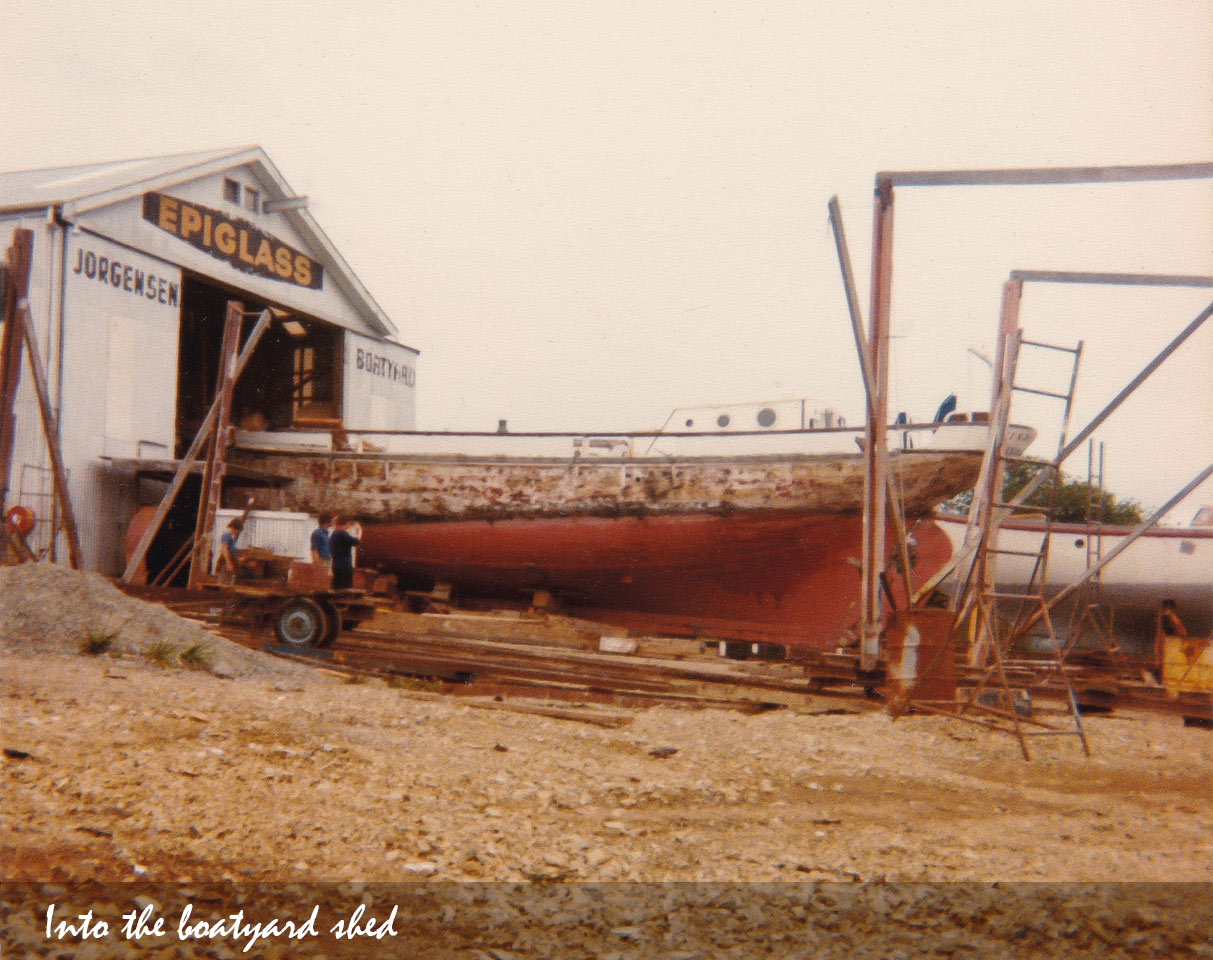
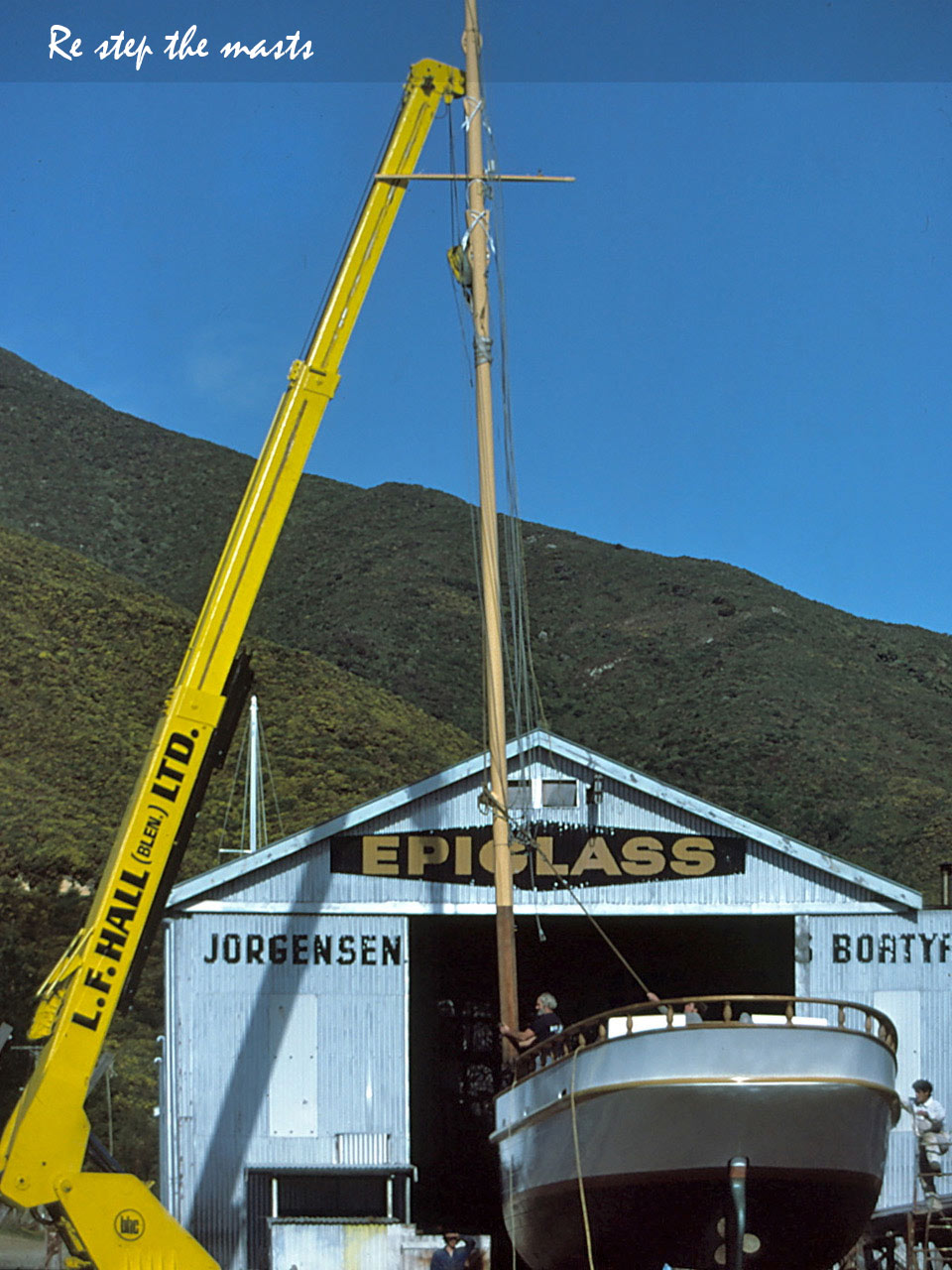
To undergo the refit I planned, we needed to have Windborne undercover and were fortunate to find we could have the use of Finn Jorgensen’s big shed at the Waikawa yard for a limited time before it was required for their next commission. On the 24th of December we hauled out and made ready to have the masts lifted out, and started the job of burning off the topside paint. As is often the case fastenings deteriorate around the waterline area but it was not possible to pull the old spikes out of the oak frames so additional galvanised ship spikes were driven adjacent to the original’s, two planks below and three planks above the waterline.
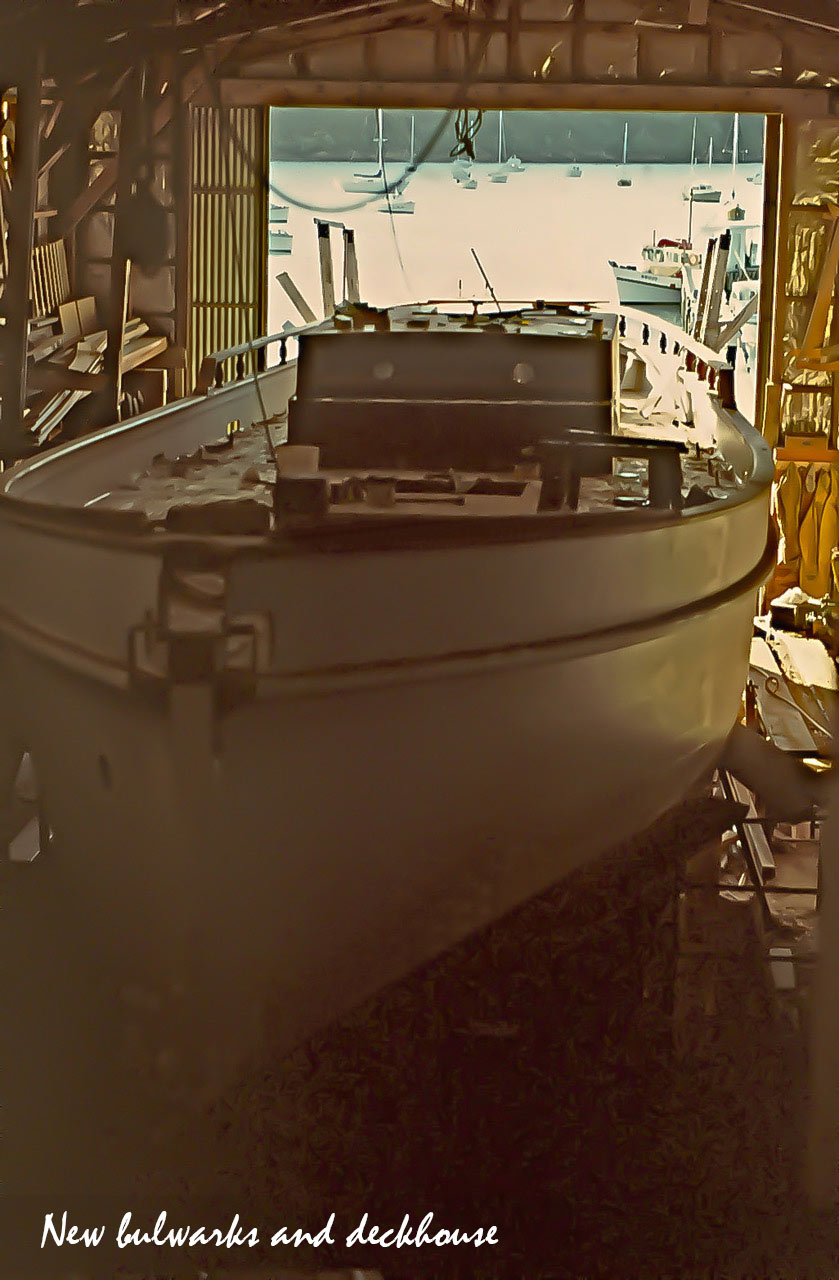
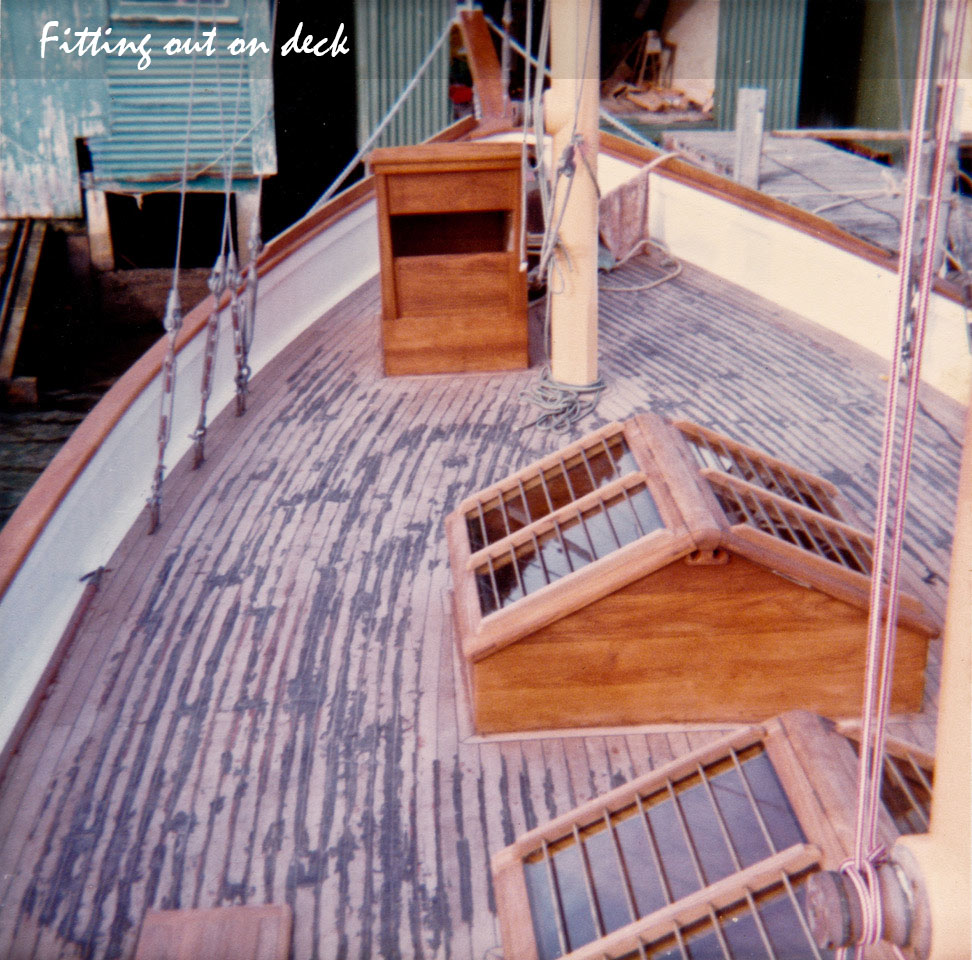
On the last day of December ‘Windborne’ was hauled up into the shed ready for the major refit, and what better way to spend new years day for a family than to spend it working with earnest tearing up the canvas like material covering the decks, I was suspicious that this was laid over the 2 inch Baltic Pine decks because of leaks, the ruination of many fine vessel’s. I was relieved to find the timber was in a good state of repair so the decision was made to retain the deck. Removal of the deckhouse was fairly quick and easy but more time was required to remove deck fittings, deck prism’s, and other deck furniture until we had a clean flush deck. The bulwarks were fastened to grounds over the covering boards with the frames extending to the cap, this is an area of potential leaks. On removing the damaged bulwarks and beltings and sawing off the frames at deck level, the new bulwarks were to be fitted on the outside of the sheer strake as was our practice at the Carey yard.
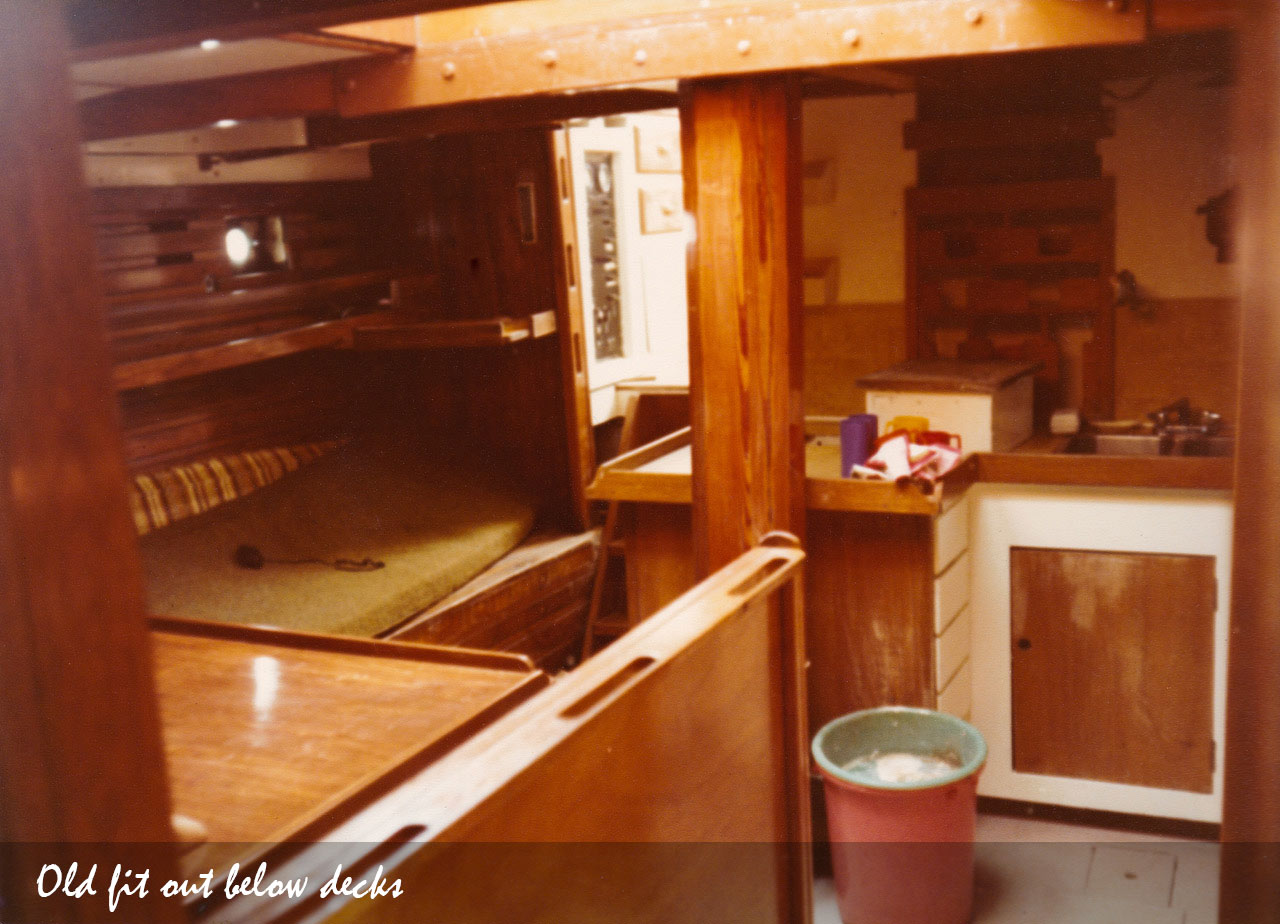
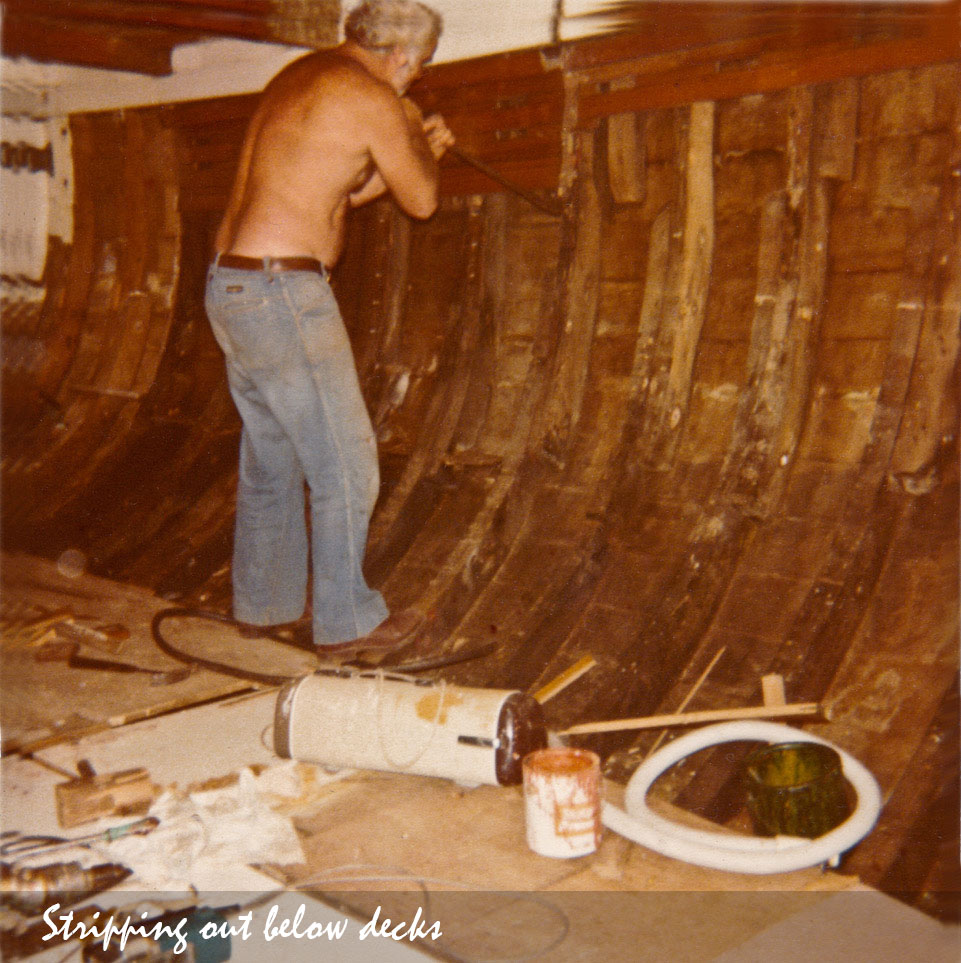
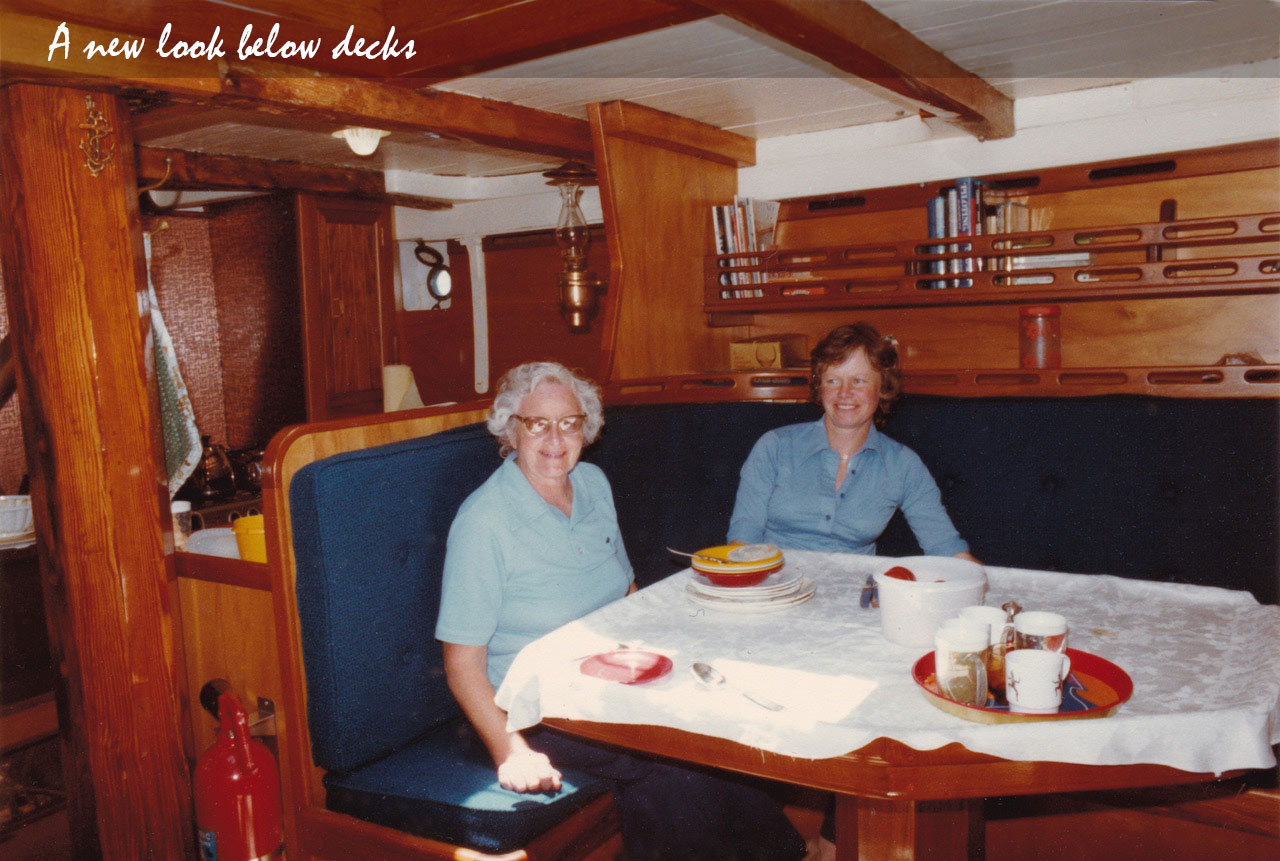
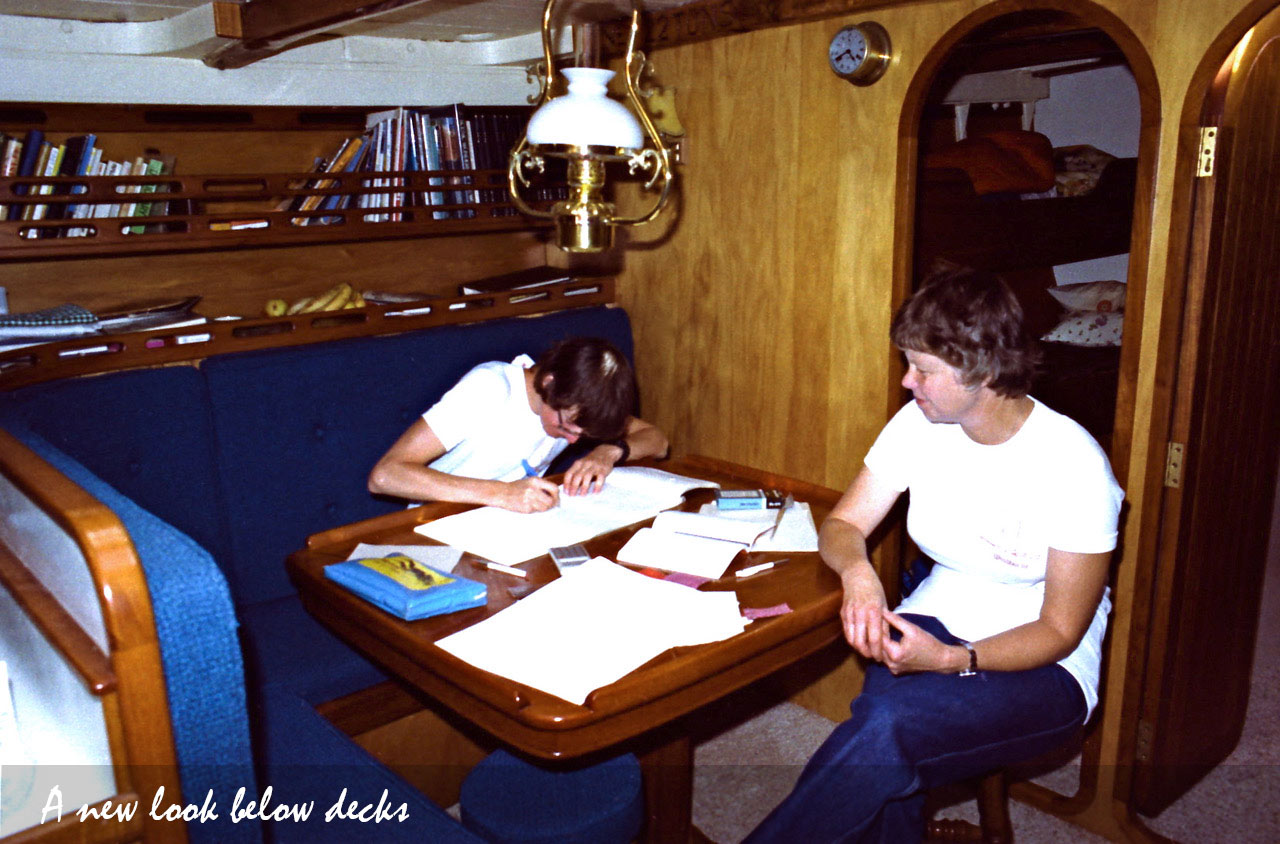
Next we moved below decks, unfortunately in later years any original furniture and fittings had gone to be replaced with ply, paneling and some pegboard, hardly befitting a traditional yacht, however we did expose the original tonnage and tonnage exemption carvings by removing layers of paint from the deck beams so we had something from her past. I had planned the layout we required so removed all bulkheads and the hull lining. This gave a good opportunity to make a thorough inspection from bilge to deckhead.
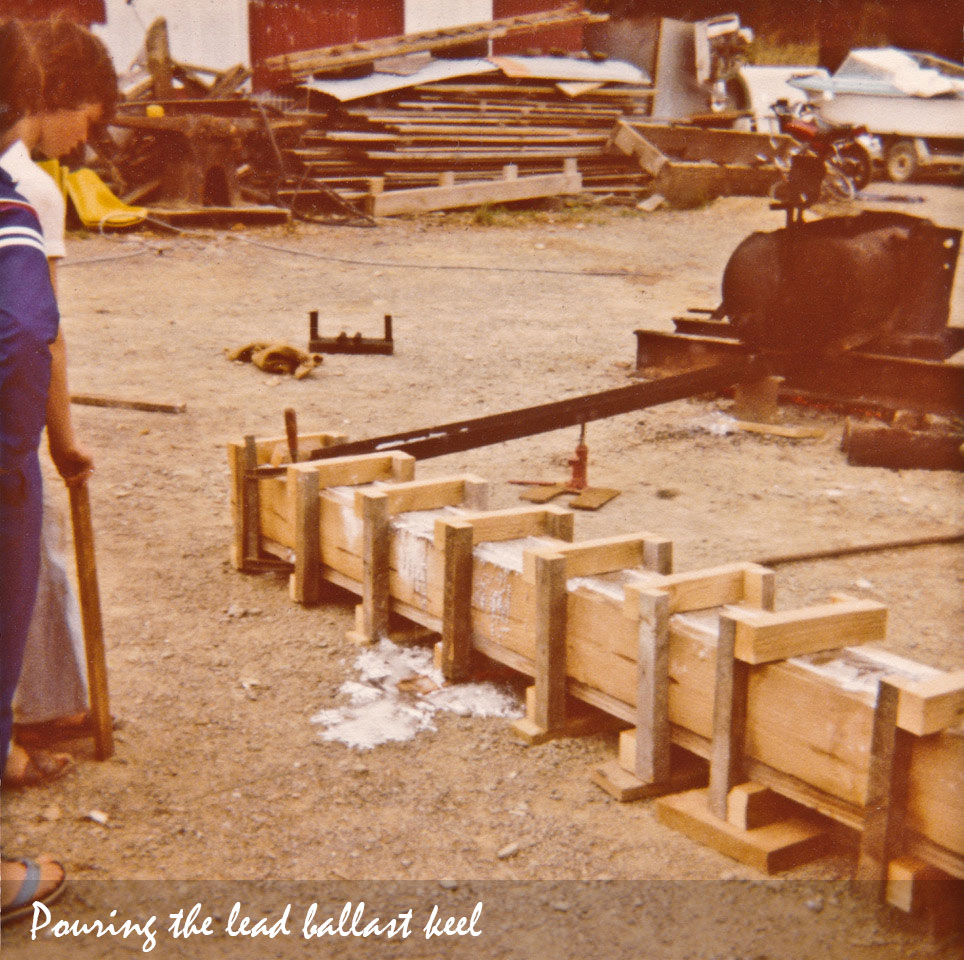
While I was fitting new bulkheads, Bev and our boys Wayne and Neville, began removing the rigging and paint from the spars. As is common in these vessel’s cast iron ballast is set in concrete between the floor timbers, however she also carried 2,775 lbs of lead ingots. At some time Windborne had been hauled out on a two bearer slip cradle and for a thirty five ton vessel this was grossly insufficient, the result was that she had damage to the underside of her wooden keel, so I made a casting box and we used the lead ingots to cast a blast keel to replace the damaged section. I next dressed off and sanded the the Baltic Pine decking and laid marine ply using epoxy glue to, and over the outside of the sheer strake.
By late February we were ready to start the new bulwarks and to help with our time schedule Finn offered me the use of one of his men, I chose Keith Hansen, Keith had learned his trade at the Jorgensen Boatyard and Keith and I worked well together ( I hope he still agrees with my comment ). We started on the Bulwarks using double diagonal Matai with a hardwood stringer, followed with new hardwood beltings.
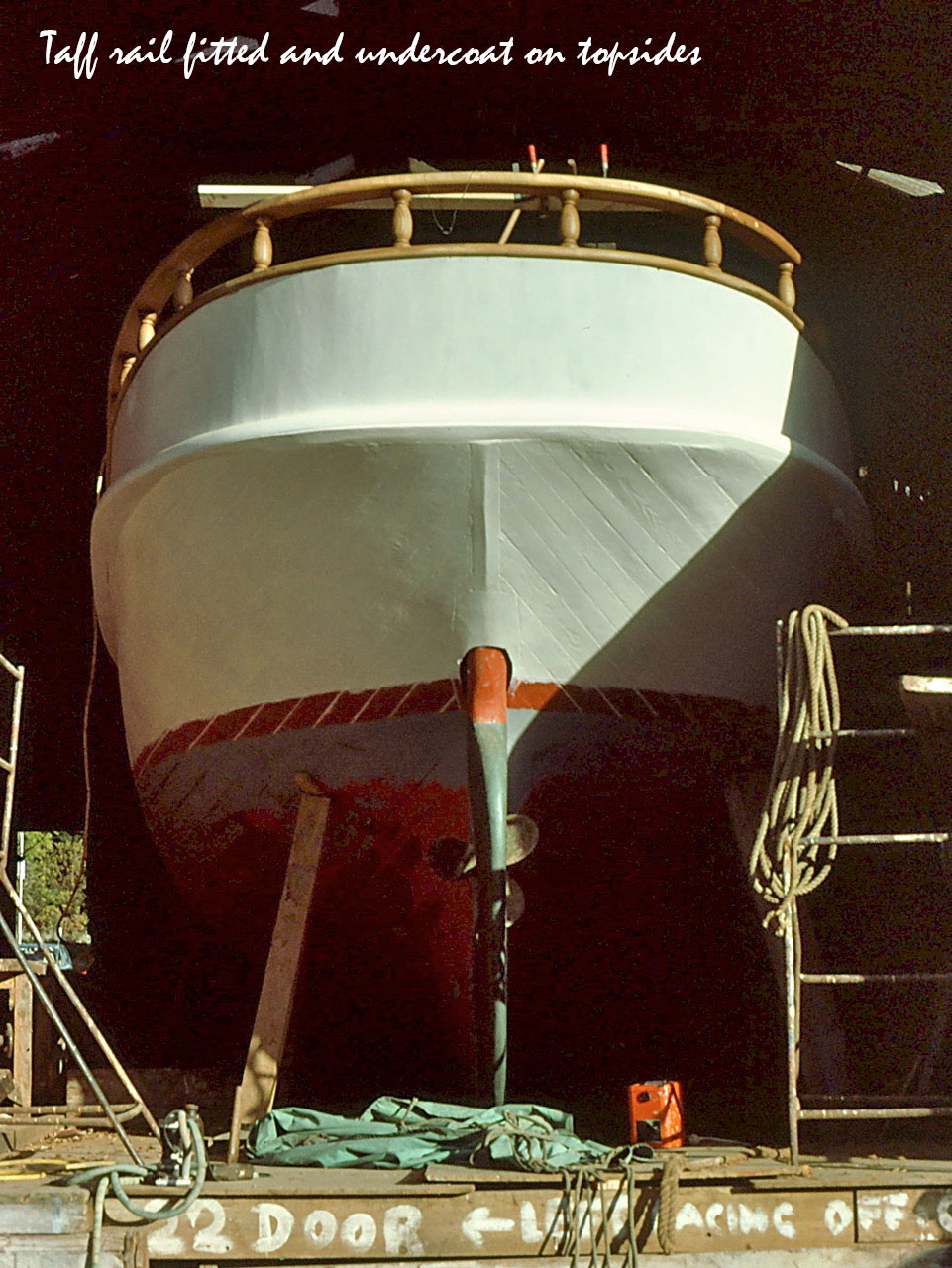
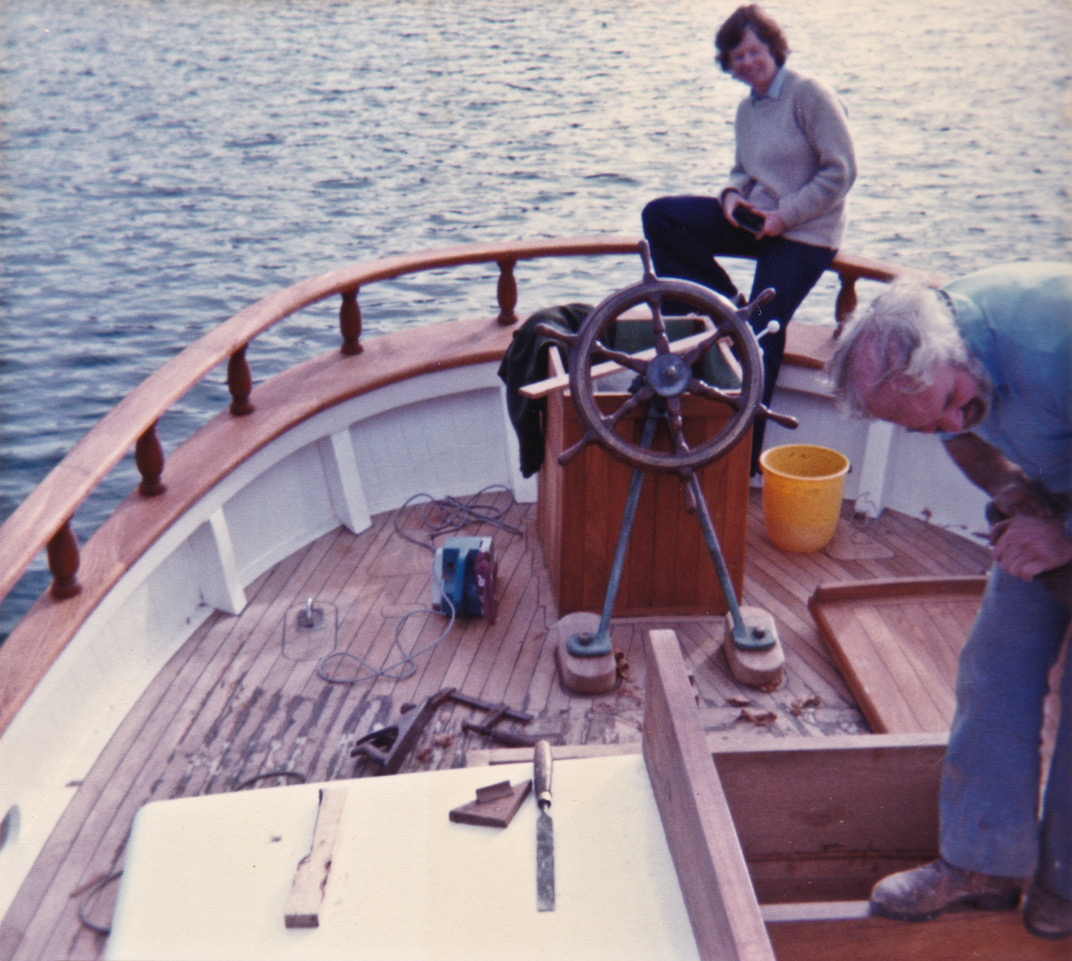
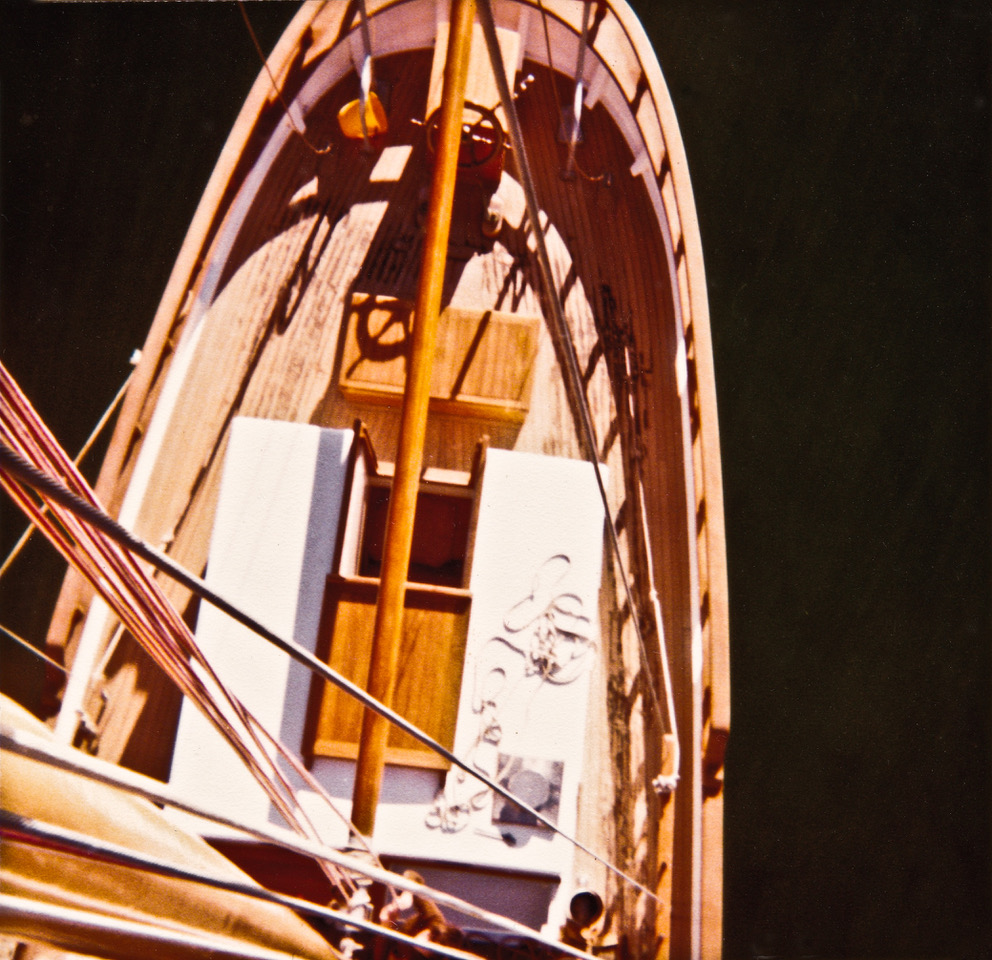
Laying the 5/8” teak deck was a slower job, I don’t like decking laid straight fore and aft and wanted to follow the deck plan as far as practical and run the decking into the king plank in the traditional manner and this means edge setting the deck planking. We departed with tradition when it came to caulking the seams and used thioflex polysulphide with the accompanying mess that follows while the product cure’s. Next it was onto fitting the new Teak Cap and Taff rails. The new deckhouse was built on Kauri coamings and sheathed in glass cloth, all other deck furniture is Teak.
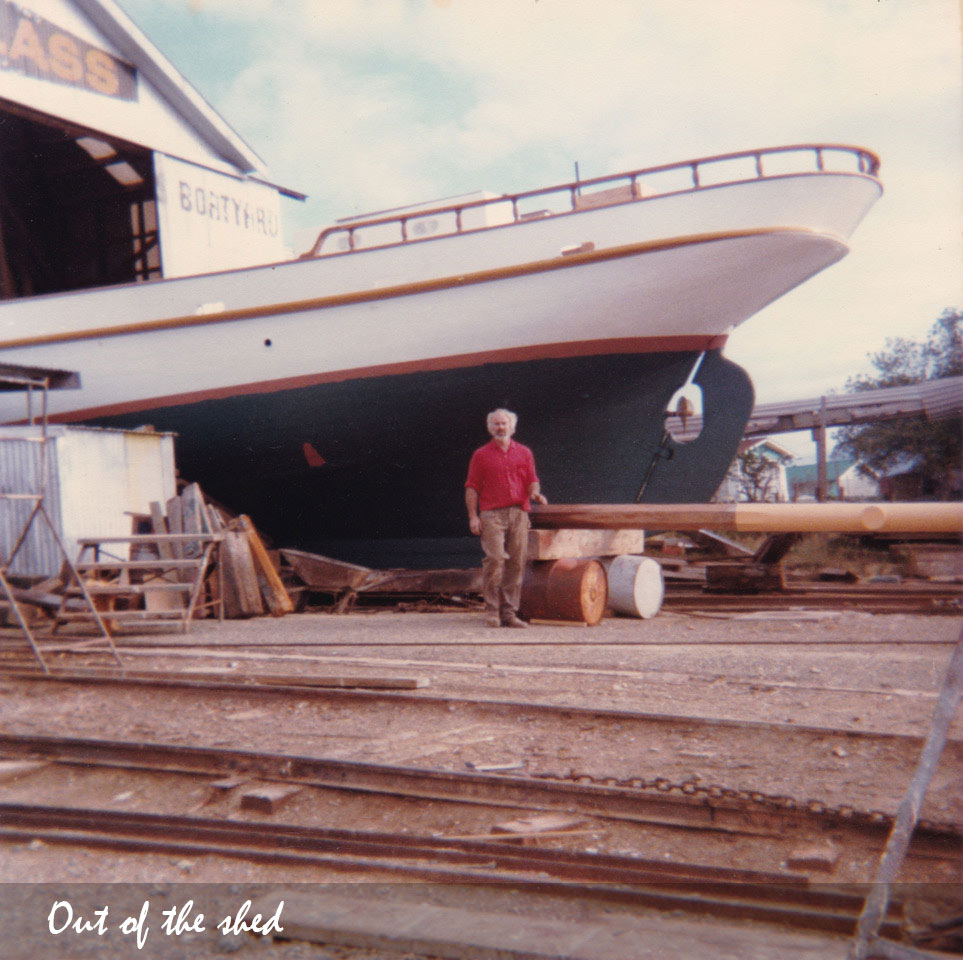
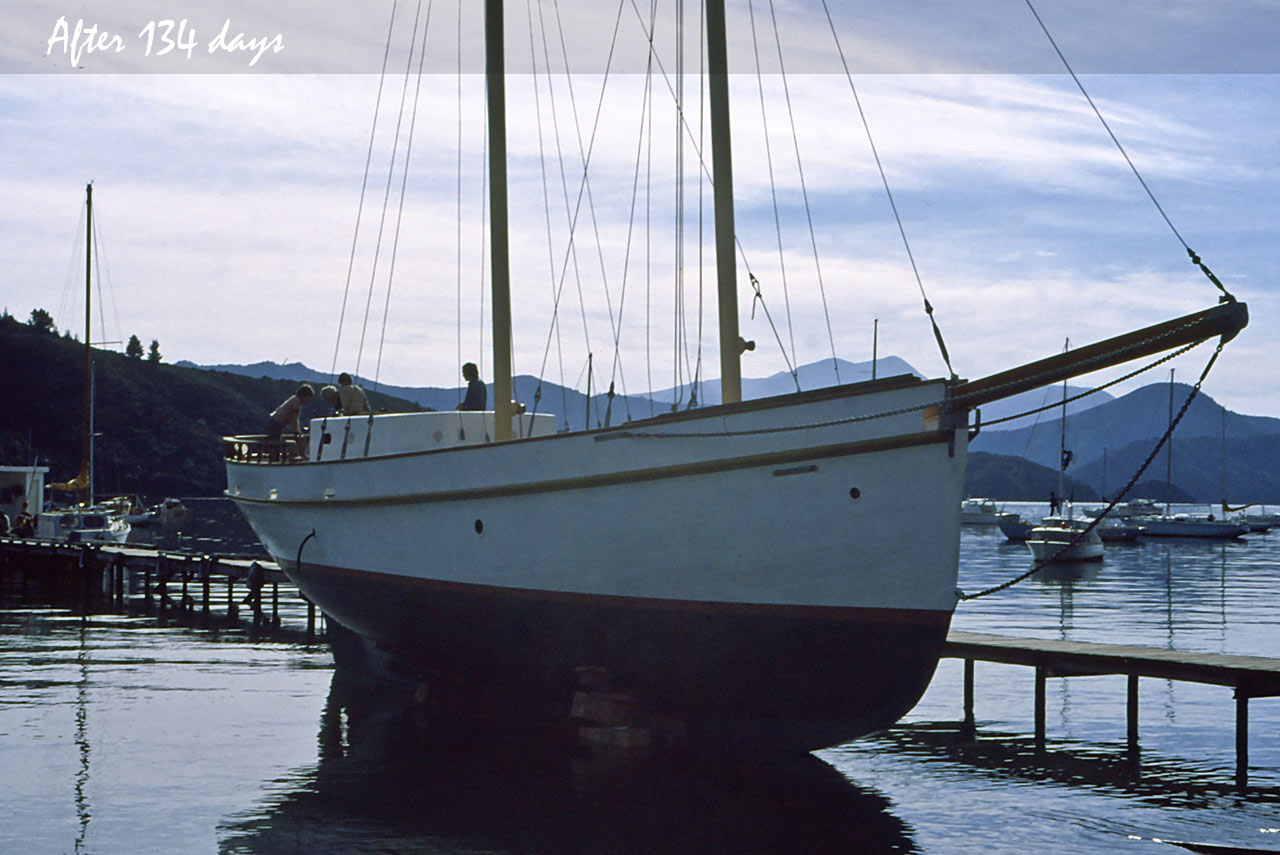
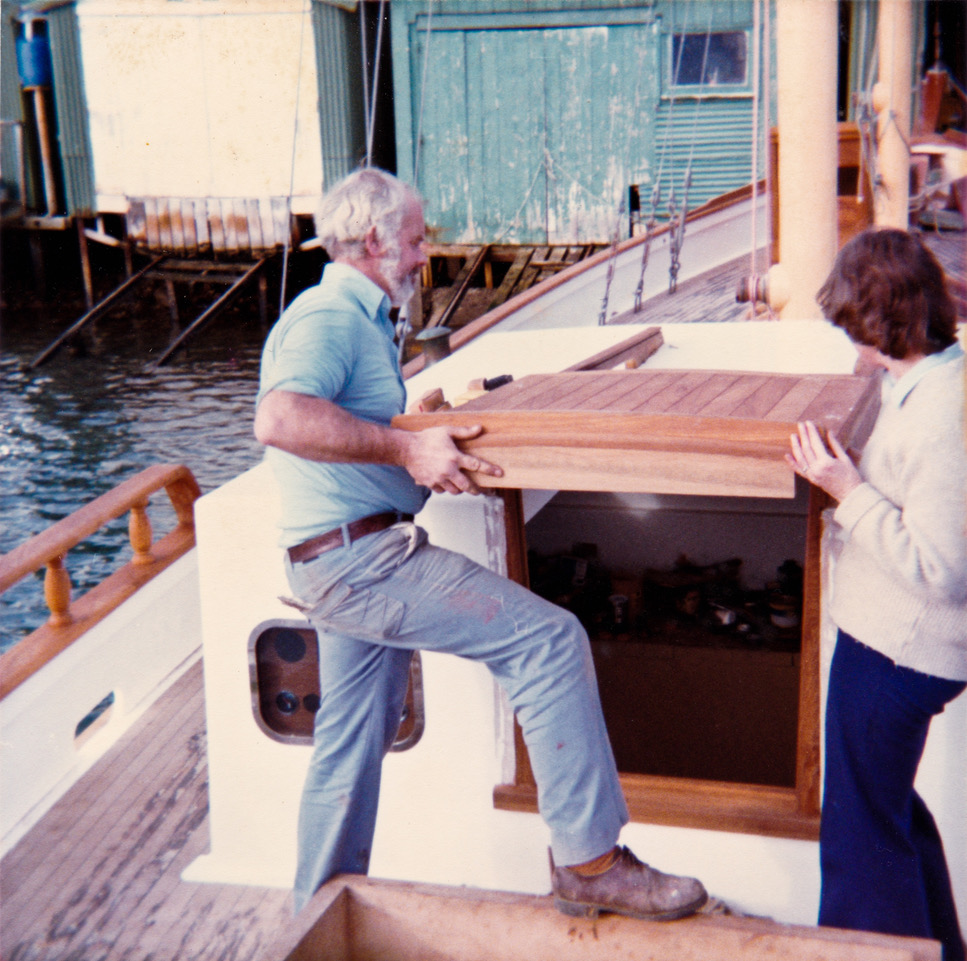
As our time in the shed was limited I was fortunate to be able to engage Bob Clerke a ships joiner, I delivered a load of teak at Bob’s workshop, and with measurements and patterns Bob set to and made skylights, hatches, a magnificent saloon table and other fitments to help with my fit out below decks all done in Teak and Kauri. The topsides were recaulked and my daughter Shirley stopped the seams with white lead putty in preparation to repainting. By the beginning of May the new look ‘Windborne’ was out of the shed.
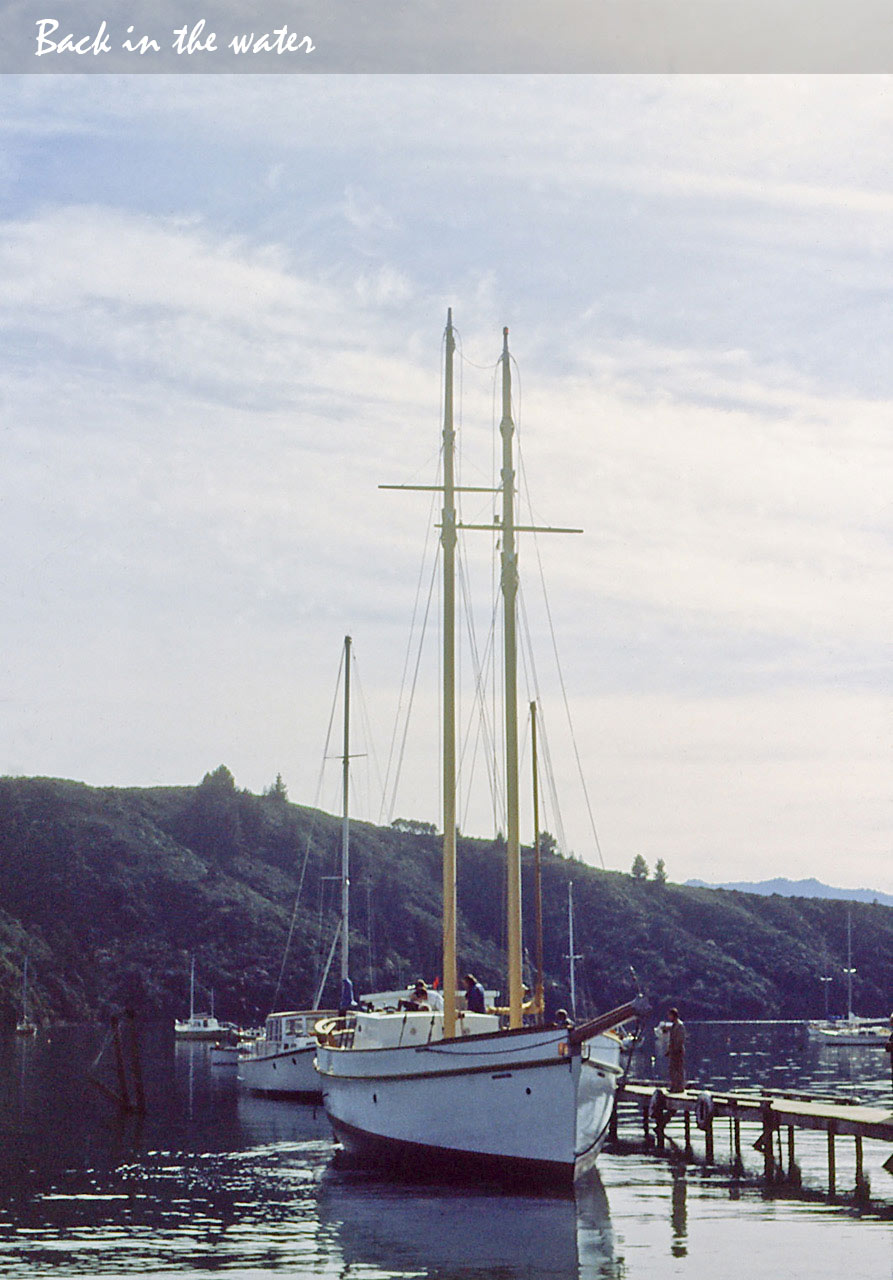
Masts were stepped with an English silver coin dated 1928 under her main mast and a Canadian coin under the foremast, and on the 6th of May at H.W. she was sent down the rails but remained in the cradle, the summer had been hot and dry and we had pumps ready, next day with a bit of oakum caulking in a couple of seams she was ready to leave the cradle and lay alongside the wharf at our boat shed to complete the fit out below decks.
A year or so later I removed the Isuzu engine and replaced it with a 4 LW Gardner. For the following eighteen years ‘Windborne’ carried our family on many adventures in all sorts of conditions. Roger Carey told us boys that wooden boats are built of living things, and every wooden vessel has a soul, I strongly believe this.
This last few weeks I have I have visited ‘Windborne’ out on the hard at Whangarei receiving care and attention from her owner Avon, he is doing a good job she’s looking good, being well ventilated and with salt water over her decks, the best thing ever.
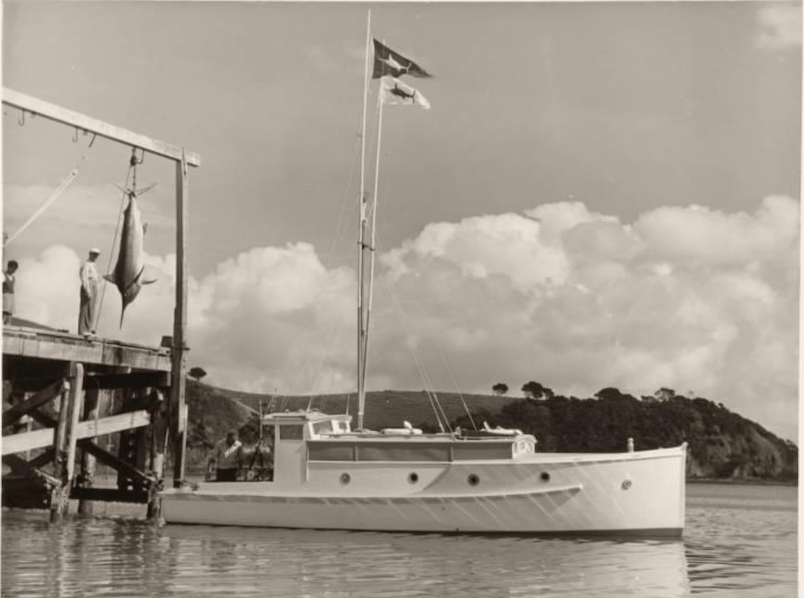
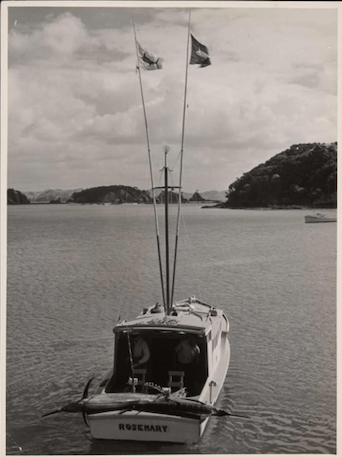
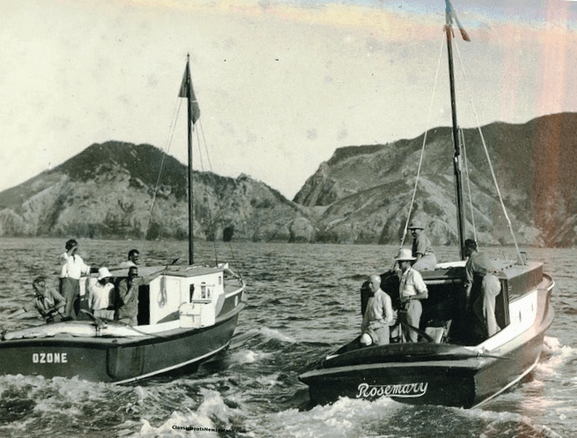
ROSEMARY – Leon Warne The above photo of the launch Rosemary popped up on Lew Redwood’s fb – the caption read ’the Rosemary, Feb 1950 at the wharf, Otehei Bay, Bay of Islands. Seen here ‘bearing the pennants of a striped marlin and black marlin’.
A little research via the WW comments section, un-covered input from Harold Kidd and Ray Morey that matches the above launch – in summary, that she was designed / built by Leon Warne in 1920 at St Mary’s Bay, Auckland and was approx. 36’ in length. Rosemary was prominent in game fishing in the B.O.I. . All that seems to match today’s launch, so we now have a photo of Leon Warne’s Rosemary in the 1950’s. Photo below of her in the 1920’s running alongside Ozone, built by Collings & Bell in 1912.
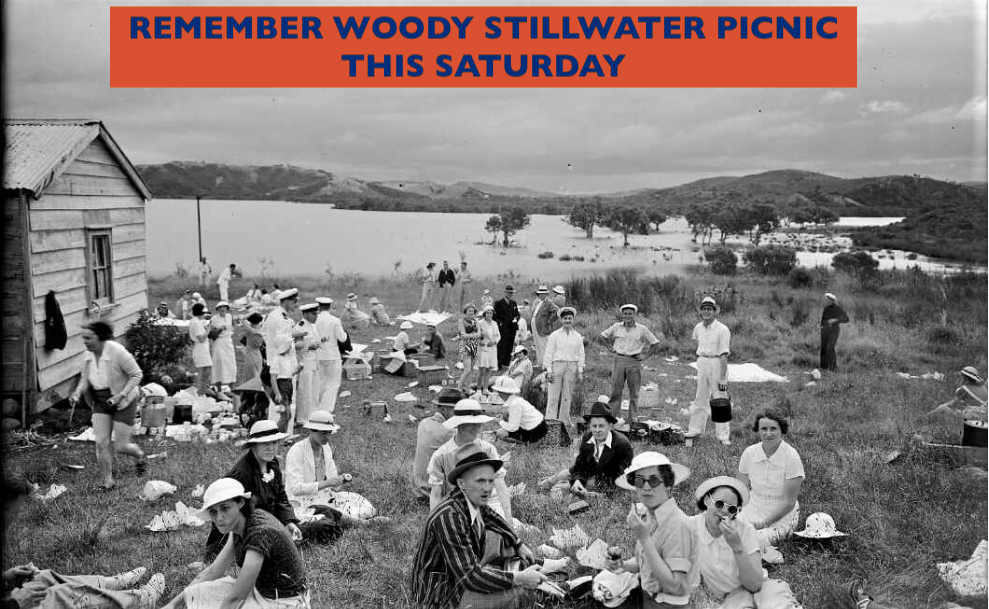
Firstly I need to thank Predictwind for Saturdays forecast, 100% on the button, as usual. One woody at the picnic didn’t come by boat based on the forecast published in Saturdays NZ Herald newspaper……………….. I suspect they also believe the horoscopes in the same paper are factual.
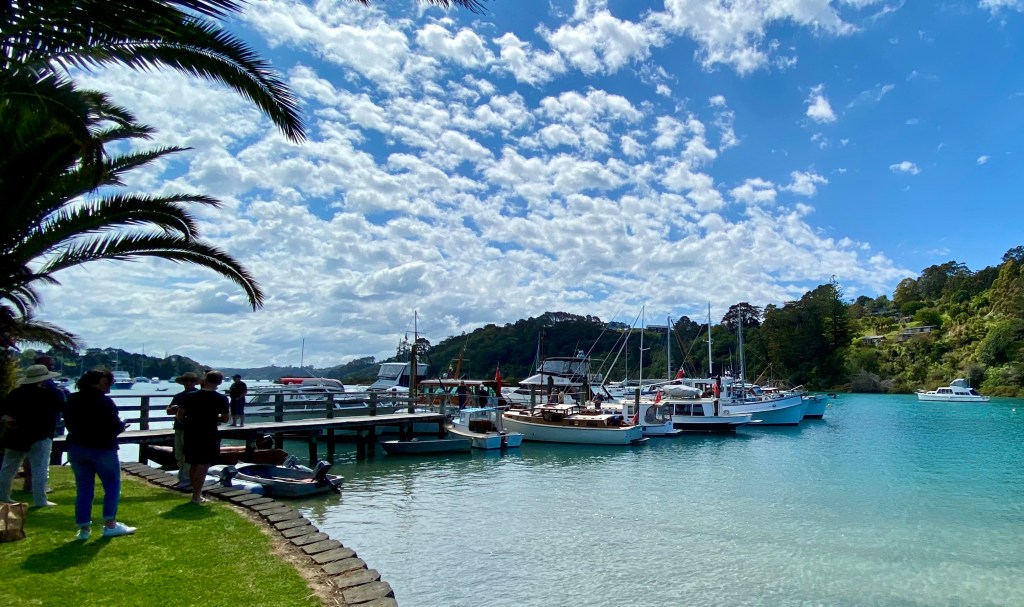
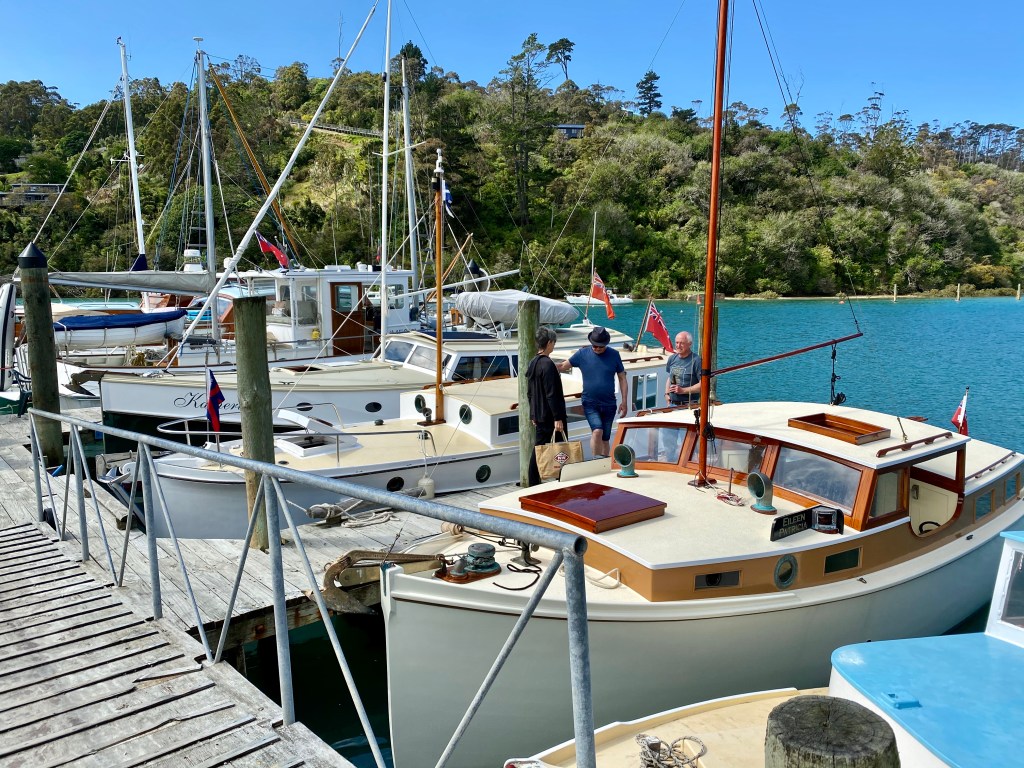
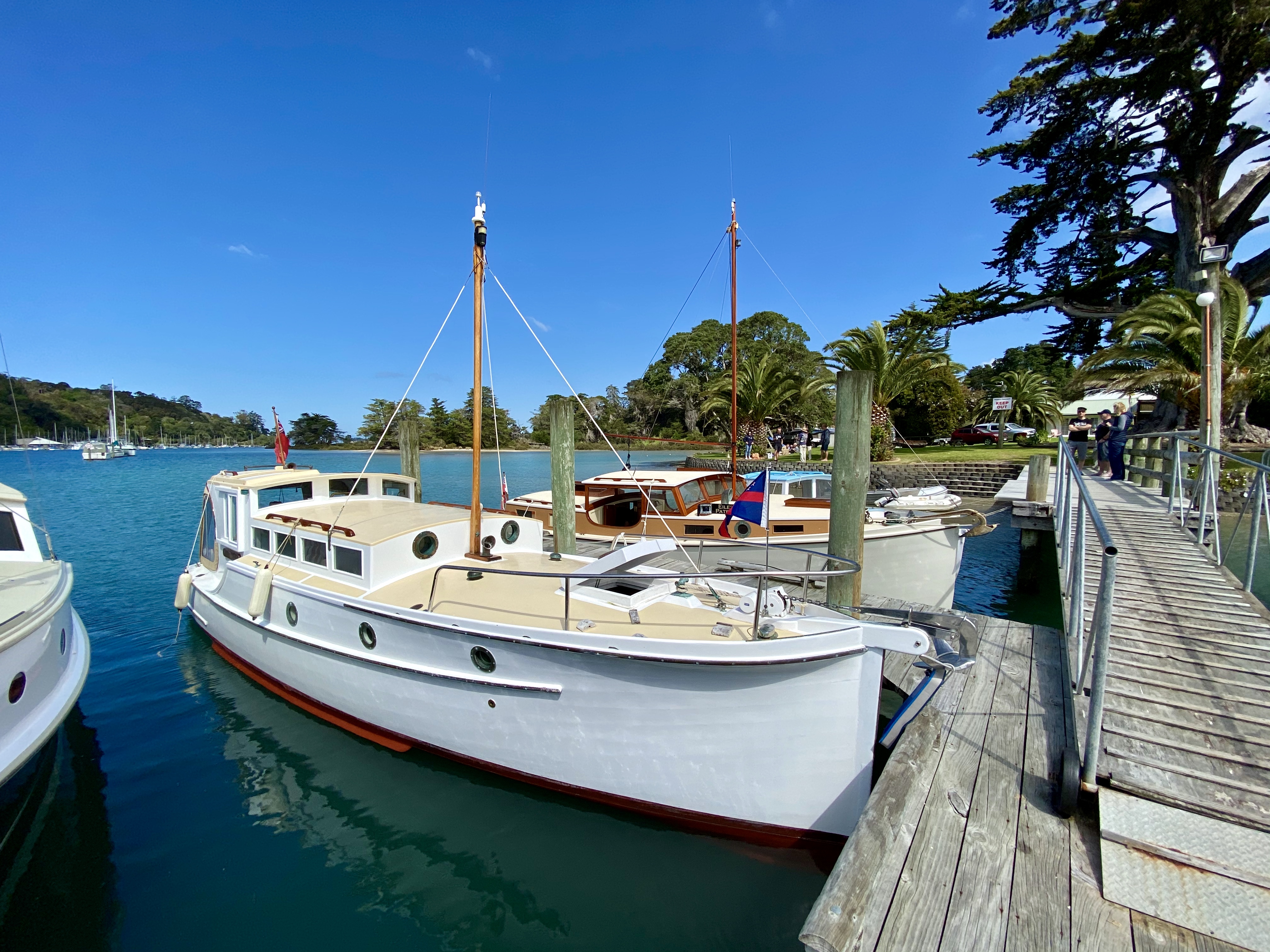
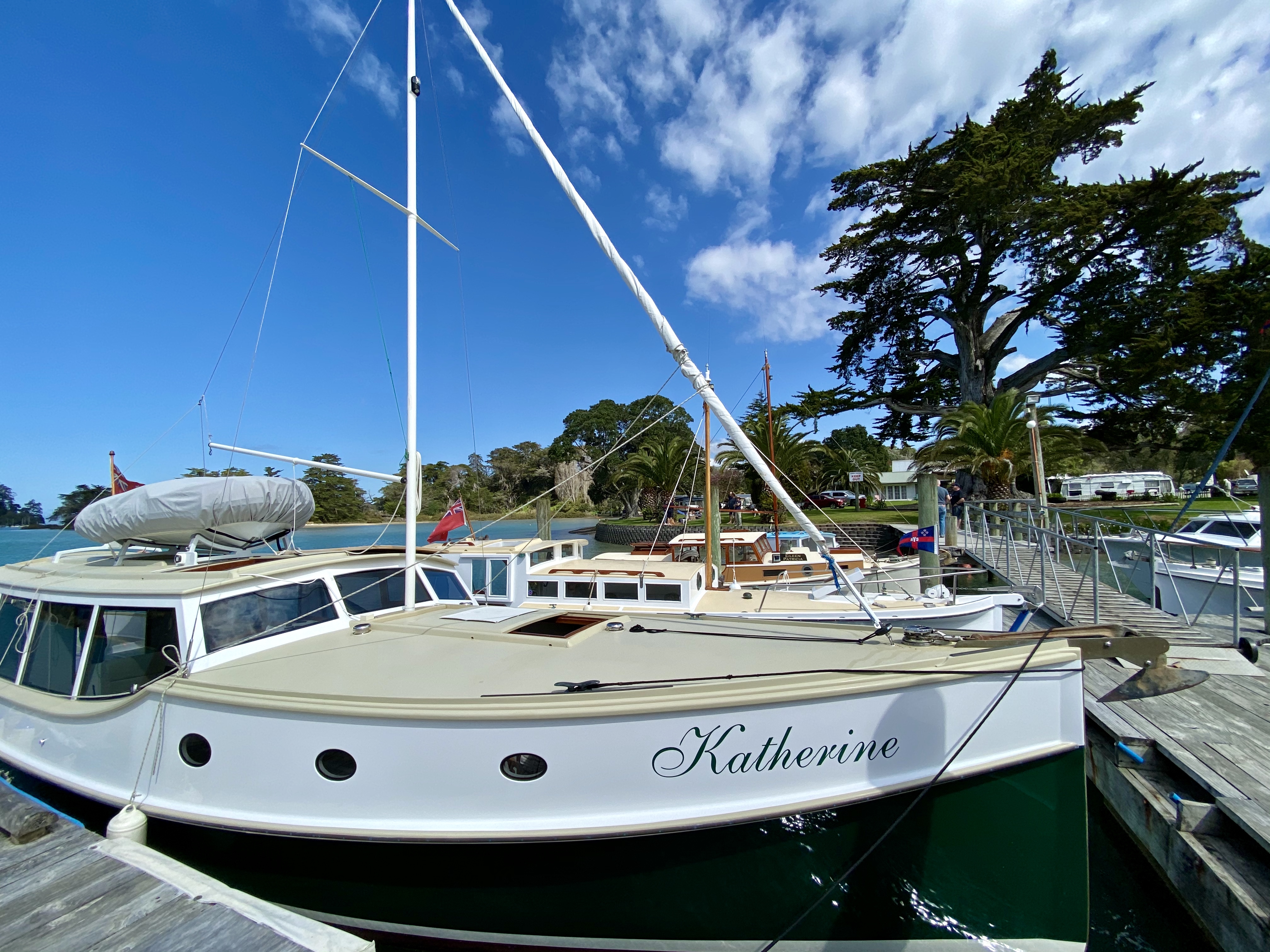
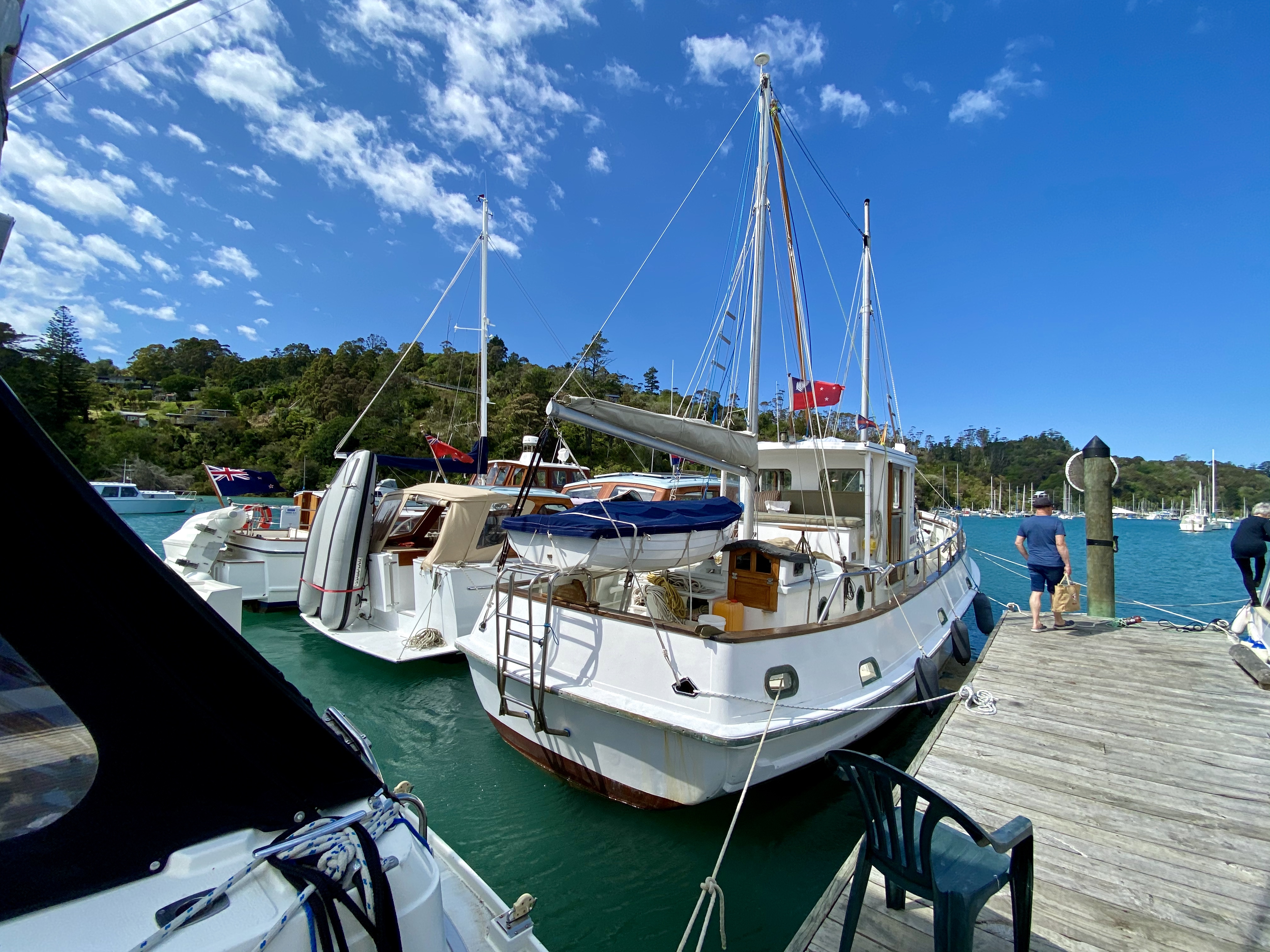
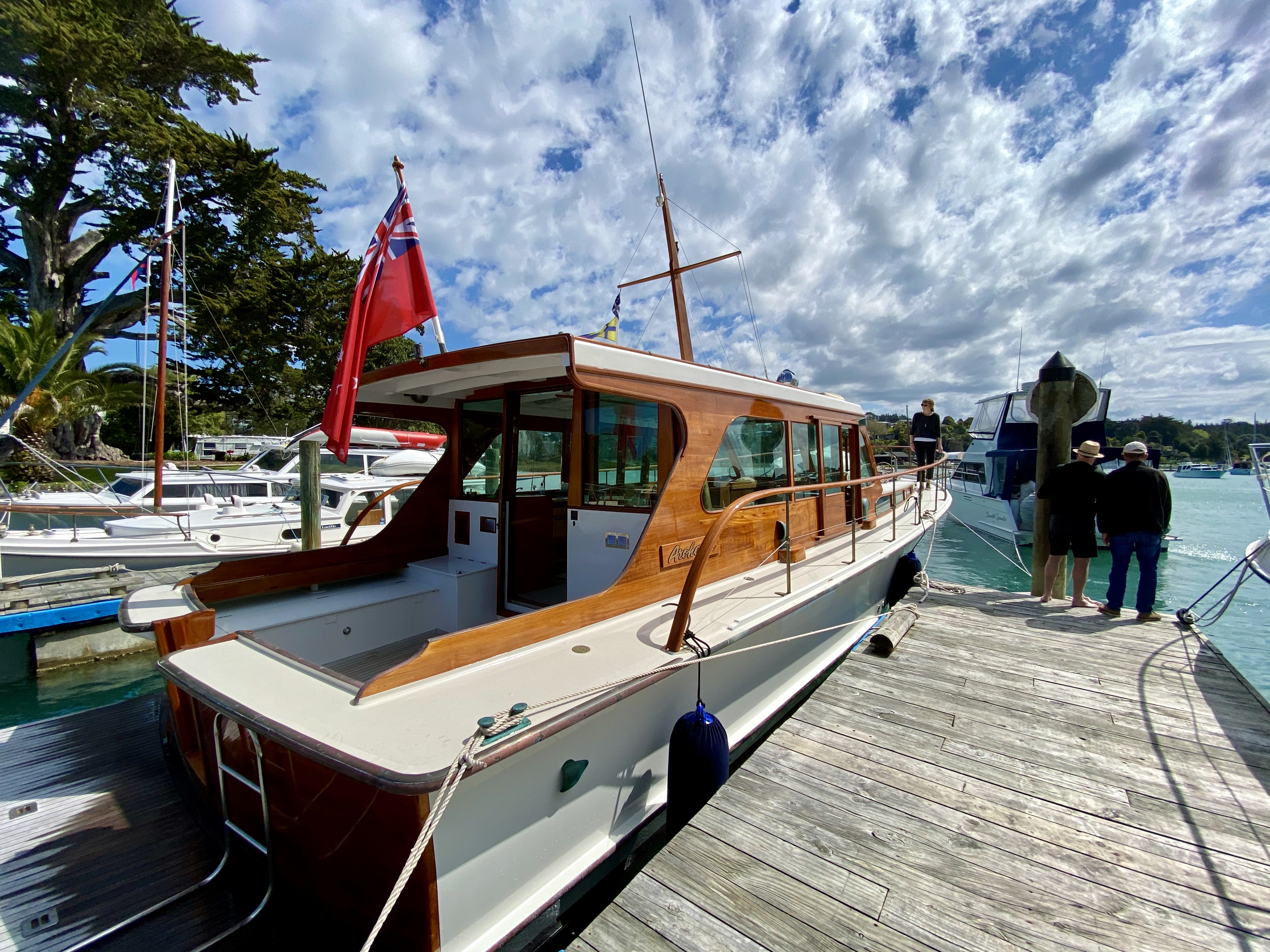
The morning started off a tad eerie with a sea mist blanketing a lot of the sea area off the east coast – but this burned off late morning and we then enjoyed perfect weather. The NZH and coastguard weather forecasts saw the numbers of launches attending drop to 12 but great to see so many turning up by car. Also very fine to have 3 past CYA chairman in attendance – Steve Cranch, Rod Marler and Peter Mence. The waterfront based Stillwater Motor Camp is an idyllic setting for a gathering of classic wooden boats – deep water wharf access to raft up to + a tree shaded lawn. After some interesting docking (too many dockside expects) we had the launches tied up and everyone then decamped to the lawn. Special thanks to Mark Edmonds (Monterey) for again coordinating the venue. A lot of the group had not caught up since the CV-19 lock-downs so it was good to swap stories and boating plans for the upcoming summer.
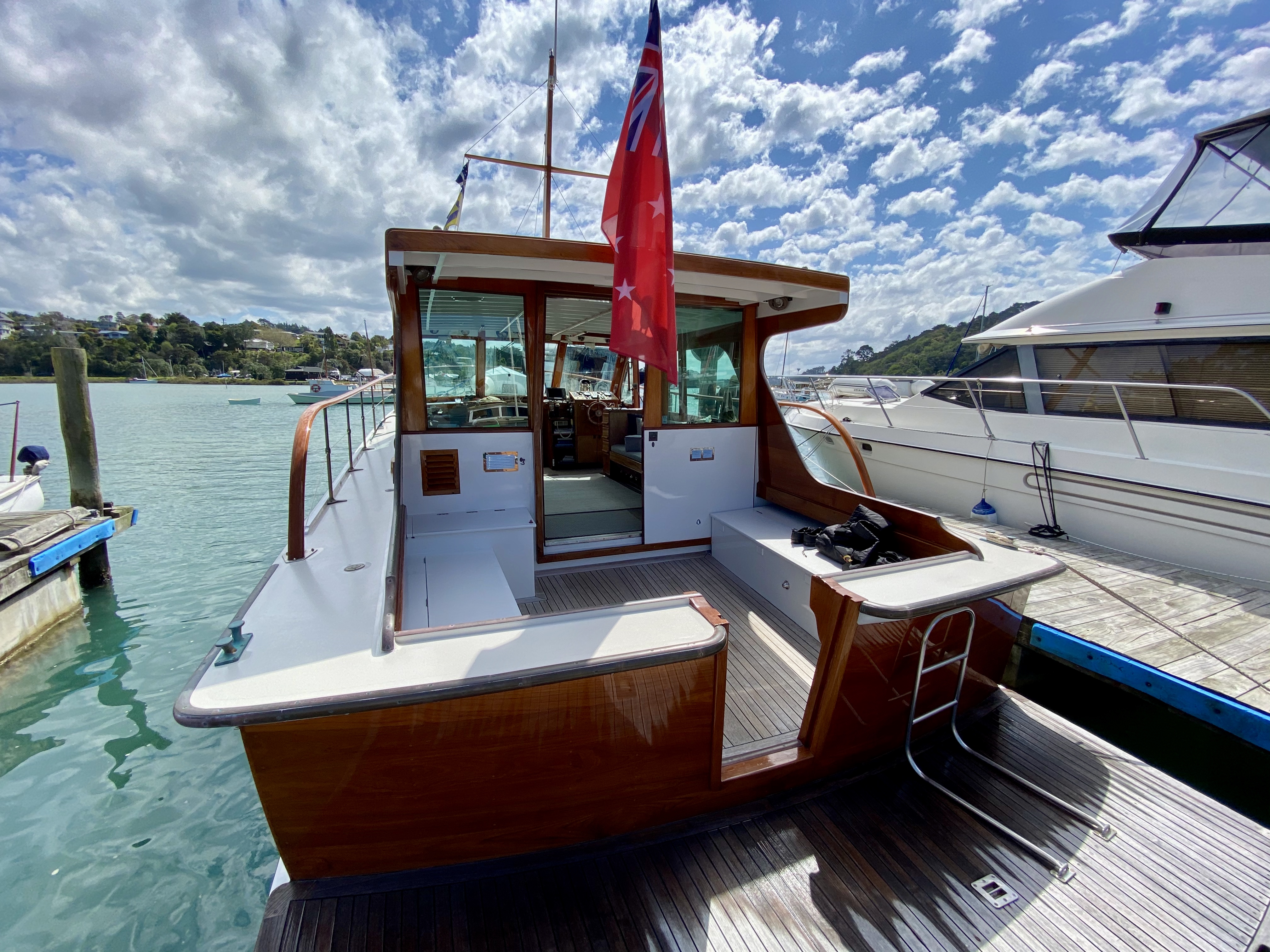
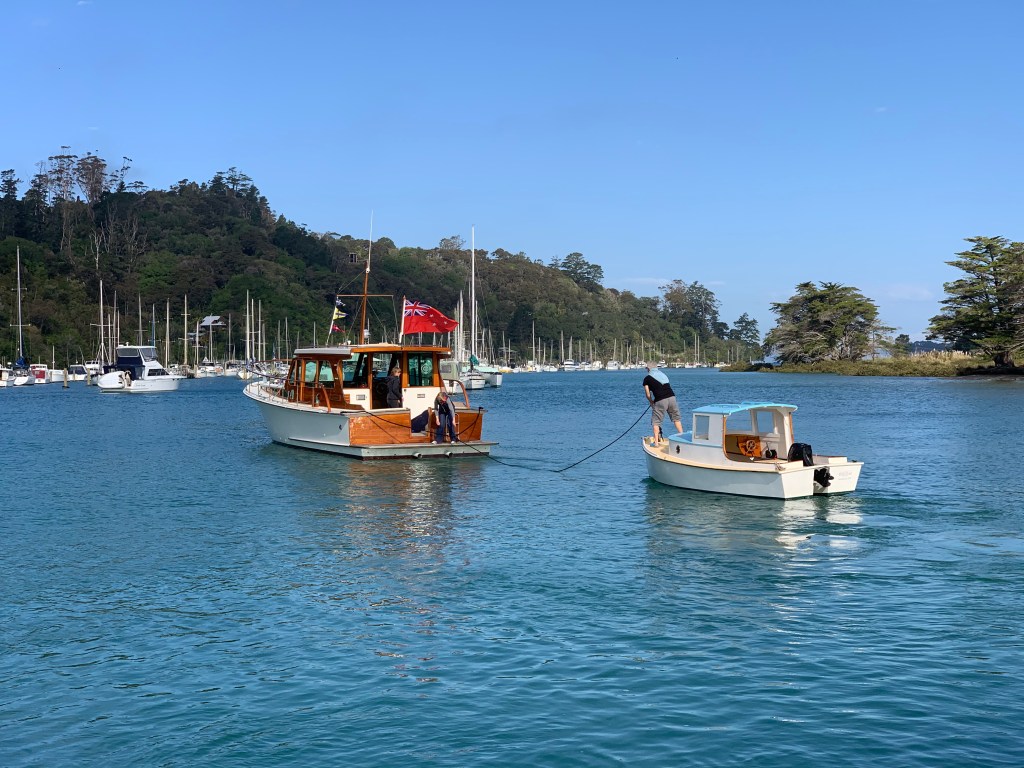
There has always been good camaraderie on the water between boaties and its something that we foster at Woody Classics Weekends – proof of it in practice is seen below in the photo of Rod and Fiona aboard Arohanui taking Murray Deeble’s Waikiore under tow. Towed him all the way back to the entrance to Milford Creek, where another woody – Jason Prew had ventured out in rather unpleasant conditions to get Waikiore back on her Milford berth. Well done to everyone.
Message for Murray – “should have bought a Yamaha” 🙂
Next Woodys on the water event – November 8th – Riverhead Tavern Lunch Cruise
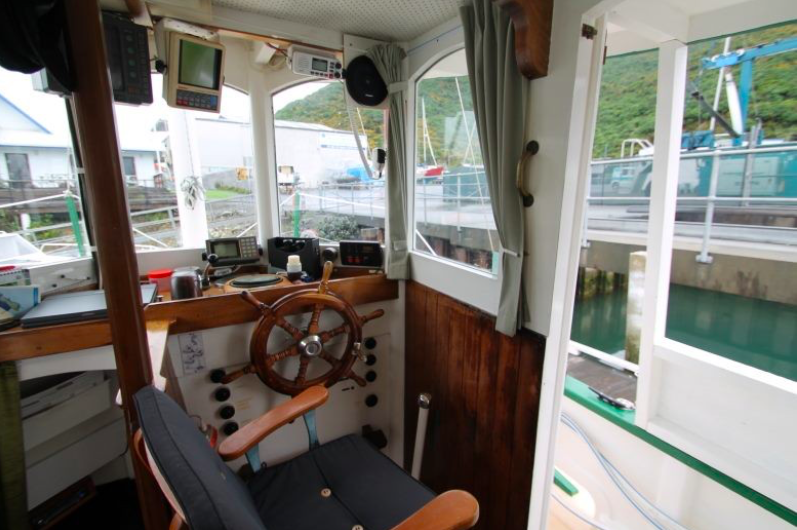
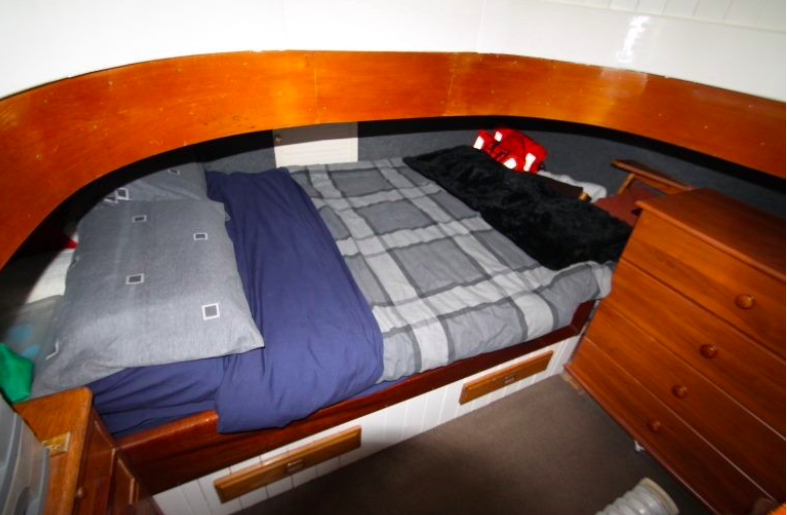
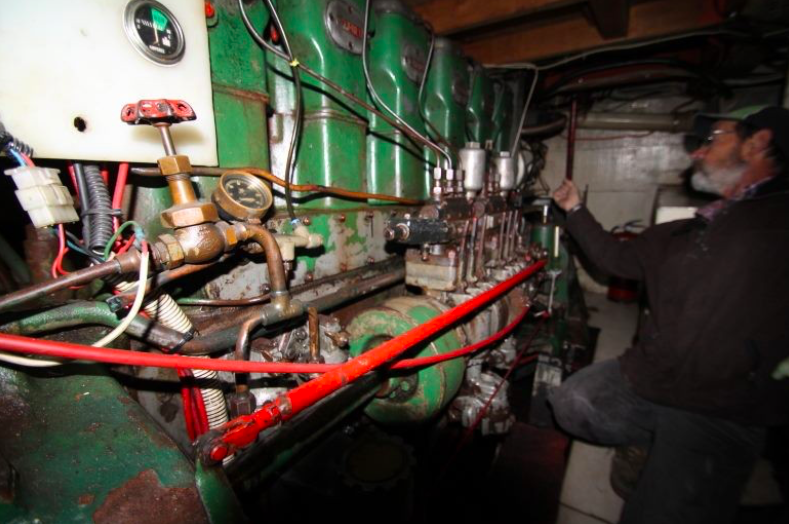
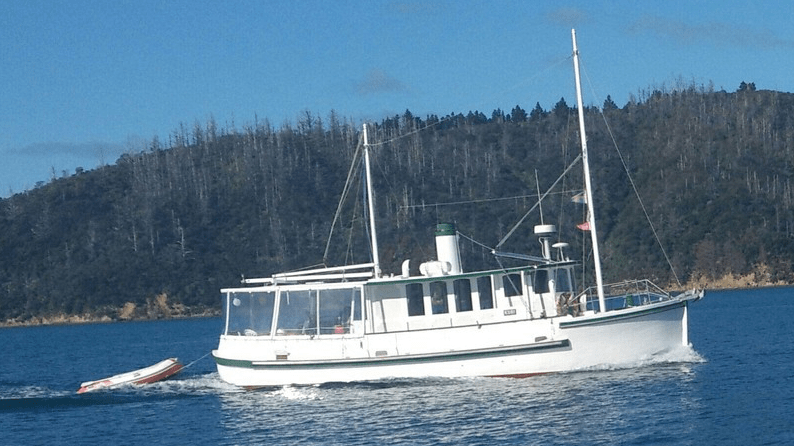
KURI – A Peek Down Below The 44’ Kuri has made a guest appearance on WW back late December 2015, WW link below. Now thanks to her tme listing (thanks Ian McDonald) we get to have a peek below.https://waitematawoodys.com/2015/12/30/kuri/
Kuri was designed by Herbert Levi and built in 1929 by WG Lowe, she has had an honest life as a workboat and now resides in Picton snd converted to pleasure boating / live-aboard. Powered by a 115hp Gardner 6L3, she is very well fitted out (as are most southern boats). Depending on her condition its a lot of boat for $83k
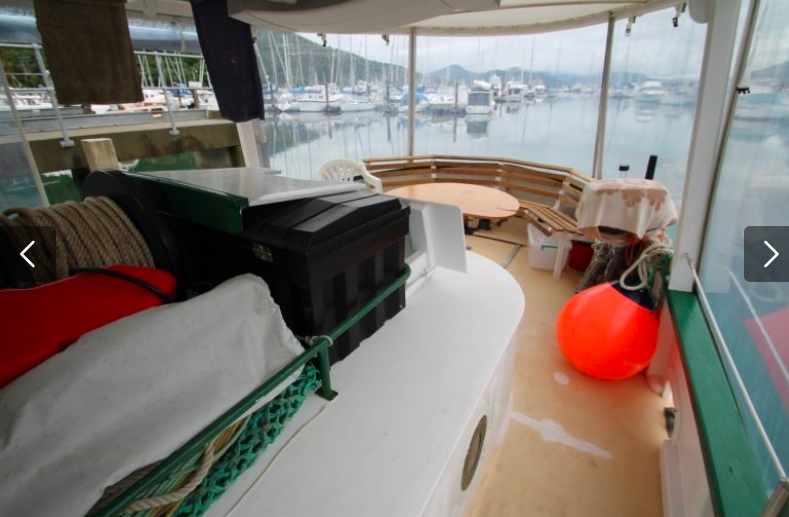
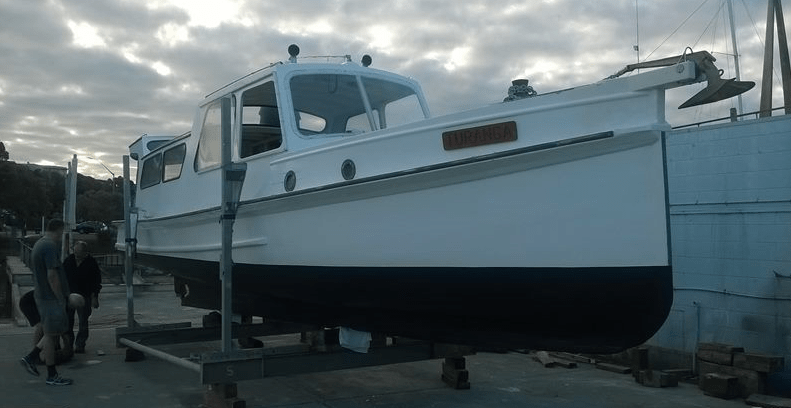
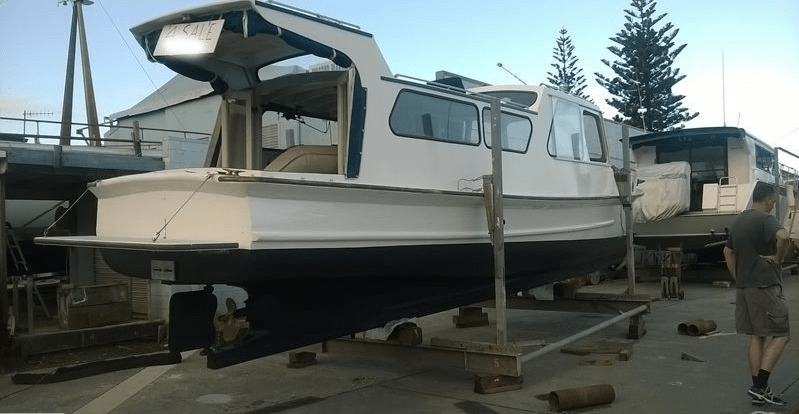
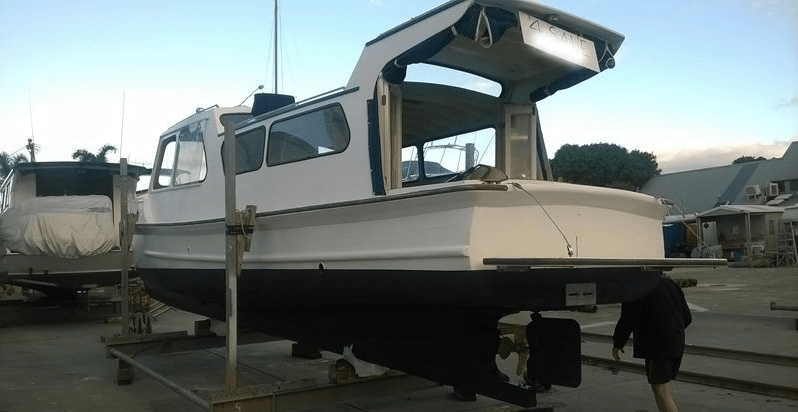
Currently on tme is Turanga – a project looking for a woody to step up and bring her back into the classic launch fleet. There is no mention of a designer / builder, but its thought that she splashed c.1920. Below the sheets of plywood that make up her cabin, is a very sweet kauri planked hull. She measures 36’, her beam is 8’6” and has a draft of 3’.Under the engine box is a 1974, Commer TS3, 135hp diesel engine that sees her cruising comfortably at 9.5 knts. and topping out at over 12knts.
The photos above were taken approx. 5 years ago and the ones below are current. In a recent storm she suffered a wee oops in her berth, but nothing a good woody boat builder like Geoff Bagnall couldn’t fix.
Her auction closes Sunday at 8pm – its a $1 reserve and when I last looked she was sitting on just over $2,000 – someone will get an entry level woody for not a lot of money 🙂 (Thanks to Ian McDonald for the tme heads up)
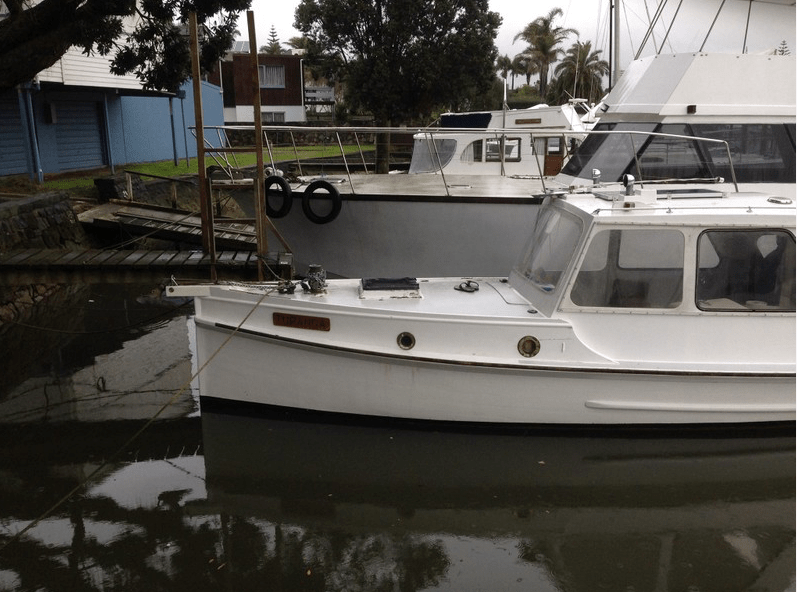
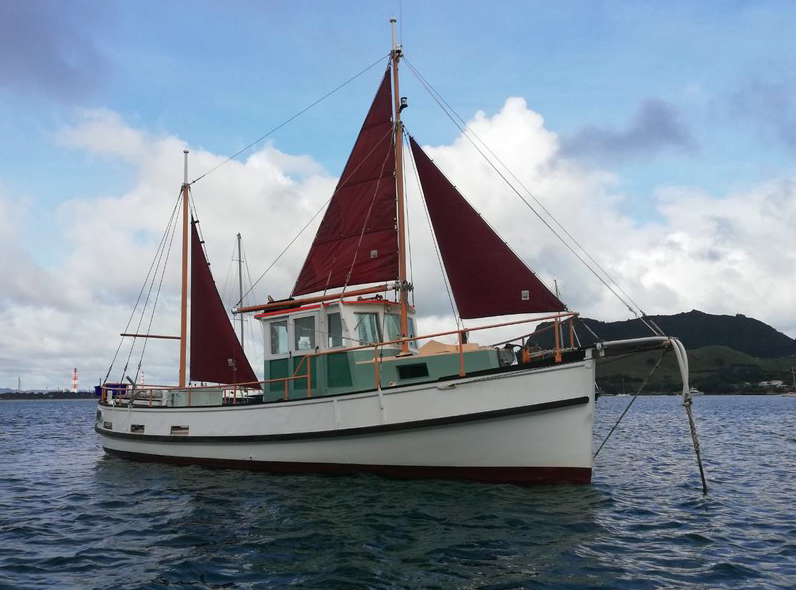
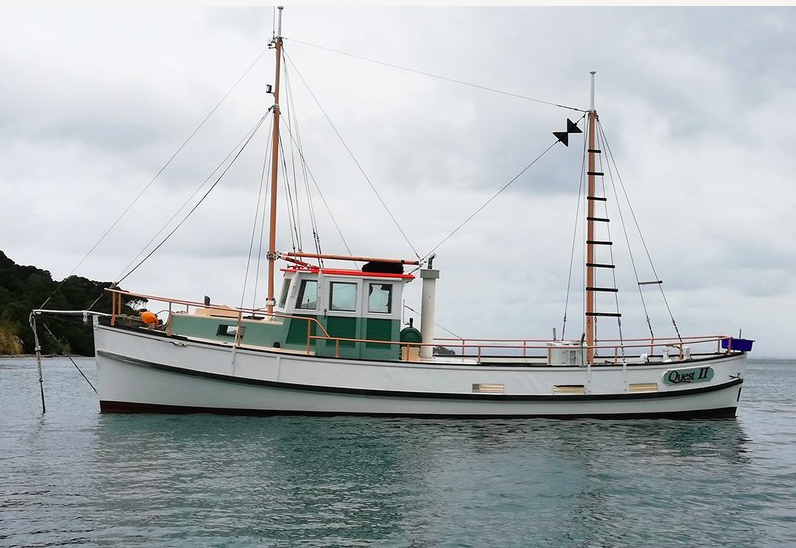
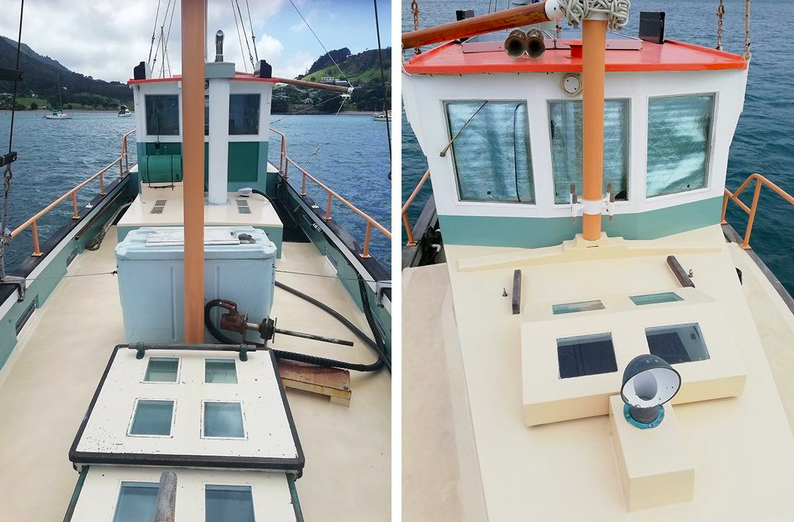
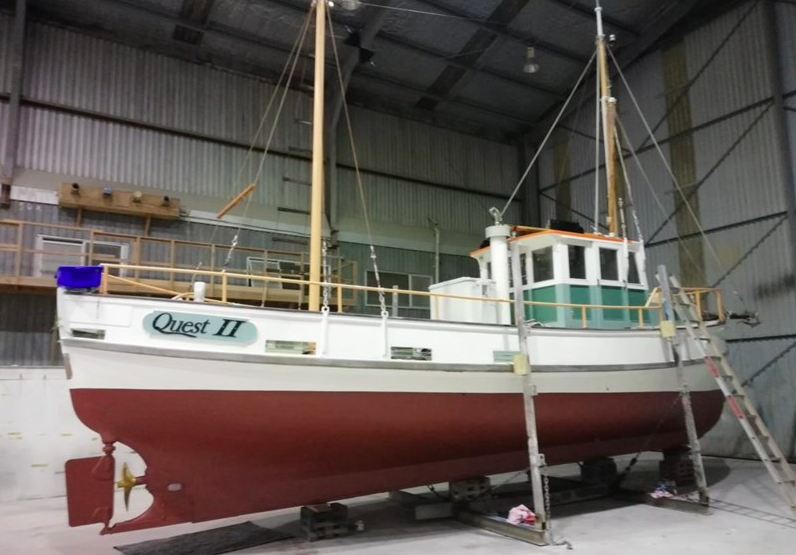
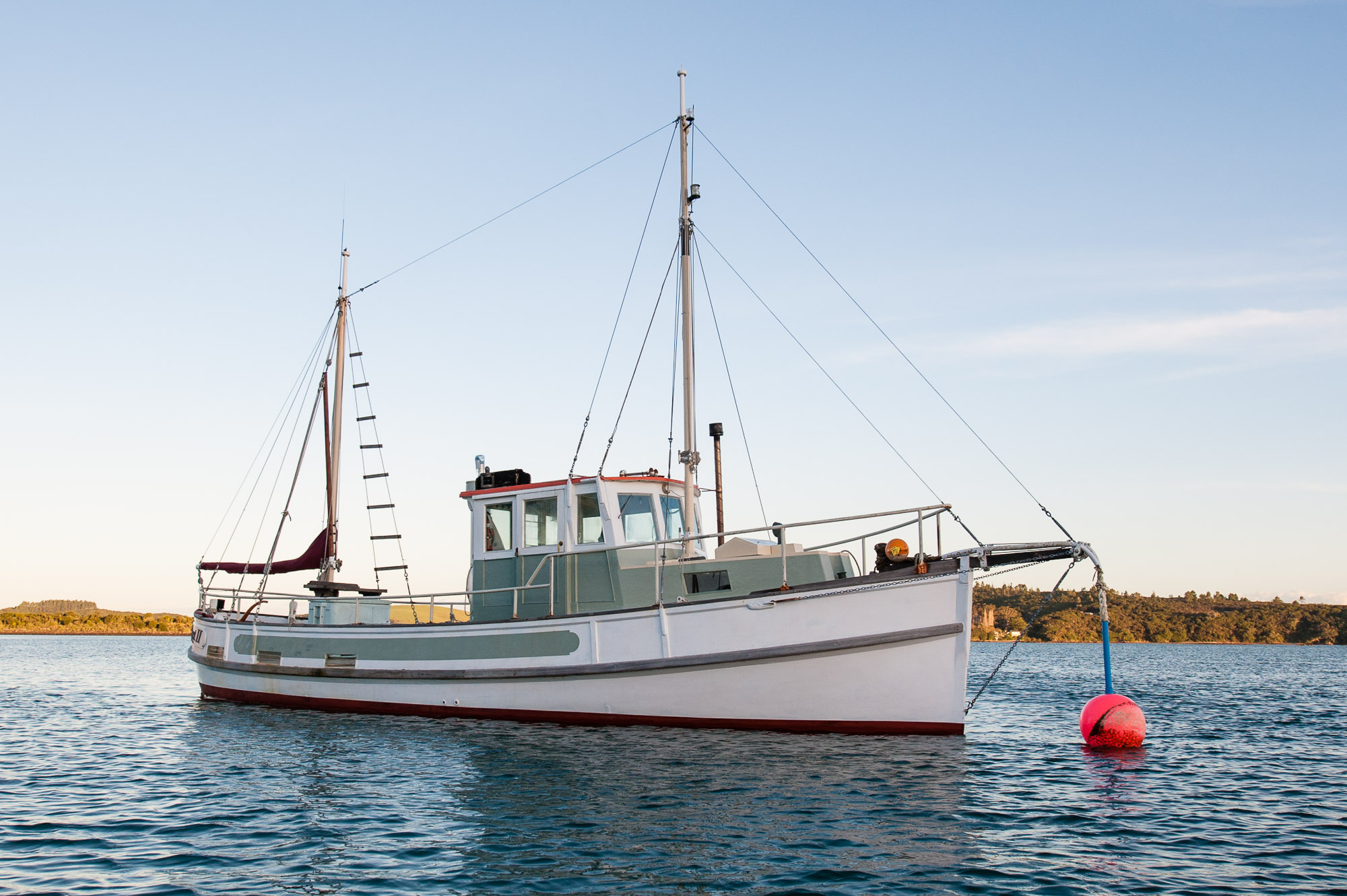
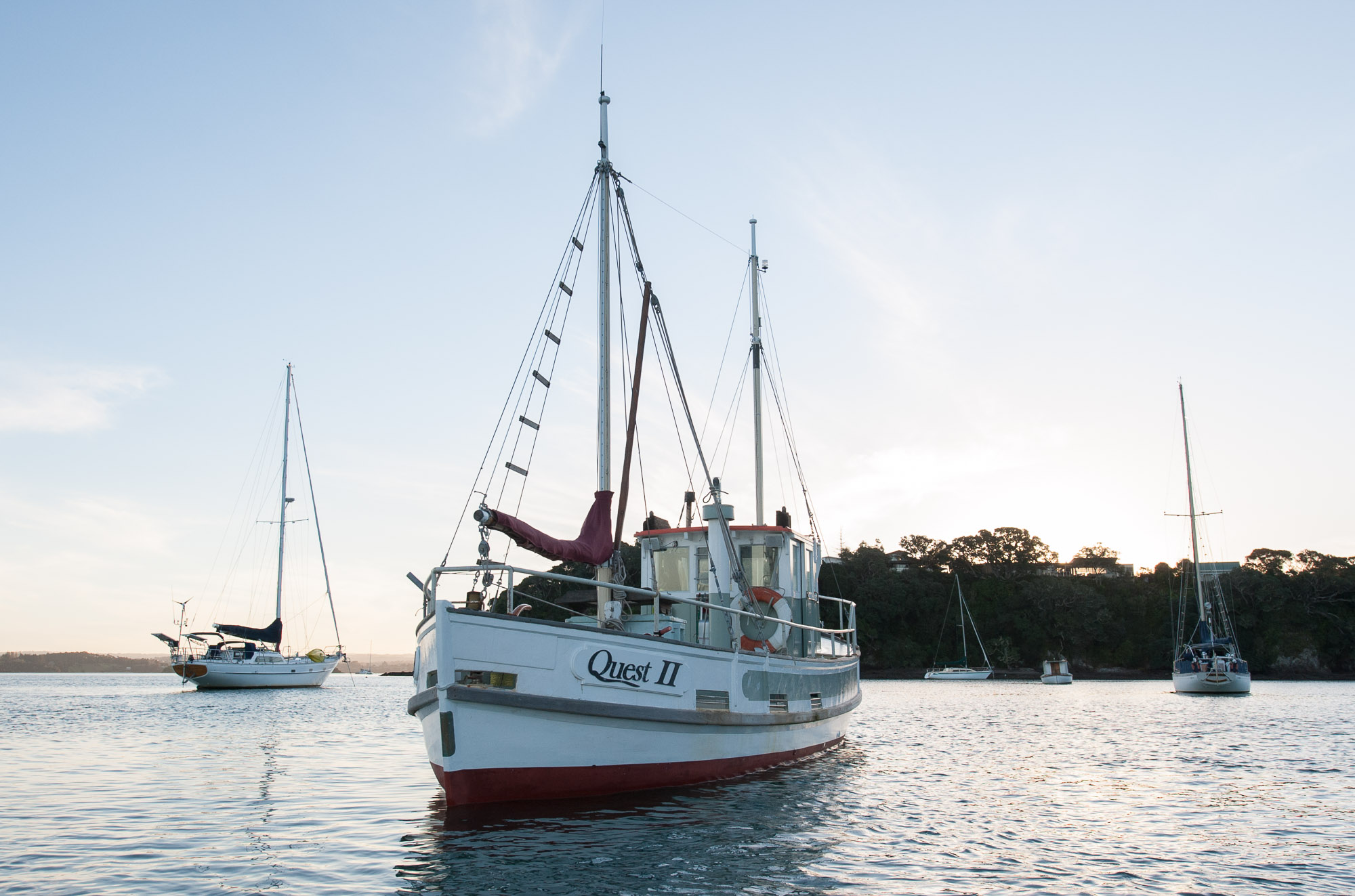
Quest II was built by Miller and Tunnage in 1924, currently configured as a pleasure boat, her tme listing doesn’t tell us anything about her past life, so woodys today can we uncover what happened to her from 1924 until her conversion?
Home port is Whangarei.
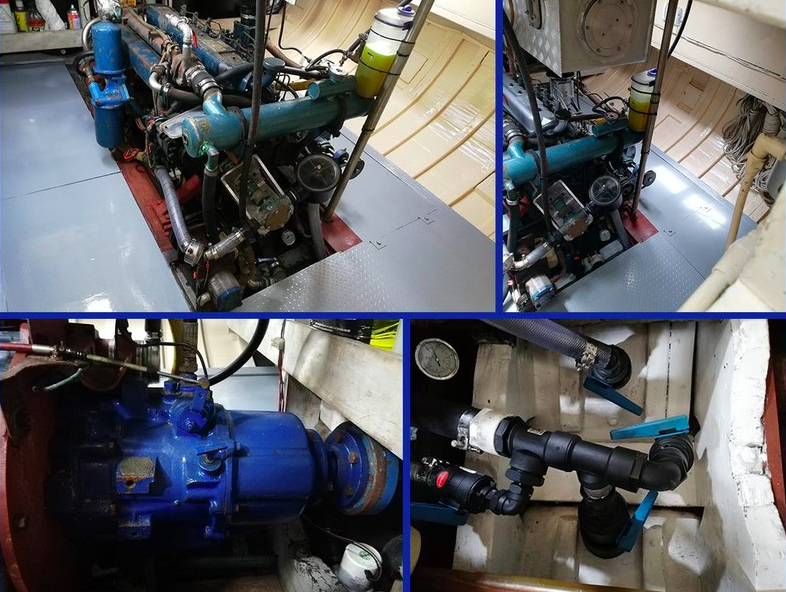
What we know is that she is 40’ in length and powered by a 6 cyl. FD6T Nissan diesel.
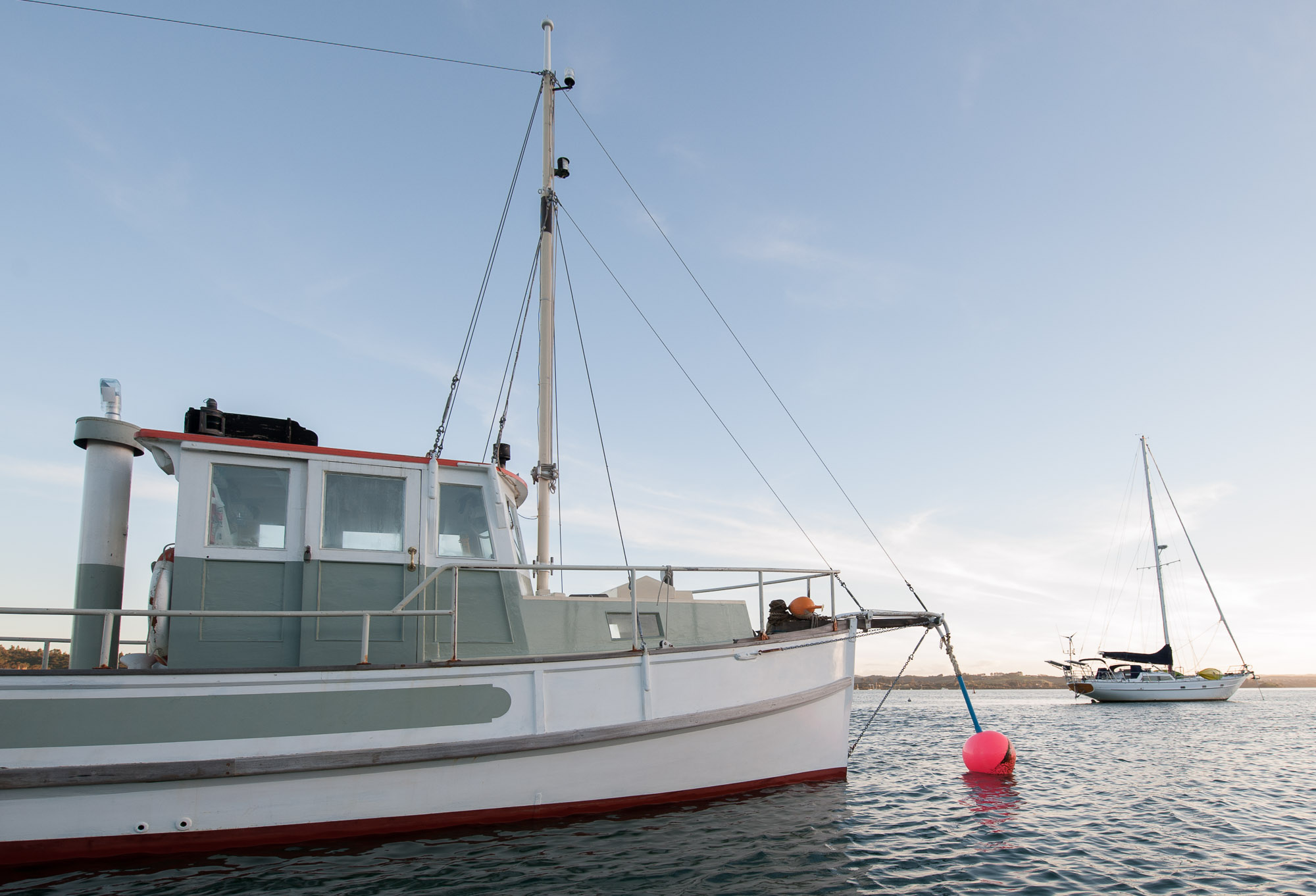
A very salty looking woody.
Photos below sent in by Dean Wright that he took of Quest II back in 2012 when she lived in Opito Bay for a bit.





























 waitematawoodys.com #1 for classic wooden boat stories, info, advice & news - updated daily - 15+ million views