Category Archives: Launches
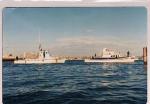
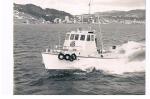
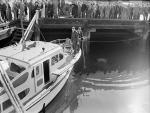
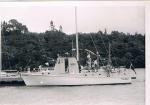
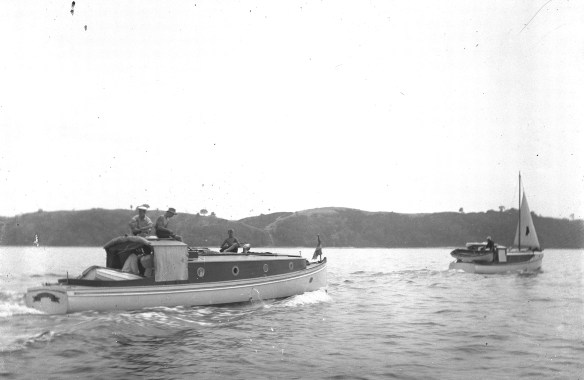
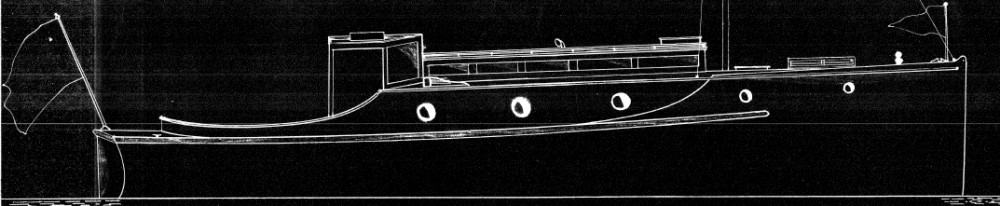
Around the yards – Karanga, Kiwitea & Rover
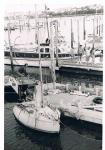
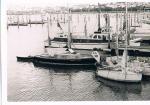
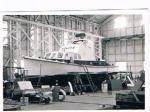
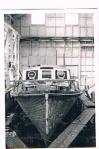
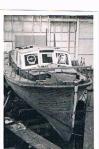
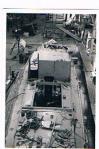
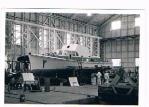
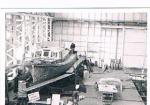
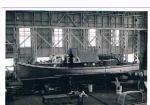
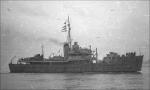
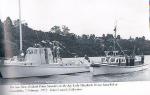
KARANGA, KIWITEA, & ROVER
KIWITEA, according to the 2006 owner I spoke to, was built by Lidgards at Kawau post WW2 which is possible I guess.
There have been many ROVERS. A 28ft ROVER was built by H.N. Burgess at Judges Bay in December 1912 as DRAYTON (I) and renamed ROVER in 1915 when DRAYTON II was built. I suppose it’s possible it’s the same craft. I’ll check on pics of DRAYTON.
Summer Wine
Ngaio
Weekend 1
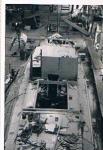
All fittings are off, belting 50% off, mast and stack removed, paint stripping beginning.
Findings so far; pohutakawa stem, kauri carvel planking, original waterline belting line cut into hull, original color is black hull, 13 coats of paint below the belting strip, 6 above the strip.
11/08/2013 – On Bruce Tanturm’s instructions (I always do what BT’s tells me to) I visited the boat shed today & meet the new owners, pleased to report that Ngaio has fallen on her feet 🙂
To quote Bruce “Her beauty out of the water, as one would imagine, is complete, simple and beautiful. The hull’s multi layered accumulation of many decades of paint has been removed revealing the symmetrical artistry of master craftsman Jack Logan’s full length bare kauri planking, all in absolutely perfect condition. In the next few days, she is going to be splined and fibreglassed to preserve her.
Never again will this particular definitive testament of material, form and craftsmanship be seen, never”
I can happliy add that the splining & f/g will only be above the waterline.
A mini wooden boat show.
Winter – yeah right
Winter – yeah right
Trinidad – 52′ Salthouse Motor Yacht
Auckland waterfront, Pleasure Launches, c.1930’s.
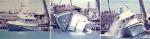
An Oops or a mid season bottom clean?
Charles (Chas) Collings – Designer / Boat Builder
Image
Charles (Chas) Collings – Designer / Boat Builder
The story below on Charles Collings’ approach to design in the immediate post-WW1 period has been penned by Harold Kidd.
Charles Collings emerged from World War I with a massive reputation for fast craft. In late 1914, when the war was just a distant rumble in France, he had built the 21ft restricted racer FLEETWING with which he raced and beat the Christchurch boat DISTURBER on the Waitemata in April 1915 at exactly the time of the landings at Gallipoli. He developed his “concave-convex” hull design where the chine hull had a convex (hollow) entry and progressively transitioned though straight to convex at the stern. He was by no means the originator of the idea, but certainly grabbed it as his own through decades of successful planing hulls he built for racing, fast cruising and whale chasing.
There is no doubt that he was well ahead of his time in a local context, although Major Lane was close behind.
By war’s end in 1918 Charles Collings had been a notable war effort contributor as a pal of local motorboat guru Charles Palmer (see ADELAIDE on this site), had lost his partner Alf Bell who had gone to the Walsh Brothers helping them build flying boats at Kohimarama for their flying school (and did not welcome him back afterwards), and was preparing for the post-war boom in large launch building that was inevitably coming, during which he built MARGUERITE, PAIKEA and RUAMANO amongst many others.
I have had a chip at his aesthetics from time to time but, to be fair to the man, he did not have the hindsight we have on the way launch design went and could not know what looks good to us today.
Faced with the design of a fast cruiser, only 32ft loa by 8ft 6in beam, and the desire for headroom in the main cabin, he came up with his second motorboat called FLEETWING (by now a brand for him). She was an extension of the ideas in the 1915 ADELAIDE.
I think, with this second FLEETWING, Collings’ first training as a civil engineer shows through more than his secondary training with Robert Logan Sr. as a shipwright. To obtain headroom he carried the tramtop/clerestory concept to the point IMHO of ugliness, using the parameters of the railway carriage, the electric tram and the motor bus of the time, abandoning completely the parameters of the yacht, even a token attention to which had kept launches aesthetically pleasing until now.
Anyway, see what you think of this image of the second FLEETWING which I have taken from one of Collings’ own glass plates, very decayed, but an amazing insight into the goings on in St Mary’s Bay in late 1920. Collings & Bell’s yard is out of picture to the left, so we see the yards of Dick Lang and Leon Warne close up.
This launch was on TradeMe at Picton recently, erroneously called MISS FLEETWING.
Update: Charles Collings was a very good amateur photographer with excellent gear. After his death in 1946 his glass plates got scattered around in the workshop, many were used for skipping across the Bay, most were smashed one way or another. A very few survived, most cracked or with their emulsion badly decayed. I have a handful more of which a couple are excellent and the definitive shots of his 26ft mullet boat CORONA after her launching in 1936.
PS Leon Warne took over the shed on the right in 1916 from Henry Barton who left for the US with his family because of his anti-war convictions (and had a shocking time on the way). Warne had served his time with Collings & Bell. He painted up the shed very nicely as you can see but was building in St.Mary’s Bay only until c1924 when he and his brother set up in Russell, building and chartering game fishing launches.