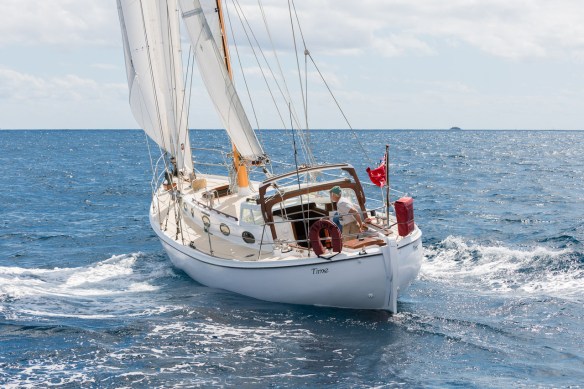
Several years ago Bay of Islands woody Dean Wright shared with me a gallery of photos of a yacht built by his friend John Gander. At the time the photos were just for my eyes only, so they have been burning whole in the back-pocket ever since. Then one day out of the blue a marina buddy, mentions he has just bought a yacht that will ‘blow-my-mind’, tells me its called Time and he was a little disappointed to learn that I knew as much (if not more, at that stage) about her as he did.
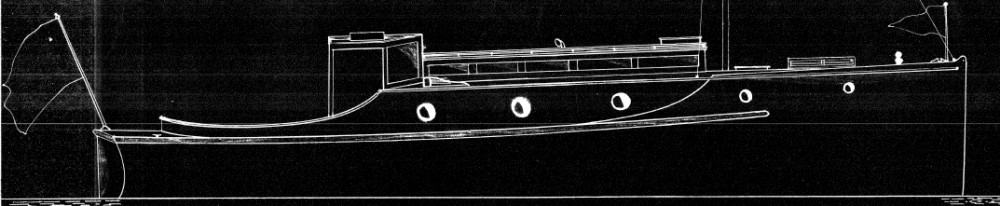
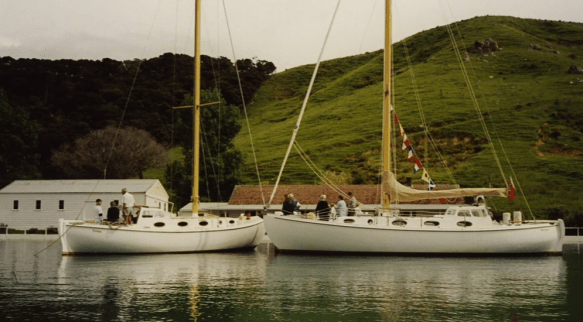
Some background – the yacht Time was launched in 2001, having been built and designed by John Gander. John felled and milled the kauri for her planking in the Far North (photos below). John’s a very modest man and would want me to mention that a very large cast of helpers and trades people helped with the project and woodys it was a very large project – because John built two boats, the sister ship, Whisper is still owned by John.
Time’s specs are 38 ’x 12’ x 5’8” and she displaces 12 tonnes. Power is via a Yanmar 30hp diesel.
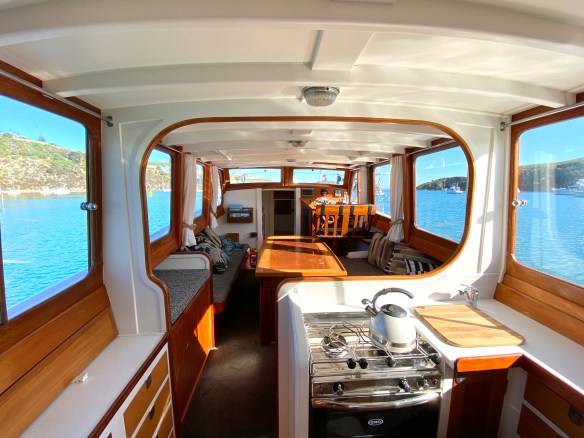
The standard of workmanship and design ergonomics are 2nd to none, you won’t here me say this many times but I could easily go to the dark-side (sail) with a boat like Time. On the water she is a knockout / head turner and down below just gorgeous.
After several years of ownership, a change in circumstances has bought Time on to the market. For anyone looking for a once in-a-life-time classic woody – Time deserves your inspection. Expressions of interest to waitematawoodys@gmail.com
Her owner is realistic in his sale exceptions, so Time will sell rather quickly.
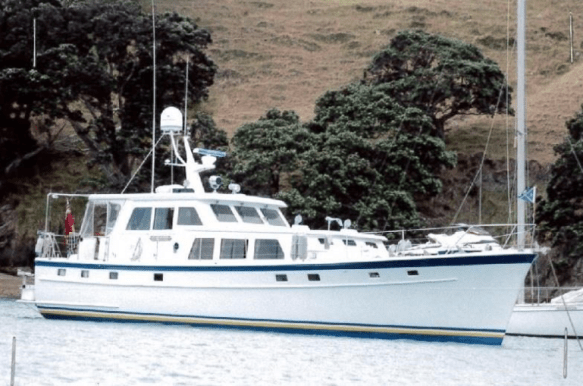
At 70’ Harrier would have to be the largest woody on the Waitemata Harbour. Built by Brin Wilson (year unknown) to a Sparkman & Stephens design, she has a 16’5” bean and draws 4’11”. Powered by twin Yanmar 165hp engines, I’m no engine guru but I would have expected bigger, but combine these engines with a 5,000L fuel capacity, this girl is set up for long haul cruising.
In her tme listing (thanks Ian McDonald) there is no mention of her performance.
You will observe from the photo gallery above, she is fitted out for just about any situation – but you will need a Lotto win to own her 😉
If you are a follower / reader of Wooden Boat magazine, you will be familiar with the work of photographer – Tyler Fields, again thanks to the world-wide lock-down, life has been given to another previously ‘stalled’ project, which we now get to enjoy 🙂
I’ll let Tyler tell the story –
“More than a year ago, Woody Metzger of First Light Boatworks and I started a video project introducing some of the people behind New England’s marine industry. The small network of boat builders, sailmakers and artists that make up what we do are the best in the world. Woody and I wanted to provide an quick introduction to the people behind these brands with the hope that getting to know us might encourage boaters to support the locals when buying new, restoring old or just keeping our lives on the water going. Our idea was simple; ask our friends four questions. 1 -Why has your business survived and where do you see it going? 2- What would you do if you weren’t doing this? 3- Would you like to see your kids do this? 4- Do you love your job? The responses we filmed were a mix of the expected, unexpected, humorous and a little sobering. After a handful of interviews, life caught up and we set our big idea on the back burner. Woody and his crew started building and launching boats one after another, after another and my schedule of chasing boats around New England ate up any free time we had. Well, the world has a habit of keeping us on our toes. At the moment, we all have found some extra time. So, last week I started digging through the footage and decided to start putting the interviews together. Oddly enough, the questions seem more fitting now than they did when we first asked them. We want to send out a huge thank you to each of the people and businesses who gave the time and let Woody and I into your shops. For the rest of us, it’s more important now than ever to support these small business. They are not just logos, they’re friends and family right here in our local communities.”
TOUGH DAY AT THE OFFICE
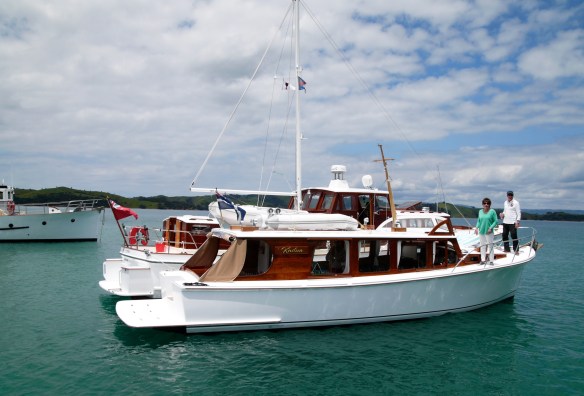
Popped down to Waiheke Island yesterday to show a potential buyer over Kailua, stunning day, stunning boat. More details at the link below:
I recently stumbled across the above photo of the steam ship – Duke of Marlborough and knowing nothing about her put a call into Russell Ward aka Mr Steam. The man is never embarrassed to speak so – take it away Russell, WW is all yours…..
“Once, 30+ years ago, I built up a steamboat called “Gypsy”. So pull up a chair, warm yourselves by the fire and I’ll tell you a story which isn’t about “Gypsy” at all, it’s about the “James Torrey” which became the “Duke of Marlborough”.
But, through “Gypsy”, I met one Lloyd Lewis of Lake Tarawera. He was an ardent enthusiast for steamy things (who wouldn’t be – living on Lake Tarawera.) Lloyd had made a steamer up out of a hull I had sold him a year or so previously and really had the steamboat bug badly. As the late Pete Culler (he wrote a lot about boats and he was a wise man) said “It’s awful, don’t go near it or you are hooked.” And you can’t argue with facts like that, folks. Suffice to say Lloyd got steam enginitis in a big way.
He had Wellington naval architect Bruce Askew design a hull for a 36’ steam vessel following the style of the early 1900 steam boats The steel hull was built in 1987 by Gordon Clark and Brian Starrock in New Plymouth and shipped to Rotorua for Lloyd to complete. He did a fine aesthetic job. She was launched as “James Torrey” and he used her to take fishing tours on the lake. The lads appreciated the warmth from the boiler at times.
Lloyd built the engine – an English design by A.A. Leake and a dashed good looker it is -a traditional open compound, driving a 28” by 42” propeller giving a service speed of 6 knots. A piston valve is fitted to the high pressure cylinder and a balanced slide valve on the low pressure one. It has cross-head driven twin feed pumps and air pump. Exhaust is through a feed-water heater to a keel condenser. There you feel a lot better for knowing that.
But to sum up, working on salt water, you have to condense the exhaust steam or you run out of feedwater real quick. Besides, condensing gives you a useful addition to the power through the vacuum created which, in essence, sucks the piston while the steam pushes.
The steam is provided by a Kingdon type boiler (1900’s Simpson Strickland design) built by Langley Engineering in the U.K and, since you didn’t really want to know, It is a vertical fire-tube type, 34 inches high by 30 inches diameter over lagging, has 3.4 square feet of grate area and has 84 square feet of heating surface. She burns coal and there is nothing better.
Lloyd had quite job actually getting Ed Langley to dispatch the finished boiler although it had been long since paid for. Ed had had his delivery problems over the years…. Legend has it that, in frustration (remember communication was all letters and phone calls that had to be booked well ahead in those prehistoric times); Lloyd flew over to the UK and turned up at the works just ahead of the receiver. Seeing the likelihood of his investment coming to nothing, he took matters into his own hands and loaded the boiler up himself. Lloyd just wasn’t the sort of man to argue with and got his boiler. It is a very handsome job.
Anyway after a number of years, Lloyd tired of his steamboat and Roger Frazer took her to Picton. He renamed her “Duke of Marlborough” and did a lot of restoration which is a credit to him. He has been taking passengers out of Picton for some time. I’m sure the passengers appreciate the boiler’s warmth even more that the Lake Tarawera types.”
I understand she may be for sale………
WoodenBoat Magazine Interview #3
This week WB editor Matt Murphy interviews Harold Burnham in a live discussion of how, for nearly three decades, he has been instrumental in revitalizing the shipbuilding and maritime culture of his region by designing, building, and rehabilitating traditional vessels for cultural tourism. Harold is an 11th-generation shipwright, and has, at various times, also been a sawyer, mariner, model maker, and sail maker.
Chatting with Tinopai (2hrs north of Auckland) based woody Greg Schultz he tells me advancing old age has forced him to make the reluctant decision to pass on one of my most prized possessions.
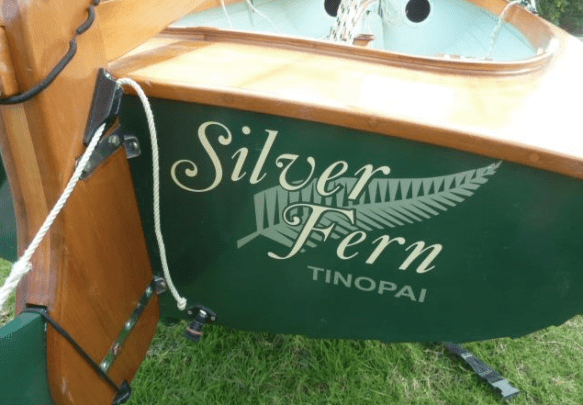
Greg built this boat about 10 yrs ago off the original 1905 Arch Logan plans (modified by Chapman1921). Construction is clinker lapstrake using 6mm ply with epoxy glued laps which gives a good lightweight watertight hull (originals leaked like sieves and weighed a ton). All other timbers are kauri and totara. He also added 3 buoyancy compartments for added safety (2 side seats & forward compartment all epoxy sealed inside). Greg commented that she has only been sailed approx. a dozen times.
The Silver Fern class (12’6″) was designed as a training boat for teenagers before they moved on to the bigger M class and is therefore almost a miniature ‘Emmie’.
Spars and rigging are s/s and sails by Fife. Pivoting centerboard and rudder for shallow water sailing. Permanent reef lines for shortening sail without coming ashore.
Woodys this is a stunning boat to both look at and sail so if you are frustrated with paying big marina fees and the hassles of organizing crew – maybe now is the time to add a woody to the fleet so that you can sail single handed or take the grand kids for a sail.
Given the lockdown if you are interested it might be best to contact Greg direct at itzgreg@yahoo.com
UPDATE – Read comments section for feedback on the boats provenance.
Its not often we see an Australian designed / built Halvorsen in NZ waters, they are the darlings of Sydney Harbour. Its even rarer to see an ex WW II one.
Northern Star was built in 1944 by Lars Halvorsen & Sons for the Royal Australian Air Force as a air-sea rescue boat.
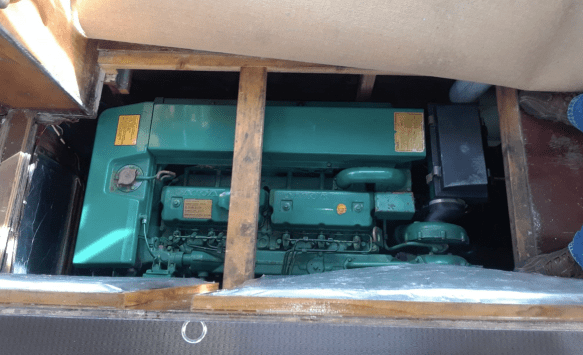
She measures 38’x10’x4’. Current power is from a 306hp Volvo TAMD61A diesel that gets her along at 12>13 knots.
Her owner has had her for 45 years and she is now 4sale on tme – a few rot issues to her plywood stern area and fore deck but I’m sure easily fixed. Rather a smart boat for the current price ($20+k)
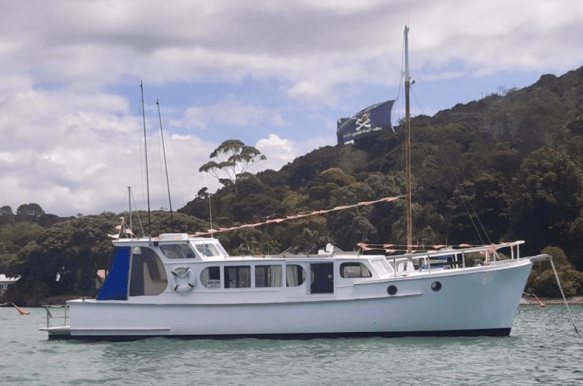
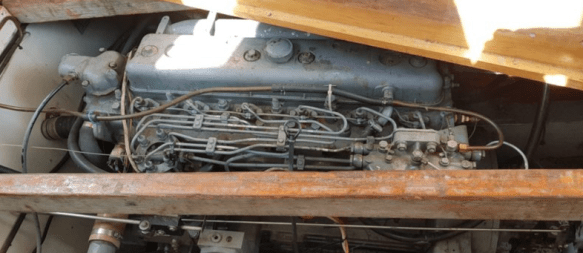
The 37’ Ngaruroa was built by Nobby Clark, a commercial boat builder and launched in 1965. Built from carvel plank, heart kauri. Powered by a 120hp 6 cylinder Perkins diesel engine.
Over the last 8 years she has been under gone an extensive re-fit and her owner now finds themselves just too busy to complete the project – so if there is a woody out there handy with their hands – Ngarurua just needs her interior finished and a lick of paint. She is fully operational in its present state. Thanks to Ian McDonald for the tme heads up.
CYA CLASSIC YACHT REGATTA UPDATE – DAY TWO (Races 2&3)
Yesterday morning I was dock side at Race HQ co-ordinating a meet up between renowned wooden boat photographer Benjamin Mendlowitz and James Dreyer (MV Laughing Lady) and I got ‘press ganged’ into accompanying them on LL for the day. Was not what I had planned but sometimes you just go with the flow.
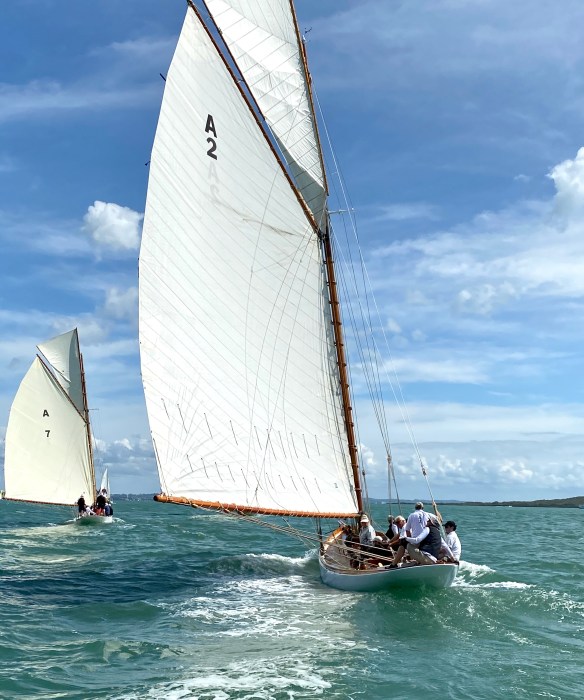
Had an amazing day and got some great sailing photos. A taste below – full story on Monday.
Hopefully when you read this I’ll be enjoying breakfast aboard Raindance somewhere near Waiheke Island, having had an enjoyable day / evening at the Woodys Classics BBQ & Pizza lunch at Little Oneroa,
Today’s woody has been sitting in my files for a while, waiting for a lazy day e.g.when I’m afloat. So here goes…………
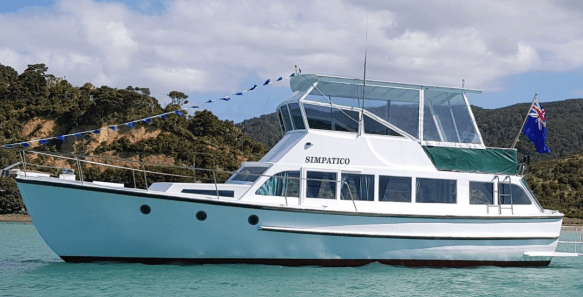
Simpatico was built in 1968 to a Henry Shield design. She measures 42’ in length and has a Ford 120hp diesel pushing her along at a cruising speed of 7 knots.
For sale on tme, she is a very big girl BUT woodys………………… that hothouse has to go 🙂

























 waitematawoodys.com #1 for classic wooden boat stories, info, advice & news - updated daily - 15+ million views