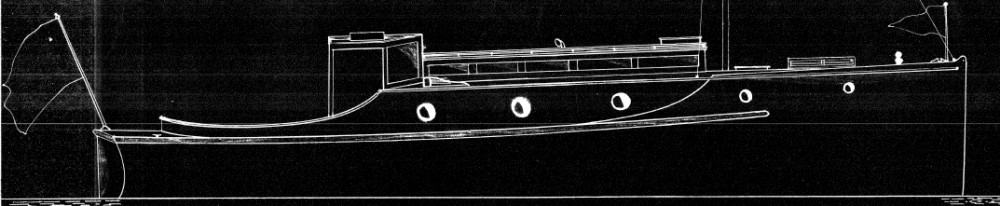
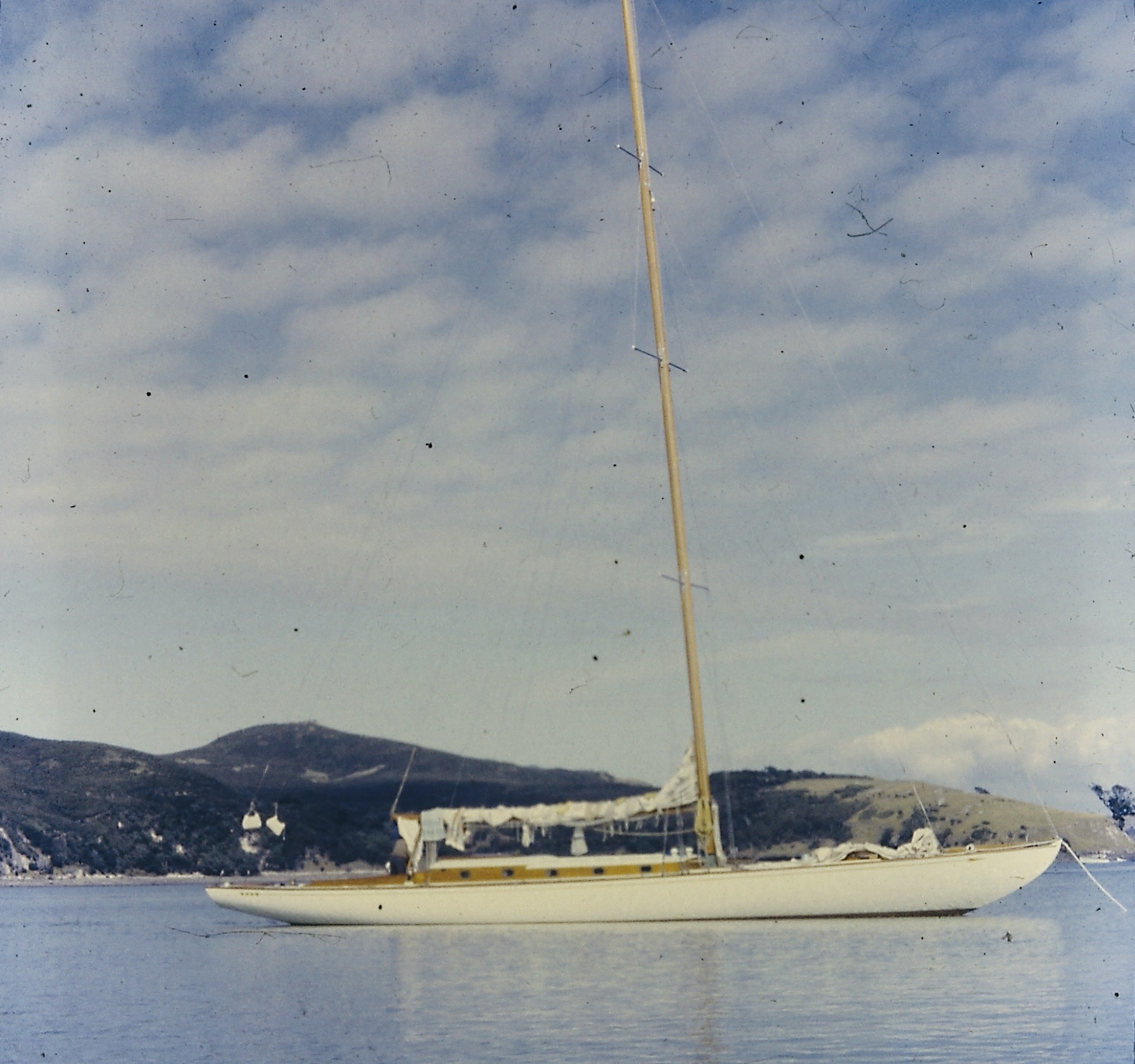
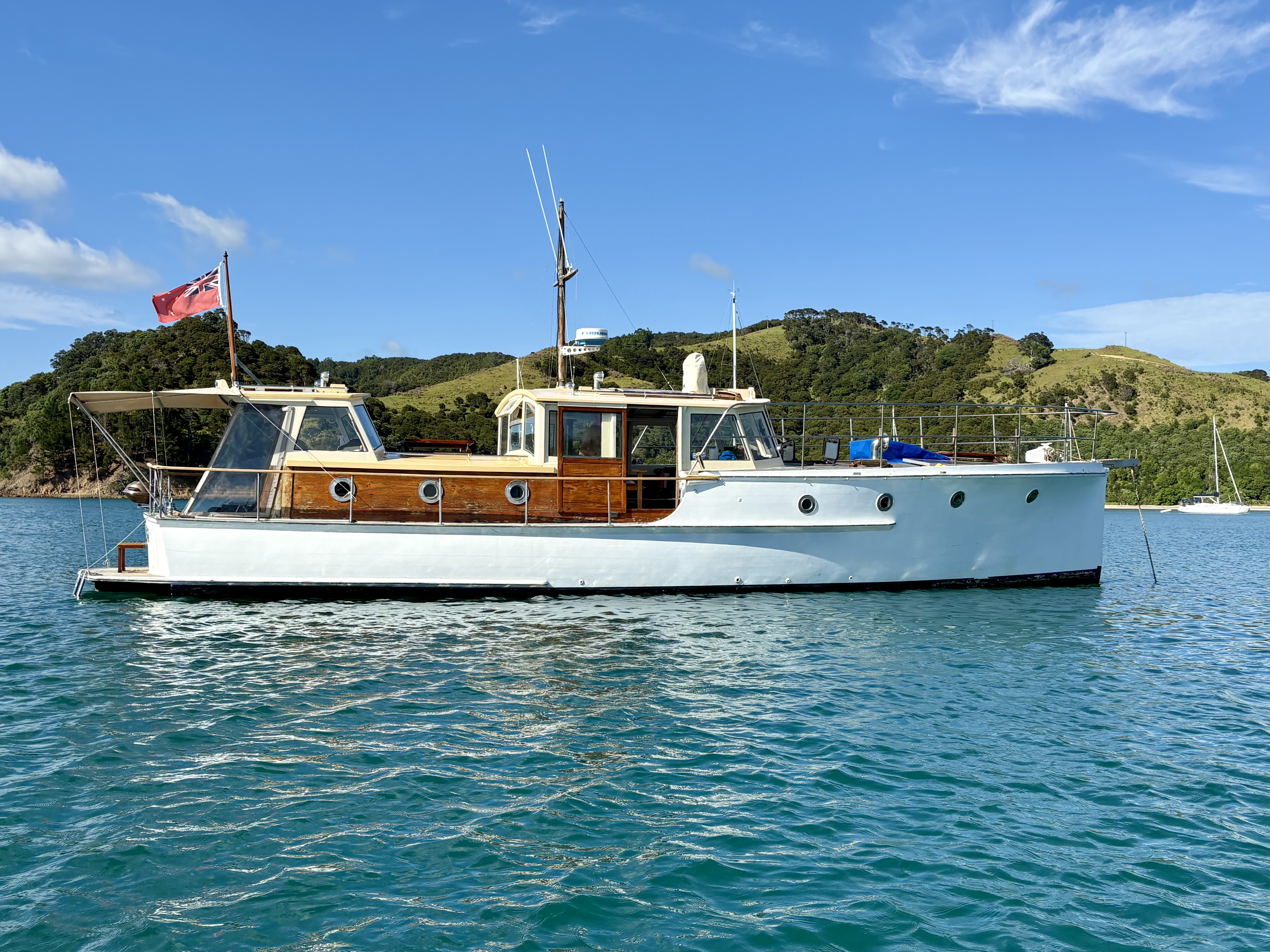
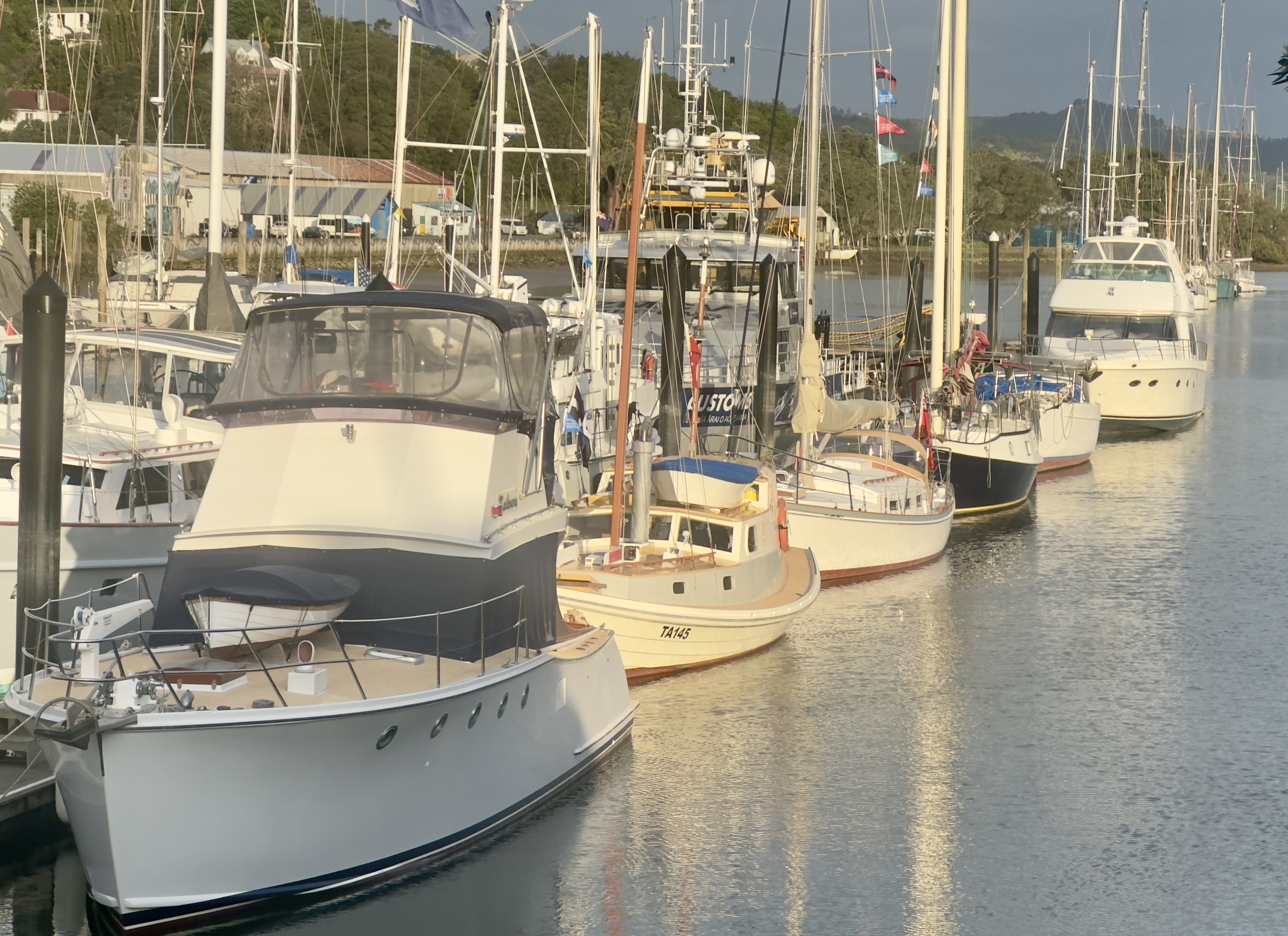
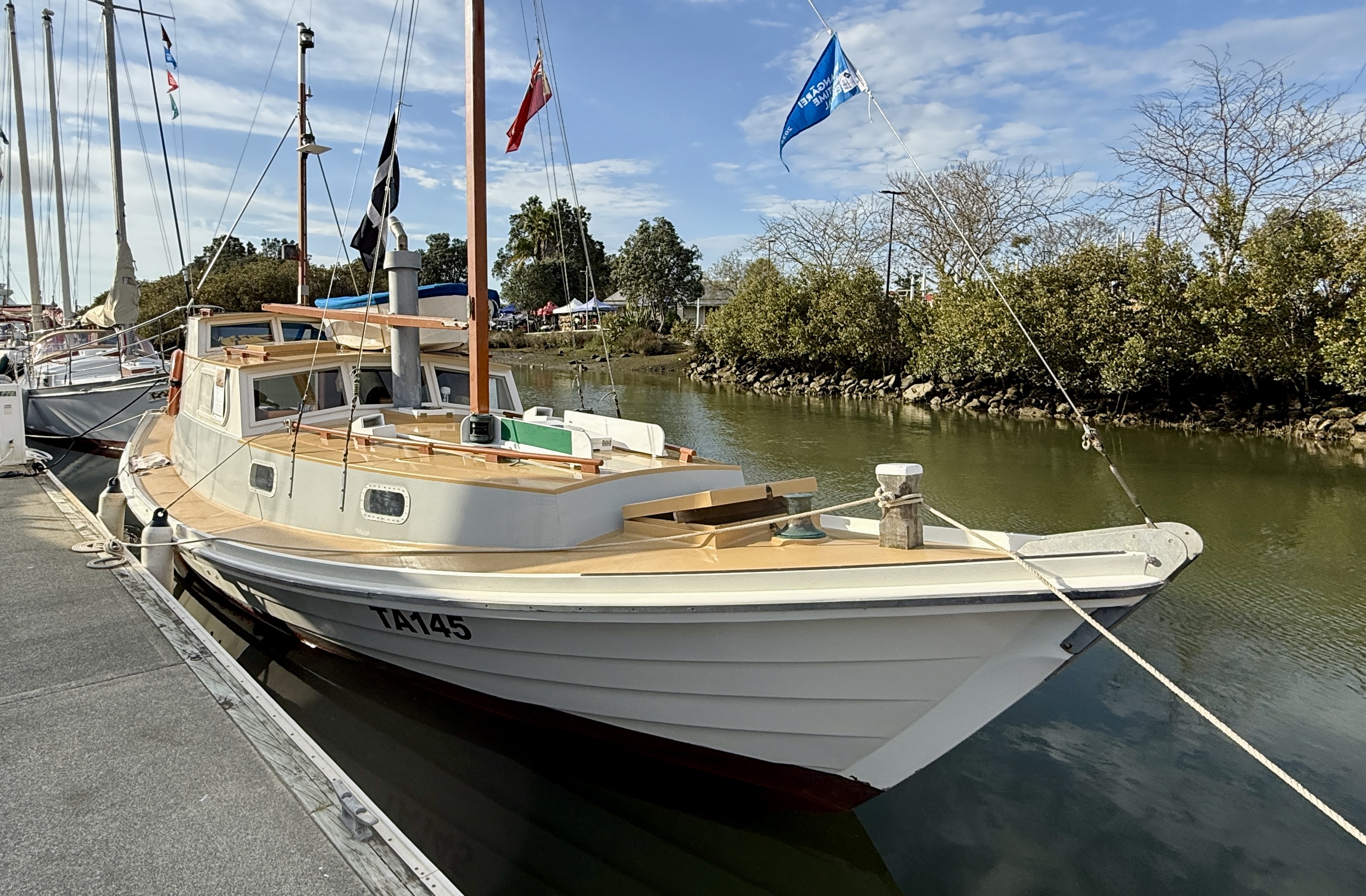
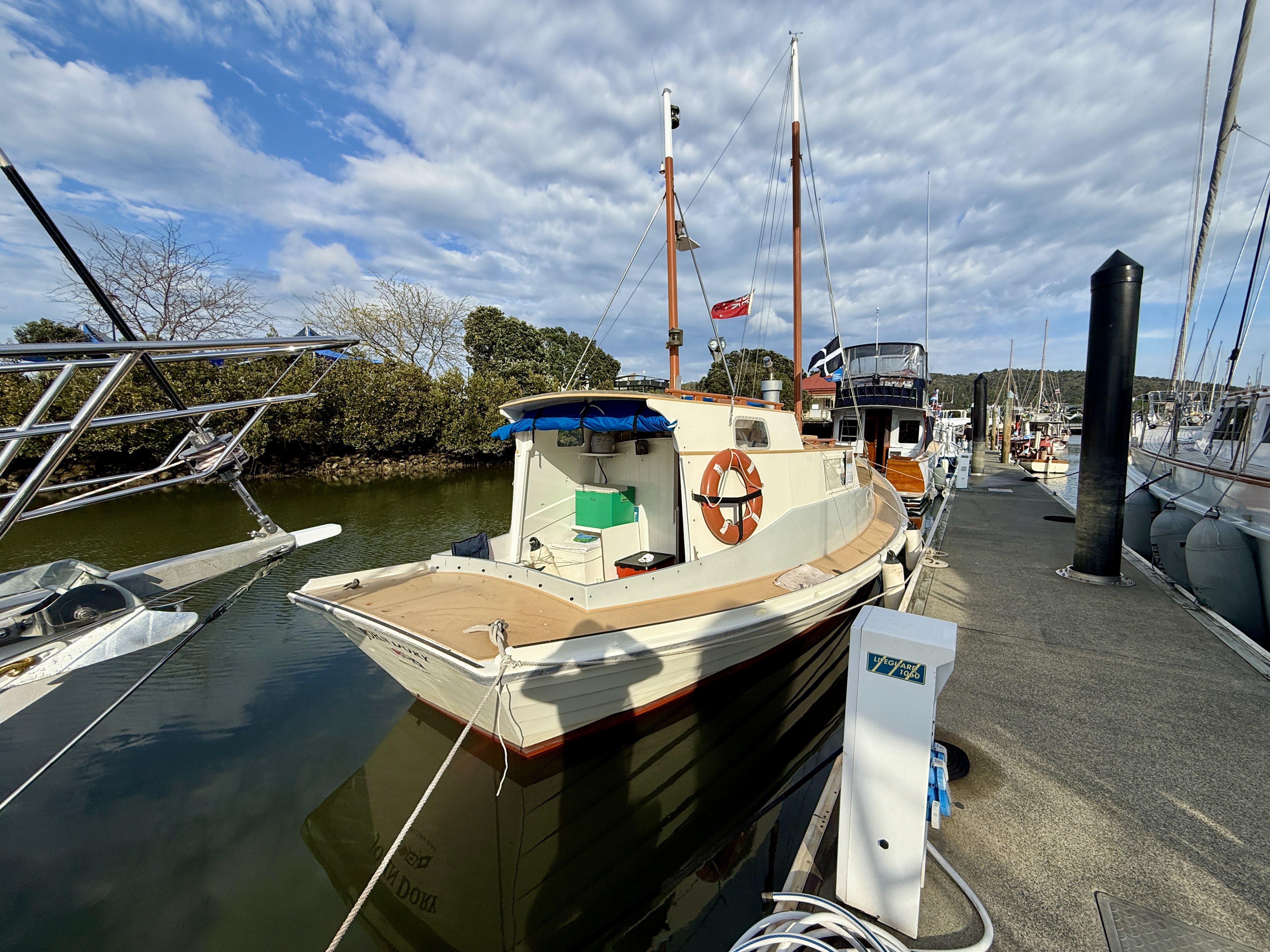
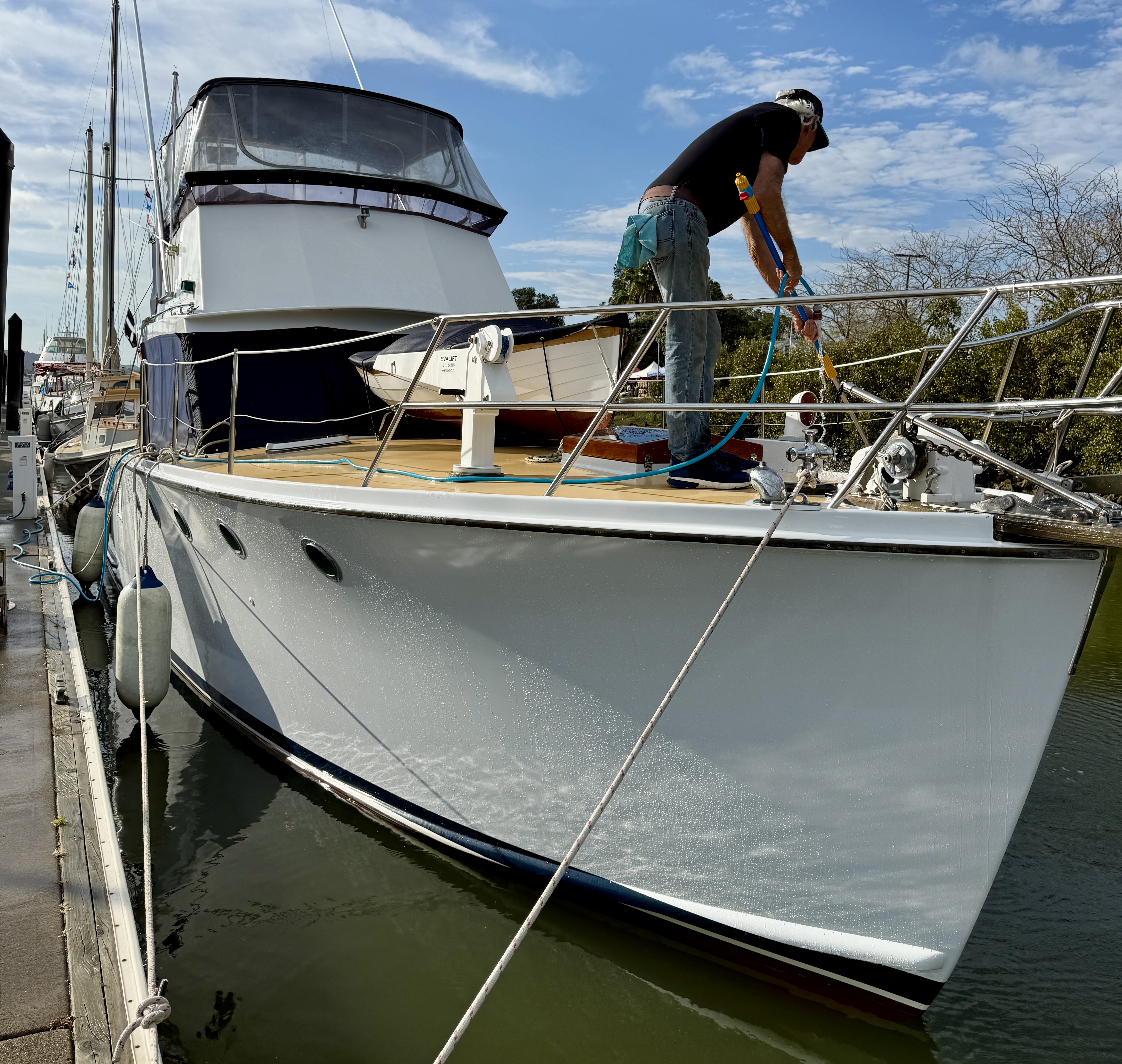
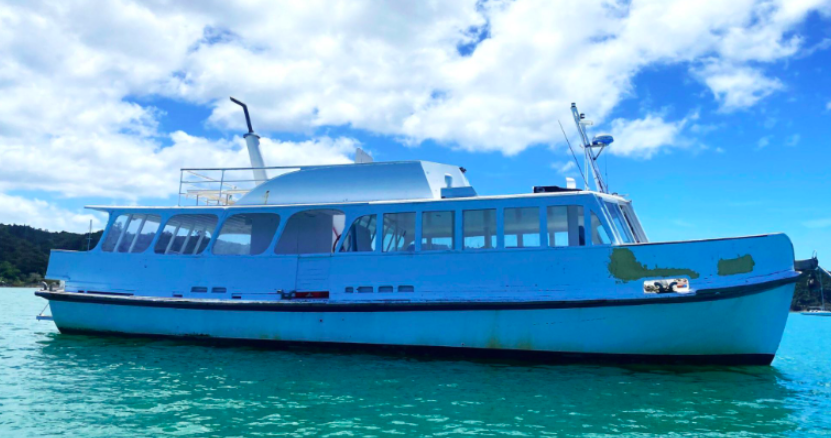
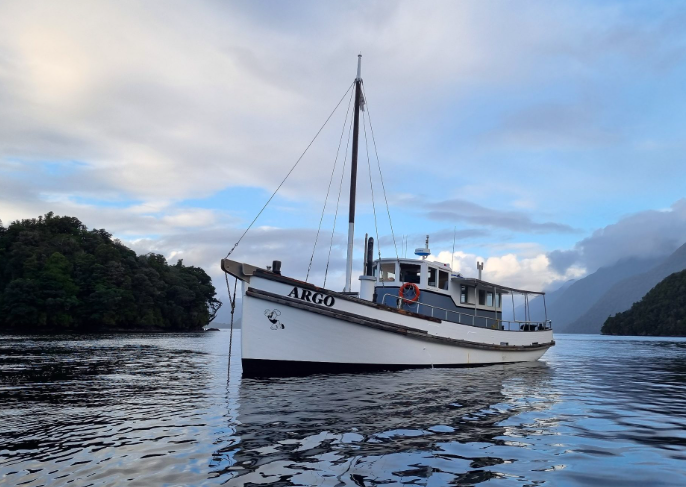
CLASSIC WOODEN LAUNCH MA CHERIE (ADI KUILA) LIVES ON
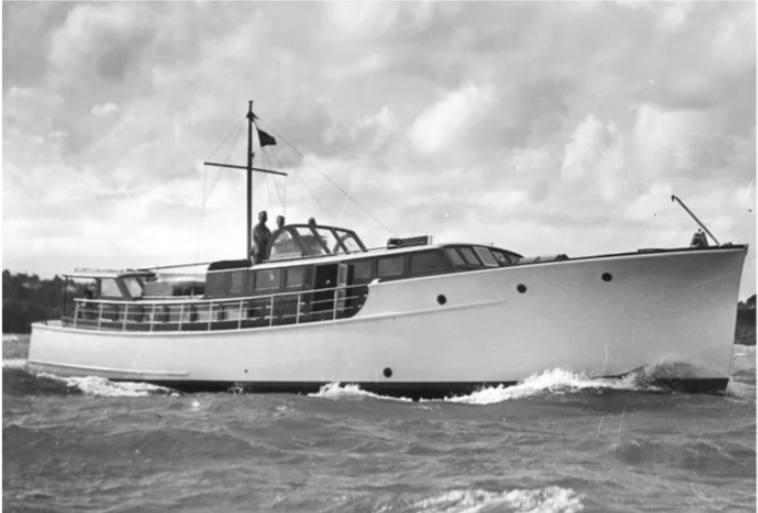
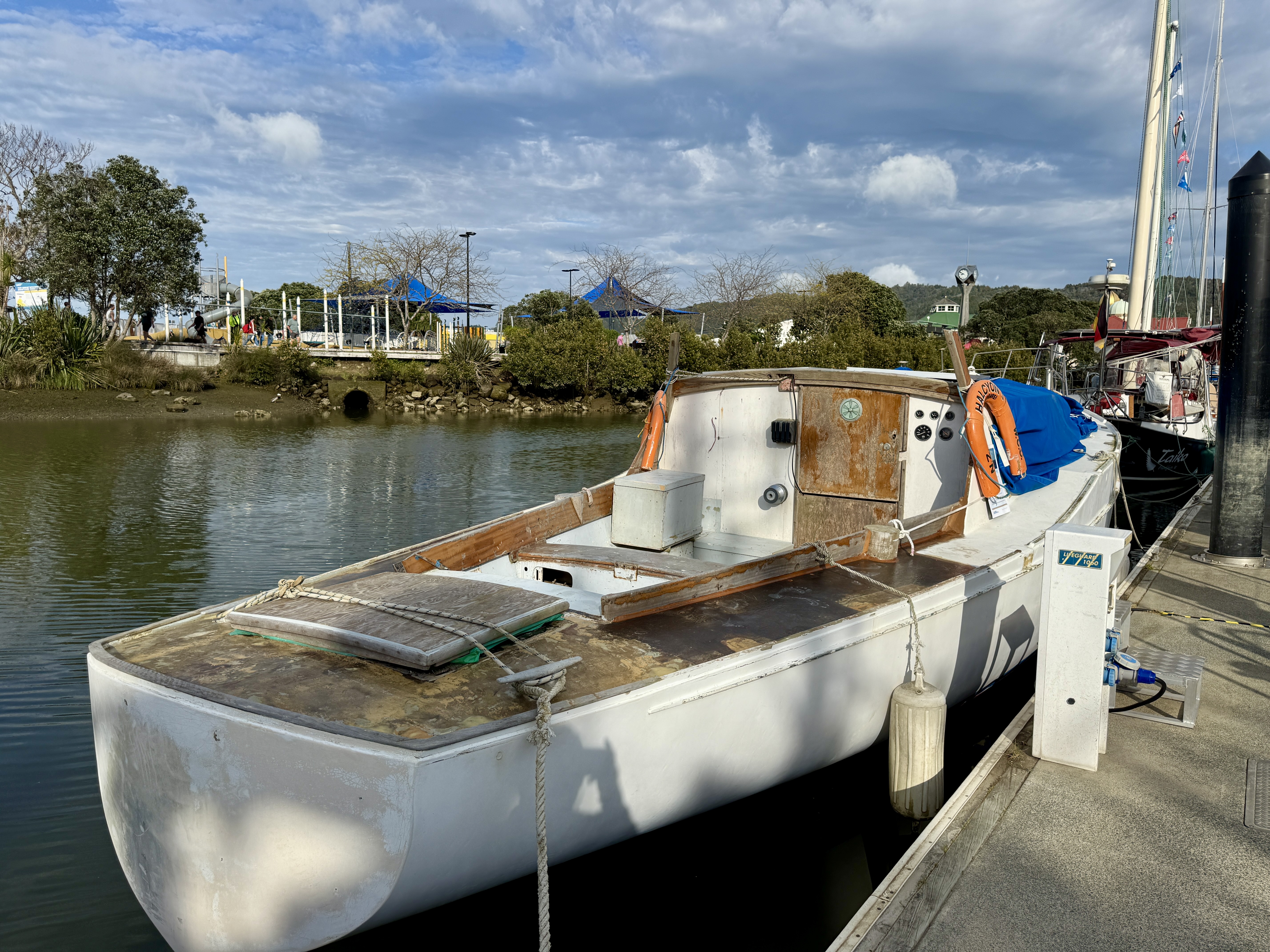
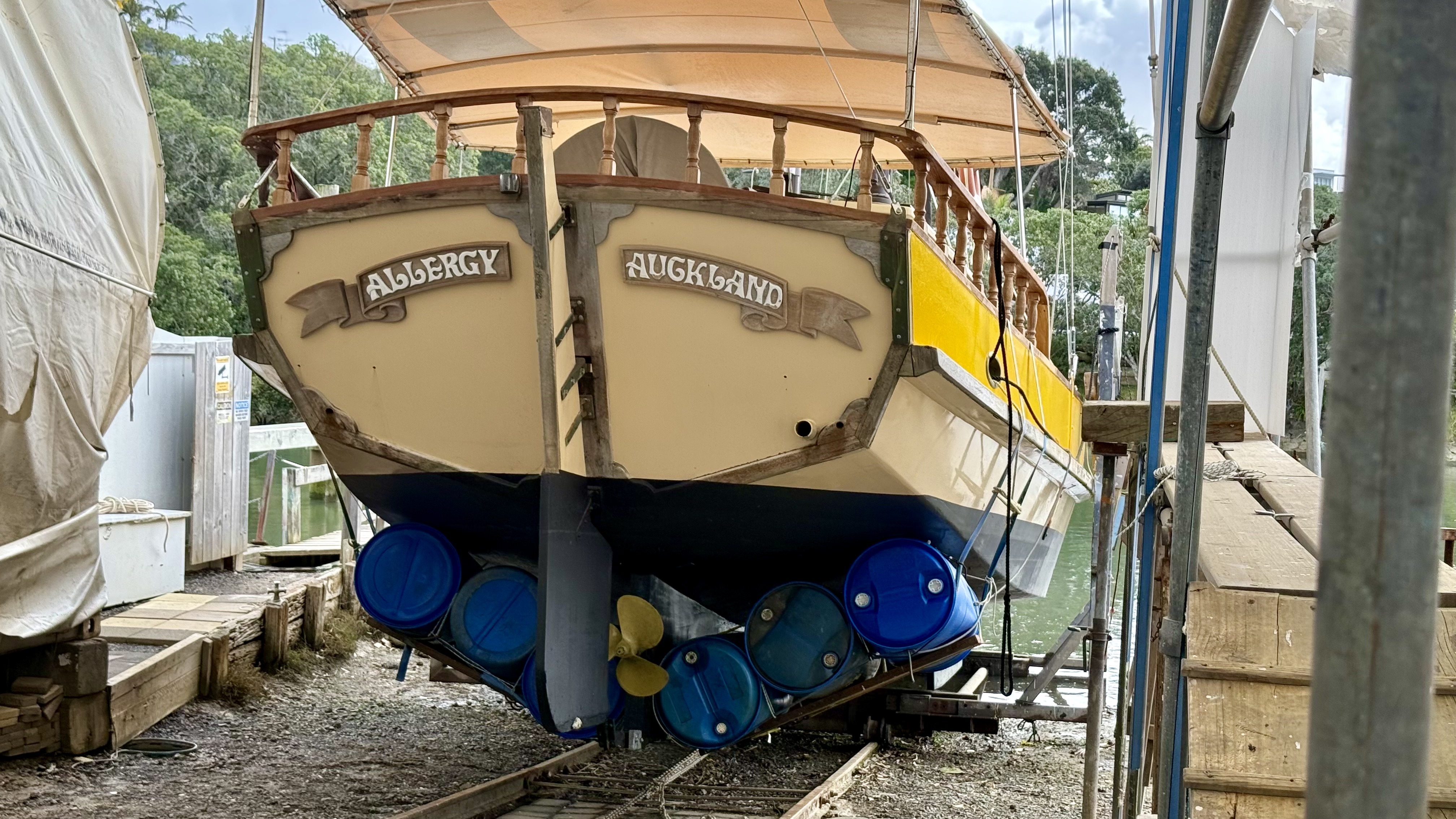
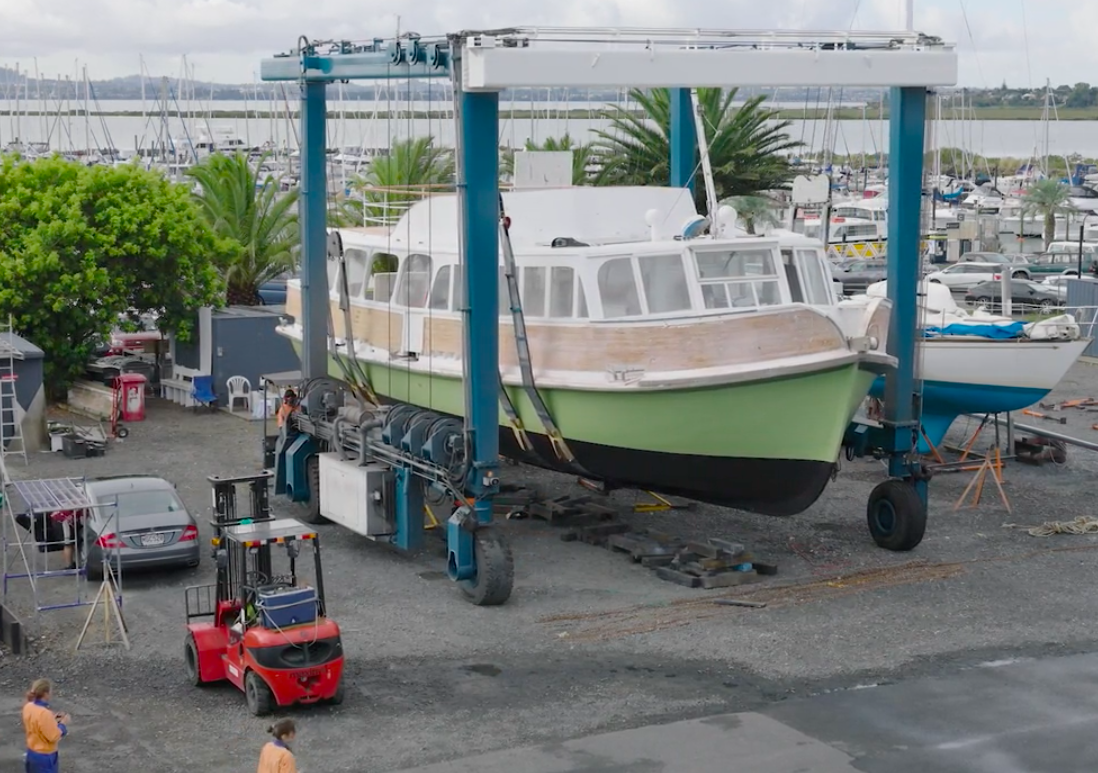
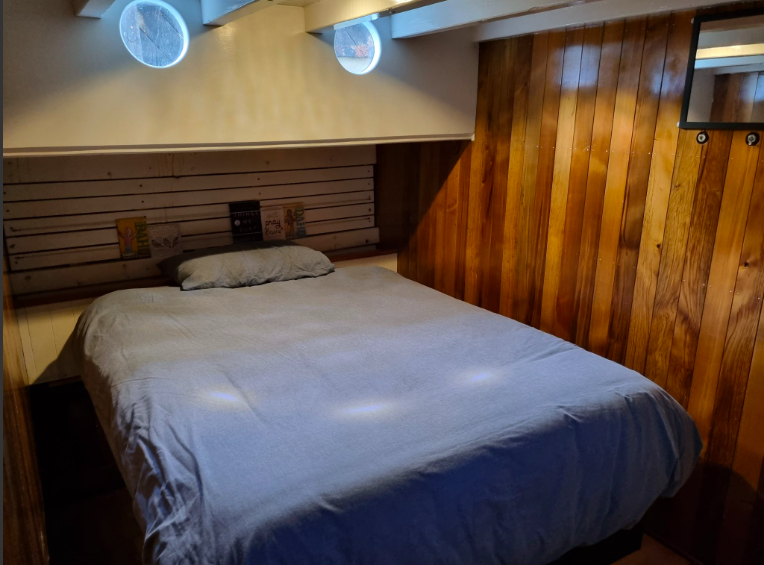
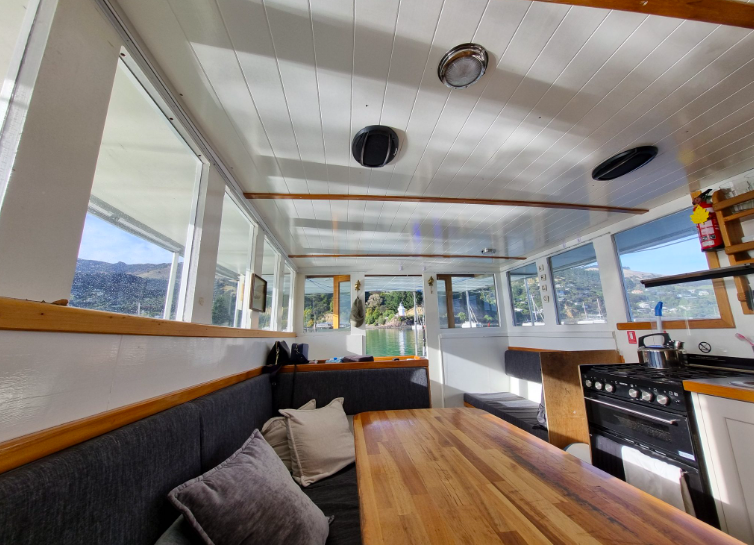
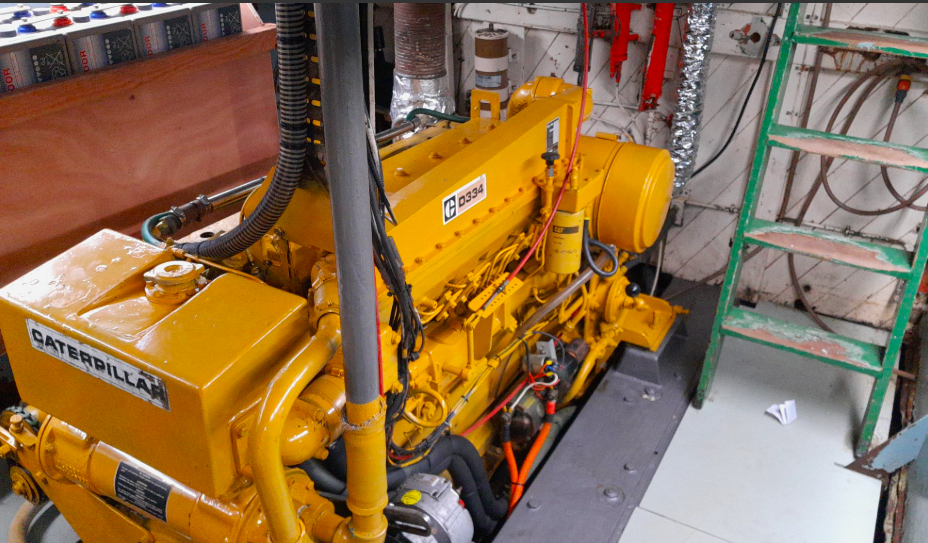
The 53’ Lane built (1965) classic wooden launch – ADI KUILA first appeared on WW back in 2014. We didn’t learn a lot about her then but were told she spent time in Fiji in the 1980’s > 1990’s.
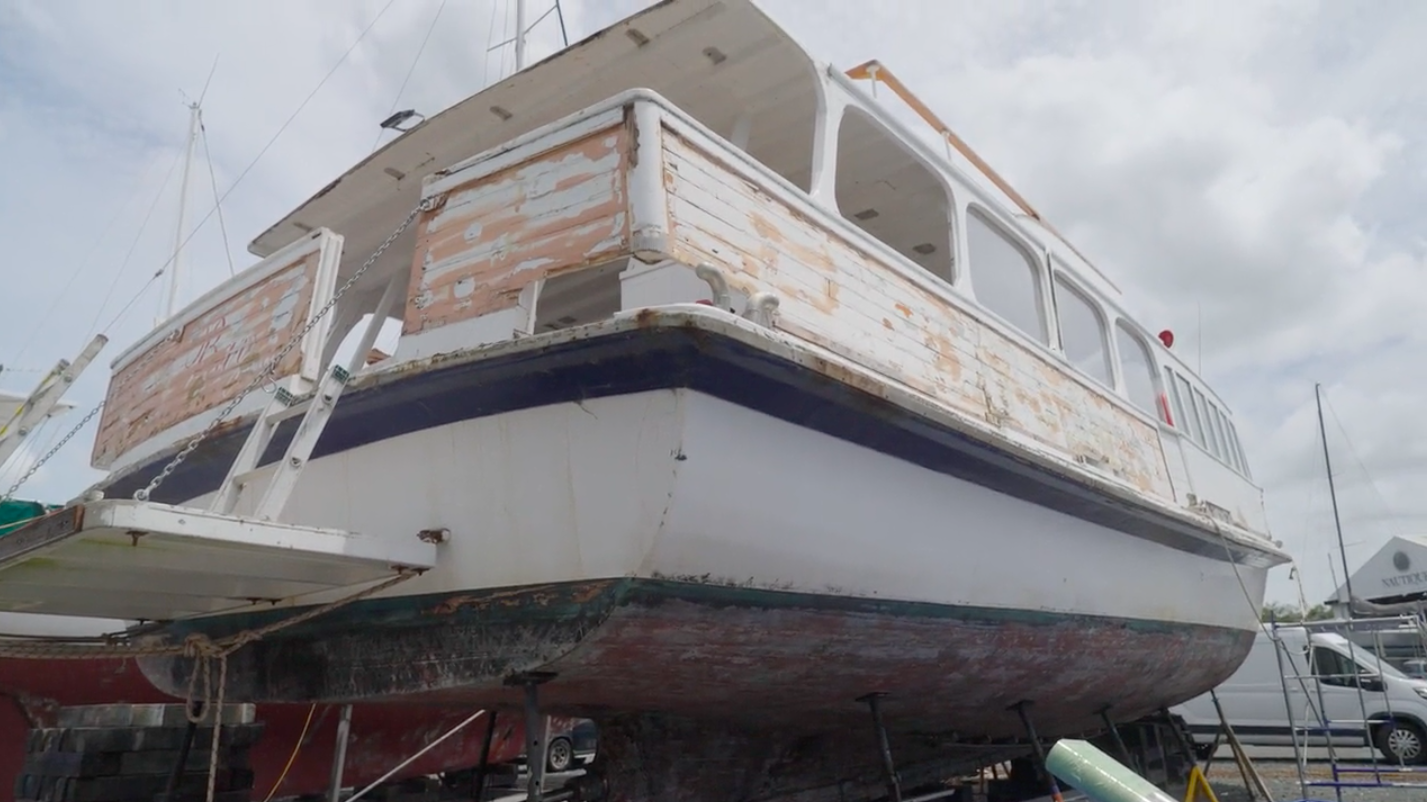
Fast forward to early May 2025 and I’m contacted by the saviour of so many classic woodys – John Wright, to say they had stepped in and acquired the vessel, patched her hull up and were relocating her to the Te Atatu Boating Club to do what John does so well e.g. save and refurbish the vessel.
We look for to following this project. Photo below from 2016, I understand she has gone backwards since then.
AN INSIGHT INTO NZ’S UNIQUE MARINE ENGINES – Part Seven Todays WW story follows on from earlier stories – link below to Part One, Two, Three, Four, Five and Six As per pervious stories in the series the content has been pulled together by Ken Ricketts and ‘polished’ byPatrica and Ken’s daughter Corinne Pettersen. As always we have endeavoured to be as factual as possible but there will always by matters others will either know more about or be able to correct errors – so woodys do not hold back in commenting.
THETIS with her twin Graymarine 4 stroke 6cyl diesel engines
These are a very rare model of the Graymarine range, that was originally produced in WWII for the US military. All Graymarine diesel engines for general and normal marine use worldwide, including NZ, are based on the GM Detroit two-stroke engine, marinized by Graymarine. I believe the THETIS engines were the only two that ever came to NZ and were specially imported by Jack Butland for his 1955 Lane Motorboat built launch, THETIS. Here is a copy of previous comments I made regarding these engines, on Woodys.
“Ken Ricketts reports that having recently spoken with Thetis’s owner that the 2 in line, 6 cyl, 4-cycle, 120hp Gray Marine engines, installed in 1960 (still there today) are a very rare model & type. They were manufactured during WWII for the American forces & could possibly be the only 2 in NZ. The owner believes her original owner Jack Butland in the later 1950’s probably reconditioned, & war surplus imported them.”
BELOW IS A REPRINT OF THE HERCULES SETION IN PART 2 WITH ADDED TEXT I HAVE TAKEN THE LIBERTY OF REPRINTING IN THE CIRCS.
HERCULES 6 CYL c100HP DIESEL ENGINE AS FITTED TO THE FAYE
HERCULES 275 HP DIESEL ENGINE, SIMIALAR TO THAT PREVIOUSLY IN THE RAKANOA
FAYE WITH HER 6 CYL HERCULES HOME MARINISED DIESEL ENGIINE
RAKANOA WITH HER 275 HP 6 CYL. MARINE/HOME MARINISED DIESEL ENGINE
Hercules was a manufacturer and supplier of a large number of basic engines to many marine engine companies for marinization by each company to its own specifications. This included names such as Kermath, Chrysler, Graymarine, Scripps, Chris Craft, and many more. However, engines sold under the Hercules name, based on my research, are comparatively very small compared to their total manufactured units.
There are two boats I know of in New Zealand that have engines both labelled under the Hercules name and are diesel engines. One is the FAYE, which is equipped with a home-marinized C100P 6-cylinder Hercules diesel engine. This engine replaced her original Willys Jeep petrol engine when she was about 4 or 5 years old. FAYE’s details are noted in her Willys Jeep listing in part 2 of this post.
The other is the beautiful 56-foot RAKANOA, built in 1946–47, which had a 6-cylinder 250HP Hercules diesel fitted after she had been in the water for one year. This engine replaced her original GM Detroit 165HP 6-71 diesel.
Her original owner, Stan Parker, was a brilliant engineer and owned a very large precision engineering business.
I am not sure if the Hercules engine was factory or home-marinized, as he would certainly have had the ability and equipment to do this. Stan, the original owner of RAKANOA, owned a large heavy engineering factory in Auckland. This business passed to Ross when his father passed away in 1961. RAKANOA retained this engine until 1981. Ross told me, after he inherited her many years ago, that they had always had trouble starting the Hercules engine, especially when hot. Many years after he inherited her, he eventually replaced the Hercules with a Gardner 6L3 diesel engine, which she still has to this day.
The Hercules engine was fitted because original owner Stan P., could not tolerate the very loud high pitched geartrain noise of the Rootes blower, combined with a loudish exhaust noise, she had with the G.M. Detroit
Unfortunately, I have not been able to find on research to date, any images of the 250 HP marinised version of the Hercules engine, however I have found what may be an unmarinised version, of RAKANOA’s engine.
RUSTON HORSNBY DIESEL ENGINES.
HAIMONA ex MANGA, WITH HER ORIGINAL TWIN 6 cyl, FODEN DIESEL ENGINES
RUSTON HORNSBY TWIN CYLINDER MARINE DIESEL ENGINE AS USED IN THE MANOWAI
HMNZS MANGA AS ORIGINAL.
HAIMONA IN HER PLEASSURE CRAFT GARB WITH HER 2 RUSTON HORNSBY DIESEL 200HP ENGINES, ON THE KAIPARA HARBOUR
MANOWAI IN HER RUSTON HORNSBY DIESEL ERA, AT HERALD ISLAND
There are only two of these I know of in New Zealand in pleasure boats. One was in the 32 ft MANOWAI, during the second part of Claude Atherton’s era, from 1949 until at least the 1960s; it was a twin-cylinder version of the engines.
The other boat was HAIMONA, formerly HDML MANGA, which was based in the Kaipara Harbour. Eventually, after a few years there, the only slip she was able to use for maintenance became unavailable, and she deteriorated badly before being destroyed by her last owners.
When they bought her, a massive coaming structure was added, and they also replaced her original Foden engines with twin 200 HP 6-cylinder Ruston Hornsby diesels, which they removed prior to dismantling her.
FORD FALCON 4.1 LTRE 6 CYL. PETROL ENGINES
FORD FALCON 4.1 LTRE 6 CYL. PETROL MARINE ENGINE
VALSAN CHRISTMAS 1948 IN HER PRE-FORD-FALCON, PETROL ENGINE ERA
The 1938 Roy Lidgard-built VALSAN was bought by Arnold Baldwin around 1947, complete with her original engines, which were 2 x 100 hp flathead Graymarine petrol engines. He owned her for many years, and the time eventually came, after many of those years, when they had to be replaced, around 1970.
I was amazed that he chose 2 x Ford Falcon 4.1 L petrol engines as replacements, as these were engines usually associated with small day boats or runabouts, often equipped with stern drives or jet units. There were a total number of such engines unknown to me, and she is still the only launch I have ever heard of with these engines.
Things have, of course, moved on since then, and the last I heard, she had 2 x 4-cylinder Mitsubishi diesel engines post 2000.
CHRYSLER-MITSUBISHI CN-55TI 200HP 6CYL. IN LINE MARINE DIESEL ENGINES
THE CHRYSLER-MITSUBISHI CN-55TI 6 CYL. DIESEL ENGINES PRODUCING 200hp @ 3150 RPM INSTALLED IN ALIBI
ALIBI’s 2 “STERN POWER” STERN DRIVE UNITS, & NOTE BOTH ENGINES EXHAUST OUT THE SAME SIDE AT THE TUCK
As readers of this series may recall, ALIBI made a cameo appearance in part 2 when I was seeking information related to her sistership, which I now know is or was called CRESCENDO, seen below on launching day, as I have seen the two V8 Chrysler-branded diesels CRESCENDO had when new.
Thanks to the input of others, I have now also discovered that these engines were manufactured by another company, and simply sold under the Chrysler label, which seems to me to be a continuation of Tony Mason’s apparent tendency to use engines with the Chrysler label, as in ALIBI.
However, since the previous cameo appearance of ALIBI, I now have full details of her engines, thanks to a lady named Juliet Hindman, who is very knowledgeable about the Mason Clipper range of boats.
Her family has owned one of the two only 33-foot versions of the Mason Clipper, and she has now contacted me.
As a result, and with the information she has provided, ALIBI now definitely falls into the “Unique” class of engines category, as specified above, as far as I’m concerned, and she now has her place in the group in her own right.
ALIBI’S two CHRYSLER-MITSUBISHI CN-55TI DIESEL ENGINES, producing 200 HP at 3150 RPM, are driven through Warner gearboxes to “Stern Power” make, cream-painted counter-rotating outdrives. While the engines and gearboxes are both left-handed with a 1-to-1 ratio, outward turning counter-rotation of the propellers has been achieved by the gearing system in the stern drive units, which are also acting as reduction gears with a 1.5-to-1 ratio, driving Volvo 16 x 17-inch propellers.
I feel the engine-to-stern-drive setup with these engines, is superior to many others, in that the engines are obviously primarily produced for conventional drives, having the gearboxes attached to and as part of the engines, but can still be used either way, for stern drive units, or conventional drives, with the stern drives simply providing the drive to the propellers.
Many manufacturers combine the gearbox and stern drive into one unit, which makes them much more complex and quite possibly much more expensive to maintain.
Additionally, the combination drive/gearbox units are often very “clunky” and jerky when selecting forward or reverse, whereas there would not be this clunk with the smoothness of hydraulic engine-attached gearboxes.
I have spent a great deal of time, trying to source a good clear image of these engines, but they seem to have disappeared from historical public databases, and the only image I have been able to source, is of ALIBI’S own engines installed in her.
It is, however, wonderful that she still has these original engines after all these years since she was built in the later 1970s. A great testimony to Mitsubishi. Here are her details as received from Juliet H.:
“Released in 1979, the Clipper 42 was 12.8m x 3.7m with a draft of 900mm and, fully laden, displaced around 9 tonnes. Alibi was the prototype, built with a sandwich construction of strip-planked cedar, fiberglass on both sides. A mould was taken off the prototype so that all future boats could be full GRP with a balsa core. However, Crescendo was the only boat ever pulled from the mould.”
I would recommend that readers revisit ALIBI’S cameo appearance in part 2 of the series to see some wonderful images of her exquisite finishing and interior.
A final note re CRESCENDO. – She has been seen reasonably recently, in the South Island, I have been told, so any further help with information about her in any way, would be much appreciated.
LISTER MARINE DIESEL ENGINES
I had considered including LISTER MARINE DIESEL ENGINES in the group, however, there are quite a good number of these engines that are or have been in use in NZ., in many work boats, fishing boats, tugs, & a few pleasure craft, & in the end I decided they fell just outside the scope of what I was about, so will just make a general mention of them, with a few images of the odd pleasure craft, all of which had these engines installed by Roy L.
Roy Lidgard used quite a number of them in various types of craft, the 1940s & 1950s, mostly 4 cylinder, & also had a 4cyl version of the Lister Diesel driving the Smeltinghouse Bay Kawau island sawmill, he set up & ran on his property, in the later 1940s & 50s, the remains of which are still there today.
As just a brief mention, he installed Lister diesels, in the ROSE, (2 CYL) (later LA ROSA) Clive Power’s WAINUNU, (4 CYL) & TAWHIRI, a lovely sedan topper R Lidgard built in the mid/later 1940s (4 cyl)
THE ROSE (NOW LA ROSA)
TAWHIRI BUILT BY R LIDGARD 1940s WITH 4 CYL LISTER MARINE DIESEL AS ORIGINAL
WAINUNU WITH CLIVE POWER AT THE HELM, WITH HER 4 CYL LISTER DIESEL, WITH THE EXHAUST OUT THE TOP OF THE MAST. c1940s
Screenshot
ROY LIDGARD’S SAWMILL, SMELTINGHOUSE, BAY KAWAU ISLAND c. LATER1940s
LISTER 1940s 3 CYL MARINE DIESEL ENGNE AS AN EXAMPLE OF THAT ERA
EPILOG:
Well, readers, we have come to the end of this seven-part journey, and I can only say that for me, it has been a wonderful ride, to share with all of you who have taken the time to share the ride with me, and to follow the seven parts of what I’ve learned throughout my lifetime.
So often, you know as much, if not more, than I do. While some may have learned a little from me, I have, in turn, learned much from many of you, as we have shared this journey together, & I thank you all, for the opportunity to gain this new knowledge from you.
I especially want to express my humility and gratitude, for the kind words of thanks and appreciation, in some of your comments directed towards me personally.
I have done this most of all, to encourage us all, to share and record publicly, what we know about our New Zealand-based boats, with each other, and most importantly, to provide a public record, for the benefit of the boaties of the future. Those who will come after we old wrinklies have all gone, & will become the stewards of tomorrow. As a result of what we all write now, they will hopefully have the chance to understand what has gone before in all or many aspects of what will become their boats, the majority of which will surely live on long after we are not here.
AN INSIGHT INTO NZ’S UNIQUE MARINE ENGINES – Part Six Todays WW story follows on from earlier stories – link below to Part One, Two, Three, Four and Five As per pervious stories in the series the content has been pulled together by Ken Ricketts and ‘polished’ byPatrica and Ken’s daughter Corinne Pettersen. As always we have endeavoured to be as factual as possible but there will always by matters others will either know more about or be able to correct errors – so woodys do not hold back in commenting.
BENZ DIESEL ENGINE – BENZ OM59 55HP 4CYL DIESEL ENGINE PROBABLY SIMILAR TO THAT IN THE MANUNUI
MANUNUI WITH HER 55HP 6 CYL BENZ DIESEL ENGINE DURING WWII
MANUNUI AS BUILT AT SPEED WITH HER BENZ DIESEL ENGINE
The MANUNUI was built for Percy Colebrook in 1939 by Bill Couldrey and had a medium / slow revving 6 cylinder 55 hp Benz Diesel engine fitted when built, which she retained until 1963 when it was replaced by a 100 hp Perkins Diesel.
CRUSADER V8 MARINE PETROL ENGINES
TWIN CRUSADER ORIGINAL V8 PETROL ENGINES HAVING SERVICING, FROM THE RIVA TRITONE “LOLA,” WHICH ARE STILL IN HER TODAY.
Crusader engines, while major marine engine suppliers in America and other countries, have only made a cameo appearance in New Zealand, with only a handful of these lovely engines in use here, as far as I can ascertain.
Overview: The only craft I personally know of for certain is the stunning 1962 Italian-built Riva Tritone, LOLA.
However, WINSOME II may have had one, back around the 1950s when owned by Andy Donovan. I know her previous Chrysler 8-cylinder inline engine was replaced around that time by a V8, that was either a Crusader, Chris-Craft, or Flagship. However, the memory banks have failed me, making it impossible to determine which of the three it is, so come on, you WINSOME II experts, help me out here!
In the 1960s, Crusader Marine Engines was a prominent brand worldwide, providing inboard power for many boats, particularly cruisers and sport fishermen. They were known for their premium quality and reliability, used by leading boat manufacturers like Chris-Craft.
Crusader engines were based on standard automotive engines, but were marinized for marine use, with many of them based on Ford engines, and later with Hercules and Chrysler base units.
LOLA WITH HER 2 X CRUSADER 270HP PETROL ENGINES
LOLA, the 1962 Italian-built Riva Tritone Aperto, has a LOA of 27 ft and is one of only 15 in the world.
It is believed to be the only original Riva in New Zealand and a stunning example of boat restoration, all completed in NZ. Only 3,000 Rivas were built between 1950 and 1966, and she still has her original engines. She lives, or did live, in her own, purpose built, fully air conditioned boat shed, on the banks of the Marlborough Sounds.
WINSOME II – MAY HAVE HAD A CRUSADER V8 PETROL ENGINE IN THE 1950s /60s ERA – POSSIBLE ALTERNATIVES ARE FLAGSHIP & CHRIS CRAFT
CHRIS CRAFT PETROL ENGINES.
CHRIS CRAFT 1950s 6 CYL FLATHEAD PETROL 135hp ENGINE SIMILAR TO THAT IN THE GLENIFFER IN THE 1950s
These are another brand of engine that is sold in huge numbers worldwide, particularly in America, where all genuine Chris-Craft boats are built. However, they have only made a cameo appearance in New Zealand, with most of them coming here in imported Chris-Craft boats.
There are a few New Zealand-built boats that have or have had them. I have only ever seen a petrol version, although naturally, they do produce diesel engines in their lineup. All the engines they produce are based on other major engine manufacturers’ base engine blocks and are marinized by them. Hercules is a major engine block supplier to them.
GLENIFFER WITH HER CHRISCRAFT 6 CYL FLAT HEAD PETROL ENGINE RUNNING ON KEROSENE IN THE 1950s – OWNER PERCY JENNINGS IS AT THE HELM.
Input copied from previous post, ex Harold Kidd. – “Trevor Davis sold GLENIFER to P J Jennings of Paeroa in 1937 and he sold her to George Manktelow of Paeroa in about 1959. The Gleniffer was replaced by a 6-cyl Chris Craft (Hercules block) during the 50s, converted to run on power kerosene with a Model A Ford Zenith carb.”
FLAGSHIP MARINE ENGINES
FLAGSHIP 1958 250HP V8 PETROL MARINE ENGINE – BASED ON A CHEV BLOCK
There were a number of these engines that found their way to NZ in the 1950s/60s era and this is one of the possibilities for the V8 engine that was installed in the WINSOME II in that era by Andy Donovan who may also have had an agency for them, around that time.
AN INSIGHT INTO NZ’S UNIQUE MARINE ENGINES – Part Five Todays WW story follows on from earlier stories – link below to Part One, Two, Three and Four As per pervious stories in the series the content has been pulled together by Ken Ricketts and ‘polished’ by Patrica and Ken’s daughter Corinne Pettersen. As always we have endeavoured to be as factual as possible but there will always by matters others will either know more about or be able to correct errors – so woodys do not hold back in commenting.
LINDA, AT CHRISTMAS 1948, TAKEN IN SCHOOLHOUSE BAY, KAWAU ISLAND, JUST AFTER HER LOEW-KNIGHT PETROL ENGINE HAD BEEN REPLACED, WITH HER GM DETROIT 165HP MARINE DIESEL.
COQUETTE, POST HER LOEW KNIGHT-ERA
I know of only two boats that have these very rare versions of the Knight sleeve valve engine. One is the 1928 Colin Wild-built LINDA, which was bought by Roy Swales just after WWII with her original Loew-Knight 6-cylinder petrol engine. I saw it running, and it was incredibly smooth, quiet, and looked very tiny in LINDA’s huge engine room. It was painted silver and had the name “Loew-Knight” in a scroll, cast into the inspection plates on the crankcase.
Roy W. replaced it in 1947 with a 6/71 GM Detroit 165 HP diesel engine.
The other boat was the delightful Logan-designed and built COQUETTE, with her sedan top, which was added many years later by Arnold Couldry. He kept her delightful lines perfectly with this addition. She had a 4-cylinder version of the Loew-Knight sleeve valve engine, also painted silver. I tend to think this may have been her second engine because of her age, having been built in the early 1990s.
FODEN 2 CYCLE DIESEL ENGINES.
FODEN 12 CYLINDER 2 STROKE, MARINE DIESEL 256HP ENGINE – 2 X 6 CYL ENGINES SIDE BY SIDE ON ONE CRANKCASE IN 1 ENGINE
FODEN 6 CYL 2 STROKE DIESEL ENGINE
FODEN 6 CYL 163HP, MARINE DIESEL ENGINE
ORIGINAL FODEN ENGINES IN THE HDML MANGA, AS SOLD BY THE NAVY
KUPARU NOW OWNED BY SCOTT PARRY BELIEVED TO STILL HAVE 2 FODEN DIESELS
HMNZS KUPARU
HMNZS MANGA
DEODAR IN PRIVATE OWNERSHIP AFTER HER DAYS AS THE POLICE LAUNCH
LADY MARGARET WITH HER 2 X 6 CYL FODEN DIESELS – (Built by Dick Lang)
MARNINE WITH HER 2 X 6 CYL 163HP FODEN MARINE DIESELS IN MARCH 1963
WHITE CLOUD LAUNCHING DAY WITH HER 4 CYL., HOME MARINISED FODEN DIESEL
There are only three pleasure launches that I know of that have these engines, and there are two with 6-cylinder versions. The LADY MARGARET (built by DICK LANG) replaced her original two Fairbanks Morse Diesels; the MARNINE, which had two of them from when she was built, had the same specifications and was installed at the same time as the LADY MARGARET. The third boat was the WHITE CLOUD, which had a 4-cylinder home-marinized version, fitted by or for, the managing director of Fodenway Motors, Penrose. They were the New Zealand agents for Foden engines at that time and had her built and baselined a generator set to convert the 4-cylinder Foden for marine use in his new boat. This installation took place at their Gt. South Rd premises after being built at 1A Summer St, Ponsonby, by McGeady (Supreme Craft).
In addition to these boats, all RNZN-owned HDMLs and the first of the Police Launches named DEODAR, (DEODAR I), had two of them installed. All were originally 6-cylinder versions; however, but with the HDMLs., some engines were later replaced with 12-cylinder versions in some boats, which were, in effect, two 6-cylinder engines side by side in one crankcase. These had one drive shaft and two crankshafts connected by a system of gearing. At least one twin x 6-cylinder installation is believed to still be in a boat & still surviving today. It is in the massively refurbished, now privately owned KUPARU, primarily located in Whangarei.
Foden engine manufacturing and parts supply were sold to Rolls Royce in the late 1970s, and production ceased when they took over the Foden manufacturing rights.
AN INSIGHT INTO NZ’S UNIQUE MARINE ENGINES – Part Four
Todays WW story follows on from earlier stories – link below to Part One,Two and Three As per pervious stories in the series the content has been pulled together by Ken Ricketts and ‘polished’ by Patrica and Ken’s daughter Corinne Pettersen. As always we have endeavoured to be as factual as possible but there will always by matters others will either know more about or be able to correct errors – so woodys do not hold back on commenting.
PAXMAN RP200 3033hp V12 MARINE DIESEL ENGINE AS IN THE RNZNs 4 COASTAL PATROL CRAFT FROM 1975-1990
RNZN COASTAL PATROL VESSEL TAUPO, in 1975
I’m only aware of four boats that used PAXMAN MARINE DIESEL ENGINES. They were all replacement vessels for the WWII HDML and Fairmiles, with the first, the Taupo, going into service on 29th July 1975. The second, the Hawea, arrived shortly afterwards, followed by the last two, the Rotoiti and Pukaki, which came a little after that. They remained in service until 1990 when they were sold off.
KELVIN OLD MODEL MARINE DIESEL ENGINES
KELVIN 4 CYL. OLD MODEL DIESEL ENGINE, SIMILAR TO THAT FITTED AT ONE TIME, IN THE MATAROA.
KELVIN 4 CYL MARINE DIESEL ENGINE SIMILAR TO THAT IN THE FERRY MAIRE
KAWAU FERRY MAIRE, WITH HER 4 CYL KELVIN DIESEL c 1950s
MATAROA POST HER KELVIN DIESEL ERA
Kelvin diesels are slow-revving, high-torque engines used mostly in commercial fishing and tugboats. The MATANUI is the only pleasure craft I am aware of that has, or has had, one of these beautiful engines, which run like a well-oiled sewing machine with an absolutely silent exhaust out the stern, well above the waterline. In the case of the MATANUI, even at cruising speed, all one heard was a very gentle hissing sound. The engine was painted a bottle green.
I went aboard her during the Joe Kissin era in 1946/47 and she had it then, having had it for a good number of years, notwithstanding that she had several engines in her long lifetime of over 100 years now.
One unusual thing to note was that her Kelvin started on petrol and then switched to diesel after starting, which is unusual in pleasure craft.
KAWAU ISLAND TO SANDSPIT FERRY, MAIRE.
The Sandspit to Mansion House Bay Kawau ferry – MAIRE, was built by Roy Lidgard in his boat building shed at Smelting House Bay, Kawau, in the late 1940s for Allan Horsfall, owner of the Mansion House Guest House/Hotel. She was fitted with a 4-cylinder Kelvin Marine Diesel engine and was part of the ferry services to the island right up until the property was sold to the Historic Places Trust around 1977.
I am personally only aware of two specific installations, I know that quite a number of these engines were fitted to some of the fleet of classic trawlers built from around the 1930s to the 1960s by boatbuilders such as P. Vos, R. Lidgard, Shipbuilders, and others. Some examples , which may or may not have had KELVIN engines include boats such as Eddy Mansfield’s WAIWERA, the Owens brothers’ (Gordon and Jim) KAIWAKA, WAIMANA, FOX II, DALMACIA, and COBRA, among others. I believe the two main engine brands of choice by the owners of those lovely classics were Gardner and Kelvin. Any knowledge of vessels fitted with KELVIN engines, would be appreciated.
The company that produced the KELVIN diesel engines was founded in the UK in 1904 and has undergone a succession of ownership changes over the last 120 years. It is presently owned by British Polar Ltd. However, notwithstanding all the various ownership changes, the name KELVIN has been retained up to the present day.
DOOSAN 6 CYL 200 HP MARNE DIESEL ENGINES
DOOSAN 6 CYL 200 HP MARINE DIESEL ENGINE AS IN THE NGARANUI
NGARANUI WITH HER DOOSAN 200 HP 6 CYL MARINE DIESEL ENGINE, which replaced a Detroit 6-71 marine diesel engine
NGARANUI SHOWING HER AUXILLARY PROP
NGARUNUI was built in 1955 by Jim Young and started life, with a 1942 GM Detroit Marine Diesel engine (ex-war assets). It has now been fitted with a late model 200hp DOOSAN Diesel and has a Yanmar 20hp diesel auxiliary engine, with the prop for that engine mounted immediately above the main propeller.
MERCEDES BENZ MARINE DIESEL ENGINES & M.A.N.& M.T.U. MARINSATION VERSIONS OF THESE ENGINES.
MERCEDES BENZ MODEL OM321 6 CYL c100HP DIESEL ENGINE WITH 2 FITTED TO THE R LIDGARD BUILT, FLYING SCUD IN 1971, BY KEN RICKETTS
MAN MERCEDES BENZ V12 DIESEL ENGINE SIMILAR TO THOSE FITTED BY LEN SOWERBY TO THE NGAROMA IN THE 1960S/70S
M.A.N. MERCEDES BENZ 600HP V10 MARINE ENGINES FITTED TO PACIFIC MERMAID WHEN BUILT.
FLYING SCUD WITH HER 2 OM321 100HP 6 CYL MERCEDS BENZ MARINISED DIESEL ENGINES IN BIG STATION BAY, MOTUAPU ISLAND, IN 1972.
NGAROMA WITH 2 X V12 770HP M.A.N.MERCEDES BENZ MARINE DIESEL ENGINES – IN THE 1970S
PACIFIC MERMAID WITH HER 2 X V10 600HP MAN MERCEDES BENZ MARINE DIESEL ENGINES.
Mercedes Benz, as the world knows, is a huge conglomerate with many divisions under various names and entities.
In the case of marine diesel engines, they are marinized under their own name and by various other marine engine companies, which have marinized them under their own company names. There is also a huge range of engine sizes and horsepower options. In New Zealand, we have had many installed in new craft built here for offshore owners. Most of these offshore exports, would have been under the M.A.N. or M.T.U. brands, as these brands of engines are typically of the larger horsepower ranges.
Regarding engines used in New Zealand, Im aware of only five boats however, there are undoubtedly others. Nevertheless the total number of such engines remains quite small. So, if anyone knows of other craft in this group, please add them to the list.
The boats known to me include the PACIFIC MERMAID, a 105-foot super luxury motor yacht, fitted with two 10-cylinder 600HP., intercooled, artificially aspirated engines, with twin exhaust-driven turbines, marinised by M.A.N. She was built entirely in Auckland by Ken Winter and his family in South Auckland, with the build completed in 1989. He owned her until his recent passing, in Auckland.
Ken W. usually ran her engines at a modest 1400 RPM, achieving a hull speed of about 10 knots.
PACIFICA MERMAID’s galley distribution & control switchboard – starboard alternator in use. She has 2 x John Deer turbo 6 cyl. diesels driving 2 X 230/400volt alternators to supply her 230volt single phase 400volt 3 phase power supply, when away from her berth, which supply enough electricity for about 12 houses each
‘OHORERE AS AT 2025 WITH HER 2 X 770 HP MTU MARINISED MERCEDES BENZ DIESELS.
MTU MERECEDES BENZ DIESEL ENGINE – POSSIBLY SIMILAR TO THOSE IN THE OHORERE
OHORERE, was built by Percy Vos in Auckland, for the government of the day, to be a high-speed fisheries patrol craft, and designed by Thornycroft in the UK. However, she never reached anything close to her anticipated speed projections, as required in the order from the government, to the designers, and builders. Large sums of money were spent collectively, by the designers, Rolls Royce, who supplied her original engines, and the builders, to give her better performance, but they failed miserably, and she was ultimately sold to private ownership, where she has been used for many years now, I am told, for fishing charters in Tauranga.
The 2 x 8 cyl. Rolls Royce’s were replaced about two years ago, with 2 x 770hp MTU marinized Mercedes Benz diesels, and is now capable of around 30 knots.
The engine in the image is used, which because of the huge cost of them new I feel it would be most likely & also most practical to install used engines.
The only other boat I know personally, is my own 1953 Roy Lidgard-built, 31-foot FLYING SCUD, which I bought in 1970, with her original twin Austin Skipper 100 marine petrol engines.
I replaced them almost immediately with two OM321 100 HP Mercedes Benz 6-cylinder diesels. I sold her six years later, when I started building my 40-foot Vindex, TIARRI, and a later owner replaced FLYING SCUD’s Mercedes Benz engines with two Bedford diesels.
TIARRI’S TWIN V8 PERKINS 510 CUBIC INCH DIESEL ENGINES
TIARRI’S 510C.I. 165 HP PERKINS V8 DIESEL ENGINES IN PLACE
TIARRI AT SPEED OFF RAKINO ISLAND 1982 WHEN OWNED AND NEWLY BUILT FOR KEN RICKETTS BY BARRY JONES & REX COLLINGS OF MATAKANA & WHANGATEAU
KAIKOURA WIH HER TWIN PERKINS V8 MARINE DIESELS IN BON ACCORD HARBOUR, KAWAU ISLAND c1984
MOANA LUA WITH HER PERKINS V8 DIESEL ENGINE
LADY KIWI (EROS), POST HER PERKNS 510 C.I. V8 MARINE DIESEL ENGINE ERA
VALRAY WITH HER 2 X S6 PERKINS 6CYL MARINE DIESEL ENGINES
Whilst there are many thousands of Perkins engines in use in NZ of various types, the two referred to above are rare. The S6 engine was developed for the military in the UK during WWII, and Ray Hamilton, the harbour master for the Sandspit area at Warkworth, managed to import two of them a few years after the war. He kept them in a big, beautiful shed on his Warkworth farm for a good number of years until he eventually built his dream boat, the VALRAY, in that shed in the 1960s.
The 510 cubic inch, 165 hp V8 Perkins diesel engines are in only four boats that I know of. The Eros (Lady Kiwi) had two fitted when new, the Moana Lua had one fitted around the 1990s, I believe. I had two of them put in my own boat, TIARRI, a modified 40-foot Vindex, (we added an extra 18 inches of beam) when she was being built for me, and launched in October 1979. There is also the P Vos built KAIKOURA, which had her original two 165 hp Kermath Seamate Special petrol engines replaced by the Bridgeford family of Mission Bay, owners at that time, in the 1960s-70s. She has had two Perkins 510 c.i. V8s ever since.
FOOTNOTE: I have not written about or included very small, very old engines and boats from the very early days of the 1800s to the early 1900s, where engines seemed to me to be mostly New Zealand-made, of one-, two-, and three-cylinder types. I have read some excellent, very knowledgeable writings from Harold Kidd, on these, and as he is an expert in this very specialized field.
INPUT ex ALAN SEXTON –Another great read from Ken and as usual a few comments following Ken’s sequence
Another relatively rare installation in NZ was the Cummins VT-370M, 785 cu.in turbo diesel. These were fitted to John Wiles Salthouse Giovanni II (since replaced with a Volvo), the Pelin Shikaree “Neureus”, owned by Haines Hunter’s Denis Kendall and twins were installed in the Wellington Police boat Lady Elizabeth II (the one that sank). This model engine was superseded by the Cummins VT-903M, approx 450hp, with a pair installed in ~55′ Pelin Eclipse “Trident” in the 80’s
Kelvin diesels – I believe there was a bit of a “Holden vs Ford” mindset between commercial fishermen when comparing Kelvin and Gardner diesels, I remember an ex fisho I worked for many years ago being a strong Kelvin man and very “dismissive” of Gardners
Doosans, Lees were selling these for a while. Another notable installation (a 320hp) was Conrad Robertson’s sedan launch Rampage , originally built for himself. I understand she has since been re-engined (Cummins?) and cockpit has been extended
The MAN V10’s from the 80’s mentioned were derived from a JV between Merecedes and MAN, https://www.curbsideclassic.com/blog/truck-history-the-man-18-3-liter-v10-the-last-on-highway-turbodiesel-behemoth-in-europe/ so are considered genuine MAN’s. Other notable installations include the Ted Ewbank designed “Kiwi Challenge” support boat for the 87 cup challenge and Neville Crighton’s Alan Warwick design Countach, both I believe 750’s. By the way Pacific Mermaid is advertised as being built by Salthouses.
The Perkins S6 was developed in the 1930’s for heavy trucks and was an enlarged version of the P series. https://archive.commercialmotor.com/article/21st-october-1939/26/perkins-ii-ices-new I believe the first installation in NZ was in Alan H’s “favorite” launch, the original Vindex. Wasn’t there for very long, replaced by the lighter and more powerful T6.354 in the mid 60’s
There was another launch written up in Sea Spray in the late 60’s which had a 160hp Perkins 504, cannot remember her name
Moana Lua has had quite a few engines in her life, I believe the current engine is a John Deere. When she was owned by Ken Burrowes from the late 60’s to early 80’s I understand she was originally equipped with twin petrol engines and then Ken replaced them with a “Torpedo” brand diesel engine (I thought he was pulling my leg when he first told me this), which i assume was from this factory https://tractors.fandom.com/wiki/Torpedo_(Rijeka)
Another quite common installation was the petrol Chrysler Crown, a marinised flat head Dodge. Eastern Star, Shipbuilders 32 previously featured here was built with one. This was replaced with a 75hp Ford in the early 80’s.
09-05-2025 INPUT ex JIM LOTT on Kelvin engines – Around 1981 I removed a Kelvin diesel from a yacht and replaced it with a Yanmar 2 cyl. The Kelvin had a crank start fitted and I don’t think there was an electric start at all. I am pretty sure it was 2 cyl. It was fitted in the 34ft Ladybird design (Bert Woolacott) named “Aorangi”.
Aorangi was built by Ron Evans who lived at Bucklands Beach and Ron was a commodore at BBYC and later on manager at John Burns and Sailors corner. He built Aorangi late sixties or early 70s using full length kauri planks. The owner of Aorangi who I worked for was AAH Schulte, known as Hubert. The bottle green Kelvin was tucked under the cockpit driving through the quarter.
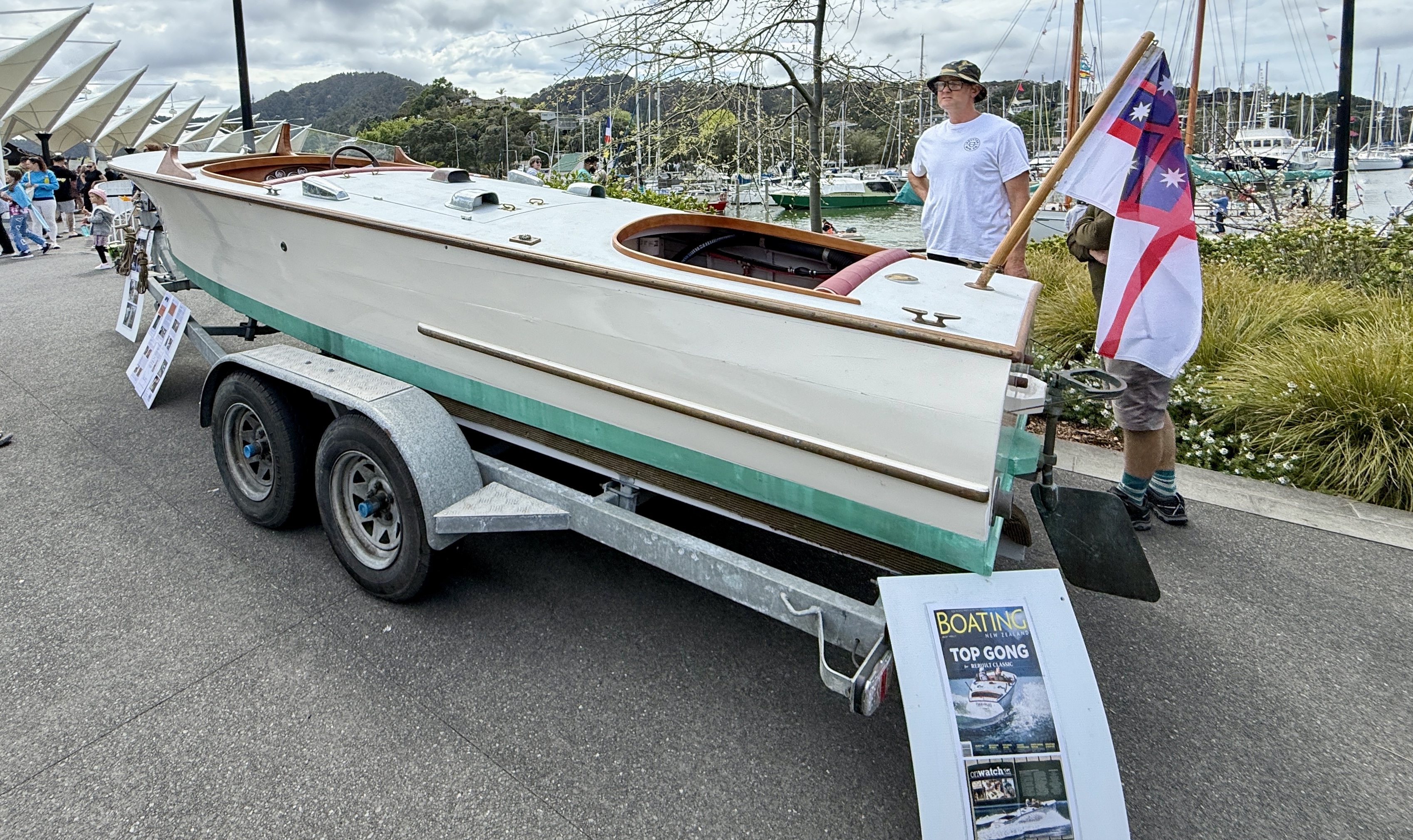
I was more interested in the new Yanmar I had to fit so I did not take too much notice of the Kelvin but I recall Hubert telling me he had given it to a transport museum. The Yanmar worked out fine and I moved the shaft to the centreline.
INPUT 04-08-2025 Perkins T12: A Wartime V‑12 Diesel Prototype
Purpose & Origin – Designed just before WWII, the Perkins T12 was intended for naval craft (motor launches, gunboats, torpedo boats) to replace petrol engines and free up Rolls‑Royce Merlins for aircraft use .
Design & Specs A 55° V‑12 (two inline‑6 banks on a single crankshaft) with 6″ bore and stroke, giving roughly 33.3 L capacity. Each bank had independent systems (water, oil, fuel injection), enabling one half to run if the other failed . Featured an unusual centrifugal supercharger driven from the crankshaft. Only 5–6 prototypes were built, with two installed in a Royal Navy launch (ML 570) from late 1942 through WWII .
Performance & Fate It achieved the target ~1,000 bhp, but production never followed due to the availability of cheap American petrol engines . After the war, one engine served as a stand‑by generator at the Peterborough factory into the 1980s .
🔗 Links with Rolls‑Royce
Direct Association: The design was meant to replace Rolls‑Royce Merlin petrol engines in marine craft—similar size and layout for direct substitution .
Personnel Connection: Perkins was founded by Frank Perkins and Charles Chapman—the latter previously worked closely with Rolls‑Royce founding engineer Henry Royce . Chapman’s expertise evidently carried influence from aero‑engine principles into the T12 design.
Summary The Perkins T12 was an ambitious, Rolls‑Royce‑inspired diesel V‑12 project to militarize petrol-dominant craft space. Built quickly (~14 months) under Charles Chapman’s leadership, it showcased clever redundancy and performance—but never reached mass production, sidelined by US petrol engines. There does not appear to be any direct Rolls‑Royce technical design partnership—rather, the association comes from the T12’s role as a diesel counterpart to the Rolls‑Royce Merlin, not from a joint development.
AN INSIGHT INTO NZ’S UNIQUE MARINE ENGINES – Part Three
Todays WW story follows on from earlier stories – link below to Part One and Two As per pervious stories in the series the content has been pulled together by Ken Ricketts and ‘polished’ byPatrica and Ken’s daughter Corinne Pettersen. As always we have endeavoured to be as factual as possible but there will always by matters others will either know more about or be able to correct errors – so woodys do not hold back on commenting.
ONE OF THE 2 ROLLS ROYCES THE ORIGINAL ENGINES IN OHORERE
KUDU WITH HER 137 HP ROLLS ROYCE ENGINES IN 1966
OHORERE WHEN NEW, WITH HER 2 X ROLLS ROYCE 6CYL. 275 HP DIESEL ENGINES
OHORERE AS AT 2025 WITH HER 2 X 770 HP MTU MARINISED MERCEDES BENZ DIESELS
MANAIA, WITH HER 2 X 6 CYL. 275 HP ROLLS ROYCE ENGINES
MANAIA INSTRUMENT PANEL
These are, as one would expect, a brand of engine that is quite rare, resulting from the cost of the engines to buy and the cost, equally, of parts for all maintenance. Also, while Rolls Royce has the name synonymous with perfection in all respects, it is my view that, in fact, Gardner engines are far superior in every respect, including noise, smooth running, longevity, maintenance necessity, and costs thereof. However, there are a few that are in the boats of today and yesterday. I personally know only three.
There is the KUDU, a large launch that, at one time, in mid to late 1966 to perhaps somewhere around the 1980s, belonged to the late Harry Julian. She is 63 feet long and powered by 2 x 137hp Rolls Royce 6-cylinder diesel engines. She was designed and built under Lloyd’s supervision in the UK in 1964 and sailed out to NZ as the end of a 20,000 km journey. However, the last time I saw her was on a visit to the Gold Coast in Australia, anchored in the middle of the center of Sanctuary Cove Marina.
Another of the RR-powered boats is the OHORERE, built by Percy Vos in Auckland for the government of the day to be a high-speed fisheries patrol craft, and designed by Thornycroft in the UK. However, she never reached anything close to her anticipated speed projections as required in the order from the government to the designers and builders. Large sums of money were spent collectively by the designers, Rolls Royce, and the builders to give her better performance, but they failed miserably, and she was ultimately sold to private ownership, where she has been used for many years now for fishing charters in Tauranga. As of now, Rolls Royce’s were replaced about two years ago with 2 x 770hp MTU marinized Mercedes Benz diesels and is capable of around 30 knots.
There is one more pleasure craft, an ex-Whangarei pilot boat and that is the MANAIA, which has had from new, 2 x Rolls Royce 8-cylinder inline 16-litre diesels.
UNIVERSAL BLUE JACKET 6 FLAT HEAD PETROL ENGINES.
THE UNIVERSAL RANGE OF 4 & 6 CYL BLUE JACKET RANGE OF MARINE ENGINES
OTAZEL WITH HER UNIVERSAL BLUE JACKET 6 PETROL MARINE ENGINE. MANSION HOUSE BAY, KAWAU ISLAND c.1951
I am aware of one of these in New Zealand, which was in the OTAZEL, owned by Arch Tucket, in the late 1940s to the 1960s. He was the head of the patrol craft section for T.E.A.L. at that time in Mechanics Bay, and he fitted it to her on the hardstand at Okahu Bay in the winter of 1950.
G.M. ALLISON 1450HP, HOME MARINE CONVERTED, V12 AIRCRAFT PETROL ENGINE.
GM ALLISON V12 AIRCAFT ENGINE
REDHEAD, IN THE SOUTHWARD TRUST VEHICLE MUSEUM IN PARAPARAUMU, AS SHE WAS LIFTED FROM THE SEABED IN WELLINGTON HARBOUR, AFTER HER PROPELLER LOSING A BLADE, WHILST RACING & SINKING AS A RESULT.
REDHEAD RACING A FLYNG BOAT ON WELLINGTON HARBOUR
The only boat I’m aware of that had one of these was Sir Len Southard’s champion racing boat, REDHEAD, which won, at one time or another, most of the cups and awards, as well as a huge number of races in her time. She was a real champion, designed, built, and raced by the late Sir Len Southward of Wellington, a brilliant engineer and philanthropist. John Bullivant tells has advised there was a second high-speed hydroplane racing boat built with a marine-converted V12 GM Allison petrol engine in the same era.
STERLING MARINE PETROL ENGINES
STERLING 6 CYL 1920 MARINE PETROL ENGINE PROBABLY SIMILAR TO THAT
IN LADY STIRLING
STERLING 115 HP U.S. NAVY WWII FLAT HAD PETROL ENGINE
KERMATH 1928 225 HP SEA WOLF ENGINE IDENTICAL TO THAT IN THE TASMAN IN 1947
LADY STERLING IN QUEESNTOWN
TASMAN IN 1948 IN SCHOOLHOUSE BAY KAWAU ISLAND
STERLING BUILT IN 1926 BY ERNIE LANE IN PICTON
LADY STERLING
The 52-foot, 105-year-old Bailey & Lowe-built ocean-going yacht, built in 1920 is named LADY STERLING. This yacht had one of these engines originally, and there were other boats that had them in the earlyish 1900s.
LADY STERLING has, in recent times, been in the Queenstown area, but she has traveled many thousands of sea miles, with numerous crossings of the Pacific Ocean in her long life.
Around the end of WWII, she belonged to Stan Waters. She passed shortly after to Lloyd McIvor, a dentist, who sailed her several times a year to Fiji and other Pacific islands to attend to the islanders’ dental issues.
TASMAN WITH A STERLING 6CYL DUAL IGNITION 115HP WWII U.S. NAVY PETROL ENGINE.
A reference in part 1 of this series was made in the comments section by Denis O’Callahan, related to the TASMAN having had a WWII ex-US Navy 6-cylinder flathead Sterling petrol engine at some stage, pre-1975. I have researched this engine and found the following information and images related to it, which I am confident may well be the engine he was referring to.
A quote from Tom Ball in 2016: “I have acquired this engine recently. It is a six-cylinder marine engine with dual ignition. It is 115 HP with a water-cooled exhaust. These Sterling petrol engines were made in Buffalo, New York. The engine supposedly was in a naval ship of some sort and may have come from the naval yard there.” – unquote
As I also said in part 1, I was aboard TASMAN, Christmas 1947 with my father one day & owner, Jack Brooke, lifted the bridgedeck floor & showed us her huge bottle green 225 hp overhead valve Kermath Sea Wolf petrol engine, identical to that in the above image.
I could see by its size & overall concept, it was a fairly old engine, & perhaps the original, & in the circumstances, I have taken what to me, is a logical view, that this engine was probably replaced around 1960ish by the Sterling, due to old age , &/or perhaps maintenance issues, as well as huge quantities of petrol it must have consumed. Also, it was usually pushed at high speed most of the time by Jack B who was a speed fiend, when it came to his boat, which must have given the engine a hard life.
19-04-2025 INPUT ex RUSSELL WARD – “I have a little input into Tasman when she had the Stirling engine in the early -mid ’60s. We used to describe it as a “Sterling Dolphin” in the day. My mother had a business connection with her then owner Dr Jim Sprott and I had the chance to see over Tasman and especially to view her engine. It was a four cylinder T head type engine -two blocks of two and quite tall. Certainly painted green with lots of brass -It ran delightfully smoothly and the owner averred that it was not too thirsty if throttled back. His suggestion was that the Americans installed the engine during the war to get more speed out of her. It certainly was a very old vintage- looking engine and had none of the looks of the more modern engines.
Dr Sprott later decided to replace it because of the petrol it used and maintenance. It was offered to MoTat who refused and my father wouldn’t allow me to have it and the word was that it was scrapped. RIP.”
26-04-2025 INPUT ex DENIS O’CALLAHAN – below further information regarding the Sterling engine in the launch – TASMAN
In 1970, TASMAN was purchased from Dr.Jim Sprott by my friend Allan Tyler and his dad Eric.
She had a Sterling 6 cylinder petrol engine with dual ignition and we were told that the original engine may have been a Kermath.
We had many adventures with this engine. One time at Tryphena she would not start and we found the Bendix Spring was broken. To our relief we found several spare springs in the locker so it must have happened before.
The Sterling was replaced in 1976 with a Lees Marine 6 cylinder Ford diesel. New stainless steel fuel tanks amidships replaced the old copper tanks under the aft deck which became the water tanks. The old Sterling engine went to scrap but we retained the name plates which were passed on to the new owner of TASMAN, Stephen Cashmore.
Photographs of these plates are below and the following is my interpretation:
Silver badge “Sterling”. THE ENGINE OF REFINEMENT FOR THE FINEST BOATS THAT FLOAT.
Small Plate. US NAVY. BU. ENG. NO. (Bureau of Engines Number) – 11725
Large Plate. STERLING ENGINE CO.
BUFFALO NY USA
BUILDERS OF MARINE ENGINES
SERIAL NUMBER
US L61678
ROTATION AT FLYWHEEL C.C. (Counter clockwise)
C.W. HAND SCREW PROPELLER
HORSE POWER 220
RPM MAXIMUM 2200
WITH PROPELLER LOAD AND
FULL OPEN THROTTLE
ENGINE REVOLUTIONS MUST
EQUAL OR EXCEED 1900 RPM
FIRING ORDER
1 4 2 6 3 5
TAPPET CLEARANCE
INLET 020 THOUSANDTHS
EXHAUST 025 THOUSANDTHS
In 2019 I visited Buffalo New York on a cruise through the Erie Canal and Great Lakes and looked for the old Sterling works.
I found that Sterling had been taken over by Phillips Petroleum in the late 1950s and the assets moved to Kansas.
The Sterling Company dates back to about 1903 and many speed records were held by boats with Sterling engines.
STERLING TEE HEAD 4 CYL PETROL MARINE ENGINE SIMILAR TO THAT AS DESCRIBED BY RUSSELL WARD ABOVE THAT HE COMMENTS WAS INSTALLED IN TASMAN IN THE 1960’S AFTER HER ORIGINAL KERMATH SEAWOLF
THE LAUNCH STERLING
I have researched extensively but have been unable to source an image of the 3-cylinder, 27 HP Sterling engine, as referred to below by Harold Kidd and in the launch STERLING as pictured above.
Input from Harold Kidd: This STERLING was built by Ernie Lane in Picton in 1925 for L.J. Steele as a passenger vessel to carry 60 passengers and had a 1924-built, 3-cylinder, 27 HP (rated) Sterling marine engine with a bore of 4.5″ and a stroke of 5.5″. Dimensions are 34′ x 9′ x 3’9″.
HALL SCOTT DEFENDER V12 PETROL 630HP MARINE ENGINES
NGAROMA WITH HER 1 HALL SCOTT DEFENDER V12 PETROL ENGINE, & 1 GLENIFFER 8 CYL INLINE DIESEL ENGINE, WHEN OWNED BY JIM LAWLER
These Hall Scott Defender petrol engines were used in all Fairmiles during WWII wartime service. When sold into private ownership after the war, all were immediately replaced by diesel engines of various types, brands, and sizes, except for one privately owned Fairmile called the NGAROMA, owned at that time by Jim Lawler. This vessel retained one Hall Scott engine for around two years before replacing it with a second, opposite-handed, 8-cylinder inline Gleniffer Diesel to match the existing Gleniffer 8-cylinder engine he fitted when he purchased the NGAROMA, creating a matched handed pair.
There were also two RNZAF MIAMI CLASS American patrol craft bought by the RNZAF around 1948. One, W275, was sent to Lauthala Bay, Fiji, by the RNZAF, while the other, W276, remained here. W276 had two Hall Scott Defenders mounted in the stern and vee driven.
W276 WITH HER 2 HALL SCOTT DEFENDER V12 PETROL MARINE ENGINES
JUNKERS GERMAN DIESEL AIRCRAFT ENGINE TO BE HOME CONVERTED FOR MARINE USE
JUNKERS DOUBLE ACTING DUAL PISTON 6 CYL estimated at c.1000HP GERMAN AIRCRAFT ENGINE.
This boat (W276) as featured above, was sold in the 1960s to a Mr. Canavan, a retired senior Air Force officer. He employed two marine engineers to convert two German two-stroke Junkers aircraft diesel engines (probably the same or like those in the image above), which, as far as I can interpret, seem to have been around 1,000 hp each. He acquired and converted them for marine use, replacing the two Hall Scotts with these engines.
This was a long and very expensive task for Mr. Canavan. During this process, she was moored adjacent to the up-harbour end of the Naval Base and was still painted air force grey. During the installation she acquired four very large exhaust pipe holes near the deck line at the stern.
These engines, like the engine in the hydrofoil MANU-WAI, required hot engine oil to be pumped through them for 20 minutes before cold starts. The two engineers, as mentioned above, eventually finished the project and went off to find Mr. Canavan so he could be present for their first start. While they were away looking for him, he turned up, went out to the boat, saw that they were ready to go, and pushed the buttons. They started but immediately seized up as they had not had the hot oil process completed first.
When the two engineers came back, they were naturally furious that after all their hard work, it had all come to this. So, as one would expect, they just picked up their tools and walked off the job. Eventually, Canavan got two more engineers to rebuild the engines, and while they were in the process of this, one day, when they were brazing with bottled gas, the stern end of the boat caught fire, and the aft 20 feet or thereabouts was destroyed.
The insurance company sold her “as is, where is,” and someone bought her, chopped off the burnt-out back end, and fitted her, in her now shortened form, with two 6/71 GM Detroit diesels, added new pleasure craft-type coamings, and called her the LADY SOMETHING? or SOMETHING LADY?. This work was all done on the hardstand at Half Moon Bay Marina.
With her back end chopped off and her new coamings fitted, she looked very short and fat.
AWARUA WITH HER 6CYL WAUKESHA HESSELMAN DIESEL ENGINE.
LADY RAE, STANDING IN, FOR IDENTICAL SISTERSHIP, GALA LASS.
There were only two boats fitted with the 6-cylinder version of these engines, which had around 100+ hp.
They were Ted Cooper’s built and owned AWARUA, which for the first couple of years had a Redwing petrol engine. He later replaced this with a Waukesha Hesselman 6-cylinder diesel, which she had for the remainder of his stewardship. A later owner, replaced it with a Ford diesel.
The other boat was the GALA LASS, which had an identical sister ship, the LADY RAE.
GALA LASS had a Waukesha Hesselman diesel from new for the entire time of ownership by the original owner, Tony Hurt. The LADY RAE had both one and two engines at different times, both with petrol or diesel, as was appropriate during her early years. I have not been able to locate an image of GALA LASS. I have substituted an image of LADY RAE in place of GALA LASS.
CLASSIC 52’ WOODEN LAUNCH – TRINIDAD – A Peek Down Below + A Call For Expressions Of Interest – SOLD
Regular WW readers will recall the owner of TRINIDAD, David Cooke, died in late 2024. David and Barbara were the custodians of this magnificent motor yacht for over 25 years and the decision has been made to find the next custodian.
There are only 5 classic craft in New Zealand that I would rate as A1 standard and TRINIDAD is pretty close to the top of the list. None of the other 4 are likely to come on the market in the foreseeable future – these craft only change hands in the 25>50 year time frame e.g once in a generation.
TRINIDAD has benefited from a succession of caring owners that have all maintained her in consistently exceptional condition.
The quality of materials, construction and craftsman ship is evident throughoutand attests to the fact that she has been well loved and cared for by her owners, past and present. Reflected by the fact that she always gathers admiring looks and comments when underway or at anchor.
She presents in suburb condition and retains her original aura, character and pedigree. At the same time careful integration of modern systems and technology ensures the very latest in comfort afloat. TRINIDAD just ticks all the boxes: • 50’+ • Triple skin kauri planked • Built by John Salthouse, design influences from Colin Wild • Gardner engine • Off shore / NZ circumnavigation history • Fitted out for extended cruising • Diesel cabin heating • Rigged for motor sailing
And the price – $400,000 – So woodys is a vessel like TRINIDAD on your bucket list – and if the answer is yes or even maybe – now is the time to act. If it’s not you, please forward todays story to friends and colleges that need TRINIDAD in their life.
AN INSIGHT INTO NZ’S UNIQUE MARINE ENGINES – Part Two
Todays WW story follows on from last weeks story – link below to Part One Part Two is a little different in that while the story has been pulled together by Ken Ricketts, todays story has benefitted from a lot of editing and polishing from Patricia & Ken Ricketts daughter Corinne Pettersen. As always we have endeavoured to be as factual as possible but there will always by matters others will either know more about or be able to correct errors – so woodys do not hold back in commenting.
WILLYS JEEP WWII 4 CYL UNMARINISED FLATHEAD PETROL ENGINE
WILLYS JEEP 4 CYL PETROL ENGINE PREMARINISED
FAYE WITH HER MARINISED 4CYL WILLYS JEEP PETROL ENGINE c1951
It’s interesting to note how World War II surplus engines found new life in various applications beyond military use, particularly in an unknown number small craft and trailer craft in New Zealand. The experiences of individuals like Fred Steele and Des Donovan exemplify this trend, as they repurposed one of these engines to power their own launch – FAYE,, showcasing the innovative spirit of post-war boat builders. Their simultaneous construction highlights a fascinating moment in maritime history, where practicality and personalisation combined in the crafting of vessels that were shaped by both necessity and craftsmanship.
Fred S. successfully installed a Willys Jeep home-converted WWII 4-cylinder flathead engine, which provided reliable performance for several years before being replaced by a 6-cylinder diesel engine. This setup allowed her to achieve a cruising speed of approximately 7.5 knots, and during this time, my family enjoyed many weekend cruises with them, creating lasting memories on the water.
HERCULES DIESEL ENGINES
HERCULES 6 CYL. DIESEL ENGINE TO BE HOME MARINISED, c100HP, SIMILAR TO THAT IN FAYE
HERCULES UNMARINISED 275HP DIESEL ENGINE, SIMILAR TO THAT INSTALLED IN THE RAKANOA MARINISED, IN 1947-48.
RAKANOA WITH HER 275HP HERCULES DIESEL IN NORTH HARBOUR PONUI ISLAND 1948.
Hercules was indeed a significant manufacturer of marine engines, supplying foundational engine units to various companies like Kermath, Chrysler, and others for customization to their specific requirements. While Hercules engines themselves were produced in smaller quantities and considered comparatively small-scale, the widespread use of their core engine designs across multiple brands highlighted the company’s crucial role in the marine engine industry during its era.
FAYE is an interesting vessel with its history of engine replacement, especially from a Willys Jeep petrol engine to a home-marinised C100P 6-cylinder Hercules diesel. This transition not only reflects an upgrade in power and efficiency but also shows the adaptability of boats to modern diesel technology.
RAKANOA, a stunning 56-foot vessel built between 1946-7, originally featured a 165HP GM Detroit engine but was upgraded to a 250HP Hercules diesel after a year in the water, likely due to the engineering expertise of her first owner, Stan Parker & shortcomings he found with the GM Detroit engine. Despite the initial enhancements, there was a persistent starting issues with the Hercules, particularly when hot, leading son Ross to replace it with a Gardner 6L3 diesel in 1981, which remains with the boat to this day.
The decision to replace the original engine with a Hercules engine stemmed from the excessive noise produced by the Rootes blower and the GM Detroit engine, which was particularly problematic due to the loud high-pitched geartrain noise and the inherent loud exhaust of the 2-stroke GM engines, known for their sensitivity to exhaust back pressure unless equipped with specialized mufflers.
GLENIFFER PETROL & DIESEL MARINE ENGINES
GENIFFER 1940s 8 CYL. INLINE, MARINE DIESEL ENGINE IDENTICAL TO THOSE IN NGAROMA
GLENIFFER MARINE 6CYL 1920S 40BHP, (ABOUT 120HP) PETROL ENGINE, SIMILAR TO THAT IN THE LAUNCH – GLENIFFER
GLENIFFER THE LAUNCH, WITH HER GLENIFFER ENGINE, TAKEN WHEN SHE WAS ALMOST NEW, IN 1932
NGAROMA WITH HER 2 X 8 CYL IN LINE GLENIFFER DIESELS, TAKEN, ACTING AS MOTHER SHIP, IN A FIJI YACHT RACE IN THE 1950s
There is a rare type of engine that has a limited presence in New Zealand, with only a known petrol and diesel example known to me.. The mention of potentially more examples from the 1920s and 1930s suggests these engines might have been utilized in vintage boats that are either no longer in operation or have been lost to time. Such rarity adds to their historical significance and appeal among collectors and enthusiasts.
The GLENIFFER, a 40 ft bridge decker constructed by Bailey in 1929, has most recently served as a liveaboard in New Zealand’s South Island, showcasing its enduring appeal and adaptability over the decades.
In the early to mid-1930s Ralph Ricketts was tasked with maintaining a boat for Trevor Davis. The boat had a critical issue where the sea water intake could airlock in rough seas, necessitating someone to lie on the floor under the bridge deck to turn a grease cup on the water pump to resume water flow, a challenging job made more difficult by poor conditions.
The ex-WWII Fairmile boat NGAROMA, formerly owned by Jim Lawler, underwent significant modifications after he acquired her from the Navy. Initially equipped with two Hall Scott Defender 630hp petrol engines, Lawler immediately replaced one with a Gleniffer 160hp diesel engine and later replaced the remaining Hall Scott engine with another Gleniffer diesel engine, both designed to be a matched pair with opposite hand configurations for optimal performance.
BUICK 8 CYLINDER INLINE PETROL ENGINES
AOMA WITH HER HOME MARINISED BUICK 8 CYL. INLINE PETROL ENGINE AS ORIGINAL WHEN BUILT BY ALAN WILLIAMS
AOMA ON HER MOORINGS AT GT BARRIER ISLAND RECENTLY
AOMA, a 36-foot vessel built by Alan Williams around 1950 in Milford Creek, Auckland, was either commissioned by or later acquired by Len Pepper, a prominent builder from Takapuna. Initially equipped with a home-marinised 8-cylinder in line Buick petrol engine, AOMA reflects the craftsmanship and maritime heritage of its time, showcasing the evolution of boatbuilding in New Zealand.
Observations about the engine’s appearance and the “Buick Detroit Marine” label suggest it could indeed be a locally modified version rather than an official marine model from General Motors. The lack of verifiable references to a marine variant strengthens your hypothesis about it being a custom marinization. Such practices were not uncommon, especially in regions where specific adaptations for marine use were necessary, and the label may have been a marketing choice to lend credibility or appeal to customers.
AOMA’s design is a classic example of form versus function, where the elegant lines that defined her aesthetic have been altered for improved practicality. While enhancing the headroom may provide comfort for passengers, the modification to her coamings appears to have detracted from her original beauty. Such changes often spark debate among enthusiasts and owners about the balance between maintaining a vessel’s traditional design and adapting it for modern usability.
MASON MARINE 42 FOOT MASON CLIPPERS & CHRYSLER V8 MARINE DIESEL ENGINES WITH STERN DRIVES.
Tony Mason crafted a series of impressive boats like the ALIBI, characterised by their striking design and powerful performance, especially with the dual 6-cylinder diesel engines that presumably enhance their speed and efficiency on the water. These boats show cased both his craftsmanship and a commitment to quality, making them stand out in any marine setting. I am trying to find another of these boats, that one day was tied up to Mansion House Bay Wharf, in the early 1970s, when the boat was almost new. She was amazing as ALIBI still is today, but the thing that intrigued me most was her 2 Chrysler V8 diesels, painted red, as with Iveco or Redwing, with her stern drives painted cream. The engines looked the same as Chrysler V8 petrol engines, except they had injectors not spark plugs, they were the only two of these engines I have ever seen.
Todays WW story is a little (or maybe a lot) out of the normal WW story style i.e. we are focussing on marine propulsion > engines not craft.
The story has been pulled together by Ken Ricketts, who comments while he has endeavoured to be as factual as possible there will always by matters others will either know more about or be able to correct errors – so woodys do not hold back in commenting.
There are many sections to the story and the intention is to publish one part a week.
WW are very conscious that most readers have limited interest in engines, h.p., gearbox ratios, prop sizes etc – BUT a very high % of the WW site visitation is research based, so the thinking is this data needs to be recorded for future recall. HOWEVER if the viewing numbers show low interest, an option is to just load the data up in one go.
So woodys over to you have a review / look and lets see the interest factor.
As per any Ken Ricketts item it will be riddled with typos and mistakes, but as stated the primary intention is to get the data in a location for future access. Over time we will ‘fine tune’ it.
NAPIER LION PETROL W12 (3 BANKS OF 4 CYLINDERS) PETROL AIRCRAFT ENGINES – CONVERTED TO MARINE USE BY POWER MARINE UK
A NAPIER LION MARINSED 500HP W12 PETROL AICRAFT ENGINE BY POWER MARINE UK, as used in RNZAF PATROL VESSEL W1, DURING WWII
ENGINE ROOM AS ORIGINAL IN W1 DURING WWII with 3 x PETROL NAPIER LION 500 HP AIRCRAFT PETROL ENGINES, AS ORIGINAL. — NOTE THE 3 GEAR LEVERS & ENGINEERS CHAIR
ABOVE 2 IMAGES ARE OF THE CENTRE ENGINE VEE DRIVE GEARBOX/REDUCTION GEAR FITTED AS ORIGINAL, TO THE FORWARD-FACING CENTRE NAPIER LION W12 ENGINE, IN W1
THE 3 ORIGINAL PROPELLERS DRIVEN BY THE 3 NAPIER LION 500HP MARINISED PETROL AIRCRAFT ENGINES, AS FITTED TO W1.
REPLACING A W12 NAPIER LION MARINISED 500HP AIRCRAFT ENGINE IN W1 DURING WW II.
NOW BELOW, W1 AS A FULLY AIR CONDITIONED LUXURY PLEASURE CRAFT, AS AT 2025
W1 – WITH HER BEATUTIFUL GENTLE FLAT WAKE AT 22 KNOTs c2020
W1 – HER ENGINE STORY.
All RNZAF craft, have a permanent identification number, allocated to them upon entering RNZAF service, & whilst only the number is ever actually sign-written on the boat, in all paperwork, & in the spoken & written word, they are all prefixed with a letter, & in the case of this craft it is a “W,” thus the craft referred to herein, was IDed as “W1” when it arrived in NZ & was therefore known as “W1”, which has now been given this title, as the boats official name, along with the special marine RT call sign of ZMWI.
She was originally imported new from UK by the RNZAF c.1940, & after her RNZAF service ended in c.1951, her designation & name of W1, was changed to CARROMA in the 1950s, by the Alright family, of Panmure, who did the first & second pleasure craft conversions to her, to become a pleasure craft, & now it has been reverted back to W1 by Francis Uren, the present owner who has created a 3rd new super luxury set of coamings & fully airconditioned fitout.
She had 3 of these 500hp W12 cyl engines which were in 3 banks of 4 cylinders, as per the above image, as original , with the 2 outer engines facing aft, with conventional mechanical gearboxes, & the centre engine facing forward, driving a vee drive/reduction gear unit, so all 3 propellers, where in a perfect line across, at the stern, (refer above image), as original, when ordered by the RNZAF in early WWII.
During her WWII service, she had to have a fulltime engineer, sitting in a padded chair, with soundproof earmuffs, in the engineroom, when the engines were running, & when she was at sea, controlling the gearbox reverse leavers on instructions from the bridge, & supervising the engines.
The original engines were replaced initially, in the early 1950s by twin 6/71 GM Detroit diesels, by the Alrights, & later by one 600HP 8V/92-TI Detroit by current owner Francis Uren. post 2010 which she still has today.
HUDSON HOME MARINISED 6 CYL PETROL CAR ENGINE.
HUDSON 6 CYL PETROL CAR ENGINE as used in the yacht SUNDOWNER.(image unavailable)
Only one yacht/motor sailer called SUNDOWNER had this 1930s vintage engine, which in the later 1940s, had an issue with one cylinder & piston, so in the typical NZ No. 8 wire fashion, the owner of the day, simply removed the offending piston, & made it into a 5 Cyl Hudson home marinised marine engine. —It ran well enough, it but sounded funny in the exhaust.
STUDEBAKER 1930s HOME MARINISED FLAT HEAD 6CYL TRUCK ENGINE
This was a very quiet, smooth running, reliable, low revving engine, originally fitted to the ROYAL FALCON, in the 1930s, & was replaced in the later 1940s, with a factory built marine petrol engine, & the Studebaker was sold to Bill Waters, who installed it as original, in the 34ft GAY DAWN, in the early 1950s, as she was being built by him & his son Brian.
Ralph Ricketts, bought GAY DAWN in 1956, with that engine, & replaced it in 1958, with twin diesels, – (refer later engine listing.) RR sold it.
ROYAL FALCON IN HER STUDEBAKER ERA
GAY DAWN ON LAUNCHING DAY SEPT 1953 WITH HER STUDEBAKER PETROL ENGINE
CROSSLEY MARINE DIESEL ENGINES
A TYPICAL SMALLISH CROSSLEY ENGINE, PERHAPS SIMILAR TO THAT IN THE LADY CROSSLEY
LADY CROSSLEY POST 2020
There is the only example known to me, of these engines, in NZ pleasure craft, & that was in her namesake boat, the beautiful LADY CROSSLEY, built for Seager Bros. Ltd Auckland, who were the agents at that time, as a demo boat for these engines.
However, they were 2 cycle direct reversing, — (as are all or most direct reversing engines), — which meant that one had to stop the engine, & restart it, running the opposite direction to go in reverse, which of course had to be done in the engine room, on directions from the helmsman, up in the bridgedeck. this was highly unsatisfactory, & quite dangerous in this type of use, & after only a very short time, they were replaced by twin Gardner 6LW diesels which she had for many years & may still have.
FAIRBANKS MORSE MARINE DIESEL ENGINES
FAIRBANKS MORSE 4 CYL 1930s DIESEL PERHAPS SIMILAR TO THAT IN LADY MARGARET
LADY MARGARET BY DICK LANG. WITH FAIRBANKS MORSE DIESEL ENGINES – THEY HAD SIDE EXHAUSTS- SEE STEAM – WWII- LATER ENGINES IN LADY MARGARET DID NOT HAVE THESE, – THEY WENT OUT THE COCKPIT CABIN TOP IN SHORT STACKS
FAIRBANKS MORSE DIRECT REVRSING 2 STROKE DIESEL ENGNES, AS USED IN AUCK. PASSENGER & VEHICULAR FERRIES PRE 1958 –
AUCKLAND HARBOUR PASSENGER FERRY, WITH FAIRBANKS MORSE DIESEL ENGINE c1950s
THE LADY MARGARET ENGINE STORY
Whilst these are mostly used in very large versions in ocean going ships, & large craft, they did or do make smaller engines & there was at least one example of these in Auckland, I am aware of, & there may be others, & that is in the 1939 Dick Lang built, LADY MARGARET, for Ted Clark, who installed 2 of them, when she was built, which were ultimately replaced by 2 x 6 cyl Fodens, in the mid/later 1950s. (no image available of Fairbanks engine)
AUCKLAND HARBOUR PASSENGER & VEHICULAR FERRIES
These engines were also used for many years, in Auckland Harbour vehicular & passenger ferries, in a very slow revving, 4 cylinder direct reversing, — (must be stopped & restarted, to run the other way for reverse), — 2 cycle version, with 2 engines, with one engine facing a propeller at each end of the boat, up until the Harbour Bridge opened in 1958, except for one or 2 passenger ferries, that had one single 8 cyl version, & I think a few passenger versions may have been kept in use, for a year or 2 after 1958.
NORDBERG PETROL MARINE ENGINES
NORDBERG 100+hp petrol engine, similar to those fitted as replacements for original engines, to LADY DIANA & MAKURA
LADY DIANA. AS SHE LOOKED. WITH HER NORDBERG PETROL ENGINE. – EX B WORTHINGTON.
MAKURA IN HER EALRY DAYS – THE NORDBERG ERA
NZ agents for these, were Seabrook Fowlds Ltd Auckland, in the 1950s, & the M.D. Phil Seabrook, had one fitted to his LADY DIANA, replacing her original Austin Skipper 100, in the later 1950s, for which his company also held the agency, at that time.
A second engine was fitted to his brother-in-law, Cranston Leighton’s MAKURA, after he sold her to brother in law Phil Seabrook, in the later 1950s.
Both of these engines have long since been replaced with diesels, & they are the only 2 examples that I am aware of, ever in pleasure craft, but of course, there may be well others, & look forward to any input from other boaties or engineers to confirm this, but these engines never became really popular & a big seller.
RUSSELL NEWBERRY DIESEL ENGINES.
MOVARIE WTH HER 2 RUSSELL NEWBERY 40HP MARINE DIESEL ENGINES. c. LATER 1940s.
These are made by the RN Diesel Engine Company Ltd., which was founded in UK in 1909, & is still manufacturing engines today in UK, & there is only one example in NZ, that is the 1938 built MOVARIE.
These were 2 x slow revving 4 cyl., 4 cycle engines & were 40 H.P. Russell Newberys, as original, which were eventually replaced by 2 x Ford Diesels in 1960.
BMW MARINE DIESEL ENGINES & STERN LEGS.
BMW 6CYL MARINE DIESEL ENGINES WITH STERN DRIVES
While made in fairly substantial numbers by BMW, only 1 pleasure craft in NZ had them, which was a standard designed Formula 4000 Vindex & it had 3 of them with stern drives.
LEYLAND PRE MARINISED 6CYL DIESEL TRAIN ENGINE SIMILAR TO THAT IN THE SHENANDOAH
TWIN LEYLAND CUB 6CYL HOME MARINISED 95HP DIESEL ENGINES BEING INSTALLED IN THE GAY DAWN 1958-59
ISLE OF ARAN with LEYLAND COMET 6 CYL DIESEL
BLITZEN WITH HER 2 X LEYLAND BEAVER DIESEL ENGINES
GAY DAWN WITH HER 2 NEWLY INSTAALLED LEYLAND CUB DIESELS AT THE B.O.I. 1960
LEYLAND 4 CYL DIESEL ENGINE – ONE OF 2 AS FITTED TO THE LANAI
LANAI WITH HER 2 X 4 CYL LEYLAND DIESELS
JULIANA READY TO LEAVE HOME FOR THE WATER, WITH HER JUST FITTED LEYLAND CUB DIESEL 1947
RAIONA POST LEYLND COMET ERA.
SHENANDOAH WITH HER LEYLAND TRAIN ENGINE
There are a very few Leyland engines that were ever fitted to pleasure craft, & are all 6 cyl., except for the LANAI. which has or had, 2 x 4 cyl. Leylands.
Other craft included the RAIONA, with a Leyland Comet, fitted by the Alf Secombe, in place of a previous petrol engine. Also, there was the Guthrie’s Leyland Comet, the original engine, in the ISLE OF ARRAN.
The SHENANDOAH also had a Leyland 6cyl. home marinised train engine which was fitted around the 1990s.
Ralph Ricketts fitted 2 x Leyland Cub Diesels to the GAY DAWN in 1958-59 in place of its previous single Studebaker truck engine, later removed & replaced by a single Ford Diesel, by a later owner.
The only other pleasure craft was a Leyland Cub installed in the 30 foot SAGA, by owner/builder, Kings College master, Mr Val Maxwell.
The beautiful big bridgedecker BLITZEN, is/was also powered by 2 x Leyland Beaver, locally marinised diesels.
Ralph Ricketts fitted 1 Leyland Cub to the JULIANA in 1947, which he removed in 1956 & replaced with a 4 cyl Buda Diesel, he bought from John Warren who had removed it from his ARCTURUS, that had been built for him by McGeady a few years earlier, & he replaced the Buda with a 6 cyl diesel. This was replaced in the JULIANA, with a 6 cyl Ford Diesel, by the owners of the day, the Algie Brothers, of Algies Bay, Mahurangi, about 20 years later.
RR fitted the Buda to the JULIANA in place of the Leyland because he had another brand-new complete engine, & he fitted the 2 of them in the GAY DAWN in 1958-59
Two Leylands were fitted to the iconic passenger ferry BAROONA, replacing her previous single engine, around the later 1950s/60s.
THORNYCROFT MARINE PETROL ENGINES.
THORNYCROFT 4 CYL TEE HEAD PETROL ENGINE, identical to that which was marinised & installed in the JULIANA, while she was being built in 1930 by Sam Ford.
THORNYFROFT 6 CYL PETROL MARINE ENGINES WITH ONE SIDE VALVE & 1 OVERHEAD VALVE (no images available)
MANOWAI in her THORNYCROFT ERA
RAUTANGI with her THORNYCROFT 6 CYL petrol engine.
JULIANA on her relaunching day in 1946 after her THORNYCROFT TEE HEAD 4 CYL PETROL ENGINE, SEE ABOVE had just been totally rebuilt by owner Ralph Ricketts.
Thornycroft engines had always been produced in substantial numbers in UK, however only a tiny number, in pleasure craft in NZ.
The tram topper MANOWAI had one, in the Claude Atherton era of the 1930s & up to the later 40s, which had 1x overhead valve & 1side valve, as many Thornycrofts, did for many years. He replaced that engine with a twin cyl. Ruston Diesel for use, after that time, as a longline fishing boat. The second & third Thornycroft’s were in the RAUTANGI, & both fitted by or for, Les Sterriker, of Sterriker Engineering, in Kyber Pass Newmarket, one after the other, the last being larger with more HP., than the first one, it was eventually replaced by a Ford Diesel by a later owner.
There is or was also, around the 1970s/80s era, a UK custom purpose-built rescue craft here, painted orange & blue, fitted with 2 x Thornycrofts, which was moored at Matiatia at one time.
RQLPH RECKITTS purchased the JULIANA in 1946, & she had a 1920s vintage Thornycroft Tee head 4 cyl petrol truck engine home marinised, running on salt water, which was her original engine, when she was built by Sam Ford, In 1930, which was absolutely identical, to that shown in the image attached, which was not in very good health, when RR bought her, so he immediately totally rebuilt it in 1946 himself, not knowing at that time, he would be removing it in 1947, to fit a Leyland Cub diesel in its place, he had later acquired, & he fitted an additional distributor ignition system, as part of the rebuild, of the Thornycroft, as well as retaining the existing magneto, giving her dual ignition.
MEADOWS 4 CYL PETROL ENGINE AS FITTED TO THE LEAH by Dick Daniels in 1946
MEADOWS 6 CYL PETROL ENGINE as fitted to TEAL & RNZAF flyingboat harbour patrol craft in the1940
LEAH with the newly installed MEADOWS 4 CYL, with her newly home marinised MEADOWS 4 CYL PETROL ENGINE –
MEADOWS 2 x 6 CYL PETROL ENGINES fitted to TEAL flyingboat harbour patrol craft c1950s
Only 1 of these engines used in pleasure craft, it was a 4cyl version painted bottle green, as they all seemed to be, (as were all the Thornycrofts as well), in the 30ft bridgedecker LEAH, for Dick Daniels in the mid1940s.
TEAL had 2 of them in some harbour patrol craft for flying boat patrols fitted with twin 6 cyl versions of the engines) the RNZAF.also used them in a number of their patrol craft, in the 1940s to around 1960.
AEC DIESEL ENGINES
AEC 6CYL DIESEL ENGINE, home marinised, as fitted to the INEAWA
INEAWA WITH HER AEC 6 CYL home marinised, DIESEL ENGINE
Only a handful of these beautiful smooth quiet running UK built diesel engines, in pleasure craft in NZ, which are now no longer made. The AEC company was bought by Leyland many years ago, & production eventually ceased. They can be compared very favourably to an 8L3 Gardner, with their sound, & smooth quiet running.
There is at least one large bridgedecker similar to the BLITZEN that has 2 of them & also at least 1 other single engine, smaller boat.
FAY & BOWEN PETROL ENGINES
FAY & BOWEN 6 CYL 1920s PETROL ENGINE as fitted to the MARGARET S
MAGARET S with her FAY & BOWEN 6 CYL MARINE ENGINE
There has only ever been one boat with one of these engines, & that is the MARGARET “S,” which had one from 1923, until after 1967, now almost certainly replaced by a diesel, as most boats are, these days.
LOEW VICTOR (KNIGHT’S PATENTS), 4 CYCLE PETROL ENGINES
LOEW VICTOR 4CYL PETROL 1913 MARINE ENGINE
LOEW VICTOR 4CYL PETROL 1913 MARINE ENGINE in the boat of the same name in c1913s
A 32ft launch was built by Bailey in 1913, with a 25H.P. engine of the same name, showing a good turn of speed in the images, however she appears to be one of just a small number of craft with these engines.
BUDA PETROL & DIESEL MARINE ENGINES.
BUDA 1940s 6 CYL MARINE DIESEL ENGINE, SIMILAR TO THOSE IN AMAKURA IN THE 1940S, & THE MAHARATIA WHEN BUILT c1949
ARCTURUS – HER ORIGINAL ENGINE WAS A 4 CYL BUDA DIESEL (no image)
JULIANA PASSING THROUGH PARNELL ON HER WAY TO THE WATER WTH HER NEWLY FITTED 4 CYL BUDA DIESEL EX ARCTURAS
REHIA WTH HER c100HP BUDA FLAT HEAD 6 CYL. PETROL ENGINE, WHICH HAD DUAL IGNITION, WITH 12 SPARK PLUGS, FED FROM A SINGLE 12 POSITION DITSRIBUTOR CAP, & A BENDIX REVERSE CONTROL SYSTEM, & THROTTLE, WTH 2 LITTLE 6 INCH LEVERS, IN A DUAL SMALL CONTROL UNIT. – VERY RARE IN THOSE DAYS.THIS WAS HER ORIGINAL ENGINE FROM NEW, WHICH SHE HAD FOR A GREAT MANY YEARS, & OWNER, BILL RYAN, IS STANDING IN THE DOORWA.
MAHARATIA IN EARLY YEARS, WITH HER TWIN BUDA 6 CYL DIESELS.
Only a comparatively small number of these in NZ, because the company was bought by Allis Chalmers in 1953, & manufacturing finished that year.
There were however 5 in total, fitted with 2 to the AMAKURA, during WWII, by the navy, which were removed & replaced by 2 x Graymarine petrol engines, by the owner of the day, a Mr Widderspoon in1947-48, as they were belching huge amounts of black smoke out both sides, as she had side exhausts by then. She was moored at that time, at Hobson Bay, just by the Judges Bay bridge, under the other side. There was also the ARCTURUS, that had a 4cyl Buda Diesel installed during construction.
The MAHARATIA also had 2 x 6 cyl Buda diesels as original, when built by Roy Lidgard, & at his Kawau Island property in 1947 & towed to his Auckland shed to have her engines fitted Auckland shed, which were a number of years later replaced by 2 x 6LW Gardner Diesels.
The 32 ft ARCTURUS was fitted with a 4 cyl Buda Diesel new, by boatbuilder Mac McGeady, (Supreme Craft Ltd) for John Warren, of Mission Bay, with installation by Tracy Nelson, which John W., later sold to Ralph Ricketts, & which was then installed in the JULIANA, for many years. Ultimately removed by the Algie Brothers of Algies Bay, Mahurangi, & replaced with a 6cyl Ford Diesel around the 1990s.
DAIMLER BENZ V12 DIESEL ENGINES
DAIMLER BENZ 1350HP DIESEL ENGINE REMOVED FROM THE HYDROFOIL MANU-WAI FOR OVERHAUL
HYDROFOIL MANU – WAI, WITH HER V12 DAIMLER BENZ 1350HP DIESEL ENGINE
Only ever been one craft in NZ that had one of these engines. They ran at comparatively low revs (under 1500 RPM) & had to have hot engine oil pumped through the engine for 20 minutes before starting when cold.
This craft was the Auckland based passenger ferry MANU-WAI, which provided the first high speed passenger services to Matiatia Bay at Waiheke Island, & also to Pakatoa Island, in the Hauraki Gulf. The engine was based on a marinised aircraft engine of around 1400HP., with engine revs governed to around 900rpm
VM DIESEL MARINE ENGINES
TWIN VM DIESEL ENGINES
LADY KIWI (EROS) WITH HER TWIN VM DIESEL ENGINES
These engines are still made by VM Motori Ltd in Italy which started life as a standalone company, in 1947, however it has had a checkered career, of various part owners, & has ended up today fully owned by Stellantis or Fiat.
The only boat with these engines, is the first 40 ft Vindex to be built, designed by Jim Young, & built by Orams, of 2 skins of Kauri, in Whangarei, in 1972.
She is the EROS, built for Auckland bed manufacturer Alf Broadhead, sold when he died, & is now renamed LADY KIWI, & her original engines were replaced probably around 15 years ago now, by the above 330 HP versions of the VMs.
STEARNS MARINE PETROL ENGINES WITH ONE SIMILAR TO ONE OF THOSE ABOVE, FITTEDTO THE COLIN WILD BUILT LADY MARGARET, AS ORIGINAL
STEARNS PETROL MARINE ENGINES c1926
LADY MARGAARET (BUILT BY C. WILD) WITH HER STEARNS 165 HP PETROL MARINE ENGNE c1929
F B Stearns was born into a wealthy family, & by his teen years, had developed a passion for cars & engines, so his father “indulged” him, with the creation of F B Stearns & Company, being established, in the late 1800s, & by 1907 the it was producing its first production run of vehicles, with a side valve engine he had built.
In 1911 he developed an association with the Willys (Overland) organisation, which had already developed a beautifully quiet smooth running “Sleave valve,” engine & his company from then on produced all sleave valve engines & their cars were from then on, known as “Stearns Knight.”
They also manufactured marine engines. Steans retired from the company actively in 1919, & it was sold to Willys (Willys Overland), in 1925, & the company was wound up in 1929, so Stearns marine engines were only ever produced for a very few years.
Auckland businessman H. O. Wiles acquired the NZ agency for Stearns marine engines, sometime around the 1920s & fitted a 165HP Stearns engine to the beautiful 42 ft LADY MARGARET, that Coiln Wild built for him in 1927.
She was very fast for her day & he entered her in various competitive events successfully.
She is one of our all time great classics of NZ, & these days, sports an artificially aspirated 6 Cyl Ford diesel.
NOTE – MORE INFORMATION TO VIEW EX READERS IN THE REPLIES SECTION – click below
CLASSIC WOODEN PERCY VOS WORKBOAT – WAIMANA (AK77)
Back in August 2023 the 51’ ex Seine trawler – WAIMANA popped up on tme and we did a story, then in Feb she was back on line again. This time with more photos including some from her past.
A quick overview – built at the Percy Los yard in Auckland in 1943 for Sanford Fisheries. Spec’s – 51’ x 14’ x 6’3” powered by a Gardner 6L3B 150hp, giving her a top speed of 10 knots at 900rpm.