AN INSIGHT INTO NZ’S UNIQUE MARINE ENGINES – Part Four

AN INSIGHT INTO NZ’S UNIQUE MARINE ENGINES – Part Four

Todays WW story follows on from earlier stories – link below to Part One,Two and Three 
As per pervious stories in the series the content has been pulled together by Ken Ricketts and ‘polished’ by Patrica and Ken’s daughter Corinne Pettersen. As always we have endeavoured to be as factual as possible but there will always by matters others will either know more about or be able to correct errors – so woodys do not hold back on commenting.

PART ONE – https://waitematawoodys.com/2025/04/04/an-insight-into-nzs-unique-marine-engines-part-one/

PART TWO – https://waitematawoodys.com/2025/04/12/an-insight-into-nzs-unique-marine-engines-part-two/

PART THREE – https://waitematawoodys.com/2025/04/18/an-insight-into-nzs-unique-marine-engines-part-three/

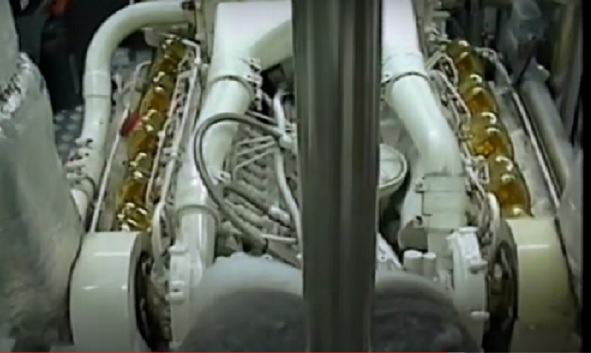
PAXMAN V12 VALENTA RP200 – 3030HP MARINE DIESEL ENGINES
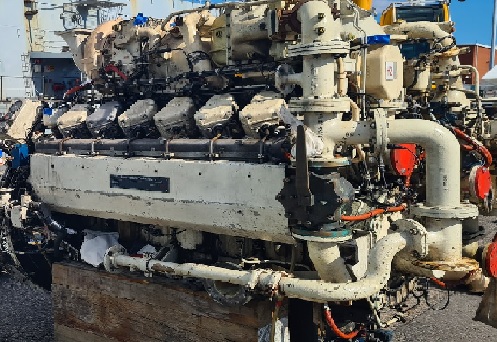
PAXMAN RP200 3033hp V12 MARINE DIESEL ENGINE AS IN THE RNZNs 4 COASTAL PATROL CRAFT FROM 1975-1990
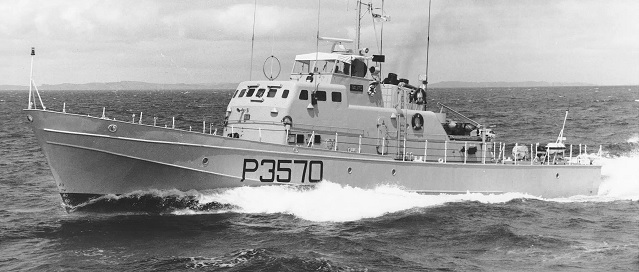
 RNZN COASTAL PATROL VESSEL TAUPO, in 1975

 I’m only aware of four boats that used PAXMAN MARINE DIESEL ENGINES. They were all replacement vessels for the WWII HDML and Fairmiles, with the first, the Taupo, going into service on 29th July 1975. The second, the Hawea, arrived shortly afterwards, followed by the last two, the Rotoiti and Pukaki, which came a little after that. They remained in service until 1990 when they were sold off.

 KELVIN OLD MODEL MARINE DIESEL ENGINES
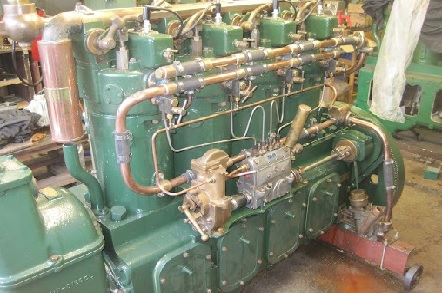
 KELVIN 4 CYL. OLD MODEL DIESEL ENGINE, SIMILAR TO THAT FITTED AT ONE TIME, IN THE MATAROA.
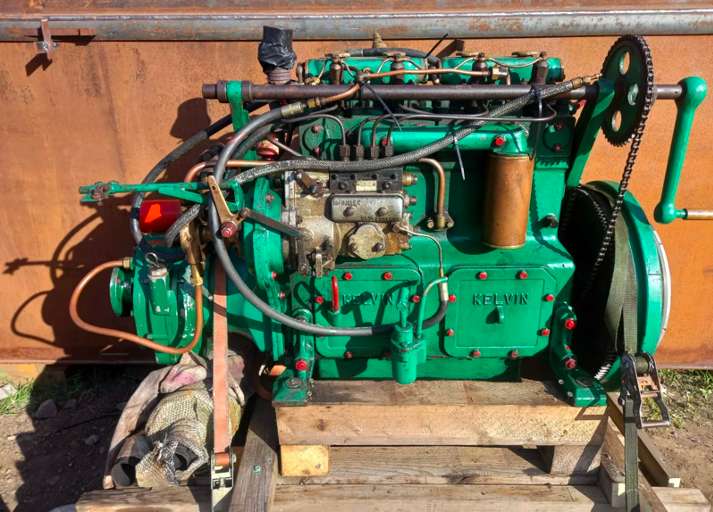
KELVIN 4 CYL MARINE DIESEL ENGINE SIMILAR TO THAT IN THE FERRY MAIRE
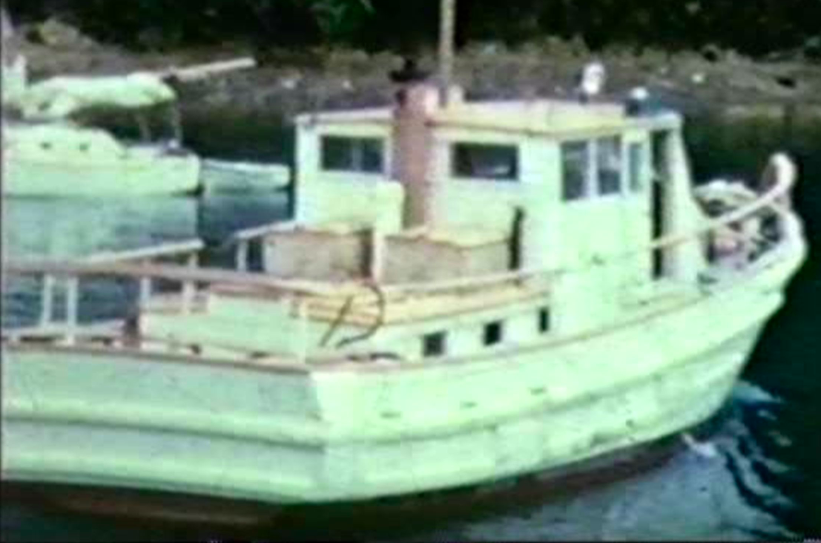
KAWAU FERRY MAIRE, WITH HER 4 CYL KELVIN DIESEL c 1950s 
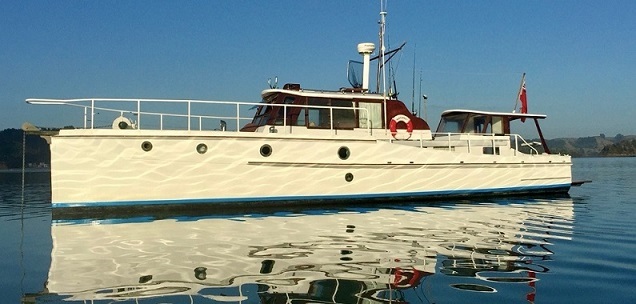
MATAROA POST HER KELVIN DIESEL ERA 

Kelvin diesels are slow-revving, high-torque engines used mostly in commercial fishing and tugboats. The MATANUI is the only pleasure craft I am aware of that has, or has had, one of these beautiful engines, which run like a well-oiled sewing machine with an absolutely silent exhaust out the stern, well above the waterline. In the case of the MATANUI, even at cruising speed, all one heard was a very gentle hissing sound. The engine was painted a bottle green.

I went aboard her during the Joe Kissin era in 1946/47 and she had it then, having had it for a good number of years, notwithstanding that she had several engines in her long lifetime of over 100 years now. 

One unusual thing to note was that her Kelvin started on petrol and then switched to diesel after starting, which is unusual in pleasure craft.

KAWAU ISLAND TO SANDSPIT FERRY, MAIRE. 

The Sandspit to Mansion House Bay Kawau ferry – MAIRE, was built by Roy Lidgard in his boat building shed at Smelting House Bay, Kawau, in the late 1940s for Allan Horsfall, owner of the Mansion House Guest House/Hotel. She was fitted with a 4-cylinder Kelvin Marine Diesel engine and was part of the ferry services to the island right up until the property was sold to the Historic Places Trust around 1977. 

I am personally only aware of two specific installations, I know that quite a number of these engines were fitted to some of the fleet of classic trawlers built from around the 1930s to the 1960s by boatbuilders such as P. Vos, R. Lidgard, Shipbuilders, and others. Some examples , which may or may not have had KELVIN engines include boats such as Eddy Mansfield’s WAIWERA, the Owens brothers’ (Gordon and Jim) KAIWAKA, WAIMANA, FOX II, DALMACIA, and COBRA, among others. I believe the two main engine brands of choice by the owners of those lovely classics were Gardner and Kelvin. Any knowledge of vessels fitted with KELVIN engines, would be appreciated.

The company that produced the KELVIN diesel engines was founded in the UK in 1904 and has undergone a succession of ownership changes over the last 120 years. It is presently owned by British Polar Ltd. However, notwithstanding all the various ownership changes, the name KELVIN has been retained up to the present day.

DOOSAN 6 CYL 200 HP MARNE DIESEL ENGINES
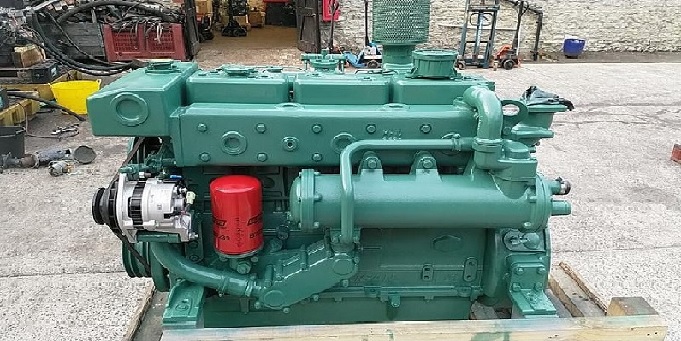
DOOSAN 6 CYL 200 HP MARINE DIESEL ENGINE AS IN THE NGARANUI
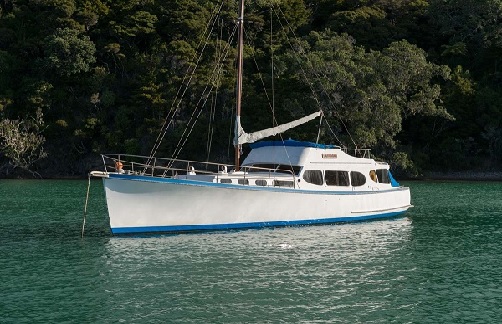
NGARANUI WITH HER DOOSAN 200 HP 6 CYL MARINE DIESEL ENGINE, which replaced a Detroit 6-71 marine diesel engine
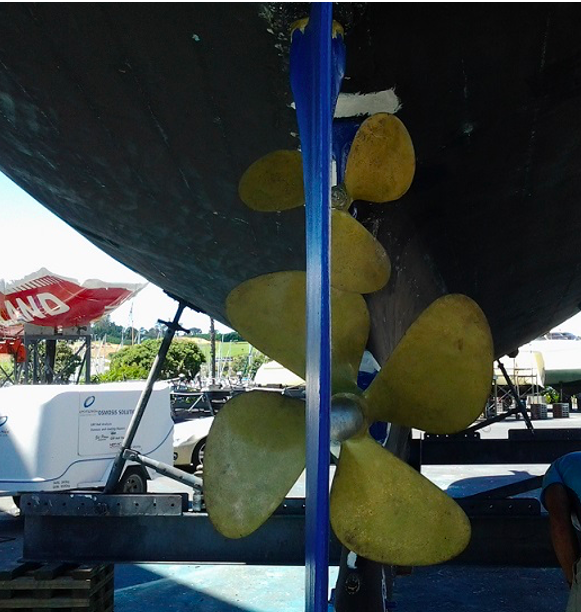
NGARANUI SHOWING HER AUXILLARY PROP  

NGARUNUI was built in 1955 by Jim Young and started life, with a 1942 GM Detroit Marine Diesel engine (ex-war assets). It has now been fitted with a late model 200hp DOOSAN Diesel and has a Yanmar 20hp diesel auxiliary engine, with the prop for that engine mounted immediately above the main propeller. 

MERCEDES BENZ MARINE DIESEL ENGINES & M.A.N.& M.T.U.  MARINSATION VERSIONS OF THESE ENGINES.
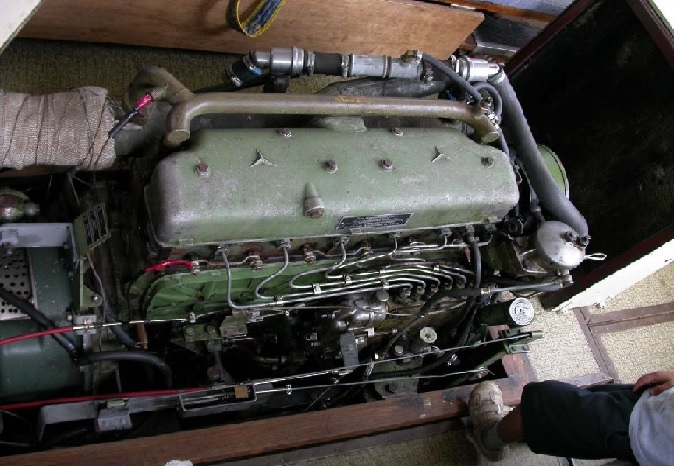
MERCEDES BENZ MODEL OM321 6 CYL c100HP DIESEL ENGINE WITH 2 FITTED TO THE R LIDGARD BUILT, FLYING SCUD IN 1971, BY KEN RICKETTS
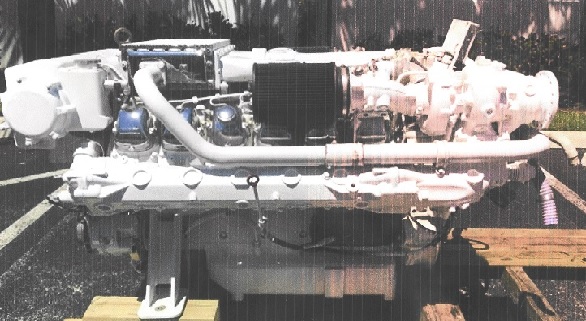
MAN MERCEDES BENZ V12 DIESEL ENGINE SIMILAR TO THOSE FITTED BY LEN SOWERBY TO THE NGAROMA IN THE 1960S/70S 
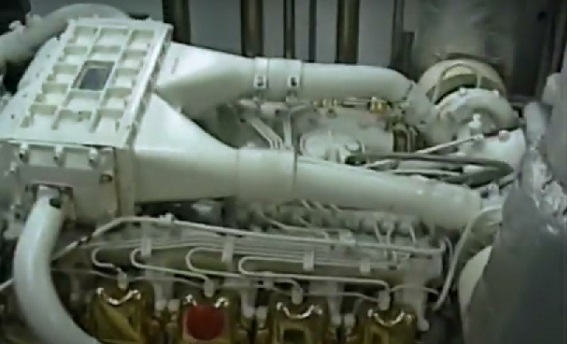
M.A.N. MERCEDES BENZ 600HP V10 MARINE ENGINES FITTED TO PACIFIC MERMAID WHEN BUILT. 
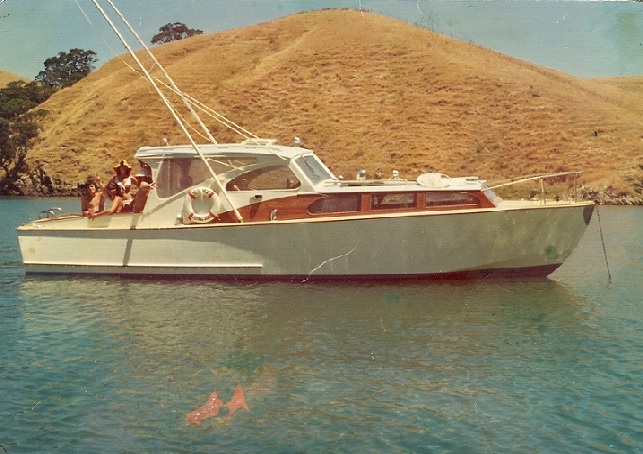
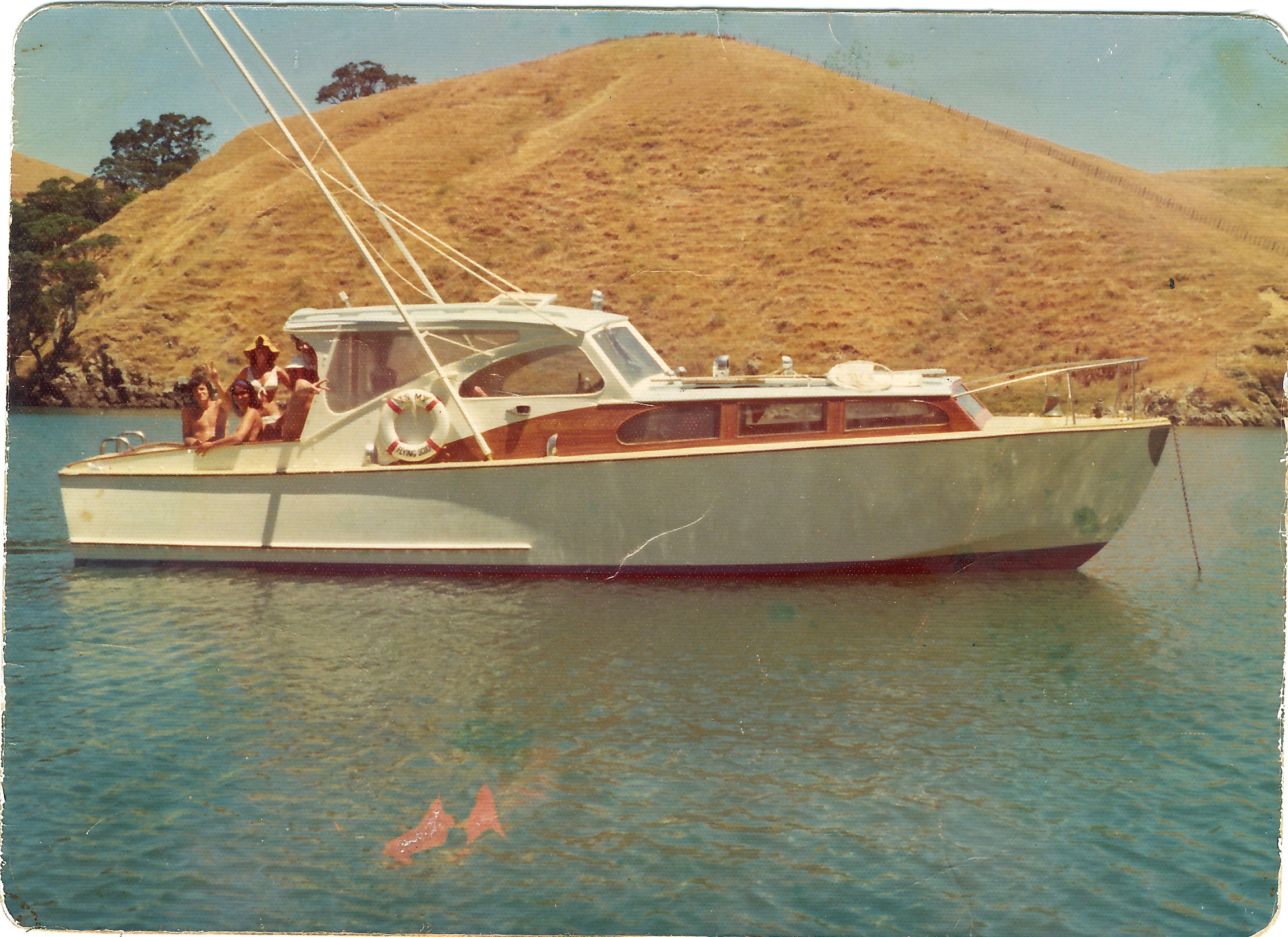
FLYING SCUD WITH HER 2 OM321 100HP 6 CYL MERCEDS BENZ MARINISED DIESEL ENGINES IN BIG STATION BAY, MOTUAPU ISLAND, IN 1972.
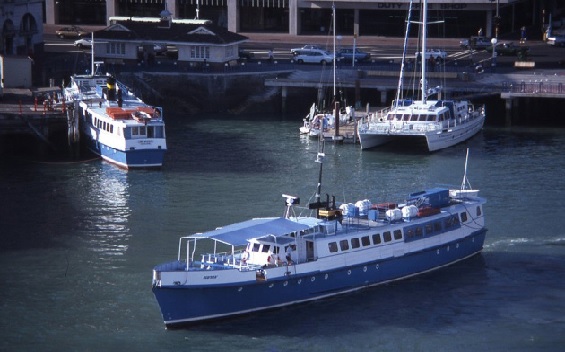
NGAROMA WITH 2 X V12 770HP M.A.N.MERCEDES BENZ MARINE DIESEL ENGINES – IN THE 1970S 
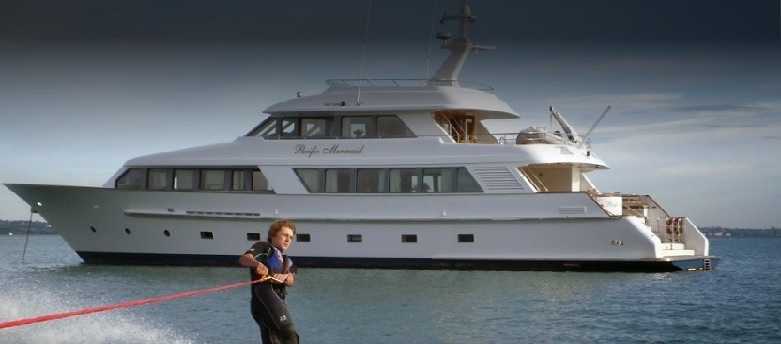
PACIFIC MERMAID WITH HER 2 X V10 600HP MAN MERCEDES BENZ MARINE DIESEL ENGINES.

Mercedes Benz, as the world knows, is a huge conglomerate with many divisions under various names and entities.

In the case of marine diesel engines, they are marinized under their own name and by various other marine engine companies, which have marinized them under their own company names. There is also a huge range of engine sizes and horsepower options. In New Zealand, we have had many installed in new craft built here for offshore owners. Most of these offshore exports, would have been under the M.A.N. or M.T.U. brands, as these brands of engines are typically of the larger horsepower ranges.

Regarding engines used in New Zealand, Im aware  of only five boats however, there are undoubtedly others. Nevertheless the total number of such engines remains quite small. So, if anyone knows of other craft in this group, please add them to the list.

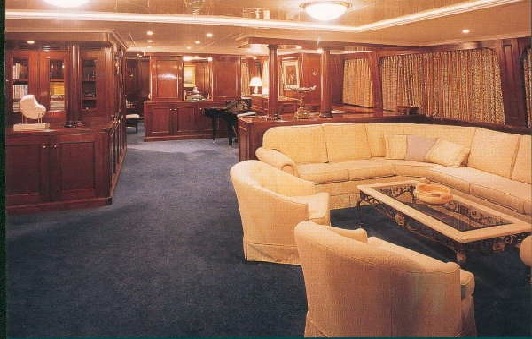
The boats known to me include the PACIFIC MERMAID, a 105-foot super luxury motor yacht, fitted with two 10-cylinder 600HP., intercooled, artificially aspirated engines, with twin exhaust-driven turbines, marinised by M.A.N. She was built entirely in Auckland by Ken Winter and his family in South Auckland, with the build completed in 1989. He owned her until his recent passing, in Auckland. 

Ken W. usually ran her engines at a modest 1400 RPM, achieving a hull speed of about 10 knots.
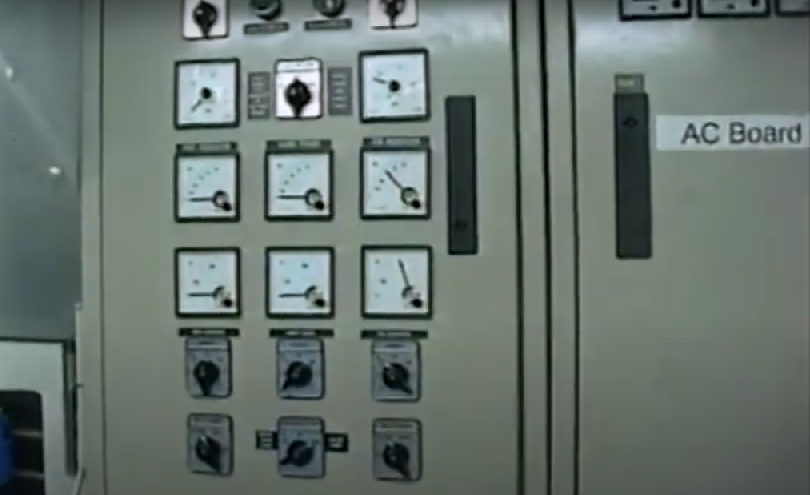
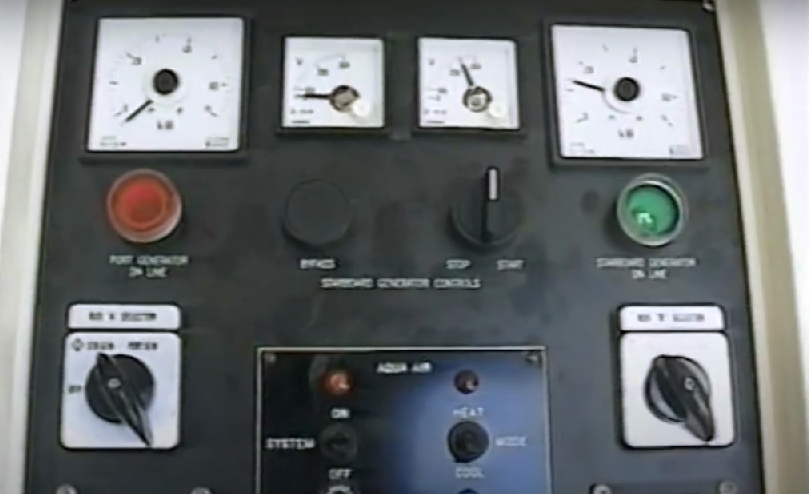
PACIFICA MERMAID’s galley  distribution & control switchboard – starboard alternator in use. She has 2 x John Deer turbo 6 cyl. diesels driving 2 X 230/400volt alternators to supply her 230volt single phase 400volt 3 phase power supply, when away from her berth, which supply enough electricity for about 12 houses each
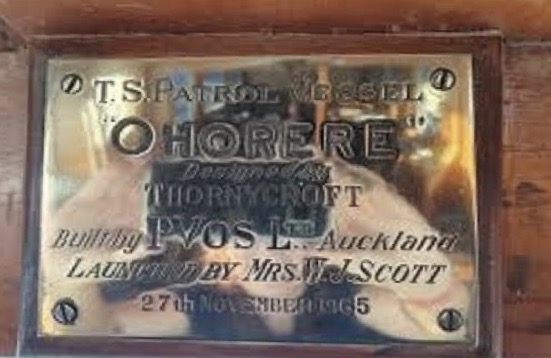
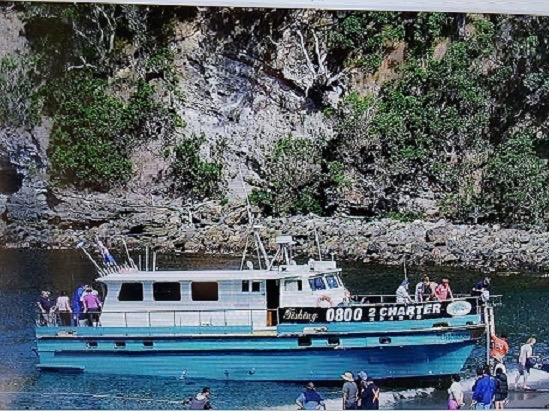
‘OHORERE AS AT 2025 WITH HER 2 X 770 HP MTU MARINISED MERCEDES BENZ DIESELS.
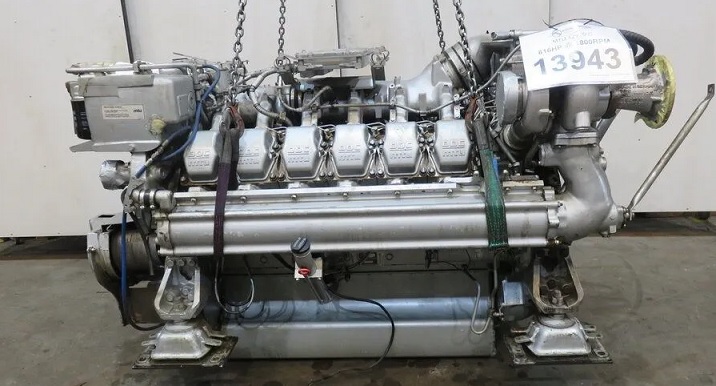
MTU MERECEDES BENZ DIESEL ENGINE – POSSIBLY SIMILAR TO THOSE IN THE OHORERE

OHORERE, was built by Percy Vos in Auckland, for the government of the day, to be a high-speed fisheries patrol craft, and designed by Thornycroft in the UK. However, she never reached anything close to her anticipated speed projections, as required in the order from the government, to the designers, and builders. Large sums of money were spent collectively, by the designers, Rolls Royce, who supplied her original engines, and the builders, to give her better performance, but they failed miserably, and she was ultimately sold to private ownership, where she has been used for many years now, I am told, for fishing charters in Tauranga. 

The 2 x 8 cyl. Rolls Royce’s were replaced about two years ago, with 2 x 770hp MTU marinized Mercedes Benz diesels, and is now capable of around 30 knots.

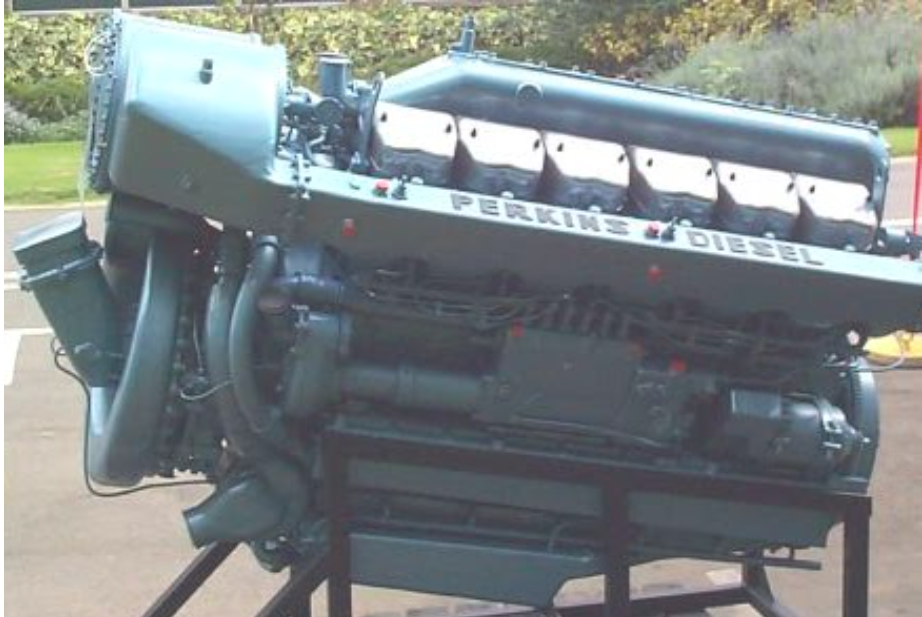
The engine in the image is used, which because of the huge cost of them new I feel it would be most likely & also most practical to install used engines.

The only other boat I know personally, is my own 1953 Roy Lidgard-built, 31-foot FLYING SCUD, which I bought in 1970, with her original twin Austin Skipper 100 marine petrol engines. 

I replaced them almost immediately with two OM321 100 HP Mercedes Benz 6-cylinder diesels. I sold her six years later, when I started building my 40-foot Vindex, TIARRI, and a later owner replaced FLYING SCUD’s Mercedes Benz engines with two Bedford diesels.

PERKINS DIESELS MODELS “S6” 6YL & 510 C.I. V8 MODELS ONLY 
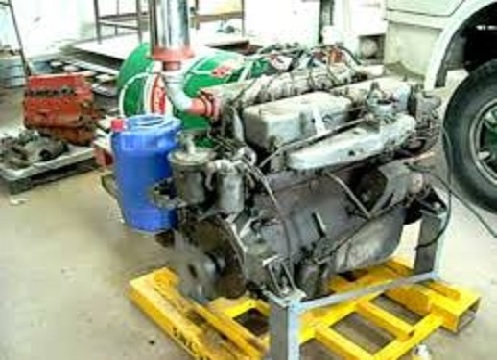
 PERKINS MODEL S6 MARINE DIESEL ENGINE
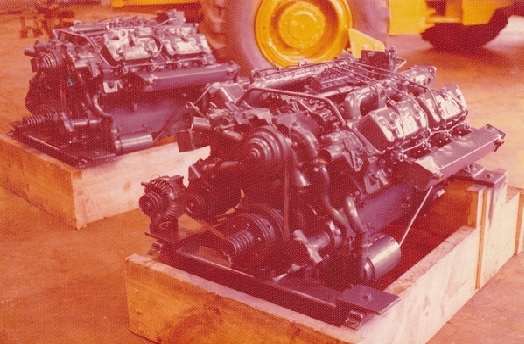
TIARRI’S TWIN V8 PERKINS 510 CUBIC INCH DIESEL ENGINES  
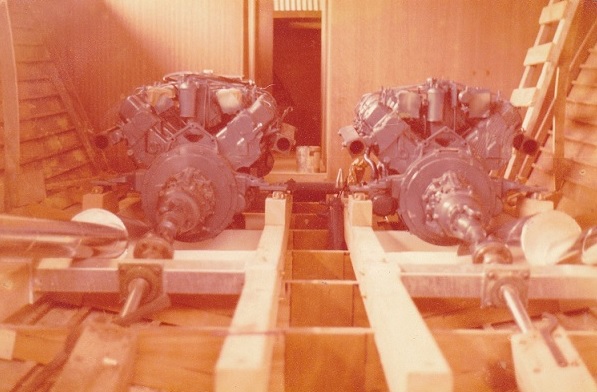
TIARRI’S 510C.I. 165 HP PERKINS V8 DIESEL ENGINES IN PLACE
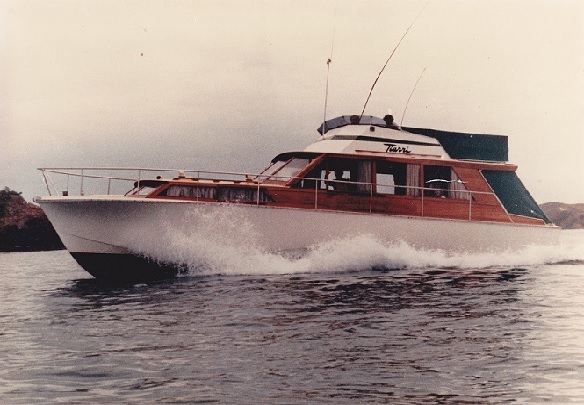
TIARRI AT SPEED OFF RAKINO ISLAND 1982 WHEN OWNED AND NEWLY BUILT FOR KEN RICKETTS BY BARRY JONES & REX COLLINGS OF MATAKANA & WHANGATEAU 
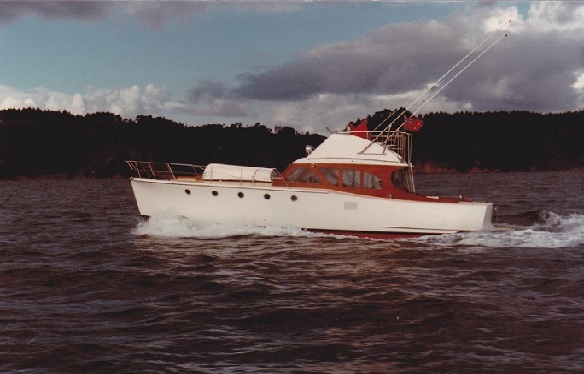
KAIKOURA WIH HER TWIN PERKINS V8 MARINE DIESELS IN BON ACCORD HARBOUR, KAWAU ISLAND c1984
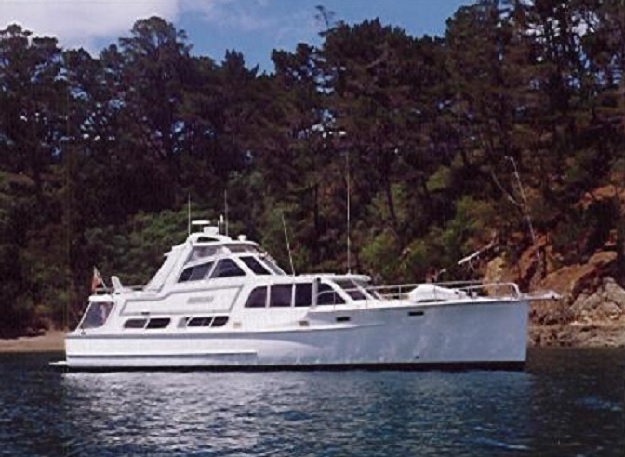
MOANA LUA WITH HER PERKINS V8 DIESEL ENGINE
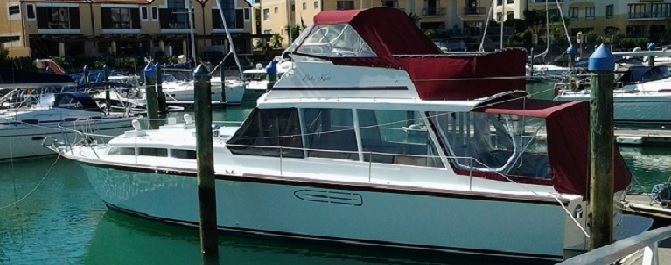
LADY KIWI (EROS), POST HER PERKNS 510 C.I. V8 MARINE DIESEL ENGINE ERA
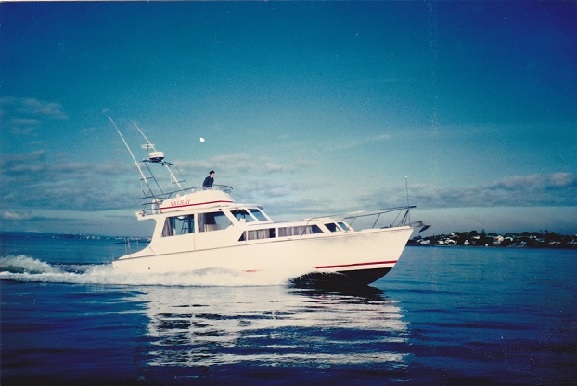
VALRAY WITH HER 2 X S6 PERKINS 6CYL MARINE DIESEL ENGINES

Whilst there are many thousands of Perkins engines in use in NZ of various types, the two referred to above are rare. The S6 engine was developed for the military in the UK during WWII, and Ray Hamilton, the harbour master for the Sandspit area at Warkworth, managed to import two of them a few years after the war. He kept them in a big, beautiful shed on his Warkworth farm for a good number of years until he eventually built his dream boat, the VALRAY, in that shed in the 1960s.

The 510 cubic inch, 165 hp V8 Perkins diesel engines are in only four boats that I know of. The Eros (Lady Kiwi) had two fitted when new, the Moana Lua had one fitted around the 1990s, I believe. I had two of them put in my own boat, TIARRI, a modified 40-foot Vindex, (we added an extra 18 inches of beam) when she was being built for me, and launched in October 1979. There is also the P Vos built KAIKOURA, which had her original two 165 hp Kermath Seamate Special petrol engines replaced by the Bridgeford family of Mission Bay, owners at that time, in the 1960s-70s. She has had two Perkins 510 c.i. V8s ever since. 

FOOTNOTE: I have not written about or included very small, very old engines and boats from the very early days of the 1800s to the early 1900s, where engines seemed to me to be mostly New Zealand-made, of one-, two-, and three-cylinder types. I have read some excellent, very knowledgeable writings from Harold Kidd, on these, and as he is an expert in this very specialized field.

INPUT ex ALAN SEXTON – Another great read from Ken and as usual a few comments following Ken’s sequence

Another relatively rare installation in NZ was the Cummins VT-370M, 785 cu.in turbo diesel. These were fitted to John Wiles Salthouse Giovanni II (since replaced with a Volvo), the Pelin Shikaree “Neureus”, owned by Haines Hunter’s Denis Kendall and twins were installed in the Wellington Police boat Lady Elizabeth II (the one that sank). This model engine was superseded by the Cummins VT-903M, approx 450hp, with a pair installed in ~55′ Pelin Eclipse “Trident” in the 80’s

Kelvin diesels – I believe there was a bit of a “Holden vs Ford” mindset between commercial fishermen when comparing Kelvin and Gardner diesels, I remember an ex fisho I worked for many years ago being a strong Kelvin man and very “dismissive” of Gardners

Doosans, Lees were selling these for a while. Another notable installation (a 320hp) was Conrad Robertson’s sedan launch Rampage , originally built for himself. I understand she has since been re-engined (Cummins?) and cockpit has been extended

The MAN V10’s from the 80’s mentioned were derived from a JV between Merecedes and MAN, https://www.curbsideclassic.com/blog/truck-history-the-man-18-3-liter-v10-the-last-on-highway-turbodiesel-behemoth-in-europe/ so are considered genuine MAN’s. Other notable installations include the Ted Ewbank designed “Kiwi Challenge” support boat for the 87 cup challenge and Neville Crighton’s Alan Warwick design Countach, both I believe 750’s. By the way Pacific Mermaid is advertised as being built by Salthouses.

The Perkins S6 was developed in the 1930’s for heavy trucks and was an enlarged version of the P series. https://archive.commercialmotor.com/article/21st-october-1939/26/perkins-ii-ices-new I believe the first installation in NZ was in Alan H’s “favorite” launch, the original Vindex. Wasn’t there for very long, replaced by the lighter and more powerful T6.354 in the mid 60’s

There was another launch written up in Sea Spray in the late 60’s which had a 160hp Perkins 504, cannot remember her name

Moana Lua has had quite a few engines in her life, I believe the current engine is a John Deere. When she was owned by Ken Burrowes from the late 60’s to early 80’s I understand she was originally equipped with twin petrol engines and then Ken replaced them with a “Torpedo” brand diesel engine (I thought he was pulling my leg when he first told me this), which i assume was from this factory https://tractors.fandom.com/wiki/Torpedo_(Rijeka)

Another quite common installation was the petrol Chrysler Crown, a marinised flat head Dodge. Eastern Star, Shipbuilders 32 previously featured here was built with one. This was replaced with a 75hp Ford in the early 80’s.

09-05-2025 INPUT ex JIM LOTT on Kelvin engines – Around 1981 I removed a Kelvin diesel from a yacht and replaced it with a Yanmar 2 cyl. The Kelvin had a crank start fitted and I don’t think there was an electric start at all. I am pretty sure it was 2 cyl. It was fitted in the 34ft Ladybird design (Bert Woolacott) named “Aorangi”. 

Aorangi was built by Ron Evans who lived at Bucklands Beach and Ron was a commodore at BBYC and later on manager at John Burns and Sailors corner. He built Aorangi late sixties or early 70s using full length kauri planks. The owner of Aorangi who I worked for was AAH Schulte, known as Hubert. The bottle green Kelvin was tucked under the cockpit driving through the quarter.

I was more interested in the new Yanmar I had to fit so I did not take too much notice of the Kelvin but I recall Hubert telling me he had given it to a transport museum. The Yanmar worked out fine and I moved the shaft to the centreline.

INPUT 04-08-2025 Perkins T12: A Wartime V‑12 Diesel Prototype

Purpose & Origin – Designed just before WWII, the Perkins T12 was intended for naval craft (motor launches, gunboats, torpedo boats) to replace petrol engines and free up Rolls‑Royce Merlins for aircraft use  .

Design & Specs A 55° V‑12 (two inline‑6 banks on a single crankshaft) with 6″ bore and stroke, giving roughly 33.3 L capacity. Each bank had independent systems (water, oil, fuel injection), enabling one half to run if the other failed  . Featured an unusual centrifugal supercharger driven from the crankshaft. Only 5–6 prototypes were built, with two installed in a Royal Navy launch (ML 570) from late 1942 through WWII  .

Performance & Fate It achieved the target ~1,000 bhp, but production never followed due to the availability of cheap American petrol engines  . After the war, one engine served as a stand‑by generator at the Peterborough factory into the 1980s  .

🔗 Links with Rolls‑Royce

Direct Association: The design was meant to replace Rolls‑Royce Merlin petrol engines in marine craft—similar size and layout for direct substitution  .

Personnel Connection: Perkins was founded by Frank Perkins and Charles Chapman—the latter previously worked closely with Rolls‑Royce founding engineer Henry Royce  . Chapman’s expertise evidently carried influence from aero‑engine principles into the T12 design.

Summary The Perkins T12 was an ambitious, Rolls‑Royce‑inspired diesel V‑12 project to militarize petrol-dominant craft space. Built quickly (~14 months) under Charles Chapman’s leadership, it showcased clever redundancy and performance—but never reached mass production, sidelined by US petrol engines. There does not appear to be any direct Rolls‑Royce technical design partnership—rather, the association comes from the T12’s role as a diesel counterpart to the Rolls‑Royce Merlin, not from a joint development.
The Evolution of Pleasure Craft Communication

Screen Shot 2020-06-10 at 6.02.30 AM

THE EVOLUTION OF PLEASURE CRAFT COMMUNICATION

Next time you pick up a mobile phone to chat to another boat or log a trip report via the Coastguard APP, spare a thought for the boats of days gone by that had only one option (other than flags) for communications at sea. As a child I was fascinated by all these strange random words Zulu Mike Bravo Lima etc – my father being an ex-army comms man, morse was his thing. On holidays, myself and brothers were ‘made’ to listen to ships at sea and try to record the message, the winner i.e. most accurate, would win a chocolate.

WW follower Ken Ricketts is of an age that he has seen and experienced the evolution of New Zealand maritime radio communications and recently he wrote a comprehensive chronicle on the subject, which you will find below. It is worth a read to either educate or refresh yourself on the huge advances that have been made in the field. The story is peppered with a few tales directly relating some of our woody fleet (scroll over photos to ID the woodys) so hopefully that will keep those of you with a short attention span –  awake 🙂 Enjoy

Maritime radio-telephony in Auckland pleasure craft, had its first & humble beginnings in 1946, at which time, Ken’s father, Ralph Ricketts, entered the fray, with the second ever such installation, in Auckland, (the original first one was on the REHIA owned by Bill & Phyl Ryan at that time — who told RR about it) RR immediately bought, (as ultimately almost everyone did, once they knew about them ), an ex WW II war assets double side band, (DSB),  ZC1 MK II R.T., for  20 pounds, & fitted it to the Rickett’s launch – JULIANA, after which RR had a visit from a Govt radio inspector, who took diagrams of aerial format & layout, made various notes on his file of the installation, checked RR’s ability to use the set, made a test call himself, to “ZLD Auckland Radio,” sited  at Musik Point at that time, on the entrance to the Tamaki Estuary, & made sure RR had a “Restricted Radio Operators License,” which was required in those days, by all radiotelephone operators, on all pleasure craft, – now long since discontinued, & he allocated JULIANA the call sign of ZMYP.

REHIA 1948

JULIANA & AOMA c1953

Originally, there was only one call frequency, & that was 2012Kh, in 1946, used for all purposes, but not too long after that, 2012  was reallocated exclusively for harbour control use, to the Auckland Harbour Board, & pleasure boaties were allocated 2182, the international distress frequency for initial calling to government shore stations, & 2162 for ship to shore working, & 2456 & 2638 for ship to ship gossiping. 

The 2162 working frequency, was later changed to a duplex frequency, with 2162 for listening to ZLD, & them receiving on 2207. 

The frequency of 2045, was allocated around 1950, for use for transmission between privately owned shore stations & boats, such has Port Charles Radio, (the legendary Jim Smith owner/operator ), Gt. Barrier radio , Awaroa Radio etc. 

These shore stations were used extensively, for many years, from around 1950, by many commercial fishing boats, working throughout the Gulf, many of whom, reported in daily their positions, usually around 6 pm. There were also many pleasure craft which used the service, & RR was one of them. He joined the Port Charles association for most of his boating life with legendary Jim Smith the owner/operator. RR or Ken would call Jim every evening at around 6pm & report in our position at that time. 

You paid a small annual fee usually, to join their non profit associations, to cover their running costs & they kept records of your locations, times of calls, assisted in any way they could, with any problems you may have had, etc., & these associations usually operated, for several set times, of about 15 to 30 minutes, each day. Ken thinks some may still exist on the VHF channels, possibly there is one on Gt. Barrier Island.  

Auckland Coastguard was also allocated the frequency of 2128, (from recall), for ship to Coastguard use. 

By the early 1950s ZLD had introduced a radio telegram service to land based recipients who had a telephone number available, as the address & the telegrams would be sent by ZLD to any entity via that phone number ( & later delivered in hard copy via normal post to the address of the phone number), & if a reply was quested, or anticipated, they would telephone it through immediately, whilst the ship waited on standby, & ZLD would call back with the reply ASAP. 

The cost, was fairly expensive for the era, & on a cost per word basis & the costs were charged to the landline phone number. This service stayed in place as far as Ken knows right through in to the VHF era.

Land based parties, could also send radio telegrams to boaties, with the address, via the P & T telegram phone number, which must include the call sign & was as follows; (as a example) Mr. Smith Vessel ZMYP JULIANA C/- ZLD AUCKLAND RADIO. 

ZLD at the end of its 3 or 4 hourly daily weather forecasts & shipping information, would give a list of all telegraphic traffic held for all vessels including of course, & very importantly, their call signs, & most would listen to these broadcasts, as often as possible, & advise friends on other boats, if they were near at the time, that  ZLD had a message for them.

By about 1983 this communication with the outside world was taken a step further, &  ZLD introduced a VHF radio telephone service, which many mature old time boaties may recall, where a ship could call ZLD, on channels 22 & 23, in the  Auckland region, give them a landline number, which they would dial & then patch your call to ZLD through, to enable you to talk direct, to the subscriber, which whilst it was a good service, it had its shortcomings & limitations, shall we say, as any boatie who by chance or otherwise, dialled into ch. 22 or 23 on his boat, would inevitably be privy to what were sometimes surprising, & very private conversations, also necessarily, only one party at a time in the conversation could speak, & the other had to listen, & one had to say “over,” at the end of each segment of conversation, to enable the other party to know when to respond, 

Calls to boaties from landlines could also be booked with ZLD & ZLD would call them back, when they were able to make contact the vessel, the land based party wished to contact.

There was one other form of radio communication which evolved & inevitably found its way in to the boating world for a period in the 1970s/80s & that was  Citizen Band (CB) radio transmitting communication equipment, for short distance communication, unrestricted in it use, & it could be used by any person, at any place for any lawful purpose, but it was restricted, to a very low aerial output power in all sets, which could be bought & licensed extremely cheaply, much more so, than proper marine  purpose built equipment, & this medium became popular for a period, in the  1970/80s, with some  boaties, mostly in the smaller cheaper craft range, where cost was a really important issue for some, but whilst it was cheap, it had many shortcomings, including its very short transmission range, & as there was no structured organisation of any type, either private or govt., monitoring it, one simply in event of distress, had to rely on someone within the range for your set, hearing your call, & helping as best they could, one way or another. So whist it was so very limited in its rescue value, nevertheless it was better than having no communication at all, if in need of help. 

These sets had a good number of preset channels  & operated on the HF 26.500 Mh band in NZ., which was a different frequency range to many other countries, including Australia, which used 27.500Mh), & call signs were allocated to owners on a regional basis, depending on where you lived.

Ken installed one on his 40′ launch TIARRI, when launched in 1979, in order to have maximum possibility of assisting boats, in times of distress or breakdown. TIARRI’S main call sign was ZM3199, which, along with the radio, Ken took from his first boat, FLYING SCUD, which was issued to F.S. in December 1953, when she was built & launched by Roy Lidgard, just after the advent of the letter number era – only 1100 numbers in to the new system.  

TIARRI

FLYING SCUD 1975

There were the very odd exceptions, to the above early days policy, & call signs, mostly around the 1940s era, almost all of which, were for boats, where they were owned by the owners of private islands, in the Hauraki Gulf & Northland, & perhaps the Sounds, where they had a licensed, private, island based set, on their island, & a special boat call sign allocated to their boats, for keeping in touch with their home bases, usually where these boats were their sole means of access, to the outside world, & these sometimes, were of a number letter combination, with just one or two numbers usually, & had just one specific frequency, to operate with.  

All transmitting in DSB & SSB sets was technically very accurately totally controlled, often by a plug in type internal “Chrystal Control unit,” or similar, for each frequency,& fitted to all sets for all transmitting frequencies. 

There were later several lower end of the High Frequency, (HF) band, frequencies added in the 3, 4, & 6, Mh bands, mostly used by off shore boats, out at sea. 

This cumbersome, & red tape process, of registration, continued for a good number of years, right through the initial era of “ Double side Band “ transmission, & in to the upgrading of that era, to “single side band” (SSB) transmission, circa 1970s

After single side band transmissions became compulsory, around the 1970s this required the purchase of a new set, & the only double side band frequency which was still legally usable, was the international distress frequency of 2182 Kh,  & this could only be used for calls to govt shore stations (ZLD for Auck)  or ZLW for Wellington, as examples),  for emergencies only, & craft which did not wish to outlay for a new SSB set, or alternatively still keep a 2182 set after they bought a VHF set after they were introduced, could modify & keep their old set, & were then reallocated a compulsory special “ZMX” based call sign, starting at ZMX2001.

These days ZLD has left Musik Point, & the government’s ZLD & ZLW (& ZLB in the South Island,) which all later came under the umbrella of Telecom, being the replacement that took over from the old P & T., which in turn, has now become a totally new entity, as “Maritime Radio,” & under the umbrella through various subsidiaries, to “Maritime NZ.,” being another different Govt Dept, with the  transfer becoming effective from midnight, & starting on the 1st October 1993 & the operators of which, are now all based in the Old Radio NZ Avalon building, in Avalon, Lower Hutt, Wellington, with transmission facilities, in Wellington & Taupo, plus a network of repeaters, scattered around the country monitoring the whole country, which is now all controlled from this one location.

In the later 1970s early 80s Very High Frequency, (VHF) maritime radio was introduced, which gave many benefits, with all its ongoing ever increasing refinements, & installation of shore based repeaters, on high ground, throughout the country, which  has now ultimately totally replaced the old Medium Frequency DSB & SSB sets, with many advantages to all users, for all local NZ & inshore boating, along with the discontinuation of licensing of individual operators, & inspections by govt inspectors, of all boats so fitted, with RT equipment. 

Also, Radio Spectrum Management, the govt department which these days controls allocates & administers all radio & TV transmissions, call signs & frequencies, has vested in NZ Coastguard, the authority to issue calls signs on its behalf, of a mixed letter number type, such as, (possible examples only), ZMQ 2947, ZMW4526, ZMR 2937, & so on, as a result of the huge demand for these, these days, & the time consuming process it used to be, for R.S.M.

Originally in 1946, this was all under the umbrella of the Post & Telegraph Department to later become Telecom, & remained so for many years, until 1987, when it all started to change & we have ended up, for a good number of years now, with RSM, as the entity in control.

The pleasure craft call sign evolution, & changes to it, are as follows;

As above, all craft up until c1953, were all 4 letters alone.

As they were beginning to run out of call signs, around 1953, the Govt. wrote to all pleasure craft owners, requesting they approve the replacement of their existing all letter call signs with a letter number combination, starting originally, with the first reissued call sign of ZM2001. 

It is important to note that the Govt., could not insist on this by law, & only request it, & if the owners did not consent to the allocation of a new call sign, the original then remained with the boat, & there are a few of boats that still have their original all letter call signs even today. 

Neither Ken’s father nor the owner/builder of GAY DAWN, Bill Waters, who RR bought the boat off in 1956, surrendered their original all letter call signs, for their respective boats, —  (see image above of GAY DAWN taken c1965, showing clearly, a typical DSB aerial set up as used for many of the DSB, SSB, medium frequency sets of that era), —  RR sold JULIANA in 1956 with ZMYP, (which was somewhere along the way, later either abandoned, or replaced, with letter number combo call sign), & now, as referred to below, is reinstated to her for life. RR bought in 1956 & sold in 1970, GAY DAWN, with ZMIV in place, which however, also later along the way, was replaced by persons unknown, with a letter number combo, at least once, note: ZMIV has now been reallocated to the Rickett’s family and used on the vessel ROSEANNE, which is owned by Ken’s daughter.

GAY DAWN C.1965

Such was the ever increasing size of the “snowball,” of pleasure craft sets, that it was not all that long, before the original issue of the ZM2001 to ZM9999 were all allocated, & we then saw the issue of  ZMA2001 to ZMA9999, followed by the final issue to the SSB era, which was ZMY2001 to ZMY9999. 

It is important to note, that all call sign issues right from ZM 4 letter, ZM+, ZMA, ZMY, & ZMX, & all Coastguard issued call signs are approved & provide for use of all VHF sets.    

All letter only call signs, which are all just 4 letters alone, must still be issued by R.S.M. direct, & are mostly reserved for all Govt vessels,(eg., all the Police DEODAR launches were & still are, all allocated ZMIH, during their term of service to the Police), also some very large off shore fishing vessels, & some NZ based pleasure boats, that cruise off shore, or are capable of cruising offshore have these call signs allocated as well. 

Other pleasure craft, that have some classic, historical, or other special significance, are also issued these, at the discretion of RSM.    

Ken has enjoyed a close & good relationship with RSM, for many years, & there are some interesting background stories relating to the issue of some of these special allocations of all letter call signs, which Ken has been associated with, & some of these are as follows. There are a tiny number of pleasure craft that were built prior to about 1953, where the owners did not approve replacing their original call sign, which the dept. would have requested, but could not insist upon in c1953. 

Two examples of this are as follows; 

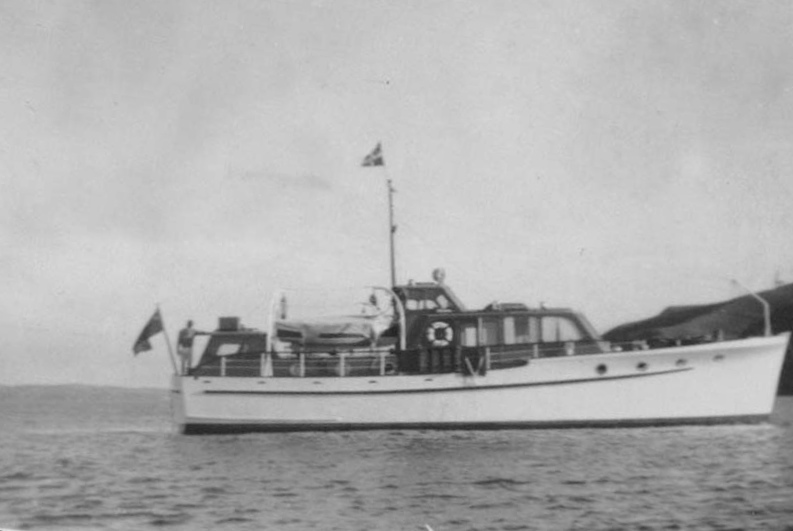
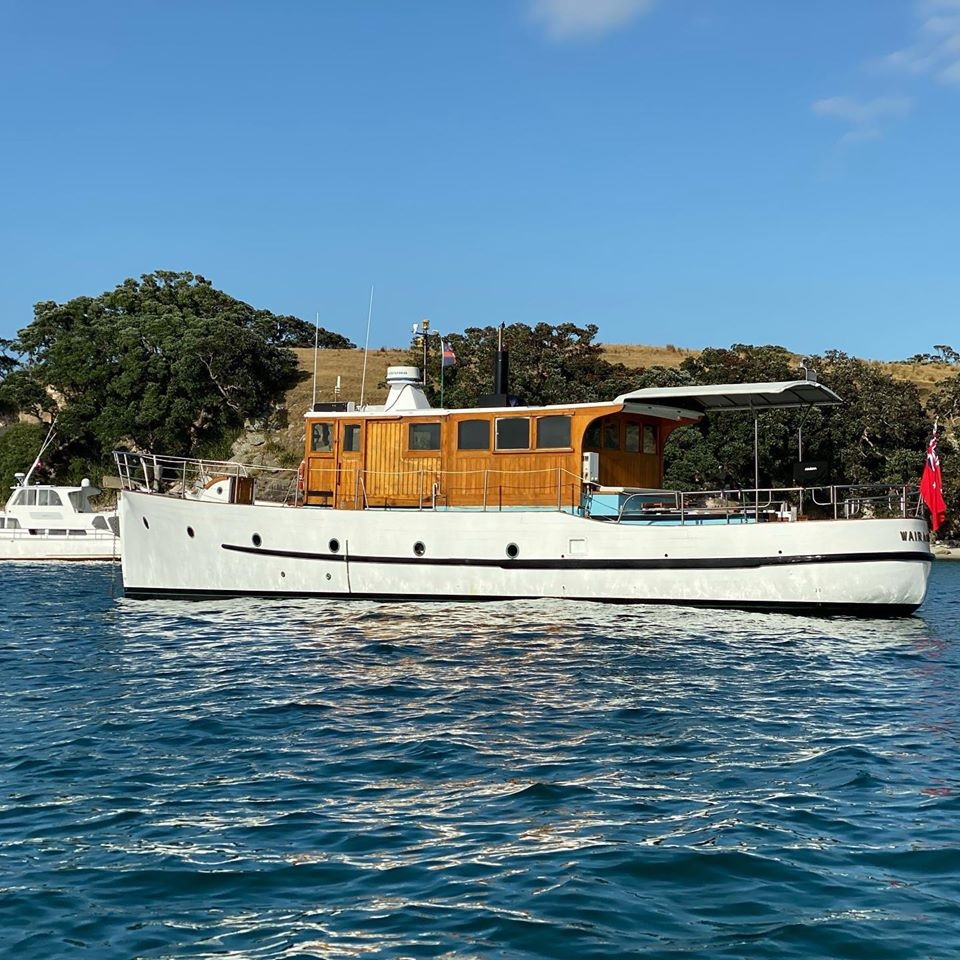
One with its original 1946 issued call sign is RAKANOA, which still has her original call sign ZMTF as issued when new, & the other, is Owen Foster’s WAIRANGI, also with her original call sign of ZMTM.

RAKANOA c1948

WAIRANGI 2020

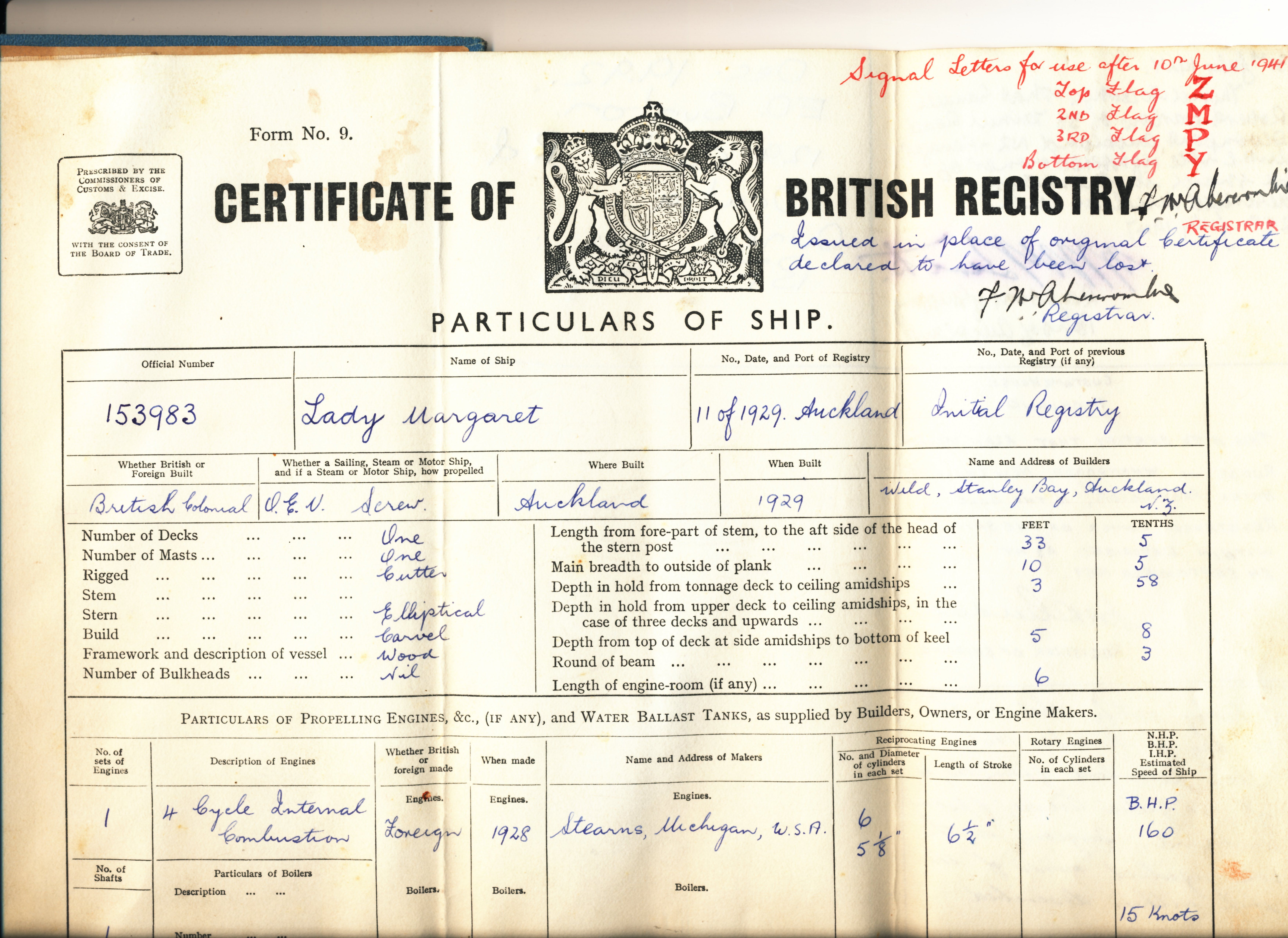
A fairly recent approval exception, is the issue of ZMPY, to Peter Loughlin’s Colin Wild built LADY MARGARET, which was first issued to her, in 1941, by the Navy, & is recorded as such on her British Ship registration, (see below), & as a classic craft, with this history of her call sign, Ken assisted Peter, to secure this for her for life, when he bought her.

LADY MARGARET

LADY MARGARET Registration certificate P1 (TOP) jpg

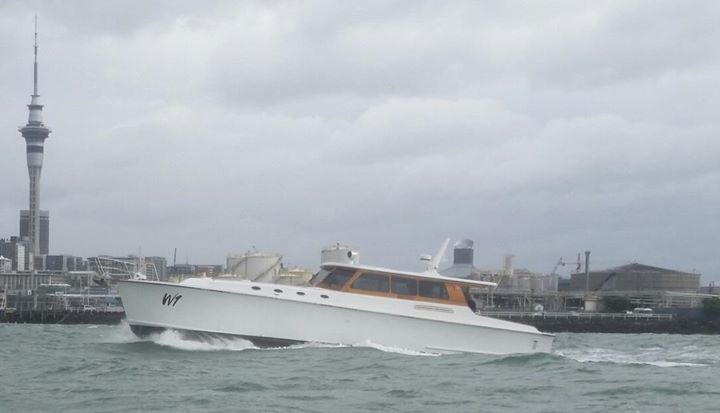
Likewise Francis Uren’s “W1”, was issued with ZMWI in 2014, which is another detective story. W1 was originally brought to NZ by the Royal New Zealand Air force in 1941, as their extremely fast, & prize patrol craft, & given in the circumstances, the logical Air force number of “W1”, which has now been reinstated to her, as her name, by present owner Francis, after a long period of being known as CARROMA.  

W1 c.1942

As she is now W1 again, Ken approached RSM, gave them her history, & they in turn, approached their counterparts in the military, to see if they could uncover her original WWII call sign, but unfortunately all those records have been lost, so as an alternative, RSM offered Francis the call sign ZMWI. – They could not offer ZMW1 as international radio spectrum law, prohibits that type of call sign, worldwide, so she now has ZMWI for life, free of charge.  

W1 2014 - 1

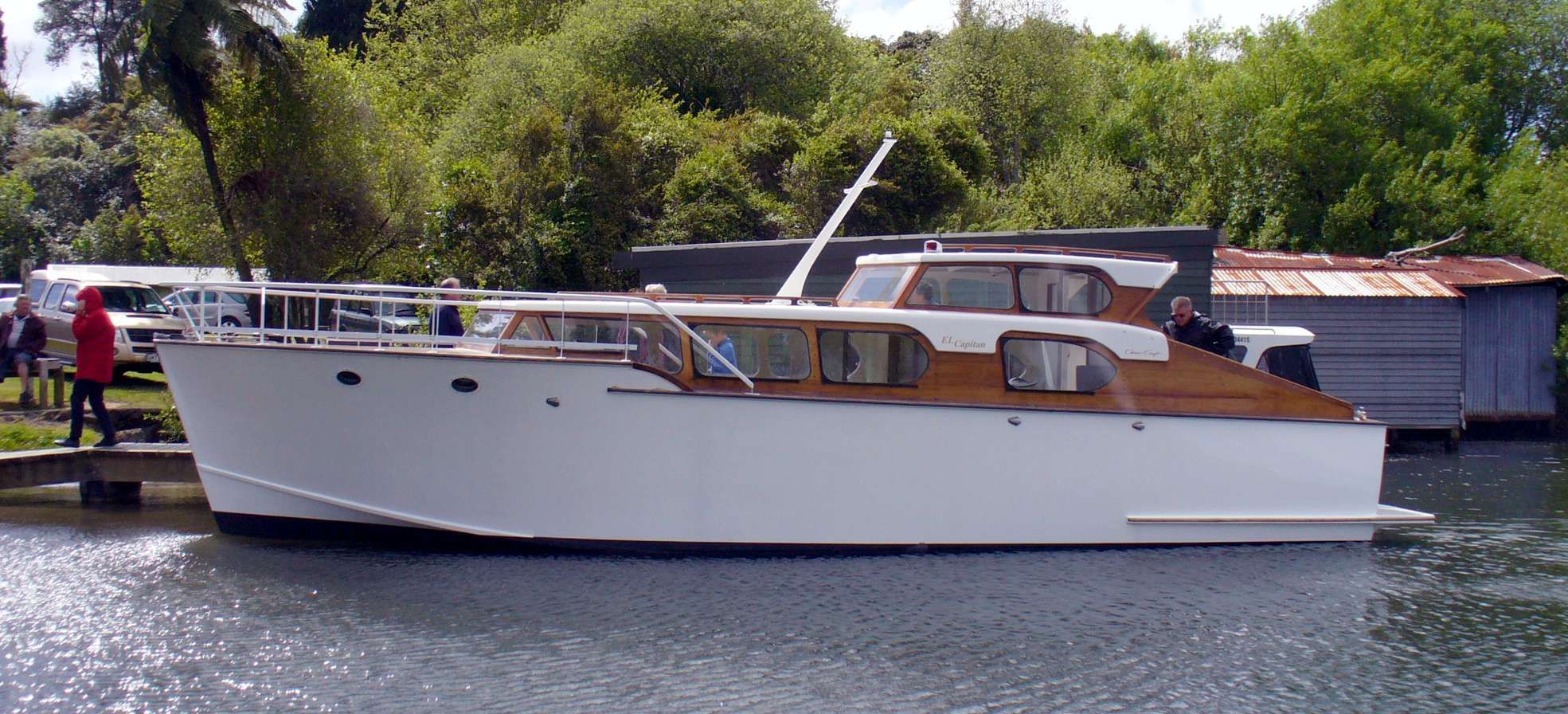
El Capitan is another interesting story, as she now has ZMEC. It goes like this; She was built c1961, by a farmer, in a shed on his farm, to a Chris Craft design, in Ohakea, & he carted her around on a big trailer, & used her at Taupo, & the Sounds, until 1976,  after which time, she sat in a shed on his farm, never to move again, until bought by Tony Mitchell, of Lake Rotoiti, off his estate, post 2000. When Tony bought her, she had a Coden 2+ Mh multi channel, medium frequency, marine RT,  which would have been fitted almost certainly, when she was new, which has now been replaced with a VHF, but for which, there had never been a marine call sign issued, as the original owner, was also a radio ham, with a “ZL#### ham radio licence & call sign, which automatically allowed him to use this call sign for his boat. Ken provided on Tony’s behalf, all relevant info to RSM, & requested, & they approved, ZMEC (El Capitan), which she also has for life.

EL CAPITAN 2012

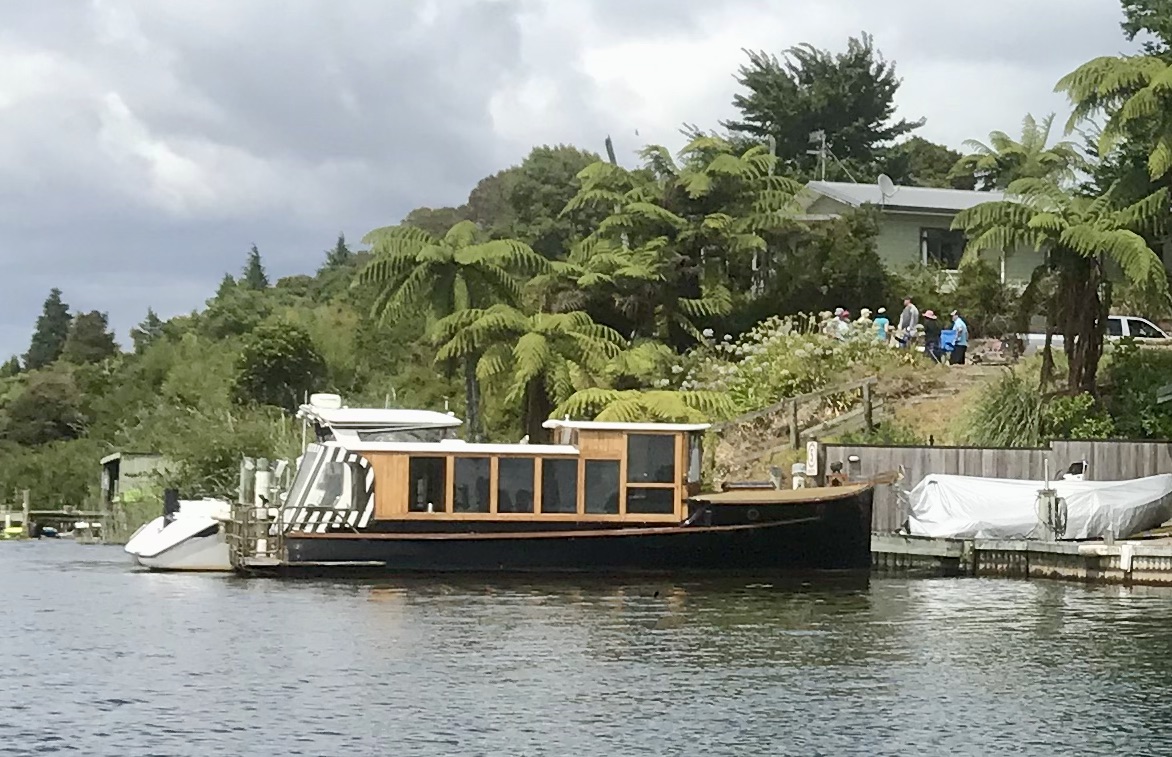
Ralph Rickett’s JULIANA, now renamed MARJORIE ROSA, now also of Lake Rotoiti, has been reallocated for her life, her original call sign ZMYP, as issued to RR in 1946. Ken told RSM of her history, as the second ever pleasure craft in Auck., to have marine RT, in 1946, & they have approved the reissue to her of her original ZMYP, to Fraser Wilson, her present owner, for her life. 

Marjorie Rosa : Juliana 2019

Marjorie Rosa : Juliana 2018

Story told by Ken Ricketts, edited by Alan H.

The Rescue of Tiarri – Ken’s Big Road Trip – 4 SALE > RIP

This slideshow requires JavaScript.

The Rescue of Tiarri – Ken’s Big Road Trip – 4 Sale

photos ex Ken Ricketts

There have been numerous stories on ww around the demise  – grounding, sinking, recovery, abandonment & discovery of Tiarri. The discovery via trademe of her on a farm in a very sorry state sparked an SOS shout out on ww for an angel to wave their wand & find a good bastard out there prepared to take the rebuild project on. Well it worked & Garth Broadhead stepped up to the mark – today’s post records the start of the journey. There will be more & you’ll see it here 🙂

 26/01/2015 – A water blasting cleans her up & uncovers a few ‘blemishes’

UPDATE 03-09-2016

ww has had advice that is 4sale ‘as-is-where-is’ – all offers will be seriously considered.
Enquiries should be directed to the Marina Manager   enquiries@mahurangimarinas.co.nz

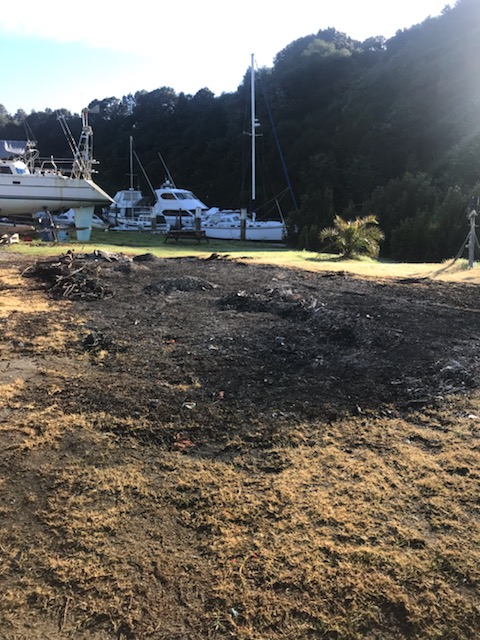
11-05-2019 UPDATE – Sadly Tiarri’s final ‘voyage’ was as a fire brigade training drill and the black scorched earth is all that remains 🙂 (photo ex Russell Ward)

IMG_1219

13-05-2019 Input and photos* / video* from Ken Ricketts –  Sadly in the end no one stepped forward to save Tiarri so the hard stand owners gifted her to the Warkworth Volunteer Fire Service for use as a fire fighting exercise.
I would just like to say a  huge thank you to you Alan and all the other woodys, who have written of her, inspected her, & tried to help to save her, in the various ways we all have, & put her back together, albeit in vain in the end. 
We all tried, & we could do no more than that, but to you Alan, most of all, if you had not published her plight, we would never even have been able to try. Thank you very much, I will be forever grateful. Ken R
(*Images & video, courtesy of the Warkworth Volunteer Fire Service)

Tiarri SOS


SOS

I sent waitematawoodys stalwart Ken Ricketts today a rather disturbing email with a link to a trademe listing. You may recall that several months ago I posted the story of one of the loves of Kens life, the MV Tiarri, the launch that Ken had built & later sold. Subsequently Tiarri dragged her anchor one new years eve & was washed ashore – the full story of Tiarri can be viewed by typing Tiarri into the search box on the top R.H. corner of this page. Ken has an SOS plea – read below. AH

Is there a boat restoration magician out there anywhere – looking for a big project?

The two photos above show Tiarri waiting to be launched on her launching day, brand new & as she I sighted her this afternoon on tradme, they tell the story of my most wonderful, beautiful pride & joy. There were tears this afternoon when I saw the trademe posting.

At 77, sadly, the time has passed, for me to be able to become involved & save Tiarri myself.

There must be someone who can love TIARRI as I have & will nurture her back to her former glory.

If I can help with any info or whatever, please email me direct at

kenpat@ihug.co.nz


The story of the creation & demise of the launch Tiarri

The story of the creation & demise of the launch Tiarri

photo & words by Ken Ricketts. Edited by Alan H

Apologies for the reproduction of the photos but they are over 30 years old & when taken were most likely back then, just quick snaps. Also please excuse the length of this post, but if you knew Ken you would be amazed how short it is – good editing 🙂 AH

The idea of the “conception” of Tiarri (pronounced Tie-are-i {as in ink}, came to me one Saturday in September 1974, with a chance invitation on to ‘Eros’ (later known as Lady Kiwi) whilst we were at North Harbour Ponui Island, for the weekend, in my 31’ 1953 R Lidgard launch Flying Scud.

My ex partner & I enjoyed a delightful afternoon with the original owners of Eros, Mr. & Mrs. Alf Broadhead, on their lovely 2 year old 40 ft Vindex, built for them by Orams of Whangarei, in fibreglassed kauri & powered by 2 x 165 hp Perkins V8 diesels. She was the first 40 ft Vindex ever built.

During the afternoon, the feel of Eros grew on me & right then I took the decision that one day in the not too distant future I would also have a 40 ft Vindex built. Thus the planning had begun.

During the next 2 years I acquired a set of plans from Jim Young, called tenders & eventually gave the job to a boat builder named Neeley from Howick. She was also to be built of fibreglassed tannelised kauri, with varnished sappelle mahogany combings & interior, with white formica cabin tops, above laminated mahogany beams, glued to 2 layers of pre-stressed & glued marine kauri plywood cabin tops.

I also believe, that almost all things, can be improved with knowledge, thought, planning & experience & I was of the view, that Jim Young’s Vindex design, was one of the ultimate designs of the day, however, he specified a beam of 13ft for a 40 ft boat, which was the spec that Eros was built to, whilst I was of the view, having had over 35 years of boating experience myself, at that time, along with my late father, Ralph Ricketts, who was the son of a pioneer boatbuilding family in Nelson, who had had a whole lifetime of experience before me, (about 65 years), that the beam should be 14 ft 6 inches, so that was her spec.

We increased the extra beam after the 4th frame, to retain the original lovely fine Vindex entry in to the water, which is what allowed the Vindexs to be so dainty & slice through the water so gracefully & comfortably, She never ever came down hard on a wave even at full speed. She also cruised 4 knots faster then Eros, with the same engines & same construction methods, so I like to think we must have done something right. Am not sure if Jim Young ever agreed with me, or even accepted that she was indeed a real Vindex, (professionals can sometimes have difficulty in accepting that occasionally amateurs can sometimes, tweak things, a little, to make them even a little better & since we achieved an extra 4 knots, in the same base boat & engines, I like to think we made a difference. The interior roominess was increased enormously, as well. We could have a sit down dinner for 16 & 4 couples dancing at the same time in the main cabin. She slept 10 very comfortably, to allow for the children that were in the family at that time & their friends, (they were all teenagers).

Building started in November 1976, in an unused hay shed on a Whitford farm, where Neeley built her, to the point of a rough unfinished hull. Little did I know what I was letting myself in for, when this all started. I found I had paid for nearly ¾’s of a boat & had less than 1/4 of it finished.

Unfortunately she had to be moved out of the hay shed, as the farmer only made it available to the builder for a set time & for about the next 7 months she sat out in the weather, covered only by an old tarpaulin & seemed to me to be slowly becoming firewood. Mean while the builder & I went through the ordeals of the justice system with the boat being eventually made available to me, thanks to justice being done.

The next problem, was what to do with her, where to take her & could she be saved, after her time in the elements.

I think God must have had his hand on me, as by chance, I had had some business dealings with members of a family, who had relatives, (a father & son), who were not only boating enthusiasts, but also unbelievably professional people at almost all of the important aspects of building boats, to the very highest of standards. The younger one, had already, a year or 2 earlier, built himself a very similar to Tiarri, 40 ft Vindex style boat, powered by 2 x Cummins V8 diesels & done a wonderful job. He also worked on many other boats on their family property at Whangateau, (by Leigh), where they still live. Their names are the late Rex Collings Snr. & Rex Collings Jnr., who still lives there.

These 2 very wonderful people, took me & my hulk under their wing, as it were, & allowed me to put her in a lean to, which had been built on to the side of their boat building shed, Rex Jnr. is a brilliant boat builder, refrigeration engineer, marine engineer, fitter & turner, electronics expert, welder, & a master of almost all trades associated with boats & boating. And like my precision engineer father, Ralph Ricketts, a perfectionist in all he did, who also had most of the skills of Rex C Jnr., & they did, & thoroughly enjoyed, it seemed to me, doing much work together, on all engineering aspects of Tiarri, in Rex’s beautifully equipped engineering workshop on his property.

After arriving at Whangateau, the first undertaking was initially doing fairly extensive surface cracking repairs to the skins of the hull timber, which all had to be glued & repaired, a laborious slow painstaking process, to get the perfection of the hull surface they achieved, in repairing weather damage.

Then they embarked on to making & fitting her full keel (deadwood) of laminated beautiful totara, the very best timber, I have always believed, for deadwoods on launches, both keel & timber type were something I insisted on. I did not want to risk her sitting on her propellers if she went aground, also it naturally also helped to make her easy to steer. She was a joy to steer & control & increased in stability in  big seas.

Then next, came fitting of her engine beds, at which time, her engines arrived from my parents basement garage workshop, where they had been stored for a couple of years. They were lifted in with a Hiab crane.

At this point, the bulkheads were also fitted, along with & the forward & side decks, all the underwater gear, vee struts for the propeller shafts, rudders & rudder glands & stocks, steering system, propeller shafts, shaft logs,  & skin fittings (where the shafts leave the boat under water & intermediate shaft bearings to avoid any possibility of whipping & vibration). All precision engineered in 316grade stainless steel & fitted by the 2 fantastic artisans, Rex C., & my dad.

At this point, they were unable to take Tiarri any further, because of the height restriction of the shed roof, so we then had to wait 2 or 3 months until Barry Jones artisan boat builder of Matakana, our third member of her team of ‘boatbuilding surgeons’ could fit her in to his big, full height shed.

She was approximately 6 months in Barry J’s shed, where she had her combings & cabin tops built, furniture built in, flying bridge fitted, engine installation completed, wiring installed, exhaust system installed, 12 c. ft. deep freeze & Kelvinator household refrigerator, Coroma brand, domestic toilet & all those other things that go to make up a beautiful boat, right to the last things, like Sanderson linen squabs, mid green body carpet throughout, — she was themed in green e.g curtains, crockery, cutlery & so on..

In her early days in Barry J’s shed, we filled the gearboxes with red gearbox oil & accidentally spilled a tiny quantity into the bilge.

A few days later, Barry summoned me to Warkworth, to view an “important discovery.”

To my horror, as I looked at a point under the boat, indicated by Barry, I saw on the, at that stage, unpainted keel, a large red stain, gearbox oil. I could not believe what I was seeing. We discovered that the 1st builder had tried to short circuit the construction process & I presume cost & had only applied the glue that held her together to one skin of her 2 skin kauri hull. The glue must be applied to both skins of the hull, as, with a sandwich, one puts butter on both slices of bread, & there were large areas of delamination where the glue had not adhered to the other skin, thus making the boat a potential deathtrap.

I was destroyed at this point & once again thought this can’t be happening, after all we have already been through & I saw my boating world once again collapsing around me.

However none of us were experts to advise on a problem of this nature, so I instructed the person I believed to be the leading & one of the most experienced & knowledgeable boat surveyors in NZ, to do a full survey of Tiarri. Harry Pope spent many hours tapping, looking, taking sample plugs of the hull. His decision & report said that, if all the paint were removed from the hull (it was fully painted & a terrible long & dusty job to remove) to expose the existing bronze skin fastenings, holding the skins to the stringers which were used to hold the skins together, whilst the glue dried & then refastening the hull with 2” x No. 16 gauge silicon bronze screws, that would make the boat far stronger & give it much greater structural integrity, than any hull which was held together by just properly applied glue.

You can imagine how relieved & overjoyed I was to have this news.

The final blight on the building process was the introduction by Robert Muldoon, of his boat & caravan tax of 20% on the cost of all un-launched brand new vessels, as at the 17th of May 1979.

By this point along the journey Tiarri’s cost had risen by probably several hundred percent on original projections & budgeted funding.

Well to carry on, I was particularly upset, because Tiarri had reached the stage where the engine installation was totally finished, the hull & combings were complete outside, the steering system was completed, & she could have been put in the water, taken for a short run, & then taken out & completed, without tax, as she would have been used, if only I could have known the day before, what was going to happen.

I had a number of very amicable & constructive meetings, with the departmental officer in charge of boat taxing, a Mr. Ken Shirley, who was particularly sympathetic & as helpful as the law allowed & in the end we had to pay sales tax only on work done after the 17th May & not the whole project, which saved what could have been a very large sum of un-budgeted money, to find at that time.

Tiarri left on Matakana on 18th October 1979 to make the trip via State Highway 1, over the Harbour Bridge to Half Moon Bay, where she was launched 2 days later, after a blessing by the late Dean John Rymer, of The Holy Trinity Cathedral, Auckland.

And now, as you all know, Tiarri entered the world, to become a beautiful & loved, graceful lady & join the other beautiful ladies of the sea, that grace our shores, in our paradise we call the Hauraki Gulf. She remained part of our family, until I was forced to sell her, when life took me overseas to live a good number of years later.

Sadly, Tiarri’s final chapter was written, when she became she first shipwreck of the millennium at 3am on New Years morning 2000 when subsequent owners left Tiarri unattended, off Opape Beach, East Cape, for the night, whilst they went ashore to celebrate the arrival of the millennium. A northeast gale sprang up; she came ashore on Opape Beach & was severely damaged, but not wrecked. Tiarri was then unfortunately given to a ‘boat builder’ (unskilled) to rebuild, but (in my view) was destroyed by cutting the bottom out of her. This act was to be the sad end of Tiarri .

Obituary:

My late father had only one short trip in Tiarri & took the helm only once, on launching day, for a little run, just a short distance down the Tamaki River, past Bucklands Beach & back. – It was terrible weather that day, so we just stayed on the marina, at Half Moon Bay. Tragically, he passed away 3 weeks later.

I will never forget him, his love of the sea, & most of all his love for my mother, Tiarri, & me.