Pearl

PEARL
I love the above photo of Pearl, its been my screen saver on my laptop for the last 2 weeks – and thats almost a record, normally changes daily 🙂 It has got everything – pretty looking boat, family, dog and a great catch.The photo comes to us via Lew Redwood’s fb and is tagged ‘Stewart Island 1930-31’.
Anyone able to tell us more about this woody?


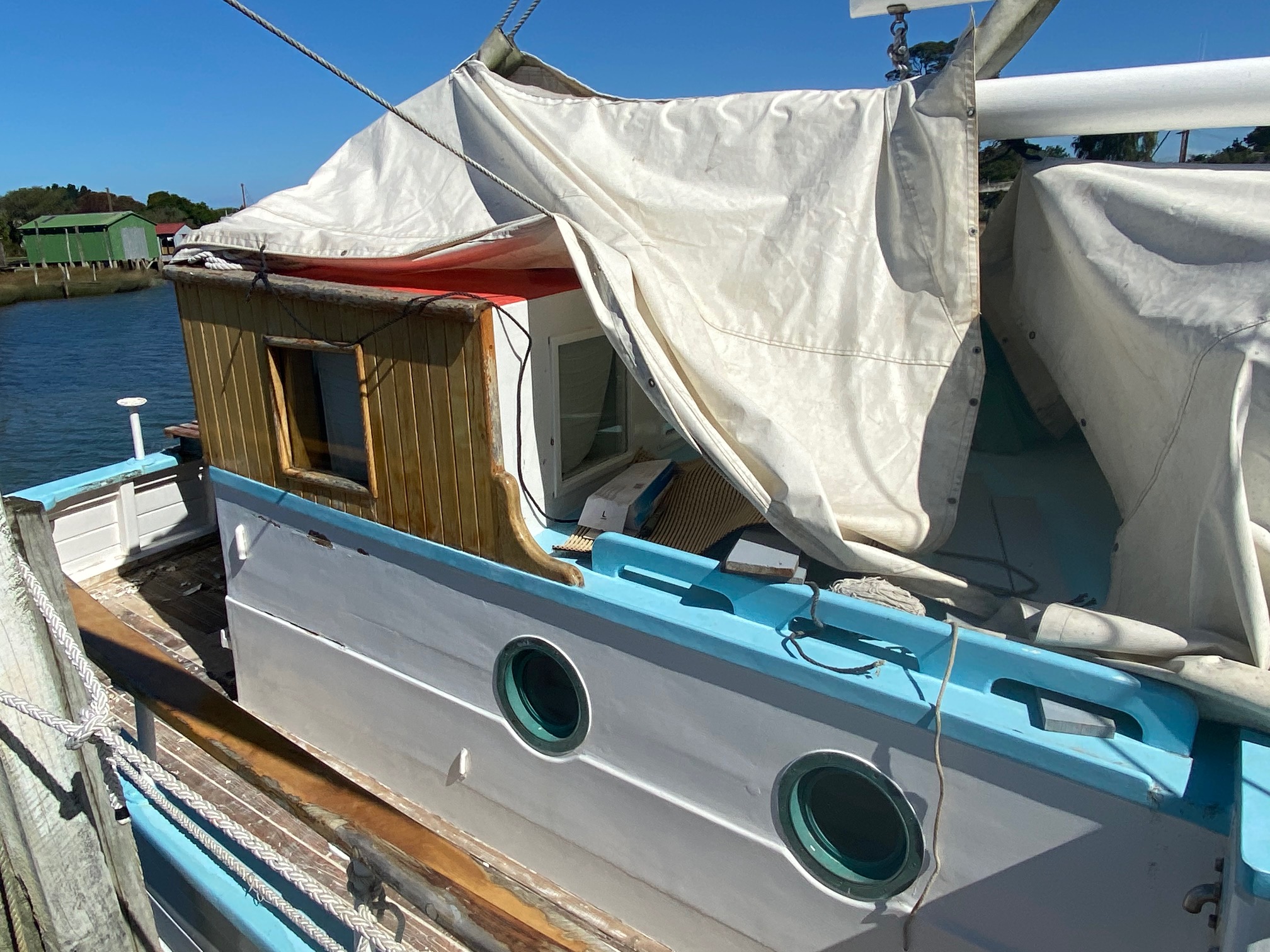
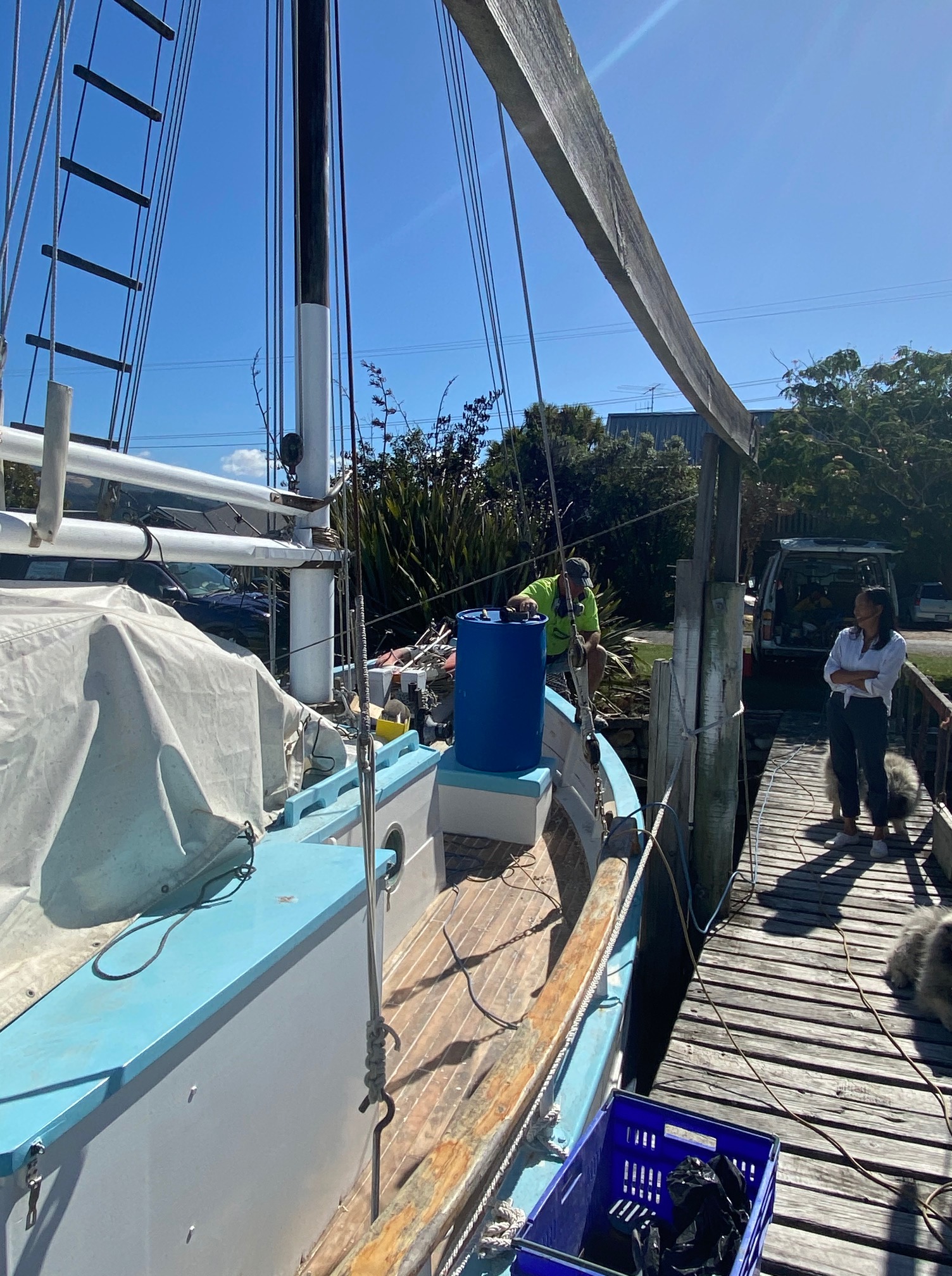
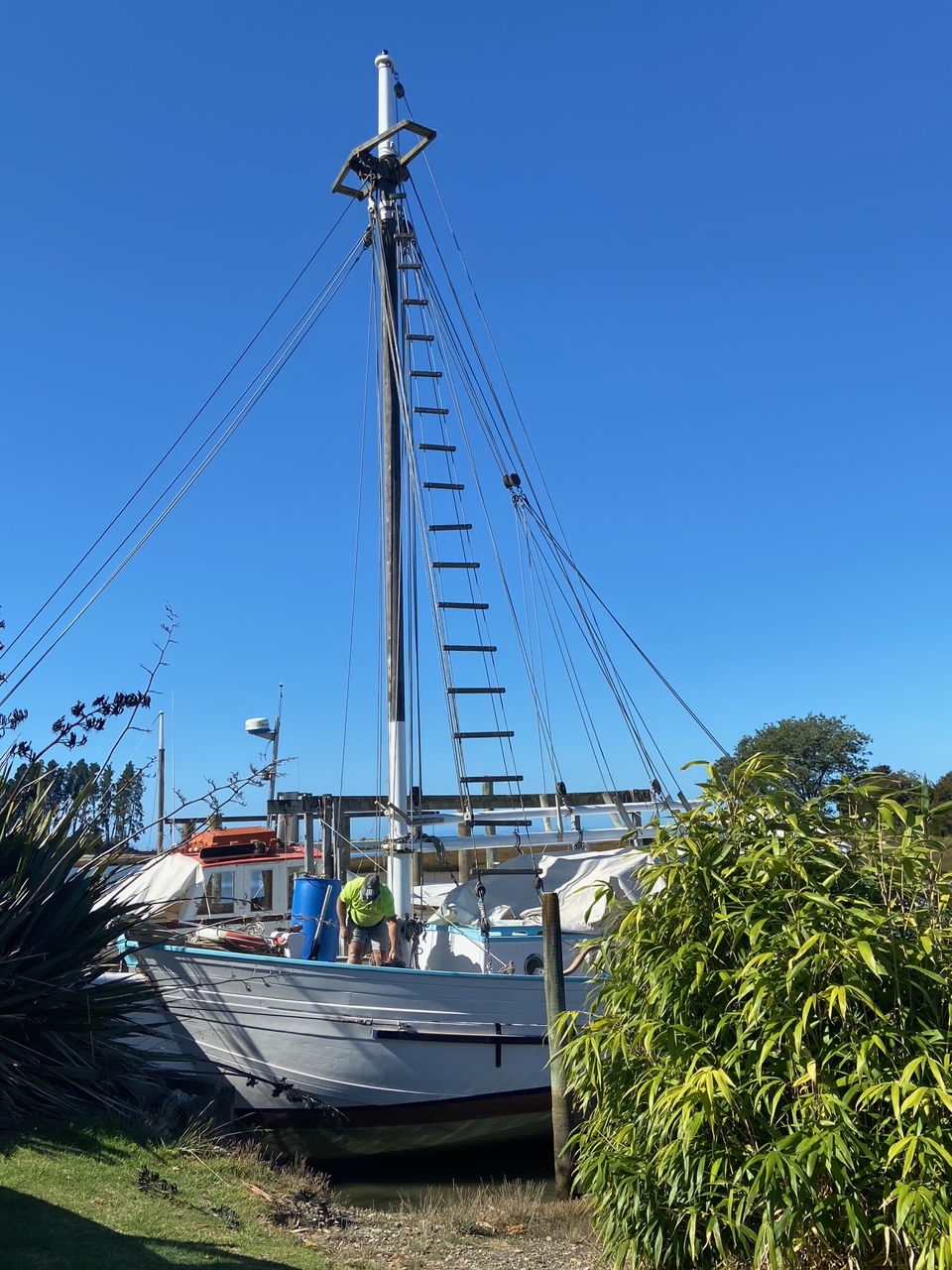
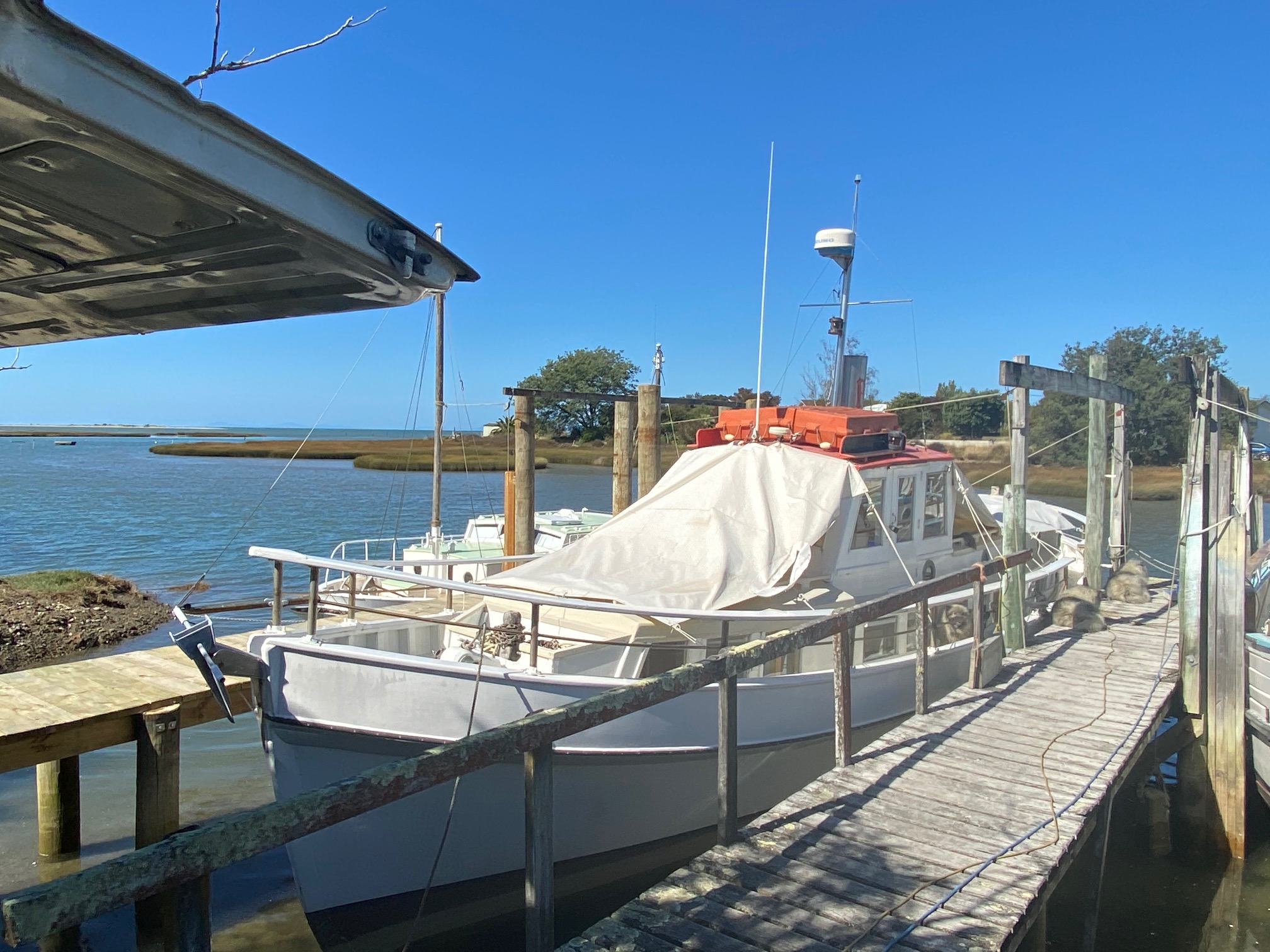
Fingers crossed for fine weather today, I have Raindance hauled out at The Slipway, Milford this week for its annual TLC, focusing on lots of little jobs. The intention this winter was a major repaint but CV-19 put paid to that, so its just lipstick and get out there and do some boating this season. 

WW Bucket Hat Winner Competition was Patrick O’Meara. As Nathan Herbert pointed out, people need to read the T&C’s 😉

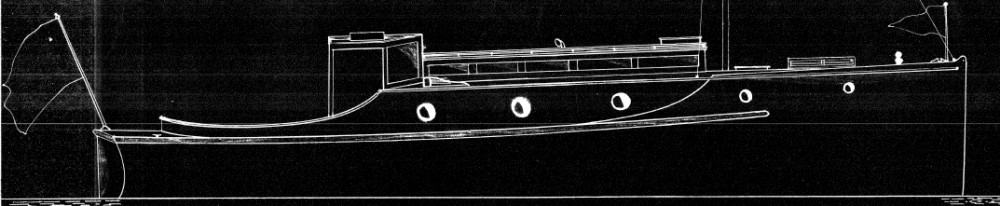
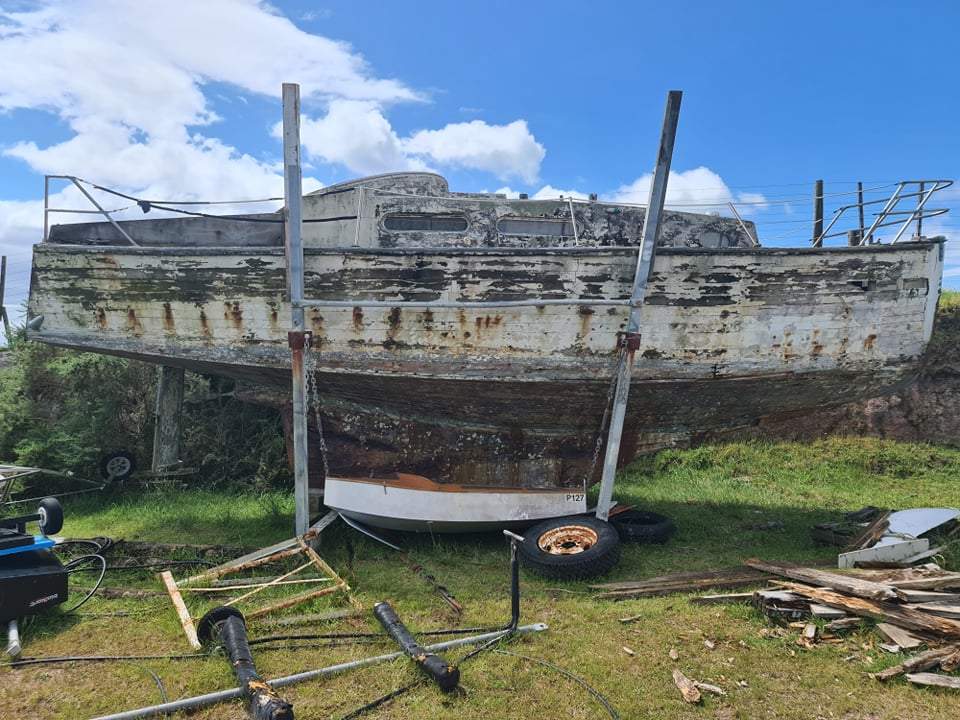
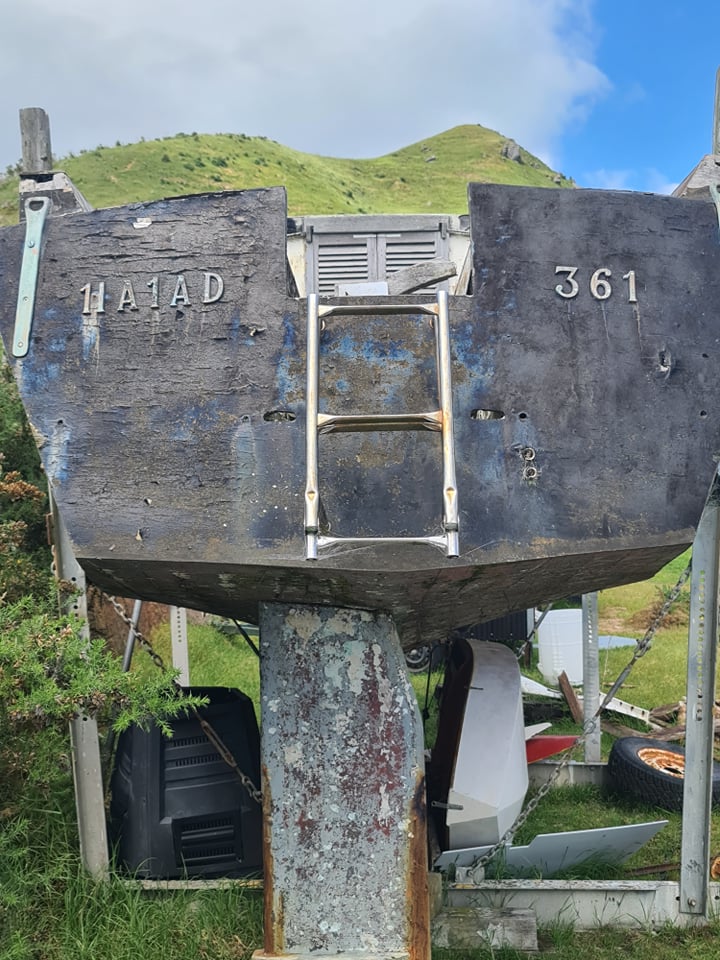
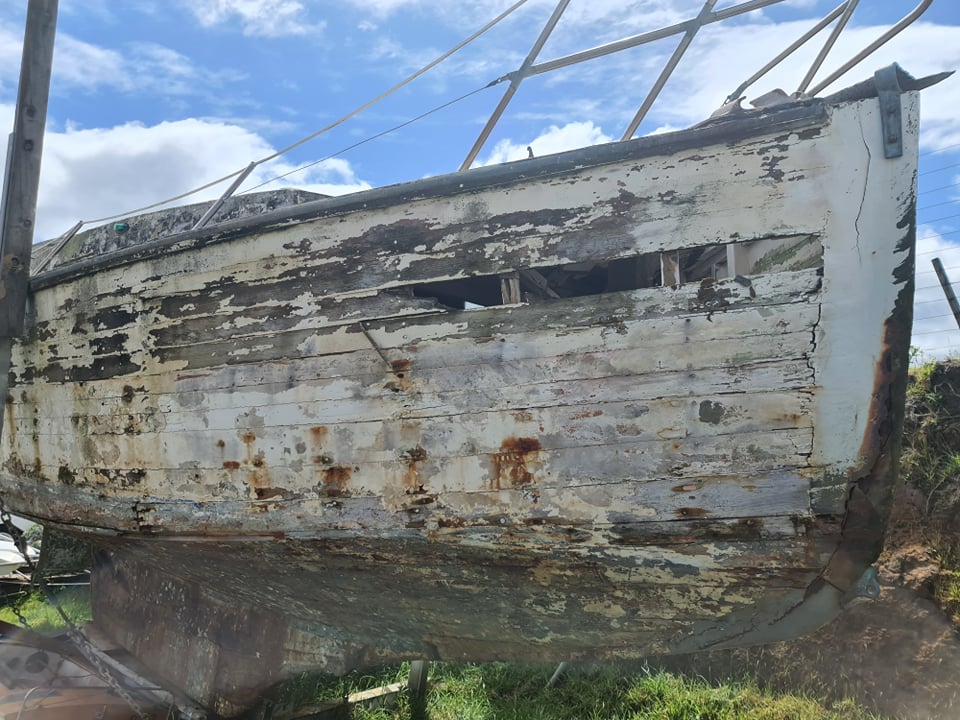
Tara-Nui

TARA-NUI
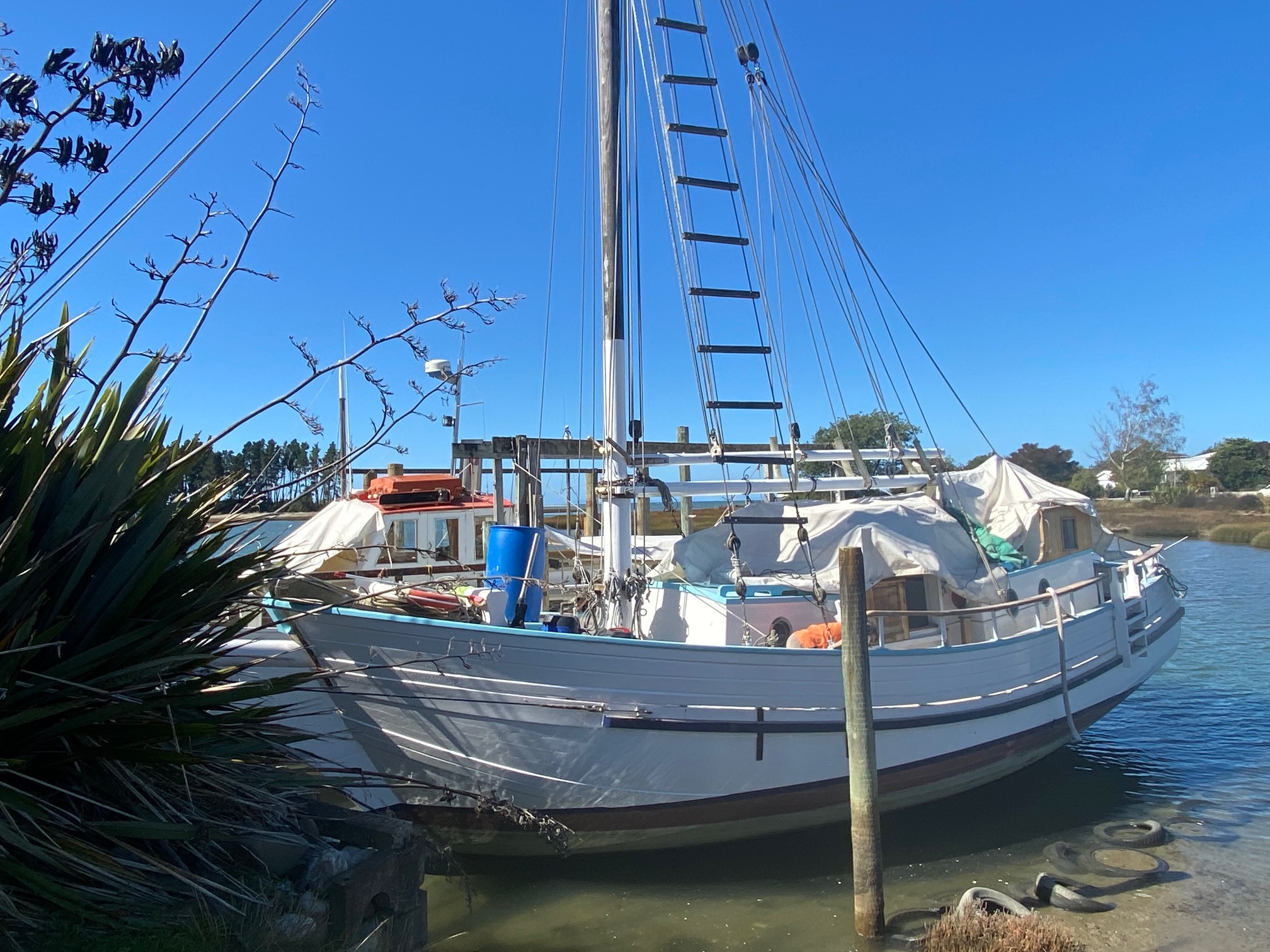
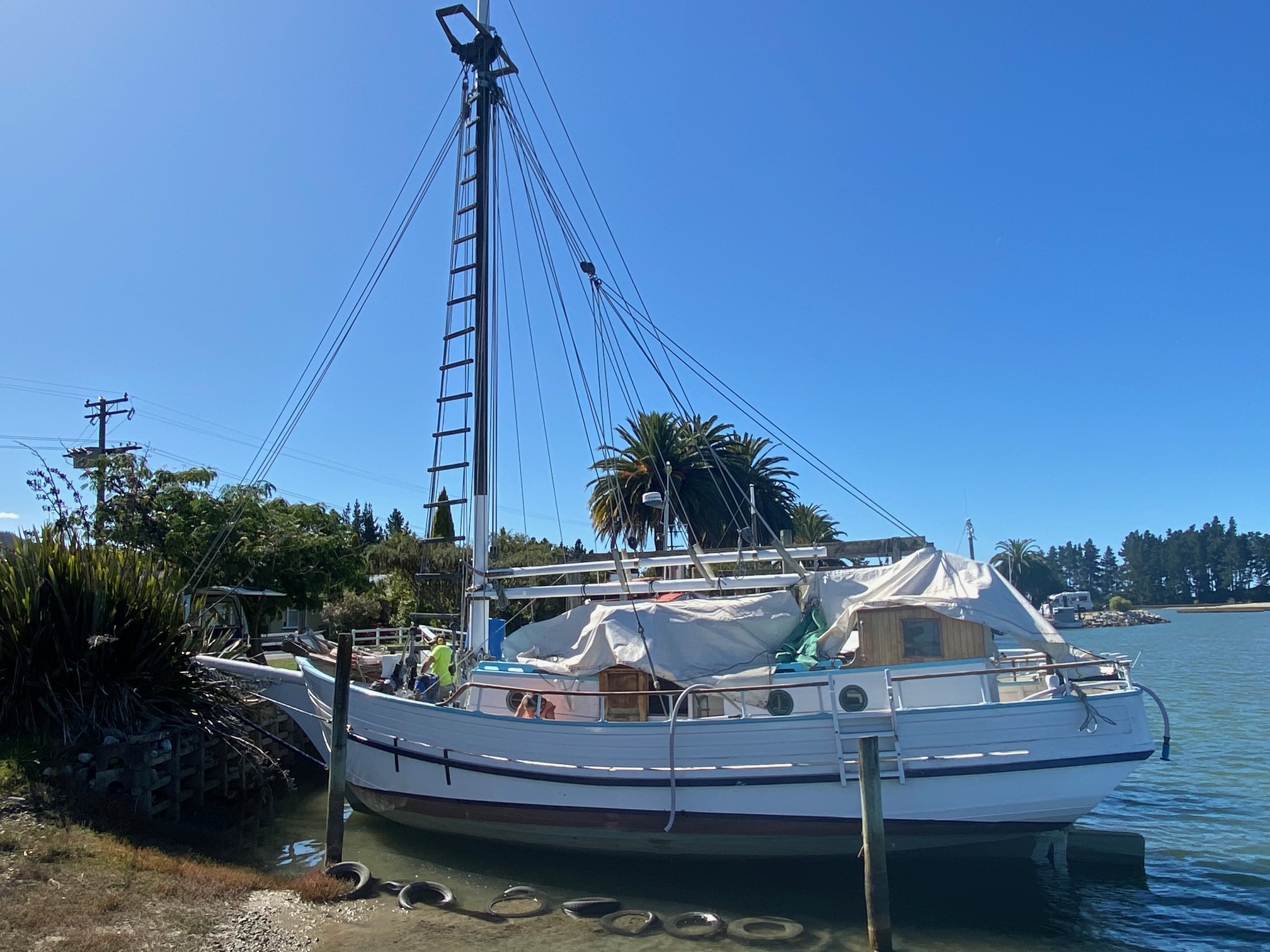
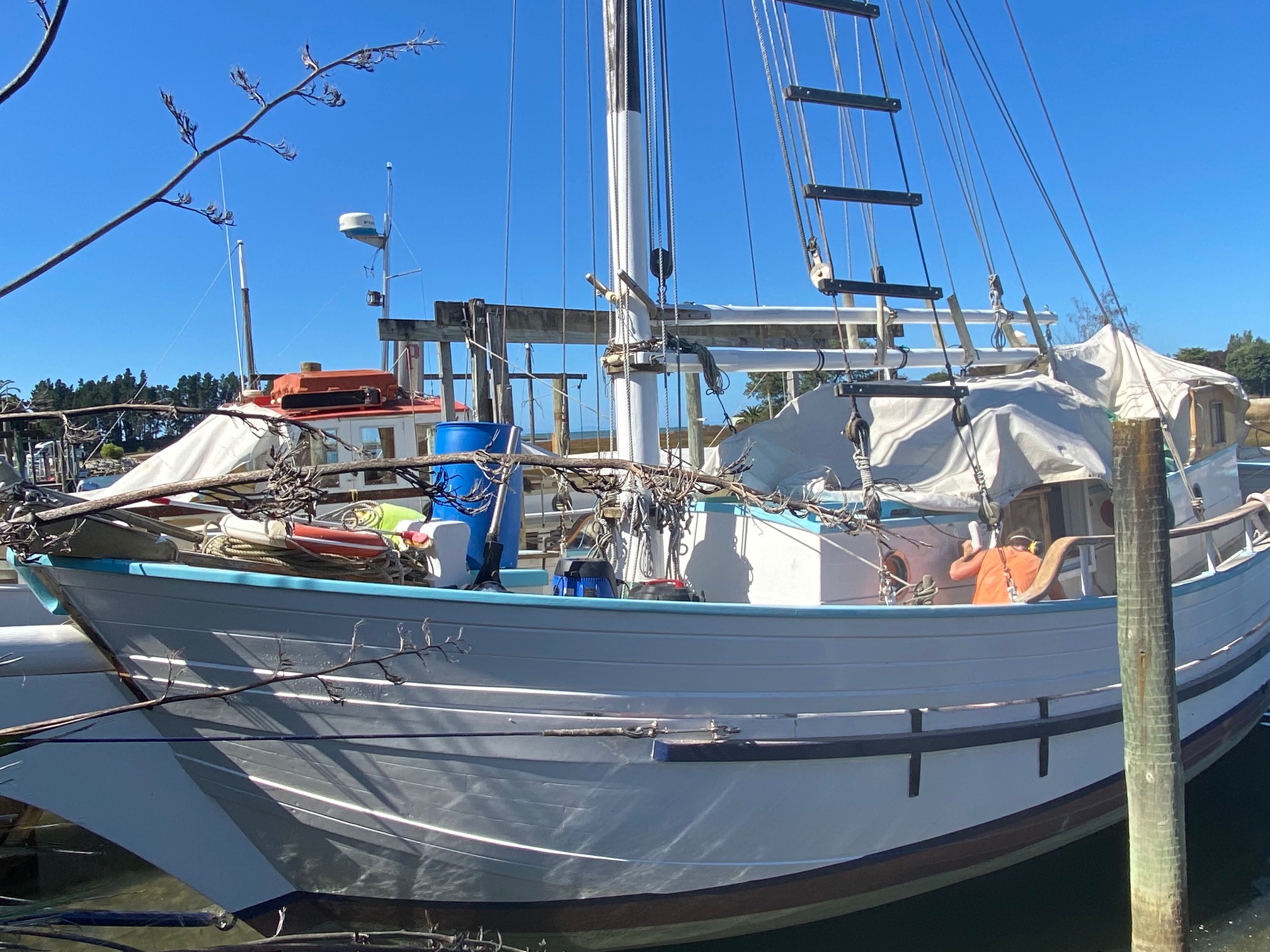
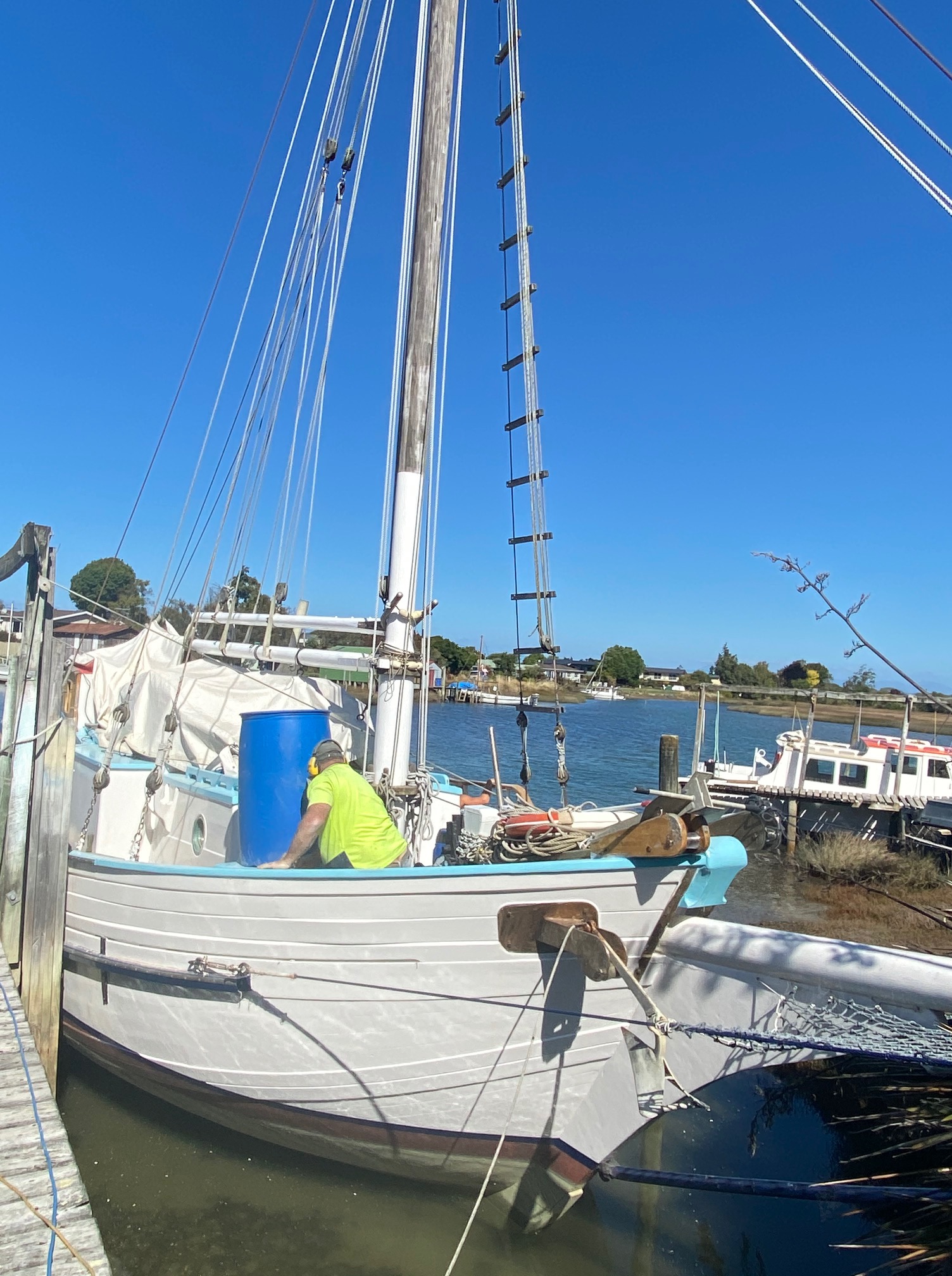
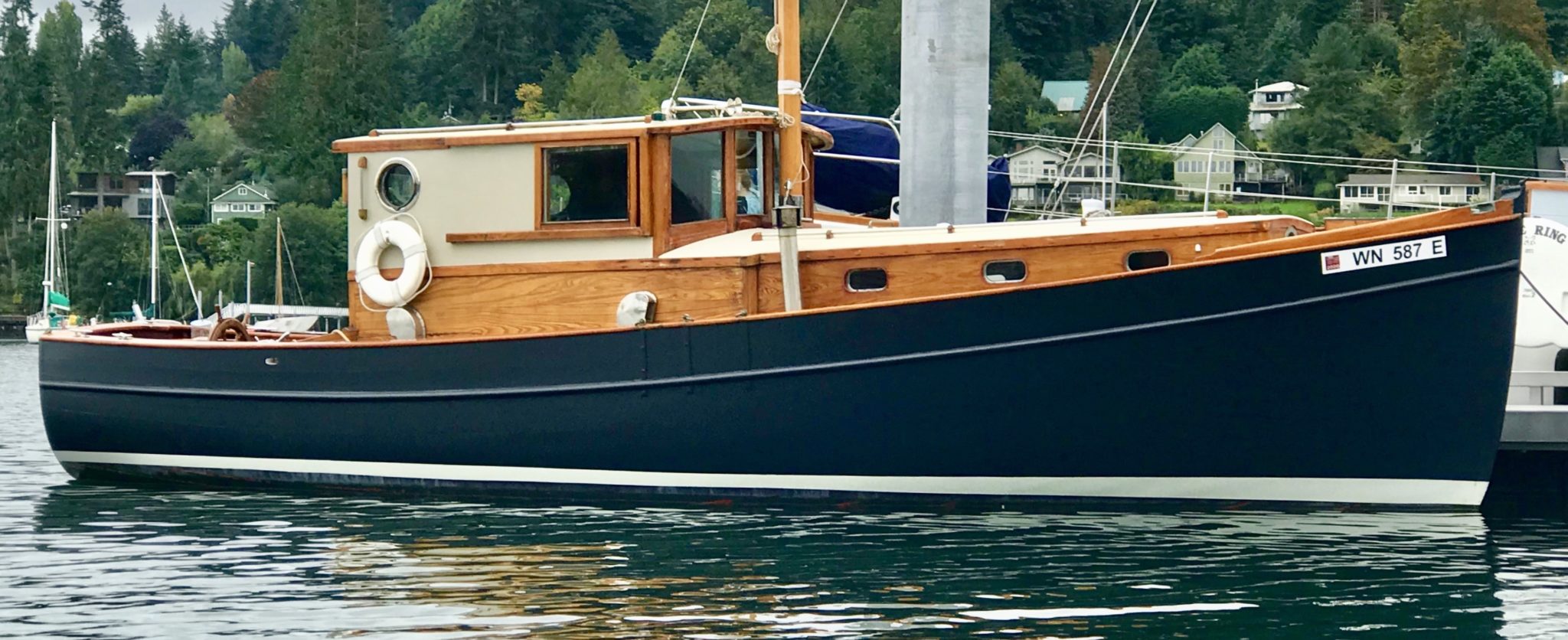
The motor-sailor Tara-Nui is a neibour of mine at Bayswater marina, owned by a friend Richard Poor. I have donated a few layers of skin sanding her in preparation for Uroxsys varnishing. Last week Dean Wright emailed in the above photos of Tara-Nui that he took back in 2010 of her in Homestead Bay, Moturua Island, Bay of Islands. 


Back in June 2015 on WW there was talk of Tara-Nui having a sister ship named Tebor. WW link here https://waitematawoodys.com/2015/06/21/tebor-sailing-sunday/At the time it was commented that the vessels were a John Gladden design. Are we able to confirm this and also can anyone tell us more about Tara-Nui’s past. Richard keeps her is top condition and is a frequent visitor to the Pacific Islands. 

RSVP waitematawoodys@gmail.com

Huia

HUIA


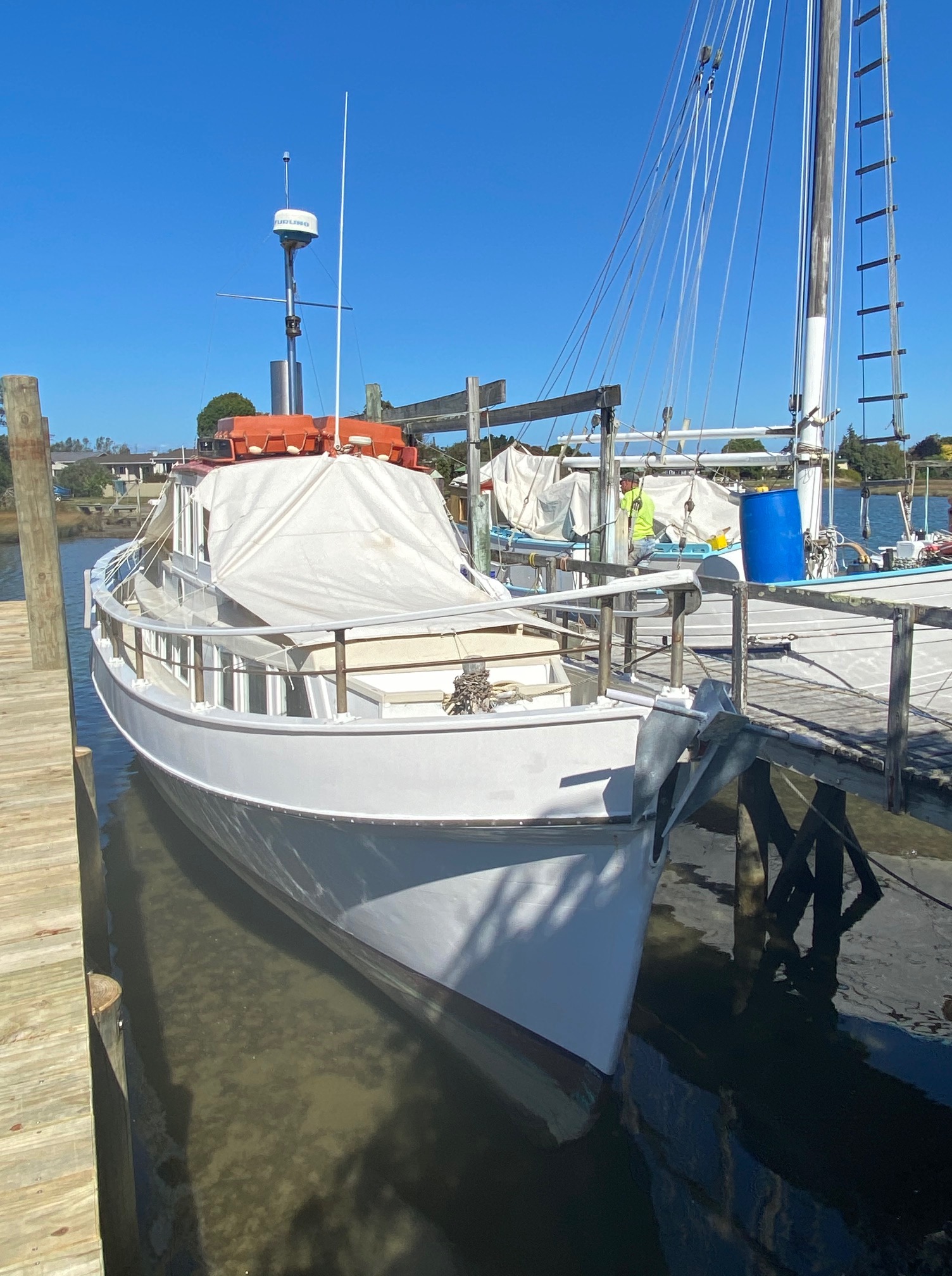
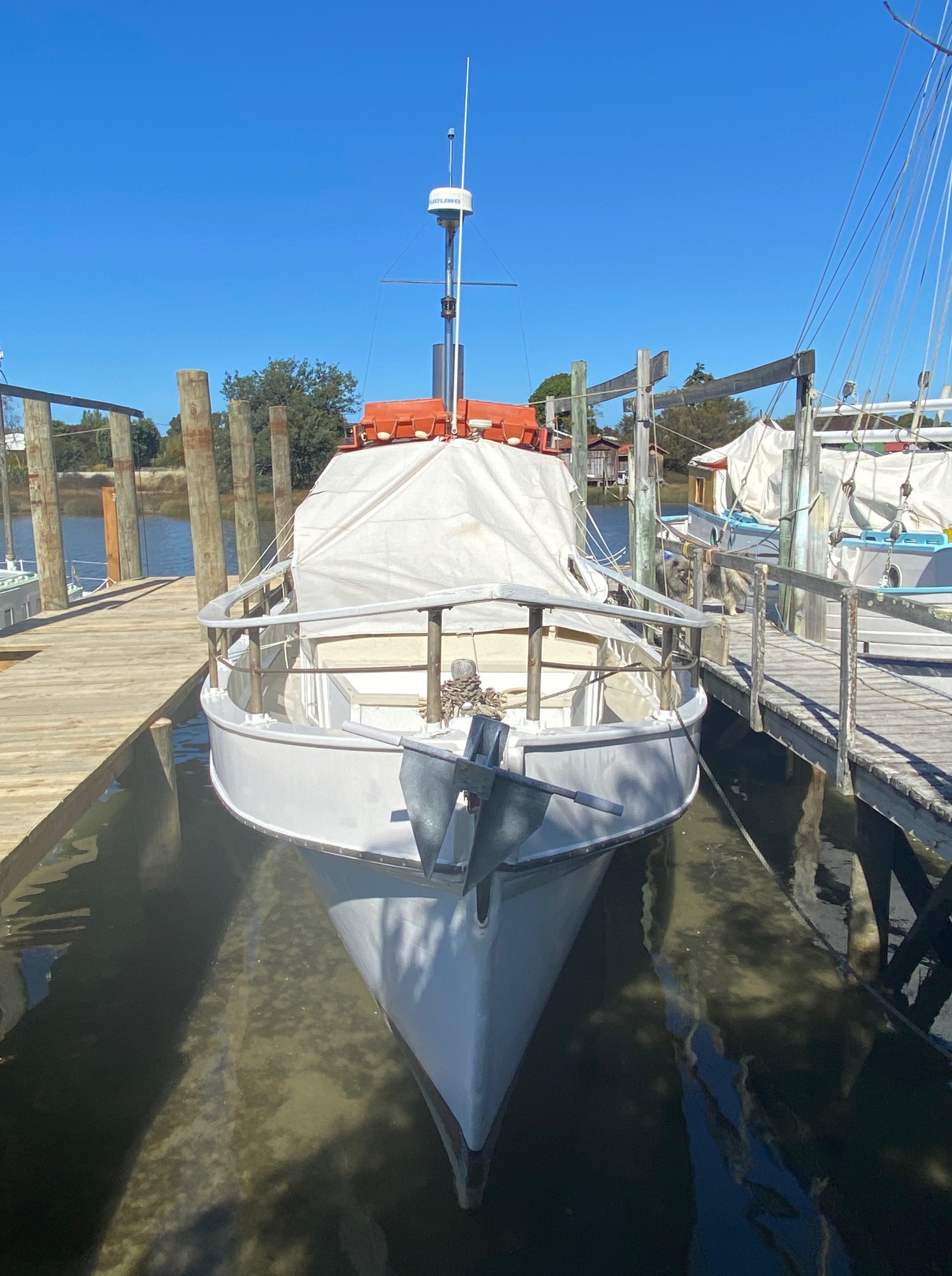
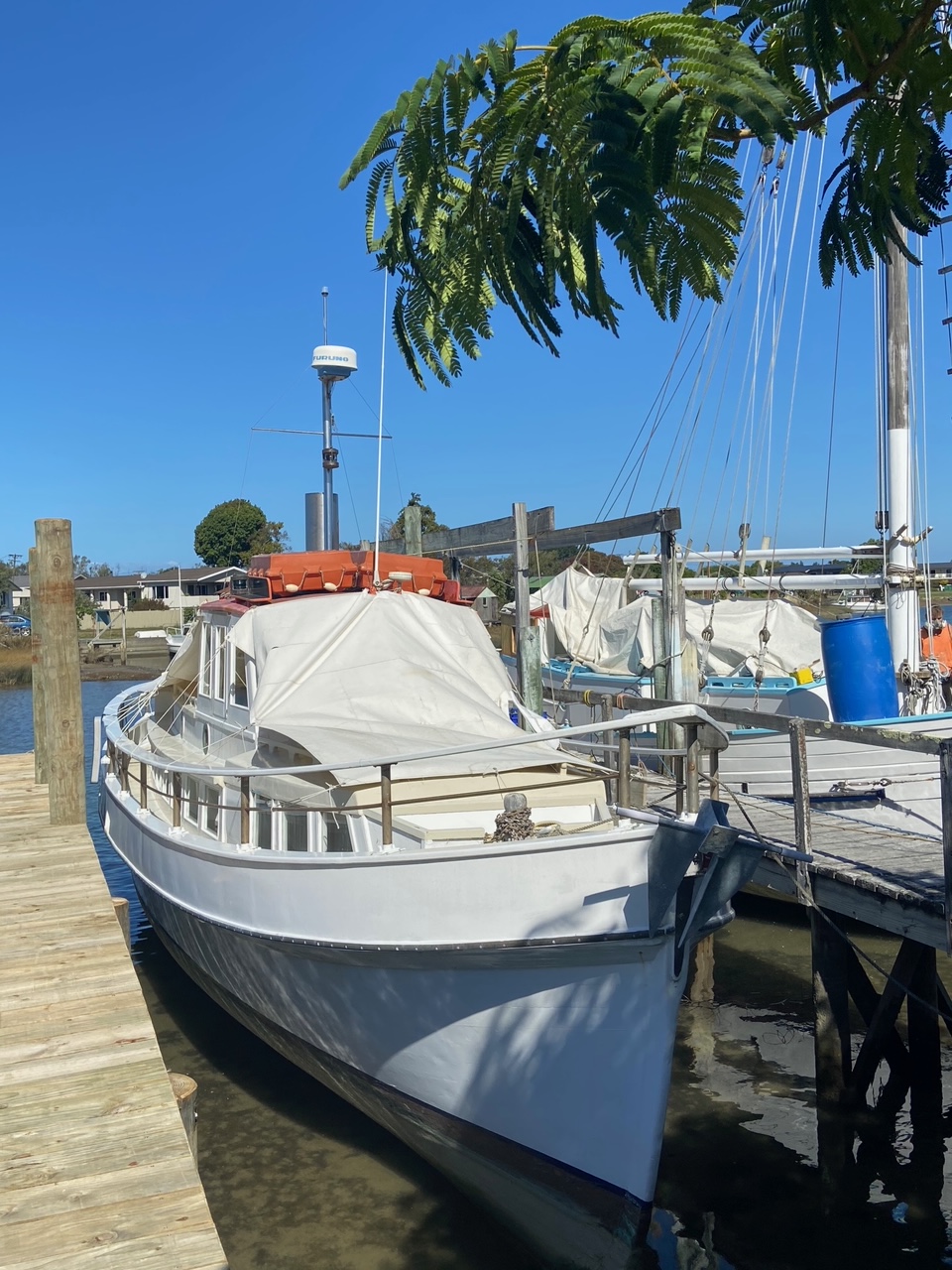
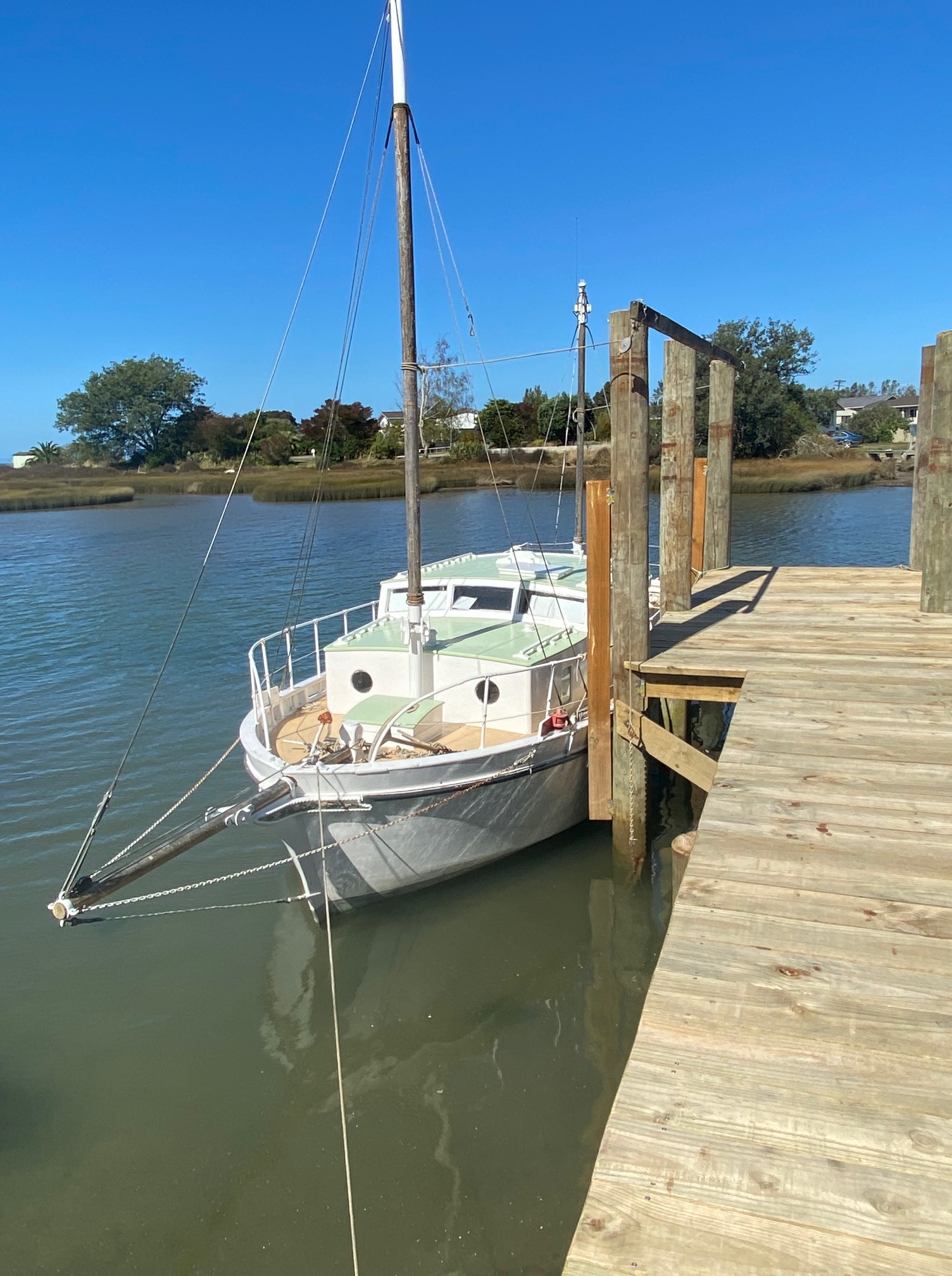
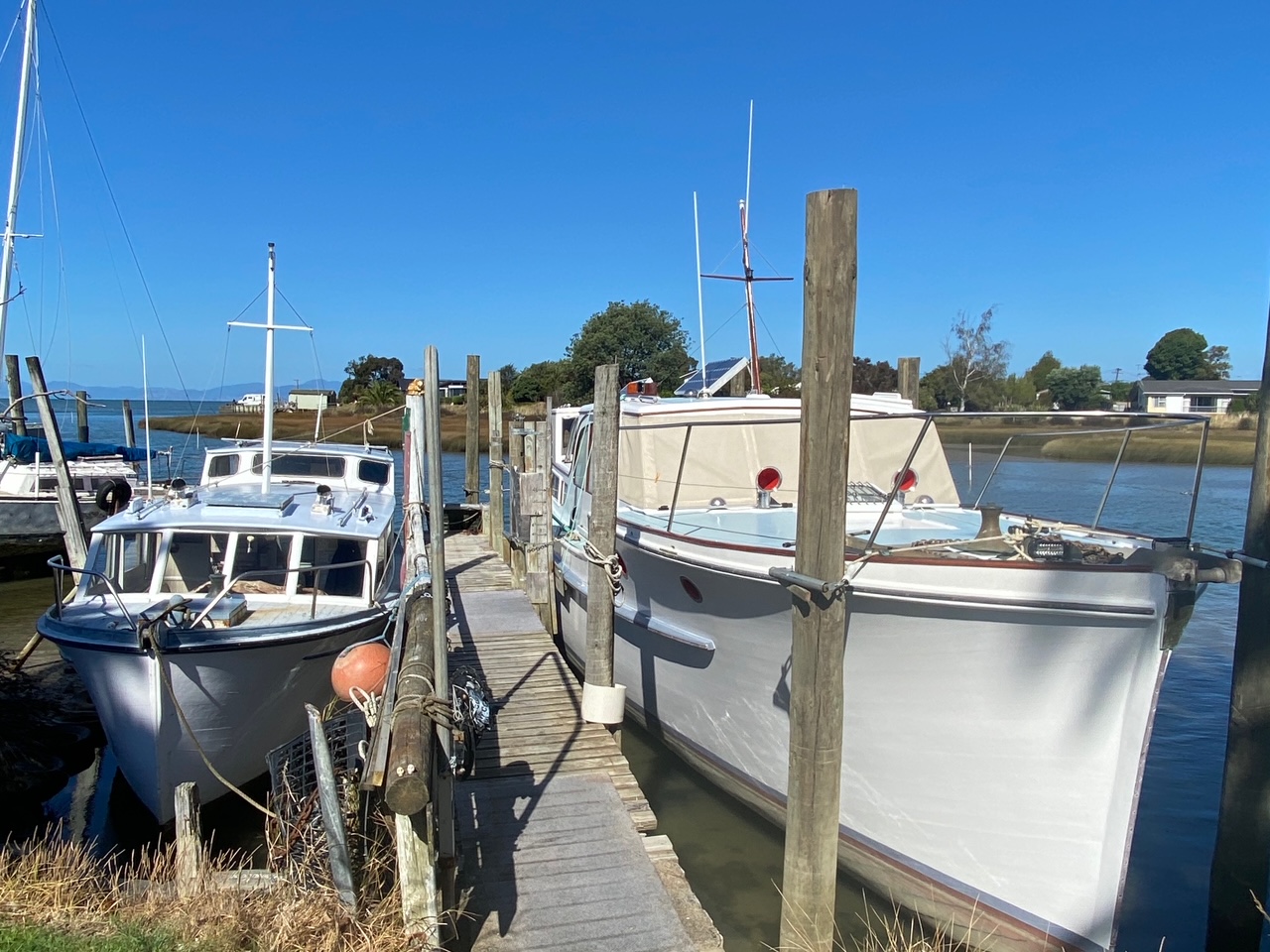
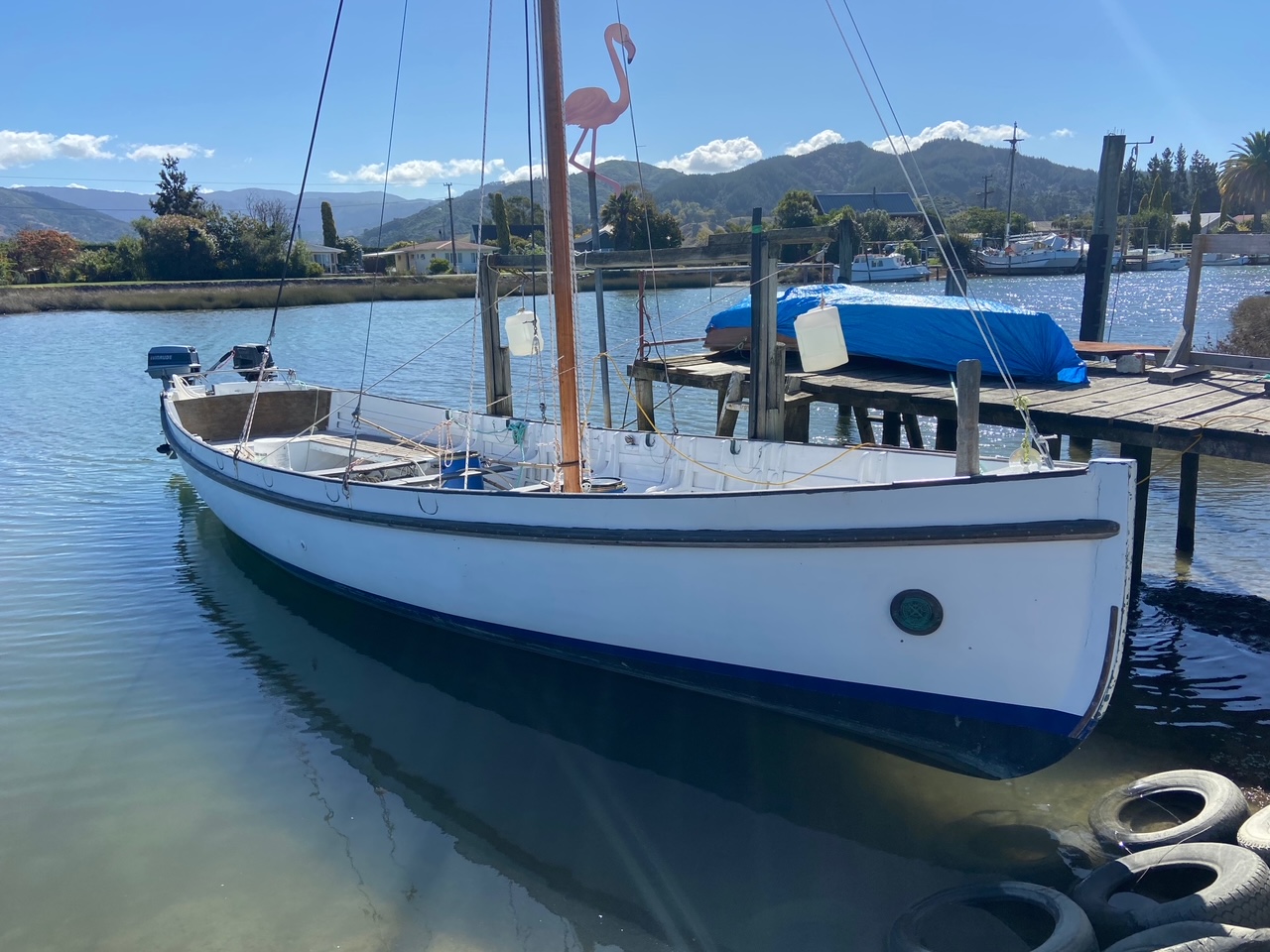
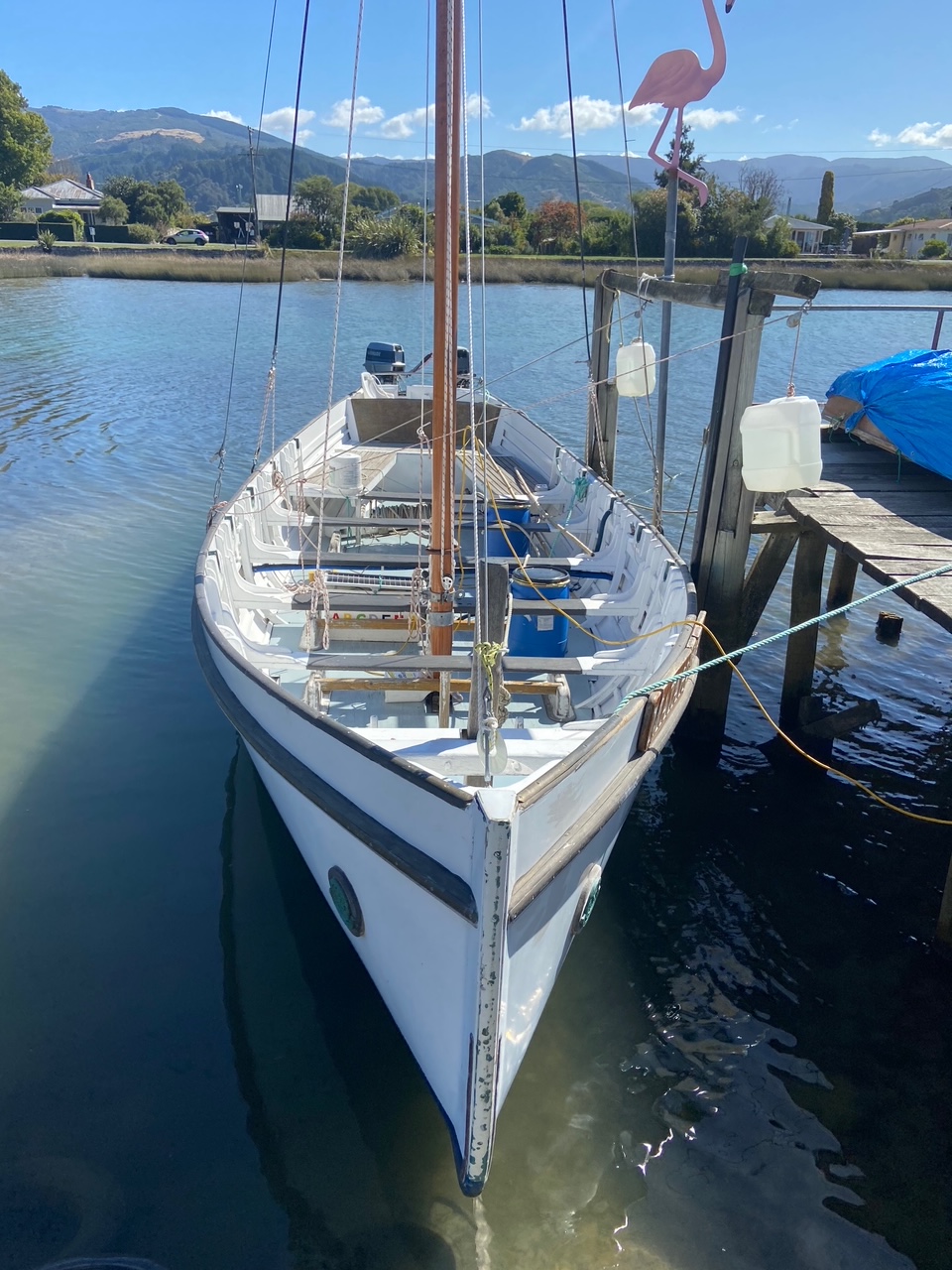
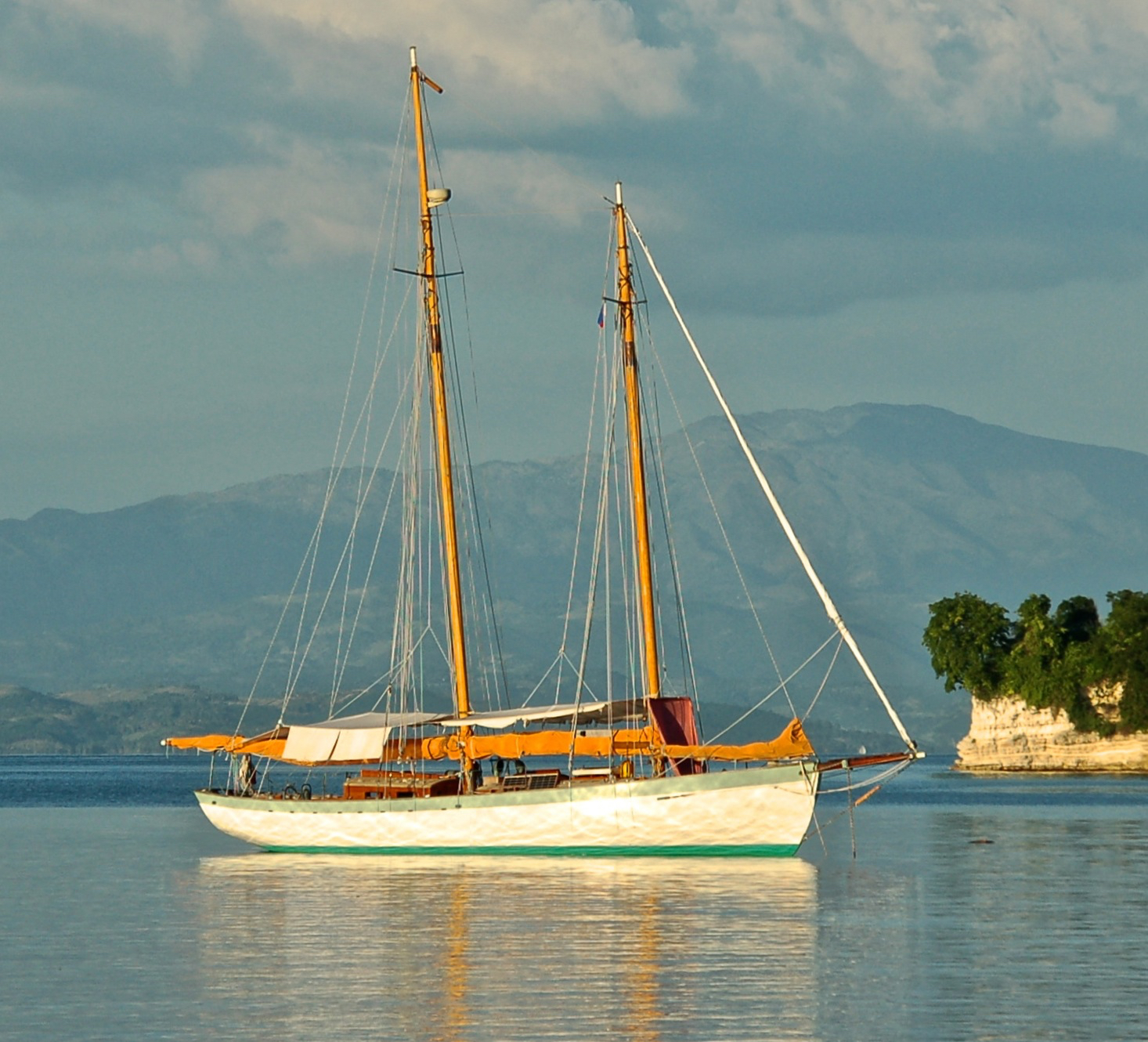
Recently WW was contacted by Simon Truebridge the current custodian (Simon’s word) of the 48’ wooden ketch-rigged motor sailer – Huia. Huia was built / launched c.1951>1953 and was the first vessel built by the founders of Gough Engineering in Invercargill. Huia is planked with Australian tallow wood and apparently Joe Gough was friendly with the workers who had worked at the Prices’s Inlet Norwegian whale boat maintenance facility on Stewart Island, hence Huia’s strong Scandinavian influence. Powered by a Gardner 6lw that is rumoured to be perhaps 25 years older than the boat, the thinking is that it started life on standby genset duty in the basement of the British Admiralty Headquarters. The rumour goes on to say that two of these engines, along with transmissions, a hydraulic windlass that sounds remarkably similar to Huia’s, & various other equipment mysteriously arrived in Invercargill soon after the end of World War II, fortuitously just as Huia was taking shape….. 

Simon believes he is her 5th keeper, the Goughs having kept her in Bluff until 1972. The boat still raises great interest whenever she returns to Bluff.

Any woodys able to tell us more about Huia’s past?


Almost Had To Excommunicated My Daughter

Currently holidaying at Lake Como in Italy, they hired a runabout for the day, now you would think the woody DNA would kick in, but nope – they hire a plastic boat 😦 She saved herself by sporting a WW shirt 🙂

The white villa in the background is George Clooney’s – I’m told that sadly he wasn’t home 🙂
RSVP waitematawoodys@gmail.com

Arethusa’s New Woody Wheelhouse

ARETHUSA’s NEW WOODY WHEELHOUSE


Back in late 2019 Arethusa’s Bay of Islands owner Dean Wright, a professional photographer by trade, and well known to WW readers gave me the heads up that the 1917, 33’ Bob Brown built, ex gaff rigged cutter, was in for a treat – a new wheelhouse. Since then I have been pestering Dean on a regular basis for photos, even threatened to drive up and take them myself 🙂 Problem was, the mans a perfectionist and didn’t want to send anything in to WW until it was all shipshape. Well woodys as you can see from the above, its very shipshape, in fact in my eyes – perfect. Well done to the team. I asked Dean to tell use about the project, so I’ll hand over to him. Remember you can enlarge the photos by clicking on them – Enjoy 🙂


“Over the years we’ve got keen on changing Arethusa’s wheelhouse to be more in keeping with her age, so at 102 she’s undergone some cosmetic surgery 🙂

We lost 8″ inches of headroom in wheelhouse when we installed the Gardner, so we’ve gone up in height 6 inches and forward 8 inches and gone for more traditional upright windows fw’d.

Boat builder John Gander did the job in his Waipiro Bay workshop. He started by taking patterns off the existing wheelhouse and fw’d cabin top. He replicated the curve of the fw’d cabin top in ply and built the new wheelhouse around that in six sections. He also laminated the new wheelhouse roof, allowing for a good eyebrow fw’d and a smaller one aft.

John learned his trade at Roger Carey’s yard in Picton in the 60’s and 70’s, where beautiful work boats with great looking wheelhouses were the order of the day. John built one of my favorite Carey designs, Hinewai for his own boat and we’ve replicated her fw’d opening half window on Arethusa. 

Once the wheelhouse was complete, we hauled Arethusa at Ashby’s in Opua and got to work with the skill-saw. In no time we’d reduced her to a convertible. We were lucky for Northland’s drought everything stayed reasonably dry and also that we got everything closed in and back in the water before Covid shut the yard down.

I’m in awe of how boat builders can build something like this away from the boat, then fit the pieces with a minimum of shaping. Fitting and gluing the six sections to the existing house went really smoothly.

The wheelhouse is built from 2″ Iroko. This is the first outside varnish we’ve had on Arethusa, we hand brushed 2 coats of Cetol as a base and six coats of Schooner Yacht Varnish.

Over lock-down, the apprentice made new interior joinery, gone are the Warehouse plastic drawers and chipboard frame 🙂 Moved the batteries under the new bench unit so we can now stand at the wheel. John laminated me up some lovely curved trim for the front of the oven unit. Our old manky plywood dash got an upgrade to kauri and the old wheel got a fright with a good scrub and a varnish.

Outside we made nav light boxes and dorade boxes.  We had to move the aluminium framed front hatch fw’d, a more traditional looking one in Iroko is on the to-do list. The liferings also got a birthday.

Here’s some before and after pics and also some that I hope will give some idea of the process. Thanks John for all your incredibly skilled design and build work, we’re really stoked with it.

We’re always keen to learn more of Arethusa’s history, especially the 1955-2000 period in the South Island. If you have any stories we’d love to hear them.”

Links to previous WW stories on Arethusa
https://waitematawoodys.com/2019/12/11/arethusa-new-wheelhouse-project/
https://waitematawoodys.com/2017/12/31/restoring-installing-a-gardner-in-arethusa-revisited/
https://waitematawoodys.com/2013/11/01/arethusa-winsome/

RSVP waitematawoodys@gmail.com

Koputai

KOPUTAI


Koputai was built in 1939 by Miller & Tunnage in Port Chalmers for use as a pilot vessel. Her specs are 56’ x 14’6” and she draws 6’5”.In the early 1990’s she returned to Miller & Tunnage to be converted to a pleasure boat. The WW link below takes you to her 2015 WW story for extensive details and photos, back then she was offered for sale.

Fast forward 5 years and I have been contacted by Keith Foster who purchased Koputai from Louey Sandiant (deceased). Keith sent in the above photos and like all of us is keen to uncover more on her past.
https://waitematawoodys.com/2015/05/03/koputai-sailing-sunday/

RSVP WAITEMATAWOODYS@GMAIL.COM

Aotea

C.1981 Far North
c.1981 Far North

AOTEA – Sailing Sunday 
The owner of the H28 Aotea, Peter Sporle, contacted WW recently seeking help uncovering information on her early history.What we know is that Aotea was built in 1954 in Mangonui Harbour, Northland, from kauri carvel planks. She has an iron keel and was originally ketch rigged.


In 1958 Aotea won the Balokovic Cup for her owner Brian O’Donaghue. Below is an article that BO’D wrote on H28’s and Aotea for the August 1962 issue of Sea Spray magazine.She was owned by Sir Keith Park. And a gentleman named Ian Miller owned for 7 years from approx. 1973>1980. Peter S bought her in Sept 1980 and still owns her – since 1990, she has been based at Tryphena, Great Barrier Island. Aotea was relaunched in October 2018 after a refit on the island.
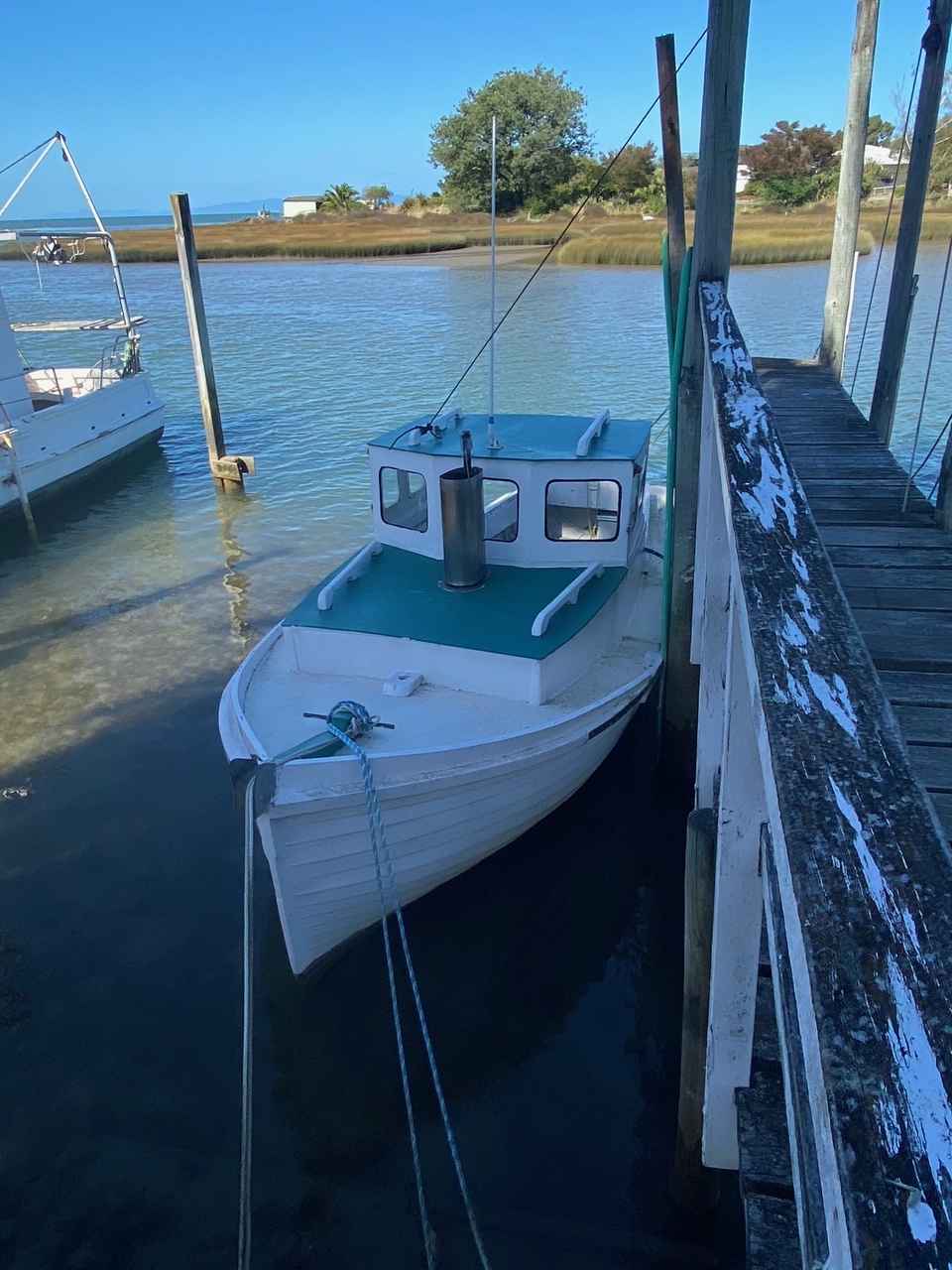
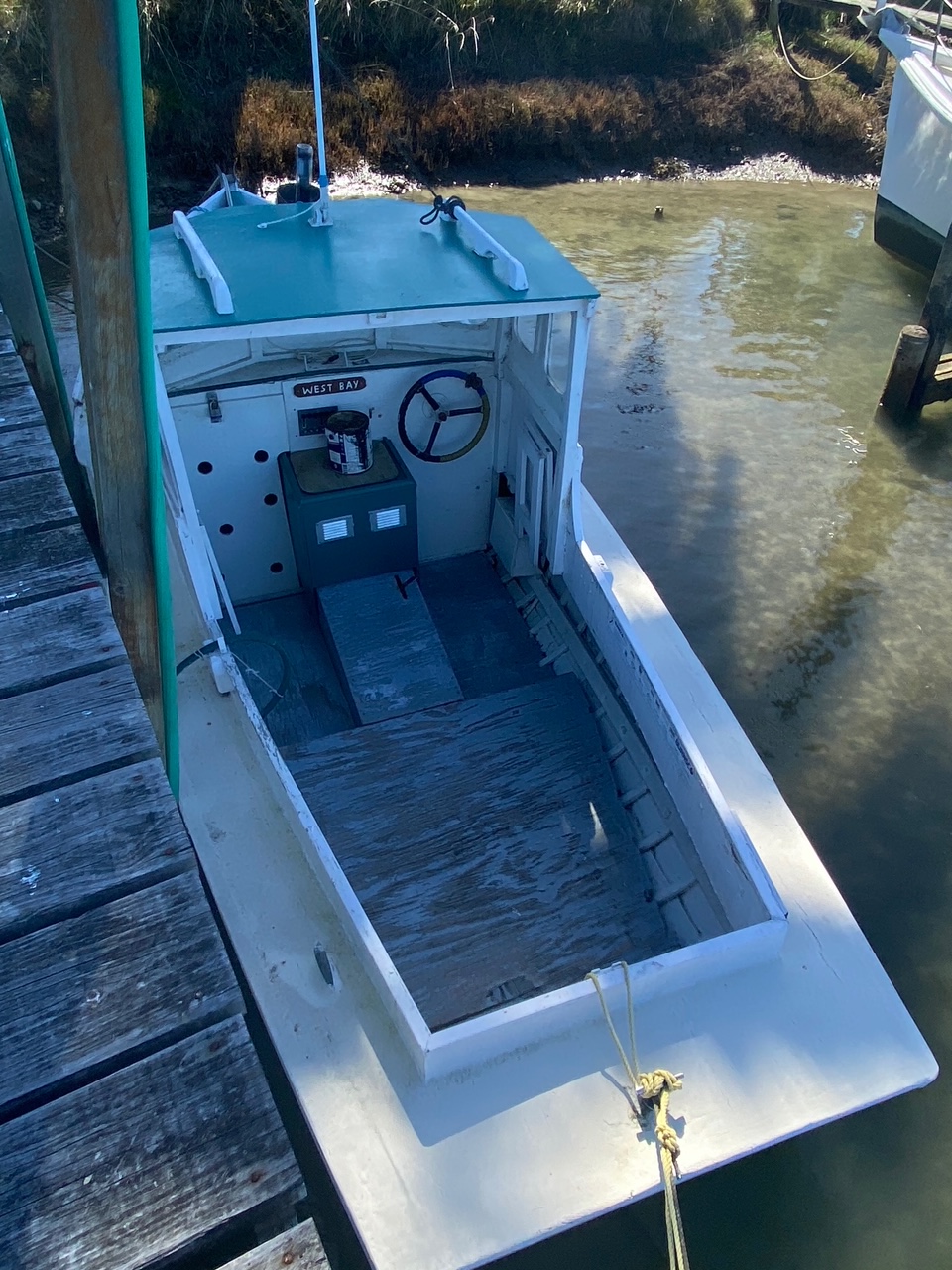
Above also is a short video of Aotea afloat, post re-launching, looking very smart.

02-09-2020 Input From Robin Elliott –

Aotea has had the following Registered owners – as far as i know:
As D-11, ketch rigged.
B.C. Watson (Mangonui) 1953+?; B. O’Donohue (Whangarei) 1954?/61; Sir Keith Park 1961+?; T. O’Brien 1967+?
The date for B.C. Watson is the date he registered her, not necessarily the date she was launched.

In 1967 she appears to have been converted to single mast as she is re-registered in the E-Class as E-263.
T. O’Brien 1967/69+?; P.J. Cole (Matakana) 1970+? A. Wood 1971+? (Still Registered as Owner NZYF 1978); I.H. Miller 1976+?
You will note the overlap there. The registration lists are notorious for duff information and should always be viewed with caution; e.g. A. Wood appearing in 1971 and still shows as the registered owner in 1977/78 at the same time that Aotea is registered to I H. Miller with RAYC 1976/77 season where we know she did a lot of J.O.G. racing

In 1969 she took NZYF number 663

Trophies are:
RAYC: Balokovic Cup 1958
Onerahi YC: 100 miler 1960
Whangarei CC: Harbour Regatta Assn Auxilliary Cup 1960

UPDATE 03-10-2022 ex Tony Blake “I am sure we raced (My brother Peter, friend Crawford Duncan and myself in the yacht “Bandit” that Peter built in my parents backyard) against her in the 1967 season of the Junior Offshore Group ( Royal Akarana YC). We won the 1967 season’s racing. We always had great tussles with ‘Aotea’. “

18-03-2024 INPUT EX PETER SPORLE –

My research indicates “Aotea” was built by Bernard Christian Watson then of Kohumaru road Mangonui on his farm and in the red woolshed that is still beside the road as of 2021. I spoke with a local Mangonui woman who as a young child was friends with Watsons daughters and would stay at the farm. She recalled Watson building “a boat” in the woolshed. 
Aotea was launched around 1953. 
The timber was reportedly sourced from the Totara North Mill. 
She was built as per Herreschoff’s specifications but with the added doghouse, an alteration that Herreschoff reportedly approved of. 
After launching she was hauled out and a second set of ribs added giving 6 inch centres. 
On official documents I’ve seen, Watson listed his occupation as farmer and then later as carpenter. 
It was suggested to me that Bernard Watson would have been related to the Whangarei boat building family of Watsons but I do not know if that is the case.

In 2020 I corresponded with and later also met Terry O’Brien who converted Aotea from ketch to sloop rig. In correspondence he offered. 

J.O.G. Racing was just starting in 1967 and we ended up second overall the first year of racing, beaten by Peter Blake in a boat called “Bandit”.

SLOW LOADING OF WW SITE – IF YOU HAVE BEEN EXPERIENCING VERY SLOW LOADING OF THE WW HOME PAGE – I APOLOGISE – ISSUE NOW FIXED. Thank you to Geoff Bagnall for alerting me to the issue 🙂

RSVP waitematawoodys@gmail.com

28 Days On Board Waitangi – Auckland > Sydney

28 Days On Board Waitangi – Auckland > Sydney


Hopefully today will be the last day of lockdown at L3 for Aucklanders, so should therefore be the last day of ‘staying-close-to-home’.

A perfect excuse to view this great video from the Royal Akarana Yacht Club, the club are approaching their 125th anniversary and have come up with a cool idea, under the umbrella ‘Club Conversations – Unplugged’- today we get to meet club member Peter Oldham QSM, and hear the story of his passage aboard the classic yacht Waitangi, on her 28 day journey from Auckland to Sydney in 1949 + a peek into his life story.
Enjoy 🙂

Peter Oldham QSM

RSVP via the form below

← Back

Thank you for your response. ✨

Attending?(required)

Wooden Pond Yachts + Next Woody Event Details

WOODEN MODEL / POND YACHTS


If you are a regular WW reader you may recall that I have a fondness for pond yachts or as we call them in NZ – model yachts. One of my favourites makes a cameo appearance in the photo below. I don’t ’sail’ them, just collect. Last week I uncovered this very cool video of Rich Hilsinger (WoodenBoat School director) chatting with pond yacht guru – Them McLaughlin.

The video is labeled ‘The Elegance & Joy of Wooden Pond Yachts’ – grab your favourite chair and push play, then sit back as these two gents entertain and enlighten you 🙂

NEXT WOODY CLASSICS WEEKEND EVENT ANNOUNCEMENT

RSVP Via The Form Below 🙂

← Back

Thank you for your response. ✨

Attending?(required)

Input from Russell Ward – “I had a Star pond yacht as a kid aged 4 in the UK. Had a lot of fun with it in Littlehampton, the local harbour where the old man kept his boat. The Star was really just a toy and made in the thousands from 1918 -82. The makers guaranteed them to sail. They are quite collectable now. See the photos below of the business.I made one (The Duke – refer below) up for grandson for his 7th birthday with some slight mods to enable it to cope in Wellington! I was amazed how well it sailed when let adrift with no particular fine adjustments of sails once the sails were set slack and rudder set. It tacked, luffed in the gusts and sailed off, you name it. All with no attention. We caught it at the other side of the pond some time later. Great fun and highly recommended as a bonding exercise.By the way, there were no fences round the pond at Avalon in Petone. No kids appeared to have been drowned that day.

Pakawai

Screen Shot 2020-07-21 at 9.54.08 PM

PAKAWAI

I’m told its difficult to design a small boat that to the eye is proportionally right. Saying that Colin Wild didn’t have any problems – there are some stunning sub 35’ Col Wild launches afloat.

 
Today’s woody – Pakawai, pictured here on Lake Wakatipu in 2004, she ticks all my boxes, which is even more surprising when I learnt she was an ex work-boat. 
 
Parawai started life was as one of two work-boats aboard the Southland Harbour Board tug – Awarua. The tug was built by Lobnitz of Glasgow in 1931.
 
Pawawai started out as an open hull, carvel built, with no mast or engine. Unsure whether she was built in NZ or arrived in NZ on Awarua.
She was rebuilt and named Pakawai by Alistair Young of Invercargill. 
Thanks to David Neville for the above photo and details. Andrew commented that she resides in North Otago these days.

Classic Yacht Porn – Mariquita

Screen Shot 2020-08-01 at 4.06.16 PM

CLASSIC YACHT PORN – MARIQUITA

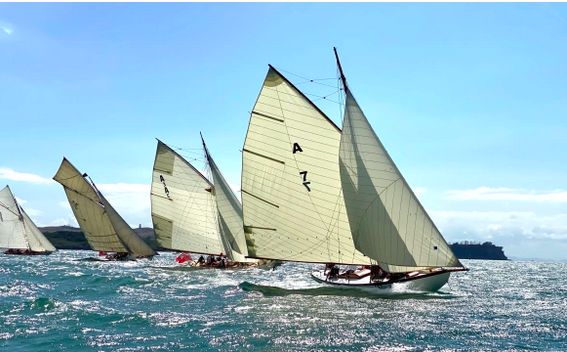
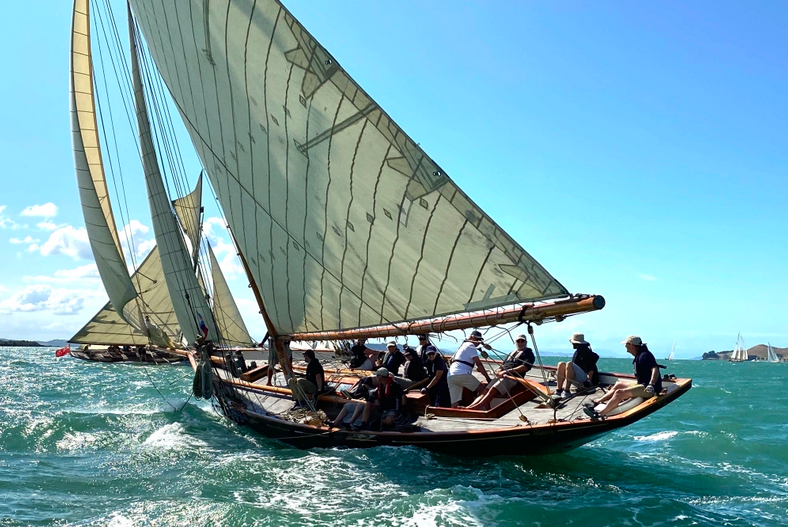
In February the worldwide owners of classic wooden yachts held their breath as one of the worlds most stunning classics – the 125’, 1911 W. Fife III designed and built – Mariquita, went to a no-reserve auction in Paris. This auction would probably set the bench mark for future sails. 
On the day Mariquita sold for £357,000 – that just over NZD$700k, a bargain and I bet you could hear a pin drop in the members bar at the – New York YC, Yacht Club de Monaco, Royal Yacht Club and the Royal Thames Yacht Club. Not that long ago the asking price was £2,750,000.
I came across the YouTube video below – ‘Sailing Aboard Mariquita’ on the Classic Sail fb page. It is a tad sales promo but a great video, they had British sailing legend, Harold Ludmore, onboard calling the shots. Its well worth 12’ of your time to watch. Below also is a transcript.

TRANSCRIPT

Take a look at this boat… she’s one of the most beautiful boats ever built…

She’s Mariquita launched in 1911 and she’s a piece of maritime history – an antique – but very much afloat and being raced like she was new.

I once joined her for a week in Italy sailing aboard as regatta crew, and it’s one of the best experiences I’ve  ever had.

She’s sailed as she would have been in 1911 – no winches , everything is done with pulleys on the deck and she’s gaff rig so there’s lots of cordage.

She has 18 crew – six are permanent, six sign on for a season and then they take on six for each regatta.

She was restored to be sailed at these big classic regattas – especially in the Mediterranean.

She’s a big class yacht – with a length on deck or overall being 95ft – taken out to 125ft over her bowsprit and boom. She draws 12ft… so she’s no creek crawler!

She was rebuilt and relaunched in 2004, by Fairlie restorations, now sadly no more. The craftsmanship of her restoration was superlative, I saw her at the time and every feature about her was excellent. They’d recreated a dream-boat from another time and now instead of being in black and white here was the honey colour of her varnished hatches, the polished brass of her fittings and the lovely warm grey of her teak decks – which feel so good under bare feet.

She’s composite construction so she has a steel rib cage – or frame, over which wooden planks are fastened, and this was how she was built originally. It makes her very strong and she has been and she can… be raced hard.

Her first owner was Arthur Stothert, who was 49 when he had her built in 1911. Her designer was William Fife. She’s built to the 19 M rule – only four boats were built – all in 1911 and Fife built two of them, the other two were by Nicholson and Mylne…

They raced briefly before the first world war and then Mariquita was sold to Norway… she raced again in Britain between the wars – but there was no 19-M class by then, and then she ended up dismasted and de-rigged in a mud berth in WW2 first at the Deben and later on the Orwell at Pin Mill. There she lay as a houseboat, and that was where she was discovered in 1987 by William Collier who was scouting out such classics for the famous Ferrari collector Albert Obrist.

Obrist, who had sold most of his cars, had moved on to boats and had restored and just relaunched the 107ft (33m) 1931 Fife schooner Altair – often cited as the restoration that set the standards for all to follow.

In 1991 Obrist set up Fairlie Restorations, the high quality classic yacht specialist on the Hamble. Mariquita was acquired awaiting an owner and Ernst Klaus and Peter Livanos came to her rescue having a superb restoration completed at Fairlies between 2001 and 2004.

They kept and race Mariquita until her centenerary year – with Jim Thom as her captain… and then ten years later… with her new owners and skipper I got a chance to sail aboard.

This was at Porto Santo Stefano for the Argentario sailing week every June since 1998 in lovely Southern Tuscany.

I was to be one of the six regatta crew they take on for a week… First things first – you get assigned your personal water bottle – no single use plastic here… I met some old friends – Cornelius and Dickie.

The pros are up early, Billy the bosun coils ropes along with Robyn and Pippa, who are sailors as well as chief stewardess and cook

I meet George the captain, who was Jim Thom’s mate – talking to Matty the mate and then the helmsman – also the owner – Johnny Caulcutt came aboard…

Soon it was time to meet a sailing legend – Harold Cudmore who is our tactician for the week. The days start with warm up exercises which include a few stretches and we all get a bit hands on as well – this is a good idea and gets you ready for when you are going to do some pulley hauling… And it’s time to raise the sails.

Cudmore’s already counting down to the start and I’m up here on the foredeck, with Richard Sawle and the bowman Jérôme Collet – Jerome’s a relaxed kind of cat – until he needs to leap into the rigging. Matty the mate and Millie are also on the foredeck, and from my position at the end of the mainsheet I can see right back down the deck.

The sheet is called by Peter or Tubsy Brook. I help in hanking on the jib topsail… It’s good to be out on the bowsprit when you’re office bound… of course in my head I still think I’m the schoonerman of my youth!

Fully rigged she looks fully dressed – with a lot of sail area high up to catch the wind; note the jib topsl which is flaked and tied up in wool ready to be broken out by tugging it sheet when needed…

With an upwind sail area of more than 6,000 sq feet she’s capable of kicking up some sea dust – even in these light airs.

If people in Santo Stefano look out of their window they get a nice view today – we’re here with some other big boats –Shamrock and Cambria

Shamrock V was the first J Class to be built – in 1930 – for Thomas Lipton’s fifth attempt to win back the America’s Cup for Britain. She’s uncompetitive in the modern J Class but she just leaves us in her wake… she’s built of wood on steel frames as well.

Eleonora the replica Herreshoff schooner is the biggest vessel here…

Between tacks the crew lies on the weather deck, with Milly, forward, calling the trim on the jib with hand signals.

The folk of another Fife – Halloween, from 1926 and a Bermudan design are slowly overtaking us… The next boat to overtake us is Cambria and she takes about four minutes to haul ahead – hand over hand she’s the faster boat and although our gaff handicap will help she’s the one to beat – she won in our class the year before.

And has Cudmore got a plan? I like his look of concentration – and it turns out, the next day he does…  But we’re sailing well and the pros have taken us newbies in hand – hauling on ropes can be hard work – but my hands aren’t sore…

A few hours later we get to the end of the race and realise Cambria has missed a mark – she’s stopped and her sails are coming down. They get radioed and put them back up to carry on racing. Later Cudmore notes that it gave us 23 minutes on them, we have won… Day One. We have a beer with our debrief and there are tacit congratulations… Cudmore mentions the light airs are suiting us with Shamrock V as well – plus they left their big genoa behind.

Saturday’s a magic day – not just to be sailing in these waters, but we’re going to see a master tactician at work

The race is about 26 miles in a flat diamond course north of Porto Santo Stefano out into deeper water and then round a second mark in the bay of Talamoné  – the third mark is an inshore-ish mark

The wind forecast had the wind backing SW to SE – mainly light airs – which would suit us.

The race starts well and shortly after midday we’ve rounded the second mark – Cambria is ahead of us, and we can see her slowed right down with yachts around her pointing in different directions –

Away off to port on the shoreside the NY40 Chinook is hugging the shoreline and she has wind… Cudmore alters us to steer between Chinook and Cambria. And unbelievably there is enough air to carry us past them. We are literally 200 yards to Cambria‘s port… we hit the convergence ourselves about a couple of minutes later and Cudmore has everyone lying on deck with the sails sheeted amidships… we don’t dare breathe as we feel the 36 tons of lead carrying us forward with sheer silent momentum through the pellucid green waters below.

It was extraordinary thing to call  and even better to witness, especially sailing that close to the convergence zone which was caused by the meeting of an offshore and offshore breeze…

Later Harold told me: “There were two breezes today and we had three occasions – crossing back and forwards between them – to benefit from that. Picking where and how to do that was the race decider.

Cambria was clearly ahead of us but when she lost her wind we saw a smaller boat over on the shore side (Chinook) which had wind, so we could steer between the two and just keep our wind (and stay out of the convergence). Today was a day you would call a heads-out-of-the-boat day. We were all looking at what was happening around us – but there was also a lot of luck involved.

“I think it’s great that we are beginning to race these boats as they were raced 100 years ago and we have more and more respect for our forebears who raced them then. We have better materials now – better rope and so on – but otherwise the conditions are similar.”

It gave us another decisive win and Harold was rightly congratulated; when he comes into the Marco Polo restaurant later that evening he gets a round of applause.

After that a win the next day seems assured. We are on a high. Captain George says this is the first time since she was launched that Mariquita won three races in a row… It’s an auspicious season start – that year she wins the Panerai Trophy in the Big Class overall…

It was a shame to hear she was laid up in Lymington – under covers in 2015 and has been ever since – but there are a few of us who can’t afford to run boats at the moment… She remains a boat of dreams, a vessel that others flock to see. And I treasure that week, the fantastic sailing… and seeing Mr Cudmore’s genius at work.

Mariquita 1911, Designed by Wm Fife III

LOS 125ft (38m)
LOA 95ft 6in (29m)
LWL 66ft (19m)
beam  17ft 4in (5.3m)
Draught  12ft (3.7m)
Sail area Upwind  6,171 sqft (573m2)