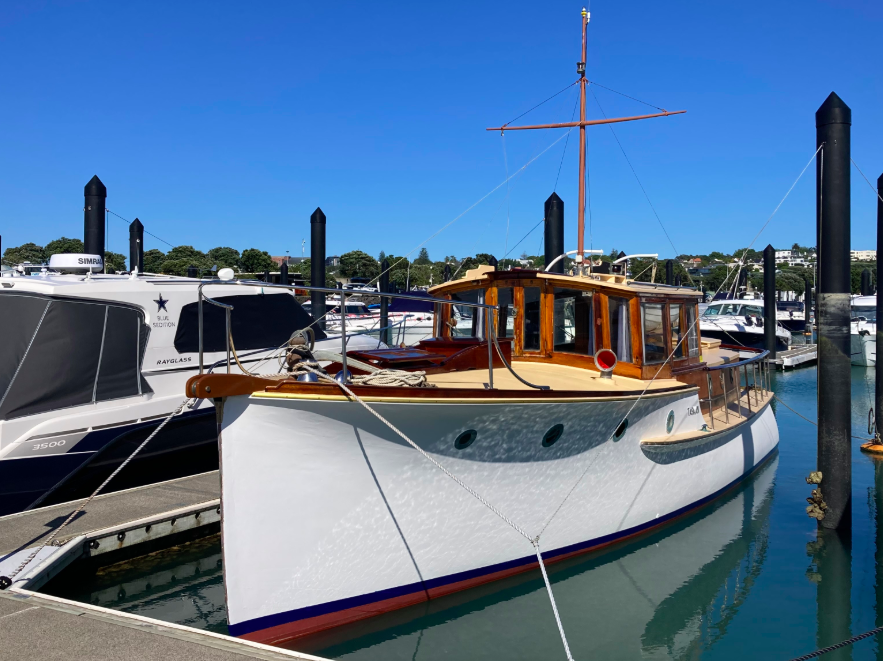
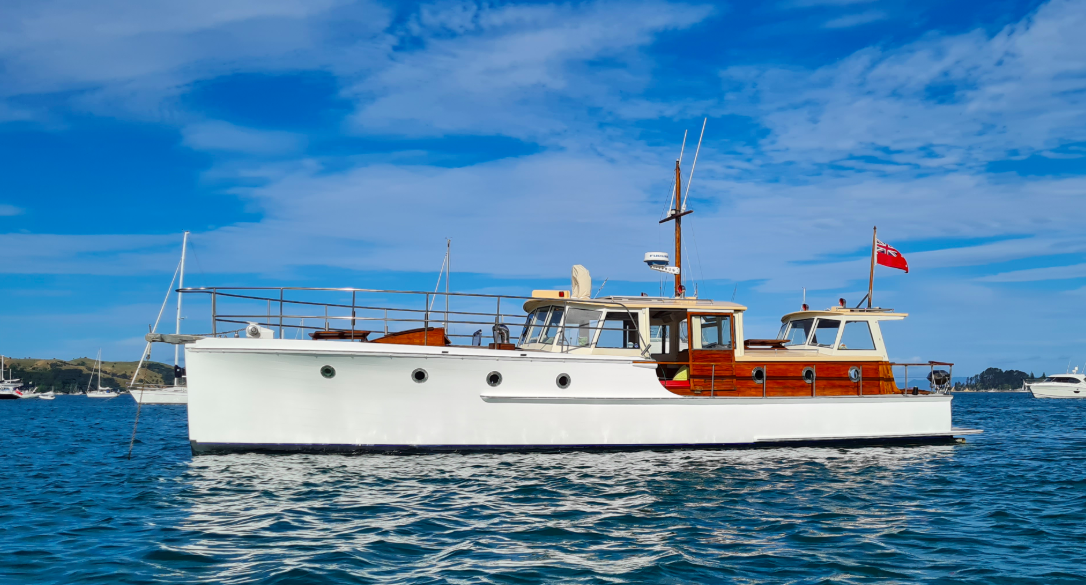
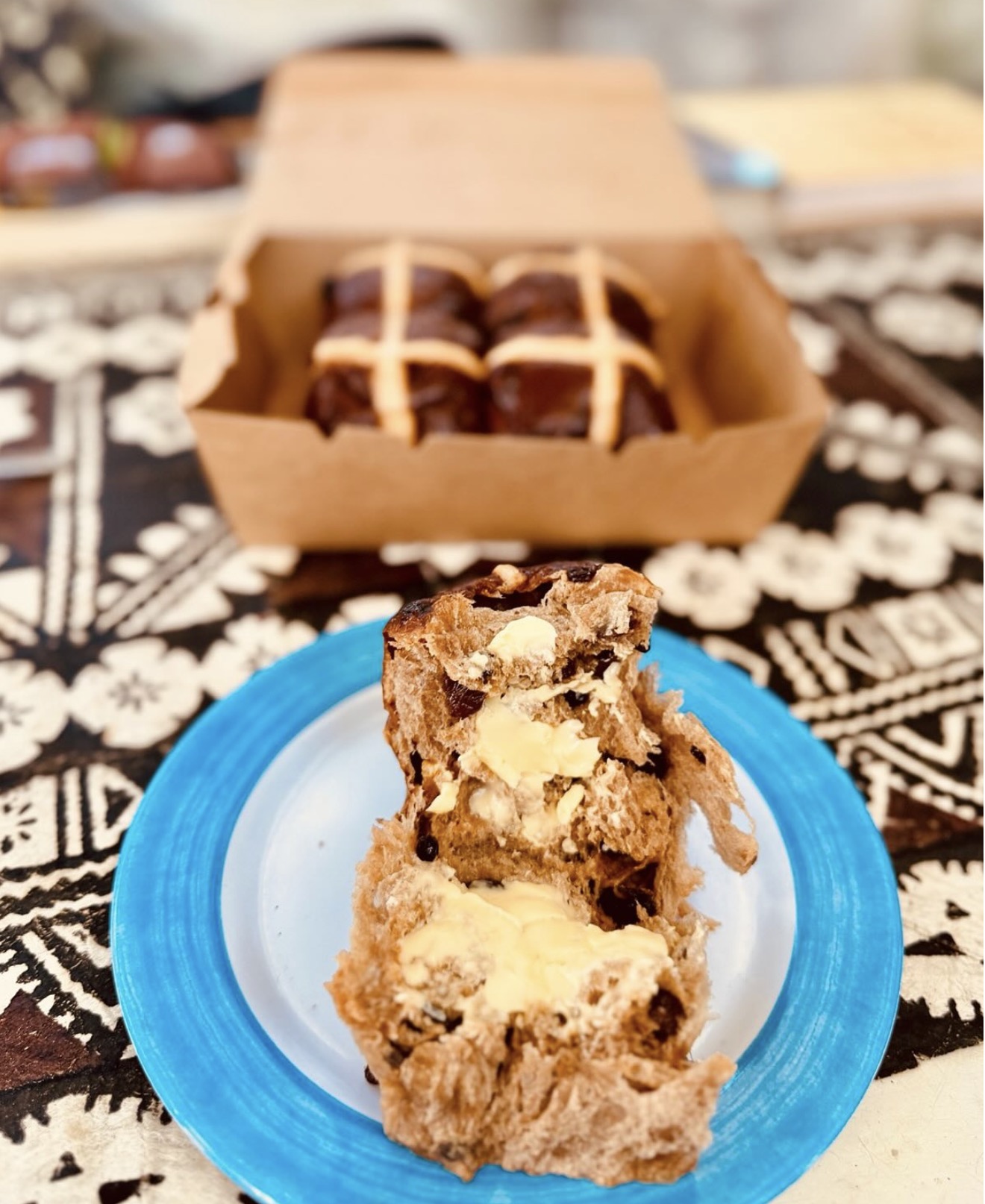
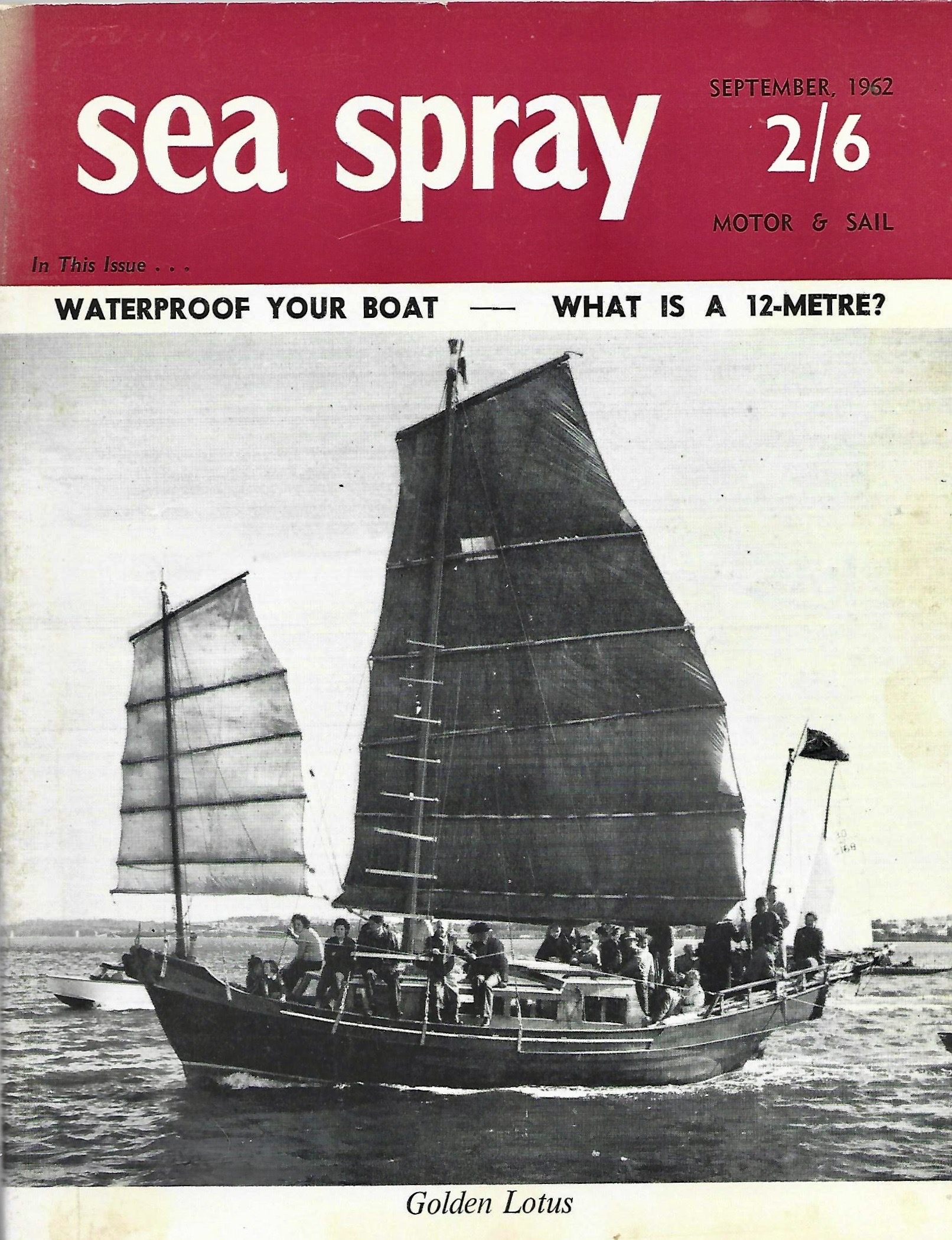
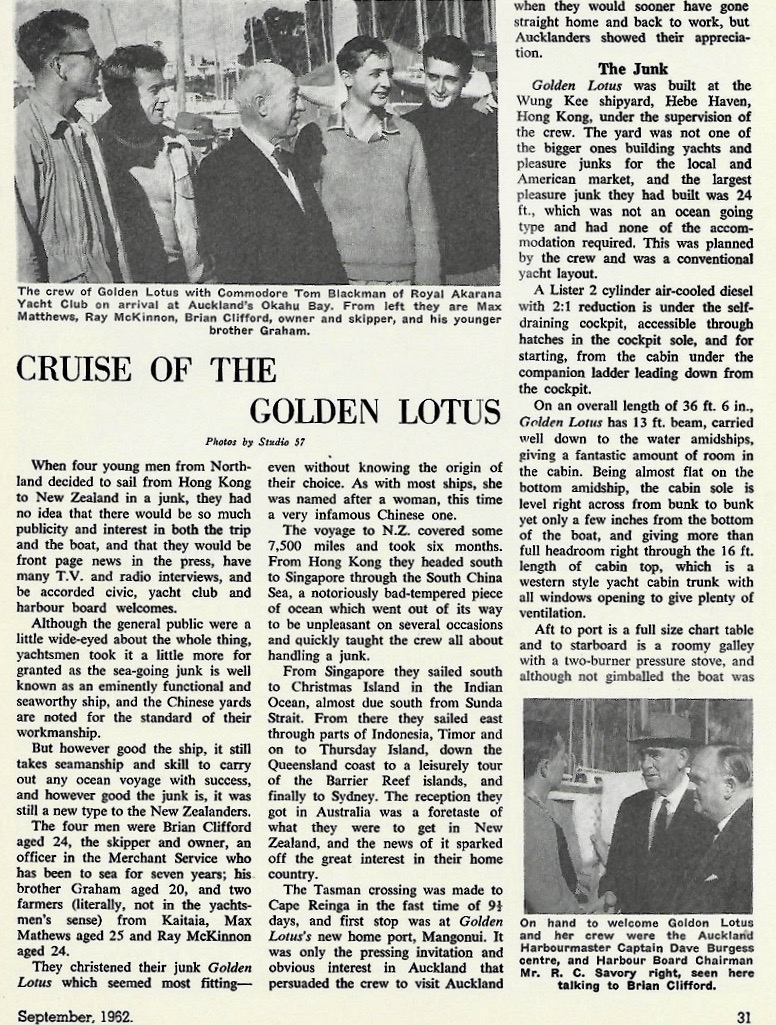
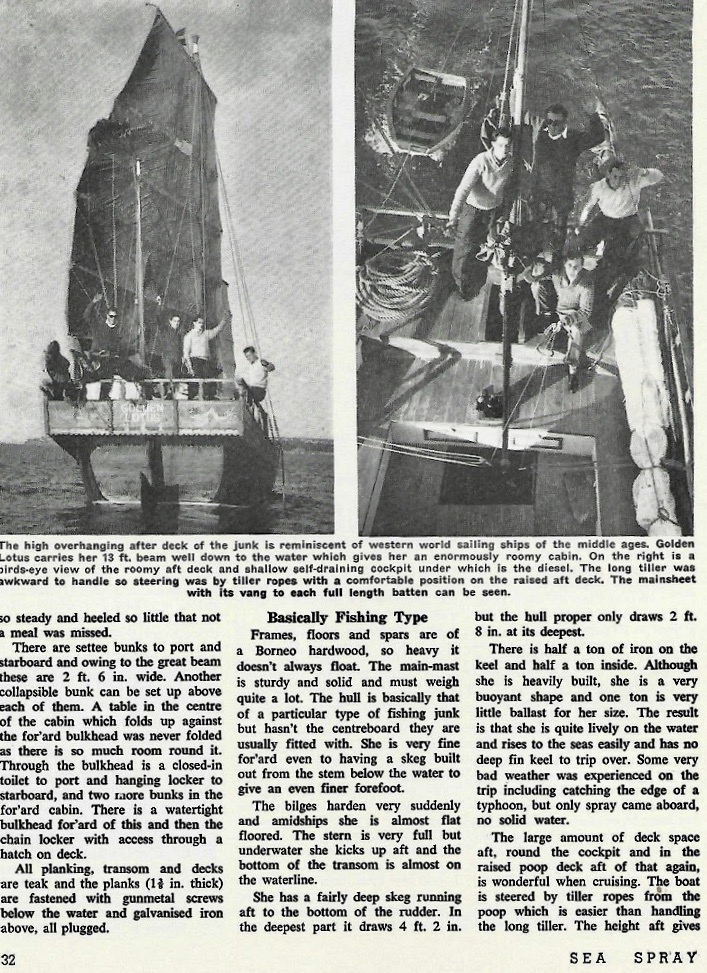
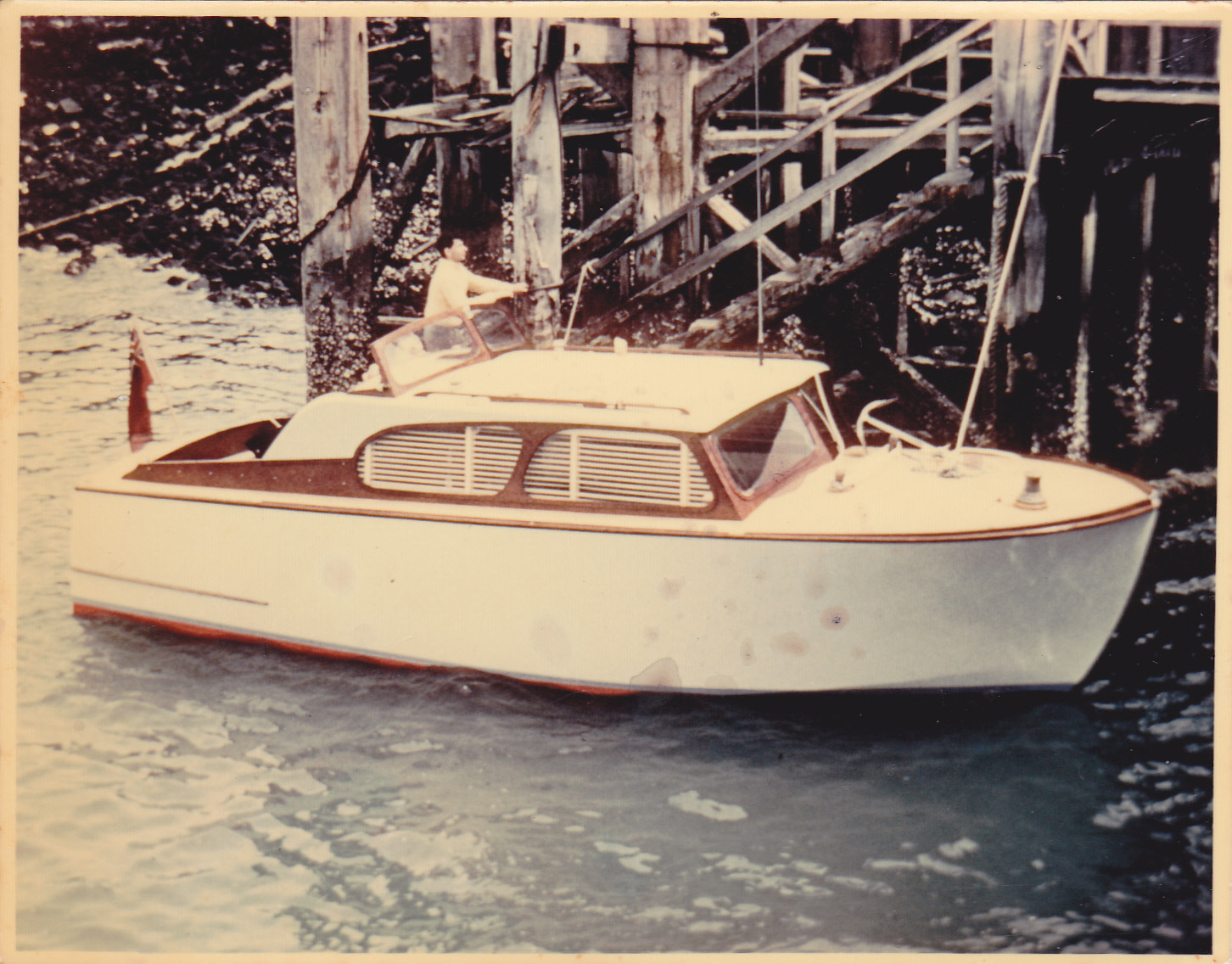
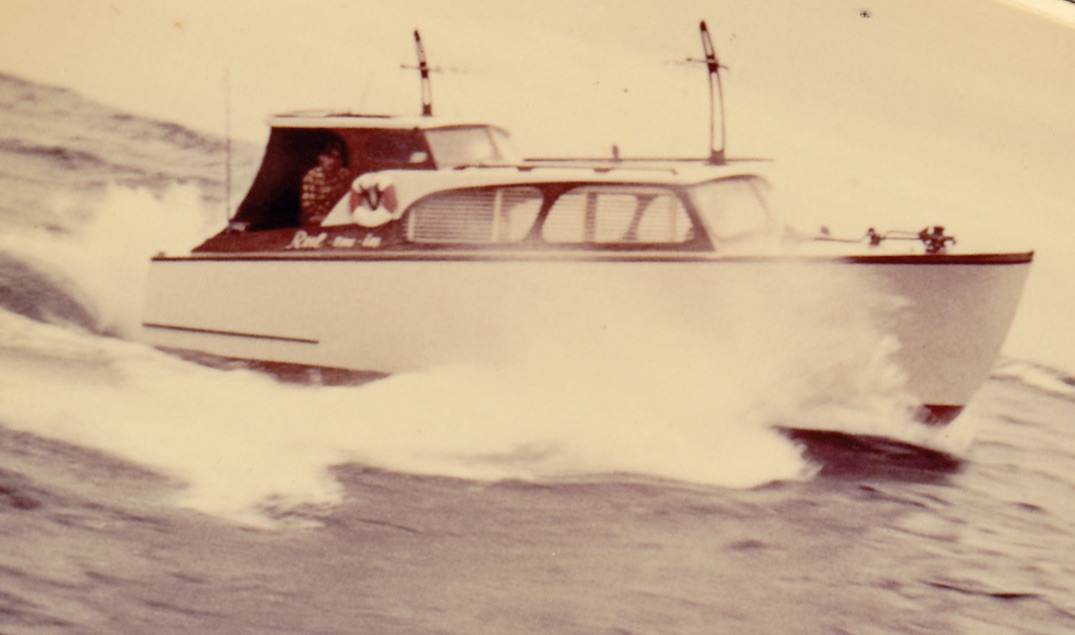
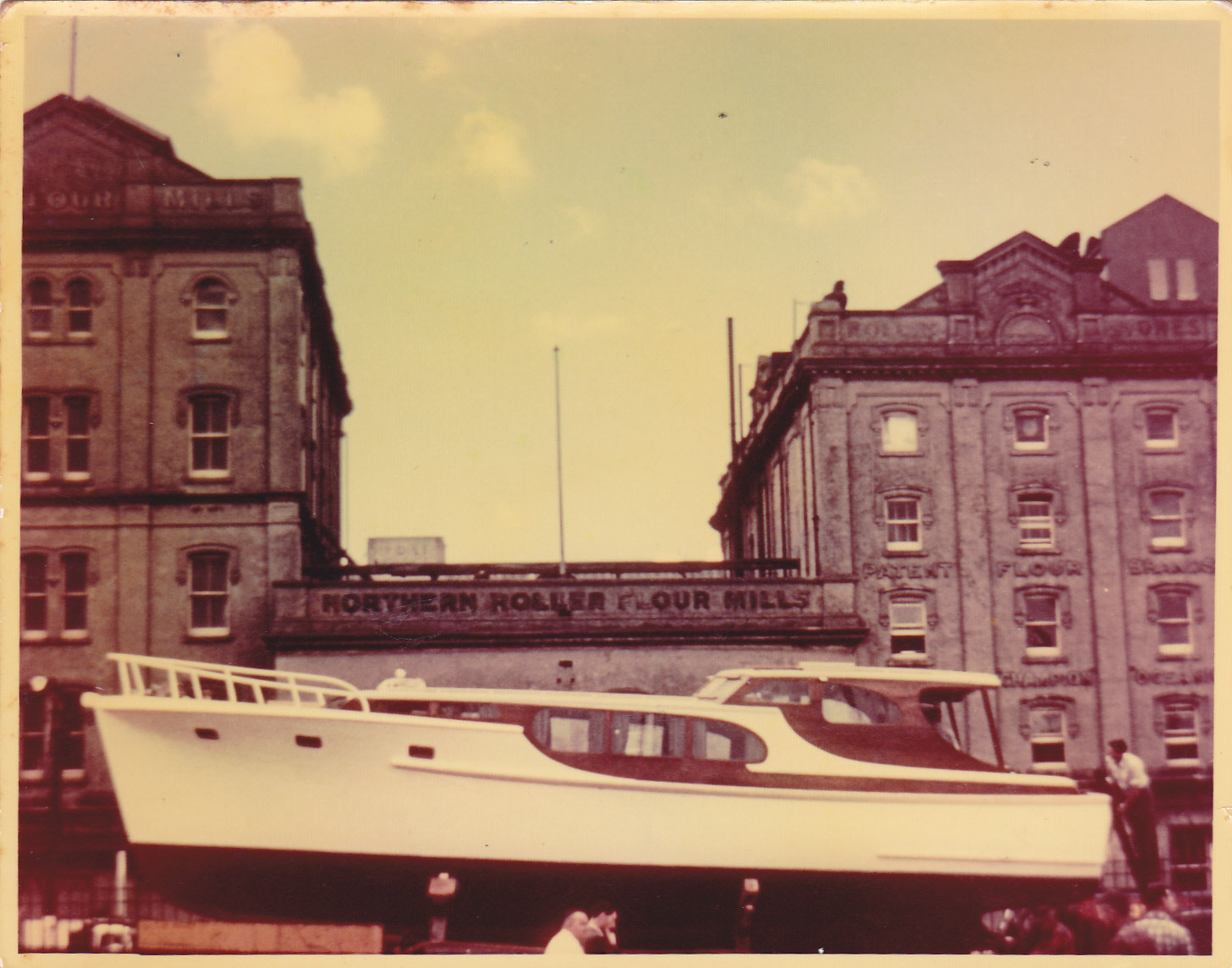
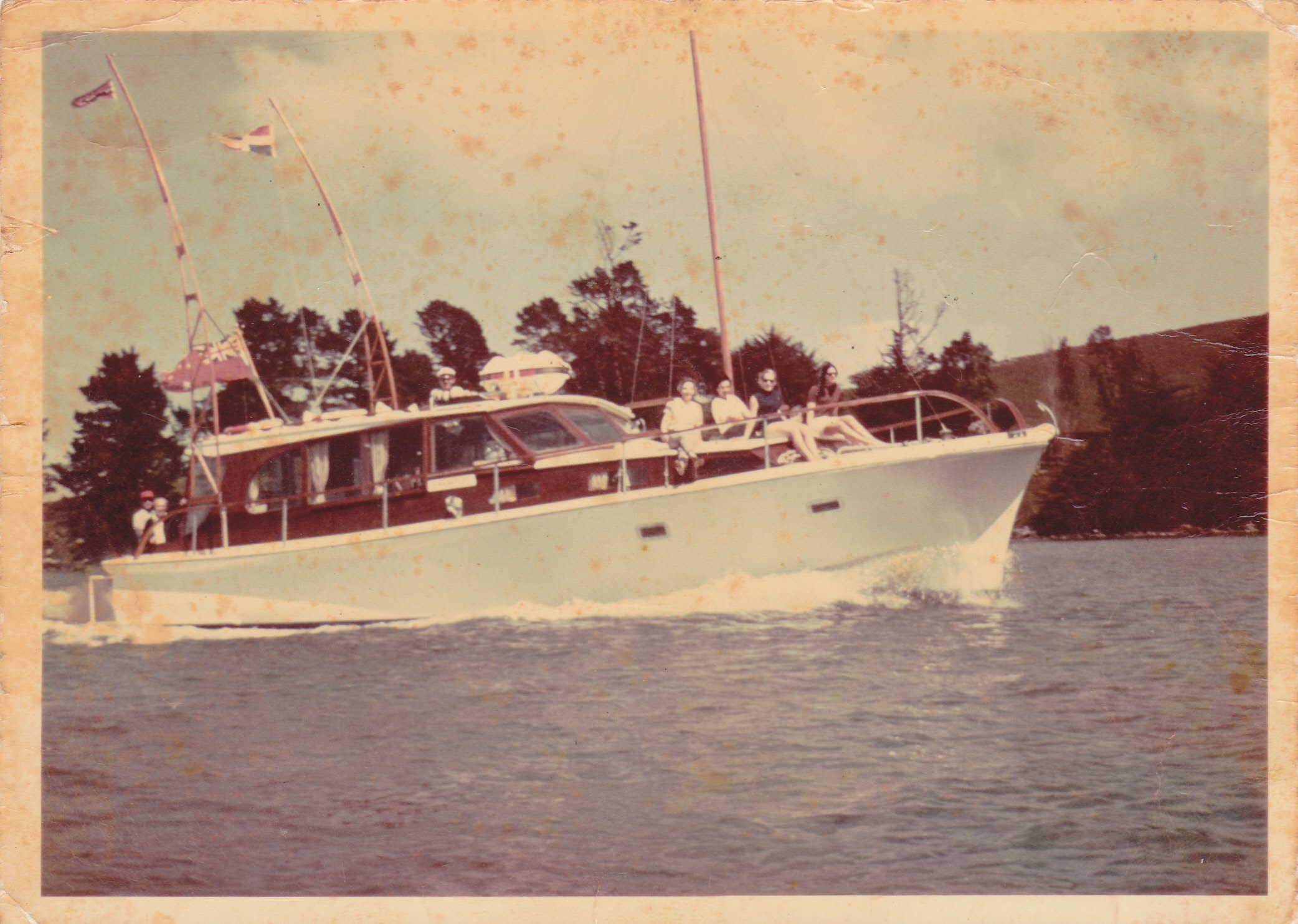
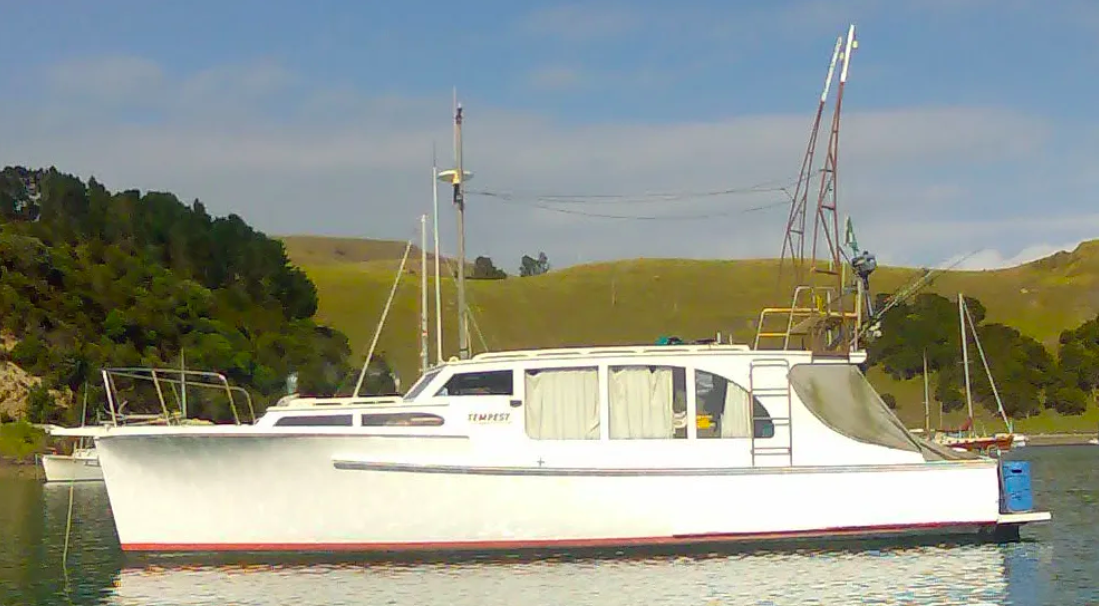
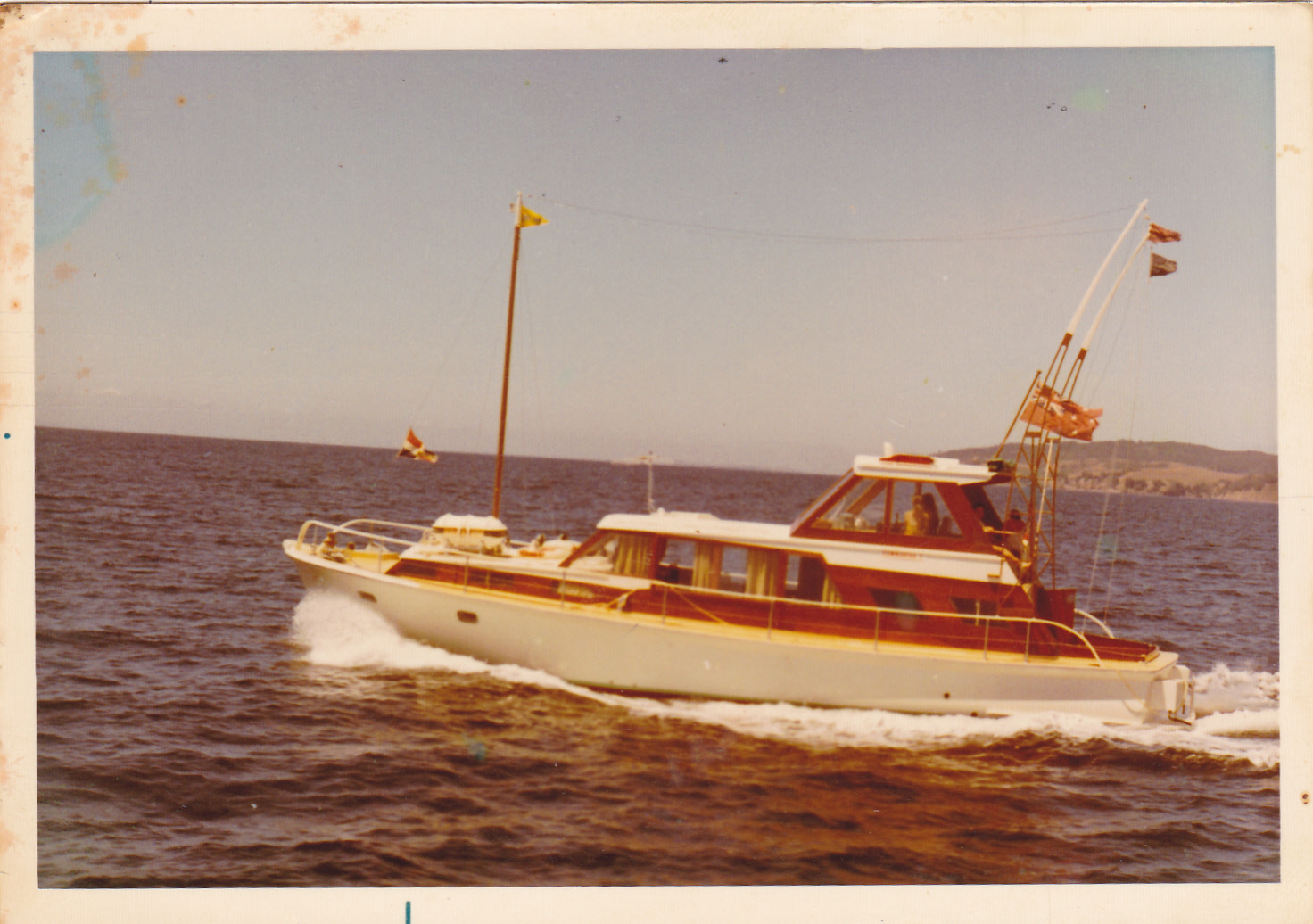
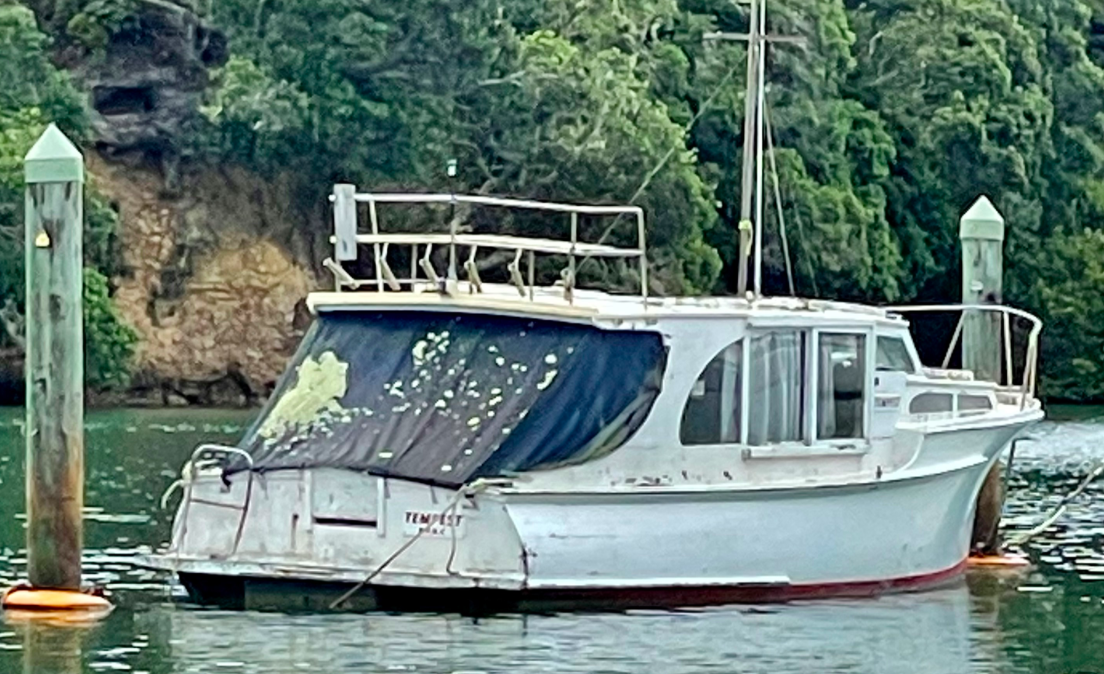
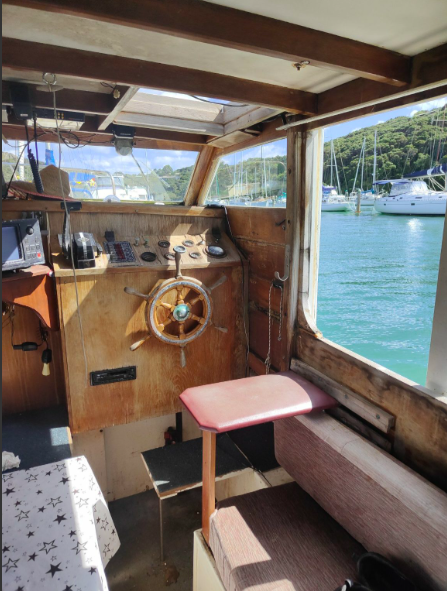
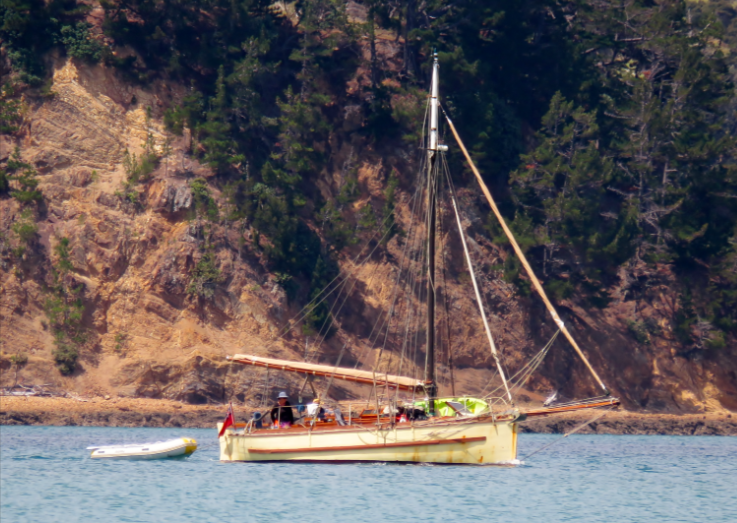
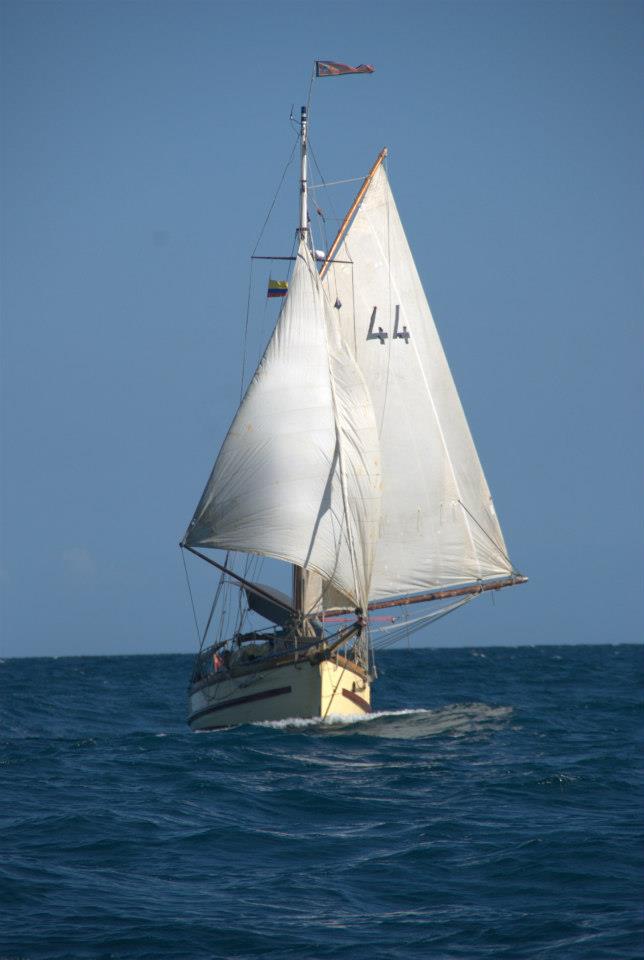
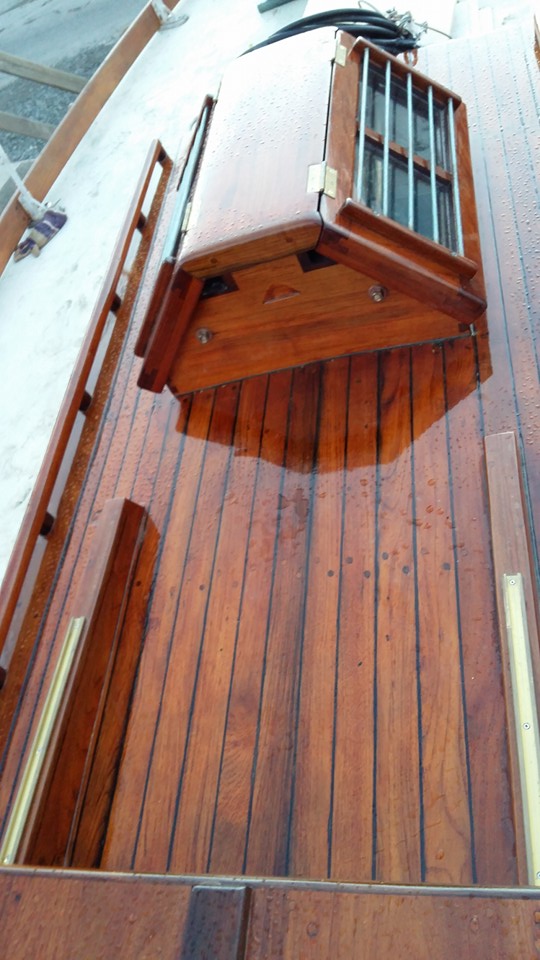
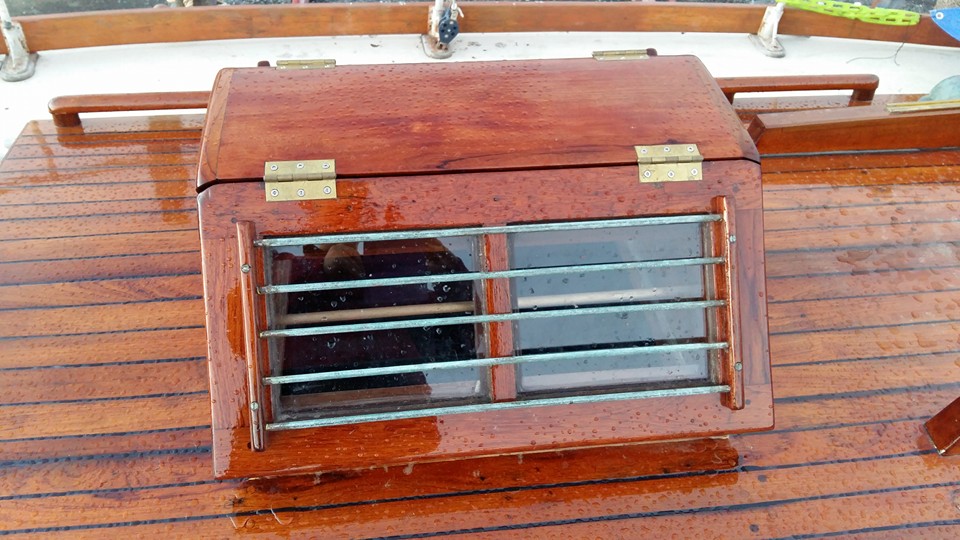
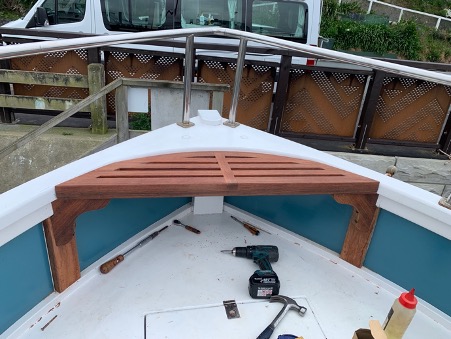
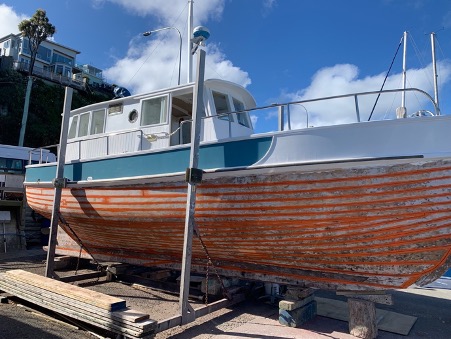
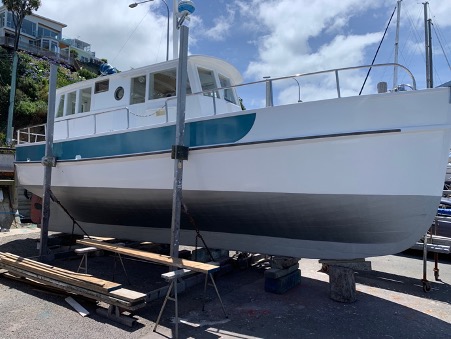
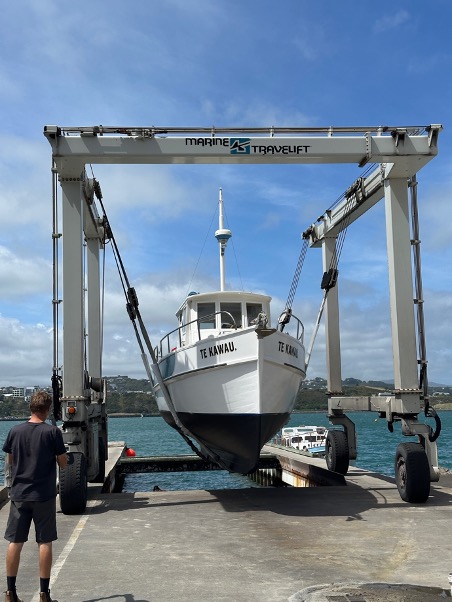
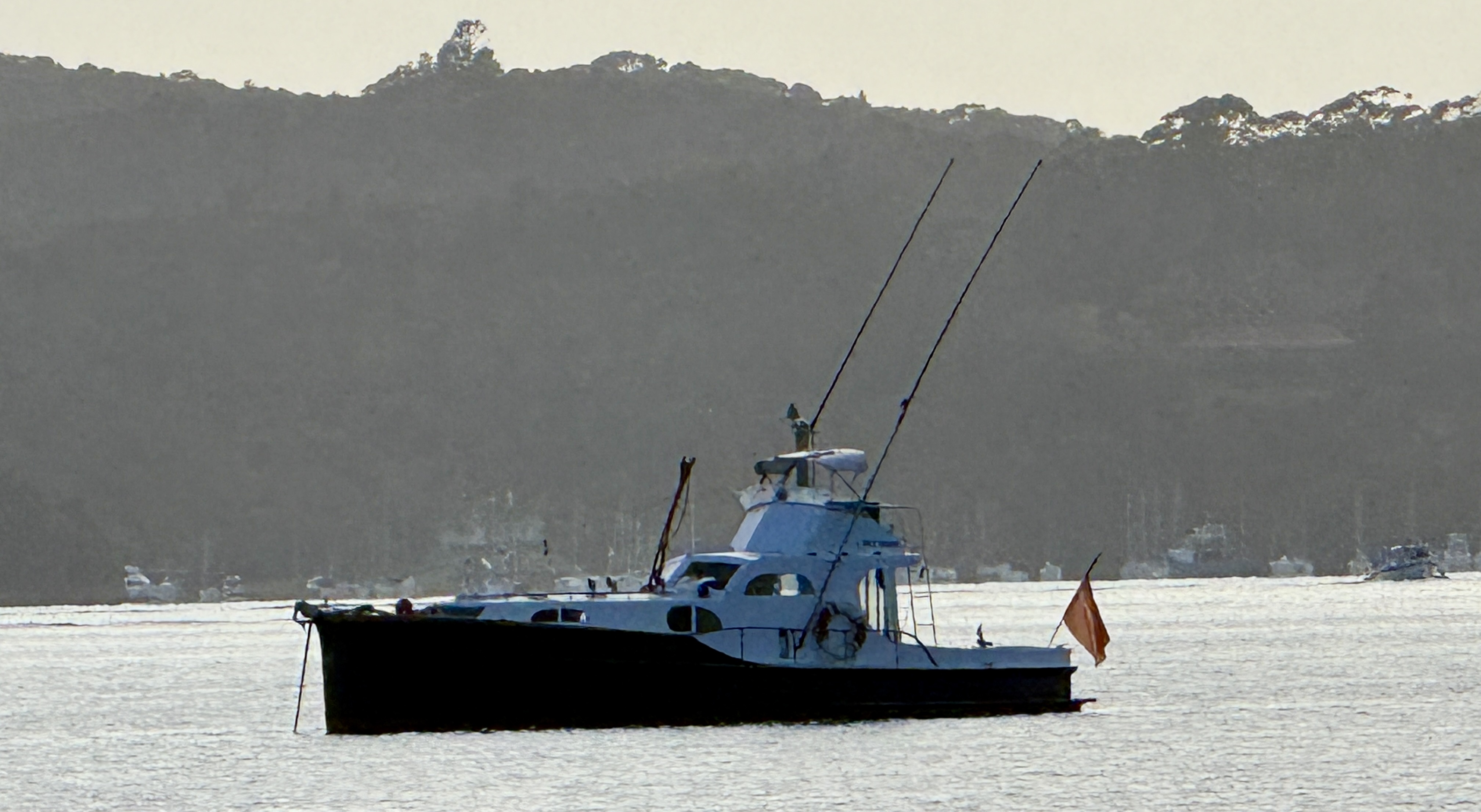
At the recent 2026 Lake Rotoiti Classic and Wooden Boat weekend one of the stand out craft was LADY BETH, a 23’ picnic / day boat, builder unknown. I was surprised with her build date as she had a ‘new build’ level of presentation.
Today thanks to the LRC&WB team we get to learn more about LADY BETH’s past and how she ended up my pick of the 2026 parade.
LADY BETH, formerly named HIDDEN AGENDA, was first used in Whakatane as a picnic and tour boat. She then moved to Napier and was used in the same way until she was to be found on Lake Taupo, moving to Lake Rotoiti about 40 years ago. Purchased by the current owners in April 2018, she underwent a major 20 month refit at Alan Craig’s boatyard where she was transformed into the very beautiful classic wooden boat she is today. She is named after Lady Beth Moore, (mother of her co owner), who was born the same year the launch was and loved the lake since coming on her honeymoon in 1942.
Her inboard has been replaced by a 9.9hp outboard in a concealed well. The glass house is made of teak and a teak bowspit and duckboard were fitted with stainless anchor and remote windlass. During restoration it was noted she originally had 2 portholes each side, not just the 1. So stainless ones were imported from Italy.
WHAT DO ALL THESE CLASSIC WOODEN CRAFT HAVE IN COMMON
As I have noted recently on WW the classic wooden boating scene in the Bay of Islands is experiencing a re-birth. Seems one in three woodys the Wooden Boat Bureau has sold in the last 2 years has headed north. And recently the woody skippers have been organising events to show case the woody movement in the B.O.I. – we like that.
At the recent Russell Tall Ships Regatta on the Friday prior to the sailing regatta there was a Classic Launch Parade that had 13 woodys participating. Post the parade one of the skippers pointed out the % of woody craft that owed their good looks to time spent at the CMC Design – Boatbuilders Opua yard. So I did a count and in recent times and in no particular order the following woodys have been under the care of the talented crew at CMC Design – LADY CROSSLEY, KORAWAI, OTEHEI, MARLINE and ALMA G II.
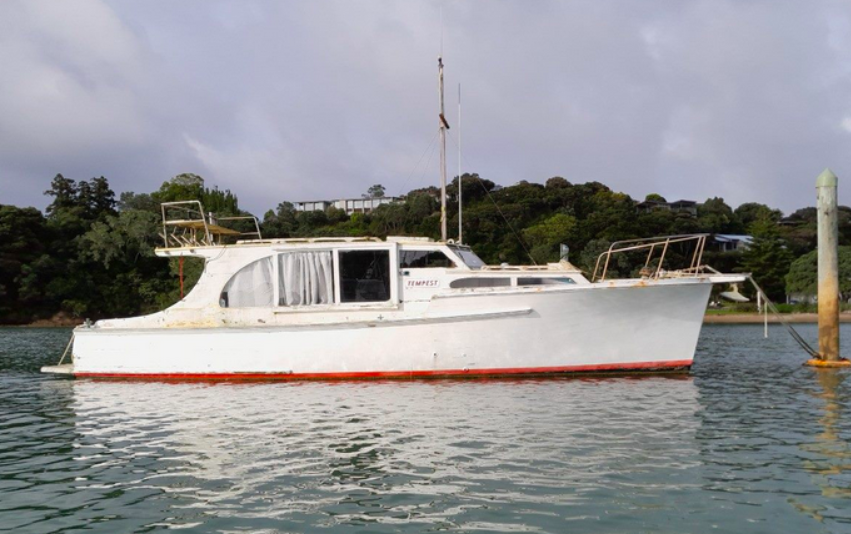
Now they aren’t the only boatbuilders up north but they seem to get the cream of the work. When you factor in haul-out yard costs in the greater Auckland area, a wee road trip on one of the specialist boat haulage trucks isn’t the budget stumbling block it once was.
If todays WW story reads like an ad, I suppose it is, I’m passionate about seeing our classic fleet get the TLC they deserve. Check out the CMC website – some great work-in-process photos on their work + its not all boats, some stunning architectural and commercial wood work. https://www.cmcdesign.co.nz/marine
INSIDE THE CLASSIC WOODEN LAUNCH WIRIHANA – What Powers Her
In the New Zealand classic wooden boating world there is one designer / builder whose name that no matter who you speak to, is in their top three craftsmen – and that gent is Colin Wild. A quick search of his name in the WW Search Panel will result in a visual show case of NZ’s most striking classic craft.
One of Wild’s finest builds is the 1933 launch – WIRIHANA, a woody that has featured numerous times on WW in the last 10 years. Where ever she goes, I get sent photos from people seduced by her looks.
Aside from her wow factor, WIRIHANA is rather unique in that she is still owned by the third generation of the original owners – the Gould family. The family have had the wisdom to engage retired master boatbuilding icon Chris McMullen to maintain, skipper and use WIRIHANA for 18+ years. Today thanks to Natasha Gould, Chris McMullen and Ken Ricketts we get to uncover a side of WIRIHANA’s past not covered on WW previously – the engine room.
Her original engine was a slow running 4 cyl Kelvin with no reduction gear and a petrol start. This engine also had a ‘day diesel tank’ fitted to the engine room wall with a gravity feed to the engine with the main diesel tanks aft, from which diesel had to be pumped daily, into the day tank, manually.
Chris McMullen has commented that all the original associated equipment and day tank, associated with the Kelvin, is still in her today, although not in use, and has the Kelvin name on it.
As covered on WW previously WIRIHANA was commandeered by the NZ Navy during WWII and when returned to Jack Gould (Natasha Gould’s grandfather) at the end of the war, Jack insisted that the NZ Navy replace the engine, because of the rigours of naval service. Another reason for the replacement shared by Chris McMullen is probably the fact that reverse gear on the Kelvin had to be inconveniently operated by crew in the engine room.
End result was the NZ Navy fitted a 6/71 165HP GM Detroit 2 stroke diesel, that had a hydraulic gear box that could be operated by cable. WIRIHANA retained this engine for a great many years and was eventually replaced in the early 2000’s by Rusty Gould (Jack Gould’s son), with a 180hp artificially aspirated 6 cyl. Scania diesel, which she still has today.
One unusual feature of WIRIHANA’s engine room is the absence of an engine box / sound installation – Chris McMullen told me once , you get used to the noise and its a perfect place for drying towels 🙂
(photo credit – Natasha Gould, Dean Wright, Alan H)
Recently WW was contacted by Jeff Giddens concerning the launch NGATEA – best if I let Jeff tell the story
“Have attached a few photos of my good friend Alan’s boat – Ngatea.History……builder unknown apparently. Rumour has it, way back in the day she may have been some sort of mail boat to Kapiti Island. Ngatea is over 100 years old and was owned for a long time by well known boat builder Reg Saunders of Paremata. She was his prideand joy.
For the last 15 or so years she has been owned by another well-known Paremata identity, and ex fisherman Alan Codyre. As much as she needs a good clean up and TLC in her paint work, she is in outstanding condition for her age.We recently removed the old Perkins and refitted her with a wee Yanmar diesel. It would be great if anyone out there knows more about her history and where she was built and by whom.She is currently on a swing mooring in Ivy Bay Paremata.”
So woodyscan we help Jeff and Alan out and fill in the gaps re NGATEA’s back story.
From the pen (no computer) of Haydon Afford – First posted in 2013, Too Good To Live In The WW Archives
It seemed like a good idea for years so in the end I said, 15th December I’m leaving. Which I did with a sack of potatoes, sack of onions, sack of rice, sack of muesli, sack of bread mix, a new foresail (instead of the sack I’d previously had) and heaps of diesel (not in a sack).
The plan was simple: out to The Barrier and turn right, so I did that and went to Great Mercury Island. Great feed on the most luxurious boat I’d ever been on and belonging to a chef from Whitianga. Next day off to Tauranga, but all friendliness was off the menu when they found I was not insured. I anchored on the other side of the harbour and in the middle of the night things felt wrong, so I looked out the window and saw the wharf motoring past. That was definitely wrong, so I re-anchored with heaps of scope and thereafter the chain was out the front, not in its locker.
Off to Whakatane and surfed in the bar. Wowy Zowy. They closed it for several days then, while it looked like Piha; then off to Omaio Bay, then Hicks Bay, then Te Araroa to anchor ready for East Cape. I don’t think Te Araroa is the perfect anchorage, but at least the wind was off the land, if rather fast … OK though, plenty of scope.
East Cape deserves its reputation and I noticed that the waves can get quite big off the east coast end. You have to go over them sort of diagonally, but by the time I got to Gisborne, it was nice and sunny and calm and I had decided to convert the non structural bulkhead at the front of the boat into a structural bulkhead. While I was there, Gisborne had a big song and dance and boozy festival, which doubles their population, but I was too involved with timber, glue and bolts to go to it. Also, I might have been a bit old.
On to Napier and off Portland Island in the middle of the night the sea decided to give the strengthening a big test, but no more creaking and groaning. I have a fuel tank built into the forepeak. It’s meant to hold 300 litres, but when you fill it up you have to pay for 500 litres, so it might be quite heavy for poor old Kumi!
Napier Yacht Club was very friendly and there I met Bill, who agreed to come to Wellington with me because I was a bit scared. Turned out perfectly fine and I learned a lot from Bill, who has coastal skipper qualifications. Cape Palliser was calm, but lots of big swirly bits.
Wellington forecast was terrific: 50 knot northerly, changing 50 knots southerly later that day. Outlook following three days: 50 knots northerly, followed by 50 knots southerly, etc.
After 10 days, a big high appeared and we were off to Marlborough Sounds. Great if you’re into vertical bush with a thin rind of rock at the bottom and 40m deep, 20m from the shore. I found a couple of nice beaches though, then to D’Urville Island. Admiralty Bay suddenly turned very windy, and wavy, dead ahead. Makes you go slow, but on D’Urville Island the bay that looked good on the chart was actually a pub with moorings for the night. They said 50 knots was blowing, but that was normal.
Next morning, French Pass at low tide was calm, (but obviously could push you where you did not want to go), and down to Nelson in brilliant sunshine. Up to Golden Bay and into Tarakohe harbour, which I left at 2am for the West Coast. Farewell Spit in the early hours; Cape Farewell and the Navy spots me. A warship of some sort comes roaring over, straight at me, big bow wave, big rooster tail – oh! oh! It’s OK, he applies full port rudder so that I can see his beautifully anti-fouled starboard bottom. Someone on the after deck waves and he is gone into the mist. I wouldn’t mind a ride on that little number.
Cape Farewell is correctly named, because the South Island disappears behind mist there and does not reappear until you’re getting up close and personal with the Greymouth Bar. The night off Westport, though, was the most spectacular of the journey. The moon was full and the sea so calm that there was no reflection of the moon off the water except just on the horizon.
Then a ripple must have started, because the moon’s reflection reappeared as spot lights in the line from me to the moon … pow, pow, pow they would go, very sudden on and off. Lasted a minute or two, then more ripples appeared and the reflection next to the boat appeared as almost stationery zebra stripes. These very slowly undulating stripes gradually crept out to the horizon, turning off the spot lights.
The Greymouth Bar was fine, fishermen friendly. Haydon has a big sleep. Milford Sound spectacular, but tour boat operators definitely not friendly. And on down Fiordland where there is a lot more vertical bush, strong winds and hard to find a good anchorage. I think we are rather spoilt in the Hauraki Gulf!
It nearly all ended at Riverton, where I misread the GPS coordinates. With zero visibility in fog this was not the perfect place to do that, but I noticed the depth was wrong (not enough), so it was OK.
Then Stewart Island.South of Mason Bay, the waves and wind got up to their normal size again (can’t see over them, rigging makes a whirring sound) and I’m aiming for ‘Easy harbour’. I make the turn, so I’m now running with the waves – fast and easy, (Kumi is a fantastic following sea boat), straight at a very smooth and clean cliff. Not very high, but looks very wet.
I dodge an ugly reef off the island to the left. I dodge an even uglier ‘sister’ on the right, but I’m having trouble identifying the rocks off the entrance to this harbour. It is all rocks and Kumi is having a terrific time surfing down the waves at 10 knots straight at them.
Half a mile and it is all over. I look left and there it is. Hard to port, plenty of throttle and all is soft, but still not easy. Do I anchor and eat my celebratory steak at the silver sand beach with the sapphire water? Or, do I go 300-400m to the right to the golden sand beach with emerald water? Decisions, decisions.
Next morning, great – gone calm again around South Cape, and up to Port Pegasus where there is more vertical bush. But it is not so deep. I even managed to hit the bottom. Then up to Golden Bay in Paterson Inlet (in time to join a team for pub quiz night). Then over to Bluff, where the tidal range and the tidal overfalls in the channel are big.
Out again at dawn for Port Chalmers, past the attractive cliff, beach, harboury bays and rolling hills background of the south coast. Round Nugget Point and next day cruise into Carey Bay at Port Chalmers. Then off to Akaroa, once again dodging cruise ships, which seem common around the coast.
At Akaroa, 100% fog – better not misread the GPS here because it’s cliffs, not a beach. I sail out of a curtain into brilliant sunshine and I’m half a mile inside Akaroa Harbour. I think I’m clever this time.
Next, Lyttleton (rather wrecked by the earthquake), and another over-nighter to Port Underwood. This leg used too much oil. Across to Wellington again and through the ‘Karori Rip’. You are supposed to avoid this area, but it was a calm sunny day. Then ahead the sea went white, so I thought, oh! oh! and hung a hard right. I stopped the 5 knot nonsense and started the 12 knot nonsense … wow that water moves! Then it started going white around me and we seemed to be going up and down a lot. It all happened very quickly, and then, 10 minutes later, we were out of it. It’s probably best to avoid this area.
At Wellington, after lots of phone calls to James Mobberley (thanks James), I replaced an O-ring and we stopped using oil.
Then New Plymouth, through Hokianga, more over-nighters in what seems like the west coast of NZ to me – calm, fine weather with the wind and waves more behind than ahead, motor purring, sails drawing GPS speeds over 6 knots. Captain happy.
Hokianga Bar is quite shallow and I waited there till the weather was such that it would change SE to SW at the top of the Island. This worked. Anchored at Ahipara, then up to Maria Van Dieman, Reinga, North Cape (very rough) and, because it was now SW, across to Parengarenga to the lee of the land and down to Henderson Bay for the night.
Next day called on Mangonui, then Whangaroa, where Kumi spent 25 years as a crayfish boat. The family of the fishermen were happy to meet her there. My cousin boarded here and we went to the Bay of Islands in perfect conditions. Next day was good, but forecast not so good, so overnight to Kawau and waited out the 35 knot SE by sleeping, then next day back to a terrific welcome home party. Thank you everybody.
CHRISTMAS 2025 – NEW YEAR 2026 CLASSIC WOODYS CRUISE
I have talked previously about the weather that we all experienced at the start of the annual cruise, so I’ll skip that other than to quote Billy Connolly – “ There’s no such thing as bad weather, only the wrong clothes”.
Life on a small launch with a wife, dog and a paddle board can be challenging – normally takes us 2>3 days to get used to living in close proximity, but we have managed this for 18+ years. The bad weather days / nights that include having to take the pooch ashore for a pee in 40+ knots at 6am are quickly replaced with good food, good books and good booze 🙂 One of the positives of evil weather forecasts is low boat numbers, when things improved and we moved to Oneroa for a supply stop, the only other craft in the bay was a yacht and that was ‘washed up’ on the beach.
Today is a bit of a photo bomb from the 10 days – anchorages visited, food, boats we saw, boats we nearly bumped into and general good times afloat.
Hopefully the lucky ones are still out there enjoying the weather.
ps check out the woody champagne flute in the last photo – I have the bug bad 🙂
Chris Leech sent in the update below – “Great progress has been made over the break on Janace Anne. Below the waterline is just about ready for anti foul, the topsides have been stripped back, and given two coats of primer. The cabin top has been water blasted and ready for attention. Down below is has been tidied up, but the current plan is to only get the engine running. We have had the offer of a complete running engine (Bukh 10) if required. The original was handled by Moon Engines. Please visit woollacott.org.nz for more photos in info + some below.”
— WAITING ON A WW T-SHIRT ? – A few orders over the break went into the spam file – so if you think Im rude and have not got back to you – sorry – can you re0send your email – thanks
Merry Christmas from Waitematawoodys to all the crew who follow along each day.
It’s been a monster year for WW, with more than one million extra views over last year – still hard to get my head around that, and I’m hugely grateful.
A special shout-out to all the helpers who send in stories, photos, and snippets of history. You know who you are, and you make my job a whole lot easier (and far less stressful).
I hope everyone gets the break they deserve and need. If you’re afloat over the holidays, enjoy it – and safe boating to all.
Now… if there’s no story tomorrow, it will be because the co-owner of Raindance didn’t see the humour in the “gift” (the book below ) I picked up in a second-hand bookshop
And finally – if you’re out and about over the Christmas / New Year period and you spot a woody, could be yours ;-), take a photo and email it in to waitematawoodys@gmail.com
Thanks again for the support.
THE WOODY SANTA (Bill Rimmer / Poco Lento ) WAS SEEN ARRIVING AT DEVONPORT.
Todays woody story is based on a note received from Stuart Junge, an ex classic yachtie who previously owned the 26’ Bailey Jnr. built classic yacht – LEXIA.
These days Stuart is a volunteer at Auckland maritime museum and along with several others skippers the 1913 classic launch – NAUTILUS that operates out of the museum.
Stuart has some concerns about the (his words) ’tales told of the vessel’.
Now NAUTILUS has made many appearances and WW generated debate around her history. I have included below a past comment from marine historian Harold Kidd, who is the fountain of knowledge in your wooden boating community. My rule is unless there is rock solid proof of an opposing view – HDK is the single source of truth 🙂
I have published Stuarts questions below – can we shed some light on her past and let Stuart sleep easier at night.
• What engine was she originally fitted with?
• Was she steered from the cockpit prior to the high cabin being installed?
• Why was she lengthened, and by whom?
• What was the period of service on the Diamond Harbour run?
• When and why was the cabin deck-head raised?
• I am led to believe she never carried wounded soldiers, only hospital ship staff. True or false?