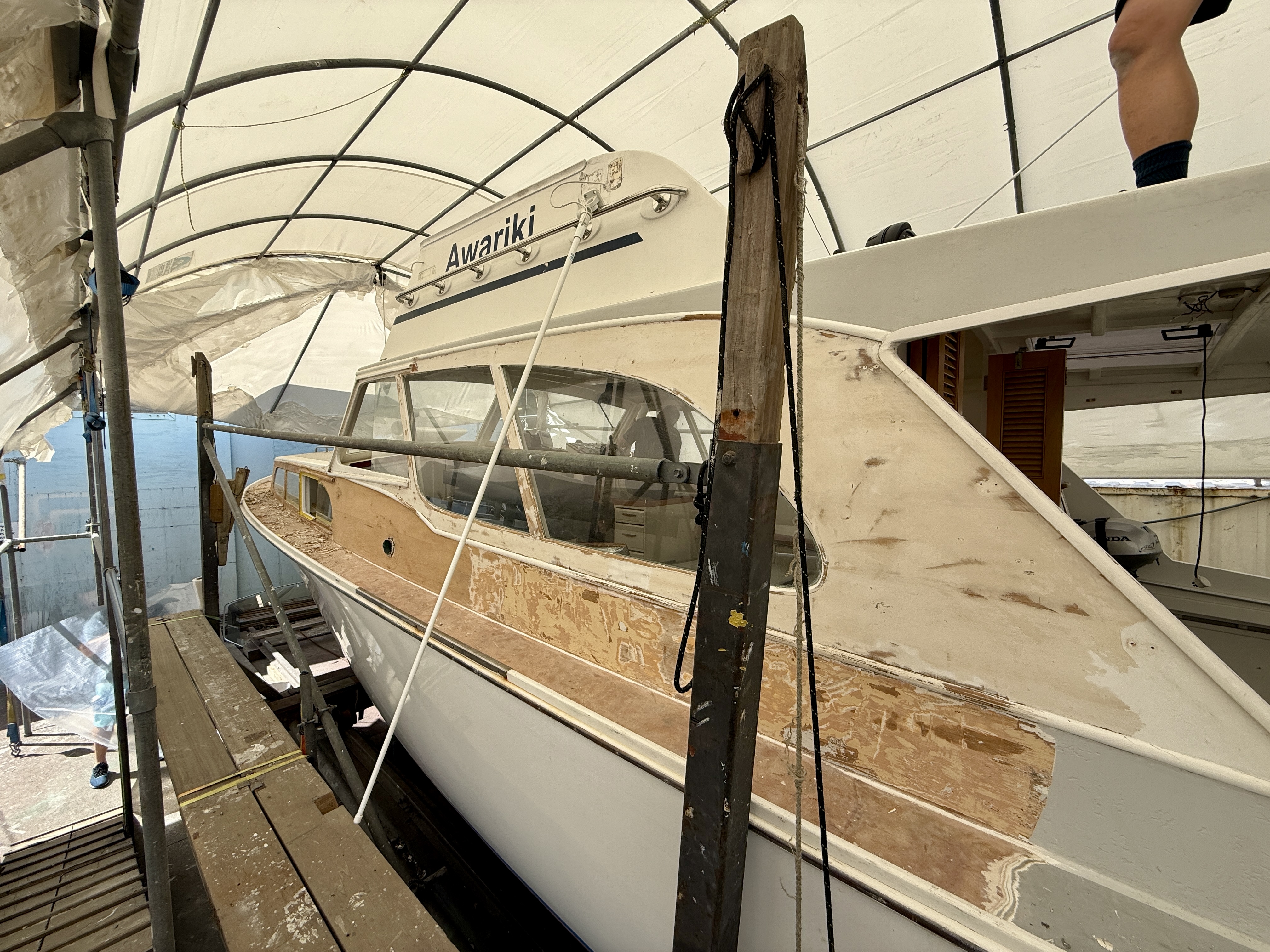
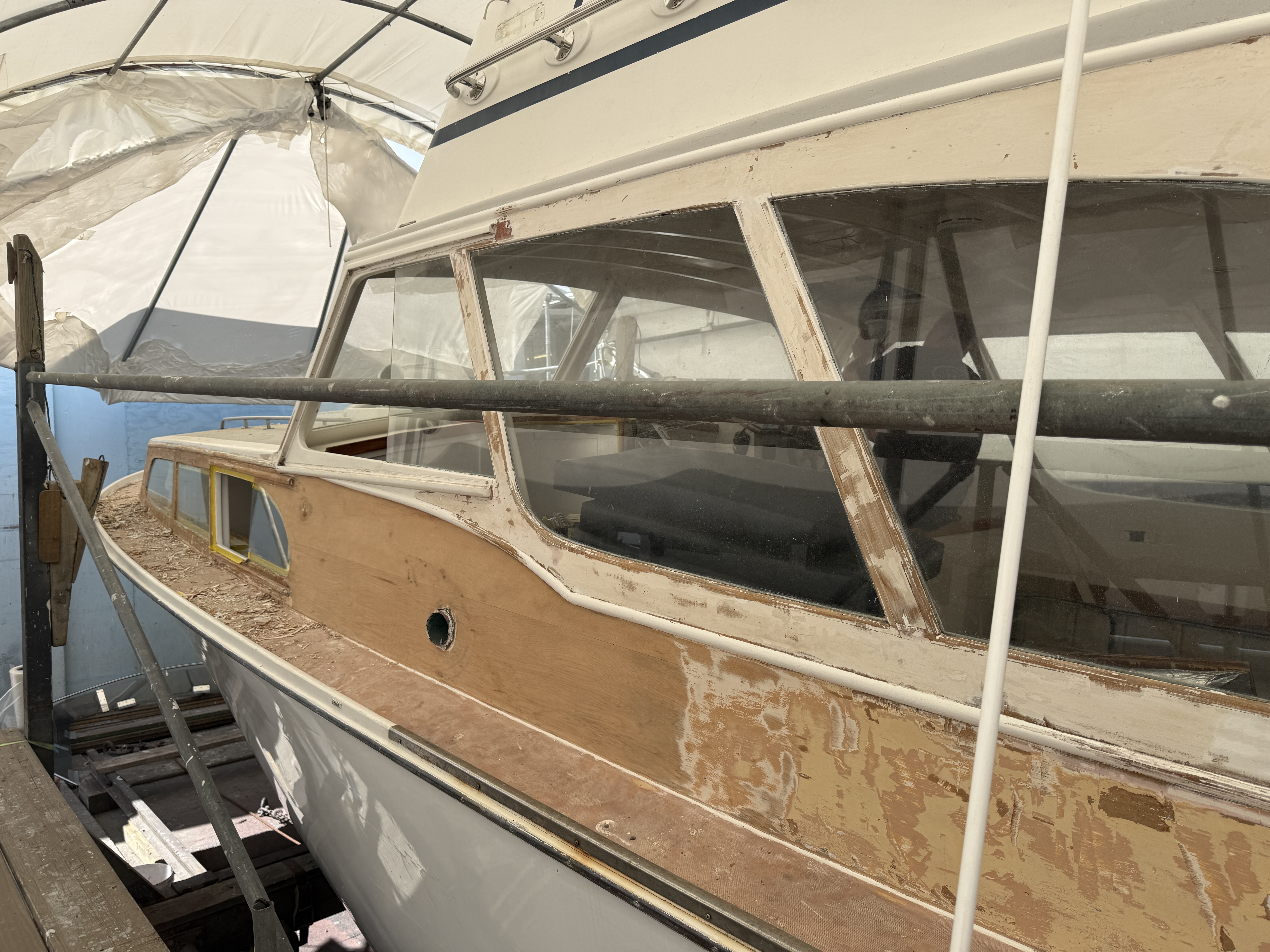
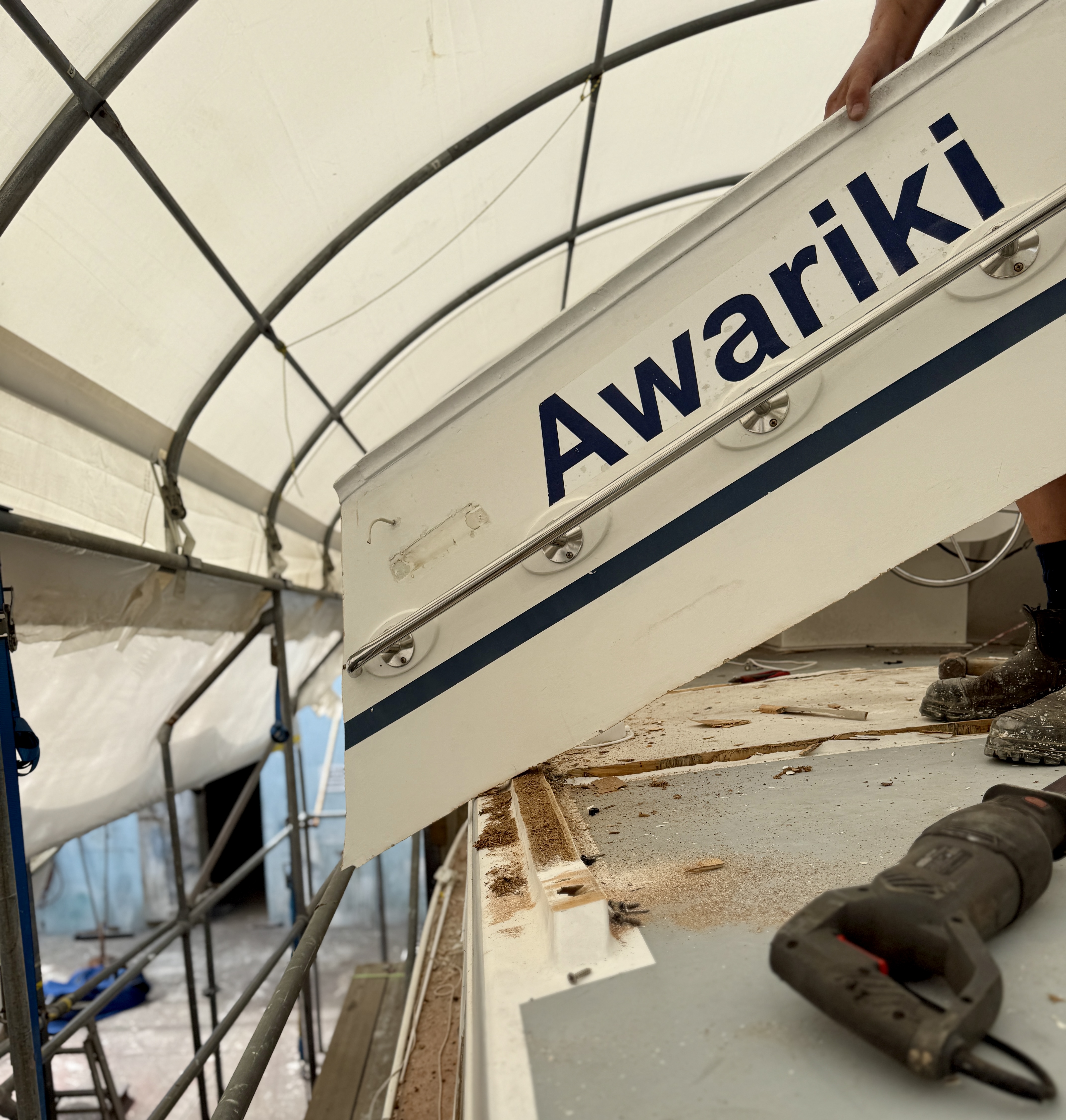
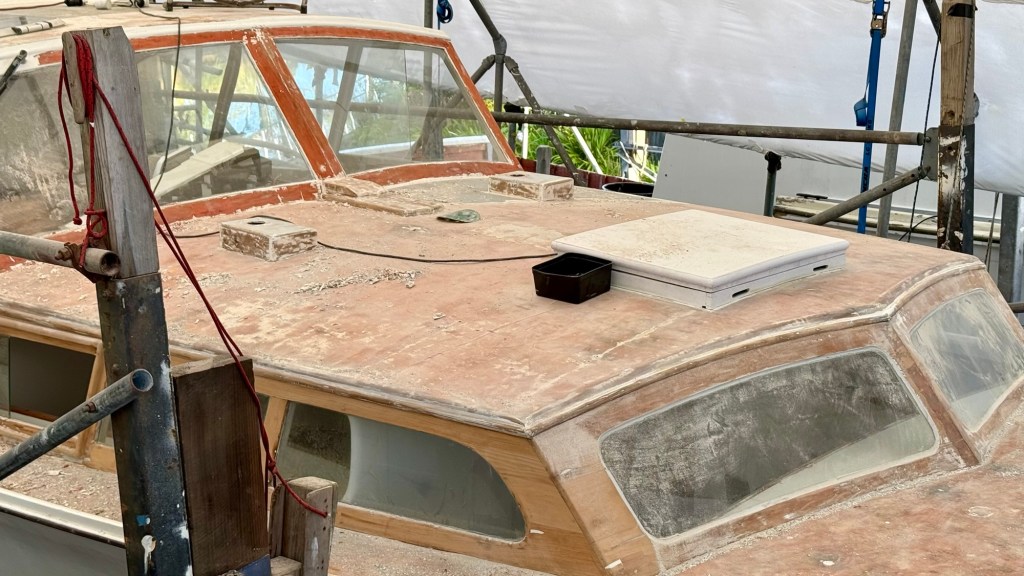
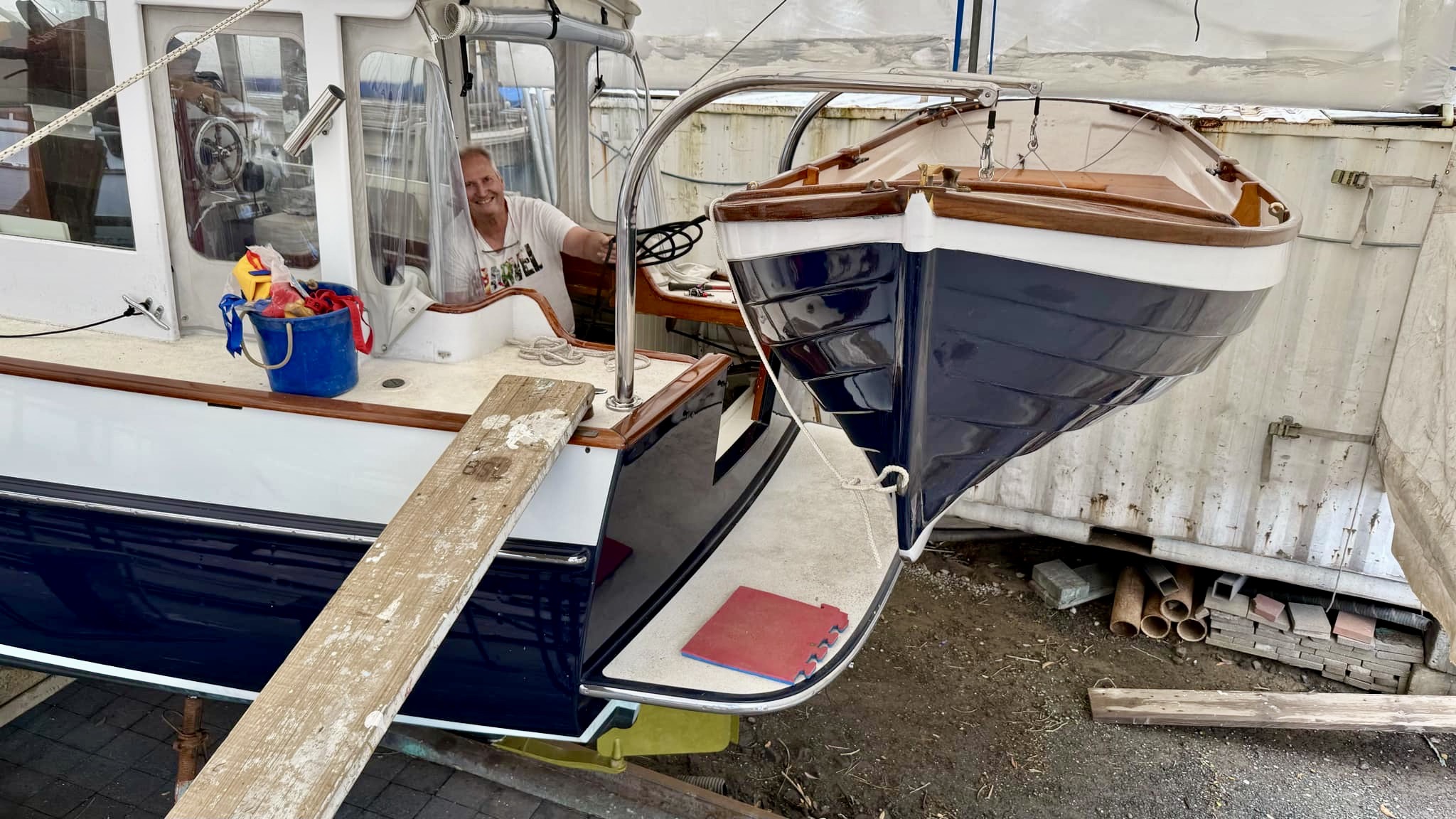
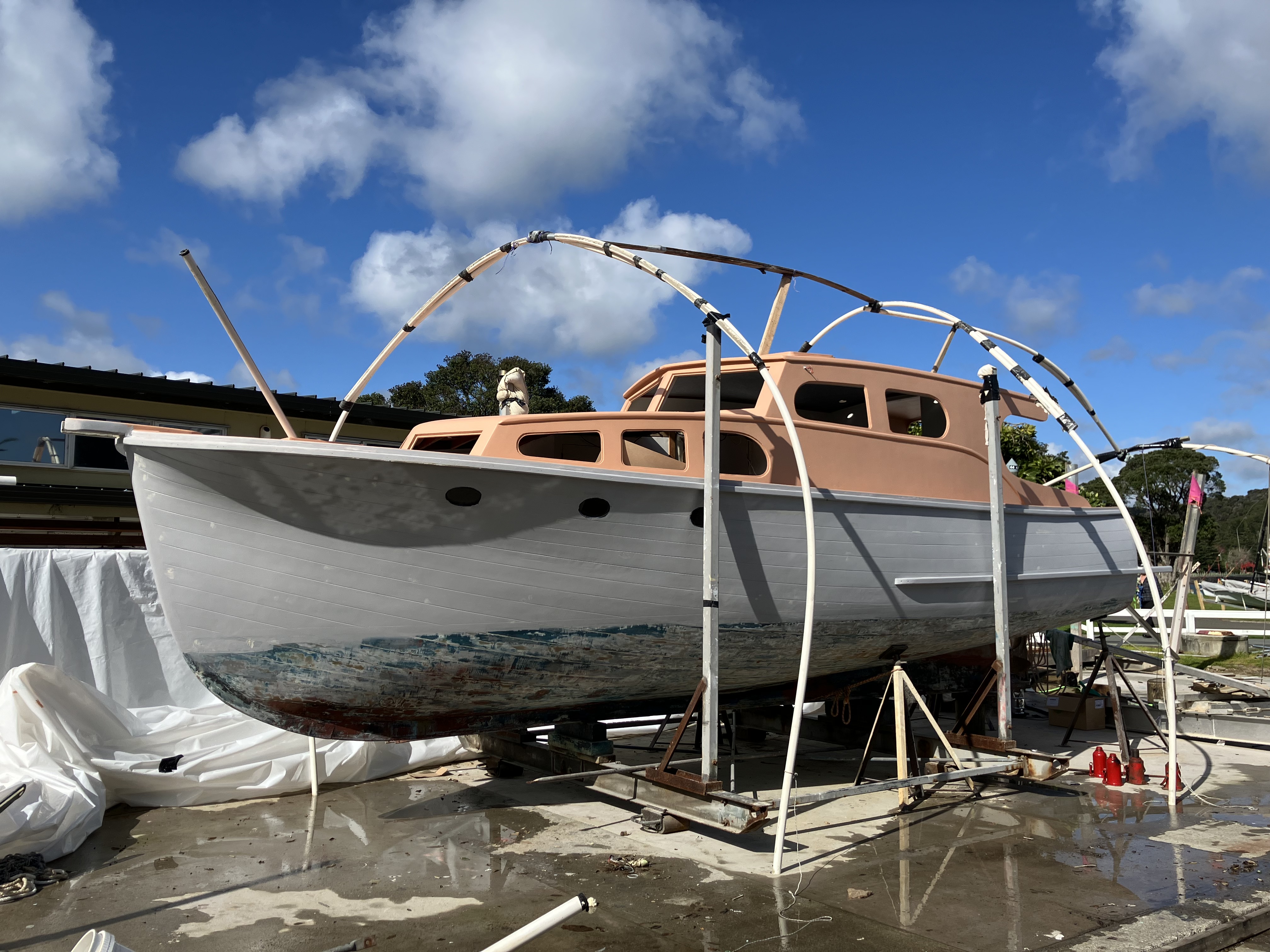
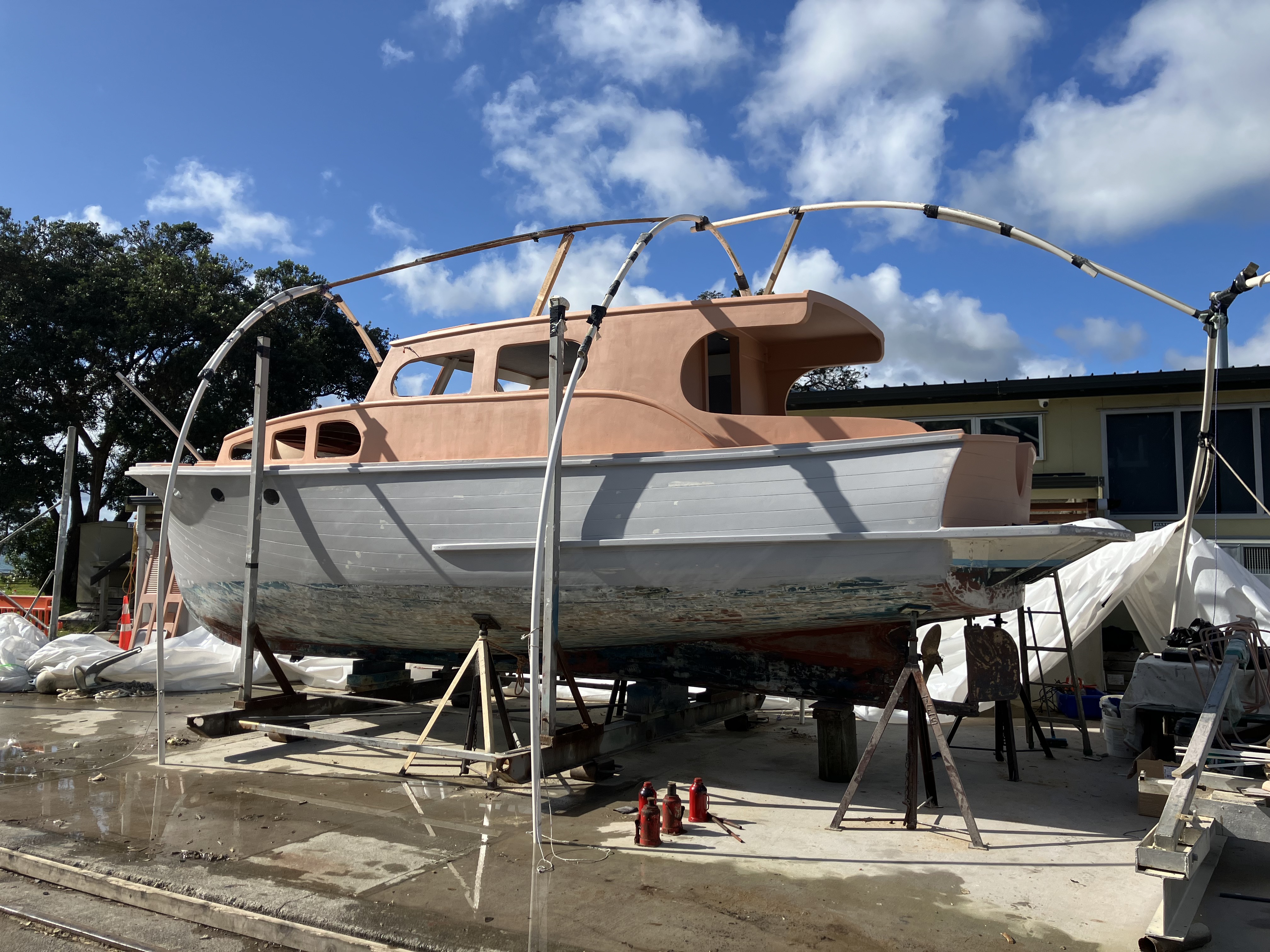
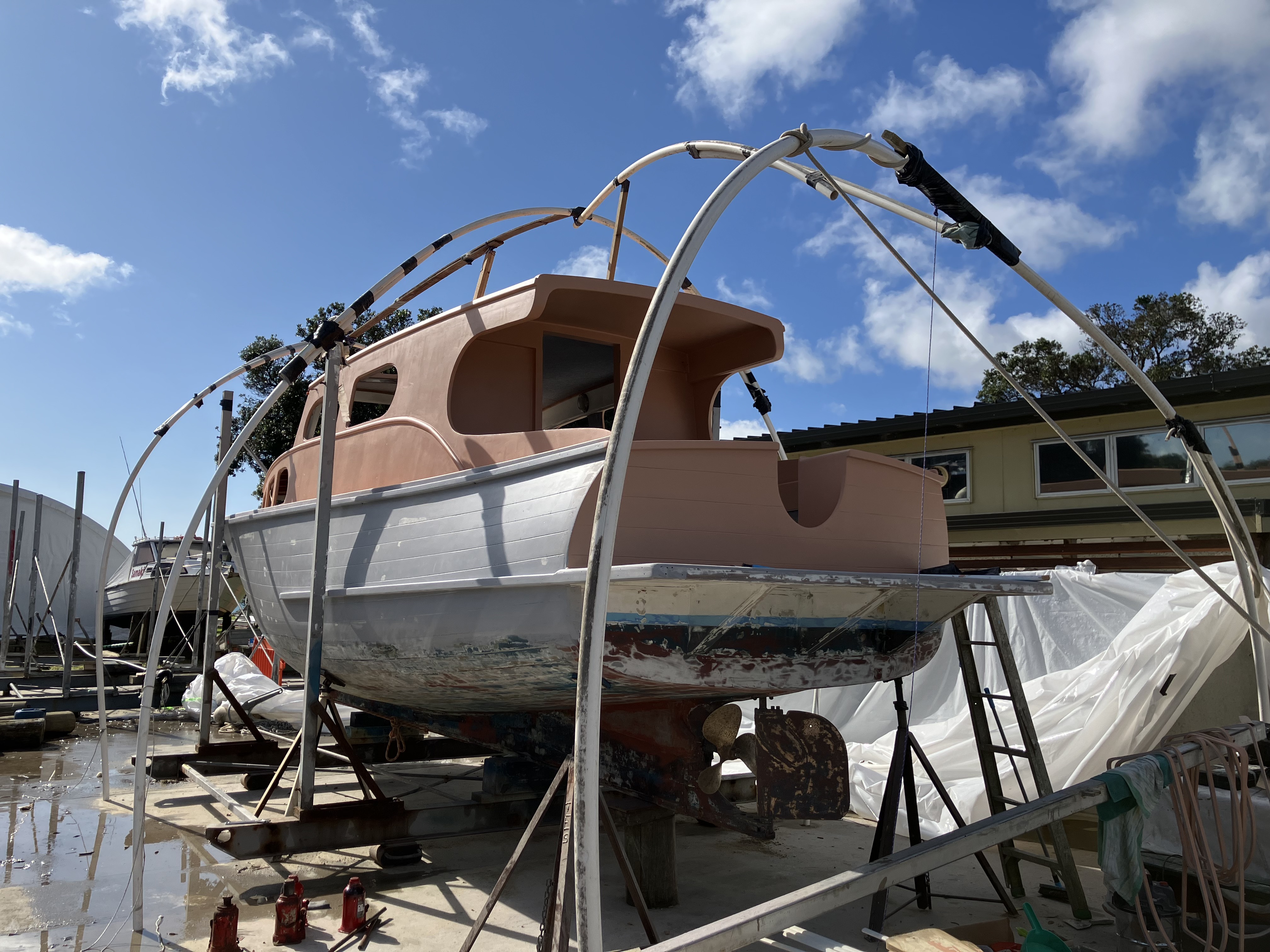
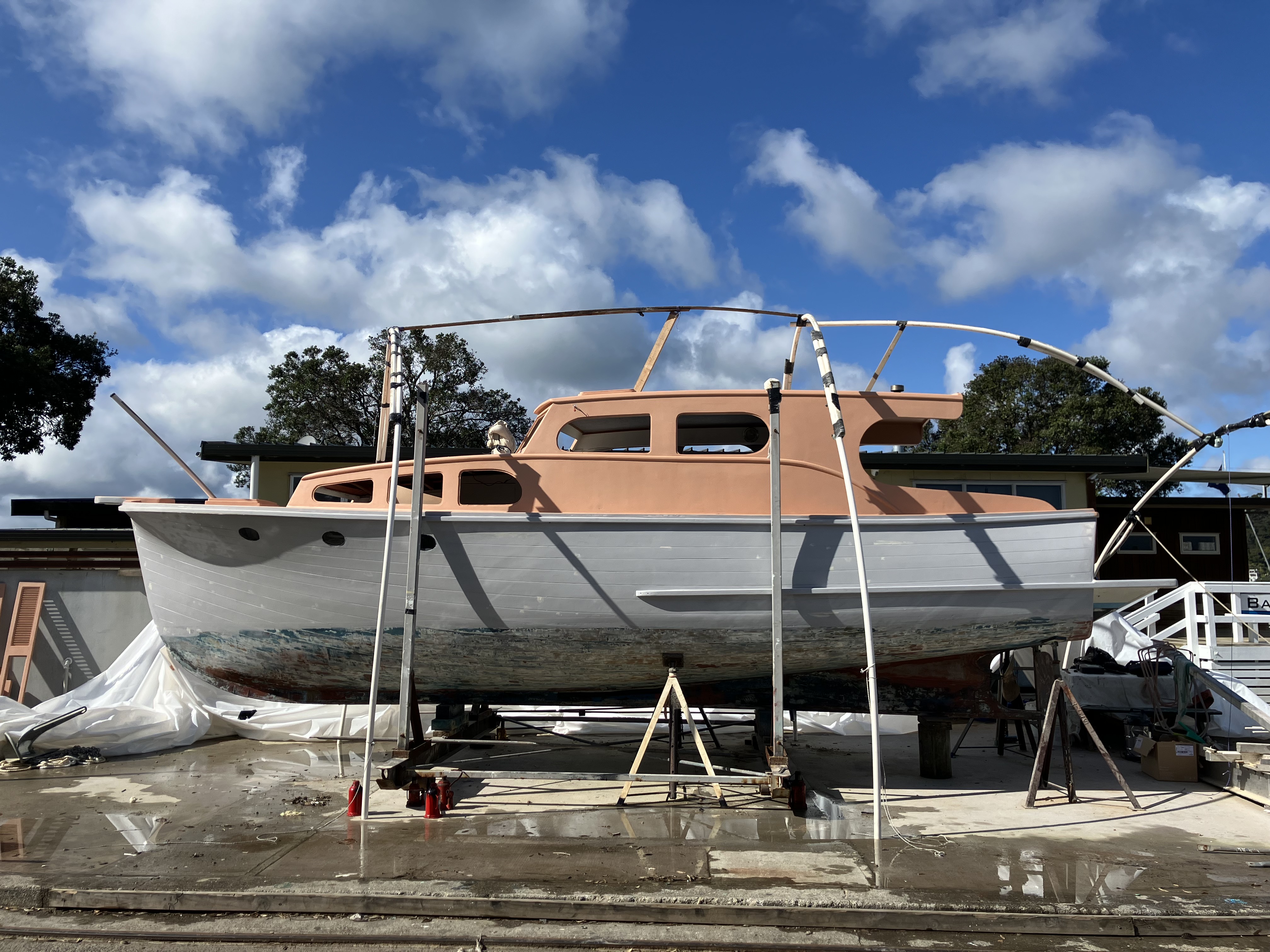
Stories like todays make me very happy – its no surprise to regular readers that I’m not a fan of fly-bridges on classic wooden craft, particularly ones that have been added post the original launch date.
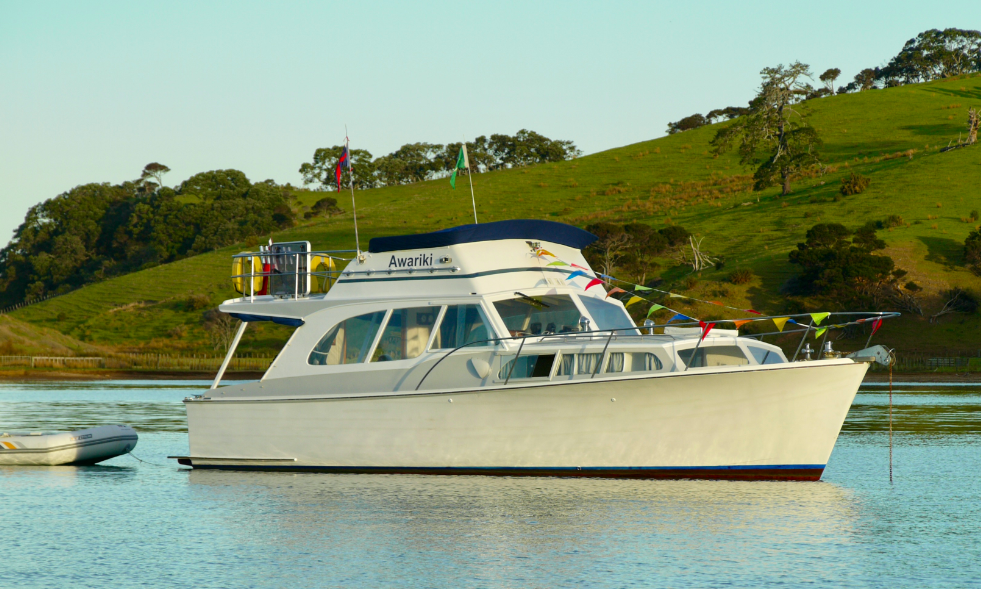
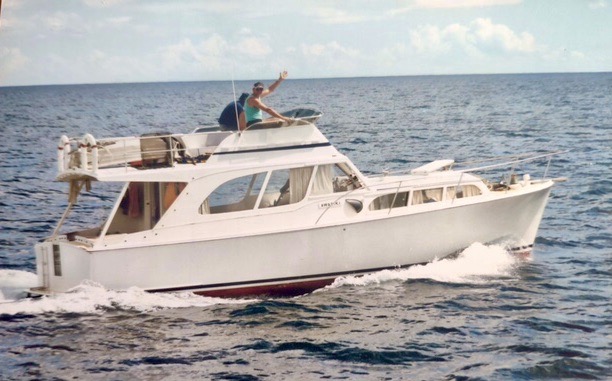
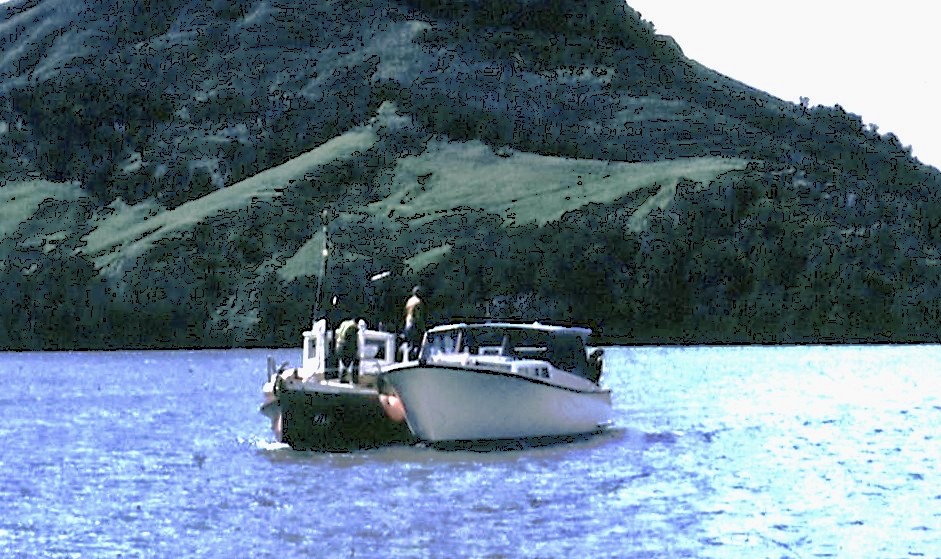
Last year when the Wooden Boat Bureau sold the 1967 Owen Wooley designed and built 32’ launch – AWARIKI there was a discussion with the new owners re the fly-bridge and I gave my standard line – “take it off now, otherwise you will get used to it and it will stay” 🙂
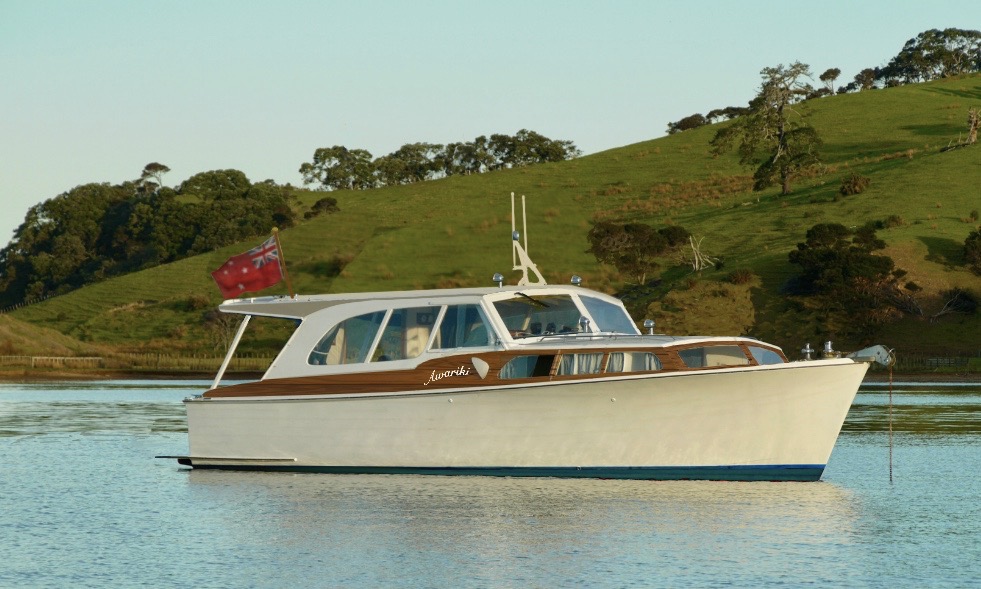
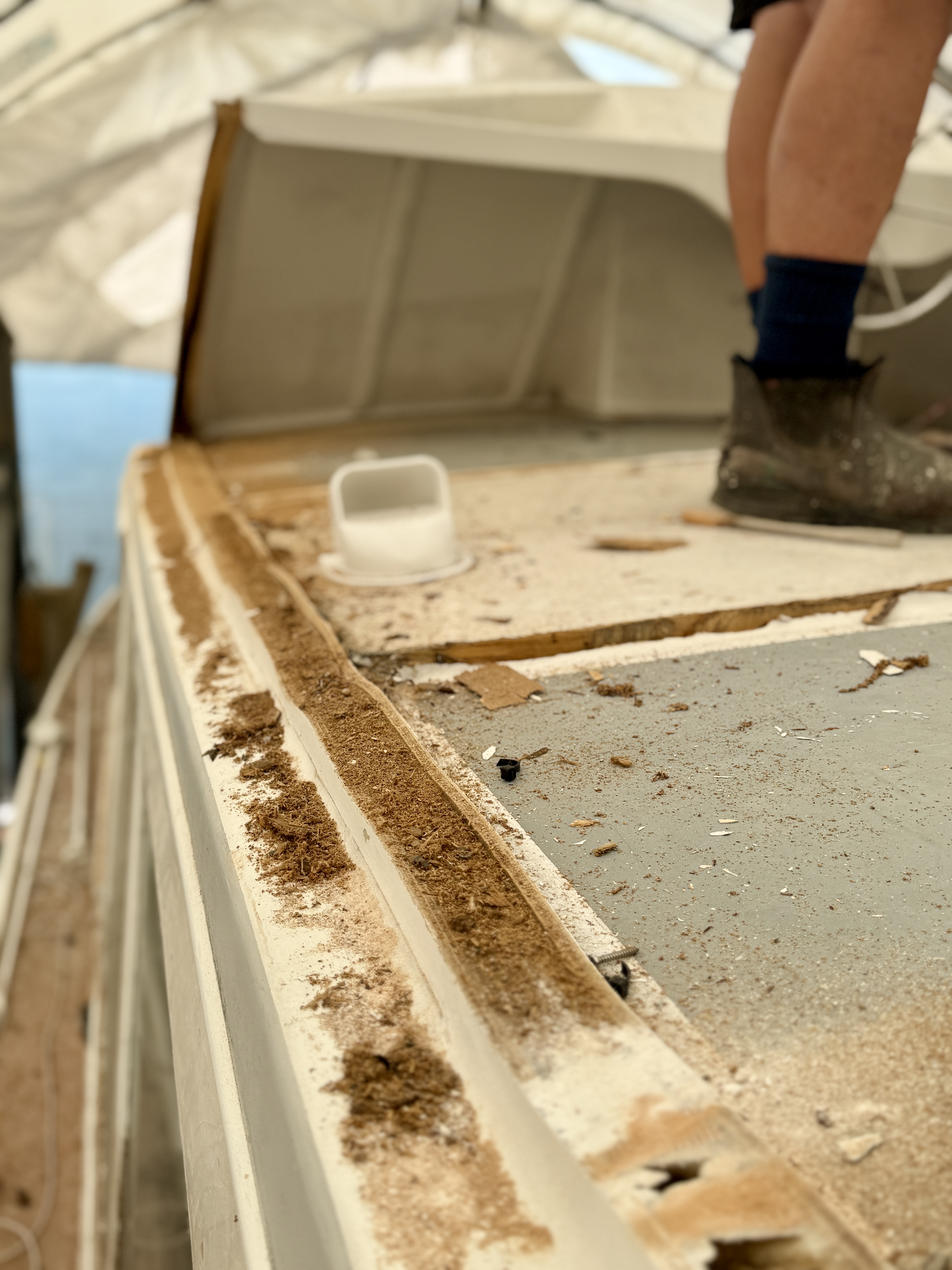
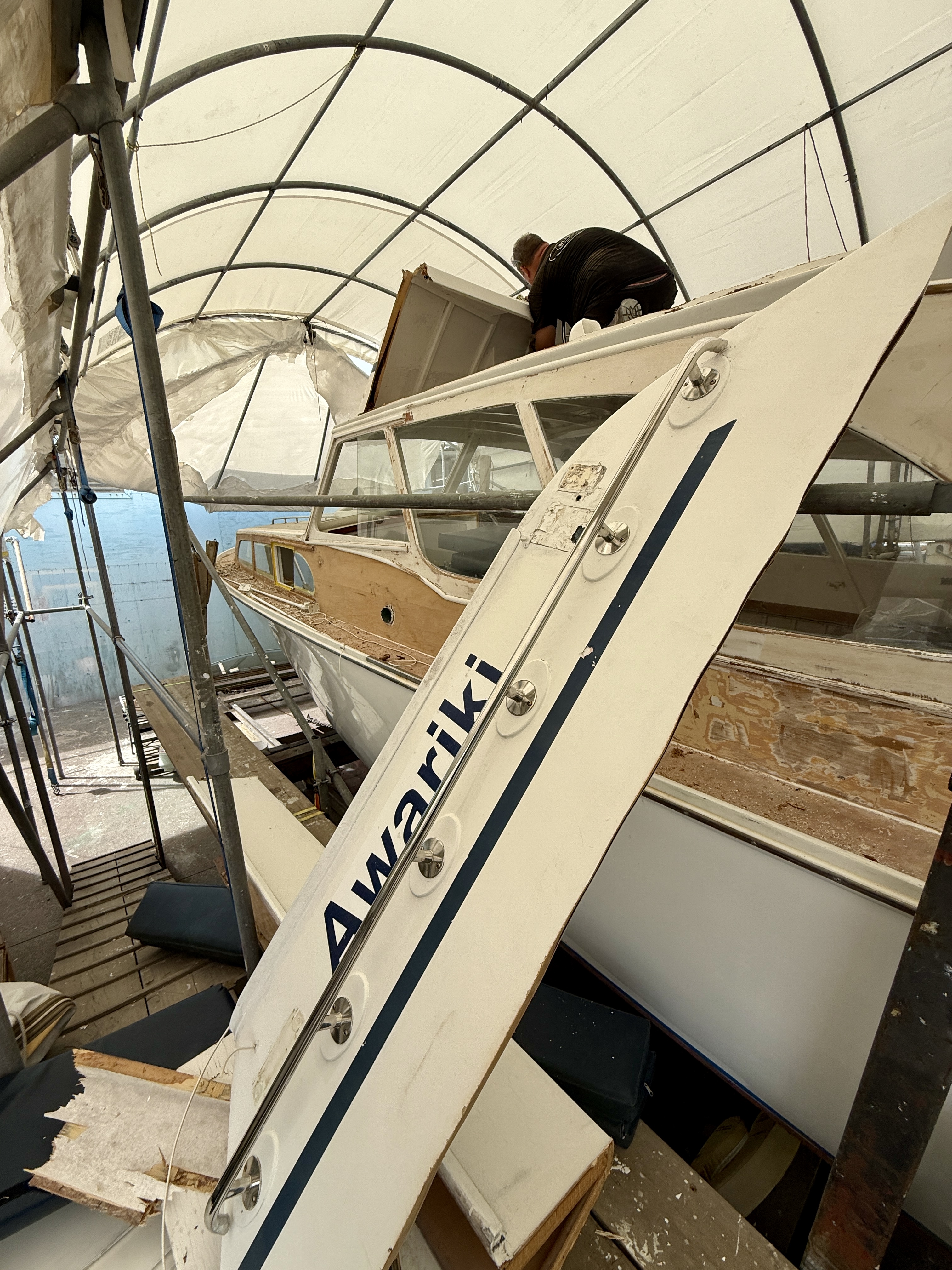
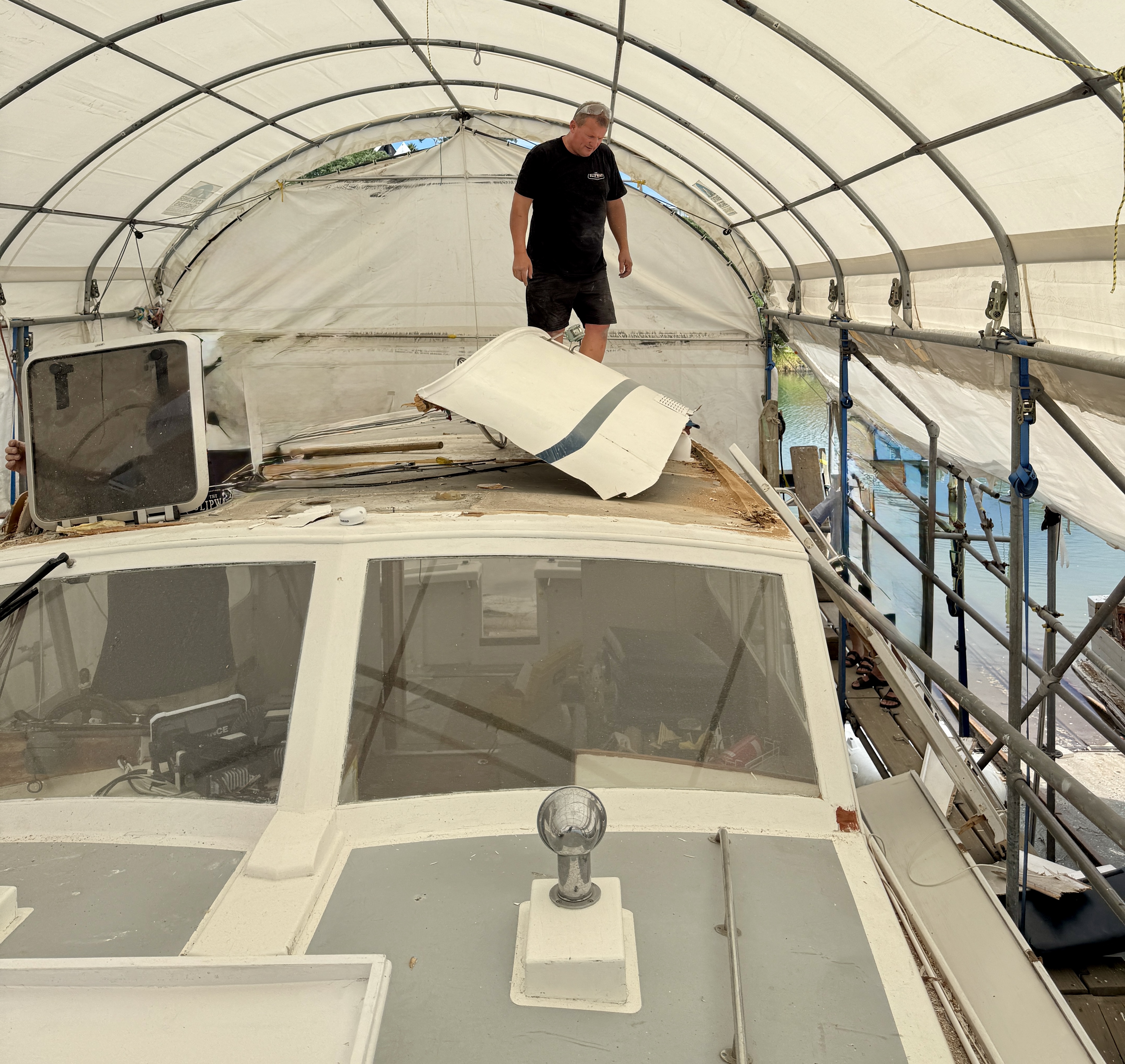
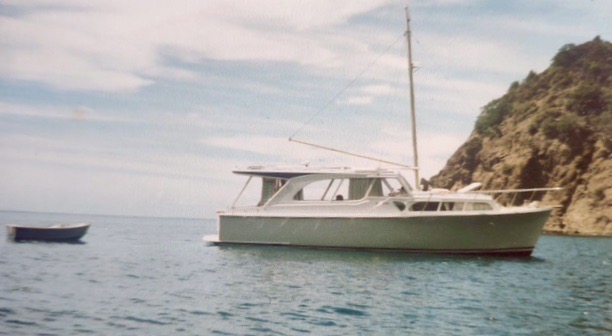
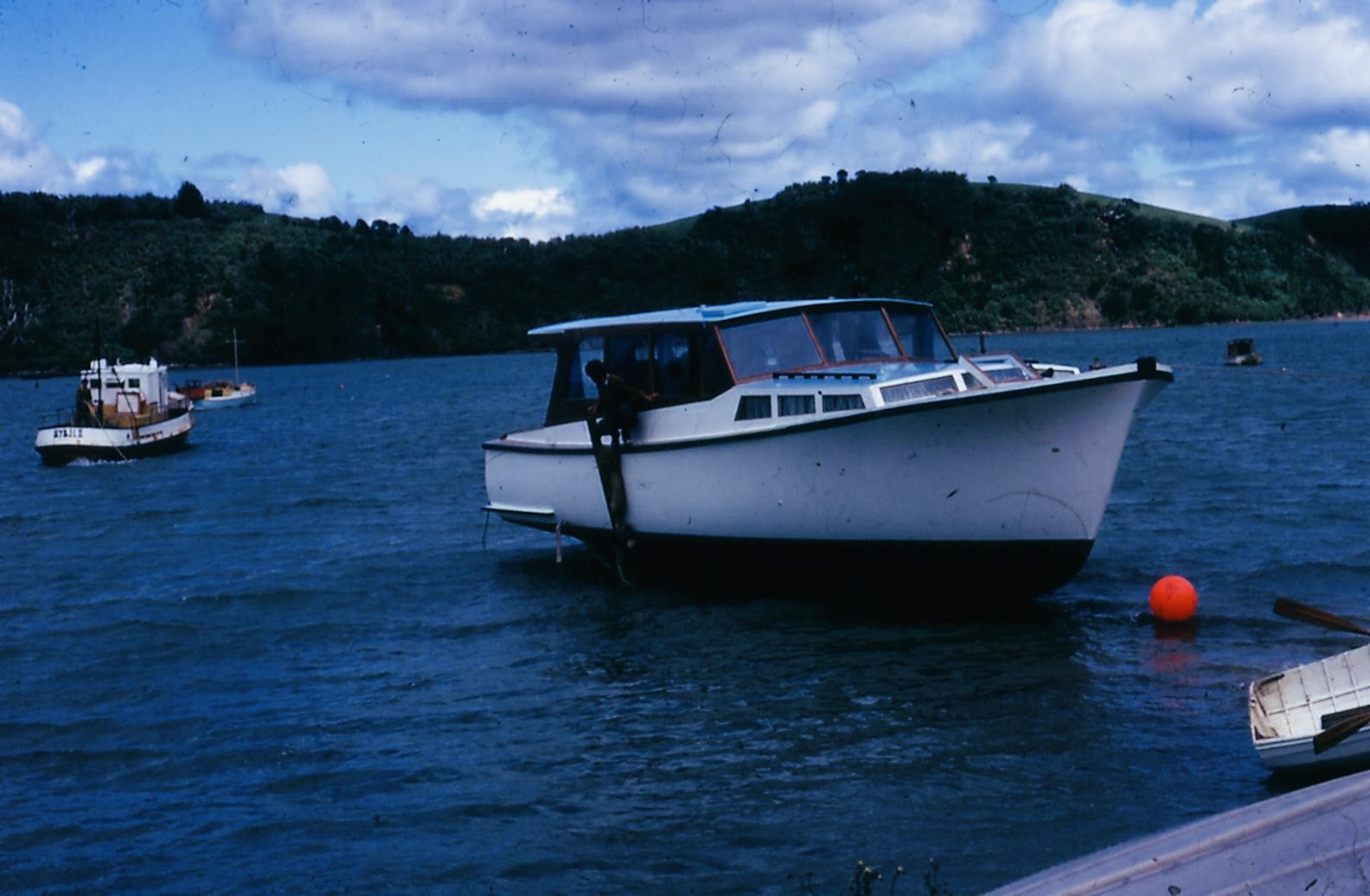
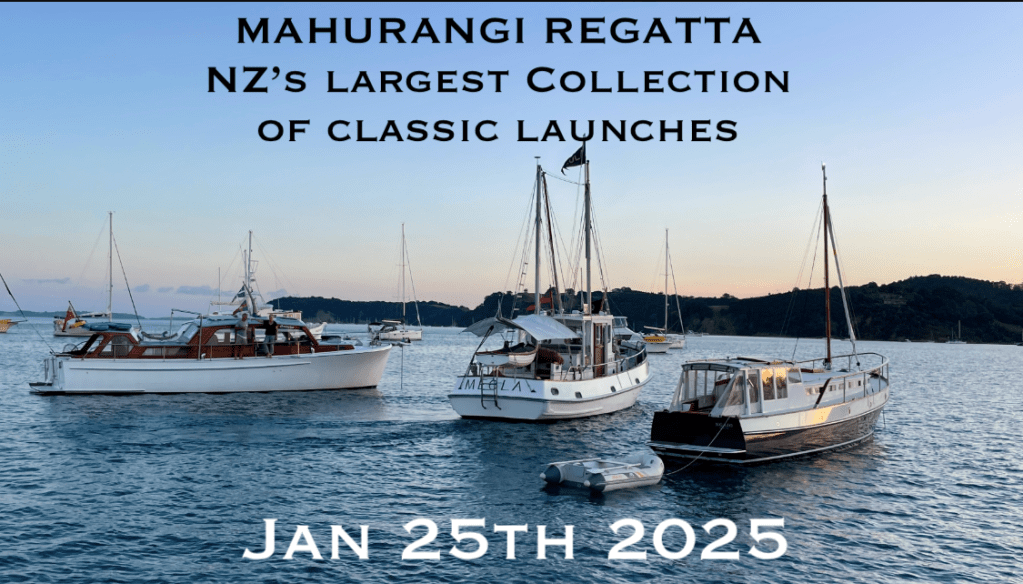
Fast forward to Monday night when I get an email asking about my thoughts on removing it. The launch was hauled out at the Slipway Milford and the crew there had been not so subtly suggesting to the owners to give the green light on removing it. The hardest working crew member at the yard – Maddie Malcom did some photo-shopping to a photo I took of AWARIKI in Chamberlain Bay (2nd one above) and the owners were sold 🙂
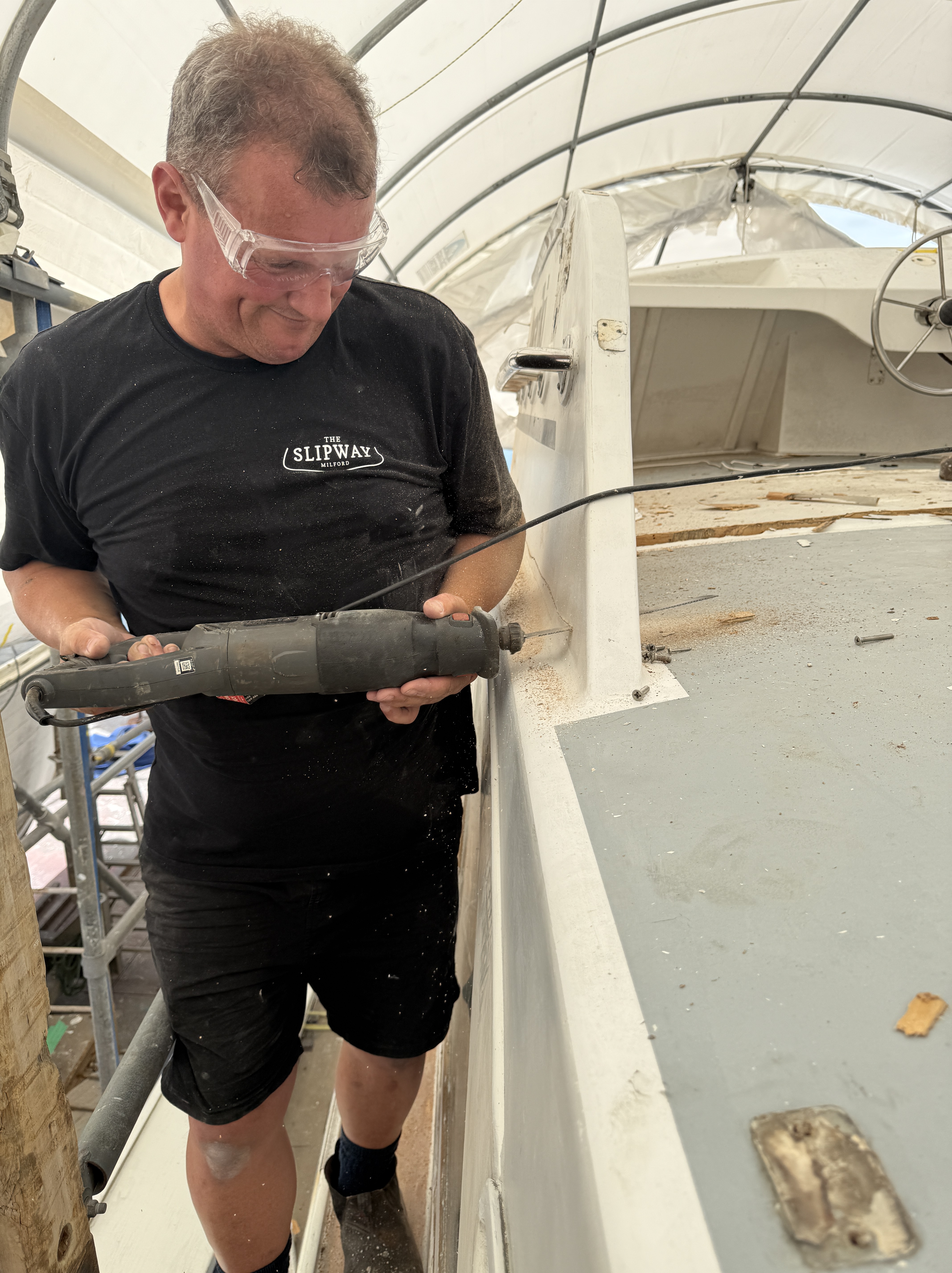
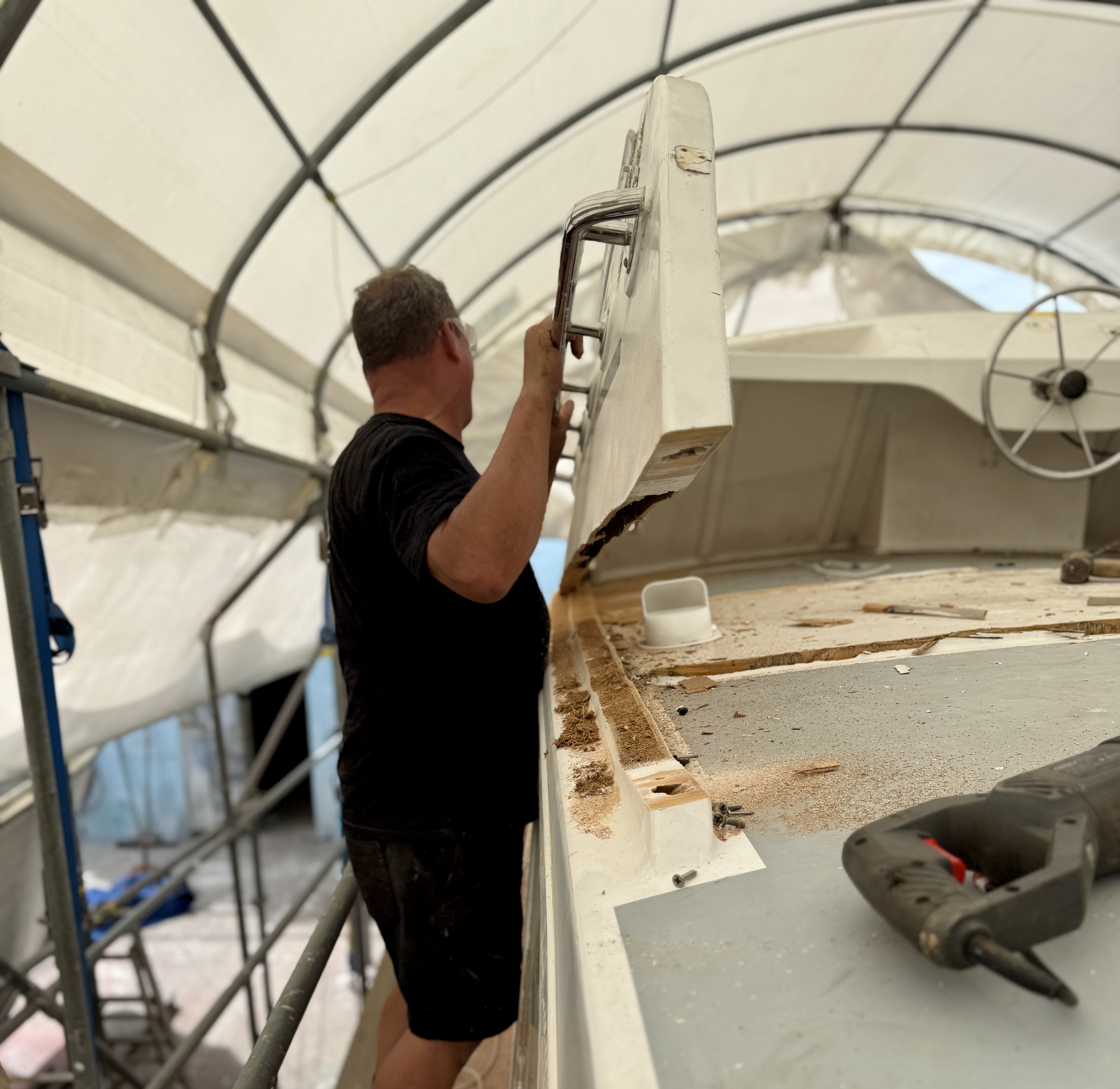
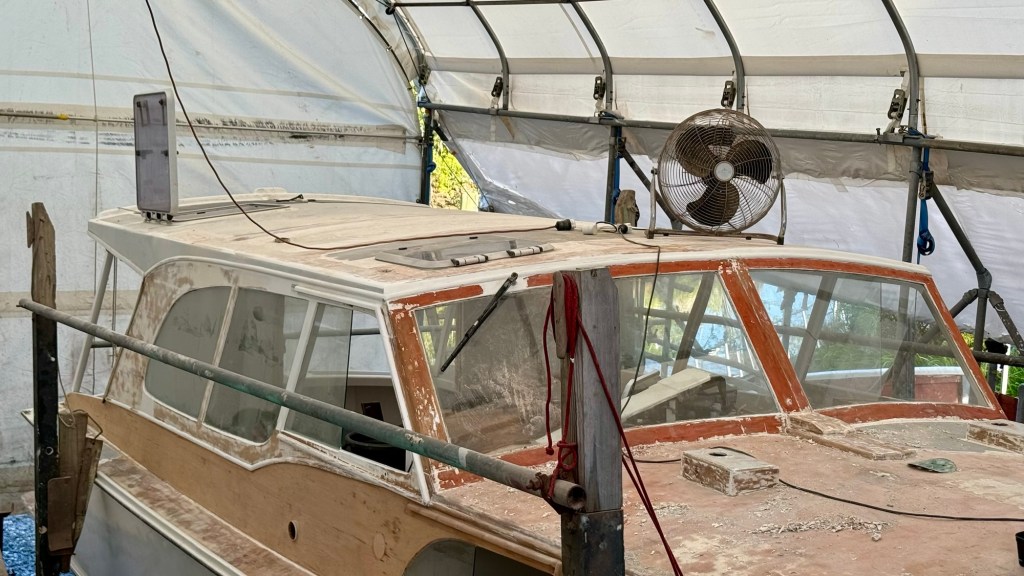
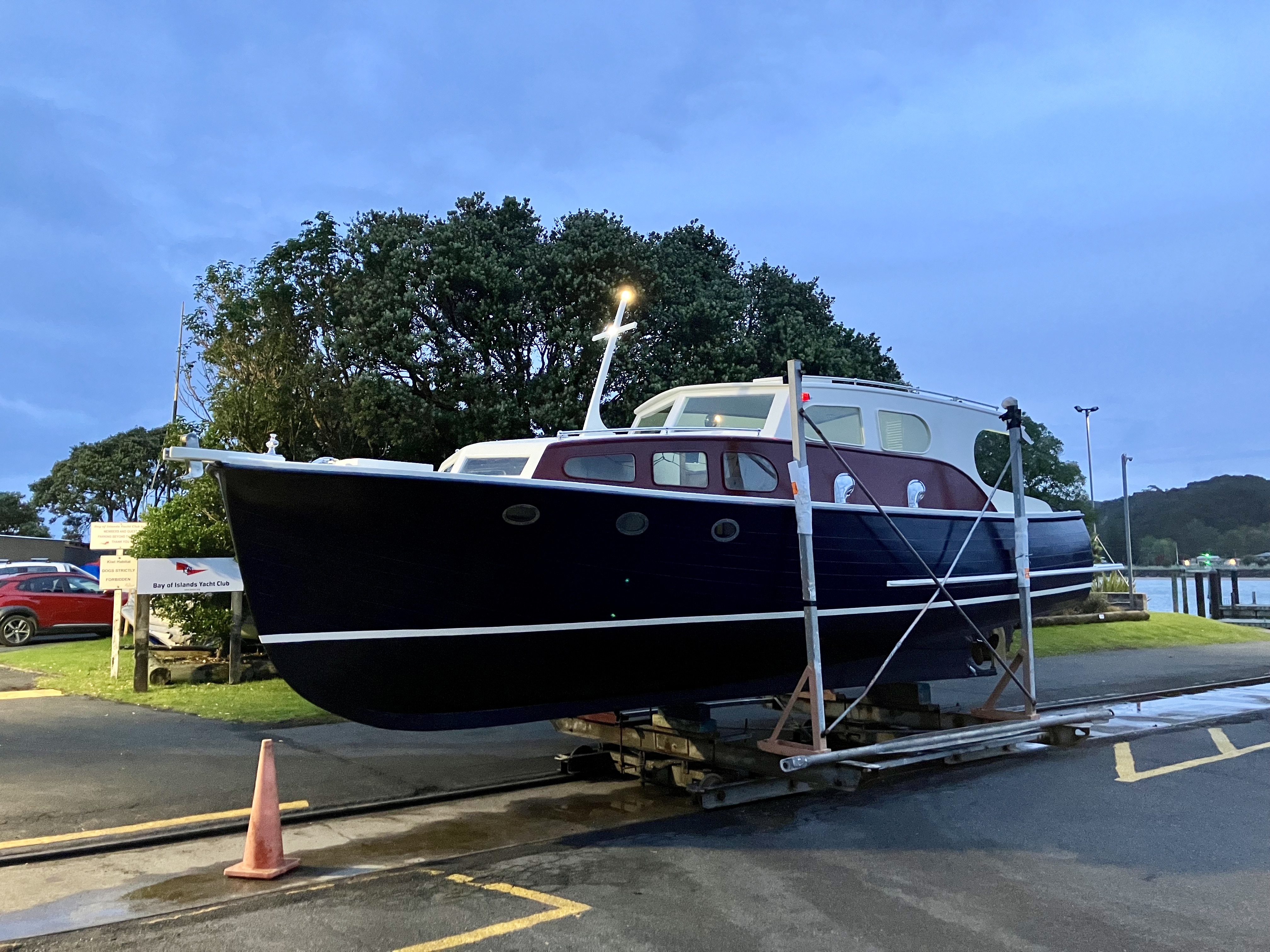
So flybridge gone, bow rail removed, coamings to be returned to vanish, new upholstery and some differed maintenance righted and she will be a ’new’ boat.
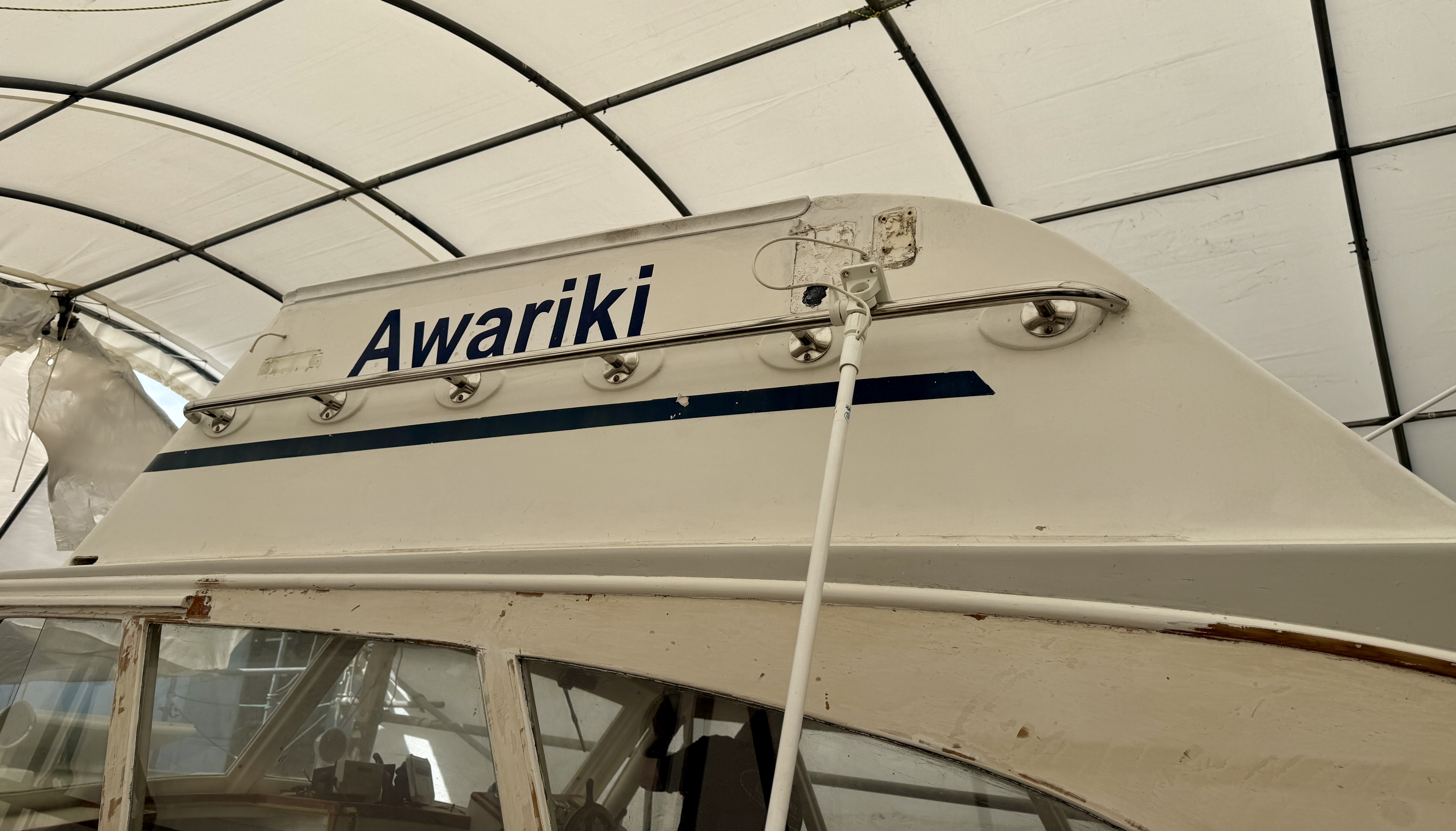
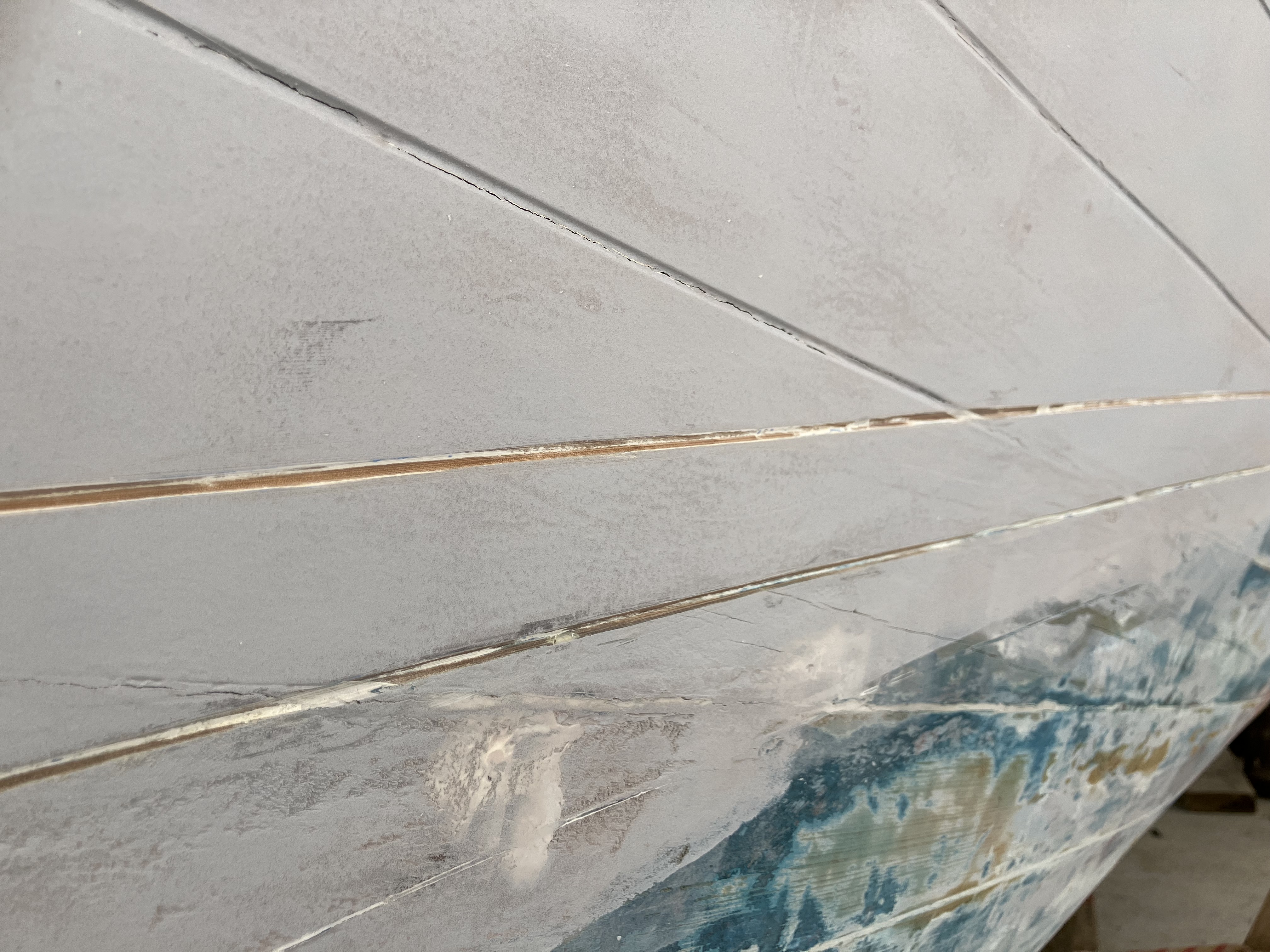
The photos above show Jason Prew in his happy place – top-chop is his middle name.
More to come as work continues ……. 🙂
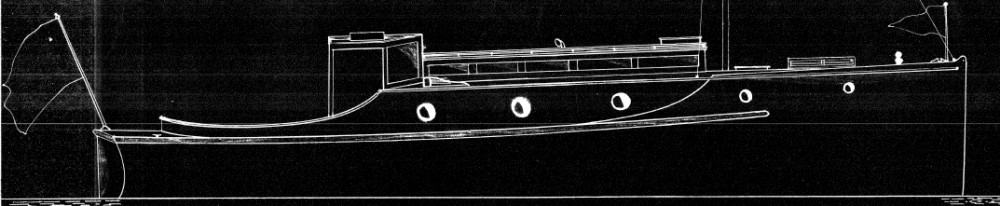
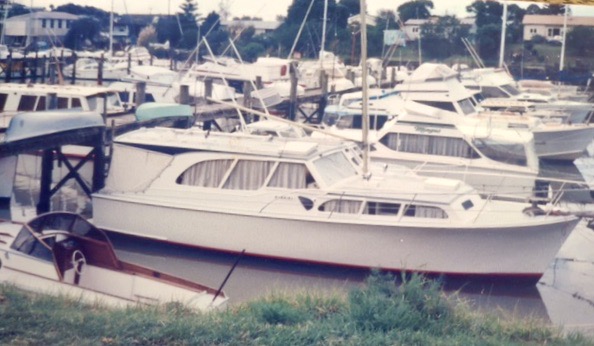
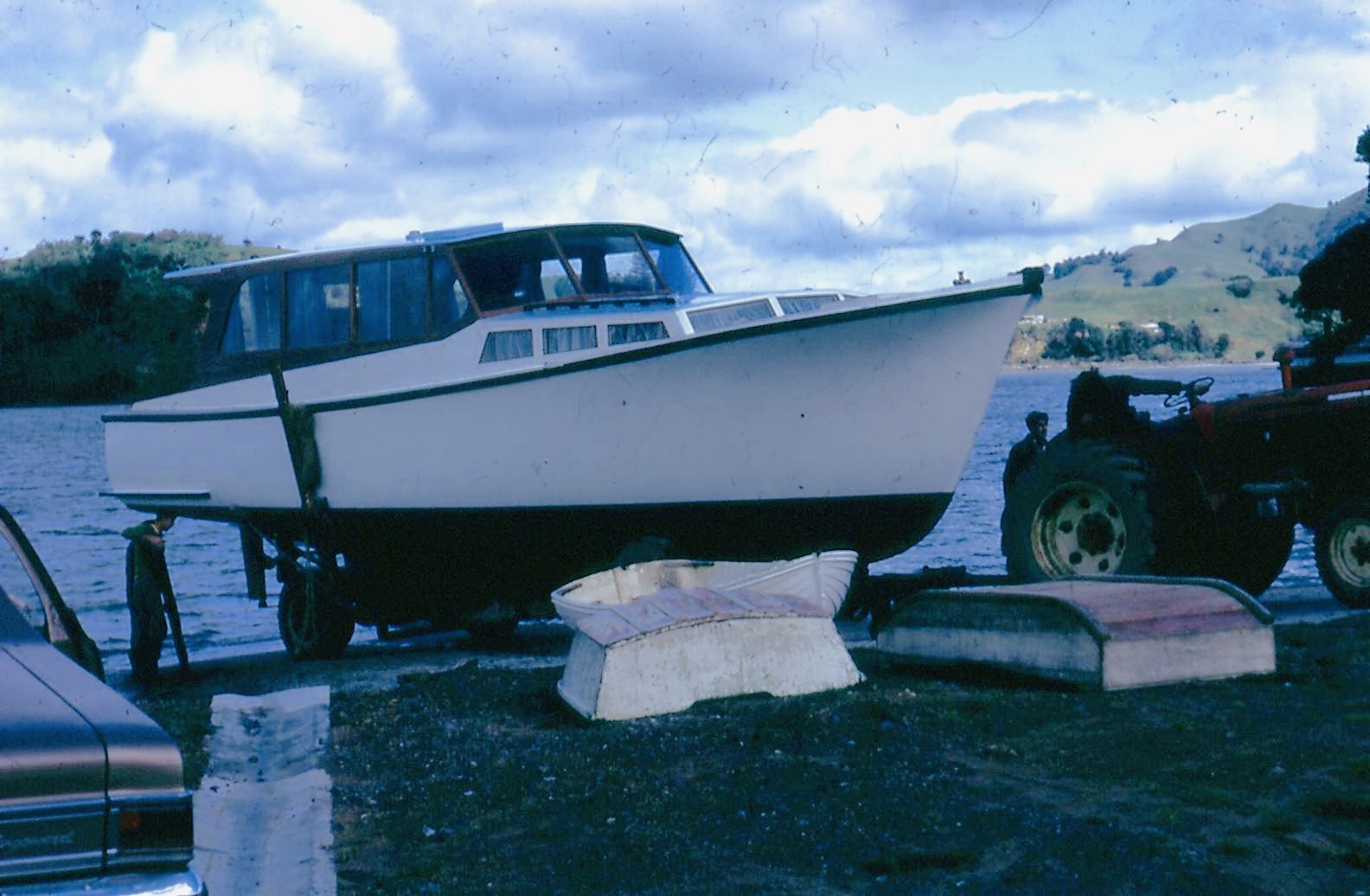
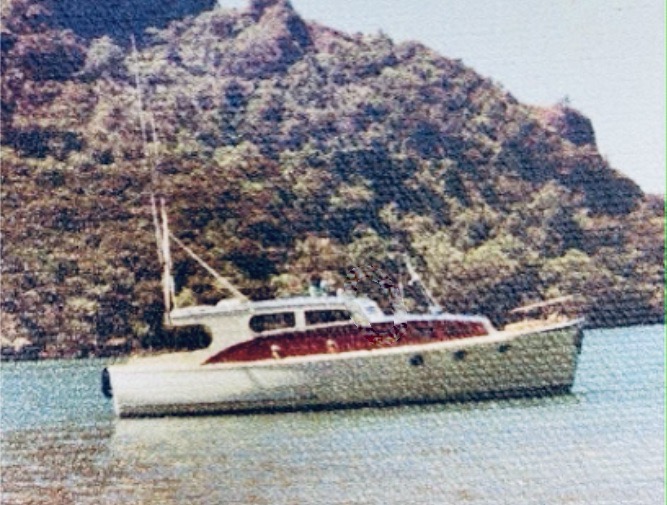
INPUT ex KERRY LILLEY – previous owner and also worked on the build of the launch whilst doing his apprenticeship at Owen Wooley’s yard. The photos below were given to Kerry by previous owners.. She originally had a mast (mast step still there). Kerry commented ‘Nothing stays the same I built and installed that flybridge 30 plus years ago’
BUILDING THE CLASSIC LAUNCH – GAY MERILYN (Tee Gee > Stokin) – Part Two
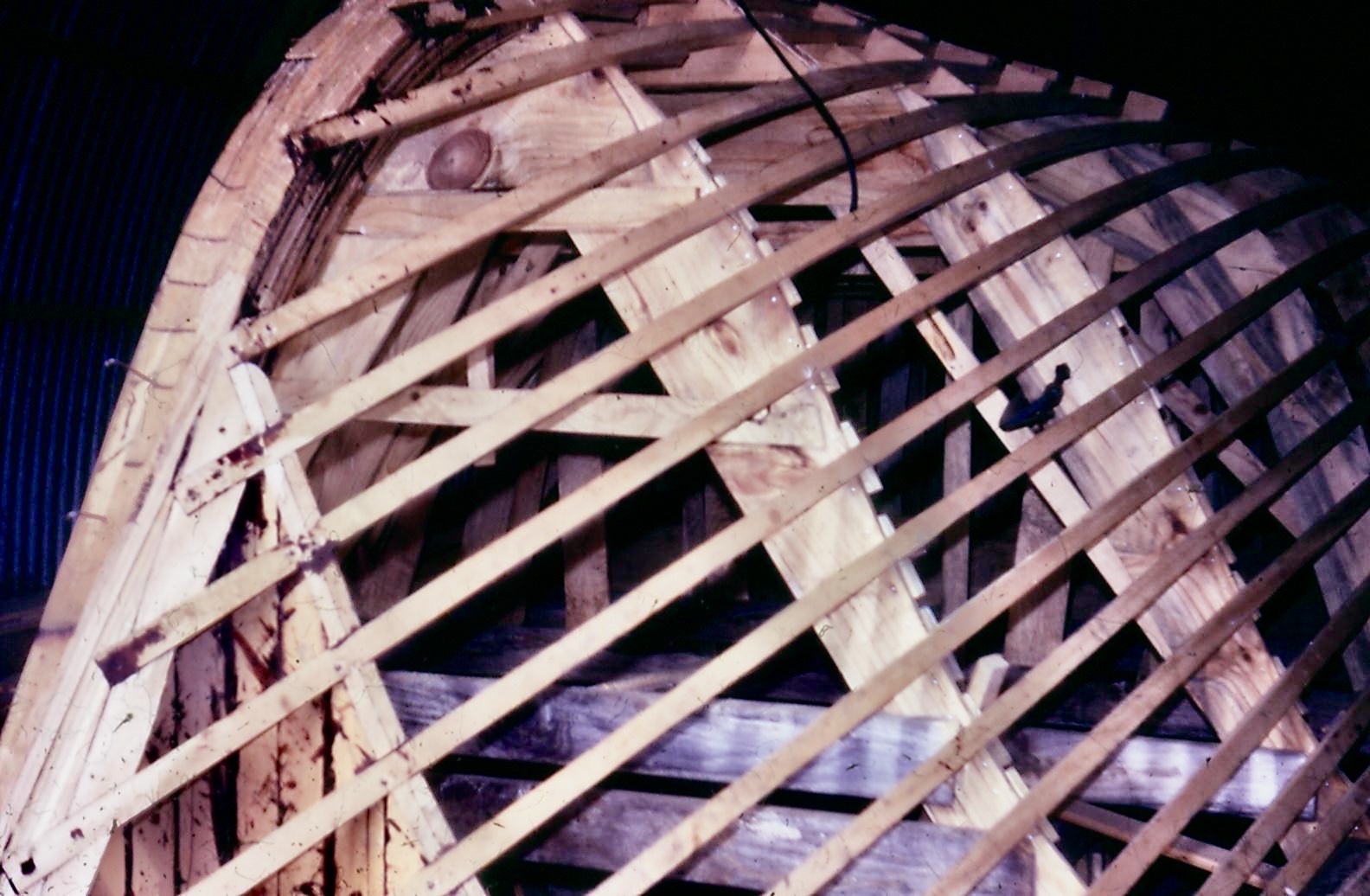
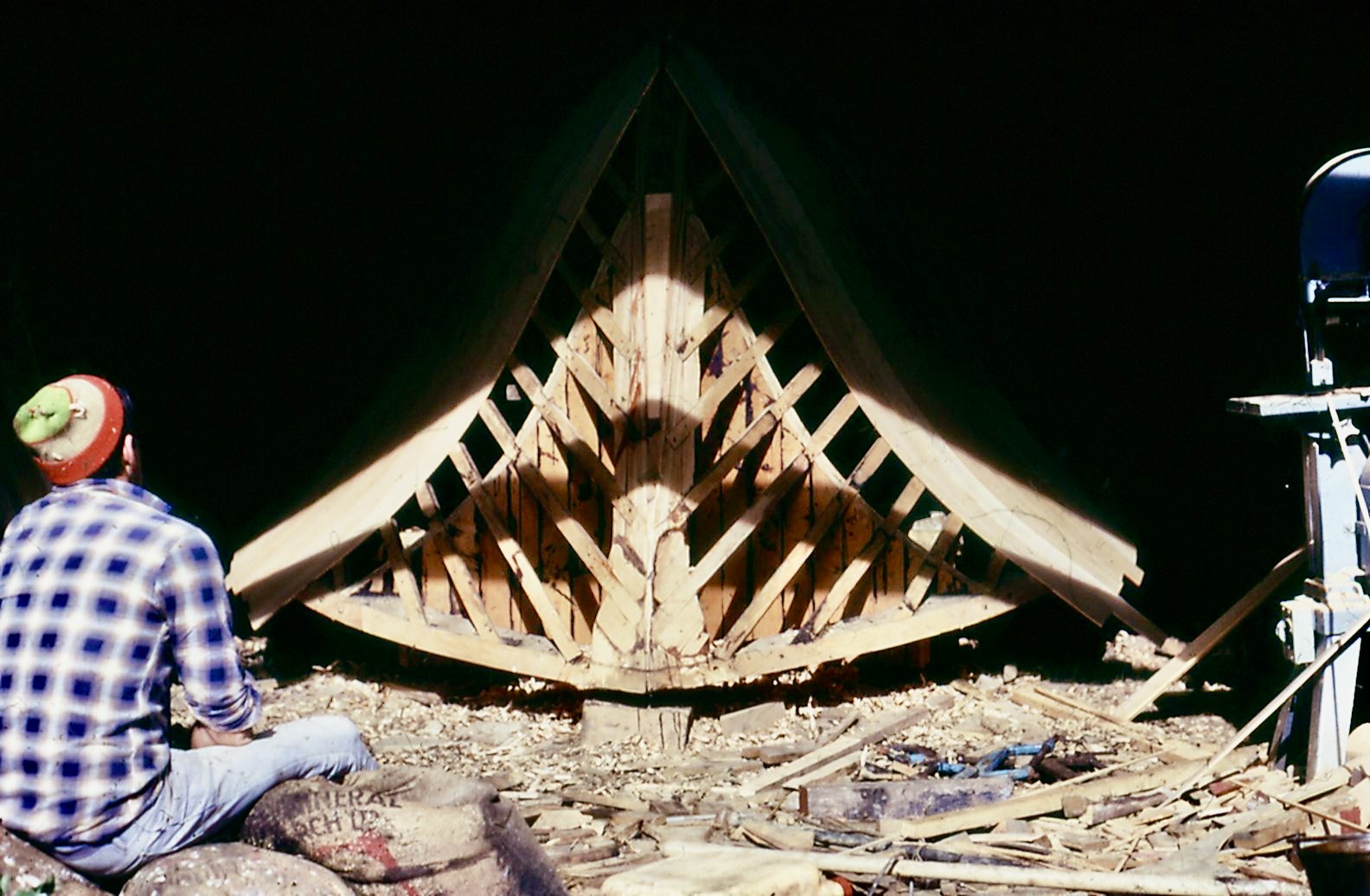
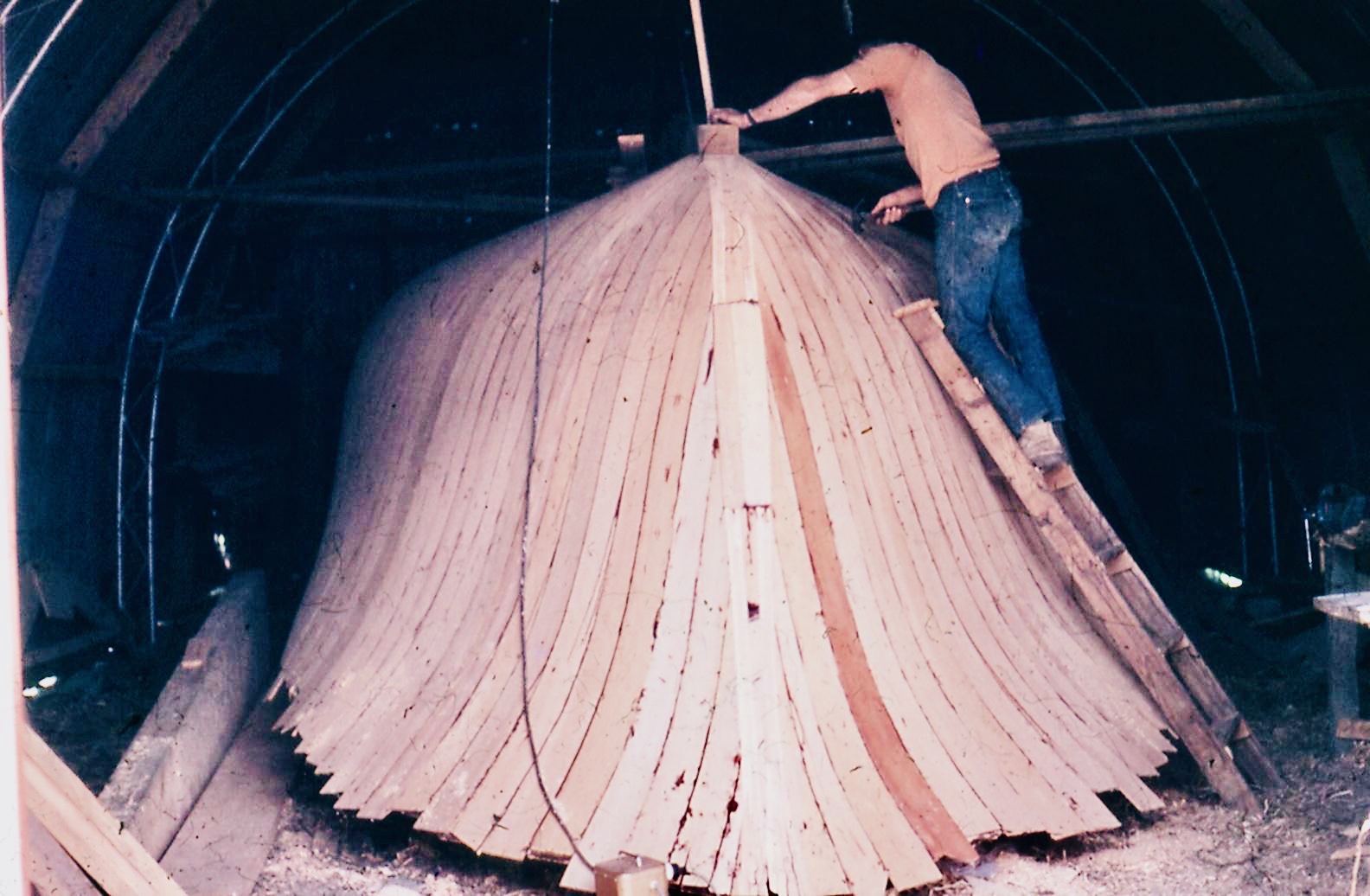
Following on from yesterdays story on the launch – GAY MERILYN, today thanks to more input from Gwenyth Frear we get an insight into the building of the launch – we hand over to Gwenyth to tell the story – Enjoy (photo ex 35mm slides)
“We had always had boats of one sort or another, and owned the launch LORNA DOONE at this time, but that’s another story! Keith decided he would build another one more to his liking….
Keith thought he would like to build launch about eleven and half metres long, so when we went to Auckland in late 1969, we went to one of the large bookshops to see if we could find some plans. But as we were starting to look at design books, there didn’t seem to be anything he wanted. Someone overheard us discussing plans and the pros and cons of the matter, and tapped Keith on the shoulder. “You should get in touch with John Lidgard he’s the man who can help you”, he said. So, no sooner said than done!
We found out where he was and went to see him in his workshop and came home with a set of plans, a bandsaw, an abundance of enthusiasm, and not much else. In the course of our looking around, we made the acquaintance of one of the workmen working for John. He said he came up to Cooper’s Beach each year for his holidays, and that he would look us up and see how Keith was getting on. No doubt he was fascinated by the idea of a raw farmer tackling a tradesman’s job with no know-how, and no equipment!!
Keith mentioned to the manager of Northland Motors in Kaitaia, that he was thinking of building a boat, and the next thing we got notice that there was a motor sitting in the shop waiting for us!! Now we were well committed to the job!! So Keith and Barry (my brother) got down on the floor at home and started drawing out the plans from the instructions Keith had been given.
The Big Building Project
The first thing to do was to order the timber from Lane and Sons’ timber mill at Totara North. Keith was able to get timber from the last of the kauri trees that were milled there before the restrictions came in that no more kauri was to be cut down.
We were milking a sizeable herd of cows at this time (two people in a walk through cowshed) , and there was all the usual farm work to be done as usual, so we knew it would be a slow job.
The question was where to build it? That was no problem….there was the round barn next to the cowshed. So it was cleaned out and the work began. The first job was to put the building frames in place, starting at the bow of the boat, and placed in order the full length of the boat. Once this was done, then the stringers went on, all screwed and glued into place. The four skins of the kauri went on, one by one, placed diagonally a different way each time. This was the most tedious job of the lot. For a whole twelve months, nothing was done after the first skin went on, until an older man took pity on him and came to give a hand now and then. After that was done, then the fibre-glassing was done….the first coat of resin was put on over fibre-glass cloth, sanded down, and then another coat of resin before the final coat of white fibre-glass paint.
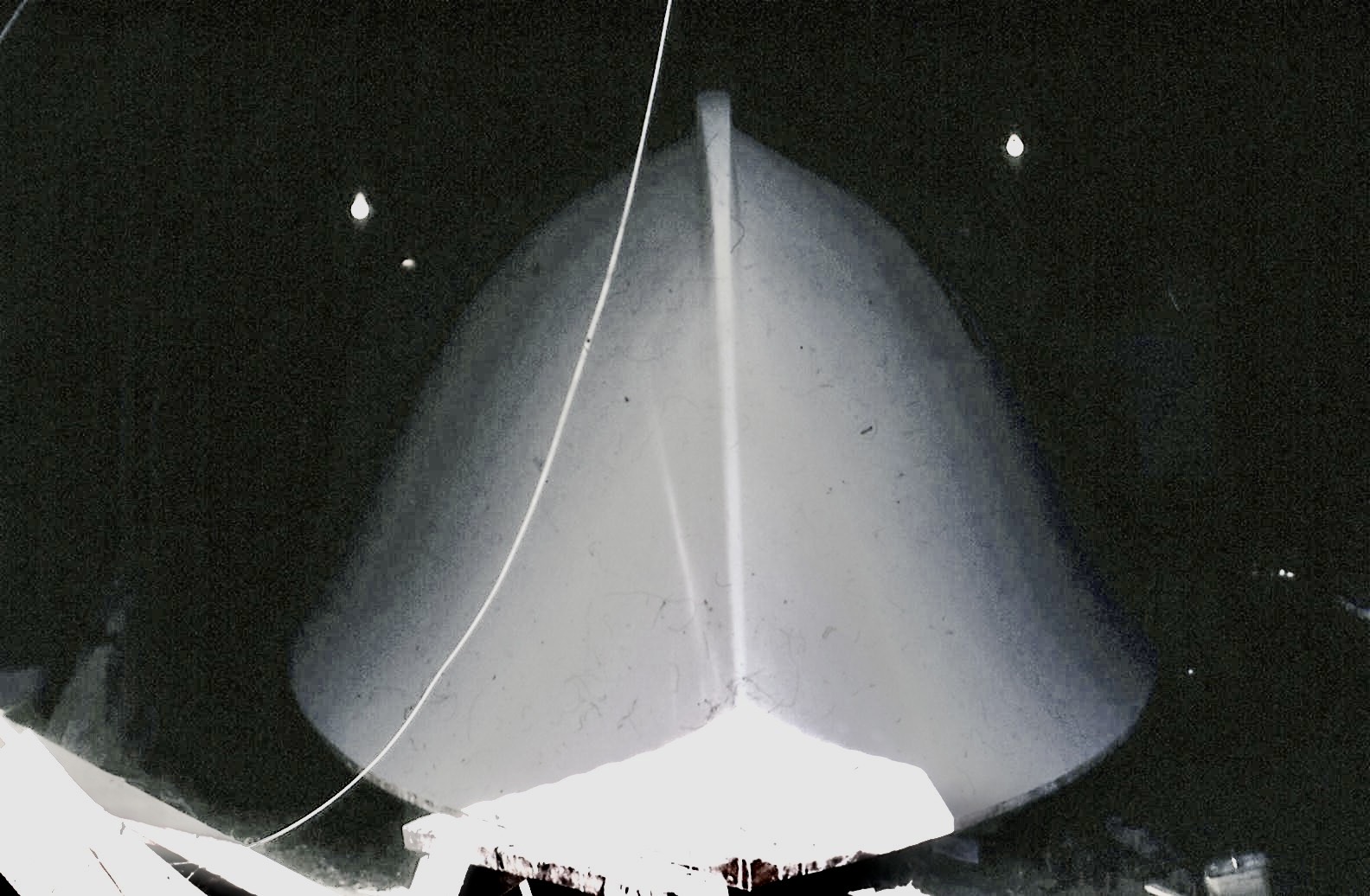
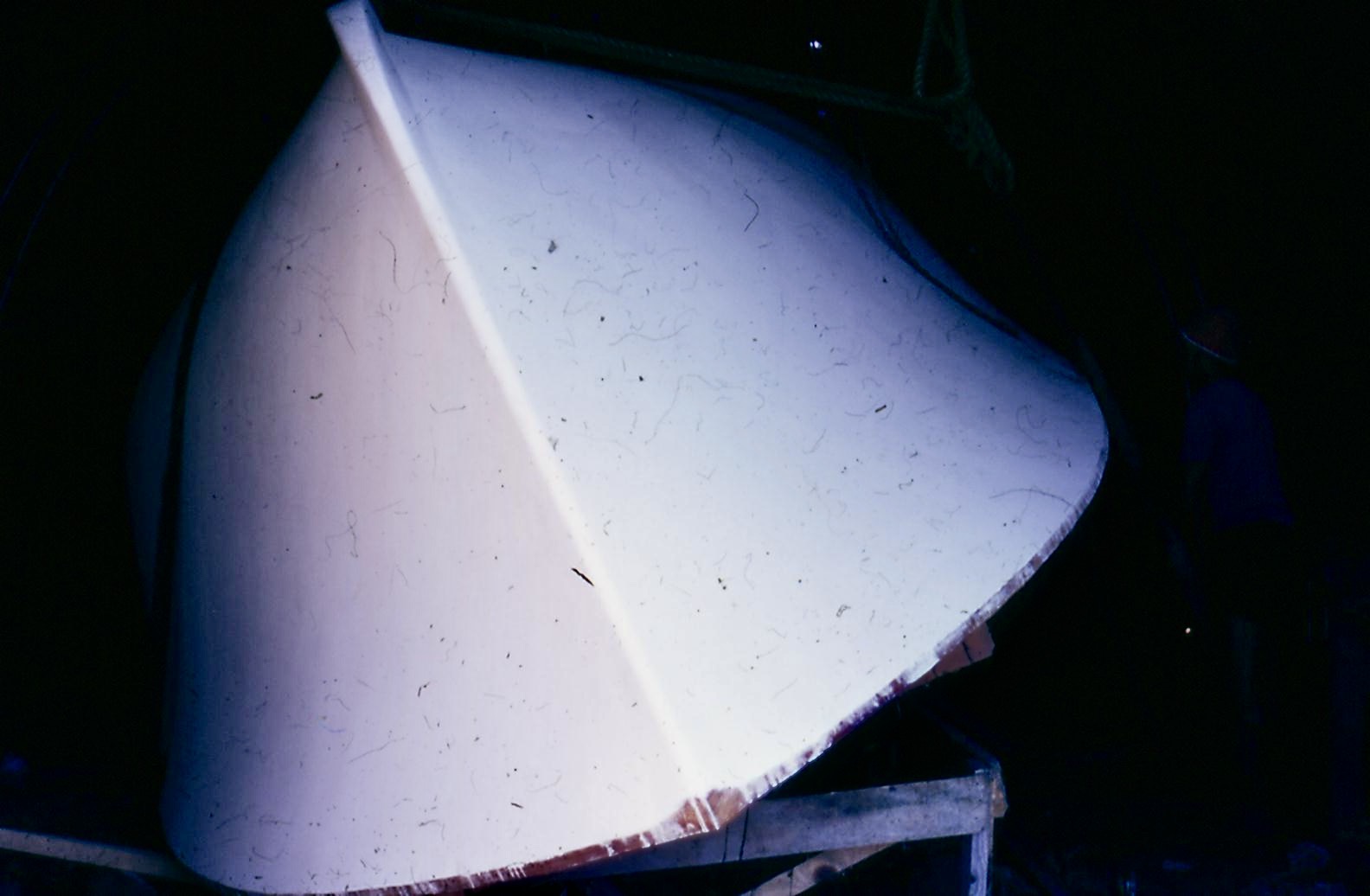
In May of 1973, the hull was ready to be turned over. The keel was in place with the hole for the rudder bar already done. The day for turning it over came, and was a matter of great curiosity for the neighbours. It proved to be a very long job even with some of their help. An endless chain was used for this, and it went up inch by inch, finally making it after eight or nine long hours.
The dairy cows were sold that year, with beef cattle replacing them. So Keith was able to work full time on the boat after that. The motor went in (Ford 110 hp) and the work continued uninterrupted until it was completed by September 1974.
Then getting her out of the shed was the big question on everyone’s mind! How could it possibly be done? The gap between the barn and the cowshed wasn’t as long as the boat, so what was Keith going to do about it? But it was done slowly with the tractor, and the help of grease on large pieces of plywood, and the trailer being jacked around bit by bit on that.
She waited on the trailer until early the next morning, when she was towed down the road to the ramp at Totara North before the traffic began. Then it was just a matter of waiting for the tide to come in to launch her. By this time there were quite a few onlookers, all asking the same question….will she float straight?
The tractor backed into the water, and she slid into the tide with a waiting fishing boat ready to take her to her mooring. She floated perfectly, right on the water line, as she was meant to.
At Christmas time that year, when the man from Auckland came up, we gave him and his family a trip down the Whangaroa Harbour. He looked it all over from a tradesman’s point of view, and said, ‘Well, if anyone had told me that a farmer with no boat building experience, and no tools apart from a band-saw and hammer could produce something like this, I would never have believed them’
WORLDWIDE CLASSIC BOAT SHOW- FREE ACCESS TICKET FOR WW READERS
As you read this I’ll be winging my way to Hobart for the 2025 Australian Wooden Boat Festival. There will be daily posts of the best thats on display so check in each day.
Readers of WW will be familiar with my addiction to the USA based v-blog OFF CENTER HARBOR, one of the super cool gigs these guys pull together is the annual WORLDWIDE CLASS BOAT SHOW, which waitematawoodys is co-sponsoring this year. The online show kicks off on February 14th – and as a WW reader you get a Free Ticket to the Worldwide Classic Boat Show
See over 1,200 of the world’s best wooden boats at the show. The show is 100% online/virtual, February 14 to March 2nd, so you’ll get free access to everything from your favorite lounge chair at home. You can CLICK HERE TO GET YOUR FREE TICKET/PASS.
WHAT’S AT THE SHOW?
World Map – Everything related to classic boats on one interactive world map
Boats – Beautiful photos and details of 1,200+ of the world’s best classic boats
Organizations – Explore festivals, boatbuilders, clubs, museums, schools, etc.
Live Presentations – Inspiring presentations featuring experts on a variety of topics
People – Connect with other attendees anywhere in the world (right on the map)
Your free ticket will get you into all of these presentations:
Arctic Solo Sailor Veronica Skotnes
Yacht Restoration w/ Dave Snediker
Indigenous and African Maritime Legacies w/ Akeia de Barros Gomes
Why Are These the Best Boat Festivals? w/ Port Townsend, France, and Australia
Two-Tim Race to Alaska Winner Jeanne Goussev
Marine Systems w/ Kevin Ritz from NWSWB
Small Boat Design w/ John Welsford, Clint Chase, and Ross Lillistone
+ SUBMIT YOUR OWN BOAT: They’re still accepting boat submissions too, so you can CLICK HERE to submit your own boat to be in the show. Enjoy the show
HOW TO MAKE ONE OF THE BEST LOOKING CLASSIC WOODEN LAUNCHES LOOK BETTER
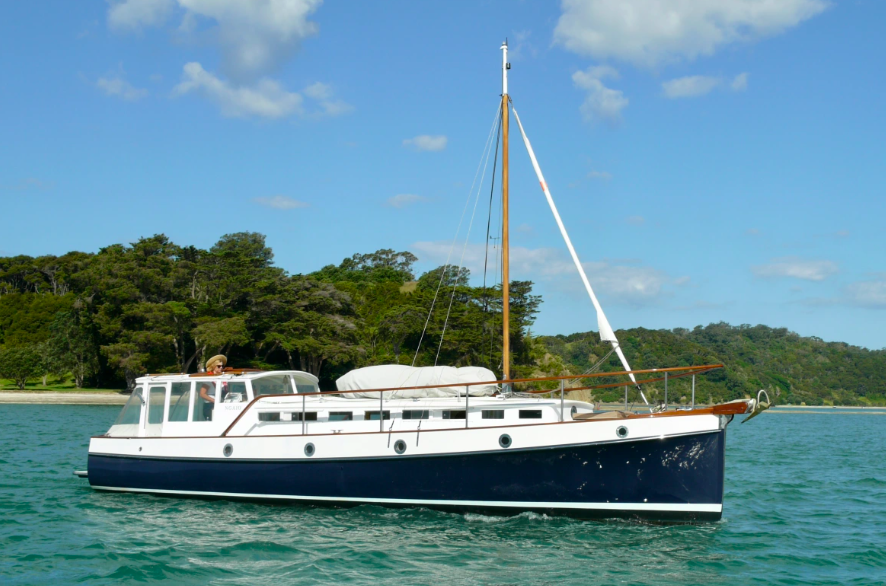
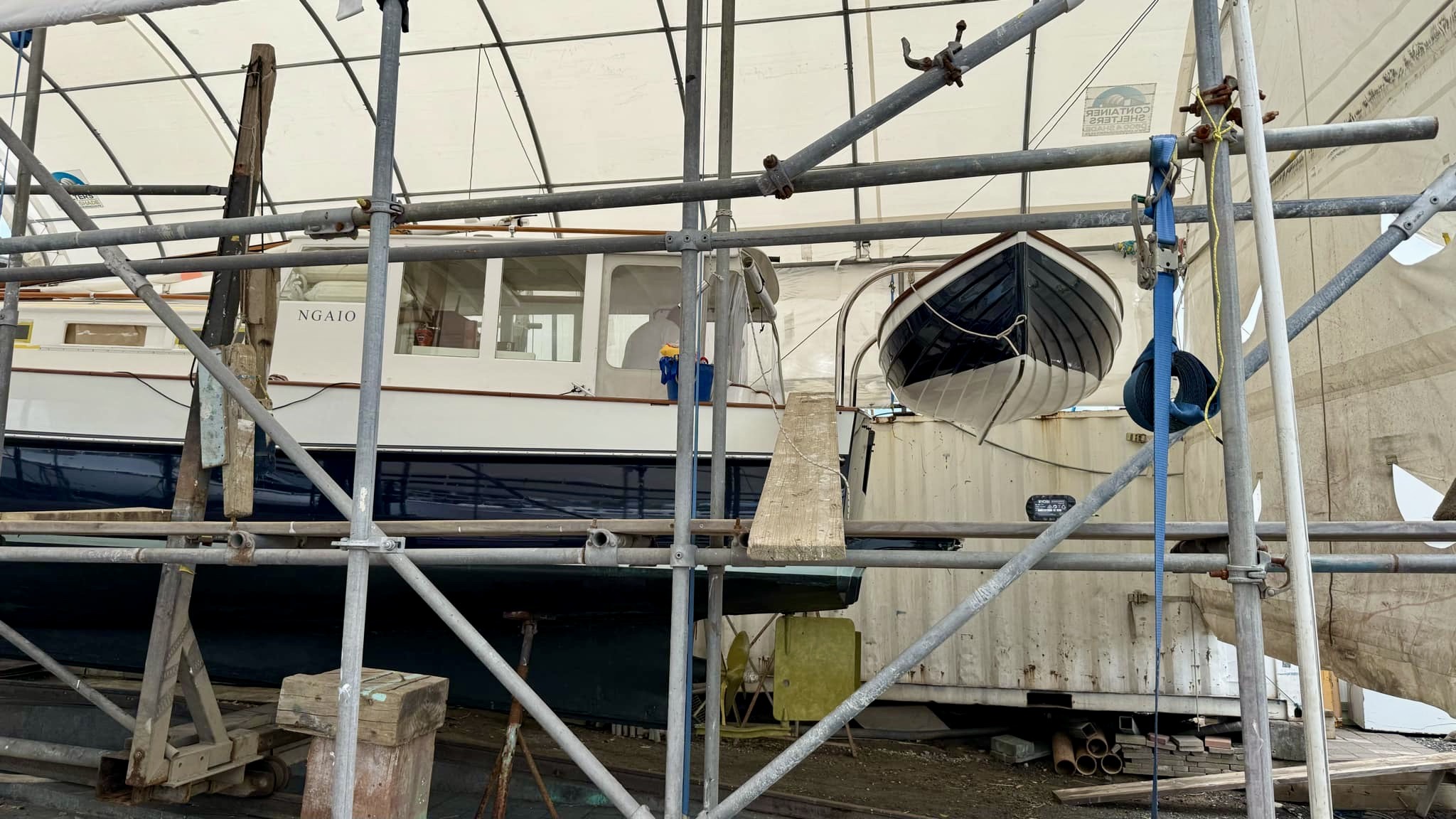
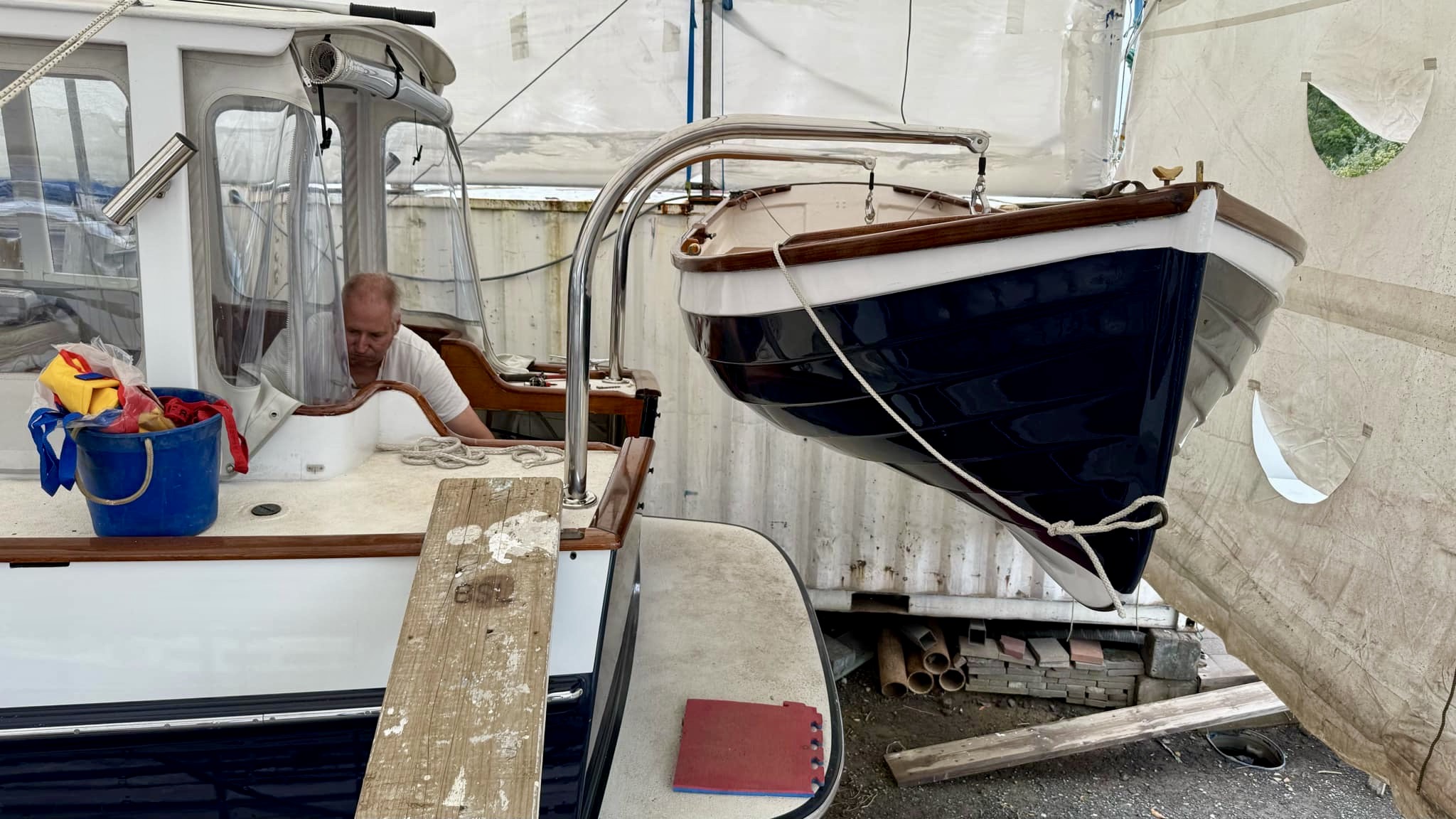
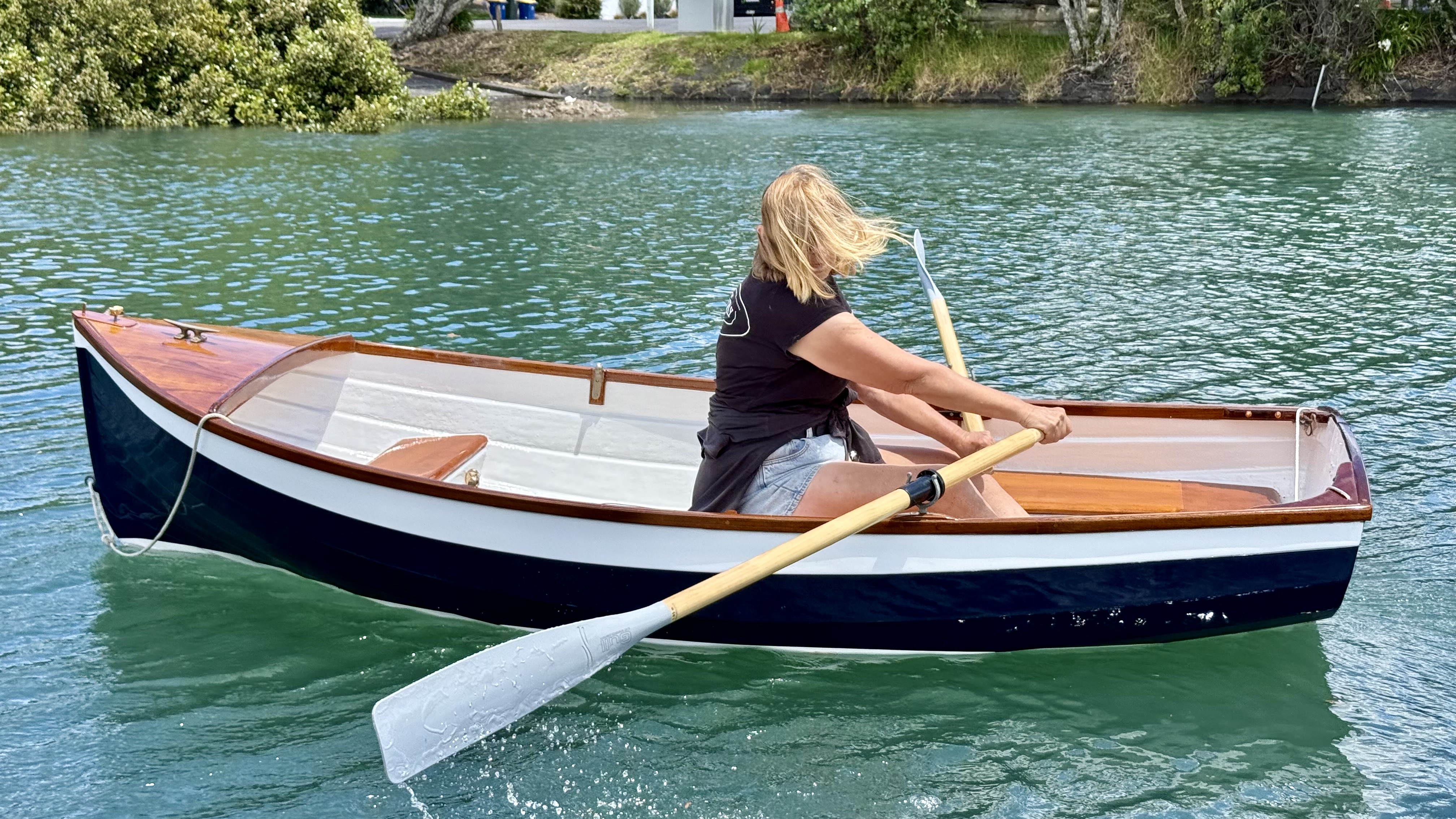
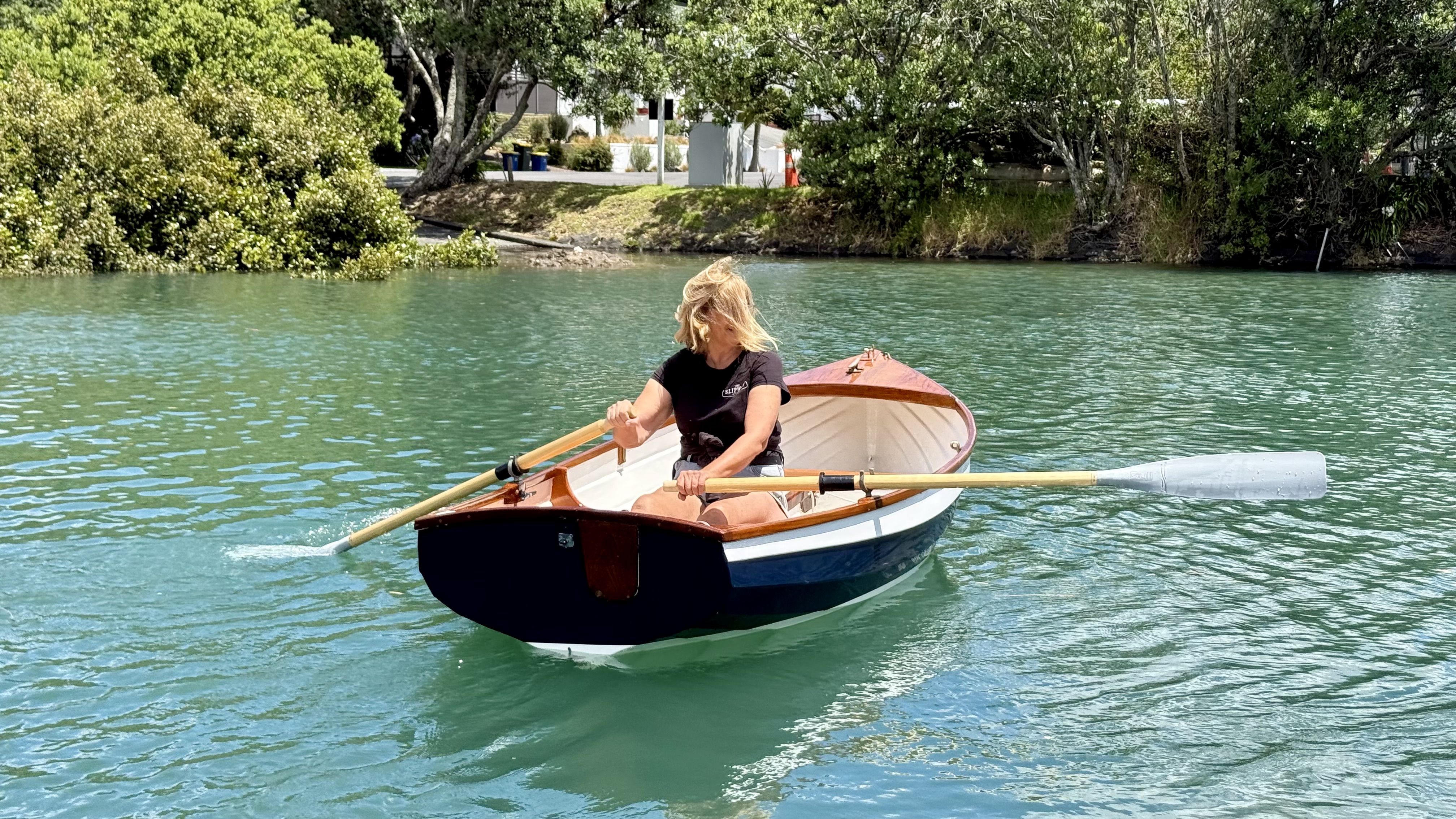
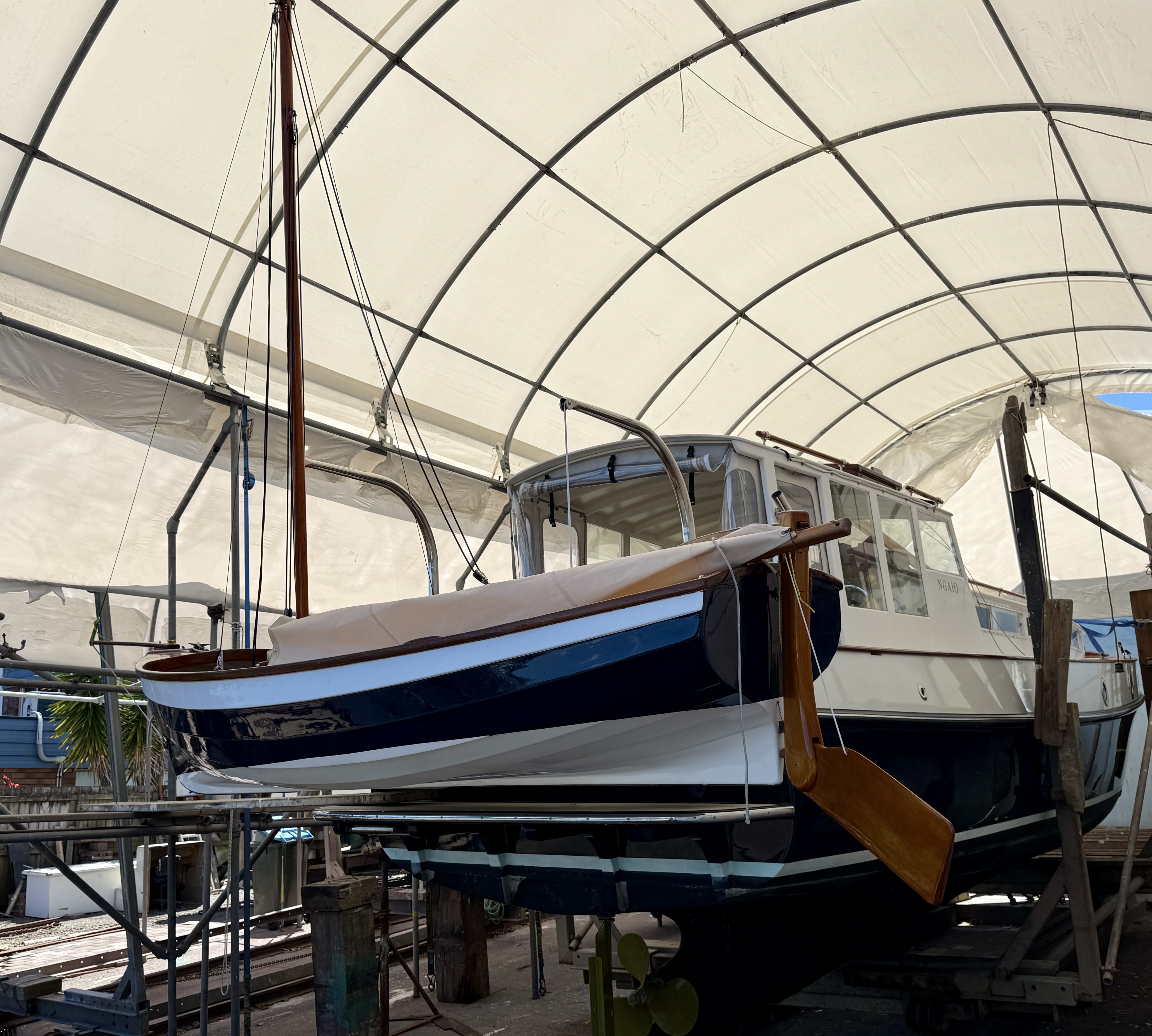
In a Dec 21st story we did a fly-by of the last minute, year end work happening at the Slipway Milford. I mentioned that the 36’1921 Arch Logan built launch – NGAIO was hauled out to have a set of davits fitted to accomodate the recently refurbished clinker (f/glass) tender. Fast forward to this week and the Slipway team, which included owner Jan Barraclough, are putting the final touched to the new set-up and the sinks got a ’sea-trial’ in the creek.
Well done to everyone – a stunning executed project.
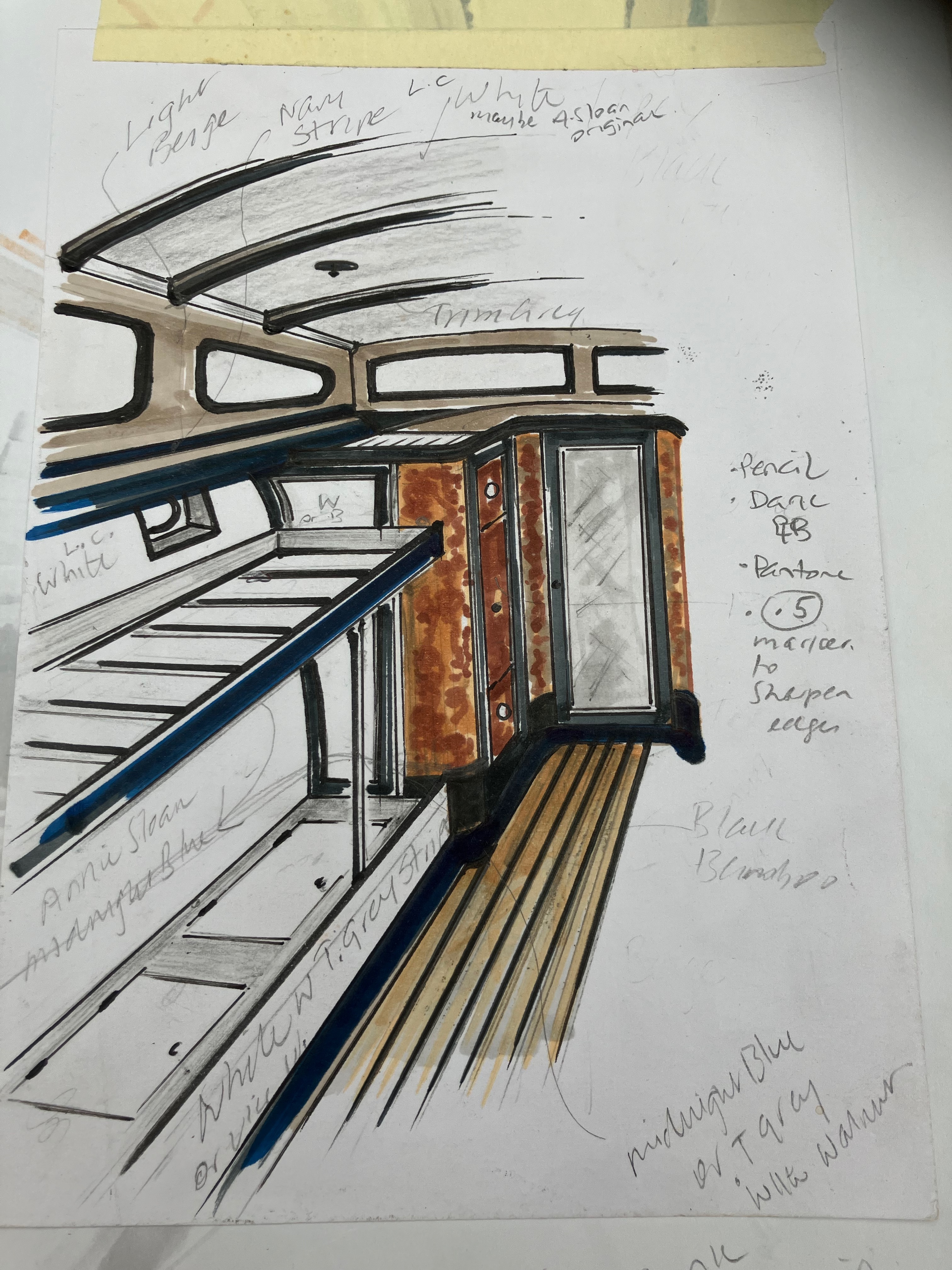
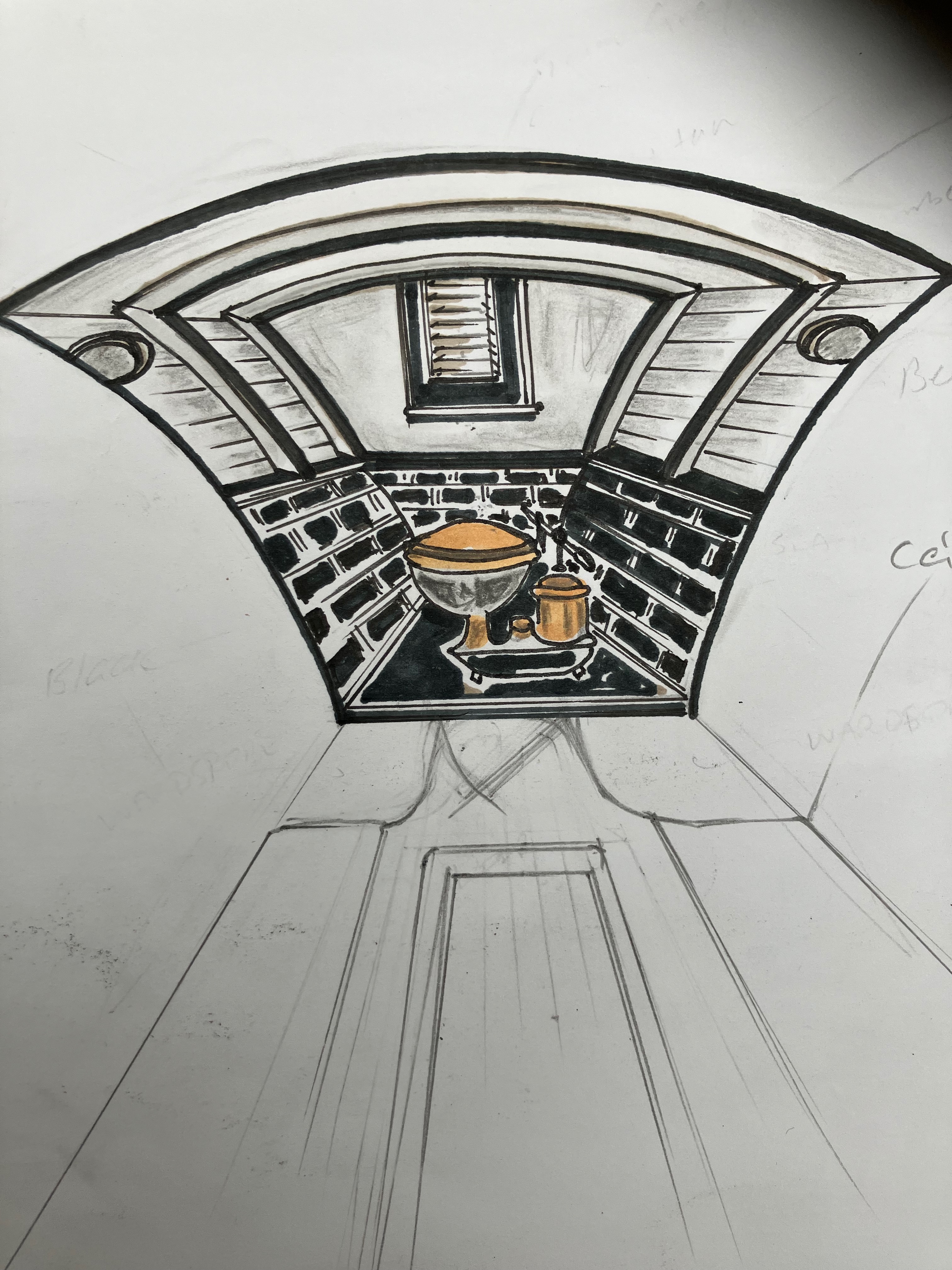
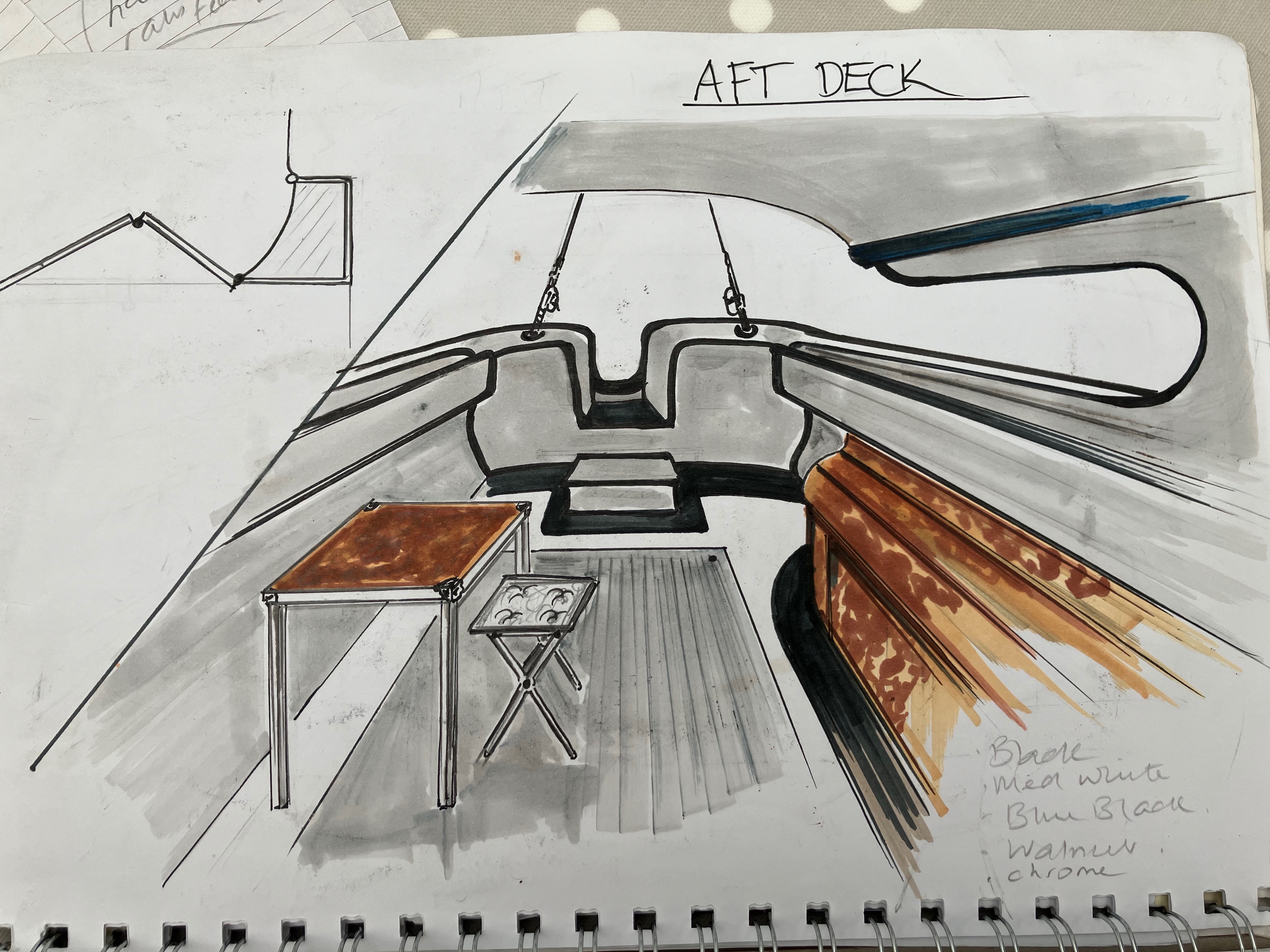
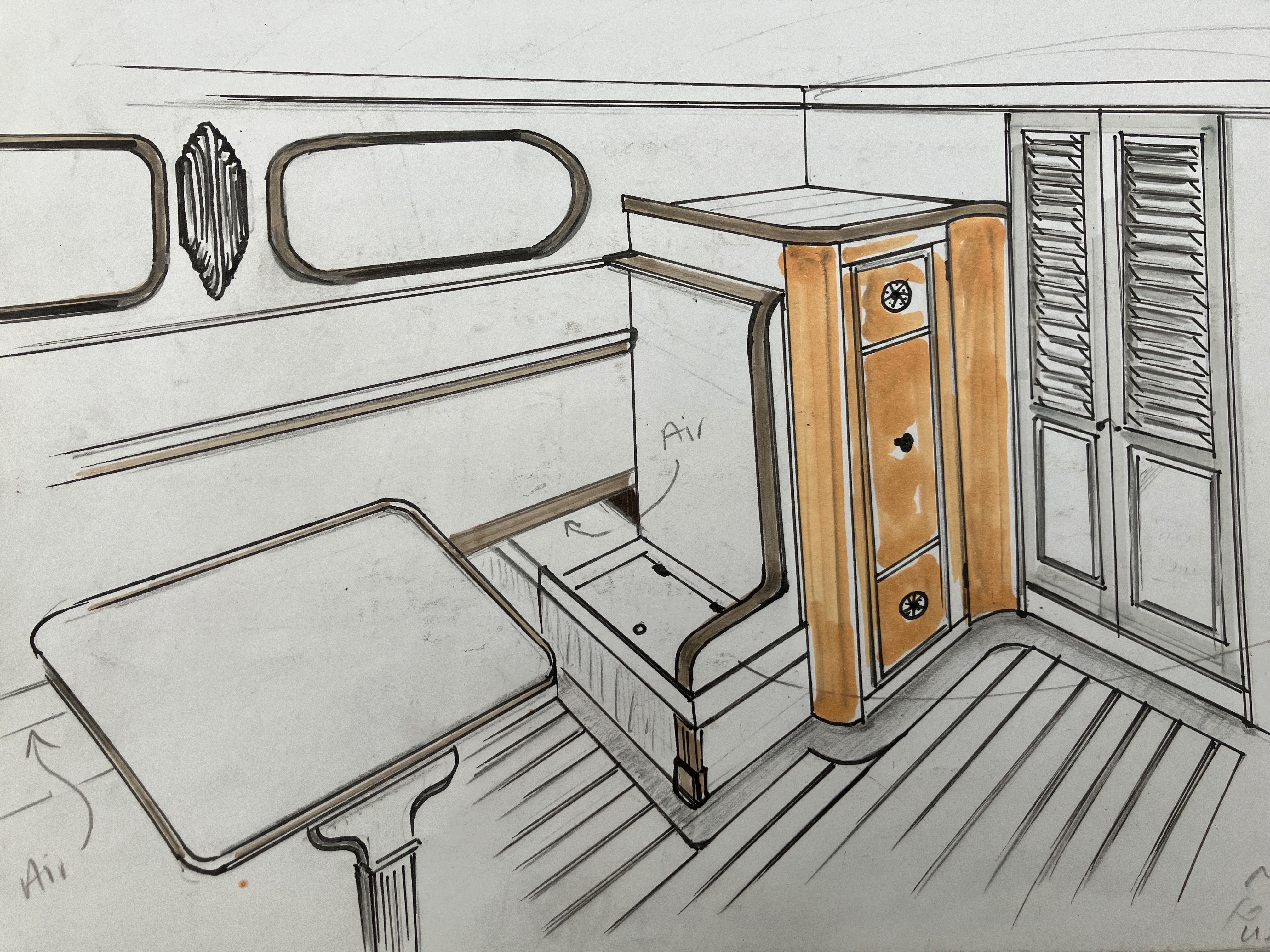
CLASSIC WOODEN LAUNCH- LADY CAROLE – A Peek At Stage II Over the last few months we have been following the restoration the classic launch – LADY CAROLE and as seen in Wednesdays WW story LC is now back in the water.Whilst the exterior work has almost been completed and we will not be getting any updates for a while, we asked o-owner Patrick Crawshaw to share with us what’s inshore for Phase II (interior). Patrick commented that she originally had a beautiful kauri trimmed interior and the original configuration will be restored along with the fine timber work she once had. A few modern additions will bring her into the 21st century, but these will be hidden, or discreetly placed. The thinking / plans are shown in the drawings below Forward Cabin with four berth bunks. Toilet through the mirror in the bow.
FORWARD CABIN – with 4 berths/bunks – toilet thru the mirror/door > bow
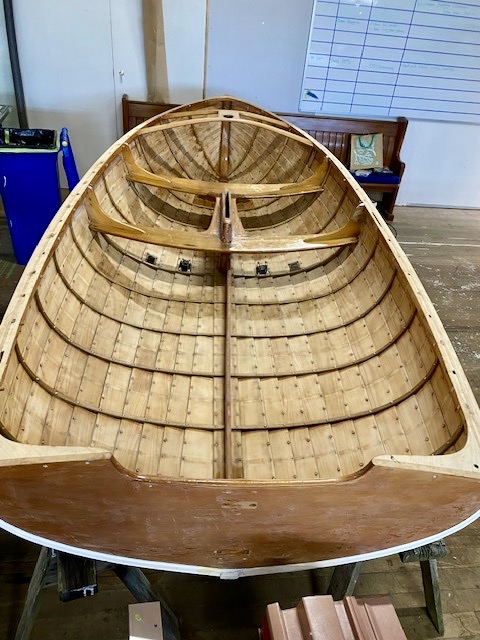
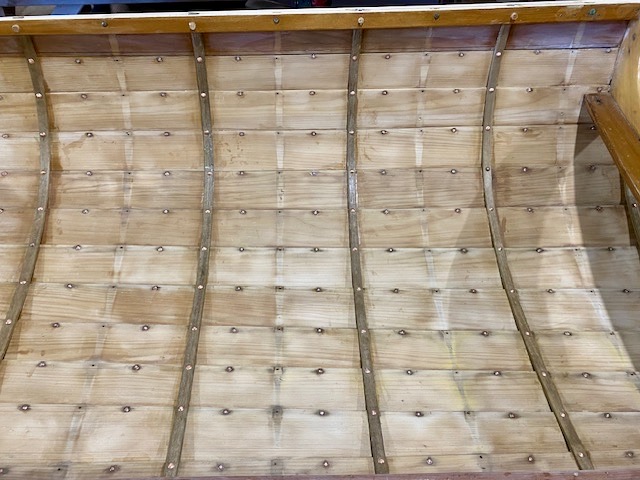
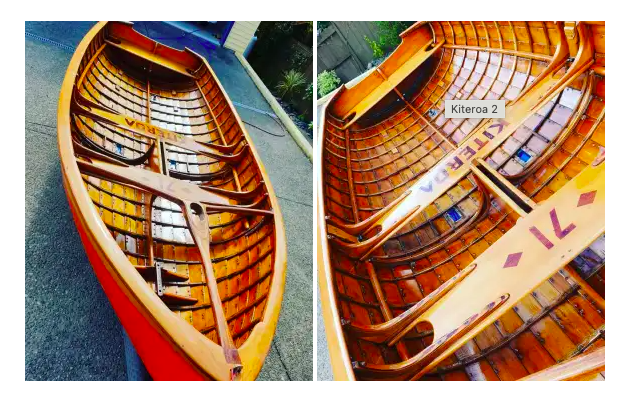
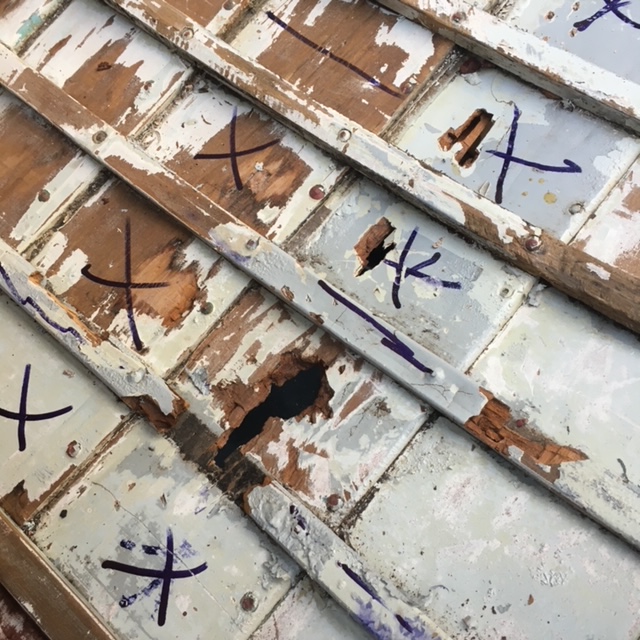
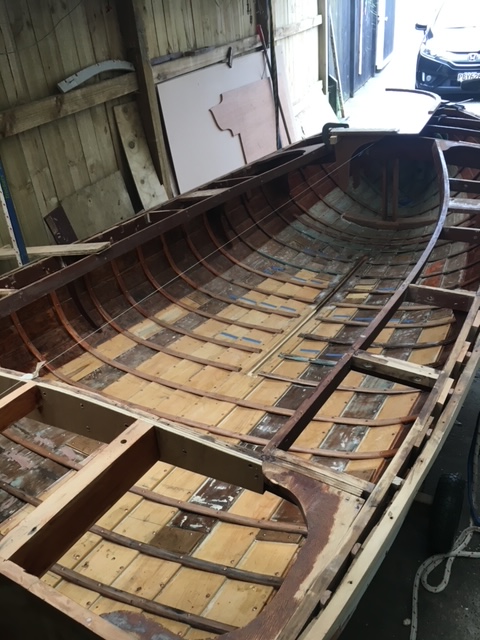
The two photos above are of Colin Pawson’s Frostbite sailing dinghy – CHARISMA which Colin is currently giving a birthday. Interesting observation – the new ribs aren’t steam bent, but laminated with the aim to be much stronger and lighter. As we have come to expect from Mr Pawson over the years attention to detail is 10/10.
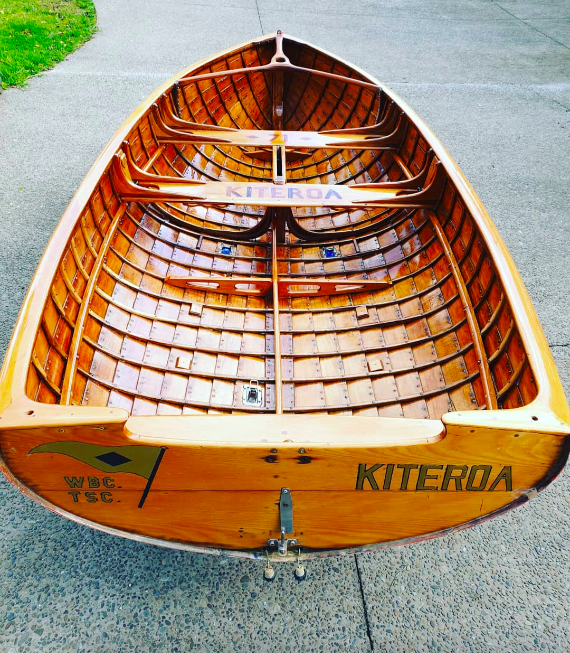
Owning a Frostbite is a Pawson family thing – son Adrian owns – KITEROA, (photos below) and both sail out of the Taikata Sailing Club in West Auckland which on a good day has 15+ Frostbites racing.
KITEROA
CYA YACHTS PLAYING CRASH & BASH AGAIN
The woody spies report that the classic yacht skippers haven’t learnt from the past – first race of the season yesterday and we have a collision in the inner harbour – details are unconfirmed but it appears WAITANGI and KATRINA ‘came together’ and Katrina lost her mast – I’m not getting into specifics but if I was a betting man I know which skipper I’d be pointing the finger at 😉 Hopefully no injuries and insurance sorts out the damage.
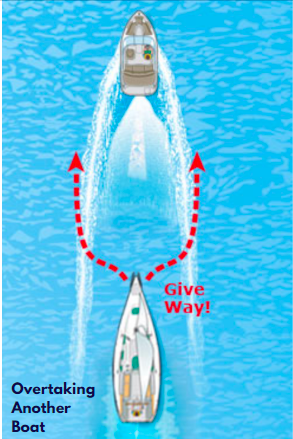
UPDATE – Both boats reaching down the harbour. Some how they came together so it will be a ‘windward boat keep clear’ or ‘overtaking boat keep clear’.You have to ask how two classics came together on a very nice afternoon, easy sailing on the harbour.Too much testosterone ……………
At one of the waitematawoodys / Slipway Milford – Boat Boot Sales I was talking to Michael May and he casually mentioned he was restoring an X-Class yacht named – SONYA. As I do I asked for details and last week Mike advised he had completed the project. So I’ll hand over to Mike to tell the story – “Restoration of X48, SONYA According to Harrold Kidd, SONYA was built by Trot Willetts, in 1946, for the Elliot brothers. Greg Elliott says the B /W photo from the Auckland Star, shows his father, Mervyn, at the helm of SONYA in a race off ST Mary’s Bay. I took possession of SONYA two years ago. She had been sitting on a trailer under canvas for the last thirty odd years. Under all the dirt and leaves the hull looked reasonably sound, but the deck was rotten, and she has a sloop rig off a trailer sailer. Looking for something to keep me amused, I decided it was worth a shot at restoring her. First I removed the ply deck, and waterblasted the inside to remove all grime. I then started to scrape off all the old paint inside, and that’s when the rot started to appear. It was either a chainsaw, or persevre. I eventually replace about 20% of the planking, and 60% of the ribs. Also the stern half of the king plank. The centrecase and knees were very agricultural, so I decided to rebuild that too.. I used Yellow Cedar for the planks, and American Oak for the ribs. With the help of Youtube and others I leant the art of using roves, and steam bending timber. I made my own bolts with Silica Bronze rod. [Fosters were a big help] Interestingly, the whole boat was built with no glue, all screws, bolts, roves A sign of the times I suppose. Some of the deck knees and framing are plywood, and still in good condition. Against a lot of advice I glued and filled every plank to plank join inside and out, after removing all the old red lead putty. My theory being that modern glues, Wests, would hold the wood and stop any water egress and swelling. I didnt want to have to go through the “Let it leak and swell” every time I launch the boat. After doing all the inside, fitting new centrecase, deck, Everdure, and painting, I turned the hull over and started on the outside. Strip paint, dig out all putty in seams and nail holes, fill old and new nail holes, glue/fill seams, everdure, and paint. Then the right way up again, and finish the inside and the new “Bling” deck. Not traditional I know, but I had the mahogany veneer from years ago, and always imagined using it on some sort of boat one day.. [I have some left over if any one can use you’re welcolme to it] I managed to buy four spars from Bob Van Pierce in Kerikeri. All different timbers and build methods, but each one worked well with what I needed. The gooseneck was a major stumbling block. Very kindly, Herbert Krumm-Gartner, also Kerikeri, lent me a set of blanks he had made for his classic yacht. I made all the wooden blocks using pohutukawa from timber off the trees in our garden. I have gone modern with the running rigging and used dyneema for main halyards, and backstays. Brent Gillies, BG Sails, has made a fantastic set of sails, using traditional methods. I have only sailed SONYA once, in very light breeze to check everything out. Especially any leaks!!! Nothing of note. Now need some better conditions to get her flying again.”
Today we have the latest update on the restoration of LADY CAROLE, as previously co-owner Patrick Crawshaw will walk us thru it – certainly on the home straight 🙂
“A couple of weeks ago the cradle had to be removed for another boat, and so the cover had to come off. After all this time under the plastic, we were able to see Lady Carole for the first time after all the work we had done. Later that day, the cover was pulled back over and she went back into hiding for the home stretch of work to be done – finish line in sight!
The original waterline, which was grooved into the planks, was reinstated.
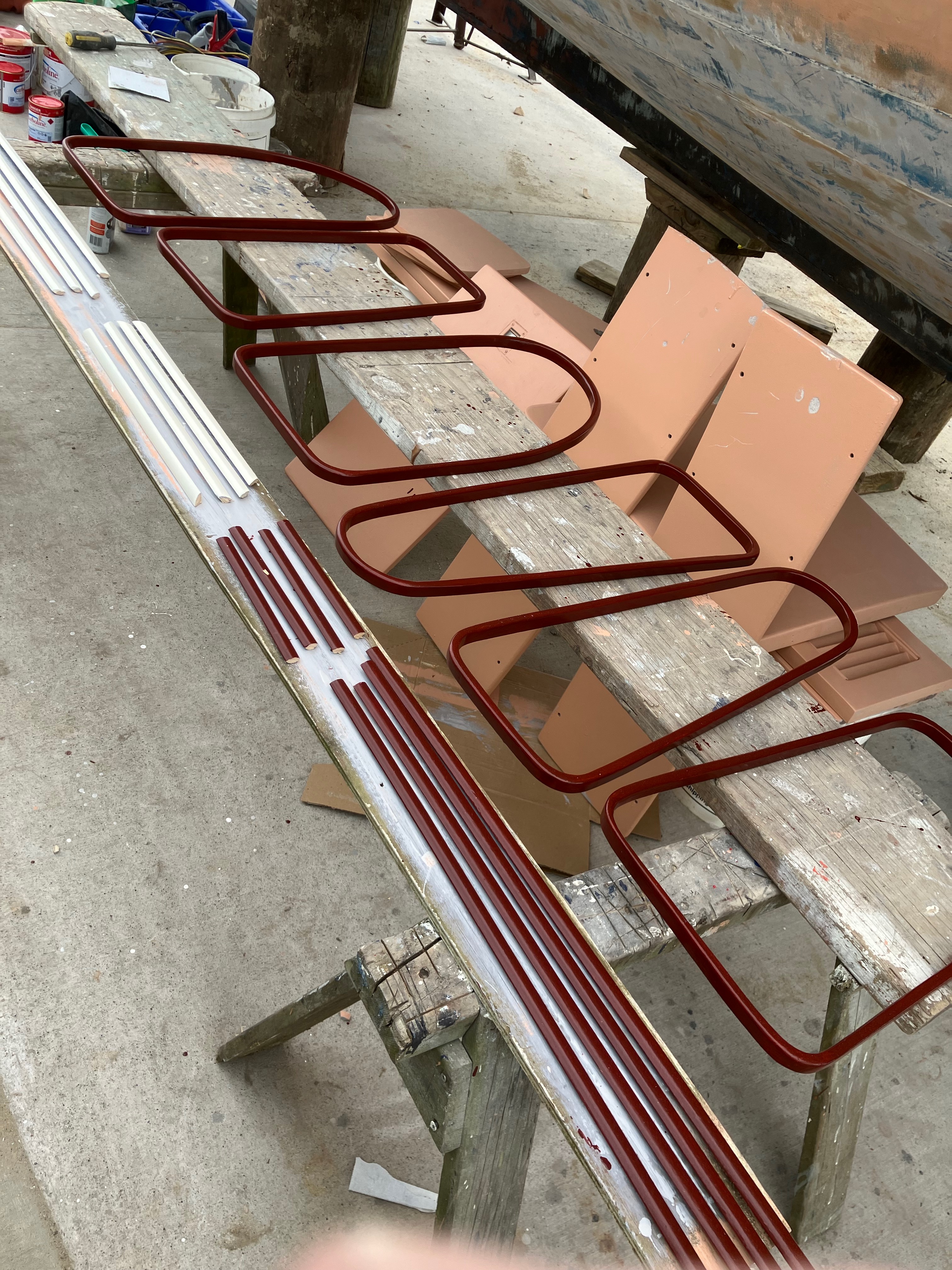
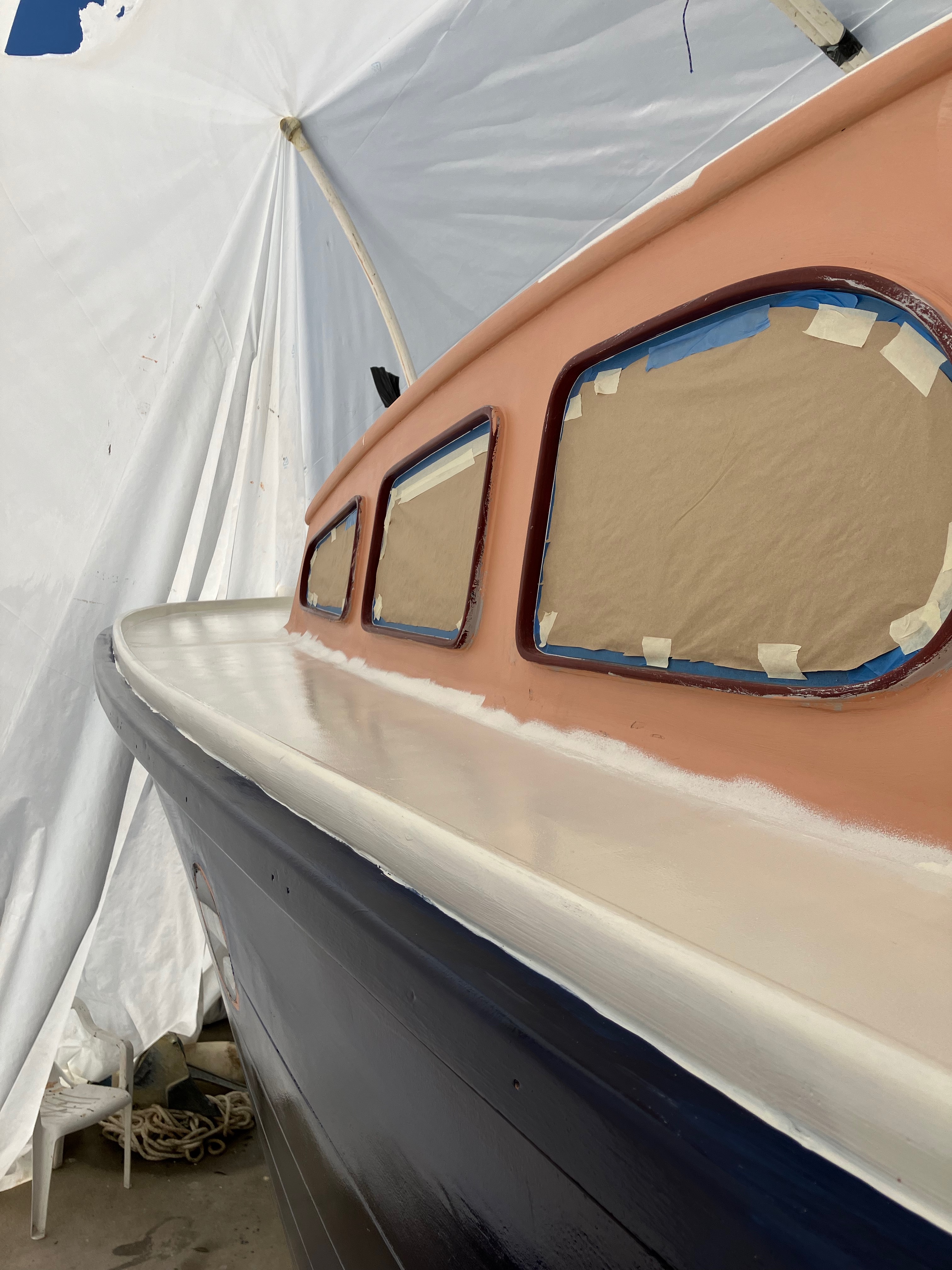
Window trims with top coats
The glass for the windows arrived and were fitted along with the trims.
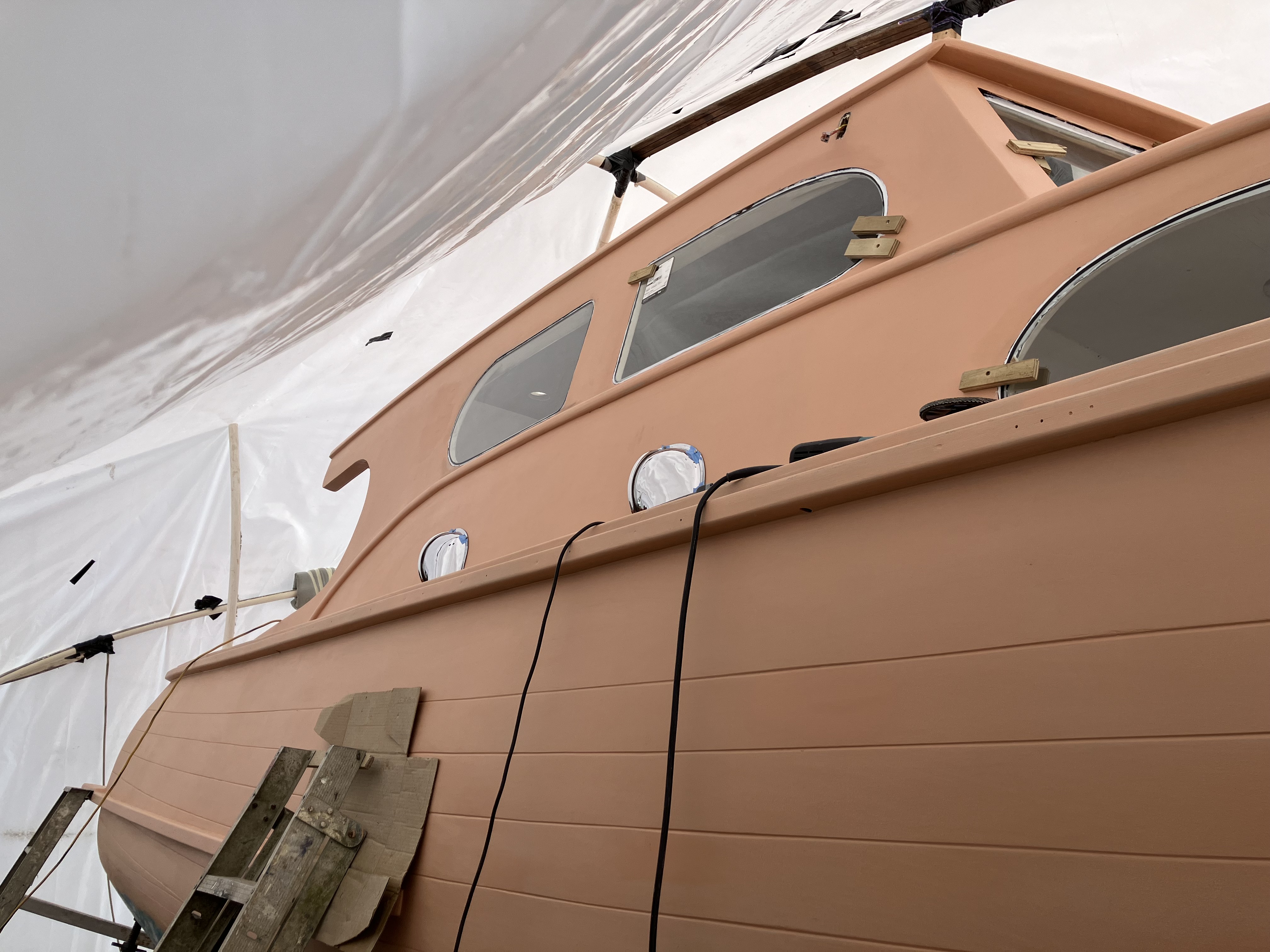
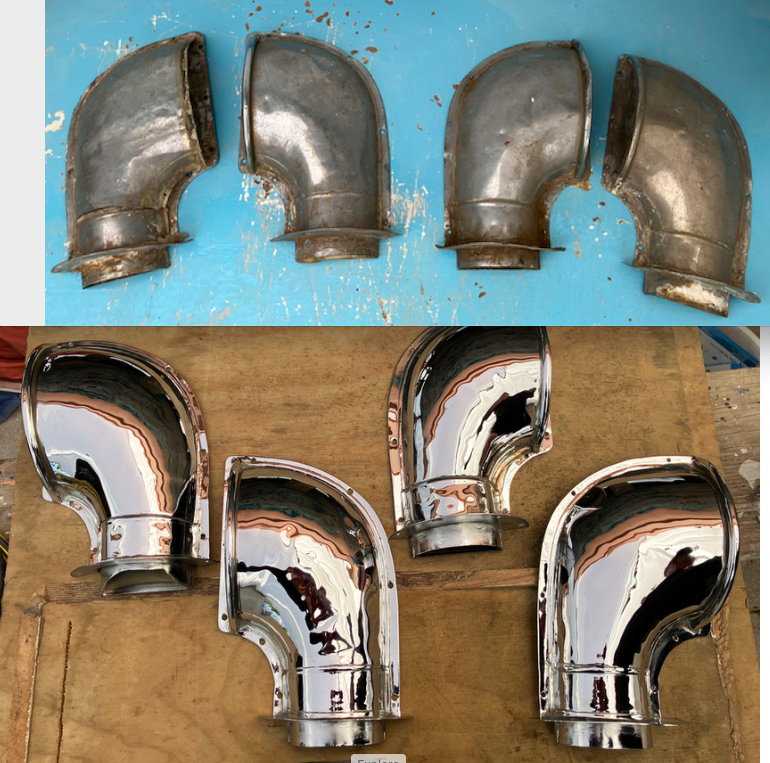
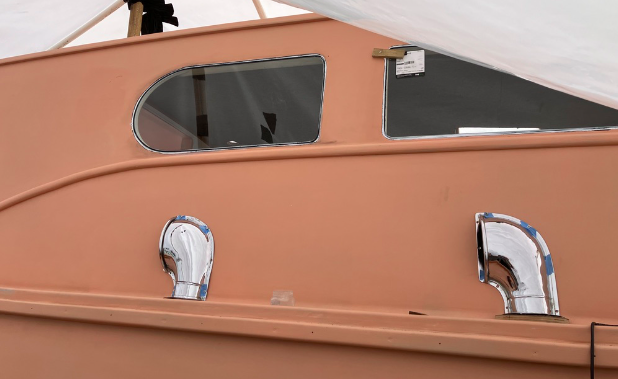
Chrome half cowl vents were collected from the fabricators who had to repair them and then they went to the Chromers. Both companies did an incredible job at restoring them.
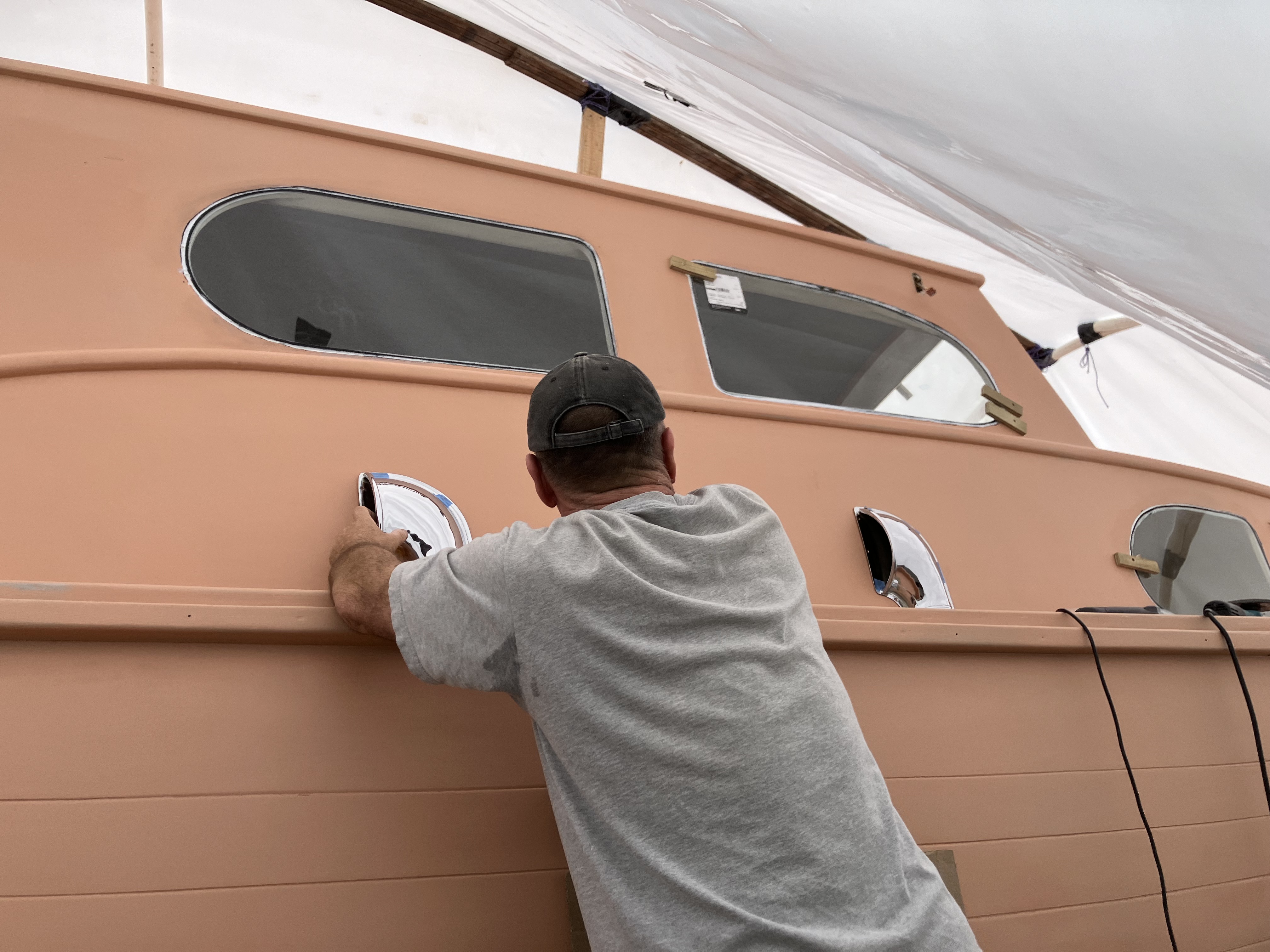
Plinths had to be made for them to sit on. This is them being pre-fitted to the boat so we could get the plinths right as they angle back and in.
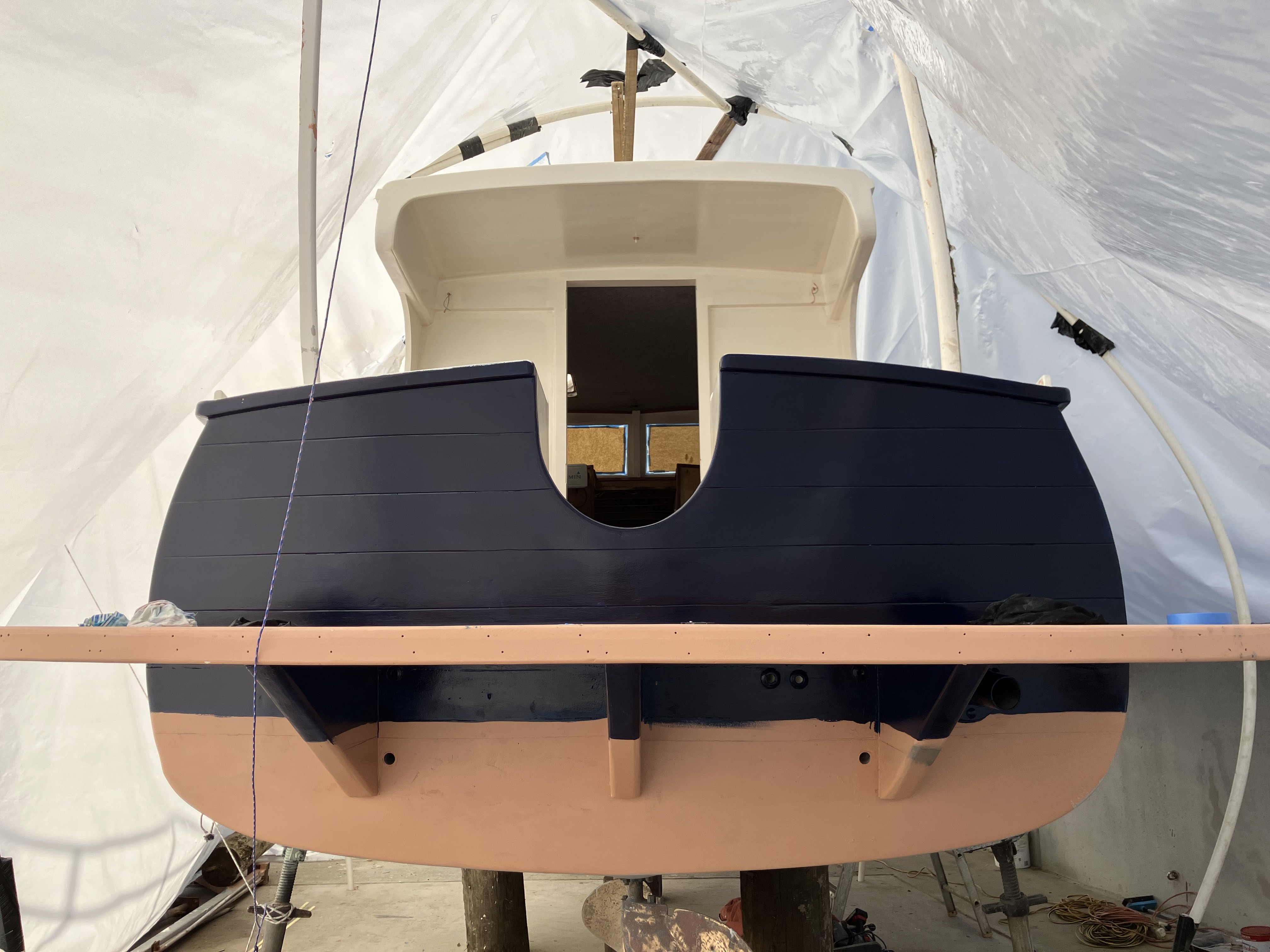
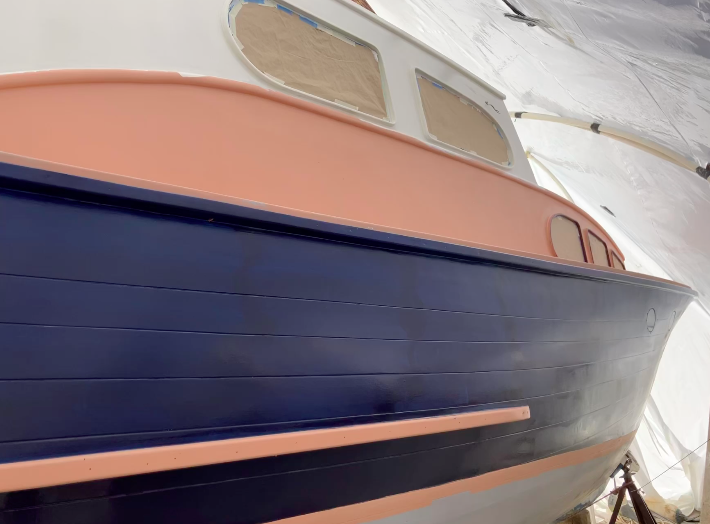
And finally the colours are going on and we can see the colour scheme a bit better. All two-pot rolled on and then tipped off with a brush.
Second coat white, then it will be masked for the blue to form a sharp line.
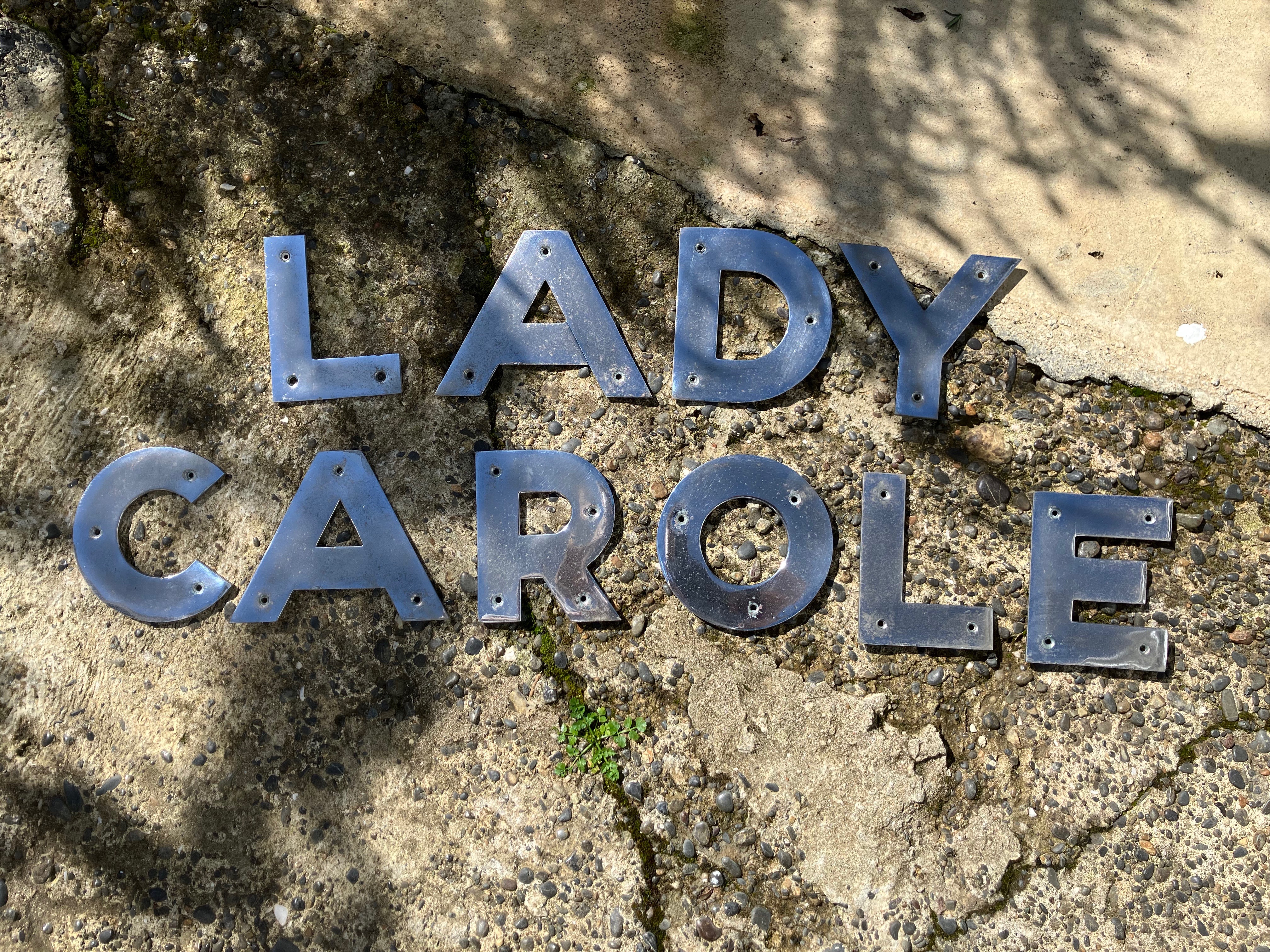
Lady Carole letters will go evenly spaced just below the walk through instead of either side as they were before.
Mid section is going to be browny red and this goes on tomorrow, so more photos to come once this is done. Rub rail will be white to break up the blue a bit. Waterline will also be white.”
Now I know its not a NZ story and the boats made of plywood but when I read this story in the May 2021 issue of Small Boats Monthly it just made me smile – so today I share it with WW readers. Enjoy
Riley Hall was born and raised in Gig Harbor, Washington, a quiet town nestled around a narrow, mile-long inlet that shares the town’s name. The shoreline is bristling with piers and the water is dotted with boats at anchor. Surrounded by boats, it was only natural that Riley began building and working on them at a young age. He kept at it through high school and began restoring a 1940s-vintage canvas-covered cedar-strip rowing boat at home. For his senior-year project, he chose to work at the Gig Harbor BoatShop, documenting and disassembling hull #2 of the Ben Seaborn – designed Thunderbird.
After graduating, his interest in the restoration of old boats led him to move across the country to Rhode Island to study at Newport’s International Yacht Restoration School (IYRS). While enrolled there, he spent winter evenings and weekends restoring a 1963 Snipe. After graduating from IYRS in 2012 he got a job maintaining and restoring mostly classic racing yachts at Baltic Boatworks in nearby Bristol.
During the time he had been on his career path—restoring large yachts and working boats—Riley had been toying with the concept of small boats built from a single sheet of plywood. He designed and built his first one-sheet rowing skiff while home for Christmas in 2014. He had brought the paper patterns for the skiff with him to Rhode Island and shared them with Don Betts, a local boatbuilder who had built a 31’ six-oared Cornish gig, and the one-sheet skiff Don built led to two more, built with the help of a group of Sea Scouts.
After about six years at Baltic, Riley moved back to Gig Harbor in 2018 to take a job with Harbor History Museum. There, as a restoration/preservation specialist, he was put in charge of the volunteers restoring the 65′ purse seiner SHENANDOAH, which was built in Gig Harbor in 1925. The SHENANDOAH project kept Riley busy during his working hours but left him with some free time and a creative impulse to design and build something new.
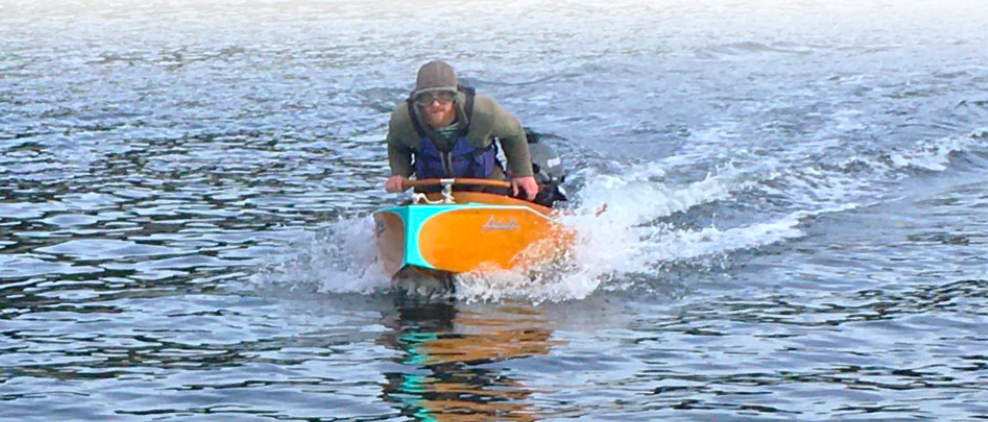
Working in the studio above his parents’ garage, he built three more one-sheet rowing skiffs, trying new iterations of the concept each time. The 2.5-hp four-stroke Yamaha outboard he had for his 16’ Calendar Island Yawl set him to wondering what kind of speed it could produce with a boat made of a single sheet of plywood.
Cocktail Class Racers naturally came to mind. Developed in 1939, they’re outboard-powered racing skiffs with a length of 8′ and a beam of 4′, just like a sheet of plywood, and limited to 6-hp motors—8 hp for racers who weigh over 200 lbs. They top out at 26 mph, far beyond the potential of Riley’s 2.5, so, with racing off the table, he was free to lavish attention on aesthetics and let visual elements from racing kayak, vintage bicycles, Beetle Cats, and ’50s nostalgia work their way into his design process.
He started with a wedge shape for the hull: a plumb stem to part waves and a flat run for planing. As he explored the shape with a model of stiff paper, the sides came together in a way that suggested a raised foredeck and stem with a reverse rake. The foredeck required a break in the sheer to sweep down to the stern, which, as Riley put it, “revealed a slightly strange shape, like little ears, between the side and foredeck standing out as rather odd and unconventional. I decided it was similar to what you see on racing kayaks, which look cool and go fast, so why not?”
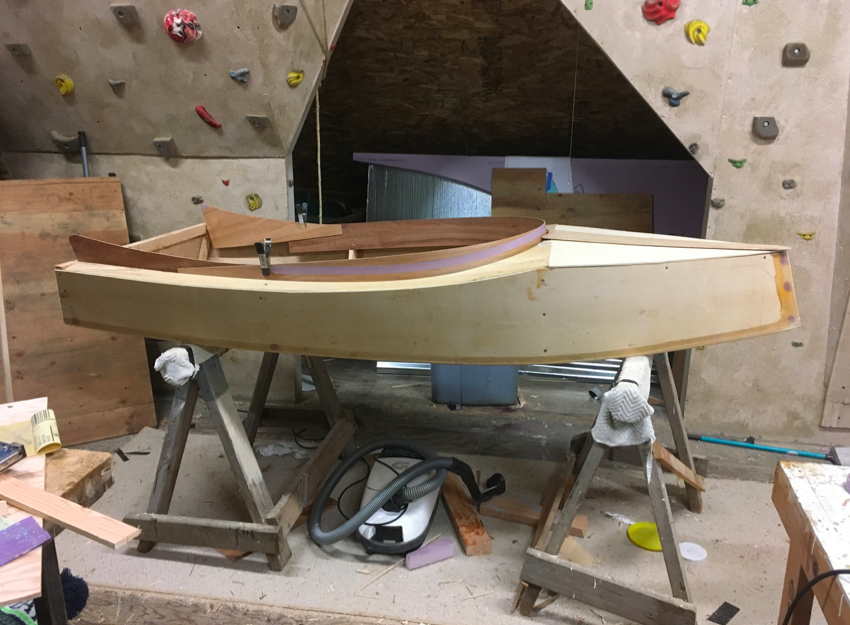
Riley started construction in a workshop space over his parents’ garage. With the shape established by the model, Riley could take the pieces apart from each other to “expand” their shapes and scale them up on onto a piece of plywood. After cutting the full-sized panels from plywood and fairing the panels, he temporarily assembled them with Gorilla tape, fine-tuned the shape, and used the plywood “skin” of the hull to take measurements for the boat’s two frames.
After Riley had installed the foredeck and a Beetle Cat–inspired coaming, he invited his father, Curtiss, an art teacher at the high school Riley graduated from, for a consult on aesthetics. As soon as he laid eyes on the boat, Curtiss said, “It looks like a Studebaker Avanti.” The iconic Avanti, a high-performance car with a distinctive “reverse rake” on the front end of its side panels, was Studebaker’s swan song, released in 1962 as the company was closing down.
Curtiss’s comparison set the boat’s name, AVANTI, Italian for forward, and pointed to an automotive aesthetic direction for the rest of the project. Riley had been looking to Herreshoff’s boats for a suitable shape for the aft ends of the coaming, but nothing looked quite right on AVANTI. While the Studebaker coupe didn’t have fins, it was produced in the final years of the fin craze, and the combination seemed to work for the boat.
For steering, Riley opted for handlebars instead of a wheel. Cocktail Class Racers require that the drivers lean far forward to keep their bows down and they’re forced to wrap their stomachs around the wheels. Riley found a bow fitting at a marine thrift store that could have easily been a classic-car hood ornament; the nameplate his dad made, replicating the one Studebaker put on the Avanti, was the finishing touch.
CLASSIC LAUNCH – LADY CAROLE RESTORATION – UPDATE #5 Another update on the work in progress from co-owner Patrick Crawshaw.
UPDATE BELOW:
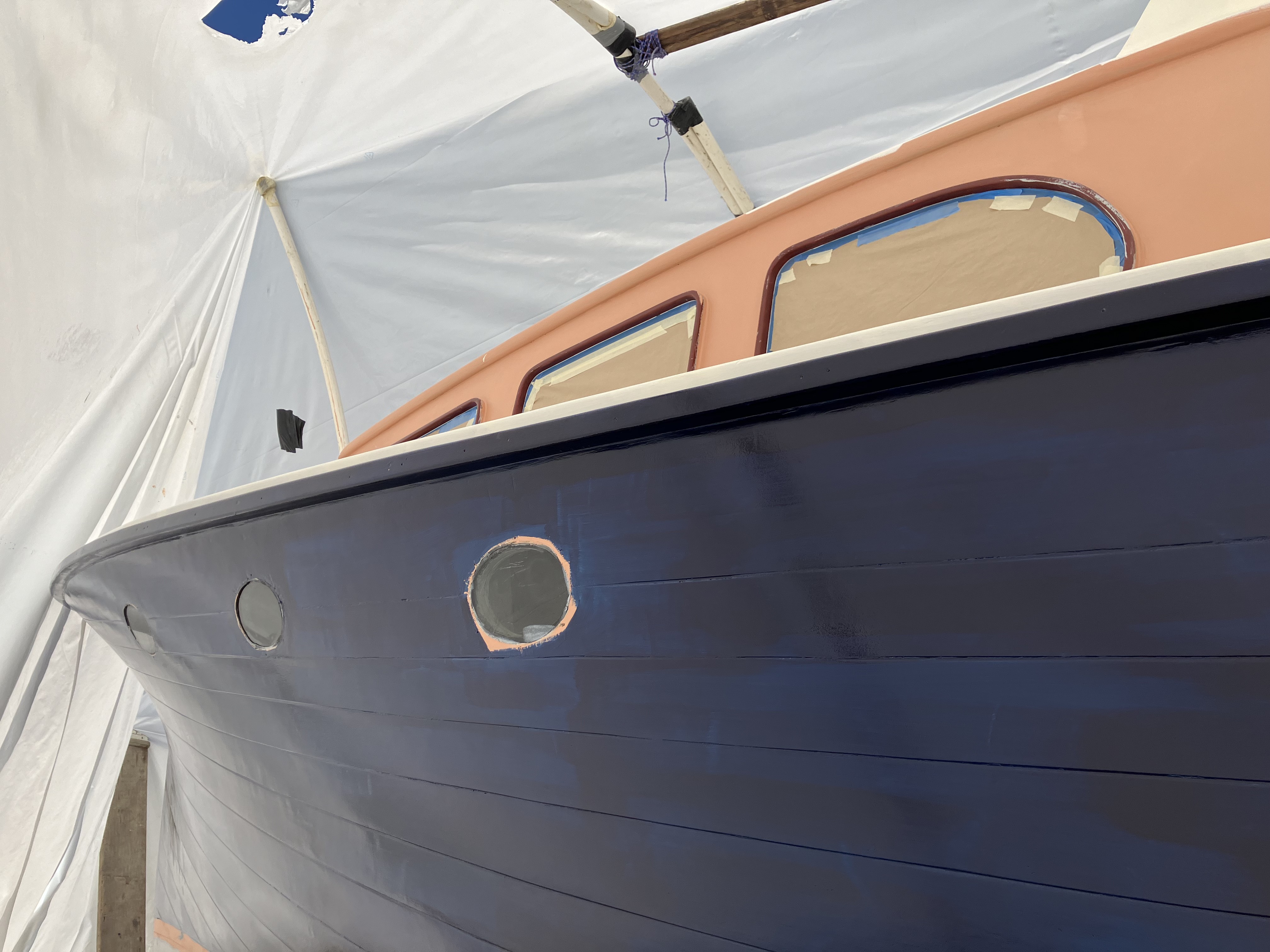
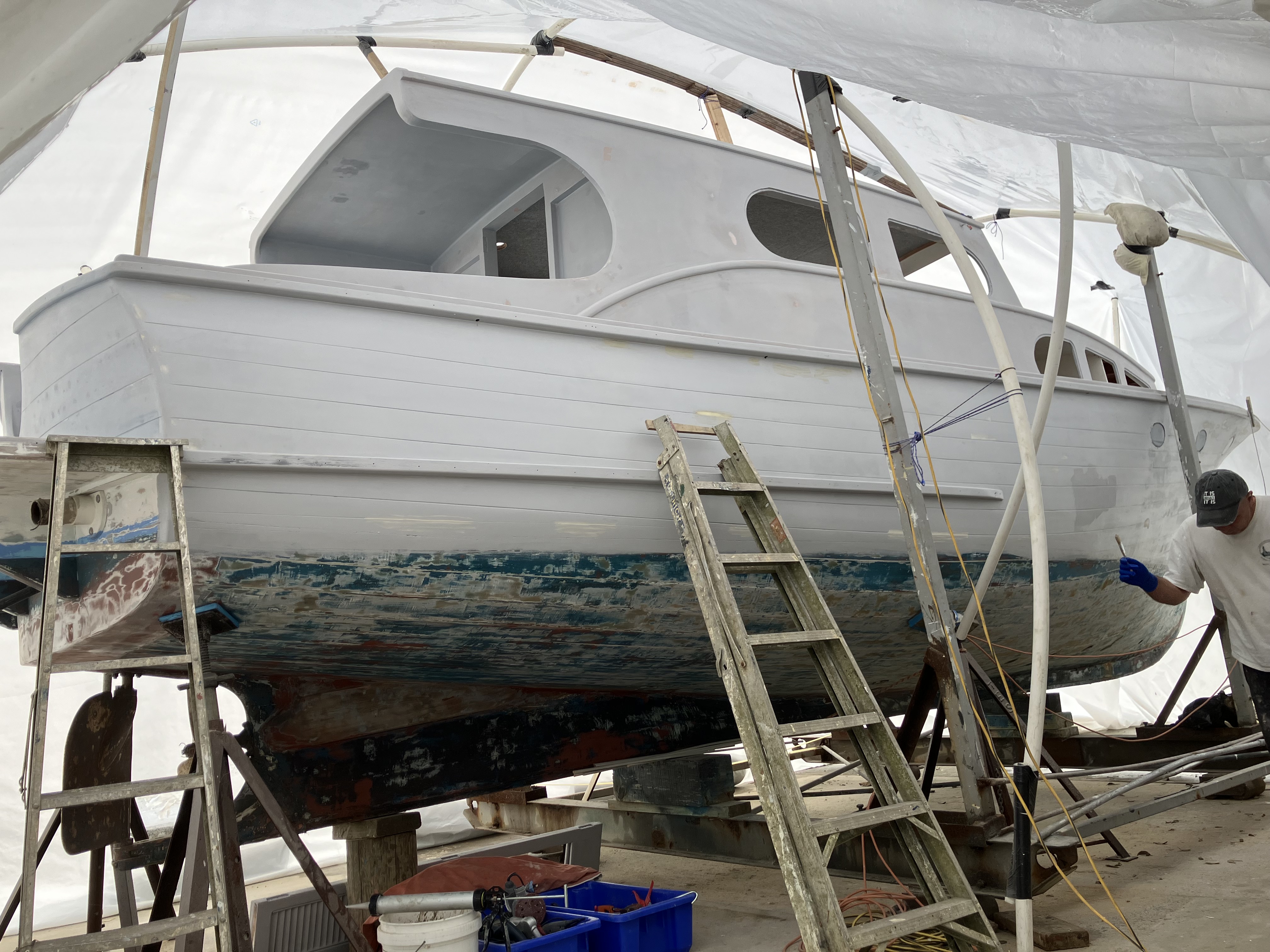
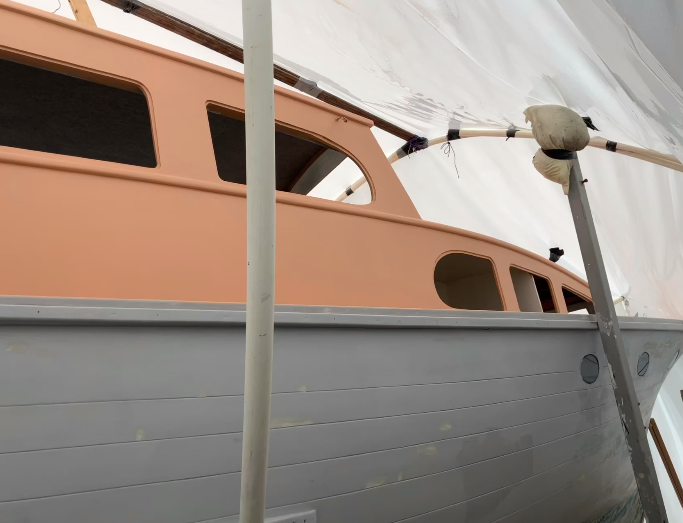
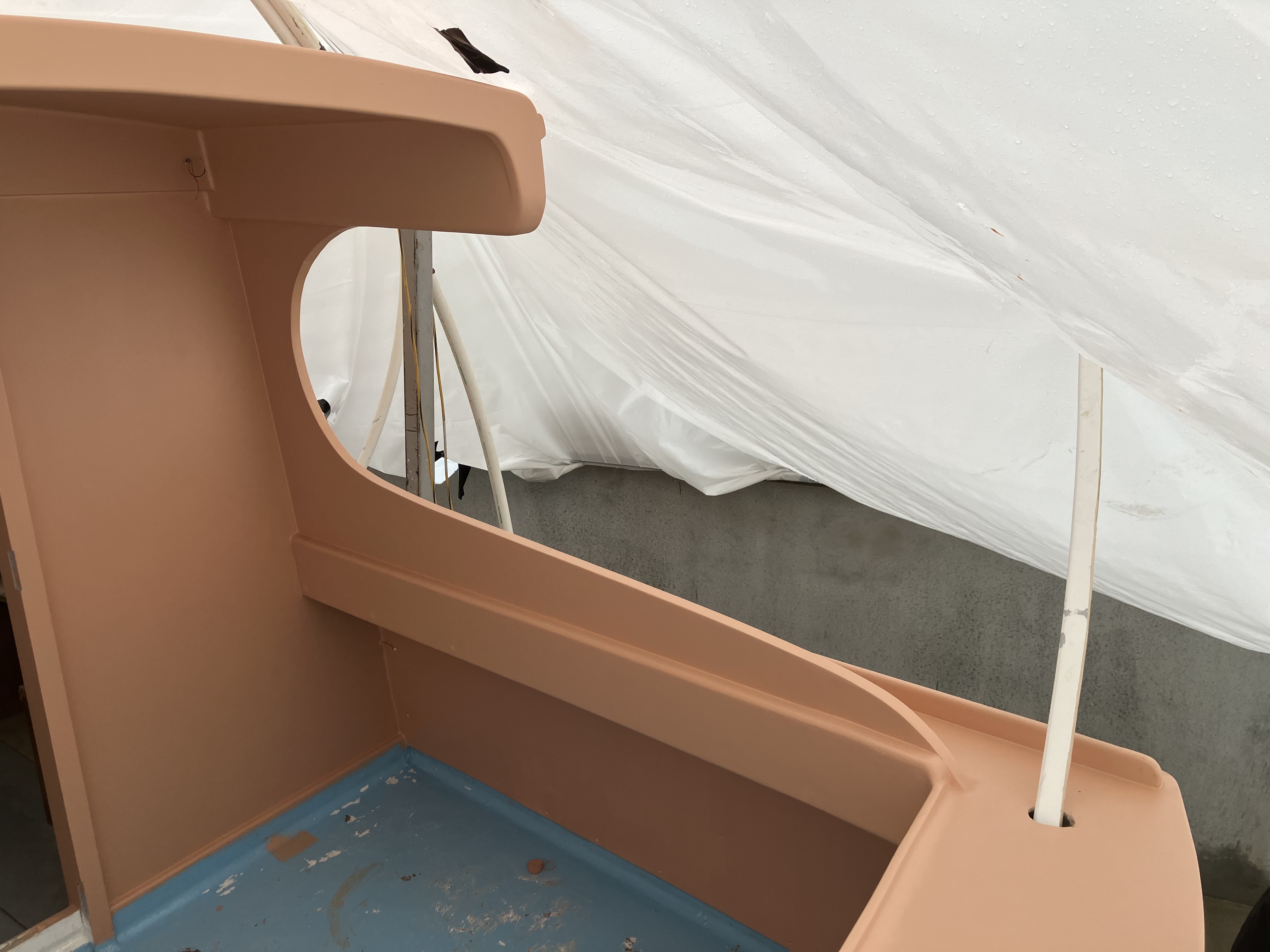
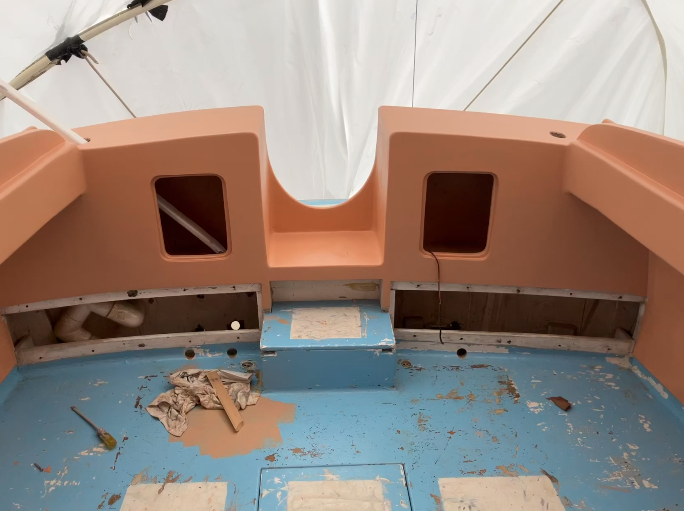
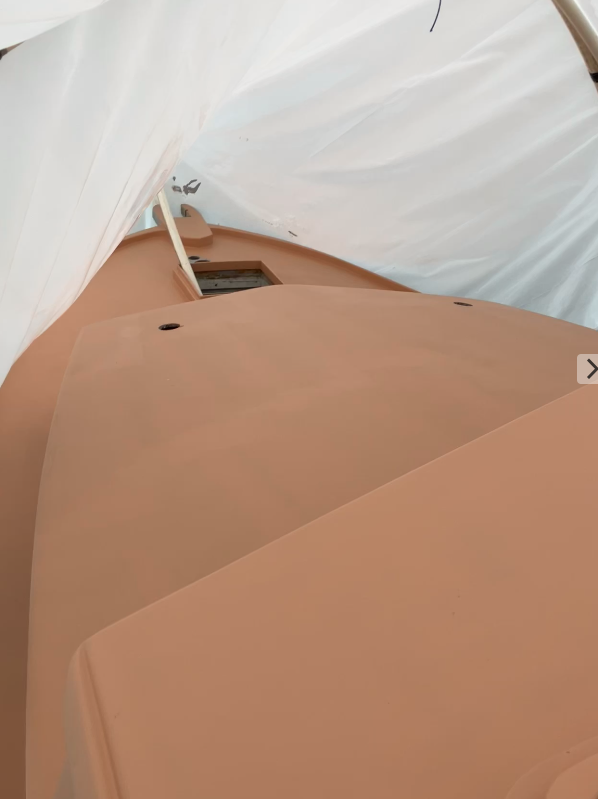
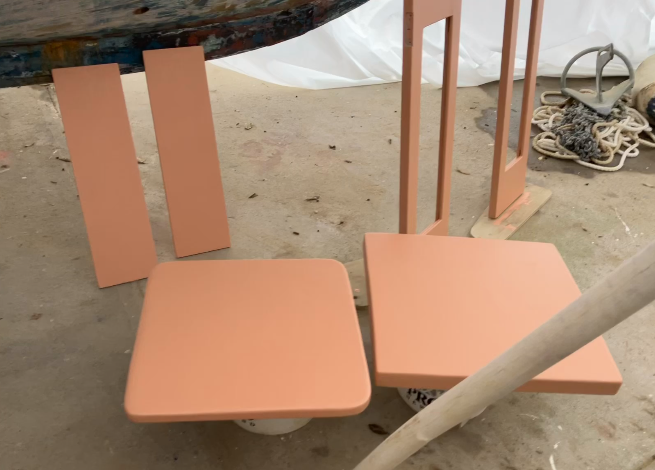
It’s been about three weeks’ since the last update and in that time we have finally got to the stage where she is ready for painting. We are working from top down and have got to the final undercoat (orange) down to the gunnels. We have gone for a low-sheen, two-pot system for the whole boat with two primers, two undercoats and two top coats.
There has been the usual wild-Winter-Northland weather, which has hammered the cover, but it’s still holding up – not long to go now so. It just has to last until the windows go in and we get the finish coats on up top, which will be the week after next.
She had holes all over the place and many were in the side of the hull – including bilge ones. So, they have all been re-directed and moved to the under the duckboard where you can’t see them. The hull now is without any unsightly grills/holes/lettering, etc, etc. Nothing now to draw the eye away from the lines.
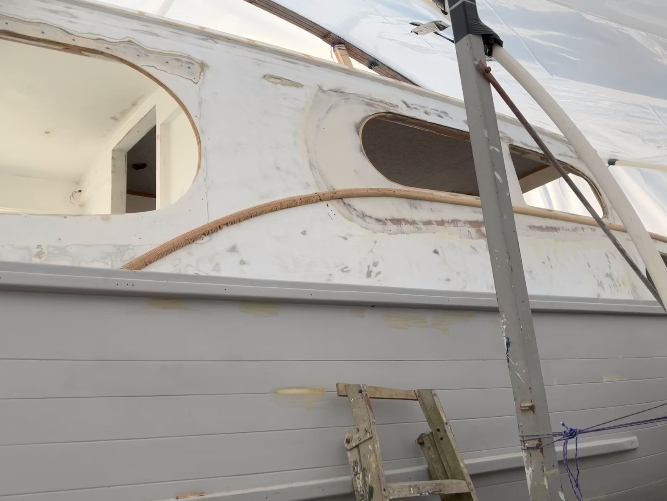
The line that connects the forward cabin to the aft deck is now re-instated. That was fun…Hundreds of cuts later, we got the curve, although it wanted to keep snapping. We took it all the way to the front of the forward cabin as it was. This has given the forward part above the windows a really nice profile. Finally, the lines of the LADY CAROLE have been restored working nicely with those reduced windows.
The cockpit drainage was a plastic box with a float switch. This never really worked properly and was prone to blockages, so the drainage for the cockpit has been returned to self draining with larger holes so they don’t get blocked.
The back doors had brown smoky glass in both sections, so they were taken to a local joiner to have slats put in the upper section so we can improve cabin ventilation. Here they are almost ready for the top coats.
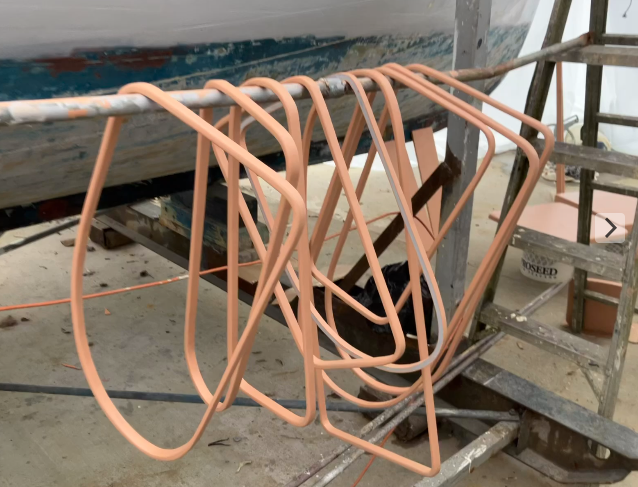
We decided that the trims should be put back on the windows to give it some profile and finish the look. Originally L.C. had trims, but these had long gone.
The hatches are finally finished and pretty much ready for their top coats.






















 waitematawoodys.com #1 for classic wooden boat stories, info, advice & news - updated daily - 15+ million views