REVIVING A CLASSIC – INSIDE LEADER BOATBUILDERS AS FANTASIA PREPARES TO LAUNCH
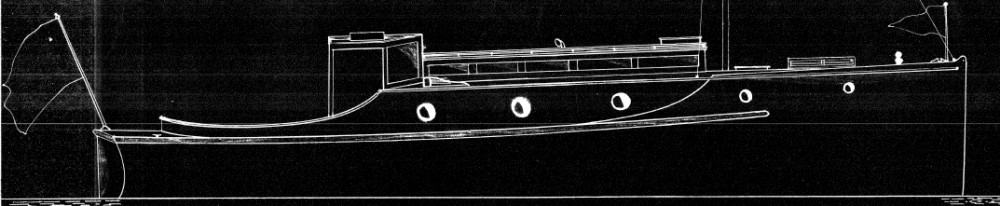
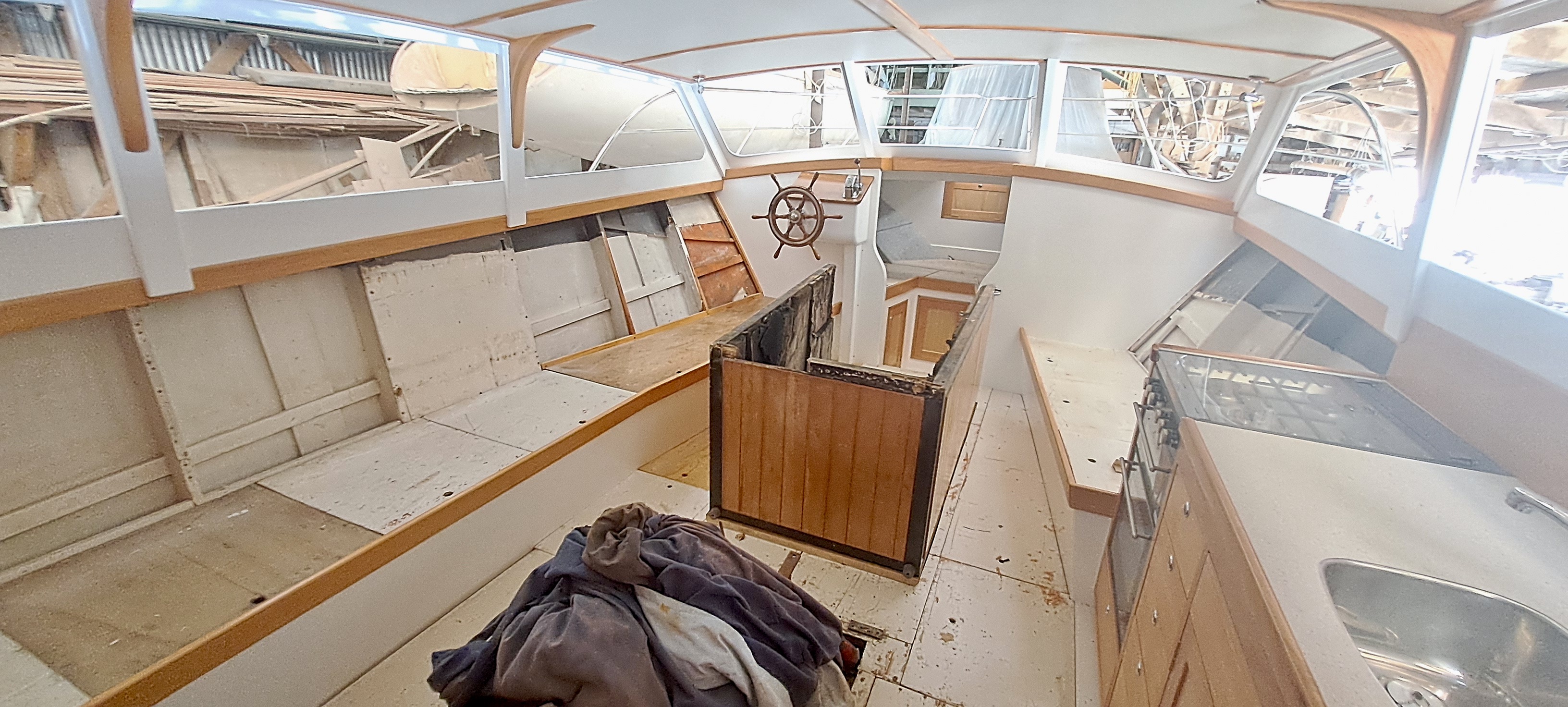
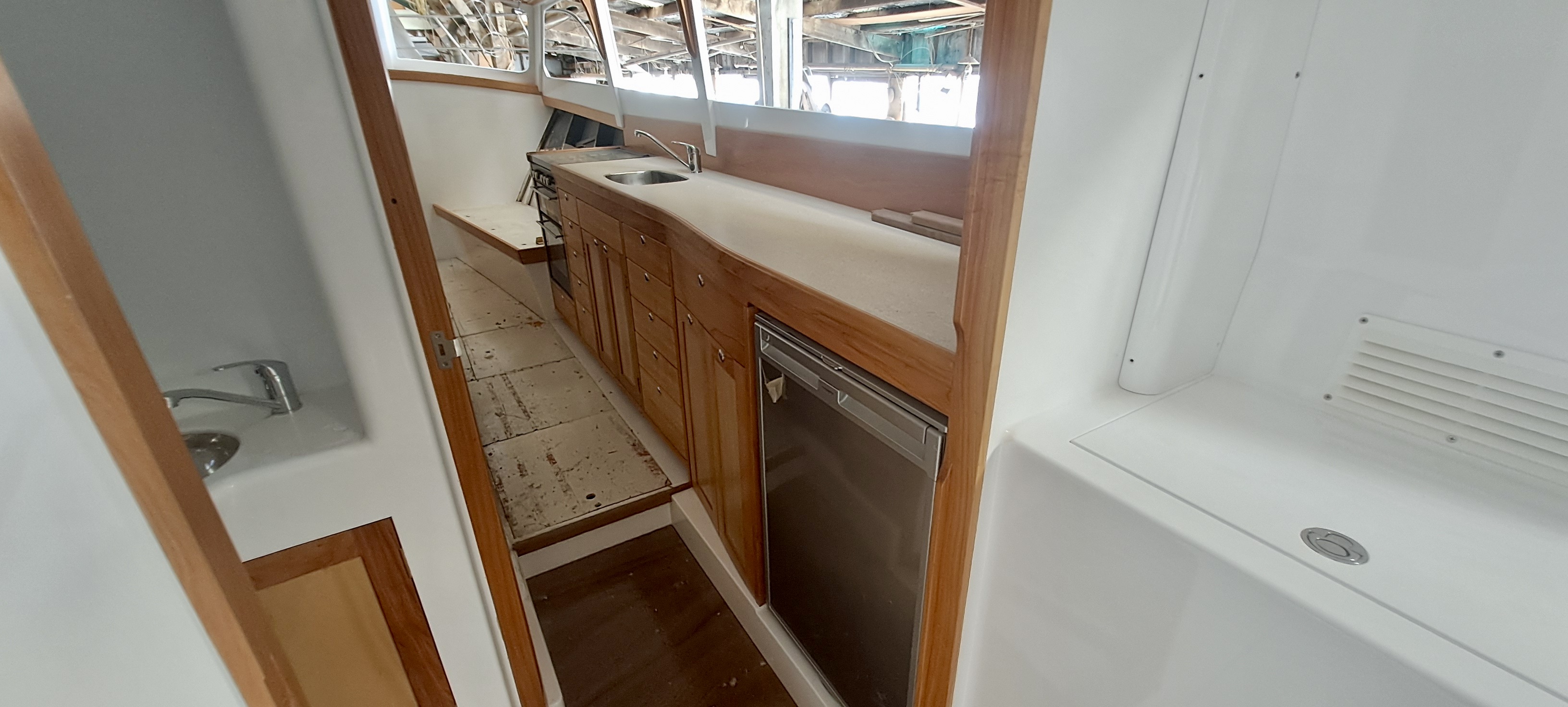
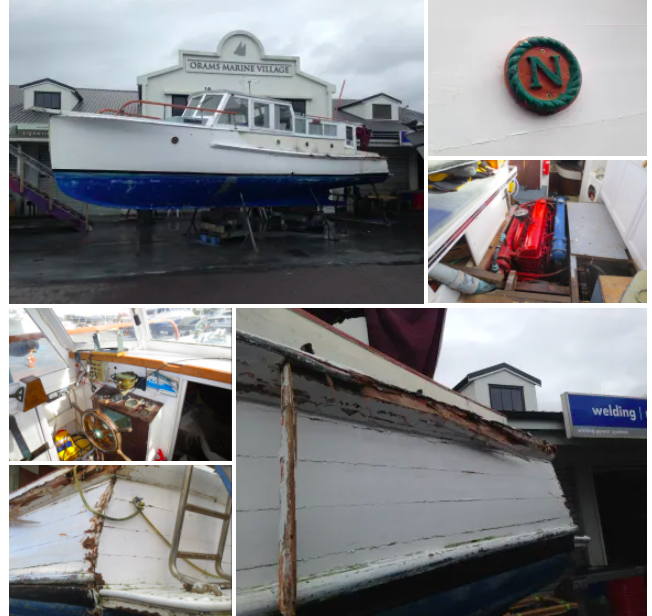
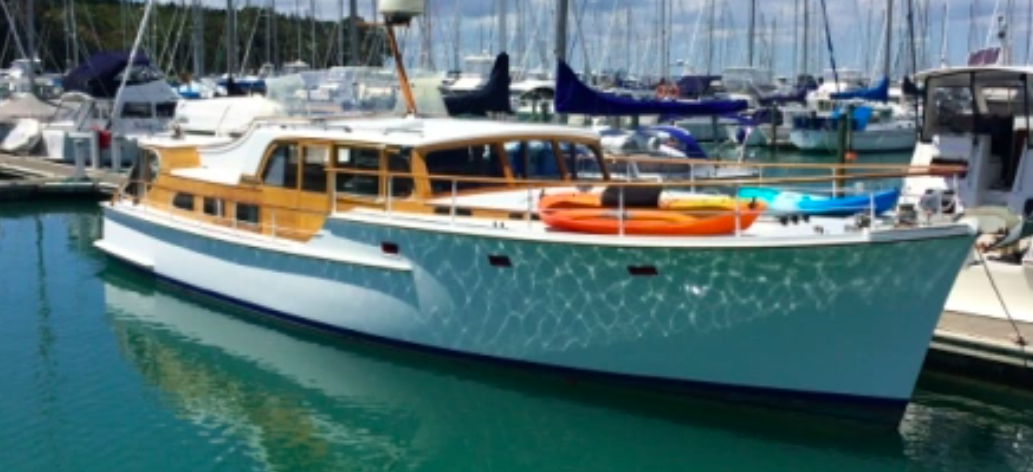
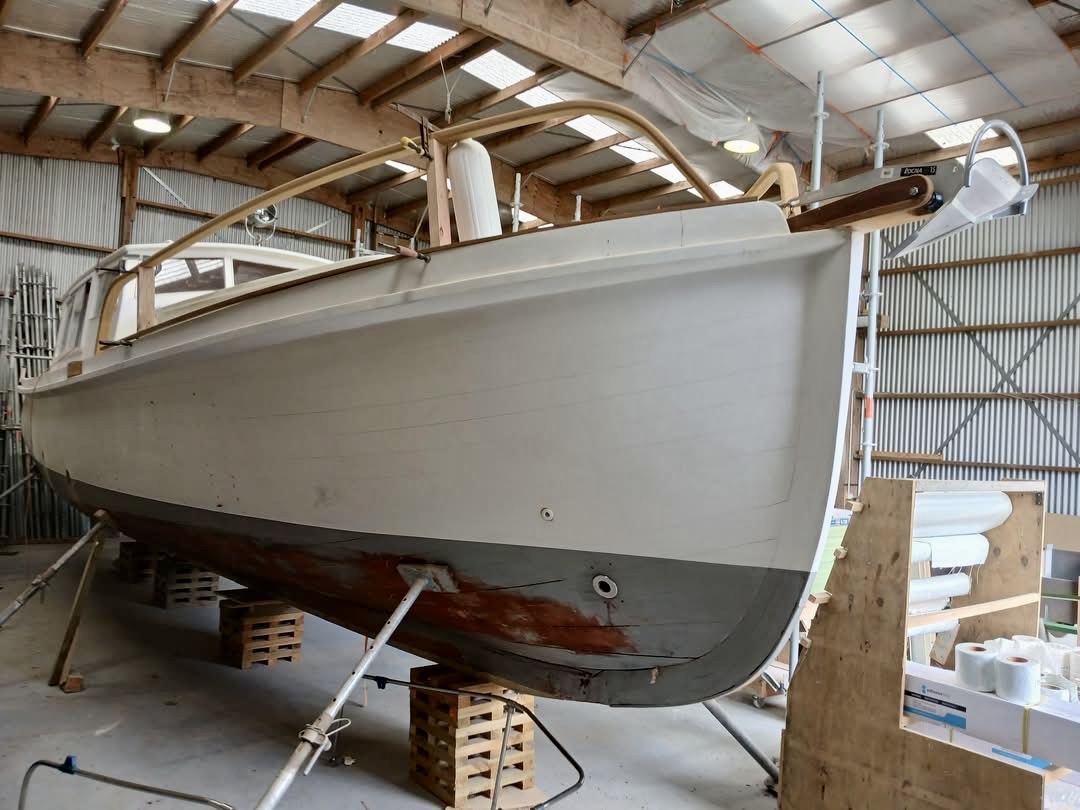
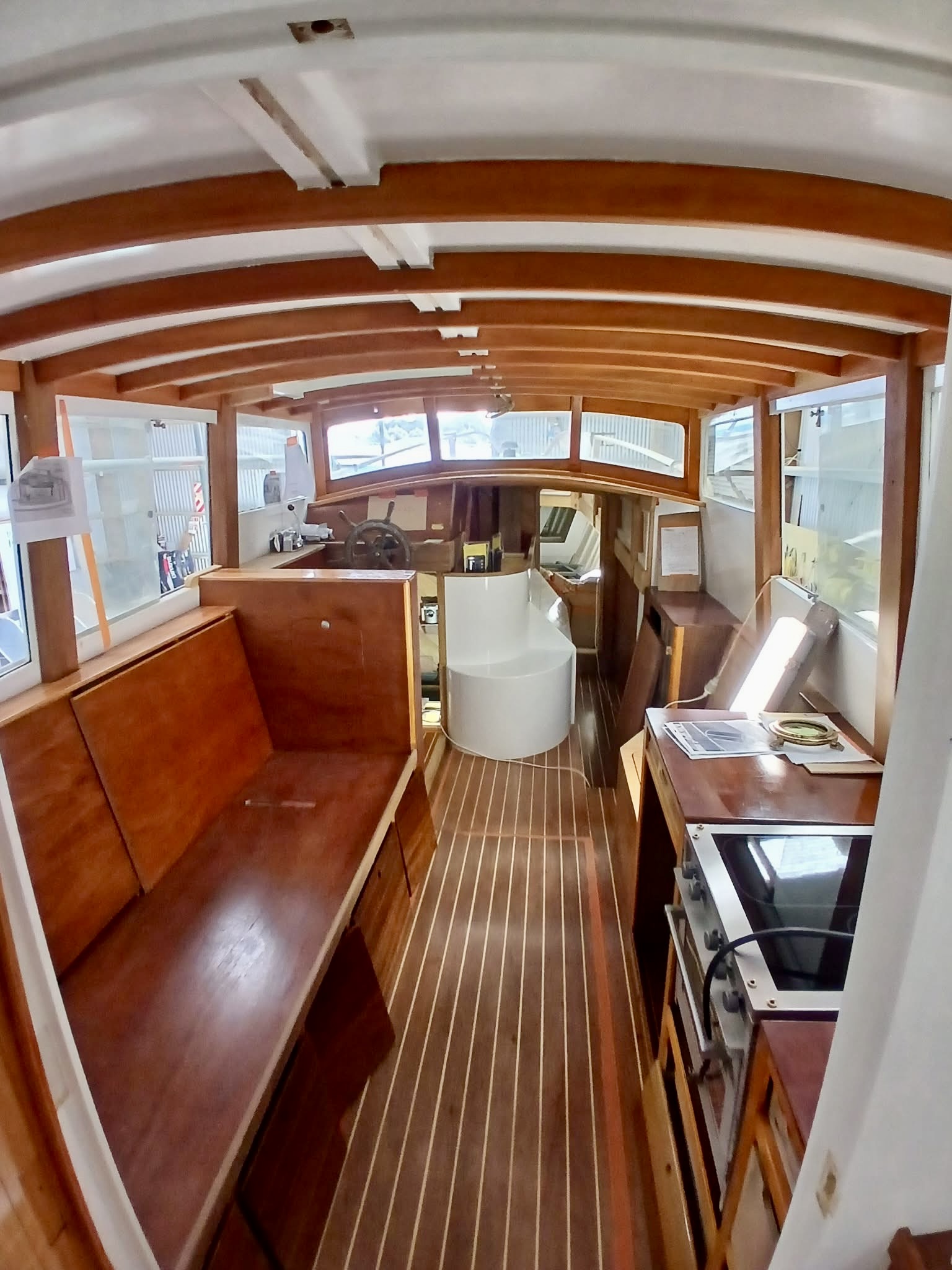
Back in November 2023 I was mooching around Leader Boatbuilders on the Panmure River and Dave Patterson showed me around the 36’ 1968 (possibly 1963), Harry Biddle built (to a Crestcraft design) launch FANTASIA . Link to the 2023 story here https://waitematawoodys.com/2023/11/16/fantasia/
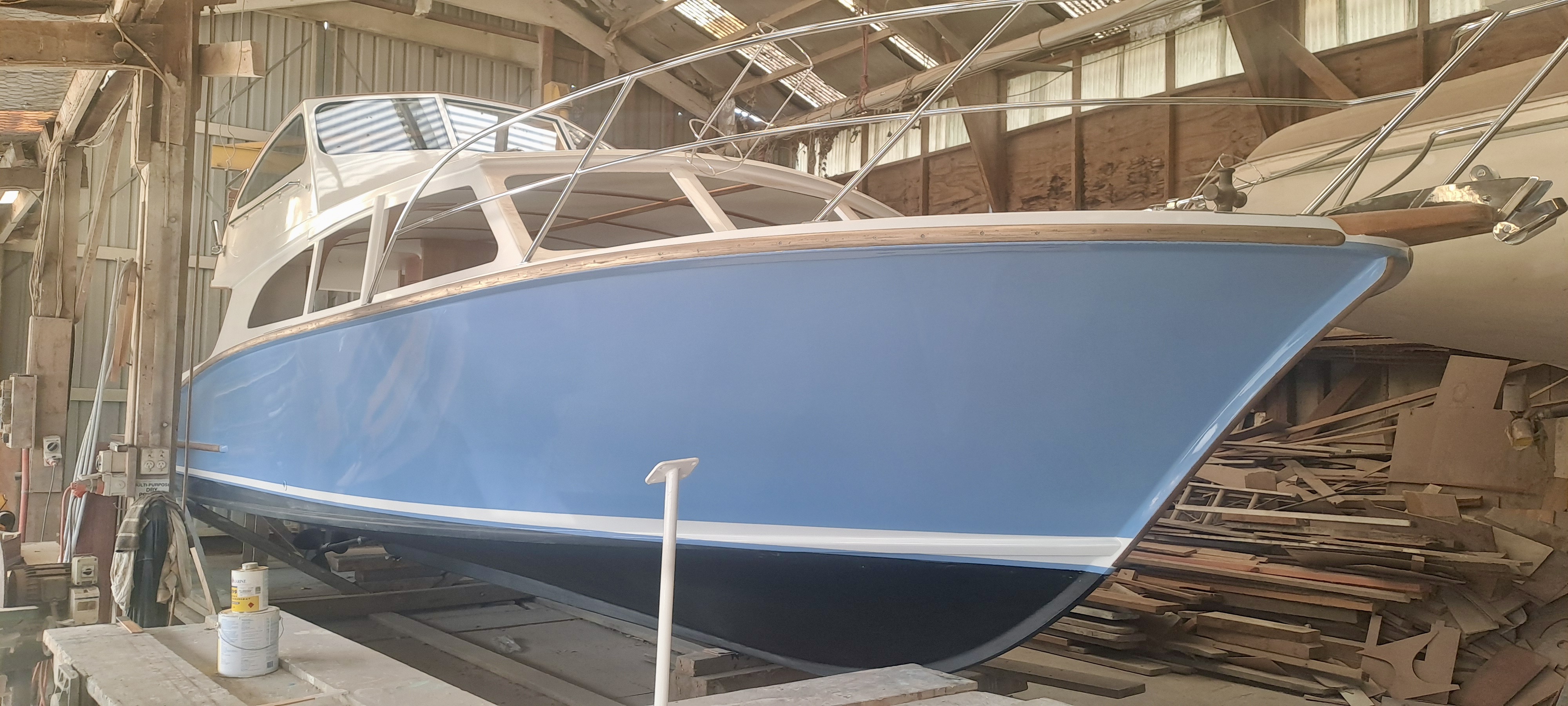
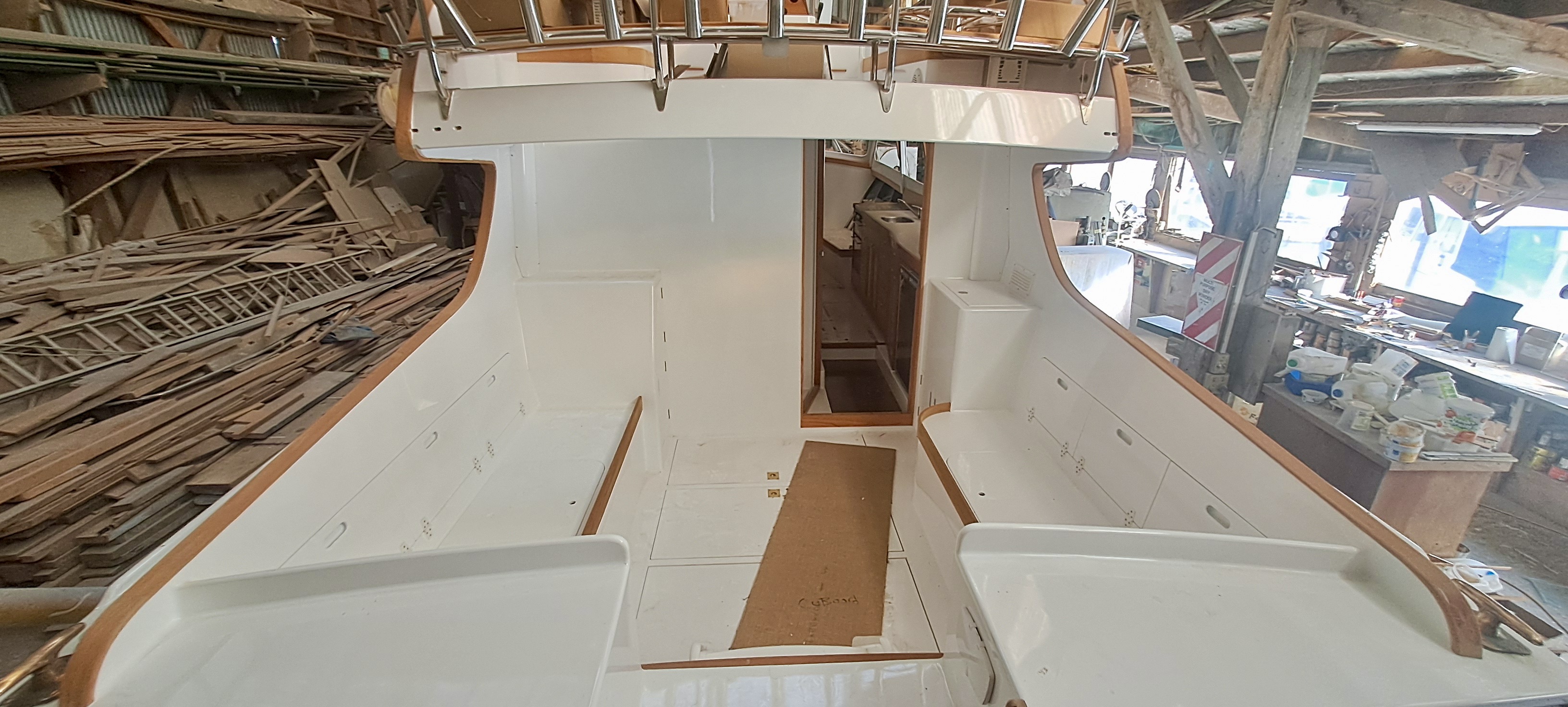
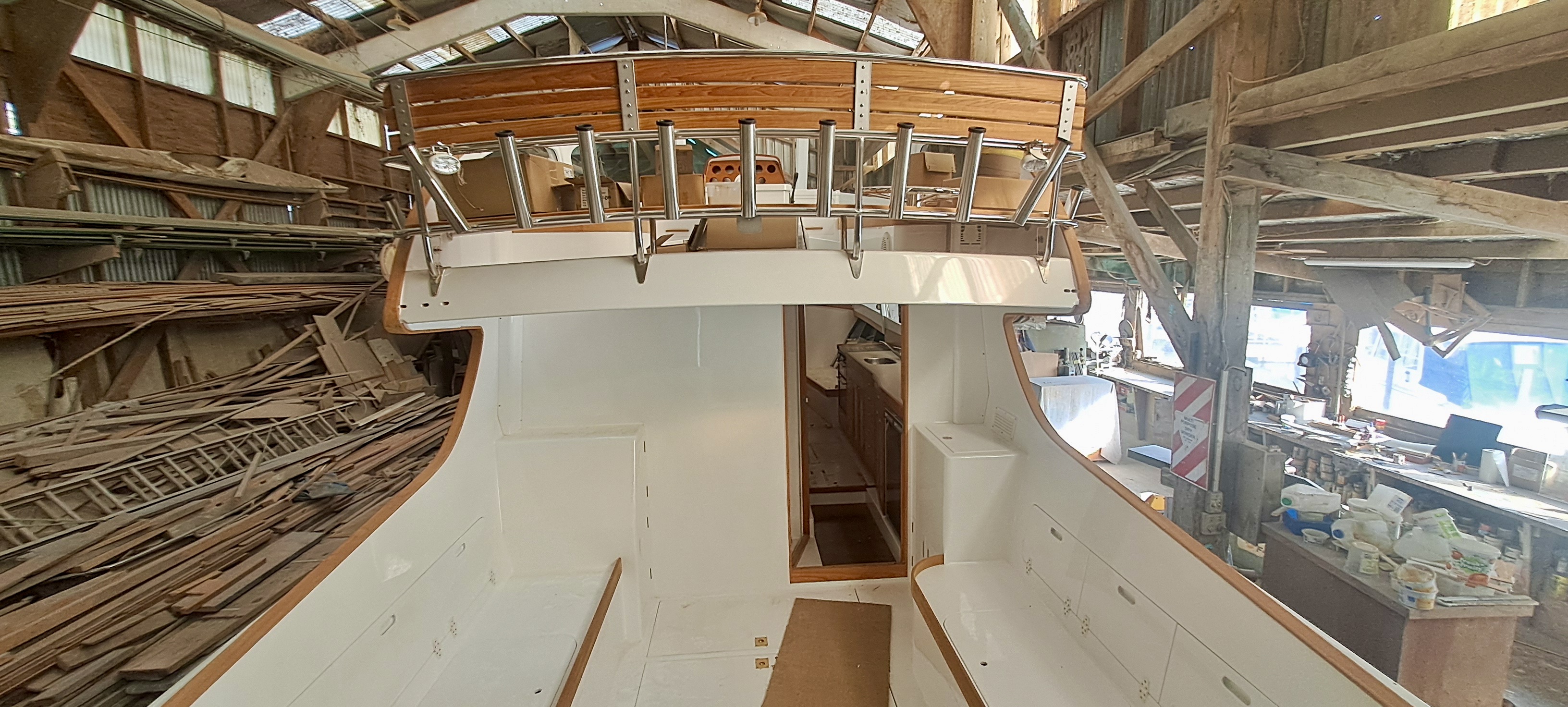
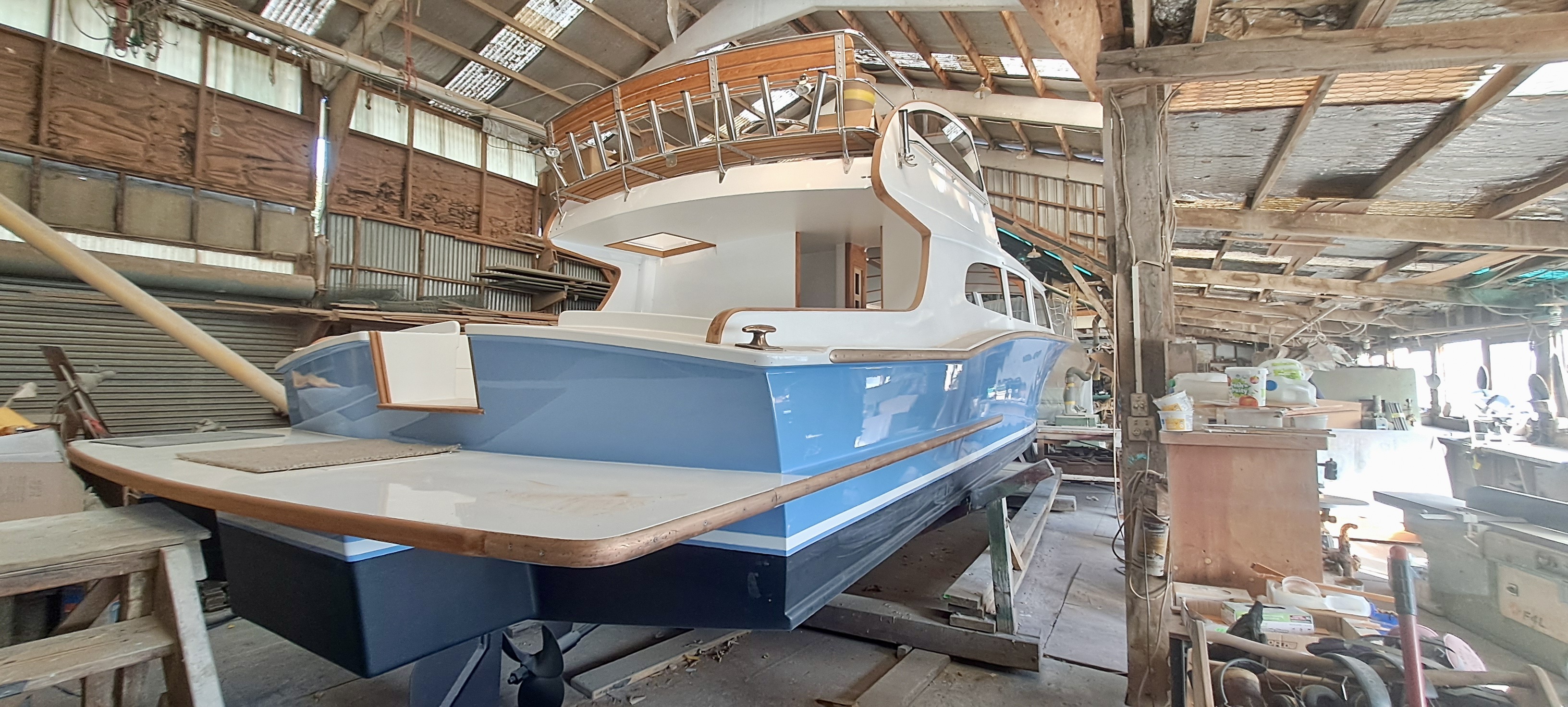
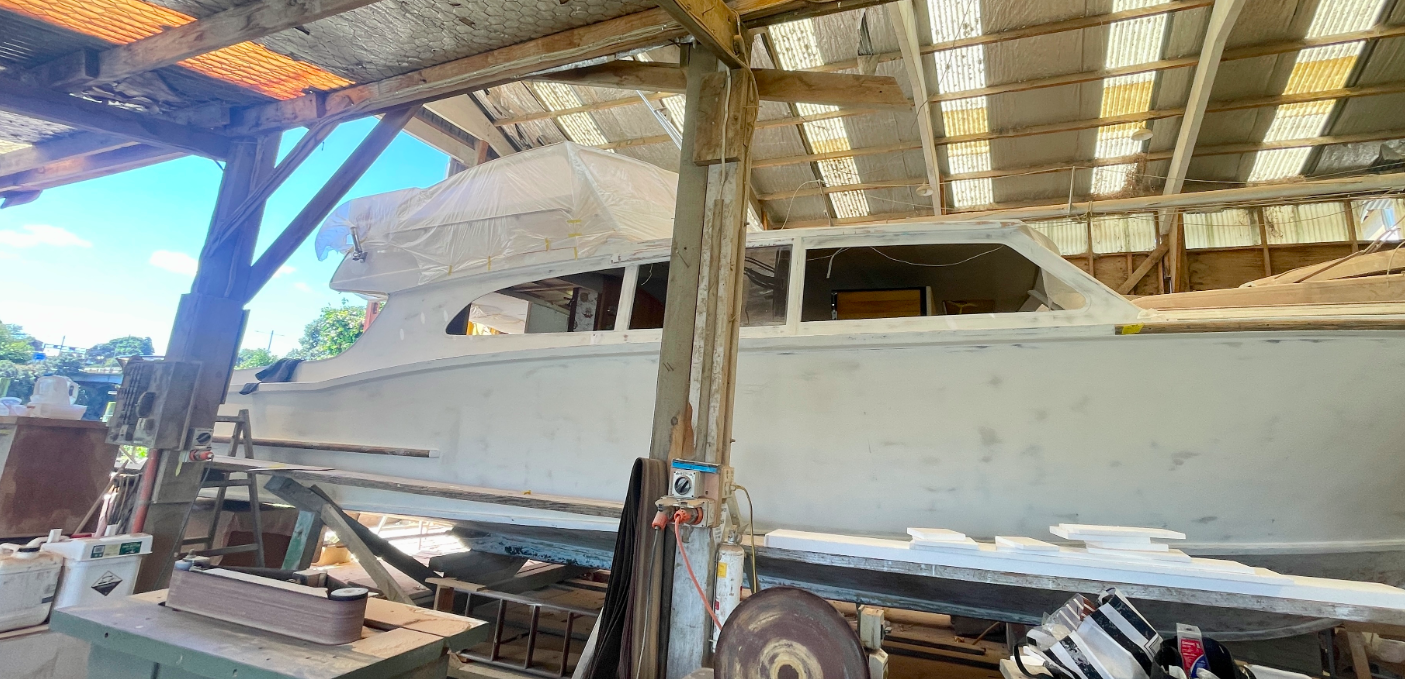
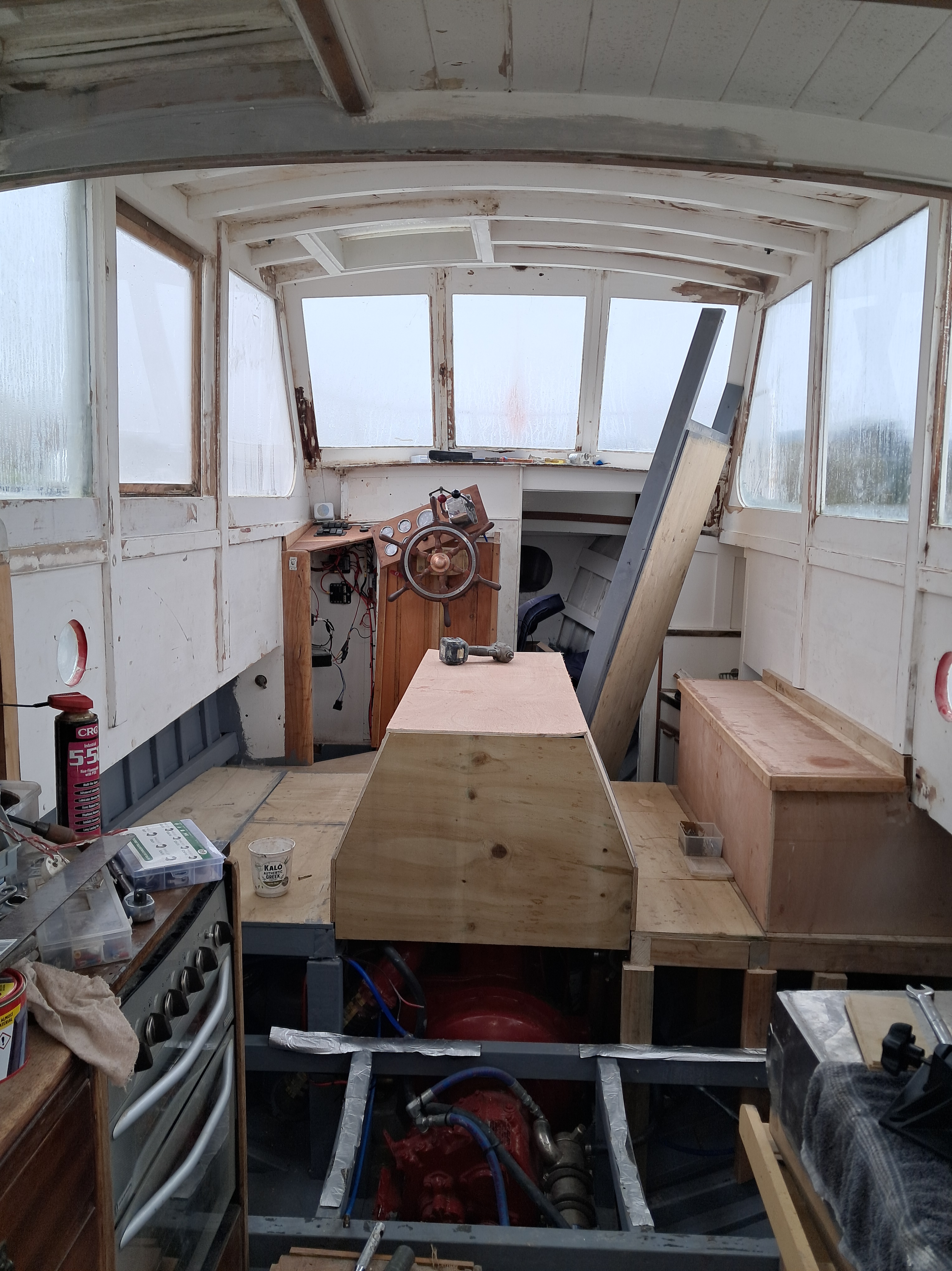
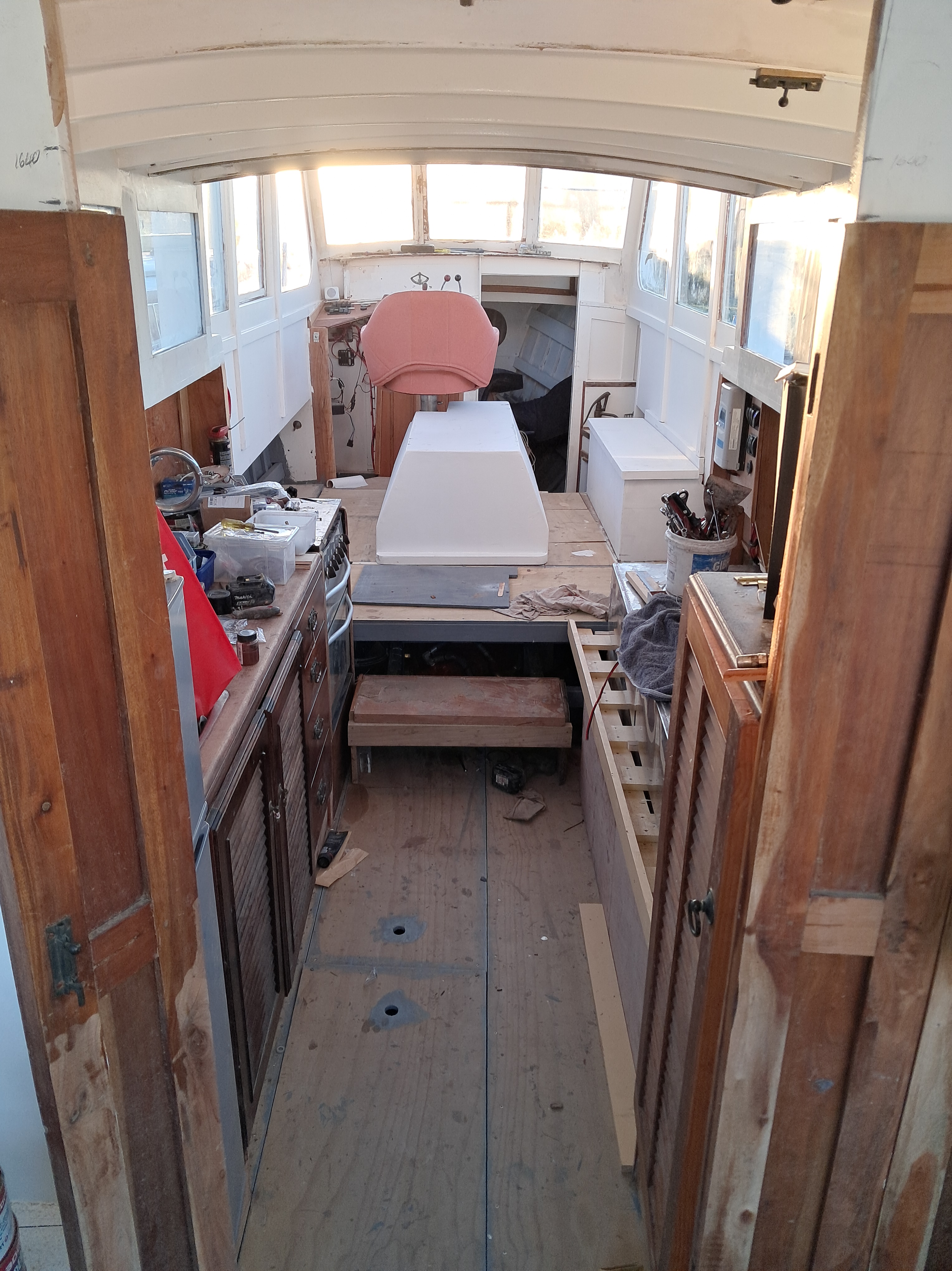
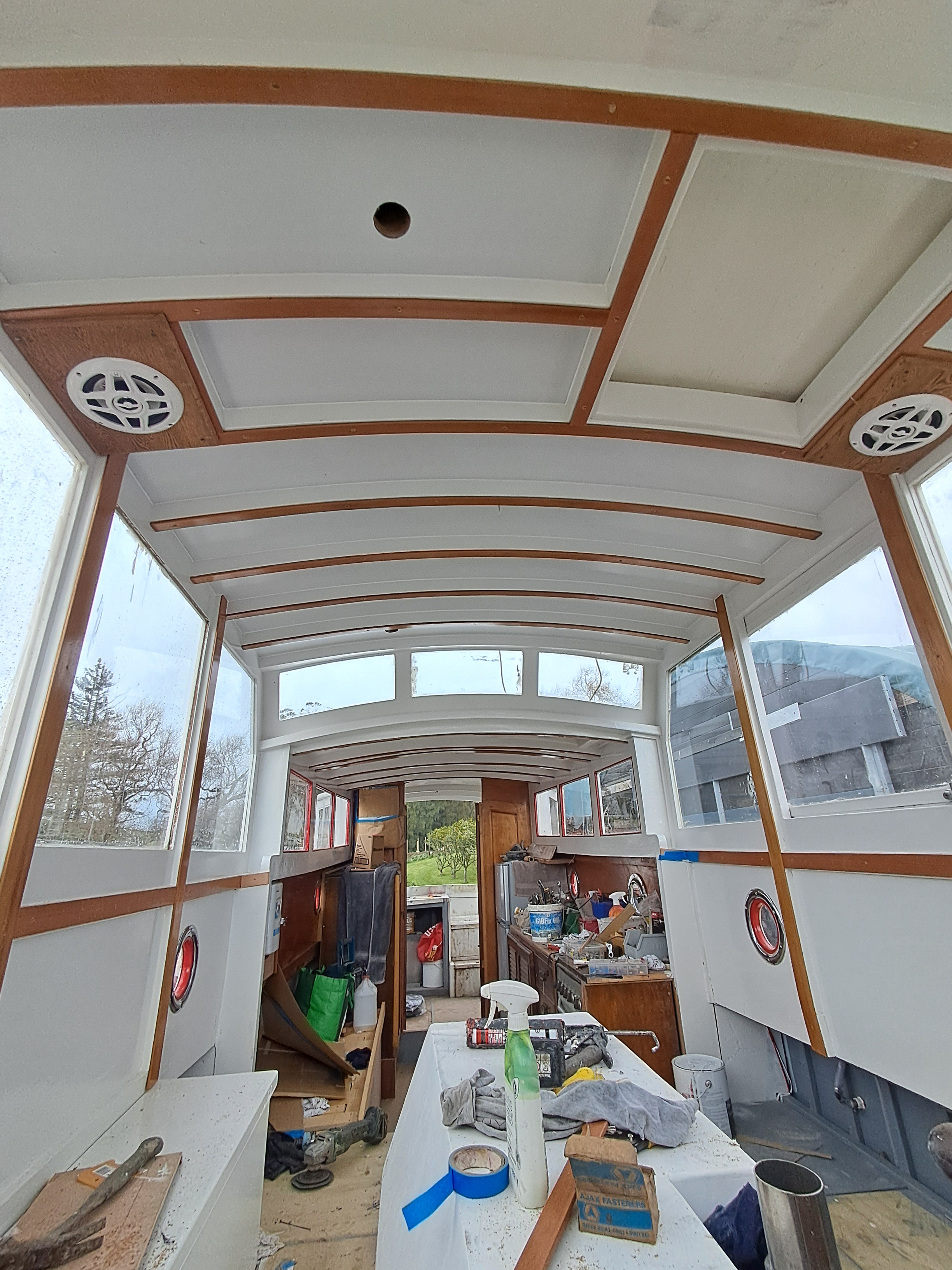
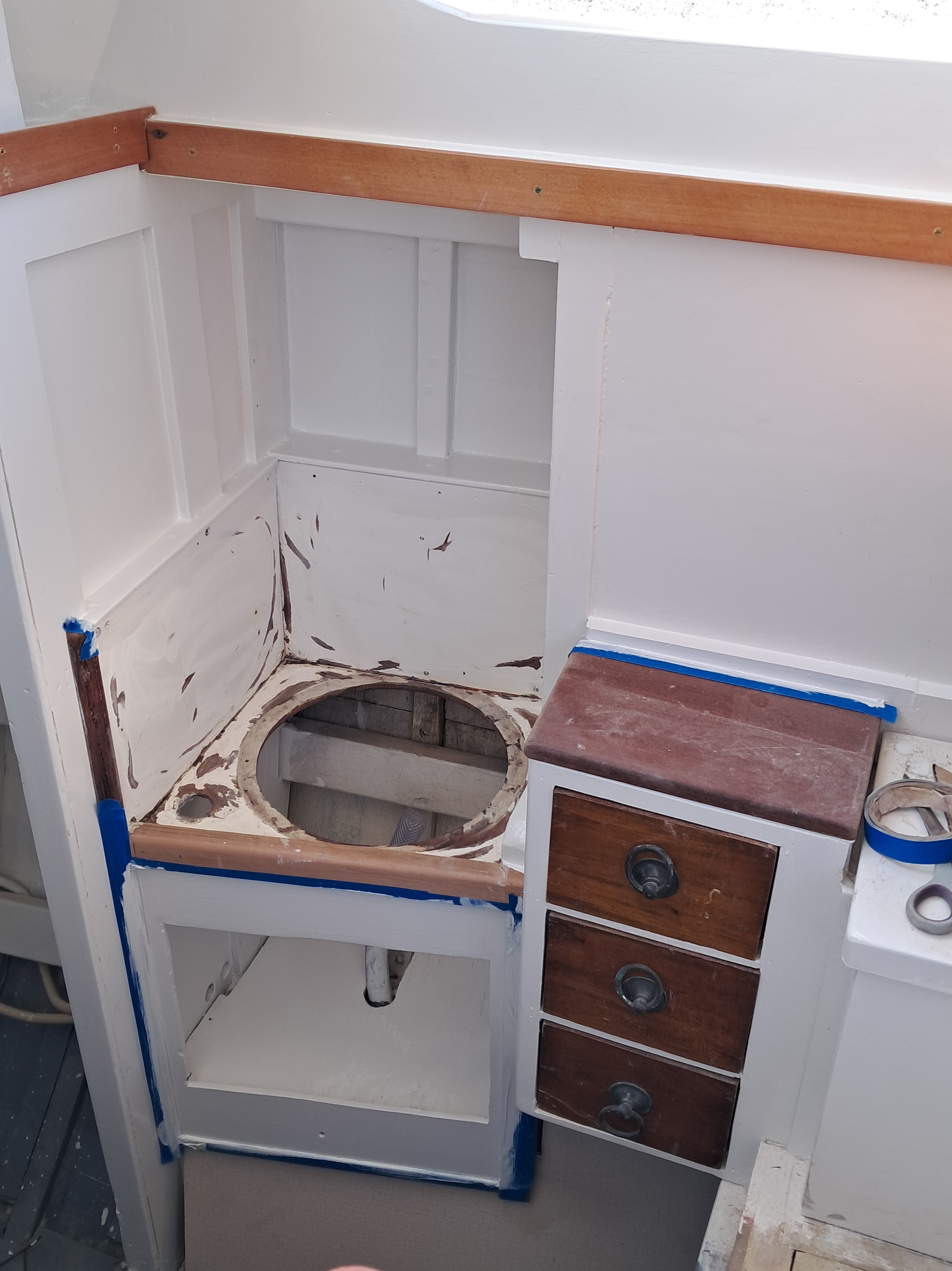
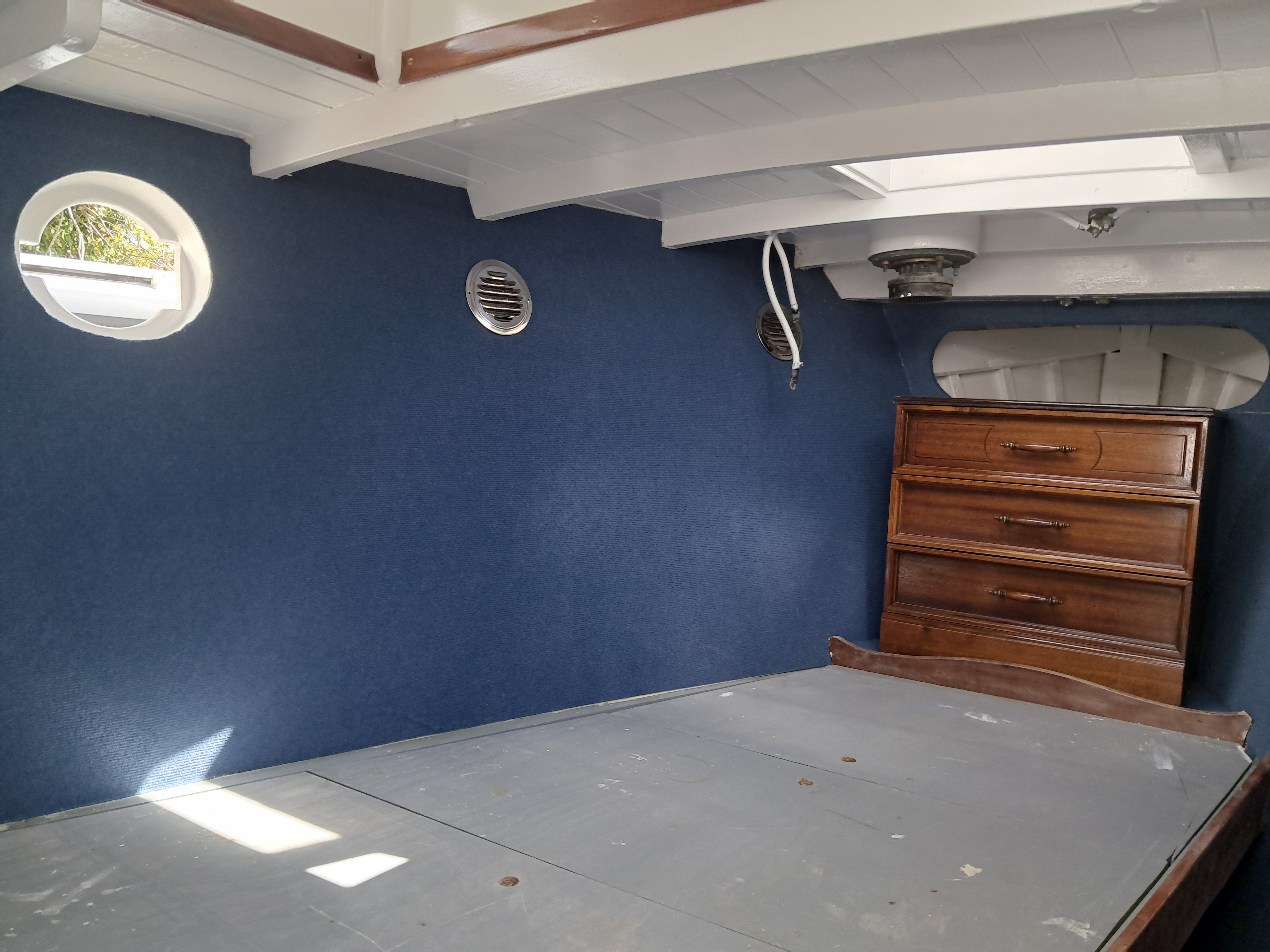
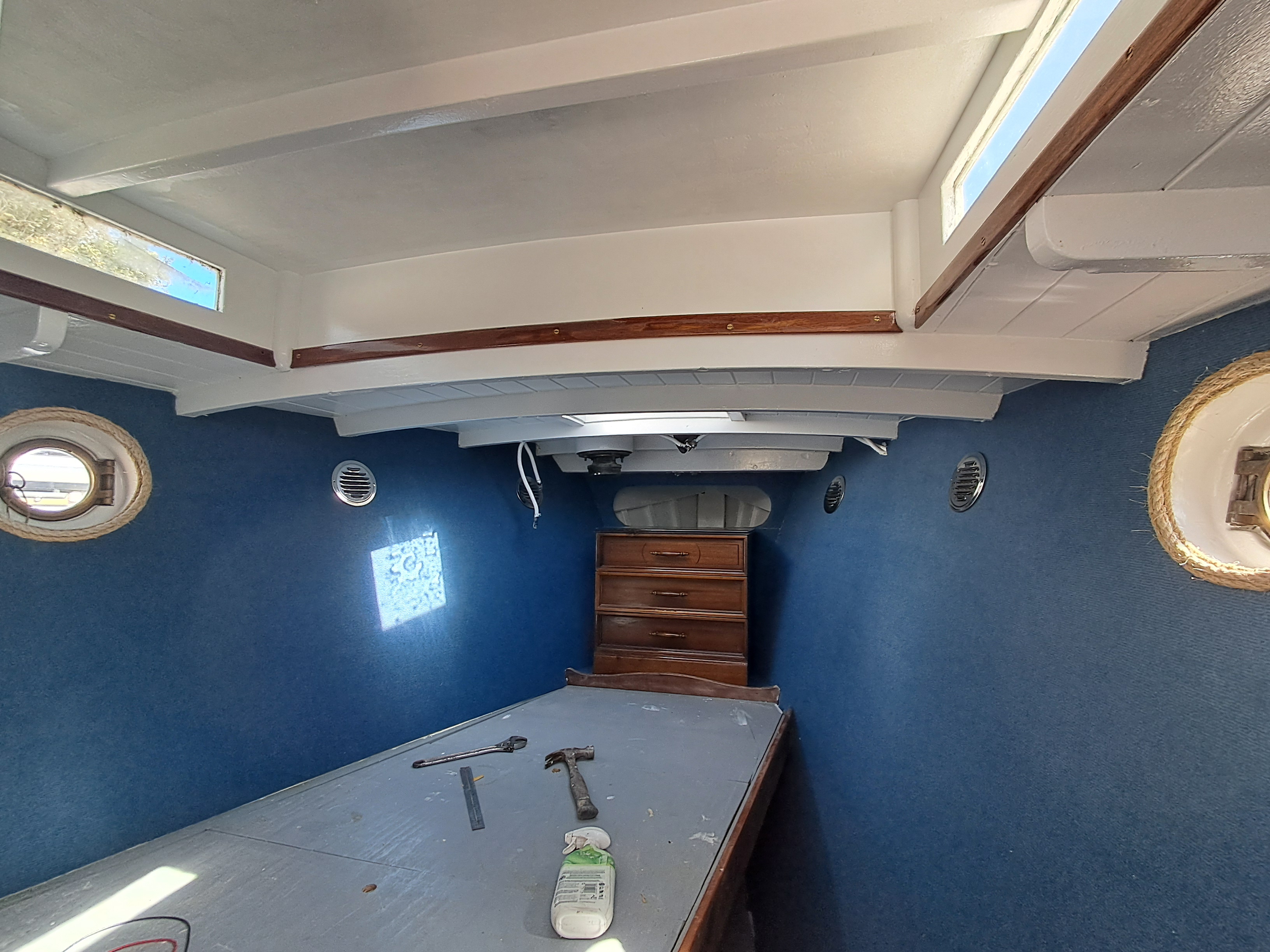
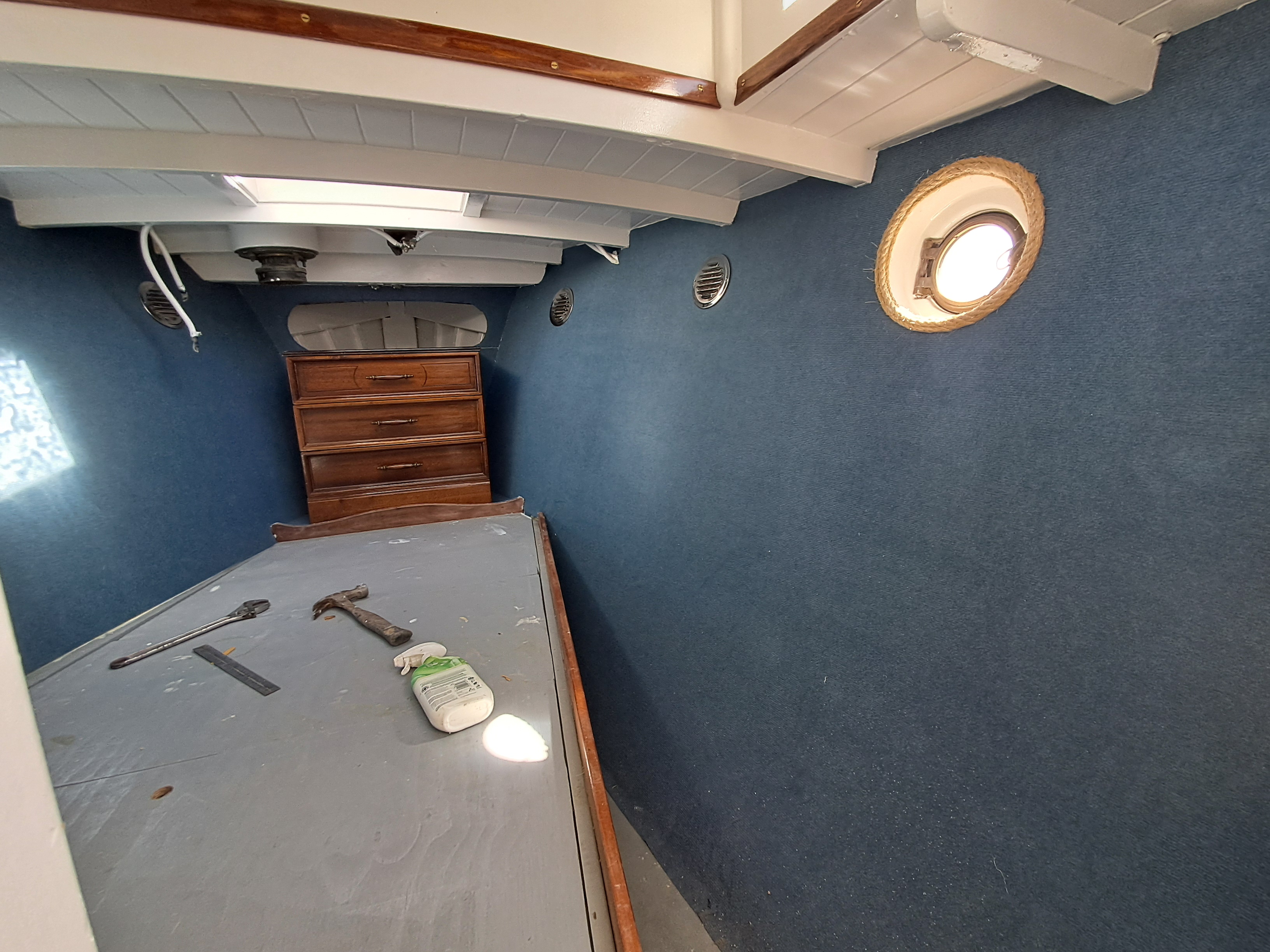
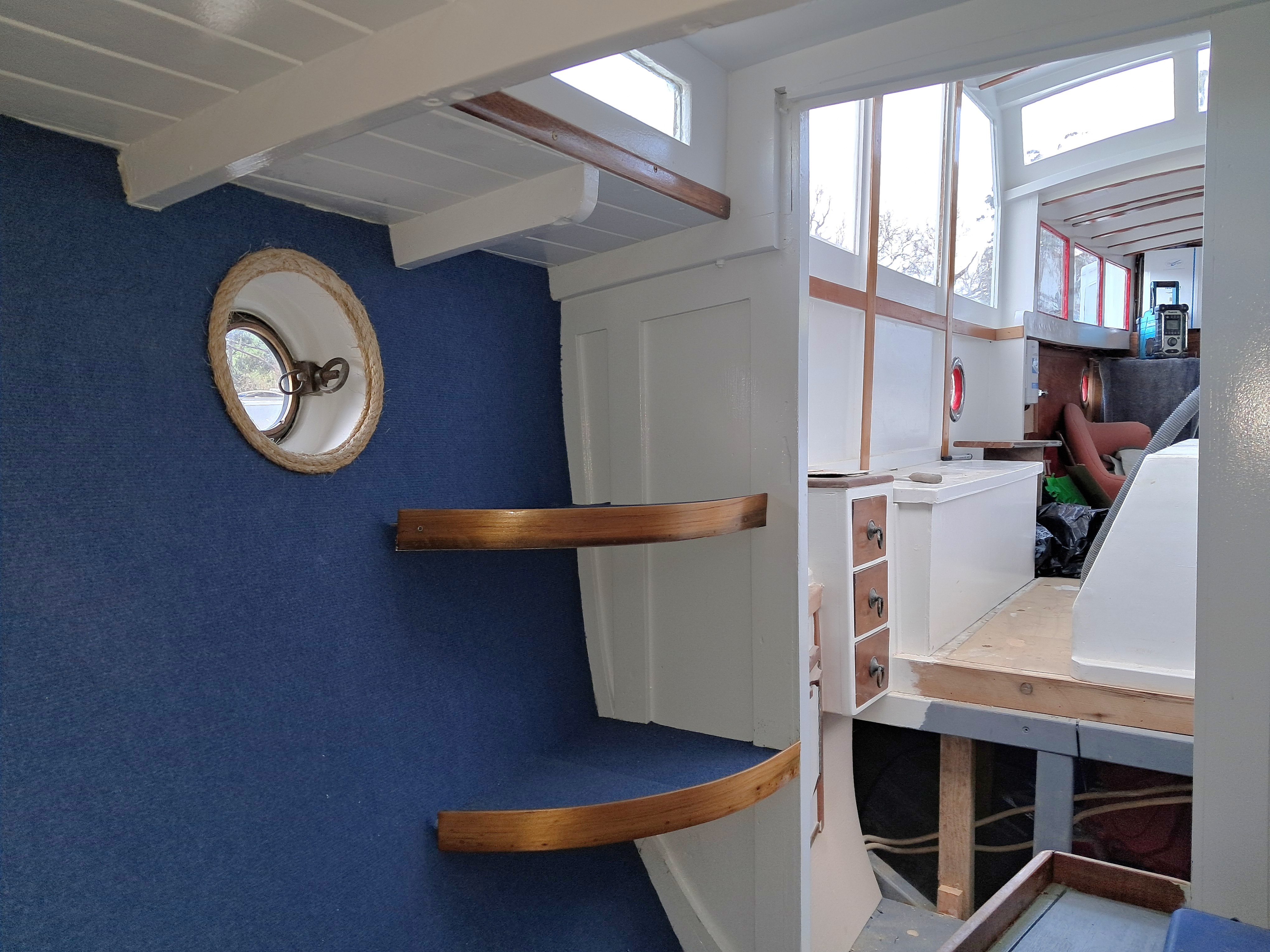
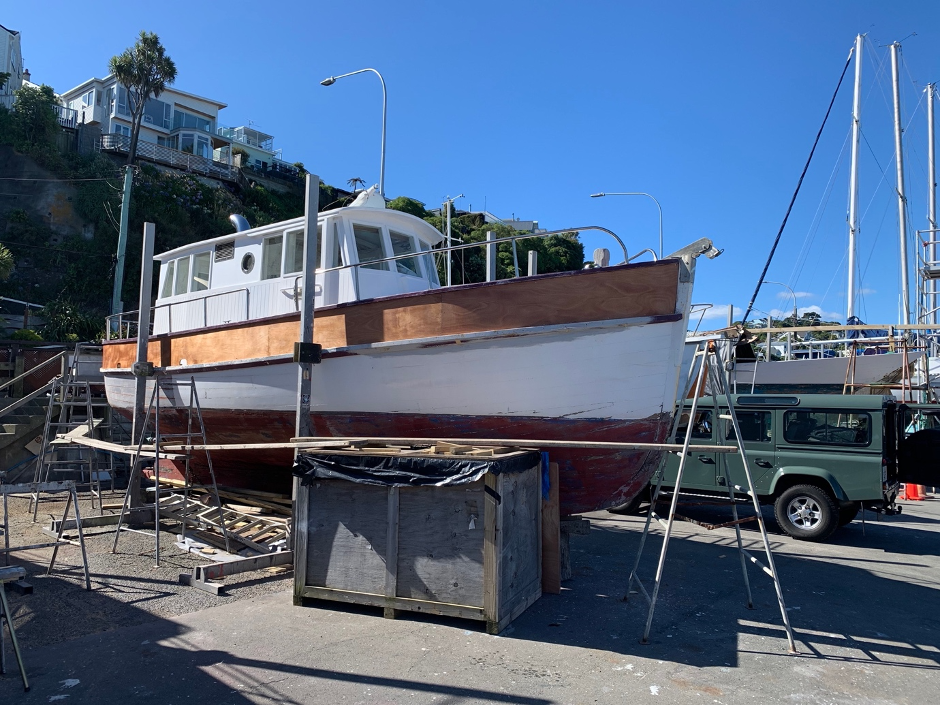
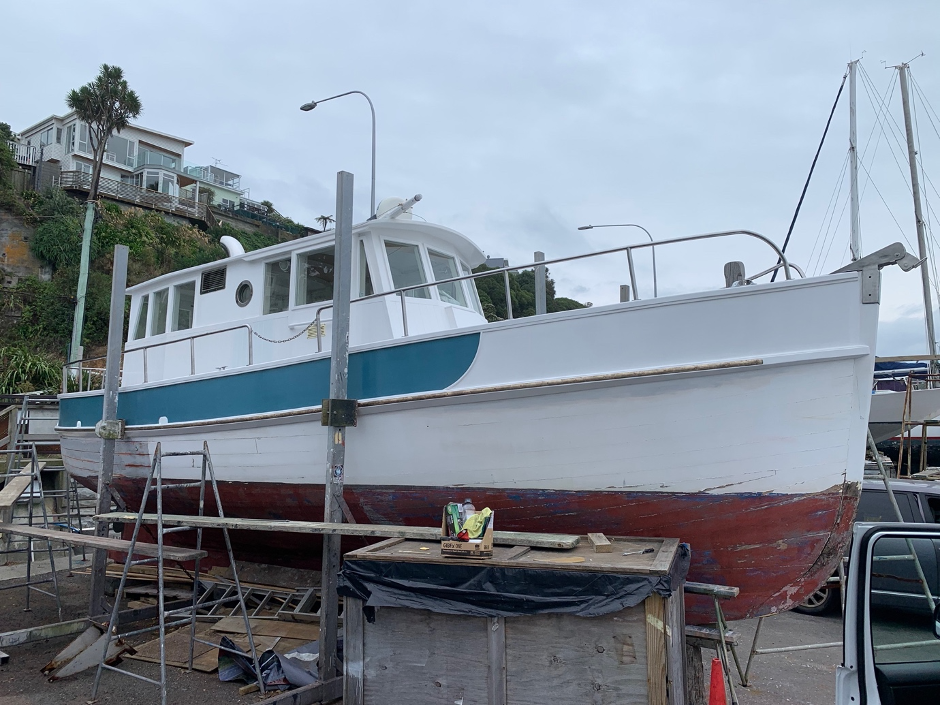
Today thanks to Mark McLaughlin’s visit to the shed last week and his guided tour from Ken we get to see what’s been happening to FANTASIA in the last 3 years. If I recall she came into the shed for a paint job, and now look at her – close to relaunching after an extensive refit 🙂 We love companion selling e.g. “Would You Like Frys With That?”
Mark commented that the new hull colour gets his tick of approval and I agree. We need more colour afloat – the bias for white-on-white must make Coastguards work a challenge .
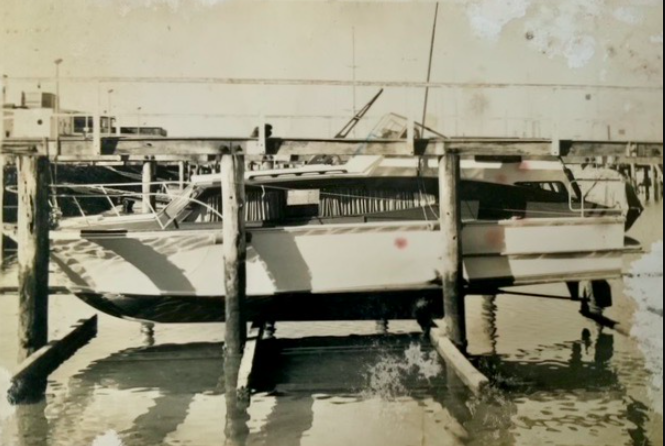
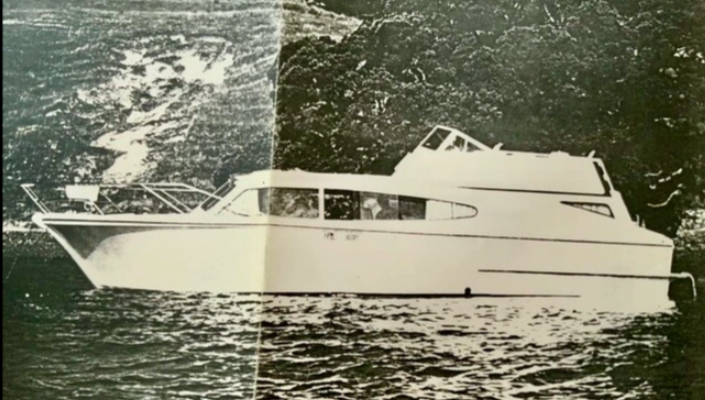
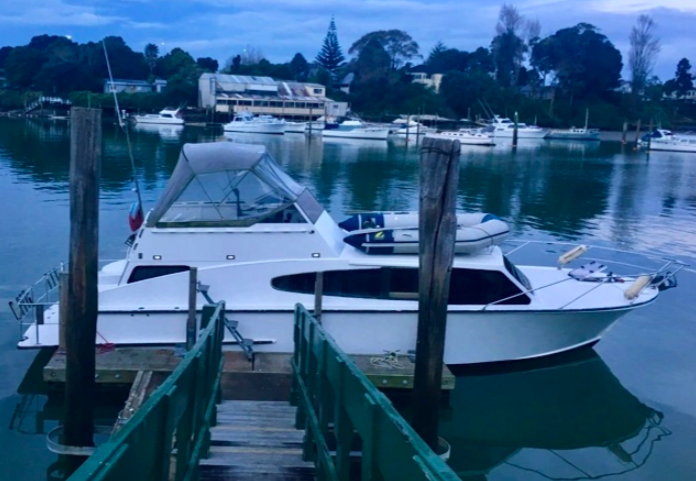
Photos below from the past and prior to entering the shed + 2023 work in progress.
INPUT ex NATHAN HERBERT – I understand that these were Customcraft. Crestacraft were fibreglass trailer boats
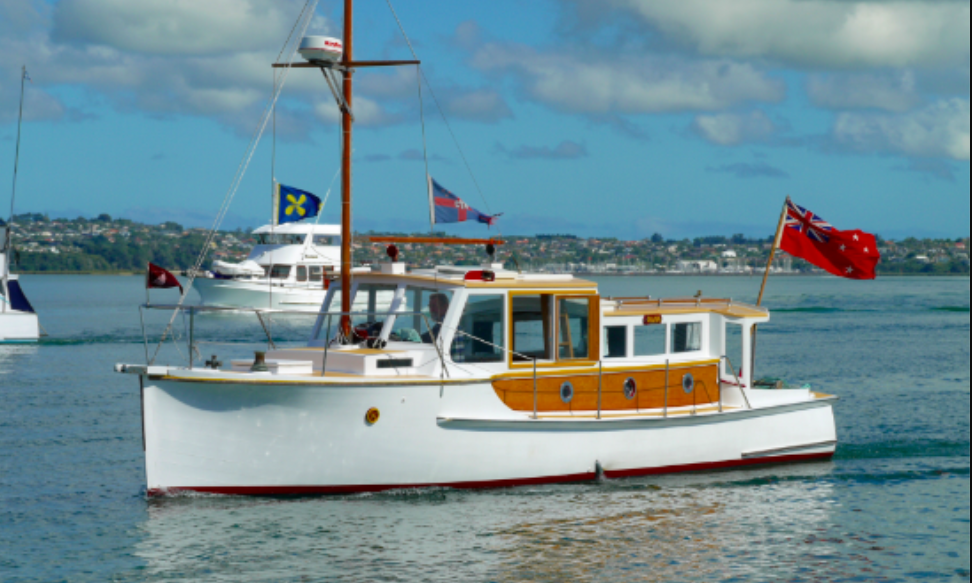
I decided to lead off todays photos with a great looking photo of the classic wooden launch – NANA , why? While most of the many WW stories on NANA show her either damaged and close to being broken up or during a restoration. They say cats have 9 lives, well NANA most have been a cat in another life because I do not think there is vessel on WW that has had as much misfortune as NANA has. Use the WW search panel to view her eventful past.
But today is a good story day – first some info on NANA – was designed by C. Bailey Jnr. & built by C. Bailey & Sons for Mr F Alison of Matiatia, Waiheke Island in1934 & launched in late November / December. She is 35′ with a 8′ beam & a 3′ draft. She was very quick in her early days e.g. 17 knots.
In June 2023 WW was ran an SOS story looking for a new custodian and John Woodcock stepped up to the plate and took ownership of NANA and commenced the restoration. Aside from the electrical work John has / is undertaking the work himself , with help from a few friends. The plan is to have her back in the water by Christmas.I’m sure a few woodys will be asking the question – why has this launch been ’saved’ from the back-hoe so many times, well the answers simple – 1. She’s a Bailey and that makes her special 2. She’s a drop dead looker.
So woodys enjoy the peek into John’s work and be grateful that there are still folks like John prepared to do the hard yards and save some of our fine classics.
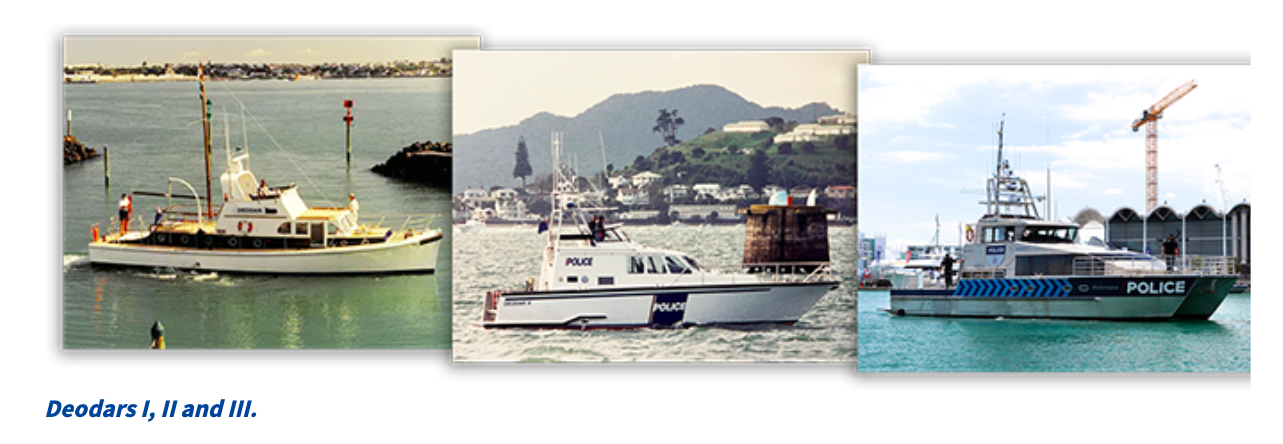
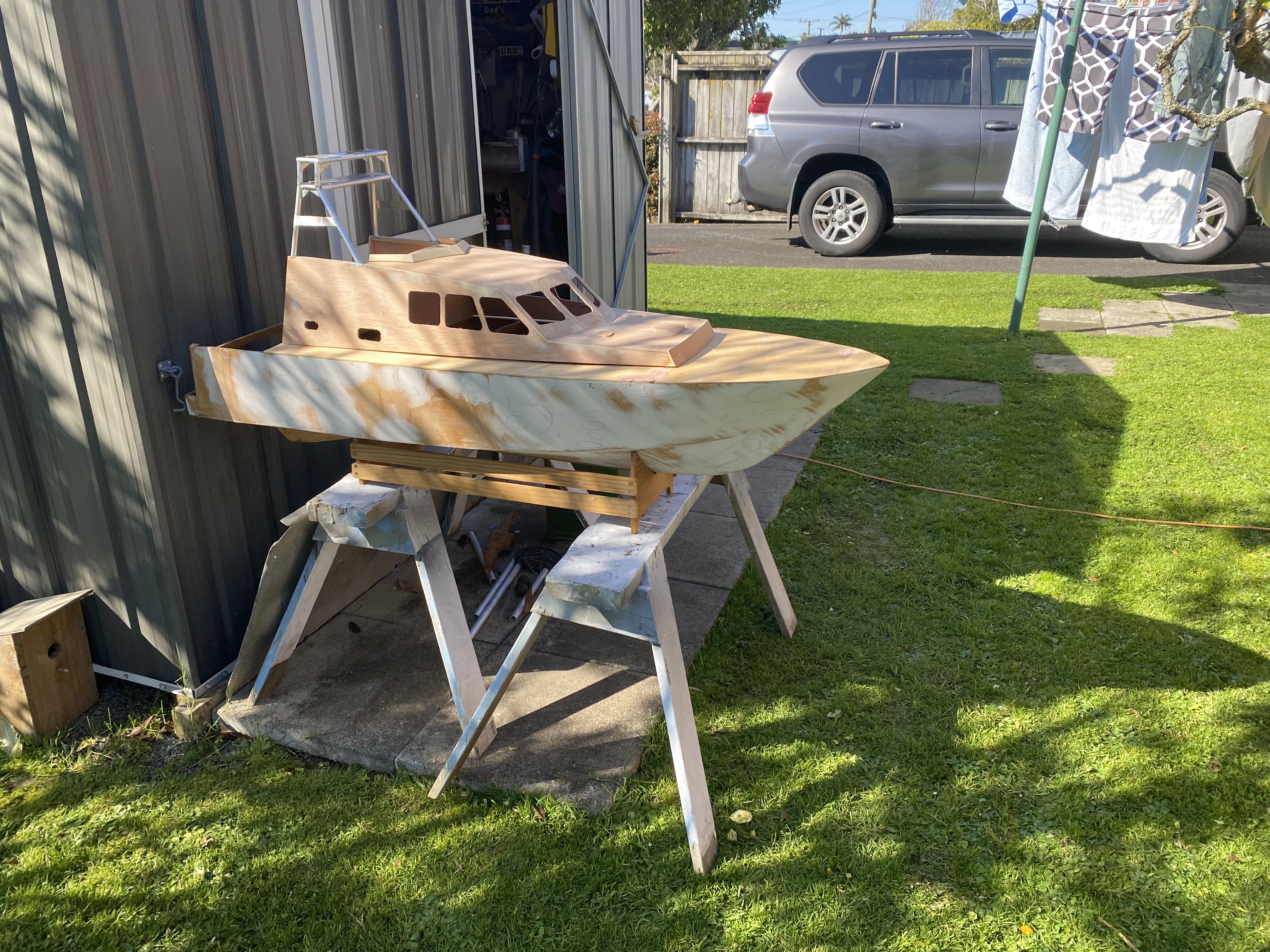
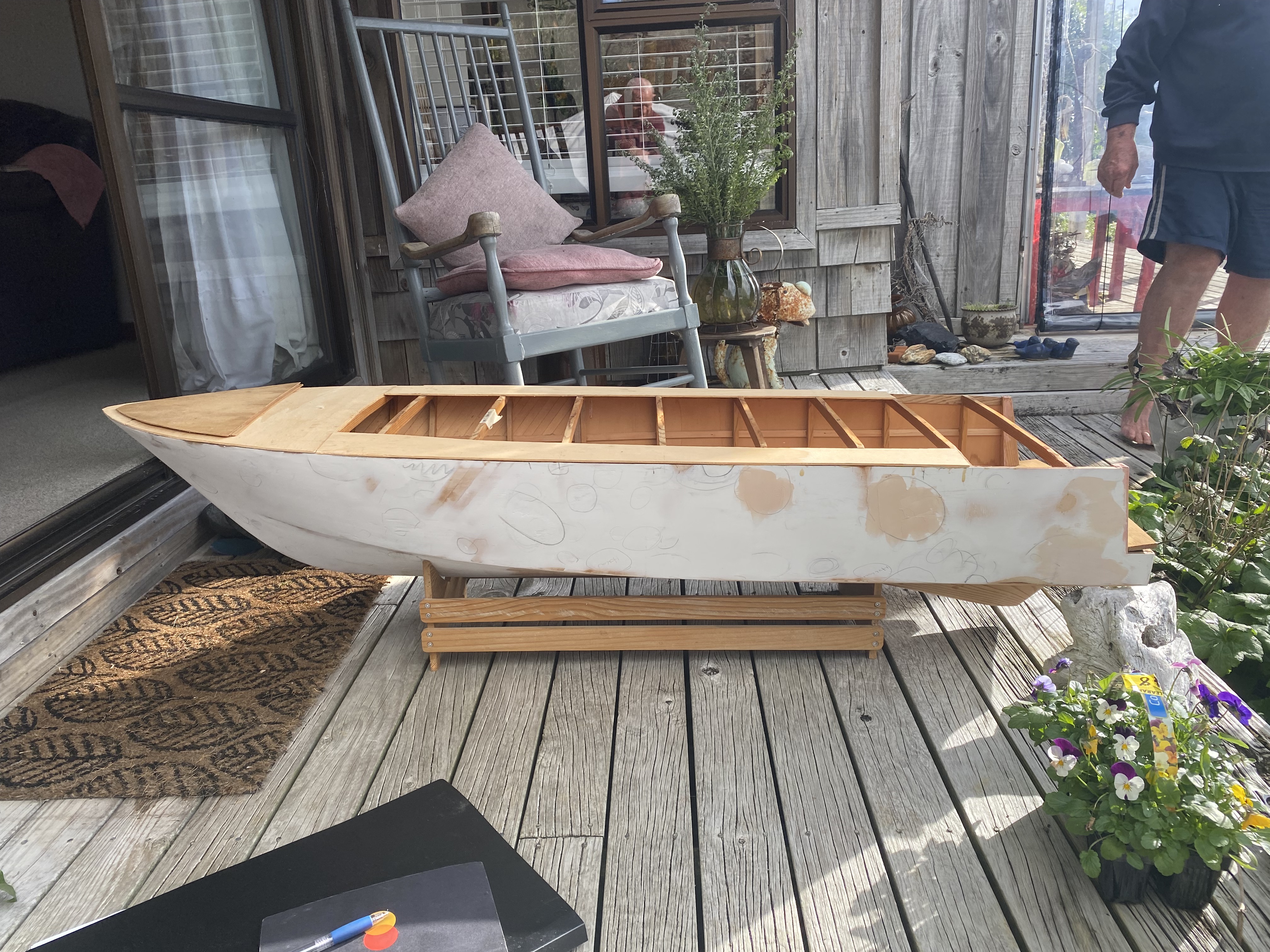
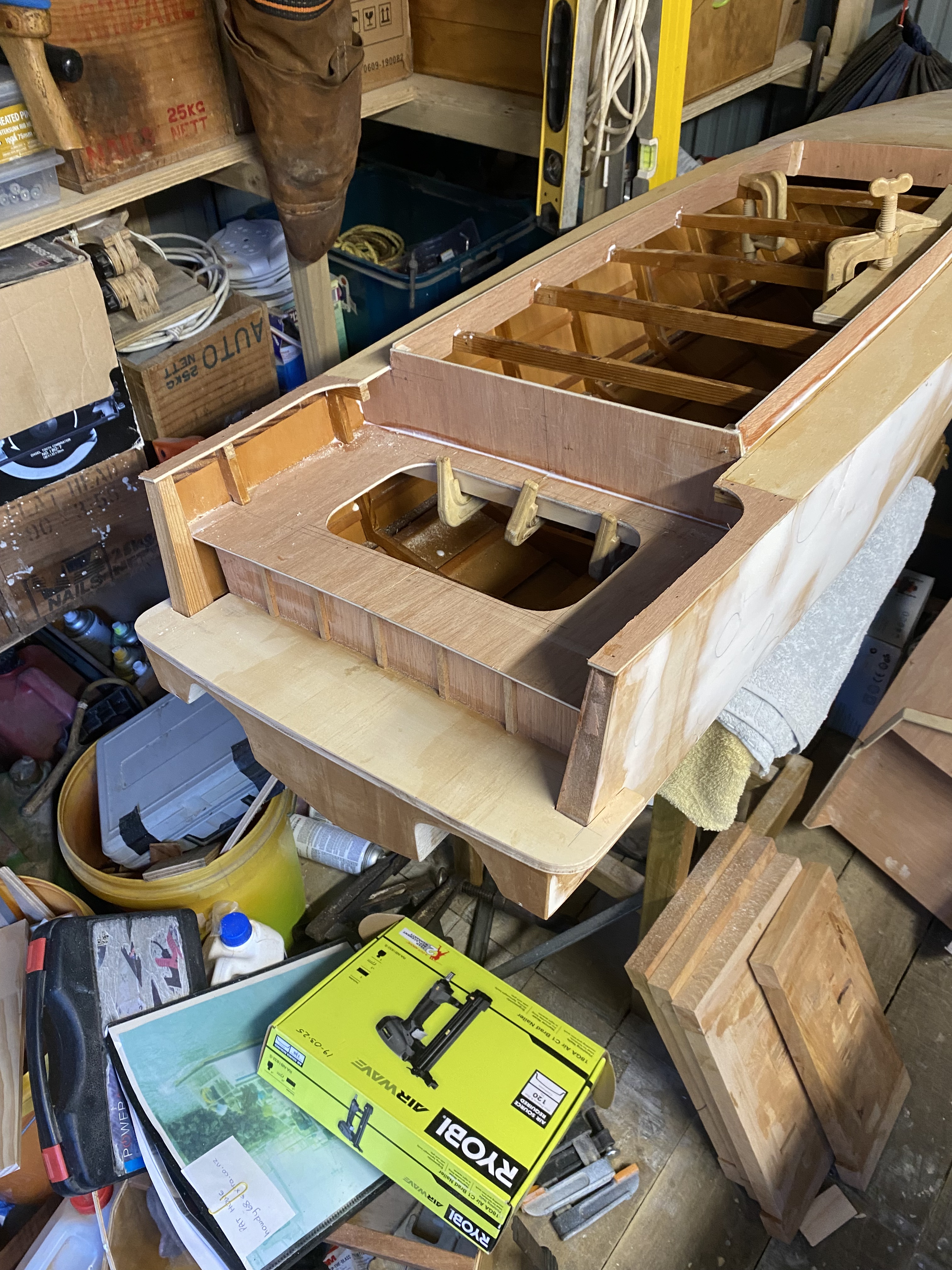
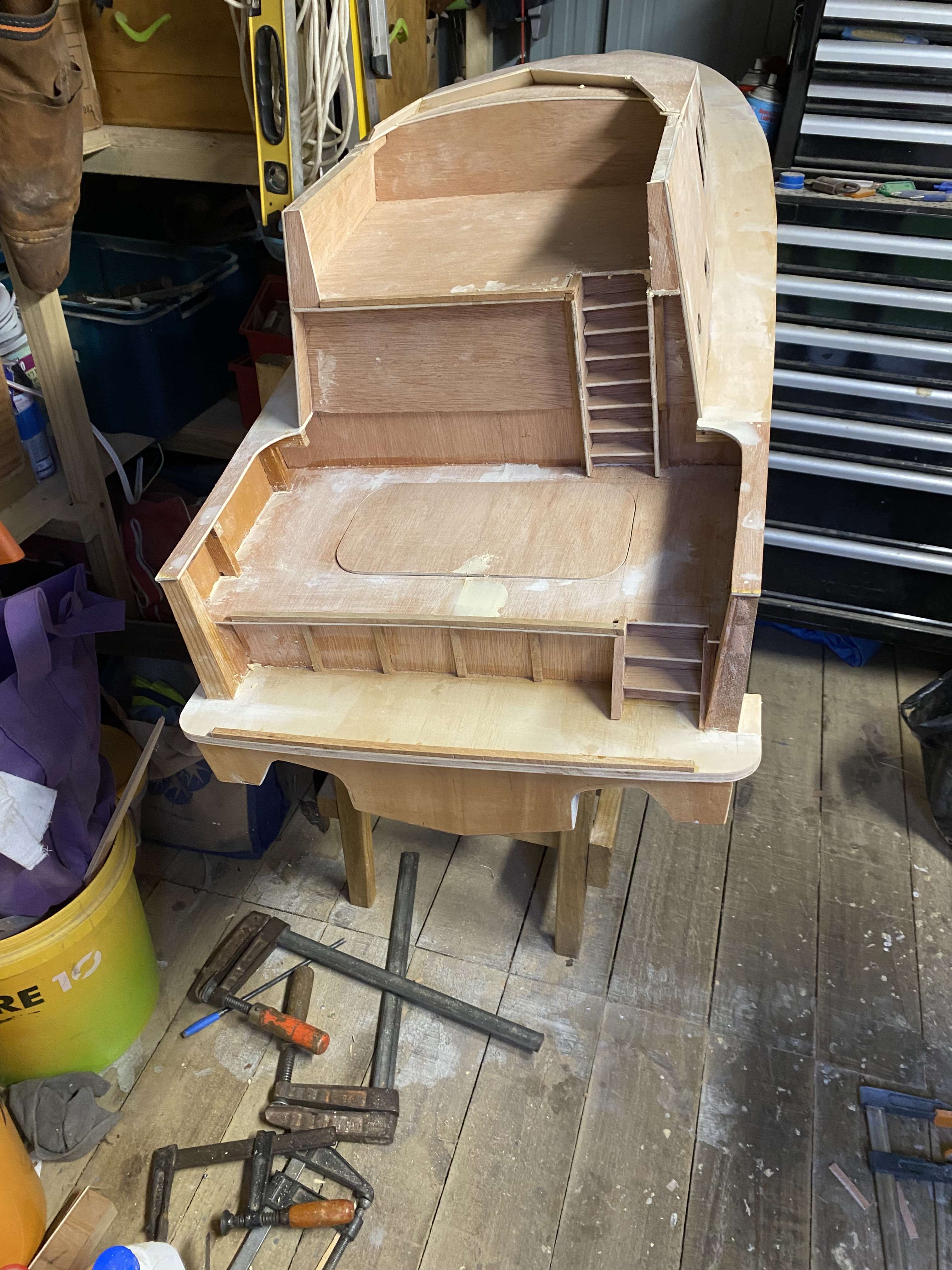
Todays story is a little different, during the week WW was contacted by John Chambers who own the classic – MV NGARUNUI, a friend of John’s, Steve Lowery, is building a rather large (1/10 scale) model of the ‘old’ Police launch – DEODAR II. Looking at the photos I’m sure there are more hours in this project than building a clinker dinghy.
The craft will be radio controlled and have all the bells and whistles – twin screw + lighting (including police lights).
Specs are – length 1450mm, beam 480mm, draft approx. 100mm. Very keen to see the completed build.
A MONDAY TEASE – I have admired the 50’ launch – MARNINE for 20+ years as I have driven along Tamaki Drive and glanced across to the OBC marina. Have never managed to get aboard on my many visits to the marina but now thanks to Angus Rogers, MV CENTAURUS, we get a gander – make sure you log on Monday for the full story.
WW has been following the restoration of the 38’ 1967 built classic launch – TAINUI for several years and as we can see from todays photos from Blair Boats, the big day is not too far off. Wonderful work being done and owner John Sloane must be over the moon.
Lots of previous WW stories covering her past, but looking at todays photos its hard to believe she was once a Harbour Board workboat.
A QUESTION FOR WOODY BOATERS – Why have a mast on a classic motor boat*
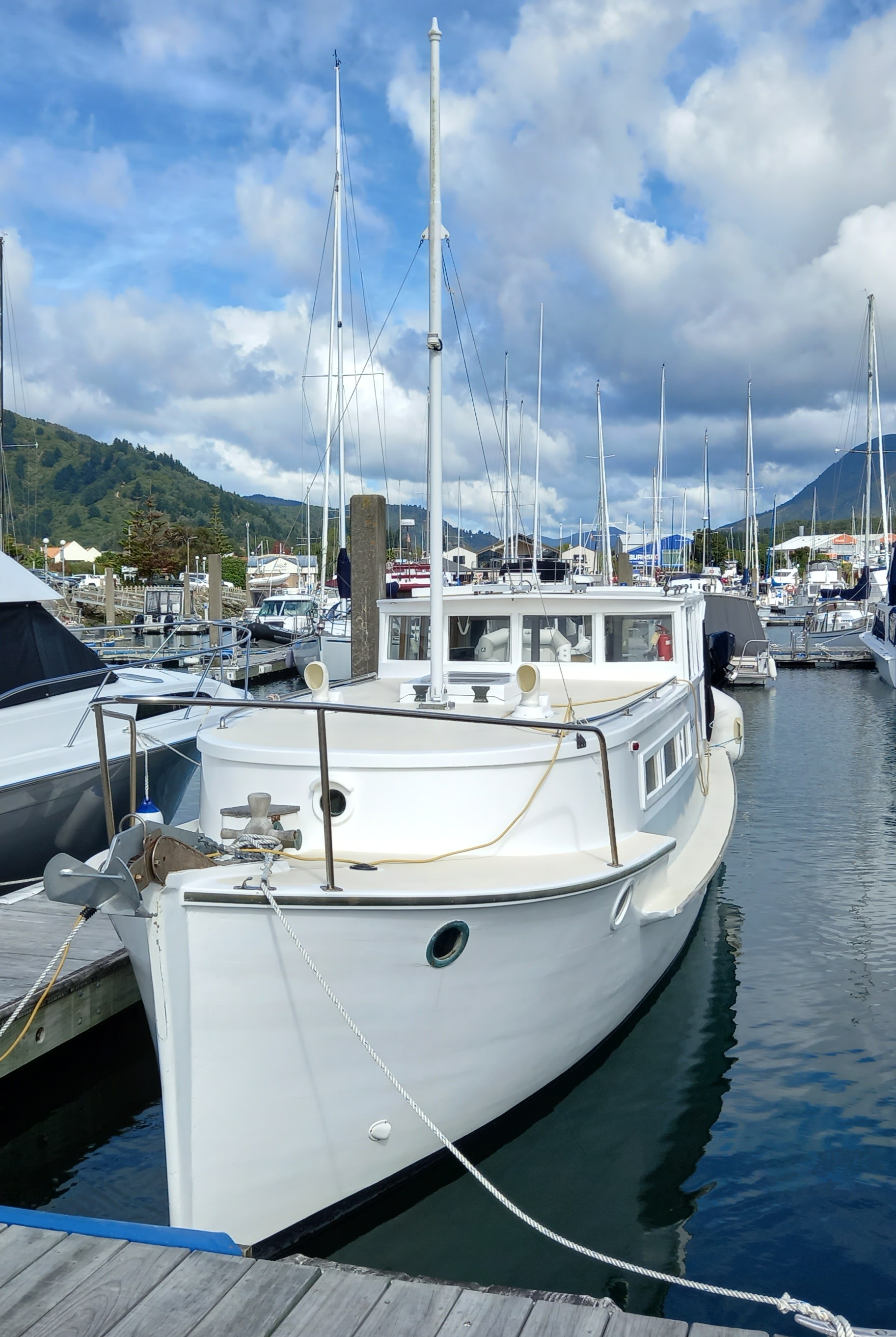
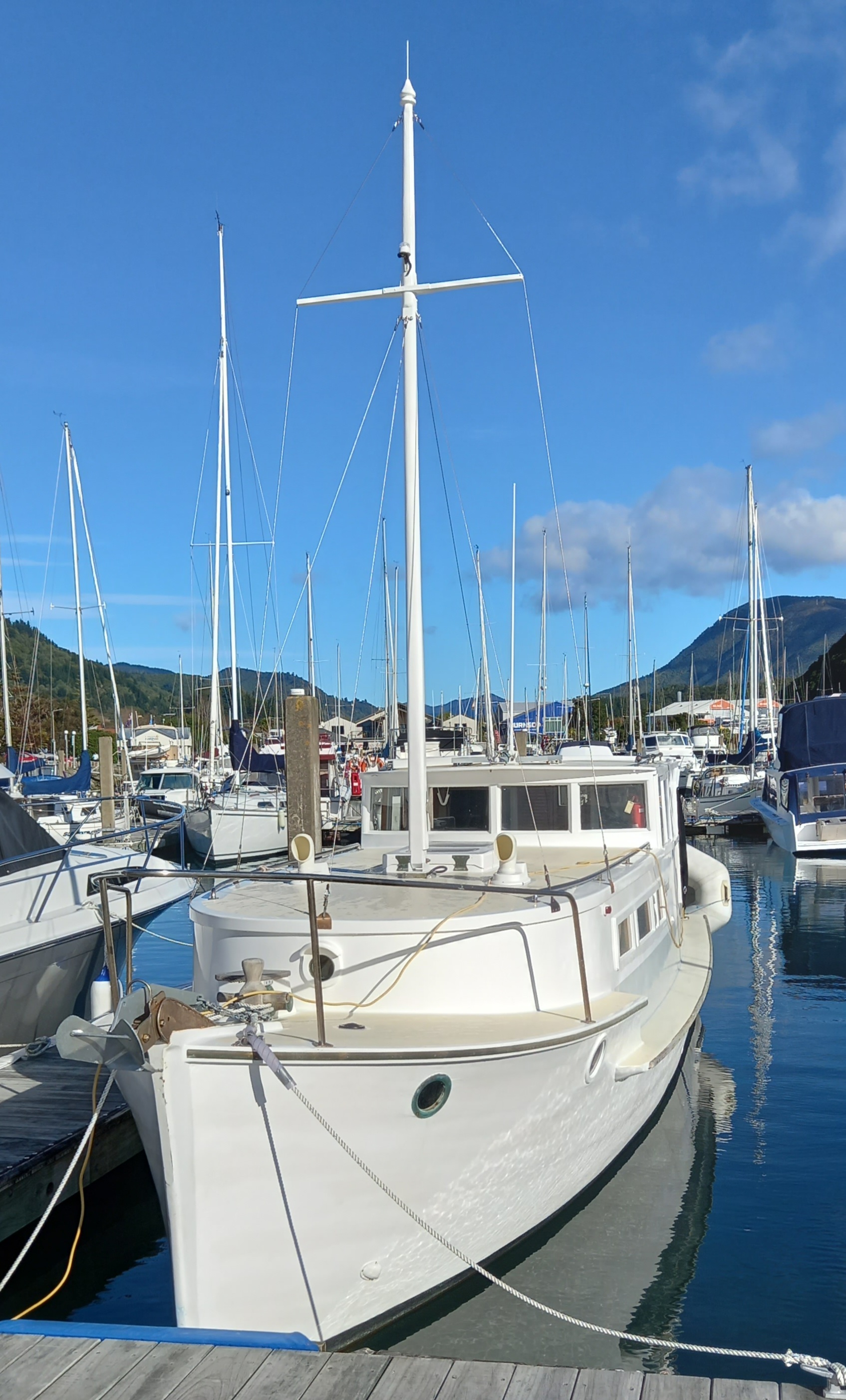
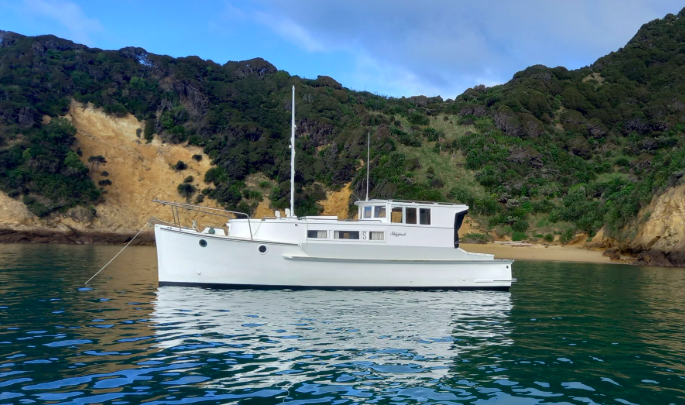
Can You Spot The Difference Between The Two Photos Above Of SKIPJACK ?
*It is something I get asked a lot, mainly when someone is restoring a classic wooden launch and trying to decide if they should reinstate the wooden mast that they have seen in older b/w photos. My answer is always yes and this based on the belief the mast was never about sailing power — it served practical, traditional, and aesthetic purposes. It was used to hoist navigation and signal flags, support lights or an awning, and sometimes rig a small boom for lifting dinghies or stores. A few launches even set a steadying sail to ease rolling in a swell.
But most importantly, to me, reinstalling a mast preserves originality and gives a launch a proper profile and balances her shape — and adds character. So in short: not for sailing power, but for utility, stability, and looks.
Still on the topic and focussing on the area of stability, during the week Greg Billington the owner of the 1918 Chas Bailey built launch – SKIPJACK contacted me following up on the story we did on SKIPJACK. Greg had two things he wanted to share – 1. SKIPJACK was no longer for sale, he had seen the light and decided to keep her ✔️ – we liked that.
And 2. Share a recent experience around masts on old classic launches – I’ll hand over to Greg to tell the story:
“I thought I would share something that may be of interest to readers. Along the lines of ‘a little knowledge is a dangerous thing…’
I was offshore on one occasion when a beam sea knocked the boat over such that I had this thought – ‘that heavy wooden mast must go.’ I had this thought because it appeared that bringing the mast back up was an issue. It wasn’t, obviously. Nevertheless, I thought I would lower the centre of gravity and improve the righting moment with a shorter, lighter mast. So, I installed an alloy mast, which did make the boat significantly stiffer, but sometimes more than I wanted.
After much thought and further reading, I decided that the original wooden mast must have made the boat more tender i.e. slowing and dampening roll and therefore making for a more comfortable ride. Guess what? It did. So, I am attaching a couple of pics showing the alloy mast, and then the old wooden mast back where it belongs and I can say that the motion in any sea is considerably improved. Which goes to show, and I don’t mind admitting, that the boat builder knew far more than me.”
And woodys for the record the 2nd photo above is the wooden mast 😉
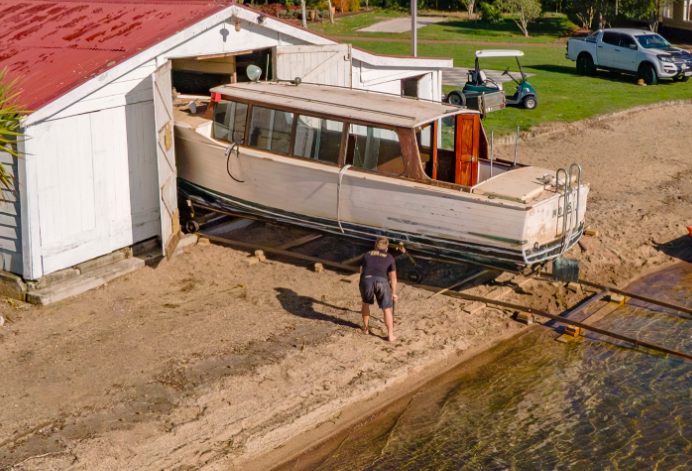
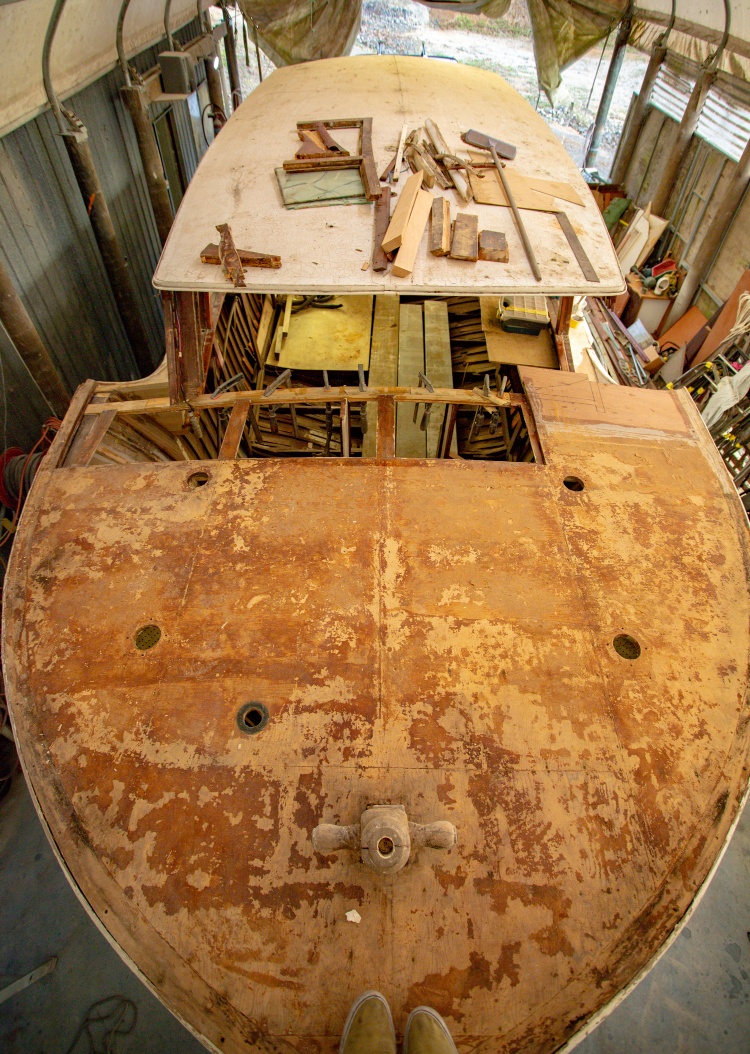
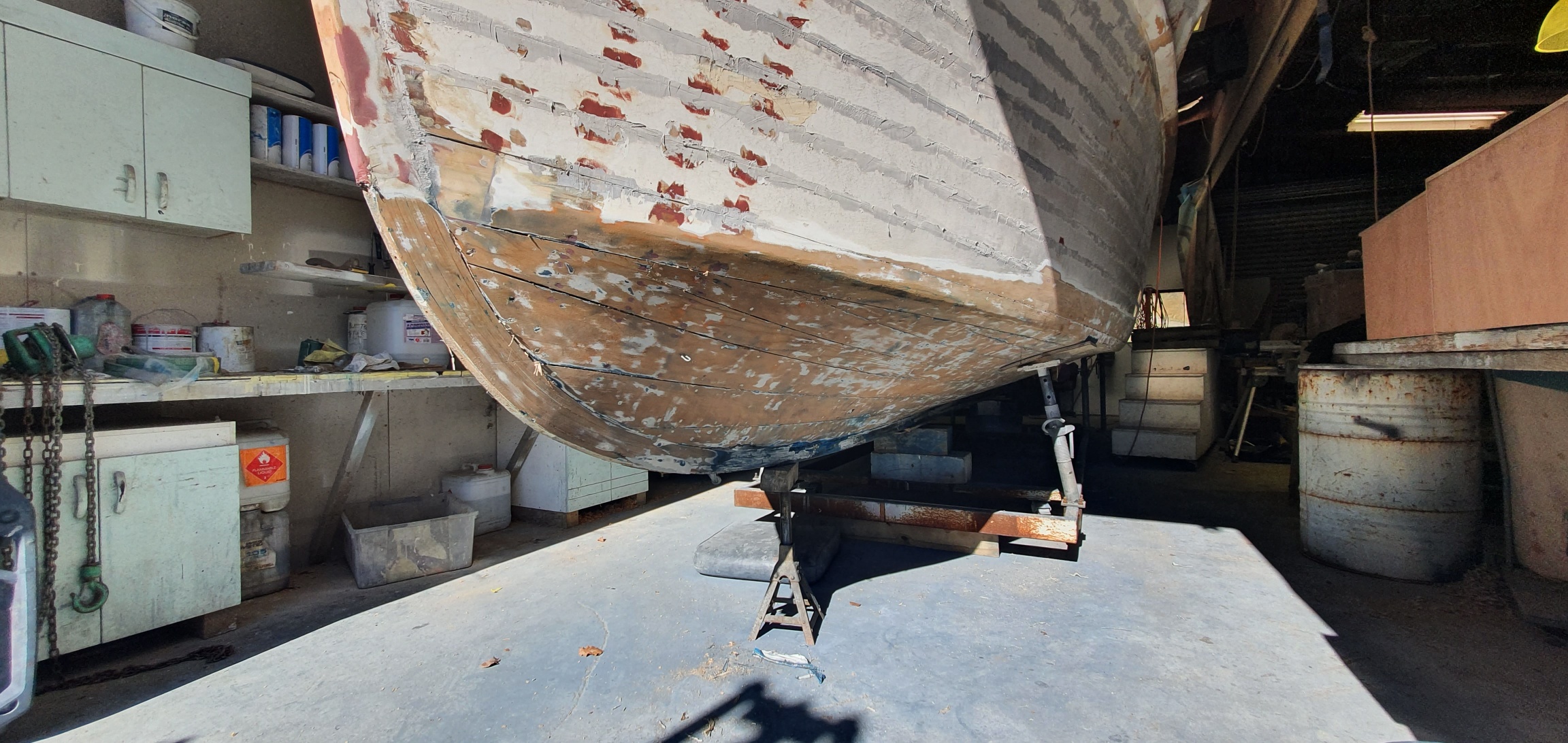
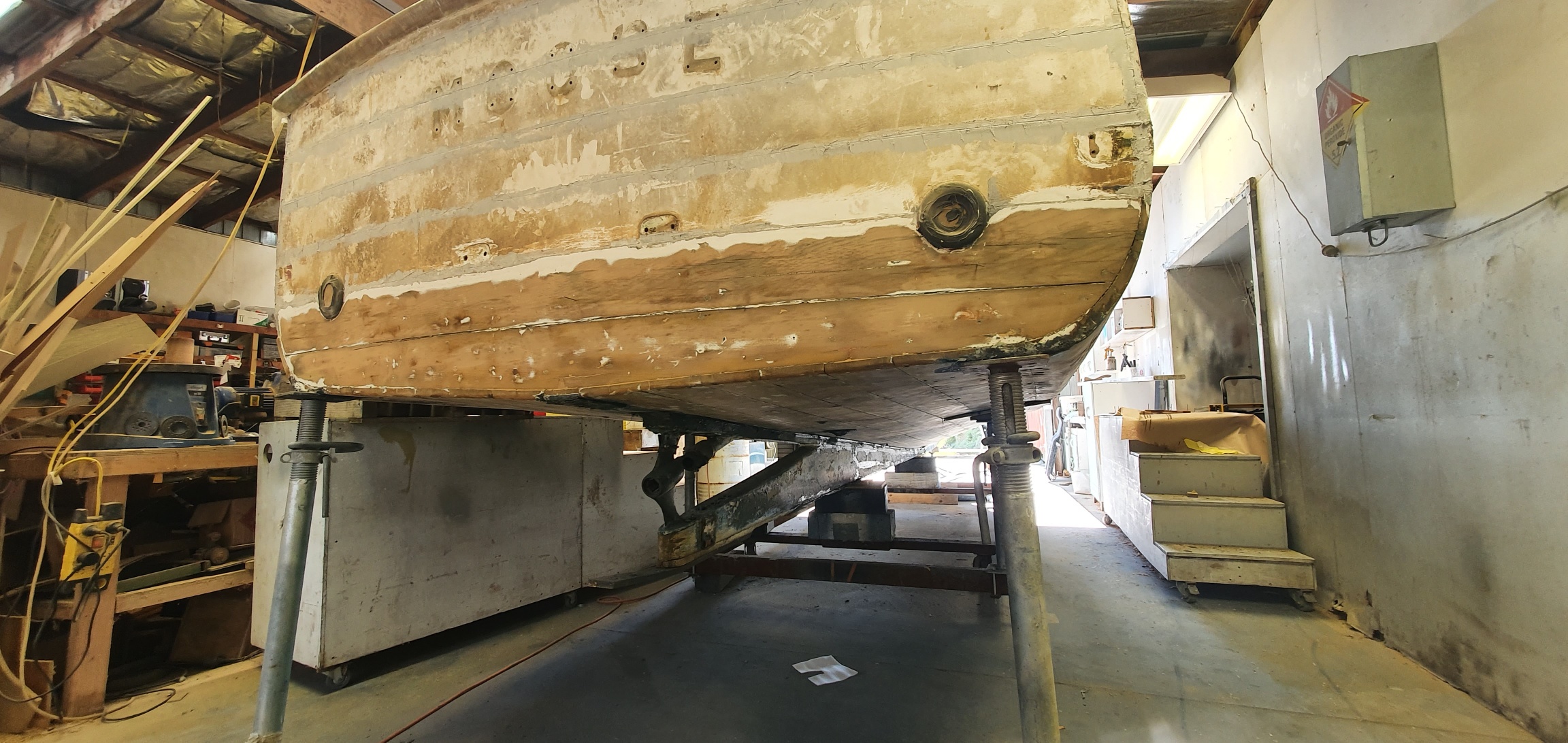
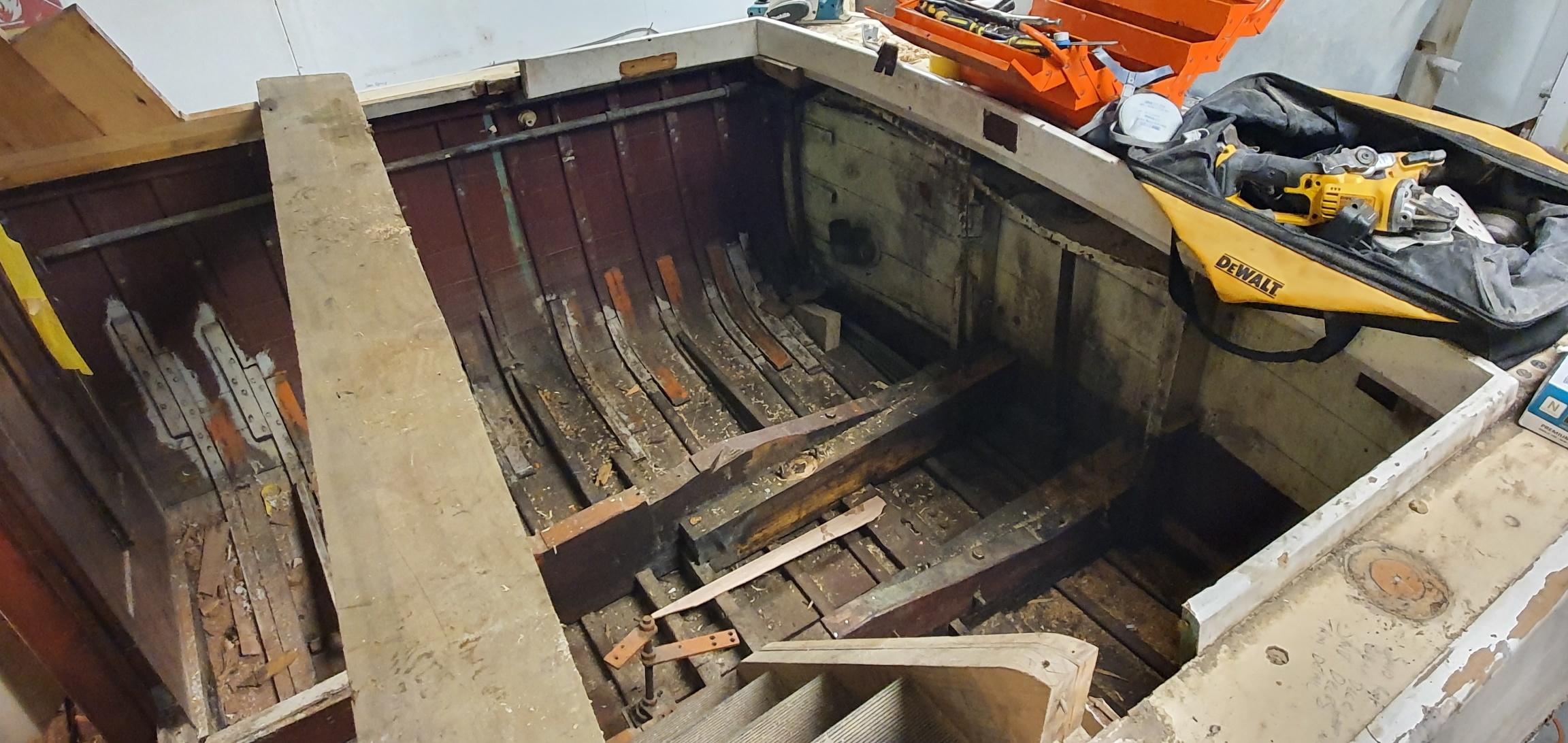
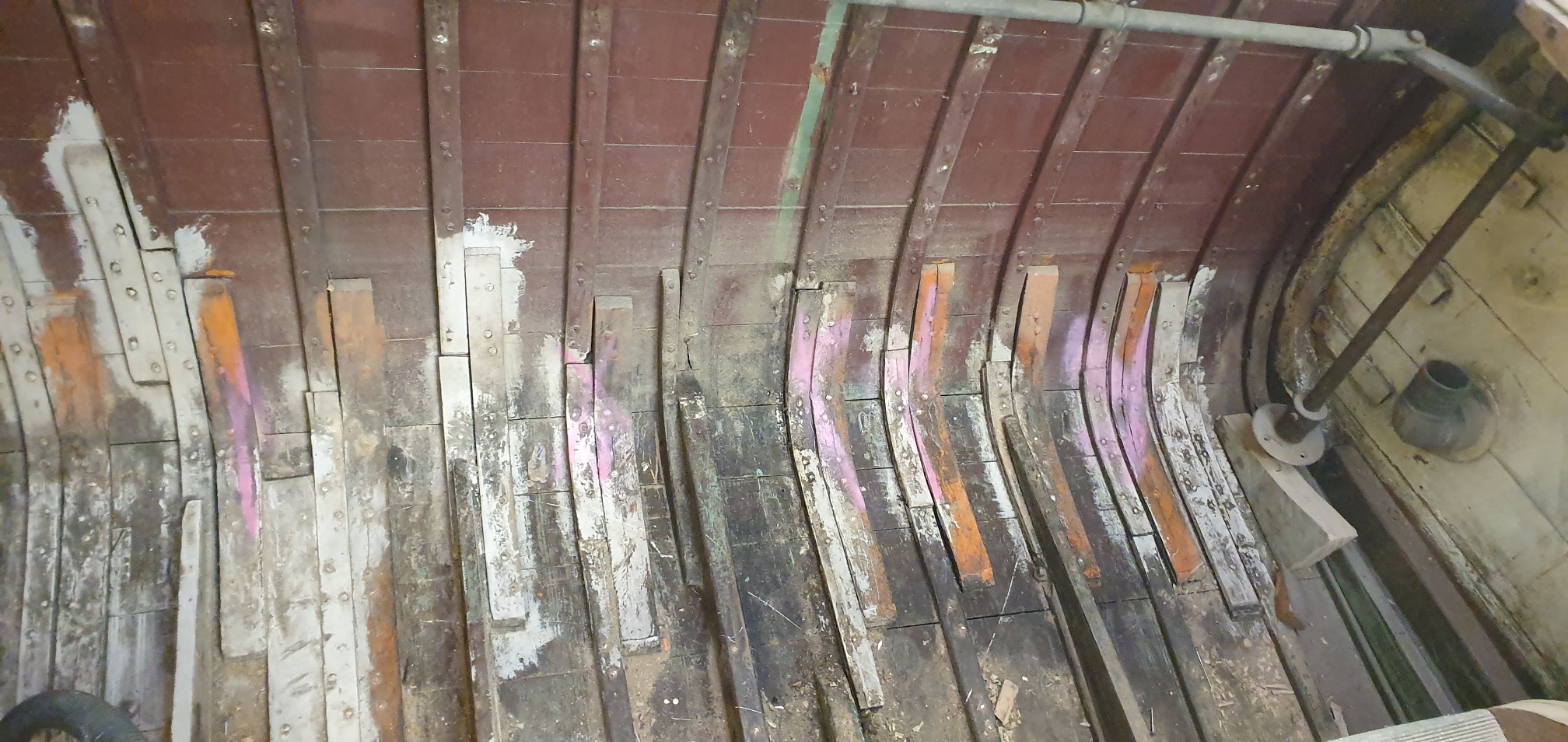
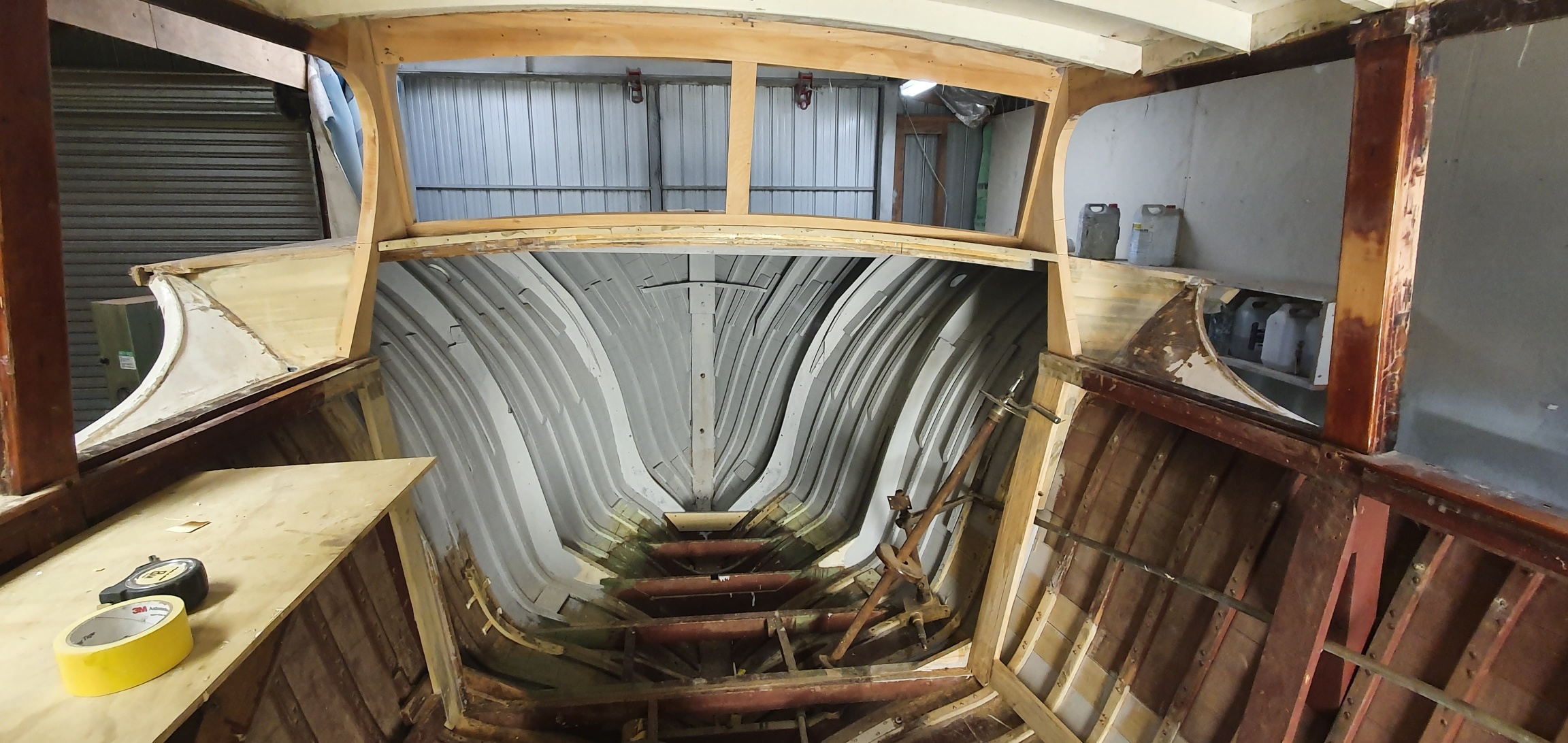
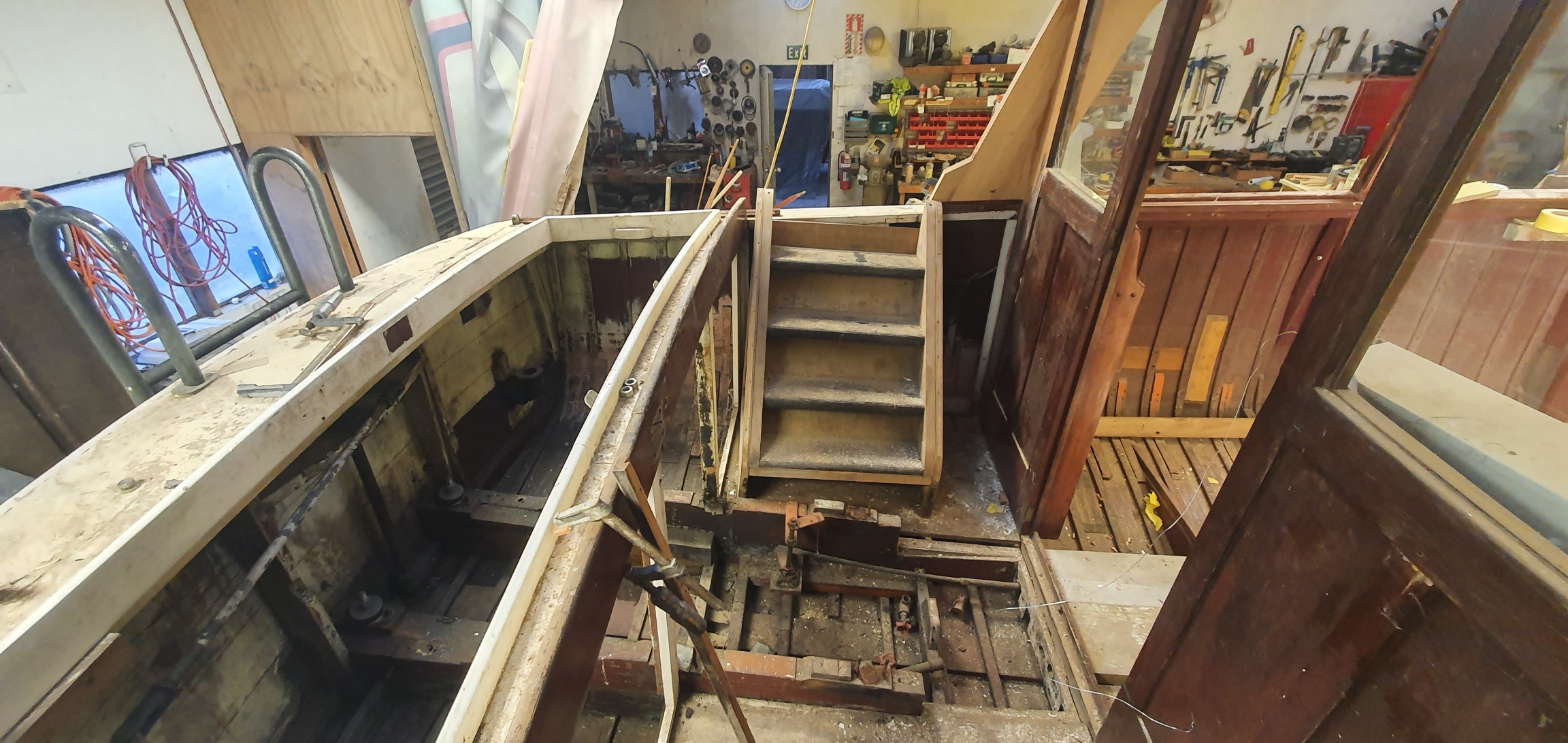
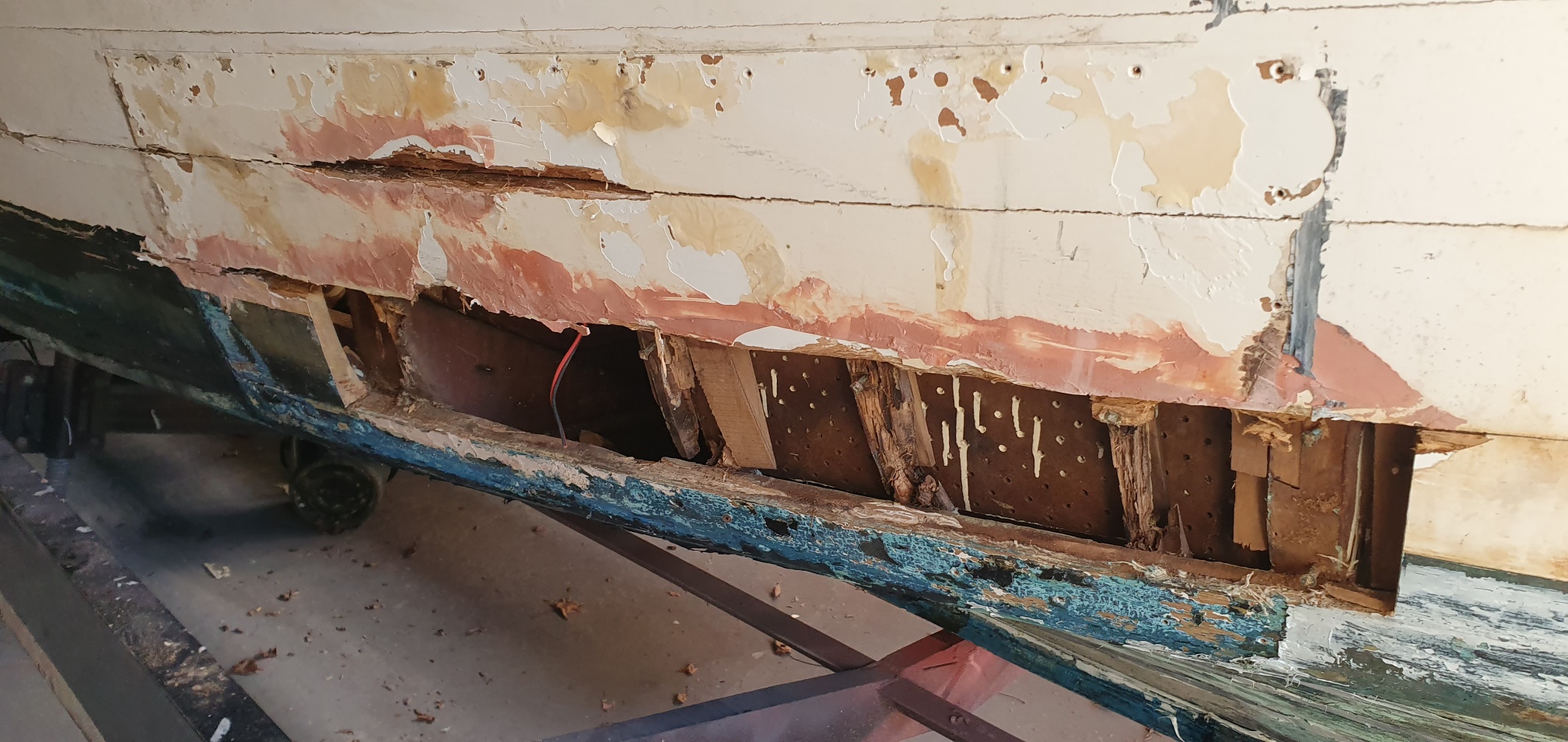
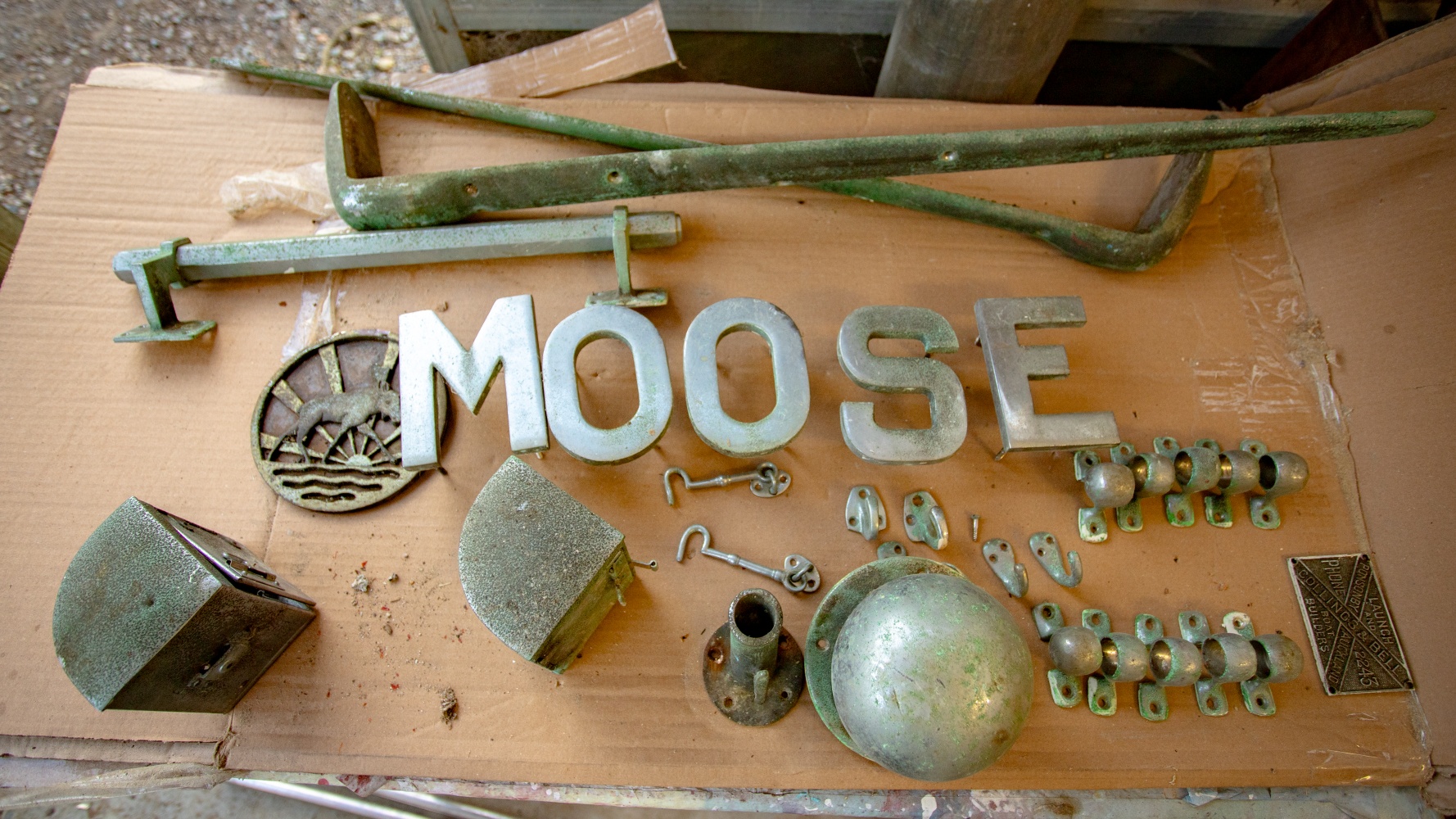
Last Wednesday we did an story on the TCL work boatbuilder Alan Craig had done on the classic wooden launch – ALPHEUS. During the chat with Alan I nudged him for an update on the 28’, 1938, Collings & Bell built – MOOSE restoration, and today woodys we get to share what’s been happening in the Craig Marine shed.
Links below to the previous stories, including the extraction of MOOSE from her lake front boat shed.
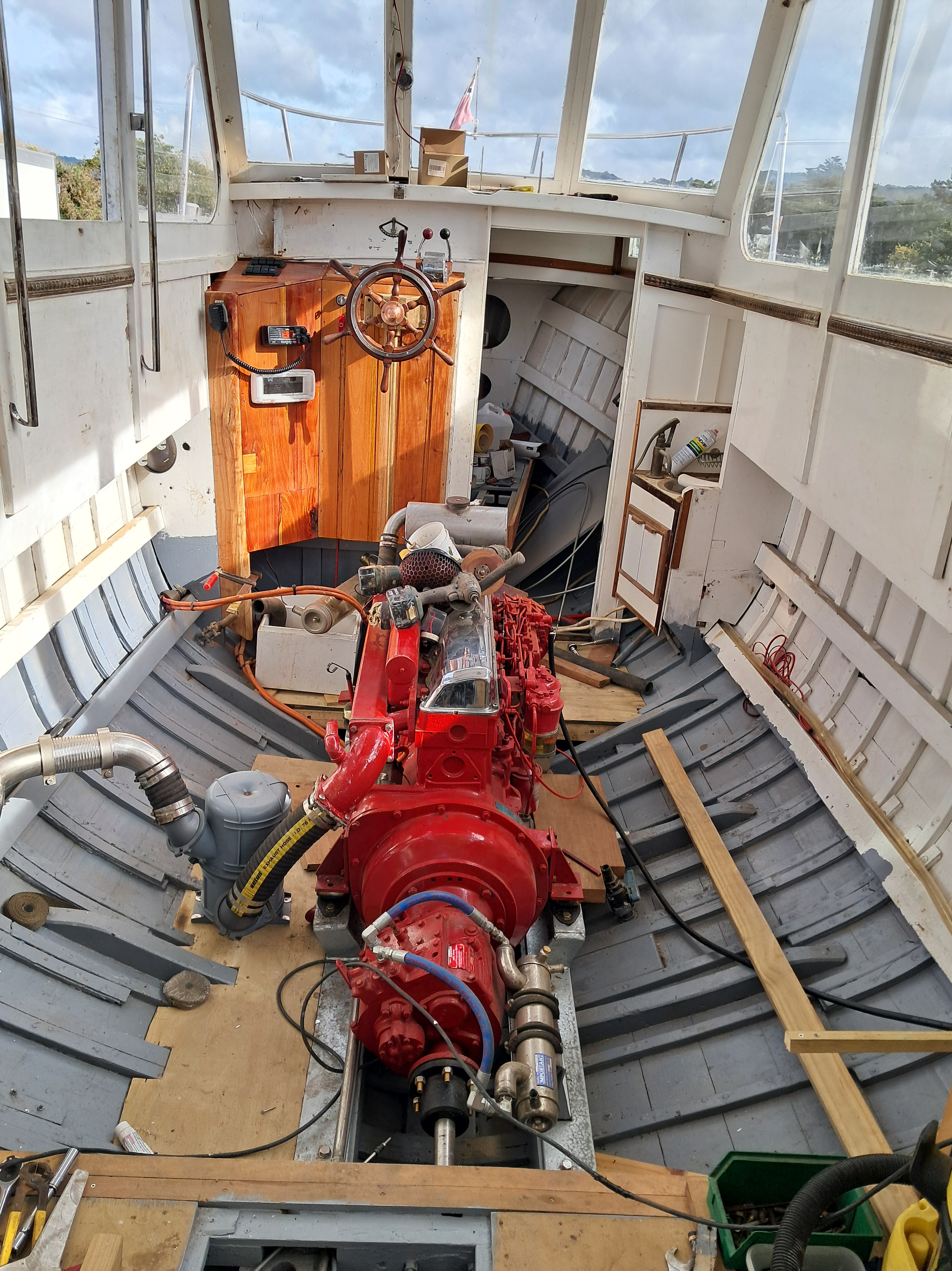
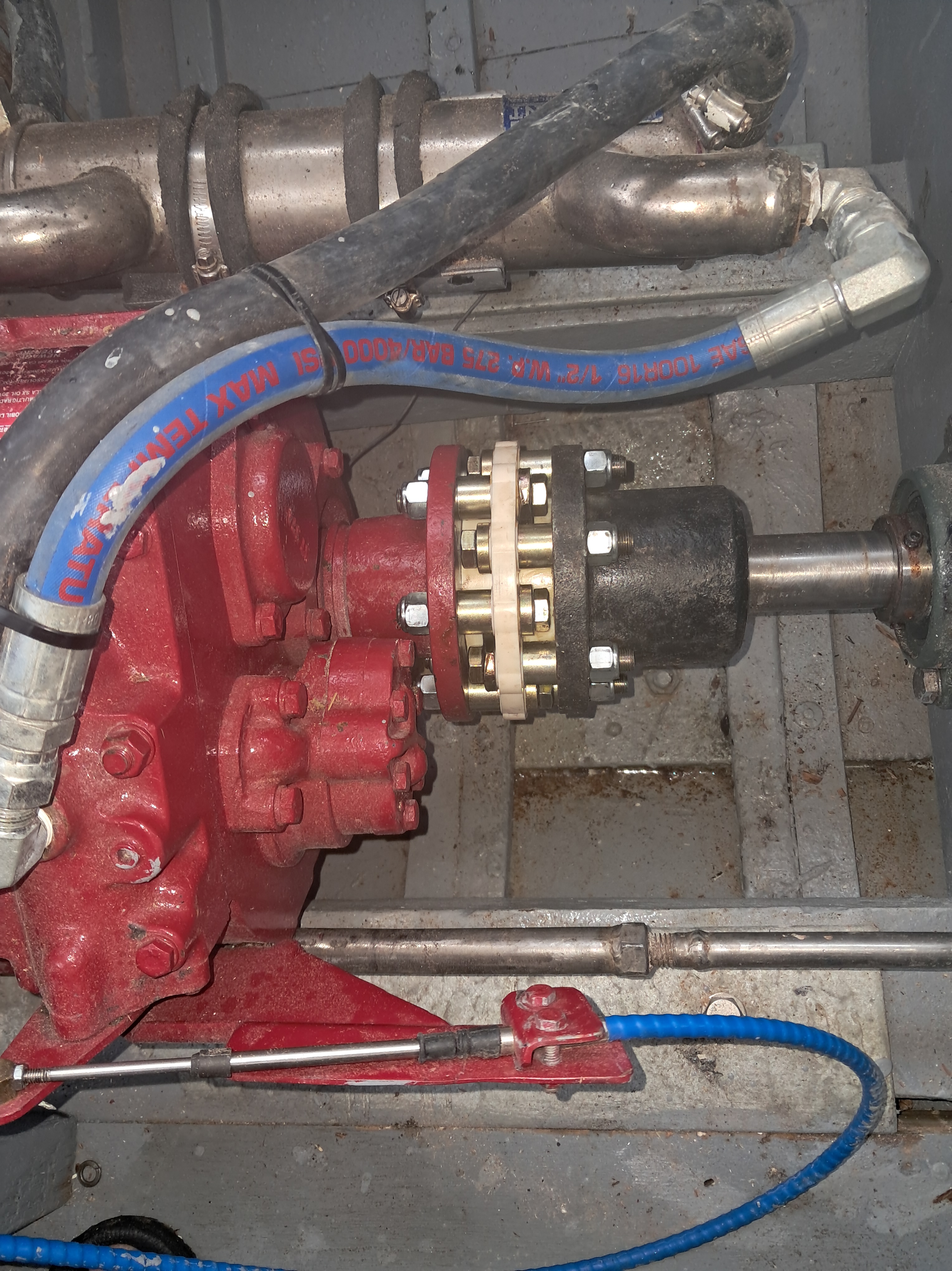
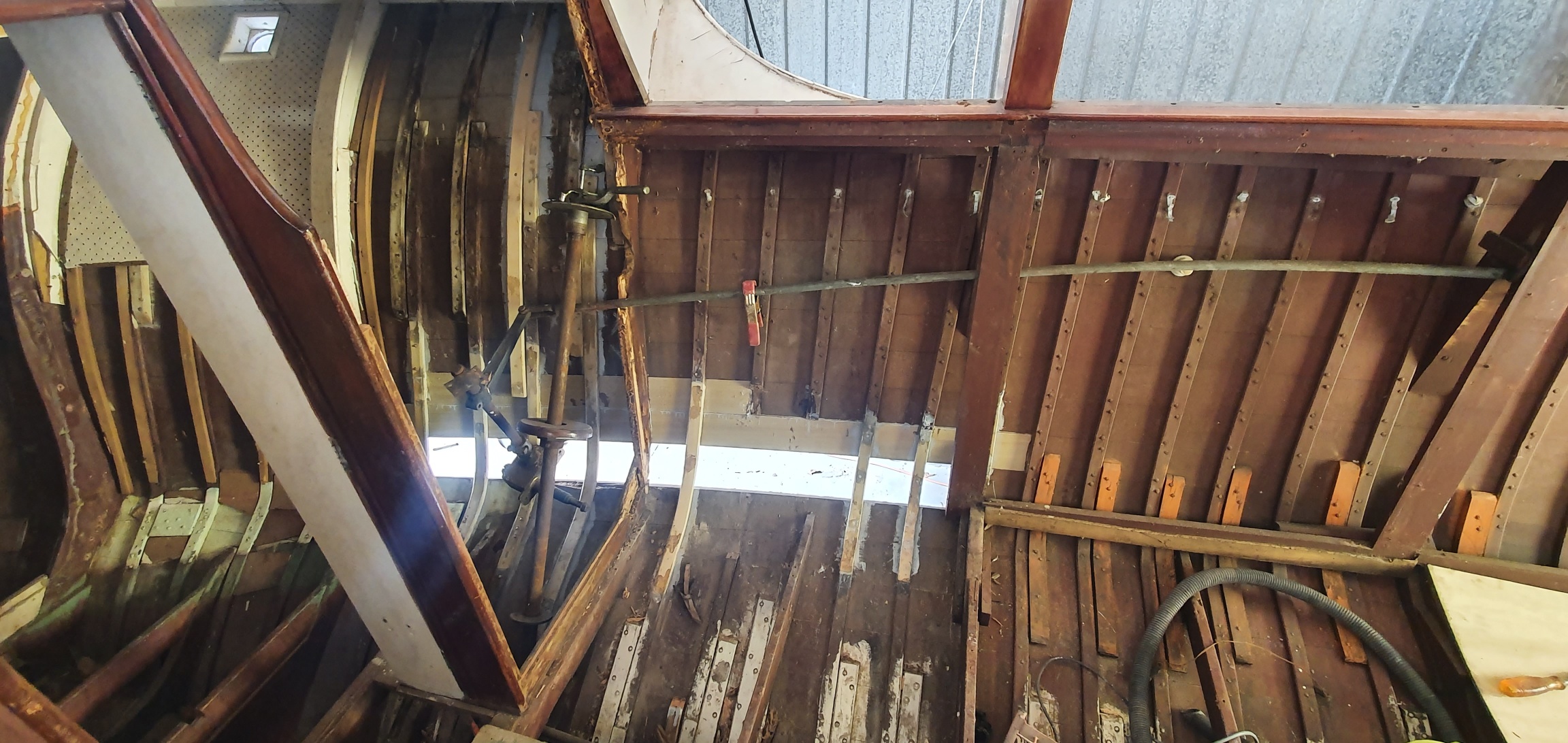
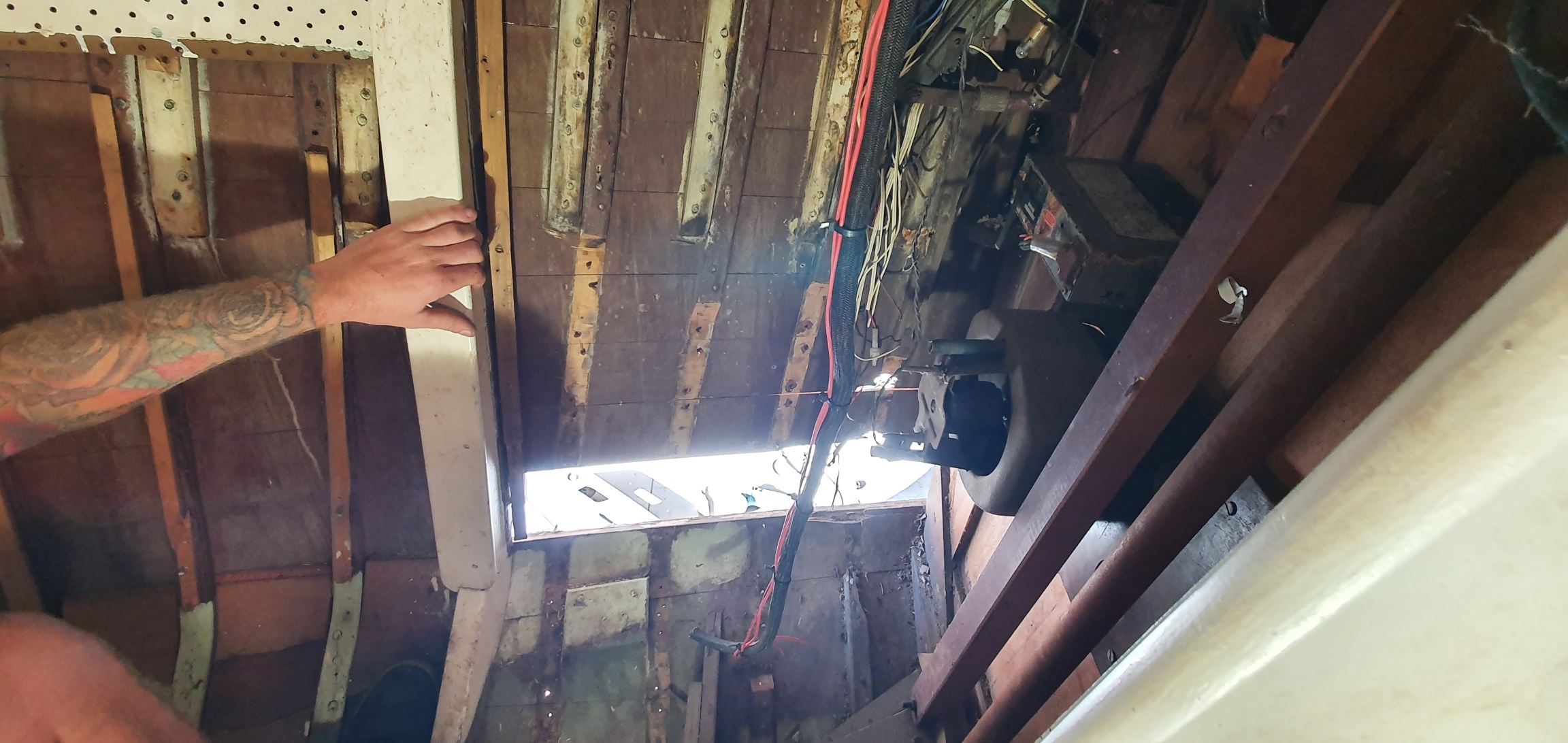
With the likelihood of a new Yanmar engine, the old unit has come out. The plan is to try and use the existing V drive.
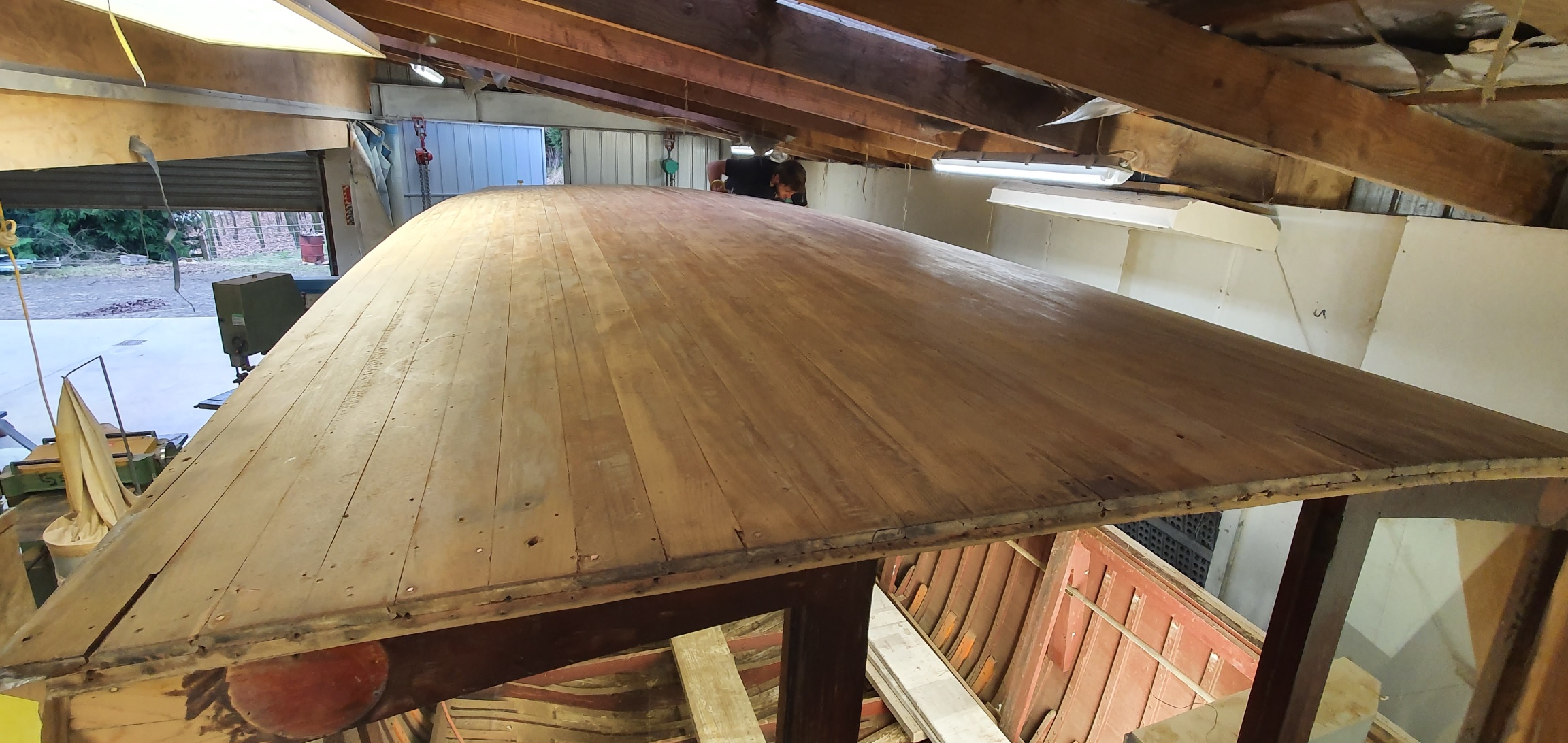
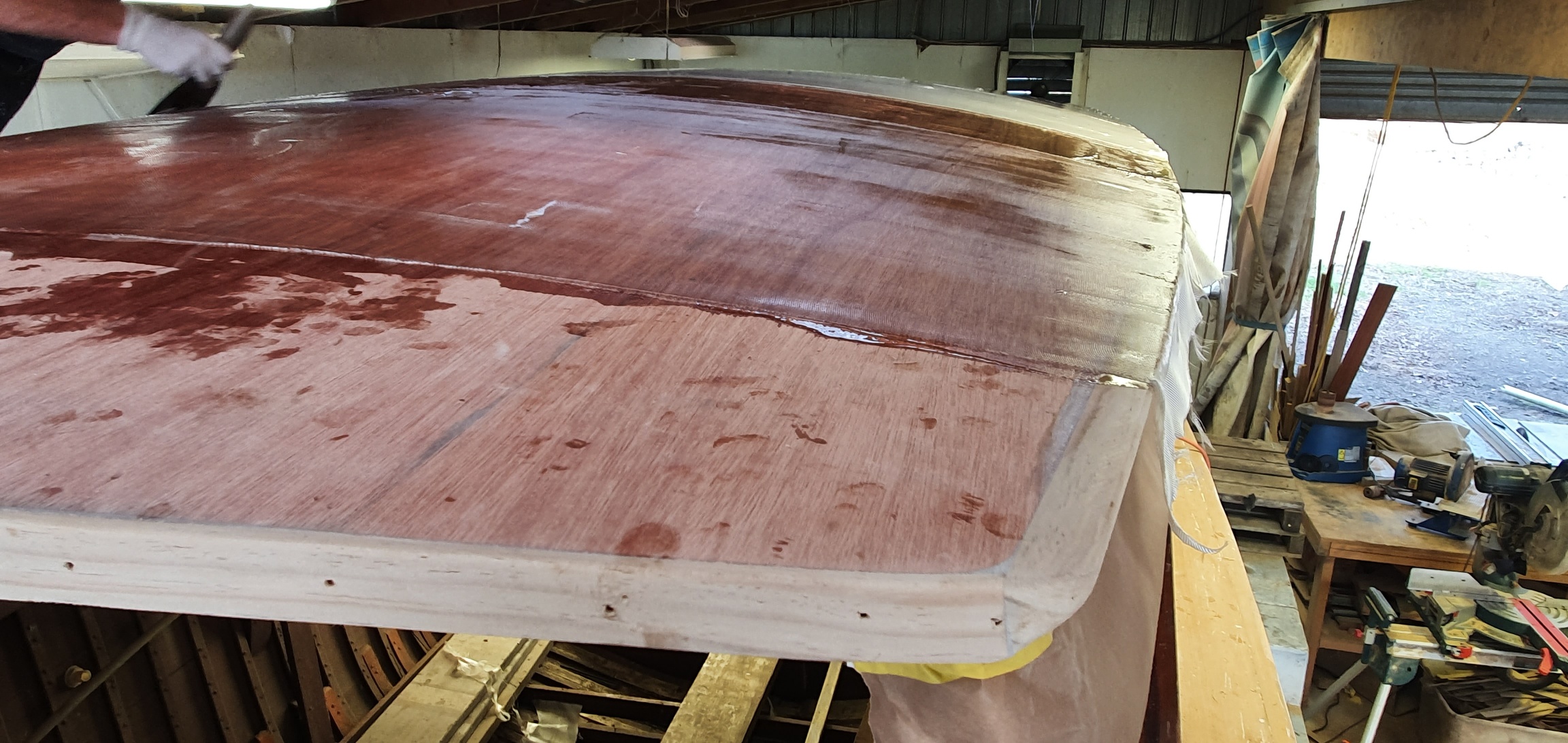
As MOOSE will end up out on a Jetty most of the time, the cabin roof will be getting a protective layer of f/glass. Alan remarked that while it seems a shame to cover the nice tongue & groove roof, they want MOOSE to live on many more years yet.
Now that she is in a cradle the boatyard team can attack the underside and are starting work on an interior layout.
DAVEY JONES NEW BOOK QUIZ WINNER – JAMES HUTCHINSON. Congratulations to James, for all those that missed out – copies available at daveyjonesofwakatahuri@gmail.com
CLASSIC BOATERS GATHER FOR A SUNNY DAY OF SWAPS AND STORIES
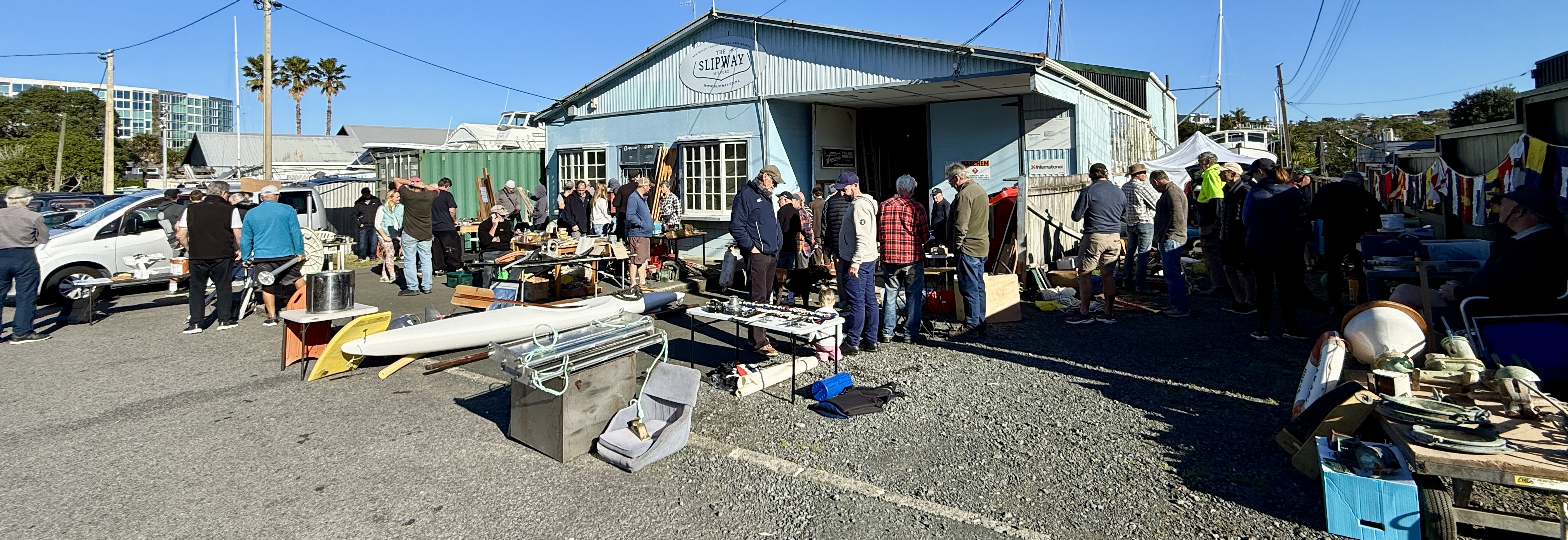
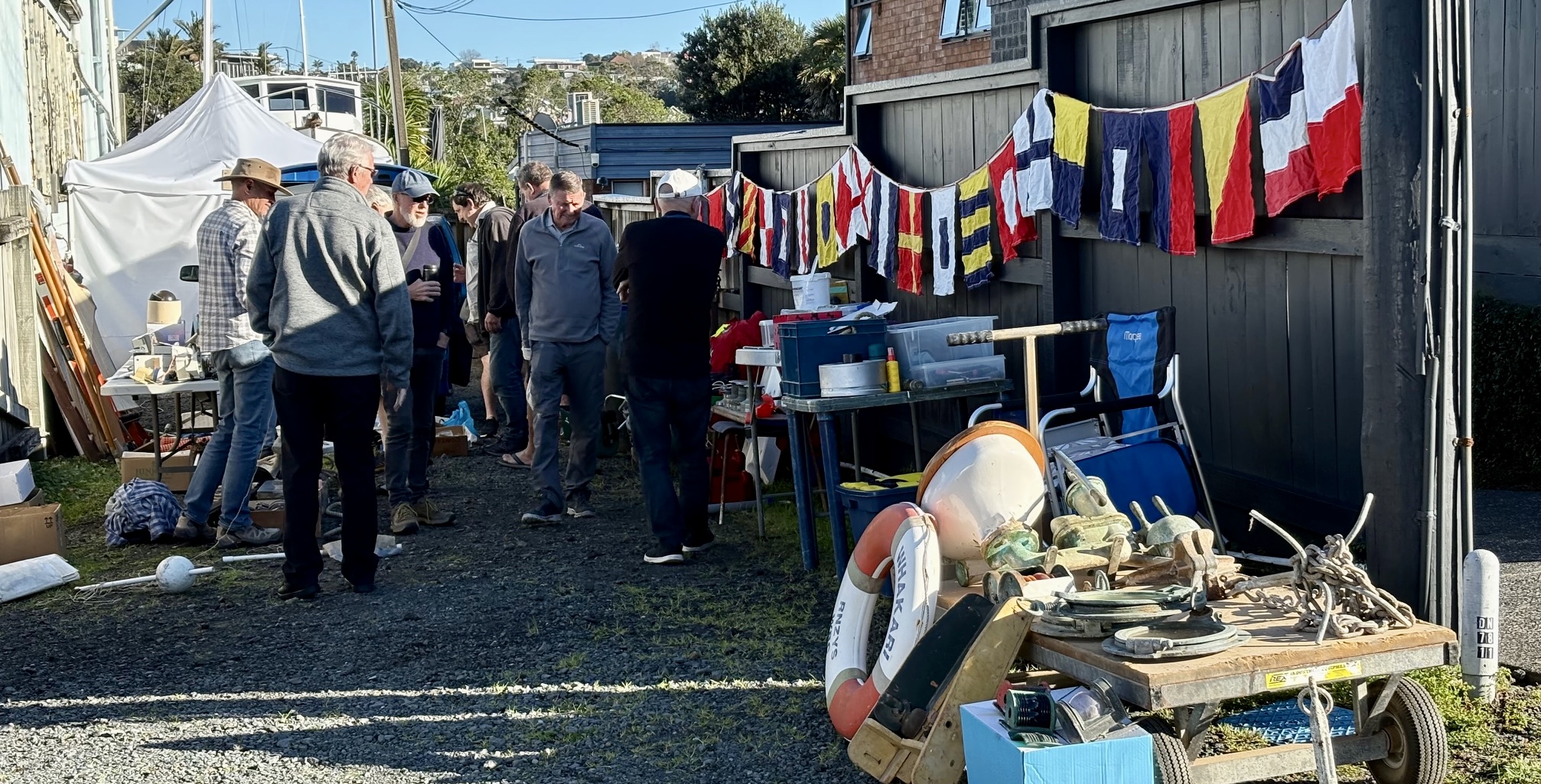
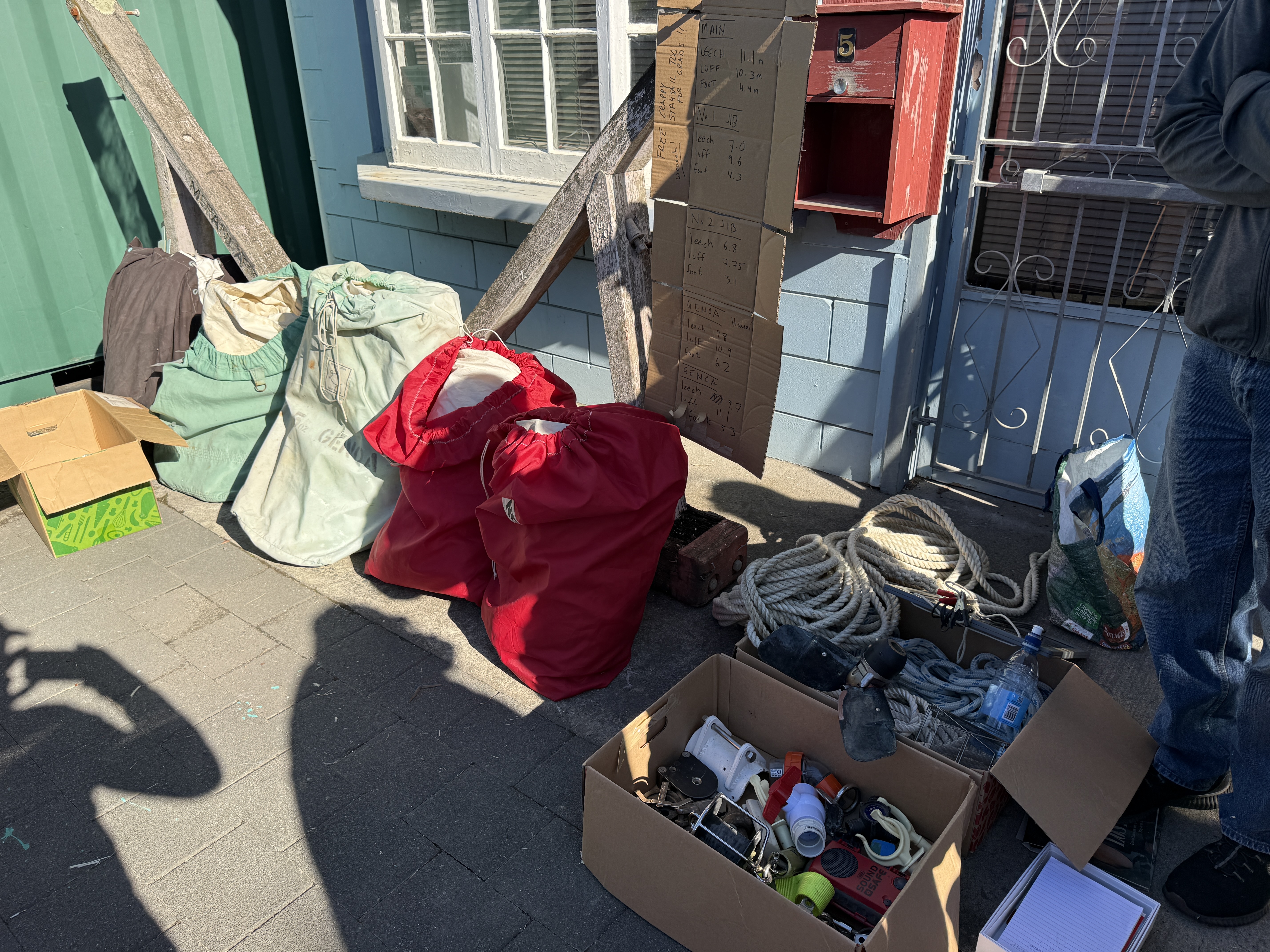
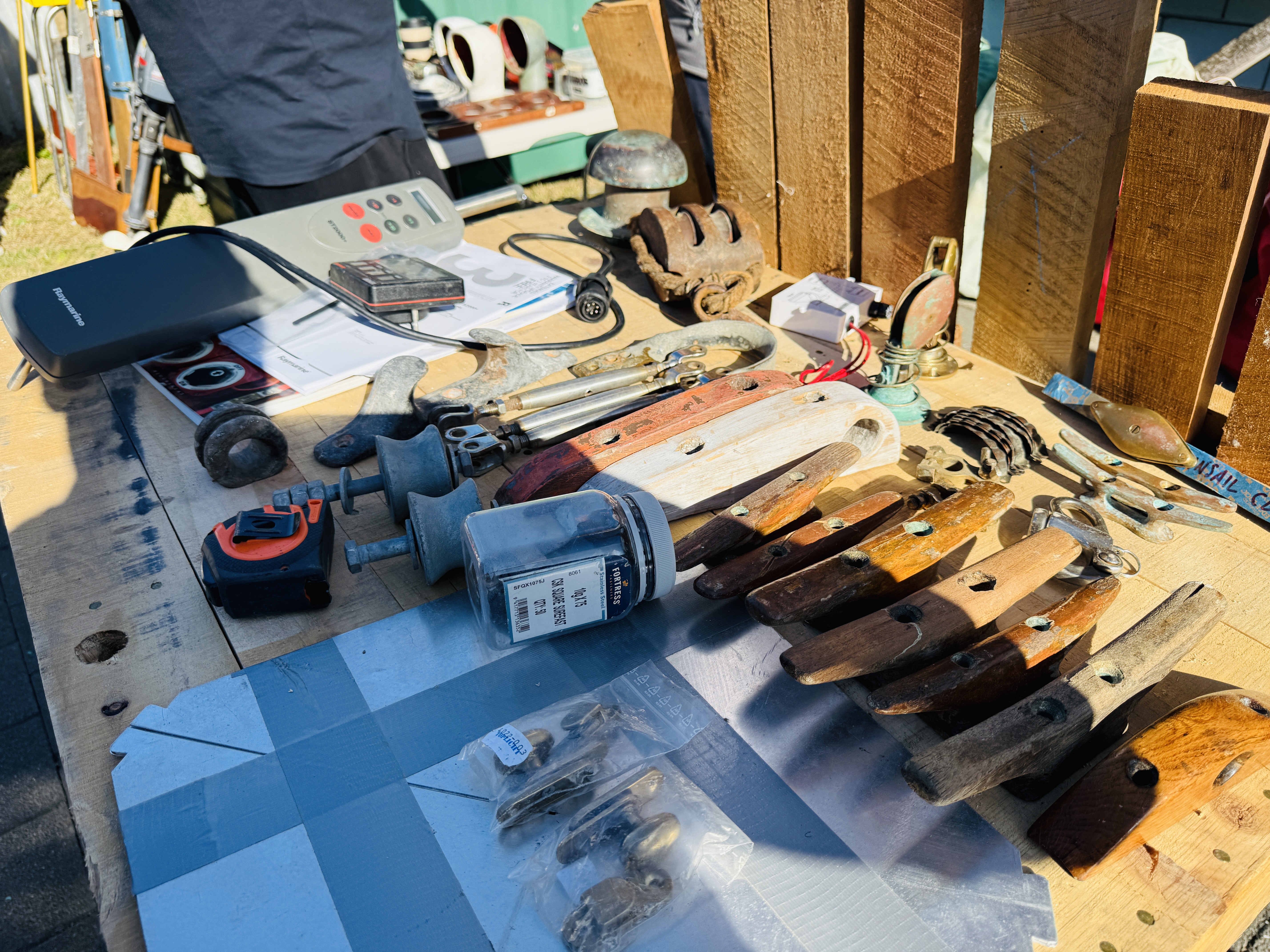
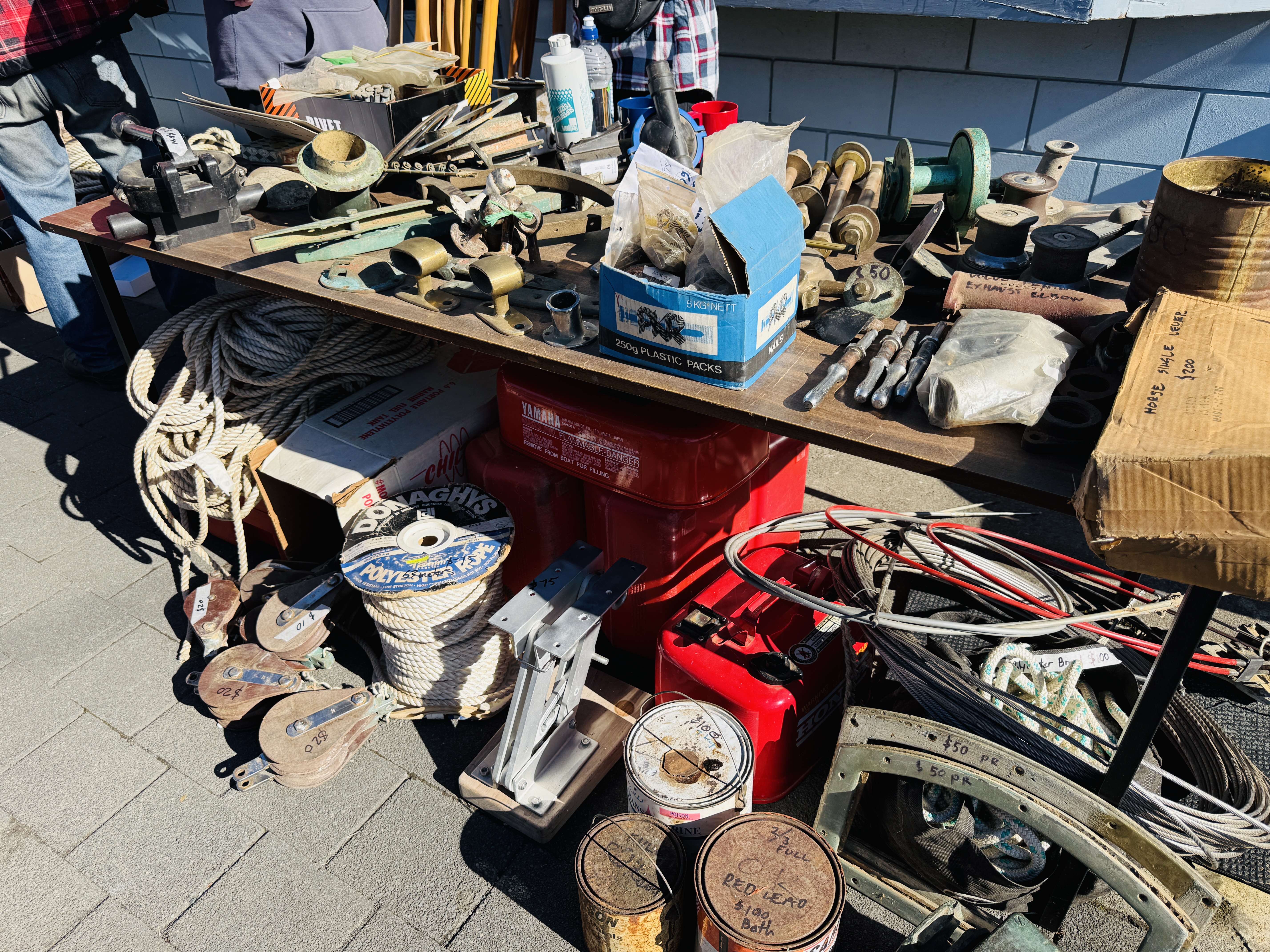
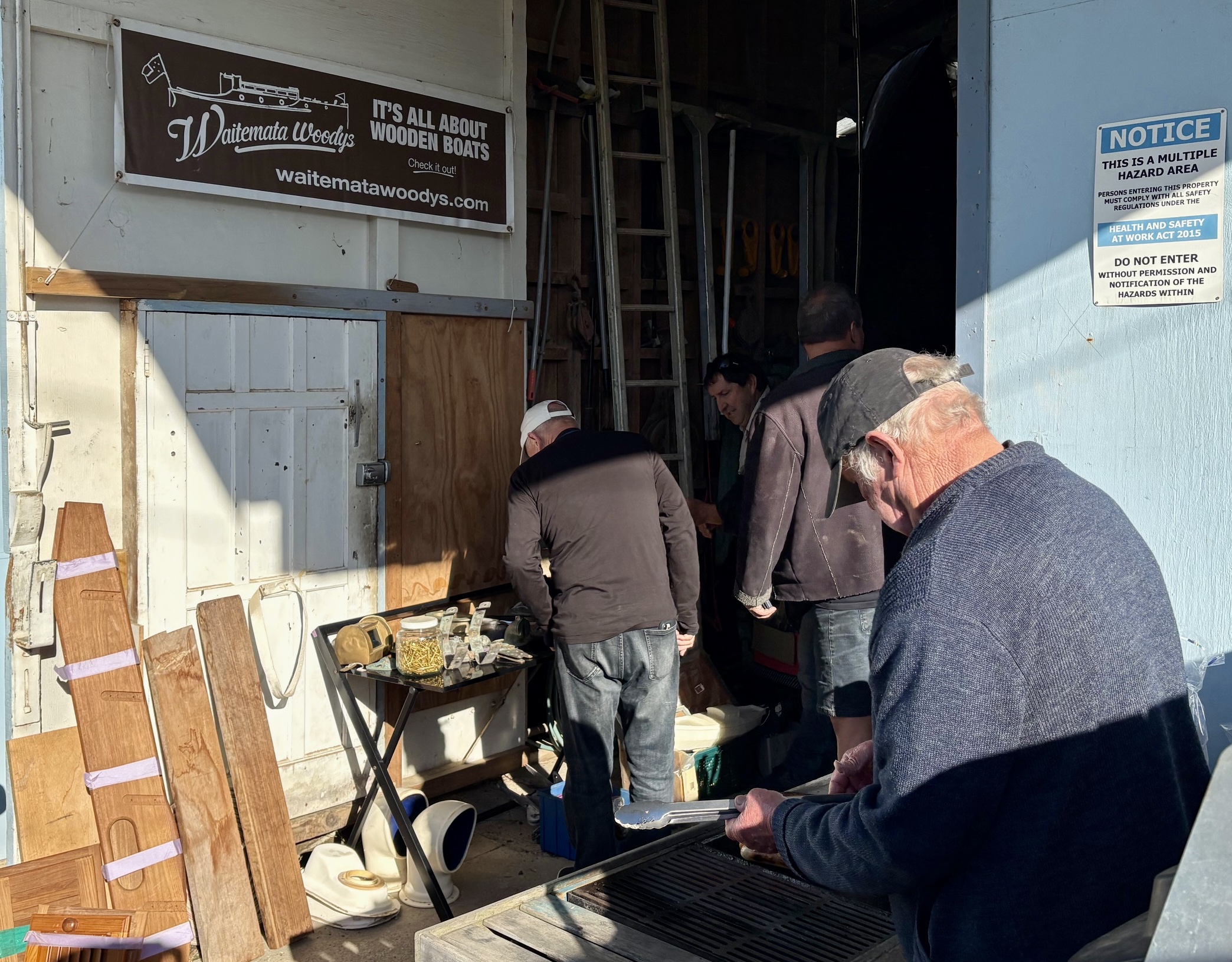
Saturday delivered a cracker of a day in Auckland – crisp early on, but soon warming into blue skies and sunshine. Ideal conditions for a classic wooden boat gathering, even if this time we stayed firmly on dry land.
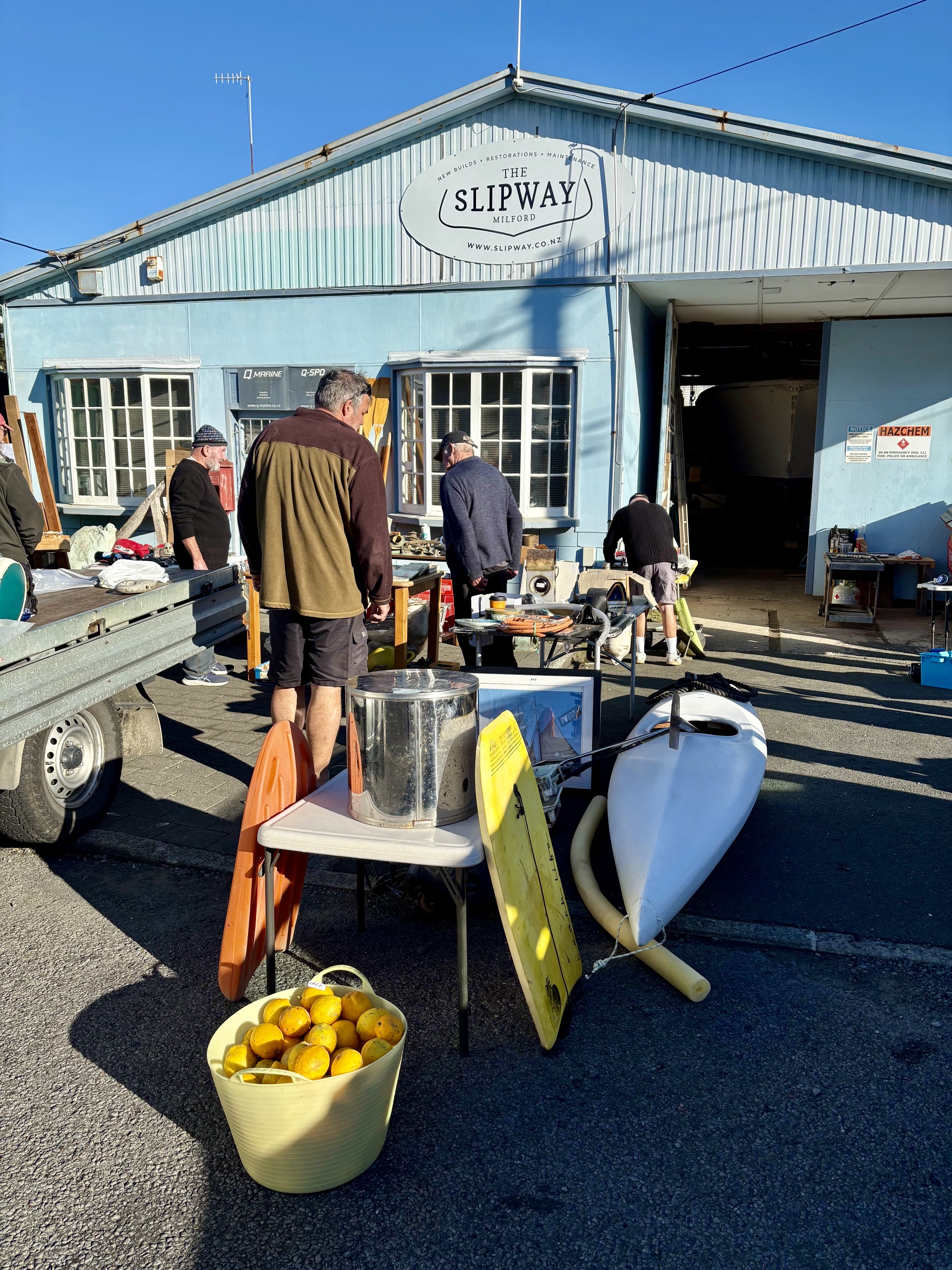
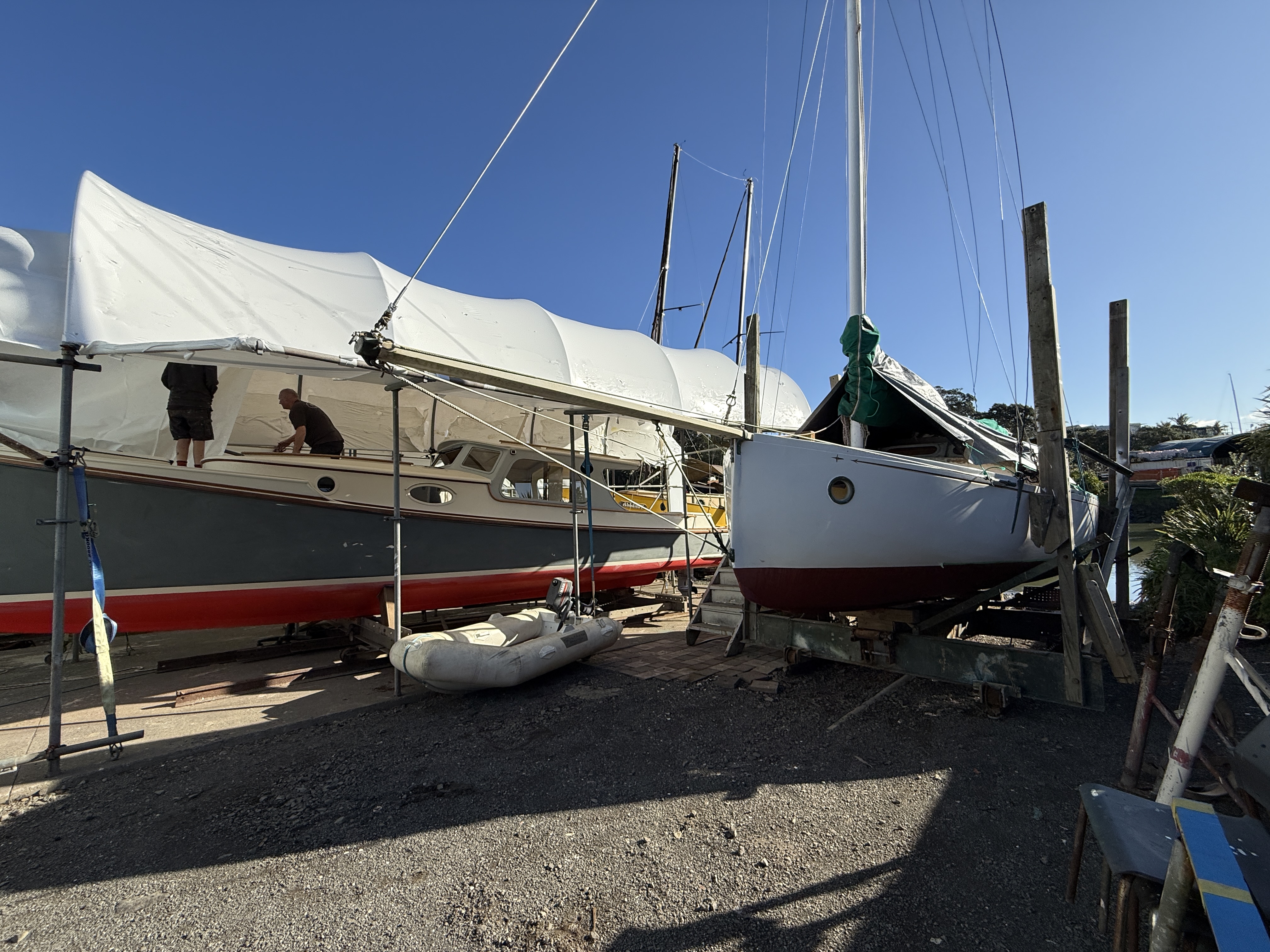
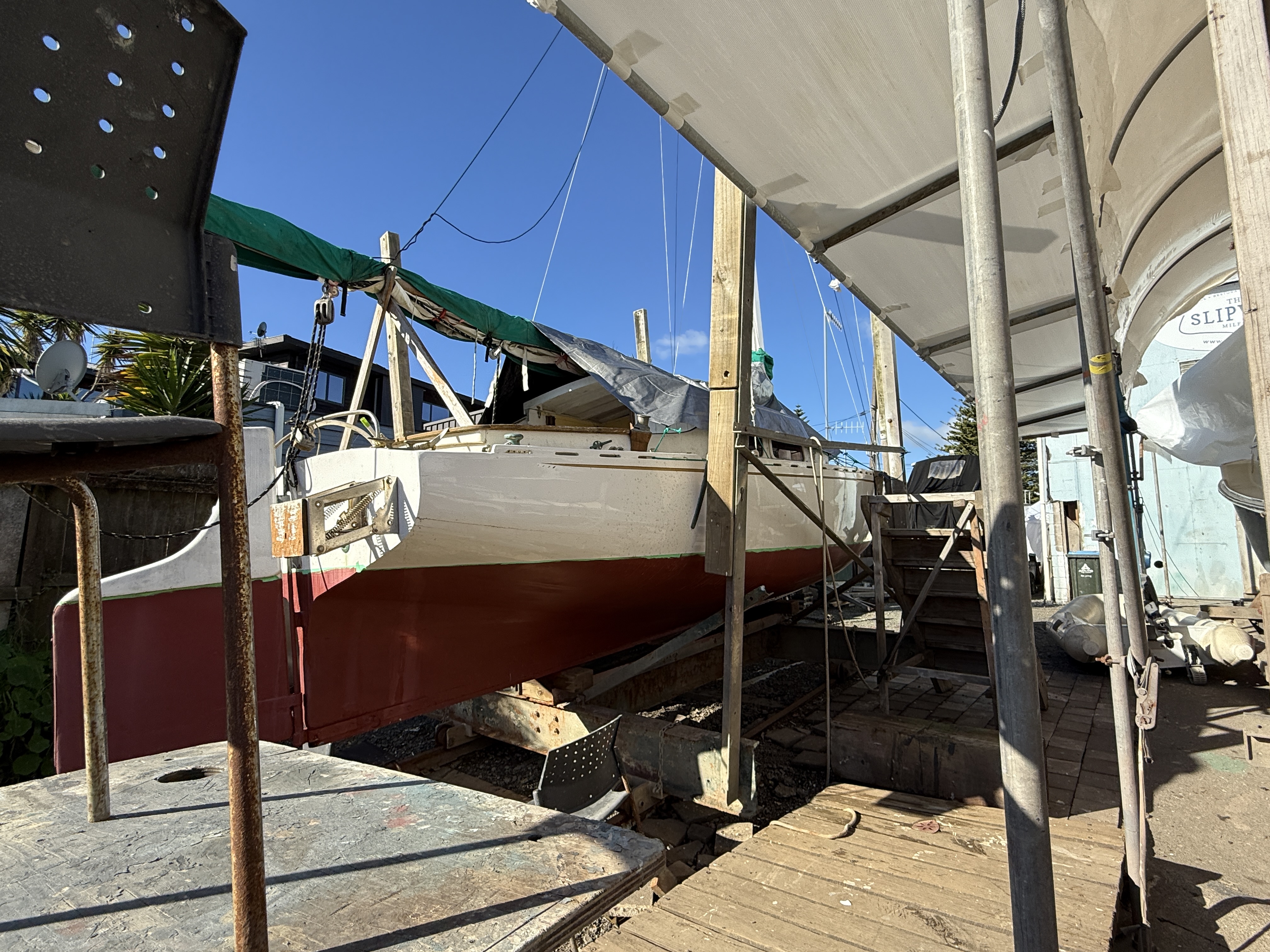
The occasion was the (almost annual) Woody Boat Boot Sale held at The Slipway, Milford – and frankly, you’d struggle to find a better venue. A special thanks to Cam Malcolm and Jason Prew for hosting us and for hauling out a few beautiful craft for close-up inspection. It added a real bonus for those who came for more than just shopping.
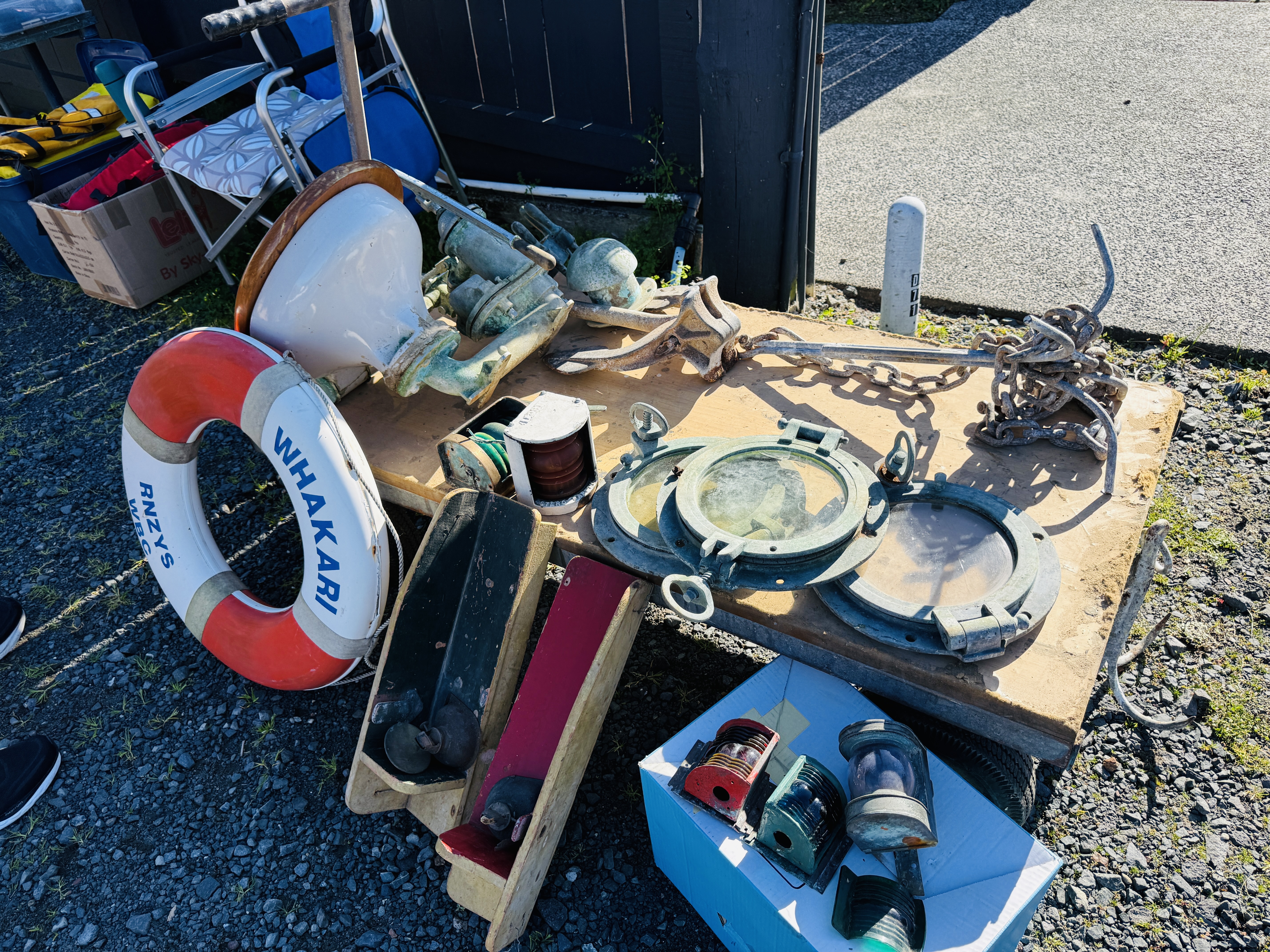
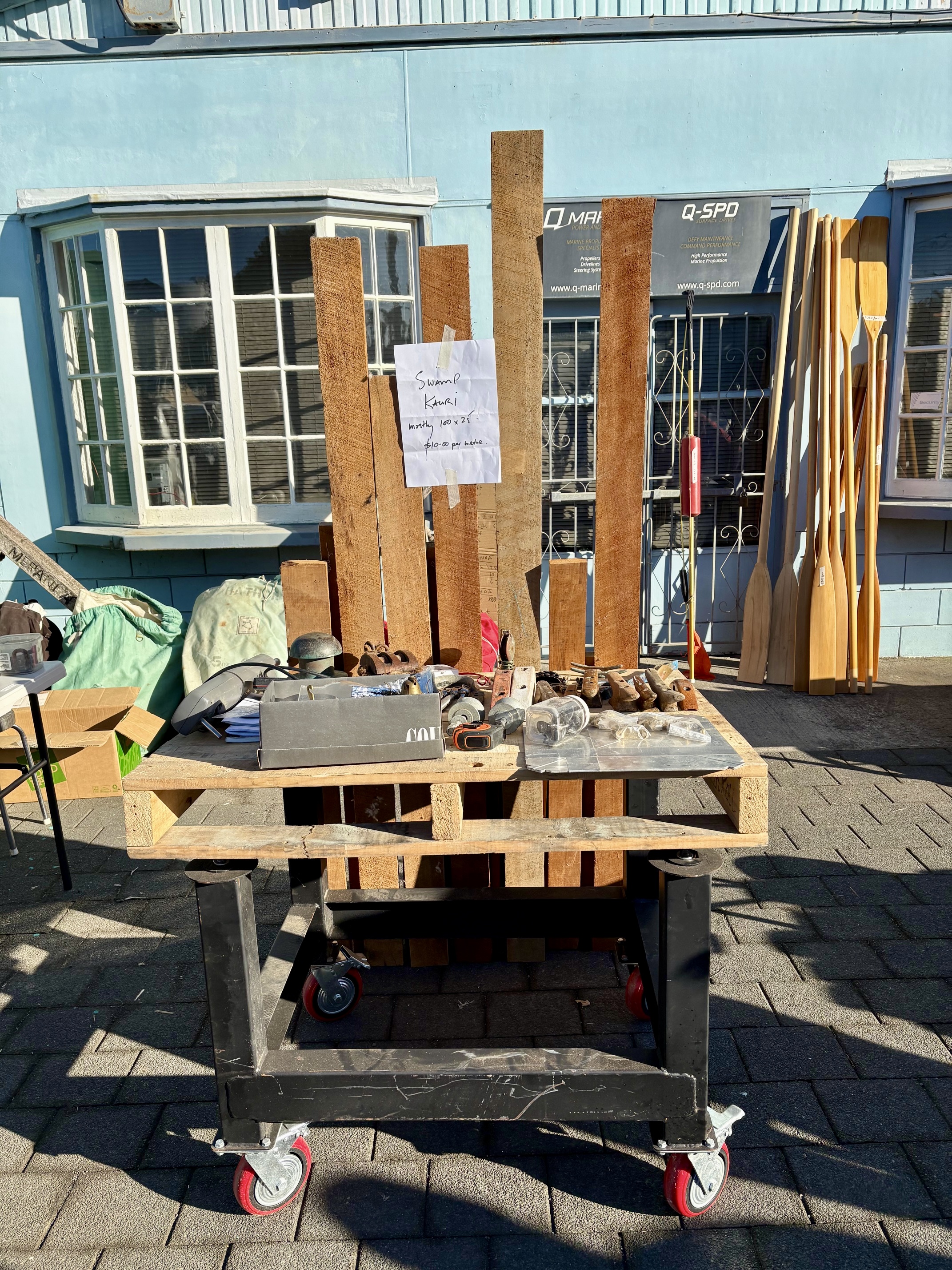
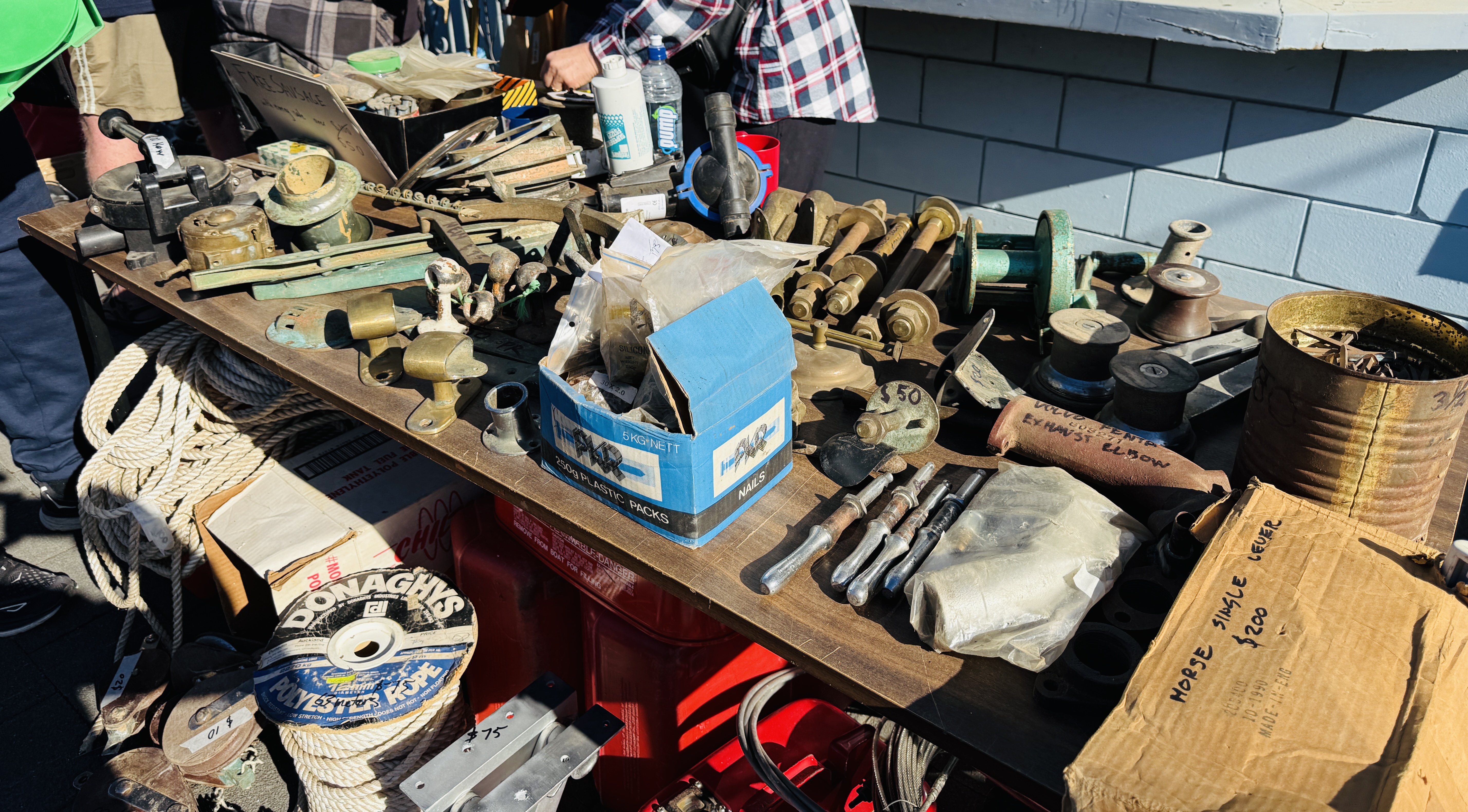
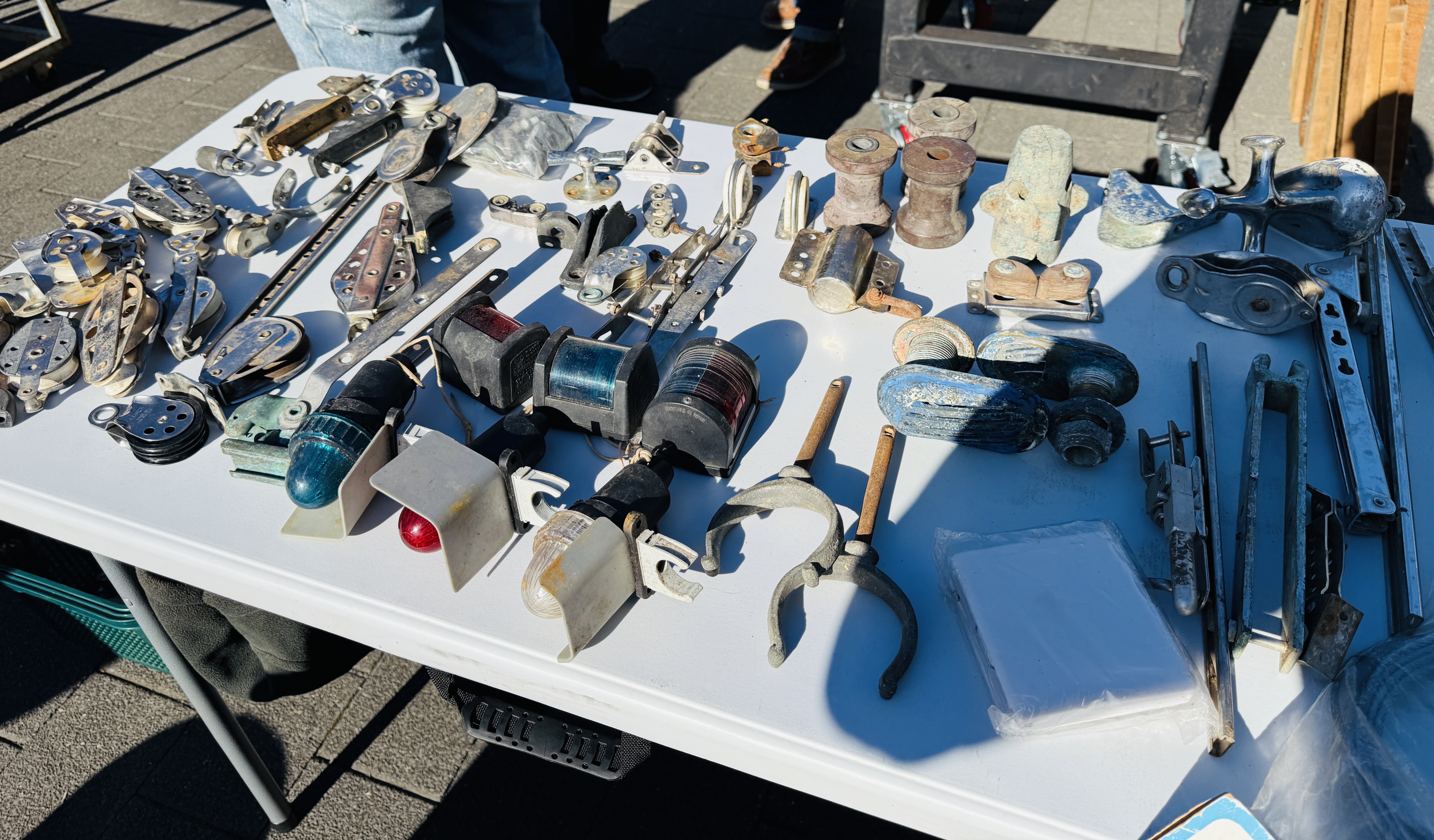
We had over 18 vendors on site, offering up a treasure trove of marine goods – everything from tiny cleats and chain plates to sails, bronze winches, stoves, and more. From what we saw, plenty of deals were done and everyone left with something – if not in hand, at least with a smile on their face.
It was also great to see so many familiar faces from the classic boating community. Events like this are about more than gear swapping – they’re about connection, community, and strengthening the bonds that keep the wooden boat movement alive and thriving. (photos yours truely & Geoff Fiebig)
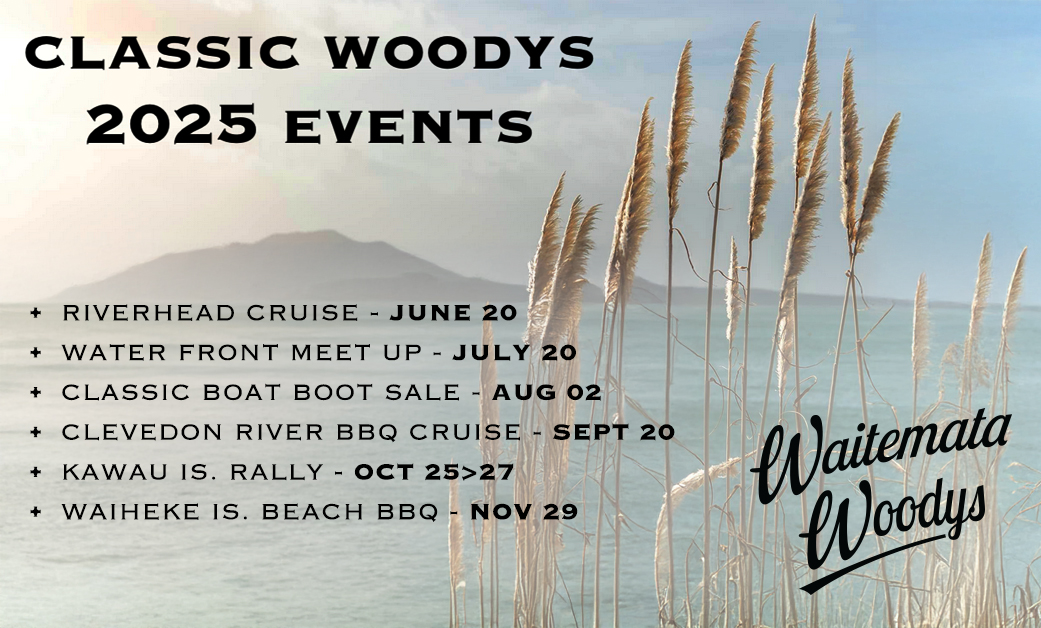
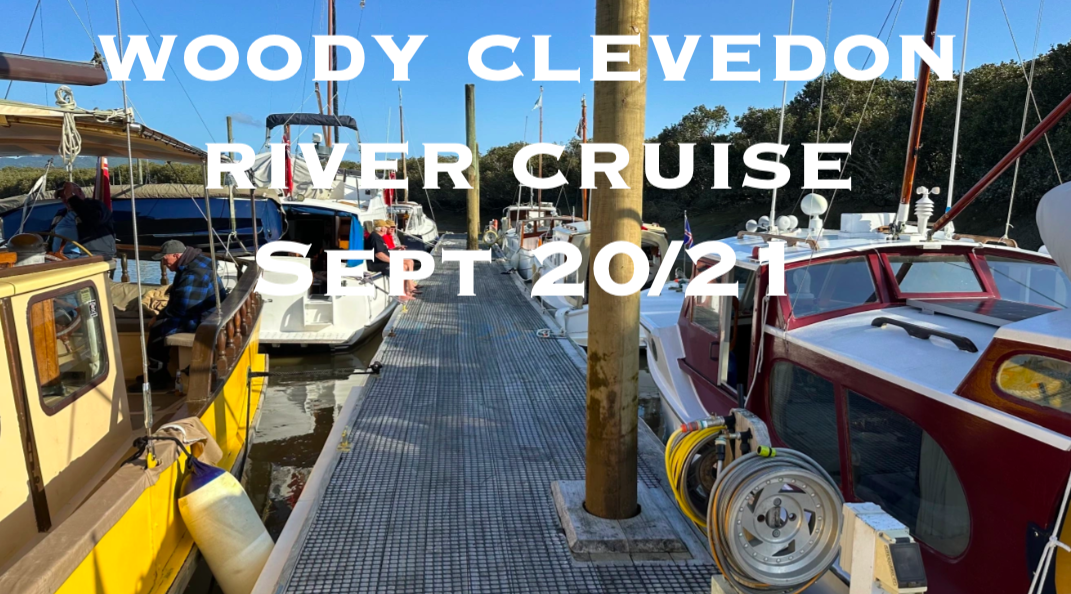
Next Up: Mark Your Calendar – September 20th > 21st
Our next gathering is set for September 20th, and this time we’re heading back on the water – cruising up the Wairoa River to the Clevedon Cruising Club for an overnight dockside shindig. Expect a BBQ, live music, and the usual top-notch company. It’s always a highlight – more details to come soon, but lock the date in now.
I’m a big fan of the Picton Clinker & Classic Boat Club, they seem to have the mix right when it comes the wooden boating community. Recently I was chatting to Roy Jones (Roysie) who among other things pulls together the clubs newsletter. Roysie mentioned a project he had been working on and promised a story – and today woodys we get the enjoy that story – I’ll hand over to Roysie to tell it.
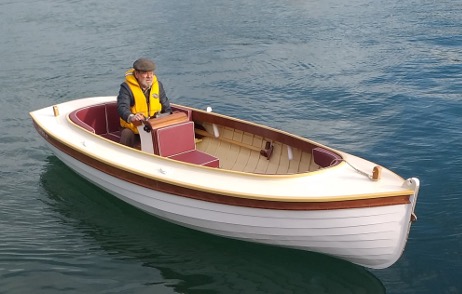
“Fifteen years ago The Picton Clinker & Classic Boat Club was gifted a 14ft clinker hulk which came with a remarkable provenance. Built by Ernie Lane in 1920 for Mr John Brownlee, son of the timber tycoon, William Brownlee of Havelock, the boat was in a sorry state and owned by Club Member, Noel Johnson.
Noel’s initial attraction towards Ruru was that, when he lived in Havelock as a child in the mid 40’s, he can vividly remember Ruru resting in the creek near the present causeway, whilst owned by the Havelock butcher, Mr Johnny Buncombe. Playing in Ruru, he would often be chased off and Noel miraculously relocated the boat again in 2003 on the Holdaway farm near Blenheim.
The Holdaway’s had purchased Ruru in 1948, from Johnny Buncombe for 100 Pounds, and who himself, had bought her from the Brownlee’s in 1933.
Now in a very sorry state, Barry Holdaway gave the hulk to Noel who intended to restore her. Aged 80, he realised it was beyond him, and Noel wisely gifted the craft to the Picton Clinker & Classic Boat Club in an effort to preserve her, and it worked.
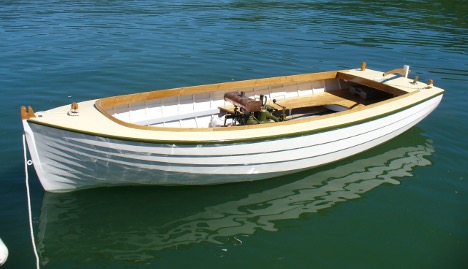
Ruru as restored in Jan 2010
Ruru is the Club’s flagship and is utilised on all the club runs as such. Roy had a little to do with the restoration and always admired her lines as created by Ernie, she was now available for all to view and admire. So last Christmas he borrowed Ruru for a week and after setting her up, took her lines off and drew them up on the computer. From these he created a table of offsets and after lofting out, began construction early in the New Year.
Ernie created a built-down style of deadwood almost a bustle, presumably to ensure the engine could be low as possible and with a fairly level prop-shaft, but this was difficult to recreate.
He must have steamed the kauri planks tightly to achieve the curvature around the stern deadwood rebate. Roy elected to use Meranti 9 mm marine ply rather than timber purely due to supply constraints. While gluing the lands removed the need for nailed and roved laps, it still required steamed American Oak ribs. This was the only job Roy required assistance with and co-opted a couple of retired members in the club to assist with the morning’s task. Peter Baker & Keith Henson willingly helped out and this is the norm amongst the Clinker Club members, advice and assistance is most often always freely available.
Propulsion System We originally installed a Stuart Turner P66 twin cyl. 10 hp engine in Ruru, but this was overpowered, so we swapped it for a P55 5 hp which proved more appropriate, however, the Stuart Turner became problematic for the numerous skippers in the Club. We have since settled upon a Lifan Chinese 6 hp and this has run well for 10 years, but is quite noisy. Roy considered this and, after speaking with new member, Tim Barton about his neat little electric 12ft’r, Billy O Tea, decided to also install an electric system in the Ruru clone.
With Tim’s advice on where to go for the Chinese supplier, Roy ordered a 4kw, 1000 rpm 48v dc motor and controller, which duly arrived about 4 weeks later without problem. At around $3,500 landed, he considered it reasonably economical.
Subsequent to that major decision, he continued construction, framing the deck and glassing same. Unlike Ruru, he made the top strake varnished with a sub belting along the bottom edge in a more traditional style. Lacking more traditional hardwoods for the beltings, standard Quila timber decking was utilised and machined to suit; merely because it is readily available and reasonably economical.
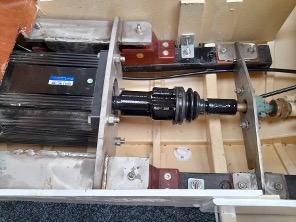
The dc motor is considerable, weighs about 30kg developing 39 N.M.
The universal is a CV joint from a wreckers, and the thrust bearing just aft. The motor output shaft is 35mm!
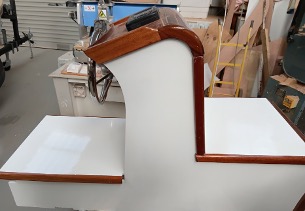
Having decided upon electric propulsion, Roy decided to throw the cat another goldfish and fitted hydraulic steering to enable comfortable curved seating in the stern without a the tiller interfering with guests seated there.
Once again, Roy went online and researched hydraulic steering systems. Having been quoted over $2000 locally, it cost less than $500 for a full set imported and landed at the door in 3 weeks.
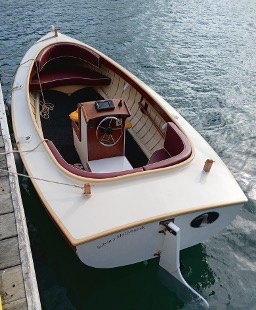
The short S.S. rudder tiller penetrates the transom quite unobtrusively, to the ram below deck and can be disconnected from the rudder when removing for trailing.
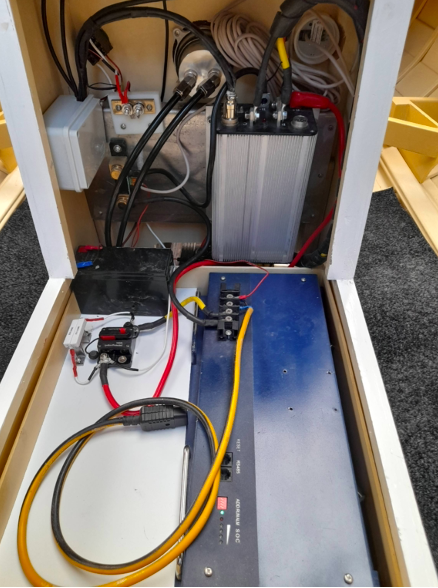
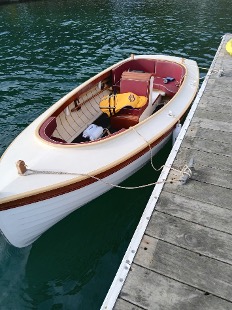
The Electric system enabled a centre console with motor and battery installed beneath, leaving a huge area amidships, where an engine is usually placed. A forward curved seat fits neatly behind the curved foredeck coamings. The large 48v lithium battery required is situated under the front seat of the console, while the motor and drive train is beneath the foot level lid below the helm.
The 48v 100 amp hr lithium battery is the blue item & takes up the full width of the compartment. The silver item is the motor speed controller that came with the motor. The yellow lead is for connecting to the 48v HD charger.
Roy purchased the 48v 100 amp hour Lithium Ion Battery from Auckland along with the new trailer, driving up and back being cheaper than freighting both down to Marlborough.
He also installed a GPS Plotter & Sounder plus a Victron battery management system from Burnsco. This is a magic device providing a shunt in the neutral supply and thus determines the present battery voltage, the currently used amps & watts, plus provides a range in hours and minutes left in the battery. It is supplied with a 50mm gauge but the best method of readout is by Bluetooth to a cell phone enabling all the readings on one screen.
The greatest dilemma with electric boat propulsion systems is range anxiety, knowing how long you can actually cruise for, at the present power usage. Well, the Victron system diminishes this to a normal fuel level concern, if you run at full power then your fuel range will be minimal, but with sensible throttle use many hours are available. Roy intends to calibrate the range from GPS speed, Shaft rpm & amps drawn. These are shown further on.
Tim provided his figures, and for example at 3.3 knots Billy O Tea draws 5.2 amps, at 5 kts she draws 22 amps but at 5.4 kts, draws 50 amps indicating her best hull speed is just below 5 kts. i.e. 100 amp hour battery at 22 amps = 5 hrs motoring, and you can always slow down!
We used GPS speeds & digital tacho rpm figures with the Victron gauge providing the current drawn. Roy will do similar with Toroa EV, (her new name now she is completed.) Toroa means Salvins Mollymauk (and the EV is electric vessel!).
Ruru like most clinker hulls is a very seaworthy craft and it is on record that when Ernie Lane completed her, she was motored around from Picton to Havelock by a Mr Doug Pickering. This is a daunting trip for a 14ft Clinker, even today, and he is reported to have had fuel trouble near Cape Jackson, Doug simply tied Ruru to some kelp while he cleaned out the fuel line of shavings! Ruru was fitted with a Scottish Kelvin of about 5 hp from new and to have motored the 60 odd miles around the Cape was an impressive feat 105 years ago!
When one considers that she was built shortly after the First World War, it is remarkable that it was obviously intended she would have an engine from new. It wasn’t a retrofitted engine installation as is usually the case with this vintage. Perhaps this would indicate the wealth of the original purchaser, Mr John Brownlee?
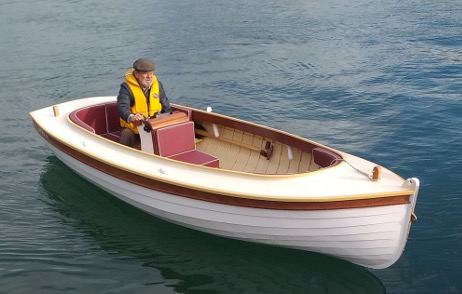
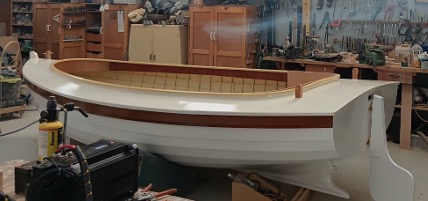
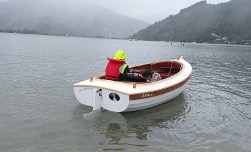
With the helmsman and passenger sitting in the stern sheets. Toroa EV rides high in the bow but with passenger forward she sits nicely to the waterline.
Roy advised that Toroa EV took 5 months to construct at old farts pace… i.e. 5 hr per day knocking off at rum o’clock. He takes great delight in creating clinker craft, believing if the boat is pretty, it will become a 100 year boat. (only pretty boats last 100 years because their owners love them!)
The Picton Clinker Club members own many small clinker & classic style boats and are committed to salvaging and restoring these wonderful small craft, often saving them from various scrap heaps or bonfires.
Toroa EVPerformance
Revs Speed Amps
350 2.1kts 2.4
450 2.6kts 3.5
650 3.4kts 6.6
800 4.1kts 11.7
970 5.3 kts 16
1070 5.4 kts 21
1250 5.9 kts 39
As you can see, any attempt to exceed 5 knots hull speed causes the amps load to dramatically increase, up to about 4.5kt is very economical indeed but a little more and range diminishes dramatically. Exactly the same of a combustion engine I guess.”
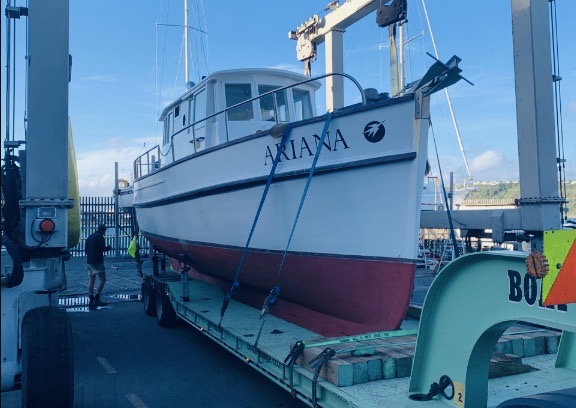
THE RESTORATION OF THE CLASSIC WOODEN EX WORKBOAT – ARIANA (TE KAWAU) – PART THREE
Following on from Mondays story on Sven Wiig’s classic wooden vessel – ARIANA, previously named GLENROWAN and TE KAWAU. Sven has just sent in Part Three.
Todays story takes us up to current and woodys we will have to wait for the final part for a little while, but rest assured there will be one 😉
And as highlighted in Part One Sven is looking for any intel on her past , and is very grateful for those that commented last week.
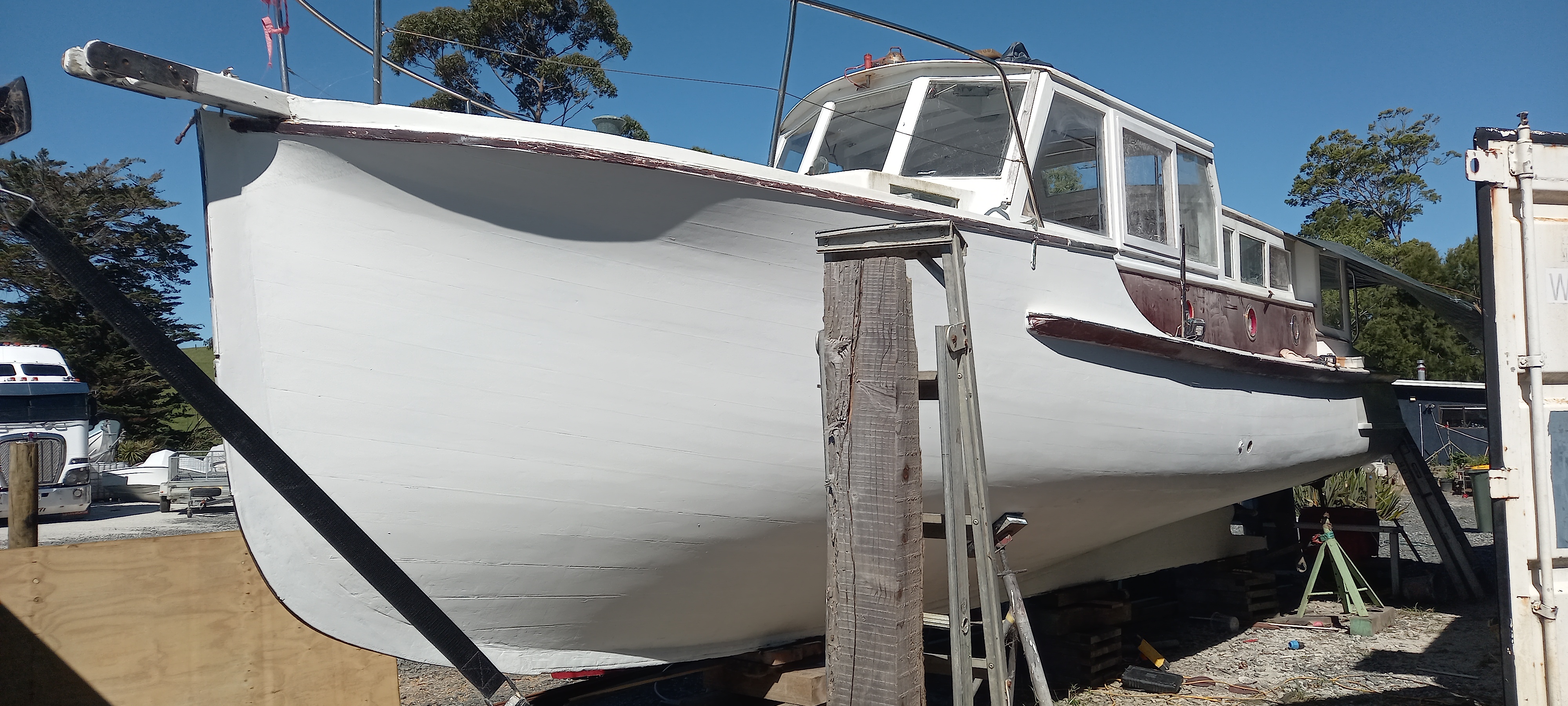
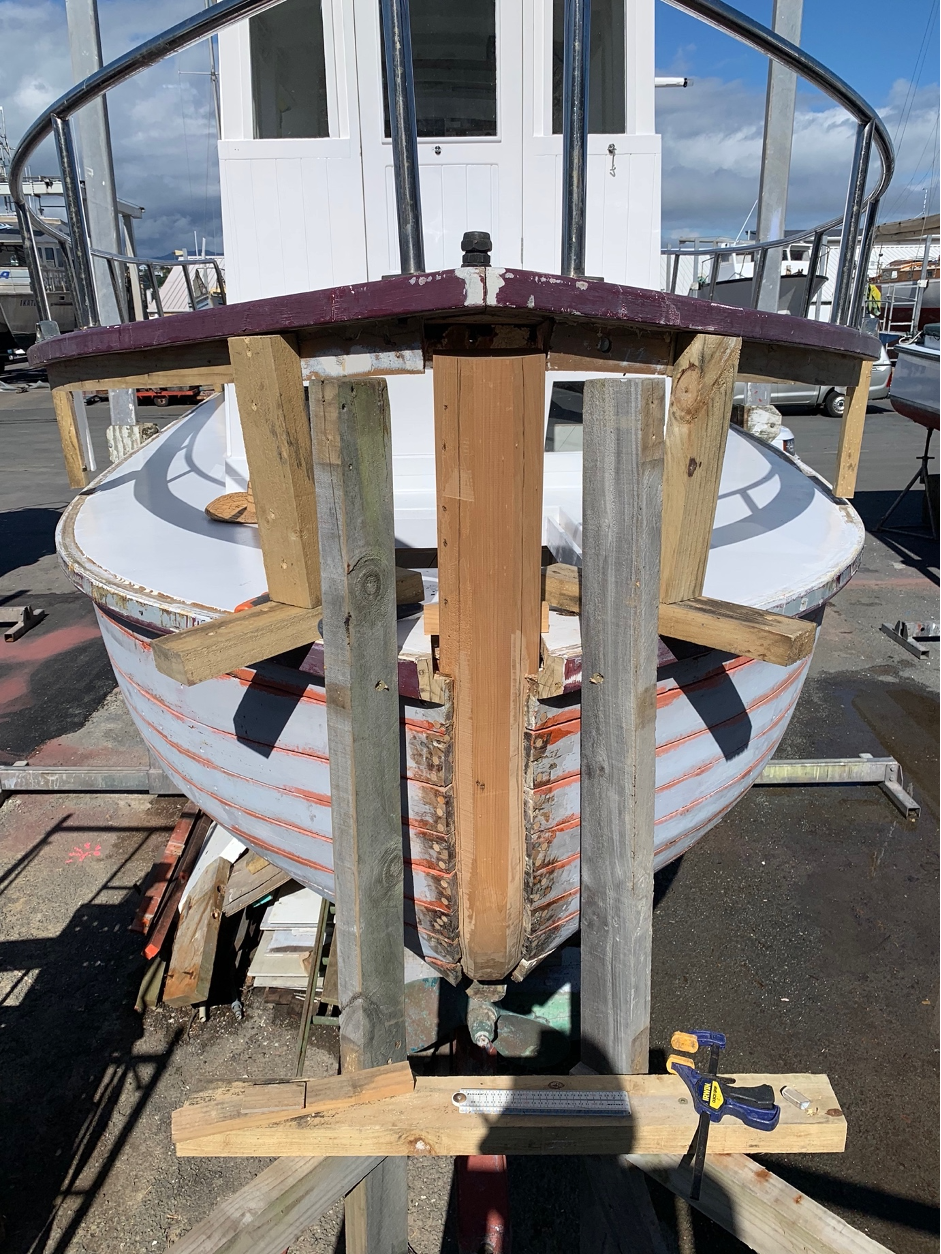
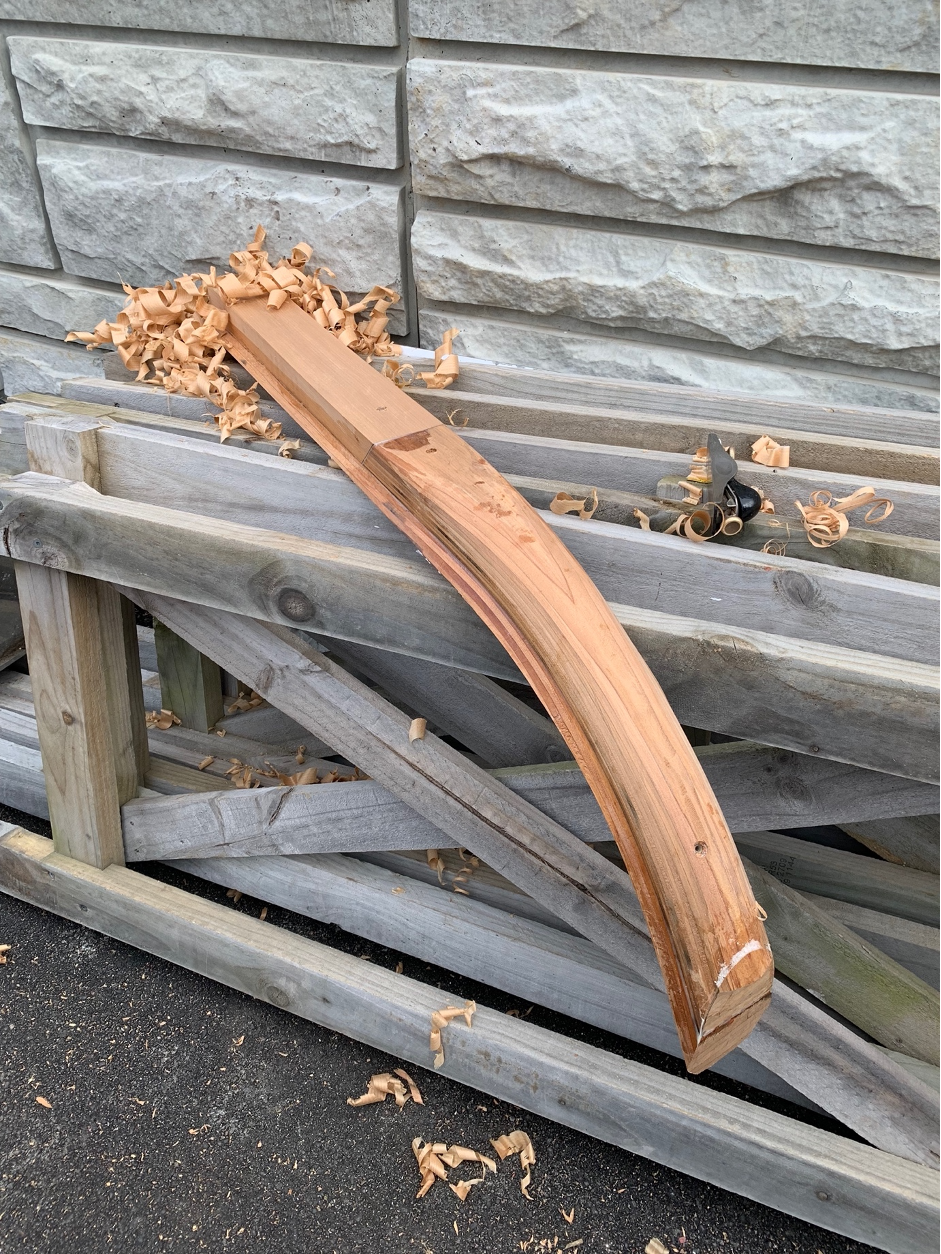
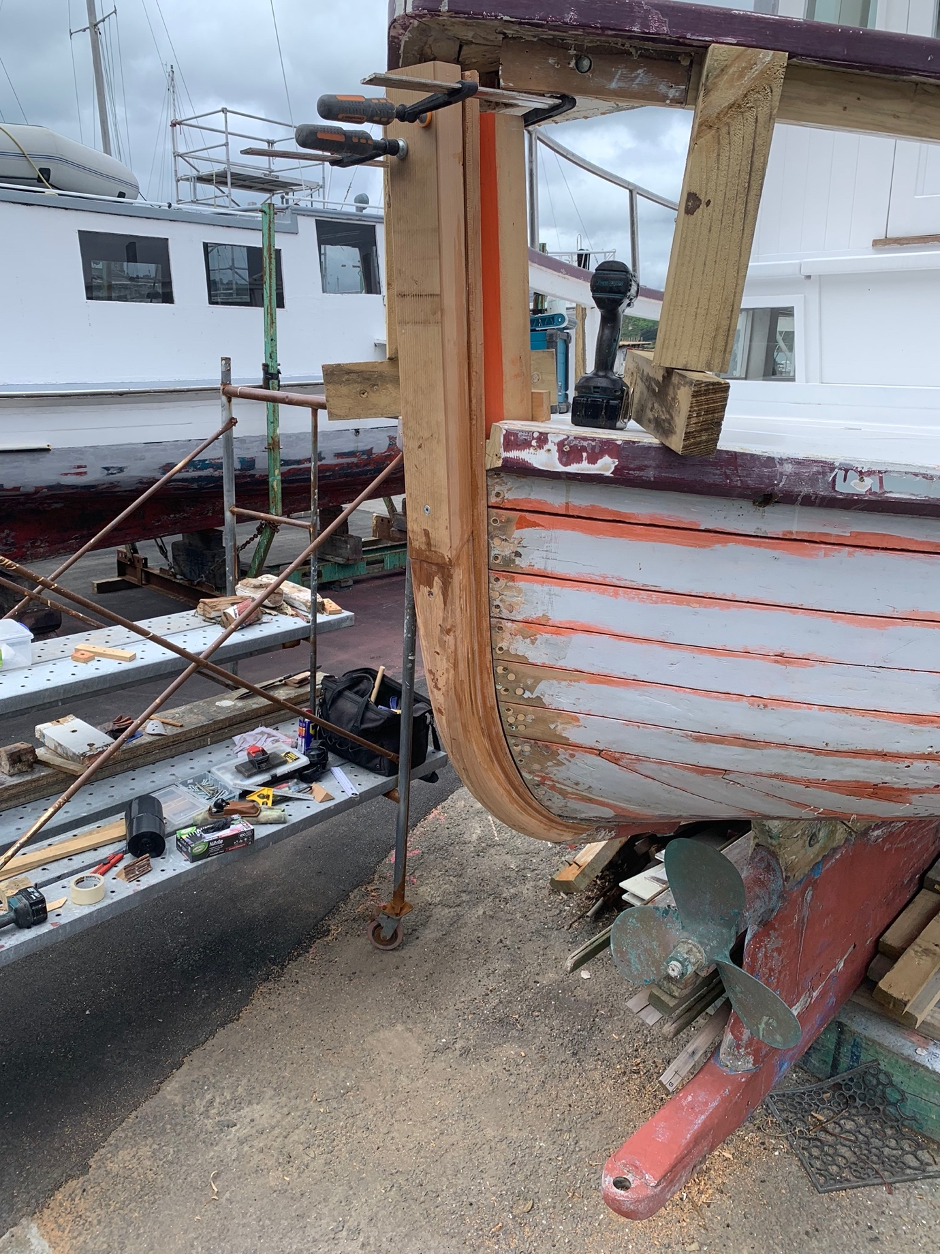
“Now I just had to make a new one and put it all back together. Hummm. My fellow boat owners all came to check out progress and I got the distinct impression that they thought I had killed her. If I am honest I was wondering this myself…. I was going to need lots more kauri. Fortunately Solomon came up with the goods, a couple of large beams that had once been part of a bridge (thanks Mate). One of these was sawn up to make a new inner. I sourced some beautiful bronze screws and fitted the inner back into the boat. I was most relived to see that the stern was now back in shape. All the seams had closed up and she had a nice round bum again. I clearly had done something right. Next up was to make up the new outer. Grown hardwood wasn’t an option so I decided that I was going to laminate one. I made a former and laminated up the new outer.
New Inner being fitted up.
Outer laminated and roughed into shape
New outer stem being fitted. The inner and outer where then bolted with bronze rod to new horizontal knees inside the stern and at the top of the bulwarks. Whew.
Now where were we. Bulwarks. I finished prepping for the bulwarks. Fortunately Olaf was back in the country for a Summer break. What better way to relax than giving his brother a hand fitting the new plywood? A couple of exhausting days later and we had the first layer on.
A second layer was added at both ends for added strength and a certain amount of flare.
Olaf went home to England and I finished the Bulwarks off with some trim and paint. The bronze rubbing strips were replaced and another milestone reached. The whole top half of the boat was now complete, well almost.
To celebrate I made some bling for her. New nav light and dorade boxes.
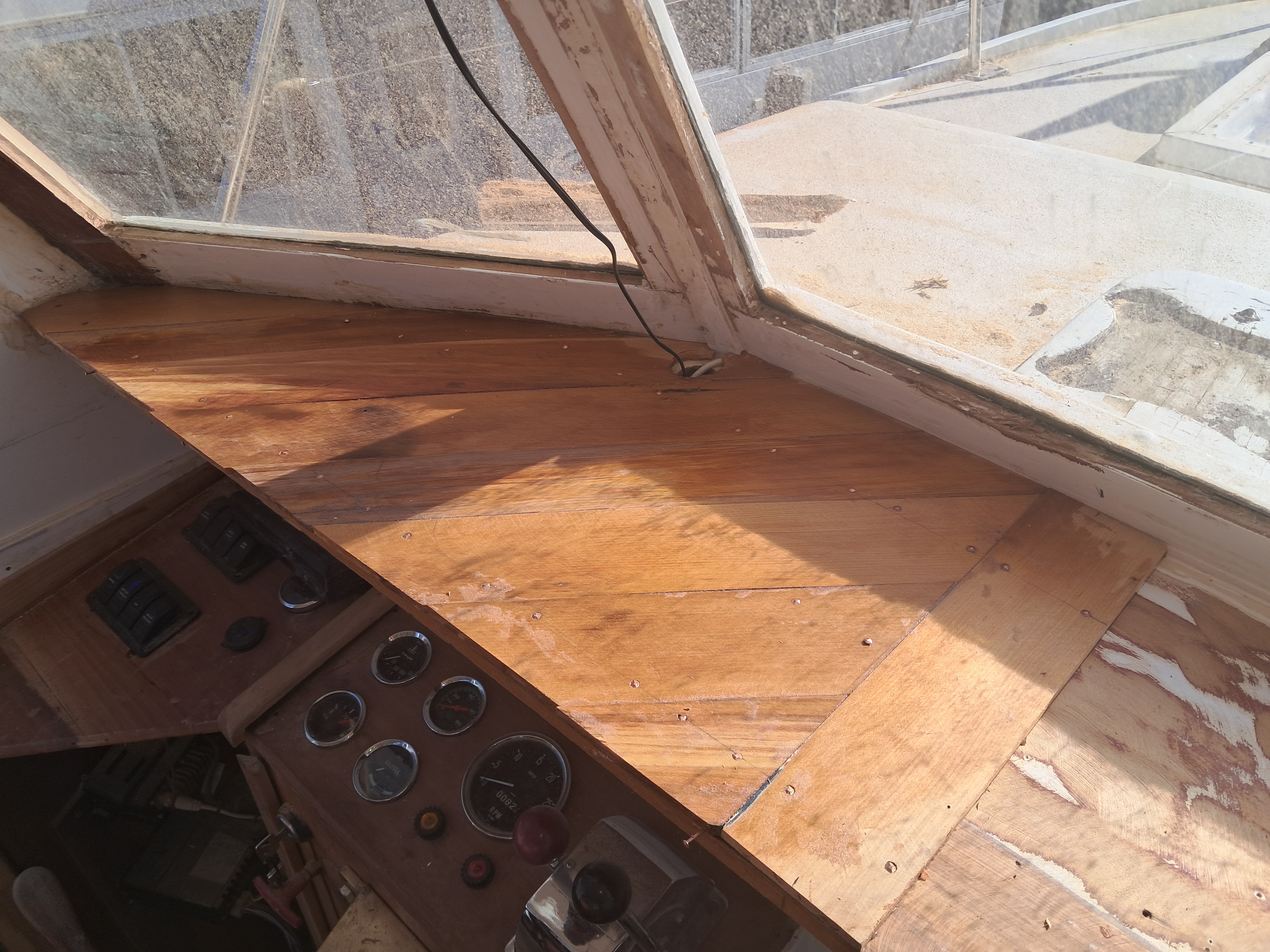
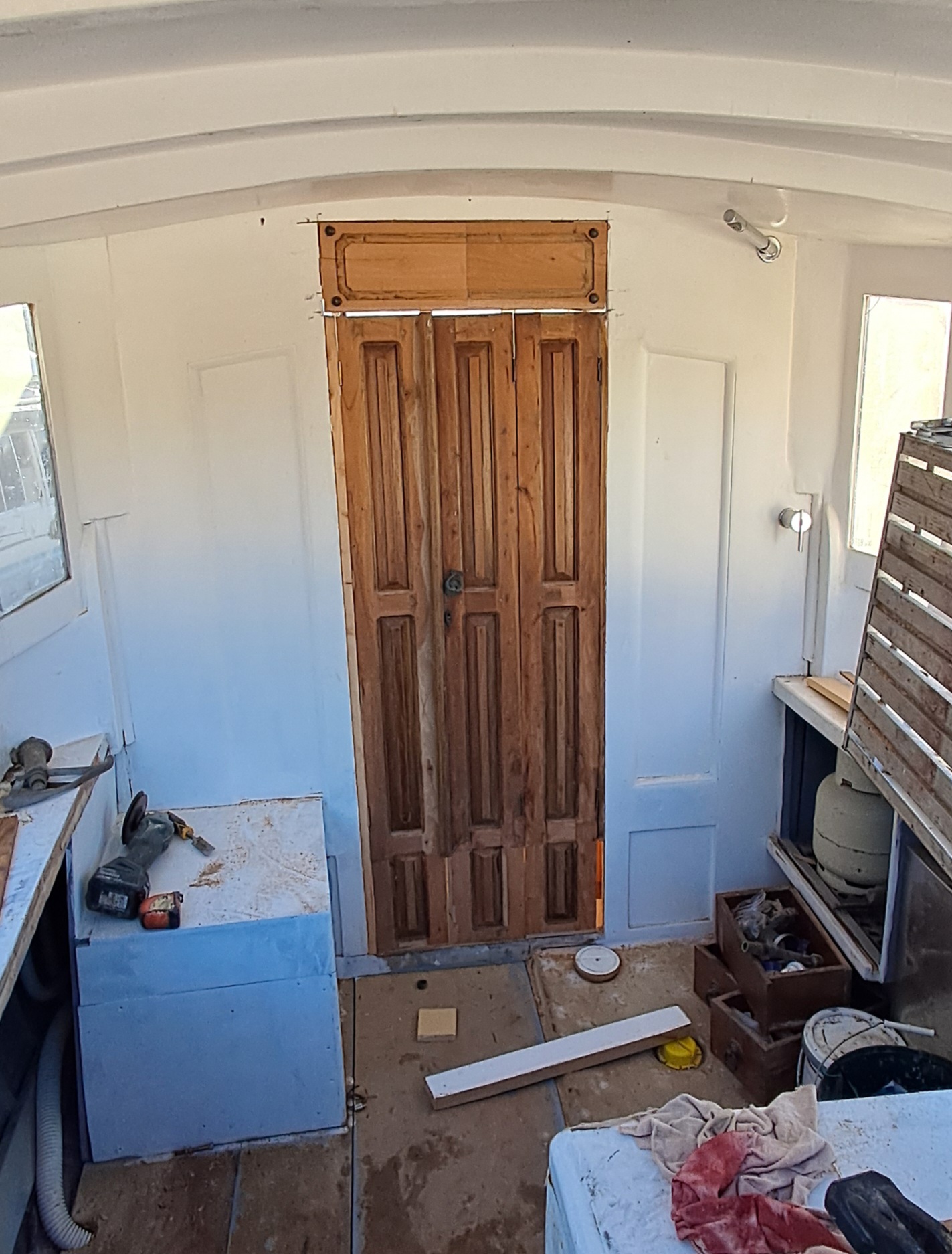
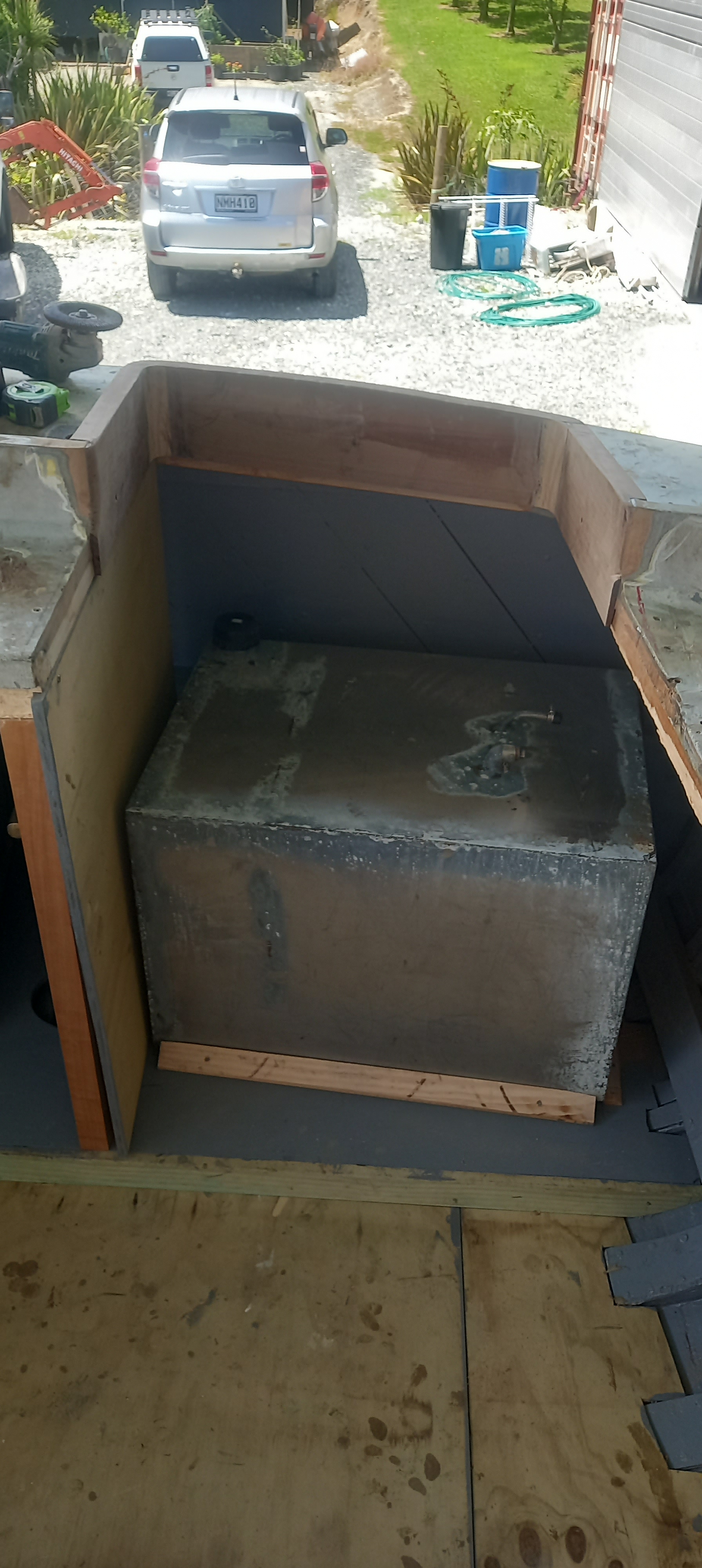
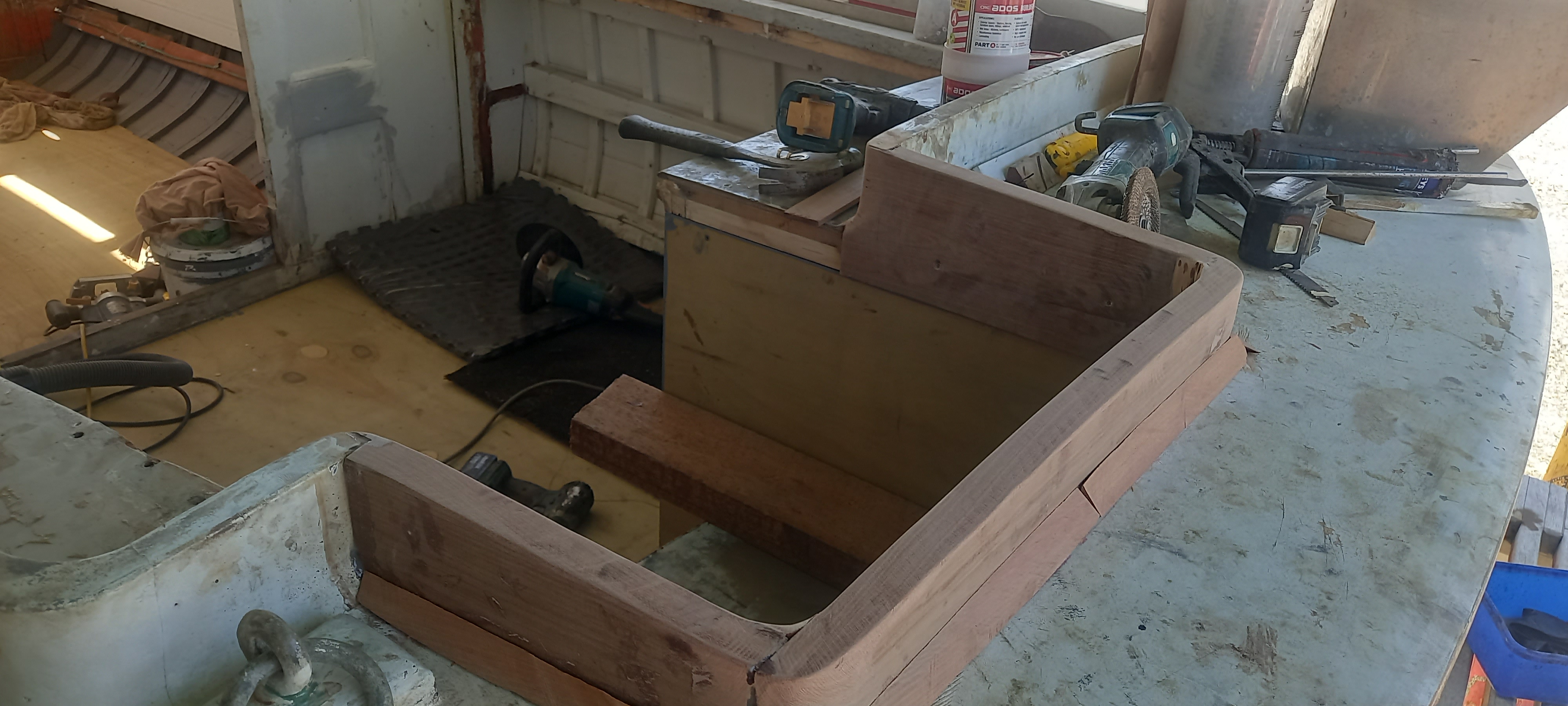
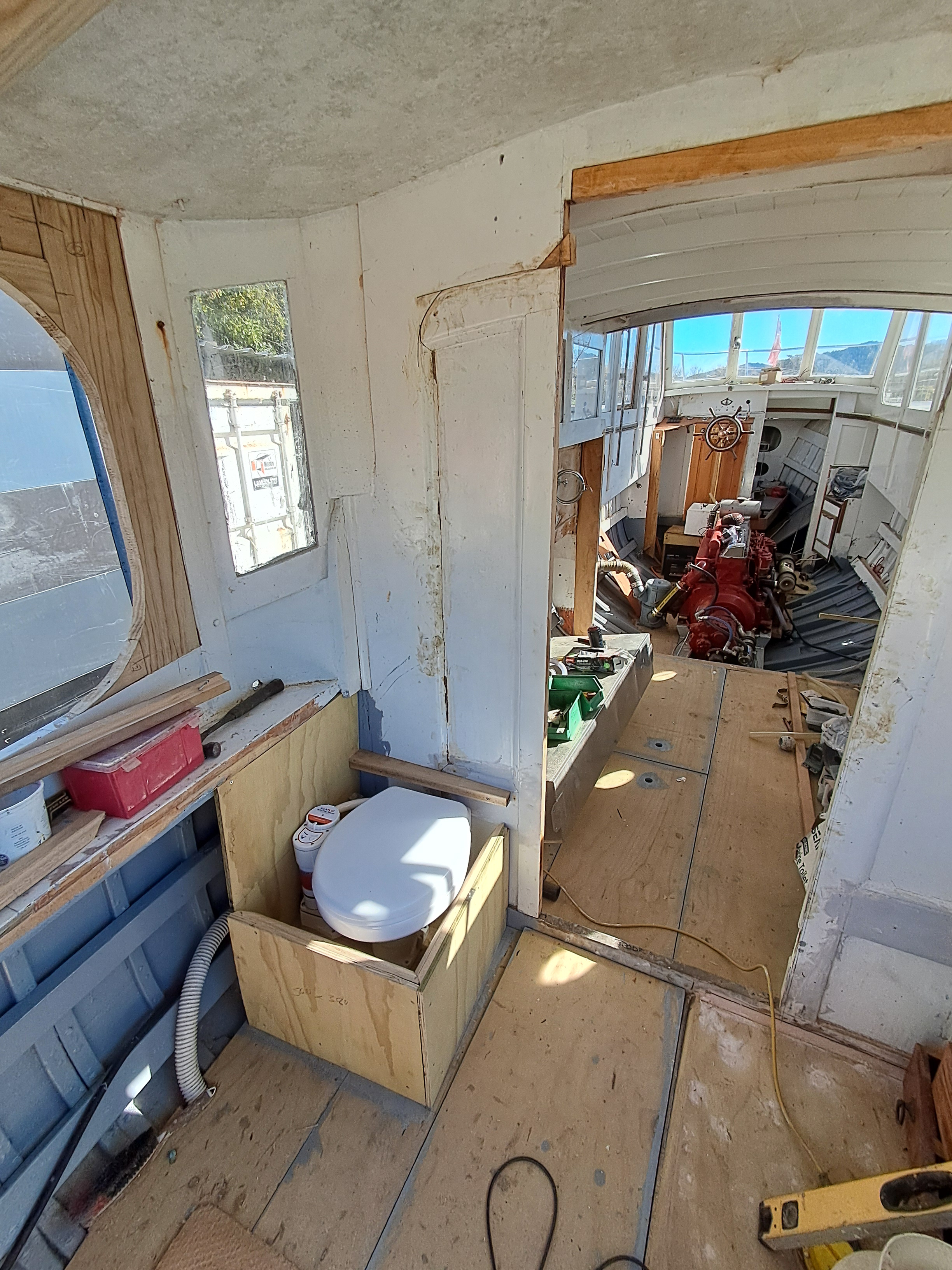
Recently I passed another milestone. Four years on the hard. Every year I tell myself that this summer she will be back in the water. I have only a few more months now if that dream is going to be achieved. We will see. I have moved onto getting the inside back together. New tank cradles have been built and today I installed her new diesel and water tanks. Next up will be building a new sole for the wheel house and replacing the cabinetry that John the previous owner had made from trees felled on his farm. I am looking forward to that. Will let you know how I get on.”
THE RESTORATION OF THE CLASSIC WOODEN EX WORKBOAT – ARIANA (TE KAWAU) – PART TWO
Following on from last Mondays story on Sven Wiig’s classic wooden vessel – ARIANA, previously named GLENROWAN and TE KAWAU. Sven has just sent in Part Two.
Todays story takes us up to last week and we will run Part Three on Wednesday and then woodys we will have to wait for the final part for a little while, but rest assured there will be one 😉
And as highlighted in Part One Sven is looking for any intel on her past , and is very grateful for those that commented last week.
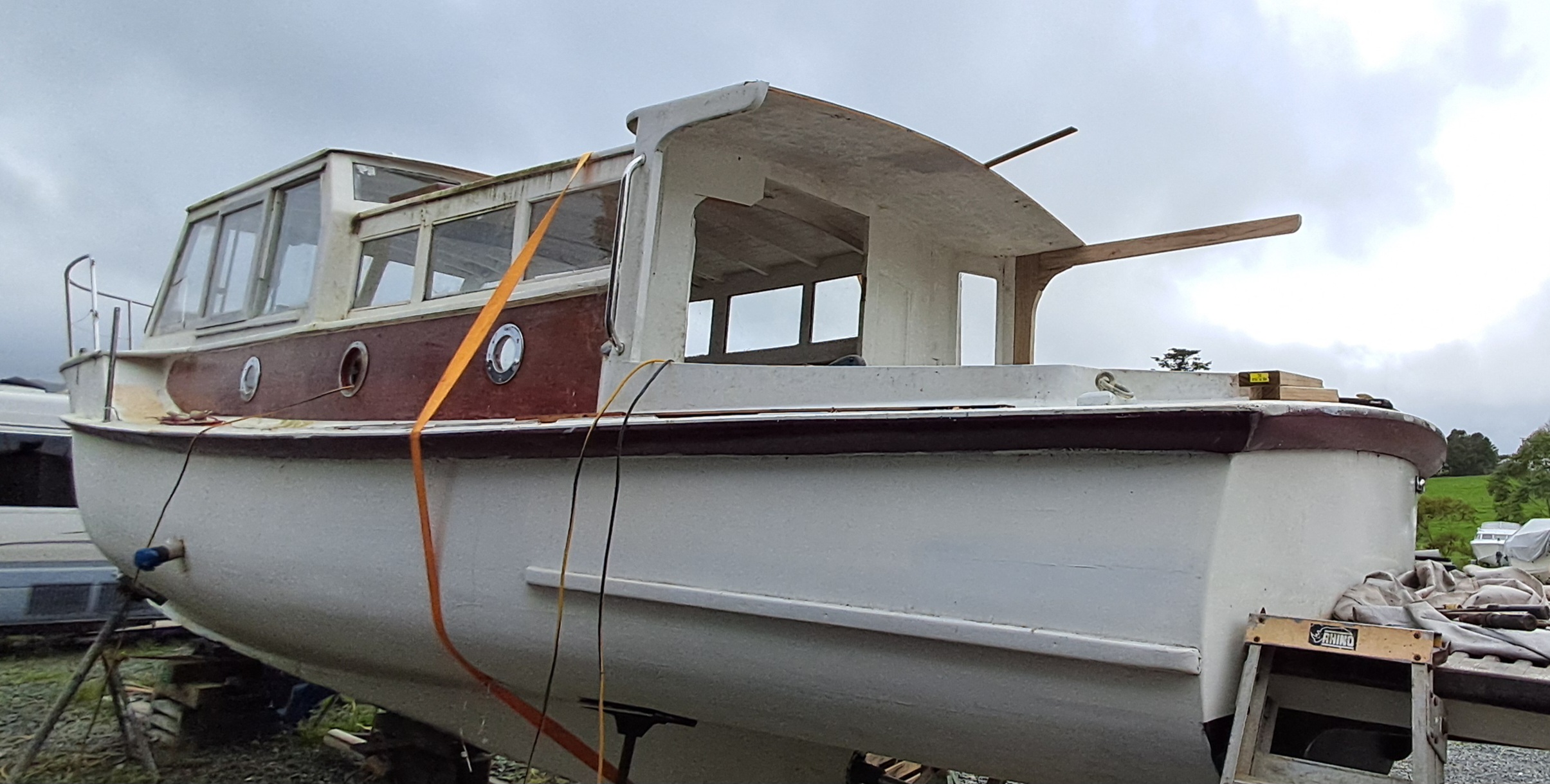
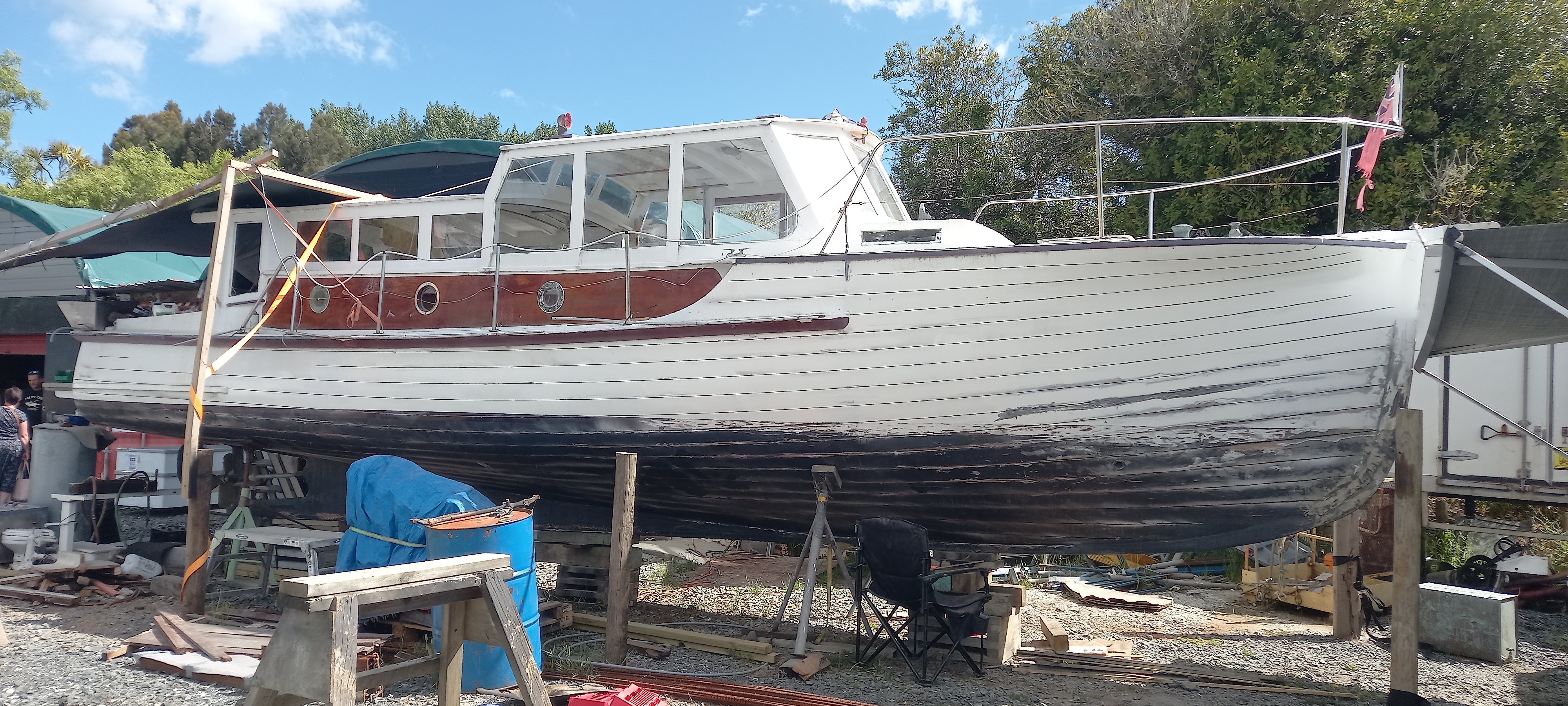
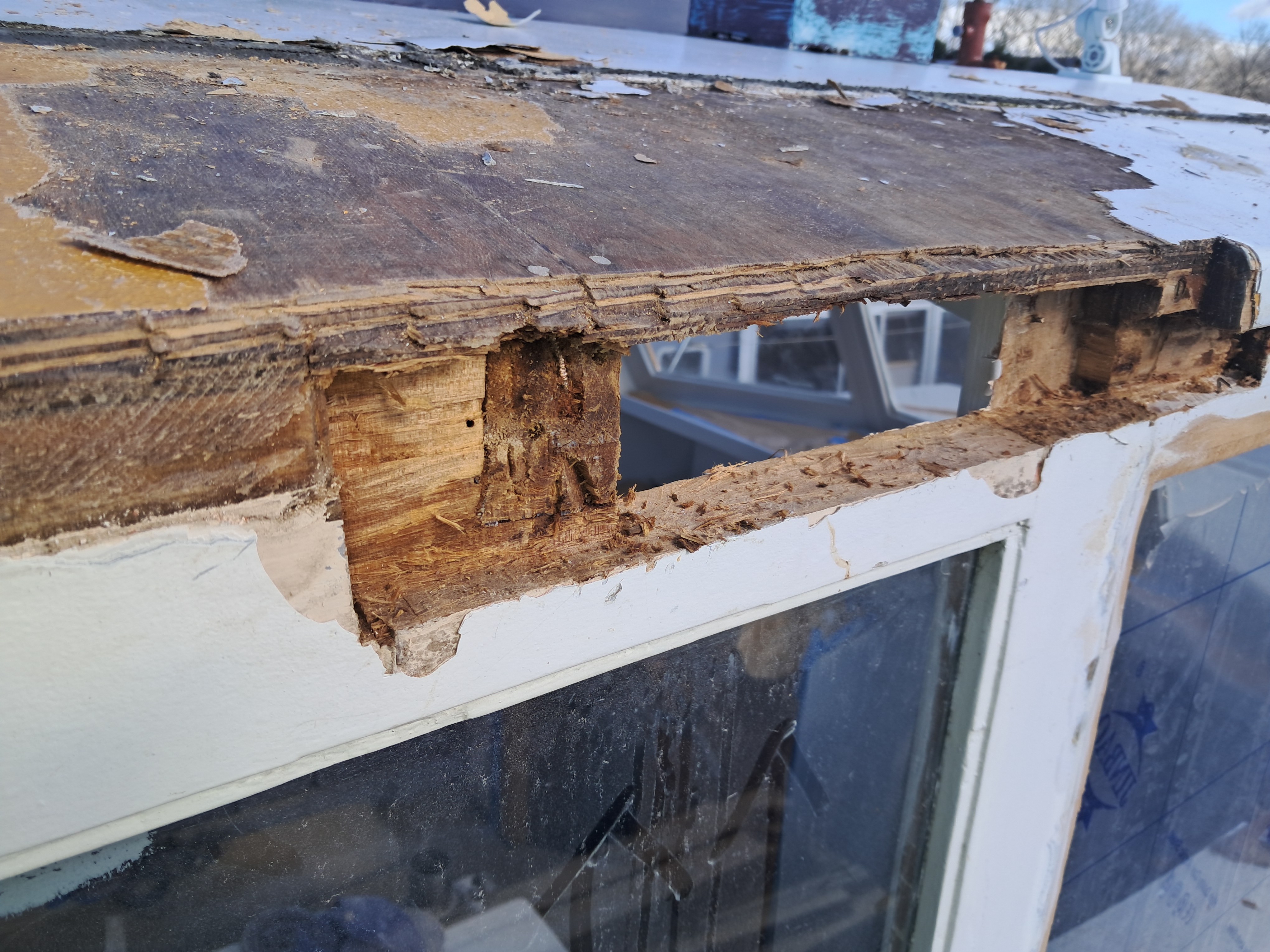
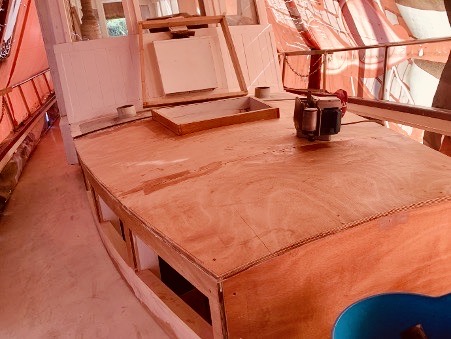
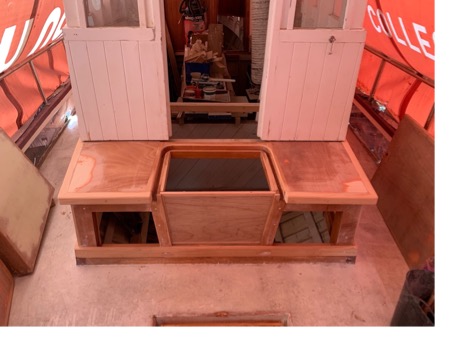
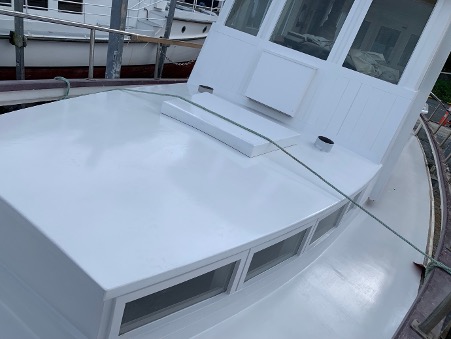
“Once the decks were fibreglassed the next mission was to get the coamings and cabin tops rebuilt. Cabin tops were given two layers of ply and clashed in solid.
The little doghouse extension got the same treatment.
I had hoped to find bronze portholes for the coamings but couldn’t find any in the right sizes and quantity. I decided to copy the detailing that existed in the wheelhouse windows.
Next were the doors which I repaired and modified.
The wheelhouse sides were repaired with new tongue and groove.
Once all this had been sanded and given a couple of coats of paint the cover could be removed and I could finally stand back and check out my work. I was a bit nervous that I wouldn’t like my design choices once I could view them from a distance, but overall I was pretty happy with her.
Cover off after three years.
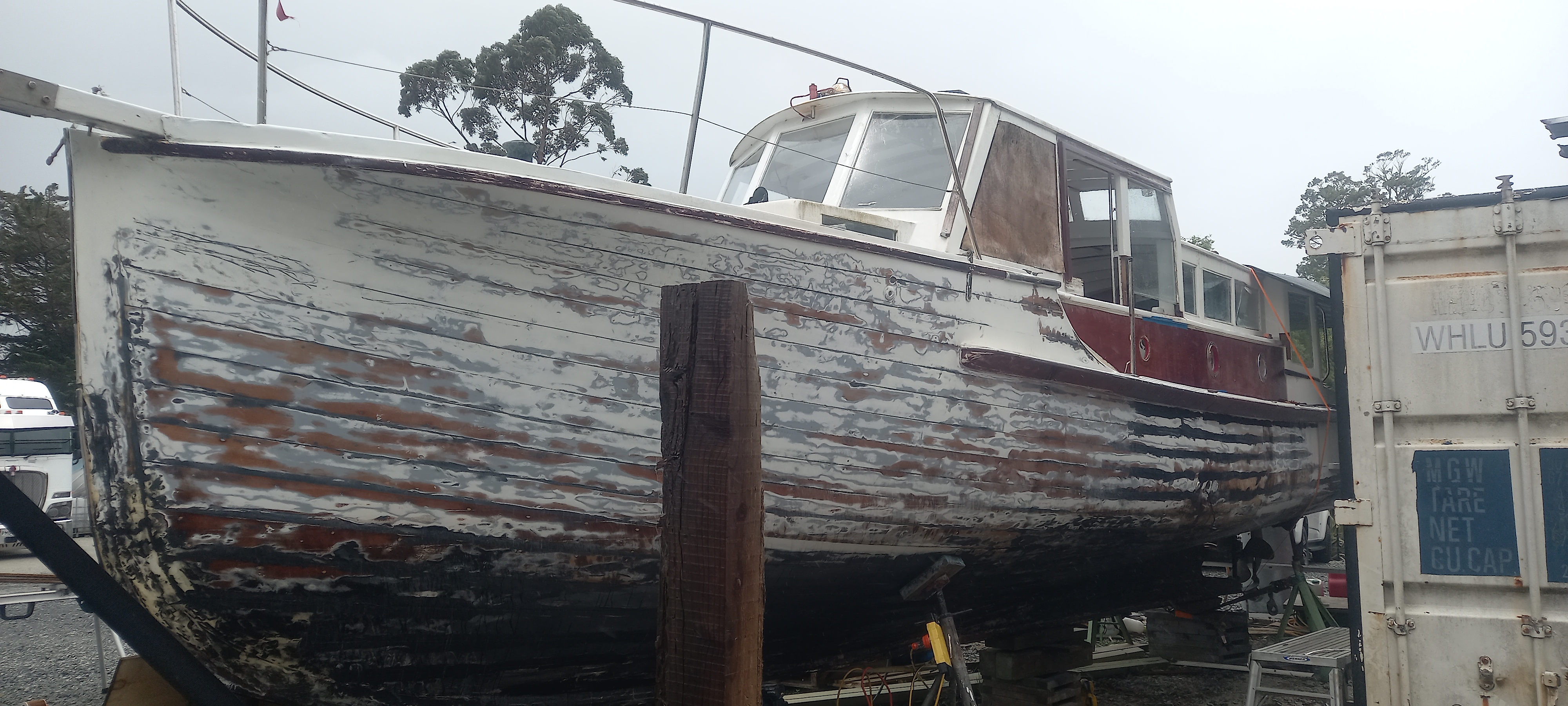
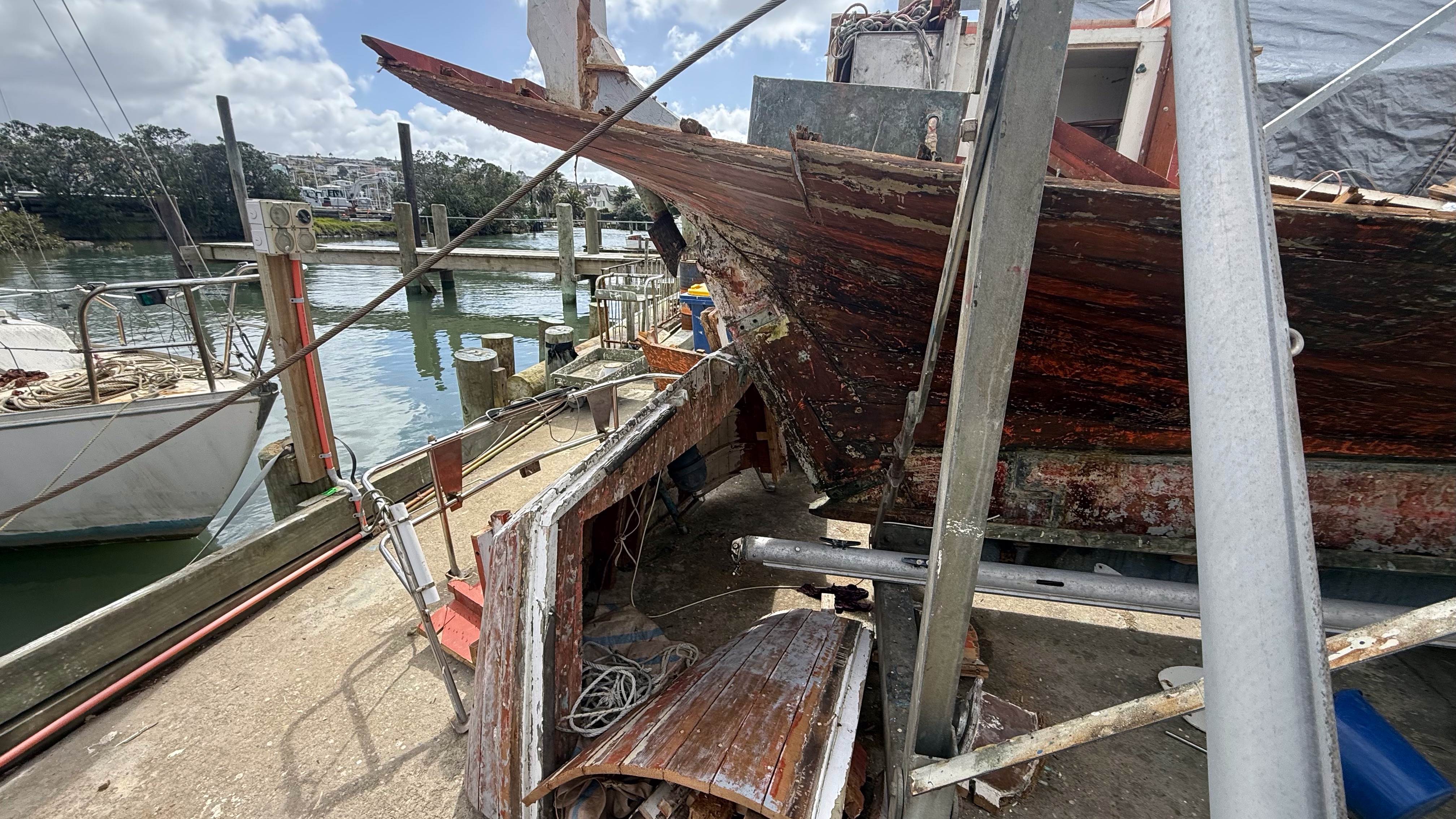
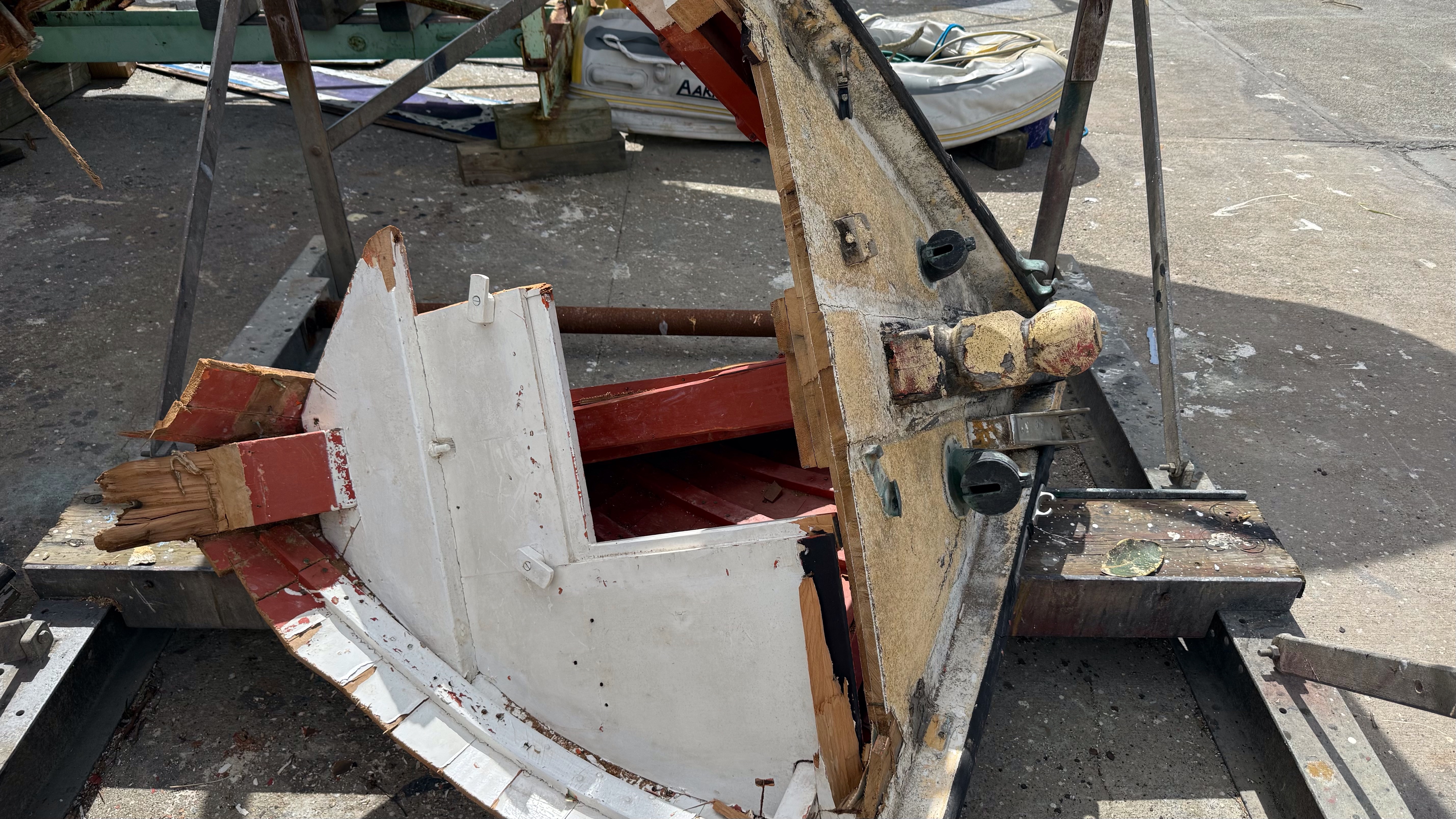
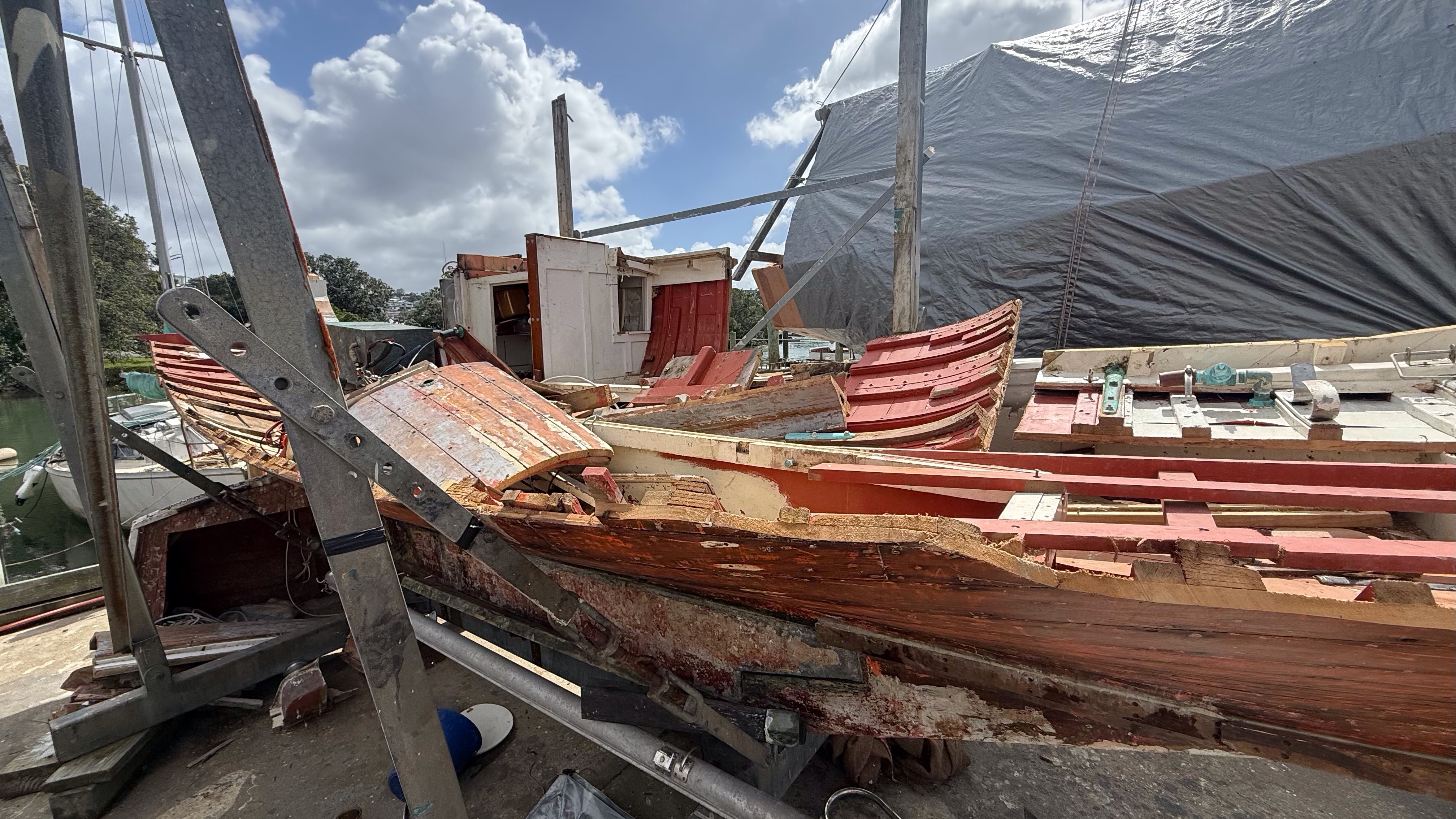
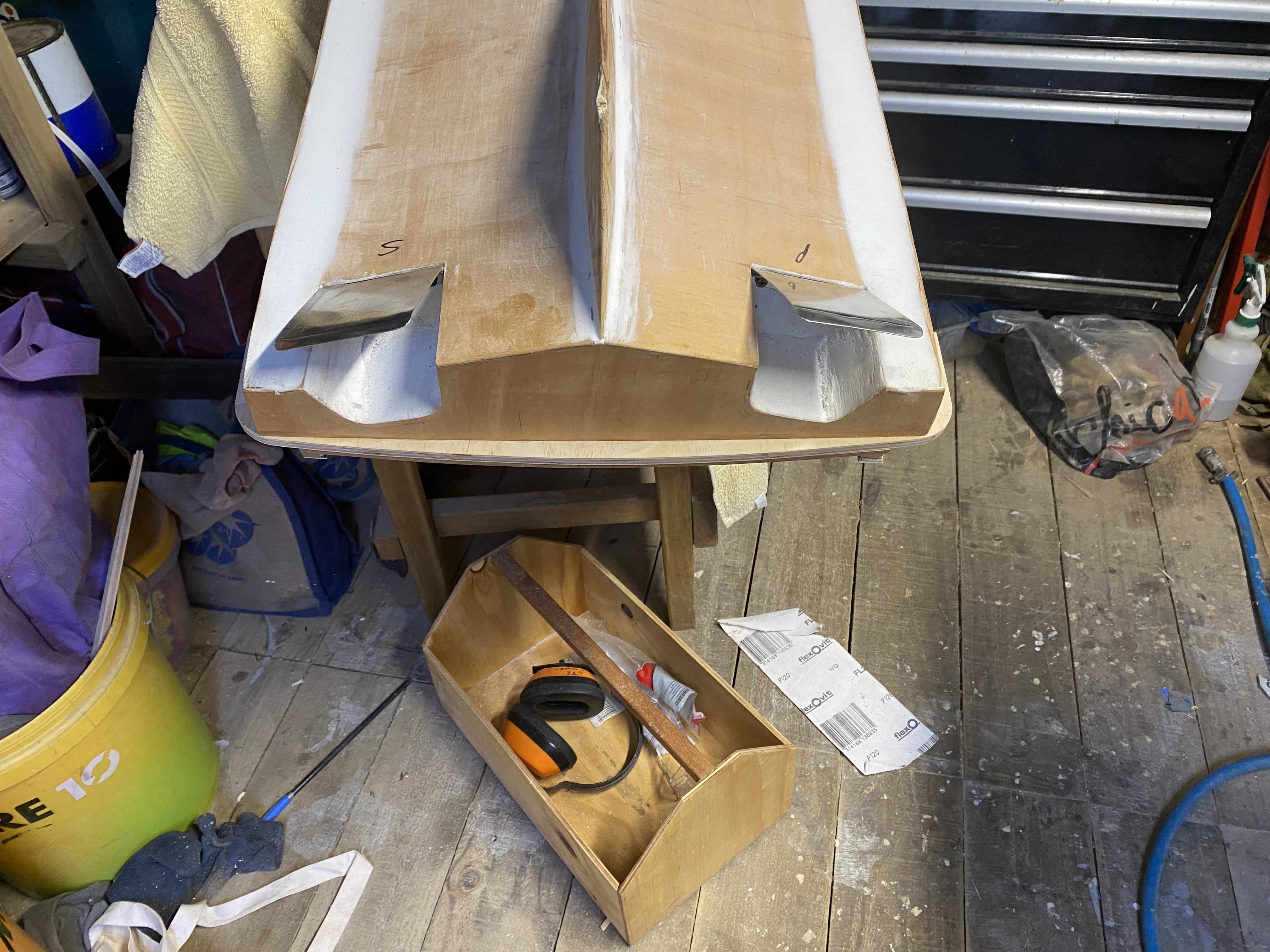
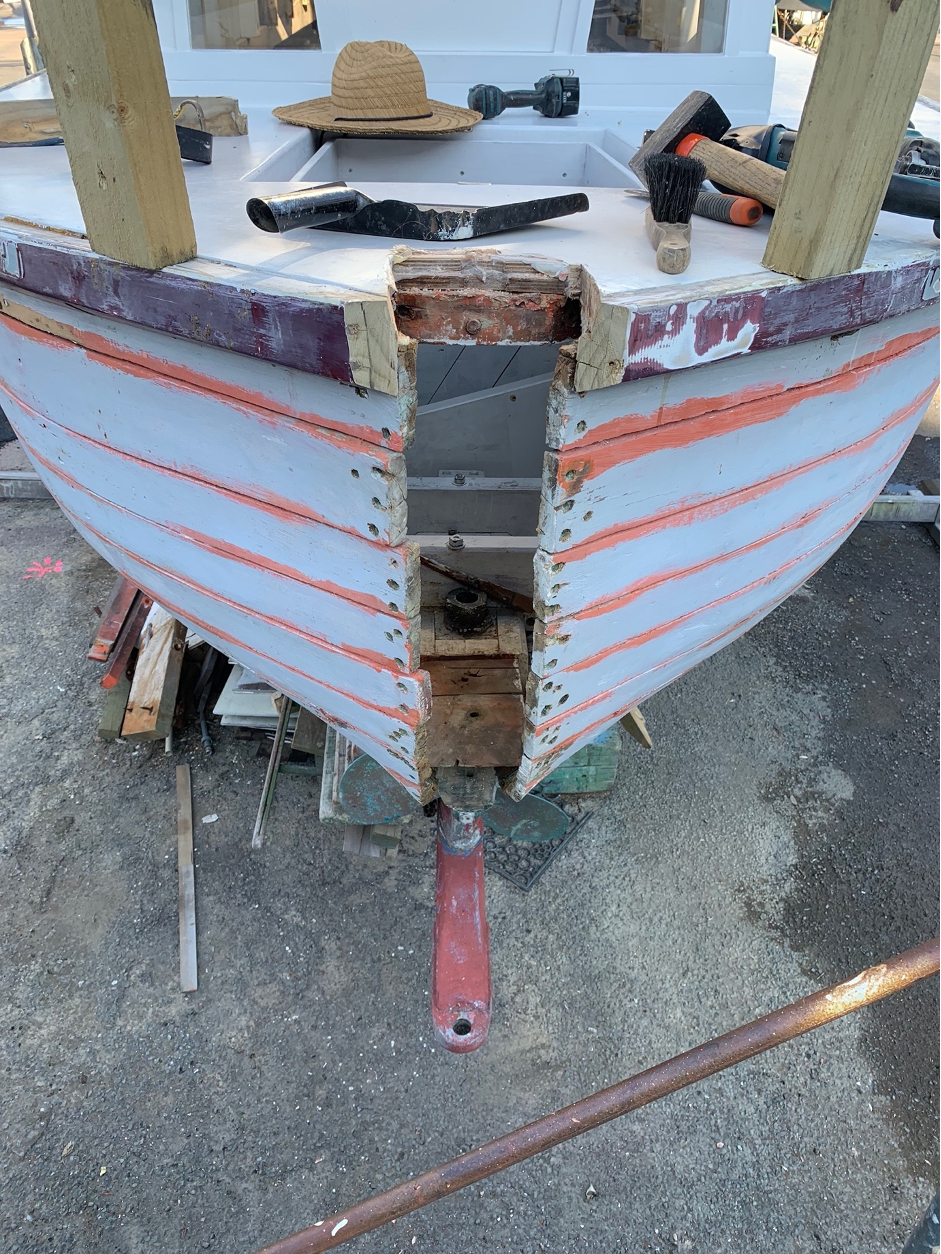
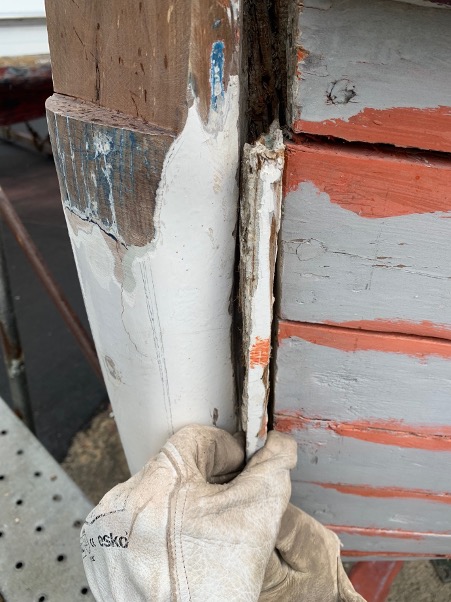
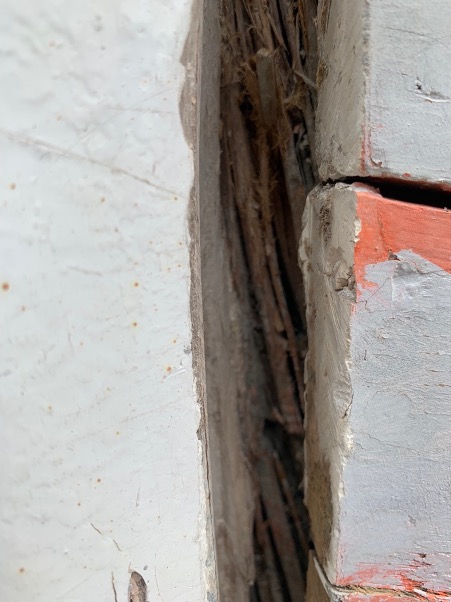
It had been more than three years now since she had come out of the water. Progress was frustratingly slow but with the cover now off it finally felt like I was getting there. Next up was to rebuild the Bulwarks. These had been cut away to gain access to the deck. I started cleaning off the old plywood getting ready to rebuild them. When I got around to the stern post I made a horrific discovery. I had always thought her stern wasn’t quite right I now discovered why. I dug out a large chunk of sikaflex and could see that her stem was cracked almost in two. All the screws holding her planks went straight into the crack. It appears that at some time in her past she suffered a trauma. Maybe she was crushed between another boat and a wharf, or hit from behind? Crikey what to do? All the others in the yard came and checked it out. There was lots of tut tuts and sucking through the teeth. A local boatbuilder suggested I cut the whole back off and put a transom on her. Humm… maybe not. It was not going to be an easy fix hence why it had never been fixed properly. Over the years more and more cotton had been jammed it there, more screws added then the sikaflex. This was why all the seams back there were large and the planks uneven, There was nothing for it in my mind I had to pull it all apart and repair it properly. I spent a good day just looking and trying to work out if I was biting off more than I could chew. Was there an easier way. Nope just had to go for it.
Dug out the putty and sikaflex to reveal the crack…
I cut off the outer stem which appeared to be a grown hardwood. Maybe pohutukawa? This revealed the full horror of the situation. Yep I was committed now.
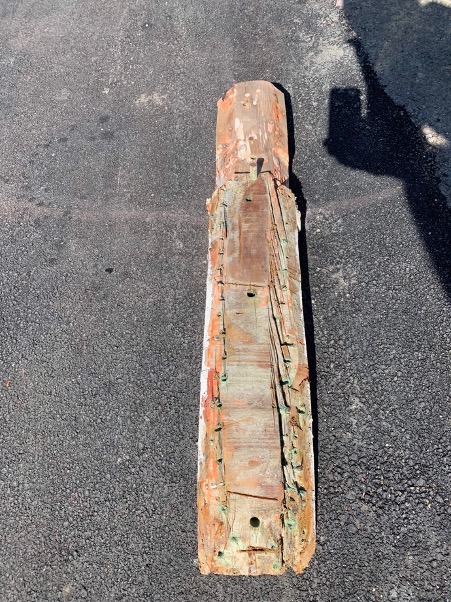
I then carefully removed all the old screws from the planks, removed a knee on the inside and pulled the inner stem out. All that makes it sound easy. In reality it was several painful days where I questioned my life choices.
The inner stem removed from the boat. The crack when right though all the screws going into the cracked timber. To be continued in Part Three – on Wednesday.












 waitematawoodys.com #1 for classic wooden boat stories, info, advice & news - updated daily - 15+ million views