Unknown's avatar

About Alan Houghton - waitematawoodys.com founder

What is Waitemata Woodys all about? We provide a meeting point for owners and devotees of classic wooden boat. We seek to capture the growing interest in old wooden boats and to encourage and bring together all those friendly people who are interested in the preservation of classic wooden vessels for whatever reason, be it their own lifestyle, passion for old boats or just their view of the world. We encourage the exchange of knowledge about the care and restoration of these old boats, and we facilitate gatherings of classic wooden boats via working together with traditionally-minded clubs and associations. Are you a Waitemata Woody? The Waitemata Woodies blog provides a virtual meeting point for lovers of classic and traditional wooden boats.
 If you are interested in our interests and activities become a follower to this blog. The Vessels Featured The boats on display here (yes there are some yachts included, some are just to drop dead stunning to over look) require patrons, people devoted to their care and up keep, financially and emotionally . The owners of these boats understand the importance of owning, restoring and keeping a part of the golden age of Kiwi boating alive. The boats are true Kiwi treasure to be preserved and appreciated.

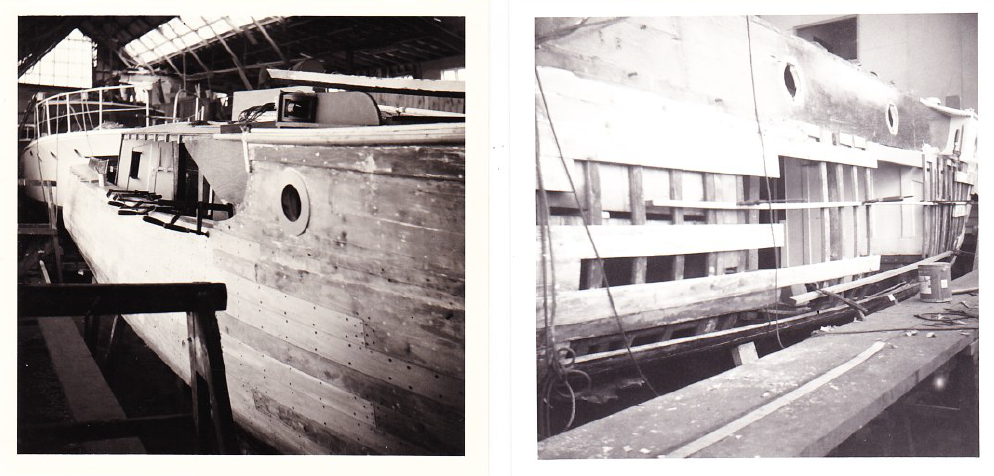
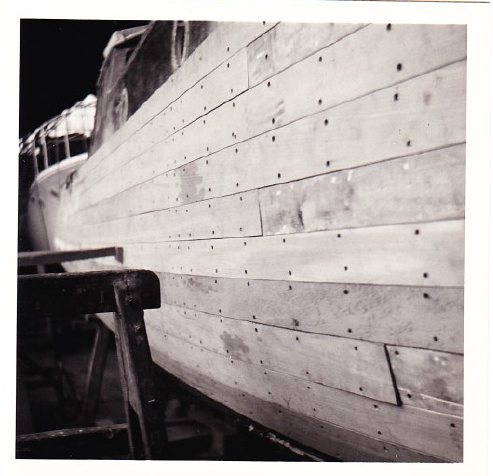
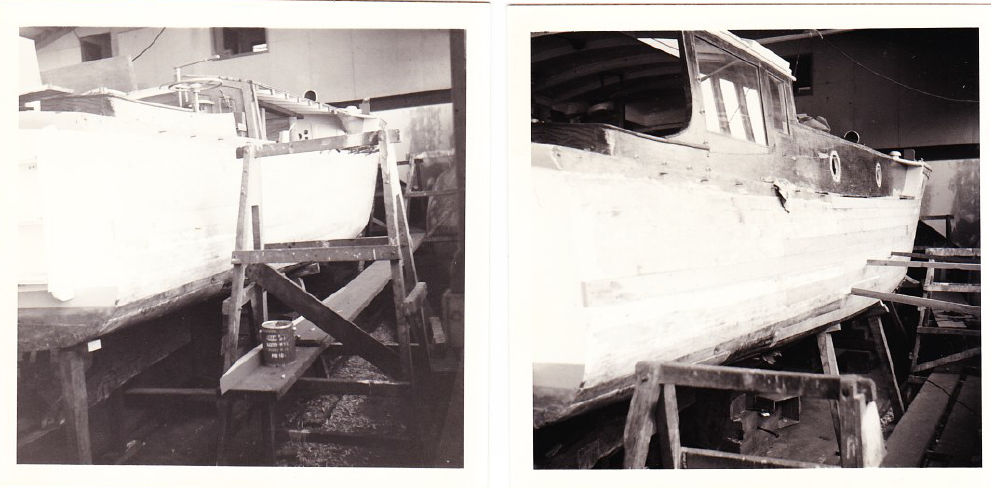
Want to see what electrolysis does to a wooden boat?

img_0552img_0551

 What Is Electrolysis?
I have published Chris McMullen’s comments below for 3 reasons:
1. Out of the blue, today I was sent the above 2 photos by a woody owner who has just discovered they have a time bomb ticking away. Bomb is a good analogy to use as the green wires in the bottom photo are the detonator 😦
2. The subject of electrolysis & wooden boats is topical at the moment
3. I’m passionate about saving our old wooden ladies.

You can read more on the subject here https://waitematawoodys.com/2016/04/28/electro-chemical-damage-in-wooden-boats/
To quote the dictionary – Electrolysis of water is the decomposition of water (H2O) into oxygen (O2) and hydrogen gas (H2) due to an electric current being passed through the water. Electrolysis of salt water or Brine – electrolysis turns NaCl + H2O in electrolysis will produce separated hydrogen gas, chlorine gas and sodium hydroxide*. *Sodium Hydroxide is also called Caustic Soda. It is used for pulping wood in the paper industry and on a boat it forms around any anode protected metal (Cathode) and softens the wood.
Lets check again in the dictionary – “The cause of Electrolysis?”
Electrolysis is due to an electric current being passed through the water or Brine. Surely, the way to prevent electrolysis on a wood boat is by eliminating any electric current passing through the wet wood.
There are two sources of electrical current on most boats.
1. The DC battery used for starting the engine and services. Stray currents are common,(can be very damaging) and hard to find on wooden boats. Any connected dissimilar underwater metals including anodes will create a galvanic current 24 hours a day. There should be no connected dissimilar metals underwater and keep the ships DC system isolated from any metal connected to the sea.
2. Bonding makes a circuit and encourages stray and galvanic currents; the result will be electrolysis and degradation of the wood around metal hardware.
Protecting marine metals (bronze or copper) with an anode is pointless and sets up a current and causes electrolysis that again produces sodium hydroxide that pulps the timber in a wooden hull. If you have brass or manganese bronze underwater, an anode may help protect the metal but set up a galvanic current with resultant damage to the wood surrounding the cathode or protected metal.      

See on Google – graphic descriptions of exactly what happens on our boats if we create an anode and a cathode. Chlorine gas is produced at the anode and hydrogen gas at the cathode.

http://www.google.co.nz/search?q=electrolysis+of+brine&rlz=1C1QJDB_enNZ596NZ625&espv=2&biw=1680&bih=944&tbm=isch&tbo=u&source=univ&sa=X&sqi=2&ved=0ahUKEwjh75ODuObPAhUUSGMKHcDKBkoQsAQIMA

Whether we like it or not, the brine around any cathode or protected metal converts to sodium hydroxide (caustic soda) and this is fatal to a wooden boat.

The solution is very simple – you should not use anodes on a wooden boat.
Anodes are necessary / desirable on steel structures where there is no wood. To use them on a wooden boat is a relatively new idea or myth designed as a solution looking for a problem. On wooden boats it has been proved worldwide to be a disaster but some in the NZ marine industry refuse to admit they have been wrong and continue to promote this profitable business.

The Logan’s, Baileys and Colin Wild never used anodes or bonding and neither should anyone who cares for their wooden boat.

 Read http://mgduff.co.uk/support/knowledge-base/questions/what-is-electrochemical-decay-in-wooden-vessels  

If you would like some more technical evidence read. http://www.mcclavemarine.com/text%20pdfs/Corrosion.and.Corrosion.Protection.Wooden.Boats.pdf

P.S. Chris would like to advise that he has had no input or involvement in any organised discussions on the topic of electrolysis & wooden boats.

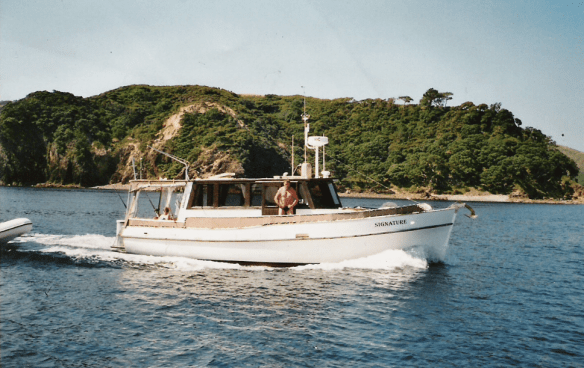
Signature (Beluga)

screen-shot-2016-11-08-at-6-12-42-am

screen-shot-2016-11-08-at-6-13-09-am

SIGNATURE (Beluga)

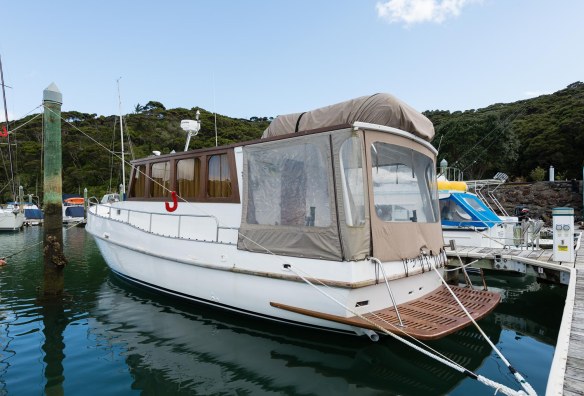
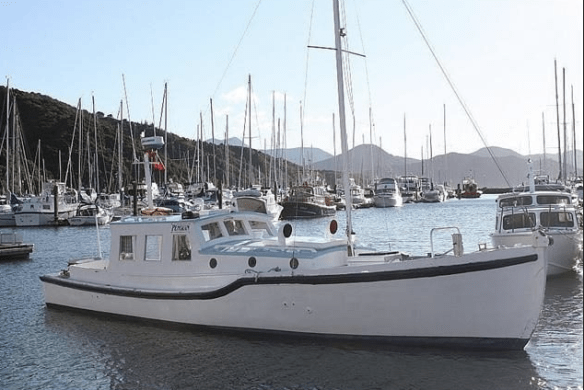
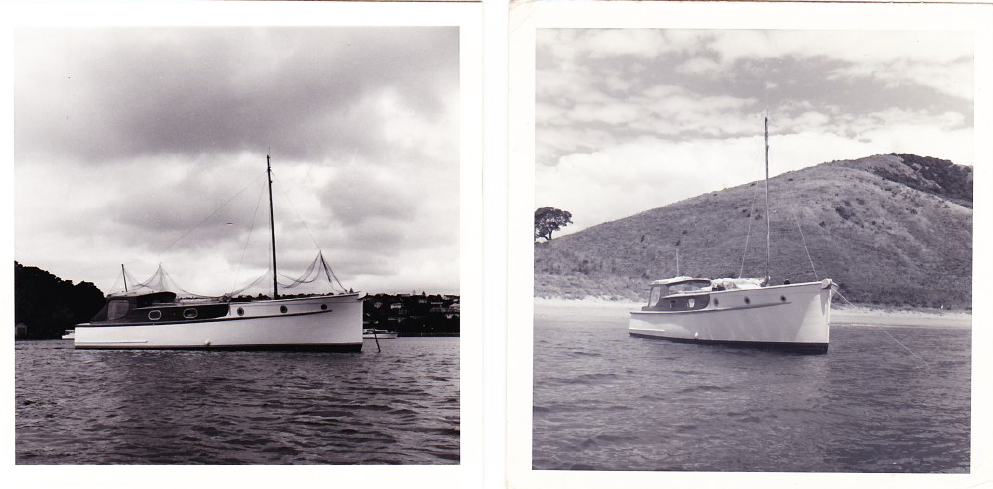
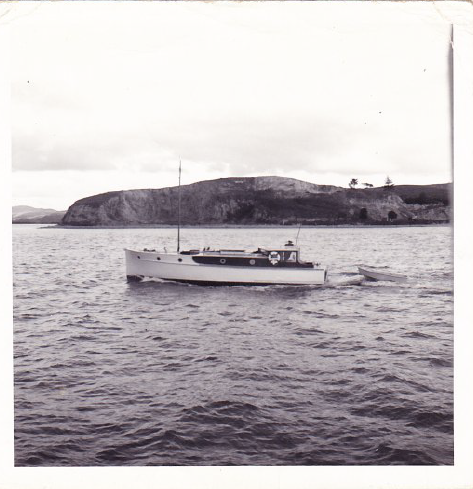
When Ian McDonald found the above boat  for sale at Westhaven she was named “Beluga” as someone thought she looked like a little white whale.

Her history Ian was told is roughly this:  Strip plank built in 1990 as a spec, to be a work or fishing boat, over 2 or 3 years when the Miller & Tunnage yard was quiet in Port Chalmers, then sailed to Nelson in the hope of an easier sale. She was sold from Nelson to become a long-liner out of Leigh. How she got to Leigh, Ian doesn’t know, maybe sailed up, maybe trucked.

In Ian’s words a trendy city fella bought her, post fishing, named her Beluga, and then sold her after a brief ownership. Ian bought her in 1998 having done a lot of sketches of what he would like to do to her, Ian commented that if one imagines her without the wheelhouse door, and no extension to the coach-roof aft, she wasn’t a pretty boat at all.  Miller & Tunnage didn’t seem to go for topsides looks, but their hulls are beautiful.

Ian visited the Miller & Tunnage yard looking for a genuine bronze M & T name plate and was helped by the manager who sent the plate mould into Dunedin and had some cast, one of which should still be in the boat today. During the visit, the manager took Ian up to the mezzanine floor and showed him the frames still there, off which she was lofted. They had previously built the “Deborah” of the same frames, for the older, about to retire partner, which was moored just up the harbour at Deborah Bay. Ian showed them a photo of what he was doing and they said  “that’s Signature”  and, when Ian enquired as to how she was thus named, they told him that when any new build was about to begin, it required paperwork, description, who it was for etc, and, a signature, so that’s what she was called.

The extension to the cabin top, aft from the door to the stern was designed by Ian in conjunction with Mike German & Graeme Lyons ( German & Lyons Boat-builders), in 1998 and fitted by Mike & Graeme in the shed at Half Moon Bay hardstand, as was the wheel-house door which didn’t exist when Ian bought her. The teak cladding around the windows was also Ian’s idea.  She was then powered by a 4cyl Isuzu and had a fuel capacity of 1,000 litres

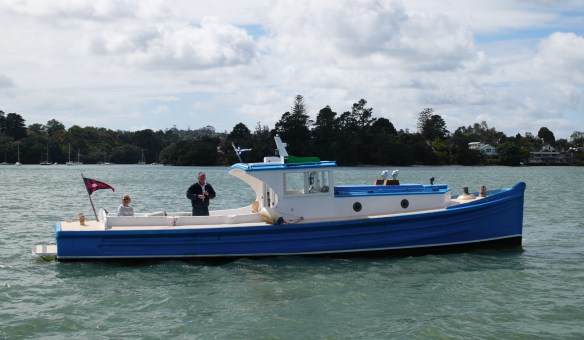
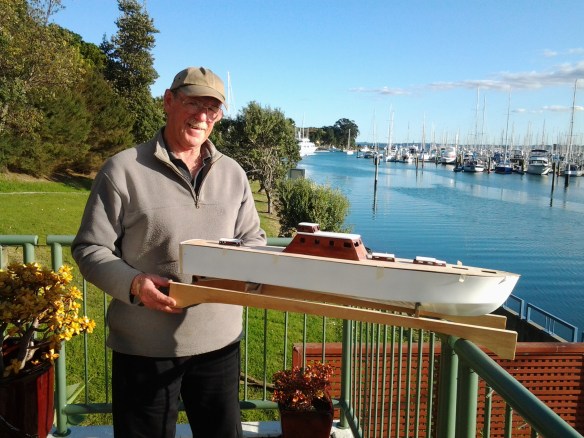
Ian kept her until 2003 & she went on Jacob’s boat-haulage to Mana Marina & was sailed to Waikawa where she remained for a few years before once again being trucked north to appear again on the Waitemata. Then she was sold and appeared in Nelson, which is where Ian took the marina photo above in 2015. The second photo (of someone who resembles Ian, doing an Arnold Schwarzenegger impression), was taken just entering Port Abercrombie a few summers ago now.
In January this year Ian was at Mana Marina and spotted her being prepared for another trucking north and, Ian believes she now resides in Kerikeri.
This boat has done a lot of road miles 🙂 Anyone able to confirm her current whereabouts?

Photos below ex Dean Wright of Signature at Doves Bay Marina. Looking a tad different 🙂

20161108-_dhw7113

20161108-_dhw7114

20161108-_dhw7115

Upper Harbour Cruise to the Riverhead Hotel

p1230881

woodys-on-tour

Upper Harbour Cruise to the Riverhead Hotel

Yesterday had the makings of a stay at home day – the forecast was looking very average & the All Blacks ‘v’ Ireland test was kicking off at 9.00am. Unfortunately the gods only smiled on us once – the weather never eventuated but the AB’s dropped their guard & for the 1st time ever lost to the boys in green. Given the location – Chicago, I say it wasn’t a real test 😉
The following classics from the CYA launch fleet made the trip – Mahanui, Te Arahi, John Dory, Te Hauraki, Trinidad, Lucille, Juanita, Raindance, Matira, Lucinda, Kumi & the motor-sailer Bliss.  These were joined by others who traveled by car. Over 100 gathered on the outer decks for lunch & one or two cleansing beverages.
Another great day & special thanks to the organizer – CYA Launch Captain Angus Rogers, Tony Stevenson for the use of the Tino Rawa Trust tender ‘Whistleblower’ & the publican, Stephen Pepperell, always nice to greeted at the wharf on arrival.

Sailing Sunday Eye Candy – Kahurangi & Manitou

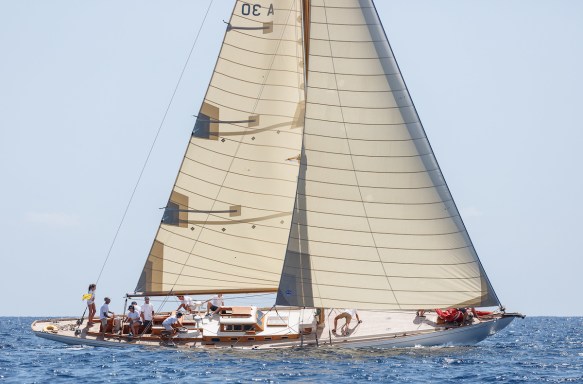
Photo © Nico Martinez XXII REGATA ILLES BALEARS CLÀSSICS

Photo © Nico Martinez XXII REGATA ILLES BALEARS CLÀSSICS

Sailing Sunday Eye Candy – Kahurangi & Manitou

Baden Pascoe forwarded me the above photos of Kahurangi ex Pepe d Miguel. The ‘old’ girl is looking very sharp & looking very much at home on the Med. classic sailing circuit. She was built by Percy Vos in 1952 & would have to be one of the prettiest yacht to slide down the Vos slip.

MANITOU – JF Kennedy


Check out the link to the video clip below to view JFK’s old yacht, Manitou. Same bloodlines as Dorade & Stormy Weather i.e. a Sparkman & Stephens (Design #90), she is one of Olin Stephens finest. Launched in 1937, LO= 62′, LW= 44′, Beam+ 13’9″, draft= 8’6″. She carvel & made from mahogany on oak frames. Rumour has it that Aristotle Onassis tried to buy her once. The open fireplace is very me 🙂
If you are interested – 4sale in France for USD$1.3 million – makes the sale price of our Rawhiti the buy of the century.

W1 Junior

OLYMPUS DIGITAL CAMERA

w1-and-john-bullivant

W1 JUNIOR

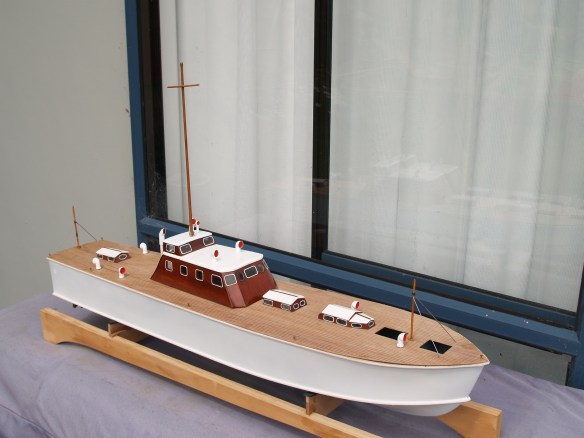
If you are a regular follower of the ww stories you will know that there are a several ‘woody nutters’ out there that have a thing for the ex WWII RNZAF coastal cruiser – W1.
John Bullivant is one of them. John has been building a model of W1 & its very close to completion. The photos above show some of the build process.
John reports that he has purchased some cowl vents from the UK, (made them all rotatable)  fitted new water cooled motors, made rudders, masts, windows, rubbing strips and fitted LED lighting (courtesy of cheap solar garden lights). He has also made a decal pattern for the bow insignia to print out (see bow photo above). John has even bought a miniature water pump so he can have water running from the water outlets when the boat is stopped. This will sit where the centre engine usually sits. He is currently looking for an engine sound module. Thanks to Ken Ricketts for fowarding John’s email to ww.
Details on the ‘real deal’ here https://waitematawoodys.com/2013/09/11/the-story-of-w1-one-of-fastest-boats-ever-on-the-waitemata/

REAL BOATS

screen-shot-2016-11-04-at-5-03-00-pm
The Classic Yacht Association is holding one of its launch cruises to the Riverhead Hotel on Sunday – we are expecting approx. 20 classics to make the trip. so it should be a cracker of a day. If the sun shines, there will be lots of photos on Monday 🙂

Update below & photos from John Bullivant on his progress  (emailed in by Ken Ricketts)
“I have also re-done the lighting using LEDs from Xmas string lights which are smaller and can be made to fit better. Getting there slowly but it’s almost like building a full sized boat as you can spend hours making the smallest things. The lighting alone took about 3 days, as it’s hard to hide any sort of bulb in a small model and get it shining in a reasonably scale manner, eg trying to get the nav lights shining in the correct arc takes a lot of fiddling and painting but they look the part when they are on so that’s good enough for me. I’m not being too fanatical about the detail as long as it looks ok on the water.
I have a theory about the location of the real W1 in the photo of her with the survivors on board and where she was headed which I am working on with the help of Google Earth and some info I read on the rescue effort. This was regarding the position the survivors were picked up from. I am trying to find the info again but it was in an obscure site (to do with recovering the gold I think) which gave the co-ordinates of the ship and the lifeboats positions before rescue and the crews communications. Just a bit of a fun challenge to see if I can pinpoint the exact spot.”
Penguin

penguin-1

penguin-3

PENGUIN
Penguin the 34′ ex Navy survey tender has appeared on ww before (link below for full details). She recently surfaced on trademe, so thanks to Ian McDonald’s tip off, we are able to have a good peek down below. Enjoy – she will appeal to Russell Ward 😉
Ex Naval Motor Launch

17-05-2017 WARNING – IF THIS BOAT IS OFFERED FOR SALE  BE CAREFUL. FYI – READ THE LINK TO THE POST BELOW.

Vacuna

Crusader

crusader-sir-george-grey-collection

CRUSADER

Next wet weekend when you have little to do, have a peak at the Auckland Libraries, Sir George Grey photo collection, its a gold mine of old Auckland photos. Nathan Herbert pointed me to the collection & while you have to troll thru a lot of average material, every so often you click on a nugget like the above photo of Crusader under full throttle at Great Barrier Island, photo taken December 1929. Given she was built in the winter of that year by Collings & Bell for the Rev. Jasper Calder and Charlie Goldsboro, the above photo could have been her maiden cruise.

To read more on the boat & view a selection of photos old & present day – click the link below

Crusader & Something Cool To Do This Weekend

The History of Invader

invader-1966

1966

DCF 1.0Ricoh Company Ltd.

INVADER

The launch Invader appeared on ww in early Sept 2016, looking a tad sad, being partially submerged (link below). This story prompted her owner for the last 30 years, (sadly the late) Morrie Dunwoodie to contact ww. Morrie’s uncle bought the boat in 1966. Morrie included the above photos & well documented details on her past. Ken Ricketts & myself have edited this into the story below.
Sunken Invader Link https://waitematawoodys.com/2016/09/13/sunken-launch/

The History of Invader (as told by Morrie Dunwoodie)
Invader measures 36′ with a 10′ 2″ beam & is a single skin hard chine, kauri hull & originally had a 6 or 8 cyl petrol engine, with an auxiliary wing motor, with a port side shaft. The wing motor was removed some time before the present owner bought her.
 She had been bought by Peter Harrison, in 1957, who owned her until 1959, at which time he sold her, because she as too slow, & had a 40′,  22 knotter built, to replace her, by Owen Woolley.
Between the Laidlaw & Harrison ownership (later 1940s &/or early 1950s) she belonged to the Townsend family. It was during their ownership that she sank, as seen in the perivous ww story. 

She was bought in 1959, by Jim Ansell of Hamilton & moved to Whangamata. He owned her until 1966. During his stewardship he repowered her with  75 Hp TS3 Commer diesel.
 
In 1966 she passed to George H Morrison & remained moored at Whangamata Harbour. He did some upgrading adding sponsons, ‘Tauranga’ deck & new rails.
 
George M. sold her in 1986 to Morrie J Dunwoodie of Thames, the boat is kept at Whangamata. He has replaced the 75hp Commer TS3 with a newer larger 117 hp TS3.
In 1988 she underwent a refit with new windows, stainless rails, re-glassing of cabin tops. Then in 1995  replaced decks with ply, & glassed them. She was extended at the stern in 1998,  by .9 of a metre to 42 feet. In 2004 Morrie added 3′ to her stern & a 3′ duck board. 2008 saw her get a major out of boat, engine overhaul.

Interested to uncover details on her builder & launch year?

07-05-2018 Update from Mark Dunwoodie

“Invader moved a couple of weeks ago from Whangamata to Hobsonville marina. Her new owners are fantastic people, an experienced sea family and passionate about her. Mum, my sisters and I are very chuffed.

Mark Erskine, Tom Hunt….thank you for your wise counsel in all matters since Dad’s death….and even more so, thank you from Dad for your long friendship and shared passion.

Dad was out on Invader with Uncle George as often as he could from the day George purchased her. From that time he only missed 1 or 2 of the annual end of February trips to Great Barrier….around 50 trips. As soon as we were old enough my sisters and I (and then our children) were regular crew on the daily summer and overnight excursions from Whangamata. Speed mightn’t have been her forte but her seaworthiness, easy layout and the steadiness given by hull shape made her a fantastic vessel.

With the contact from this website Dad had been reinvigorated to research Invader’s history and was enjoying it immensely. Ken, thank you for your kind comments, Dad was enjoying talking to you as well. In the past he had said that it was hard to get to the right people and records from Thames…but had recently been making progress.

I’m not sure where he got to researching her construction date.Uncle George had always said she was built by Lanes in 1936. When Dad lengthened Invader’s hull, he removed the original copper fish tank. The tank had a 1936 coin soldered into the side of the tank. With no hole behind the coin there seemed to be no other reason to put the coin there other than to mark the construction year. From the comments above it looks like this might not be the case.

Anyway, thank you to all.”

08-05-2018 – Update ex Ken Ricketts – overhauled 2008 Roots T23 engine being installe


11-05-2018 New photos ex Mark Dunwoodie

In the gallery below the b/w photo of her high & dry is on the reef, south side Whangaporoa Peninsula. Invader has had her share of oops – in another WW post she is seen submerged  https://waitematawoodys.com/2016/09/13/sunken-launch/


Screen Shot 2018-05-10 at 4.15.53 pm

Update from John Wicks – Invader hauled out at Hobsonville Marina Nov. 2020 for some TLC

Ranui

screen-shot-2016-10-31-at-11-10-14-pm

RANUI
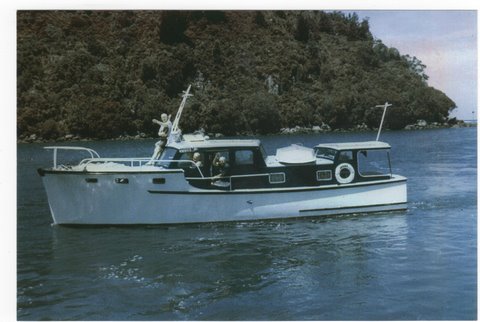
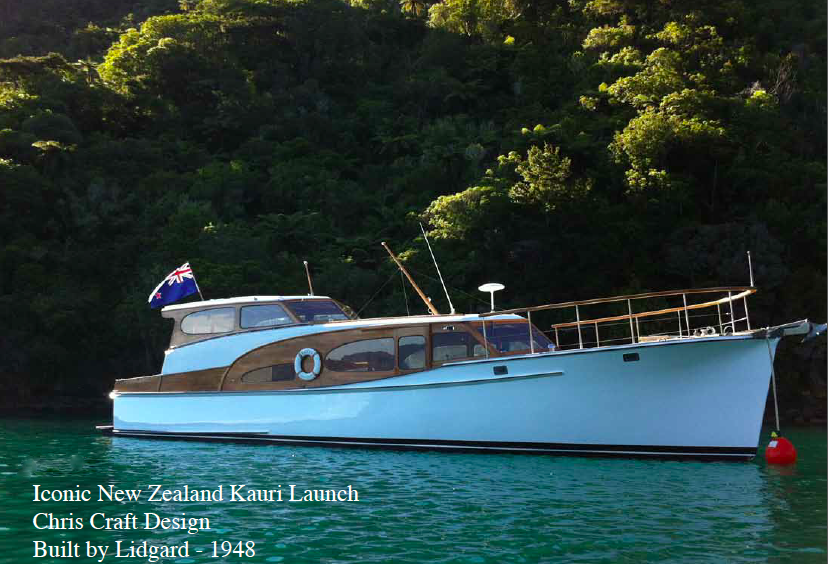
Ranui was built in 1948 by Lidgard Bros. following a Chris Craft design. She measures 48′ & is made of kauri. The  zoom zoom comes from twin 120hp Fords. She recently returned to Auckland & has just had some TLC at Gulf Harbour that included her coamings being re-varnished.
Check out the link below to a 29 page PDF file that show cases renovation a few years ago & also the history of Lidgards & the Chris Craft marque .

ranui-her-story-as-at-12-3-12-ex-owner-hamish-dowell-17-10-16
The photos below ex Ken Ricketts show the recent Gulf Harbour work.

24-02-2017 Update – Photos below ex Robin Elliott of Ranui berthed in Dove Cove Marina, early Jan 2017

Mataroa (Kenya)

screen-shot-2016-10-30-at-6-52-22-pm

screen-shot-2016-10-30-at-6-52-33-pm

screen-shot-2016-10-30-at-6-52-52-pm

screen-shot-2016-10-30-at-6-54-53-pm

screen-shot-2016-10-30-at-6-55-10-pm

screen-shot-2016-10-30-at-6-55-26-pm

screen-shot-2016-10-30-at-6-54-03-pm

screen-shot-2016-10-30-at-6-54-15-pm

screen-shot-2016-10-30-at-6-54-26-pm

screen-shot-2016-10-30-at-6-54-34-pm

screen-shot-2016-10-30-at-6-53-16-pm

screen-shot-2016-10-30-at-6-53-32-pm

screen-shot-2016-10-30-at-6-53-44-pm

MATAROA (Kenya)

Today’s photos were sent in by Rob Uivel, who recently purchased Mataroa & in whom I have great faith that she will be bought back to ‘as-new’. Given her very original condition, there will be no need for a chainsaw 🙂
Built in 1928 by Joe Slattery, she was named Kenya when launched & measures 36′. Originally built for Mr Heard of Heards Confectionary.
This link will show you her as purchased by Rob https://waitematawoodys.com/2016/05/26/mataroa-kenya/

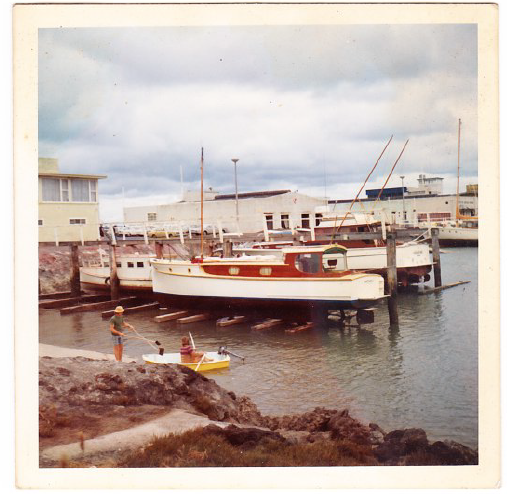
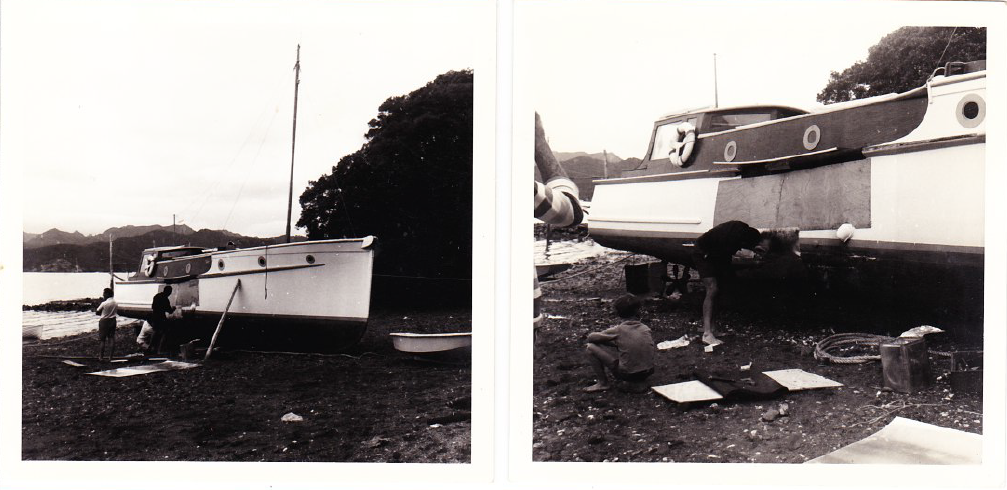
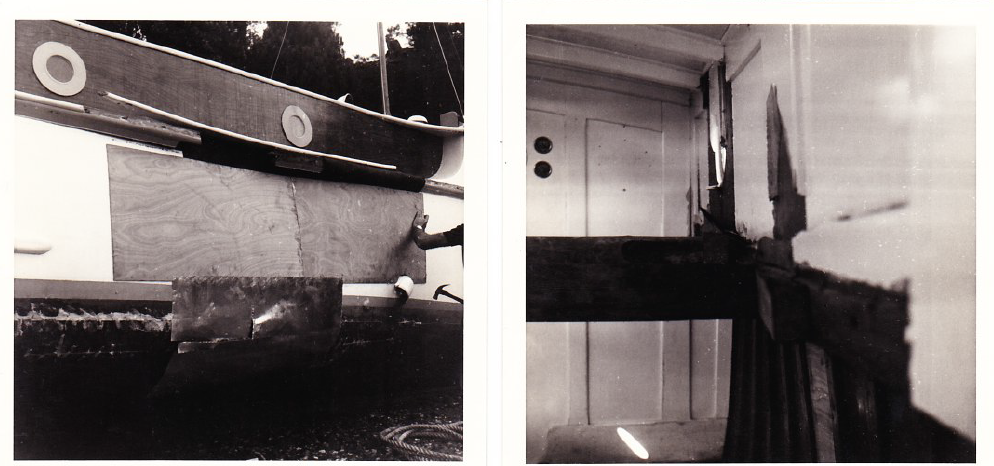
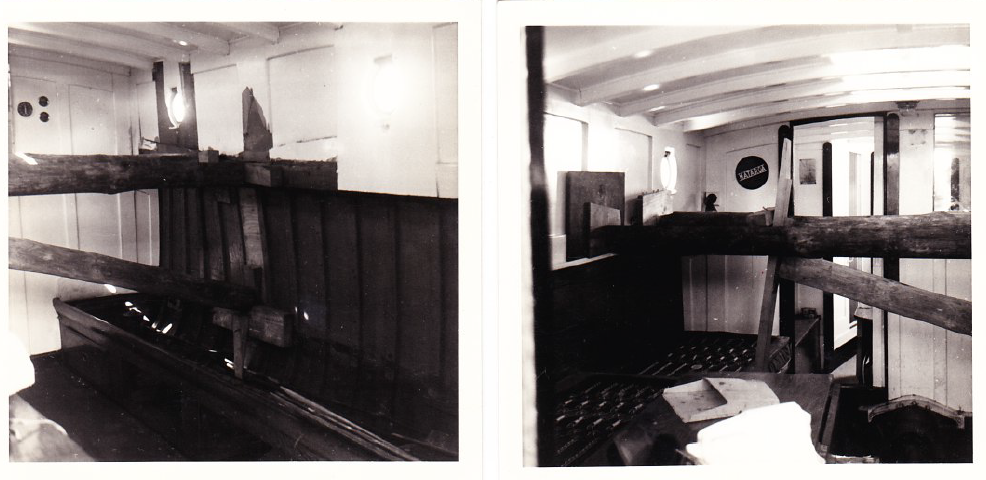
The above historical photos show Mataroa after she was struck amidships by another boat, & show the repairs and alterations undertaken. You have to love the ‘fence posts’ holding her together.

Now woodys – if anyone can give us the name of the vessel that struck her, I’ll give them a ww t-shirt. Answers via email only, sent to waitematawoodys@gmail.com
You’ll need to provide proof to support your answer 😉