AN INSIGHT INTO NZ’S UNIQUE MARINE ENGINES – Part Four
Todays WW story follows on from earlier stories – link below to Part One,Two and Three
As per pervious stories in the series the content has been pulled together by Ken Ricketts and ‘polished’ by Patrica and Ken’s daughter Corinne Pettersen. As always we have endeavoured to be as factual as possible but there will always by matters others will either know more about or be able to correct errors – so woodys do not hold back on commenting.
PART ONE – https://waitematawoodys.com/2025/04/04/an-insight-into-nzs-unique-marine-engines-part-one/
PART TWO – https://waitematawoodys.com/2025/04/12/an-insight-into-nzs-unique-marine-engines-part-two/
PART THREE – https://waitematawoodys.com/2025/04/18/an-insight-into-nzs-unique-marine-engines-part-three/
PAXMAN V12 VALENTA RP200 – 3030HP MARINE DIESEL ENGINES
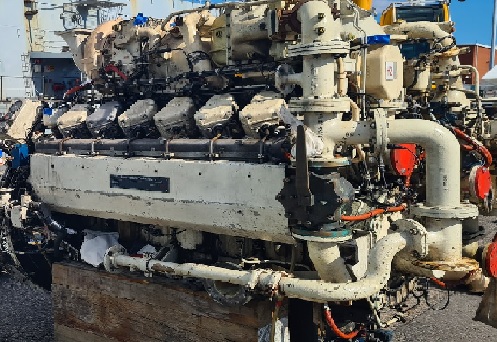
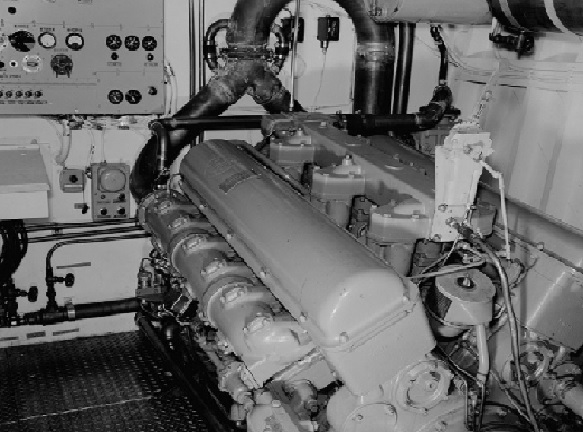
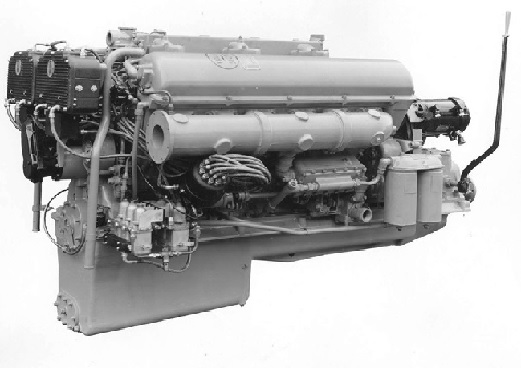
PAXMAN RP200 3033hp V12 MARINE DIESEL ENGINE AS IN THE RNZNs 4 COASTAL PATROL CRAFT FROM 1975-1990
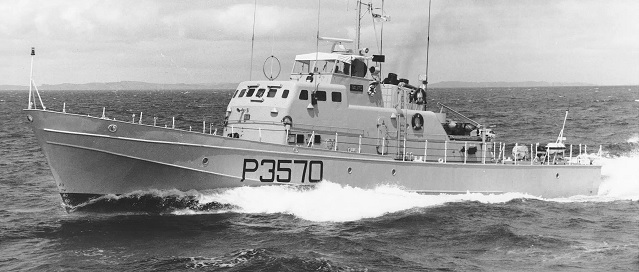
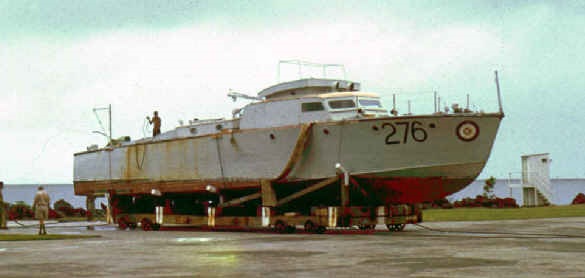
RNZN COASTAL PATROL VESSEL TAUPO, in 1975
I’m only aware of four boats that used PAXMAN MARINE DIESEL ENGINES. They were all replacement vessels for the WWII HDML and Fairmiles, with the first, the Taupo, going into service on 29th July 1975. The second, the Hawea, arrived shortly afterwards, followed by the last two, the Rotoiti and Pukaki, which came a little after that. They remained in service until 1990 when they were sold off.
KELVIN OLD MODEL MARINE DIESEL ENGINES
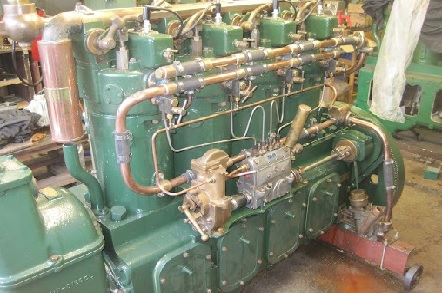
KELVIN 4 CYL. OLD MODEL DIESEL ENGINE, SIMILAR TO THAT FITTED AT ONE TIME, IN THE MATAROA.
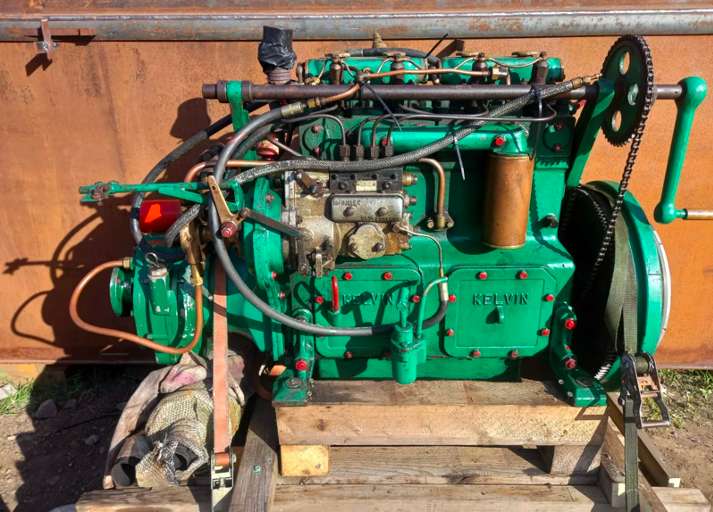
KELVIN 4 CYL MARINE DIESEL ENGINE SIMILAR TO THAT IN THE FERRY MAIRE
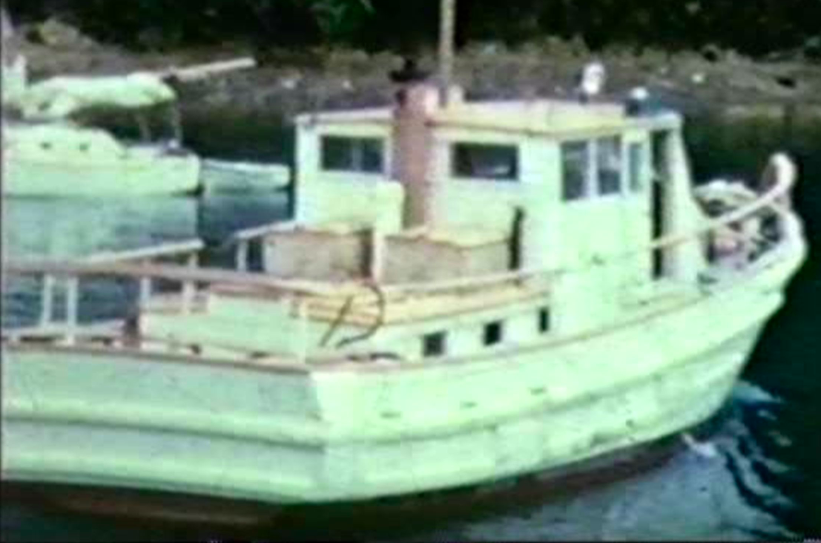
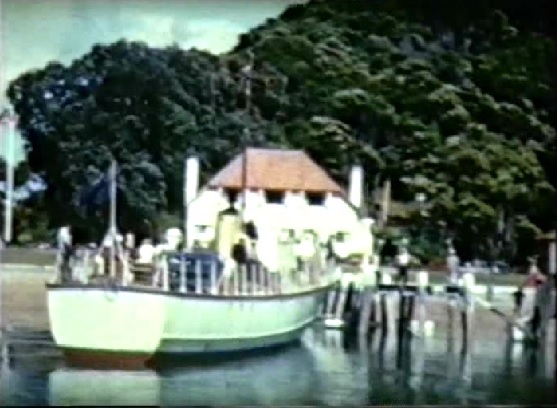
KAWAU FERRY MAIRE, WITH HER 4 CYL KELVIN DIESEL c 1950s
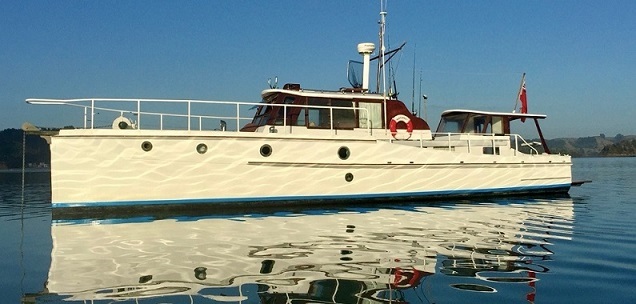
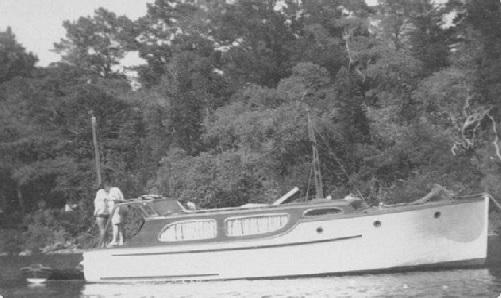
MATAROA POST HER KELVIN DIESEL ERA
Kelvin diesels are slow-revving, high-torque engines used mostly in commercial fishing and tugboats. The MATANUI is the only pleasure craft I am aware of that has, or has had, one of these beautiful engines, which run like a well-oiled sewing machine with an absolutely silent exhaust out the stern, well above the waterline. In the case of the MATANUI, even at cruising speed, all one heard was a very gentle hissing sound. The engine was painted a bottle green.
I went aboard her during the Joe Kissin era in 1946/47 and she had it then, having had it for a good number of years, notwithstanding that she had several engines in her long lifetime of over 100 years now.
One unusual thing to note was that her Kelvin started on petrol and then switched to diesel after starting, which is unusual in pleasure craft.
KAWAU ISLAND TO SANDSPIT FERRY, MAIRE.
The Sandspit to Mansion House Bay Kawau ferry – MAIRE, was built by Roy Lidgard in his boat building shed at Smelting House Bay, Kawau, in the late 1940s for Allan Horsfall, owner of the Mansion House Guest House/Hotel. She was fitted with a 4-cylinder Kelvin Marine Diesel engine and was part of the ferry services to the island right up until the property was sold to the Historic Places Trust around 1977.
I am personally only aware of two specific installations, I know that quite a number of these engines were fitted to some of the fleet of classic trawlers built from around the 1930s to the 1960s by boatbuilders such as P. Vos, R. Lidgard, Shipbuilders, and others. Some examples , which may or may not have had KELVIN engines include boats such as Eddy Mansfield’s WAIWERA, the Owens brothers’ (Gordon and Jim) KAIWAKA, WAIMANA, FOX II, DALMACIA, and COBRA, among others. I believe the two main engine brands of choice by the owners of those lovely classics were Gardner and Kelvin. Any knowledge of vessels fitted with KELVIN engines, would be appreciated.
The company that produced the KELVIN diesel engines was founded in the UK in 1904 and has undergone a succession of ownership changes over the last 120 years. It is presently owned by British Polar Ltd. However, notwithstanding all the various ownership changes, the name KELVIN has been retained up to the present day.
DOOSAN 6 CYL 200 HP MARNE DIESEL ENGINES
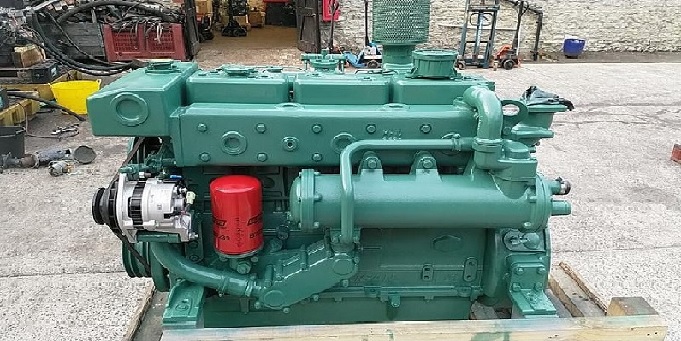
DOOSAN 6 CYL 200 HP MARINE DIESEL ENGINE AS IN THE NGARANUI
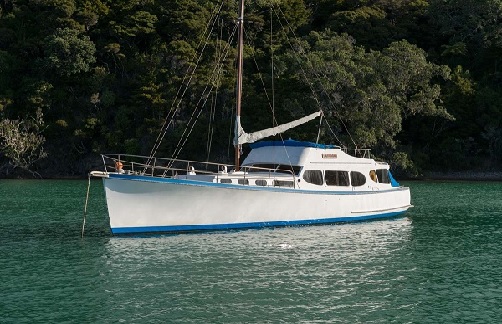
NGARANUI WITH HER DOOSAN 200 HP 6 CYL MARINE DIESEL ENGINE, which replaced a Detroit 6-71 marine diesel engine
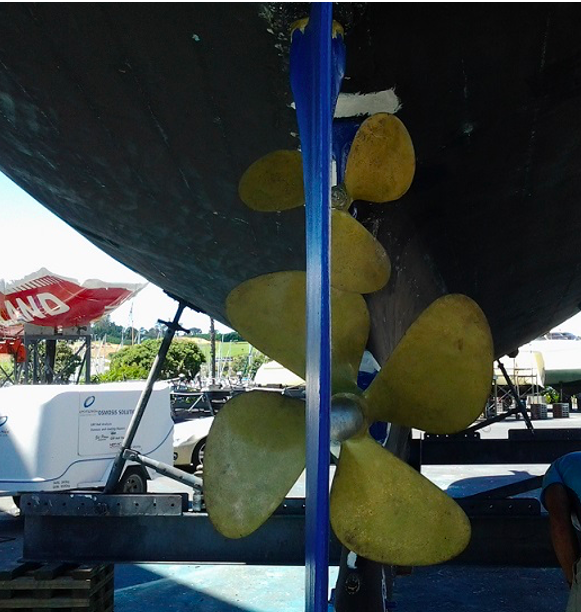
NGARANUI SHOWING HER AUXILLARY PROP
NGARUNUI was built in 1955 by Jim Young and started life, with a 1942 GM Detroit Marine Diesel engine (ex-war assets). It has now been fitted with a late model 200hp DOOSAN Diesel and has a Yanmar 20hp diesel auxiliary engine, with the prop for that engine mounted immediately above the main propeller.
MERCEDES BENZ MARINE DIESEL ENGINES & M.A.N.& M.T.U. MARINSATION VERSIONS OF THESE ENGINES.
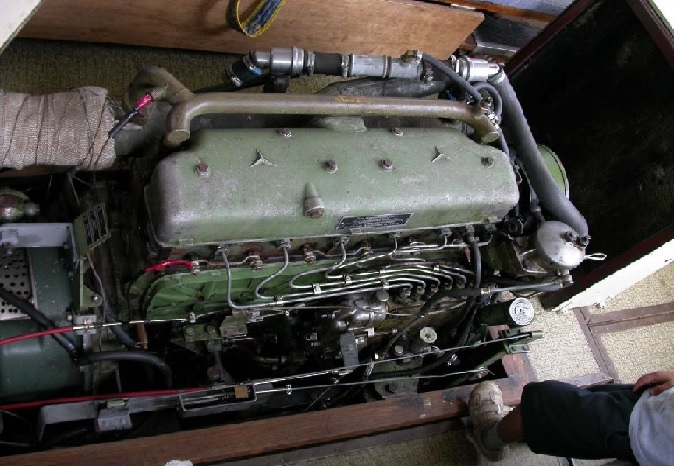
MERCEDES BENZ MODEL OM321 6 CYL c100HP DIESEL ENGINE WITH 2 FITTED TO THE R LIDGARD BUILT, FLYING SCUD IN 1971, BY KEN RICKETTS
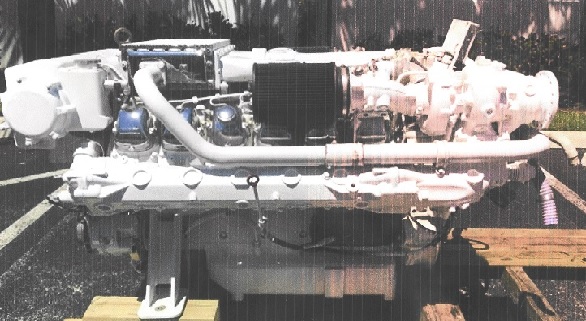
MAN MERCEDES BENZ V12 DIESEL ENGINE SIMILAR TO THOSE FITTED BY LEN SOWERBY TO THE NGAROMA IN THE 1960S/70S
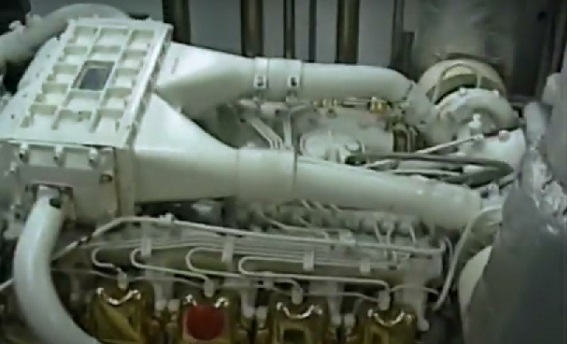
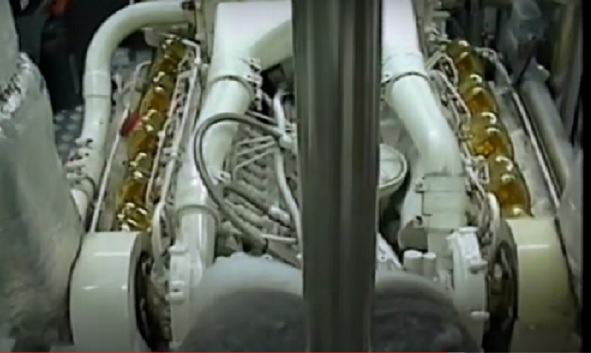
M.A.N. MERCEDES BENZ 600HP V10 MARINE ENGINES FITTED TO PACIFIC MERMAID WHEN BUILT.
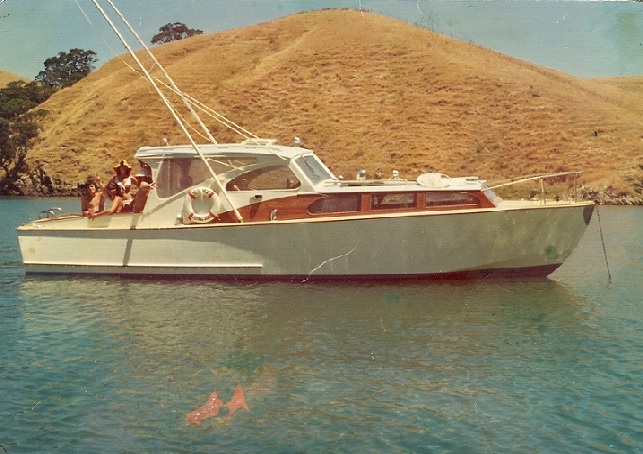
FLYING SCUD WITH HER 2 OM321 100HP 6 CYL MERCEDS BENZ MARINISED DIESEL ENGINES IN BIG STATION BAY, MOTUAPU ISLAND, IN 1972.
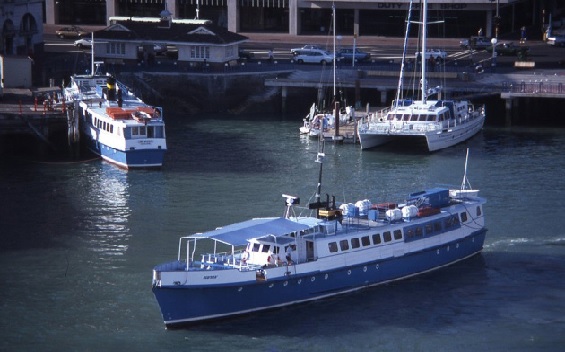
NGAROMA WITH 2 X V12 770HP M.A.N.MERCEDES BENZ MARINE DIESEL ENGINES – IN THE 1970S
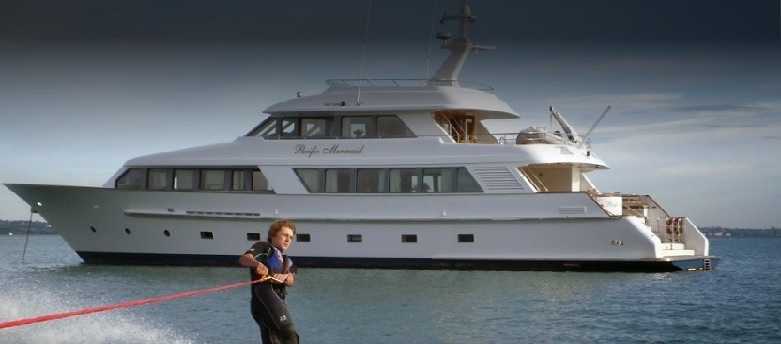
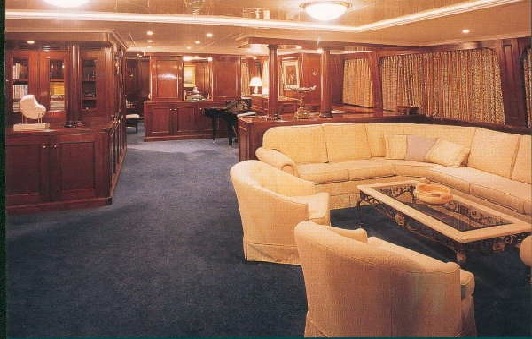
PACIFIC MERMAID WITH HER 2 X V10 600HP MAN MERCEDES BENZ MARINE DIESEL ENGINES.
Mercedes Benz, as the world knows, is a huge conglomerate with many divisions under various names and entities.
In the case of marine diesel engines, they are marinized under their own name and by various other marine engine companies, which have marinized them under their own company names. There is also a huge range of engine sizes and horsepower options. In New Zealand, we have had many installed in new craft built here for offshore owners. Most of these offshore exports, would have been under the M.A.N. or M.T.U. brands, as these brands of engines are typically of the larger horsepower ranges.
Regarding engines used in New Zealand, Im aware of only five boats however, there are undoubtedly others. Nevertheless the total number of such engines remains quite small. So, if anyone knows of other craft in this group, please add them to the list.
The boats known to me include the PACIFIC MERMAID, a 105-foot super luxury motor yacht, fitted with two 10-cylinder 600HP., intercooled, artificially aspirated engines, with twin exhaust-driven turbines, marinised by M.A.N. She was built entirely in Auckland by Ken Winter and his family in South Auckland, with the build completed in 1989. He owned her until his recent passing, in Auckland.
Ken W. usually ran her engines at a modest 1400 RPM, achieving a hull speed of about 10 knots.
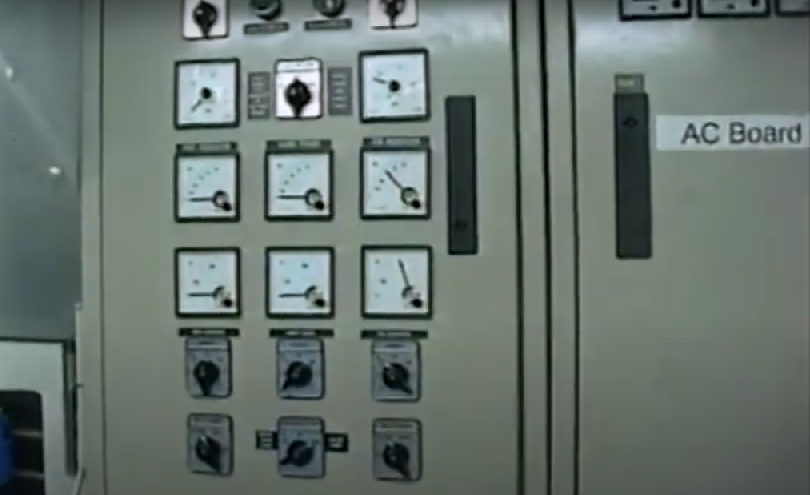
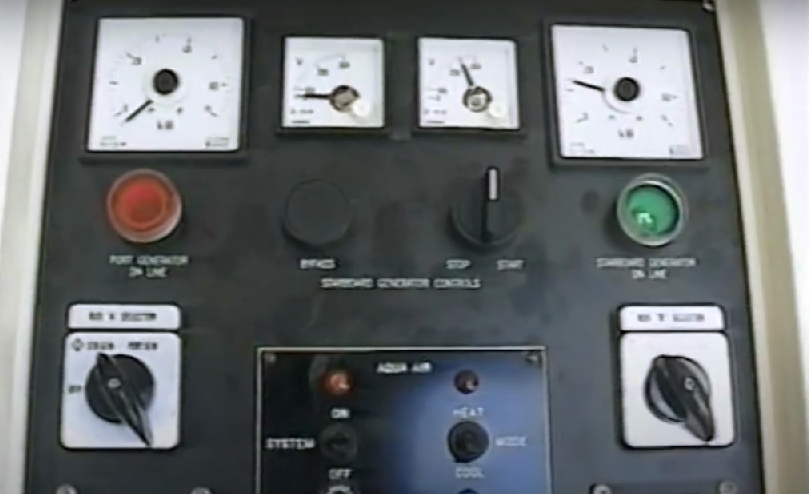
PACIFICA MERMAID’s galley distribution & control switchboard – starboard alternator in use. She has 2 x John Deer turbo 6 cyl. diesels driving 2 X 230/400volt alternators to supply her 230volt single phase 400volt 3 phase power supply, when away from her berth, which supply enough electricity for about 12 houses each
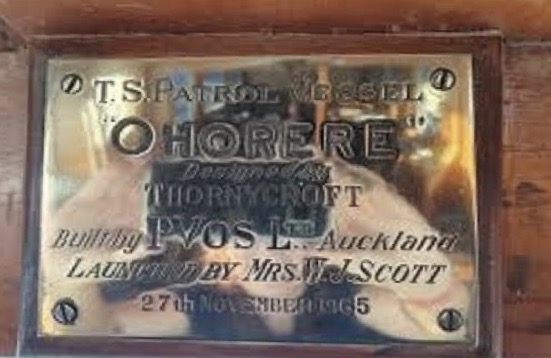
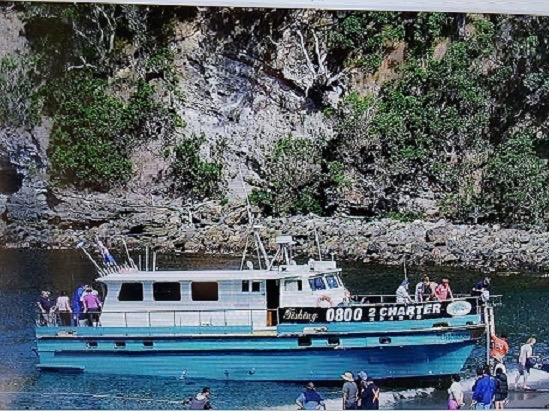
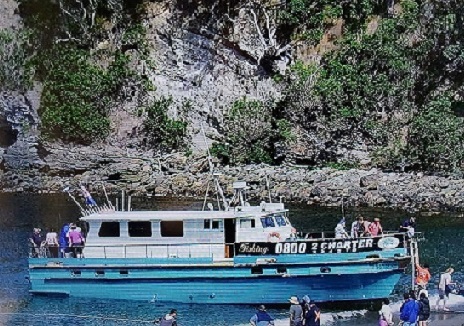
‘OHORERE AS AT 2025 WITH HER 2 X 770 HP MTU MARINISED MERCEDES BENZ DIESELS.
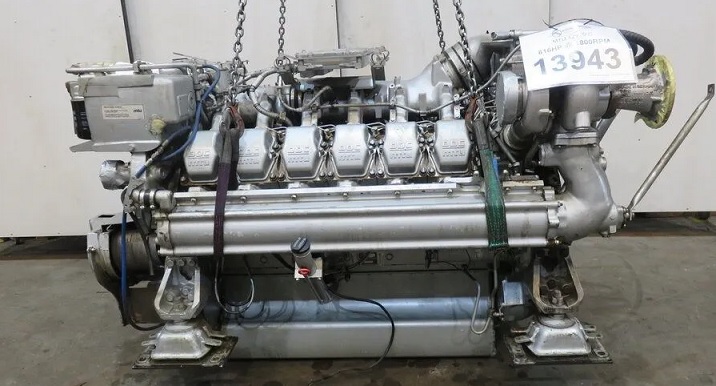
MTU MERECEDES BENZ DIESEL ENGINE – POSSIBLY SIMILAR TO THOSE IN THE OHORERE
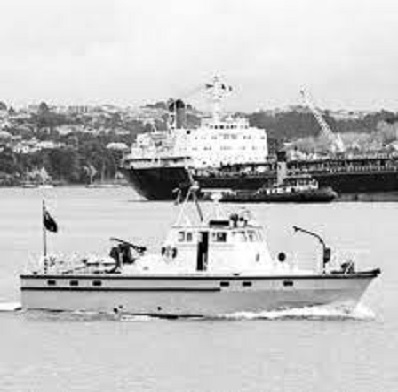
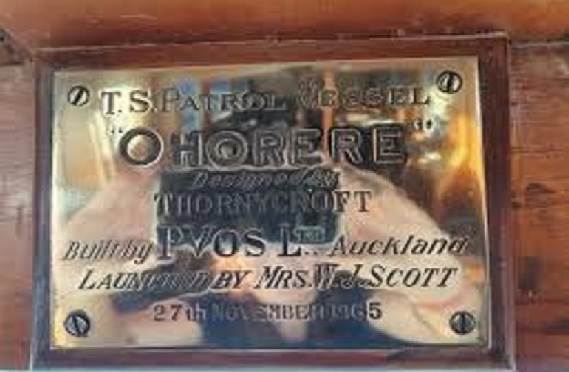
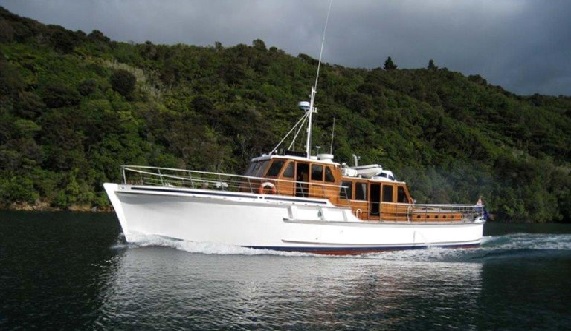
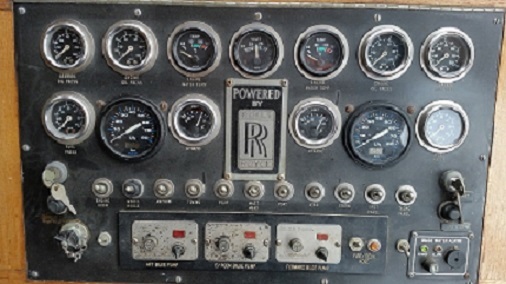
OHORERE, was built by Percy Vos in Auckland, for the government of the day, to be a high-speed fisheries patrol craft, and designed by Thornycroft in the UK. However, she never reached anything close to her anticipated speed projections, as required in the order from the government, to the designers, and builders. Large sums of money were spent collectively, by the designers, Rolls Royce, who supplied her original engines, and the builders, to give her better performance, but they failed miserably, and she was ultimately sold to private ownership, where she has been used for many years now, I am told, for fishing charters in Tauranga.
The 2 x 8 cyl. Rolls Royce’s were replaced about two years ago, with 2 x 770hp MTU marinized Mercedes Benz diesels, and is now capable of around 30 knots.
The engine in the image is used, which because of the huge cost of them new I feel it would be most likely & also most practical to install used engines.
The only other boat I know personally, is my own 1953 Roy Lidgard-built, 31-foot FLYING SCUD, which I bought in 1970, with her original twin Austin Skipper 100 marine petrol engines.
I replaced them almost immediately with two OM321 100 HP Mercedes Benz 6-cylinder diesels. I sold her six years later, when I started building my 40-foot Vindex, TIARRI, and a later owner replaced FLYING SCUD’s Mercedes Benz engines with two Bedford diesels.
PERKINS DIESELS MODELS “S6” 6YL & 510 C.I. V8 MODELS ONLY
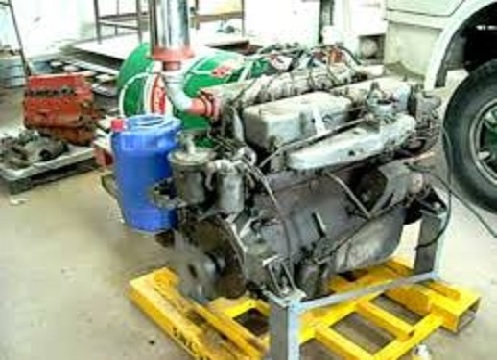
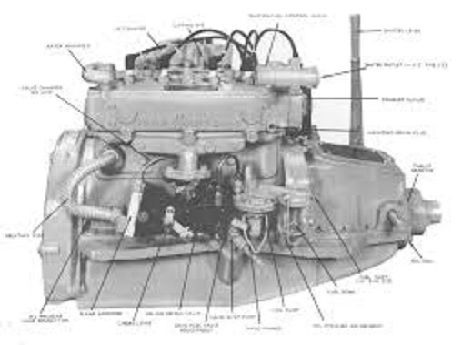
PERKINS MODEL S6 MARINE DIESEL ENGINE
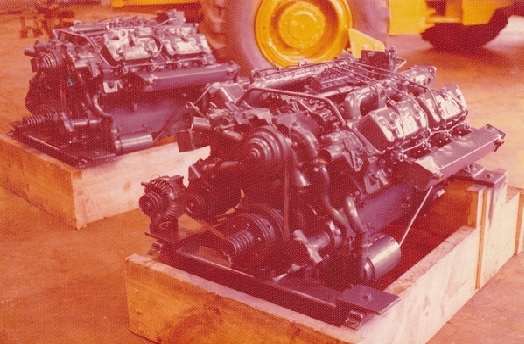
TIARRI’S TWIN V8 PERKINS 510 CUBIC INCH DIESEL ENGINES
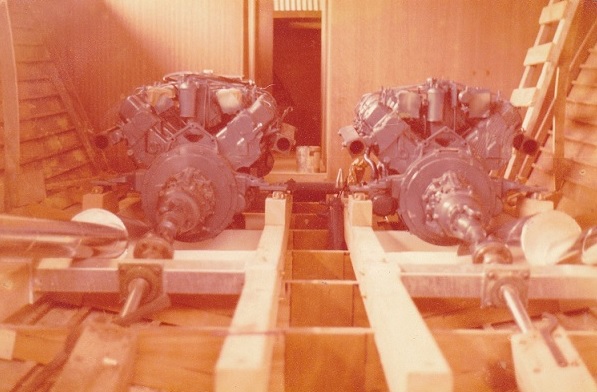
TIARRI’S 510C.I. 165 HP PERKINS V8 DIESEL ENGINES IN PLACE
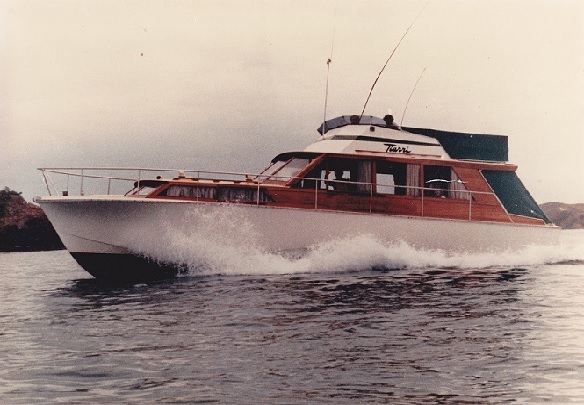
TIARRI AT SPEED OFF RAKINO ISLAND 1982 WHEN OWNED AND NEWLY BUILT FOR KEN RICKETTS BY BARRY JONES & REX COLLINGS OF MATAKANA & WHANGATEAU
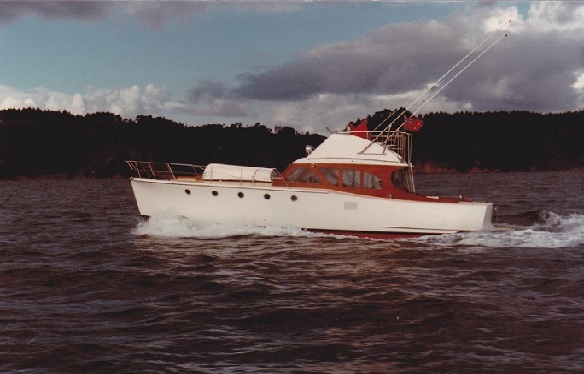
KAIKOURA WIH HER TWIN PERKINS V8 MARINE DIESELS IN BON ACCORD HARBOUR, KAWAU ISLAND c1984
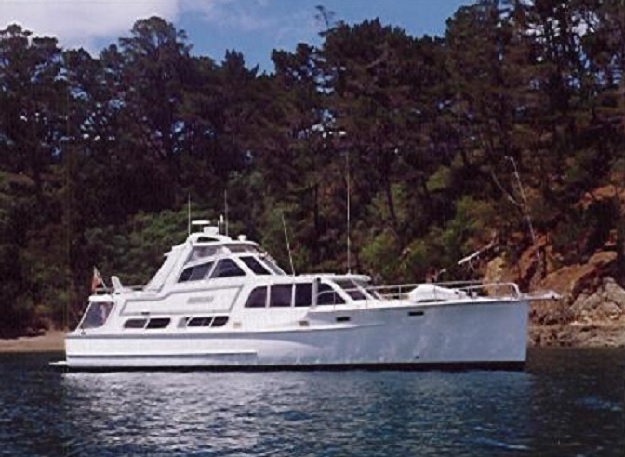
MOANA LUA WITH HER PERKINS V8 DIESEL ENGINE
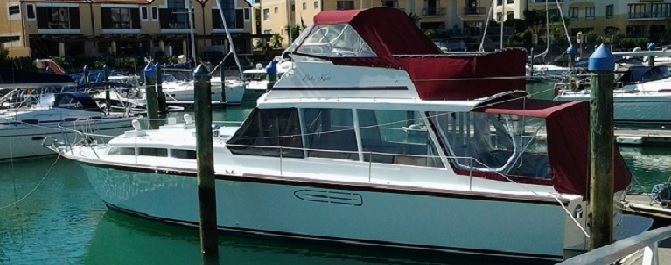
LADY KIWI (EROS), POST HER PERKNS 510 C.I. V8 MARINE DIESEL ENGINE ERA
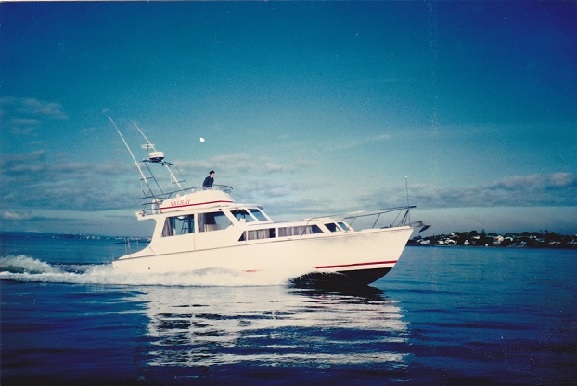
VALRAY WITH HER 2 X S6 PERKINS 6CYL MARINE DIESEL ENGINES
Whilst there are many thousands of Perkins engines in use in NZ of various types, the two referred to above are rare. The S6 engine was developed for the military in the UK during WWII, and Ray Hamilton, the harbour master for the Sandspit area at Warkworth, managed to import two of them a few years after the war. He kept them in a big, beautiful shed on his Warkworth farm for a good number of years until he eventually built his dream boat, the VALRAY, in that shed in the 1960s.
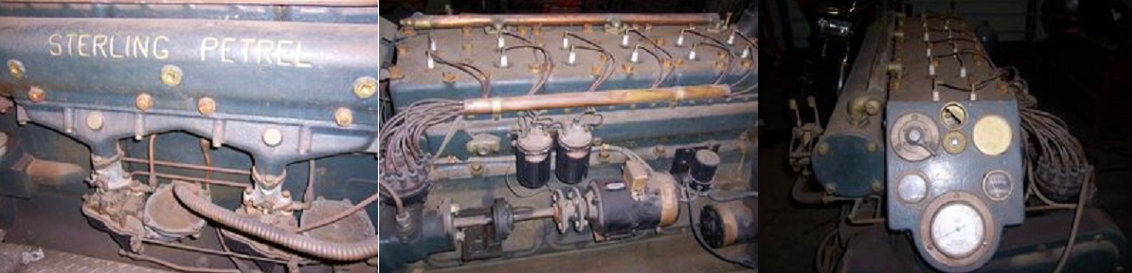
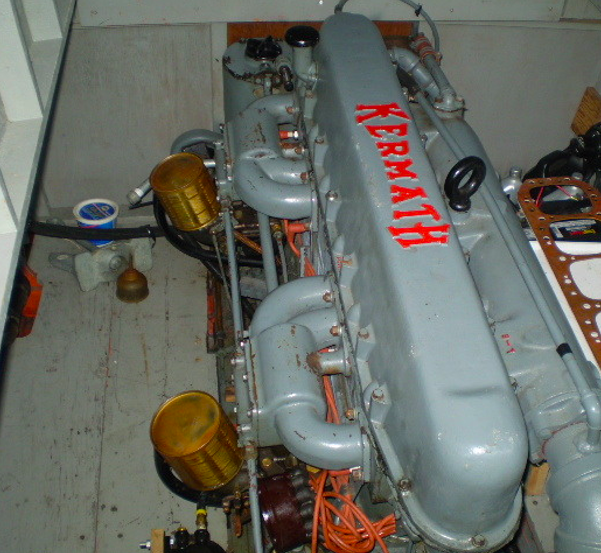
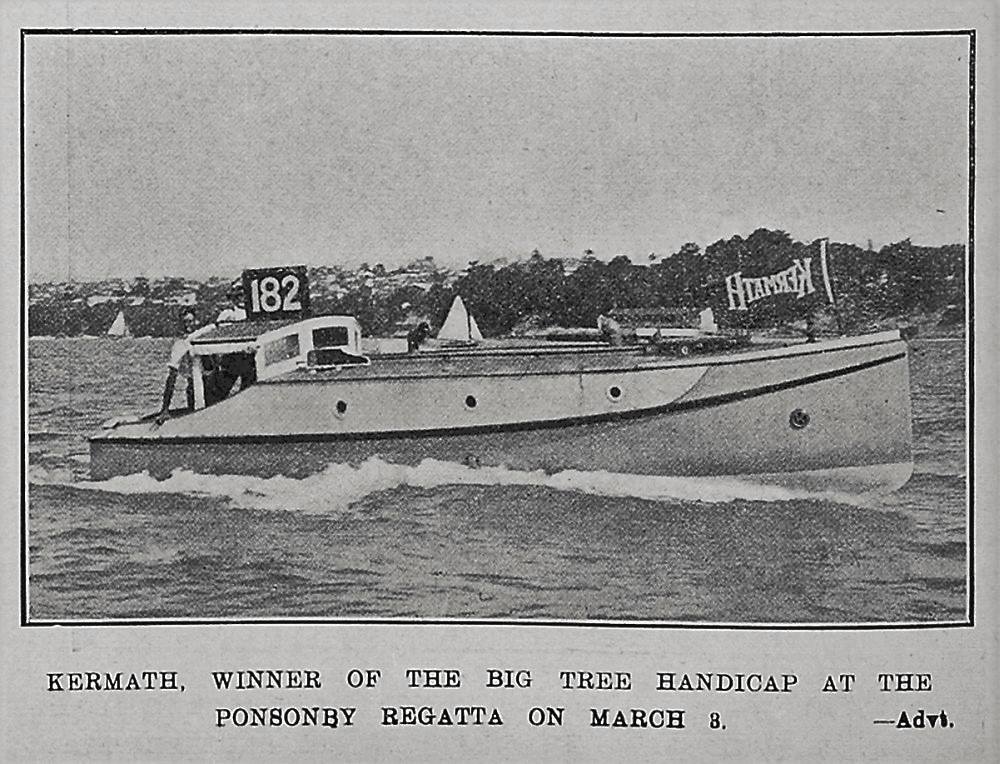
The 510 cubic inch, 165 hp V8 Perkins diesel engines are in only four boats that I know of. The Eros (Lady Kiwi) had two fitted when new, the Moana Lua had one fitted around the 1990s, I believe. I had two of them put in my own boat, TIARRI, a modified 40-foot Vindex, (we added an extra 18 inches of beam) when she was being built for me, and launched in October 1979. There is also the P Vos built KAIKOURA, which had her original two 165 hp Kermath Seamate Special petrol engines replaced by the Bridgeford family of Mission Bay, owners at that time, in the 1960s-70s. She has had two Perkins 510 c.i. V8s ever since.
FOOTNOTE: I have not written about or included very small, very old engines and boats from the very early days of the 1800s to the early 1900s, where engines seemed to me to be mostly New Zealand-made, of one-, two-, and three-cylinder types. I have read some excellent, very knowledgeable writings from Harold Kidd, on these, and as he is an expert in this very specialized field.
INPUT ex ALAN SEXTON – Another great read from Ken and as usual a few comments following Ken’s sequence
Another relatively rare installation in NZ was the Cummins VT-370M, 785 cu.in turbo diesel. These were fitted to John Wiles Salthouse Giovanni II (since replaced with a Volvo), the Pelin Shikaree “Neureus”, owned by Haines Hunter’s Denis Kendall and twins were installed in the Wellington Police boat Lady Elizabeth II (the one that sank). This model engine was superseded by the Cummins VT-903M, approx 450hp, with a pair installed in ~55′ Pelin Eclipse “Trident” in the 80’s
Kelvin diesels – I believe there was a bit of a “Holden vs Ford” mindset between commercial fishermen when comparing Kelvin and Gardner diesels, I remember an ex fisho I worked for many years ago being a strong Kelvin man and very “dismissive” of Gardners
Doosans, Lees were selling these for a while. Another notable installation (a 320hp) was Conrad Robertson’s sedan launch Rampage , originally built for himself. I understand she has since been re-engined (Cummins?) and cockpit has been extended
The MAN V10’s from the 80’s mentioned were derived from a JV between Merecedes and MAN, https://www.curbsideclassic.com/blog/truck-history-the-man-18-3-liter-v10-the-last-on-highway-turbodiesel-behemoth-in-europe/ so are considered genuine MAN’s. Other notable installations include the Ted Ewbank designed “Kiwi Challenge” support boat for the 87 cup challenge and Neville Crighton’s Alan Warwick design Countach, both I believe 750’s. By the way Pacific Mermaid is advertised as being built by Salthouses.
The Perkins S6 was developed in the 1930’s for heavy trucks and was an enlarged version of the P series. https://archive.commercialmotor.com/article/21st-october-1939/26/perkins-ii-ices-new I believe the first installation in NZ was in Alan H’s “favorite” launch, the original Vindex. Wasn’t there for very long, replaced by the lighter and more powerful T6.354 in the mid 60’s
There was another launch written up in Sea Spray in the late 60’s which had a 160hp Perkins 504, cannot remember her name
Moana Lua has had quite a few engines in her life, I believe the current engine is a John Deere. When she was owned by Ken Burrowes from the late 60’s to early 80’s I understand she was originally equipped with twin petrol engines and then Ken replaced them with a “Torpedo” brand diesel engine (I thought he was pulling my leg when he first told me this), which i assume was from this factory https://tractors.fandom.com/wiki/Torpedo_(Rijeka)
Another quite common installation was the petrol Chrysler Crown, a marinised flat head Dodge. Eastern Star, Shipbuilders 32 previously featured here was built with one. This was replaced with a 75hp Ford in the early 80’s.
09-05-2025 INPUT ex JIM LOTT on Kelvin engines – Around 1981 I removed a Kelvin diesel from a yacht and replaced it with a Yanmar 2 cyl. The Kelvin had a crank start fitted and I don’t think there was an electric start at all. I am pretty sure it was 2 cyl. It was fitted in the 34ft Ladybird design (Bert Woolacott) named “Aorangi”.
Aorangi was built by Ron Evans who lived at Bucklands Beach and Ron was a commodore at BBYC and later on manager at John Burns and Sailors corner. He built Aorangi late sixties or early 70s using full length kauri planks. The owner of Aorangi who I worked for was AAH Schulte, known as Hubert. The bottle green Kelvin was tucked under the cockpit driving through the quarter.
I was more interested in the new Yanmar I had to fit so I did not take too much notice of the Kelvin but I recall Hubert telling me he had given it to a transport museum. The Yanmar worked out fine and I moved the shaft to the centreline.
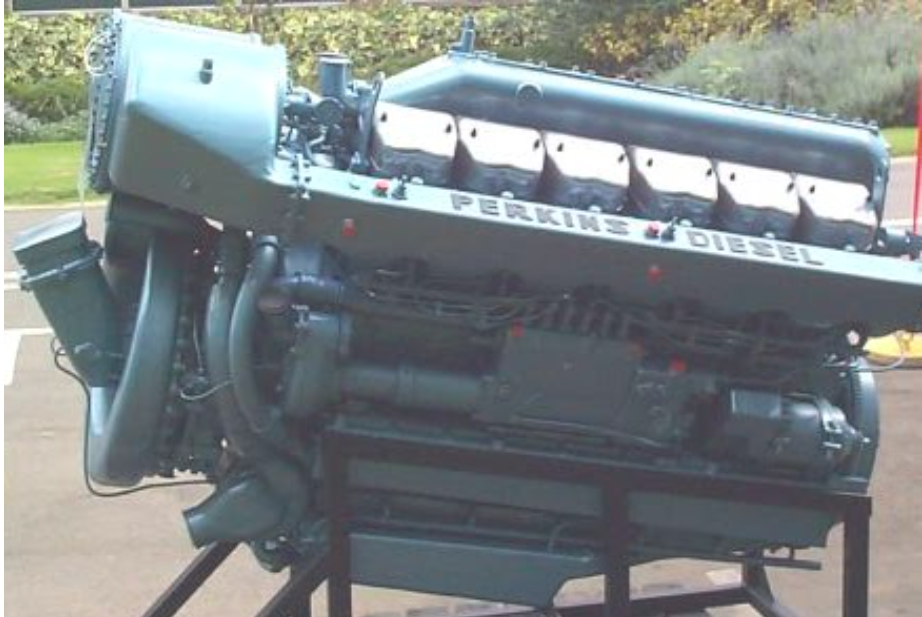
INPUT 04-08-2025 Perkins T12: A Wartime V‑12 Diesel Prototype
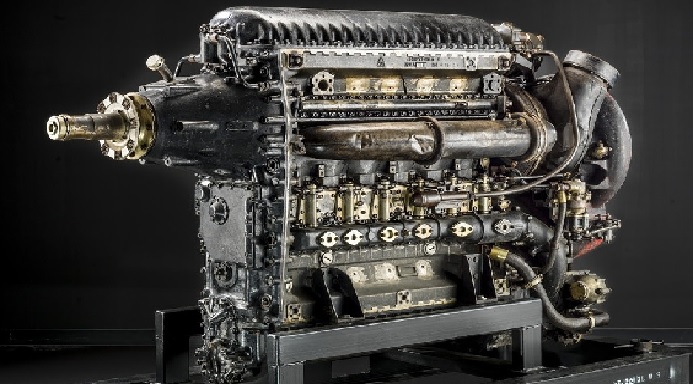
Purpose & Origin – Designed just before WWII, the Perkins T12 was intended for naval craft (motor launches, gunboats, torpedo boats) to replace petrol engines and free up Rolls‑Royce Merlins for aircraft use .
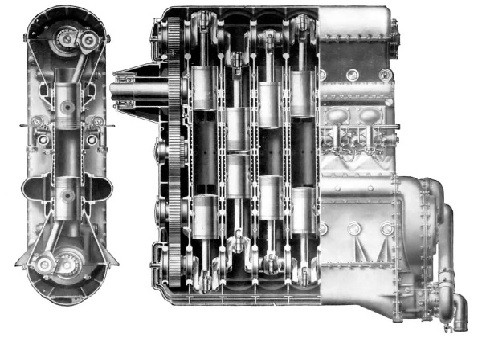
Design & Specs A 55° V‑12 (two inline‑6 banks on a single crankshaft) with 6″ bore and stroke, giving roughly 33.3 L capacity. Each bank had independent systems (water, oil, fuel injection), enabling one half to run if the other failed . Featured an unusual centrifugal supercharger driven from the crankshaft. Only 5–6 prototypes were built, with two installed in a Royal Navy launch (ML 570) from late 1942 through WWII .
Performance & Fate It achieved the target ~1,000 bhp, but production never followed due to the availability of cheap American petrol engines . After the war, one engine served as a stand‑by generator at the Peterborough factory into the 1980s .
🔗 Links with Rolls‑Royce
Direct Association: The design was meant to replace Rolls‑Royce Merlin petrol engines in marine craft—similar size and layout for direct substitution .
Personnel Connection: Perkins was founded by Frank Perkins and Charles Chapman—the latter previously worked closely with Rolls‑Royce founding engineer Henry Royce . Chapman’s expertise evidently carried influence from aero‑engine principles into the T12 design.
Summary The Perkins T12 was an ambitious, Rolls‑Royce‑inspired diesel V‑12 project to militarize petrol-dominant craft space. Built quickly (~14 months) under Charles Chapman’s leadership, it showcased clever redundancy and performance—but never reached mass production, sidelined by US petrol engines. There does not appear to be any direct Rolls‑Royce technical design partnership—rather, the association comes from the T12’s role as a diesel counterpart to the Rolls‑Royce Merlin, not from a joint development.


 waitematawoodys.com #1 for classic wooden boat stories, info, advice & news - updated daily - 15+ million views