Memories of Ariki – A3

Screen Shot 2017-12-07 at 11.50.35 am

Memories of Ariki A3

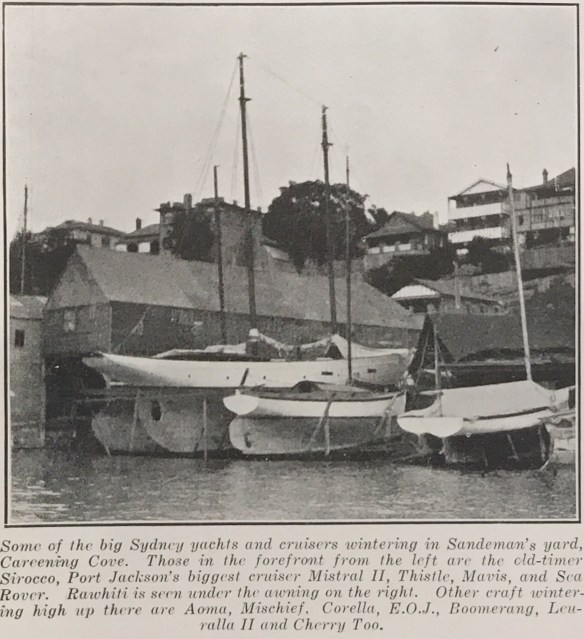
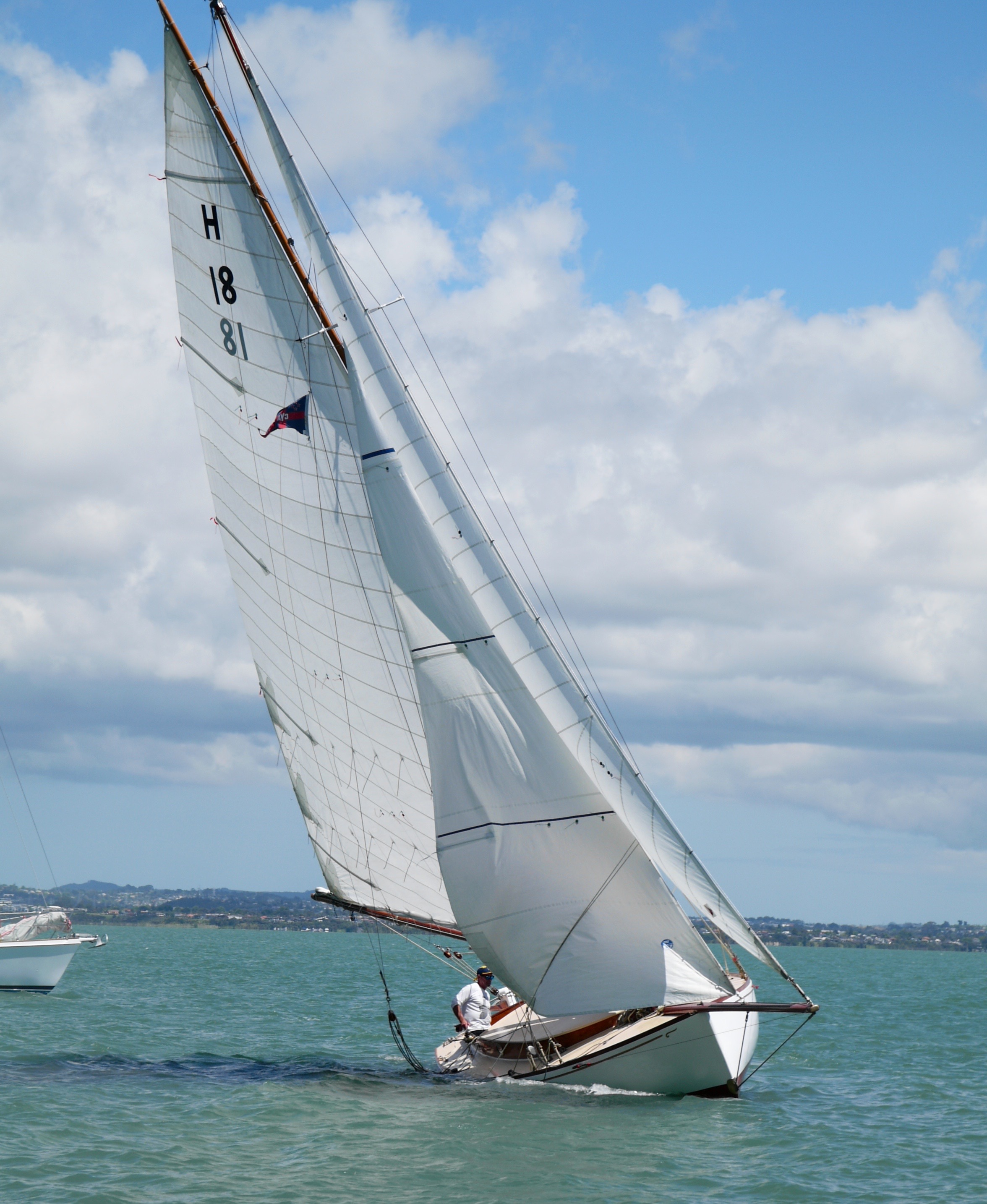
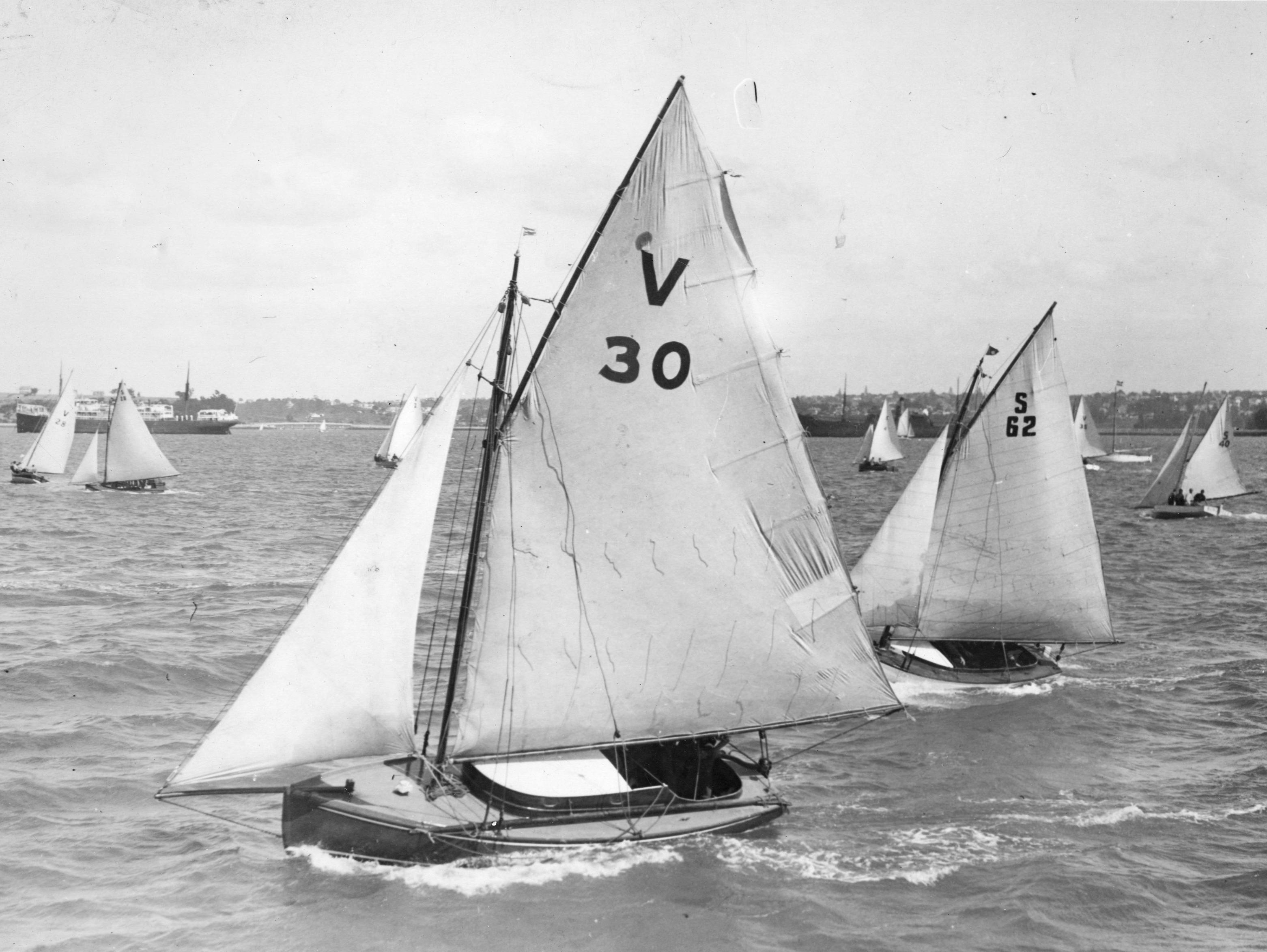
I was sent the great story below by Mark Newcomb via woody Brian Fulton, Mark wrote it for a recent Ariki (the 1904 Logan Brothers gaffer) reunion. Enjoy the read, it’s a great peek back into yachting in the 1960’s, so many familiar names & locations. Thank god the claret & lemonade early morning eye-opener drink did not make it into the 21st century. (photo above ex Mac Taylor collection)

“I started crewing on Ariki around 1963, aged 19, and sailed with the team for some 15 years, continuing through to the Northerner with them.

Hugh Littler worked as a valuer for Neville Newcomb Ltd., and dad (Pat) of course knew Arthur Angel well through RNZYS, as did my uncle Hal.

The crew then was going through a bit of a change as the friends of Hugh were getting married, children, etc.  Arthur and Hugh shared ownership I think.  Cove Littler had own Kitenui at that stage.

Regular crew when I joined were Jim (Boom Boom) Bailey, Ted Grey (plumber Devonport), John Downer, Dr Ray Talbot, Bill Donovan, Bob Fenwick, young Bruce McKay, Peter Svenson, Peter Cooper, and I introduced John Compton, Laurie Gubb, and Tom Taylor. John Denley sometimes crewed.  Also some others, can’t remember! Warwick Jones (subsequent owner) joined the crew a little later. 

The yacht was moored at Devonport near the RNZN dockyards.

There was keen competition between Bruce, Peter, and myself to become the main topmast hand, as we saw this as a glamour job.  I loved coming into a bay with all rag flying, and showing off my skill at whipping up the mast and letting fly the gaff topsail.  Peter, Bruce, and I became the main foredeck hands.  Hugh was sailing master, Arthur main helm, Jim B on main and spinnaker, John D and Bill D on headsail trim.  Foredeck was pretty dangerous with wildly flapping wooden blocks on clew strops and stiff canvas, big sails.  No winches at all. Bob was enthusiastic steward.

A racing crew of around 13.  Sometimes full 12 hands on main sheet, stretched out along leeward deck, up to your knees in rushing water.

Double purchase ‘handybillies’, rove to advantage, were used to get the last few feet in on the sheets.  New set of Rattray(?) sails a big deal. 4500 sq. foot sail, huge spinnaker, and newfangled genoa/gennaker. Heavy gear.

Seamanship was necessary. The most wonderful powerful yacht, a sailing delight.

Winter haul out at Devonport Yacht Club, old winch, and dangerous shunting of 19 ton ‘Rik on ways greased with mutton fat and timber jacks.  Old local guy always took charge of this, a big day.

Masonic Hotel was very close and ‪6am opening was a constant attraction for crew when we were supposed to be scrubbing down, sanding, varnishing, Singapore Copper antifoul, etc.  Pin line on hull was picked out in gold leaf, but this was changed to gold paint in later years.

After winter make over, trip down to ‘Drunks Bay’, (Islington) under motor, with minimal rig, then the big task of stringing up the running rig.  Ropes everywhere, but fun.  Ropes to be spliced, whipped, wormed/parceled/served/, and riven through the many blocks etc.

Another young man’s job was releasing the fixed prop and shaft prior to racing.  One of us young bucks would dive over and dive down with the heavy bronze 3 blade prop and 2 meter shaft (secured with a lanyard to the top), insert the shaft into the A Bracket, push it home into the stern gland, knocking out the internal wooden bung, to be attached to the engine drive. Then untangle the lanyard, and surface.  The test was to do this in one breath!  A whiskey/milk was usually the reward.  The process was reversed at the end of the race, often in a crowded anchorage, much to the astonishment of the observers.  Another glamour job!  Unbelievably, a few years earlier this job was done by Hugh, who not being a diver, was strapped into a diving bell made of a kerosene can with a glass window puttied into it.  This was put over his head, he sat in the Bosun’s Chair with some chain wrapped around him for weight, then was lowered over the side from the swung out main boom.  A rope slung under the stern pulled him under the counter to line up the shaft with the A Bracket etc.  It had some sort of bicycle air pump, and I think a speaking tube up to Cove on deck.  I saw this contraption under their Vauxhall Road home, and now wish I had saved it! (Mark, later discovered that this tale was an urban legend, created to motivate junior crew members (i.e. Mark) to go over the side)

Having no prop power meant a lot of our manoeuvring was under sail only, often including back winding and stern boards, highlighted the skills of these sailormen,.

Our competition included Ranger, Rawhiti, Ta Aroa, Kahurangi, Achernar, Moana, Thelma, Fidelis, and another dozen or so.

With our gaff rig, no winches, heavy boat, we struggled to take line honours, but did OK on handicap. After a few years the light displacement yachts started to appear- Innnesmara, Infidel and Buccaneer, Neville Price’s Volante, etc.  We expected these new wonders to fall apart, but usually just saw them zoom past us.

The fleet was littered with strong personalities, Joe Kissen, Tom Clark, Lew Tercel, the Duder’s, Bressen Thompson, Jim Davern, Andy Donovan. Fraters, Arnold Baldwin, Peter Cornes, Gordon Pollard, Bill Endean, Roy McDell, Wilf Beckett, Cove Littler,  ……. the list goes on, and on.  Of course there was our own Arthur Angel, Hugh Littler, Ray Talbot, Jim Bailey. Kahurangi under Willie Wilson always seemed to have a team of female followers, as did Arohia with Speed Alan and Pussy Catlow coming to mind.

We had many notable visitors on board- Lord Cobham, Francis Chichester, Adlard Coles (Heavy Weather Sailing), etc.

Cake days, normally a Sunday, were always great fun.  Long Christmas cruises to Bay of Islands very special- my uncle Hal based at Opunga keenly awaiting his play mates Bob, Arthur and Hugh.  Cruises up to Whangaroa wonderful.  Te Kouma race and Squadron Weekend at Kawau.  Somehow, being another era before the cell phone, we all stayed away on endless adventures without a thought, or the means, of rushing home.

Gordons Gin and water was the tipple of the senior members, beer for us- and plenty of it.  A strange drink, Claret and Lemonade, was often our early morning eye opener.

There was a strong sense of heritage, ceremony and formality amongst the merriment.  Flags, watch keeping, dress, respect of senior members, nautical customs, shipshape and Bristol fashion! – not strongly enforced, just understood and expected.  Arthur an ex Commodore, and Hugh a Flag Officer- later Commodore on Northerner- so expectations high.

These are just some random memories- there are many others.”  

2017 Centreboard Cup – Herne Bay Yacht Club – TODAY  9th Dec –  @ Sloanes Beach, Herne Bay

Starting at midday today, the Herne Bay Crusing Club are hosting their legendary Centreboard Cup Regatta. Its one of the coolest sailing events in town & the venue is rather special.

Details here   http://hbcc.net.nz/centreboardcup2017/

And check out my photos from a previous regatta. https://waitematawoodys.com/2015/12/20/whats-the-coolest-yacht-club-10-minutes-from-queen-st/
 

Spangalang

Unknown-1

SPANGALANG 4-Sale

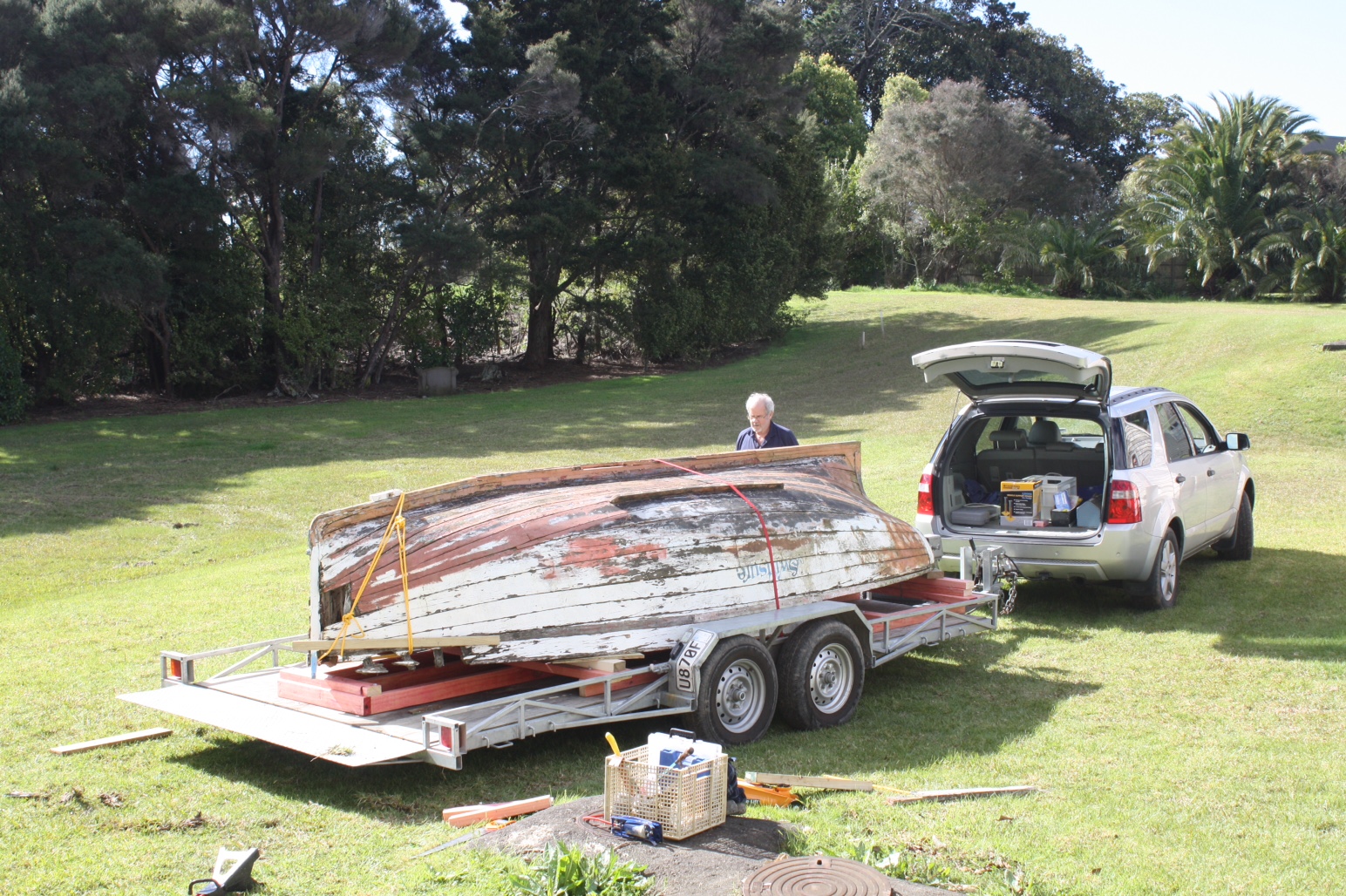
Back in 2012, in the days before waitematawoodys.com , I posted a story on the WoodenBoat magazines online forum about the building of Spangalang, a 14’6” Whilly sail boat, designed by Iain Oughtred.

She was built by Gary Drummond, who lives in Nelson & is the father of a good personal friend. Gary started the build in May 2011 & finished her in March 2012.

I followed the build with much interest & was amazed by Gary’s build quality & attention to detail. The boat won best new build at the Lake Rotoiti (Sth Island) classic boat show in 2012.

Last week I was contacted by Gary who sadly is having to look for a new owner / custodian for Spangalang. It’s not often that any Ian Oughtred craft pop up for sale in NZ & even rarer for one of this quality.

Interested parties could initially contact Gary via email    gvdrumdoon@gmail.com

I have reproduced Gary’s story on the build – it’s a good read – Enjoy.

PROJECT – WHILLY BOAT   (as told by Gary Drummond)

“This is my fourth boat project. For many years I have been looking for a suitable dinghy design and finally after checking out many designs settled on this one admiring the lovely sheer line. The other criteria was that it had to fit in my existing workshop. After cramming all my machinery in a huddle between two doors there was enough room including a fold down plan desk.

The frames were all 25mm dressed cypress fastened with reclaimed 65mm roofing screws and Titebond adhesive. The building frame was bolted to the concrete floor which allowed me to pack and level to adjust for the uneven floor  and a slight bow in the main 140×45 bed beams. All of the framing timber came from trees that we had planted years earlier in our small forestry block.

Screen Shot 2017-12-06 at 3.30.10 pm


(Building frames setup)

DSCF3157

STEMS – The stems were laminated using Rock or Cork Elm (Ulmus thomasaii) as the timber was recommended for boatbuilding in Iain Oughtred’s book “Clinker Plywood BB Manual” and also in Clinker Boatbuilding by John Leather. I had previously flitched some trees we had growing on our creek bank and was aware on how well it bends. Not wanting to set up a steam box I first tried a wet soak for a day then clamping in the mould with additional spring chocks and left it to dry out. That was successful but it was quite easy to pull the laminates round the curve dry and clamp in place, so that was the method adopted. The building notes suggested a 3mm spring each end to the curve, but after release from the jig 5mm would have been better to allow for the relaxation or creep after gluing.

Screen Shot 2017-12-06 at 3.29.41 pm

(Stem pre-soaked bending trial)

 PLANKING – I discussed plywood species and potential suppliers with two local boat builders and the recommendation was, “Meranti Ply” Part of our local coastline has beautiful golden sandy beaches compete with rocky granite headlands and submerged rocks, so reckoned a heavier garboard strake could be an advantage. I settled on the 9mm for the garboard and 6mm for the upper strakes. (8mm thickness is unavailable in NZ)

It was only when I was cutting out the garboard planks that I realised all laminates were not of the same species. On enquiry the suppliers comment was “Well 100% Meranti would be expensive and it is normal to have a mixed hardwood core” After all of my research on attributes of marine ply I had missed this one. A usual, don’t assume anything. The supplier was in another city so I didn’t see the ply before purchase. By comparison the 6mm ply appears to be 100% Meranti.

With some careful placement of the templates I managed to cut both of the garboard planks from one 2440×1220 sheet. Still I assume that is how it was supposed to be. I have been using my Hitachi jigsaw to cut out planks and have found that hollow ground Makita 2mm tpi blades give a good clean cut without the usual hairy edge.

Screen Shot 2012-03-11 at 11.50.53 AM

(Fastening the Garboard plank)

Bending the 9mm garboad plank to the stems seemed a bit of a mission for a start, until I devised a simple lever system with some short rope ends fastened through the frame one side, timber batten and light chain to hook over screw head fixed to each mould. This was especially useful when fixing the second plank, being unable to use clamps to the keelson. I have delayed fastening the ply until after the epoxy has set up for a couple of days and after trimming down to the stem-keelson surface. This was so I could locate a nail line that would be below my plane blade.

(Fastening the second Garboard plank 9mm+ ply)

 To locate the plank template and ply strake precisely in the same place each time for fitting and especially when at the glue stage I drilled two push fit holes for 50mm nails (minus heads) just below the 20mm joint through the template and into two of the station moulds. When I was happy with my template, marked and cut the paired planks about 2mm oversize (Not forgetting to drill the two location holes). Next I sandwiched the template between the two ply strakes and the faired the ply carefully to fit the template. On the second plank I glued the scarf as part of the plank gluing operation. The scarf was just clamped between two 40mm wide timber pieces without any location screws at the upper edge and to my horror after cleaning up and eyeing over the upper edge noticed a slight out of a  fair alignment. Oh well with a little luck it should take up with the fitting and fastening of the next strake. Just one temporary screw would have kept all in line. Oh bother.

For additional temporary fastenings in between clamps I have been using 30mm “Button Head” screws which worked well except for at the finishing stage having to plug the many screw holes. The plank scarf misalignment didn’t go away, I just had to rectify it before proceeding further it so purchased the second Japanese Saw without the backing rib, recut the epoxied scarf and also cut back 200-300 along the glue line between planks all to allow some movement. To ensure the correct fair line along the strake I cut and fitted a curved beam between the adjacent frames that I could clamp the re-cut scarf to achieve a fair line.

When fitting the outer stems, skeg and brass wear strips I made a sketch locating all of the screw locations to ensure when fastening the next layer I didn’t end up drilling a screw hole into an existing one below, however I did have one senior moment and had to move one hole.

This brings to mind the fragility of the posidrive square head silicon brass screws when forgetting to back off the torque setting on the drill. After shearing off a few I resorted to a hand held square driver for the final tightening.

The brass wear strips were, for better or worse polished and coated to minimise later tarnishing. When countersinking for the screw heads using a suitably reground 10mm twist drill the drill picked up the brass strip and a formed neat 10mm hole clean through. A moment of dilemma as I didn’t want to alter the screw spacing and have a spare hole. Anyway I didn’t check on the potential difference between brass and solder and soldered up the hole and started again this time with the strip in the drill stand vice. Since then I am told when modifying a twist drill for countersinking grind back the spiral cutting edge to near vertical so it is working with a scraping shearing action. This modification has since worked satisfactorily on some stainless steel.

Turnover – At Christmas time with the help from daughter Paula and two nephews we carried the hull out on the lawn and made the turnover, replacing it back on the build frame. I took care to reposition the hull exactly beneath my overhead centre line fixed to the roof truss collar tie and then set up a system of props and braces making sure all was vertical so I could make use of the level to align some of the interior components.

Interior Fitout – The mahogany strips for the gunwale needed scarf jointing in two places over the full length so set up a jig for cutting them on the circular saw which was quick and accurate, but in hind sight wonder if hand formed scarfs with the plane (once I got the hang of it) would have been just of quick. A lesson learned. I machined the qunwale strips to final dimensions, when I should have allowed say 3mm extra width for the final top trim of the four laminations incl, the ply sheer strake. To form the quarter round edges to the gunwale I cut them using the router hand held and inevitably left some black burn marks which would require a filler to disguise, so have left them as is just as a reminder of my folly.

Once again, sometimes a hand formed shape can be equally crafted successfully without the potential problems inherent in using power tools.

I formed the breasthooks from southern rata and the individual pieces when finally formed almost looked like small pieces of a sculpture. I opted for two 13mm oak dowels to reinforce the two halves. Setting up a jig on the lathe to drill the dowel holes was more of a challenge than making the dowel pins. Just this small operation to form and fit the two breasthooks ran away with three days.

Interior layout – Locally we have several tidal estuaries and a maximum high tide of some 4.8 metres and so decided on the pivoting centre board as being the best option for these conditions.  This option required the center thwart to be moved aft 200 mm. Next I decided to include the stern sheets (Aft decking) for which the forward bulkhead is positioned 150mm forward of station#6. Now, all of that was hopefully simple until you get in to start rowing only to find that with my 1.8m tall frame I couldn’t straighten my legs out for a comfortable rowing stance with the shortened cockpit length.

 Well at the Lake it wasn’t a problem to sit on the stern sheets and row looking forward and it also helped in keeping clear of all of the other canoes, yachts, skiffs, steamboats etc, during the drive past. To sort the problem, I have formed a shaped clip-on thwart extension that sits over the center case. The only potential problem being that the seating position will be further away from rowlocks requiring a bit more back bending when rowing.

Screen Shot 2012-03-21 at 3.24.02 PM

Protective Coatings – The complete hull firstly had two coats of West Epoxy. The exterior then had two prime coats, two undercoats, and two finish coats of paint, all wet and dry sanded I could only find one small flat on the second strake. Those final glossy finishes sure show up any earlier mistakes, and at that stage  too late to rectify just like the odd pencil line I failed to erase before applying the epoxy. The interior is all bright finish using a two pot varnish.The thwarts and floor boards received an matt oil finish with “Deks Olje”

Timber Spars – My idea was to obtain some unwanted spars and recut and reshape them to meet the requirements. Well what was a light rectangular boom to be formed into the yard, was after I had started splitting it longitudinally turned out to be a hollow spar and what initially was to be a simple say cut and re-glue turned out to be a little more complicated. On completion though I must say that it is light. A similar complication with the mast thought to be hollow as it was so light, I think it is spruce timber. After detailed checking of the diameter I found that it required widening in one direction to achieve the design. So it has ended up also as hollow spar. Next was the boom. A friend of a friend had a surplus oregan flagpole which after splitting it on the bandsaw and being careful not to cut it with a longitudinal wind managed to machine two suitable pieces from it. Having two hollow spars couldn’t resist now running the router along each piece to hollow them out. All went well but I will be holding my breath when under sail and the first big gust swoops in.

Screen Shot 2012-03-21 at 3.24.31 PM

 Rudder- I chose the swivel rudder option and it was all fairly straightforward until I came to choosing the gudgeon and pintals.  No one locally seemed to have anything like what I needed and I am now wary of purchasing fittings from the net as the nice pictures you see and the product you receive aren’t always the match your expectations. Anyway I drew up what I needed and had a Stainless Steel Fabricator make them without any fastening holes and extra length to allow for fitting modifications. There just aren’t that many double ended boats around to get any ideas from. Luckily there was sufficient room behind the formed pin holes to be able to redrill a set of new holes in a straight line for the pins with the pintal frame sitting snugly against the curved stem. I should have drawn them on the full sized on plan and then could have worked out the offset hole positions pre fabrication. Next time.

The Tiller is laminated cork elm with a 10mm hardwood dowel either side if the slot which fixes over the rudder head to ensure it doesn’t part company.

Choosing the name – With both sides of our family being of Scottish decent and the boat design coming from the Shetland Island the name just had to reflect all of this history. Firstly I scoured Celtic Scottish on line dictionaries and finally resorted to making contact with a relative from the Shetlands. He supplied me with a list and that was it.

Building Aids – Masking tape – should have used it more often to eliminate the many epoxy runs that are difficult to clean away under clamps.

Skarsten Scraper – great for removing epoxy runs and gauging grooves in the ply.

Steel Scraper – As well as straight I have made several with varying curvatures from old band saw blades.

Cam Clamps – Hadn’t seen one until I read Iain Oughtreds book, made a prototype and then a few more with a 200mm reach. Clamping pressure is not as great as a G Clamp, but is quite adequate for clamping glue jobs and just holding things.

Drawings  – These were good to work from, but, always read the fine print as I have in the rack a 1.97m half made boom. The actual Balanced Lugsail boom was 2.62m long.

Rigging – Iain Oughtred directs the builder to previously written articles, none of which I managed to locate. However on one of the many web searches via the site “The Mother of all Maritime Links”  http://www.boat-links.com  From this site I found just what I needed at,  http://www.storerboatplans.com/GIS/GISRigging.html

Now for some rope and fittings and we will finely be under sail on the water.

 Conclusion – This has been a great project and has drawn many favorable comments. Apart from the personal satisfaction of having created this thing of beauty it has been a great brain teaser. Every day there have been problems to solve such as how do I, set that out, clamp it, etc., etc.,. I am sure the brain has had a good workout and I will miss all of the challenges.

However, getting out on the water is going to be fantastic.”

DSCF3326


CYA Patio Bay Weekend – 2017 – 50+ Photos

P1250526

P1250630

P1250596

P1250681 (1)


P1250732

P1250733

P1250725

CYA Patio Bay Weekend – 2017

The photos show that 2017 was another cracker Patio Bay year, but what photos don’t get across is what a great group of woodys were there. The numbers were down a little on previous years but those that made the trip will remember it as one of the best. Plenty of room to walk around & mingle without standing on someones dinner plate.

Several Riviera owners, did they bit to re-confirm that they all have big egos & small brains – motoring thru the race finish line at 25+ knots & creating wakes you could surf on. A little exciting if you are sitting in an 8’ dinghy taking photos & wondering if the Riviera is on autopilot & the skippers playing with his small willy 😦

One of the Patio Bay race traditions is the winning skipper of the A Division has to fill the trophy barrel with rum for the following years party. Last year Prize was the winner & based on dock chatter, a sample was drawn off for analyse at the Mount Gay distillery –  purity & alcohol content results to follow 😉

(remember to click on photos to enlarge)

P1250726

Bay of Islands Tall Ships – Sailing Sunday

Unknown-4

Unknown-3

Unknown-5

Bay of Islands Tall Ships – Sailing Sunday

The above photos ex Dean Wright were taken during the 2012 Bay of Islands Tall Ships Race & show Spray sailing in a rather big swell. Love the rigging only one, Dean is a professional photographer & his talent shows in these photos.

On a sadder note, below is a selection of photos that Dean took during the same race, that show the magnificent American yacht – Nina, that was later to disappear in the Tasman on route to Australia without a trace.

Below is a link to Stuff website, that has a tragic story on the 19-year-old American teenager – Danielle Wright who was crewing on Nina when the yacht varnished.

http://www.stuff.co.nz/national/69870474/The-mystery-of-the-missing-Nina

Unknown-4

Unknown

Judges Bay Haul Out + Name the Boats & Win

Screen Shot 2017-11-21 at 10.12.36 PM

Judges Bay Haul Out + Name the Boats & Win

The above photo shows the shoreline at Judges Bay, Auckland. c1930’s.
The photographer is unknown, but the photo is ex the New Zealand Herald via the Sir George Grey Special Collections, Auckland Libraries.

Nathan Herbert has commented that the photo was taken between December 1934 and 1938, as a boat in the photo was launched in December, and modified from that style in 1938.

The woody that can correctly name the most boats, starting from the bottom of the photo, wins a 2018 Lake Rotoiti Classic & Wooden Boat calendar. Lets try doing the entry thing via the WW Comments section, the email entry seems to confuse a few of you 🙂
Promo closes 6.00pm 22-11-2017.

If you don’t win the calendar, copies are available for $15, a steal – click this link for details on ordering.

Lake Rotoiti Classic & Wooden Boat Association 2018 Calendars


Shanty

UnknownUnknown-3

Unknown-1Unknown-2

SHANTY – Sailing Sunday

Shanty was built by Jim Cottier on Motuarohia (Roberton) Island pretty recently (in the last 10 years). Jim has been the caretaker there for a long time, as far back as 1980.

The above photos of Shanty sailing off the Purerua Peninsula in Nov 2016, are from Dean Wright, who commented that he thinks that Jim used to own the beautiful double ender Skagen that featured last week on WW. Dean remembers her living on a mooring out there.

Click on this link to view a short video on Jim, he’s a bit of a master mariner / living sailing legend

https://vimeo.com/206205345

Well known on the waterfront as a skipper of square riggers, including the Breeze (which he took to Mururoa with the N-test protest fleet) and more recently the Soren Larsen.

Jim has even penned a book ‘Soren Larsen: Homeward Round The Horn’     https://www.abebooks.com/book-search/author/captain-jim-cottier/


Whilst only a baby in terms of age, Shanty would  sit proud at anchor in any bay


Lake Rotoiti Classic & Wooden Boat Association 2018 Calendars

Screen Shot 2017-11-10 at 3.02.58 pm

Lake Rotoiti Classic & Wooden Boat Association 2018 Calendars

Readers of WW will know that Chris Miller & myself each year make the trip to Lake Rotoiti (North Island) to attend the Classic & Wooden Boat Parade, every Waitangi weekend. It is one of those events that you just have to attend at some stage. The link below will give you a peep at what the weekend is like.

While we are there Chris & I bang off a lot of photos, some of which the LRC&WB Association use to produce their annual calendar. The 2018 edition is hot off the press (printed by the  great team at Quality Print in Taupo).

The calendar (A3 size, sample below) makes a great Xmas present for any woody – hell buy it for yourself, that way, you get something you want 😉

The price is the same as last year:  $15 for 1 or $40 for 3.  Courier is $6.50 (rural delivery is extra).

To order:

  1. email Rachel Jamieson on zea.rachel@gmail.com  with the your name, address & how many you want.
  2. Transfer the payment (remember to include postage) to this bank account 12 3155 0140546 00   AND please use your name and calendar as reference.

And in case any of you were wondering – neither Chris, myself or WW make a cent from these calendars – it is all about the boats & the people that do all the work to maintain them & host the very cool event. So woodys, even if you only order one calendar, it makes a big difference to the Lake Rotoiti woodys 🙂

Link below to the 2017 Lake Rotoiti Classic & Wooden Boat Parade  – enjoy  https://waitematawoodys.com/2017/02/06/lake-rotoiti-classic-wooden-boat-parade-2017-160-photos/

Screen Shot 2017-11-13 at 12.37.38 pm


Old & & Even Older

Unknown-1

Old & & Even Older

Great photo above of the 1929, Riley 9 twin cam that Baden Pascoe recently finished restoring. The Riley is parked in front of Aumoe, the 1913 Tom Le Huguet built classic launch owned by Andrew Pollard.

Streaming Planks

The above link to the very cool youtube clip on steaming Huon Pine planks onto Ian Smith’s (new build) 24’ Ranger class gaff rigged sloop, was sent to me by Robin Elliott


Looking for Scorpio – Sail # 1025

I was recently contacted by John McIntosh who is endeavoring to locate the current owner of ‘Scorpio’, a Californian Bear design about 23’ loa.  Built in Milford about the 1950s by a professional boat builder (Gladden?) I’ll let John tell the story – read below.

The story is that she was built for Rush Clark snr who was the Auckland Pan Am representative, and as a young boy I went out for a picnic sail on her.  I was calibrating new Raymarine instruments on Monday 30th Oct. on my boat, when I noticed a small keeler doing leads off Princess wharf.  Later we past close by her transom and I noticed the word Scorpio carved on her stern.  I immediately looked up at the mainsail and noticed a black bear on all four paws was near the peak, together with the registration number 1025.  Because we were out “on business” I couldn’t go back and check on anything.  Needless to say she was much smaller than I recalled.

When I got home I checked my old 1977 NZYF register, and the name and number were in there, but no owner.  I got in touch with a friend who remained in touch with Rush Clark jnr in Atlanta Georgia. What must have amounted to reply the same day, I got an enthusiastic reply from Rush jnr, telling me “Scorpio” was only 23’ long and had been built in Milford.  He went on to say that it was a testament to NZ Kauri and the skill of Kiwi boat builders that “Scorpio” was still sailing. 

Rush is intending to come out to NZ early in the New Year and says he would love to see her again and would I please do my best to track “Scorpio” down.

I have rung all the marinas, most recognised yacht clubs, & Yachting New Zealand, but none could help me.  The Harbour Master’s office promised to ring back, but haven’t done so.  I have been to Gladden’s workshop, but John has been gone for decades, and workmen having a beer after work suggested that I contact your site.  

There is a nice story about the name “Scorpio”.  Rush snr and his wife Anne were captured by the Japs in the Philippines and in the prison camp they would look at the stars and think that somewhere in the world people were still free and one day, if they survived, they would also be free.

My father occasionally raced on “Scorpio” with the Squadron and said it was the slowest boat in the fleet.  Sometimes when they crossed the finish line at Orakei wharf, they could see that the tower was all closed up and the race management had gone home.


So woodys hopefully we can locate the where abouts of Scorpio for John.

Once again WW delivers

Just received an email from Neil Chalmers, with the below photo of Scorpio. Neil was sent the photo by Dan Ranall back in June 2016. Dan had been mooching around Okahu Bay & snapped the photo, then sent it to Neil to see if Neil could ID the yacht. Boom connection made 🙂

Neil commented that he thought there was another Bear Class in Auckland (sail #577), called Little Bear. Anyone able to confirm?

Scorpio

Screen Shot 2017-11-12 at 12.20.28 pm


Merlin – Sailing Sunday

Unknown-4

Unknown-1

Unknown-2

MERLIN – Sailing Sunday

I recently received a note from Andrew Hewitt from Ashburton, concerning his 22’ yacht Merlin. Andrew became custodian of her three years ago, when she was put up for sale by a broker on behalf of her former owner’s widow (Peter Beaven, a notable Christchurch architect and heritage advocate).

Peter had had her hull restored professionally in Christchurch some time previously, but the earthquakes and his ultimate death intervened. Andrew completed the job, rigged her and commissioned a trailer for her locally. So she’s now, home from the sea in her retirement – converted for use as a ‘trailer-sailor’ and lives protected from the elements in a boat shed at Lake Hood (just east of Ashburton) – where Andrew sails her when time allows.

Andrew commented that Harold Kidd kindly supplied a little history on her and Les McBean (Dunedin) also did a quite an extensive one (link here Les McBean Merlin), but unfortunately they contradict each other J According to Les, it seems she dates from around 1902 by Mr Derwent Aitcheson of Waikouaiti, where she was originally a fishing boat fitted with an engine. She appears to have been based there and Moeraki, moving about in the general Otago area. At some time mid-century she was converted to a yacht, and was well known in Otago Harbour for some decades, prior to becoming derelict and ultimate salvation by Peter Beaven.

The registration number seems original (V9) – it is on an old cotton sail that came with her.

Like all woodys, Merlin’s restoration is an ongoing thing….. the photos above ange from the fitting out/rigging stage at Andrew’s home to an early pic of Andrew under sail at Lake Hood.

Andrew is keen to discover more on Merlin past, to date he has made one or two connections through the Canterbury Classic Boat meets and tried both the Port Chalmers Maritime Museum and the two yacht clubs down there for info, but nothing forthcoming. The Museum at Waikouaiti knew of the builder, but didn’t supply any info when requested.

2017 Centreboard Cup – Herne Bay Yacht Club – Sat 9th Dec – Sloanes Beach, Herne Bay

Screen Shot 2017-11-03 at 2.58.42 pm

Pencil midday on Saturday the 9th of December into the diary, the Herne Bay Crusing Club are hosting their legendary Centreboard Cup Regatta. Its one of the coolest sailing events in town & the venue is rather special.

Details here   http://hbcc.net.nz/centreboardcup2017/

And check out my photos from a previous regatta. https://waitematawoodys.com/2015/12/20/whats-the-coolest-yacht-club-10-minutes-from-queen-st/

Anyone Looking For a Wooden Mast?

The Herne Bay Cruising Club have a 31’6″ laminated, hollow wooden mast that needs a home, the price will be very attractive if its for a classic yacht, if you want it as a flag pole expect to pay more 🙂 email Andrew Mason at    a.mason@auckland.ac.nz


Pirate – Sailing Sunday

Pirate being built at Little Barrier Is.

Under construction c.1903 at Little Barrier Island

Pirate Port Fitzroy GBI

Port Fitzroy GBI – May 1903

Pirate in cave

Big cave – NE Coast – April 1904


Ilex & Pirate Port Fitzroy

Ilex & Pirate at anchor – Port Fitzroy GBI – May 1903

Pirate Ashore

June 27 1907

Pirate wrecked again


Pirate wrecked & final resting place

Final resting place

PIRATE – Sailing Sunday

Pirate was built by Robert H. Shakespear in a shed alongside his house on Little Barrier Island c1903.

Shakespear was a talented boat builder & worked for the Logan Bros and was involved in Ilex (seen in the above photos) and built Frances at Logans’ yard as a close twin to Victory.

He also had the Logan built clinker keeler Pandora to service his little farm on Little Barrier where he was custodian for a while.

Sadly, Little Barrier was not a friendly home to Pirate & she was ‘wrecked’ twice, the first time during a hard SW gale in June 1907, she was repaired but the second in July 1908 was fatal & she was winched ashore & put to rest under the tress on the Island.

(Photo credits & details – J Russell via the Hocken Collection, University of Otago, Nathan Herbert & Harold Kidd)

The 1895 C&W Bailey Yacht IDA For Sale

Ida resides in Australia these days & her owners have advised that they are interested to hear from anyone that would consider purchasing her (& hopefully repatriating her home).

Harold Kidd has commented on WW that IDA was built by C. & W. Bailey for the Jagger brothers and Frater and launched on 21 December 1895. She was a contemporary and competitor to the other 5 rater of that season, the Logan Bros’ MOANA. You can also view/read an excellent article on Ida by Harold in the November issue of Boating NZ (pages 148>151), on sale now.

Interested parties can contact Catherine Shirley  cathshirley@gmail.com

You can read more about Ida here.

https://waitematawoodys.com/2016/05/15/ida-sailing-sunday-more/

UPDATE: Photos below ex Harold Kidd of IDA hauled out at Noakes yard in Sydney last week.

P1020432