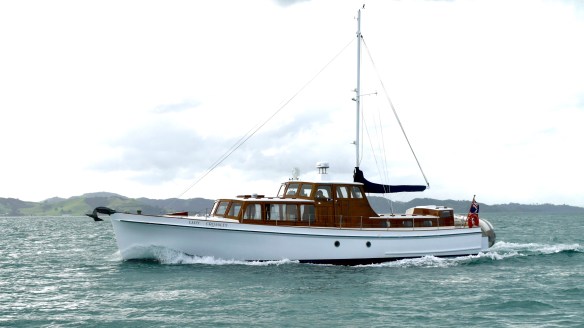
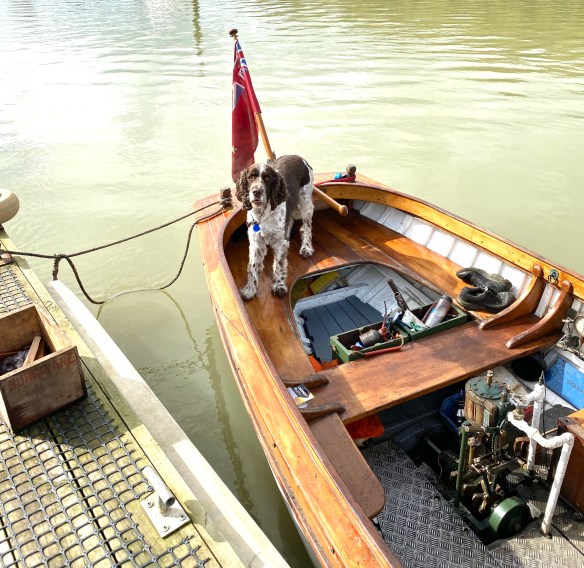
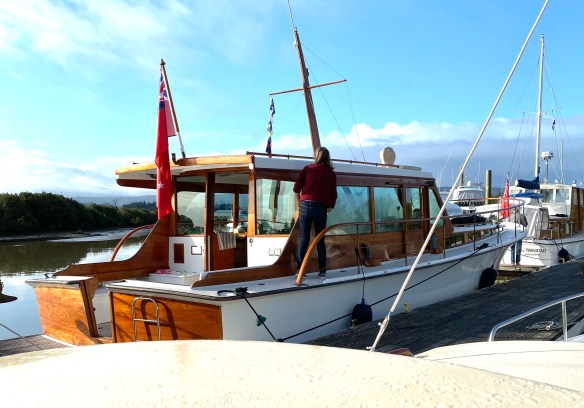


S/S Romany


Arohanui


Trinidad

Matira

Ann Michelle

Arohanui


Lady Crossley

Raindance
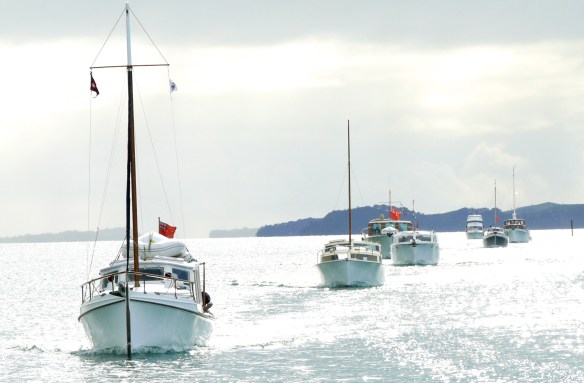
CLASSIC WOODEN BOAT WEEKEND CRUISE TO CLEVEDON – 72 Photos

Tides Out 🙂 (photo ex Alan Good)


S/S Romany


Arohanui


Trinidad

Matira

Ann Michelle

Arohanui
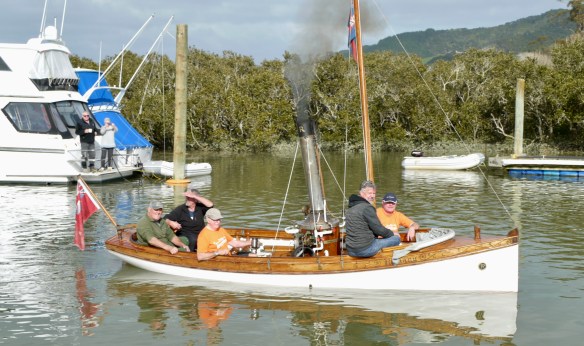

Lady Crossley
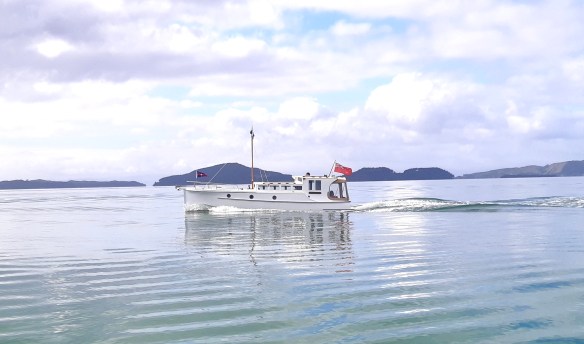
Raindance
CLASSIC WOODEN BOAT WEEKEND CRUISE TO CLEVEDON – 72 Photos

Tides Out 🙂 (photo ex Alan Good)


PAKAWAI


PRE – RESTORATION

THE RESTORATION


JOB DONE


MAGIC

“I have just come across your website and read the piece about a Mrs Batten who was inquiring into the whereabouts of Rawhiti junior. I don’t know how long ago that posting was made as it appears undated.
I would be interested to tell what I know about her.
My recollection was that she was built in 1904 not 1906 as Mr Kidd has suggested but I stand to be corrected.
She was last owned by my previous brother in law Vernon Harris now of Hahei.
Vern and I did some restoration on her in the 80’s. The most exciting thing was removing the “baby Austin 7 “ inboard petrol engine from her cockpit. We threw it onto the beach in Whitianga on a low tide and waited till the tide came in to see what difference having 200 kg of steel removed from her rear end would make to her handling. It was phenomenal of course, an absolute pleasure to sail after that. Vern acquired a small seagull outboard for the times when there was no wind to shift her.
We assume she was once yawl rigged but in our time the rear mast was just a stub that we used to attach stern lines. A previous owner had modified the main mast , presumably so she could be brought under a low bridge as it was set up to hinge fore and aft.
Vern and I had numerous trips between Mercury Bay and Great Barrier in the 80’s, I have wonderful memories of those trips bringing gear our from the Coromandel to start an alternative lifestyle on Barrier . I don’t think she was 20 ft , perhaps a little less. She had her bowsprit shortened , but we still used two headsails on occasion. Her original centreboard had been replaced with a solid keel which held a large long block of lead , she drew only 18”. She was a pleasure to unload gear from in knee deep water without grounding.
Unfortunately in 1989 she was badly damaged in a substantial storm that struck her while moored in Allom Bay which is the Southern most Bay of Blind Bay on the West Coast of Barrier where I still live on occasion. She had an open cockpit and simply filled with rain and seawater as she thrashed about on her mooring, which held her but she finally sank.
That would have been OK with her resting on the bottom, but as the tide receded , the swell bashed her repeatedly on the sandy bottom. With a large load of loose lead lying in her bilges , there were attempts to dive under the foaming surf and remove some of it. But as a near drowning occurred, this idea was given up .
The end result was that planks broke loose from her stem both above and below the waterline on port and starboard sides.
As the storm abated she was able to be moved into the creek in Allom Bay where she lay in a rudimentary cradle as the tide came in and out around her but she would never float again.
While decisions were made about if and how she could be saved, Mother Nature took the opportunity away.
A deluge of exceptional proportions, only weeks after her sinking, swept her out into the Bay , where she has never been seen since.
Although I have been snorkeling and diving , as have many others in the Bay, she has yet to make a reappearance.
The cabin tops (2), the forward hatch , the rigging and sails were all saved along with the beautiful rudder and tiller, but that was all.
One cabin top became the roof for a chook house and the other still keeps the rain off when visiting the long drop. None of these parts were original though.
The loss of Rawhiti affected Vern badly. As has been said often , we may call ourselves owners , but we are also custodians of historic treasures , so to lose her on our watch was hard to bear. He eventually shifted away from Allom Bay back to Whitianga. I understand he may be, or has been the Commodore of the Yacht Club there”.
13-07-2020 Input from Robin Elliott ex Auckland Star 29th Sept. 1906

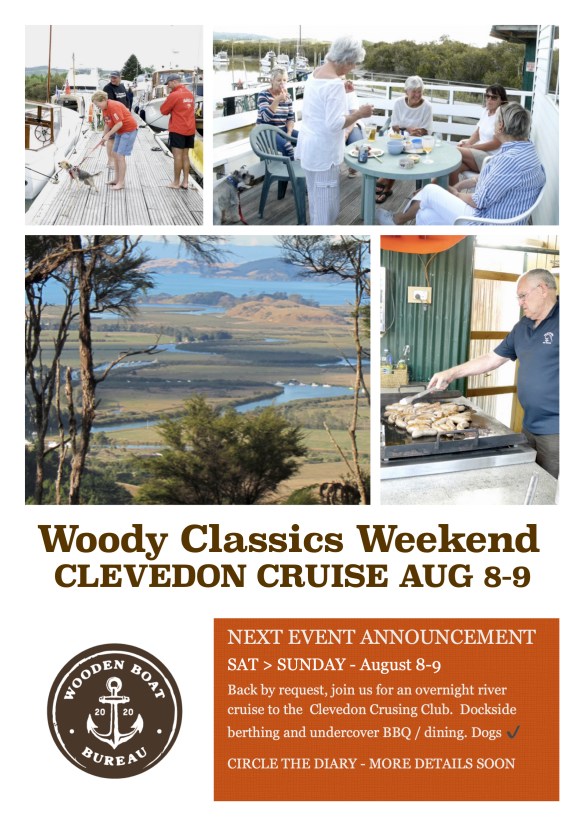
CLEVEDON WOODY CRUISE – ARE YOU COMING ? – 15 WOODYS CONFIRMED SO FAR. RSVP TO waitematawoodys@gmail.com – all welcome, details below 🙂


LAKE MANAPOURI – MANURERE


MATATUA
Harold and I have finally sorted the mystery of Matatua (well it was only a mystery to us, the rest of the world couldn’t care less 🙂 ).
Matatua was built as a 33-foot ketch by Roy Lidgard in 1938 at their yard in Freemans Bay Auckland for C.T. Jonas who originally named her Landfall.
NZ Herald 13/8/1938 has a photo of her on page 12 being built ‘for C.T. Jonas’.
Landfall was launched 19/11/1938 and described as an ‘auxilliary ketch’ 33ft overall, 26ft on the waterline with 9ft 6in beam. She carried 600 sq ft of sail and it was reported that her owner intended making a cruise to the islands at the end of the 1938-39 season.
From then on, no more mention of Landfall and it appears that C.T. Jonas and his co-owner Harry Gillard, renamed her Matatua quite soon after launching.
The ketch Matatua first appears in print in February 1939 racing with other boats in the Lidgard employees picnic from the Freemans Bay slipway to Motuihe. She raced regularly with RNZYS and RAYC for the rest of the season. Her registration number was B-9.
The ketch rig clearly wasn’t a success because in September 1939 the NZH 26/9/39 reports ‘aux yacht Landfall owned by C.T. Jonas which made an appearance last year under ketch rig has been converted into a cutter’. This reference to Landfall is odd because she had been named Matatua since at least the beginning of 1939, but maybe they were just making the connection back their earlier articles.
In the winter of 1940, yet more improvements.
NZH 2/7/40: B-class yacht Matatua owned by C. Jonas has had 2ft 6in added to her counter by Lidgard Bros. OA length now 35ft 6in and will enable carrying a permanent backstay,
NZH 9/12/40: Photo of Matatua with her new cutter rig, B-9 on the sail.
The war intervenes and Matatua ceases racing.
During this time the Auckland yacht registration records, probably having been moved about or in storage during the war, had fallen into disarray. By the time a new list is published in July 1946, Matatua has been registered twice, first by Harry Gillard, who retained B-9, and again by C.T. Jonas who got a new number B-24. The error was picked up and B-24 lapsed but it remained in the official lists for a couple of seasons until another purge of obsolete registrations in 1948.
Clarrie Irvine raced Matatua, as B-9, for the next couple of seasons and sold her in 1949 to R. Campbell of Wellington. The trip to Wellington under delivery skipper Terry Hammond was hard and they were missing for several days after hitting a nor’westerly gale just off Cape Palliser that blew them as far south as Kaikoura. After getting back to almost the same spot, they ran into a westerly gale that blew them back out to sea. Eventually Matatua got to Wellington, her crew had been battered for 84 hours.
Matatua remained in Wellington (registered as Wellington A-10) for the next 12 years or so. She was purchased by K. Stutter in 1957, and in 1962 was sold to D. Fletcher of Epsom who brought her back to Auckland where she picked up her old number of B-9. Fletcher didn’t appear to do any racing but in 1968 he sold her to George Retter of the Richmond Yacht Club who owned and raced her until 1981.
Matatua has had no registered owners since then. Her NZYF number is 109
One major confusion with Matatua has been the Bob Stewart design Mata-a-tua built for George Gresham of Tauranga in 1947. When Matatua was sold to Wellington, her B-9 registration became vacant and was issued to Gresham’s Mata-a-tua thus beginning a series of tortured confusions in boating magazines and newspapers between the two boats.
This was continued when Mata-a-tua was also sold to Wellington in 1958 where she became Wellington A-9. Her owner Brian Millar brought her to Auckland in 1964 and she entered the 1965 Anniversary Regatta under her Wellington number A-9. (A-9?.. A-9??.. That’s Moana and We can’t have that!!) In February she was re-registered as B-47.
Another tedious ‘golly gee’ point. Both Clarrie Irvine and George Retter owned the Bailey built C-class Matua C-54. Both of them sold Matua to buy Matatua
I have been told to ‘get a life’ by many people.


Harold Kidd Input – RHODESIA was built in Auckland in September 1912 and railed down to Rotorua. She was 30ft loa 8fft beam 2ft 9in draught. Her first owner was Marshall Ryan Shipping Co who used Bailey & Lowe for their new builds so it’s a fair bet they built her too. Roy Forrester of Helensville ran her for the company in the years immediately after WW1. When Taupo Shipping Co was liquidated and its assets sold off in August 1925 she was sold off. I am not sure she was then renamed TUWHARETOA because Sam Crowther was running a TUWHARETOA for hire in 1923.


HERNE BAY YACHT CLUB
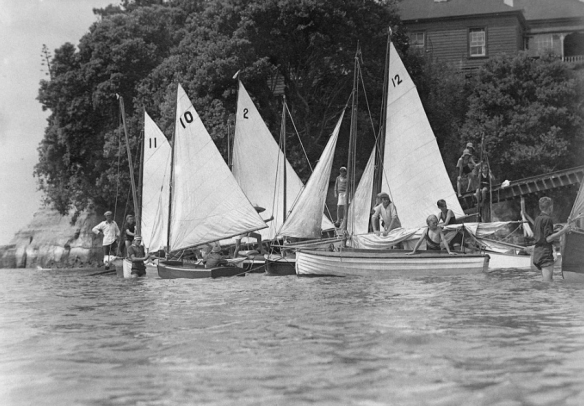
The photo of the boats from the Herne Bay JUNIOR Yacht Club (as it was known then) was taken probably 1933 not long after it was formed for boys under 18 and the location is the foot of George Dennes’s slipway at Sarsfield St, Herne bay.
George Dennes was the commodore and the only adult in the club. All other positions were held by the boys, who ran all the meetings. Vice Commodore Geoff Hodgson was 9, Rear Commodore Jim Faire, aged 13, Hon Sec Colin Dennes ages 16.
At first the boats were a mixed bag of local sailing dinks, the odd Zeddie, ‘anything with a sail’ and as you can see there in sail number 10, what looks to be a Zeddie with a bowsprit and jib.
In the winter of 1934, George Tyler built the 12-foot Silver Fern to an Arch Logan design for Colin Dennes. Others followed and the club consolidated around the new Silver Fern Class.
The administration experience gained from running their own affairs was put to good effect when many of the members, once they reached 18 years joined Richmond Yacht Club. By 1939, the RYC Commodore was Rupert Thorpe, Vice Comm Jim Frankham; Rear Comm Colin Dennes. All three HBJYC graduates and all under 21.
George Dennes died in 1942 and the Commodore’s role was taken over by Alf Thompson (Chad’s father) and continued until the Silver Fern’s demise around 1952, swept way by the new fangled Cherub, Moths and Pennant classes.
Notable yachtsmen, in no particular order, who came through the Silver Ferns were Laurie Davidson, John Lasher, Jim Faire, Des and Ray Hurley, Roy and Frank Dickson, Alan Barclay, Brian Woods, Des Townson, Murray White, Neville Thom, Shirley & Roy White, John Taylor, Roly Moreland, John Peet ….. and on and on…..
It was a very important club in its time and its unique structure actually trained young yacht club administrators. No other club did that.