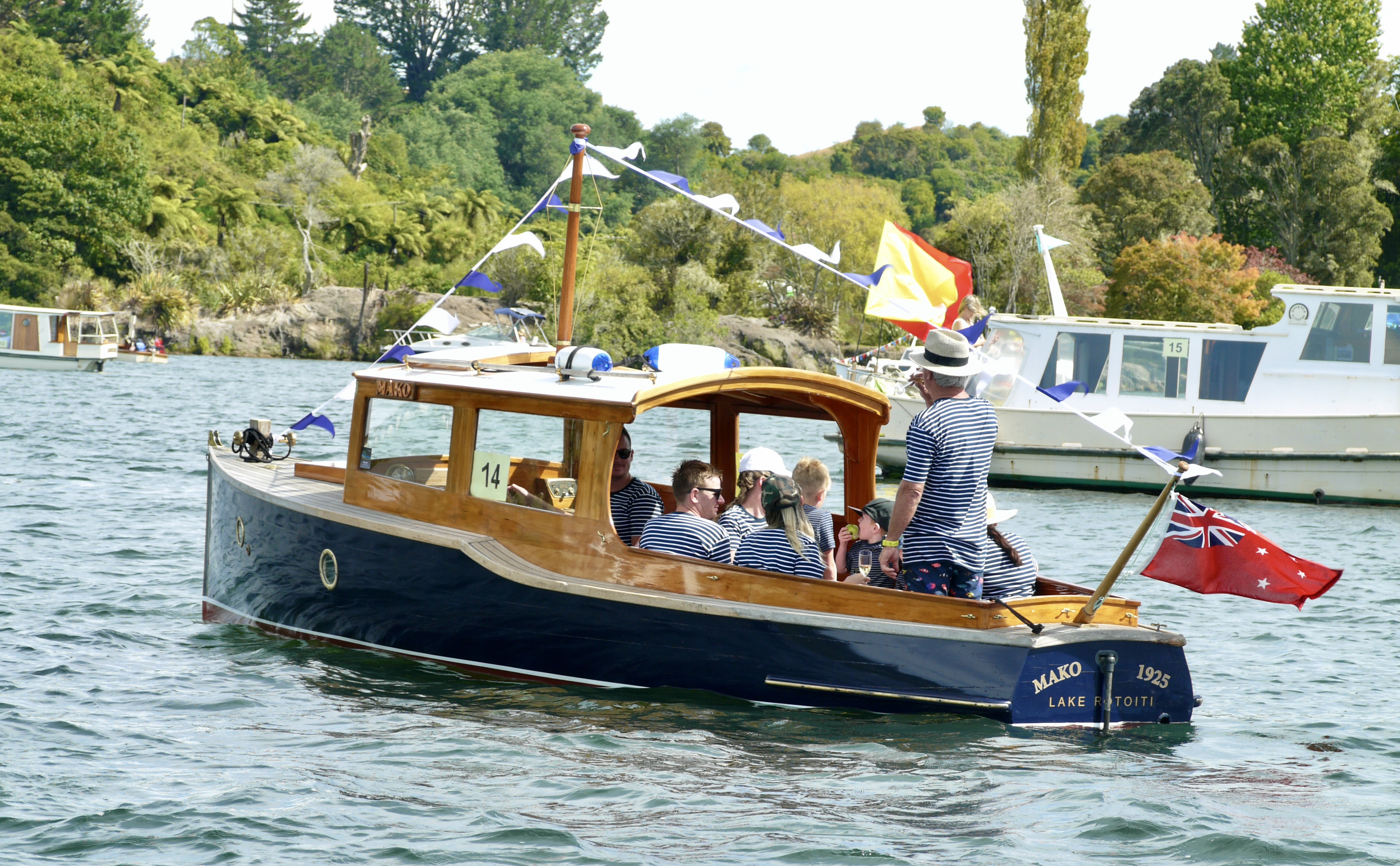
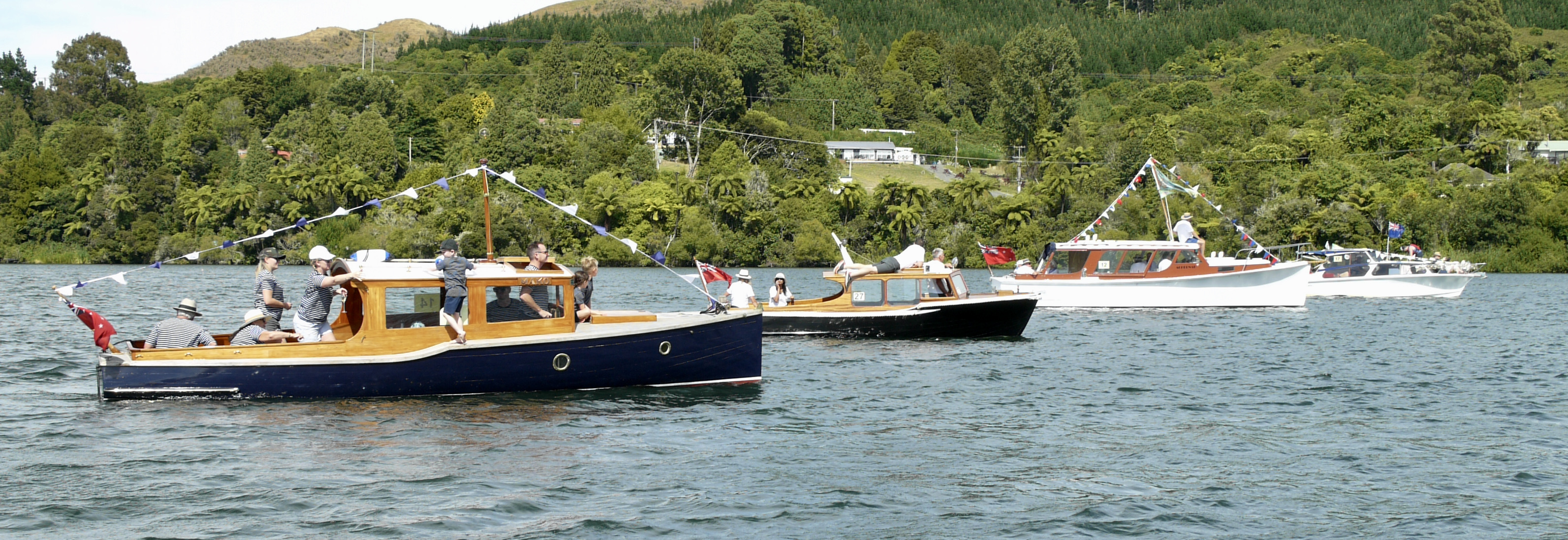
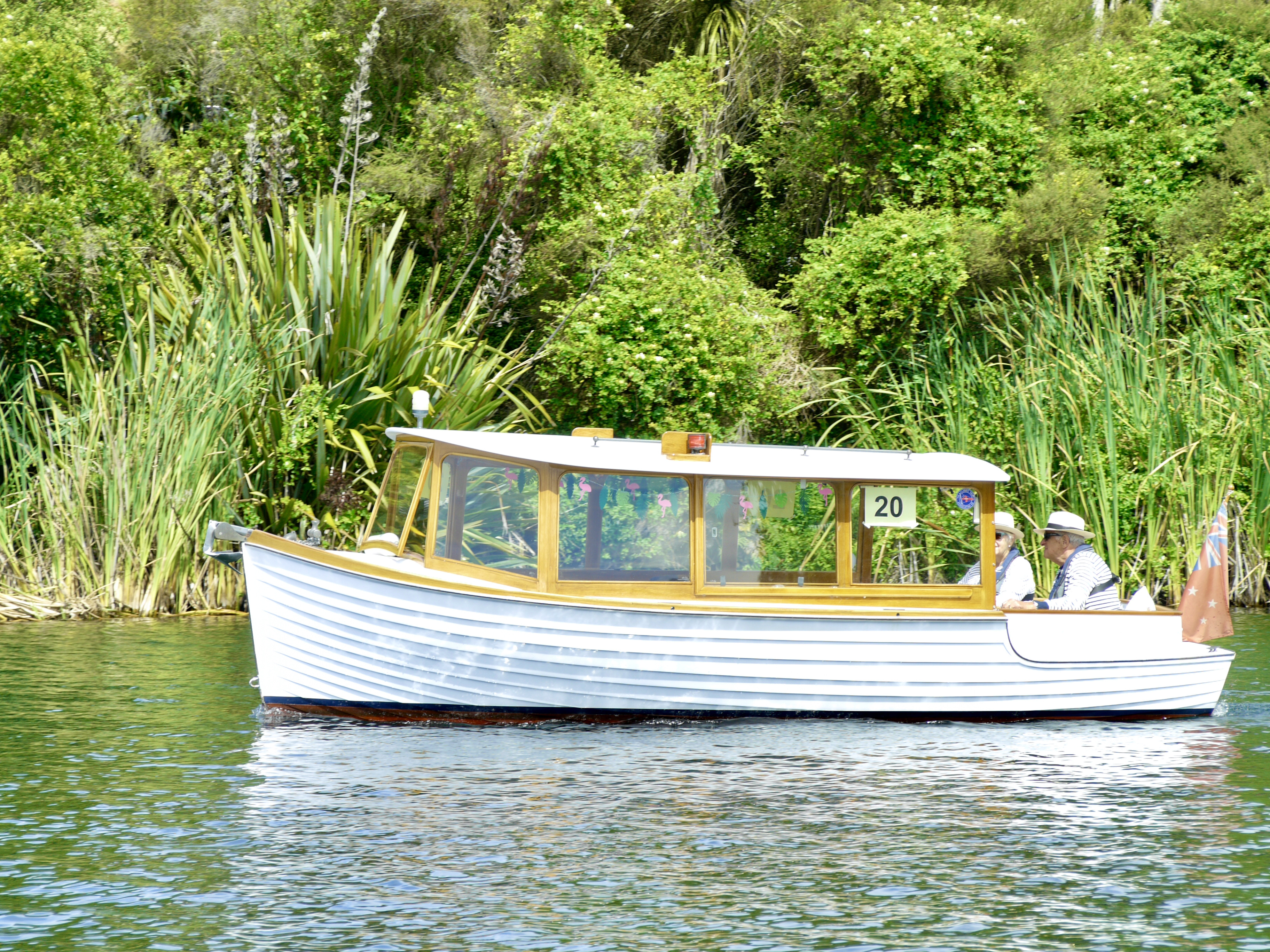
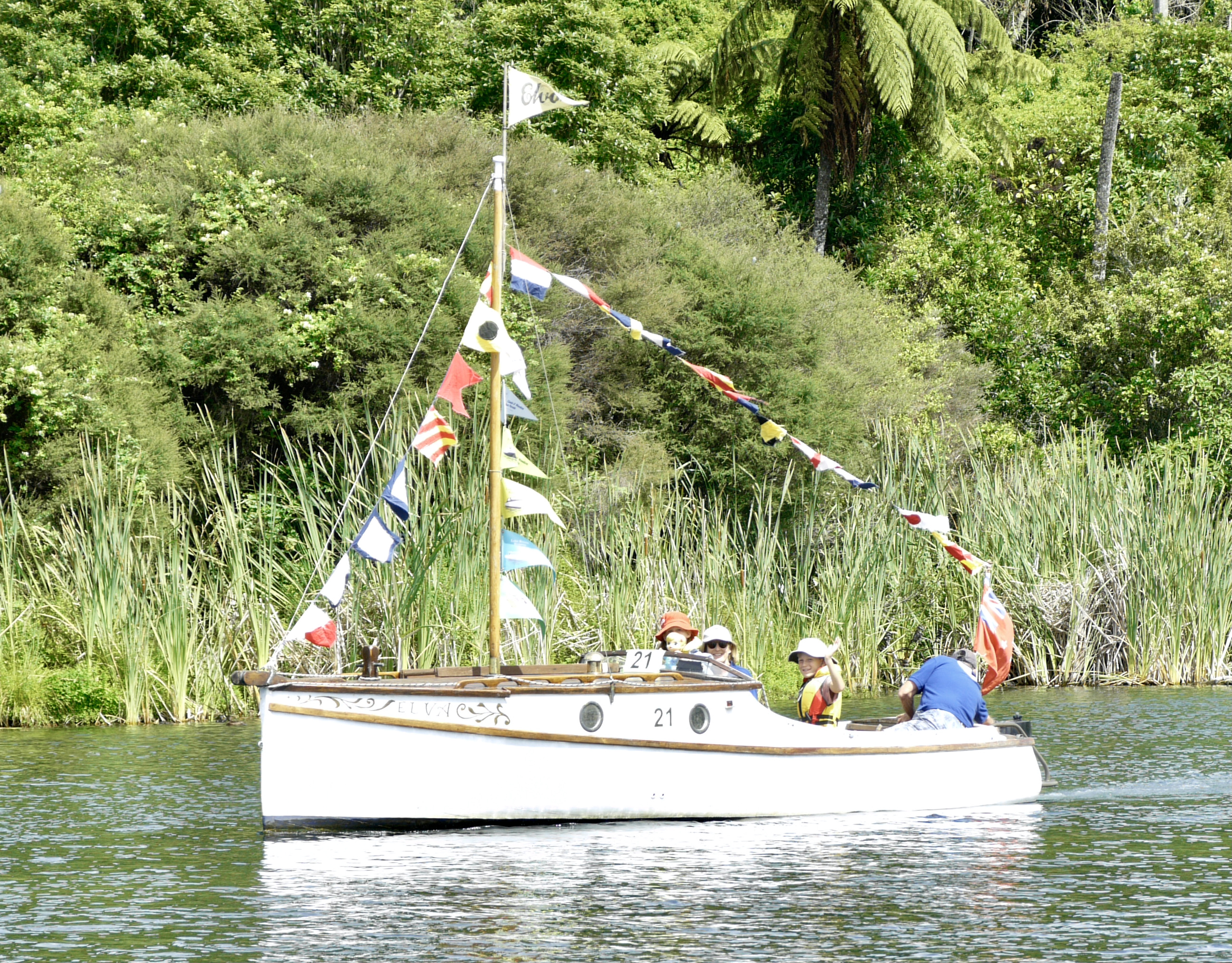
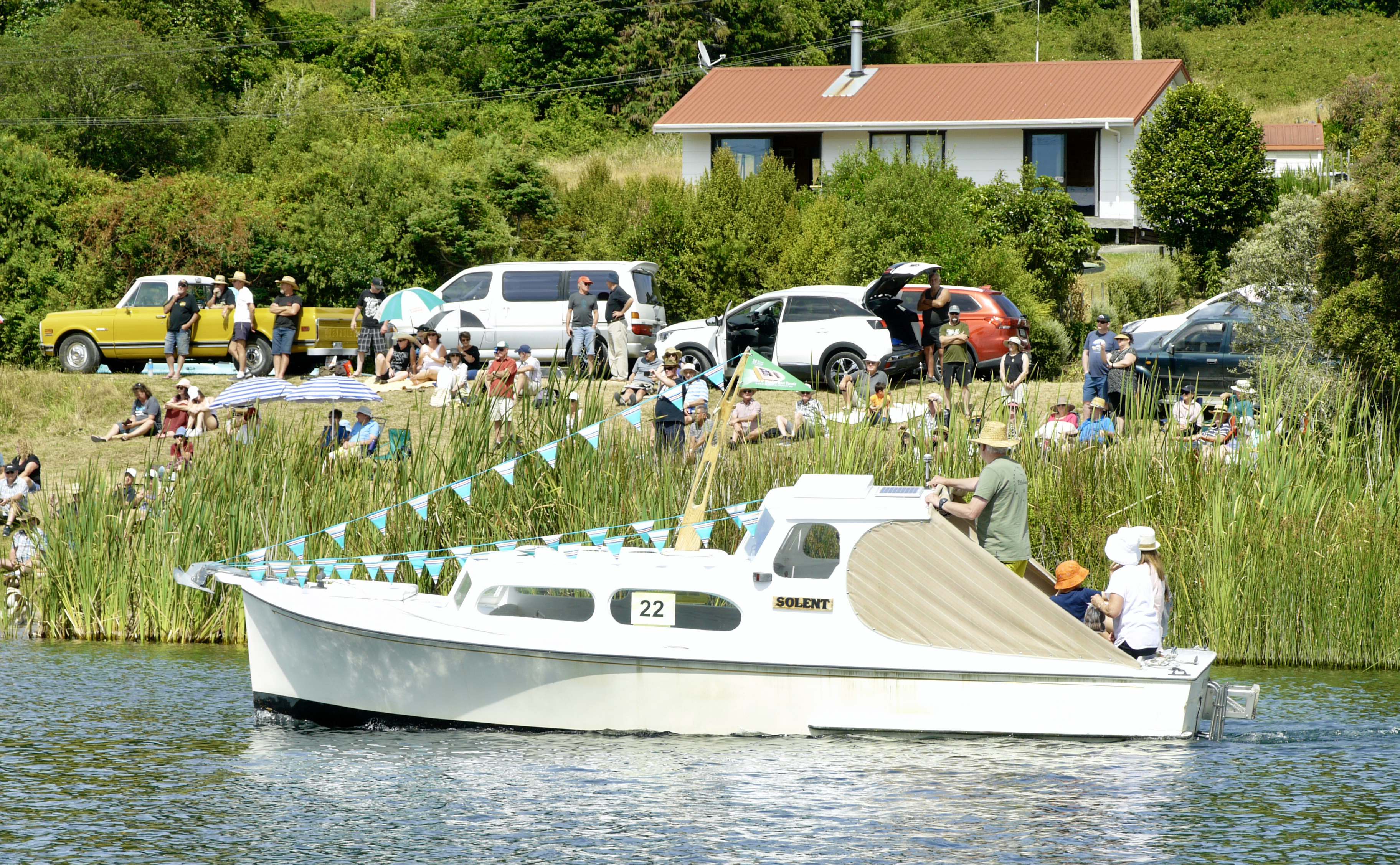
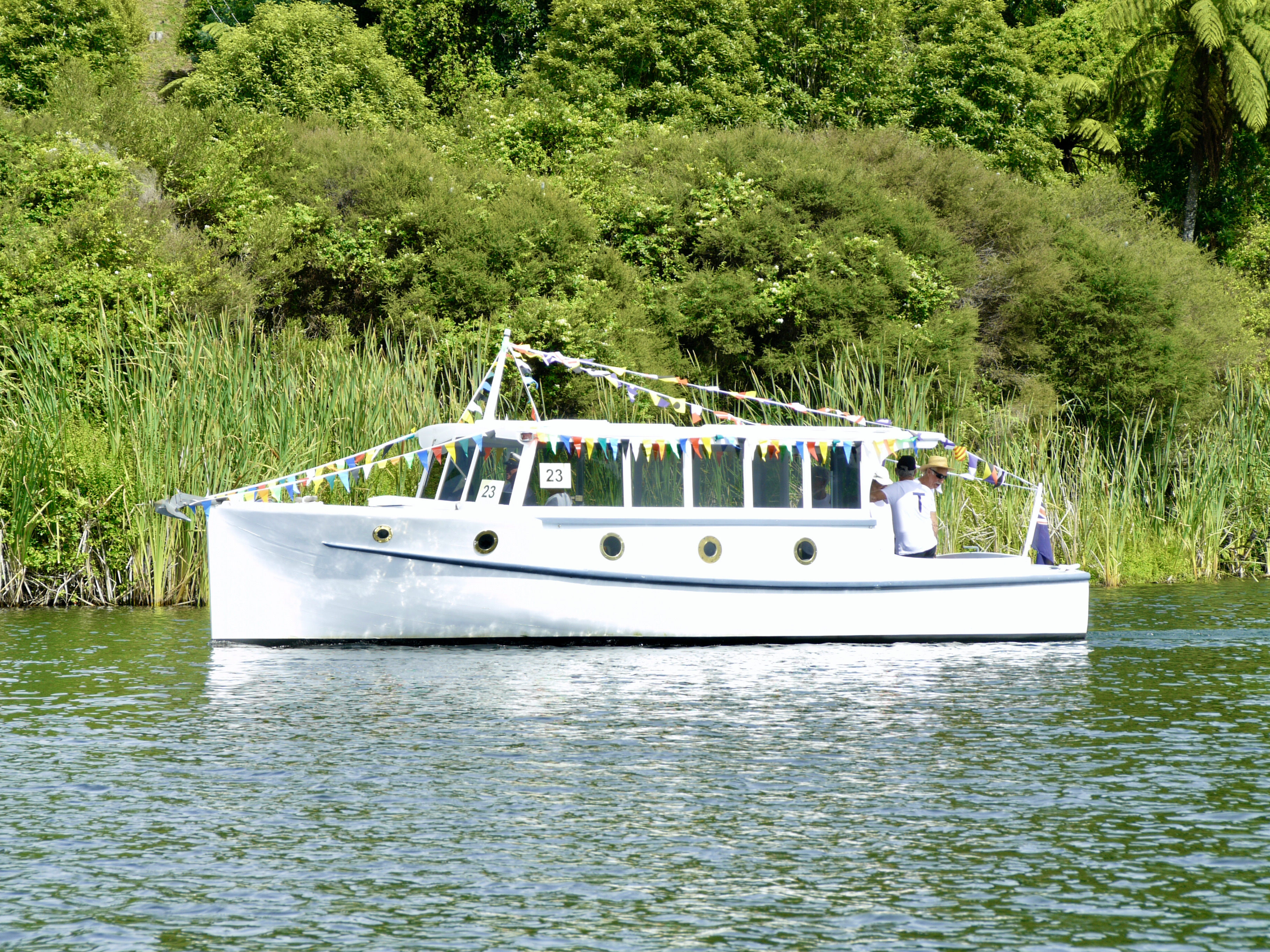
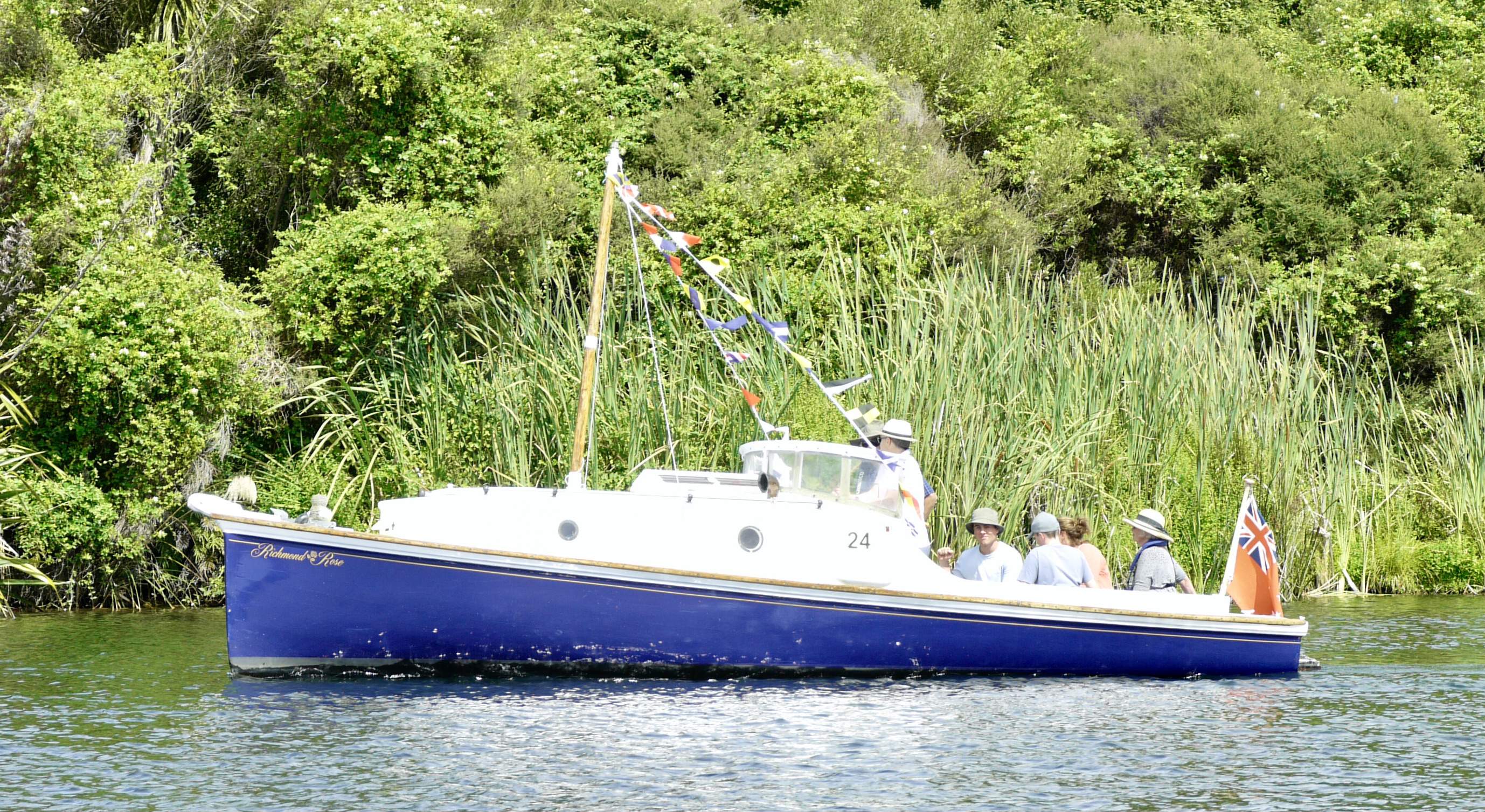
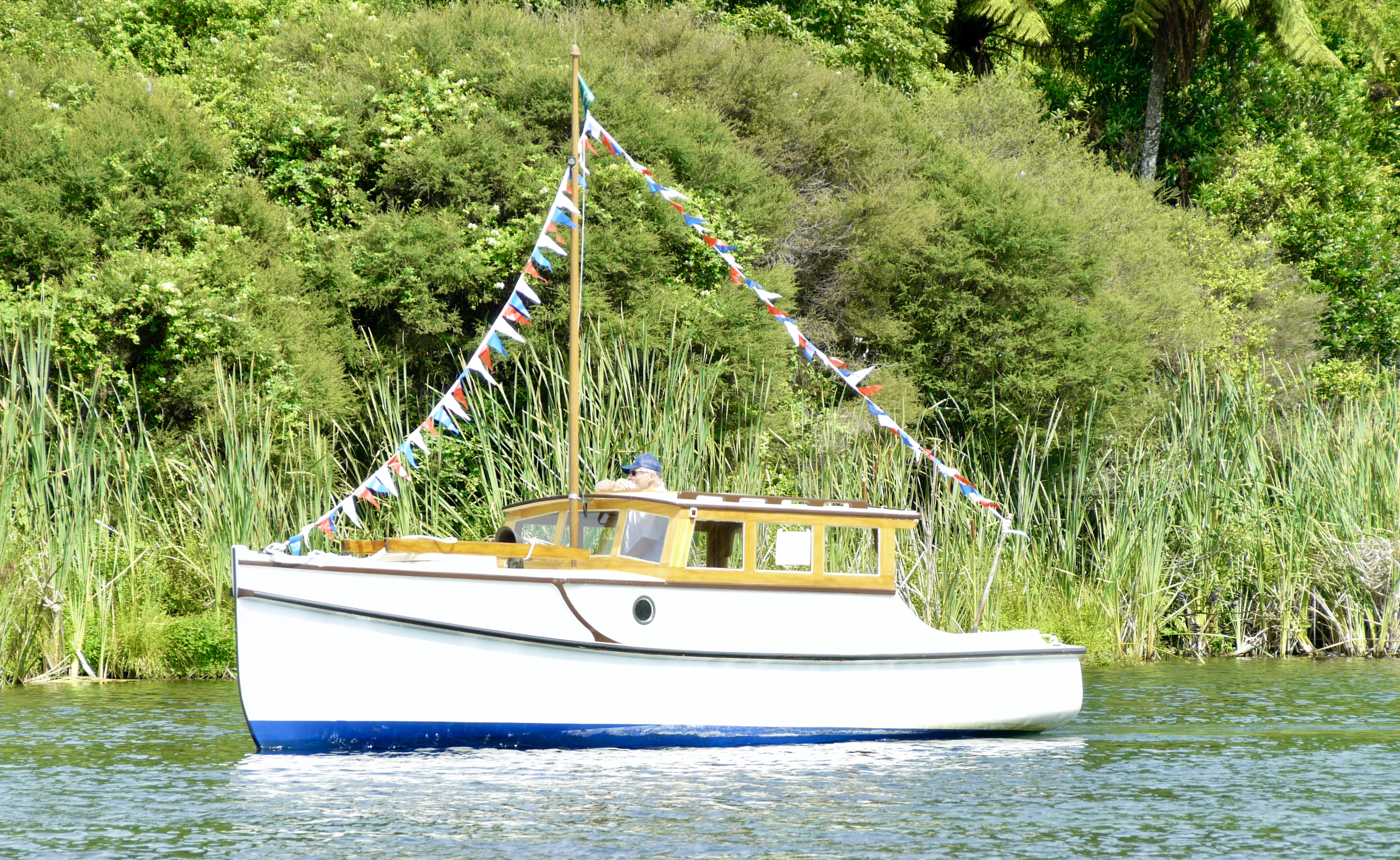
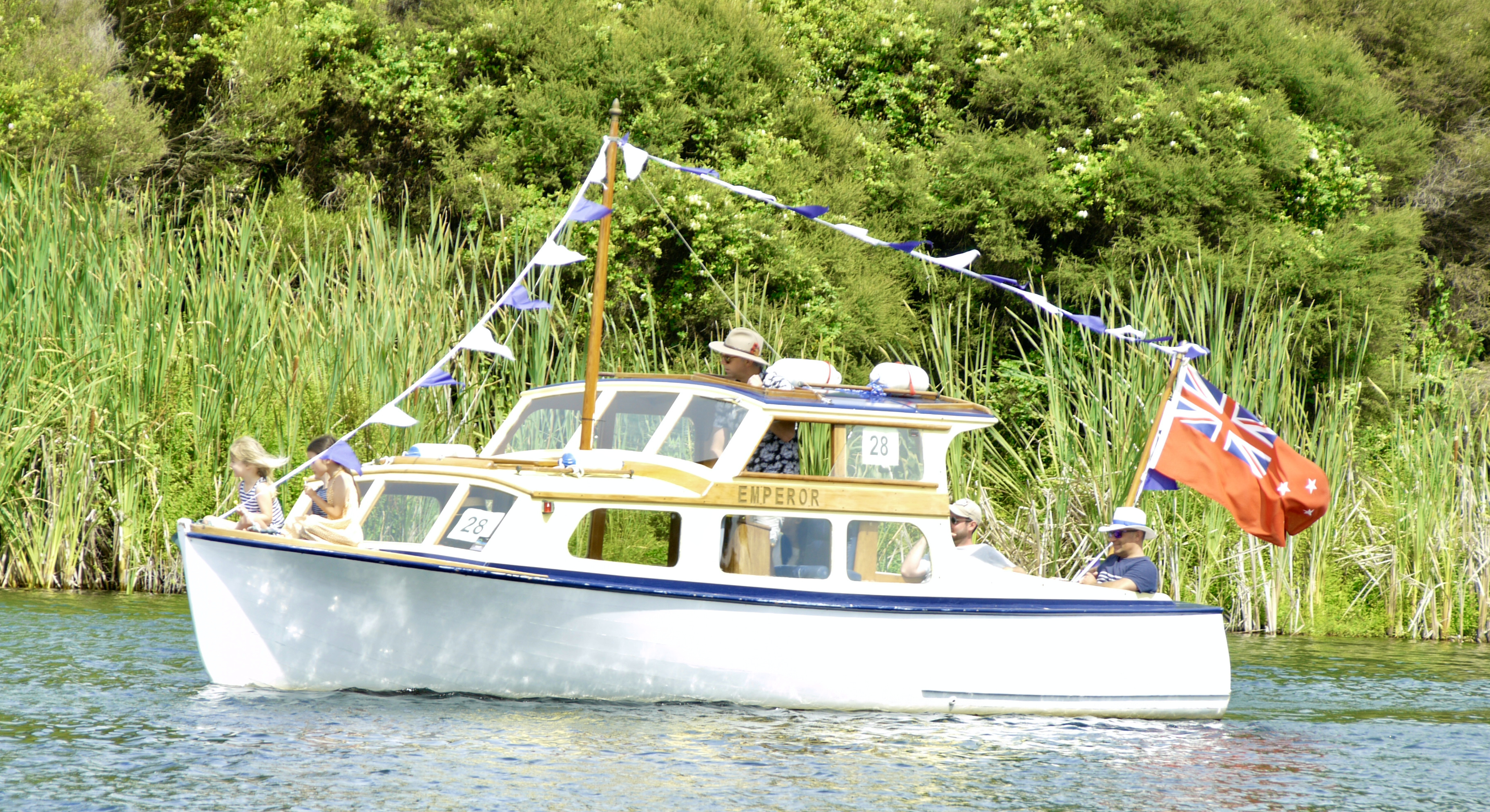
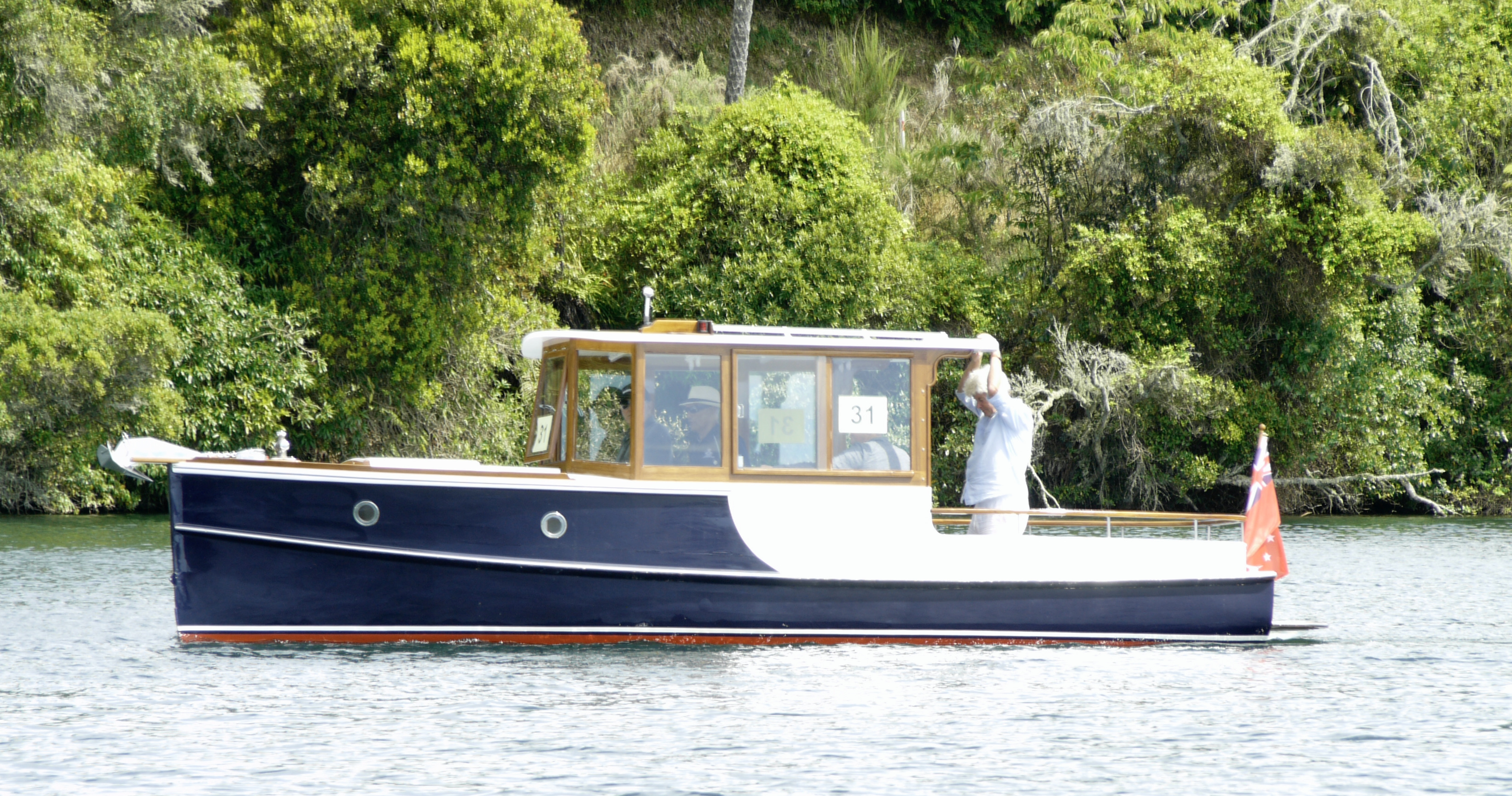
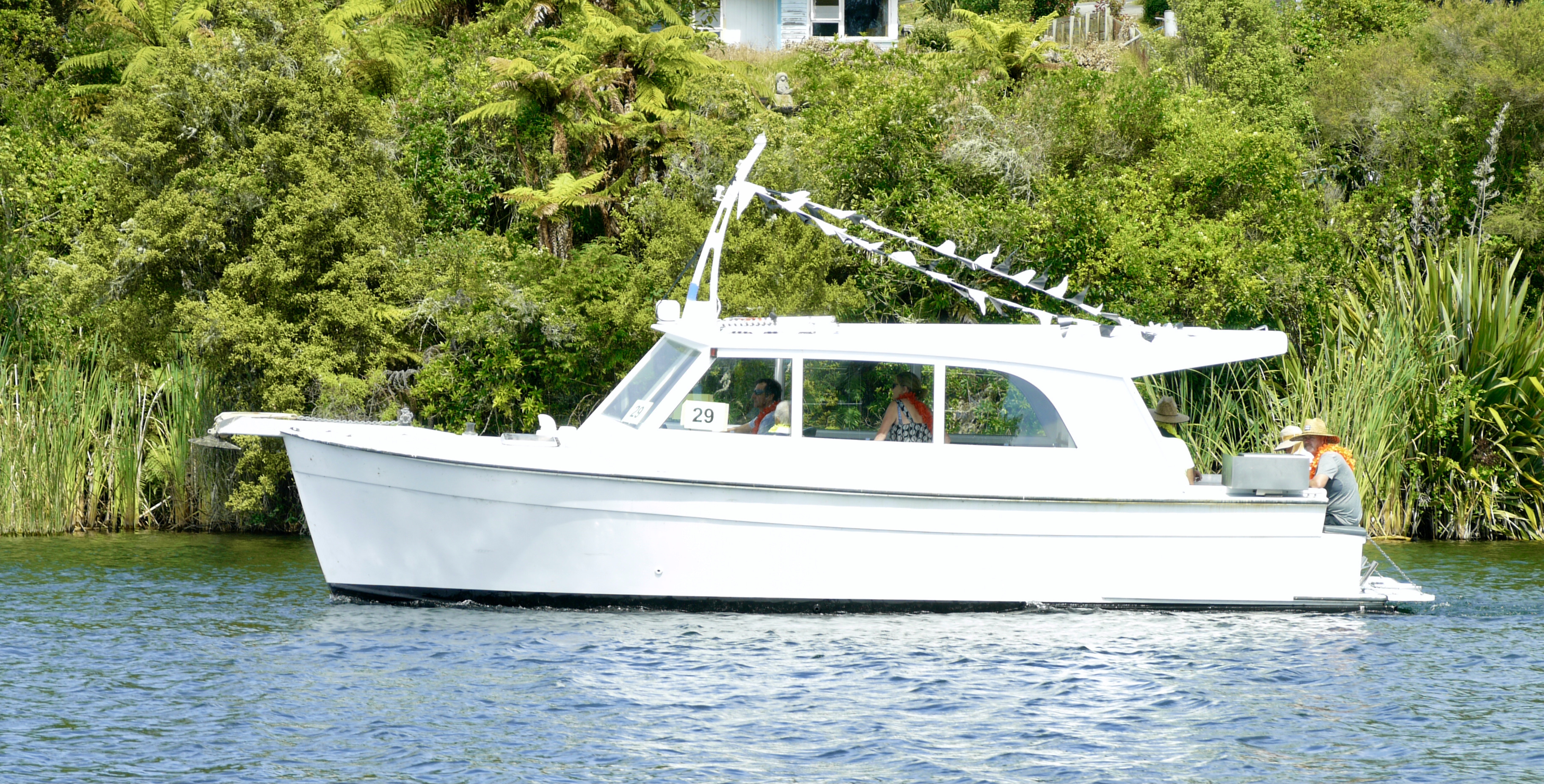
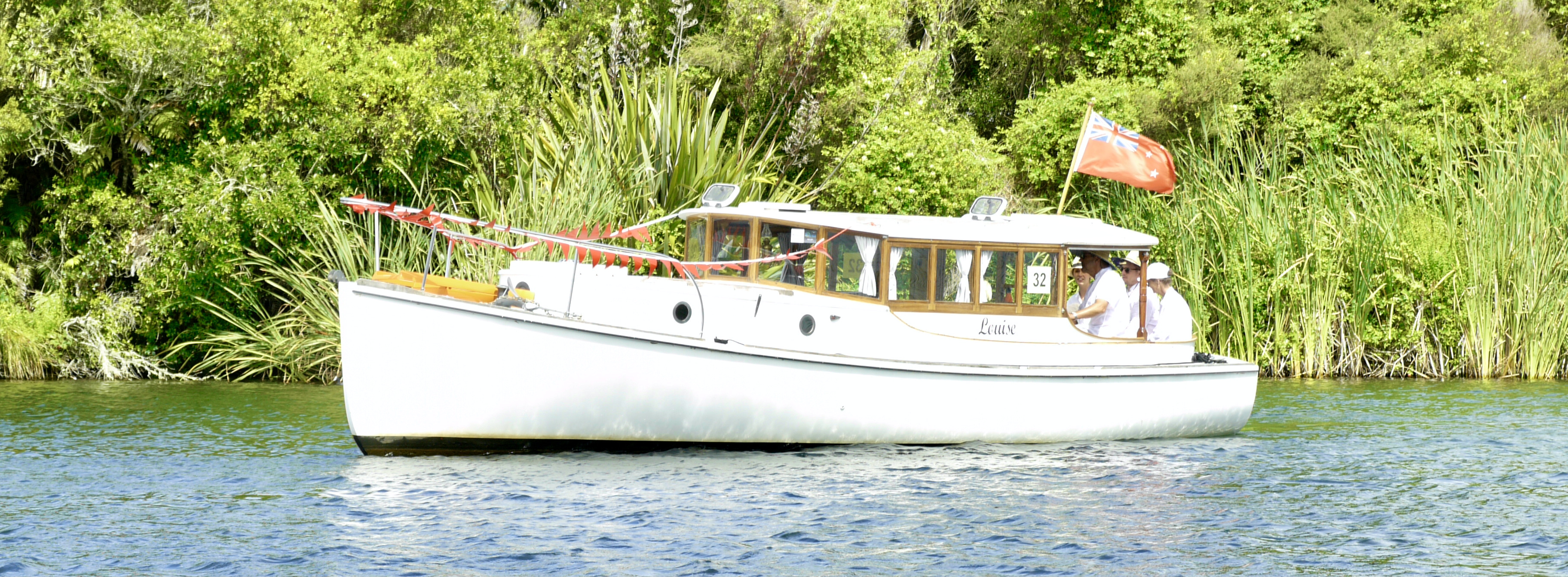
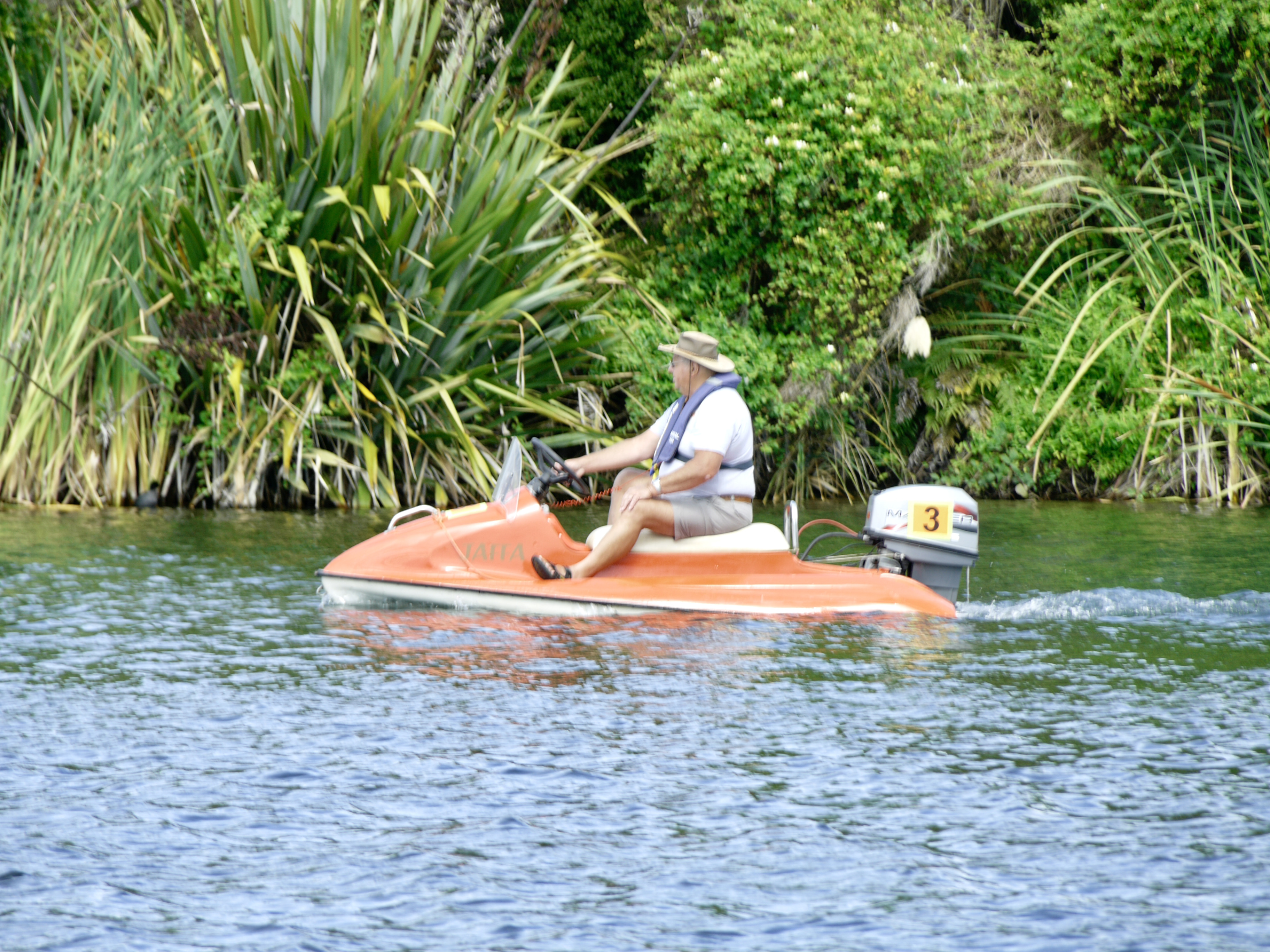
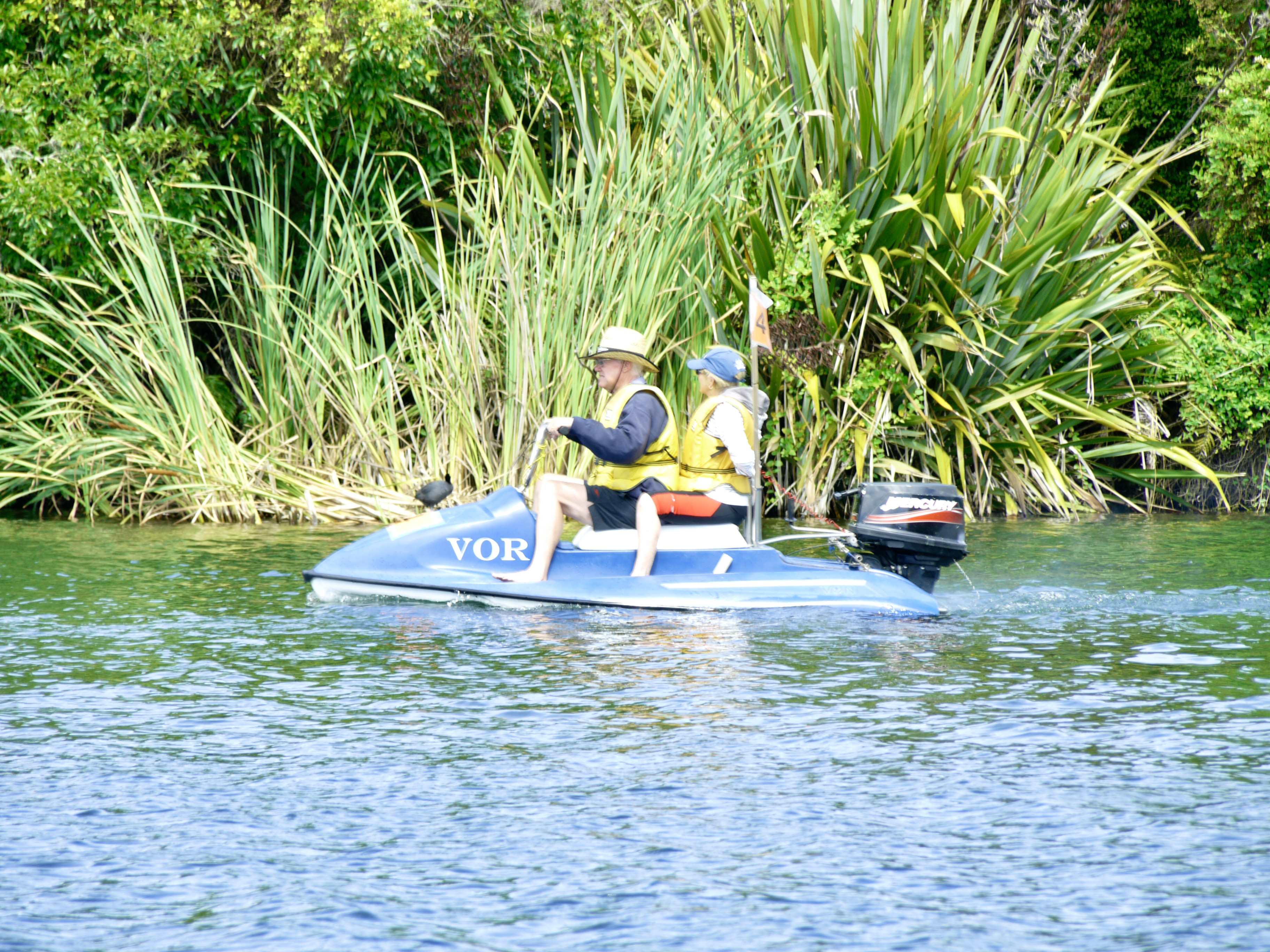
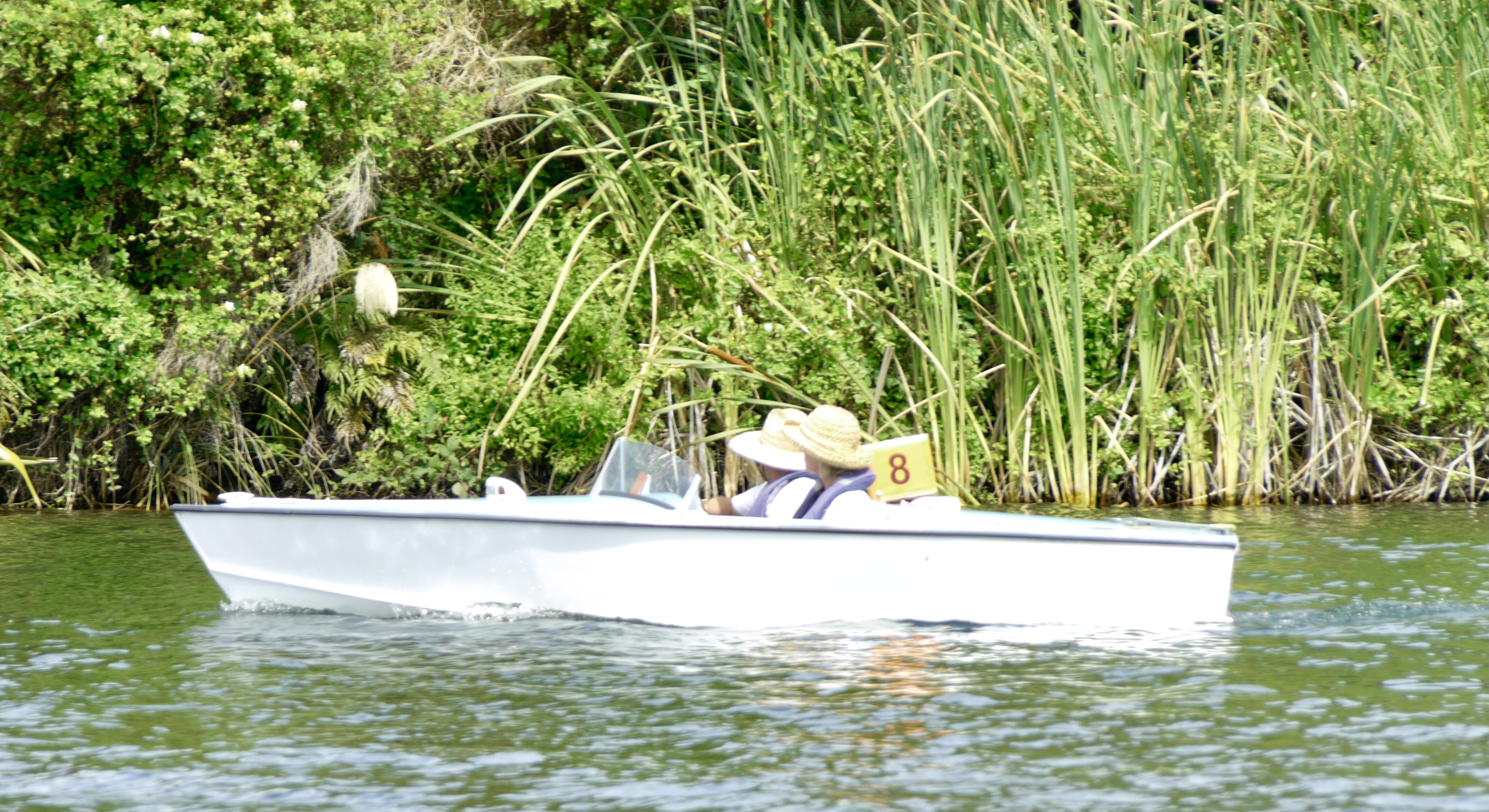
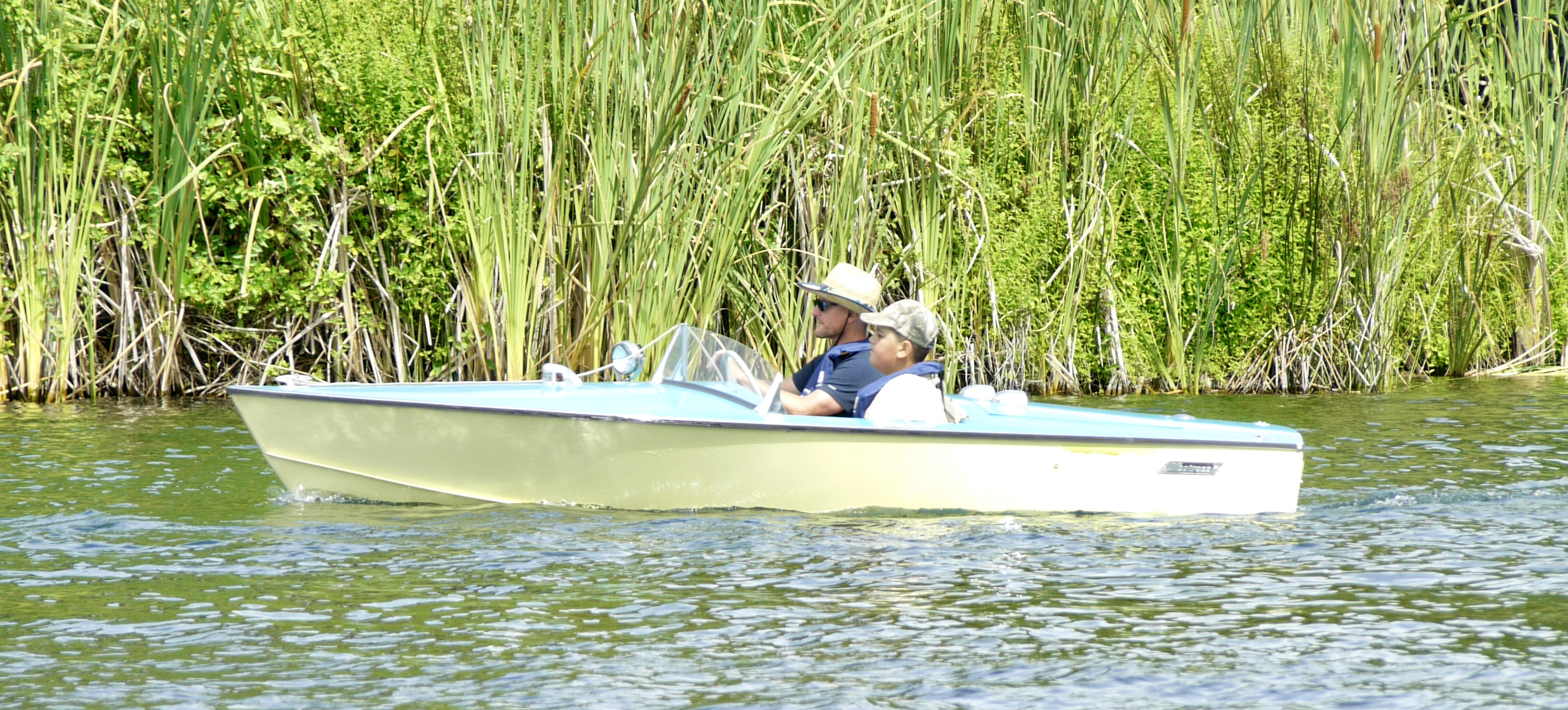
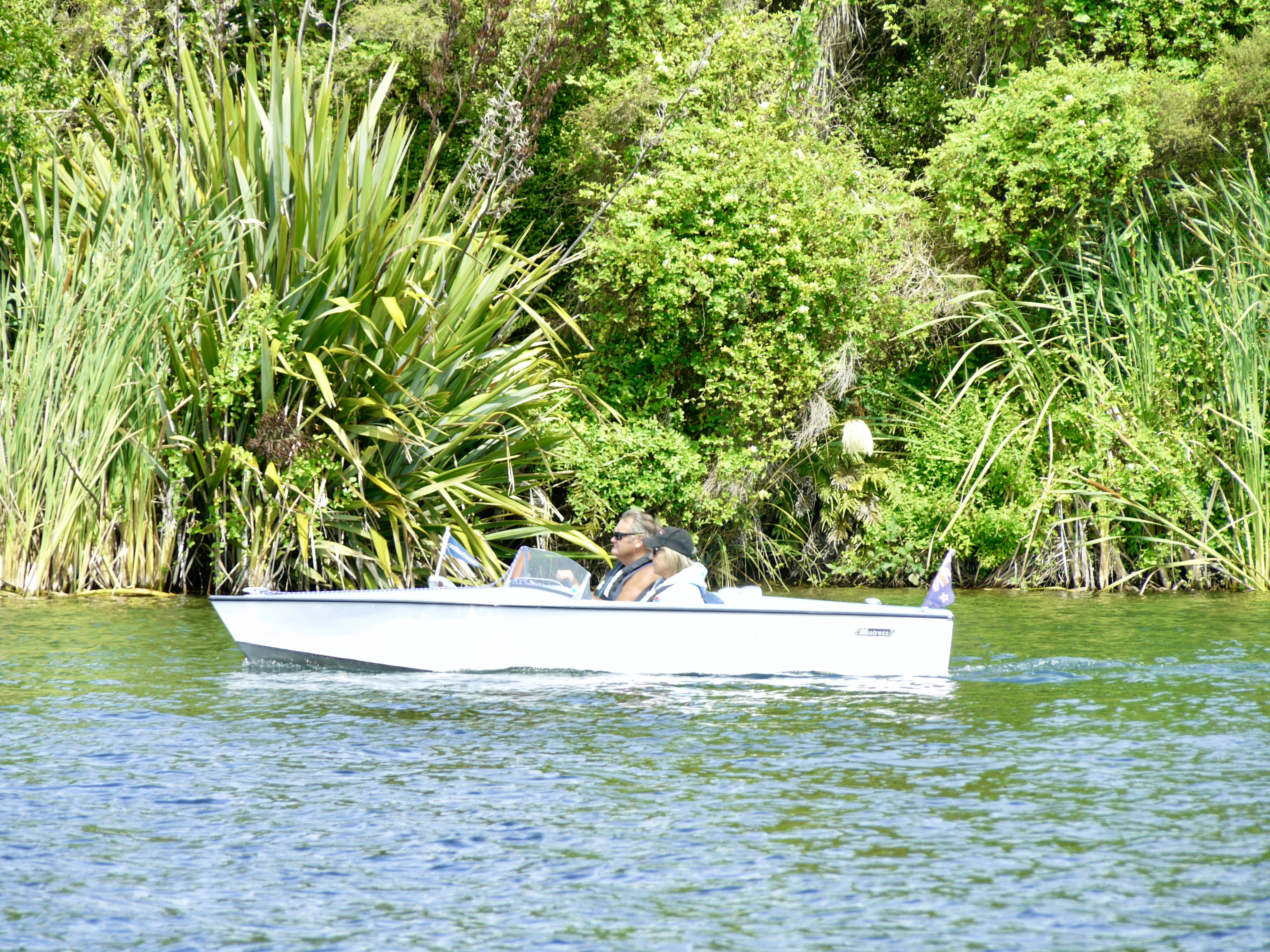
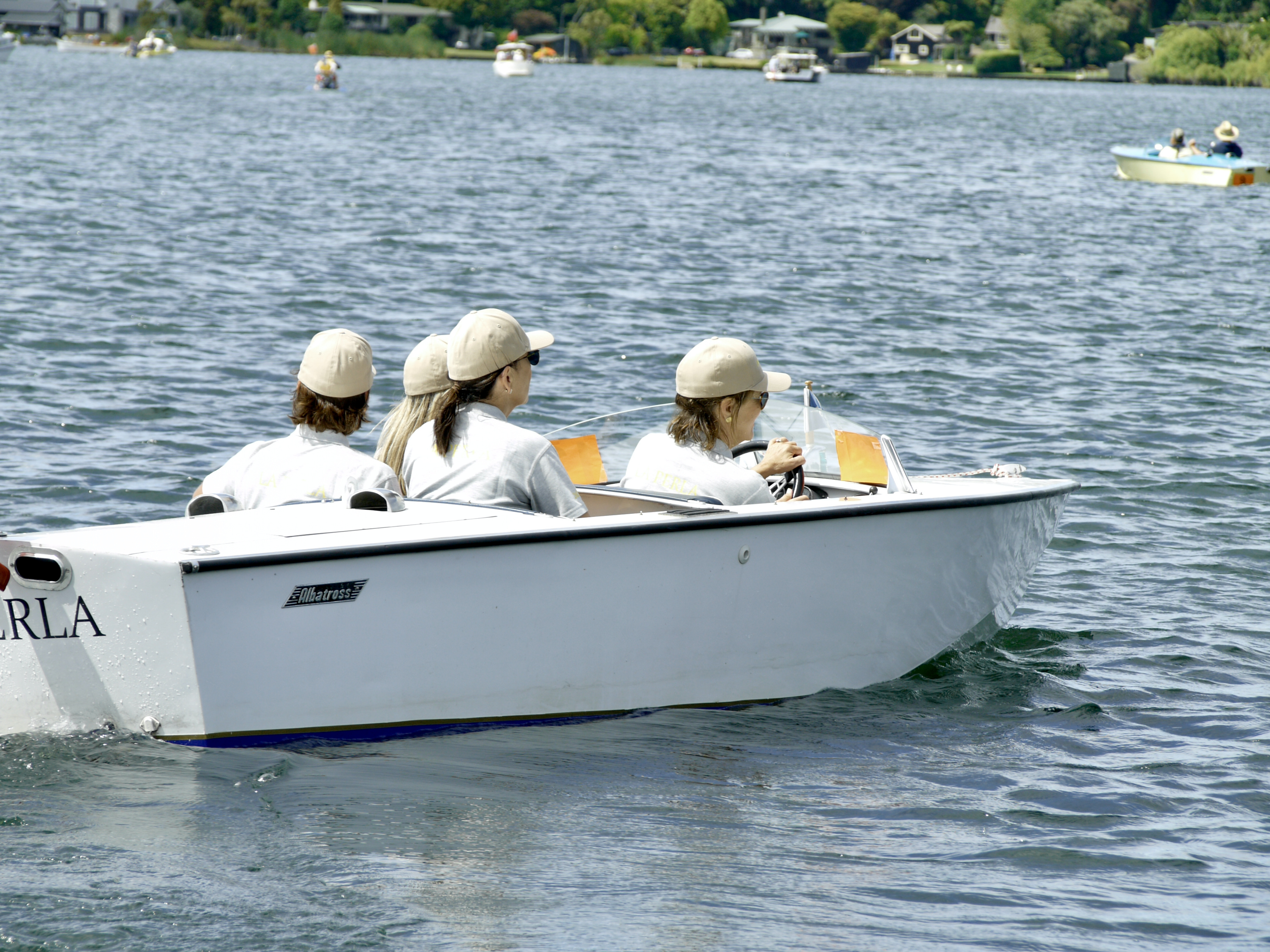
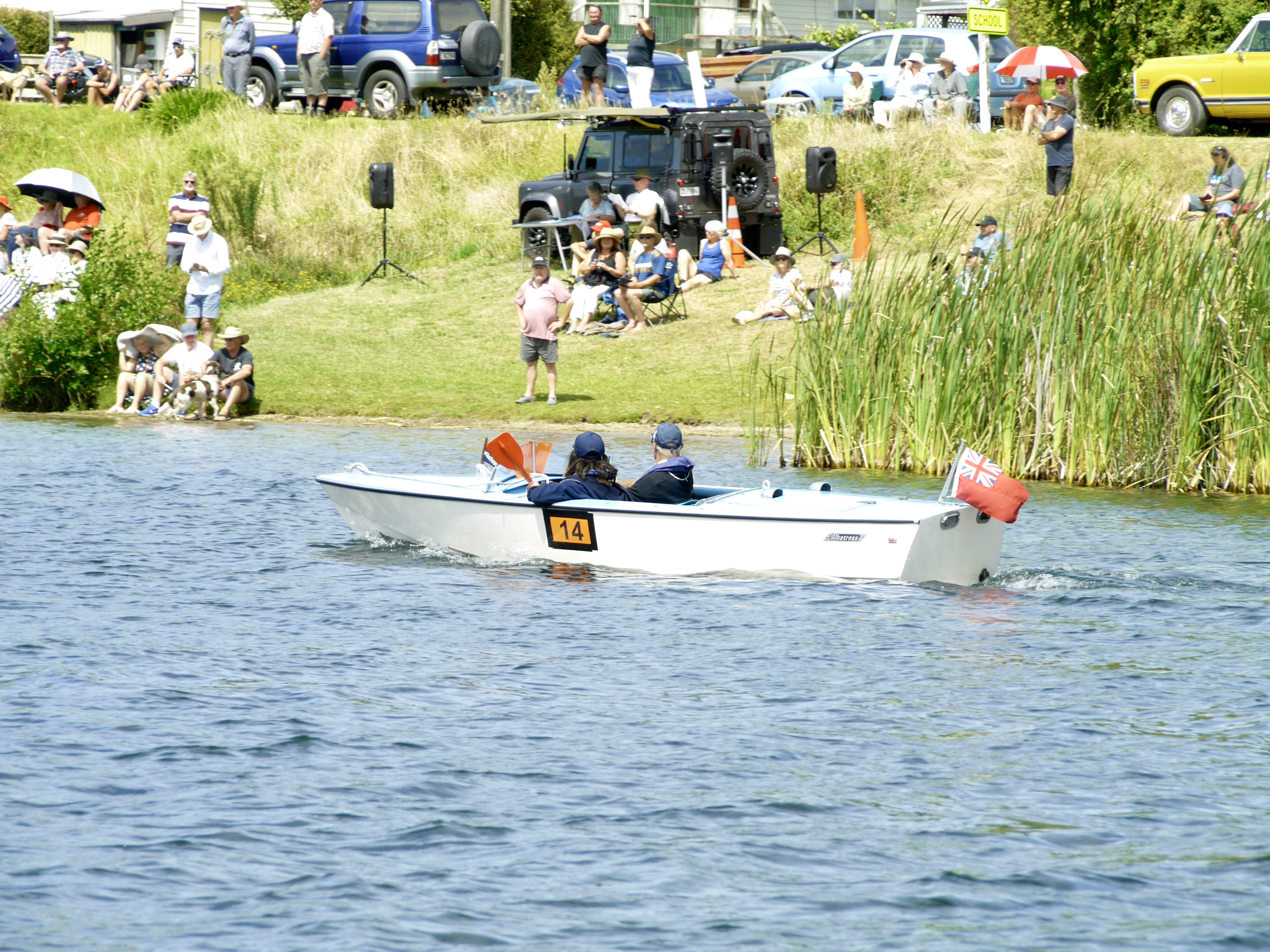
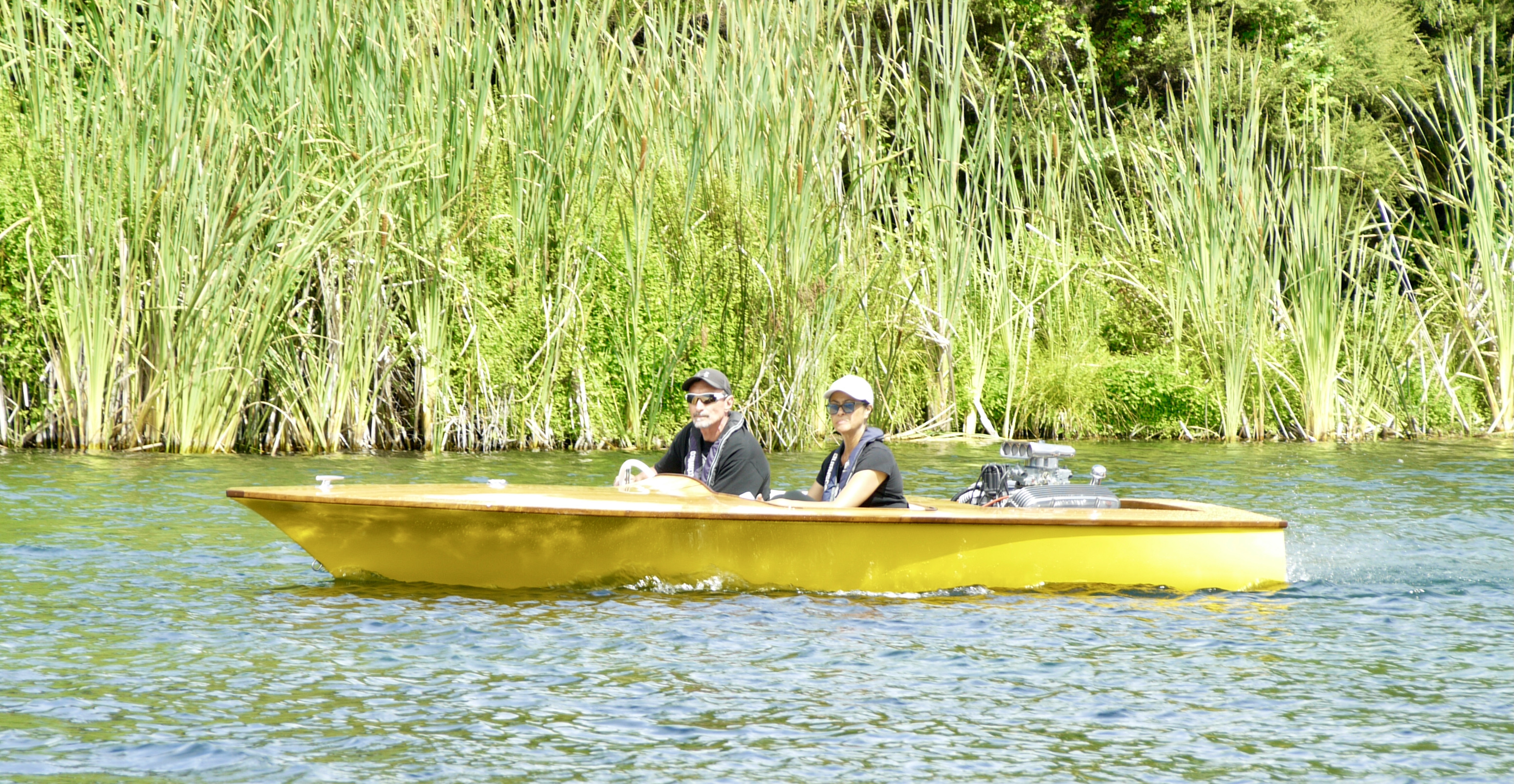
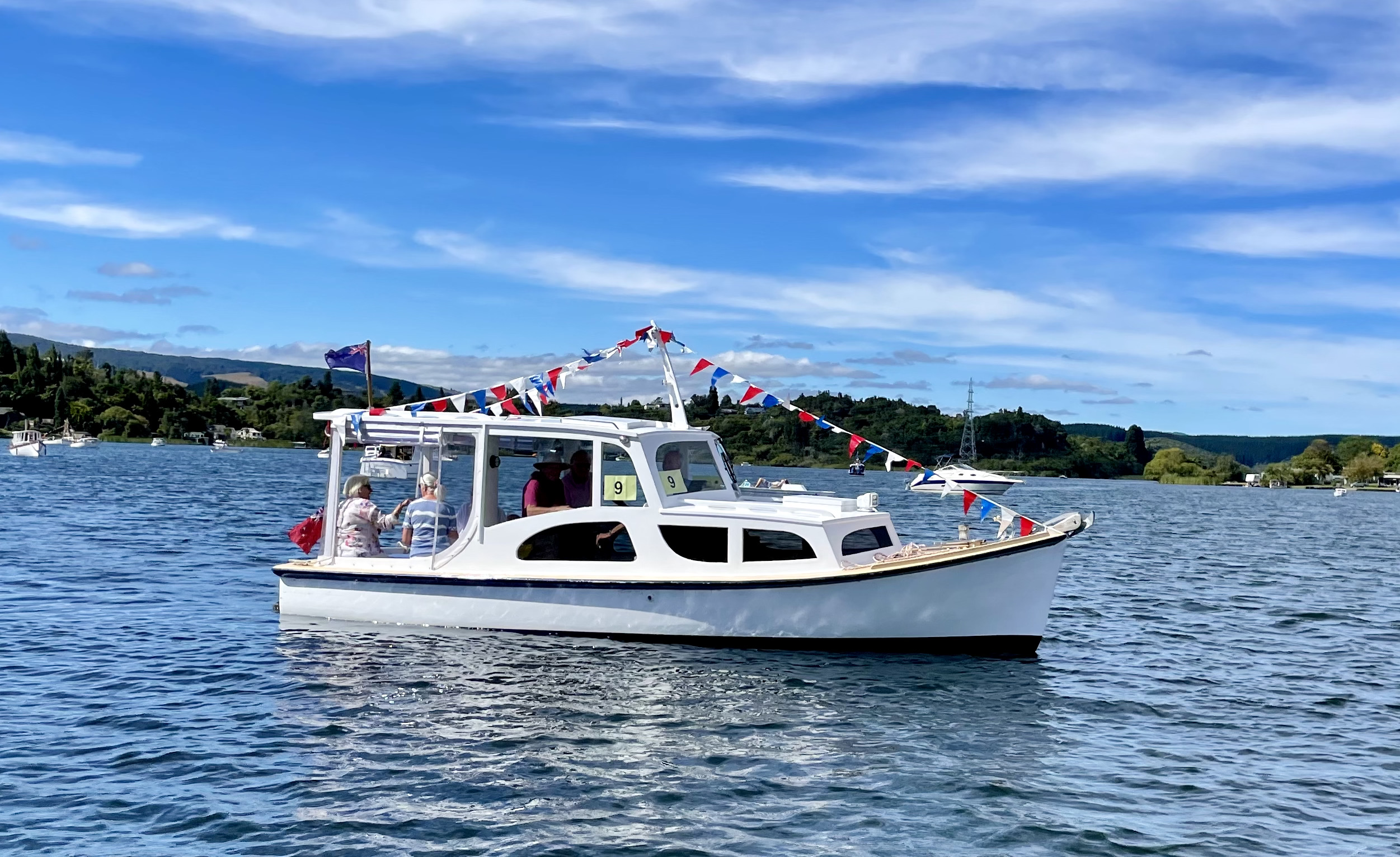
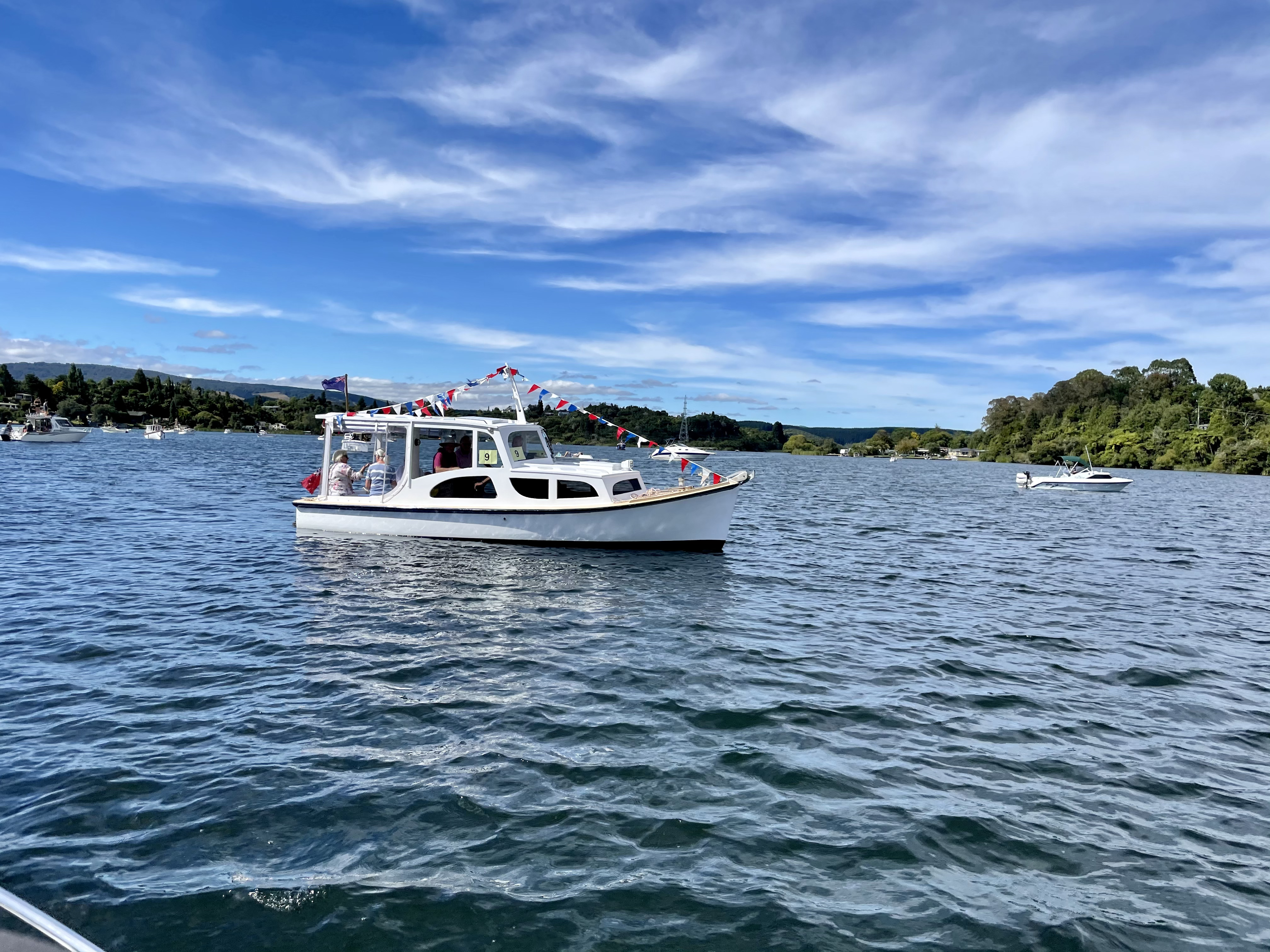
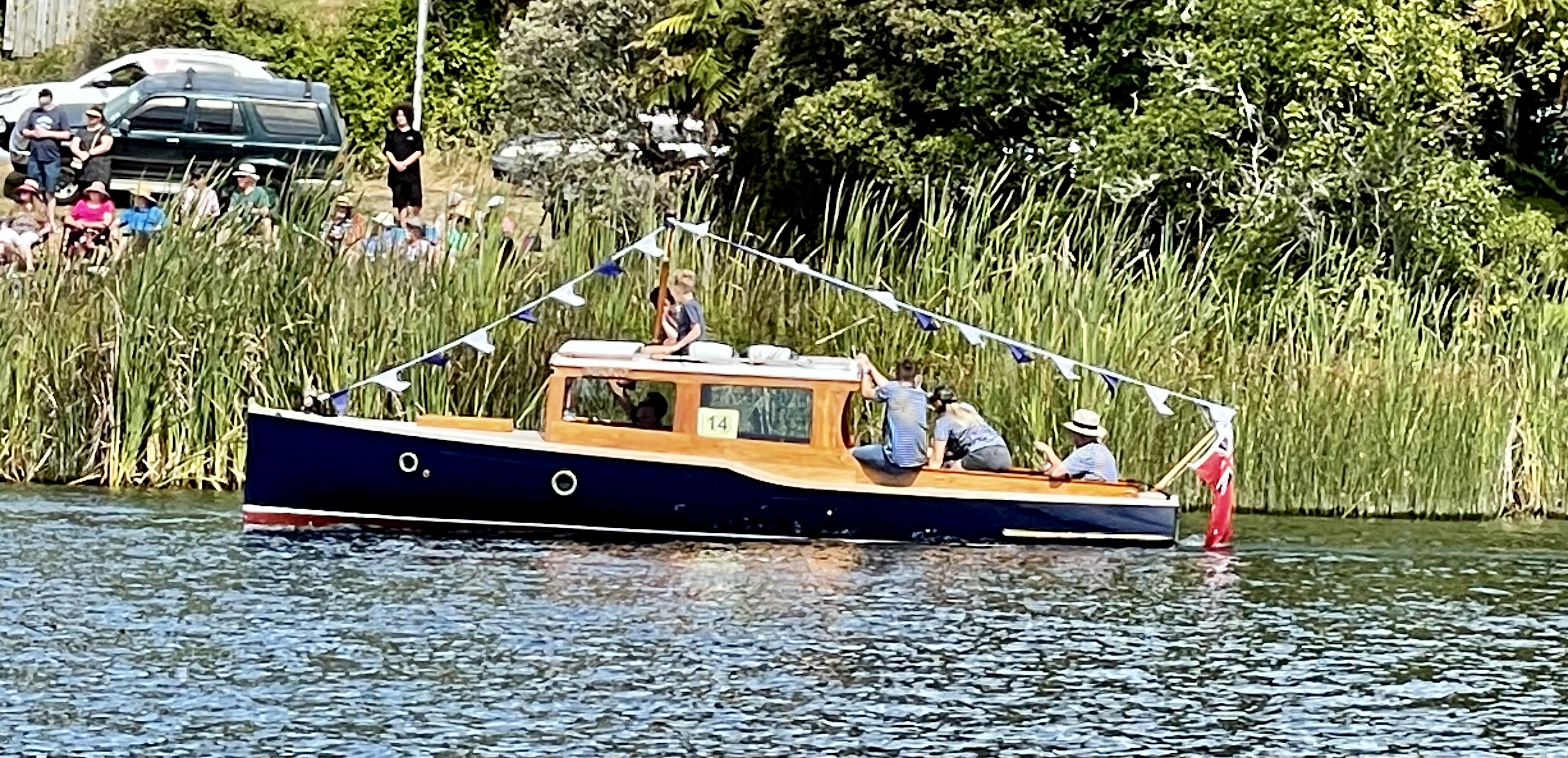
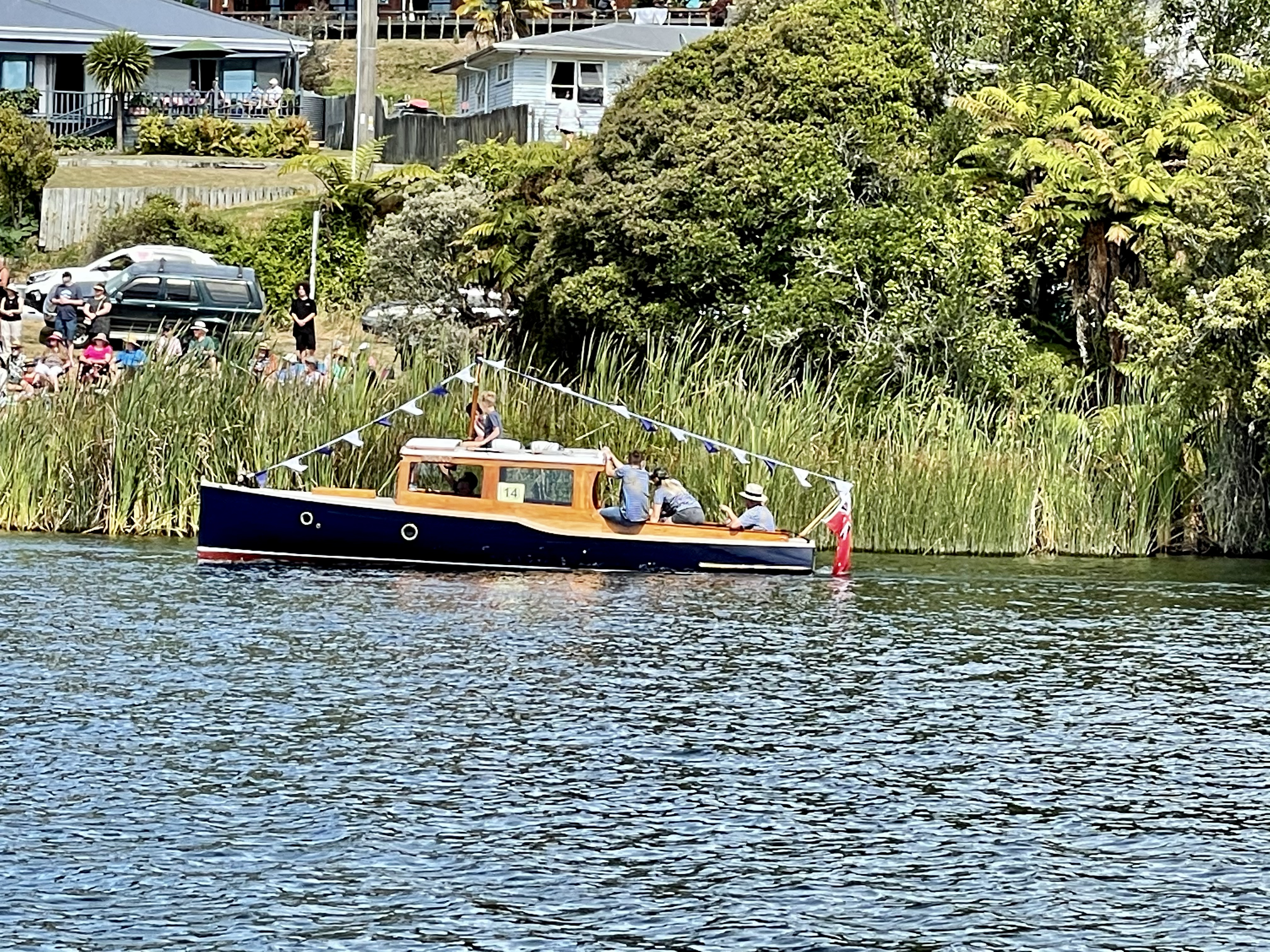
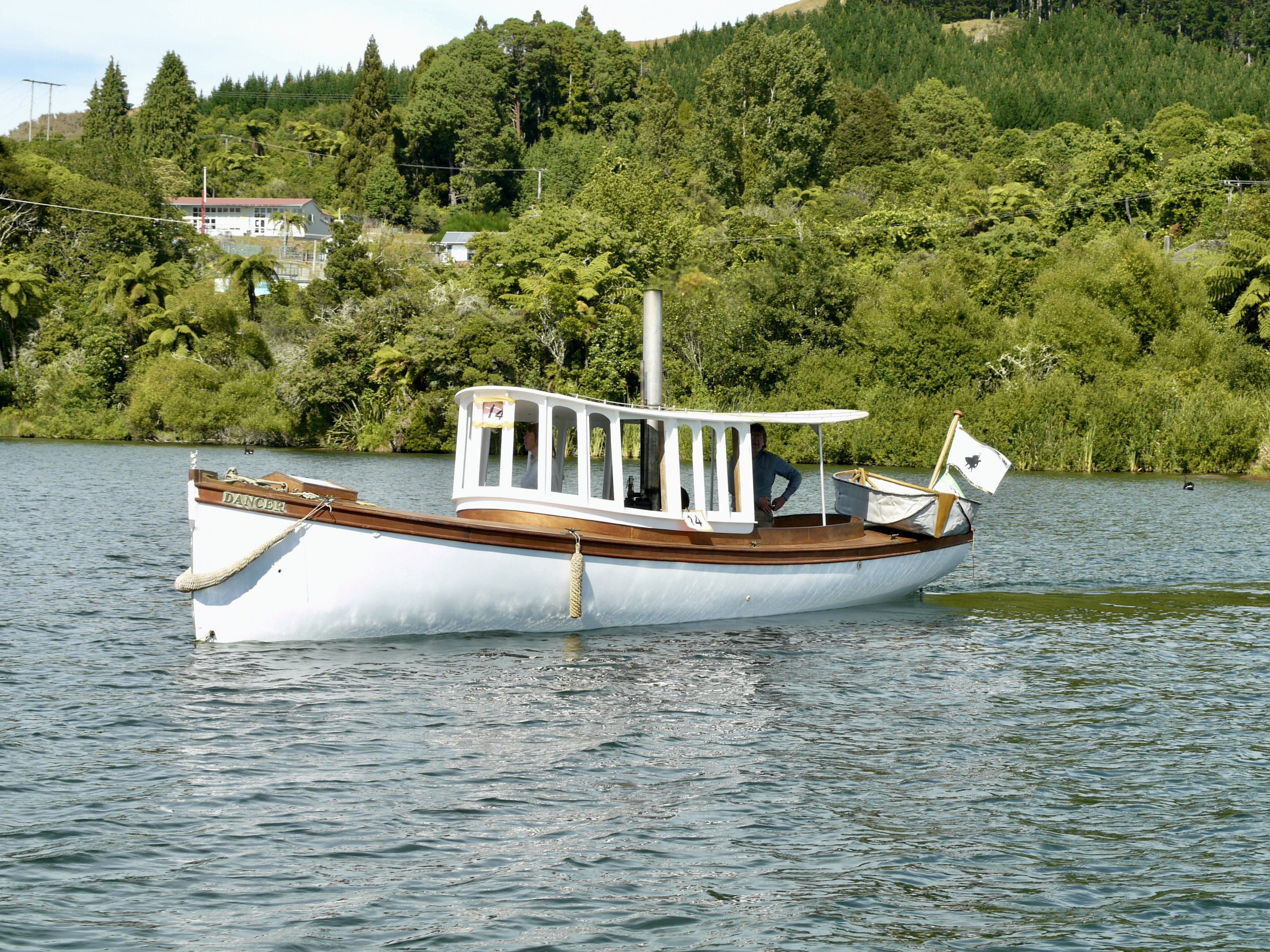
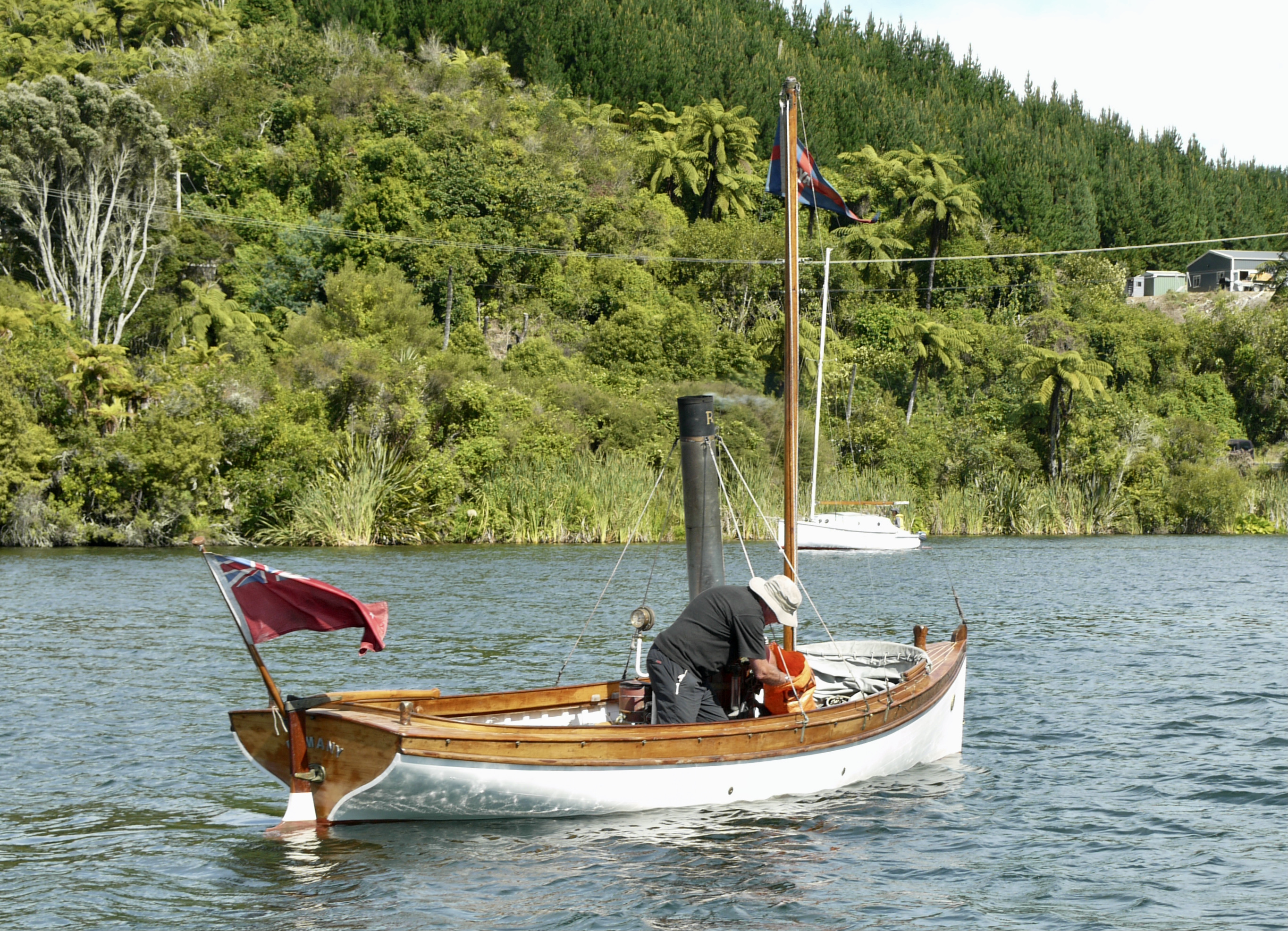
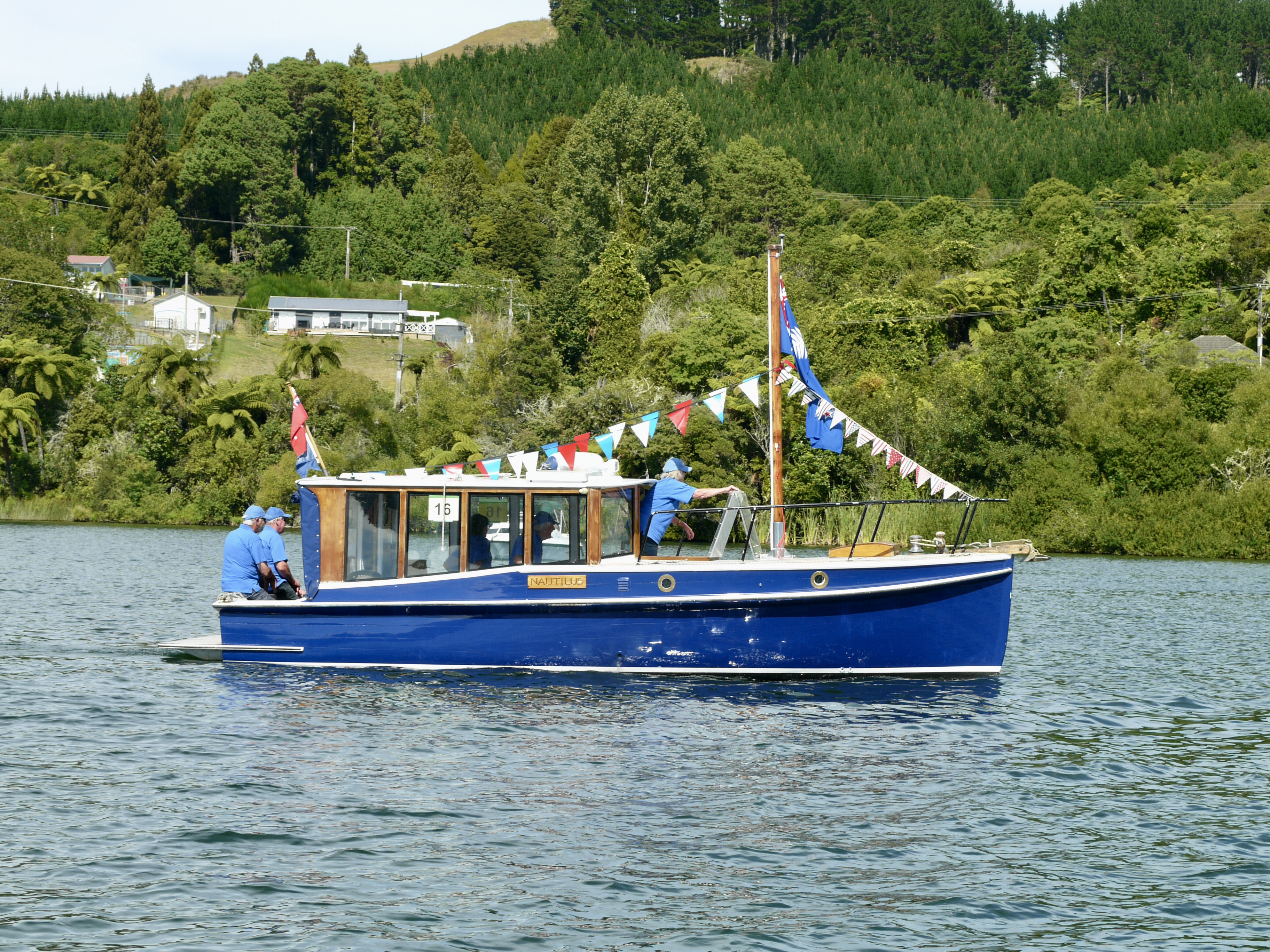
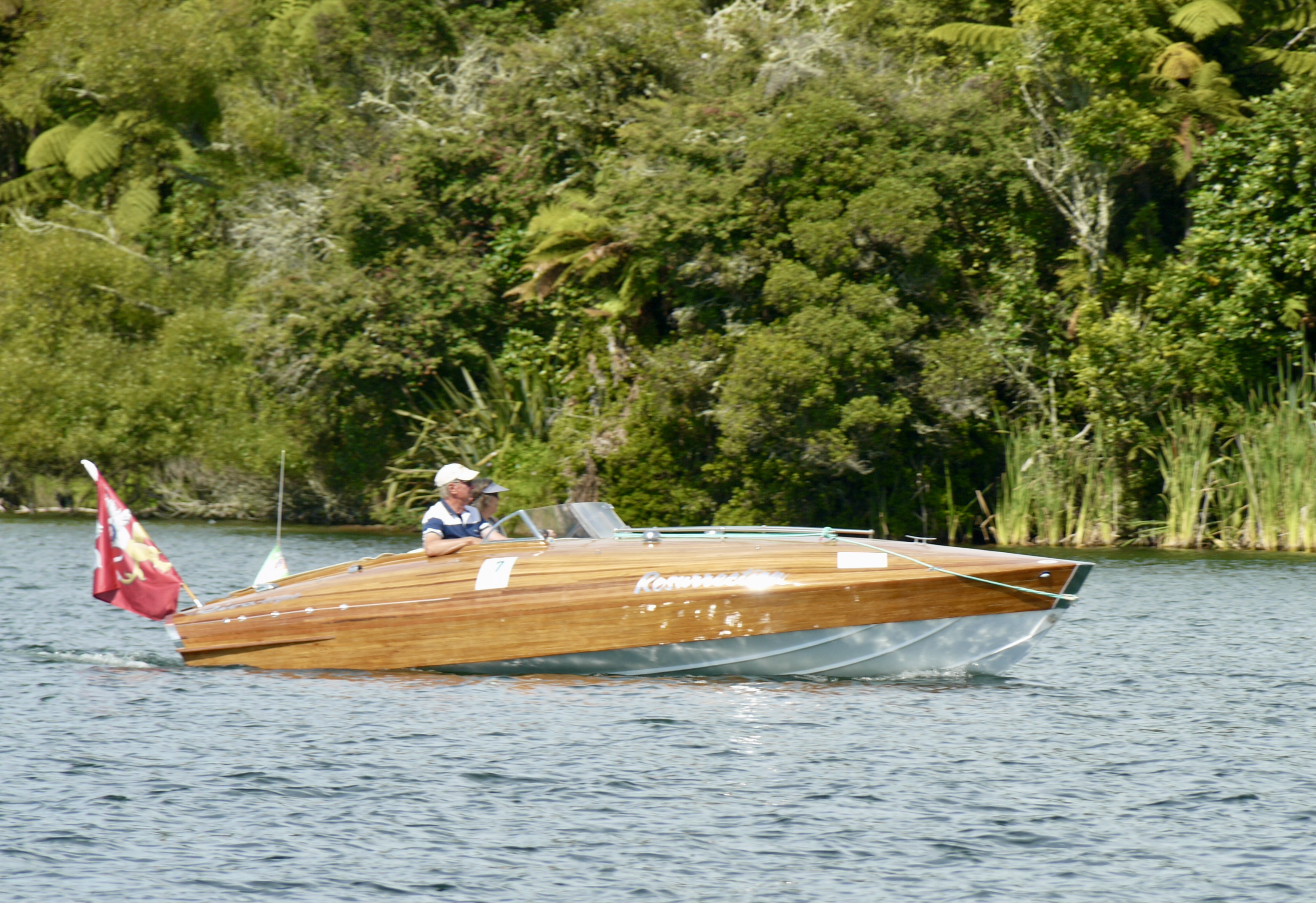
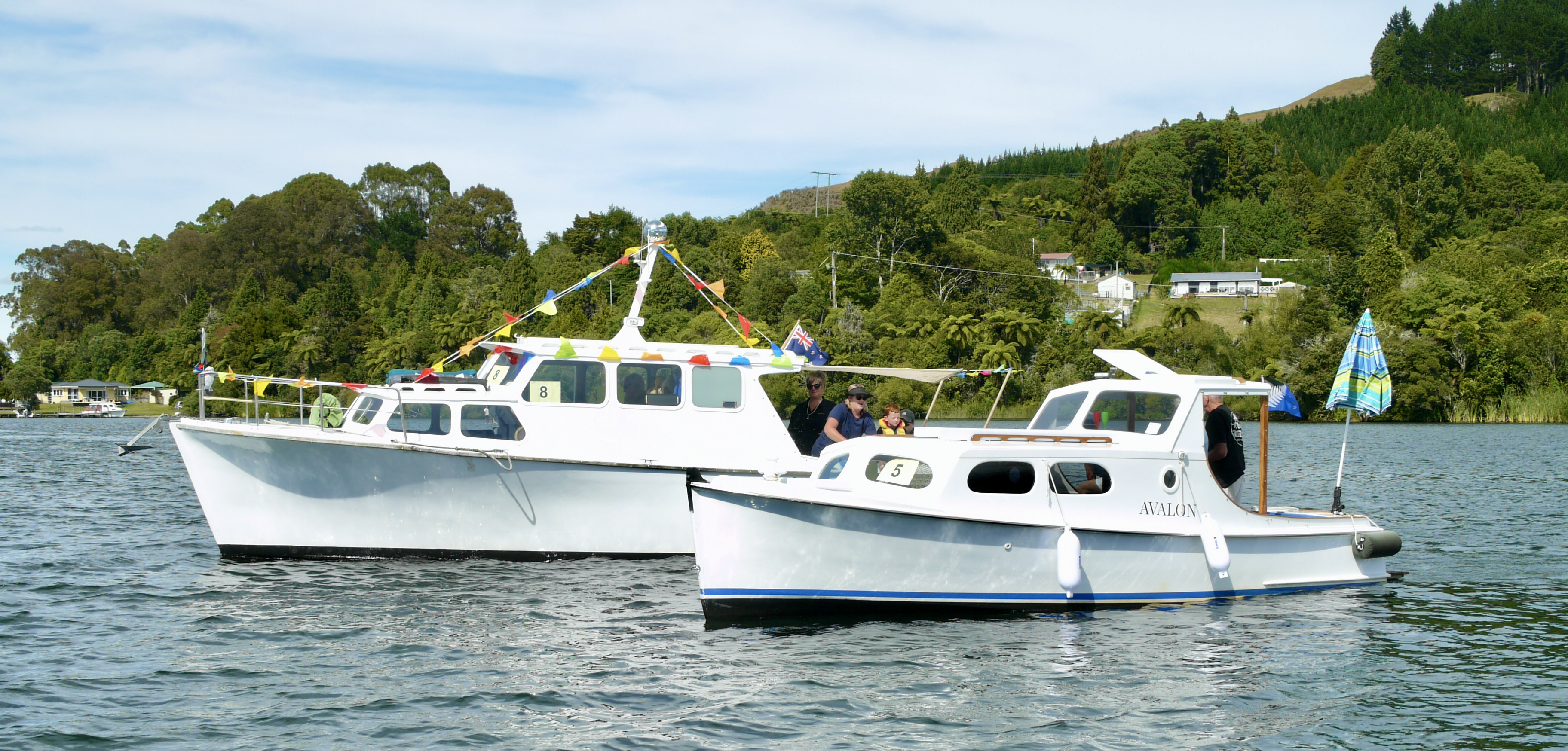
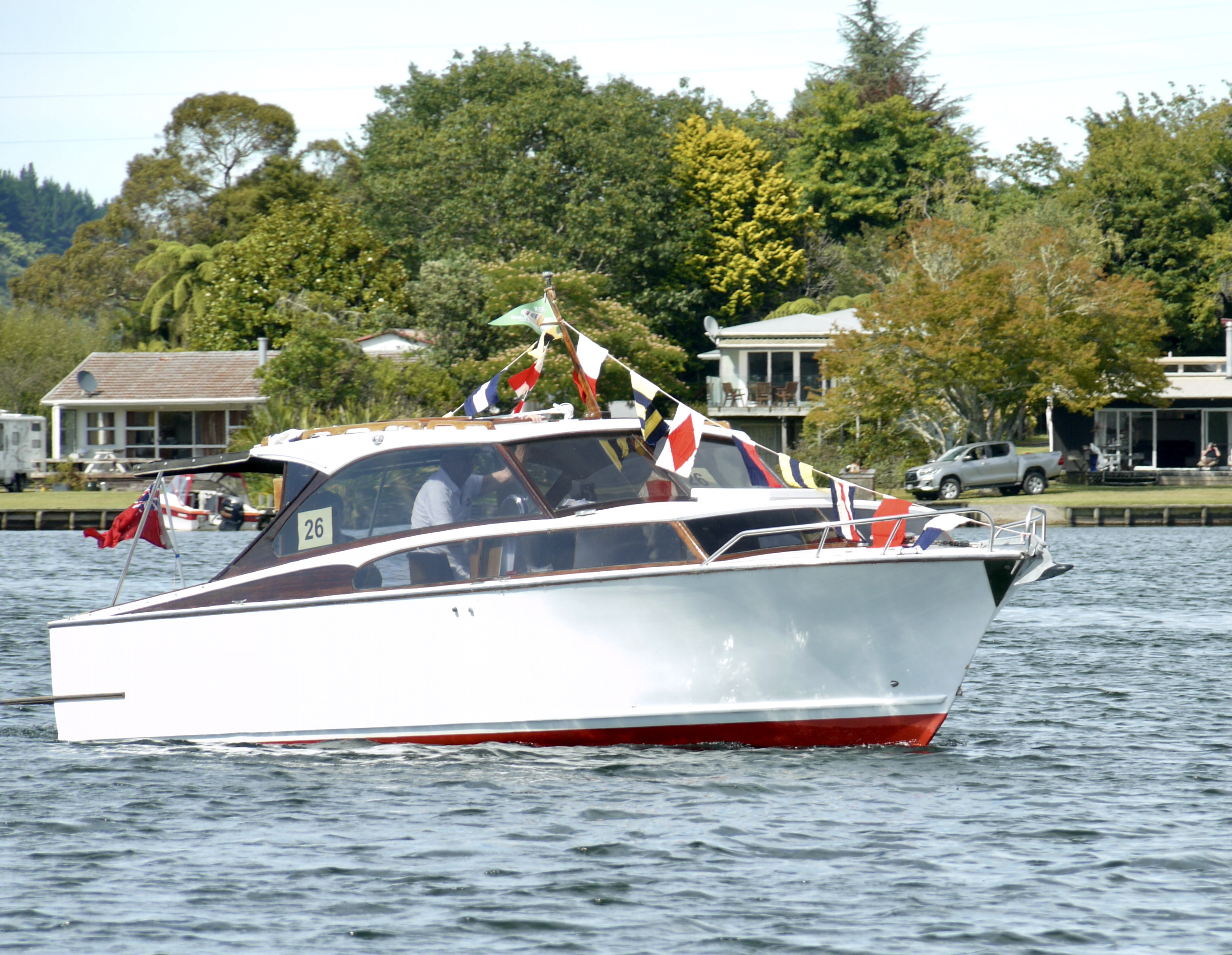
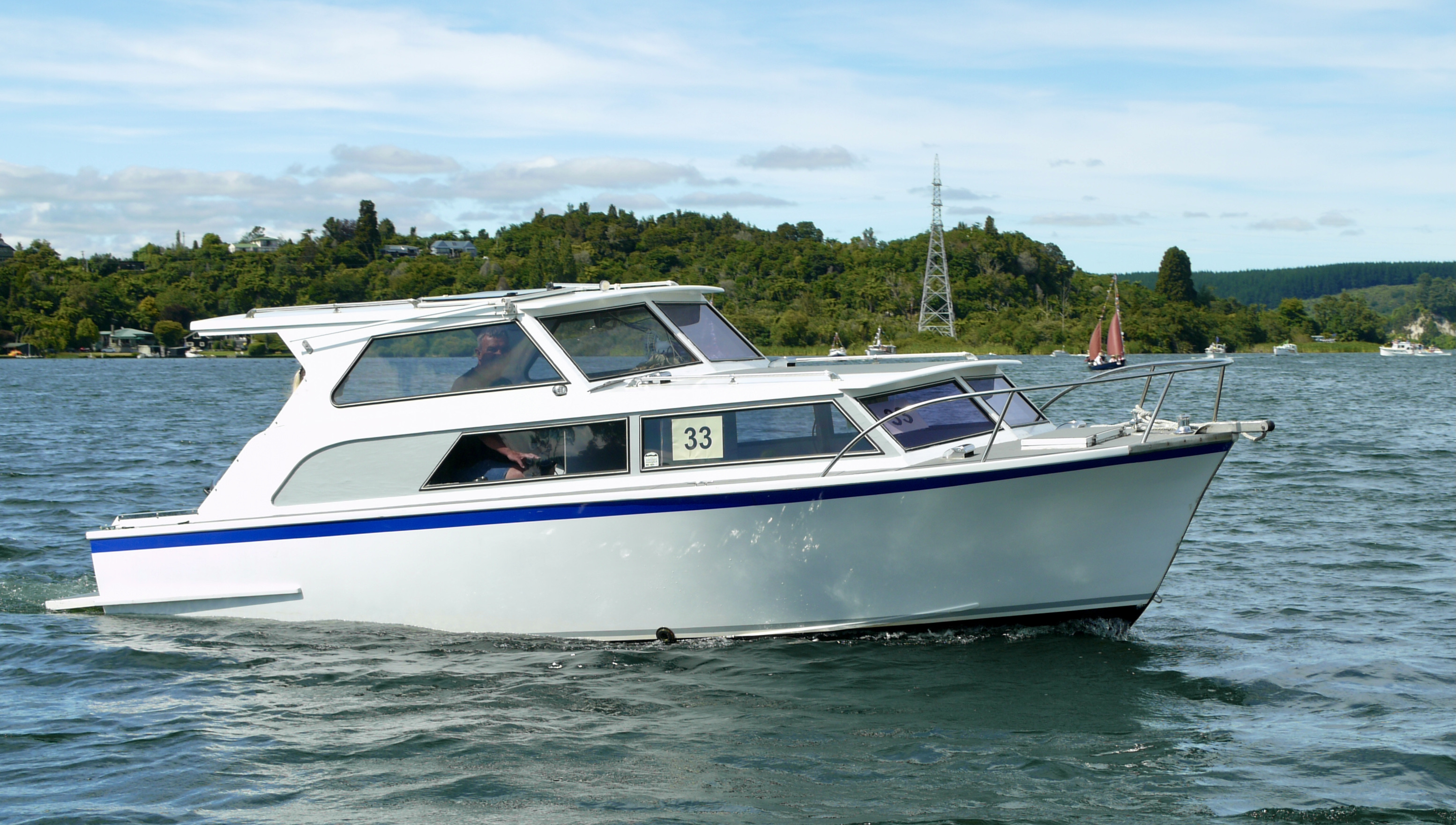
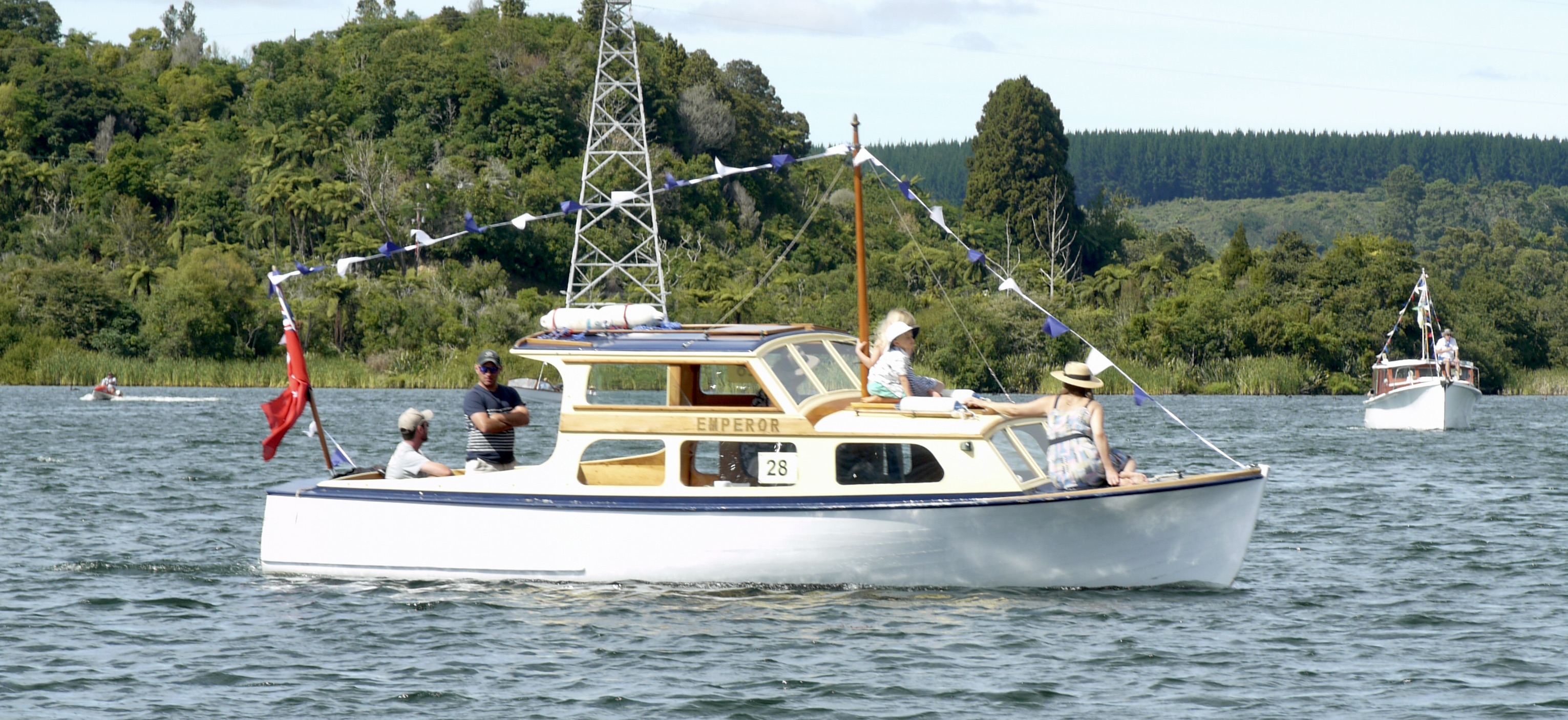
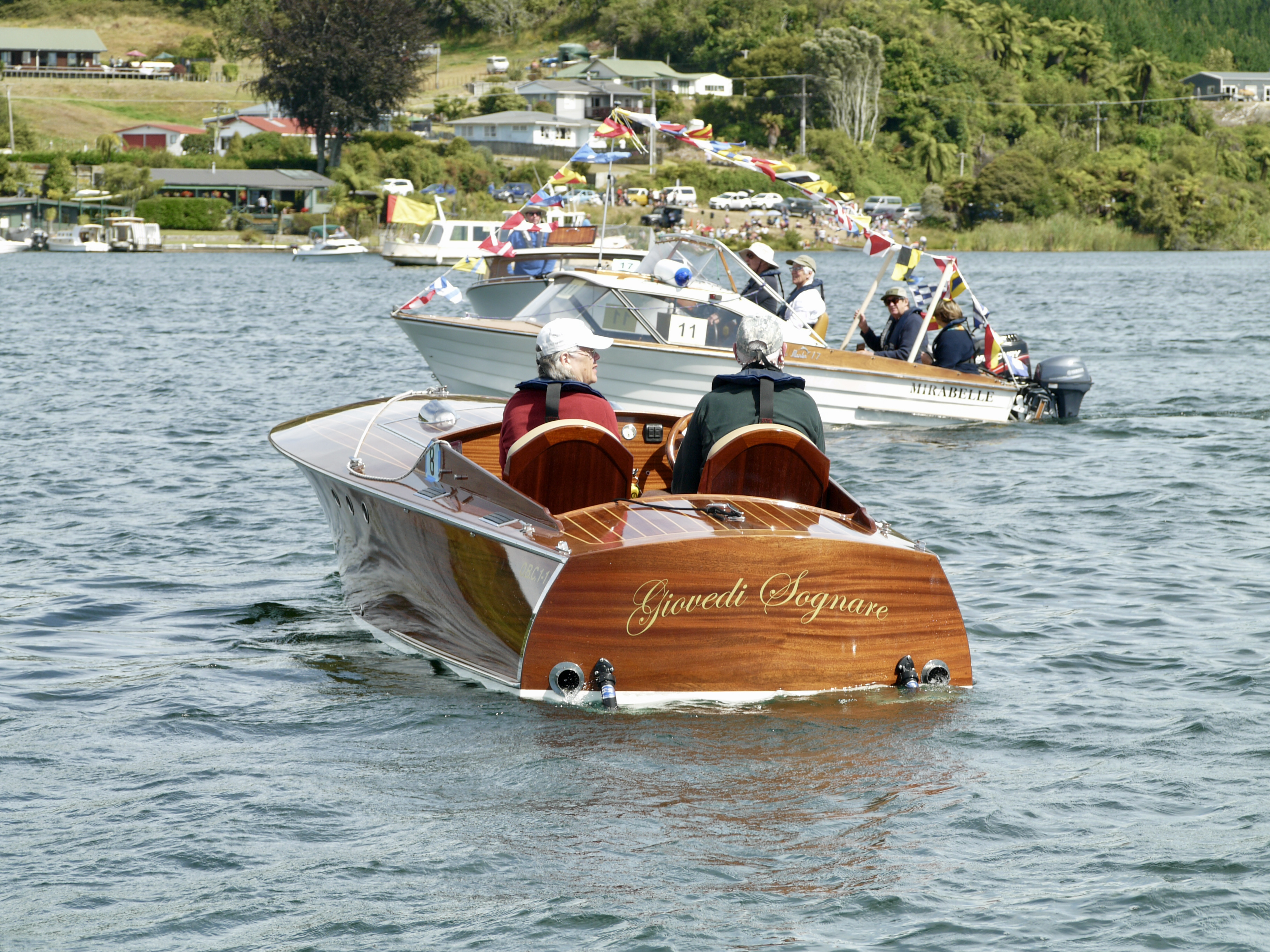
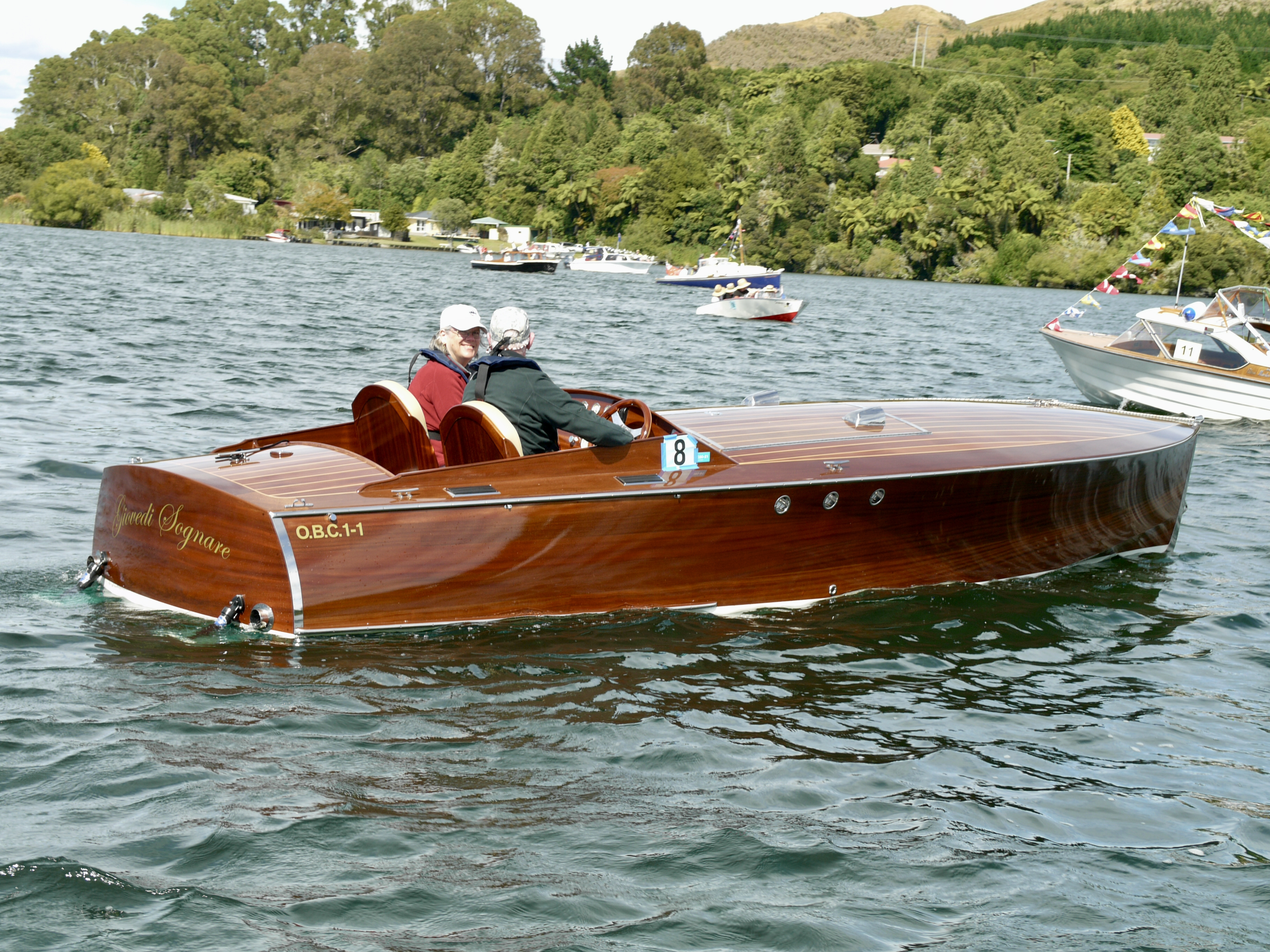
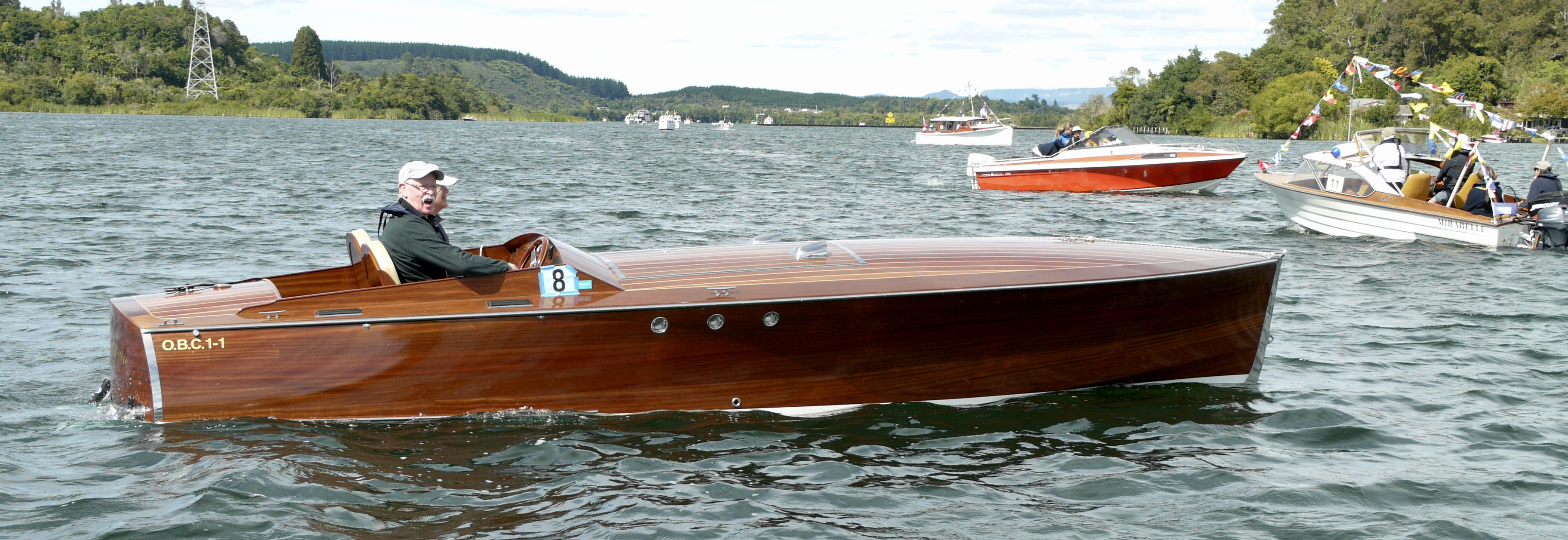
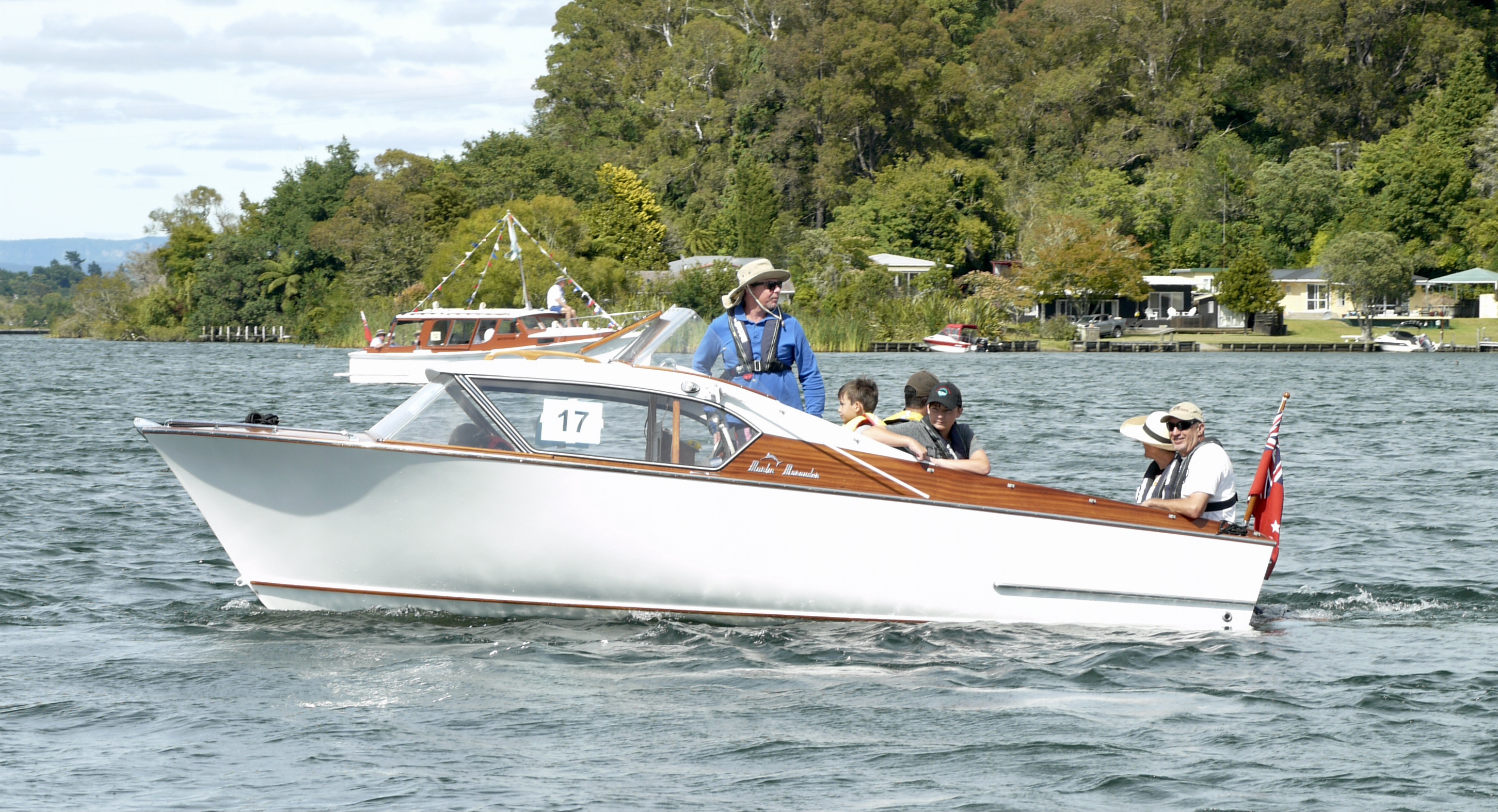
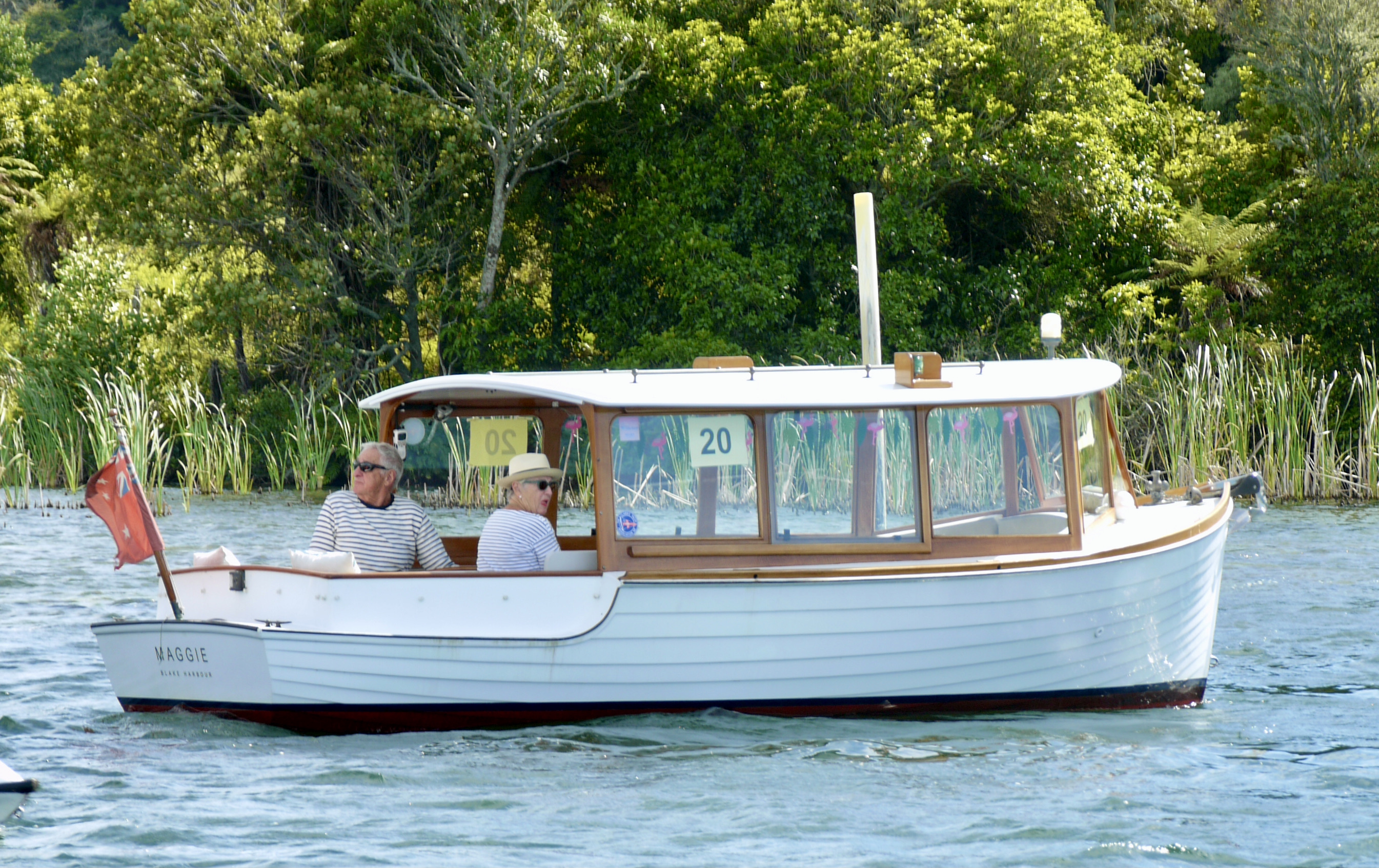
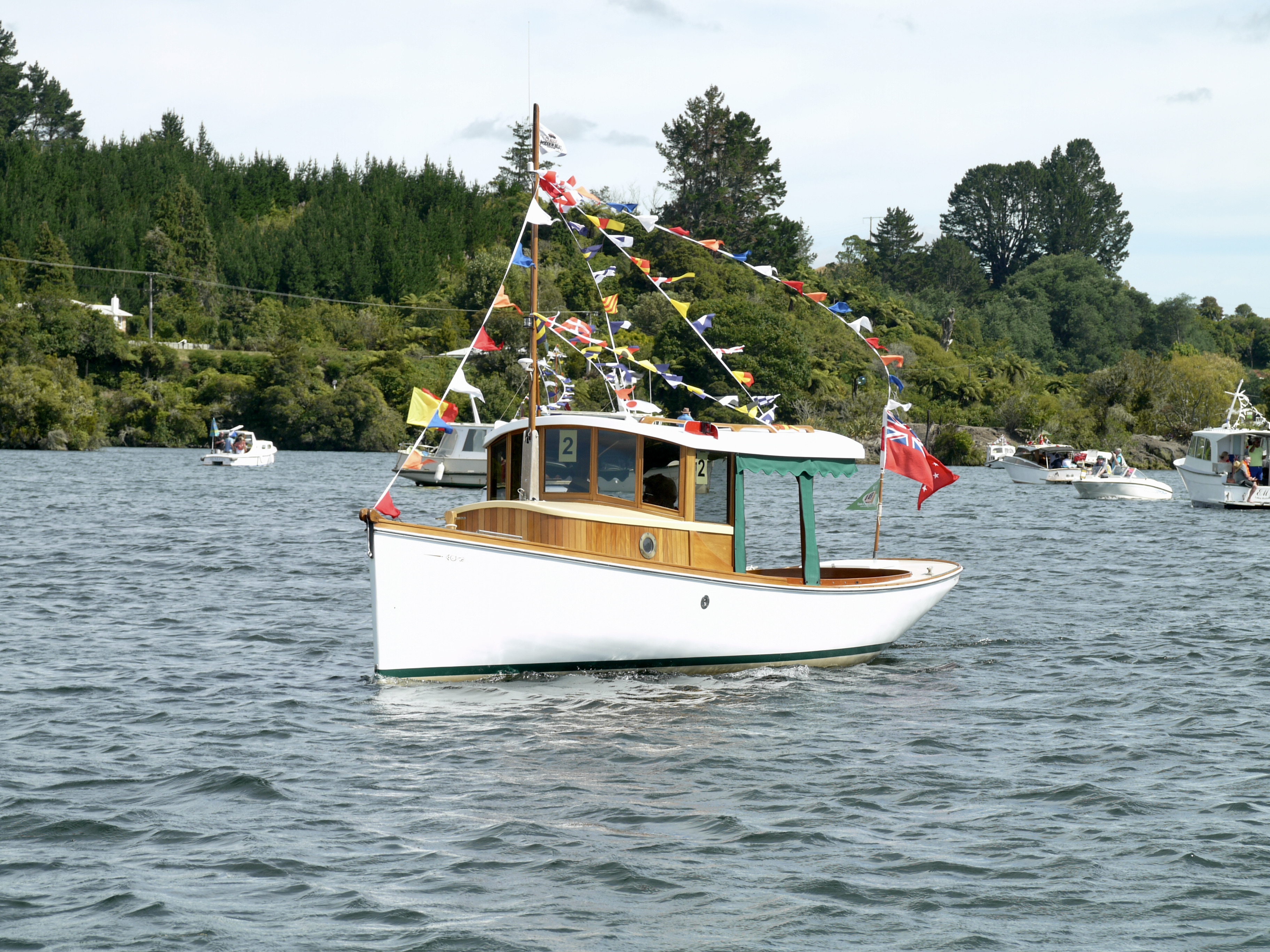
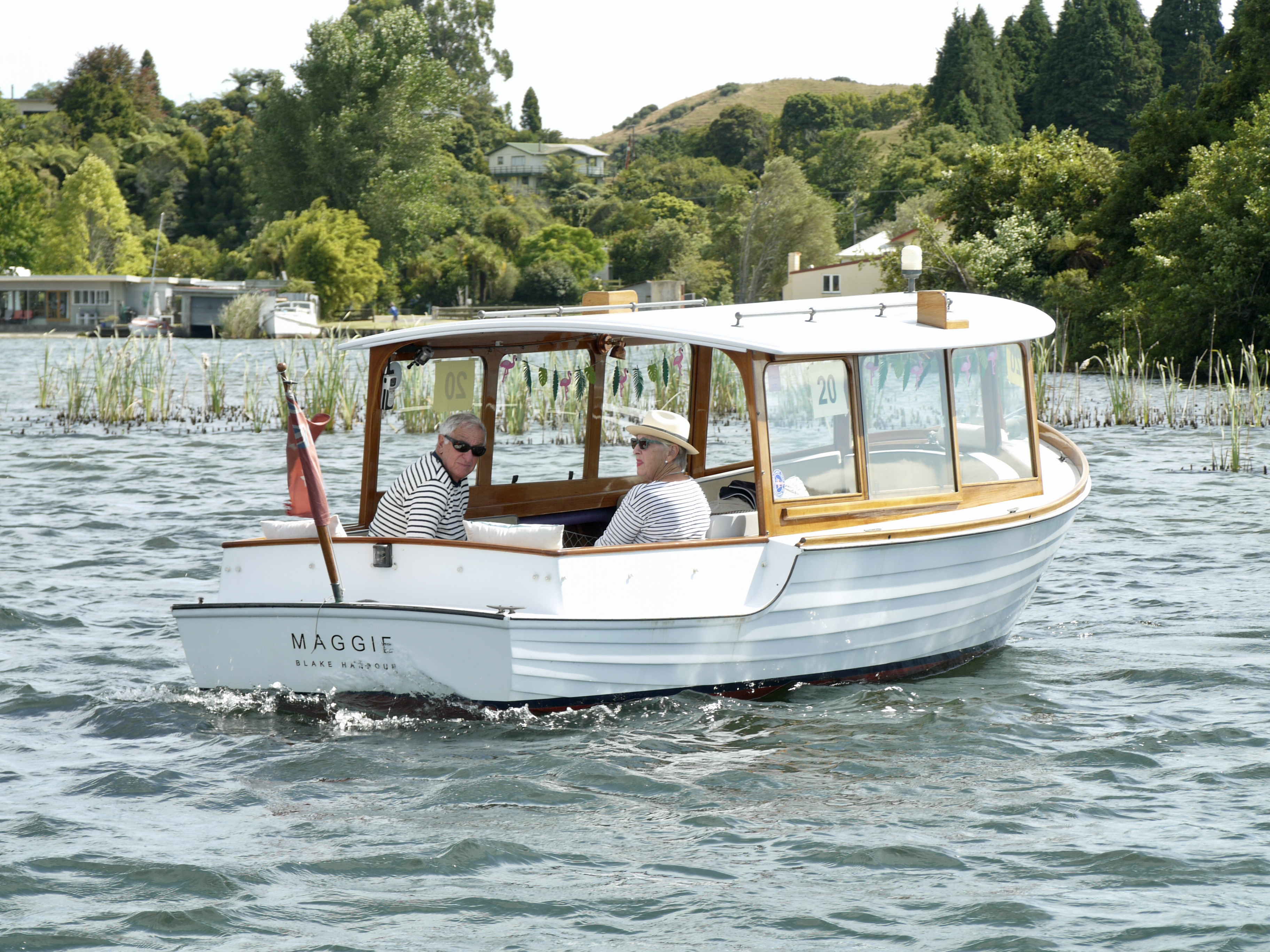
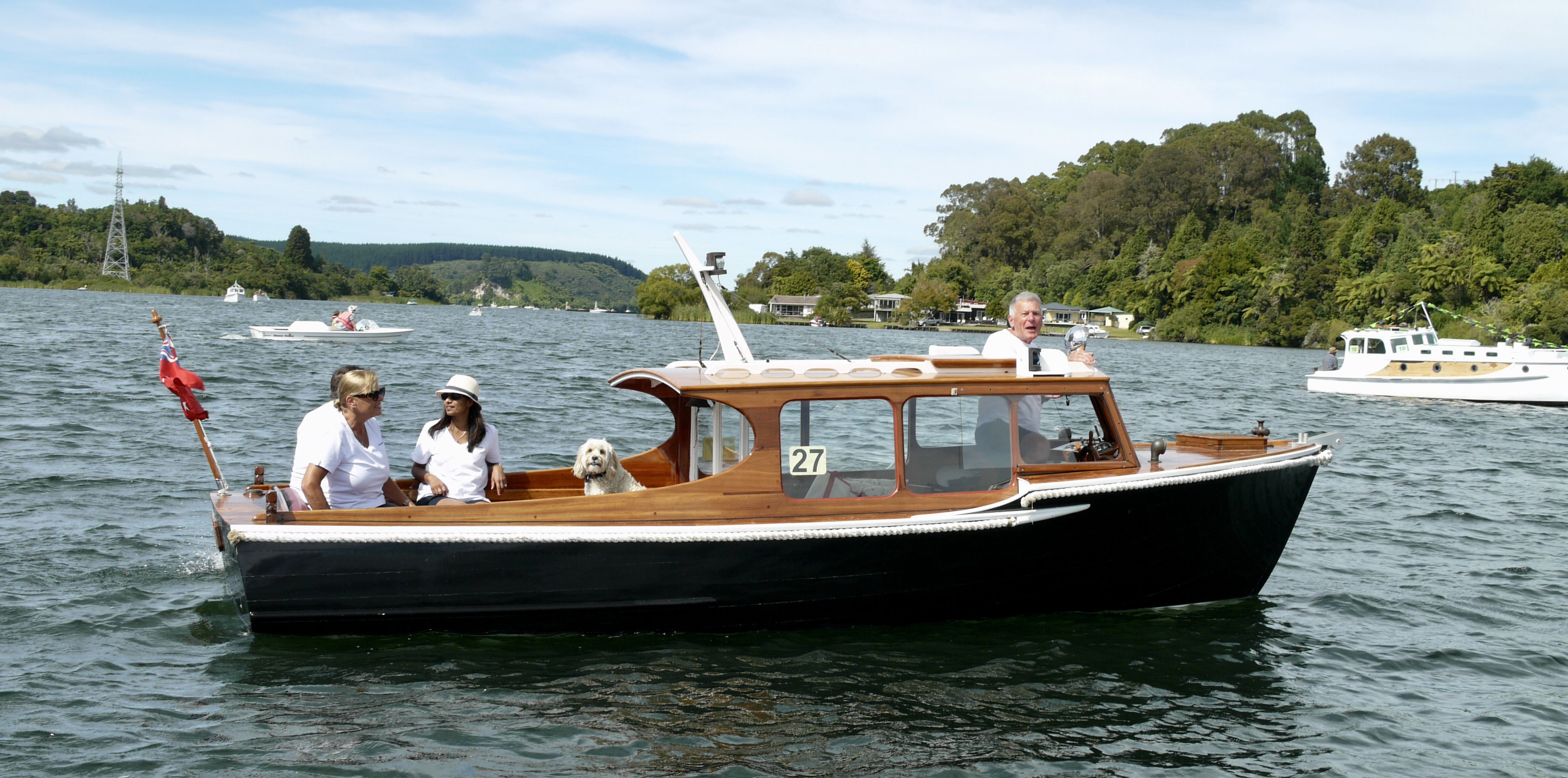
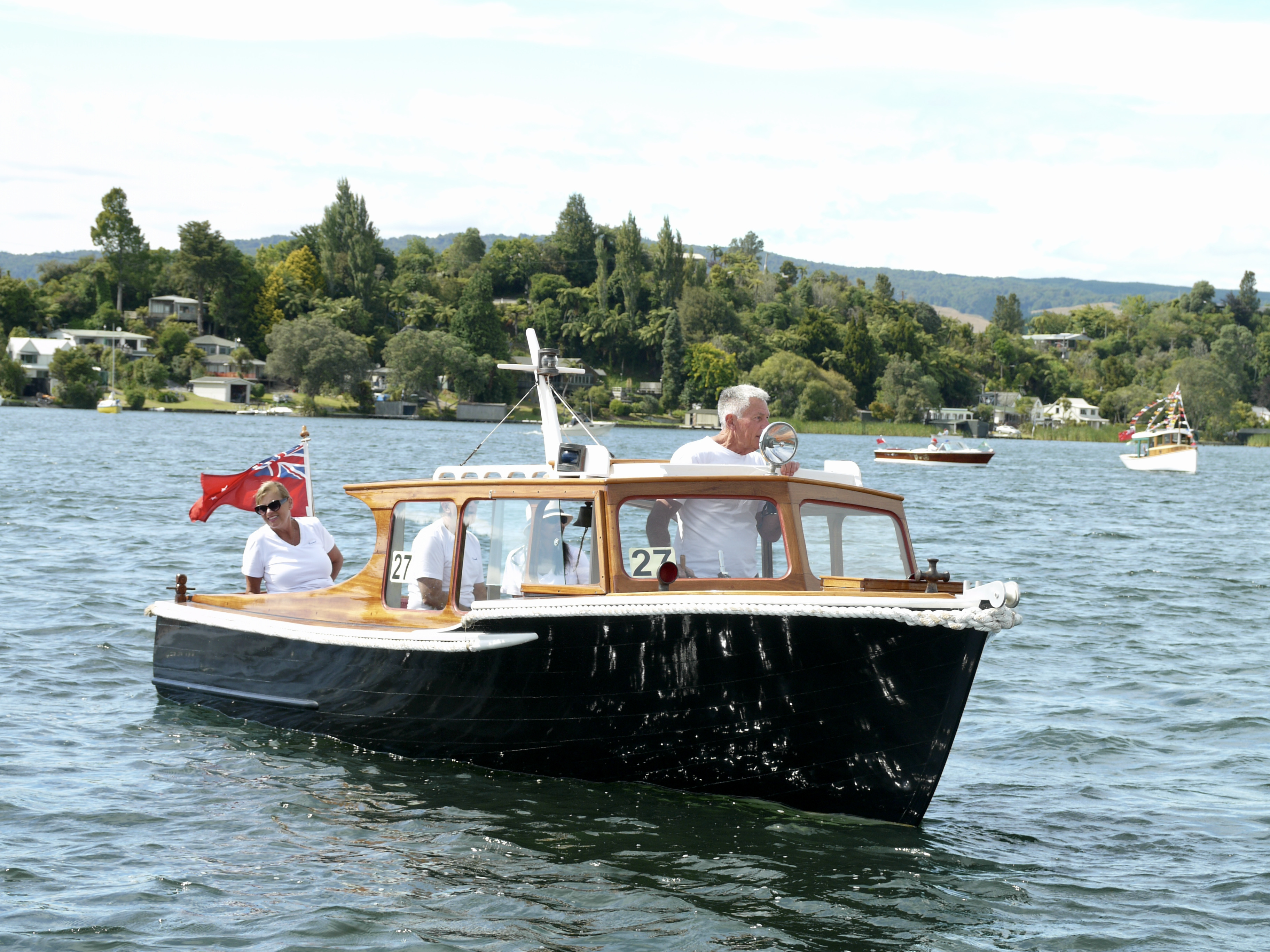
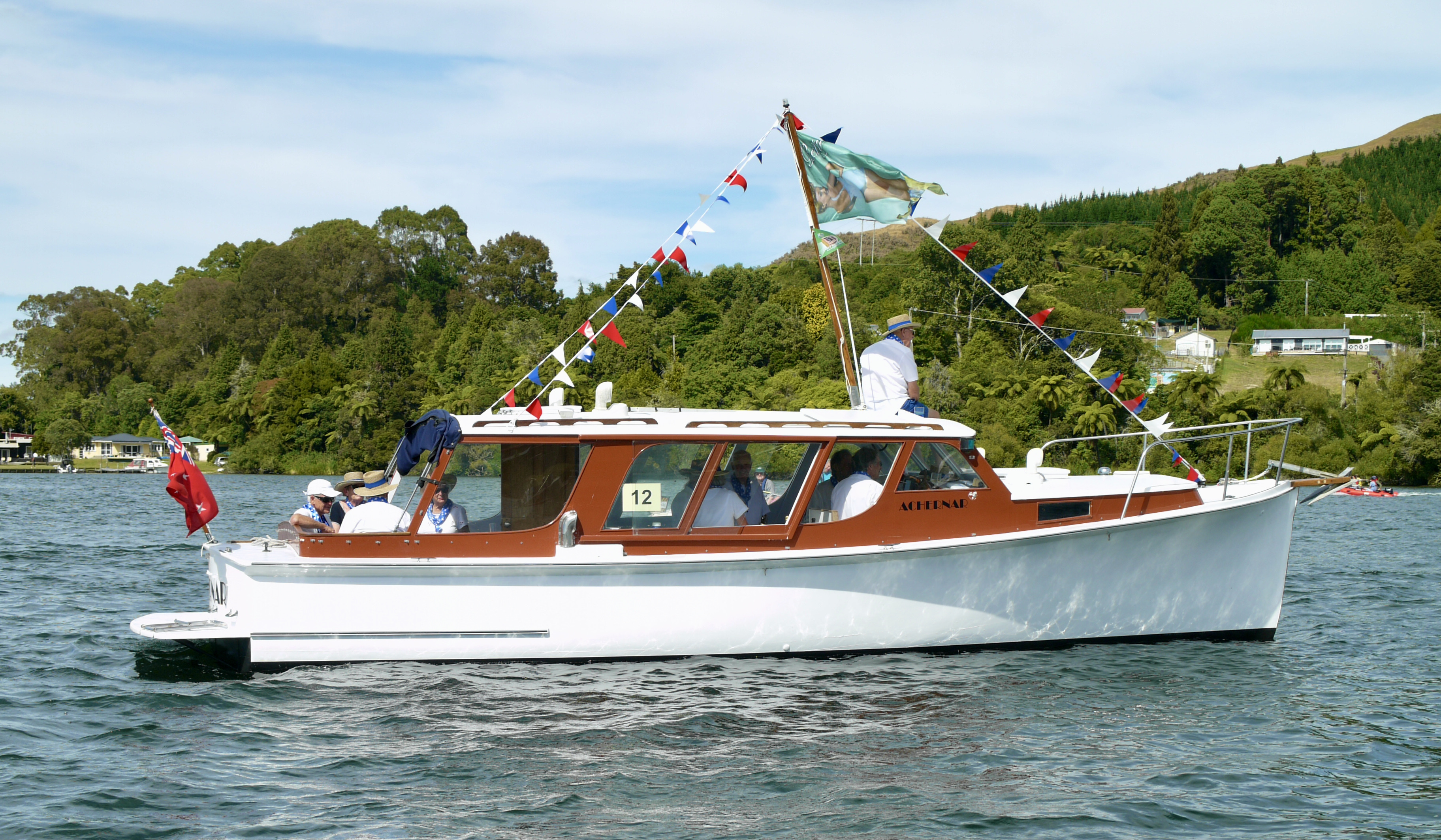
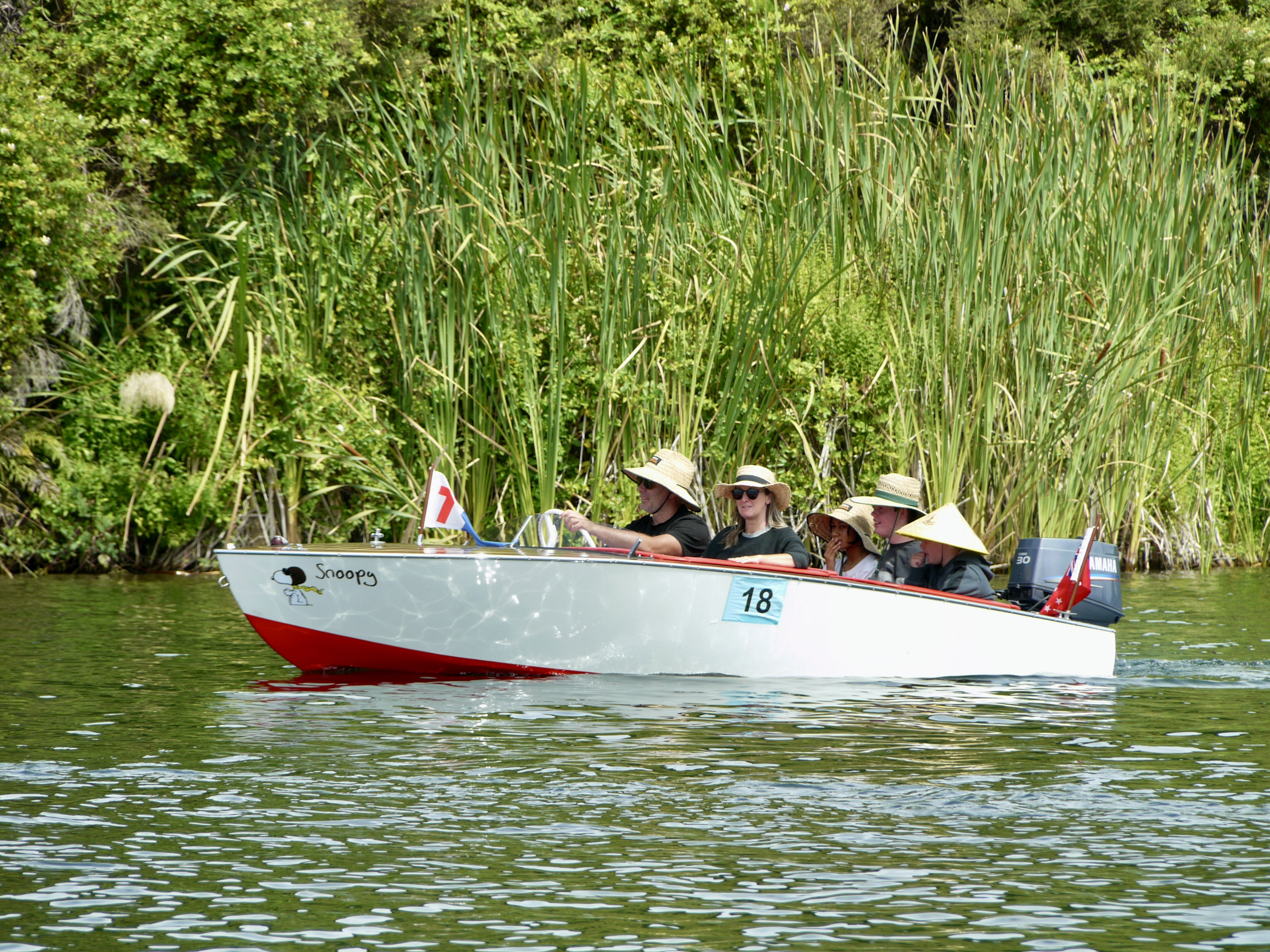
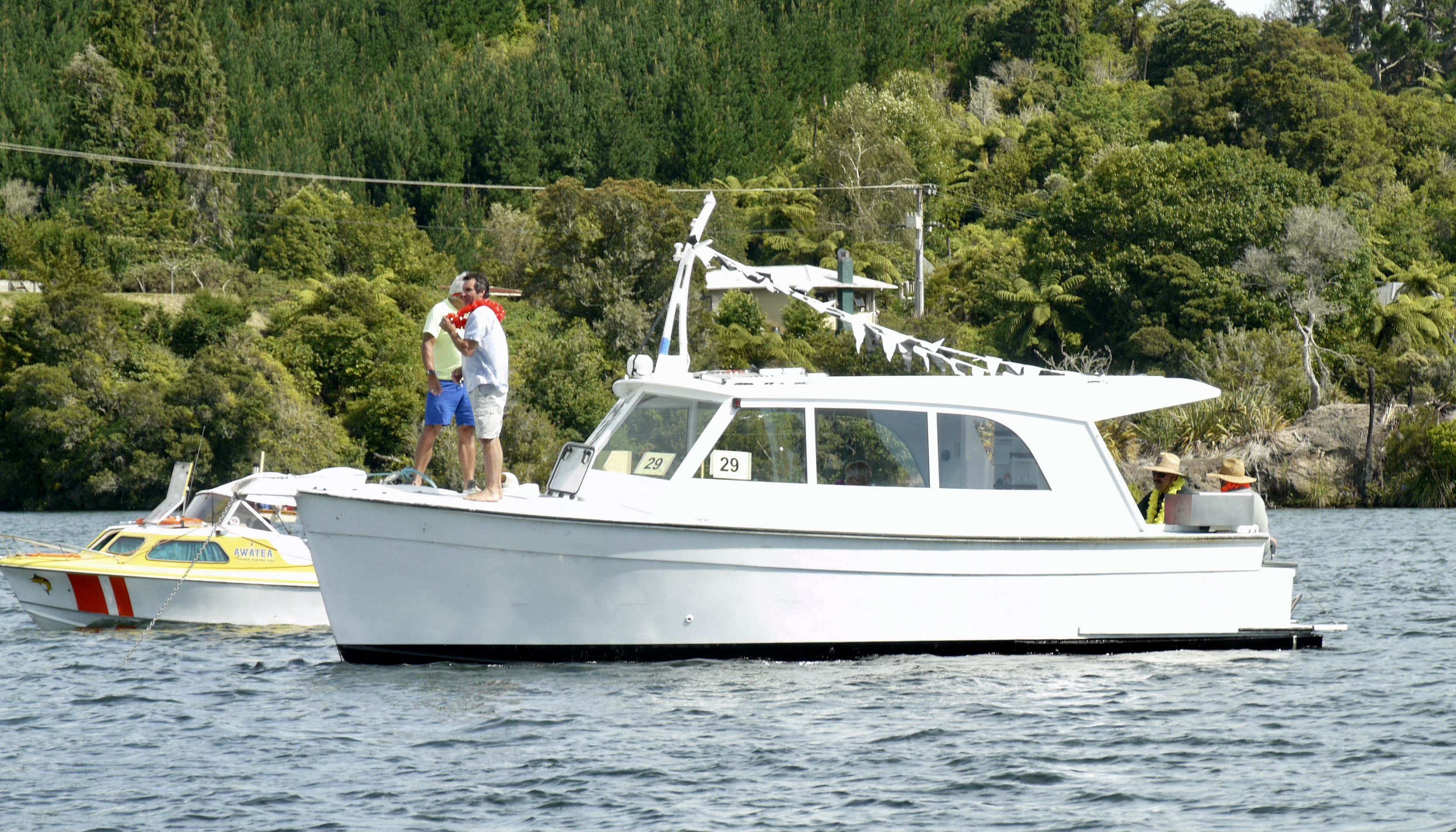
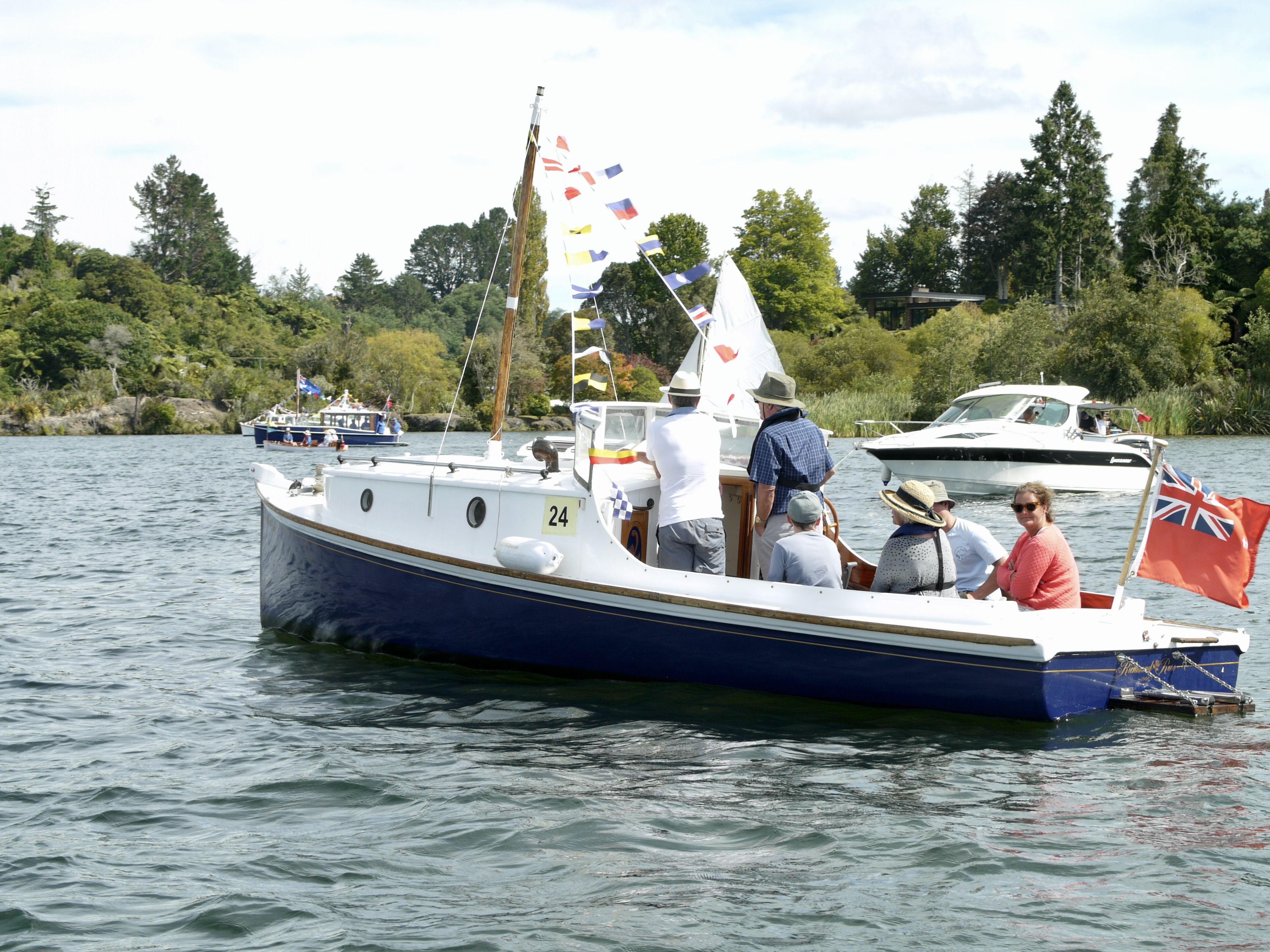
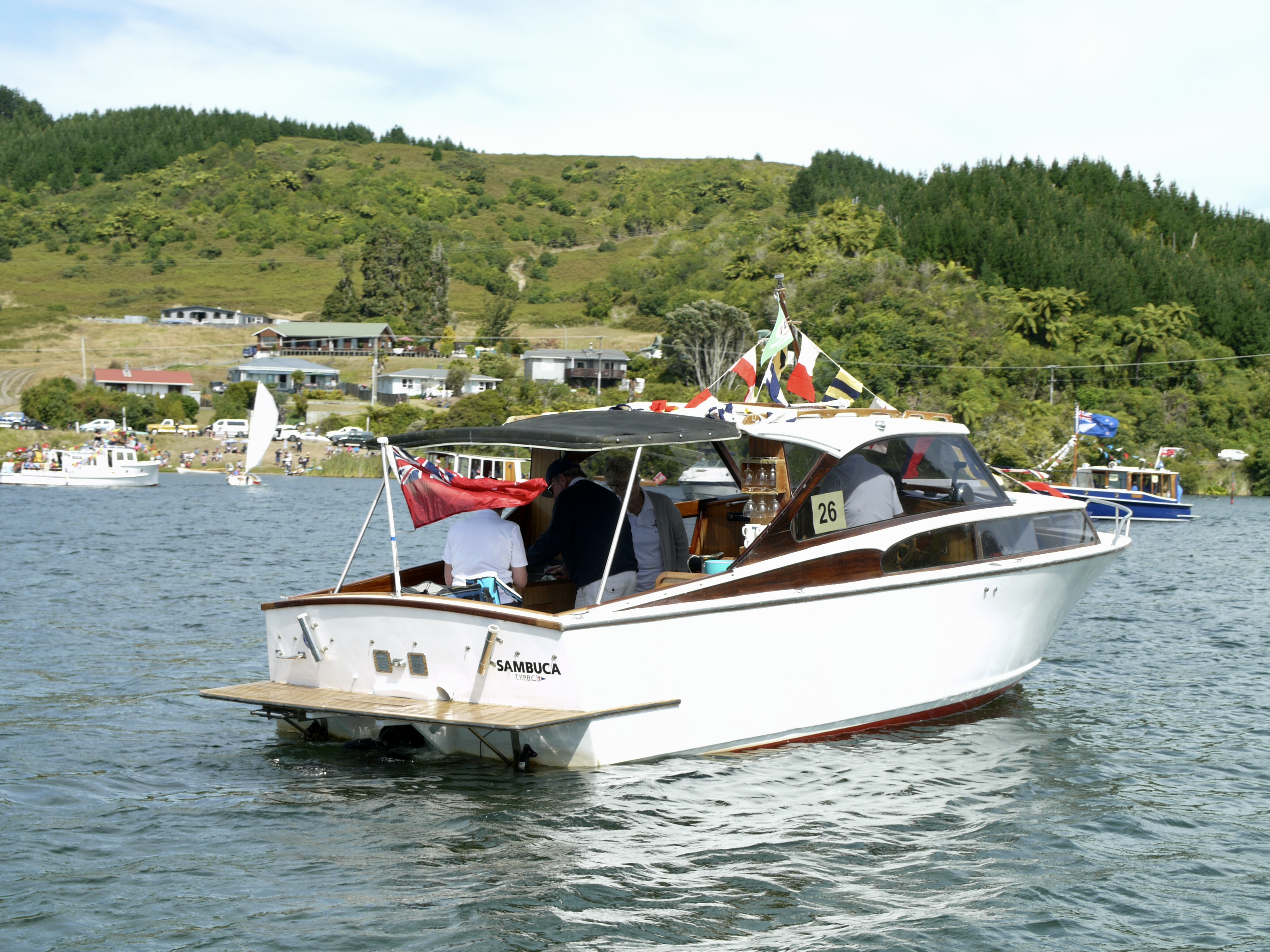
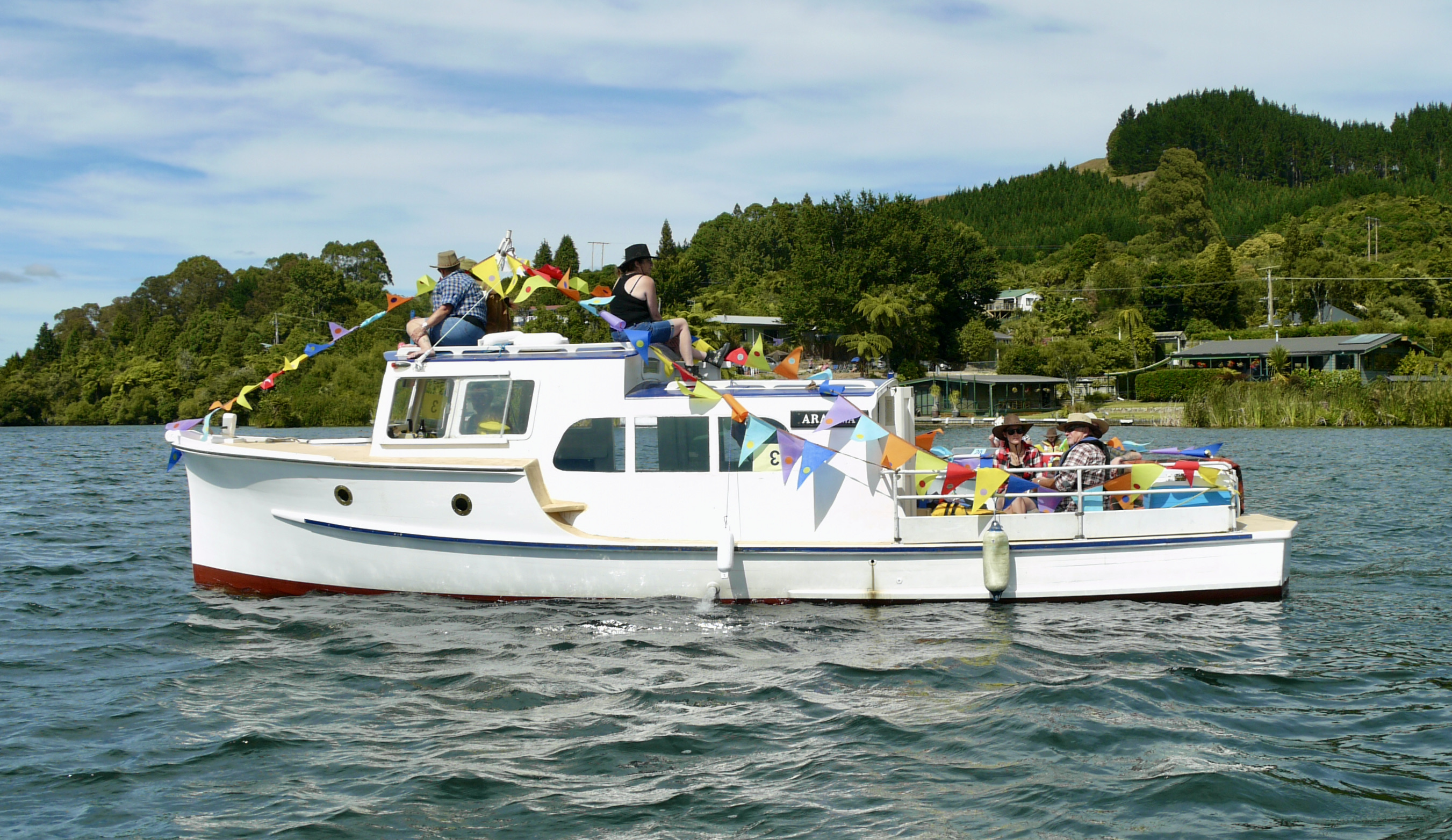
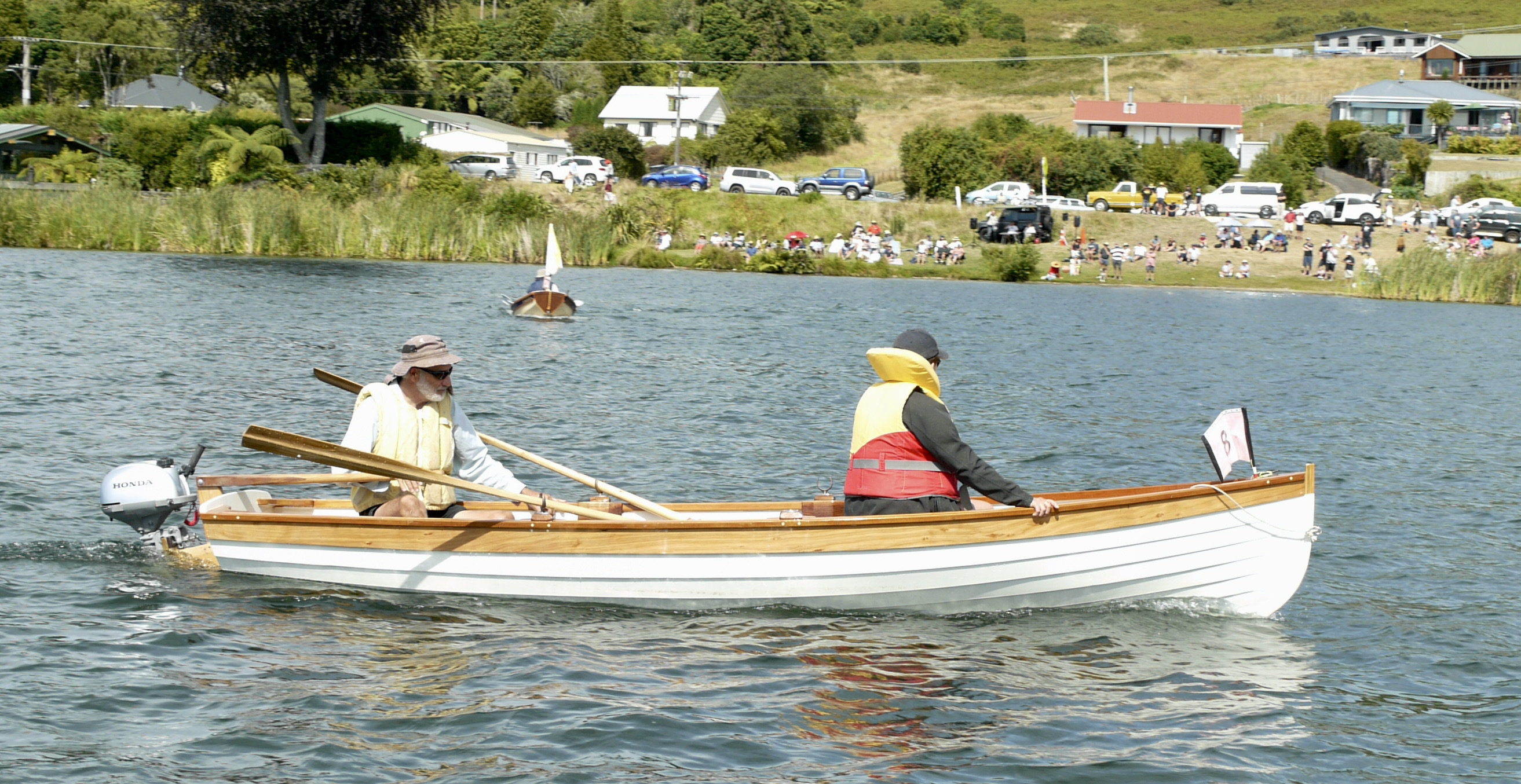
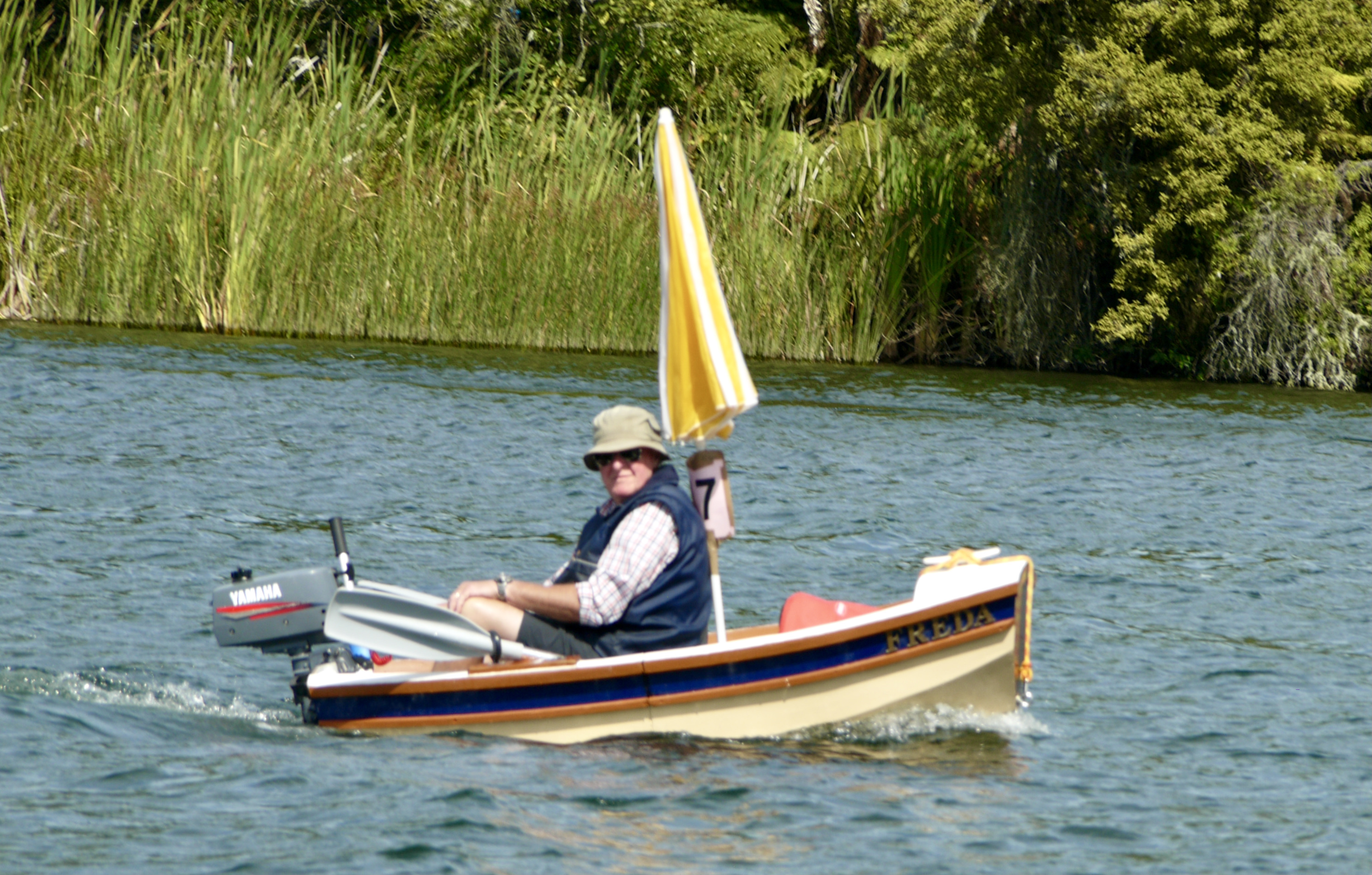
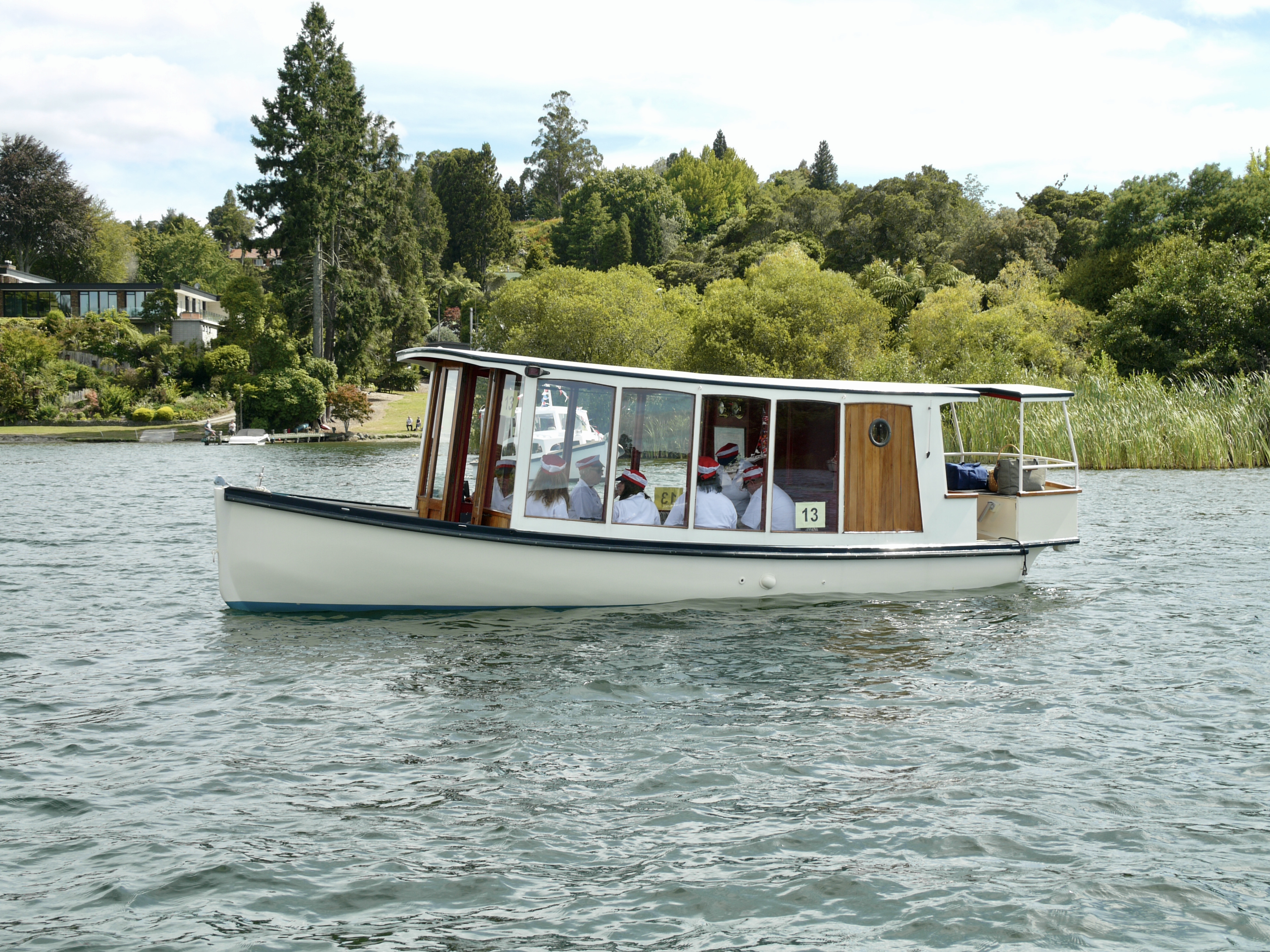
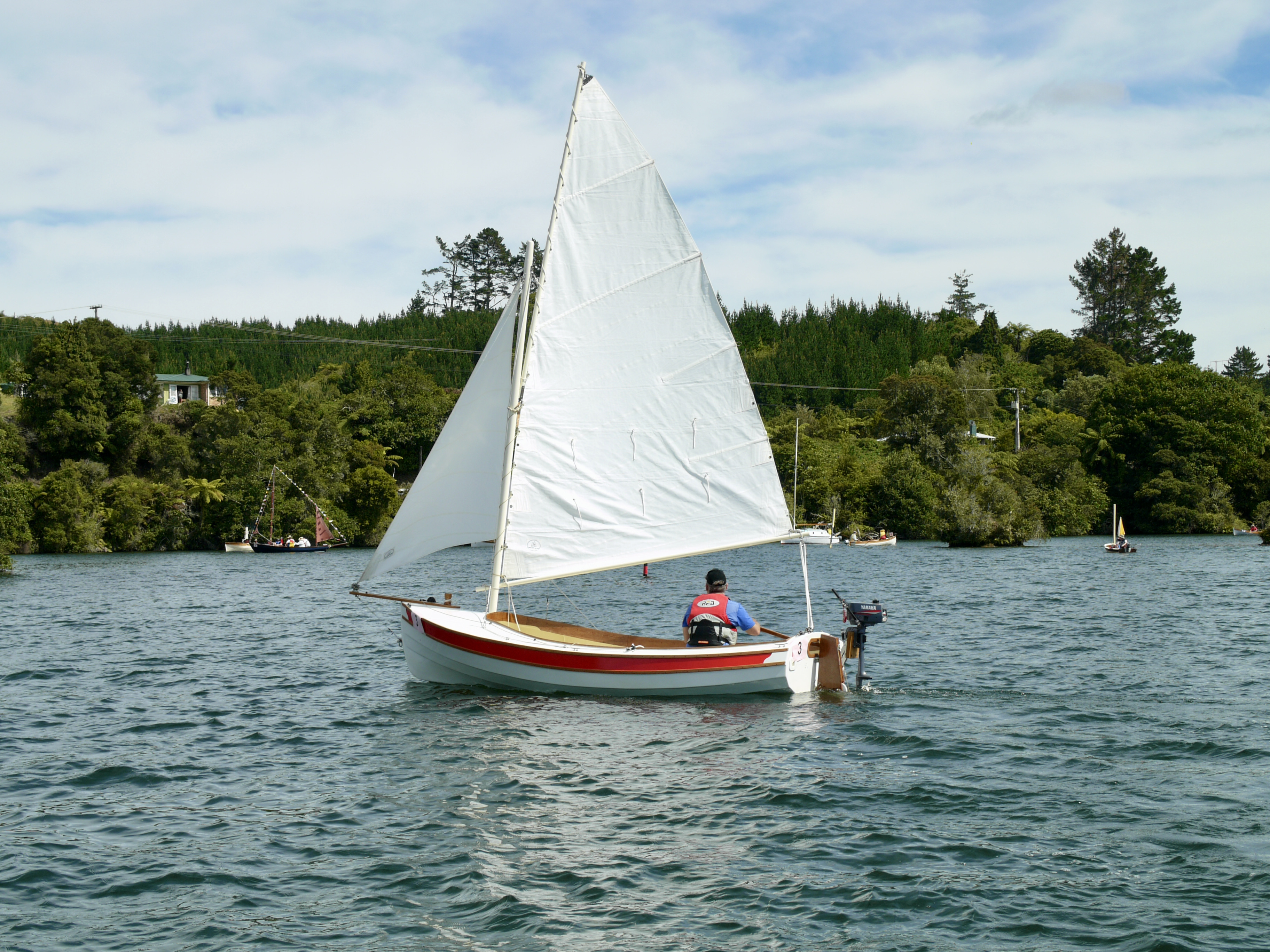
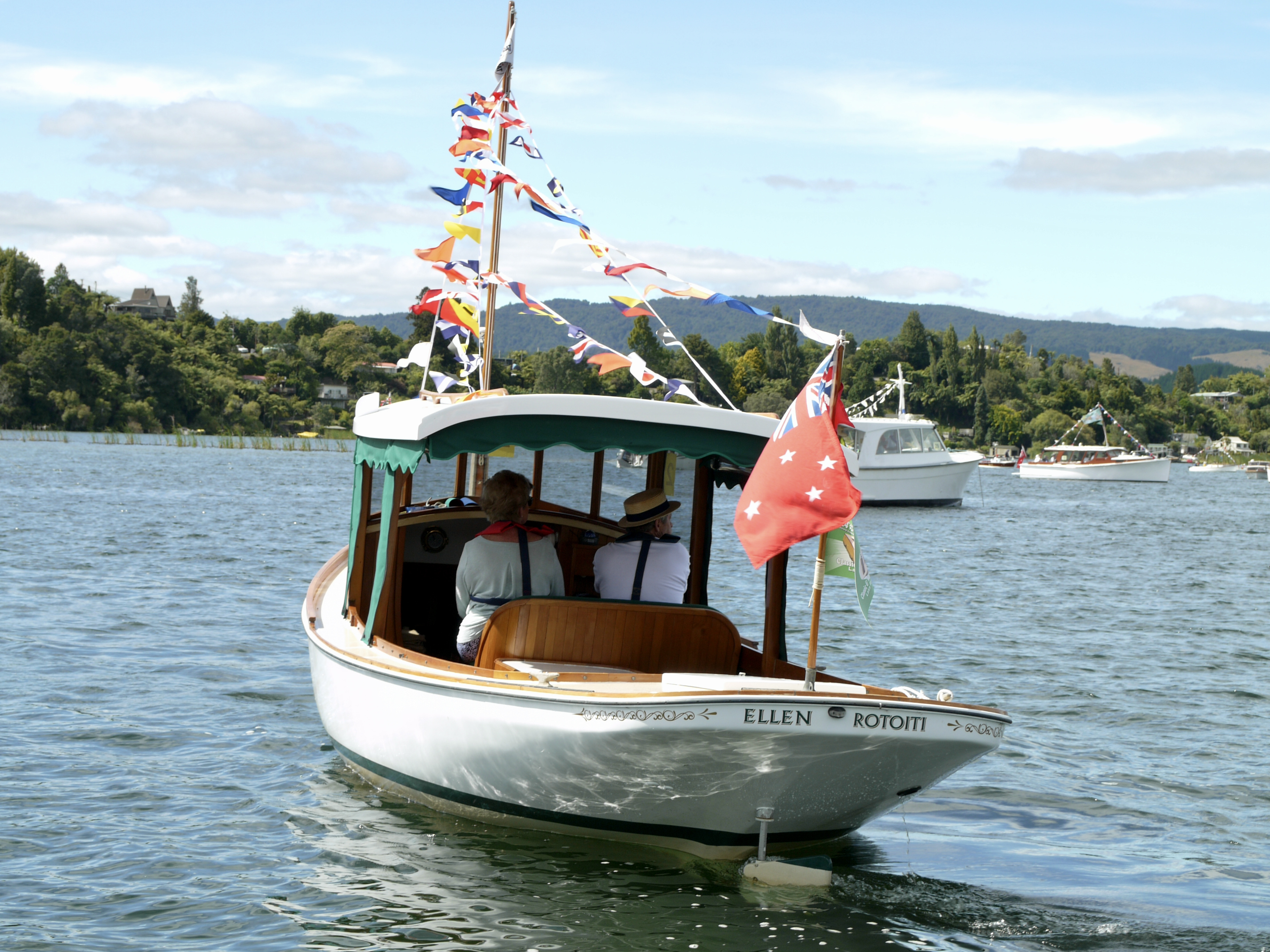
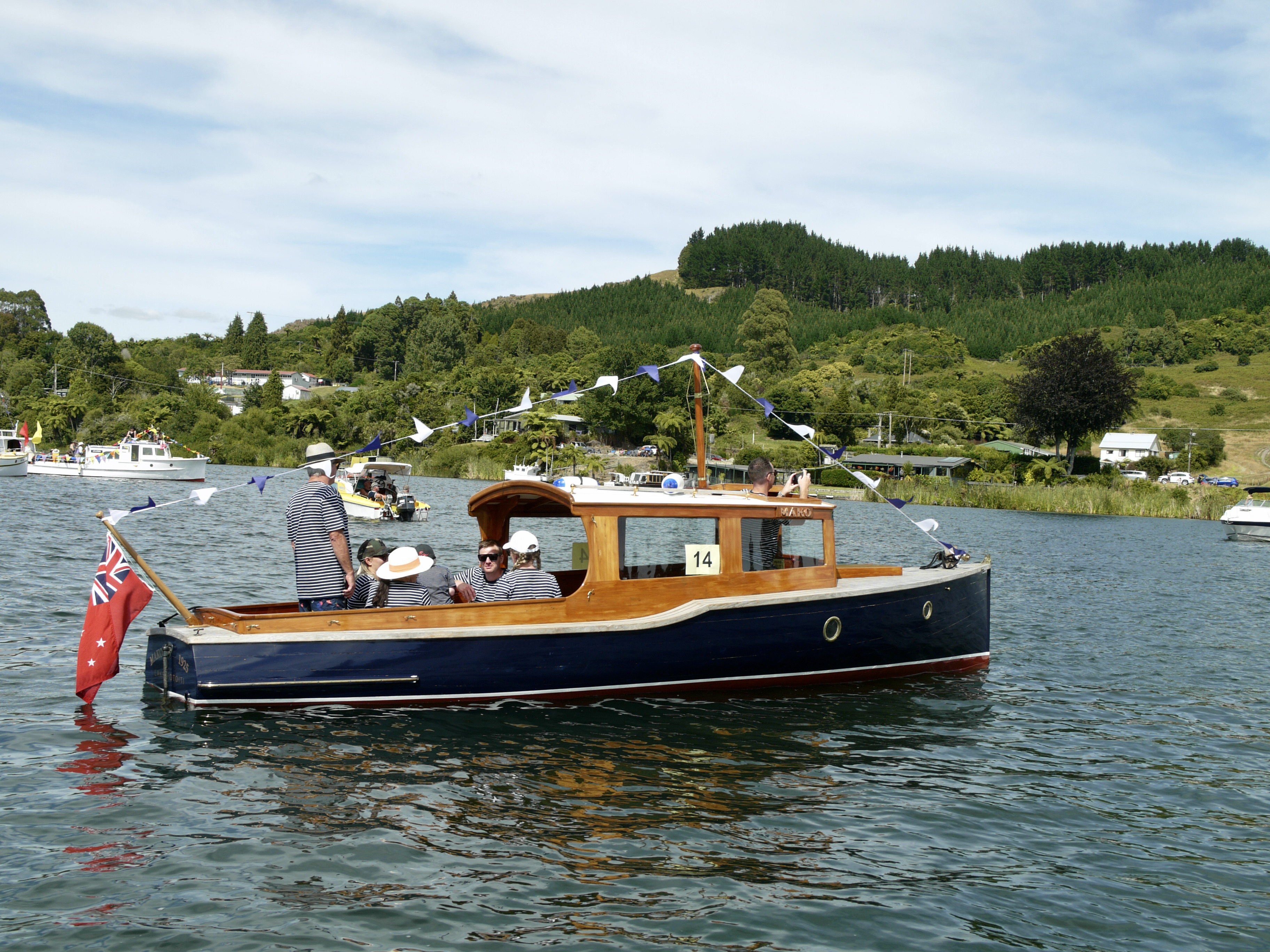
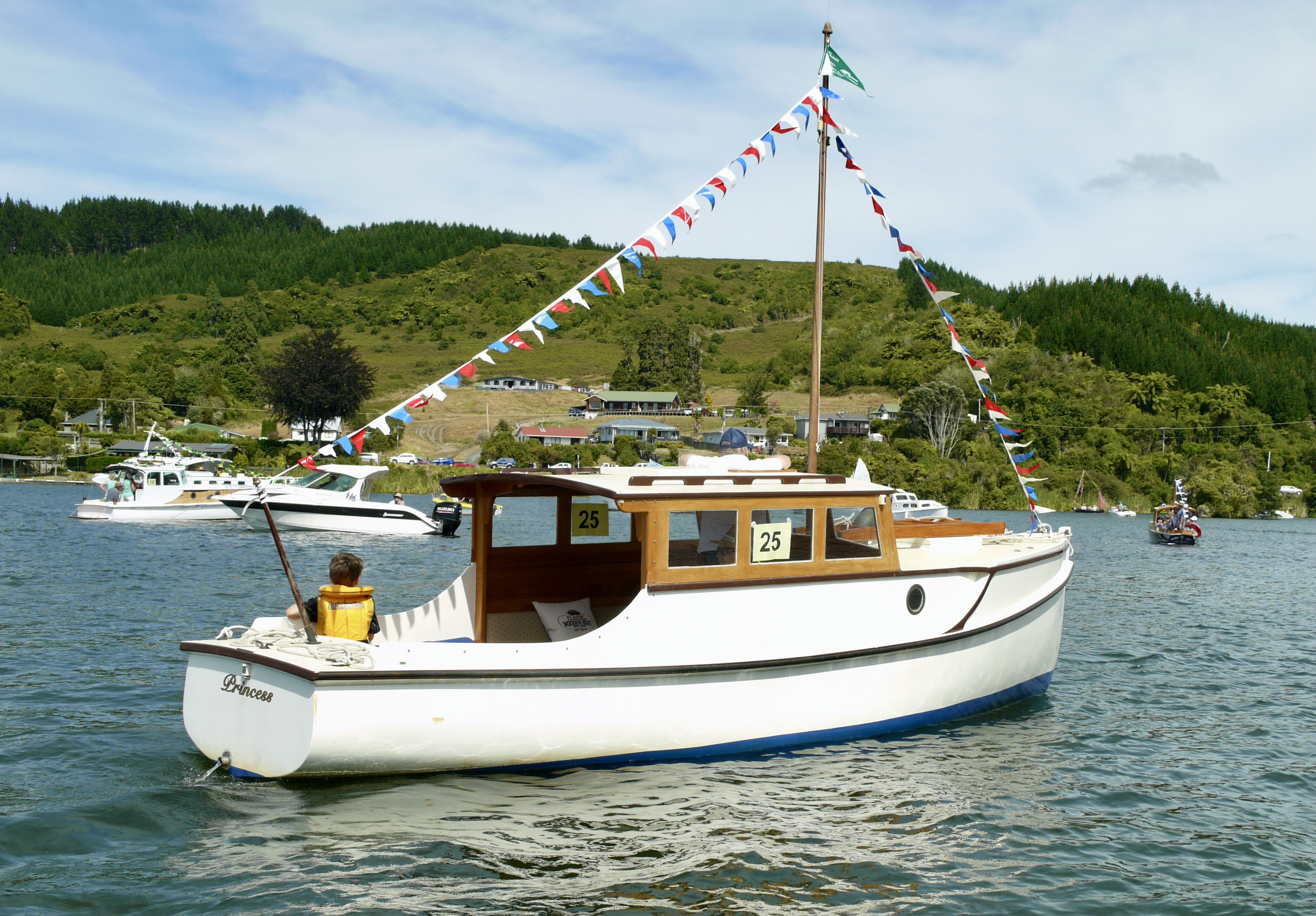
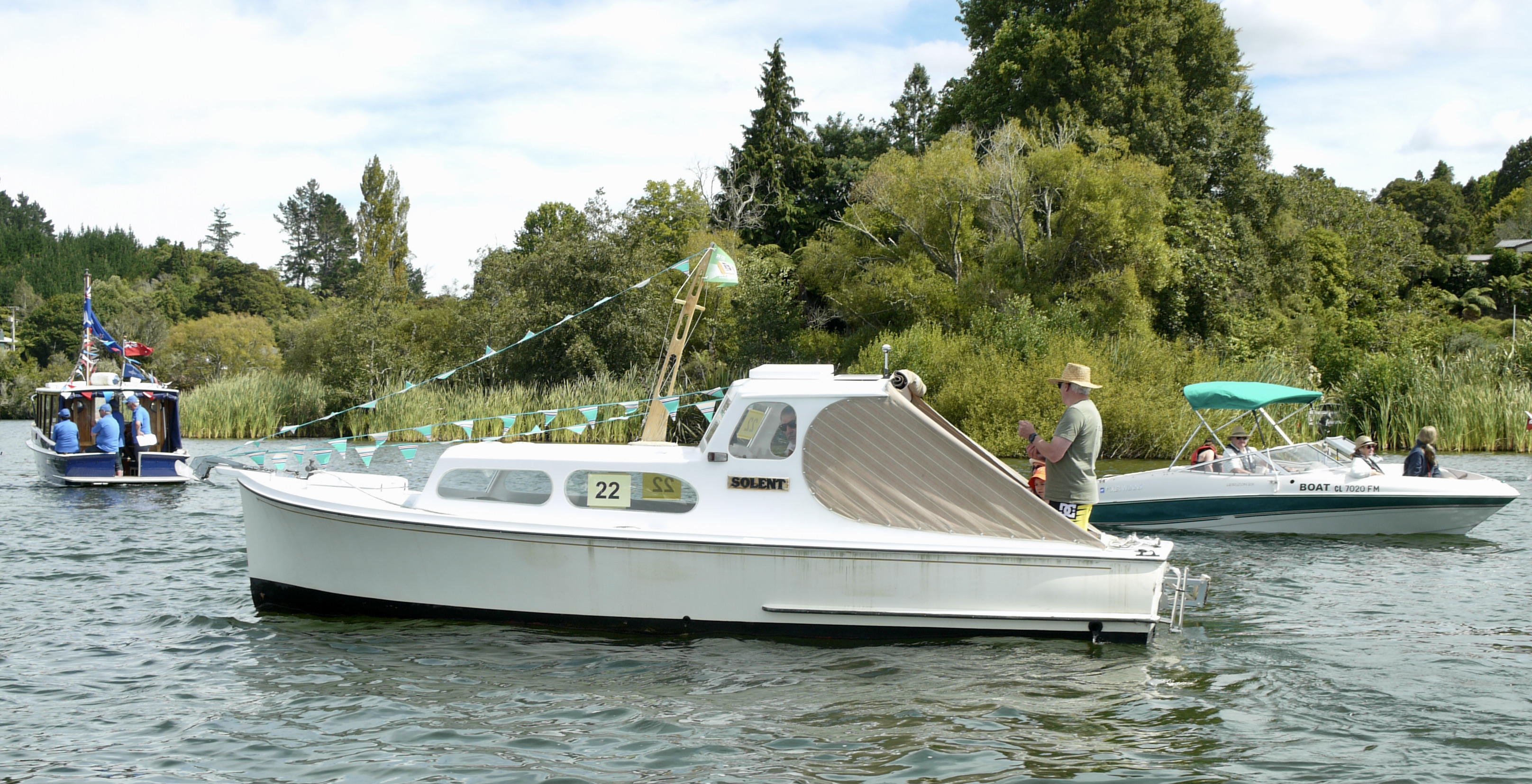
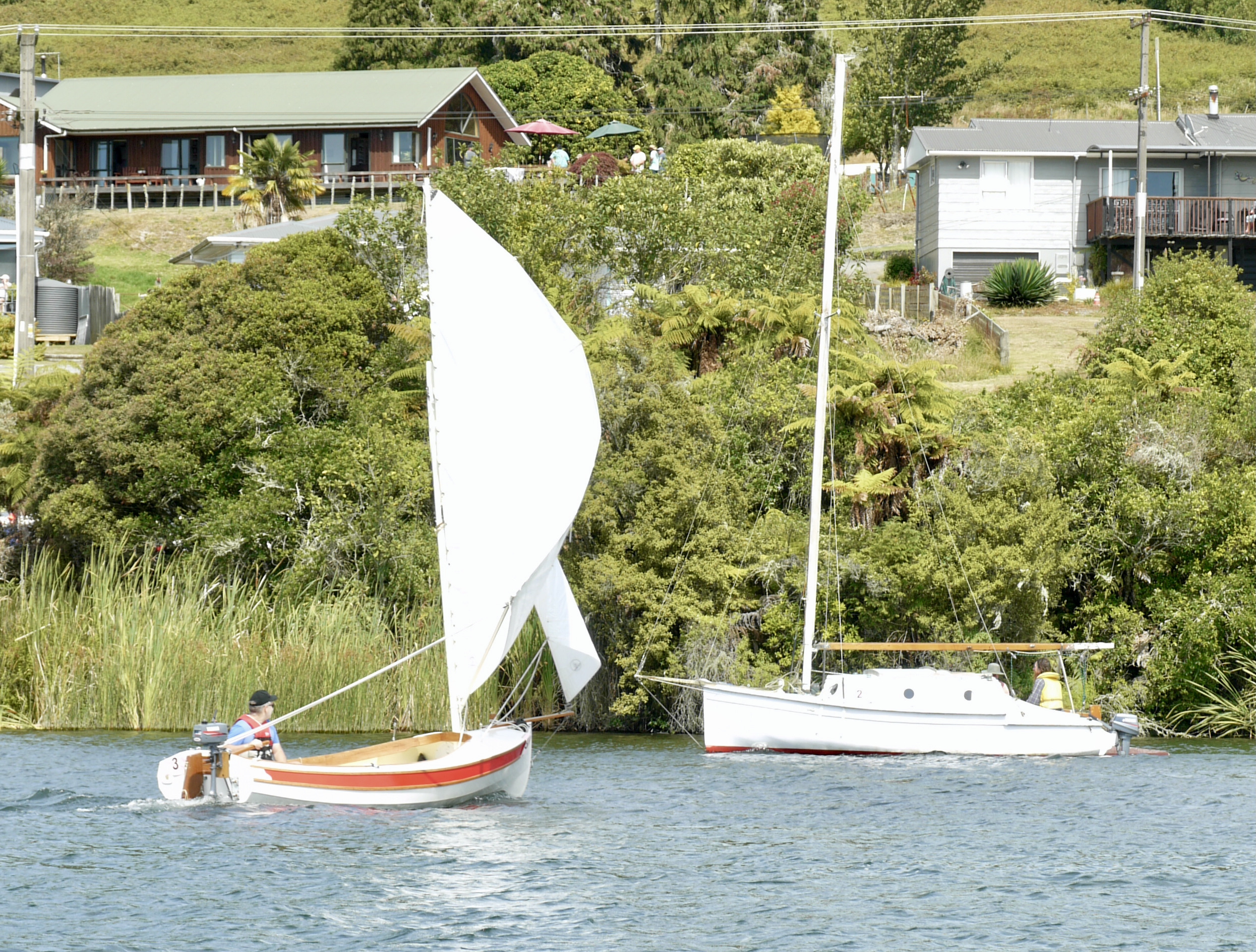
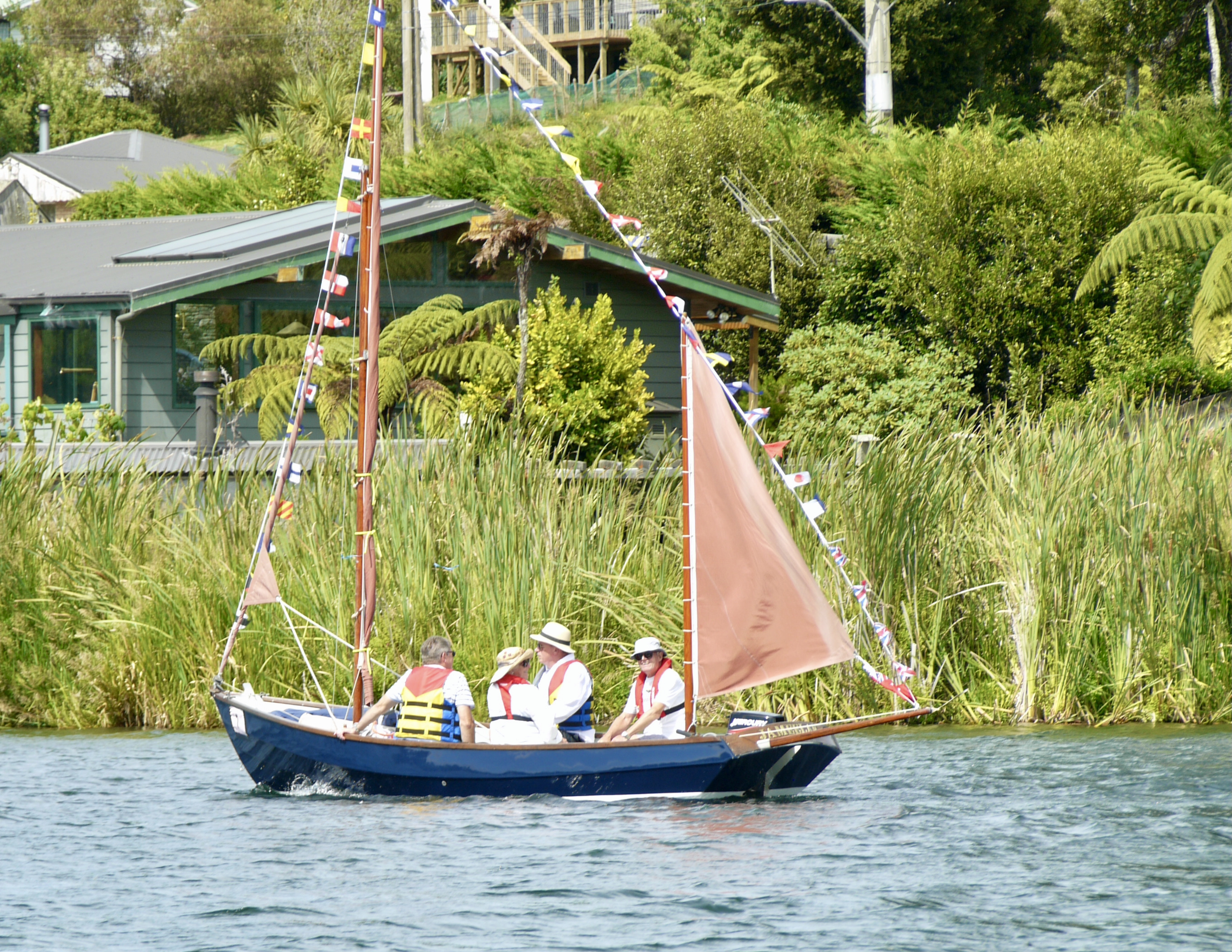
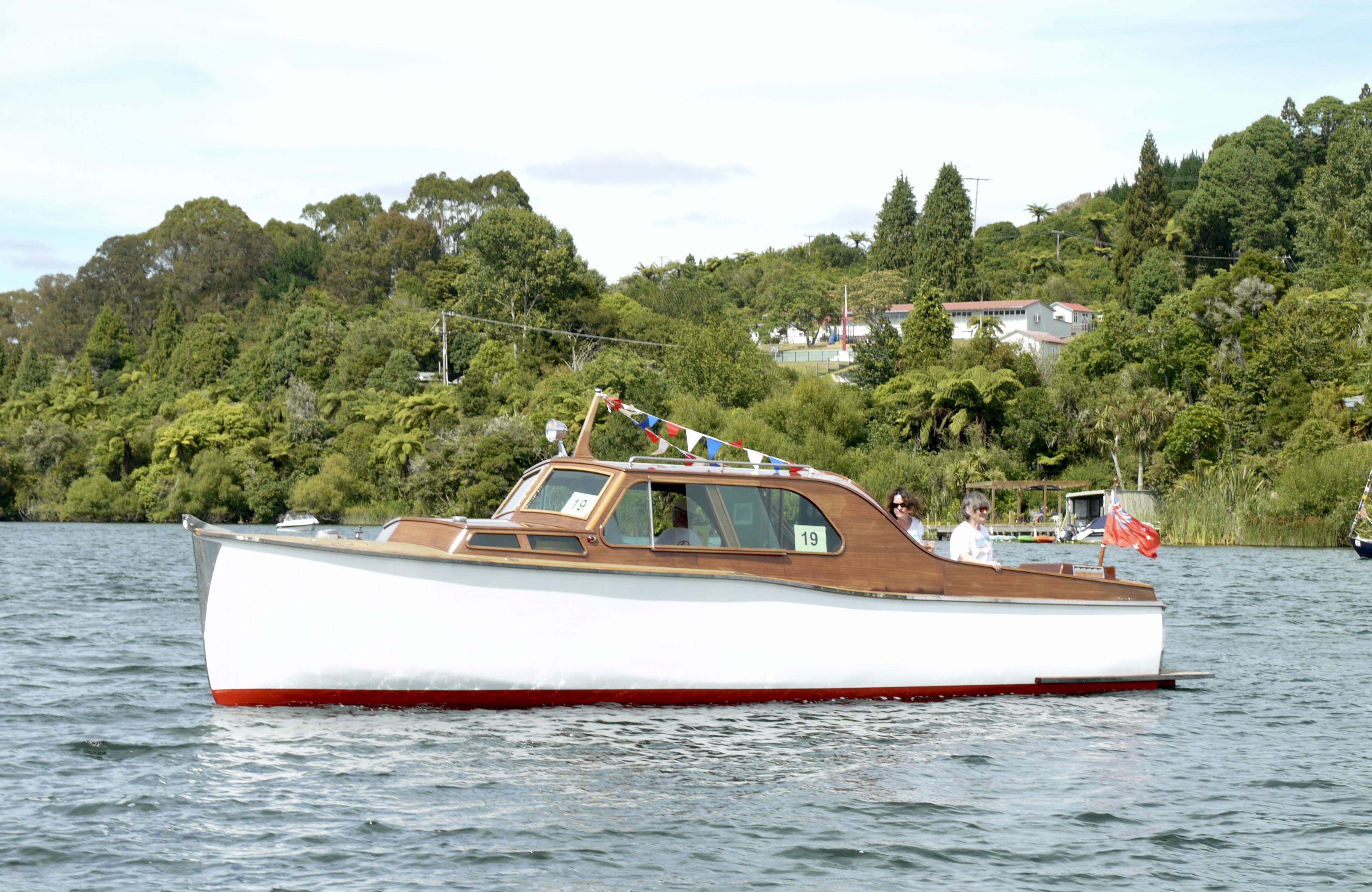
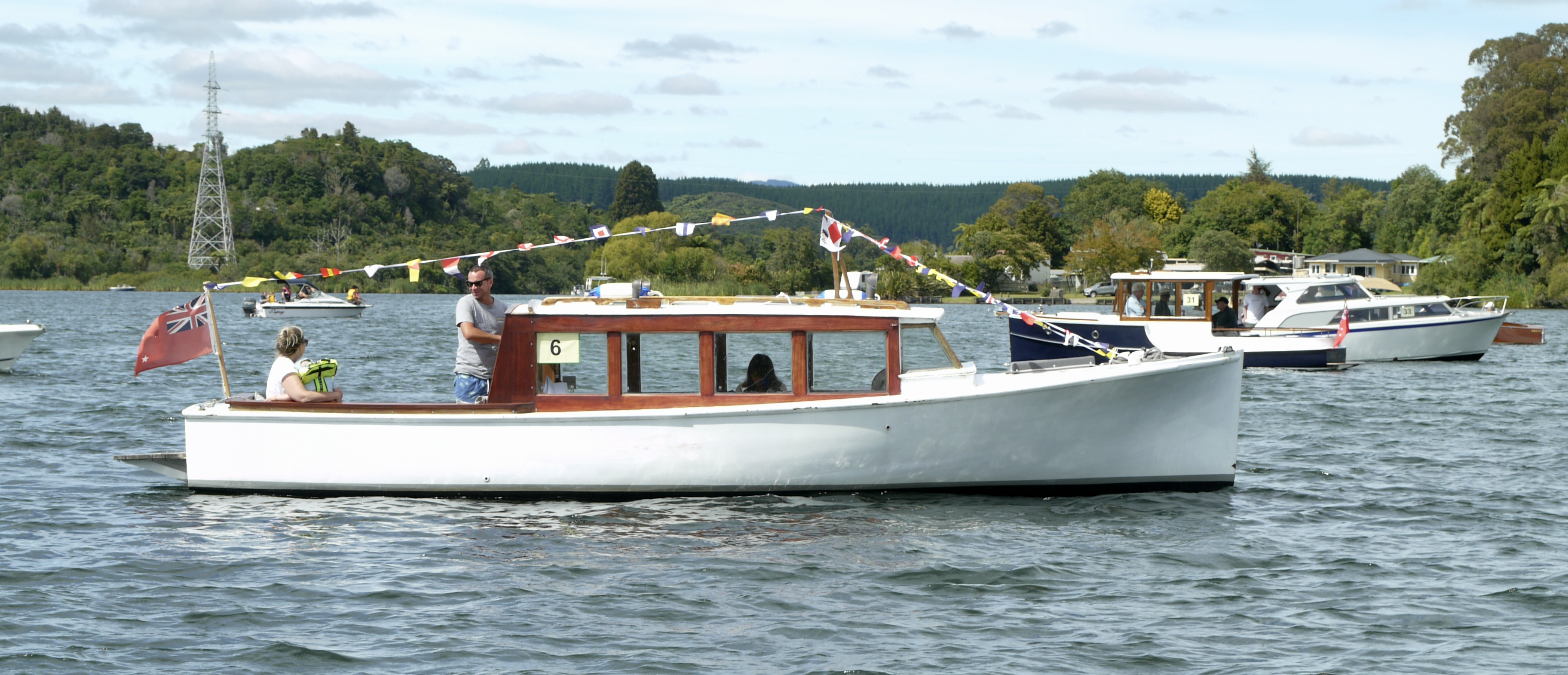
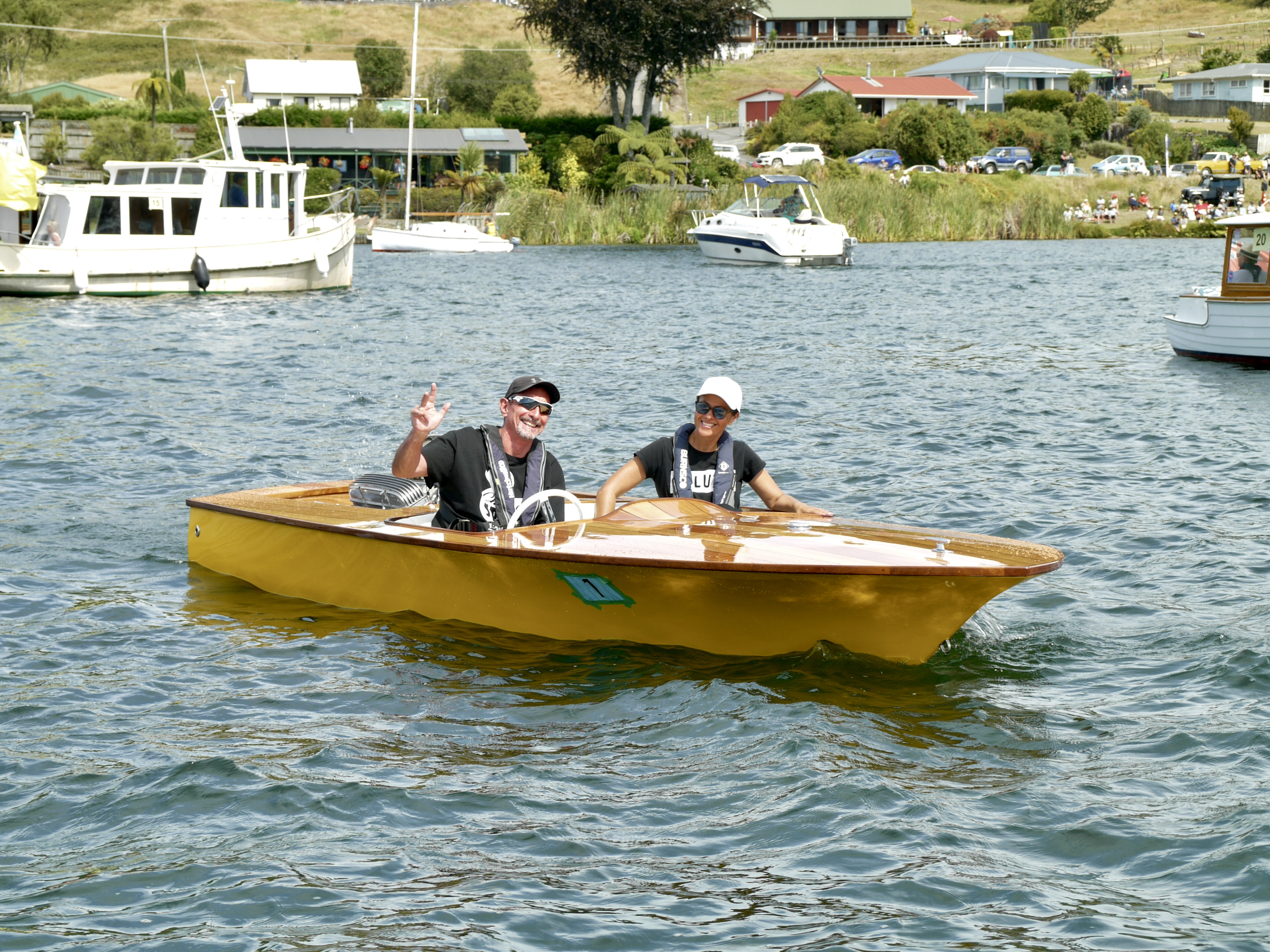
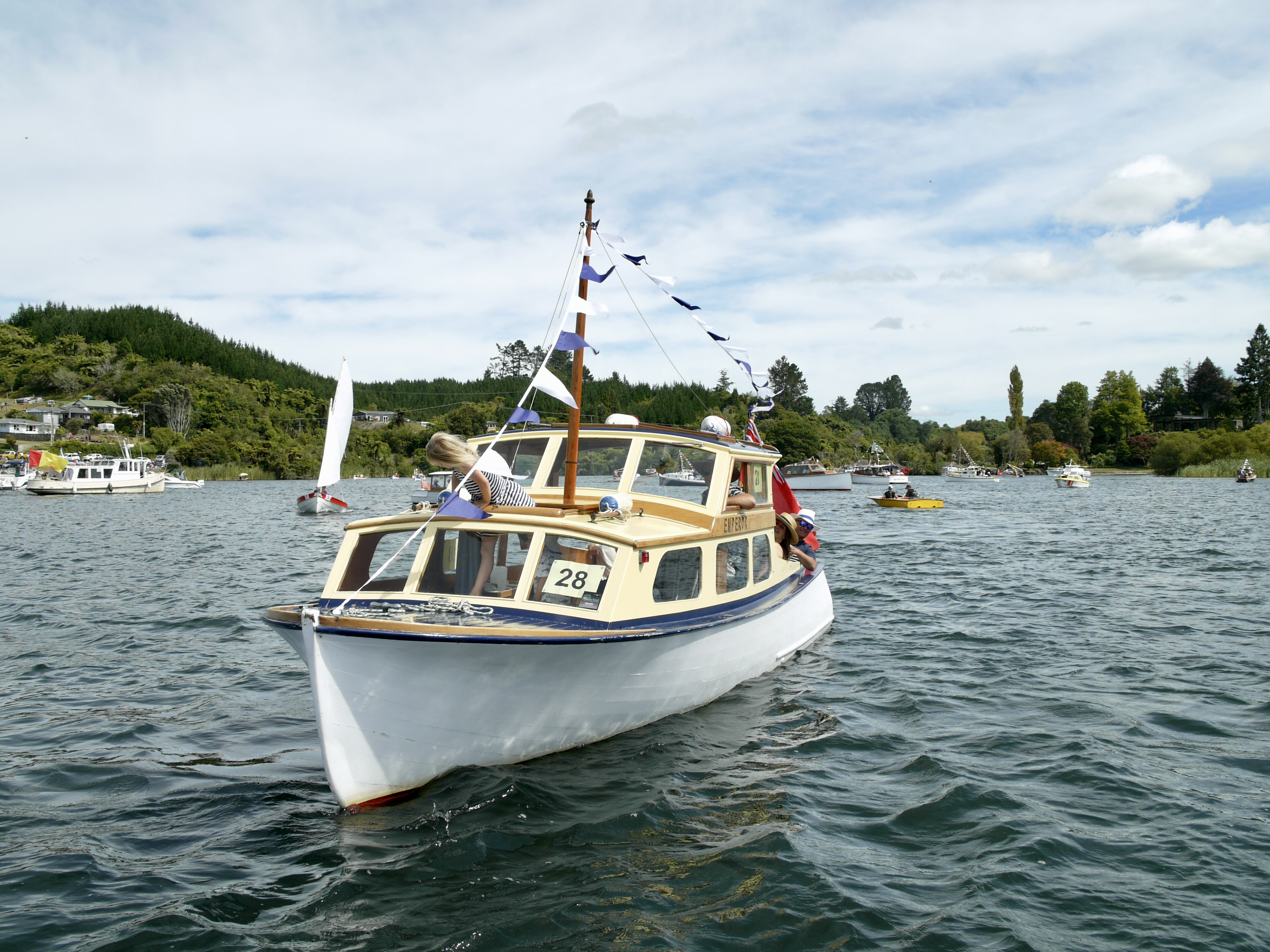
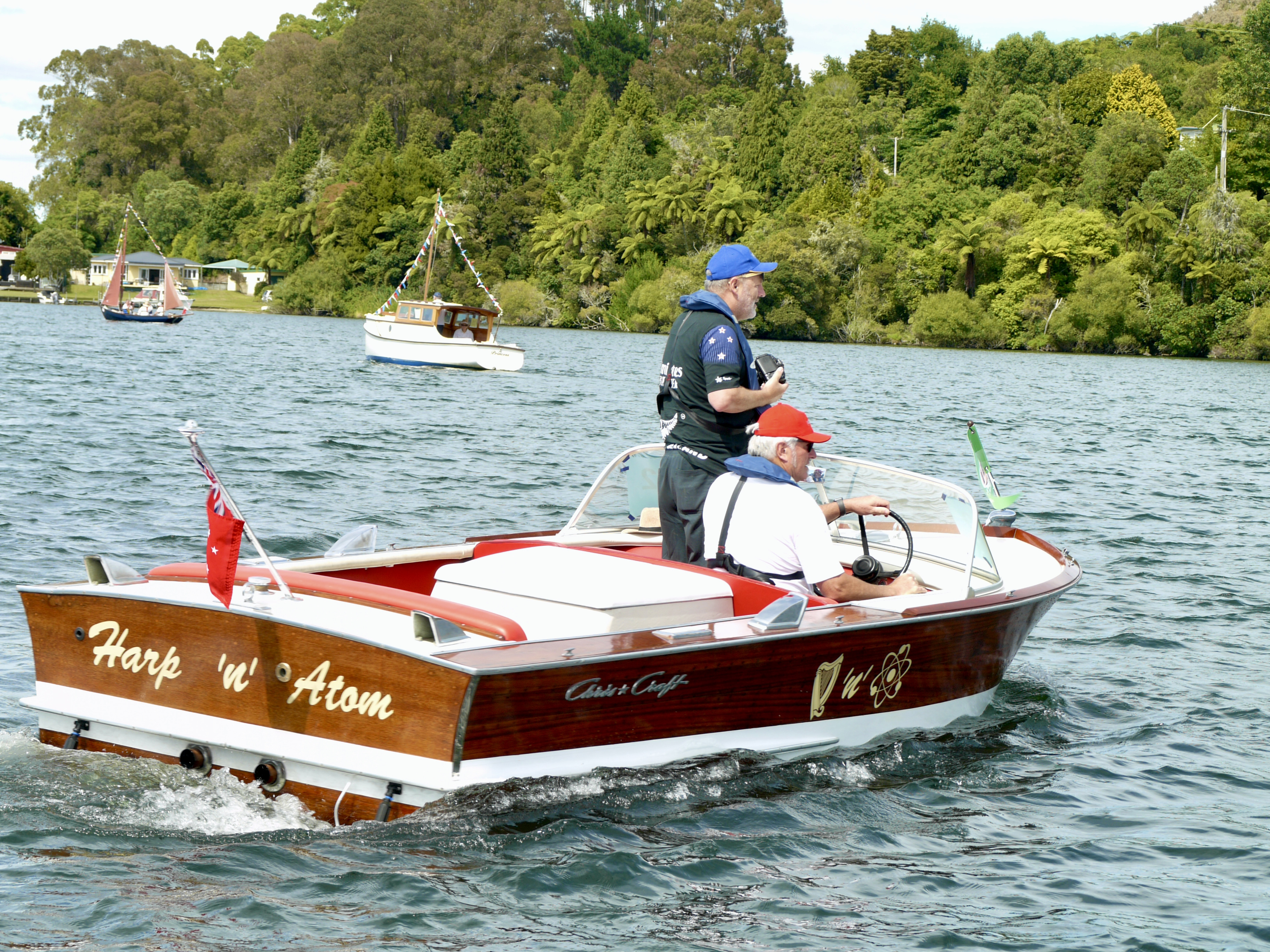
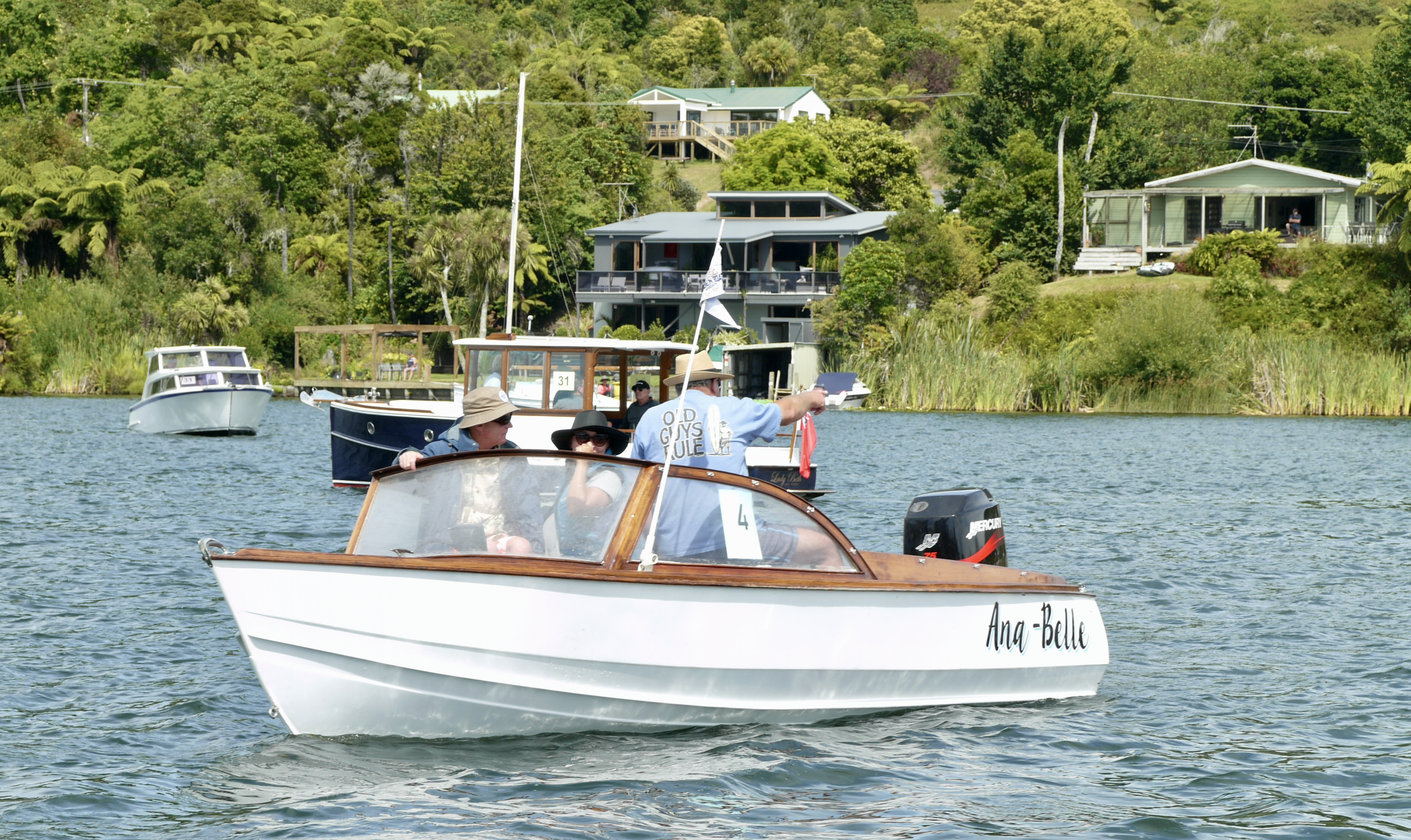
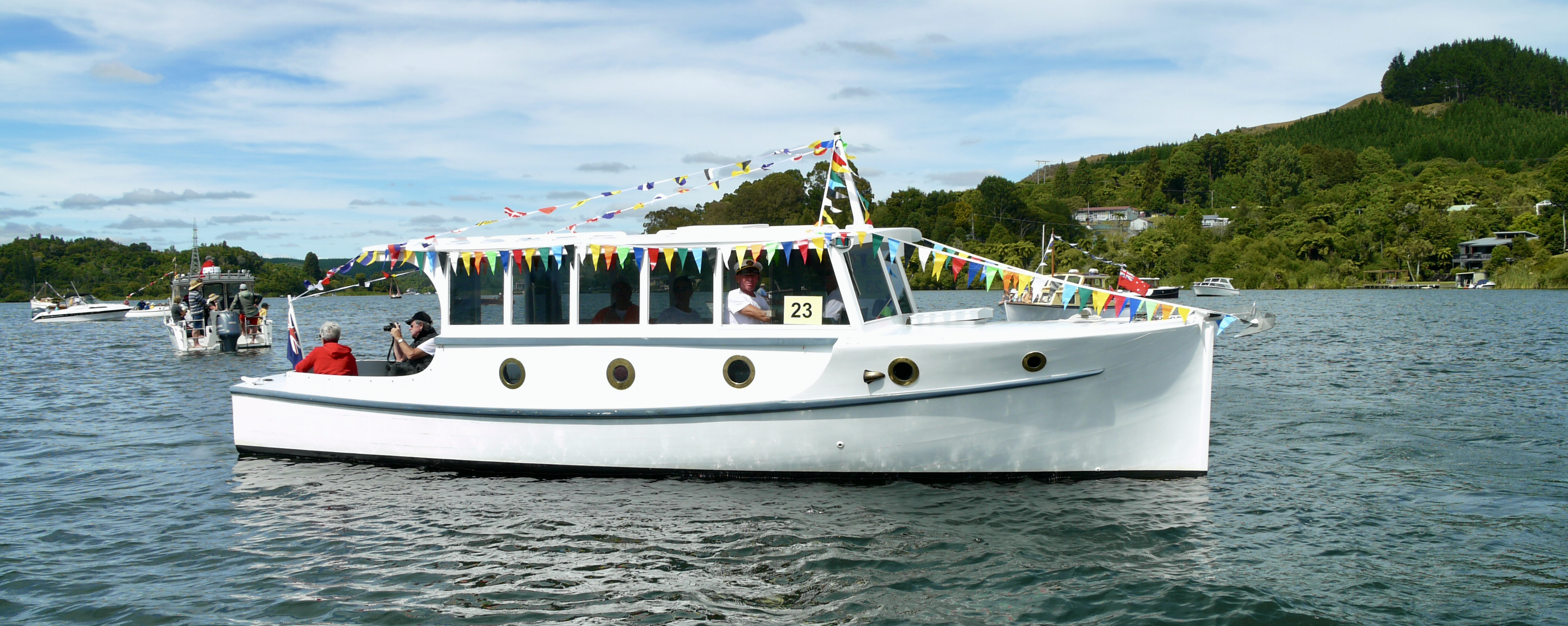
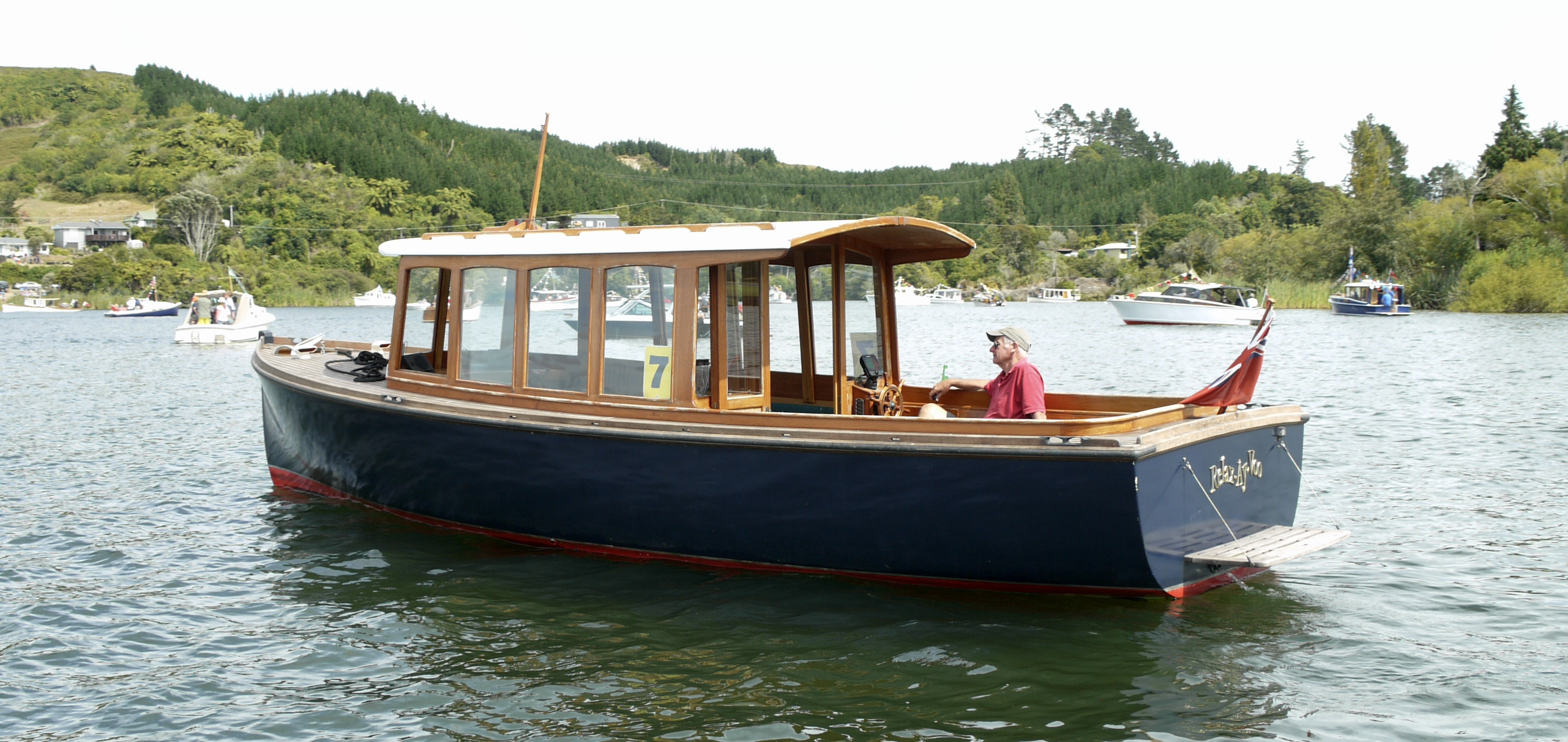
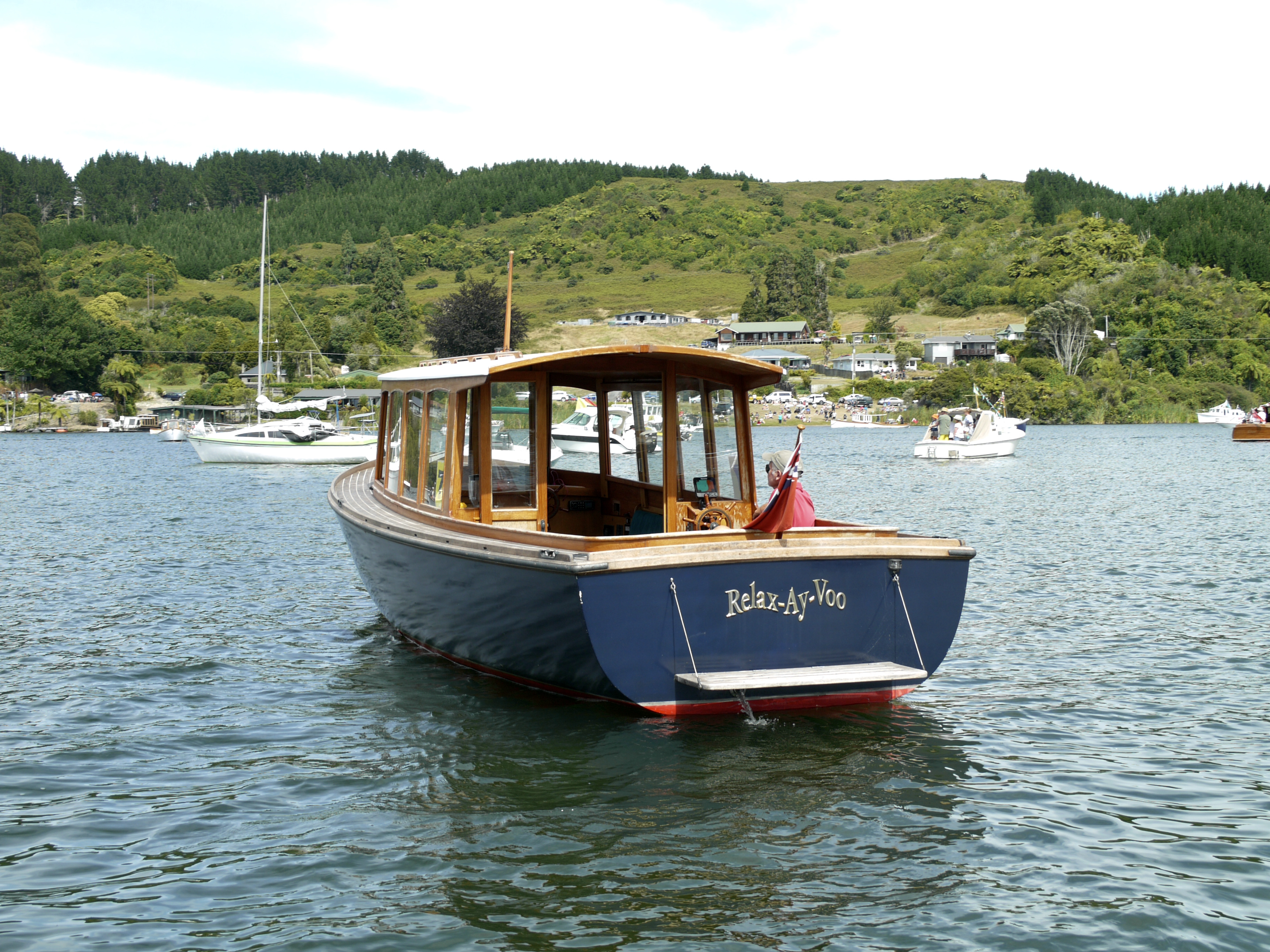
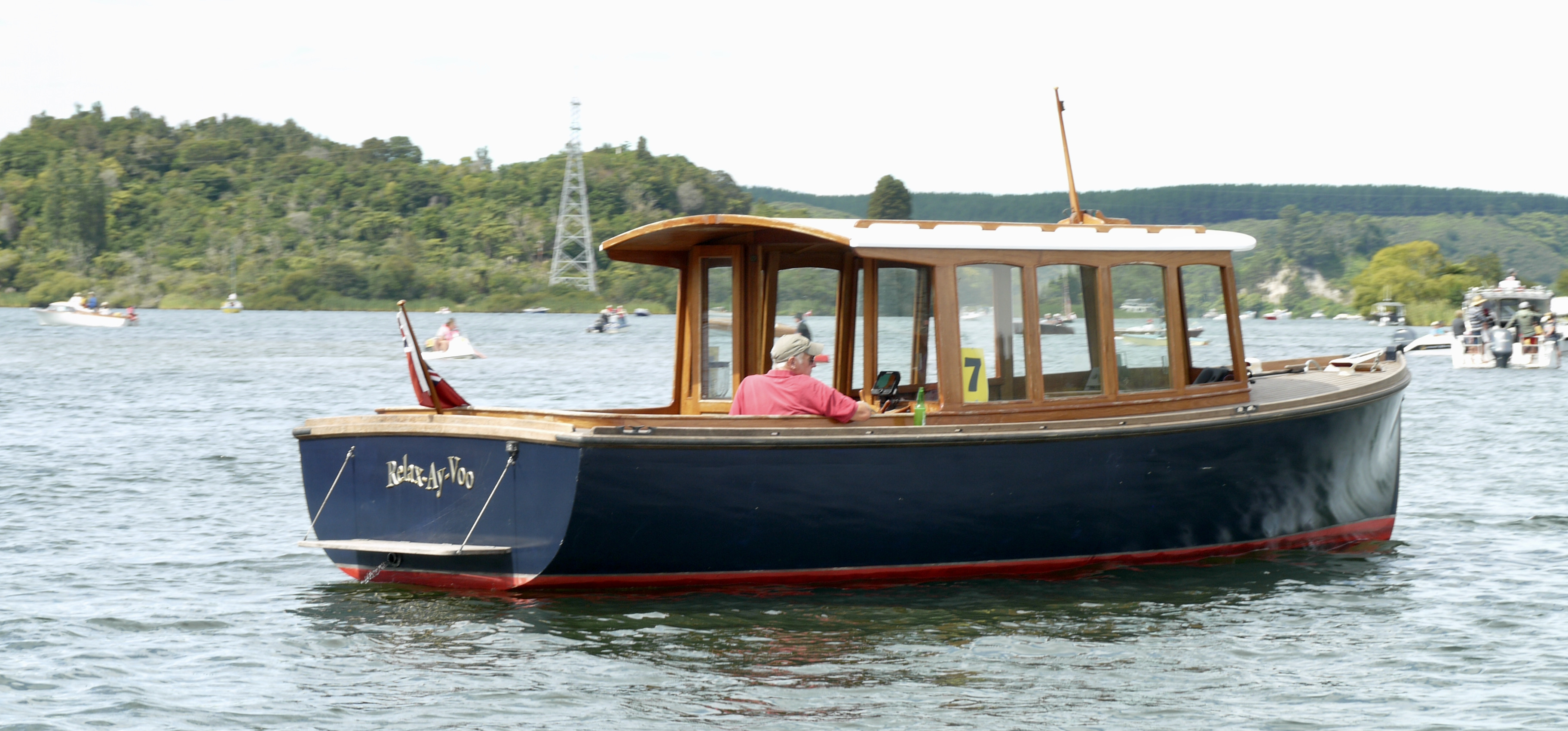
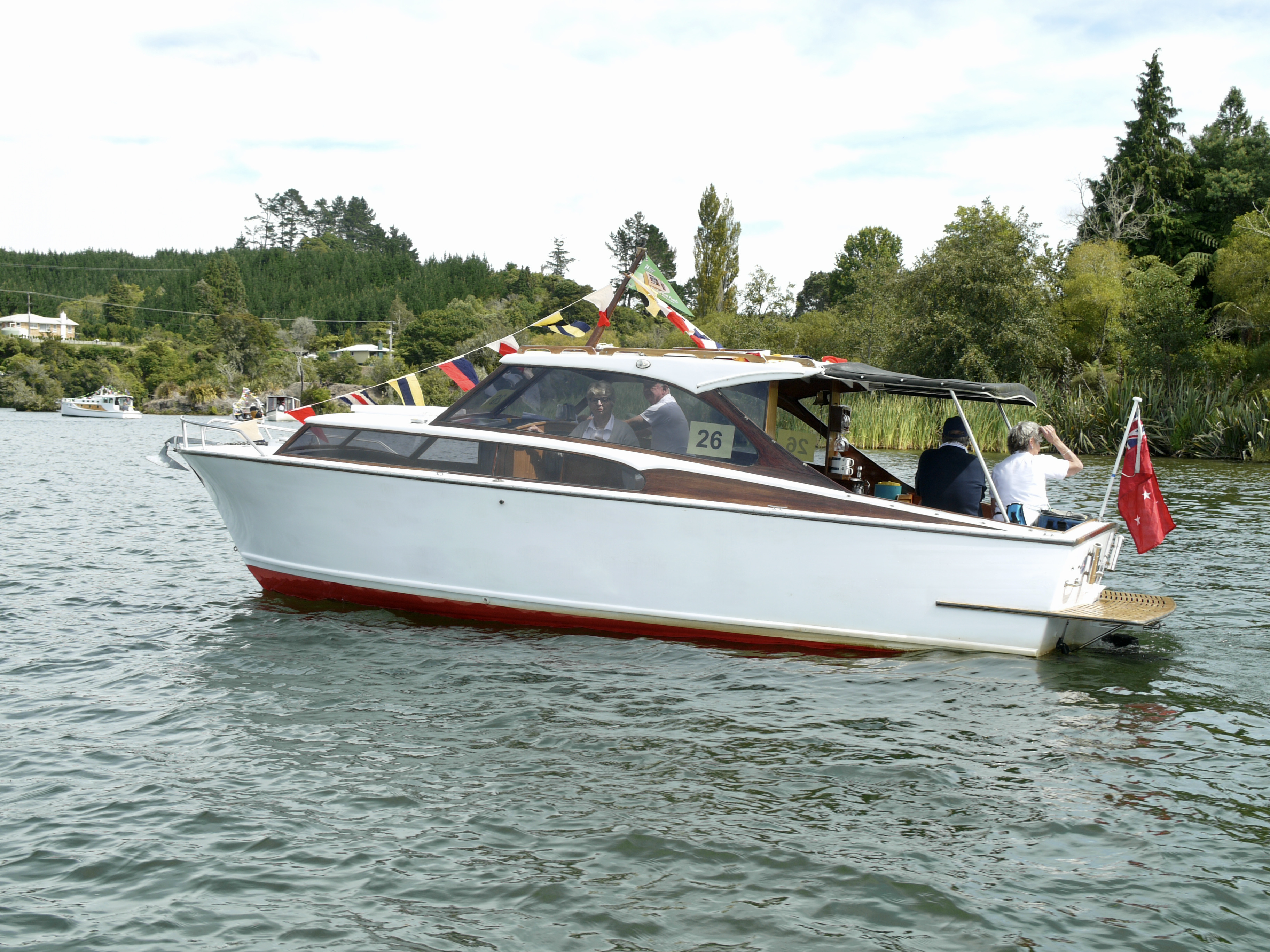
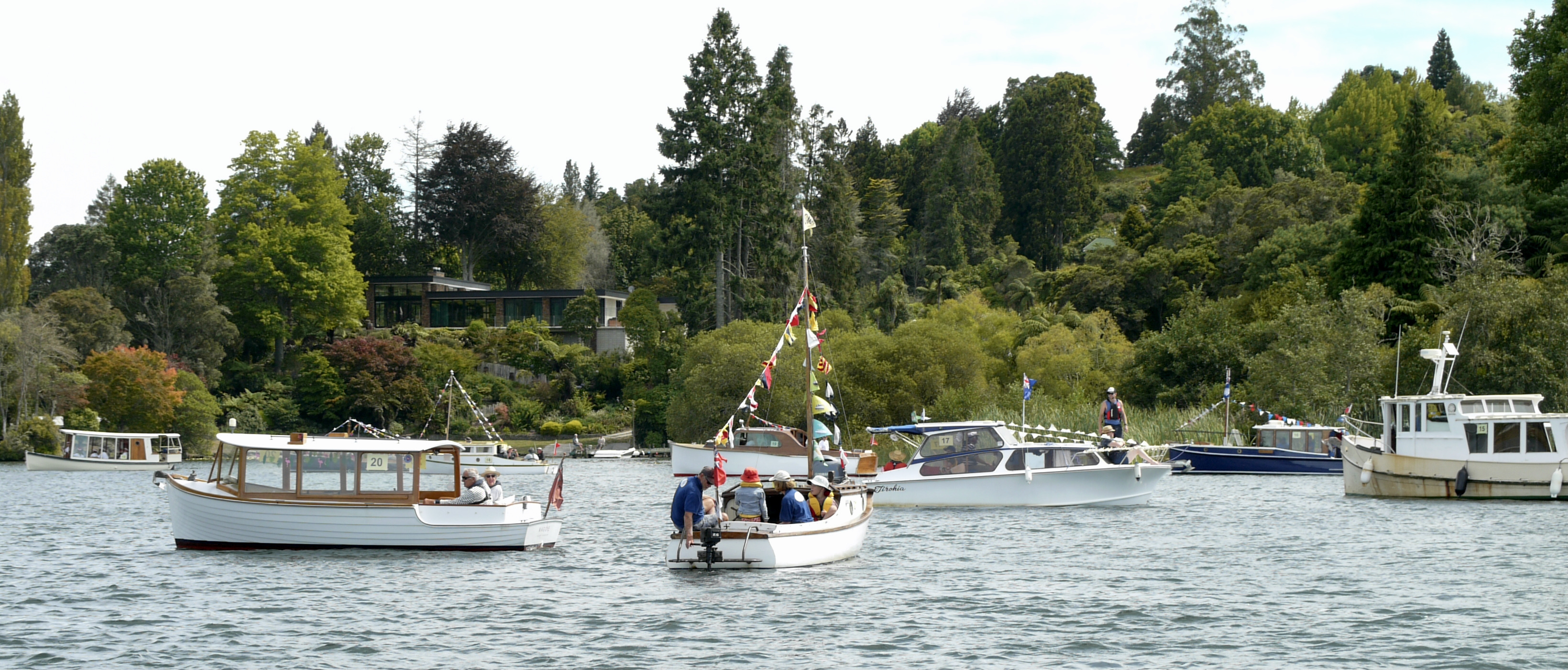
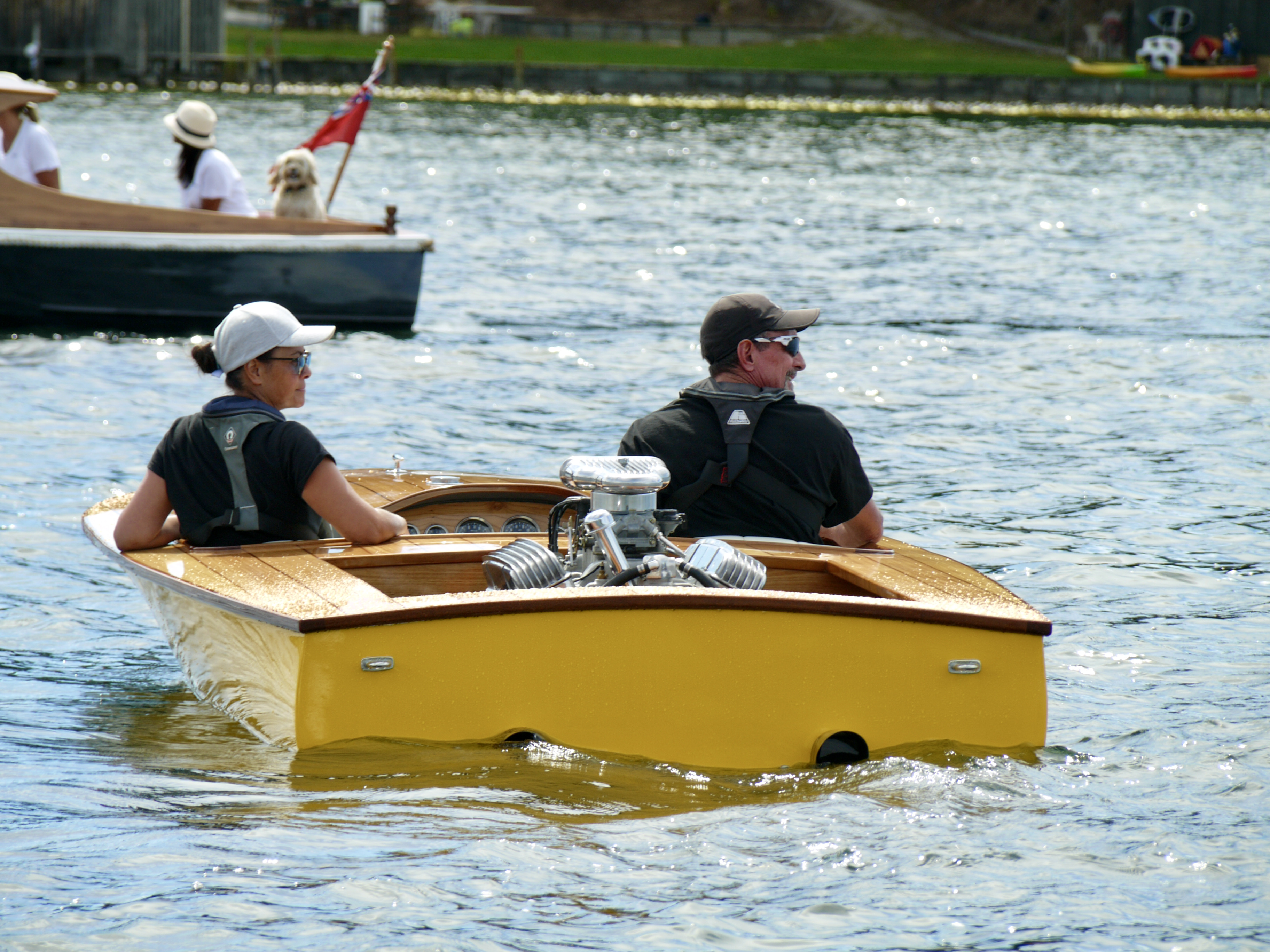
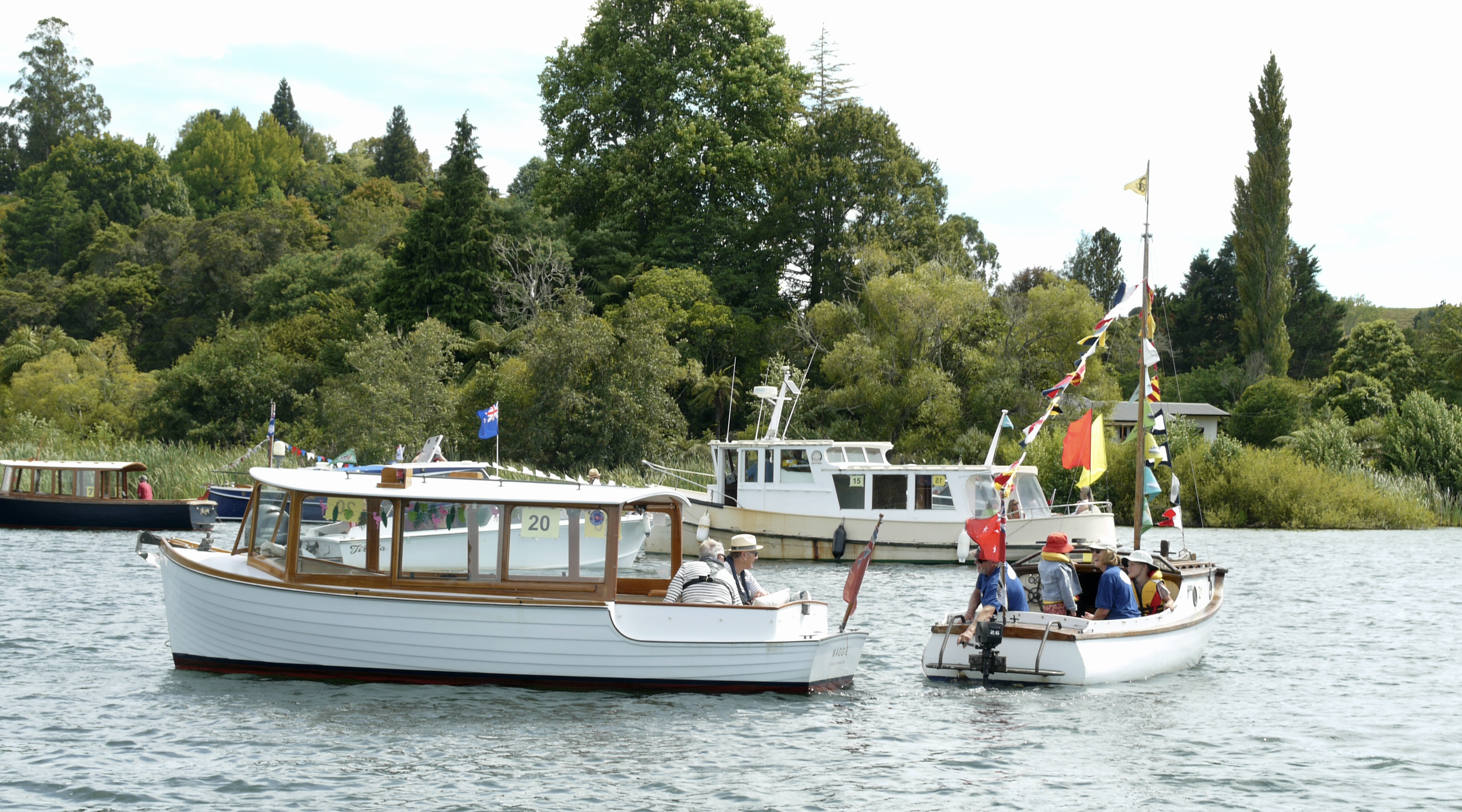
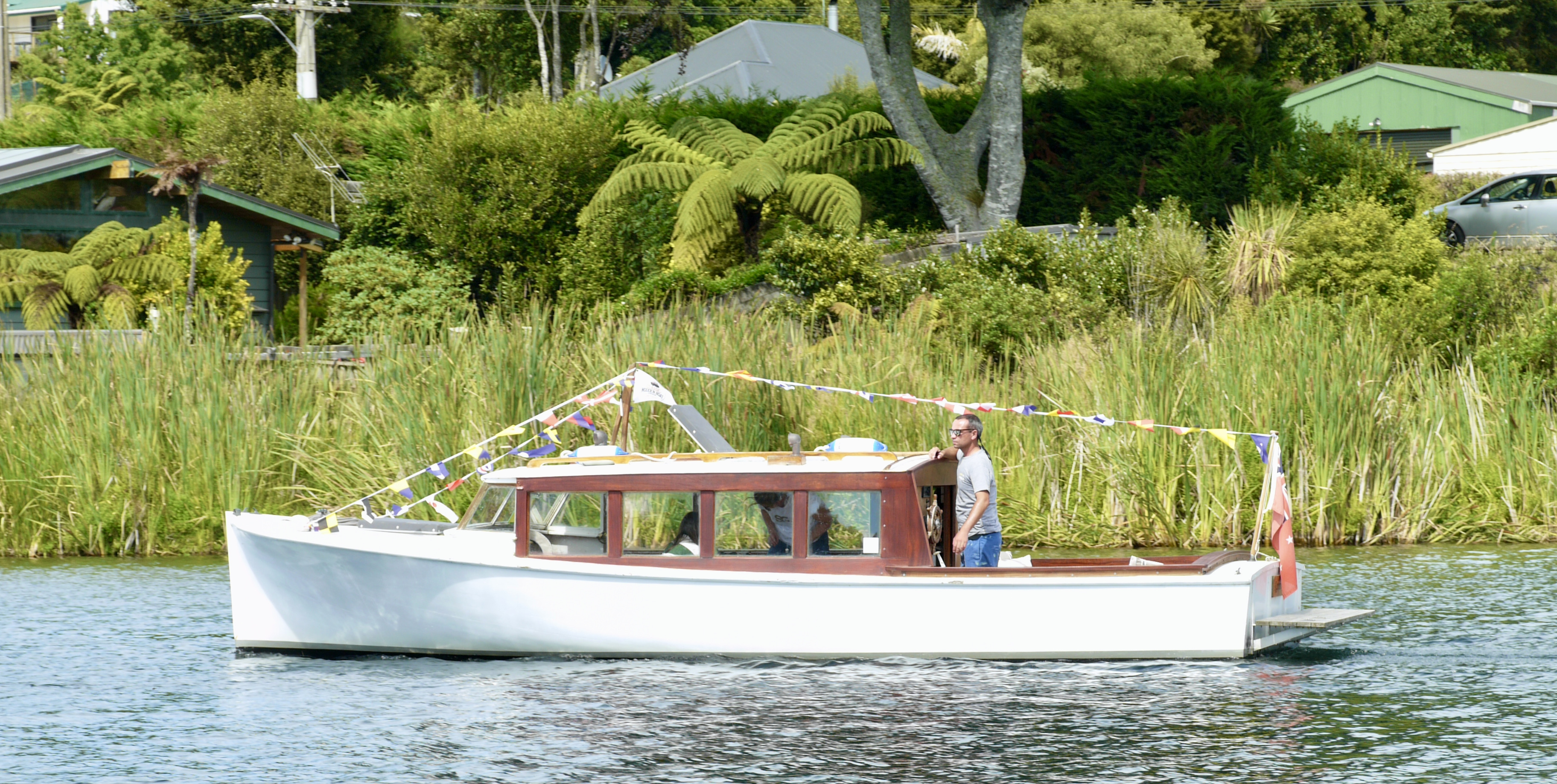
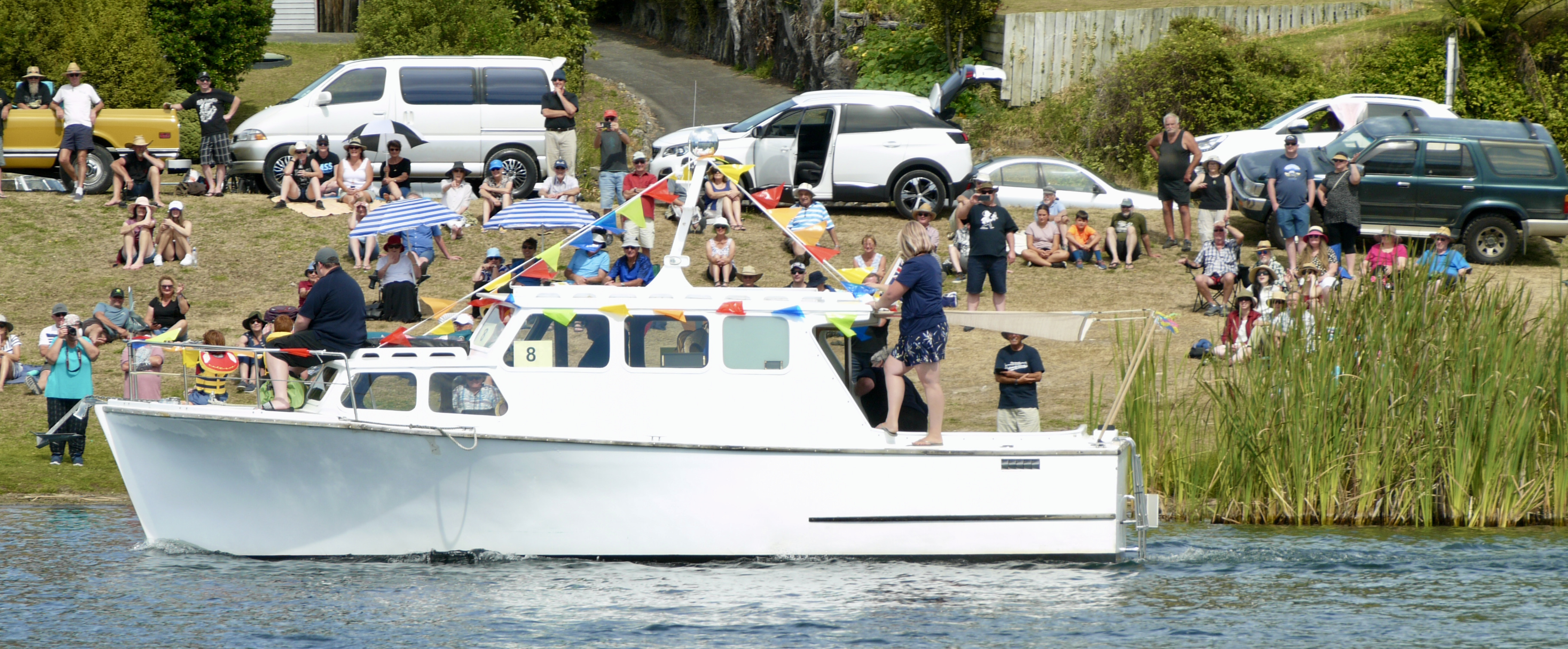
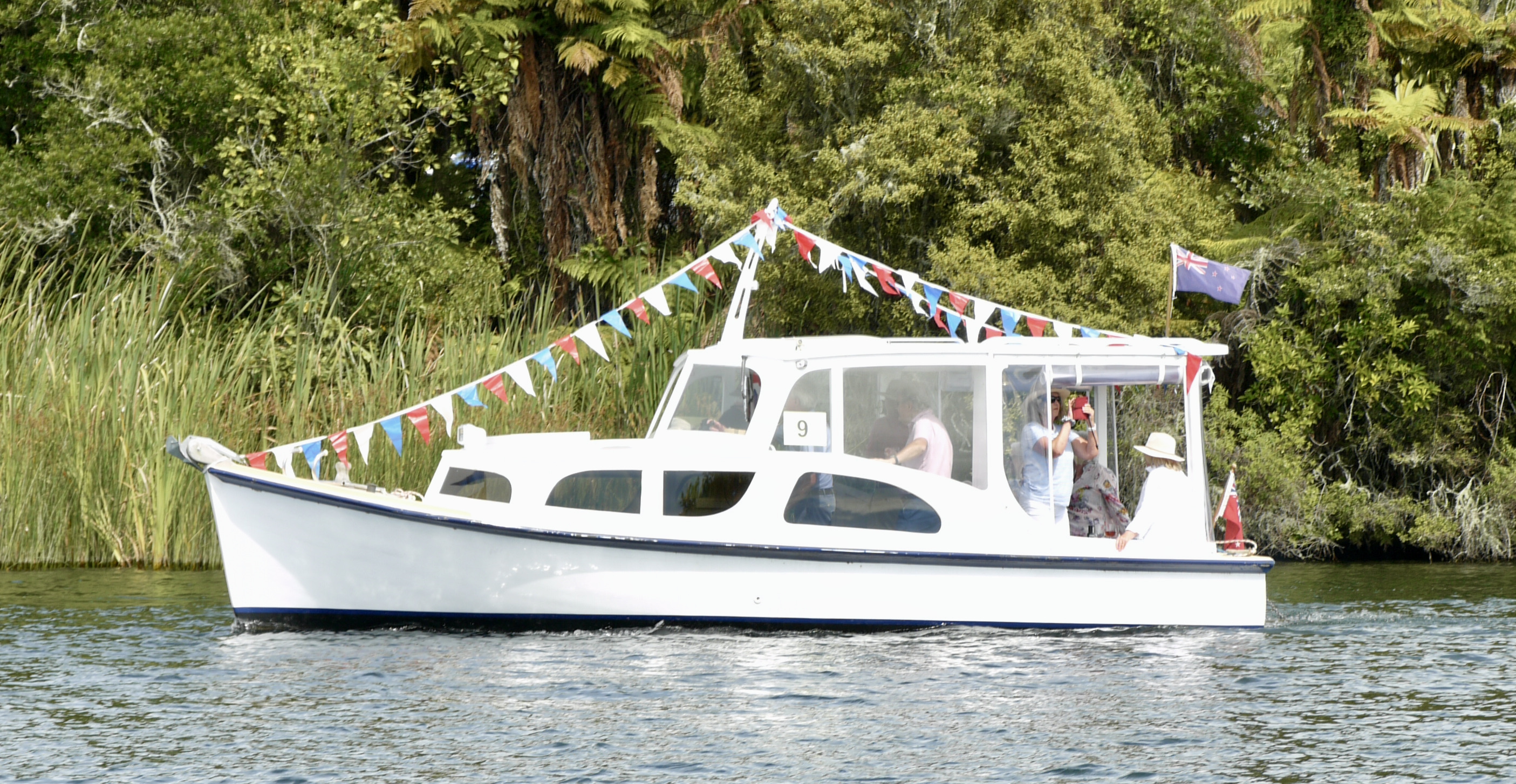
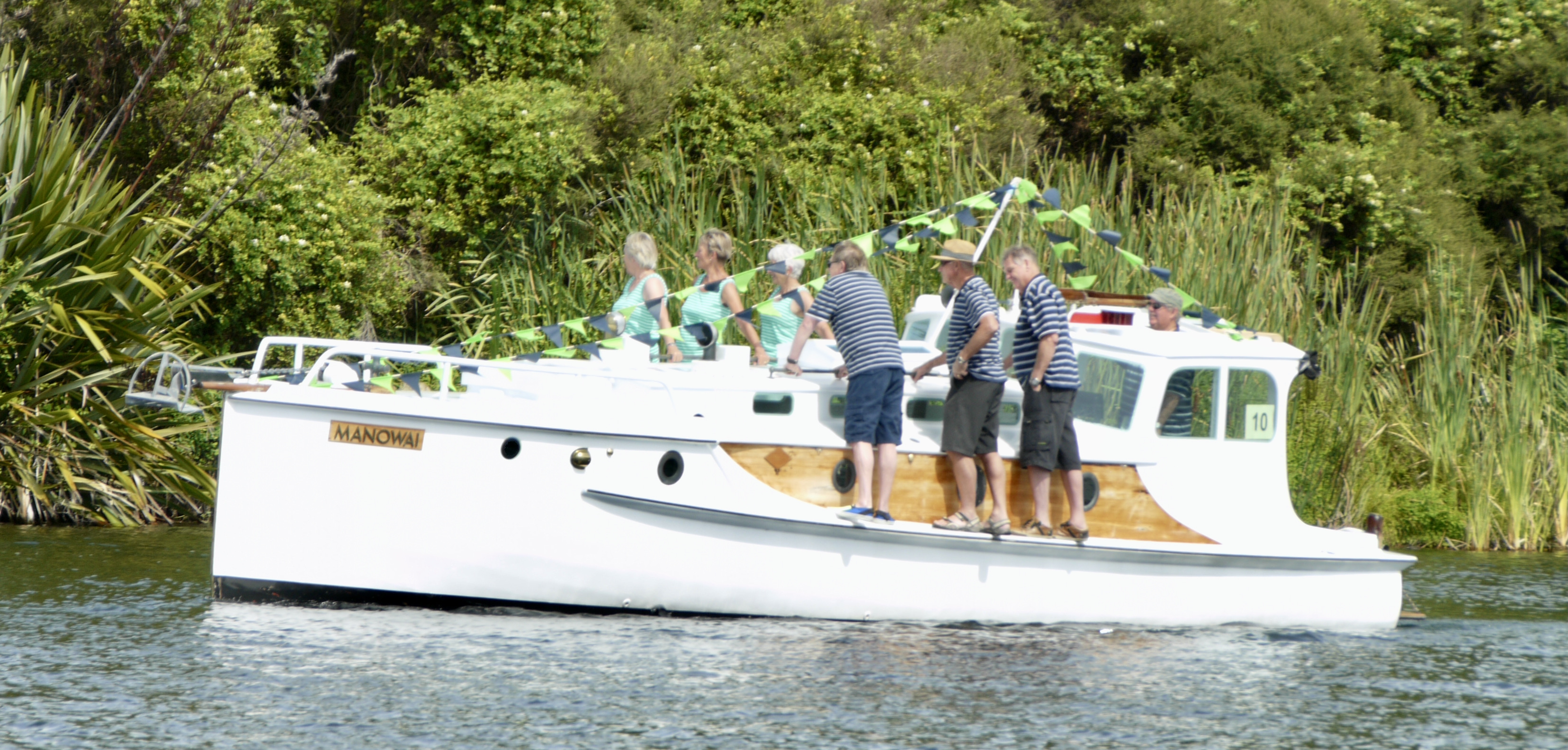
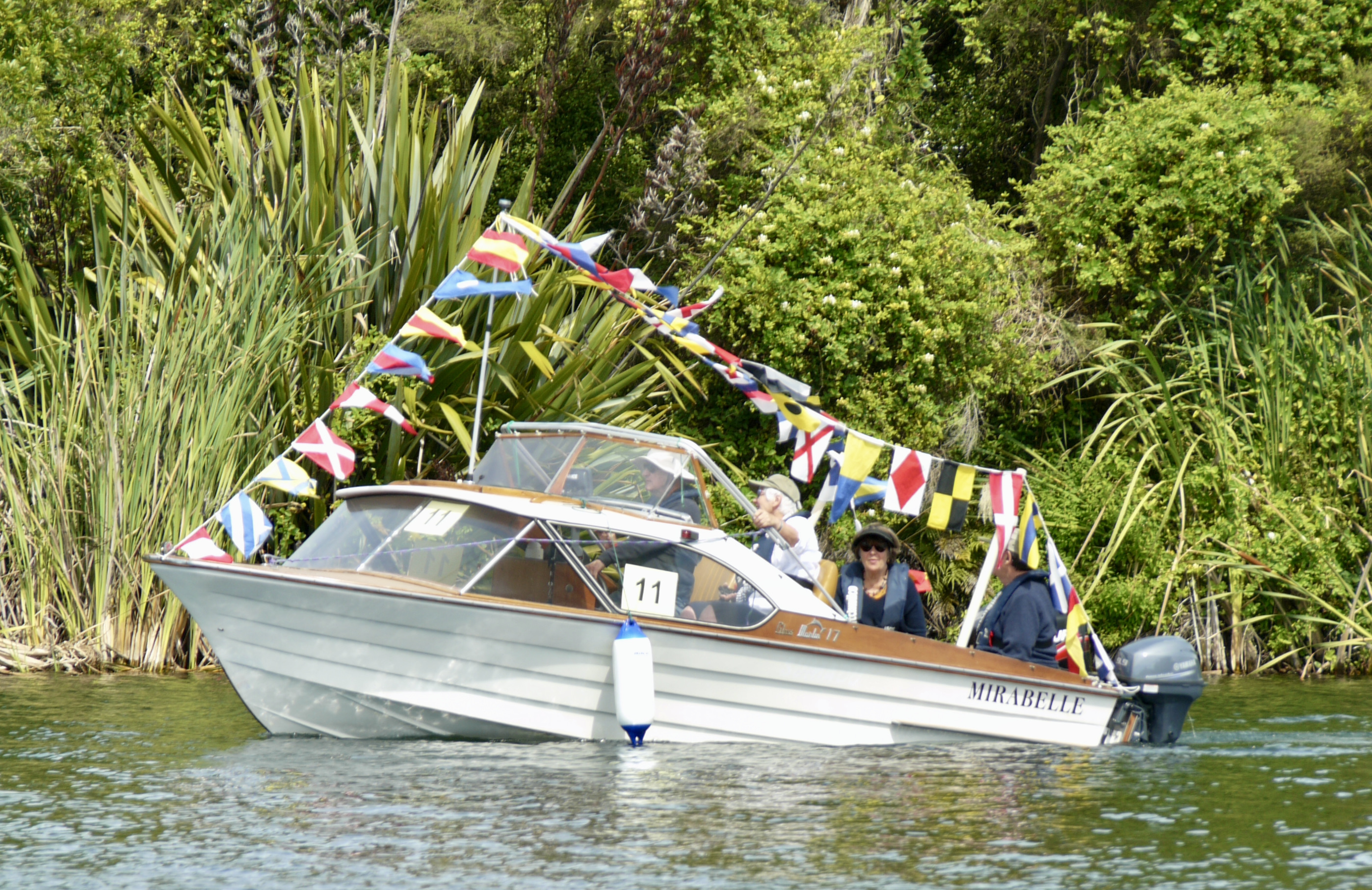
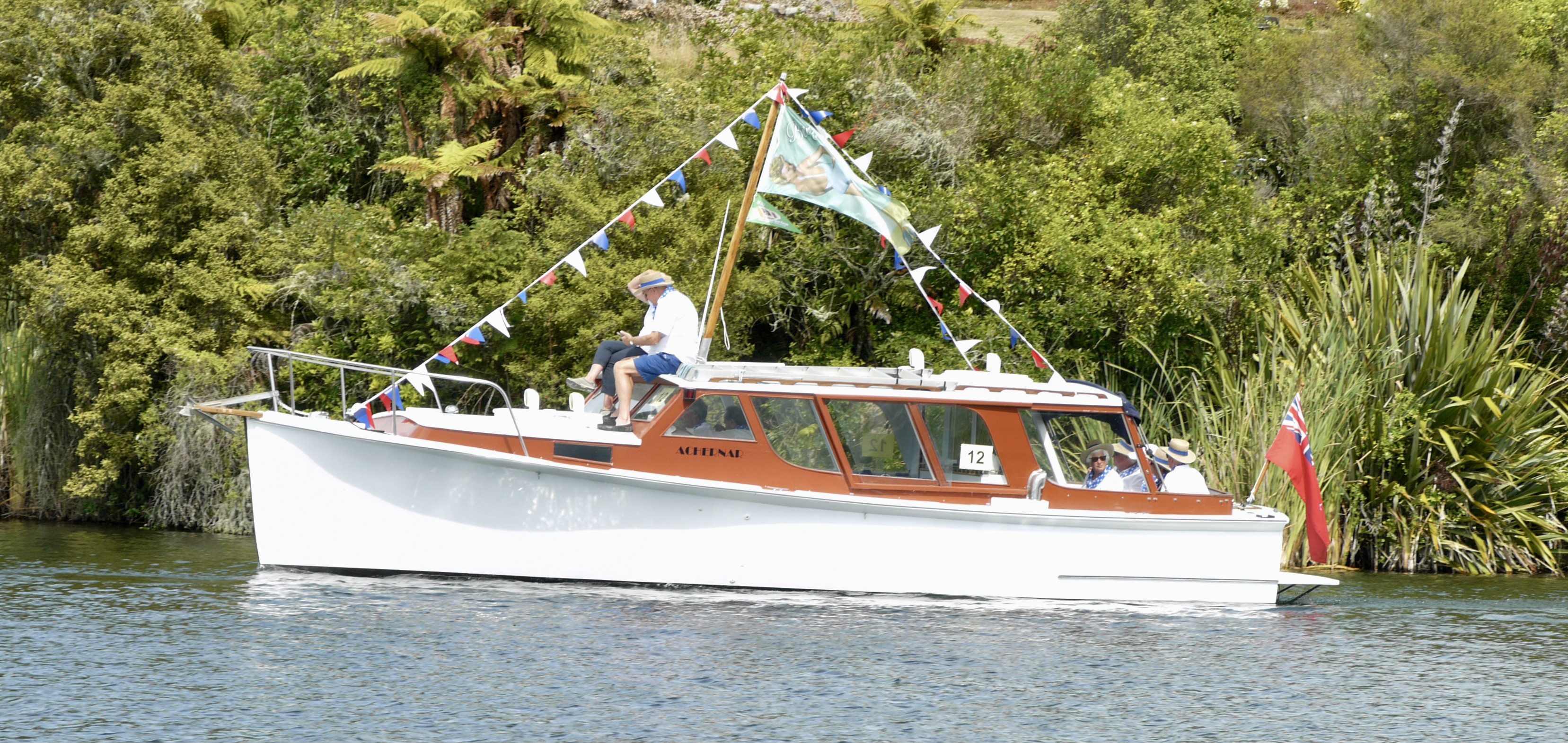
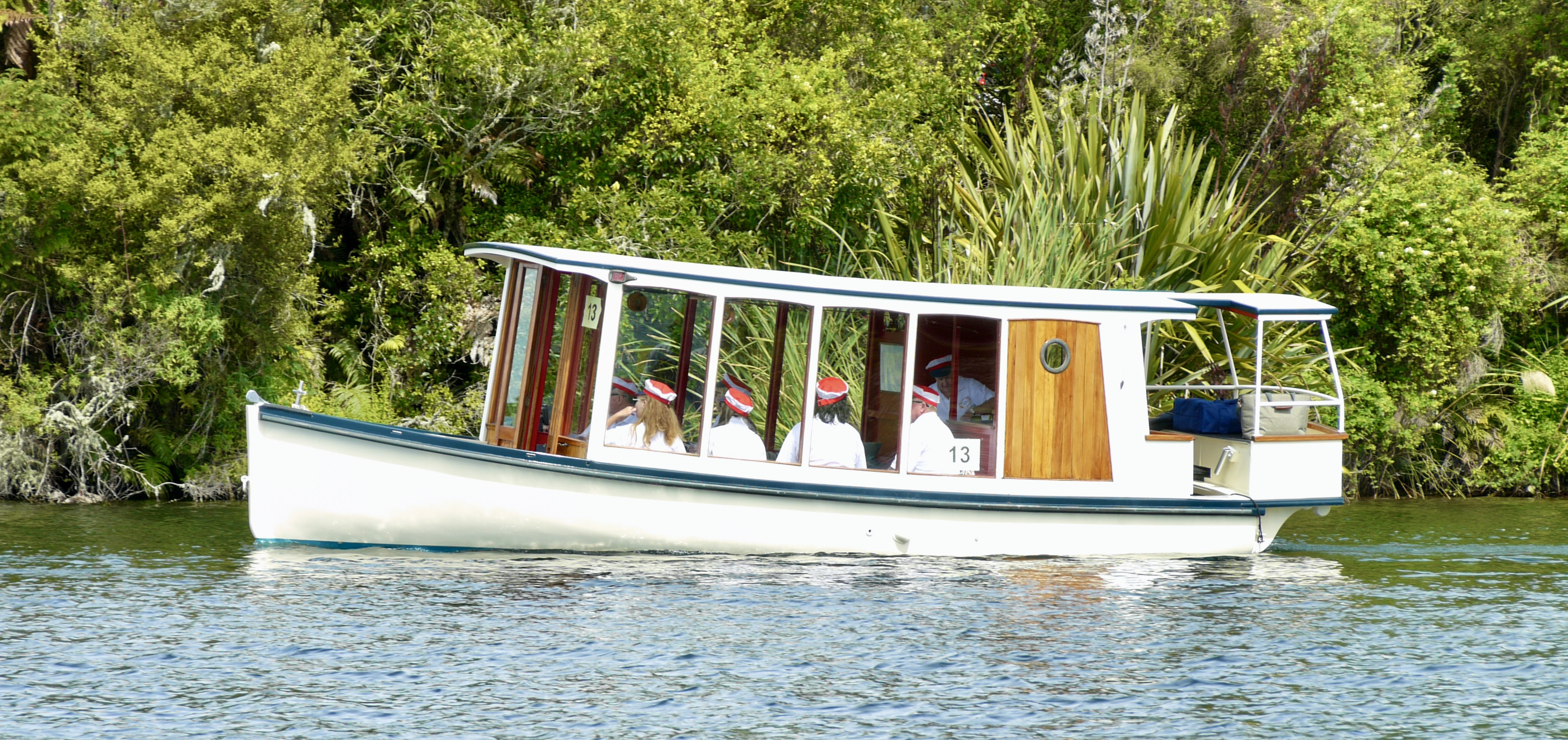
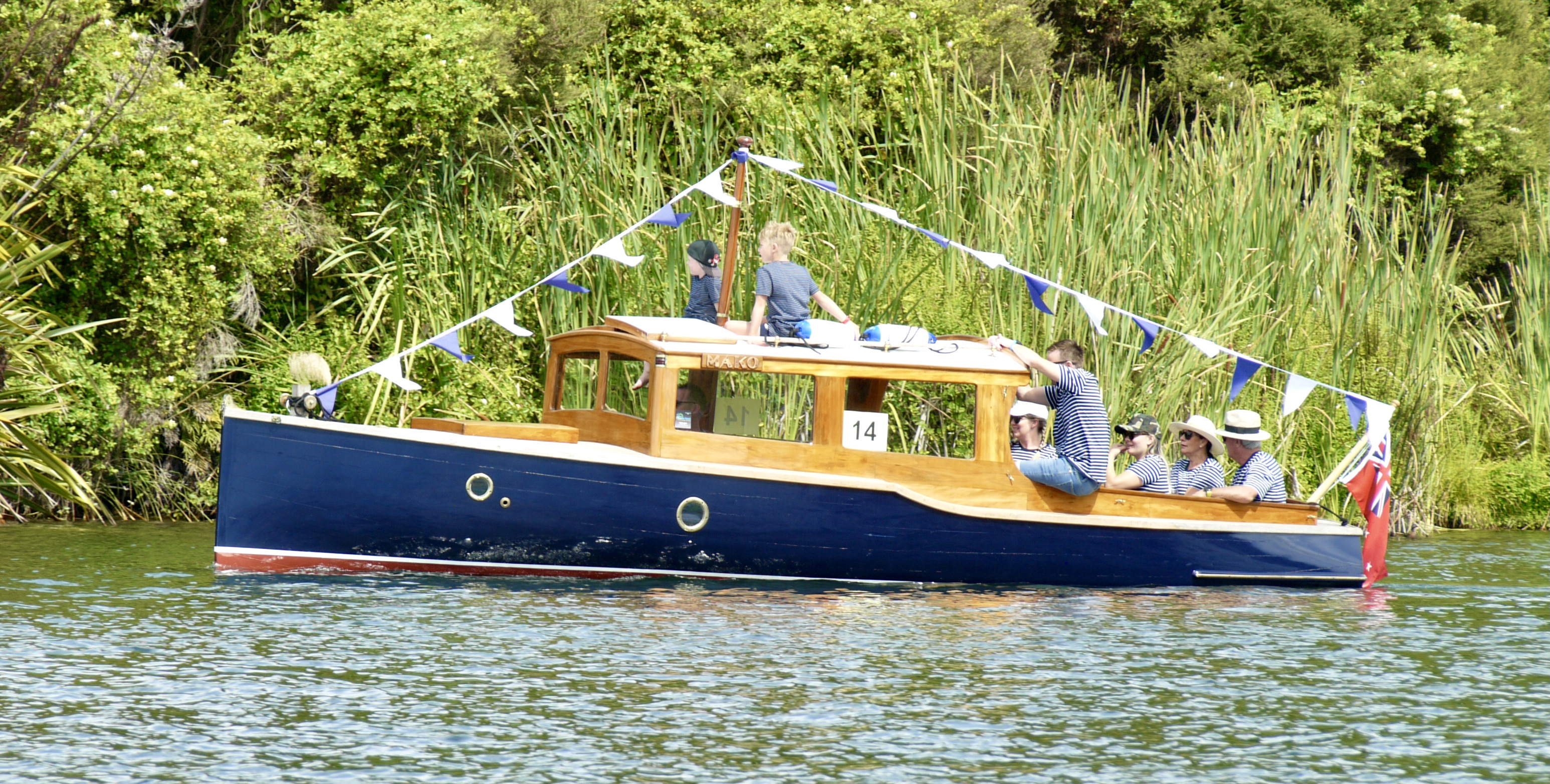
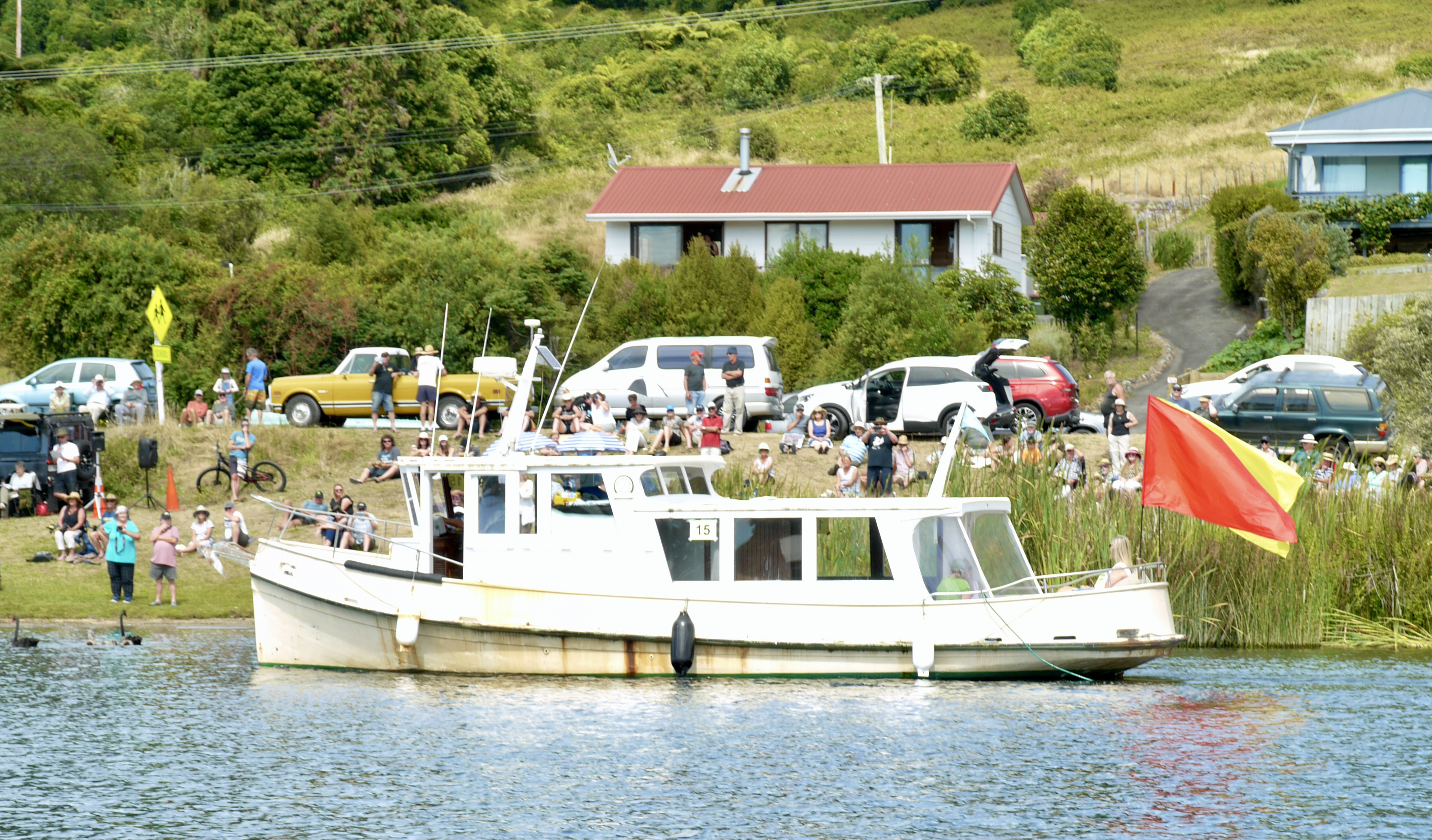
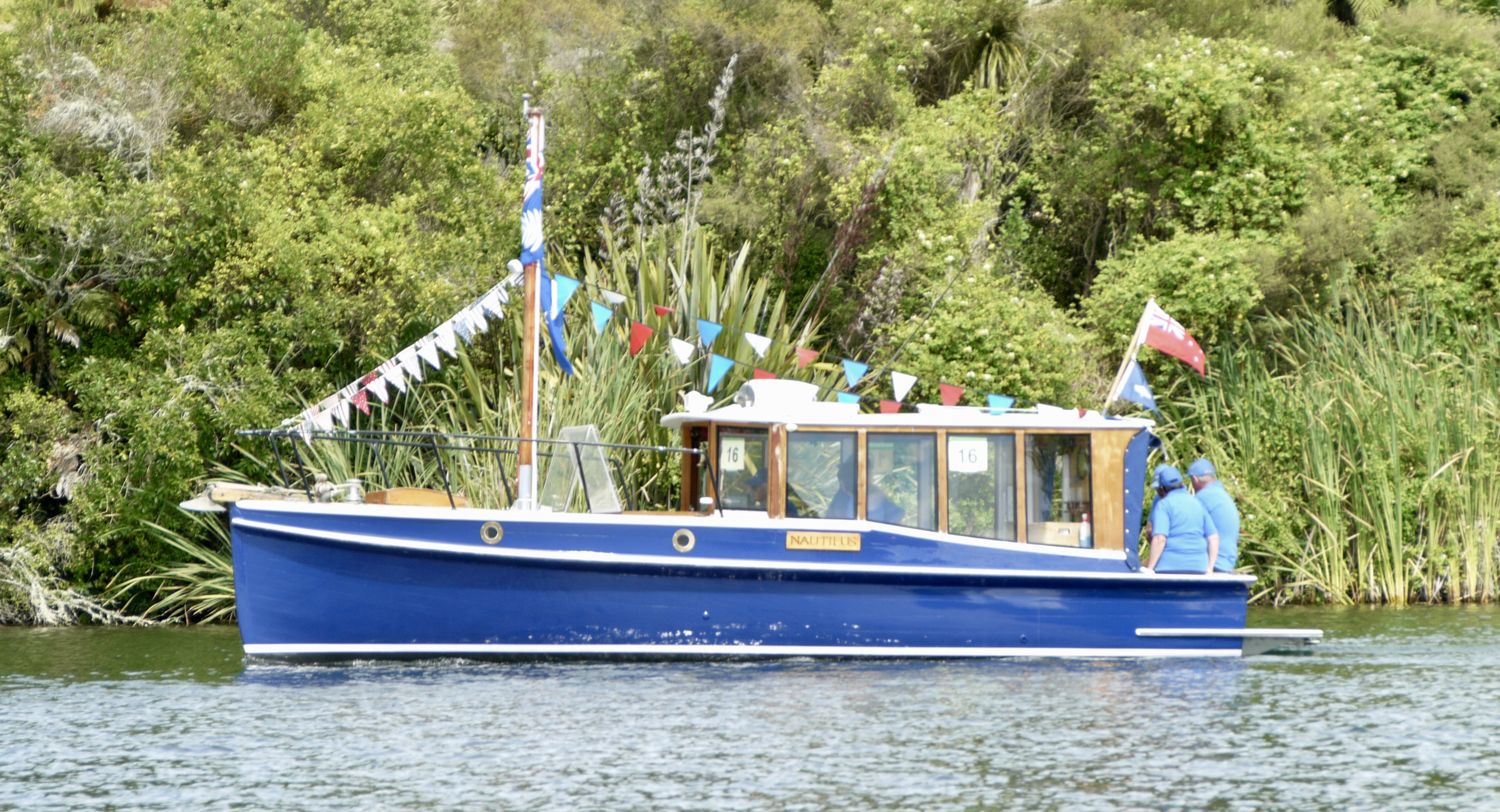
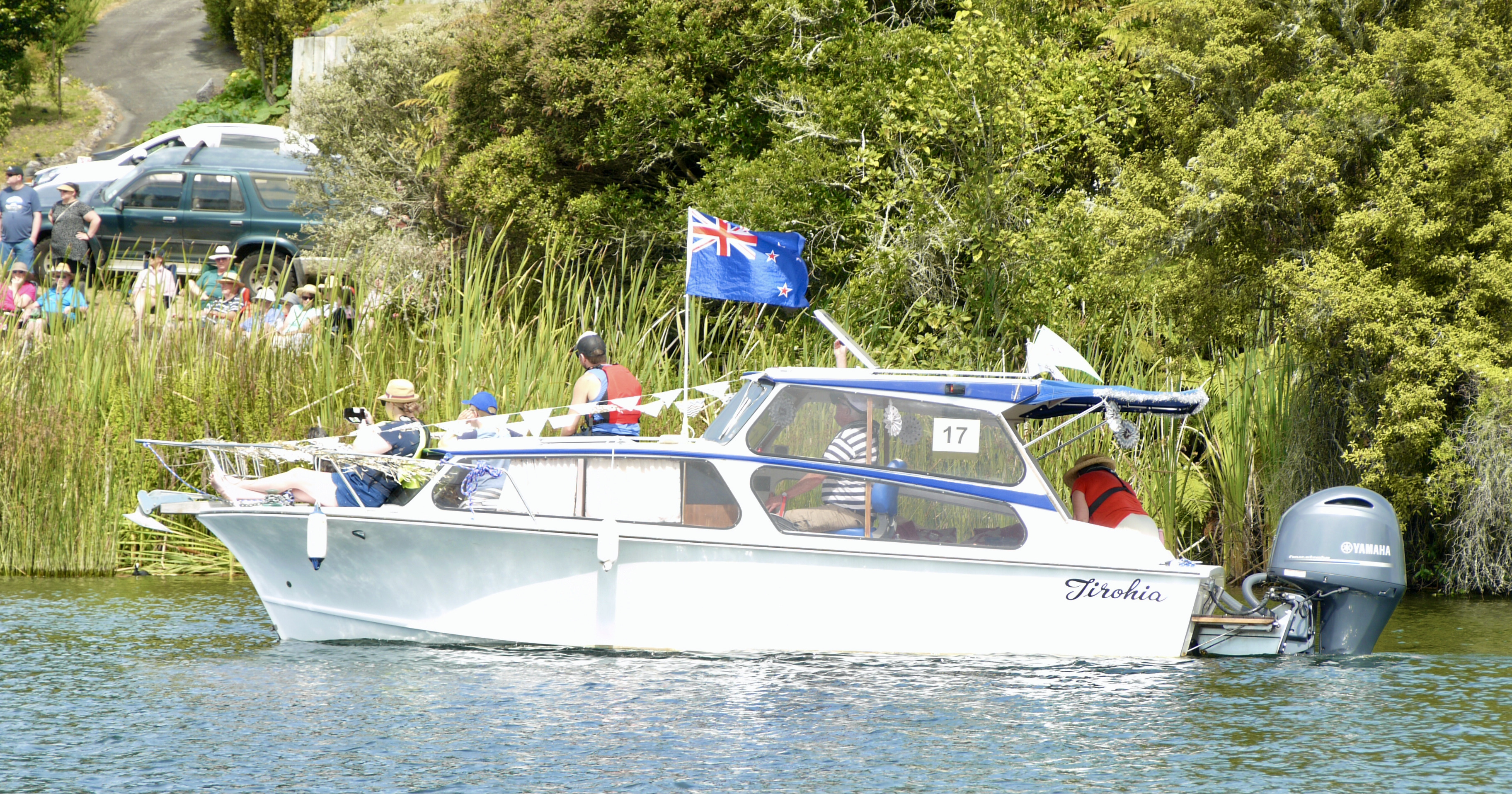
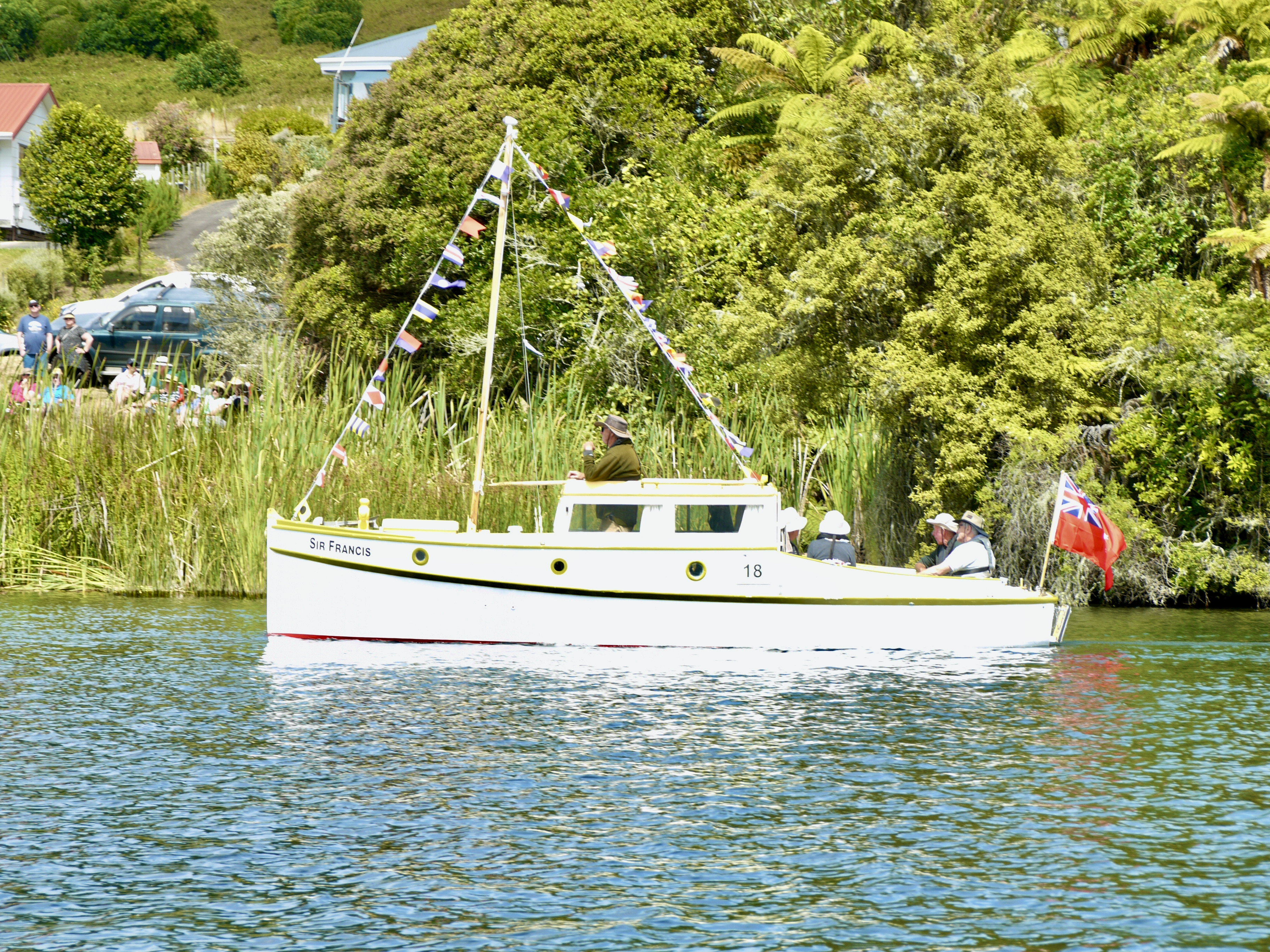
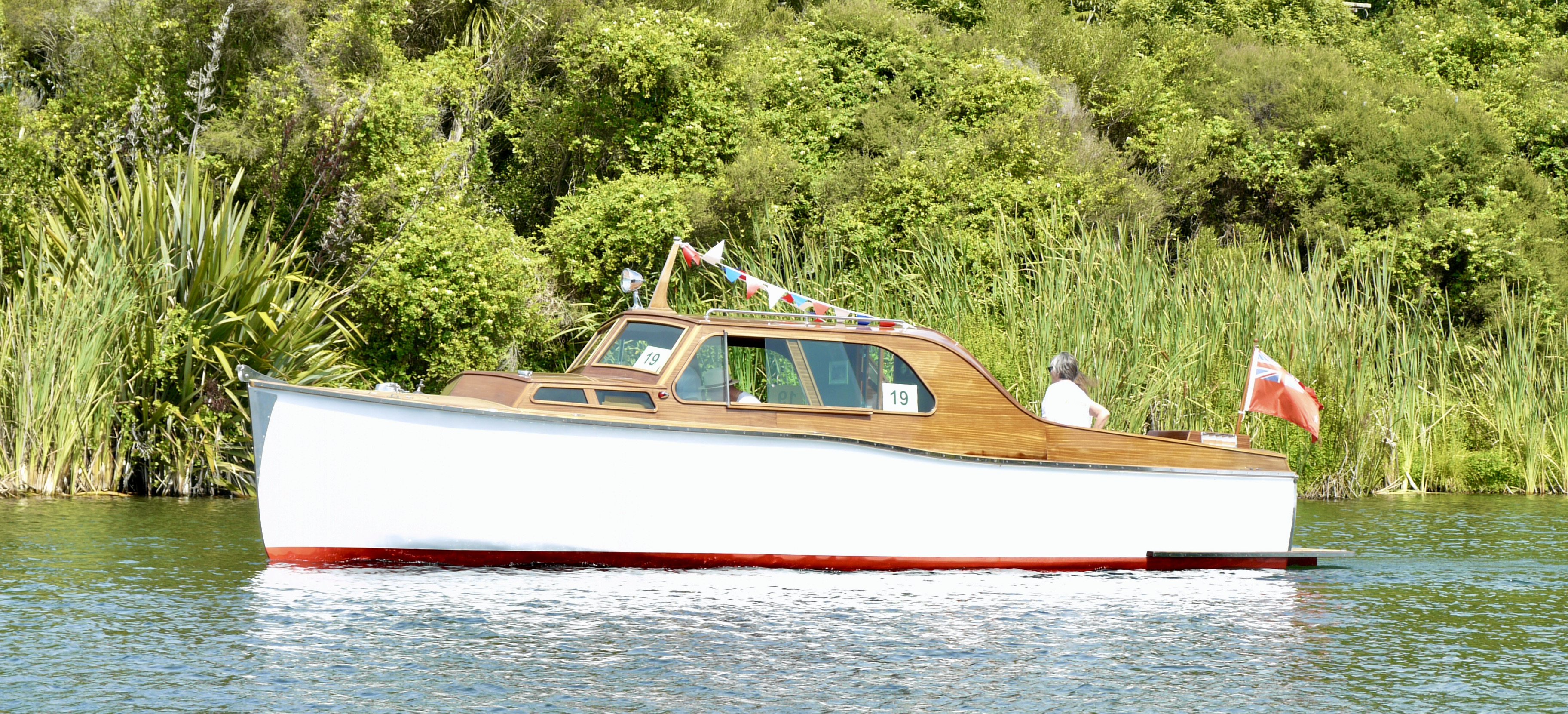
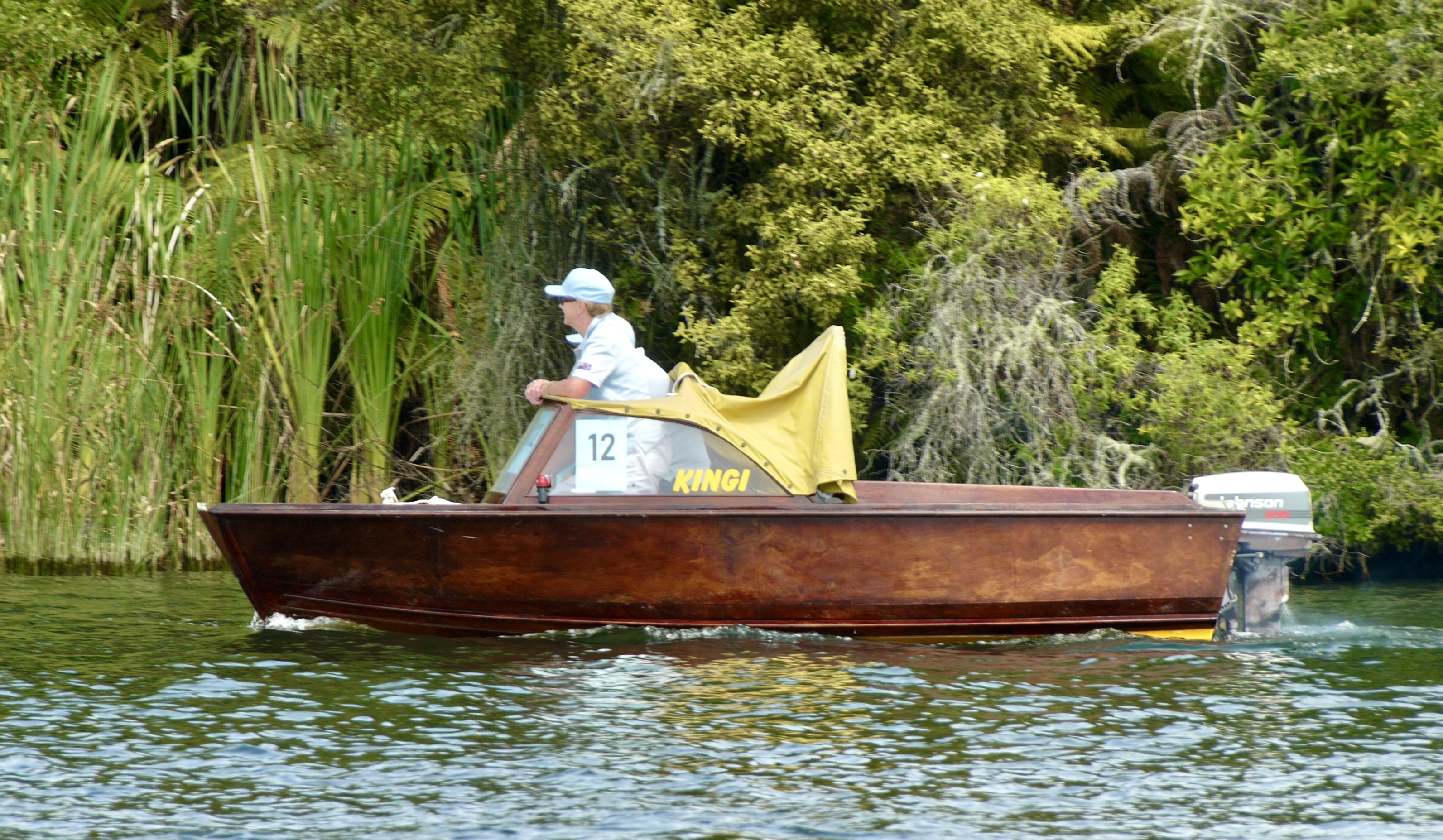
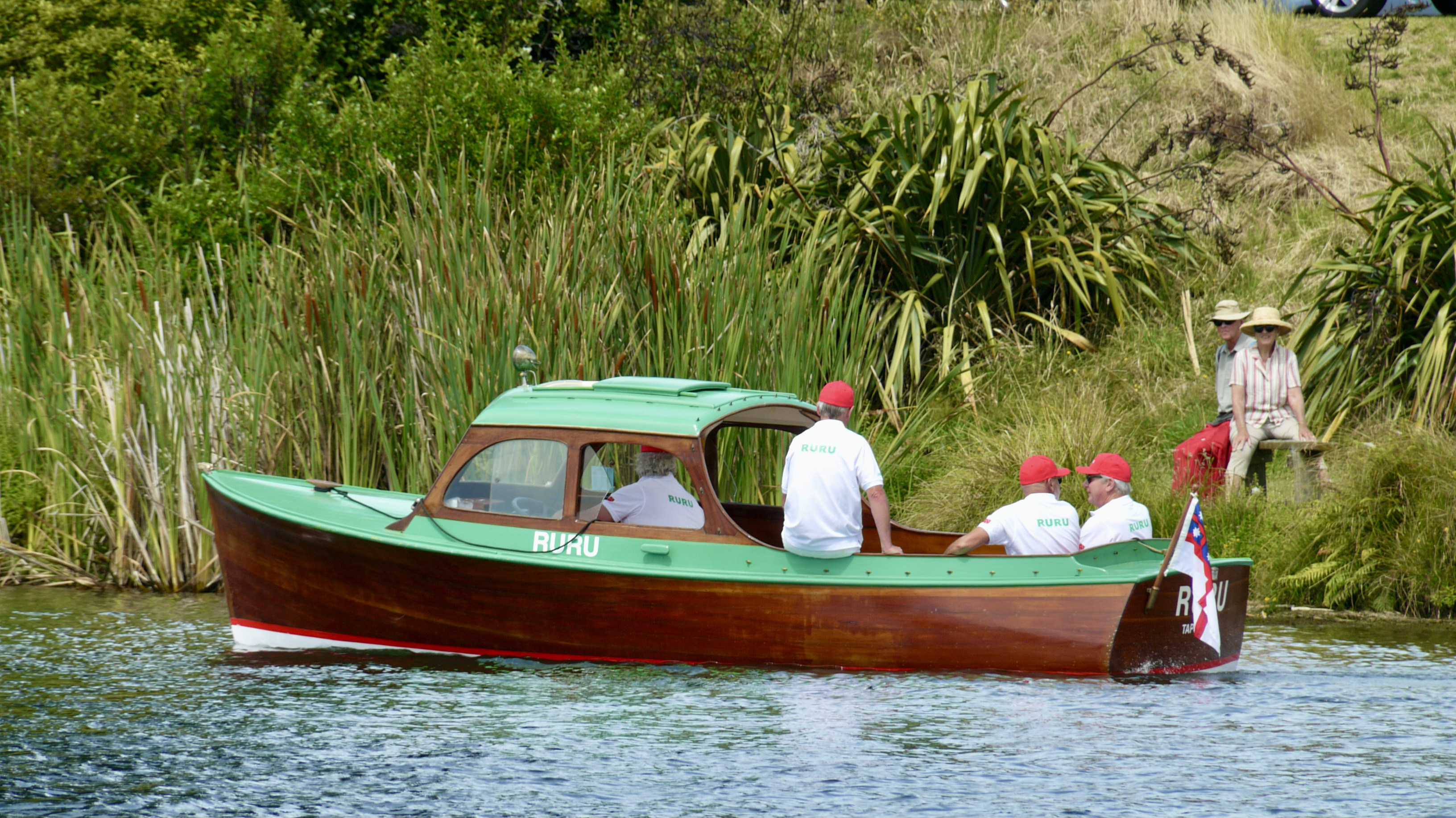
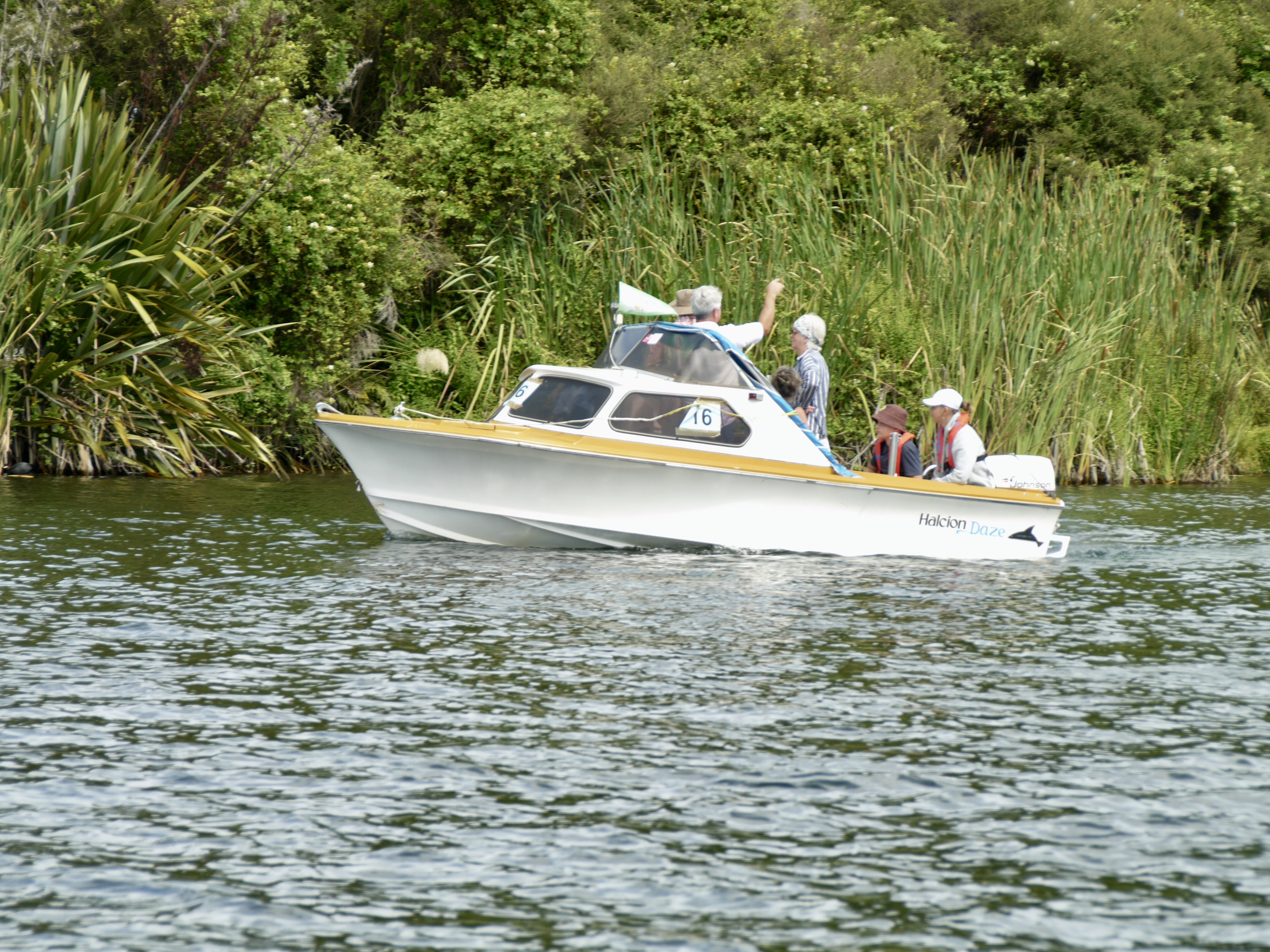
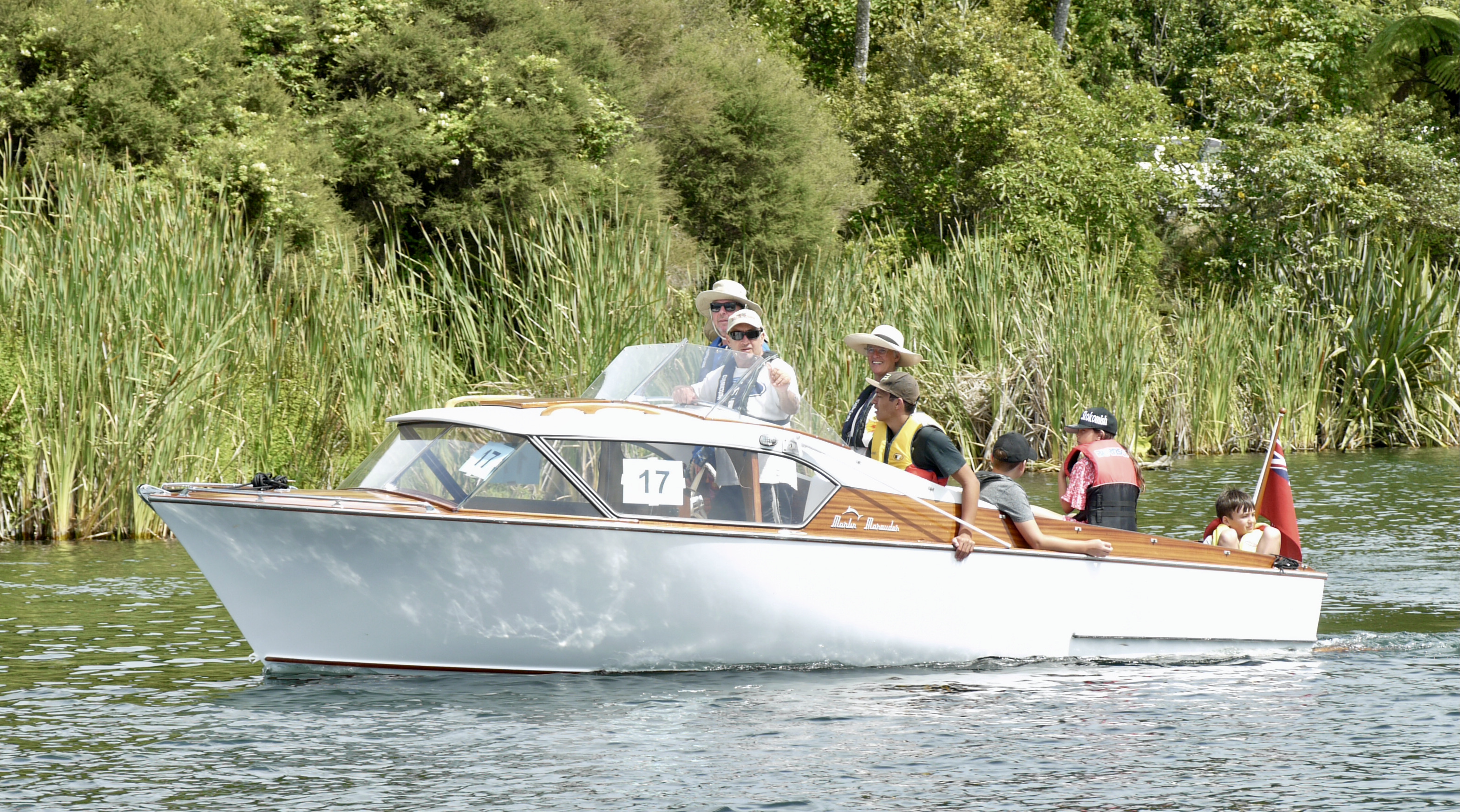
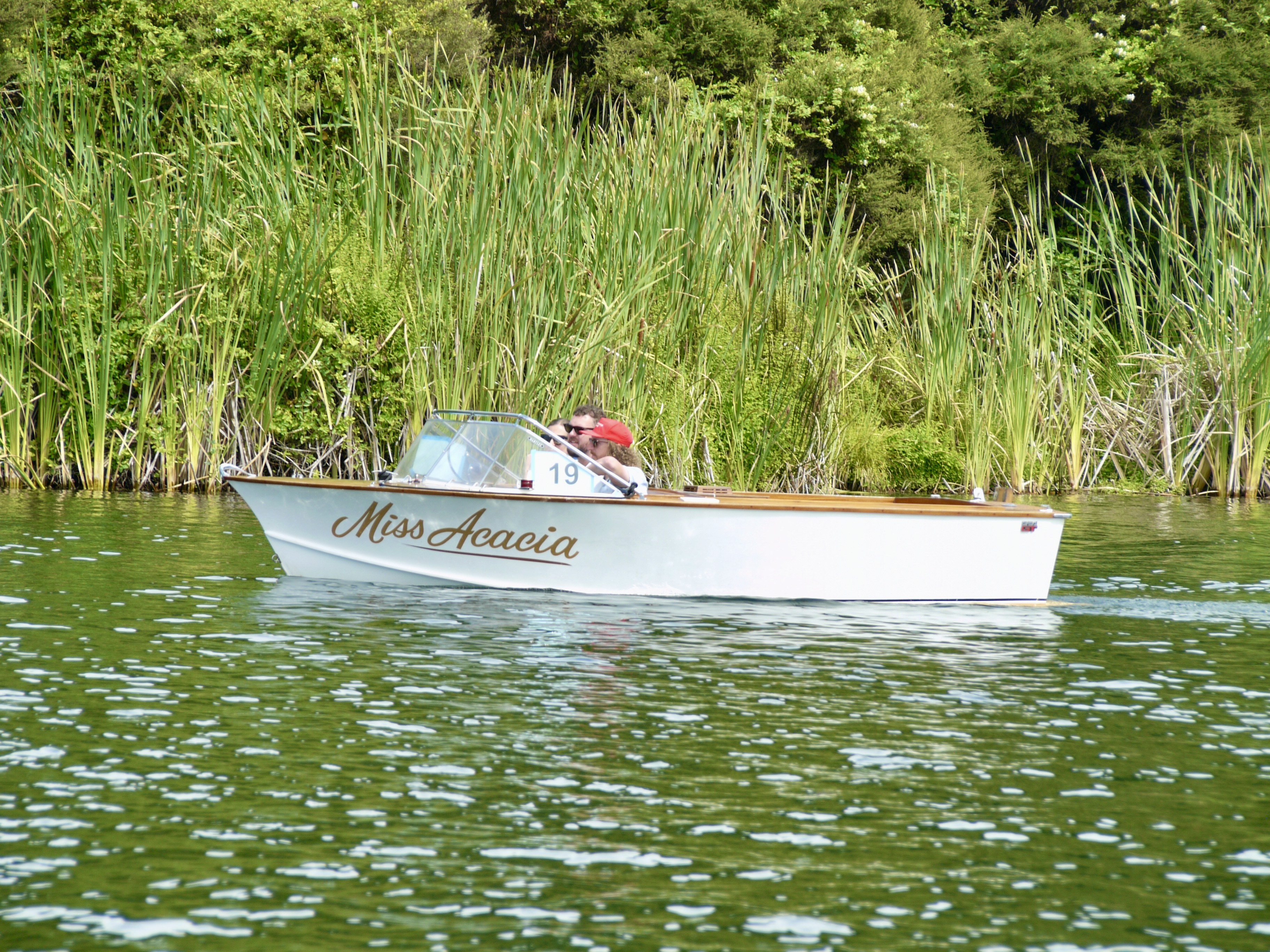
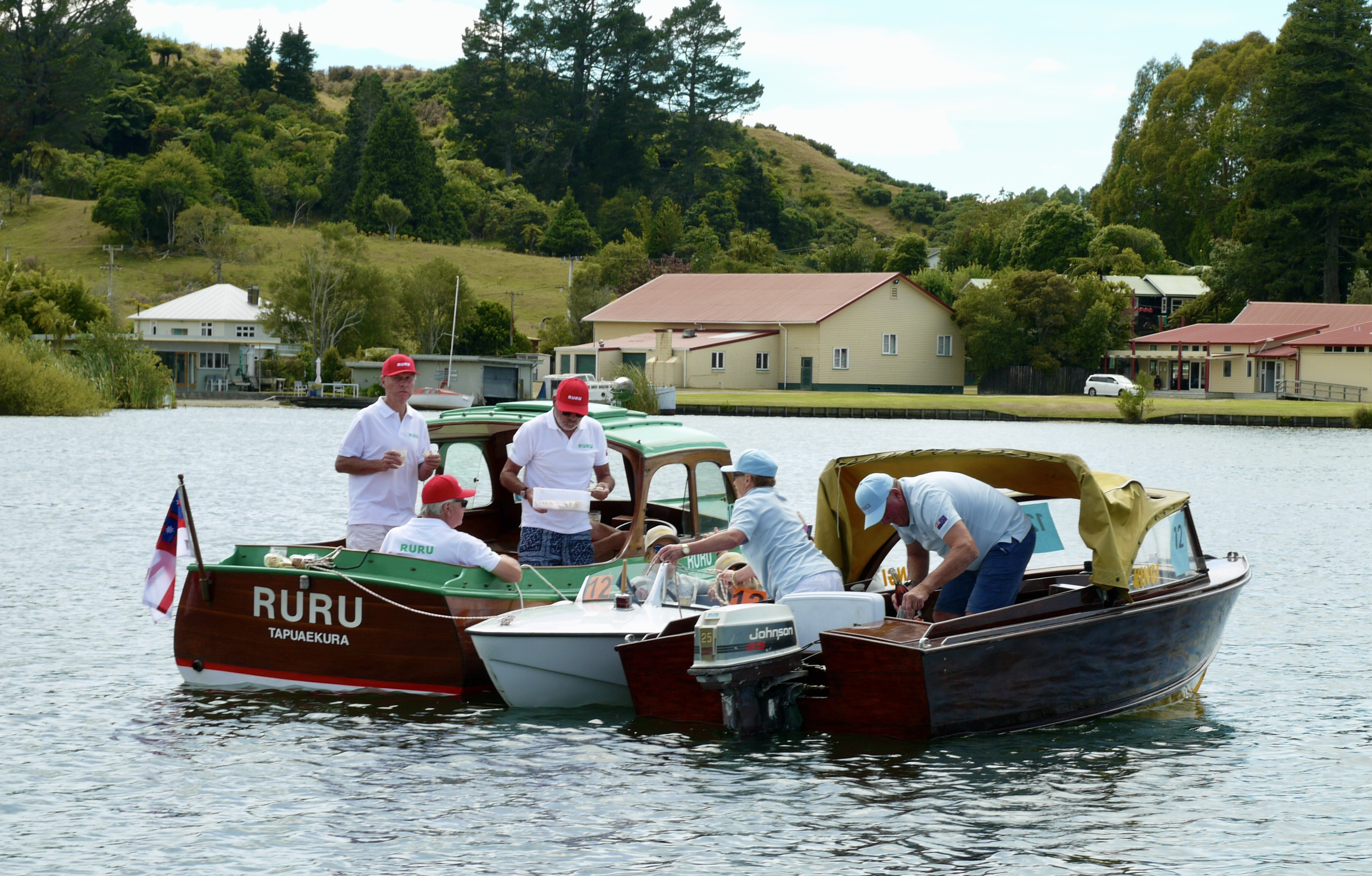
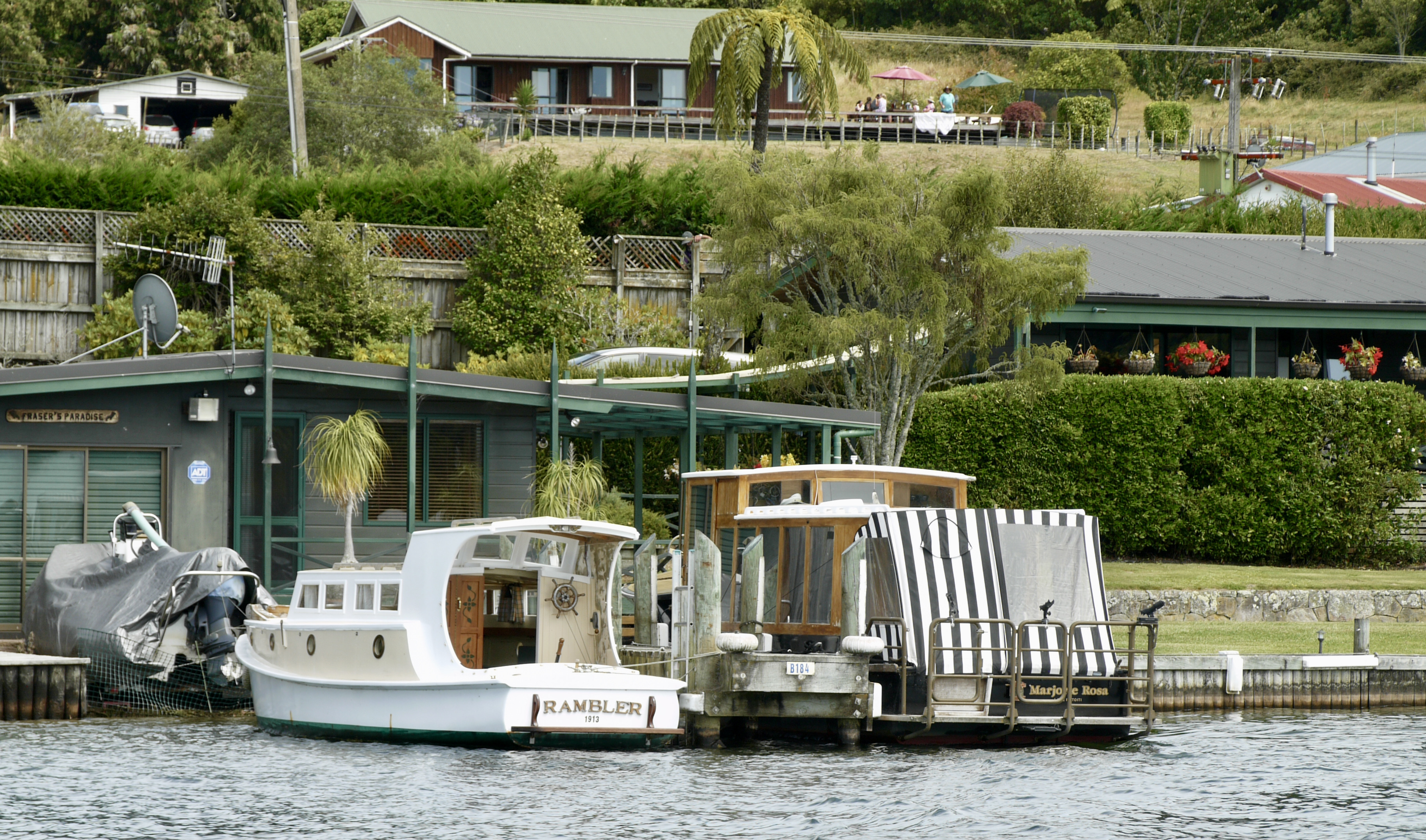
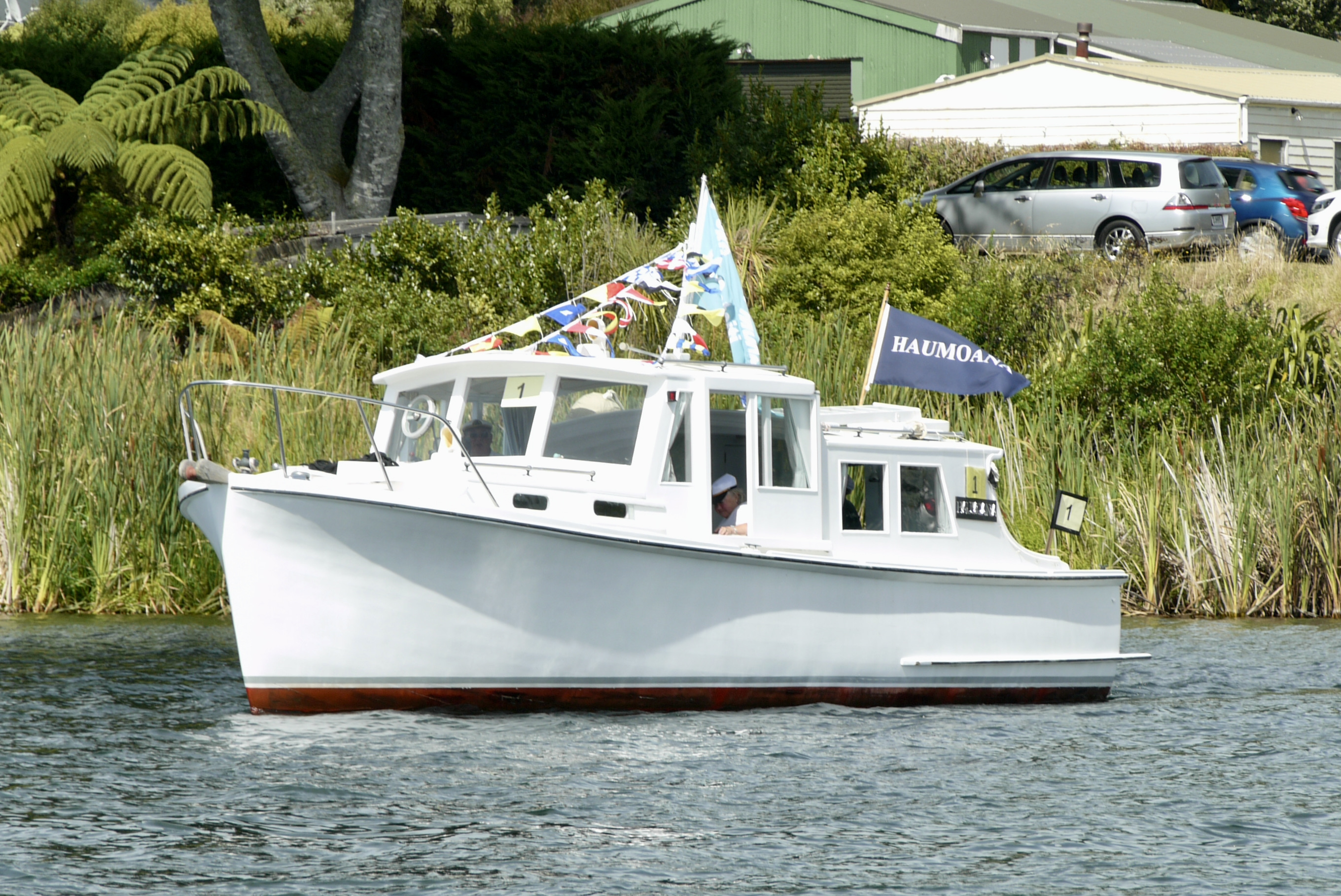
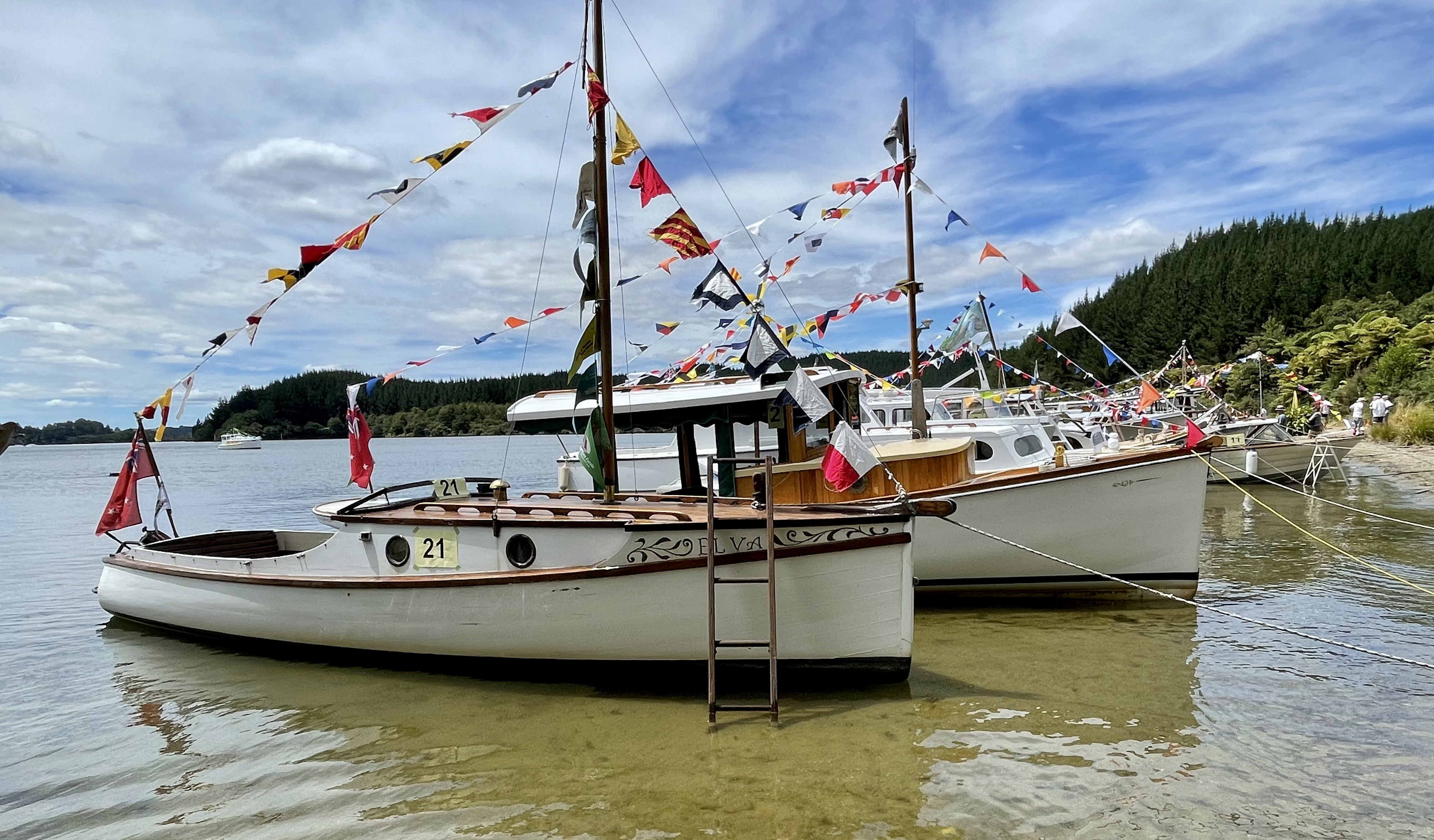
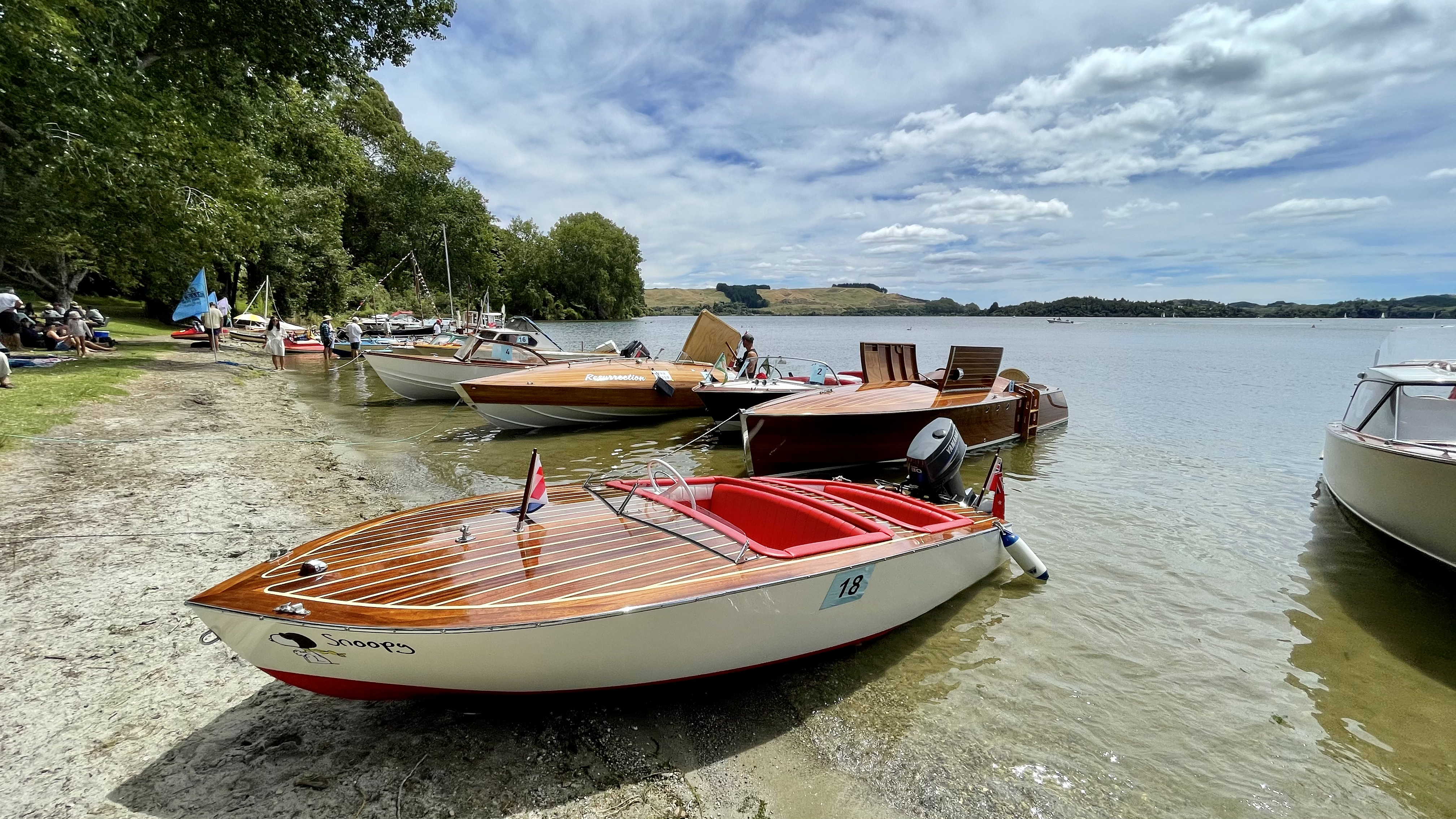
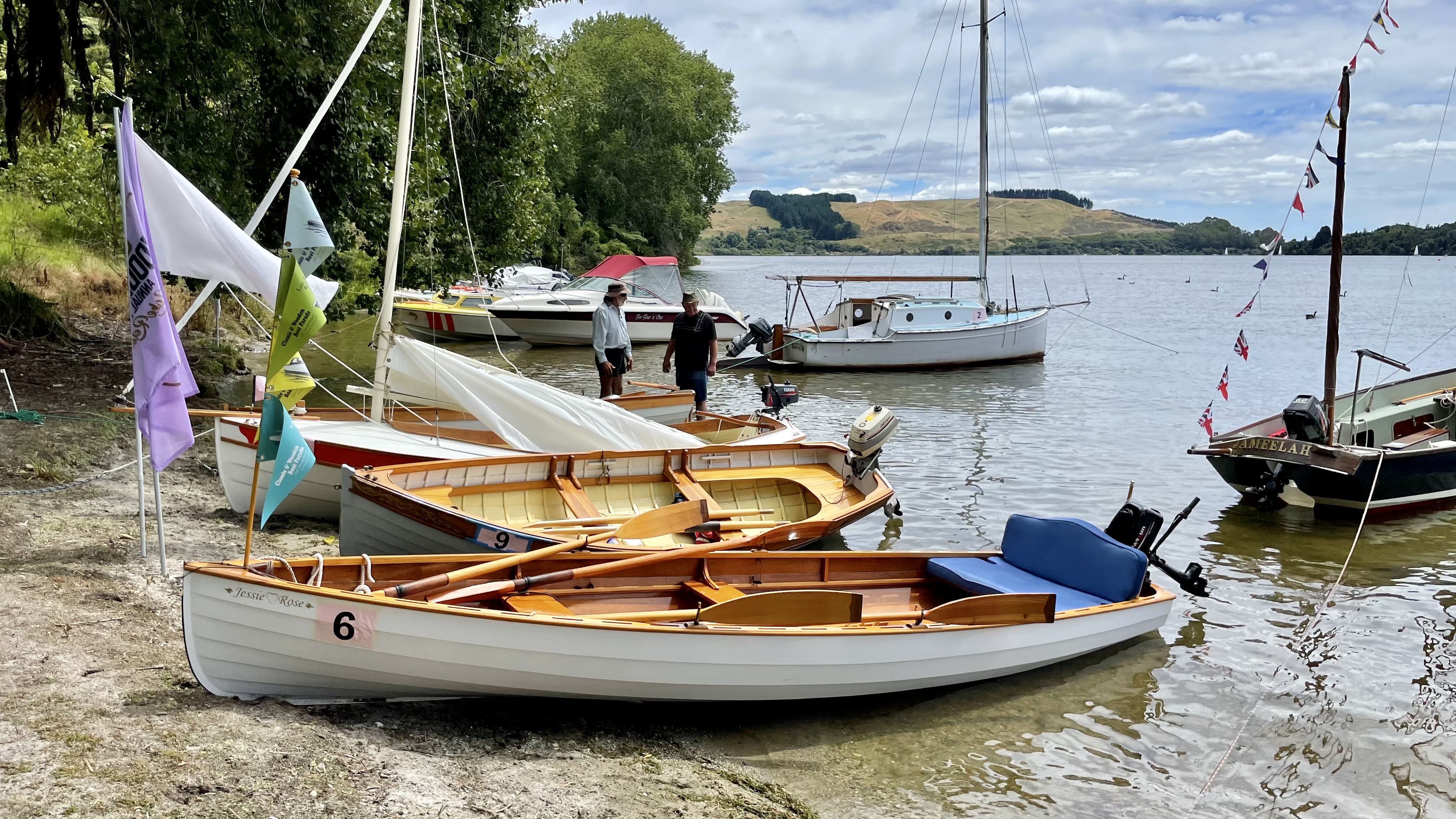
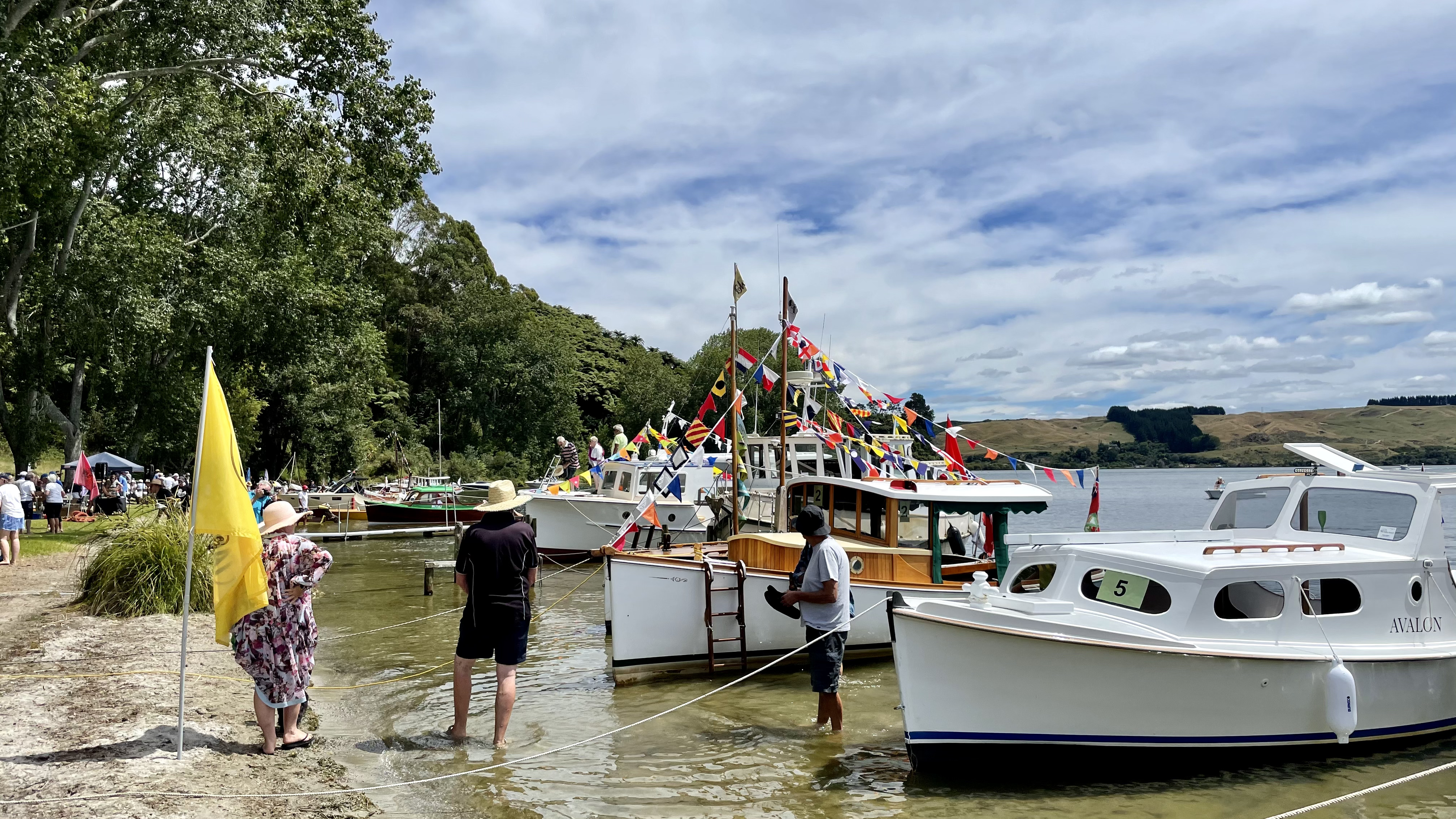
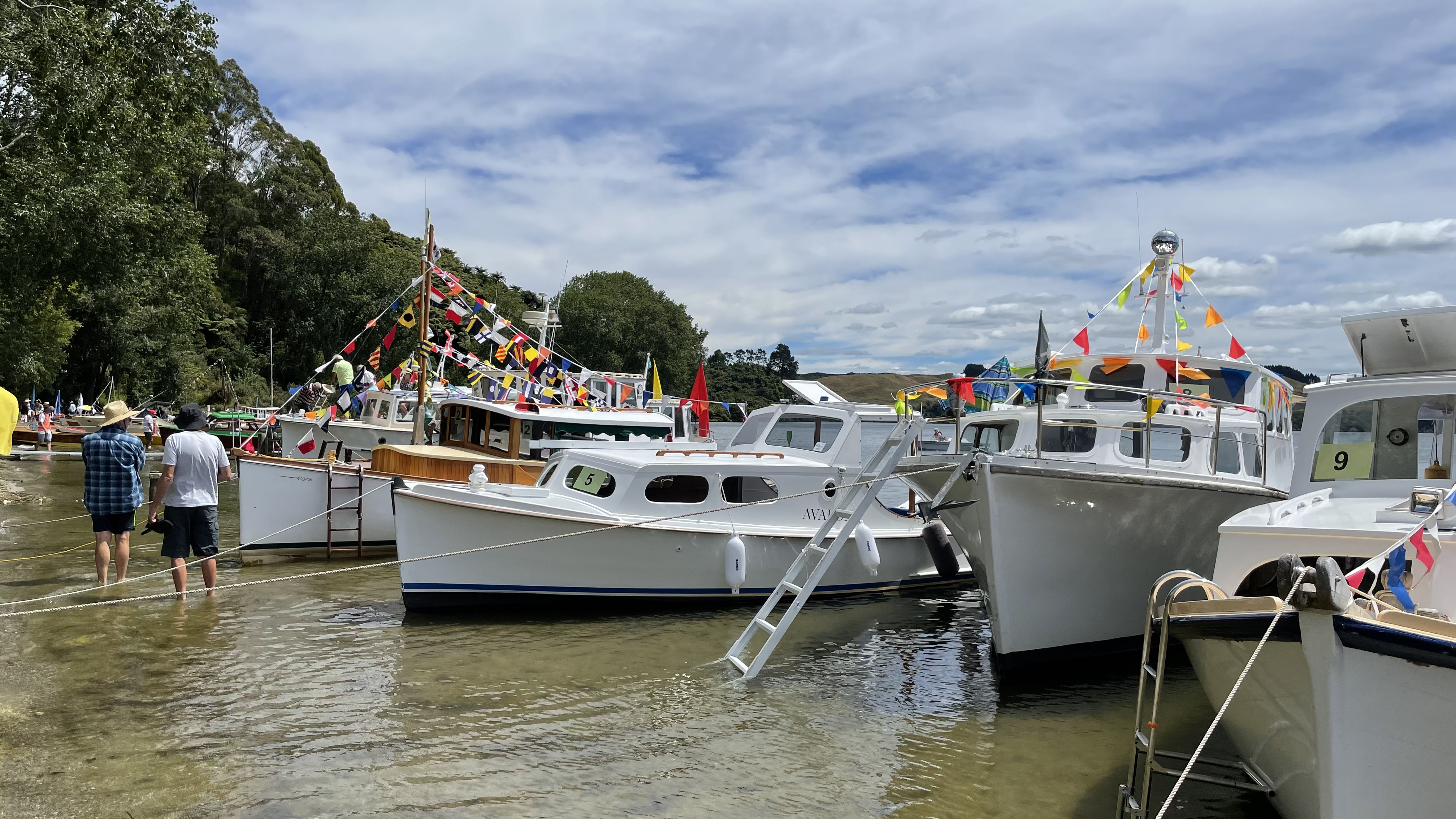
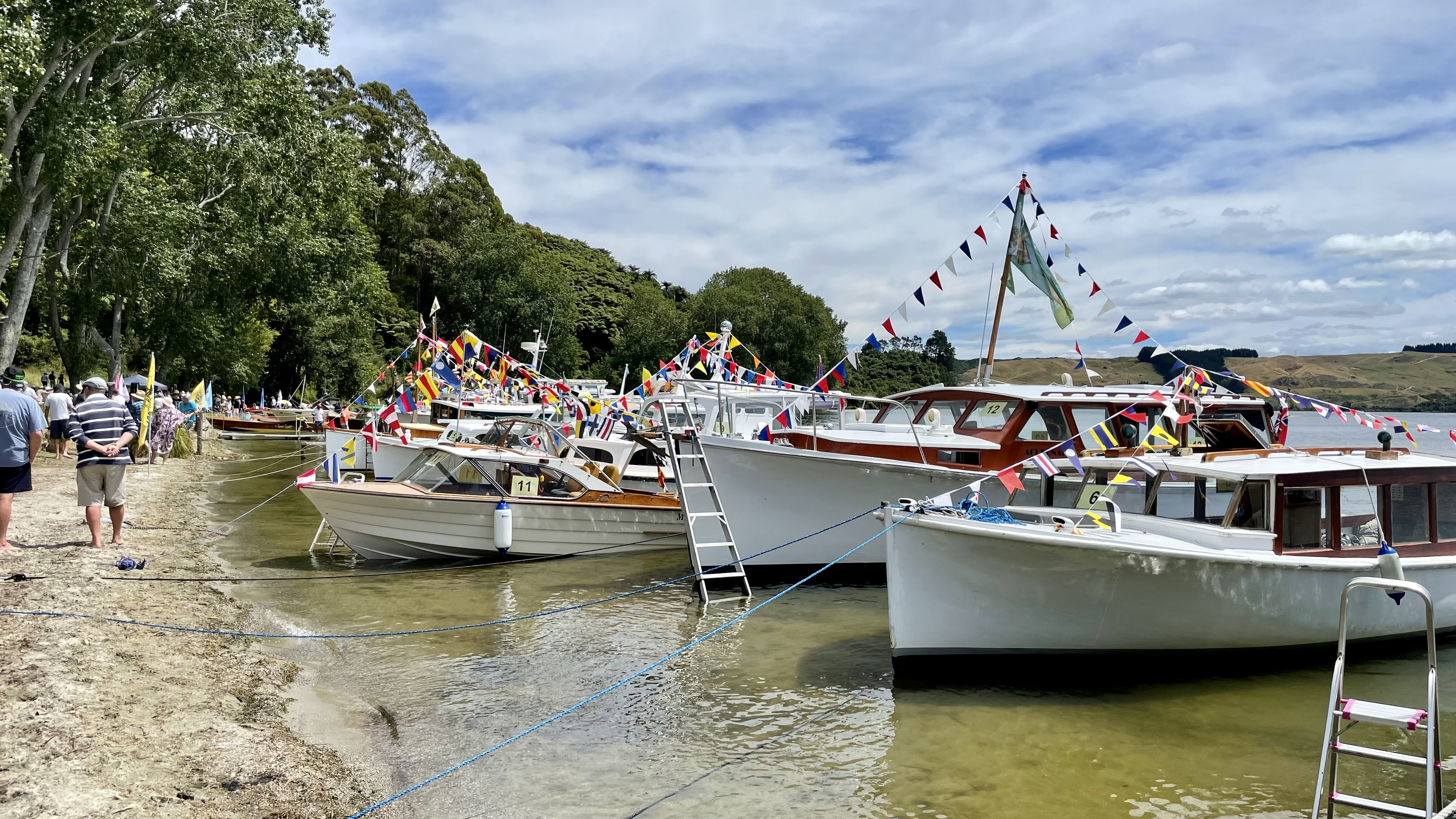
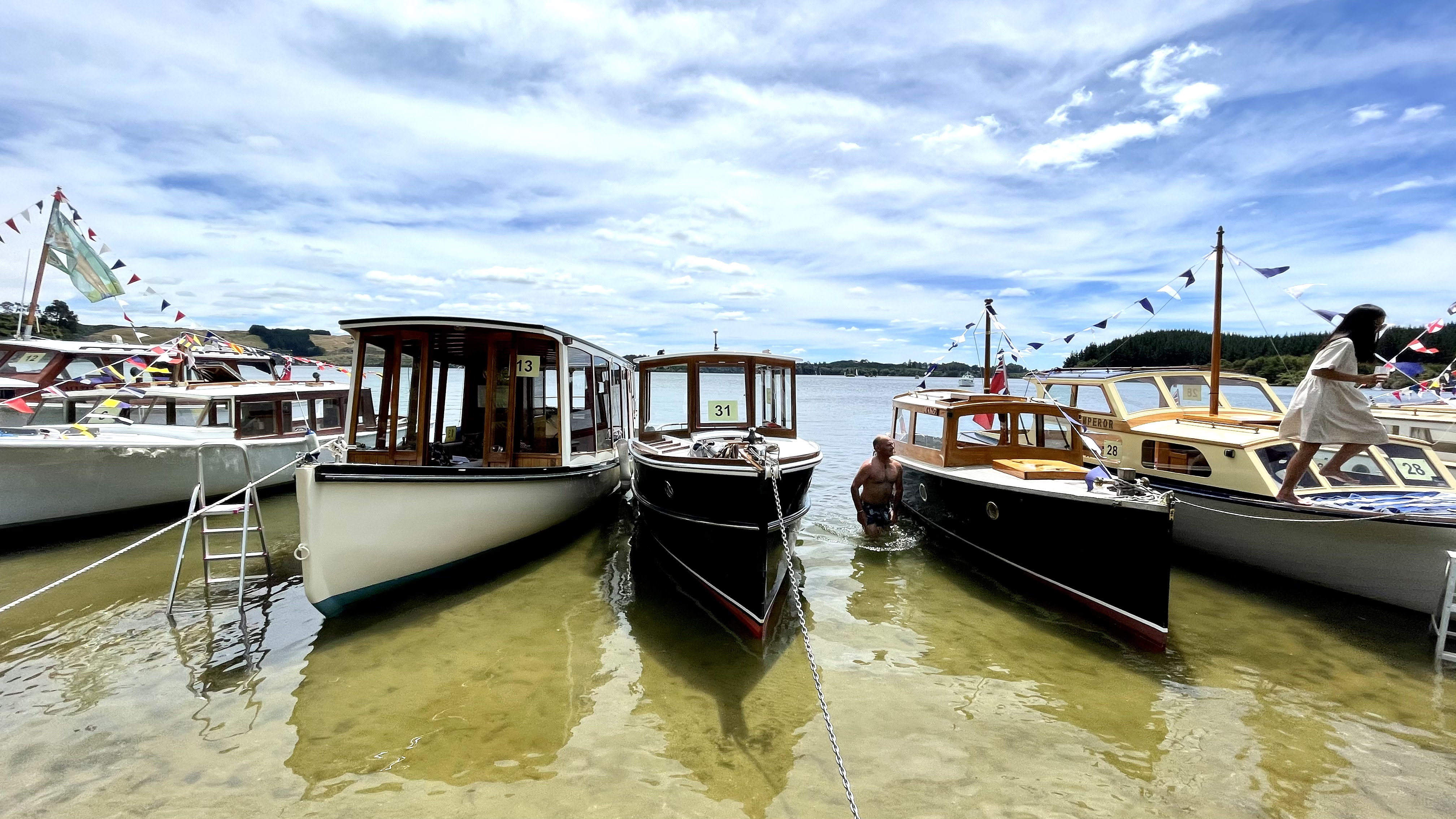
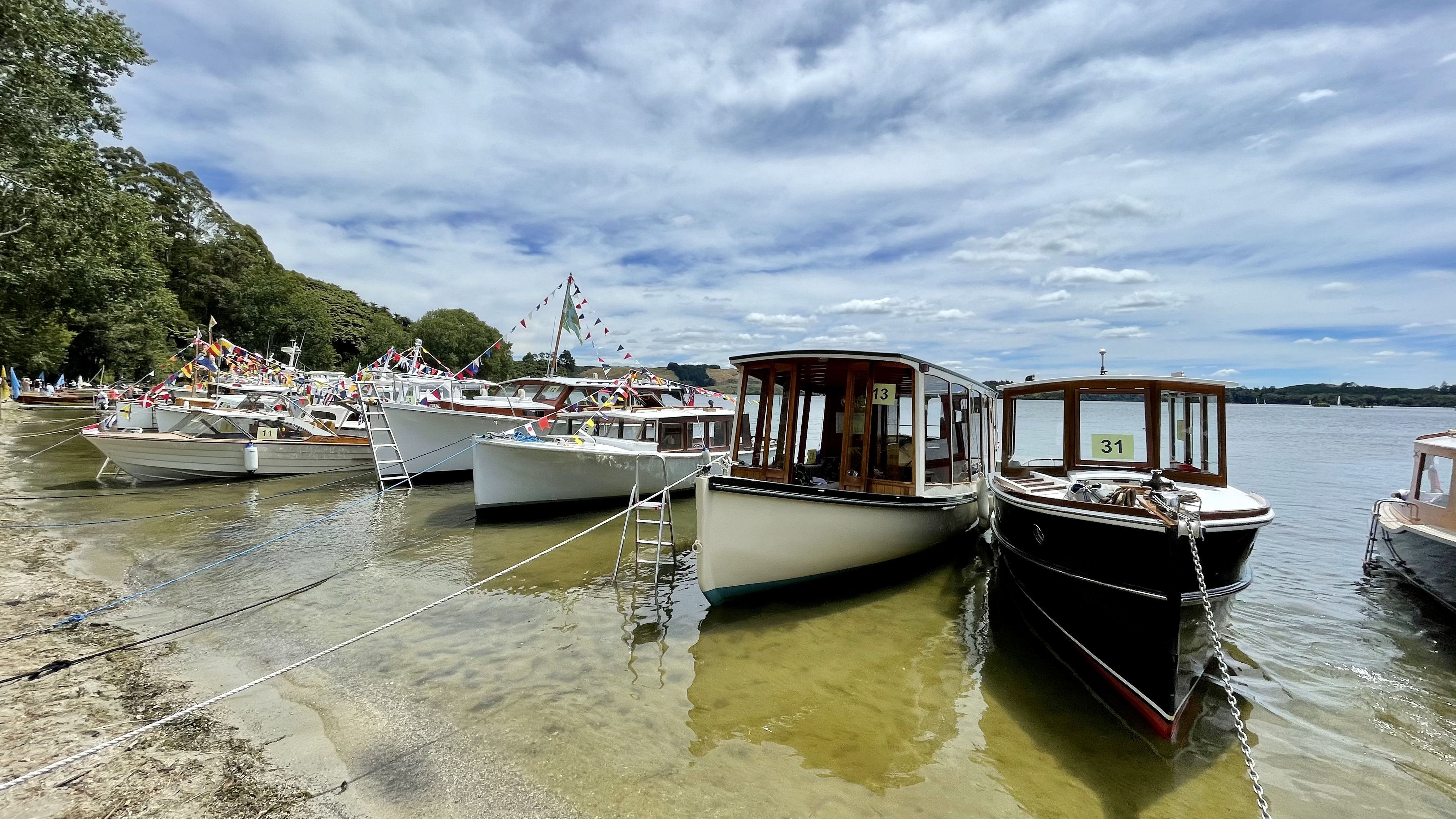
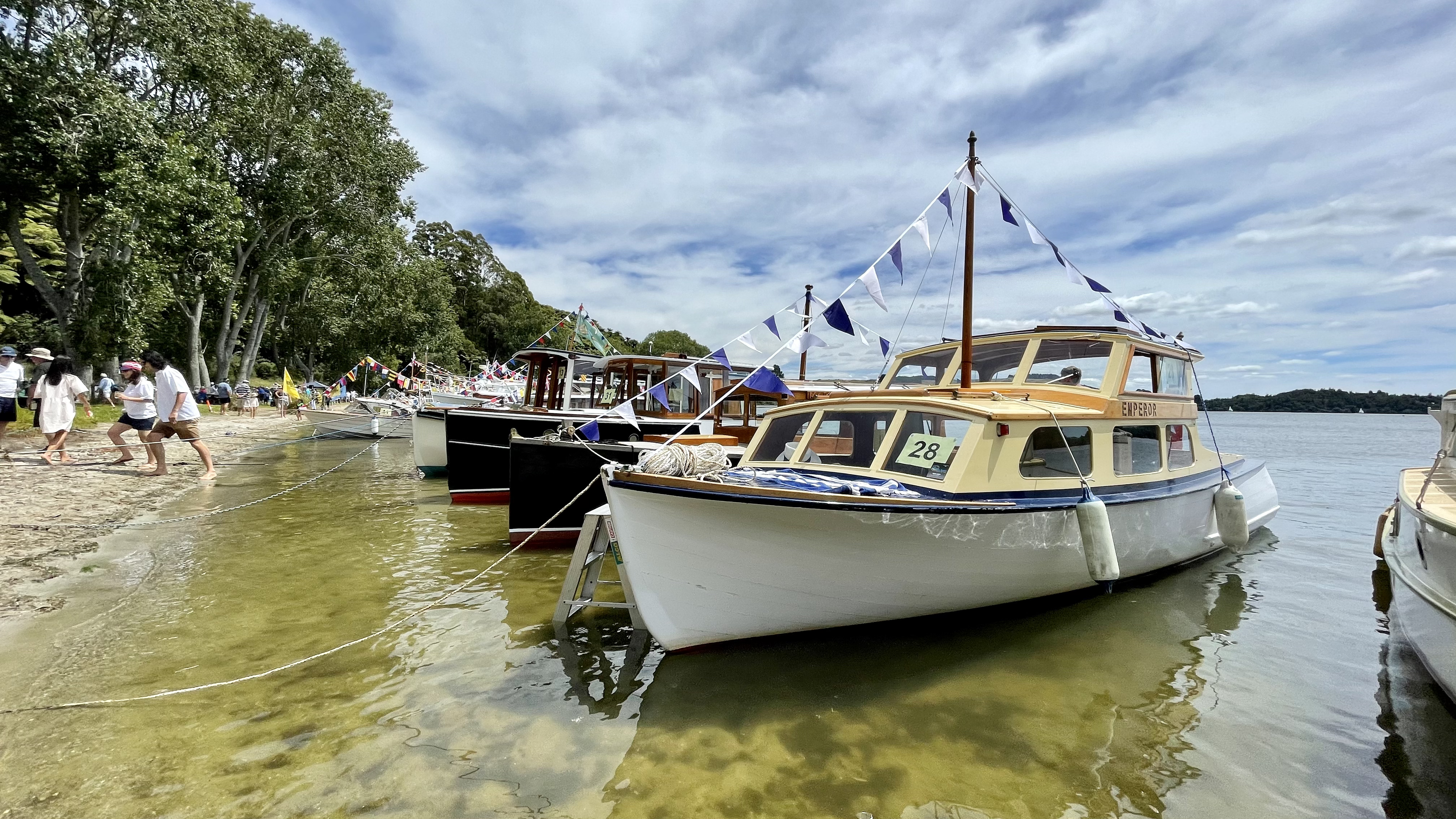
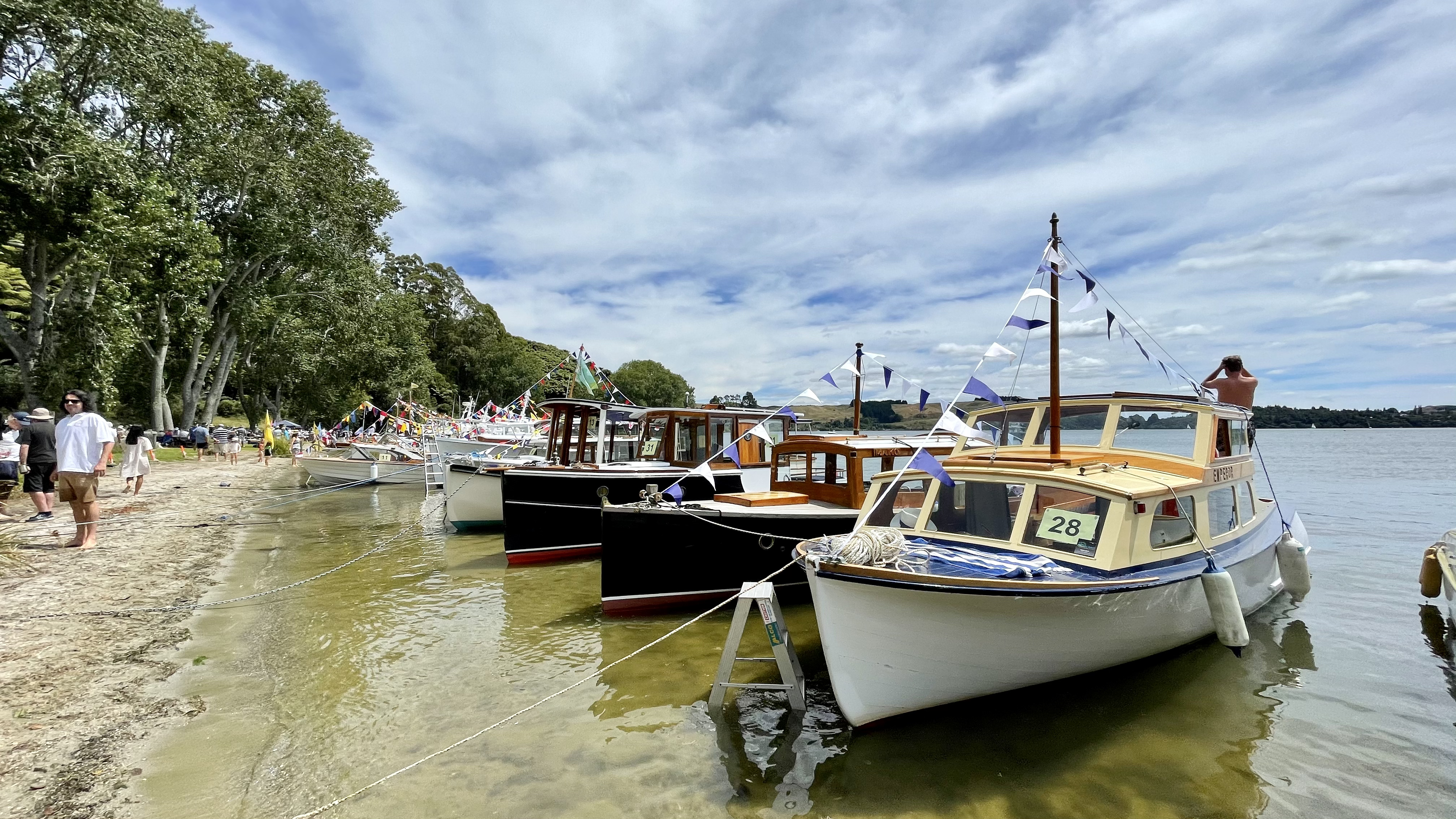
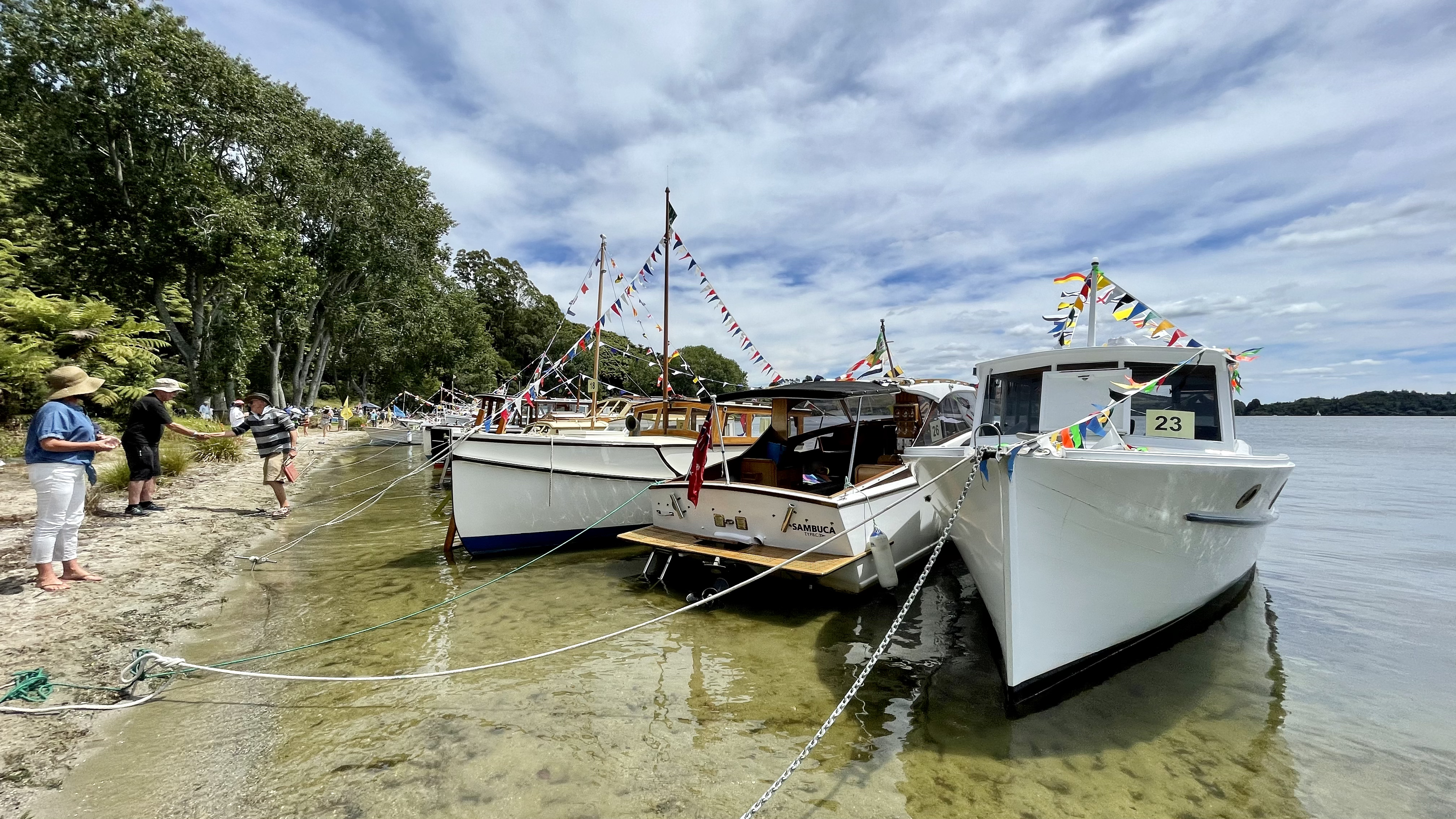
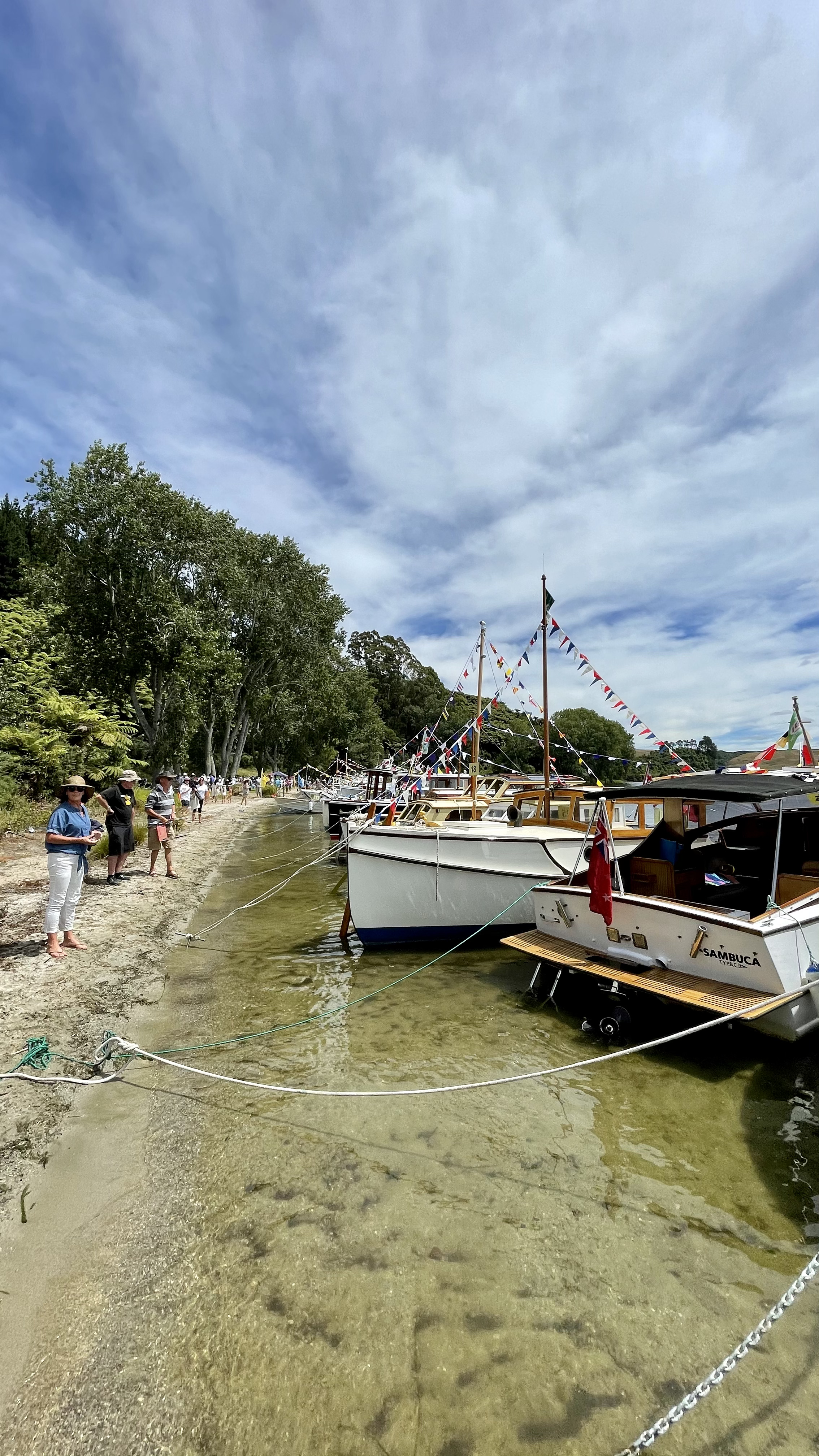
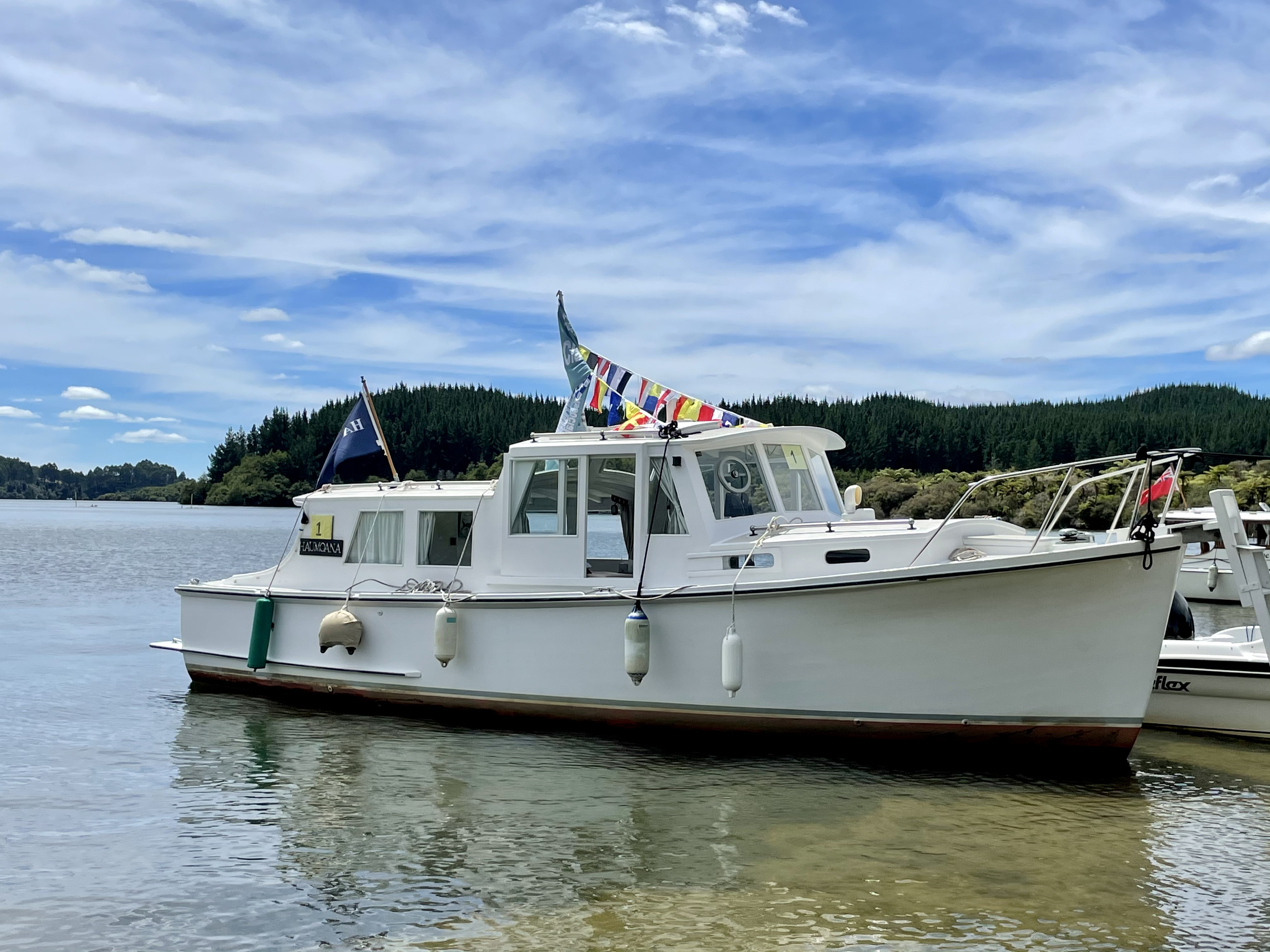
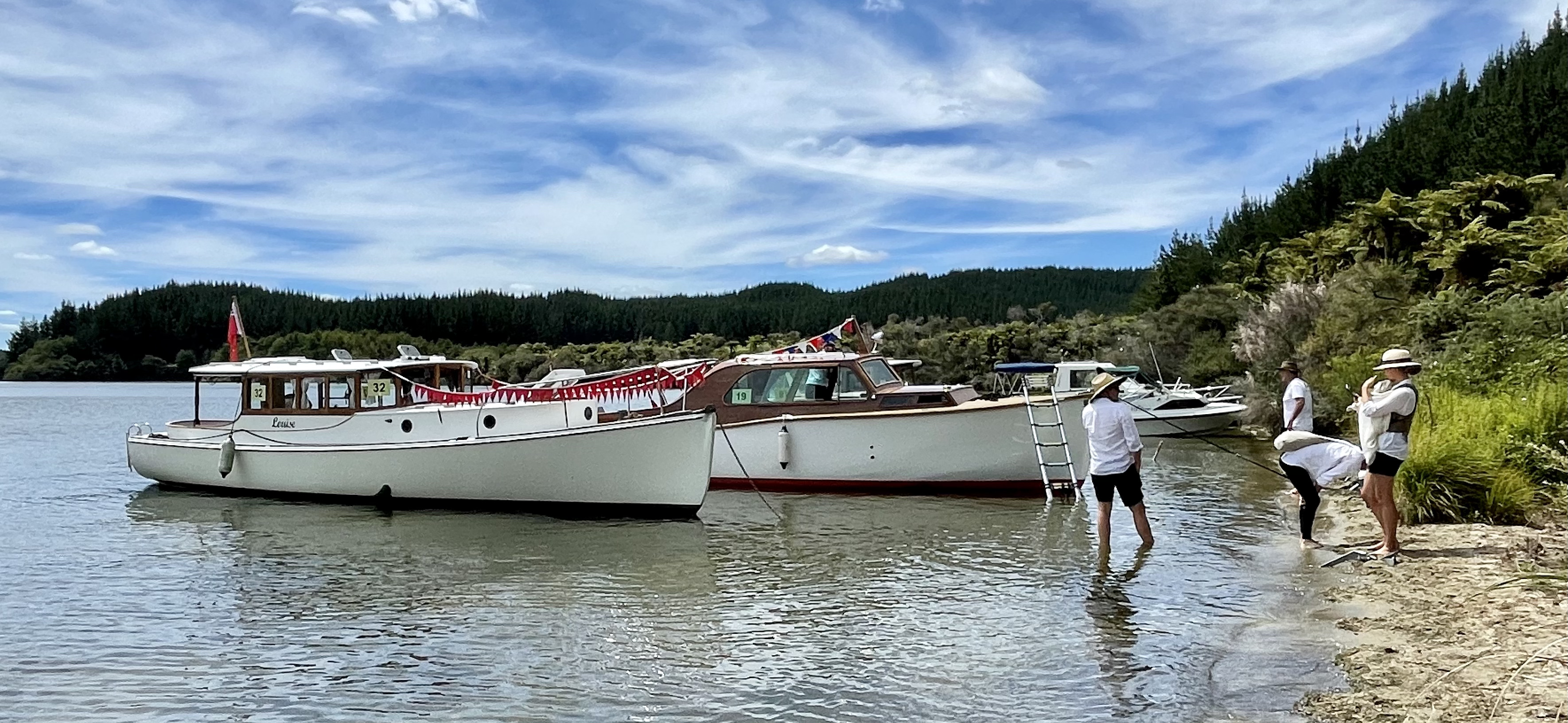
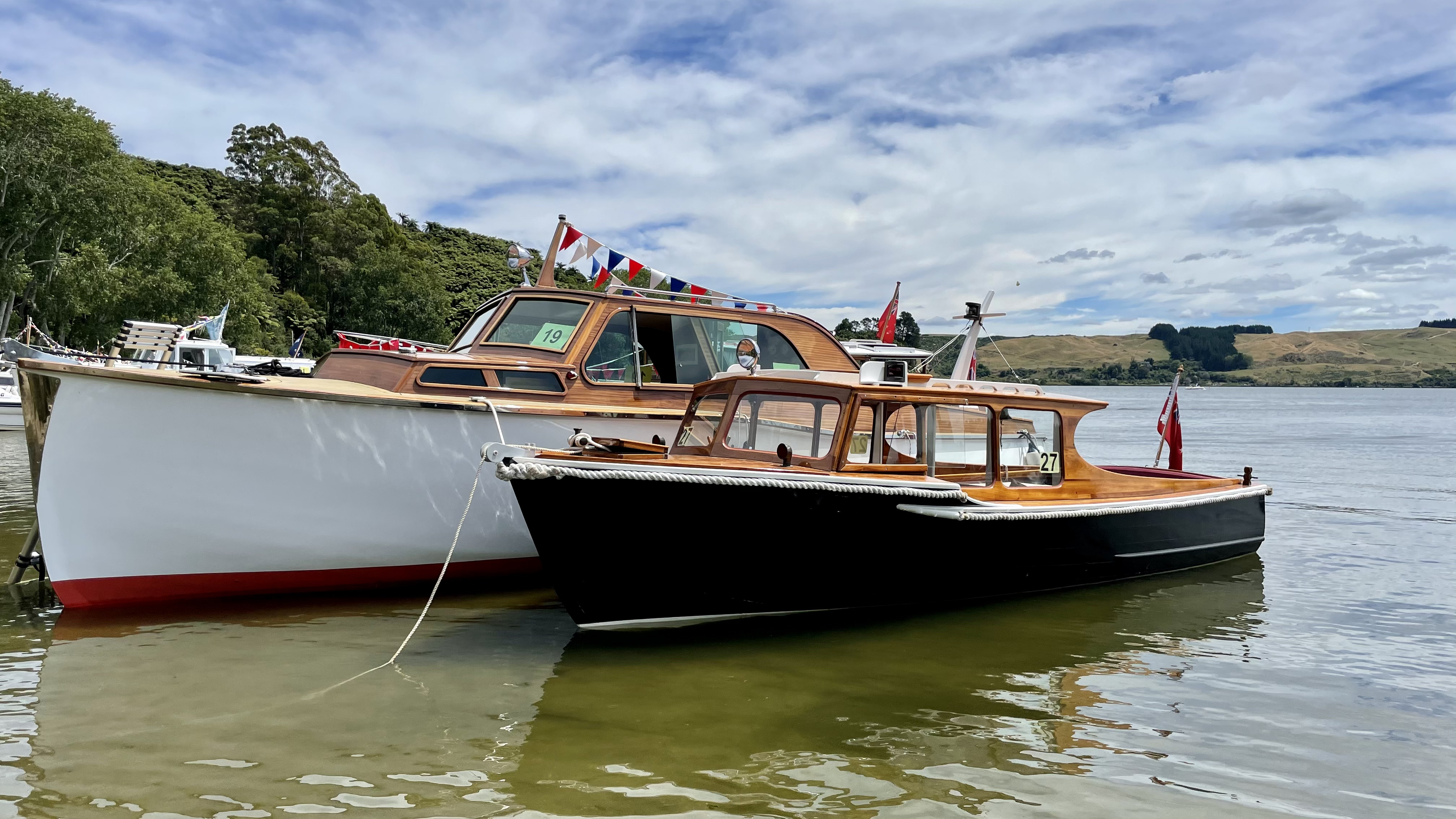
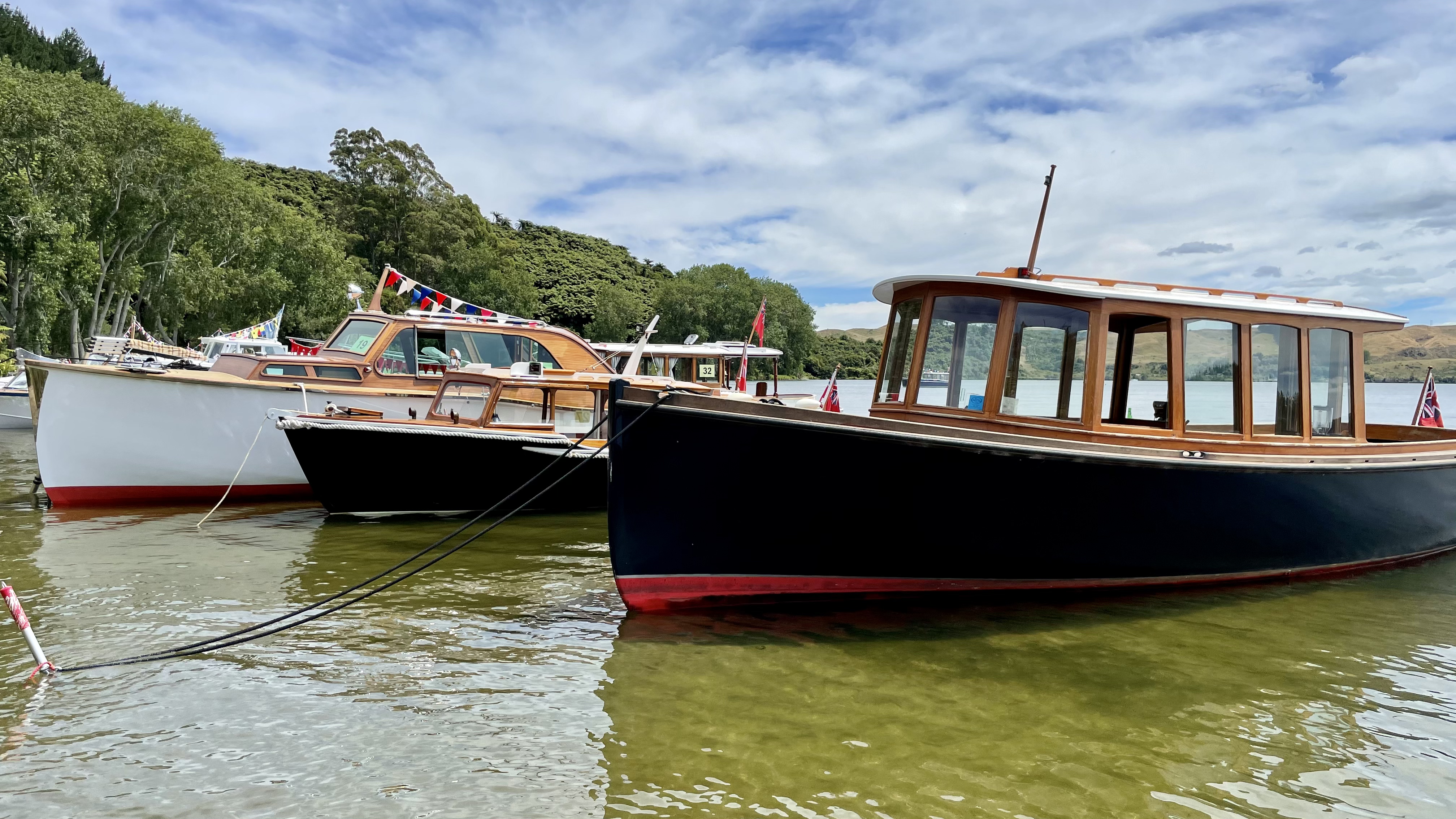
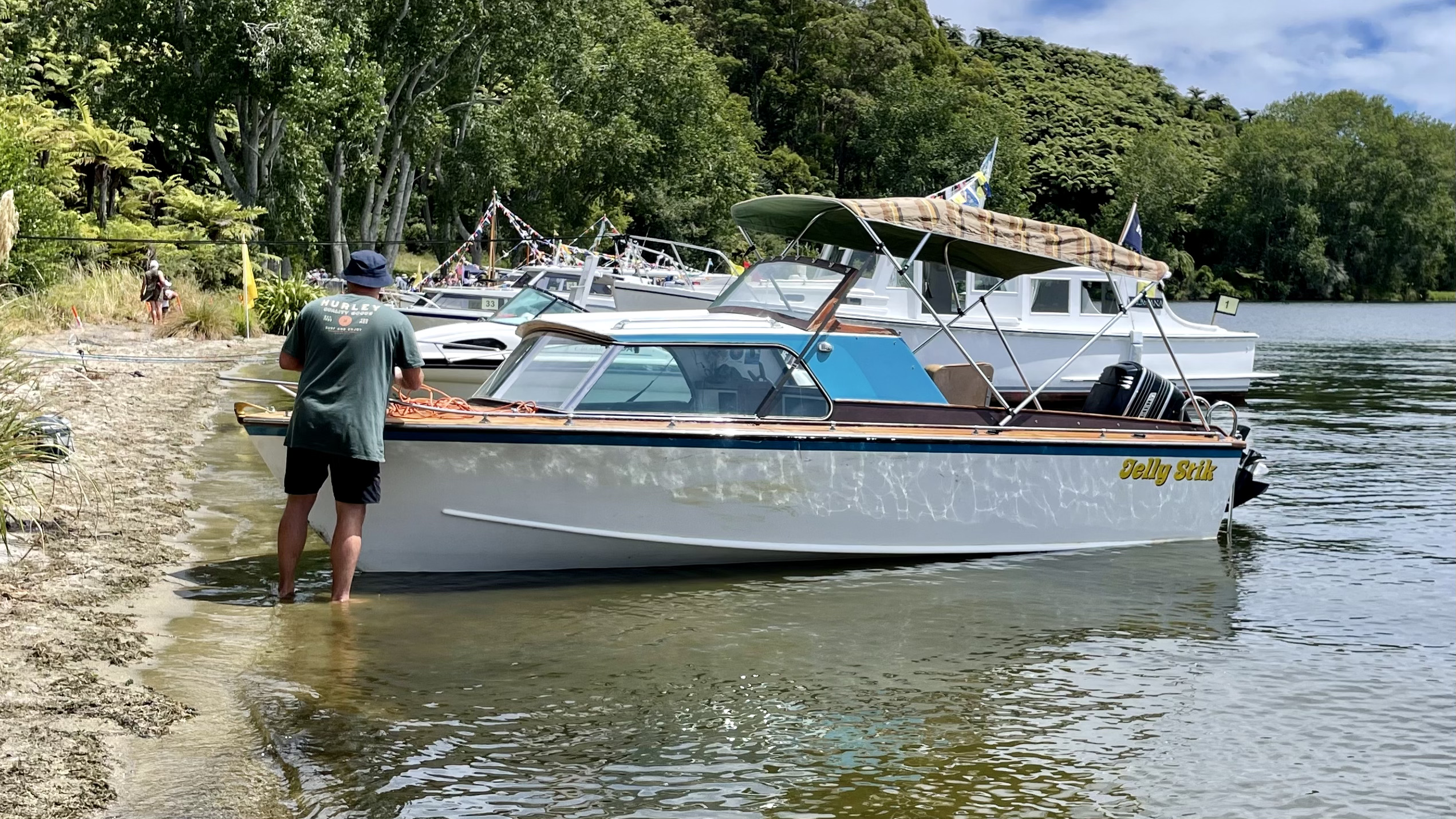
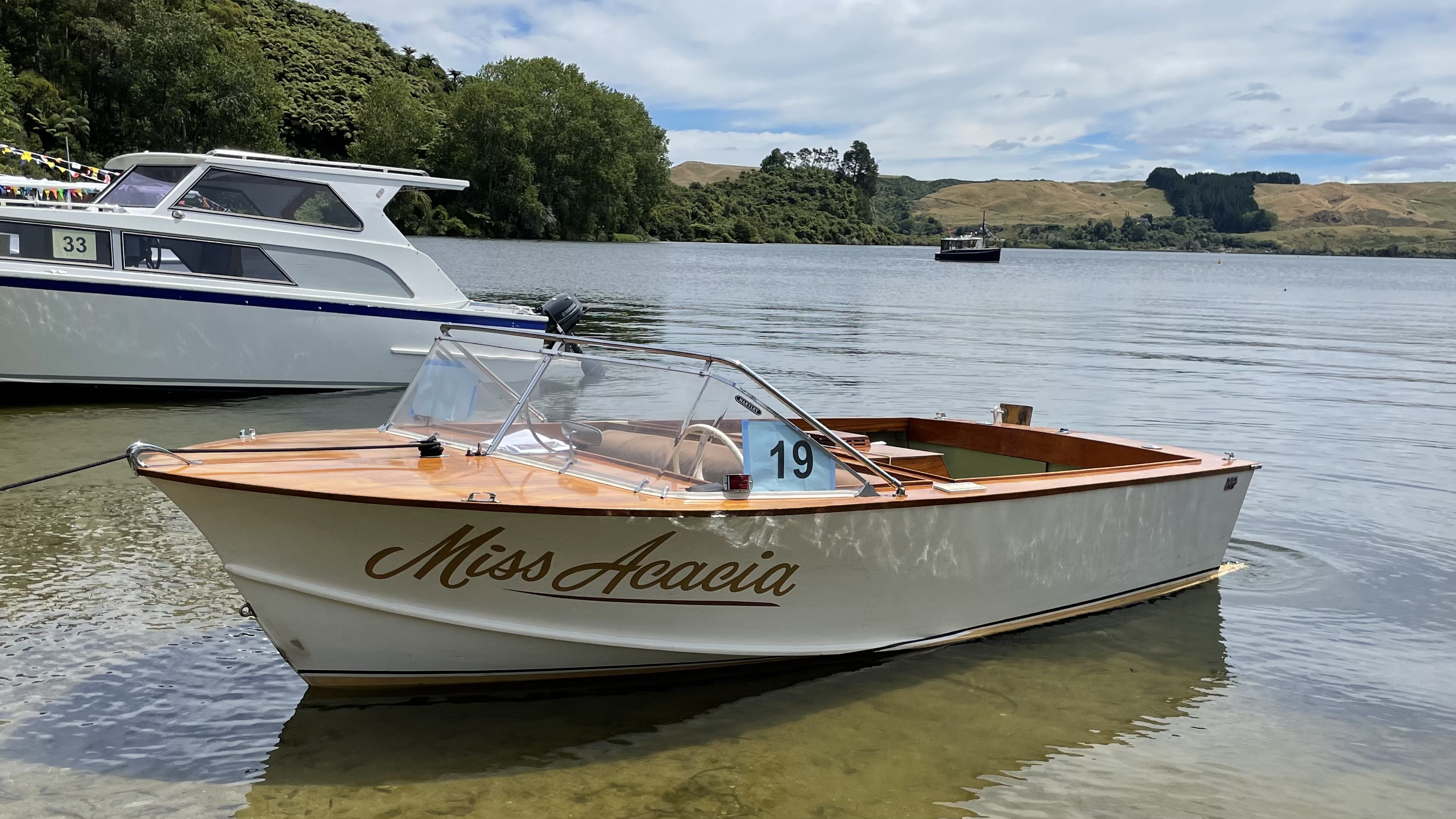
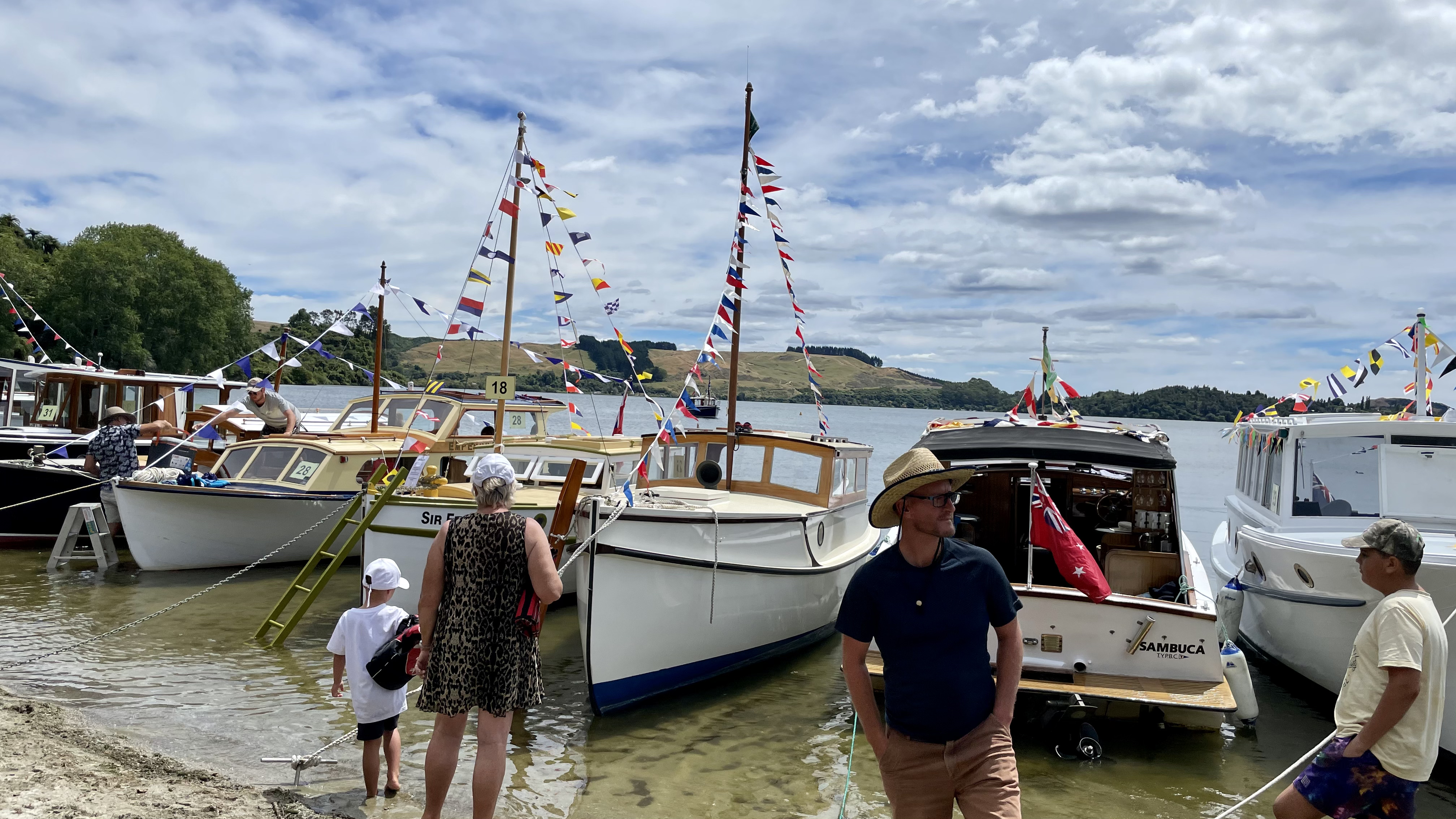
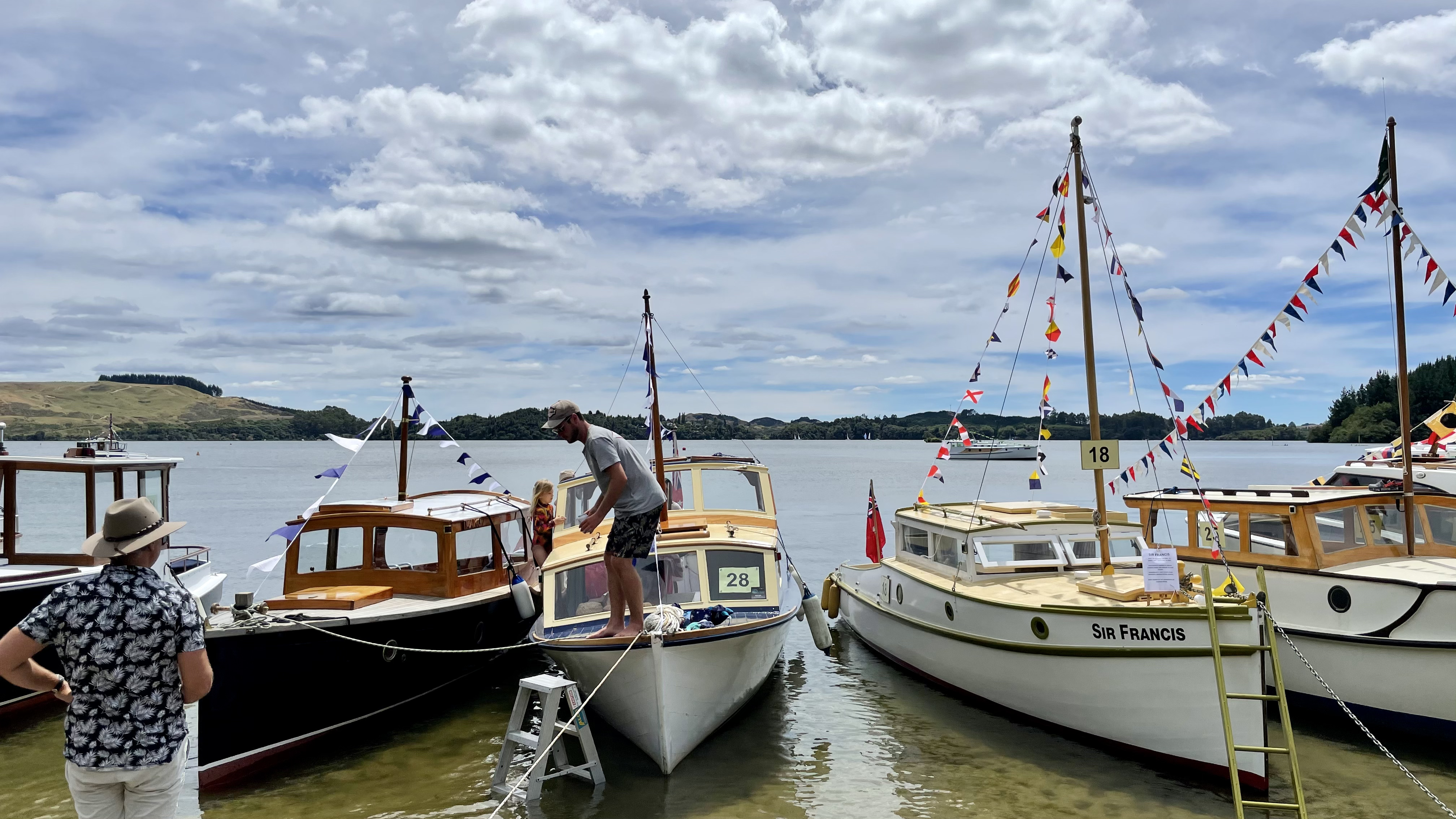
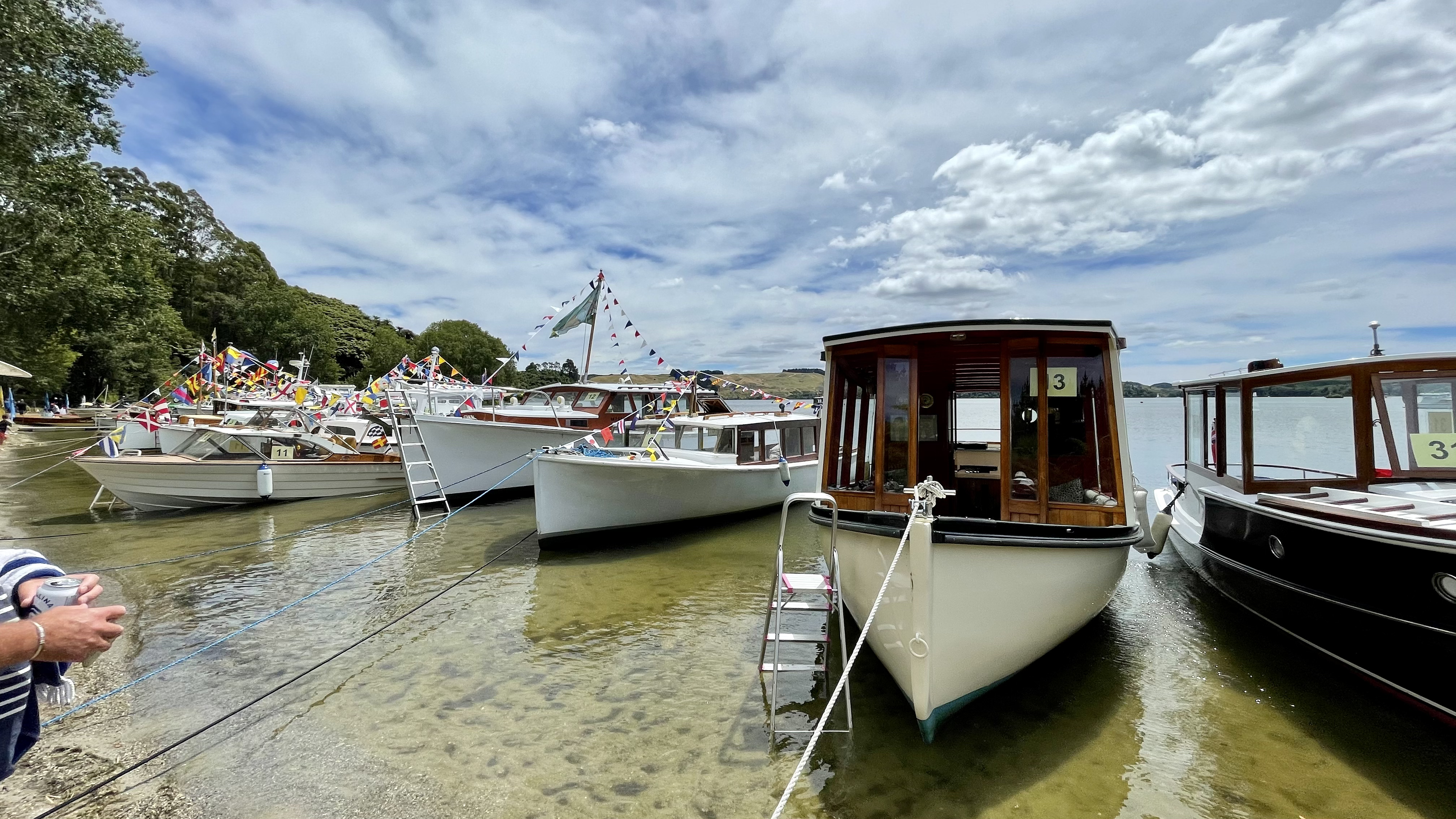
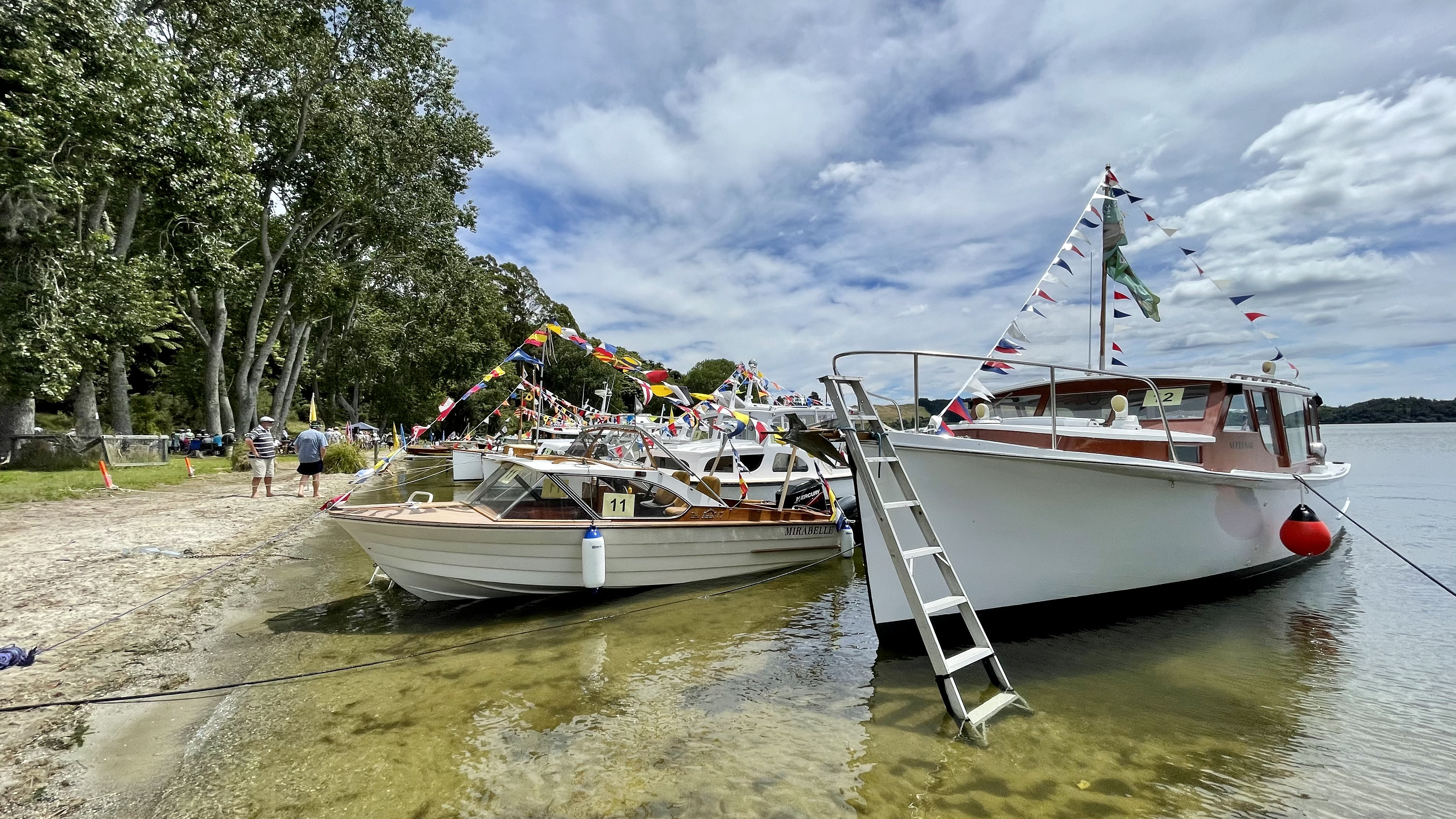
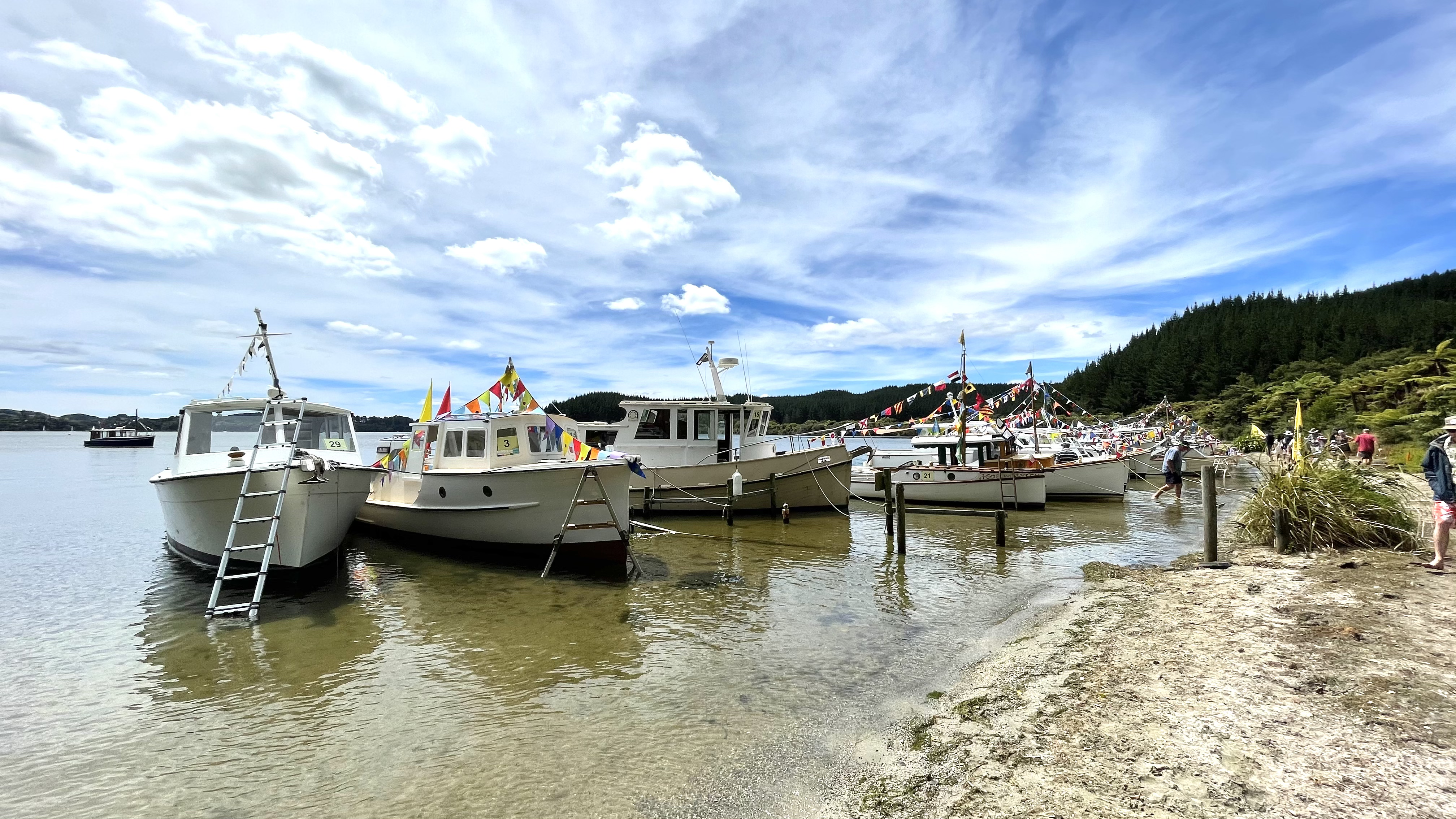
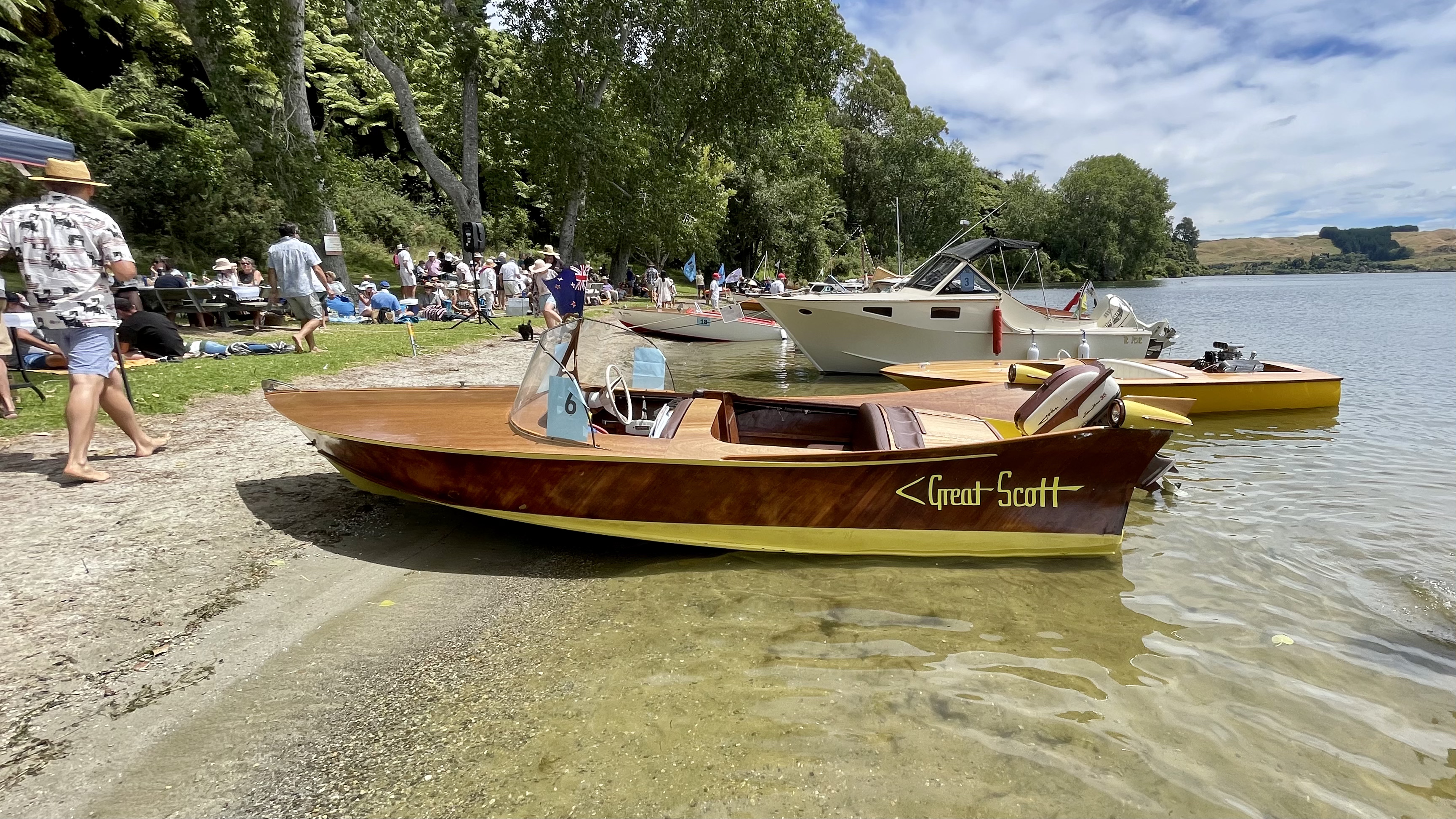
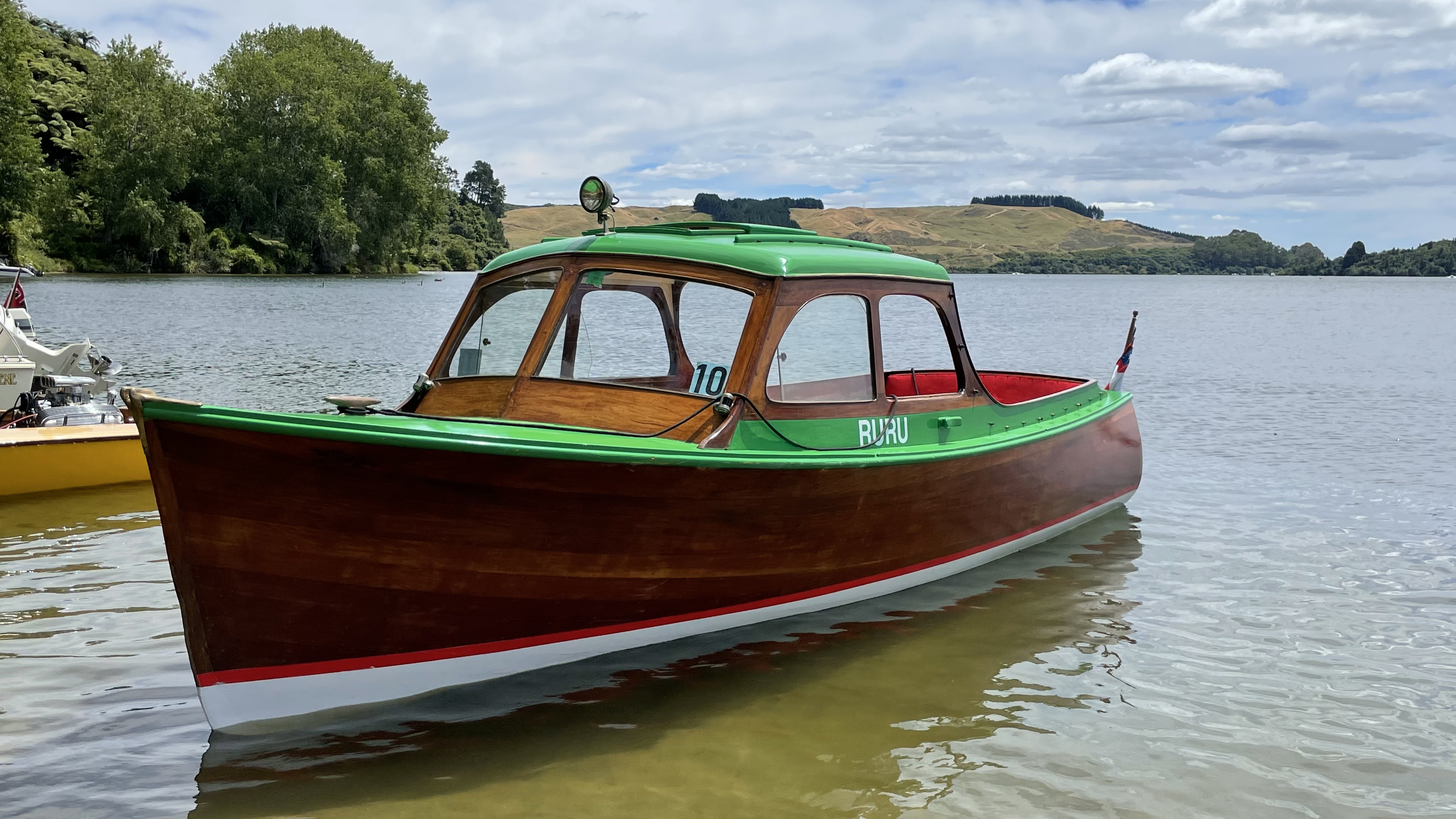
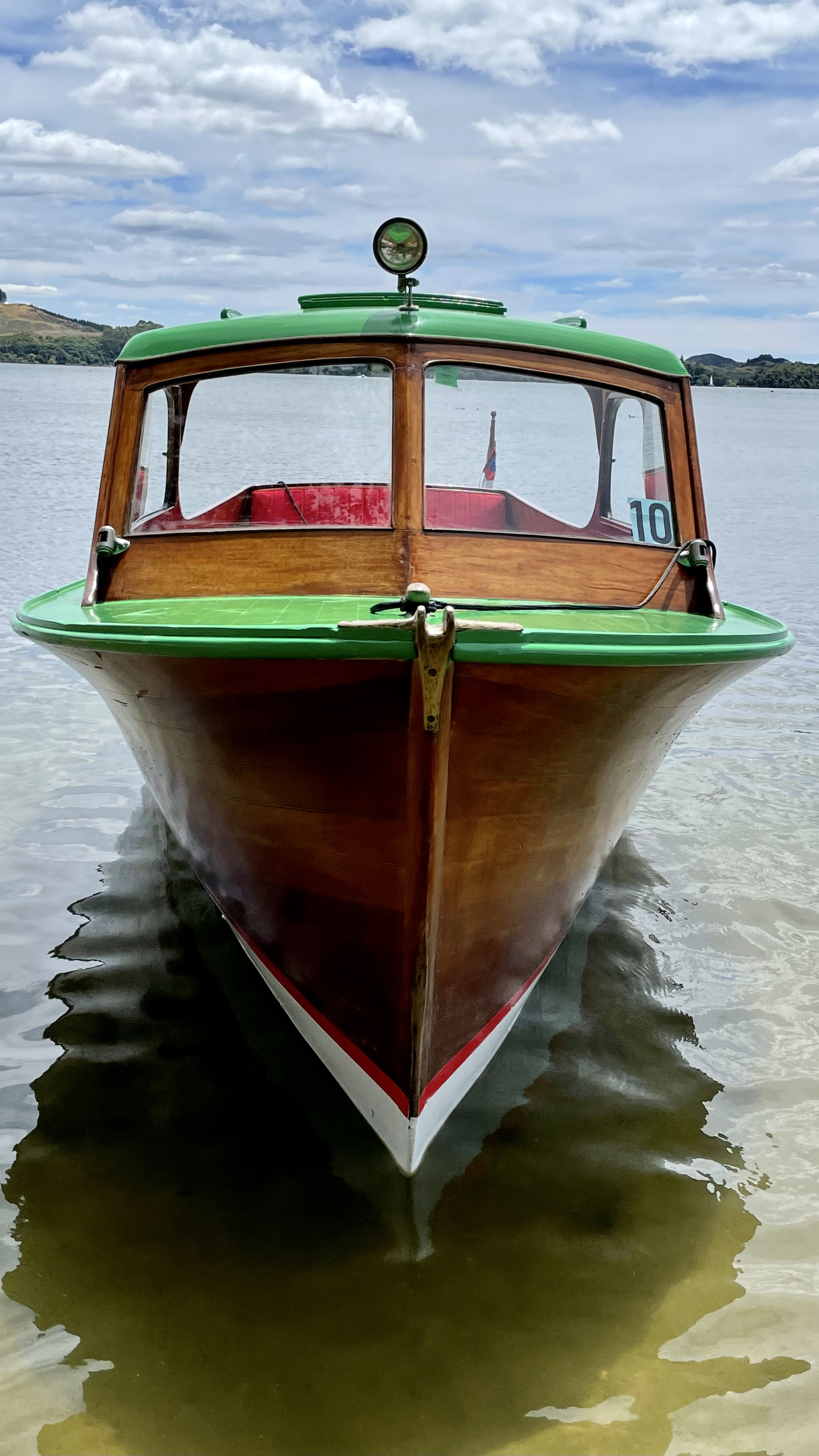
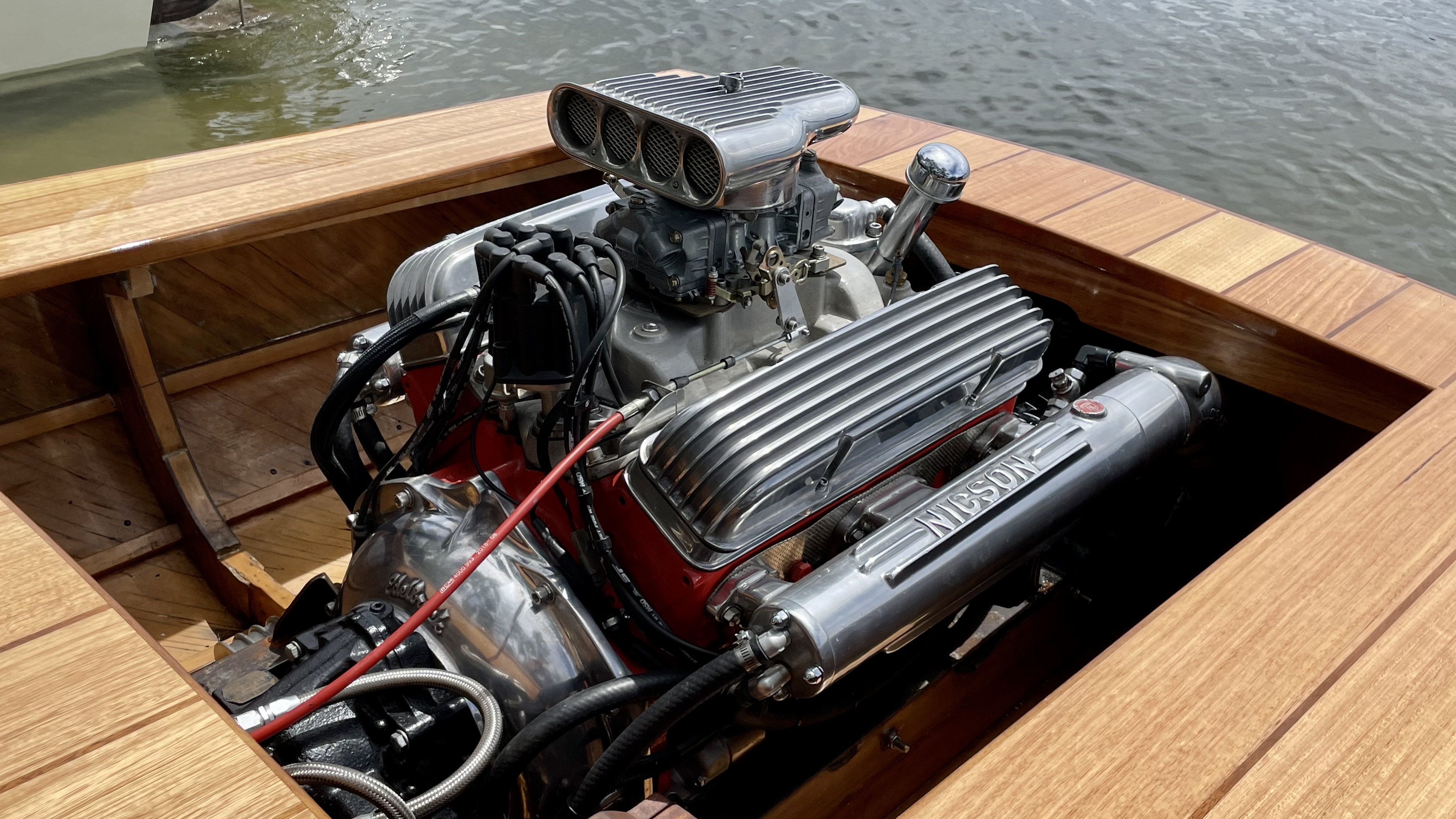
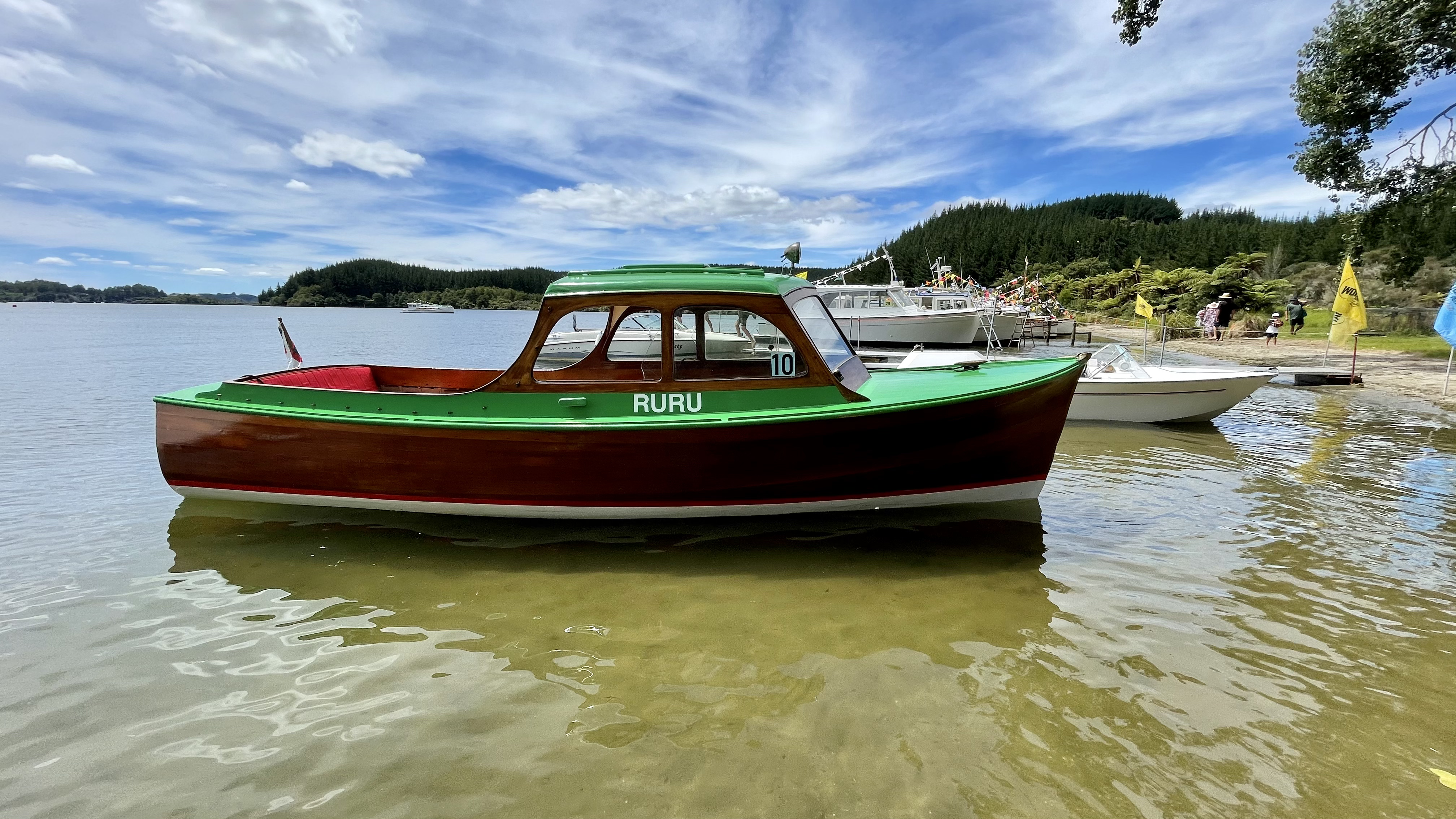
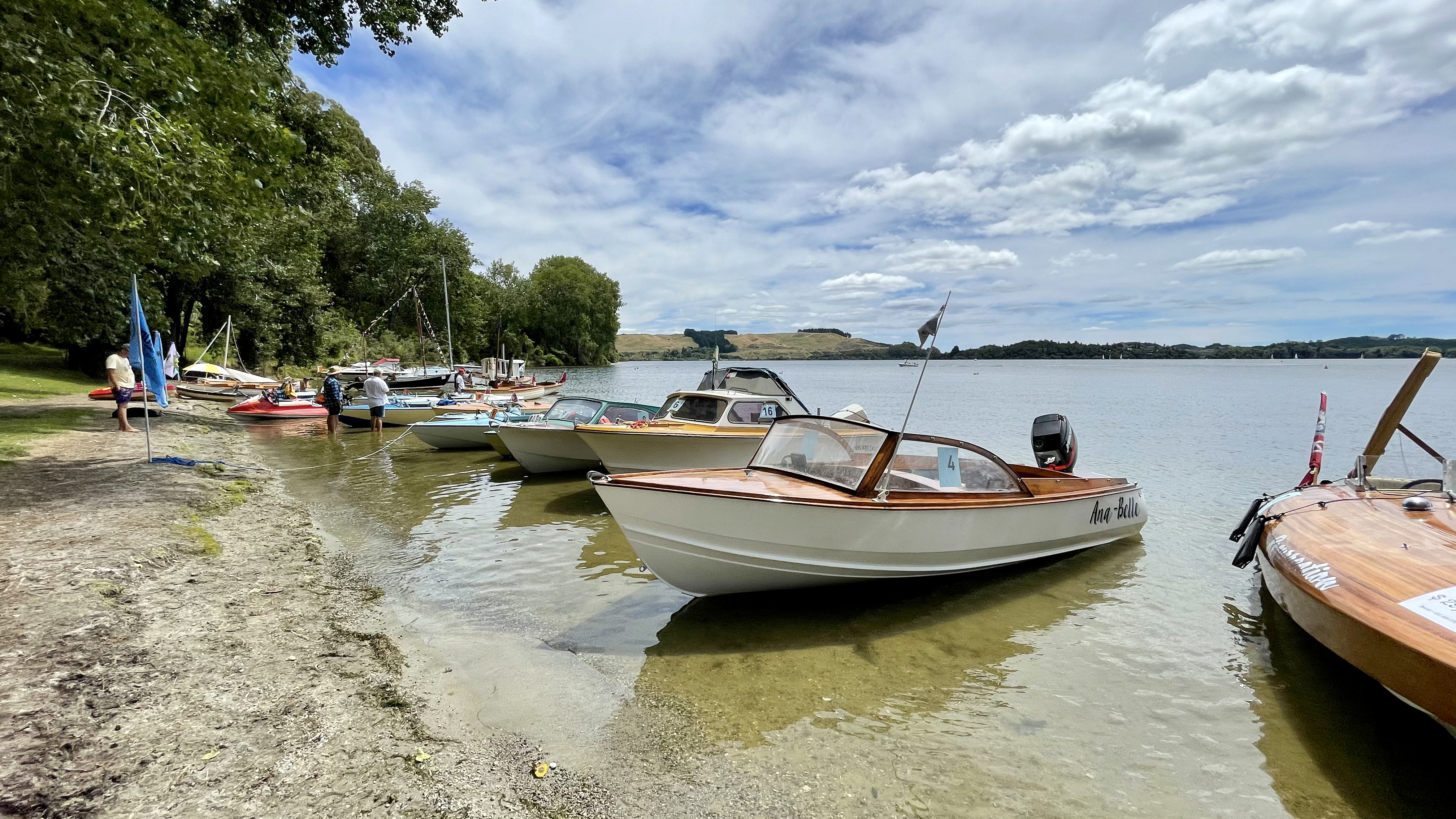
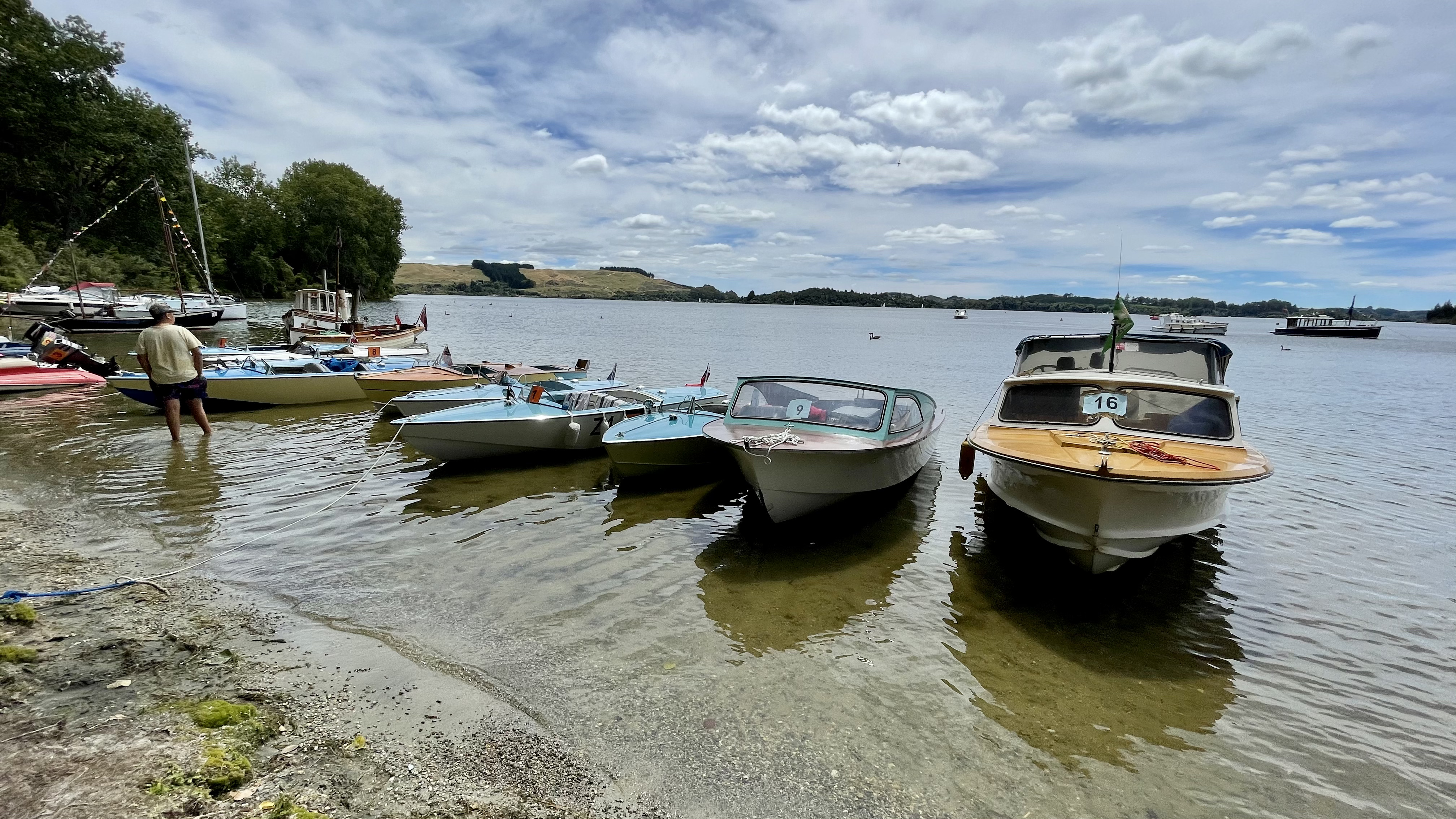
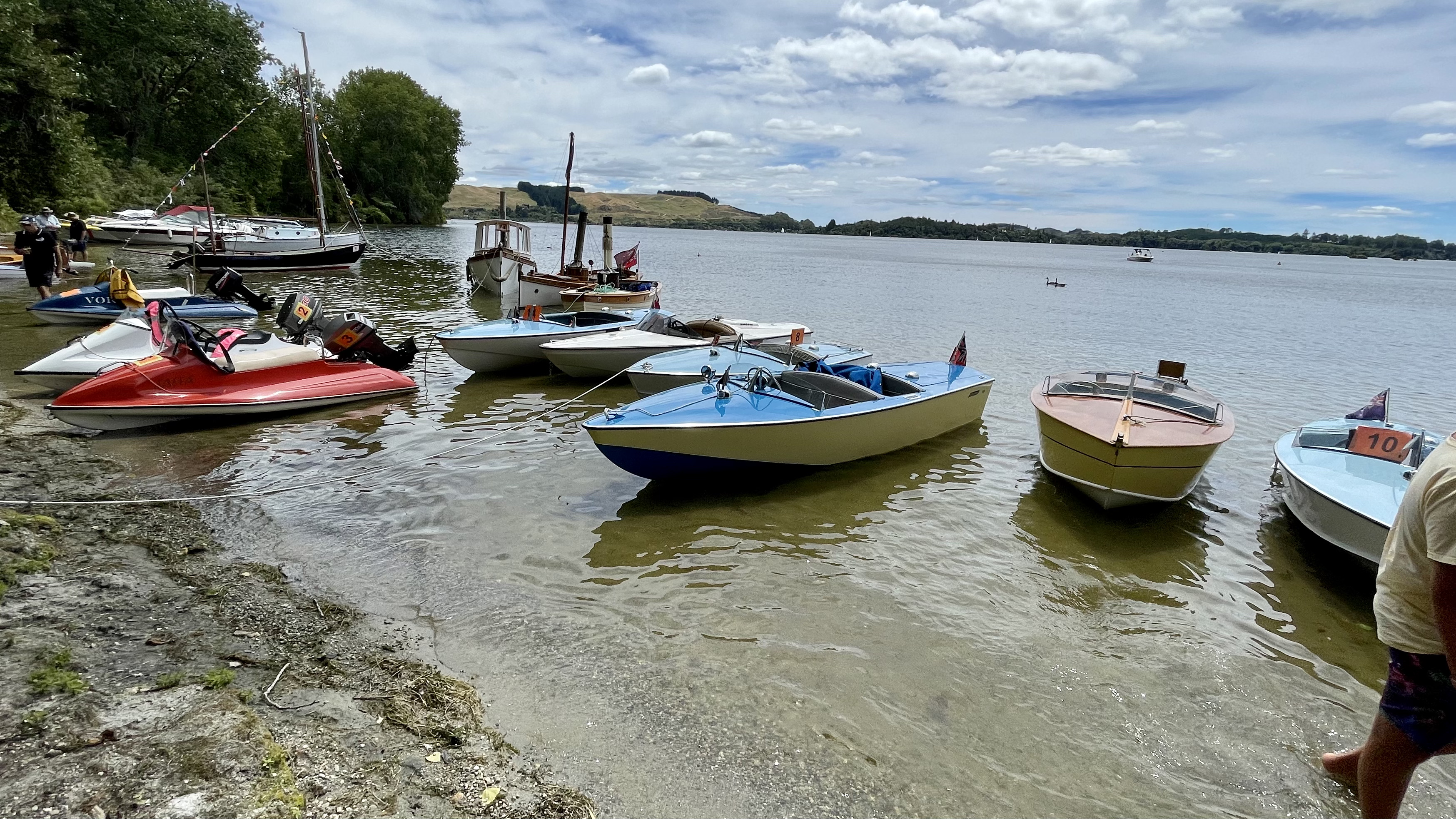
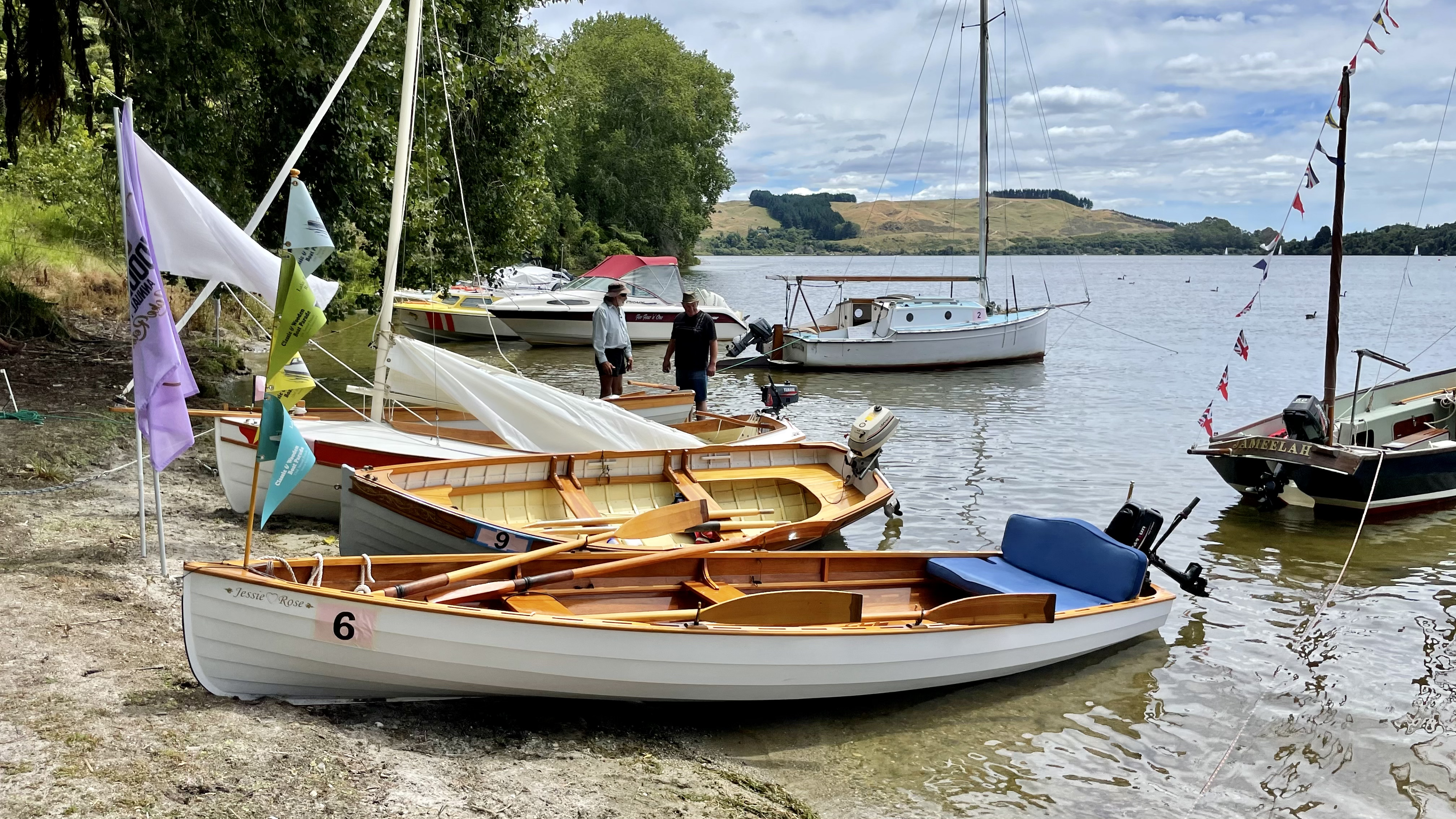
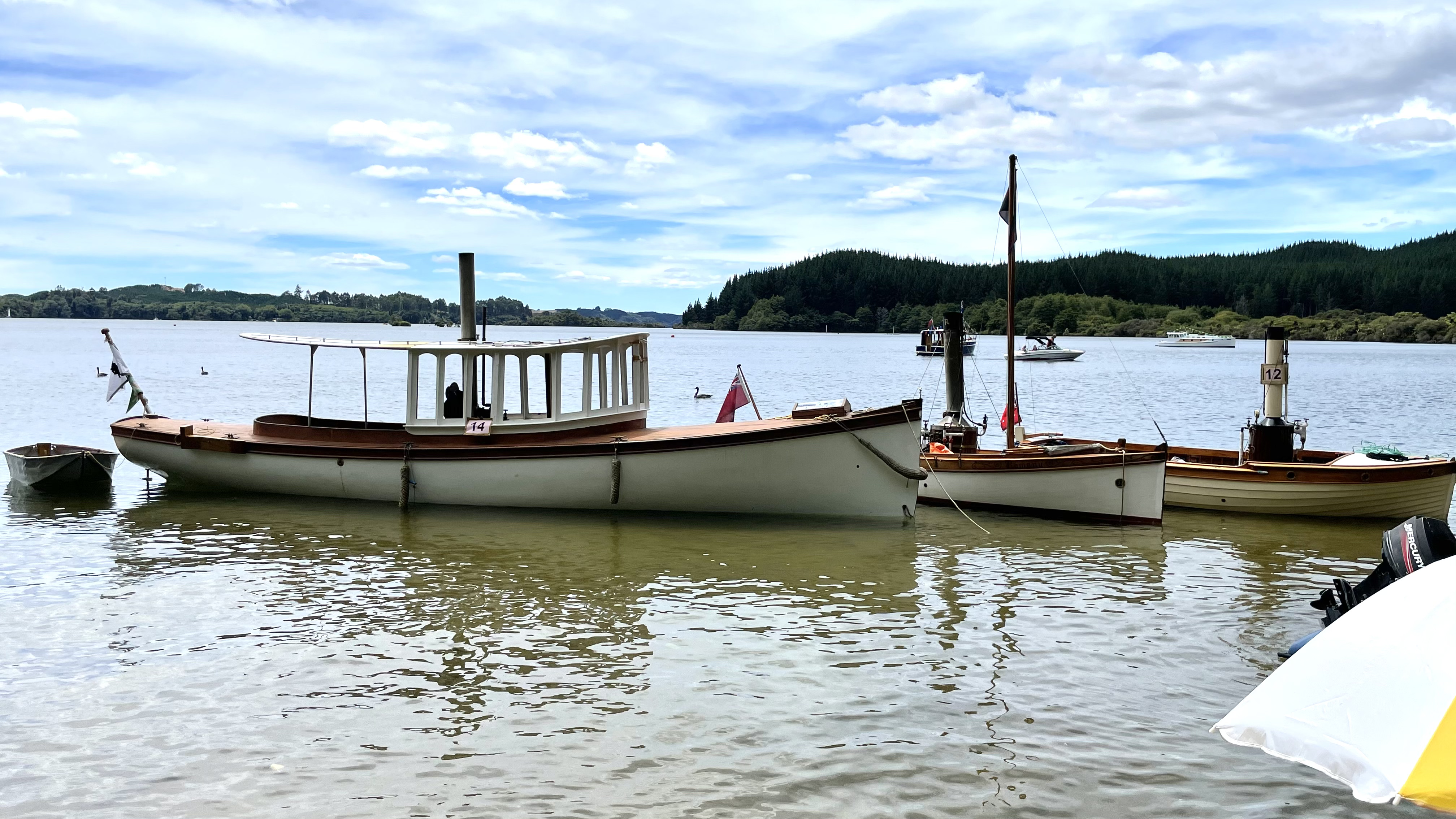
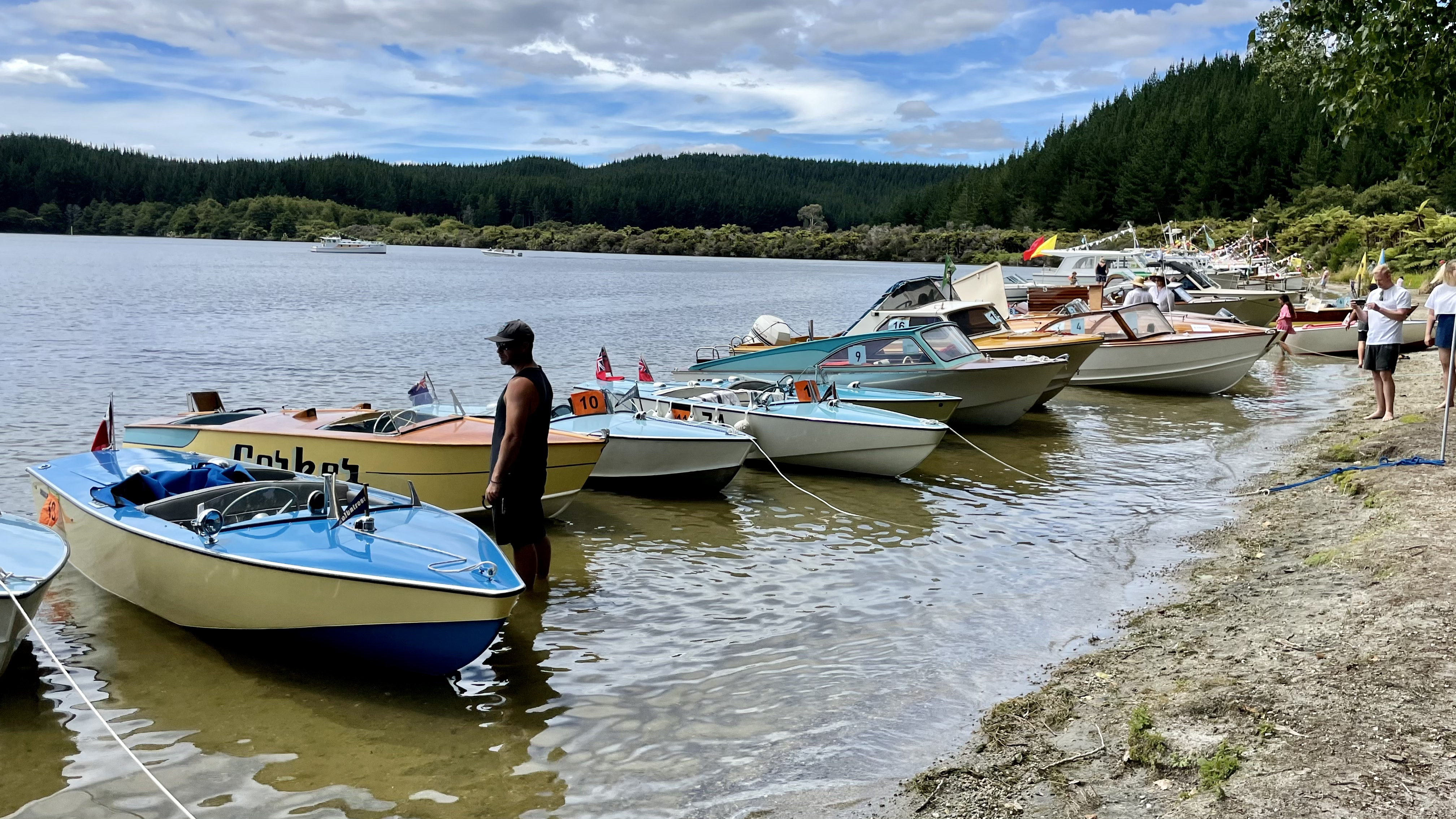
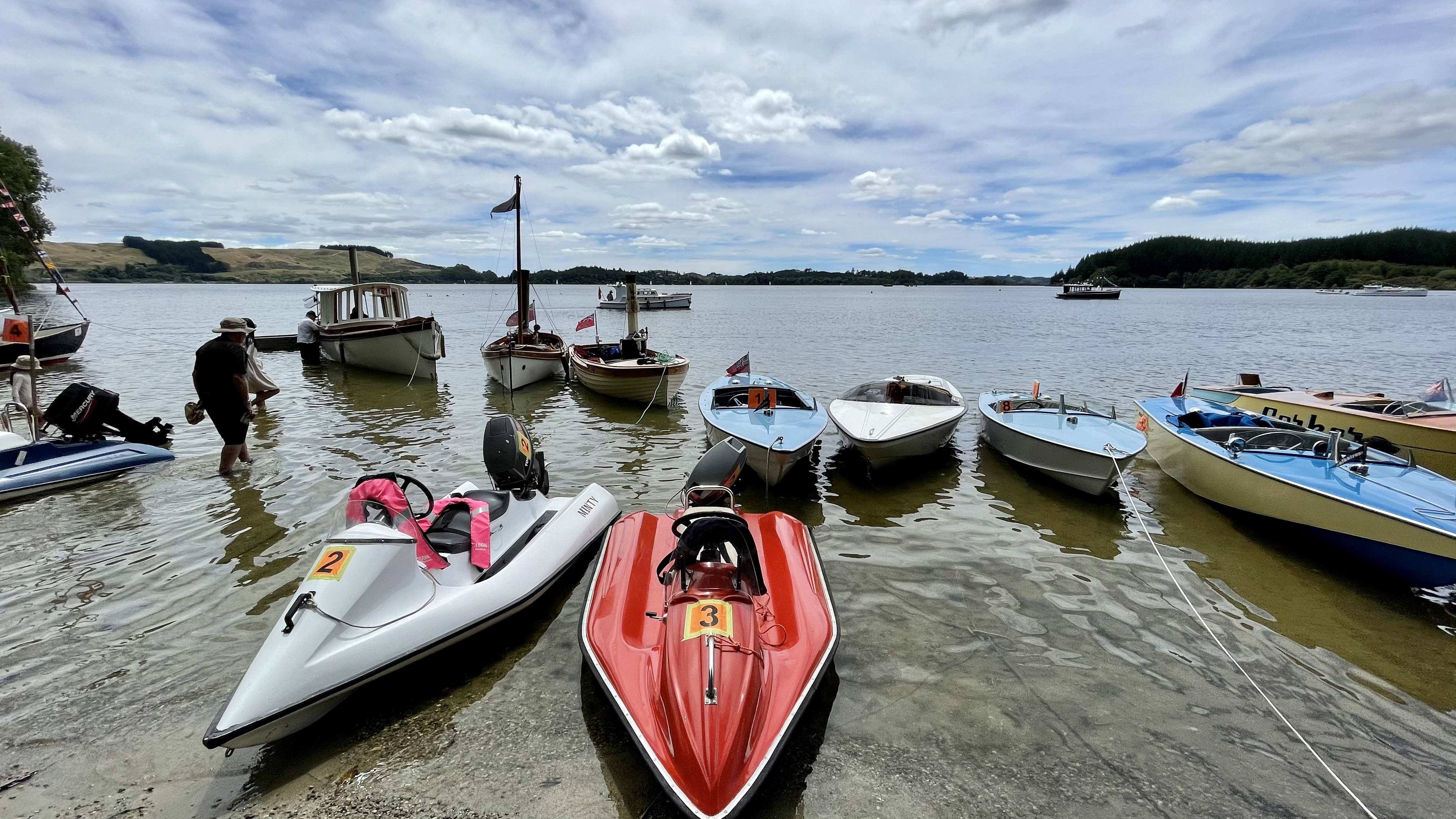
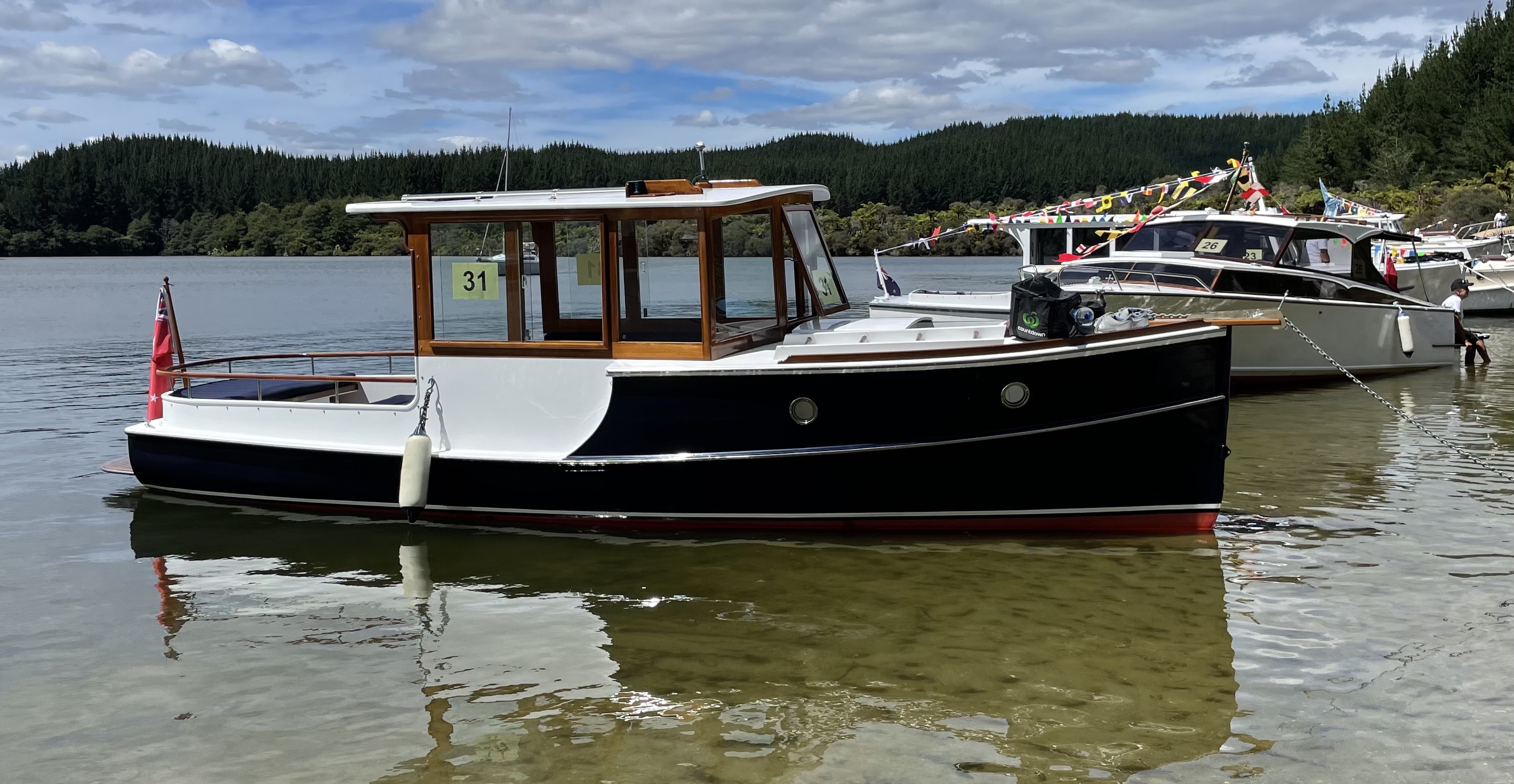
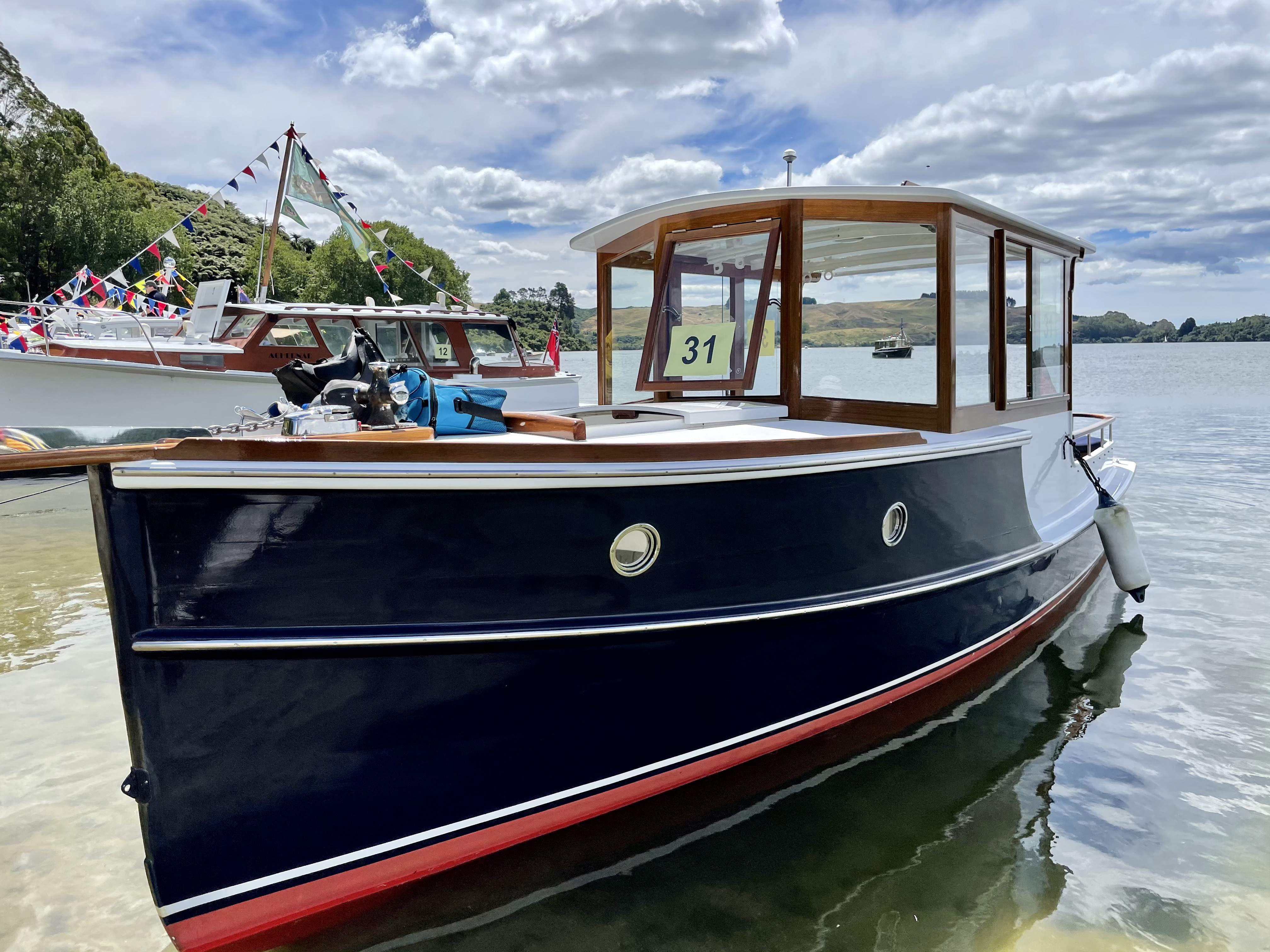
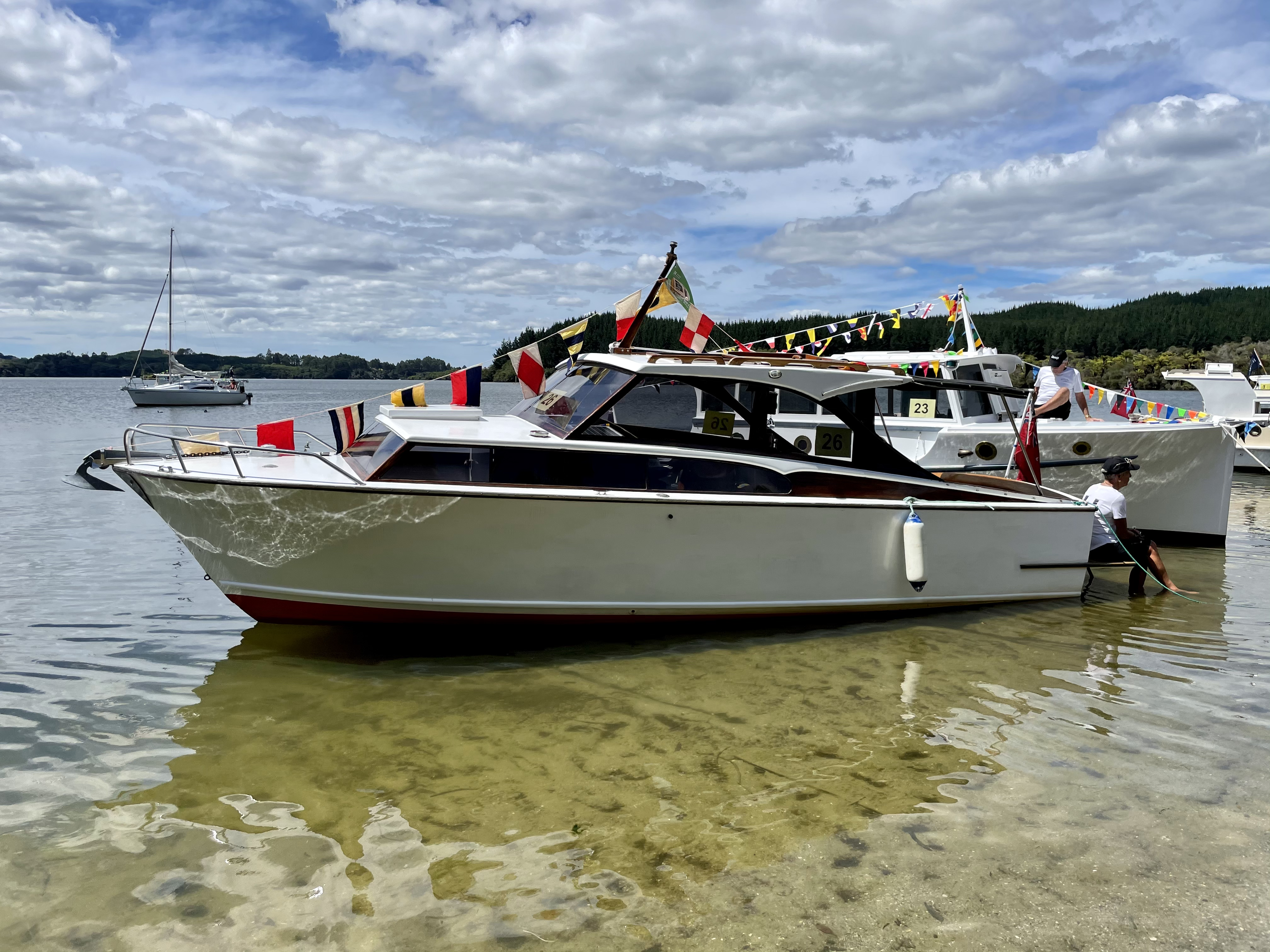
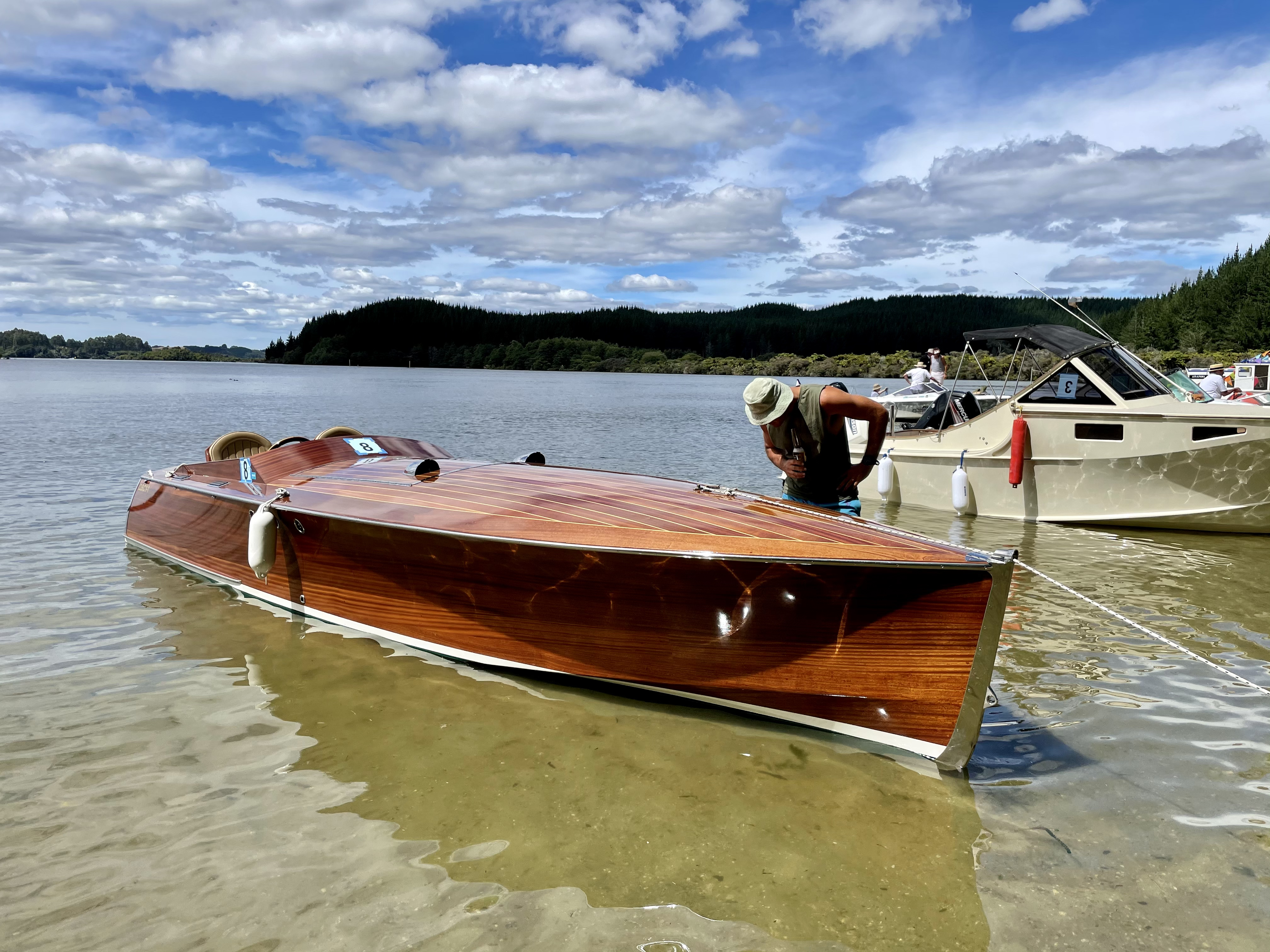
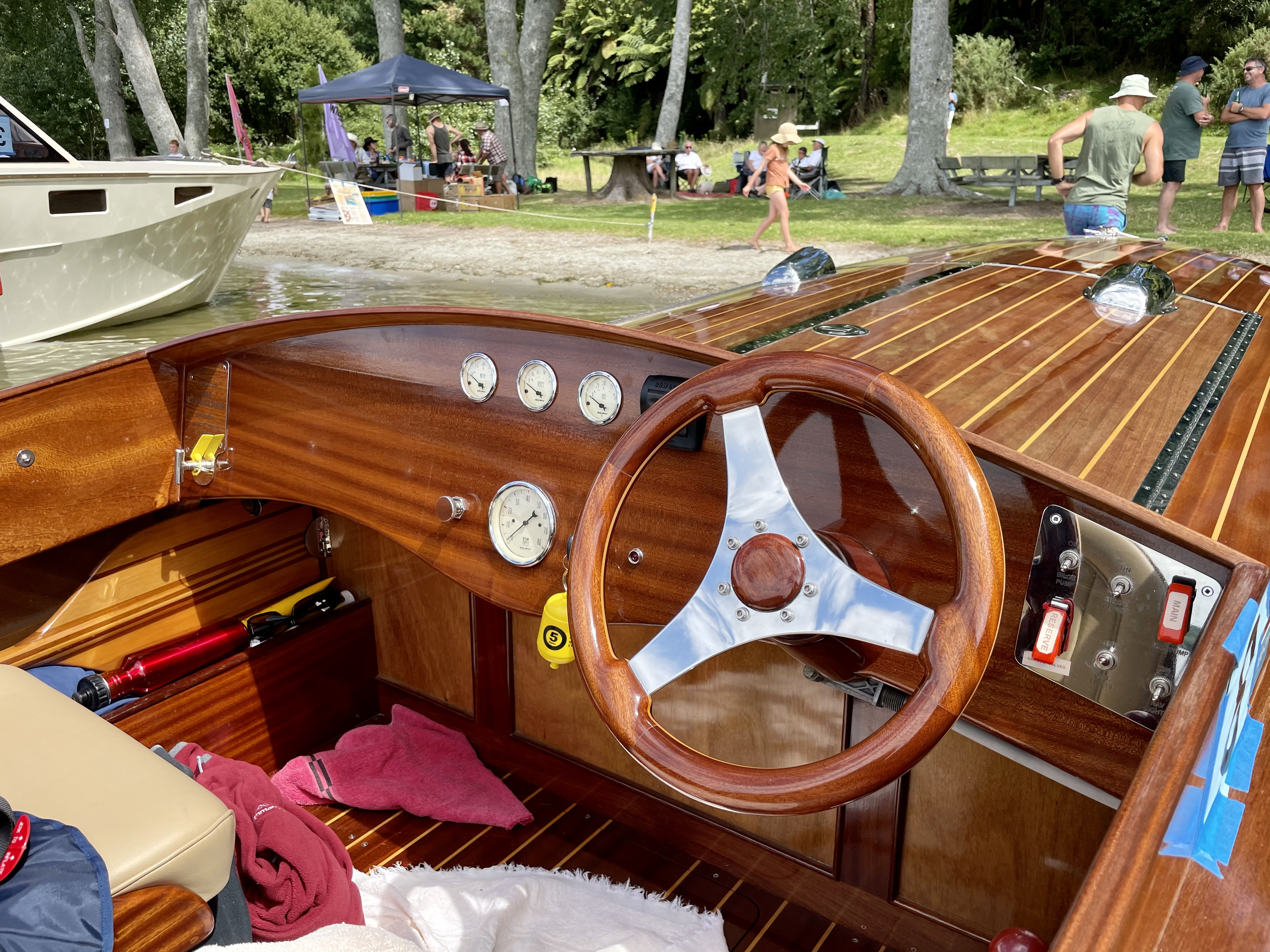
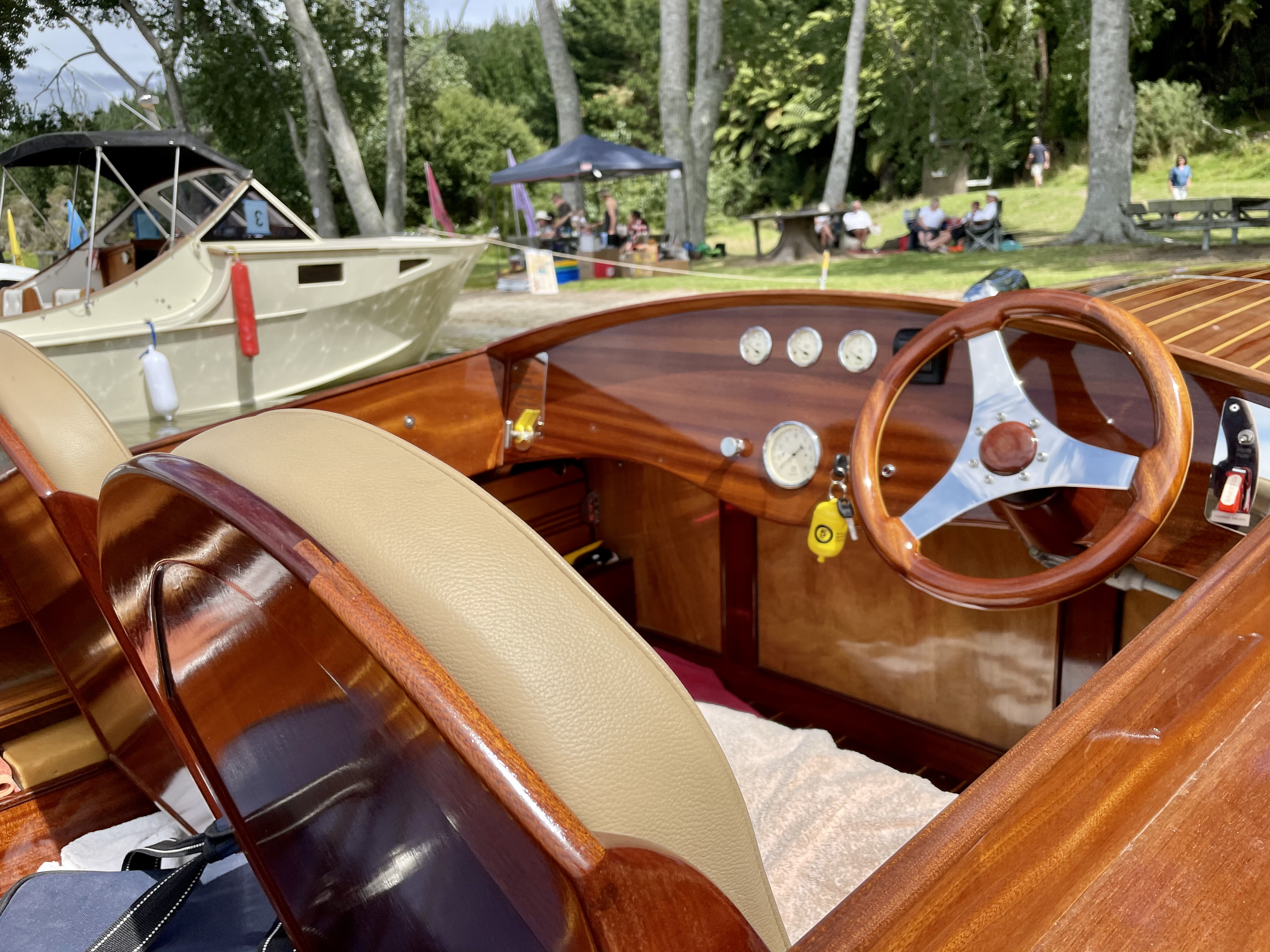
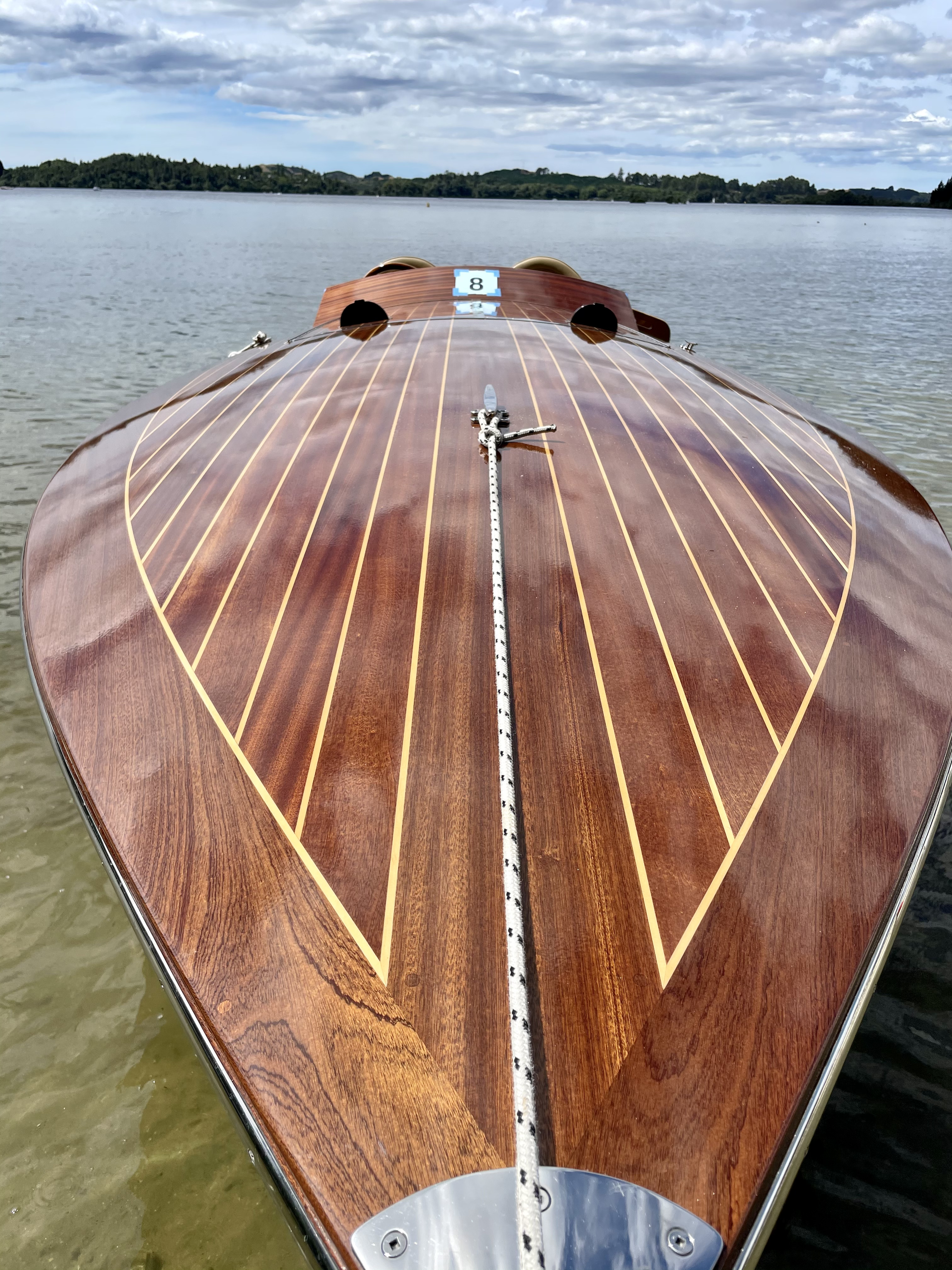
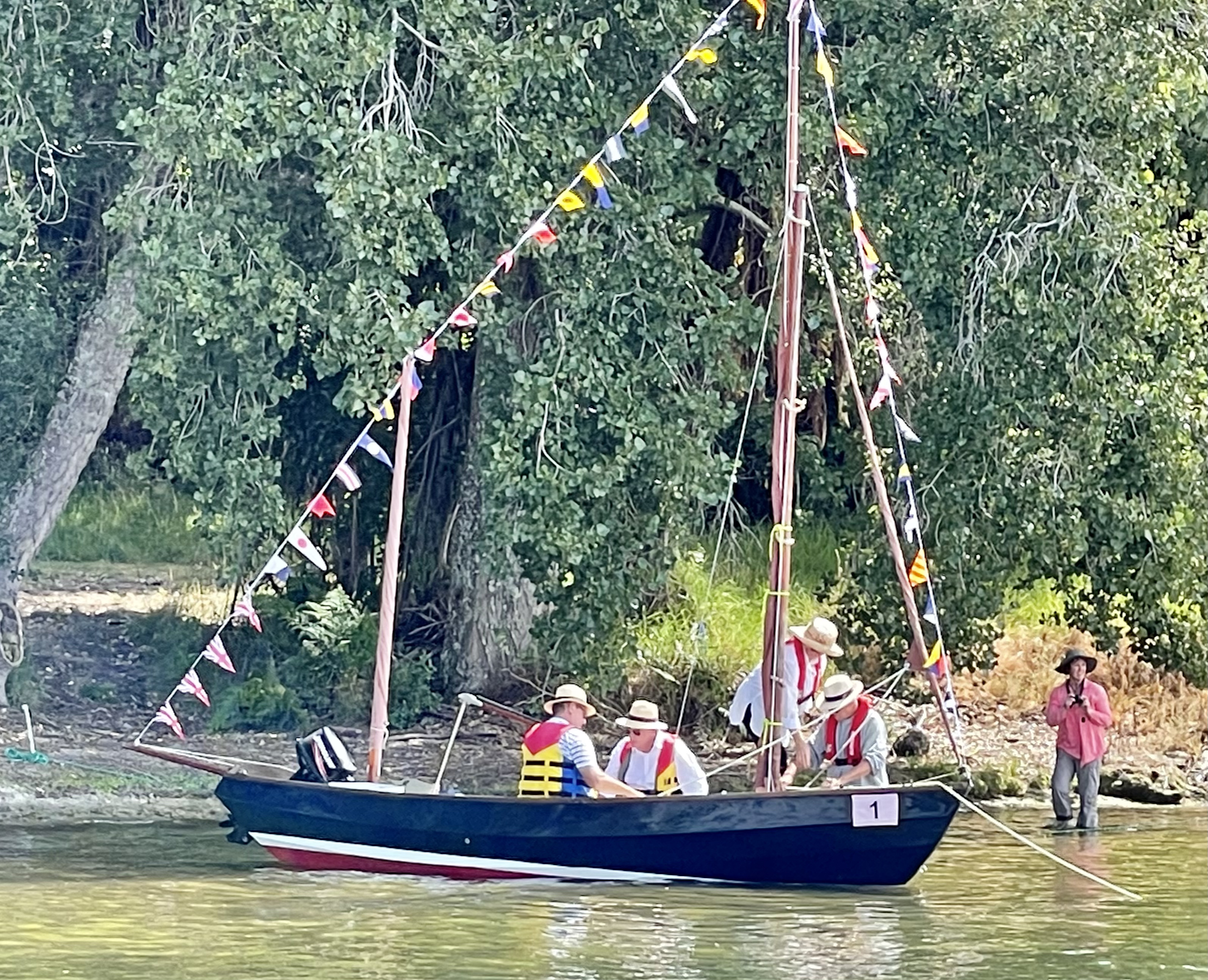
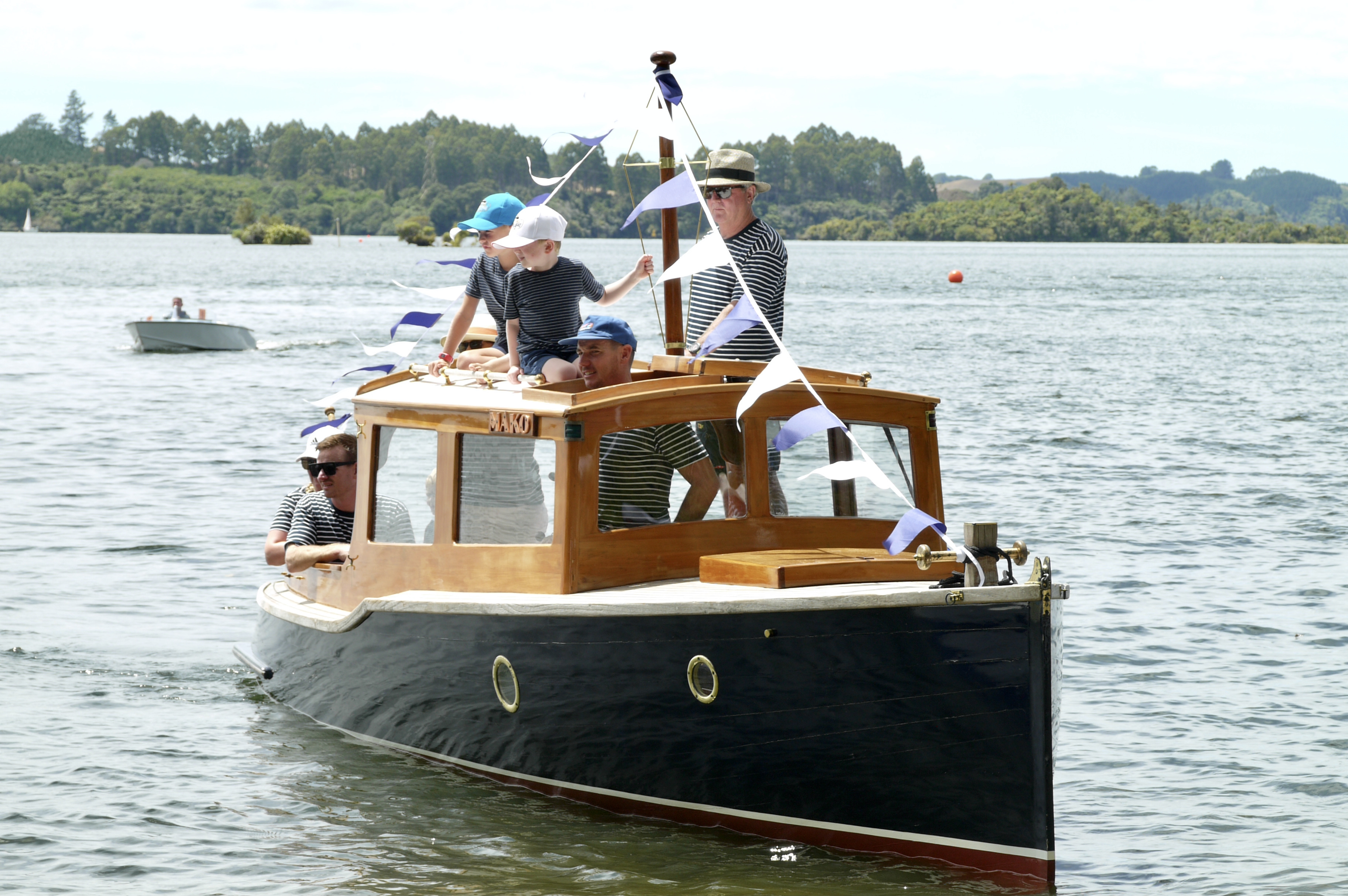
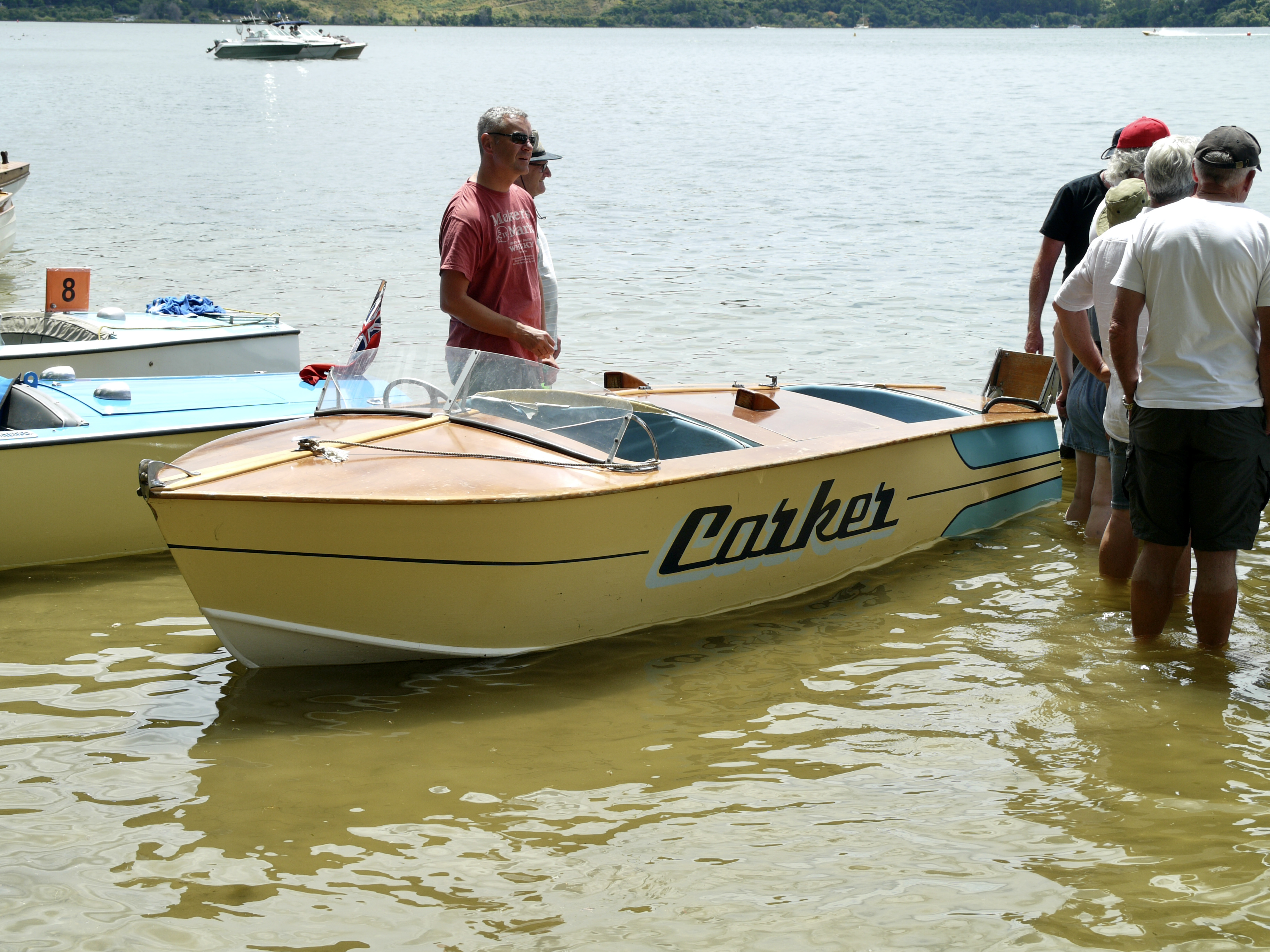
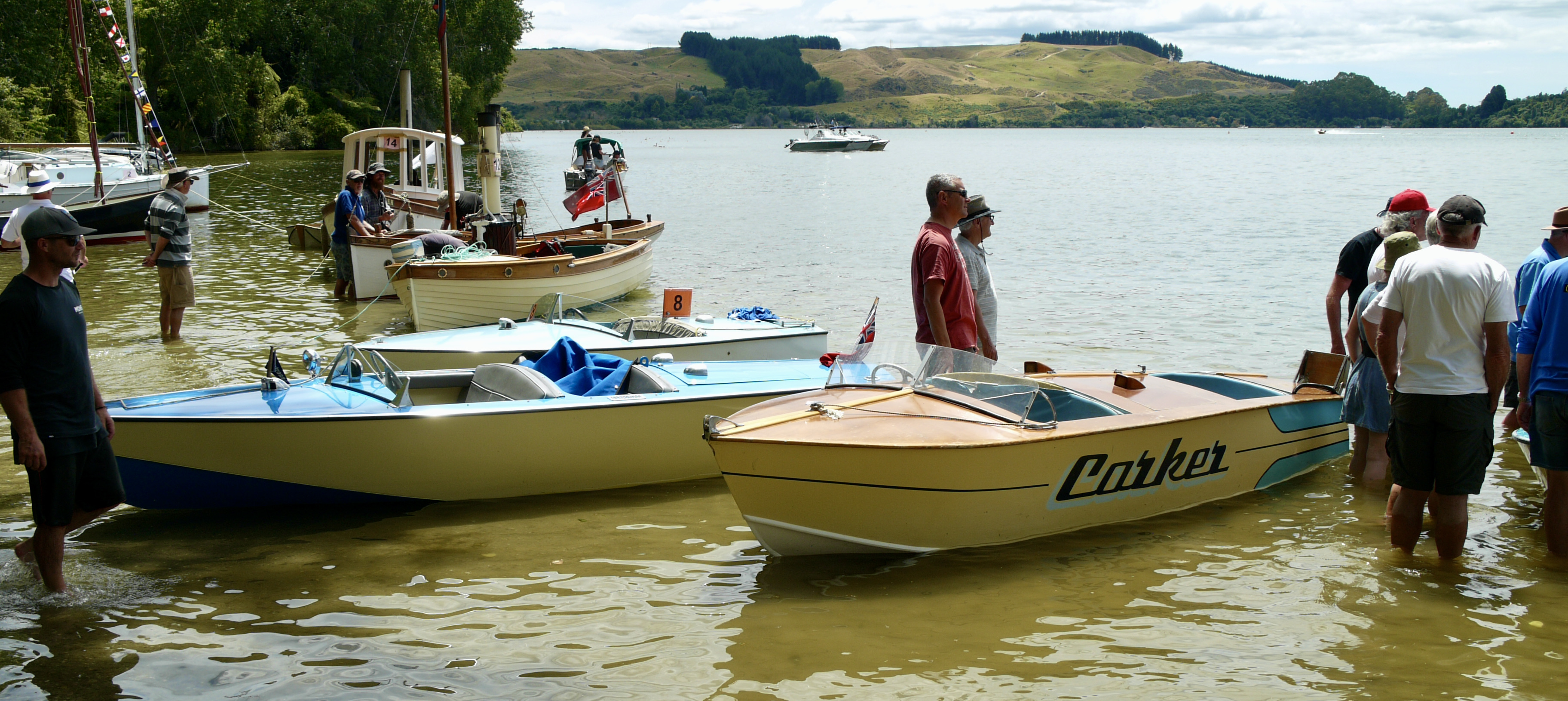
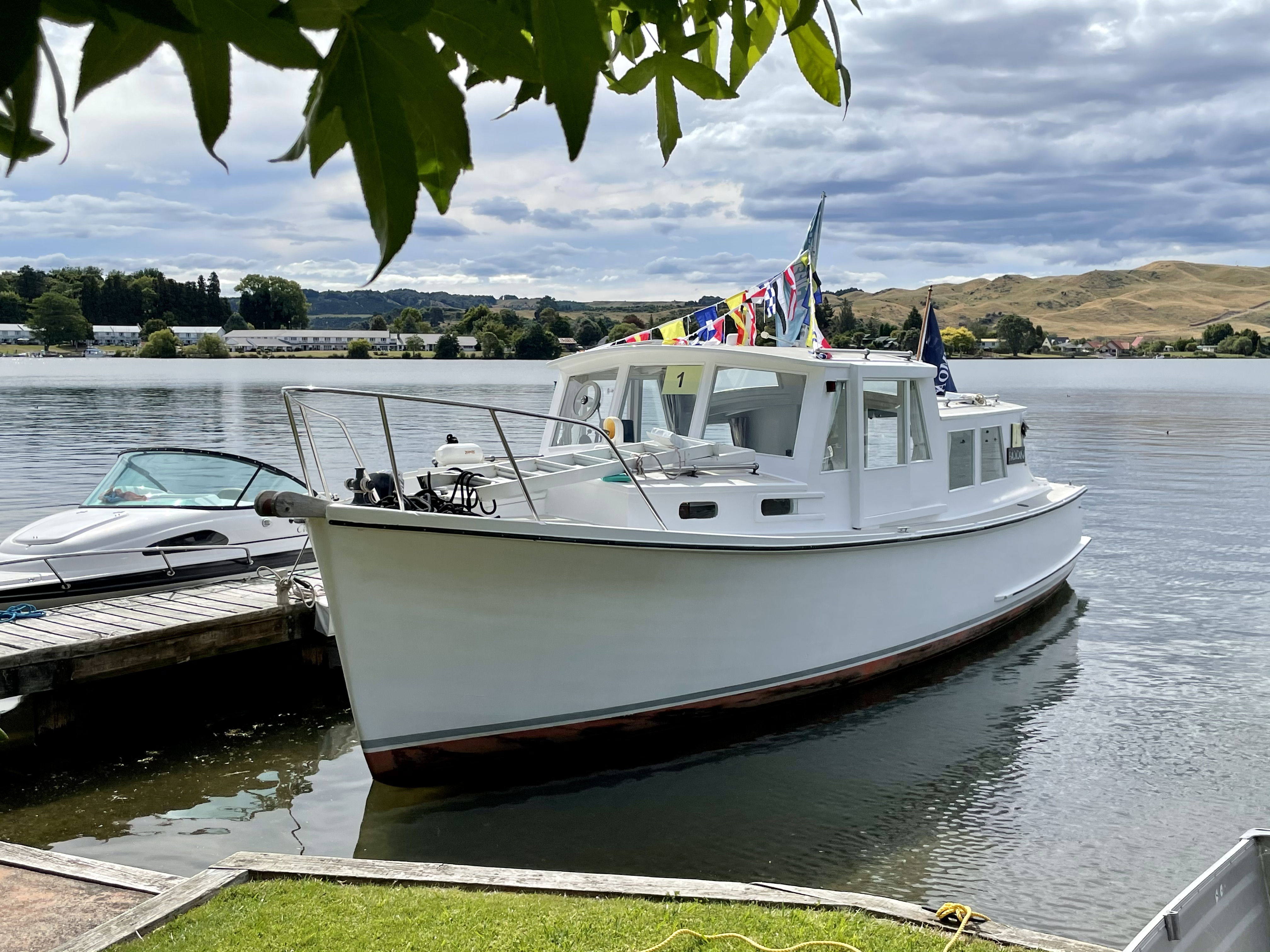
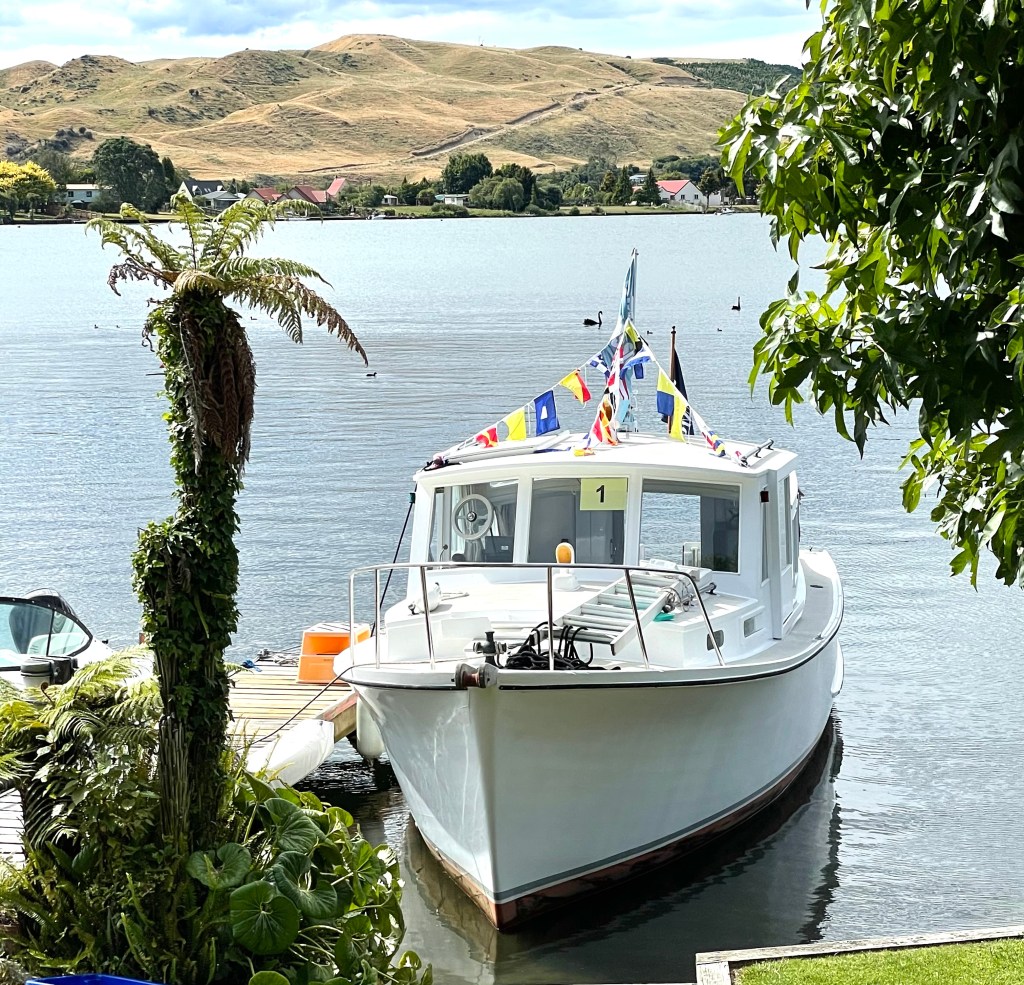
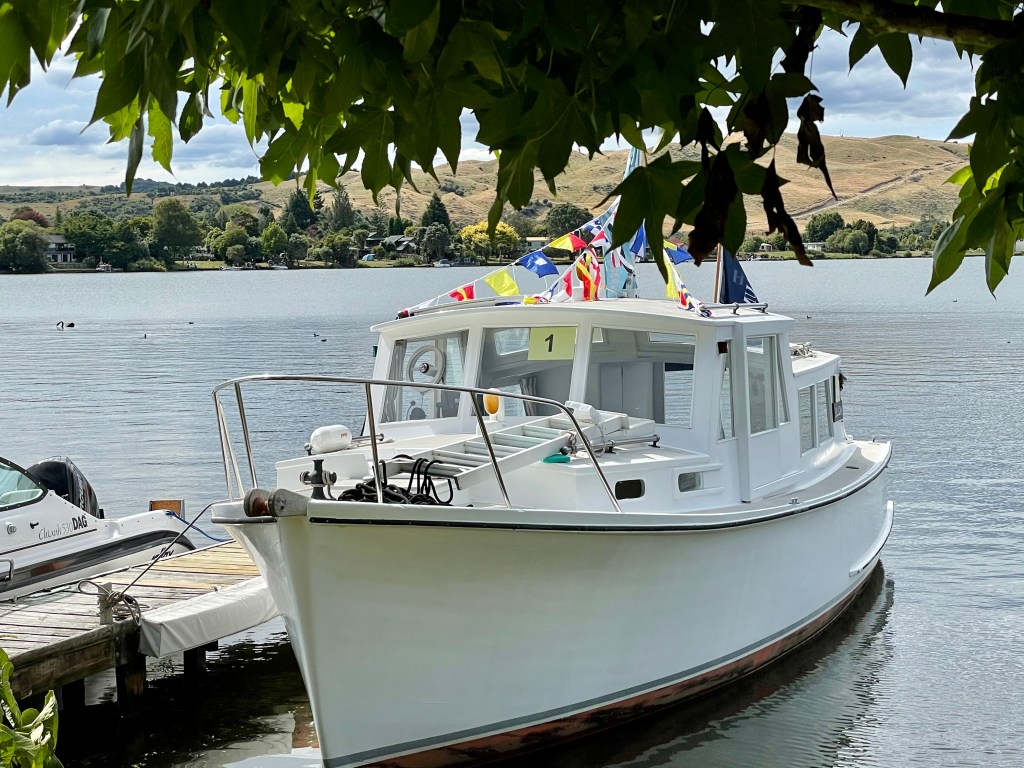
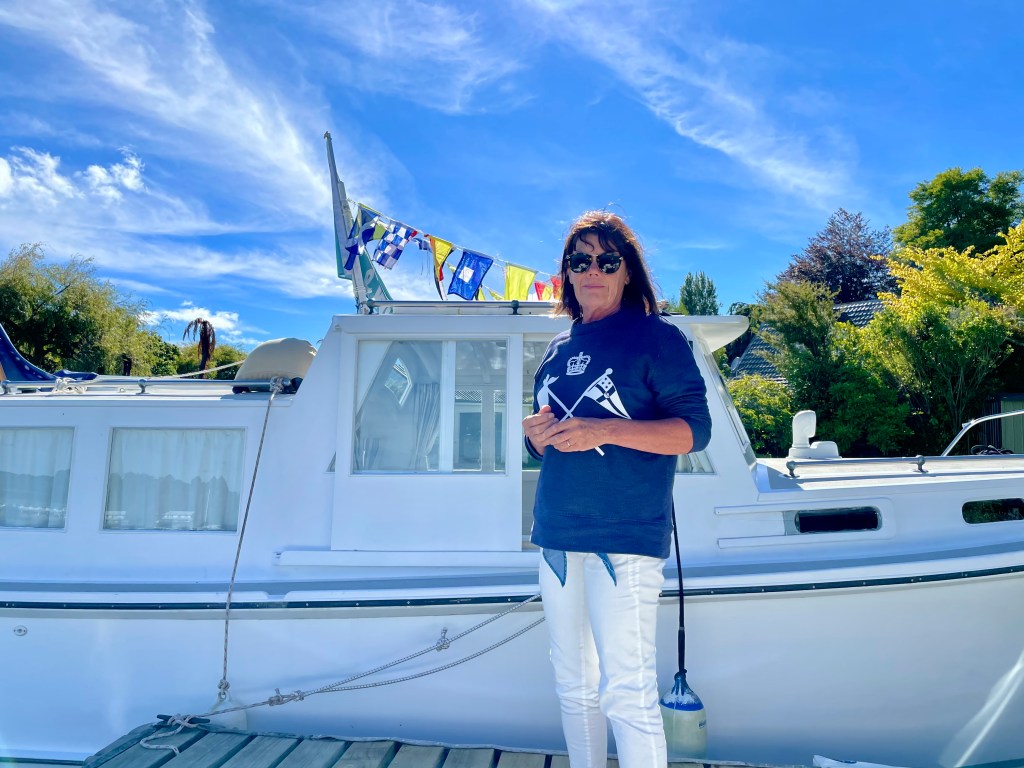
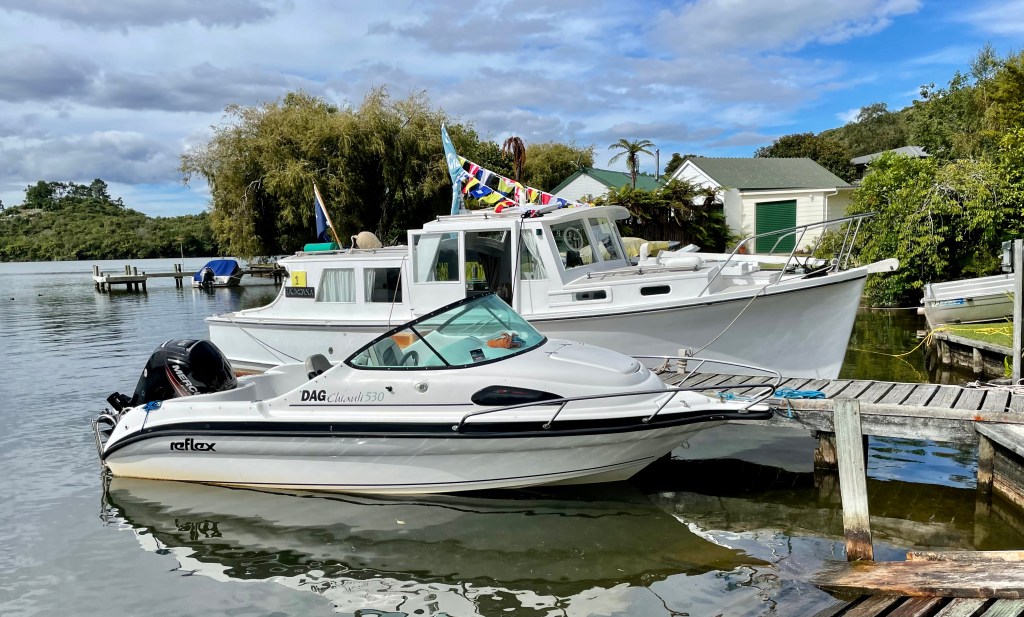
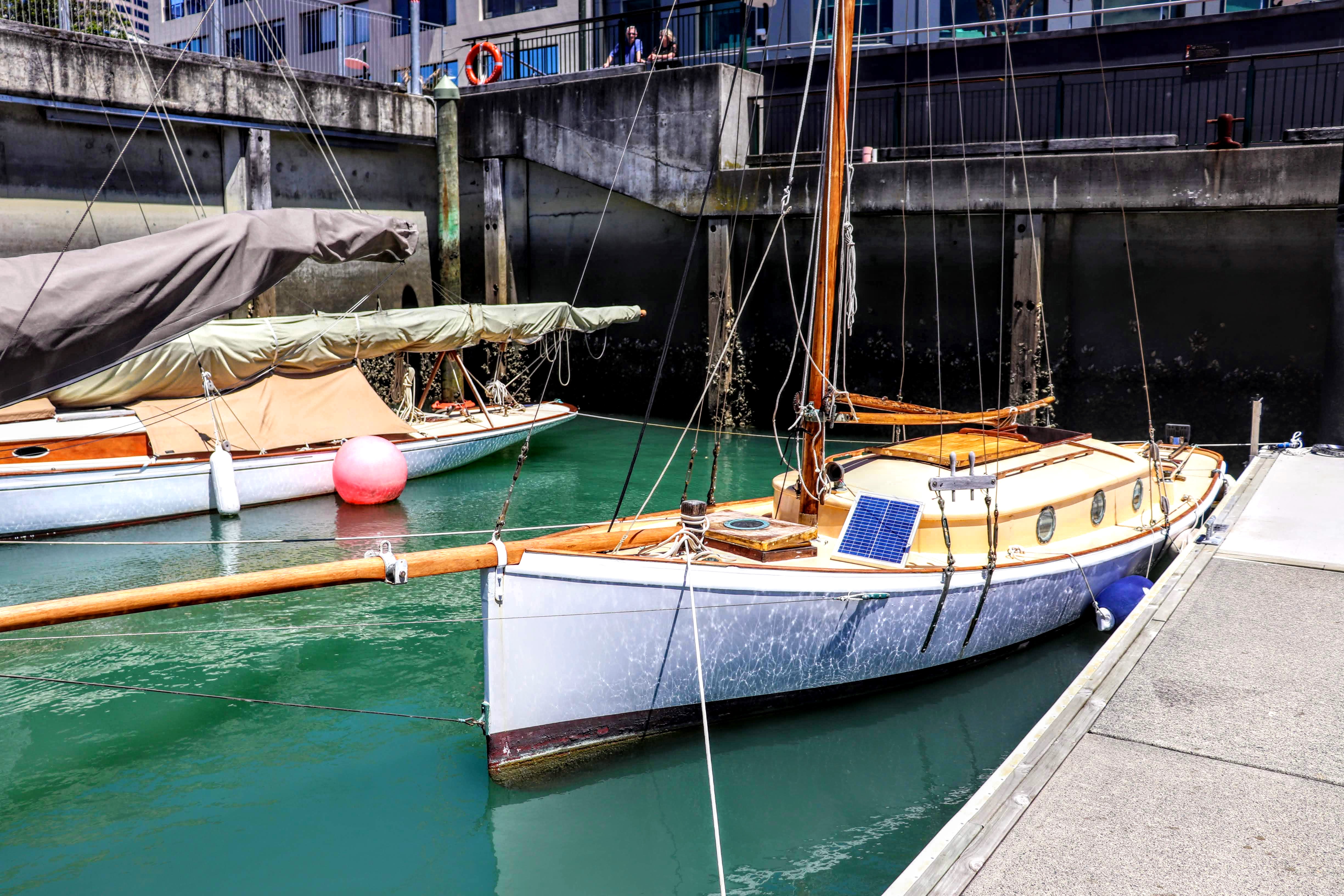
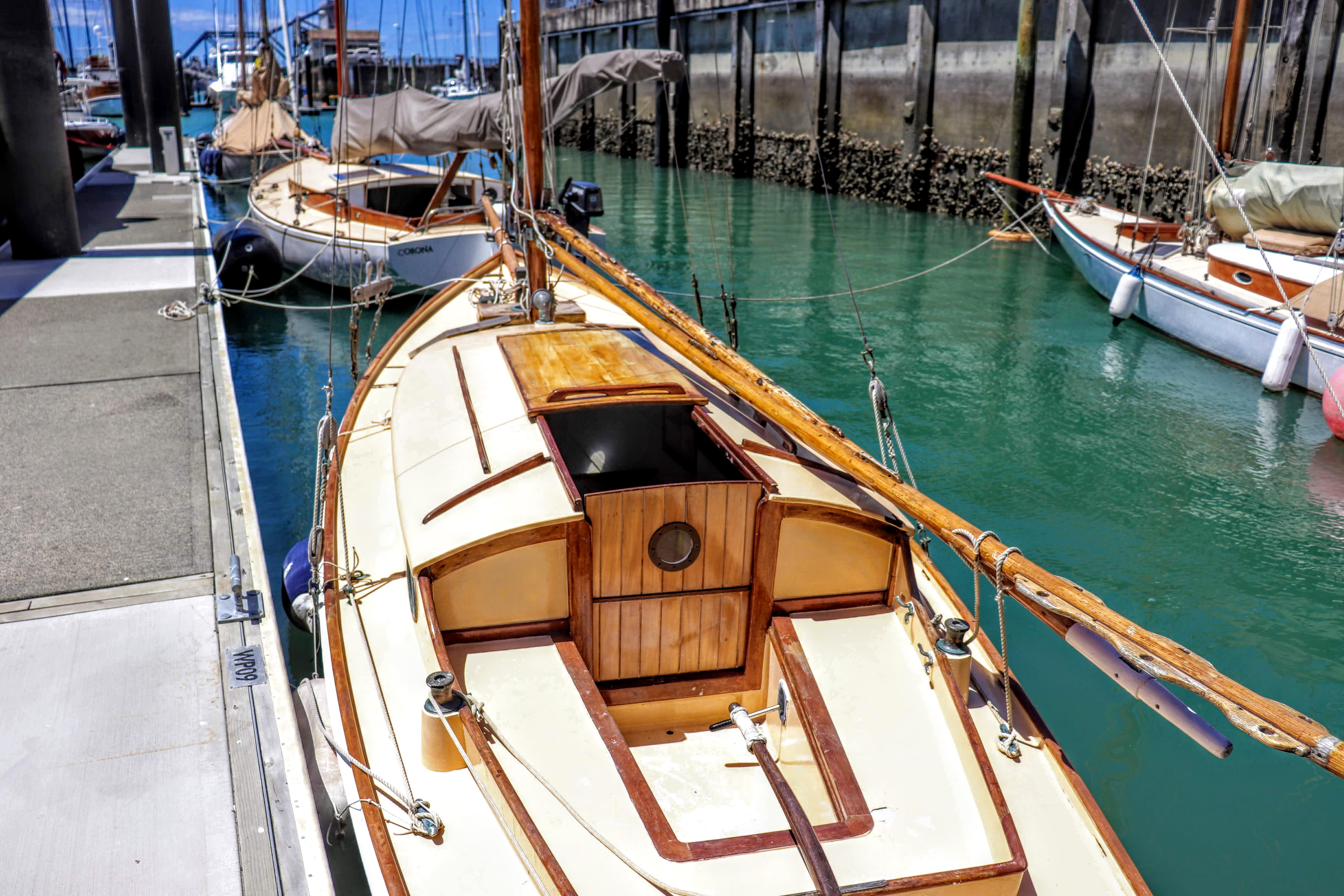
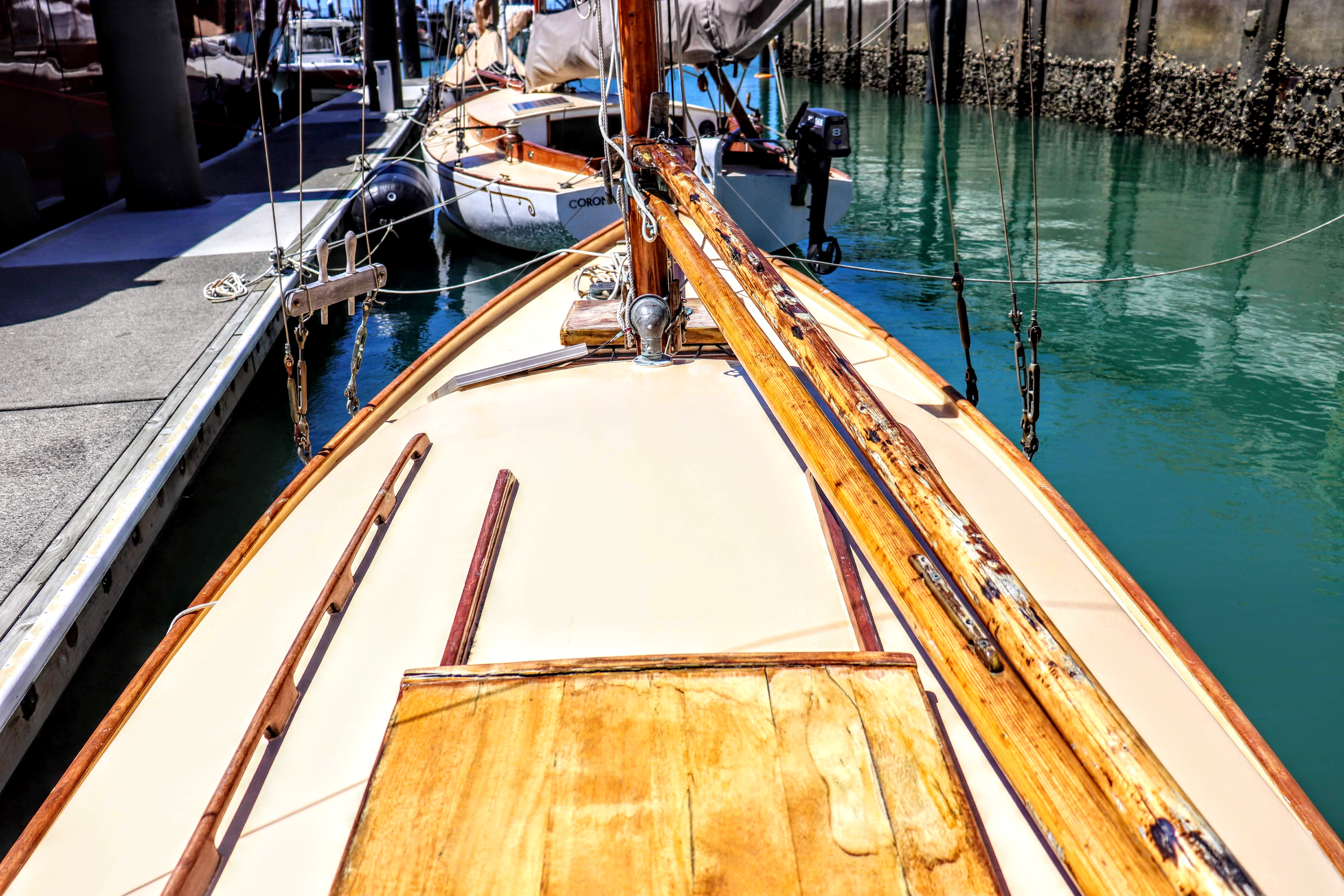
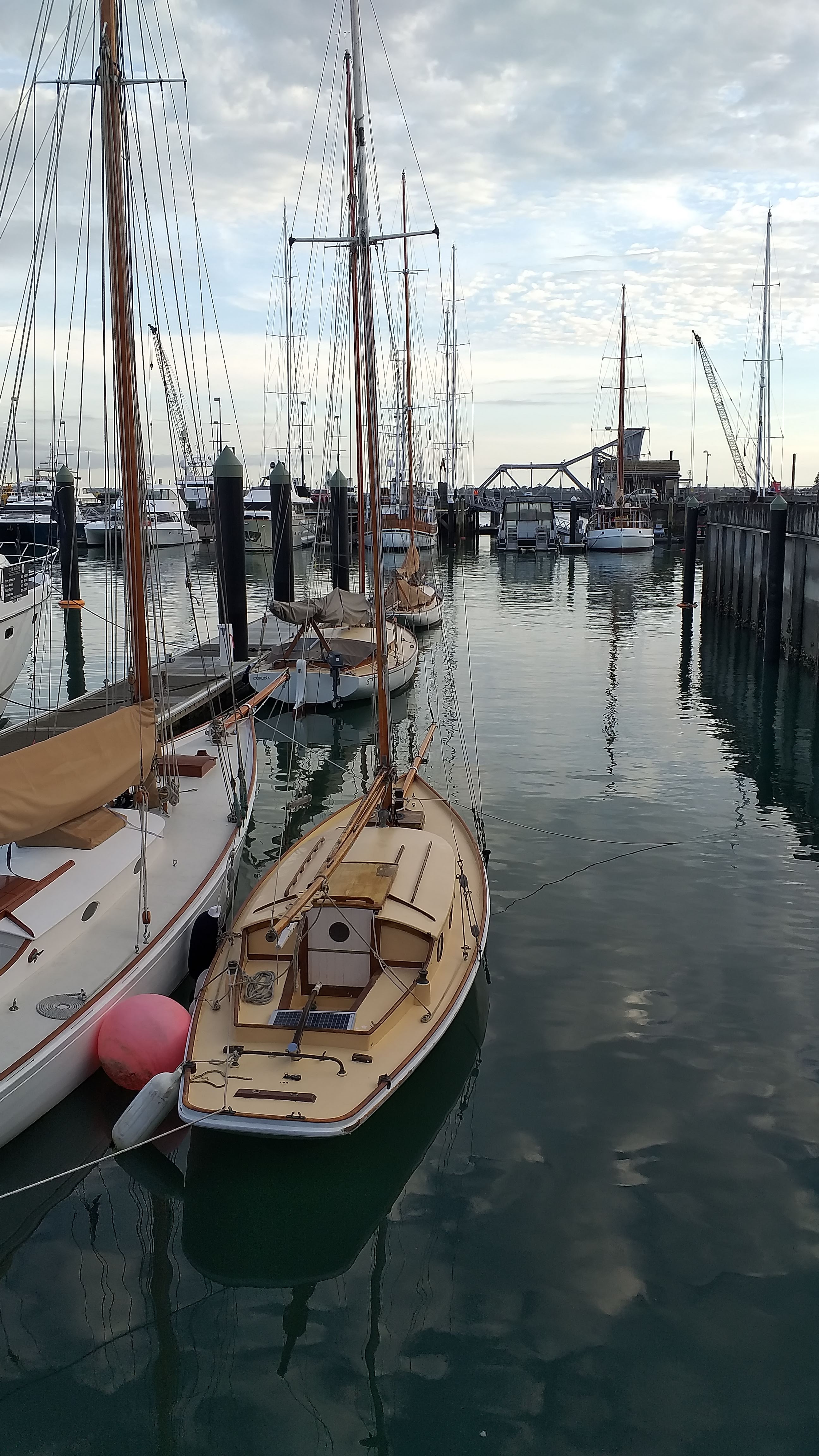
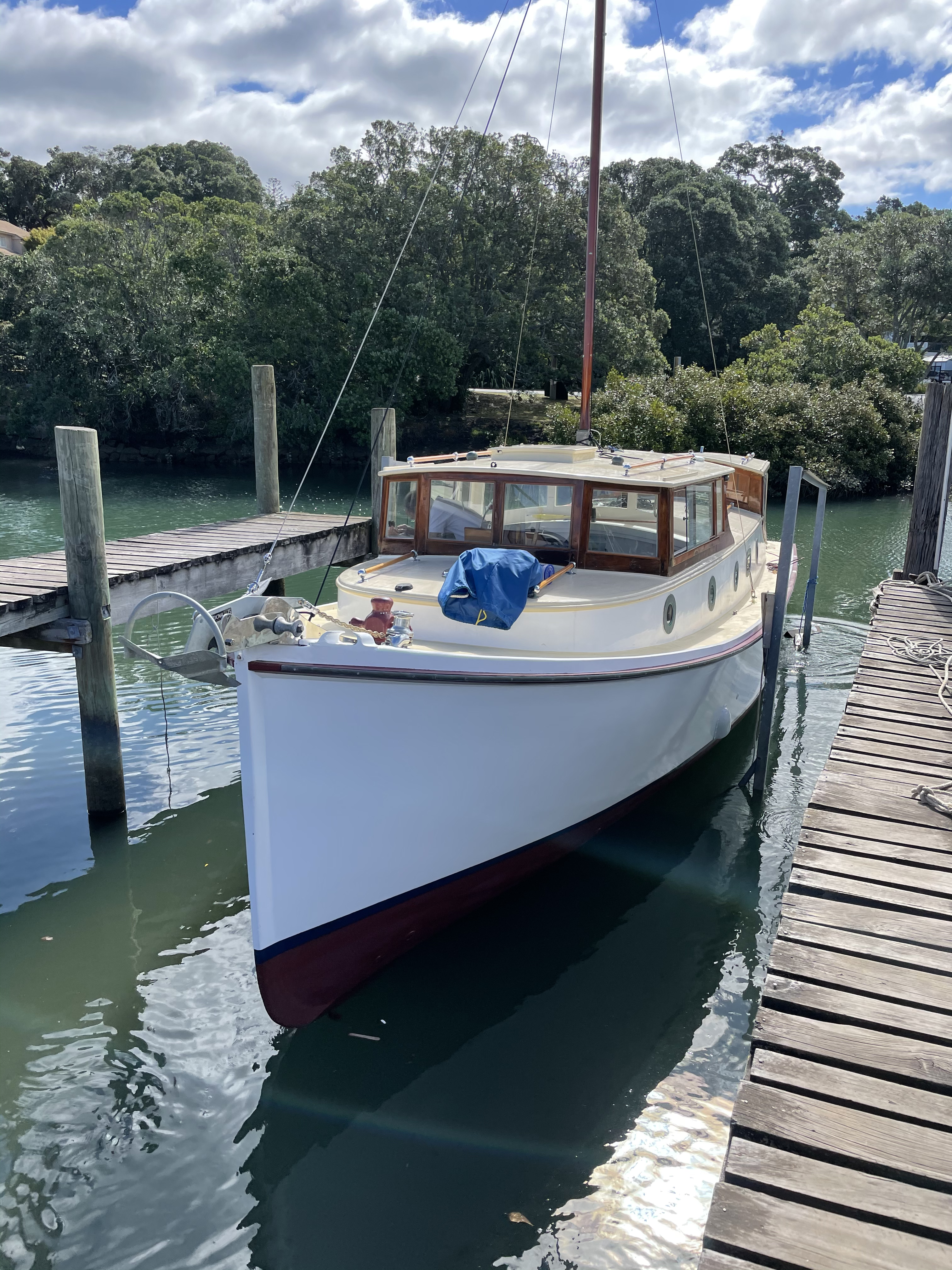
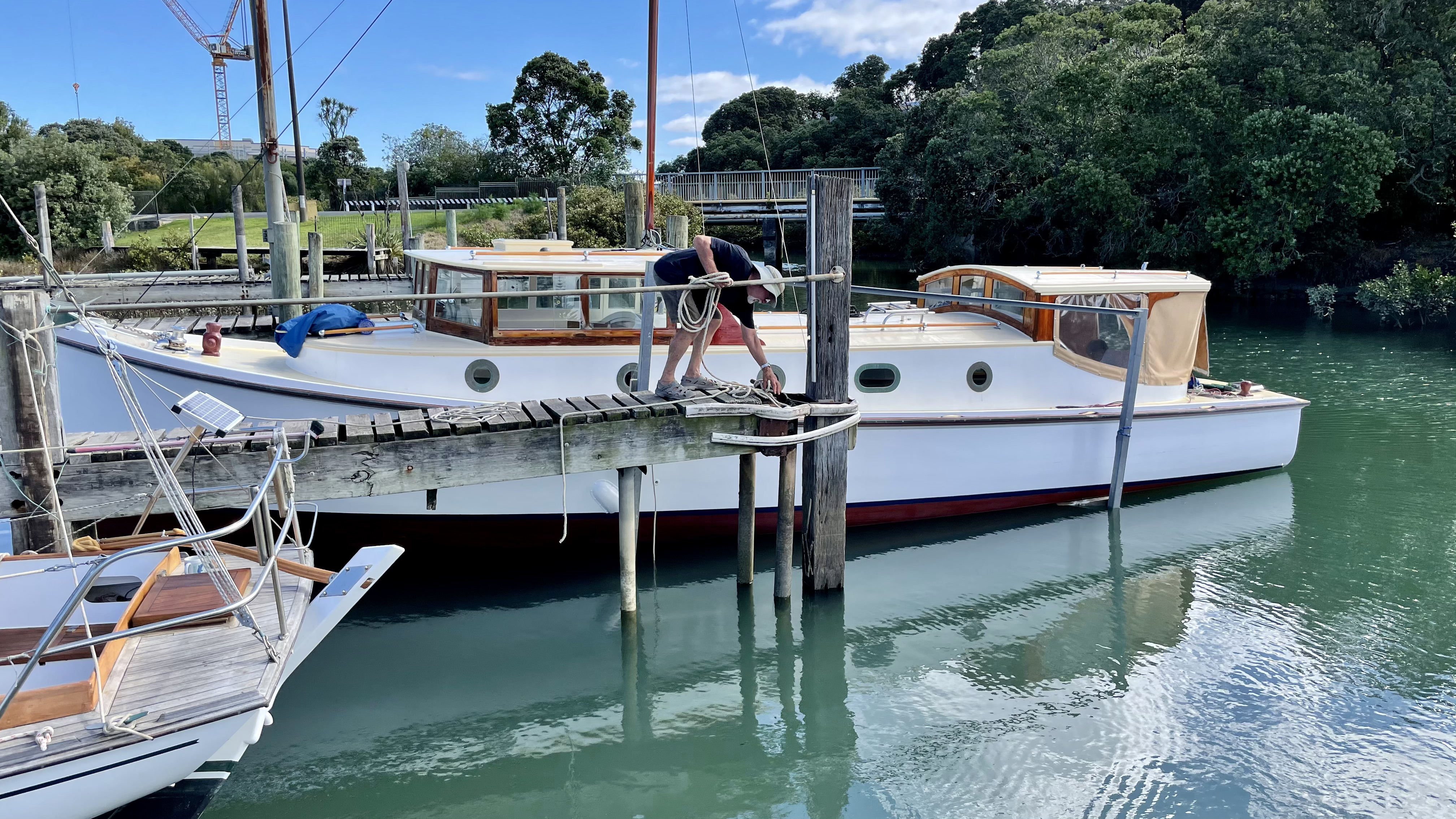
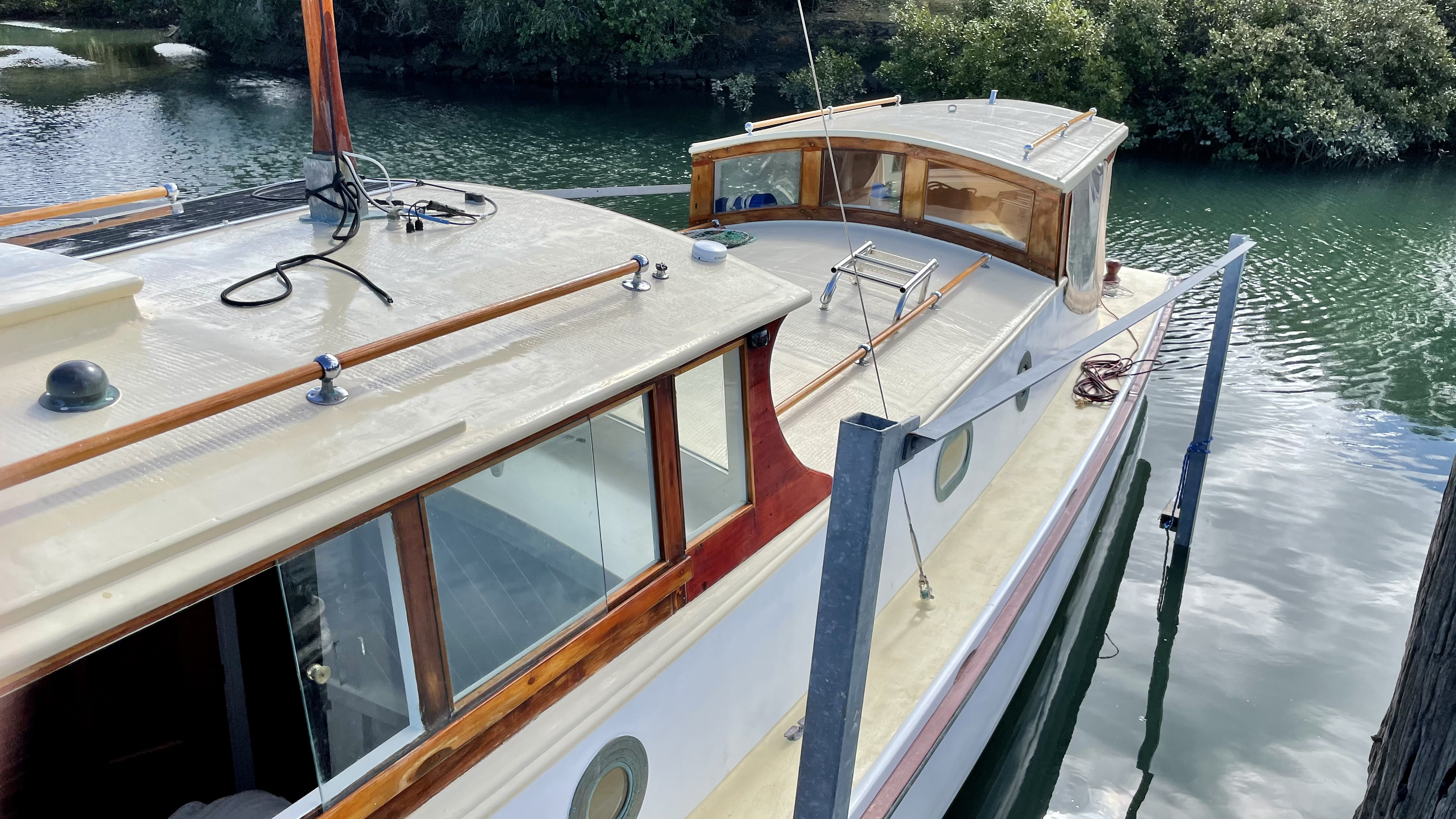
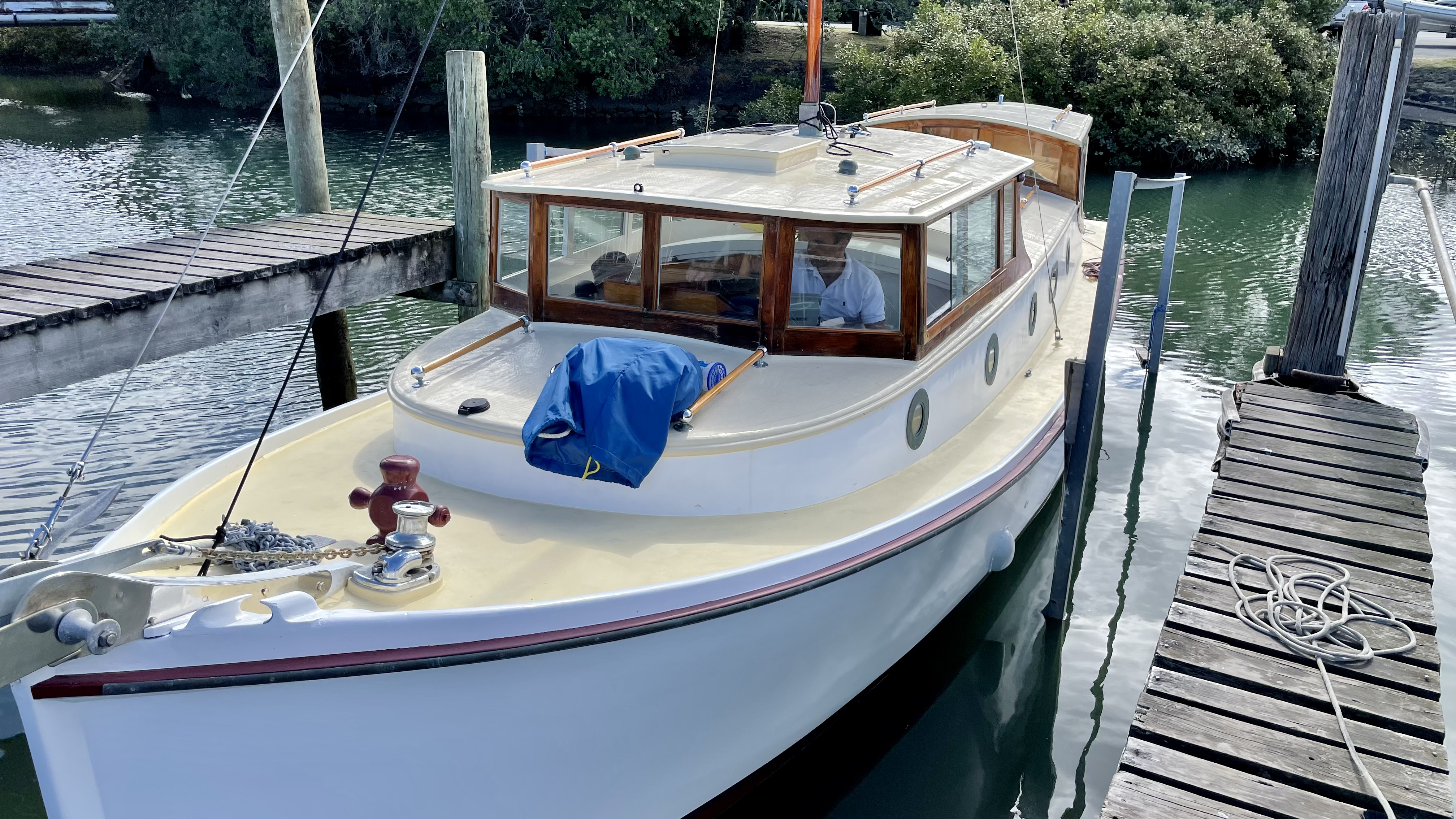
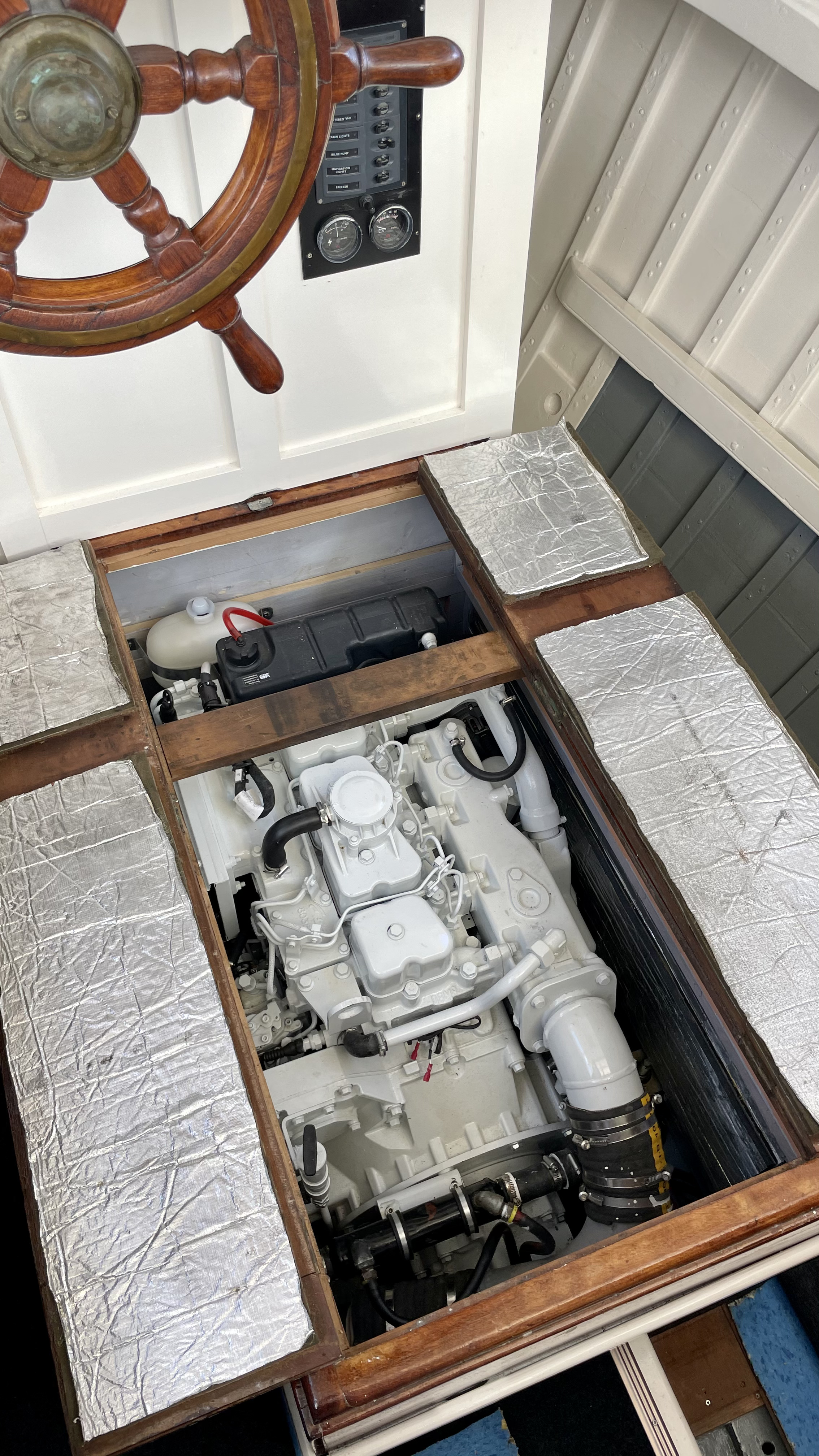
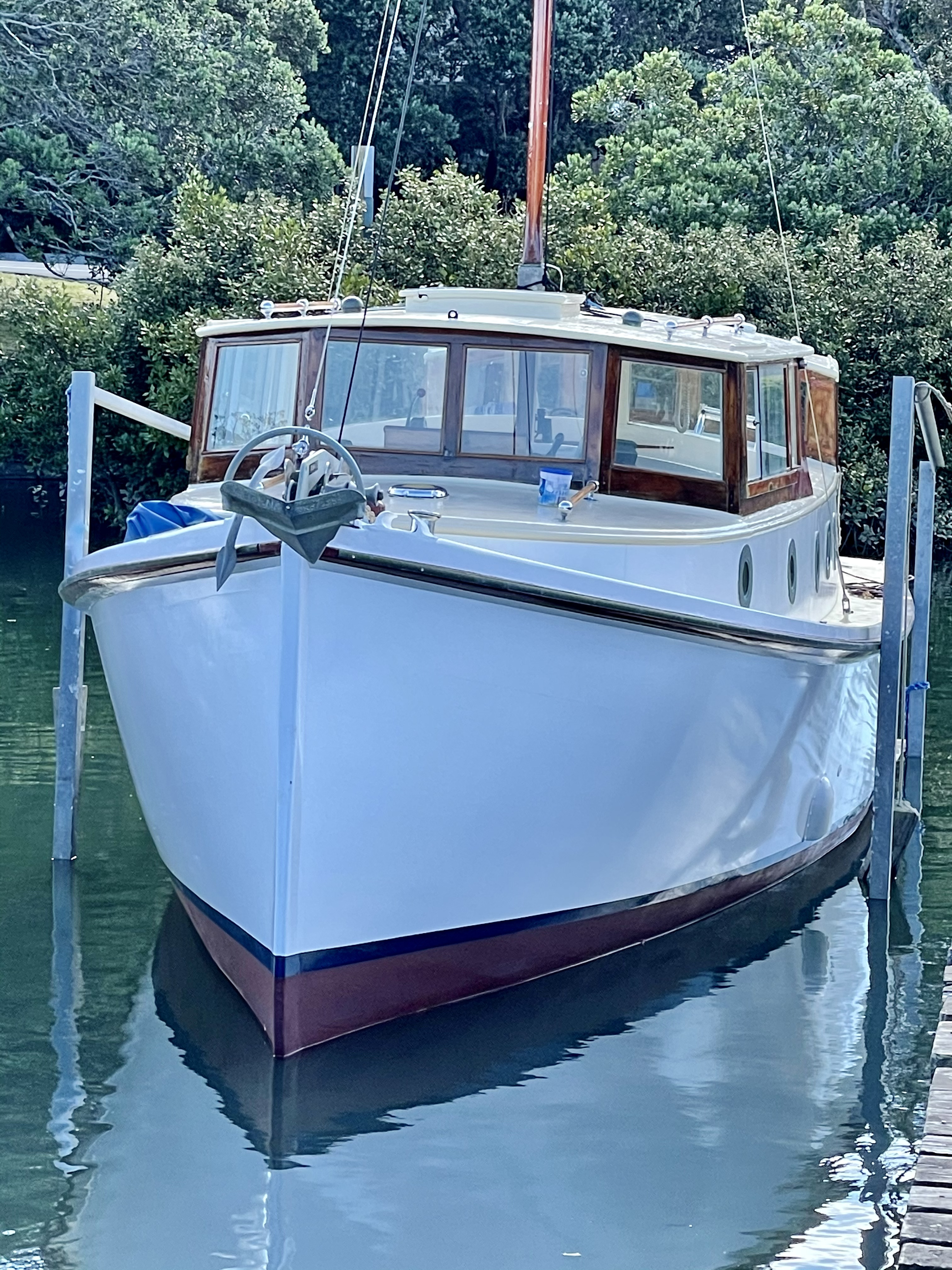
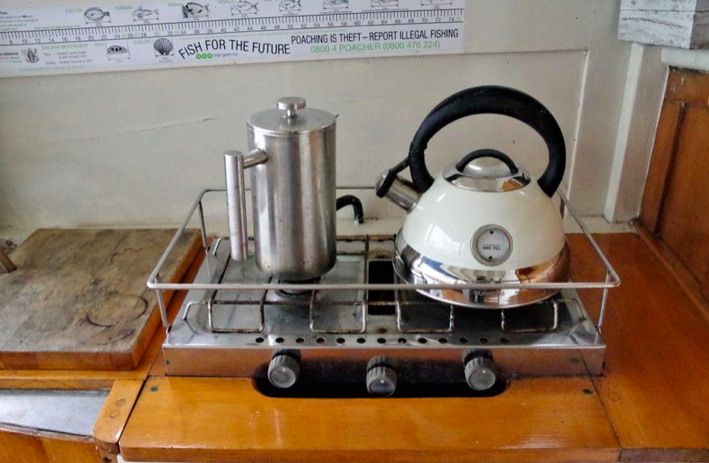
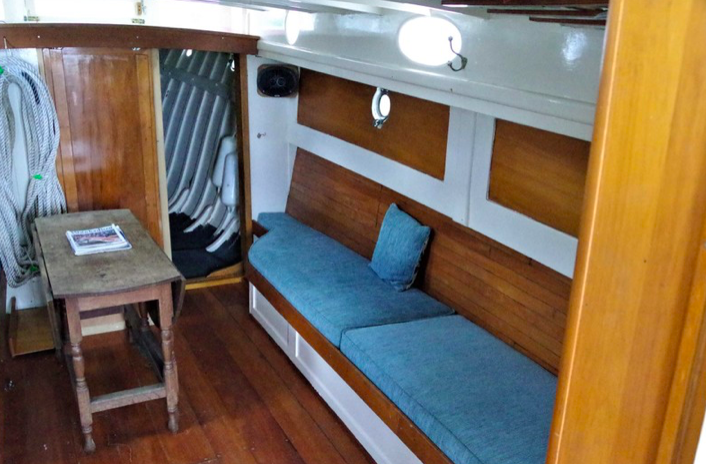
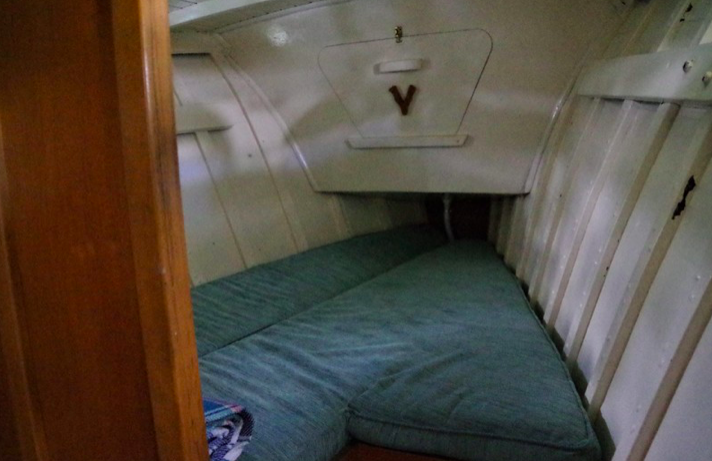
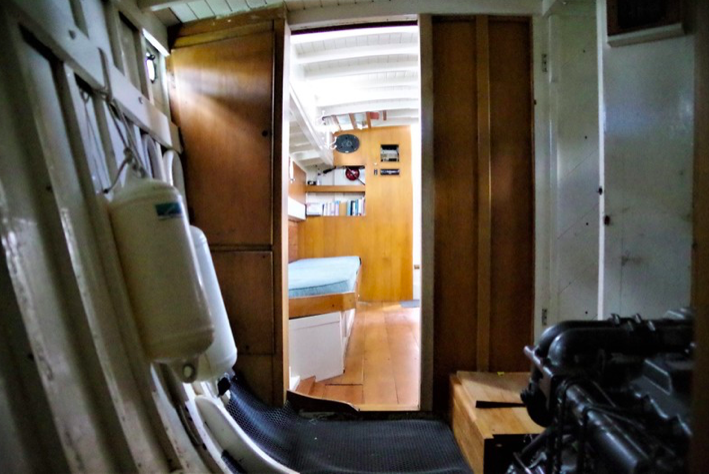
As promised todays WW story is a doozy, we travelled down to the lake very early on Saturday morning and were hosted by the clubs commodore Dave Wilson and wife Glenys, who own the magnificent 1947 Colin Wild built bridge-decker – Haumoana. The launch is kept at the end of the lawn at their lakeside property (photos below) – More details on Haumoana here https://waitematawoodys.com/2014/06/05/haumoana/
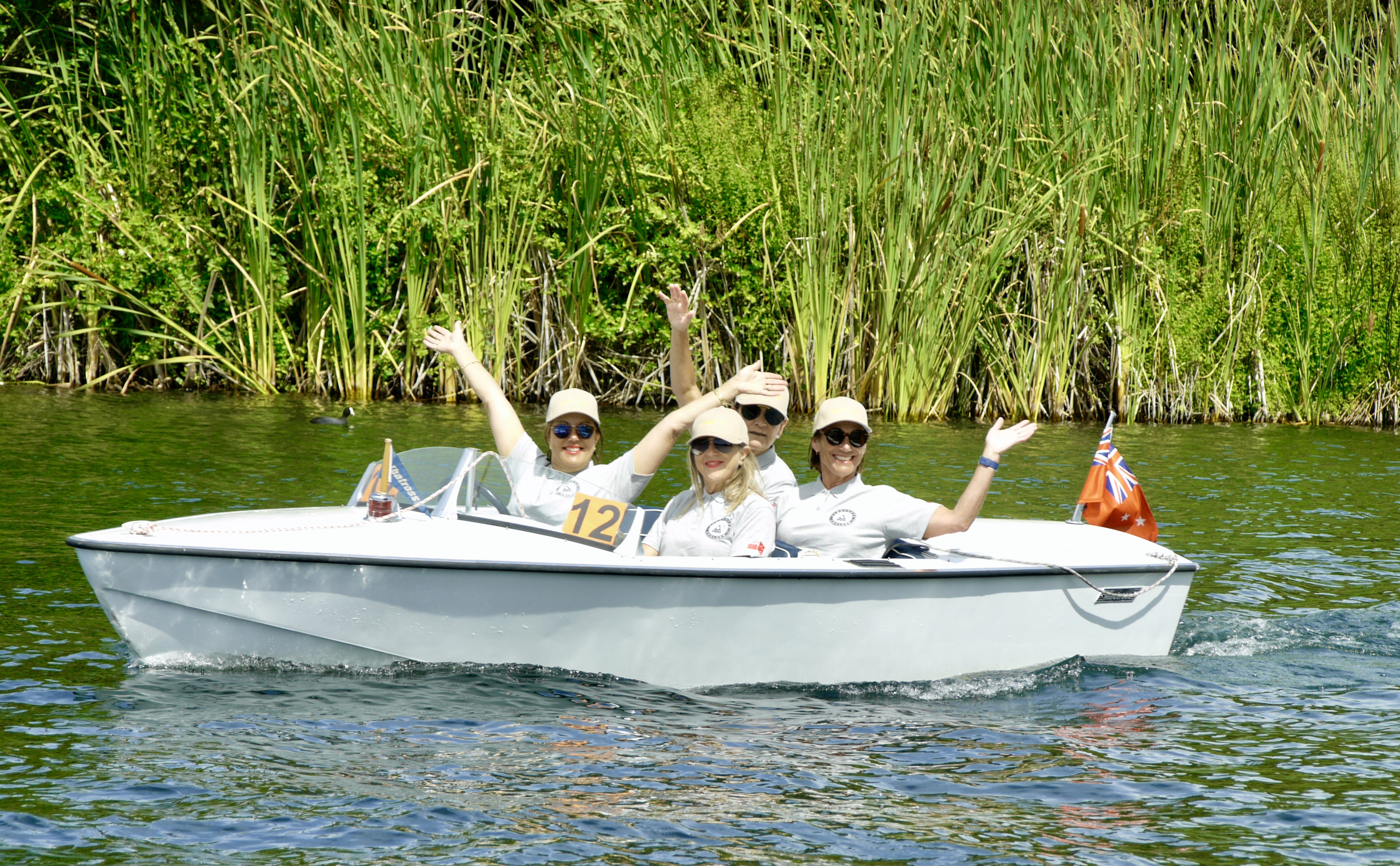
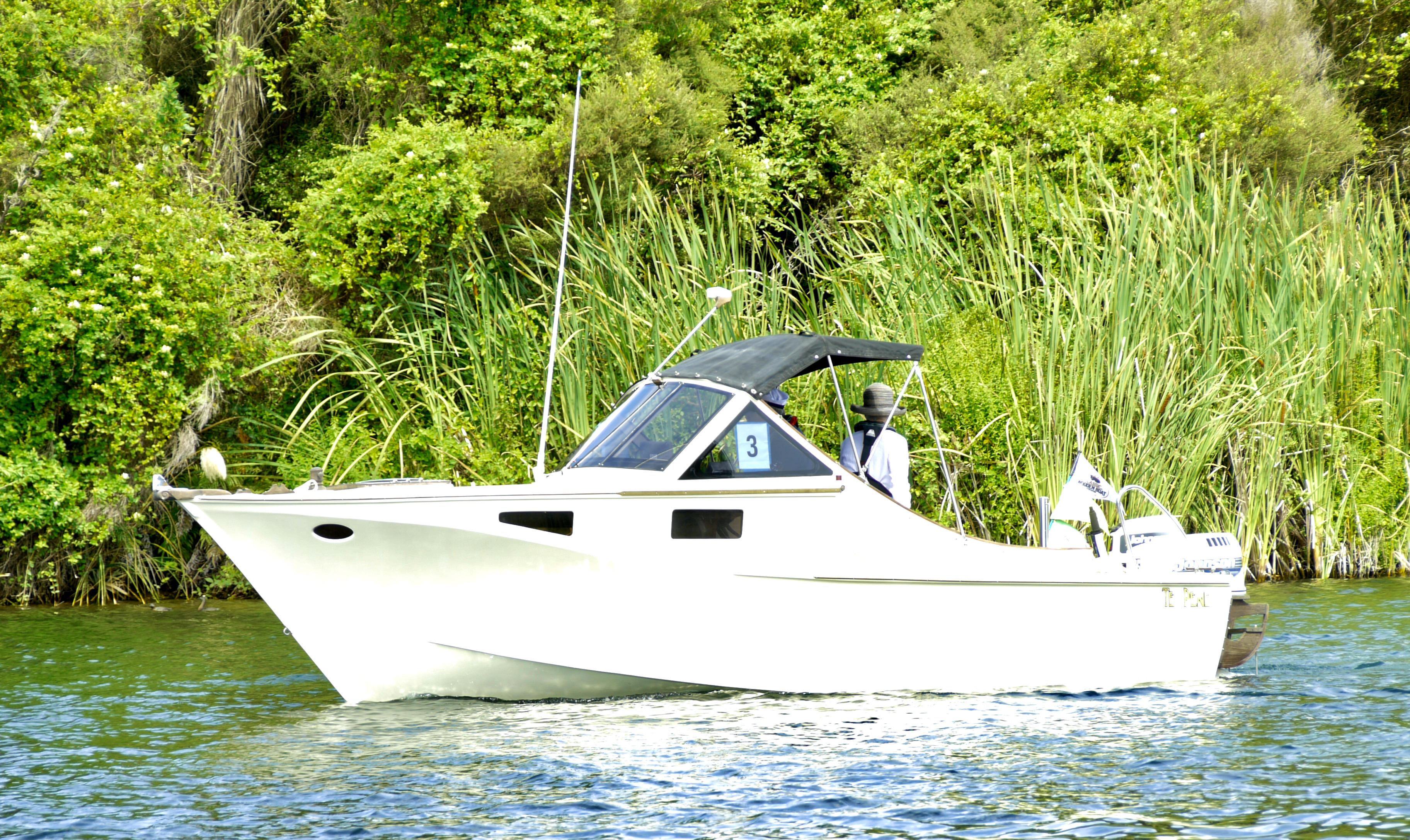
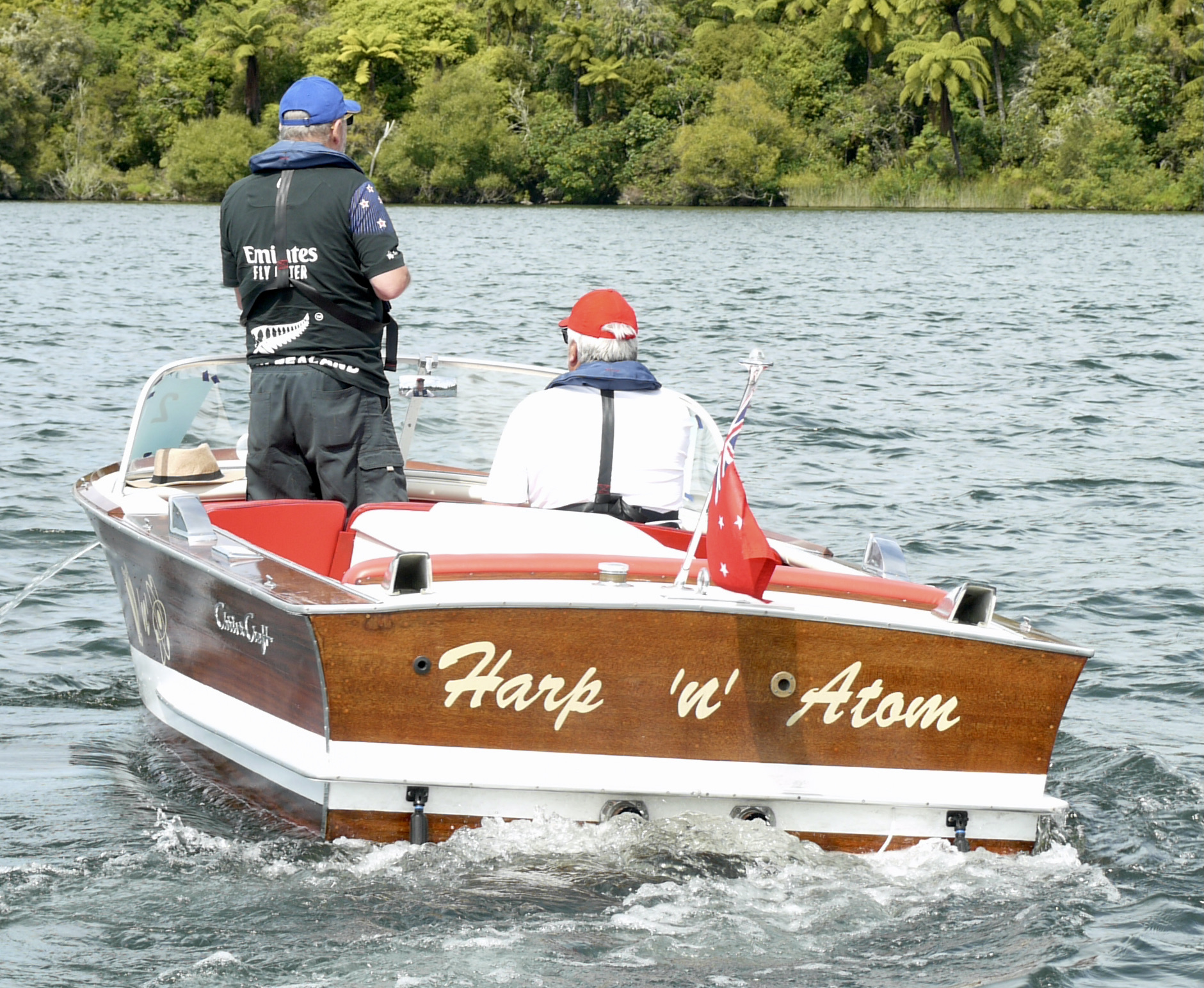
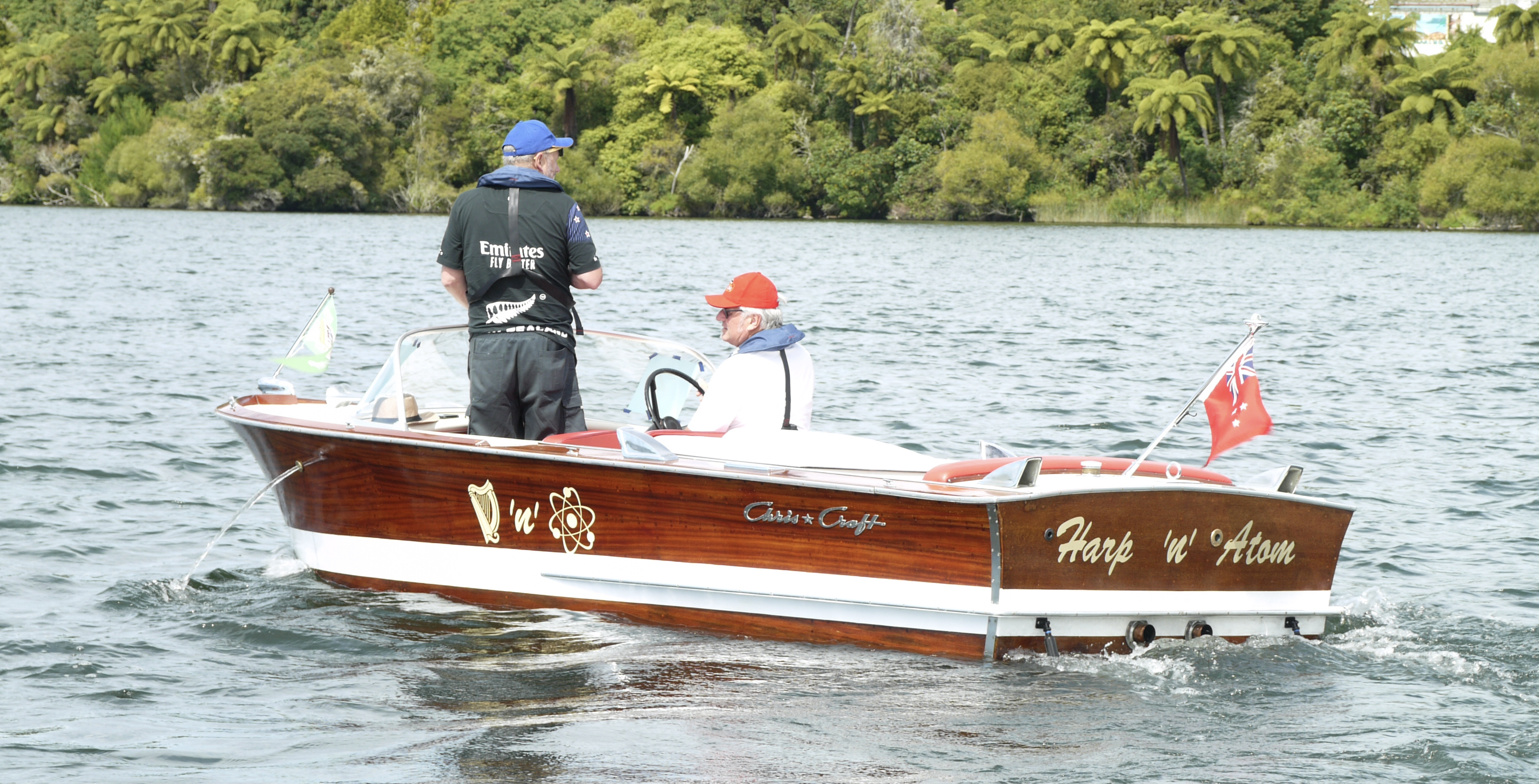
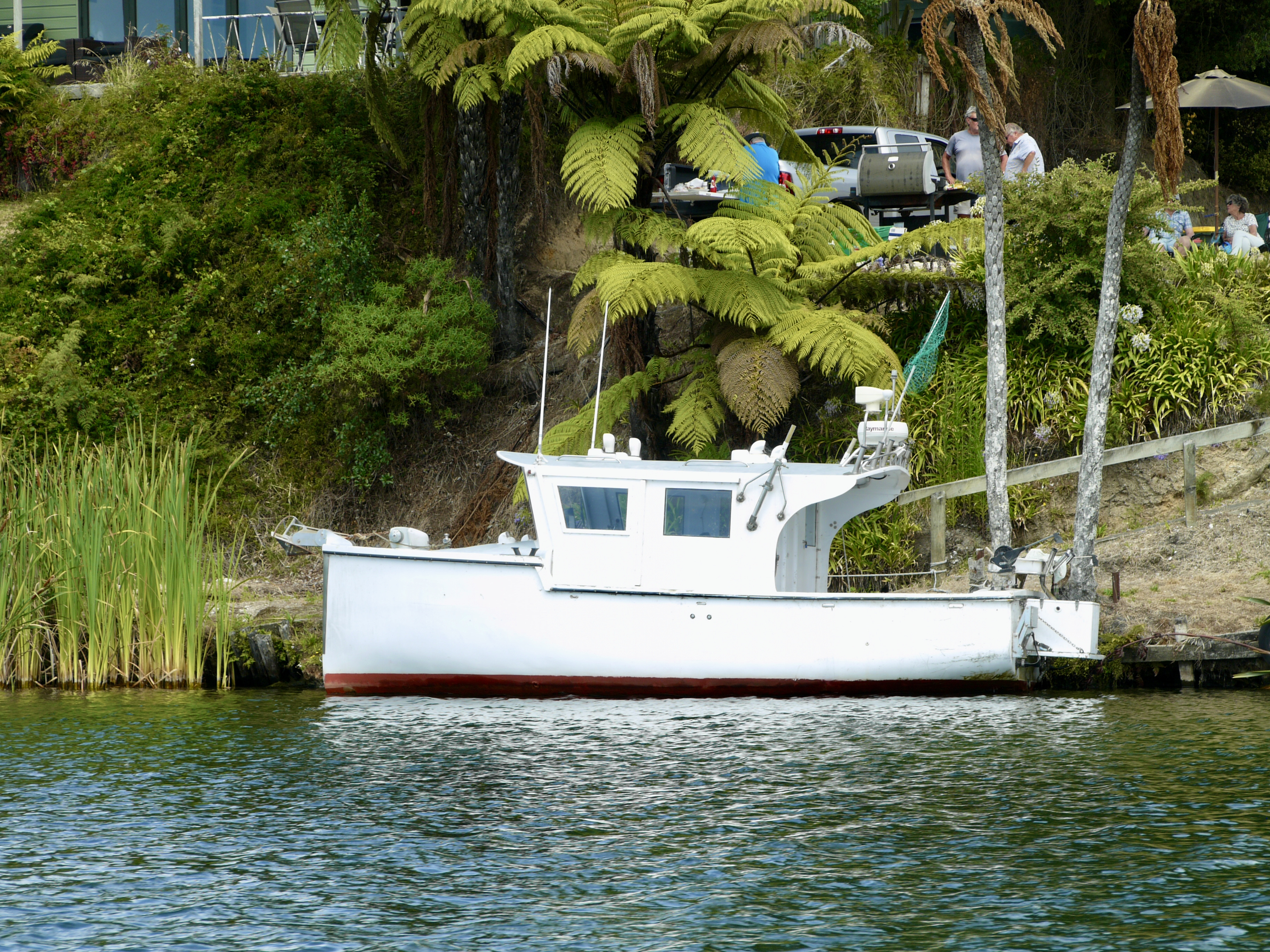
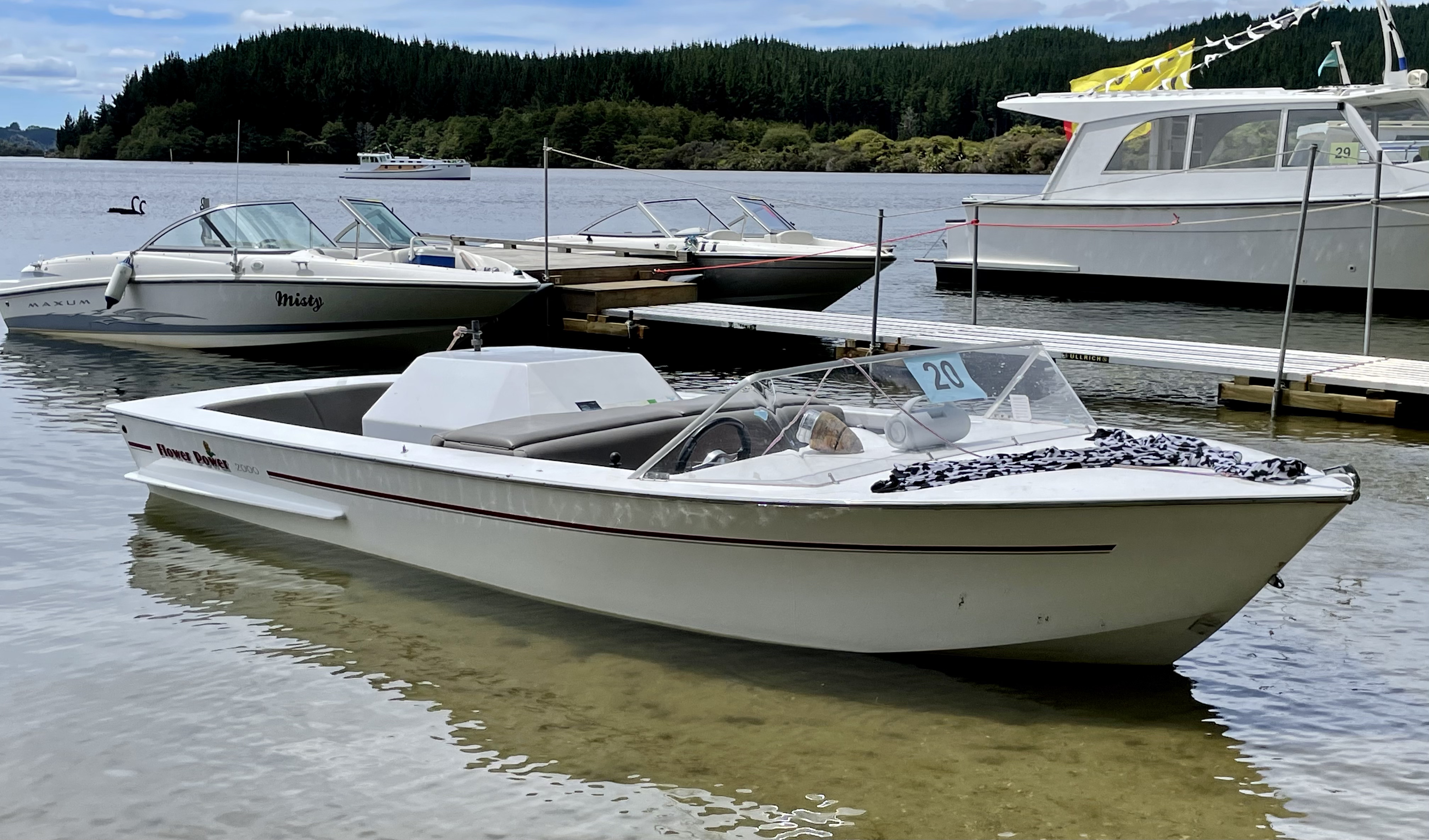
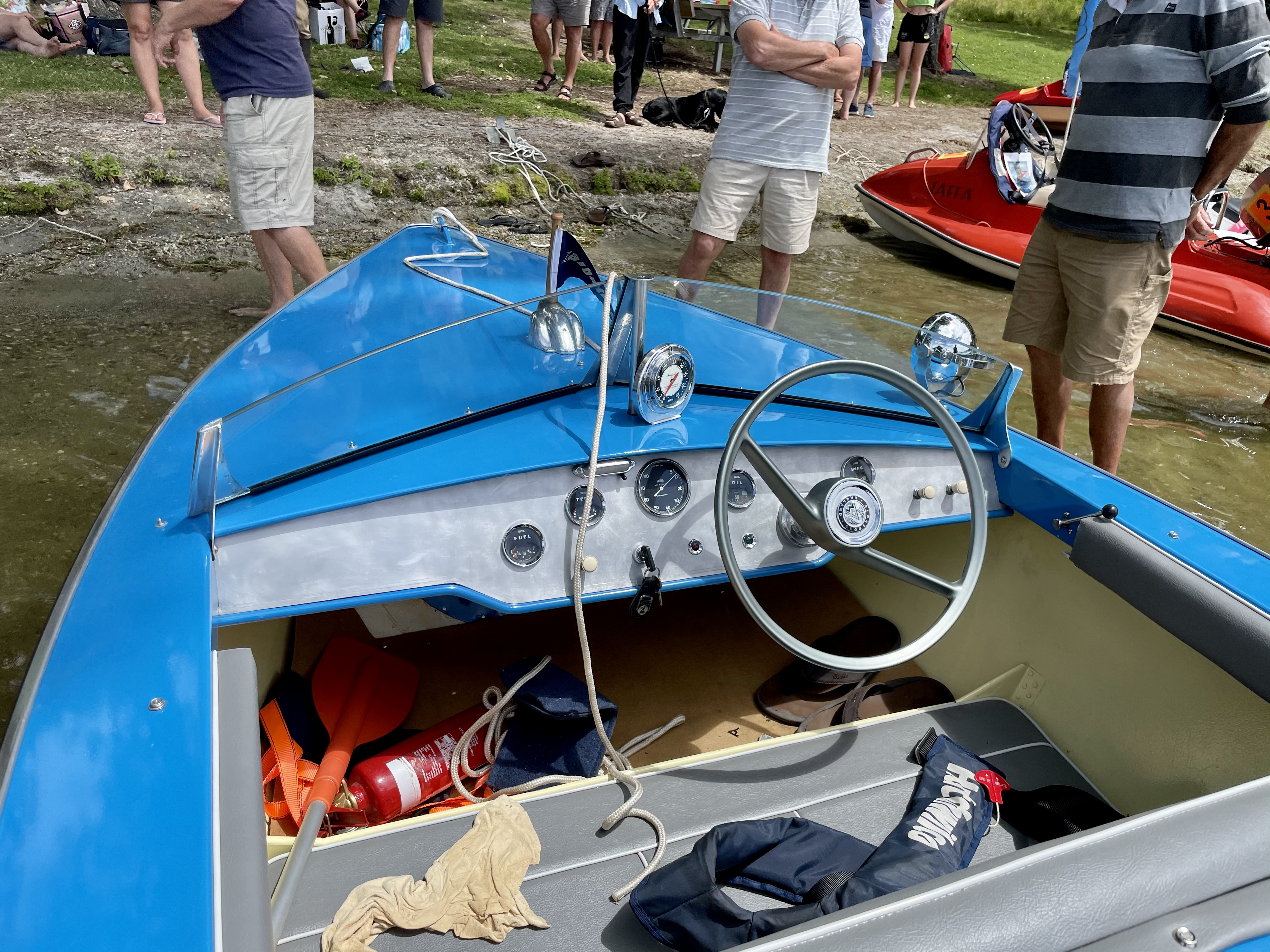
Dave lent me is ‘fishing boat’ – the f/glass runabout seen the photo below, to use as a photo boat for the parade – fingers crossed no one got a photo of me at the helm 😉
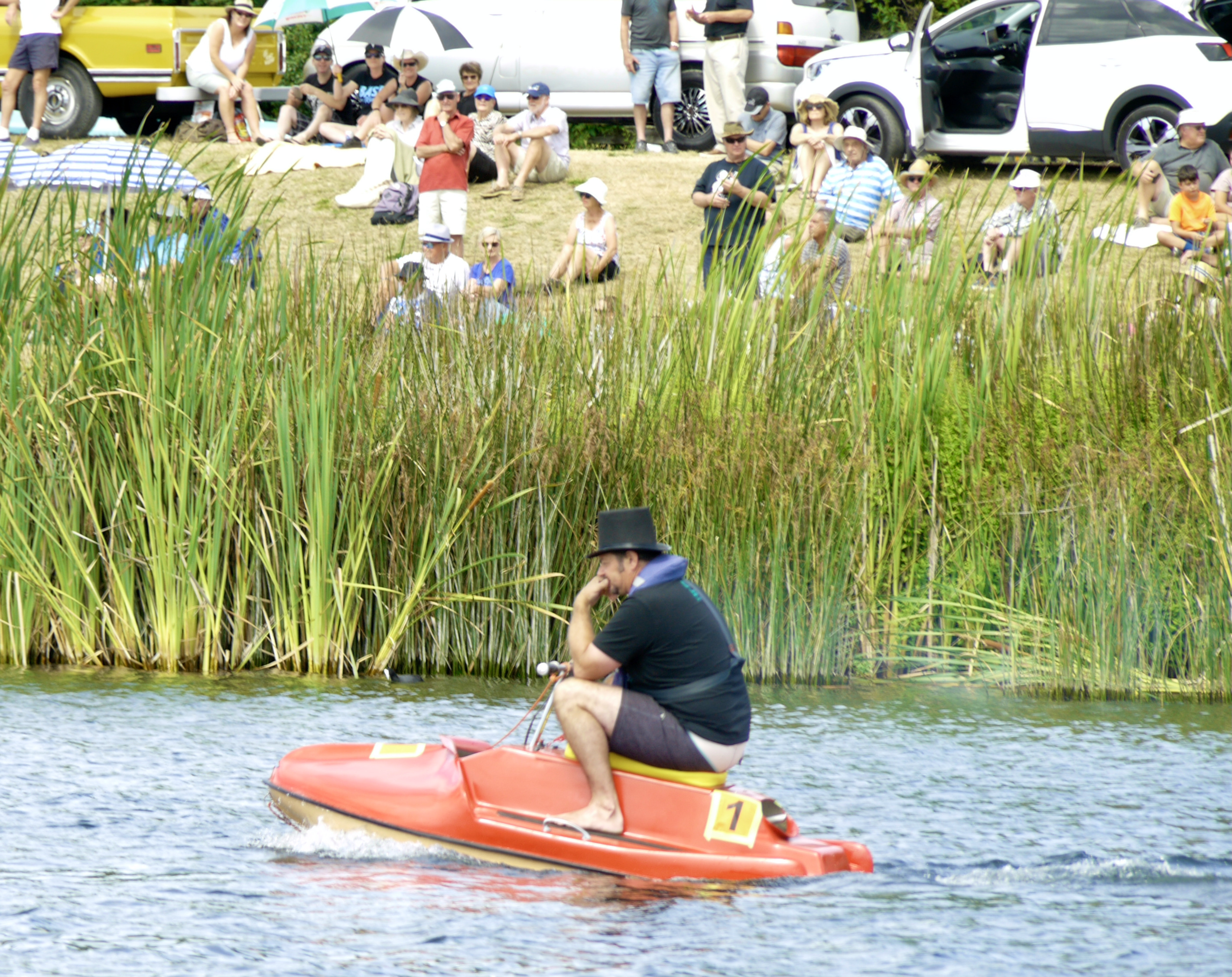
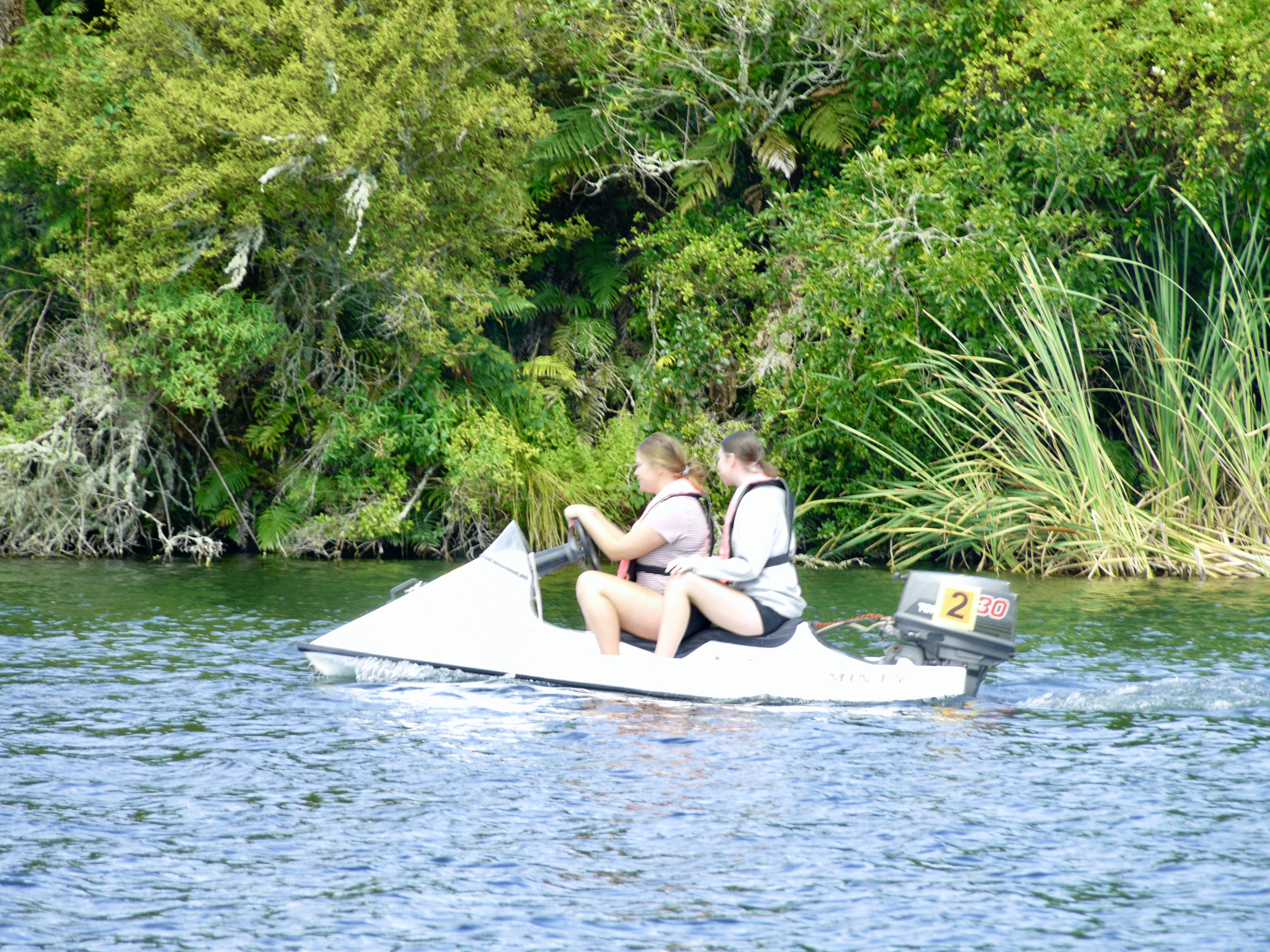
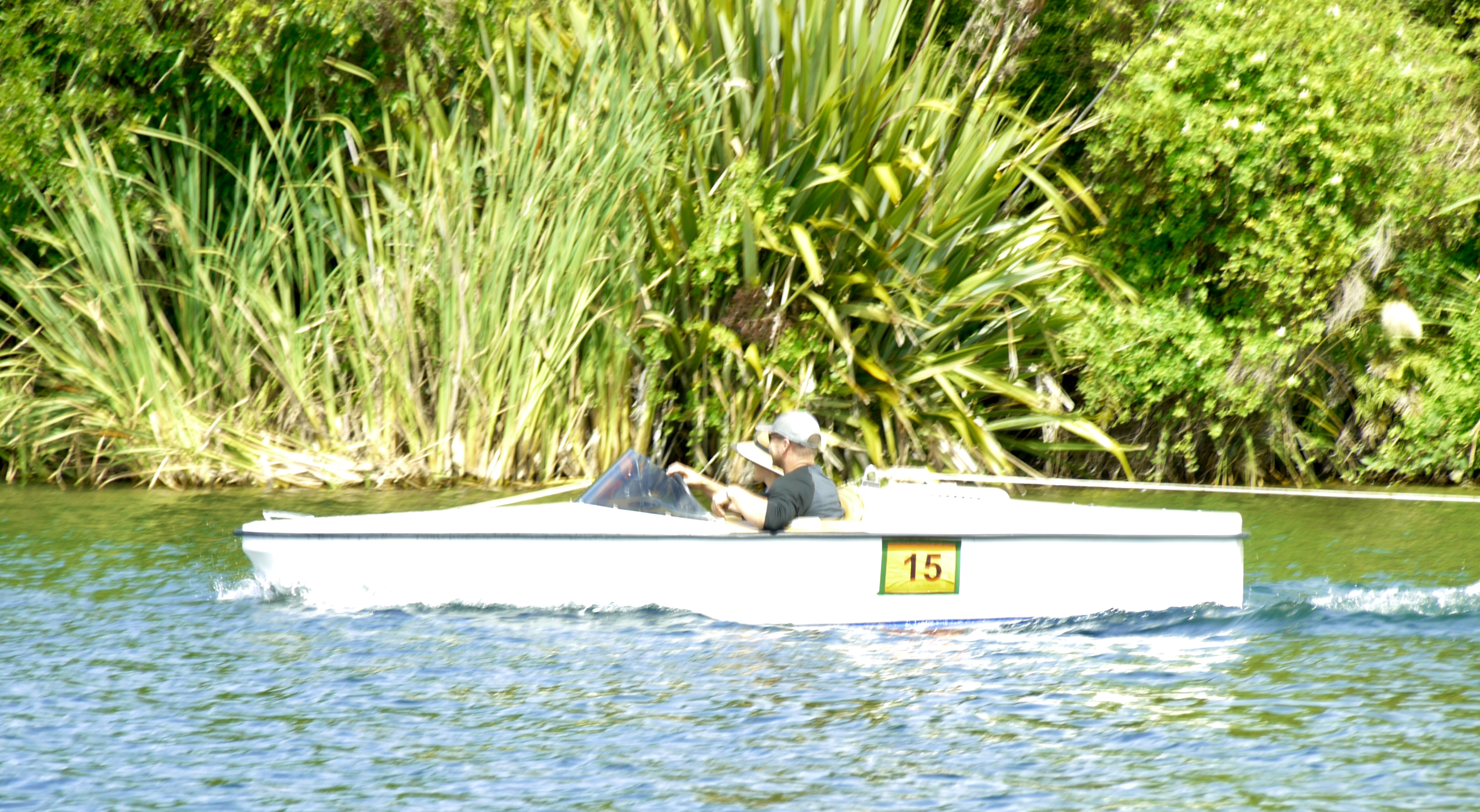
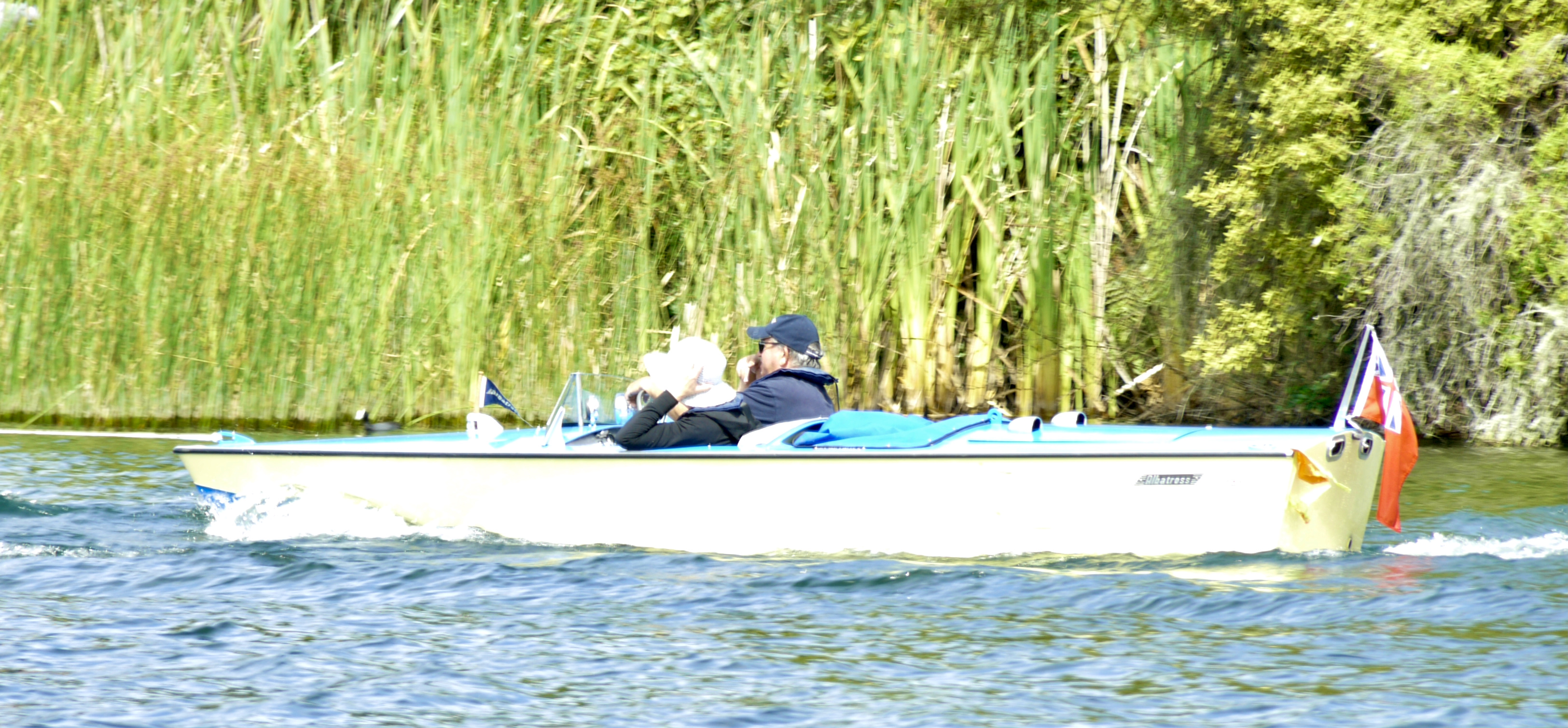
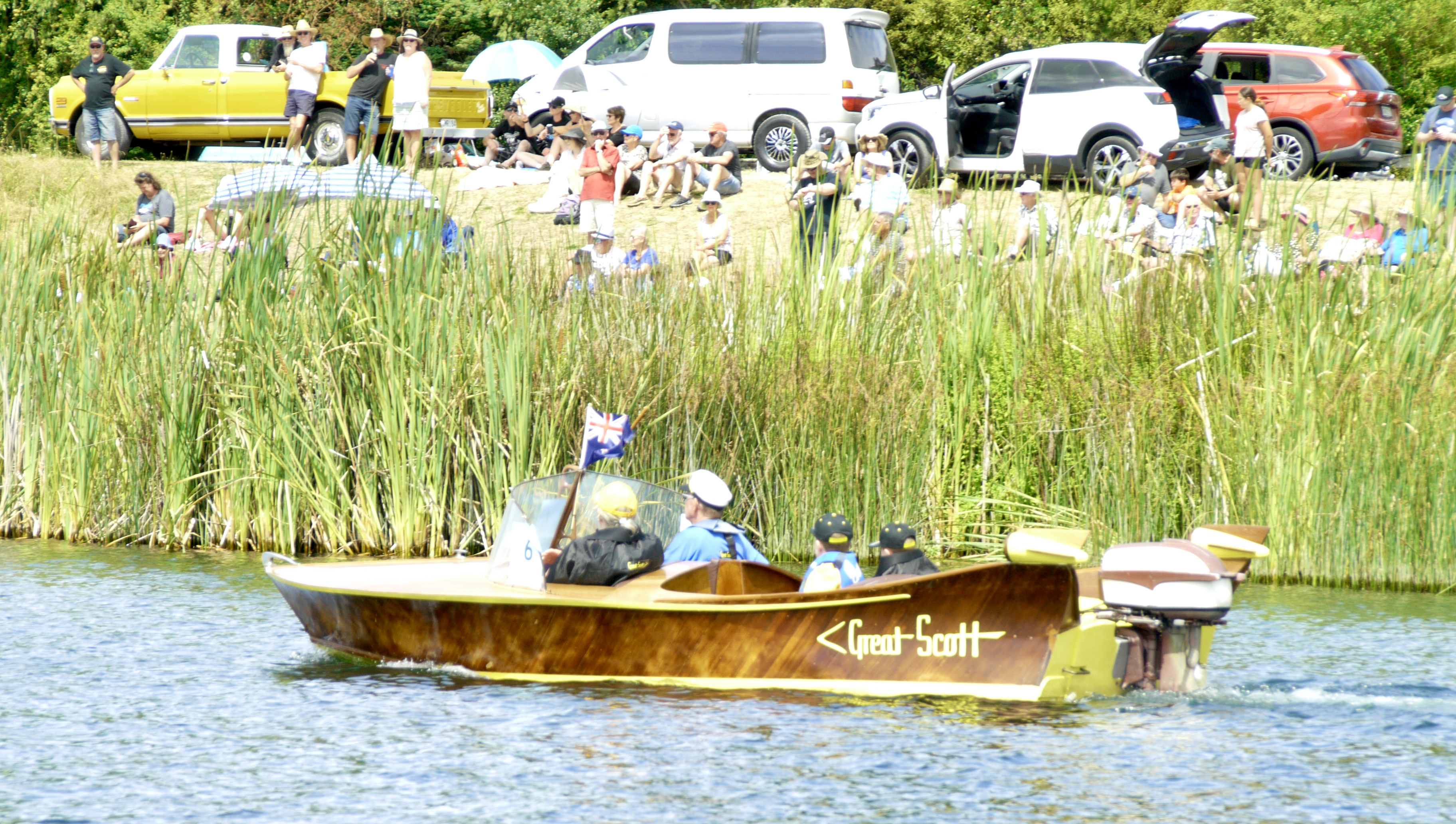
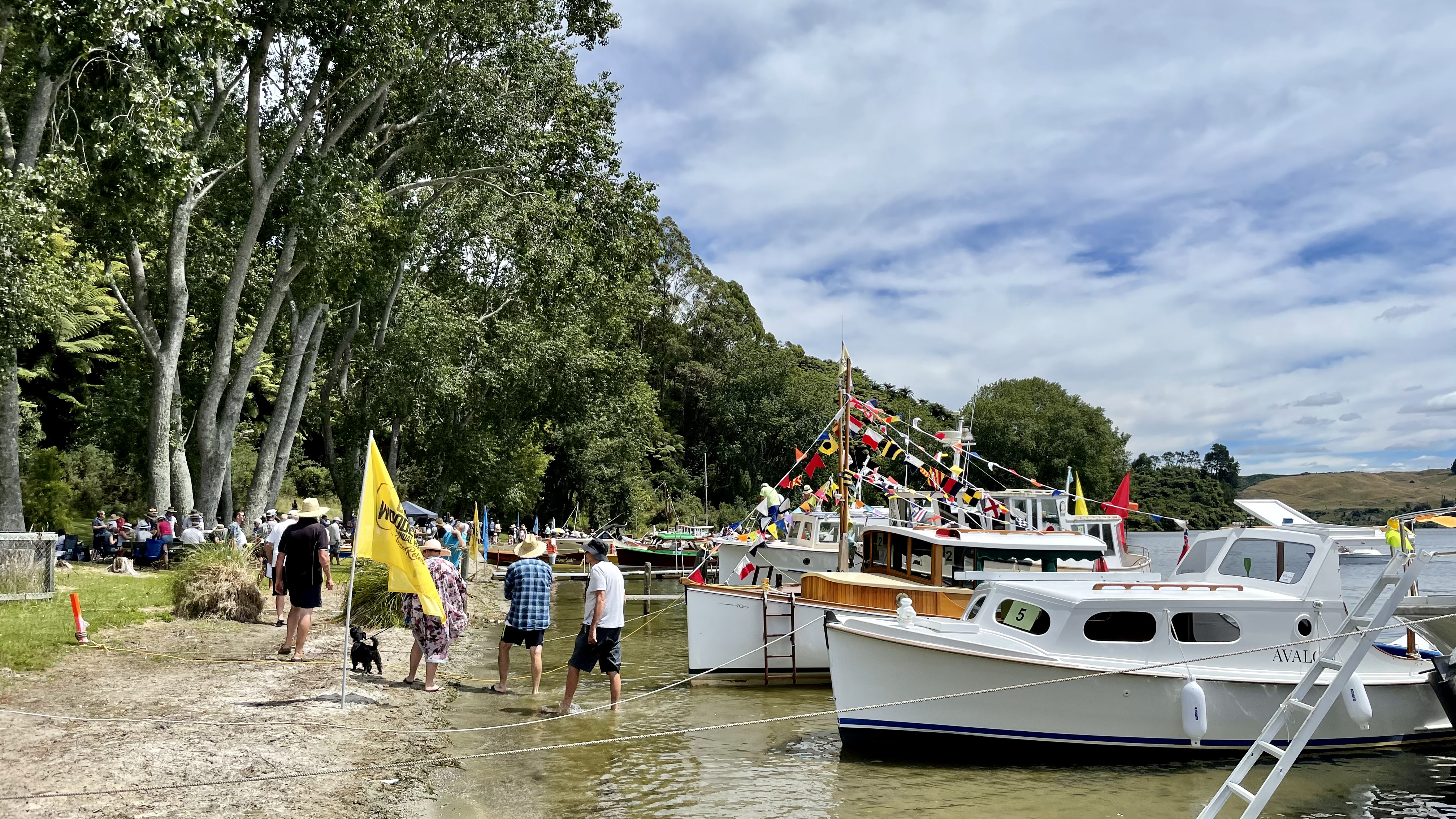
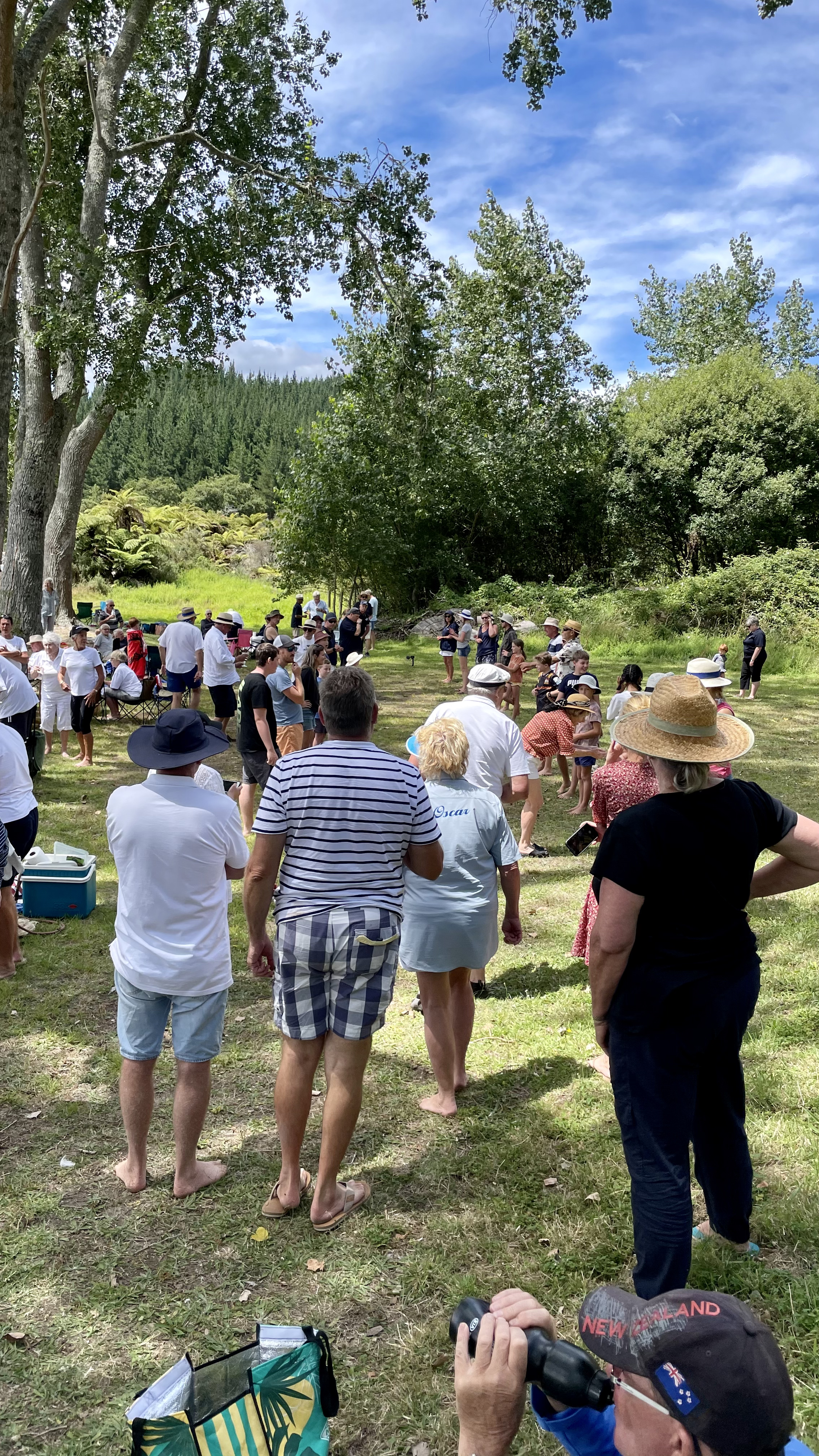
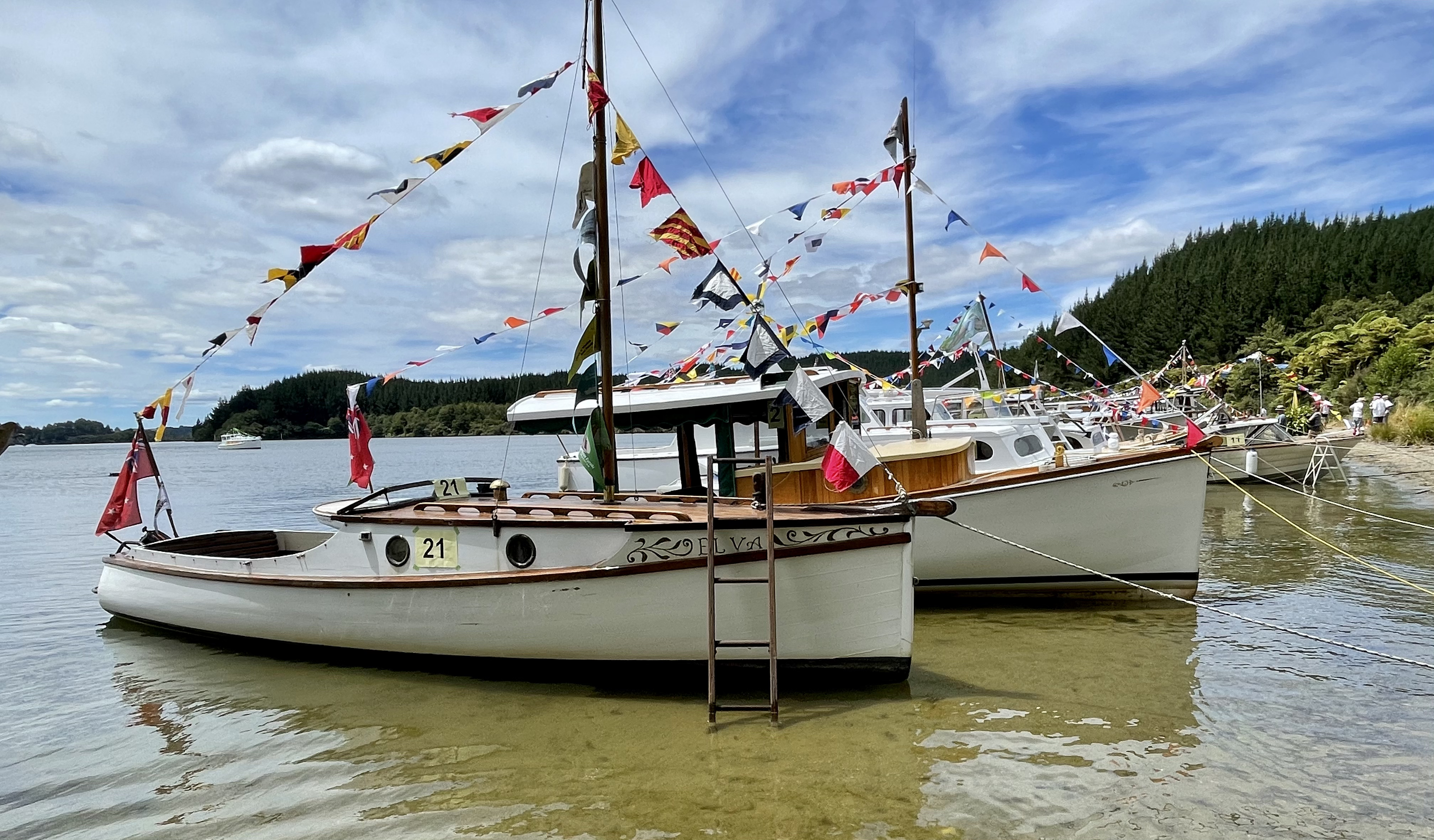
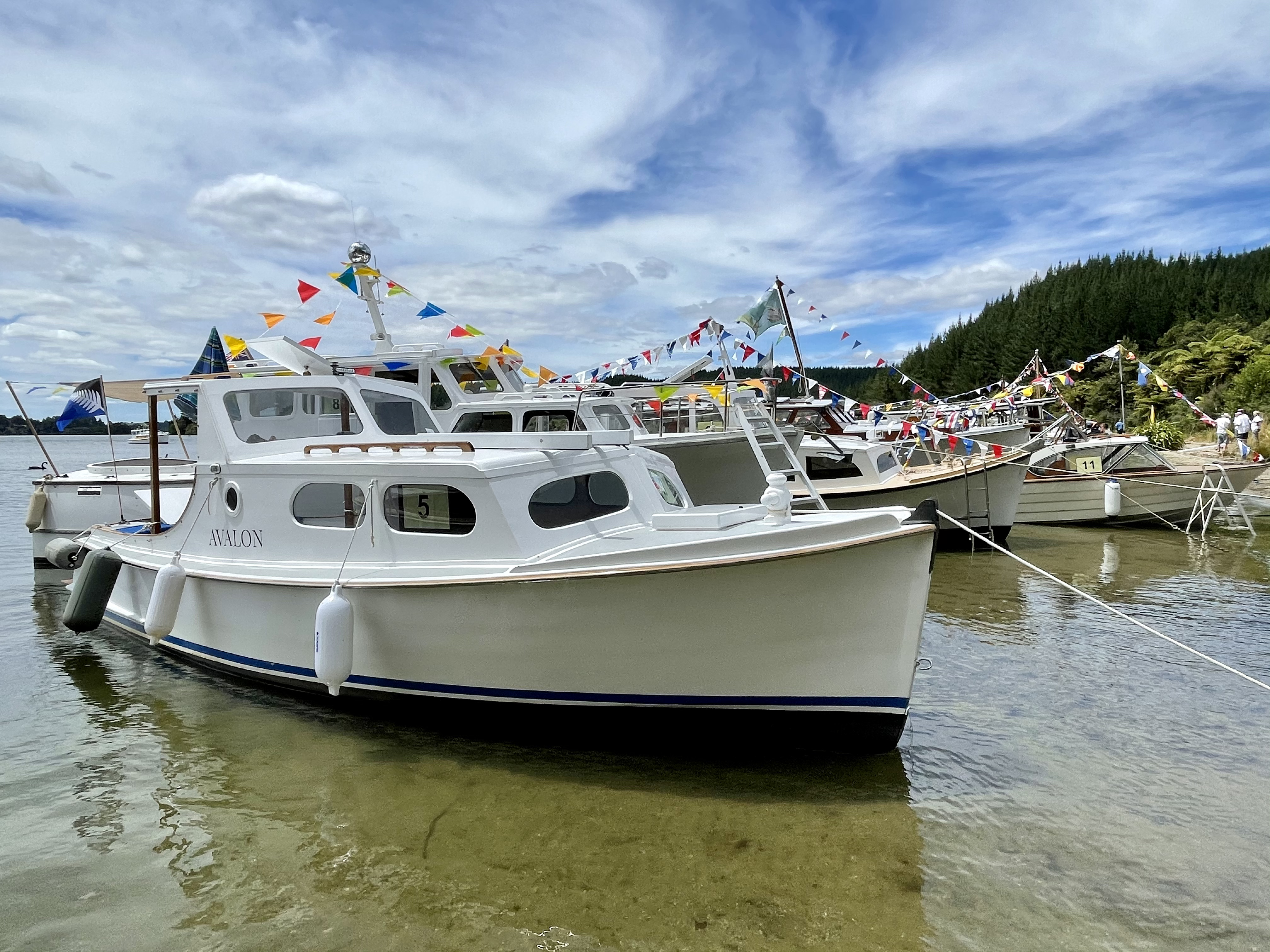
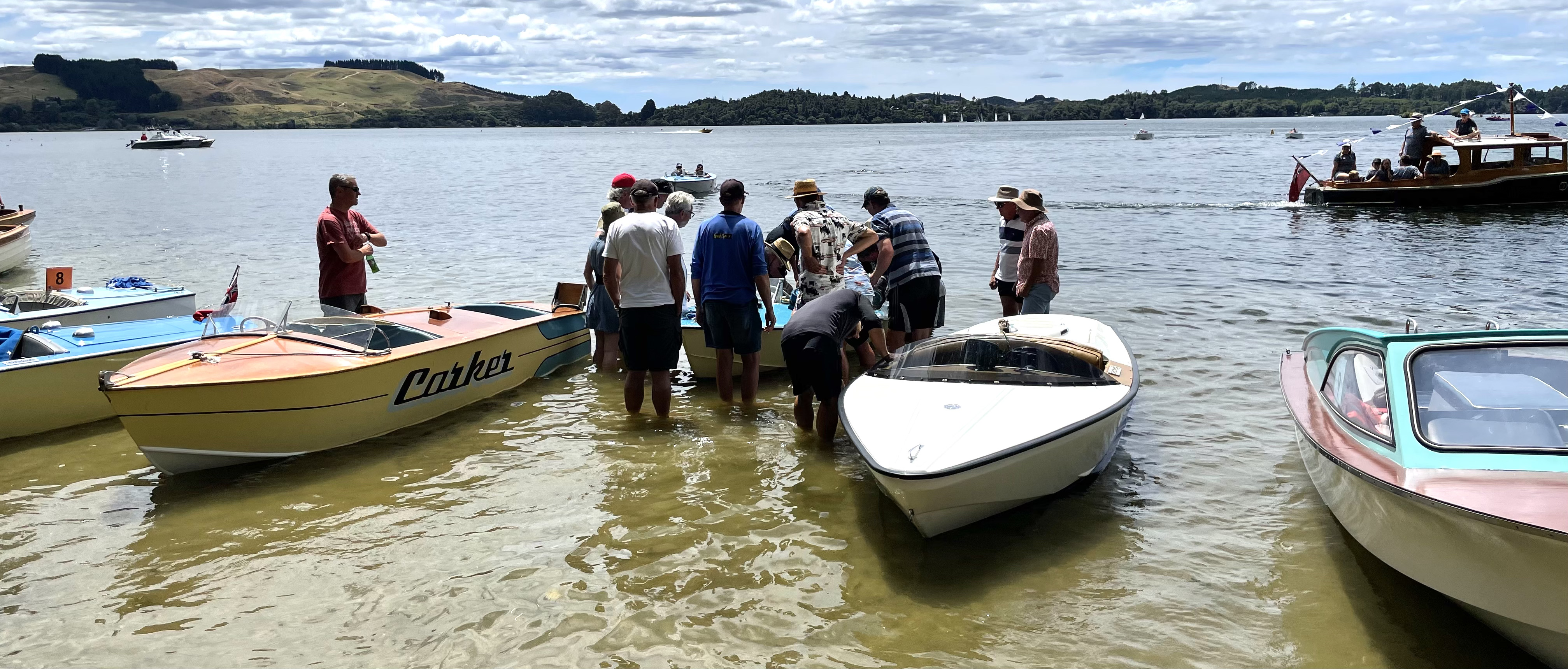
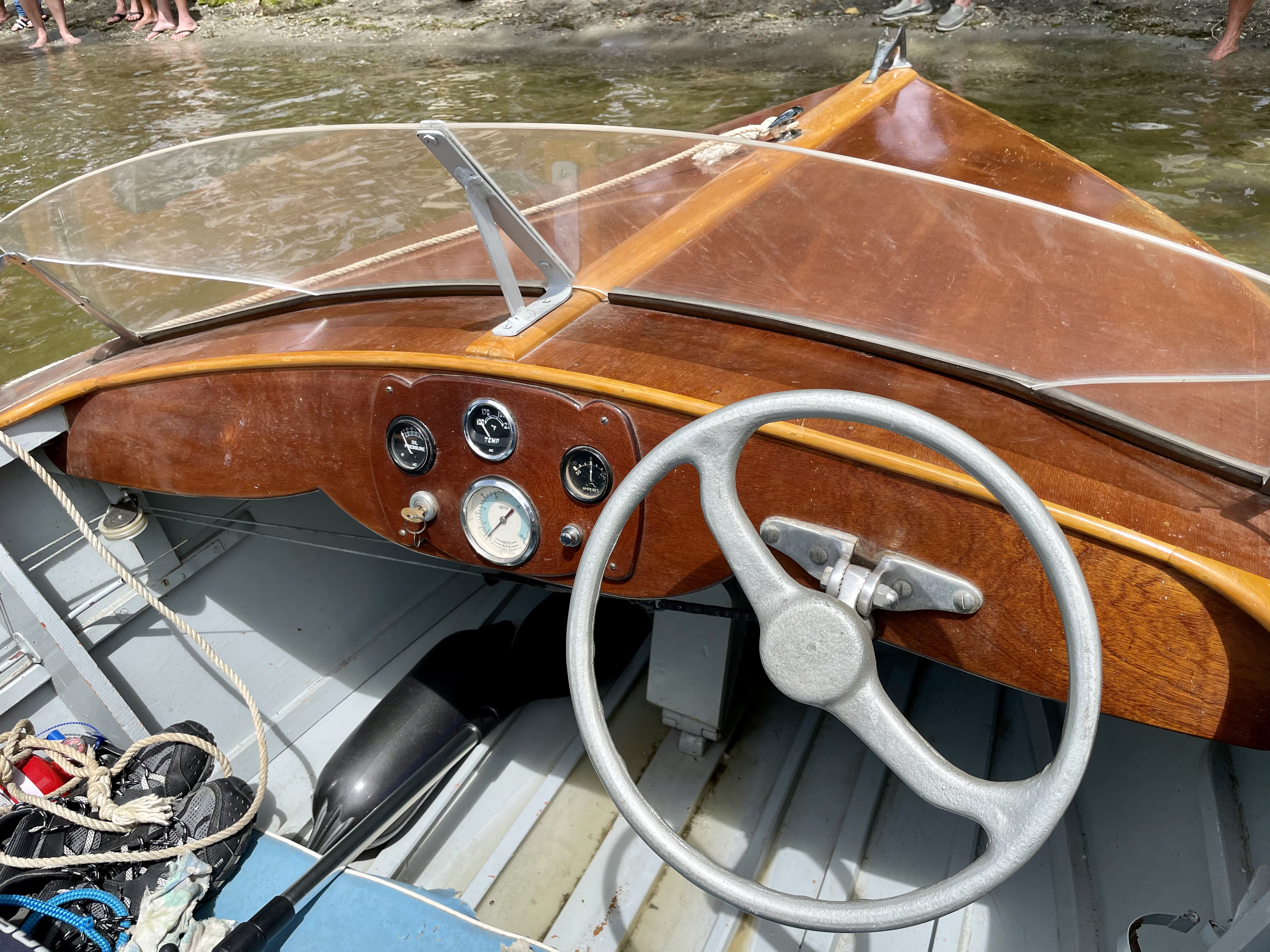
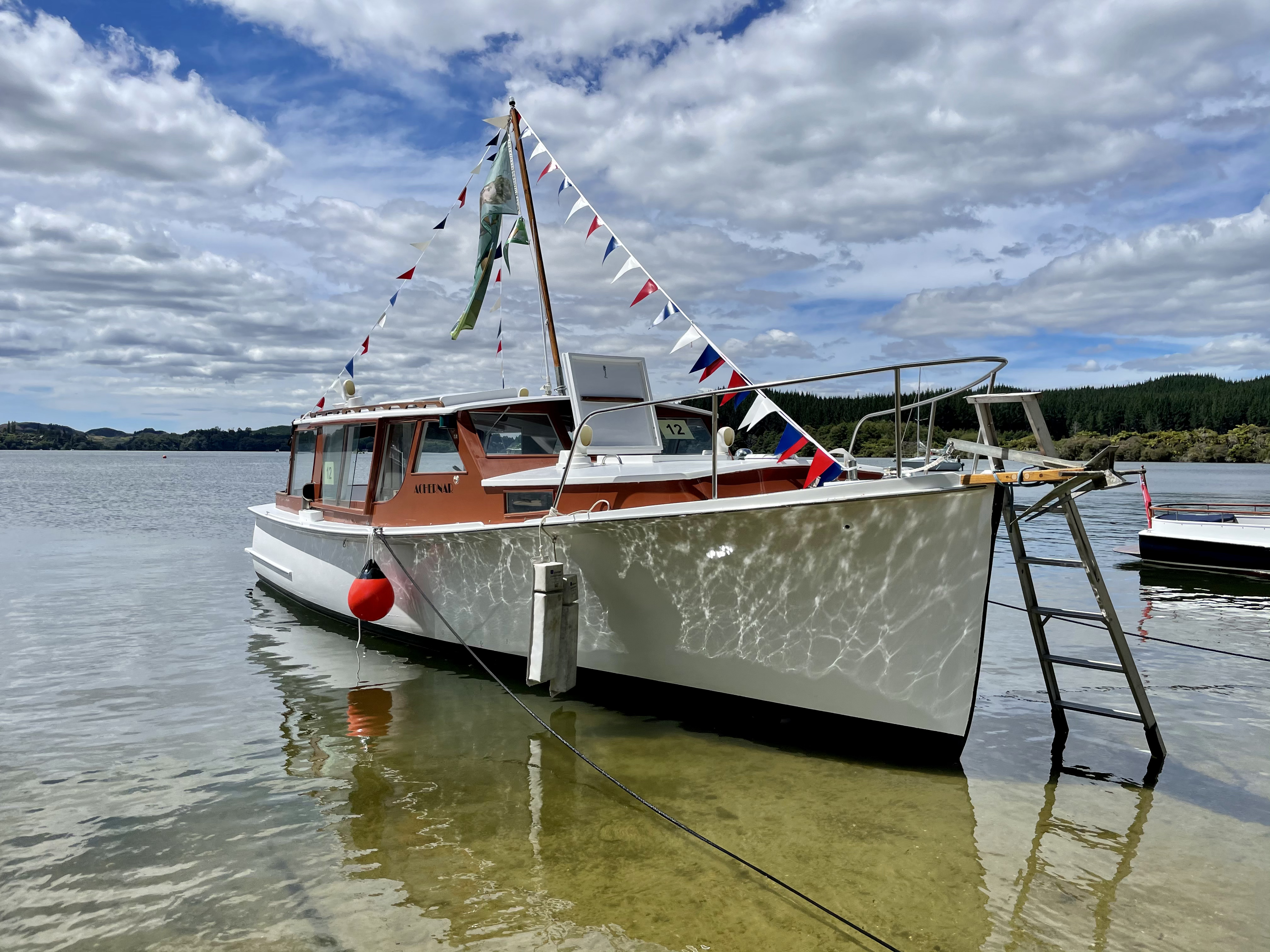
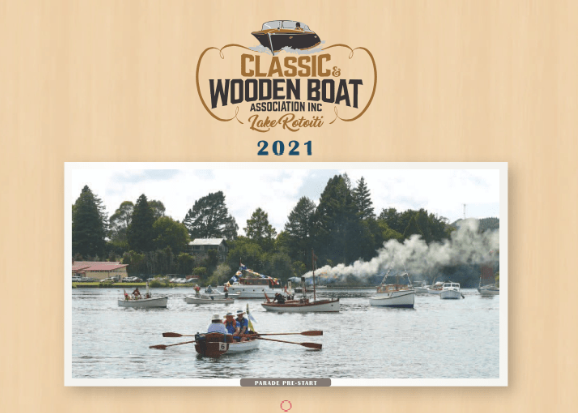
Close to 80 classic and wooden craft of all shapes and sizes – power, sail, oar and steam participated in the days events – starting with a parade that snakes around the waterfront properties and vantage points. Post parade every one heads off to Wairoa Bay for an old school boating picnic – being lake based, no issue with tides or anchoring, people just nudge up to the shore – perfect for checking out each others woody.
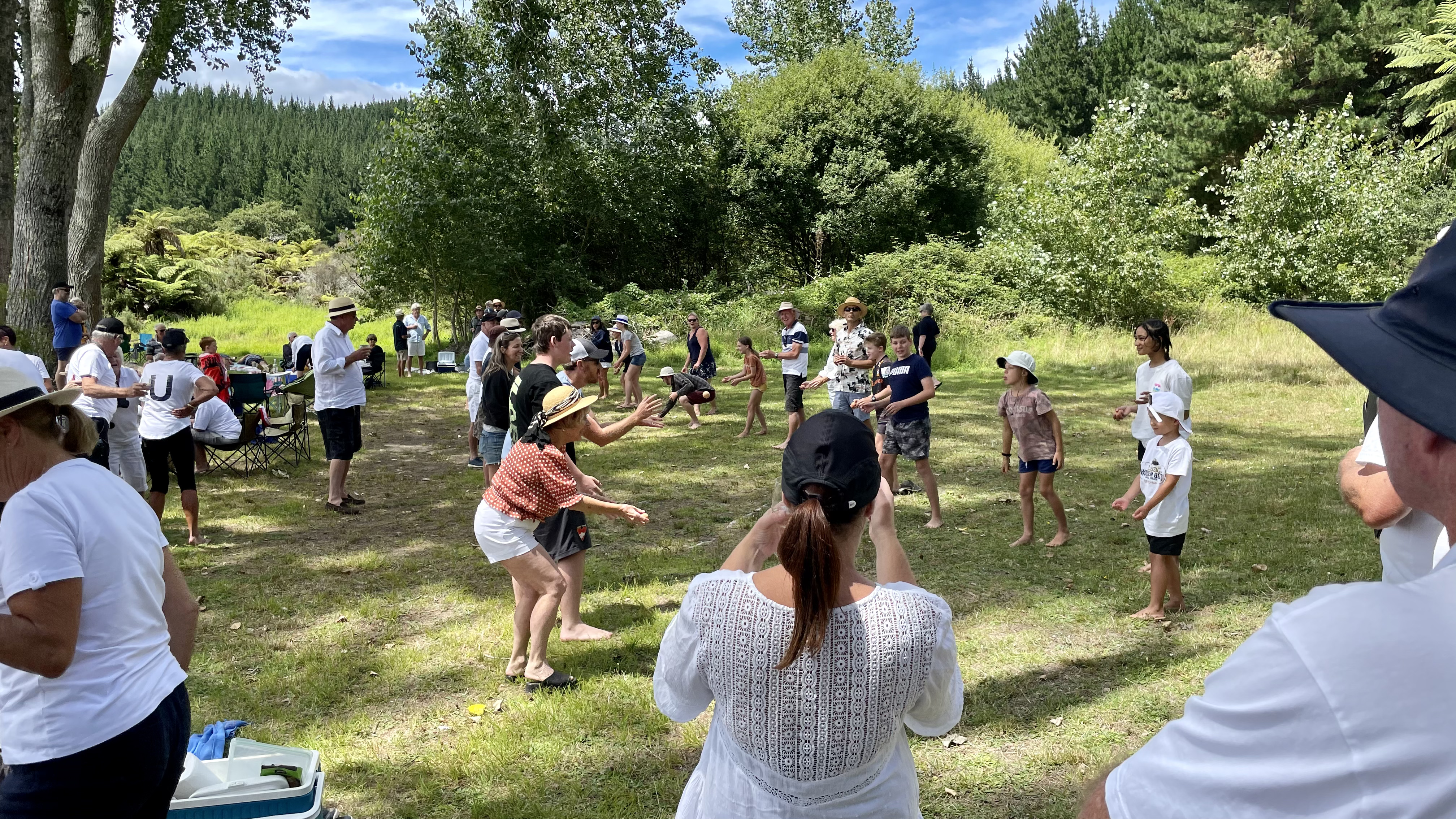
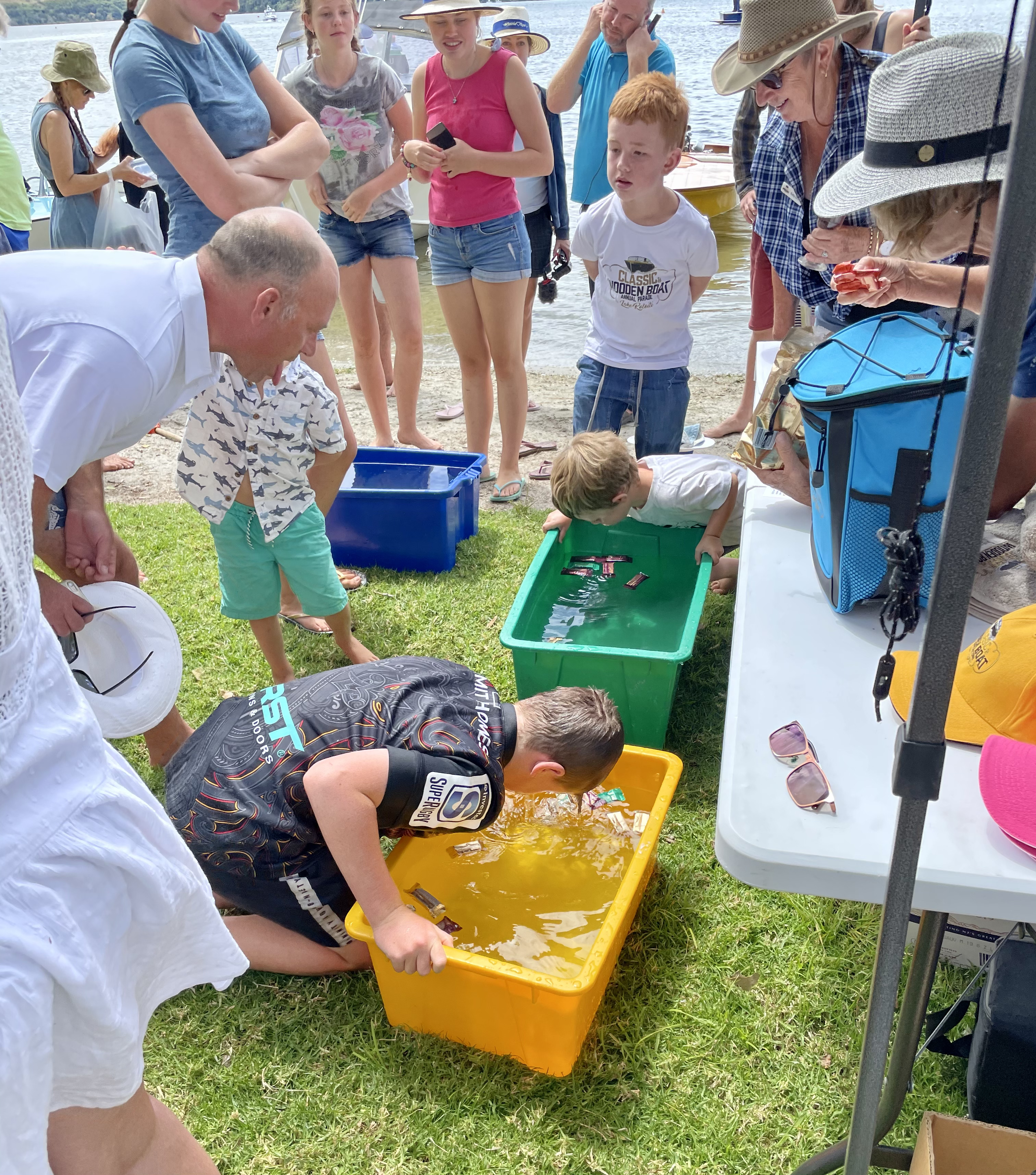
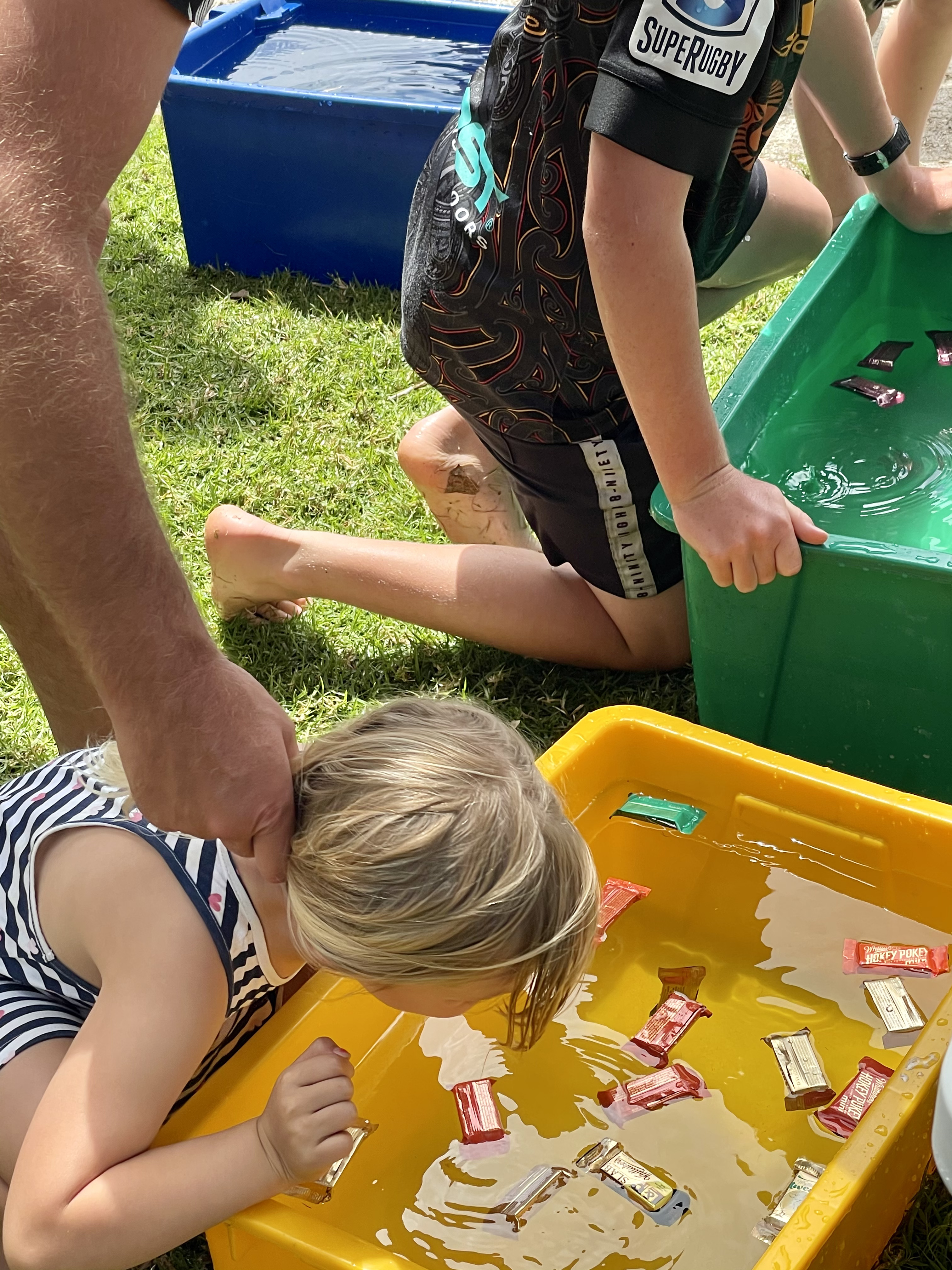
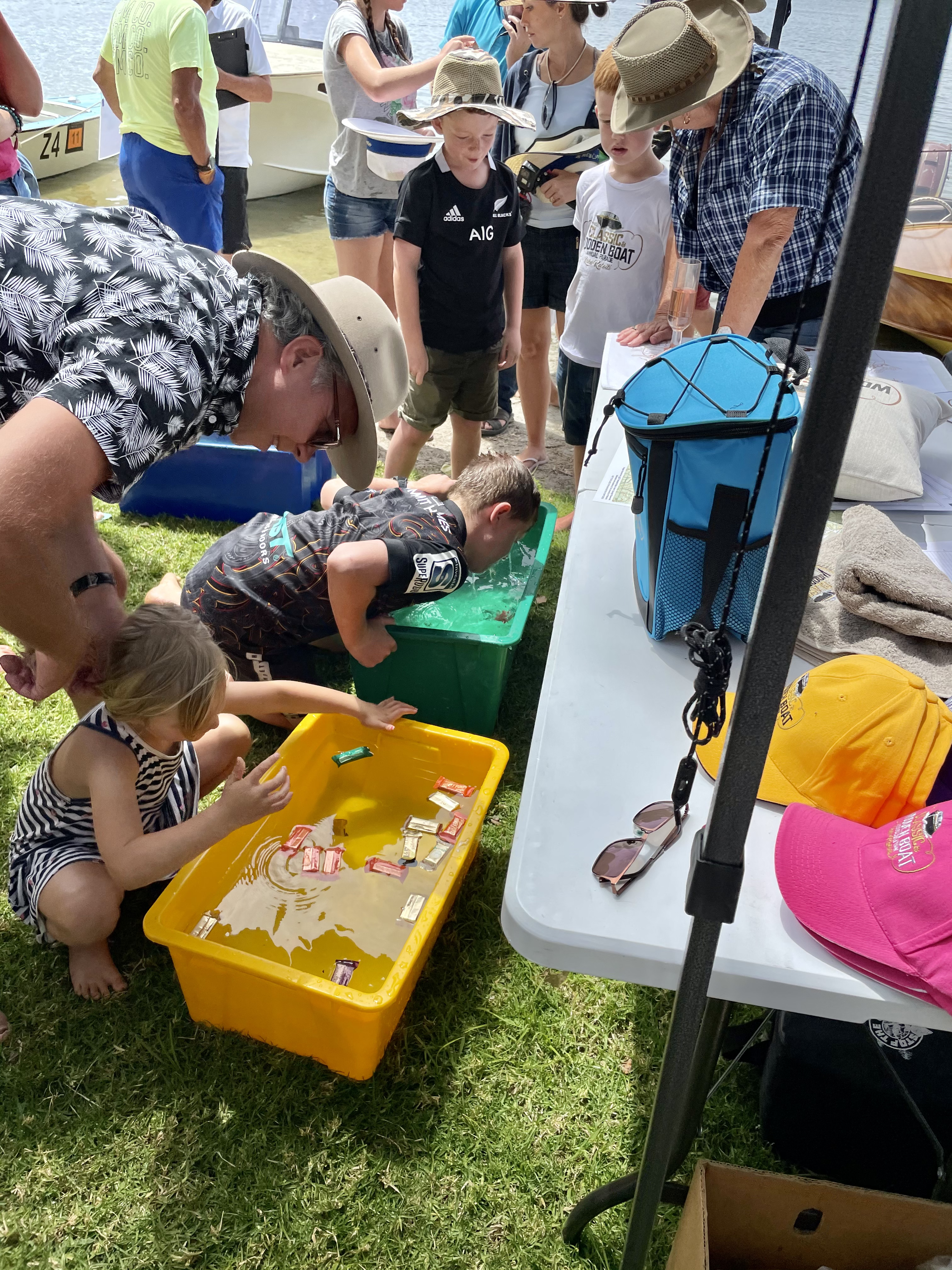
The afternoon activities had something for everyone – adults and kids activities (egg throwing, bucket diving for sweets etc) + lots of cool prizes to be won.Without a doubt its the best organised and executed boating event I have been to – very slick and the bonus – lots of nice friendly people – we like that 🙂
Enjoy the photos. As always – click photos to enlarge 😉 If I missed your boat, sorry but one boat and one camera can only be in so many places at one time – next year.
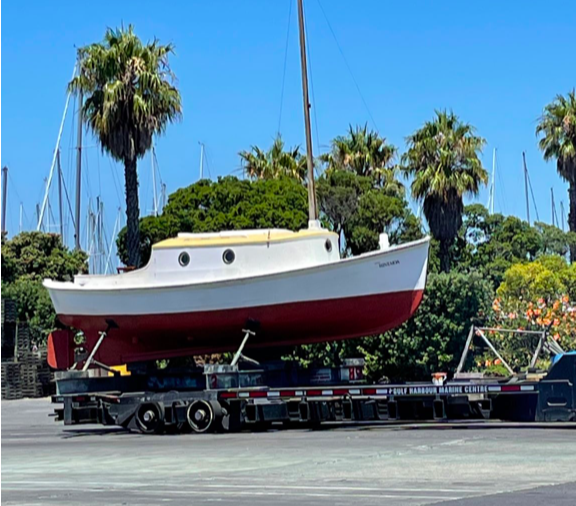
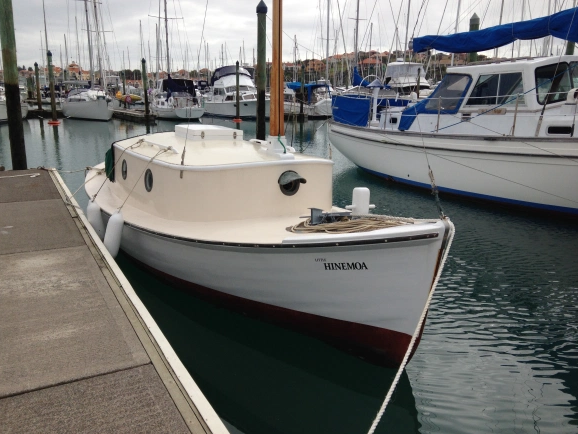
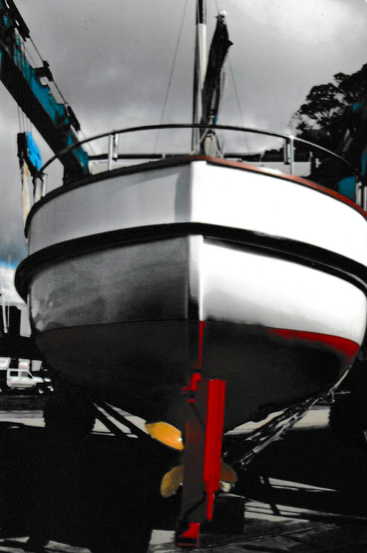
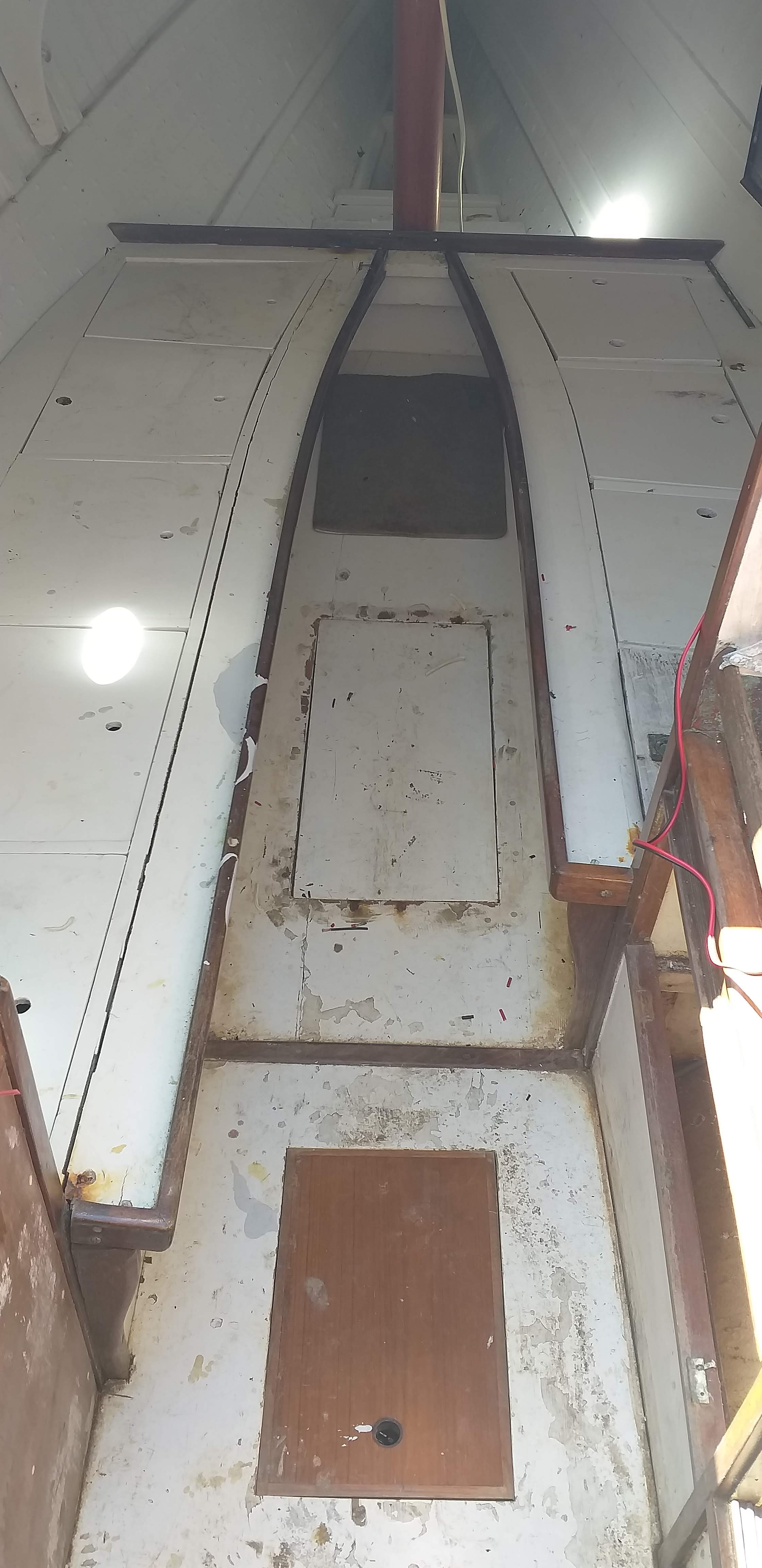
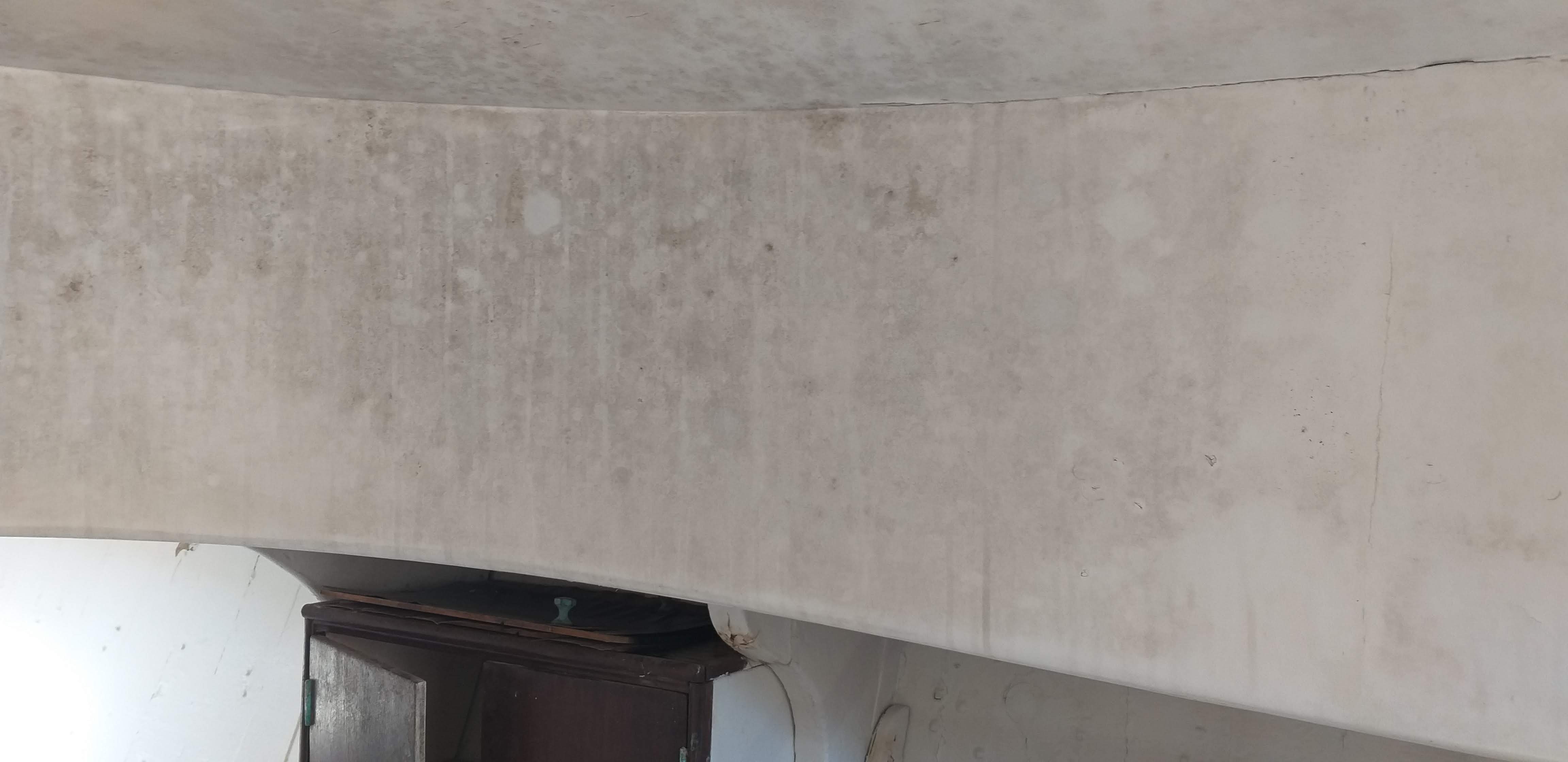
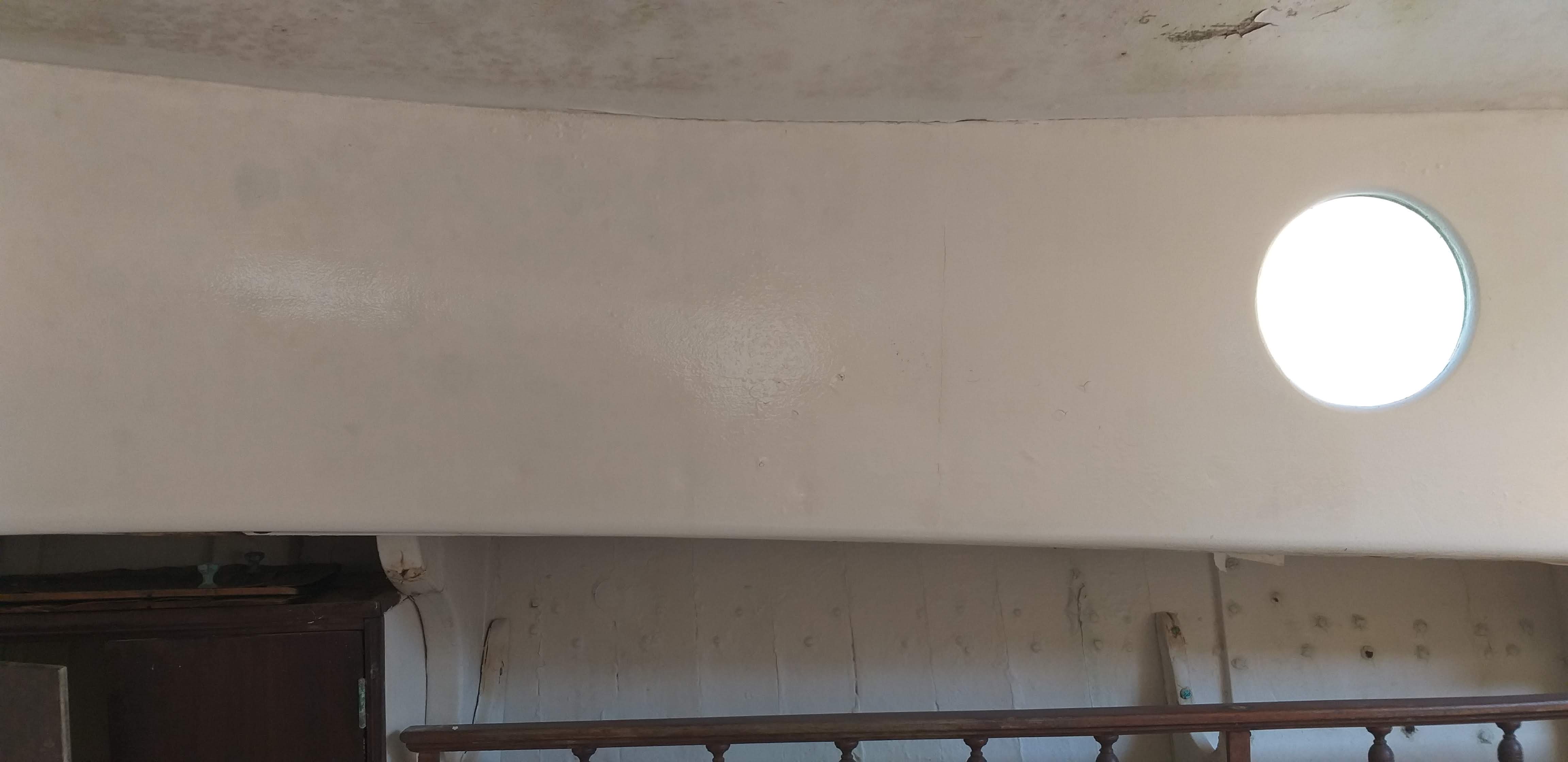
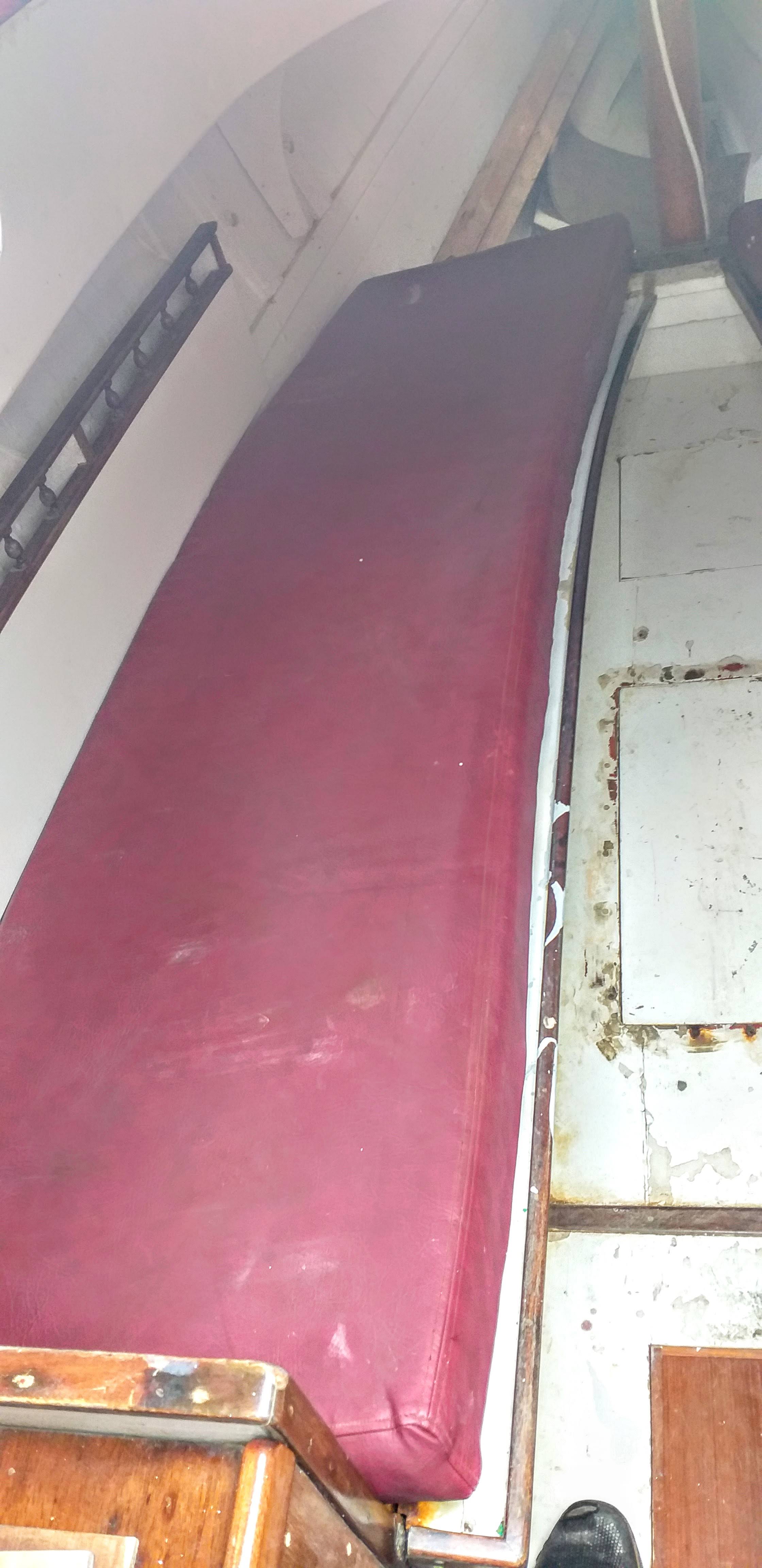
HINEMOA – 1904 Logan 4sale Having spent yesterday on Lake Rotoiti surrounded by a stunning flotilla of classic wooden boats, I feel some what obligated to find a home for Hinemoa. She was built by Logan Bros in 1904 for the NZ Government. 24′ overall double ended. Very heavily built. She was fitted with an 8hp Union petrol motor and carried on the NZ Government steamer Hinemoa for general use particularly when servicing the NZ lighthouses.Her history is known and she has had but five owners.
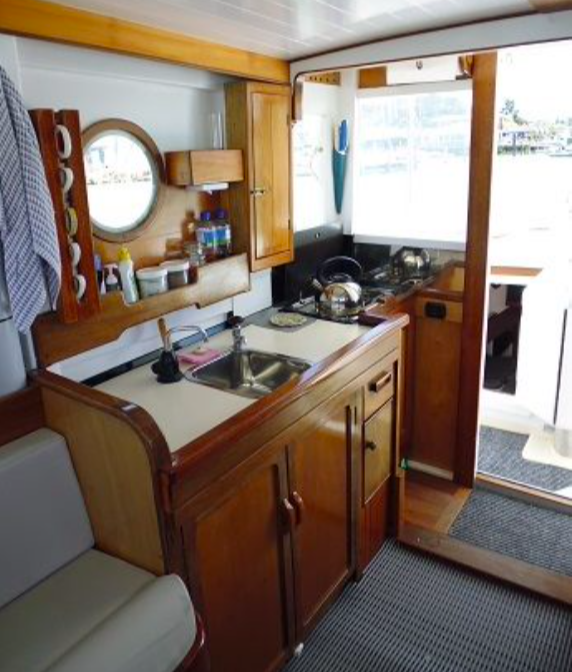
She is now fitted with a 1960 10hp twin cyl. Kelvin diesel (spares included) – ex NZ Maritime Museum that was recently reconditioned and is regularly serviced. Electrics include nav lights, echo sounder and VHF. Fishing chair for one and rod holders. An excellent sea boat (as you would expect) and there are the bones of a tandem trailer that with modifications would transport her. She is very usable – fishing, picnics or traditional boating events. Lots of fun and an eye catcher.
I’d like her to remain in Auckland but she would be a perfect lake boat. Interested parties, email me and I’ll point you in the direction of her owner. waitematawoodys@gmail.com
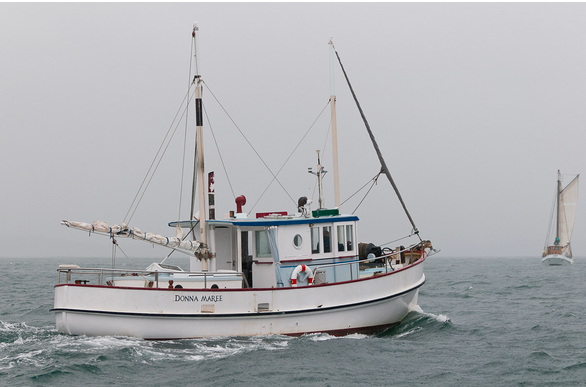
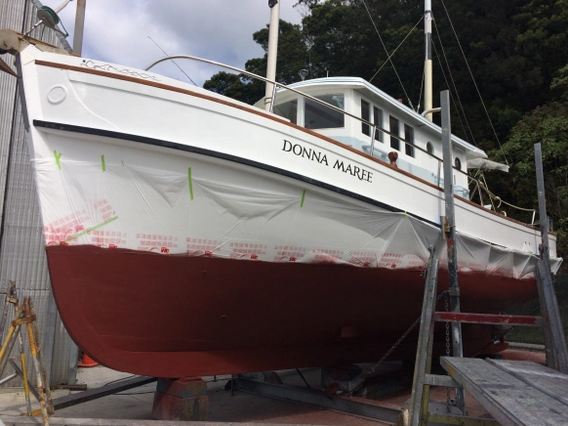
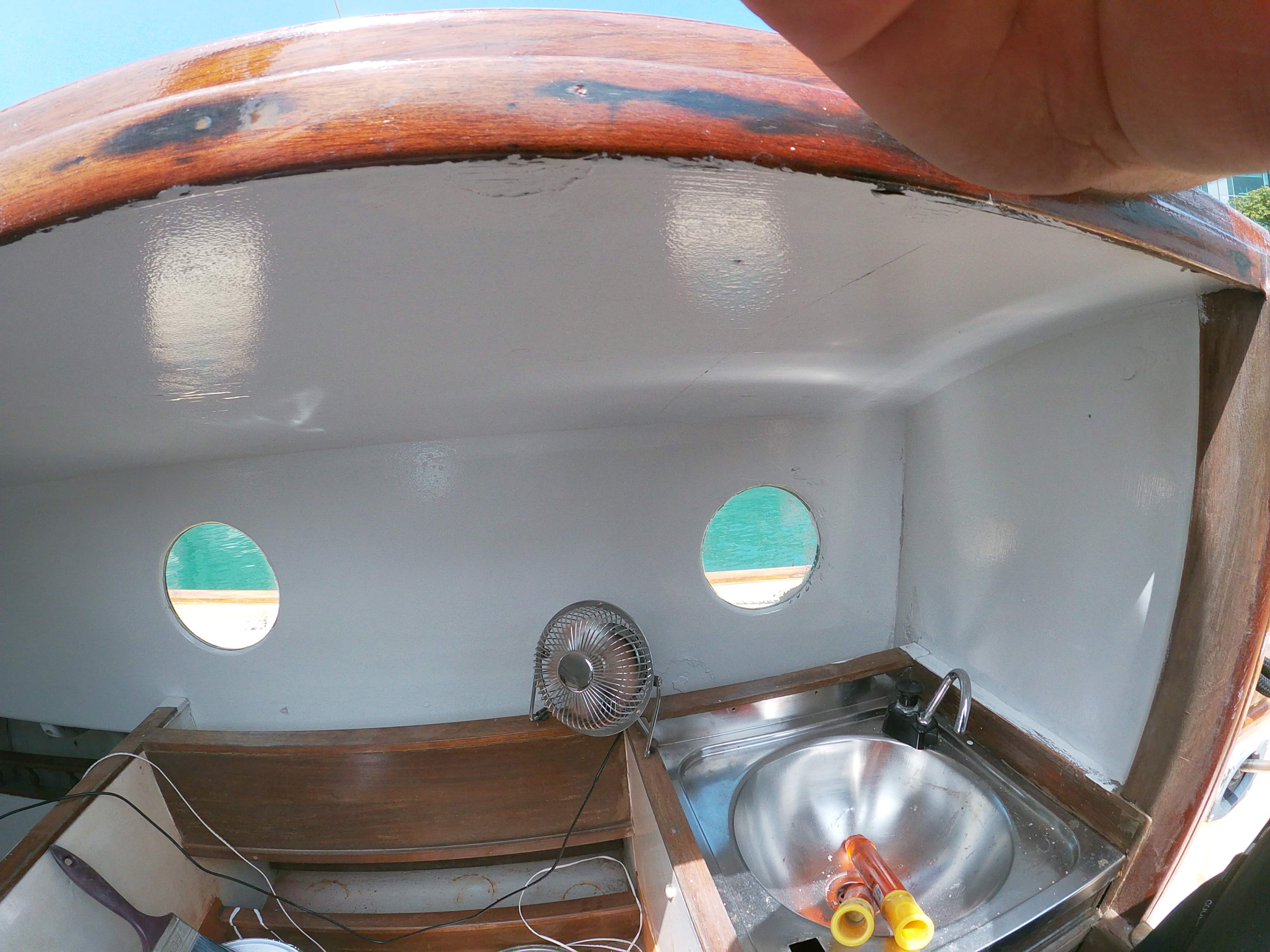
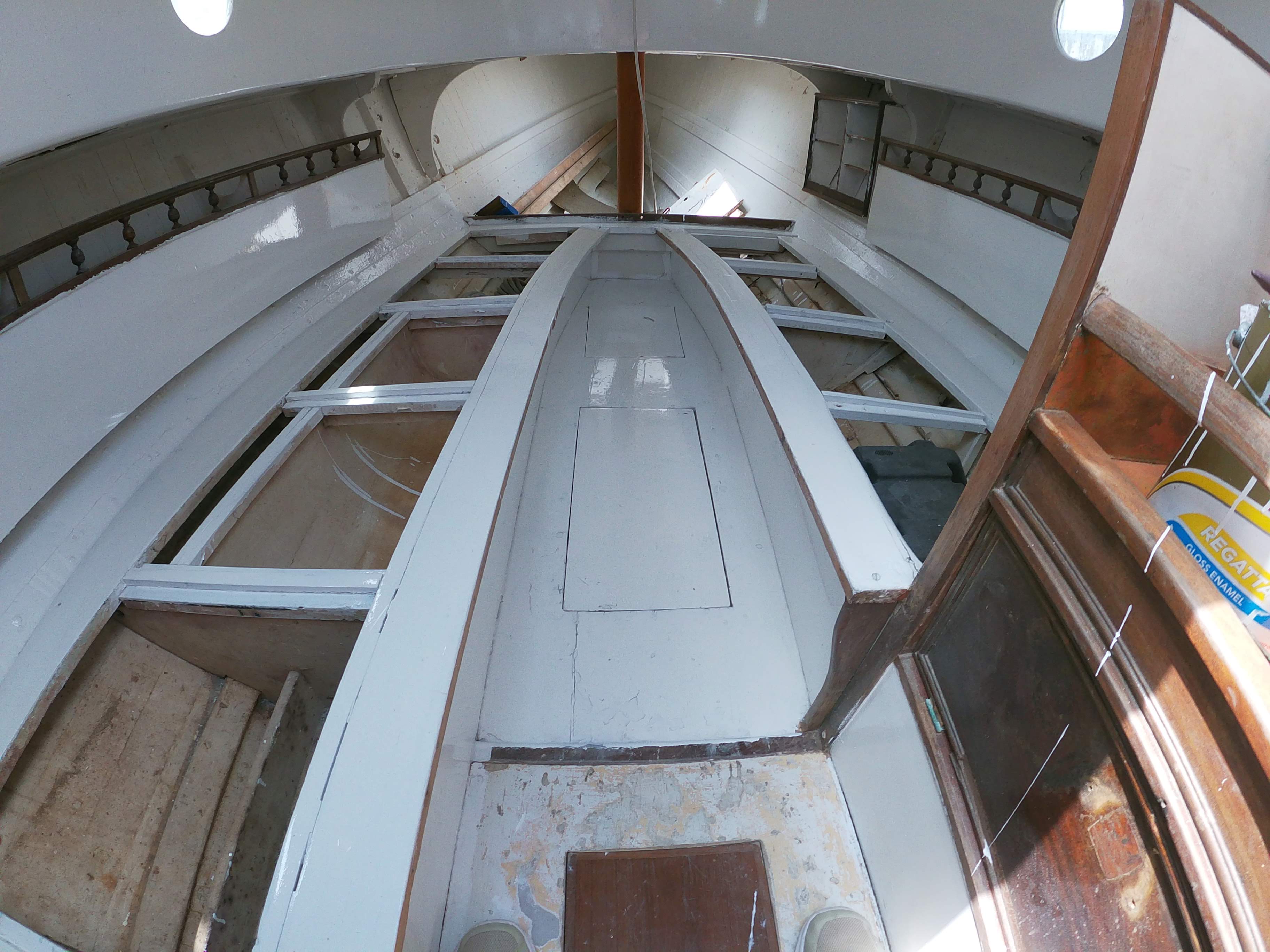
The 1972, Jorgensen built, 38’ Donna Maree has made several cameo appearances on WW via the camera of Dean Wright. Now thanks to tme (& Ian McDonald) we get to have a peek down below. Given the 1972 build I’m not sure if she is a workboat conversion of has always been in pleasure mode. Being a Jorgensen vessel she is built well with single skin kauri planks on laminated hardwood ribs. In true workboat style she has a 6LW Gardner down below and appears to be very well fitted out. Photos below ex Dean Wright (L) & Ian McDonald (R)
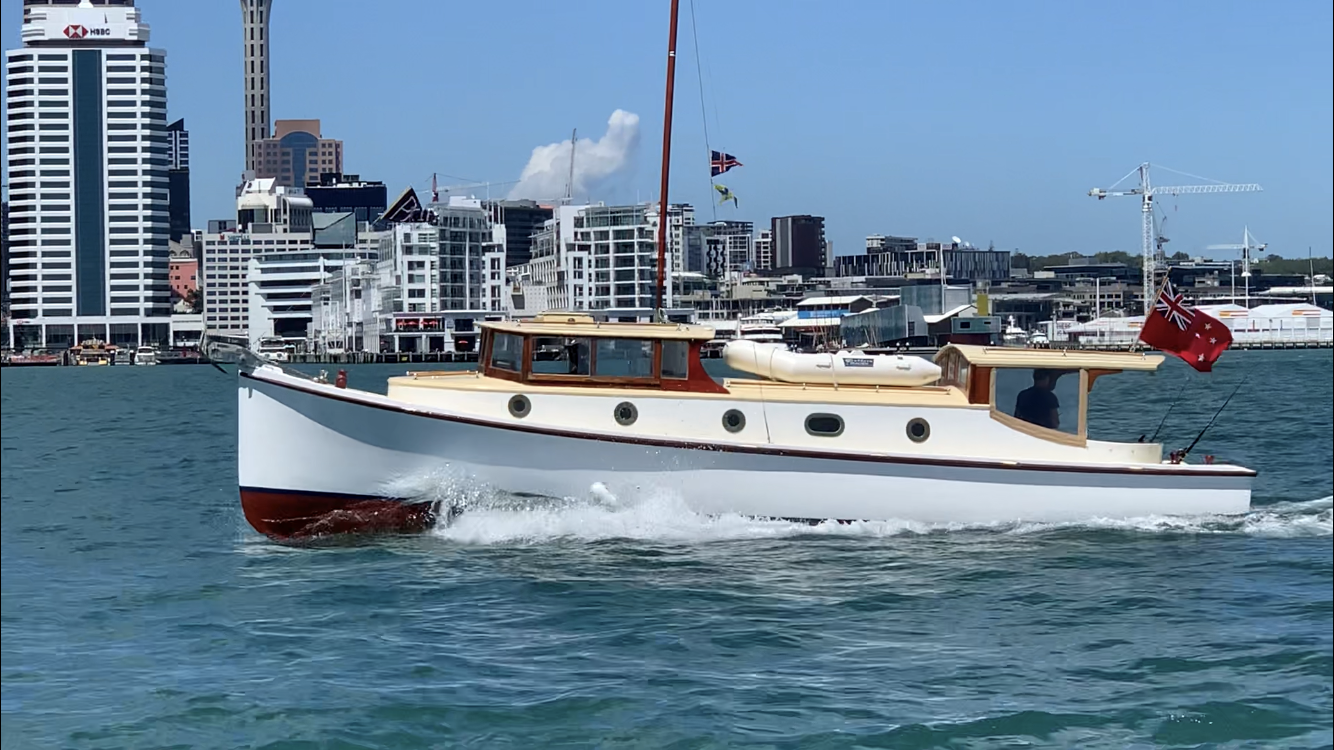
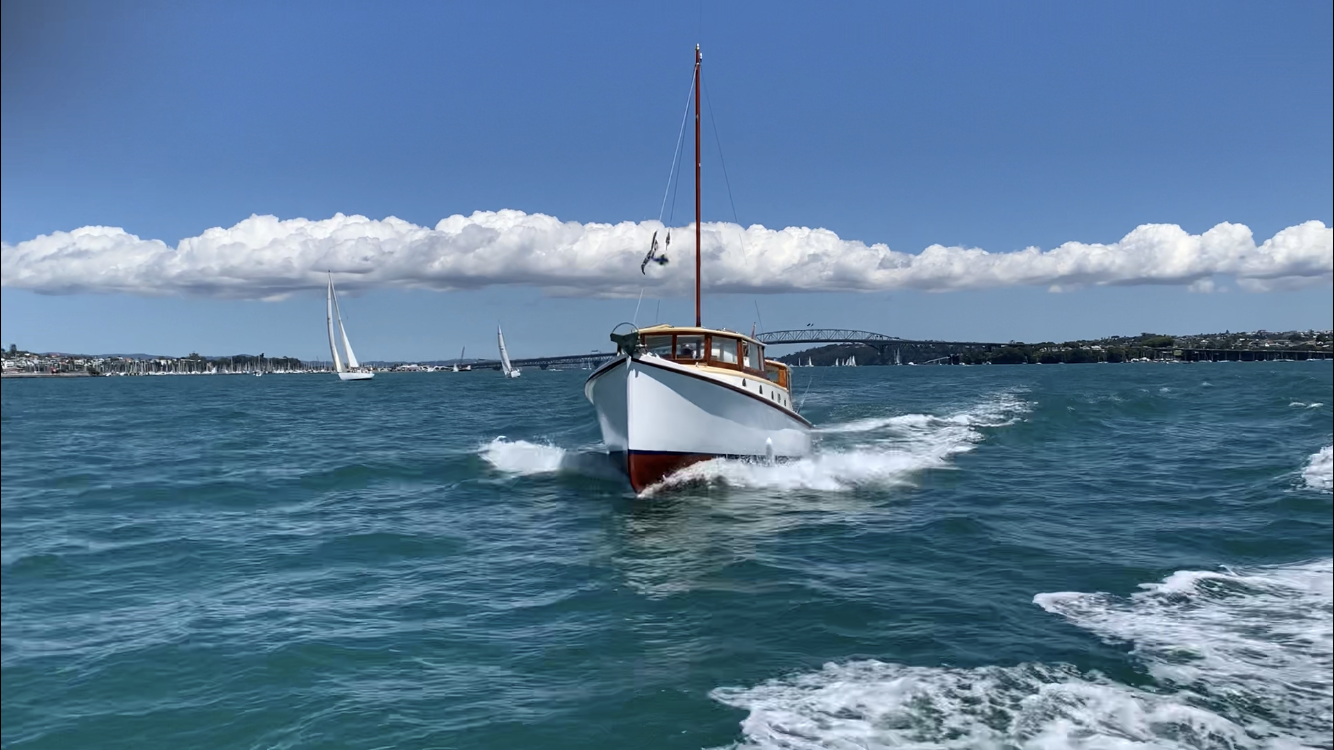
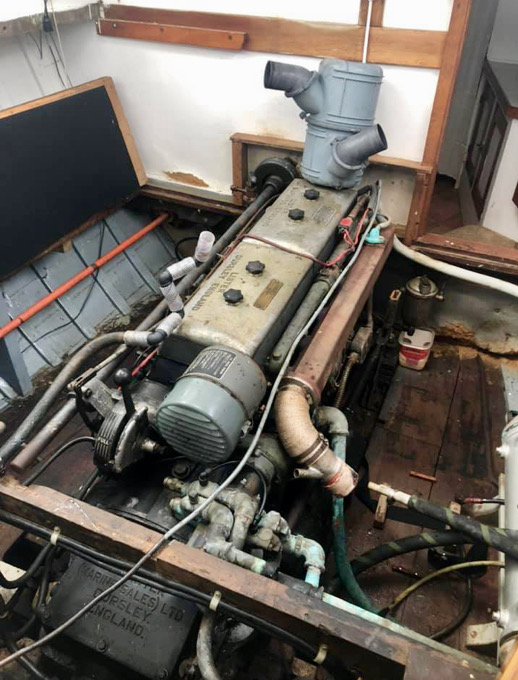
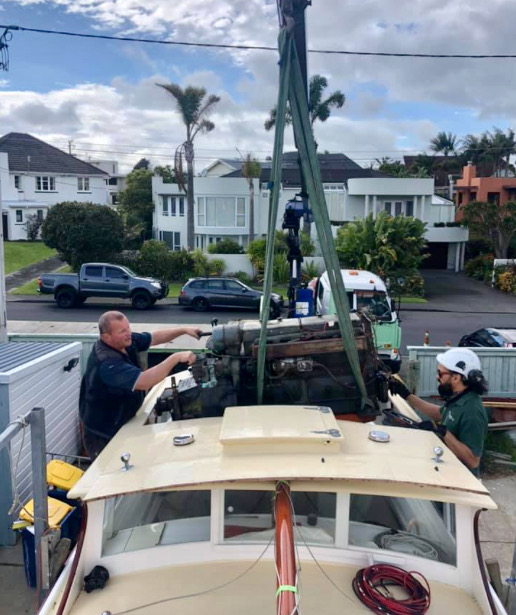
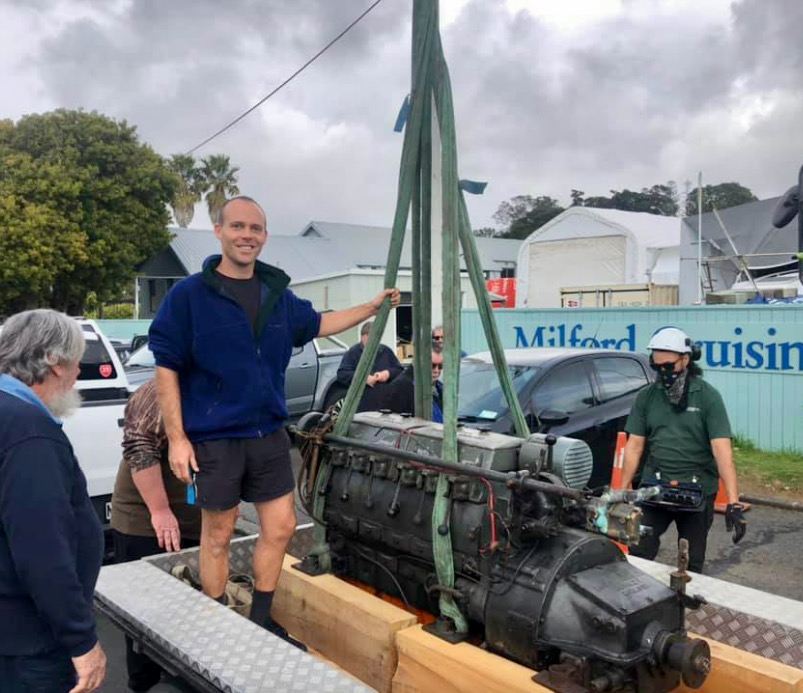
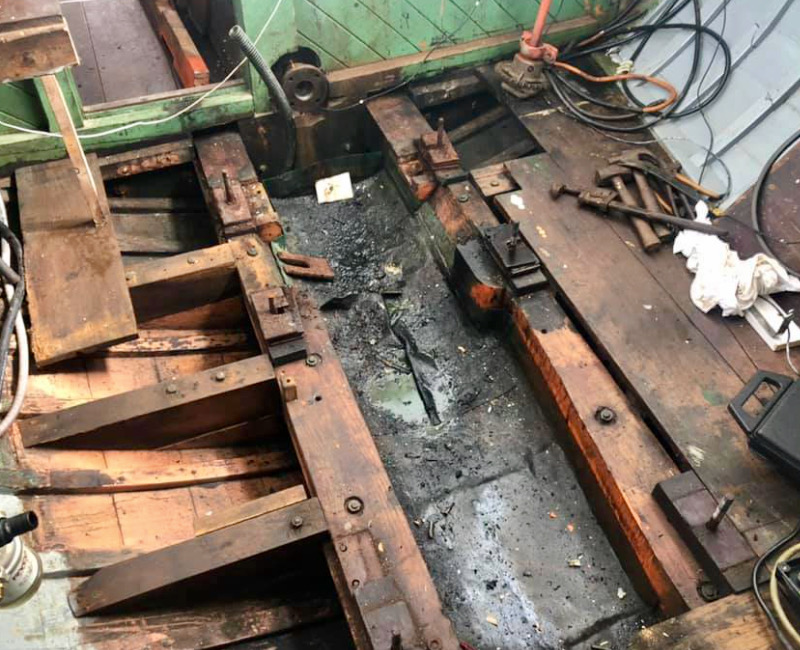
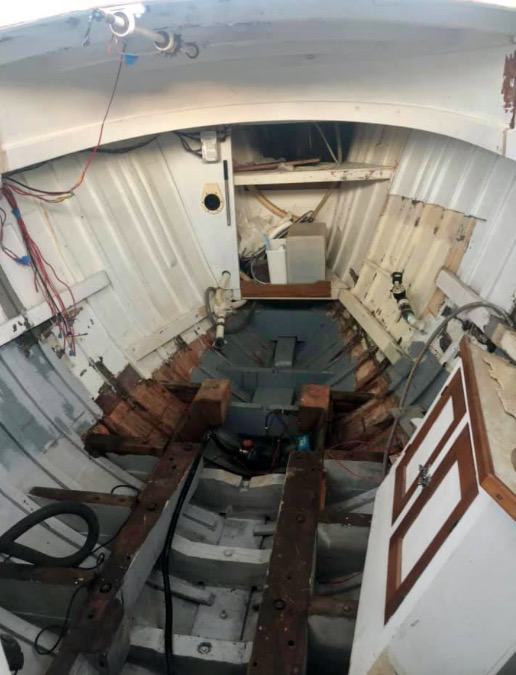
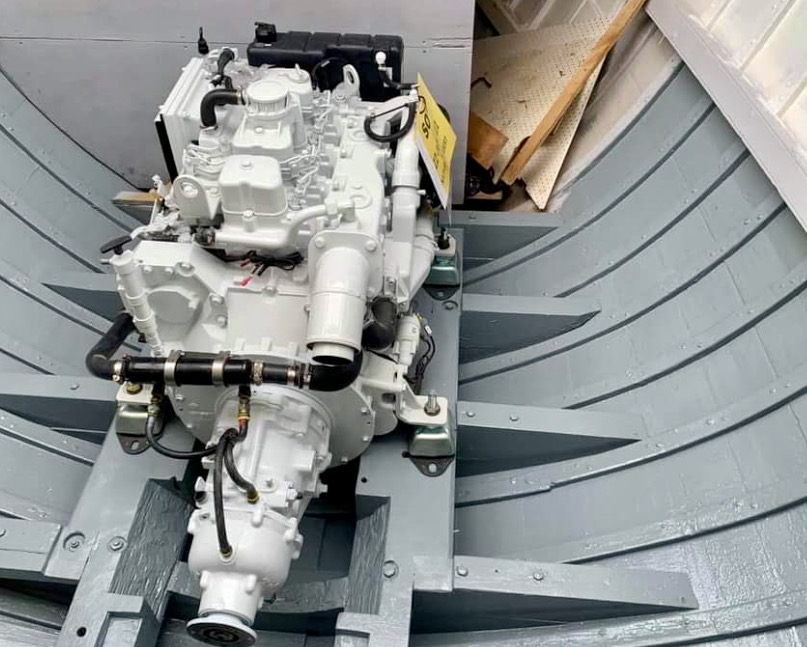
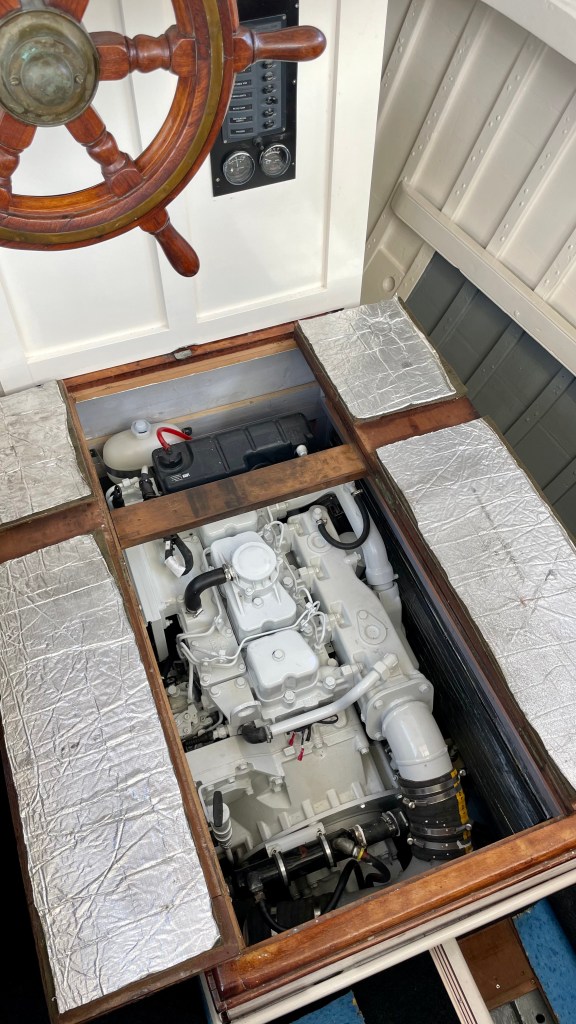
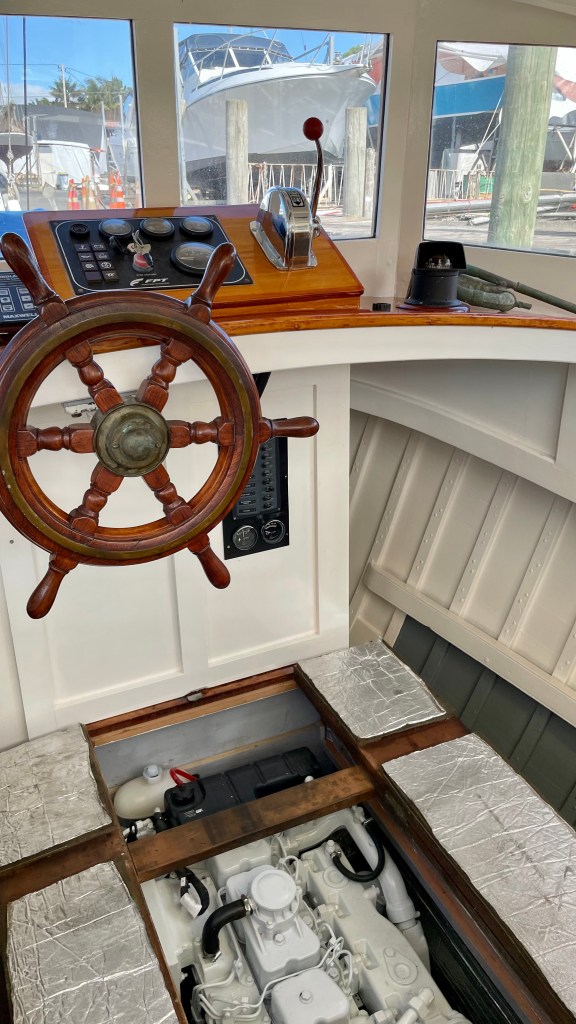
Last Wednesday we saw the 1917 Joe Slattery classic launch – Pacific sliding back into the H2O after a 5 month refit (link to that story below). Over the weekend, owner Nathan Herbert took the 105 year old out to stretch her legs post the installations of a brand new 100hp FPT / Iveco N45A engine. The old Lister in her was a beast of an engine (1500kg v’s 450kg new engine) and mounted well forward, I would not be the only one to have commented previously that she had a certain “heading down hill” look to her – well as you can see in the top photo, she almost looks like she is about to pop up on the plane. Nathan says no, its just camera angle – but to the eye she sure looks smart.The installation project was not a simple – out with the old & bolt in the new procedure – you can see in the photos below it was a major, but the Nathan is an engineer (mouse in hand not spanner) so the attention to detail is certainly there 🙂 She always was a looker – but she is now a stunner – well done Mr Herbert, your forebears , same family ownership since new, would be very happy to see her today. I’m told that the inflatable will be replaced with her original clinker – currently being restored at The Slipway Milford yard 🙂
“If anyone is wondering- a few notes about the re-engining process:
-The new engine was barely smaller than the old one due to the Lister having had many remotely mounted parts eg. heat exchangers, oil tanks etc. -The engine beds had to be widened to accept the new motor -In stripping the bridge and for’d cabin out completely I found around 24 completely broken ribs- some in a row which were very dangerous. New red beech ribs were fitted by Jason Prew. These ribs would have written her off in a survey as is so often the case these days when you see $1 reserve classics. -The 4 cylinder engine vibrates much more at idle than the 6cyl Lister did with her large flywheel. The GPS does a dance as it shakes around. -The tanks were unexpectedly difficult to replace. after the old copper ones were stolen I had two 4mm aluminum 170L units fabricated which to install necessitated disassembly of the cockpit seating area with a new stern ‘bulkhead’ built and so on and so forth. -Steering is a little harder in a fresh/choppy seaway now but this may just be perception as I now have more power which I’m probably using where before I didn’t. -The bow no longer pushes water like a bulldozer, and in a slight chop actually has positive buoyancy to lift over waves instead of submarine through them. -Despite being beamier than other launches of her era, she is still as much of a pig when rolling at anchor. And please- enough with the comments about adding ballast- there is still a line of huge lead ‘AUSTRALIS’ ingots along each chine in the saloon which require two people to lift each ingot. The engine is not a lightweight, and there is over 100m of chain in the bow plus some pretty large anchors. -Speed: 11.5 knots in the photos, cruise has gone up from about 8 knots, to about 8.7 knots. Higher speeds get a bit noisy.”
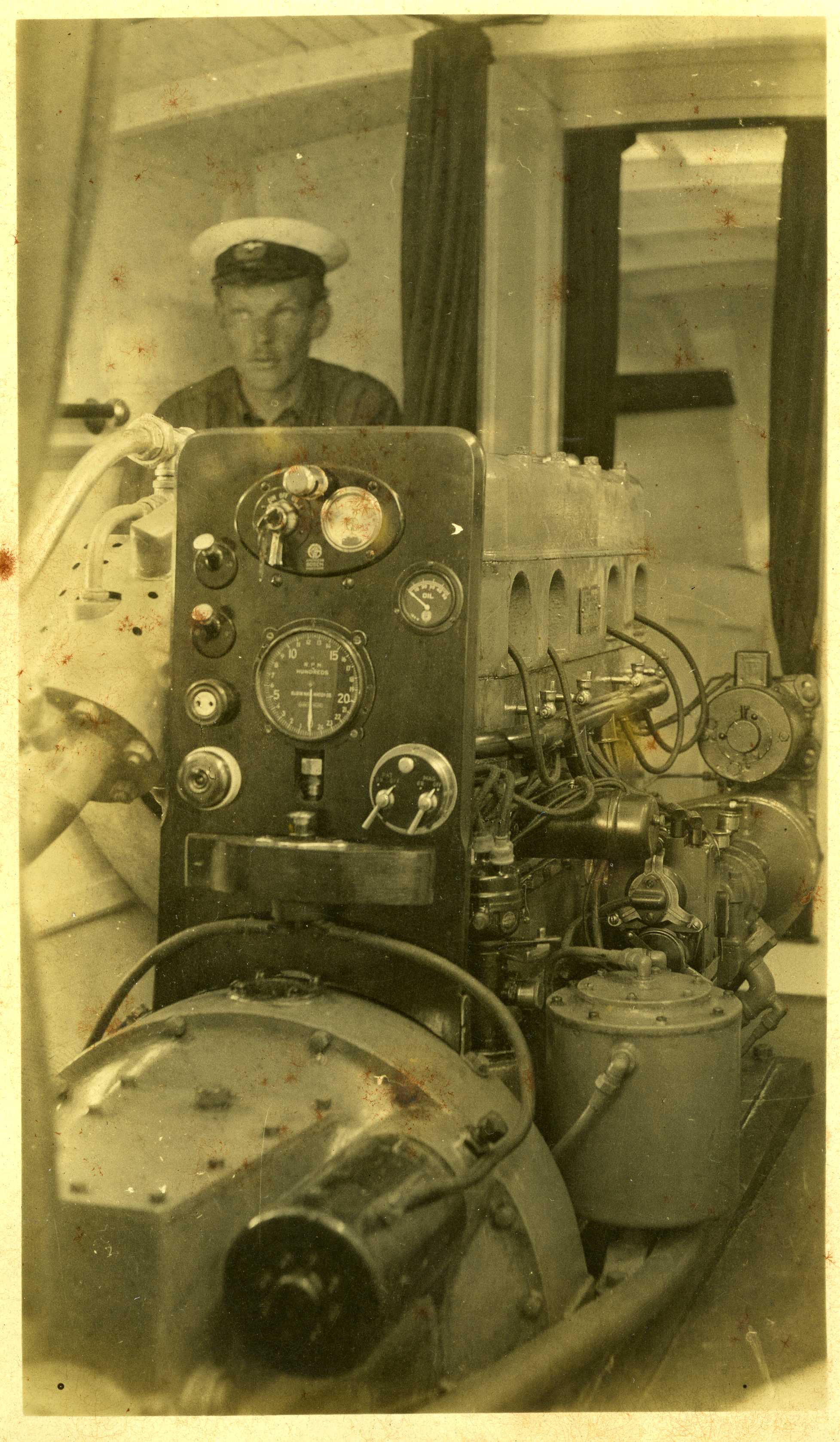
ID THE ENGINE QUIZ – The correct answers were
MAKE & HP: Stearns MDR 125hp
AGENTS: H. O. Wiles
BOAT FITTED TO & WHEN: Romance II – 1925 No one got all the answers correct – but Jason Prew and Nathan Herbert were tied at 3 correct elements (but not the same) so its a tie – they can decide what bits of the prize pool they each want 🙂
YESTERDAY WAS A RECORD BREAKING DAY ON WW
As you can see from the graph below – Mondays story (the pink skyscraper) on Mahurangi weekend was off the charts – so many people here and around the world logging in to view. No doubt helped by it being winter in a lot of the countries and the ongoing CV-19 lock-downs – I use that old Fred Dagg line – “We Don’t Know How Lucky We Are”
Hello woodys, if you aren’t a float today, todays story is a gem – its all about what makes the classic wooden boating movement so special – Caleb Bird contacted me to advise that he had taken over the restoration of the yacht Rebecca (now back to being called Dolphin) from the Tino Rawa Trust. The 24′ Dolphin was built in 1902 by the Ewen brothers (Frank,Ernie & John) of Whangarei. Constructed of 2 skin kauri she was once owned and restored by the late Peter Smith, who also restored the stunning 1938 Sam Ford launch – Menai.
Todays photo gallery shows us what Caleb has been up to for the last 2 years i.e. stripping her out and getting the interior back to an amazing look. Well done Caleb, we need more of you 🙂
The first batch shows her ‘as found’ and later photos the work-in-process.
The Big Woody Quiz Todays story is really a quiz, it won’t be easy, they are three parts to the answer. If anyone gets all three right I’ll be very impressed, in fact entries will be weighted by the number of questions you get right e.g. one correct question = one entry, two = two etc. Entries are ONLY via email to waitematawoodys@gmail I’ll let it run until 7pm Monday 1st Feb 2021 – lots of time to do some homework.
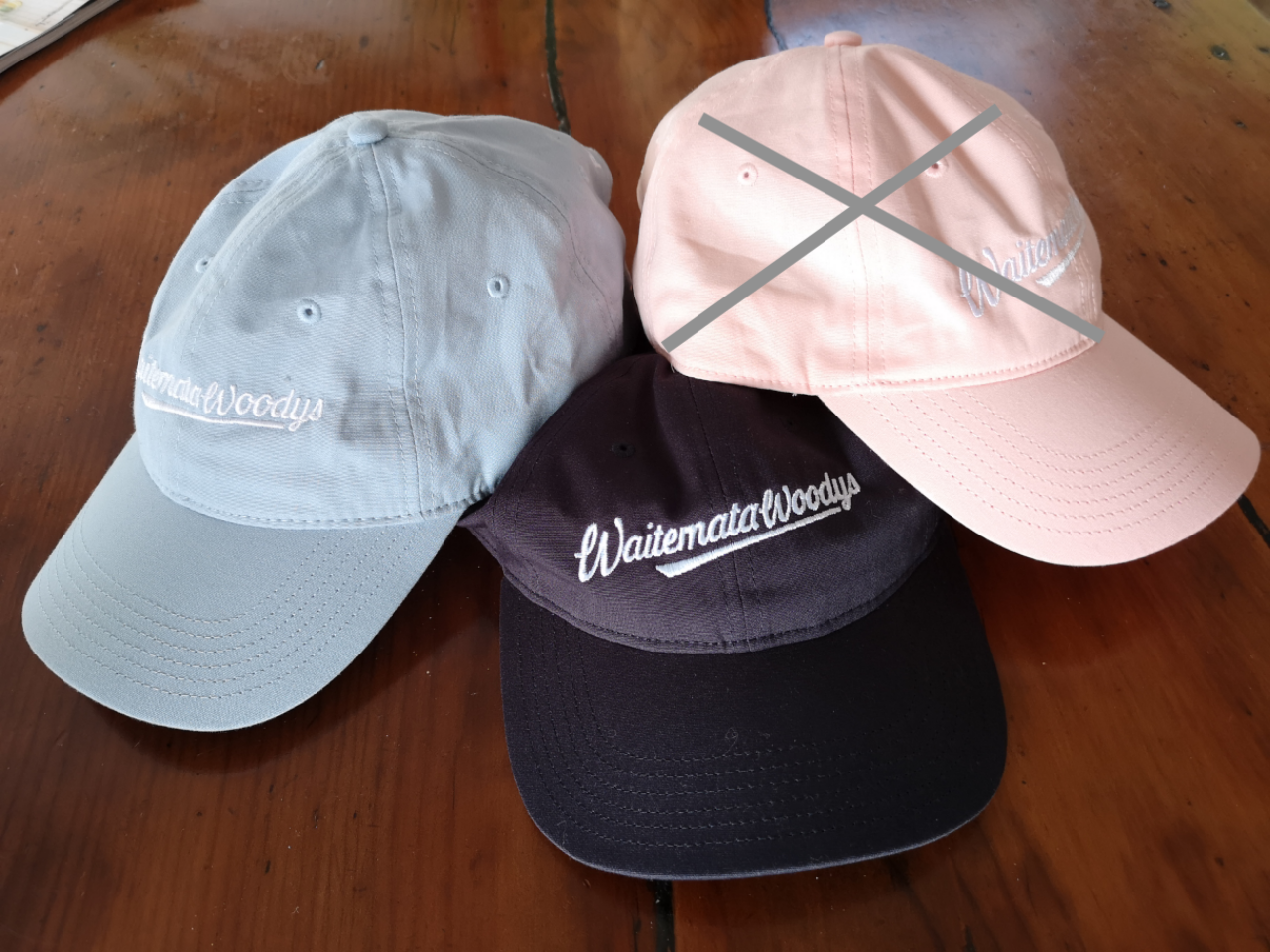
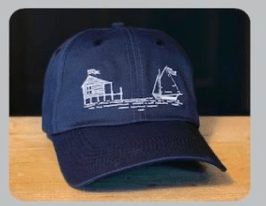
The winner of the draw will get – WW t-shirt, WW cap, Off Centre Harbor cap, Lake Rotoiti Classic & Wooden Boat 2021 Calendar. Now if no one gets even one answer right – all entries will go into the draw – so its worth entering 😉
THE QUESTIONS ARE: 1. Name the make of engine and hp
2. Who were the agents for the engine
3. Which boat was it fitted to and when
ID THE ENGINE QUIZ – The correct answers were
MAKE & HP: Stearns MDR 125hp
AGENTS: H. O. Wiles
BOAT FITTED TO & WHEN: Romance II – 1925 No one got all the answers correct – but Jason Prew and Nathan Herbert were tied at 3 correct elements (but not the same) so its a tie – they can decide what bits of the prize pool they each want 🙂
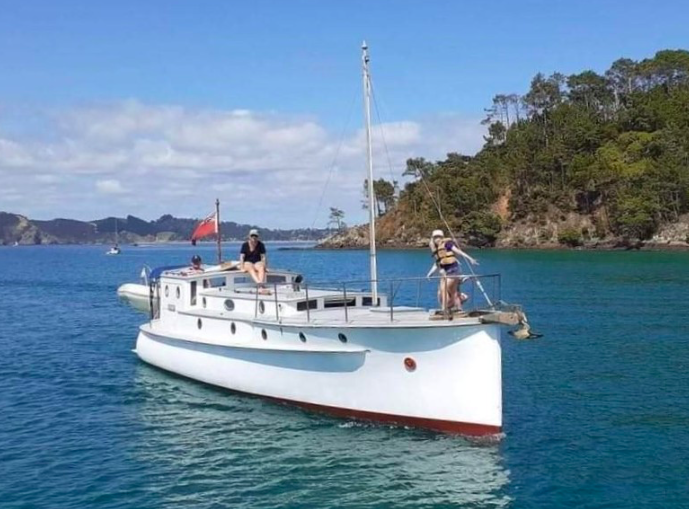
The 1917 Joe Slattery designed and built launch – Pacific, is a special boat – 105 years of one family ownership puts her into a very elite league.Now in the care of of Nathan Herbert, Pacific has sent the last 5 months hauled out getting a heart transplant i.e. a brand new FPT/ Iveco N45A 100hp diesel engine. The old green Lister sadly just didn’t provide the reliability and safety for a vessel that does the cruising miles that Pacific does.
Late yesterday afternoon Pacific had a ‘Claytons’ relaunch at the Milford Cruising Club’s slip. Not surprisingly after 5 months on the hard she had a big thirst, Jason Prew from The Slipway Milford was on hand with a large capacity extra bilge pump, but it wasn’t required. Fingers crossed the flow will abate when she goes back in again later today.
Whilst hauled out there was a serious dose of TLC done to Pacific, I’m looking forward to a better peek down below at the Mahurangi Regatta this weekend. Search PACIFIC in the WW Search Box to view / read more about Pacific past.
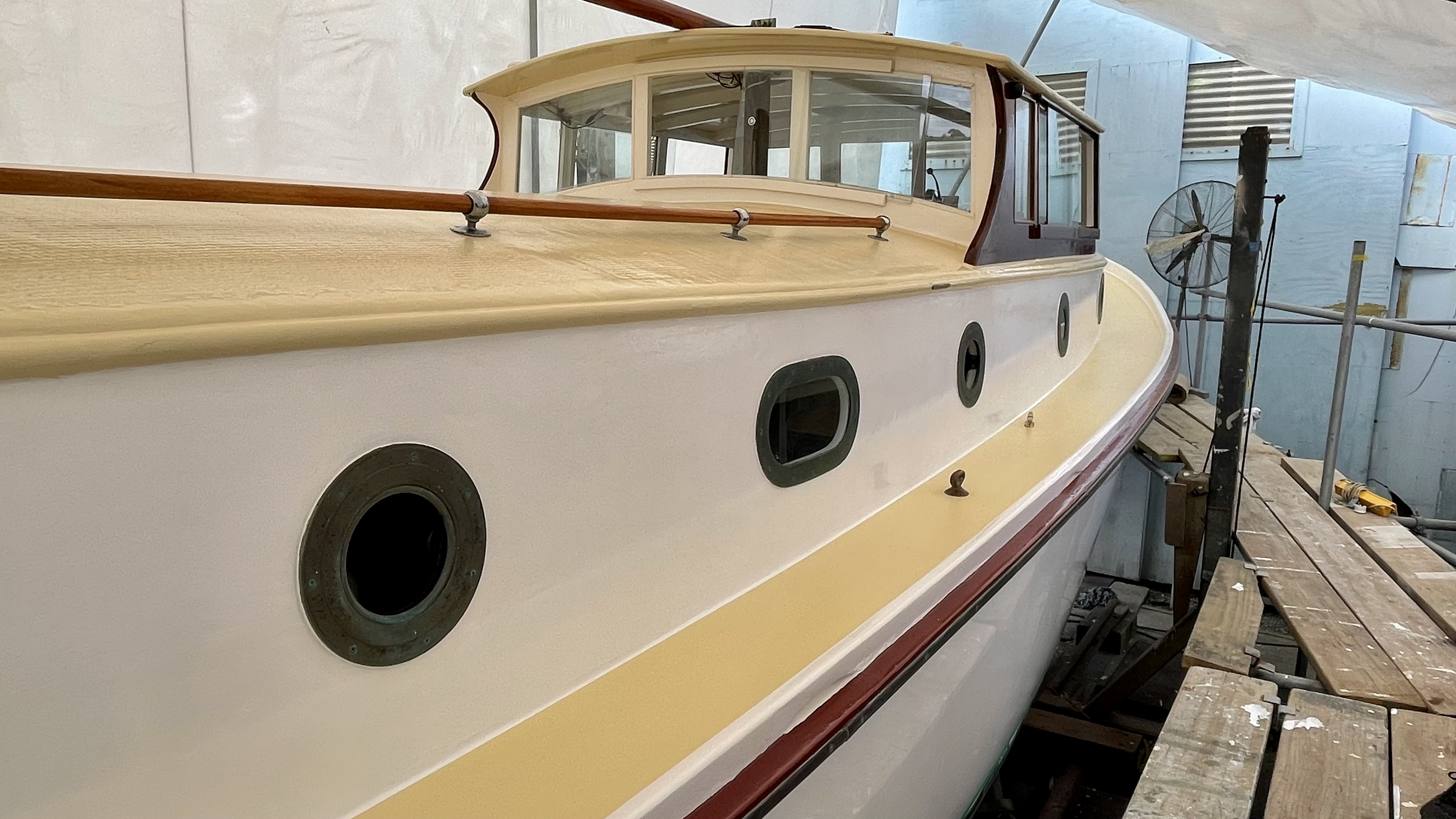
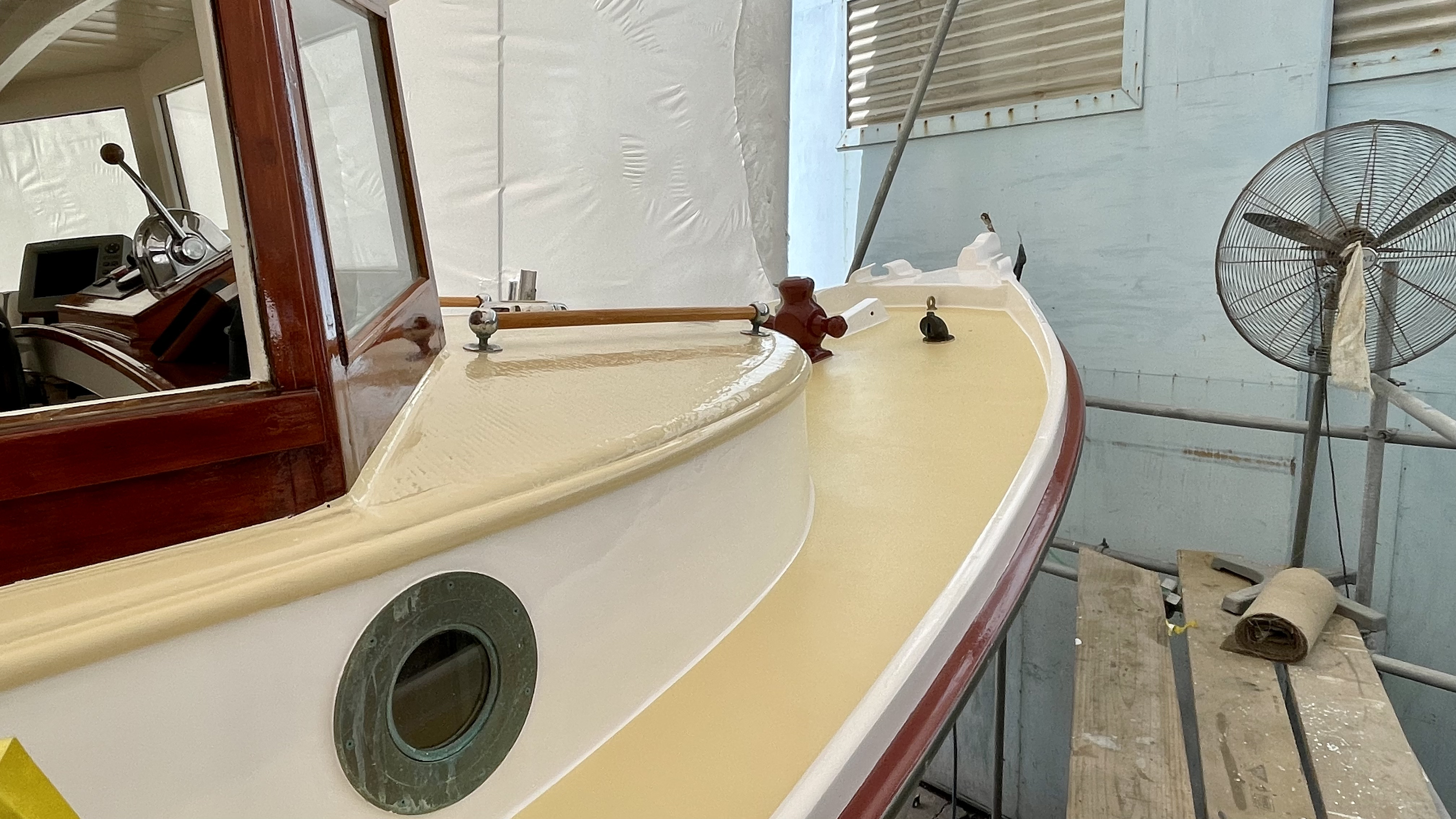
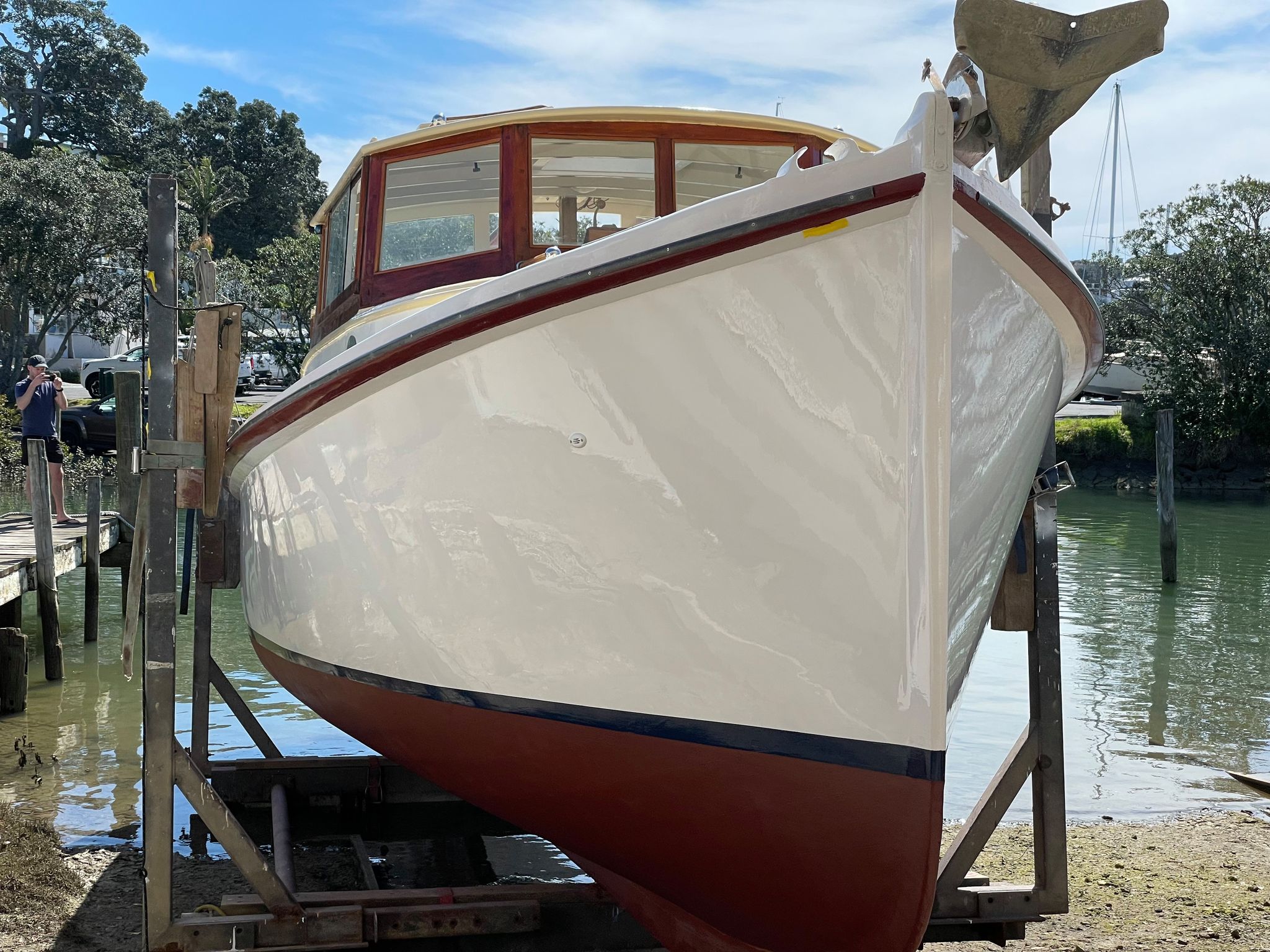
12-01-2021 Update – Pacific has been hauled out recently at The Slipway Milford, for a dose of annual maintenance + a new decks – looking very sharp. And these days do donr escape the yard without a Jason Prew paint job 🙂
16-10-2021 Ready to splash
I spotted Fleetwing, below, at The Slipway Milford yard getting prepped for Mondays Auckland Anniversary Day regatta launch race.
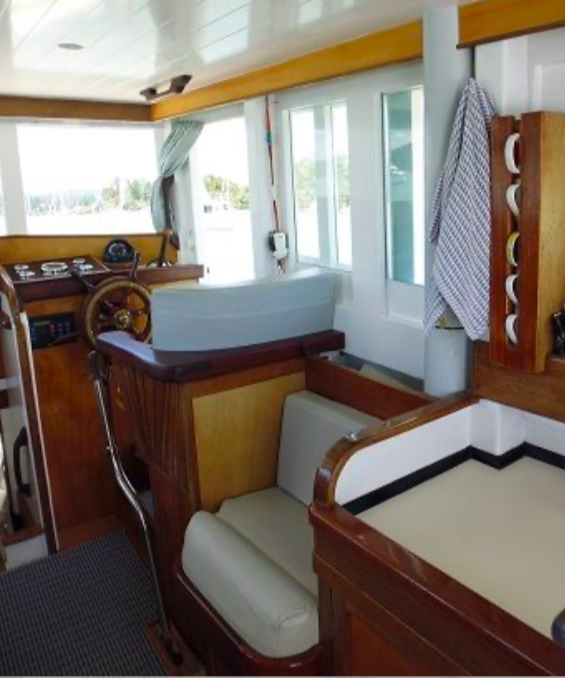
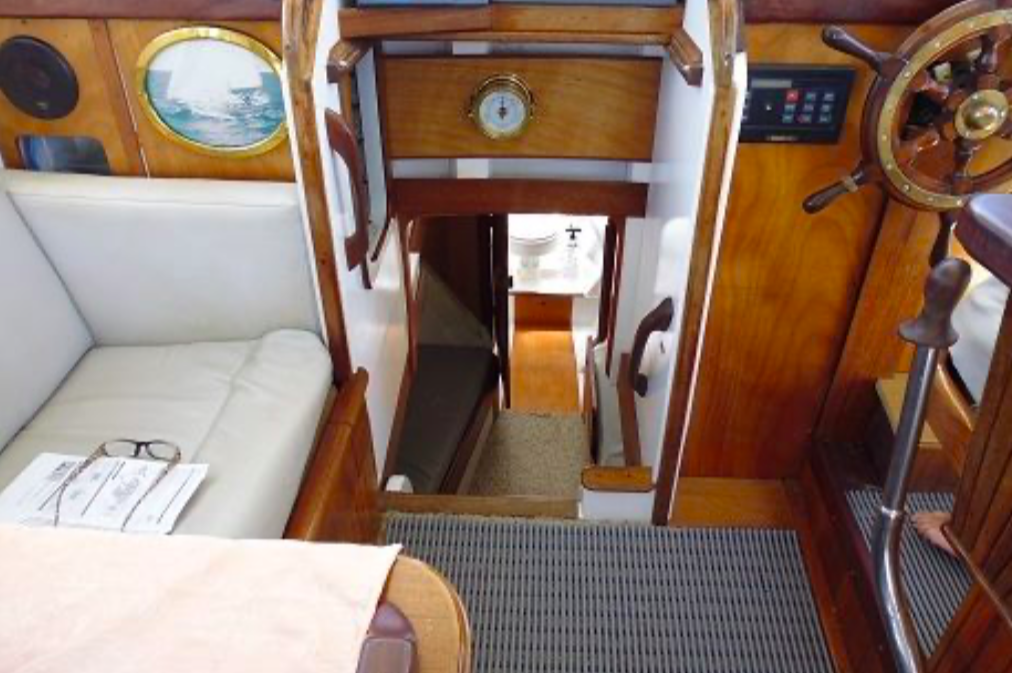
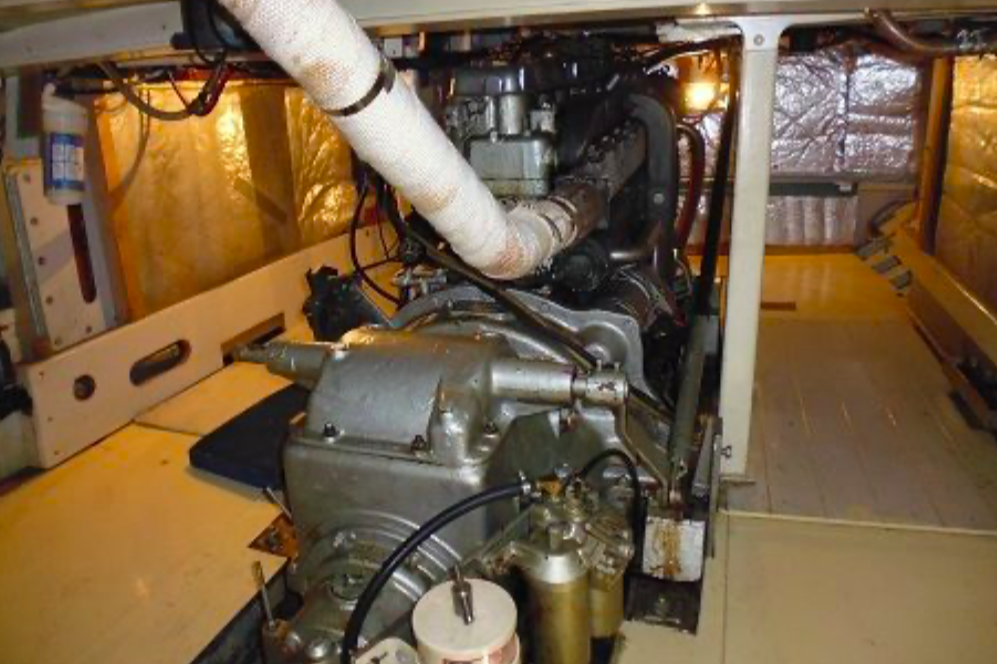
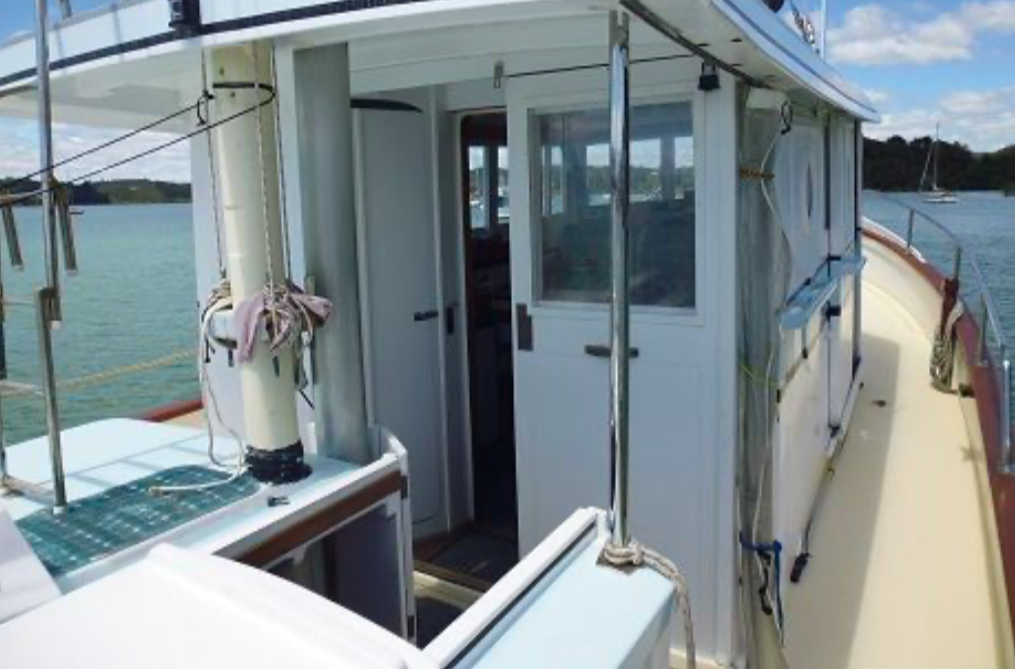
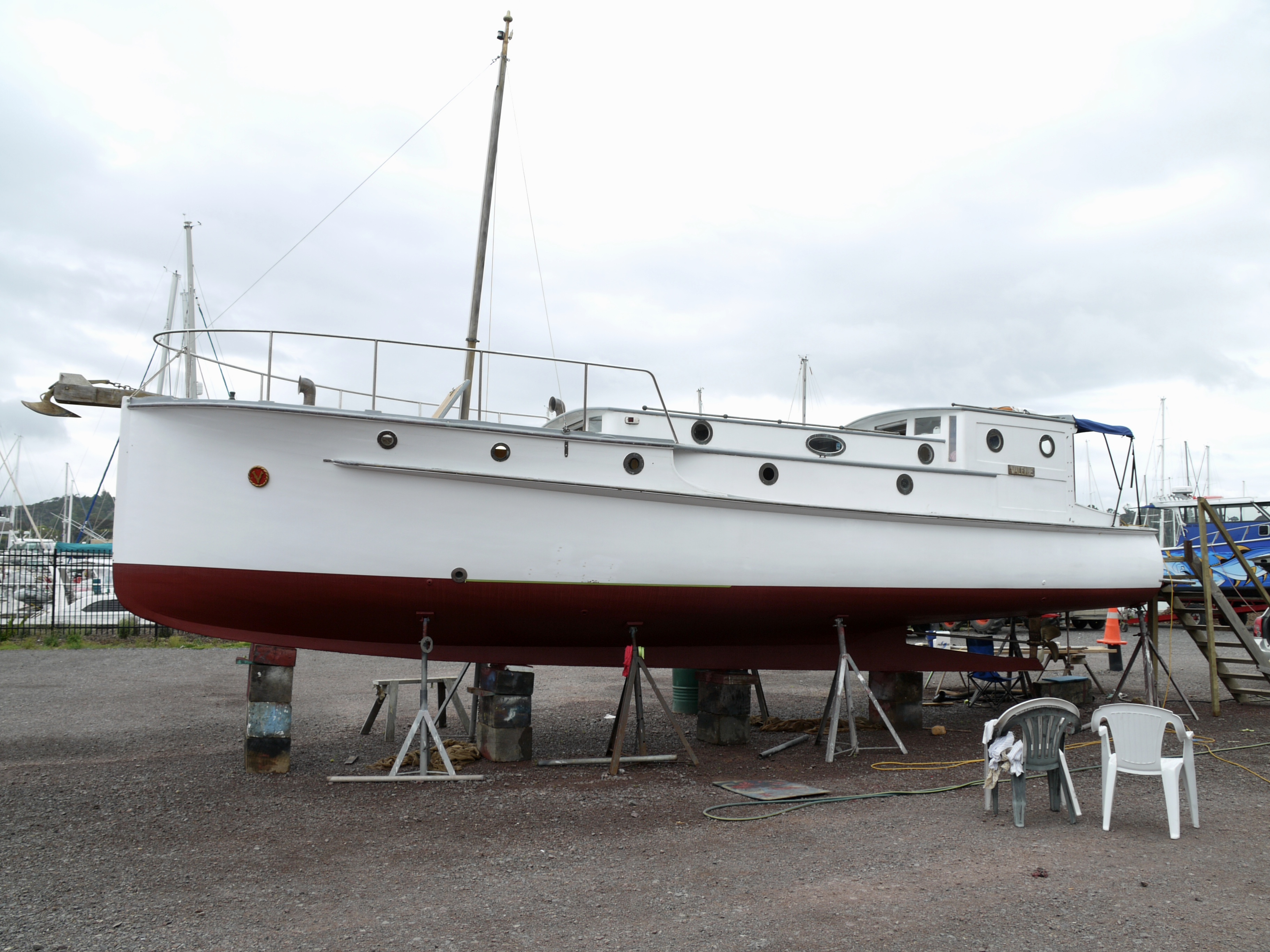
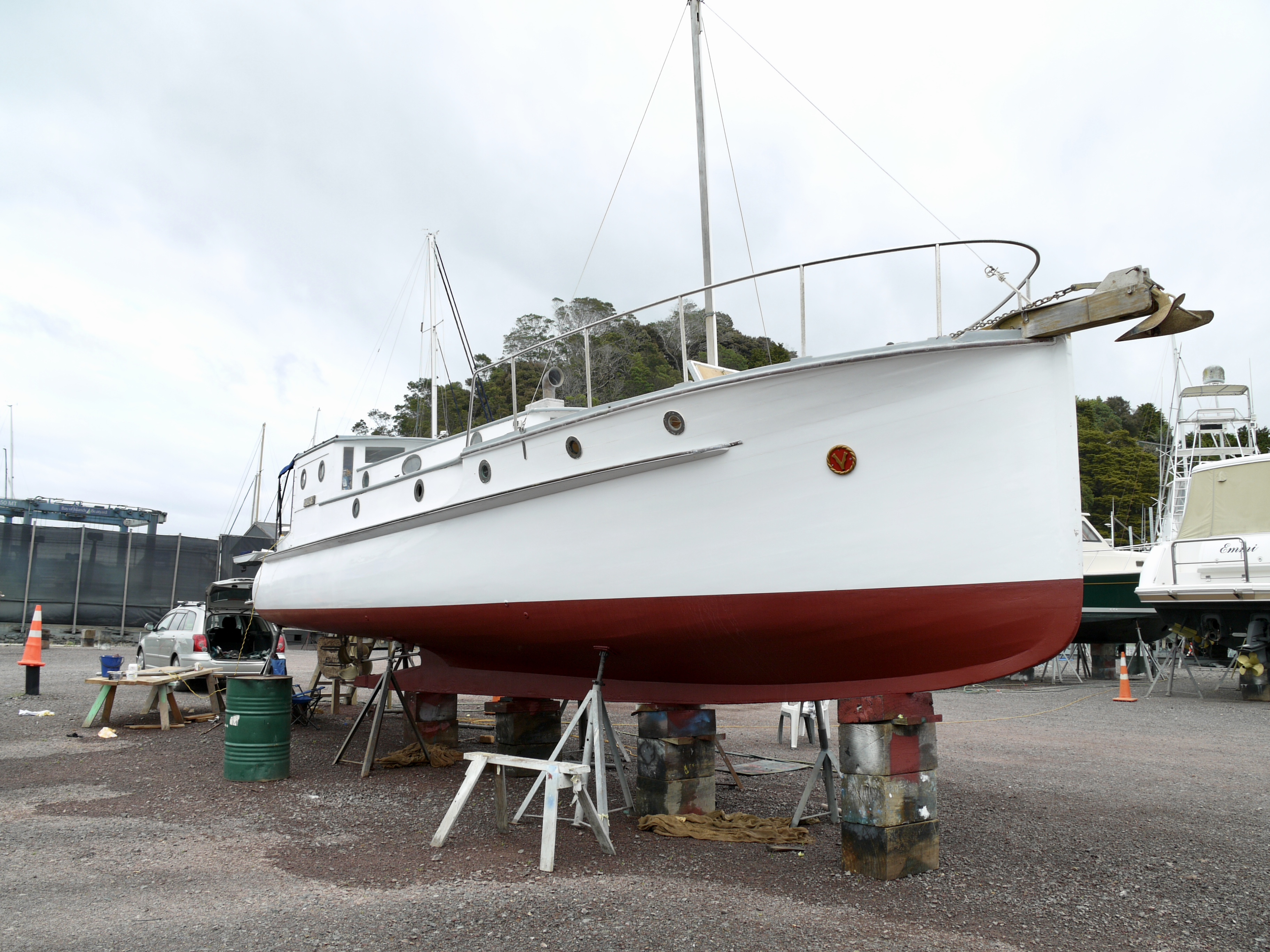
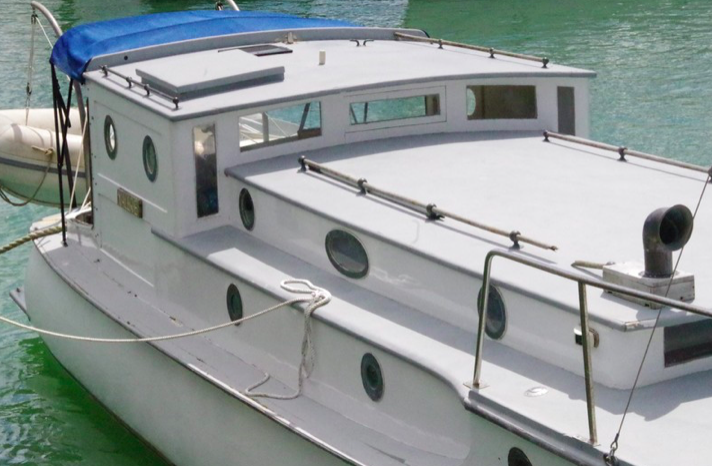
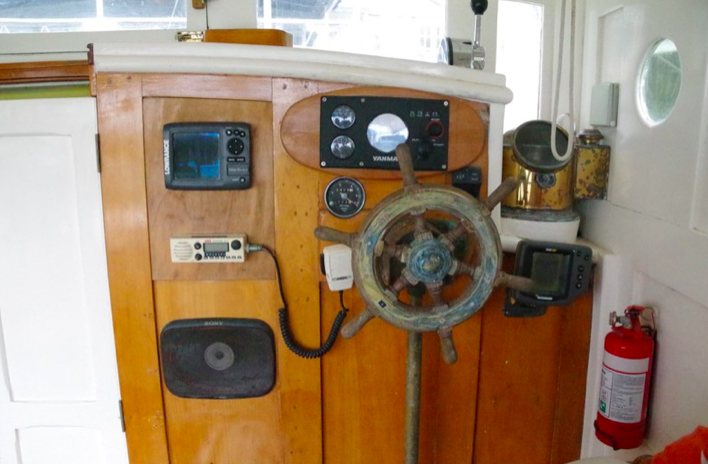
The 1929 Lanes built, 40’ launch – Valerie, has appeared on WW a few time (link below – use the WW Search Box for more) but now thanks to a tme listing we get to see the results of the recent work done to her, including a heart transplant.The Yanmar 112hp is a perfect match for her and I imagine she has a good turn of speed.
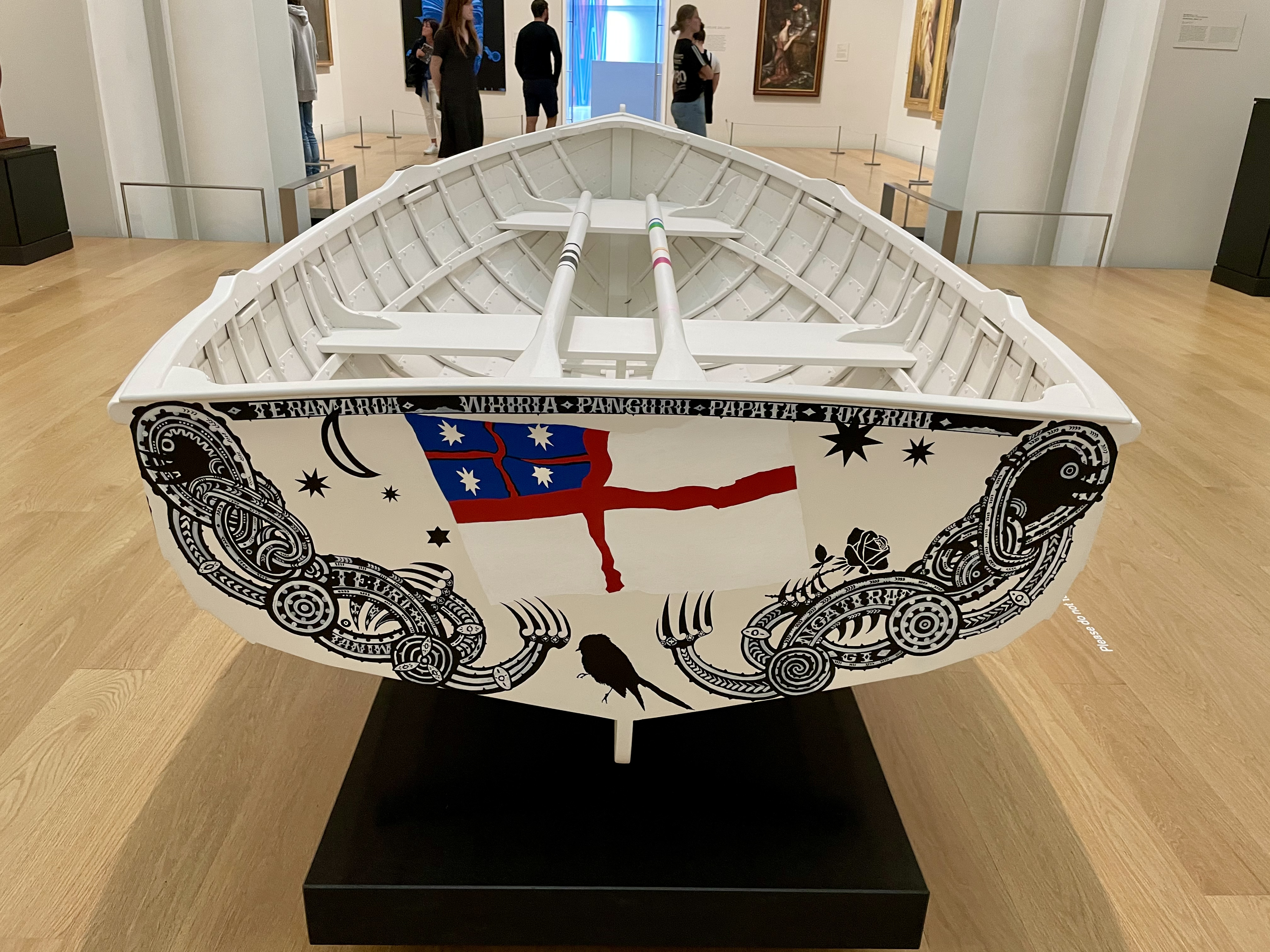
Yesterday I was mooching around the Toi Tu Toi Ora exhibition at the Auckland Art Gallery (well worth a visit) and spotted the clinker below. The wife wasn’t impressed “can’t go anywhere without a wooden boat popping up. You knew this was here didn’t you” 🙂
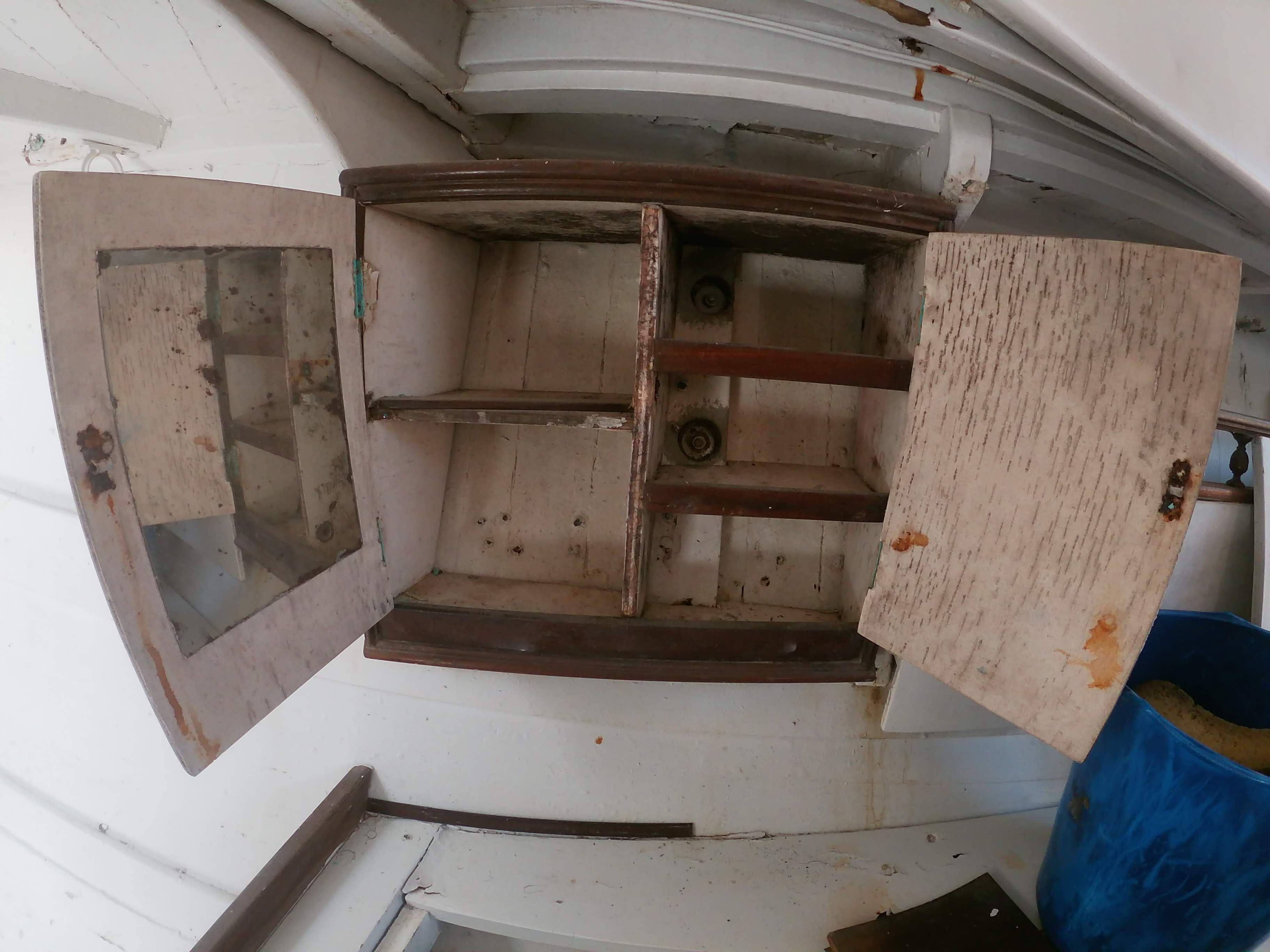
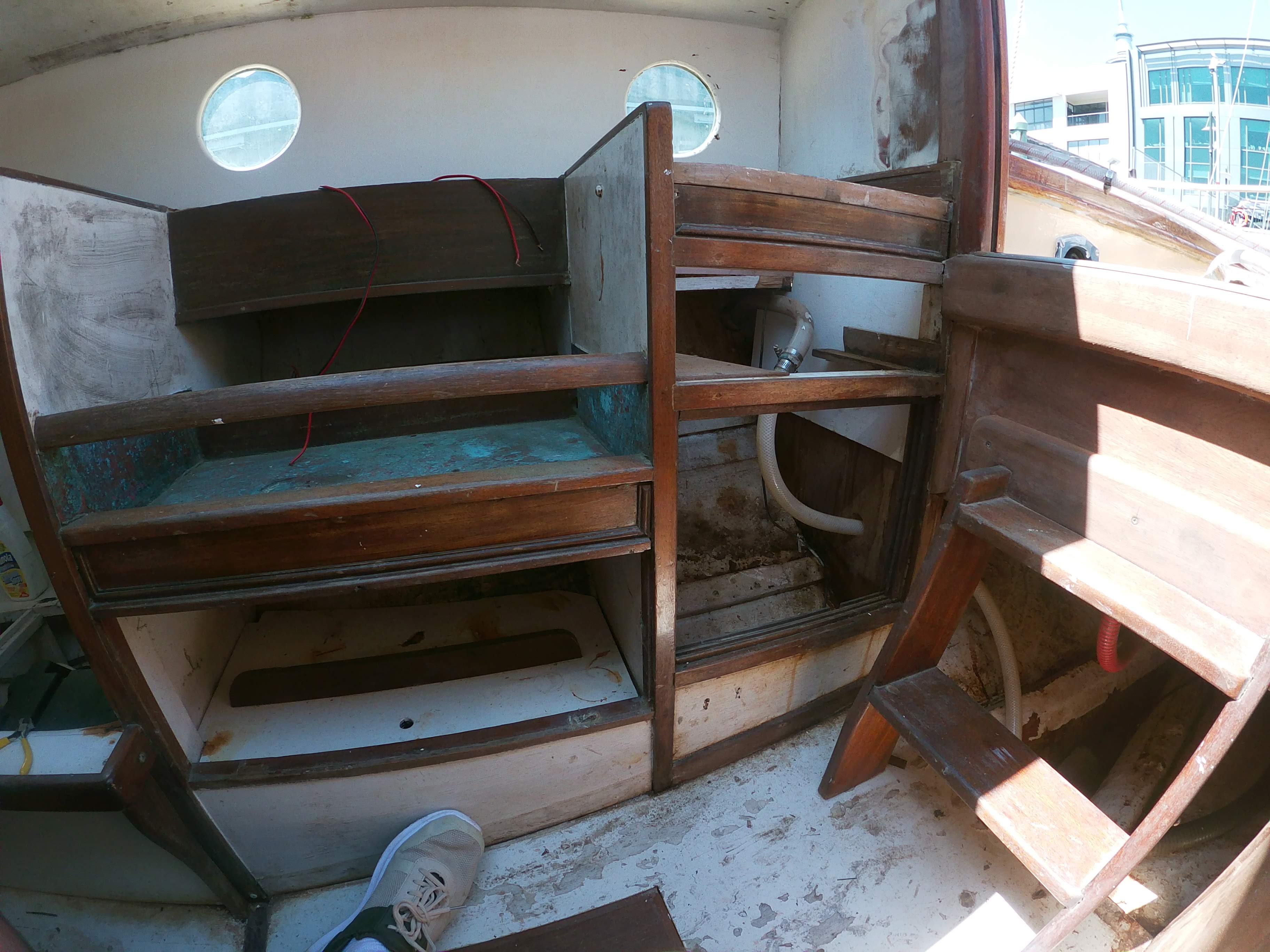
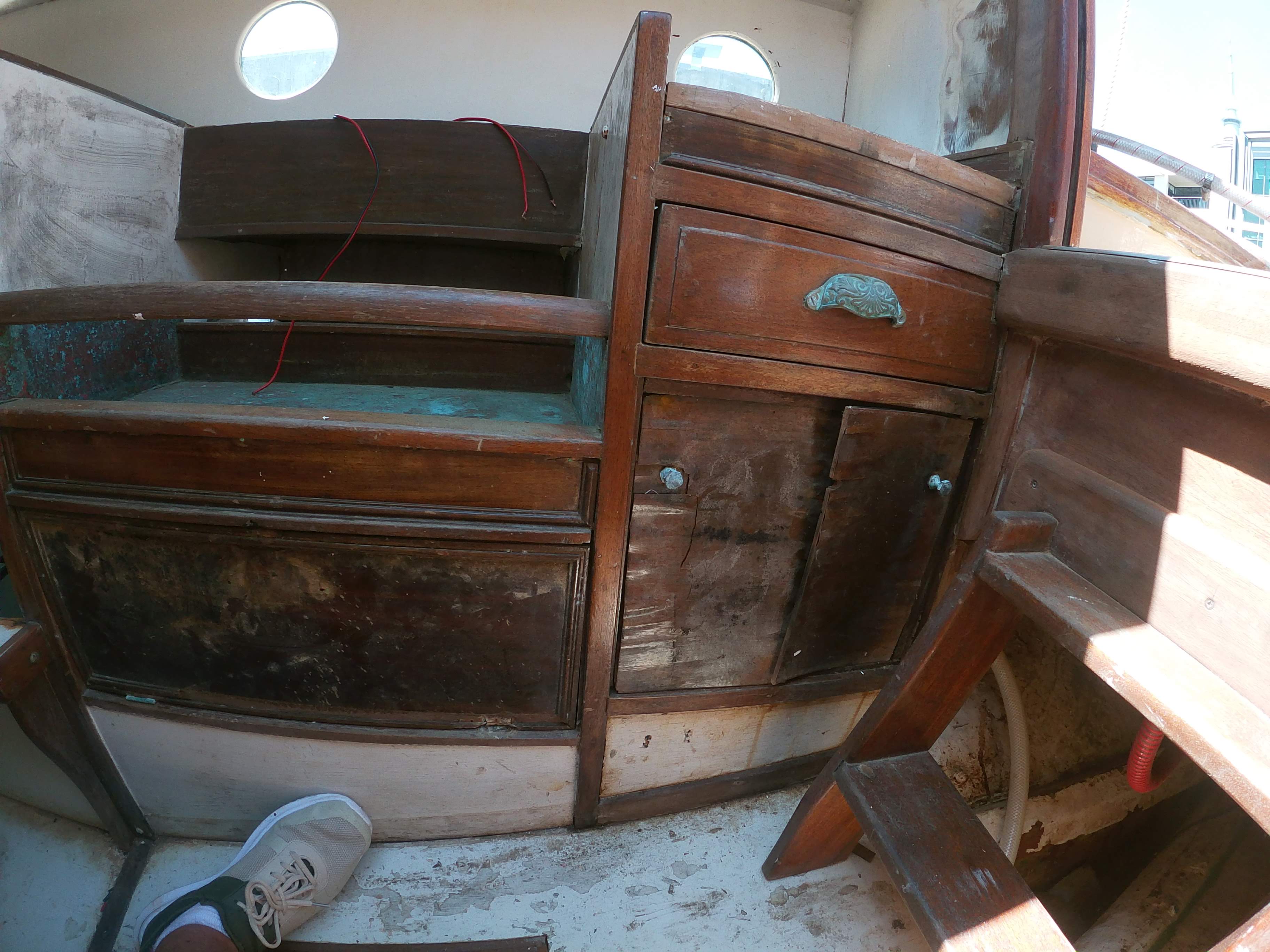
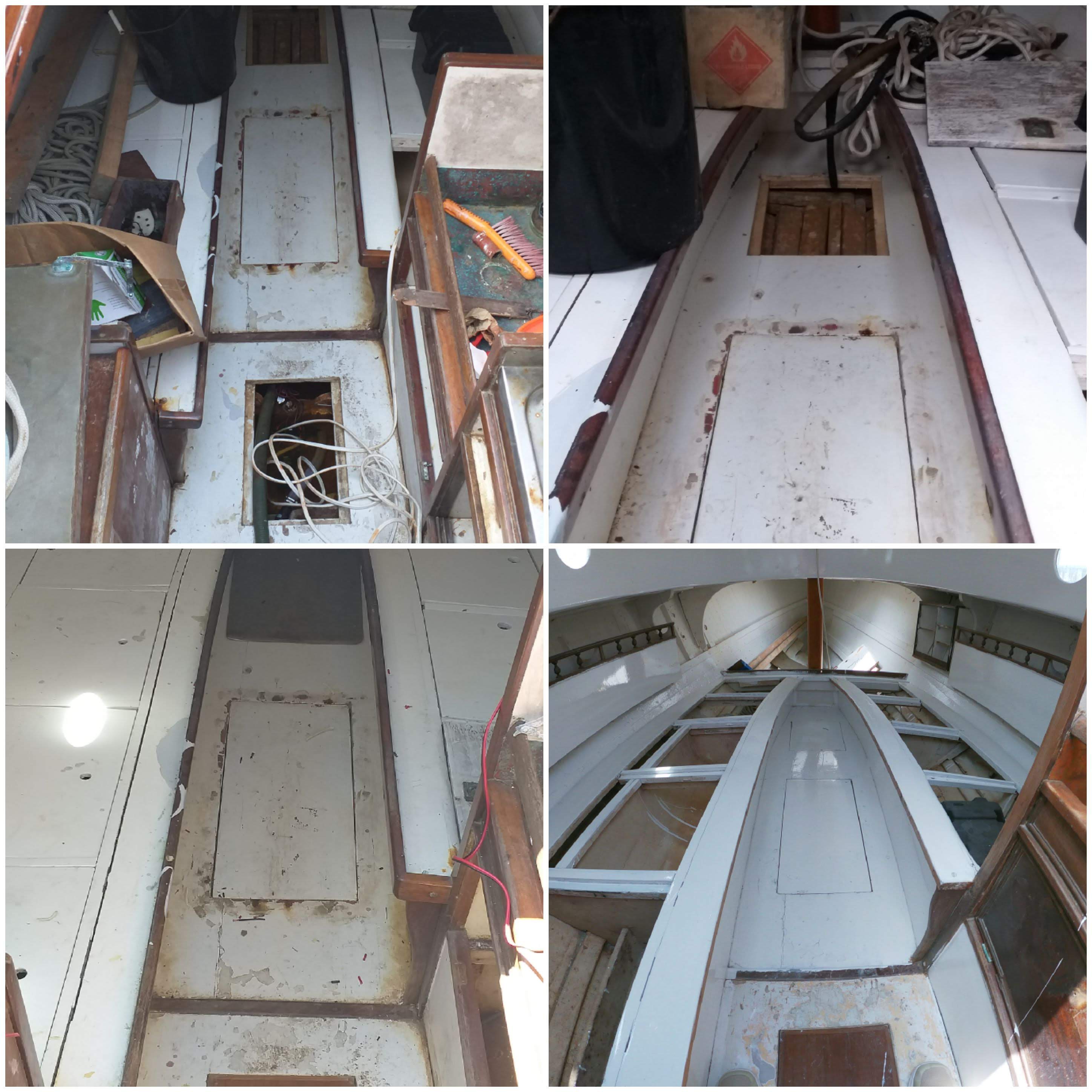
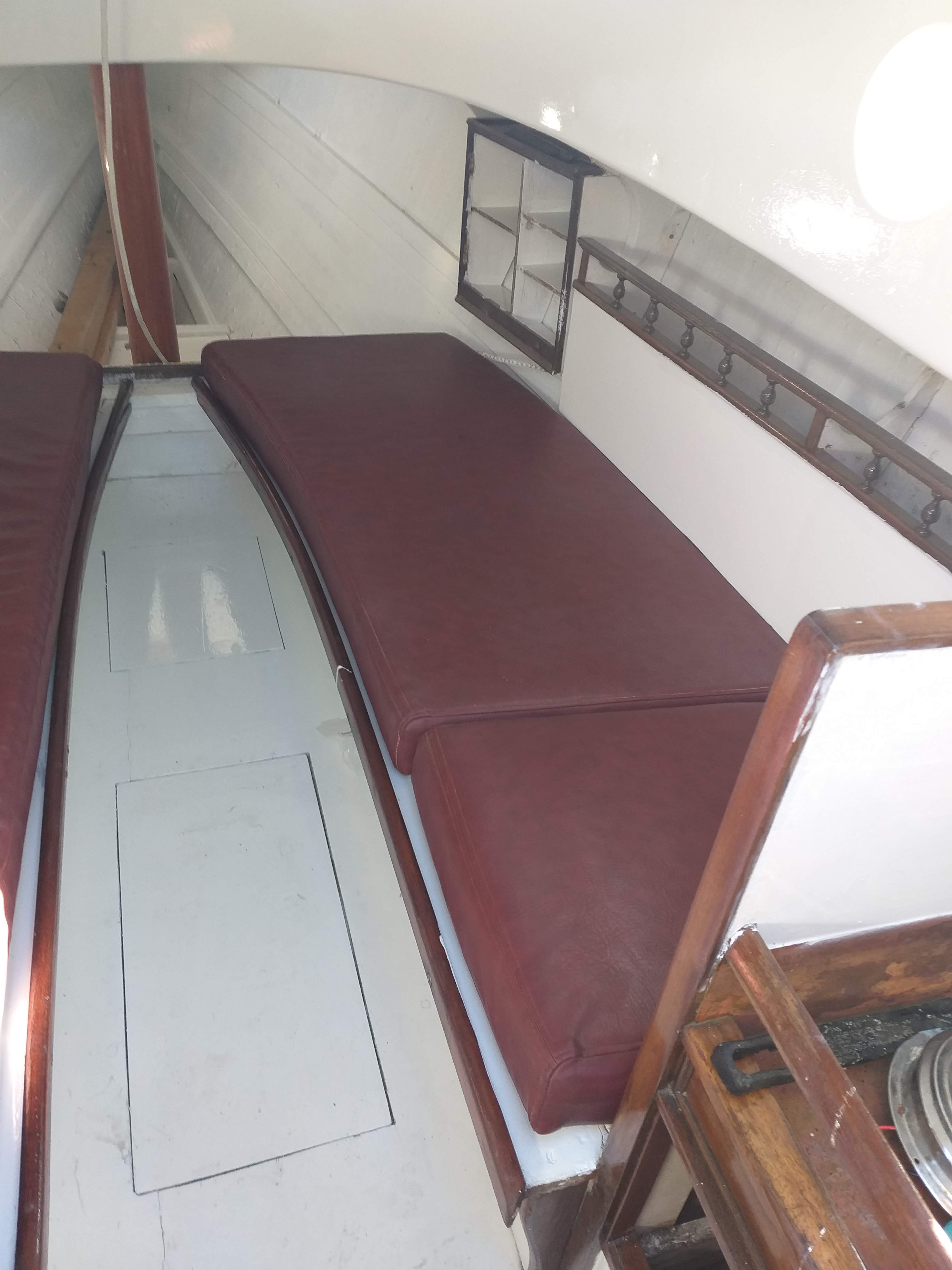
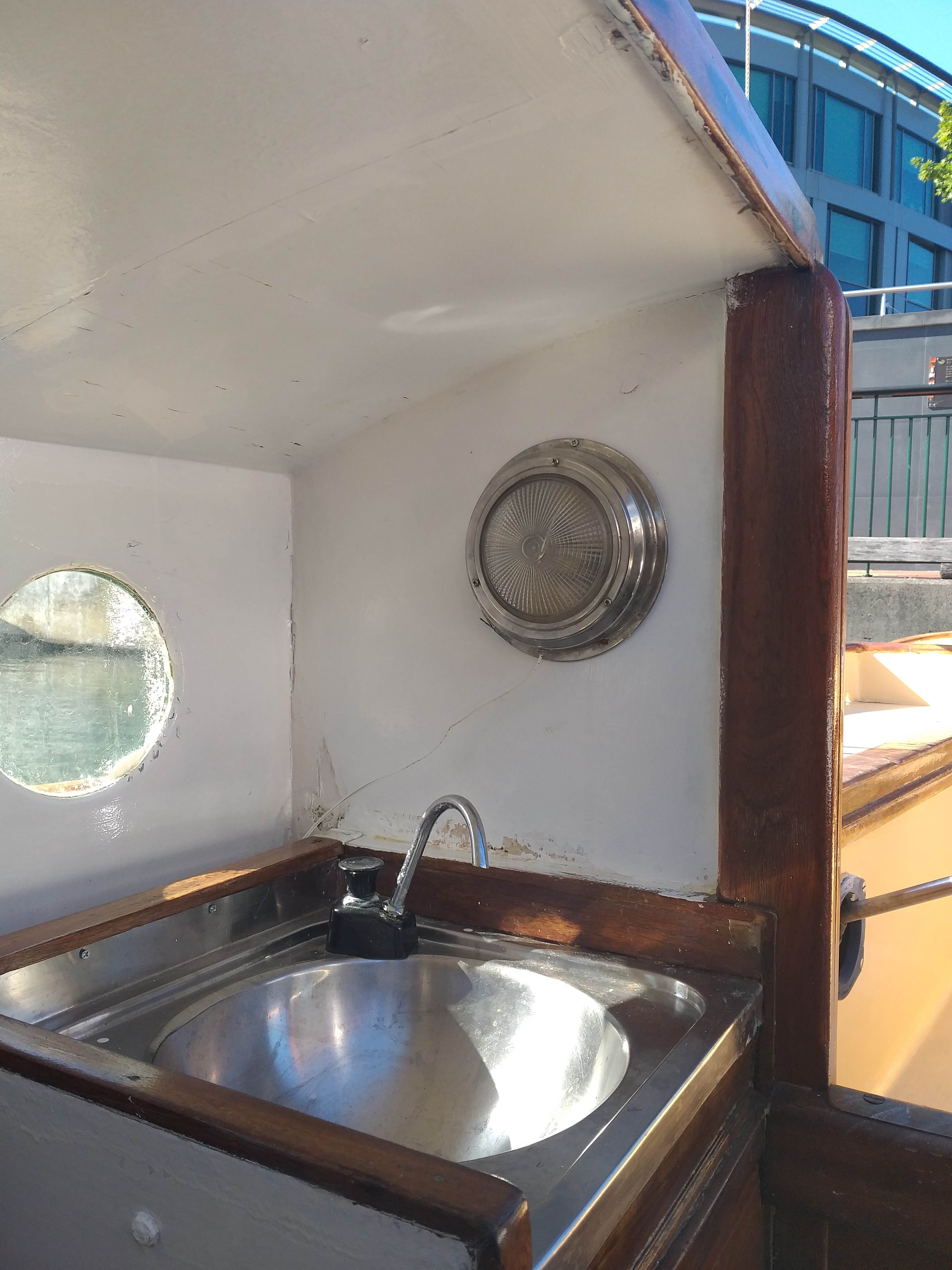
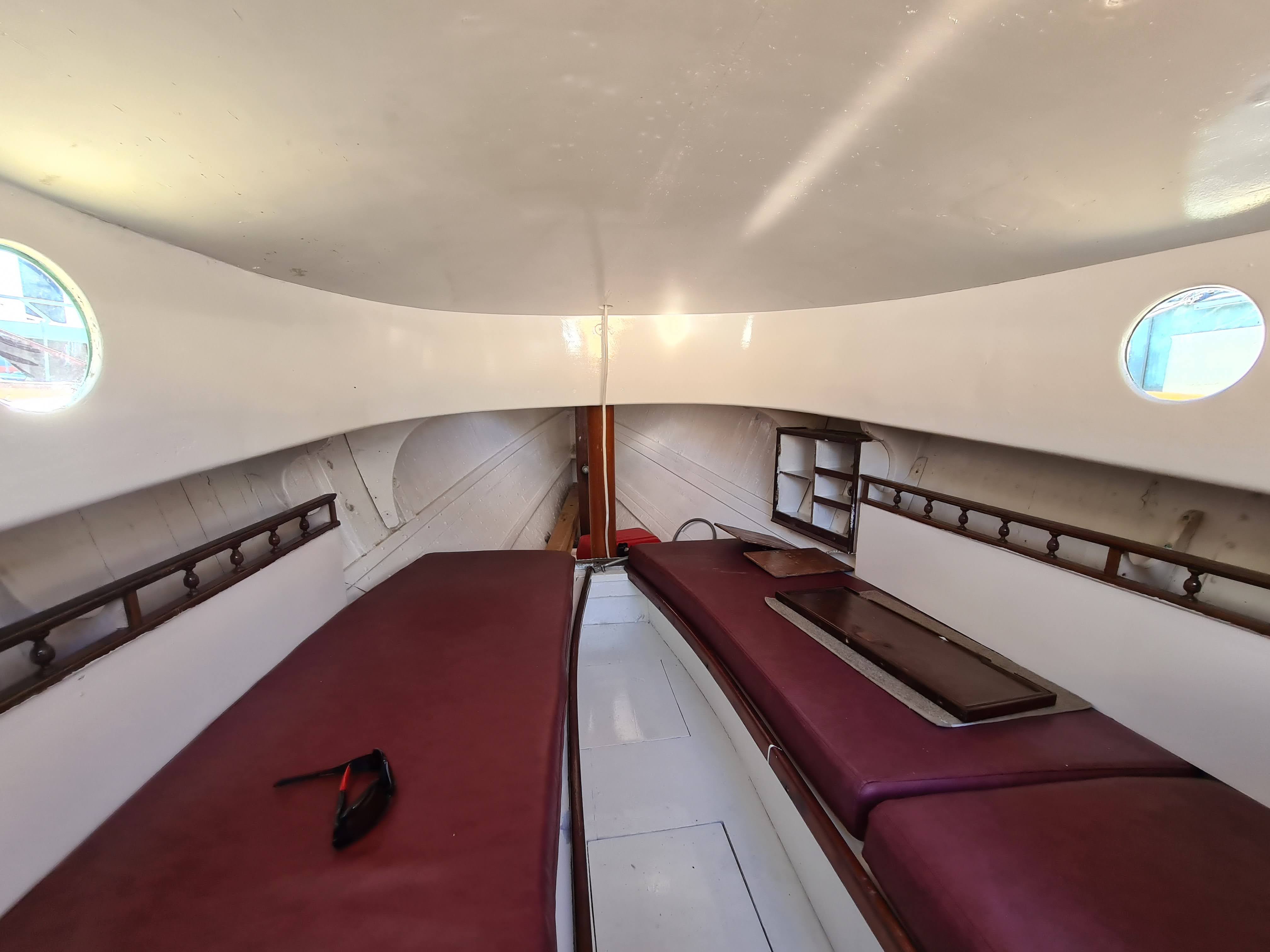
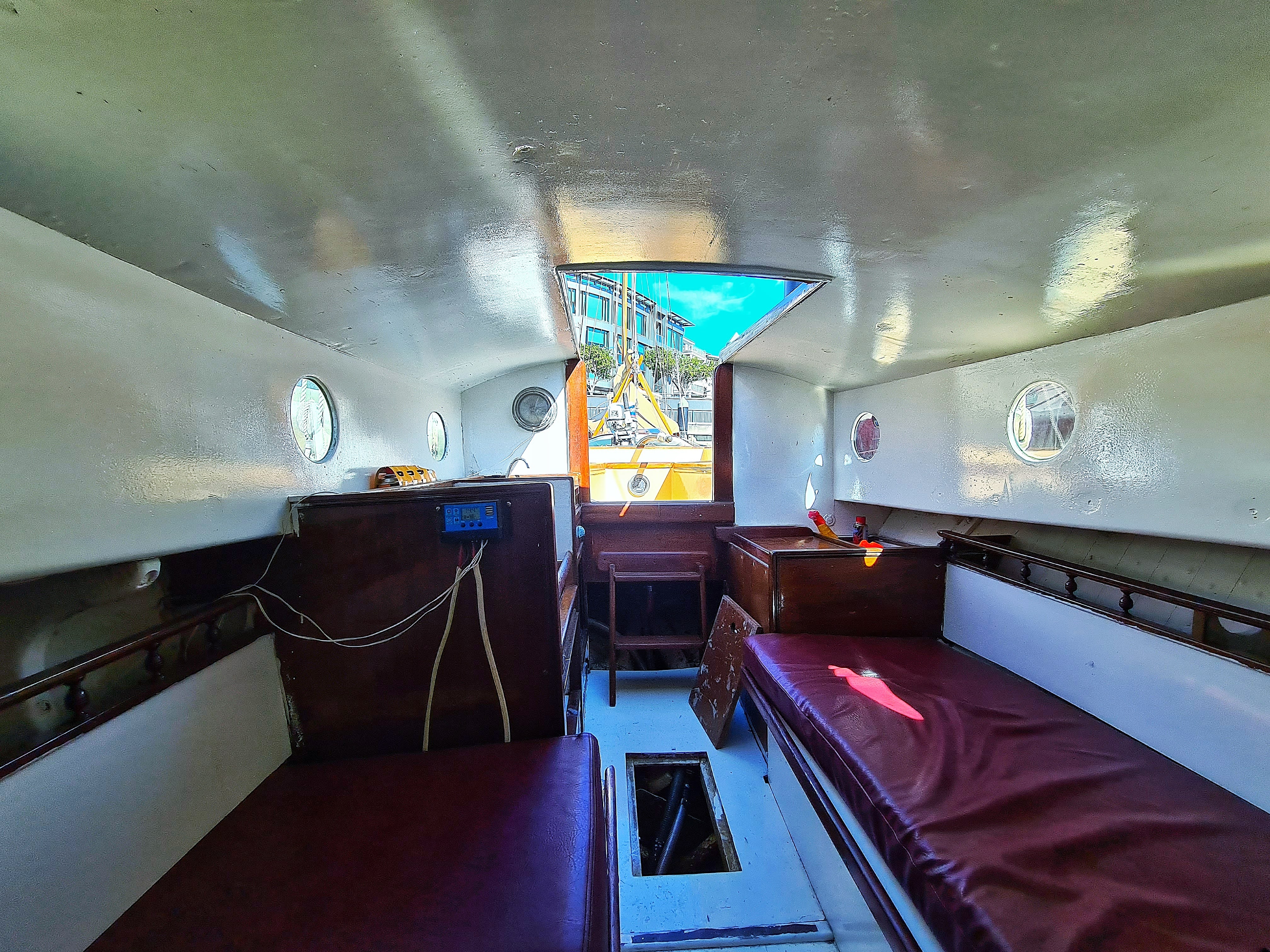
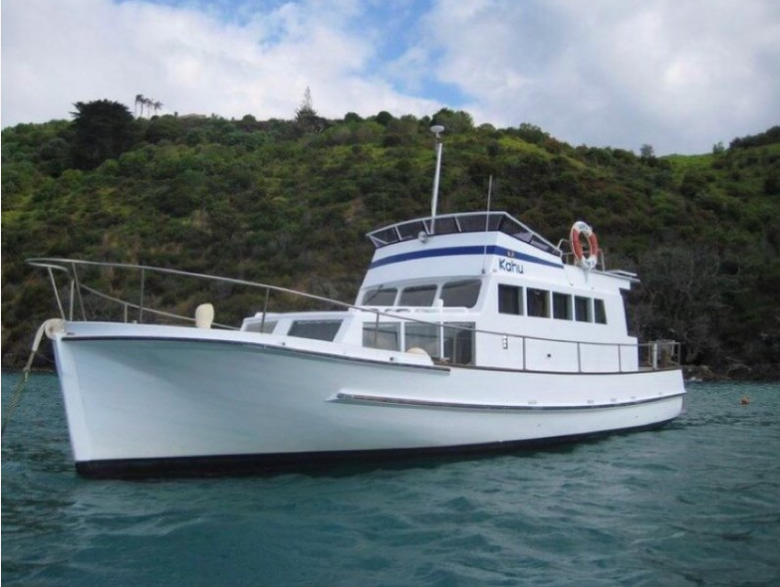
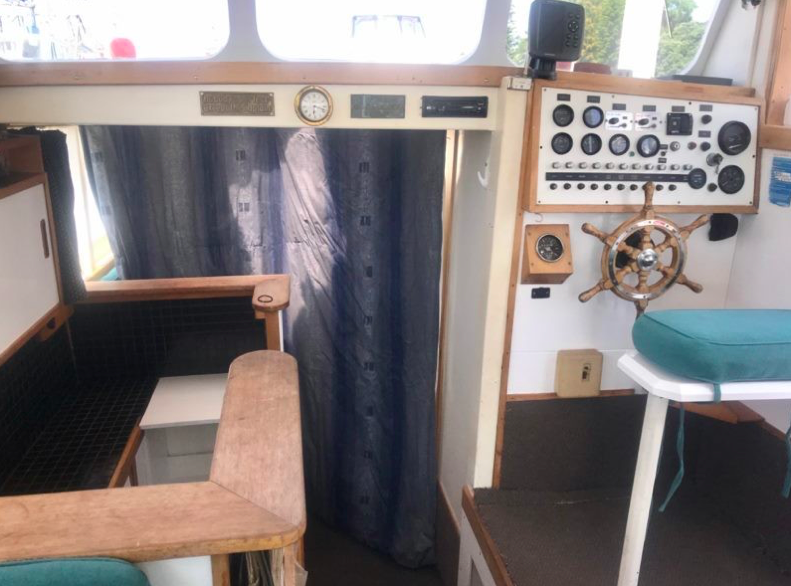
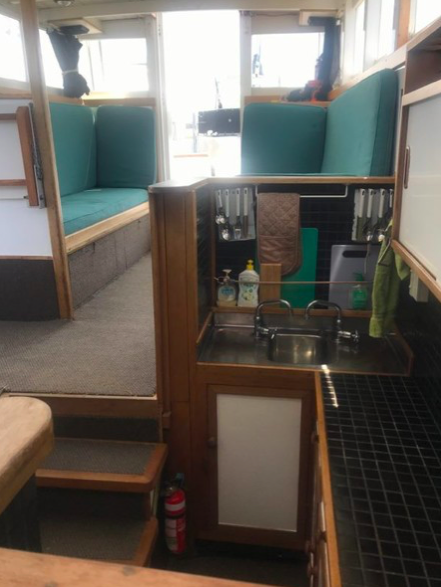
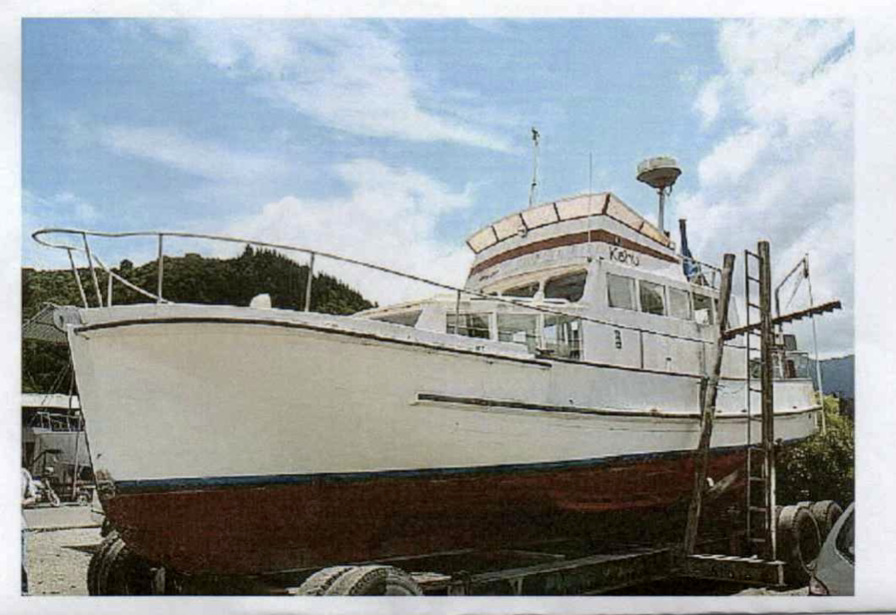
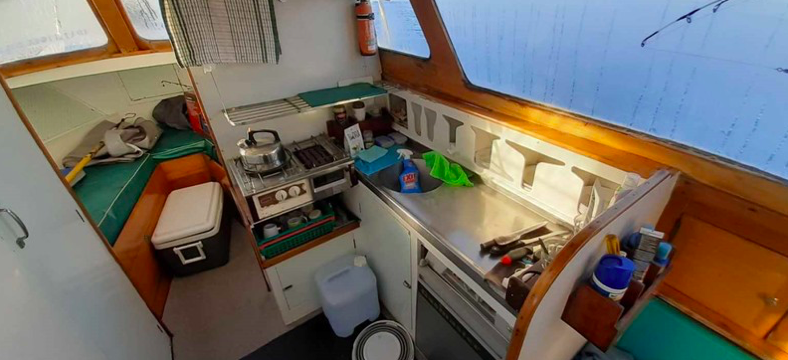
KAHU – A Peek Down Below Kahu made a brief WW appearance on WW back in 2016 and 2018 (link below), back then in the chat section, it was suggest she may have been built by either of these two possible yards – Strongman of Coromandel and Pearson of Golden Bay, Nelson.
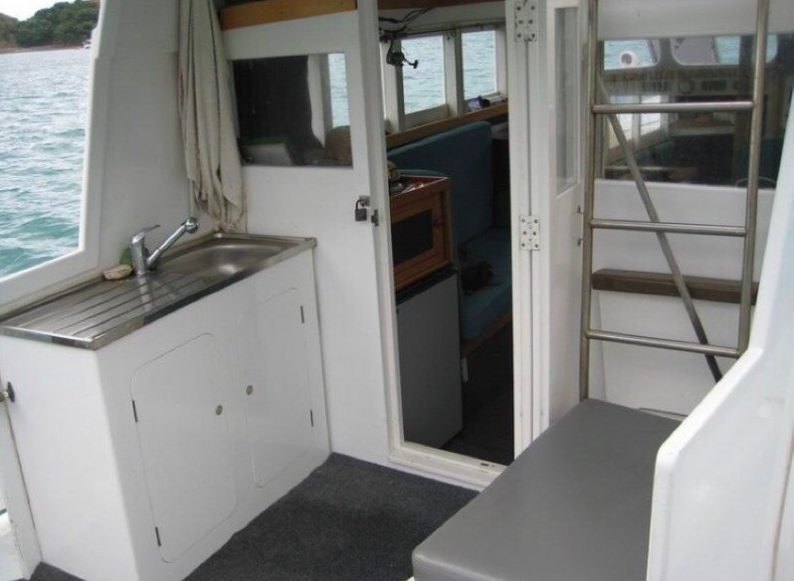
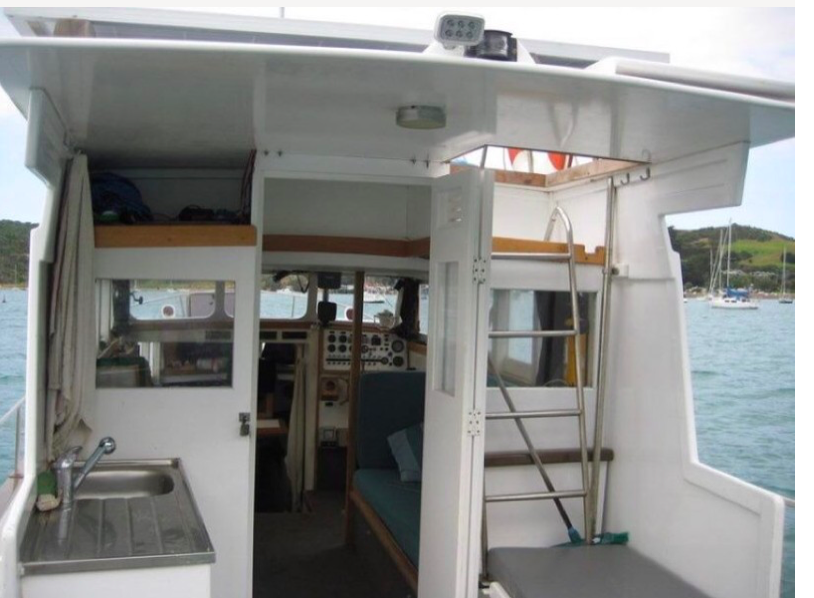
Now thanks to a tme listing and Ian McDonald we get to have a peek down below. She is powered by a 120hp Ford diesel. Anyone care to add there view of the builder?
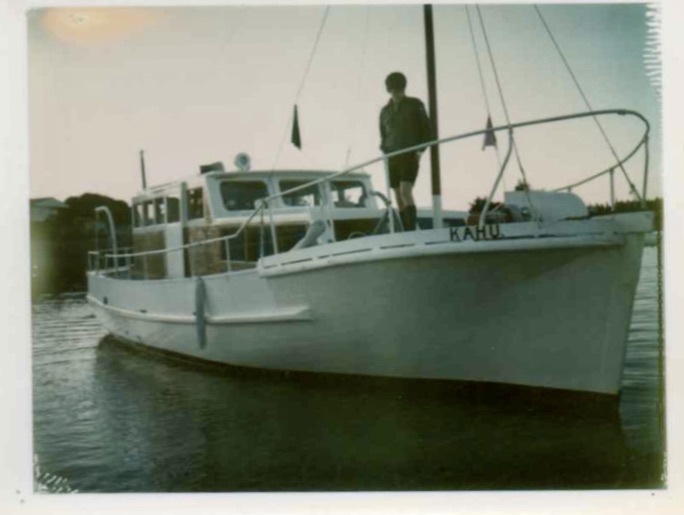
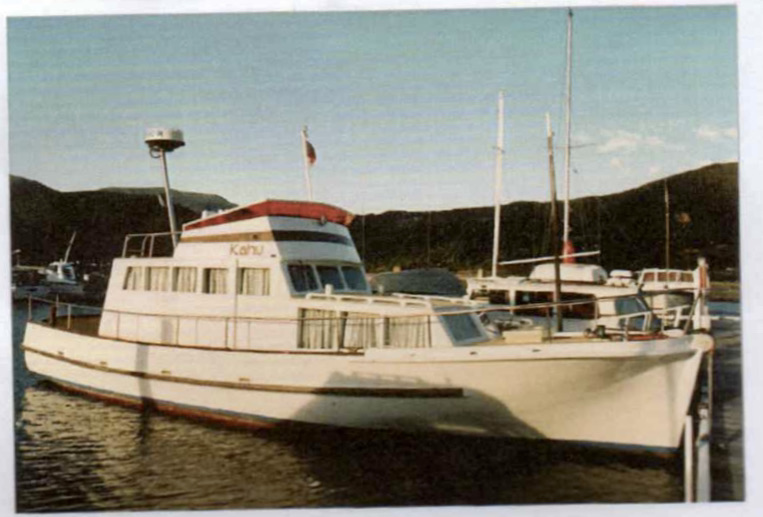
Input from Phil Vining – The good ship Kahu brought back some memories for me including an old photo that was taken around 50 years ago. It shows a young Phil Vining in college uniform on the foredeck of Kahu when my father Dick Vining travelled to see the boat in Mapua which is not far from Nelson. Kahu was for sale at the time and dad was looking at buying her. For whatever reason he did not go ahead but being a mad keen boatie from an early age I have kept a selection of photos over the years. Probably around 10 years later I started Vining Shipbrokers Ltd which kept me very busy for the next 35 years … now retired but still messing around in boats and helping people out where I can. During my time selling boats we had Kahu listed twice. The middle photo shows her following a major refit which was carried out during the early 1980’s when she was refastened, a new 120hp Ford diesel motor installed, rewired plus new galley, squabs etc. The third photo taken during 2009 shows her in a run down condition in Havelock – at that time we sold her to to an Auckland buyer and she was trucked North. I can see from the latest photos that she has been refitted again and looks in good nick. Our detail sheets from that period show her as being design & built by Golden Bay boatbuilder J Pearson. She was launched around 1958/1960 and the hull is planked white pine. Hope this is of interest to you and your readers. Love your site and the great work you do keeping the history & interest going around wooden boats.
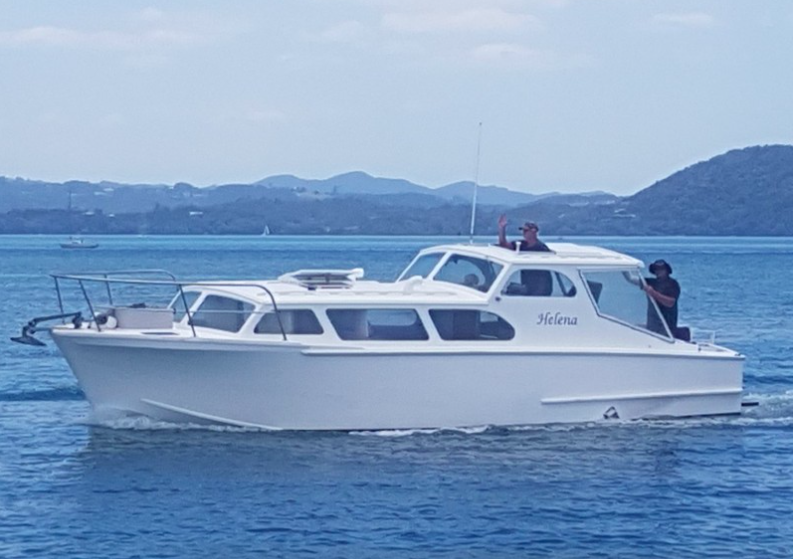
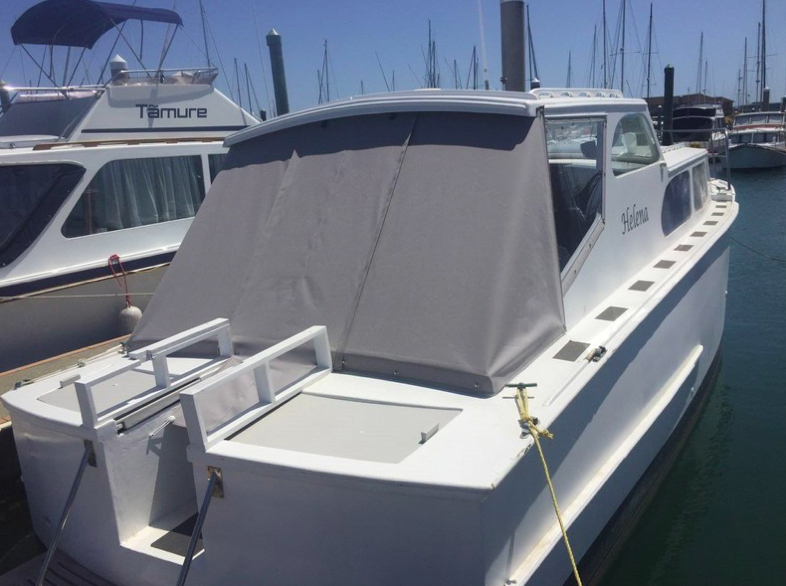
HELENA This 1960 36′ Shipbuilders launch just popped up on tme. Built with single skin kauri planks, she is powered by a 120hp Ford diesel, that comfortably pushes her along at 7.5 knots. From the photos she appears to be presented in good condition.
Do we know anything about Helena’s past and what she has been up to for the last 60 years?
HELP WANT – A Slow Boat To China
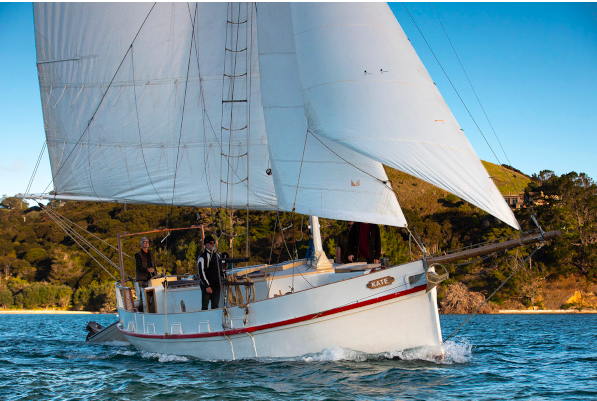
Well not quite – but the ‘Waiheke Working Sail’ group are planning on taking – Kate, their 1898 trading cutter to next weekends Mahurangi Regatta and at the moment she is sans an engine so subject to wind and tide, would be most open to a tow. So any woodys that have a a few share hp, and would like to help out – contact Bernard Rhodes – mob. 027 228 1334 or email bernard.rhodes@gmail.com. Pick up would be from Rakino Island 🙂