What is Waitemata Woodys all about?
We provide a meeting point for owners and devotees of classic wooden boat. We seek to capture the growing interest in old wooden boats and to encourage and bring together all those friendly people who are interested in the preservation of classic wooden vessels for whatever reason, be it their own lifestyle, passion for old boats or just their view of the world.
We encourage the exchange of knowledge about the care and restoration of these old boats, and we facilitate gatherings of classic wooden boats via working together with traditionally-minded clubs and associations.
Are you a Waitemata Woody?
The Waitemata Woodies blog provides a virtual meeting point for lovers of classic and traditional wooden boats. If you are interested in our interests and activities become a follower to this blog.
The Vessels Featured
The boats on display here (yes there are some yachts included, some are just to drop dead stunning to over look) require patrons, people devoted to their care and up keep, financially and emotionally . The owners of these boats understand the importance of owning, restoring and keeping a part of the golden age of Kiwi boating alive. The boats are true Kiwi treasure to be preserved and appreciated.
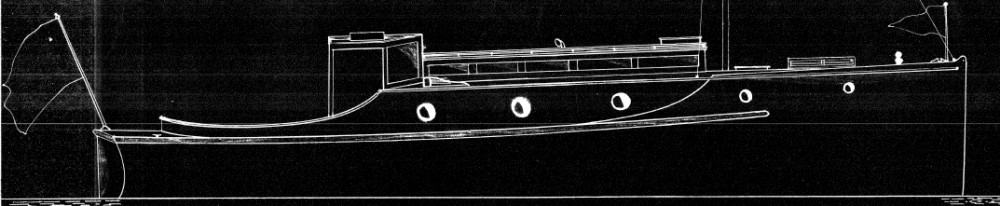
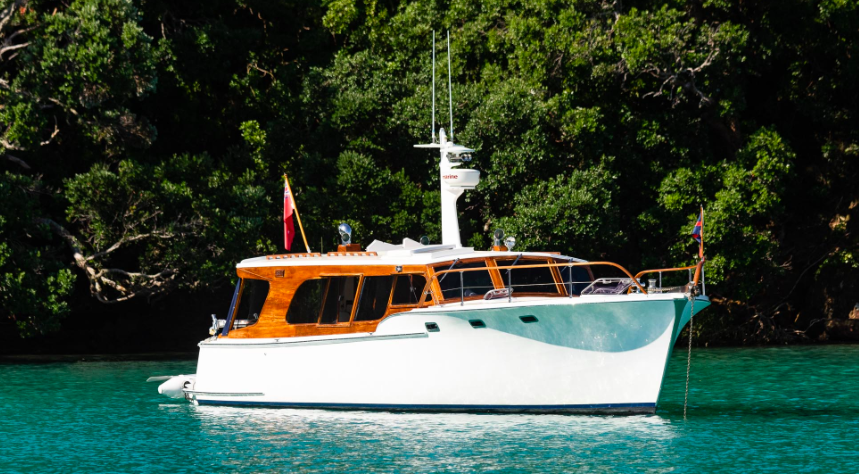
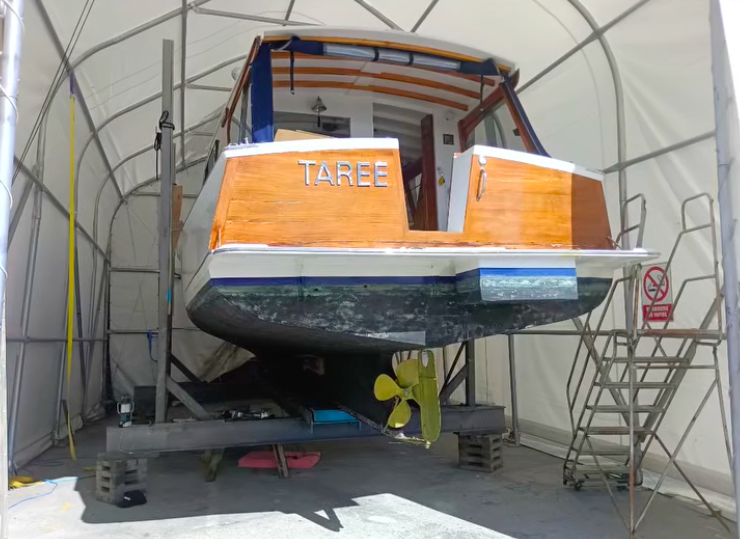
TAREE – OWEN WOOLLEY CLASSIC LAUNCH RECEIVES SOME TLC
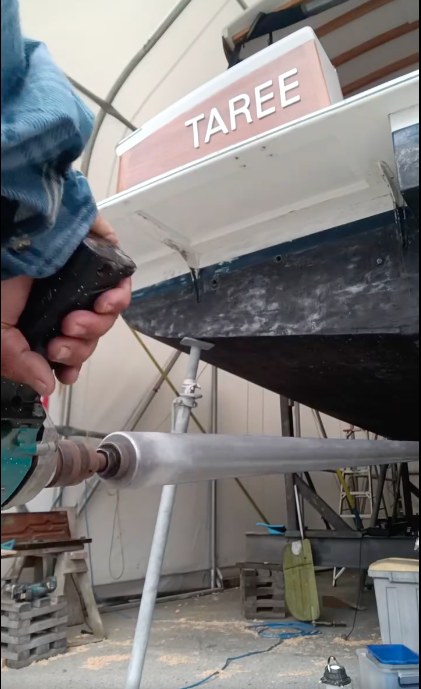
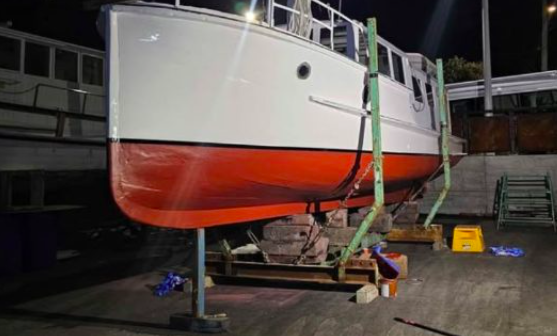
While walking the docks at the recent Classic Woody Boat Show at the OBC I bumped into boatbuilder Colin Brown, who mentioned the recent work his son-in-law Josh Hawke (Kauri Classics ) had undertaken on the 1966 36’ Owen Woolley built classic launch – TAREE.
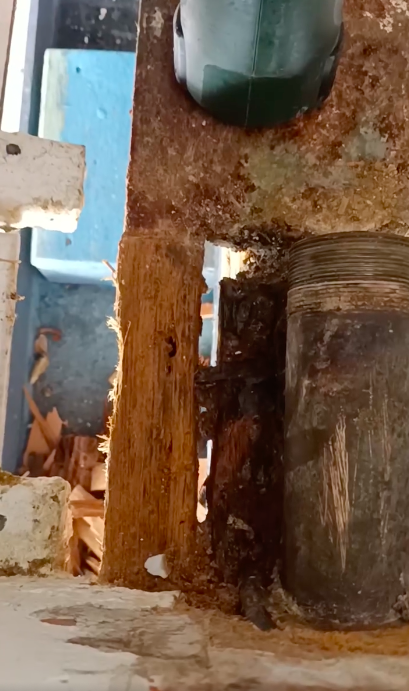
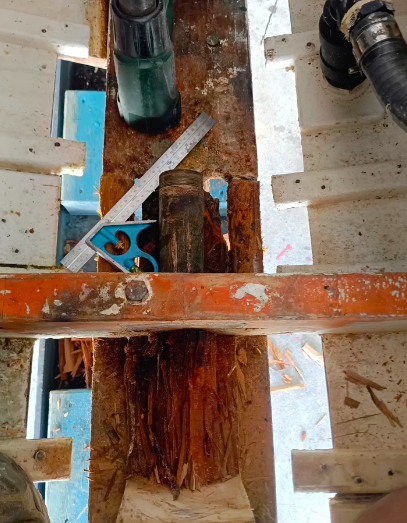
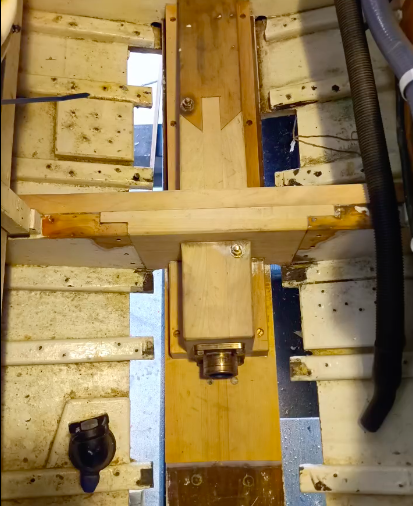
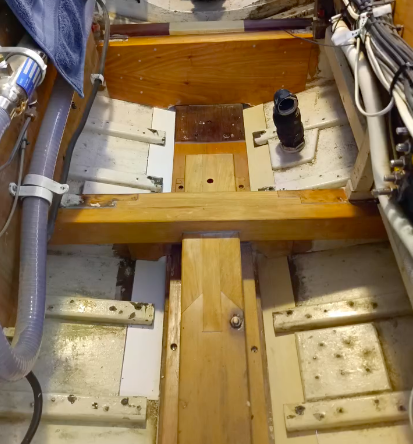
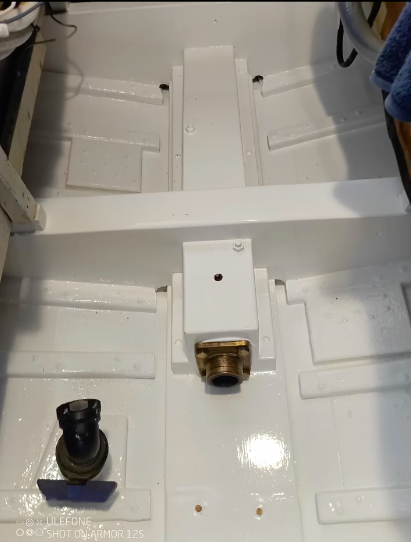
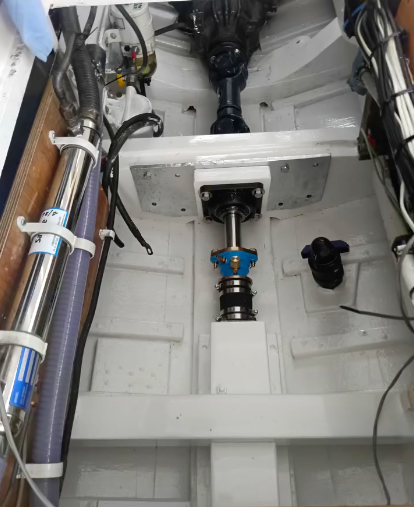
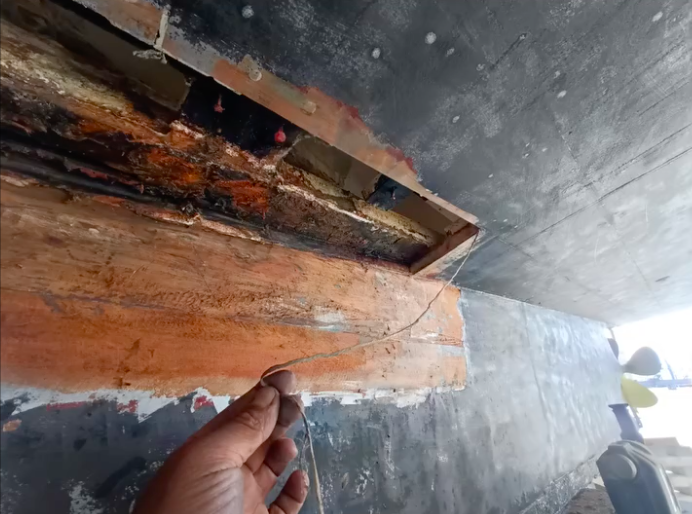
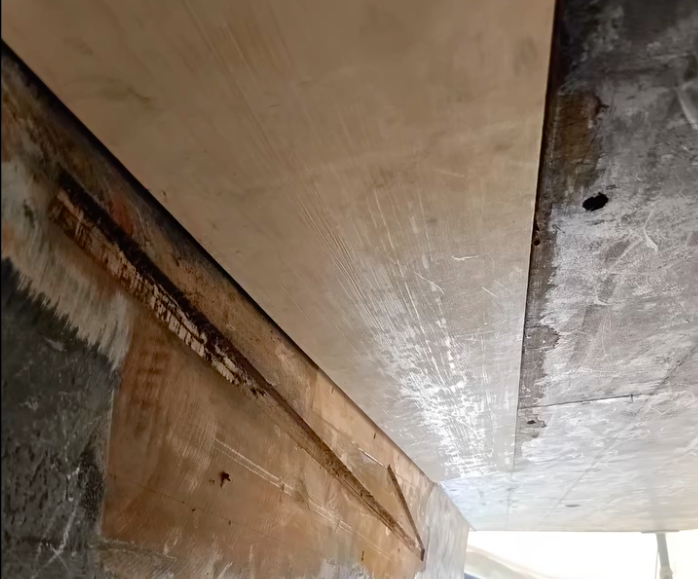
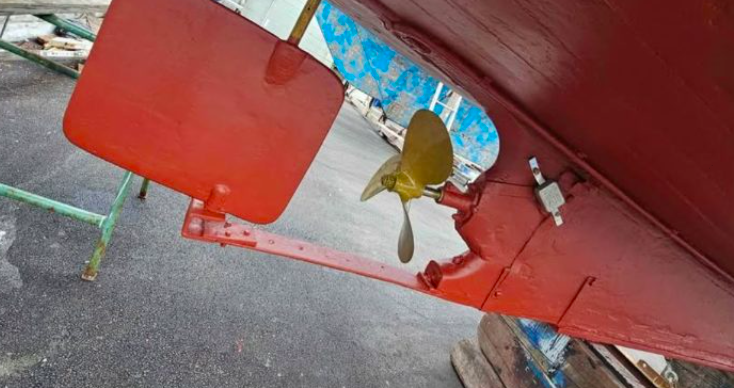
TAREE was in the Kauri Classic shed for work to her running gear e.g. new shaft log and floors + some planking work.
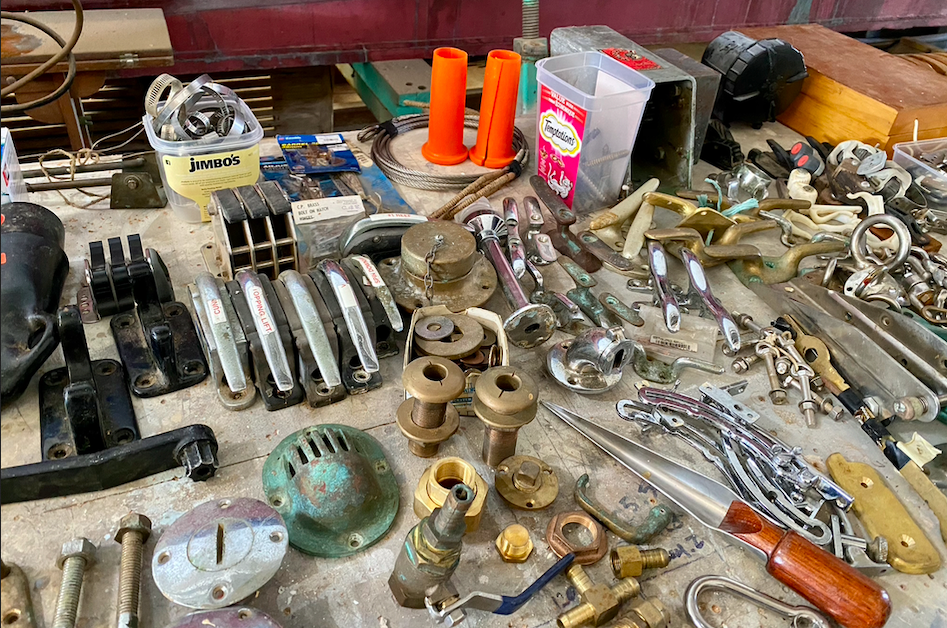
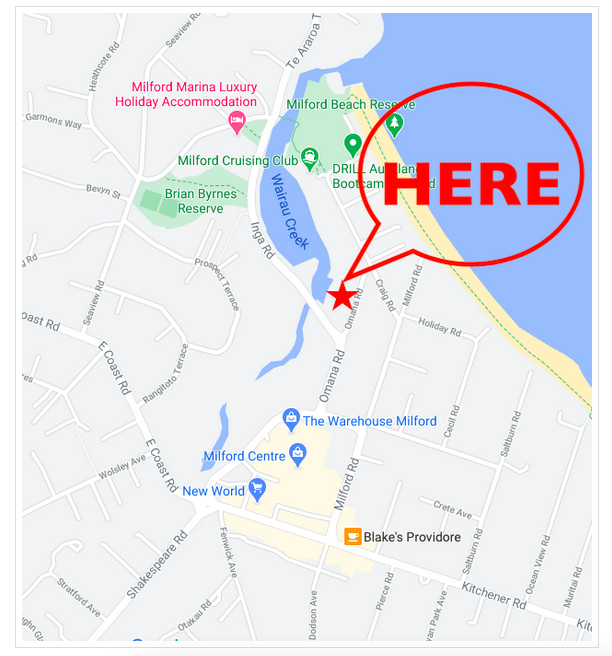
BOAT BOOT SALE TOMORROW (Saturday) AT THE MILFORD SLIPWAY BOAT YARD
We have an impressive number of woodys turning up to off load their excess goods, and given what I know about them, I suspect there will be some real bargains on offer. Remember to bring cash, but I’m sure bank transfers will be fine for larger ($) items.
LEGENDARY EX BIG GAME WOODEN LAUNCH SEEKS PASSIONATE NEW CUSTODIAN
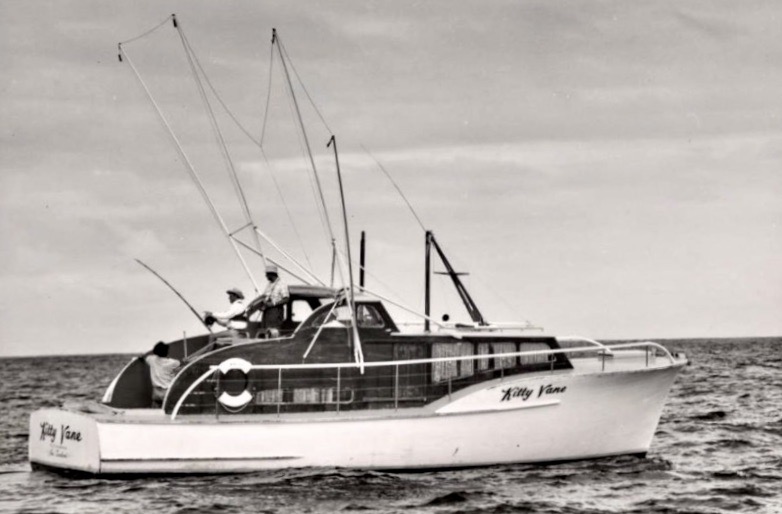
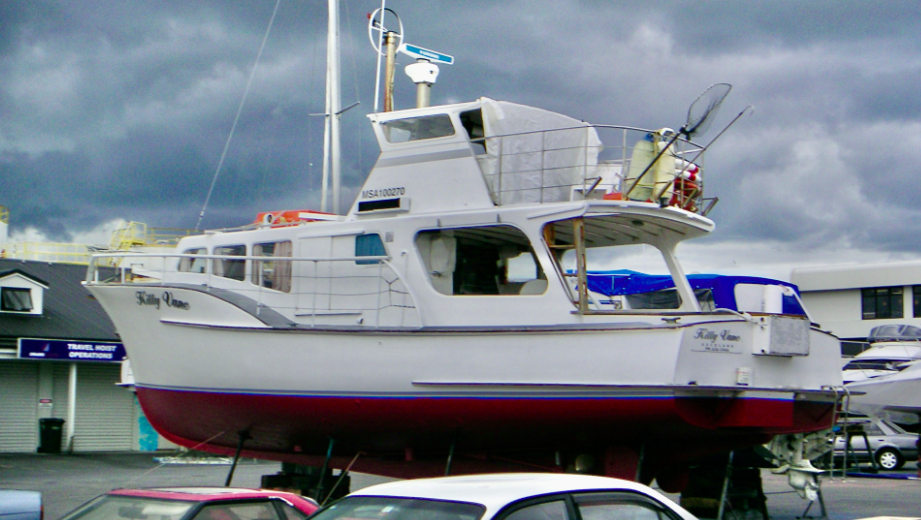
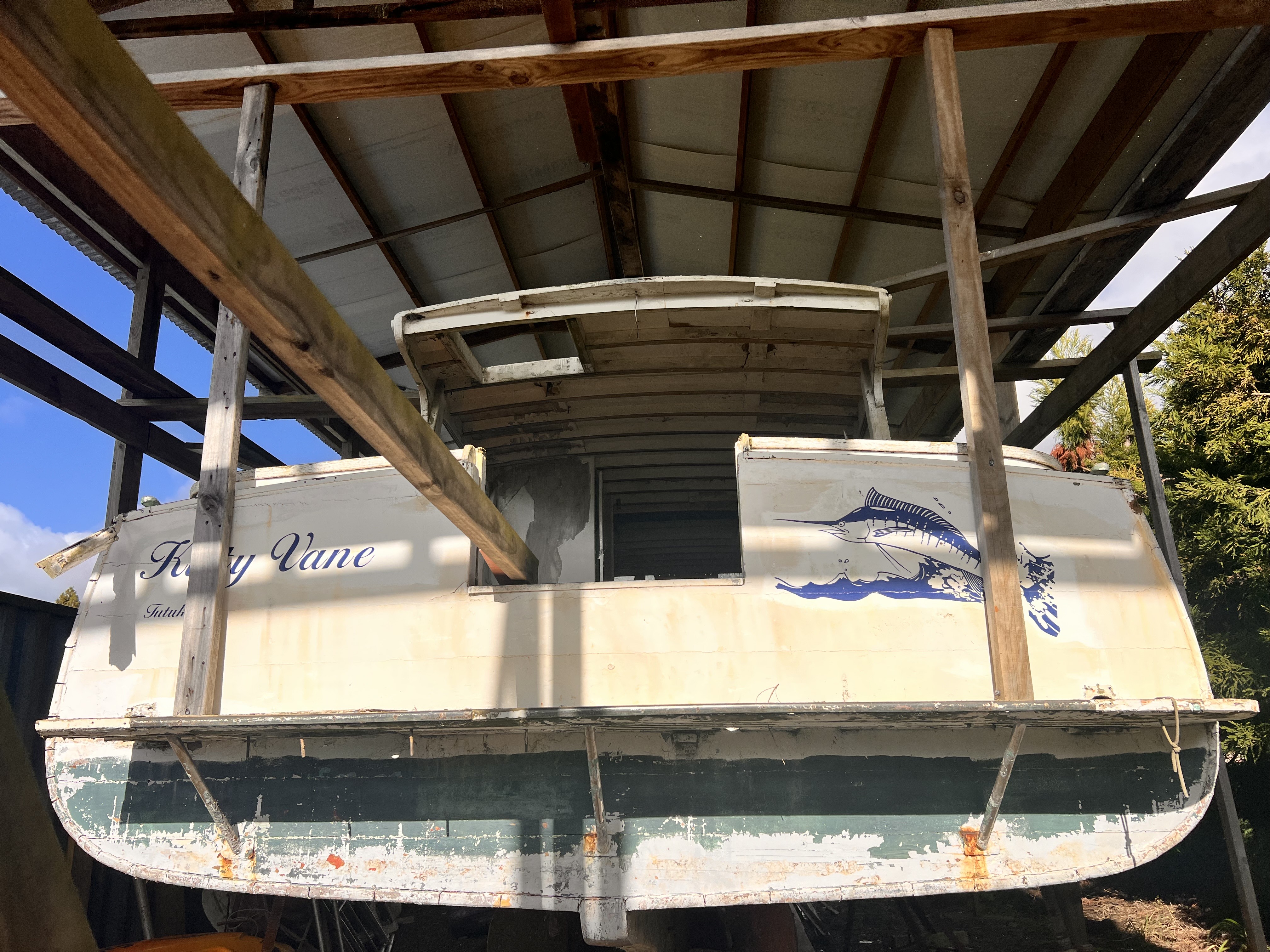
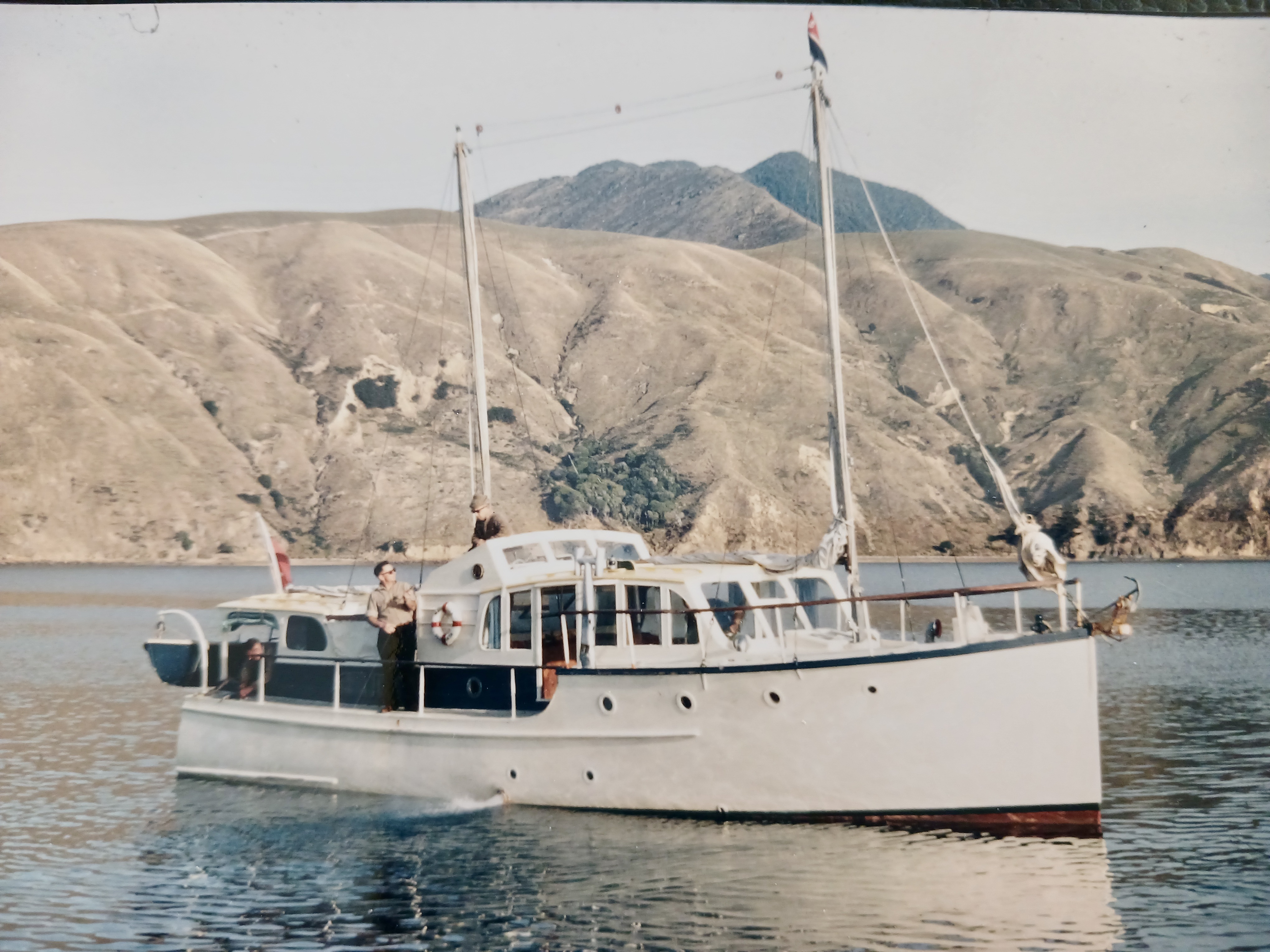
The 42’ ex game boat KITTY VANE has a wonderful back story, starting life in 1956 big game fishing and owned by the Going family in Tutukaka, Northland. She has appeared numerous times on WW, starting back in March 2015 when we reached out to learn more about the craft. Link below to that story and others – lots of chat in the comments section.
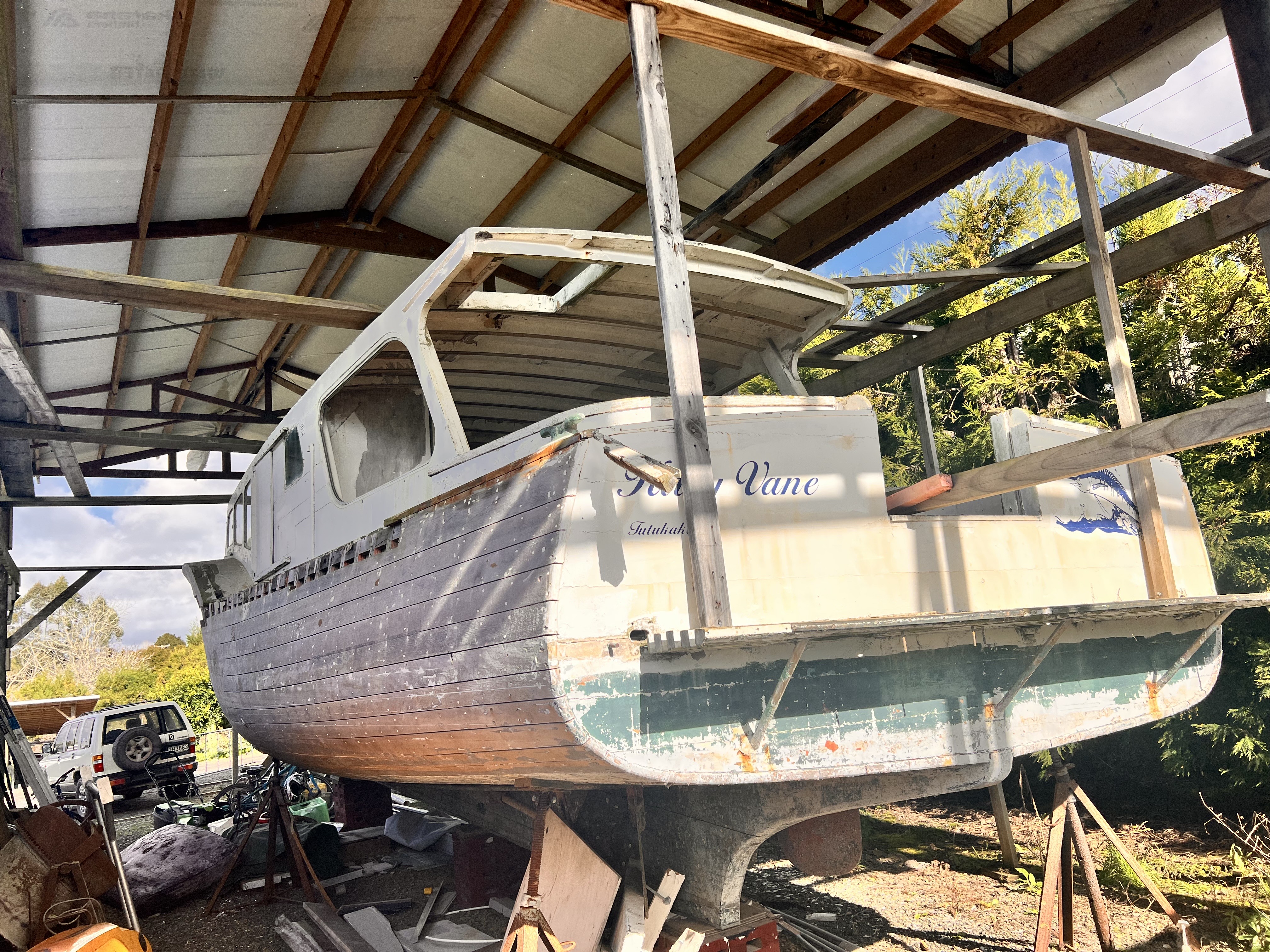
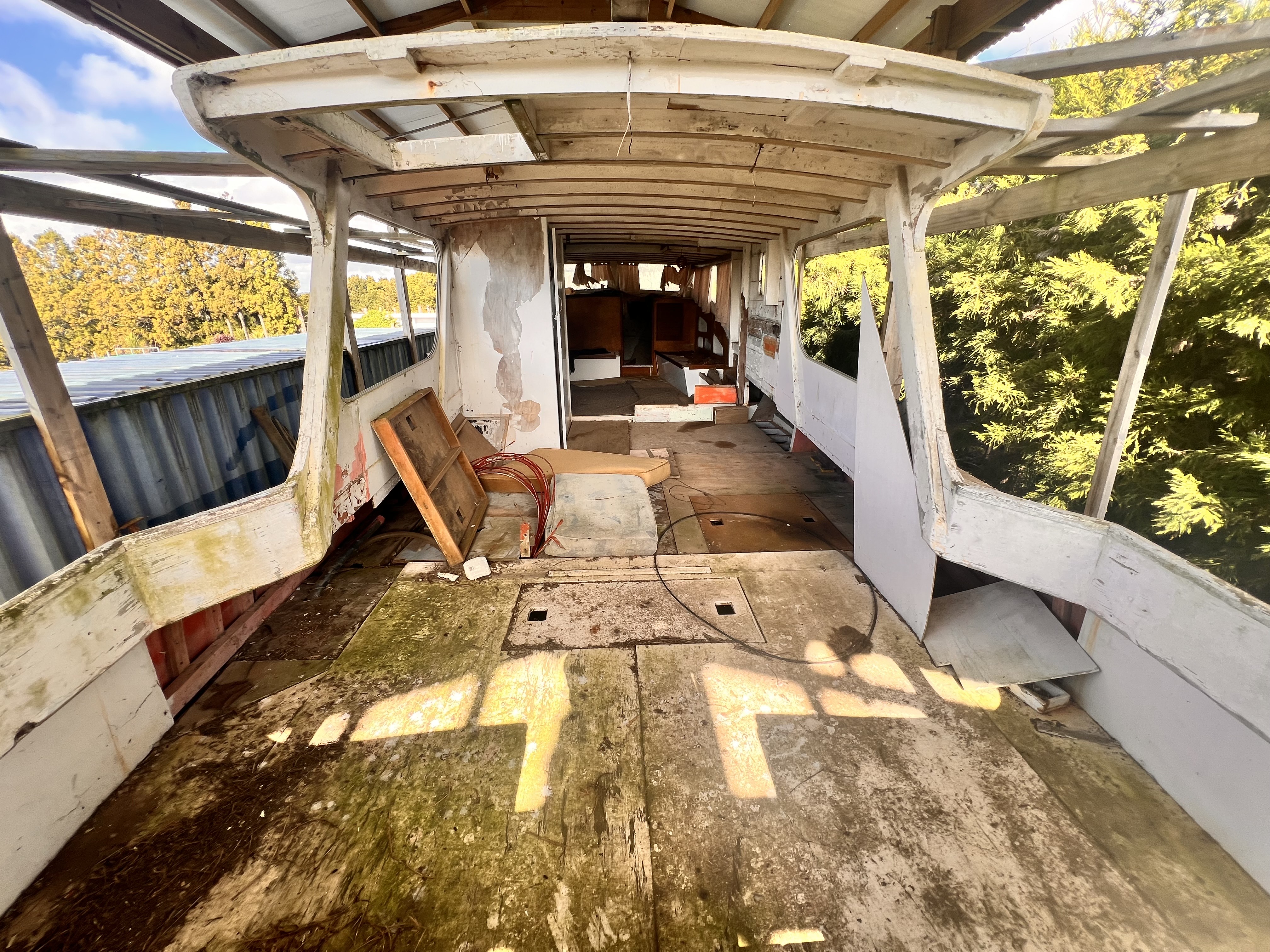
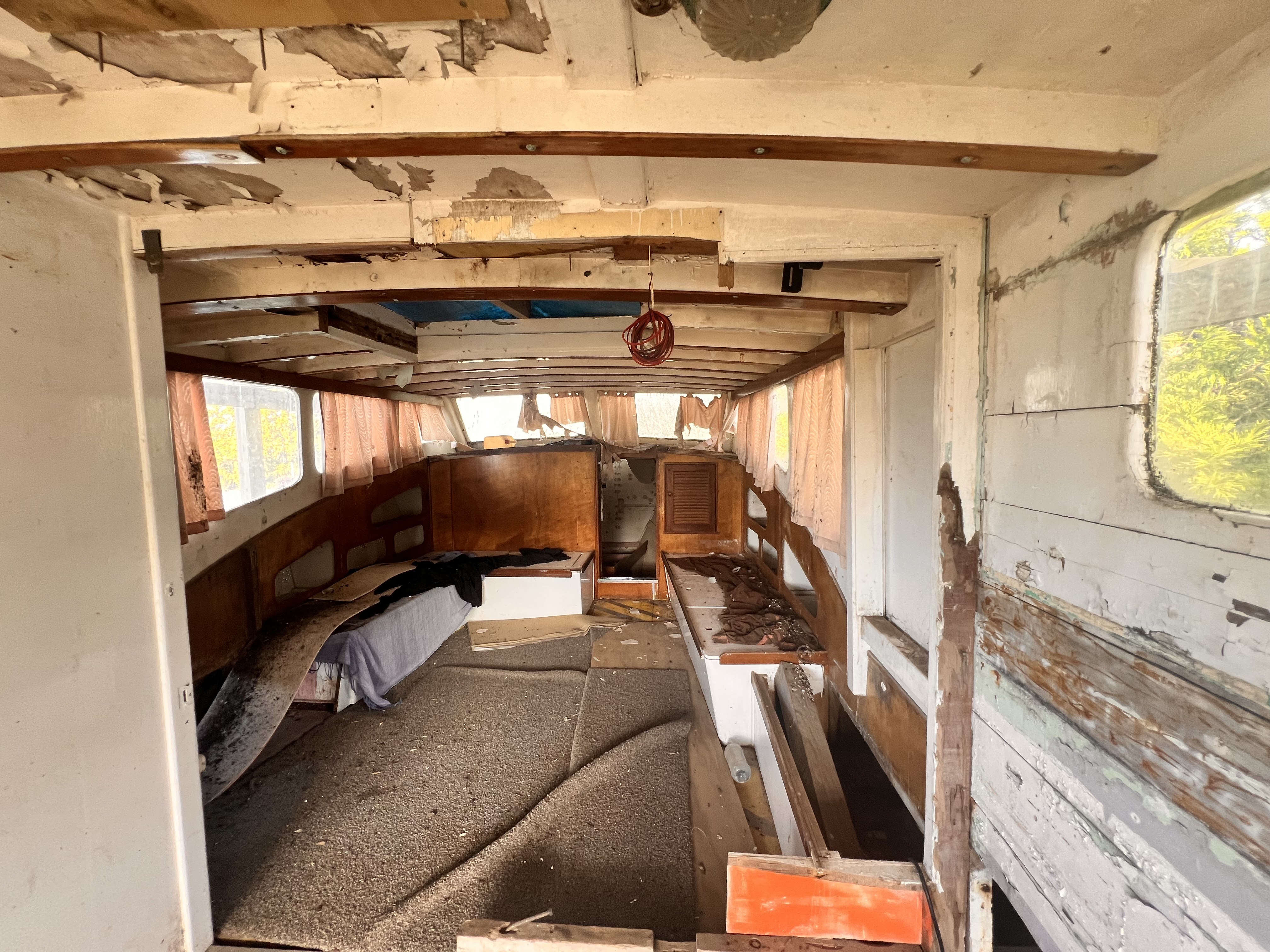
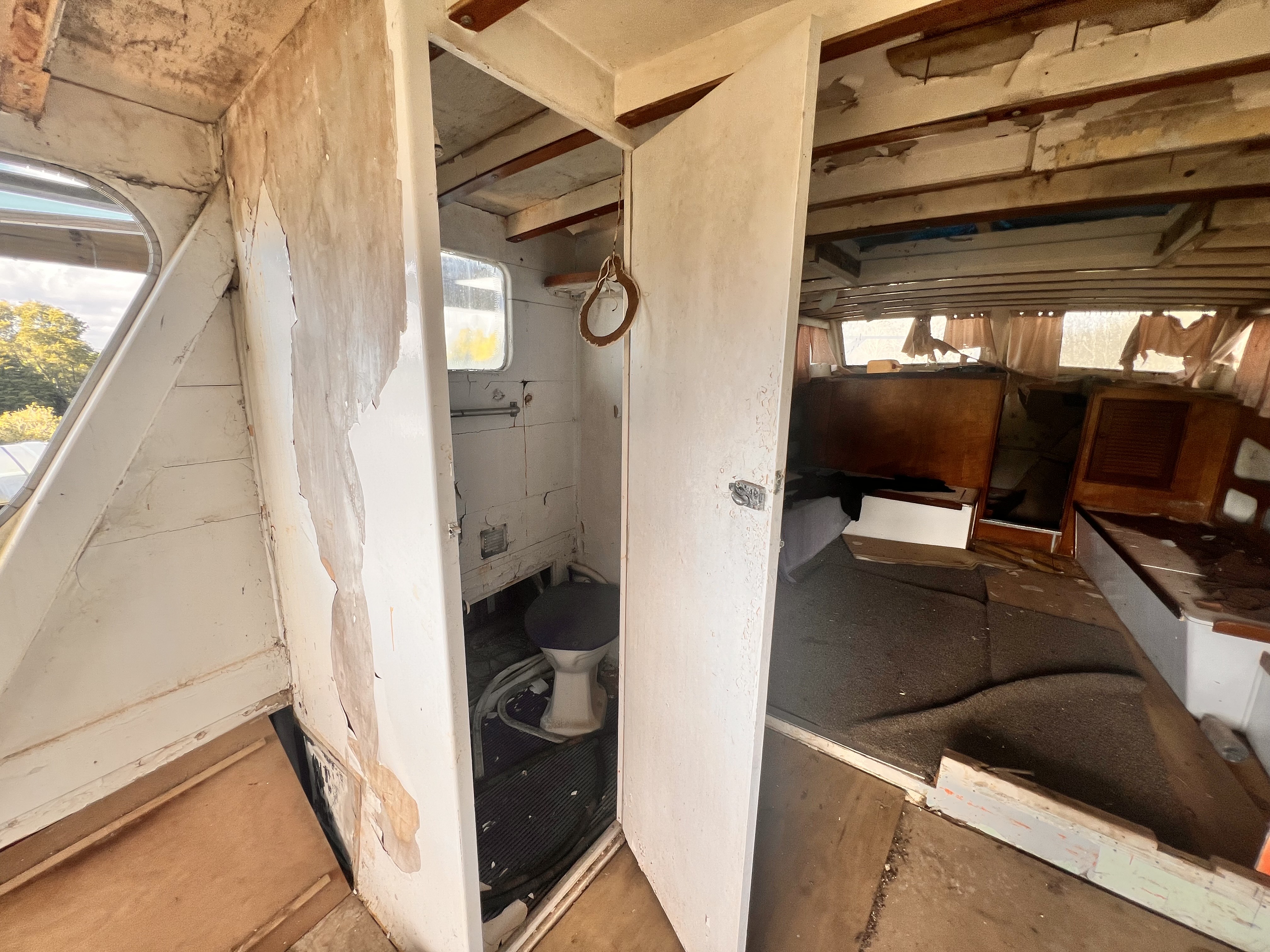
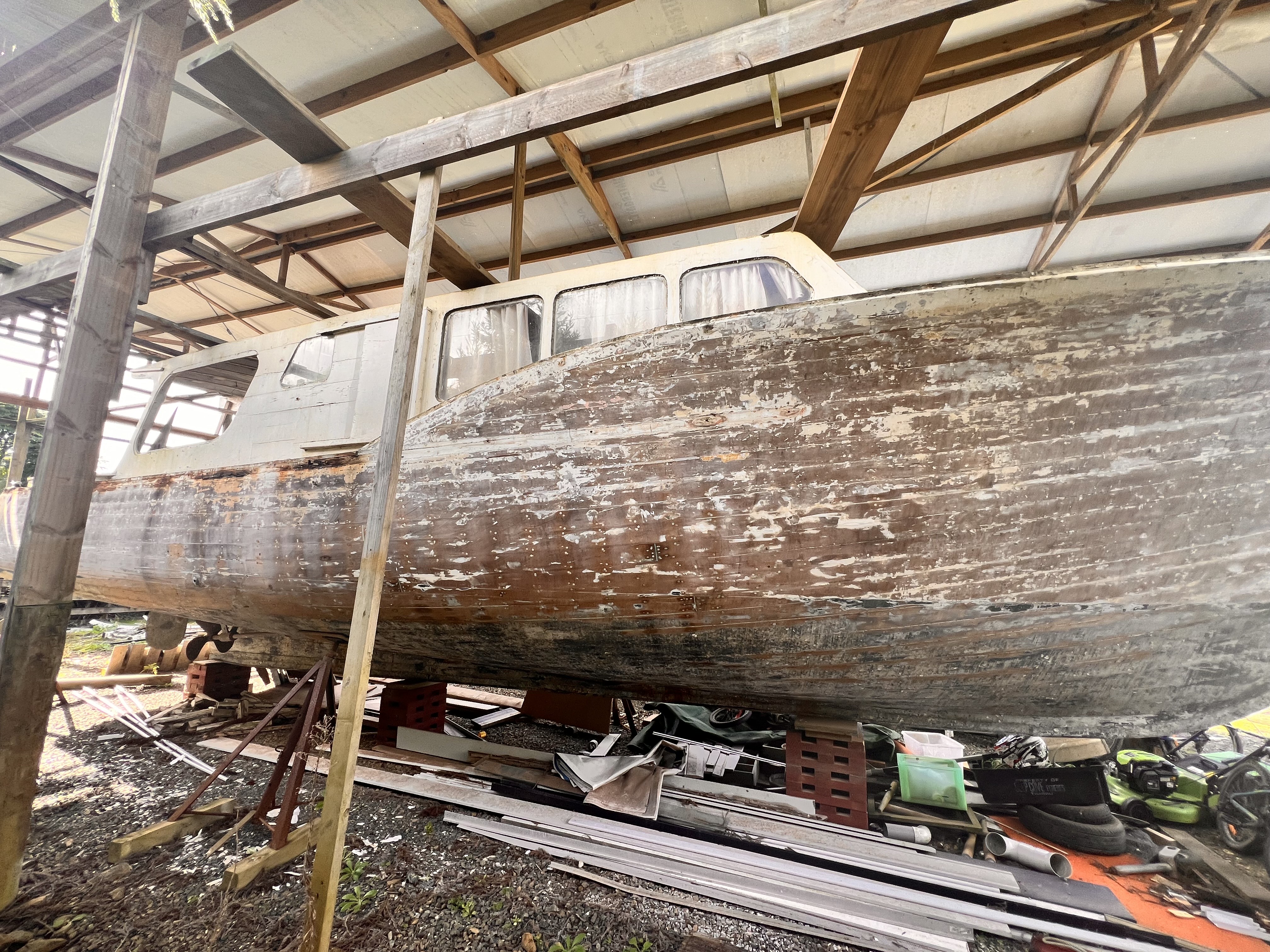
Fast forward to July 2021 and we learnt that KITTY VANE had been purchased in Auckland and returned to Northland with the intention of a full restoration. As can be seen in the above photos the worked has started and most of the hard yards have been ticked off. Unfortunately circumstances have changed and the decision has been made to find a new owner that can complete the restoration. As she sits now, under cover in Kerikeri, KITTY VANE is a blank canvas that her next owner can refit to match their style and budget.
As the architects say when working on heritage buildings – KITTY VANE has good bones and has not been ‘altered’ too much from as built. KITTY ZANE has always been a good looking woody and with a new passionate owner, we look forward to seeing her back on the briny.
Her owners are very realistic in terms of an asking price, so interested parties to initially make contact via michelle@zewnealanddesign.co.nz
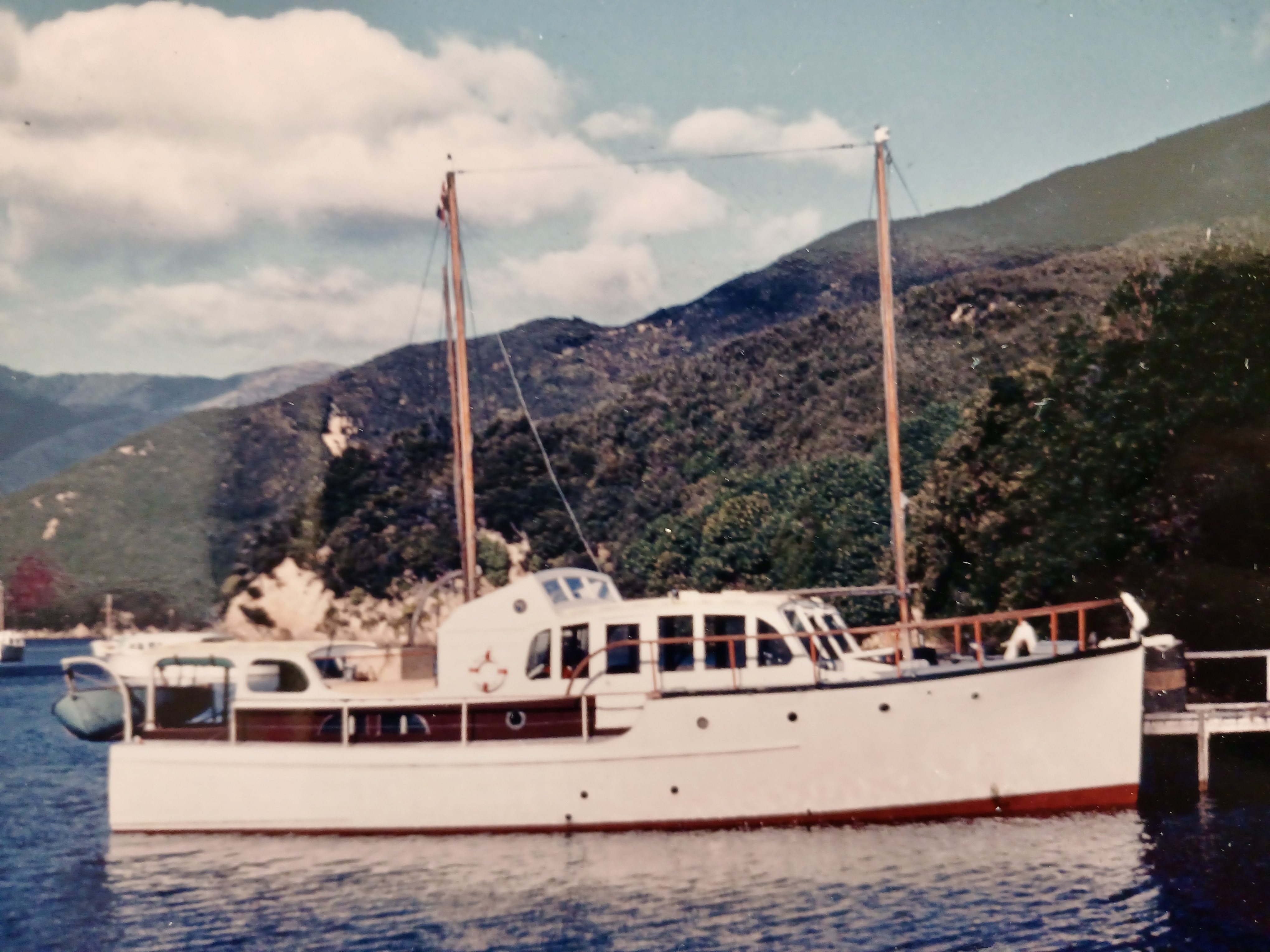
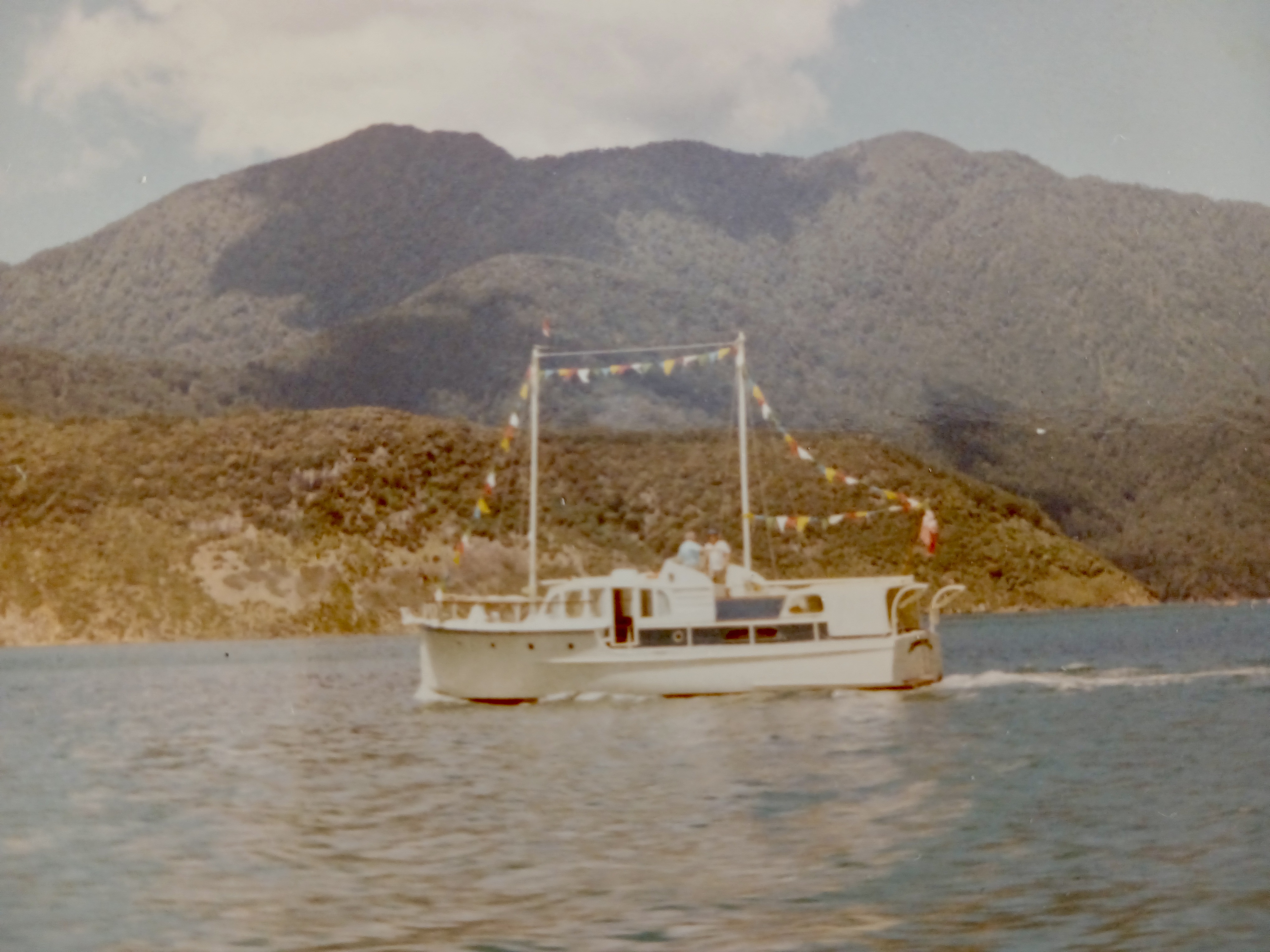
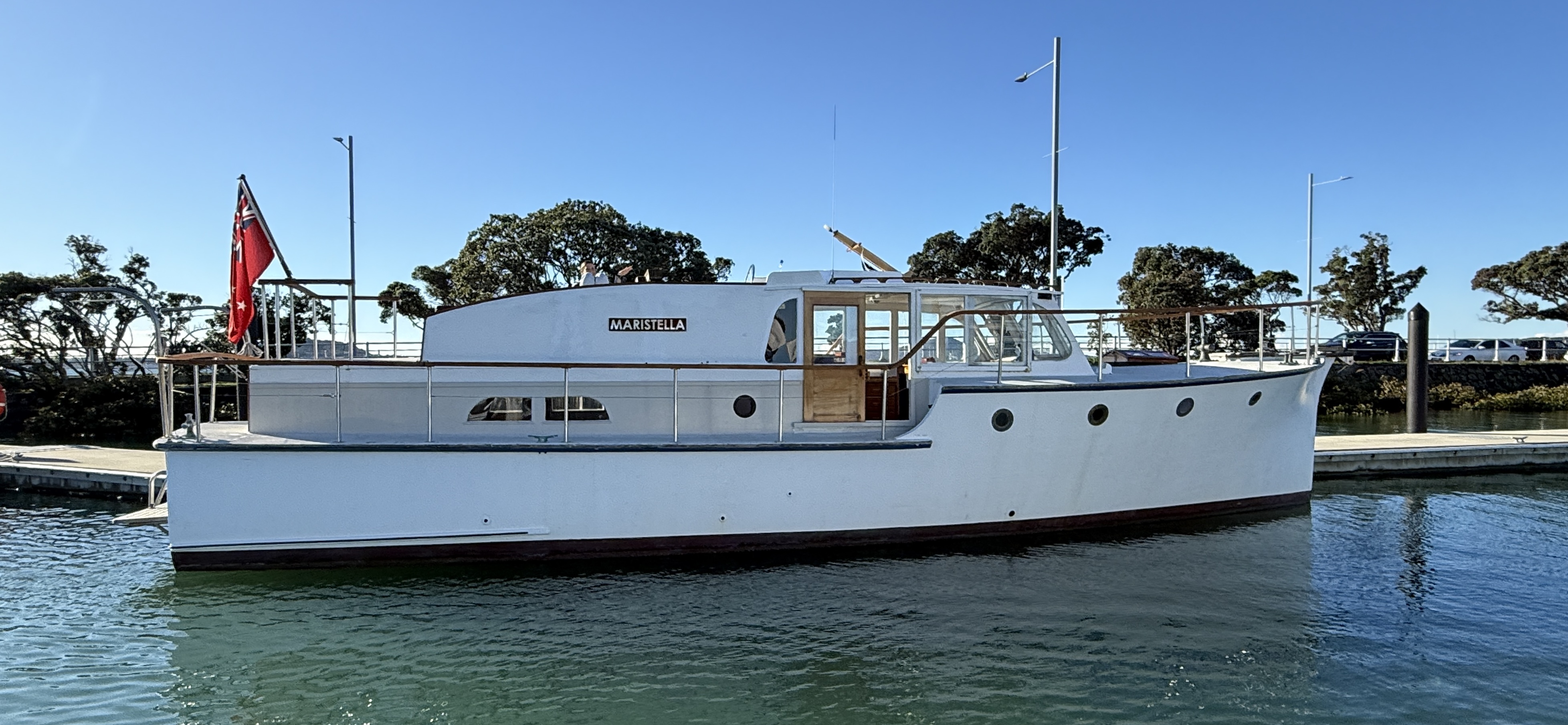
A SNAPSHOT OF THE CLASSIC WOODEN LAUNCH – MARISTELLA
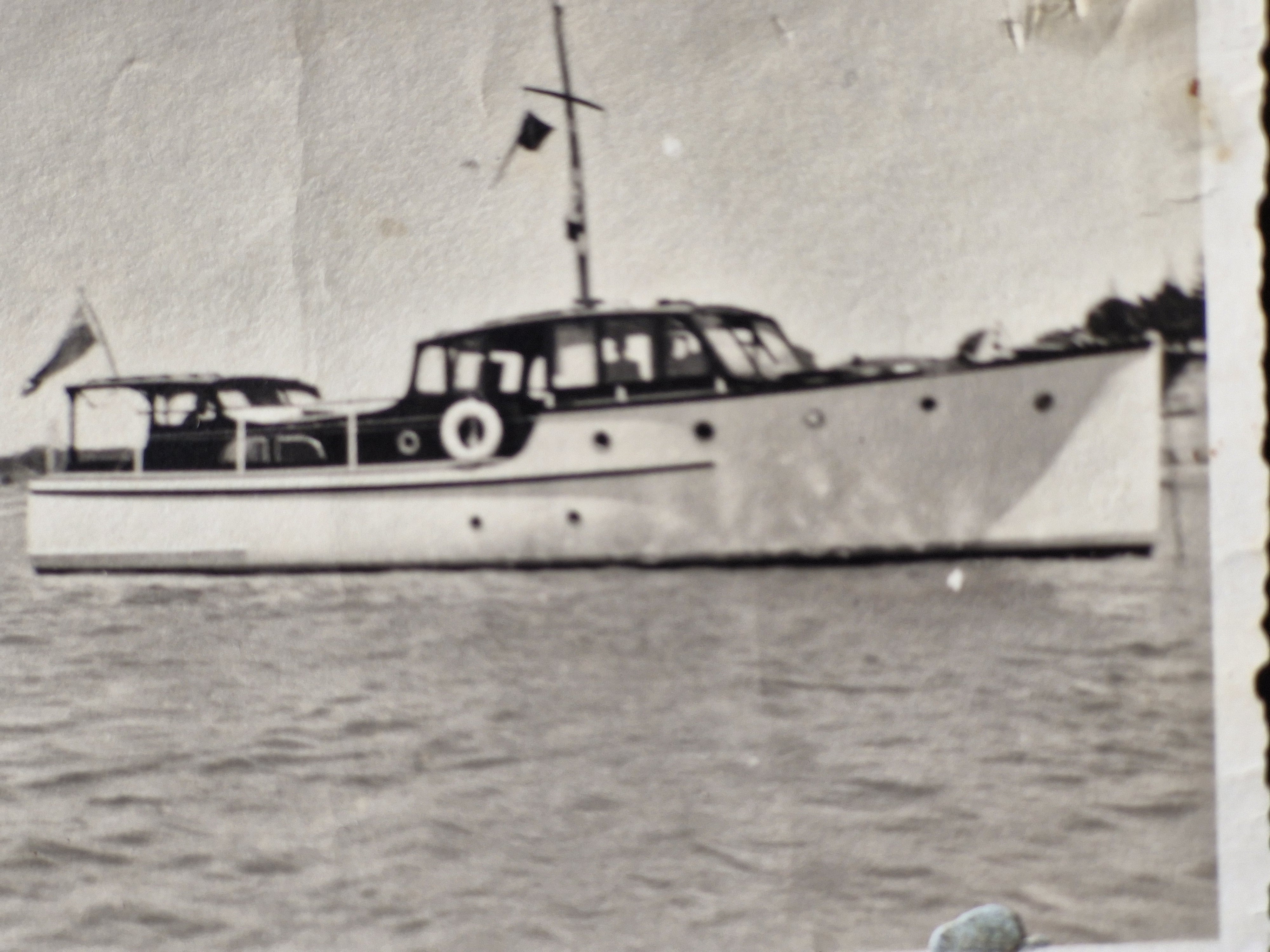
As a result of the photo (see below) of the classic 40’ wooden launch – MARISTELLA, built in 1936 by Sam Ford, appearing at the recent Classic Woodys Boat Show at OBC – WW was contacted by Katherine Armstrong. Katherine’s parents Roy and Daphine Bridge were previous owners of MARISTELLA.
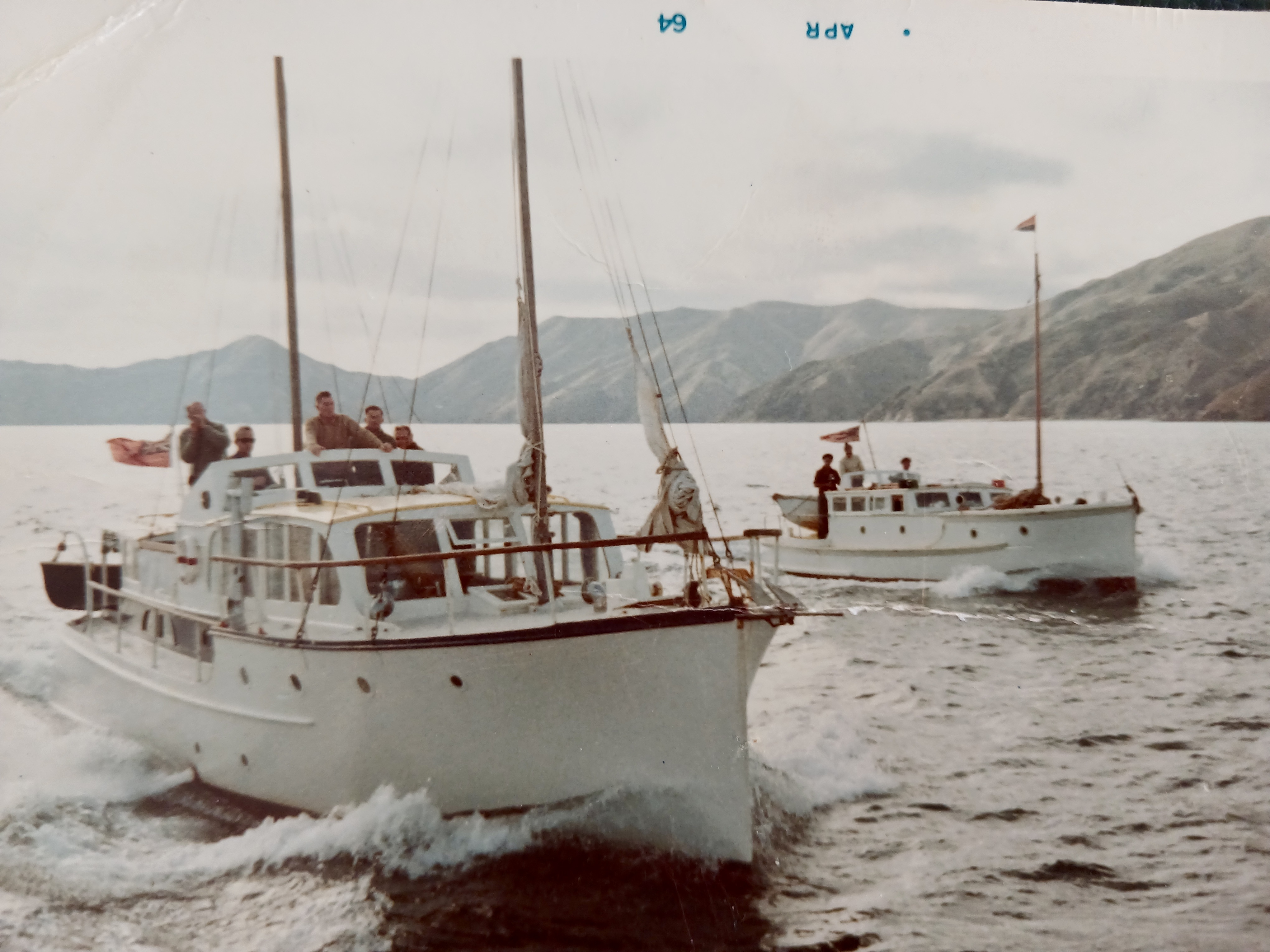
Katherine commented that she had a collection of photos taken during their ownership. Of course I asked for copies, which today we all get to share.
In the 4th photo above the other launch is AWANUI, which at the time was owned by Bob Goldie. Can we learn more about AWANUI.
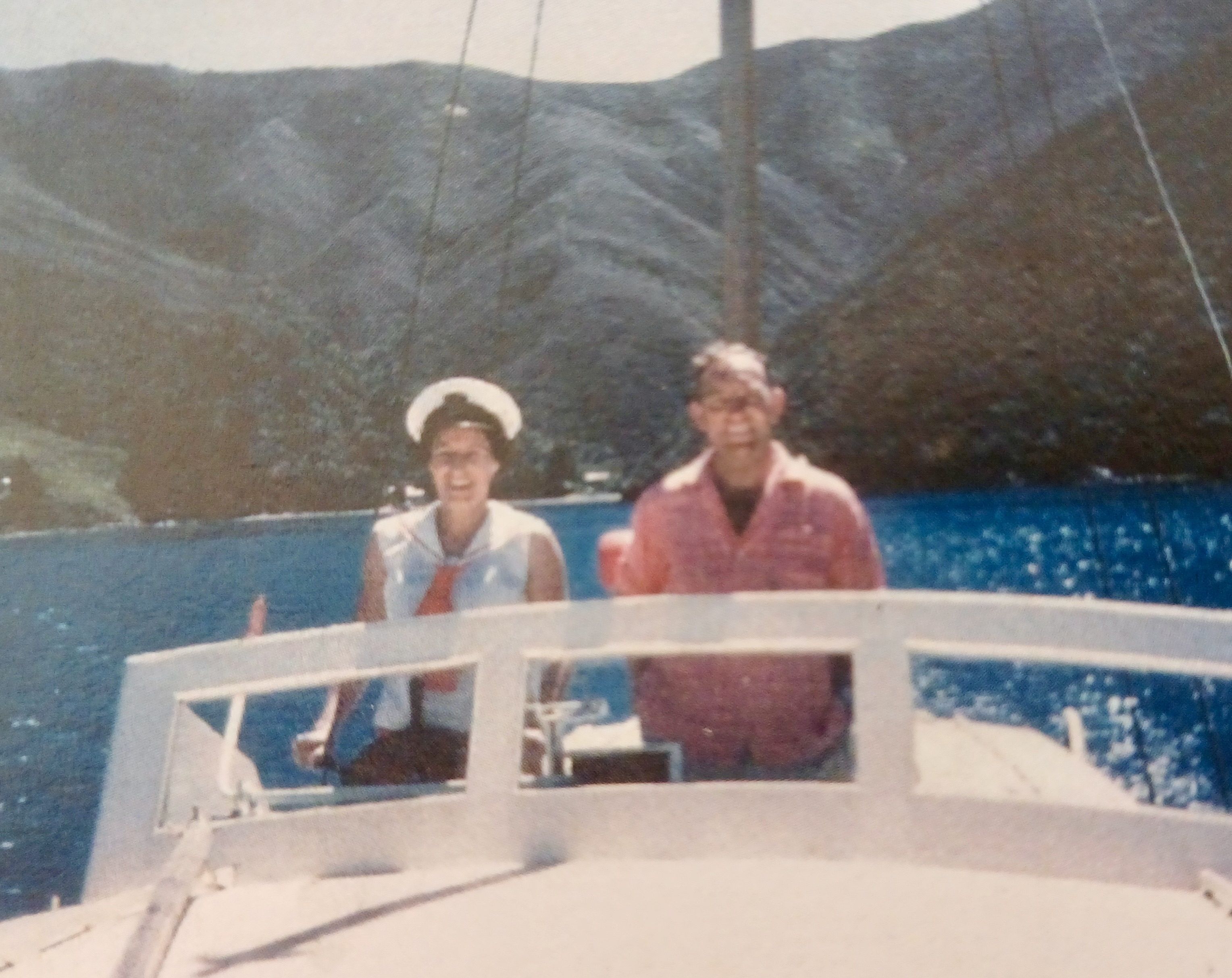
In the last photo above we see Roy and Daphine on the ‘flying bridge’ of MARISTELLA.
One photo is tagged APR 64, so we can safely assume the photos are c.1960’s
27-02-2026 INPUT ex ROBERT WILLS – photo below not long after launching.
MAJOR ACCESS UPGRADES AT MILFORD CREEK LED BY WOODEN BOAT ENTHUSIASTS
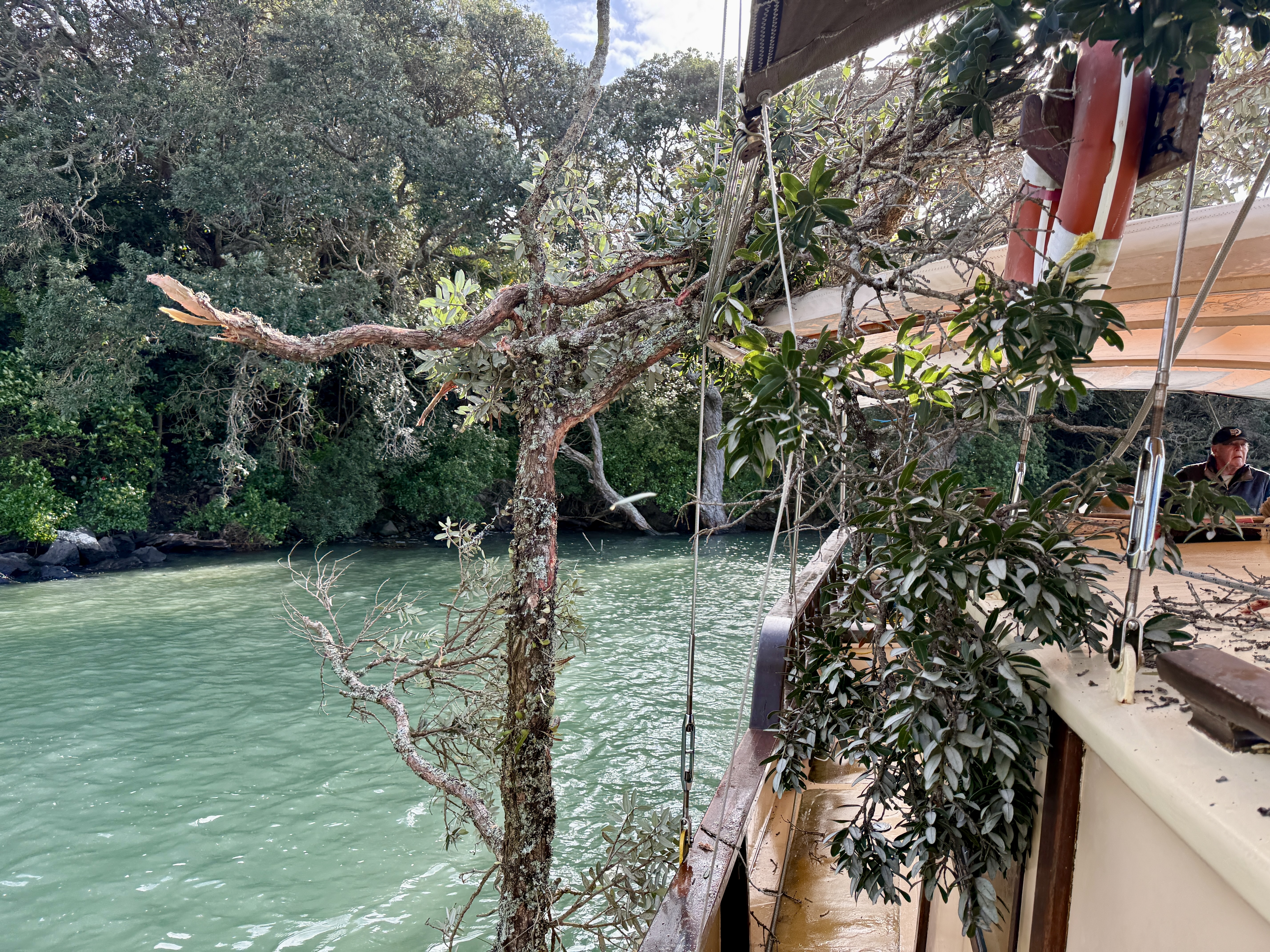
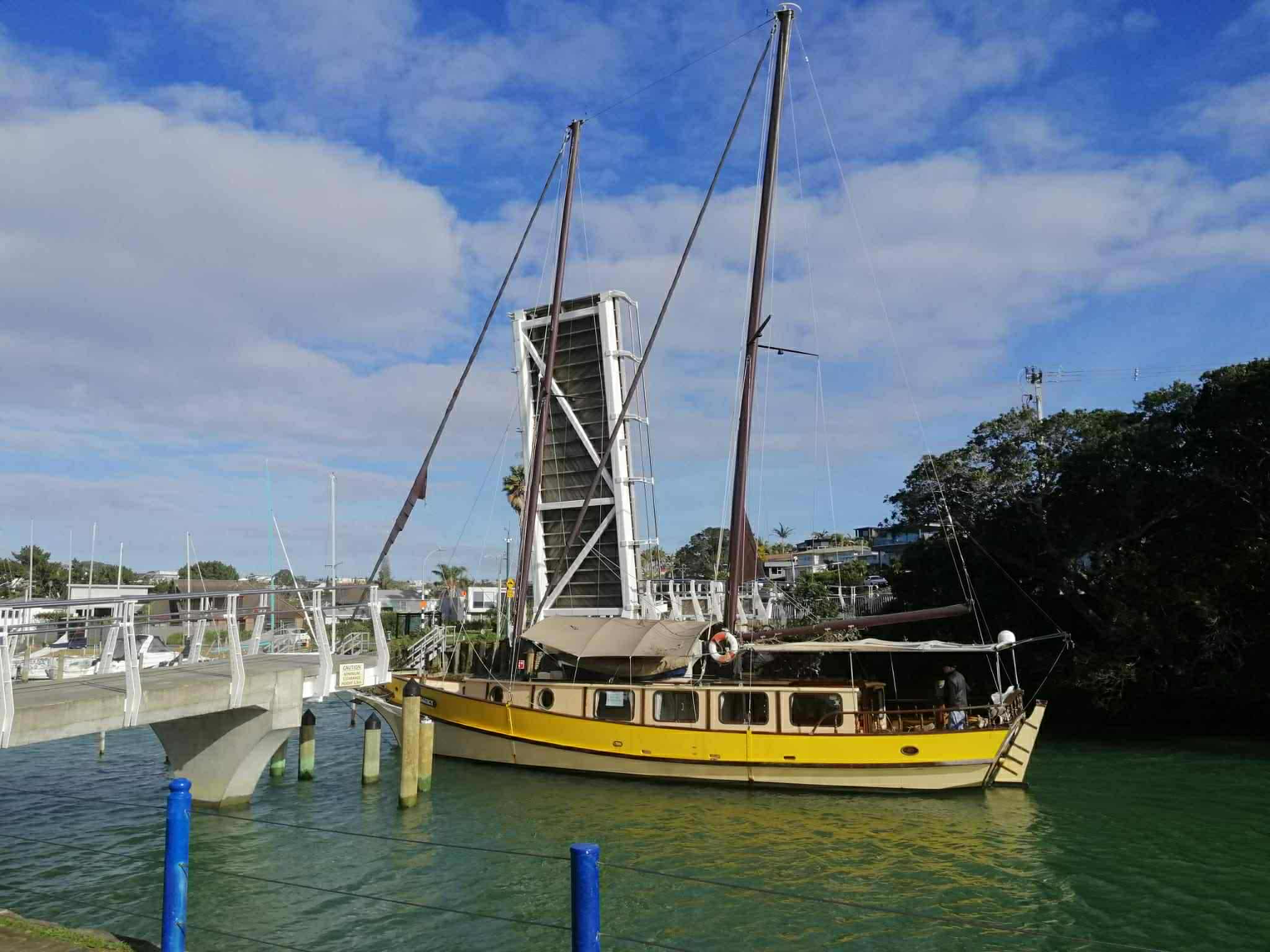
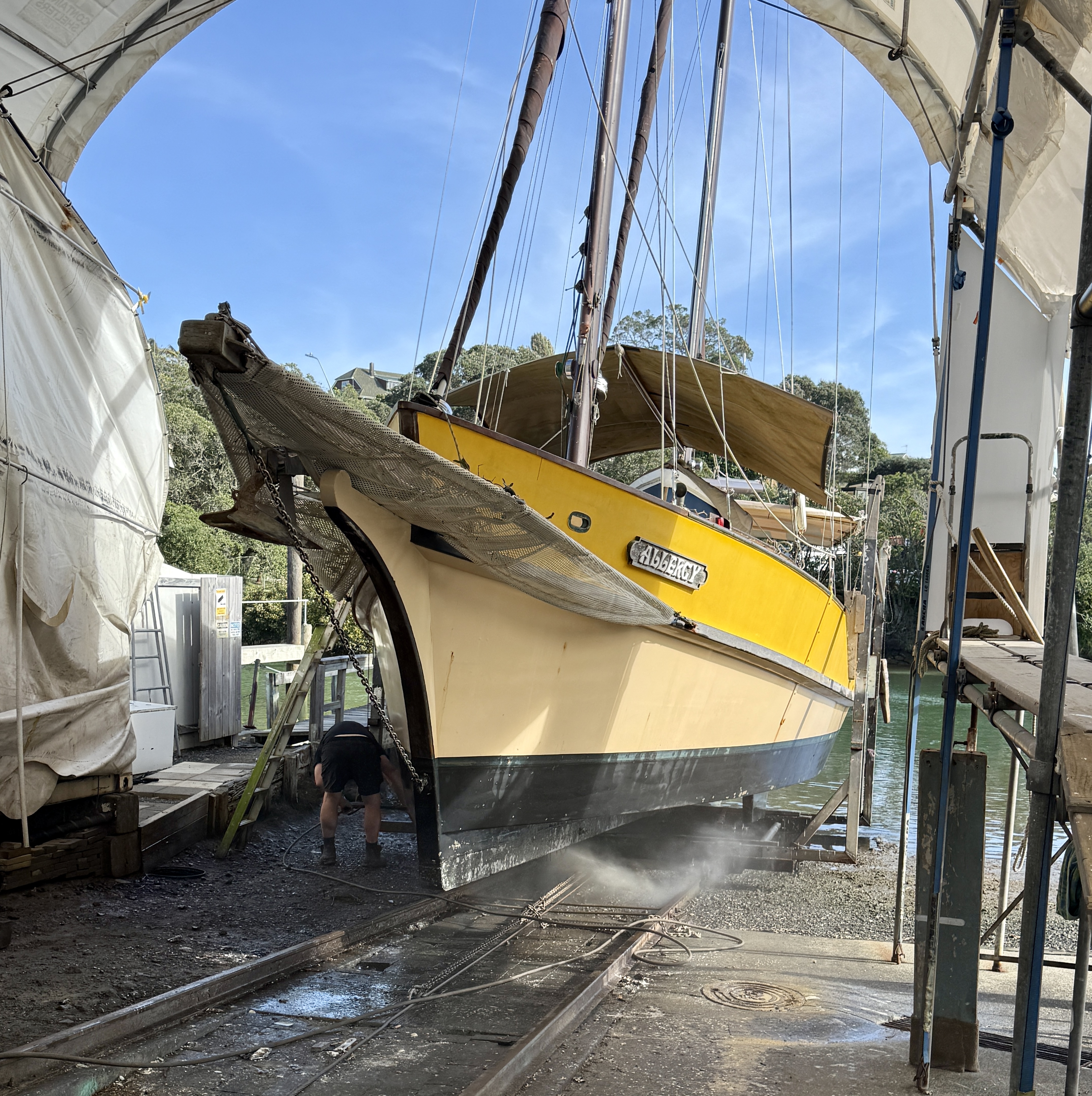
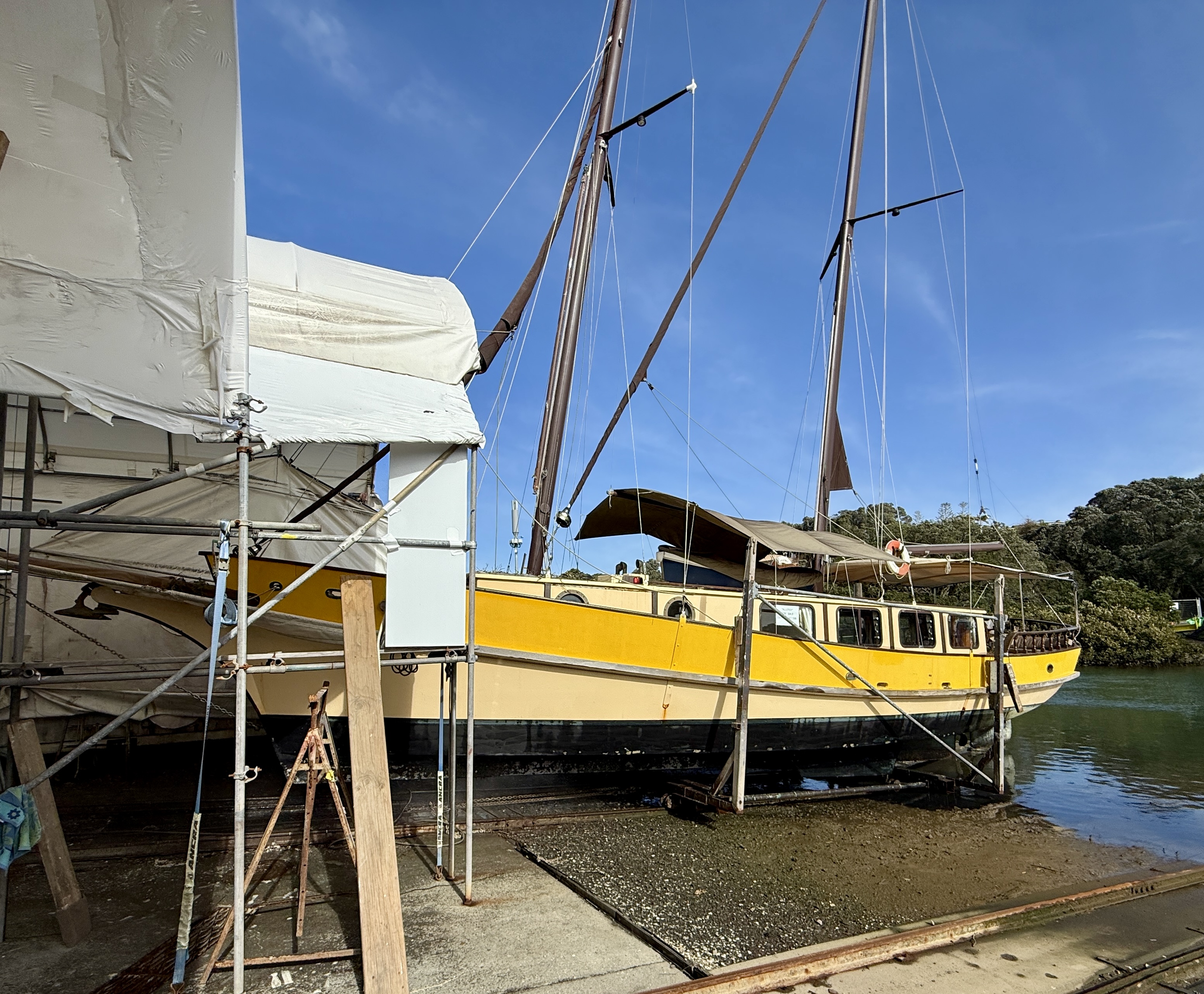
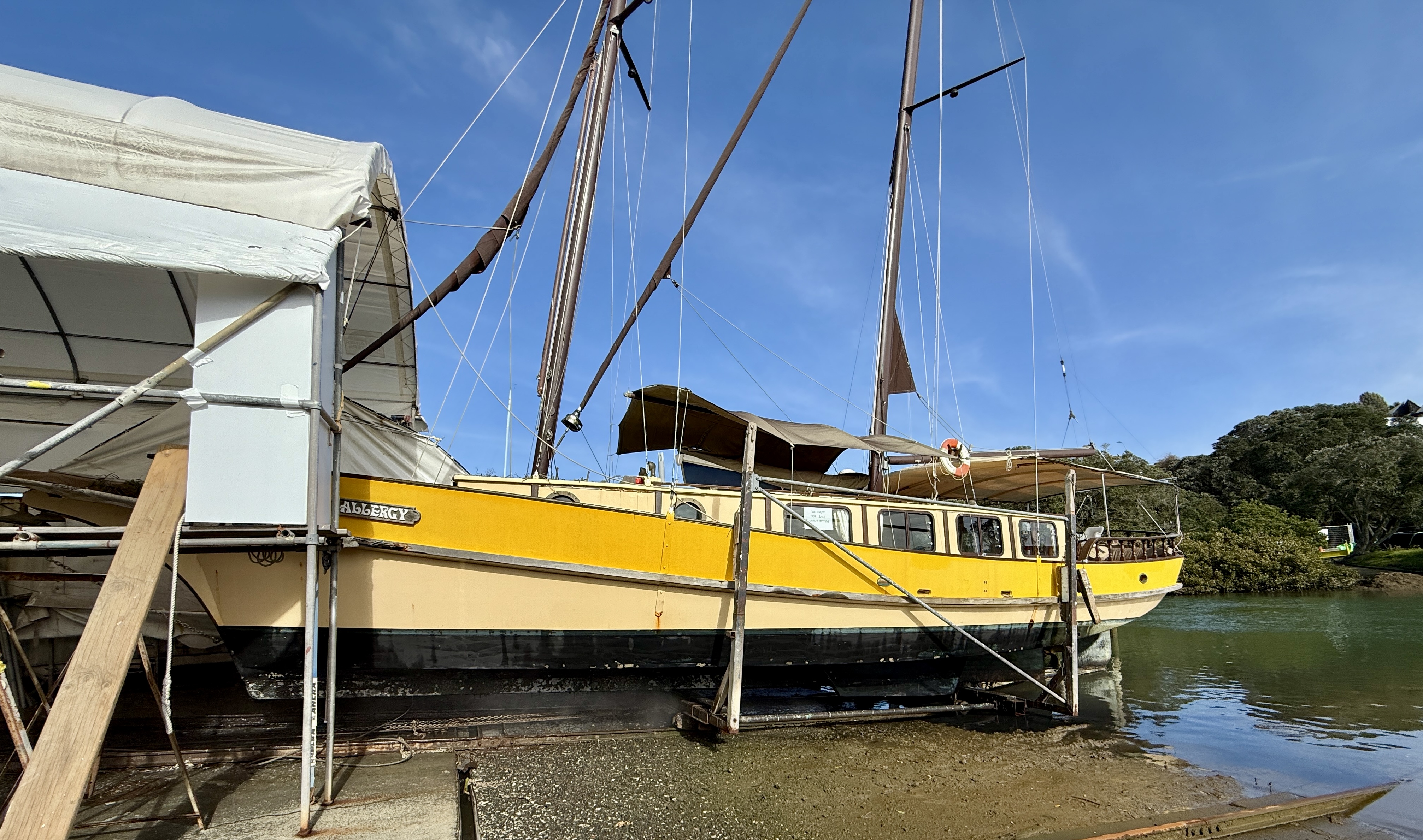
Interesting day yesterday on the water, gave Dave Giddens a hand taking his woody motor yacht – ALLERGY to the Slipway Milford for a haul out .
For all the wrong reasons the day started bad eg late leaving her waterfront berth meant we were time poor re the Milford Creek tide / access and the forecast was for deteriorating conditions as the day went by.
ALLERGY is a big girl – approx. 58’ LOA and a beam of 14’ and two good sized masts. Saving grace less than 4’ draft.
Well with an outgoing tide, a NE up the bum that was gusting 20>25 knots we ordered up the bridge to be raised and lined up the fairway poles.
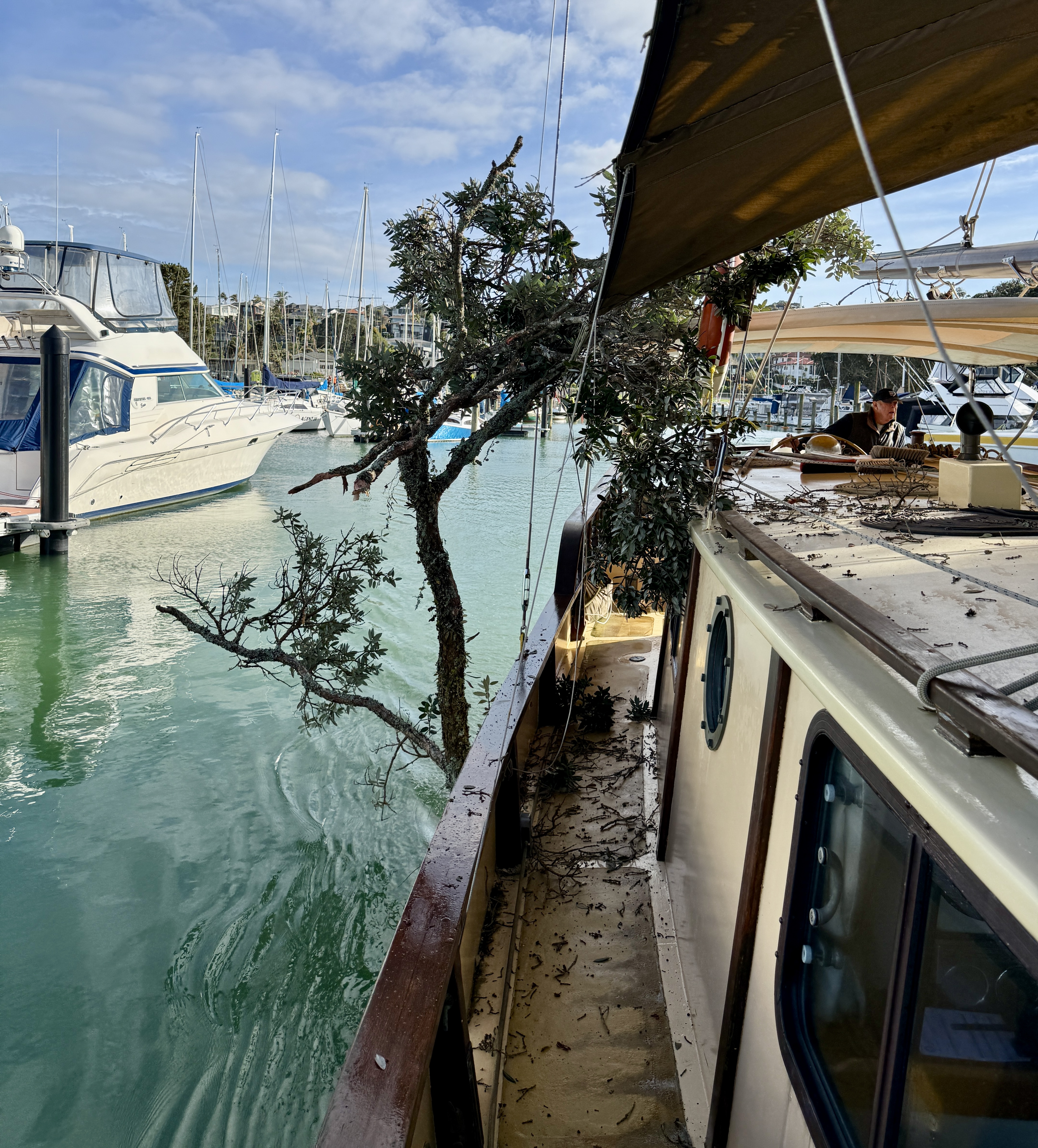
I believe no one captured the run, which is just as well. Short answer is we made it – but:
1. We both shook hands once under the bridge
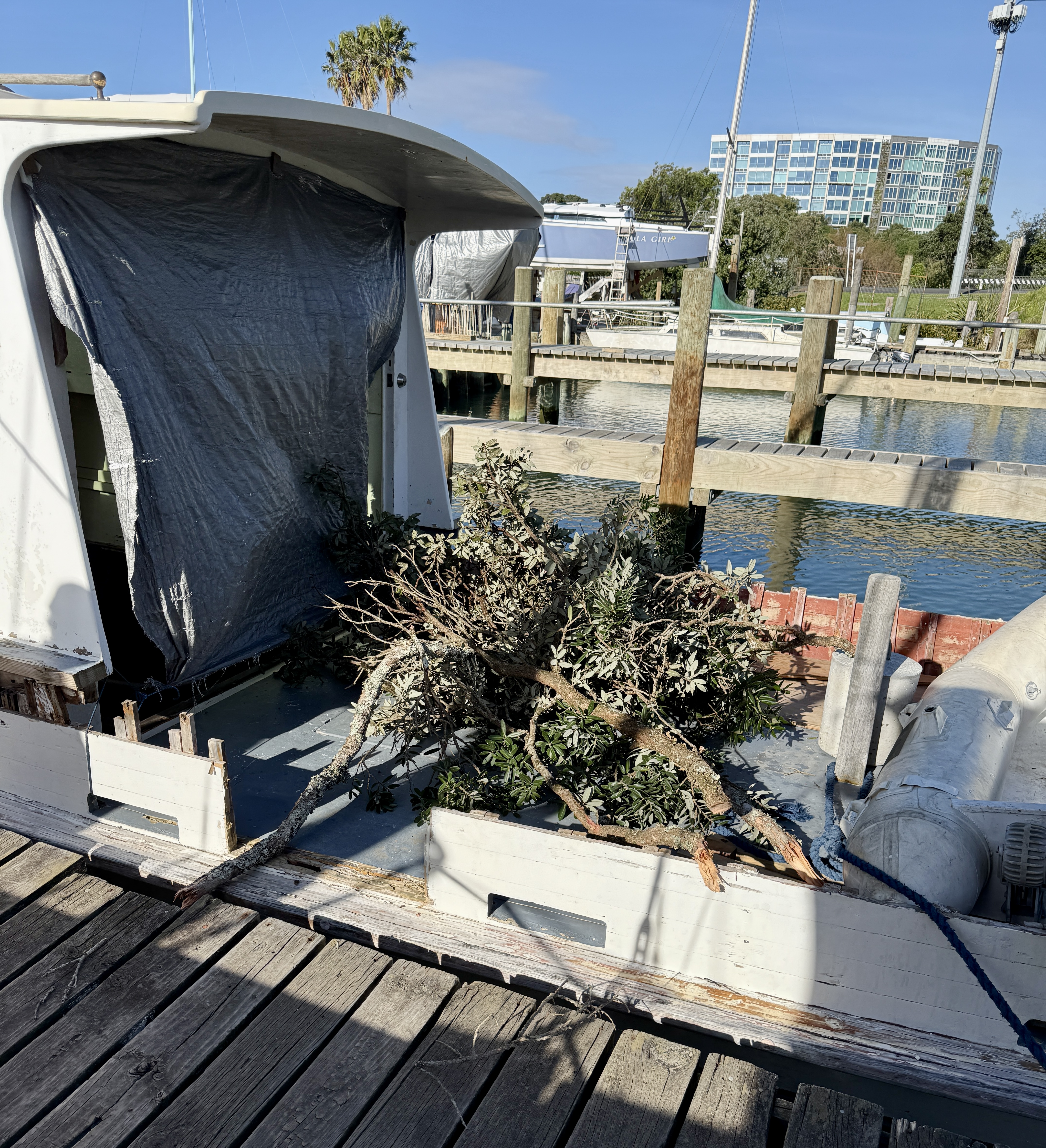
2. Every skipper of a vessel moored in the Milford Marina should thank ALLERGY for pruning the Pohutukawa trees on the bank
3. A small donation is probably due to Project Crimson
4. The Slipway BBQ won’t have to buy firewood for a few months
Lastly – FOSTERS deserve a medal for their mast work 40 years ago – nothing budged 🙂
ONE MAN, ONE CRAFT – IS THIS SPAIN’S LAST REAL SHIPWRIGHT
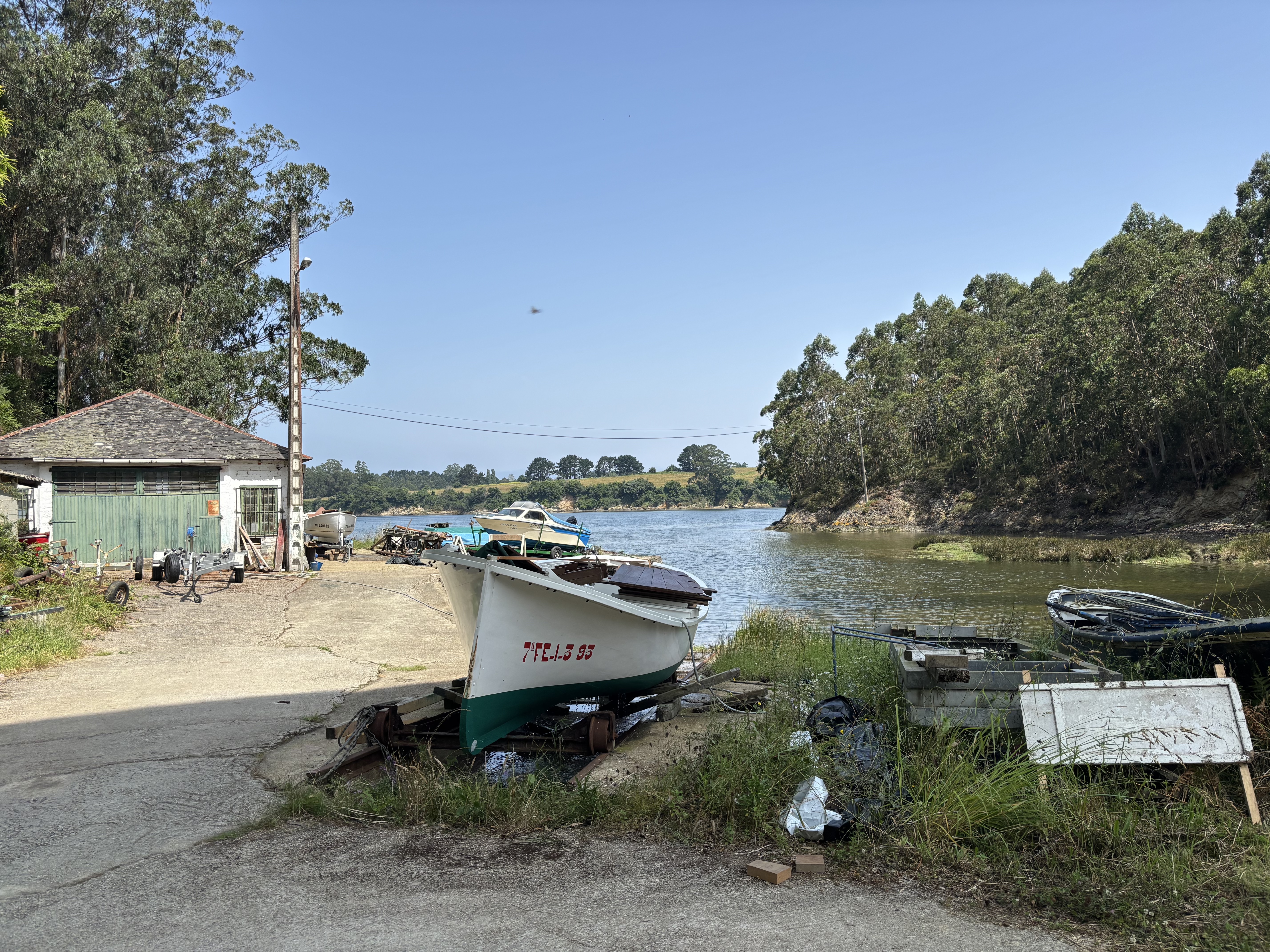
Good friends Pauline and Tim Evill escaped the rain and cold of NZ and have been mooching around Europe. Tim dropped me a note about a famous old boat builder known as Pepe de Pacho, in Castropol in Asturias, northern Spain who was the oldest member of a family of wooden boat builders that had been working on the Rio EO from the same tiny boatyard for almost one hundred years.
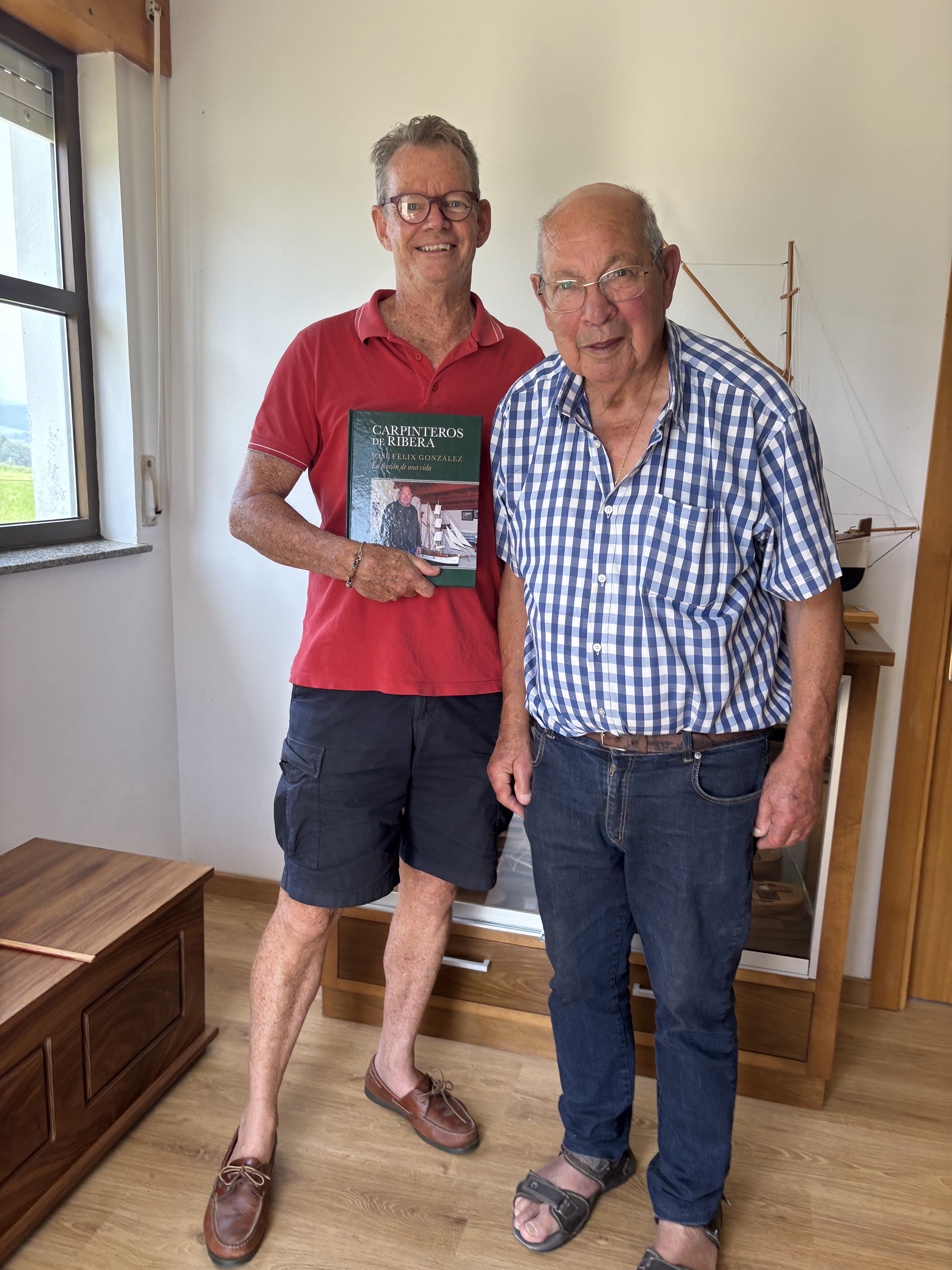
After a visit to the boatyard, where no one was home, he headed to the marina and managed to track down the old man after much detective work. It was a wonderful experience. A asked Tim to pull a story together – which today we great to share.
In Tim’s words – “As we travelled along the magnificent coast of Asturias, passing one beautiful seaside town after the other, I decided to go looking for a legendary character whom I had read was revered as the last traditional shipwright in the area—Pepe de Pacho. After numerous false forays and clumsy attempts with Google Translate, we finally fell upon a group of salty sea dogs who got on the case for me, called around, found Pepe at home having lunch and wrangled an invitation to the great man’s house.
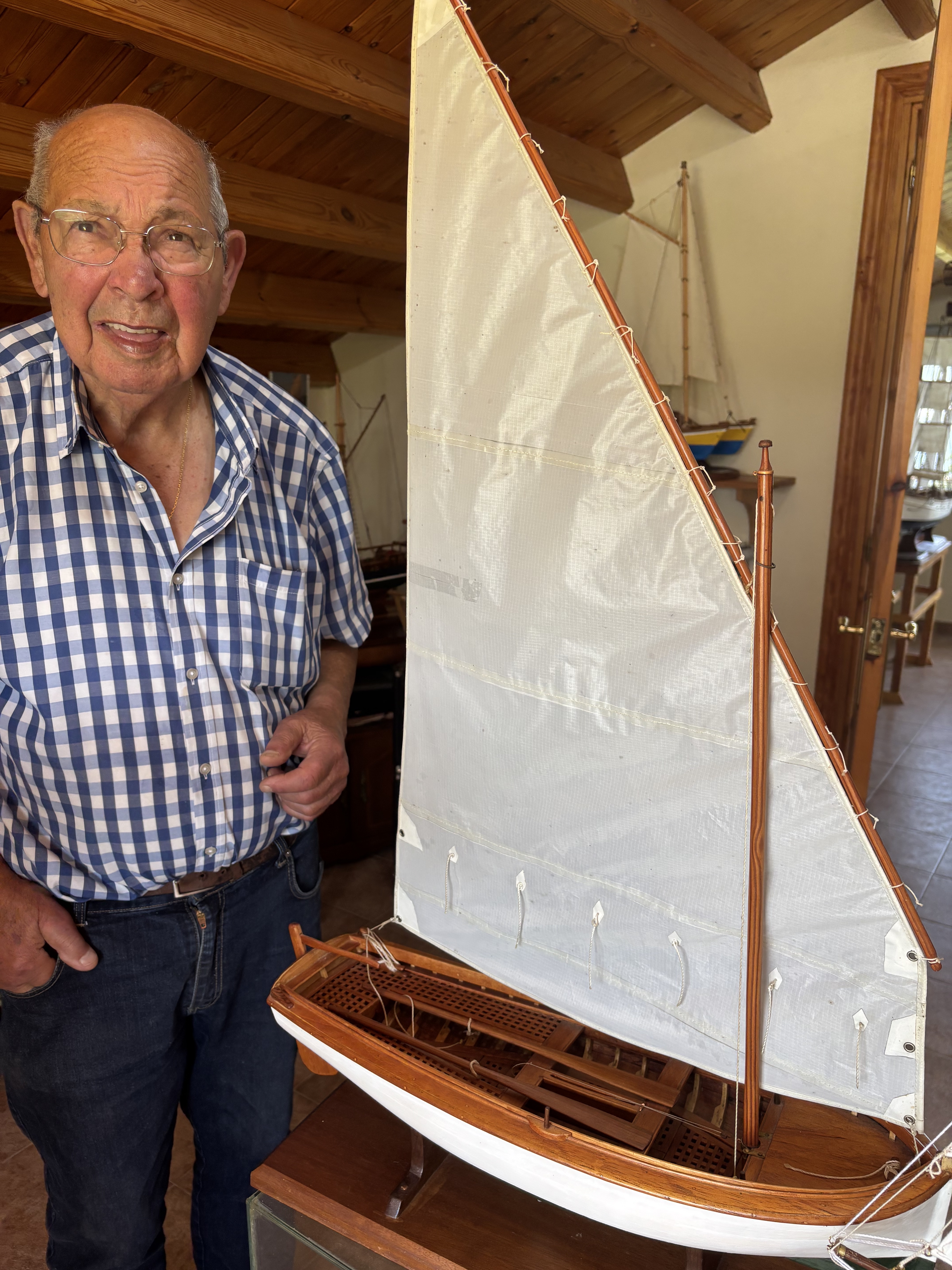
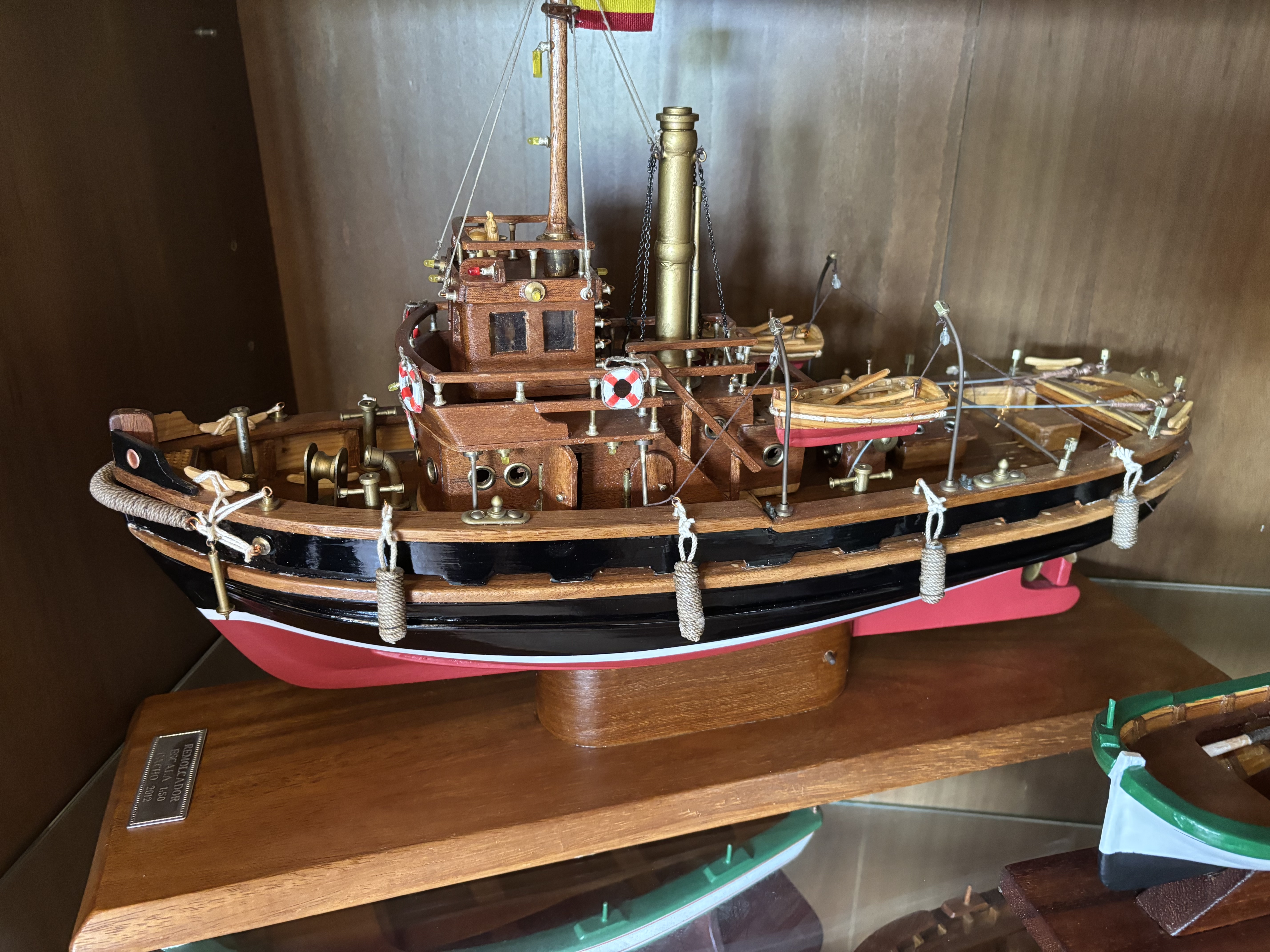
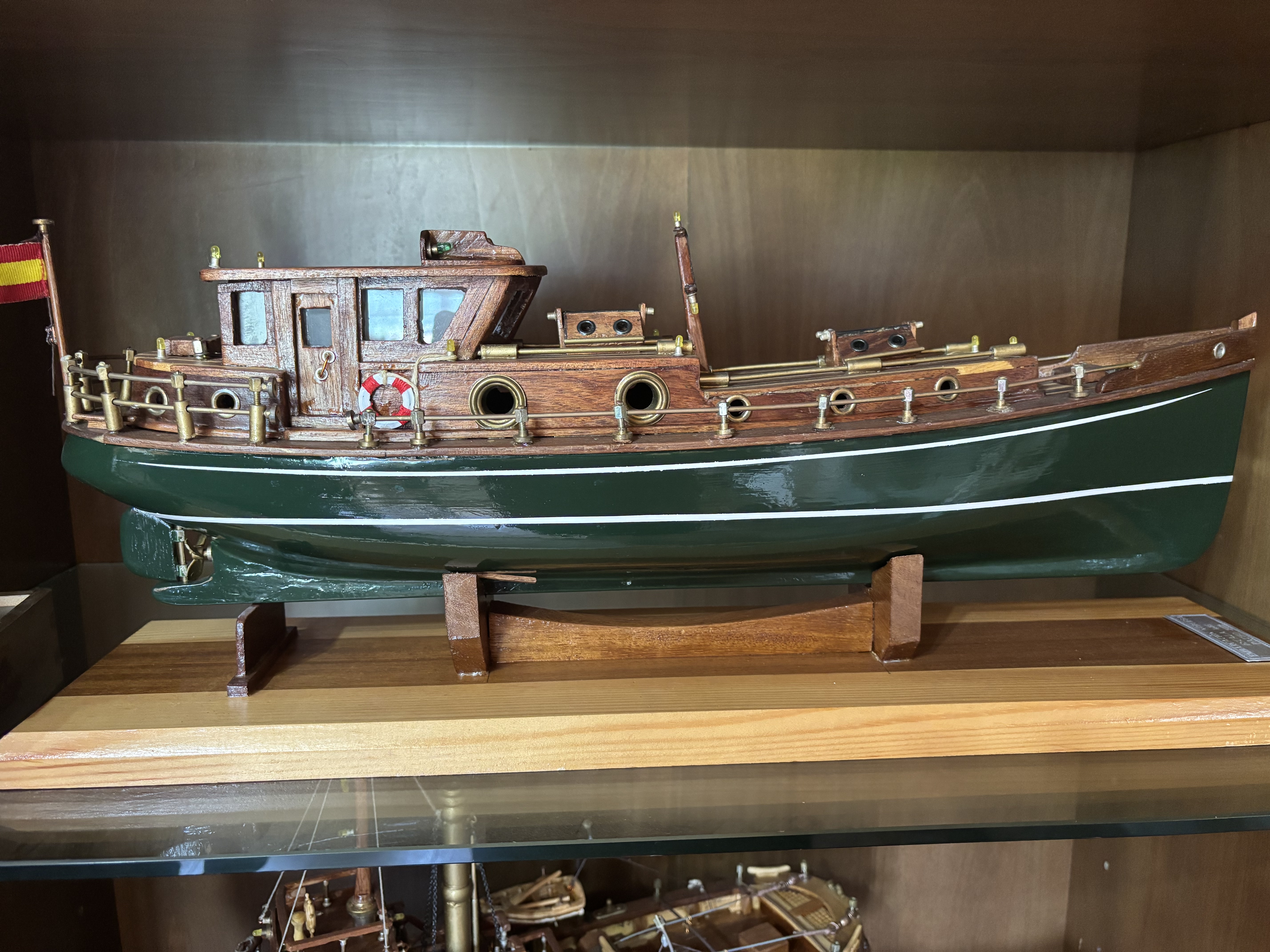
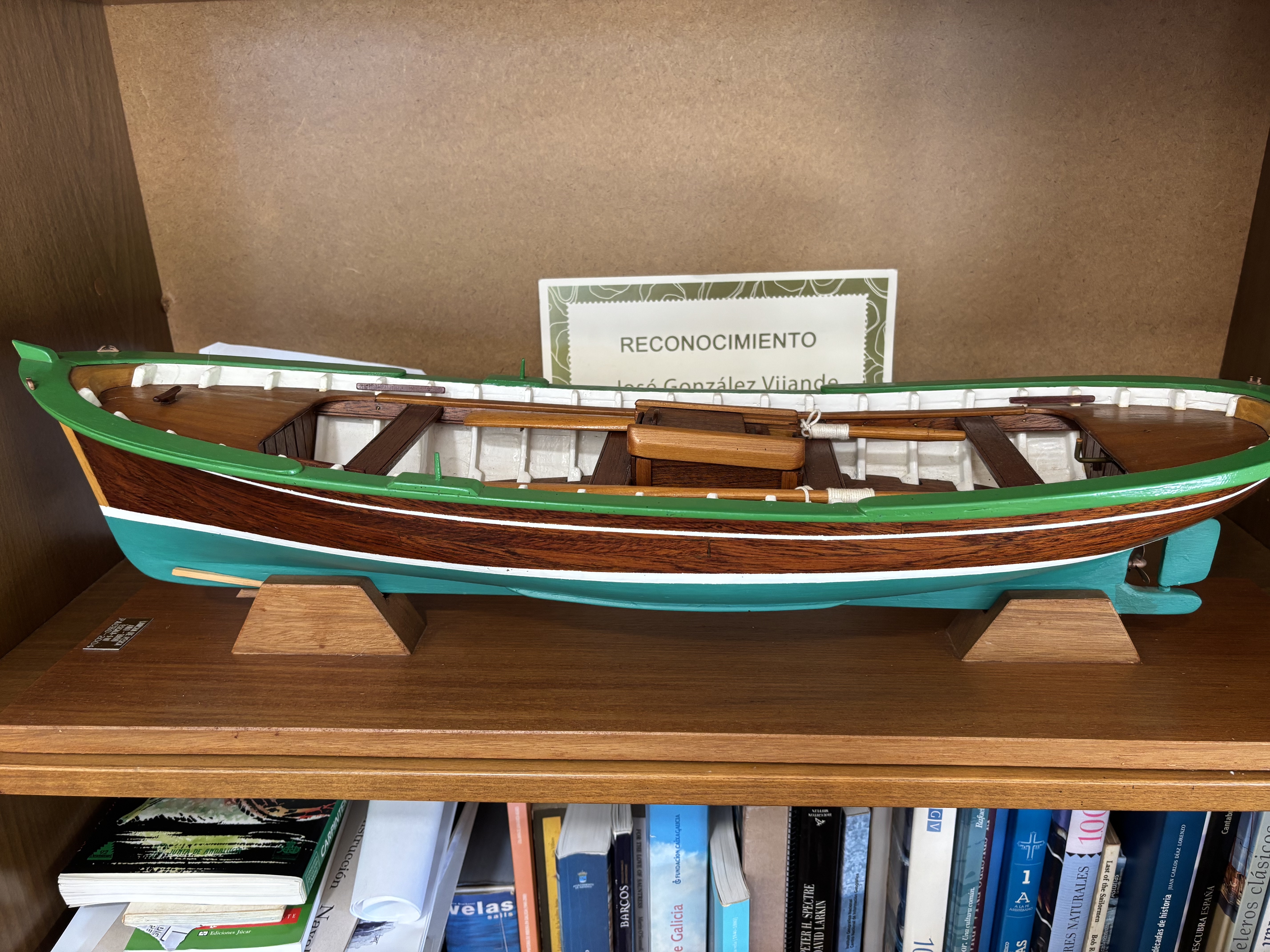
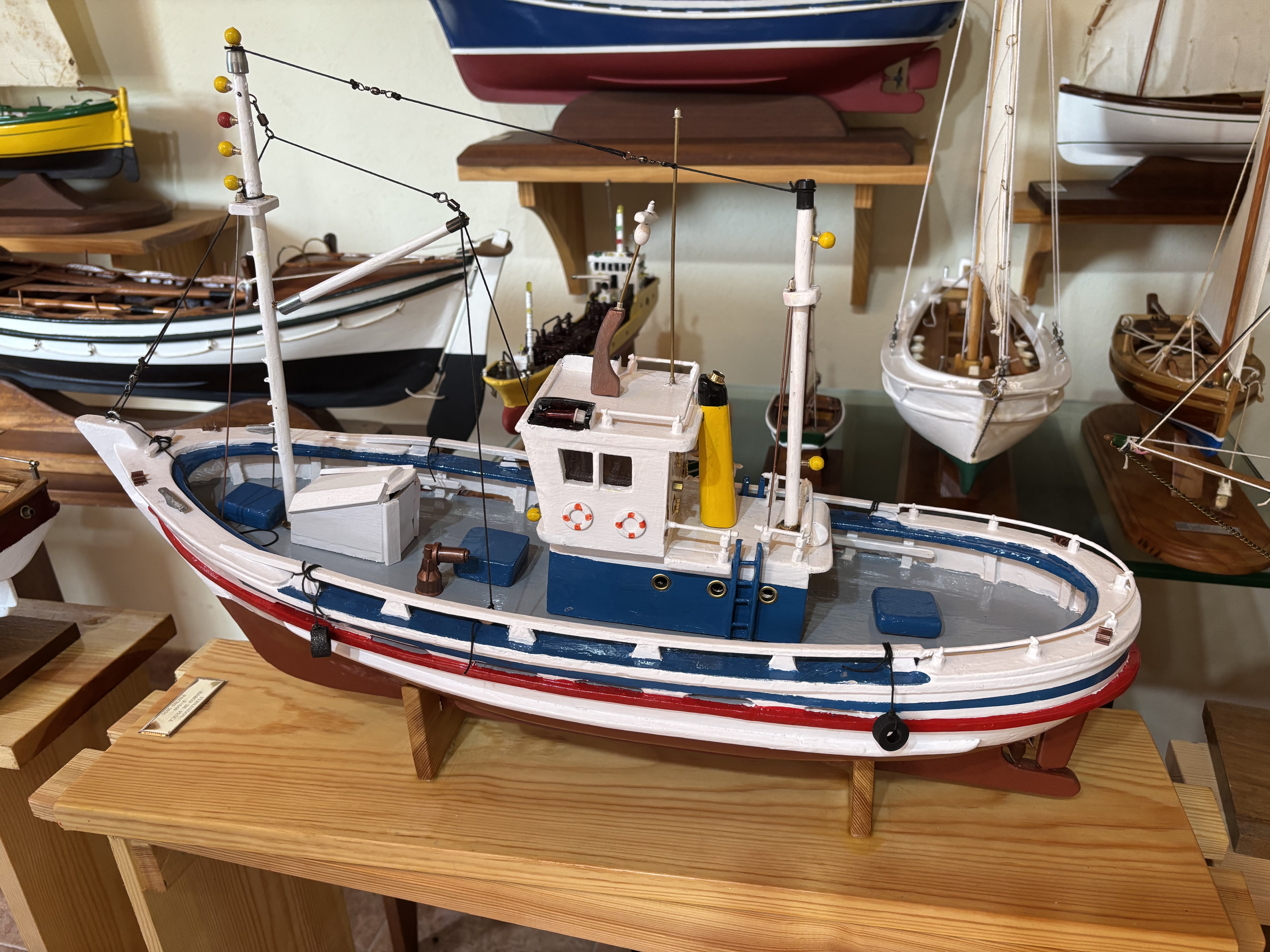
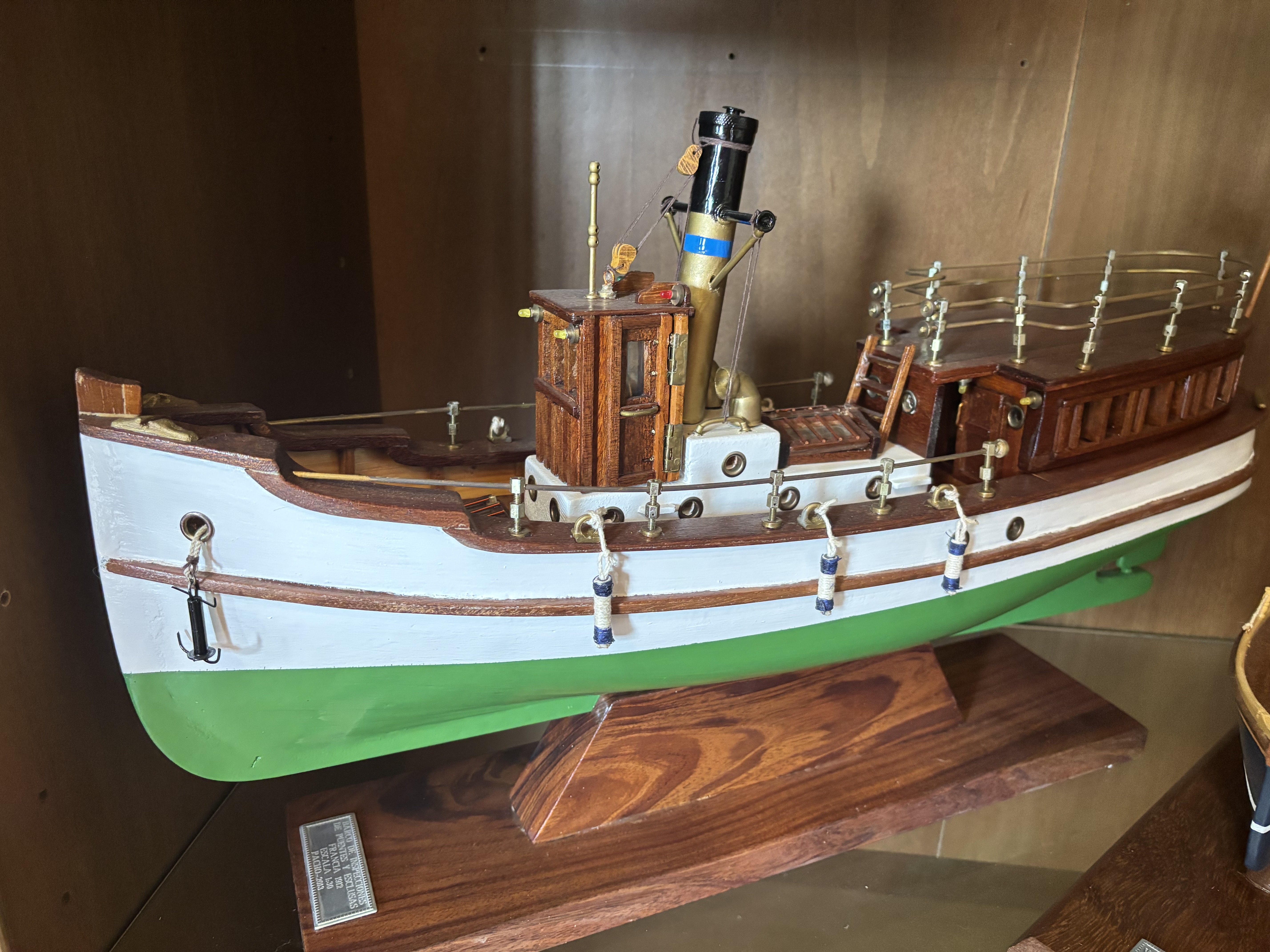
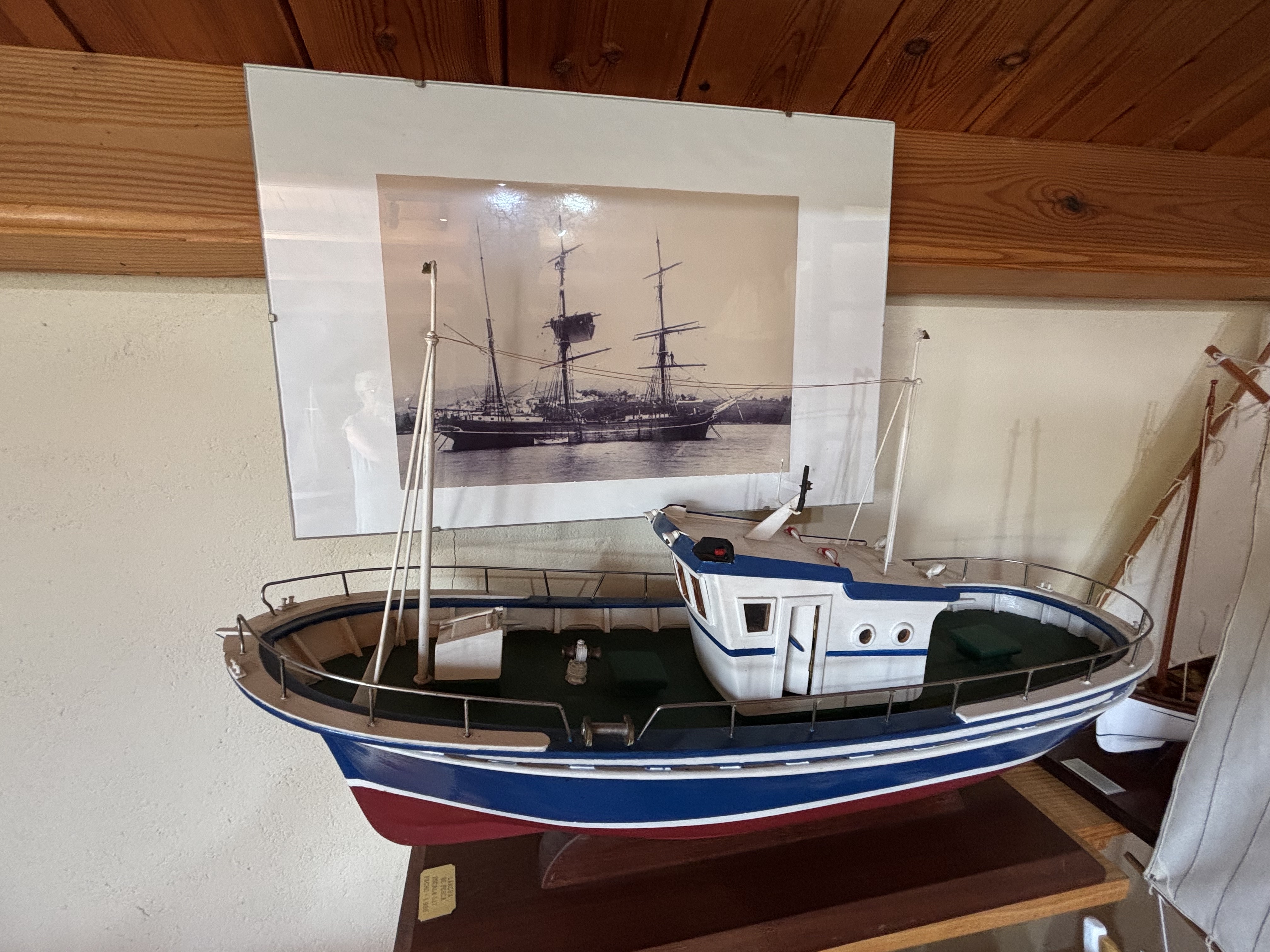
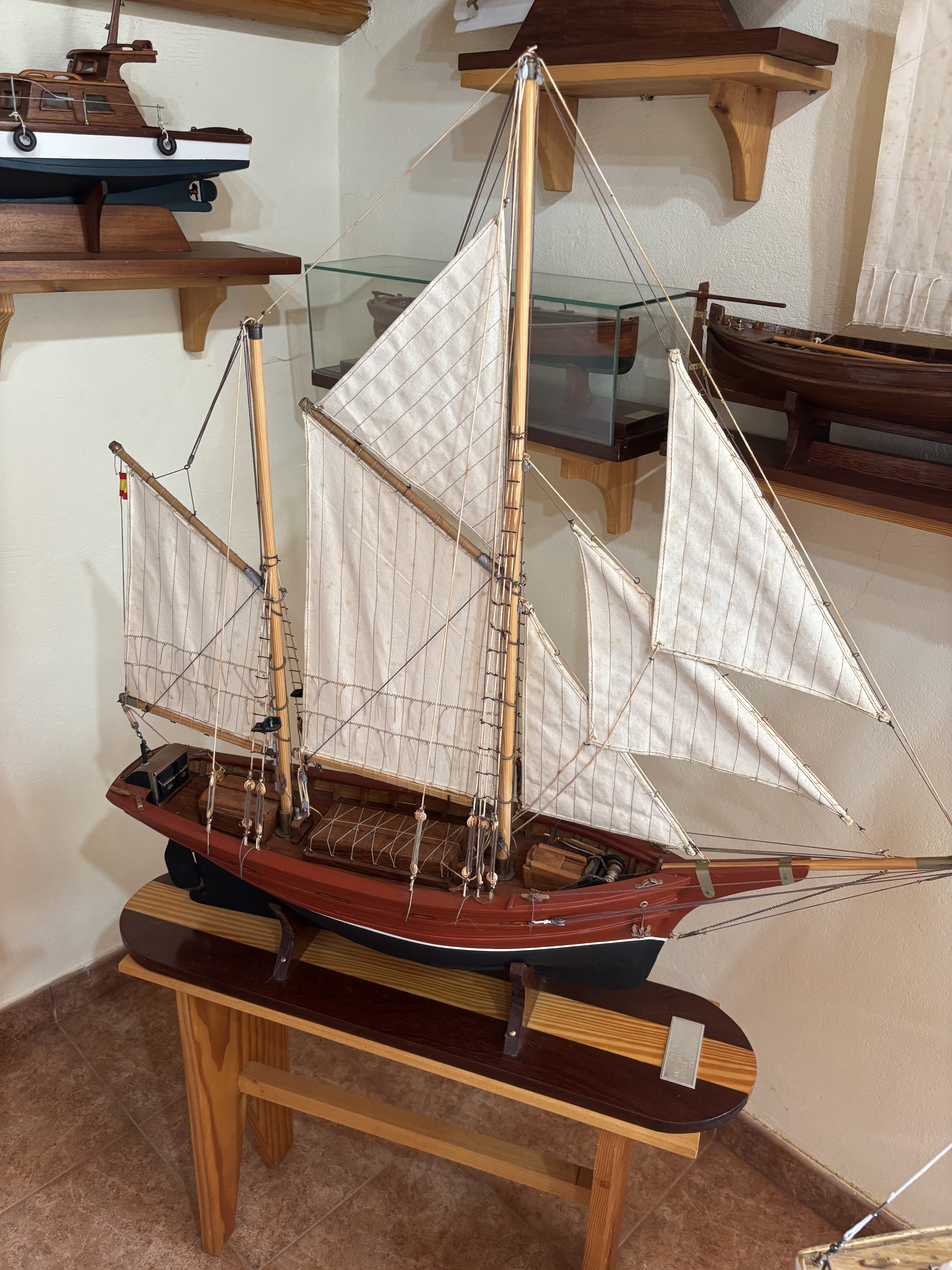
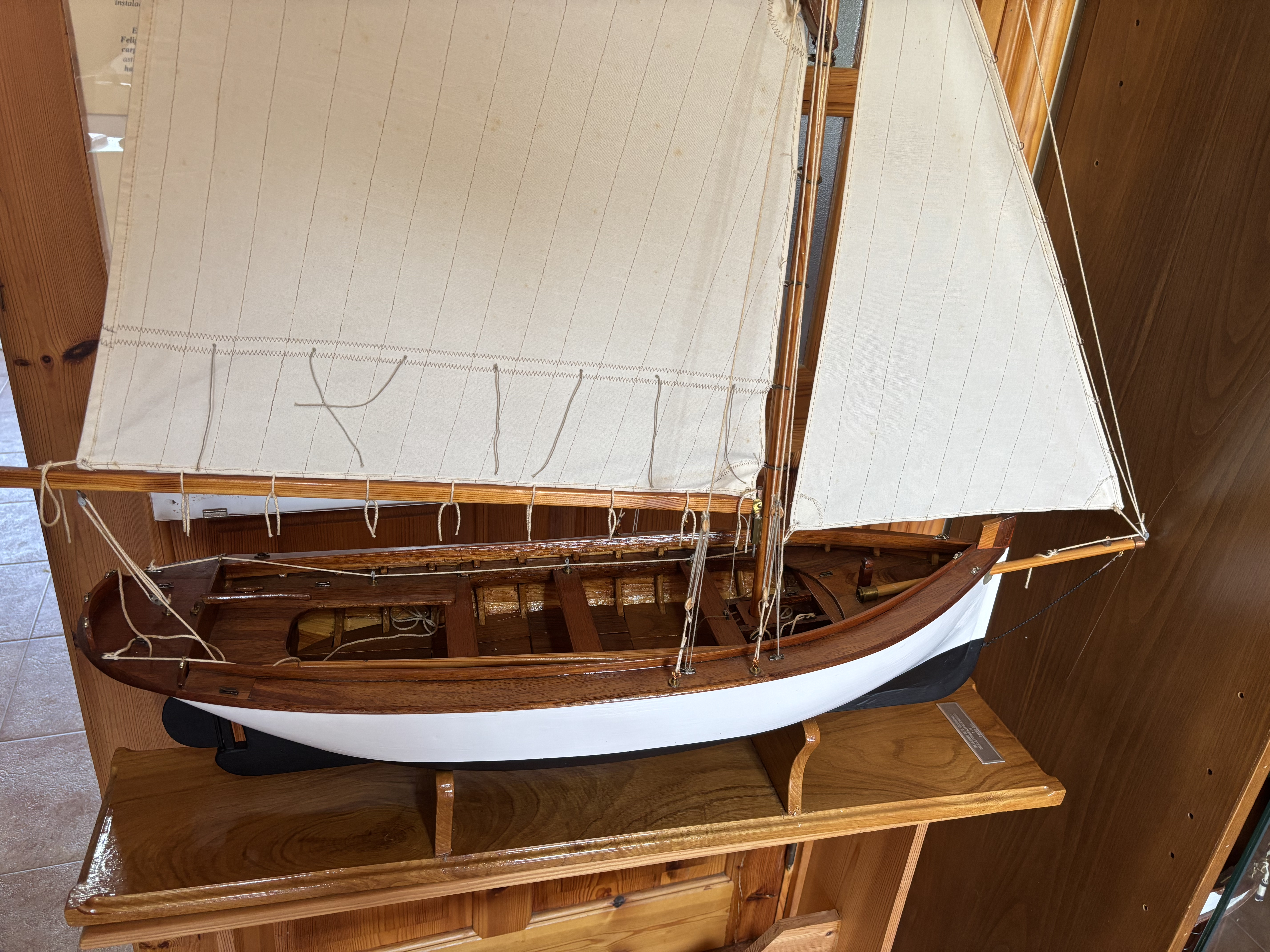
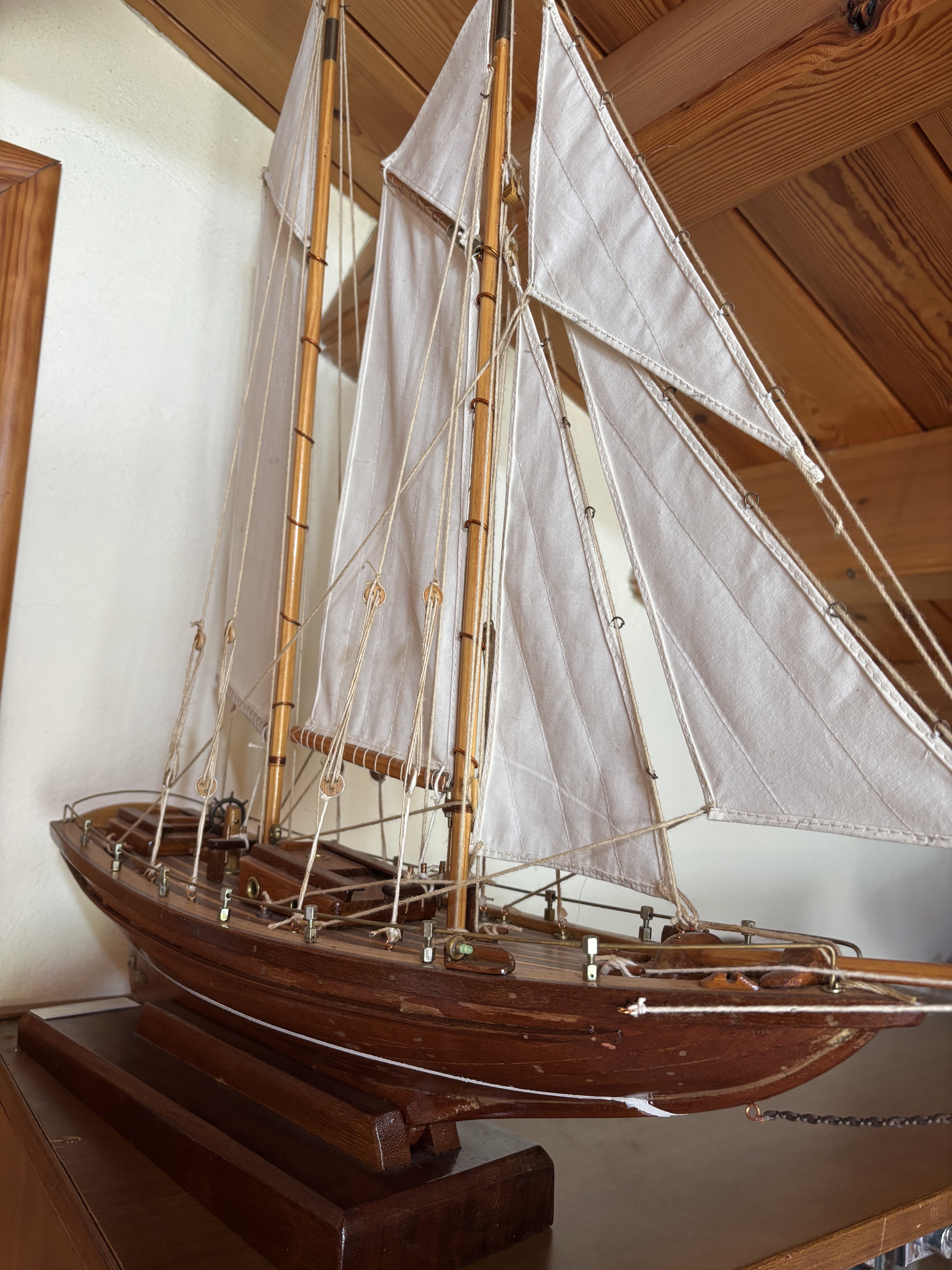
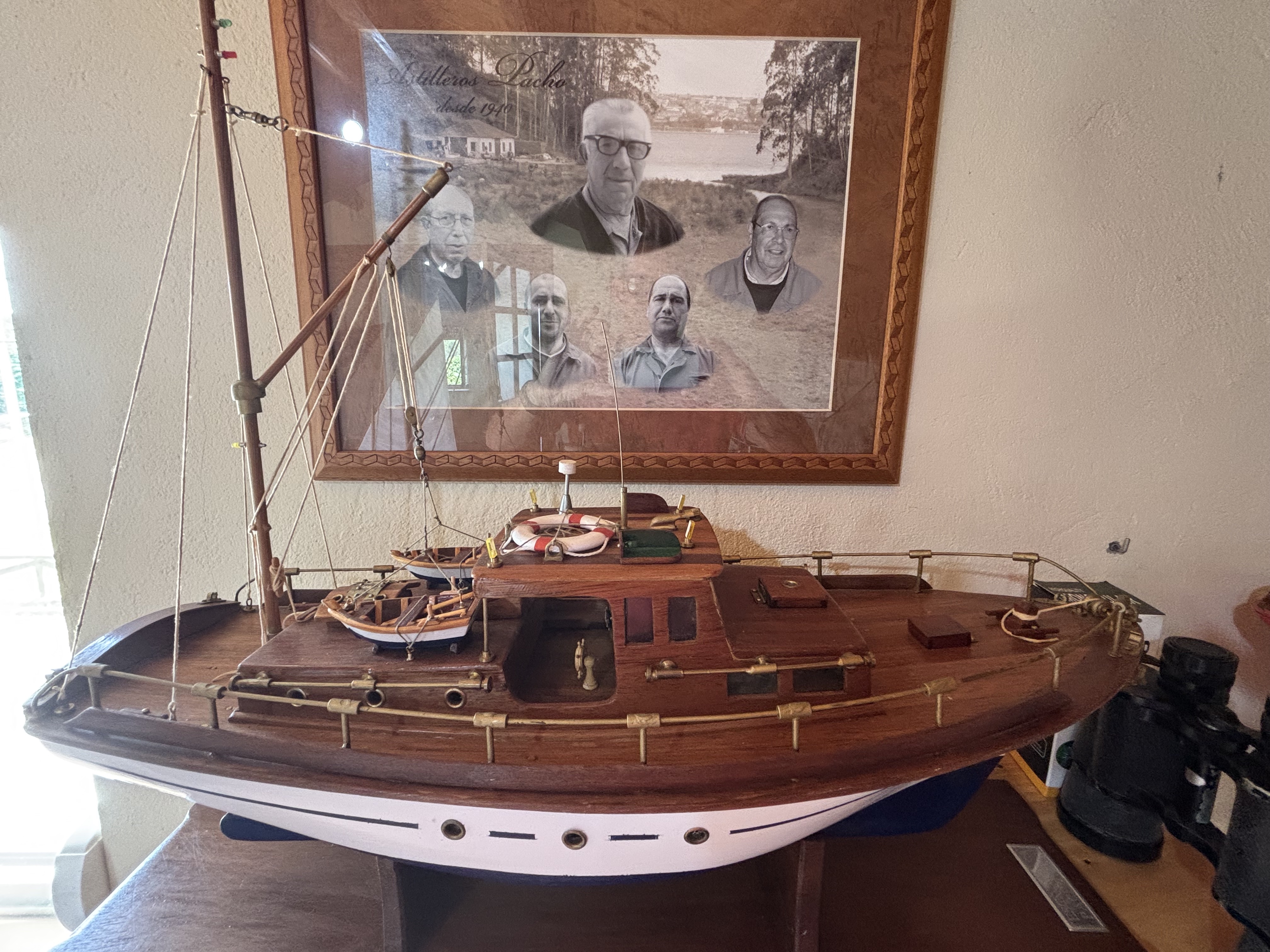
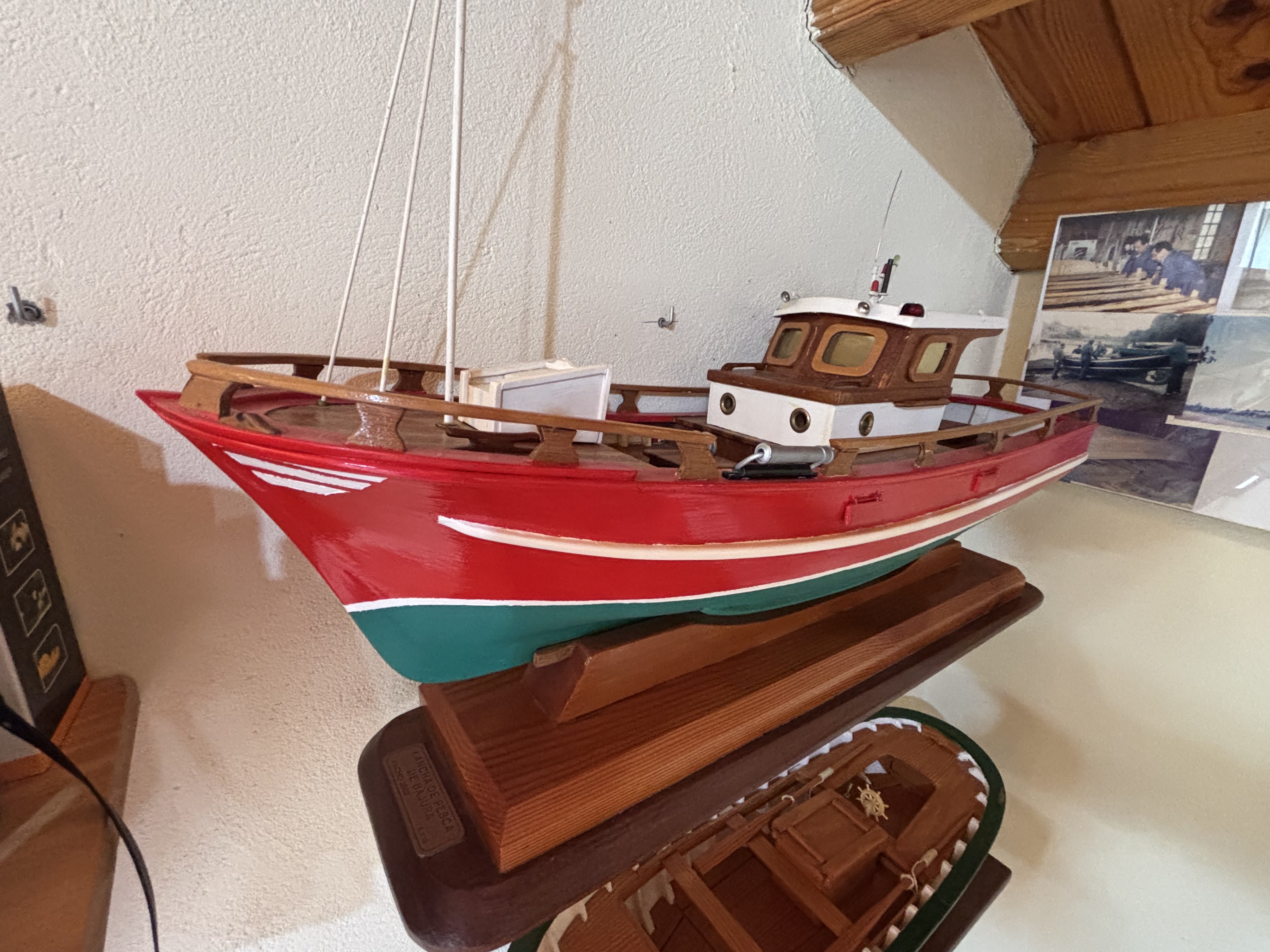
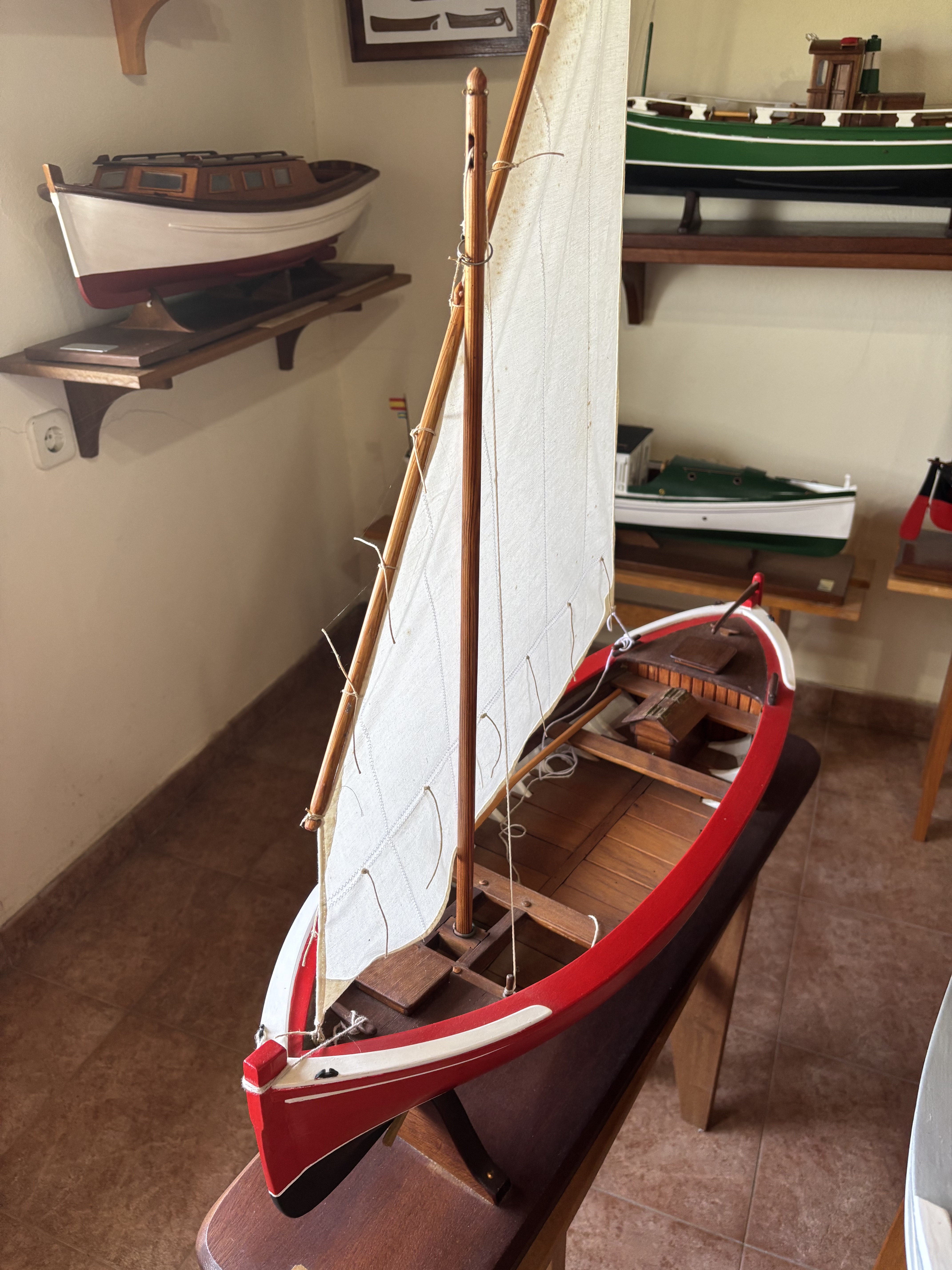
Now retired from building full-size boats, Pepe de Pacho or Pepe as he is known, turned his talents to the most intricately detailed model boat building. The exquisite samples of his work are now displayed in part of his home in a small museum. There, he continues to build his intricate wooden models and keeps the tradition alive in miniature.
When a couple of curious Kiwis suddenly turned up armed with nothing more than eagerness and spanglish he was extraordinarily magnanimous and generous with his time—even though he spoke barely a word of English. With a permanent smile,he took his time to show us around whilst describing the history of the original of each model whilst I smiled and nodded and sadly caught only about a tenth of what he regaled me with.
After about an hour of awe struck admiration of his entire collection of over 90 boats, we shook hands, posed for photos and bid a fond farewell to Pepe and his lovely wife. A modest man of immense talent and irreplaceable knowledge and craftsmanship.
As we left Pepe advised us to go and learn Spanish and come back again! Every boat has its own story, he said, and without the language, we’re missing too much history.”
Below we have the story of Pepe’s very salty life – its a great tale, I hope you enjoy the read. (as always you can enlarge the photos by clicking on them)
Pepe de Pacho: The Soul of the Asturias Boatbuilding
Tucked along the estuarial shores of the Río Eo in Asturias lies a living relic of Spain’s maritime past—not in a grand museum, but in the humble home of Pepe de Pacho, one of the last true carpinteros de ribera, or traditional boatbuilders, in the region. Born José Félix González Vijande in 1946 in the coastal town of Piñera (Castropol), Pepe inherited more than a family name—he inherited a calling.
Roots in the Ría del Eo
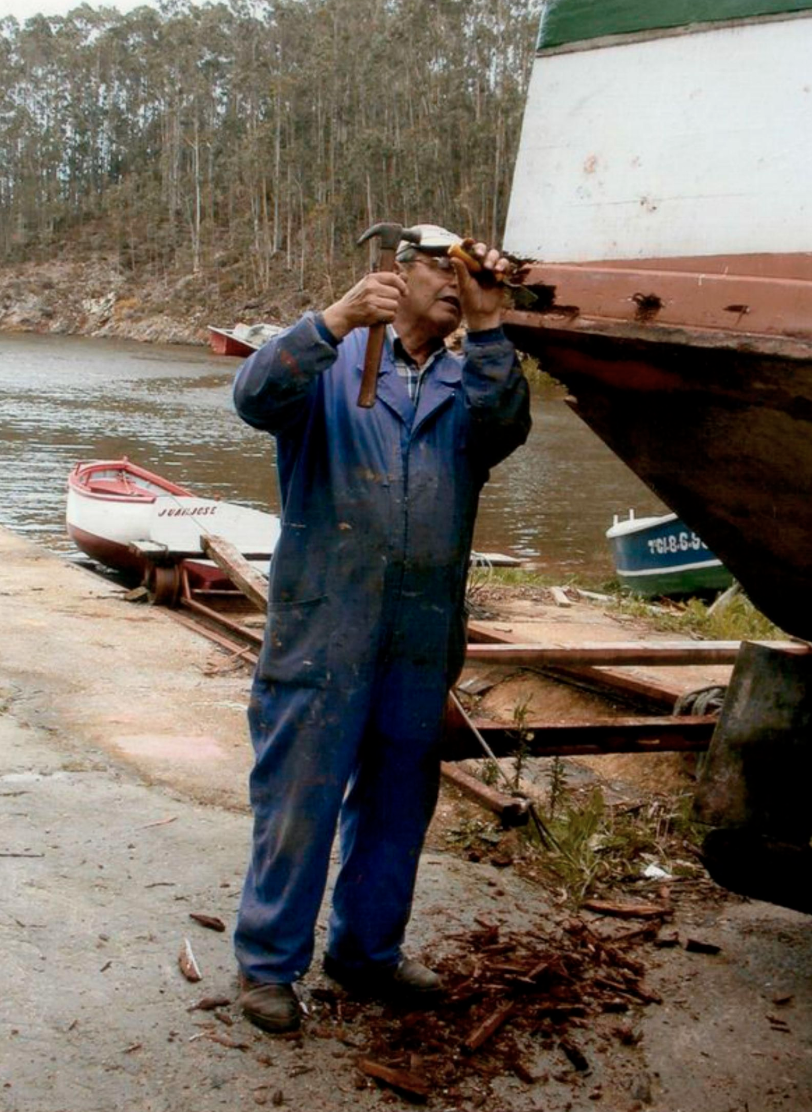
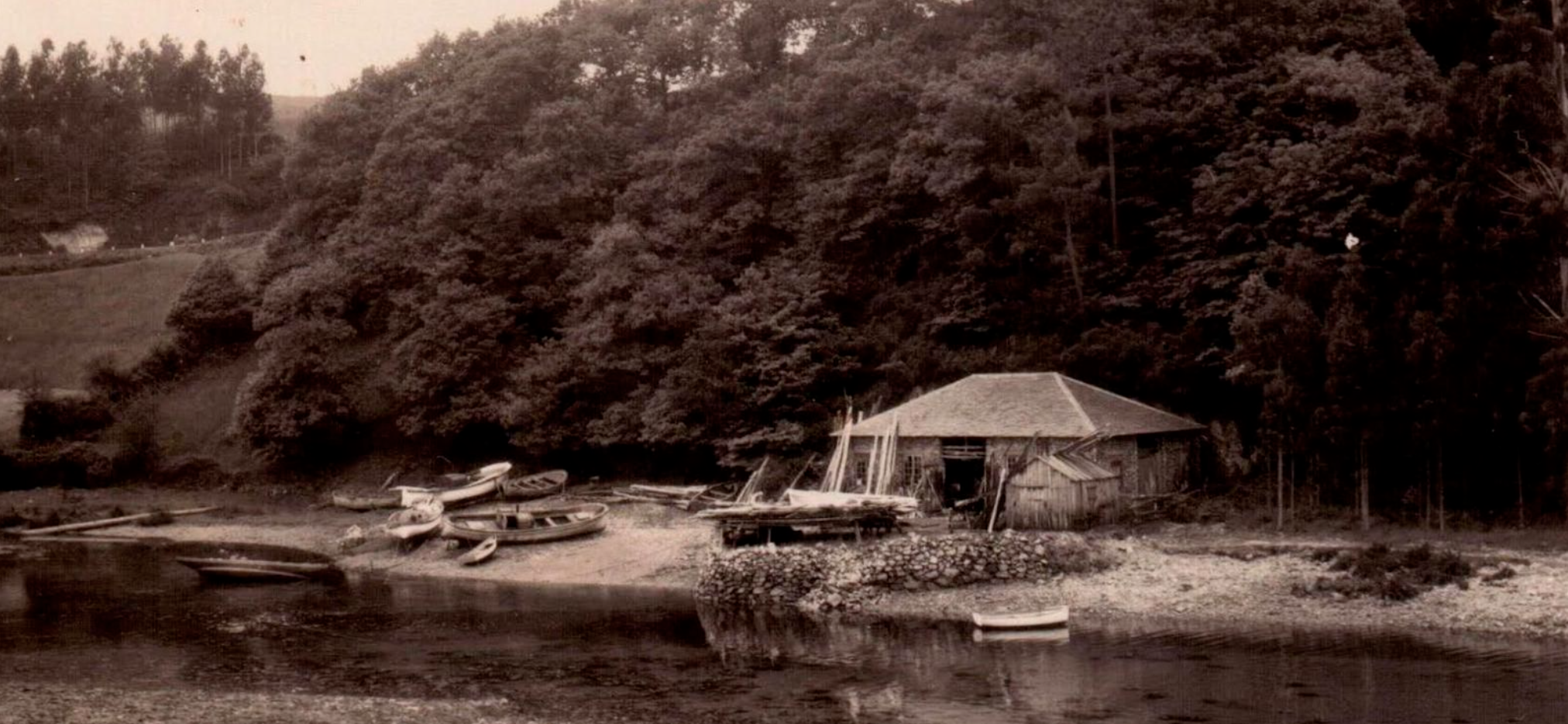
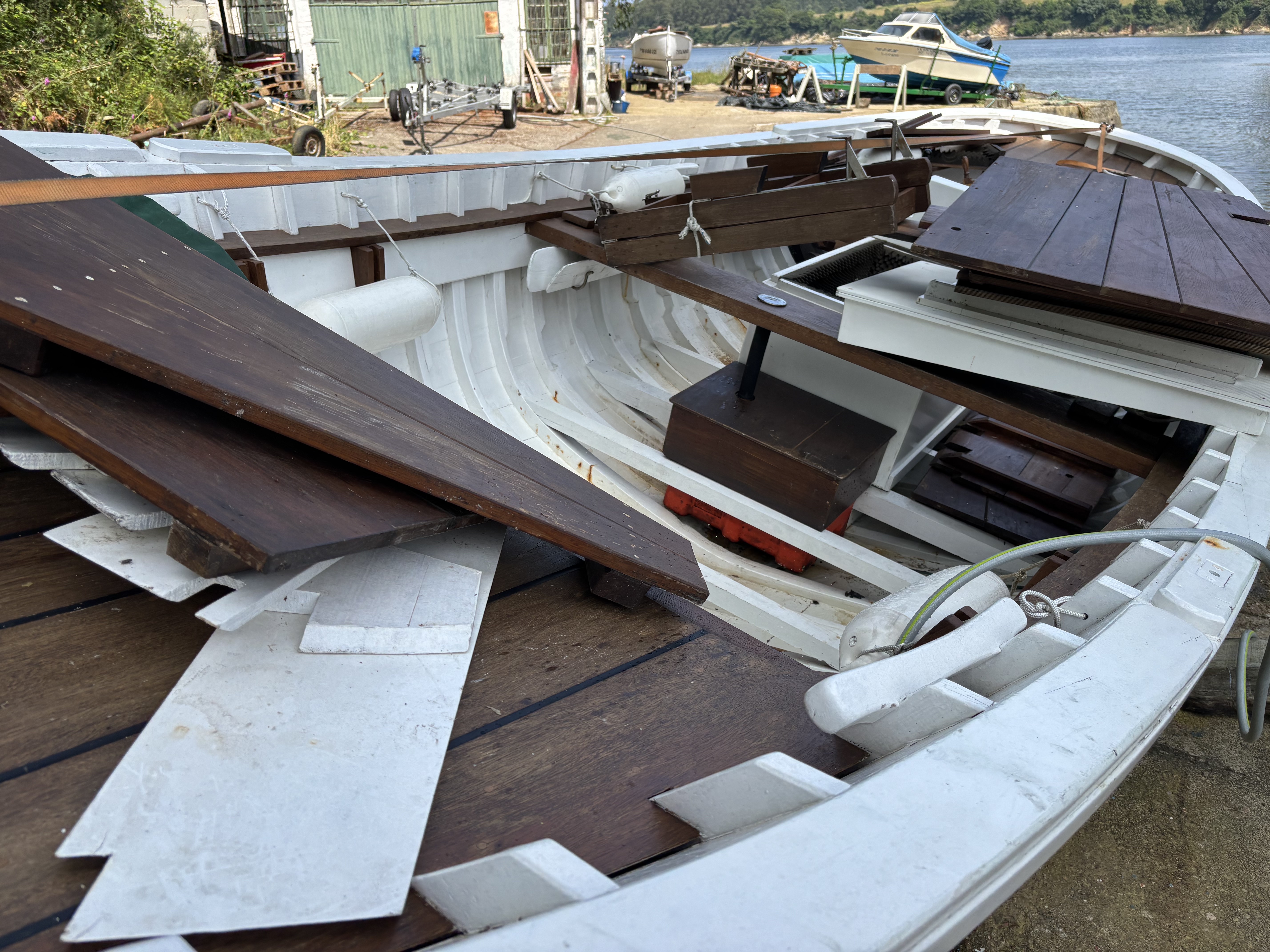
Pepe’s journey into the world of boats began not in a classroom but at the workbench. His father, Marcelino “Pacho” González, established Astilleros Pacho in 1944—a modest shipyard that would become the heart of a multi-generational tradition. By the age of 14, Pepe was apprenticing alongside his brother Carlos, shaping timber and learning the rhythms of the tides and the wood grain under his hands. The workshop, later relocated to Berbesa on the Eo estuary, became a vital node in a once-bustling network of small boatyards lining the Asturian coast.
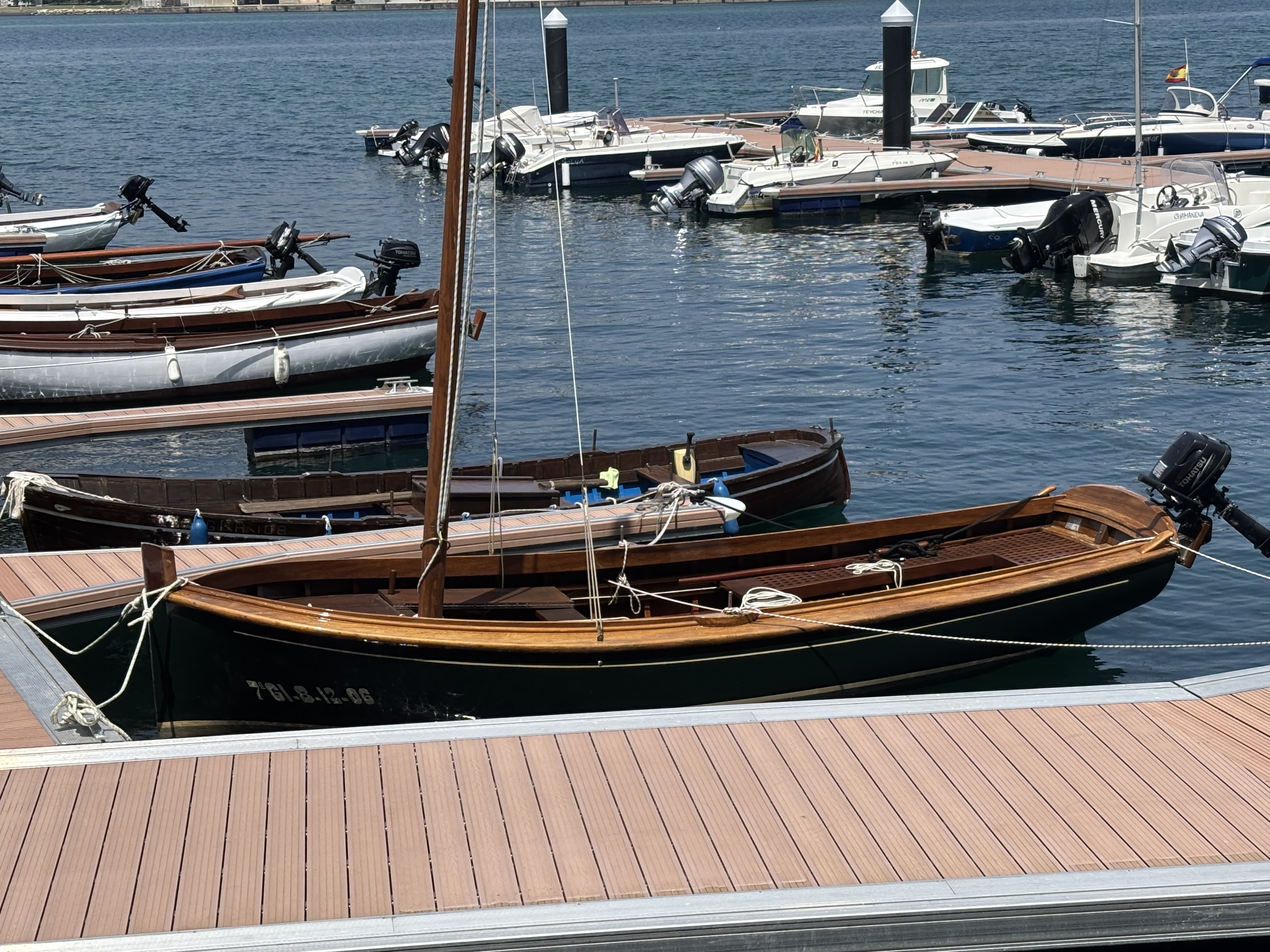
Throughout the mid-20th century, the Pacho yard built robust wooden vessels for fishing fleets from Galicia to the Basque Country. The craft they were most famous for were the handbuilt, Lateen sailed ‘Pacho’ boats. 6 metres long traditional Cantabrian sailing boats with a rounded hull and folding centreboard that have become the favourite class racing boat of the region. These weren’t just pleasure boats—they were lifelines for coastal communities and the main form of local transport carrying salt, wine and produce for centuries.
Reputation for Mastery
Pepe earned a quiet but steadfast reputation as a craftsman of integrity. Among those in the know his boats were prized and desired for being incredibly seaworthy and superbly built. He possessed an intuitive understanding of how wood moved with water. Colleagues often noted how he could “read” the timber—knowing by touch alone if a beam would flex too much under pressure or hold fast in a swell.
But it wasn’t just skill with tools that defined him. It was his dedication to keeping the traditions of Asturian boatbuilding alive in an era increasingly dominated by fiberglass and mechanization.
A Shift to Miniature, Not to Retirement
When Pepe finally retired from full-size boatbuilding in the 1990s, many assumed he would quietly fade from the maritime scene. Instead, he pivoted into an entirely new phase of artistry: the construction of model boats, each one a precise and poetic tribute to the vessels he once launched into the Cantabrian Sea as well as noteworthy craft from all over the world.
“I retired many years ago, and these are the only boats I build. All my life I worked in the shipyard founded by my father, Marcelino, known as ‘Pacho’. Now it’s my nephew Martín, who’s in charge of it,” explains Pepe as he shows us each of these scale replicas of ships that once left his shipyard, some of which can still be seen sailing the Eo estuary.
Using the same materials—local chestnut, pine, iroko—and the same techniques, Pepe began to produce handcrafted miniatures that mirrored real historical ships down to the finest plank and rivet. His first model, built in 1977, was merely a curiosity. But in retirement, he dove into the practice in earnest, creating over 90 unique pieces, many of them now on display in a personal museum in his home. The construction process is exactly the same as that followed in the construction of a real boat: it begins with the keel, placing the frames, fixing the stem and sternpost and nailing the sheathing planks, continuing with all the elements that go in the interior and from the deck upwards, especially the rigging and sails, made by the no less skilled hands than those of his wife Mirita
These models aren’t toys—they are scaled time capsules. From traditional fishing boats and rowboats to, English Tugboats and legendary schooners like El Industrial, Pepe’s work captures an exact scale model of history in each perfect centimeter of wood and rigging. Every curve tells a story, and every example is the result of countless hours of painstaking labor.
What a pleasure it was to meet Pepe who is understandably proud of his incredible body of work, and sustifiably so. But he was also so delightfully humble when I praised his astounding craftsmanship and meticulous work. Pepe is always eager to share his passion for boats big and small and anyone who wants to see his ‘museum’ here, at his home, just has to let him know before coming. Visits are free. Good luck.
A Legacy Beyond the Eo
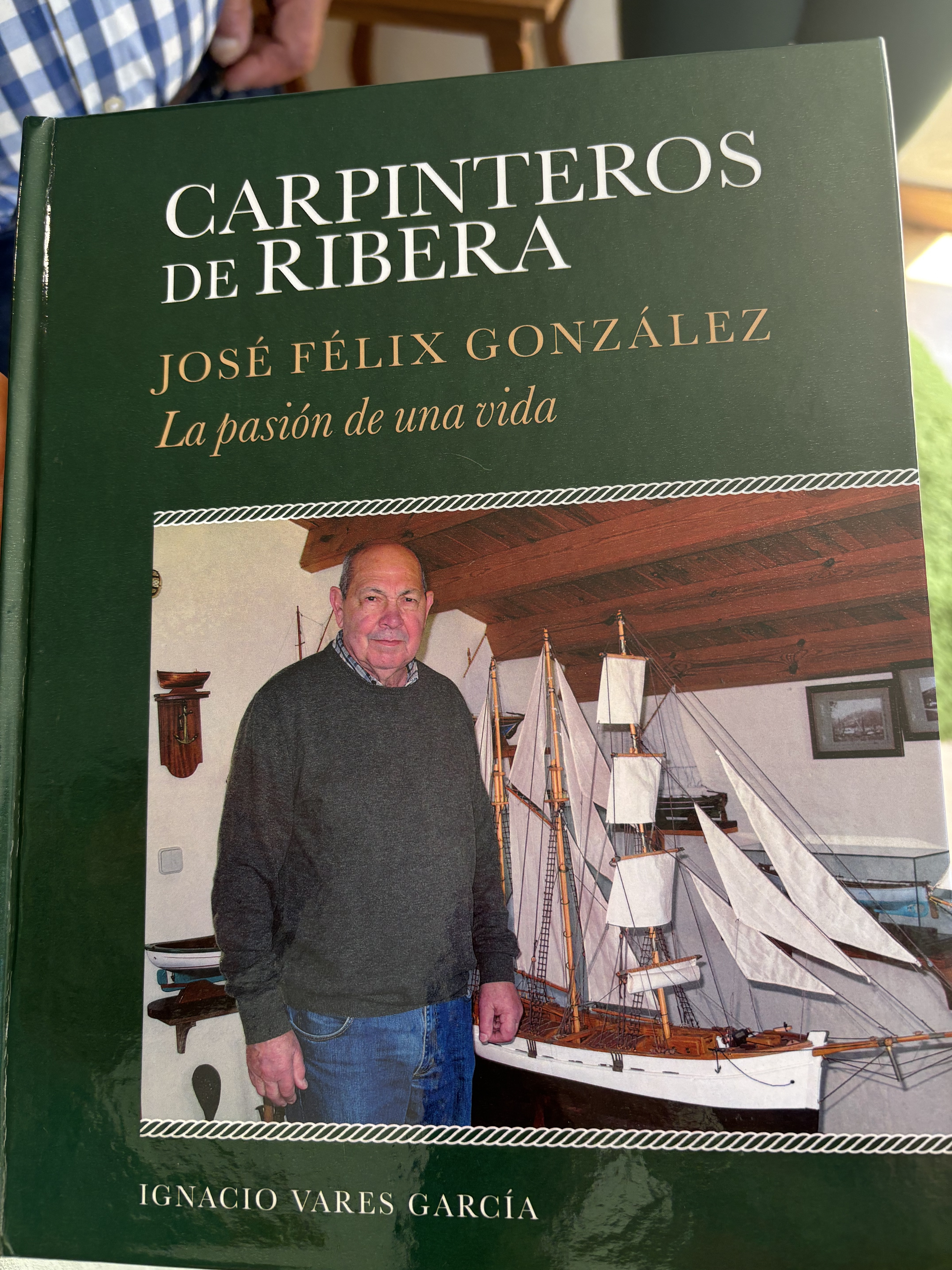
Though he remains modest, Pepe has quietly become internationally respected in maritime heritage circles. His models have been featured in exhibitions, publications, and even cataloged in a book authored by his brother-in-law, Ignacio Vares. His daughter Aida created a website to showcase the collection, ensuring these vessels—both large and small—remain accessible to future generations.
Local efforts to preserve his legacy continue. The town of Castropol is preparing a new edition of the book chronicling his work, recognizing not just Pepe’s craftsmanship but his cultural importance as a living link to an endangered maritime tradition that fortunatley still lives on, in the capable hands of Pacho’s nephew at the same little shipyard on the banks of the Rio Eo where little has changed for one hundred years.
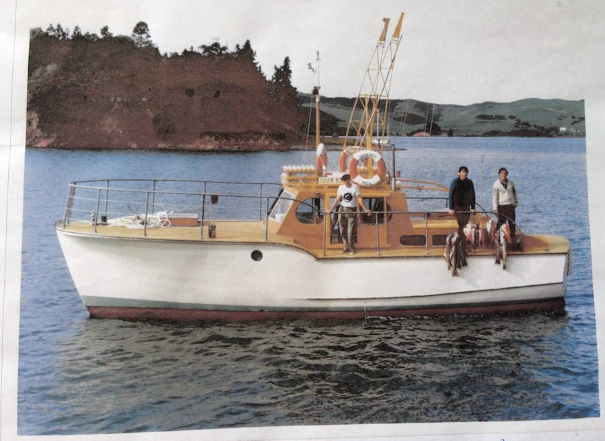
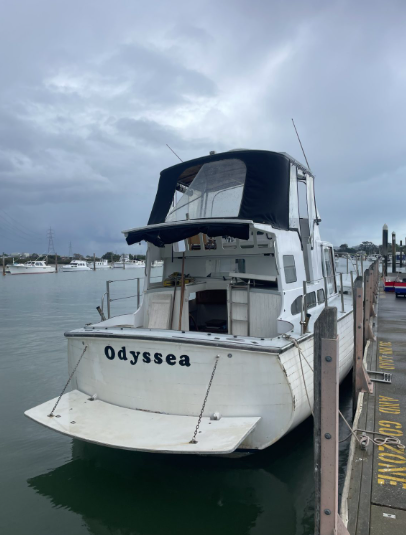
Our first glimpse of the 34’ ex game fishing boat SUSAN ROSE was in August 2017, (2nd photo above) this 1984 photo and others were shared with us by Dean Wright. At the time we saw her docking at Paihia in the Bay of Islands – link below to that story. https://waitematawoodys.com/2017/08/17/susan-rose/
Now thanks to a tme listing we get to see her back in 1975 (top photo) and today, re named ODYSSEA, with an extra ‘story’ on top and a lot of upgrades.
Her back story is she was launched in 1960 in Mangonui, Northland but it has been reported that it took 18 years to build her. Design unknown.
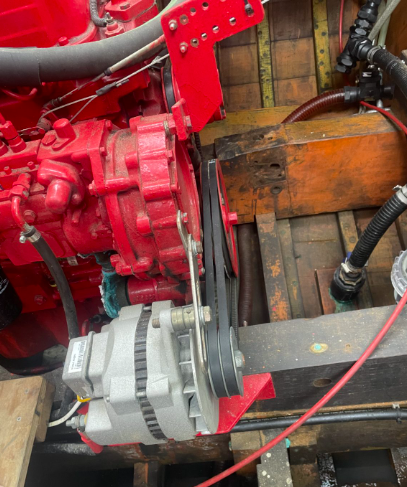
In c.1991 she was repowered with twin 90hp Ford 4cyl. 2722E diesel engines that gives a cruising speed of 8 knots.
The seller comments that all she needs is a lick of paint and an oil change. These days she is Auckland based.
SPOILER ALEART – THE WW SITE OR THE WRITER ISN’T THAT SMART – NO ONE PICKED UP A PREVIOUS STORY WHERE THE BOAT NAME WAS SPELT – ODYSEA………… sorry and just too tired to write a replacement 🙂
32’ MYSTERY CLASSIC BRIDGE-DECKER – Help Needed Identifying – WAINUI
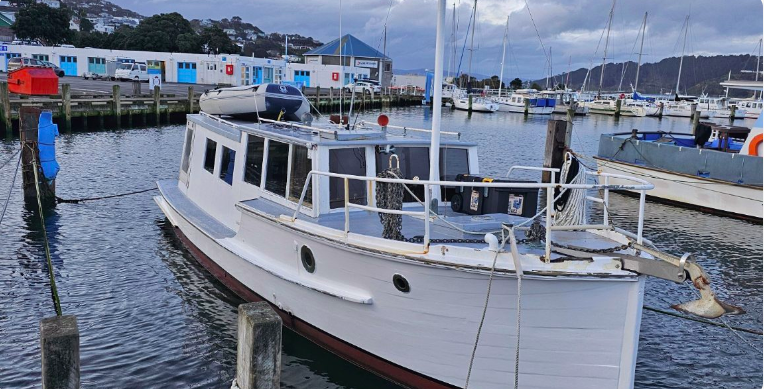
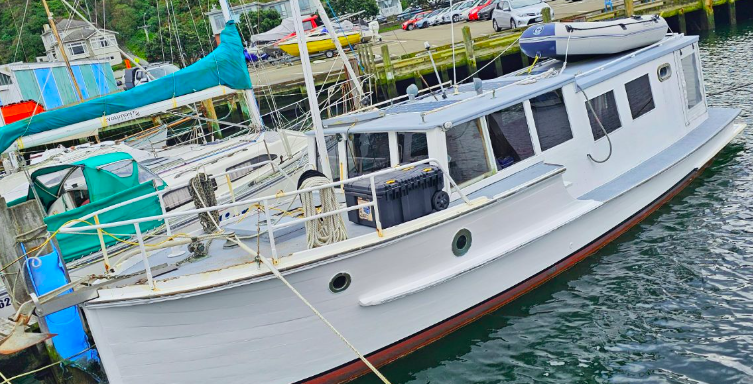
Todays woody is another recent tme vessel (thanks Ian McDonald), no name but looks familiar.
What we do know is she is currently based in Wellington but previously ( 2 years ago) was in the Christchurch area. Before that Auckland was her home.
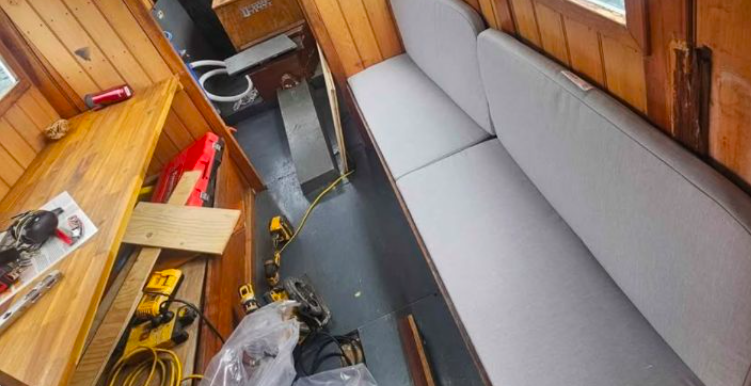
The seller has undertaken some updates to her exterior and general maintenance to the engine and drive line. Interior looks like it needs some TLC.
Forward motion is via a 3.6L Fordson 4 cyl. diesel engine.
Anyone able to put a name to the craft and hopefully provide an insight into her past.
29-07-2025 UDATE ex CARL – The 32′ bridge deckers name is Wainui originally from the Kaipara sent many years as a fishing boat. an then come over to Auckland around 2000 where she had a major refit and then was a much loved family boat.
MYSTERY CLASSIC WOODEN MOTOR LAUNCH – ZEPHYR AT WHANGAROA HARBOUR
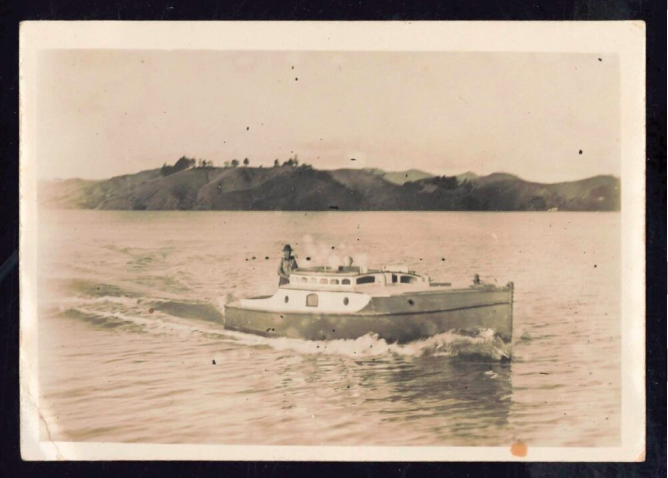
Todays woody photo is another mystery launch that comes to us from the Far North District Library collection via Dean Wright. The photographer being Trevellyn Guest .
The location is Whangaroa Harbour and the date is unknown.
In the photo we see a straight stem launch with a tram top, the lack of a dog house may date the photo c.1910 > early 1920. Her unusual coamings window configuration may help with ID’ing the boat. That centre square (with curved top) window is a very distinctive feature.
Can anyone put a name to the boat and comment on its back story.
29-07-2025 UPDATE: As identified in the comments section by Fred Walker and latter confirmed via a phone call. It is ZEPHYR and was owned at the time by Joe Shephard who was managing the Whangaroa slip at the time.
I’m a big fan of the Picton Clinker & Classic Boat Club, they seem to have the mix right when it comes the wooden boating community. Recently I was chatting to Roy Jones (Roysie) who among other things pulls together the clubs newsletter. Roysie mentioned a project he had been working on and promised a story – and today woodys we get the enjoy that story – I’ll hand over to Roysie to tell it.
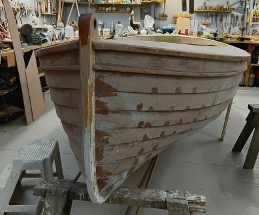
“Fifteen years ago The Picton Clinker & Classic Boat Club was gifted a 14ft clinker hulk which came with a remarkable provenance. Built by Ernie Lane in 1920 for Mr John Brownlee, son of the timber tycoon, William Brownlee of Havelock, the boat was in a sorry state and owned by Club Member, Noel Johnson.
Noel’s initial attraction towards Ruru was that, when he lived in Havelock as a child in the mid 40’s, he can vividly remember Ruru resting in the creek near the present causeway, whilst owned by the Havelock butcher, Mr Johnny Buncombe. Playing in Ruru, he would often be chased off and Noel miraculously relocated the boat again in 2003 on the Holdaway farm near Blenheim.
The Holdaway’s had purchased Ruru in 1948, from Johnny Buncombe for 100 Pounds, and who himself, had bought her from the Brownlee’s in 1933.
Now in a very sorry state, Barry Holdaway gave the hulk to Noel who intended to restore her. Aged 80, he realised it was beyond him, and Noel wisely gifted the craft to the Picton Clinker & Classic Boat Club in an effort to preserve her, and it worked.
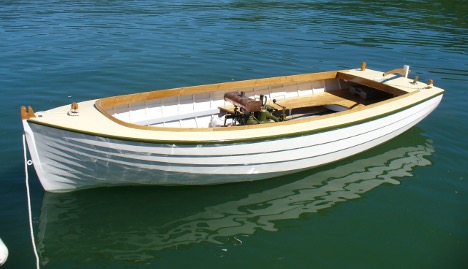
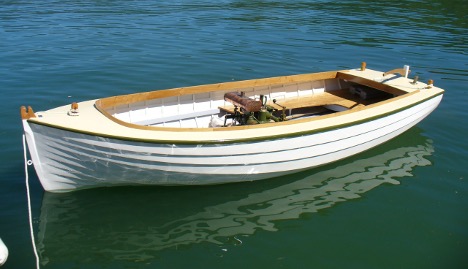
Ruru as restored in Jan 2010
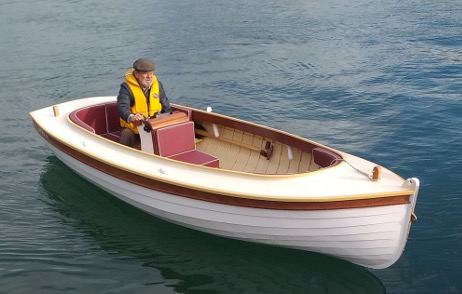
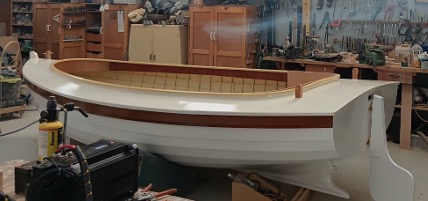
Ruru is the Club’s flagship and is utilised on all the club runs as such. Roy had a little to do with the restoration and always admired her lines as created by Ernie, she was now available for all to view and admire. So last Christmas he borrowed Ruru for a week and after setting her up, took her lines off and drew them up on the computer. From these he created a table of offsets and after lofting out, began construction early in the New Year.
Ernie created a built-down style of deadwood almost a bustle, presumably to ensure the engine could be low as possible and with a fairly level prop-shaft, but this was difficult to recreate.
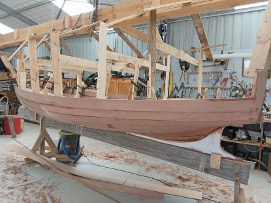
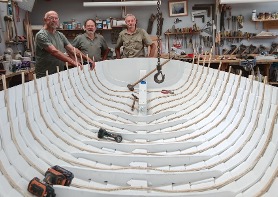
He must have steamed the kauri planks tightly to achieve the curvature around the stern deadwood rebate. Roy elected to use Meranti 9 mm marine ply rather than timber purely due to supply constraints. While gluing the lands removed the need for nailed and roved laps, it still required steamed American Oak ribs. This was the only job Roy required assistance with and co-opted a couple of retired members in the club to assist with the morning’s task. Peter Baker & Keith Henson willingly helped out and this is the norm amongst the Clinker Club members, advice and assistance is most often always freely available.
Propulsion System We originally installed a Stuart Turner P66 twin cyl. 10 hp engine in Ruru, but this was overpowered, so we swapped it for a P55 5 hp which proved more appropriate, however, the Stuart Turner became problematic for the numerous skippers in the Club. We have since settled upon a Lifan Chinese 6 hp and this has run well for 10 years, but is quite noisy. Roy considered this and, after speaking with new member, Tim Barton about his neat little electric 12ft’r, Billy O Tea, decided to also install an electric system in the Ruru clone.
With Tim’s advice on where to go for the Chinese supplier, Roy ordered a 4kw, 1000 rpm 48v dc motor and controller, which duly arrived about 4 weeks later without problem. At around $3,500 landed, he considered it reasonably economical.
Subsequent to that major decision, he continued construction, framing the deck and glassing same. Unlike Ruru, he made the top strake varnished with a sub belting along the bottom edge in a more traditional style. Lacking more traditional hardwoods for the beltings, standard Quila timber decking was utilised and machined to suit; merely because it is readily available and reasonably economical.
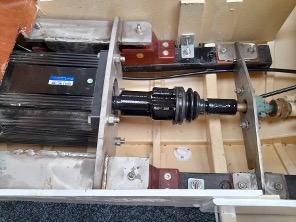
The dc motor is considerable, weighs about 30kg developing 39 N.M.
The universal is a CV joint from a wreckers, and the thrust bearing just aft. The motor output shaft is 35mm!
Having decided upon electric propulsion, Roy decided to throw the cat another goldfish and fitted hydraulic steering to enable comfortable curved seating in the stern without a the tiller interfering with guests seated there.
Once again, Roy went online and researched hydraulic steering systems. Having been quoted over $2000 locally, it cost less than $500 for a full set imported and landed at the door in 3 weeks.
The short S.S. rudder tiller penetrates the transom quite unobtrusively, to the ram below deck and can be disconnected from the rudder when removing for trailing.
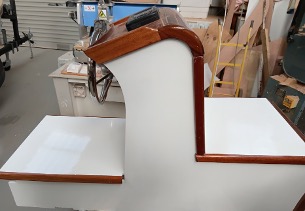
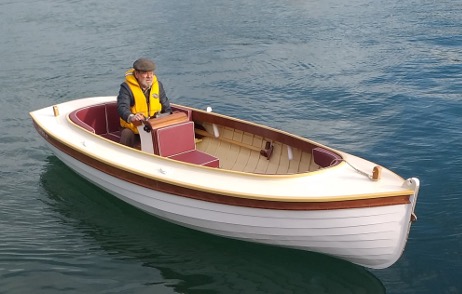
The Electric system enabled a centre console with motor and battery installed beneath, leaving a huge area amidships, where an engine is usually placed. A forward curved seat fits neatly behind the curved foredeck coamings. The large 48v lithium battery required is situated under the front seat of the console, while the motor and drive train is beneath the foot level lid below the helm.
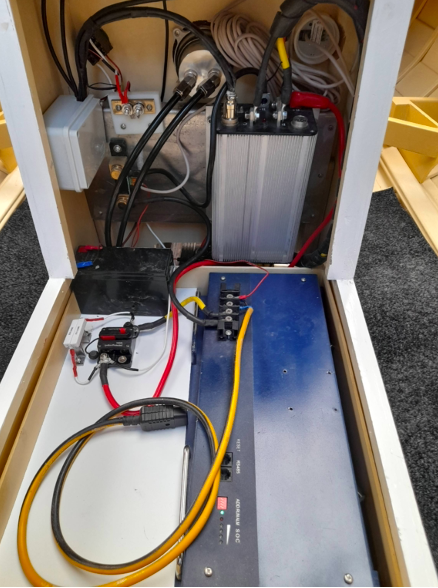
The 48v 100 amp hr lithium battery is the blue item & takes up the full width of the compartment. The silver item is the motor speed controller that came with the motor. The yellow lead is for connecting to the 48v HD charger.
Roy purchased the 48v 100 amp hour Lithium Ion Battery from Auckland along with the new trailer, driving up and back being cheaper than freighting both down to Marlborough.
He also installed a GPS Plotter & Sounder plus a Victron battery management system from Burnsco. This is a magic device providing a shunt in the neutral supply and thus determines the present battery voltage, the currently used amps & watts, plus provides a range in hours and minutes left in the battery. It is supplied with a 50mm gauge but the best method of readout is by Bluetooth to a cell phone enabling all the readings on one screen.
The greatest dilemma with electric boat propulsion systems is range anxiety, knowing how long you can actually cruise for, at the present power usage. Well, the Victron system diminishes this to a normal fuel level concern, if you run at full power then your fuel range will be minimal, but with sensible throttle use many hours are available. Roy intends to calibrate the range from GPS speed, Shaft rpm & amps drawn. These are shown further on.
Tim provided his figures, and for example at 3.3 knots Billy O Tea draws 5.2 amps, at 5 kts she draws 22 amps but at 5.4 kts, draws 50 amps indicating her best hull speed is just below 5 kts. i.e. 100 amp hour battery at 22 amps = 5 hrs motoring, and you can always slow down!
We used GPS speeds & digital tacho rpm figures with the Victron gauge providing the current drawn. Roy will do similar with Toroa EV, (her new name now she is completed.) Toroa means Salvins Mollymauk (and the EV is electric vessel!).
Ruru like most clinker hulls is a very seaworthy craft and it is on record that when Ernie Lane completed her, she was motored around from Picton to Havelock by a Mr Doug Pickering. This is a daunting trip for a 14ft Clinker, even today, and he is reported to have had fuel trouble near Cape Jackson, Doug simply tied Ruru to some kelp while he cleaned out the fuel line of shavings! Ruru was fitted with a Scottish Kelvin of about 5 hp from new and to have motored the 60 odd miles around the Cape was an impressive feat 105 years ago!
When one considers that she was built shortly after the First World War, it is remarkable that it was obviously intended she would have an engine from new. It wasn’t a retrofitted engine installation as is usually the case with this vintage. Perhaps this would indicate the wealth of the original purchaser, Mr John Brownlee?
With the helmsman and passenger sitting in the stern sheets. Toroa EV rides high in the bow but with passenger forward she sits nicely to the waterline.
Roy advised that Toroa EV took 5 months to construct at old farts pace… i.e. 5 hr per day knocking off at rum o’clock. He takes great delight in creating clinker craft, believing if the boat is pretty, it will become a 100 year boat. (only pretty boats last 100 years because their owners love them!)
The Picton Clinker Club members own many small clinker & classic style boats and are committed to salvaging and restoring these wonderful small craft, often saving them from various scrap heaps or bonfires.
Toroa EVPerformance
Revs Speed Amps
350 2.1kts 2.4
450 2.6kts 3.5
650 3.4kts 6.6
800 4.1kts 11.7
970 5.3 kts 16
1070 5.4 kts 21
1250 5.9 kts 39
As you can see, any attempt to exceed 5 knots hull speed causes the amps load to dramatically increase, up to about 4.5kt is very economical indeed but a little more and range diminishes dramatically. Exactly the same of a combustion engine I guess.”
CLASSIC WOODEN LAUNCH – LADY ALLISON NORLOCK + BOAT BOOT SALE
After yesterday bumper story on the 2025 Classic Woodys Boat Show at OBC Marina, I thought your eyes may need a rest, so a short one today.
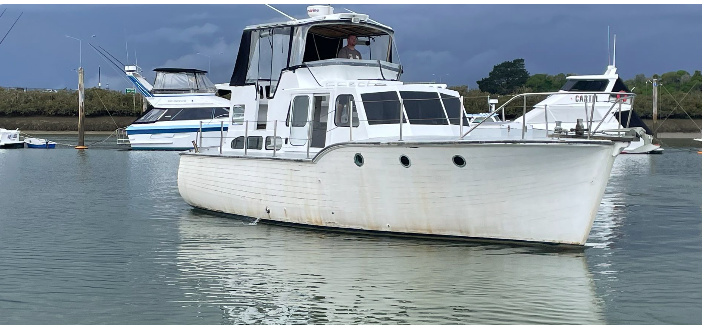
The wooody launch NORLOCK recently popped up on tme, thanks Ian McDonald, in a previous life she was named LADY ALLISON.
The listing states that she was built in 1958 by Colin Wild, I suspect this isn’t correct as I’m told Colin Wild’s last boat was in 1955 and he died shortly after that.
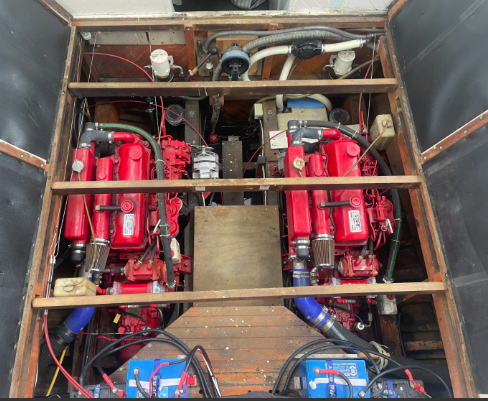
What we do know she is approx. 33’ and powered by a 140hp Lees Ford engine that has her cruising at 8 knots.
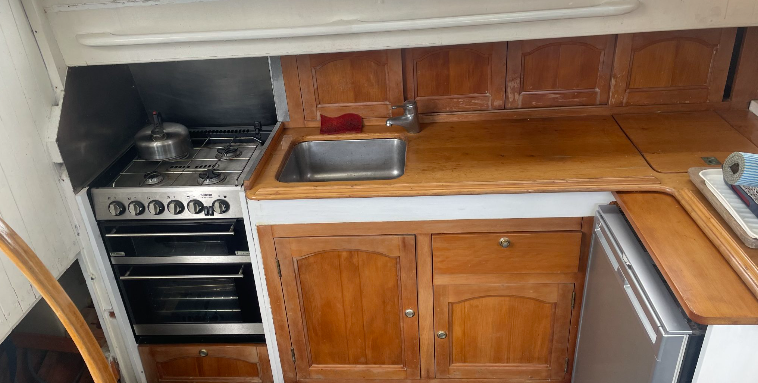
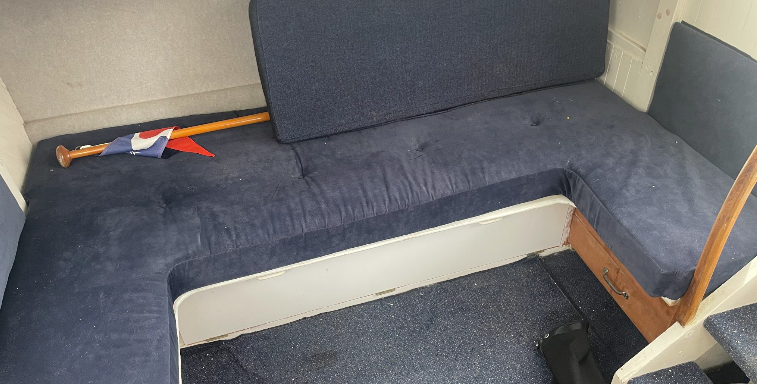
Interior looks quite smart and she appears to be another bargain buy at $9k ono.
Can we learn more about the vessel and clear up her heritage.
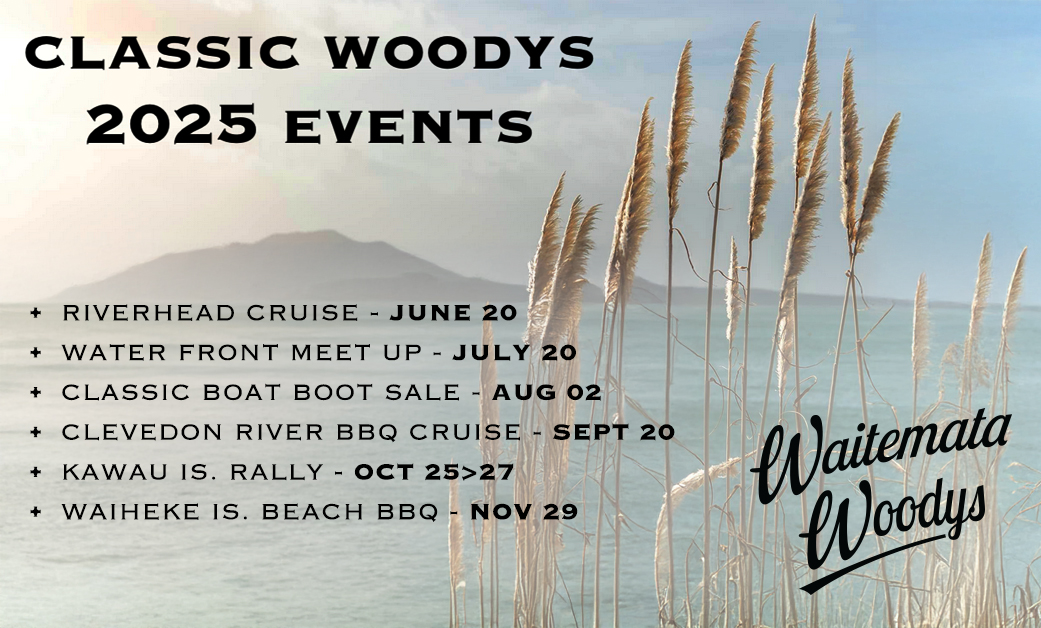
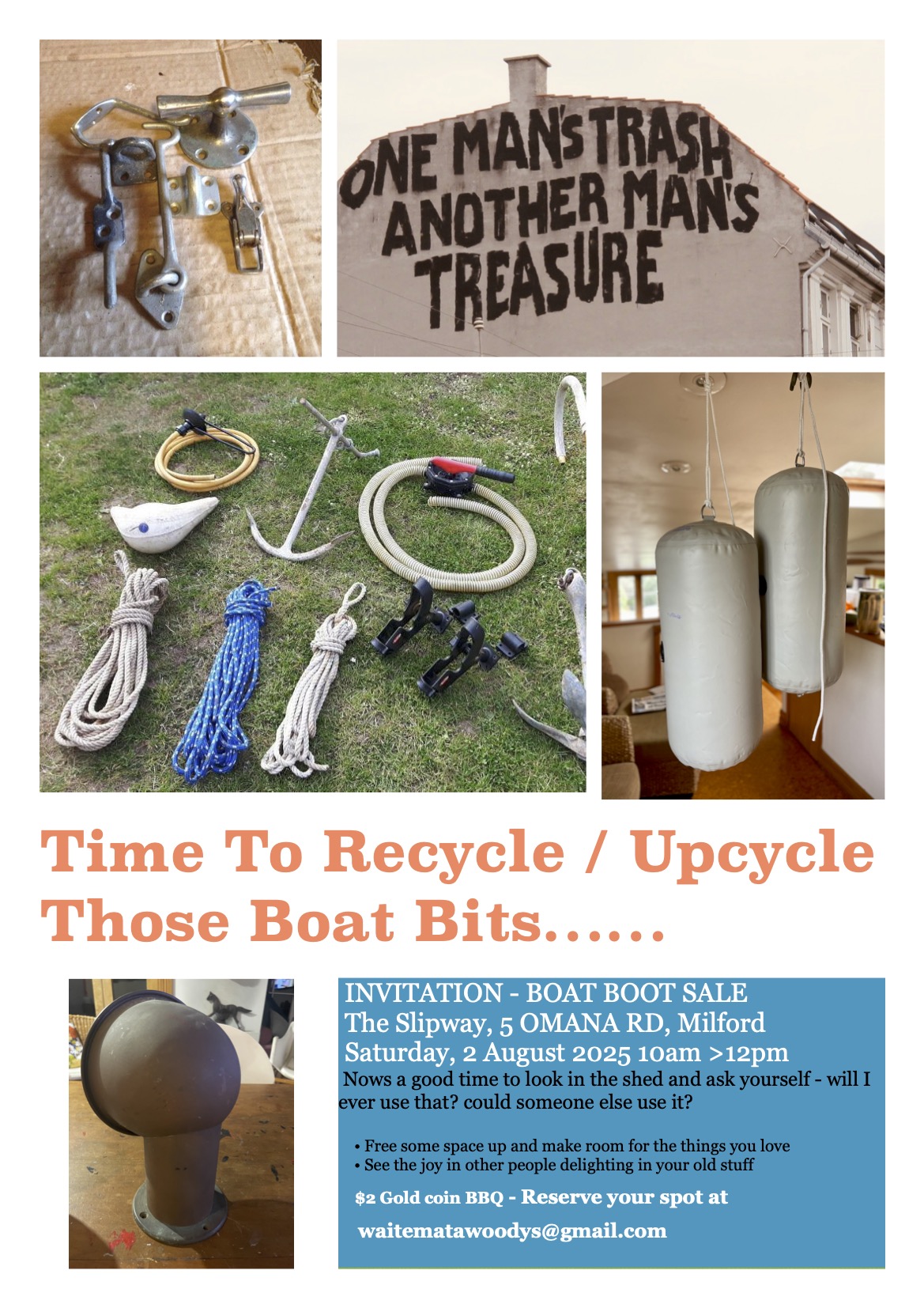
CIRCLE THE CALENDAR – ONLY 10 DAYS UNTIL THE BOAT BOOT SALE AT THE SLIPWAY MILFORD YARD– AUG 2nd
We already have a great group of boaties looking to off load their treasure , details below. Still not too late to secure a spot, or just rock up on the day.















 waitematawoodys.com #1 for classic wooden boat stories, info, advice & news - updated daily - 15+ million views