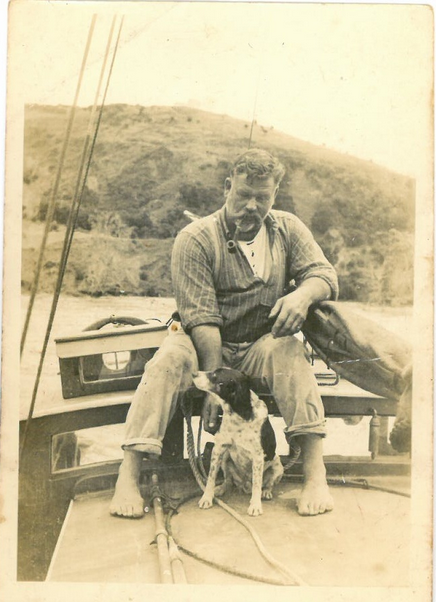
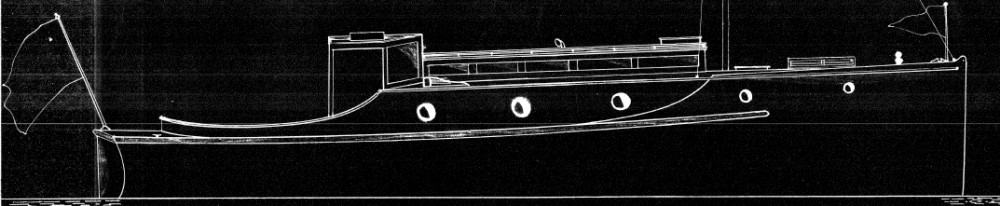
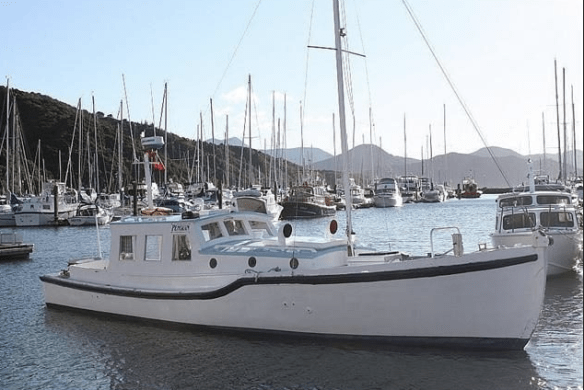
Penguin

penguin-1

penguin-3

PENGUIN
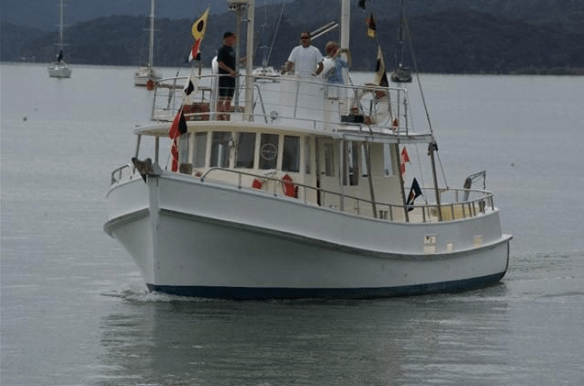
Penguin the 34′ ex Navy survey tender has appeared on ww before (link below for full details). She recently surfaced on trademe, so thanks to Ian McDonald’s tip off, we are able to have a good peek down below. Enjoy – she will appeal to Russell Ward 😉

Ex Naval Motor Launch

17-05-2017 WARNING – IF THIS BOAT IS OFFERED FOR SALE  BE CAREFUL. FYI – READ THE LINK TO THE POST BELOW.

Vacuna

Deodar

deodar-mow-labour-weekend2016a

deodar-mow-labour-weekend2016c

deodar-mow-labour-weekend2016b

DEODAR

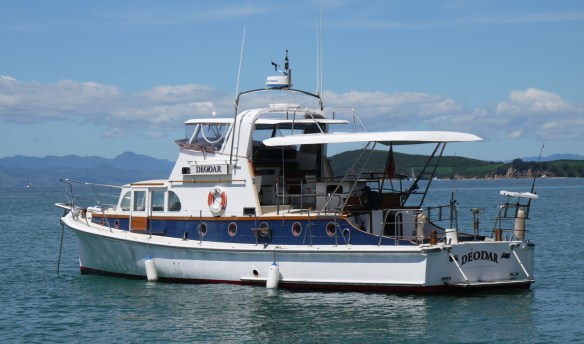
Mooching into Man o War Bay on Sunday I spied the 52′ Deodar at anchor, looking very smart. She was built by Millar & Tunnage in 1960 & is an ex Auckland Police launch.
In 1996 she was converted for pleasure use & recently underwent further work – more details & photos here https://waitematawoodys.com/2013/12/29/deodar/

Kaheno

screen-shot-2016-10-20-at-11-37-55-pm

screen-shot-2016-10-20-at-11-45-03-pm

Kaheno Looking For A Cheap Waterfront Bach

This 45’9” 1966 classic trawler styled Carey motorboat is built using stripped planked kauri & powered by a 135hp Gardner 6LS engine. She was converted to a live-aboard & ticks all the boxes for what I call a floating bach.

Asking price on trademe is $249k, I suspect it will sell for less but what ever the price – it’s a cheap holiday home or a city waterfront apartment. Again thanks to Ian McDonald for sniffing this one out 🙂

Update from Ian McDonald
It would appear that the vessel is ‘Kaheno’ – desined by Carey of Picton & built in 1966 by Sinclair & Melbourne. She was once owned by the Salvation Army to service Rotoroa Island. She tragically sank with the loss of 4 lives in the Tamaki Strait circa 1986 whilst carrying timber as deck cargo from memory.

Mistletoe 228 – Sailing Sunday

mistletoe-228-gt-barrier-t-collins-collection-ex-museum-i-d-ph-2013-7-tc-b923-04

mistletoe-228-gt-barrier-t-collins-collection-ex-museum-i-d-ph-2013-7-tc-b923-05

Mistletoe 228 – Sailing Sunday

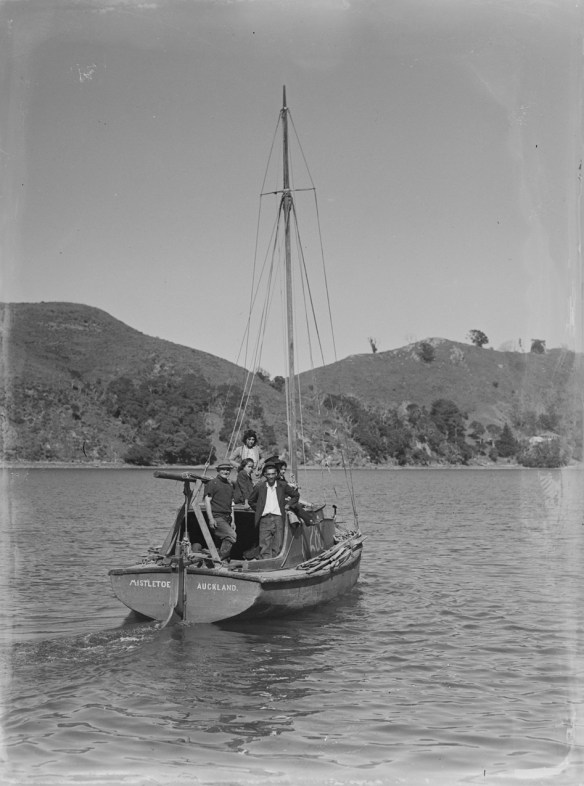
When I first saw the above two photos from the Tudor Collins Auckland Museum collection I had a chuckle, there has to be a story behind these photos. Venue most likely is Great Barrier Island. Photos emailed to me by Ken Ricketts.

Do we know any more about her?

Photos below ex Dean Wright of Mistletoe at Whangaroa Marina 2007. Nice to see she survived 🙂

25-10-2016 Update ex Alice Morrison

I recall seeing a very similar vessel called ‘Mistletoe’ in Houhora on 11 February 2016 (picture below). I wonder if she is Mistletoe I or Mistletoe II?

img_5091-mistletoe

M.V. Cygnet

screen-shot-2016-10-20-at-9-10-08-pm

screen-shot-2016-10-20-at-9-10-30-pm
M.V. Cygnet – Looking for a woody lifestyle?

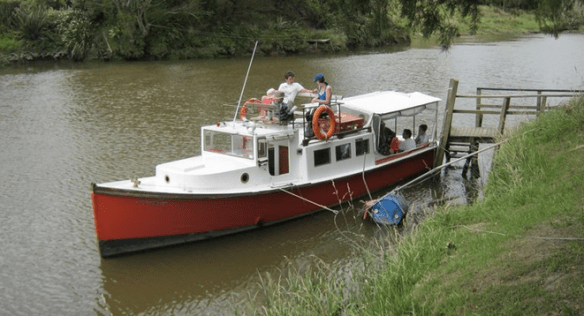
Cygnet was purpose built in 1913, as the original Cream Boat of the Mokau River.
After being fully restored in 1994, the Cygnet returned to its rightful place on the Mokau River; this time as the 2nd oldest passenger vessel in New Zealand. She measures 35′ & is powered by a 2012 Yanmar 30h.p. diesel. Most recently SGS (Safe Ship Management) inspected and certified in 2014 and still current.
The M.V Cygnet is currently on it’s newly built custom trailer being stored in a shed near the Mokau River (As it’s current owners are enjoying the benefits of retirement). This is a rare opportunity to purchase a piece of New Zealand maritime history & even earn a living.
photos ex trademe via advice from Ian McDonald

Do we know any more about her – builder etc?

Harold Kidd Input

She was built in Auckland and shipped down to Waitara for Sjolund of Mokau in July 1913, She was described as “on the tunnel style” 34ft in length, 7ft 6in in beam with a draft of 12 ins unloaded and 18ins with a two ton load. No hint of builder in that report but Baden thinks she is by T.M. Lane and Sons and that seems entirely likely. She was meant for the then flourishing Mokau River trade. Sjolund had several launches.

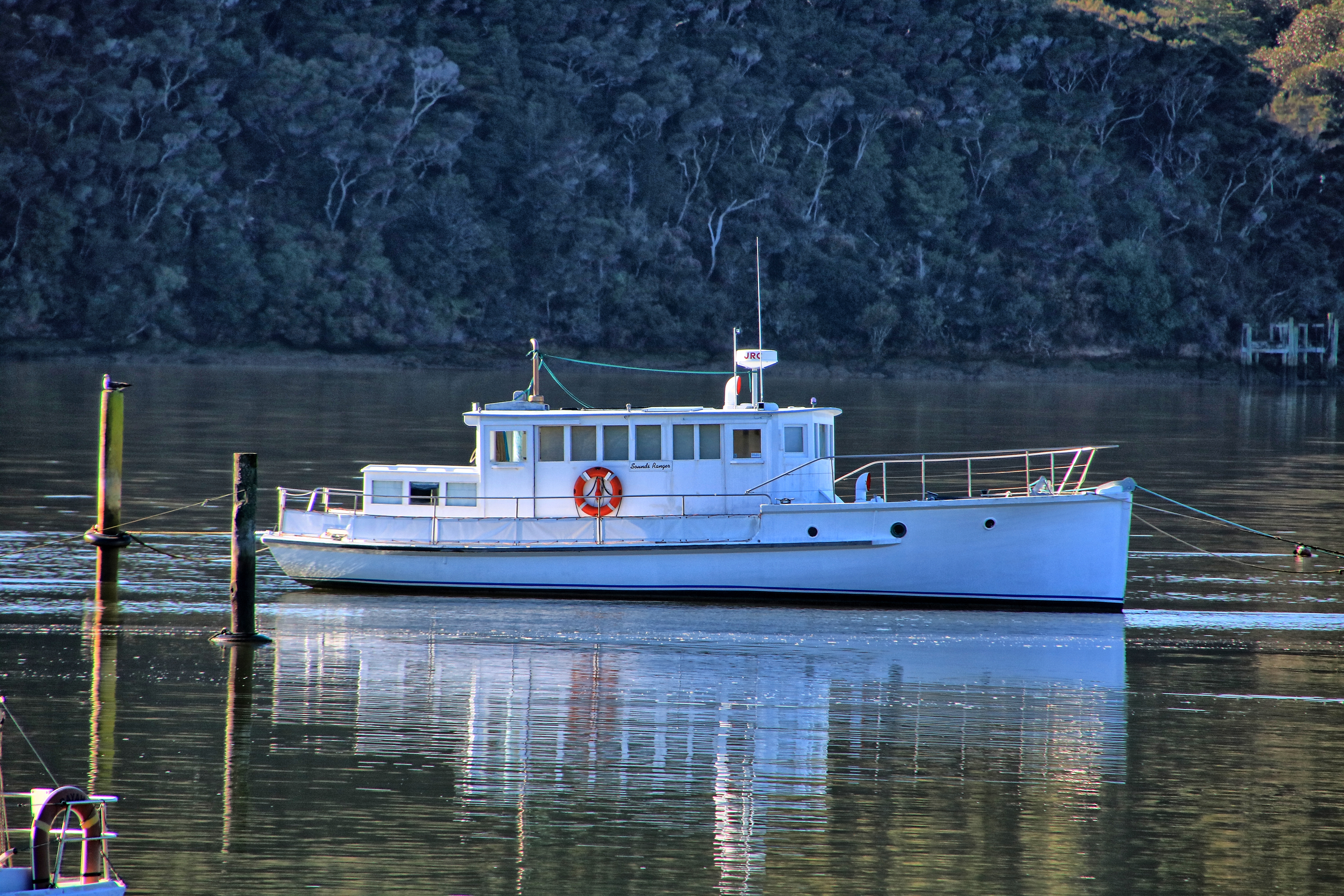
Sounds Ranger

2016_08_31_img_2067

Sounds Ranger

The above photo of Sounds Ranger was emailed to me by Frits Schouten & was taken by Frits in the Bay of Islands, sorry but that all I know.
I suspect the name  & style are a hint to her past

What do we know about her & her past?

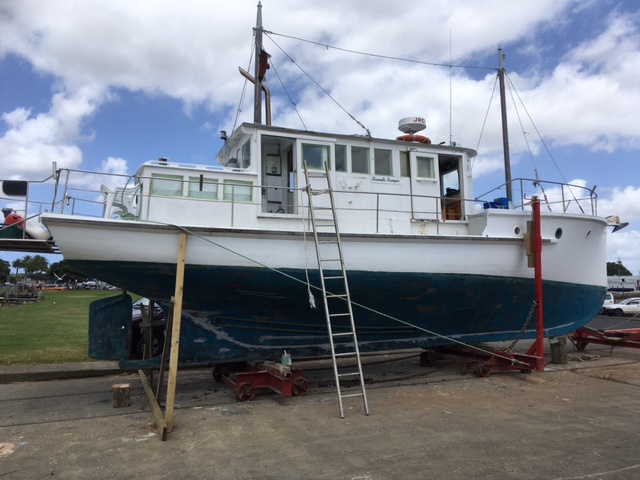
Update 10-02-2022 – Photos below of Sound Ranger on the slip at Dargaville. ex Dave Stanaway

29-05-2024 UPDATE ex NORM JUDD


The following description by Kerry Johnson of the “Sounds Ranger.” is from the unpublished NZ NATIONAL PARKS AND RESERVES RANGERS’ ARCHIVE – a collection of written and taped memoirs of Lands and Survey rangers between 1952 and 1987. Kerry was Chief Ranger of the Marlborough Sounds Maritime Park from the 1968 to the 80s.

“Reading my note to Norm Judd, Havelock based ranger, re starting the Sounds Ranger brought back memories about those early days when I took over, among other things, the care and operation of the vessel. I wasn’t impressed with its overall condition. There was need to bring the launch up to Marine Department standards as soon as possible.
The problems included batteries not set up properly to provide backup if one set went flat, the stern tube the tail shaft went through contained a heavy oil for lubrication but would not function properly and no matter how much advice and effort I could muster this thick oil would ooze into the bilge. A few months down the track while cleaning the accumulation of grime from a circulating pump it literally fell apart. Thank goodness the boat was safely in her berth in Picton then!
Many improvements were eventually made but there was one incident that occurred one night when I think I was away. Late one rough, wet evening my wife received a call from the Harbour Board patrol to say the Sounds Ranger’s engine was chugging away in her berth with no sign of anyone on board and the doors securely locked! Now there has to be a logical explanation as to how this happened but I was never able to clearly identify the cause and that’s probably why the battery leads had been removed as mentioned in my note to Norm.
I’m not superstitious and while I learned later the same thing had happened once before, you can’t help thinking that there must have been some free spirit lurking about that stormy night and was about to take the “old girl” for a cruise in the gloom! “Stranger things have happened at sea.”
Thank you Norm for holding on to a note many (including myself) would have discarded long ago. As a friend commented recently when talking about recording family history, “even the milking cow’s name is important”.
Here’s the note
“Now a few directions in case you should be asked to take out the Sounds Ranger.
Batteries have been disconnected – under seat on starboard side, crescent spanner in tool box near batteries.
Before starting engine remove bucket from top of funnel – open hatch to engine room, light switch is on a beam just inside the hatch opening, that is if you stand on the engine room floor looking forward, the switch is on your right hand side on the back of the beam that forms the front section of the hatch opening. Move under the exhaust pipe along to the front port side of the motor. If you look around the actual front of the engine you will see a small wheel with finger grips around the outside (about 3” or 4” diam.)
This is the wheel that engages the bilge pump by simply screwing or rotating the wheel clockwise or in towards the engine. It should be in this position now, so to disengage the pump, just screw the wheel very slowly out. Do not on any account force the wheel too far out, or for that matter too hard in, otherwise it will stick hard. The pump has to be primed before it will start, this done on the starboard side of the engine. There is another light there with the switch by the light bulb, you will find an old kettle with water in it. You will see towards the front, a tap with an opening for the water to be poured in on the top. With the engine at low idling speed, turn the wing tap to vertical – pour water in slowly. I hold my thumb near the hole and when the pump looks like starting I block the hole with my thumb then turn the wing tap to horizontal.
To start the engine use the starter button on a beam in front of the light on the Port side of the motor, but you should only have to use this one when the engine is cold. It also pays to use the overload button on the fuel pump (when the machine is cold only) the button is on the front of the fuel pump.”
(Here there was a small diagram that showed the location of the overload button on the fuel pump.)
“Button should be pushed up, at the same time pull back the rack. Push the starter button until the engine starts.
Be sure to turn both lights out, on leaving the engine room.
To stop the motor just pull a string that hangs on a nail beside the top of the steps that lead into the forward cabin. Normal starting can be done by using the starter button by the compass. (This for some reason has given trouble in which case I have used the engine room button.)
Push throttle lever up to 1100RPM after about 20 minutes. I doubt whether it will be necessary for you to use the boat, and if you do, I don’t think the bilge will have to be pumped out. There is a hand pump in the engine room, the valve is on the side is off. If you have to use this rather that the pump on the motor please be sure to turn the wheel mentioned earlier to off position.
Remember that the motor is only 60 HP and will not pull up as quickly as the PR (Pelorus Ranger – Havelock based vessel) in other words take her quietly and don’t get into shallow water or you will get into trouble.
Hope this makes sense?”
“P.S. Key to door lock is under bucket by gas cylinder rear of wheelhouse.”

(All of this made sense but just being up with the detail didn’t necessarily mean I was any less concerned with the implementation! – Norm. My recollection is that SR drew about 6 feet and was 45 feet at the waterline.)

Boyhood memories of the Hauraki Gulf

screen-shot-2016-10-12-at-10-05-41-pm

BOYHOOD MEMORIES OF THE HAURAKI GULF

The story below was sent in by Greg Skinner, written by his late great uncle , B.T. Daniel, in May 1991. To view & read more on the launch Anzac (Freedom) mentioned in the story, click this link https://waitematawoodys.com/2016/04/05/anzac-freedom

The Hauraki Gulf is considered by many, particularly those who live north of Hamilton, to be one of the finest cruising grounds in the Southern Hemisphere. Australians, with their Hawkesbury River and Queensland Barrier Reef, could excusably be critical of this claim. Southern Argentina and Chile possess a vast area of channels, inlets and fjords whose atrocious weather reduces their popularity for cruising. As a boy who grew up cruising in the Gulf, there was no place quite like it, until later in life I discovered the Marlborough Sounds nearly fifty years ago. The Gulf has taken second place since those days.

To return to the Gulf, however, and its scope as a training area in the ways of the sea, this tale about cruising does not deny the wealth of talent that its waters have produced over the last 120 years. These are the ship and boat builders, designers, engineers, seamen and yachtsmen of world renown whose love for these waters has brought fame and fortune to this land.

In 1921 my father, Captain C. Daniel, joined the Fisheries Branch of the Marine Department as an Inspector of Fisheries. His duties covered the Hauraki Gulf which, viewed from its chart, is a large body of water plus many islands and tidal inlets. To cover this ground he was supplied with a launch called ANZAC and a deckhand as a mate. The ANZAC, built about 1915 by a Mr Collins I believe, was a noted “flyer”, her dimensions were 40‘L’x9.5‘B’x3.5‘D’, powered with a four cylinder Doman petrol engine. She had, prior to acquisition by the Department, won a number of races for her class. The reason for her purchase was the speed at which she could apprehend any fishing inside restricted limits. The ANZAC’s appearance on the fishing grounds and her known ability for speed acted as a deterrent on any illegal activities by fishermen – an ability considered justified by modern day patrol boat design, poaching a part of life that has intensified the vigilance to combat these occurrences.

During the summer school holidays our family, Dad, Mum, plus three children, spent a lot of time cruising in ANZAC. My father now had four assistants – his mate taking his annual leave – to help.

The ANZAC had a few alterations made by my father, two masts that spread three sails, more ballast added and a dodger over the open cockpit. The luxury of a toilet was a rarity in those times. A bucket was the usual means of coping with hygiene on a boat when in company with other boats.

One trip I made in ANZAC was to Mokohinau and Cuvier Islands. The Fisheries Branch did the odd servicing of these important lighthouses in the approaches to Auckland Harbour. Mokohinau lies about 15 miles north west of Miner’s Head on Barrier Island, the site of the wreck of the “WAIRARAPA” in 1894 with the loss of 32 lives. Cuvier lighthouse is about 12 miles from Cape Barrier on the southern end of Great Barrier. The occasion for this trip was the return of a keeper’s wife and a new-born infant to Mokohinau, plus stores and mail for both lighthouses, manned in those days by three keepers to each station and their families. We left the old Nelson Street wharf, now reclaimed land occupied by the city produce markets, at 6.30am bound first for Mokohinau about 60 miles from Auckland. The ANZAC could average 10 miles per hour – fast for those times – arriving at Mokohinau, with good weather, around 1pm that day. The mother and babe were ferried ashore followed by mail and stores. The keepers wanted time to reply to some of their mail, but time was pressing. The Captain, anxious to get on his way to Cuvier, was adamant – “twenty minutes and I’m off”. At the expiry of this limit, and hastily written letters, we departed on the second leg. The passage to Cuvier, about 50 miles, was set inside the Barrier in perfect weather with three sails assisting, good time was made, arriving about 6pm and being summer, sufficient daylight to complete landing the mail and stores. Cuvier Island is larger than Mokohinau but surrounded with plenty of reefs and rocks and landing there, difficult enough in good weather, now began to show signs of deteriorating with an increase in the wind. Departure and course set for Auckland. Cape Colville, about 20 miles from Cuvier, was reached around 9.30pm, the wind from W.S.W. increasing near gale, backing to West, “a dead muzzler” for Auckland, our destination. Capt. Daniel decided to head for the southern end of Waiheke Island bringing the seas, quite a bit now, onto the starboard bow quarter easing the motion, helped with the small staysail, the only sail ANZAC could carry.

Two events I actually recall were my father’s instructions to George Migan, his mate, to stay close to that “B” old machine and make sure it kept ticking over. Fortunately the fuel tank had been topped up before leaving Cuvier, benzene engines of this period, whilst rugged enough, could be temperamental brutes at times. This remark describes the conditions we were experiencing now, rain reducing visibility down to zero, at the same time trying to keep to a rough compass course, judging the seas now steep and short, and I quote “Ye Gods, it’s as black as the inside of a pig’s gut”. The motion was so violent sleep was impossible and I spent a miserable time hanging on in the cockpit, our speed down to three knots until we began to get a bit of shelter in the lee of Waiheke where course was altered for North Harbour on Poniu Island, anchoring there at 3am.

ANZAC had steamed about 160 miles in 20/21 hours – the number of times she went up and down in the same hole from Colville to North Harbour on the 25 mile passage another 25 could be added. Between 10am and 11am we turned out of our bunks, had a mighty breakfast, and the Captain, mug of ship coffee and pipe going well, remarked “What the devil happened to Spotty?” (my dog) – “I booted him in the guts when he got under my feet while steering – I must have hefted him overboard.”

The mention of the name “Spotty” produced a quiet little thumping sound and the next we knew out he crawled from the tiller flat! This is where he had gone to sulk and nurse his grievance over the treatment given him by a man he loved as only a dog can love.

Those long gone days, like the actors and the sets of this play, have passed on or disappeared, but the memories of it are retained by the boy fortunate to have played a minor part, forever indebted to the experience gained and to those who gifted it to thousands of boys on the threshold of life.
El Alamein

el-alamein-feb-1956-front-of-photo-ex-basil-adair-gisborne

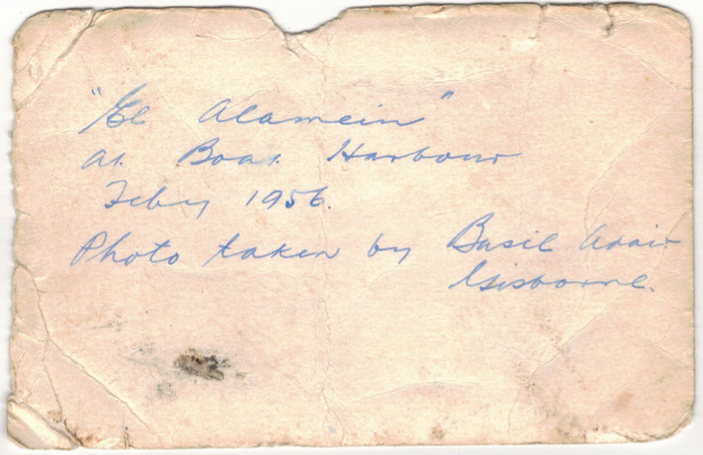
el-alamein-feb-1956-back-of-photo-ex-basil-adair-gisborne

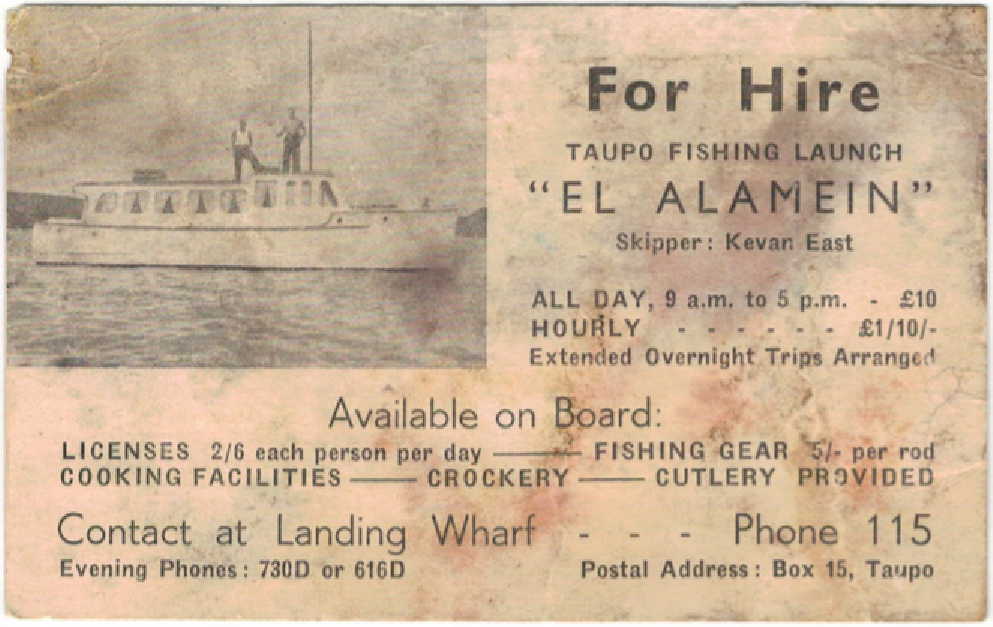
screen-shot-2016-10-11-at-11-59-23-pm

EL ALAMEIN

The above photos of El Alamein (now named Ranui) show her c.1956 when she was in commercial charter on Lake Taupo. (photos ex Google ex Karen Moren via Ken Ricketts)
Some history below from the Ranui website

Formerly known as El Alamein, the ‘great dame’ of Taupo charter boats started her sailing career on Lake Rotorua after World War II.

Ranui was launched as El Alamein on 29 January 1945 for use by patients of the Rotorua Convalescent Hospital after the Second World War.

Named after that part of the Middle East where New Zealand servicemen distinguished themselves in action, the 32-foot kauri cabin launch was donated to the convalescent depot by the Patriotic Fund: Joint Council of the Red Cross and St John. Specially designed for use on Lake Rotorua and for passage through the Ohau Channel to Rotoiti, she was built by McGeady and was capable of seating up to 40 passengers.

For the first 4 years of her life Ranui was an open boat, with a small cabin and bunk room up forward captained by William J. Pollock. She was a familiar sight, often carrying up to 40 convalescing soldiers, many in wheelchairs, on Lake Rotorua excursions as part of their rehabilitation. She played a big part in easing the soldiers back into civilian life.

Ranui was sold in August 1949 as the numbers of ex-service patients dropped and maintenance costs rose. She was trucked to Lake Taupo on 24 August 1949 and purchased by Ron Martin – the money from the sale was returned to the Patriotic Fund Board.

Two years later one of Taupo’s old-time residents, Noel East, put on a full cabin and was first to have Ranui surveyed.

The next owner was from Hawke’s Bay and used her privately before selling her to one of Taupo’s most familiar commercial boat operators – Jim Storey. He had Ranui surveyed and used her commercially for many years, taking visitors out on Lake Taupo tours for fishing and sightseeing.

In 1980 Ranui was purchased by Graham Twiss and he continued taking visitors out on Lake Taupo tours and fishing for a further 34 years.

Ranui has recently been refurbished by her present owners, Sarah & Jamie Looner & again is operating as a charter boat on Lake Taupo. Click link below to view photos of her today.

El Alamein / Ranui

A Woodys Weekend

p1230719

p1230695

A Woody Weekend

After the last few days of inclement weather – its time to leave the house & get a wooden boat fix.
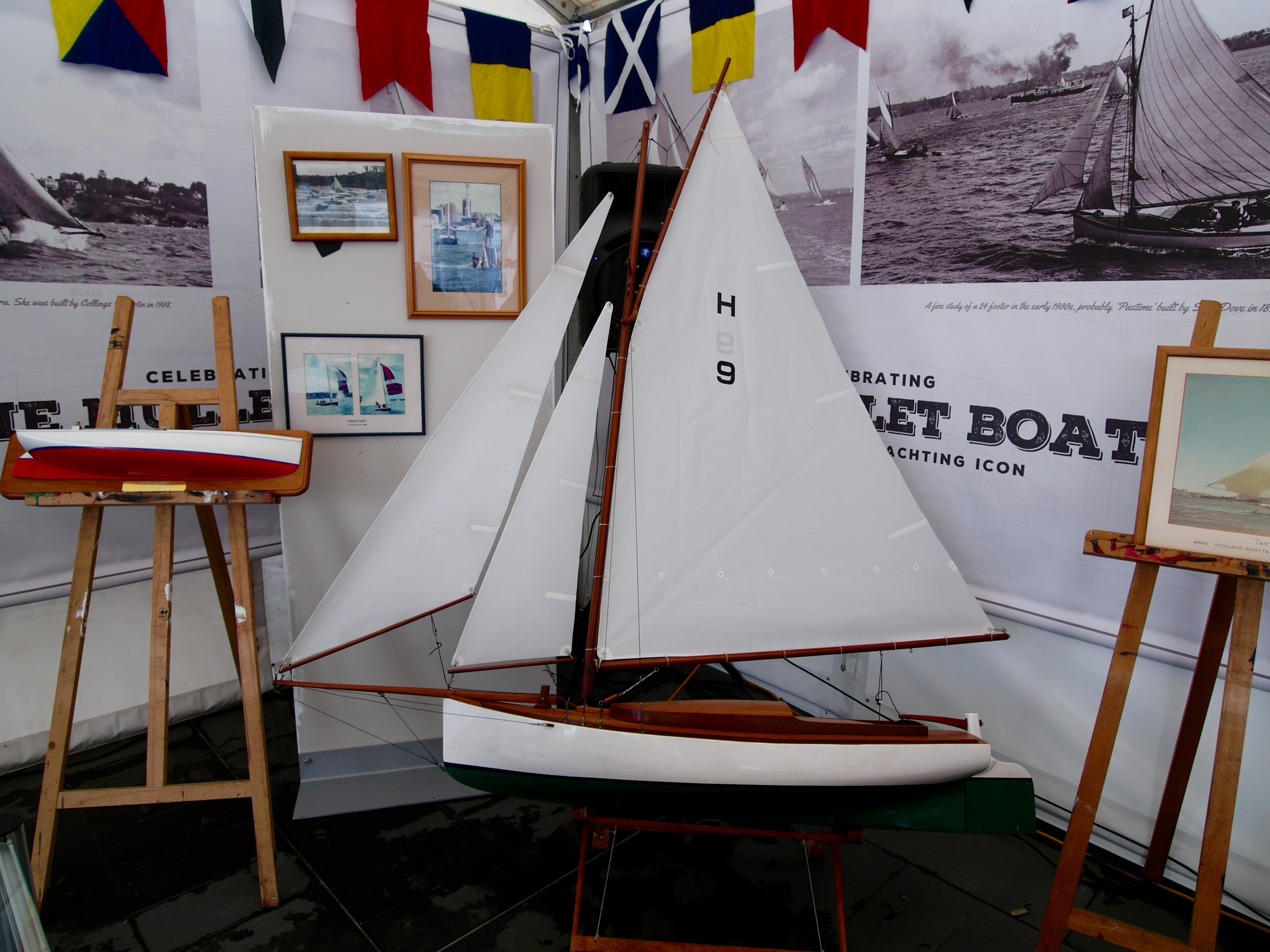
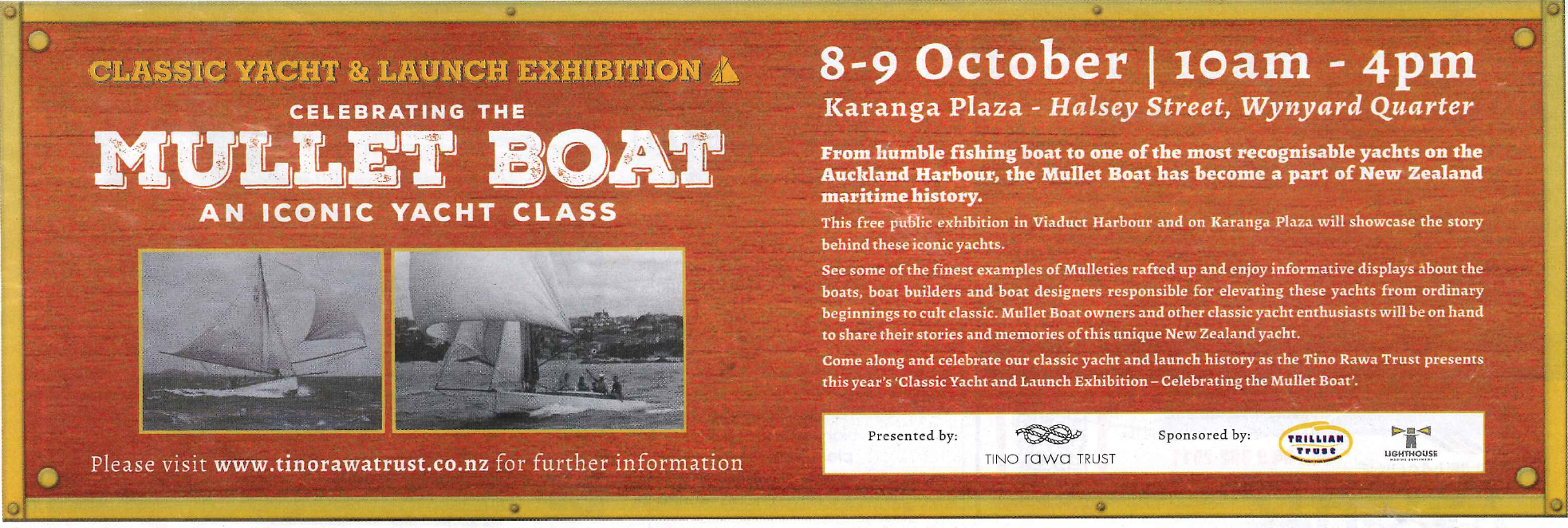
This weekend at Auckland’s Viaduct Harbour the Classic Yacht & Launch Exhibition is celebrating the iconic Mullet Boat.
Yesterday at the official opening – aka,  morning tea 🙂 Tony Stevenson from the Tino Rawa Trust, welcomed over 100 of Auckland’s yachting identities to the exhibition. The photos above give you a peek at the displays – on & off the water BUT only a peek, if you can, do make the effort to visit the exhibition – its open 10am > 4.00pm Saturday & Sunday at Karanga Plaza, Halsy St, Wynyard Quarter (in fron of the old Team NZ base)

As always with these events, the team have produced a 48 page booklet (below) to support the exhibition, this years one – ‘The Mullet Boat, is a cracker & from the pen/s of Harold Kidd & Robin Elliott, truely is a must have for any serious woody.
I have a copy to give away – so the first woody that can email me at waitematawoodys@gmail.com & tell me the name of the mullet boat that appears the most times on the Lipton Cup, wins the book.

screen-shot-2016-10-05-at-1-30-01-pm

COASTAL PATROL DURING WWII

screen-shot-2016-10-07-at-12-35-17-am

CALLING ALL VESSELS COMMANDEERED FOR COASTAL PATROL DURING WWII

On November 19th 2016, the Royal New Zealand Navy are holding the 75th Naval Review & have extended an invitation to the owners of any historic vessels that might be interested in taking part in the Review procession.  Interested owners can check out the Op Neptune website http://nznavy75.co.nz/international-naval-review/ & are asked to make contact with Commander John Butcher via Andrew Watts – the email address is,  ANDREW.WATTS@nzdf.mil.nz , please include details on your vessel & a photo/s.

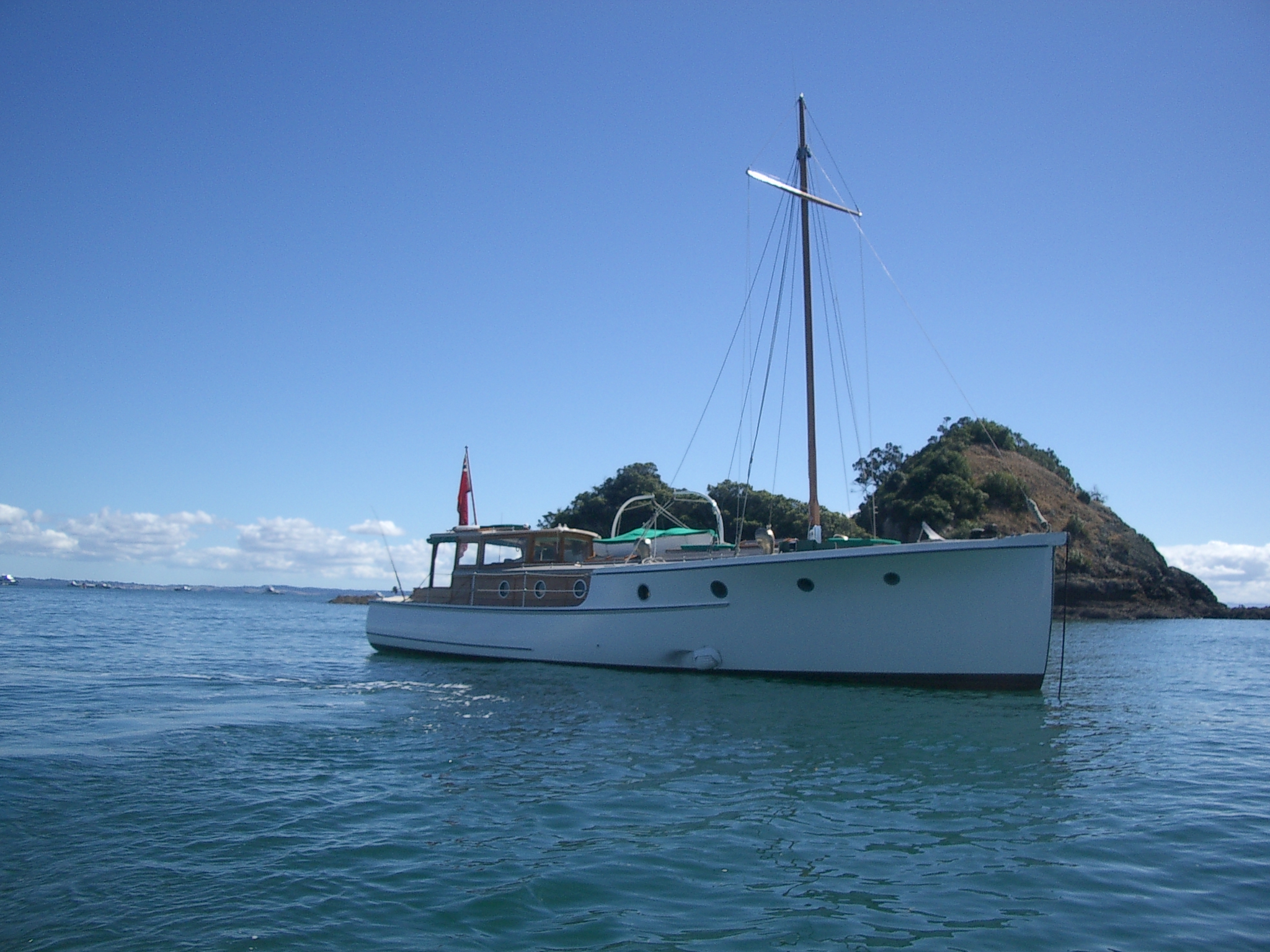
The 1932 Colin Wild built classic launch ‘Wirihana’ was one of a number of vessels commandeered by the Royal New Zealand Navy during WWII to run supplies and to patrol the coastal waters around the Hauraki Gulf and up to the Bay of Islands. Her identification was Q01, photos above & below. Wirihana took part in the 50th Naval Review along with a number of the other classics that served as patrol boats and will be participating again this year.

A lot of our classic fleet played a very important defence role during WWII, its not well recorded but the Hauraki Gulf was mined. It is NZ Governments best kept secret. The NZ press often quote the closest NZ has come to war was the Rainbow Warrior bombing! This is BS, they just don’t know. A lot of the records make the patrol work sound like a boys own trip but  Wirihana and the other boats were on patrol for two years summer and winter, it would not have been much fun in these small launches.
The crews made their own navigation sketches so they could recognise headlands by their outline in poor visibility. Similar to those in the NZ Pilot. They had no chart plotters or navigation aids (only a compass) and often ran without Navigation lights.

So woodys if you own or know someone that owns one of the launches – get in touch today with the RNZN

wirihana-today

Chris McMullen found the  letter below on board ‘Wirihana’. Chris commented that he would imagine the writer has now passed on. Chris hopes the letter may draw
some history from others with photos and letters hidden away. Photography
was illegal during the war but it certainly did not stop people from
recording their life at the time.
Chris  recalls going to school with a John Rhodes who he thinks lived at Bassett Rd.
Remuera. Maybe the same family?

screen-shot-2016-10-07-at-12-48-04-am

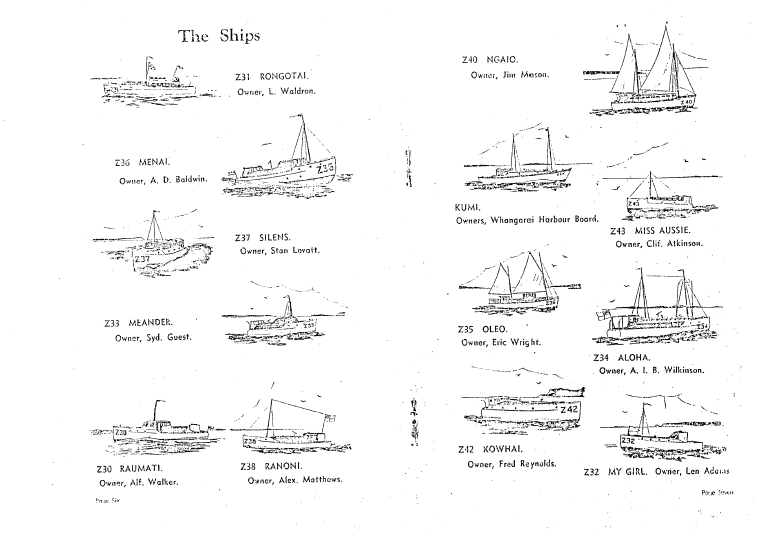
Below is light hearted list of NAPS boats out of Whangarei. Sent to me by Brian Fulton.

screen-shot-2016-10-07-at-5-14-59-pm

08-1-2016 Input From Chris McMullen
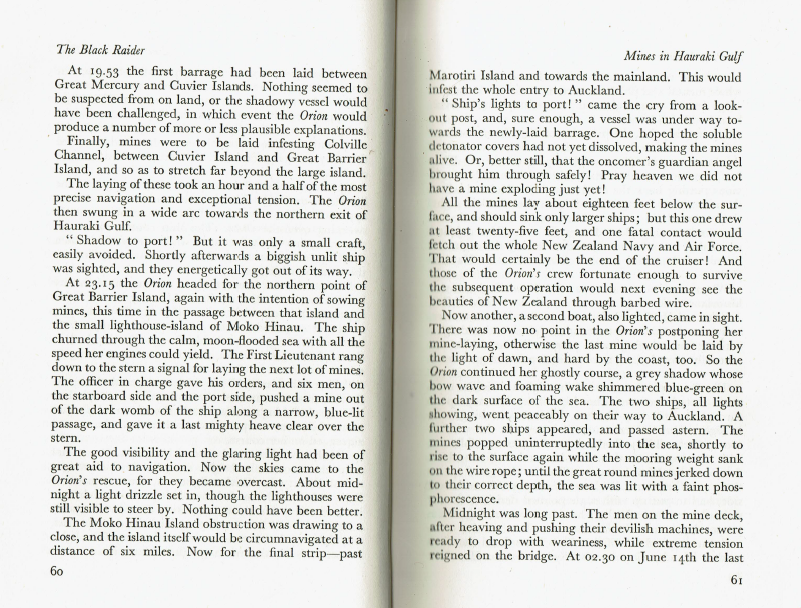
A German Raider mined the outer Hauraki Gulf. An account is recorded in the translated from German, a book listed as “The Black Raider”by Kurt Weyher and Hans Jurgen Ehrlich.
Chris’s copy dated 1955. Below are the relevant pages but there is more. This happened June 13th 1940. As a result the SS Niagara was sunk 19th of June 1940.
The Raider Orion sunk many ships off the New Zealand Coast.

mines-in-the-hauraki-gulf-1

mines-in-the-hauraki-gulf-2

mines-in-the-hauraki-gulf-3