Coquette

Image

Launch Number CoquetteCoquette

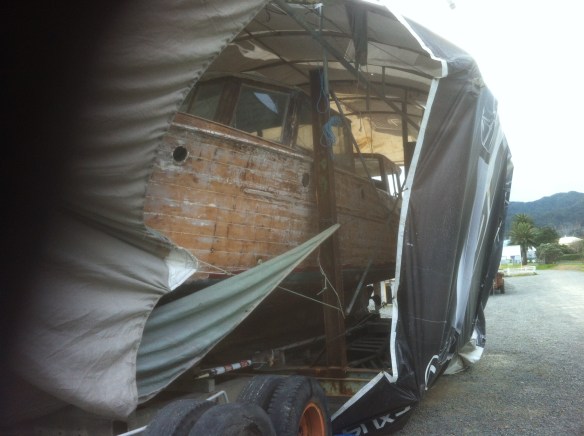
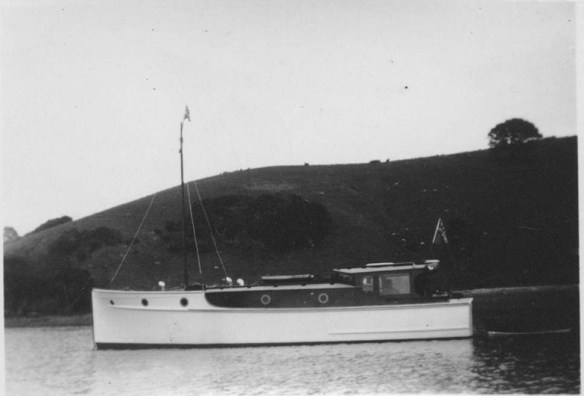
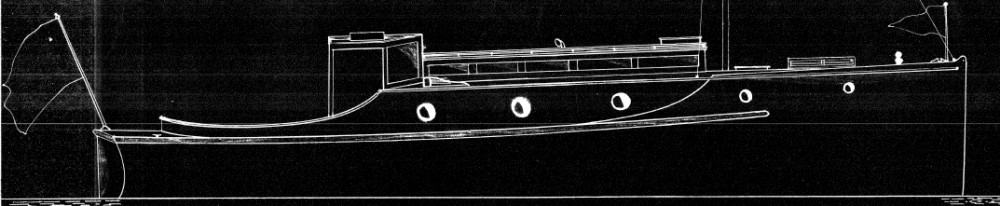
Coquette, 1912 Logan designed . Coquette was used to take a mould off for the popular Logan 33 f/glass replicas e.g. Lucille, Lady Dorothy, Lynette.
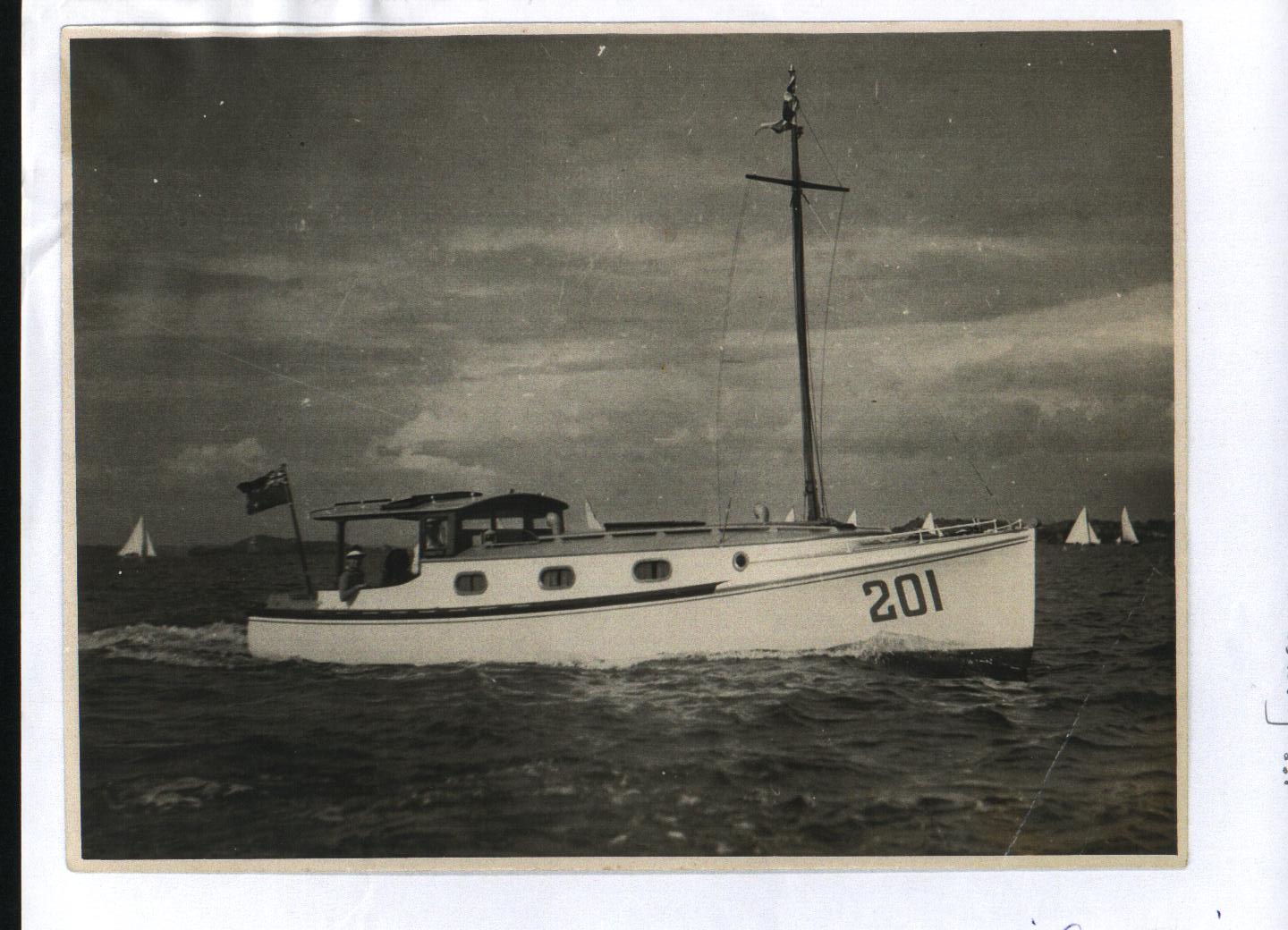
The early shot ( with number 201) with dodger would have been taken c. 1926

Update from Robin Elliott 

Coquette was launched as Doreen in 1912, built by Arch Logan for his brother Robert, who named her Doreen after their sister.By 1915 (??) she was named Haku & renamed Coquette c1923.That b&w photo above was taken c1942 or so and carries her wartime number. 

Around 1945 Bill Couldrey (one of Arch Logan’s preferred boatbuilders) was asked to modernise the cabin and superstructure and this is what we see on her today. He got the curves and proportions just right. This revamped design of Bill Couldrey’s was also copied for the GRP Logan 33’s.

 
Photos of her as Doreen can be viewed in the book ‘The Logans – NZ’s Greatest Boat Building Family’ & as Coquette in the book’Vintage NZ Launches’. Both books by Harold Kidd & Robin Elliott & still available in good book stores.
Photo added as Coquettee c.1964, ex Ken Ricketts 15/10/2014
 17-03-2016 photos ex trademe

Lady Dorothy & Valerie

Image

Lady Dorothy & Valerie

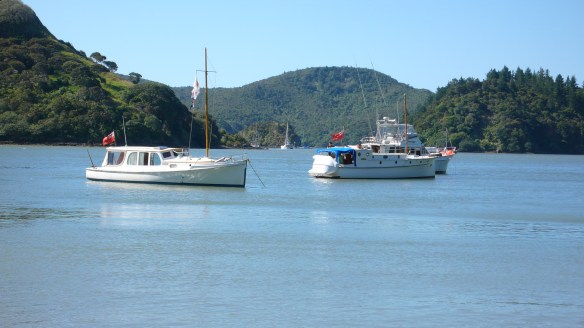
Two fine classics anchored off Milford Island in Whangaroa Harbour, Jan 2013. The one on the left is Robin Elliott’s Logan 33 replica. The other is the Lane designed launch Valerie, c1933. Valerie is kept at Whangaroa Marina and currently owned by John Briers and Jackie Te Hore of Cable Bay. Valerie was for many years owned by the Reynolds family, close friends of the Pickmeres, who owned her up until the late 1960’s. Apart from a short period in Auckland during the 1960’s she has spent almost all her life in Whangarei and the far North. It is believed Valerie was sometimes used by H. Pickmere when he was charting the far north. Info ex Robin Elliott.

Viveen

Image

Viveen was one of Colin Wild’s early landmark motor launches, built in 1924 for W.G. Rapley of Devonport. She was thoroughly up-to-date for the time, a vee-bottom bridgedecker, very much in the latest American style, her hull design obviously influenced by the square-bilge planning hulls of men like John L. Hacker & William Hand.
Her original  power plant was a 35hp Kermath but that was upgraded to an even more high-powered Winton. Her owners raced her consistently until launch racing died out during the Depression when feeding such monsters with benzine became impracticable.
Until recently, Viveen has always been a waitemata woody, berthed in the Milford Marina for years, but not lives in Thames.
The photos show her many & varied styles over the years.  The oldest one was taken at Mansion House Kawau Island in 1924 & Viveen is the launch with the black hull on the right.  The other b&w photo was taken in 1938 off the Devonport wharf, after she was made into a flush deck. There is one of her berthed alongside  other Colin Wild launches (2nd on right) in the Viaduct  for the 2012 classic launch & yacht show & one of her today cruising the gulf.
Viveen is currently undergoing a ‘rolling restoration’ in the hands of Mechaela and Andrew Dobbs.
03-10-2018   Update from owners Andrew & Mechaela Dobbs.

We thought you might be interested in an update on Viveen, our 1924 Colin Wild bridgedeck, 7 years ago we bought this lovely lady with every intention of doing right by her, but time, money and circumstances didn’t allow it, so after a few major repairs, a new engine and a slop slap paint job Andrew took her to the Colin Wild exhibition at the viaduct and we used her pretty regularly on the coromandel after that but she started to look pretty sad and we made the decision, it’s happening now, so we’ve done it, she’s been out of the water about 6 weeks now and has had all her many layers of exterior paint stripped off, has had new fibreglass put on her top decks, repairs done to a few leaky parts and is now in the process of getting her hull splined, after that she will be getting a new paint job including a different colour scheme, and a slightly larger duck board but no changes to her classic look, we hope she will look a million bucks when we are done, we will update you with a finished photo whenever that may be as there’s still a fair bit to do.
Viveen 2019

Mataroa

Image

Mataroa

MATAROA. Owned by Ted Ward in the 1940s & 50s, photo taken in Matiatia in 1948 by Ken Ricketts. Possibly a Baileys boat, had a 6 Cyl Graymarine petrol engine. Not been seen for many a year – anyone able to advise her current status, location?
She appeals to me, looks as if she was fast.

Harold Kidd Update

MATAROA was built by Joe Slattery as KENYA for Len Heard of Parnell in 1928 with a 40/60 Ailsa Craig. So this pic is probably taken during Heard’s ownership ie 1938 or earlier. He sold her to  Seagar and replaced her with KENYA II built for him by Lidgard Bros and delivered in early 1940.

The RNZAF took her to Fiji in1943 for towing at Lauthala Bay and put a 6 cylinder Chrysler Crown in her as the Ailsa Craig was thought to be on its last legs and for spares rationalisation.

08-01-2015 Updated Info from Kevin and Jan Price.

We owned her for a few years after purchasing her from Maurice Reynolds (of Auckland Coast Guard). I believe she is now in Wellington.
She was originally names Kenya. She was nearly named Kenya Mist after a book title that was popular during her build, but the name was considered too long so shortened.
She was designed to fit into Len’s boat shed and had a droopy sheer line forward to fit under the door lintel, but it looked horrible and false works were built to improve her forward end appearance.
When Len Heard (Heard’s Barley Sugar) sold her to the Seagers, Len kept the name for his new bigger launch and the Seagers named her Mataroa after a much enjoyed cruise on the liner Mataroa.

She saw war service in Fiji as RNZAF No W71 and was employed in the construction of the Lauthala Bay breakwater to shelter the flying boats and also the metalling of airfield hard standing for warbirds. To achieve this she towed three barges totaling 90 tons. I was told that some of her trips down the Suva river fully loaded was sometimes a finally tuned effort to keep her lined up and thru the bridge. I was told her engine was only a 30hp Ailsa Craig at that time. Her Cox was a young 18 year old with a Fijian boat boy. Somewhere at home I have a tape recording of his wartime exploits.
Under her paint forward are scribed roundel circles.
Under that paint on the transom is the imprint of a brass bowsprit star received when towing a string of yachts home following the Suva annual Pacific yacht race.
She was offered back to the Seagers after the war. When they went to look at her at Herald Is she was not in good order and considered not taking her back, but did.

I think the engine was replaced by a Crown then later by a 90hp Ford wet sleeve by the Reynolds. 8knots at 1900rpm. (One day in a fit of exuberance I pushed the throttle to the wall and the GPS recorded 14knts)

After a mishap when an accompanying launch lost her steering and rammed Mataroa broadside amidships and split her open from deck to waterline she was run up on a nearby beach. The hull was propped out with an array of timber posts and she was motored back for repairs by matching the waterline wave curve with the bottom of the broken planking
She underwent repairs and refit. During this refit her rear house top was raised 4” and her vertical shaft steering column and flat “ bus drivers” wheel was replaced with the current more conventional setup. The round ports in the saloon where changed to oval for improved interior lighting. The saloon was relined with oak paneling. The overhead was lined in white Seratone as trying to maintain any sort of finish on the underside of the cedar deck was not possible due to it’s continuous movement. This refit was during the Renold’s time.

Under the forward cabin sole is/was a large admiralty anchor, possibly an original. Under the cockpit sole is/was a spare five blade prop.

1” Carvel Kauri.
Spotted gum ribs.
Possibly Pohutakawa stem.
Cedar deck / cabin tops for light weight.
Cedar sole floor boards screwed one Kauri floors.
No frames.
Mid and aft bulkheads removable, to allow engine to be taken out aft.
Log is kauri boxed and pitch filled.
Her capstan motor was an aircraft starter motor and reduction box that finally gave up the ghost when we owned her.
300trl copper diesel tank at the transom. Copper water tanks under cockpit seating.
No ballast.

That’s all for now. When I eventually get home ( we haven’t been home for seven years) I will look for some old photos I have tucked away.

Regards,
Kevin and Jan Price.

NZ Traditional Boat Building School’s Picnic Boat

Image

NZ Traditional Boating Building School - Picnic Boat

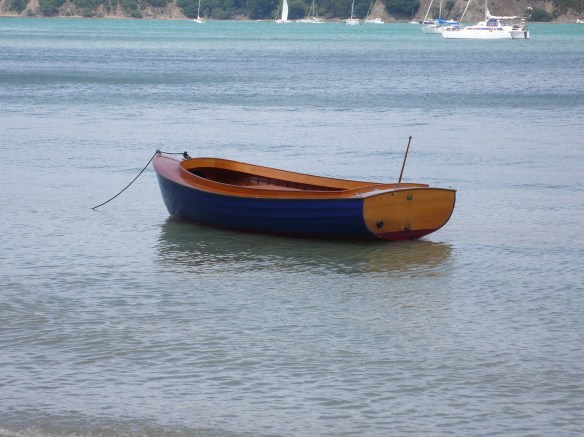
Photo taken during the 2013 Mahurangi Regatta of the NZTBS’s picnic boat designed by Robert Brooke & built under his guidance at the school. Check school out here http://www.atbs.org.nz

P1010397_2

Margurita sunsets

Image

Screen Shot 2013-04-14 at 8.51.03 AM Screen Shot 2012-08-21 at 10.17.06 PMMargurita sunsets

Margurita
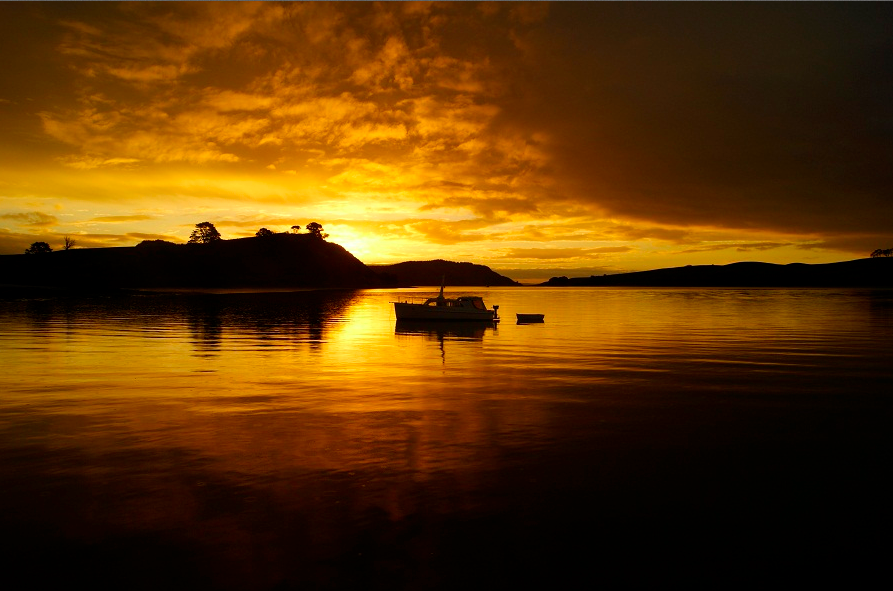
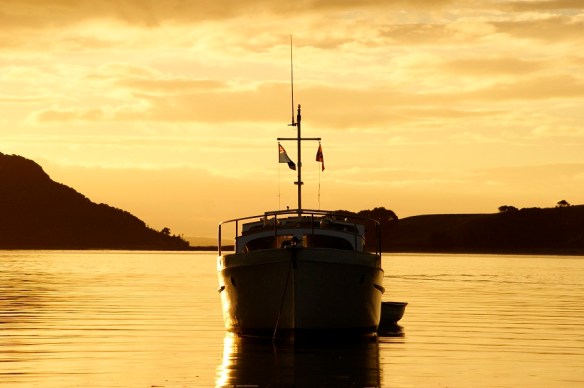
Some stunning sunset photos taken by Silvia Juretich on board partner Zach Matich’s ‘Margurita’, Easter 2012, up the Port Albert river, yes I know thats stretching the boundaries of the Waitemata 🙂

The Lady Margaret (Colin Wild). Chapter one

THE LADY MARGARET STORY by Ken Ricketts
CHAPTER ONE
Such is the concept of this most beautiful, but sad story, & such  a  wonderful example of Colin Wild’s work, that I am devoting a whole email to it.
Perhaps it could almost be likened to a “Shakespearian work on the water” with much beauty & much sadness.
I have put considerable work time & effort in to researching & developing this project, since December of last year, with Harold’s input & mutual support to each other, with developing & sharing our knowledge & making discoveries along the way.
My Daughter Karina lives right next door to where LM is being presently given some TLC, but sadly not the full restoration, she so richly deserves, so am able to keep up with the state of play, on a regular basis, at the moment.
As you will see by the attachments, she was commissioned by a Mr H O Wiles to C W in 1927, & was launched in 1929, powered by a Stearns 160hp petrol engine, which in the pre build plans, shows it in the cabin in front of the bridgedeck, with just the gearbox under the bridgedeck floor, — never seen this before, & in my view, was too far forward to be at the point of balance. However as you will see in the pic of her circa 1936 she was very quick for her day, achieving 17 knots when new & sat well in the water, at speed.
She was owned & used very regularly by Wiles, for many years, until the late 30s & was a boat where everybody who was anybody was likely to be seen. — He was a very social person. In so saying however, he used her for fairly extensive cruising off shore, out to Poor Knights, up to the Far North etc.
I first came in contact with her, when I saw her cruising in Auckland, in the later 40s & she was always well kept at that stage.
My first vivid memory of her, was when on a visit to Mangonui, about 20 years ago, I saw her anchored or moored directly off the main wharf, & looking an absolute a picture, with gleaming white hull, light blue boot top, red painted insert areas, in forward portholes, with gold edging to rims thereof, the name in gold leaf arched across the tuck, scallop bottomed light cream blinds in the bridgedeck & dodger, obviously replaced along the way, but you will see in the early photos, this was trademark of hers since new, they are there in the pic of her in the Warkworth River in 1929. She  had light blue & cream decks, in areas that were not teak, & all in all, truly loved & beautiful,
My daughter I spoke of earlier, lives at Kaingaroa, (between Mangonui & Awanui,) & with my son in law & children, has done for the last 20 odd years, & we visit fairly regularly.
During this 20 years, I realised the boat was living there & not just visiting & I must have seen her first time within a very short time of her arrival. Once there however I  also realised she was never moving off the moorings ever, I have slowly watch deteriorate, decay, & in the end really start to prepare to die, I thought, as I believed she was slowly getting to the stage, when she would not be retrievable. However, perhaps just about at the last minute, my daughters next door neighbour persuaded the most recent owner to give him a half share of her, in return for bringing her back to some sort of recovery, but although he is a professional boatbuilder, as he is in his 80s & has limited funds, the work he appears to be doing, is still limited. His half share was gifted to him in return for the work required to get her back to some sort of respectability. The original owner & partner in the present partnership is a property developer who lives in Auckland, who bought her several years ago now, off the person who originally took her up to Mangonui from Auck. who lives above Mill Bay, where she has been moored, & he was the person who started her decline by never going near her. — she went for about 10 years I am told without even having the bottom cleaned. When the original owner bought her it was his intention, he tells me, to give her prompt TLC & bring her back to original, however, as a result of unexpected  business circumstances, he did not have the funds to spare, to make this possible, hence she has continued her downward slide to oblivion, until Dec 2012, when she was put on a trailer at Awanui, & my daughter Karina who has the same huge interest in classic boats as me, actually watched the whole slipping & arrival procedure to where she is now resting, & took the recent photos of her. —
I actually have many more showing much detail of her present progress.
She is now powered by a 150hp Lees Turbo Ford, which somewhere along the way, has been moved under the bridgedeck floor, & am told she still achieved around 15 knots on the journey from Mangonui to Awanui for slipping.
If you compare the early pics, you will see the dodger was added later, & having now been aboard her, I discovered the cockpit floor was also lowered, as originally she did not have a well in the cockpit, it was at deck level, also she has had a new top to the bridgedeck to match the dodger with side doors, — the original had doors opening on to the foredeck from the middle of the front thereof, & was straight up & down whereas the present one has the front screens sloping back, as with the dodger.
Am to a degree looking forward to seeing how they will present her when she goes back in the water, however, still with some serious misgivings, as I believe she deserves the best of everything, to be done to her & I don’t think that can happen in the present undertaking, however she is definitely going to be sold, as soon as finished, & it is their plan to bring her to Westhaven for the sale process, so perhaps some suitable person may acquire her & complete faithfully & well, what they are at present starting.
She is of course a sister ship to TASMAN, although a little longer & a little different below the water line in design & built just before TASMAN as I recall.– She semi hard chine, perhaps similar to the LINDA with 2 skins below the waterline, single skin above the waterline, something I had not seen often.
One can see just with a walk through, she is a boat of huge character beauty & charm & was done in every way to the very highest of standards when CW built her, & no expense was spared for the perfection he created
I also believe she is the real LM (I) & Clarks boat & another built around the 50s or 60s which, has had a name change to LM should be LM II & LM III.
As this LM, as you can see by the registration as a British Ship, was obviously the first officially recognised vessel with this name in NZ, so all others must follow as I suggest above.
 A further thing you will note on the appendage to the Registration Cert. in red ink on the Certificate, is that on 10.6.1941 the navy allocated her the call sign of “ZMPY,” during her naval service in WWII.
I forwarded a copy of this cert., to Radio Spectrum  Management who are a government agency, & control all call signs for NZ  & am delighted to say she has now been given ZMPY, for the rest of her life, & the owners are delighted.
There endeth the epistle.
Long may she live, & long may she be loved, & a boat of much beauty, for us all to admire.
EL CAPITAN

Image

EL CAPITAN

EL CAPITAN. This boat has a fascinating story. A genuine Chris Craft design & specs, built of 2 skins mahogany in 1960 on his farm, by the owner at Ohakea. Still has original 2 x 6cyl 90hp Chrysler Crown Petrol engines (still only done 750 hours since new). Was used on Taupo & at the Sounds from 1960 to 1974 & then put back in shed at Ohakea for maintenance & never moved until owner died & she was sold to Tony Mitchell a professional self employed boat builder at Lake Rotoiti 8 years ago who has restored her beautifully in his spare time. She was relaunched Dec. 2012 & had been in the water 3 minutes when this pic was taken — I was at the relaunching at Lake Rotoiti.
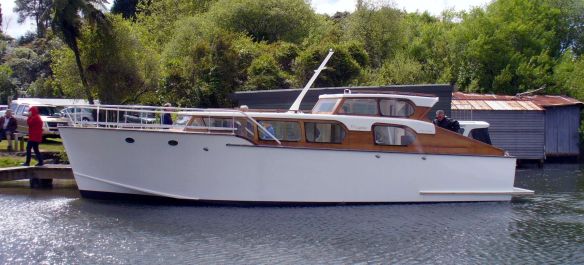
She had never had a call sign, as the original owner was radio ham & used his ham call sign for marine use. —
I was instrumental in Radio Spectrum Management allocating ZMEC to her for life.

photo & story by Ken Ricketts

Juliana

JULIANA; Built 1930 by Sam Ford owned by Ralph & Wyn Ricketts from 1946 to 1956. She originally had a 4cyl “T” head Thornycroft petrol engine circa 1920s, this was replaced by Ralph in 1947 with a 6 cyl Leyland Cub Diesel, & again in 1956  with 4 cyl Buda Diesel. She went to Whangarei for a few years when sold & then to the Algie family at Algies Bay from about 1972 to 1995 — they replaced the Buda with a 6 cyl Ford. She was sold to a fisherman in New Plymouth for several years & ended up back at Tamaki River about 2006 as a bare hull absolutely nothing in her. Bought by present owner Fraser Wilson who is in the final stages of major restoration /rebuild on her with an unbelievable transformation. One pic of her is taken in Judges Bay by the Parnell baths in 1947, by Ken Ricketts, a few months after his parents bought her & had given her a fairly major refurb at that time & the other is of her a few months ago during her restoration, in the boatbuilders, Tony Mitchell’s shed at Lake Rotoiti where she will live, when back in the water.
photos & copy by Ken Ricketts