Siren

SIREN
photos & details ex Scott Taylor
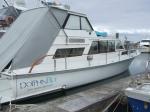
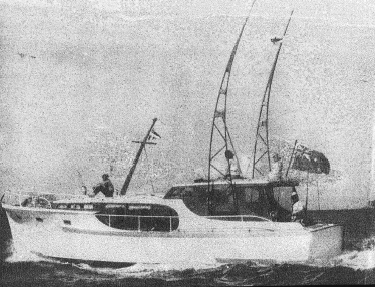
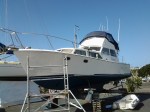
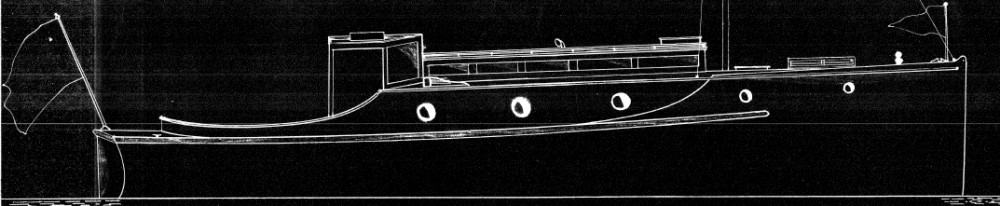
In the early 1960’s Mac Taylor of HM Taylor Shipbrokers drew up the lines for Siren & had Snow Waters build her c.1962. The Taylor family used her to cruise the gulf & sold her c.1966.
In the launch day photos above, the tractor driver is Flap Martiningo, Tony Mason provided the trailer and Snow Waters is encouraging Scott’s mother to smash the bottle on the anchor, Scott recalls it took six attempts 🙂 Mac Taylor is on the foredeck.

Scott is curious to find out where she may be now and what state she would be in.

click photos to enlarge

Update from Dave Jackson 13/07/2014

She is now renamed “Nancy Belle” and lives on moorings behind the Whangaparapara wharf, Great Barrier Island. Owned by Max Howard. Topsides have been painted white. He uses her as a cray boat.


Chris McMullen Herreshoff Steam Launch – Part 2 (the engine)

The building of a replica 1898 Nathanael Herreshoff triple expansion steam engine – as told by Chris McMullen.

CMcM SteamLaunch AH6

The Herreshoff engine is a triple expansion type with cylinders 3-1/2” x 5”x 8” with a 4-1/2” stroke. It is a smaller version of that depicted in the L Francis Herreshoff book ‘The Wizard Of Bristol’ page 228.

The engine is very different to what the textbooks on the subject show. Everything designed by Nathanael Herreshoff seems to be that way. He certainly never copied traditional thinking but worked it out for him self.

Those interested may notice the two crankshafts gear driven one to one. The right hand one drives the piston valves. Going astern is effected by sliding bush or sleeve within the driven gear activated by a lever, this rotates the valve C/S to a new position. The bush, gear and shaft required machining male and female three start threads, left and right hand 8” pitch!  Not easy. The threads have / had to be cut on a planer using a dividing head coupled to the motion. Modern cars use a camshaft driven by a timing belt, similar to Herreshoff but remember this engine was designed in 1898!  The engine is very short to allow the crankshaft to be supported by two bearings and also to prevent loss of heat as the exhaust steam travels from one cylinder to the next, thus trying to reduce pressure loss.

If you look at the image of the crankshaft casting (below) you will notice the overhung balance weights. Notice the lack of material in the web between the second and third journal. The crank can’t be ground and there is no easy way to machine the metal designed to be eliminated by casting.  Casting this crank was a mission in SG iron. To cast it in steel (with 1/4” to the foot possible contraction) is going to be more difficult to achieve the correct length.

H.M.C.O had an outside foundry cast their steel but I notice in reading a recent article on Herreshoff Anchors they did have problems with their steel castings.

The base of the engine is a bronze casting to hold oil. The engine max revs are about 700 so the engine will have to be enclosed or throw oil everywhere.

There are good drawings available for this engine but no tolerances are given. I guess the fitters knew what was required. The original drawings were coloured to show the different materials, as was normal drafting practice.  The prints I got were black and white and difficult to read. No layers as in CAD drawing.

The Boiler is a three-drum type with curved tubes. It is similar to a Yarrow Type boiler. All the circulation is achieved in the tubes, the outer tubes being cooler than the inner. Once the circulation starts it continues. This was proven by Yarrows experiment in the early 1900’s. So Herreshoff and Yarrow, an ocean apart, came to similar conclusions. The upper drum of the boiler is 8“ OD, the lower drums 4-1/2” all with 5/16” wall. The 1/2“ tubes are expanded. Not easy to do up a tube just over 4” ID.

The boiler was built under survey. The working pressure is 250 PSI.

There are no pumps on the engine. The boiler is fed and the cooled exhaust condensate is removed for reuse by an independent steam driven combined feed and air pump. These pumps were the only item on the launch not made in house by H.M.C.O.  There were no drawings of these Marsh Pumps made by The American Steam Pump Co., Battle Creek Mitch. I copied mine from ‘Vapo’, an incredibly clever but simple pump with two moving parts but very difficult to manufacture.

I should add there has been no fabrication. Everything has been cast in iron or bronze.

Again this interesting project has been done for no other reason than for my own personal satisfaction.  I guess Prof. Evers Burtner’s comments (see copy of magazine article below), I quote “It is too bad that this engine is so complicated that amateurs would not be tempted to build one of their own”, was red rag to a bull.

To view part one i.e. the boat click here https://waitematawoodys.com/2014/07/07/chris-mcmullens-herreshoff-steam-launch/

Click Any Image / Photo Below To Enlarge


Awaroa

AWAROA

photos & details from Geoff Brebner

This old ship has a long history. Unsure of the dates but she was built by Joe Fell on the Hokianga and was owned by Bert ( H. A. ) Subritzky for many years. She is pictured at Rawene in the 1950’s, that is Bert Subritzky you can see at the wheelhouse door. Bert moved to Auckland in 1956 with Awaroa and the barge Maggie and set up Tamaki Water Transport at Pakuranga, later becoming Subritzky Shipping Line.

Awaroa is still alive and well at Thames in a ‘berth’ on the Kauaeranga River just downstream from the road bridge going into town.

Thames has a interesting collection of old launches – Inverness, now firmly hemmed in by the rampant mangroves. She was formerly Awhitu and Geoff recalls her as a passenger launch on the Manukau Harbour. Geoff worked for Subritzky for a number of years mostly on the vehicular ferries and became very familiar with the wooden Romo and Maro.

07-01-2016 photo of Awaroa at Manaia, Coromandel ex Peter Croft. Those windows would have to win the TV1 and TV2 award e.g. widescreen TV’s 🙂

Awaroa

17-10-2018 Input from Geoff Brebner -, who sent in another photo, below, of Awaroa, seen here recently in Thames. She is powered by a 4cyl. Ford diesel.

Awaroa 003


A.H.B. / KELVIN

A.H.B.  /  KELVIN

A.H.B. is 1907 Chas Bailey Jnr, 3 skin Kauri and 39ft., she was built for the Auckland Harbour Board hence her name A.H.B….Once she was sold out of their ownership she was renamed Kelvin and spent most of her life called that, her current owners, the Pollard brothers, we put her back to her original name.
Paperspast says she’s worked alongside Ferro in the early days, even receiving Ferro’s old engine at one stage. Also that she was leased to the police during night time hours for patrolling the harbour in 1911.
She was transferred to the Manukau and used by their harbour board for quite some time there before being sold off eventually.

The old stern on photo (supplied by Harold Kidd) is thought to be before or after the shot of the other old photo (ex Paperspast ) which caption says she was being returned to the Waitemata to be used in cray fishing industry 1933. Refer b/w photo/caption below.

Some info supplied by CYA member Baden Pascoe even has her fitted with two engines in the late 1940’s. Both shaft logs are still installed but plugged off.

She was also owned for a time by by boat builder Dave Jackson.

For a while she languished amongst the derelict boats down in Waikawa, then she was sold and steamed to Mana where she was forgotten and almost met her end via chainsaw before the Pollards rescued her, got her running / floating  and bought her  back to Auckland.

She’s powered by a D series Ford with a hydraulic box and is berthed at Panmure. She is mobile but she is a project boat requiring plenty of work and a loving owner to take her to the next step.

The Pollards boys – Andrew & Cameron have rescued more classic motor vessels than anyone I know, I have heard Harold Kidd say on numerous occasions “the their blood is with worth bottling”.
Like all of us, there are only so many toys you can fit in the box so A.H.B. is looking for a new owner / home – initially contact me on waitematawoodys@gmail.com

as always – click on any photo to enlarge 😉

Okahu Bay Late 1950’s?

OKAHU BAY LATE 1950’s?

Timespanner photo & details ex Russell Ward  

Left to right, who can name the launches?
Russell feels  the photo most likely dates from the late 1950’s as over at the Devonport Naval Base, the minesweeper Stawell is alongside, astern of the Loch Class (Rotoiti?) and she was put into mothballs July ’59 which means she would have been moved inside the wharf.

Chris McMullen’s Herreshoff Steam Launch – Part 1

Chris McMullen’s  Herreshoff Steam Launch

I visited a rather special boat shed the other day, shed is a bit of an understatement – I have a shed, Chris McMullen’s one is more like an aircraft hanger.
The reason for the invite was to have a look at the 1933 Colin Wild built launch Wirihana out of the water, but what really made me accept the invite in a flash was the chance to view the 34′ Herreshoff steam launch that Chris has been creating for nearly 30 years.
I use the term creating because every piece of this boat (including the steam engine) has been crafted by Chris’s own hands. Its a little way off launch day but already its a piece of art.

Why would someone undertake a project of this magnitude ? Chris’s view is “the whole project is an engineering exercise and an interesting challenge to recreate what was done 100 plus years ago.  Further, traveling on a fast steam launch is a great experience and there is something about generating your own power from fire and water”.

Click any of the above photos to enlarge 😉

I’ll let Chris tell the story – read on

“I have been building this (lets say) machinery and boat on and off for would you believe 27 years!  I started the project in 1987 –88 the year I sold McMullen & Wing Ltd.  Unlike some of my steam friends in the USA and the UK who are single minded,this has not been my only interest, during the time I have owned or had the use of other boats and done many other things.
The long winded project, is an embarrassment for me being a professional boat builder. It must be explained that I am not a trained Engineers Pattern Maker,  Foundry Moulder, Fitter and Turner, Coppersmith or a Boilermaker. I have had to learn these skills. Believe me, the Herreshoff’s draftsmen certainly did not compromised his design to make it easy for manufacture.  The castings for the engine are complex and thin walled. Several foundry’s kindly allowed me to do my own sand moulding on their premises. It would never have been possible without their cooperation.  I have had four attempts at casting the crankshaft. The only good casting (currently installed in the Engine) is of material not up to spec.  This has been a major blow and I guess my knowing this has set back the job.
The 3 throw crank has been drawn in “Solid Works” with the idea of machining it from a solid 9 inch diameter bar of steel on a NC lathe and Mill. A huge job and still can not be completely finished on these remarkable machines. At this stage there is no way to change the design. Crazy, the original was cast and machined in steel over one hundred years ago!
I went on and built the 34’ x 6’ 3” x’ 1’10”hull exactly the Herreshoff way (with a mould for every White Oak steamed frame) The hull double planked carvel style and glued with epoxy rather than set in shellac (as was the original) The planking was two skins of 5/16 NZ Kauri. So thin it could not be edge set. On the bilge the planks were made from thicker stock as they had to be backed out (hollowed and rounded) Very easy to loose control of thickness doing this and I believe Herreshoff Manufacturing (some how) steamed the round into the planks. I have a steam box, experimented but could not make it form the planks. I could have built the same boat double diagonal in a fraction of the time but the design scantlings would have had to be changed. At the time I wanted an exact replica! To what end? Now, I am not sure. (See below Vapor)
Anyway, the hull is basically finished with the boiler engine and water tank installed ready for the plumbing.
For those interested the design is HMCO design # 263 it was built 1908 as the Starboard launch for the Beautiful Twin Screw Steam Yacht “Cassandra”  Cassandra was built for an American owner by Scott’s at Greenock. Scotland in 1908 .She was 238 f.t O.A.L and could travel at just over 15 knots. Her tender was designed and built in the USA would have been “State of the Art” at the time and most likely the fastest launch available.  It would seem to me there were excellent Steam Launch builders in the UK. Simpson Strickland and Liquid Fuel Engineering (Lifu) and others but the owner chose the Herreshoff design / build. I have a copy of a letter written by Francis Herreshoff (the designers son) stating these launches could do 14 knots. To many, that seems unlikely but I have been on two Steam launches on Lake Windermere that can do  13 knots, so lets say we do not know.  These launches are proportioned closer to a rowing eight than a normal hull. On design #263 The boiler pressure is 250 PSI  The propeller is four bladed 22 x 30 inch pitch. the Hull and machinery is light. The shaft is low angle and the weights well forward.  The speed and shape of “Vapor” a similar steam launch has been discussed at length on Wooden Boat Forum  I have never got involved in the discussion but I am very familiar with “Vapor” and know the owner. Ed Louchard a boat builder from Port Townsend has done a wonderful job of building a replacement hull.  Vapor is the only surviving Herreshoff Steam Launch. The hull had been re planked at some time but the machinery is all original. Regarding “Vapor”, when I started my project I thought there were no Herreshoff Steam Launches in existence. I tracked down” Vapor” and her friendly owner in California about 12 years ago. Now she has been rebuilt it sort of makes my replica surplus.  In some ways procrastination has helped as more information about these remarkable launches comes to light from all over the world. I have enjoyed the research but now I am looking forward to finishing my project but it does get harder as one gets older”

Part 2 – The building of a replica 1898 Nathanael Herreshoff triple expansion steam engine –  https://waitematawoodys.com/2014/07/11/chris-mcmullen-herreshoff-steam-launch-part-2-the-engine/

Update on Vapor on the WoodenBoat Forum 24/07/2014

Vapor photos & kind words about Chris McMullen

http://forum.woodenboat.com/showthread.php?179519-Herreshoff-Steam-Launch-In-Auckland-New-Zealand&p=4235461#post4235461

And more Vapor – 25/07/2014

http://forum.woodenboat.com/showthread.php?179519-Herreshoff-Steam-Launch-In-Auckland-New-Zealand&p=4236325#post4236325

Nana

NANA

thanks to CYA members Jason Prew for the colour photos & Nathan Herbert for the b/w (Papers Past)

BACKGROUND
Nana was designed by C. Bailey Jun. &  built by C. Bailey & Sons for Mr F Alison of Matiatia, Waiheke Island in1934 & launched in late November / December. She is 35′ with a 8′ beam & a 3′ draft. A day cruiser, all her controls were in the raised top amidships.
When launched she was fitted with a 100hp Redwing engine & expected to reach a rather speedy 17 knots. The photo above was taken on her sea trails, early Dec 1934.
Alison had her built for trips to town (Auckland City) & for taking friends out to the fishing grounds in the gulf.
As an aside, Alison sold his 35′ cruiser Makora, built to order 20 years early by C. Bailey to Mr Jas. Gordon of Awaroa Bay, Waiheke.

TODAY
Nana’ was hit whilst moored in a recent storm. She took on an undetermined quantity of water which partially flooded the Ford diesel 125hp engine which has now seized.
To quote the trademe listing the vessel has suffered reasonably extensive structural damage around the deck line, stern and aft cabin top & is currently leaking badly.
‘Nana’ is for sale ‘as is, where is’ on behalf of insurers at Orams Marine hard stand, Westhaven.
Now I’m not a boatbuilder but from the photos & feedback from those that have seen her the damage doesn’t look at all terminal.
This launch needs to be saved from the chainsaw & could be purchased for not a lot of money. The trademe auction closed yesterday, there was no reserve & the opening bid was set at $1,000, there were no bids.  So Woodys – anyone looking for a project ? Remember as well as being a looker she was quick. I don’t normally put trademe links up but Nana needs a helping hand.

http://www.trademe.co.nz/motors/boats-marine/motorboats/auction-747029166.htm

UPDATE 06/07/2014 – SHE HAS DODGED THE BULLET – NANA HAS A NEW OWNER

Lanai

LANAI

photos & details from trademe

LANAI was built by Lanes for Frank Pidgeon of the Ace Tyre Company in 1949. Frank was shifted from Christchurch to run their Auckland operation in the late 1920s and had a succession of great launches. Frank owned her until 1953 when Vic Bedford bought her. In 1965 R E Thomas and J S Menzies owned her. She was first registered with the APYMBA with a single 106hp Graymarine and with dimensions 32’6″x 31’6″x10’6″x2’9″.

She originally had 2 x 6 cyl. Graymarine petrol engines, but is now re-powered with 2 x 4 cyl. Leyland diesels.
She is  presently berthed in Tauranga, owned by a Mr Neil, previous owners include Owen Johnson, who had her for many years & kept her at Coromandel & sometimes at Ngatea, where he was a panel beater. Owen Johnson sold her to  Rotorua owner, who sold her to Mr Neil.

In her original form, there was no fly bridge & the coamings were a fairly light coloured varnish. Another great example of the Lane craftsmanship

12-09-2016 – Updated photos

Freelance

FREELANCE
Photos & details from Nigel Drake (owner)
Freelance was designed and built in 1964 by Owen Woolley for Ken Williams, an Auckland builder (Nigel thinks from Papakura).
She lived on a mooring in the Clevedon river but spent the summers in Tutukaka where she was well known with the game fishing fraternity. In 1978 Ken built Freelance II, a 45 foot Salthouse design (now also in Tauranga) and sold Freelance to Richie Hoban of Tauranga. Richie owned her for 32 years until his death in 2010. During the 32 years the family owned her they spent nearly every summer on the boat in the Mercury Islands and Great Barrier.
In 2010 she was put up for sale and Nigel purchased her in 2011. After a major refit she now continues to live in the Tauranga Marina at Sulphur Point and cruises the northern coast during the summer.

as always click photos to enlarge

Rorqual 4-Sale

RORQUAL 4-Sale

Rorqual was built c.1960 in Picton by Jack Morgan for the Perano family as a 39’3″ (12m) Tory Channel whaler chaser.  Completely rebuilt / converted in 1988 by then owner Tom Birsdall and boat builder Geoff Bagnall. She was also fitted with a completely rebuilt aluminum 380 HP 671 Detroit engine, that is fitted with a German turbocharger + the standard GM supercharger, all this pushes Rorqual along at a comfortable cruising speed of 14-16 knts. Top speed ? lets just say few CYA launches would beat her in a straight line.

Double diagonal kauri hull and sapele mahogany topsides with glass over ply decks and cabin tops, all recently painted. Hull and decks painted in 2013, cabin tops 2012.
Sleeps 7 but better with 4 🙂
Extensive upgrades & enhancements – check trademe listing for full details. http://www.trademe.co.nz/motors/boats-marine/motorboats/auction-706043302.htm

The seller has had another mid-life crisis 🙂 e.g. the toy chain looks like this –   Jetski>Launch>Caravan > Campervan, so now the launch has to go – thence the owner is VERY open to discussions around how you could own a piece of NZ’s maritime history.

email chrism@pix.co.nz
ph 021 961 936