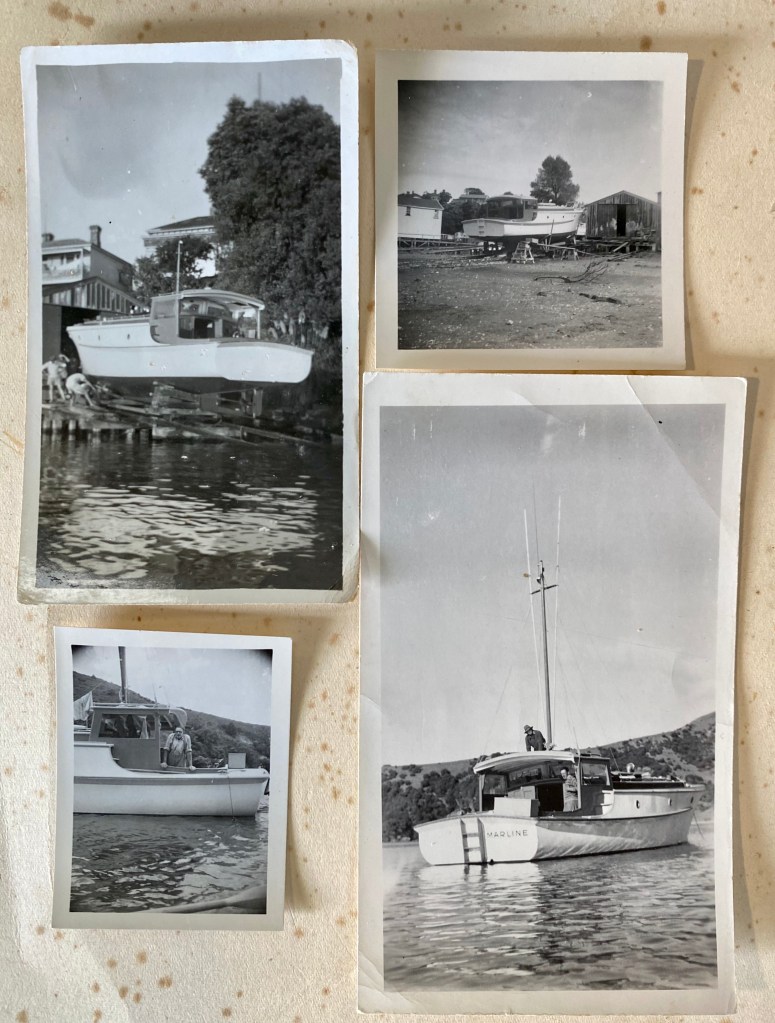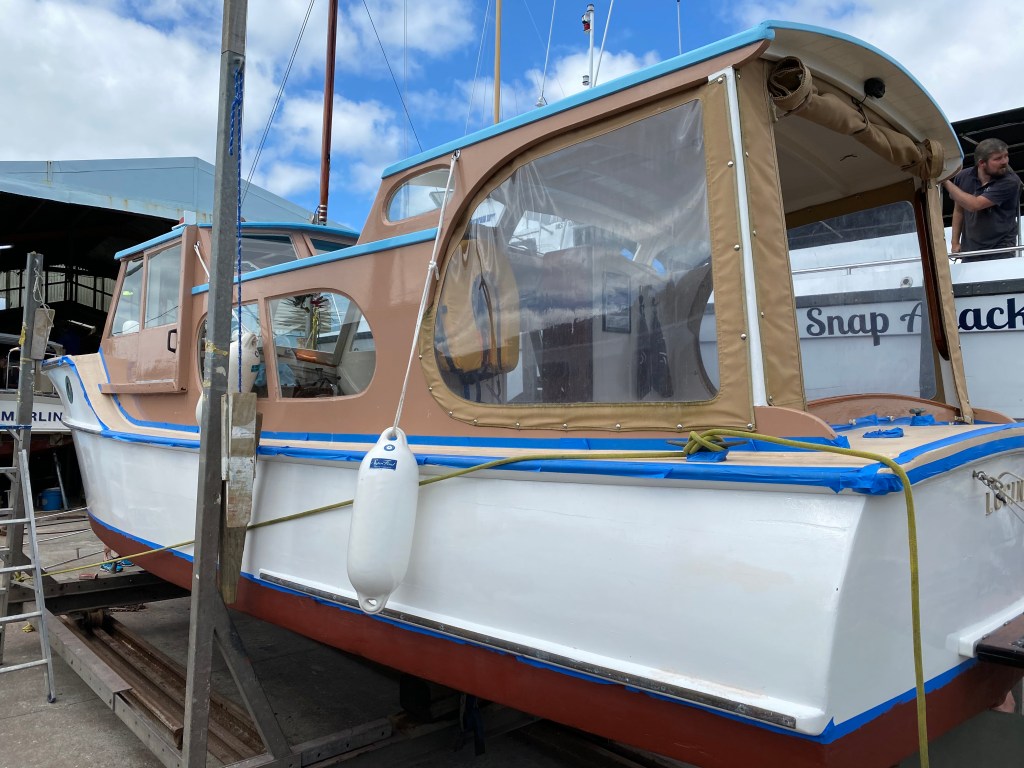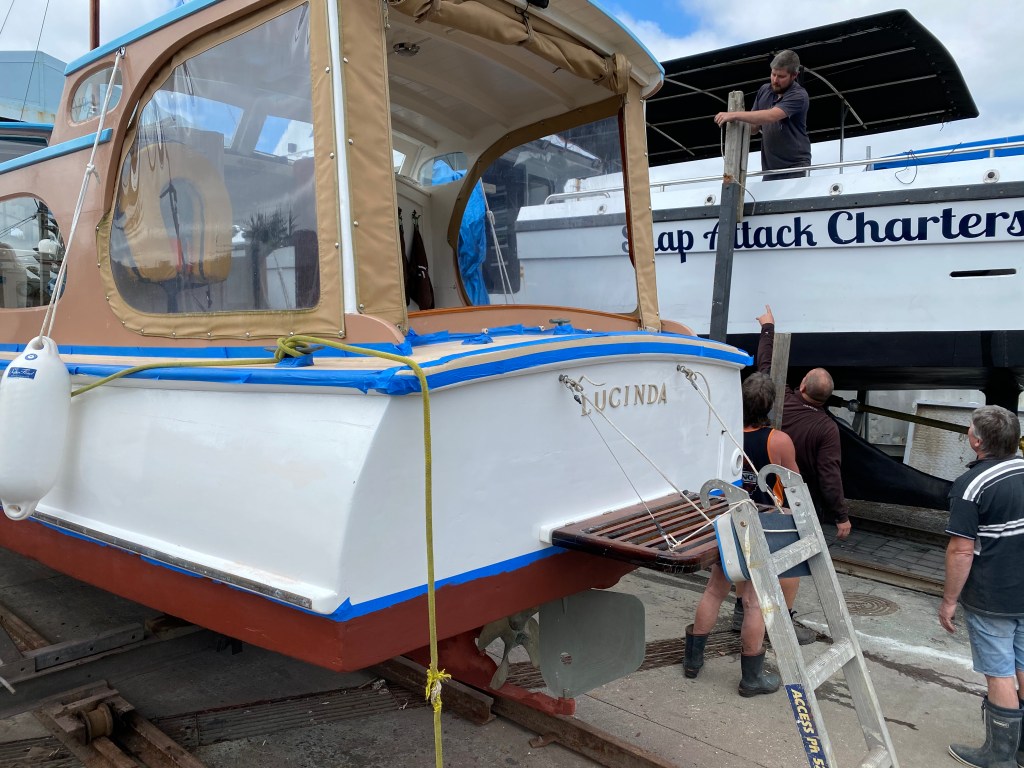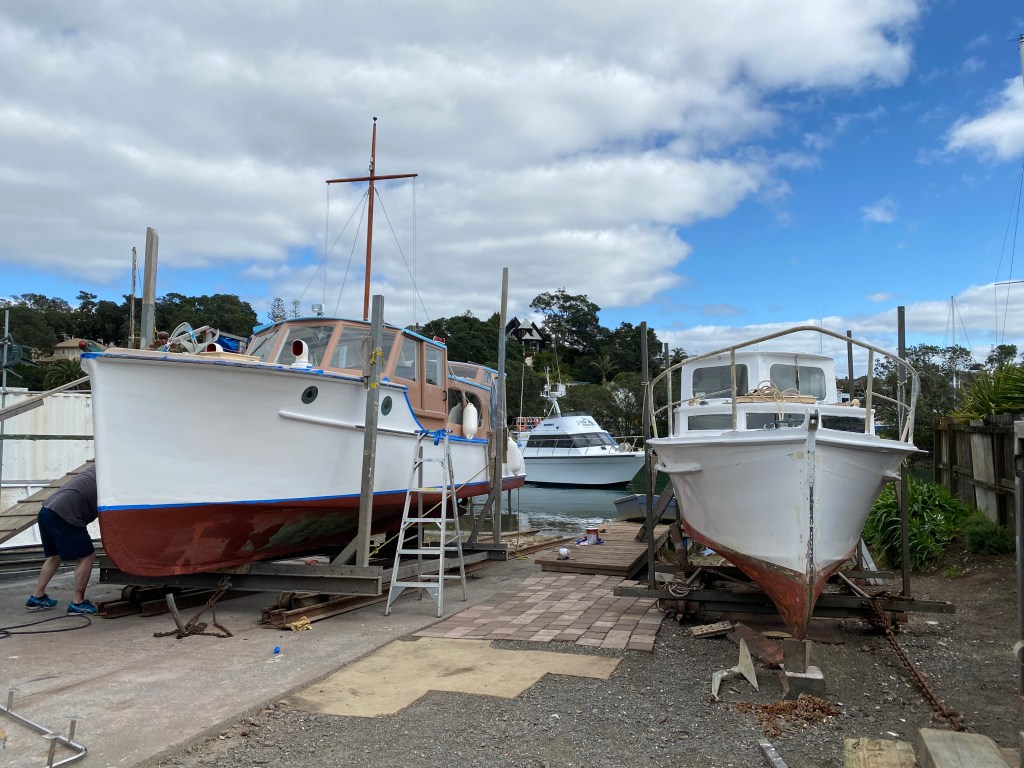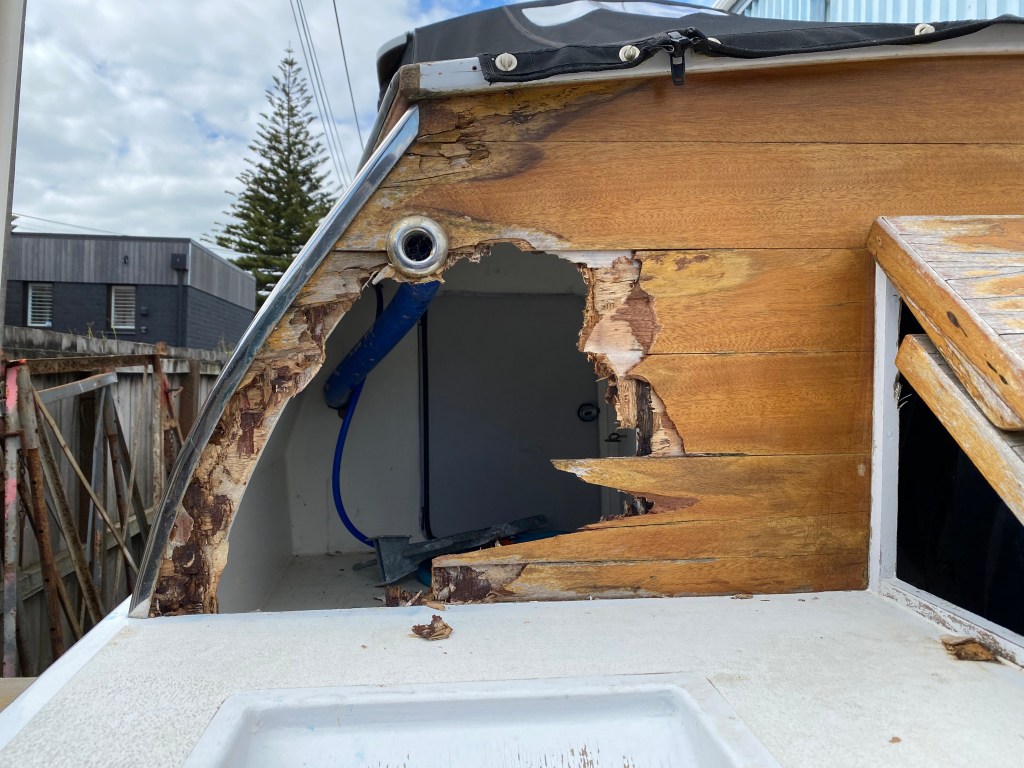
The History Of Tamaroa – as told by Eric Stevens
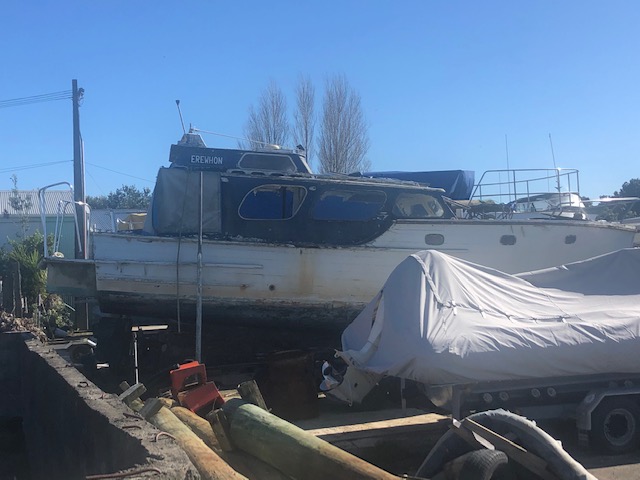
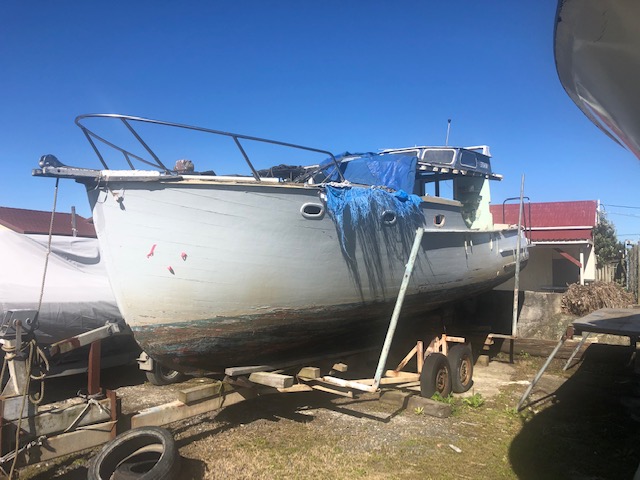
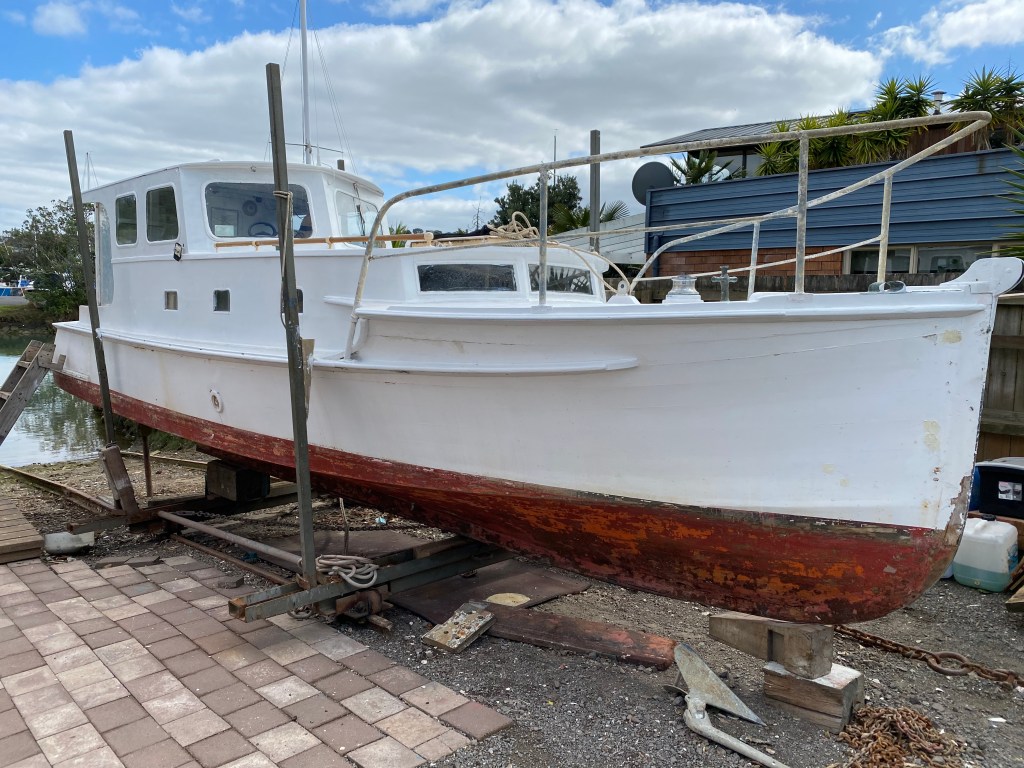
“I am writing this as the owner of Tamaroa from early 1994 to the middle of 2010. She was in a sad state when I bought her and it was only the quality of the original hull construction which warranted her restoration.
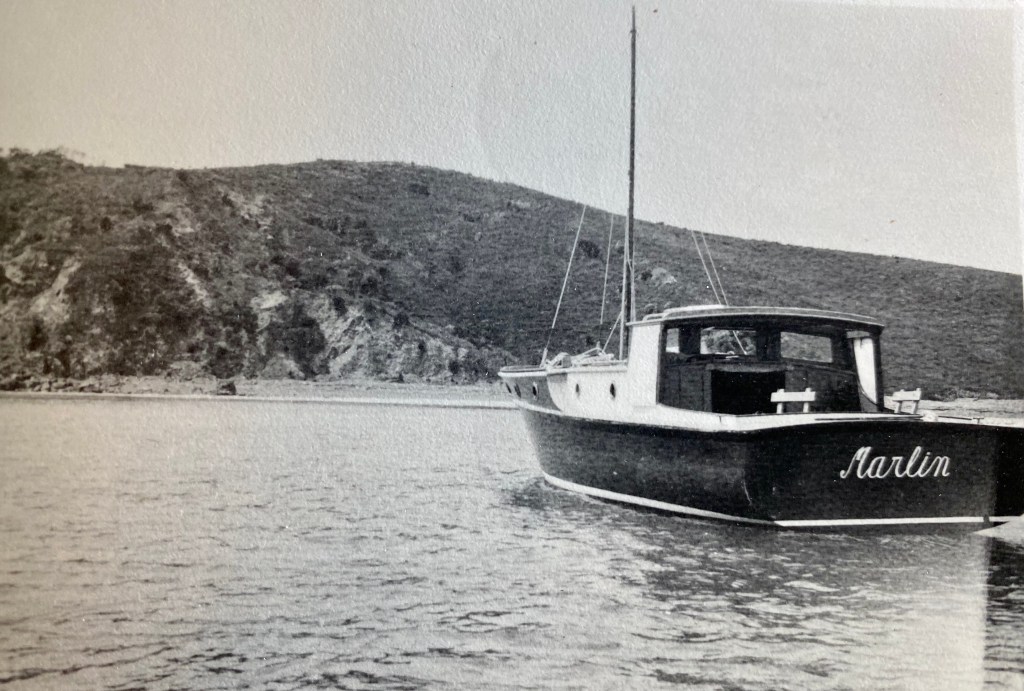
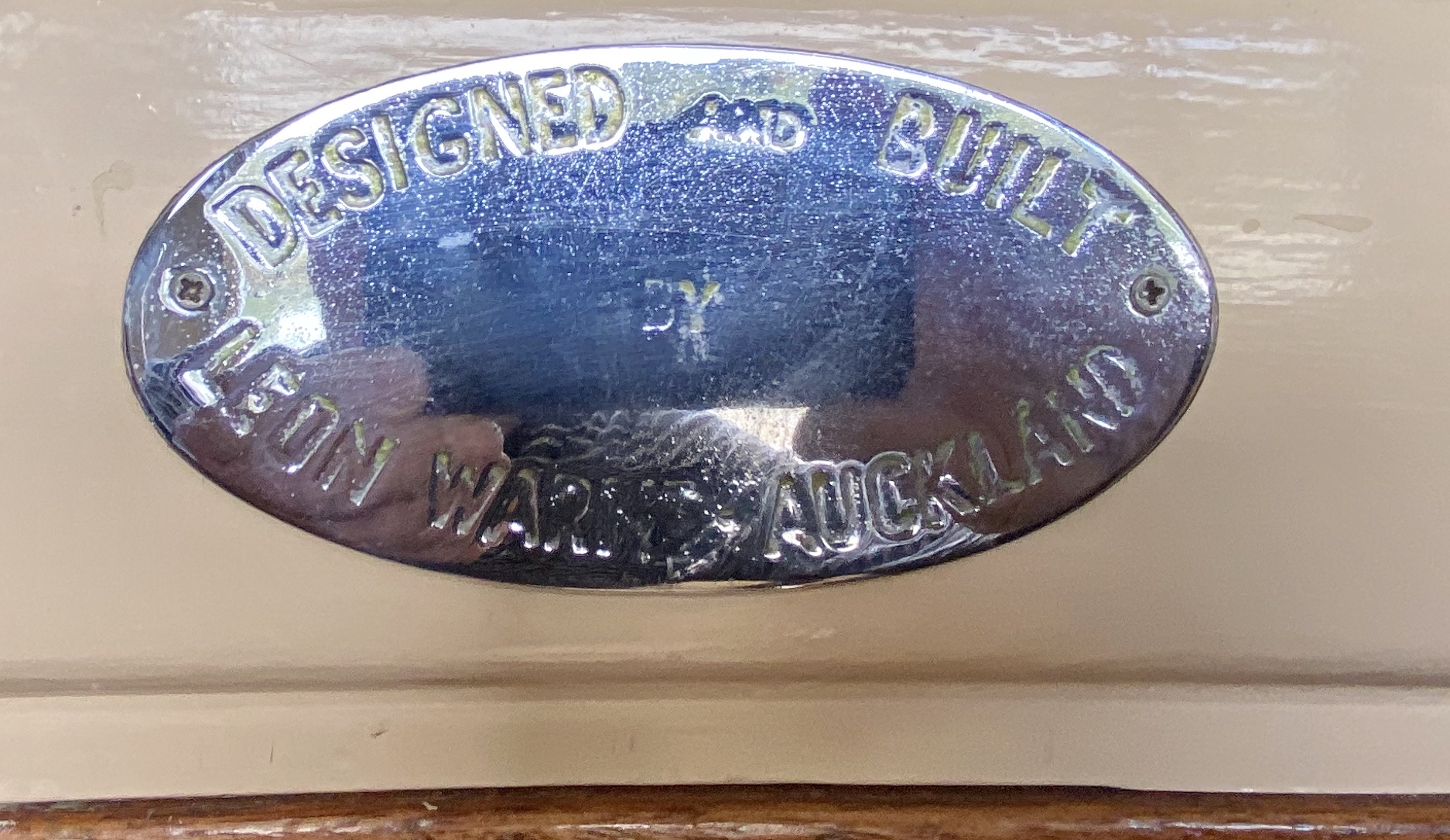
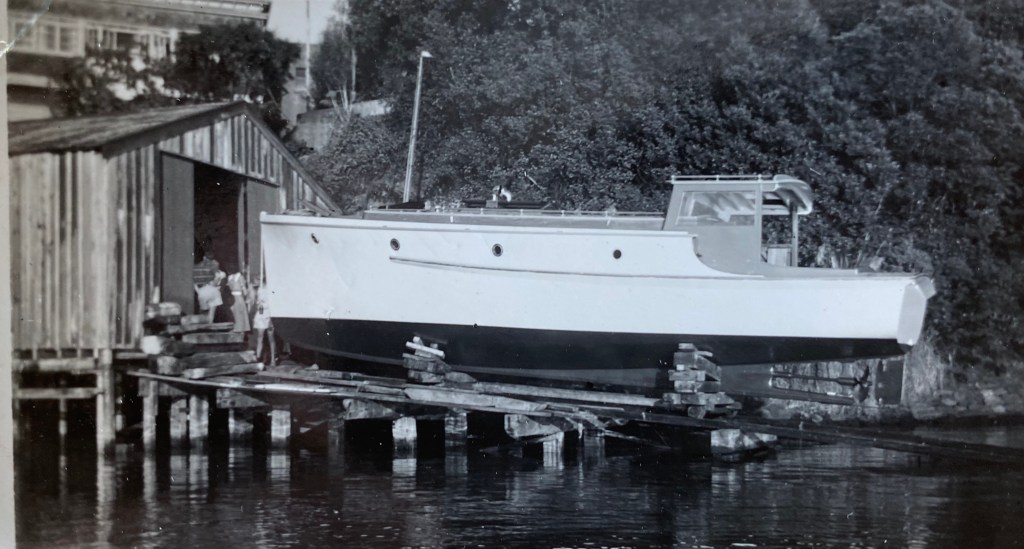
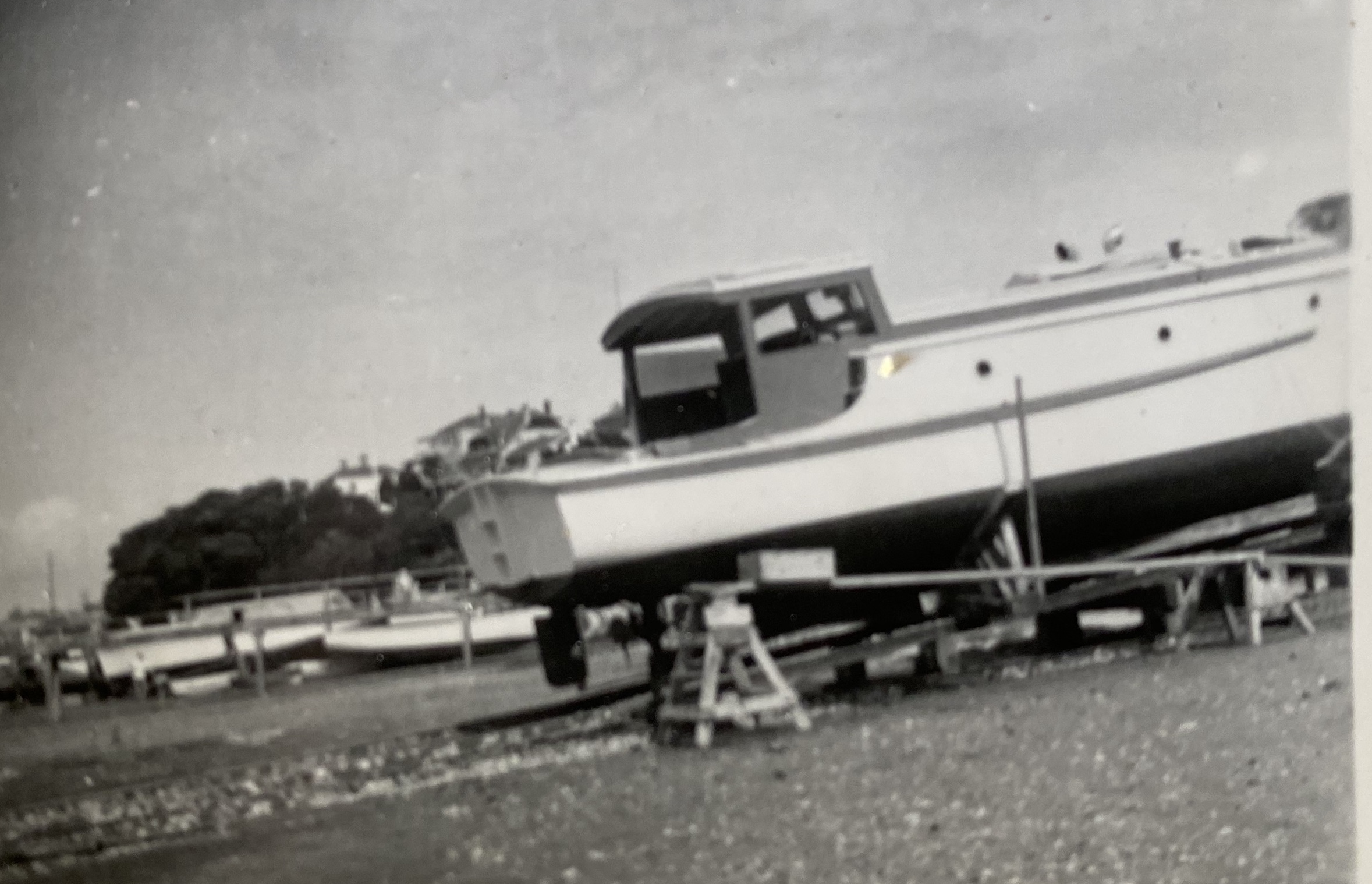
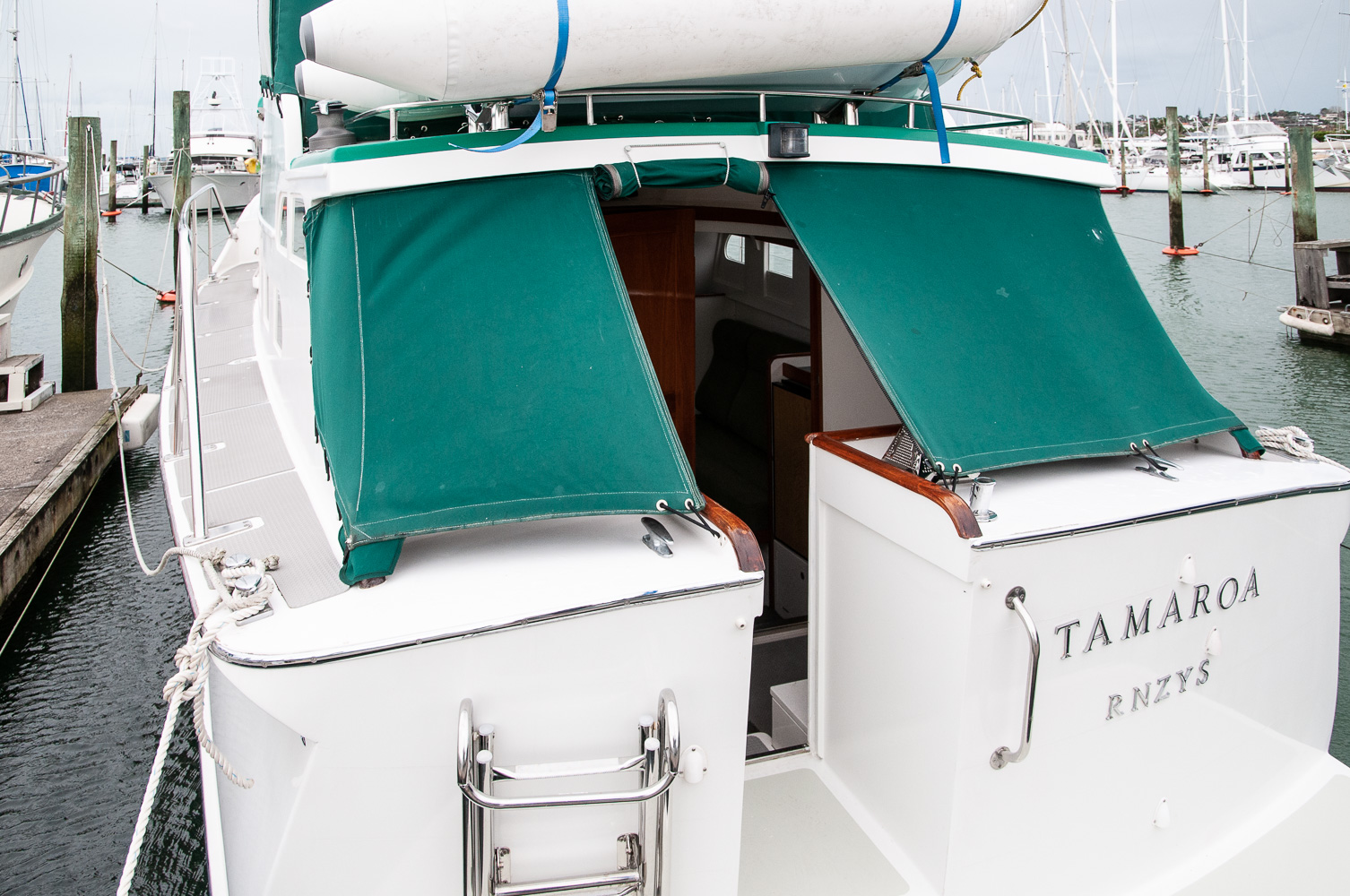
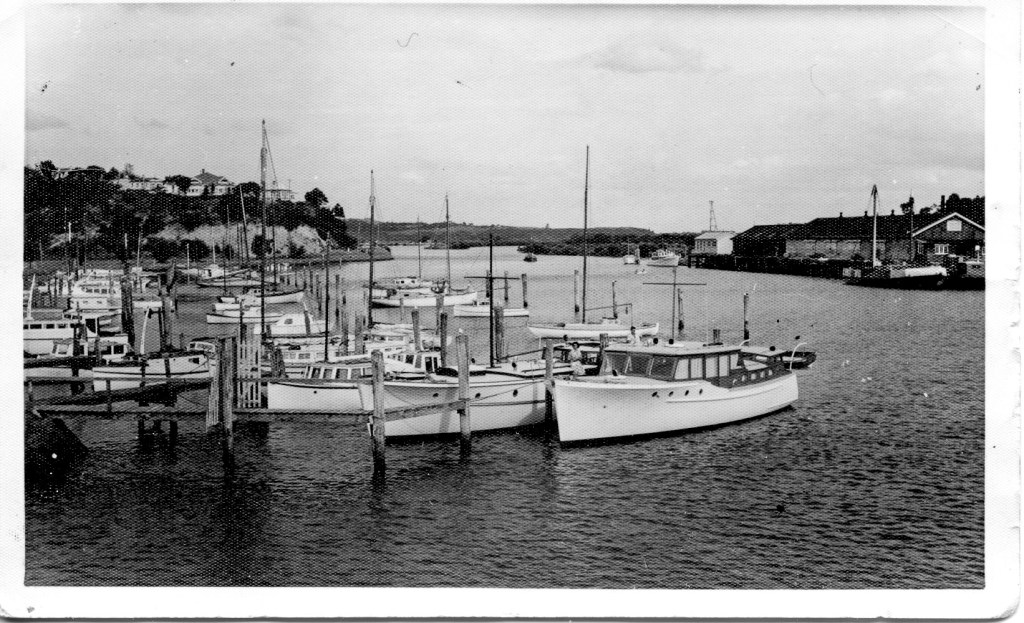
Tamaroa was built by Collings and Bell Ltd for A.E. Fisher of Whangarei. at a date which I have not been able to confirm. At the time of sale I was told that she was the last boat made by Collings and Bell. “They sent her down the slip and closed their doors after her”. When I tried to confirm this story I found that there were quite a number of ‘last boats built by Collings and Bell’ And whatever Tamaroa might be, she was not that. I have been told she was built in 1953 but my enquiries suggested she may have been built in the late 1940s. She certainly was built at a time when Kauri was short and all the larger timbers in the cabin sole above the engines and the cabin sole planking in the stern cabin were Southland Beech. So too were many of the finishing timbers.
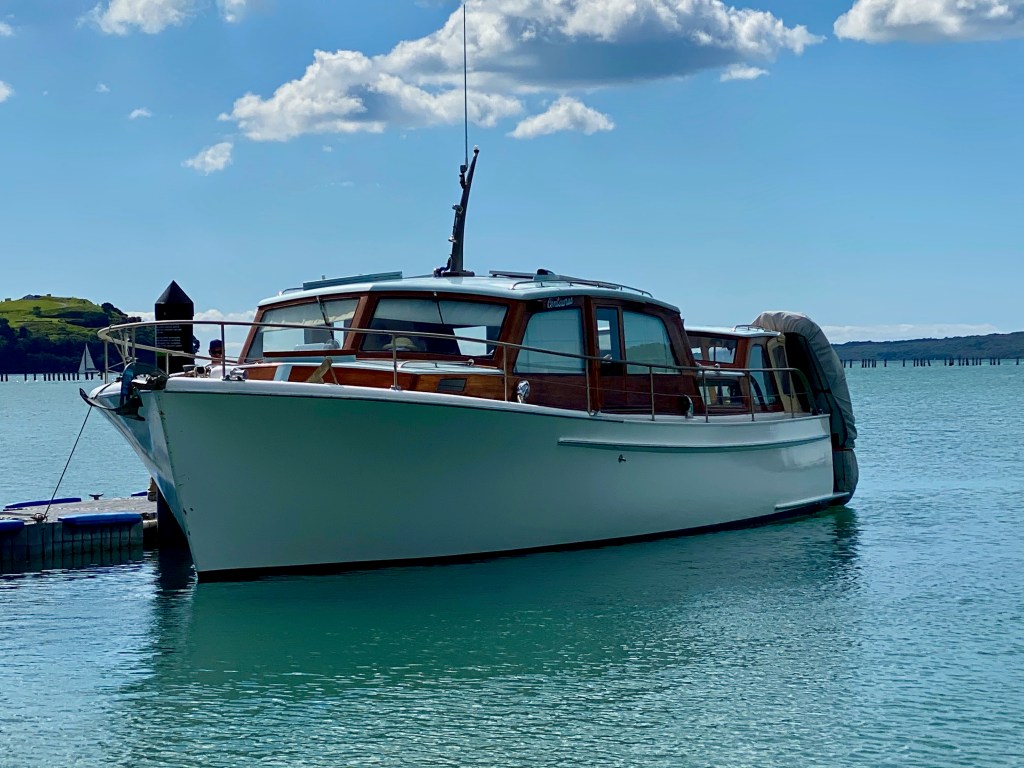
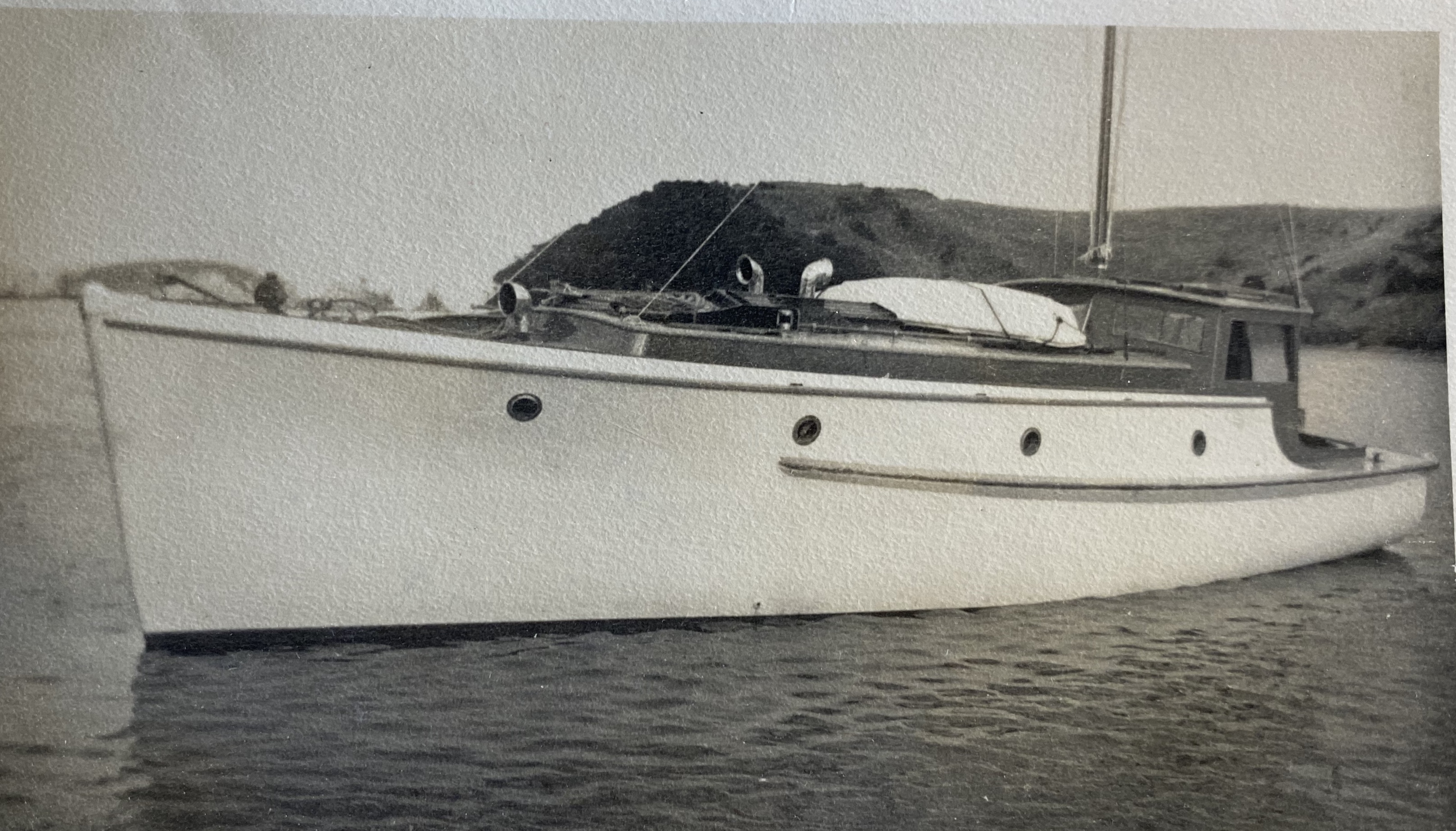
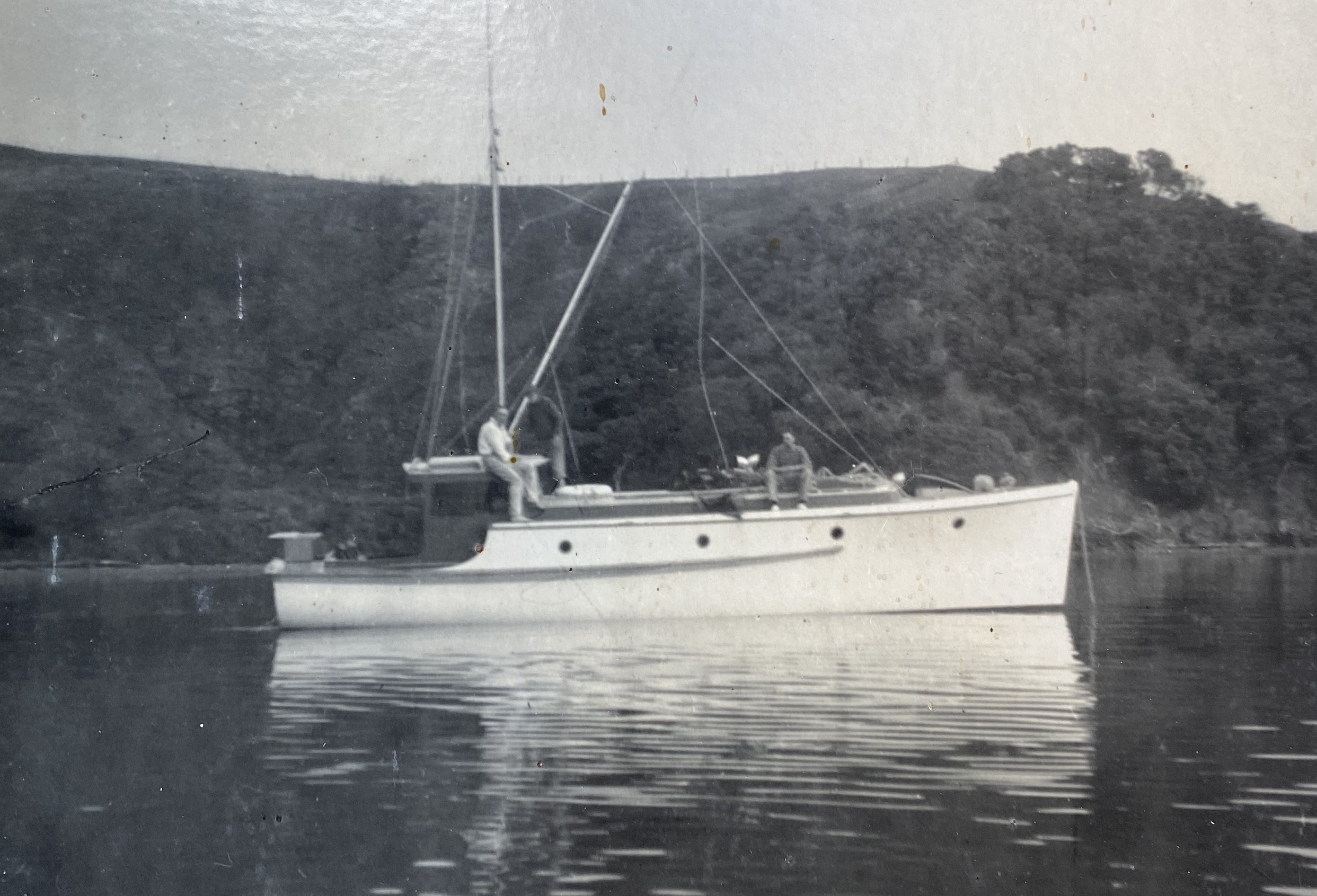
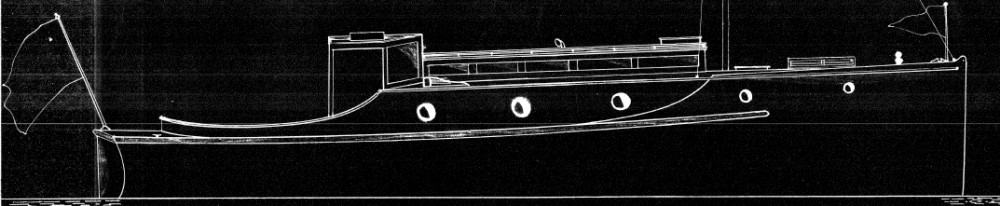
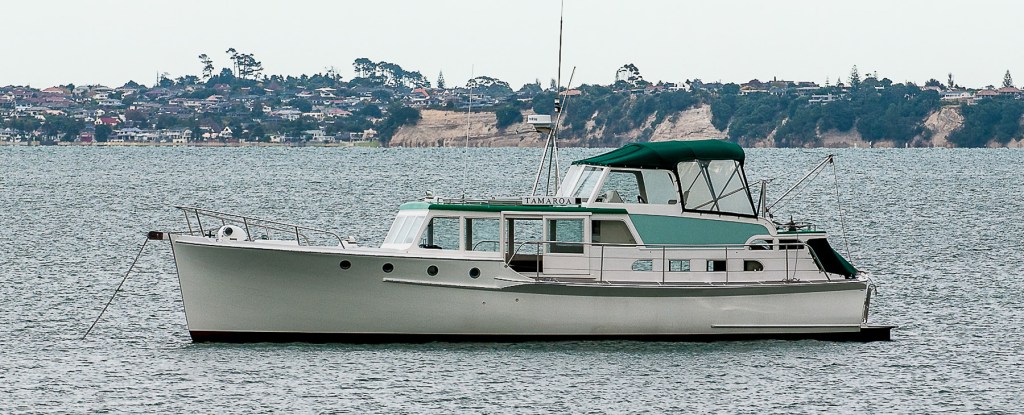
In the time I owned her I measured her up and made extensive CAD drawings to aid with her reconstruction. These show her as being 12.8 meters (42′) between perpendiculars and 3.3 meters (11′-10″) beam. By the time one took into account the strongman for the anchor and the boarding platform at the stern she was in modern NZMIA parlance 13.77 meters (45′) over all. Further, substantial strakes had been added to increase the width of the decks and these brought her overall beam up to a little over 4 metres (13′-1″).
When she was built she was fitted with what was reported to be a large Austin diesel engine. Irrespective of what the exact date of build might be, as far as I can tell, Austin were not at that period making diesel engines suitable for a boat of that size but they were using Perkins P6 engines. Also Perkins were supplying engine exchange kits to enable the fitting of the P6 engine to Austin trucks. The Perkins P6 was commonly used in larger boats at that time and it is most likely that this is what was actually used. Alternatively it could have been the almost contemporaneous and slightly more powerful S6.
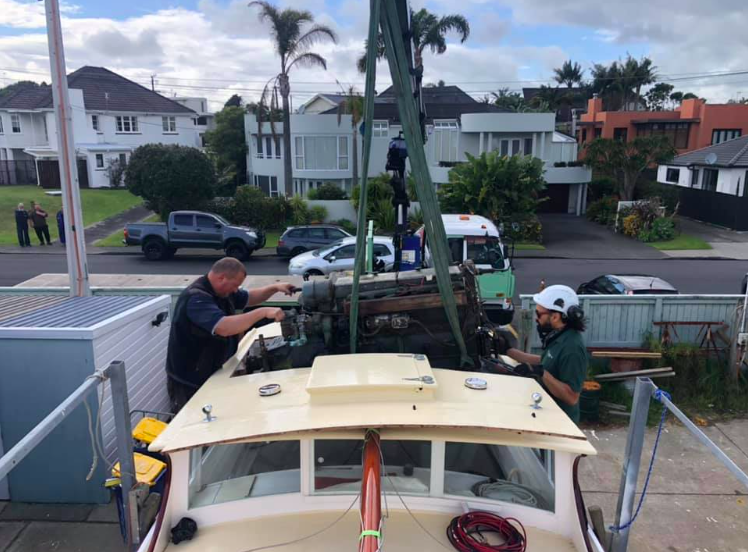
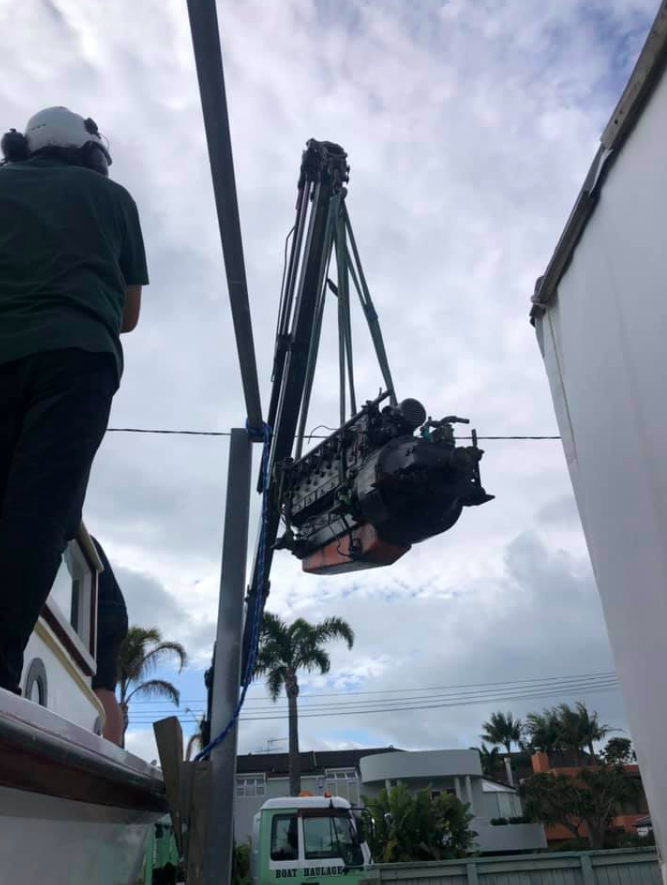
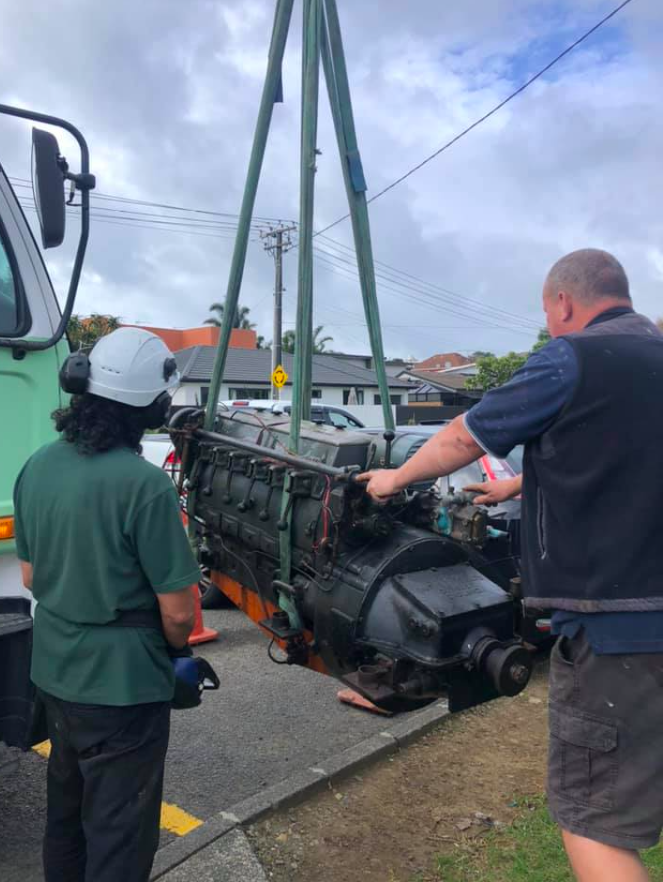
At some stage Tamaroa was sold to a Mr Jeeves. Mr Jeeves was allergic to diesel fumes and had the original engine removed and two Scripps engines (marine conversion of the old flat head Ford V8) installed. This entailed fitting new shaft, tubes and logs to the hull. The engines were fitted with identical Borg Warner gear boxes with the results that both shafts turned in the same direction.
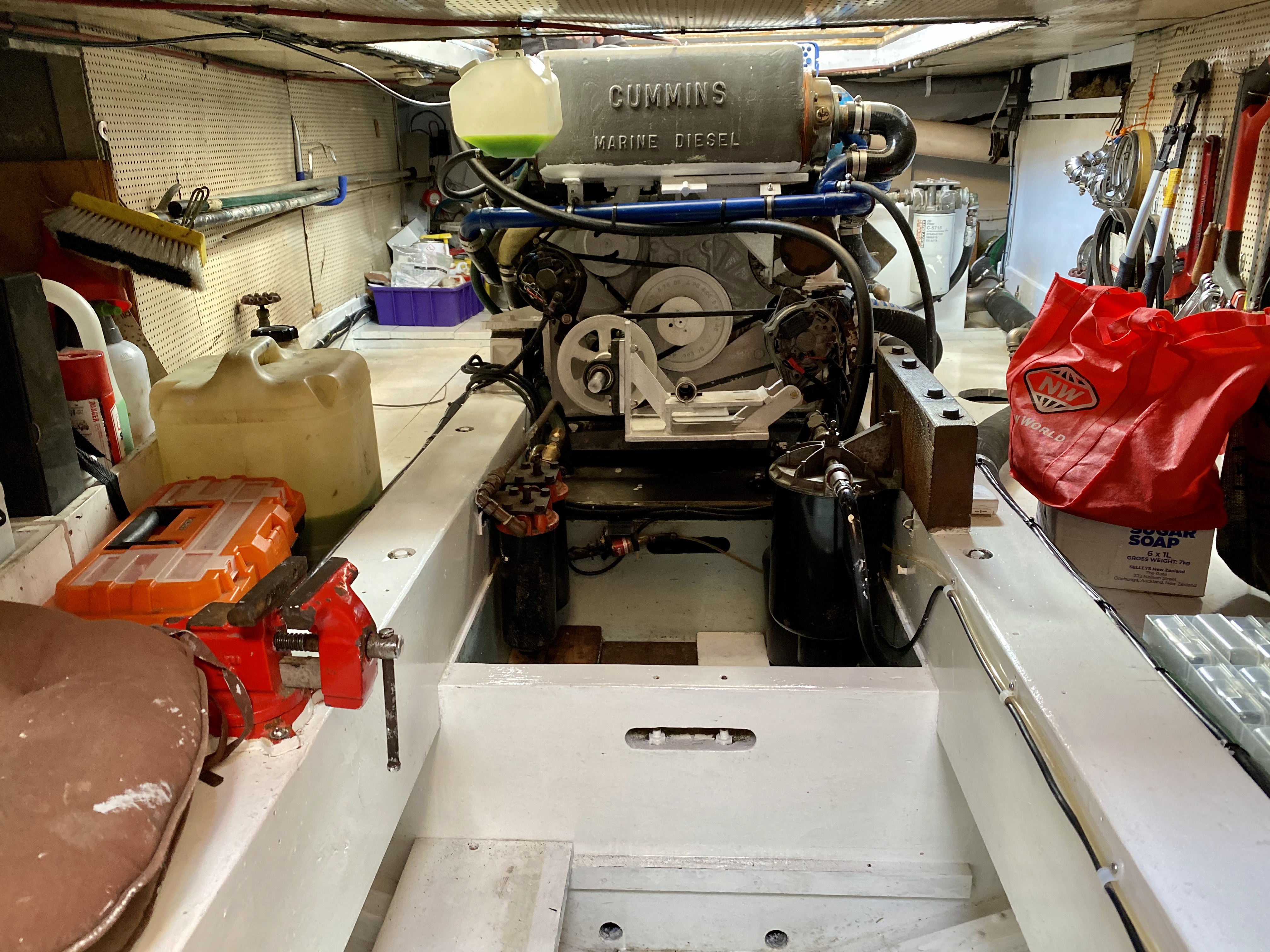
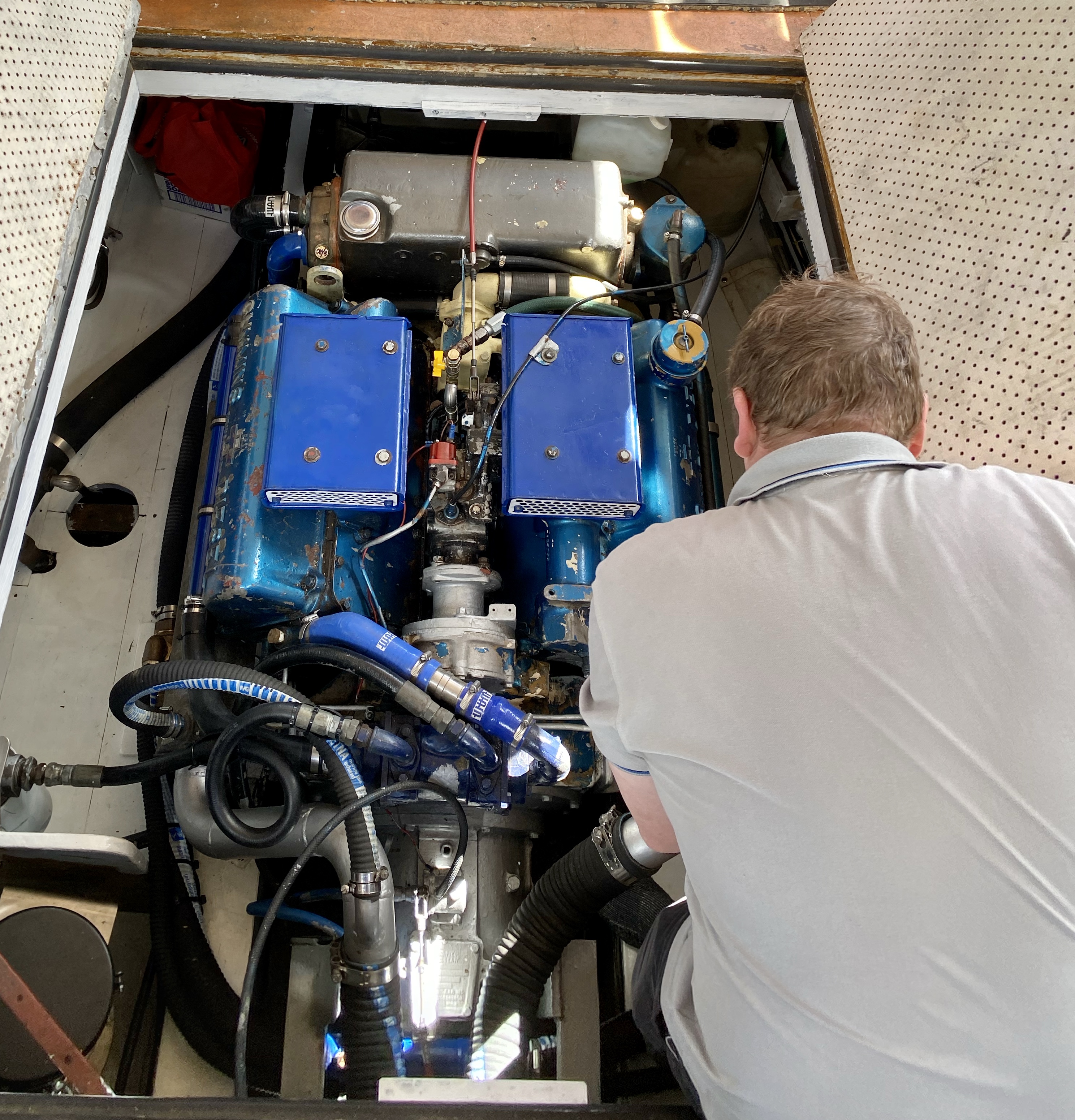
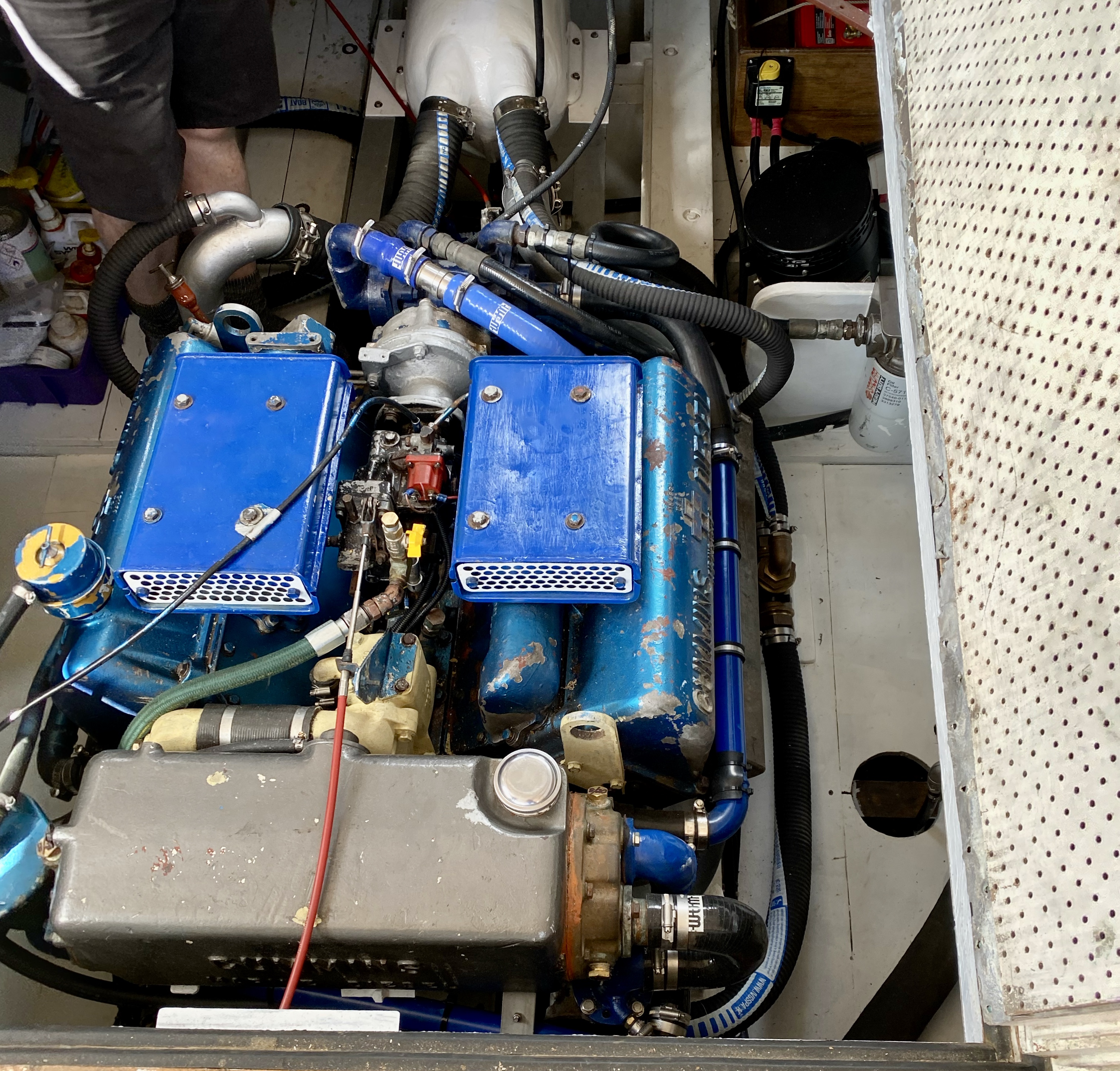
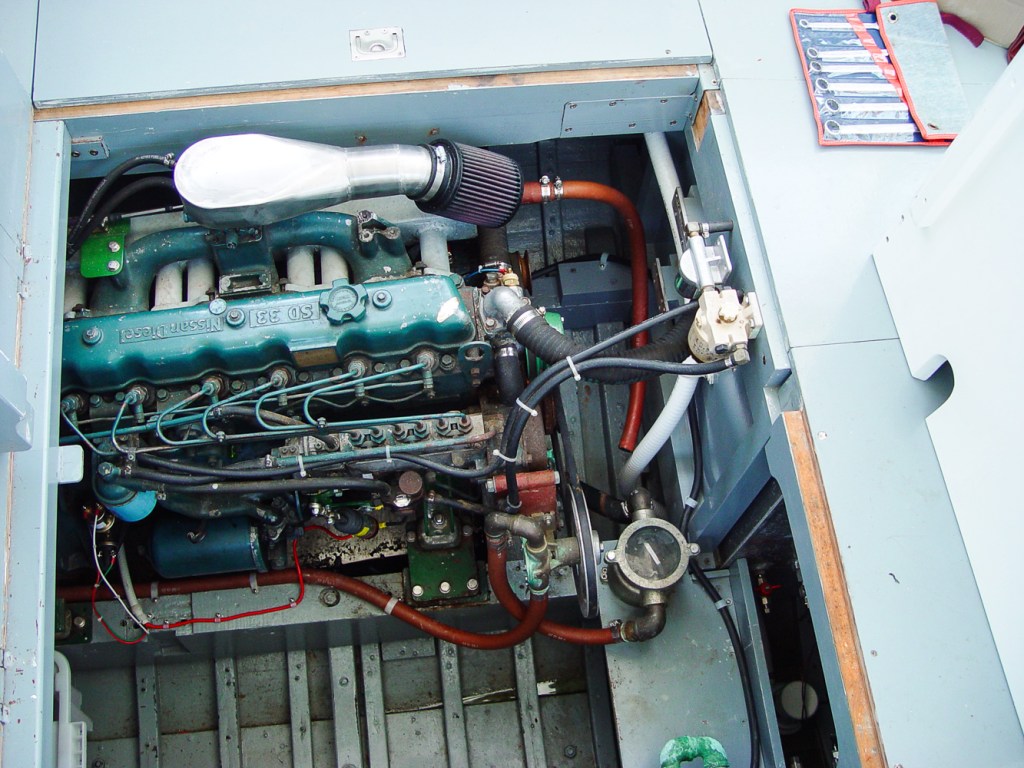
Tamaroa then passed through various hands until an Allan Brown bought her from a truck sales man whose name he can no longer recall. Allan Browne did not like the petrol engines and he started to convert Tamaroa back to the original diesel by replacing the port engine with a Nissan SD33 diesel engine. The Nissans come in a variety of configurations and this one was configured for industrial use in a forklift truck. For a time he ran Tamaroa with one engine diesel and the other petrol but not long before he sold it to me in 1998 he installed a second industrial SD33 identical to the first except that it had a slightly different flywheel housing.
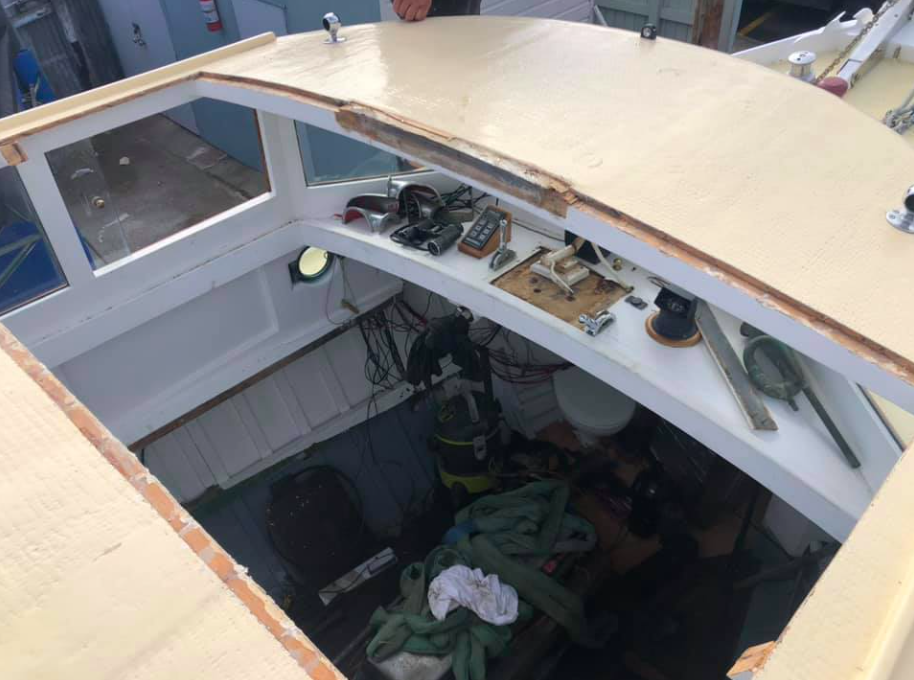
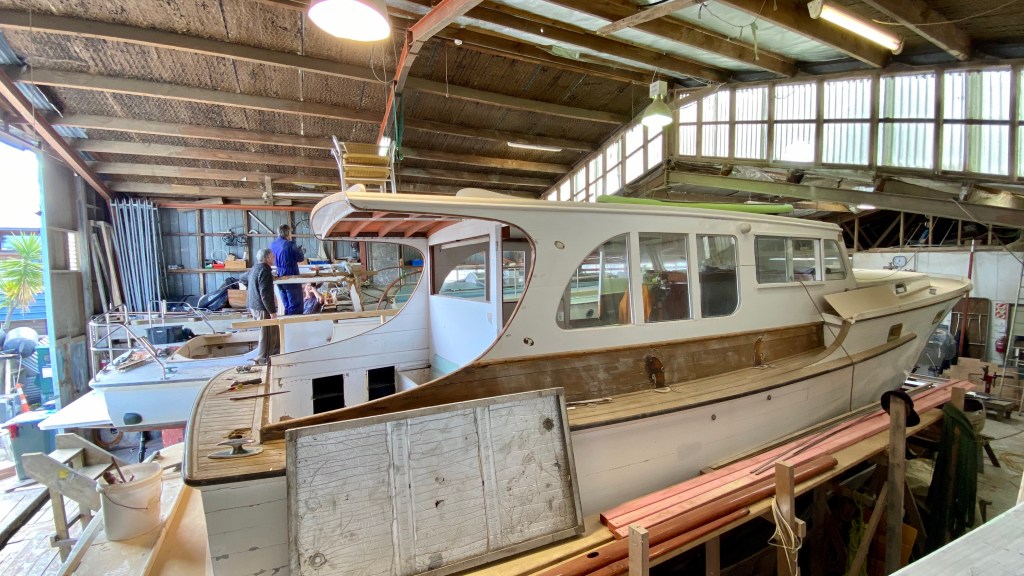
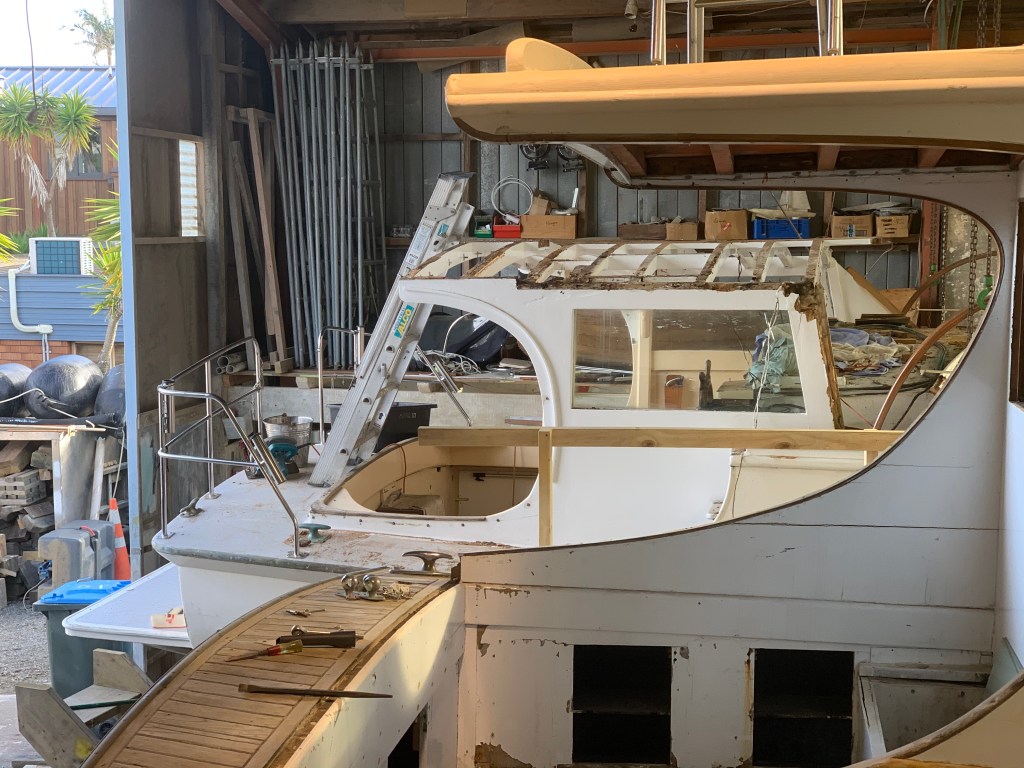
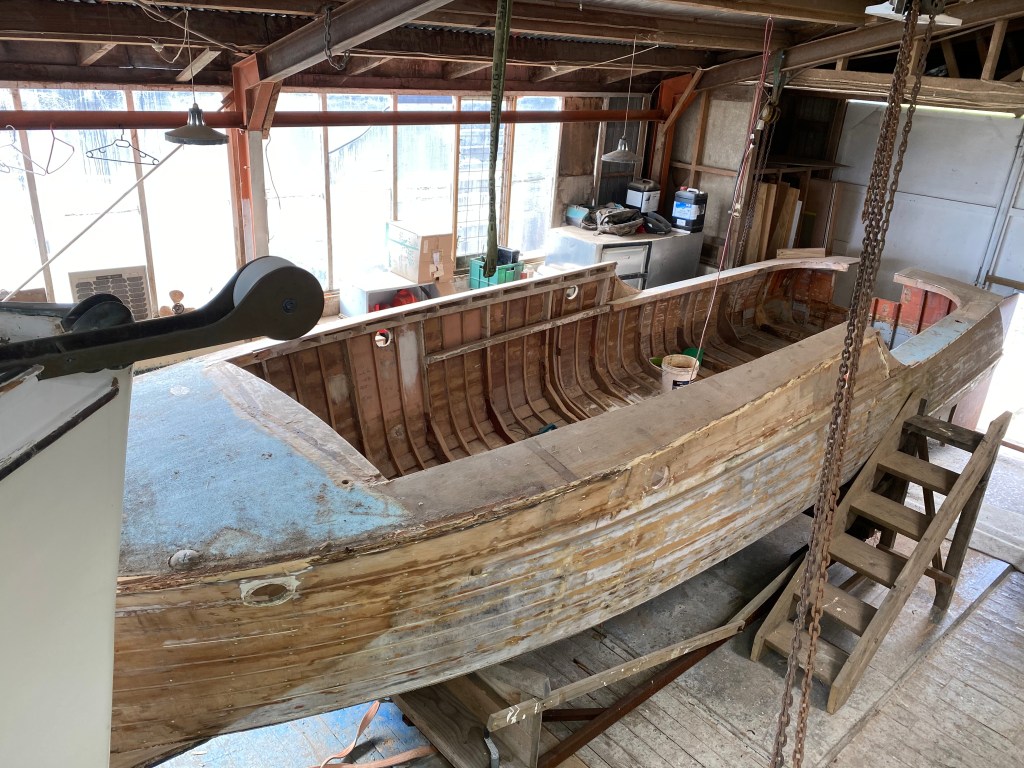
When I bought her the interior was in a rather sad stripped-out and crudely rehashed state. However I had her surveyed by Jack Taylor and he gave a good report on the condition of her hull. The strength of the construction of the hull impressed him and was such that he took a lot of convincing that it was not a prewar boat. The cabin was a different matter: he kept repeating that they had left it to the apprentices. When I later got to replacing the glass in the cabin I found that the port side bore only a passing resemblance to the starboard with various nominally equal dimensions varying by several inches from one side of the cabin to another.
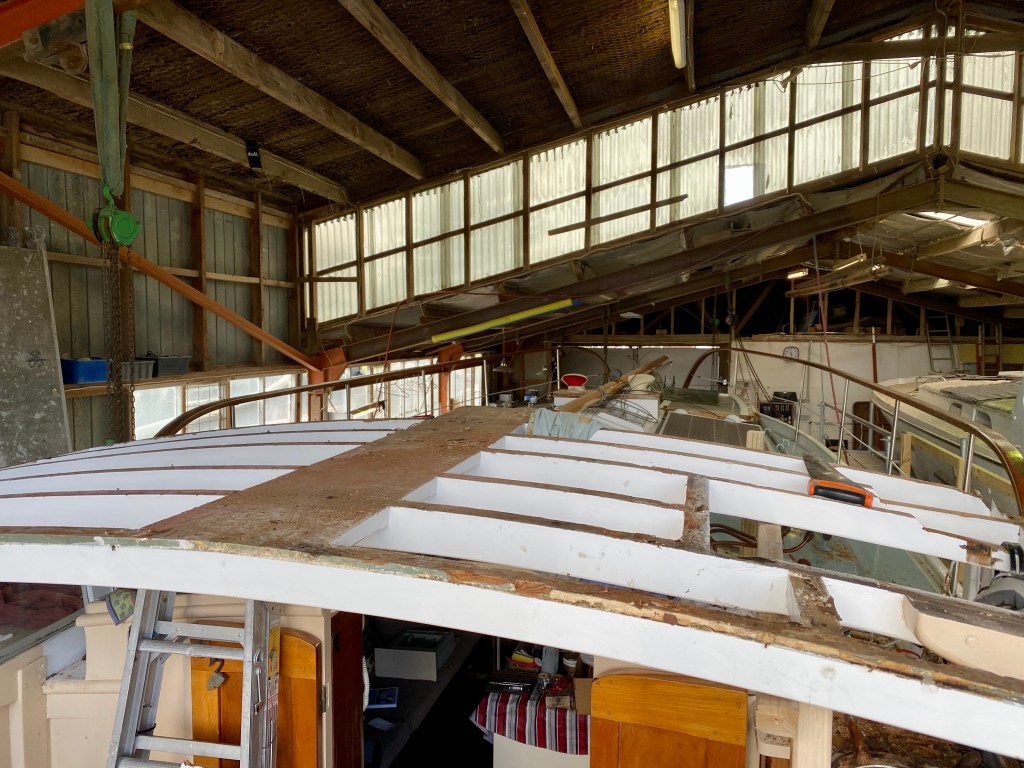
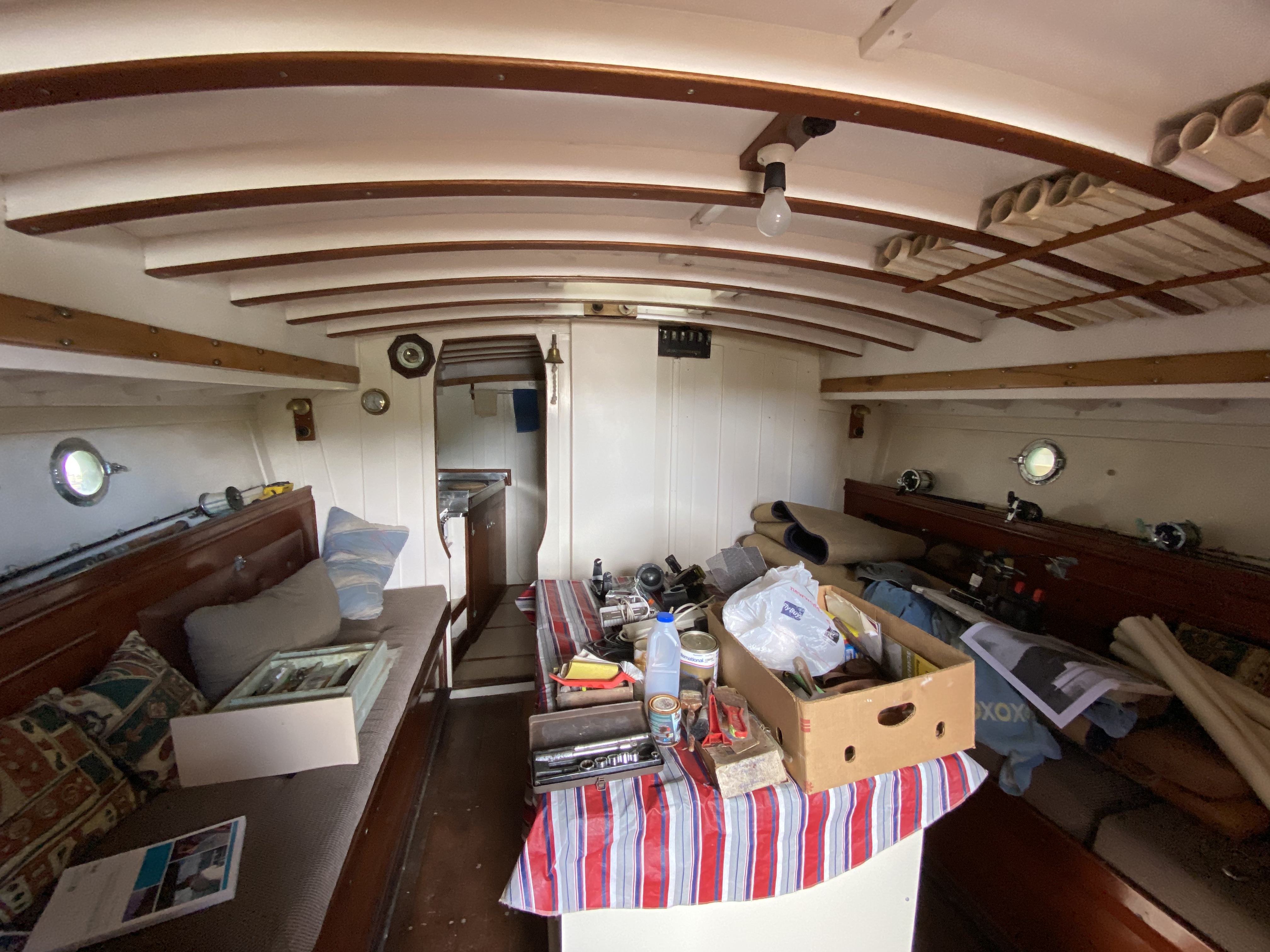
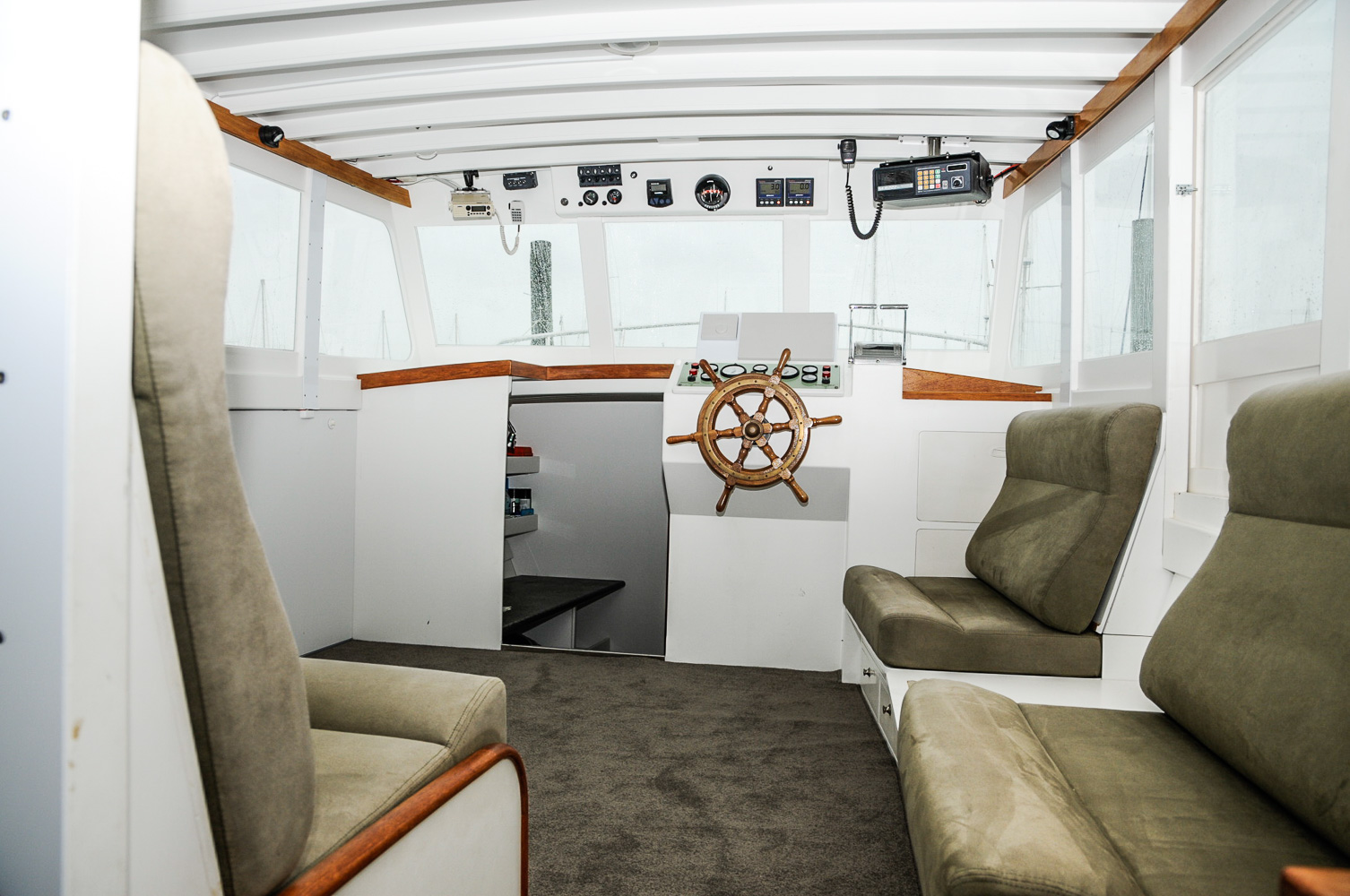
By the time I bought her most of the original furniture had gone and been replaced by a mish-mash of all kinds of strange things. There was a large armchair in one corner of the wheelhouse which in fact was a refrigeration cabinet. And when it rained the cabin leaked like a sieve.
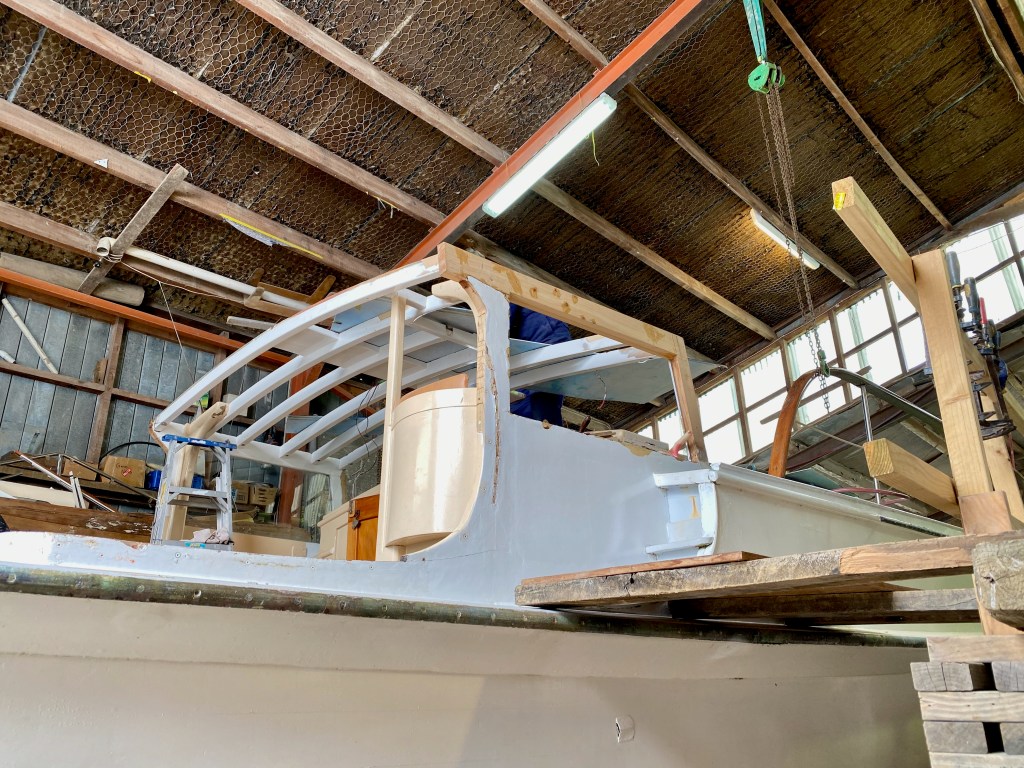
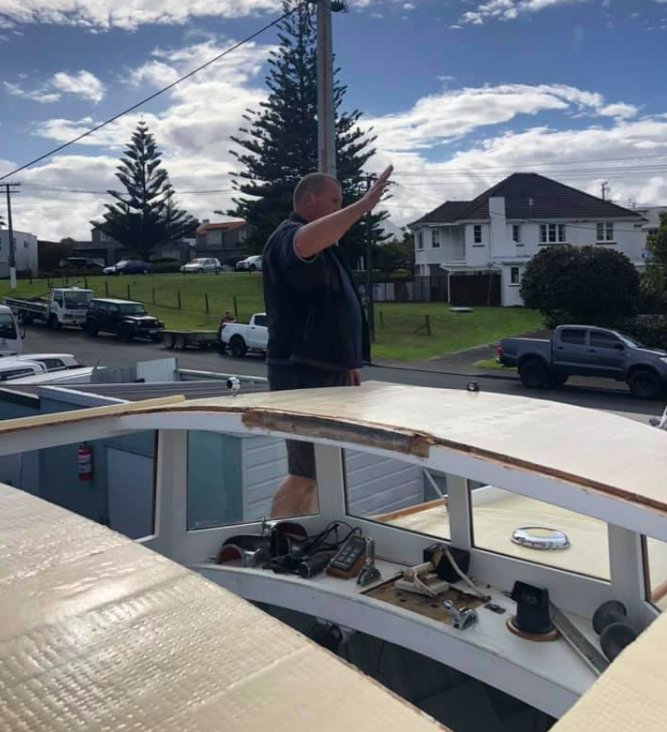
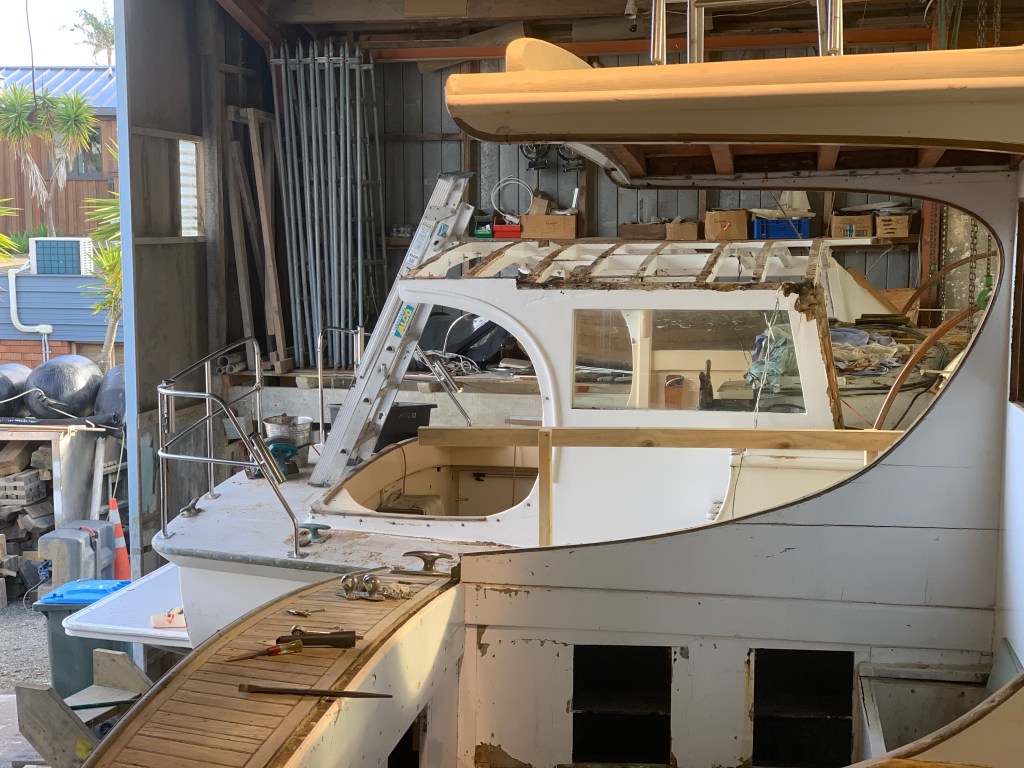
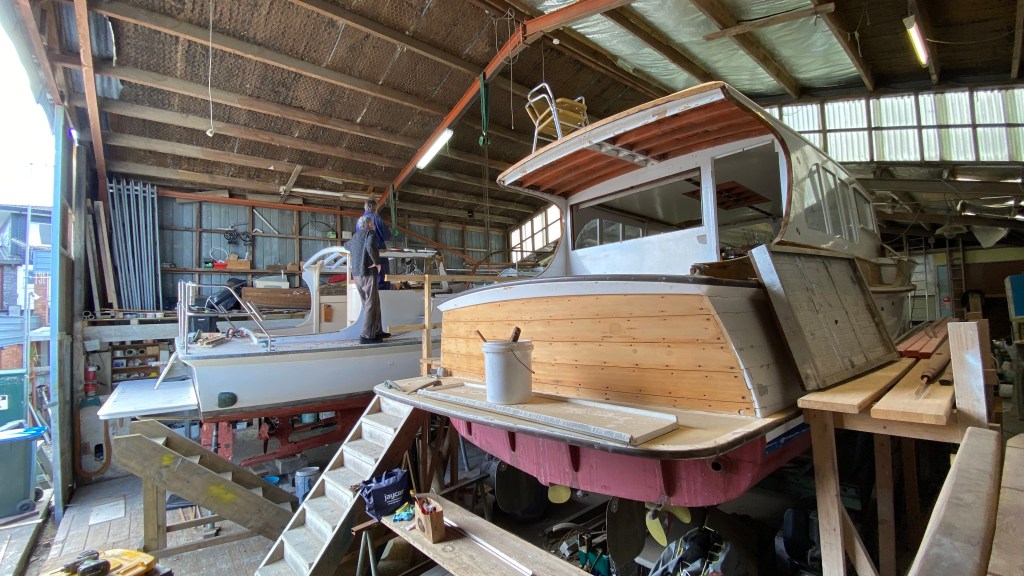
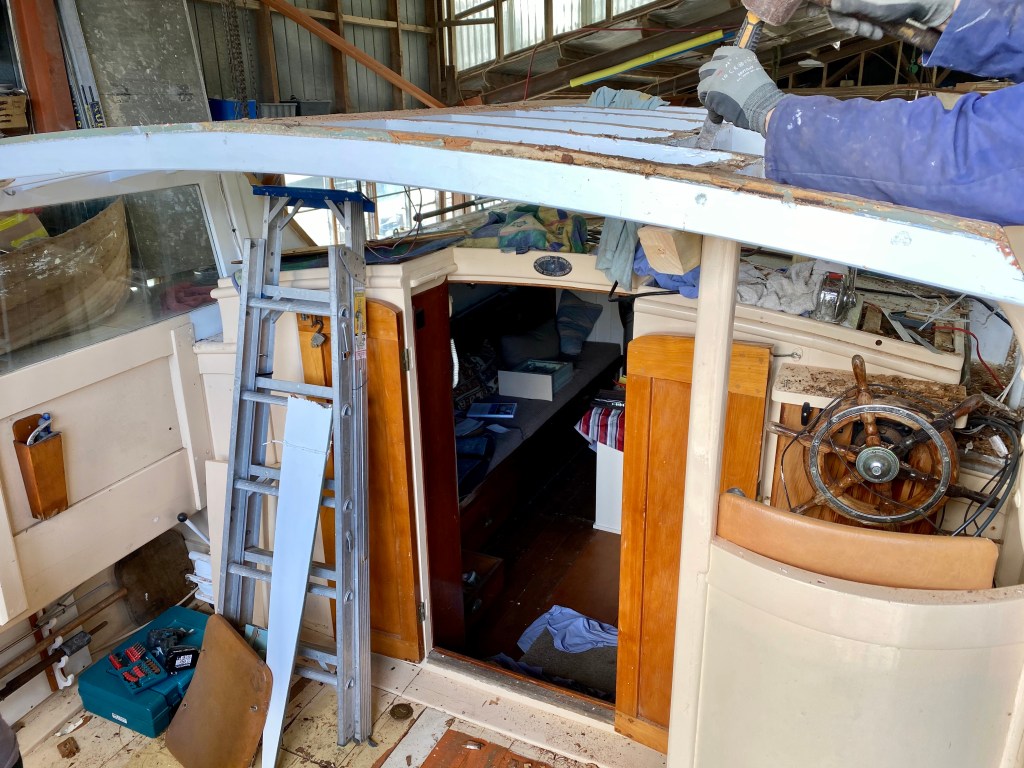
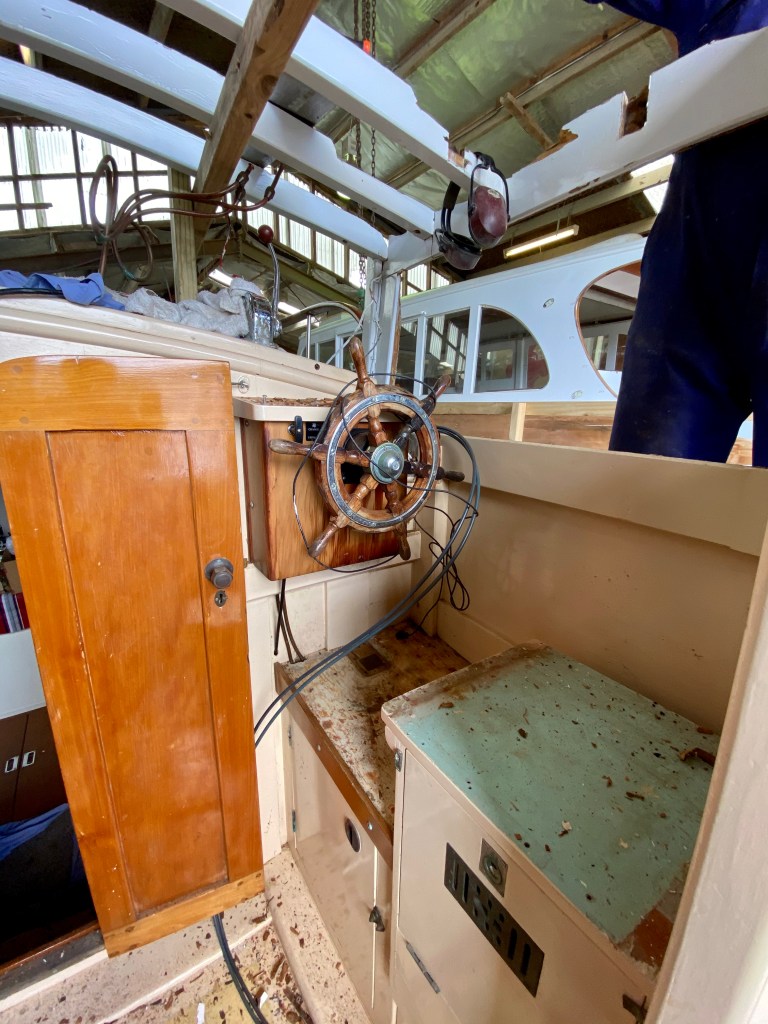
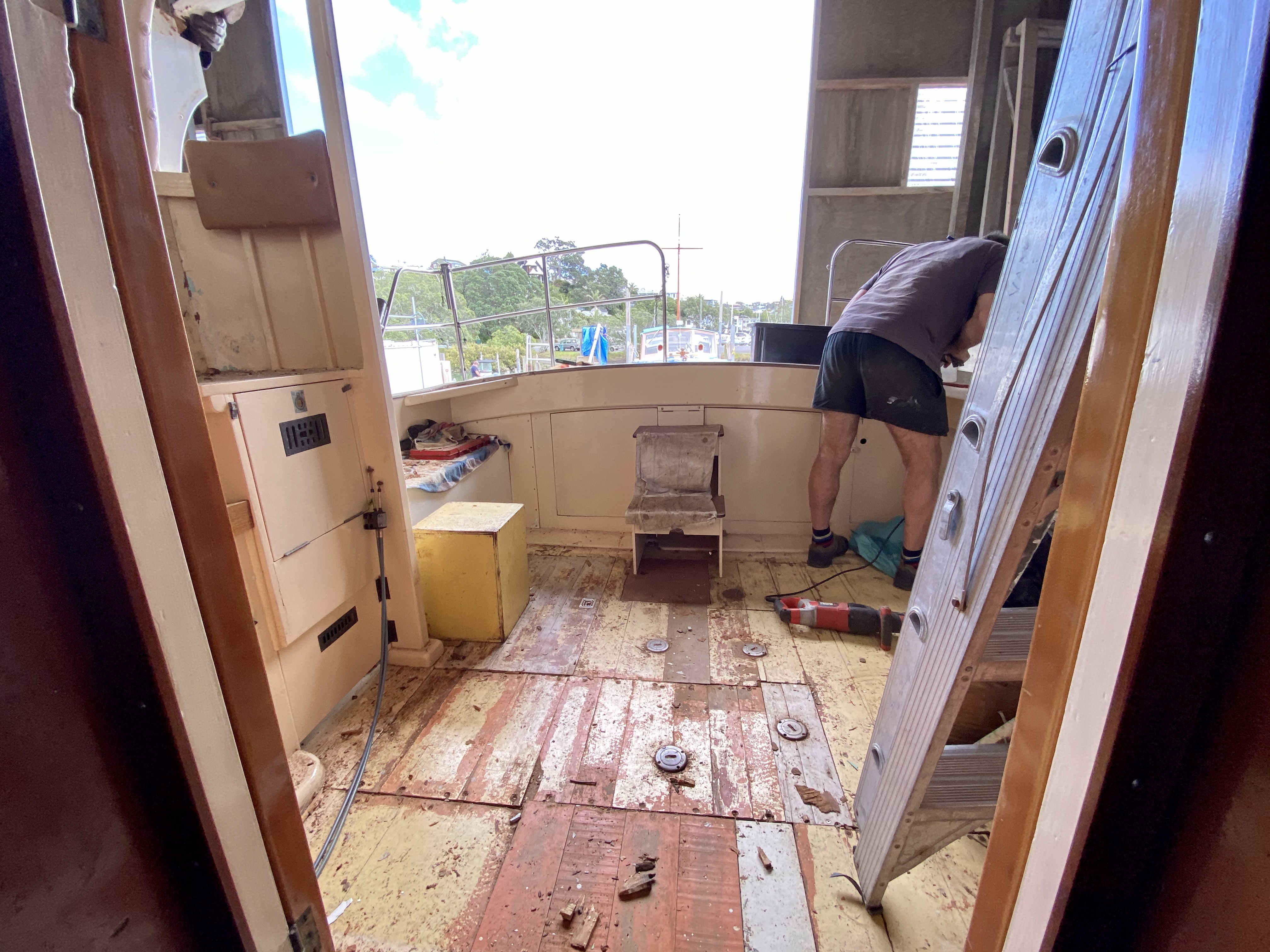
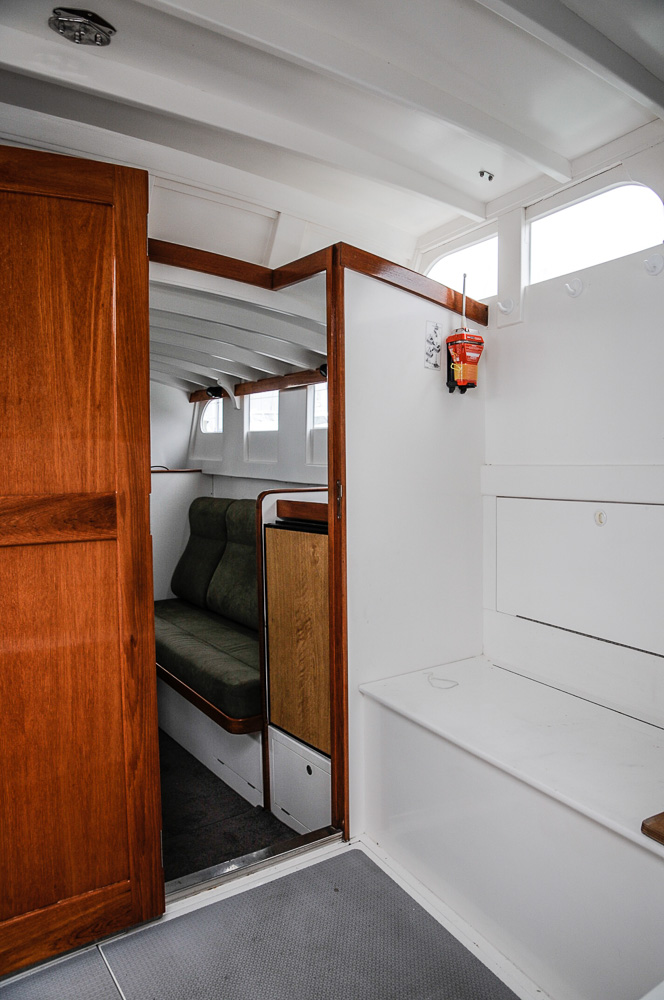
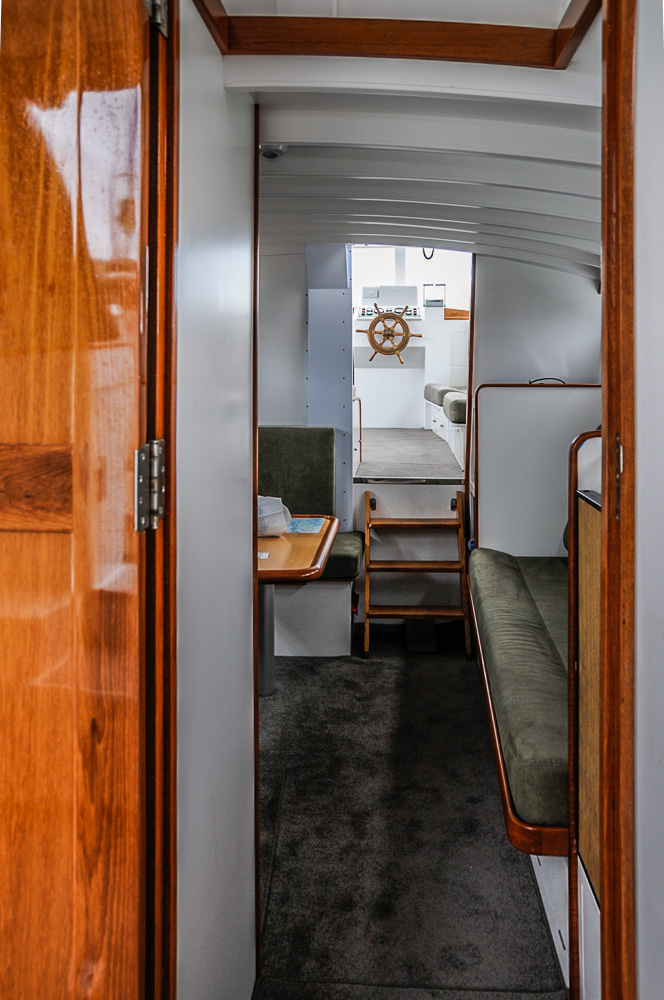
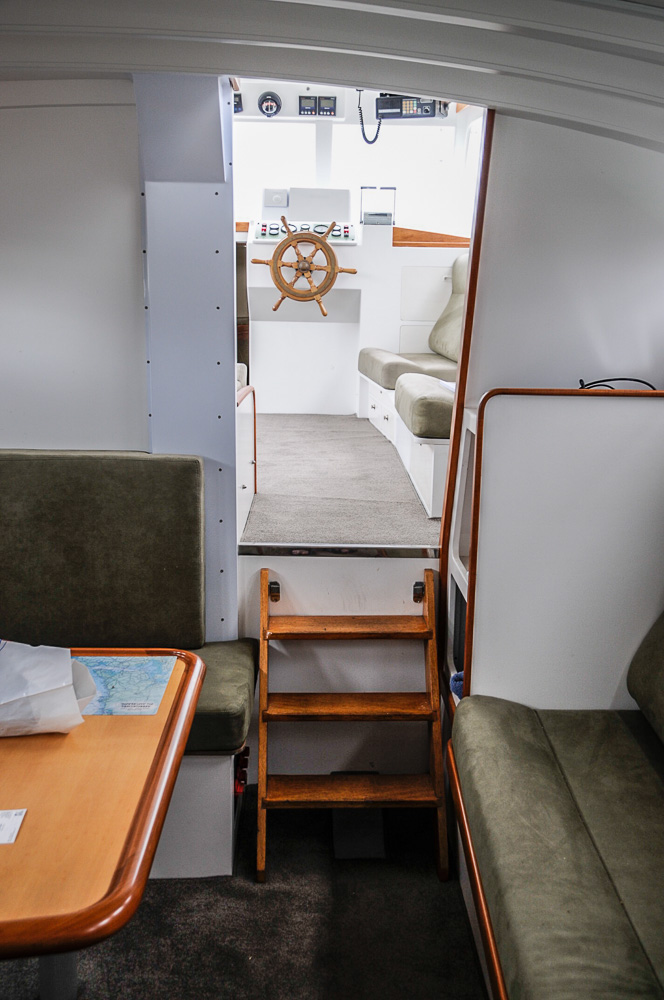
I started the long process of fitting her out. When I removed what was not wanted I was left with a large empty space with a flush dunny on one side. The engine changes over her life had caused the structural beams for the deck in the wheel house to be badly chopped around and I decided to replace the whole structure. This included the cabin sole in the wheelhouse. There was so little of the original left that I decided to refit the interior from scratch with a clean sheet of paper. It’s not original but it incorporate most mod cons and it works.
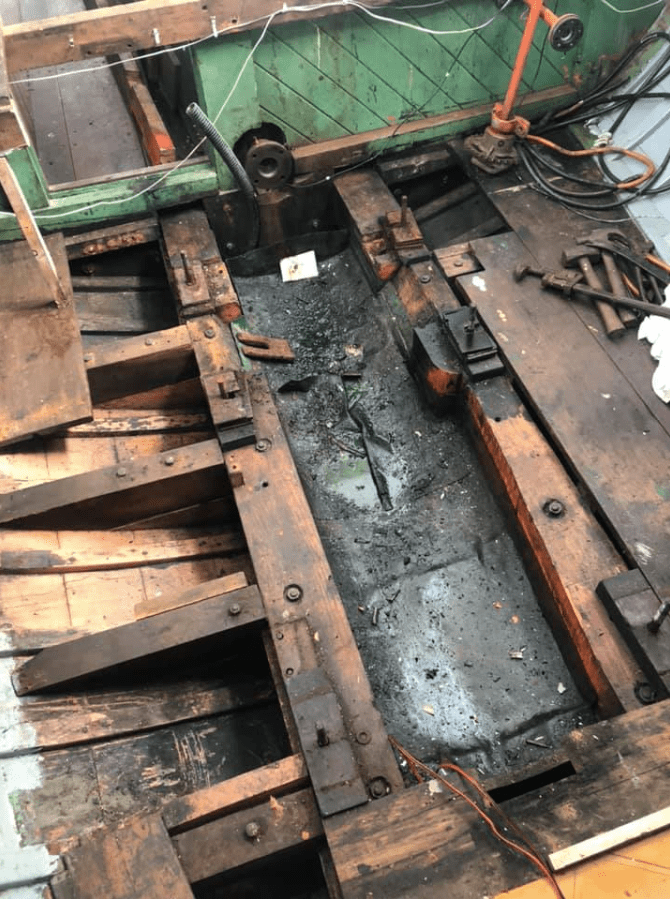
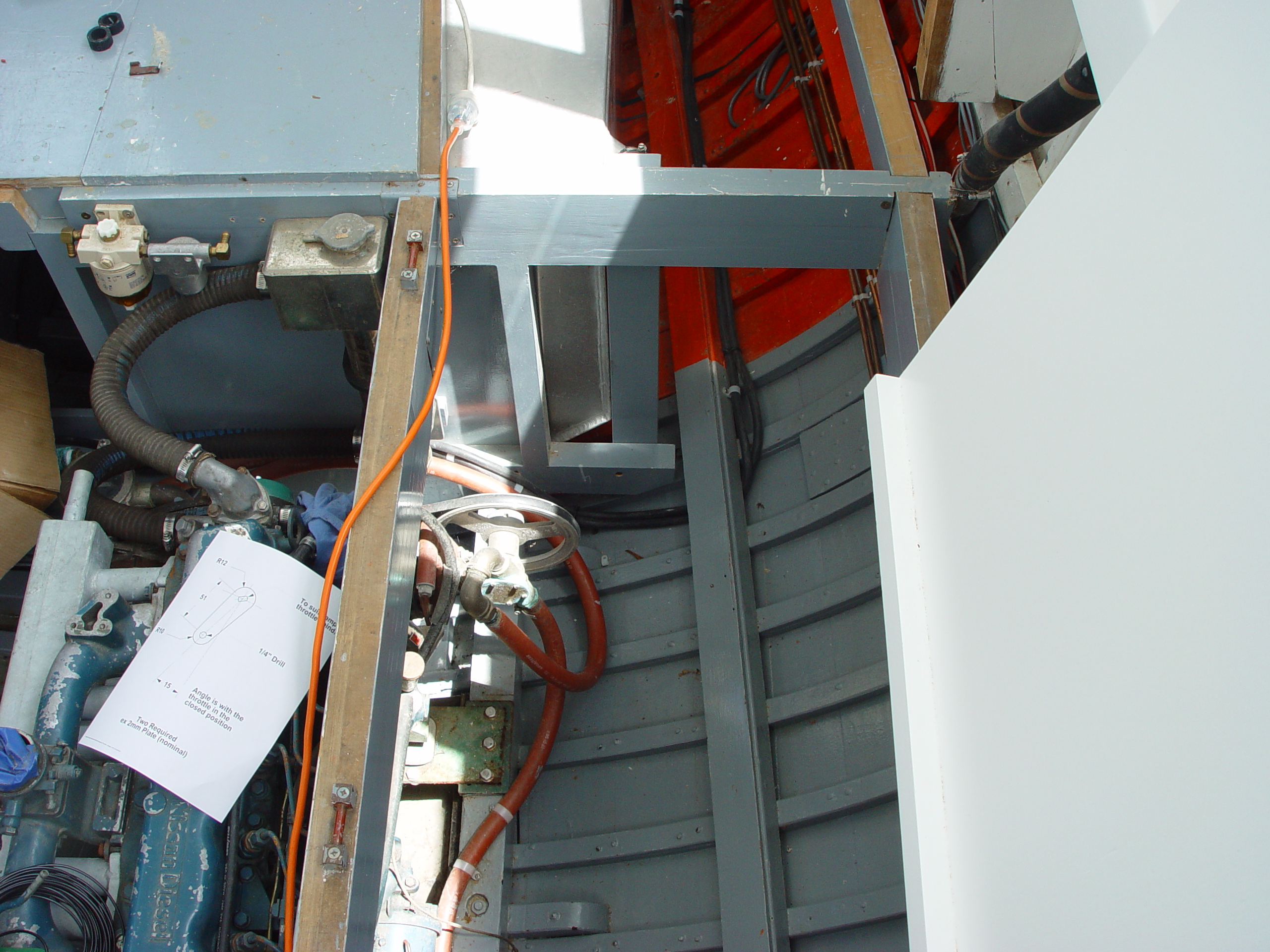
The aft cabin sole was planked and screwed down with immovable bronze screws. We had not been able to lift this for the survey. After I had bought her, all had to be laboriously cut out to give access to the hull. The completion of this work revealed a dreadful state of affairs. When the new shafts were installed for the twin screws. no sealant (tallow, pitch) had been run to fill the gap between the shaft tubes and the logs. The result was that over the years sea water had been seeping in past the stern bearing housing and evaporating through the timber of the adjacent planking and the shaft logs. The concentration of salt had given the timber the consistency of Weetbix and in places the sound planking was only 3mm thick. Nevertheless, as we had found at the time of survey, what remained was so hard that attacking it with large knife from the outside revealed no weakness. In the end more than 4 square meters of the bottom had to be replaced. This entailed new shaft logs, GRP tubes and shafts. Needless to say all this was sealed with copious quantities of epoxy resin.
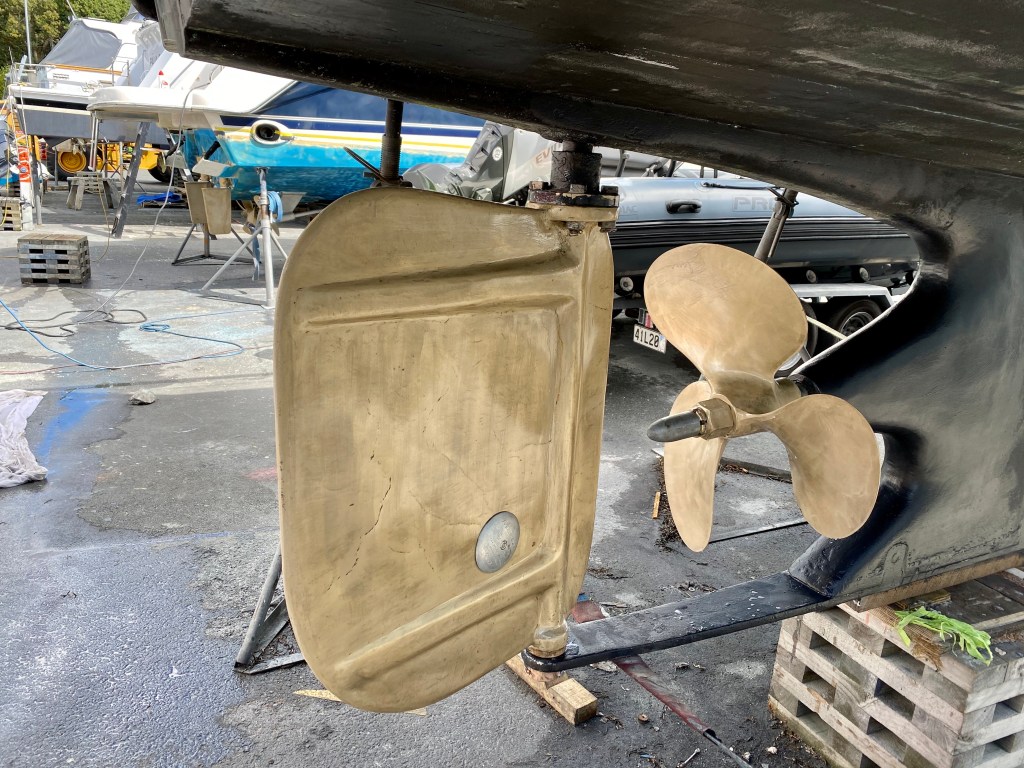
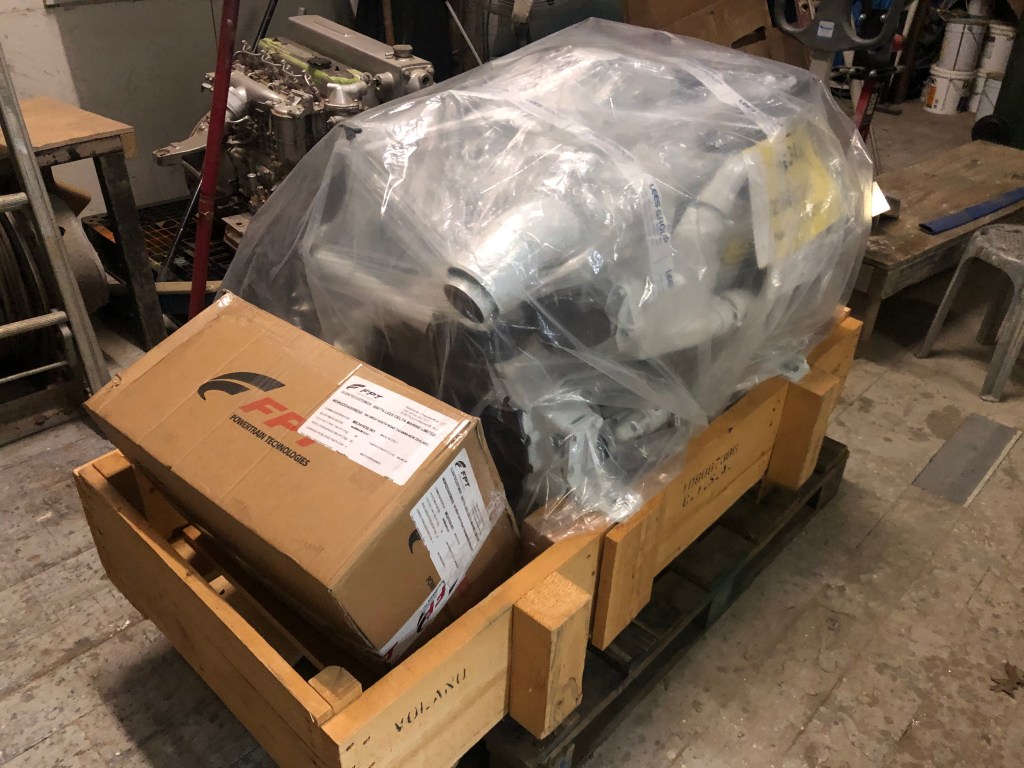
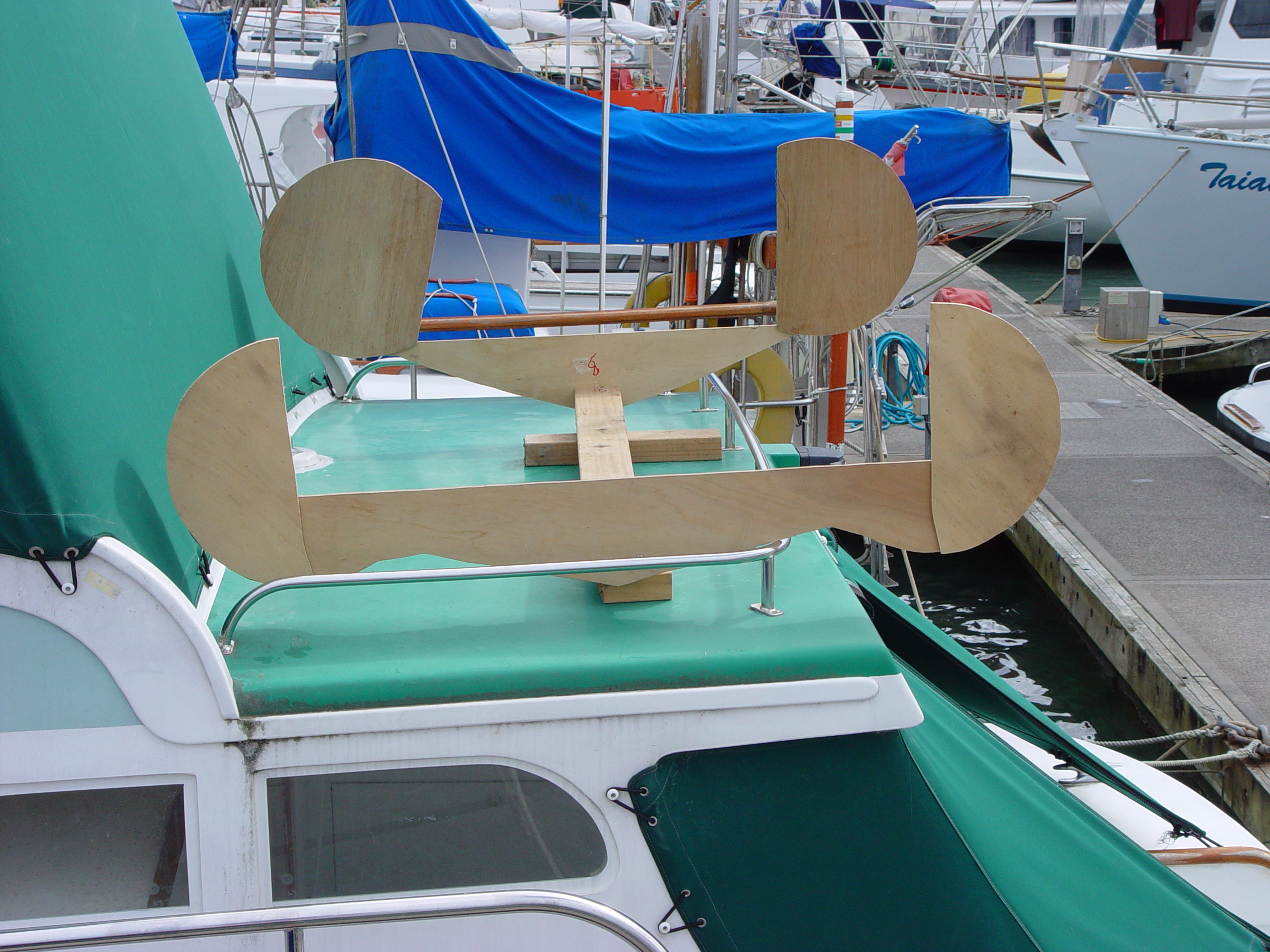
The original central rudder had been retained when the two Scripps engines were fitted. At the same time two wing rudders were installed in the propellor streams in order to give better low speed steering. The rudder shafts and glands were in a sad state and the only reason they had not sunk Tamaroa at her moorings was that the glands were about 5cm above water. The general design and condition of all this was such that I decided to remove the original rudder and fit two new rudders to suit the new installation. Propellor calculations had suggested the original propellers were too small and spinning rather too fast for the Nissan engines. After much searching I decided to replace the original gear boxes with a pair of ZF which gave me a deeper reduction and allowed the use of larger propellers.
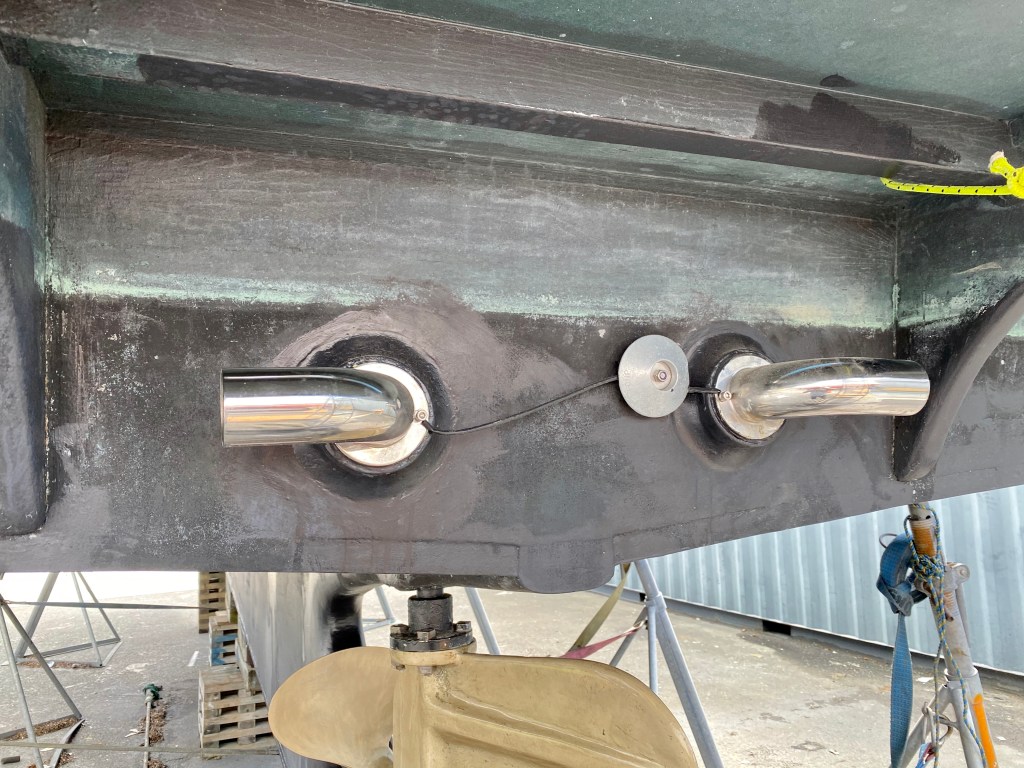
The evidence of the transom was that when Tamaroa had been first built the exhaust discharged through the transom on the port side. There was also evidence of a smaller exhaust along side the main exhaust suggesting she may have been fitted with a small auxiliary ‘popper’ engine of some kind. The original exhaust system was discarded when the two Scripps engines were installed. Instead each engine was equipped with its own ‘North Sea’ exhaust which discharged on both sides of the vessel at the water line. These employed large thin-walled bronze tubes fitted into the hull. I did not like these as they were old, had screw threads for securing nuts cut into them and most importantly, they had no seacocks.
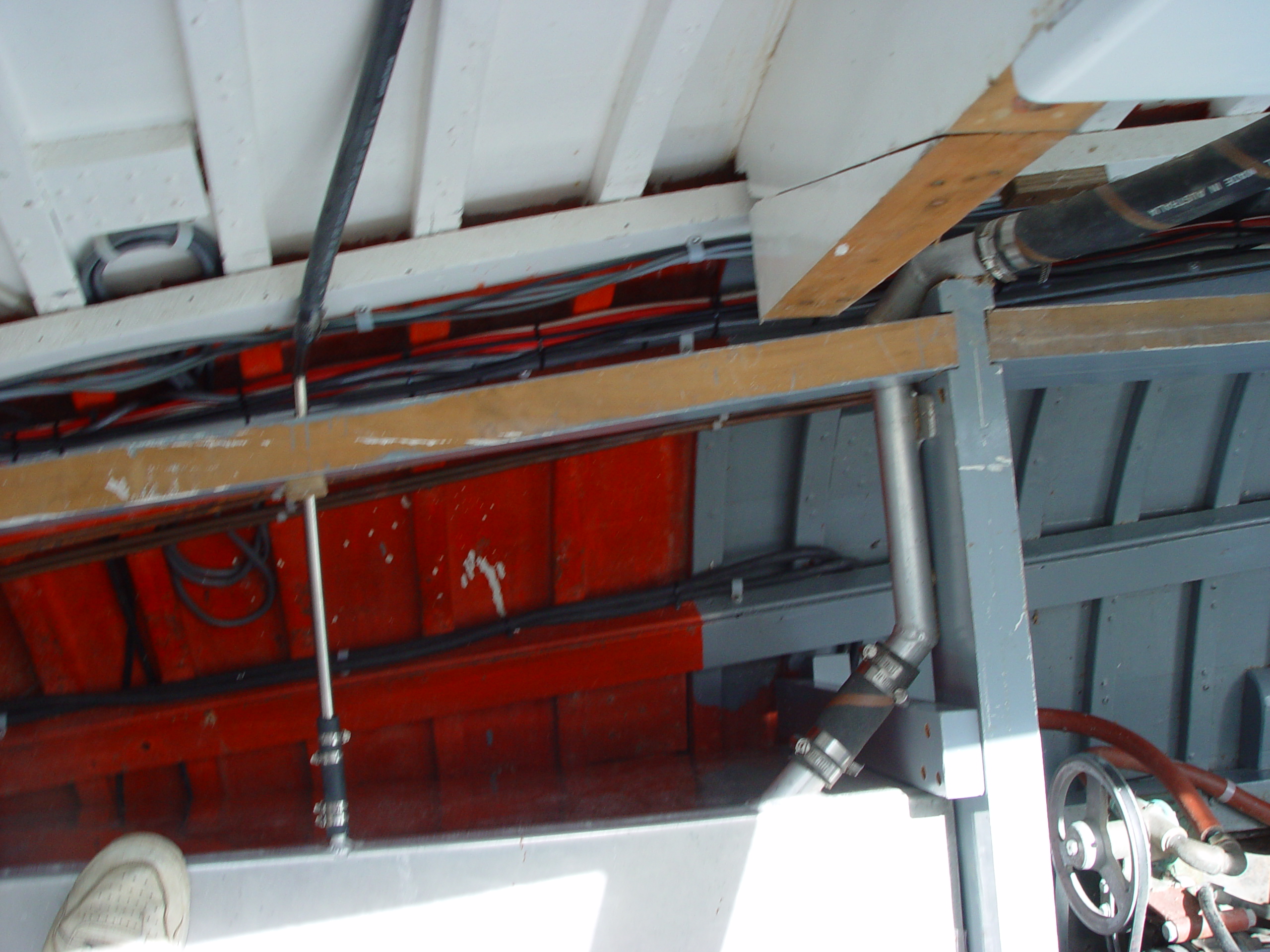
I removed these and blocked one of the two holes on each side. Too the remaining hole I fitted a large bronze skin fitting with a gate valve for use as a sea cock. The two Nissans had been fitted with wet exhausts, the risers for which were just underneath the cabin sole which had become charred by radiated heat. Accordingly I had made for each engine a water cooled riser which discharged into a large rubber silencer.
The Scripps installation had required two additional outboard engine bearers which I thought were rather short. I had these extended to pick up the major framing bulkheads ahead and aft of the engines. The original water tanks were four, by now, battered 30 gallon hot water cylinders mounted in cradles underneath the wheelhouse. I found drinking warm, slightly green, tainted water to be unpalatable so I replaced these with stainless steel tanks to each side of the aft cabin. At the same time I had two aluminium 520 litre fuel tanks constructed which sat in the engine space on top of the forward end of the engine bearers.
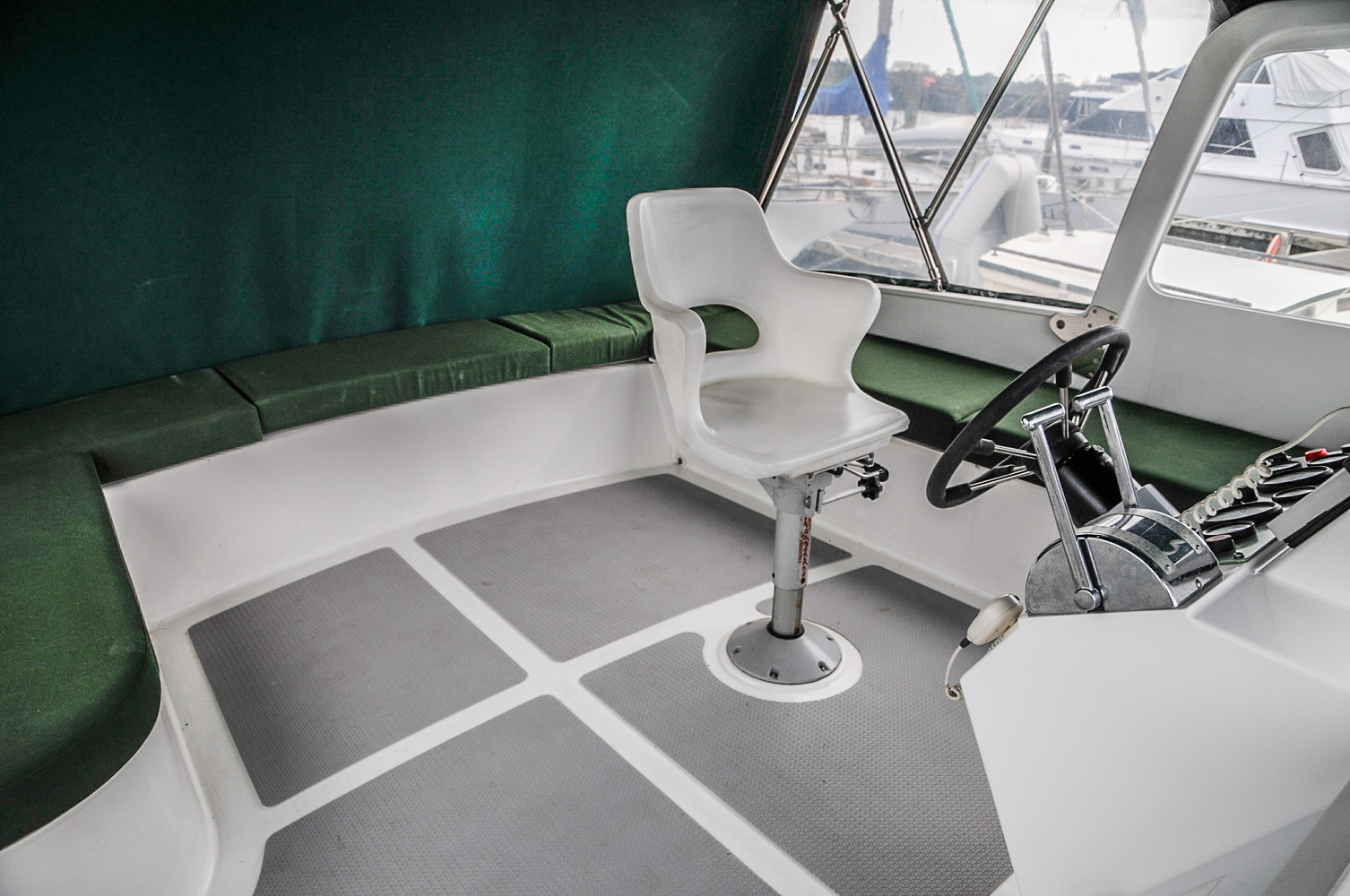
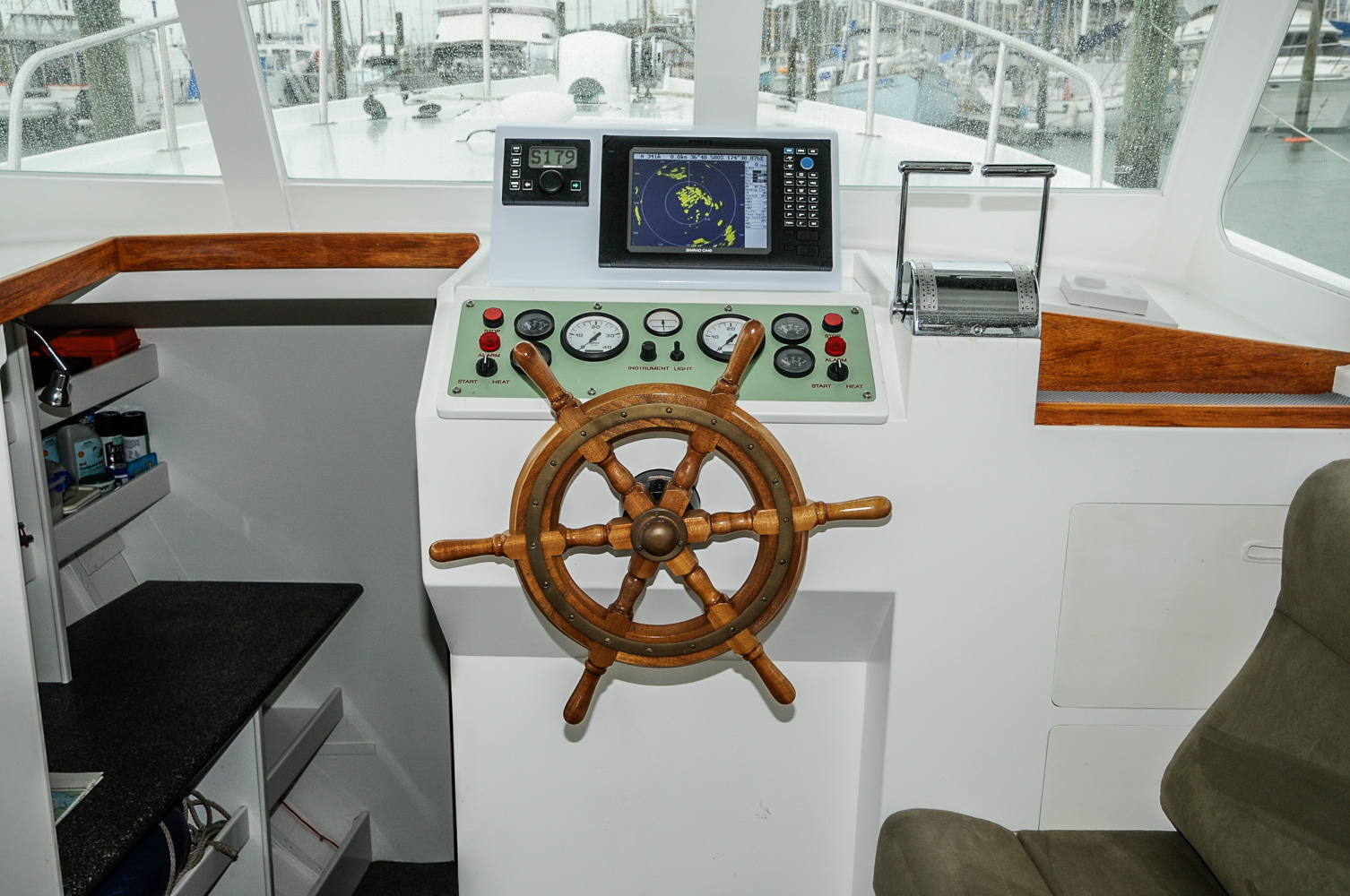
Before Allan Brown had bought Tamaroa an attempt had been made to install an external steering and control station on top of the aft cabin. This used cable steering and holes were bored through whatever part of the vessel got in the way of the cable’s passage. Allan Brown had replaced this with hydraulic steering with a rather crude linkage at the rudders. A windscreen and dodger had also been fitted. I totally rebuilt all of this during the refit. I also installed dual Simrad navigation, radar and plotter control stations.
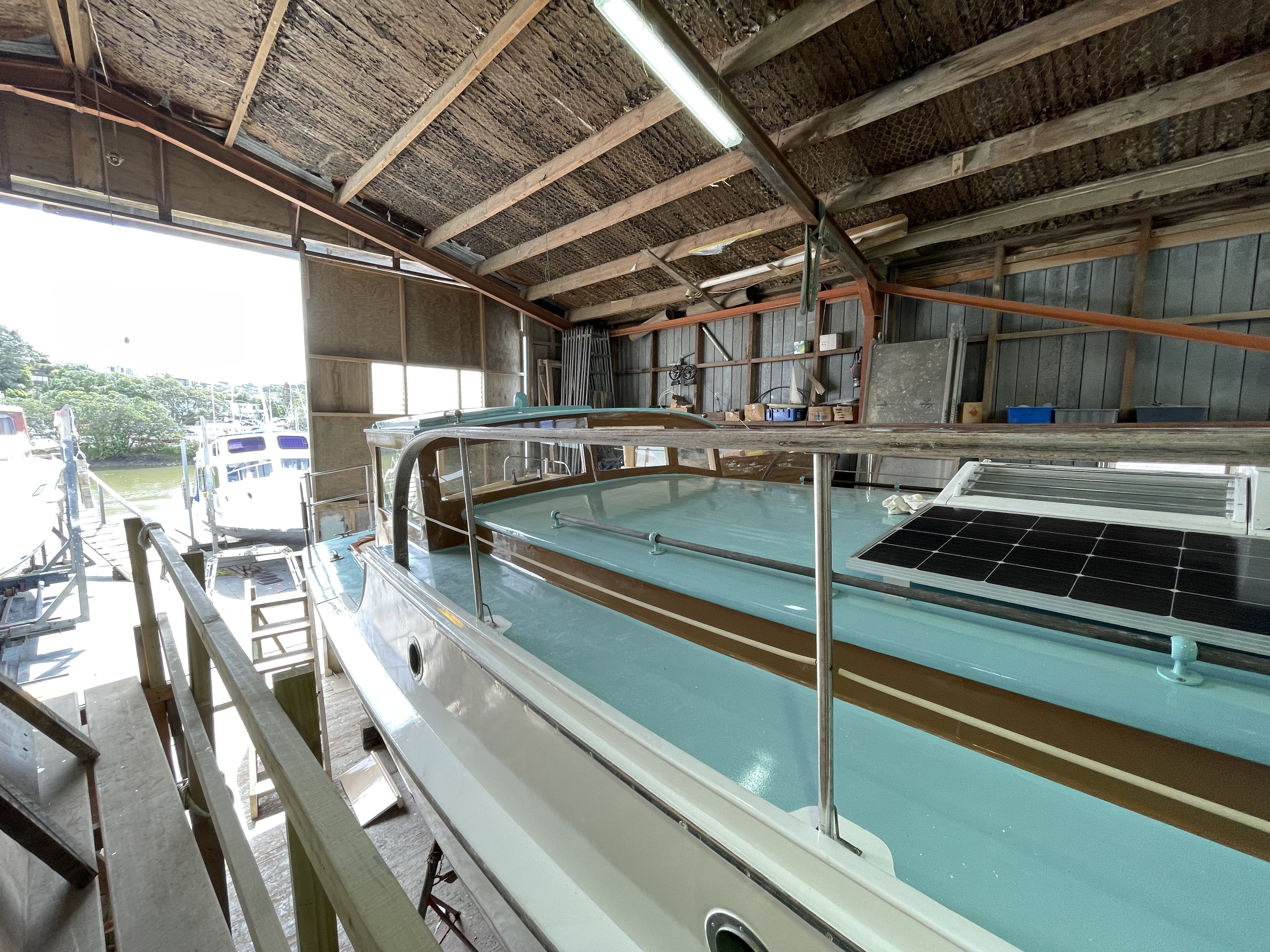
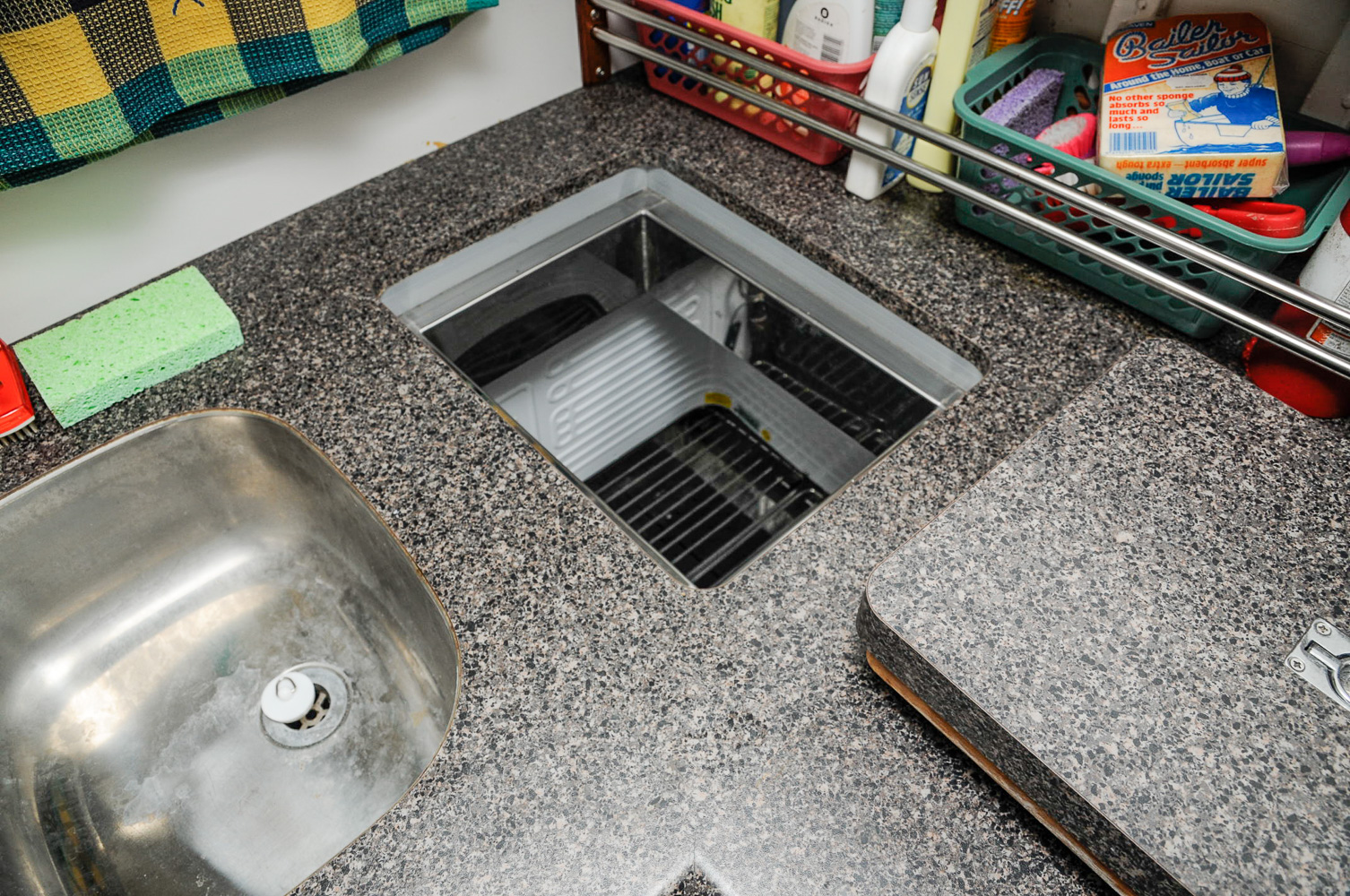
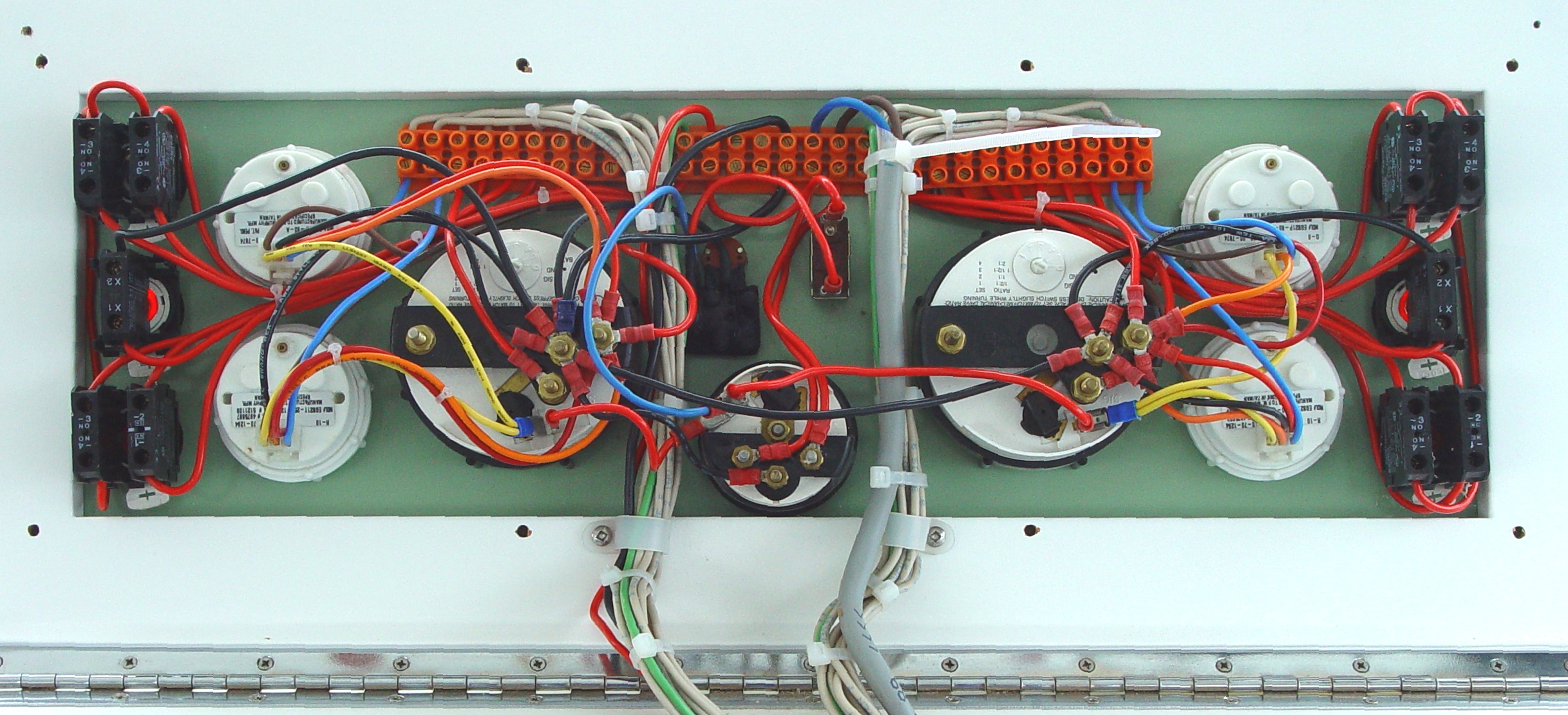
The refrigerated armchair was replaced with an electrically powered refrigerator and freezer. There was only one working alternator between the two engines and this was charging a very large lead-acid battery which tests showed was down to about 12% of its original storage capacity. With the increased electrical load had to totally rebuild the electrical system. I installed separate engine and house batteries charged by two alternators, one of which was of high capacity for the house battery, and installed two large solar panels on the roof of the cabin.
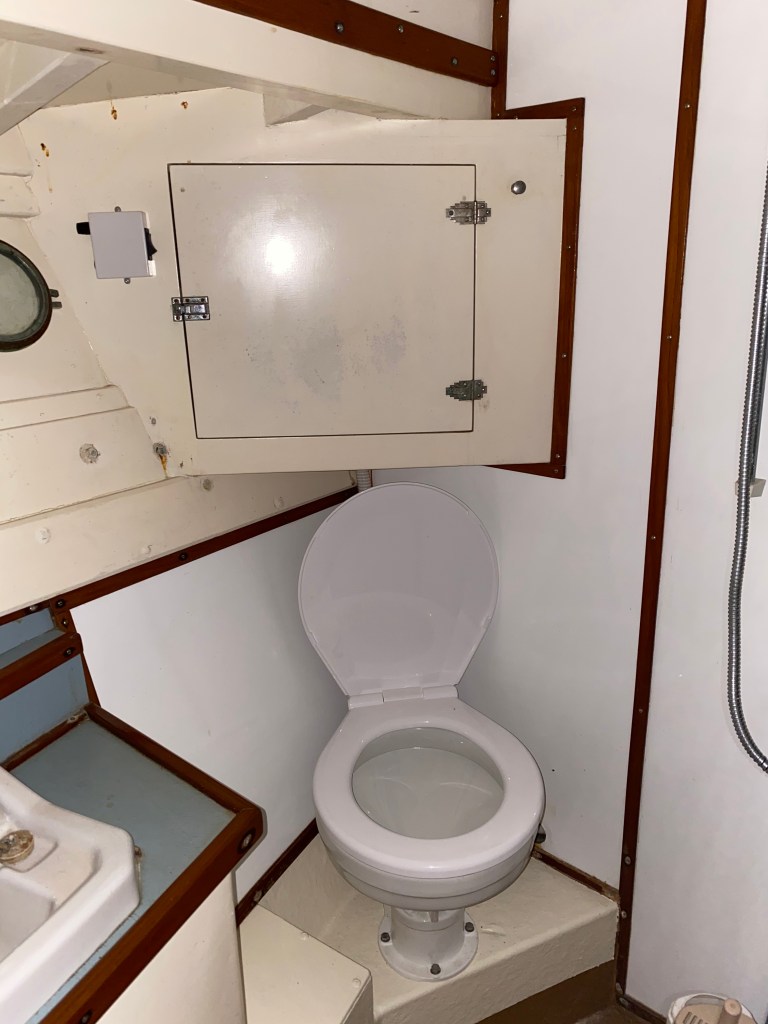
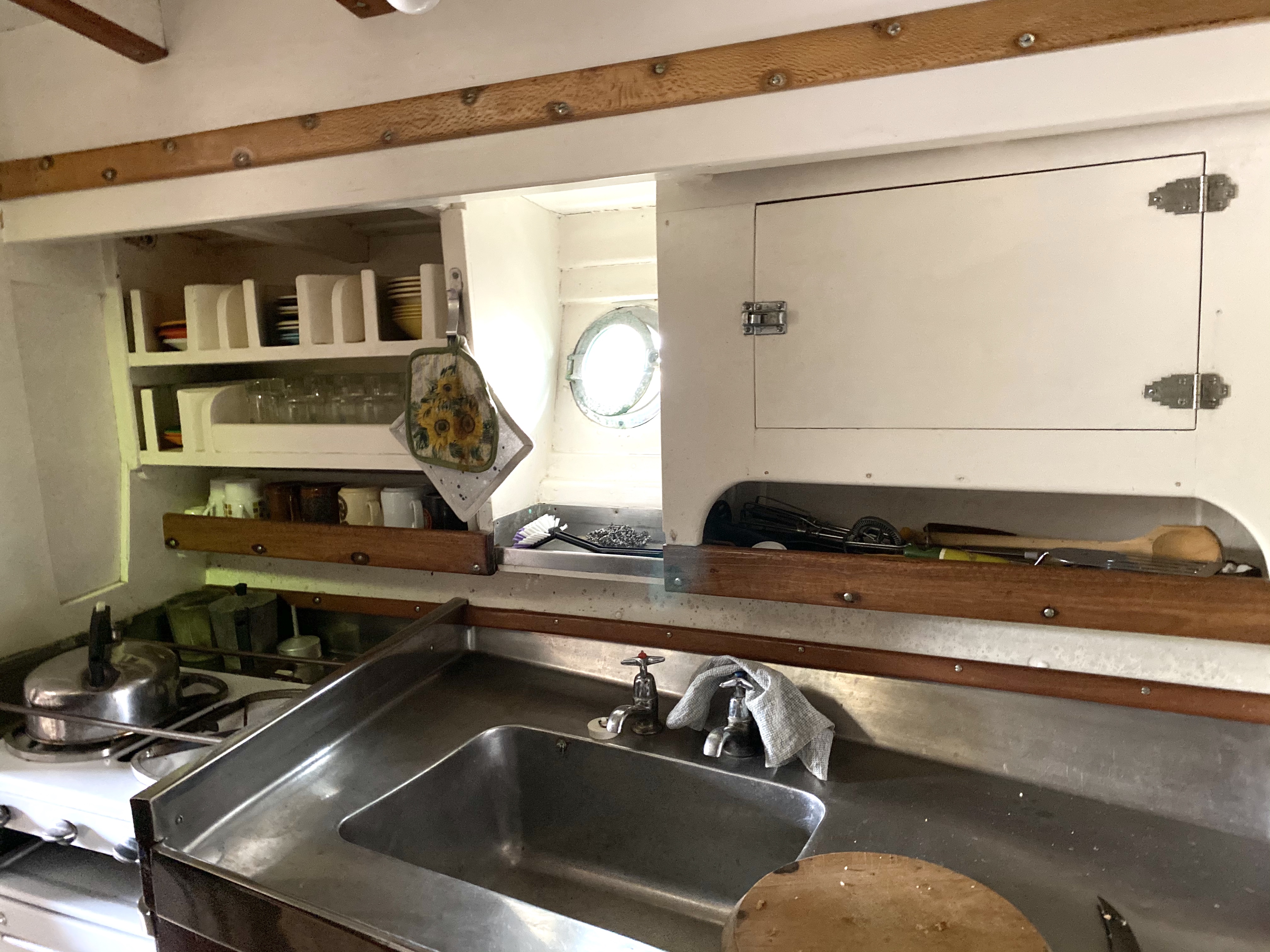
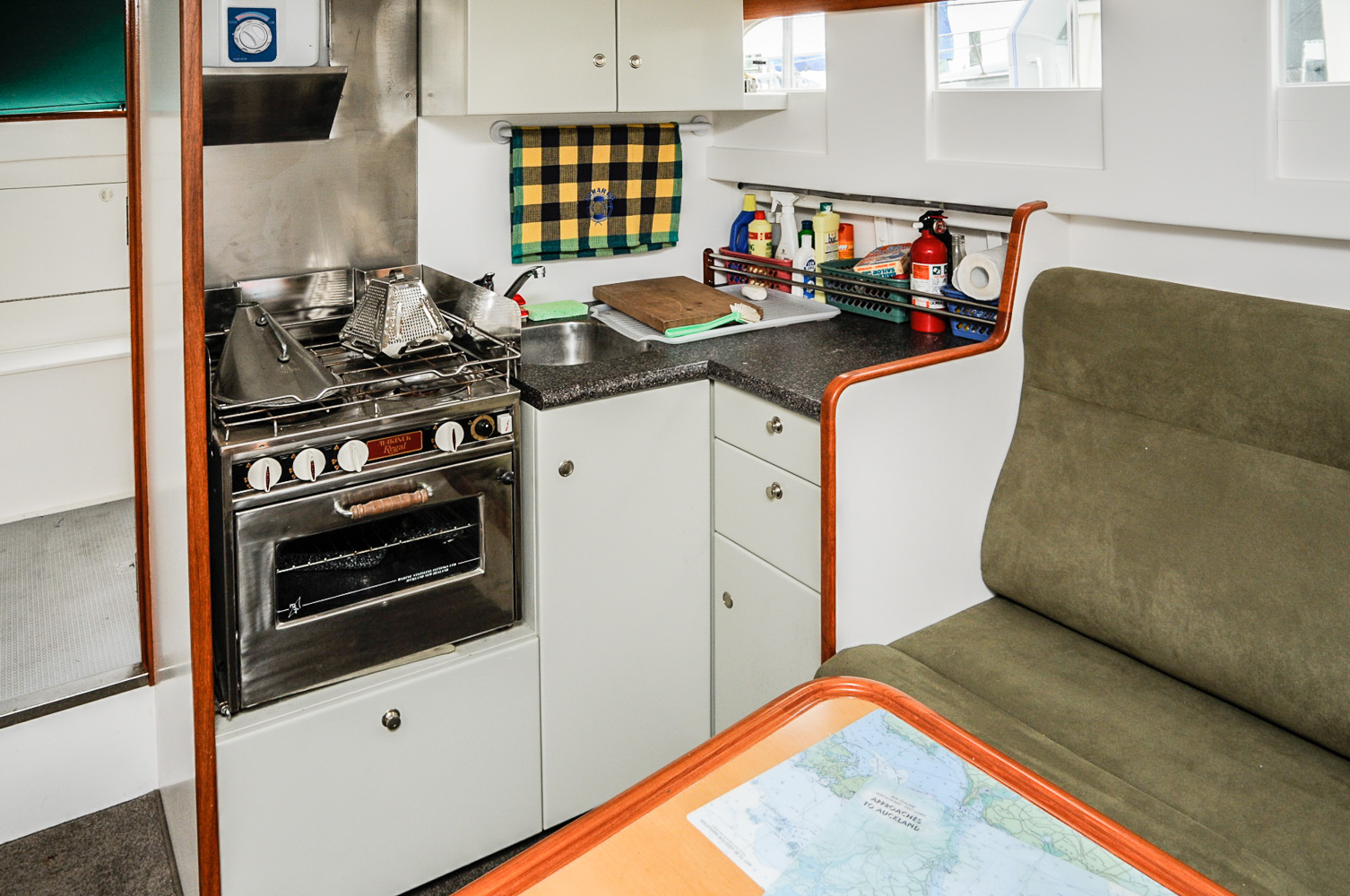
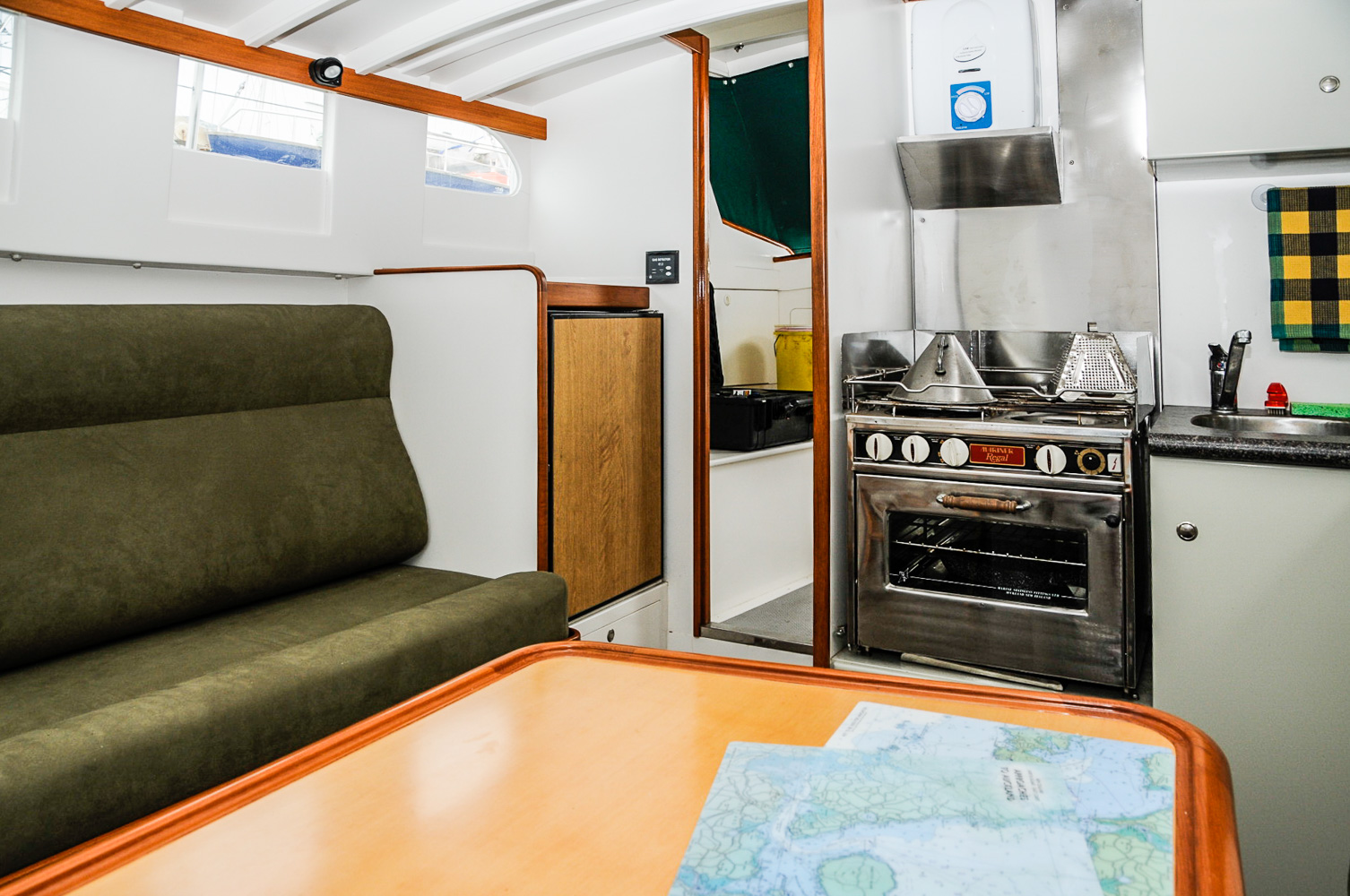
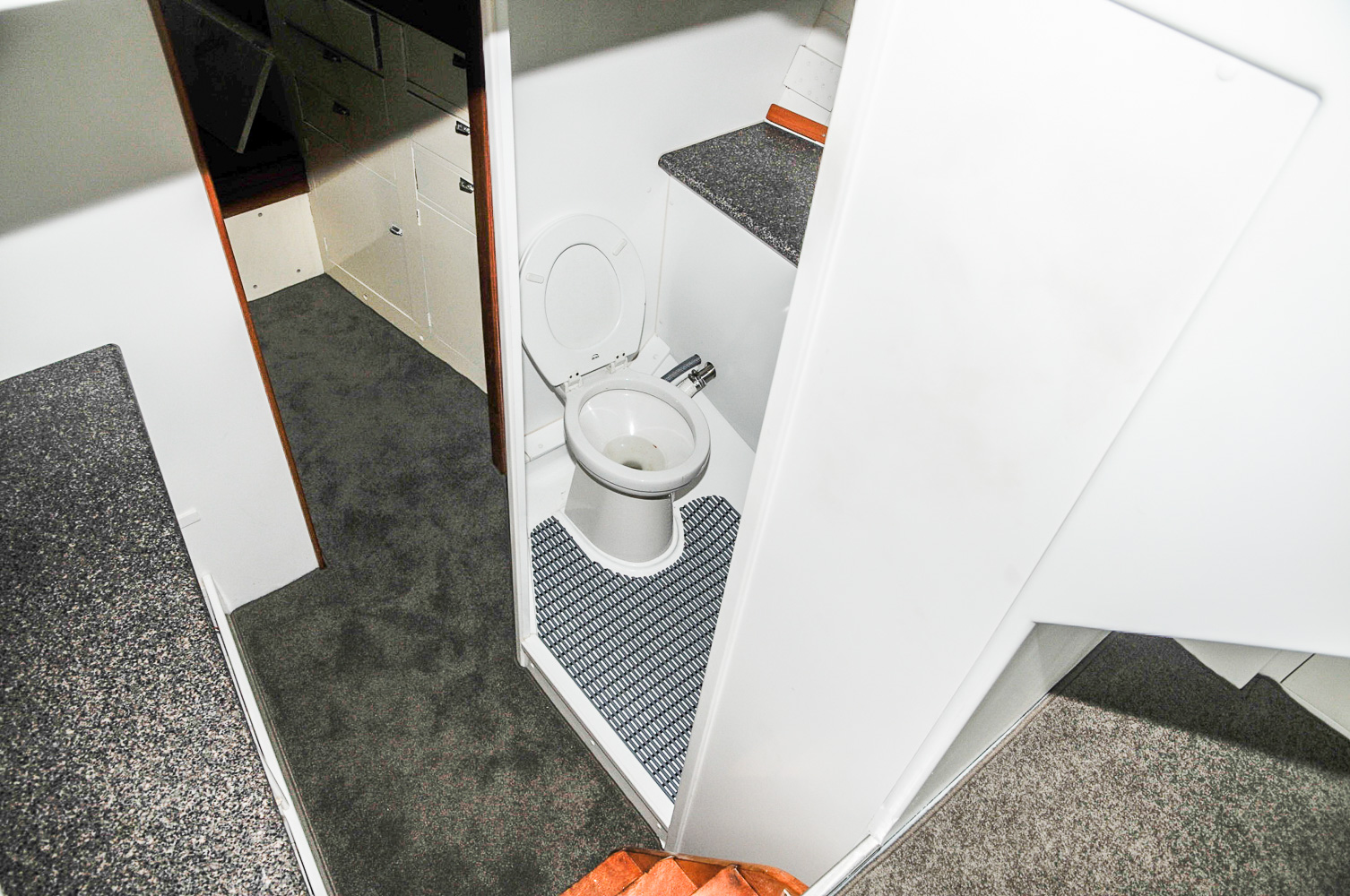
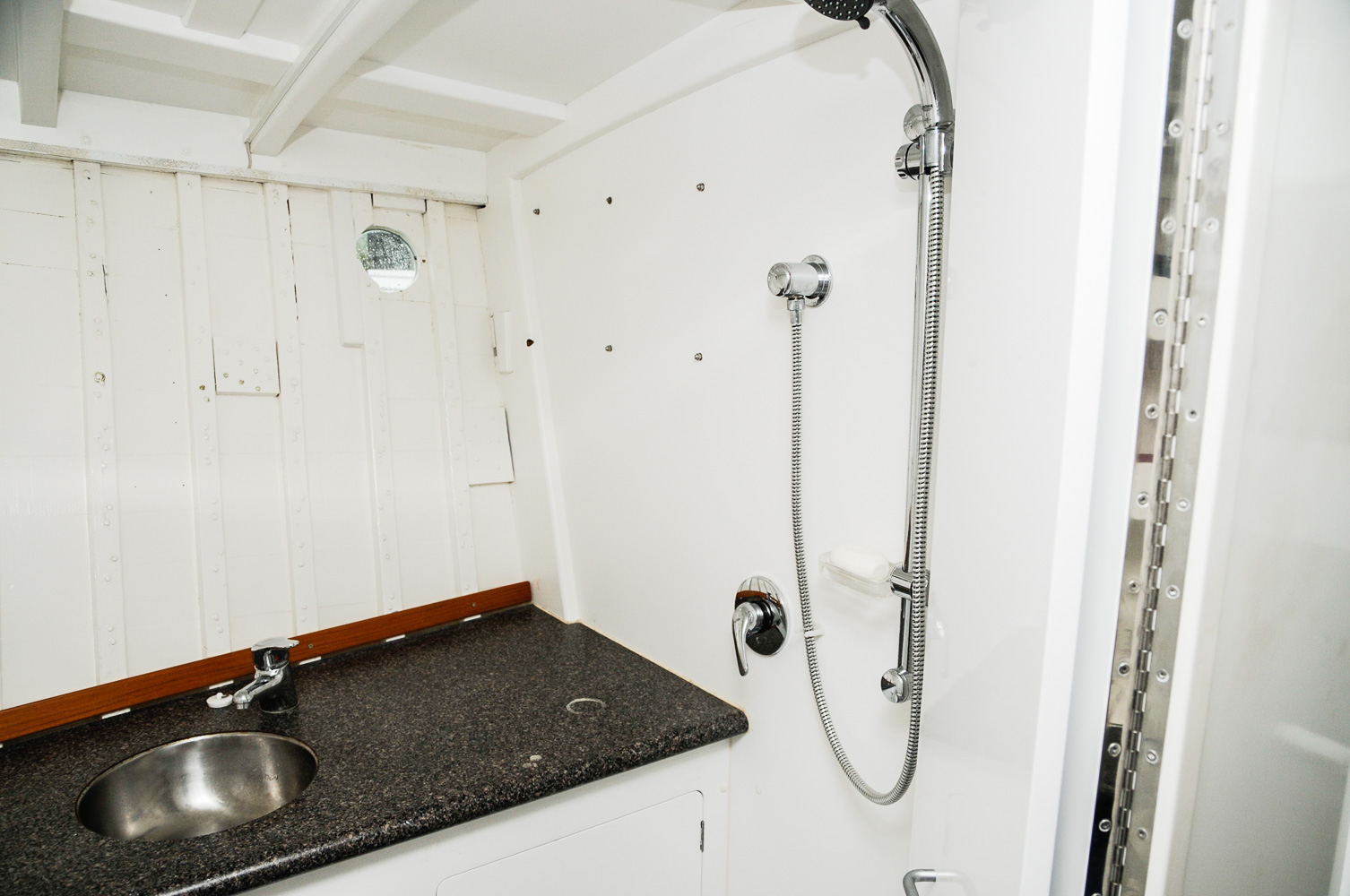
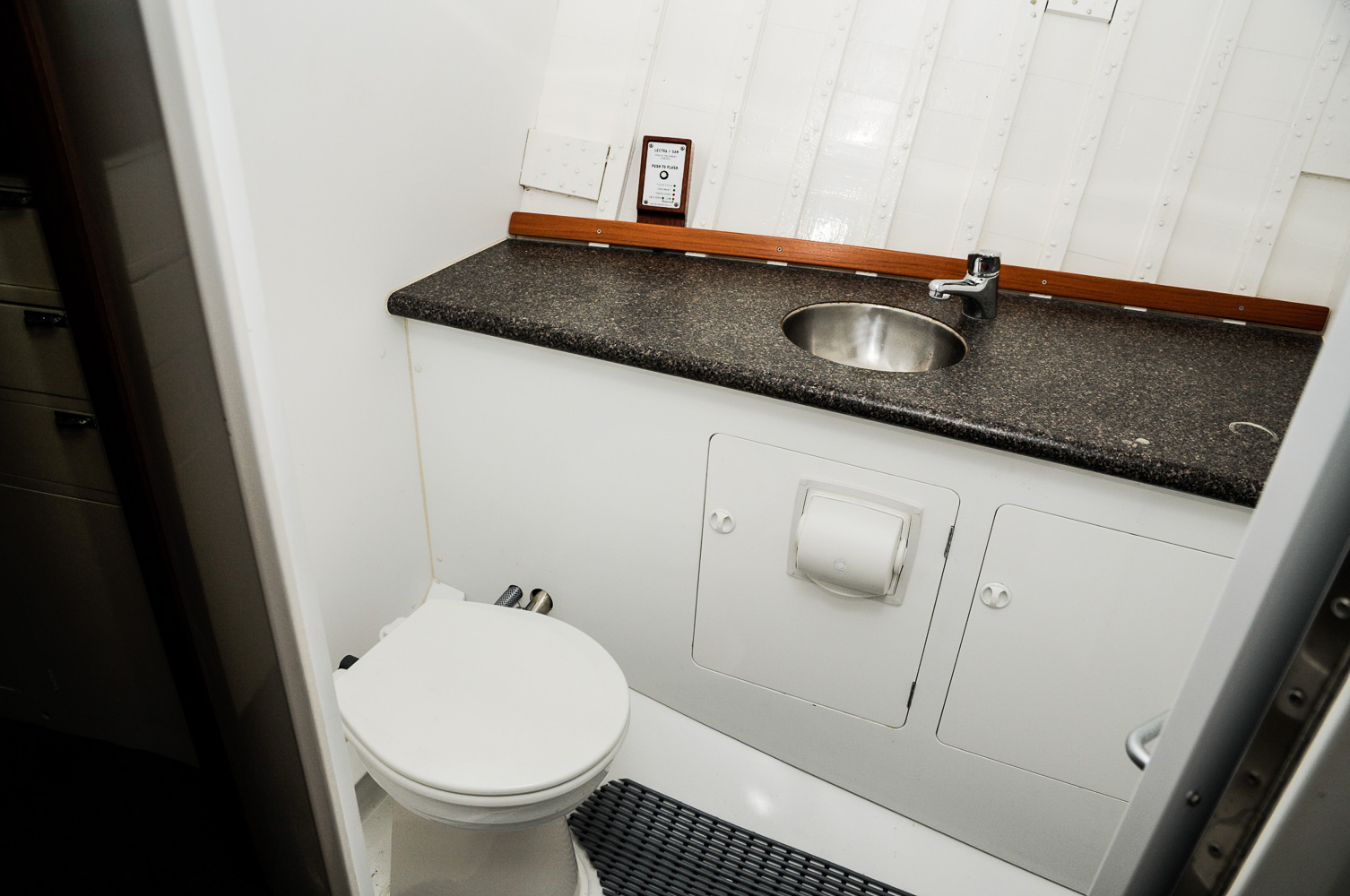
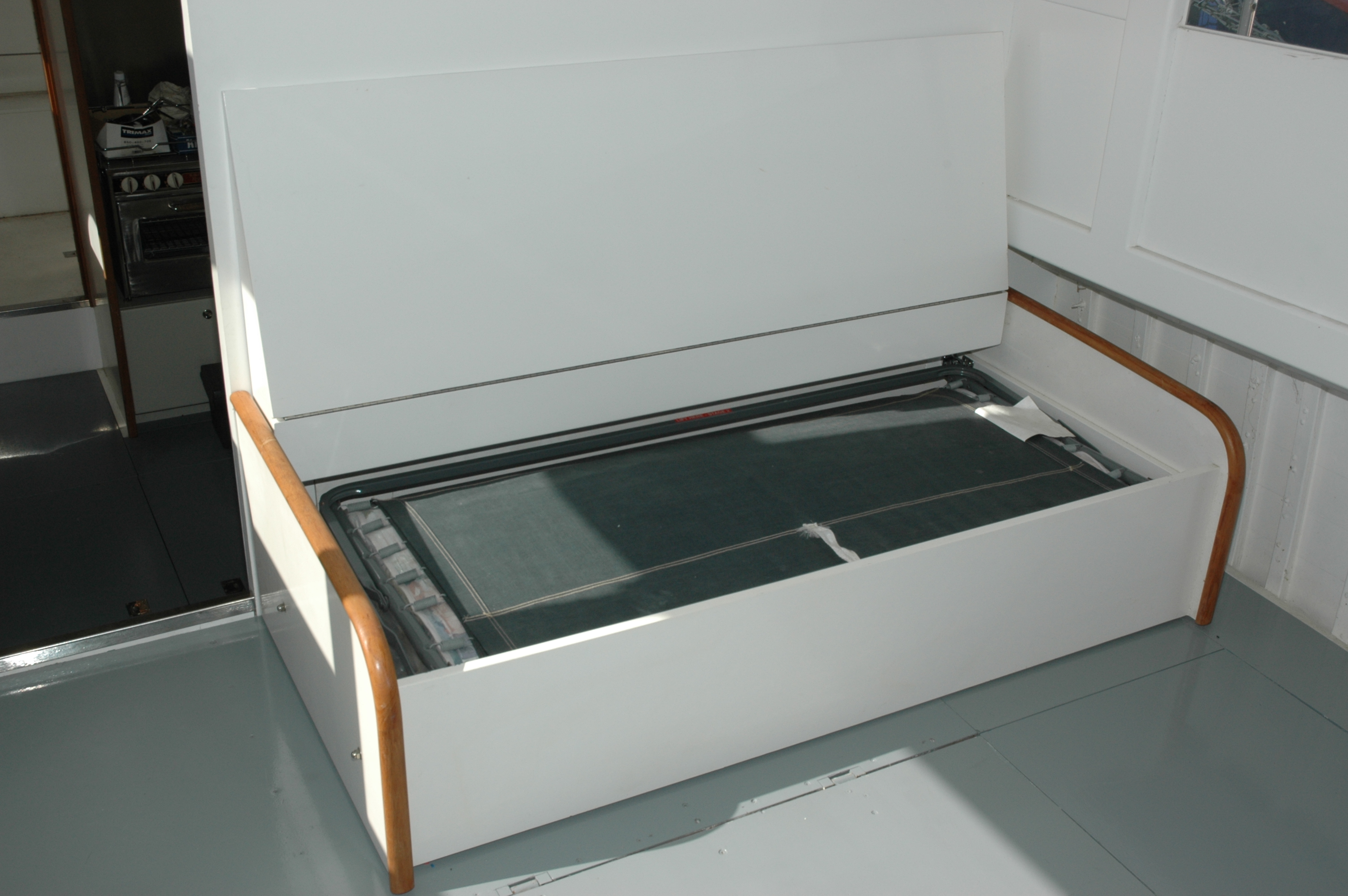
The galley was relocated from forward to the aft cabin. Two LPG cylinders were installed in a properly ventilated locker in the transom. A gas hot water heater was fitted to the aft cabin bulkhead and used to supply pressurised hot water to both the galley and toilet/shower area which now resides forward in the place where the galley had been.
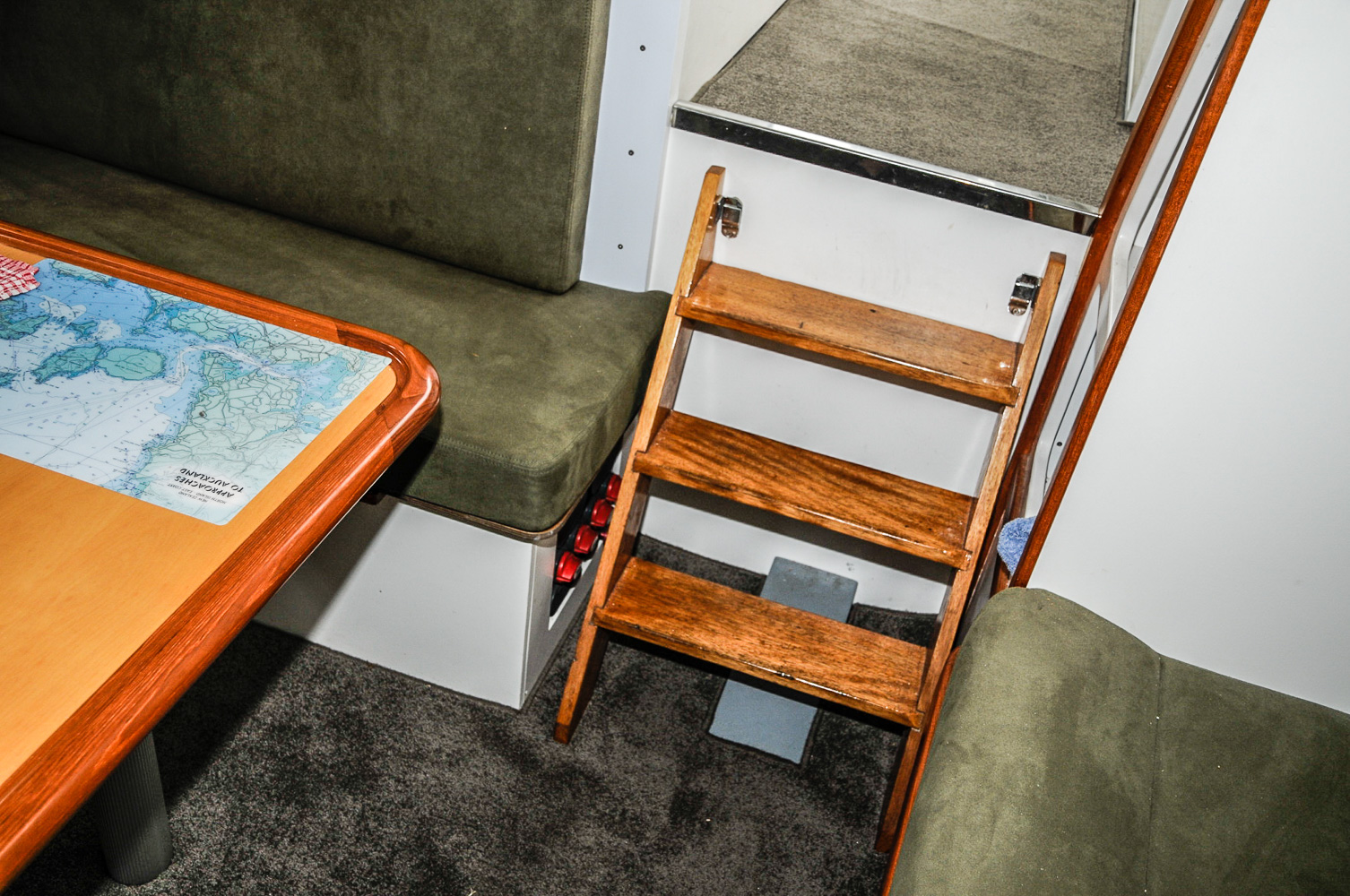
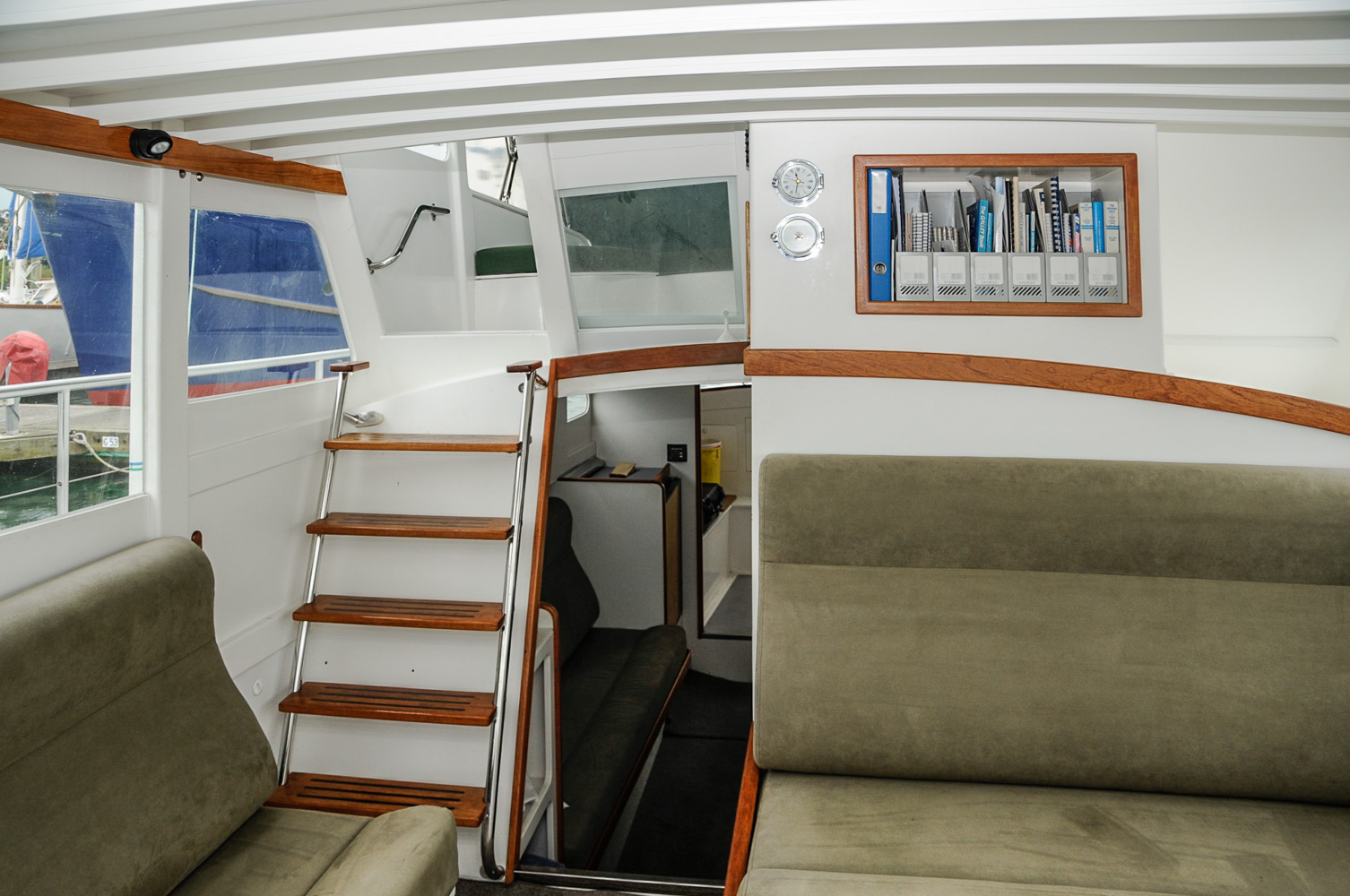
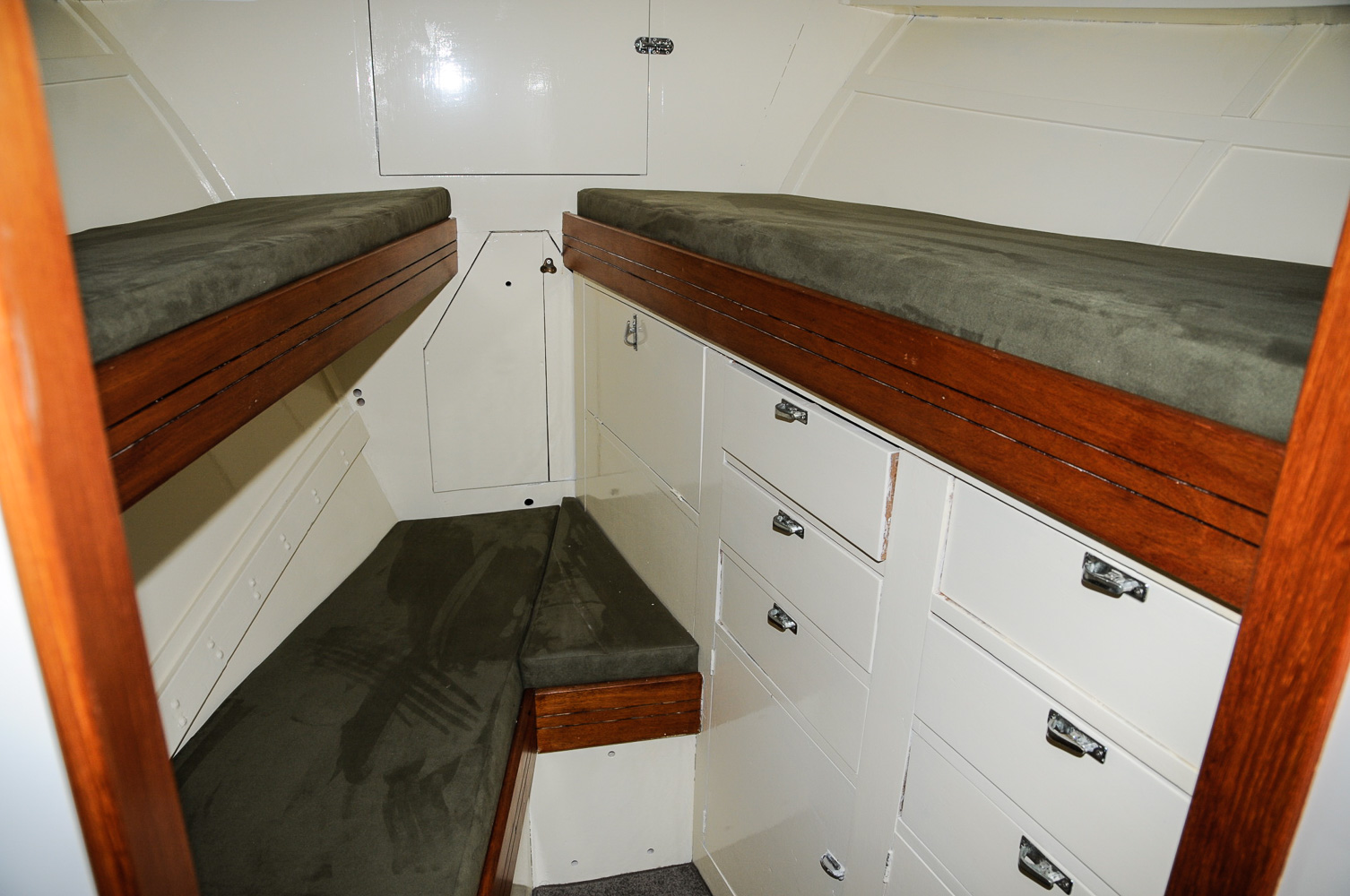
Apart from up in the bows, all of the furniture is new. It was all designed to be held in place by screws so that it could be removed without any cutting and hacking. I had most of this work done by freelance boat builders.
The electrical side of the refit is a story on its own. There are literally kilometers of wiring throughout the hull and concealing this was a major task. I probably spent as much time on this as I did on everything else combined. Be warned, if you want mod cons in an old boat, there is a downside”.
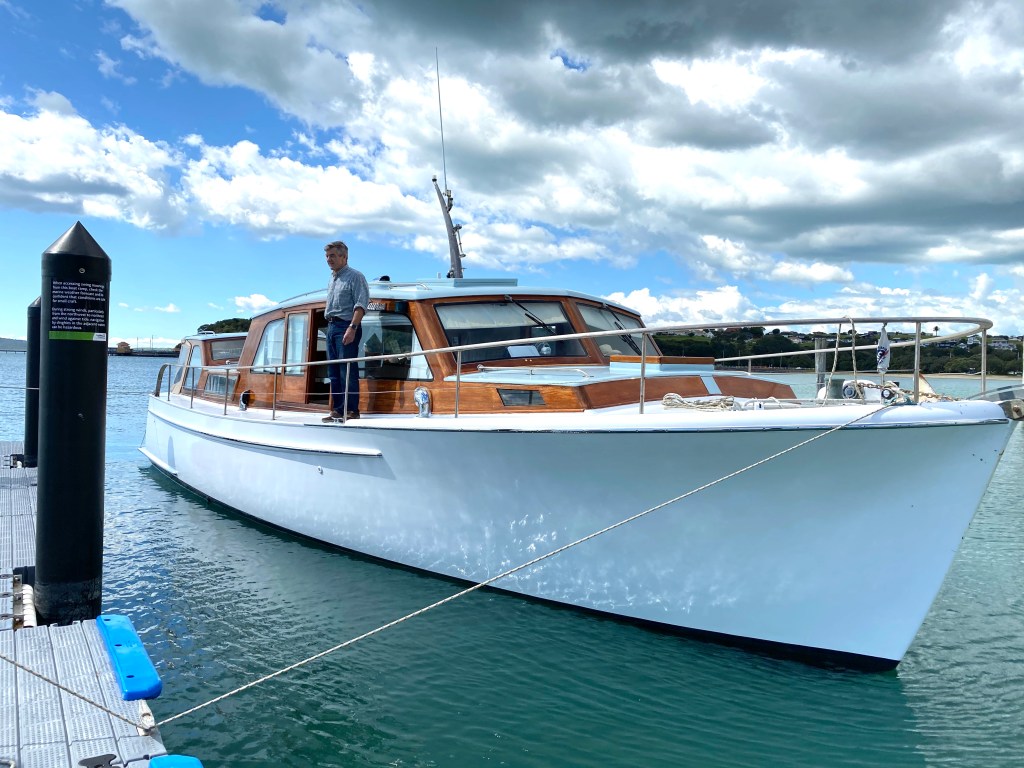
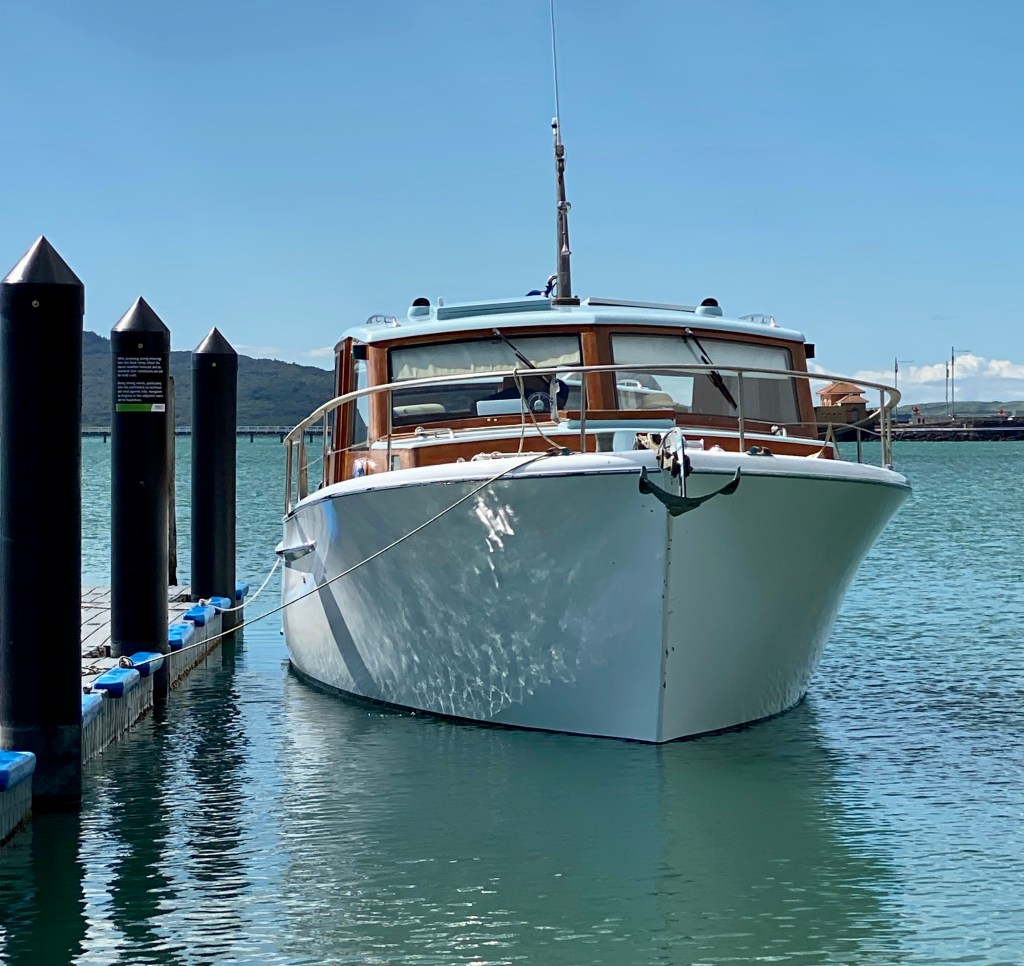
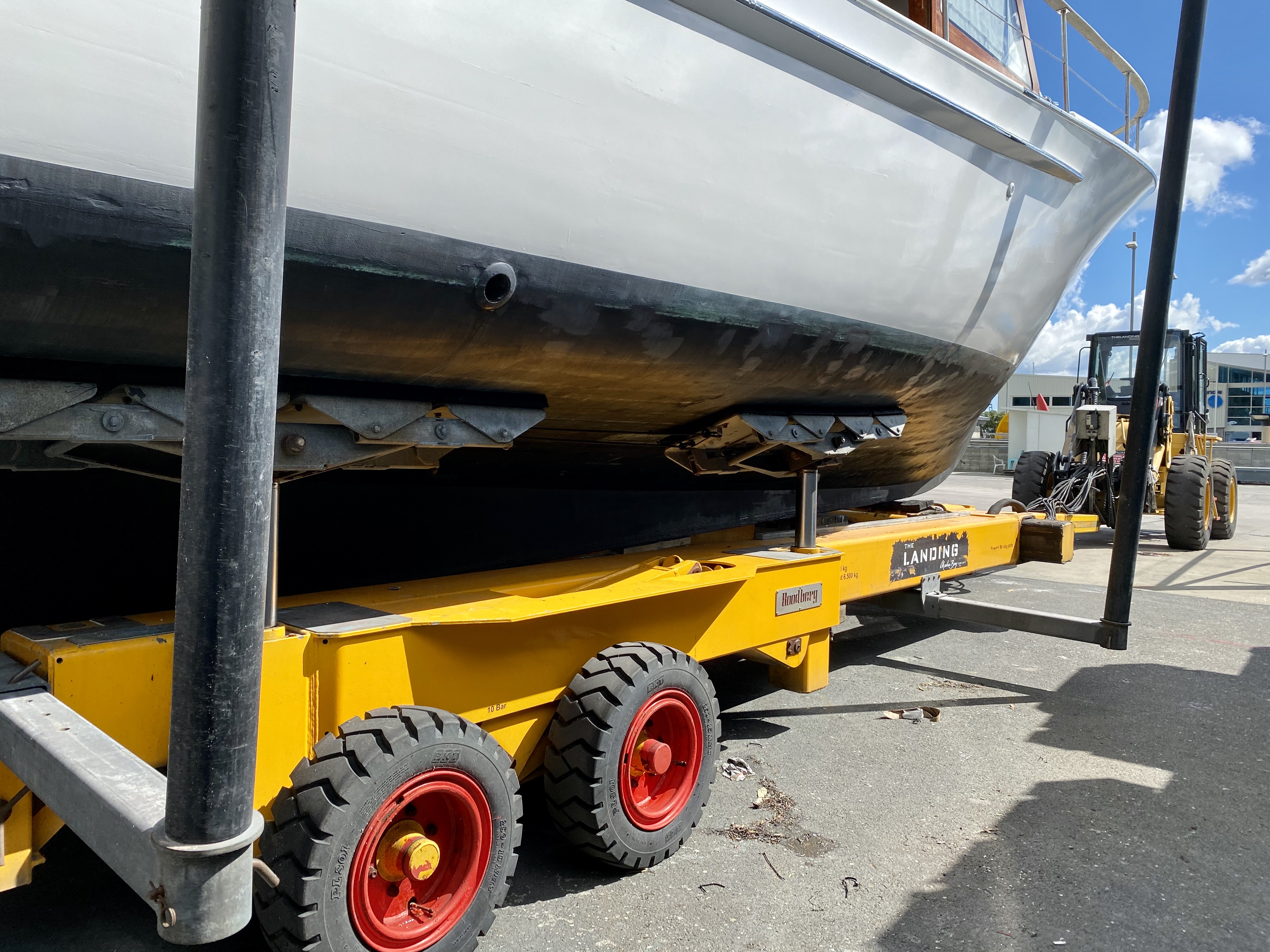
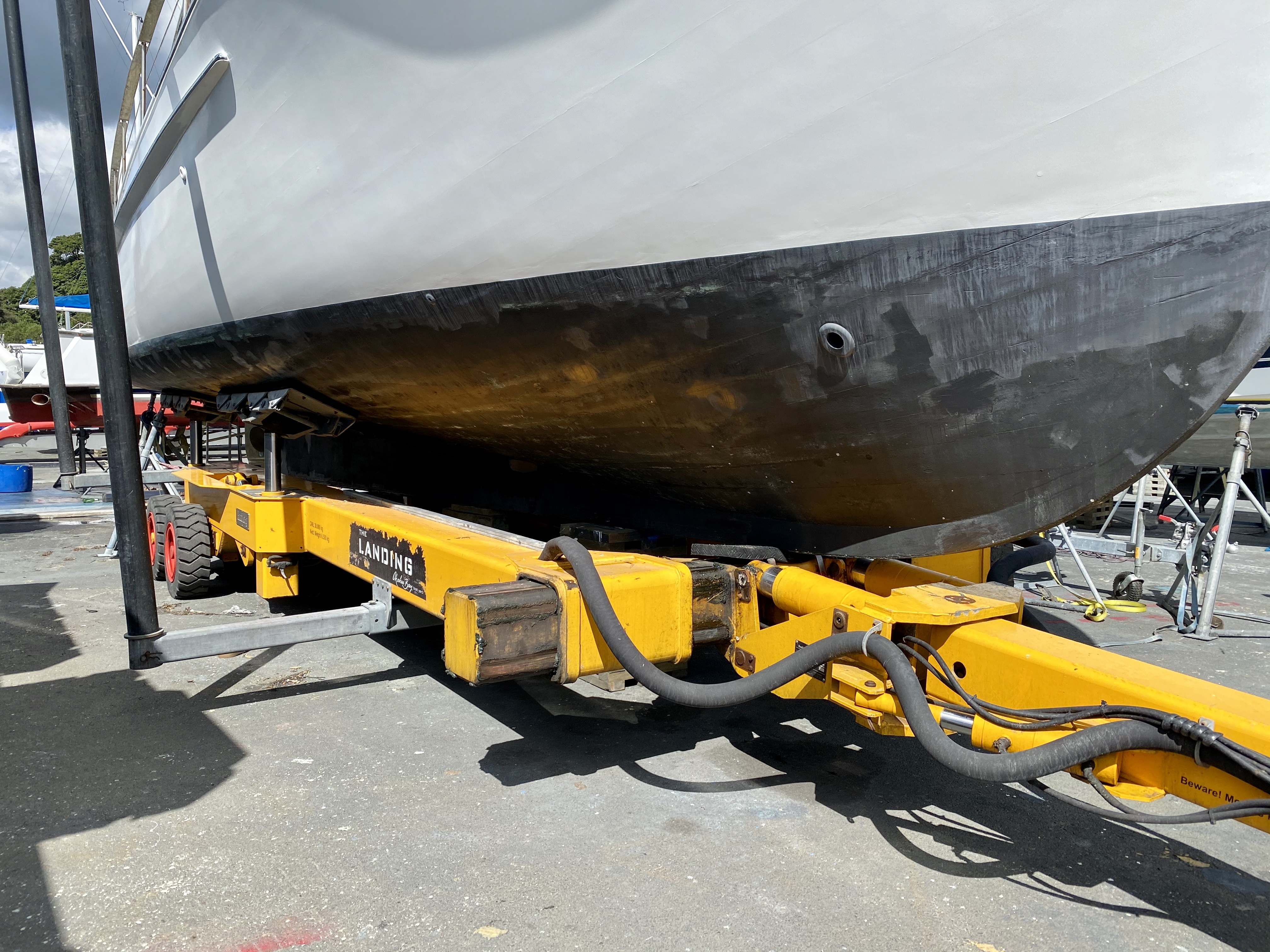
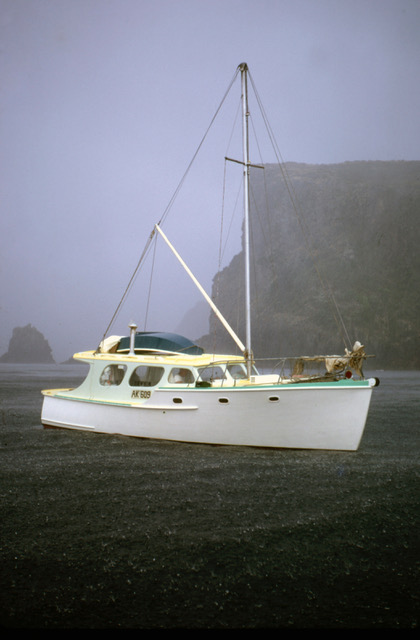
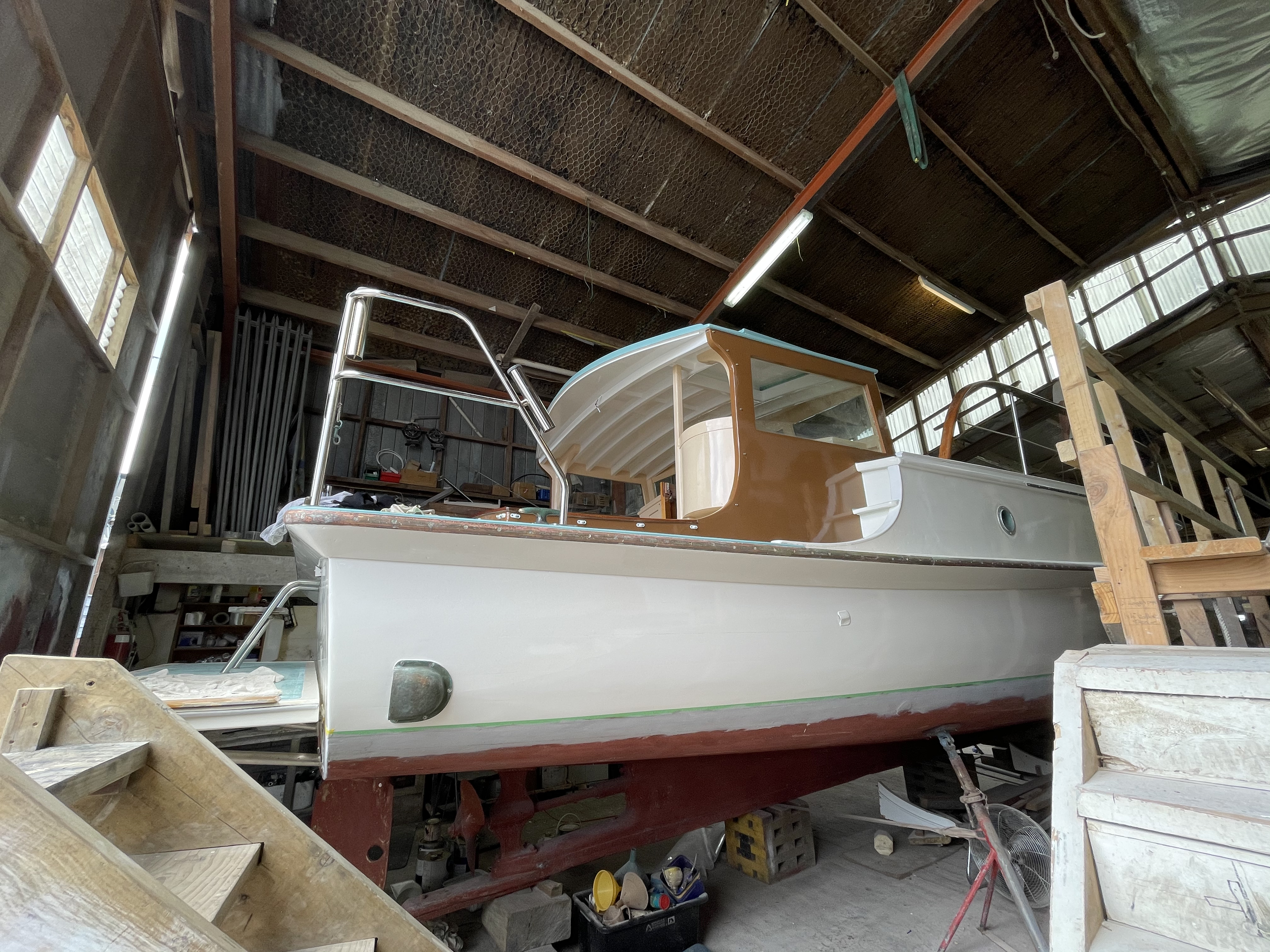
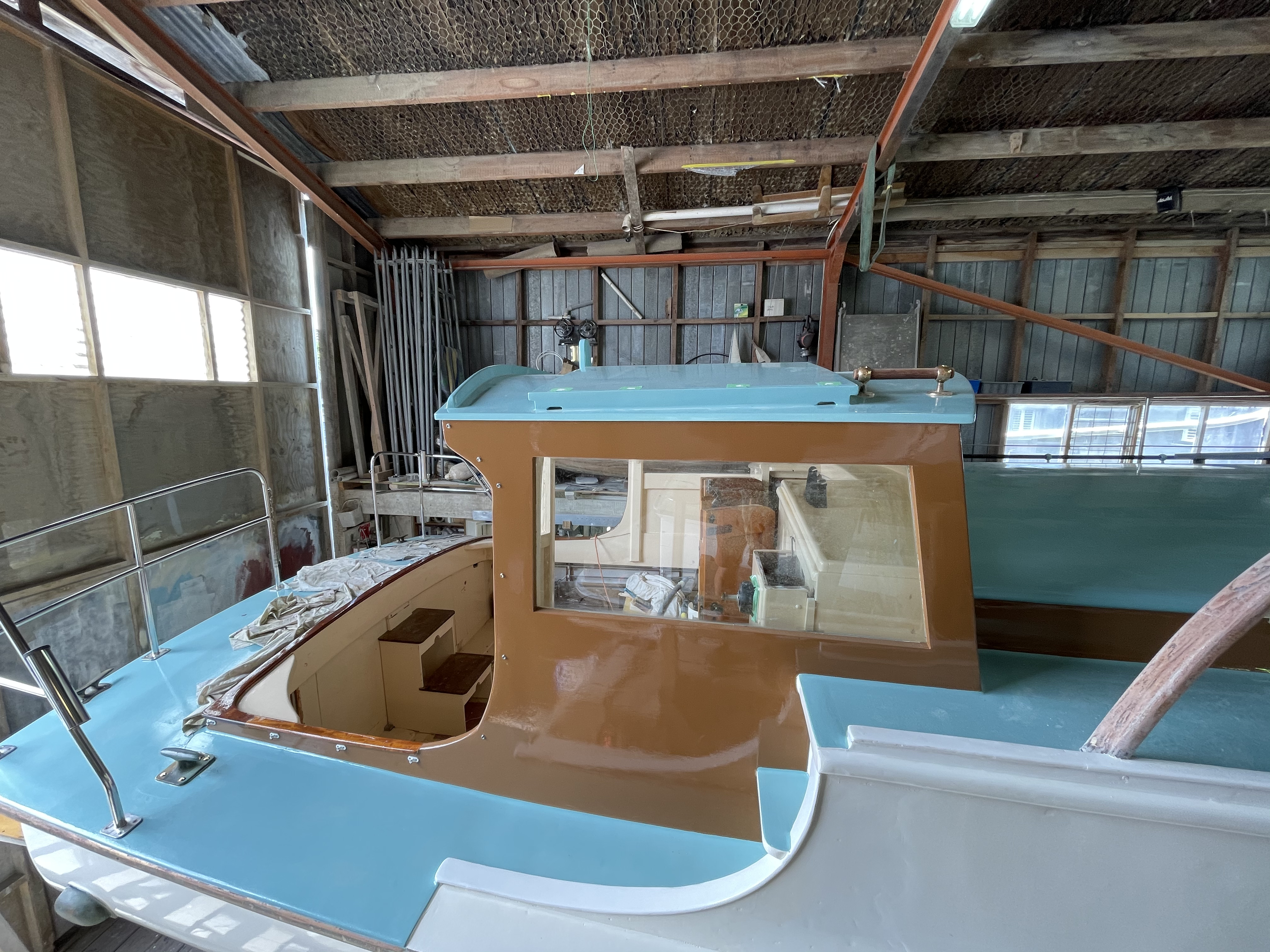
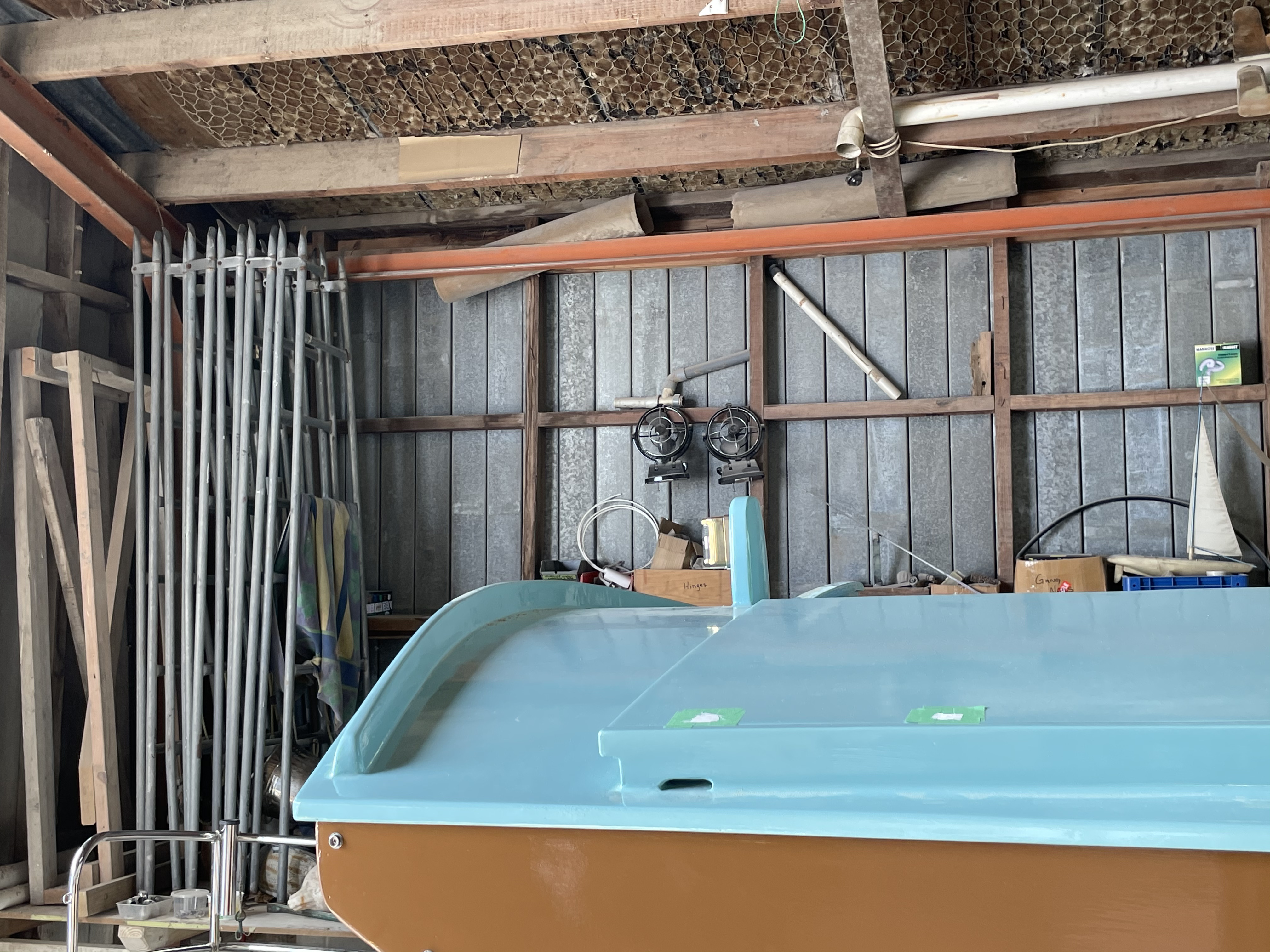
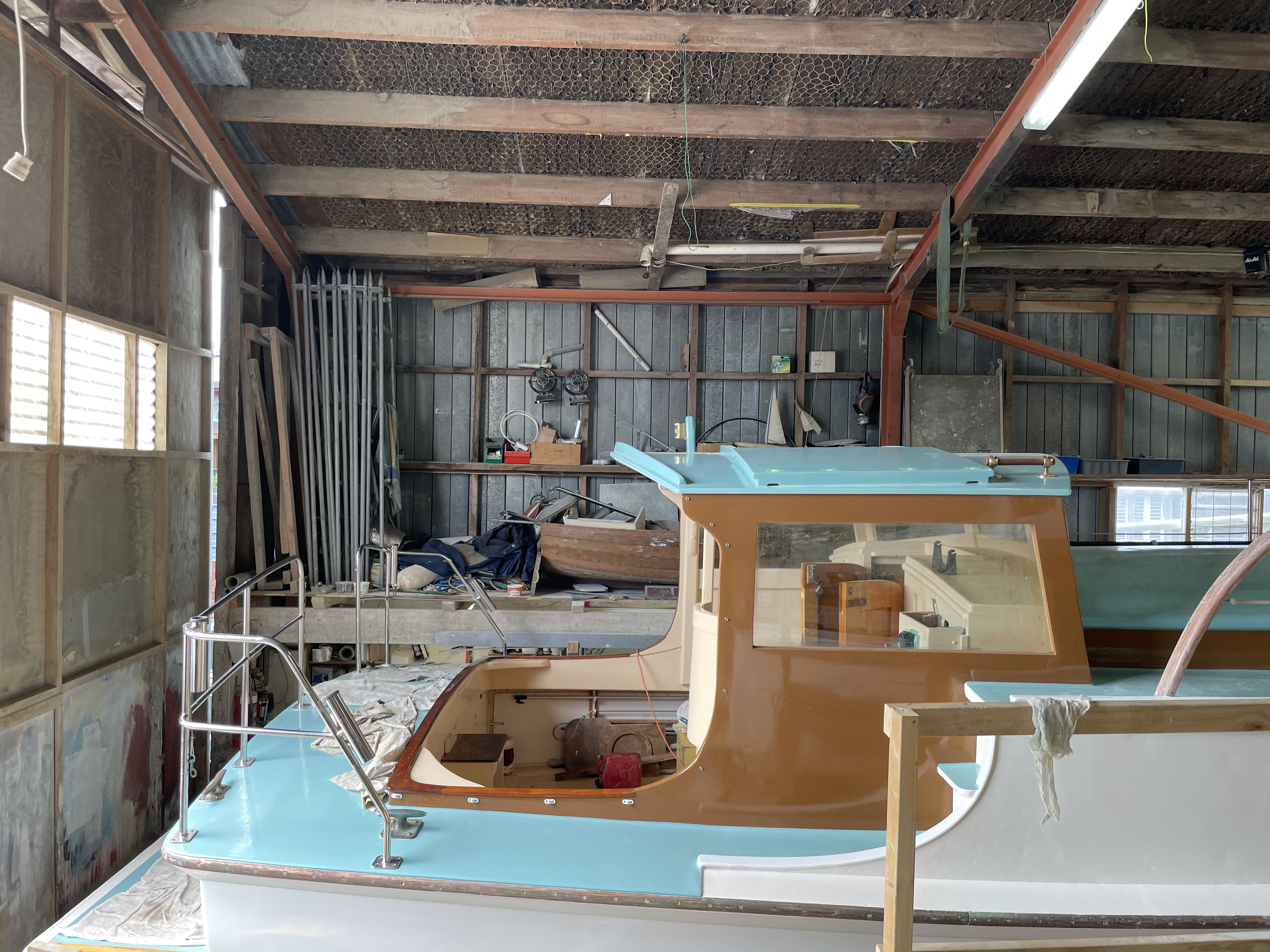
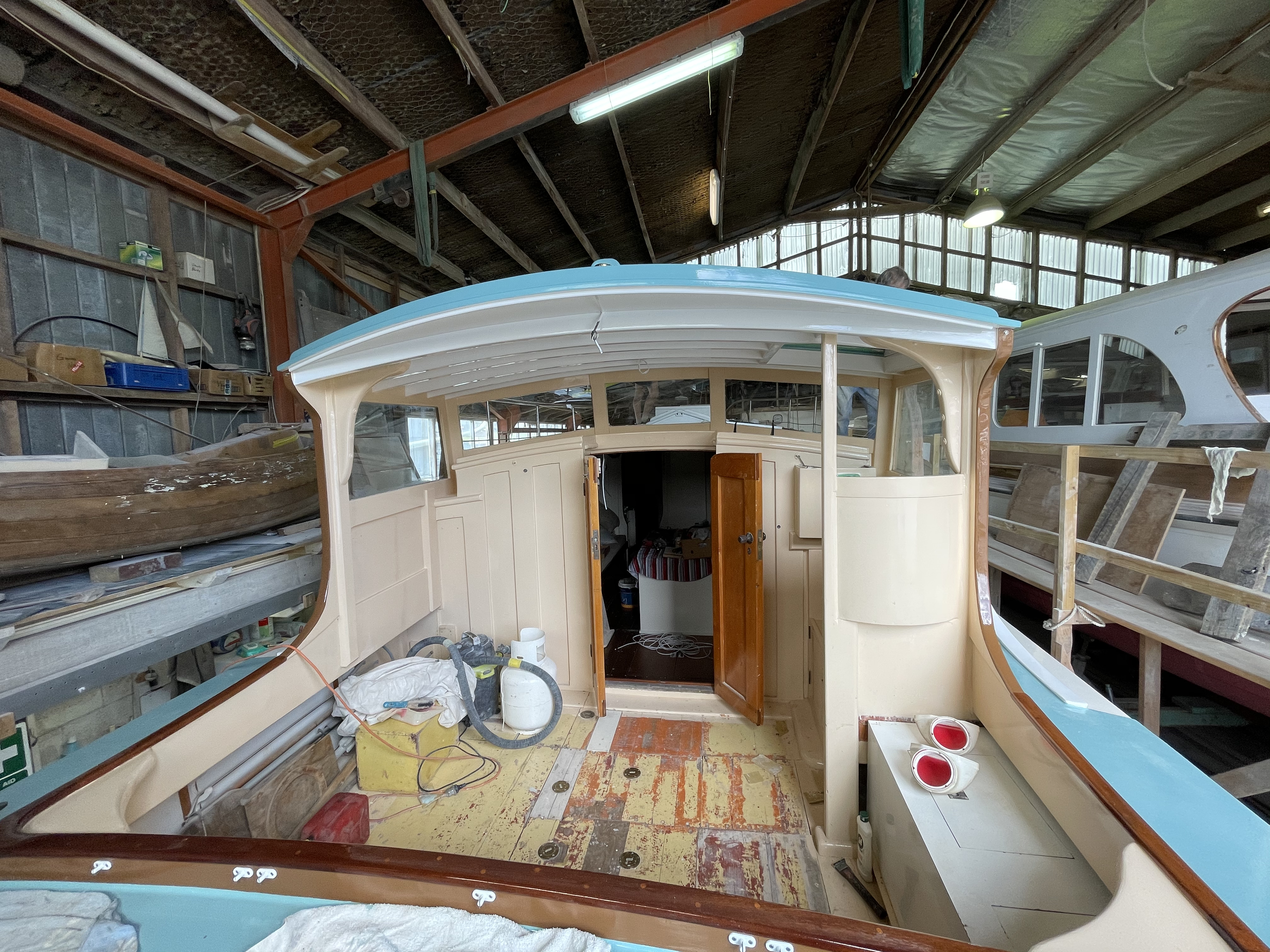
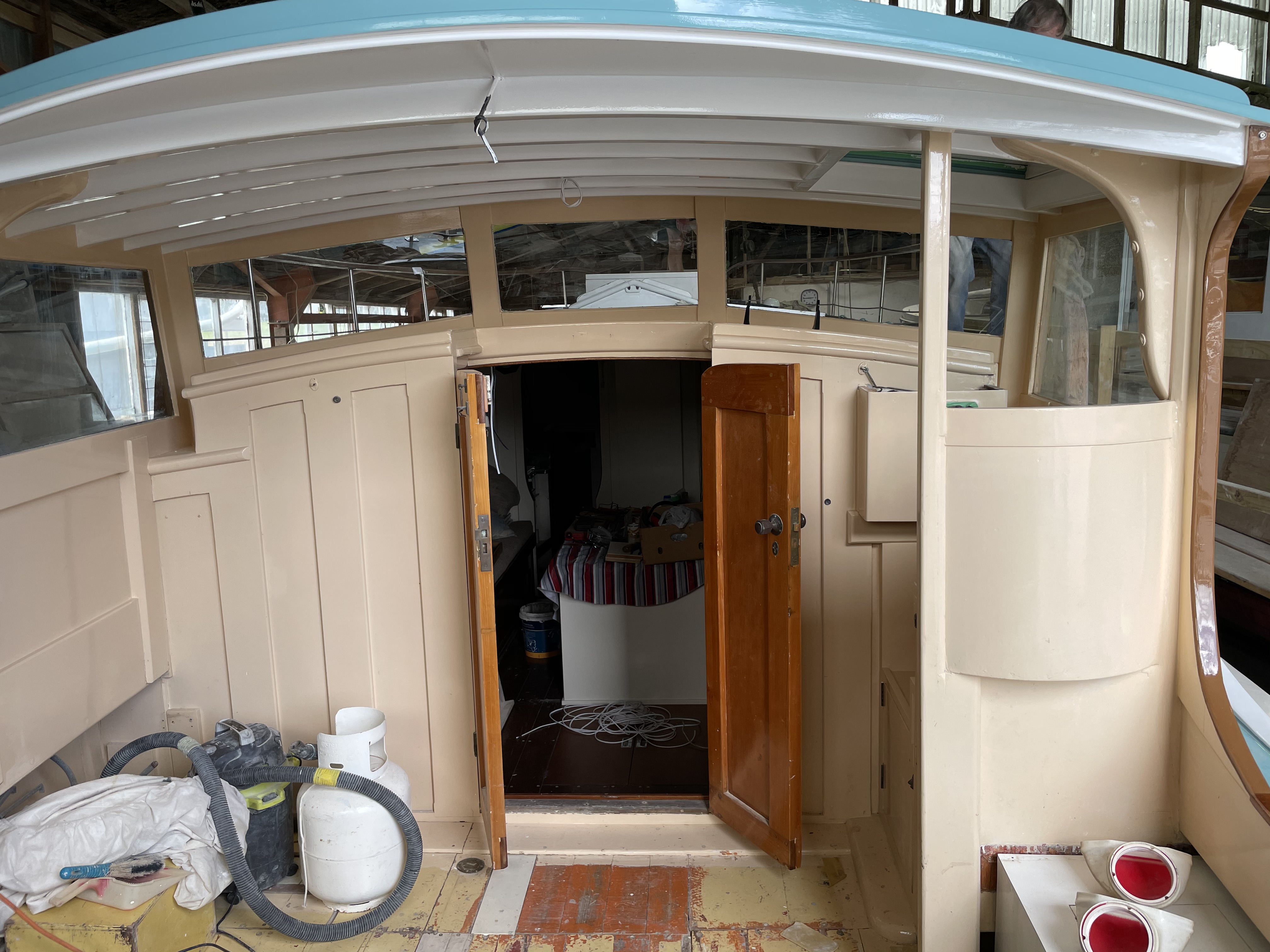
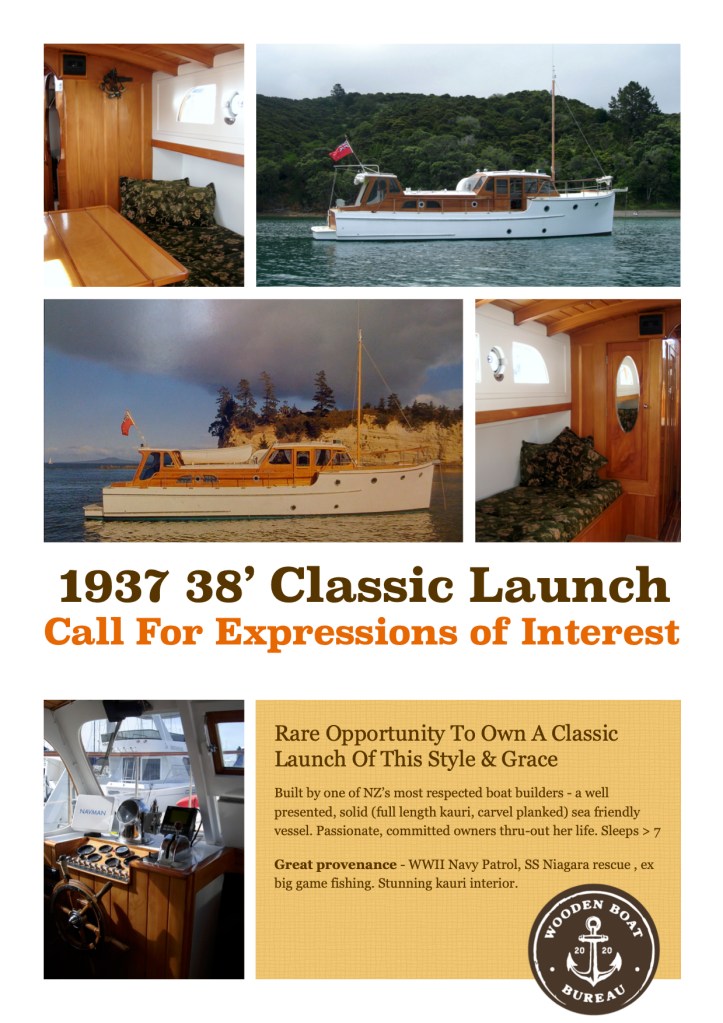
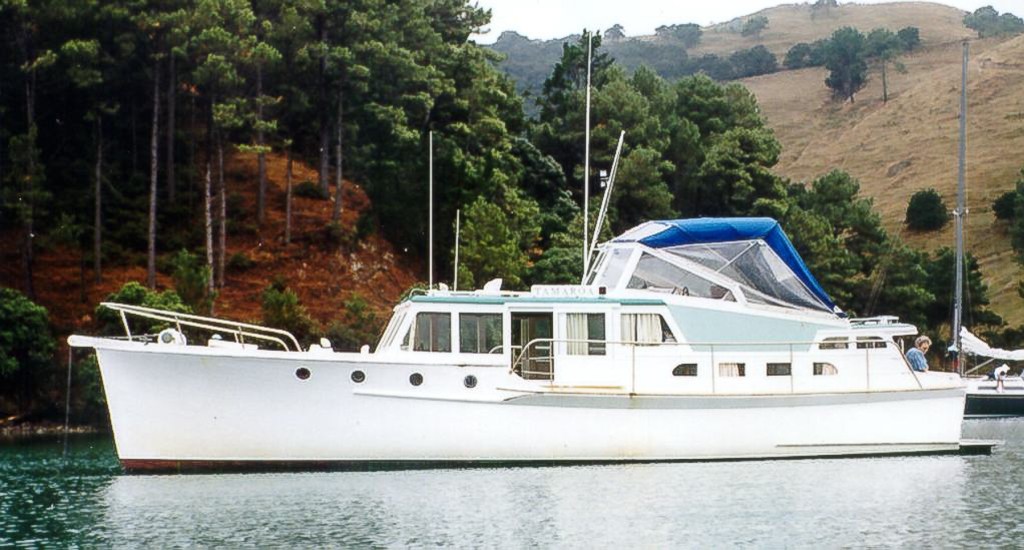
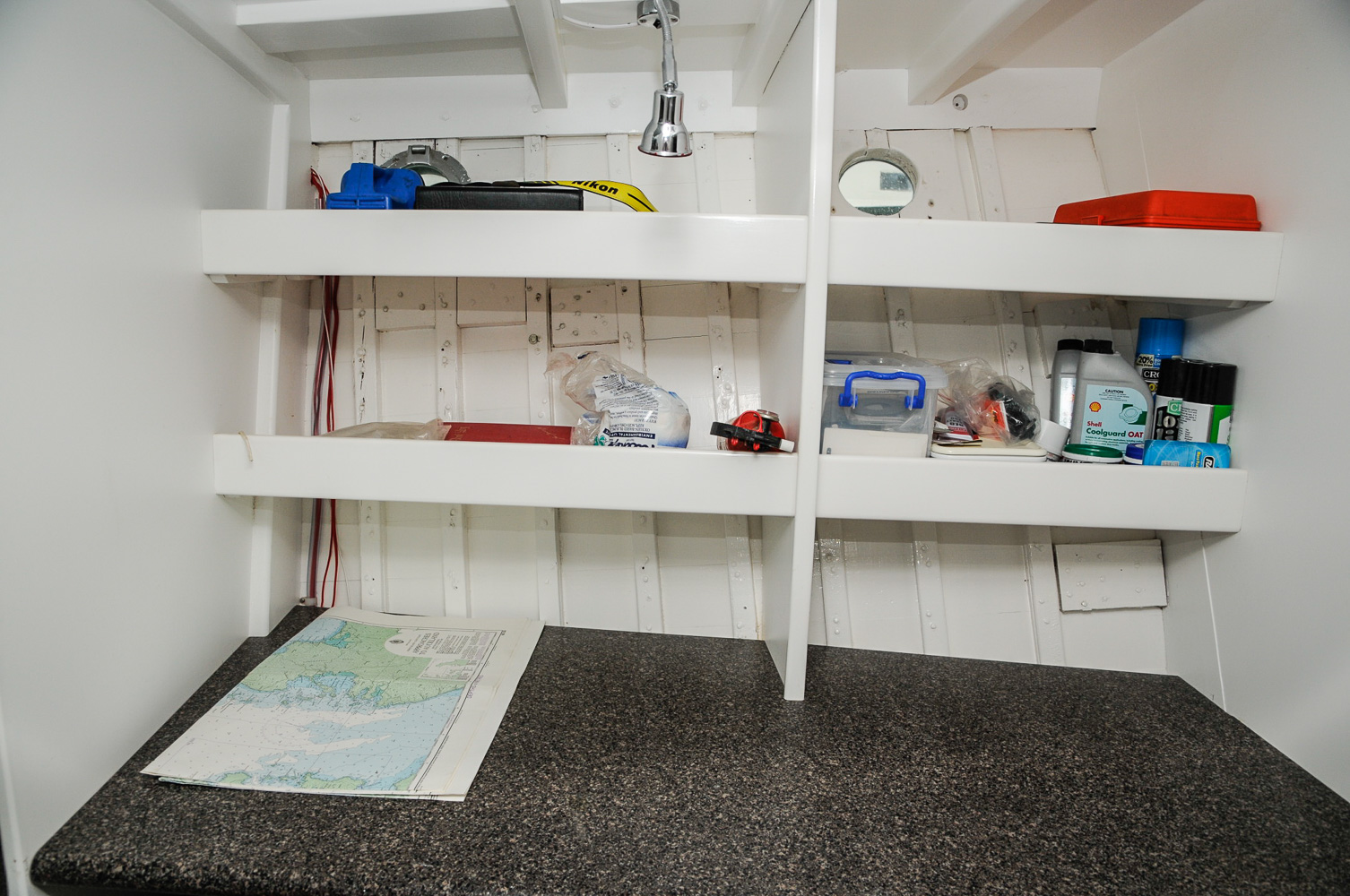
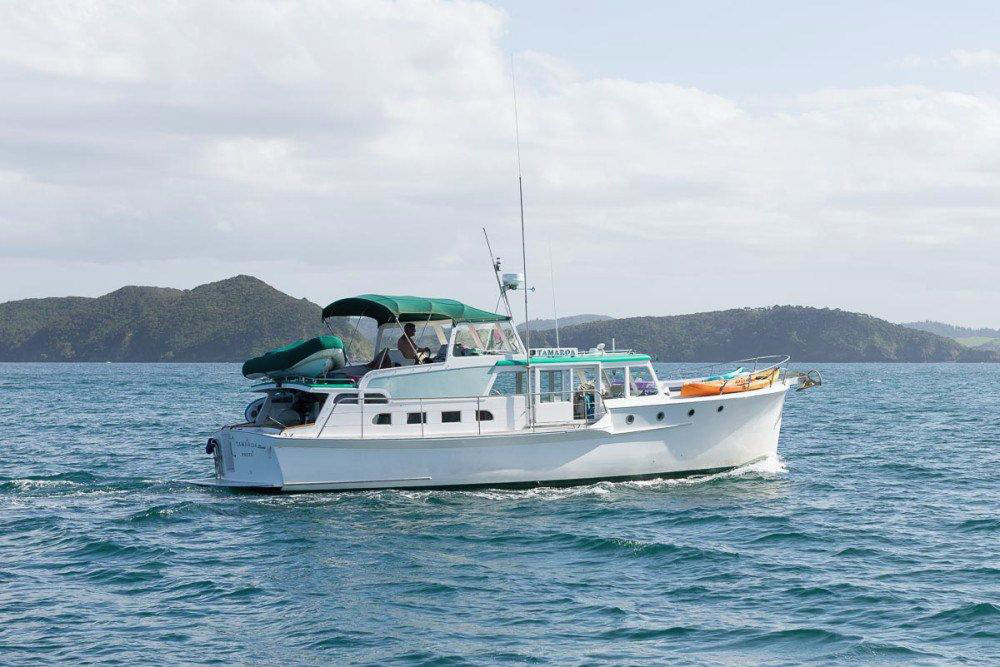
Most of the photographs above of Tamaroa show her as she was when Eric sold her.