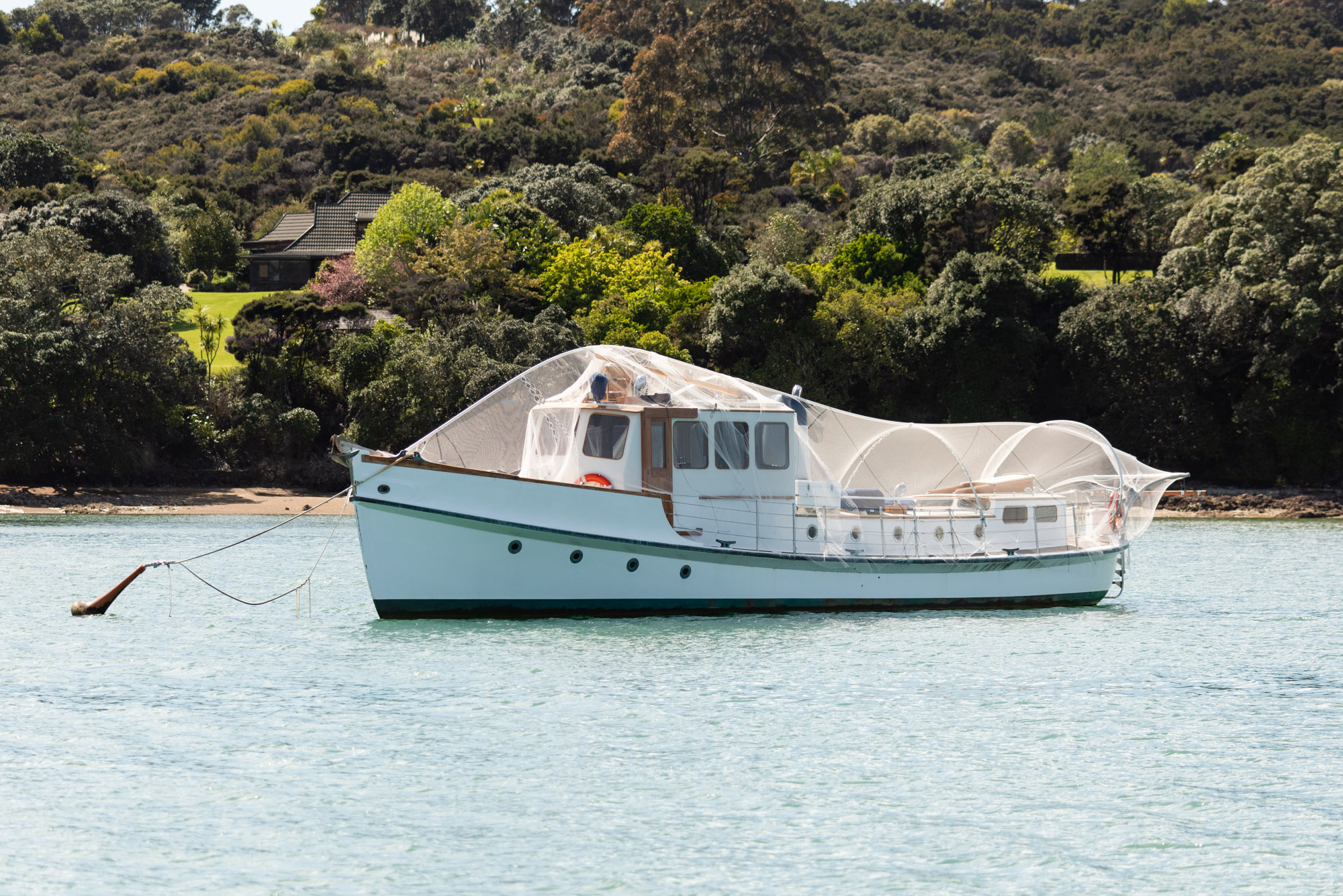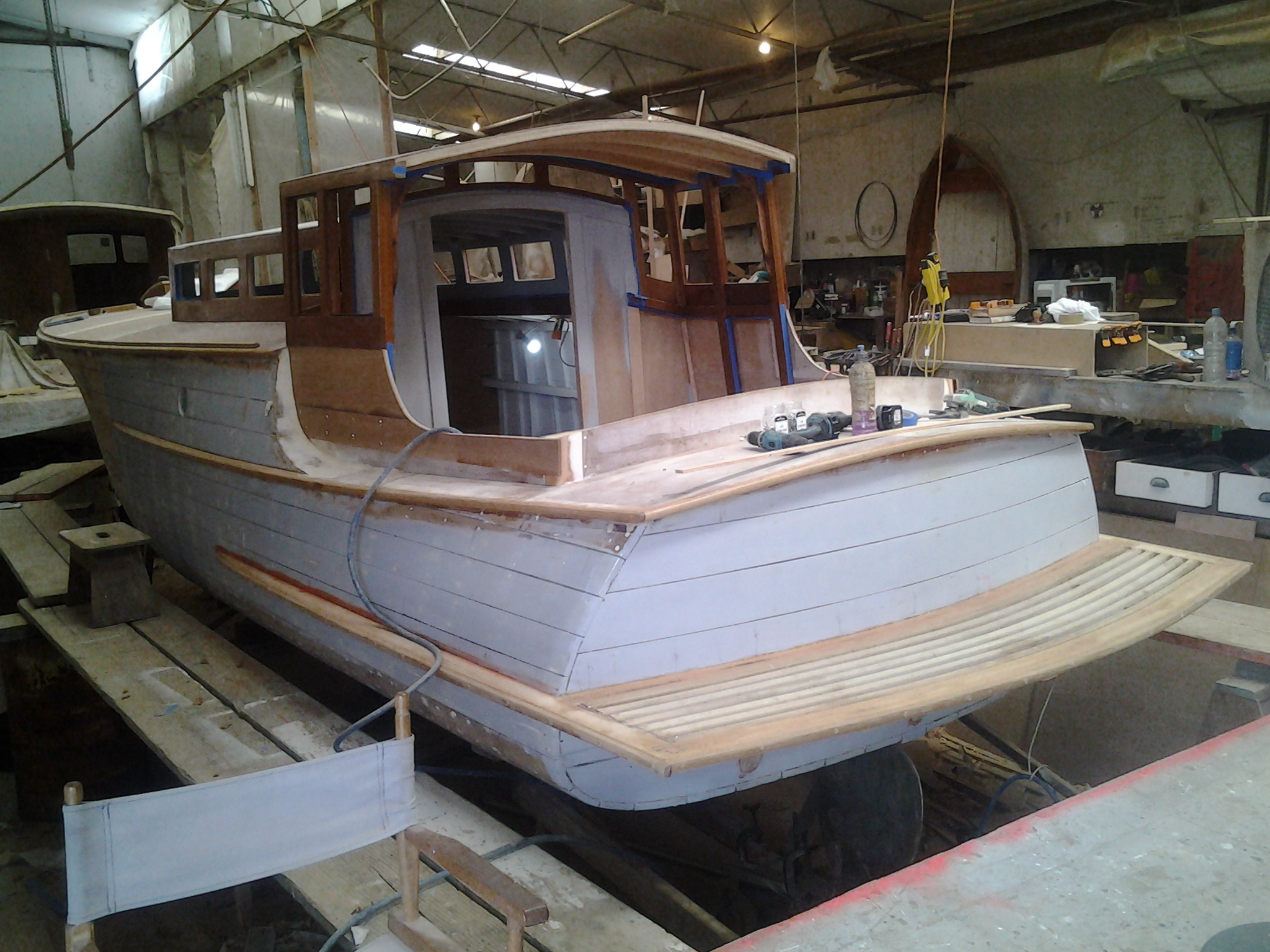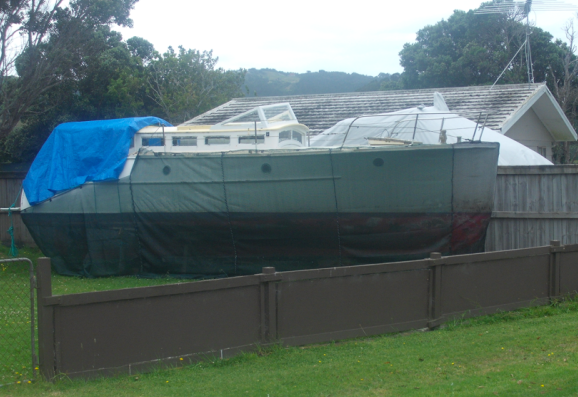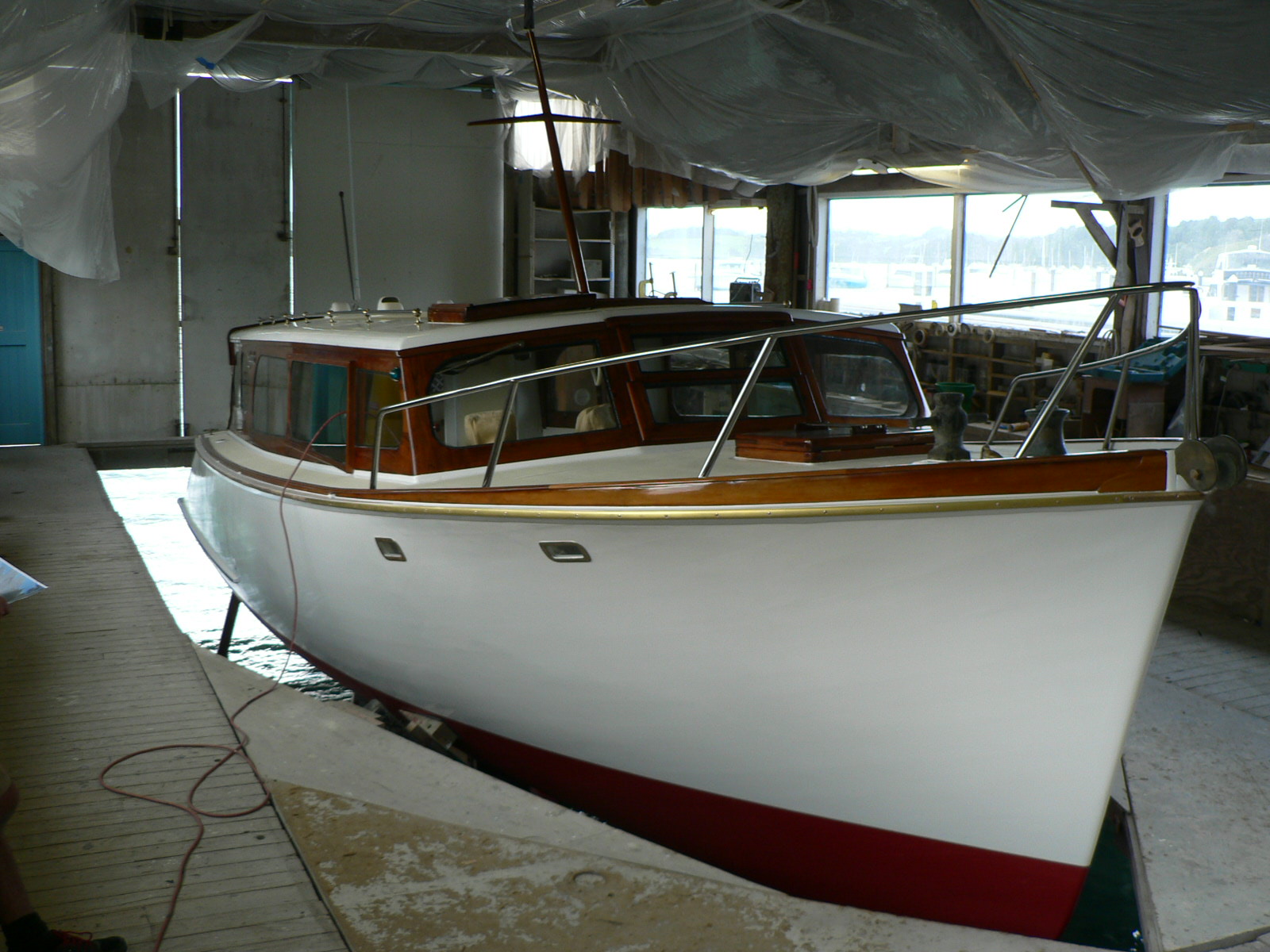
Aorangi

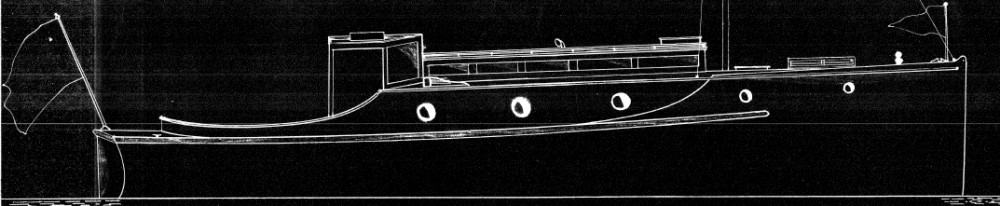
Screen Shot 2016-01-23 at 1.33.08 PM

AORANGI
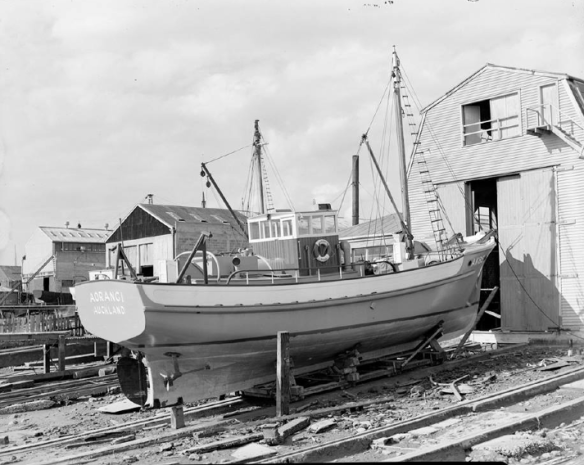
photo ex Historic NZ Photos, ex A Turnball Library. details ex Russell Ward

Aorangi was built by Shipbuilders at St Marys Bay. Powered by two Kelvins which was unusual for a side trawler. The above photo of her slipped is reportedly dated 9th September 1949.

So a question for the work boat woodys out there – what became of her?

Input from Keith Munro – She is owned by Colin Silby and is on the hard stand at West Park at the moment. It belonged to Ginger Gibbs as well years ago. Washed ashore at Te Atatu a couple of year ago in a big easterly and was a major to re-float.

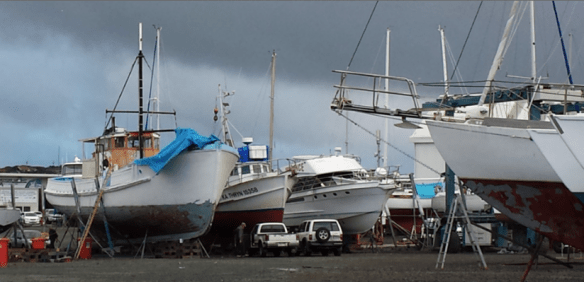
Input from Russell Ward –  photo below of her ashore for some TLC and a chat with friends -(photo ex Carol Forsythe-  Marine Compliance website).
Russell is rather fond of ‘St Kathryn’ that is alongside Aorangi.  In his words “A damn good looker that I’d give houseroom any time”

aorangiashore

Kauri Clinker

The Bloody Boat 011

The Bloody Boat 070

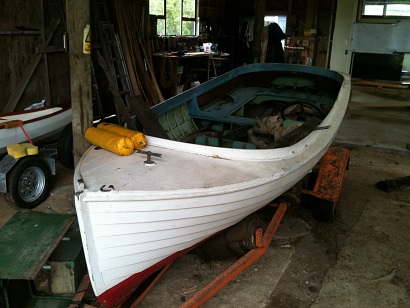
16′ Kauri Clinker Work Boat
photos & details ex Arthur Neely

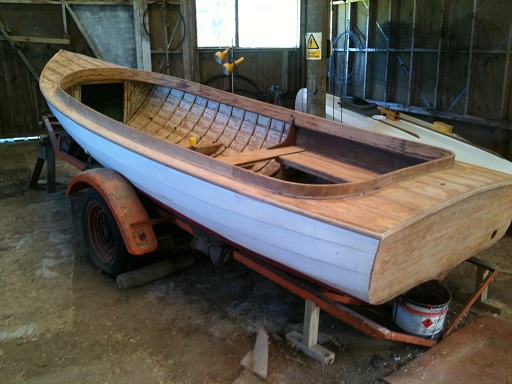
Arthur contacted ww as he has recently started the restoration of the beautiful little clinker work boat featured above and is trying to get some ideas as to her heritage, age, designer, builder etc. He is also keen learn if there is she any historical significance associated to the vessel.

What we know is that she is kauri clinker, 16′ long with a 5’6″ beam and Arthur reports in excellent condition, given her age. She has been in a shed in Hamilton for the past 45 yrs owned by 3 generations of the one extended family. However as is often the case Arthur hasn’t been able to get much of an idea of her lineage before that.

She had a Sea-Mite 4cylinder 20hp petrol engine in her with a shaft drive to a 3 blade fixed prop. Arthur doesn’t think it was the original engine as there are 2 sets of engine mounts visible.
She also had wheel steering installed at some stage, made up of what looks like old tractor parts, but appears to originally had inboard tiller steering.
From old photos Arthur has seen she looks very similar to designs by Logan Bros or Lanes, but he doesn’t know enough to know.
The canvas cover that you see in the photos, Arthur thinks is original.

The only real damage is she doesn’t have a rudder and from what Arthur gleaned from the previous owners, the rudder was damaged and the boat was put in the Hamilton shed for repairs, and that is where she stayed for the past 45 years. The boat is currently in a shed at Dairy Flat, Auckland.

If there are woodys that might be able to help Arthur understand this project better, he would appreciated hearing from you.

Harold Kidd Input

For a start, forget Logan Bros. The last dinghy they built was in 1911 and this boat is 40 years later than that at least. However Arch Logan’s son, Jack Logan, did build many similar launches post WW2 at Stanley Bay. But then, she could have been built by a dozen other very good boatbuilders at that time. Most put their plates on them unless they were retailed by Wisemans for example, when they were usually anonymous.
I think you can forget Lanes too. They had bigger boats to build.

Update from Arthur Neely
The boat was bought by Jock and Edith Graham in 1950 and homed on their property at Graham Rd Puketaha, I understand that is near Hamilton. When Jock died he left the boat to his son John and he has recently gifted the boat to his daughter Vanessa.
The boat was mainly used as a pleasure boat and for fishing on both Lake Rotorua and Lake Rotoiti. Jock bought the boat as he believed that she had been “professional built”. There is some suggestion that the boat had been built in Tauranga but I think this might just be speculation.
To my eye though, there is no doubt that she was built by skilled craftsmen.
I am trying to find out who Jock bought the boat off in 1950 but I think this might be a long-shot, everyone who would know has since died.
There is no evidence of the boat having a name, feedback from the family shows a consistent view that the boat was always called “the bloody boat”.

Classic Raft-Up at Salthouse Boatbuilders

IMG_0178

P1230409

Lucille

CYA SALTHOUSE 30.4.16

Rod Marler, Greg Salthouse, Bruce Marler, Bruce Tantrum, Mrs. B Marler, George & Dan Renall


P1230414

Wairiki

Classic Raft Up at Salthouse Boatbuilders
photos from Alan H & 2 from Ken Ricketts

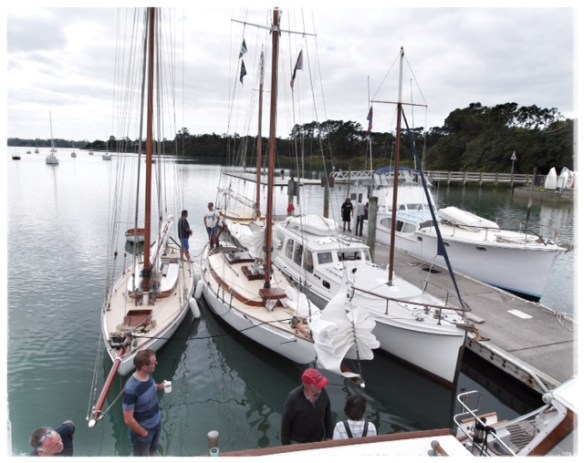
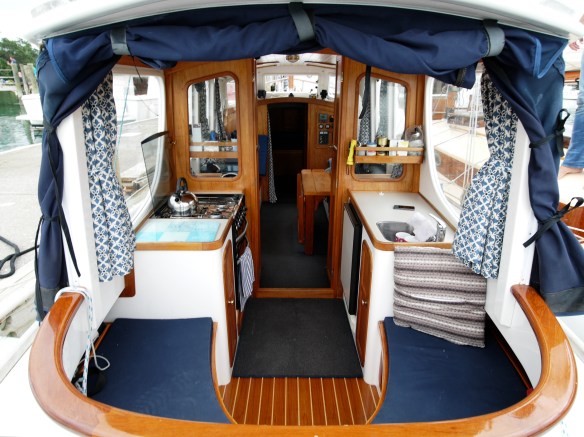
Saturday saw the CYA host a visit to Greg Salthouse’s Greenhite boat yard, members had the choice of arriving by water or road. Given the deep water anchorage at the wharf it was ideal for some of the yachting members to join in. Fiona Driver & Rod Marler buddied up with Barb & David Cooke to provide a BBQ lunch that disappeared very quickly 🙂
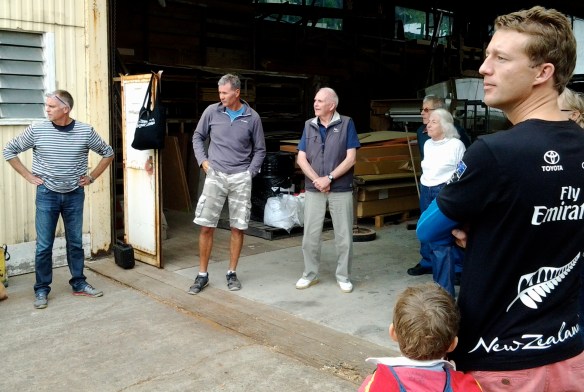
Greg S gave the attendees an intro to the yard & the work that was being undertaken & then thru the yard open to members to explore at their leisure.
Salthouse is one of the few remaining classic wooden boat friendly ‘railway’ haul-out slips in the Auckland area, so folks to quote that old saying – use it or lose it 😉

And on Sunday, while most of you rested I spent the day picking olives at a friends Ti Point property. Bumper crop this year made the day fly by, helped by a longish yum lunch featuring local produce & wines. If we got bored the view was pretty wow.

DCIM100MEDIA

Drone photo looking back at property

Valhalla


Valhalla 2016

VALHALLA - 1

VALHALLA
details & photos from Kazik Jascia, Sea Spray magazine (Aug 1964) Ken Ricketts & B Worthington. edited by Alan H

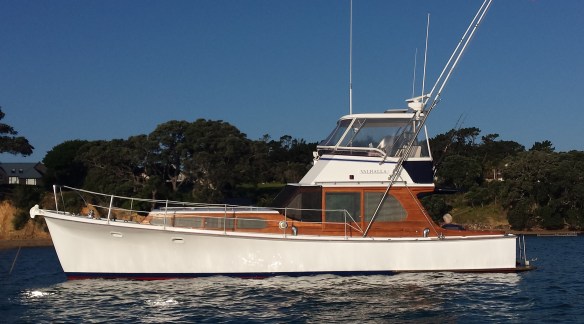
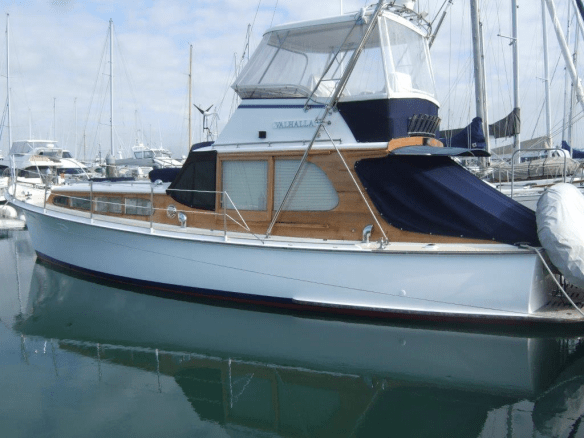
Valhalla was designed & built by John Gladden of Milford & launched in May 1964 for Tony Bullock, as a sport game fishing boat.

She is 40 ft x 12ft. 6 x 3 ft. 6 draft, could sleep up to 7 people, & at date of launching was powered by a John Andrew converted, 100 hp, naturally aspirated, 6 cyl Ford diesel. She also had a 9 hp Lister auxiliary, for trolling, on the port side,  at the time of launching. Currently she s powered by a 130hp Ford Dover engine.

Her original cruising speed was 9.5 knots (now 8.5) at 1950rpm through & “Snow-Nabsted” hydraulic gearbox fitted with Morse controls, with a 2 to 1 reduction to a 3 bladed Henley 24 x 16 propeller

Her hull is single skin kauri carvel construction, with varnished solid teak coamings & decks & hardwood timbers.

Given that she spent time in charter there must be some photos & stories out there so if you can contribute to details on her past, email to waitematawoodys@gmail.com

Electro-Chemical Damage In Wooden Boats Update

rudder electrochemical damage


ELECTRO-CHEMICAL DAMAGE IN WOODEN BOATS UPDATE
A Special Post By Chris McMullen

Recently I received a note from Chris where he questioned if the story we posted last year on ww about electro-chemical damage to wood  was a little too long & were people reading it. Well I can tell you that the post is the single most visited story on ww, ever, & gets read by people all over the world. Its frequently referred to on the hugely popular WoodenBoat Forum in the USA. The link below takes you to the original story.

Electrochemical Damage To Wood – the marine version of ‘leaky homes’

For the impatient ones out there 🙂 Chris has done a ‘Readers Digest’ version & refers to a vessel that recently featured on ww.
I encourage all of you to read today’s story & if you own a classic wooden boat – read both versions – the problem is the biggest risk to the life of our classic boats.

In Chris’s words:
“I received the above disturbing images of another woody being destroyed by an owner who I believe is unintentionally loving his boat to death.

The use of anodes and bonding on a wooden boat is fatal. The cathode or protected metal makes hydrogen gas and this combined with saltwater makes Sodium Hydroxide (Caustic Soda). This chemical is used to pulp wood in the paper making industry. Not on my boat thank you! I say again, there is no reason to use anodes and bonding on any boat. The only exception, steel hulls require anodes. If copper or bronze are being corroded it is due to a positive DC leak and Zinc anodes will not help. Find the electrical leak is the cure. If there is brass or manganese bronze underwater it will corrode due to the
zinc in the alloy. Anodes will possibly stop the corrosion but at the expense of wood damage. A better plan is to replace the brass with proper marine bronze.

Bronze and copper should last indefinitely in the sea. To prove that statement, I ask you to look at the Roman coins and artifacts salvaged from ships wrecked in the fourteenth century. There was no anodic protection and the metal is well preserved. So what is the difference to the copper and bronze on your boat? There is absolutely no difference so why waste your money buying anodes that will in time destroy
your wooden boat.

Three or four bottles of wine will cost the same as anodes and will make you and your boat happier.”

Note: ww is read all around the world, if there is water & boats, there are people reading ww. So a little about the man for non kiwi’s  – Chris is one of NZ’s most respected boat builders (retired) and at one time was the Lloyds (Honorary) Wood Boat Surveyor in Auckland. Chris’s (the original company) ‘McMullen & Wing’ built and repaired wood, steel and marine aluminium vessels. They built the first welded aluminum vessels in NZ. Chris is the current holder of the Classic Yacht Association of New Zealand ‘Outstanding Achievement Trophy’ for services to classic boating.

14-05-2016 Photo Update
Gavin Gault sent in the below photos of a Nova skeg floor that he believes were probably damaged due to engine – anode bonding failure. Pretty graphic !!

10-07-2016 Reply from Chris McMullen

“Wow. Thank you Gavin Gault for sharing your very graphic images. Very sad, small consolation but yours will not be the only wooden boat affected by this scourge.
Maybe, at last some of the Flat Earth Society will start to believe what I have been saying. The worst detractors are some in the Marine Industry who have been preaching the Anode, Bonding party line for years.  Now there is no where to run for cover,  they continue to conjure up excuses and it seems, refuse to accept a simple scientific fact.
“If you have a positive and negative electrode in salt water, the negative cathode or protected metal makes hydrogen gas and this combined with salt water makes Sodium hydroxide.”
This chemical is also known as caustic soda and removes paint and destroys wood.  There is no doubt about this fact. You do require a power source and bonded dissimilar metals ( zinc and copper) provide sufficient current to do the damage, but slowly.
If there is a negative DC leak (to the sea)on a bonded boat the process is accelerated. If there is a positive leak any metal becomes an anode and will waste away. It is important to isolate the DC power from contact with the sea. Again bonding is just asking for trouble. Please remove Anodes and Bonding from your wooden boat now!
Chris McMullen”

06-09-2106 In case you were not to sure what to look out for – the below photo should be a wake-up call to a few woodys 😉

IMG_1120


Waitemata – Pilot Cutter

WAITEMATA JUST LAUNCHED

WAITEMATA EARLY DAYS - 4

WAITEMATA FOR SALE

WAITEMATA & AKARANA

WAITEMATA REFIT - 1 - EX. HYLTON E

WAITEMATA – Pilot Cutter
photos ex Hylton Edmonds via Ken Rickettts

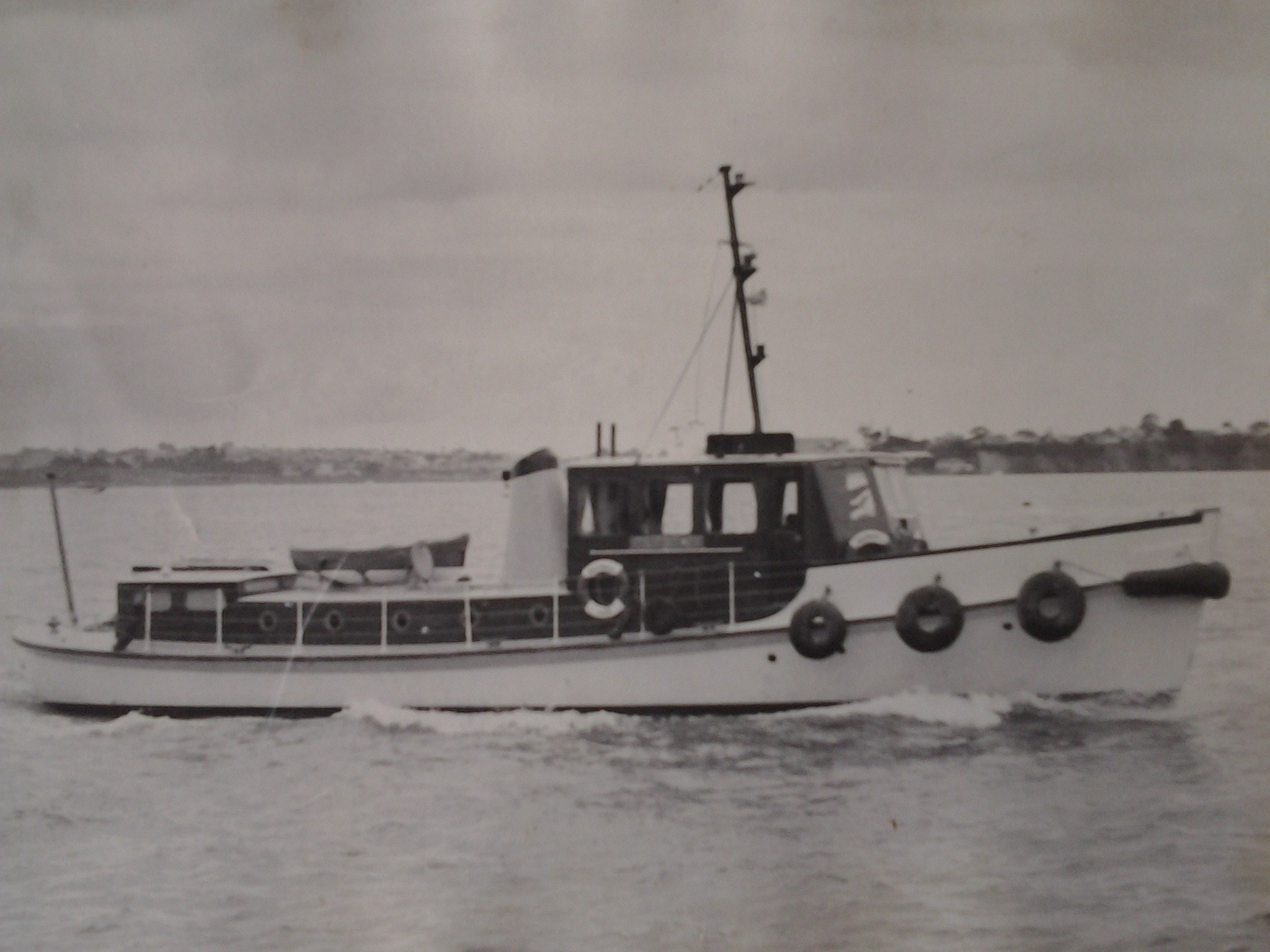
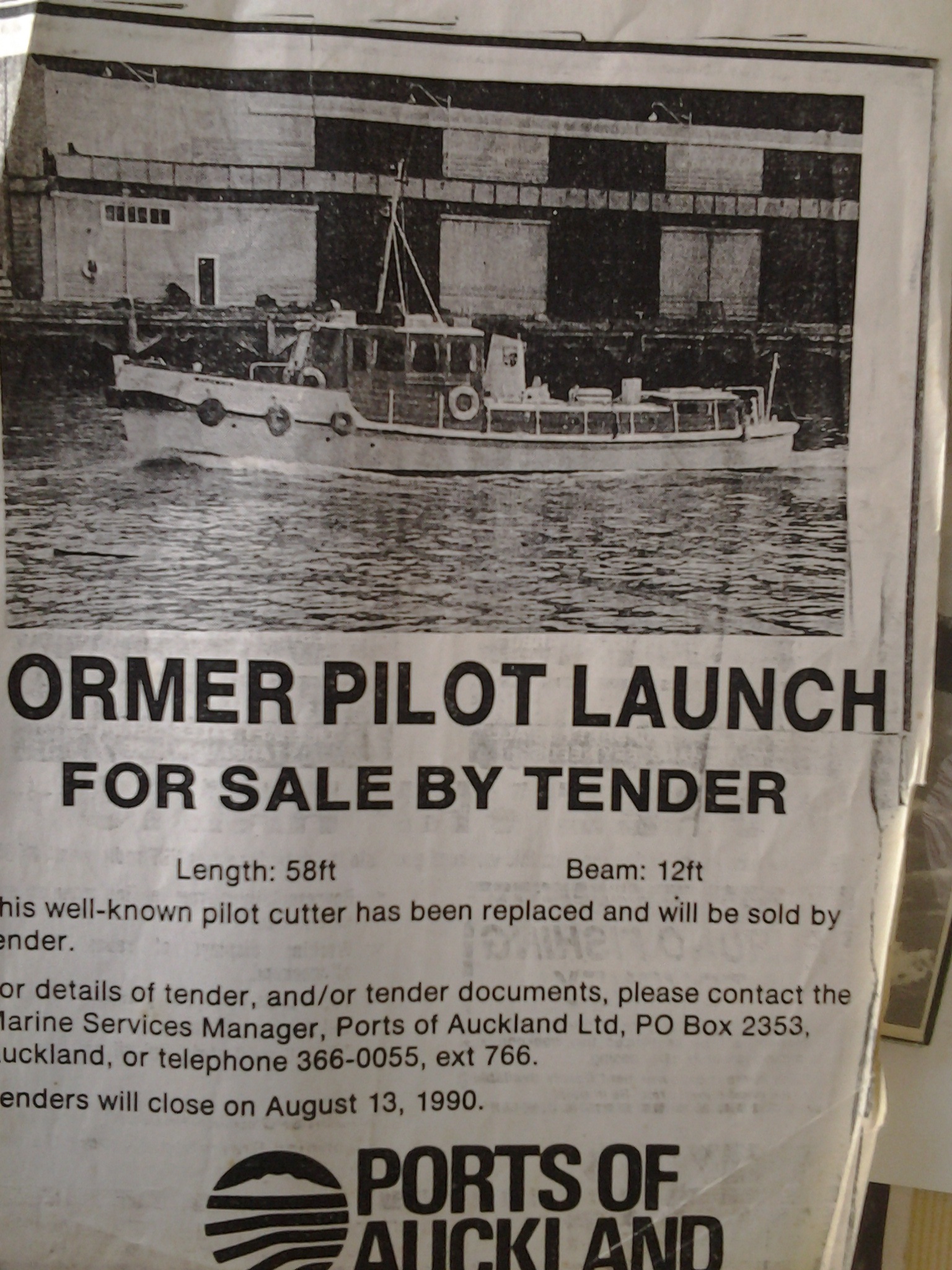
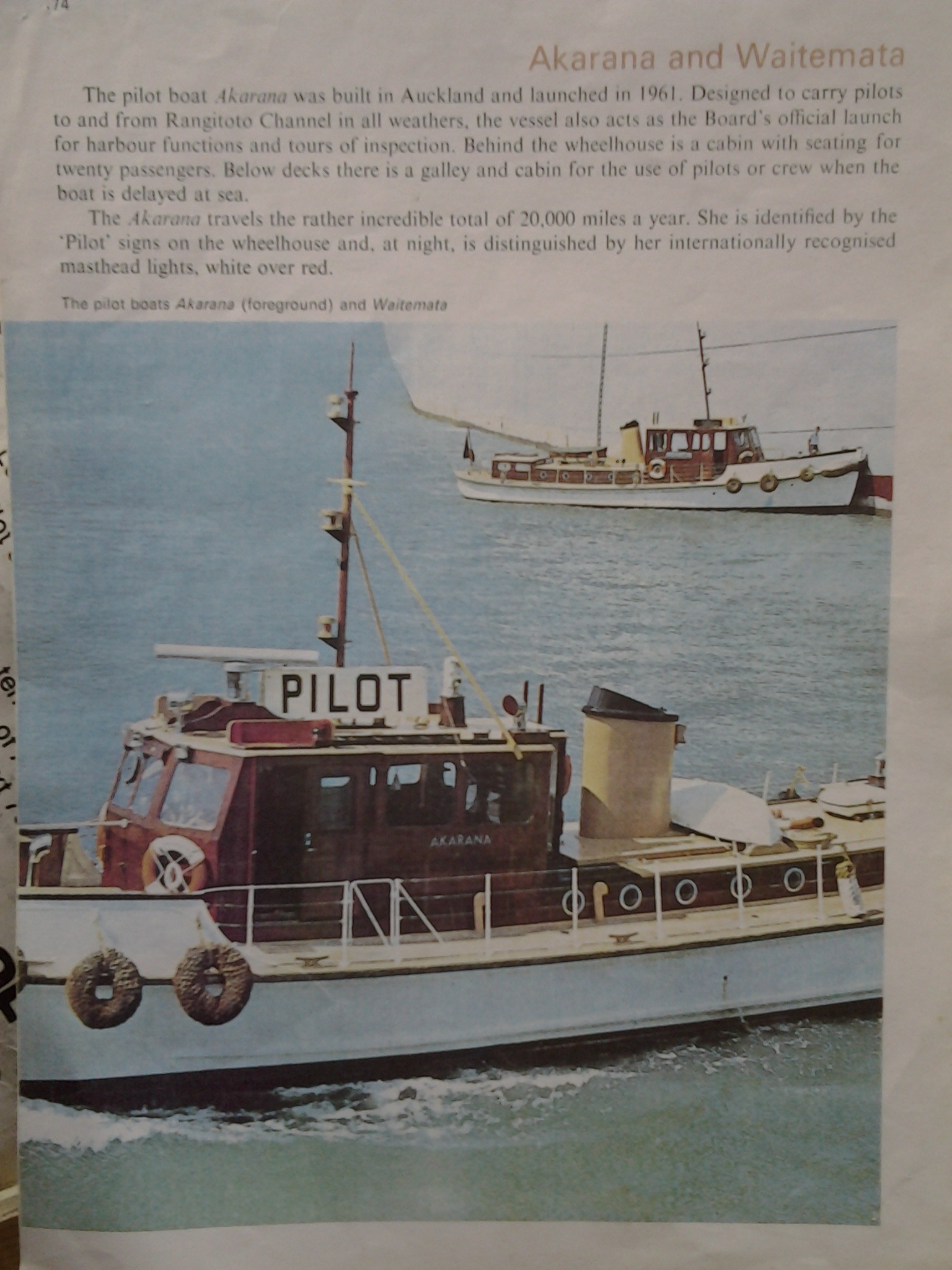
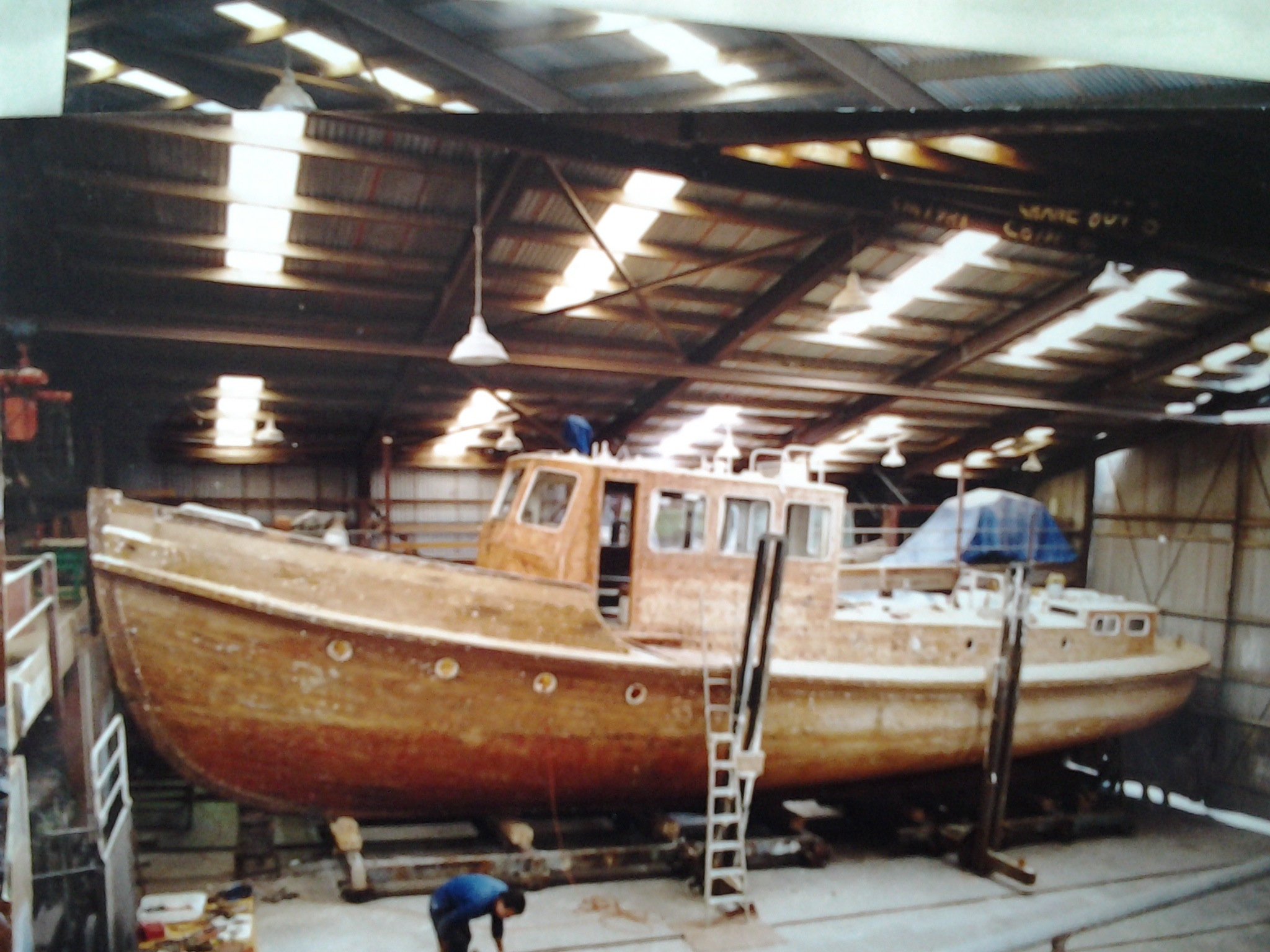
The above photo gallery shows the 58′ ex Auckland Harbour Board pilot cutter Waitemata from when first launched to her refit to pleasure vessel & as she is today. Her ‘sister’ ship Akarana has featured numerous times on ww.

I’m sure Hylton & others will chip in with more details on her.

Photo below ex Nathan Herbert

Waitemata - now

UPDATE 04-10-2021 Photo below ex Dean Wright of – Waitemata on her mooring up the Te Puna Inlet, B.O.I.

Little Tasman

LITTLE TASMAN - STARBOARD SIDE - 7.3.16 - 3

LITTLE TASMAN - STARBOARD SIDE - 7.3.16 - 0

LITTLE TASMAN
shed photos & info ex Ken Ricketts. Pt Wells photo ex Mark Edmonds. details ex Harold Kidd. edited a lot by Alan H

Back in early March Ken Ricketts dropped in to see artisan boat builder Colin Brown at his Omaha yard. Colin & side kick, Josh, have been restoring the rather pretty 26′ Colin Wild launch Little Tasman.  She was named Tasman when built in 1925 for Albert Spencer & changed her name to Little Tasman in 1927 when the bigger Tasman (photo included below) was launched by the same owner/builder. Its said she that LT was a prototype / test boat – Mr Spencer was not short of a few pennies 😉

It is such good news to see whats happening to Little Tasman as she sat on a front lawn at Pt. Wells for a number of years (photo below) & her future was at risk.

Little Tasman at Pt Wells

In Harold Kidd’s words Little Tasman is ‘pure class’ & whats happening in Colin’s shed is also pure class  – the man is one of the best classic friendly tradies out there.

You will see in the above photos that she now has a brand new 4 cyl Nanni 38 hp diesel in place, which should give her a top speed of around 10 knots, with a cruising speed, with her 2 to 1 reduction gear, of around 7 knots. Will be interesting to see her performance as the Nanni is a lot lighter than the old 6 cyl Ford diesel it is replacing.

Her restoration has seen most of her ribs replaced, a full recaulk (no splining), work on the forepeak & bow, a new dodger, very faithfully copied from the original & a full interior refit & partial redesign of the interior layout, for greater space use, & practicality.
Steering will be from the front of the tram top, as it was before, where there will be a large hatch fitted, to the newly replaced, as original, T & G cabin top. Check out the stern photo, classic Colin Wild on show there 🙂

Launch date is fast approaching so we will update on the event.

Read more on her past here      https://waitematawoodys.com/2015/04/20/little-tasman/

Below is a photo of Tasman that I took a few years ago in Sullivans Bay. She is stunner & on a lot of woodys bucket list.

Tasman @ Sullivans Bay

30-06-2016 – Another great photo update from Ken R of Little Tasman’s restoration at Colin Brown’s yard. Remember click on photos to enlarge 😉

The rebirth of Juanita

Juanita 021

The Rebirth of JUANITA
photos Greg Lees & Alan H

Yesterday I was privileged to be asked by Greg Lees to attend the re-launch of the 32′ classic launch Juanita, a 1951 Allan Williams (Milford Creek) built beauty that has  just spent the last 4 months in the Lees Boatbuilder shed at Sandspit. In Greg’s words she was in for a ‘refresh & to bring her back to her original appearance’ – well Mr Lees, I do not think she has ever looked this good before so you have exceeded the brief, but we have come to expect that from the yard. Greg commented that Juanita’s new owners (Nick & Anna Davidson) contribution to the work was huge, every weekend for the 4 month period.

Juanita has had a busy life having called numerious places home – Auckland, Whangarei, Lake Taupo, Whitianga & now Sandspit.

Juanita’s past has been well documented on ww – some links below for details & photos

Juanita

Juanita

I took the photo of her below late last year, moored off Greg’s wharf looking very sad & tired as she awaited her turn in the shed. Arohanui was in-residence at the time mid restoration. One of the reasons Nick chose the Lees yard was the long association the yard & Greg personally has had with Juanita, in fact Greg told me that he once got very close to adding a flybridge to her, luckily that never happened 🙂

Again I’m so pleased to see so many of our classic launches being returned to their finery – so woodys who’s next in the shed?

Screen Shot 2016-03-19 at 7.35.46 AM


Took the opportunity to have a  peek at Karros hauled out & chat to Dave Jackson, with a 14′ beam she is a rather pretty big bottomed old girl 🙂

Lionel Jefcoat – Boatbuilder & Wood Craftsman

The Flirt

Flirt

Lionel Jefcoat – Boatbuilder & Wood Craftsman

details ex Nelson Mail, Radio NZ & Gary Drummond

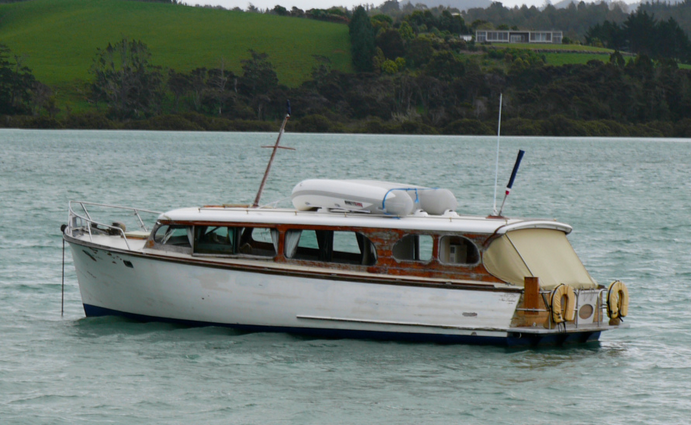
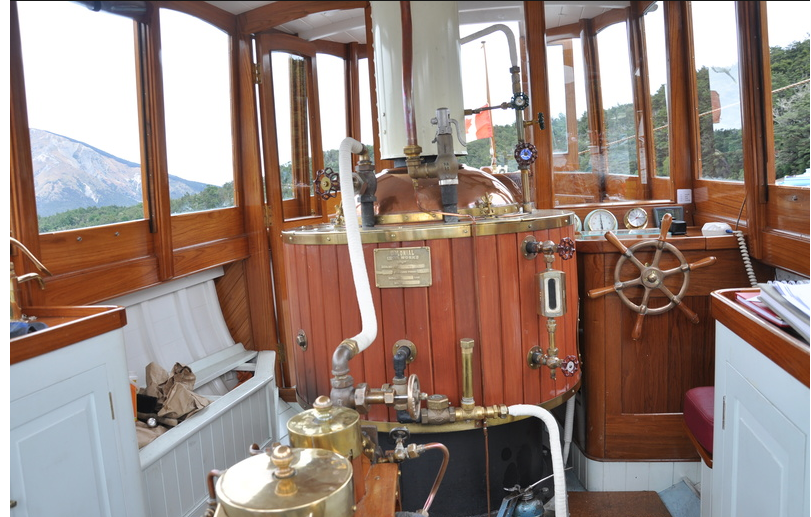
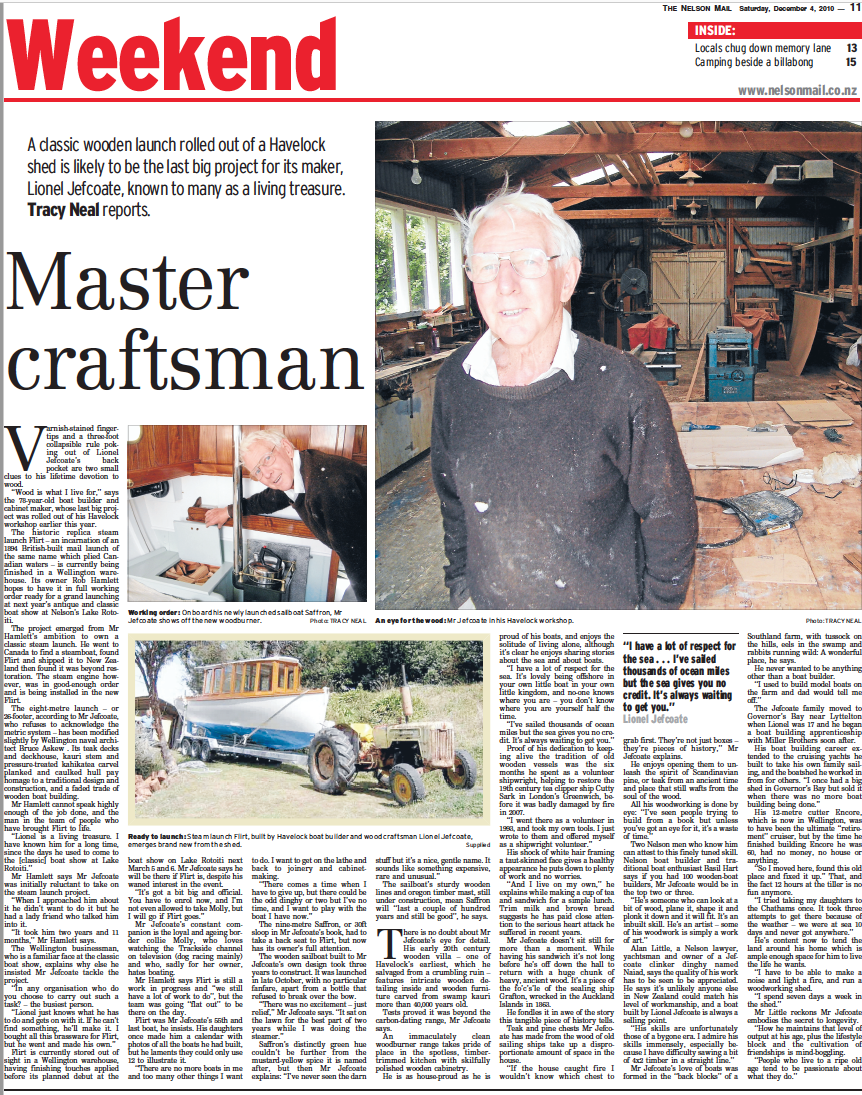
Lionel Jefcoat works out of a ‘shed’ in Havelock, where he built the historic replica steam launch Flirt – an incarnation of an 1894 British-built mail launch of the same name which plied Canadian waters. Flint is a regular attendee at the antique and classic boat show at Nelson’s Lake Rotoiti.

The project emerged from Flint’s owner Rob Hamlett’s ambition to own a classic steam launch. He went to Canada to find a steamboat, found Flirt and shipped it to New Zealand then found it was beyond restoration. The steam engine however, was in good-enough order and was installed in the new Flirt.

The 26′ launch, according to Lionel, has been modified slightly by Wellington naval architect Bruce Askew. Its teak decks and deckhouse, kauri stem and pressure-treated kahikatea carvel planked and caulked hull pay homage to a traditional design and construction, and a faded trade of wooden boat building.

Lionel’s own boat is the 30′ wooden sloop Saffron, built to his own design, taking three years to construct. It was launched in late 2010.

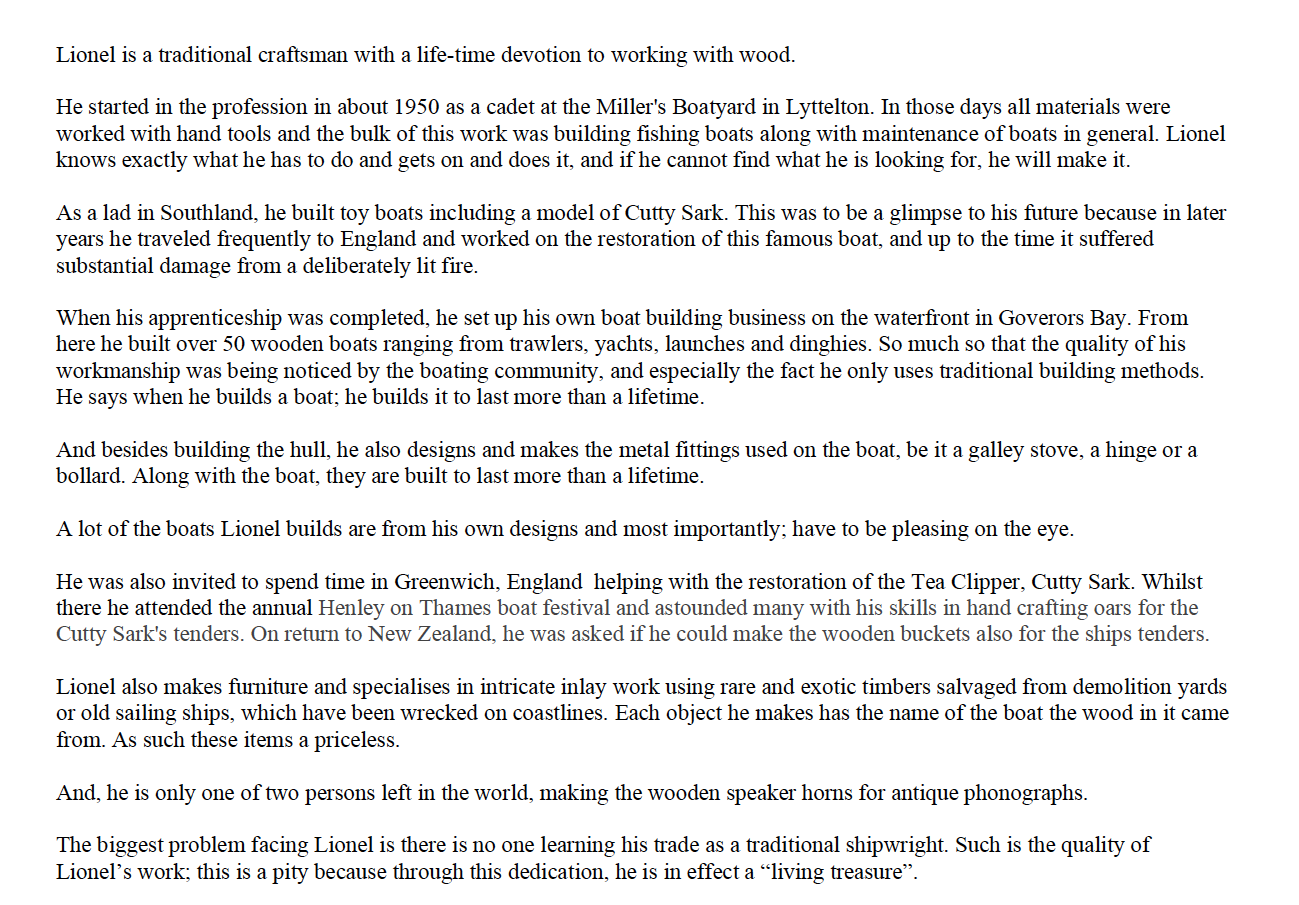
Lionel’s love of boats was formed in the “back blocks” of a Southland farm, he never wanted to be anything other than a boat builder. The Jefcoate family moved to Governor’s Bay near Lyttelton when Lionel was 17 and he began a boat building apprenticeship with Miller Brothers soon after.

His boat building career extended to the cruising yachts he built to take his own family sailing, and the boat shed he worked in from for others. “I once had a big shed in Governor’s Bay but sold it when there was no more boat building being done.” His 12-metre cutter Encore, which is now in Wellington, was to have been the ultimate “retirement” cruiser, but by the time he finished building Encore he was 60, had no money, no house so Lionel moved to the 100+ year old villa & workshop in Havelock that today is home to this wooden craftsman.

Below is a link to a photo gallery of images from Radio NZ ‘Nine to Noon’ that showcase Lionel – in his early days, family life & some of many craft he built. Enjoy

http://www.radionz.co.nz/national/programmes/ninetonoon/galleries/lionel-jefcoat

14-05-2016 Input from Ian Miller

A while back Rosalind discovered Lionel on her family tree (albeit way out at the end of a remote branch) and as a result of that we called on him earlier this year when we were in the Marlborough Sounds. He was not particularly interested in discovering another relative (sentiments similar to my own) but when he learned of our interest in old wooden boats his whole demeanour changed and we spent a most enjoyable three hours with him.

The workmanship in his sea chests and turned bowls was out of this world and the experience of looking at his stuff and talking to him about it, as well as his boats, was something I will never forget.

His book “57 Boats Later” is a fascinating chronicle of his life as a wooden boat builder  and he was persuaded to sell me his second to last copy, although I understand a third reprint is on its way. (I must get a copy. AH)

Lionel Jefcoate RIP

Sadly, I have to advise that Lionel passed away on 17th July 2018. His funeral is scheduled for – Springlands Chapel, Cloudy Bay Funeral Home, 1:30pm – Saturday 28th July.

I was sent the photos below & copy by Russell Ward ex Rob Hamlett.

Screen Shot 2018-07-23 at 11.53.41 am

Screen Shot 2018-07-23 at 12.05.10 pm.png

Okura Gigs – Sailing Sunday

Okura Gig 49 (9)

Historic photo 01

Historic photo 02

OKURA GIGS
photos & details ex Darren Arthur

We did a post on ww a little while ago about ‘Seabird’ dinghies & this generated chat & subsequent comments about the ‘Okura Gig’. This sparked Darren to contact his wife’s uncle – Dennis Hart, who with his late brother Ray ran Hart Brothers Marine and were behind the Okura Gigs. Darren encouraged Dennis to document their history.
Darren asked me that given that the boats we not wood, was it a potential ww story – after a quick peek at the photos – I replied that there was more than enough wood & bronze to get the ww tick 😉

I have published Dennis’s story below word for word, its a great tale & combined with the above collection of older & recent photos is a cracker read. Enjoy 🙂

THE OKURA GIG:  A Brief History By Dennis Hart

Background

During the late 1800’s the area at Silverdale now known as Millwater included the Grut (pronounced Grew) farm which had access to the Orewa Estuary. Mr Grut had a 10 foot kauri clinker rowing boat, understood to have been built by Bailey & Lowe at Sulphur Point, Northcote. The boat was mostly used for net fishing. Charles St.Croix Grut and Alec Grut later inherited the farm and continued farming until the 1960’s ?

Dennis believes Croix and his wife Merle had the 38ft Wollacott design yacht Iorana, built by Don Wood at his yard in the Orewa Estuary. However the memory can play tricks over time & Dennis would be interested to learn if he is correct in this. The couple then in their late 60’s were the first Weiti Yacht Club members to circumnavigate the globe.

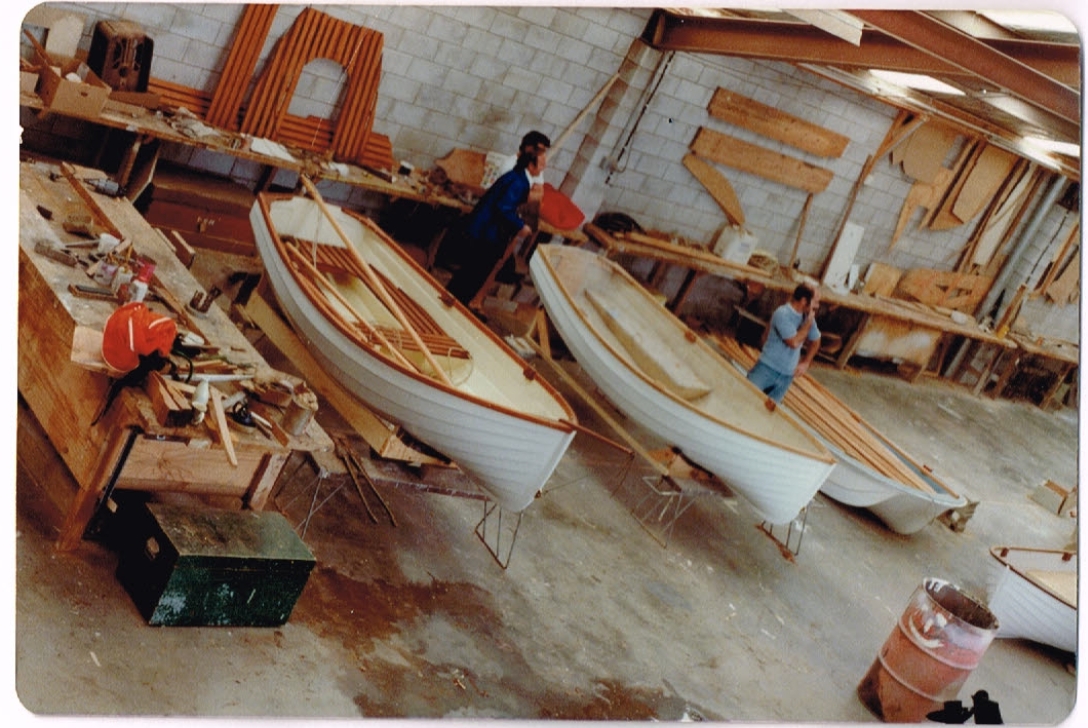
Croix brought the boat to my brother Ray and I at Hart Bros Marine  in the mid to late 70’s for a full restoration to its original configuration as the 70 plus years had taken their toll. We duly completed the ‘no expenses spared’  job resulting in a very pretty and sound rowing boat. We negotiated a deal whereby we could use the boat as a plug and take a mould from it in order to produce the boat in fibreglass , We made no charge for the restoration returning it to Croix and Alex with a fibreglass replica rowing boat each for their general use. The original boat was retired.

I tried to locate the original boat and was told by Croix that he had entrusted it to a gentleman who had promised to donate it to the Maritime Museum. On enquiring there I was told that no such boat had been received. Croix Passed away in November 2012 aged 94.

Building the OG

Because of the tumblehome created by the very pretty wineglass transom the mould had to be in two parts. The original boat had no centrecase so a slot was cut in the keel and a case was moulded in -situ at the same time as fitting the buoyancy thwarts and stern benches . A galvanised steel swinging plate was hinged at the top forward point, raised and lowered  by a stainless wire. After release from the mould Kwila slats were fitted to the thwarts, the inner and outer gun’les were copper riveted together, the thwart  and lodging knees fixed in place followed by the remainder of the fit-out . Two rowing positions were provided, the forw’d pair provided fitting for the side stays.

The rig

The sails were kept as traditional as possible by using ‘tanbark’ coloured sail cloth and braided lacings. The oregon spars were made so that they would fit inside the boat, when not in use. This worked well as a handy sized main was set with the peak well above the mast top. This, coupled, with a boom that overhung the transom and a jib tacked to a short sprit,  giving plenty of sail.  Many of the fittings  that controlled the running rigging (cleats and blocks, were made by hand or modified from Harken traditional range. All other fittings were sourced from the depths of Fosters basement or were bespoke by us of copper, brass or bronze. The gaff jaws were covered in leather. Rope sheets were a light tan poly. The gaff halyard was rove to a bridle to make setting the main more simple.

Development

Like the old harbour ferries the OG has a balanced waterline with fine ends so does not drag water at the transom as the boats bottom lifts the transom clear of the water at the stem of the wineglass.  Fit-out of these boats was kept to an affordable minimum at the time.  As production continued we made some minor modifications and improvements, i.e. separate peak and throat halyards to give better shape control to the main, reefing points and tackle for the main, a change from cane rings to lacing on the luff.  The rudder is if fixed shape with a swivelling tiller, its bottom edge does not extend below the keel line which allows safe beaching.

The sail plan was easy enough to balance on paper.  In practice it showed a slight weather-helm  in fresh airs which was easily adjusted by swinging the centreplate back,  flattening or easing the sails.

Production

The Okura Gig became a ’boutique’ activity.  As a result of the boat tax being imposed in 1979 we reduced the size and scope of our business and closed our fibreglass manufacturing operations and moved our boat shop into the mould shop. We had built about 55 OG’s between 1978 and 1981.  The moulds were taken by Dinghy Developments who resumed production giving the OG a Seabird name.  I believe that they took their version to USA west coast boat shows where they were warmly received. I have no idea how many more were built.

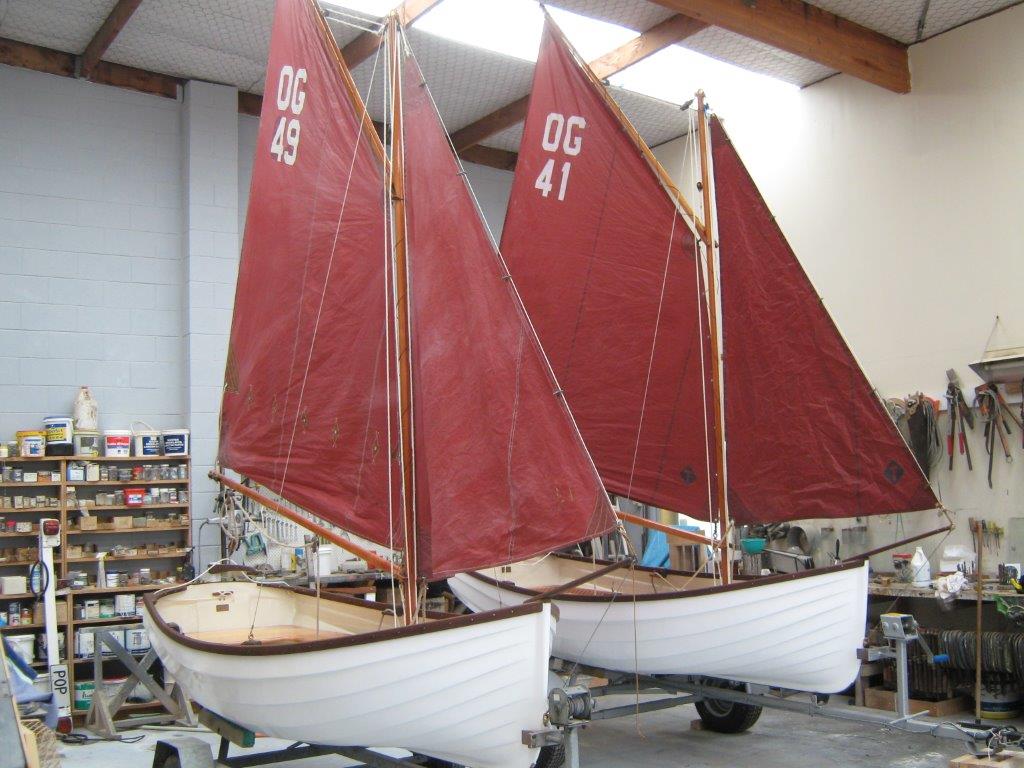
I have  two OG’s,  No. 41 and No 49.  One had spent about 35 years in a wet boatshed at Lake Rotoiti,  it required a complete grind off of the osmosis damage before refitting.  The other is our long time family boat. I have refitted them both to a much higher standard than the originals. They are currently in my shed at Whangaparaoa.  I still sail OG49 occasionally and still find it enjoyable. It really romps sailing just off the wind with the peak halyard eased . OG 41 is too pretty to put in the water. It would make a fine centre piece in a large lounge.

Croix Grut  got to see OG’s 41 & 49 restored and fully rigged before he passed away. Photo below.
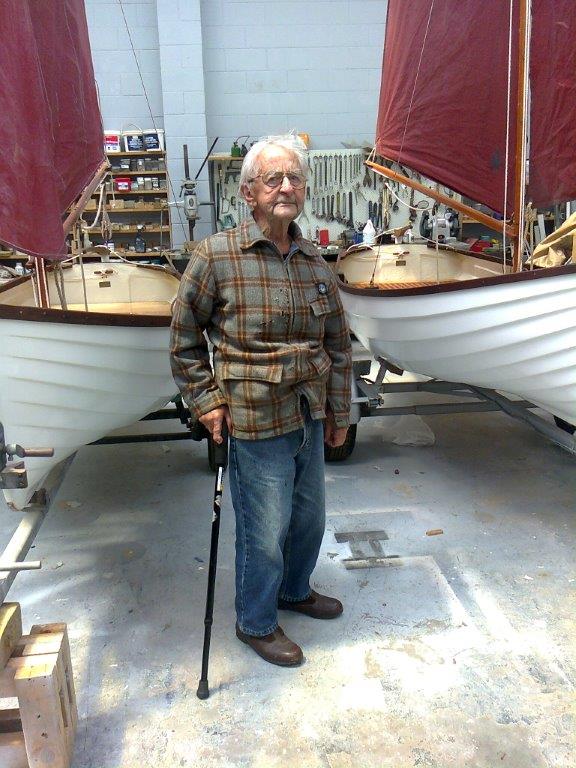
Photo0006

Foot note:

I was fortunate to have served my apprenticeship at the Devonport Naval Dockyard commencing in 1958.  Marty Martinengo was in the same intake as I, as was Denis Cantell, in 1958. We have enjoyed  a very solid friendship ever since, as we do with many of the apprentices who were indentured before or since us.   The Dockyard provided a very traditional training in all aspects of boatbuilding and shipwrighting  . It was a very competitive environment with up to 14 apprentices at any one time. My brother Ray Served his time at Lidgard’s and Lane’s before moving to Max Carter. He  moved to Whangaparaoa about 1968 where he started boatbuilding.  I joined him  in 1972.

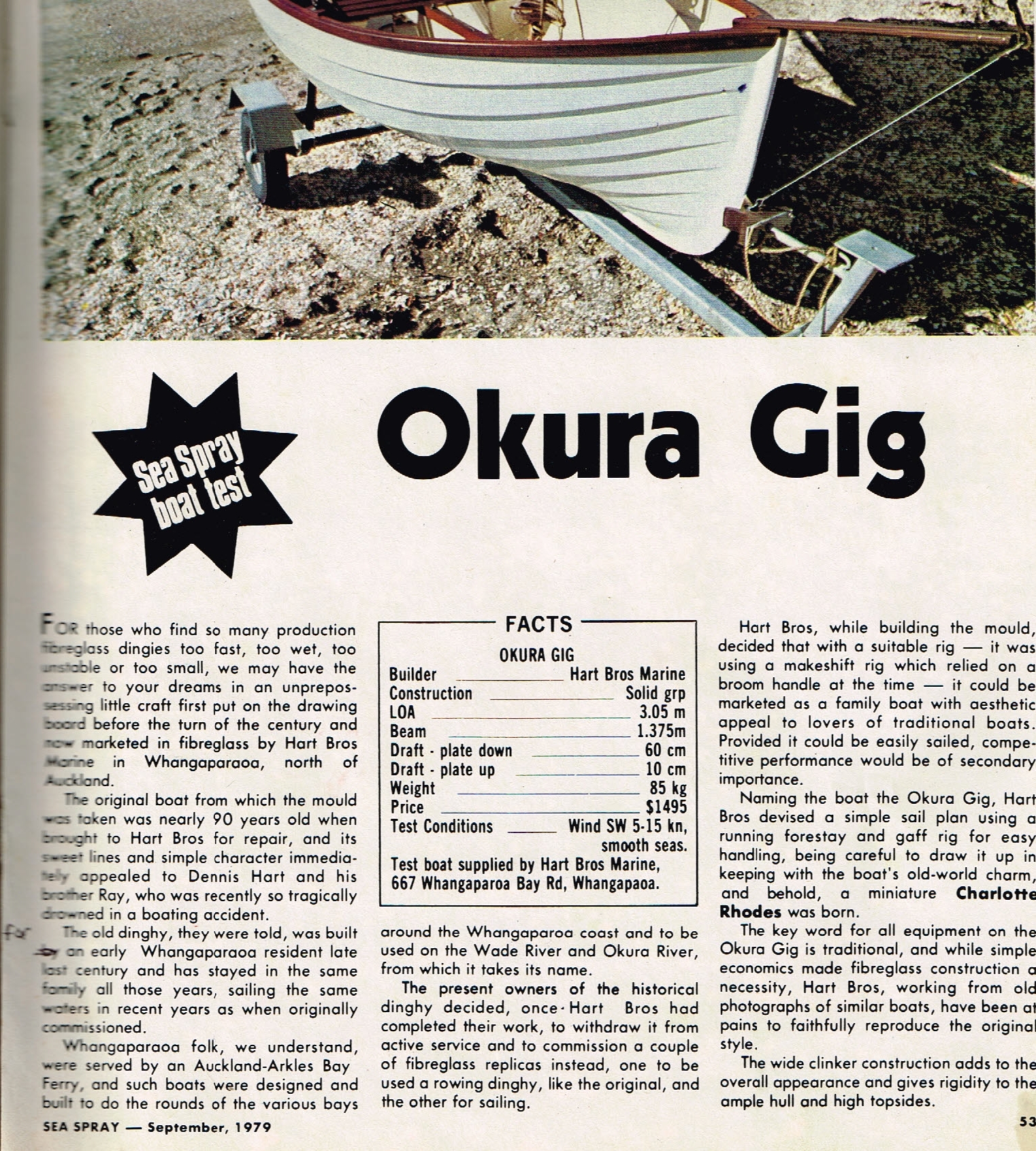
Below is an article reproduced from Sea Spray magazine Sept 1979
Sea Spray Article Sept '79 p1.pdf

Sea Spray Article Sept '79 p2.pdf