Ronomor

RONOMOR

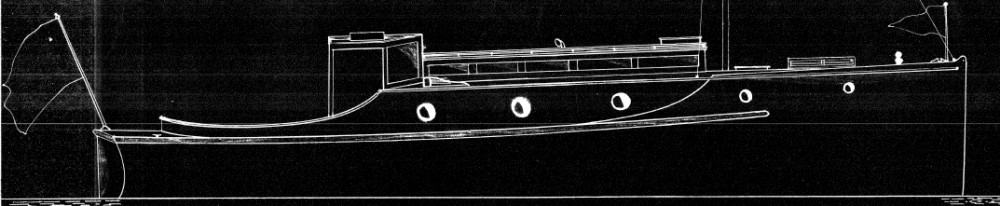
Todays post is a complete mystery to me. When looking thru the ww photo files I discovered a folder tagged ‘Ronomor????’ . At some stage I must have ear-marked it for future reference / follow-up. If someone out there sent these photos to me, I apologize for the void.

Now folks – anyone able to supply more info on her or ID the people in the photo, that would be good 🙂

Update – Slightly embarrassed – I have posted Ronomor before. But todays post has prompted Baden Pascoe to send me the great story below – enjoy the read.

RONOMOR & HER KEEPERS

One of my favourite pastimes is to roam around commercial wharves and docks and look at the old and the new workboats. I get a real kick out of seeing a well set up work boat that is well maintained and ready to deal with the many challenges she encounters when at sea.

Every time I see a boat that meets these standards my mind goes back 40 years to the days when Bert and Neil Chaney owned and operated the immaculately kept 36” fishing boat “Ronomor”. To this day I would still award them first prize if this activity were some sort of competition. Some people maintain that work boats cannot be maintained to a high standard when operating them in a commercial environment. The Chaney’s however managed to do this year in and year out with a wooden vessel that was not purpose built for commercial use and was 50 plus years old. They worked “Ronomor” very hard in all weathers, but they always put back what they took out of their boat. They were very successful commercial fishermen in all aspects of their profession.

A few years ago I did some research to try and find “Ronomor” and after a few months, a friend of mine spotted an old launch that matched her description. Sure enough this was the boat I had been searching for and remarkably she was still in reasonable shape. She is so typical of the many old pleasure launches that were converted to harbour and coastal fishing boats. Unfortunately due to their mainly light construction not many of them have survived.

“Ronomor”was built at Stanley Bay by Wattie or Davy Darroch in 1908. Some time before 1920 she was lengthened and a canoe stern was added to give her a total overall length of some 36’. Before she was built the Darrochs used a dinghy to row from Devonport to the city and to any other destinations on the Auckland harbour . When they built this launch they knew their rowing days were over and so the new boat was appropriately named “Ronomor”. I’m sure that the builders had many adventures in this lovely little launch and there must be many stories about their life and times with the boat.

The name of the next owner of the boat is unknown at the stage but she was based in Napier, and it may have been at this time that she was converted to a fishing vessel.

Bert Chaney purchased her in 1939 and steamed her to Tauranga. At this stage she still had a Scripps, which was possibly the first engine to be installed in the boat. These well proven marine petrol motors were imported by T.M. Lane & Sons (Later Lane Motor Boat Company). The engine was fitted with battery ignition. On one occasion Bert was picking up his long lines by dinghy (a technique he used by himself) when on returning to the boat he found a flat battery. “Ronomor” was anchored in the lee of the Alderman Islands, and he had no option but to row to Whangamata and buy a charged battery. He set off again and returned to the Alderman’s arriving late in the evening. The battery was fitted and the Scripps fired up. On his return to Tauranga he had a magneto fitted!

In 1944 the Chaney family moved to Whitianga, and “Ronomor” was used to transport the entire contents of their home. Neil recalls that the later part of the voyage was hard going because the weather had turned bad. At this stage the vessel had a JP 2.21 Lister as power and progress towards Whitianga in heavy weather , with a huge load on board was hard going. Once the Chaney family were relocated in Whitianga, Bert set up his fishing business and concentrated on cray fishing and long lining. From time to time he would undertake charter work, when the big game fishing season was in full swing. He was a very popular skipper with overseas fishermen who came to Whitianga for the International competitions. He was well known for his double strikes of yellow fin Tuna on light tackle, and Hank Newman from the New South Wales Fishing Club was one of his regular clients. In 1947 Bill Clark, another well known Whitianga fishing identity, fishing from the “Ronomor” landed what has been considered the largest marlin caught in New Zealand waters. At the weigh in the antiquated scales, which only registered to 900lbs, flicked fully around, but the estimated weight of the fish was in excess of 1000 lbs. The fish was played for 12 hours and 10 minutes. A marathon that would match the stories of Hemmingway ‘s “The Old Man of the sea “

In the mid 1940’s she was steamed to Auckland and the JP 2 was removed and a new JP 3 fitted. This gave her a top speed of 8-8.5 knots. Bert continued his charter work and was a very active member of both the Mercury Bay Game Fishing Club and the Mercury Bay Boating Club. “Ronomor” featured in most of the launch races at the Mercury Bay Regatta.

As I stated Bert and Neil maintained the boat in a meticulous manner. Every year she was slipped at Whitianga and any repair that was required,carried out. She was sanded and repainted to a high standard. Every few years all paint was removed from her hull and super structure and she was taken back to bare wood. My Father was the only person Bert would allow to carry out any structural work. Whenever “Ronomor” was hauled out Dad would be working on her and I would make visits to the beach at the bottom of the road and inspect the day’s work. This always started with a cup of tea made with condensed milk and some of Mrs. Chaney’s home cooking. Bert and Neil would always make me welcome.

In the early 60’s the JP 3 picked up a liner during a cray fishing and long lining trip. Bert and Neil were at the Red Mercurys when this fatal mechanical incident occurred. Before they could reach the engine room the damage was done. Unfortunately the JP 3 was beyond repair and had to be replaced. A new Lees Marine (Fordson) 6 cylinder was fitted by Allen Watson (Marlin Motors) and my Father did the structural work. The Lister gearbox was retained and fitted to the bell housing on the new Fordson.                                                                                  

In the late 60’s early 70’s Bert retired and put “Ronomor” on the market. A young Whitianga man Ian Clow was about to start a career in commercial fishing and he immediately identified “Ronomor” as a “turn key” operation. He followed in Bert’s footsteps and in a very short time gained a reputation as a true professional out of the same mould as Bert Chaney. He worked the boat very hard and continued in the same way as Bert and Neil had done in maintaining the boat to the highest of standards. Ian told me of some very close calls he had while working his pots. One day he had a line around the prop shaft and lost all control over forward and reverse. He had to very quickly remove the inspection plate of the old Lister gearbox and hammer the brake band free to enable forward motion. All this was taking place while his boat and crew were about to grind themselves to death on a group of rocks only a few feet away. Another incident he recalls was lifting his pots at Devils Point and the echo sounder block was sheared off the hull by a large rock. ‘Ronomor” took on water rapidly through the bolt and transducer holes, and they had to make a dash to the closest sandy beach at a speed of 10 knots. My Dad had to come out and temporarily patch up the boat and she was steamed back to Whitianga for slipping and repair.

Ian did not have to do a lot of modifications to the boat in the time he owned her. He did replace the Lister gearbox after the rope around the prop incident and my Father replaced some of the Pohutukawa knees and fitted some stringers to the cockpit area to stiffen the hull. Ian also fitted an AWA double sideband radio that had been purchased with a donation given to him by two men who were rescued by a foreign freighter and transferred to “Ronomor” near the Southern end of Ohinau Island . One of the last things Ian did was to replace the Fordson with a later model. I must mention that Ian’s brother Graham designed and built one of the first “power blocks” ever to be used on small fishing vessels in New Zealand. This enabled them to work more pots and was a great advantage to them.

Ian had now been in the fishing industry for 35 years and after owning nine commercial fishing boats he rates “Ronomor” as one of his better boats , and says that she set him up for his future. I’m sure Bert would be proud to hear him say that and proud of the way he looked after the vessel. Ian sold her in the early 80’s to a fisherman from the Barrier.  

The last time I saw “Ronomor” was about 15 years ago tied up at the viaduct. She was not in the mint condition that Bert and Ian had maintained her to. I felt a little sad when I saw her.

I am about to meet Ron Eastlake who now owns “Ronomor” to hand on to him the history I have collected of this remarkable old vessel. I look forward to seeing her again and I will be encouraging Ron to preserve what I call a historic boat. She would be one of the last surviving boats built by the Darrochs who were New Zealand’s most innovative and famous scow building family.


Omana > Ngaire > Mavis B

Omana > Ngaire > Mavis B
photos & details ex Ken Ricketts, with lots of editing by AH

Today’s post follows on from yesterdays Tamaki River boats post & features the launch Omana.

Mavis B was built in 1910 by James Reid for Albie Braund. She started life steam powered & had 2  steam engines in a short period of time (sub 3 years) these were replaced with an oil engine. She retained the steam funnel for many years after the upgrade.

She was later owned by a  S B Atkinson, who brought her to the Waitmata from the Manukau and renamed her Ngaire. Atkinson ‘modernised’ her, with a raised flared bow, bridgedeck, tram top, dodger & flying bridge (refer Labour weekend 1947 photo).

During the war years she was owned by Bernie Mc Jinn, who changed her name back to Mavis B. McJinn ran her as a Navy patrol craft (#Z24 in war photo). Her engine had been re-powered with a P6 Perkins diesel engine.

Ken Rickitts first sighted Mavis B in 1946 at Matiatia where she was permanently moored & believes she belonged to a Mr Wheeler of Waiheke Island, who had her in the mid & later 1940s.

Ken next saw Mavis B c.1960, when she was bought  by Jack Hayman of Riverview Rd Panmure who lived almost next door to Lane Motor Boat Co & on the waters edge of the Tamaki River, where she was moored. The Hayman’s did a dramatic 3rd generation re-birthing that saw the vessels name changed again, this time to Omana.

The Hayman’s had the Lane Motor Boat Co., along with much personal input from themselves, refit her to the configuration she is today (refer 2012 photo). They also fitted a 6 cyl. Ford diesel which is probably the same one she has today.

Omana may now reside in Havelock in the South Island.

Harold Kidd Update 10-05-2015

MAVIS B and her subsequent history is quite well, if briefly, covered in Robin’s and my book “Vintage New Zealand Launches” on pages 81 and 100 and there are two excellent Winkelmann pics of her, one in 1922 and one in 1928.
The book is still available at Boat Books at Westhaven at a modest cost (plug).
A couple of phtos, below, showing her in her early days as a neat little steamer.
Jas Reid built her hull for marine engineer and famous rugby player Albie Braund who personally built her first engine, a 15hp tandem with a boiler by G.Fraser. She was a sister-ship, hull-wise, to Reid’s SEABIRD which had won the Rudder Cup in 1908. After that she had a more powerful Simpson Strickland steam plant and then a succession of petrol engines including a 6 cylinder Alpha, a 50hp Harbeck, a 140hp Stearns and then became dieselised. She kept her yellow funnel for many years after losing her steam engine.
J Waldrond of Onehunga owned her on the Manukau 1933-7 and changed her name to NGAIRE. At the time she was the biggest private launch on the Manukau.
Shelley B. Atkinson brought her back to the Waitemata in late 1937. He was a great customer of Sam Ford so I guess Sam did the bridgedeckerisation for him.
Bernard Godfrey McGinn (1900-82) (not McJinn) owned her 1937-45 and skippered her with NAPS as Z24 when she was still Stearns-powered. The Perkins came later.
She was returned to Bernie McGinn’s ownership in 1944. He sold her to W.L. and O.E. Wheeler in 1945. Jack Hayman of 5 Riverlea Ave (not Riverview Road) was the next owner. From then on Ken’s tale is accurate enough. Jack was a builder and did much of the work converting her to her OMANA configuration.
She went to the Sounds and Nelson and is now owned in Nelson where SEABIRD also lives.
Her then owner had her for sale on Trade Me in 2011 as a “1963 Lanes bridgedecker”. The 1963 bit would relate to the Hayman rebuild at Lanes. Her owner was quite shocked to find her true provenance but took it on the chin very well.

Lest We Forget

 Lest We Forget

The Gallipoli campaign was failure, 1 in 5 of the NZ force were killed, 1 in 3 were wounded. 100 years later its easy for the historians to look back & say that the campaign show cased the Kiwi attitude & attributes & helped define us as a nation but the truth is 130,842 young men from both sides lost their lives in vain. When you read the personal stories from our troops it was just a total balls up. Imagine this, the casualties we so high & the stench from the dead so bad, both sides agreed to a cease fire so they could attempt to bury their dead. Sometimes I think we overlook that the ‘enemy’ almost lost twice the number of men ‘we’ did.
When you look at the numbers – maybe, just maybe, today’s ‘smart’ wars are not all bad.

If your on the water today, raise your glass to the 14,000 Kiwis that climbed into those little boats & rowed ashore. And for the 2,779 that had a one way ticket, raise your glass again 😉

Marie – A call for help – Sailing Sunday

MARIE – A Call for help
photos from PapersPast – NZ Herald

There are very few yachts that so clearly reflect the essence of our kiwi yachting roots, that evoke the memory of days gone by & that rekindle the desire to relive ones past as does the ‘Mullety’ . There iconic yachts are unique in that even today there is a strong active fleet & they are still competitively sailed. The Lipton Cup is one of the events on the sailing calendar & in 2012 will celebrates its centenary.

The purpose of todays post is to plant a seed in the minds of our classic boating community, that hopefully will result in this rather famous mullet boat being on the start line of the 100th Lipton Cup.
How will this happen?  by someone – an individual, a group of enthusiasts & or a corporate sponsor stepping up to the mark & taking custodianship of Marie. Lets be very clear, we are looking for a genuine restorer no dreamers, no gunners i.e. “I was gunner do it but now its in the shed”.

I’ll let Harold Kidd tell her story

“Errol Fensom has done a great deal to foster and preserve old mullet boats. He still owns the 24 footer MARERE (I1) but, some years ago rescued the 22 footer MARIE (L2) and preserved her for restoration.
Errol reckons it’s time to pass MARIE on to an energetic restorer or syndicate of restorers, so she’s available for free to a good home.
Her history is impeccable.
Roy Lidgard built her in 1918 on his return from WW1. He was working at Lane Motor Boat Co at the time and built her in their yard in Mechanics Bay. She was an instant success, eventually winning the Lipton Cup 5 times, 1923-5 and 1930-1. Her owners over the years have included Roy, Fred and Vic Lidgard, Ashton and Berridge Spencer, Milton Wood, Gordon Kells, L.R. Matthews and R.H. Wood, A.L. Barker and several others more recently, all sounding like a Who’s Who of Auckland yachting.
She’s had a strake or two added and the centreboard removed, although the case remains. A lead deadwood has been added of considerable weight and that goes with the yacht, almost enough to recast and provide the 1 ton of internal ballast required by the Restrictions, usually a major outlay. There is no rig.

This is a great opportunity to restore an authentic and important 22ft mullet boat in time for the centennial Lipton Cup race in 2021 which the Ponsonby Cruising Club will most certainly promote widely.

Contact Harold Kidd or Alan Houghton for more information.”

Harold@hklaw.co.nz      or     waitematawoodys@gmail.com


As always ww is interested in more photos & details so if you have any – send them in.

Update & photo from Dennis Rule
I believe I owned this boat in the early 1970’s, approx. 1973 – 1978, although she was then named Vagabond. I was told by her previous owner that she was Marie and the racing history he supplied supported that theory. She was certainly relatively narrow in the beam which I believe was a point of difference in Marie. She had been built up, cabinised, and her rig shortened by then and had a Ford 100E petrol engine with no reverse. The centrecase leaked like a sieve (recall that 1,000 pumps at a pint a stroke was the daily routine when sailing her). I shudder to think that I took my wife and two infants all over the Gulf in her in that condition with floorboards often floating. When I sold her to buy a Southerly 23 I thought she was a gonner, so it is fantastic to know she may have another chance.. I kept her on a mooring at Bucklands Beach (the pics are at BBYC hardstand).
Incidentally my brother Arnold Rule and his son Alan have owned the 26′ mulletty Bluestreak since 1973. I believe there is a story there.
I would love to know if the boat I owned is the Marie.

Mollie

MOLLIE

Mollie is currently for sale on trademe & Harold Kidd commented that she is most likely the Mollie built by Lane Motor Boat Co. in December 1911 for P R Colebrook which he replaced with the second Mollie (now Raiona) in 1919.
She is 39′ long & carvel planked . Currently powered by a a 120hp Perkins that pushes her along at 8 to 9 knots.

Anyone able to add more to her history?

The Minerva

THE MINERVA
A great read by Russell Ward
In my youth –well I’m still young ain’t I? – I used to admire a lovely old counter-sterned boat that used to moor in the Wade River. It is now not on the cruising agenda, but we quite often used to call in as part of a cruise. Sometimes if it was a really lumpy trip across to Tiri, we’d sneak down the Whangaparaoa Peninsula and sneak our way up to Stillwater to lick our wounds. There was a thriving motor camp and store there and at night the silence was profound.  Just nature all around. The tide was very strong and every day, about sunset, an old Labrador dog used to ease himself into the river and swim across to the Stillwater side. He would end up miles down river because of the tide and we never saw his return swim. Maybe he had a girlfriend or food source over on the other side. The term “dogged determination” sprang to mind.

But I digress. Moored just under the headland that is upstream of the WBC moorings was a fine old ship. She had the rather gracious name of  “The Minerva”.


(From Steamers Down the Fith by the late Bill Laxon).

Built as an Auckland harbour ferry in 1910, she was relatively shallow draft to cope with the creeks and estuaries. She was fitted with a coal fired scotch boiler and two 14 nhp compound engines made by George Fraser and Sons -a pioneer Auckland engineering company. This firm ran from 1862 -1955 and was a major builder of the heavy machinery a developing country needed especially when there was gold to be found in them there hills. For those interested, there is an early 1900 reference to the company at http://paperspast.natlib.govt.nz/cgi-bin/paperspast?a=d&d=NZH19000926.2.72.8.  The firm transmogrified into Tappenden Motors in the ‘50s and the asset stripping raids occasioned by Rogernomics sealed the company’s fate. It was under the spaghetti junction down from the University’s Owen Glenn Building.

The Minerva’s time on the Auckland Harbour came to an end in 1922 and she was taken round to the Kaipara (where her shallow draft was an asset) by Charles West to be converted to a tug for towing timber to the McLeod’s mills. As an aside, John McLeod was the first settler in Helensville. A sawmiller, he built his wife Helen a stately villa. And you always wondered why it as called Helensville.

The good ship steamed until the late 1940s. With an abundance of timber scraps, it had been good economics to keep her in steam. Now when I used to see The Minerva in the 1950>60s in the Waiti River, she had been diseasiled but I subsequently found out that her boiler went to a market gardener down south and one of her engines was left abandoned on the Helensville wharf up to the mid 1950s. As Bill Durham said in Steamboats and Modern Steam Launches “Come and get ‘em”. Alas the boiler has yet to be found and everyone seems to have forgotten her engine.  Anyone who knows where it is can happily contact me and all will be treated in confidence.

The Minerva’s time as a workboat came to an end in 1945 when she was converted to the pleasure boat I knew. Lewis McLeod retired and took her over to the milder east coast where I first met her. She went seriously downhill when she was sold for commercial fishing and even worse things in 1964. The Minerva presently lies under cover at Kerikeri somewhat north of here and a group is fighting to restore her.  As an aside Russell would love to know how she got the name The Minerva.

(as an aside, the writer Peter Gill, of the great story above in the ‘Bay Chronicle’ was a previous owner of my old girl Raindance, named Lady Gay (Gai?) in Peter’s day)


Waiapu – Sailing Sunday

WAIAPU – Sailing Sunday

photo & details from Merv Stockley ex Don Ross

Now the photo of the keeler pictured above is named on the back of the photo as Waiapu and it shows N9 on the mainsail & came from Don Ross.  The photo was discovered by Merv Stockley when he was preparing / sorting out Don’s property in Whitianga. Don has lived there for 64 years.

Can any of the canvas & stick brigade confirm the yacht is Waiapu & possibly supply more details on her?

Harold Kidd Input

For a start, she’s a bona fide 20ft MULLET BOAT, not a keeler. WAIAPU was built in December 1912 to the Mullet Boat Restrictions for 20 footers by Harvey & Lang at Freeman’s Bay for Syd Eslick. Fred and Roy Lidgard bought her around 1920 and won the 20 footer Championship with her. Subsequent owners were F. Newman, J.C. Willcocks, L. French, A.E. Follas, the Douglas brothers, R.H. Wood who sold her to Ashton-Baker of Whangarei in 1937. She was eventually sold to H. Hemphill of Suva in 1940ish.
She had a spell on the Manukau between 1927 and 1929 owned by Leo Bouzaid, the rather famous sail maker.
When the alpha-numeric sail numbers were issued in 1922, she was allocated N9. The N Class was for bona fide mullet boats, 20ft loa and under. The V Class 18 footers of “mullet boat type” were not regarded as genuine mullet boats for a number of good reasons, the principal of which was historical, 18 footers were never used to net mullet, because they were too small to get a viable catch, commercially.
This image must have been taken after 1937 when she was converted from gaff to bermudan.

Iawai (Tidesong)

Iawai (Tidesong)

The above photos were sent to me by Andrew Pollard, owner of the 1913 Tom Le Huquet launch Aumoe.
Andrew received them from the grandson of Aumoe’s original owner, Mike Brookfield.

Can anyone ID the launch? (done)

Harold Kidd (+ Baden Pascoe) Update

She’s the 55 footer IAWAI, built for Judge H.G. Seth-Smith of Russell by James Reid’s brother David Reid at Customs St W in late 1911. She had a 40hp (rated) heavy duty 4 cylinder Buffalo engine. She was the largest pleasure launch in Auckland at the time. Seth-Smith donated her to the Government in 1915 for war work. The Government sold her to R.B.S. Hogwood in 1922 and then she went to Auckland metal and carrying contractor A.W. Bryant and used for commercial work, heavily modified from this configuration, but looking very smart. I’ll post a pic later. Baden and I struggled over this pic for some time until Baden hit the spot.
In 1933 she was renamed TIDESONG and run by C.D. Cooper until 1938 when F.D. Cadman bought her and had her renovated by Joe Wheeler at Bayswater. She was taken over by the RNZAF as W95 by 1942 for towing at Hobsonville. She also possibly went to the flying boat base at Lauthala Bay. There is some confusion in the RNZAF records on this (and her correct W number).
Post war she was used as a hire launch at Gisborne and Tauranga. She finished up being a total loss when she sank at anchor in Shipwreck Bay, Northland on 23rd June 1972 when owned by Roy Callister of Browns Bay.

Photos ex Harold Kidd

23/02/2015 – A message from Shelley Arlidge , the Curator at the Russell Museum

Hi Alan,
I was able to narrow down the date of that photo of Iawai to about a five year window. Your commentators say that she was built in 1911. There was a Russell Regatta in 1912 after a gap of some years and then every year after that until the 1950s. There is a building in the background of your photo of Russell’s first town hall. It collapsed in a storm in 1916 and a new one wasn’t built until 1922. So this photo must have been taken in the years 1912 to 1916.

Restoring & Installing a Gardner in Arethusa

Restoring & Installing a Gardner in Arethusa

story & photos ex Dean Wright

It not often I get sent info on a boat & it jumps the queue & appears on ww the next day. If you have been following on ww the rolling restoration Dean has been doing on Arethusa over the last few years you would know two things, Arethusa is in very good hands & Deans a very talented commercial photographer. So the links below to Deans latest project – the restoration of a Gardner 4LW & subsequent installation in Arethusa are well worth check out.

Restoration     http://deanwright.co.nz/arethusa/log-arethusa/152-gardner-4lw-diesel-restoration.html

Installation      http://deanwright.co.nz/arethusa/log-arethusa/154-installing-the-gardner.html

Some history below

Arethusa ticked over 96 this year. She started life as a gaff rigged cutter, built by Bob Brown (designer of the Z class) at Sulphur Beach, Northcote. She’s carvel planked kauri, 33′ 4″ LOA with a 12′ Beam. With the aid of a fair bit of ballast she weighs 10 tonnes. She’s had an interesting life, more details here http://deanwright.co.nz/history.html

Romance II

ROMANCE II

As I said on yesterdays post one of the highlights for me personally of attending the 2015 Mahurangi Regatta was getting to see Pauline & Harold Kidd’s 1919 Bailey & Lowe launch Romance II post her restoration under the hands of Marco Scuderi. If you asked Marco he would tell you that Harold was VERY clear in the project brief, in fact I would suspect there has not been a launch that has been so thoroughly researched & documented 😉 The brains trust of classic wooden boats were all over this project, Harold even had Robert Brooke swinging the caulking mallet.
There are still a few projects to be completed but visually the team have nailed it.
Unfortunately I did not manage to get a photo of her at speed, she was just to quick for Raindance. She did look very smart leaving the harbour on Sunday morning at ‘full chat’ (a HDK term).

Harold Update

We took about half a ton of modern excrescences out of her, sink bench, stove/oven and that huge hideous dodger, leaving only coms, stereo, deep freeze and head. Marco repositioned the Morse control so that we can now get full revs (probably 3500) out of the lusty Moon Engines-set up Hino diesel.
Walter Bailey designed her for 17 knots with a 100/150hp Sterling so she has the lines but is much lighter without the Yankee benzine-gobbler.
She now gets up on what passes for a plane earlier than before but we carried out no full power trials and didn’t get anywhere near “full chat” at Mahurangi, just hurried along to catch up with and photograph the lovely JESSIE LOGAN and WAIRIKI heading home on Sunday morning. I reckon she’ll nudge 20 knots when we summon up the courage.
On the other hand, she handled the nasty easterly jobble coming home from Bon Accord early on Monday morning well, ticking over at 1200 rpm and making 8 knots (plus flood tide).
When the Navy did a survey of launches available for patrol purposes in 1927 she had a 100hp Stearns, the “hot” engine of the time. The comment was “good seaboat”. We confirm that.
The Mills family of Devonport, who commissioned her from Bailey & Lowe in 1919, lived in Huia Street where I lived for many years, so there are multiple resonances for us.