MISS SANDRA (Kokiri)
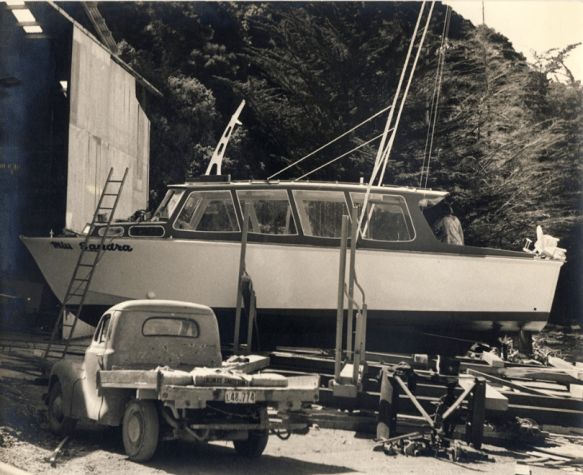
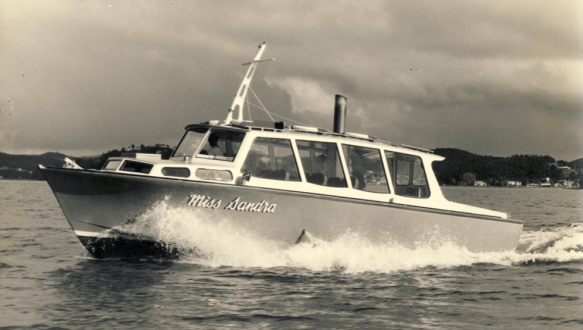
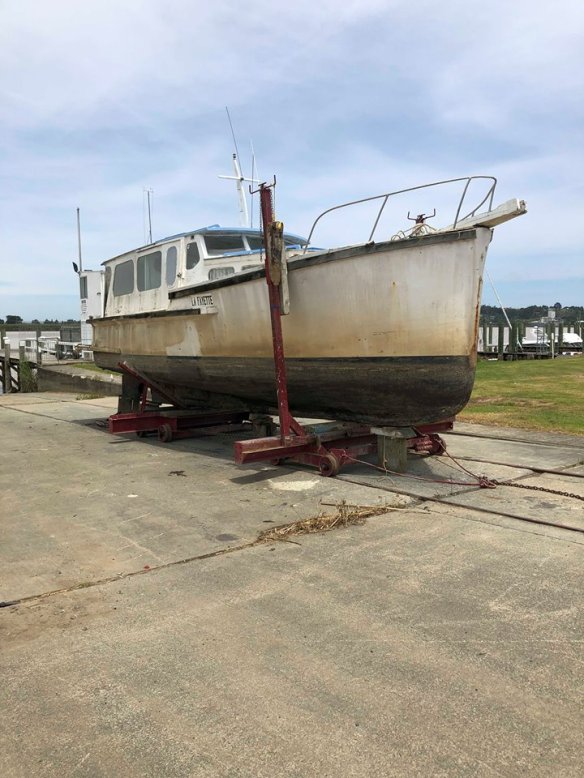
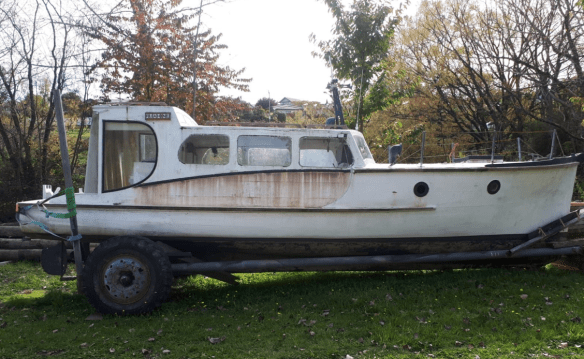
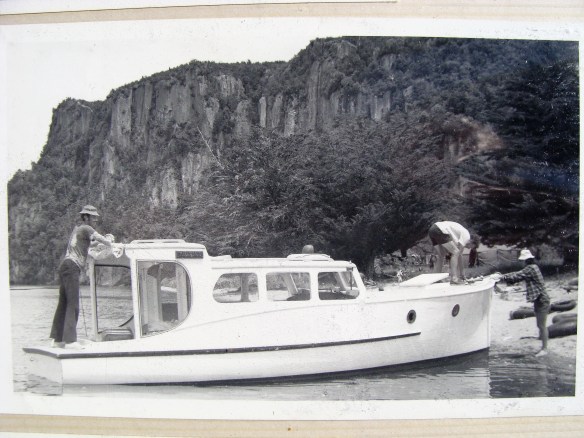
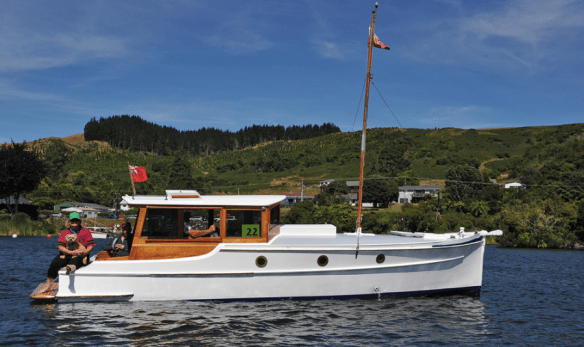
Today’s woody comes to us via Greg Philipott’s fb page. Greg commented that Miss Sandra was built c.1962, probably in Auckland (tbc).
She was named after Lola and Snooks Fuller’s daughter. Then renamed Kokiri after NZ Shipping / P&O purchased Fullers from George Wooller.
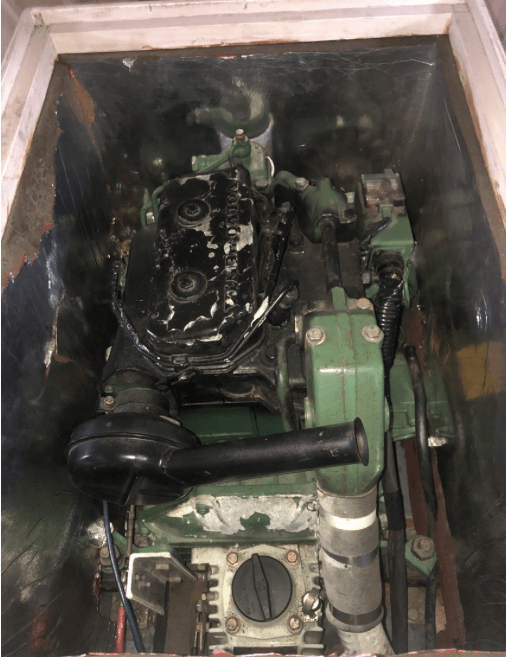
Chris Brittain commented on the fb post that Fullers repowered her with a GM 671.
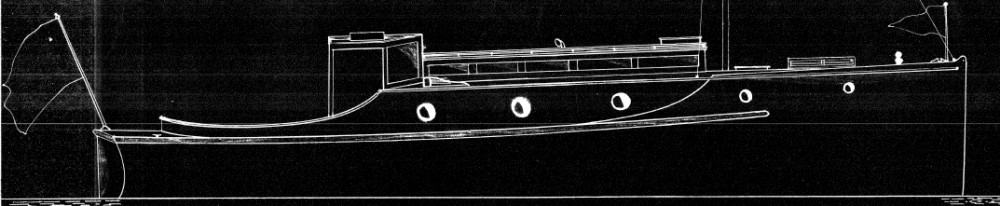
Nathan Herbert also commented that her hull looked like an early Jim Young design.
Greg is keen to learn more about Miss Sandra. So woodys any details, stories, photos?
Input from Graham Clifford
“I was a full time skipper of Miss Sandra from 1967 – 71 when she was engaged in big game fishing, light tackle winter fishing and occasional runabout duties. I continued my association with her on a piecemeal basis in the years after she retired from fishing in 1971 and took her new name “Kokiri.” Under this name she was used variously as a scenic cruise boat, a pilot boat to and from ships visiting Port Opua and a general roustabout.
Miss Sandra was a 36 foot Vindex hull built of kauri in Fullers new slipway shed at Russell in 1966. I was present during her construction. In late ‘66 I took over as her gamefishing skipper. Together we captured a 547 pound blue marlin. The following season, in March 1968, we landed and weighed the biggest marlin caught in New Zealand waters, a blue marlin of over one thousand pounds (1017 lbs)
Miss Sandra was originally powered by a 6-cylinder Fordson diesel but was soon repowered with a Caterpillar turbo charged engine which gave her a top speed of 20 knots light. I used this engine for more than two years. In 1967 I used Miss Sandra and her speed to assist Police in the transfer of a stabbing victim from a ship which arrived in Doubtless Bay. The victim (Wylie Hanby Roberts) needed hospital treatment and would have certainly died had the ship not diverted to Doubtless Bay. Miss Sandra had the speed to get from the Bay of Islands to Doubtless Bay in time to meet the ship offshore. The Caterpillar engine was replaced in 1969 with 6 cylinder Fordson and again with another Fordson. Her final re-powering was with a noisy GM which coincided with her name change to “Kokiri.” Her gamefishing days were over. She became a part time scenic cruise boat fitted with airline-style seats and a small public address system. This role did not suit Kokiri well and I personally shunned her other than to favour her for pilot duties. The two principle maritime pilots liked her for her speed.”

















 waitematawoodys.com #1 for classic wooden boat stories, info, advice & news - updated daily - 15+ million views