Royal Irish was built by Bailey & Lowe in August 1913 for H.C. Williamson of Cape Runaway and named after a currently popular racehorse.
She is a 32 footer, originally powered by a 4 cylinder 18-35hp Sterling marine engine. She broke away from her moorings in the winter of 1914 and was shipped by scow back to Bailey & Lowe in Auckland for extensive repairs.
Royal Irish remained on the Bay of Plenty coast for many years. Joe Addison of Waimana owned her during the 1940s when she had a 3 cylinder Ailsa Craig diesel. In 1941 she broke down off the Raurimu Islands. Addison sent off a carrier pigeon with the details. The Whakatane pilot boat ‘Port Whakatane’ went out and towed her in. Addison sold her to Charles Bell of Waimana who replaced the Ailsa Craig with a BMC Commodore.
By 1975 she was owned by Barry Davies of Leigh and she’s been in and around Leigh ever since. In fact still fishing out of Leigh today.
Tough old bird!
At some stage today the counter on the watematawoodys.com blog site will tick over & show that people have viewed the site 1,000,000 times.
I choose the above photo for todays post because to me it captures what the classic wooden boat movement was / is all about. Its got everything there – motor boats, yachts, dinghies, people hanging out having a good time – there is even a dog 🙂 . The location is obviously Mansion House Bay at Kawau Island. The photo was sent to me by Robert Brooke & is from his father’s, Jack Brooke, stunning collection. (click on the photo to enlarge)
When I look back at the first few posts on waitematawoodys its amazing how we have evolved & now how big the audience is both in terms of numbers & the geographical reach.
I would like to thank all the followers of the site, but special thanks must go to everyone that sends in material (photos & info). Doing a daily post can be a little challenging at times but just when I start to panic, an email arrives from someone with some old photos of granddads boat. I would also like to thank Harold Kidd who gave me a swift kick in the backside 2 years ago in terms of getting serious about the site & the accuracy of the content. I would be embarrassed to say how many hours I had to spend to go back & populate the existing posts in terms of year, designer,builder etc but now the site is the #1 reference tool for New Zealand classic wooden boats. But that is a by-product, the real success of the site is that everyday it delivers to people something fun & enjoyable to read & interact with, something that puts a smile on their face.
Way did I start waitematawoodys ? – well the idea came to me via my involvement in the NZ Classic Yacht Association, the CYA is a great club but like most small clubs it can be seen as slightly cliquish, we do so many neat things but the audience is small & there are so many more people out there with an interest in wooden boats. With the birth of social media networks, stuff (photos, stories, info) that had previously been packed away, could now be available to anyone with a computer or smart phne. The future was all about content being on-line & easy to access. It was also about being collaborative. With the advent of personal websites (called blogs) people like myself are able to create a communication channel that has no boundaries. But more importantly blogs are able to be managed/controlled so that they remain true to the topic, which in the case of waitematawoodys is – the study & appreciation of classic wooden boats & the desire to tell the stories behind them & the people who built them, owned them & crewed on them. At the start the content was all about motor boats but as the audience has grown the readers now have a broader interest in all classic wooden boats & things related to them.
Why did I call it waitematawoodys – now I could put my advertising hat on & rabbit on about what the words mean to people but the simple truth is its just a cool name & looks great on a tee-shirt 🙂
I still get a buzz out of posting daily & from the feedback I get, so do you. But folks – do not hold back on spending stuff to me, some of it in isolation may not be enough for a post but I file it & then bang, someone else sends me something on the same topic & we have a story.
Again thanks for being part of waitematawoodys & remember – its all about wooden boats.
Cheers Alan
ps below is an advertisement I made to plug membership of the CYA (you should join up) the photo (ex Chris Miller) shows we are still enjoying these wonderful craft. If you look hard that’s me in my number one clinker dinghy – I say #1 because there are a few………….. 🙂
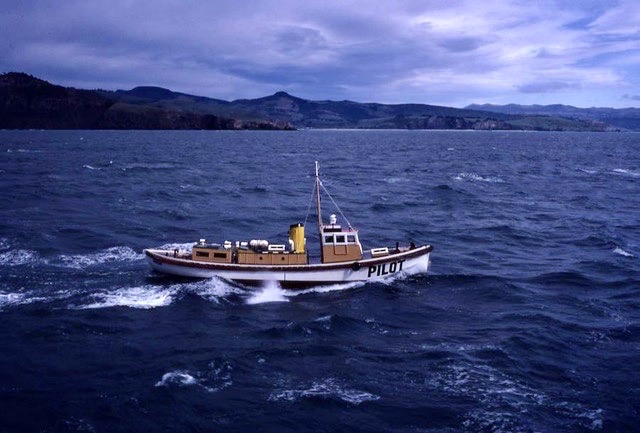
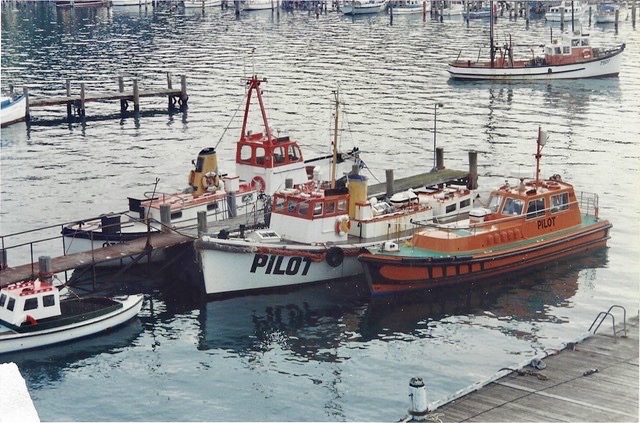
The above photos show the launch Pilot competing in the Whangaroa Classic Boats Game Fishing Contest. She was based up in Houhora at that time. Not a lot of brain cells were used up when they named her, as in her previous life she used to be the pilot boat in New Plymouth 🙂
I’m keen to learn a little more about her, anyone able to help?
More photos from Dean taken in 2007. At the time she was owned by Paul Nattrass.
Todays post is a complete mystery to me. When looking thru the ww photo files I discovered a folder tagged ‘Ronomor????’ . At some stage I must have ear-marked it for future reference / follow-up. If someone out there sent these photos to me, I apologize for the void.
Now folks – anyone able to supply more info on her or ID the people in the photo, that would be good 🙂
Update – Slightly embarrassed – I have posted Ronomor before. But todays post has prompted Baden Pascoe to send me the great story below – enjoy the read.
RONOMOR & HER KEEPERS
One of my favourite pastimes is to roam around commercial wharves and docks and look at the old and the new workboats. I get a real kick out of seeing a well set up work boat that is well maintained and ready to deal with the many challenges she encounters when at sea.
Every time I see a boat that meets these standards my mind goes back 40 years to the days when Bert and Neil Chaney owned and operated the immaculately kept 36” fishing boat “Ronomor”. To this day I would still award them first prize if this activity were some sort of competition. Some people maintain that work boats cannot be maintained to a high standard when operating them in a commercial environment. The Chaney’s however managed to do this year in and year out with a wooden vessel that was not purpose built for commercial use and was 50 plus years old. They worked “Ronomor” very hard in all weathers, but they always put back what they took out of their boat. They were very successful commercial fishermen in all aspects of their profession.
A few years ago I did some research to try and find “Ronomor” and after a few months, a friend of mine spotted an old launch that matched her description. Sure enough this was the boat I had been searching for and remarkably she was still in reasonable shape. She is so typical of the many old pleasure launches that were converted to harbour and coastal fishing boats. Unfortunately due to their mainly light construction not many of them have survived.
“Ronomor”was built at Stanley Bay by Wattie or Davy Darroch in 1908. Some time before 1920 she was lengthened and a canoe stern was added to give her a total overall length of some 36’. Before she was built the Darrochs used a dinghy to row from Devonport to the city and to any other destinations on the Auckland harbour . When they built this launch they knew their rowing days were over and so the new boat was appropriately named “Ronomor”. I’m sure that the builders had many adventures in this lovely little launch and there must be many stories about their life and times with the boat.
The name of the next owner of the boat is unknown at the stage but she was based in Napier, and it may have been at this time that she was converted to a fishing vessel.
Bert Chaney purchased her in 1939 and steamed her to Tauranga. At this stage she still had a Scripps, which was possibly the first engine to be installed in the boat. These well proven marine petrol motors were imported by T.M. Lane & Sons (Later Lane Motor Boat Company). The engine was fitted with battery ignition. On one occasion Bert was picking up his long lines by dinghy (a technique he used by himself) when on returning to the boat he found a flat battery. “Ronomor” was anchored in the lee of the Alderman Islands, and he had no option but to row to Whangamata and buy a charged battery. He set off again and returned to the Alderman’s arriving late in the evening. The battery was fitted and the Scripps fired up. On his return to Tauranga he had a magneto fitted!
In 1944 the Chaney family moved to Whitianga, and “Ronomor” was used to transport the entire contents of their home. Neil recalls that the later part of the voyage was hard going because the weather had turned bad. At this stage the vessel had a JP 2.21 Lister as power and progress towards Whitianga in heavy weather , with a huge load on board was hard going. Once the Chaney family were relocated in Whitianga, Bert set up his fishing business and concentrated on cray fishing and long lining. From time to time he would undertake charter work, when the big game fishing season was in full swing. He was a very popular skipper with overseas fishermen who came to Whitianga for the International competitions. He was well known for his double strikes of yellow fin Tuna on light tackle, and Hank Newman from the New South Wales Fishing Club was one of his regular clients. In 1947 Bill Clark, another well known Whitianga fishing identity, fishing from the “Ronomor” landed what has been considered the largest marlin caught in New Zealand waters. At the weigh in the antiquated scales, which only registered to 900lbs, flicked fully around, but the estimated weight of the fish was in excess of 1000 lbs. The fish was played for 12 hours and 10 minutes. A marathon that would match the stories of Hemmingway ‘s “The Old Man of the sea “
In the mid 1940’s she was steamed to Auckland and the JP 2 was removed and a new JP 3 fitted. This gave her a top speed of 8-8.5 knots. Bert continued his charter work and was a very active member of both the Mercury Bay Game Fishing Club and the Mercury Bay Boating Club. “Ronomor” featured in most of the launch races at the Mercury Bay Regatta.
As I stated Bert and Neil maintained the boat in a meticulous manner. Every year she was slipped at Whitianga and any repair that was required,carried out. She was sanded and repainted to a high standard. Every few years all paint was removed from her hull and super structure and she was taken back to bare wood. My Father was the only person Bert would allow to carry out any structural work. Whenever “Ronomor” was hauled out Dad would be working on her and I would make visits to the beach at the bottom of the road and inspect the day’s work. This always started with a cup of tea made with condensed milk and some of Mrs. Chaney’s home cooking. Bert and Neil would always make me welcome.
In the early 60’s the JP 3 picked up a liner during a cray fishing and long lining trip. Bert and Neil were at the Red Mercurys when this fatal mechanical incident occurred. Before they could reach the engine room the damage was done. Unfortunately the JP 3 was beyond repair and had to be replaced. A new Lees Marine (Fordson) 6 cylinder was fitted by Allen Watson (Marlin Motors) and my Father did the structural work. The Lister gearbox was retained and fitted to the bell housing on the new Fordson.
In the late 60’s early 70’s Bert retired and put “Ronomor” on the market. A young Whitianga man Ian Clow was about to start a career in commercial fishing and he immediately identified “Ronomor” as a “turn key” operation. He followed in Bert’s footsteps and in a very short time gained a reputation as a true professional out of the same mould as Bert Chaney. He worked the boat very hard and continued in the same way as Bert and Neil had done in maintaining the boat to the highest of standards. Ian told me of some very close calls he had while working his pots. One day he had a line around the prop shaft and lost all control over forward and reverse. He had to very quickly remove the inspection plate of the old Lister gearbox and hammer the brake band free to enable forward motion. All this was taking place while his boat and crew were about to grind themselves to death on a group of rocks only a few feet away. Another incident he recalls was lifting his pots at Devils Point and the echo sounder block was sheared off the hull by a large rock. ‘Ronomor” took on water rapidly through the bolt and transducer holes, and they had to make a dash to the closest sandy beach at a speed of 10 knots. My Dad had to come out and temporarily patch up the boat and she was steamed back to Whitianga for slipping and repair.
Ian did not have to do a lot of modifications to the boat in the time he owned her. He did replace the Lister gearbox after the rope around the prop incident and my Father replaced some of the Pohutukawa knees and fitted some stringers to the cockpit area to stiffen the hull. Ian also fitted an AWA double sideband radio that had been purchased with a donation given to him by two men who were rescued by a foreign freighter and transferred to “Ronomor” near the Southern end of Ohinau Island . One of the last things Ian did was to replace the Fordson with a later model. I must mention that Ian’s brother Graham designed and built one of the first “power blocks” ever to be used on small fishing vessels in New Zealand. This enabled them to work more pots and was a great advantage to them.
Ian had now been in the fishing industry for 35 years and after owning nine commercial fishing boats he rates “Ronomor” as one of his better boats , and says that she set him up for his future. I’m sure Bert would be proud to hear him say that and proud of the way he looked after the vessel. Ian sold her in the early 80’s to a fisherman from the Barrier.
The last time I saw “Ronomor” was about 15 years ago tied up at the viaduct. She was not in the mint condition that Bert and Ian had maintained her to. I felt a little sad when I saw her.
I am about to meet Ron Eastlake who now owns “Ronomor” to hand on to him the history I have collected of this remarkable old vessel. I look forward to seeing her again and I will be encouraging Ron to preserve what I call a historic boat. She would be one of the last surviving boats built by the Darrochs who were New Zealand’s most innovative and famous scow building family.
Electrochemical Damage To Wood – the marine version of ‘leaky homes’
Story & photos by Chris McMullen. Edited by Alan H
NOTE: The photo above is the residue left from a heart kauri floor. The keel bolt had been bonded for ten years. Impossible to affect a proper repair as the bolt went through the deadwood.
Today’s post appears on WW for three primary reasons:-
#1 the author Chris McMullen is someone I & most intelligent, thinking boaties respect.
#2 waitematawoodys is all about the study & appreciation of classic kiwi wooden boats – if people do not wake up, there wont be any to appreciate.
#3 this information needs to be stored somewhere like waitematawoodys so when people are searching the topic of electrochemical damage in wooden boats, they will find this & be able to make their own decision based on sound, robust debate like the below.
Most people are aware that Chris is one of NZ’s most respected boat builders and at one time was the Lloyds (Honorary) Wood Boat Surveyor in Auckland. Chris’s (The original Co) “McMullen & Wing” built and repaired wood, steel and marine aluminium vessels. They built the first welded aluminium vessels in NZ.
Public opinion back then was, “They were mad” and the hulls would fiz and corrode in salt water. Not so, and now aluminium is used for not only yachts but all types of commercial vessels.
Chris is also the custodian of the magnificent classic Colin Wild launch ‘Wirihana’.
Chris is constantly asked for advice on kauri vessels with wood degradation problems. His view is somewhat different to many marine industry technicians in NZ but backed up by Yacht Surveyors in the USA and the UK.
If you don’t have time now to read this post today, please bookmark it, as I guarantee it will at the least have you doing a double take.
Update 06-06-2015 – if you are time poor scroll to the bottom, new info & photos added
I’ll let Chris tell the story. Alan H
Chris McMullen – I am absolutely convinced that any wet wooden (caulked) vessel is doomed to a slow death if dissimilar metals or zinc anodes are fitted and bonded by wire to underwater metal. I do not reject the theory of cathodic protection; in fact I use it and zinc anodes on my steel floating dock. The problem is the wet wood component. There is a voltage between any two connected (bonded) dissimilar metals and the wet wood completes the circuit. Any voltage in the wood (from any source) breaks down the lignin in the wood round the cathode (protected metal) and that is the issue.
The white corrosion byproduct formed, Sodium hydroxide, is used for pulping of wood in the paper making industry! Want this on your wooden boat? Yuk!
Included below are some links to technical papers written by wood chemists rather than by metallurgists. These articles are not new but quite convincing and are parallel to my thinking and experience.
It seems however that people don’t like reading technical stuff. And it’s (I guess) easier to read and believe what is written in a local boating publication.
I decided to do an experiment to prove my point.
I used a length of 6”x 1” pine. I bolted to it an old zinc anode and about a metre away bolted two bronze objects. I connected one to the anode with a copper strip and the other is close by but not connected to the anode.
I hung these on a rope in the water of the Tamaki River (salt) off my floating dock.
After six months, I pulled the test rig out and cleaned off the considerable marine growth.
I removed the bronze objects. Under the one connected to the anode was a black stain and the bolt fell out of the hole. The other, the bolt had to be punched out and the timber was clear bar some copper residue.
I photographed the test & also took the voltage readings between the metals and also the metals potential against a silver-silver chloride reference. (click photos to enlarge)
The minor damage done to my test piece is the result of only six months submersion. I will put it back and check in another six months.
It is however, quite obvious to me some thing is wrong and in time the wood will deteriorate further. If this is due to a voltage (less than half a volt) well, you can imagine the damage coursed by electrical stray current, and that is likely on old boats. My test rig is very basic and not influenced by other factors.
Sure, the wood may be less effected if painted and if the bronze was insulated by bedding compound. The damage can take years but our kauri boats should last indefinitely if we don’t do things that destroy them. Someone is bound to say I have over sized the anode on my test and thus the timber damage. I know that is the case but I had to accelerate the process.
On a boat it is almost impossible to size an anode correctly due to wasting and wiring faults in inaccessible areas of the bilge.
The point I am trying to make is:
Eliminate any current flow in the wet wood.
If you bond metals underwater you are inviting problems.
Further, a stray leak from the ships battery will do far more damage in less time. I believe most metal corrosion problems originate from this source. Cathodic protection will do nothing in this case.
Again, bonding will encourage a circuit. Remove the bonding and you have no circuit.
Want to check your electrical system for stray voltage in your wet hull?
Connect a voltage meter between the positive on your battery and any bolt or fastening in your hull. You may get a surprise. It may be 12 volts but high resistance so you can’t light a bulb but enough to cause corrosion.
If you have bonded underwater metal, the surprise maybe an expensive. For a start, try tightening the lag screws fastening the stuffing gland to the shaft log. If you don’t, a surveyor will, if you ever want to sell your ship.
History
In Yachting World Magazine March 1957 Mr. MG Duff wrote a convincing article headed “Stern Gear Corrosion” (cathodic protection for underwater metal fittings on wood yachts”.) In the article he never mentions wood degradation! He did not know until the problem showed up years later, see below.
The subject article date (1957), ties in with my memory of Jack Brook (head of the old D.S.I.R) yes, Robert’s father, and Alan Odell (Professor of Chemistry) fitting an Anode on the Tobin Bronze(H/T Brass) shaft of Alan’s Logan yacht the “Mahaki”.
I was only a kid who happened to be at Devonport Yacht Club with the Odell’s that week end. I remember a crowd of onlookers thinking this was black magic.
I believe this resulted from the Duff article. Later Jack Brook had the DSIR print a pamphlet on the subject. Sadly, (like Mr Duff) these academics never thought about wood damage.
Now using anodes did not catch on here until the late1970’s when a local business man saw it as an easy way to print money. He, like the Duff article was very convincing and I am sure well meaning. Some wood boat owners now refer to him as Dr Death! (I never coined the name)
Since then almost every marine electrician has got in on the bonding scheme. It was a new subject for books and magazines, now some misinformed boat owners are pushing it too.
On a hard stand a boat without an anode stands out and in many eyes shows an uncaring owner and will draw criticism. This is mistaken thinking and sadly is self perpetuating.
Please consider, “Logan, Bailey and Wild never used cathodic protection. They had knife switches and crude electrical systems but no bonding! Their boats lasted 60 years plus. ” Why should we use anodes?
As an apprentice wooden boatbuilder, we were told at night school, I quote “ “Never use dissimilar metals underwater” and further ” never use brass”. These days the advocates of bonding use zinc underwater! What could not be more dissimilar or further apart on the Galvanic scale?.
In the 1960’s and prior to that, boat builders used bronze and copper only. There were no stainless shafts available ex stock in New Zealand.
Despite working on all sorts of boats, I never saw the timber degradation I have sighted in recent times. Sad, as we no longer have the kauri or people with the skills to affect these sometimes major repairs.
The boating public and boating industry technician’s have been mislead by a situation rather like “The Leaky Homes”, just because everyone is doing it, does not mean that it is right.
This problem was aired in Wooden Boat Magazine (30 years ago) Also in Classic Yacht Magazine. I sent some information to New Zealand Boating magazine. They showed no interest. Their advertisers sell anodes! Big business!
Further, the NZ Marine industry is partly to blame. Locally made strut bolts were made from tobin bronze! tobin bronze (these days) is brass and in my opinion unsuitable underwater. Their “Through Hulls” were made of gunmetal that although a bronze, is in my opinion a very poor choice of material. Use aluminium bronze or silicon bronze or reinforced plastic.
Cheap propellers are made of manganese bronze. Again a poor choice (these days) and little better than brass! Use aluminium bronze for propellers.
Bronze gate valves have brass spindles. Use reinforced plastic valves.
A lot of confusion comes from reading old books. (See L Francis Herreshoff “Common Sense of Yacht Design”) He recommended tobin bronze (Trade Name) and manganese bronze.
These are now generic terms. Both materials were (possibly) once good marine metals but over the years the makeup of these alloys or the way they are cast has changed and as a result I believe their resistance to dezincification has been compromised. This is evidenced by. See https://www.flickr.com/photos/109707376@N06/11134934714/
This manganese bronze propeller (Mizen Head Ireland) had been underwater 100 years! I checked it out some years ago. The bronze blades with the “Stones” trademark look perfect. The Stones Co. built ships propellers all from manganese bronze! Yes, the iron hub was an anode and (possibly) protected the bronze. A perfect example of cathodic protection! Note.There was no WET wood involved.
I talked to the new owner of Chatfield Engineering. He tells me they are now using silicon bronze for strut bolts. I say “Not before time”!
Sopac Marine Ltd is importing “Groco” silicon bronze hull hardware from the USA. They also stock aluminium bronze plumbing fittings that will last forever.
Support the local manufacturers? Unless they tidy up their act, they do not deserve your support.
Please remember bonding poor quality underwater metals does not guarantee their security. Read about “Random Harvest” (Link below)
Boats are supposed to be fun but you really have to be an expert to keep your ship afloat.
It all comes down to attention to detail. Use the right marine materials, be sure your wiring is done properly and your boat will not suffer from metal corrosion. You certainly won’t need bonding or anodes.
Sadly, for most it is too late. Cut the bonding & remove the anode but the caustic soda corrosion byproduct previously formed will remain and continue to soften the timber. Remove the effected timber round the cathodically protected metal or live with the problem caused by LOVING YOUR BOAT TO DEATH.
Some hints to eliminate DC Voltage Leaks in Boats.
1. Insulate the negative connection from the frame, on alternators, generators and anchor windless motors.
2. Use two pole senders on the engine alarms.
3. Install a solenoid on the starter motor negative so it is only connected as the engine is started.
4. Battery switch’s can leak. Have a second switch on the negative.
5. Be sure your bilge pump is wired correctly and in good order.
6. Use an insulated gearbox to shaft coupling.
7. A Furuno depth sounder is two wire but the bronze housing (like an alternator) connected to the negative! Sleeve it with plastic so there is no connection to the wood. Leave it, and it is unintentionally bonded and you have a circuit.
8. If you have shore power, use an isolating transformer.
9. If you still must bond for safety purposes? Well, accept the fact you have made a circuit and face the consequences, maybe you should not have a caulked wet wooden boat!
Why go to all this trouble?
The negative wiring in the ship can act as bonding wires if the appliance on the end has been designed for automotive use (chassis metal is usually the negative ground on a vehicle.) and touches damp salty wood. Say, for example, you have a negative leak in the autopilot drive that is coupled to the rudder that carries an anode. You once again have made that dreaded circuit and the wood round the rudder gland will suffer.
On a metal boat all the above is mandatory.
Put up with some minor corrosion.
It is easier, to replace a metal fitting than the wooden hull structure. Further it is pointless putting an anode on a aluminium bronze rudder (as is often seen) Of course the anode will erode. The bronze is a marine metal and does not require cathodic protection. If it has a stainless Shaft well that is dissimilar metal underwater. If it corrodes, change the shaft to bronze is the best advice.
If you are worried about your stainless propeller shaft, have a cast iron (nut type) sacrificial anode made. It should only have contact with the shaft not the bronze.
I write this (as a boatbuilder and certainly not as an expert) It is the result of my experience and research into a problem, I first noticed thirty years ago but seems more prevalent in recent times.
I share my observations, for the benefit of classic boat owners to help assure the long life of their vessels.
There is nothing in this for me.
For those interested I would encourage you to click on these links & read carefully.
If nothing else page 4. Written by a Wood Chemist in the USA.
Nothing has changed, except I gave up, trying to convince people. It is no fun swimming against the tide.
See below on how to make paper.
Soda Pulp
Soda pulp is the original chemical pulp and is produced by cooking chips of (usually) deciduous woods in a solution of caustic soda under pressure. This leaves a relatively pure cellulose pulp which is then washed and bleached. Soda pulp produces relatively soft, bulky papers (as a filler with other pulps) used in books, magazines and envelopes. Caustic soda dissolves most of the lignin in wood while having little effect on the cellulose. Cooking liquor is recovered during the washing process.
It Is Not Just A Wooden Boat Thing
The photos below show a carbon fibre boat and a fibreglass yacht bonded and with electrical issues. The point here is that all boats can have electrical issues. On these boats it showed up. On a wooden boat the damage is invisible until it is too late.
This slideshow requires JavaScript.
06-06-2015 A Short & Hard Hitting Update From Chris – Read It, Its Pretty Simple Really!! Alan H
Less zinc, more zinc, over zincing are terms used by those who have recommended bonding to their clients and when things go wrong and they will. They have to have an excuse.
Please consider the following.
Sodium hydroxide or caustic soda is the chemical that damages the wood. This chemical is used for pulping wood and used in the paper industry
You will find the requirements are a positive and a negative electrode of say carbon, a container of brine or salt water and a power source i.e. a battery charger or a battery.
Now on a bonded boat you have a zinc anode that is positive and the protected metal (the cathode) is negative. You have the sea water electrolyte and if you have any stray current (and that is likely) you have the power source.
You don’t actually require the power source as there is a natural battery with a continual current flow from the electro-positive zinc anode towards the protected metal or electro-negative cathode.
So in effect you have a sodium hydroxide manufacturing plant (factory) incorporated in your bonded boat. Now this plant runs 365 days per year or until you sacrifice the anode.
If there is an electrical leak on the boat, well the plant ups it production.
Now the sodium hydroxide coats the protected metal and the old wet wood assures an all over electrical connection.
So it is the sodium hydroxide that causes the degradation of the wood surrounding metal on all bonded wooden boats.
Unfortunately, there has to be a current flow between any connected dissimilar metals and zinc is way apart from copper and bronze on the galvanic scale.
So it is obvious you should not use zinc anodes and bonding on a wooden boat.
Sorry, this is not what some of you wanted to hear and it is contrary to popular belief in NZ. Remember, popular belief does not mean it is right.
If you don’t take my free advice, it will not be long before a boat repairer welcomes you to his yard. He may not be as charitable.
Chris McMullen
Auckland. New Zealand.
1/6/2015
Remember – click on the photos to enlarge & read captions 😉
Sodium Hydroxide production requires voltage, salt water and a cathode protected by an anode. this after two hours!
Serious Corrosion overnight.The + is connected to a piece of 316 stainless steel tube
sodium hydroxide build up on cathode after two hours
sodium hydroxide build up on cathode skin fitting after two hours
High quality bronze gate valve with brass spindle
316 Stainless steel tube as the anode after 12 hours
Movie showing gas coming off the bronze cathode The Anode Zinc accelerated with 12 volts – click link below
04-07-2015 Additional reading below on the electrochemical degradation of wood in boats from Chris McMullen.
I have heard that some boat builders/ repairers are of the opinion that bronze and copper stern gear is the cause of damage to the wood in shaft logs.
Their fix is to remove this hardware and replace them with a carbon fibre tube and reinforcing.
Sounds like an answer to a problem that does not exist.
There is nothing wrong with the bronze and copper stern gear, it should last the life of the boat or longer. The problem is the fact, that the hull was bonded and catholically protected with a zinc anode. The unnecessarily protected cathode produced sodium hydroxide (caustic soda) and this chemical destroyed the wood.
Possibly, and likely there has also been an electrical leak and this has accelerated the process. The bonding encourages this scenario by creating a circuit.
Sodium hydroxide is a used to pulp wood chips for making paper!
I ask, why not just renew the wood, replace the existing bronze stern gear and remove all the bonding and anodes?
But no, that is too easy, the unfortunate bronze and copper get the blame and is sold for scrap and the new carbon fiber miracle material comes on the scene.
No one it seems has bothered to look at the ‘Galvanic Series of Metals’.
Carbon is right at the top. It is highly conductive and electro negative. All metals are anodes and sacrificial to carbon.
Zinc is at the bottom electro positive and anodic (sacrificial) to all metals.
So if there is any bonding (intended or otherwise) there will be a current flow from all the metals on the boat through the salt water to the carbon fibre and all the copper and bronze in the boat are anodic (sacrificial) to the carbon.
You now have an even bigger battery sitting in the marina than you had with the bonded bronze, copper and zinc. A floating sodium hydroxide factory! This is working 365 days per year making a chemical that will destroy the wood in your boat.
Don’t believe me? Check out the movie showing my experiment.
You can try it yourself. A piece of carbon tube, an old zinc anode and some salt water electrolyte in a glass or plastic container. Couple the positive of a battery to the zinc and the negative to the carbon. Wait two hours and you will have a thick layer of sodium hydroxide or caustic soda. Exactly what happens on your boat but accelerated.
If you have a wood degradation problem please insist the boat be repaired exactly as it was built and replace the hardware.
Remove all the bonding and the zinc anodes and I am sure you should have no further problems.
However, be aware that a bonded boat will have the dreaded caustic soda round all the bonded metals and that will remain even when the bonding is removed.
Sorry, there is not a lot you can do other than remove the hardware and wash it out.
Sodium hydroxide Na OH is an alkali. It is neutralized by acids (vinegar)
This can be a big job if done properly but less expensive than replacing timber. Stop the producing the chemical is easy and the most practical solution.
If you have already used carbon fibre underwater on a wooden boat (dread the thought) make sure it is not bonded. Do everything possible to isolate the carbon and on no account use zinc anodes.
Bonding and anodes are the biggest risk to our classic wooden boat fleet.
We are only custodians of our heritage boats. Eventually, someone else will take over our roll.
If you want your grand children to enjoy owning a classic wooden yacht, I urge you to remove all anodes and bonding from your boat.
I am an experienced boat builder, not an expert, this is just common sense. I write because I care about your classic wooden boat, unlike your bank balance it can’t be replaced.
Some times I go on a little bit about excessive / OTT fly-bridges on old boats & have been known to use the words ‘a block of flats’ – I was sent the photo below which would have to win 1st prize 🙂
Following on from yesterdays ‘Aquila’ post & the debate over the identity of the launch in the background, Merv Stockly sent in the above 1954 photo of Ngaroma.
Ngaroma was owned by Merv’s wife Lyn’s father, Don Ross, who was game fishing with Ngaroma out of Whitianga until around 1962.
Any woodys able to pad the details on Ngaroma out e.g. designer, builder, other owners, todays whereabouts?
Update from Merv Stockly (edited by AH) – ‘Ngaroma’ was designed and built by Collings and Bell in 1910 but she was launched as `Hazel’ for an E.R. James, an American living in Ponsonby. She is listed in Harold Kidd’s book on classic lauches as `Hazel’. Don purchased her as `Ngaroma’ and used her for game fishing charters until he later updated to `Miss Lidgard’. Don will be chuffed to see her on ww . I print out your daily `woody’ for him each day after we give him breakfast. He lives for the sea and boats but now at 92 can only remember and look at pictures.
The small photo below was sent in the Brian Worthington & show Ngaroma fishing out of Whitianga with a big black marlin on her counter. The Aldermen Islands can be seen in the background.
Todays post is one of the ones I love, lots of details & lots of both old & current photos.
Koputai is a heavily built pilot stye hull weighing almost 40ton. She was built by Miller and Tunnage of Port Chalmers and launched in 1939. She served as a pilot vessel until the early 1990s when she returned to Miller and Tunnage to be converted to a pleasure boat. Since she has circumnavigated NZ twice including Chatham Islands, Great Barrier Island, Stuart Island and the Three Kings.
In 2013 her owner, Louey Sandlant, circumnavigated the South Island after fitting rigging and sails to the boat. They spent April-June in Fiordland with friends coming and going. The boat was perfectly suited to this life with spacious living quarters, a warm wheel house, plenty of food storage and fridge freezer space that easily accommodated 7-9 people long term.
On this trip she averaged 1L/NM at 6-7kts and didn’t get to make much use of the full set of sails. On passages Koputai will motor at 6.5-7kts with some sail for steadying. If there is a good blow she will sail 6-9kts with the engine backed off to idle or just over, this brings the fuel consumption right down & can halve the fuel consumption, making long passages very affordable cruising.
Despite the GM Detroits reputation for noise and thirst, Louey reports they have found it to be a very pleasant piece of machinery to live with. It has been very well set up with a 4.5:1 Allison box turning the large propeller and a sound insulated dry muffler set up with a wet exit making it quiet and smooth. Like most Detroits she runs like a clock.
In the sailing department Koputai has a traditional Bermudan style cutter ketch rig. Louey generally always has the mizzen hoisted for stability and with the stay-sail forward this configuration is balanced and happy up to around 35+kts., in lighter airs the full main and code zero style jenoa as well goes nicely up to around 24kts, she will get along at 8 kts off the wind with engine just ticking over. She feels solid pushing into heavy weather and will safely hold her own against most NZ coastal conditions and her owner wouldn’t hesitate to take her offshore. Koputai has been in survey.
Koputai has had a lot of time & money sent on her – in 2012 and 2013 she under went extensive restoration work, including:
-Complete deck re-corking and refinishing
-Complete new Kauri covering board
-Cabins stripped and refinished and windows refitted
-New stainless steel staunch-ens
-All repairs have been done with top quality treated kauri
-In 2013 she has also had a new sailing rig fitted with Canadian Oregon masts, standing rigging and all new sails made by classics sail maker Bud Nalder.
Everything that has been done to her by the current owners has been done with the highest quality products available for traditional boat building and completed by an experience boat builder to a high standard of durability. A useable finish is achieved while maintaining her traditional style.
The rig was designed to suit the era and fit with the original lines to make a well rounded, practical motor sailor for extensive cruising and expedition.
Recent work June 2014 includes; Full repaint above and below the water, new shaft bearing, new zincs, exhaust through hull fitting removed and inspected and refitted, prop removed checked and cleaned, shaft bearing replaced, shaft inspected and cleaned
Now the sad / good news – Loueys sad news is that Koputai is now for sale – the good news is the some lucky boaty is going to get to own one of the best restored, set up motor-saliers around. I don’t normally put prices on ww but I believe this to be such great value – this time I have – NZD$195,000.
If you wanted to a have a South Island experience for a while, there is a mooring in Nelson that is available to rent or purchase by negotiation and she will be delivered anywhere in New Zealand. I have to say that she would also make a great live aboard.
Her owners are currently cruising north over the next month via Great Barrier so if any ww followers are interested – contact Louey on 0274948028
Some Specs:
Leingth 17.1m – Draft 1.95m – Beam 4.7m
-Engine; GM Detroit 671 New 2008 4090hrs – Dry muffler wet exit. 180-200hp
-Running gear; Allison gearbox, 3 1/2″ bronze shaft, 53″ bronze propeller, solid bronze rudder and shaft with hydrolic steering (new main shaft bearing 2014)
-Power; New batteries all round feb 2013 – 2x290ah AGM deep cycles. 2xNS220 start batteries
-Anchoring; Nilson maxwell 3500 winch (new 1000w motor 2012.), 13mm galv short link chain (New chain 2012.), 80lb manson plow
-Refrigeration; Large 200l freezer/chiller with engine driven compressor(new compressor and switches 2013) Dometic 3way automatic fridge freezer (new 2011)
-Sails; Main, Mizzen, Staysail and Genoa (new 2013)
-3m inflatable dingy with yamaha 8hp – Or a 4.1m inflatable thundercat with a 50hp yamaha with cradle
-lifting gear with elect capstain for loading tenders up 450kg also very handy for lifting anchors and gear on board.
Update 27-08-2020 Photo below supplied by David Balderston, as per his 2015 comments
The Birth Place of Many Woodys photos ex Chris McMullen ex Gilbert Littler
The two stunning aerial photos above of the Beaumont Street boatyards, taken in the early 1960’s by Whites Aviation, were sent in by Chris McMullen via his friend Gilbert Littler. These days Gilbert lives in Boston, USA but in the 1960’s worked at the Baileys yard (2nd photo above) as a boatbuilder. Gilbert was back in NZ recently to sail on Chris Bouzaid’s Rainbow II during the ‘One Ton Revisited Regatta’, which they won.
Chris commented that back in the 1960’s when the photos were taken, any interested young boy could go into a boatyard and watch what was going on. No health and safety regulations. An older guy told Chris one day “Don’t be a —— boatbuilder sonny ‘’ “Better to be a builder.” He told him the boatbuilding industry was too unreliable, hard dirty work and way under paid. Well Chris says he was right, but he ignored the old boys advice and some how survived, with no no regrets.
There are a lot of woody’s in the photos. Lots of history too. Lowes old yard is just south of the Atlantic oil depot. Chris’s old firm, McMullen & Wing Ltd, set up a travelift operation there to replace the St Marys Bay haul out, taken by the Harbour Bridge approach.
Chris commented that they filled the site with brick and concrete from the Union Steam Ship building. The date about 1980. The site was leased from the old Auckland Harbour Board and had some very restrictive conditions over activity and building on the site. It was too tough and Chris got out and left it with his business partner the late Eric Wing. He sub leased it to Kip Kempthorn who eventually bought the lease and managed to change the terms through negotiations with the new land lord “Ports of Auckland “. Chris isn’t quite sure how he managed that but it happened. What is on the site now would never have been allowed under the original lease. The McMullen & Wing site was next to the old Harbour Board slip and is now called Orams number two yard. As an aside Chris recently bought back their original travelift that has been worked flat out for over 33 years.
ESPERANZA II details ex ken Ricketts, edited by Alan H. photos ex B Worthington
The story of how Esperanza II, an American Chris Craft arrived in NZ started in about 1948 when the Fuller family of the Bay of Islands had an American couple, fly over here, to go game fishing on one of their charter boats.
They (probably Snooks Fuller) met the couple personally & instantly hit it off & became instant friends. As a result of this, the extremely wealthily Americans invited them back to America, to stay as their guests, at their waterfront mansion. They accepted & in due course fulfilled the invitation & were amazed at everything the saw. Their hosts had numerous cars, mostly Cadillacs & several boats, one of which was a fabulous virtually brand new 36 foot Chris Craft launch, which was tied up at the bottom of their garden.
They went out & about in the hosts cars & one day the hosts asked the Fullers if they liked the car they were in that day & of course they said they did & their hosts said words to the effect, “well you better take it home with you.” The Fullers naturally thought the hosts were just joking & passed it over.
In the next day or two they went out in the Chris Craft & of course that was out of this world for them, the like of which they probably had never seen in NZ. Once again they were asked if they liked it & of course they said – they loved it, so once again, the hosts said to the effect, “well you better take it home with you.”
Very shortly after they returned home, they got official documents telling them that the car & the boat were on their way to NZ. The Fullers must have been blown away with the Americans generosity.
Esperanza II became the ultimate luxury game boat of her era in “The Bay,” with many dignitaries & prominent guests aboard. She was originally a fairly fast boat, powered by 2 very large Chris Craft V8 petrol engines, when she arrived, these were eventually replaced with Ford diesels.
From the photos above, taken over the years, it appears that she is still alive & well & Ken understands she was in Whangamata fairly recently for a period & is possibly in Auckland these days.
The details of the above ‘story’ were told to Kens family in the 1950’s by friends of the Fullers. Can any one confirm & add more details from her past?




 waitematawoodys.com #1 for classic wooden boat stories, info, advice & news - updated daily - 15+ million views