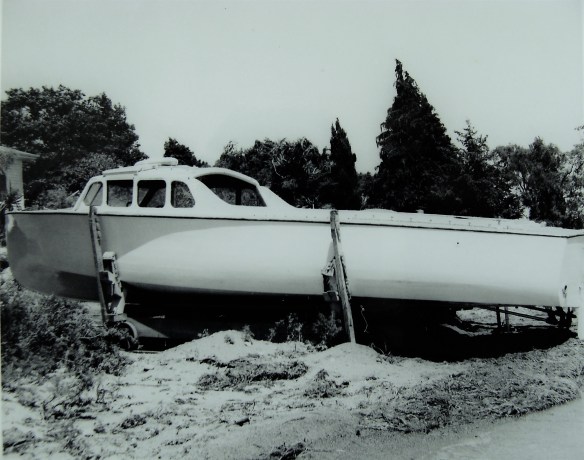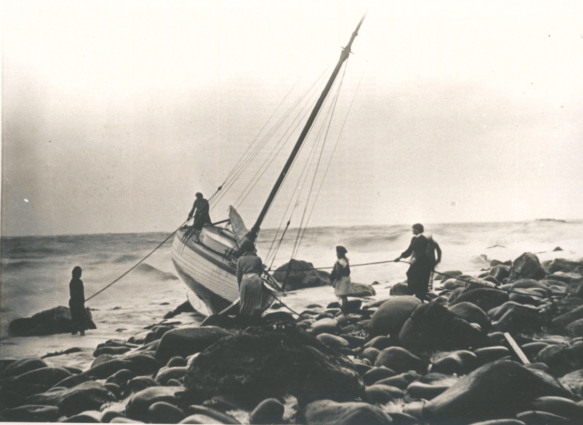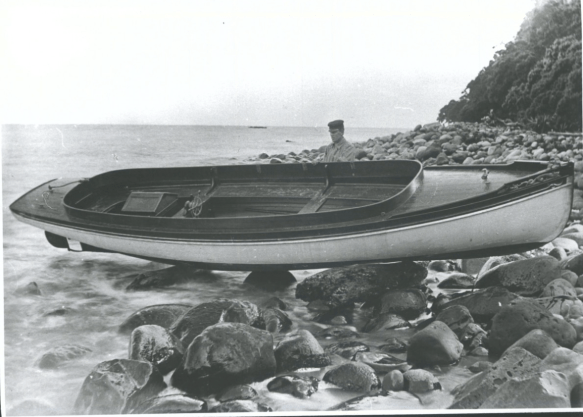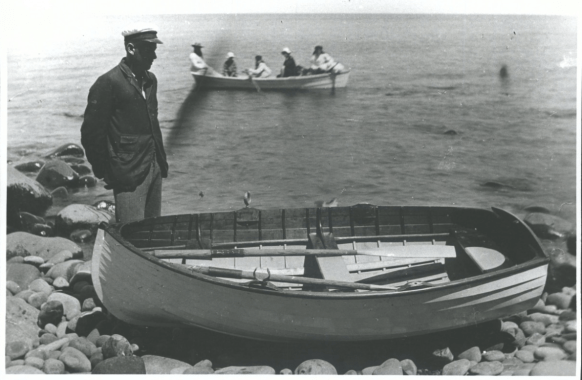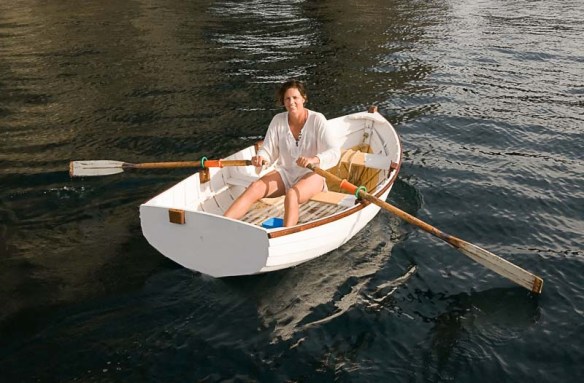
What Happened to Calypso?

Unknown-6

Unknown-2

What Happened to Calypso?

Firstly woodys, I love this story, way too many woodys have had a false start on a wooden boat project & just walked away & given up on old wooden boats forever. Well folks I can tell you Nick Davidson, who sent me the above photos, is not one of them, he bounced back, but more on that later – the main focus of this story is to try & uncover the mystery of Calypso. I have re-produced Nicks letter to me below – enjoy 🙂
Hi there Alan, have been thinking about an old kauri launch that I used to own back in the 1990’s, wondered what became of her and thought that perhaps one of your readers might have some information.
It is a story of hope turning to despair, however without the tough stories and the failures I suppose you don’t end up learning much!
As I am sure with many of your readership I was one of those guys that wanted to get into a wooden launch, however at the time had not much in the way of cash. It was mid 1999 and I was looking at boats for sale on ‘trademe’ as you do and there was an advertisement for an old 40’ kauri launch that was sitting in a shed in Avondale, Auckland and urgently looking for a new home, so I went along and had a look.

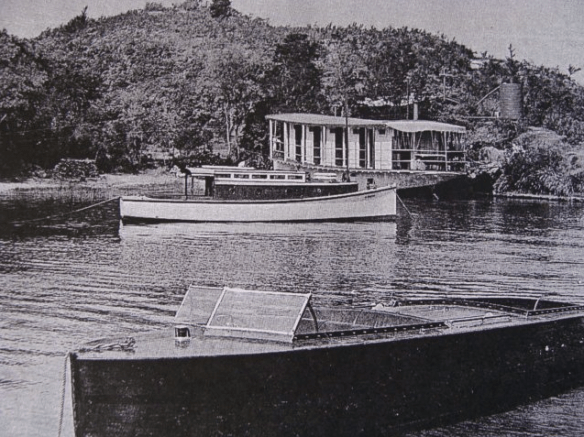
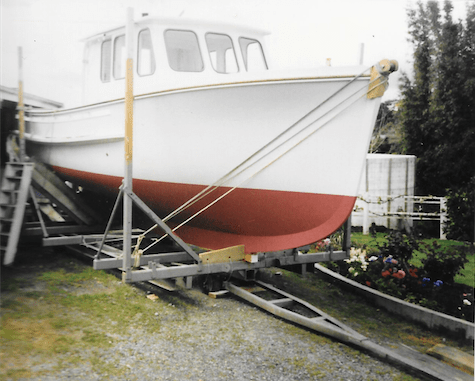
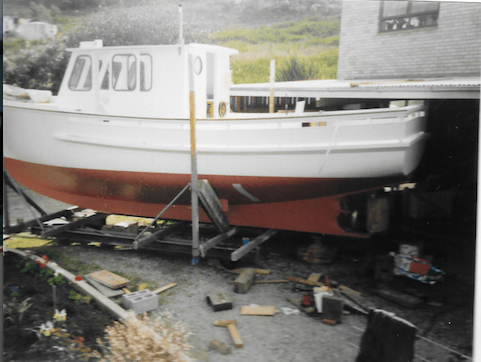
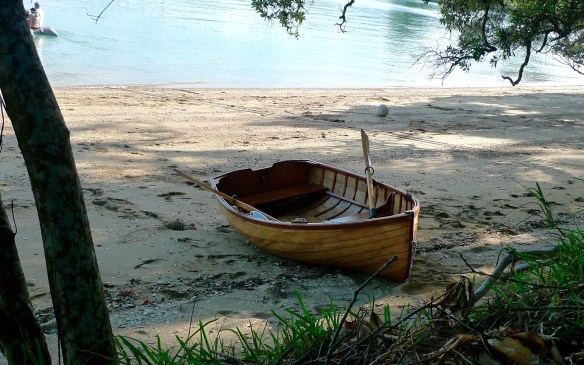
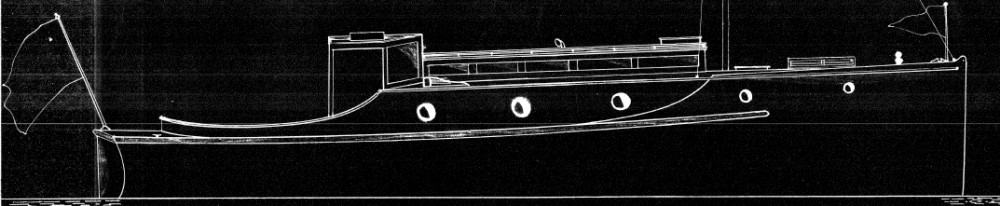
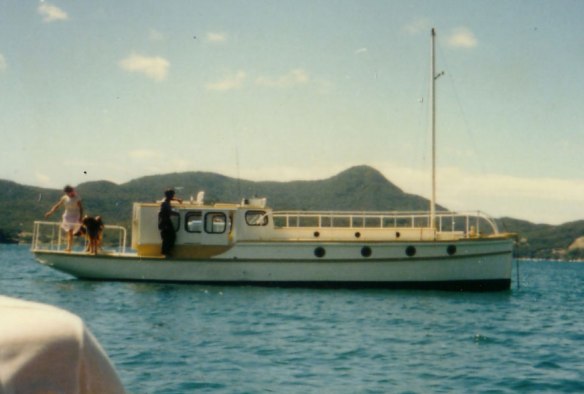
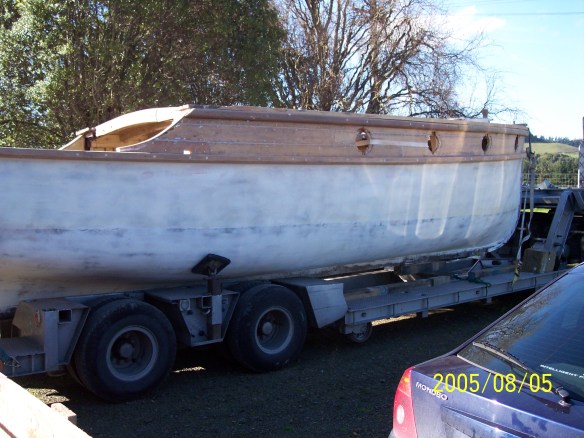
Basically the deal was that the owner of the shed wanted the building back and there had been veiled threats of chainsaws at dawn. As you can see from the photos of Calypso (very unlikely to be her original name) she was in a sorry state. The diesel was gone and there was a fair bit of rot in the house, but the hull looked sound enough and I could not help but fall for the straight stem (made of Pohutukawa) and fantail stern. The information about her provenance was next to nothing, no numbers, or name plates to be found anywhere. I was told that she was used as a ‘long-liner’ working out of the Viaduct for some years and had a build year of 1905 but have never had that corroborated. The diesel disappeared by way of a chainsaw through the cabin roof and she had then been hauled and transported to a storage unit in Avondale.
As it happened I had access to the old Education Department’s disused central stores warehouses that used to back on to the Avondale College, perfect I thought. I arranged for Calypso to be moved there, paid the princely sum of $300 to the owner (no recollection of the name of the chap) and now owned a 40’ launch that needed a bit of work!
Unfortunately, the arrangement to use the old stores warehouse fell through after a few months and I had her moved out to the Marine Haulage yard in Te Atatu where she stayed for a year or two. During that time I went into a boat partnership with a mate and with unbridled optimism we started stripping her out and removing what was left of the paint on her hull. When the cost of keeping her in Te Atatu became a bit too much for our shallow pockets I managed to find an old vegetable storage shed out in Bombay close to the Pukekohe turnoff and away she went again.

With the assistance of an old boat builder (again I cannot recollect his name, but he lived in Tairua, was involved in relocating the old Ngoiro ferry there, drove an old red van and had a cat that used to accompany him around the country!) we removed all the caulking, over many months slowly jacked up the hull to remove the hog in the keel, splined and glassed her to the gunwale with 10 weight triaxial glass. This was all done over a long period as time and money permitted.

As with many of these sorts of projects, in spite my best intentions and a fair degree of bloody mindedness we found ourselves some 6 years on with a sound hull but a long way from ever getting her back in the water. We had by now removed the cabin and decking which was in a much poorer state than first thought, my circumstances had changed and I no longer had the time or the financial resources to take her any further. We also had to move her again and by about 2005 she was now residing in a factory unit off Mahunga Drive in Mangere.

After a great deal of soul searching the decision was made to put her on ‘trademe’ and eventually she was purchased by a chap who described himself as a boat builder and if my recollection serves me correctly was looking to move her up to the Kaipara Harbour where he had a property and complete the re-fit there. Although disappointed that I hadn’t ever seen her in the water, I consoled myself that we had moved her along and that with the new owner’s intention to complete her she would be saved.
That was the last I saw of her!

Whilst owning Calypso had not dampened my desire to own a wooden launch I was certainly much wiser to the challenges, the cost of such an enterprise and in fact promised myself that if I ever did buy another boat she would have to be floating, have good provenance, and be at least structurally sound.

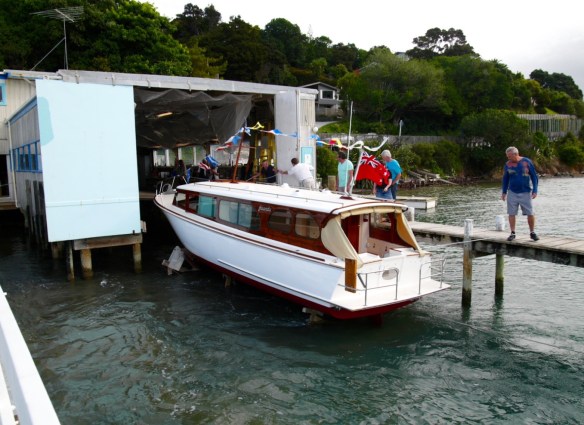
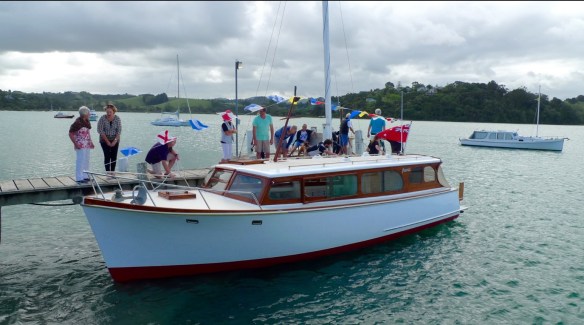
As it happens my wife and I now own the 1951, 32′ Allan Williams sedan launch Juanita (she has been well covered in Waitemata Woodies), she is a joy to own, gets plenty of use and after a fair bit of work is in great trim. The lessons learned from Calypso although painful have served me well, but I do sometimes wonder what became of her and whether the chainsaw got her in the end?

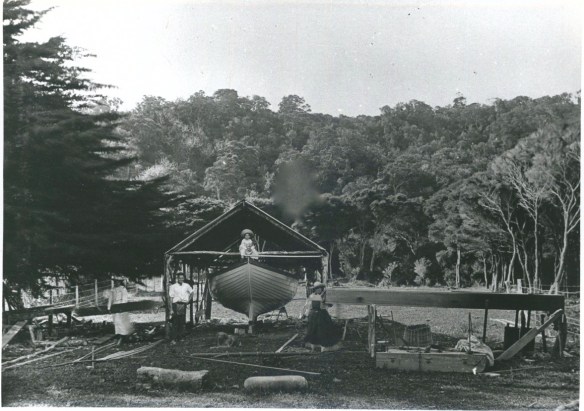
The photos above of Calypso in the water and being hauled were given to me by the previous owner.
There are a couple of her showing where I got to before having to sell (as you can see she was basically back to a bare hull) and a couple of a scale model that I made of her when I was looking to see how a new cabin would look.

Well woodys, as you have read, Nick & family are re-born woodys, we like that – so can we help Nick sleep better at night 🙂 & confirm what happened to Calypso. Good time for our resident Kaipara woody, Zac Matich, to chip in ………………..

Photos below of Juanita leaving Greg Lees (Sandspit) boat shed after a serious spot of TLC. Link below her time in Greg’s shed.
The rebirth of Juanita

Juanita b

Juanita a

A Woody On Tour

unnamed-4

unnamed-5

unnamed-8

A Woody On Tour

Woody Rick McCay & partner Roz have just returned from a jaunt around Europe, during which Rick took the above photos. Some very impressive woodys on show but I would expect nothing less from Rick, he has a very impressive collection of classic wheels & keels, one being the 1920 MT Lane, classic launch Luana.

The photo collection includes some wooden work boats in Syracuse, taxi and hire boats in Venice, Rick commented that some of which have more than a passing likeness to Tony Mason’s clippers. Rick even thought he had found a classic motorbike (below) but on closer inspection that famous Italian maker, Kawasaki, made it 🙂

Roz & Rick made a visit to Circolo della vela Sicilia, the America’s Cup challenger of record, set on a point at a beautiful beach at Mondello, near Palermo. Rick announced they were from Nuova Zelanda and just called in to say Hi. How impertinent of Rick, this guy goes purple in the face and shouts Privato! Privato!, which is pronounced Pi** Off. We are fortunate in this country with our freedoms, imagine the drama if they had tried to sit on their private beach 🙂

unnamed


Three Taupo Boats

Unknown-3

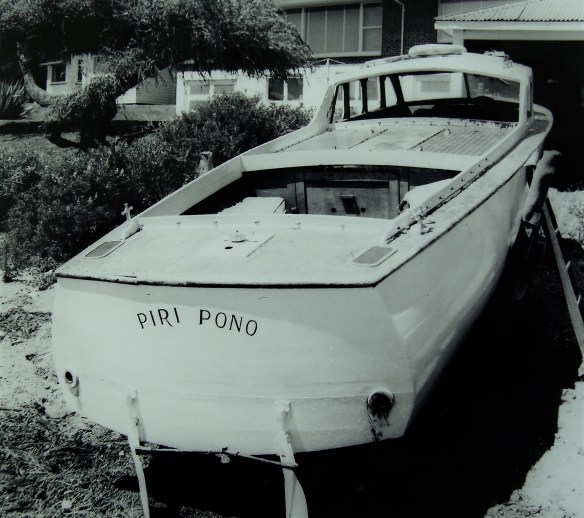
PIRI PONO on her slip at Two Mile Bay, Taupo, in the 1960’s

Unknown-4

Unknown

PIRI PONO at her final resting place (Maritime Museum)

Unknown-8

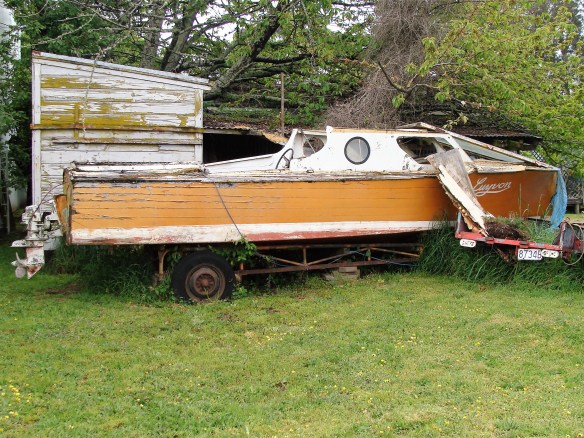
LUYVON awaiting restoration at Taupo Oct 2017

Unknown-9

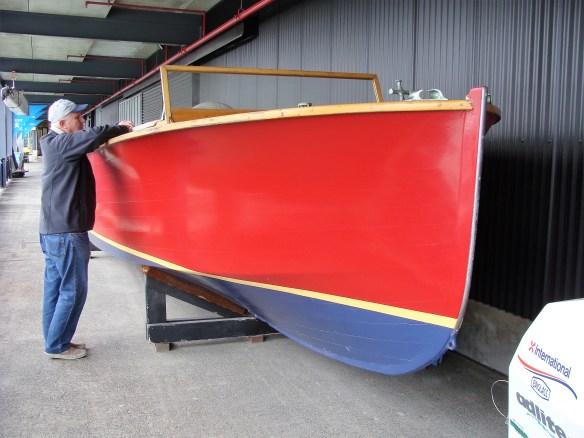
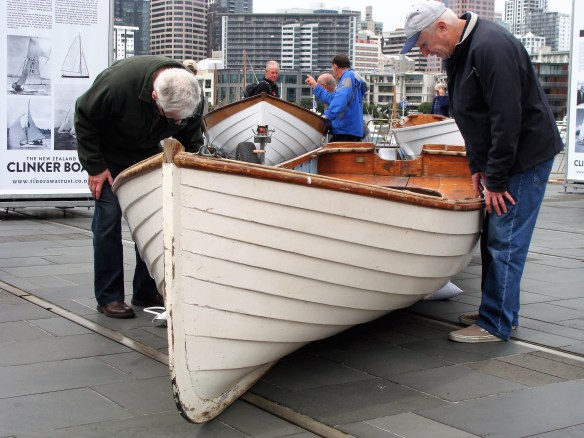
TUI at the Clinker Boat Exhibition

THREE TAUPO BOATS

Post a visit by Paul Drake & his brothers to the 2017 Classic Yacht & Launch Exhibition & a side trip to the Auckland Maritime Museum, Paul sent me the above photos & the story below – which I have re-produced unedited as its perfect as is. Read & enjoy J

 In the mid  1920’s, two gents and their families fell in love with Taupo. Both of them commissioned boats from Auckland builders. Hawke Bay’s Guy Rochfort had TUI (16 feet and clinker) built by Percy Vos. TUI was on display at the recent Classic Clinker Exhibition at the Viaduct in Auckland.  Auckland’s Robert Laidlaw had the 17 foot speedboat  SEAHORSE built by an unspecified builder. After a weather related fright on the lake in 1929, Robert approached Collings and Bell, and the 28 foot PIRI PONO (faithful friend) was the result. Honduras mahogany and bright finished, no expense was spared. PIRI PONO is on display at the Maritime Museum in Auckland.  With her 150 HP straight eight Niagara, she weighed just over a ton and could do about 30 knots. Housed in her boatshed at Two Mile Bay, alongside Laidlaw’s house ‘Monte Vista’, access to the water was via a slipway. A private jetty and offshore mooring completed the picture. 

PIRI PONO was the fastest boat on the lake.  But by 1935, she had a rival in the form of local man Stan Gillies’s  LUYVON, locally designed and built by Jack Taylor and measuring 22 feet. She was light (about half the weight of PIRI PONO) and powered with a Dodge, driving through an outboard drive.  Informal drag races indicated that the boats were very similar in speed.  A more formal test was required. Regatta Day 1936 (probably) was the day. PIRI PONO had her bottom waxed, new spark plugs fitted, all surplus gear removed, and half her fuel pumped out.  The day dawned fine and calm, to PIRI PONO’s disadvantage. LUYVON and PIRI PONO lined up for the 20 lap race. LUYVON had the edge because she cornered faster – PIRI PONO would catch her on the straights.  Robert Laidlaw ordered his crew (son Lincoln) to the aft cockpit to get the bow up a bit. Stan Gillies was still ahead. Back came Lincoln, returning aft with the anchor. This was enough. PIRI PONO won and Robert retained his title as fastest man on the lake.

PIRI PONO was commandeered by the Air Force during WW2 and was the Commodore’s launch at Hobsonville. They replaced the Niagara with a Chrysler (Crown?) and built a cabin over the forward cockpits. Having won the war, the Air Force returned PIRI PONO to Taupo.  She was re-engined with twin Gray’s which are in her to this day. There are conflicting stories as to how this came about. One source has it that she was returned by the Air Force without an engine. Another has it that Laidlaw was disappointed with the speed produced by the Chrysler. Yet another has it that the Air Force wrote off the Chrysler while trying to reverse PIRI PONO off her transporter and into the lake (overheating due to lack of cooling water).

Laidlaw was an enthusiast. He was the founder of Farmers Trading Company. He was a very active Christian, and his name lives on in Laidlaw College, formerly the Bible College of New Zealand, which trains people for Christian ministry. He also has a rock named after him, informally at least. During an early evening spin in PIRI PONO, with 23 POB (so it is said), PIRI PONO struck, at speed, the large flat rock in Mine Bay between the islets and the shore at the eastern end of the bay. The damage must have been enormous and she quickly sank in a few metres of water. Passengers, some of them not-so-young ladies in fur coats, were rescued by nearby launches.  Jack Taylor’s PONUI and VICTORY salvaged PIRI PONO the next day and she was repaired in time for the following summer. 

Meanwhile, TUI led an uneventful life, and lived afloat in a Taupo Boat Harbour boatshed. LUYVON lived in a boatshed nearby, but was kept dry (and light) by being lifted clear of the water on a cradle once in the shed. LUYVON also survives, still owned by the Gillies family, and has been awaiting restoration for some 30 years now. 

The book by Ian Hunter, ‘Robert Laidlaw – Man for our Time’ makes a very interesting read.

UPDATE 01-11-2017 Photo below showing TAMATI in the Lake Taupo Boat Harbour, with the fishing lodge (ex TONGARIRO) in the background, and the Collings and Bell PIRI PONO in the fore ground.   

Screen Shot 2017-11-01 at 12.38.57 pm    


Pirate – Sailing Sunday

Pirate being built at Little Barrier Is.

Under construction c.1903 at Little Barrier Island

Pirate Port Fitzroy GBI

Port Fitzroy GBI – May 1903

Pirate in cave

Big cave – NE Coast – April 1904


Ilex & Pirate Port Fitzroy

Ilex & Pirate at anchor – Port Fitzroy GBI – May 1903

Pirate Ashore

June 27 1907

Pirate wrecked again


Pirate wrecked & final resting place

Final resting place

PIRATE – Sailing Sunday

Pirate was built by Robert H. Shakespear in a shed alongside his house on Little Barrier Island c1903.

Shakespear was a talented boat builder & worked for the Logan Bros and was involved in Ilex (seen in the above photos) and built Frances at Logans’ yard as a close twin to Victory.

He also had the Logan built clinker keeler Pandora to service his little farm on Little Barrier where he was custodian for a while.

Sadly, Little Barrier was not a friendly home to Pirate & she was ‘wrecked’ twice, the first time during a hard SW gale in June 1907, she was repaired but the second in July 1908 was fatal & she was winched ashore & put to rest under the tress on the Island.

(Photo credits & details – J Russell via the Hocken Collection, University of Otago, Nathan Herbert & Harold Kidd)

The 1895 C&W Bailey Yacht IDA For Sale

Ida resides in Australia these days & her owners have advised that they are interested to hear from anyone that would consider purchasing her (& hopefully repatriating her home).

Harold Kidd has commented on WW that IDA was built by C. & W. Bailey for the Jagger brothers and Frater and launched on 21 December 1895. She was a contemporary and competitor to the other 5 rater of that season, the Logan Bros’ MOANA. You can also view/read an excellent article on Ida by Harold in the November issue of Boating NZ (pages 148>151), on sale now.

Interested parties can contact Catherine Shirley  cathshirley@gmail.com

You can read more about Ida here.

https://waitematawoodys.com/2016/05/15/ida-sailing-sunday-more/

UPDATE: Photos below ex Harold Kidd of IDA hauled out at Noakes yard in Sydney last week.

P1020432

INONIE (Enone, Aenone) > India

Enone

INONIE (ENONE, AENONE) > INDIA

I have had a request for information on the wee ship Inonie, seen above. Firstly, some background, Inonie was built by Robert H. Shakespear in Auckland in the early 1900’s. He built her in his stable loft, after hours, mostly by candle light. The carving on the bow was done by his wife, Elsie.

When complete the Shakespear’s used Enone to get to & from Little Barrier Island, & also to transport produce and farming goods between Little Barrier, Tiri & Auckland.

At some stage her name was changed to India.

These days she is owned by Rick Osborne who lives in Renwick, near Blenheim, in the Marlborough region, & possibly has been re-powered with a steam engine. I’m sure Russell Ward will be able to confirm this & even maybe supply a photo.

She was also owned at some stage of her life (perhaps a long time?) by Grant Tylden who was Robert Shakespear’s nephew (on his wifes side).

So woodys – can we flush out more info on Enone’s past?, particularly mid > old life.

(Photo credits & details – J Russell via the Hocken Collection, University of Otago and Nathan Herbert)

Now Robert Shakespear had a great eye & pair of hands – the clinker below, Maire, he built at Little Barrier Island.

Maire

Input from Russell Ward

I first came across (I’m sure it wasn’t Enone. Ionone? Maybe Inone?) when Neil Cox -an electrician at Ngunguru had not long bought her from Jim Francis (Lady Margaret). He also got what was reputed to be her original engine -or at least an early one- a single cylinder Zealandia. Hoyland and Gillett made a lot of them from their works at the bottom of Stanley Street -just opposite the pub. They ceased production around WW1 and Gillett took up selling cars while Chas Hoyland went to live and make boats at Clarks Beach on the Kaipara. He was quite a racer at their regattas around WW1 and is worth an article in himself HAROLD!

But I digress.

Neil was obsessed with making her into a steamer -he probably got infected like many others by my 17′ steamer Gypsy. He made up a 4″ x 3″ O B Bolton design single cylinder engine from patterns sold by Winters in NSW. He also had made a fine coal fired, vertical fire tube boiler to Stuart design updated to pass NZ Marine Dept specs. Same as I have in Romany -I paid him a portion of the design and certification fees for the rights to use the design.

I didn’t think that Neil got a lot of joy out of her and I don’t recall him using her much. Captain Percy Ginders would confirm. A lot of his problems were that he had a grate or thick steep plate in the firebox that was perforated by well spaced 3/4″ holes. It was insufficient to let enough air through to get a good fire going, but Neil was selling up and off.

I bought the Zealandia from him about the time I launched Romany and Neil -departing for Oz- sold off Ionone to an antique dealer at Sanson (I think) late ’90s.

I didn’t see much of her until she appeared at one of the early Lake Rotoiti (St Arnauds) events. She was called India by then but again, she didn’t see to be steaming.

Rick Osborne bought her a few years back and at last she has a worthy enthusiastic owner. He has done her the honours and has also ditched the Bolton engine for a twin cylinder engine that will be much easier to live with.

Input from Harold Kidd

Neil Cox was a good auto-electrician and a member of the Vintage Car Club with Jim Francis, vintagesteamer and yrs truly. I visited him in 1990 when he moved up to Ngunguru to discuss the rewinding of a magneto. Even then such people were becoming thin on the ground. I was very taken by this craft (and more by the Zealandia than the steam plant, with which things were not going well).

Her name was spelt INONIE. When I knew him, Bob Shakespear had a garage at Gills Road Albany where he had a collection of interesting cars including a Stutz Straight 8. He sold INONIE to Jim Francis about 1960 when she had an Australian Simplex engine. In fact, her first engine was a 3hp Kapai, not a Zealandia, and she was first launched in March 1910.

The inter-related Hobbs/Shakespear famiilies had used her at Whangaparaoa to take produce out to their Logan keel yacht FRANCES to take to Auckland markets.

Shakespear worked for the Logan Bros and was involved in ILEX and built FRANCES at Logans’ yard as a close twin to VICTORY. He also built the clinker keeler PANDORA to service his little farm on Little Barrier where he was custodian for a while….big story.

Further Input From Russell Ward – photo below of India at Lake Rotoiti (Sth Is.) 2011. Also photo of the wee Zealandia engine that Jim Francis said was in her when new.

Unknown-1

Unknown-2


Jack

jack-beach


capebrett02

JACK

The clinker Jack belongs to woody Dean Wright, they got Jack from Picton back in 2008, a 8’6″ kauri clinker. From what Dean has learnt she was probably built by the Jack Morgan yard in the 1960’s. If anyone recognises Jack and has any more history, he would love to hear it.

 The story of Jack as told by Dean

He’s always been a leaker despite long spells in the briny to take up. You’ll see from the photos 3-4″ of water sloshing about and the bailer afloat, we decided that 2016 was going to be his birthday and he was going to get tight.

We stripped him back to bare, cleaned out the lands then took him to boat builder Bob Van Pierce (owner of the mullety Cora) for his opinion.  He thought she was recoverable but she’d need three and a bit new planks and a general refasten. And while we were at he’d fix the bulge in one side of her hull and bring her back into her original shape. Bob did all the smart stuff and I got on the end of the dolly. Thanks Bob, you did a fantastic job.

The first photos show the general condition of the planks we replaced, splits and bits missing.

A few replacement planks & Bob scarfed one in. Spotted gum for the ribs. The steam box was cranked up, ribs loaded in & then bent in. A few broke but where were spares. Ribs were nailed from below and riveted.
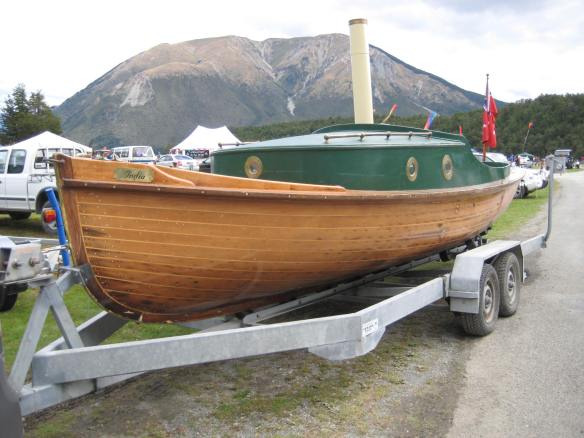
Then primer, Prekote and topcoat prior to new purple heart thwarts being fitted. Bob also added rubbing strakes.
Then Jack came back home to your the shed and was ready for bottom paint & signwriting by artist Lester Hall. Thanks also Lester for the beautiful oars complete with welcome swallows. These have been decorating my wall for the last 5-6 years, they got a hell of a fright being immersed in salt water.

Then the bronze rowlocks were fitted & new floorboards in + nylon rub rail secured with copper wire. 

First outing was planting trees with Project Island Song. Over a day, we got half a litre in the bottom, pretty happy with that.

The old dinks – Ken is not happy, he’s been relegated to barge duties.


And While On The Topic Of Wooden Boats

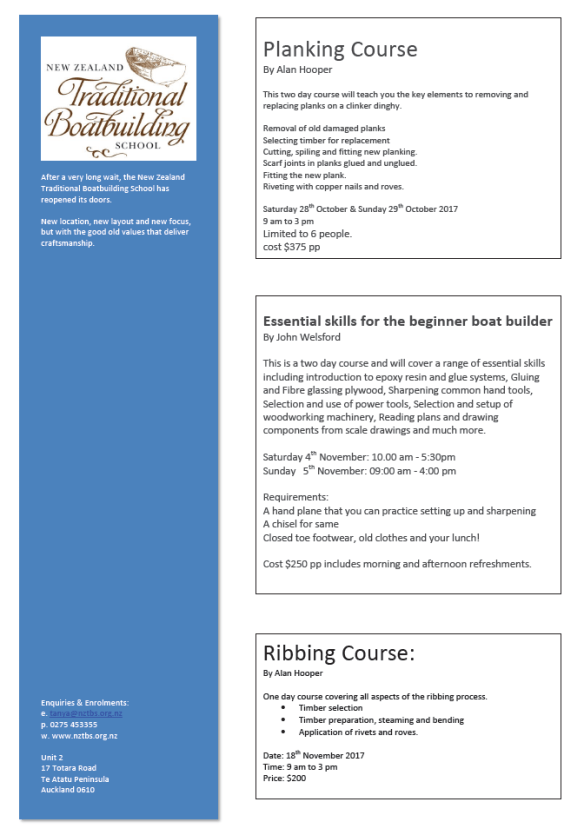
The NZ Traditional Boat Building School has just released details on its latest courses, see below. The presenter / instructors are legends in the wooden boating community. In the past the courses have been oversubscribed, so get in early or miss out.

To register – email tanya@nztbs.org.nz       or call 027 – 45 33 55

Screen Shot 2017-10-13 at 2.38.34 pm


Airforce Patrol Craft + An Unusual Car

AIRFORCE PATROL CRAFT - CLIPPER AUGUST 1939 RNZAF - T COLLINS COLLECTION EX MUSEUM - I.D. PH-2013-7-TC-B731-03

Airforce Patrol Craft

The above photo is dated 1939 & is from the Tudor Collins collection. Only really posted it to have a boat in today story.

15-10-2017 Harold Kidd Input
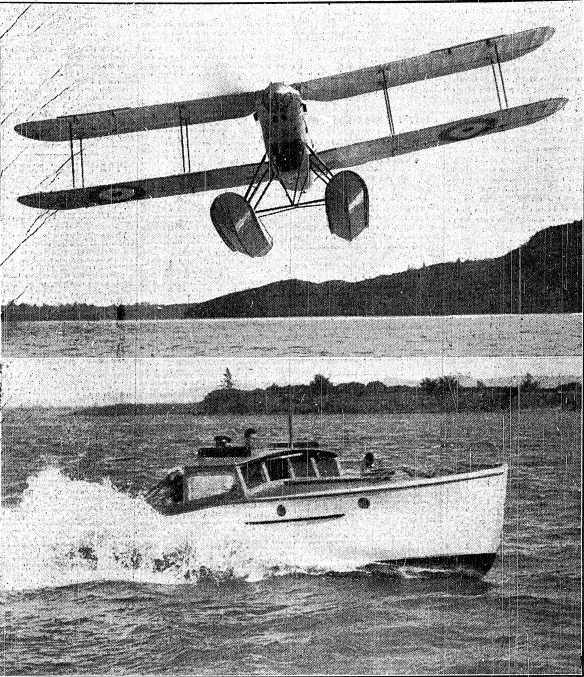
The launch in the pic is one of the Hubert Scott-Paine 40 footers imported at the beginning of 1940 for TEAL and taken over by the Air Force. W6? Below is a photo of W2.

W2a

But for some serious boat porn, check out James Dreyer’s latest photos of ‘Laughing Lady’ on his Seven Oceans Boatworks Facebook page – click link

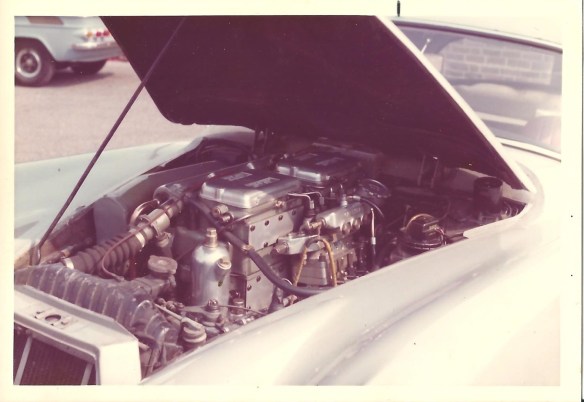
The really story is the XK150 Jag below, It was owned by Mr Gardner of Gardner Engines in the UK), Thats him standing alongside it. He re-engined it with a Gardner diesel back in the late1950’s. Rumour has it while the acceleration was not great once off the line she was a flyer 😉 Probably priceless if still around today. Boat & Jag photos ex Ken Ricketts

Unknown-3

Unknown-4

Unknown-5

15-10-2017 Harold Kidd Input – Lyn Buchanan of John Chambers & Co put a 4 cylinder Gardner in his Packard about 1931. Photo below.

packard075

Wairuru & Lady Jocelyn

Wairuru ex Baden P

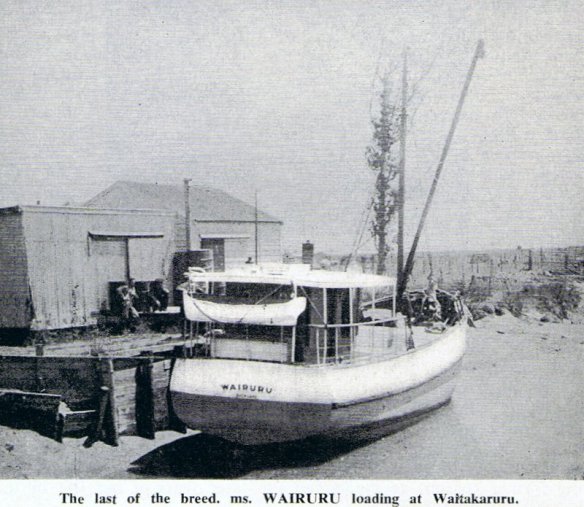
Wairuru at Waitakaruru

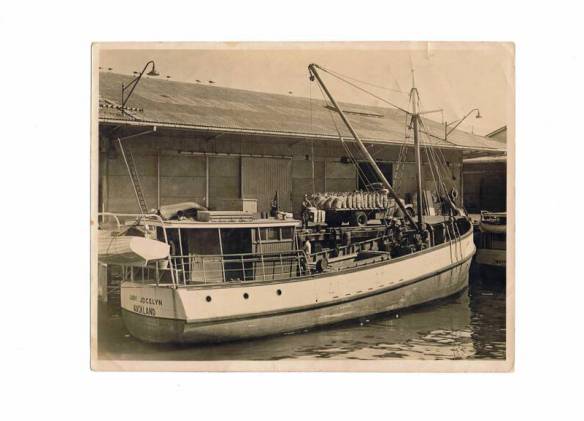
Lady Jocelyn + stern of Wairuru

WAIRURU & LADY JOCELYN

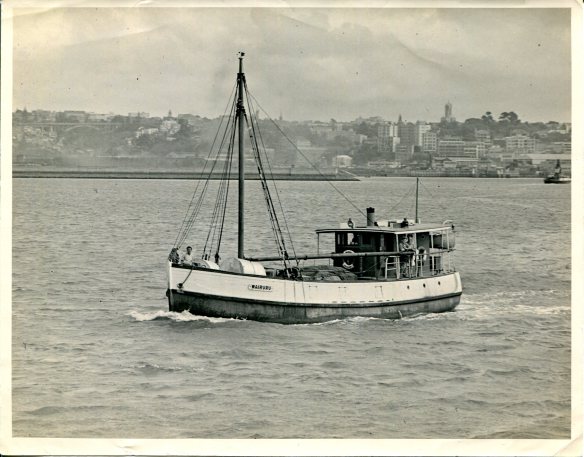
Last Sunday I posted a copy of a 1947 trip diary from aboard the vessel Wairuru on its passage to Apia, Samoa. We had no photos of the boat & reading the diary the author (unknown) had made her sound like a yacht / motorsailer, HDK very quickly corrected me on that J

Now thanks to Baden Pascoe & Geoff Brebner we have photos of Wairuru. Baden describes her as a small motor coaster, a friend of Baden’s, Keith Penny, was her skipper for a while. She was powered by a Kelvin K3. Wairuru was designed by Erine Bailey of Charles Bailey in 1937.

In Geoff’s photos, Wairuru is alongside at Waitakaruru, on the Firth of Thames. Geoff lives less than 1 kilometer from the spot. Geoff’s 2nd photo is of the Lady Jocelyn with Wairuru lying ahead of her at Hobson Wharf c.1946. Both ships were almost sister ships, Wairuru was 52’ & Lady Jocelyn being 60’.

Link to the diary mentioned above here https://waitematawoodys.com/2017/10/08/wairuru-auckland-to-suva-1947/


Petrel

Screen Shot 2017-10-09 at 3.27.32 pm

Screen Shot 2017-10-09 at 3.27.41 pm

Screen Shot 2017-10-09 at 3.27.49 pm

Screen Shot 2017-10-09 at 3.26.22 pm

PETREL
The posts last week on the Philip Lange built vessel Faith have resulted in Sharon Lange (Sharon, married Philip & Bev’s son, Ian Lange) sending in the above photos of ‘Petrel’, the last boat built by Philip. Petrel was build under Philip and Bev’s Mill Bay house in Mangonui and launched in 1991.

Petrel was build for Philips son Stev and is used as a commercial longline boat out of Mangonui to present day.

The photos, from the top, are tagged:
1: The Petrel on the cradle front lawn of Philips house
2: close up
3: Getting ready to go down the drive to Mill bay for launching
4: Philip lange on the Petrel during launching , Stev Lange on the ramp , Bev at the front and Ian lange ready to help and Phils grand daughter watching the action
5: Philip Lange and the Petrel
6: Bev Lange & the Petrel
7: the Petrel
8: speaks for its self

The New Zealand Clinker
In support of last weekends Classic Yacht & Launch Exhibition, the Tino Rawa Trust have produced a 36 page booklet titled ‘ The New Zealand Clinker, its a great collection of stories on & around clinker boats. I enjoyed the read & learnt a lot.
You can grab a copy for $20 from BoatBooks in Westhaven or try your luck with answering the question below, all correct entries, emailed to waitematawoodys@gmail.com before 6pm 10-10-2017, go into the draw for a copy.

Q: Where does the word ‘clinker’ originate from?

Clinker Cover

Clinker Spread

Input from Russell Ward

A glossary in the pre WW2 book Motor Cruising by Irvine and others confirms that “Clinker (clincher, clencher) is a method of building in which each side plank overlaps the one below.”
Now, shipmates, we gotta drill a bit deeper into this one, maybe. Clenching or clench nailing is the merry art of holding an iron or hammer just right and picking up the sharp end of your nail as she emerges through the other side and turning it over and back into the wood (provided the wood is soft enough). Quick and easy and, if done neatly looks a lot better than it sounds. I sent a picture via Wifi to AH just now -qv. Iona had a lot of old epaired timbers clinched and it looked good.
The Yanks of course call “clinker” by the more descriptive term “lapstrake”. So Robin Seaward in ‘Boatbuilding’ 2ed says “Lapstrake -sometimes called clinker planking.”
However, I find this appealing “Late 17th century (denoting a person or thing that clinks): from clink + -er. clinker”. Do you reckon that the wisened old man crouched over the wee boat in the corner of the shed was clinking away at his craft?
(Personally I like the old-fashioned slang use for a bum note played on a musical instrument -a clinker! Or in my favourite town Galway, a clinker is a wee lass worthy of a very close inspection. Or modern slang says a clinker is a dingle berry. Nothing to do with our boats though.) Better watch where you use the term.
Take yer pick, fellow anorak wearers…..

Unknown

Wairuru – Auckland to Suva, 1947

Waruru Cover

Wairuru – Auckland to Suva, 1947

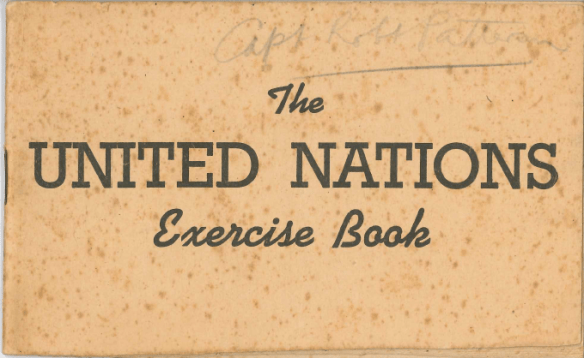
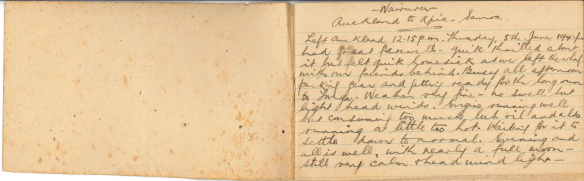
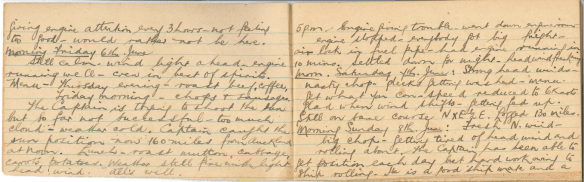
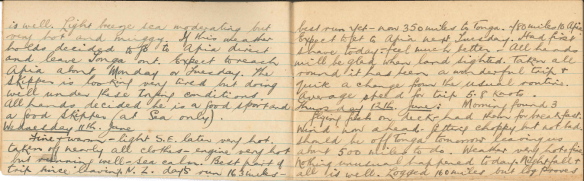
I was recently contacted by Steph Mellors who advised she had a short diary written aboard the 1937, Charles Bailey & Sons built motorsailer Wairuru, during a passage from Auckland to Apia, Samoa in  June 1947.

On the cover (see above) is written in pencil Capt. Robt. Patterson, given the content of the diary, Steph does not think he wrote it. (I agree)

The NZ Maritime Index, records that Wairuru, owned by A G Bertram was sold in 1947 to O. F. Nelson & Co. Ltd., Apia, Western Samoa – who renamed her – Gaualofa. The records also sadly record that she was wrecked on 22 November 1953, on the South coast of Savai’i Island, near Sala’ihua.

Steph is unsure how she acquired the diary, thinks “probably rescued it from someone’s wastepaper basket in a fit of – it could be of interest to someone”.

Thankfully she saved it & now over 70 years later we get to share it. Enjoy the read, I did.

Any guesses as to who the author was?

Wairuru 1

Wairuru 2>3

Wairuru 4>5

Wairuru 6>7

Wairuru 8>9

Wairuru 10>11

Wairuru 12

I couldn’t do a WW post without a boat photo – my clinker dinghy Peg at Patio Bay. Which is a good excuse to remind you that today is the last day of the Classic Launch & Yacht – Clinker Boats Exhibition – details below – AND ITS FREE TO GET IN.

P1220362

Clinker Event Ad