Otoroa

screen-shot-2016-12-14-at-5-31-13-am

screen-shot-2016-12-14-at-5-30-25-am

OTOROA
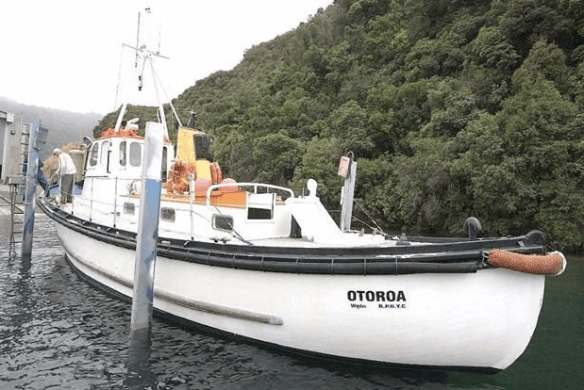
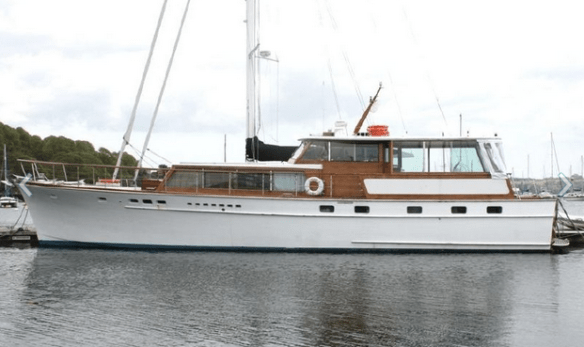
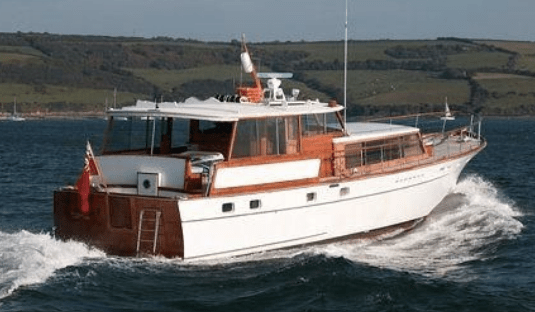
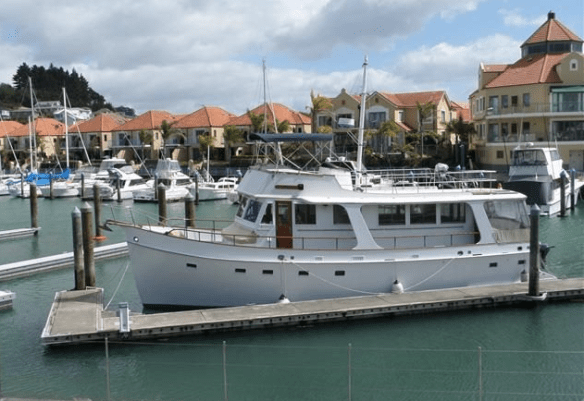
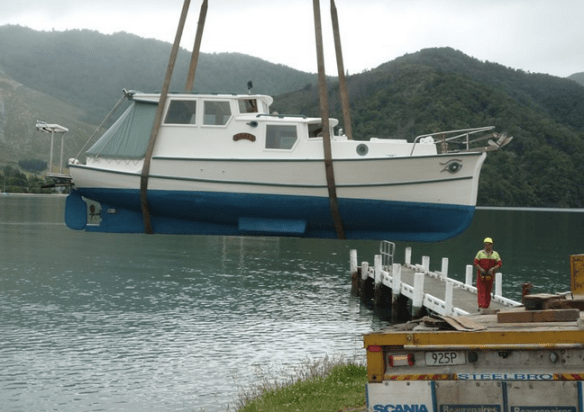
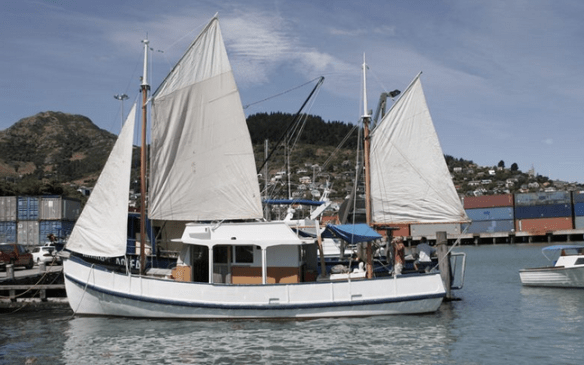
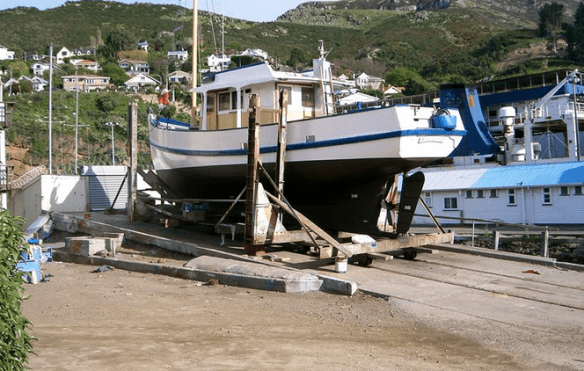
Otoroa is a Miller & Tunnage double-ender built in 1967 as a MSA Pilot boat, later converted to pleasure use. She measures 55’9″ L, with a beam of 15’5″ & has a draft of 6’6″. Powered via a Cummins diesel. Detail via Ian McDonald via trademe.

Any of the work boat woodys able to enlighten us more about Otoroa?

Update & Photos ex Russell Wardedited by AH
Otoroa’s wheelhouse enabled the skipper to look and see the sky or the ship towering above. They had to be real seaworthy ships in those days. You will notice that except for the Arahina and Tautane who was a recycled Miler and Tunnage fishing boat named Centaurus, all the NZ pilot boats of the day were double enders.
That says a lot for the hull form: The following sea tends to part round the boat rather than heaving t skyward and broaching it. You still can broach in a double ender, but they are good in a following sea.
Hopefully an potential buyer will retain her appearance. She has survived thus far though, so here’s hoping. I am refreshing your memory by also attaching a pic of Wairangi when she was in her prime and working and you can judge.
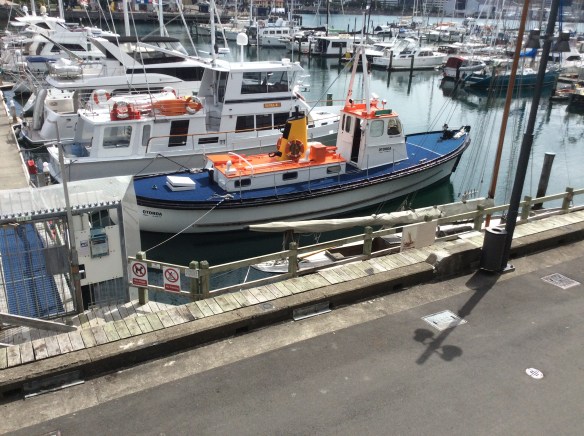
Also below is a photo looking down on the modest wharf that the Port’s workboats nestled each night to share stories. The RNZN shed was alongside and their HDML were kept there.

screen-shot-2016-12-14-at-8-52-05-am

05-03-2018 Update ex Stuart Jameson – The Otoroa has been berthed at the Chaffers Marina for the past four years.  The blue non-slip surface was applied last year.  Current owner appears to be very attentive to its maintenance.  Further detail on its current owner etc should be available from the Marina Manager.

Unknown

Taihere

screen-shot-2016-12-10-at-12-45-28-am

screen-shot-2016-12-10-at-12-45-08-am

Taihere

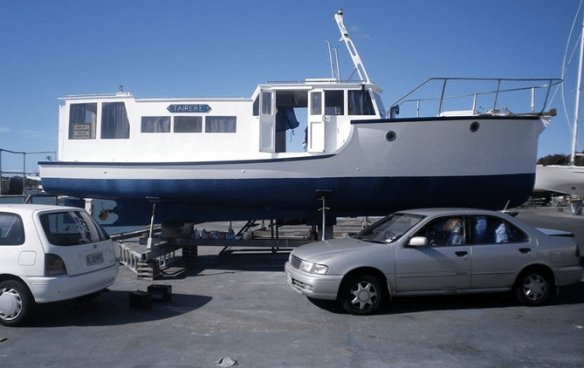
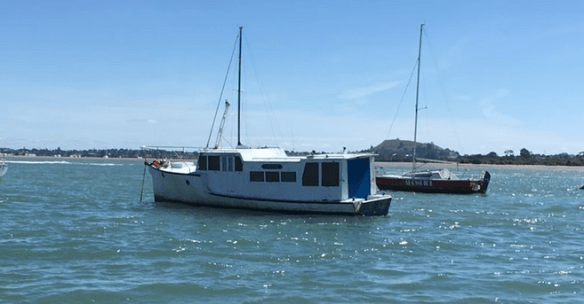
Not sure of the correct spelling, her name appears to be either Taihere or Tairere, but we do know that she is a 32’8″ kauri bridgedecker. Same owner for the past 13 years but in the last 3 years she has had little use & as you can see in the above trademe photos what was once a smart classic is now crying out for some TLC.
She is powered by a BMC 4 cyl diesel. Thanks to Ian McDonald for bringing her to our attention.

What do we know about her past?

How Much Is My Woody Worth?

screen-shot-2016-12-08-at-8-39-19-pm

screen-shot-2016-12-08-at-8-34-51-pm

screen-shot-2016-12-08-at-8-34-37-pm
How Much Is My Woody Worth?
That’s a question ww gets asked on a regular basis, the answer sadly in most cases is a lot less than the owner thinks. People get confused with ‘worth’ & what some one will pay i.e. the sale price, with classic wooden vessels – for worth think replacement cost, for sale price think less than 25% of that.
As I have pointed out before in NZ there is a growing demand for quality classic motor boats, a high % of this market do not have the skills, time or funds to restore one, so importing will become more appealing.
Today’s post features ‘Wando Lady’ a 1966, 65′ Stephens Bros motor yacht from California now calling the UK home. She sleeps 12 & is powered by twin Detroit V71 12 cylinder diesel engines rated at 495hp. Its on the market for approx NZD$400k (asking price) – I post for 2 reasons – its a great looking woody & I think most of you will be interested in viewing her. Secondly as an indication of whats available on the international market compared to NZ prices.

If you want to read more on her http://www.ybw.com/boats-for-sale/5091568?currency=GBP&utm_campaign=20161130_YBW-B_NWL_EO&utm_medium=email&utm_source=ET

BEAUFORT -50′ Woody Motor Cruiser

screen-shot-2016-12-01-at-4-51-31-am

screen-shot-2016-12-01-at-4-51-42-am

Floating Apartment –  Beaufort a Grand Banks 50

With the average house price in Auckland knocking around $1million, this 50′ wooden Grand Banks currently on the market for $429k sure beats a wee box apartment.
Launched in approx. 1972, she is built like a brick outhouse, constructed in mahogany and Burmese teak. She is hull number 37, of 65 produced & the current owner of 6 years, bought her in Virginia, cruised her down to Florida then shipped her to New Zealand.
This woody offers amazing cruising comfort and luxury with a large covered cockpit leading to a massive main saloon. To starboard in the saloon is an L shaped settee with dining table and chairs. Opposite is a settee and buffet and, forward to starboard is the bar and fully-equipped galley. To port is a walkway to the huge pilothouse with guest seating and access to the wide covered side decks through port and starboard doors. Before entering the pilothouse, there is a stairway down to the sleeping accommodation. The two forward staterooms each have 2 x single berths and share 2 x toilets and 1 x shower. The passage to the master aft provides access to the port and starboard engine rooms and the master features 1 x double and 1 x single bed with own ensuite with head, shower and, tub.
Powered by twin 210hp Caterpillar 3160’s & a fuel capacity of 3,800L she falls into the long range cruiser class if you were considering extended trips.

24-12-2016 photos below ex Ken Rickets


What Do You Want For Xmas?

p1220334

P1220337.jpg

p1220338

p1220339

p1220340

I Have Just Solved The “what do you want for xmas” Problem For You.

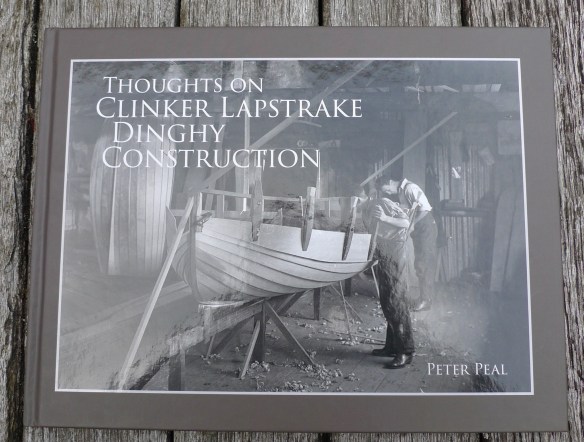
Morning woodys – Sorry no classic boat today, I had a story lined up & then last night I started to read a copy of the latest woody boat book to be published – its called ‘Thoughts On Clinker Lapstrake Dinghy Construction’ by Peter Peal. The editor is Baden Pascoe & the book design is by Steve Horsley.

Without a doubt this is the most interesting woody book I have started to read, now I say started to, because after a quick power skim I decided it was too good to read at home – it’s a on the boat read. If you have any interest in wooden boats & the Kiwi boat building scene this is a must have.

To quote Chris McMullen who penned the forward – “this book is more than ‘just another book’ about how to build one of these boats the quick & easy way with the aid of modern glue – it is a book that takes you back in time & puts you in the mode of becoming an artisan who uses the characteristics of wood to his benefit. This lies at the heart of the boat-builders art & is something of which New Zealanders can be proud”.

WIN A Copy: all woodys that correctly answer the question below will go into the draw to win a copy of the book. Entries must be emailed to me (address below). The draw will take place on or near 10pm 28/11/2016. Winners name will be published in Tuesdays ww post. waitematawoodys@gmail.com

Q: What was the class of yacht first built by Peter Peal for his own use?

REMEMBER ENTRY IS VIA EMAIL ONLY – If you post your answer on ww, you tell everyone the answer, that’s if its right 😉

Below is a review of the book by the editor Baden Pascoe.

Book Review:

Thoughts on Clinker Lapstrake Dinghy Construction – By Peter Peal, editor Baden Pascoe, book design Steve Horsley.

There are a few good books on this subject from various authors around the world. As materials and power tools have progressed so has the content of these books explaining how to go about building a clinker / lapstrake boat that one can still call it “a wooden boat”. And to add to this the term a wooden boat is now more associated with art form and a thing you own because of the experiences, stories and history attached to it. Recent books on this subject all use the upside down method of construction and the use of high tech adhesives with super gap filling abilities. A good example is Ian Outhtred’s “Clinker Plywood Boat Building Manual” this book is in a class of its own and the results are stunning.

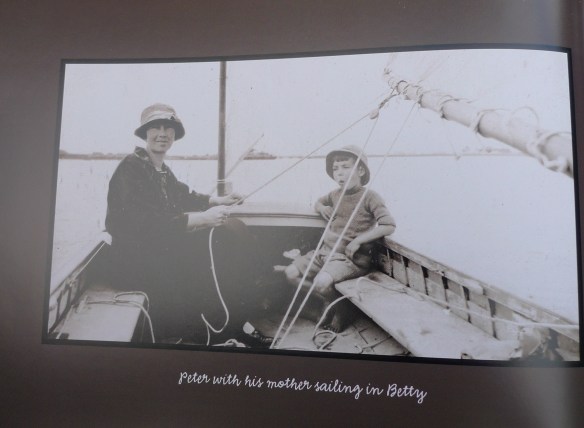
Here in New Zealand we have Peter Peal’s book hot off the press. From the outset he has set out to offer the reader and potential builder more than just an outcome. In the first section of the book he takes you back in time to the late 1930’s via a story line were you can almost feel the day to day atmosphere of the Percy Vos boat yard. A time when young men were immersed in knowledge and exposed to an experience were they got to know what a nice shear line or lay of a plank should to look like. A place where they learnt to touch a piece of timber and instantly know it’s capably of strength and durability. Working with wood was what they loved to do and they played with the results of their work during their weekends sailing, rowing and steaming their floating works of art that were so kind on the eye. The method used to build these boats without the aid of moulds or temporary frames made the task even more challenging but once mastered it elevated these young men to go on to be the legends of our marine industry that are now the cornerstones of the world class marine industry we now have.

The second part of his book his based on much the same principles as in the first section but ply planking can be employed instead of timber. Laminates can be used instead of natural crocks and to make it easier and moulds or temporary frames are recommended to control exact shape. May I remind you as I have been reminded by the few men left standing today who were taught this method, men who regularly built these boats without moulds could build more boats to near exact shape, something not recommended to the one off enthusiast builder. During the process the builder can experience all the aspects and challenges of the artisans of yester year.

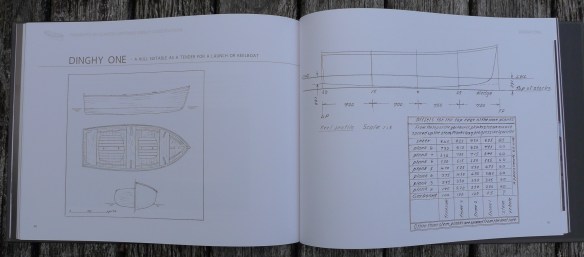
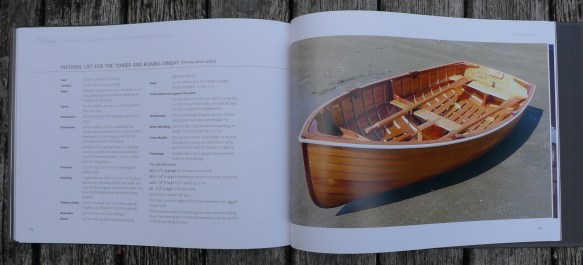
In the third section Peter offers three of his designs with full lines off sets and construction drawings. Boat 1 being a traditional launch or yacht tender, boat 2 a small rowing or pulling boat and boat 3 a clinker large enough to be a small out board run-a-bout. He also recommends designing your own boat.

Section four is a short glossary of the terms and slang used in the Auckland boat yards during his time in the trade. This is something very special and possibly unique to the Auckland area.

Yes, there are many fine tradesmen in Auckland and around the New Zealand coastline who have built what I would be proud enough to say, some of the best clinker boats in the world, but very few of them could explain how this is done via the detailed sketches and drawings from Peters very own pencil. Peter never held knowledge close to his chest, his first love was the parting of knowledge and this fact is reinforced in the forward written by one of his early students, Chris McMullen. This book is a life time treasure and a reminder of Peter’s values and high standards.

A huge thanks to a wonderful man who I have worked with to produce ‘Thoughts on Clinker Lapstrake Dinghy Construction”.

Sadly Peter passed way this year aged 95 – this book is a perfect testament to the man & his trade. – Enjoy


Note: This book is a very limited edition. It is at this time not available in bookshops.

Retail $60 + $7 post and packaging

For orders. Email Chris Peal: chrispeal8@gmail.com

Bank Account no: 01-0210-0030056-47   please include your name as reference.

NOTE: bank a/c number is now correct.
Tui

TUI
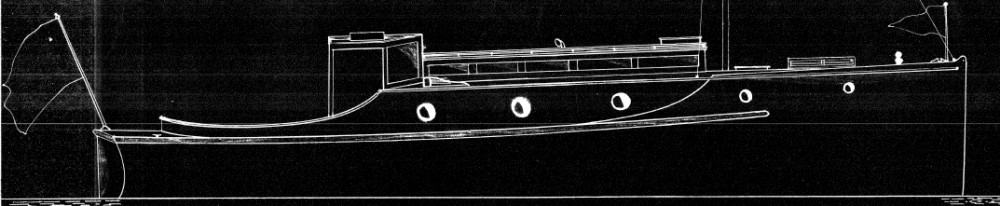
Sometimes you wonder how serious someone is about selling their boat, Tui is listed on trade me – as a 30′ inboard ‘beautiful girl’ & is a wonderful sea boat”.

When it comes to specs the seller says “I will need to put all the mechanical details on later all I know is she starts every time first time. Engine, shaft etc will be updated all I know is that I think Tui has a ford tractor engine”. And they want someone to pay $35k+ based on that ;-(
A few hours with a tungsten tipped chainsaw & you could end up with a nice wee sedan top launch, if the price was right. Thanks to Ian McDonald to the trademe tip.
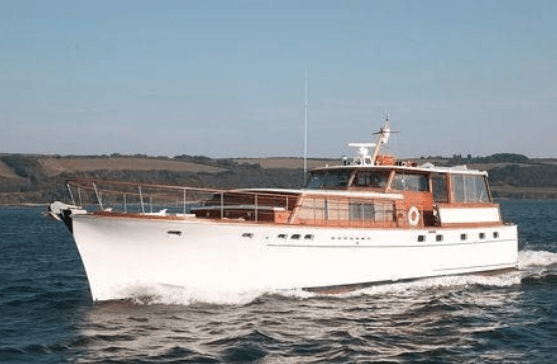
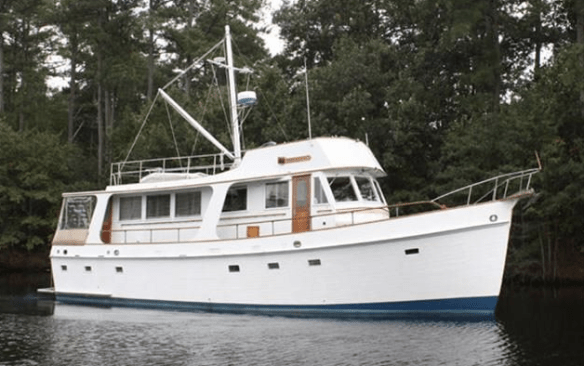
Do any woodys know ore about Tui – builder, year etc?

An apology – if you were wondering what was happening around yesterdays story on Vacuna – I removed the ww story because the vendor was not being upfront with the vessels past & had been very creative with the story. There was over 10 comments that I chose to ‘moderate’ & did not appear on ww, mostly name calling & threats, I’m the only one that’s allowed to do that 🙂  so they got the delete button.

Looking for a Sounds Floating Bach or a Lake Boat?

screen-shot-2016-11-23-at-11-55-09-pm

screen-shot-2016-11-23-at-11-55-39-pm

Looking for a Sounds Floating Bach or a Lake Boat?

Today’s woody lives in the Marlborough Sounds but could equally be a perfect North Island lake boat. She measures 24’6″ & is constructed with kauri carvel hull, with glass on ply cabin & deck.
Power comes from a 3QM Yanmar 30hp diesel & as you can see in the photos had been fitted out to a very high standard.
Asking price is $9.5k, that is not a lot of $$ for a woody that is presented in the condition this one is 😉

Its hard to read her name but Ian McDonald who tip me off on the trademe listing feels it could be either Scuffy or Scuppy – any woodys able to ID the boat & supply more details on her?

No Salt – 4Sale – All Offers Considered

NO SALT

NO SALT IS BACK ON THE MARKET – I UNDERSTAND A LOT OF WORK & MONEY HAS BEEN SPENT ON CORRECTING THE ISSUES SHE HAD. NOW 4SALE & ALL SENSIBLE OFFERS WILL BE CONSIDERED. CONTACT ROGER – 021 02546184

I have spoken before about the emergence of what I call ‘the floating bach’ – well No Salt fits that category perfectly. I predict in the next 5 years we will see more & more of this ‘trawler’ style classic motor boat on our harbours & lakes. Just look at the camper van scene, it has exploded but camper vans only appeal to a % of the population & the biggest negative is  you have very little control over who your neibour is 🙂

No Salt is the real deal, a genuine wooden Grand Banks, from the desk of the renowned American designer Ken Smith. She was built / launched in 1973 & is one of the last wooden Grand Banks before they switched to GPR production 😦  40′ on the water (the yanks assign the LWL length to their craft so she is a GB36) she is mahogany carvel planked on sawn frames & features a full length keel that provides protection for the twin props/rudders – perfect for nudging into that secluded bay.
Powered by twin Ford 120hp (non turbo) engines she cruises at 9knots & would run on the smell of an oily rag, this efficiency combined with 720L fuel tanks makes her perfect for extended cruising. While she carries 800L of water if I owned her I would drop a water maker on board & then there would be no stopping you.

The Americans can be a little OTT in terms of safety but in No Salts case her high bulwarks & all round teak railing make her very family / older person friendly. Another bonus is the window / seating height in the saloon – few boats get this right, with No Salt you can be seated & enjoy brilliant exterior views.

Yes No Salt is for sale & would have to represent the best value for money in the leisure / lifestyle market.
Who will buy her? with her 7 berth layout there are lots of options with this floating bach & while I would not like to see her leave the Waitemata, what a low-cost lake pad she would be & you have the best view on the lake + you can fish from your door step.
As always click on any photo above to enlarge.

Jade – Sailing Sunday

screen-shot-2016-11-19-at-8-59-50-pm

screen-shot-2016-11-19-at-9-00-37-pm

JADE – A Herreshoff style weekend/daysailer

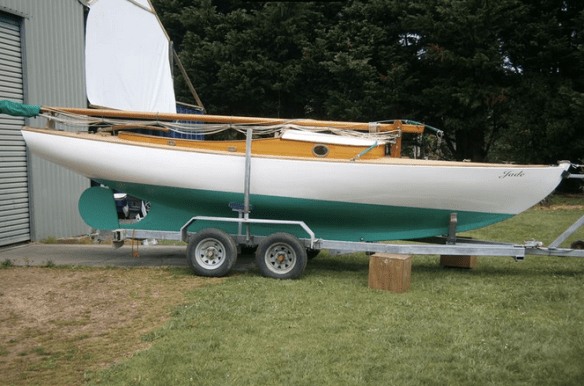
Jade fits into the classic category that we call ‘spirit of tradition’ – a gaff-rigger that not only sails well but also has none of the maintenance headaches that other wooden boats have.
Specifications: LOA: 7m, Beam: 2m, Draft: Centerboard up: 650mm, CB down: 1.5m Sail area: 20sqm, Ballast: 300kg, Displacement: 1300kg.
She is 4sale on trademe. With her custom trailer & cover + being a center-boarder she would make a great lake boat. You could even troll for a trout with the 8hp outboard 😉

Kia Ora

screen-shot-2016-11-19-at-5-51-04-amscreen-shot-2016-11-19-at-5-53-11-am

screen-shot-2016-11-19-at-5-51-16-am

Kia Ora
A 43 foot wooden boat powered by a Gardner 6LH through a Gardner gearbox.  Kia Ora is an ex fishing vessel converted to a pleasure boat for her well deserved retirement.
Built in 1939 at Kaikoura by local fishing legend Syd Cormack & launched on the foreshore at Kaikoura.
She is very well known along the South Island east coast, not many places you won’t bump into a fisherman thats worked on her.
With her Gardner ticking over her cruise speed is 7 to 8Knts and fuel usage is around 5 to 6 liters per hour.

Any of the woodys able to tell us more about Kia Ora, Ian McDonald alerted me to the trademe listing, hopefully she survived the earthquake & tidal activity that it the area this week.

Harold Kidd Input

KIA ORA was built by Syd Cormack in Kaikoura and launched in 1940. Her first engine was a 50hp Bolinder. Her dimensions are (official reg) 41.2′ loa x 12.7′ beam x 5.6′ draught, 13.03 tons gross and 3.88 tons net. Cormack was her first owner. She was registered as LN 93.
When Ainsley Sinclair of Akaroa owned her in 1950 he steamed her up to Auckland for the Sanders Cup contest. During her life she has been sunk and salvaged three times.

Sheds at Clyde Quay Wellington
The capital has also been suffering the effects of the earthquake, Gavin Pascoe sent me the photo below. This is the result of earthquake surge + king tide + torrential rain. Hopefully the water did not do much damage to the sheds contents – click this link to view the sheds on a good day 😉 https://waitematawoodys.com/2013/12/31/ever-wondered-whats-inside-those-sheds/

screen-shot-2016-11-19-at-6-24-20-am