Aroha

AROHA

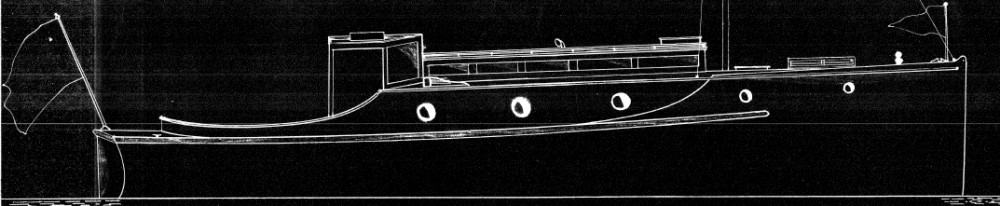
Aroha is a kauri carvel planked 6.4m launch designed & built by C E Thompson, Dargaville, for Frank & Millie Macklow. She was fitted with a ‘Kelvin Ricardo E 4cylinder petrol (or paraffin) engine , featuring 2 sets of 2 cylinders with separate carbs, this enabled either pair of cylinders to be switched off. I have heard her running & she sounds rather ‘sweet’. This motor was designed by Anton Bergius of Glasgow & was fitted to a lot of Scottish trawlers. As an aside his nephew, Conrad Bergius lives in Auckland & is a diesel mechanic.
Amazingly Aroha is still powered by the same engine & maintains its original colours, accessories, trim, tools, stripped canvas cushions, manuals & warrantee.

In 1950 Aroha was hauled from Dargaville by road to Lake Rotoiti & launched at Mourea. She has spent the last 64 years on lake at Otaramarae Bay.

Her owner Warwick Henderson, purchased her in 2002 & renamed her Aroha after his mother, Aroha Avis Hutchinson.

Anyone able to expand on her year on build, original name & her life pre 1950 ?

(photos taken by Alan H at 2014 Lake Rotoiti Classic &Wooden Boat Parade)

A Commodores Salute

Video

A Commodores Salute

Todays post is a little classic wooden boat eye candy from Seattle, the video shows the annual Lake Union- ‘Open the Gates Commodore Salute Parade’. The event marks the appointment of a new commodore to their CYA, lets hope Rod Mahler isn’t watching this, he will be demanding one of these each season 🙂

The Whangateau Traditional Boat Yard

An insight into the Whangateau Traditional Boat Yard

There has been a lot of great photos posted this week from last Sundays regatta & reviewing them I wondered how many of the ww readers knew the background to Pam & George & the yard. So I asked Pam to tell us a little about themselves & the yard.  So read Pam’s reply below. Alan H

First I have to say thank you to everyone for the wonderful support we had on Sunday welcoming the Dreyer family, the new owners of MV Laughing Lady, our newest arrival at the yard. We attribute this support to a mix of Alan’s awesome website and Jane High’s enthusiasm for bringing everyone together. Special big thanks also to all those that brought boats along, to all the sailors, to the helpers who lent a hand with the rigging and the young pirate that made it such a fun time.
Way back
When George was a little boy he would build small Woollacott type model boats in the back shed. Then under his older brother Jim’s watchful eye he built a Cherub design and then a Zepher. He didn’t sail them on the tranquil Tamaki River but preferred to race them with other keen sailors out and about with the Kawau Yacht Club. Then he built thirty and forty foot trimarans and sailed away to the Solomon Islands… and beyond.
When I was a youngster Mum and Dad would bundle up my two older brothers and oldest sister (youngest sister was still just a twinkle) along with our short legged, black and white dog, Boy, and we would – with great excitement and anticipation, be taken night-time fishing. Under the cloak of darkness and the drone of the seagull outboard, we would motor the short distance from our bay in Chelsea, into the reflection of the city’s lights and towards the Auckland Harbour bridge.
Dad would anchor our little Mullety, Terina, between two of the huge concrete columns, under the far side of the harbour bridge. Under the light from the Tilly lamp hung in the rigging, the big kids were allowed to sit on the front deck, we would take up our make shift wooden fishing poles with string line and a small piece of torn white rag, sometimes with a ball of dough attached and dangle it into the water until one of the frenzied yellow tail below took a hold.
Then the four fishing poles would be flung simultaneously into the air. Boy dog barking, four kids squealing in delight, flashings of silver and yellow, fish catapulted through the air. Some would fall on the decks, some flung too far – falling back into the water on the other side of the boat.
There was much scrambling to untangle lines and re-launch them once again. All under the long dark shadows and echoes of the large concrete structure of the harbour bridge above. Slimy and stinky and into the bucket they went, where they could be retrieved later. Some fish were lucky and flipped back into the sea. This went on ’til we had exhausted ourselves, and Mum and Dad, or we splashed the vulnerable Tilly lamp breaking the lens. Plunged into semi-darkness we would have to go home.
I don’t remember walking up the track from the beach to home. I think Dad had probably carried me since I was the youngest at that time.
The here & now
As time ticks by, George and I are fast approaching ten years at the Whangateau Traditional Boat Yard. We have been quietly and diligently taking our turn at caring for the yard and maintaining it to its original state.  

           
Many of the photos featured by Alan are familiar to some already, but for the “newbies”, George and I, just the two of us, restore small wooden craft, up to thirty plus feet. Well that is between maintaining the slipway for the local fishing fleet and other recreational boats. I also take on paid boat building work. The money made from this is quickly dissolved back into the boat yard and the project boats we maintain and restore on site.
Many folk driving past the boatyard on the nearby road, see the wooden spars in the creek, they appear at our door in pure delight at what they have found. It is a “living maritime museum” some say or it takes them back to the smells of their grandfather’s sheds. The smells of linseed, oil based paints and freshly cut timber, linger in the old building.
For a long time I felt a need to protect the little yard, as most know it was at threat of being demolished. However the yard, boathouse, workshop and the wooden craft that have refuge here, have found their own way out there and all who stumble upon it endears the yard.
George’s wonderful fleet of restored planked Z’dys is indeed special and the other restored wooden craft are a hit with ever-popular Regattas. Many thanks go to Bud Nalder for donating a sewing machine and the materials and time for schooling and personally making sails for the small craft we have restored.
Russell Ward, the skipper of the steamboat SV Romany still has a berth here for Romany and sometimes the boat yard is graced by steam.
Visitors are welcome to the yard. We do ask that you mind your footing as you move about both in the shed and surrounds, as this is still a functioning, traditional boat yard.
I’m sorry there are not a lot of Laughing Lady photos but its a tight fit in the shed 🙂 but as work progresses I’ll send more to Alan.
Keep checking in here at waitematawoodys as we will be posting more news from the around the yard soon.”


Whangateau Traditional Boat Regatta & Yard Open Day – Part 2

Whangateau Traditional Boat Regatta & Yard Open Day – Part 2

Scroll down to previous post to view Part 1 (42 photos)

********* yesterday was an all time record for ww – the site was viewed 4,509 times *********

click photos to enlarge

Whangateau Traditional Boat Regatta & Yard Open Day – Part 1

Whangateau Traditional Boat Regatta & Yard Open Day

The Whangateau crew of Pam & George once again threw their yard open to lovers of classic wooden boats on Sunday (May 4th 2014). The regatta also served as a welcome to ‘Laughing Lady’ the new motorboat arrival from the USA that will be receiving some WTB love.
The autumn day was perfect – sun,wind & great boats. The food & people were pretty good as well 🙂
The regatta follows a well rehearsed format – boats out on the beach, sailors & crew arrive, boats rigged, wait for the tide (&wind), race begins/ends, lunch, prize giving. Now if that sounds like any old regatta – I can assure you Whangateau is not that. The fun & ‘games’ as people secure a boat, select sails & rudders etc & rig up is hilarious & the old salts on hand prove invaluable, in fact it wouldn’t happen with out them. No problem if something does not fit, its into the workshop & onto to the saw bench for some adjustments. Thanks to Jason Prew & Nathan Herbert for the ride aboard Otira, the 1902 Logan motorboat.
Your own Steve Horsley won the race (again) , chased / followed very closely by launch owner Shane Anderson, who had to draw on his past yachting days to keep Steve honest & win a waitematawoodys t-shirt.

A lot of the crew got into the spirit of the day & dressed as pirates.

I’m not going to attempt to caption all the photos, there are just too many – I post today a selection to give you a gander of what makes the people & the place so special.
Tomorrow I’ll post another selection – there is just too many for one day 😉

click photos to enlarge

Click the blue link below to read Jane High’s post regatta newsletter

Whangateau Article 2014

laughing lady regatta

Whangateau Traditional Boat Yard Open Day / Regatta

If you are out & about this Sunday & looking for a nice drive, the Whangateau Traditional Boat yard is throwing the doors open for people to view the newest arrival – Laughing Lady to the boat yard and New Zealand. The American and NZ flags will be flying & the theme for the day is red, white & blue or even just something nautical e.g. a boat hat.
And as is always the way – a selection of small craft will be out for inspection & visitors are welcome (encouraged) to bring their own craft.

For the newbies that have not been to one of the regattas before , its a very casual day where you make your own fun and are responsible for yourself i.e. if you are boating, bring and wear your own life jacket.

Bring a picnic lunch or have one of our sausages or bring your own sausages for the BBQ.

There will be a donation box for the sausages and the days events and for up-keep on the small craft on offer.

A course will be set to sail, motor or paddle around, out from the bay.This is open for all to join in

The boat yard is open to view Laughing Lady till 4.00pm

Please mind your footing around the yard, this is a traditional working boat yard.!

How do you get there?

Drive past Matakana aprox 9.1 km to 397 Leigh Road, Tramcar Bay & look for the one way bridge, park on the other side of the bridge please.

Launching of boats can be done from the reserve access by the boat yard, but be early to do this.

High tide is at 11.00 am – so 9.30 for setting up the boats – then as soon as the tide allows, hit the water & we shall signal you back for the start of the race 10.30-11.30 start of race.
Confused ? it will be all clear on the day 🙂


The 2014 Great Annual Waikato Seagull Regatta – Part2

The 2014 Great Annual Waikato Seagull Regatta – Part2 (+ new photos)


story by Adrian Pawson
photos ex Nina Wells (Working Edge Pictures)

(scroll down to the previous post to view Part1)

RACE DAY TWO
Day two greeted us with rain. The second leg of the race is a shorter but not insignificant 33Nm. We would need to pass through Meremere then Mercer and Tuakau before navigating the Mimi clad back creeks of Hoods Landing to find the finish line.  Apparently there were flags to show the correct finishing route through the willows, but we weren’t taking any chances. Out came the iPhones and on the back of some free café WiFi we soon had a selection of maps and a GPS plotter app to guide us home safe.

The second days start is a more straight forward process than the previous day at the dam. There’s only a single lane ramp at Rangariri and 40 boats to get on the river. With the whole place currently under development due to the new express way going in, the launching process was logistically challenging. Once on the water everything was as per normal. There was still a thick haze of smoke and usual noise, but today she was a straight time on distance affair, and that we thought we could manage.

Seagull starts aren’t conducted to quite the same degree of accuracy as we’re used to in the yacht racing scene. A green light comes on and stays on for a while, then an orange light flashes and when that one stops the race has started. Exactly when the orange light stops flashing is determined by when the old boy on the bank feels like turning it off. It’s pretty much a musical chairs type affair. The closest boat to the line when the light stops, pulls a glamour start. That wasn’t us this time, but our trusty seagull was on song and Paris was good for it. We were back down lying in the boat so we were soon nose in front, and focused on our mission to pull back that crucial 15 mins.

As the rain beat down on our sail cloth foredeck and the spray blew back into our stinging  eyes, we dodged sand banks, floating branches and a bloated sheep. When it’s raining hard it’s almost impossible to read the river and distinguish between safe water and the shallows. So you guess and hope for the best. We were lucky and escaped grounding. Finally some luck for the good ship Paris!

Then 2 hours into the leg, we dropped 100rpm……. James and I looked at each other and immediately knew exactly what happening. Sure enough 10 mins later we dropped another hundie and plan D was put into action. We would need to stop and do an oil refill on the gearbox. We decided that we would take advantage of the numerous duck shooting mimi’s and slide Paris out of the water for the job. Some of these mimi’s have little floating pontoons and that would do us nicely! Our well-honed Southern Spars lean manufacturing techniques now took on an all new level of appreciation and we prepared Paris for the fastest gearbox oil fill in the history of seagull racing.

We spied a suitable pontoon and prepared to dock. As we drew closer we realised the shooters had put nails all around the edges to stop the shags getting up and crapping on the pontoon. Paris isn’t the most durable craft and this was not good at all! But we were committed to this pontoon and the clock was ticking. We came along side and stepped out. Lifting the bow over the pontoon, we then rested her gently on the nails and took a side each to get her all the way up. There was cracking of carbon fibre and a couple of slightly higher nails broke through Paris’s delicate outside skin and into her soft foam core. James being the highly attentive designer type wasn’t happy about this at all and voiced his feelings about how rough he thought I was and how we had enough problems without puncturing holes in the boat! But we had an oil change to do so I told him it would be sweet and that a couple of small holes wouldn’t be the end of the world. He could put his fingers over them if he was that worried about it!

4 mins later we raked Paris back over the nails and with a single pull of our trusty seagull starting cord we were on our way at a never before seen 5100rpm! It was like the seagull was thanking us for looking after her, and at last we felt like we were at one with our machinery. We were true seagull racers at last! As the rain beat down on our shivering and hungry hides we blasted down back estuaries with GPS guided precision on our way to the finish. We crossed the line in an elapsed time of 3h 25m. Now the waiting game began…….

10 minutes passed and still no sign of the second placed seadog. 15 mins ticked over……! Then half an hour…. Only then did we hear that all familiar sound of the screaming seagull. Through the willows came the best of the rest. Our places in seagull racing history were secured! At last James and I were the new International Bermudian Seagull champions!  We’ve suffered through a lot for this moment and when that trophy was safely in our possession we immediately took photos on our iPhones, appropriately tagged the relevant parties and put them on facebook for the entire world to see.  We won two seagull caps and two seagull hat pins for our steely first days determination and solid second days’ performance. It was worth it. We were seadogs at last!

There is a movie  in the pipeline, when its released I’ll let you all know, it will be a cracker – Alan H

The 2014 Great Annual Waikato Seagull Regatta

The 2014 Great Annual Waikato Seagull Regatta

story by Adrian Pawson
photos ex Nina Wells (Working Edge Pictures)

I make no excuses for the length of this post, its such a great yarn it needs to be told. Read about Adrian Pawson & James Ledingham’s challenge to win the great Seagull race.
Grab a cup of what ever your poison is & enjoy 🙂 Alan H
The 2014 running of the ‘Great Annual Seagull Regatta’ was once again able to start at the base of the Karapiro hydro dam this year thanks to higher water levels and a helping hand from cyclone Lucy. At first light the keen regulars milled around in the dark waiting for the nod to proceed to the start area. Not having much in the way of patience, Team Paris with our trusty carbon fibre creation held above our heads, jumped the fence and trundled our way down the metal dam track to the starting area to secure the pole position on the dam beach.

The first day’s task consists of a 45Nm jaunt starting at the base of Karapiro hydro dam, battling through a series of rapids, then through picturesque canopy covered viaducts, leading into a fast and furious left hander into Leamington pool on the outskirts of Cambridge.  From there we howl our way down through Hamilton, Ngarawahia Taupiri, Huntly, Ohinewai and under the Rangiriri bridge finish line to post our first days effort on the regatta time sheet,

Our start was scheduled for 9:30am, half an hour after the 4.5 dinghy class. Our division start was knocked back half an hour while a few of the old boys finished up mixing their final choice of 2 stroke brew and the mandatory pre-race cuppa’s.  Come 9:55am, and having completed a couple of nervous pre-race leaks into the nearby bushes,  were all on the water and circling with the current waiting for the lights to go out signalling the start of the race. As you can imagine, at the base of the dam air movement is at a minimal.  Normally this wouldn’t cause much of a problem. However 15 seagulls burning 10:1 2 stroke and running rich on low revs, can produce a significant quality of smoke! The environmental situation 30 seconds out from the gun was starting to look like a bad day in Beijing with greatly reduced visibility!  When the flag finally dropped and 15 tiny carburettors were finally allowed to open wide, the exact direction of the dam exit was in some debate. Some of us got it right and some were not so lucky!  But for the moment Team Paris was looking good and we shot off towards the first set of rapids in the lead.

Much to our surprise we were pulling away from our fellow seadogs and all our hard work and testing seemed to be paying off. We sped around bends and navigated the rapids leaving a majestic trail of blue smoke in our wake. We hugged the river banks and rock walls for maximum current benefit and for the moment our performance was looking quite spectacular!  We had long ago lost sight of our competitors by the time howled our way under the first Hamilton bridge. Even more pleasing was that we could smell the sweet exhaust fumes of the 4.5 dinghy division ahead and knew that we were catching them quickly. We were drunk on our sense of self satisfaction, and with the knowledge that our beloved Paris Hilton Mk2 was clearly a weapon, we were all smiles as we tucked into our packed lunches and took time waved to the well-wishers on the river banks.

Three hours had elapsed as we passed under the second Hamilton bridge, but a quick glance at the taco revealed that we had lost 100rpm. This is normal we told ourselves. The motor was running hot and maybe some tolerance issues had come into play.  A seagull usually doesn’t run at 5000rpm, and for us some drop off was acceptable. We assured ourselves that we were still fast.  10 minutes later we lost another 100rpm. Our smug smiles quickly faded and we realised we could be developing a problem on the good ship Paris….. Half an hour later we had bled 1000rpm and the relationship between crew members had descended into short bursts of 4 letter words with periodic apportionments of who might be to blame for this catastrophic short coming.

Paris was shaking like an F&P washing machine from 1980’s. Our seagull was not in a happy place at all. It was obvious that we had terminal gearbox problems. A quick call to our support team and a frenzied exchange of lat and long data revealed our position and proximity to a public road. Our best option was 3 km away. We were down to 1500rpm and our hopes of a record breaking finish were going up in smoke – literally!  Then our trusty 1971 seagull ground to a halt and the shaking and grinding was replaced with a terrible silence. We were moving gently downstream but for all racing purposes we were stationary.

We knew we were sitting on a very healthy lead and the call was made to start paddling. We took turns as we had a bit of distance to cover and maximum stamina was required to get us to our rendezvous waypoint, and to our much treasured spare engine. We paddled for 30 mins and that river bank couldn’t come soon enough. I finally jumped out to navigate the willows with the road in sight. I had to get over one of those annoying electric horse fences and through a paddock to the highway. I had horse shit on my wetsuit boots and I was knacked from paddling. But I made it to the side of the highway. A couple of seconds past and I could see the Southern Spars transit van and our now very valuable spare engine coming towards me.

Doors were flung open and with hands on spare motor I was re-energized. We were back in business. Across the field, over the bastard horse fence, through the willows and back into Paris. James had the stuffed 1st motor off already and the spare was on route to the transom. In the process of swapping over fuel lines we lost half a litre of fuel into the boat. The cockpit of Paris now took on the traction characteristics of a stinking and highly flamable ice rink. As with every low budget program we had only one ‘nice’ prop, so that came off the 1st engine with the intention of being slid cleanly onto the spare motor. It went on about 5mm and stopped. (I decided that I wasn’t into taking the blame so poor ol’ James wore it) …….F@#* James, did you ream the bush for the spare engine shaft…..? I can’t believe you didn’t ream the bush. That was your only job this morning!  F@#*! Hammering with vice grips got us down another 2mm but that was a waste of time. I slid around and wrestled with the prop in this stinking pool of 2 stroke fuel that now shushed around in Paris’s cockpit. My nice 2010 Oracle leggings were covered in oil and I imagined the waterproof lining peeling off like had happened to my Aigle during a similar situation testing. My leggings were probably now rooted. Apart from the Oracle logo I really like those leggings. I wasn’t about to part with $400 for a new pair either. Then from behind came the competition. They had finally caught up with us. Somehow the prop went on but not before I cut my hands on the precision sharpened leading edges. So with blood and oil on our fancy North 3DL tool bags and a couple of frantic pulls on the starter cord, we were off!

5 mins later the spare engine died.  I also tried to blame this on James but he wasn’t wearing it this time….. We elected to go to the river bank. We could see another road and we knew a rescue was on the cards if we couldn’t come up with a plan C. We decided that our best option was to gamble that the 1st engine power head was still ok and our terminal problem was confined to the gearbox. So off comes the gearbox on the spare engine and she was mated onto the 1st engine. This took 20 mins meaning the competition was well down the track before we were back on the river and moving.

We were back at 4800rpm and chasing hard. We knew were faster than the sea dogs but we had a lot of work to do. The decision was made to ignore the overwhelming petrol smell and lie down in the boat in the name of reduced windage. We were flying along at a respectable 12 knots as the calming effects of the fumes went some way to restoring the friendship between James and I after that unfortunate blaming episode.  But we were back in the race and it was game on.

By the time we made the Rangariri bridge we were only 15 mins behind the leaders, and knowing that we had a significant speed advantage, the race was far from over! Tomorrow we would take the fight back to the seadogs and our pride would be restored. But right now there was work to be done. We had a bit on to clean Paris and have her back in race trim for tomorrow.

Upon disassembly of the 1st engine gearbox we found a pile of gear teeth in the bottom of the case and a distinct absence of oil. Seems like 3 hours was all it took to empty a full box worth into the river. When the oil was gone the countdown to self-destruction started…… Our experience in the garage back home taught us that it’s normal for a seagull drops its guts over the period of a few days, but 3 hours wasn’t quite right. Oh well, we were running a pretty loose setup. Maybe the spare box was better. We filled that one up and got stuck into the beers. Tomorrow was to be another day.

to be continued tomorrow on ww ……

To add a little bit of perspective to the above – read below Adrian Pawsons notes

My partner Nina and I are in the process of cutting together a documentary leading up to and then centring around the 30th Waikato seagull regatta. Fortunately Nina is a professional film maker, so the end result will hopefully be a high quality 90 minute feature length doco aimed at a spot in the NZ international film festival. We not eligible for any kind of funding, so we’ve had to take a ‘just do it’ approach and pay our own way. But we think it’s a film than needs to be made. An event like this attracts some very eccentric characters, so content isn’t a problem. However we did need a first time team to complete the cross section, so against all better judgement, James and I became it. James and I know a little bit about sailing boats but this was our first crack at anything with a motor, so it was bound to be a shambles worthy of filming. We both work at Southern Spars so we quietly built Paris in one corner of the workshop hoping that by the time the ridicule and jeering got too bad we’d be just about done. Aside from our own struggles to get one over the seasoned campaigners (who we affectionately refer to as the seadogs) we’ve spent the last year driving all over the country filming these fellas in their secret seagull tuning sheds. The film will follow 6 seadogs their individual quirks and their various challenges just to make the start line.

The real shame is that we can’t show any video material prior to the film festival as any stray footage will void our entry. At last count we’re about 60mins deep and our 6 seadogs have been pure gold so far! They’re hilarious, but at the same time exceptionally crafty old roosters that typify the ‘Burt Munro’ type attitude towards life. So fingers crossed we nail the last 30 mins from this year’s race footage and end up with something nice to do them justice.

Luana

Image

Luana

LUANA

photo ex Harold Kidd

The above photo of Luana shows her with one of the most famous warships of all time, HMS Hood. In 1924 Hood visited Auckland with another battleship, HMS Repulse as part of a 38000 mile circumnavigation. HMS Hood is seen at Princes Wharf.

At 860 ft she was for many years the largest & most prestigious warship in the world, with a top speed of 31 knots what a sight she must have been.

Sadly on the 24th May 1941 she came 2nd in one of the most famous surface engagements of WW2 – the German battleship Bismarck sank Hood in 3 minutes with only 3 of the 1418 men onboard surviving.
There was at the time much controversy into the speed of her demise & the exact cause of the loss of Hood still remains a subject for debate. Whether a shell from Bismarck king hit Hoods armory or a fire detonated her own torpedoes will never be know.

On a happier note Luana is still with us & a quick entry in the woodys search box will reward you with some great photos.