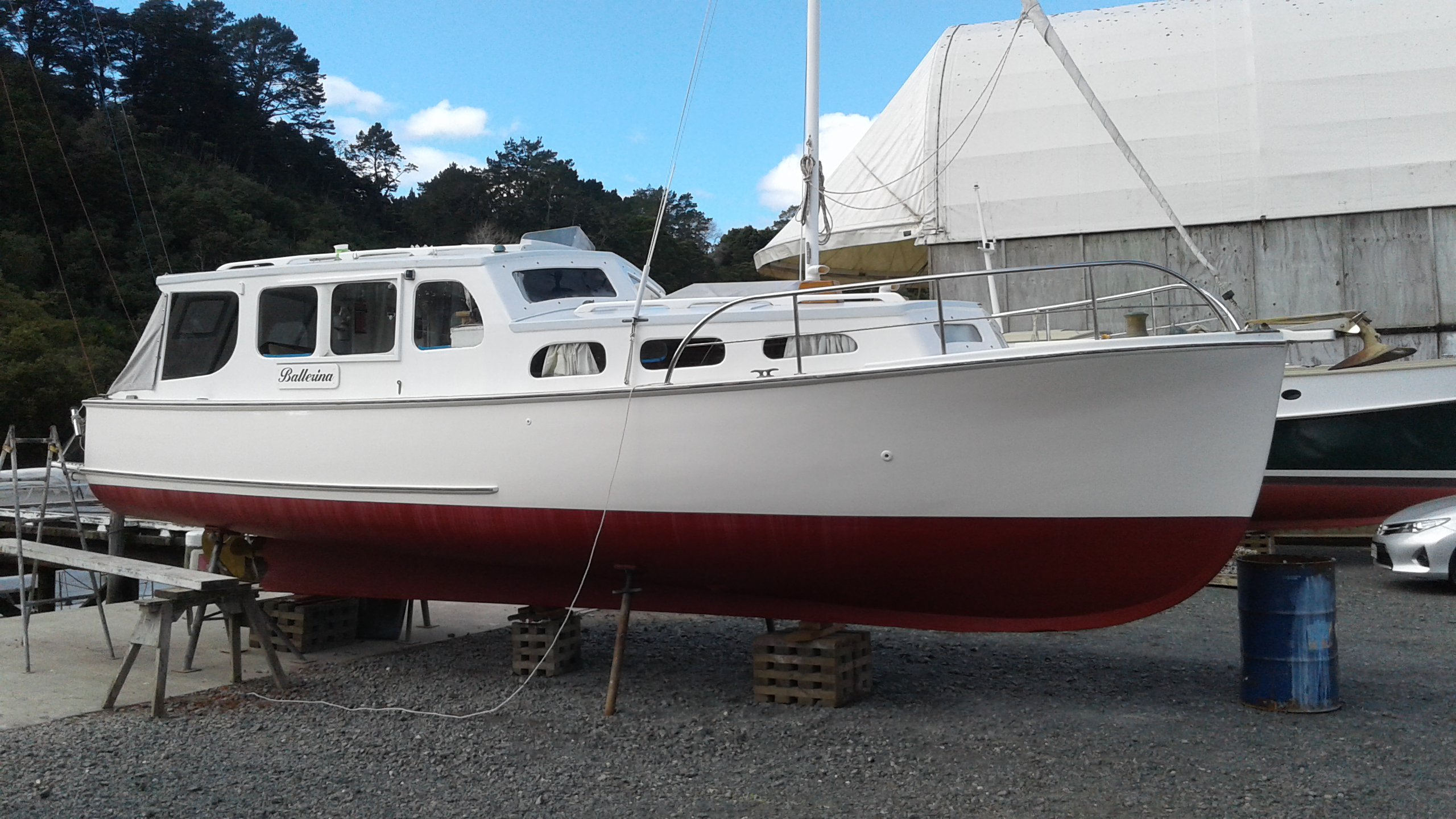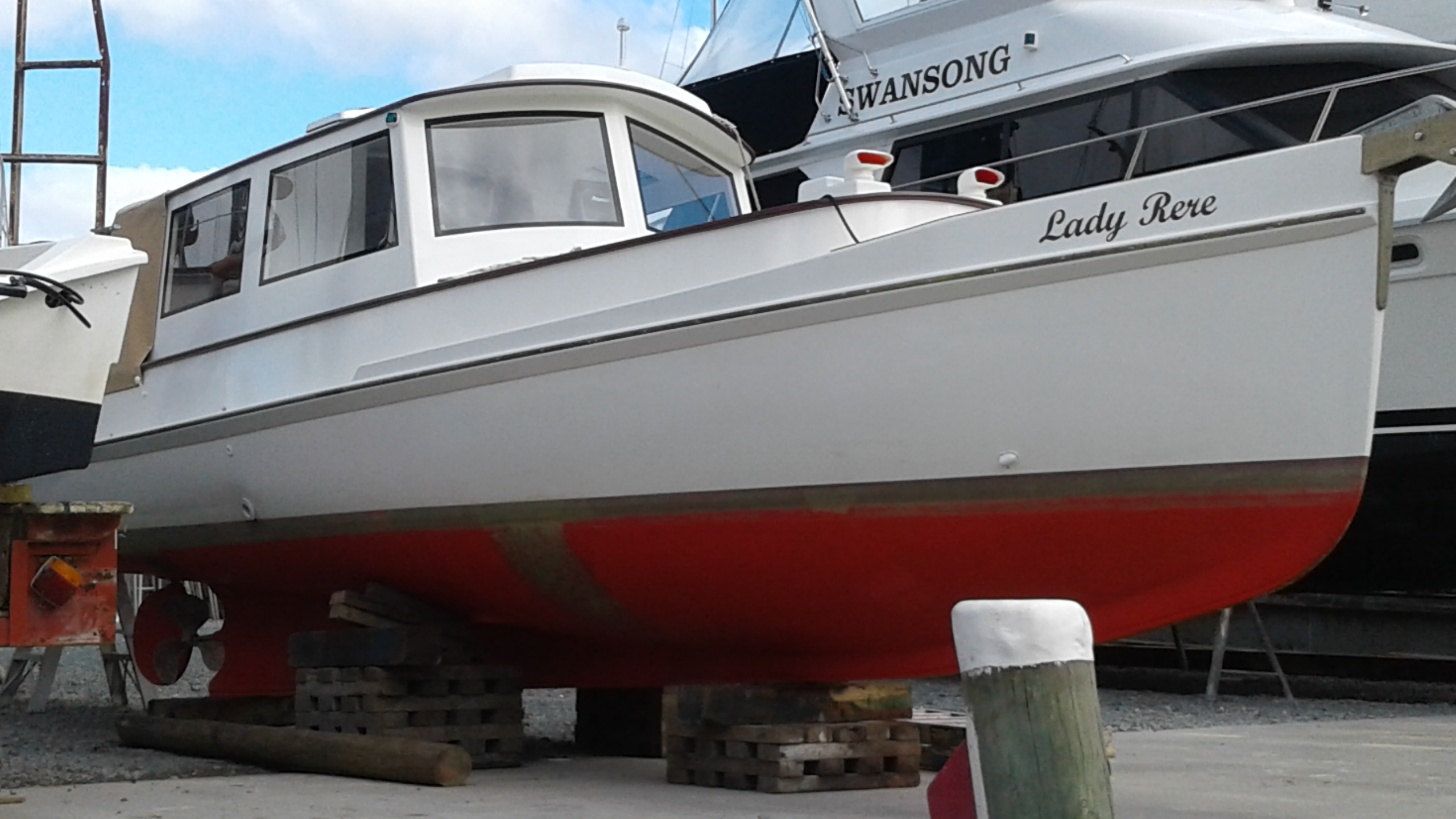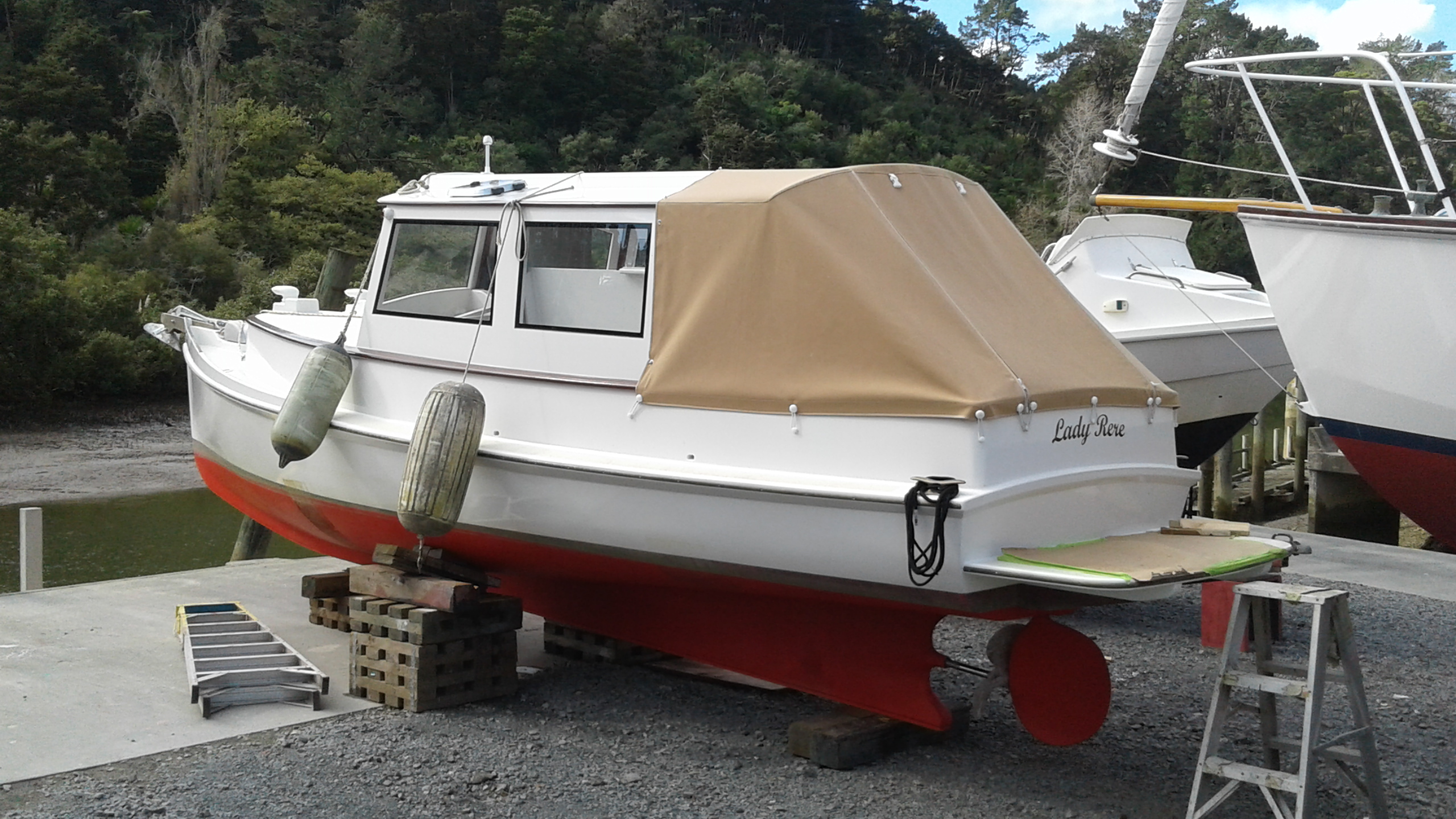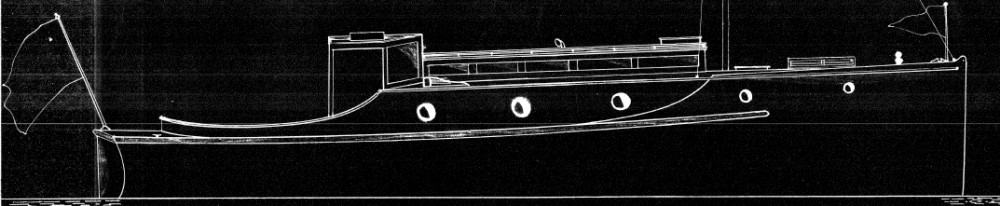
Tassie II + A Great Read

screen-shot-2016-06-25-at-7-57-25-am

screen-shot-2016-06-25-at-7-56-43-am

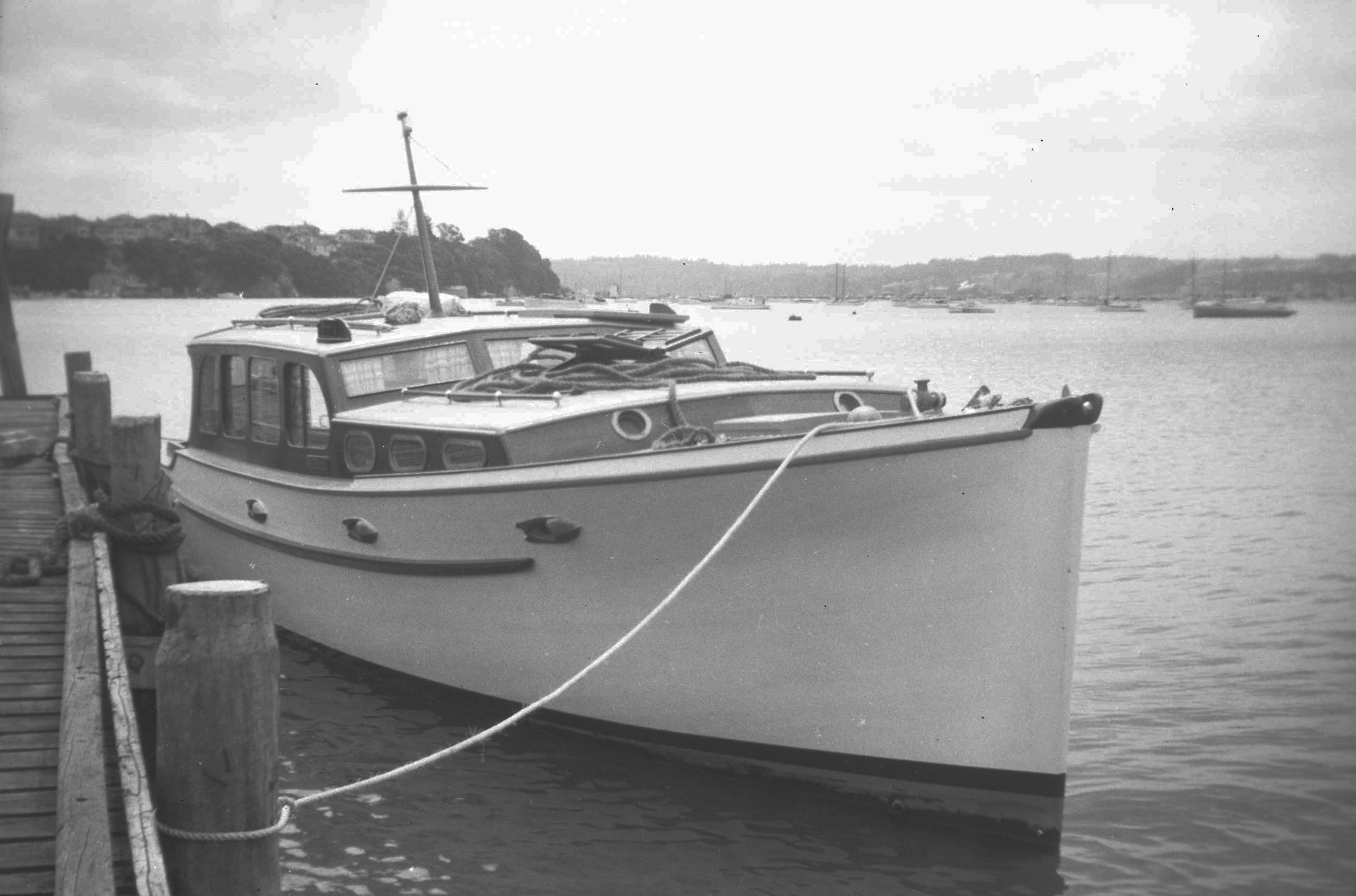
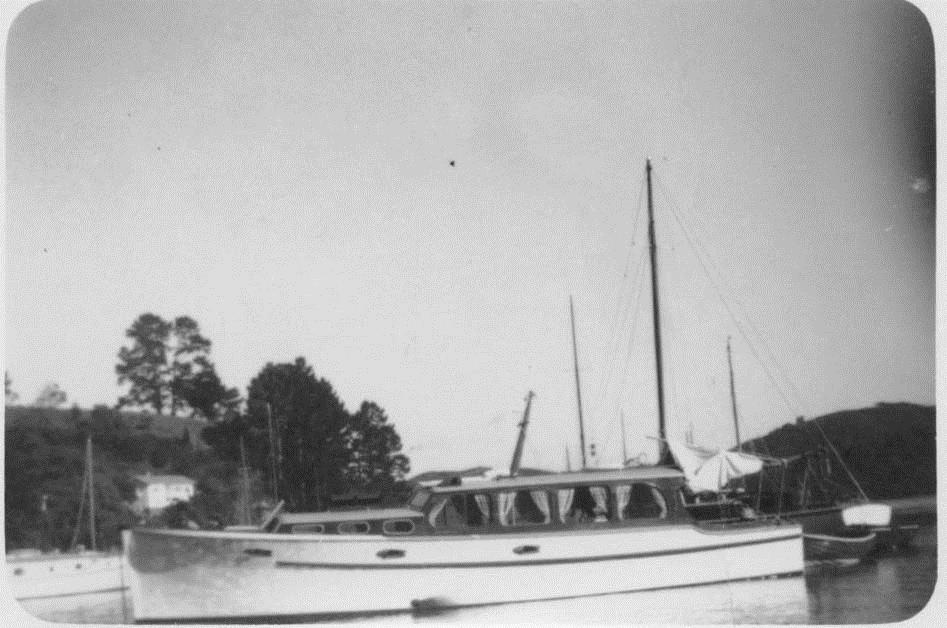
Tassie II

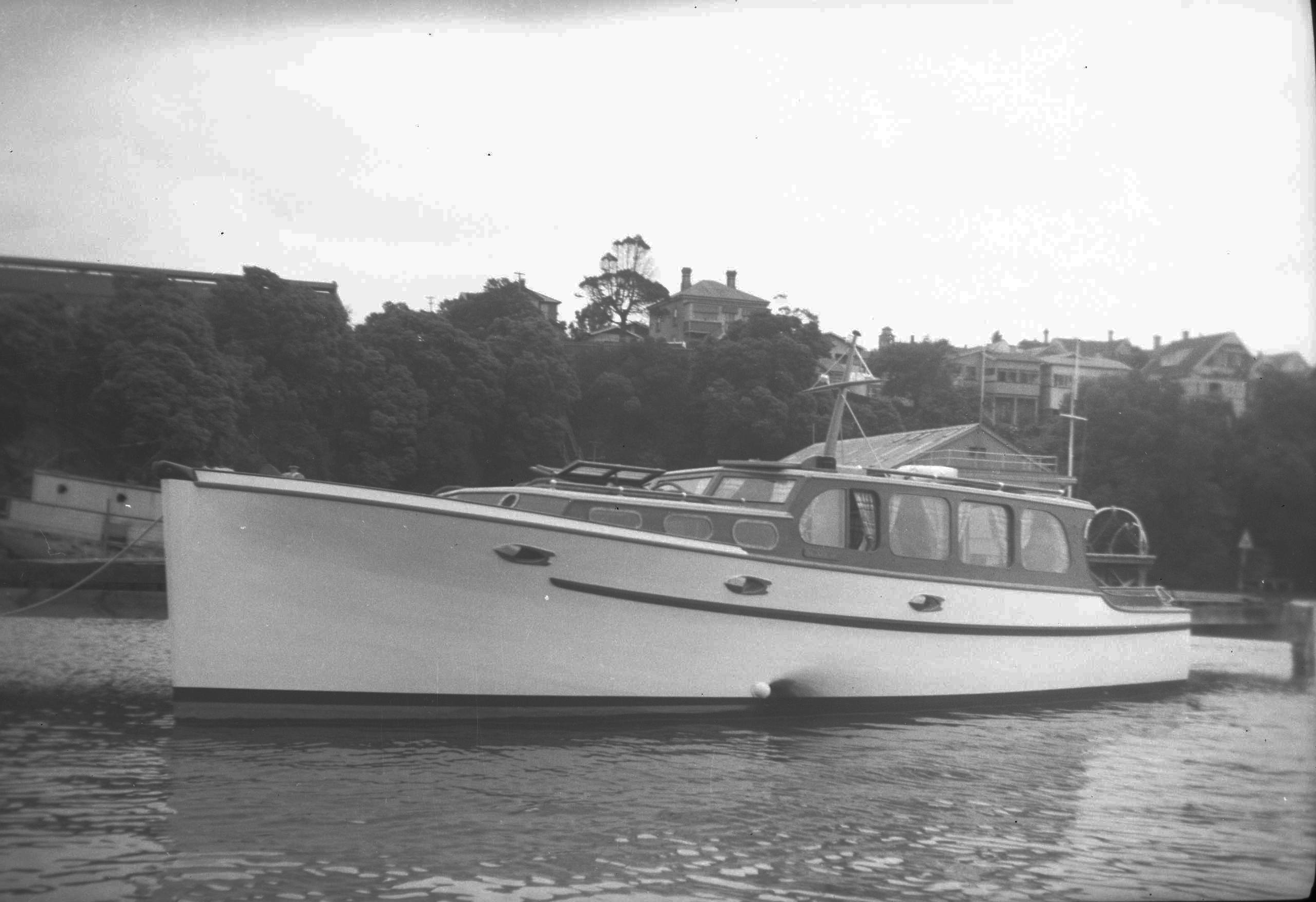
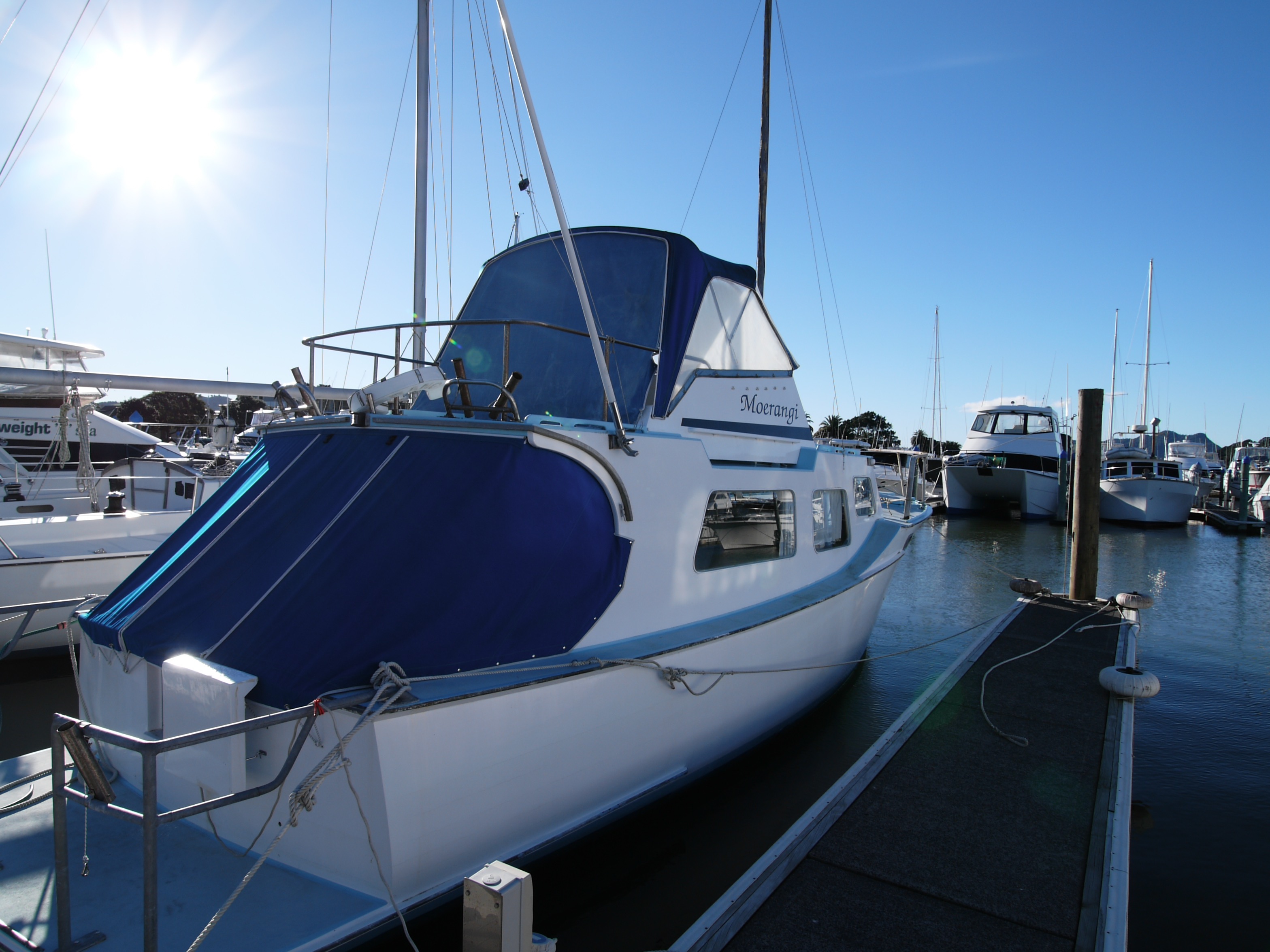
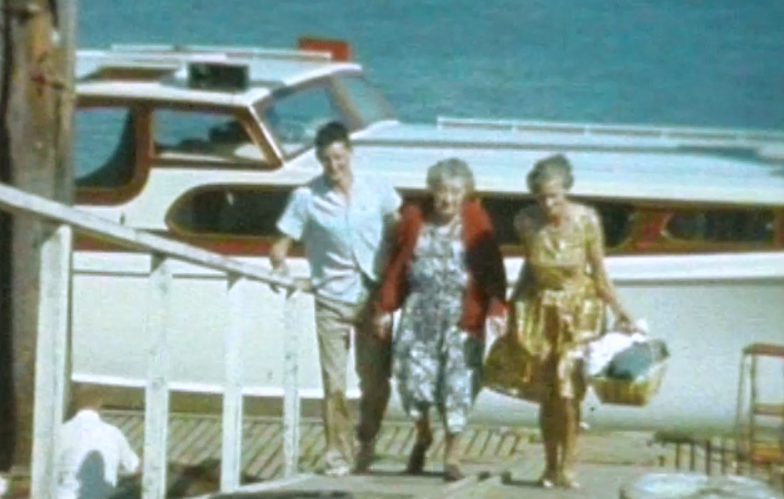
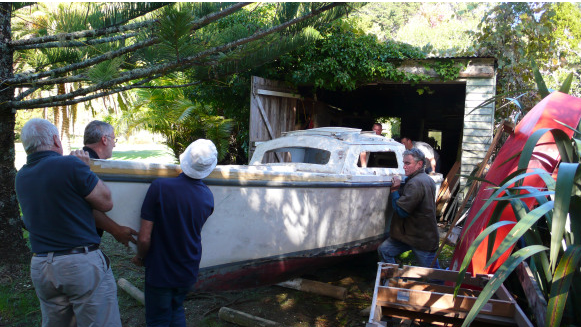
ww readers may recall that last year I was sent a collection of b/w photos by Rosemary Robinson, the granddaughter of L.C. Coulthard, boat builder of Onehunga. I featured the launch Doraine here & it generated a lot of chat. Amongst the photos were the above two & the name Tassie II, 1952, appeared close to the photos, but not directly underneath, so I’m a little uncertain to the actual name. I’m also assuming the location is Coulthard’s Onehunga yard.

Can any of the woodys confirm the name of the launch & supply an details on her ?

Finding Pax
Popped down to Boat Books in Westhaven last night to catch Kaci Cronkhite the author of ‘Finding Pax – The Unexpected Journey o a Little Wooden Boat’ speaking on her just released book. Kaci has impeccable woody credentials having spent 10+ years putting together the world famous Port Townsend Wooden Boat Festival. Readers of the USA WoodenBoat magazine & followers of the WoodenBoat online forum will be familiar with her 1936 Danish designed & built spidsgatter (double-ender) yacht. The book chronicles Kaci’s purchase, restoration & subsequent search across 3 countries to uncover Pax’s past.
To quote John Summers, who reviewed the book for WoodenBoat magazine – “this is a book to curl up with & reflect on. Cronkhite’s writing is lucid & heartfelt, feelings at times more like a glimpse into a personal diary than a personal book. Reading it may make you want to by an old wooden boat of your own. Don’t say I didn’t warn you”

Copies are available for the very modest price of $35 from Boat Books   https://www.boatbooks.co.nz/
The photo below I snapped on the iphone is of Kaci’s personal copy with the dog-eared page makers, from which she read exerts.

fullsizerender

Small Woodys – Sailing Sunday

OLYMPUS DIGITAL CAMERA

schock-15-on-orewa-estuary

Small Woodys – Sailing Sunday

When recently John Bullivant sent me some launch photos, he asked  “if small boats qualify for Woodys?” – the answer was of course 🙂
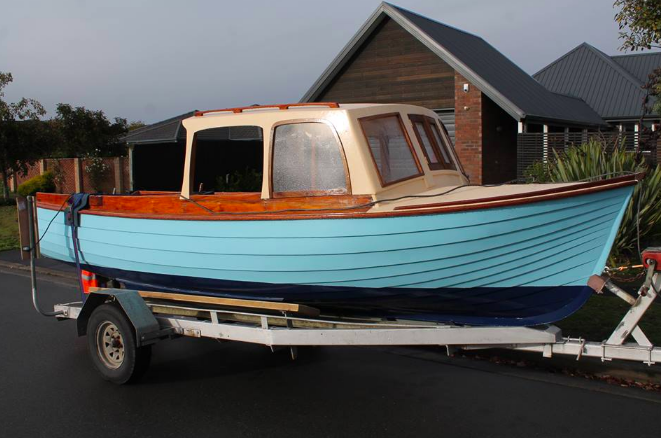
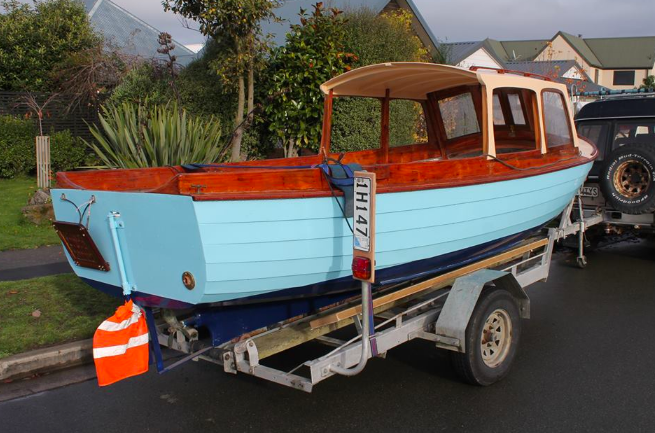
So in response John has sent in few snaps of a couple of he has rebuilt. One is a 15′ Edwin I Schock (USA) designed ‘Sharron Potts’ day sailer (design from 1952)  and the other is a 1960’s John Chapple (NZ) designed 12′ Cherokee racing yacht. There might be enough Macrocarpa  kwila Mahogany and Kauri in the Schock 15 to qualify. John talks below on the two yachts

12′ Cherokee

I re-built a 1960s 12′ Cherokee racing yacht (designed by John Chapple). There were only two photos I could find despite many hours of searching the internet so I went ahead and used a bit of ‘poetic license’ in re-building the boat. I have glassed the hull, deck, centreboard and rudder to help preserve it as it was coming apart at the seams when it was given to me, dug out and filled all screw holes, new mast mount, fittings, repaired any soft spots, deck framing, made new rotating mast system etc., etc., (usual stuff), and have had it out on the water, and it sails as well as anything else I’ve sailed, (very nimble in the light stuff).

15′ Sharron Potts

I have also re-built an Edson I Schock designed, ‘Sharron Potts,’ 15′ day sailer, (USA), which I purchased around 9 yrs ago, in a bit of a sad state. I stripped it inside and out, and glassed the deck, rudder and centreboard, made a new rudder stock and tiller, (from my late mothers 70s mahogany dining table), and did all the usual stuff, (re rigging etc). Took me a year to do it, as the brother of the original builder, had sprayed it with a 2 pack paint inside and out, (apparently while he was away overseas), thus annihilating the varnished Macrocarpa interior finishing. I think I got about 2 buckets of paint dust out of it ! It was built by a Martin Jackson and his brother, (in the in Waiuku or Karaka from memory), and was framed with Macrocarpa, scrounged from a farmer nearby, who was milling some trees on his property.  It had a large outboard well built in, but I have removed it, and rebuilt it, to the original configuration. The boat was built from an American plan book, (How to build small boats, by Edson I Schock 1952), the design being from around 1950. Edson Irwin Schock (1897-1988), was a naval architect, from Rhode Island, who designed many small easy to build boats. After retirement he worked for Mystic Seaport designing boats.

The boat sails extremely well, and is perfectly balanced, and can be safely sailed single handed in winds up to around 10knts, (remembering it is pretty much a 470 2 man setup). The mast is from an old David Barnes 470, and used to play like a church organ, till I filled up all the holes, (from a hundred different fittings).
Apparently the boat used to go out with the 470s when Chris Dickson and co. were sailing. I have set up a spinnaker (ex 2004 Mexico Olympics – Andrew Brown, NZL 199, from North Shore), which I found on Trade Me,- (shame they drew the number on an originally $1000 odd Italian made Olympic certified sail with felt pen!), but have not been game to try it without a crew.”

27-02-2017 More Input from John Bullivant

A great bit of information regarding the Cherokee and thanks for the positive comments. I have been trying to find more about the class since I was given the boat by a panel beater in Albany, who had been given it by one of the painters in the same establishment. The painter had sprayed it with car lacquer which was totally the wrong stuff for a very thin flexible hull like the Cherokee and it was removing itself very nicely from all the seams (which were starting to make the boat look like strange slowly opening flower) while I had the boat stored under a cover for a year outside awaiting a rebuild. Finally got to it and got it done and the effort was worth it. She should be ok for a few more years yet.
Had to make a few mods here and there to gain access to the mast step which was broken and rotten (mast had come down at some point and broken the deck and frames on one side) and rebuilt and glassed in a new step mount and made a new adjustable step for it. Had no mast with the boat, centreboard and rudder were split down the middle, centreboard case was misaligned, (a nice 20mm port bias) laminated traveller was delaminating, transom had a large hole which had been patched, (attempt at a self bailing cockpit) rot in the floor in a few places right through and so on, so it took a while!
On sailing the Cherokee for the first time I found it to be perfectly set up for my weight (fluke!) and was extremely nimble on the water. One thing I found out when going forward to the mast to make an adjustment while sailing was – DO NOT under any circumstances go to the mast and try to make adjustments while sailing. I must have tacked uncontrollably 20 times in 20 seconds before I managed to scramble back behind the c/b case! The Cherokee has a disappearing chine and is pretty much just a V at the mast, and when you are up there it develops a terrifying high speed eel like movement. Won’t do that again!
When I first launched it at Torbay a number of people came up to me with stories about Cherokees
One chap said he had just burnt one as it had blown out all the seams from sitting around, and another told me a friend of his on Waiheke has recently fully restored a Cherokee to original and it is fully varnished and beautiful, (be nice to see that one, – perhaps we might prompt a photo through WW sometime! ) Don’t know if it means anything to anyone but my boat appeared to have been originally white with med blue cockpit and red plastic tube trim round the hull access/storage ports. Be nice to see some more Cherokee photos if anyone has them.
 

My Girl Restoration Update

My Girl Restoration Update
Work on Jason Prew’s launch ‘My Girl’ is processing along well – but not at the speed indicated by the above photos. Jason remembers to take photos, but he is a bit slack with telling / showing people 🙂 In fairness, he does keep his weblog up to date, you can see & read more on the project at the link below.
http://www.my-girl.co.nz/mygirl/Restoration/Restoration.html

Saucy Sue – 12′ Jack Logan Dinghy


20160307_170128-1024x576-1

dsc_8515

dsc_8518

Saucy Sue – 12′ Jack Logan Dinghy

Woody Mike Johnson sent me the above collection of photos of Saucy Sue – his 12′ Jack Logan dinghy. Mike mentioned that he was very grateful to friend David Peet for spotting the Logan on trademe  and for his brother and our friend Brian for convincing Mike’s wife, that ‘you can have two boats’……… even if it means her car is now exposed to the weather.
Mike was doing up a 9ft Mosquito Craft at that time and there was understandably a degree of concern as to where this was all going, so well done Brian.
The weathered varnish in some of the attached interior pics has since been restored. A few ‘mods’ have been tastefully added in the interests of comfort (aka staying dry) 😉
You can tell from the background scenery in the photos that Mike & Saucy Sue have traveled around the wooden boat events, great to see craft like this being used. Subject to the event, the Suzuki gets swapped for a Seagull.

Trolling On The Lake – Mokoia

quiz458

Trolling On The Lake – Mokoia

The above photo, ex Harold Kidd, is of Mokoia, fishing on Lake Rotorua. The question of the day is – when was she built and who built her?
The first correct answer in the ww comments section, after 6.30am, scores a 2017 Lake Rotoiti Classic & Wooden Boat Calendar.

Harold Kidd Input – MOKOIA was built by Bailey & Lowe in December 1903 for the Hot Lakers Steam Navigation Co. Typical “settler’s launch” by Bailey & Lowe, very similar to Chas Bailey Jr’s MILKMAID type. There were hundreds of these all over New Zealand.

Mystery Launch – Boat Sheds

s-ford-r-land-boatshed

MYSTERY LAUNCH – BOAT YARDS

Morning woodys, after the gigantic post (160+ photos) yesterday from the Lake Rotoiti Classic & Wooden Boat Parade, I thought it was time to serve up some mono-tone imagery. Today’s photo is from the album that one of Peter Renall’s clients saved from the dump bin.
The S. Ford & R. Lang branded sheds must help with ID’ing the launch in the forefront.

And woodys if you were out & about yesterday enjoying Waitangi Day, just scroll down for a serious woody experience 😉
Enjoy.

Taree

taree-2

taree-at-gh

TAREE
Taree, the 1966 36’ Owen Woolley sedan launch has appeared before, briefly, on ww.  Back in the late 1980’s I even looked at buying her. I think she held a few records:

(1) the longest trademe listing for a classic launch
(2) the number of failed surveys

So to see her in the hands of a new owner & one thats sympathetic to woodys is a very good thing. From the photos above, some ex her owner & some 2016 emailed to me by Ken Ricketts, she is getting the attention she deserves.The name Taree  means “sticks” in Aborigine, I assume a link to the fact that she is built with kauri, carvel planked over jarrah ribs, the Australian hardwood. She has teak coamings.
Power these days is via a GM 165 hp V8 Diesel fuel pincher, installed by the previous owner in 2009. This sees her easily cruise at 8 knots.

She was bought by present owner Don Bruce in Dec 2015 & is now kept at Gulf Harbour. He  bought her off a  John Graham, who owned her for  23 years & kept her at Pine Harbour

Her current owner believes she was built for Emmitt Keenan and had a Perkins 46109 installed when launched.

Gray Mathias, possibly the 3rd or 4th owner,  fitted a 2 stroke Detroit in 1985 and after one more owner Mike McDonald, John Cameron bought her in 1988. The Detroit lasted till 2005 and the 165hp V8 fuel pincher was fitted in 2009, at a cost of $17000.

Recently she has spent time in the Brin Wilson shed at Gulf Harbour (see photos above), receiving some serious TLC.
Always good to see a classic get lucky & find a good home – well done Don Bruce 🙂

Peter Peal  Book Winner
The winner of yesterdays quiz for a copy of – Thoughts on Clinker Lapstrake Dinghy Construction.
Is Nathan Herbert with – Z Class. Lots of people sent in Silver Fern & Frostbite but surprisingly only one – Z Class entry.
Well done Nathan.

Want to see what electrolysis does to a wooden boat?

img_0552img_0551

 What Is Electrolysis?
I have published Chris McMullen’s comments below for 3 reasons:
1. Out of the blue, today I was sent the above 2 photos by a woody owner who has just discovered they have a time bomb ticking away. Bomb is a good analogy to use as the green wires in the bottom photo are the detonator 😦
2. The subject of electrolysis & wooden boats is topical at the moment
3. I’m passionate about saving our old wooden ladies.

You can read more on the subject here https://waitematawoodys.com/2016/04/28/electro-chemical-damage-in-wooden-boats/
To quote the dictionary – Electrolysis of water is the decomposition of water (H2O) into oxygen (O2) and hydrogen gas (H2) due to an electric current being passed through the water. Electrolysis of salt water or Brine – electrolysis turns NaCl + H2O in electrolysis will produce separated hydrogen gas, chlorine gas and sodium hydroxide*. *Sodium Hydroxide is also called Caustic Soda. It is used for pulping wood in the paper industry and on a boat it forms around any anode protected metal (Cathode) and softens the wood.
Lets check again in the dictionary – “The cause of Electrolysis?”
Electrolysis is due to an electric current being passed through the water or Brine. Surely, the way to prevent electrolysis on a wood boat is by eliminating any electric current passing through the wet wood.
There are two sources of electrical current on most boats.
1. The DC battery used for starting the engine and services. Stray currents are common,(can be very damaging) and hard to find on wooden boats. Any connected dissimilar underwater metals including anodes will create a galvanic current 24 hours a day. There should be no connected dissimilar metals underwater and keep the ships DC system isolated from any metal connected to the sea.
2. Bonding makes a circuit and encourages stray and galvanic currents; the result will be electrolysis and degradation of the wood around metal hardware.
Protecting marine metals (bronze or copper) with an anode is pointless and sets up a current and causes electrolysis that again produces sodium hydroxide that pulps the timber in a wooden hull. If you have brass or manganese bronze underwater, an anode may help protect the metal but set up a galvanic current with resultant damage to the wood surrounding the cathode or protected metal.      

See on Google – graphic descriptions of exactly what happens on our boats if we create an anode and a cathode. Chlorine gas is produced at the anode and hydrogen gas at the cathode.

http://www.google.co.nz/search?q=electrolysis+of+brine&rlz=1C1QJDB_enNZ596NZ625&espv=2&biw=1680&bih=944&tbm=isch&tbo=u&source=univ&sa=X&sqi=2&ved=0ahUKEwjh75ODuObPAhUUSGMKHcDKBkoQsAQIMA

Whether we like it or not, the brine around any cathode or protected metal converts to sodium hydroxide (caustic soda) and this is fatal to a wooden boat.

The solution is very simple – you should not use anodes on a wooden boat.
Anodes are necessary / desirable on steel structures where there is no wood. To use them on a wooden boat is a relatively new idea or myth designed as a solution looking for a problem. On wooden boats it has been proved worldwide to be a disaster but some in the NZ marine industry refuse to admit they have been wrong and continue to promote this profitable business.

The Logan’s, Baileys and Colin Wild never used anodes or bonding and neither should anyone who cares for their wooden boat.

 Read http://mgduff.co.uk/support/knowledge-base/questions/what-is-electrochemical-decay-in-wooden-vessels  

If you would like some more technical evidence read. http://www.mcclavemarine.com/text%20pdfs/Corrosion.and.Corrosion.Protection.Wooden.Boats.pdf

P.S. Chris would like to advise that he has had no input or involvement in any organised discussions on the topic of electrolysis & wooden boats.

Sailing Sunday Eye Candy – Kahurangi & Manitou

Photo © Nico Martinez XXII REGATA ILLES BALEARS CLÀSSICS

Photo © Nico Martinez XXII REGATA ILLES BALEARS CLÀSSICS

Sailing Sunday Eye Candy – Kahurangi & Manitou

Baden Pascoe forwarded me the above photos of Kahurangi ex Pepe d Miguel. The ‘old’ girl is looking very sharp & looking very much at home on the Med. classic sailing circuit. She was built by Percy Vos in 1952 & would have to be one of the prettiest yacht to slide down the Vos slip.

MANITOU – JF Kennedy


Check out the link to the video clip below to view JFK’s old yacht, Manitou. Same bloodlines as Dorade & Stormy Weather i.e. a Sparkman & Stephens (Design #90), she is one of Olin Stephens finest. Launched in 1937, LO= 62′, LW= 44′, Beam+ 13’9″, draft= 8’6″. She carvel & made from mahogany on oak frames. Rumour has it that Aristotle Onassis tried to buy her once. The open fireplace is very me 🙂
If you are interested – 4sale in France for USD$1.3 million – makes the sale price of our Rawhiti the buy of the century.

W1 Junior

OLYMPUS DIGITAL CAMERA

w1-and-john-bullivant

W1 JUNIOR

If you are a regular follower of the ww stories you will know that there are a several ‘woody nutters’ out there that have a thing for the ex WWII RNZAF coastal cruiser – W1.
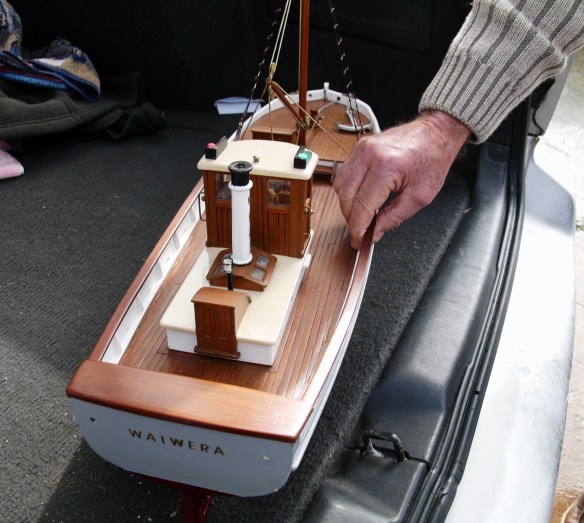
John Bullivant is one of them. John has been building a model of W1 & its very close to completion. The photos above show some of the build process.
John reports that he has purchased some cowl vents from the UK, (made them all rotatable)  fitted new water cooled motors, made rudders, masts, windows, rubbing strips and fitted LED lighting (courtesy of cheap solar garden lights). He has also made a decal pattern for the bow insignia to print out (see bow photo above). John has even bought a miniature water pump so he can have water running from the water outlets when the boat is stopped. This will sit where the centre engine usually sits. He is currently looking for an engine sound module. Thanks to Ken Ricketts for fowarding John’s email to ww.
Details on the ‘real deal’ here https://waitematawoodys.com/2013/09/11/the-story-of-w1-one-of-fastest-boats-ever-on-the-waitemata/

REAL BOATS

screen-shot-2016-11-04-at-5-03-00-pm
The Classic Yacht Association is holding one of its launch cruises to the Riverhead Hotel on Sunday – we are expecting approx. 20 classics to make the trip. so it should be a cracker of a day. If the sun shines, there will be lots of photos on Monday 🙂

Update below & photos from John Bullivant on his progress  (emailed in by Ken Ricketts)
“I have also re-done the lighting using LEDs from Xmas string lights which are smaller and can be made to fit better. Getting there slowly but it’s almost like building a full sized boat as you can spend hours making the smallest things. The lighting alone took about 3 days, as it’s hard to hide any sort of bulb in a small model and get it shining in a reasonably scale manner, eg trying to get the nav lights shining in the correct arc takes a lot of fiddling and painting but they look the part when they are on so that’s good enough for me. I’m not being too fanatical about the detail as long as it looks ok on the water.
I have a theory about the location of the real W1 in the photo of her with the survivors on board and where she was headed which I am working on with the help of Google Earth and some info I read on the rescue effort. This was regarding the position the survivors were picked up from. I am trying to find the info again but it was in an obscure site (to do with recovering the gold I think) which gave the co-ordinates of the ship and the lifeboats positions before rescue and the crews communications. Just a bit of a fun challenge to see if I can pinpoint the exact spot.”