Tradition

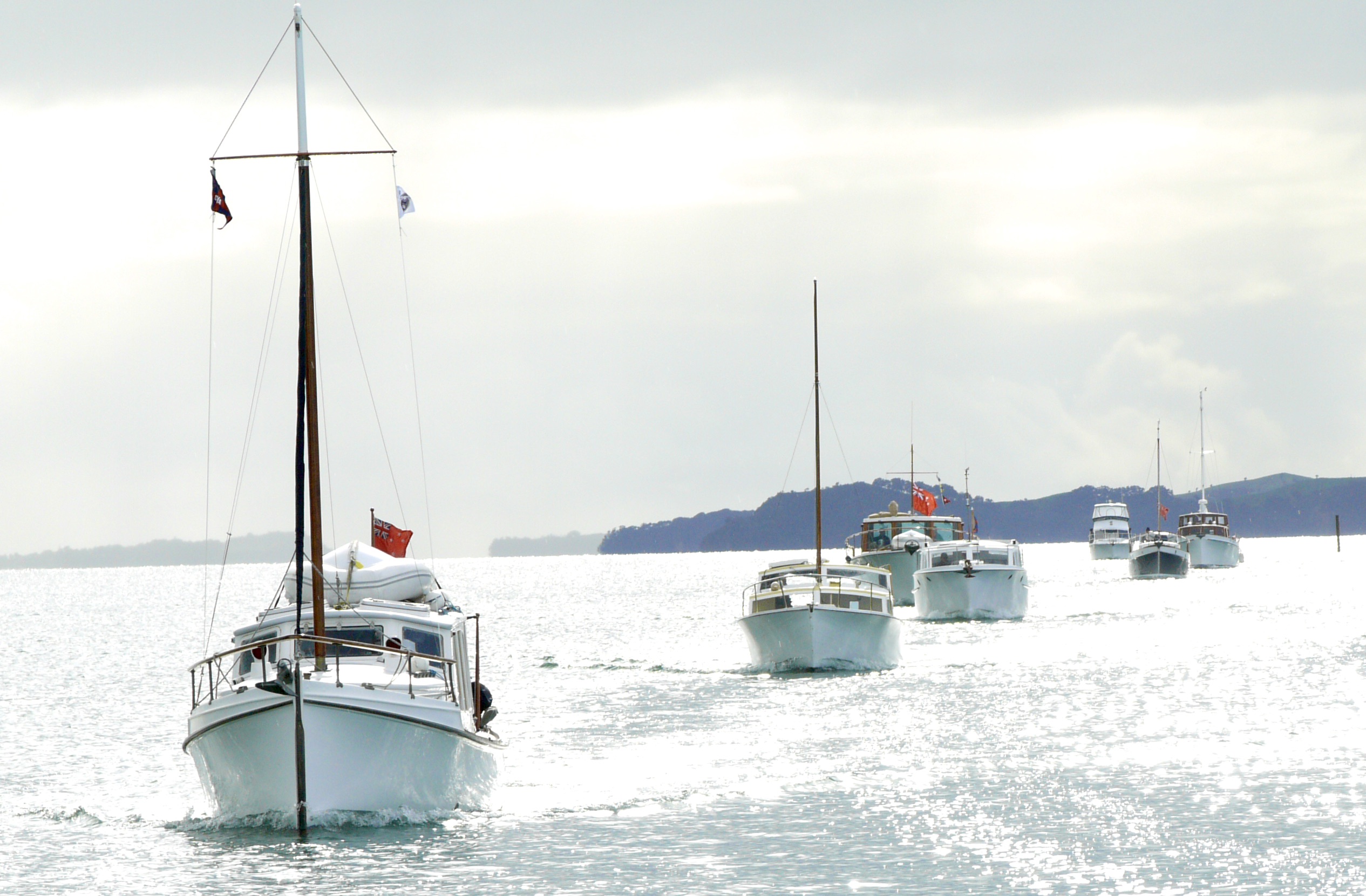
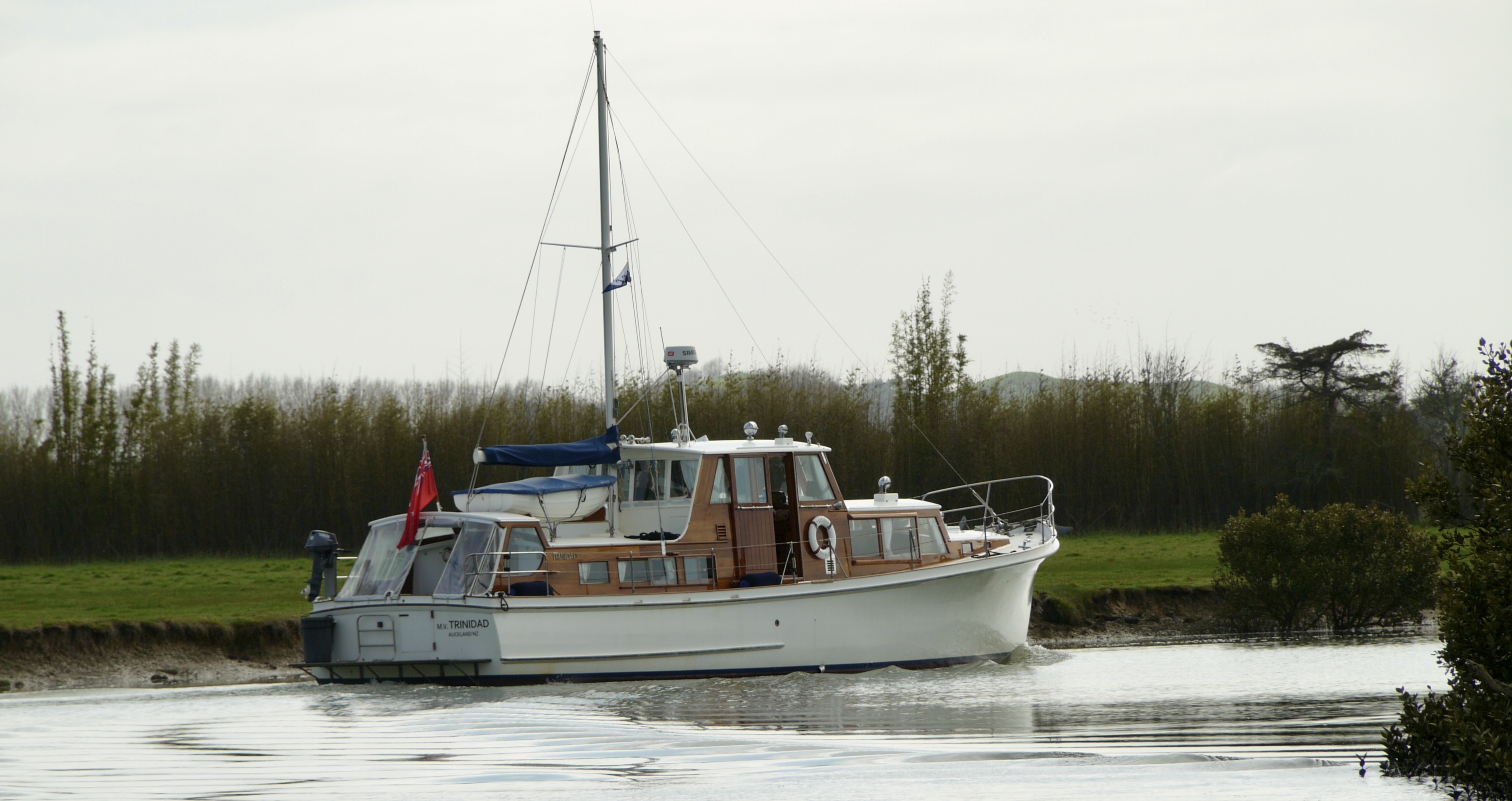
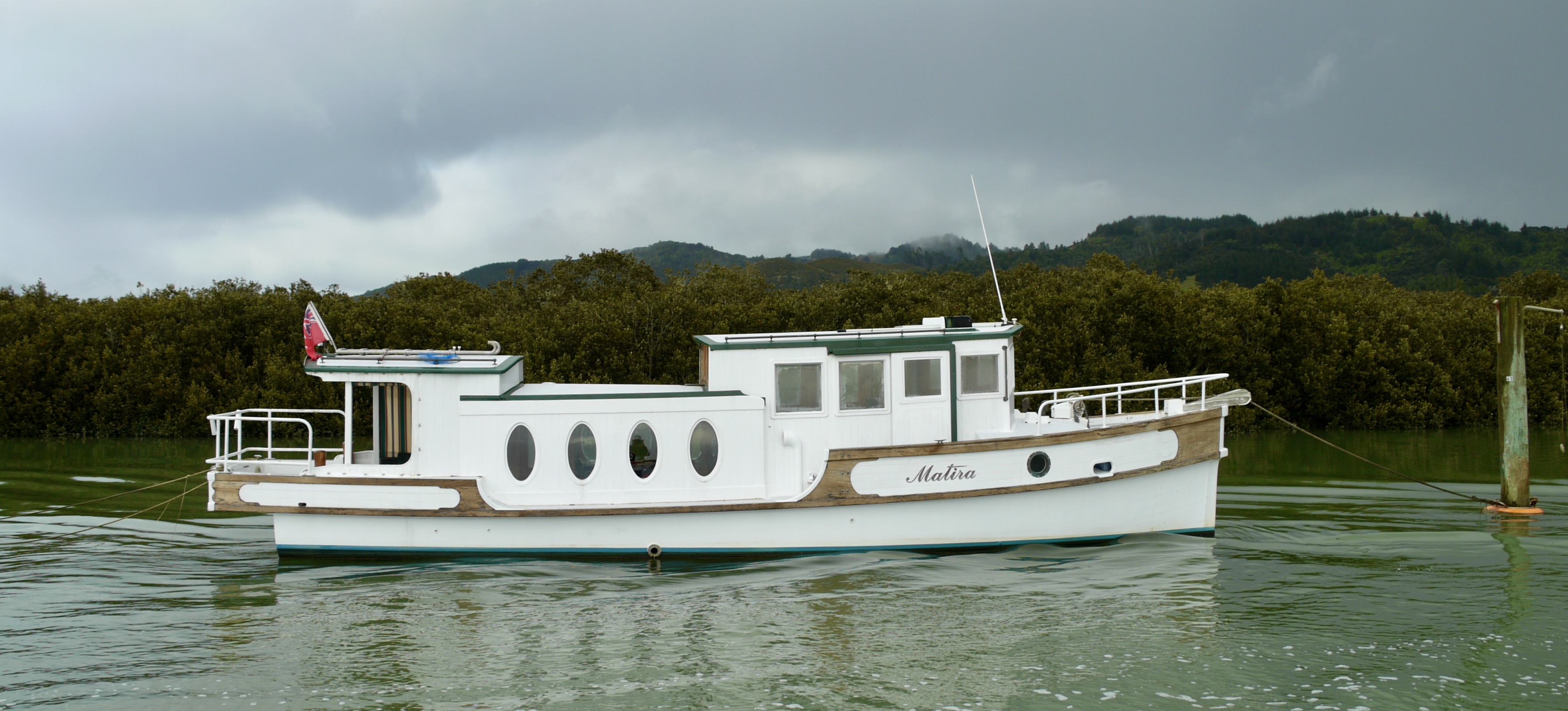
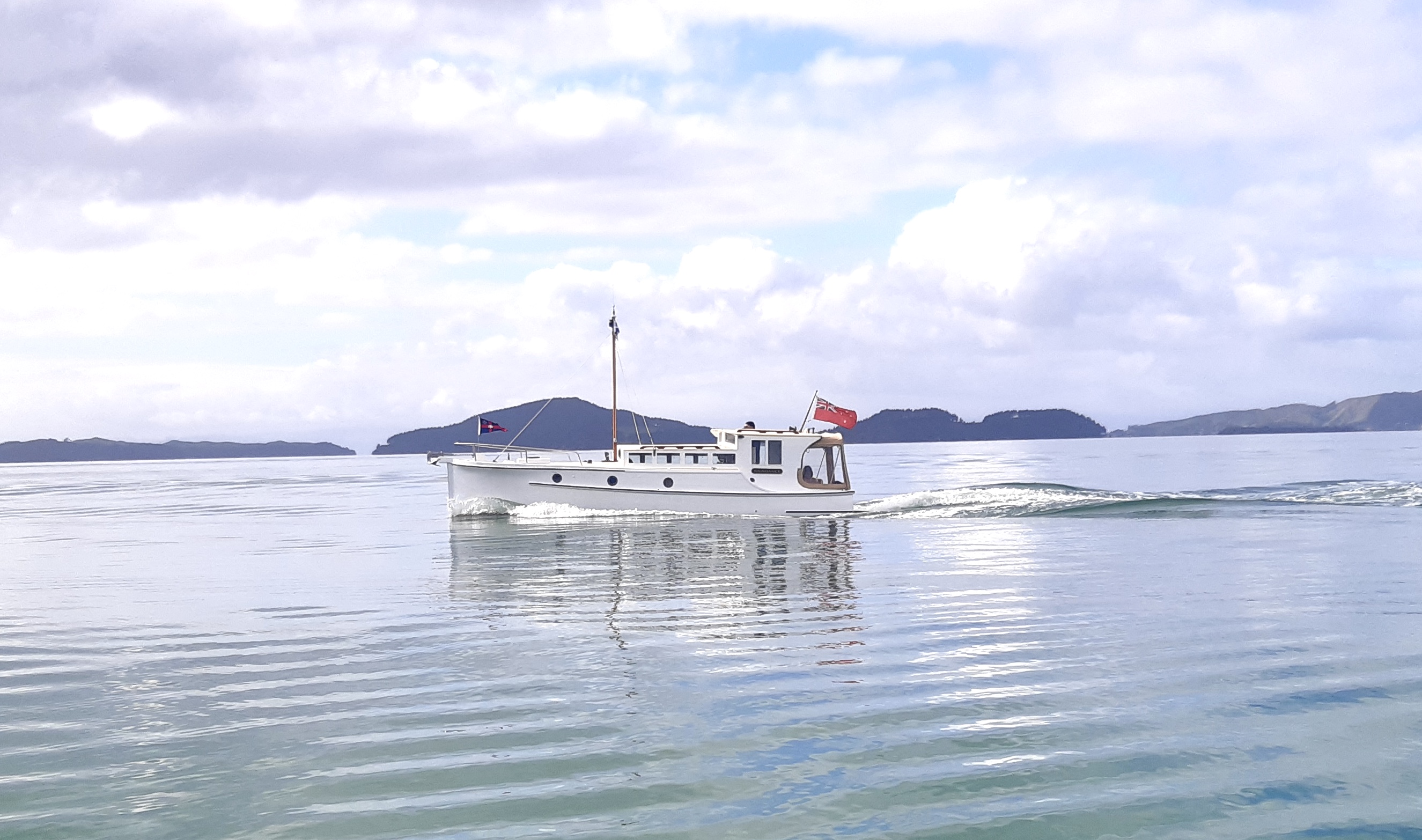
Tradition @ Mahurangi Regatta 2016

Tradition at the Mahurangi Regatta 2017

Screen Shot 2020-05-16 at 9.18.55 PM

The 'Bar'

The Bar

TRADITION

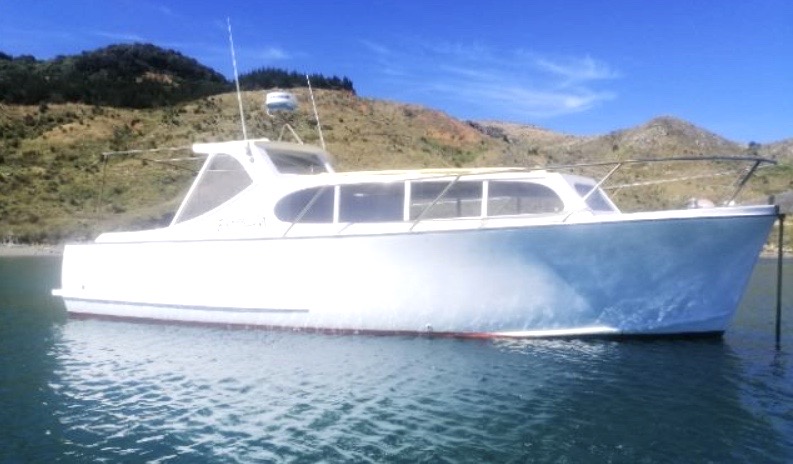
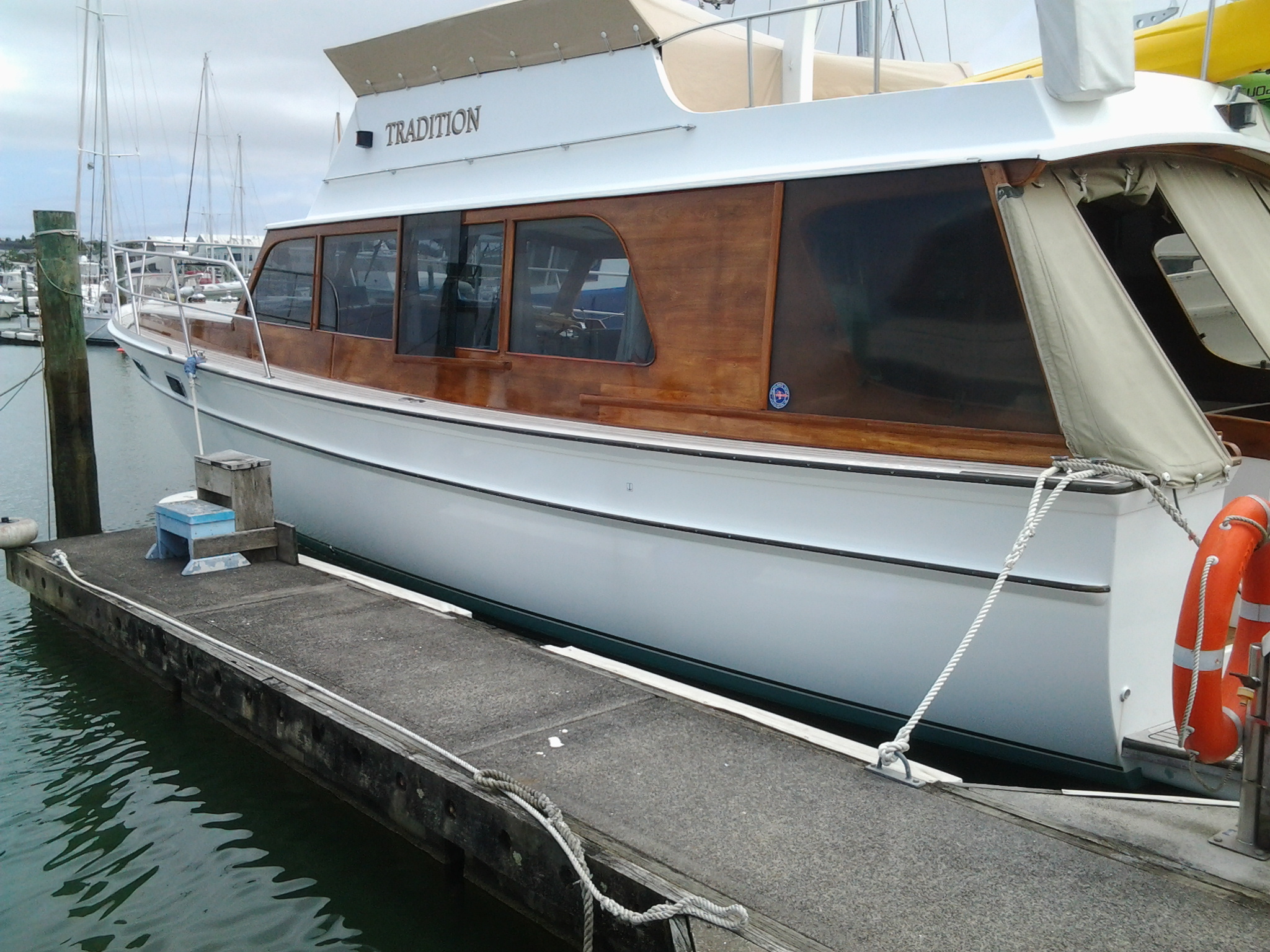
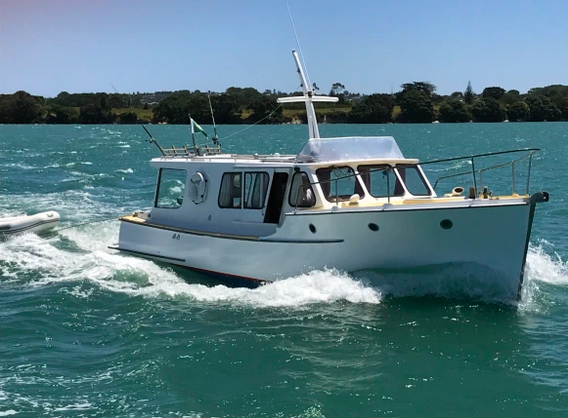
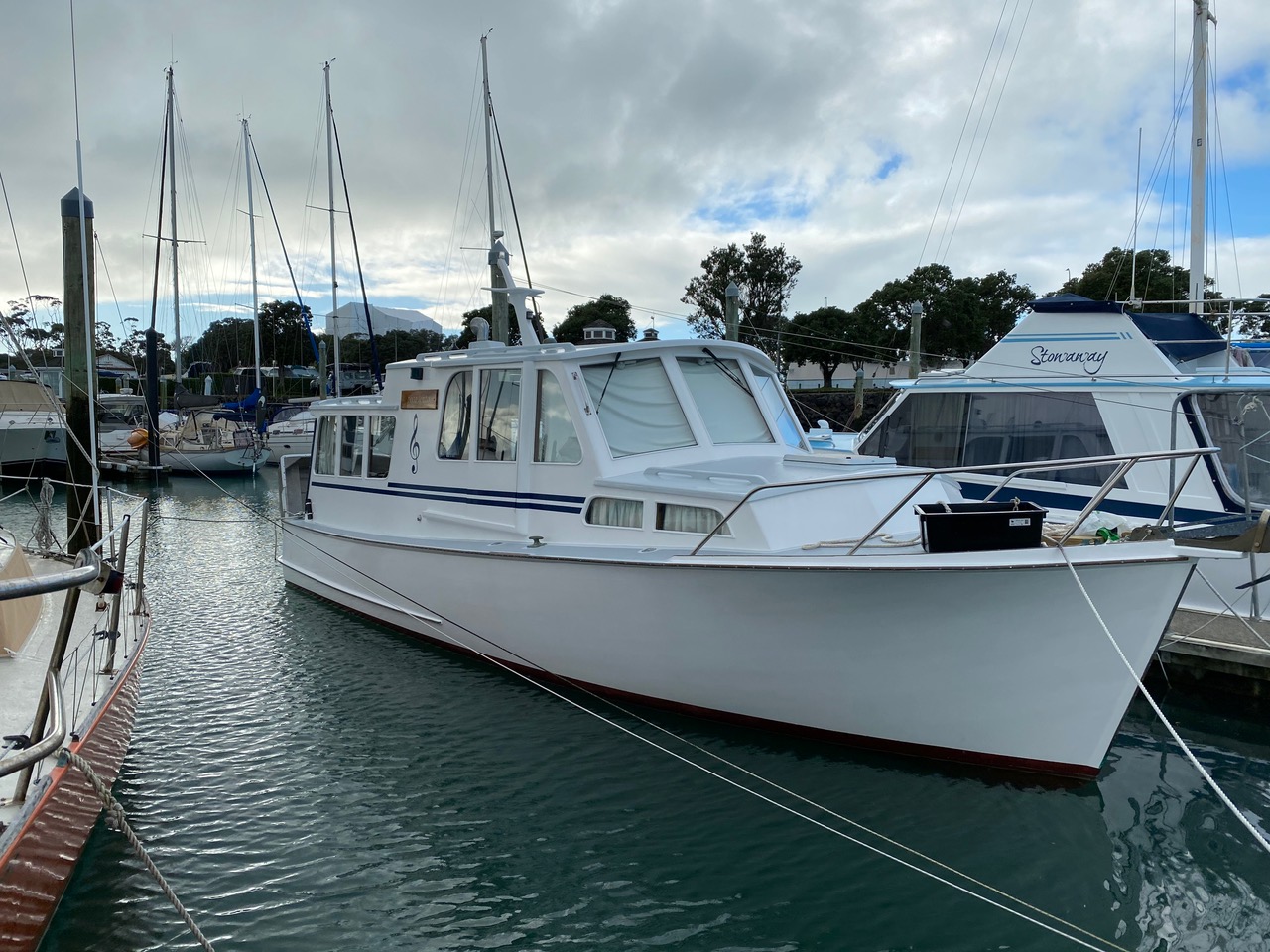
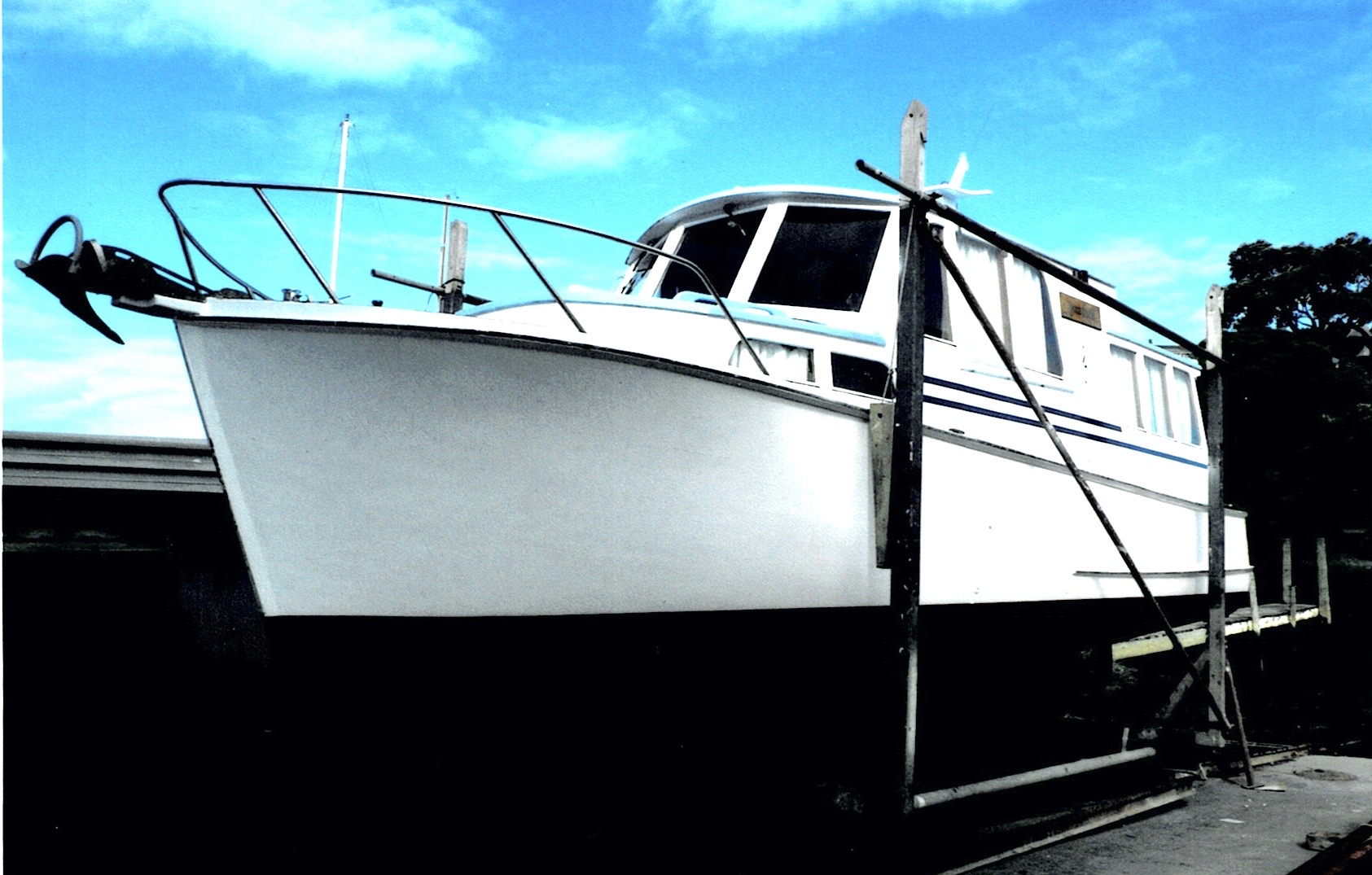
The 44’ launch Tradition slips comfortably into the woody ’Spirit of Tradition’ (excuse the pun) category – designed by Bo Birdsail and built by Geoff Bagnall, she was launched in 1990 for Rhys & Dick Boyd. Today’s WW story is a first for WW in that the format is an interview by Keith Busch (a former owner) with Rhys and Dick. Make yourself a cup of something and find a comfortable chair – its a cracker read and really showcases what a talented boat builder Geoff Bagnall is. Special thanks to Keith for pulling this story together – simply brilliant.  Full specs and ownership summary on the vessel at the end.

Keith : What do ‘Tradition’ and the Auckland pilot boat – Akarana, (designed by A. J. Collings & built by W. G. Lowe in 1960) have in common?*

Dick : I went into the fishing industry in the seventies. By 1985 I had a quota of my own and a purpose built long-liner – Kerama. Then the new owners of the company I worked for (Polar Seafood Co.) wanted me to come ashore and be fleet manager for all their trawlers.

Rhys : Anyway, one day he had just unloaded a catch and we were on our way home to our place near the Tamaki Bridge and he told me just how much he’d got per kilo for the fish he’d landed, and it was astronomical! Then he slipped in that he wanted to build a launch.

 Keith : So what year was this?

Dick : I would say it was 1985.

Rhys: So I said, ‘We’re not building a launch!’, and he said, ‘But I’ve got everything for it’, and I said,  ‘I don’t care, we’re going to buy another fishing boat, with prices like that we’re going to be loaded!’ So next day I go to work and on the way home I thought, ‘Oh that was a bit mean’. So he comes home that night and I said, ‘We need to have a talk’, and he said, ‘I’m going first. I’m building a launch!’, and I said, ‘I was just going to say that!’ So that was the beginning, it was like, ‘Oh I can’t do that to him, he wants it too much’. So we didn’t get rich, but we did get Tradition.

Keith : So where did you start, did you go for a builder or a designer first?

Dick : Well the designer was Bo Birdsall. I went to see John Lidgard first and I asked him to draw me a boat, but after a few sketches I wasn’t getting what I wanted. Then somebody, oh Roy Rimmer, said to me try Birdsall. So we met with Bo and he drew it up. We were real happy with his hull, it was great. But I still had a few questions about his topsides. Anyway, when we got Geoff onboard we thought we could start from Bo’s drawings and go from there, so that was the beginning of it. Bo was a real nice guy and extremely clever. He was good to work with.

Keith : So you were happy with the hull, how’d you end up with that beautiful topside?

Dick : Well what happened was, Bo drew it up and he didn’t include the sedan roof on the fore deck, so it was just the main cabin sitting on the deck. But when Geoff was building the boat the radius that had to go into the forward area to give head room, well it just didn’t work. Anyway Geoff came up with the idea to put a sedan roof on the forward deck and just that small addition balanced out the main cabin nicely. It’s one of those things with a good builder, he just put up some false frames, then let us have a look at it and it worked. He’s got a great eye for those things you know, always looking as he goes.

Rhys : We didn’t get a drawing of it and say, ‘Yes that all works’. All of us looked at her as we went.

Dick : Of course Geoff would have put a little more sheer on it, because that’s just Geoff, but I liked Bo’s idea of the hull. It’s very hard during a build, a lot of the time you don’t know what you’re going to end up with. We had ladders all over the show. You’d be climbing up and down and looking along the boat and trying to imagine what it was going to look like in the water. Later we were down the side of Waiheke and this guy passes and yells out ‘Geez someone made a great job of that!’, so I think it in the end she works.

Keith : So going back a bit, how did you get Geoff Bagnall as your boat builder?

Dick : Well okay, first we started talking with Brin Wilson’s boys Richard and Bob Wilson, because Bo’s wife was related to the Wilson’s. Bo said ‘it would be good if you got the Wilson’s to build it. I’d had nothing to do with them so I got a price from them and I though ‘Well we’ve struck a bit of a wall here!’. So I talked to Bo and he said ‘Okay, then try young Bagnall’. So I contacted him and he was interested at a price we could manage and we went from there.

Keith : ‘Young’ Bagnall! He’s just retired! How old was Geoff at this time?

Dick : Just around forty or something about that, because he had built – Nazareth and the yacht. He’d already built several boats, oh and he’d built the one that hit the bricks going over to Barrier (Onetunga?), oh and Katoa. He would have built about 8 or 9 boats by then and he designed some as well, I think he designed Katoa. His boats are a little hard edged to my eye. More ‘solid’ compared to Bo’s lines I think.

Keith : So where was she built then. Was Geoff off on his own?

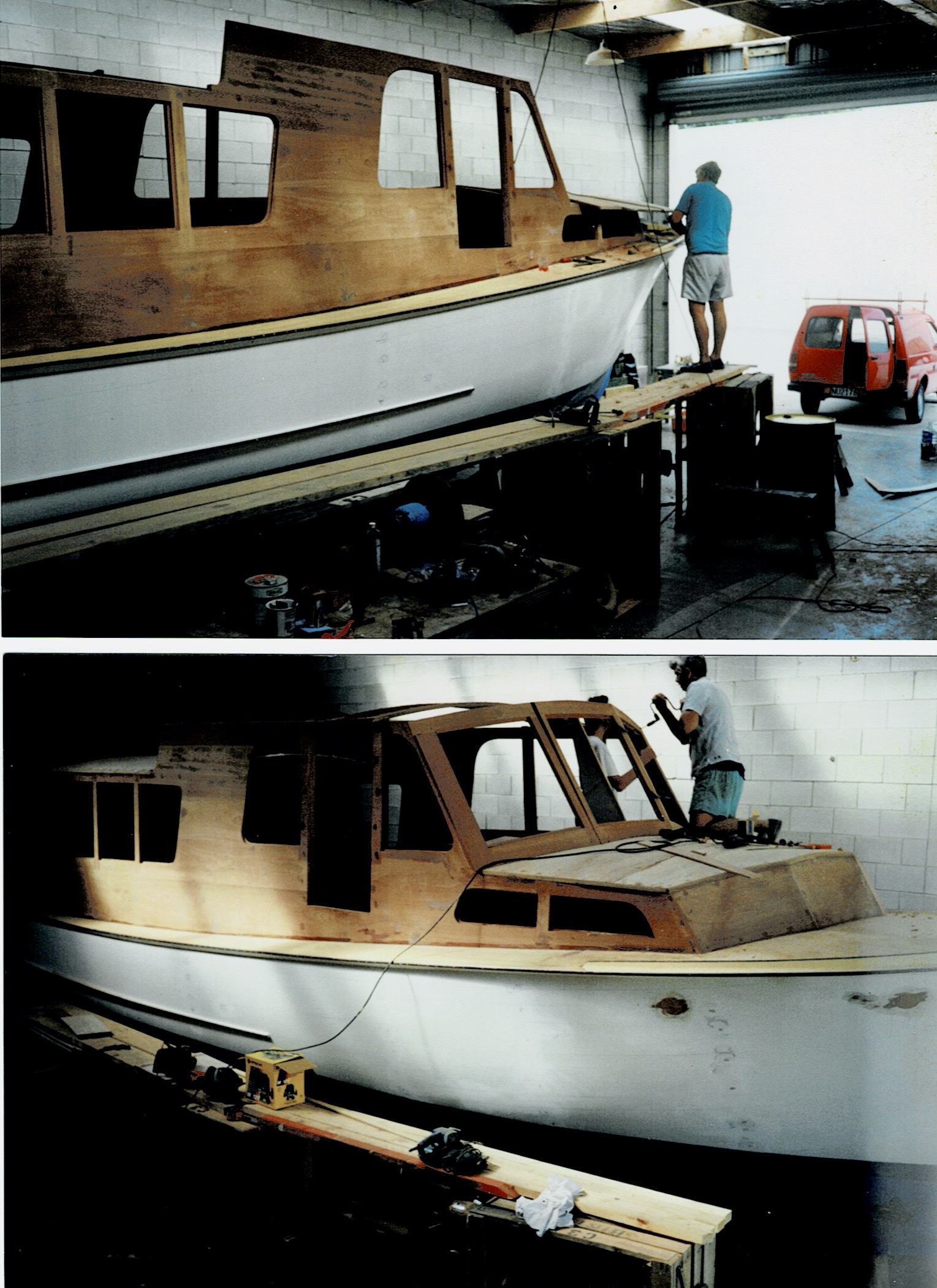
Dick :  When he did Tradition he built it in the old Harbour Board timber mill. The Harbour Board had just been privatised and they weren’t using their mill building at Westhaven, so Jack Fagan organised for us to use an area in the mill shed. That was real handy because all the woodworking equipment was in there so we could use it to deal with the timbers. All her timber work was done there in that mill building, except we sent the kauri out to a joker who did timber dressing in Rosedale Road and he did the whole lot. So it went out in flitches and it came back in nice dressed planks ready to go on the boat. The planks for the hull are inch and three-quarter by inch and a quarter heart kauri.

'Tradition' Construction-2

Work on Tradition commences in the Auckland Harbour Board Timber Mill building 1989

Keith : So where did the wood come from?

Dick : It came from Noel Mitchell who was the foreman at the Ports of Auckland slipway. When Akarana*, which was Auckland’s biggest pilot boat in those days, was being built, Noel had decided that a pilot boat could get smashed up real easy, so he bought enough kauri and teak for extensive repairs and put that aside to repair Akarana if she got crunched. There was talk of them selling this timber for houses but Noel said ‘No, it’s for boat building so we’re selling it for that. So that’s where we got the timber. We got all her heart kauri and the teak there.

Keith : So where exactly was the Harbour Board timber mill located?

Dick : Well, to the best of my memory, it was just past where ‘Sailors Corner’ is nowadays. On the left hand side of the road, well that was all Harbour Board land. Its where McMullen and Wing’s haul-out is now. The Harbour Board had three or four slipways there and they used to do all the work for us on the trawlers. They were close by so the company could keep the trawler crews employed by doing all the cleaning and paint-work and chip rust off the boats instead of spending all their time in the pub. So I knew Noel and it worked out pretty well.

Keith : So you got hold of Geoff and he was keen to take it on?

Dick : Oh yes. He had this old mate called Bert who used to sweep the floor and mix the glue and make the tea. Of course Bert has passed away now but he was a hell of a nice old guy and he worked on her as well.

Keith : Who else was involved in the build?

Dick : The wiring was Peter Galley, the painting was Mark Binney, plumbing was Alan Kemp, who was a Harbour Board guy. There was a lot of input from the slipway workers off and on and in their own time. Of course, I supplied them with fish non-stop so it was give and take, a bit of barter. The engineering was, oh well we did most of that stuff ourselves.

Keith : And the Ford engine was from Lees?

Dick : No, the engine was from Don Bernand,  Don is Mr Ford, he’s brilliant. I think we bought the engine in Tradition from Newlove in Whangarei and Don did the marinisation. He served his time with the Lane Motorboat Co. on the Tamaki River and when Lees got out of Ford he bought everything off them, all the patterns, moulds, that sort of stuff and set himself up at home. Don bought the new engine for me. It has a Newage Coventry 2:1 gearbox and the ‘get-home’ kit in it. At the time it was hard to find the gearbox we wanted but Don eventually found it and we fitted it. I can’t think who did the hydraulics, but it was all fitted by us.

Tradition Engine Room

Keith : So you gathered all her bits and pieces together. When did the build start?

Dick : It took me 6 years to put everything together before I got to the point where I could say, okay I’ve got enough to go and do it. During that time I had all the timber stored at home. At my son’s 21st we had the filches on sawhorses under the marquee so all the guests were sitting around on the kauri filches. They hung around for years reminding me to keep collecting stuff. The brass portholes in the cabin doors come from an old fish ‘n chip shop in Howick, while the ship’s bell is from the ill-fated ferro fishing vessel the – Trident.

Rhys : We’ll he’d been collecting things for a long time. He had some things ready to go. He’d probably told me he’d bought stuff for a boat but I hadn’t listened or realised it was enough to build a complete boat.

'Tradition' Construction-1

Boat builder Geoff Bagnall begins work, July 1989

Dick : The photo above is the laying out of the frames internally. You’ve got them all standing up there. That’s Geoff in his younger days. Geez he looks different there doesn’t he!

Keith : So the date on that photo is July 26th 1989, is that about the date she was started?

Dick : Would’ve been pretty close to it. Maybe a month before perhaps.

Rhys : Lucky the cameras had the dates on them in those days.

Keith : So tell us about all the effort of the construction.

Dick : Well we could lay 8 planks per day. So all the frames were stood up and we had the steam box ready for the planks there at the mill.

'Tradition' Construction-3

Original owner Dick Boyd sanding plugs on the hull, 1989

Keith : So you were coming down each day and helping Geoff?

Dick : I used to come in at night after work and do all the plugging. So Bert, cuppa tea maker and floor sweeper, he used to help Geoff during the day. They used to put the timber in the steamer and the following morning they’d come in and put those 8 planks up and then put another 8 in the steam box. So it was pretty slow going. I’d come in after work and do the plugs. But they were always in front of me because you couldn’t work on the planks that they had just put up that day because you’re driving the plugs in, so I was always a bit behind them plugging and sanding.

Rhys : Don’t forget you had to make all those plugs yourself too.

Keith : So how many were there? Did you count?

Rhys : He wouldn’t be brave enough to count, that would have been tear-jerking.

Dick : No, it was slow work. But the reason I plugged it was that sometimes you wake-up in the morning and you’re able to see every bit of bog that’s gone into a boat and you shouldn’t be able to see that with proper plugging.

'Tradition' Construction-4

Geoff Bagnall and assistant Bert working on the hull, 1989

Dick : Roy Rimmer used to pop in to make sure we were doing everything right. There was a lot of interest in the boat, because it was very handy to everybody in the harbour area.

Rhys : A lot of people would pop in after work and see how we were getting on.

Keith : So why did you choose to build her in wood?

Dick : Well you’re right, wooden boats were not being built at the beginning of the 90’s and a lot of people said ‘What are you bloody well building a launch that big in wood for?’ But, you know, it was what we both wanted. If I go back to the days of the old ‘Golden Kiwi’ tickets, my nom-de-plume was always 44’x14’, that’s because I was determined I was going to build a wooden launch that was 44’ long with a beam of 14’. Ha ha, I never won the Golden Kiwi did I! But even way back then I was thinking of her, I suppose it was my dream. And I’d always said I’d love a boat with proper teak coamings, teak decks and a hull of kauri.

Rhys : With a wife to varnish and look after it!

Dick : Yeah, I was lucky I had one of those!

'Tradition' Construction-5

Geoff Bagnall turns the hull, September 1989

Keith : What were some of the comments you got when you were building her.

Dick : Well it was the materials of the build that attracted people. It’s a kauri strip planked boat, but the availability of kauri was getting very tight, even in those days. You just couldn’t go out and buy it. If you did happen to find some stacked up somewhere, it was really expensive. But because we knew the blokes at the Harbour Board and had feed them a lot of fish over the years, we got lucky with the source of the kauri we used. They gave it to us at a reasonable cost and there was also teak there that was meant to repair the old pilot boats, but they were being retired and the new ones were steel.  Colin Clare might know how old the wood itself was. I can’t honestly say, but it was already old when we bought it. I think it was milled on Great Barrier. Anyway, they were happy to see it go to build a boat and not end up in a kitchen cupboard.

'Tradition' Construction-6

‘Bagnall’s work of art’.  Dick’s son Adam finishing the inside of the hull, October 1989

When I took Geoff in to have a look at the timber, there were stacks and stacks of 3’’x 2’’ kauri, but the sap wood was all full of borer. So we set those bits aside and all the stuff we bought were filches of heart kauri. The teak there was all 3’’, so Geoff split them and I think the cabin is inch and three-eights. Anyway, there’s a lot of teak in her topsides and a hell of a lot of kauri in the hull! What else? Well, there’s some totara in the keel, that came from the Salvation Army place down at Rotoroa Island. The guy who ran the ‘Kahino’ was a mate of Geoff’s and he provided that for us. Most of the keel and the engine bearers are Australian brushbox which is quite a hard, heavy, red coloured wood, but you have to watch it because it will get worm, that’s why it’s glassed over.

'Tradition' Construction-8

Topsides taking shape, March 1990

'Tradition' Construction-9

Dick Boyd checking proportions.

Keith : So how long was the build time.

Dick : Well what did we say, from mid1989 and it was launched at the end of 1990.

Keith : So all your mates and friends came and gave you a hand at some stage?

Rhys : Only Mary Smith came to help, the others came to drink! But Jack Fagan did some work on it, he was good.

Dick : It’s amazing how hard helpers are to find. The minute you mention sandpaper, they’re off, outta here! But Jack was one of the supporters of the whole project, he helped make things happen sometimes when we hit a wall.

Rhys : By the time we had the launching we were so exhausted from months and months of work we didn’t want her! We launched it and then everybody got so full of wine and drink that the next morning we had a shocking hang-over. We dragged ourselves out of bed and went round for breakfast at Westhaven and I said to Tich, ‘Do you want the boat’ and he said ‘Na’. Of course we didn’t really mean that, but oh it had just been such a big job and she wasn’t finished by a long shot. We didn’t have a stove or a fridge. We didn’t have squabs. We had a toilet and a shower, that was it! To top it all off we’d run out of money!

Dick : We had to follow Chris and Mary Smith around, because they had a launch called ‘Hukarere’ and they had a nice cooker onboard, so we used to follow them.

'Tradition' Construction-10

‘Looking for the Smiths’ – maiden voyage to Rangitoto, November 1990. Dick and Rhys Boyd on the flybridge.

Rhys : They also had a fridge so we kept our cold stuff in there.

Dick : Paul Nolan had a big Salthouse 53’ ‘Blitzen’ and he had a whole lot of squabs because he was replacing his so I said ‘don’t throw them out, we’ll be round to pick them up’.

Rhys : So we slept on those squabs and wherever Chris and Mary were, we were there. We couldn’t even make a cup of coffee! So they spent their time trying to lose us and we spent our time trying to find them. ‘Would you two like to come over?’ they would say, and we’d already be in the dingy heading towards them. And then after a while it was like, ‘gosh, can we even afford to finish her?’.

Dick : Anyway, over a few years we slowly pieced the rest of her together.

Rhys : Yes, there was still a lot to do. All the sanding inside is mine, every single inch!! You know I was a kindergarten teacher, so every school holidays, for two weeks in May and three weeks in August, and most weekends, we were on the boat doing something. I’d row out, hop on the boat outside our place in the Tamaki River and I’d get going on something. Lots of sanding, lots of varnishing.

Keith : So where did you take her on the first trips.

Dick : Well I liked the bottom end of Waiheke and over at Coromandel, Te Kuma.

Rhys : And we never managed to get to the Bay of Islands because we were working too much.

Dick : Also Waiheke. Oneroa was always popular because the Smiths were there. They still tell us when Tradition is in the bay. We have our spies! And she’s a notable boat anywhere you go, people respond to her and row over to have a yarn. Yeah, Geoff did a great job on her. One of his best.

Rhys & Dick Boyd on Tradition

Original owners – Dick & Rhys Boyd, Mahurangi Regatta, January 2017.

Owners of M.V. Tradition since Dick and Rhys Boyd 

1990-1996 > Dick and Rhys Boyd  – Moored in Tamaki River

1996-?        > Dave ? [clue – owned a pub in Mangere?]

19?? – 1998  > ?? Two guys bought it from Dave via a broker [information from Rod Middleton (Sailors Corner) They wished to take her south by truck to Mana Marina but after talking with Geoff they sailed her down the coast.

1998-2006 > Sold to Peter and Jenny Standish from Wellington and berthed at Mana. Cruised in the Marlborough Sounds.

2006-2007 > Sold to a Picton local. Moved to Waikawa Marina, Picton

2007-2011 > Sold back to Peter and Jenny Standish. Berthed in Waikawa Marina. Had a major refit at Frankins Boat Yard, Waikawa in 2009.

• Varnish stripped inside and two pot urethane used.

• New navigation electronics, TVs, sound system, stove, leather upholstery, carpets, covers and bow thrusters added.

• Bunks in forward V-berth removed, double bed built in.

2011-2019 > Sold to Keith Busch & Wiesje Geldof of Wellington. 3 years berthed at Waikawa Marina. Vessel trucked north to Tauranga from Mana Marina 2013. 3 years berthed at Bridge Marina, Tauranga. Hutchinson’s Boat Yard, Tauranga work :

• Stripped outside varnish and replaced with 16 coats of ‘All-wood’ urethane

• New teak plank deck installed. Boot topping strip repainted in light green.

• Fly-bridge helm station repainted. Holding tank and generator added.

3 years berthed at Hobsonville Marina, Auckland

Accepted into Classic Yacht Association in 2016 as ‘modern classic’.

2020 > Sold to Chris and Rae Collins of the RNZYS

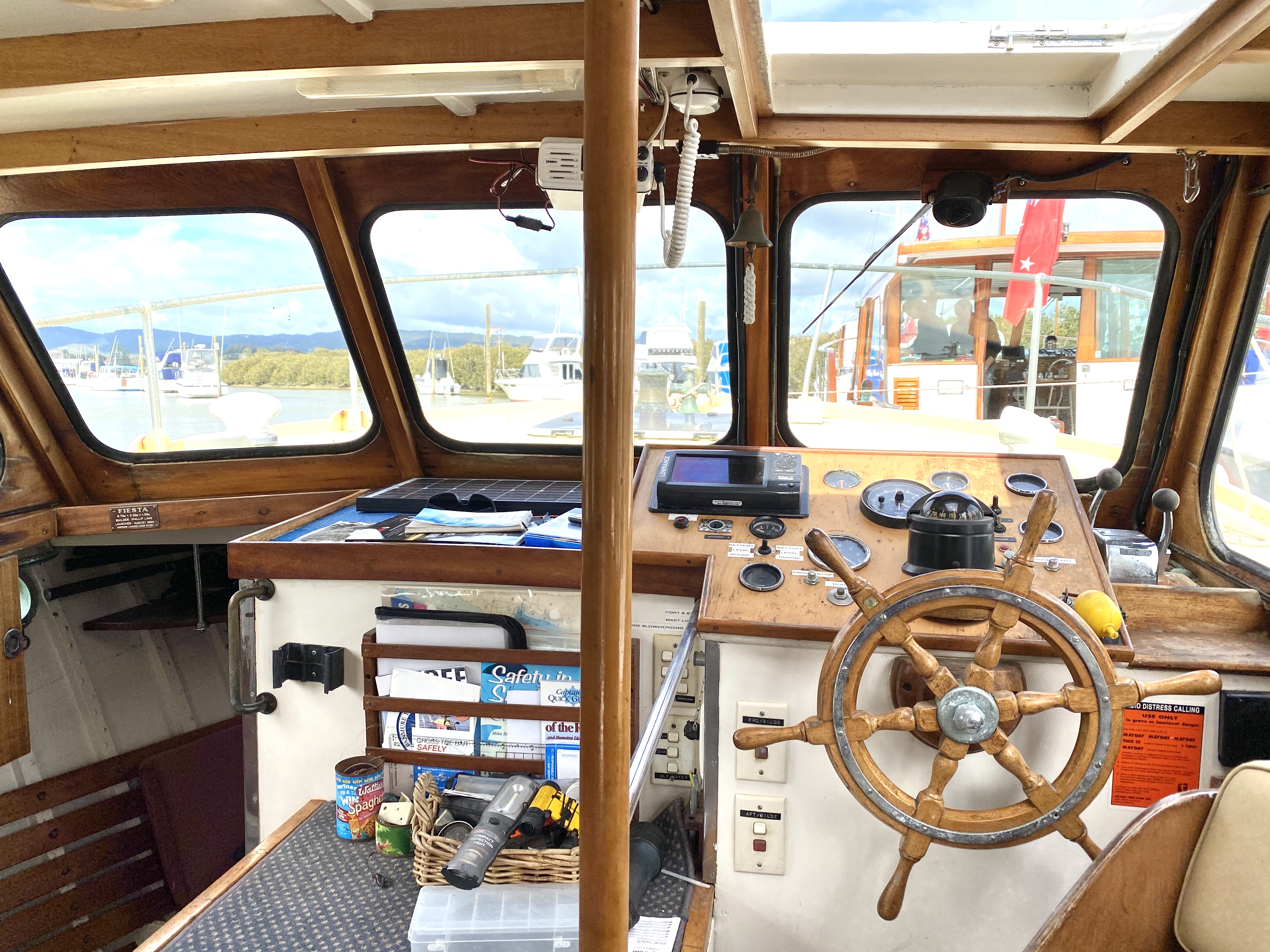
Lower Helm Station

Lower helm station

'Tradition'. BOI 2016

Bay of Islands 2014

Specifications of M.V. Tradition

Type : Saloon Launch

Designer : Bowden ‘Bo’ Birdsall

Builder :Geoff Bagnall, built at Auckland Harbour Board mill building, Westhaven

Launched : November 1990

Commissioned : Dick and Rhys Boyd of Tamaki, Auckland

Dimensions : LOA 44 feet, beam 14’ 3”, draft 4’6”, displacement 11.5 t

Engine : 1990 Ford 145hp ‘Marko’, cruises at 9 kts, max speed 11kts

Gearbox : Newage Coventry 2:1 gearbox

Construction : Kauri planked hull (inch and three-quarter by one inch, glassed-over), strip-teak deck, teak topsides, white hull with light green boot-topping, polished wooden topsides, white fly-deck.

Mechanical : Side-Power bow thrusters, Pugaro diesel generator, anchor winch

Electrical : 12V and 240V systems, auto-helm, radar, Garmin gps chart plotter, TV, stereo system, VHF (x2), 3 x house batteries, 2x start batteries, inverter

Accommodation : 2 cabins, Master (double) and Guest (2 single)

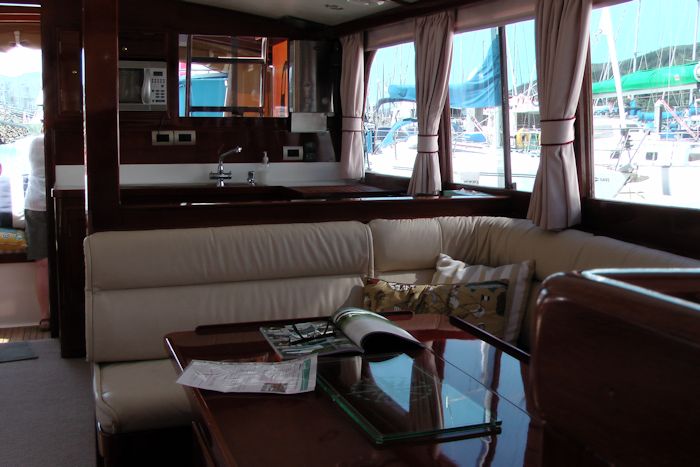
Galley : 4 burner gas stove, microwave, gas hot water system, fridge, freezer

Tanks : Diesel – 1 x 650 litres; water 2x 350 litres (700 litres) both stainless steel. Black water holding tank 300 litres in welded plastic

NOTE: Boat builder Geoff Bagnall is not retired, just no longer has the shed in Milford Creek.


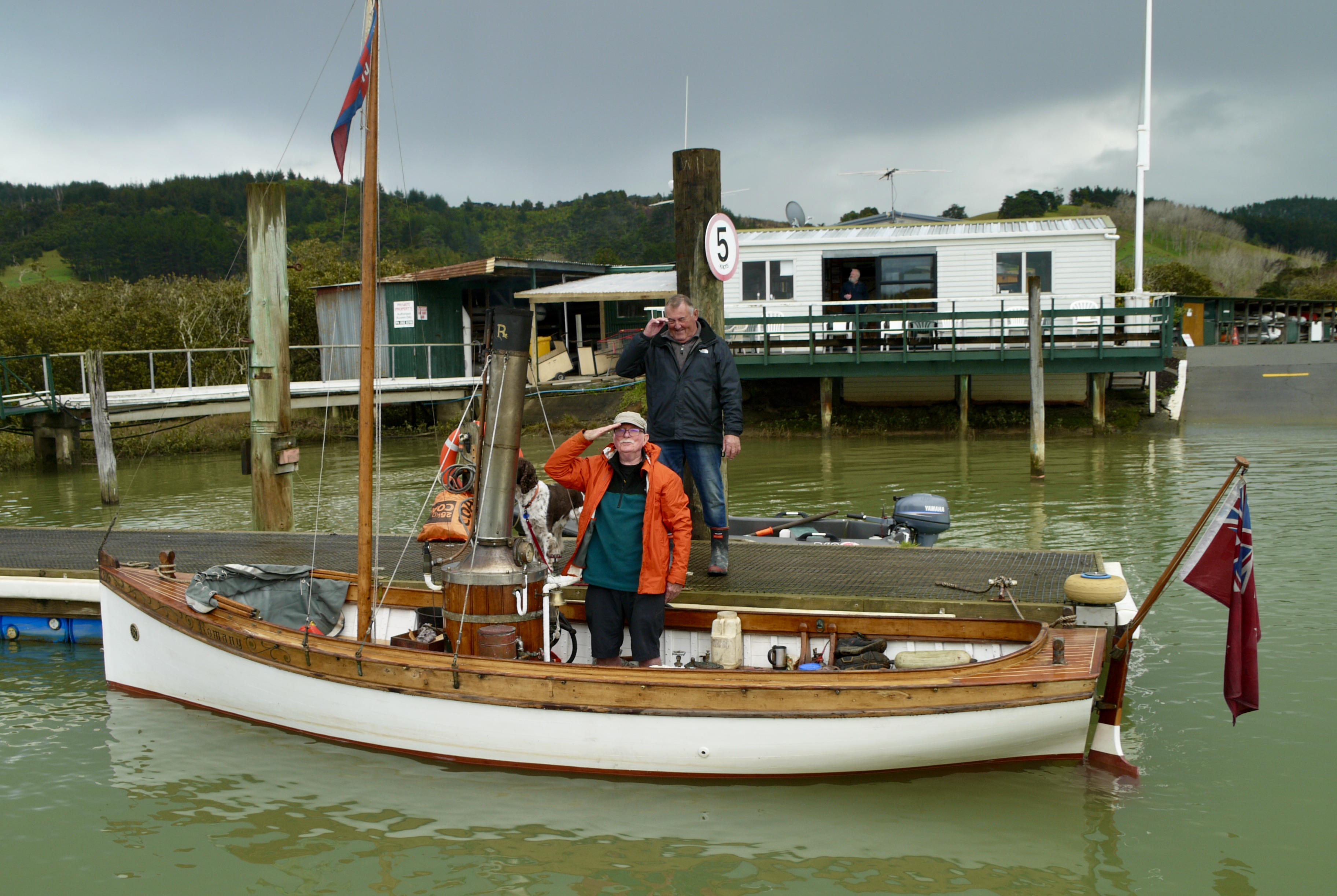
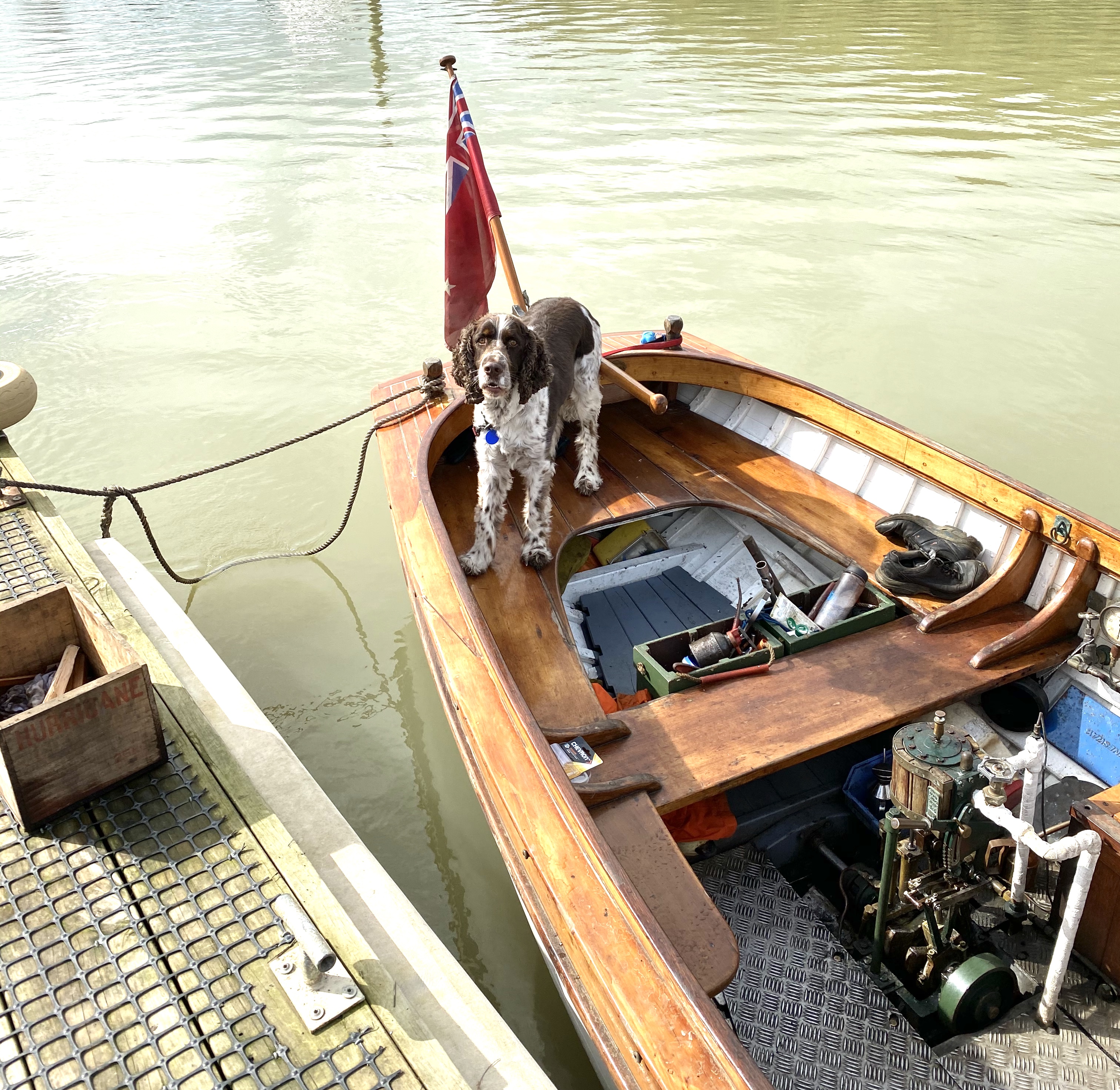
Seriously Cool Steam Boat

Screen Shot 2020-05-07 at 5.42.41 PM

Screen Shot 2020-05-07 at 5.42.52 PM

Seriously Cool Steam Boat

The above steam boat, owned by Hamilton engineer, Chris Cooper recently popped up on a fb post of Geoff Lewis’s.
All I know, but I can hear Russell Ward duping as you read this, is that Chris rebuilt the boat from a wreck. It has a tripe-expansion engine, in my ignorance I hope it is coal or wood fired and not diesel – I would love this as a retirement boat on a lake…………..
Hopefully we will find out more about her.
AND WOODYS WE CAN GO BOATING AGAIN – NO PRIZE FOR GUESSING WHAT I WILL BE DOING THIS AFTERNOON
Screen Shot 2020-05-13 at 5.58.27 PM

Kotare

Screen Shot 2020-05-10 at 6.44.37 PM

KOTARE 
Back in June 2014 WW was approached with a request for intel on the 28’ kauri planked launch Kotare, a poplar name for boats. At the time Harold Kidd was able to tell us that she was designed by Bill Couldrey in 1960 for Frank Wilkins of Church St., Northcote to build for himself.  Wilkins launched her in October 1961 with a 45hp BMC diesel. Subsequent owners included Phil Prouse in 1997 when she had a BMC Tempest 62hp diesel.
We also learnt that Sharon Prentice also owned Kotare, her brother-in-law Geoff Prentice made the new smaller mast that you now see on her.
Back in 2014 she was based in Kerikeri. Recently she popped up on Lew Redwood’s fb, via a post by Joan Jameson on the ‘NorthShore, NZ Histories & Memories’ fb. Jameson posted the above photos of Kotare and Frank Wilkins during his ownership period.
Photos below from Kerikeri.
Can anyone update us on Kotare’s current location and ownership?
Screen Shot 2020-05-10 at 6.48.17 PM
Screen Shot 2020-05-10 at 6.48.27 PM

Tangmere Finds Her Way Home

20200327_114547

20200327_114952

20200327_115115

IMG_0566

TANGMERE FINDS HER WAY HOME

Back in May 2017, WW helped two woodys uncover some of the history on a launch that they were about to start a restoration on. The vessel was the 1949, Shipbuilders built launch Tangmere. 


You can read that story and see a great collection of photos from Tangmere’s past at this link. https://waitematawoodys.com/2017/05/23/tangmere-2/
Read the comments section – lots of chat. The boat changed hands several times in the period 2018 > early 2019 and I can now report she is back with its original owners family, the Endean’s  –  we like that 🙂
Today’Cs story is another that comes to us as a result of the lock-down we have all been in for the last 6 weeks. Via Harold Kidd I received a note from Bill Endean advising that his brother Richard had used the lock-down for good purpose and uncovered the above photos of Tangmere. Chatting with Bill he commented that the hull of Tangmere now sits at their farm shed in Warkworth, about to be restored. 
Bill is a past commodore of the RNZYS with a lot of salt in his veins from sailing, so its especially good to welcome another yachtie to the bright-side (launches) 😉 Brother Richard was also Commodore at the RNZYS.
The photo taken inside the cabin shows Bill’s father standing, eating a pie (as are his mother nearest camera and friend Jean Foster), that woodys was fine dinning afloat back then – no salad in sight. Bill is not sure who the fourth person is. Bill suspects the photo was taken by fathers best friend, Owen Foster, an accountant who spent most of his career as right hand man to Sir Robert Kerridge
 
Bill commented that his dad returned from the war to discover his father has decided to sell his yacht “Prize” … it seems he decided to go power boating instead. Endean snr. was very able with his hands and established a furniture manufacturing business, hence the high level of finish. Not very PC these days but note the ash trays fitted to cabinetry. He loved gadgets and “Hi Fi”, reflected in the impressive radiogram fixed to main bulkhead.
 
The Perspex dome harks back to his familiarity with same as a Lancaster bomber pilot during WW2.
The photo taken of her stern looks like anchored at Home Bay, Motutapu or nearby, the 2 boys in the cockpit are Bill and older brother Richard.
 
We will follow this project with interest, Bill has promised to keep WW updated.
 
23-08-2020 Update: Bill Endean sent me the sketch below of this thinking around the restoration – close to the as launched – we like that 🙂
 

Joel > Lady J

Screen Shot 2020-05-05 at 5.01.14 PM

Screen Shot 2020-05-05 at 5.01.27 PM

Screen Shot 2020-05-05 at 5.01.40 PM

Screen Shot 2020-05-05 at 5.00.39 PM

JOEL > Lady J
Another request from Brian Hewitt – this time regarding the 34’ launch – Joel, that in the late 1970’s and early 1980’s he was part owner of.
Joel was built by Shipbuilders and powered by a Ford 80hp diesel with marine conversion. The launch had full 2M headroom through the interior, a full sized household sized ‘head’, a galley which adequately catered for up to 12 and a table that sat them all.
Brian recalls that one of her few weak points was she was hard to manoeuvre in a brisk breeze so berthing took speed and courage but Joel gave the owners much enjoyment.
When sold the new owner built an open bridge and renamed her, but Brian can’t remember the new name.
He has a suspicion she went to Pine Harbour marina. When Brian & co. bought her, she came with a pile mooring at Westhaven, they later progressed to a marina.
Brian would love to know where she is now. Can anyone help out?
Update from Gordon Cooper – I owned JOEL since about 1995 to 2004. She was a beautiful launch, the owner prior to the one I bought her off had rebuilt her interior, raised the floor so the motor was just under and put a fly bridge on her. She was at Gulf Harbour when I bought her, I kept her at West Harbour. 

The boat was a hunny to back into a berth. When I sold her, she went to Sand Spit where she had her hull re-fastened. I do not think she is there now.
In the 2nd photo below, you see her as I bought her.
I changed her name to Lady J
DSCF1708
DSCF1714

Chinook

20200110_071625

20191126_072508

CHINOOK

Today’s woody is named Chinook and owned by Woodrow Bould (great name). Woodrow has been told that she may have been built by Parson/s? She is approx. 37’6” in length and carvel built from kauri.

Woodrow has owned Chinook for just over 5 years, having purchased her from a gent in Whangamata, who didn’t have a lot of detail about her history.

Onboard Woodrow found a bunch of old game fishing log books, an old advertisement for her sale back in the 1990’s, loads of interesting manuals etc, but nothing that gave him any solid information about the designer. When surveyed, the surveyor spoke of her being over-build, with twice as many ribs than she needs.
The forward motion comes from a Ford Dover 135hp diesel engine with a Lee’s marine conversion. 
Woodrow is keen to learn more about the history of the boat e.g. who designed her, where she was built, any interesting owners she may have had, etc. He commented that they used to own a Pied Piper named – Jim Beam, and it seemed that every famous sailor in New Zealand had raced on her at some stage or another. So he has come from a situation where he knew everything to now owning a boat where he knows next to nothing.
Chinook is a pretty boat i.e. one that gets noticed, so I’m sure we can help him out.
Harold Kidd Input – Jack Parsons 1957 at Tauranga.


Kestrel

Screen Shot 2019-06-25 at 8.33.47 PM

Screen Shot 2019-06-25 at 8.33.38 PM

Screen Shot 2019-06-25 at 8.31.34 PM

Screen Shot 2019-06-25 at 8.32.57 PM

KESTREL

The 39’ launch Kestrel was built in Nelson in 1957 by Wally Steer. Original kauri carvel construction but later (1990’s) she received a skin of ply and was fibre-glassed 1990s 😦 Powered by a Ford 120hp diesel, that gets her along at 8 knots.

Mid last year she was 4sale on tme, in Nelson. Do we know anymore about Kestrel and her builder?

Input from Steve Thomas – Kestrel was originally named SUSAN MARGARET, built by Wally Steer around 1957 and first launched from Monaco, Nelson, not far from Wally’s home at Songer Street, Stoke, where the boat was built. I have a photos of her moored in Nelson Harbour, will dig it out and send a copy. She was powered by 2 flat-head V8 petrols we think. The March Construction family in Kaiapoi owned the boat for many years. In the 1980’s the March boys Father died and they trucked the boat from Picton and started a major rebuild at their Kaiapoi base. Myself and my Dad, Don Thomas, found her around 1995 and fell in love. The original 1’1/4 kauri carvel planking was skinned over with diagonal ply and glassed and the new topsides built but not fitted out. The March boys ran out steam on the home straight and let us take over. We then trucked the boat up to Glenhope, near Murchison, where a boat builder friend, Kevin Strong, completed the interior fit-out over a couple of years. We then moved the boat to Nelson, and finished the exterior repaint, electrical and engineering work. The Ford 2725E was a brand new engine. We relaunched the boat in Nelson around 2000 and she looked the same as she is now. Sadly, my father Don passed away in 2013. Nelson boaties Mike and Denise Ballard then purchased her around that time and lived on her for a few years. Kestrel has just been sold to an American couple who intend to keep her in Picton and cruise the Sounds. She’s a fantastic sea boat with heaps of flare in the bow. Will be a great ship for many years to come.

HDML Manga > Haimoana

HAIMONA EX MANGA - 1

HDML MANGA > HAIMOANA

In the interests of saving you from getting a sore neck from shaking your head – this boat ended up with a beehive restoration i.e. was put on the bonfire.

The HDML Manga was built by Madden & Lewis in Sausalito, California, USA during WWII and was sold by the NZ Navy in 1980. Her first owner post the Navy was Steve Hansen of Herne Bay, Auckland. When Hansen purchased her she had no engines. During his period of ownership she was kept on the outer side of the Auckland’s Viaduct Basin.
Hansen sold her to his friend Hans Van Duyn of Helensville in the early 1980’s, still with no engines. (Hansen also owned the HDML Black Watch).
Van Duyn stripped the coamings off her whilst she was at the Viaduct Basin and took her bare hull to Helensville on the West Coast, where they spent the next 2+ years rebuilding the vessel – including 16 single berths and 2 staterooms. In the mid 1980’s she was renamed Haimona after the owners late son.
The vessel was fitted with two Ruston Hornsby, 200hp diesel engines, with hydraulic gearboxes. Top speed was claimed to be 18 knots. The engines were ex the A.H.B. tug Manukau. Also fitted with a funnel & dry exhausts with silencers.
Van Duyn used her extensively, from the mid 1980s to c.1999. She was the largest pleasure boat in the Helensville Cruising Club fleet and was frequently mark boat and involved in many regattas and other club activities,  
She fell in to disuse around 1999 when Van Duyn sold his waters edge property, on the Kaipara Harbour. As there was nowhere else on the Kaipara that had a suitable facility to slip her, she deteriorated through lack of ability to maintain her and lack of use. Ultimately, she got  to the point, where her pumps were running 24/7 and despite attempts to provide her with better moorings, the end was near and they brought her ashore, stripped her engines out of her and saved what they could e.g. portholes and other useable fittings. In c.2006 they put a match to her.
Note: during this period Hans Van Duyn also owned HDML Kupara, which is now owned and restored Scott Perry, Whangarei. The story of Kupara has appeared on WW – link here   https://waitematawoodys.com/2018/10/04/hmnzs-kuparu-hdml/
Story assembled by Ken Ricketts with input from Steve Hansen, Rene Van Duyn and Bob Siegel. Edited extensively by Alan H.
Manga Navy Service ex Greg Philpott

HMNZS Manga (Q1185) was one of 16 Harbour Defence Motor Launches (HDML) to be delivered to the RNZN in 1943. She was commissioned on 6 April 1943 and joined the 124th. ML Flotilla at Auckland. She was used in anti-submarine patrols in the port approaches and the Hauraki Gulf northwards to Cape Brett. On 11 October 1945 she paid off in Auckland and was placed in reserve. In early 1946 she was converted for army use, fitted with a towing bitt and transferred ‘on loan’ to the Army. She was renamed Bombardier and used by the RNZ Artillery for target towing and general transport duties for over 10 years. In 1948 she was reclassified as a Seaward Defence Motor Launch (SDML) and renumbered P3567. In November 1959 she was transferred back to the RNZN. In 1960 she was commissioned as HMNZS Manga (call sign ZMBJ) and joined the fishery squadron where she served until 1967. After a refit she was assigned to Wellington RNZNVR until 1973, and then re-joined the fishery squadron briefly, returning to Wellington in 1974. In 1977 Manga was restricted to sheltered waters and returned to Auckland in 1977. During the period from 1977 to 1981 she was attached to HMNZS Ngapona. She was withdrawn from service and sold in 1982 to Takapuna Contractors Ltd., and was later sold again and transported to Helensville for rebuilding.


Great story tomorrow (Monday) – I’ll make good for today’s work-boat / military OTT story 🙂
Don’t Be Embarrassed If You Emailed Yesterday Asking For Chris McMullen’s Berthing Tips – 178 people did 🙂
Something For The Yachties – photo below sent in be Nathan Herbert – looking to ID to the two yachts seen here berthed at Whangarei.
Mystery Yachts Whangrei

Apache + Superb WoodenBoat Video

1587617242288-5239c35d-fcf4-43b8-b51d-0d87563f3aed

1587617289701-374aa373-e5c0-4d20-aaee-6929f063bf1e

APACHE
 
I was sent the above photos of the launch Apache by Bryce Strong. Apache has made numerous cameo appearances on WW but very little is known about her other than – being built in Te Papapa in 1939.
Bryce found the photos yesterday while sorting old photos, as you do when locked down. Bryce commented that the colour photo shows Apache with the dodger on and a steering wheel in the cockpit. The b/w photo shows her without the dodger, probably early in her life. 
We believe that Apache these days resides in Thames – any woody able to expand on what we know about Apache?
02-09-2020 Input from Bryce Strong – Bryce uncovered the photos below of Apache during a CV-19 clean up
Screen Shot 2020-09-02 at 4.28.54 PM
 
WOODENBOAT MAGAZINE VIDEO SERIES
 
Below is a very cool video where Matt Murphy the editor of WoodenBoat magazine has a conversation with Evelyn Ansel, Matt’s words :-). I won’t spoil the story but Evelyn is wooden boating blue blood, with both her father and late grandfather being at the forefront of the wooden boat movement in the USA. I first discovered Evelyn when she fronted a fb video on a project herself and a small team were working, the digitization of the Haffenreffer- Herreshoff collection at the MIT Museum of Cambridge, MA in 2016. Evelyn is currently on the curatorial team at the Herreshoff Marine Museum of Bristol, RI.
Make a cup of tea / coffee, then sit back and enjoy this insightful and entertaining video. It was recorded yesterday so is very current. Now I know its not being PC but I have to say that Evelyn is rather cute 🙂

Woodys On Tour – Halls Boat Yard, New York

Woodys On Tour – Halls Boat Yard, New York

A few years ago, woodys Jim and Karin Lott were ‘parked up’ with the masts on deck in their kauri ketch – Victoria, on the Hudson River. More specifically in the middle of New York State in a city called Albany. The Lott’s waited there for three weeks for the Erie Canal to open. Jim commented that Albany definitely does not feature on anyone’s ‘place to go’ list. They were not alone as Wellington old salt Richard Watt and his wife Enid anchored alongside them in their launch (photo below of both boats), as well as dozens of other impatient US and Canadian sailors.

To while away the time they hired a car and headed to Lake George to look at woodies at Halls Boatyard, one of the many inland homes of wooden boats in New York. Jim commented  that floating boat garages are common in North America and they spent several hours admiring a sea of varnished ash, cedar, spruce and mahogany. There was a slipway and boatyard all under cover inside the shed complex. The yard specialises in rebuilding and restoring classic motor-launches but a few yachts were getting the same TLC.

After the long wait, the canal stayed closed so they had to forgo the Great Lakes and continued up the Hudson. Eventually they locked into Lake Champlain and down the Richelieu River to the St Lawrence near Montreal in Canada.

01 Kiwis up the creek