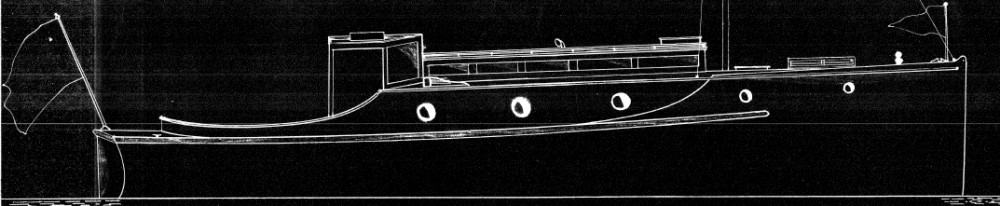
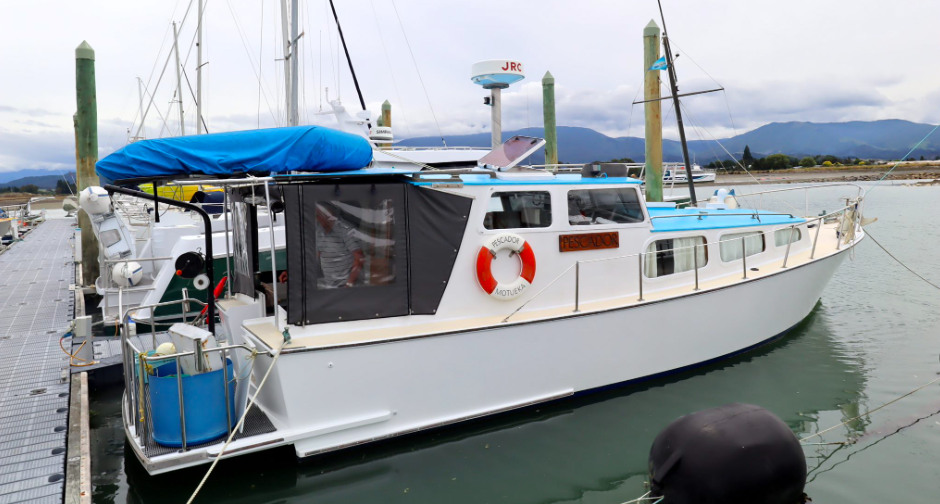
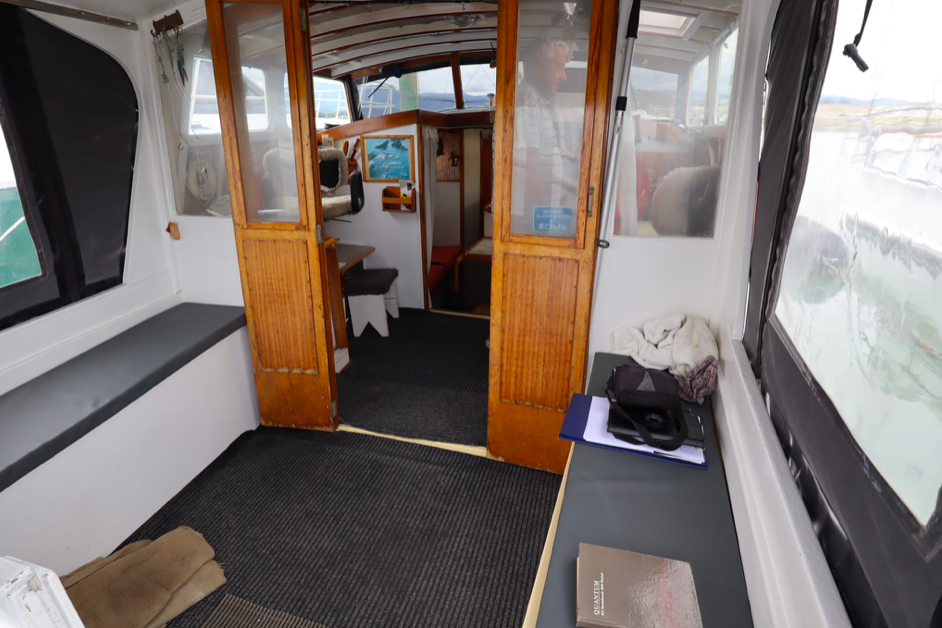
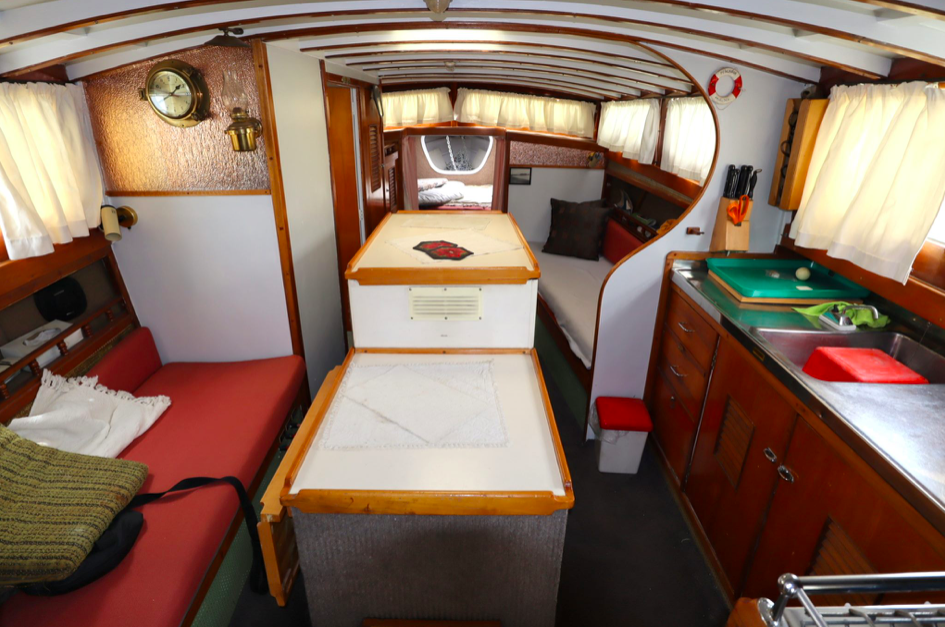
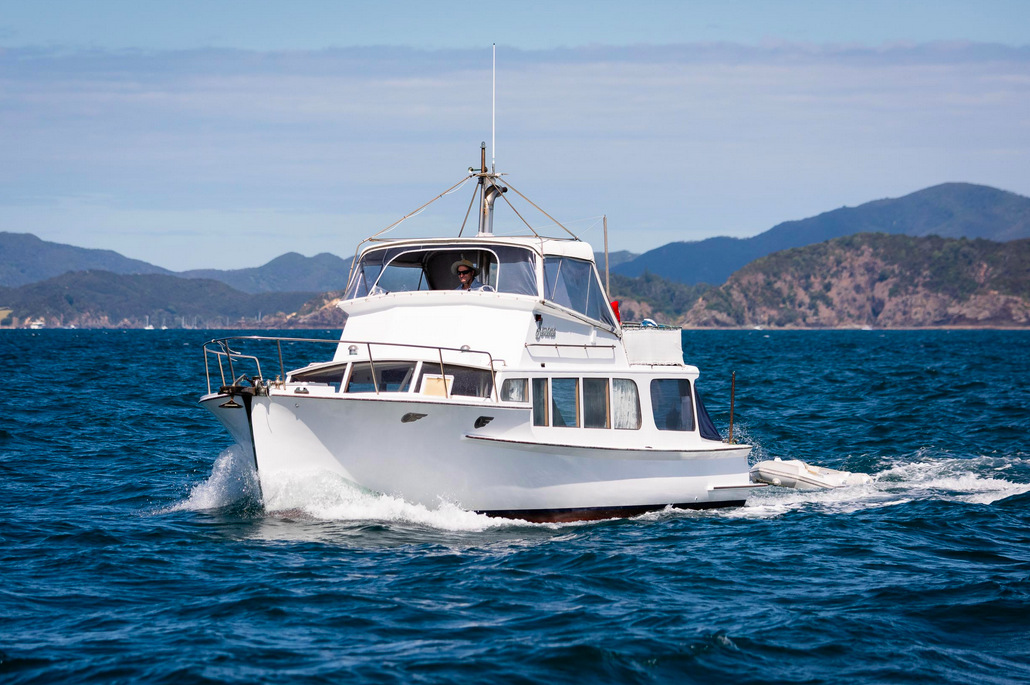
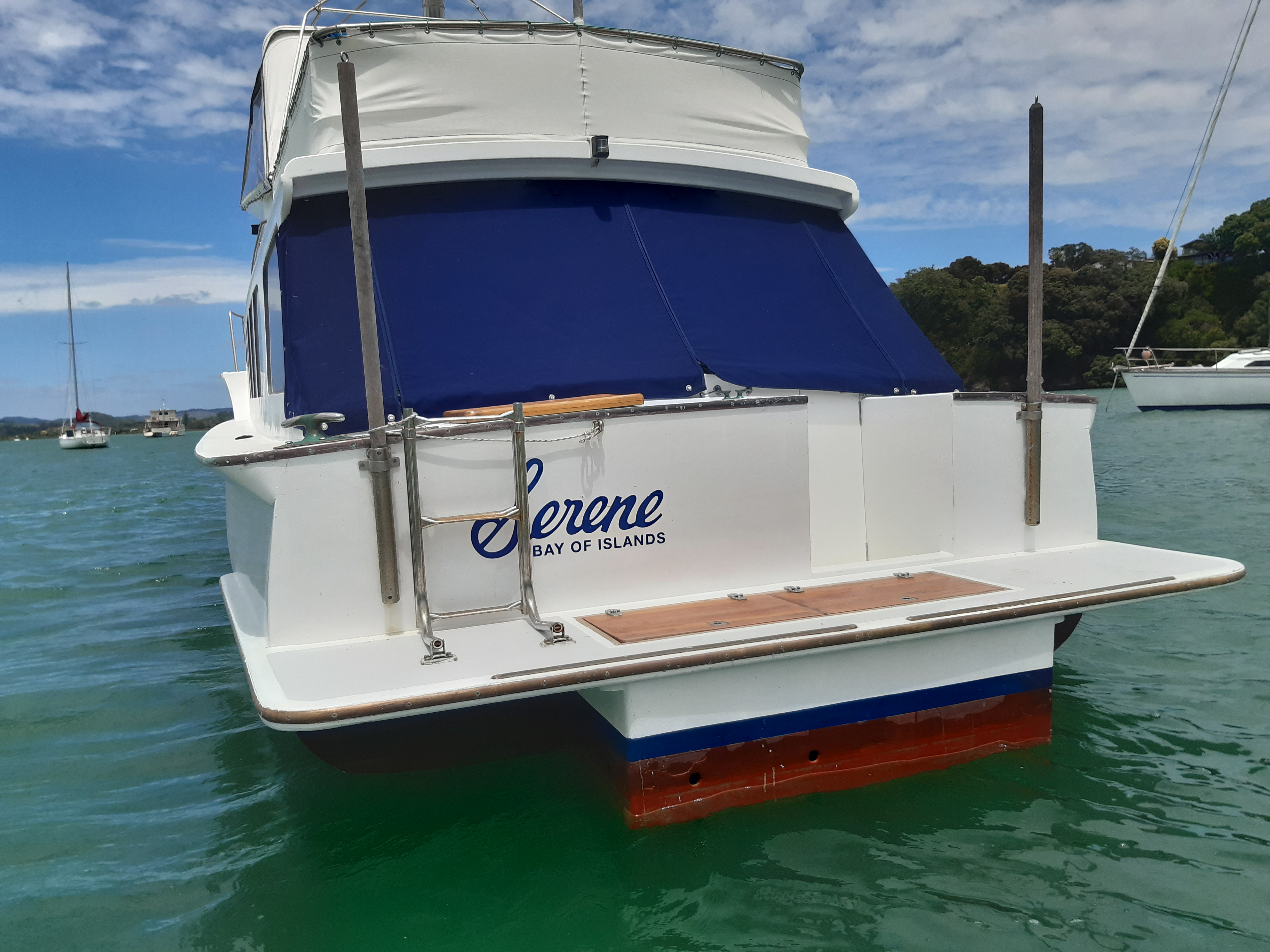
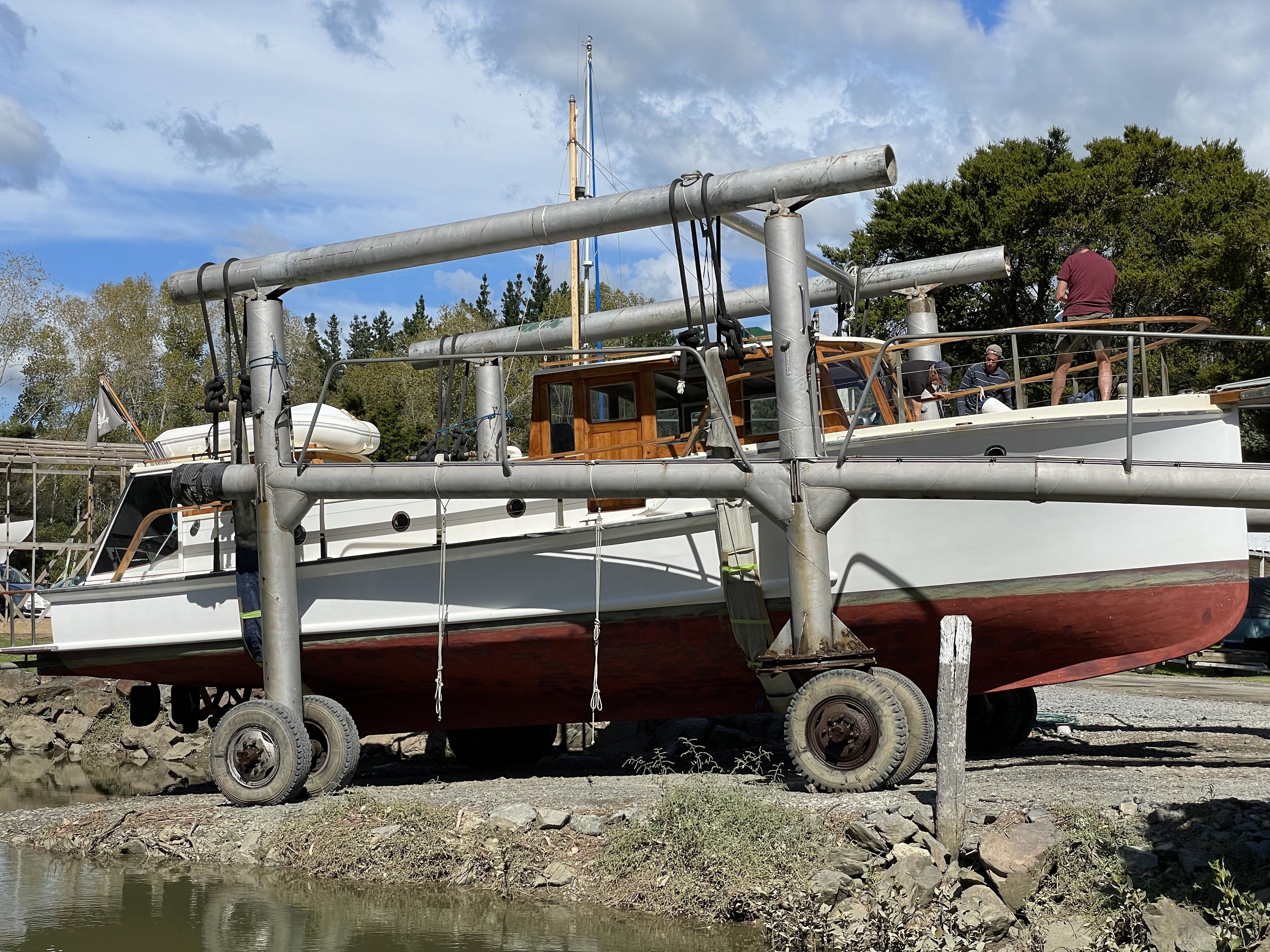
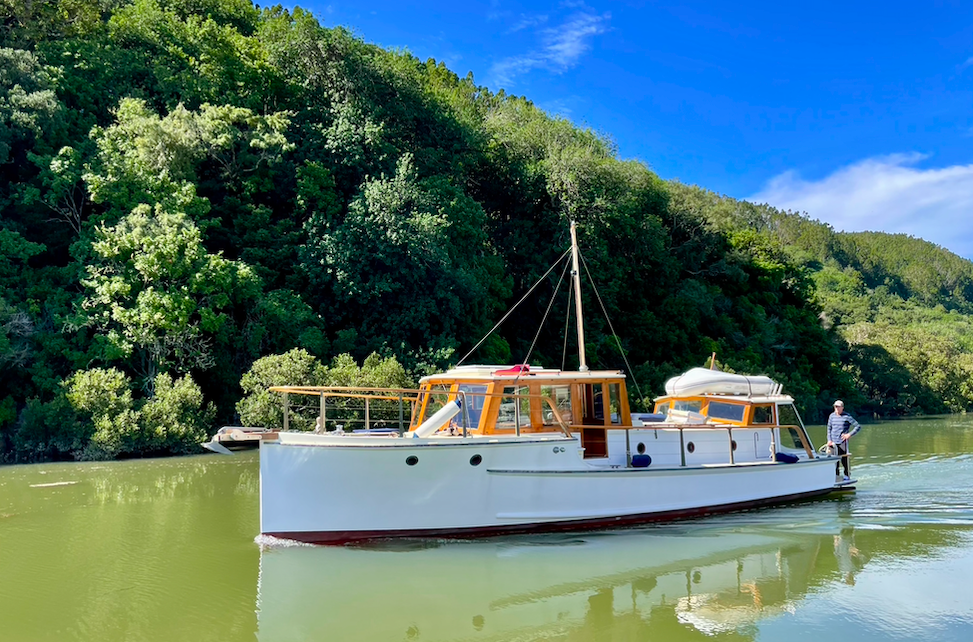
The 33’ John Lidgard designed and 1968 built woody – Pescador, has appeared twice before on WW, links below to the stories – lots of details / history on her in the first link.
A Ford 120hp 6cyl. diesel gets her along at a comfortable 9 knots.
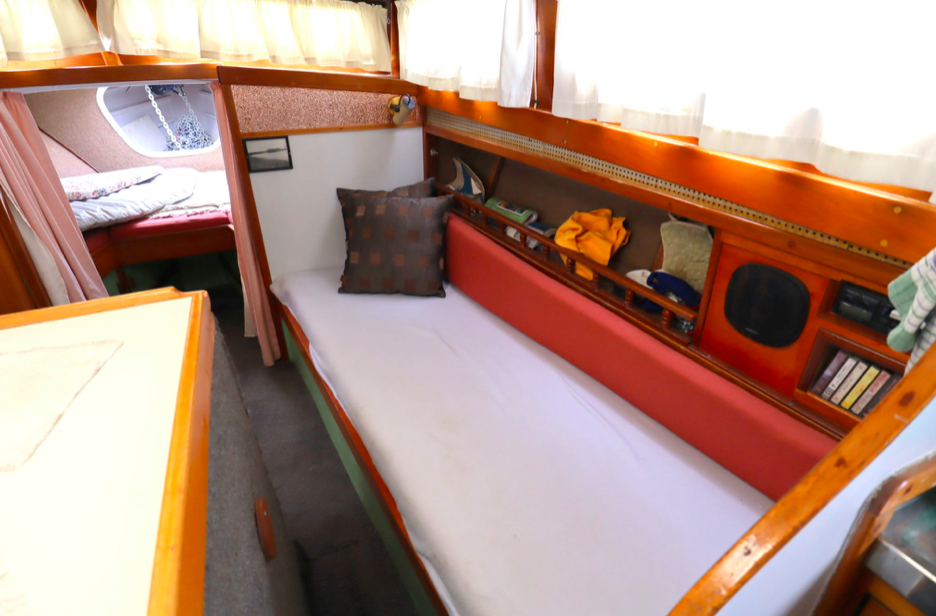
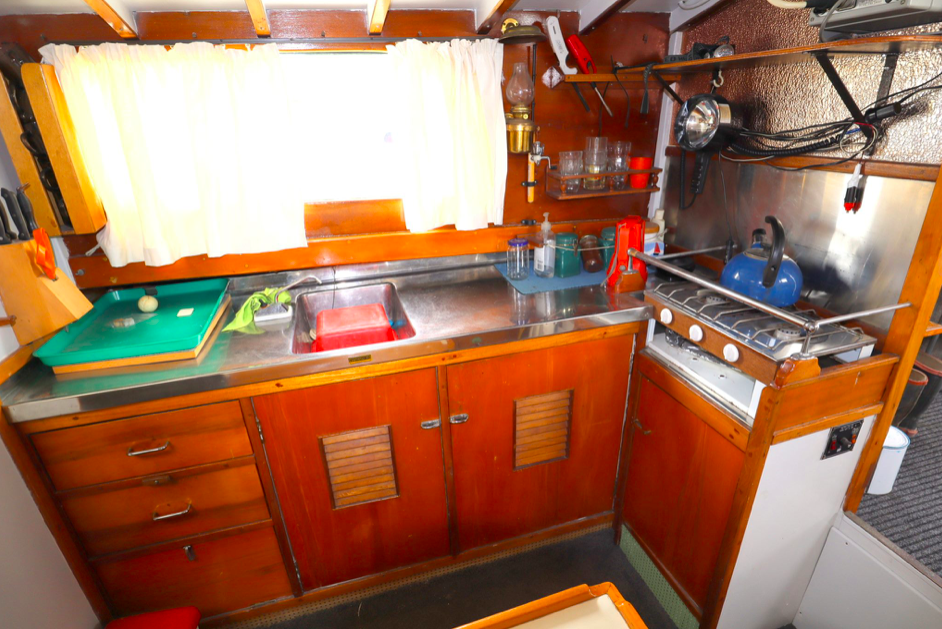
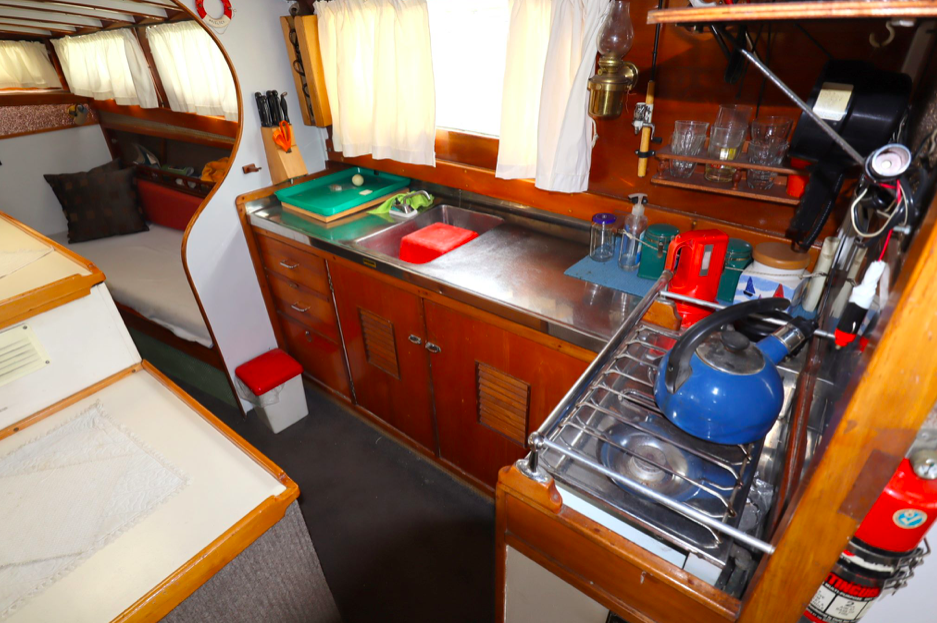
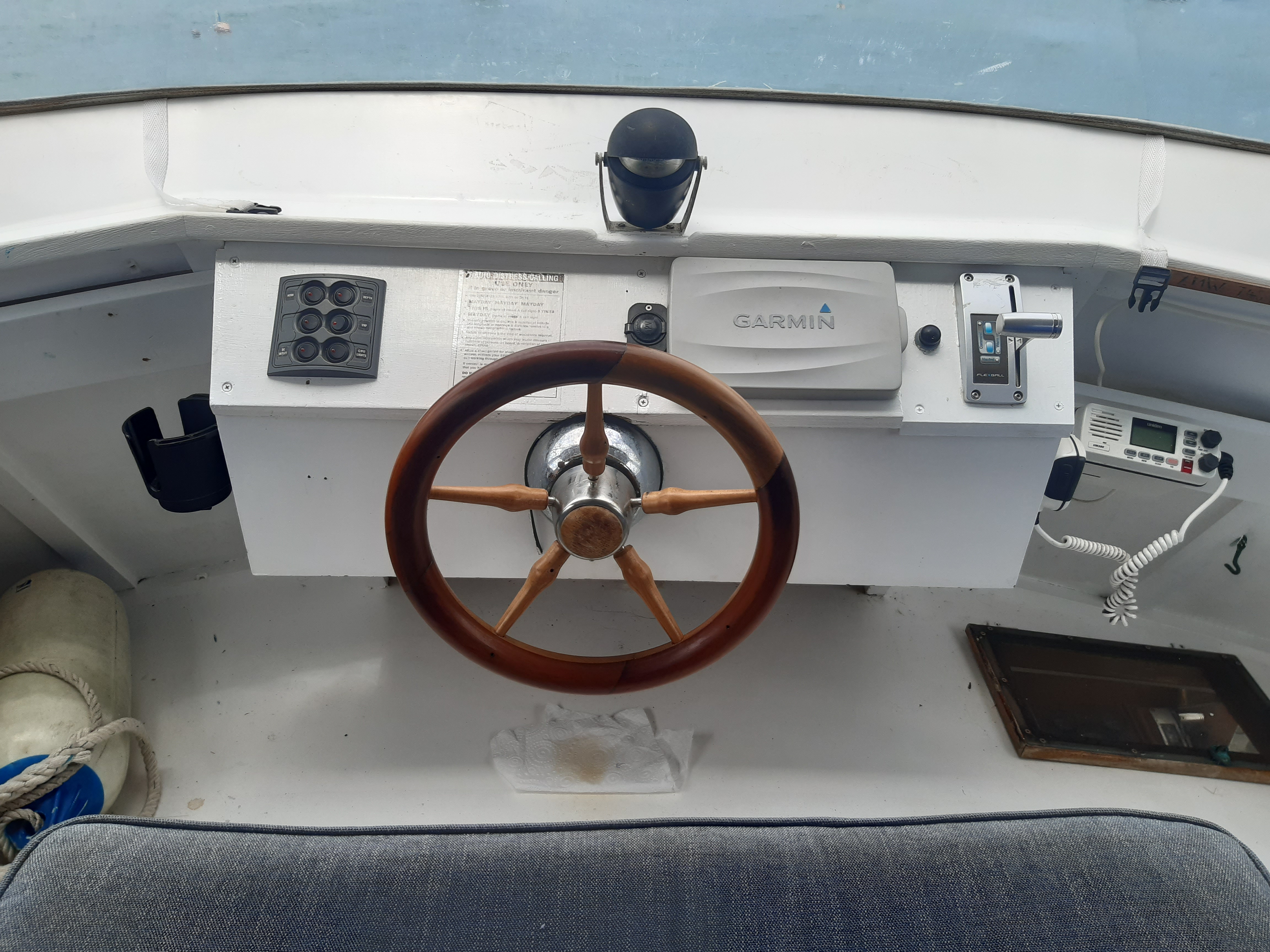
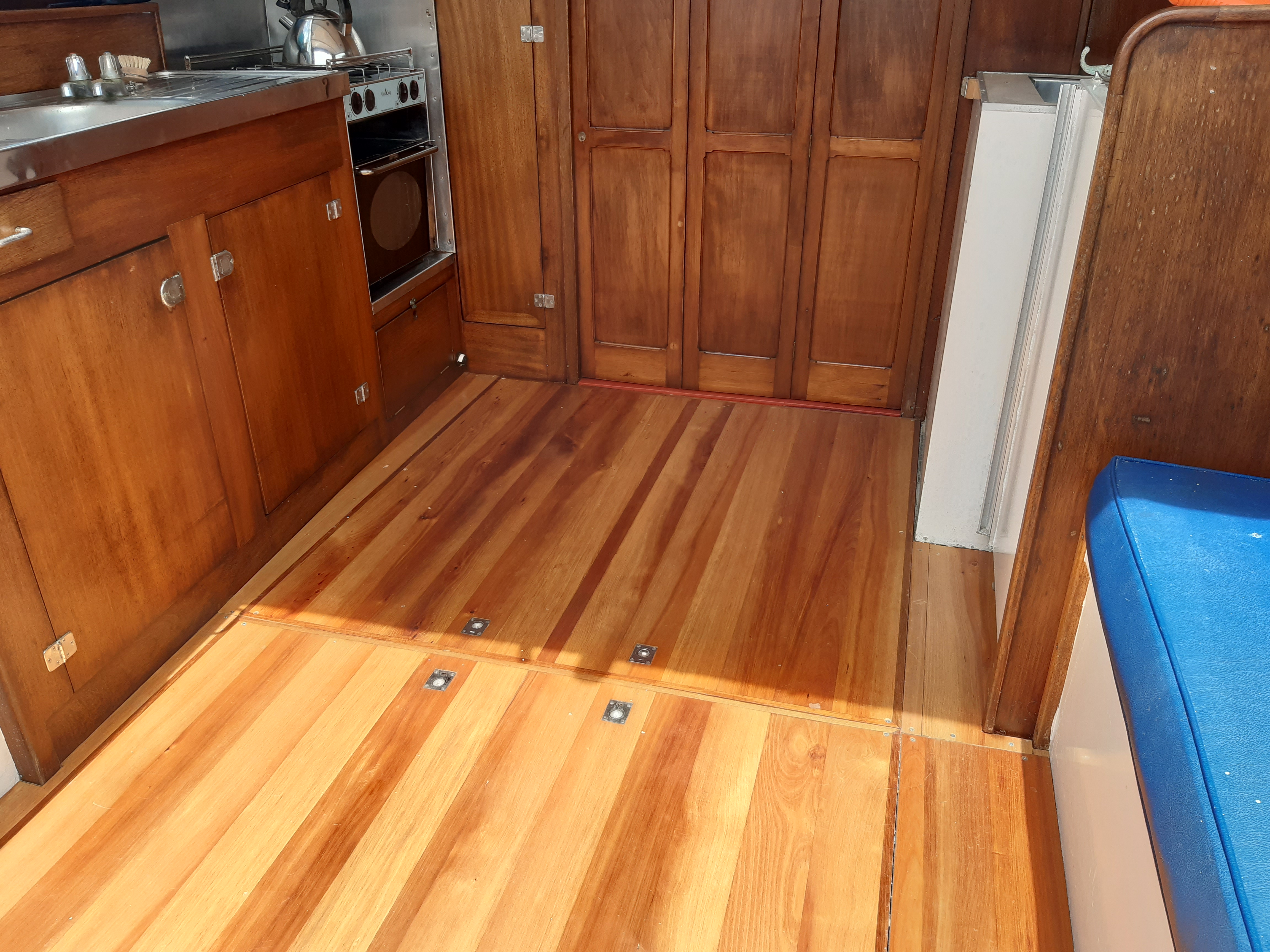
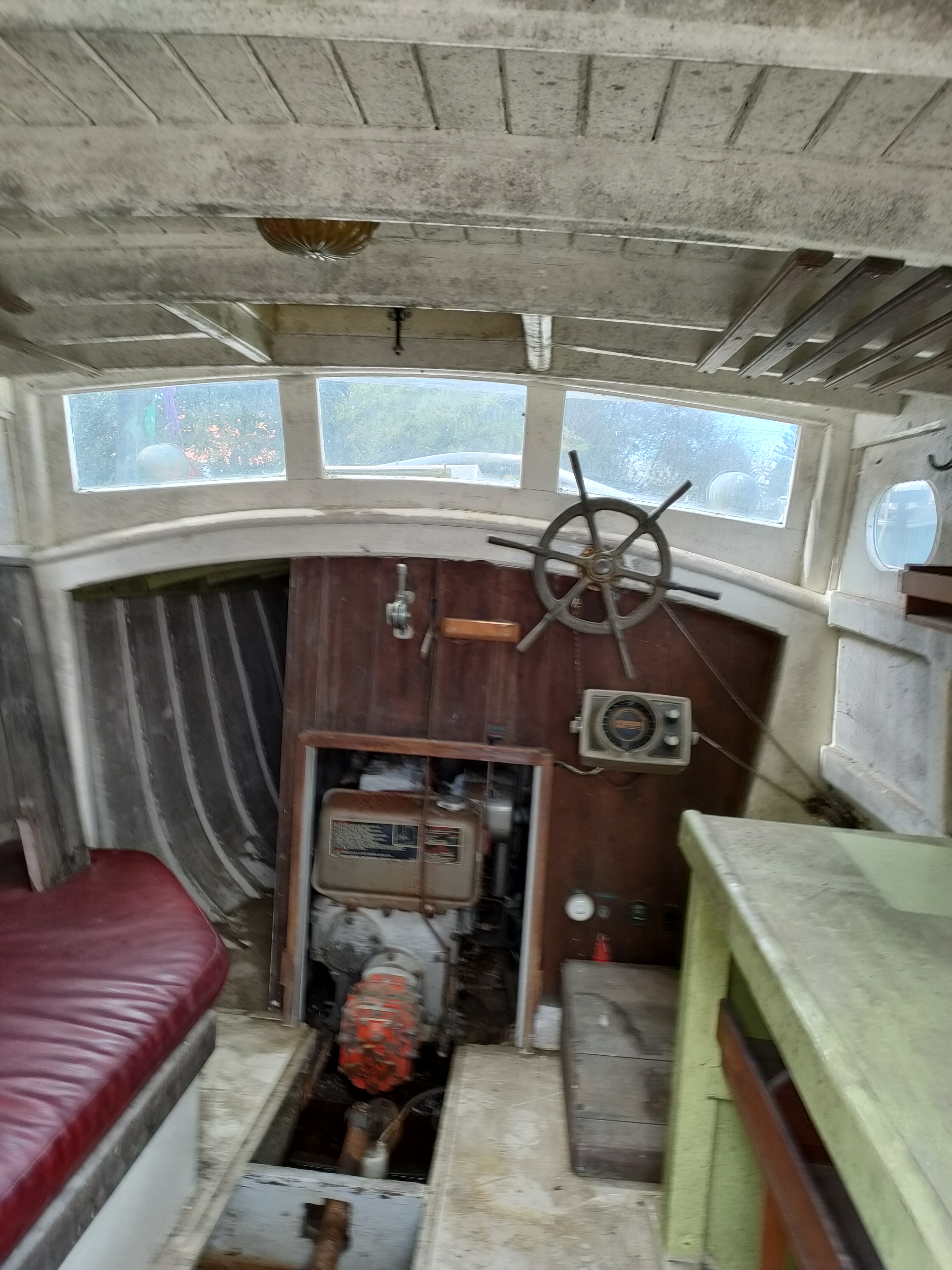
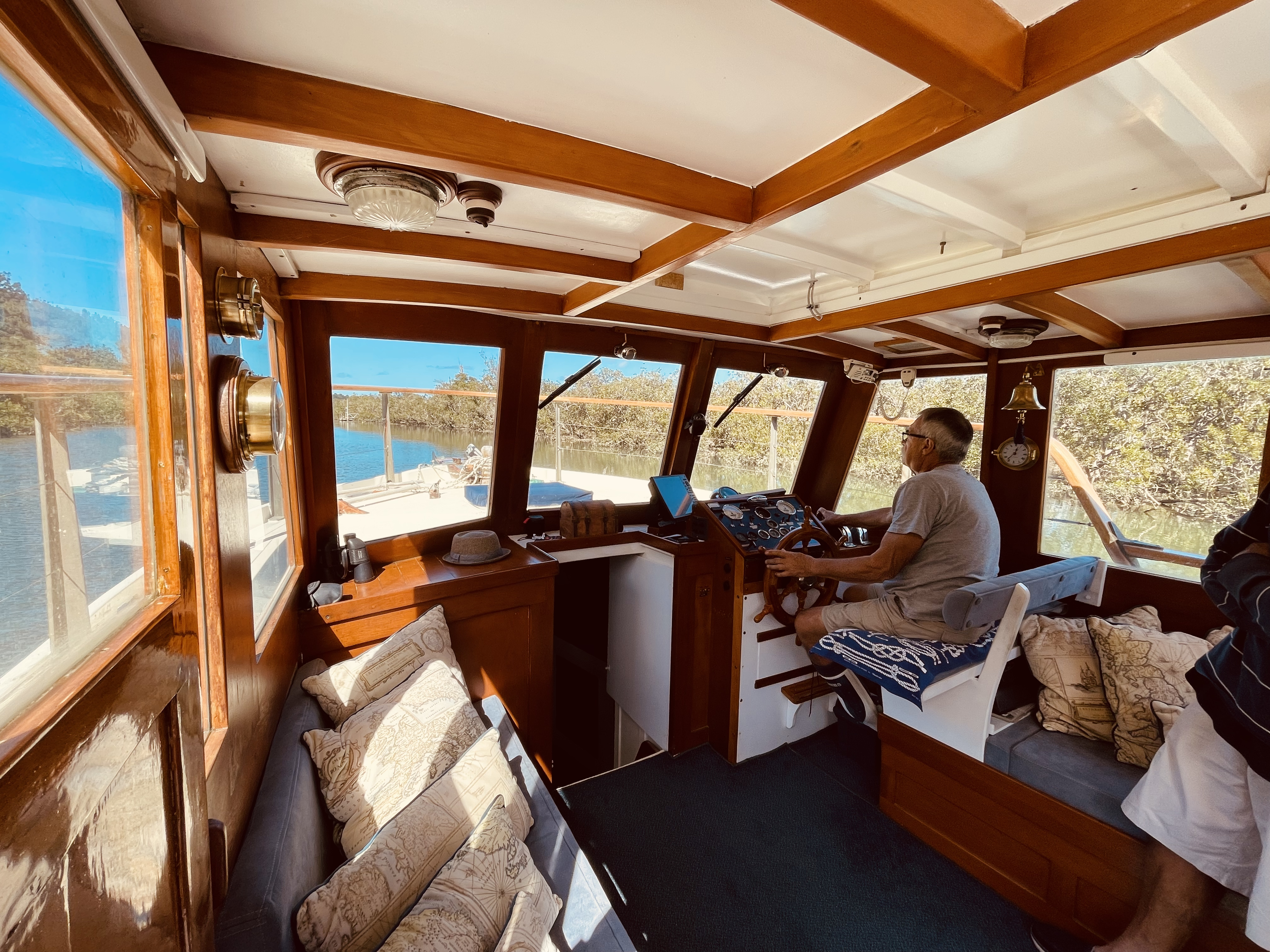
Over the CV-19 lockdowns Serene’s owner Tom Lindesay gave the launch a birthday, work included new flooring, whilst ‘new’ to the boat, the wood is actually ‘young’ totara aged between 80 and 100 years. Tom commented that the trees were cut on a sustainable basis and that you are allowed to harvest 10% of a stand mainly on farming land. There has been a lot of totata planted over the last 20 years. The wooden boat business is going to need it, because there will be nothing else left. It would best used for inside work.
Tom made the two back hatches from sheep grating recycled from under a woodshed, the wood is heart matai and totara. The steering device is made from bits of the old flooring and turned on the lathe.
Great to see that Serene is going well and the old 6-354 Perkins is still doing the job 🙂
The top photo was taken by Dean Wright in the Bay of Islands in Jan 2021
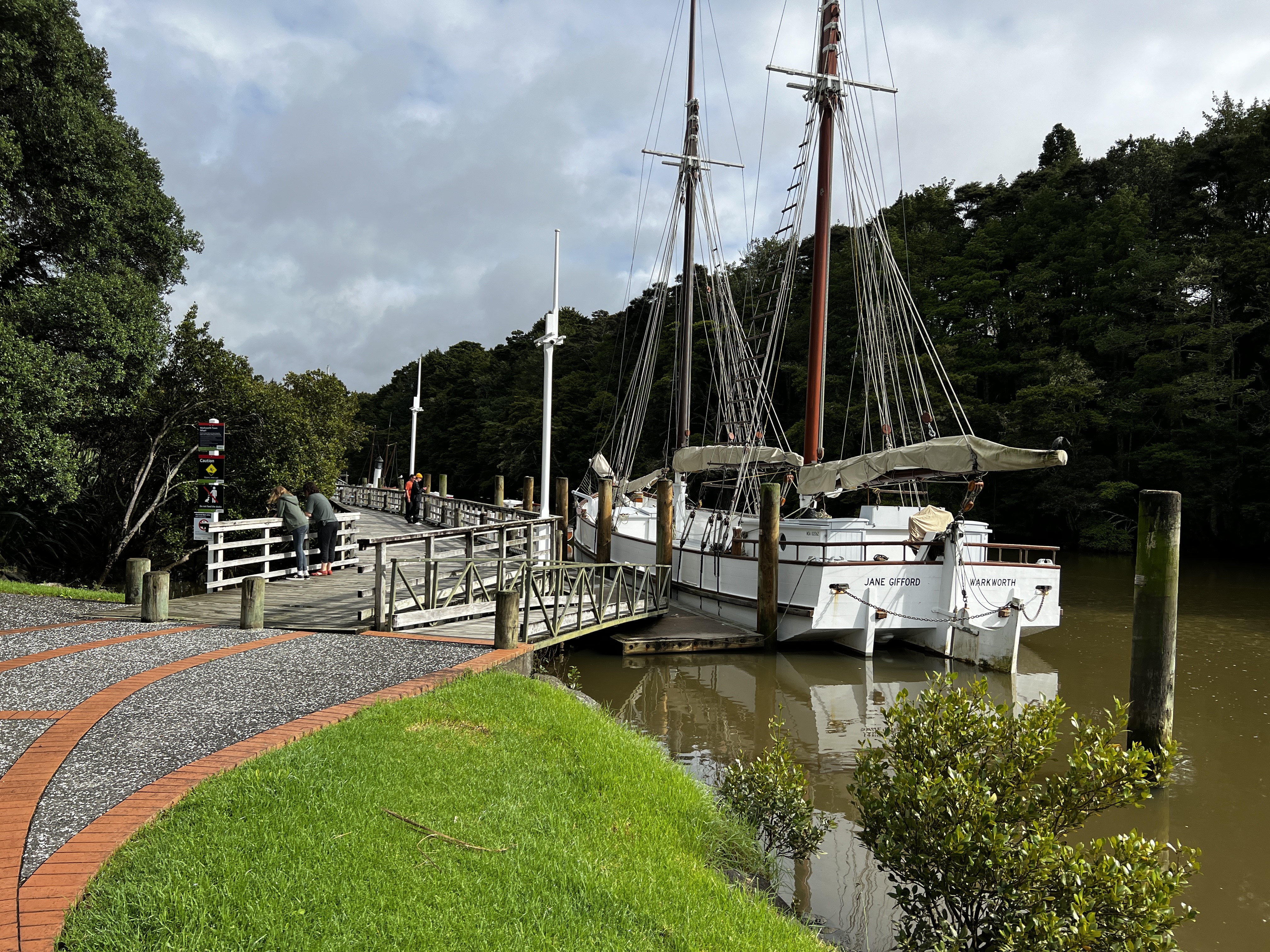
A couple of weeks ago Leane Barry was strolling the river front at Warkworth town when she came upon the collection of woodys above. The Jane Gifford looking as smart as ever and I assume on her home berth. The interesting addition to the docks was the two steam launches – possibly an upcoming event? Not that you would know, those boys keep things very tight 🙂
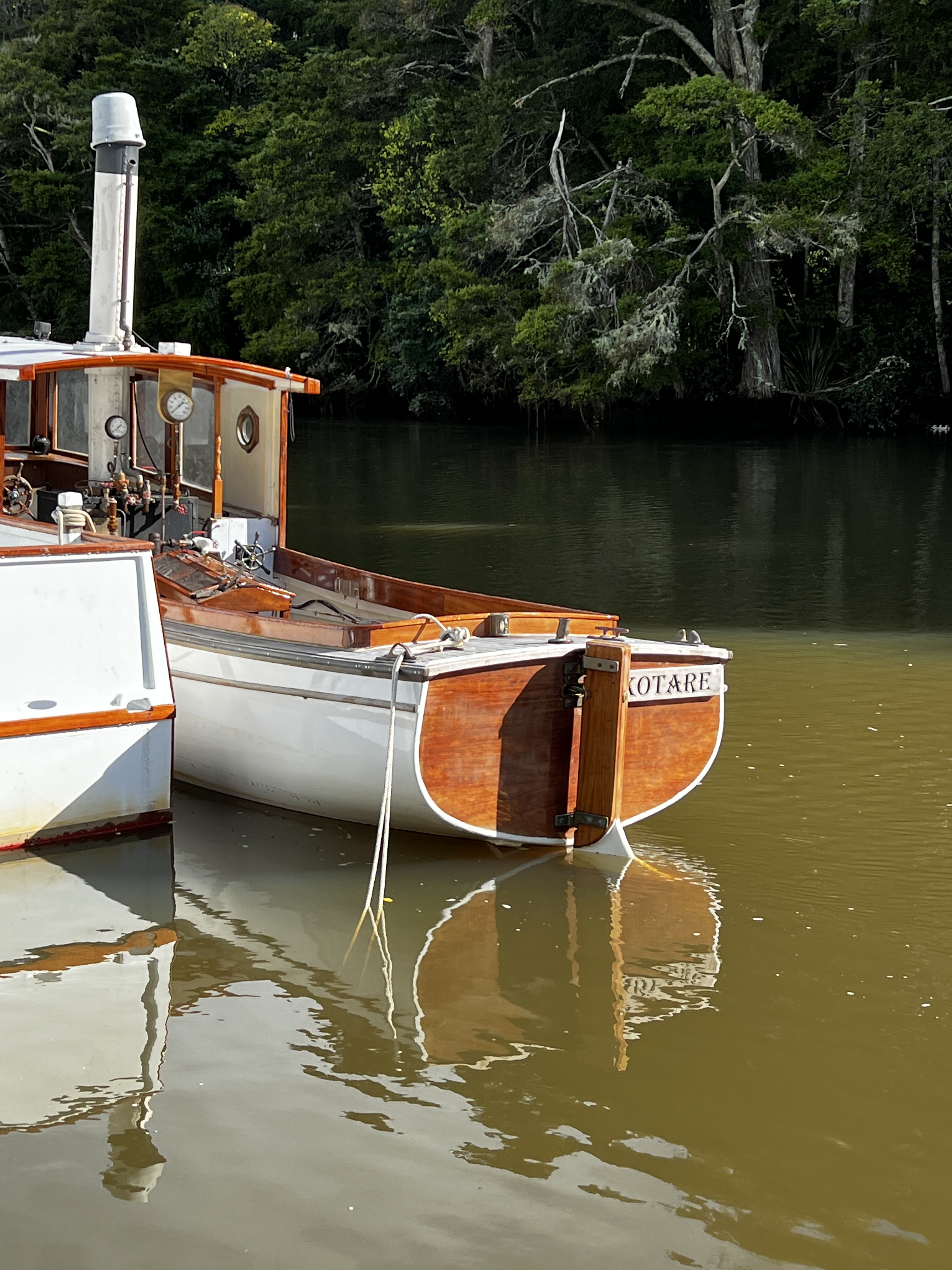
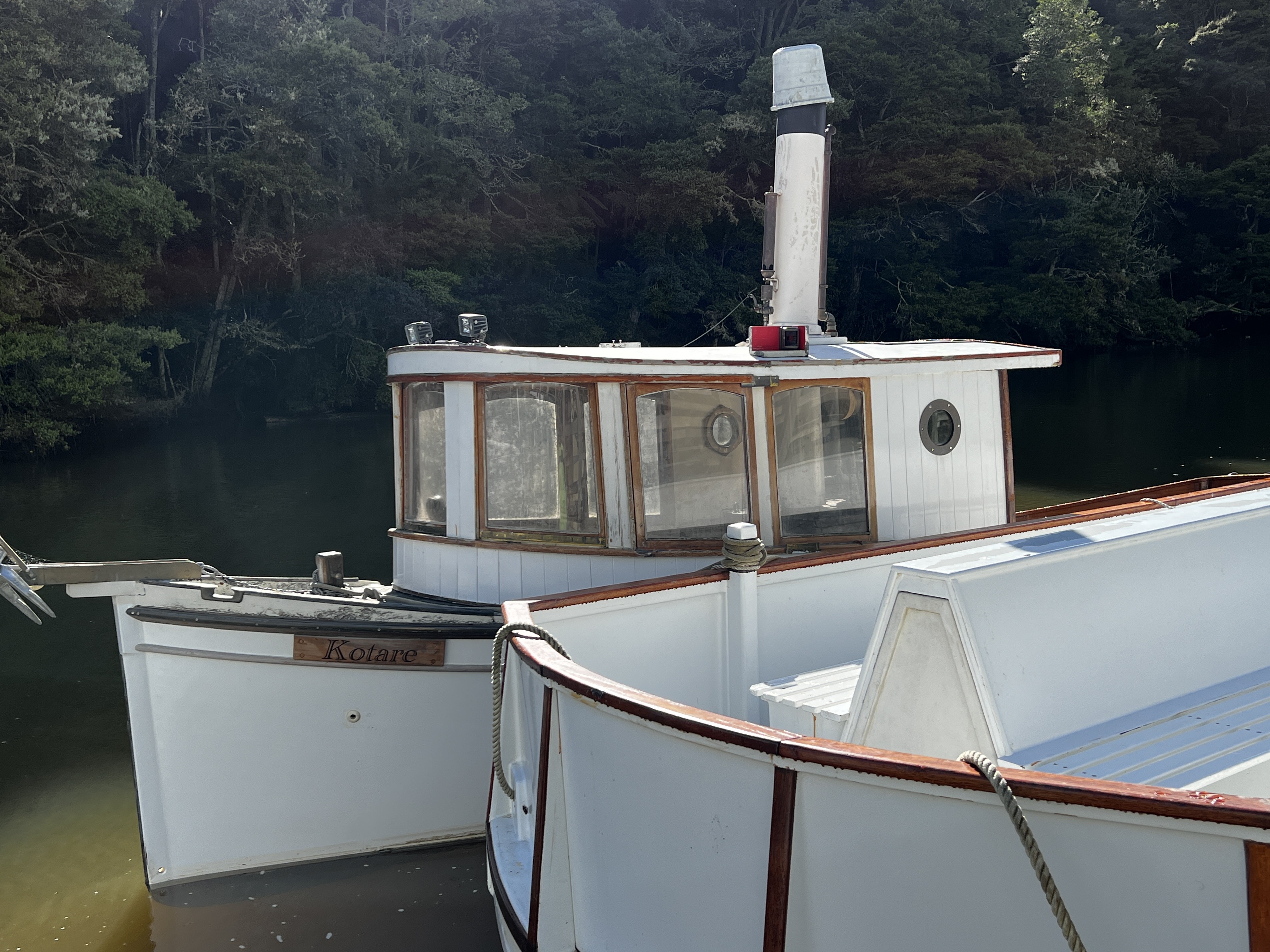
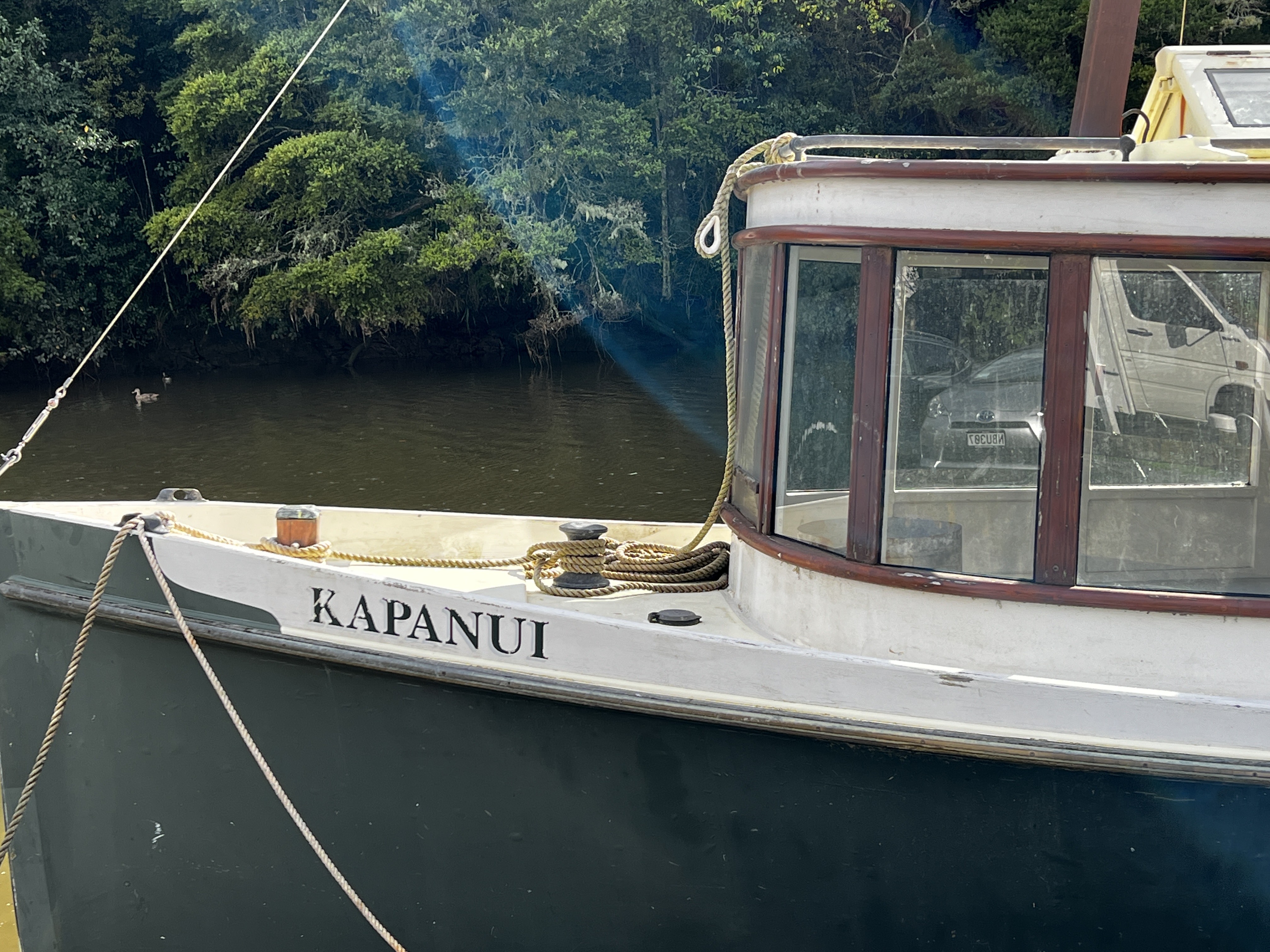
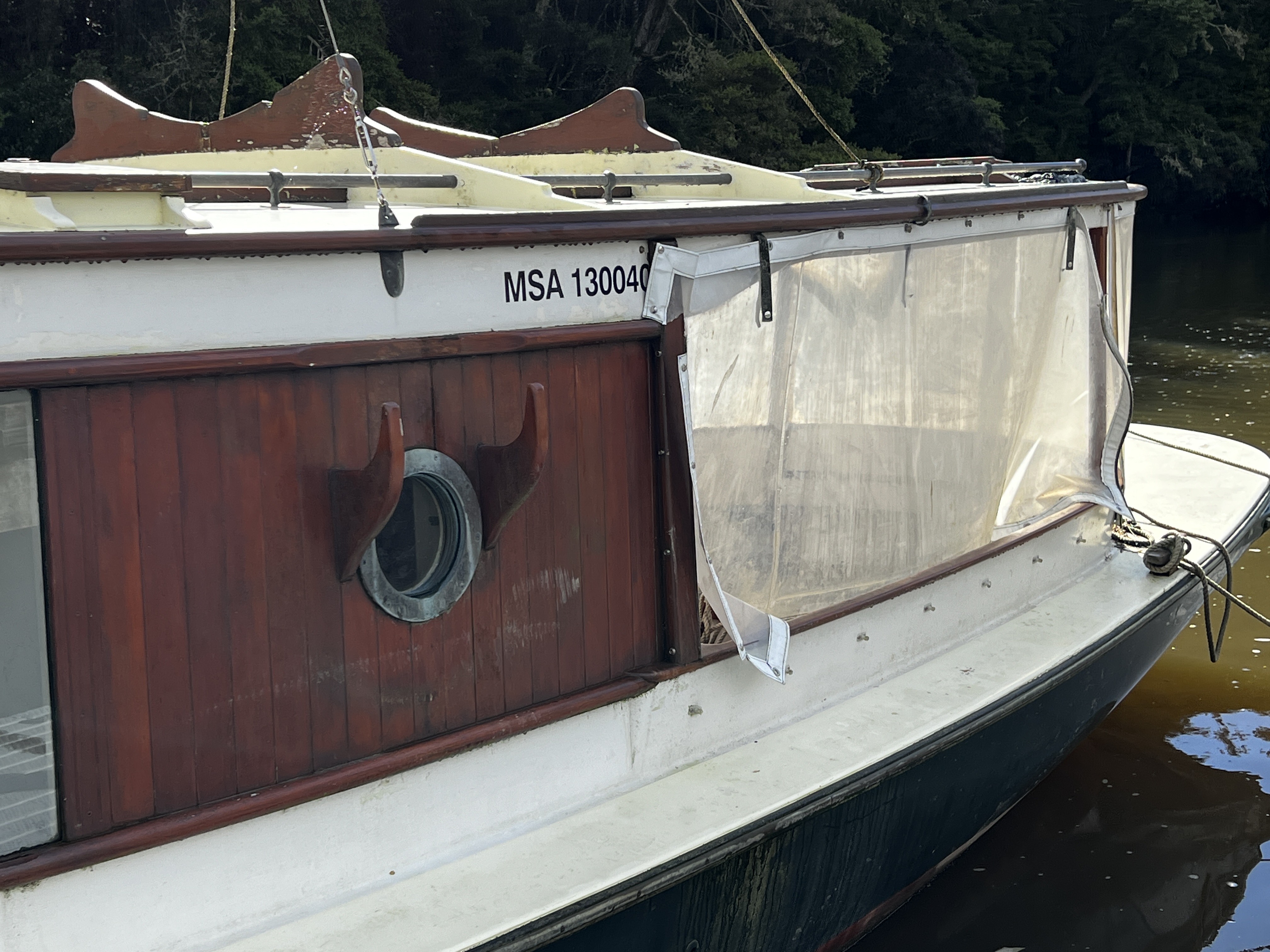
04-05-2022 Input from John Olsen – Kotare was built by Paul Eaton while he was living near Whenuapai, to a set of plans by Selway Fisher, now available from them as “Golden Bay”. Paul has semi-retired to the Wanaka area, and felt that Kotare was too much boat for one person to handle so has passed her on to the Auckland Steam Boat Association, where Daniel Hicks is taking care of her. . She is I think 26 feet overall, although the plans are available for 23 or 26 feet. Strip planked and glassed. She was built over much the same time period as Dancer with much discussion between myself and Paul over progress and ideas for details. The extra length in Dancer makes it just possible to sleep on board, which is nice. (Neither Dancer nor Kotare is necessarily actually completely finished even now.) Paul is probably right about one person not being able to handle her. Dancer takes two and at times like docking an extra would be nice. Especially when I fell in up the Waihou a couple of weeks back, leaving my wife aboard ready to drift off down river…. Kapanui is an older boat, I am not sure what the origins of the hull were but Alan Brimblecome had her for a long time and may have been the one to put the steam plant in her.
CYA BOAT OWNERS MEETING TONIGHT @ 7pm @ RNZYS – post all the Covid cancellations it will be interesting to hear what the stick and rag brigade are planning for next season. As for the launches – ‘same > same’ – bet it is just change the dates for the next year……….. 🙂
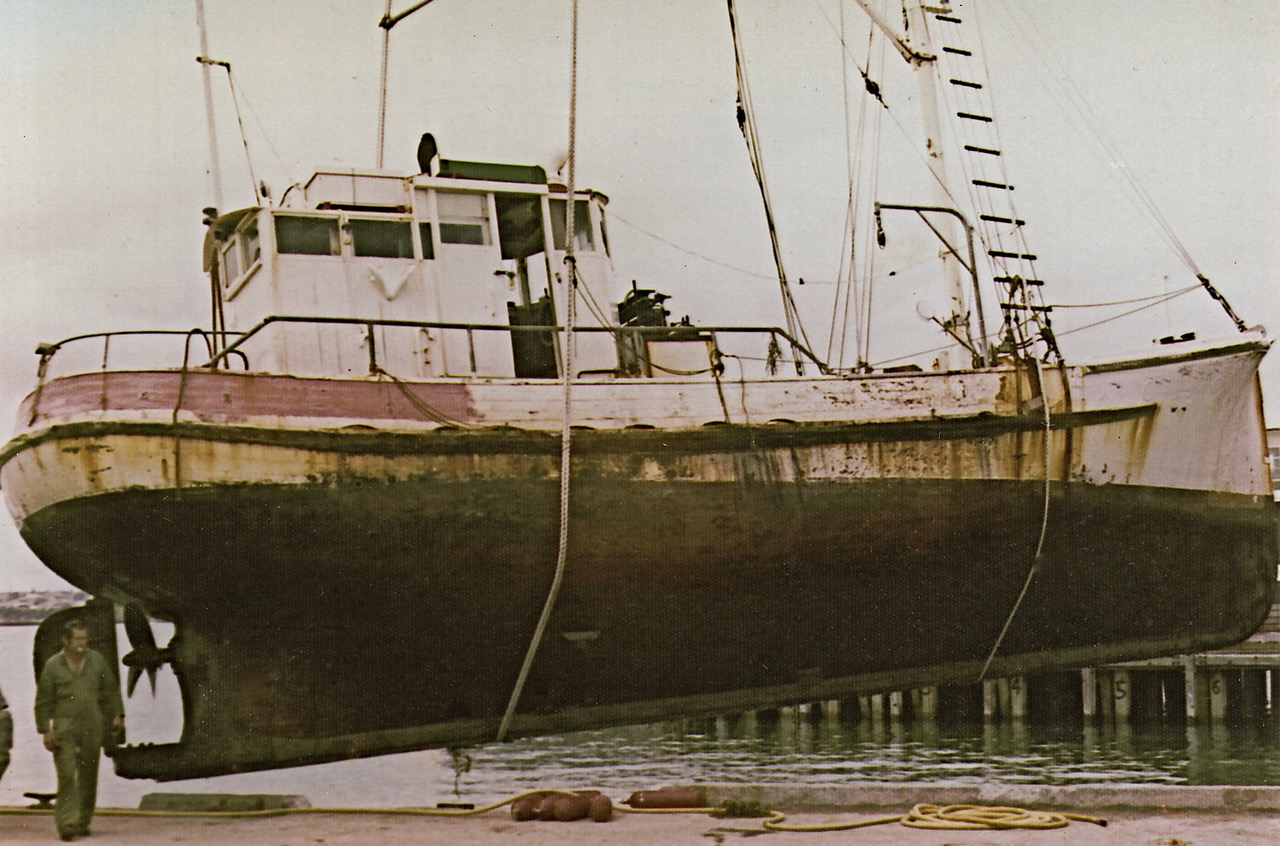
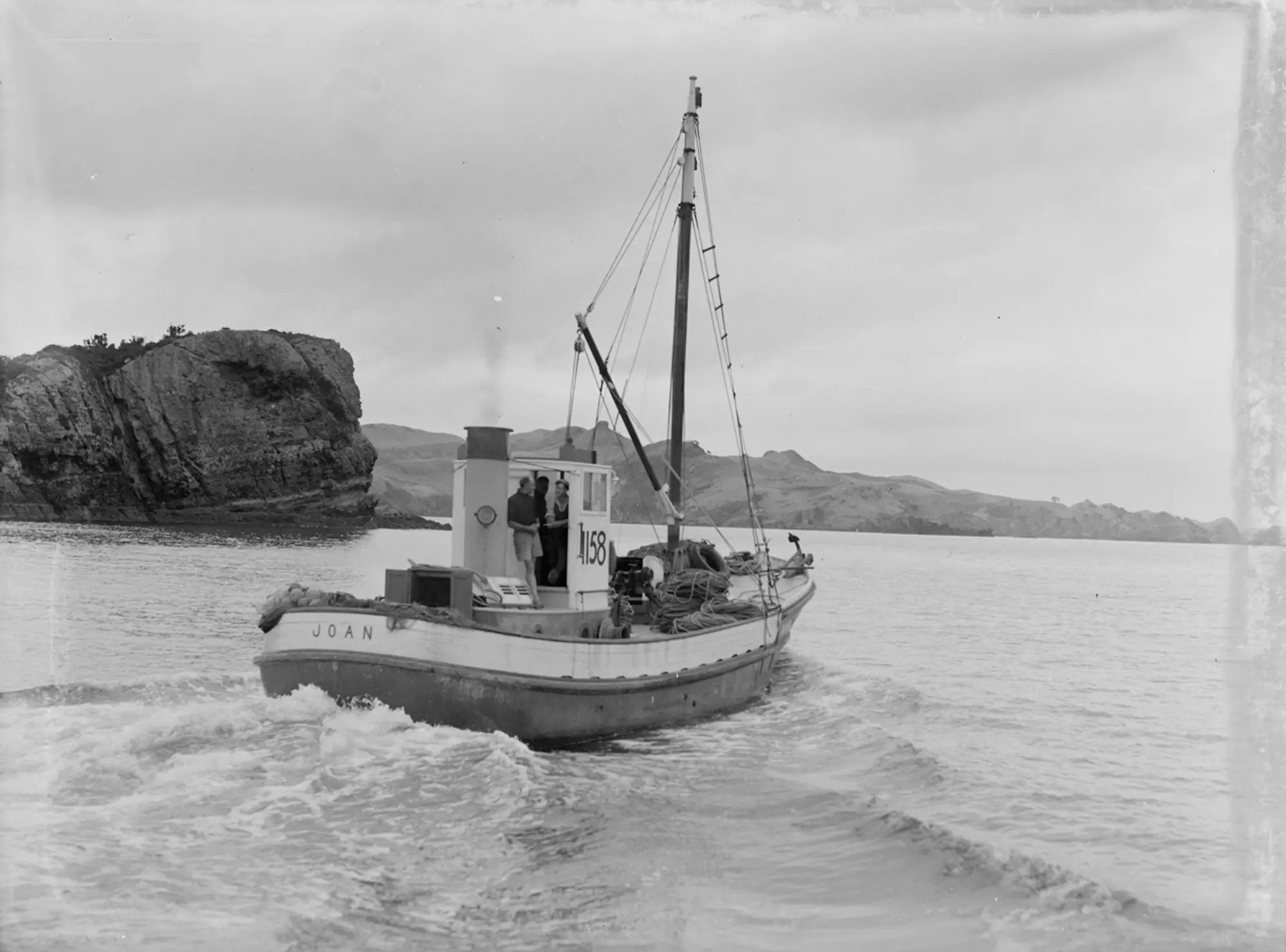
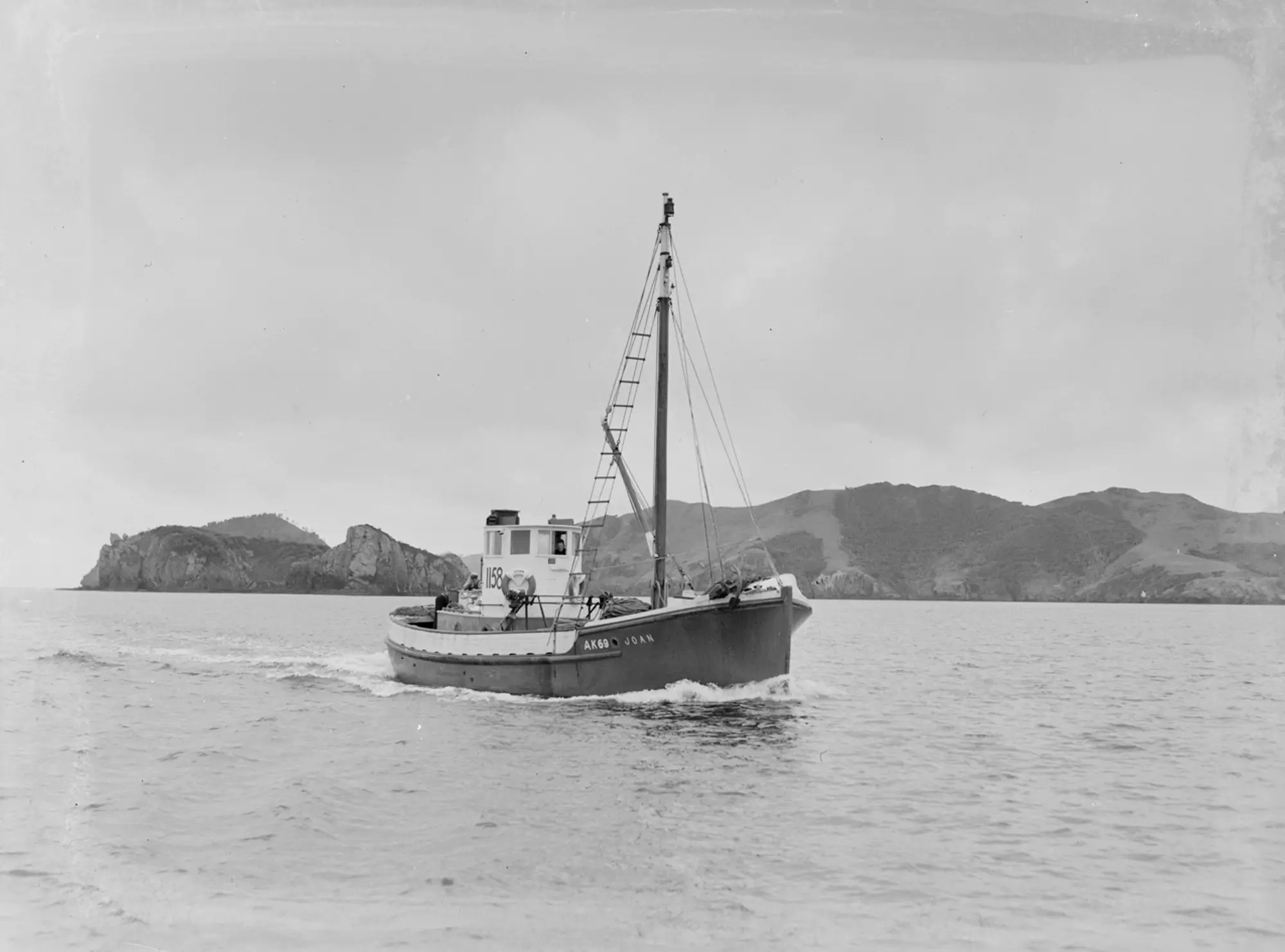
Todays story comes to us from John Gander via Dean Wright. John you may recall designed and built the two stunning double-ender 38’ kauri yachts Whisper and Time (sisters) that have appeared on WW. Today John shares with us the story of himself and Frank Derbyshire saving the 1935 Charles Bailey & Sons built fishing vessel – Joan from becoming firewood – I’ll let John tell us the story: (click on photos to enlarge)
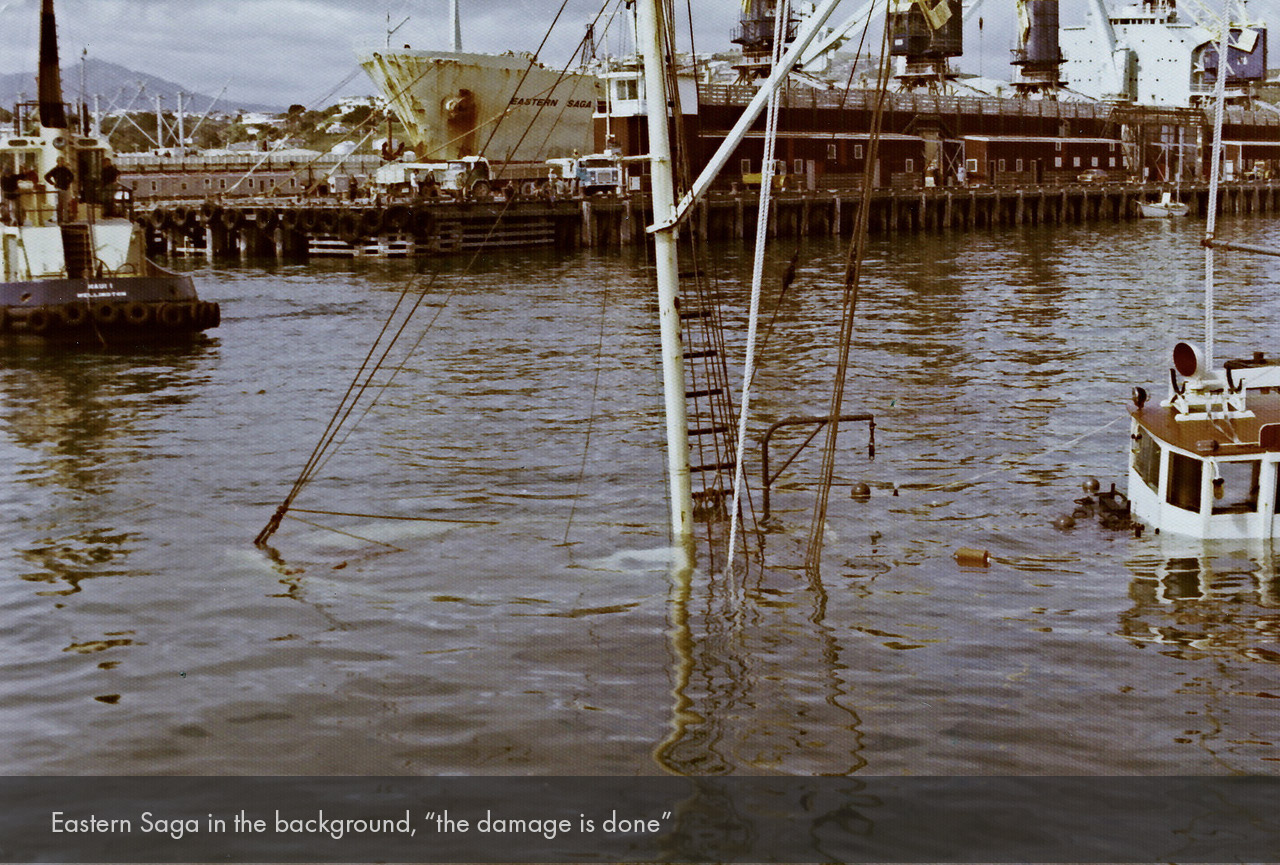
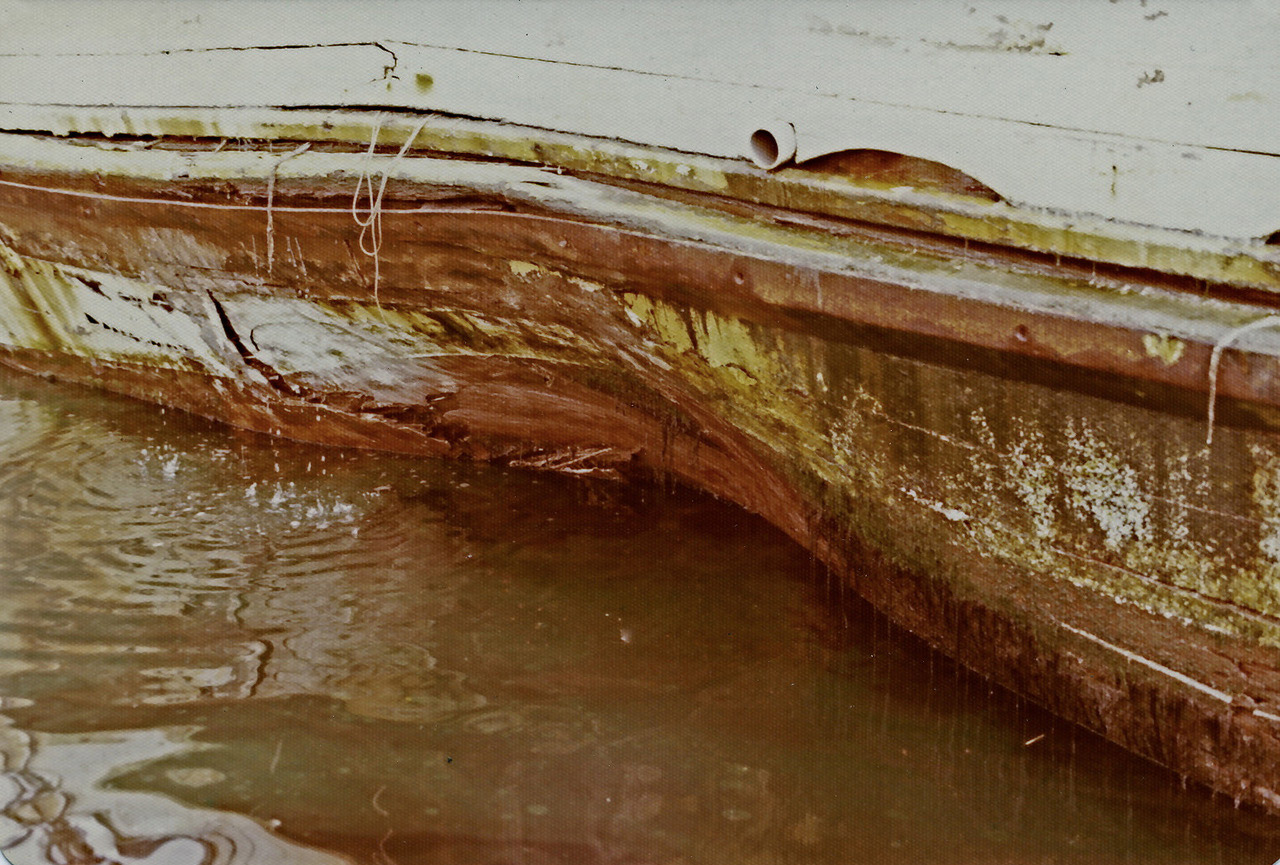
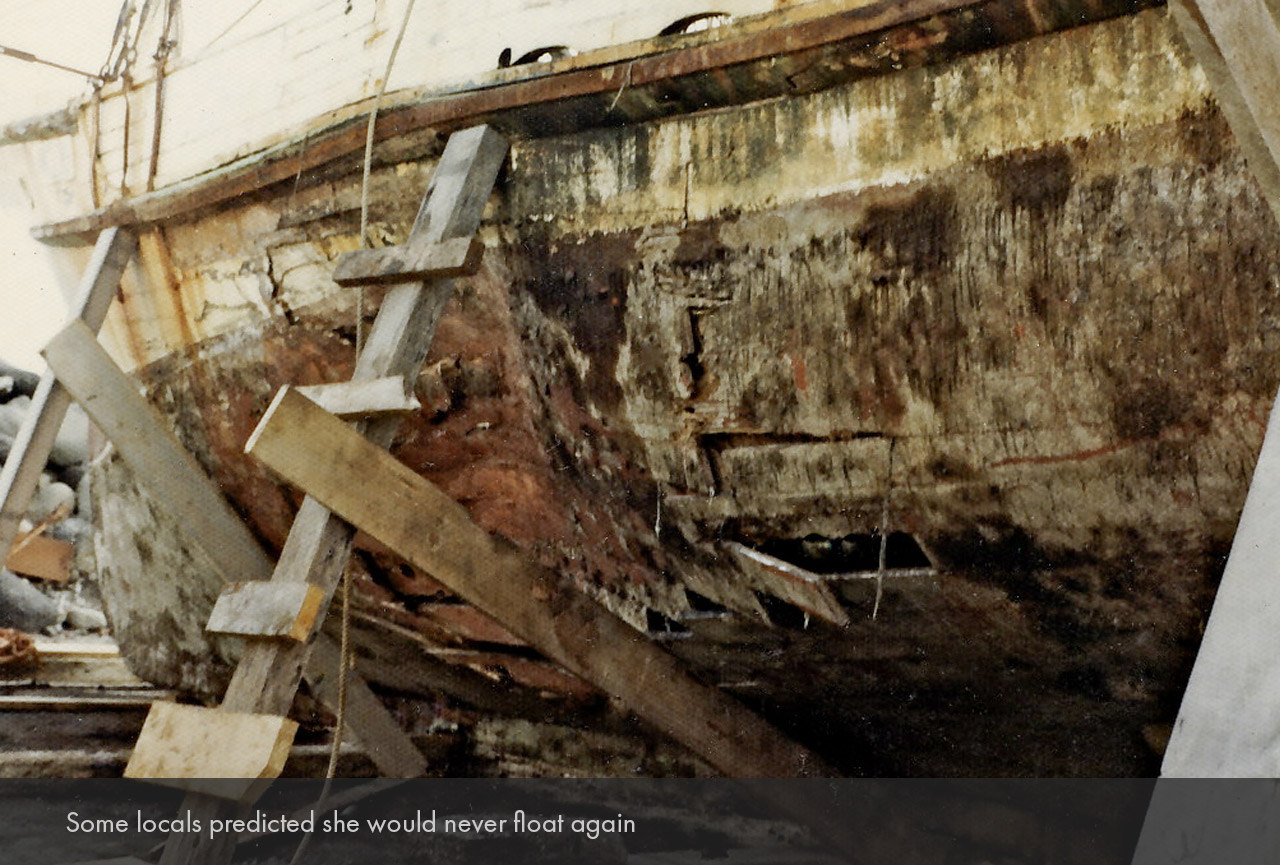
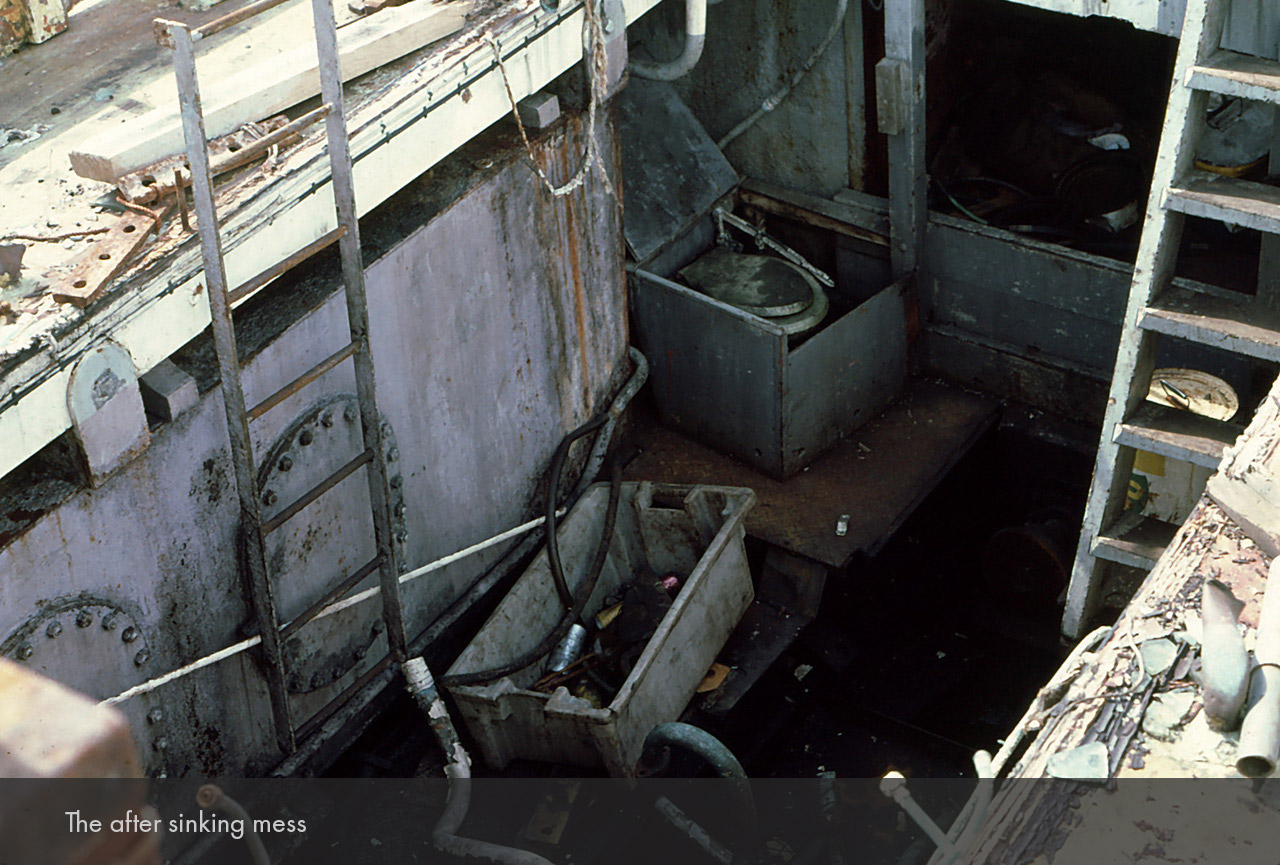
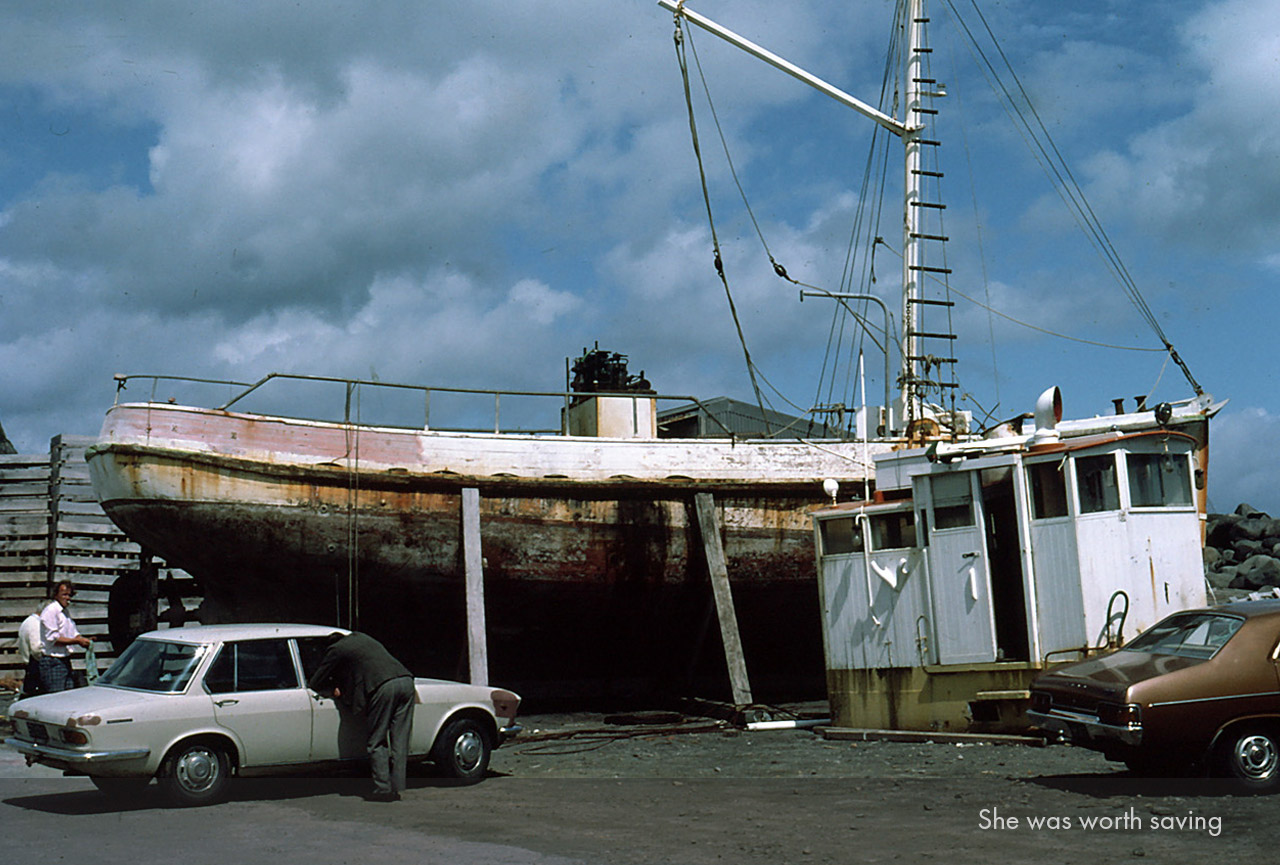
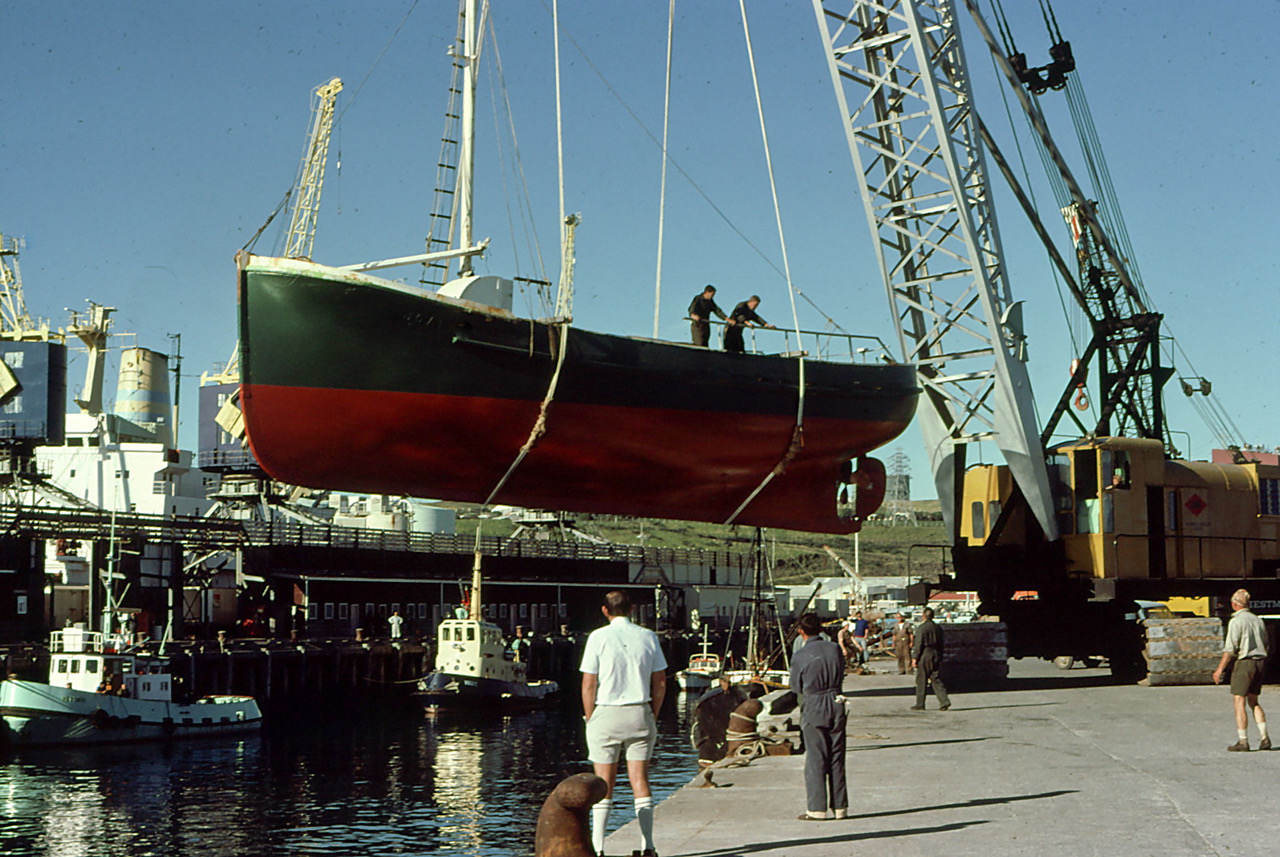
“About November 1975 Frank Derbyshire and I arrived at Port Taranaki from Picton having successfully tendered for the fishing vessel ‘Joan’ and her equipment. ‘Joan’ was moored alongside the wharf when struck by the bulbous bow of the phosphate ship “Eastern Saga” as the ship was being manoeuvred in the harbour. Joan suffered extensive damage and was crushed about amidships.
Prior to our arrival the vessel had been lifted onto the breakwater wharf, her wheelhouse had been removed and her 6L3B Gardner engine was on beds in a wharf workshop having been stripped down, cleaned, reassembled and run.
“Joan” is a triple skin vessel of about 35 tonnes, and thanks to Harold Kidd it is confirmed that she was built by Charles Bailey and Sons and launched on 14th October 1935. We weren’t familiar with New Plymouth but soon learned that if you can see the mountain it is going to rain and if you couldn’t see the mountain it was raining, however we did experience some fine weather.
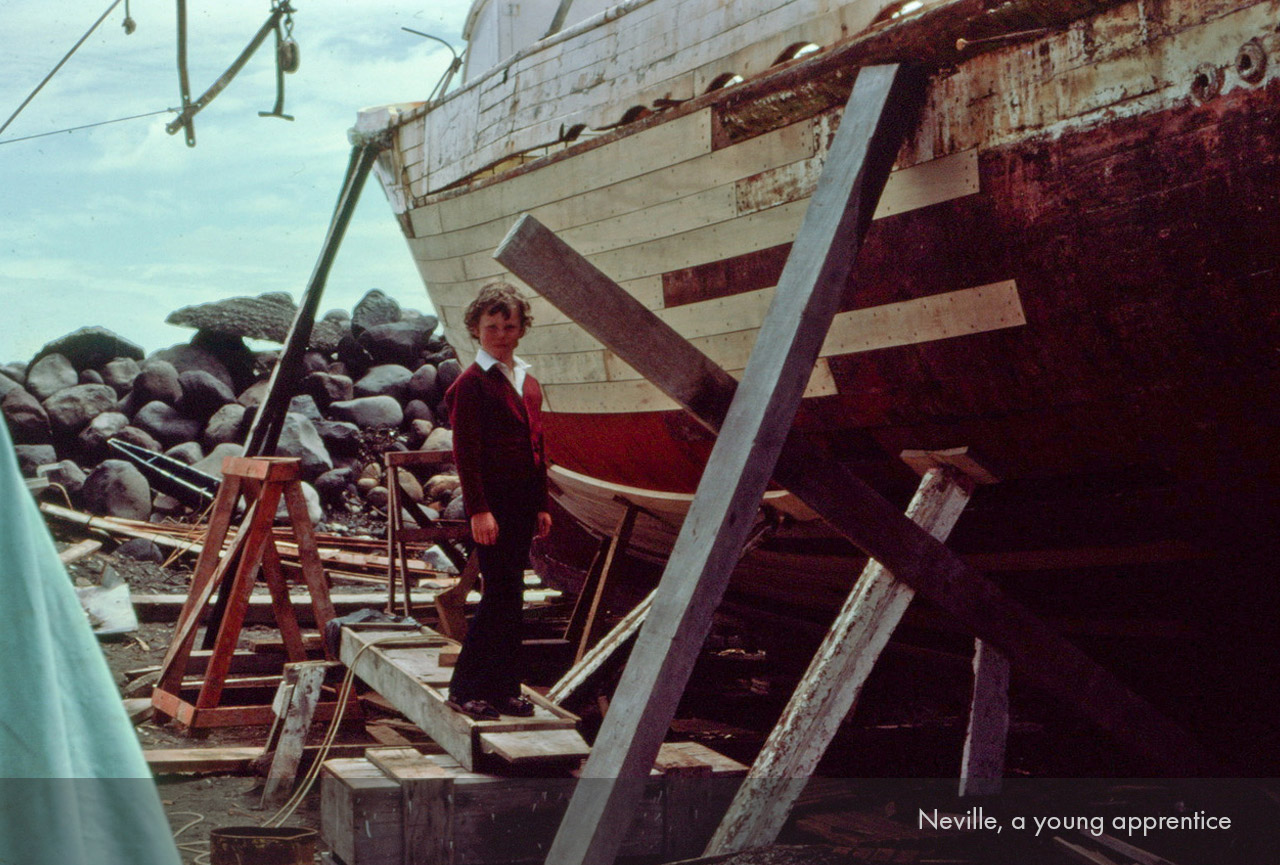
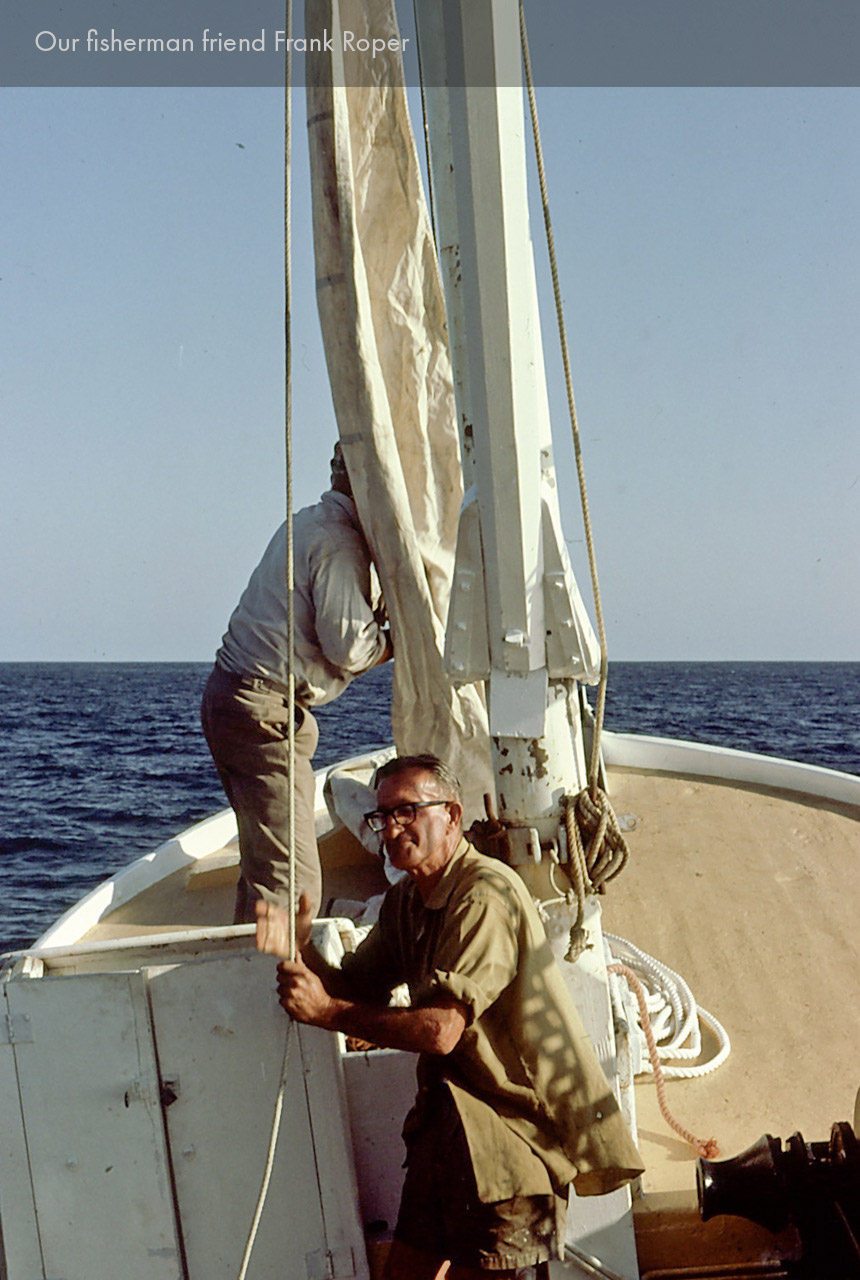
We were advised by a few sceptics to put a match to her, she will never go to sea again, however after a week or so into the repair and it was seen that we knew a bit about wooden boats some of those on local fishing boats and other workers about the wharf became very helpful when it came to advice on where best to procure some items we required during the repair. One person who was especially helpful to us was a retired fisherman Frank Roper. We learned that Frank was held in high regard by the local fishermen and was known to most on the wharf. He approached us saying in his retirement he needed something to do and could he help, and what a help he was.
After lifting the fuel and water tanks out it was Frank who chipped and wire brushed them, and applied a new cement wash to the inside of the water tanks and primed and painted the exterior, and while doing this he also stoked the fire for our steam box, this of course was when it wasn’t a problem to have a fire on the wharf at New Plymouth.
Prior to tendering for the vessel I had flown to New Plymouth for an inspection and made a note of the timber requirements to take to the job. For the inner skins we used Larch that was grown in the upper Awatere Valley Marlborough, and milled at Blenheim. Not such a common timber to use in New Zealand boatbuilding but we had the advice of Peter Jorgensen a Danish boatbuilder who knew Larch, we found it a good timber to work with and it steamed well.
After the initial inspection by the Marine Department wooden boat surveyor Bill Salter we set about clearing away the damaged section, this also entailed removing the freezer compartment and the cork insulation, and cutting scarfs in the stringers and gunwale well forward and aft.
The deck covering board was forced up during the impact but not damaged, we pulled this down into place, repaired the bulwarks, and from memory I think we replaced the outer planking with White Pine ( Kahikatea ) and Australian hardwood for the new belting, Metalex was a good wood preservative we used in those days, and red lead for priming paint.
We did have our share of rain but a bigger problem was salt spray during heavy westerly weather, this was before RCD’s were in vogue and electric tools were mostly metal, when the seas hit the breakwater and the fine salt spray wet the tools, it made one jump around a bit. But looking back on the job now we were lucky imagine asking a Port Company now if you could have a fire for the steam box on the wharf run a few power leads, and spread wheelhouse, tanks, and other ships gear about, and all this without a dozen orange cones and danger notices, yet we survived without mishaps.
With completion of repairs and a new Marine Department survey we left New Plymouth late afternoon bound for the Marlborough Sounds with Frank Roper aboard. Frank had fished the coast south to Cape Egmont and he regaled us with stories of fishing in the days of long lining before depth sounders, when after catching the fish they cleaned and gutted the catch on the way home.”
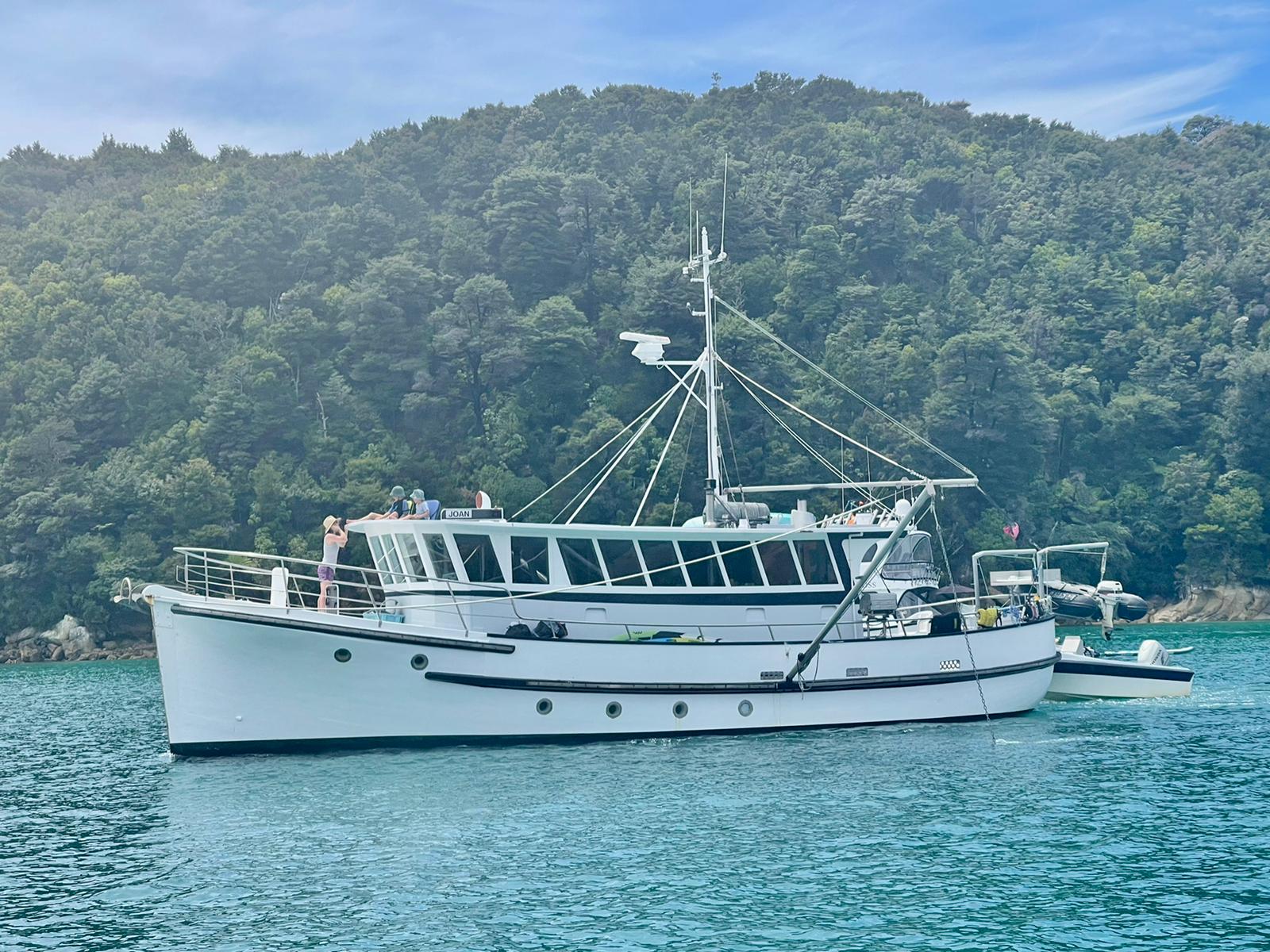
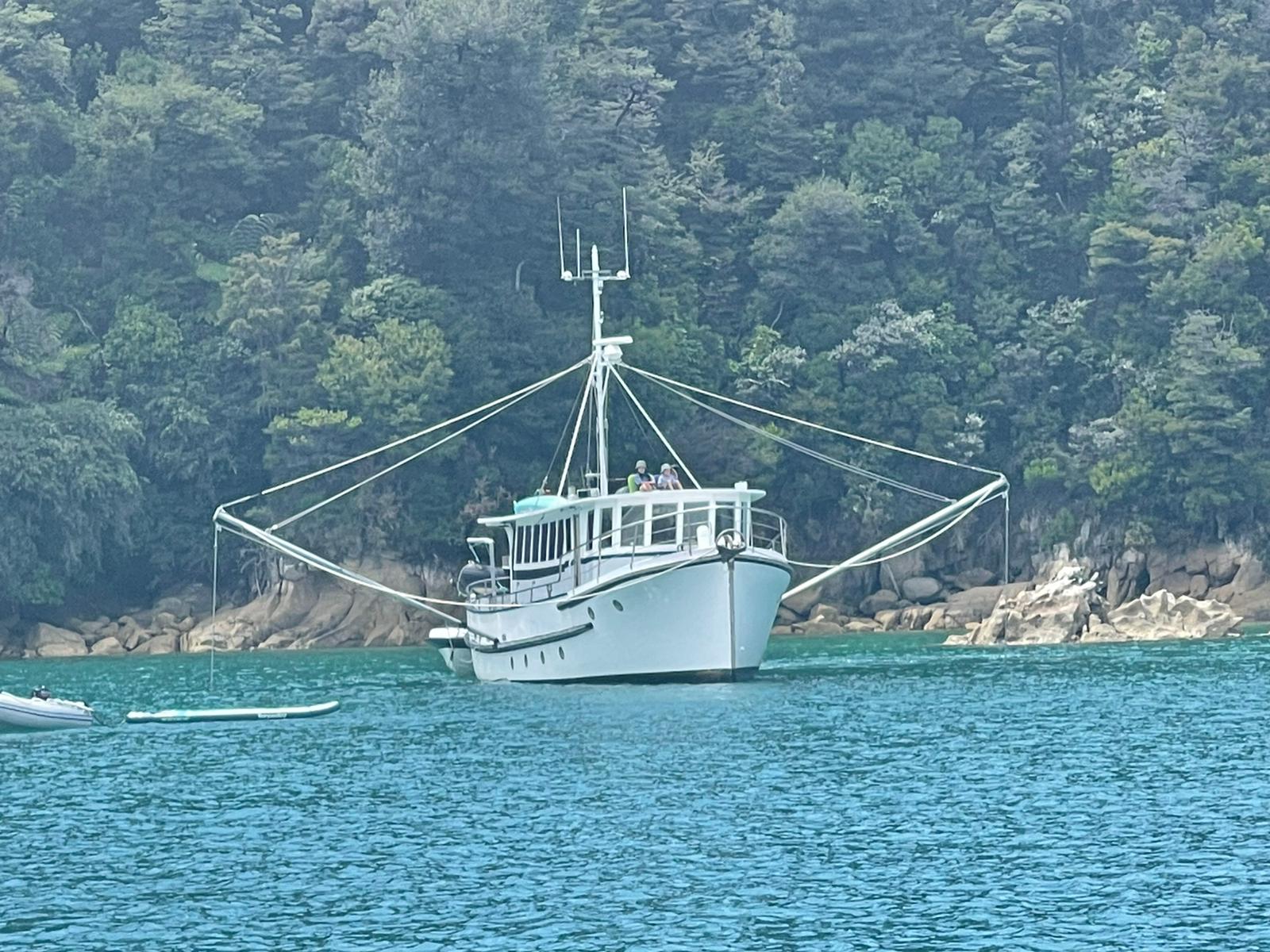
NEW INPUT FROM Chris Waide – We have owned Joan for 8 years now, has a 4/71 Jimmy, the hull is tight and sound, those guys must have done a great job of repairing her back then. Although the mishap on the West Coast was also on the port side, she was repaired at Guards Ship Yard with kahikatea but sat out in the rain for a few years and went rotten. She was then bought by Doug Valk, (a local boat builder) he put her in a paddock and completely rebuilt and converted to pleasure, refer photos below. The port side damage was repaired using Lawson cypress this time and Doug was helped by Andrew Candler who is a traditional shipwright, and is still a commercial vessel surveyor here in Nelson.Joan’s home these days is Motueka.
03-05-2022 Input from Dean Wright – photos below ex Auckland Museum collection
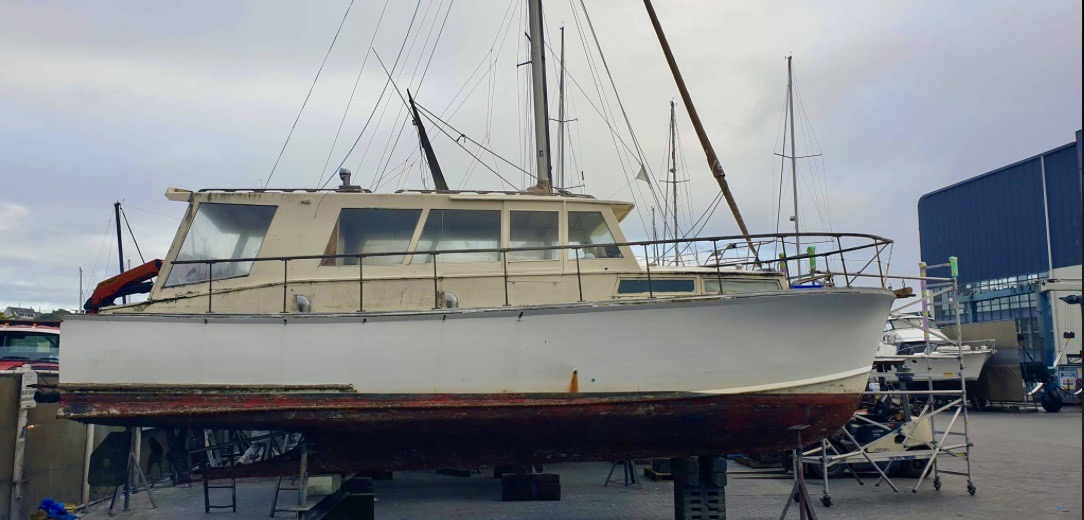
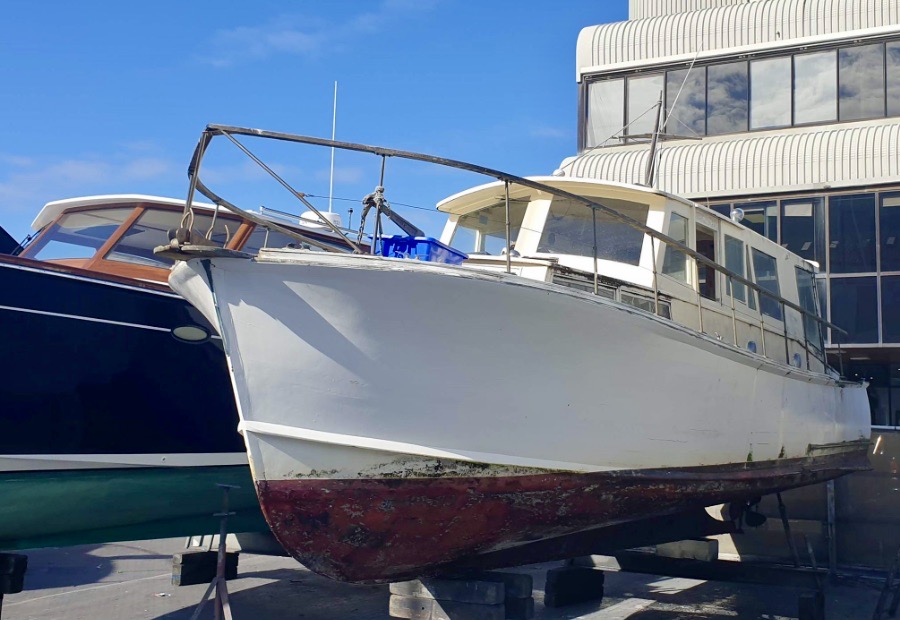
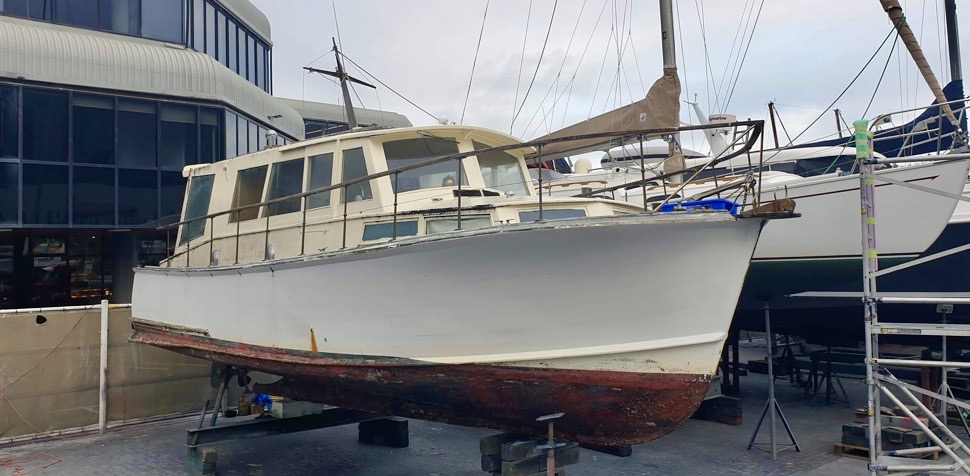
The launch – Oscar according to her tme listing was built in 1970 by Sam Ford, which I suspect is wrong – Sam would have been a very old man at that stage – maybe it was built then to an old SF design.
All that aside Oscar could be the project boat buy of the year – last I looked the reserve had been meet at $11, yes eleven.
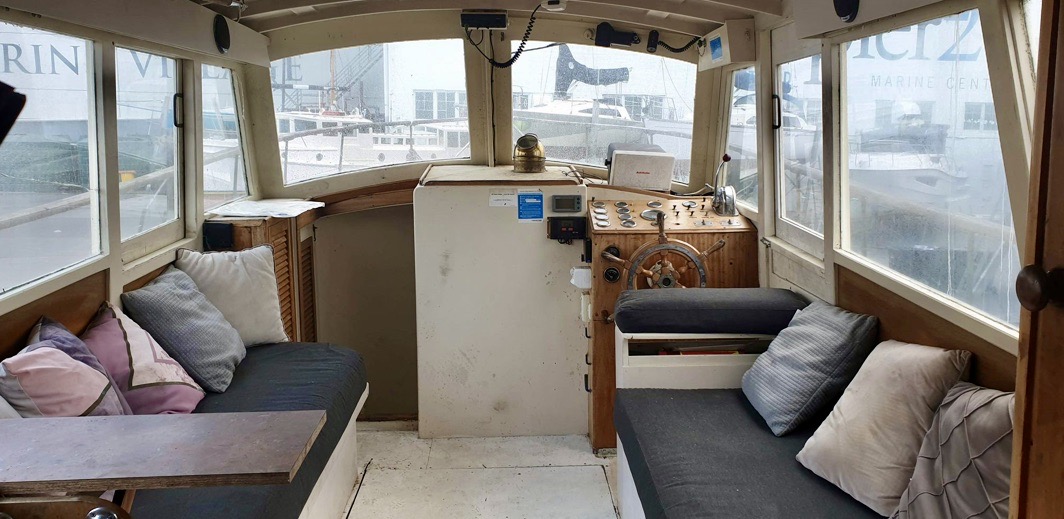
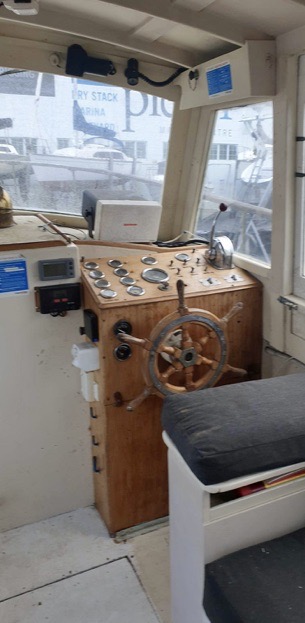
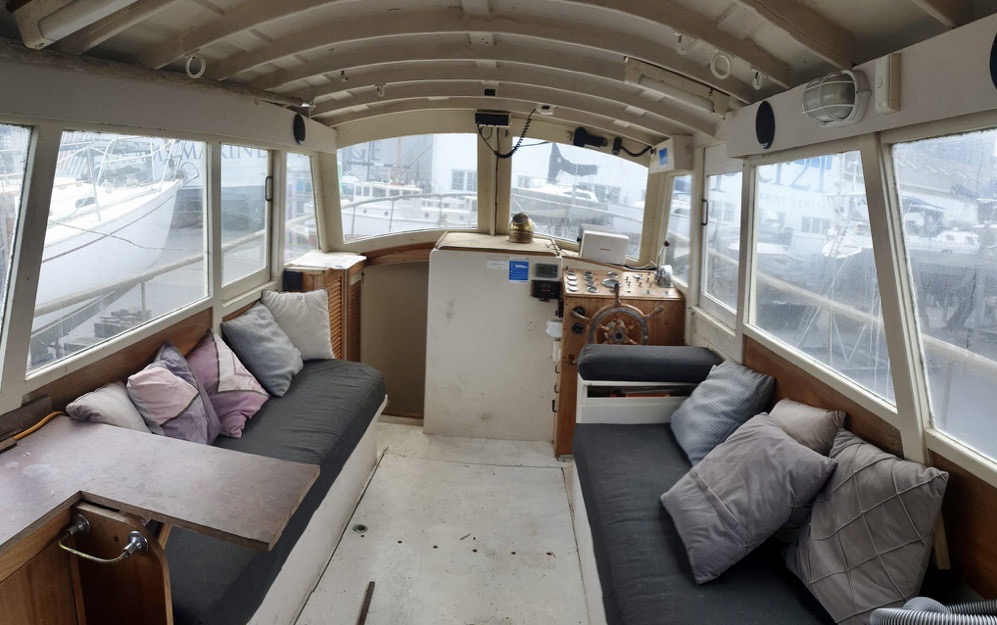
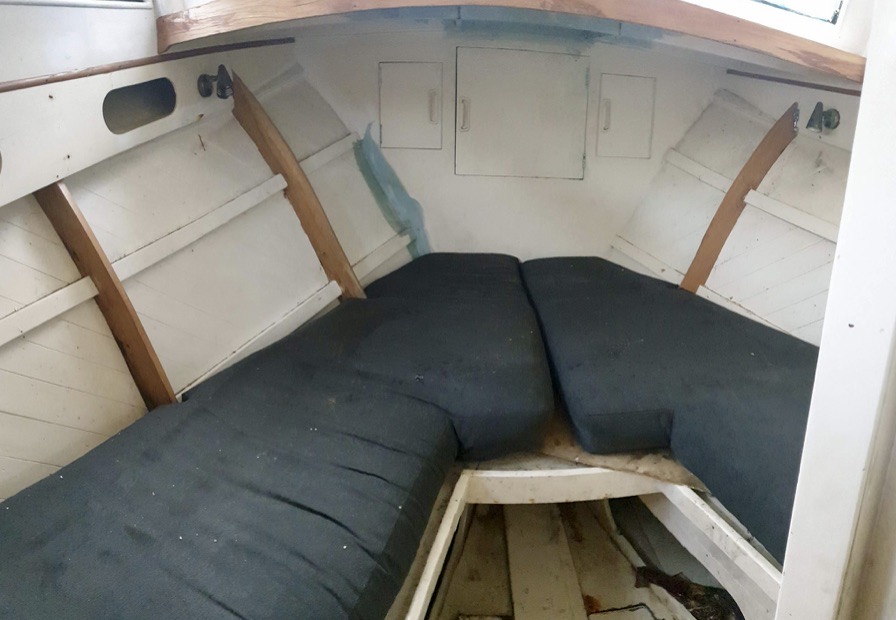
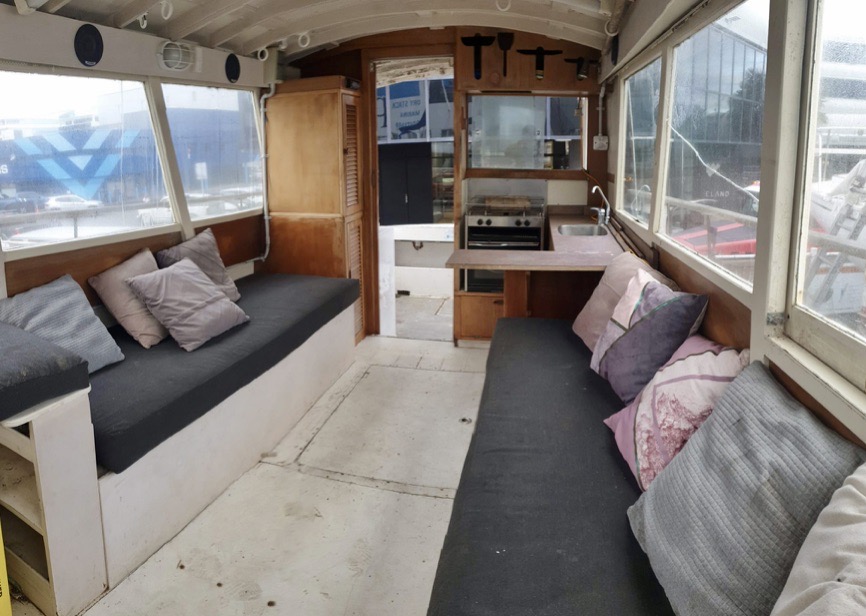
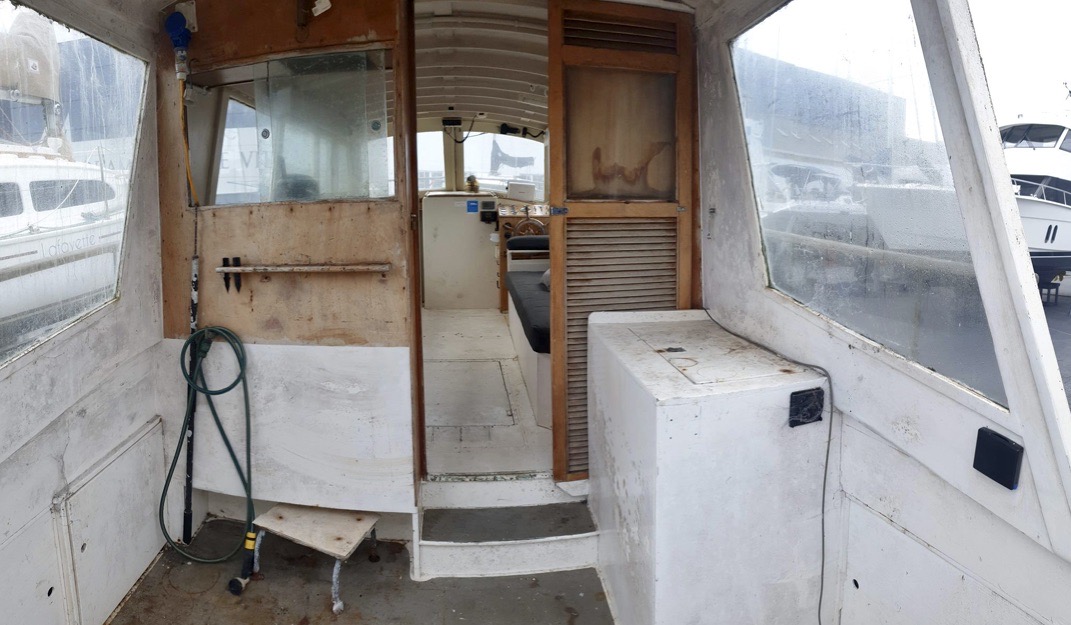
She is approx. 34.5’ in length, double skin diagonal kauri and powered by a 165hp Perkins.
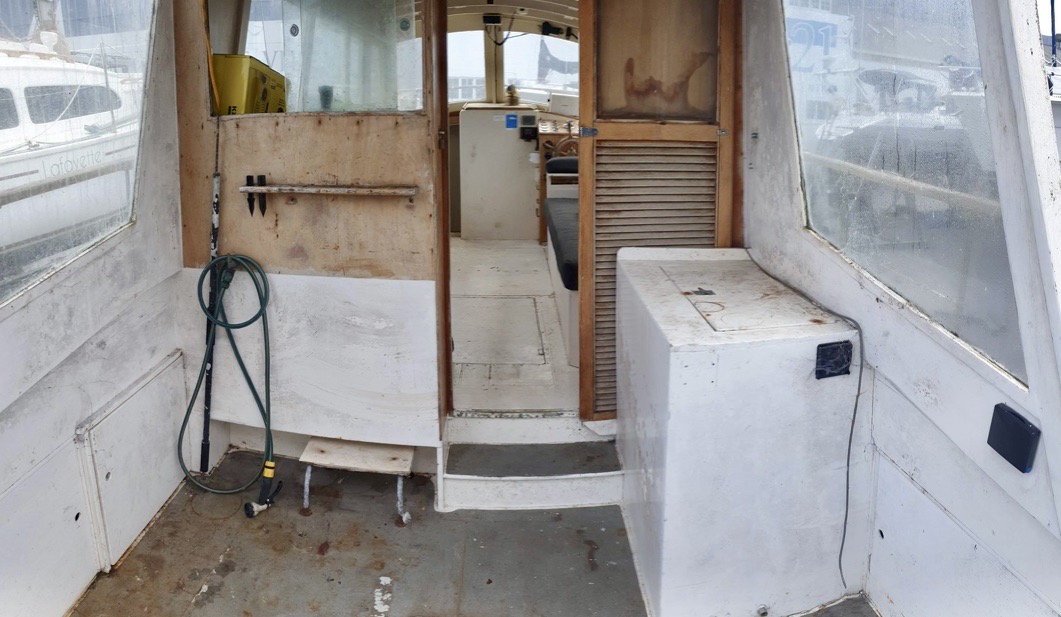
The tme listing (thanks Ian McDonald) states – Oscar has been neglected for the past several years, languishing unused on a mooring, she’s in need of loads of TLC to bring her back to her prime. She recently developed a leak, we haven’t identified where it’s coming in.
Currently on the hard at Pier 21, Westhaven. Sold As-Is, Where-Is, the new owner to take delivery within three days of auction ending.
22-12-2023 INPUT EX STEPHEN FORD – Sam, my grandfather did infact start the build on Oscar origonally SHIMCA , from memory hull, decks and combings, but due to his death my father Trevor Ford , Sam’s son quit his job and completed the build of Shimca at Sam’s yard and resedence 12,Arthur’s st Ellerslie for the owners Hugh & Inness? Abbot hence the name Shimca , Samual,Hugh, Iness M??? Abbot. I don’t know the year she was built but I remember I was at high school 4th form I think when Sam passed and I was born in 1952. Unfortunately my father passed away 10 years ago and a lot of history went with him whilst I know a few things about the build if anyone wanted to know, I do know she Oscar is at masden cove having some mechanicals sorted
The Snipe > Cyndy A few weeks ago I was contacted by a WW follower, Greg, looking for intel on a very appealing 22’ launch named – The Snipe (or Cyndy) details below .The launch was built for a family on the Coromandel who used it to get to Auckland across the Firth of Thames. Rumour has it that it had a Ford Model A engine in the beginning, currently its sporting a Lister Petter. Originally called The Snipe, then spent may years on Lake Taupo and had a name changed to Cyndy. It has a mast and apparently it sails quite nicely on a staysail.Greg commented she appears to be built like the proverbial brick outhouse, but in her current home e.g. a farm paddock, she will decline quickly. With her well built cabin work and a great hull shape chances are she was built by professionals, it does not have the look of a first time around build.There are less and less of the these small launches still out there and this one appears untouched / altered.Anyone able to tell us more about the launch?
30-04-2022 Input From Paul Drake – According to the Taupo Times in November 1987, SNIPE arrived at Taupo in 1985, owned by Tom Wilson. He bought her on the recommendation of a son of a previous owner. SNIPE was lying under a tree somewhere in the Coromandel at the time. She was built in Auckland in the mid 1930’s by the McLarens (says the Taupo Times). She is listed in the Collings and Bell book as being one of theirs. The James family owned her for many years. Tom Wilson did a good job of ‘doing her up’. She was at Taupo for maybe 20 years.
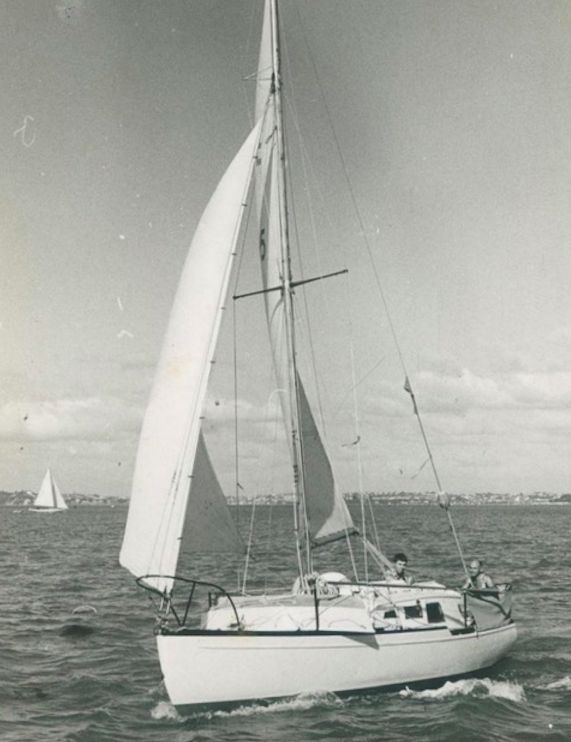
What Became Of The Woollacott Yacht – Jacob Don WW has been asked to help ‘find / uncover’ the whereabouts of the yacht – Jacob Don (photo below) the 22’ John Woollacott designed yacht, built and owned by Harry Holthausen. Launched c.1961, her design was as per ’sister’ yacht – Calm. There is a great background story on the yacht and Holthausen’s sailing adventures on the Woollacott website – link below
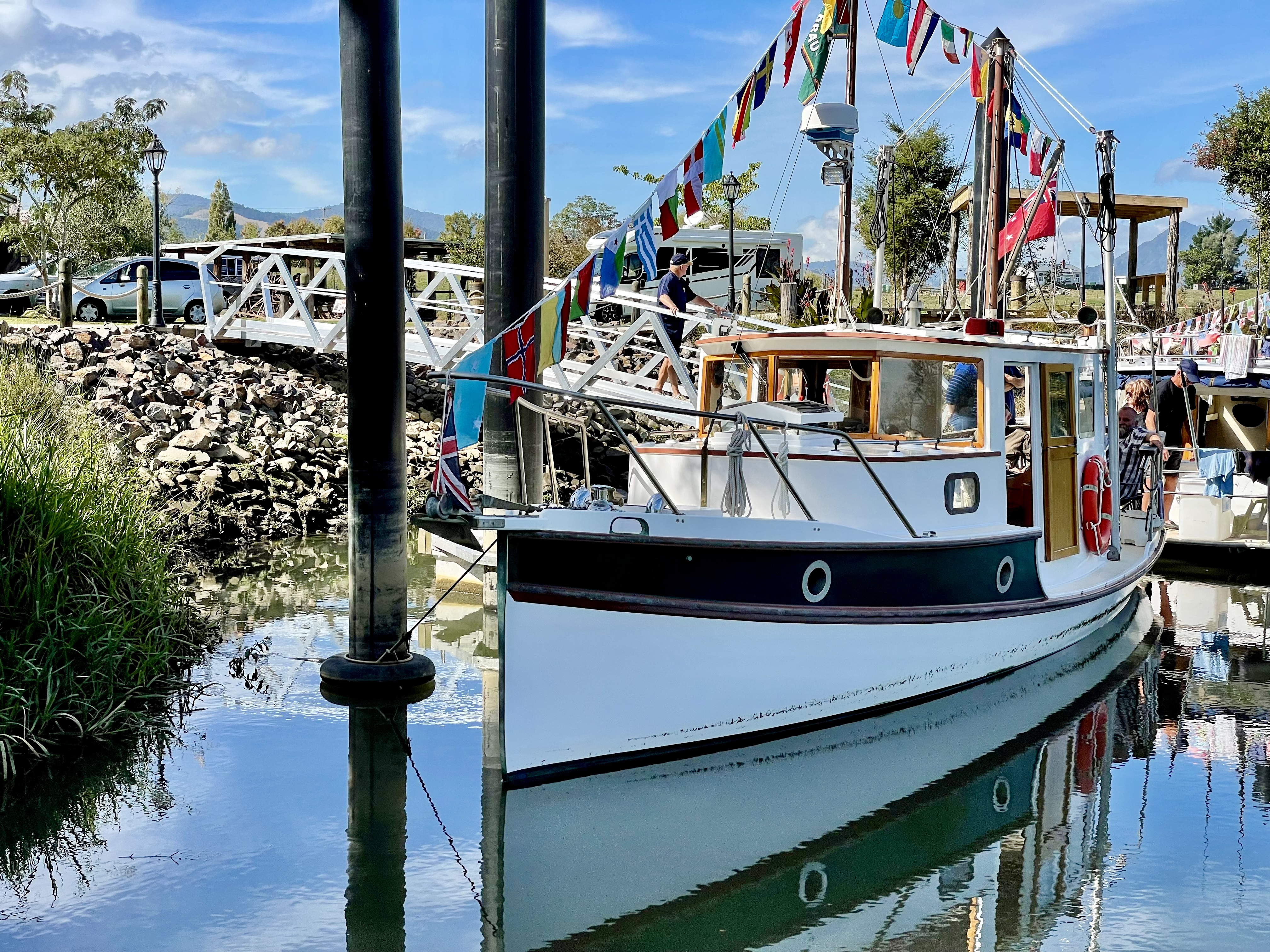
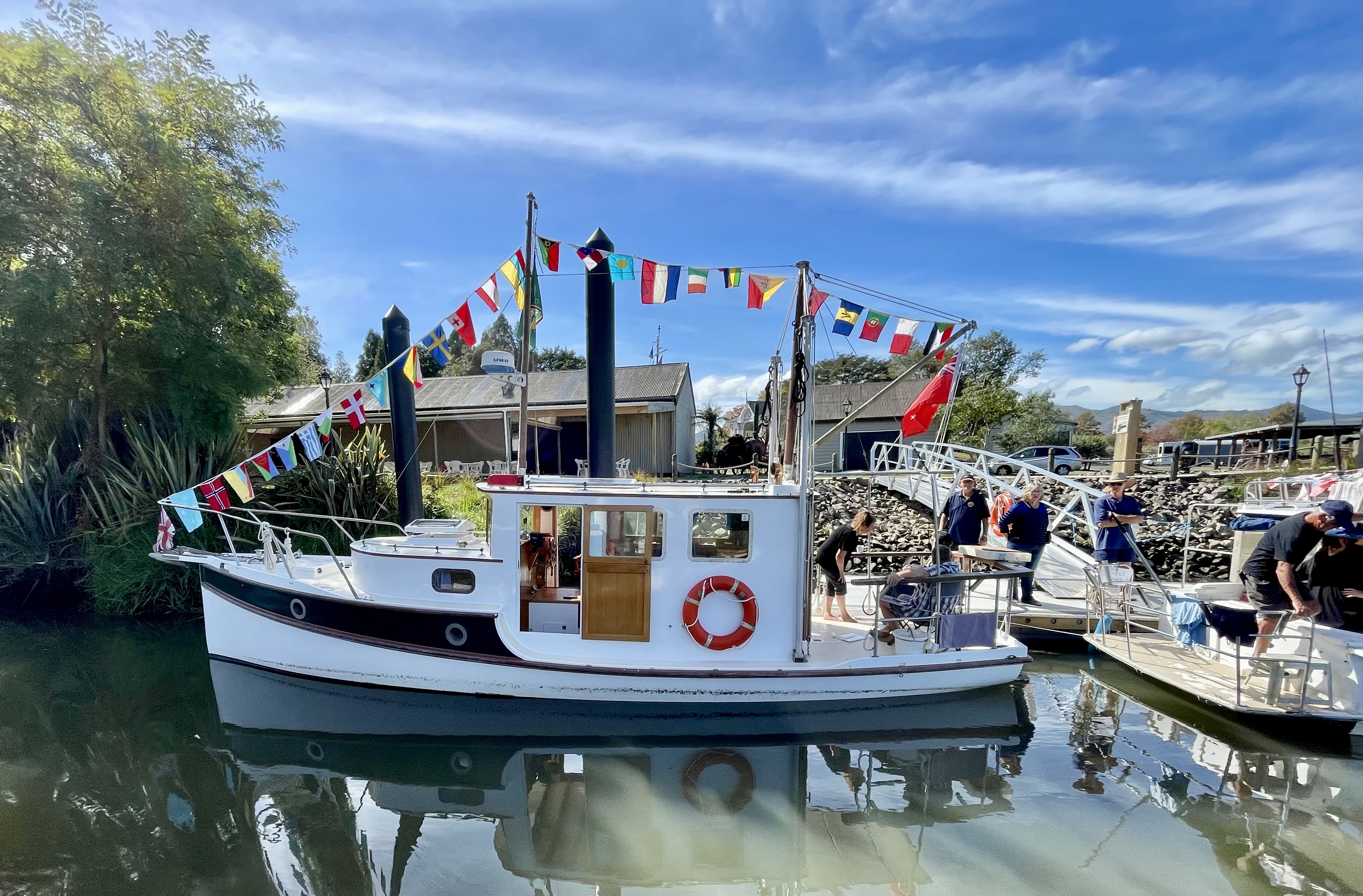
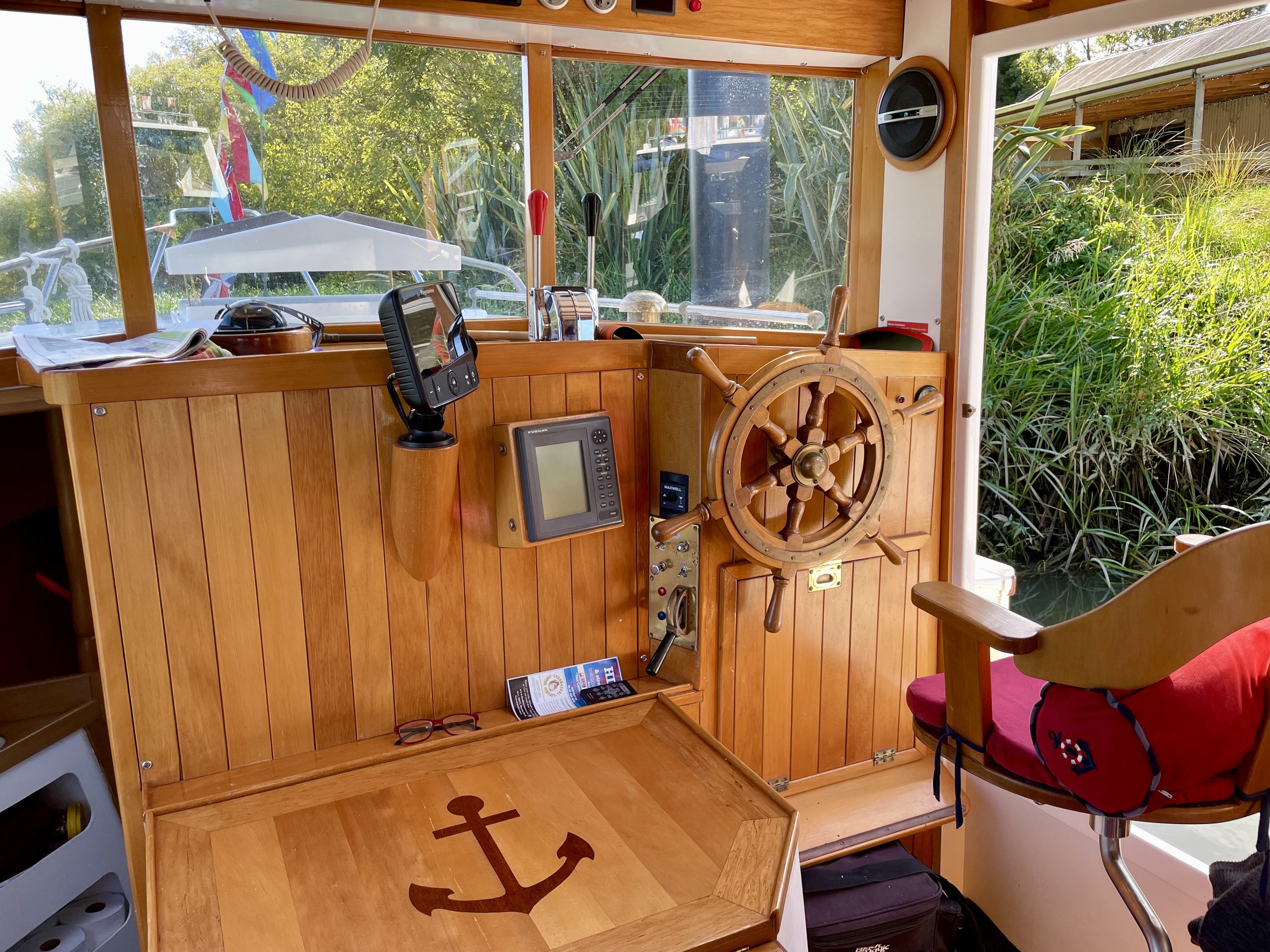
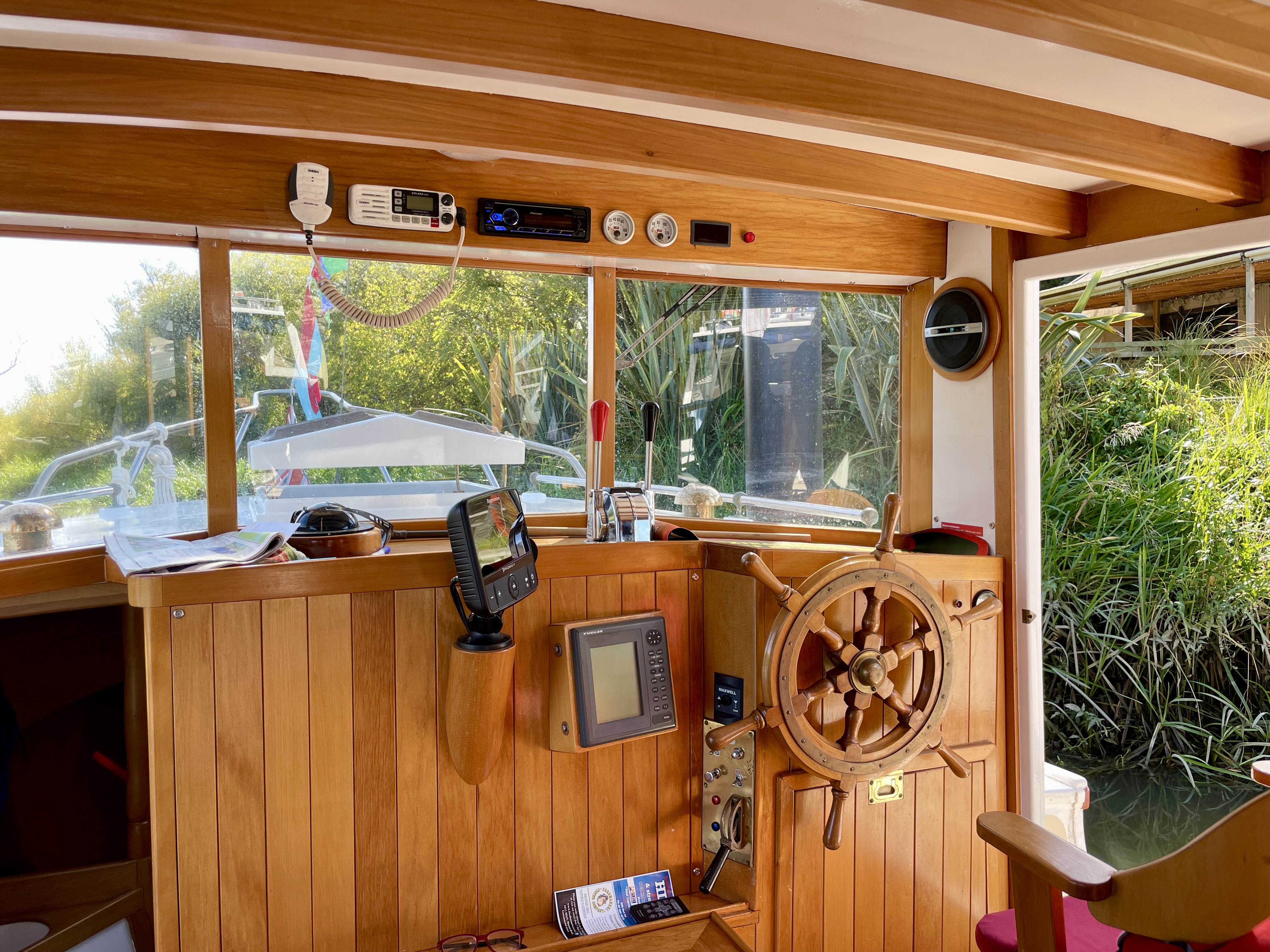
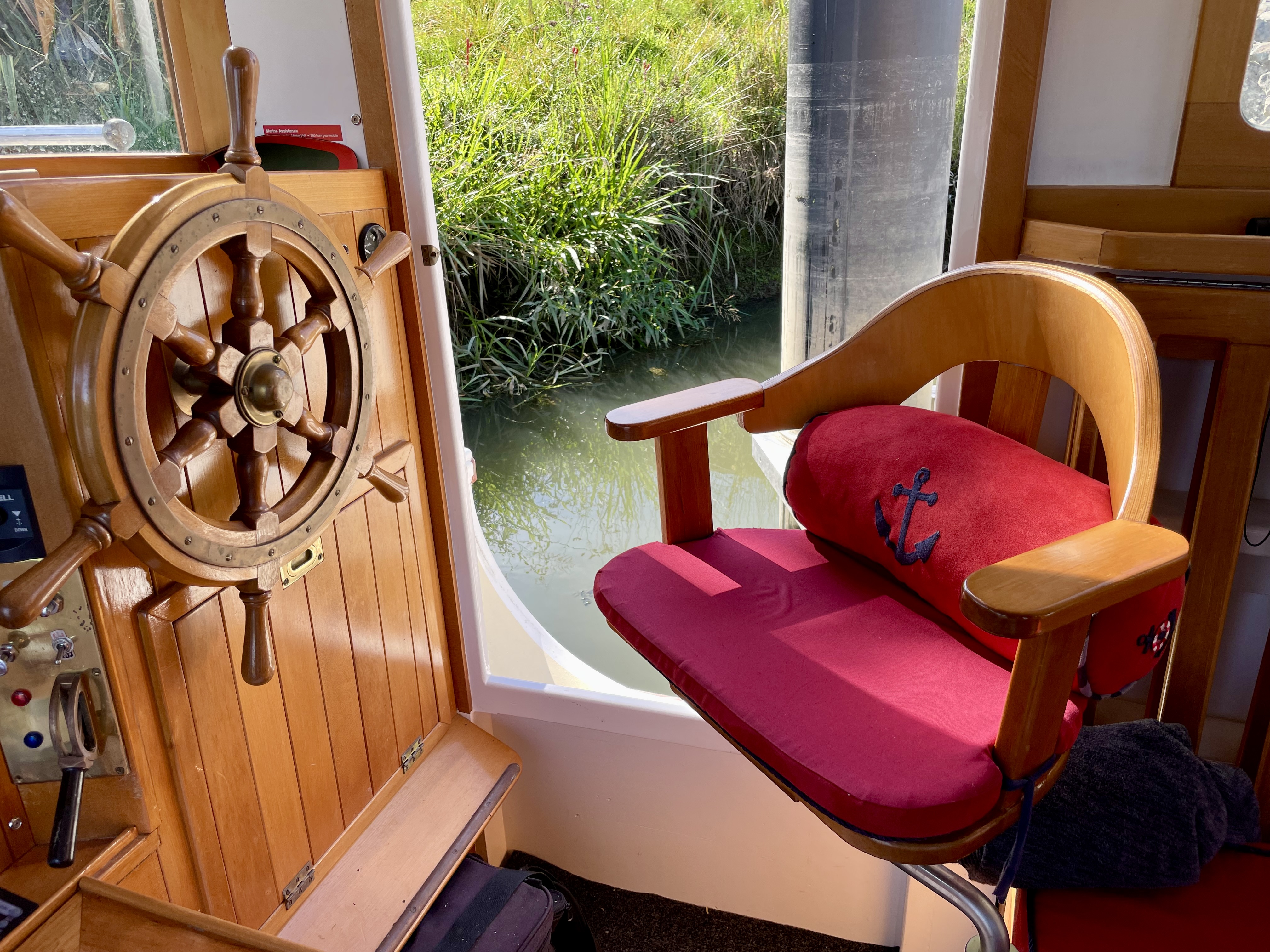
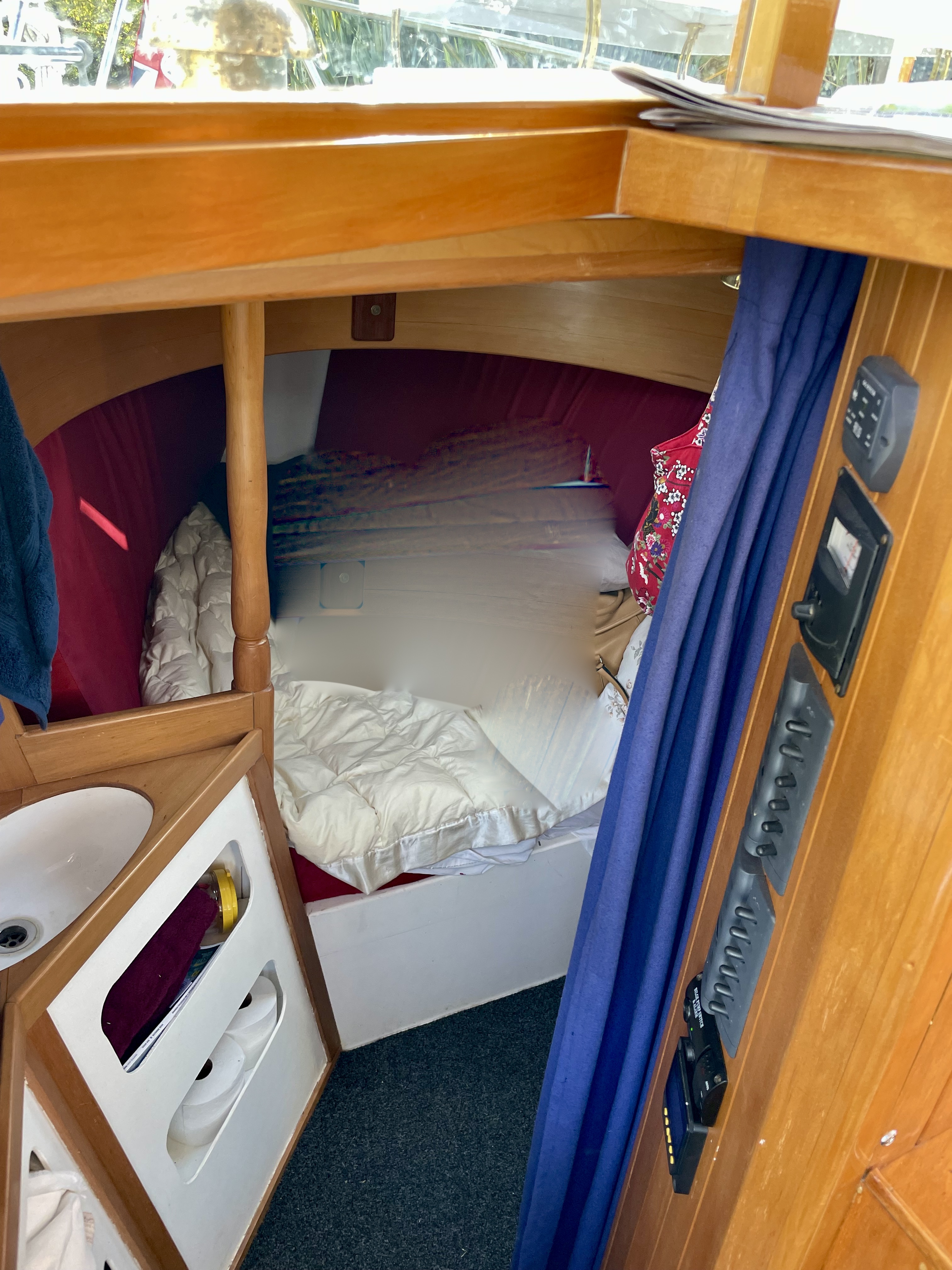
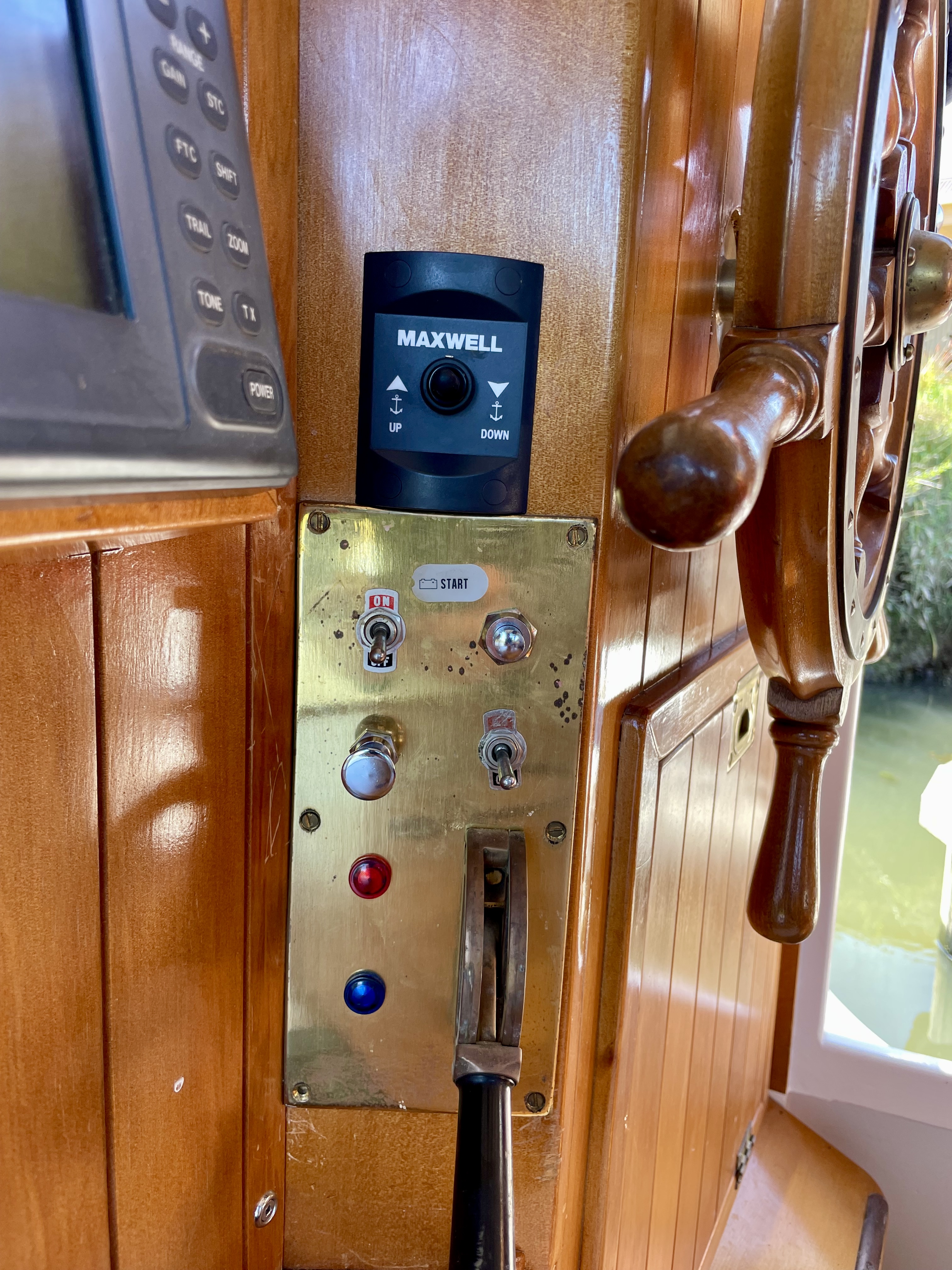
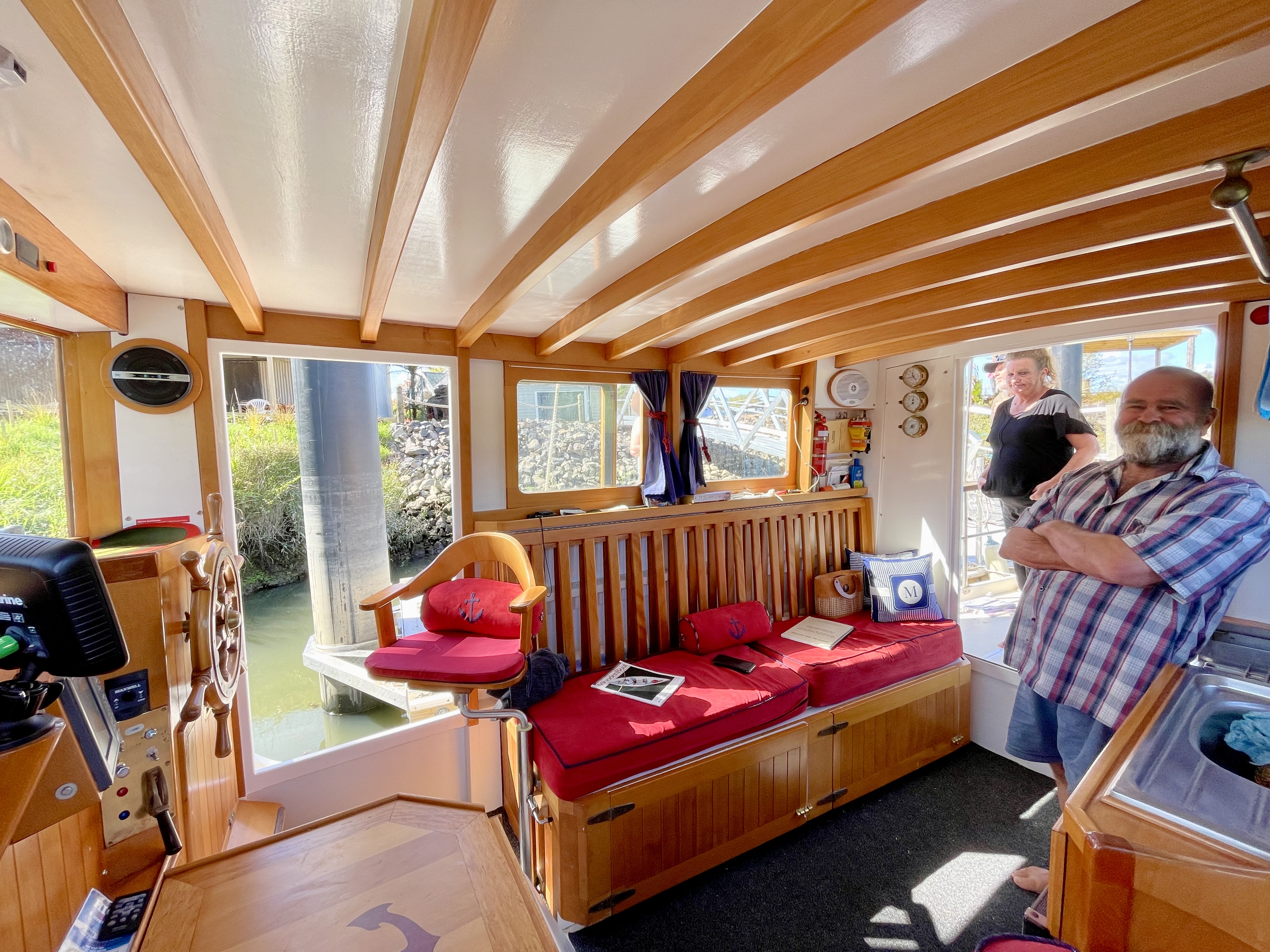
Being berthed alongside the Paeroa Maritime Park & Museum dock provided me the perfect opportunity to say hi and check out the amazing refit / restoration that took place over 8 years. She was re-launched in 2020 and was a cool father and son project. The pivoting helm seat was one example of the very well thought out utilisation of space.
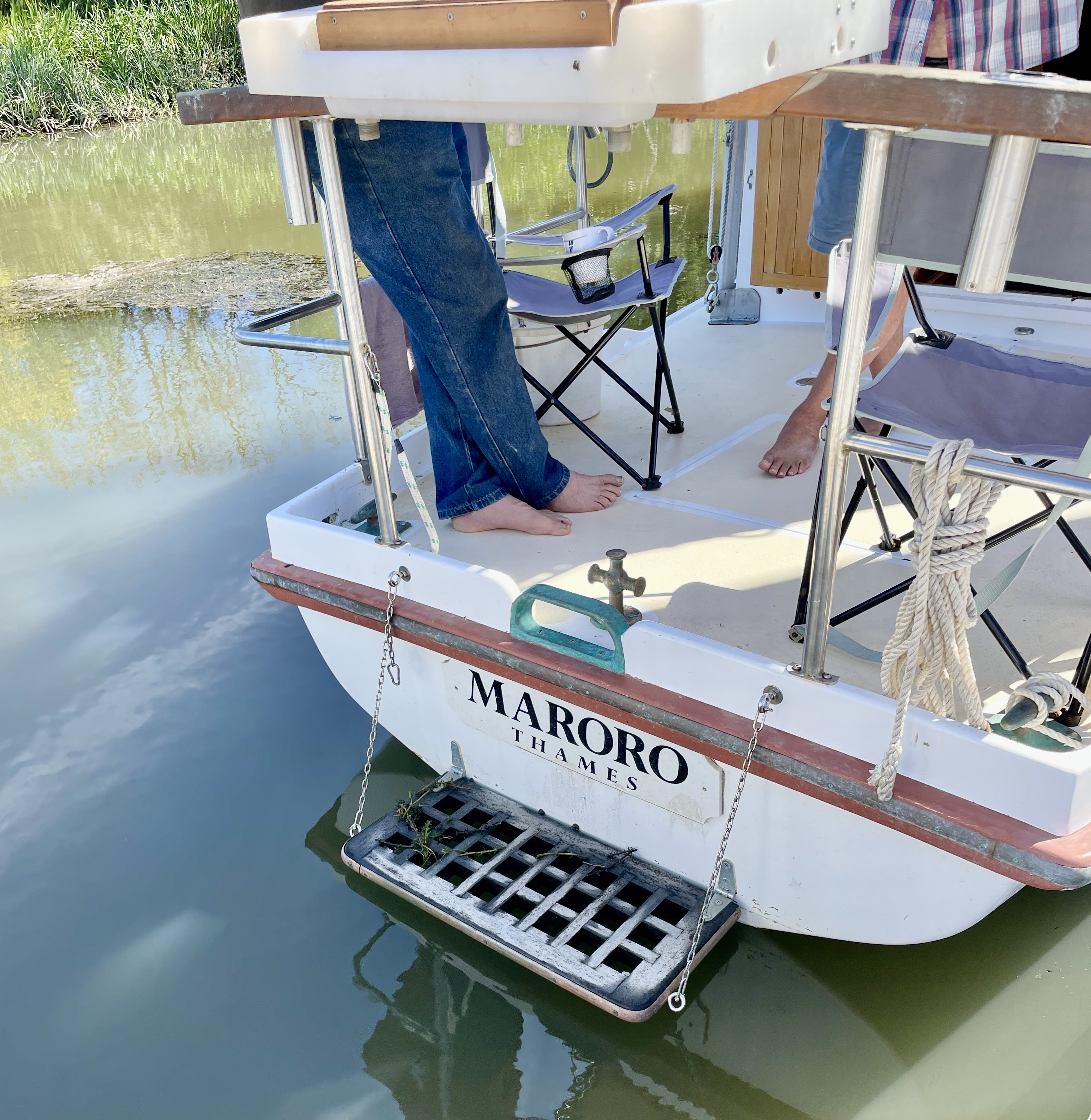
Maroro has a very large chunk of iron in her engine by – the repurposed Dorman engine has previously had several lives ashore as an industrial work horse.
Her owners the Thomas family understand Maroro was built / launched c.1905, but her designer / builder is unknown, so any help with shedding some light on her past would be much appreciated.
Following on from yesterdays story on the weekends journey to and from the Paeroa Maritime Museum & Park, today we shine the light on one of the coolest attractions at the Museum.
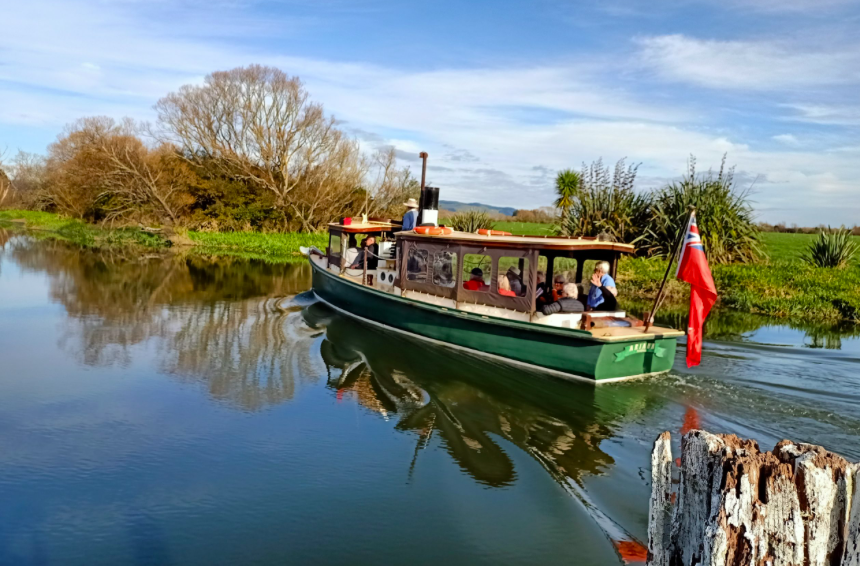
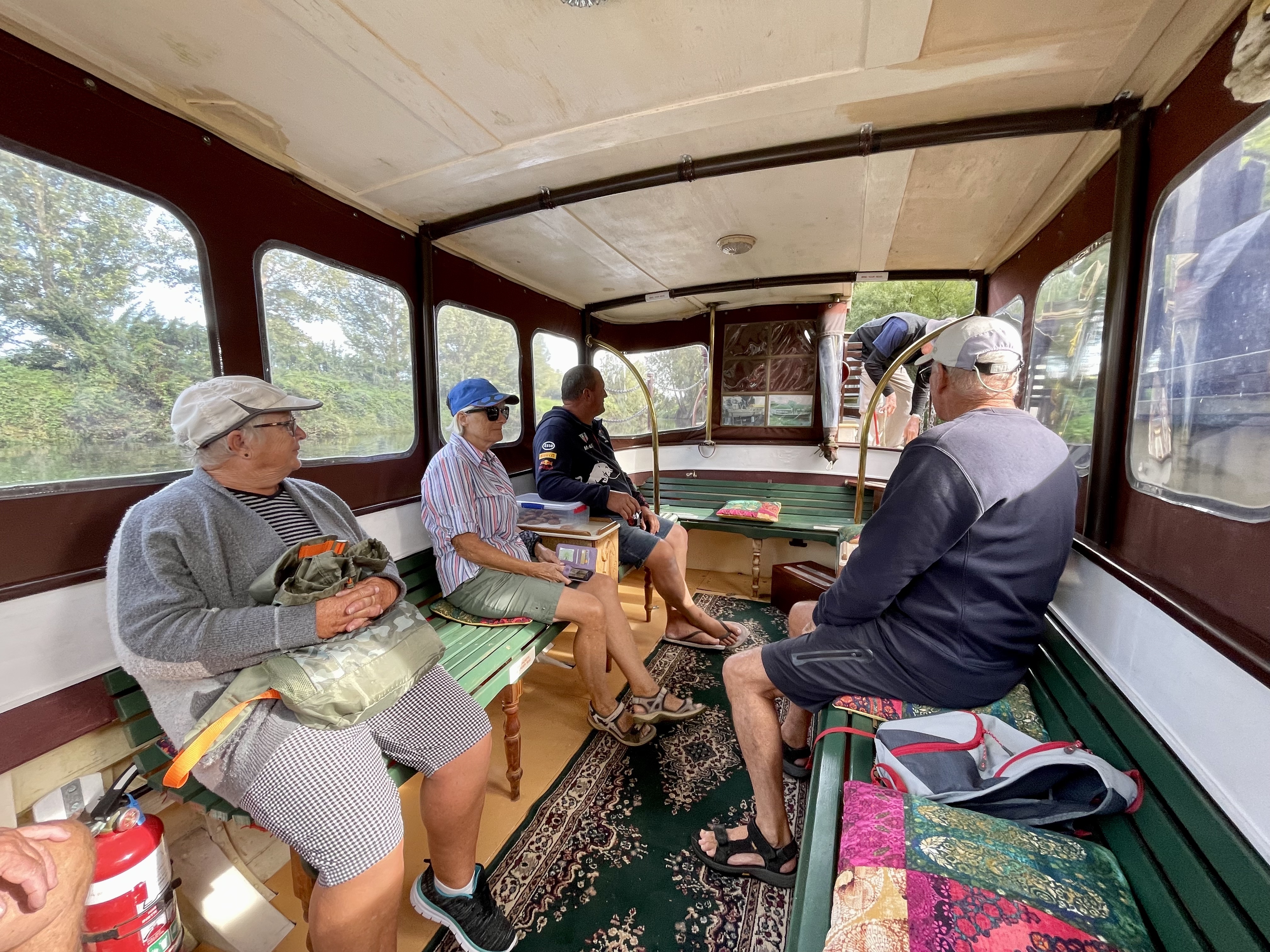
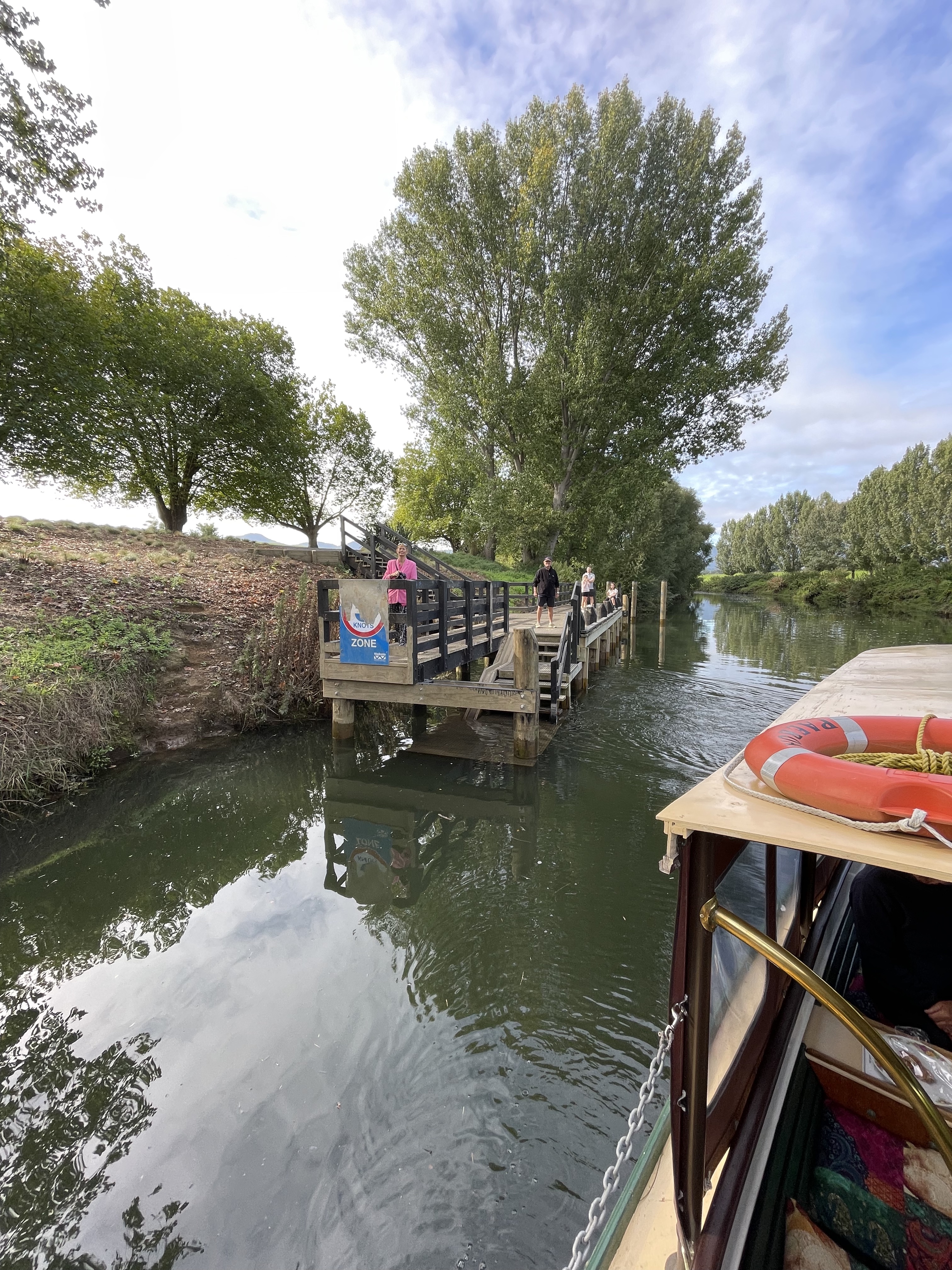
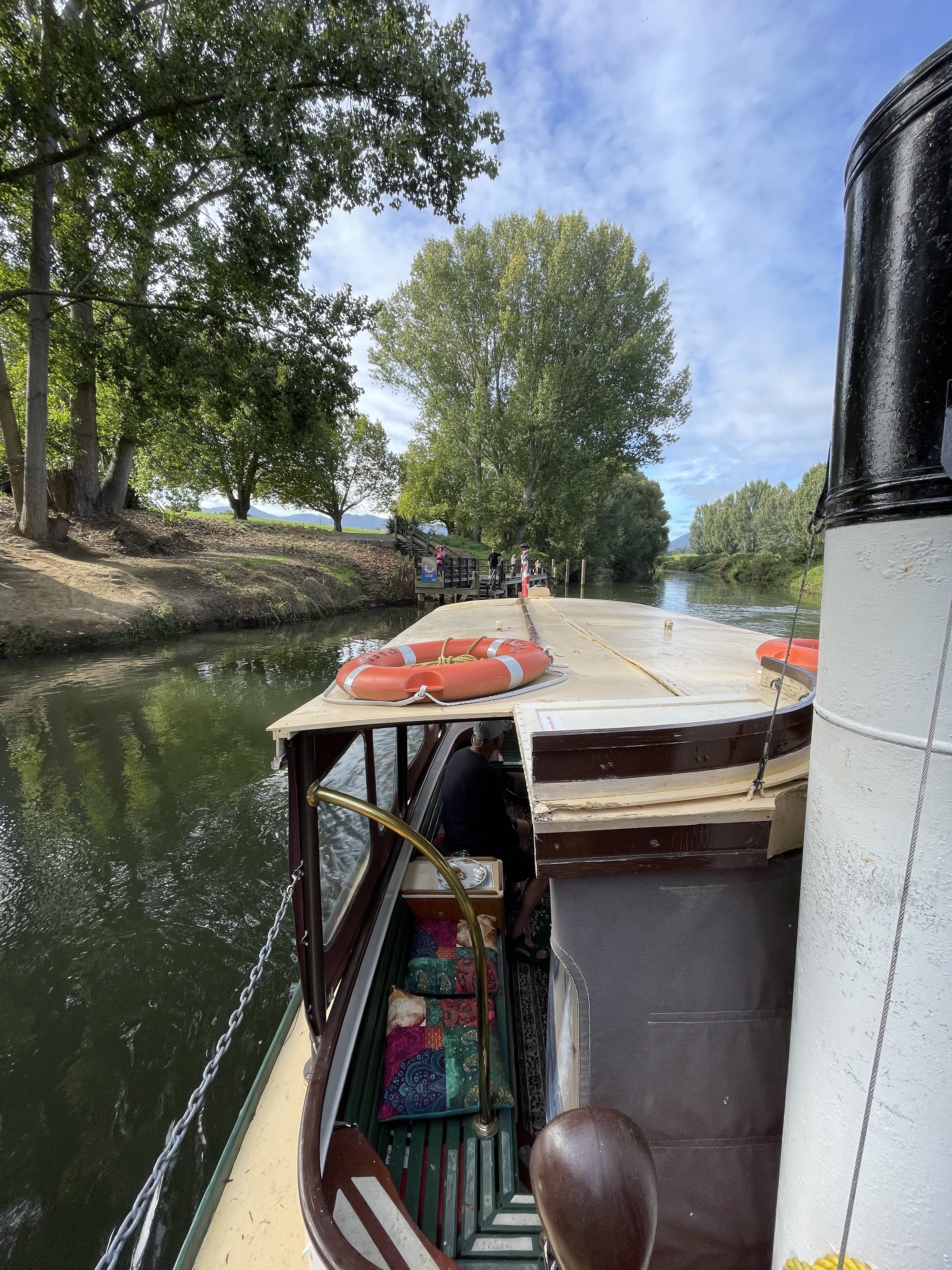
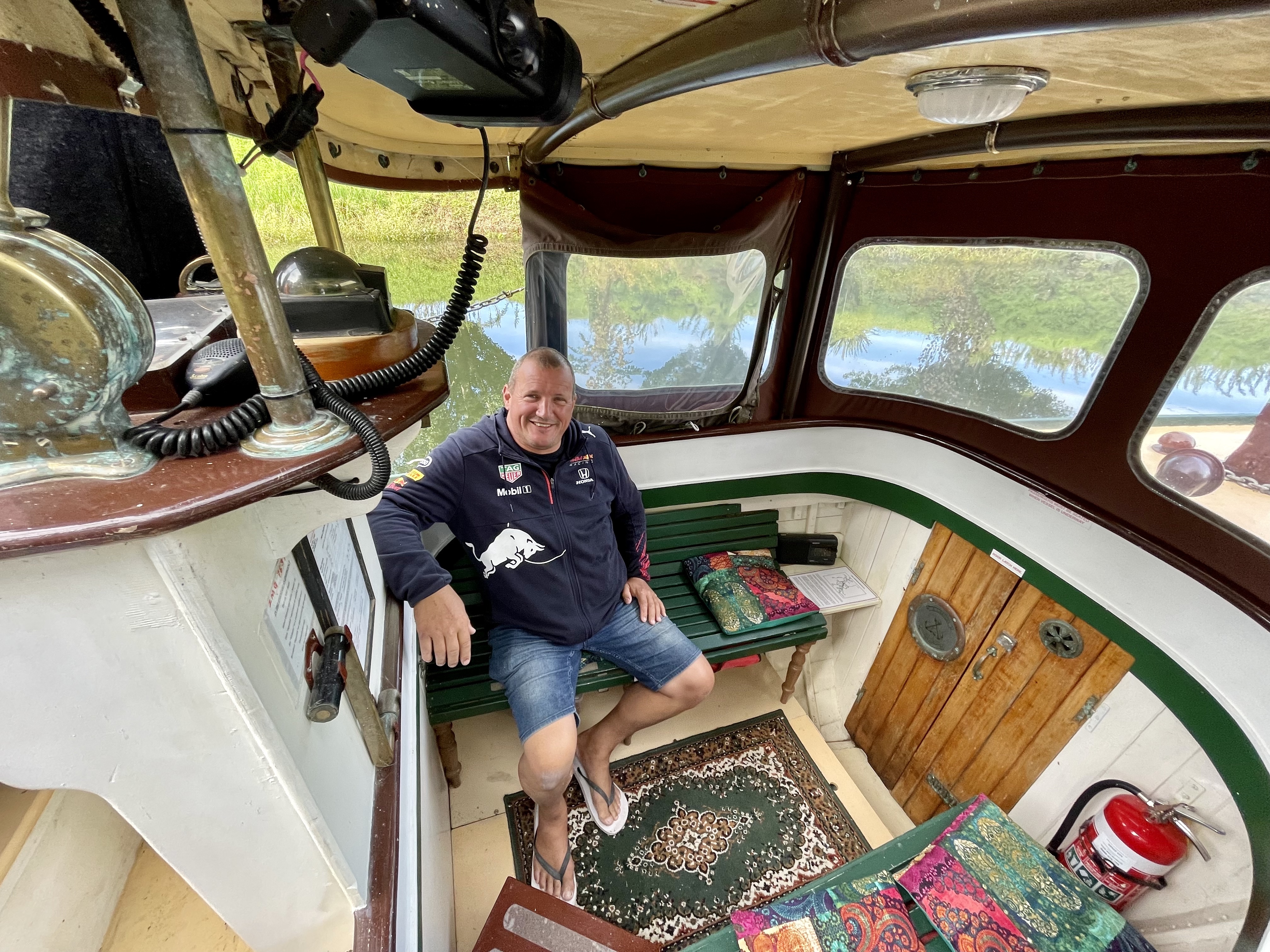
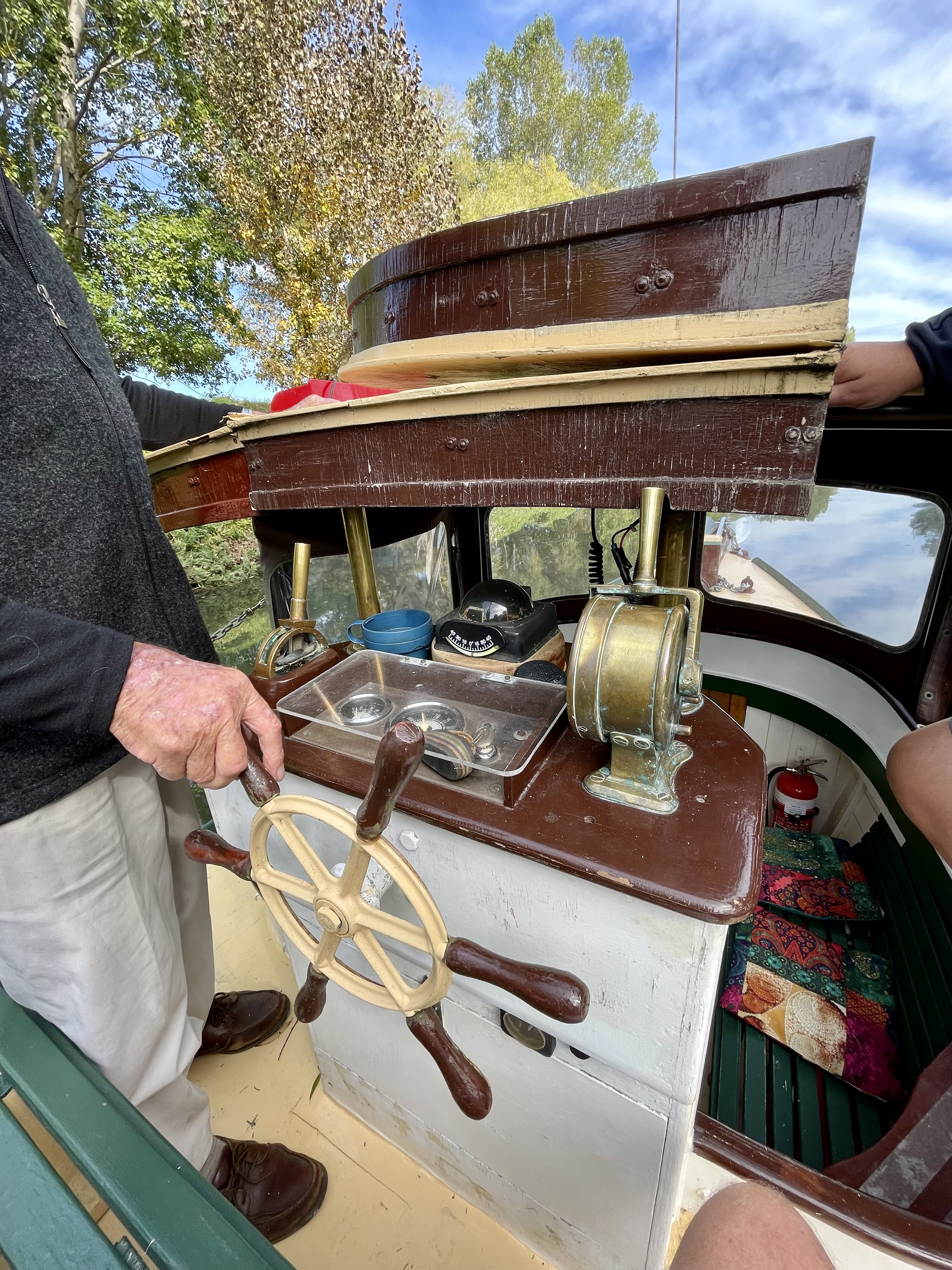
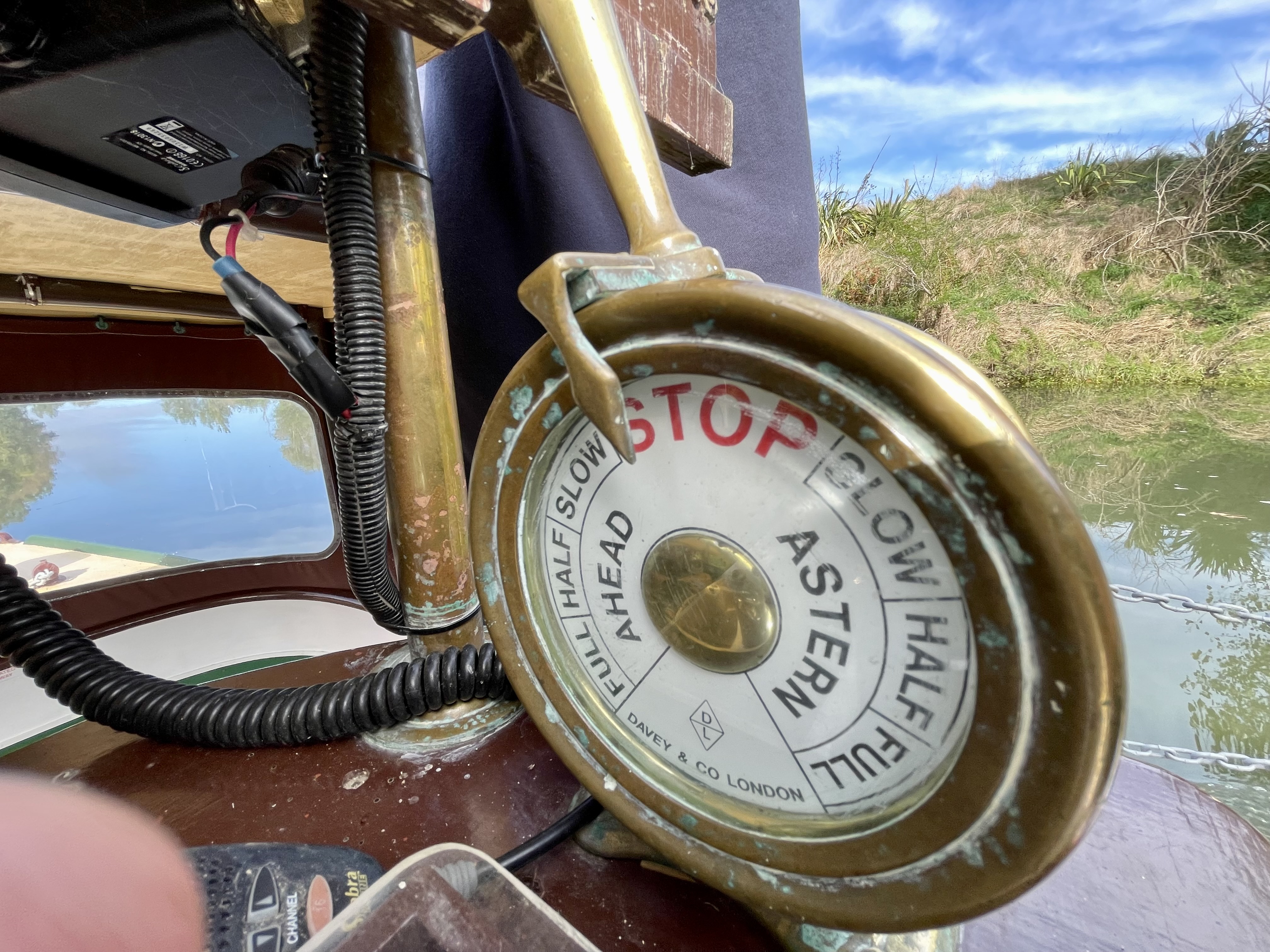
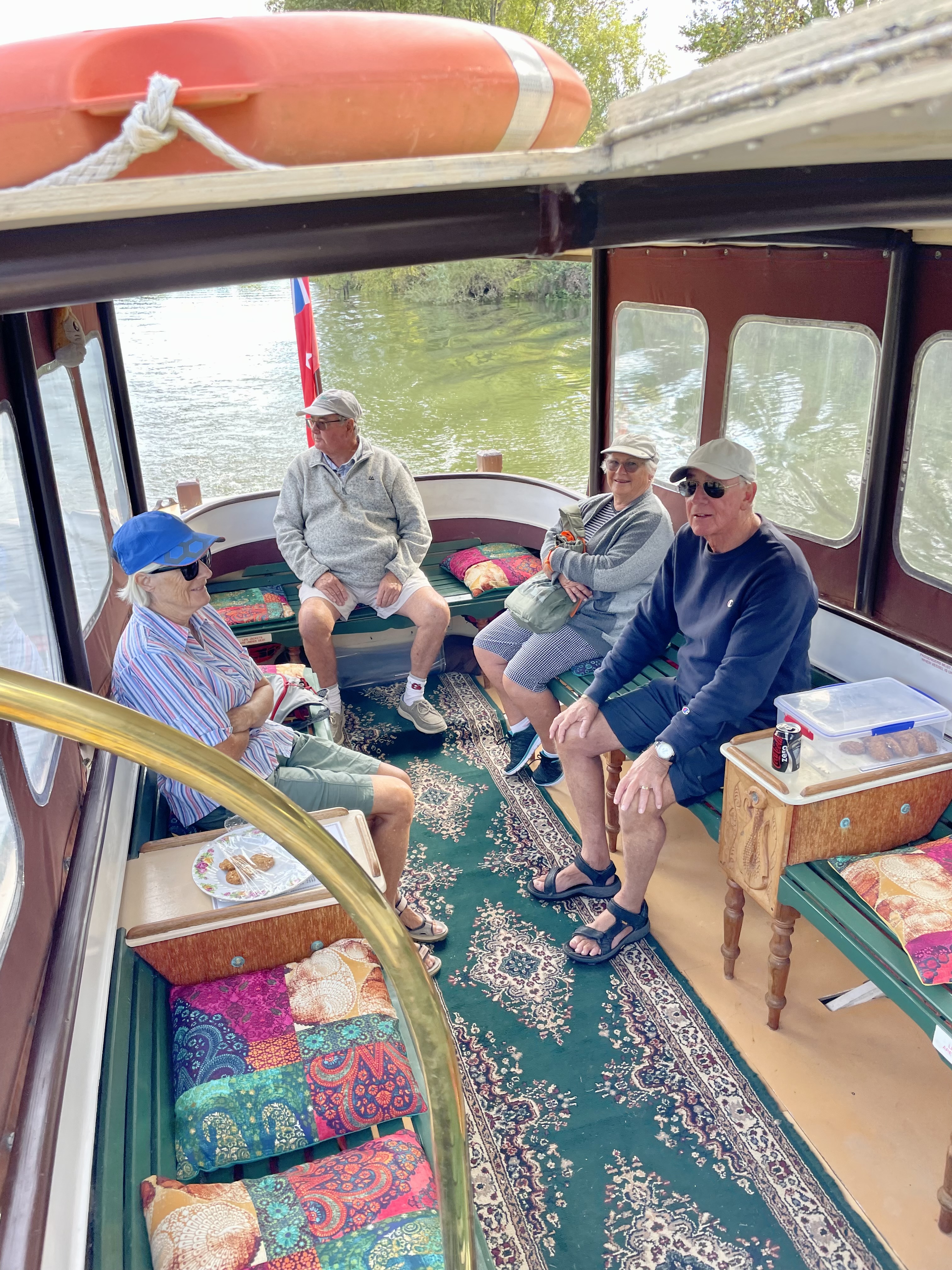
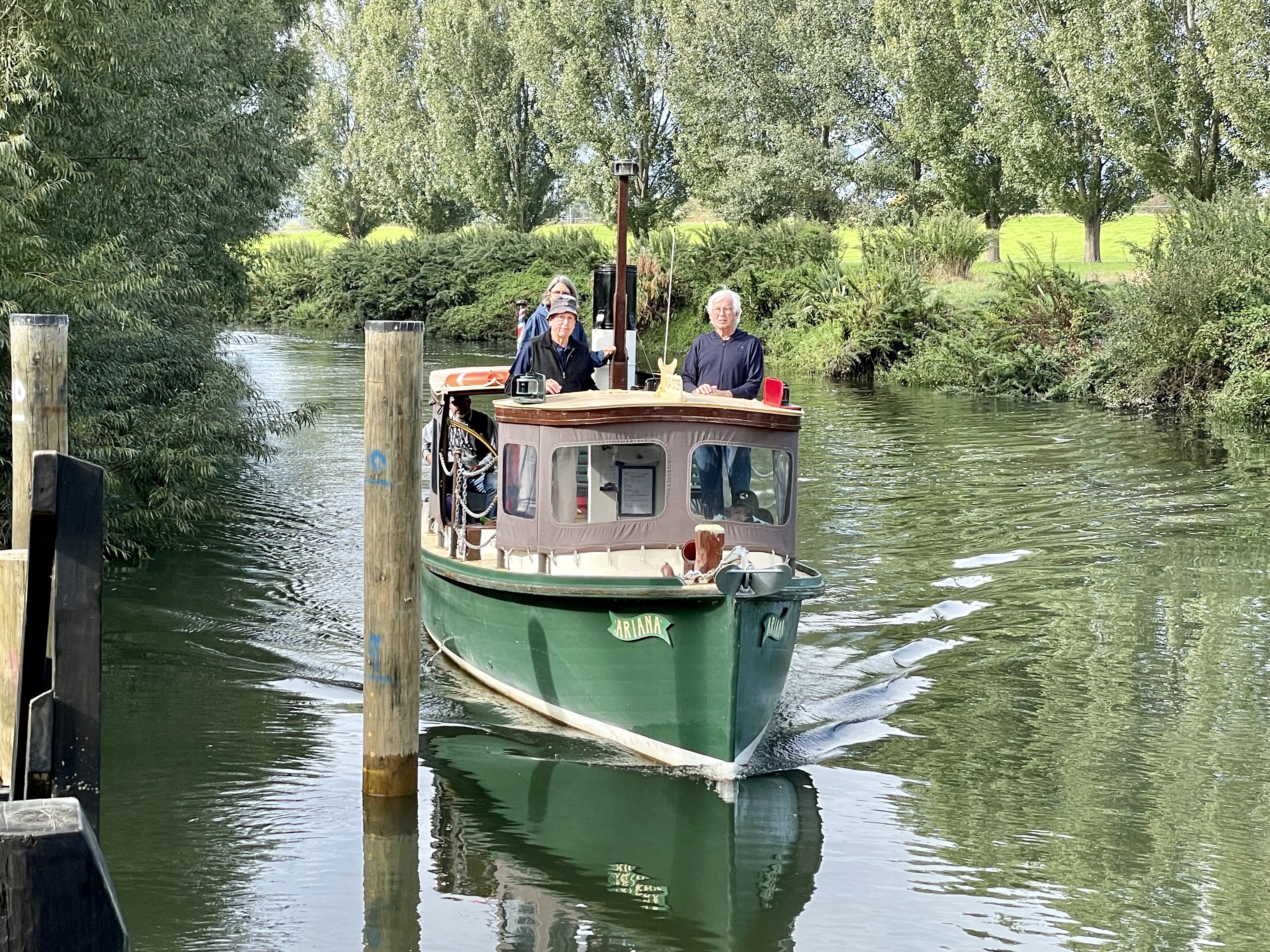
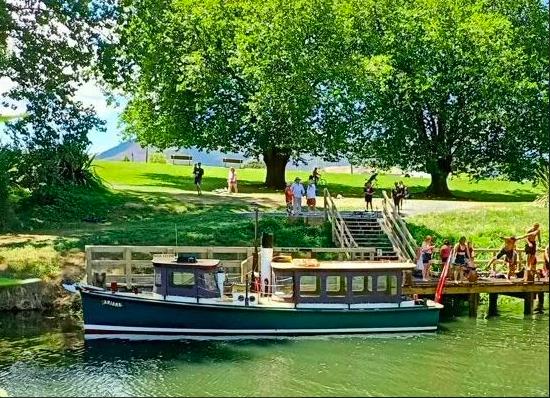
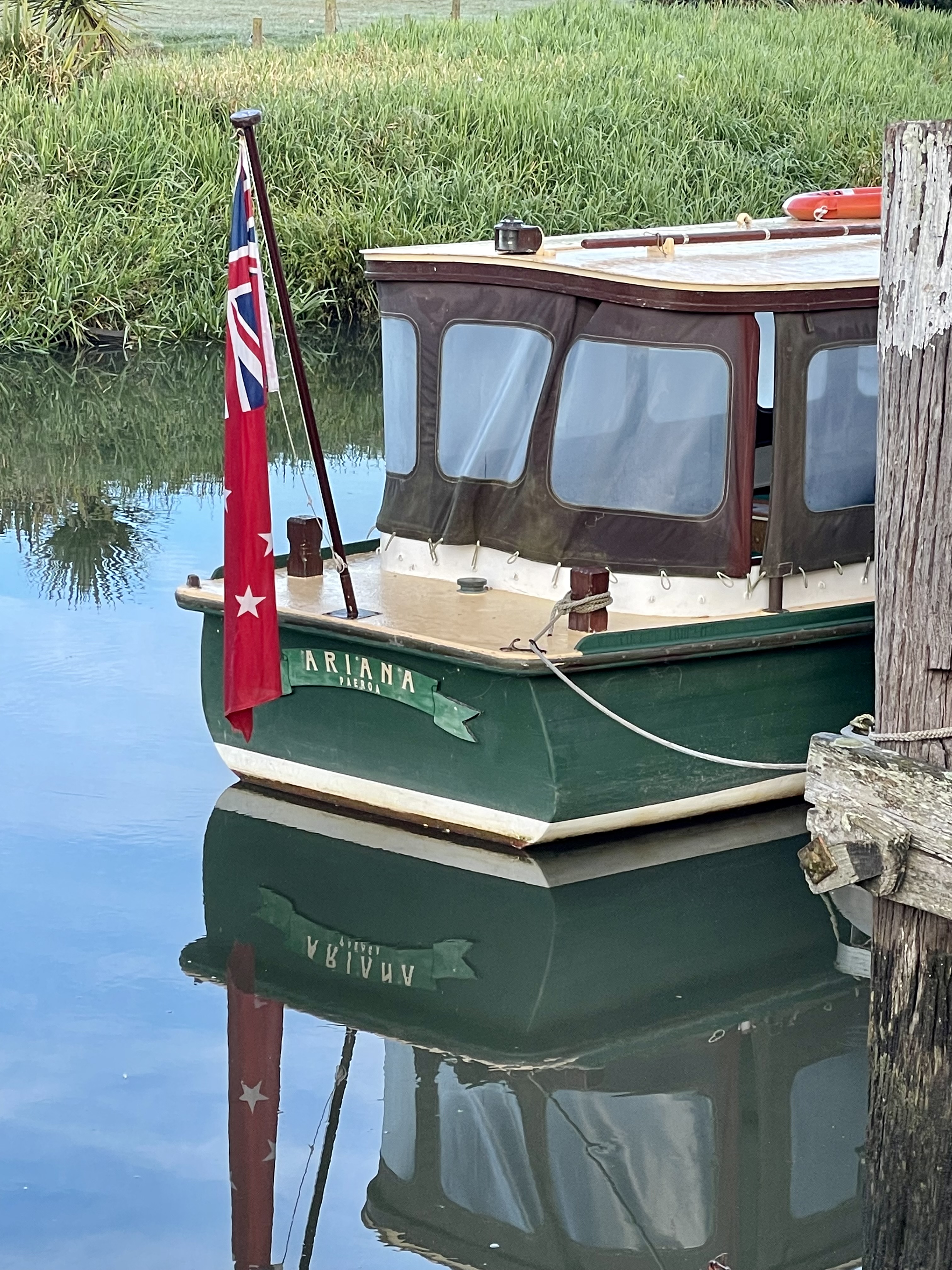
The classic wooden 34’ launch Ariana , under the command of skipper and tour guide – Peter Vandersloot, takes passengers from the Museums dock to the town dock in the centre of Paeroa township. The journey takes approx. 55 minutes and passengers normally do the return journey via bus – the trip is very tide dependent, so always check in advance re sailings.
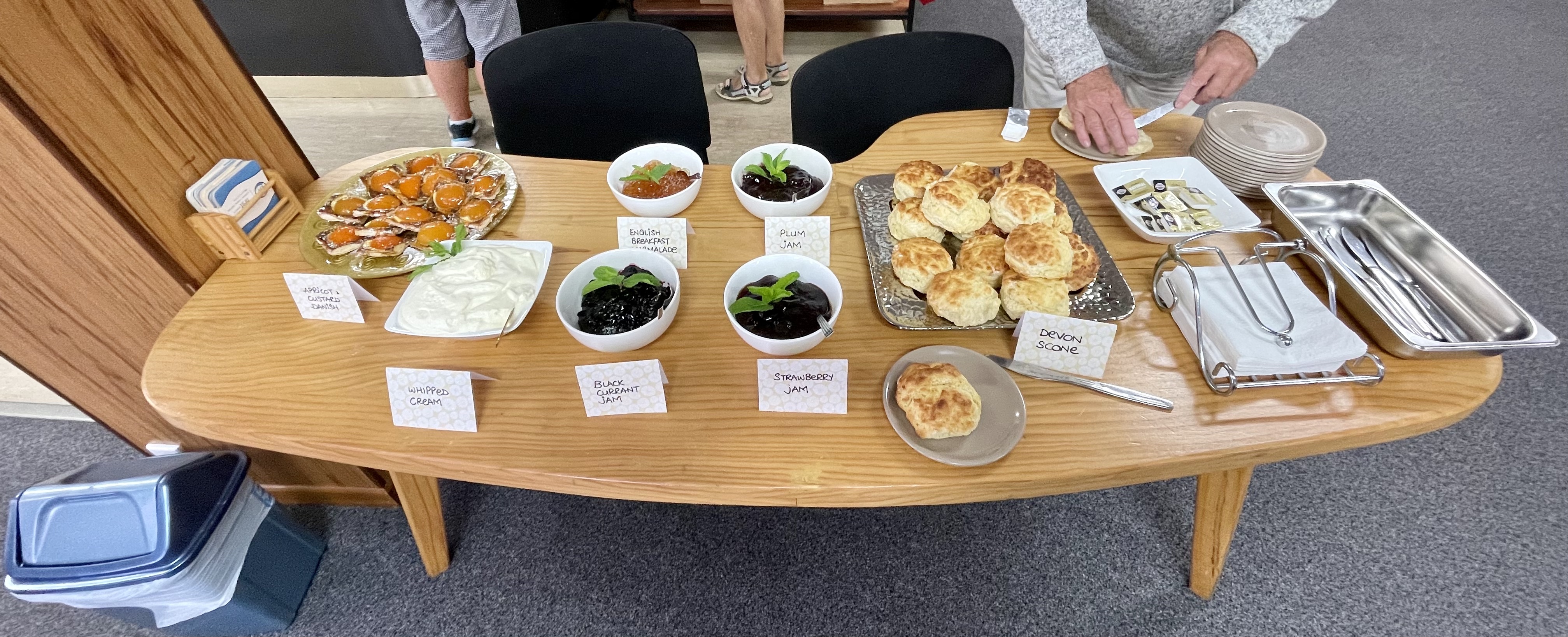
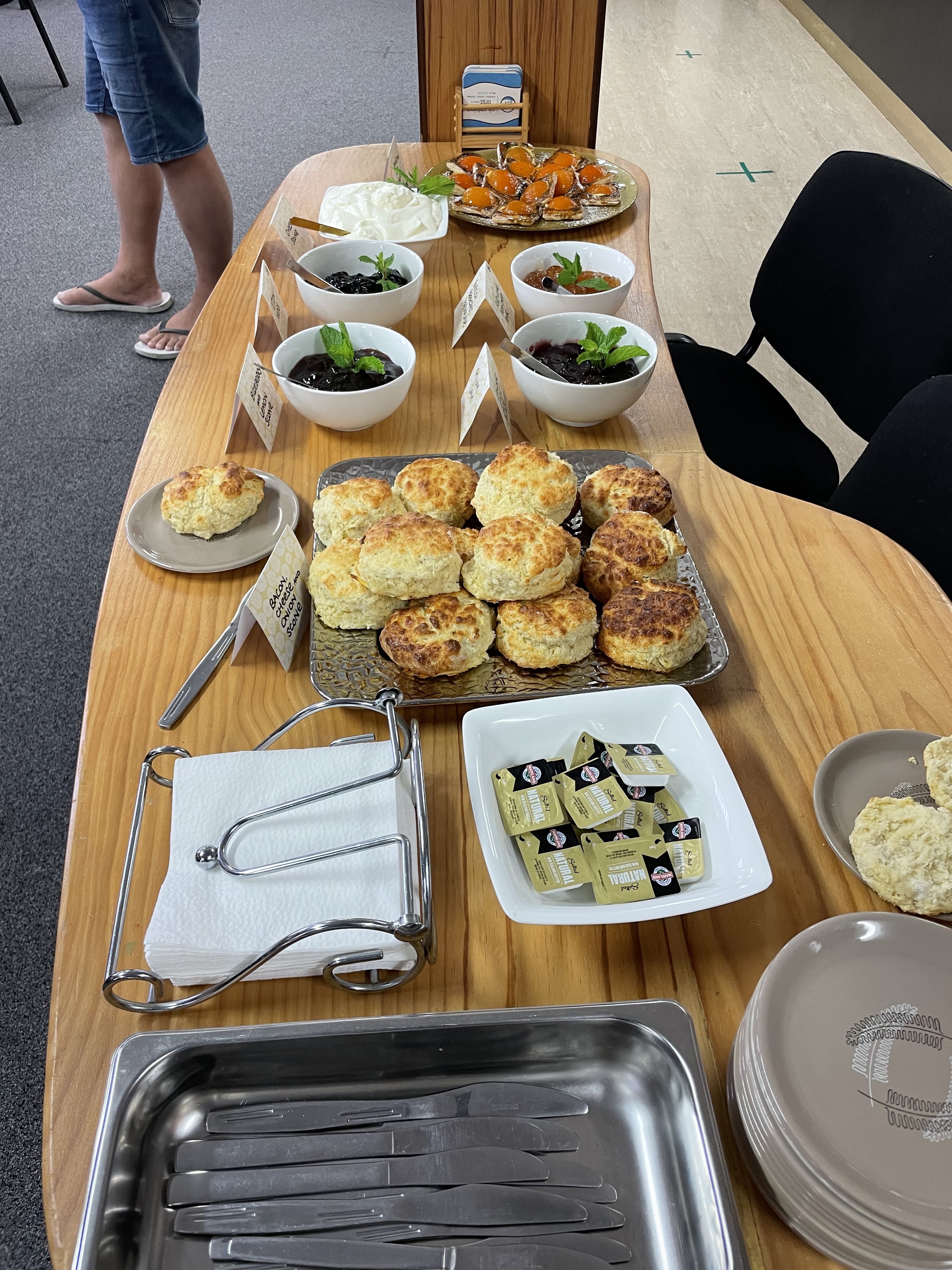
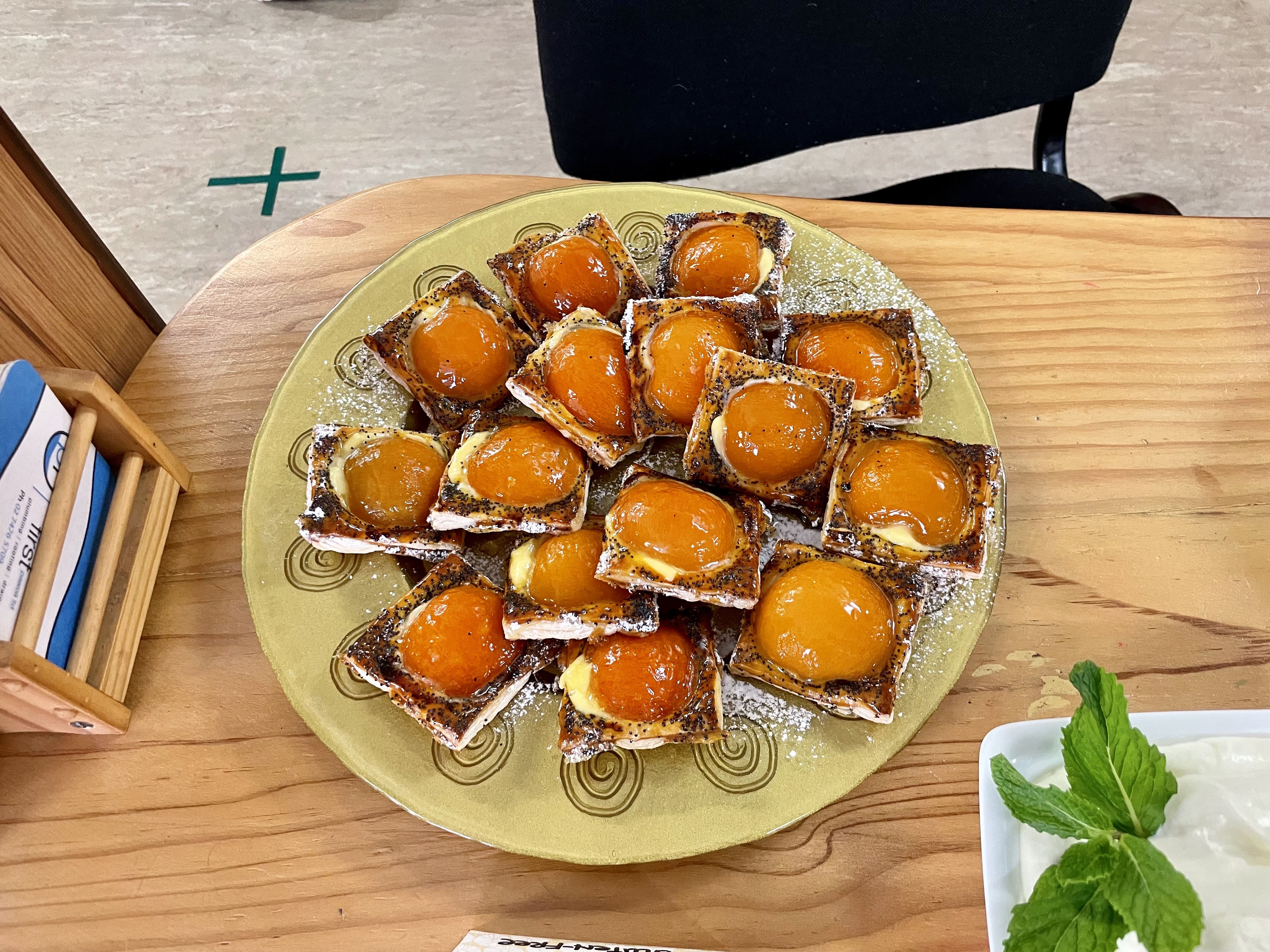
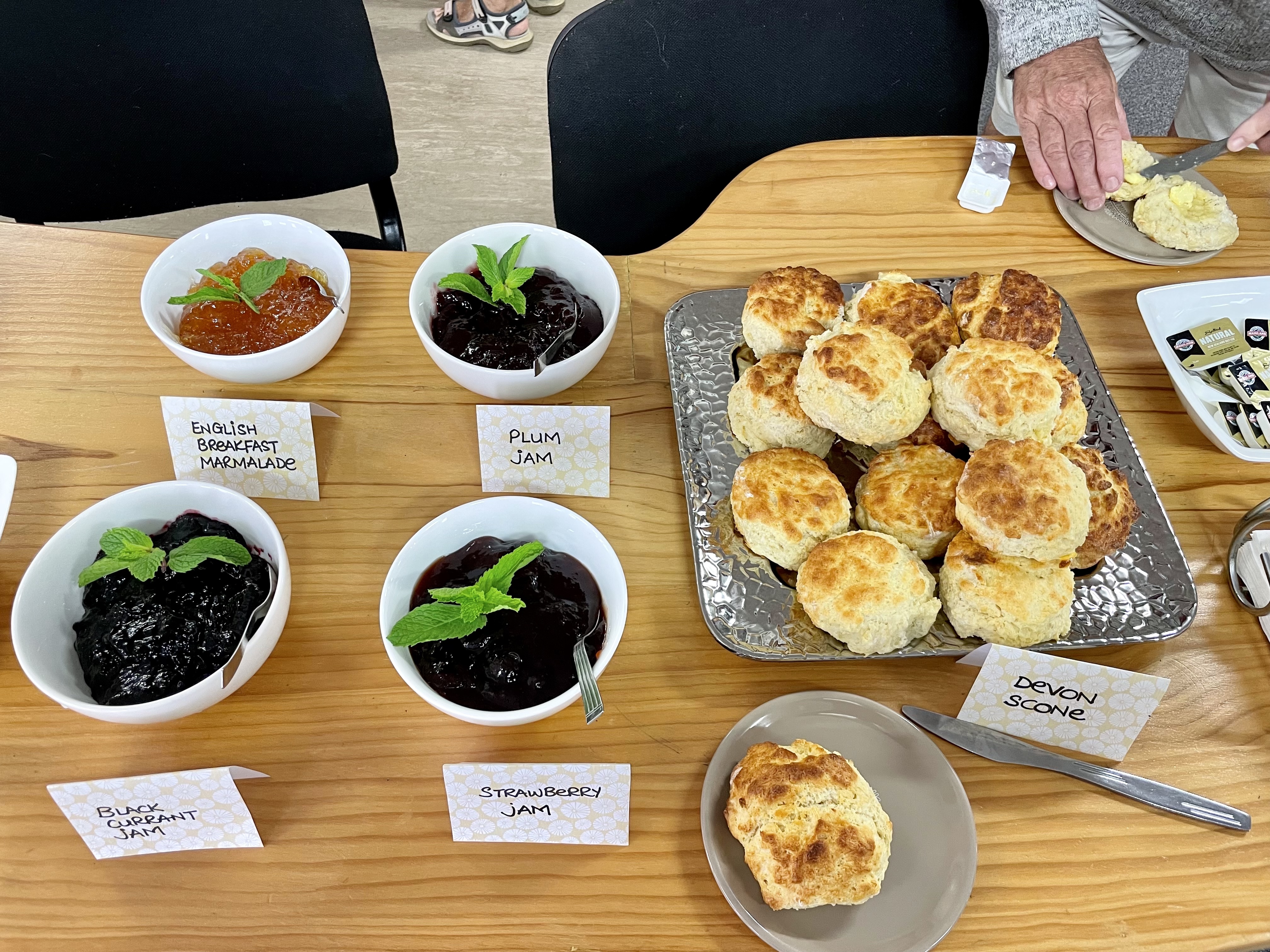
I recommend the ride, for me it was the highlight of the weekend, and we were treated to a good old school – morning tea at the RSA, just so good 🙂
Read more on the trip and the other vessels servicing the route at the link below
In the early days of WW the 1930, 38′ Lane Motorboat Co. launch – Falcon was all over the WW site. Her then owner James Mobberley (Moon Engines) hardly ever let the engine cool down.
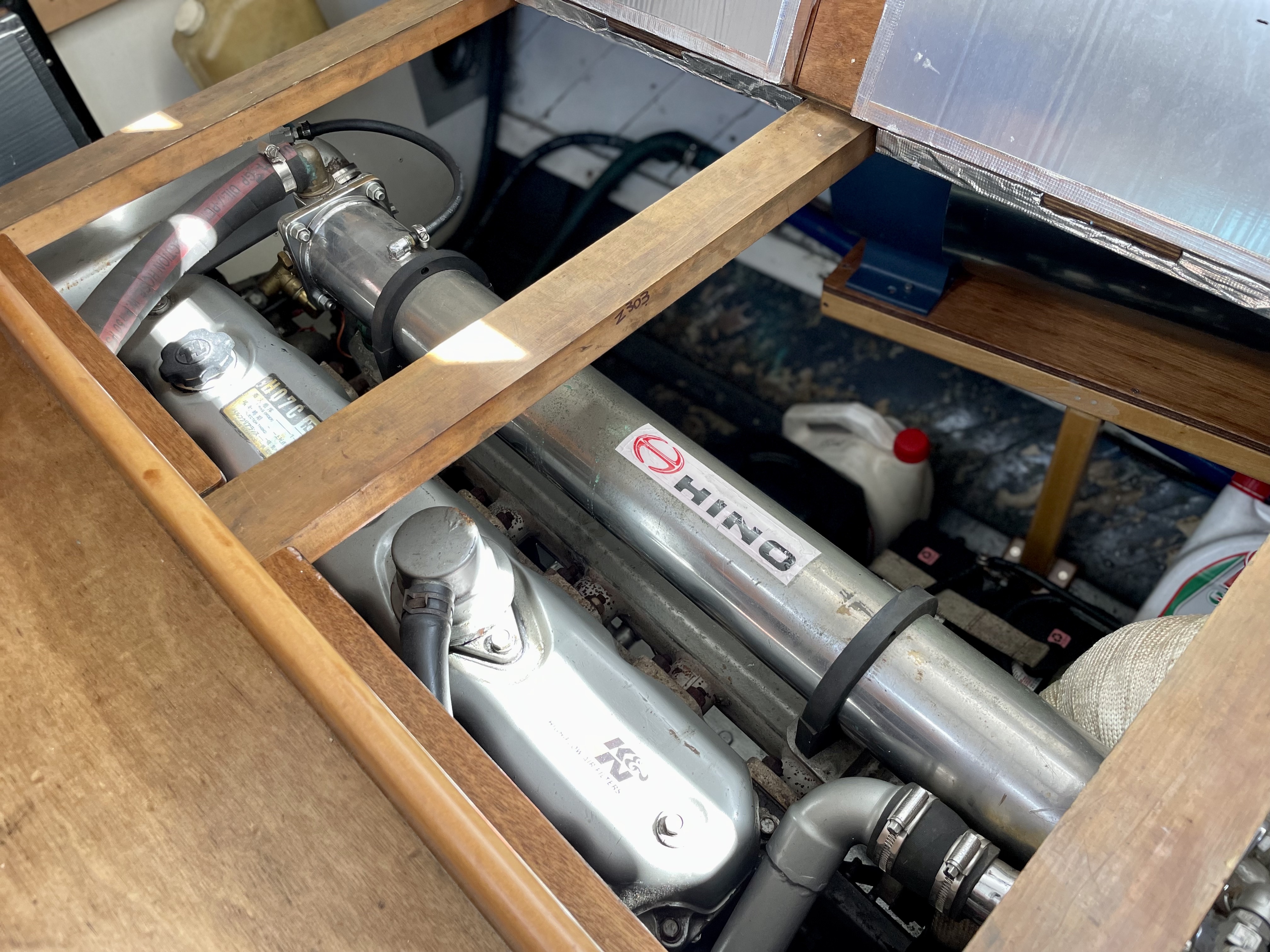
Always a fast boat, James transplanted a 180hp Hino engine into her and she was probably the fastest in the classic fleet e.g. >18 knots.
When you have small children a fast narrowish classic woody is not that practical, so sadly James and family moved on to a big white plastic boat – but he will be back, that I’m confident about.
Falcon passed thru several owners and was starting to show her age on a swing mooring in Whangarei Basin.
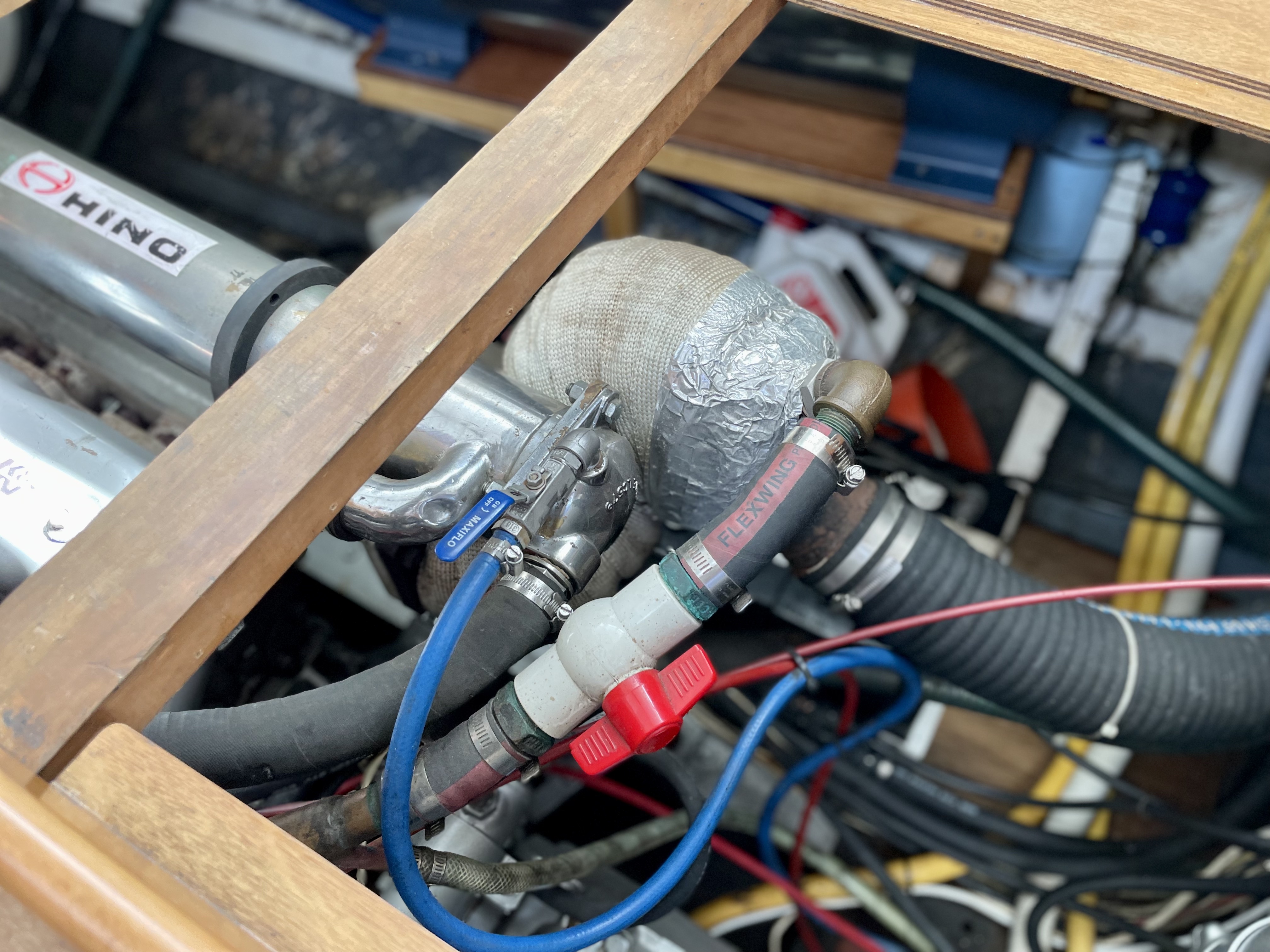
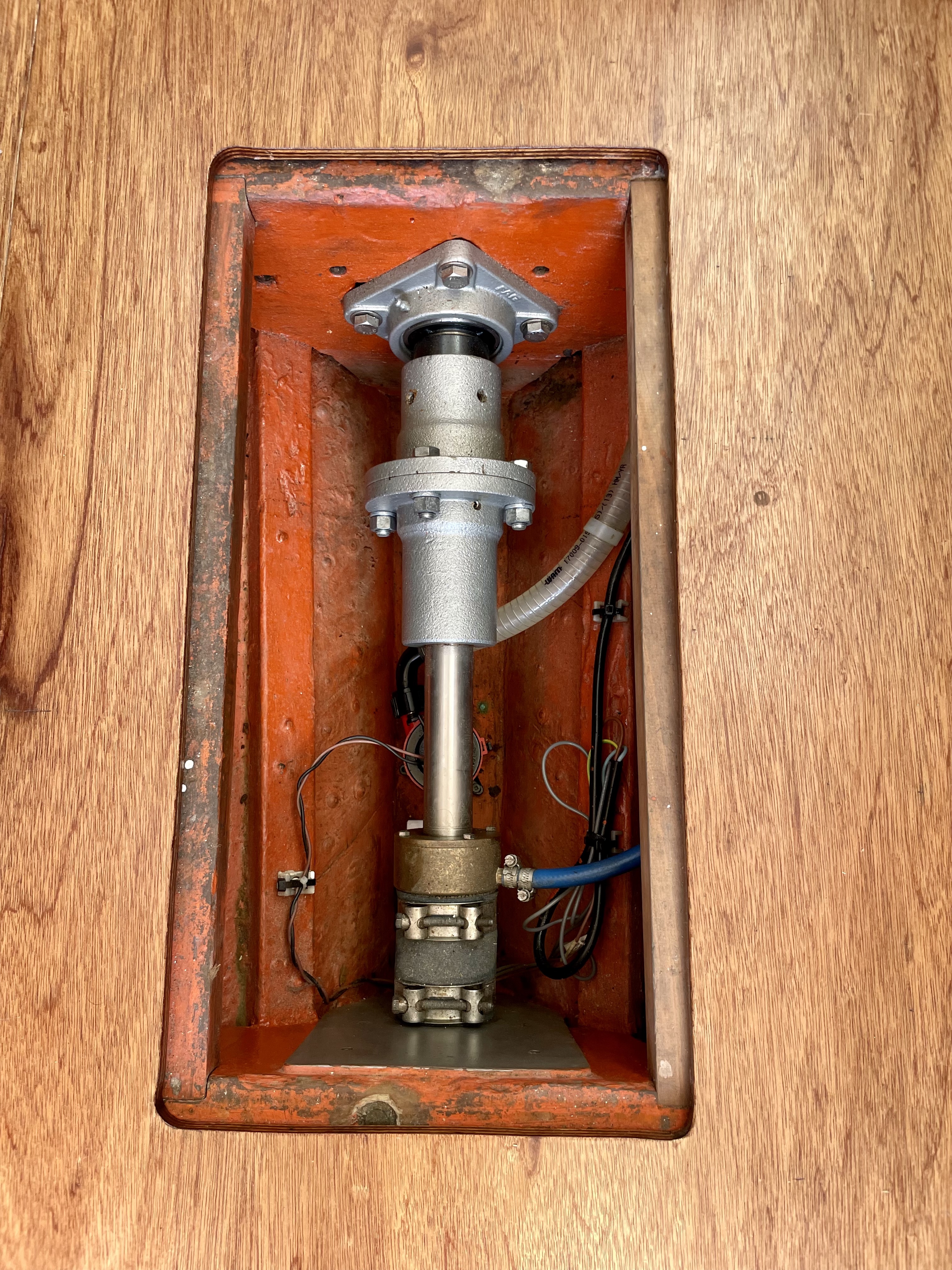
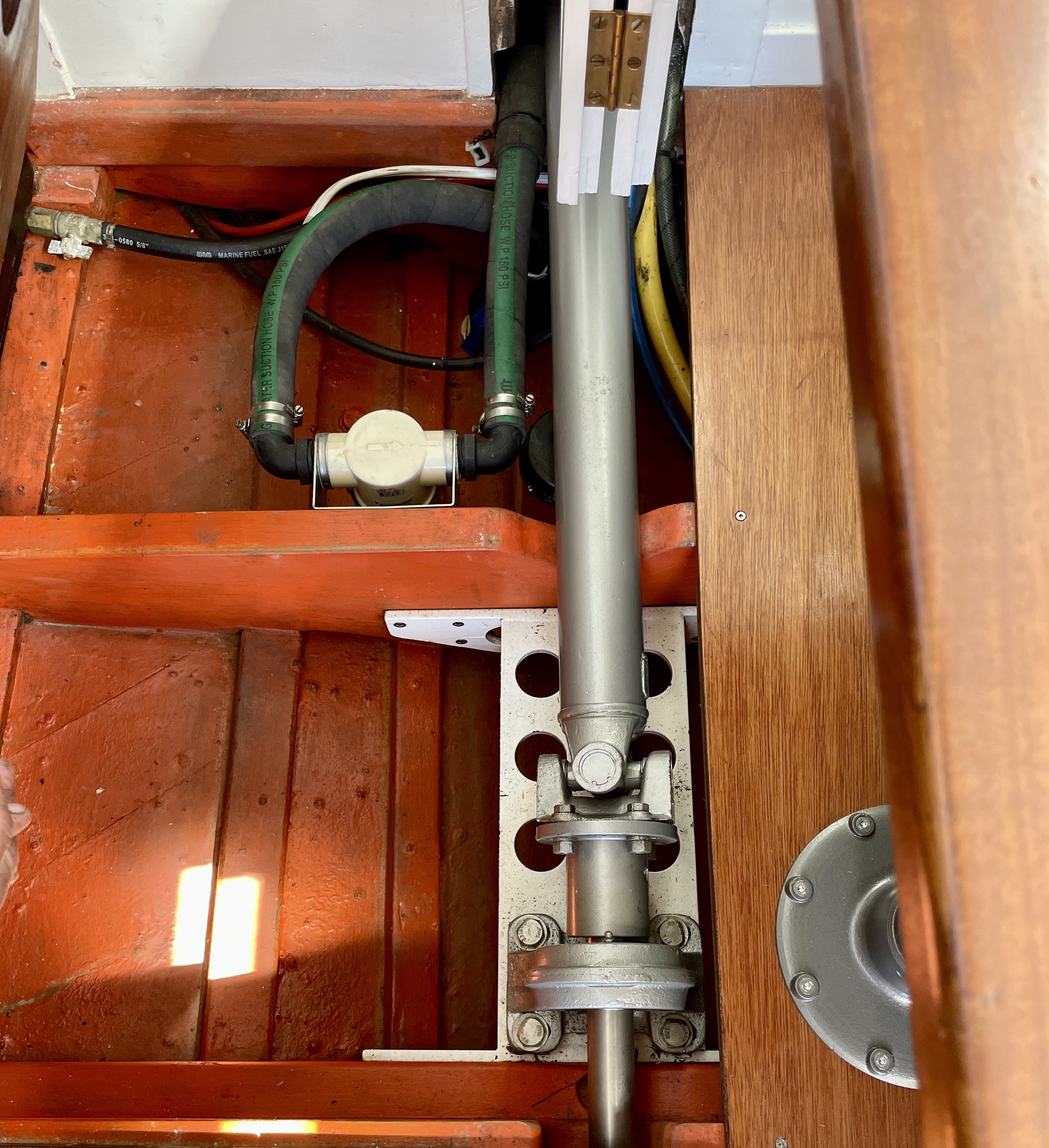
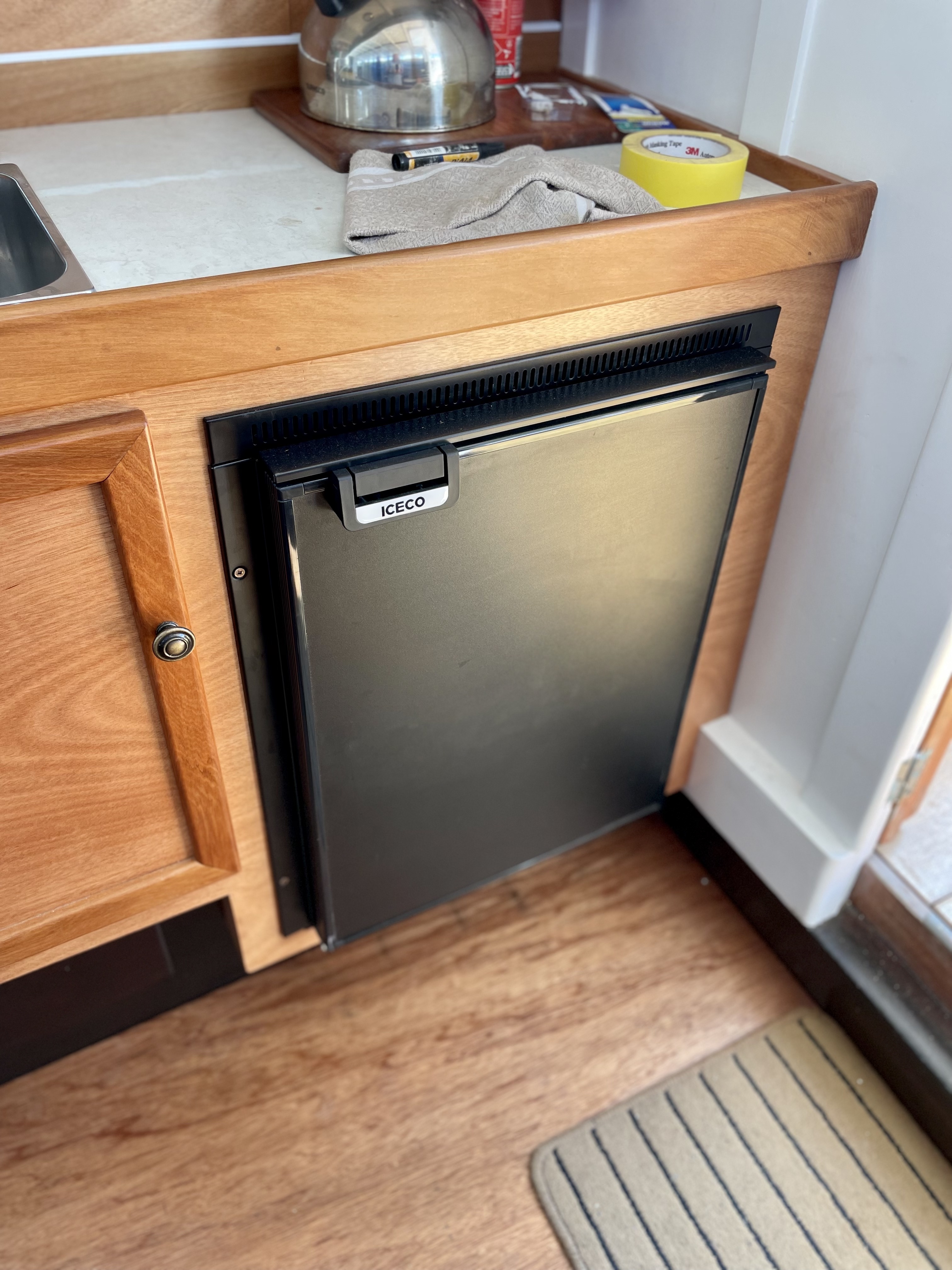
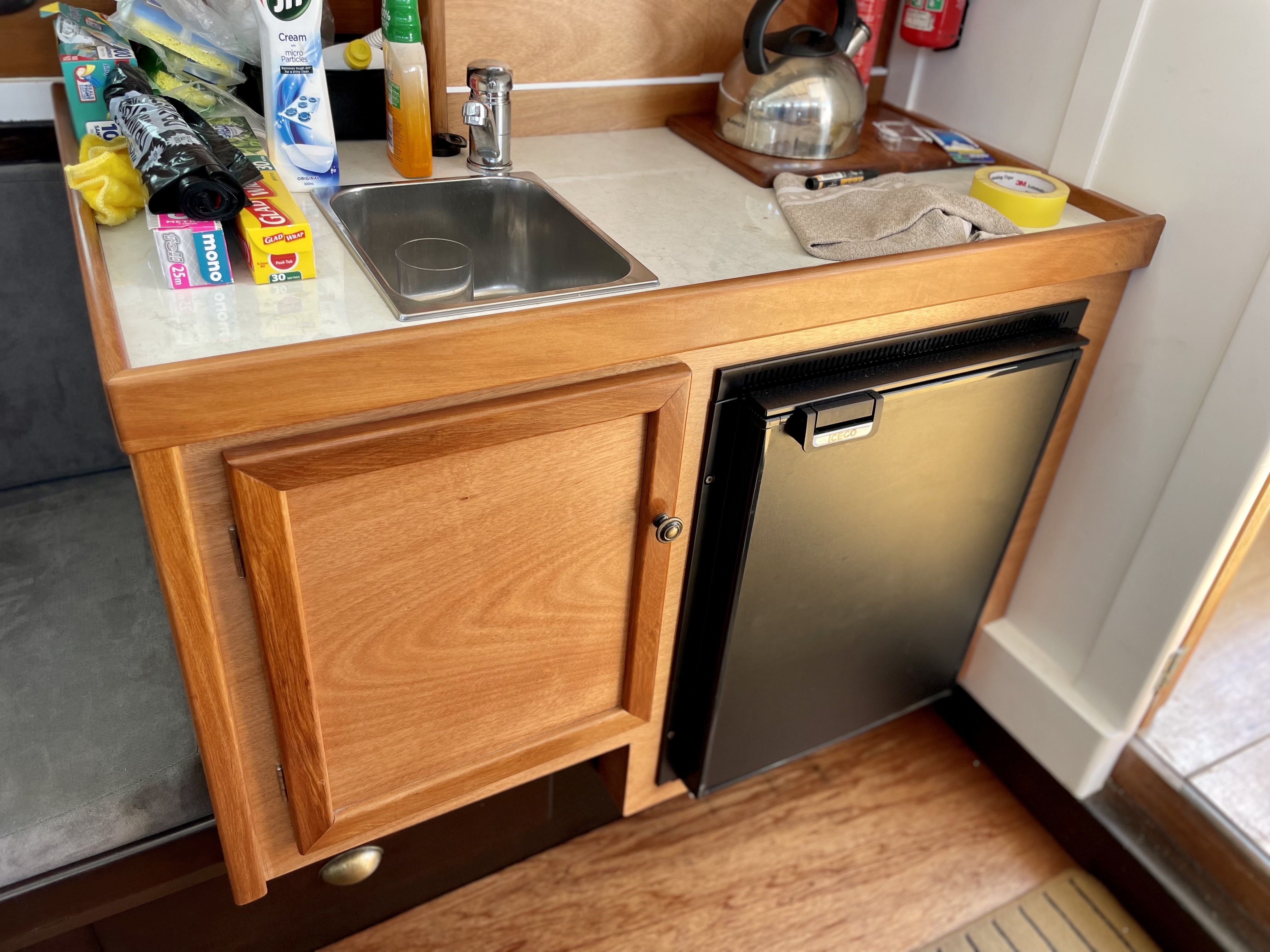
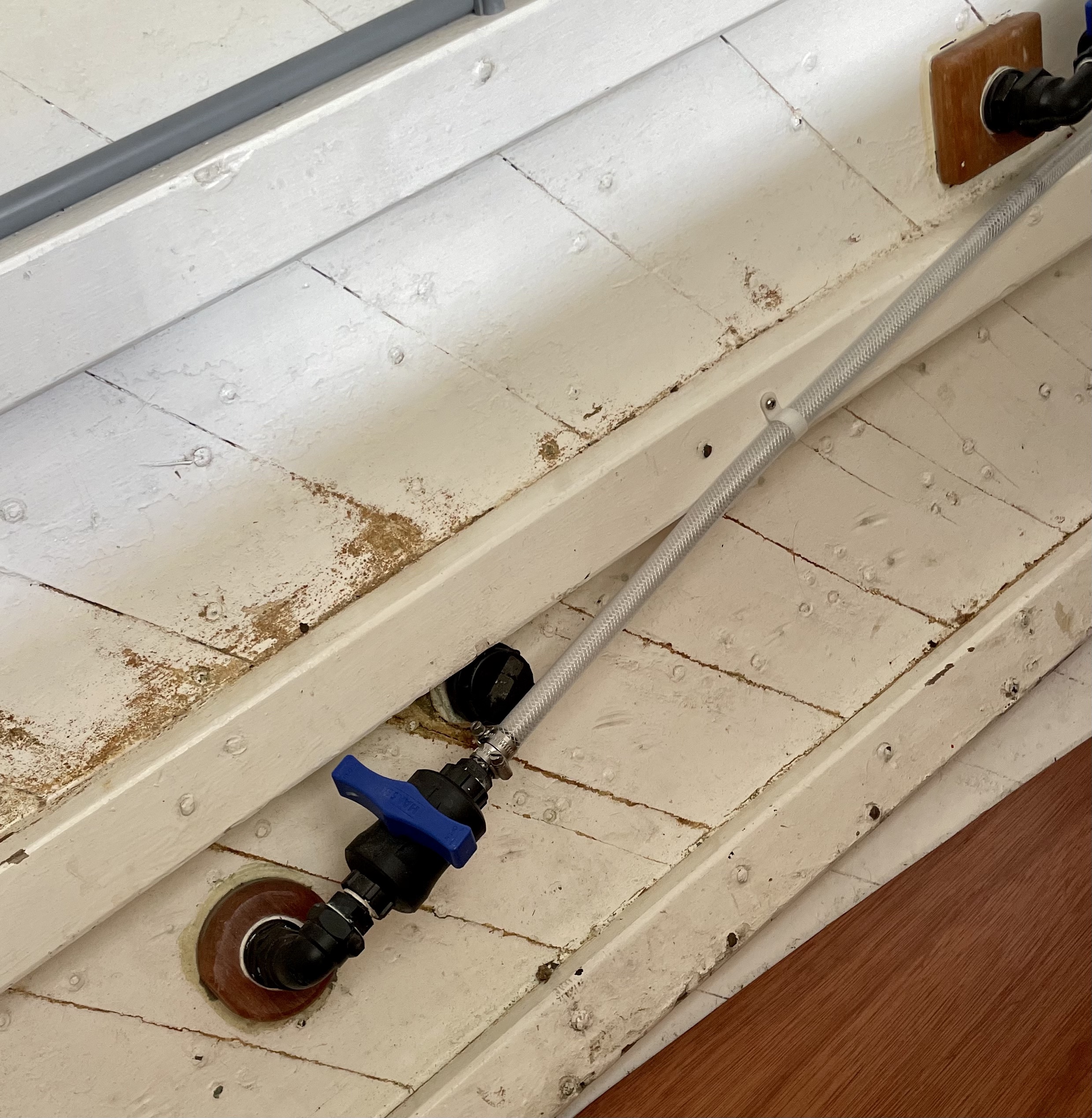
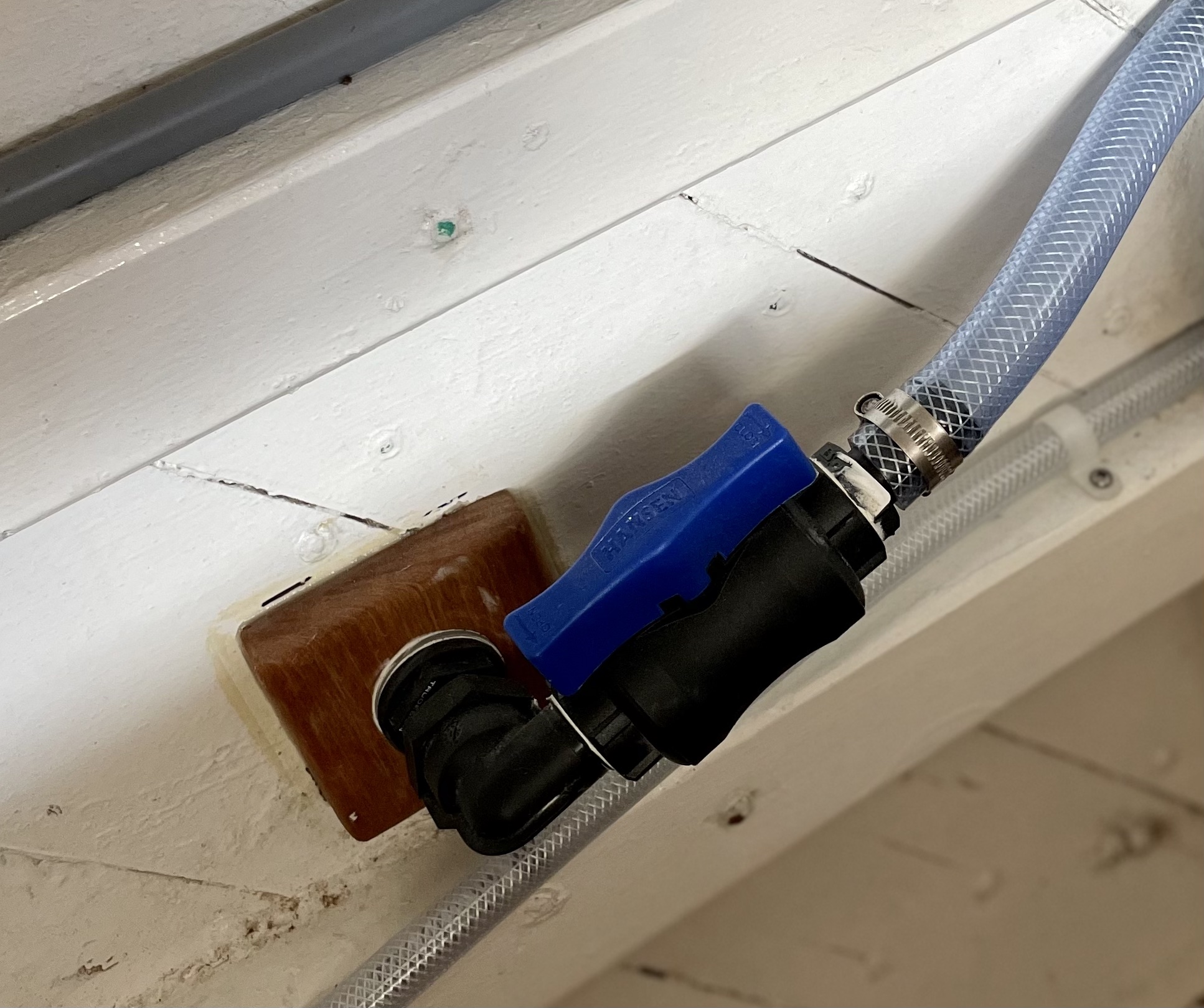
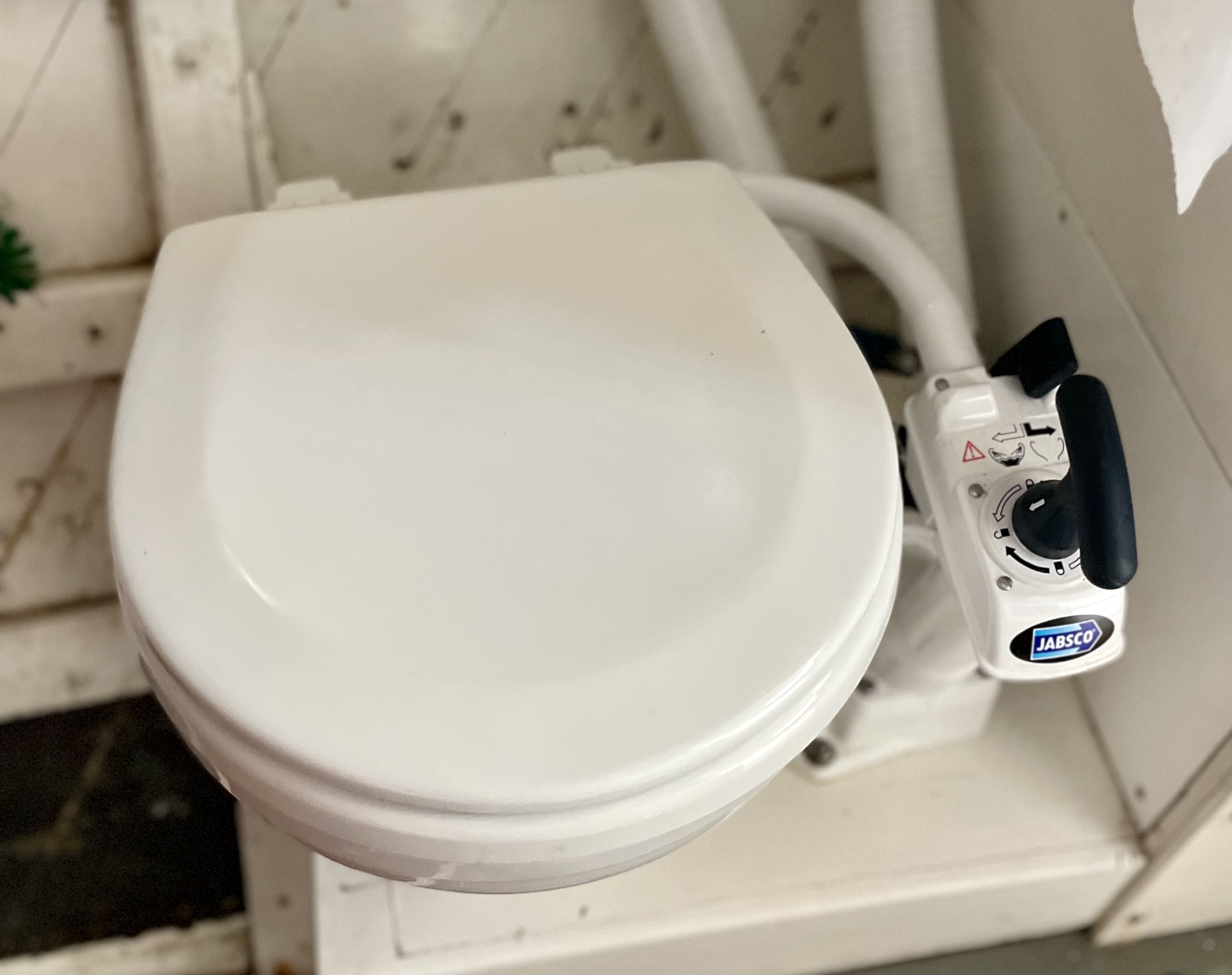
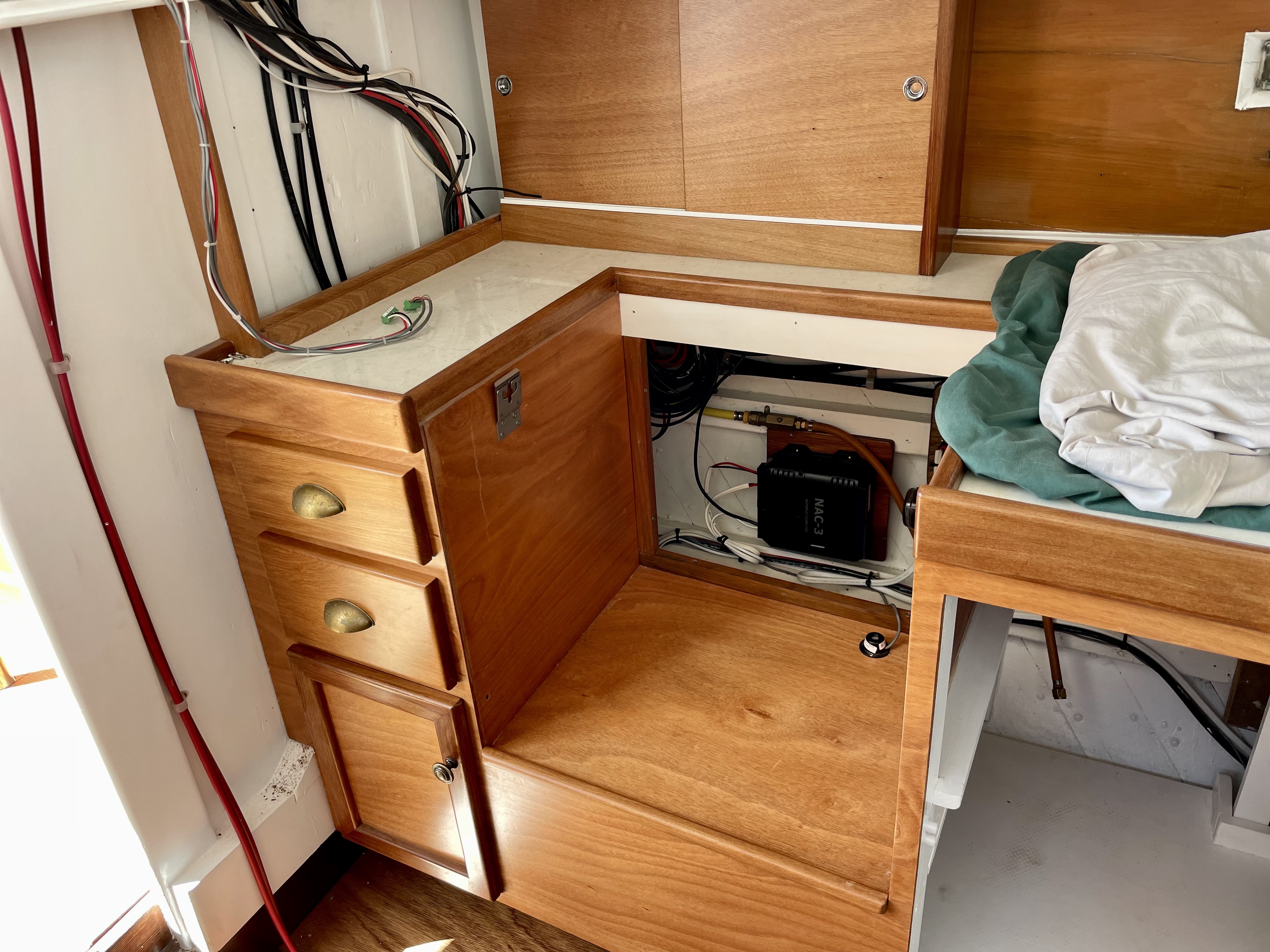
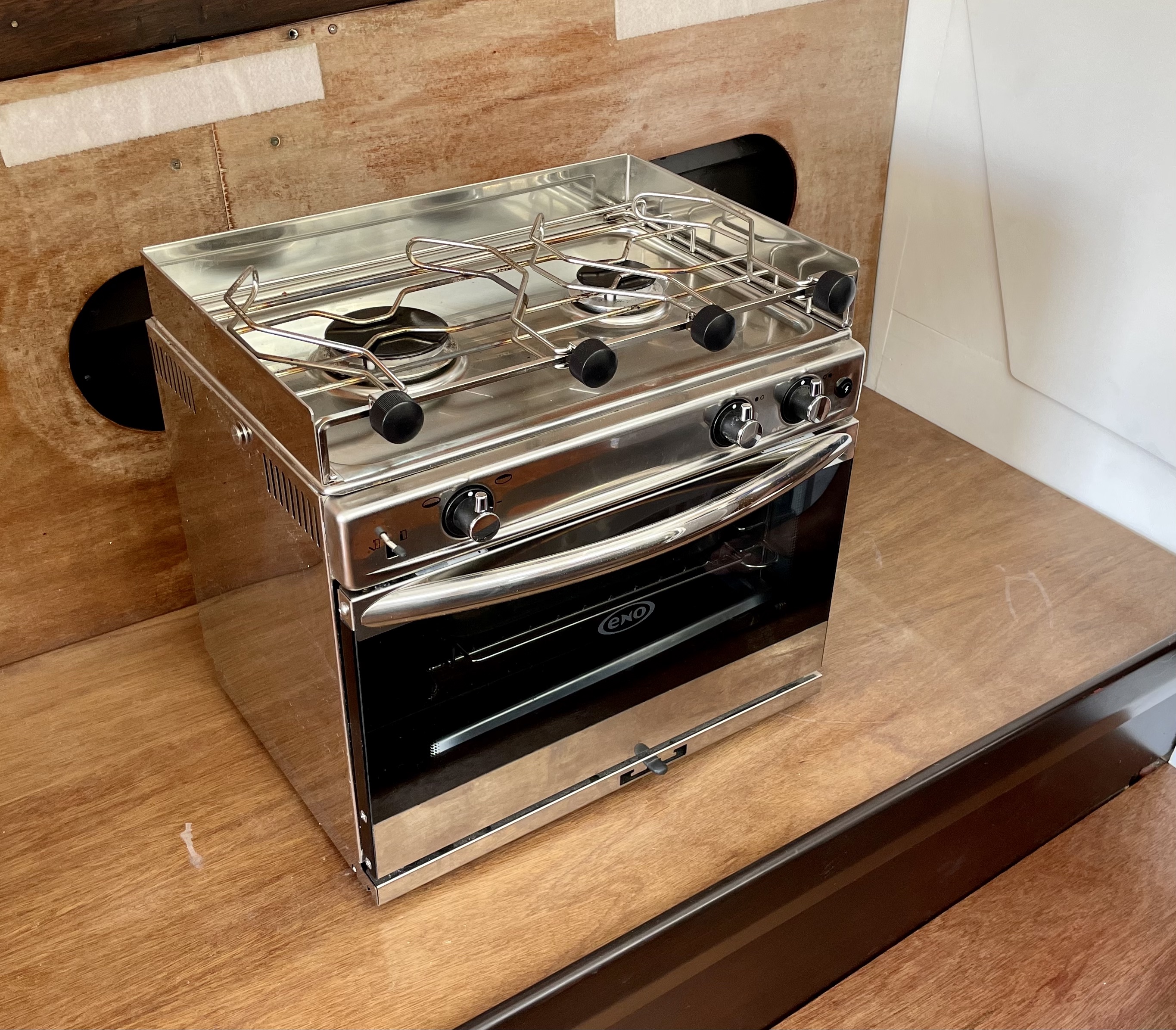
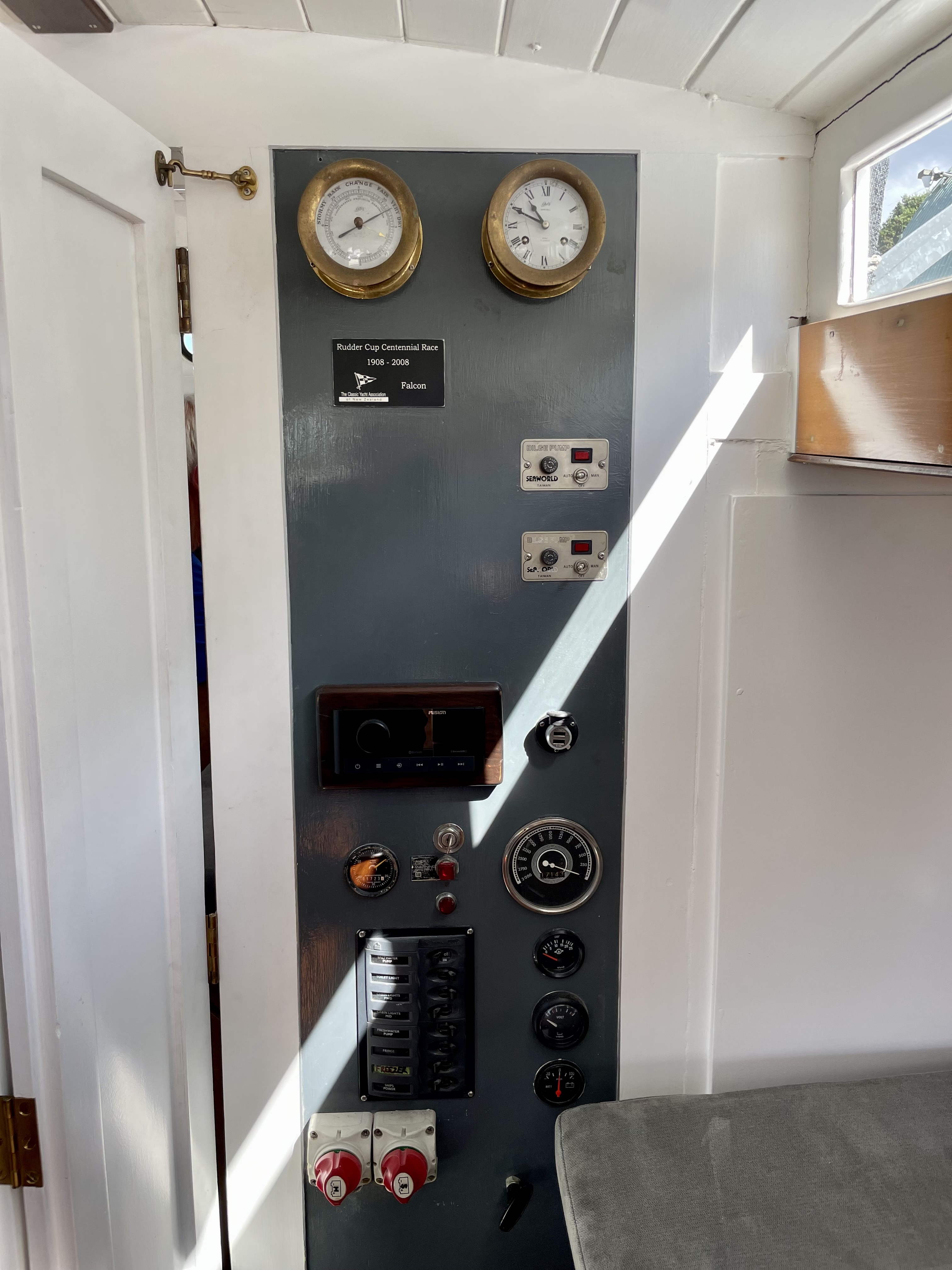
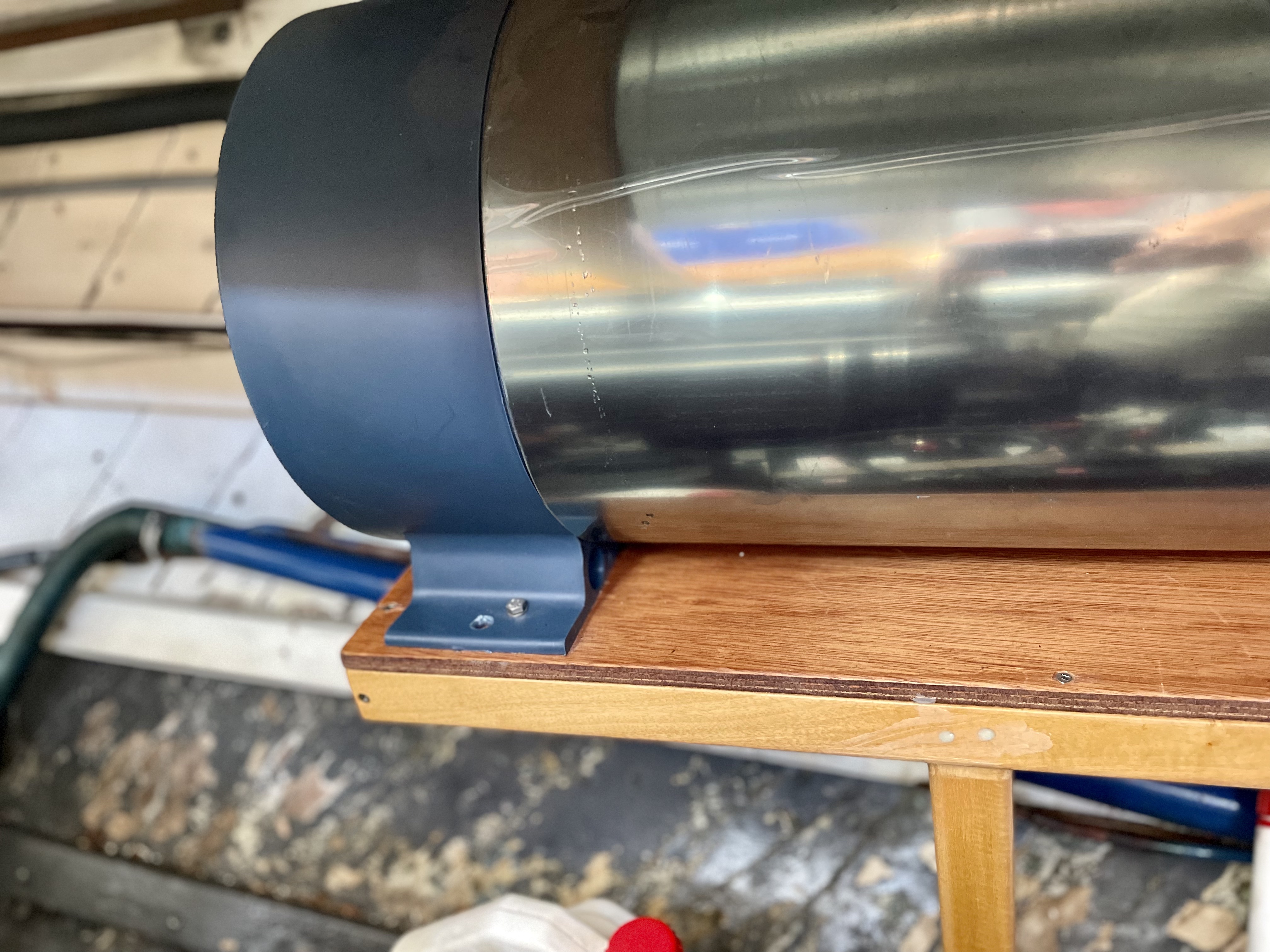
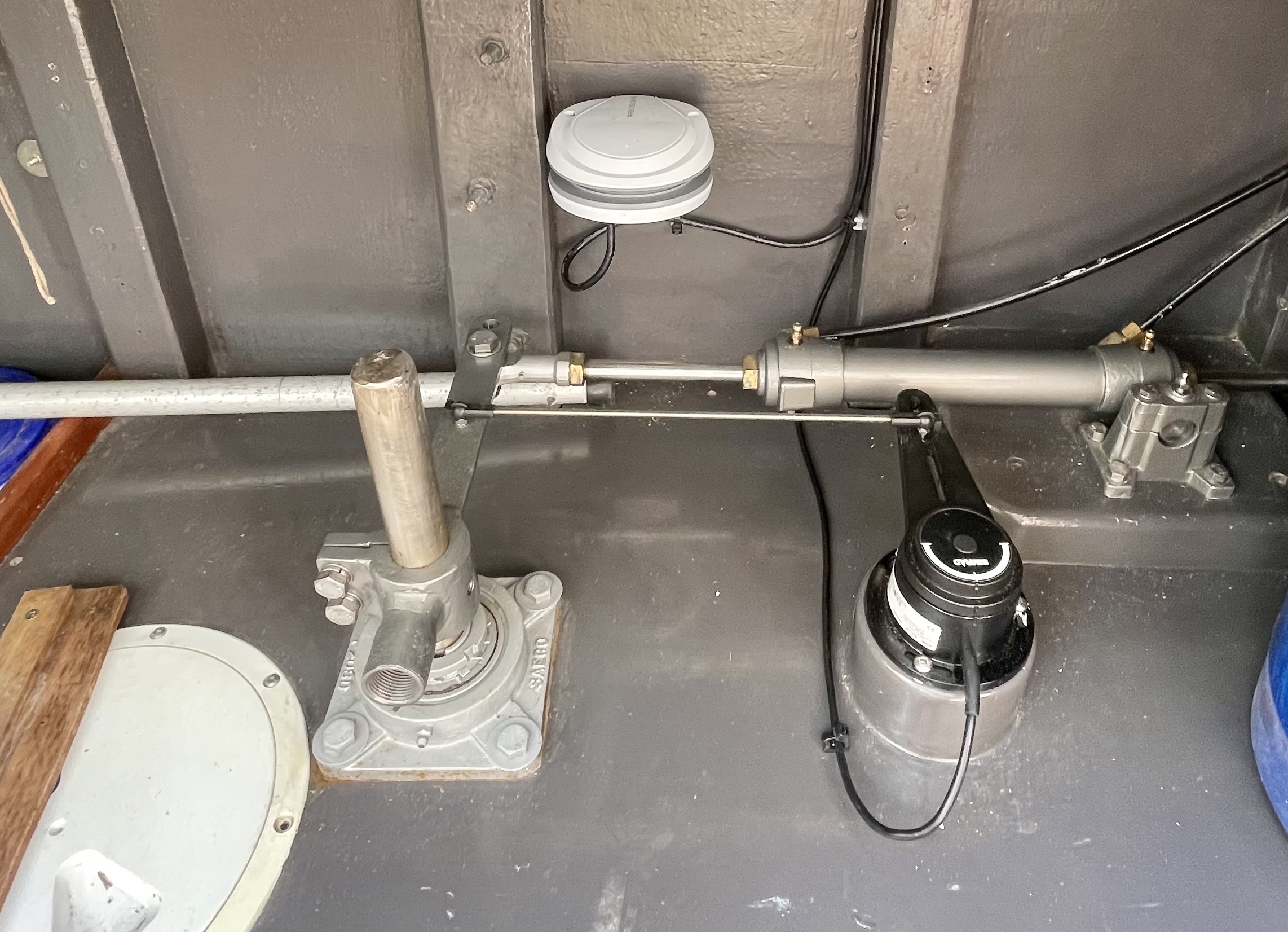
Then a good thing happened – one of Moon Engines talented engineers bought Falcon and relocated her back to Auckland. The next year was spent giving Falcon a makeover in terms of her running gear, systems and home comforts – the above photos give us a peek into how things should be done on a boat – still a little bit of tidying up, but a perfect opportunity to view the installation work.
Remember to click on the photos to enlarge 😉
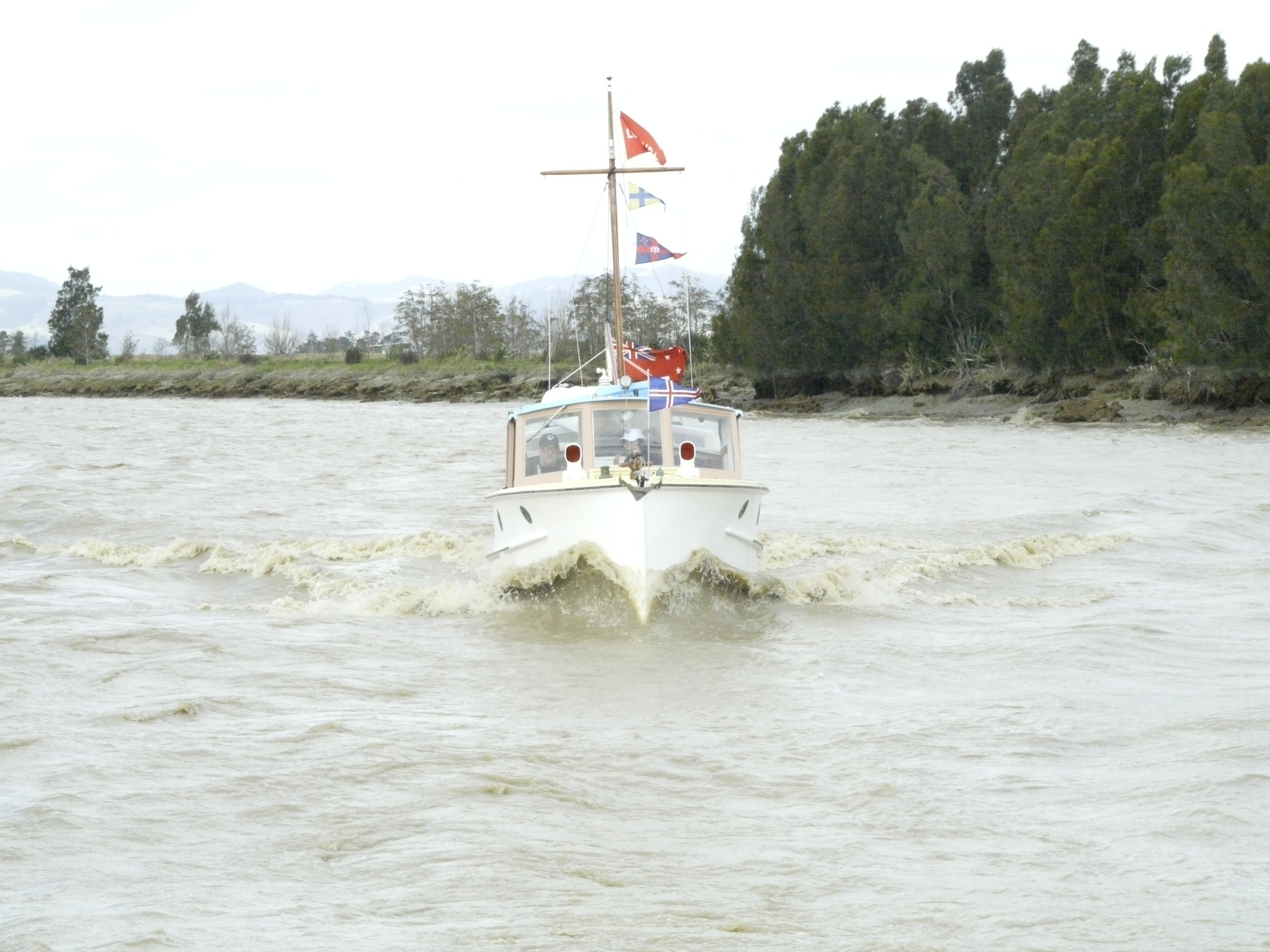
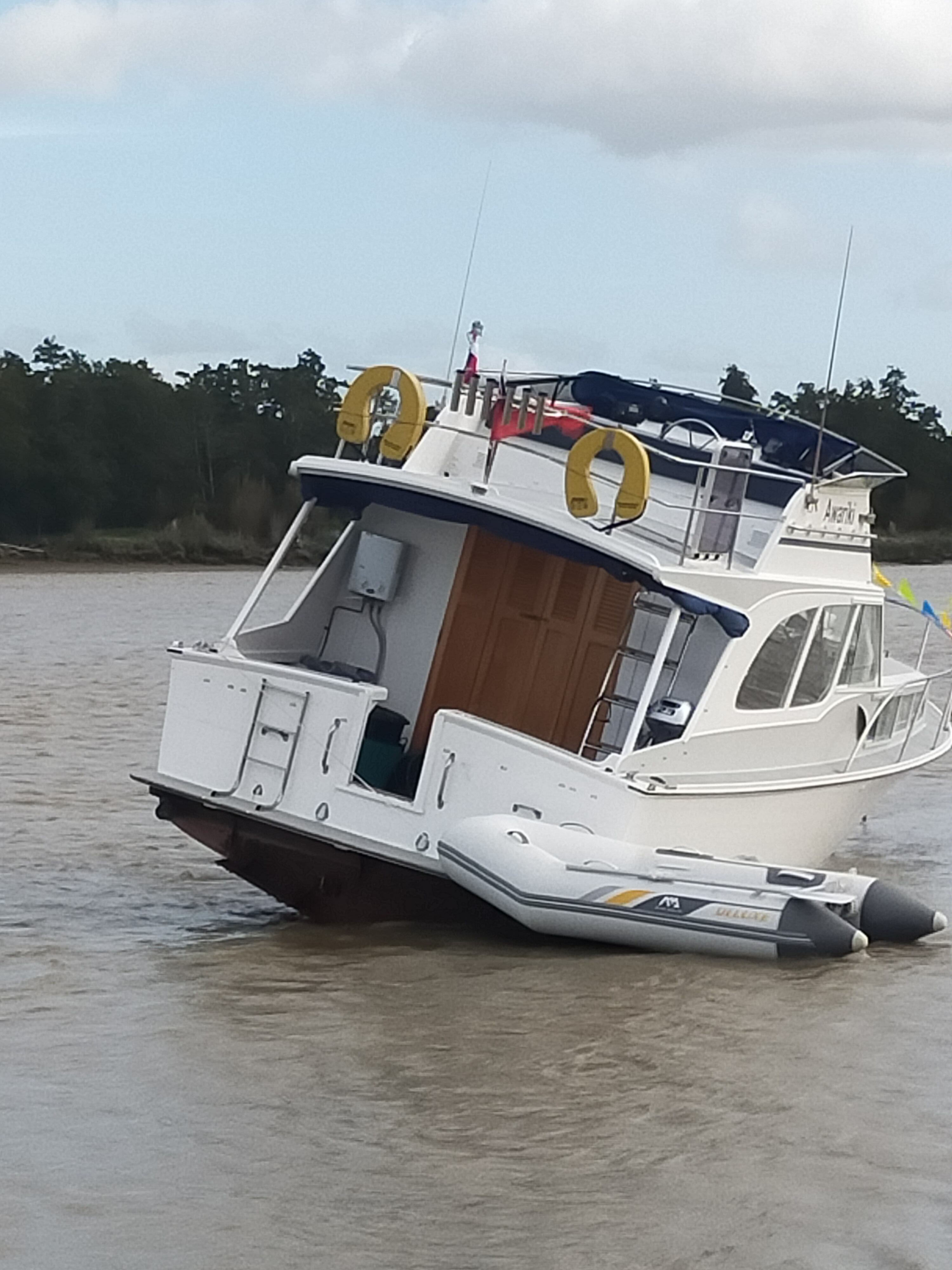
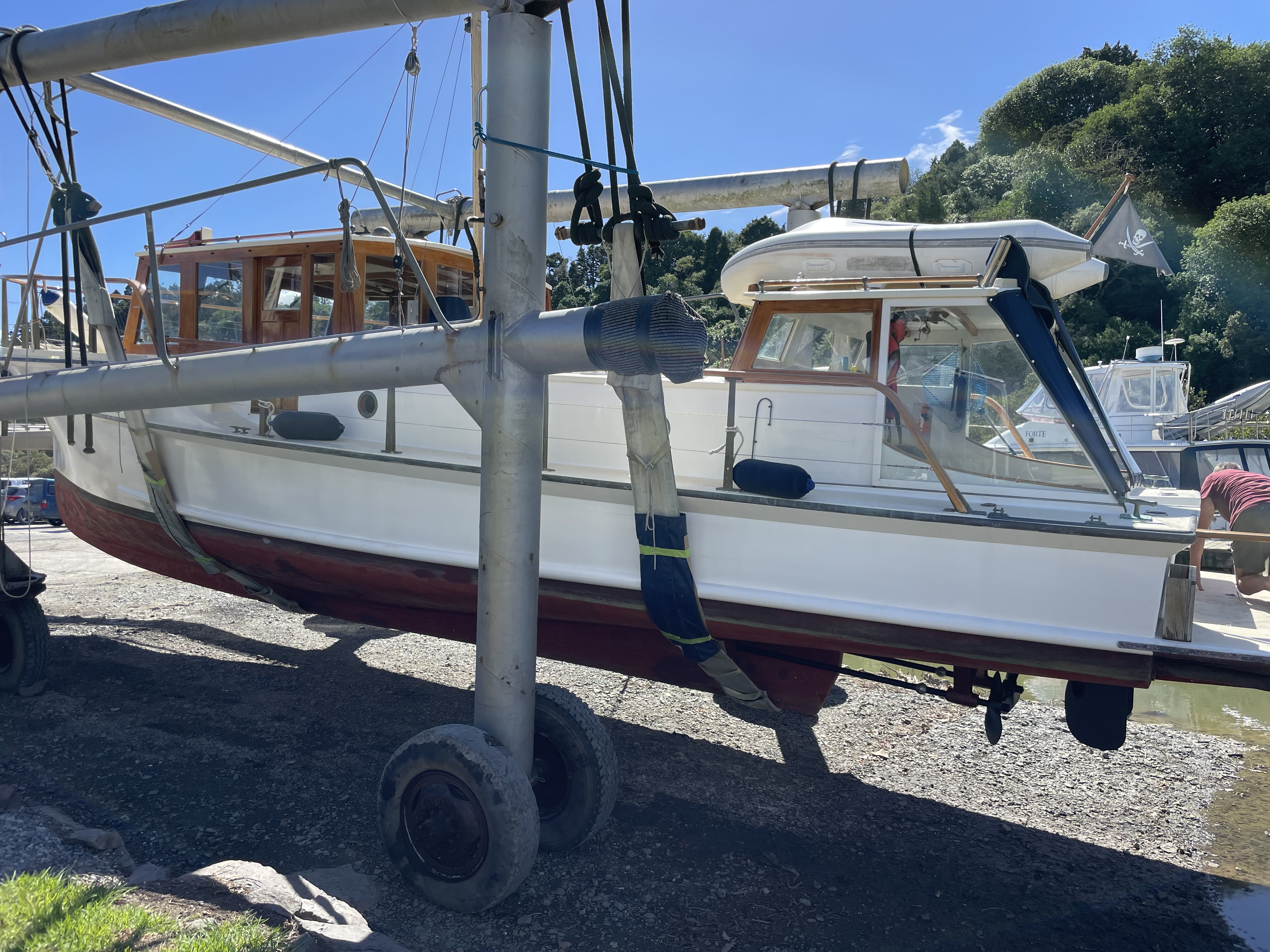
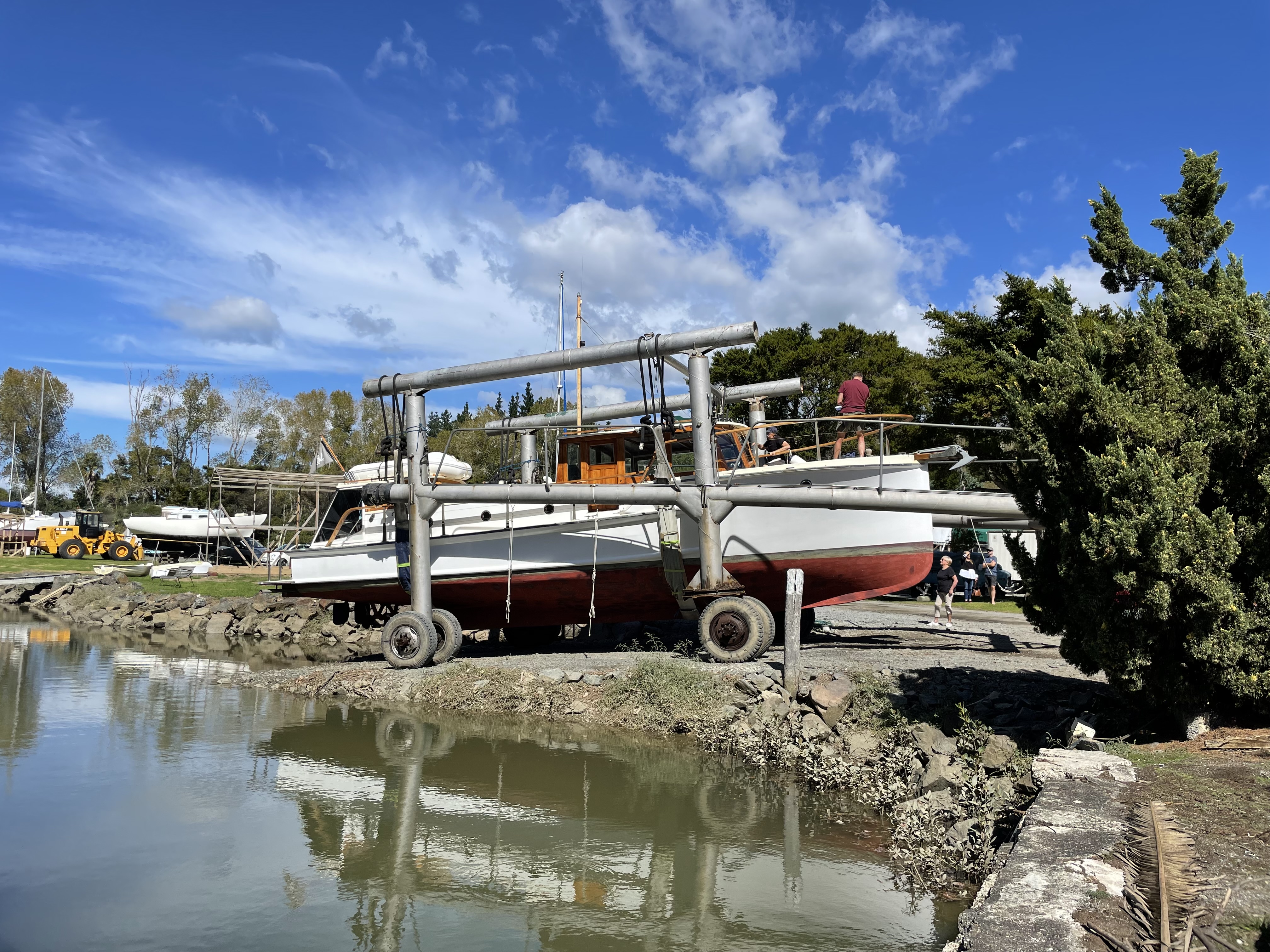
WOODYS PAEROA RIVER RAID
One shows us how its done and another how it comes undone 😉























 waitematawoodys.com #1 for classic wooden boat stories, info, advice & news - updated daily - 15+ million views