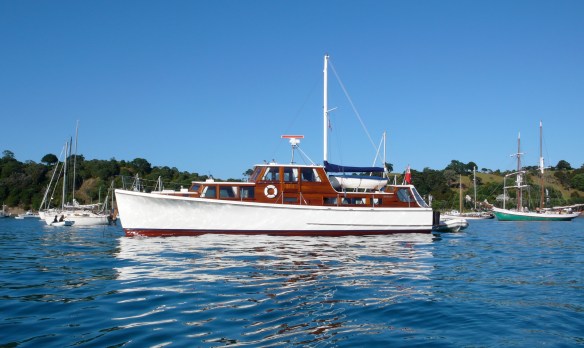
Trinidad
I have posted lots of photos of Trinny since my winter visit to Lees Boatbuiders but this is the first one ‘on-the-water’. I went for an early morning row & snapped the lady looking stunning in the early light.
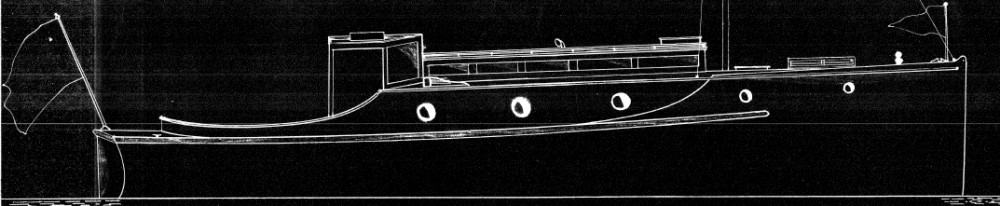

Trinidad
I have posted lots of photos of Trinny since my winter visit to Lees Boatbuiders but this is the first one ‘on-the-water’. I went for an early morning row & snapped the lady looking stunning in the early light.
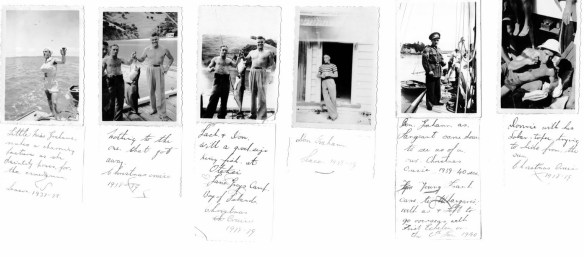
CORONA CHRISTMAS CRUISE 1938/8
photo collection ex Peter Nunn
GREAT NEWS ON CORONA – I LEARNED YESTERDAY THAT SHE HAS A NEW VERY CLASSIC FRIENDLY OWNER. THAT IS SO GOOD, SHE WILL NOW BE USED AS SHE SHOULD BE .

Does it get better?
Nice anchorage, late afternoon sun, a good book & I’m sure I saw a wine glass.
The beautiful Tasman, 1927 Col Wild, in Sullivans Bay, Mahurangi last night .
UPDATE 29/01/2014
Now some think I’m a little OTT in terms of the addition of flying bridges to classics, if you compare the photo Ken Ricketts took of Tasman in School House Bay, Kawau, over Christmas 1948 (below) with the above, you will see that the design boys had it right in 1927 & its still right in 2014 – 87 years later 🙂





I’m Off To Wooden Boat Heaven
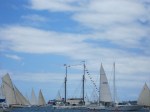
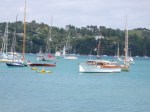
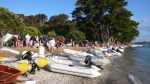
Later today, weather permitting, I’m heading off to what must be classic wooden boat heaven – the Mahurangi Regatta. It would have to be the largest collection of classic sail & motor boats, at one time, in NZ. Every year there are ‘new’ boats that have been off the scene, up a creek, in a shed that make you go – ‘how come I’ve never seen her before’.
Obviously I’ll pack the camera & bang off lots of photos for you all but if you are at a loose end this anniversary weekend & you have a passion for classic wood – Mahurangi is the place to be.
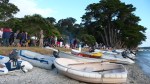
If you are boat less, on Saturday (11am >) at Sullivans Bay there there is a traditional kiwi beach picnic – running races, three-legged races, egg & spoon races, egg throwing, sand sculpture competition, rug of war, lolly scramble etc + all the small sail boats are launched from the beach so there is plenty to do & see.
On Saturday night, starting around 6.00pm there is a BBQ (byo food & fizzy drinks) ashore at Scotts Landing. Everyone is welcome but bring a (some) gold coins for the bucket to help pay for the 16piece big dance band that will be playing in the marquee.
Regatta details here
http://www.mahurangi.org.nz/Regatta/2014/General-Format.php
Also Monday is Auckland Anniversary Regatta day so another chance to view our harbour at its finest.
If you are around the Viaduct (Event Centre area) on Monday there is a display of classic work boats that Baden Pascoe (MV John Dory) is arranging post the annual Tug Boat race.

Its Not A Boat – But It Floats
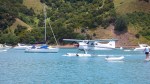
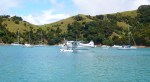
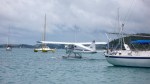
Over the xmas / ny period we were quietly anchored in Man-O-War bay minding our own business, reading etc (ok I’ll tell the truth, we were waiting for the bar to open at the winery). It was drizzling & where was light sea mist handing around. Next thing I heard this god almighty noise, my first reaction was the Chris Miller (Rorqual) had arrived in the bay but when I rolled up the covers out of the mist appeared a sea-plane taxiing its way thru the anchor boats.
In years gone by I used Fred Ladd’s old amphibians to meet up with cruising friends & the service has been missed, now you can either charter the plane & fly to your chosen bay or book a ticket on one of the many excursions they offer around the outer gulf. Given the number of times we spotted / heard the plane the MOW vineyard lunch trip seemed well frequented over the holiday period.
The rain cleared, the sun came out, the bar opened & the plane left. It does not take much to entertain me 🙂
Auckland needs more services like this & wow things like sea-planes, so if you get a chance either yourself or if you have overseas guests in town – consider a flight
http://www.aucklandseaplanes.com

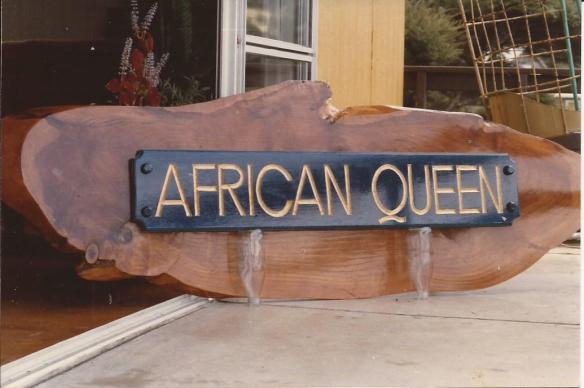
Willie Oliver & the African Queen – a great read
Last week waitematawoody follower Brian Cassidy sent me a chapter from his auto-biography which he wrote for his grand-children. The chapters tells the story of a wonderful salty character named Willie Oliver & the house boat / launch ‘African Queen’ he built on Waiheke Island in the late 1980’s. The story is riddled with anecdotes that Willie shared with Brian as they worked on the boat. To wet your appetite I have included three below.
Now the African Queen was not wood & not a classic, in fact she looked more like a block of flats 🙂 but this story entertained me more than anything else that has crossed my computer screen in the last 6 months. Make your self a cuppa or something a little stronger if its later in the day – then click the blue link below to the story + photos & I promise you, you will have a smile on your face at the end.
Memories of Willie Oliver – The Tiny, Tenacious Tornado
ps If anyone knows what happened to the African Queen, post a comment here as Brian would love to know.
The Governor General
Game fishing was Willie’s real passion, working out of Mayor Island in the Bay of Plenty.
On one trip Willie had the distinction of having the one time Governor General Sir Willoughby Norrie as his guest.
Instructing his excellence to be sure & not over run the big game reel, luck would have it that a big Striped Marlin was hooked & proceeded to run out the line.
His Excellency panicked & let the clutch off causing the reel to over run the line.
“You stupid bugger! I told you not to over run the line, now we’re in the shit!” bellowed Willie in the excitement of the fight.
The Governor’s Aide de Camp, stepped forward, commanding our nuggety little skipper,” You can’t speak to the Governor General like that!”
“I’m the skipper of this vessel, & will speak to him anyway I bloody well like.” retorted Willie, still struggling to untangle the snarled up line.
The Girlfriend
The man was a terrible womanizer, but I reckon he’d had more wins than losses over his lifetime.
His present live in companion was very much younger than him, & when she perceived that he was flirting a bit too often, stabbed him in the stomach as he lay in bed. The blow just missed a major artery. Willie lived & went on to finish the house boat.
Mako Sharks
By way of entertainment while out in deep water, mullet would be offered by hand to big Mako sharks that could be enticed up to the stern of the boat. The huge jaws full of ferocious teeth, were quite a spectacle, as the intrepid skipper hand feed the fearsome creatures. The trick had been done successfully many times before.
On this one occasion Willies was not quick enough, as the monster raked his teeth over the back of our shark tamers hand, causing blood to pour over the deck.
“It was not too bad; once I’d wrapped it up a bit.” Confided Willie, “But I gave up doing that display from then on.”
Now scroll back up the page & click the blue link to the whole story.
Harold Kidd Update
“Willie O” was a major character all right. He was born in January 1902 as Willoughby Grey Oliver, the son of Willoughby Henry (“W H”) Oliver who served his time with Bailey & Lowe and went on to work for many years for Caesar Roose at Mercer. WH died in Devonport in 1947 after giving huge service to Devonport Yacht Club and Wakatere Boating Club.
Willie O and Ted Gilpin built those rakish gamefishing launches in Tauranga like LADY KAREN and NOELANI which were much admired and imitated. Ted Gilpin married his daughter.
Willie O died in 1990.
An extraordinary family.
HDK Update #2
PS However, large grains of salt should be applied to these tales; the two stories about Chas Bailey Sr (“Clawhammer Charlie) getting his beard caught and cutting the sixpence are old chestnuts and part of Auckland waterfront lore. The firm “Bailey & Lowe” wasn’t founded by him nor did they have a yard at Beaumont Street. These stories go back to the 1890s before Willie O was born, but I’m sure he was pleased to repeat them to an eager listener, putting himself in the action.
PS again. Apologies, Bailey & Lowe did shift to Beaumont Street after closing their Sulphur Beach Northcote yard in the winter of 1921. Charles Bailey Sr. died in July 1923. His son Walter, the founder of Bailey & Lowe, died in March 1927. Walter was clean-shaven.


MOANA
photos ex AH & trademe
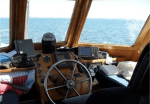
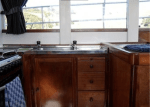
I spotted Moana at anchor in Coromandel Harbour between Xmas & New Year. A little digging resulted in a trademe listing so if you believe that, she was built by Lanes in 1954 & is a kauri carvel planked, large volume displacement launch at 42.5′. Powered by a 6LX Gardiner. Appears to by well fitted out in terms of modern day comms & navigation toys etc.
Just a pity about the block of flats on top 😦 , but as they say – each to their own.
Now my bitch of the day – why do people selling classic boats (both the public & brokers) almost never include the boats name in a listing. Makes it bloody hard to find the listing & only drops the value, as the serious potential buyers are most likely to know the boat or know someone that knows her.
Harold Kidd Update
Ted Gilpin told me that she was built by Lane Motor Boat Co. for game fishing in at Mayor Island by Alan Hunter and that Peter Parsons had a hand in her design and construction.
Update 17-03-2019 Moana getting some TLC at Gulf Harbour (photo K Ricketts)


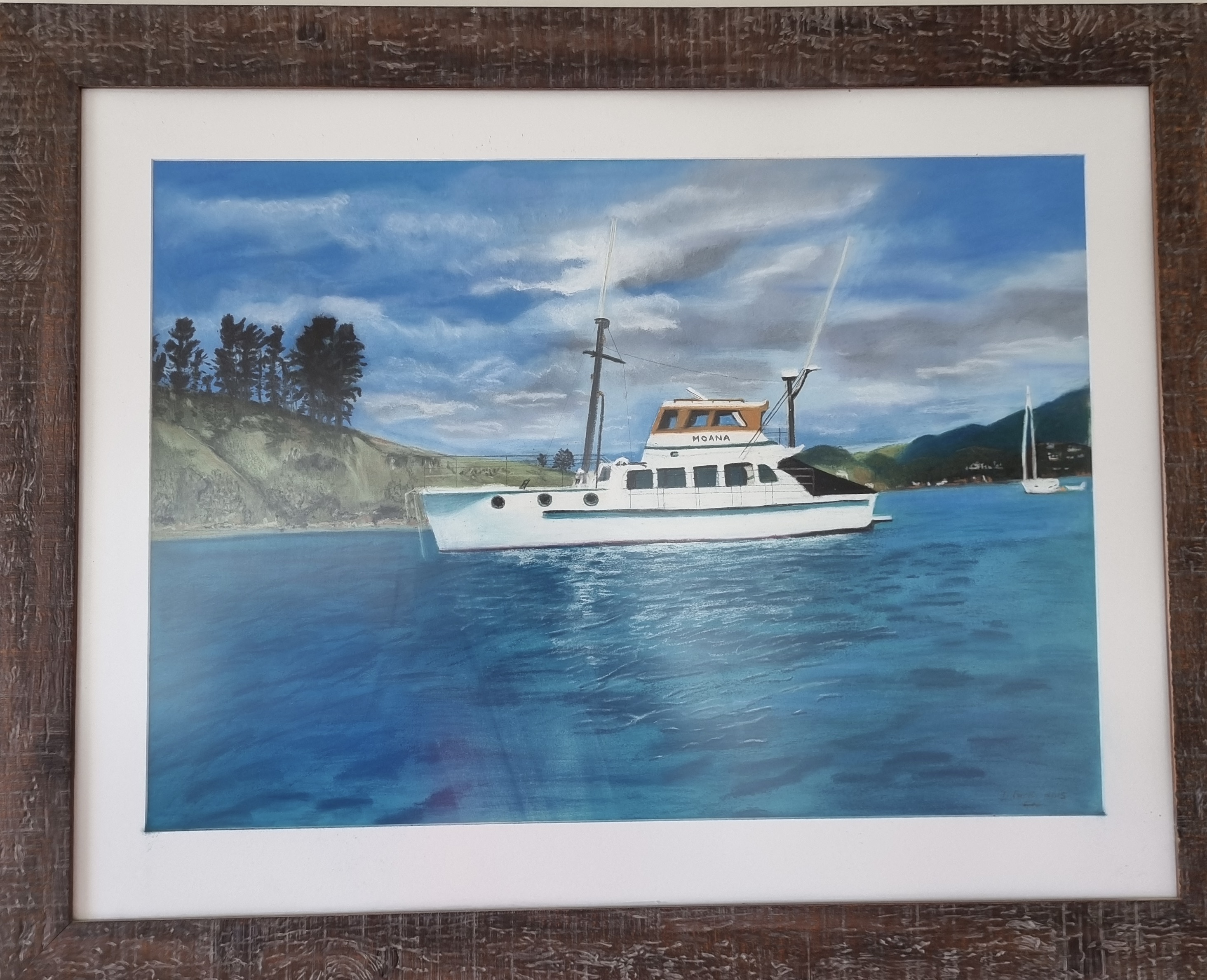
Update 12-09-2024 – Photo below of a painting of Moana by Debbie Park


W1 GOES FULL CIRCLE
photo & details ex Ken Ricketts, edited by Alan H
If you enter W1 in the waitematawoodys search panel you will see Ken Ricketts has been a long admirer of this unique vessel. Now via a chance posting on ww Ken has reconnected again after 28 years.
Ken was invited to inspect W1 by her present owner, who has W1 in the driveway of his home, given she is 70ft overall that in itself is impressive.
Ken reports that her current owner has had her for approx. 8 years having bought her off her Waiheke owner in a very run down state with her 2 x 671 GM Detroit’s belching lots of black smoke & with a view to carrying out a total interior & combings rebuild,which is now almost completed.
W1 has had several rebirths & its pleasing to hear that Ken reports in her latest there will be no flying bridge 🙂
It appears that with her very flowing new layout, complete with traditional varnished teak combings, she will very much look the part on the harbour & with her heritage will certainly be one of the most unique of all our classic boats. Refer the previous ww post for full details on her specs & history. The current refurbishment specifications include – 230 volt power, a full hot & cold commercial type air-conditioning system ducted right through the boat, water maker, clothes dryer, all the other latest & best of everything you would expect on a vessel of her size. Currently the restoration crew includes up to 3 artisan boatbuilders, along with the owner himself, part time, who are crafting her superstructure & fit out as if she is the royal yacht.
The 2 x 671 GMs have become 1 x GM Detroit 8V92TI with a power output of 650 hp. This the owner anticipates will give a very good turn of speed — with a 32 inch propeller, through a 2 to 1 gearbox.
She was only capable of about 13 knots flat out when she came out of the water. She now sports bow & stern thrusters & a new underwater exhaust system with fairly comparatively small, above water side outlets for idling, to avoid backpressure.
The owner has personally just finished making 2 identical state of the art beautifully varnished teak game fishing chairs which will be mounted side by side for gamefishing when needed. He has never embarked on a job of this type before, but Ken reports that there is not a game fishing chair manufacturer in the world, that could have do a more perfect job.
We look forward to seeing her in the water & ww will hopefully be there to record this magnificent (class of one) 70 year old vessel begin the next phase of her life.
Lastly, Ken has a favorite hobby-horse & thats the changing of a vessels name by subsequent owners – Ken is of the belief the name at launch time should remain for the life of the vessel. Well Ken was very happy to learn that W1 will grace her stern again.
A UK sister ship? – Dave Giddens was recently in the UK & spotted the boat below in St Ives, Cornwall.

W1 CHAPTER #3 18-12-2014
photos & details e Ken Ricketts, edited by Alan H
The photos below show the latest update in the life of W1 – her current owner, Francis Uren, has just completed an extensive ‘rebuild’ of the 70′ W1 (previously known as CORROMA, from the early 1950s) launch. The extent of the rebuild even includes air-conditioning………………..
Ken has been instrumental in securing her original WWII RNZAF identification No. i.e. #W1.
Next step is sea trials & we look forward to a report on the performance of her single 8V-92TI 650 HP GM Detroit diesel.


Sea Trials photo ex Ken Ricketts


At Bayswater 04/01/2015
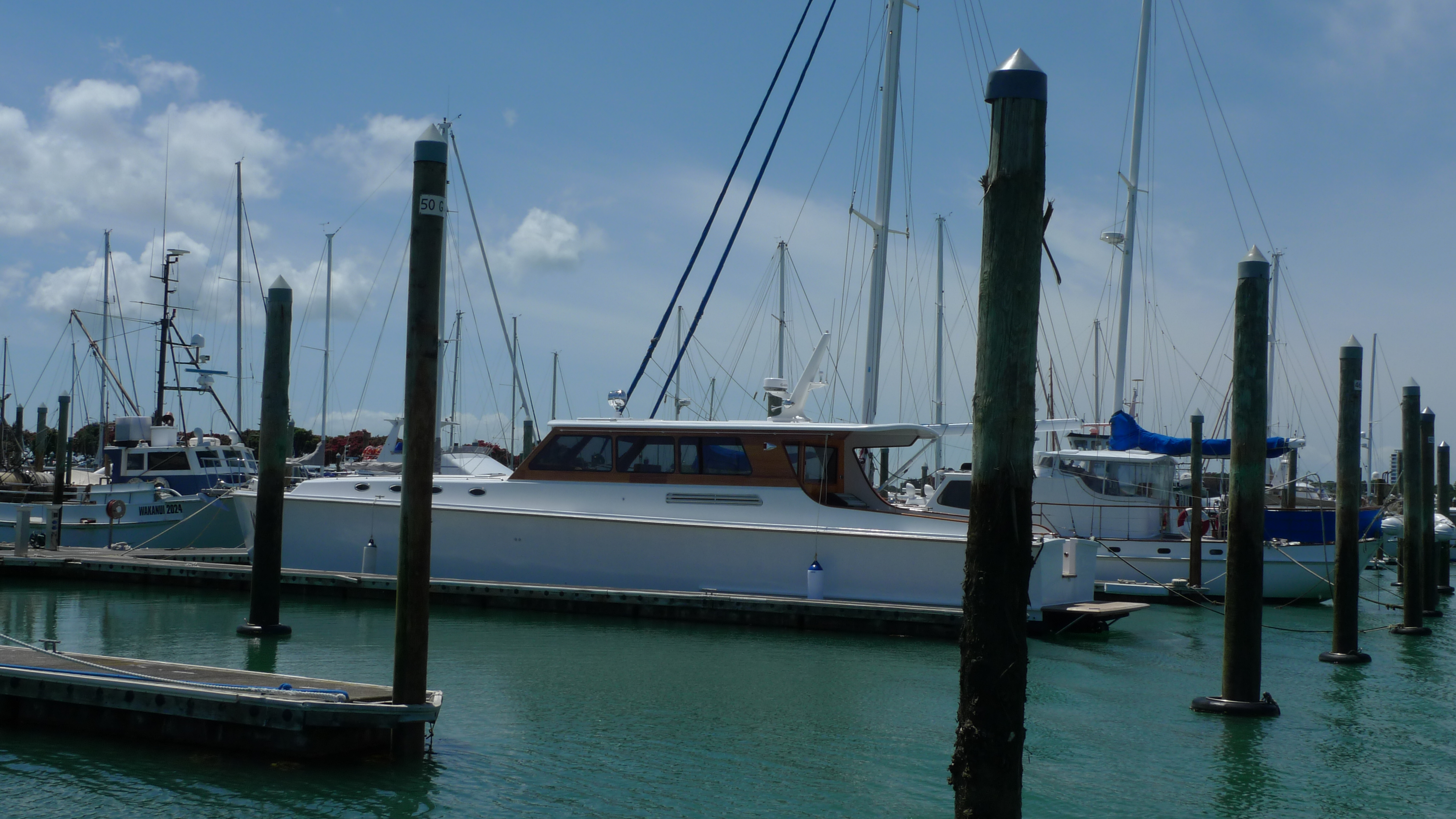
At ‘speed’ 10/01/2015 (low res photo ex Ken R)

31-05-2015 – Update ex Ken Ricketts
W1 has just been hauled out at Gulf Harbour hard stand for her first bum clean & for the fitting of here correct prop — a 32 x 33 LH Bri Ski. – The first one that was made, it was discovered just before she went in the water for the first time, when her refit wad completed, went the wrong way, so she has had temporary smaller one since launching, until the correct one could be fitted this week.
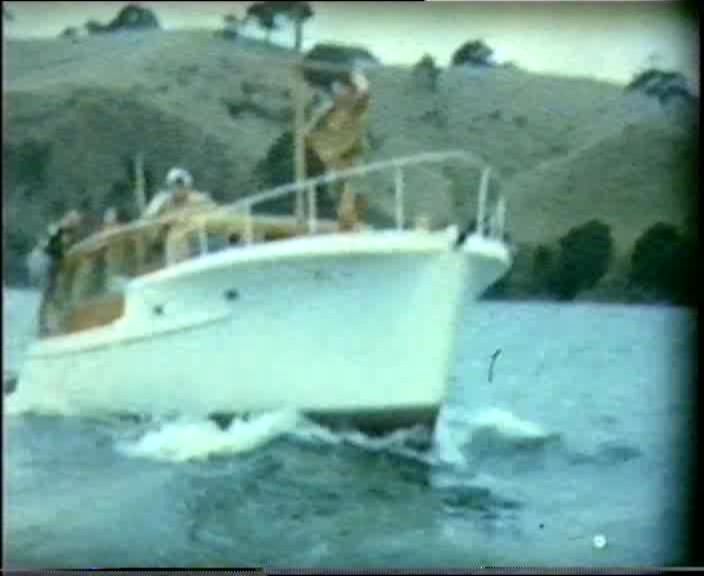
Post re-launching, with the new prop, at 22 knots her wake was less than 12 inches & absolutely flat out the stern, as can be seen in the photo below. Impressive for a vessel designed & launched in the late 1930s.


05-09-2016 Input from John Bullivant
“Hi guys, what a great find this site is, great job!. I have been wondering where W1 had got to! I am another who has had a lifelong interest in her and other wartime Navy and Airforce boats.I thought this might be of interest to others interested in this vessel. I spent a few weeks in the Marine Section during my time in the RNZAF around 1973 just as they were about to de-commission the seaplane tenders and close the Marine Section
When I was about 15 yrs old a friend of mine and I sneaked on board W1 while she was on her private slipway on the Tamaki River, (tucked around the corner behind the owners house complete with large winch and railway dollies) She had not been modified at that stage (1968/9) and was still in original airforce colours with names still on the lockers in the forward crew room. The wheelhouse was varnished and the hull was white. The wheelhouse door (rear stbd of ) was varnished and louvred as was the radio shack door immediately to its left. To the right of the instrument panel and large chrome wheel was a companionway leading down to the mess room ? (the stair treads had cast aluminium oval ”British Power Boat” grips attached ) Forward through the bulkhead was a 4 berth bunk room, ahead of this a head and then a large chain locker.
Up on deck and into the radio shack you went down through a hatch via a ladder attached to the forward engine room bulkhead. At the time she was fitted with 2 Greys marine diesels which were under grey painted canvas covers port and stbd with not much else in there. We assumed they had been put in by the Airforce as an economy measure as they looked to be only around 150 – 200hp size and did not look recent. aft of the engine room was another 4 berth bunk room and another head behind that with from memory a washing area. I think there was a hatch from there to the after deck.
The owner appeared later to be experimenting with cabin styles and the first I saw (she was then moored below the new Panmure bridge early 70s) was a long flat ”ferry like” structure extending from the wheelhouse with windows along the sides which did not last long as it appeared to be too heavy and made the boat squat in the stern. Eventually she ended up as ‘Corroma’ (did not appear to have this name when we first saw her) I saw her on the hard in Tauranga many years later then later still in Bayswater marina (I think it must have been just before she was scalped as she still looked in quite good nick) I think the owner on Waiheke used her for diving charters. I did not see her for a long time after that but thanks to this site I know why. What a fantastic job Mr Uren has done, congratulations to him on keeping a classic hull flying. Not only was she one of a kind in NZ she was apparently the only one ever delivered to the southern hemisphere . There is only one other 64ft HSL still running (HSL 102) and that is in the UK, where it was saved from houseboat status and totally rebuilt to admiralty plans by a chap who owned an engineering business. It is powered by 3x 500hp Cummings diesels with a top speed of 42 knots (now sold to British Maritime museum). He has also restored a 40ft seaplane tender and a 70ft MGB (powered by 3x Mann diesels for around 40 knots)
H1 was according to a Marine section news letter, powered by 3x 500hp Napier Lion marine engines for a speed of 38 knots. She was 64ft and built by the British Powerboat Company Of Hythe UK . Hope this was of some interest and that I have remembered things reasonably accurately, (it’s been a long time but having been lucky enough to have seen her in original condition at a young age has stuck with me all my life) I am also at present building a 36″ scale model of W1 for radio control.
If anyone is looking for info on these HSLs etc I may be able to help if you are having trouble finding anything”.
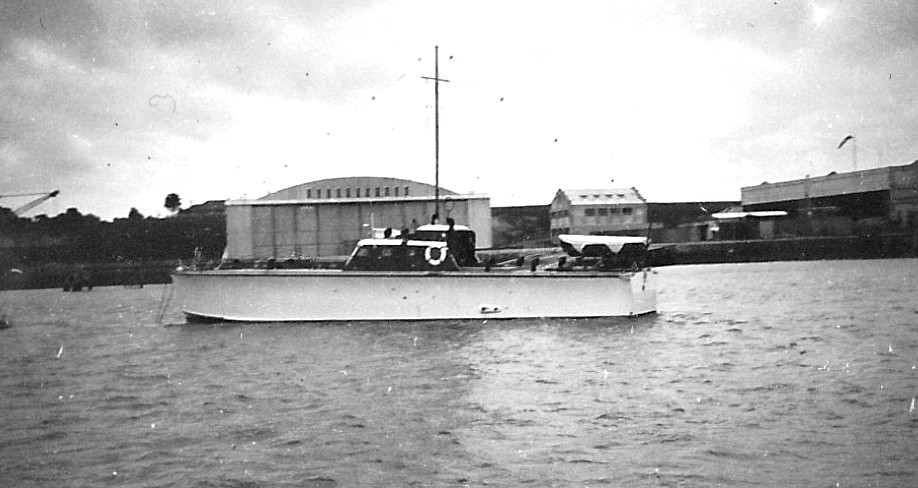
09-10-2023 UPDATE : In the photo below W1 is seen moored off Hobsonville air base, Ken Ricketts who sent in the photo (ex fb) believes the date is probably c.1948>50 = i.e. post WWII, because she has no armaments, no insignia on the bow, & a dinghy on the aft deck, which she never carried during WWII.


ANTARES
photos & details from Ken Ricketts & Harold Kidd
Built by Supreme Craft, – (McGeady), – on the corner of Summer St & Ponsonby Rd., Ponsonby, in the 1950s, she is a great example of the McGeady craftsmanship. She originally had a 4 cyl Ford diesel, later replaced with a 100 HP 6 cyl Ford. Her engine installation was done by the late Tracey Nelson, an outstanding marine & automotive engineer of Bell Rd Remuera, as were almost all of the McGeady boats, certainly from the 1940s onwards.
She was originally owned by Cyril Parker a self employed motor engineer, who’s business premises were in Kohimaramara Rd., Kohimaramara.
Apologizes for the quality of the photos, if anyone has better please email the to waitematawoodys@ gmail.com
15-07-2015 Photo below c1986 ex Laurie Webb, when owned by Ron & Shirley Phillips, who owned > c2006


VALENCIA
WW has been contacted by Ron Trotter the owner of Valencia built by Baileys. Ron thinks she was built some time in the 1940’s (unlikely, more like 1920’s AH). He was told that it was built for a guy that did the Kawau Island mail run back then but cant get much info about this. The boat is currently moored at Whangamata.
Ron is looking for any info on this boat and or photos of how it was in early days. Reply here in the comments section. Ron’s details are also below.
Ron Trotter – ph 078893374 / 0274316405 / 0274850950wk
Harold Kidd Update
Well, she looks very much like the VALENCIA at Whangarei in an earlier post which a search here under “Valencia” brings up. She was in Whangarei from at least 1927. I think she could have had a name change just before that to the name of the wildly popular paso doble song of the time, “Valencia”.
Maybe however she was new in 1927. It’s possible. I know nothing about a Kawau connection which could be more myth.
Bailey & Lowe is more likely than “Bailey” = Chas. Bailey Jr.
Update #2
It is also possible that she is the VALENCIA built in Tauranga for?/by? L. Oliver in 1926 which he delivered to a Whitianga purchaser in March 1939. There were lots of VALENCIAs after that bloody song came out on 78 after the film came out in March 1926.

