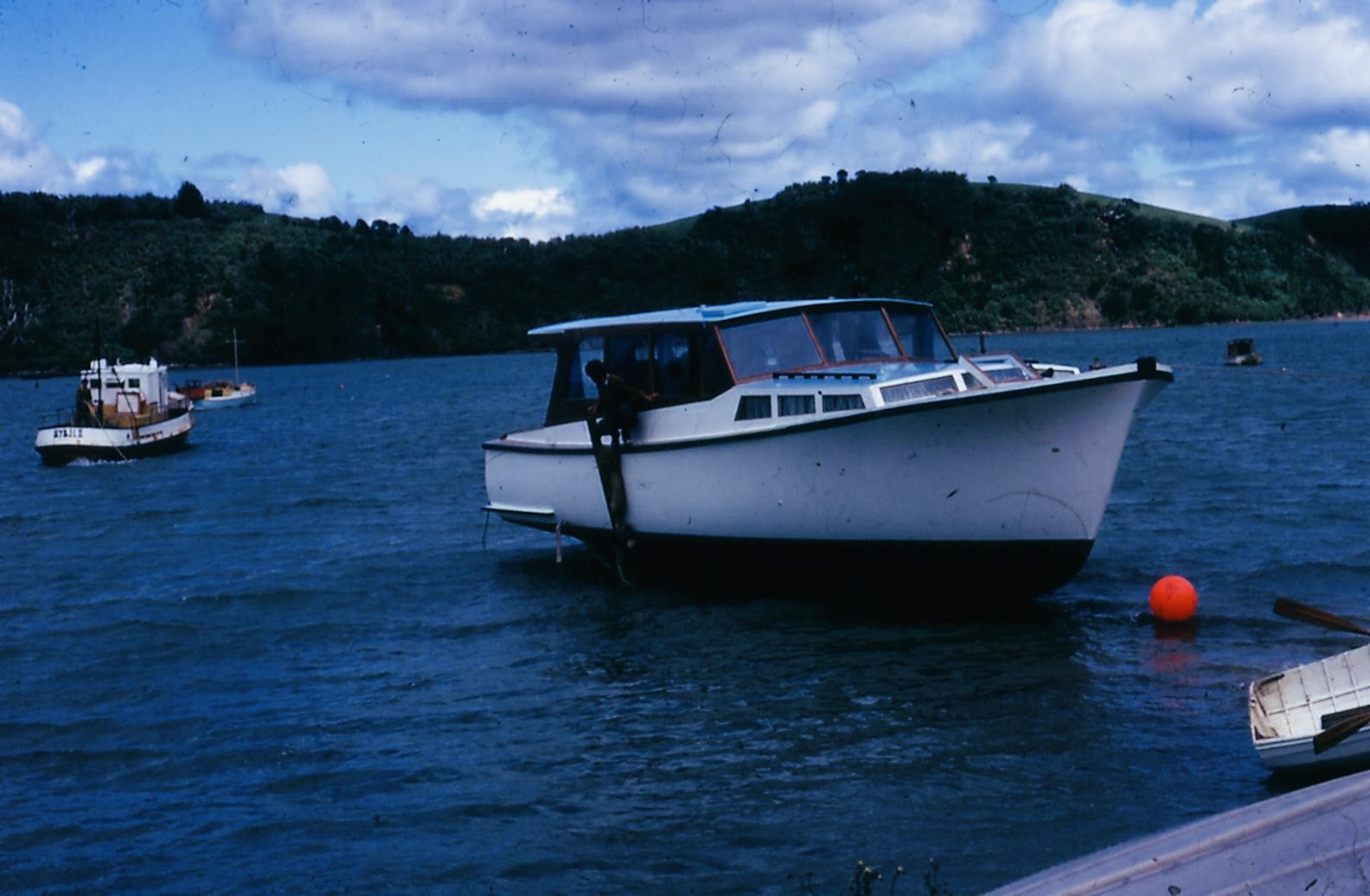
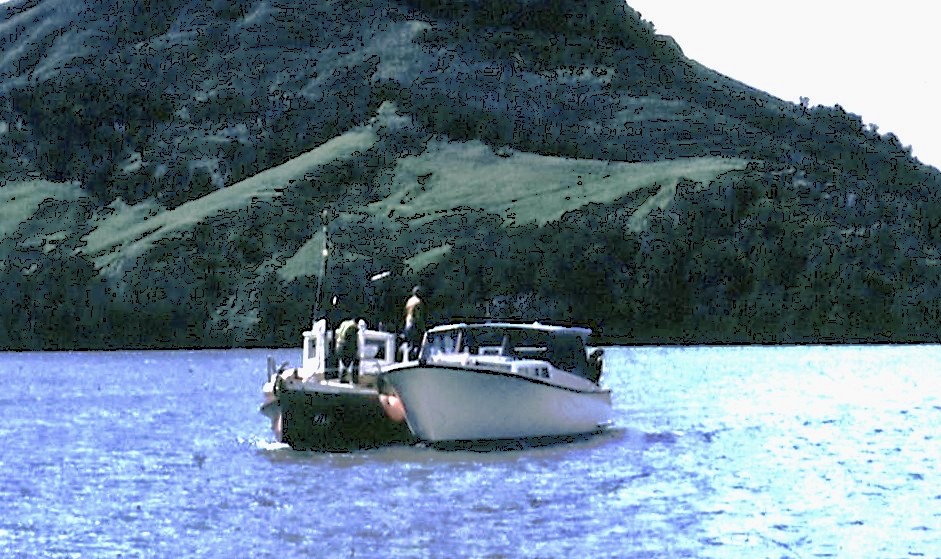
BUILDING THE CLASSIC LAUNCH – GAY MERILYN (Tee Gee > Stokin) – Part Two

Working On The Plan
First Frame In Place
Ribs On Over Frames
What To Do Next
First Skin On
Doing The F/Glass Coating
F/Glass Painted
Turning The Hull
Coming Out
Tight Fit
Ready To Launch
In The Tide At Last
Off To Her Mooring
Looking Very Smart

BUILDING THE CLASSIC LAUNCH – GAY MERILYN (Tee Gee > Stokin) – Part Two

Following on from yesterdays story on the launch – GAY MERILYN, today thanks to more input from Gwenyth Frear we get an insight into the building of the launch – we hand over to Gwenyth to tell the story – Enjoy (photo ex 35mm slides)

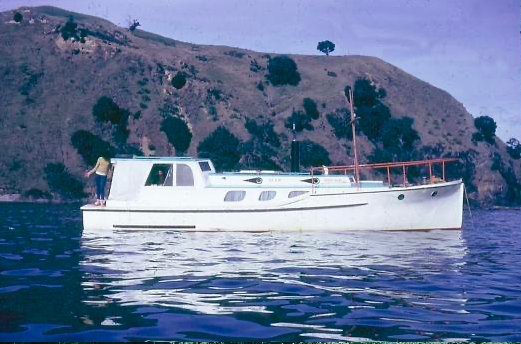
“We had always had boats of one sort or another, and owned the launch LORNA DOONE at this time, but that’s another story! Keith decided he would build another one more to his liking….

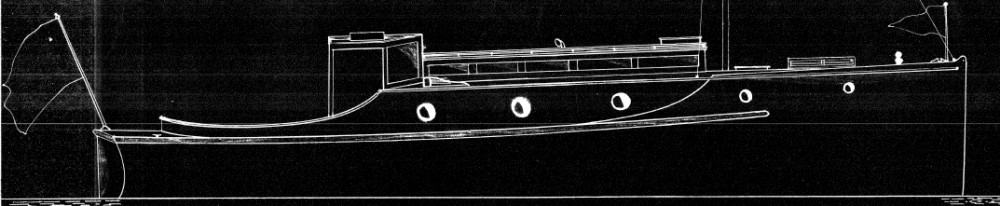
Keith thought he would like to build  launch about eleven and half metres long, so when we went to Auckland in late 1969, we went to one of the large bookshops to see if we could find some plans. But as we were starting to look at design books, there didn’t seem to be anything he wanted. Someone overheard us discussing plans and the pros and cons of the matter, and tapped Keith on the shoulder. “You should get in touch with John Lidgard  he’s the man who can  help you”, he  said. So,  no  sooner  said  than done!

We found out where he was and went to see him in his workshop and came home with a set of plans, a bandsaw, an abundance of enthusiasm, and not much else. In the course of our looking around, we made the acquaintance of one of the workmen working for John. He said he came up to Cooper’s Beach each year for his holidays, and that he would look us up and see how Keith was getting on. No doubt he was fascinated by the idea of a raw farmer tackling a tradesman’s job with no know-how, and no equipment!!

Keith mentioned to the manager of Northland Motors in Kaitaia, that he was thinking of building a boat, and the next thing we got notice that there was a motor sitting in the shop waiting for us!! Now we were well committed to the job!! So  Keith and Barry (my brother) got down on the floor at home  and started  drawing out the plans from the instructions Keith had been given.

The Big Building Project

The first thing to do was to order the timber from Lane and Sons’ timber mill at Totara North. Keith was able to get timber from the last of the kauri trees that were milled there before the restrictions came in  that no more kauri was to be cut down.

We were milking a sizeable herd of cows at this time (two people in a walk through cowshed) , and there was all the usual farm work to be done as usual, so we knew it would be a slow job.

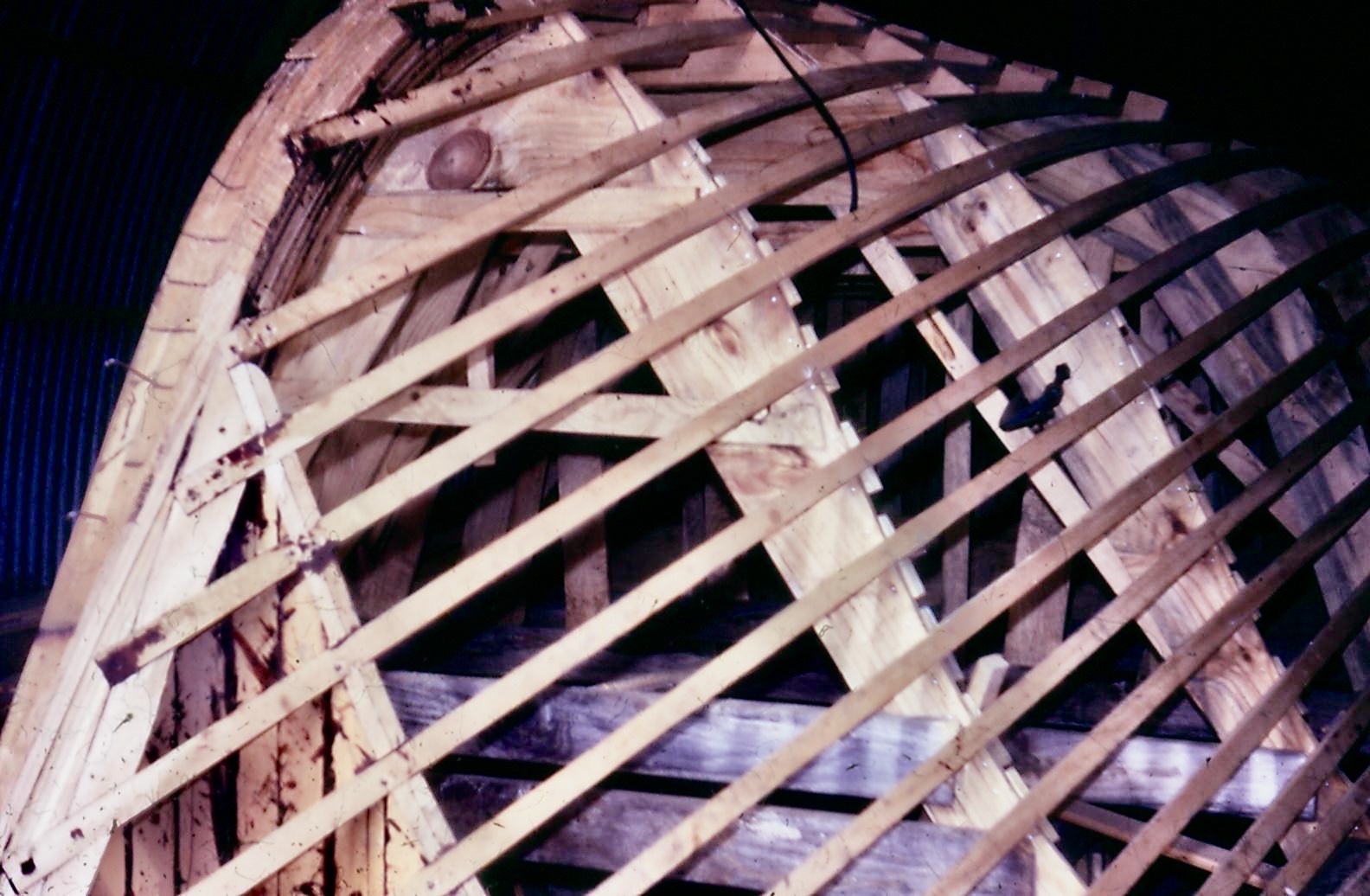
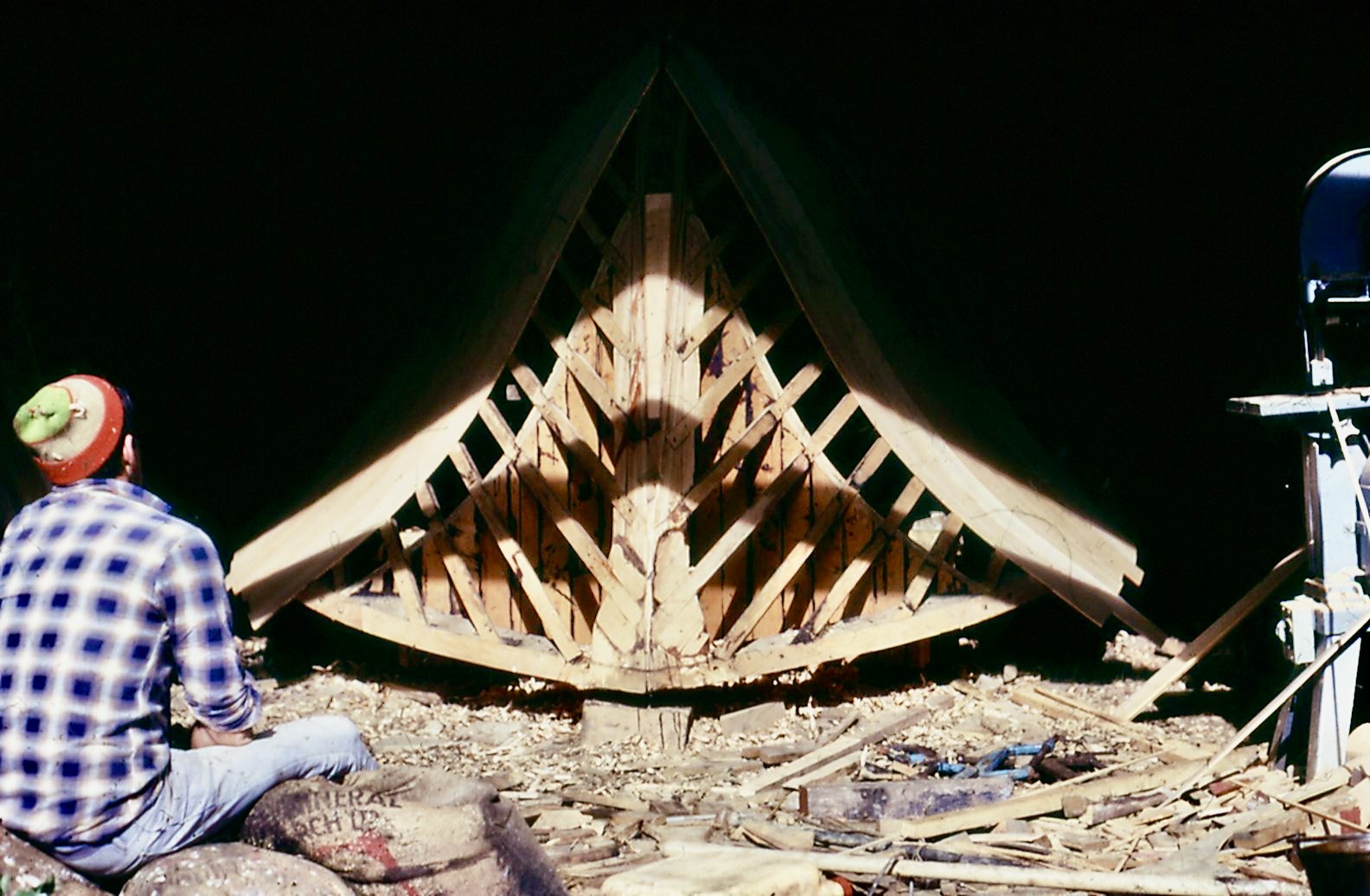
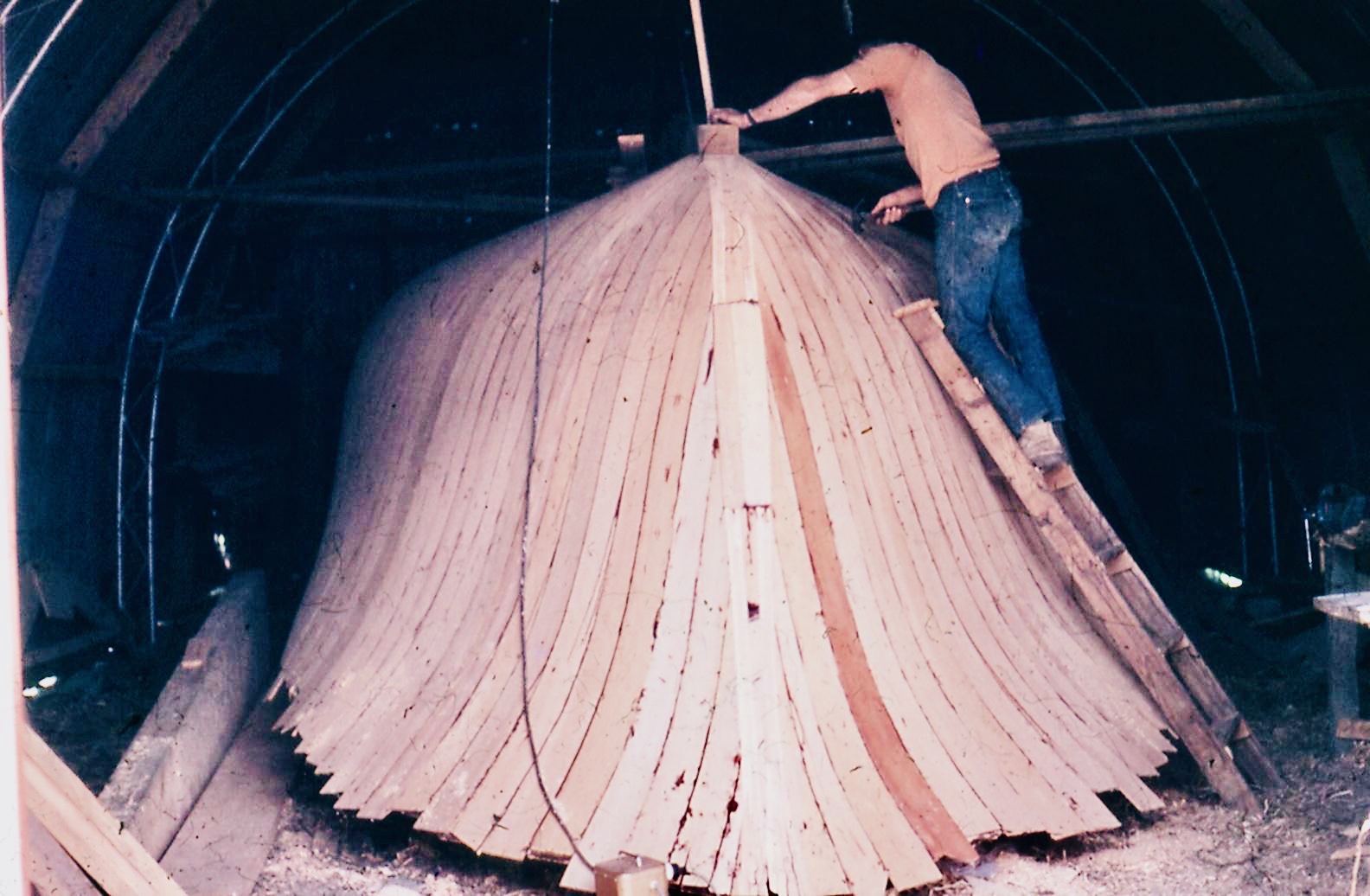
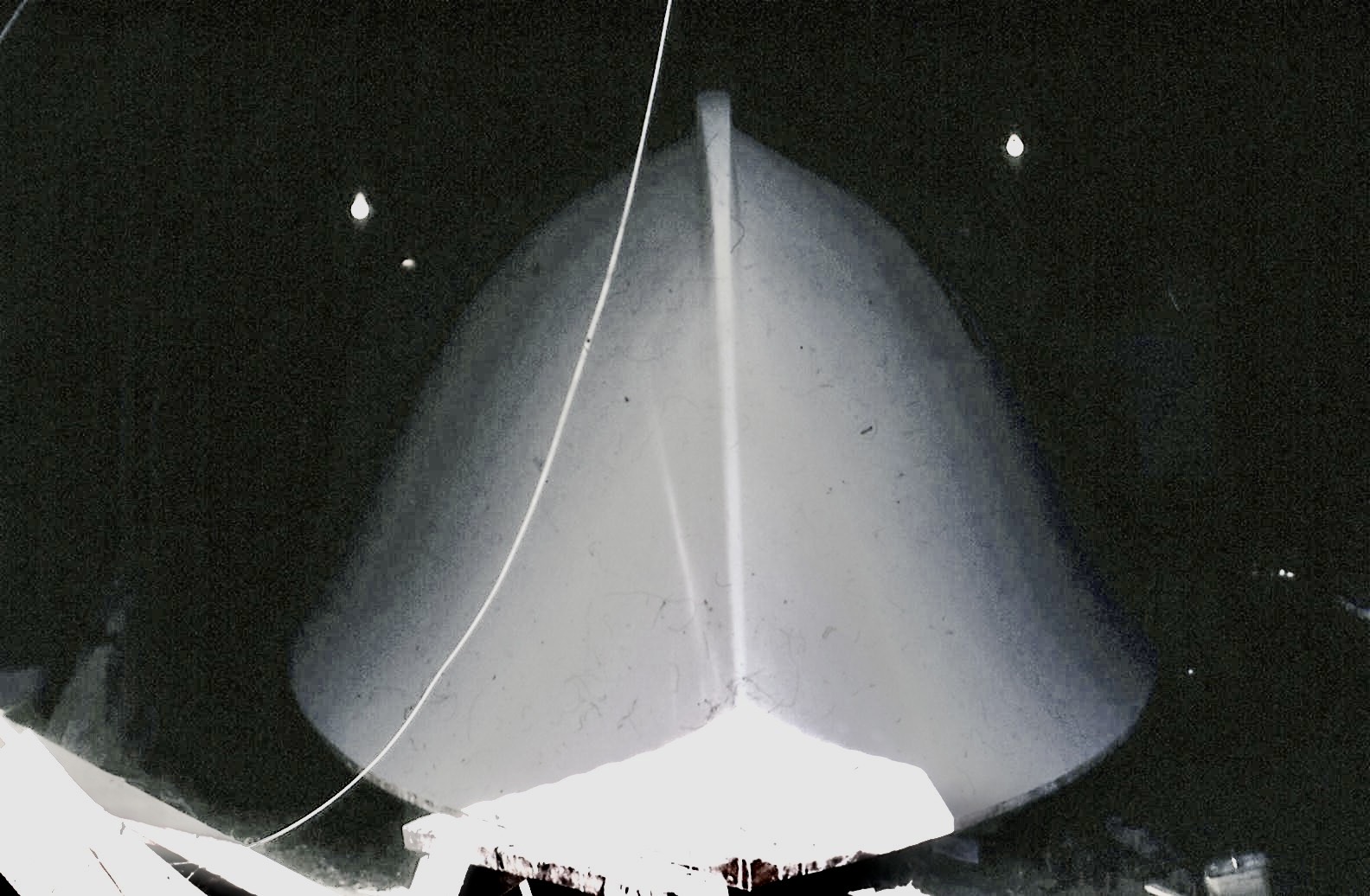
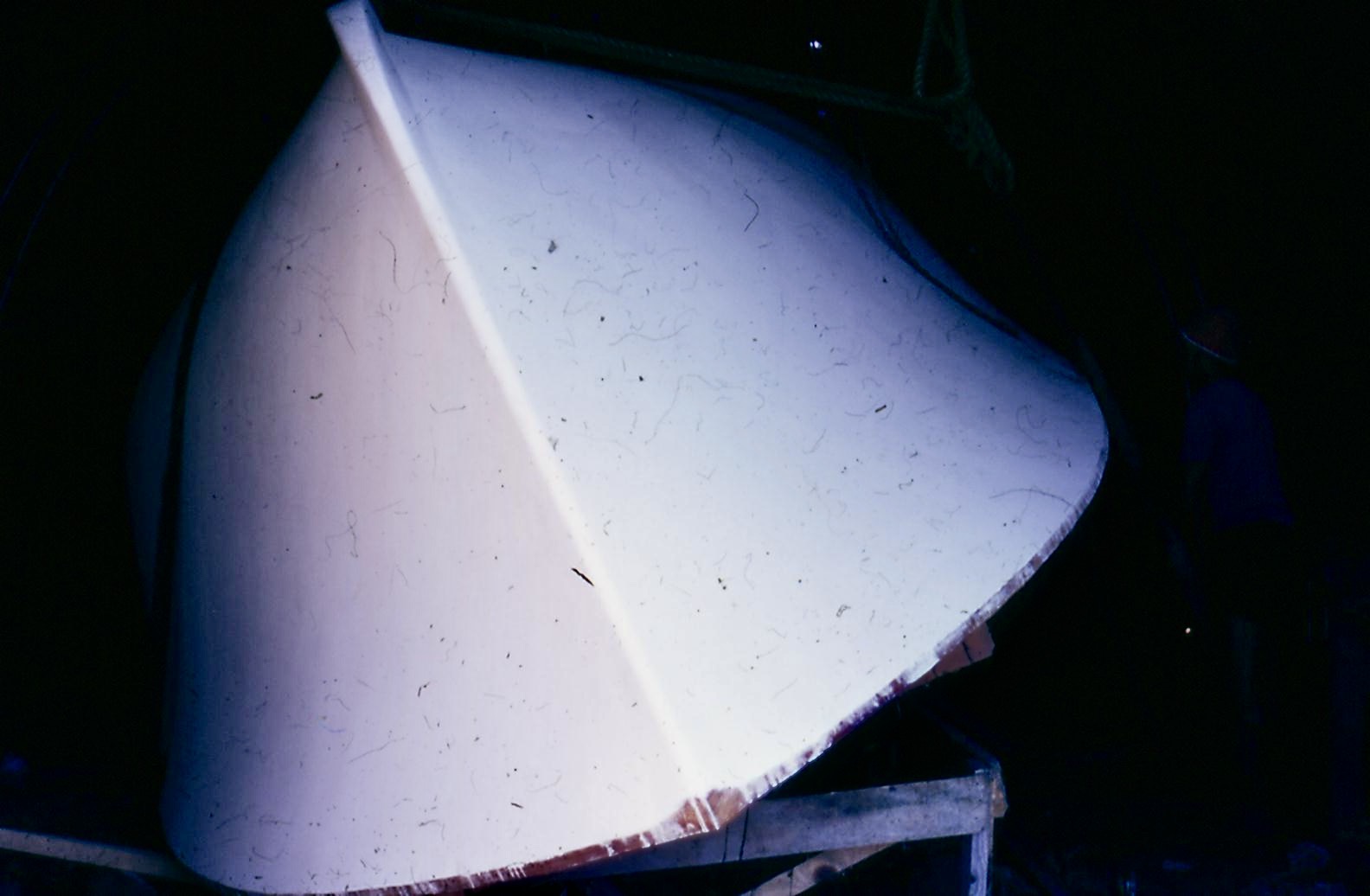
The question was where to build it? That was no problem….there was the round barn next to the cowshed. So it was cleaned out and the work began. The first job was to put the building frames in place, starting at the bow of the boat, and placed in order the full length of the boat. Once this was done, then the stringers went on, all screwed and glued into place. The four skins of the kauri went on, one by one, placed diagonally a different way each time. This was the most tedious job of the lot. For a whole twelve months, nothing was done after the first skin went on, until an older man took pity on him and came to give a hand now and then. After that was done, then the fibre-glassing was done….the first coat of  resin was put on over fibre-glass cloth, sanded down, and then another coat of resin before the final coat of white fibre-glass paint.

In May of 1973, the hull was ready to be turned over. The keel was in place with the hole for the rudder bar already done. The day for turning it over came, and was a matter of great curiosity for the neighbours. It proved to be a very long job even with some of their help. An endless chain was used for this, and it went up inch by inch, finally making it after eight or nine long hours.

The dairy cows were sold that year, with beef cattle replacing them. So Keith was able to work full time on the boat after that. The motor went in (Ford 110 hp) and the work continued uninterrupted until it was completed by September 1974. 

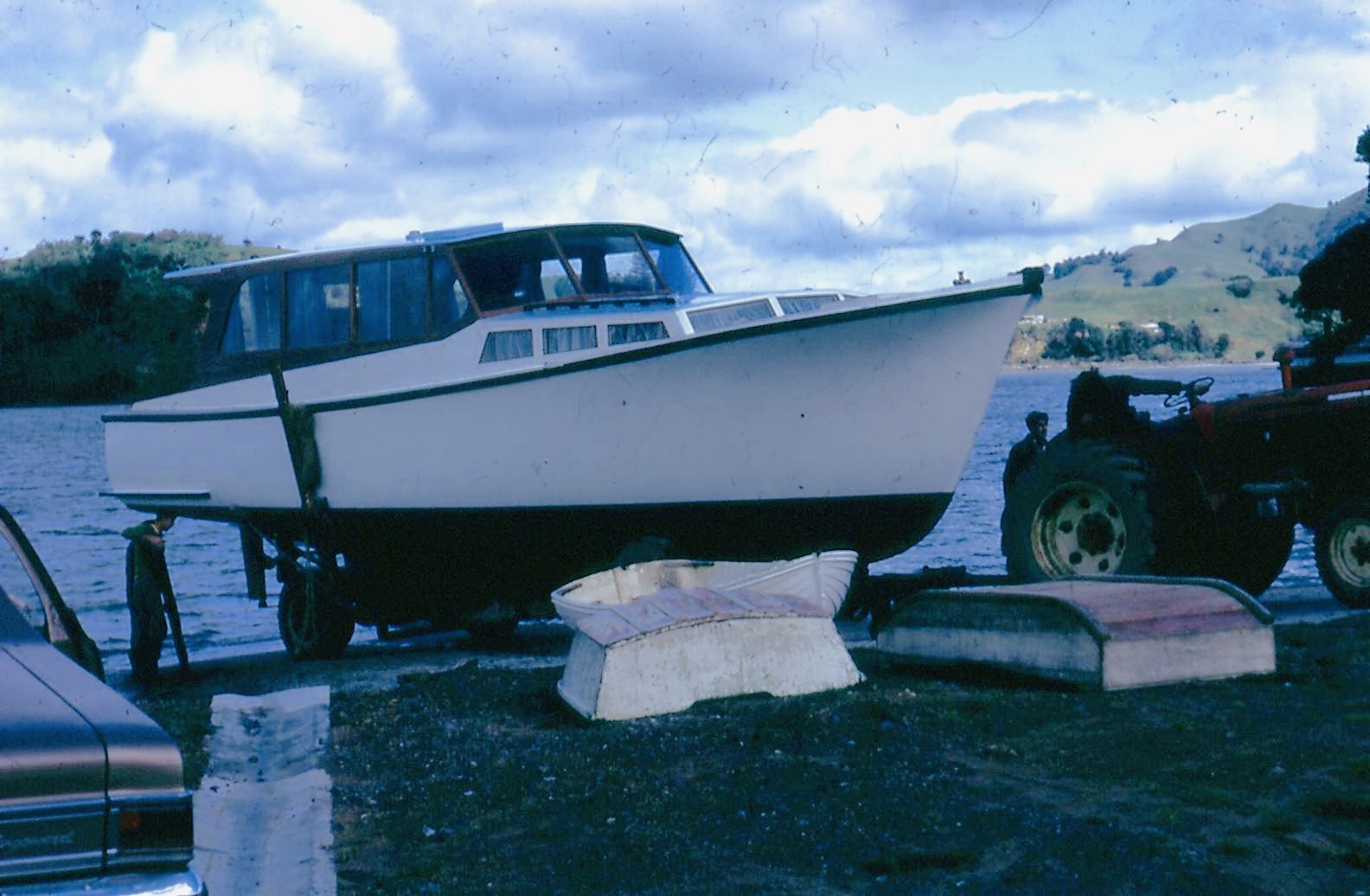
Then getting her out of the shed was the big question on everyone’s mind! How could it possibly be done? The gap between the barn and the cowshed wasn’t as long as the boat, so what was Keith going to do about it? But it was done slowly with the tractor, and  the help of grease on large pieces of plywood, and the trailer being jacked around bit by bit on that.

She waited on the trailer until early the next morning, when she was towed down the road to the ramp at Totara North before the traffic began. Then it was just a matter of waiting for the tide to come in to launch her. By this time there were quite a few onlookers, all asking the same question….will she float straight?

The tractor backed into the water, and she slid into the tide with a waiting fishing boat ready to take her to her mooring. She floated perfectly, right on the water line, as she was meant to.

 At Christmas time that year, when the man from Auckland came up, we gave him and his family a trip down the Whangaroa Harbour. He looked it all over from a tradesman’s point of view, and said, ‘Well, if anyone had told me that a farmer with no boat building experience, and no tools apart from a band-saw and hammer could produce something like this, I would never have believed them’

We felt that this was high praise indeed.”

The Demise Of Lorna Doone

THE DEMISE OF LORNA DOONE

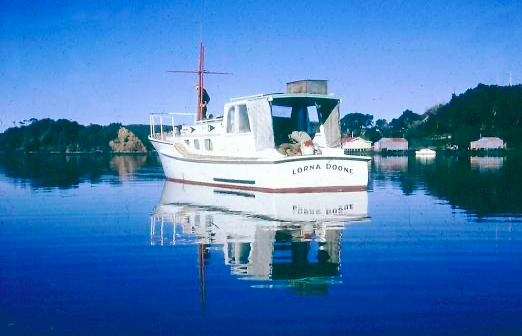
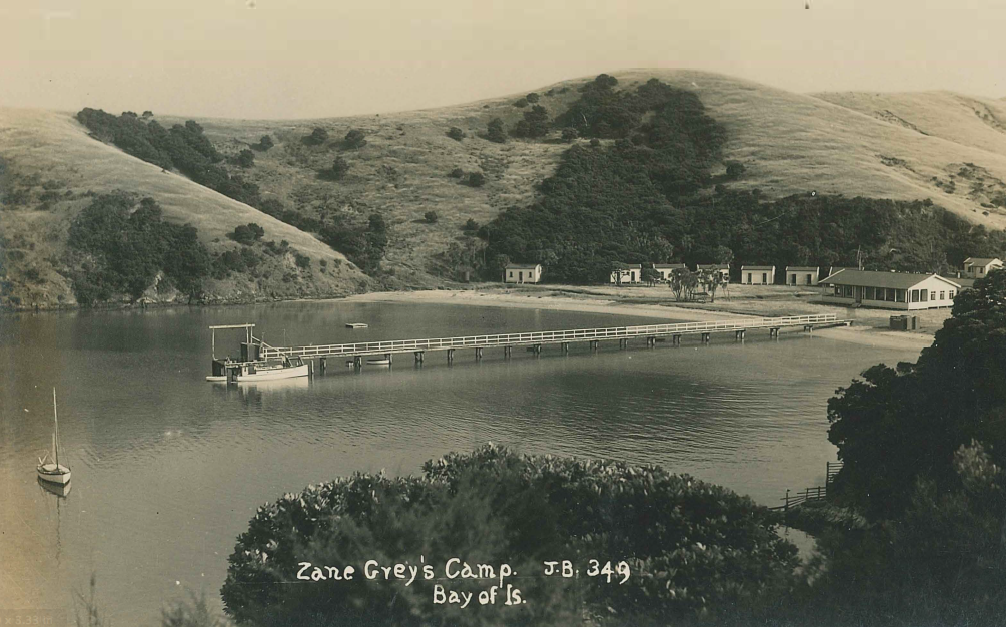
We last saw the Collings & Bell built Lorna Doone on WW back in April 2018, at the time we learnt that she was built in 1926, and one of four launches for the Zane Grey Sporting Club. When launched she was powered by a Redwing engine that gave her a very respectable 16 knots of speed.

In the 2018 story (link below) Martin Howson advised that in the late 1950’s when owned by Des Shimanski Lorna Doona came ashore in a big easterly blow in Hooks Bay, Waiheke Island. She survived that oops and returned to life as a long-liner moored in the Tamaki River, near Bucklands Beach.

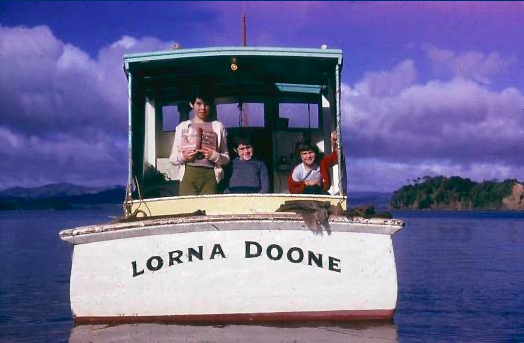
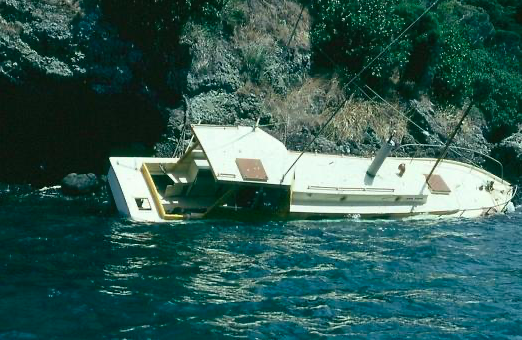
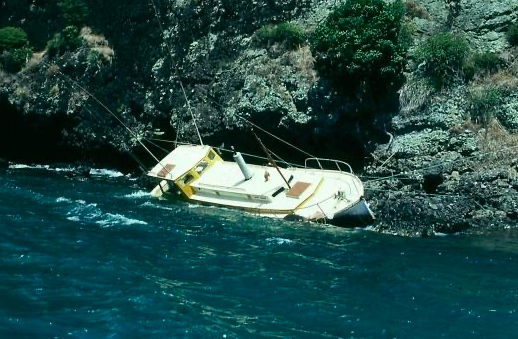
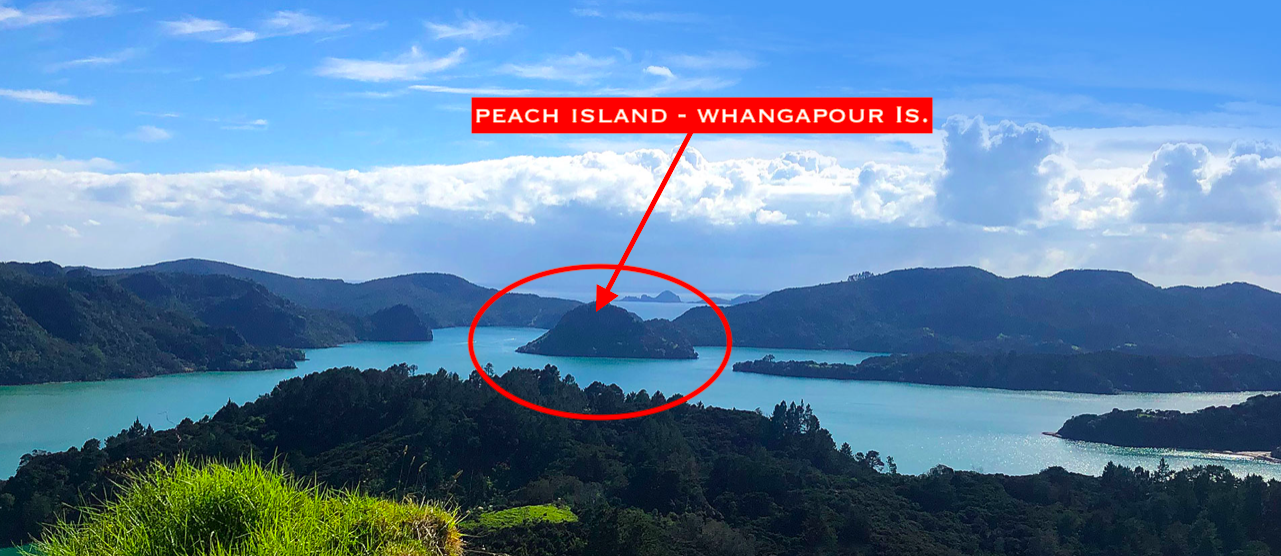
In todays photos sent in by Ray Morey we see Lorna Doone in Whangaroa Harbour, in Northland. Sadly in the bottom two we see her c.1970’s when she was wrecked on Peach Island, in the middle of Whangaroa Harbour. (as advised by Gavin Bradley)

Can anyone tells us the back story to the Peach Island incident – its a well protected harbour and the island is almost dead centre with good deep water both sides – see photo below.

08-05-2023 Input ex Alice Morrison – Whangaroa can get some gnarly gusts through the valleys. A few months ago, the wooden yacht ‘Hope’ ran aground in Waitapu Bay/Ota Point when a big gust came through as he was lifting anchor. It actually happened again around at Ratcliffs Bay a few days later.

Lorne Doone

Unknown-1

LORNA DOONE

The game fishing boat Lorna Doone has been mentioned in numerous WW stories but I have never had a photo – thanks to Lew Redwood we now do.

She is pictured above at the Black Rocks, Bay of Islands. The photo was taken by Tudor Collins.

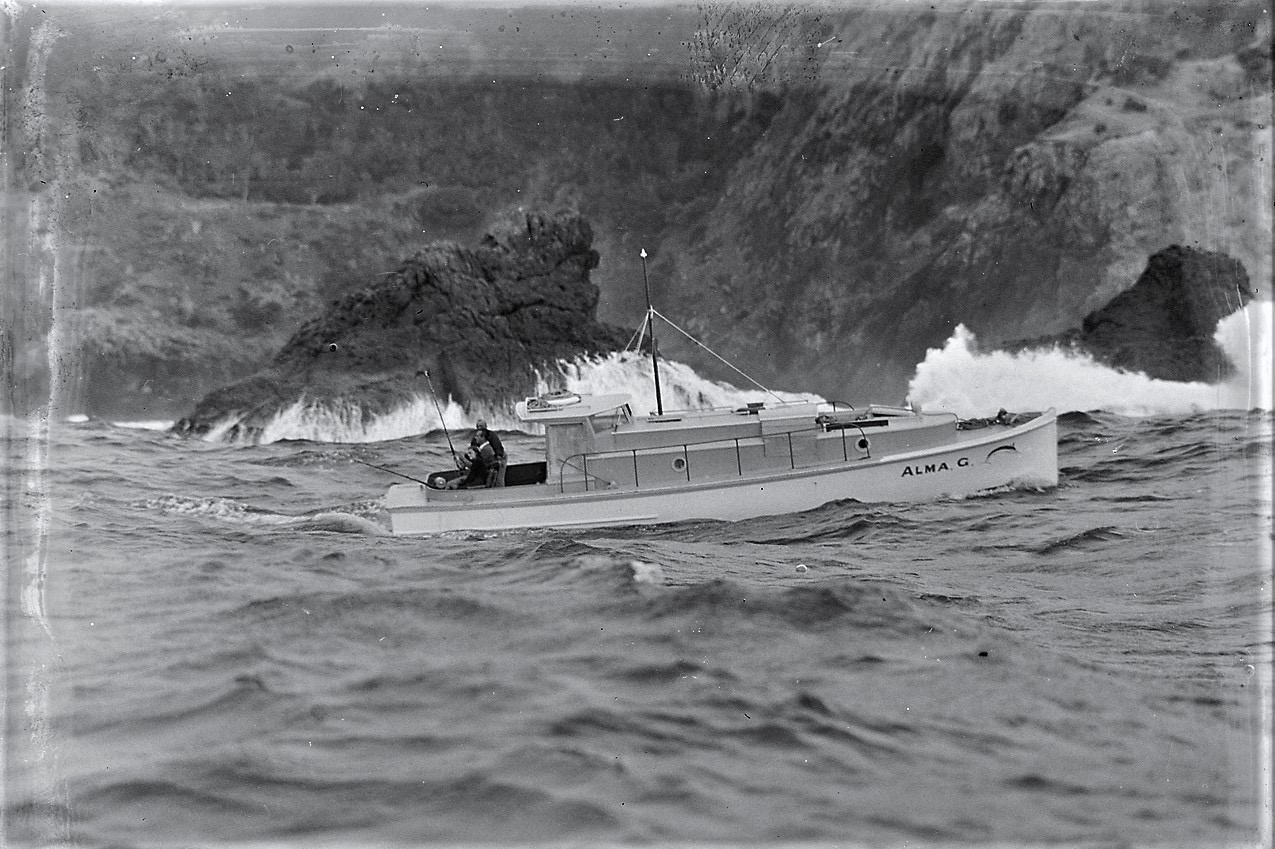
Lorna Doone is a sister ship to Otehei, Alma G (the first of the Collings & Bell clones) & Manaaki. All were powered by Redwing engines & were capable of 16 knots.

For comparison below is a photo of Alma G, off Cape Brett.

Unknown

Input from Martin Howson – In the late 50’s both Lorna Doone and Matareka 11 were moored in the Tamaki River at Bucklands Beach L D was owned and operated by a Des Shimanski and M was owned and operated by Rex Sly both vessels were long lining at that time, great to see that both remain both , Des’s son Brian went on produce Briski propellors .On one occasion Lorna Doone came ashore on Hooks Bay on Waiheke with a big easterly blowing and Bert Surbritski with Romo would not tow her home because he knew that he would lose her on the way home with her riding up on the tow and dropping back with a heavy shock load. It was always rumoured that LD had the end of a sword fish bill through her bottom planking beneath the cockpit sole, I never saw it myself.

Some Advice Sought

I have been approached by Graeme Finch the owner of Te Arahi looking for some advice on his name boards (see below). They have a paint effect that appears to have been done to look like a varnish finish. The name / letters are done in gold – which Graeme believes is gold leaf given how well they have weathered.

Graeme is intending to paint the edges white, and would like to find someone who understands the “brown paint that looks like varnish aspect” to touch up the front surface – it’s not too bad at present, but he wants to attend to it before it becomes a major.

So in summary he is trying to preserve the gold leaf lettering so hoping to leave the lettering in place and work around it touching up those small areas, which have started to deteriorate – rather than removing everything and starting again.

So woodys anyone know the paint/varnish effect & who might do a small job like this?

My initial thought was it might be aged Cetol? A horrible product.

Unknown-2

Otehei

img_8036-3

OTEHEI

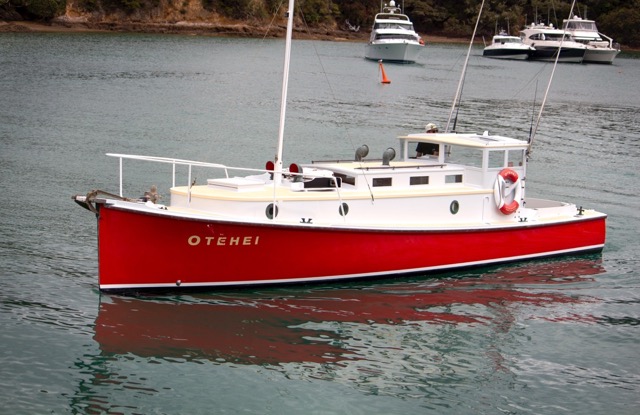
The note below (edited) was sent to me by Gavin Bradley  &Maggie Mouat, they are the new owners of Otehei & have asked for help from the ww readers. The top 3 photos above show Otehei in Otehei Bay, December 2016. The bottom two above are by Dean Wright (ex K Ricketts). More details here https://waitematawoodys.com/2013/08/28/otehei/

“I recently became aware of the Waitemata Woody’s site which I have to say is an amazing resource and I am loving the daily posts.

I found the site while searching for old images of the Otehei which my wife and I have recently purchased from the El Dorado Foundation. We have had a reasonably long association with the boat, having largely funded it’s restoration in 1996 and therefore have good knowledge of its history.

We are however on the hunt for any surviving design drawings for Otehei and/or her sister ships – Manaaki, Lorna Doone and Zane Grey as we plan to have Otehei surveyed and without design drawings she will need to be surveyed as a novel craft. I was hoping you might be able to put out the question through your daily posts or you may even know of people with connections to the other boats or Collings & Bell.

I have a lot of information and photographs of Otehei, historical, contemporary and during restoration. I also have some interesting memorabilia including the original 1927 Statement of Accounts and Balance Sheet of the Zane Grey Sporting Club showing the build cost of the 4 boats at 500 pounds each! I will share all of this with you in due course.

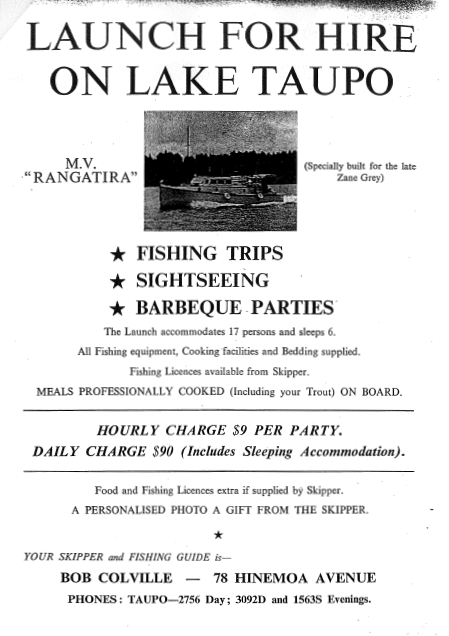
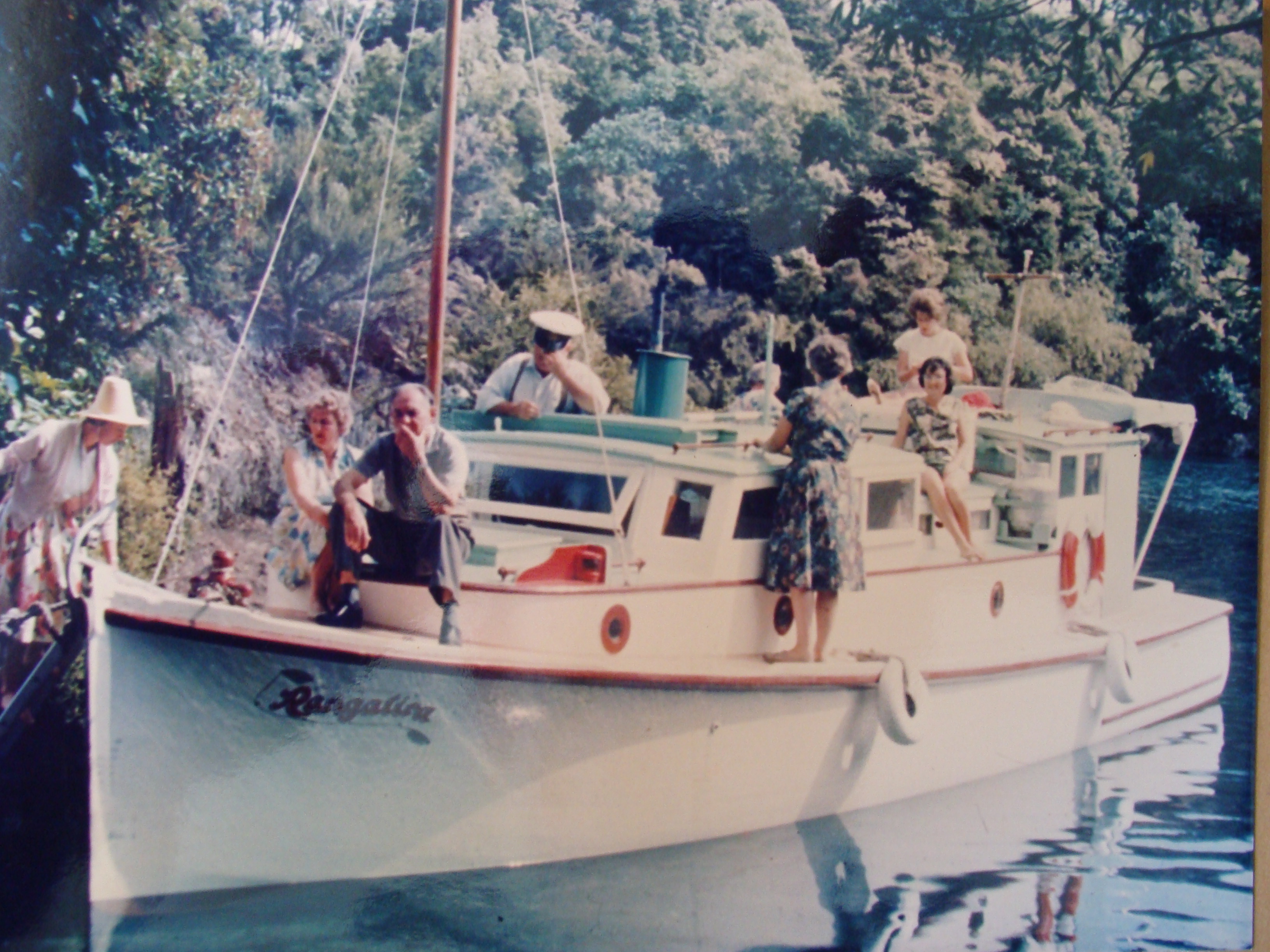
Incidentally, when Otehei was found on Lake Taupo in 1976 by John Chibnall, she was the M.V. Rangatira not Grace Darling, although she possibly could have been called that earlier. Would be interesting to know…The skipper at the time was Bob Colville.

Any information and images would be gratefully received!”

Updated with photos below ex Gavin Bradley that show some relevant parts of the Otehei story

screen-shot-2017-01-10-at-9-14-46-pm

Flier for Rangatira charter business


screen-shot-2017-01-10-at-9-13-29-pm

As M.V. Rangatira on Taupo as found by John Chibnall in 1976

screen-shot-2017-01-10-at-9-15-24-pm

Relaunch day off Russell 1977

UPDATE from Paul Drake – below are some pics of her at Taupo.

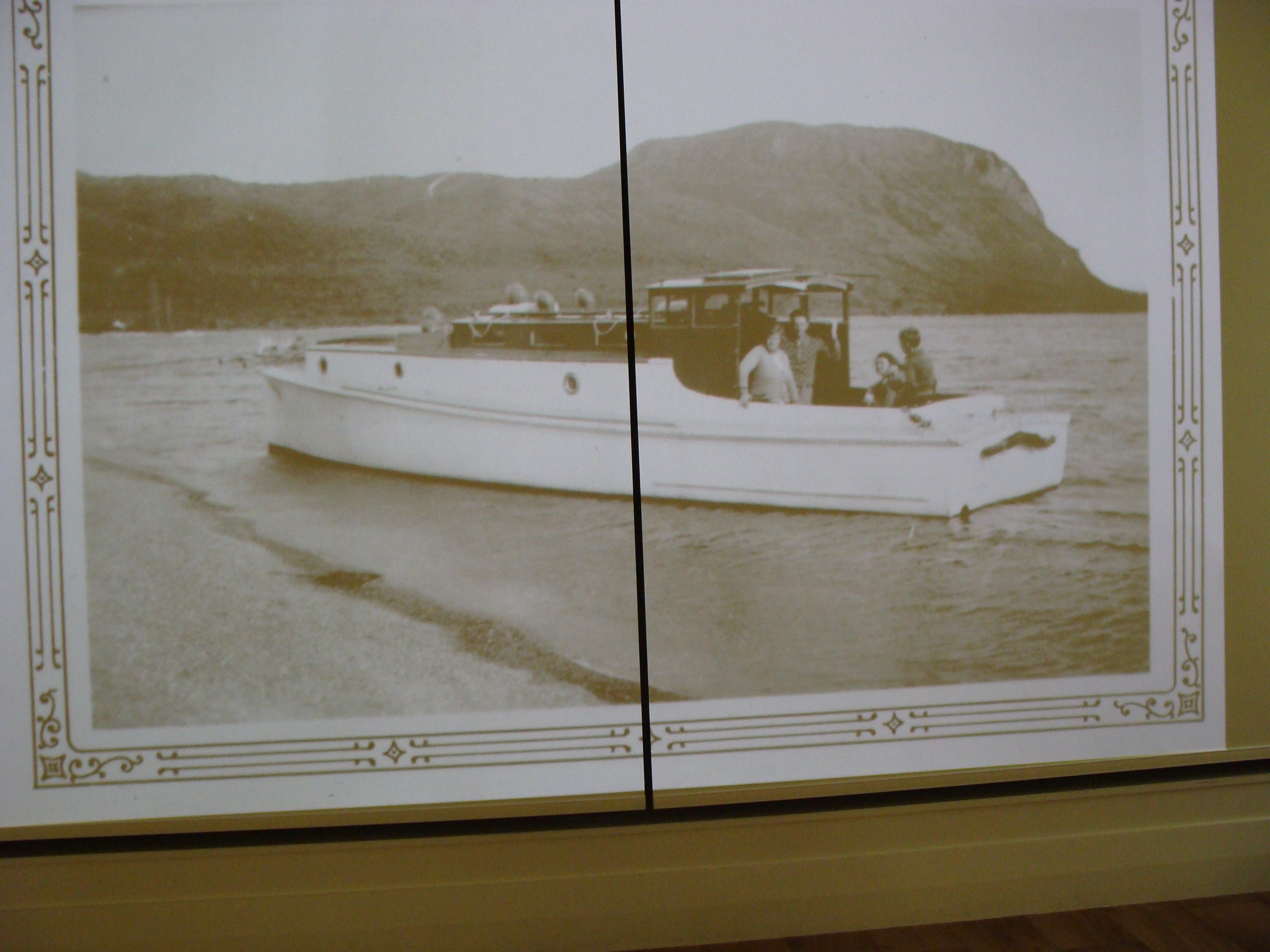
“The first shows her under the crane about to leave Taupo. The second shows her in Boat Harbour (Taupo), skipper Ivan Vickery. In the third, she is on the beach at Whakaiapo Bay, before she was altered by the addition of a wheelhouse. The fourth shows her alongside the “House Boat” (formerly R S S TONGARIRO, BAILEY AND LOWE 1899), again in Boat Harbour, This would have been late 1930’s. She was laid up on the hard during WW2, and the wheelhouse added when she was returned to service.
 
The third and fourth pic require an explanation. Recently, Taupo Museum ran an exhibition called “Times Past”. An hours worth of historic photos were screened, for 5 seconds each, on a large screen consisting of two parts. Thus the black line down the middle. I clicked away as they scrolled through. I am sure OTEHEI’s new owners will be interested, as the photos may be new to them, as they were to me. Fabulous boat.”

dsc04833

dsc04832

dsc04679

dsc04678

This Is Actually A Very Cool Idea
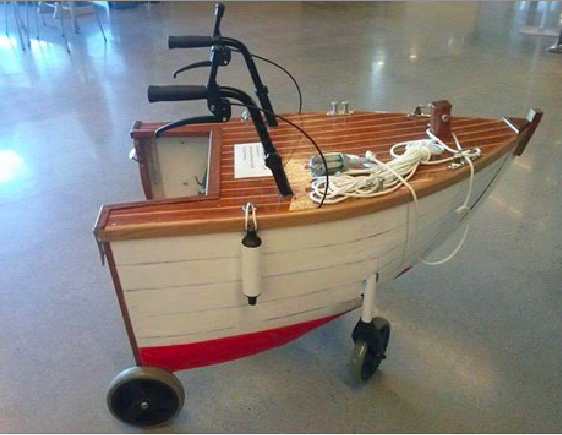
Russell Ward sent me the photo below & commented that zimer-frame added a new category to the boating progression – P Class > Starling > Young 88 > Farr biggie > Bridge-decker > Motor Home and now a boaty trundler!
I know a few woodys that need one 😉

screen-shot-2017-01-09-at-9-45-19-pm

12-01-2017 – Update ex Gavin Bradley

“I just bought the photo postcard below of Otehei Bay on TradeMe. That boat definitely has the right bow line and 3 portholes…”

screen-shot-2017-01-12-at-9-34-16-am

Alma G & Alma G II

ALMA G & ALMA G II

photos & detail ex Harold Kidd

Here is the first of a series of game fishing images taken by Tudor Collins at the Bay of Islands, which Harold would guess to be from the period around 1950-55 . The images were bought at a flea-market by Sharon Knight who has made them available via Harold for all of ww followers to relish.
This first one (today) shows ALMA G on the left and ALMA G II on the right.
ALMA G was built by Collings & Bell for E.C. Arlidge in 1922, the first of a series of splendid 35-36ft game-fishing launches built to Charles Collings’ renowned concave-convex planing hull design for the Bay of Islands. Her original configuration was the same as ALMA G II alongside her in this pic. ALMA G II was built as ZANE GREY for Mervyn Arlidge (for use by Zane Grey) in 1927. Other similar launches were MANAAKI and OTEHEI for F. Elliott (1927), LORNA DOONE for A. A. Holmes (1927) and AVALON for Peter Williams (1927). All were fitted with 6 cylinder Redwing 85-100hp marine engines.
Zane Grey’s visits to New Zealand with his mates caused an explosion of interest in game-fishing and added lots of US dollars to the NZ economy, culminating in the Collings & Bell’s commission from Zane Grey to build the 46 footer FRANGIPANI for fishing in Tahiti, launched in 1932.
ALMA G appears to have had a recent modernisation. Does anyone know when this done and who was the builder?

Photo below of ALMA G in her original configuration c1950, before the alterations.

Update ex Bruce Overhill
Bruce spent many hours on the refurbished Alma G in 2004 chasing Marlin. He commented that she can still catch them and was holding her own against all the big boats in the Bayleys fishing competition out of Whangaroa Harbor.

Below are a couple of photo to show the changes that she has had done.

28-04-2016 photo below of Alma G ex Hylton Edmonds via Ken Ricketts

ALMA G II - H Edmonds