Chris McMullen’s Herreshoff Steam Launch – Part 1

Chris McMullen’s  Herreshoff Steam Launch

I visited a rather special boat shed the other day, shed is a bit of an understatement – I have a shed, Chris McMullen’s one is more like an aircraft hanger.
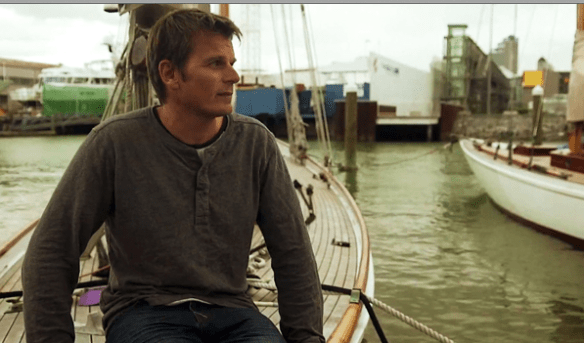
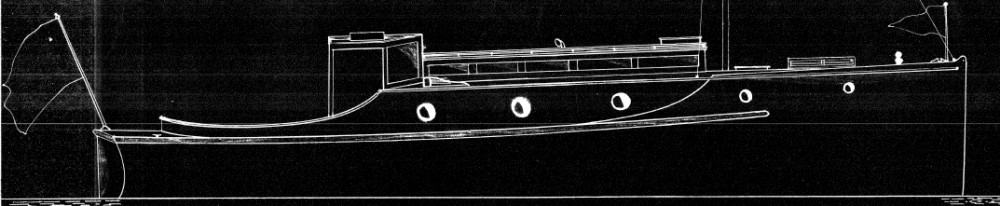
The reason for the invite was to have a look at the 1933 Colin Wild built launch Wirihana out of the water, but what really made me accept the invite in a flash was the chance to view the 34′ Herreshoff steam launch that Chris has been creating for nearly 30 years.
I use the term creating because every piece of this boat (including the steam engine) has been crafted by Chris’s own hands. Its a little way off launch day but already its a piece of art.

Why would someone undertake a project of this magnitude ? Chris’s view is “the whole project is an engineering exercise and an interesting challenge to recreate what was done 100 plus years ago.  Further, traveling on a fast steam launch is a great experience and there is something about generating your own power from fire and water”.

Click any of the above photos to enlarge 😉

I’ll let Chris tell the story – read on

“I have been building this (lets say) machinery and boat on and off for would you believe 27 years!  I started the project in 1987 –88 the year I sold McMullen & Wing Ltd.  Unlike some of my steam friends in the USA and the UK who are single minded,this has not been my only interest, during the time I have owned or had the use of other boats and done many other things.
The long winded project, is an embarrassment for me being a professional boat builder. It must be explained that I am not a trained Engineers Pattern Maker,  Foundry Moulder, Fitter and Turner, Coppersmith or a Boilermaker. I have had to learn these skills. Believe me, the Herreshoff’s draftsmen certainly did not compromised his design to make it easy for manufacture.  The castings for the engine are complex and thin walled. Several foundry’s kindly allowed me to do my own sand moulding on their premises. It would never have been possible without their cooperation.  I have had four attempts at casting the crankshaft. The only good casting (currently installed in the Engine) is of material not up to spec.  This has been a major blow and I guess my knowing this has set back the job.
The 3 throw crank has been drawn in “Solid Works” with the idea of machining it from a solid 9 inch diameter bar of steel on a NC lathe and Mill. A huge job and still can not be completely finished on these remarkable machines. At this stage there is no way to change the design. Crazy, the original was cast and machined in steel over one hundred years ago!
I went on and built the 34’ x 6’ 3” x’ 1’10”hull exactly the Herreshoff way (with a mould for every White Oak steamed frame) The hull double planked carvel style and glued with epoxy rather than set in shellac (as was the original) The planking was two skins of 5/16 NZ Kauri. So thin it could not be edge set. On the bilge the planks were made from thicker stock as they had to be backed out (hollowed and rounded) Very easy to loose control of thickness doing this and I believe Herreshoff Manufacturing (some how) steamed the round into the planks. I have a steam box, experimented but could not make it form the planks. I could have built the same boat double diagonal in a fraction of the time but the design scantlings would have had to be changed. At the time I wanted an exact replica! To what end? Now, I am not sure. (See below Vapor)
Anyway, the hull is basically finished with the boiler engine and water tank installed ready for the plumbing.
For those interested the design is HMCO design # 263 it was built 1908 as the Starboard launch for the Beautiful Twin Screw Steam Yacht “Cassandra”  Cassandra was built for an American owner by Scott’s at Greenock. Scotland in 1908 .She was 238 f.t O.A.L and could travel at just over 15 knots. Her tender was designed and built in the USA would have been “State of the Art” at the time and most likely the fastest launch available.  It would seem to me there were excellent Steam Launch builders in the UK. Simpson Strickland and Liquid Fuel Engineering (Lifu) and others but the owner chose the Herreshoff design / build. I have a copy of a letter written by Francis Herreshoff (the designers son) stating these launches could do 14 knots. To many, that seems unlikely but I have been on two Steam launches on Lake Windermere that can do  13 knots, so lets say we do not know.  These launches are proportioned closer to a rowing eight than a normal hull. On design #263 The boiler pressure is 250 PSI  The propeller is four bladed 22 x 30 inch pitch. the Hull and machinery is light. The shaft is low angle and the weights well forward.  The speed and shape of “Vapor” a similar steam launch has been discussed at length on Wooden Boat Forum  I have never got involved in the discussion but I am very familiar with “Vapor” and know the owner. Ed Louchard a boat builder from Port Townsend has done a wonderful job of building a replacement hull.  Vapor is the only surviving Herreshoff Steam Launch. The hull had been re planked at some time but the machinery is all original. Regarding “Vapor”, when I started my project I thought there were no Herreshoff Steam Launches in existence. I tracked down” Vapor” and her friendly owner in California about 12 years ago. Now she has been rebuilt it sort of makes my replica surplus.  In some ways procrastination has helped as more information about these remarkable launches comes to light from all over the world. I have enjoyed the research but now I am looking forward to finishing my project but it does get harder as one gets older”

Part 2 – The building of a replica 1898 Nathanael Herreshoff triple expansion steam engine –  https://waitematawoodys.com/2014/07/11/chris-mcmullen-herreshoff-steam-launch-part-2-the-engine/

Update on Vapor on the WoodenBoat Forum 24/07/2014

Vapor photos & kind words about Chris McMullen

http://forum.woodenboat.com/showthread.php?179519-Herreshoff-Steam-Launch-In-Auckland-New-Zealand&p=4235461#post4235461

And more Vapor – 25/07/2014

http://forum.woodenboat.com/showthread.php?179519-Herreshoff-Steam-Launch-In-Auckland-New-Zealand&p=4236325#post4236325

The Rise and Fall of an Australian Boat Building Family

I came across this gem of a story buried in a posting on the USA WoodenBoat forum – It first appeared on an aussie website called ‘Australian Family Stories’. I’m sure its full of misinformation but it is one of the better tales I have read & has a kiwi link. It involves drug running, organised crime, murder, a tiger shark, an attempted suicide and a murder! We live a very sheltered life in NZ compared to our cousins across the ditch – the runabout photo was just to get your attention – read on, you wont be disappointed  🙂 Alan H

The Rise and Fall of a Boat Building Family by Kay Koenig

Yesterday I was asked to research the Holmes family who were boat builders at Lavender Bay. With a little research what a fascinating story developed.

Members of the Holmes family had been building boats in England and in the USA from the 1700’s.   Whether some of their descendants migrated to the southern colonies is a matter of debate. However, one William Holmes travelled to New Zealand around 1850. He is reported to have been a potter, not a boat builder. Whatever the case, he sired a boat building dynasty.  His three sons, James, John and William settled in Devonport. They won a government tender to run a ferry service between Devonport and Auckland and in 1864, built the paddle steamer, Waitemata, the first ferry to be built in the town. The brothers operated the Waitemata Steam Ferry Company. When the company went bankrupt in 1867, they renamed the Waitemata, Enterprise 2, established a new company, the North Shore Steam Ferry Company, and continued their business.  This flourished. To suitably accommodate the ferry passengers, a private hotel was built.  This hotel, the Flagstaff, was quite a resort and even included a bathing beach.  The Holmes brothers continued to build boats and operate the ferry service until well into the twentieth century.

William’s son, also William, migrated to Australia. He worked for a time as a bridge builder in Victoria and then moved to Sydney in the 1870’s. Once in Sydney he followed his father’s trade as a boat builder. Initially he worked with the firm of Warbrick & Payne who had established a boat-building workshop in Lavender Bay.  Then he struck out on his own at McMahon’s Point. William’s enterprise was hugely successful.  His nameplate was attached to boats all over Australia and up into the islands to the north.   He built large luxury yachts such as Minota, Apache and Bona, (now Boomerang, a proud member of Sydney’s heritage fleet).  He built launches that were used by missionaries to travel between the islands of Melanesia. He built boats designed for racing on Sydney Harbour, including ten footers and fourteen footers. He skippered several of these and won many trophies.  His eighteen footer, Arawa, won three championship races in one season.

William Holmes was the first boat builder in Sydney to construct speedboats. In 1905 he build the Gee-Wiz and later the Fairbanks which won the first Australasian speedboat championship. William built a hydroplane and was still operating his business, building boats and winning races when he died in 1923.

William’s eldest son, Reginald also entered the boat building industry. His workshop was in Lavender Bay at the bottom of Crescent Street. He built launches and speedboats. Like his father, he was a successful and well-respected businessman.

It was the mid 1930’s. The Harbour Bridge had been completed and Sydney was just dragging itself out of the Depression. People were looking for cheap entertainment. Fun piers and aquariums were popular.  In order to boost his business, the proprietor of the Palace Hotel in Coogee put a four metre tiger shark into an indoor swimming pool at the hotel. On Anzac Day 1935 the shark had a large audience.  About 4 o’clock in the afternoon, it became agitated and vomited. Amongst the fish it disgorged was a rat, a bird and a human arm, complete with tattoo.  The reputation of the Holmes family was about to be tarnished.

Boat builder, Reginald Holmes had a modern use for his speedboats. They sometimes did a night run, out through the Heads and along the coast to collect packages that were dropped overboard from passing ships. Homes had a secret life as a drug runner and dealer. He imported Cocaine and distributed it amongst the young crowd of Sydney.   Not content with boat building and drug dealing, Reginald and some of his mates decided to indulge in a little insurance fraud.

In 1932, Reginald mortgaged a life insurance policy to Albert Stannard for £4000. Stannard was a friend and fellow boat builder.  Holmes, Stannard and two other friends purchased an ocean going motor yacht, Pathfinder. They had a business venture involving the Pathfinder.  The caretaker of the boat was James Smith.

Smith was a part-time boxer, who lived in Balmain, and originally ran a billiard saloon. During the 1930’s he moved up in the world. He became a builder and his first contract was the construction of a block of units for Reginald Holmes. As the caretaker of the Pathfinder, Smith took the boat on a trip up the Central Coast in April of 1934.  It sank off the coast near Terrigal. Unbeknown to Holmes and his friends, Smith was a police informer and the police were very interested in the Pathfinder. They thought it was involved in the smuggling operation. After is sank, Stannard, Holmes and his cronies were so vigorously interviewed by the police. The insurance company was also suspicious. The claim for the sunken yacht, valued at £8,000, was not settled.

A police informer cannot remain undercover forever and by April 1935, Smith’s days were numbered.

The arm in the shark caused a sensation in Sydney. A photograph of the arm featured widely in the press and it was not long before the owner was identified by its tattoo of fighting boxers. The arm belonged to James Smith.

Once identification was made, it did not take police long to trace Smiths last movements. He had been drinking in a pub with Cronulla local, Patrick Brady. A taxi driver remembered Brady. He recalled that, very late one night in April, he had taken Brady to Reginald Holmes house in Lavender Bay. The police had their connection.

Initially Holmes denied knowing Brady.  Then he took one of his speedboats into Sydney Harbour, and in full view of people strolling along the shore, Reginald Holms shot himself in the head and tumbled into the water.  Miraculously he survived. He climbed back into the boat and sped off. The water police gave chase and for four hours they zigzagging in and out of ferries, large cargo ships and other harbour traffic.  Eventually Holmes surrendered. He confessed that Brady had visited him. Bearing the severed arm, Brady had tried to blackmail Holmes. Later, Holmes agreed to be a witness at the inquest into the death of James Smith.

In the early hours of the first morning of the inquest, Reginald Holmes was found dead in his car in Hickson Road, under the newly constructed Harbour Bridge. He had three bullets in his chest.

At his inquest, his wife testified that, on the day of his death, Reginald had withdrawn £500 from his bank account. When he had left home he had told her that he was meeting Albert Stannard at 2 o’clock.  Another witness identified Stannard, as the man who walked away from a car in Hickson Rd, on the evening that Holmes had died.

In the end, Reginald Holmes’ killer was never identified. It was thought that Holmes had ordered his own death and paid a hit man to do what he failed to accomplish. Without Reginald’s evidence, Brady was not convicted. In 1937 Albert Stannard purchased the Holmes boat business in Lavender Bay. It still operates today.


Copyright 2012 – Australian Family Stories

On- Line Classic Yacht Magazine

On- Line Classic Yacht Magazine

Ok after yesterdays bombardment of photos of classic kiwi launches I thought today I’d share with you a digital magazine from the USA, remember that the boys in the states call almost anything that floats a yacht, so its a mix of power & sail.

Below is a link to a PDF file to view, but if you want to experience the embedded videos & see the double page spread photos in all their glory, click the link to the on-line version.

I hope this all works – I’m sure someone will post & tell me if it does not.

Enjoy

Click for PDF classicyachtmayjune2014

Click below for on-line viewing

http://www.myvirtualpaper.com/doc/ClassicYacht/classic-yacht-may-june-2014/2014053001/#0

The scow ‘Scot’ – help wanted


A request from Graeme Webb

“Greetings. I am a member of Coastguard as a volunteer and have recently sent a letter to Coastguard Head Office re the Tarapunga as I believe they are unaware she was on loan to Auckland Coastguard from 1947 to 1950 from the Royal NZ  Navy. I served  on Tarapunga as 14/15 year old on roster with another around my own age as an overnight watchman a couple of nights a week.
However, this is not what I wish to contact you about. Coastguard, in its infancy was also loaned a scow by the name of Scot which was tied up under Coastguard control in the old Western Viaduct, Tarapungas base being Kings Wharf.
The Scot was purchased by the Navy in 1942 and was fully refurbished as a training vessel. She still carried a full set of sails and was built at Omaha by David M Darrock in1905.
When the Auckland Coastguard was disbanded in 1950 due to the Navy wanting Tarapunga back for survey work the Scot went also. She was sold and I have been unable to trace what happened to her. I wonder if any waitematawoodys contacts can help.

Update from Geoff Brebner

SCOT was a small hold scow built by David Mackey Darroch at Whangateau (Big Omaha) and launched in 1905. Only a small ship,ketch rigged, just over 60 feet x 17’3″ X 3’3″ deep. She had twin holds separated by the centre casing.She was bought in the 1950’s by Louis Graham who sold her up to the Cook Islands.

A left field idea

How’s this for a left field idea

I saw a posting on the CYA forum yesterday that caught my eye. CYA member Greg Schultz is selling a berth & jetty at Tinopai on the Kaipara. Ok it’s a mud berth but at the price it could be a seriously cool idea for an affordable bolt hole. Check the photos out above, the outlook is impressive. I’ll quote from Greg’s post below –

“Ever thought of keeping a boat on the Kaipara. I have a mud berth and jetty for sale very cheap at Tinopai, all Northern regional Council approved etc.

Could put an old boat in it and have an absolute beach front ‘bach’ property…annual rental is about $160. Come up stay/live on board and maybe go out and catch a load of snapper, fishing is still great up here, I caught a 14 pounder a hundred meters off the beach last week and a visitor from the camp ground speared a huge kingie while spearing flounder next to this jetty .

These berths regularly change hands for about $2000-$3000 depending on condition. This one was rebuilt about 12 months ago so should not need anything doing on it for quite a few years. Has had a 45 foot launch moored there before I put my 18ft mullety on it, fine for something up to 26-28ish ft but could require a digger to dig it out for anything much bigger. I will look at the closest offer to my ‘buy now’ price of $1000 if anyone is interested as I now have another berth for Scamp (the mullety)

The photos above were taken about 2 hours after full tide.”

Now here is another twist on things – FV Waimko has just failed its commercial fishing survey due mainly to rot in the foredeck area (shown in photo). The owner hasn’t got the time to do the necessary repairs so would be interested in any reasonable offers around $5000, has a good engine, gearbox, radar, VHF. She could suit someone looking for that ‘seaside bach’ to go on the jetty!

Around $6,000 all up for a waterfront pad – a few ww lads should form a syndicate….

For more details ‪itzgreg@xtra.co.nz

Project Boat Wanted

And if you have or know of a T, S or X yacht lying around, Greg was looking for another mullet boat to restore but has decided something around 12-16’ would be better. So if there is one out there looking for a good home, condition unimportant, contact Greg.


The Whangateau Traditional Boat Yard

An insight into the Whangateau Traditional Boat Yard

There has been a lot of great photos posted this week from last Sundays regatta & reviewing them I wondered how many of the ww readers knew the background to Pam & George & the yard. So I asked Pam to tell us a little about themselves & the yard.  So read Pam’s reply below. Alan H

First I have to say thank you to everyone for the wonderful support we had on Sunday welcoming the Dreyer family, the new owners of MV Laughing Lady, our newest arrival at the yard. We attribute this support to a mix of Alan’s awesome website and Jane High’s enthusiasm for bringing everyone together. Special big thanks also to all those that brought boats along, to all the sailors, to the helpers who lent a hand with the rigging and the young pirate that made it such a fun time.
Way back
When George was a little boy he would build small Woollacott type model boats in the back shed. Then under his older brother Jim’s watchful eye he built a Cherub design and then a Zepher. He didn’t sail them on the tranquil Tamaki River but preferred to race them with other keen sailors out and about with the Kawau Yacht Club. Then he built thirty and forty foot trimarans and sailed away to the Solomon Islands… and beyond.
When I was a youngster Mum and Dad would bundle up my two older brothers and oldest sister (youngest sister was still just a twinkle) along with our short legged, black and white dog, Boy, and we would – with great excitement and anticipation, be taken night-time fishing. Under the cloak of darkness and the drone of the seagull outboard, we would motor the short distance from our bay in Chelsea, into the reflection of the city’s lights and towards the Auckland Harbour bridge.
Dad would anchor our little Mullety, Terina, between two of the huge concrete columns, under the far side of the harbour bridge. Under the light from the Tilly lamp hung in the rigging, the big kids were allowed to sit on the front deck, we would take up our make shift wooden fishing poles with string line and a small piece of torn white rag, sometimes with a ball of dough attached and dangle it into the water until one of the frenzied yellow tail below took a hold.
Then the four fishing poles would be flung simultaneously into the air. Boy dog barking, four kids squealing in delight, flashings of silver and yellow, fish catapulted through the air. Some would fall on the decks, some flung too far – falling back into the water on the other side of the boat.
There was much scrambling to untangle lines and re-launch them once again. All under the long dark shadows and echoes of the large concrete structure of the harbour bridge above. Slimy and stinky and into the bucket they went, where they could be retrieved later. Some fish were lucky and flipped back into the sea. This went on ’til we had exhausted ourselves, and Mum and Dad, or we splashed the vulnerable Tilly lamp breaking the lens. Plunged into semi-darkness we would have to go home.
I don’t remember walking up the track from the beach to home. I think Dad had probably carried me since I was the youngest at that time.
The here & now
As time ticks by, George and I are fast approaching ten years at the Whangateau Traditional Boat Yard. We have been quietly and diligently taking our turn at caring for the yard and maintaining it to its original state.  

           
Many of the photos featured by Alan are familiar to some already, but for the “newbies”, George and I, just the two of us, restore small wooden craft, up to thirty plus feet. Well that is between maintaining the slipway for the local fishing fleet and other recreational boats. I also take on paid boat building work. The money made from this is quickly dissolved back into the boat yard and the project boats we maintain and restore on site.
Many folk driving past the boatyard on the nearby road, see the wooden spars in the creek, they appear at our door in pure delight at what they have found. It is a “living maritime museum” some say or it takes them back to the smells of their grandfather’s sheds. The smells of linseed, oil based paints and freshly cut timber, linger in the old building.
For a long time I felt a need to protect the little yard, as most know it was at threat of being demolished. However the yard, boathouse, workshop and the wooden craft that have refuge here, have found their own way out there and all who stumble upon it endears the yard.
George’s wonderful fleet of restored planked Z’dys is indeed special and the other restored wooden craft are a hit with ever-popular Regattas. Many thanks go to Bud Nalder for donating a sewing machine and the materials and time for schooling and personally making sails for the small craft we have restored.
Russell Ward, the skipper of the steamboat SV Romany still has a berth here for Romany and sometimes the boat yard is graced by steam.
Visitors are welcome to the yard. We do ask that you mind your footing as you move about both in the shed and surrounds, as this is still a functioning, traditional boat yard.
I’m sorry there are not a lot of Laughing Lady photos but its a tight fit in the shed 🙂 but as work progresses I’ll send more to Alan.
Keep checking in here at waitematawoodys as we will be posting more news from the around the yard soon.”


Dean Barker chatting about sailing on the Waitemata

Image

Dean Barker chatting about sailing on the Waitemata

Watch Dean Barker chat about sailing on the Waitemata

video link ex Classic Boat UK

This short (8min) video features Dean Barker down at the CYA’s Heritage Landing marina at Silo Park talking about his passion for sailing & the Waitemata Harbour. Some great shots of a few of our classic fleet, & yes it is also an ad for Team NZ sponsor Camper, there were just too many shoe shots for it not to be 🙂

click blue link to play

AC sailor Dean Barker on his classic yacht in Auckland, NZ: Video

Whangateau Traditional Boat Regatta & Yard Open Day – Part 1

Whangateau Traditional Boat Regatta & Yard Open Day

The Whangateau crew of Pam & George once again threw their yard open to lovers of classic wooden boats on Sunday (May 4th 2014). The regatta also served as a welcome to ‘Laughing Lady’ the new motorboat arrival from the USA that will be receiving some WTB love.
The autumn day was perfect – sun,wind & great boats. The food & people were pretty good as well 🙂
The regatta follows a well rehearsed format – boats out on the beach, sailors & crew arrive, boats rigged, wait for the tide (&wind), race begins/ends, lunch, prize giving. Now if that sounds like any old regatta – I can assure you Whangateau is not that. The fun & ‘games’ as people secure a boat, select sails & rudders etc & rig up is hilarious & the old salts on hand prove invaluable, in fact it wouldn’t happen with out them. No problem if something does not fit, its into the workshop & onto to the saw bench for some adjustments. Thanks to Jason Prew & Nathan Herbert for the ride aboard Otira, the 1902 Logan motorboat.
Your own Steve Horsley won the race (again) , chased / followed very closely by launch owner Shane Anderson, who had to draw on his past yachting days to keep Steve honest & win a waitematawoodys t-shirt.

A lot of the crew got into the spirit of the day & dressed as pirates.

I’m not going to attempt to caption all the photos, there are just too many – I post today a selection to give you a gander of what makes the people & the place so special.
Tomorrow I’ll post another selection – there is just too many for one day 😉

click photos to enlarge

Click the blue link below to read Jane High’s post regatta newsletter

Whangateau Article 2014