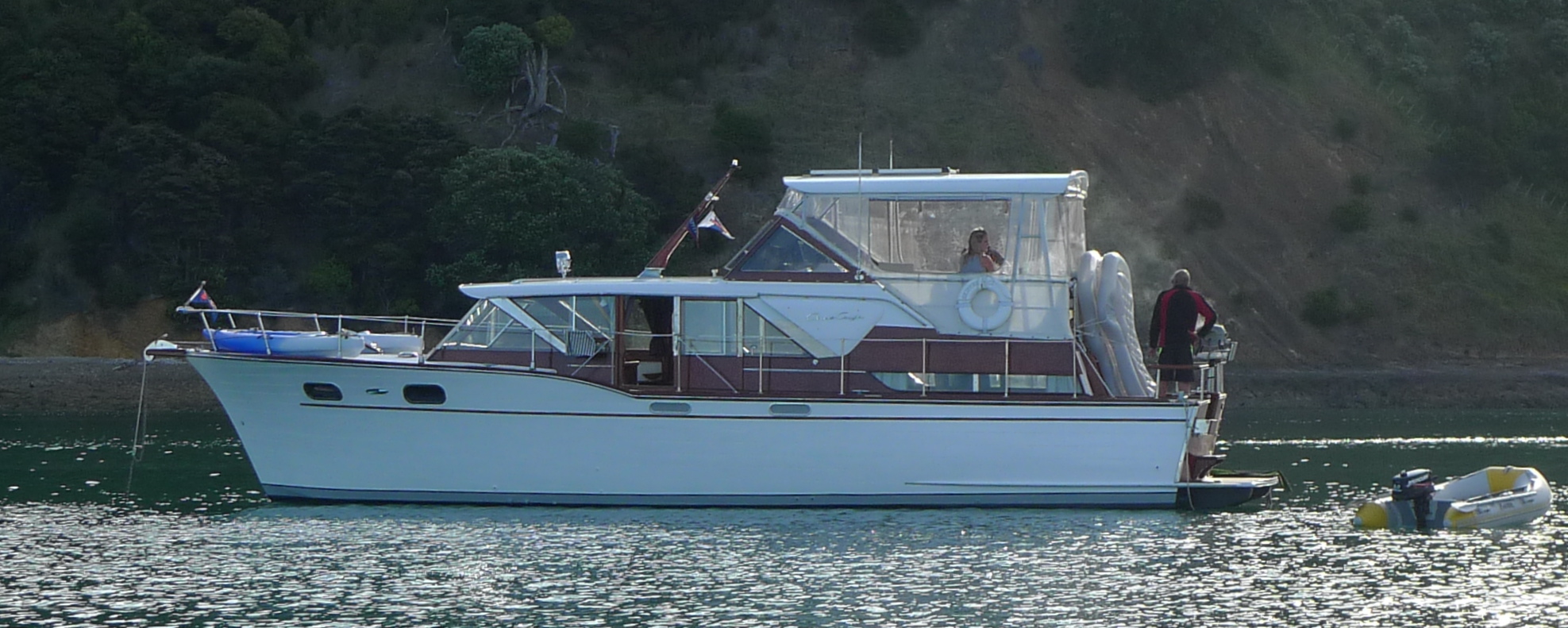
Want to see what electrolysis does to a wooden boat?

img_0552img_0551

 What Is Electrolysis?
I have published Chris McMullen’s comments below for 3 reasons:
1. Out of the blue, today I was sent the above 2 photos by a woody owner who has just discovered they have a time bomb ticking away. Bomb is a good analogy to use as the green wires in the bottom photo are the detonator 😦
2. The subject of electrolysis & wooden boats is topical at the moment
3. I’m passionate about saving our old wooden ladies.

You can read more on the subject here https://waitematawoodys.com/2016/04/28/electro-chemical-damage-in-wooden-boats/
To quote the dictionary – Electrolysis of water is the decomposition of water (H2O) into oxygen (O2) and hydrogen gas (H2) due to an electric current being passed through the water. Electrolysis of salt water or Brine – electrolysis turns NaCl + H2O in electrolysis will produce separated hydrogen gas, chlorine gas and sodium hydroxide*. *Sodium Hydroxide is also called Caustic Soda. It is used for pulping wood in the paper industry and on a boat it forms around any anode protected metal (Cathode) and softens the wood.
Lets check again in the dictionary – “The cause of Electrolysis?”
Electrolysis is due to an electric current being passed through the water or Brine. Surely, the way to prevent electrolysis on a wood boat is by eliminating any electric current passing through the wet wood.
There are two sources of electrical current on most boats.
1. The DC battery used for starting the engine and services. Stray currents are common,(can be very damaging) and hard to find on wooden boats. Any connected dissimilar underwater metals including anodes will create a galvanic current 24 hours a day. There should be no connected dissimilar metals underwater and keep the ships DC system isolated from any metal connected to the sea.
2. Bonding makes a circuit and encourages stray and galvanic currents; the result will be electrolysis and degradation of the wood around metal hardware.
Protecting marine metals (bronze or copper) with an anode is pointless and sets up a current and causes electrolysis that again produces sodium hydroxide that pulps the timber in a wooden hull. If you have brass or manganese bronze underwater, an anode may help protect the metal but set up a galvanic current with resultant damage to the wood surrounding the cathode or protected metal.      

See on Google – graphic descriptions of exactly what happens on our boats if we create an anode and a cathode. Chlorine gas is produced at the anode and hydrogen gas at the cathode.

http://www.google.co.nz/search?q=electrolysis+of+brine&rlz=1C1QJDB_enNZ596NZ625&espv=2&biw=1680&bih=944&tbm=isch&tbo=u&source=univ&sa=X&sqi=2&ved=0ahUKEwjh75ODuObPAhUUSGMKHcDKBkoQsAQIMA

Whether we like it or not, the brine around any cathode or protected metal converts to sodium hydroxide (caustic soda) and this is fatal to a wooden boat.

The solution is very simple – you should not use anodes on a wooden boat.
Anodes are necessary / desirable on steel structures where there is no wood. To use them on a wooden boat is a relatively new idea or myth designed as a solution looking for a problem. On wooden boats it has been proved worldwide to be a disaster but some in the NZ marine industry refuse to admit they have been wrong and continue to promote this profitable business.

The Logan’s, Baileys and Colin Wild never used anodes or bonding and neither should anyone who cares for their wooden boat.

 Read http://mgduff.co.uk/support/knowledge-base/questions/what-is-electrochemical-decay-in-wooden-vessels  

If you would like some more technical evidence read. http://www.mcclavemarine.com/text%20pdfs/Corrosion.and.Corrosion.Protection.Wooden.Boats.pdf

P.S. Chris would like to advise that he has had no input or involvement in any organised discussions on the topic of electrolysis & wooden boats.

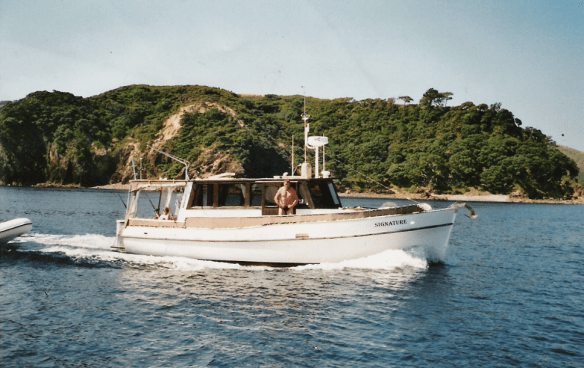
Signature (Beluga)

screen-shot-2016-11-08-at-6-12-42-am

screen-shot-2016-11-08-at-6-13-09-am

SIGNATURE (Beluga)

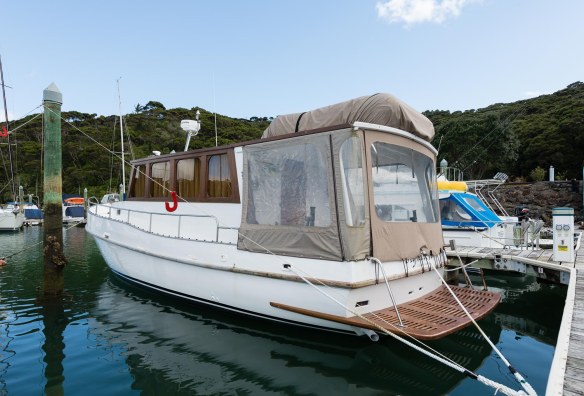
When Ian McDonald found the above boat  for sale at Westhaven she was named “Beluga” as someone thought she looked like a little white whale.

Her history Ian was told is roughly this:  Strip plank built in 1990 as a spec, to be a work or fishing boat, over 2 or 3 years when the Miller & Tunnage yard was quiet in Port Chalmers, then sailed to Nelson in the hope of an easier sale. She was sold from Nelson to become a long-liner out of Leigh. How she got to Leigh, Ian doesn’t know, maybe sailed up, maybe trucked.

In Ian’s words a trendy city fella bought her, post fishing, named her Beluga, and then sold her after a brief ownership. Ian bought her in 1998 having done a lot of sketches of what he would like to do to her, Ian commented that if one imagines her without the wheelhouse door, and no extension to the coach-roof aft, she wasn’t a pretty boat at all.  Miller & Tunnage didn’t seem to go for topsides looks, but their hulls are beautiful.

Ian visited the Miller & Tunnage yard looking for a genuine bronze M & T name plate and was helped by the manager who sent the plate mould into Dunedin and had some cast, one of which should still be in the boat today. During the visit, the manager took Ian up to the mezzanine floor and showed him the frames still there, off which she was lofted. They had previously built the “Deborah” of the same frames, for the older, about to retire partner, which was moored just up the harbour at Deborah Bay. Ian showed them a photo of what he was doing and they said  “that’s Signature”  and, when Ian enquired as to how she was thus named, they told him that when any new build was about to begin, it required paperwork, description, who it was for etc, and, a signature, so that’s what she was called.

The extension to the cabin top, aft from the door to the stern was designed by Ian in conjunction with Mike German & Graeme Lyons ( German & Lyons Boat-builders), in 1998 and fitted by Mike & Graeme in the shed at Half Moon Bay hardstand, as was the wheel-house door which didn’t exist when Ian bought her. The teak cladding around the windows was also Ian’s idea.  She was then powered by a 4cyl Isuzu and had a fuel capacity of 1,000 litres

Ian kept her until 2003 & she went on Jacob’s boat-haulage to Mana Marina & was sailed to Waikawa where she remained for a few years before once again being trucked north to appear again on the Waitemata. Then she was sold and appeared in Nelson, which is where Ian took the marina photo above in 2015. The second photo (of someone who resembles Ian, doing an Arnold Schwarzenegger impression), was taken just entering Port Abercrombie a few summers ago now.
In January this year Ian was at Mana Marina and spotted her being prepared for another trucking north and, Ian believes she now resides in Kerikeri.
This boat has done a lot of road miles 🙂 Anyone able to confirm her current whereabouts?

Photos below ex Dean Wright of Signature at Doves Bay Marina. Looking a tad different 🙂

20161108-_dhw7113

20161108-_dhw7114

20161108-_dhw7115

Tide Song

screen-shot-2016-10-19-at-9-26-47-pm

screen-shot-2016-10-19-at-9-27-55-pm

Tide Song

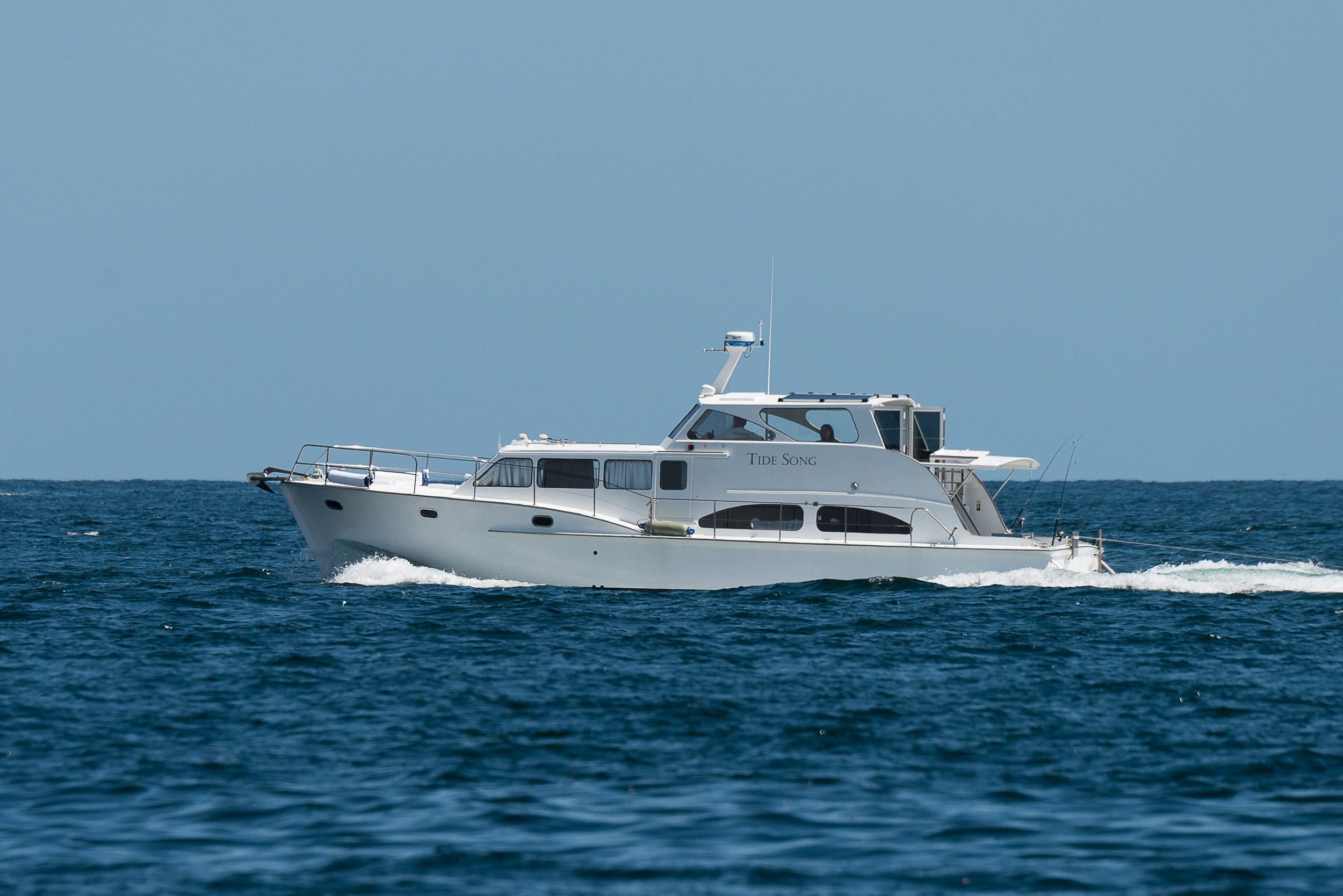
Built by Oliver & Gilpin c.1970, Tide Song is 48’ long & built with single plank kauri. Powered by the original 2 x 70hp Perkins marine diesels.

Over the last year she has under gone an extensive refurbishment that included – engines, hull, cabin, most of the mechanical bits & all the safety fruit.
Her owner says the refurbishment is 95% complete but due to poor health Tide Song is on the market.
A pretty boat, just a shame about the patio doors 😉  still a good wooden boat builder could correct that.
Thanks to Ian McDonald for the trademe tip off, Ian wondered if Tide Song is her original name & suggested she may possibly be a re-modeled Lady Tana.

So woodys – what do we know about her?

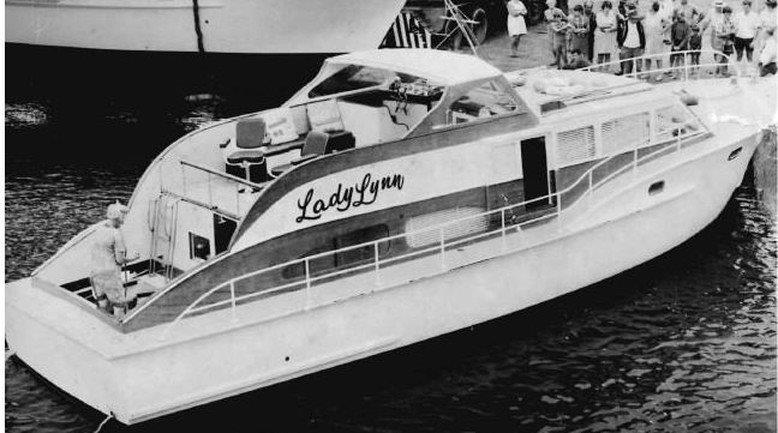
Update – Brian Worthington has advised that Tide Song was in fact Lady Lynn, photo below of Lady Lynn on launching day. He says she was built at the Oliver & Gilpin shed in the Wairoa River & there would have been input from Willy & John Oliver. Ted Gilpin owned her for a while & renamed her Tide Song from being Lady Sophia.

lady-lynn

Update 12-10-2020 The photo below of Tide Song (Lady Lyn) steaming in from Cape Brett was sent to me back in 2018 – opps that on slipped between the cracks 🙂

Skipper CJ

p1180965

p1180966

Skipper CJ

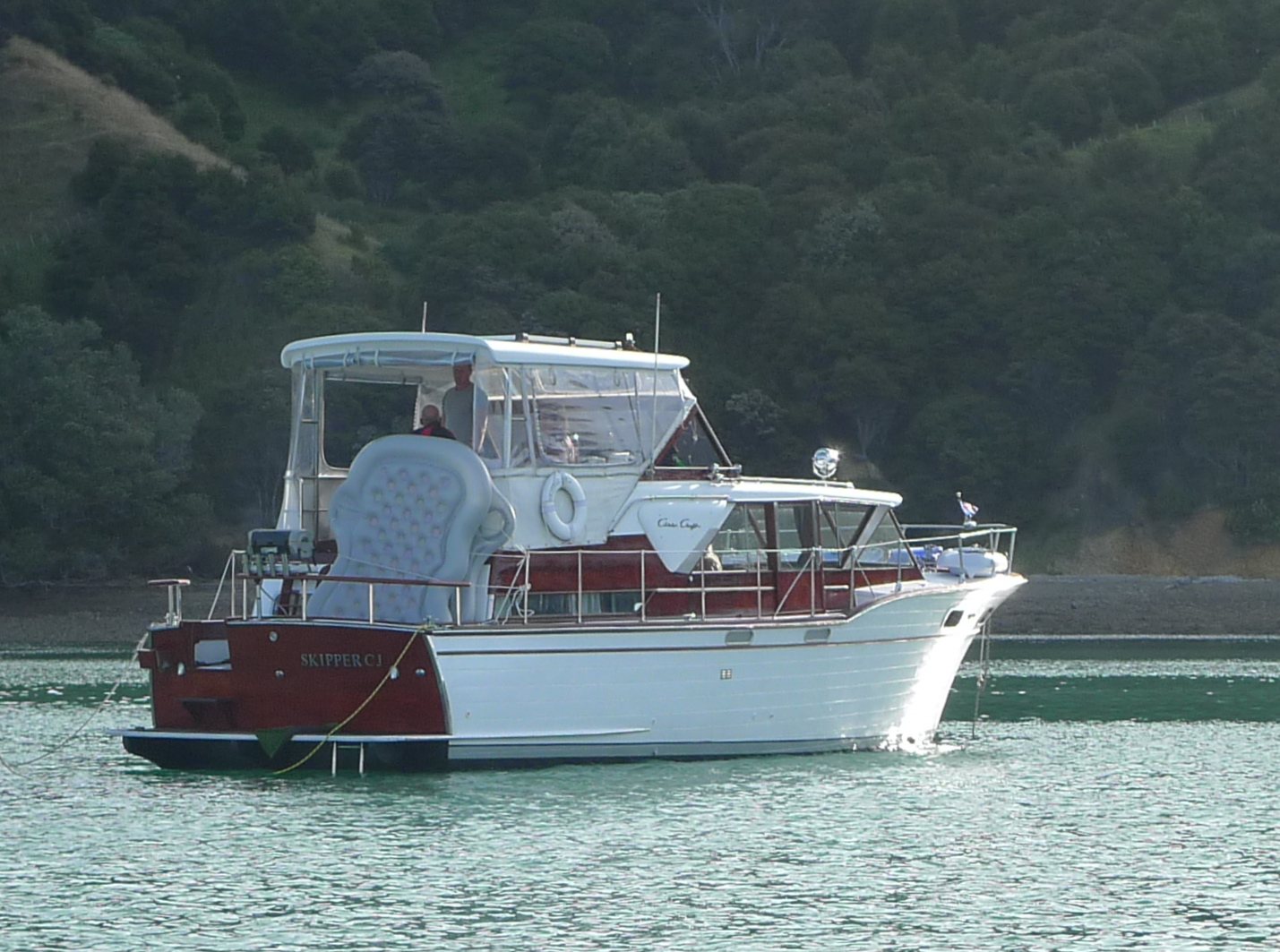
I took the above photos of the Chris Craft launch Skipper CJ anchored in Man O War Bay over the 2015/16 xmas/ny period. Obviously an import but her owner has done the right thing & joined the CYA, in fact we had her with us on the last trip up the creek to the Riverhead Hotel.
There is a lot of boat there for I suspect not a lot of green backs.

Interested to learn more about here & how & when she arrived in NZ. Maybe one of the American ww followers can chip in with some info on the model of the boat.

And while we are having a USA day – if you are looking for some wooden boat reading over the weekend – the link below is to the Sept/Oct issue of the USA Classic Yacht on-line magazine. Now if you think the market for wooden boats in NZ is depressed check out the motorboat ‘Blue Mist’ listed for sale on page 89 (top right side). At US$145k it would appear a steal – but then again …………….

http://www.myvirtualpaper.com/doc/ClassicYacht/classic-yacht-september-october-2016/2016100701/#0

$1 Reserve

screen-shot-2016-10-04-at-9-20-06-pm

screen-shot-2016-10-04-at-9-21-05-pm

$1 Reserve
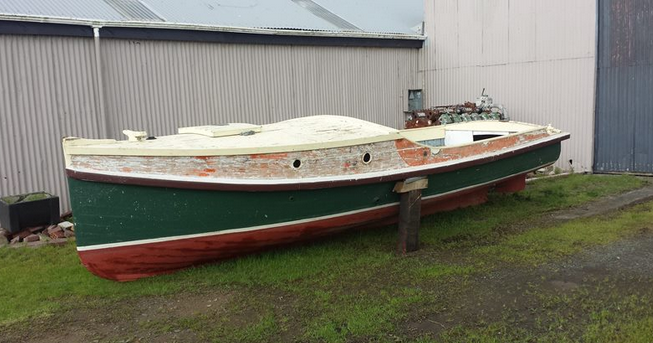
This has to be a project for one of the woodys. I was alerted to this cutie on trademe by Scott Taylor.

Currently located in Paeroa (Waikaato) she measures 22’4″ & has no motor. As architects say about good houses – ‘she has great bones’, so woodys – someone must be looking for a project? Would be a cool lake boat – Rod Prosser, up for another lake boat ……….?  🙂

ps check out the motor in the background of one of the photos – wheres the monster going?

Now at the other end of the scale – check out the the youtube movie below. Its records the build of a one-off modern classic wooden boat – amazing to view the amount of time & skill that goes into building a wooden boat these days – enjoy 🙂

Win Tickets To Auckland’s On The Water Boat Show

screen-shot-2016-09-28-at-8-04-00-am

Win Tickets To The On The Water Boat Show
The Auckland On The Water Boat Show is best & biggest boat show in NZ & kicks of tomorrow at the Viaduct events centre. Waitematawoodys has tickets to give away. We won’t make it too hard – first woody to correctly advise what time the show closes on Thurs/Fri/Sat & Sunday wins 2 tickets. All entries via email waitematawoodys@gmail.com
There will be more to give away tomorrow 😉
screen-shot-2016-09-28-at-8-06-36-am

Diablo- Auckland’s next waterfront apartment

screen-shot-2016-09-24-at-4-34-55-am

screen-shot-2016-09-24-at-4-37-07-am

DIABLO – Auckland’s next waterfront apartment

With the average Auckland house price around $1 million the above 41′ Gladden designed/built trawler style launch would be an extremely affordable alternative. Sure with the 1978 build date its not a classic but with her d/d kauri (glassed) hull, its a woody a heart. Powered by a 120hp diesel, 6 berths & extremely well fitted out + all the fruit you would expect on a Marlbourough Sounds boat e.g. a heater. She is for sale on trademe, asking price $165,000 but in today’s market – who knows?
So woodys – sell the villa, buy a beach house somewhere & use Diablo as your Auckland base.

Port Townsend Wooden Boat Festival – Another Stunning collection – 100+ Photos

2016 Port Townsend Wooden Boat Festival

Stunning collection of 100+ Photos by ‘Old Salt’. Link sent to me by Scott Taylor.

Click below & enjoy 🙂

IMG_1842CE1 - Port Townsend WA - Port Hudson Marina - 40th Annual Wooden Boat Festival - MV RIPTIDE - sunset

 Free To Good Home
I mentioned on ww the other day that I had bought a box of old/new signal flags – in the box was 50cm x 30cm British Red Ensign (Red Duster) – cloth not polyester, never been used, made by ‘Shipmate’.
The most deserving woody that wants it,can have it 🙂 email me on waitematawoodys@gmail.com

fullsizerender

Ella B

IMG_3040

IMG_3056

ELLA B

Resident woodys spotter in the Hawkes Bay, Mike O’Dwyer sent me a note last weekend saying that he had been down at the Napier Sailing Club & heard the rumble of a V8 starting up. Upon closer inspection Mike spotted a rare appearance of Ella B.

As an aside Mike is the owner of the delightful 1902 classic ‘Janet’,  built by Angus Sutherland to a design by Chas. Bailey Jr

Ella B (named after the owners granddaughter) was built by 77 year old Bill Brassington, an  upholsterer by trade with a love of woodworking.

The build took six years & is still being tweaked. On the day they were fitting a new alternator & giving the motor a run. The boat was built from plans supplied by Glen L boat designs. It is the 24’6″ Monte Carlo, a long sleek barrel back inboard based on the styling of the typical finer Chris Craft of yesteryear. The steering wheel is out of a 1936 Ford.
Bill built the boat in it’s entirety including the trailer. Deck & windscreen fittings were made from mdf then cast and chromed. The hull is solid mahogany with a two pot finish.
Ellia B is powered by a 350 fuel injected Chev V8 which produces 400 hp. The Italian dash gauges are set into an ex Napier Sailing Club engraved silver salver trophy.
Given Bill’s trade, the upholstery is a work of art, total perfection.

Now here’s the thing..the boat has never been launched. When Mike asked Bill when that would happen he replied “it’s got water running through it now…it’s getting wet” 🙂

Max Carter & His Boats

Screen Shot 2016-07-29 at 8.19.38 am

Screen Shot 2016-07-31 at 5.41.35 AM

Max Carter & His Boats
details & photos from Chris McMullen, edited by Alan Houghton
(remember to click on photos to enlarge)

Max Carter was responsible for building a huge number of boats of all sizes in a relatively short time, refer lists below. Chris believes that Max producing his modified H-28 /29ft was the first serious attempt at building stock keel boats in New Zealand. Back then there were no fibre glass boats, no marinas and no travel-lifts in NZ. The industry was experimenting with epoxy resin & glass cloth.
Max was supported by Consolidated Chemicals (Epiglass), the Colmore William’s Bros & their ceo Trevor Geldard. The P-Class & other small boats listed below in big numbers were kit sets for amateur construction. These boats also used up what would have been waste wood in the yard. The idea was to introduce young people to sailing & ensure a future for the marine industry. It certainly worked, but Max never benefited from his effort.

When Chris was reviewing Max’s files he found  a copy of a 1989 New Zealand Power Boat Magazine, which he  had never seen it before. There is an article on Sandy Sands and Sea Craft.  It talks about how Sea Craft increased their productivity by using methods learned by Sandy Sands while working for Uffa Fox. Chris’s previous  observation about a possible Fox connection was right. Sandy Sands commented in the article “without people you have nothing”.  Max realized the value of his skilled staff and treated them as friends. He stayed in contact with many for almost fifty years. There was a list of his ex employees and their addresses amongst his files.
When you consider the age of these photos the presence of all the health and safety gear – fluro jackets, disposable overalls & hard hats really stands out. Chris commented that there was the odd accident but nothing really serious.

All Max’s boats were built from medium kauri treated and will last forever (well a very long time). He had huge stocks of timber. At the time most boat builders built hull’s & decks & the owners finished them in their back yard. Max did some hull’s but mainly catered for the few that could afford a finished product.
The shed photos above are more reminiscent of the Herreshoff Manufacturing Company, Bristol, Rhode Island. While Max was way ahead of his time, unfortunately, New Zealand’s economy and small population was such that his operation could not survive. Sadly but wisely he closed the doors, sold the plant and leased the buildings.

To read the eulogy Chris McMullen gave at Max Carter’s funeral, click the blue link below

A Eulogy to Max Carter by Chris McMullen

Chris McMullen’s comments about the photos:

The photo with the 1/2 model is Max with Les Holt. Of significance in the photo is that the model was made by Chris. It was the Pipe Dream design featured in Francis Kinney’s book. The new version of ‘Skenes Elements of Yacht Design’.
The portrait photo of Max shows the MY Du Fresne in the back ground. The yacht on the hard stand is the Rainbow II. Max has written on the back of the photo. “Built in seven weeks after lofting.! “
Another photo shows the kit set boat production. No CNC machinery, just a good man (Lindsey Stone) on the spindle moulder shown in the left of the photo.
Another photo shows Max with his long time friend Laurie Davidson.
The Stewart 28 is the Hop Scotch.
Seems there are huge gaps. Photographers were always at the yard. Chris believes some photos were lost.
Orinda and White Mischief were both Max’s designs maybe 40 years apart.
The brand new Northerner struck Bollen’s Rock while racing through Tiri Channel. Her first race! Max was her skipper for the day. She was raised and repaired like new. Capt Warwick Dunsford, Owner Boyd Hargrave with the binoculars. (more photos & press clippings below)
The H-29 was an H-28 with the sheer raised. It was an attempt to build a small(ready to sail) keel yacht that people could afford. Tom Beaton, Bryan
Williams and Nick Panich in the photo.
The Du Fresne was built for Mr J M Butland and the first H-29 for his son Mr JR. Du Fresne was a Laurent Giles design. The Butland Family were a well known boating people Thetis, Titan, Sirdar, Dufresne DurVille, Inverness and the brigantine Fritha were commissioned by the family.
The Ta Aroa was a 60 foot Sparkman and Stephens design. A beautiful yacht built for Mr Doug Bremner. She had one of the first imported aluminium masts. A single spreader rig.
The Calypso shown being launched with a crane was built for Max’s own use.
The same design shown under construction is the Tamure. This was a Max Carter
design & the second NZ yacht to do a circum navigation of the world. She
was owned by the late Jerry Challet & Mac Nell. boatbuilder, Dave Baxter
was on the crew. From memory (marine engineer) Terry Burling was part owner
or crew.
All the big Carter boats were launched by the A.H.B floating crane. There were no travel-lifts. Note the ships in the background.

Screen Shot 2016-07-29 at 8.20.35 am

Screen Shot 2016-07-29 at 8.20.50 am

Screen Shot 2016-07-29 at 8.21.03 am

The Sinking, Re-floating & Repair of Northener

Article below from the New Zealand Exporter magazine that tells the story about
the H-29 better.  In the photo of the three builders bending steamed ribs on a H-29 they are from the left – the
late Eric Wing, Chris McMullen and Peter Sowman.

Screen Shot 2016-07-31 at 5.39.20 AM

Screen Shot 2016-07-31 at 5.40.02 AM

Screen Shot 2016-07-31 at 5.41.11 AM

Check out the 1967 Prices

Screen Shot 2016-07-31 at 5.40.48 AM

09-08-2016 A Tribute To Max Carter – by Nigel Armitage
Below is a link (in blue) to a downloadable file of rather nice tribute to Max Carter by Nigel Armitage. Nigel worked with Max on the replica scow ‘Ted Ashby’ project that he and Max were very involved in together at the Hobson wharf, Maritime Museum. Its an insight into the amazing work Max did.

A tribute to Max Carter