ELECTRO-CHEMICAL DAMAGE IN WOODEN BOATS UPDATE A Special Post By Chris McMullen
Recently I received a note from Chris where he questioned if the story we posted last year on ww about electro-chemical damage to wood was a little too long & were people reading it. Well I can tell you that the post is the single most visited story on ww, ever, & gets read by people all over the world. Its frequently referred to on the hugely popular WoodenBoat Forum in the USA. The link below takes you to the original story.
For the impatient ones out there 🙂 Chris has done a ‘Readers Digest’ version & refers to a vessel that recently featured on ww.
I encourage all of you to read today’s story & if you own a classic wooden boat – read both versions – the problem is the biggest risk to the life of our classic boats.
In Chris’s words: “I received the above disturbing images of another woody being destroyed by an owner who I believe is unintentionally loving his boat to death.
The use of anodes and bonding on a wooden boat is fatal. The cathode or protected metal makes hydrogen gas and this combined with saltwater makes Sodium Hydroxide (Caustic Soda). This chemical is used to pulp wood in the paper making industry. Not on my boat thank you! I say again, there is no reason to use anodes and bonding on any boat. The only exception, steel hulls require anodes. If copper or bronze are being corroded it is due to a positive DC leak and Zinc anodes will not help. Find the electrical leak is the cure. If there is brass or manganese bronze underwater it will corrode due to the zinc in the alloy. Anodes will possibly stop the corrosion but at the expense of wood damage. A better plan is to replace the brass with proper marine bronze.
Bronze and copper should last indefinitely in the sea. To prove that statement, I ask you to look at the Roman coins and artifacts salvaged from ships wrecked in the fourteenth century. There was no anodic protection and the metal is well preserved. So what is the difference to the copper and bronze on your boat? There is absolutely no difference so why waste your money buying anodes that will in time destroy your wooden boat.
Three or four bottles of wine will cost the same as anodes and will make you and your boat happier.”
Note: ww is read all around the world, if there is water & boats, there are people reading ww. So a little about the man for non kiwi’s – Chris is one of NZ’s most respected boat builders (retired) and at one time was the Lloyds (Honorary) Wood Boat Surveyor in Auckland. Chris’s (the original company) ‘McMullen & Wing’ built and repaired wood, steel and marine aluminium vessels. They built the first welded aluminum vessels in NZ. Chris is the current holder of the Classic Yacht Association of New Zealand ‘Outstanding Achievement Trophy’ for services to classic boating.
14-05-2016 Photo Update
Gavin Gault sent in the below photos of a Nova skeg floor that he believes were probably damaged due to engine – anode bonding failure. Pretty graphic !!
10-07-2016 Reply from Chris McMullen
“Wow. Thank you Gavin Gault for sharing your very graphic images. Very sad, small consolation but yours will not be the only wooden boat affected by this scourge. Maybe, at last some of the Flat Earth Society will start to believe what I have been saying. The worst detractors are some in the Marine Industry who have been preaching the Anode, Bonding party line for years. Now there is no where to run for cover, they continue to conjure up excuses and it seems, refuse to accept a simple scientific fact. “If you have a positive and negative electrode in salt water, the negative cathode or protected metal makes hydrogen gas and this combined with salt water makes Sodium hydroxide.” This chemical is also known as caustic soda and removes paint and destroys wood. There is no doubt about this fact. You do require a power source and bonded dissimilar metals ( zinc and copper) provide sufficient current to do the damage, but slowly. If there is a negative DC leak (to the sea)on a bonded boat the process is accelerated. If there is a positive leak any metal becomes an anode and will waste away. It is important to isolate the DC power from contact with the sea. Again bonding is just asking for trouble. Please remove Anodes and Bonding from your wooden boat now! Chris McMullen”
06-09-2106 In case you were not to sure what to look out for – the below photo should be a wake-up call to a few woodys 😉
Advice Wanted – Canvas Work
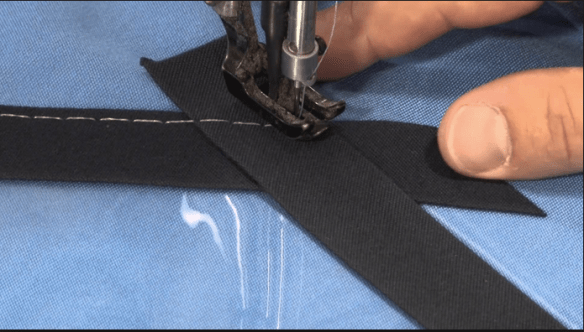
I get a lot of requests from people looking for good trades people. Just recently I have had several asking about companies that make/repair boat canvas / clears.
So woodys who out there is doing good work at fair rates?
Reply in the comments section or if you prefer email me. waitematawoodys@gmail.com
UPDATE 11-04-2016 I received a great e-mail from Frank Warnock – given all his good deeds, I have posted it below.
Hi Alan, need a Sailmaker, Marine Trimmer or Upholsterer? Stop looking for I am your man. Here is my CV 1 I am a CYA member and my yacht Offshore is in the year book. 2 I make all the launch numbers for the CYA, ask Joyce. 3 I am the official flag maker to the Squadron (and also a member) for divisional and race management flags, ask Georgia. 4 I made the sails and all the covers for Rainbow, ask the owners. 5 I made and donated all the squabs for Gypsy. 6 I am making a new set of squabs for Stevo Cranch and Rainbird to go with the cover I made for him. 7 Although Offshore is a faster yacht than Paramour I still do Bruce Tantrum’s work. It’s my Birthday tomorrow and I’ll be 82 so I am past crawling around boats fitting covers but I can do repairs, restitching and replacing clears etc. I have a double garage workshop at my home in Glen Eden and only charge $50.00 per hour for labour except if the customer is a lawyer when I charge $500.00 !!! My main customer is Burnsco Marine who I make Safety equipment like Harnesses and tethers plus Rope tail bags, bosun’s chairs, Kevlar gear bags, canvas buckets etc. It is all nice easy work and keeps me off the street plus it helps pay the costs of owning a modern classic yacht which is “bloody expensive” as you no doubt know. I served my apprentiship with Sails and Covers Ltd. In Fort Street then owned Shoresails Ltd for 36 years before retiring. Janet and I were away cruising in Offshore for January and February and had eight days away at Easter and we hope to get a couple more weekends away before winter arrives. We average about 20 hours a week working. My contact details are Frank Warnock, 97 Rosier Road Glen Eden. Phone 8181131 or 0274 739 303 e mail address as above and I would love to be of more assistance to CYA members. 8 I almost forgot to say that I am a good looking guy.! Cheers Frank
Might Be Time For An Explanation On The Process Behind Waitematawoodys And A Call For Content
Firstly ww is a blog and a blog is simply a way to share information and thoughts on a subject and create a community around that blog. Unlike social media platforms (facebook, forums etc) you can create a blog in any way you choose, its a personal space and more importantly you can control when & how a message (post) appears. Its a little like a magazine in that an editor controls the look and content and the magazine reader just reads what is published. How a blog can differ is that the reader (or follower as they are called) can have the ability to interact (comment) and even supply content for consideration. But unlike social media the follower can not publish content direct. One of the reasons for this is to keep the blog focussed on its reason for being and not get hijacked off on unrelated (boring) subjects.
Alan Houghton (photo below) is the founder of the ww blog, Alan decides the content that appears each day. This content is a combination of stuff he knows about or has access to and stuff sent to him by others and while Alan holds the tiller, waitematawoodys is all about you, not him. Your comments, photos and stories are what make it all happen. All ww is, is a window into the amazing world of classic wooden boats.
As the blog has grown in popularity, now over 1.2 million views, more and more people have started to submit content to ww, this is very cool and we encourage contributions. Its a great day when the blog & its followers are able to uncover for people details on a vessel from their past. So please keep sending in your photos, film, words and questions about the diverse vessels, people, history, events and activities that make up our unique community. The address to email them to is waitematawoodys@gmail.com
The only thing we ask is that you clearly state what you know to be fact and what is memory based. Material based on the memory is great but we are all getting on and things can get a little murky, but ww files away everything and at some stage someone else could send in something that backs up the murky bits.
Note: waitematawoodys does not have staff or ‘official’ writers, there are a few enthusiastic people out there that submit information regularly and others that help with authenticating facts but we would encourage you all to have a look in the bottom draw for that old photo album and send in anything you think might be suitable. A tip – rather than telling it to someone that might give the impression that they are knowledge and have the ability to get the story posted on ww, just send it direct to ww.
Electrochemical Damage To Wood – the marine version of ‘leaky homes’
Story & photos by Chris McMullen. Edited by Alan H
NOTE: The photo above is the residue left from a heart kauri floor. The keel bolt had been bonded for ten years. Impossible to affect a proper repair as the bolt went through the deadwood.
Today’s post appears on WW for three primary reasons:-
#1 the author Chris McMullen is someone I & most intelligent, thinking boaties respect.
#2 waitematawoodys is all about the study & appreciation of classic kiwi wooden boats – if people do not wake up, there wont be any to appreciate.
#3 this information needs to be stored somewhere like waitematawoodys so when people are searching the topic of electrochemical damage in wooden boats, they will find this & be able to make their own decision based on sound, robust debate like the below.
Most people are aware that Chris is one of NZ’s most respected boat builders and at one time was the Lloyds (Honorary) Wood Boat Surveyor in Auckland. Chris’s (The original Co) “McMullen & Wing” built and repaired wood, steel and marine aluminium vessels. They built the first welded aluminium vessels in NZ.
Public opinion back then was, “They were mad” and the hulls would fiz and corrode in salt water. Not so, and now aluminium is used for not only yachts but all types of commercial vessels.
Chris is also the custodian of the magnificent classic Colin Wild launch ‘Wirihana’.
Chris is constantly asked for advice on kauri vessels with wood degradation problems. His view is somewhat different to many marine industry technicians in NZ but backed up by Yacht Surveyors in the USA and the UK.
If you don’t have time now to read this post today, please bookmark it, as I guarantee it will at the least have you doing a double take.
Update 06-06-2015 – if you are time poor scroll to the bottom, new info & photos added
I’ll let Chris tell the story. Alan H
Chris McMullen – I am absolutely convinced that any wet wooden (caulked) vessel is doomed to a slow death if dissimilar metals or zinc anodes are fitted and bonded by wire to underwater metal. I do not reject the theory of cathodic protection; in fact I use it and zinc anodes on my steel floating dock. The problem is the wet wood component. There is a voltage between any two connected (bonded) dissimilar metals and the wet wood completes the circuit. Any voltage in the wood (from any source) breaks down the lignin in the wood round the cathode (protected metal) and that is the issue.
The white corrosion byproduct formed, Sodium hydroxide, is used for pulping of wood in the paper making industry! Want this on your wooden boat? Yuk!
Included below are some links to technical papers written by wood chemists rather than by metallurgists. These articles are not new but quite convincing and are parallel to my thinking and experience.
It seems however that people don’t like reading technical stuff. And it’s (I guess) easier to read and believe what is written in a local boating publication.
I decided to do an experiment to prove my point.
I used a length of 6”x 1” pine. I bolted to it an old zinc anode and about a metre away bolted two bronze objects. I connected one to the anode with a copper strip and the other is close by but not connected to the anode.
I hung these on a rope in the water of the Tamaki River (salt) off my floating dock.
After six months, I pulled the test rig out and cleaned off the considerable marine growth.
I removed the bronze objects. Under the one connected to the anode was a black stain and the bolt fell out of the hole. The other, the bolt had to be punched out and the timber was clear bar some copper residue.
I photographed the test & also took the voltage readings between the metals and also the metals potential against a silver-silver chloride reference. (click photos to enlarge)
The minor damage done to my test piece is the result of only six months submersion. I will put it back and check in another six months.
It is however, quite obvious to me some thing is wrong and in time the wood will deteriorate further. If this is due to a voltage (less than half a volt) well, you can imagine the damage coursed by electrical stray current, and that is likely on old boats. My test rig is very basic and not influenced by other factors.
Sure, the wood may be less effected if painted and if the bronze was insulated by bedding compound. The damage can take years but our kauri boats should last indefinitely if we don’t do things that destroy them. Someone is bound to say I have over sized the anode on my test and thus the timber damage. I know that is the case but I had to accelerate the process.
On a boat it is almost impossible to size an anode correctly due to wasting and wiring faults in inaccessible areas of the bilge.
The point I am trying to make is:
Eliminate any current flow in the wet wood.
If you bond metals underwater you are inviting problems.
Further, a stray leak from the ships battery will do far more damage in less time. I believe most metal corrosion problems originate from this source. Cathodic protection will do nothing in this case.
Again, bonding will encourage a circuit. Remove the bonding and you have no circuit.
Want to check your electrical system for stray voltage in your wet hull?
Connect a voltage meter between the positive on your battery and any bolt or fastening in your hull. You may get a surprise. It may be 12 volts but high resistance so you can’t light a bulb but enough to cause corrosion.
If you have bonded underwater metal, the surprise maybe an expensive. For a start, try tightening the lag screws fastening the stuffing gland to the shaft log. If you don’t, a surveyor will, if you ever want to sell your ship.
History
In Yachting World Magazine March 1957 Mr. MG Duff wrote a convincing article headed “Stern Gear Corrosion” (cathodic protection for underwater metal fittings on wood yachts”.) In the article he never mentions wood degradation! He did not know until the problem showed up years later, see below.
The subject article date (1957), ties in with my memory of Jack Brook (head of the old D.S.I.R) yes, Robert’s father, and Alan Odell (Professor of Chemistry) fitting an Anode on the Tobin Bronze(H/T Brass) shaft of Alan’s Logan yacht the “Mahaki”.
I was only a kid who happened to be at Devonport Yacht Club with the Odell’s that week end. I remember a crowd of onlookers thinking this was black magic.
I believe this resulted from the Duff article. Later Jack Brook had the DSIR print a pamphlet on the subject. Sadly, (like Mr Duff) these academics never thought about wood damage.
Now using anodes did not catch on here until the late1970’s when a local business man saw it as an easy way to print money. He, like the Duff article was very convincing and I am sure well meaning. Some wood boat owners now refer to him as Dr Death! (I never coined the name)
Since then almost every marine electrician has got in on the bonding scheme. It was a new subject for books and magazines, now some misinformed boat owners are pushing it too.
On a hard stand a boat without an anode stands out and in many eyes shows an uncaring owner and will draw criticism. This is mistaken thinking and sadly is self perpetuating.
Please consider, “Logan, Bailey and Wild never used cathodic protection. They had knife switches and crude electrical systems but no bonding! Their boats lasted 60 years plus. ” Why should we use anodes?
As an apprentice wooden boatbuilder, we were told at night school, I quote “ “Never use dissimilar metals underwater” and further ” never use brass”. These days the advocates of bonding use zinc underwater! What could not be more dissimilar or further apart on the Galvanic scale?.
In the 1960’s and prior to that, boat builders used bronze and copper only. There were no stainless shafts available ex stock in New Zealand.
Despite working on all sorts of boats, I never saw the timber degradation I have sighted in recent times. Sad, as we no longer have the kauri or people with the skills to affect these sometimes major repairs.
The boating public and boating industry technician’s have been mislead by a situation rather like “The Leaky Homes”, just because everyone is doing it, does not mean that it is right.
This problem was aired in Wooden Boat Magazine (30 years ago) Also in Classic Yacht Magazine. I sent some information to New Zealand Boating magazine. They showed no interest. Their advertisers sell anodes! Big business!
Further, the NZ Marine industry is partly to blame. Locally made strut bolts were made from tobin bronze! tobin bronze (these days) is brass and in my opinion unsuitable underwater. Their “Through Hulls” were made of gunmetal that although a bronze, is in my opinion a very poor choice of material. Use aluminium bronze or silicon bronze or reinforced plastic.
Cheap propellers are made of manganese bronze. Again a poor choice (these days) and little better than brass! Use aluminium bronze for propellers.
Bronze gate valves have brass spindles. Use reinforced plastic valves.
A lot of confusion comes from reading old books. (See L Francis Herreshoff “Common Sense of Yacht Design”) He recommended tobin bronze (Trade Name) and manganese bronze.
These are now generic terms. Both materials were (possibly) once good marine metals but over the years the makeup of these alloys or the way they are cast has changed and as a result I believe their resistance to dezincification has been compromised. This is evidenced by. See https://www.flickr.com/photos/109707376@N06/11134934714/
This manganese bronze propeller (Mizen Head Ireland) had been underwater 100 years! I checked it out some years ago. The bronze blades with the “Stones” trademark look perfect. The Stones Co. built ships propellers all from manganese bronze! Yes, the iron hub was an anode and (possibly) protected the bronze. A perfect example of cathodic protection! Note.There was no WET wood involved.
I talked to the new owner of Chatfield Engineering. He tells me they are now using silicon bronze for strut bolts. I say “Not before time”!
Sopac Marine Ltd is importing “Groco” silicon bronze hull hardware from the USA. They also stock aluminium bronze plumbing fittings that will last forever.
Support the local manufacturers? Unless they tidy up their act, they do not deserve your support.
Please remember bonding poor quality underwater metals does not guarantee their security. Read about “Random Harvest” (Link below)
Boats are supposed to be fun but you really have to be an expert to keep your ship afloat.
It all comes down to attention to detail. Use the right marine materials, be sure your wiring is done properly and your boat will not suffer from metal corrosion. You certainly won’t need bonding or anodes.
Sadly, for most it is too late. Cut the bonding & remove the anode but the caustic soda corrosion byproduct previously formed will remain and continue to soften the timber. Remove the effected timber round the cathodically protected metal or live with the problem caused by LOVING YOUR BOAT TO DEATH.
Some hints to eliminate DC Voltage Leaks in Boats.
1. Insulate the negative connection from the frame, on alternators, generators and anchor windless motors.
2. Use two pole senders on the engine alarms.
3. Install a solenoid on the starter motor negative so it is only connected as the engine is started.
4. Battery switch’s can leak. Have a second switch on the negative.
5. Be sure your bilge pump is wired correctly and in good order.
6. Use an insulated gearbox to shaft coupling.
7. A Furuno depth sounder is two wire but the bronze housing (like an alternator) connected to the negative! Sleeve it with plastic so there is no connection to the wood. Leave it, and it is unintentionally bonded and you have a circuit.
8. If you have shore power, use an isolating transformer.
9. If you still must bond for safety purposes? Well, accept the fact you have made a circuit and face the consequences, maybe you should not have a caulked wet wooden boat!
Why go to all this trouble?
The negative wiring in the ship can act as bonding wires if the appliance on the end has been designed for automotive use (chassis metal is usually the negative ground on a vehicle.) and touches damp salty wood. Say, for example, you have a negative leak in the autopilot drive that is coupled to the rudder that carries an anode. You once again have made that dreaded circuit and the wood round the rudder gland will suffer.
On a metal boat all the above is mandatory.
Put up with some minor corrosion.
It is easier, to replace a metal fitting than the wooden hull structure. Further it is pointless putting an anode on a aluminium bronze rudder (as is often seen) Of course the anode will erode. The bronze is a marine metal and does not require cathodic protection. If it has a stainless Shaft well that is dissimilar metal underwater. If it corrodes, change the shaft to bronze is the best advice.
If you are worried about your stainless propeller shaft, have a cast iron (nut type) sacrificial anode made. It should only have contact with the shaft not the bronze.
I write this (as a boatbuilder and certainly not as an expert) It is the result of my experience and research into a problem, I first noticed thirty years ago but seems more prevalent in recent times.
I share my observations, for the benefit of classic boat owners to help assure the long life of their vessels.
There is nothing in this for me.
For those interested I would encourage you to click on these links & read carefully.
If nothing else page 4. Written by a Wood Chemist in the USA.
Nothing has changed, except I gave up, trying to convince people. It is no fun swimming against the tide.
See below on how to make paper.
Soda Pulp
Soda pulp is the original chemical pulp and is produced by cooking chips of (usually) deciduous woods in a solution of caustic soda under pressure. This leaves a relatively pure cellulose pulp which is then washed and bleached. Soda pulp produces relatively soft, bulky papers (as a filler with other pulps) used in books, magazines and envelopes. Caustic soda dissolves most of the lignin in wood while having little effect on the cellulose. Cooking liquor is recovered during the washing process.
It Is Not Just A Wooden Boat Thing
The photos below show a carbon fibre boat and a fibreglass yacht bonded and with electrical issues. The point here is that all boats can have electrical issues. On these boats it showed up. On a wooden boat the damage is invisible until it is too late.
This slideshow requires JavaScript.
06-06-2015 A Short & Hard Hitting Update From Chris – Read It, Its Pretty Simple Really!! Alan H
Less zinc, more zinc, over zincing are terms used by those who have recommended bonding to their clients and when things go wrong and they will. They have to have an excuse.
Please consider the following.
Sodium hydroxide or caustic soda is the chemical that damages the wood. This chemical is used for pulping wood and used in the paper industry
You will find the requirements are a positive and a negative electrode of say carbon, a container of brine or salt water and a power source i.e. a battery charger or a battery.
Now on a bonded boat you have a zinc anode that is positive and the protected metal (the cathode) is negative. You have the sea water electrolyte and if you have any stray current (and that is likely) you have the power source.
You don’t actually require the power source as there is a natural battery with a continual current flow from the electro-positive zinc anode towards the protected metal or electro-negative cathode.
So in effect you have a sodium hydroxide manufacturing plant (factory) incorporated in your bonded boat. Now this plant runs 365 days per year or until you sacrifice the anode.
If there is an electrical leak on the boat, well the plant ups it production.
Now the sodium hydroxide coats the protected metal and the old wet wood assures an all over electrical connection.
So it is the sodium hydroxide that causes the degradation of the wood surrounding metal on all bonded wooden boats.
Unfortunately, there has to be a current flow between any connected dissimilar metals and zinc is way apart from copper and bronze on the galvanic scale.
So it is obvious you should not use zinc anodes and bonding on a wooden boat.
Sorry, this is not what some of you wanted to hear and it is contrary to popular belief in NZ. Remember, popular belief does not mean it is right.
If you don’t take my free advice, it will not be long before a boat repairer welcomes you to his yard. He may not be as charitable.
Chris McMullen
Auckland. New Zealand.
1/6/2015
Remember – click on the photos to enlarge & read captions 😉
Sodium Hydroxide production requires voltage, salt water and a cathode protected by an anode. this after two hours!
Serious Corrosion overnight.The + is connected to a piece of 316 stainless steel tube
sodium hydroxide build up on cathode after two hours
sodium hydroxide build up on cathode skin fitting after two hours
High quality bronze gate valve with brass spindle
316 Stainless steel tube as the anode after 12 hours
Movie showing gas coming off the bronze cathode The Anode Zinc accelerated with 12 volts – click link below
04-07-2015 Additional reading below on the electrochemical degradation of wood in boats from Chris McMullen.
I have heard that some boat builders/ repairers are of the opinion that bronze and copper stern gear is the cause of damage to the wood in shaft logs.
Their fix is to remove this hardware and replace them with a carbon fibre tube and reinforcing.
Sounds like an answer to a problem that does not exist.
There is nothing wrong with the bronze and copper stern gear, it should last the life of the boat or longer. The problem is the fact, that the hull was bonded and catholically protected with a zinc anode. The unnecessarily protected cathode produced sodium hydroxide (caustic soda) and this chemical destroyed the wood.
Possibly, and likely there has also been an electrical leak and this has accelerated the process. The bonding encourages this scenario by creating a circuit.
Sodium hydroxide is a used to pulp wood chips for making paper!
I ask, why not just renew the wood, replace the existing bronze stern gear and remove all the bonding and anodes?
But no, that is too easy, the unfortunate bronze and copper get the blame and is sold for scrap and the new carbon fiber miracle material comes on the scene.
No one it seems has bothered to look at the ‘Galvanic Series of Metals’.
Carbon is right at the top. It is highly conductive and electro negative. All metals are anodes and sacrificial to carbon.
Zinc is at the bottom electro positive and anodic (sacrificial) to all metals.
So if there is any bonding (intended or otherwise) there will be a current flow from all the metals on the boat through the salt water to the carbon fibre and all the copper and bronze in the boat are anodic (sacrificial) to the carbon.
You now have an even bigger battery sitting in the marina than you had with the bonded bronze, copper and zinc. A floating sodium hydroxide factory! This is working 365 days per year making a chemical that will destroy the wood in your boat.
Don’t believe me? Check out the movie showing my experiment.
You can try it yourself. A piece of carbon tube, an old zinc anode and some salt water electrolyte in a glass or plastic container. Couple the positive of a battery to the zinc and the negative to the carbon. Wait two hours and you will have a thick layer of sodium hydroxide or caustic soda. Exactly what happens on your boat but accelerated.
If you have a wood degradation problem please insist the boat be repaired exactly as it was built and replace the hardware.
Remove all the bonding and the zinc anodes and I am sure you should have no further problems.
However, be aware that a bonded boat will have the dreaded caustic soda round all the bonded metals and that will remain even when the bonding is removed.
Sorry, there is not a lot you can do other than remove the hardware and wash it out.
Sodium hydroxide Na OH is an alkali. It is neutralized by acids (vinegar)
This can be a big job if done properly but less expensive than replacing timber. Stop the producing the chemical is easy and the most practical solution.
If you have already used carbon fibre underwater on a wooden boat (dread the thought) make sure it is not bonded. Do everything possible to isolate the carbon and on no account use zinc anodes.
Bonding and anodes are the biggest risk to our classic wooden boat fleet.
We are only custodians of our heritage boats. Eventually, someone else will take over our roll.
If you want your grand children to enjoy owning a classic wooden yacht, I urge you to remove all anodes and bonding from your boat.
I am an experienced boat builder, not an expert, this is just common sense. I write because I care about your classic wooden boat, unlike your bank balance it can’t be replaced.
It not often I get sent info on a boat & it jumps the queue & appears on ww the next day. If you have been following on ww the rolling restoration Dean has been doing on Arethusa over the last few years you would know two things, Arethusa is in very good hands & Deans a very talented commercial photographer. So the links below to Deans latest project – the restoration of a Gardner 4LW & subsequent installation in Arethusa are well worth check out.
Arethusa ticked over 96 this year. She started life as a gaff rigged cutter, built by Bob Brown (designer of the Z class) at Sulphur Beach, Northcote. She’s carvel planked kauri, 33′ 4″ LOA with a 12′ Beam. With the aid of a fair bit of ballast she weighs 10 tonnes. She’s had an interesting life, more details herehttp://deanwright.co.nz/history.html
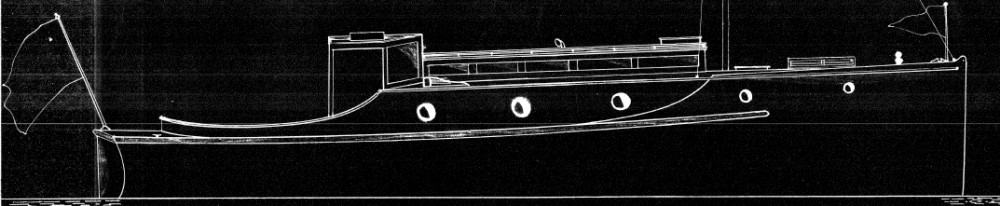
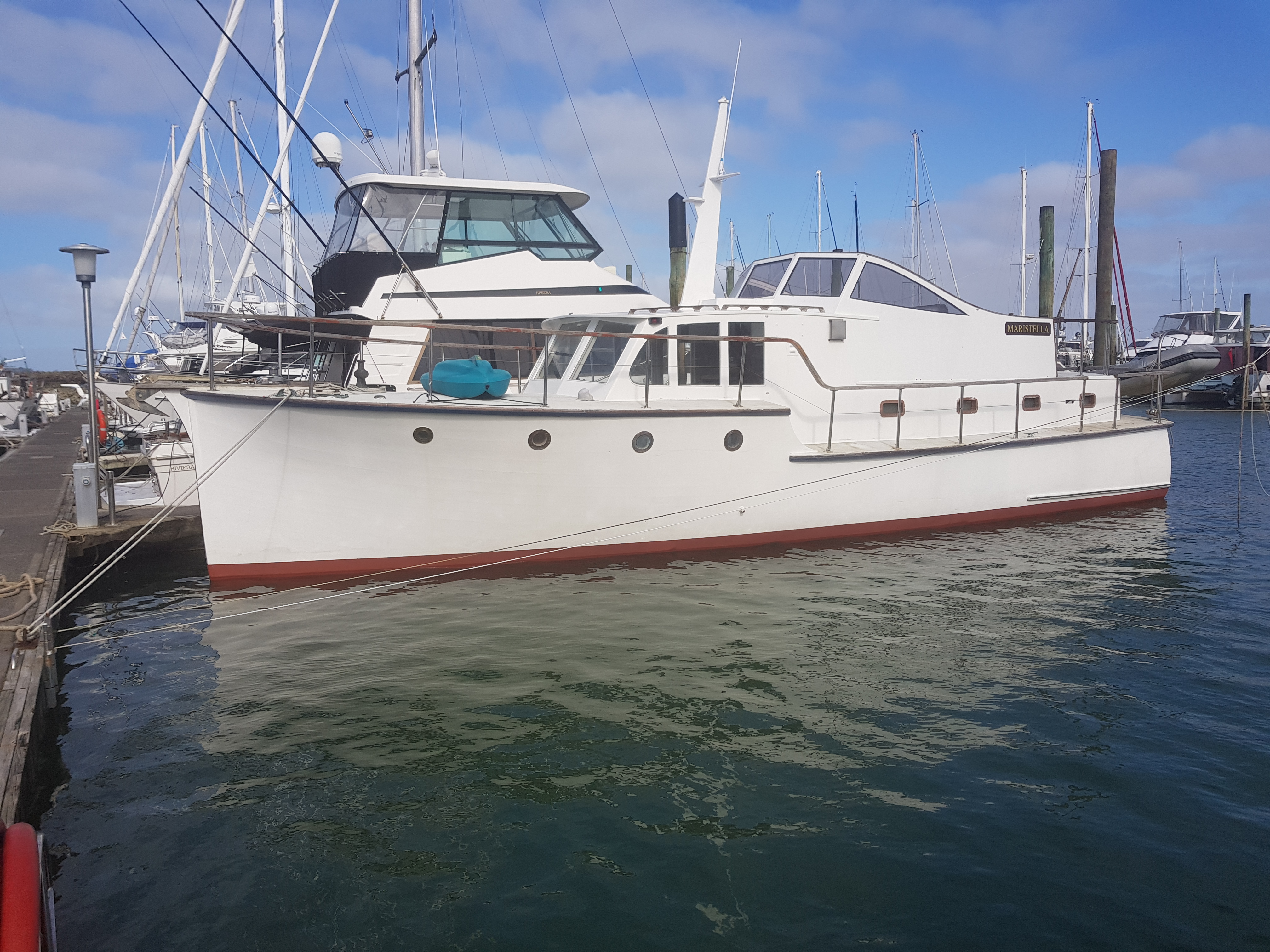
Maristella was a 40 footer, built by Sam Ford in December 1936 for Mr R.W. Wills of Epsom and fitted with a 50hp Ailsa Craig diesel. During WW2 RNZN patrol service she was fitted with a Gray for spares rationalization purposes.
Maristella was for sale recently and was advertised as having a 4-71 Detroit. She was renamed “Faye Michelle” for a time and has now reverted back to Maristella.
The b/w photo shows her on launch day & minus the flying bridge.
New photos – 12/08/2014
20-09-2023 UPDATE ex John Wicks – Maristella spotted berthed at Hobsonville Marina
I’m off for a few days to a spot that is completely off the air – so WW might be on hold for a few days.
If you are reading this & thinking that there will be a big whole in your life (yeah right) – a few suggestions:
1. Use the WW Search box to check out your favorite designer, builder, period, location – there are over 700 posts in the WW library. Even easier is using the categories & tag sections on the right hand side of the WW page, by clicking on a word/s you can search by any topic & see a summary of articles linked to that topic. Only last week someone in Ireland over a 24hr period viewed all 700+ of them 🙂
2. If you are not using the WW ‘Follow’ tool – do it today – all you have to do is click on the ‘Follow’ tab that appears at the bottom of you computer screen on the right when you have the waitematawoodys page open. You then enter your email address in the box that appears & then you will be able to: (a) receive an email advising you when new articles have been posted or updated. Means you no longer have to check in all the time. (b) allows you to make comments on articles that have been posted. It astounds me the number of regular, high frequency visitors to WW that are not using the ‘Follow’ tool.
3. Lastly – have a hunt thru your photo albums for any wooden boating shots, then email them to waitematawoodys@gmail.com
Have a great Easter, travel well, be safe & I hope the Easter Bunny finds you.
Cheers Alan Houghton
p.s. I have a great series of posts coming up on the rebuild / restoration of Dick Fisher’s Akarana
I was alerted to this weather website by CYA member Angus Rogers (MV Mahanui), it really is a cracker & amazingly it works – it predicted (correctly) a fine weekend for the CYA Waiheke Cruise while all local forecasters predicted rain. It also predicted and showed accurately the track of the cyclone that cancelled the CYA Yacht Regatta and predicted correctly the max wind speed in the Auckland area of about 30 knots.
It uses satellite imagery and ocean buoys downloaded into a massive computer program in the States to predict weather for the next week and provides animation of barometric pressure, wind speed and direction, and then if you go into the specific local zones they give even more detailed predictions as well as giving tides.
If you have seen Trinidad in the last few months you would have gone………….. WoW……………… thats amazing. Well now thanks to the wonders of modern technology (a time lapse camera & Gareth Cooke’s photography & editing skills) you can watch how the team at Greg Lees Boatbuilders, working with Awlwood MA (Uroxsys) achieved that amazing finish on her topsides.
The process went like this –
1. Old coatings removed
2. Yellow primer applied
3. Two coats rolled / brushed on
4. Three days of heavy ‘wet on wet’ spray applications, with a good block sanding between coats
5. Final coat applied as a single coat to achieve best leveling
Now this is all stunning but do not think its a pro-only product, the results us amateurs can achieve with 6 > 8 coats using a hand brush is pretty wow.
CYA Beach Picnic @ Motihue Island – Waitangi Day – 06 Feb
If you are at loose end this coming Thursday – 06 Feb, head down to Motuihe Island for the Classic Yacht Association NZ beach picnic.
There will be plenty of CYA yachts & launches in the bay & familiar faces ashore. Kicks off around 11.00am.
Subject to huey, if its not Waihaorangatahi Bay it will be Takutairaroa Bay. I thought I’d be all PC seeing its Waitangi Day & use the given names. I’ll help you & say that W = the city/wharf side & T = the Waiheke side 🙂






 waitematawoodys.com #1 for classic wooden boat stories, info, advice & news - updated daily - 15+ million views