Taree

taree-2

taree-at-gh

TAREE
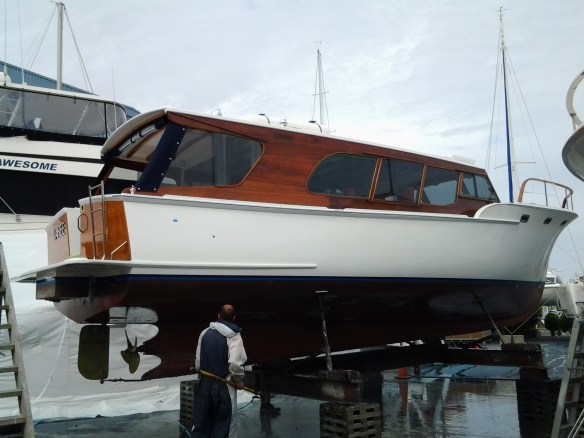
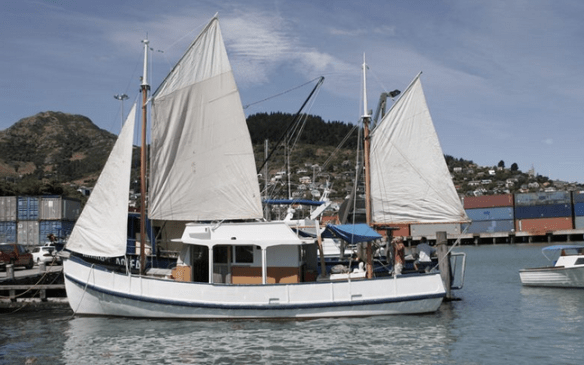
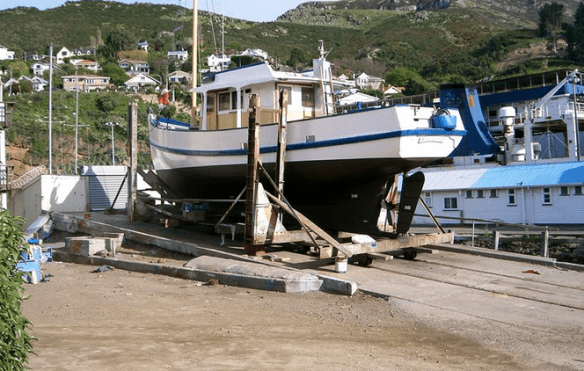
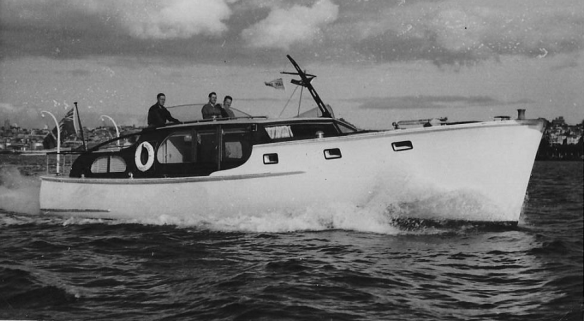
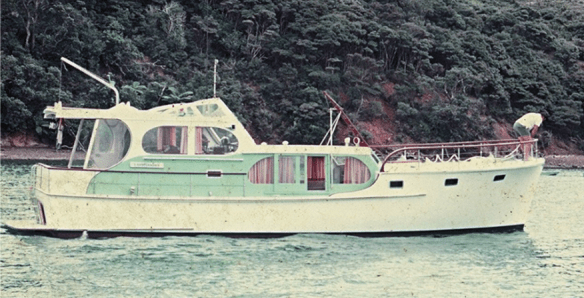
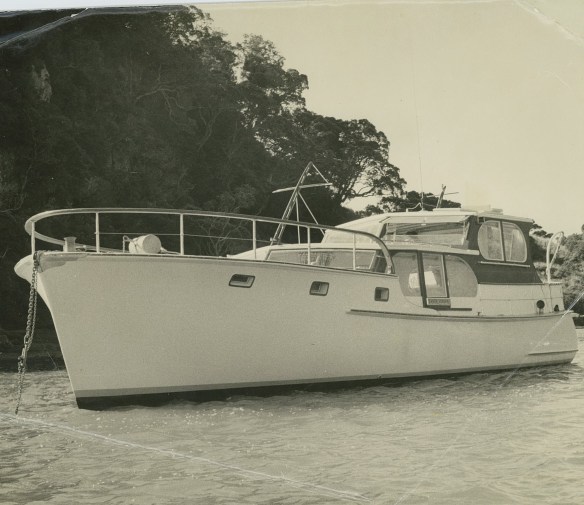
Taree, the 1966 36’ Owen Woolley sedan launch has appeared before, briefly, on ww.  Back in the late 1980’s I even looked at buying her. I think she held a few records:

(1) the longest trademe listing for a classic launch
(2) the number of failed surveys

So to see her in the hands of a new owner & one thats sympathetic to woodys is a very good thing. From the photos above, some ex her owner & some 2016 emailed to me by Ken Ricketts, she is getting the attention she deserves.The name Taree  means “sticks” in Aborigine, I assume a link to the fact that she is built with kauri, carvel planked over jarrah ribs, the Australian hardwood. She has teak coamings.
Power these days is via a GM 165 hp V8 Diesel fuel pincher, installed by the previous owner in 2009. This sees her easily cruise at 8 knots.

She was bought by present owner Don Bruce in Dec 2015 & is now kept at Gulf Harbour. He  bought her off a  John Graham, who owned her for  23 years & kept her at Pine Harbour

Her current owner believes she was built for Emmitt Keenan and had a Perkins 46109 installed when launched.

Gray Mathias, possibly the 3rd or 4th owner,  fitted a 2 stroke Detroit in 1985 and after one more owner Mike McDonald, John Cameron bought her in 1988. The Detroit lasted till 2005 and the 165hp V8 fuel pincher was fitted in 2009, at a cost of $17000.

Recently she has spent time in the Brin Wilson shed at Gulf Harbour (see photos above), receiving some serious TLC.
Always good to see a classic get lucky & find a good home – well done Don Bruce 🙂

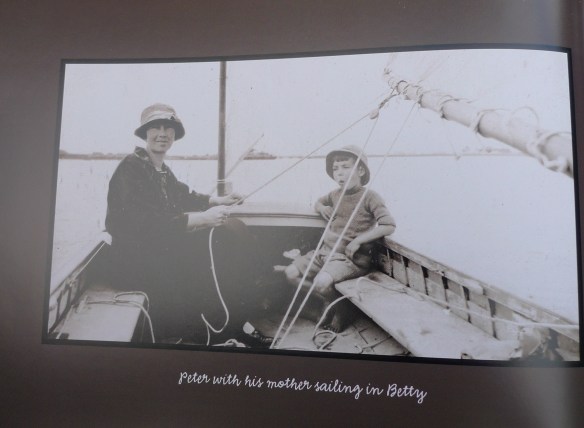
Peter Peal  Book Winner
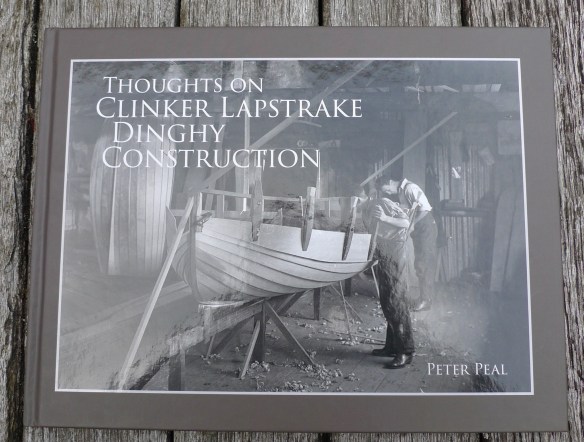
The winner of yesterdays quiz for a copy of – Thoughts on Clinker Lapstrake Dinghy Construction.
Is Nathan Herbert with – Z Class. Lots of people sent in Silver Fern & Frostbite but surprisingly only one – Z Class entry.
Well done Nathan.

What Do You Want For Xmas?

p1220334

P1220337.jpg

p1220338

p1220339

p1220340

I Have Just Solved The “what do you want for xmas” Problem For You.

Morning woodys – Sorry no classic boat today, I had a story lined up & then last night I started to read a copy of the latest woody boat book to be published – its called ‘Thoughts On Clinker Lapstrake Dinghy Construction’ by Peter Peal. The editor is Baden Pascoe & the book design is by Steve Horsley.

Without a doubt this is the most interesting woody book I have started to read, now I say started to, because after a quick power skim I decided it was too good to read at home – it’s a on the boat read. If you have any interest in wooden boats & the Kiwi boat building scene this is a must have.

To quote Chris McMullen who penned the forward – “this book is more than ‘just another book’ about how to build one of these boats the quick & easy way with the aid of modern glue – it is a book that takes you back in time & puts you in the mode of becoming an artisan who uses the characteristics of wood to his benefit. This lies at the heart of the boat-builders art & is something of which New Zealanders can be proud”.

WIN A Copy: all woodys that correctly answer the question below will go into the draw to win a copy of the book. Entries must be emailed to me (address below). The draw will take place on or near 10pm 28/11/2016. Winners name will be published in Tuesdays ww post. waitematawoodys@gmail.com

Q: What was the class of yacht first built by Peter Peal for his own use?

REMEMBER ENTRY IS VIA EMAIL ONLY – If you post your answer on ww, you tell everyone the answer, that’s if its right 😉

Below is a review of the book by the editor Baden Pascoe.

Book Review:

Thoughts on Clinker Lapstrake Dinghy Construction – By Peter Peal, editor Baden Pascoe, book design Steve Horsley.

There are a few good books on this subject from various authors around the world. As materials and power tools have progressed so has the content of these books explaining how to go about building a clinker / lapstrake boat that one can still call it “a wooden boat”. And to add to this the term a wooden boat is now more associated with art form and a thing you own because of the experiences, stories and history attached to it. Recent books on this subject all use the upside down method of construction and the use of high tech adhesives with super gap filling abilities. A good example is Ian Outhtred’s “Clinker Plywood Boat Building Manual” this book is in a class of its own and the results are stunning.

Here in New Zealand we have Peter Peal’s book hot off the press. From the outset he has set out to offer the reader and potential builder more than just an outcome. In the first section of the book he takes you back in time to the late 1930’s via a story line were you can almost feel the day to day atmosphere of the Percy Vos boat yard. A time when young men were immersed in knowledge and exposed to an experience were they got to know what a nice shear line or lay of a plank should to look like. A place where they learnt to touch a piece of timber and instantly know it’s capably of strength and durability. Working with wood was what they loved to do and they played with the results of their work during their weekends sailing, rowing and steaming their floating works of art that were so kind on the eye. The method used to build these boats without the aid of moulds or temporary frames made the task even more challenging but once mastered it elevated these young men to go on to be the legends of our marine industry that are now the cornerstones of the world class marine industry we now have.

The second part of his book his based on much the same principles as in the first section but ply planking can be employed instead of timber. Laminates can be used instead of natural crocks and to make it easier and moulds or temporary frames are recommended to control exact shape. May I remind you as I have been reminded by the few men left standing today who were taught this method, men who regularly built these boats without moulds could build more boats to near exact shape, something not recommended to the one off enthusiast builder. During the process the builder can experience all the aspects and challenges of the artisans of yester year.

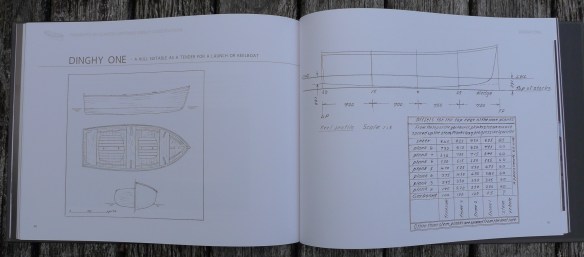
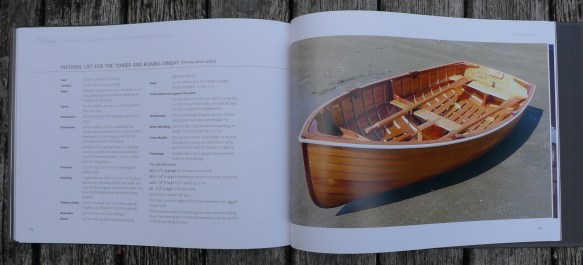
In the third section Peter offers three of his designs with full lines off sets and construction drawings. Boat 1 being a traditional launch or yacht tender, boat 2 a small rowing or pulling boat and boat 3 a clinker large enough to be a small out board run-a-bout. He also recommends designing your own boat.

Section four is a short glossary of the terms and slang used in the Auckland boat yards during his time in the trade. This is something very special and possibly unique to the Auckland area.

Yes, there are many fine tradesmen in Auckland and around the New Zealand coastline who have built what I would be proud enough to say, some of the best clinker boats in the world, but very few of them could explain how this is done via the detailed sketches and drawings from Peters very own pencil. Peter never held knowledge close to his chest, his first love was the parting of knowledge and this fact is reinforced in the forward written by one of his early students, Chris McMullen. This book is a life time treasure and a reminder of Peter’s values and high standards.

A huge thanks to a wonderful man who I have worked with to produce ‘Thoughts on Clinker Lapstrake Dinghy Construction”.

Sadly Peter passed way this year aged 95 – this book is a perfect testament to the man & his trade. – Enjoy


Note: This book is a very limited edition. It is at this time not available in bookshops.

Retail $60 + $7 post and packaging

For orders. Email Chris Peal: chrispeal8@gmail.com

Bank Account no: 01-0210-0030056-47   please include your name as reference.

NOTE: bank a/c number is now correct.
Windhaven II

screen-shot-2016-11-22-at-1-02-42-am

screen-shot-2016-11-22-at-1-03-17-am

screen-shot-2016-11-22-at-1-03-36-am

screen-shot-2016-11-27-at-5-39-18-am

WINDHAVEN II
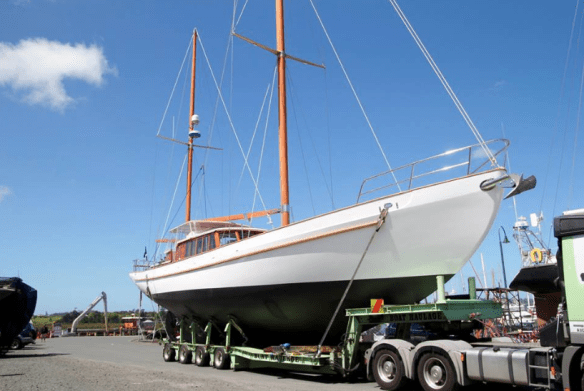
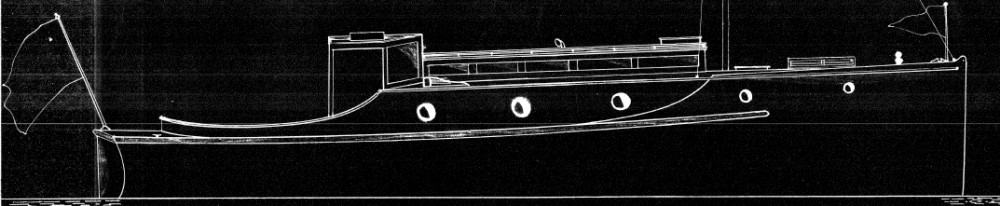
Yachting Developments have just completed a major refit & restoration on the Colin Wild ketch Windhaven.
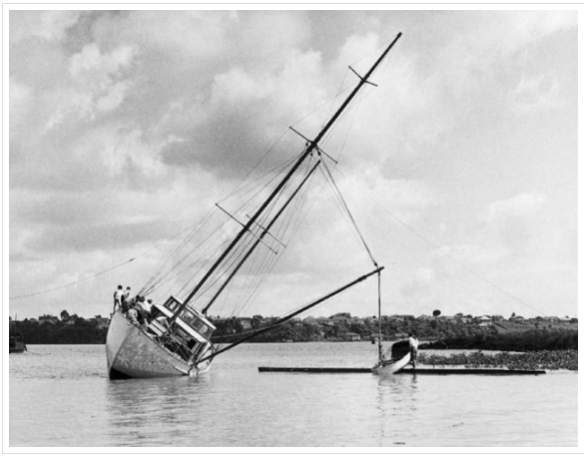
Her relaunch was a little more dignified than when she was first launched at her builders, Colin Wild, Stanley Point, Devonport yard. Ngatiringa Bay lacks H2O, even at high water 🙂

Wonderful to see one of your iconic classics returned to her former glory. In fact, the team at YD have delivered her in better than ‘as-new’ condition. As further proof of the work YD do on classics see the photos below of Ranger, also returning to the water after some TLC in the YD shed. Thanks to Paige Cook/facebook for the images. Launch day photo ex John Salthouse collection via Mike Drummond.

screen-shot-2016-11-22-at-1-07-32-am

Tui

TUI
Sometimes you wonder how serious someone is about selling their boat, Tui is listed on trade me – as a 30′ inboard ‘beautiful girl’ & is a wonderful sea boat”.

When it comes to specs the seller says “I will need to put all the mechanical details on later all I know is she starts every time first time. Engine, shaft etc will be updated all I know is that I think Tui has a ford tractor engine”. And they want someone to pay $35k+ based on that ;-(
A few hours with a tungsten tipped chainsaw & you could end up with a nice wee sedan top launch, if the price was right. Thanks to Ian McDonald to the trademe tip.

Do any woodys know ore about Tui – builder, year etc?

An apology – if you were wondering what was happening around yesterdays story on Vacuna – I removed the ww story because the vendor was not being upfront with the vessels past & had been very creative with the story. There was over 10 comments that I chose to ‘moderate’ & did not appear on ww, mostly name calling & threats, I’m the only one that’s allowed to do that 🙂  so they got the delete button.

Kowai

kowai

KOWAI
Kowai was spotted on the hard at Half Moon Bay las week by Alan McDonald. She lives up the Tamaki River at Panmure, on piles.

Thats all we know about her – so can any woody supply more details? One of the river rats must know the boat.

Input from Peter Morton (ex Ken Ricketts)

Help needed – I have been contacted by Kerry Costello with a question. I’ll let Kerry tell it.

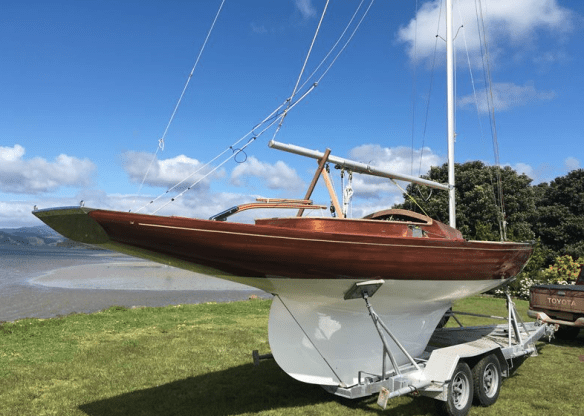
“Recently I found a small wooden sailing dinghy (below) at an op shop – unintentionally – and now I’m trying to piece her together and get her in the water. I really want to find out what the make and model is. My partner and I are taking the paint off and want to fix her up nice – figure out the correct paint, put fiber glass on the seams and a of couple dents, and find a mast for her!
It seems that knowing the make and model would be helpful in finding the right mast. I’ve looked on trade me and someone told me that the lumber yard might mill one for me? But it seems that finding a used one would be more appropriate than anything else; using something made by a boat builder rather than milled by someone who doesn’t know boats. So as I said before any advice that you can give me would be so so appreciated.”

So woodys, can we ID the yacht design & any chance someone as an old mast in the garage rafters ?

image1

sail

Jade – Sailing Sunday

screen-shot-2016-11-19-at-8-59-50-pm

screen-shot-2016-11-19-at-9-00-37-pm

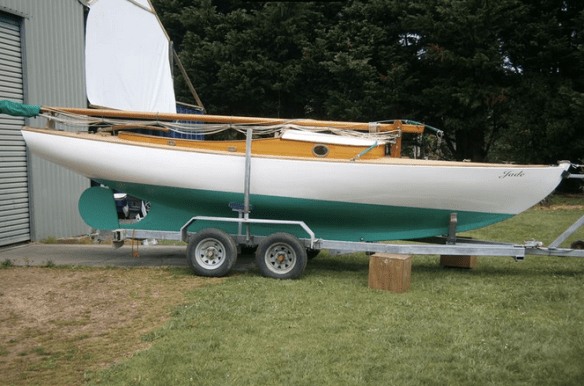
JADE – A Herreshoff style weekend/daysailer

Jade fits into the classic category that we call ‘spirit of tradition’ – a gaff-rigger that not only sails well but also has none of the maintenance headaches that other wooden boats have.
Specifications: LOA: 7m, Beam: 2m, Draft: Centerboard up: 650mm, CB down: 1.5m Sail area: 20sqm, Ballast: 300kg, Displacement: 1300kg.
She is 4sale on trademe. With her custom trailer & cover + being a center-boarder she would make a great lake boat. You could even troll for a trout with the 8hp outboard 😉

Kia Ora

screen-shot-2016-11-19-at-5-51-04-amscreen-shot-2016-11-19-at-5-53-11-am

screen-shot-2016-11-19-at-5-51-16-am

Kia Ora
A 43 foot wooden boat powered by a Gardner 6LH through a Gardner gearbox.  Kia Ora is an ex fishing vessel converted to a pleasure boat for her well deserved retirement.
Built in 1939 at Kaikoura by local fishing legend Syd Cormack & launched on the foreshore at Kaikoura.
She is very well known along the South Island east coast, not many places you won’t bump into a fisherman thats worked on her.
With her Gardner ticking over her cruise speed is 7 to 8Knts and fuel usage is around 5 to 6 liters per hour.

Any of the woodys able to tell us more about Kia Ora, Ian McDonald alerted me to the trademe listing, hopefully she survived the earthquake & tidal activity that it the area this week.

Harold Kidd Input

KIA ORA was built by Syd Cormack in Kaikoura and launched in 1940. Her first engine was a 50hp Bolinder. Her dimensions are (official reg) 41.2′ loa x 12.7′ beam x 5.6′ draught, 13.03 tons gross and 3.88 tons net. Cormack was her first owner. She was registered as LN 93.
When Ainsley Sinclair of Akaroa owned her in 1950 he steamed her up to Auckland for the Sanders Cup contest. During her life she has been sunk and salvaged three times.

Sheds at Clyde Quay Wellington
The capital has also been suffering the effects of the earthquake, Gavin Pascoe sent me the photo below. This is the result of earthquake surge + king tide + torrential rain. Hopefully the water did not do much damage to the sheds contents – click this link to view the sheds on a good day 😉 https://waitematawoodys.com/2013/12/31/ever-wondered-whats-inside-those-sheds/

screen-shot-2016-11-19-at-6-24-20-am

St. Mary

st-mary

ST MARY

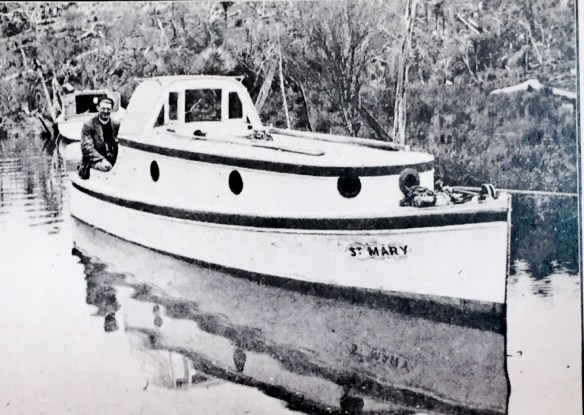
Today’s post features the launch St Mary, seen here transporting an Anglican Home Mission priest on the Hokianga River. The church used launches to undertake church work in the Far North in areas inaccessible by road. The photo was spotted at the Pah Homestead in Hillsborough by John Burland & is ex the Sir George Grey Collection (Auckland Library) & taken by Barry Bennett.

Any woodys able to tell us some more info on the launch & what happened to St Mary?


ps – seems even back then, boaties had ideas around building a ‘block of flats’ 🙂

Harold Kidd Input – Jack Harker wrote a great little book about this Anglican clergyman “Soldier, Sailor, Priest”. ST. MARY was based in the “Roadless North” at Kohukohu in 1914, was 24′ loa and had a single cylinder 4.5hp Standard engine. I don’t think he did a Jasper Calder and preached from the boat.
By 1923 it was said to be the only launch the Anglican Church owned in NZ. The minister, the Rev. J.C. Hawkesworth conducted 276 services, performed 34 baptisms, 8 marriages, 9 funeral services and 41 candidates for confirmation. The northern shore of the Hokianga is largely Roman Catholic with a superb church at Te Karaka, visible for miles, set up by Bishop Pompallier, so there was a bit of inter-denominational rivalry going on.
I can’t find a whiff of her provenance in the book or anywhere else.
The Anglican Church did build other launches, one in 1909 for use at Stewart Is and Ruapuke and a 40 footer in 1914, G.A. SELWYN, (later just SELWYN) by E.R. Lane for use at Nelson for the Church’s Sounds and Tasman Bay communities.

The Sinking of Lady Sandra

lady-sandra-sinking-2

The Sinking of Lady Sandra

Lady Sandra was built by the Lane Motor Boat Co in 1947, details on her past can be viewed at the link below. In previous ww posts Ken Ricketts was of the belief that Lady Sandra sank off Devonport but recent photos ex Ken Jones that have surfaced have revealed that the location was in fact Birkenhead, c.1948-49.

Lady Sandra

The tale goes something like this –  Lady Sandra had stopped to tow a grounded yacht on Auckland Anniversary Day & in the process managed to get the tow line around both of her propellers & pull them towards each other, thus pulling the propeller struts out of the bottom of the boat. They quickly managed to beach her, as the above photos show.

Interested to hear more details on the yacht rescue & subsequent sinking of LS, as there is still uncertainly around what happened.

Post the sinking & refit (mid 1950s) she was sold to Ken Woodhead, an Auckland businessman, who sold her late 1950’s > early 1960’s, to a Eddie McGoram, now aged 88 & living in Vancouver. In discussions with Ken Ricketts, McGoram confirmed that when he  purchased her, the original 2 Scripps flathead 6’s had been replaced with 2 x 120 hp Hercules 6 cyl flathead petrol engines.  Most likely the Scripps were replaced post sinking after she sank. McGoram only kept her for approx. a year & during this time replaced the Hercules engines with 2 x 4 cyl Ford diesels. He sold her to Owen & Margaret Cleave in the early 1960s & they kept her until well into the 1960’s.

The Cleaves did substantial remodelling of her coamings c.1966 & interior layout. At some stage she was lengthened & her engines were moved back to the new tuck position.  During the Cleaves ownership c.1964,  LS ended up on the rocks at Pakatoa Island & had to wait for the tide to re-float, other than bruised egos, there was no major damage.

Lady Sandra was  sold to a friend of KR’s (John Richards) c.1966-67. Richards also modified the previously modified coamings. According to Richards son, Ian,  John sold her to an overseas (Vanuatu) owner in the late 1960’s. Sadly she was wrecked on a reef in a storm – some would say that given her past dices with death, it was a only a matter of time 😦

Below are a selection of Lady Sandra photos that show various moderations undertaken by her owners.

lady-sandra-4-ex-ken-jones

Peckham ownership


ls-pre-1966-ex-margaret-cleave

As Built

lady-sandra-john-richards-gt-barrier-is-c1972

Richard ownership

lady-sandra-eddie-mcgoram-era-c1955-1

McGoram ownership

Art That Floats

screen-shot-2016-10-31-at-7-38-29-pm

screen-shot-2016-10-31-at-7-40-15-pm

Art That Floats

You could buy the 10m yacht above for less than the price of a decent piece on NZ art & the bonus is that come the weekend & you pop it in the harbour & go can get a serious blast of high performance sailing.
She was built in the Ukraine and rigged in NZ for a Russian billionaire, no expense spared, its rumored that the hull & deck cost over $220k to build).
She has only been sailed at a one week regatta & has all new sails (1 main, 3 jibs, 2 spinnakers.) & equipment.
Construction is mahogany on oak frames with teak decks & epoxy coatings & an aluminum tapered rig.

This Dragon is probably the finest trailer-able classic yacht in the country, pristine in every way. Thanks to Colin Pawson for the trademe tip off.

Now woodys who’s got a $66k & maybe a glassed walled garage 🙂

Below is fine example of what we call ‘spirit of tradition’, the Robert C Seamans is a regular visitor to NZ & hails from the US. She’s used for sail training and research and will be in local and Northland waters until December. She’s currently berthed at Princes Wharf. (photos ex Rod Marler)