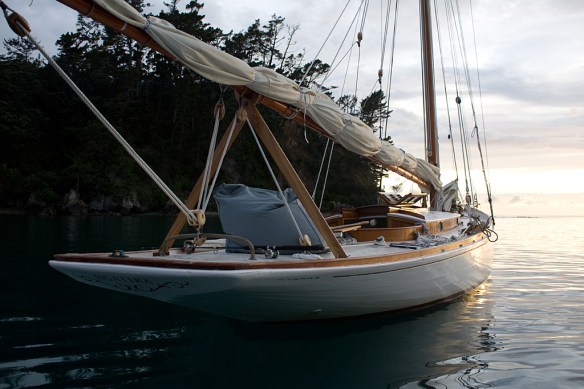
Now I don’t do many blatant 4-sale posts on ww but the gaff cutter Ngatira is owned by a long time buddy & all round nice guy – Steve Horsley.
Ngatira was built in 1904, is the finest example of a Charles Bailey Jnr racing boat of this era and is of historic significance. She has recently undergone an extensive restoration / rebuild back to its original configuration e.g gaff, staysail, jib and topsail.
Ngatira is not only a stunner on the water, she is also rather quick and has had good success racing in CYA regattas.
She was a Logan beater when first launched to race against Kotiri and still beats a few Logan’s today. She can be raced easily with a small crew of 3 or 5, and cruised with only two.
Basic but comfortable inside as it was in the day, sleeps up to four.
She is in good condition and has a good pedigree with a well documented history.
LOA 49’
LOD 40’8”
LWL 28’6”
Beam 8’6”
Draft 5’10”
Ngatira is presently hauled out at Sandspit Yacht Club hardstand for viewing.
Sale price $180,000
Contact Stephen Horsley 09 423 8704 – 027 280 7497
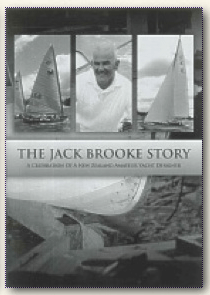
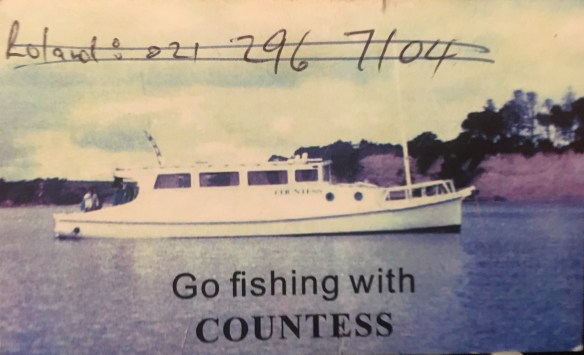
I was sent the above photo last week & while I know the name of the boat & the identity of the people in the photo, I don’t know the designer/builder/year – so woodys the first one that can correctly name the launch & her designer/builder & year of launch, will win a copy of the publication – ‘The Jack Brooke Story – A celebration of a New Zealand amateur yacht designer’. Published by the Tino Rawa Trust, with input from Harold Kidd & Robert Brooke.
Now some t&c’s
1. Winning entries details will be confirmed by HDK
2. The following are excluded – HDK, Nathan Herbert & Ken Rickets – just to give everyone a better a chance of winning 🙂
Once she has been ID’ed I will post more details on her but very keen to hear about what happened to her in later years & where she is now.
We have a winner , confirmed by HDK – Paul Drake – well done.
It is the Duchess built by Bailey & Lowe in 1920 for R.L. Stewart Sr. Harold commented that funnel puts you off as she looks like steamer but it’s only for her 3 cylinder Twigg petrol engine. I understand she even had a fireplace onboard – my kind of boar 🙂
The photo was sent to me by Geoff Steven whose uncle Graham (Snow) Steven owned her. He lived at BP Bay on Kawau Island and used to do work around the island on her. Geoff recalls that he dragged telegraph poles to the various Gulf islands at times. Graham was well known by boaties in the Gulf. The lads in the bow are Geoff’s brothers & Geoff took the photo.
CALLIE photo & details ex Bob Wichman* via Bruce Pullan
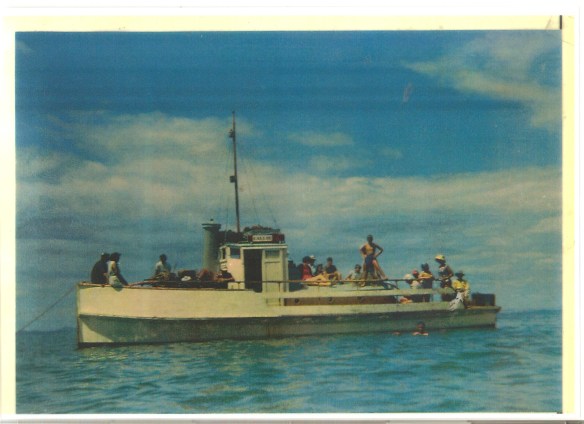
Callie was built c.1916 by Bailey & Lowe for the Brown Bros. She was 39′ x 9’3″ x 4’6″ & when launched had a 35hp Twigg 4 cyl diesel engine.
In 1918 she was sold to C.W. White of Onehunga. In 1925 she was re-powered with a 140hp Steams petrol engine. Sold again in 1939 to I.G. Vickery of Onehunga. In 1940 a Gardner 24hp (seems small?) engine was fitted, this was replaced in 1948 with a 48hp Ralston diesel.
In the early 1900’s she was used as a passenger ferry to Cornwallis & Huia on the Manukau. Post c1940 she was commercial fishing for skipper Fred Vickery.
Unfortunately she was wrecked on 11-05-1968 on a sandbank at Southhead, Manukau Harbour.
In the photo above given the presence of Fred Vickery, I assume its Callie on a day off from her fishing boat duties & not when she was a passenger vessel. A note with the photo records the following people:
# ‘Gary’ standing with foot on the rail
# Beverley Wishart, red dress, black cardigan
# Fred Vickery (owner/skipper) outside wheelhouse
# Rod Vickery in water
*note: Bob Wichman’s family had an association with Callie & the Awhitu (Inverness)
Wairuna is currently a resident of Great Barrier Island & has been lucky to have the same owner for the last 29 years.
Her trademe listing states that she is a 28′ Bailey & Lowe kauri built launch, built c.1940 & powered by a 90hp Fordson diesel.
What I’m sure is a more modern cabin top has been done very well, not easy on a sub 30′ boat 🙂
Can we expand on what we have been told about her?
BAILEY & LOWE photo ex Angus Rogers ex Northcote Tavern
The only photo that I had of the Bailey & Lowe yard at Sulphur Beach, Northcote, was one I took with the iPhone from a library book & it was very average.
The above is hanging on the wall in the Northcote Tavern & was snapped (via iPhone) by Angus Rogers.
What Angus was doing there is a mystery, must have taken a wrong turn & missed the Remuera motorway turn off 🙂
Story & photo ex Joyce Fairgray, input from Harold Kidd
Today’s photo & story was prompted by the recent ww post / movie ‘Beautiful Waiheke’. The launch Beatrice was built in 1909 by Bailey & Lowe for Jas, Gordon – I’ll let Joyce tell the story.
“When the Lambournes and other city folk holidayed on Waiheke in the 1920s, they were welcomed by other young ones growing up there, who joined in the fun and friendship.
One was my father Selwyn Pegler (born 1903), son of John and Nell Pegler of Orapiu. Nell was daughter of Martin and Mary Ann Day of Days Bay; her sister Annie married John’s brother George and they lived not far away at Omaru Bay. Both families were large – double first cousins – so there was always a big crowd ready for fun. Numbers were further swollen by more cousins, because another sister, Jane married Will Connell, and brother Ted Day married Mercie Connell. Ted and Mercie’s daughter-in-law, Dixie Day, was author of “Waiheke Pioneers”.
Grandfather John Pegler farmed at Orapiu, and he and Granny Nell leased the boarding house from William McIntosh. It was a family enterprise with parents and children working together to run the place. All had their jobs, cooking, milking cows, cutting firewood, growing vegetables, caring for poultry and much more.
When Dad was in his teens, his father bought the launch from the Gordon family of Awaawaroa. There were a large number of Gordon girls, (yes, one married a Day!) and the launch was named for one – Beatrice. I think.
When Peglers became owners, the name was changed to that of Pegler daughter Edna, and when eventually it was sold to Connells it was named for Connell daughter Lola.
Teenage Dad was told to learn all about the boat from Mr Gordon, and take over the responsibility of launchman for the boarding house, providing guests with fishing, picnics and other excursions. It was also used for transport to and from the island for the holidaymakers. The Fuller family was often among them, and they and others would want to see any shows that were on at His Majesty’s so Dad would get them to the city. He was given a ticket to see the show, and afterwards would take them all back to Orapiu. There were few lights to be seen round the gulf, but one landmark to watch for was a lone house light at Beachlands. Weather deteriorated one night and Dad decided they would have to sleep on the boat at the launch steps, and wait until morning. One lady was very cross about it.
In 1924 the lease was due for renewal. The two oldest girls had gone nursing, other children were reaching adulthood, and my grandparents decided Waiheke could not provide adequate livelihoods for all. The launch and other possessions were sold; they moved to a dairy farm at Paerata, and Dad’s days as a responsible young skipper were over”.
Input from Peter Stein
The above article brought back many fond memories. When our launch “Waitangi” was laid up during the war because of the petrol shortage we relied very much on the “Lola”. Our only access to Arran Bay was by the Auckland-Cowes Bay ferry. The usual ferry was the “MV Baroona” but sometimes the “TSS Tangaroa” and “Onewa” were used on the run. The ferry would stop off at Connell’s Bay and Mr WJ Connell (we knew him as “John Willie”) would bring the Lola alongside for the passengers to board. He owned the store in the bay named after him. He usually had one of his two sons with him. The elder Eric took over the store after his father died. The younger son Les managed the farm which included the land behind the houses in Arran Bay.
If my memory serves me correctly the Lola was driven by a two cylinder Lister motor.
During the summer when I was a young boy the family would visit the Pegler’s in Omaru Bay. It was an opportunity for my father to renew his acquaintance with Mr Pegler and for us to gather fruit from the fine orchard they had.
From the 1920s to the 1980s there would be few boaties that did not visit Connell’s Store for fuel and stores. My father bought Arran House from WJ Connell in 1924. Below is a copy of the first account my father received from Mr Connell.
I was sent this movie, filmed in late1929/30’s by the Lambourne brothers (Allan & Alex) nearly 2-1/2 years ago by Roger Guthrie, it was back in the very early days of ww & since then a lot more people have checked onto the site – in fact over 100,000 people. On ww last week I bumped into Peter Stein whose father (also Peter) appeared in the movie. Peter has written a very cool synopsis of the movie & the (now) classic launches that appear in the movie. I suggest you read Peters words & then watch the movie. Enjoy 🙂
The film “Beautiful Waiheke” by Peter Stein
Introduction:
The film was produced by the Lambourne brothers Allan & Alex in the late 1920’s early 1930’s. The Lambournes owned a large furniture shop on the corner of Ponsonby Road and Pompallier Terrace. The Arran Bay house was built in 1910 and remained Lambourne property until 1964 when it was sold to the Jorgensen Family.
Water transport for the Lambournes was the launch “Nga Whare” which is the round bilged craft in the film with the two portholes in her topsides. She was sold when I was a very young boy so I remember little about her.
Our property is next door to the Lambournes. Arran House was built circa 1885 for Andrew and Mary Croll from the Isle of Arran, Scotland. They were two of Waiheke’s pioneers. Andrew was a very fine photographer and albums of his photos can be seen at the Waiheke Historical Society Museum on Onetangi Road. Among the photos are scenes of the Annual Regatta organised by Andrew and held at Arran Bay circa the late nineteenth century. These events were well supported by “boaties” of the day. The albums were kindly donated by the Crolls of Sydney. Mary Croll was a very good artist and she put many scenes of the “bottom end” on canvas. Some of her mural work is still on the walls of one of the bedrooms in Arran House. My father, P.A.S. Stein purchased Arran House from W.J. Connell (owner of Connell’s Bay Store) in 1924 and it has been in our family ever since.
The Waitangi, the launch with mast and crosstree in the film was built in 1923 for Mr Cadman. It was a classic John L. Hacker design with sharp entry and flat stern section. The original owner named her “Karamana”. She had an aeroplane engine in her and we understand she was capable of 25knots which made her one of the fastest launches on the Waitemata at that time. Harold Kidd has a very good photo of her racing on the harbour (added below. AH). In the latter 1920s she ended up on the Tamaki Drive breakwater. My father bought the severely damaged hull and had her restored by Chas Bailey & Sons. He renamed her the “Waitangi” after his father’s steamer the TSS Waitangi of the Northern Steamship Co. My grandfather Peter Anton Stein was a Captain of various Northern Steamship Co. vessels from 1895 to 1908. Chas Bailey told my father that the Waitangi had brought them good luck because the next launch off their slipway was the legendary “Shenandoah”.
The Waitangi was 28 feet long (8.5m), had a beam of 7 foot 3inches (2.2m) and draft of 2 foot 8 inches (.8m). She was built in kauri and the bottom was double skinned from the bow to the wheelhouse. The rest of the vessel was single skinned. Her Auckland mooring was in St Mary’s Bay in front of the Ponsonby Cruising Club at the bottom of St Mary’s Road. Maintenance was carried out at Collings and Bell Boat Builders adjacent to the PCC.
About 1930 my father replaced the old Studebaker engine with a 105hp Kermath marine engine. Allely Bros. of Beaumont Street imported the motor and installed it. It was known as a 6 cylinder flat top. The pistons had a bore of 4” (100mm) and each cylinder had two spark plugs. It was double ignition with one spark plug connected to the magneto and the other one the distributor. Maximum speed was 18kns and at this speed the motor burnt 8 gallons of petrol per hour. Petrol was bought in 4 gallon cans and there were two cans to a box. We still have an old Atlantic box which we use as a vegetable bin at Arran House. Petrol in the early 30s was 1 shilling and six pence a gallon. A 50% rebate brought the price back to a respectable 9 pence a gallon. My father told me that the best run home he achieved was Connell’s Point to Kings Wharf in 1 hour and 12 minutes.
The film:
The film began with shots of the Guthrie family aboard their launch “Alcestis”. It then moved to shots of Arran Bay taken from different location around the Bay. The people setting out down the path are coming from the Lambourne’s house.
The aquaplaning sequence was filmed from the shore and the “Nga Whare” which was the tow boat. My father was the young man with one of the Lambourne girls on his shoulders. Years later I learnt to aquaplane on the same board.
The “Waitangi” then heads to Bulls Bay with my father as pilot. The majority of the film is shot at Bulls Bay (Anita Bay) on the north eastern end of Waiheke. At the northern end of the bay are many small rocky islands and the launches are filmed going through the channels between the rocks. These are not hard to navigate but should be done at ½ tide or more.
The “Coughing Caves” are in the southern point of Bulls Bay. With a northerly swell and incoming tide, waves enter the caves and when the top reaches the ceiling of the cave the air behind it is compressed until it bursts out in a cloud of spray. The boy in the dingy, Reg Crawford, is trying to get as close as he safely can to the emerging spray.
The “Whirl Pool” is in the long reef extending from the northern end of Bulls Bay. Riding the swell in and out of the pool could be quite exciting as seen in the film.
The homeward bound shots of the Waitangi in the storm were taken in the channel between Pakatoa and Waiheke.
Harold Kidd Input from previous ww post
Waitangi was built as KARAMANA for F.B. Cadman in 1923 by Bailey & Lowe to a design by Hacker. KARAMANA = CADMAN in pig maori. She was later bought by Auckland Grammar School teacher P A S Stein and rebuilt as per the 2nd photo below. She was fitted with a war surplus 6 cyl Green sohc aero engine producing 120-140bhp, bore 5.5 ins, stroke 6 ins (you work out the capacity). She was pretty radical.
03-09-2015– comments
1. The Lambourne launch was called NGAWAI I think, not NGA WHARE. She was later bought by the Andrews family on the Hokianga. I remember her as a child during WW2 laid up in a shed with a Chrysler engine. Maybe another NGAWAI but she looks the same. 2. KARAMANA/WAITANGI was built by Bailey & Lowe in 1923, not by Chas. Bailey Jr who built SHENANDOAH in 1929. There’s some conflation there.
CURLEW photos ex Thomas Gross, details ex Harold Kidd
Curlew was built by Bailey & Lowe at Auckland for Percy Dufaur and launched in February 1912. Percy Dufaur was a law clerk working for the legal firm Dufaur Fawcett (now Cairns Slane). He owned many yachts in his time but was very fond of the concept of a small, seaworthy cruising boat.
Curlew had a 4hp Auckland-built Kapai auxiliary from new and was a centre boarder. Dufaur sold her to W. Abbott in 1914 and he sold her to H E Chamberlin of Ponui Island in 1918.
In 1919 A T Jamieson of Northcote bought her. He had admired Curlew and had had Bailey & Lowe build him a very similar yacht called Kereru in 1916 although she was a keel yacht. Jamieson kept her for 2 years, selling her to George Lepper of Northcote who used her to transport NZ Herald newspapers to Northcote for distribution every morning, 6 days a week.
W. Keen owned her in 1946 and D J Best 1946 to 1951 when boat builder Dave Jackson bought her (hopefully Dave J can tell us more about her recent history).
K Darrach owned her in 1973 and Bert Knight of Ngunguru owned her in 1989.
From 1946 her registration number was O15.
These days Curlew is owned by Thomas Gross & moored at Bucklands Beach.
ADVICE NEEDED 🙂
Thomas has a question for the woody boaters out there – he is after some guidance on how to re-build Curlew’s rudder that broke in 2 pieces. He has the pieces stored on the boat to bring home and use as form for the new one, but was wondering where to start, e.g. he has read that he should use different sheets of plywood and put them in different directions etc, but was wondering if the ww followers know of more information on this or what other options to rebuild the rudder.
Update – 19-09-2015
Whangateau Traditional Boay yard have been helping Thomas with the repairs – Pam’s words “Lots of good wood still so George decided to make some simple repairs. New rods with thread and nut to draw it all up tight again”
And for the yachties – todays bonus is a link to Day 4 + Ladies Race photos from the British Classic Week. Enjoy
Royal Irish was built by Bailey & Lowe in August 1913 for H.C. Williamson of Cape Runaway and named after a currently popular racehorse.
She is a 32 footer, originally powered by a 4 cylinder 18-35hp Sterling marine engine. She broke away from her moorings in the winter of 1914 and was shipped by scow back to Bailey & Lowe in Auckland for extensive repairs.
Royal Irish remained on the Bay of Plenty coast for many years. Joe Addison of Waimana owned her during the 1940s when she had a 3 cylinder Ailsa Craig diesel. In 1941 she broke down off the Raurimu Islands. Addison sent off a carrier pigeon with the details. The Whakatane pilot boat ‘Port Whakatane’ went out and towed her in. Addison sold her to Charles Bell of Waimana who replaced the Ailsa Craig with a BMC Commodore.
By 1975 she was owned by Barry Davies of Leigh and she’s been in and around Leigh ever since. In fact still fishing out of Leigh today.
Tough old bird!
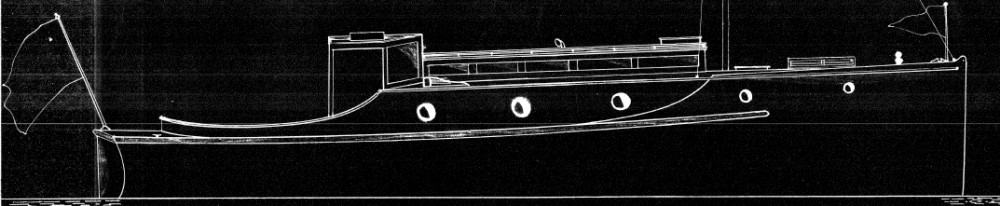
The above photo was found at the Waiuku museum the other day and there was no supporting information on the vessel. Can someone throw some light on her for us. Given the ladder on the deck, it safe to assume this was a lake photo.
Update from Paul Drake (mans a legend)
This is a great photo. This is TAMATI at Lake Taupo. Built by Bailey and Lowe (I have seen her builders plate), she still exists under the same name but otherwise unrecognizable at Paeroa. She is a side-wheeler, having been converted at Hari Hari (west coast of the South Island) some years ago. She operated commercially on Lake Ianthe. Prior to this, she languished for many years on a front lawn in Paraparaumu. And prior to this, she was a private launch on Paremata Harbour, north of Wellington. At Taupo in the 1930’s, she operated commercially in tandem with Bailey and Lowe’s TAINUI (destroyed by fire in 1937), servicing a fishing lodge based in Boat Harbour (Western Bay). This fishing lodge was the former steamer TONGARIRO (Bailey and Lowe 1899), which ran a service between Tokaanu and Taupo until 1924. Following her years as a commercial launch at Taupo, and after WW2, TAMATI was altered by local boat builder Jack Taylor, who raised her bow and constructed a new (plywood) cabin, which eventually rotted off. TAMATI operated as a private launch owned by the Butler family. Said to be 28 feet LOA.
Photo below showing TAMATI in Boat Harbour, with the fishing lodge (ex TONGARIRO) in the background, and the Collings and Bell PIRI PONO (now at the Auckland Maritime museum) in the fore ground.
More photos ex Paul Drake
Lake Ianthe (West Coast, South Island)
On the wharf at Wellington showing stern name
On the wharf at Wellington, about to be put on the Bluebridge ferry, bound for Hari Hari
On the front lawn at Paraparaumu
At Paeroa
On the slip at Paremata, about to get a new cabin
The builders plate
Photos below ex Heather Reeve, friends of current owners Colin & Gloria James
At Paeroa
At Paeroa
At Paeroa
23-01-2018 Input from Clive Field
This is from an email back to Blighty in 2001 — Clive & Jill Field — Two Brits enjoying Aotearoa
For the first time in five weeks, we were on schedule! I should explain that until now we have not been running to any fixed schedule at all.
All was going well when we passed a sign that said Lake Ianthe Historic Paddle Boat trips.
We threaded our way along the jungle edged highway that separates the sea from the mountains to our left. What a mixture of sights sounds and smells to absorb? Then Lake Ianthe came into view.
Modestly advertised with just one well-written roadside tent sign we found the Paddle Vessel Tamati, (Maori for Thomas?) The newly painted vessel is the pride and joy of a former sawmill owner who has ventured out from a business with diminishing returns to capture the tourist dollar. The boat was indeed a joy to behold. Tamati is a paddle wheel conversion of an aged wooden pleasure boat built originally for the Edwardian tourists who thronged to Lake Taupo on the North Island.
David, the saw miller, told us it was built of Kauri planking, which had meant it survived many years afloat, and many more ‘upside down on a bloke’s lawn in Wellington.’ “I bought it and stuck the top on and fitted the paddles… did it all from scratch. I found some stuff on a Scottish Paddle steamer Lady of the Loch on the Internet. It was all trial and error really except luckily we didn’t seem to make any errors. We dropped it in the lake at Christmas and she just floated and went beautifully.”
David’s description of ‘sticking the top on and fitting the paddles’ is the classic understatement of a person with energy, vision and skill. It is yet further evidence of the oft-quoted ‘Kiwi Ingenuity’.
The hull has long sweeping lines. The cabin follows the classic bow fronted paddle steamer wheelhouse. The framing is in a soft salmon pink indigenous wood I think he called Ramaiti. The paddles are ‘feathered’ which means they are cranked in order that they enter the water vertically thereby immediately gaining the maximum grip on the water. Interestingly enough the paddle guards over the paddles are heavy duty clear Perspex. “Why the Perspex covers?” I asked. “Just because I reckon those wheels are beautiful and I wanted to see them going round and round” he smiled.
He was right they were beautiful pieces of engineering in wood, steel and aluminium. We discussed engines and he opened a cupboard beneath the cooker hob and there was a little Japanese diesel powering an hydraulic drive to each paddle.
We helped ourselves to tea and coffee and enjoyed the 45-minute trip around a lake formed by glacial action thousands of years ago. Two black swans paddled their serene way across the lake. David made no mention of them until I pointed out their stately progress. “Yeah, all you Brits mention them. They were introduced in Victorian times I think, but to us, they are a bloody pest. Vermin even. They crowd out the natural species and breed like rabbits… or swans really.”
The lake is edged by natural un-husbanded forest. David explained what to look for to identify such tree cover. “It is all affected by earthquakes you see. We get a real shudderer every 250 years – give or take fourteen years. The mountains just shrug off their tree cover and when they re-generate they all end up the same height. It gives a sort of blanket effect.”
(That explains our earlier candlewick bedspread analogy I thought.)
When we came to rest back at the picnic site wharf we chatted about the boat and the tourist business. “It was a bit sobering really because I wanted to finish the boat for the Christmas holidays I got wound up like a spring working it all out and doing the finishing touches. I thought it was just a case of putting up the sign on the road and I would be packed out… but it is slow starting off.”
We agreed that ‘trips every hour’ was a good way of announcing the fact that the boat went however many turned up.
“What else would you suggest we do?” he asked. We talked about websites and then “What about a steam whistle?” I suggested. “You could power it from a small compressor off the engine and that would announce to all those having picnics up in the car park that things were happening.”
In order to emphasise the point, I mentioned Walt Disney’s first ever cartoon ‘Steam Boat Willie’ starring Mr Michael Mouse.
David’s eyes lit up. “That’s it! He said, “That’s it! Look here, the marine-licensing people said I had to have a horn and I bought these.” He produced a pair of boy racer type twin air horns from under a bench. They were still in the shrink wrap packaging.
“I just haven’t had the heart to fit them, but look, I could use the air pump and get a brass whistle made up.”
We left David to his next passengers and decided that even more ‘Kiwi Ingenuity’ would be applied to the PV Tamati ‘ere long. (He later emailed us with the success story of his compressed air brass whistle)




 waitematawoodys.com #1 for classic wooden boat stories, info, advice & news - updated daily - 15+ million views