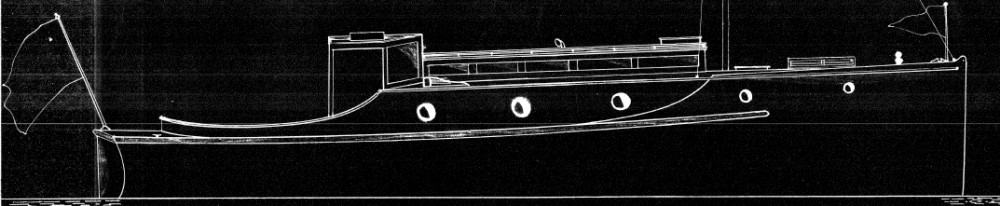
LA MORENA – Sailing Sunday

LA MORENA – Sailing Sunday

Sometimes you see a boat & just go wow – now everyone has their own taste but today’s yacht rang my bell. Got to love the dinghy & the solar panel 🙂
La Morena is a 95 square metre Skärgårdskryssare. She is a 1922 masterpiece by Gustaf Estlander, the Finnish architect.
The yacht was built in Germany for a Swedish engineer, Frithiof Dahl. He was a building contractor, at that time responsible for the building of Ragnar Östberg’s famous City hall in Stockholm. Under the name Roxane III, the engineer race her during the 1920’s and 30’s, against Kerma and other famous yachts, probably mostly around Sandhamn and Saltsjöbaden. Then the family Graffman own her for almost forty years. They call her La Morena, “the brunette” in Spanish. They sold her to Arne Fyrk and Bengt Helgesson in the late 1970’s, who moved her from Stockholm to Motala and lake Vättern, were she stayed for 20 years. La Morena was almost 60 years old when they bought her. No age for a beauty, but she had worked hard and was in deep need of recondition. Arne and Bengt’s effort saved her for the future. The year 1998 she was back in Stockholm with new owners, who sold her to the present owner in the summer of 2004.

During the winter of 2004-05 an extensive restoration were carried out. It ends with a new keel plank, a new rudder stem and knee, 50 meter new planking, a new stainless steel rudder, a new modern profile of the keel, and high finish of the whole bottom. Damages in the deck and deckhouse were also repaired, as were damages in the mast. The restoration has continued. With the aim to both have a shining and a fast yacht.

The text is Swedish but the photos of the restoration are stunning – link below
http://www.lamorena.se/restoration/

Also as a bonus – click the link to the on-line USA Classic Yacht magazine
http://www.myvirtualpaper.com/doc/ClassicYacht/clasicyacht-septoct2015/2015090801/

MONDAYS WW POST IS A MONTY – THE RESTORATION OF DICK FISHER’S EX. PILOT BOAT, ‘AKARANA’, 40+ photos.

The Wellington Scene

THE WELLINGTON SCENE

photos & details ex Harold Kidd & Gavin Pascoe

Some Wellington launches for a change.

Harold recently bought a postcard of a “launch on Auckland Harbour” which was clearly Wellington. Harold keeps in touch with Gavin Pascoe of the Wellington Classic Yacht Trust on anything Wellington so sent him off a copy. Between the two of them they identified her as Phyllis but in passing discussed images of two other similar craft, Doris and Wai-iti.

You can see that they all have a modest  ketch rig and similar configurations.

Phyllis was a 21 footer built at Kilbirnie to a Rudder Mag design by G. Dennis, starting in December 1910 and launching in August 1912. She was still around in early 1916.

Doris was built in Auckland as the 28ft mullet boat Dorothy but was sold to Charlie Moore in Wellington in 1912. He converted her to a deadwood keeler with an auxiliary but she became solely a power boat pretty soon. She was still around in 1929.

Wai-iti was built by Simmonds and Hutson of Wellington in late 1924 and they also built her semi-diesel engine. She was 28ft x 9ft. She lasted until at least WW2.

Harold Kidd Update

PHYLLIS certainly is very pretty, but you’d expect that of a Rudder design.
DOROTHY/DORIS’s cabintop is a bit lumpy, but it was put on in Wellington after she had been converted to a Cook Strait-capable launch from a very basic Auckland-built 28ft fishing mullet boat and form follows function most adequately.
WAI-ITI’s hull form is very sweet but I still can’t get my head around the way her cabin ports are placed, equidistant from the top of the coaming rather than in the middle between the top of the coaming and its bottom (sheer) as is the case in most boats of the time. To me, that’s a little awkward and unsympathetic. This has been commented on before in WW in relation to a possibly amateur-built Wellington launch.

Mistletoe – Sailing Sunday

Mistletoe – Sailing Sunday
photo ex Jason Prew

Jason snapped the photo above in August 2015 in Tauranga Harbour. Can not be a lot of ‘these’ down there so hopefully one of the woodys will be able to ID her.

Harold Kidd Update – 16/09/2015

Fred Mann built two 24 footers called MISTLETOE. The give away really is the narrow stern which betrays her early build. This is said to be MISTLETOE I which Fred built in late 1904, first race Auckland Anniversary Regatta January 1905. MISTLETOE II was built in 1914 and had very similar lines.
Frankly I am undecided which of the two this one is. Some authorities reckon she’s the 1904 boat, some the 1914. The APYMBA registration of MISTLETOE (sic) as I7 recorded her as being built in 1911, which merely shows how much confusion there has been since the second MISTLETOE was built.
Whichever one she is, she’s another survivor of Mann’s excellent design and craftsmanship.
I did most of my early keel yacht sailing on Lincoln Wood’s Harrison Butler-designed and Mann-built MEMORY and was regaled by Linc with Mann stories (as were most of Devonport’s young water rats he took as crew).

The  photo below was sent to me by Judith (Le Clerc) Wallath & is of a punt built in Whangarei for her brother Brian by their Dad, Godfrey Le Clerc.  The picture was taken at Onerahi with Limestone Island in the background. The punt was made out of a salvaged board that had borer and planks from a wooden case.  It was painted with tar from the gasworks but still leaked through the borer holes, and had a sail made from an ironing sheet, complete with iron-shaped scorch mark. Brian took it, against instructions, over to Limestone Island.  His Dad removed a plank from the bottom until there was a promise to behave.   Brian went on to become a champion P Class and Z Class sailor, and his sister (Judith) also sailed a P Class (on Hamilton Lake). Definitely a classic woody 🙂

Where is this woodys gathering?

WHERE IS THIS WOODYS GATHERING?
photo ex Harold Kidd

Today’s photo was taken in the period 1895-1905 & is ‘around’ the Waitemata.
What say you woodys – whats the location?

Article ex Paperpast from the NZ Herald 3 Jan 1896 (ex Harold Kidd)

Also a wee bonus today – Martin Turnwald, son of CYA member John Turnwald (MV Robyn Gae), who now resides in Switzerland, has sent in a c.1993 video of the William C Daldy. We see the crew was firing up the boilers to turn the old girl around on the wharf and Martin and then girlfriend, (now wife) were on board to watch.


Ngaio – Sailing Sunday

Ngaio – Sailing Sunday
photo ex Nathan Herbert

Todays photos were taken in early Jan 2015 by Nathan & are from Tutukaka. The hauled out ‘yacht’ has an interesting set up – 2 masts + game poles 🙂
I have to say it looks a great spot to haul out.

Anyone able to shed some light on the boat?

No longer a mystery – its Ngaio, designed by Jim Mason in 1941 – photos below from Dean Wright

Harold Kidd Input

In case Ian doesn’t post, she was designed and built by Jim Mason at Grey Street, Whangarei from a half model and launched in 1941. She was partly mobilised in 1942 by NAPS and crewed by Jim Mason, skipper, Tom McKinnon, deputy skipper, and Jack Carpenter, Bob Baker, Peter Roberts and Ian Crawshaw. Her NAPS number was Z40.
These NAPS boats did a great job during wartime when German commerce raiders and minelayers were busy around New Zealand at the start and were followed by Jap submarines checking us out. The Whangarei boats were in the most likely place for trouble.
Lovely boat.

Input from owner & son of builder, Ian Mason

A following up on Harolds post on Ngaio,all correct I might add. She was built over a two year period. She is carvel planked in kauri over kowhai ribs and pohutukawa stem, stern and floors. Her first engine was a 6 cylinder Delage out of a car owned by my father. When it was replaced in 1957 by an air cooled Enfield they got more for the scrap than Dad originally paid for the car. When she was built kauri was 3 pound 15 shillings per 100 super feet and the copper nails were the equivalent of 75c per pound. The original suit of sails cost 25 pound from Sails and Covers. In those days she carried 750 sq ft of sail. Since the Enfield she has been powered by a Ruston, Bedford and now a 6BB1 Isuzu. I installed this in 1995  and we have had 7000 trouble free hours since. I first went aboard Ngaio when I was 4 months old. I have 4 children and 9 (to date) grand children and they all love her as much as those  that have gone before. I think she will keep the same name and family ownership for a while yet.


Tomif – Sailing Sunday

TOMIF – Sailing Sunday
photos & details ex Don Kurylko & the WoodenBoat Forum

Now I have been a fan/follower of the USA WoodenBoat Magazine’s on-line forum for a long time, it was my go-to place for advice & guidance on most things to do with classic wooden boats. The secret was being able to ID who was handing out advice based on experience & who was sitting in a farm house 5,000 from the sea & had never owned a boat. There have been some amazing build projects & some real characters on-line. If you have not visited the forum I would encourage you to.

Everyone has their favourite stories (called threads) but one of best & longest running is the tale of Don Kurylko & the build of his 45′ cold moulded, topmast gaff cutter.  Below you will find the link to the WBF thread on Tomfi – lofting started back in 1981 & she came out of her shed earlier this year, yep thats 34 years 🙂  Don says that works out at close to 16,000 hours or 8 years of full time labour.

The story of Don test lofting in the snow is just one of many amusing tales – I’ll let Don tale it :-

“One day, a couple of winters before I started building, I found myself going a bit stir crazy and needed something to perk up my spirits. We were living in a small log cabin out in the boonies, without electricity, and there wasn’t much in the way of entertainment to be had. So, I grabbed a set of plans I had bought from designer Tom Colvin and headed out to the small pasture behind our place. I made up some long battens and “lofted” out the accommodations plan full size to see how it would fit. The snow was perfect. It had been really cold and the surface was so hard and crusty that you could walk on it without fear of breaking through. Once I got all the lines laid out, I filled them in with ashes from the wood stove. In a few hours I had a virtual boat that I could walk around in. It was fun and the drawing lasted for several weeks before it snowed again and covered it up. I guess there are some advantages to Canadian winters after all”.

The above photo collection is just a selection from the 100’s on Don’s Tomfi thread – if its raining today, I’ve probably ruined (or made) your day.

http://forum.woodenboat.com/showthread.php?123343-More-photos-of-Don-Kurylko-s-new-boat

SPECS:

LOA: 45’
LOD: 34’
DWL: 29’
BEAM: 10’
DRAFT 5’
DISP: 18,000 lbs
D/L: 333
BALLAST: lead – outside 5,600 lbs – inside 1000 to 2000 lbs, as required
B/D: 36% @ 6600 lbs; 42% @ 7600 lbs
SA working: 800 sq. ft. (SA/D: 18.5)
SA 3 lowers: 695 sq. ft. (SA/D: 16)

Janet – Sailing Sunday

JANE – Sailing Sunday
photos & details ex Mike O’Dwyer

Janet was designed by Chas. Bailey Jr. in 1902 & built by the Sutherland brothers in Domain Street, Devonport*. She is now owned by Andrew Wares, Bruce Isles and Michael O’Dwyer of Hawkes Bay. All friends since childhood with a common interest in sailing who decided to obtain a classic yacht – a day sailer, not too big, something with a bit of provenance that had to look nice. After a year of looking Janet came up and fitted the bill.

Janet was purchased in June 2013, shipped to Napier in April 2014 and relaunched in April 2015 after an eighteen month makeover. Almost all of the work being done by Mike O’Dwyer & with limited spare time saw the project sixteen months longer than expected. A brief overview of the project goes like this – she had six planks replaced, three each side in the garboard area, a certain amount of repair completed on the inner skin, and was fully re-caulked, puttied and painted. The keel and rudder were fared and the floors refastened. The rig was also spruced up with the mast being painted, the boom varnished/painted, fittings newly galvanized and the roller reefing system rebuilt. The owners report she sails beautifully and with improvements and tweaks continuing will only get better. In the first photo above she is seen enjoying her first sail in Napier waters.

The restoration goes like this – Janet was stored at the sailing club hardstand with scaffolding around her, the tarp covering the scaffold was originally rented because  they thought they would only be there two months to do a spruce up. Well the best laid plans…. After removing the paint with hand scrapers it was discovered that the wide seams were full of sika around the garboard area, a copper strip covered a dodgy seam, planks that looked like they had lost some fastenings. Further raking of seams revealed very old caulking and putty.

In one of the photos you can see below the dark water stained areas that there was a 10mm gap between the garboard plank and the inner skin. Only one thing for it, full re-caulk, putty and new planks. The bottom three on each side had to be replaced.

In another photo you can see a copper strip covering the seam just above the forward edge of the lead keel, the seam behind this was about 10mm wide and full of gunk. The wooden filler block on the leading edge of the keel also needed to be replaced.  When raking out a small section of a seam it started with newer cotton on the outer, as you went deeper the cotton got older until finally the last cotton to come out  was like a ribbon. The plank edges were parallel to each other back to the inner skin which made for a narrow deep seam. The seams were paid with a variety of products e.g there was black sika,white sika and putty. Up to five layers of caulking( the stranded type) were removed from some seams.

You can also see the scored waterlines in the hull planks. They counted about six of these either side. Janet had an inboard engine at some stage which could account for some of them.

The varnish product on Janet is Hempel diamond varnish & is a two pot varnish. There are five coats on everything that needed varnishing. The wind vane is home made & works a treat.

Below is an index to some of the photos & her owner talks you thru some of the work. Scroll over the photo to view the number. Also remember you can enlarge the photos by clicking on them 😉

Andrew, Bruce & Michael have done a wonderful job in restoring Janet & hopefully we will see her back on the Waitemata for some of the classic yacht regattas.

Mike will be posting some updates & photos on the CYA Forum – link below http://classicyacht.org.nz/cyaforum/topic/janet-back-in-action/

PHOTO INDEX:
Photo 1 – shows the hull primed and caulked. You can see the lowest three planks that are to be replaced and a rough area where a copper strip was used to cover a wide seam.
Photo 2 – the hull above the waterline puttied. Below the waterline redlead paint was added to the putty.
Photo 3 – planks removed portside. A couple of the planks literally fell off when the end screws were removed. It must have been the corrosive entities handing hands that kept them on.
The inner skin though black from years of bilge water,oil and god knows what else was still sound. Gotta  love that kauri. A few kauri shims also fell out,used as packers to take up a few gaps between the skins.
I remedied this with lightweight filler mixed in epoxy. Kauri locks also fitted at fore upper end of the lead keel ready for shaping.
Photo 4 – Inner skin repaired and first plank fitted. The floor fastenings were replaced also.
Photo 5 – Planks awaiting faring. Lots of red lead paste between the skins. Kauri blocks shaped and primed.
Photo 6 – Starboard planking underway. Eight new inner skin plank ends were scarfed in place.
Photo 7 – Bit of bling – I’m letting this oxidize however as I like the vert de gris look. Aging gracefully.
Photo 8 – Just about ready for the water. Still work to do on the rig.
Photo 9 – Not a bad looking rear.
Photo 10 – Happy boat back in the water after 15 months.
Photo 11 – Mast painted by brush. To many scarfs of different coloured timbers so went with the paint option.

*Harold Kidd Input

Angus and William Sutherland lived in Domain Street, Devonport. Angus was a shipwright with Chas. Bailey Jr and had Bailey design two yachts for himself and his sons. The first was JANET in 1902, a 24ft linear rater. The second was the 40 footer WAIONE, built to replace JANET in 1907. She was a 9 metre under the recently-adopted International Rating Rules.
Both yachts were built privately by the Sutherlands at their home in Domain Street, not at Bailey’s yard which, until 1912, was at 43 Customs Street West at the foot of Hobson Street. In November 1912 he moved his yard to the new reclamation at Beaumont Street, Freeman’s Bay.
Confusion arises sometimes because Chas. Bailey Jr DID design and build a JANET about this time, but it was a 30ft linear rater for J. McMurtrie of Sydney. Even then, some sources say she was a Sibbick design.
Your yacht was probably named after the Sydney yacht which was launched in 1901.

03-04-2016 Update – 2016 Art Deco Parade of Sail –  A Mark Foy start, Janet claimed line honours.

FullSizeRender (65)

Wooden Boats In Croatia

Wooden Boats In Croatia

Somehow I think the middle child must be deaf, she has emerged from 22 years of sharing a roof with me & says “Dad you’ll be proud of me, I’m sailing on a wooden yacht in Croatia” & sends me the above photos. When I asked if they actually sailed i.e. put the sails up, she replied “yes I think they did a few times” 🙂
Had a chuckle at the big ugly air con unit on deck, I suppose its the trade off for a cool cabin & cold drinks.

That’s her in the middle doing a back flip 🙂

And b4 Jason P comes on & says “what sails”, there is a wee one 😉

Ruakuri – Sailing Sunday

RUAKURI –  Sailing Sunday
photos from Pam Cundy at Whangateau Traditional Boat Yard

Other than the location being Fitzroy at Great Barrier Island Ruakuri is a mystery to me, the chunk of alloy on the stern is a clue she has done some blue water sailing.

Anyone able to supply more info on her?

Orphans Day

ORPHAN DAY

Hows this for a cool idea, in the old days boaties used to rally around & hold an orphans day, where they took orphans (what a horrible sounding word) out on their boats for a magic day out. Not much chance of that happening now with all the PC rules & do-gooders out there.

In my early 20’s I sailed (on a Davidson 28, I know fiberglass) with one of life’s real characters, his name was Kaye Raymond Thode & someone should have written a book about that man, in my circle of yachting friends he was a legend. This was in the days of no cell phones & the skipper Dennis Ross had a few simple rules:

1. The boat leaves the dock at x.xxam, miss the boat & you had better find another boat to sail on for the next race
2. Anything discussed on the boat, stays on the boat
3. When away, personal hygiene was non negotiable – you weren’t even allowed to fa_t
4. Meals were always very civilized & you had to wear a shirt & sit at the table & no elbows on the table etc
5. Talking with a mouth full of food earned you a clipped ear

Well none of these rules applied to Kaye, he was uncontrollable BUT we all loved him & if his life tales had been published it would have been another Johnny Wray book.

I’m still bound by Rule #2 so my lips are sealed on the tales but you could be sitting on the rail, Kaye didn’t like that but there was no chance of ever getting Ron Lusty out of the cockpit & I don’t think the skipper, Dennis Ross, ever went forward of the mast 🙂  & Kaye would drop a clanger like “I grew up in an orphanage, we were poor & so all the kids were sent to an orphanage”, then later I hear from someone else that from his early 20’s Kaye organized a Xmas boating picnic for the kids at the orphanage he had attended – the picnic was really something with Kaye as Santa handing out amazing presents. I understand it was the biggest thing in the kids year. Kaye could be a total rogue but he had a heart of gold. Saying that when I knew him he was single, having been tossed out by his wife for diving drunk into a childs swimming pool & almost paralyzing himself, & my mother was a widower & I made it very clear to Kaye if I ever saw his car outside mums house I would shoot him 🙂

Today’s photo c1950’s was sent to me by Ken Rickett’s ex Dianne Hopson & is of Orphan Day. Ken Rickett’s reports that some of the boats that were involved every year were Valsan (Arnold Baldwin – Valsan, was a key mover in the events), Rehia (again Bill Ryan – Rehia, was also heavily involved),  Hukarere , Gay Dawn, Tasman, Lady Eileen, Margaret S, Apache, Tiromoana, Lady Joan, Aurora, Moanalua, Faye,Royal Falcon &  a lot of others.not sure if its the same day as Kaye’s but it must have been a blast for the kids. Somewhere in that fleet is the launch Hukarere.

How many other classic’s can we ID?