Meola

MEOLA

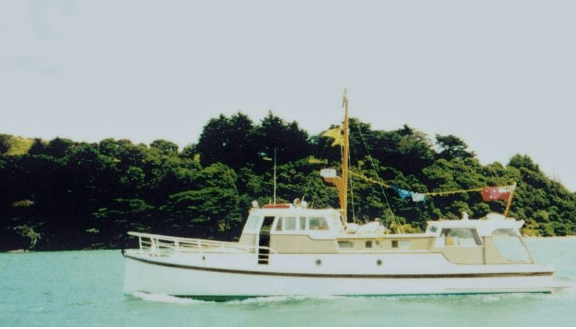
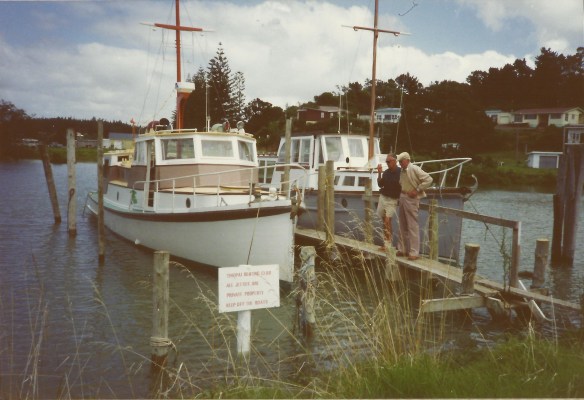
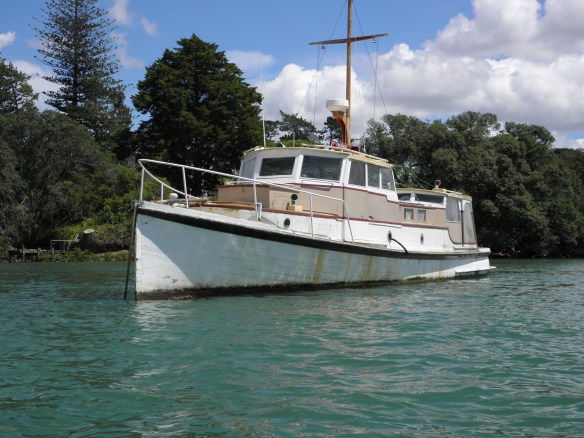
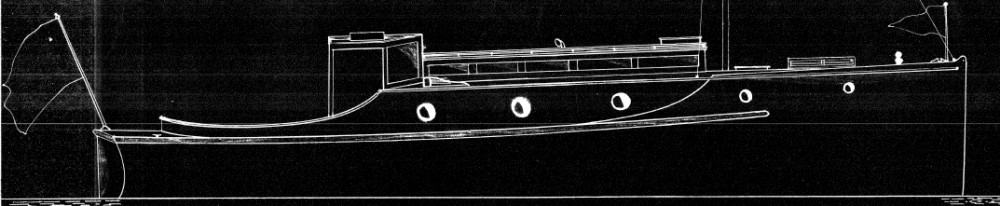
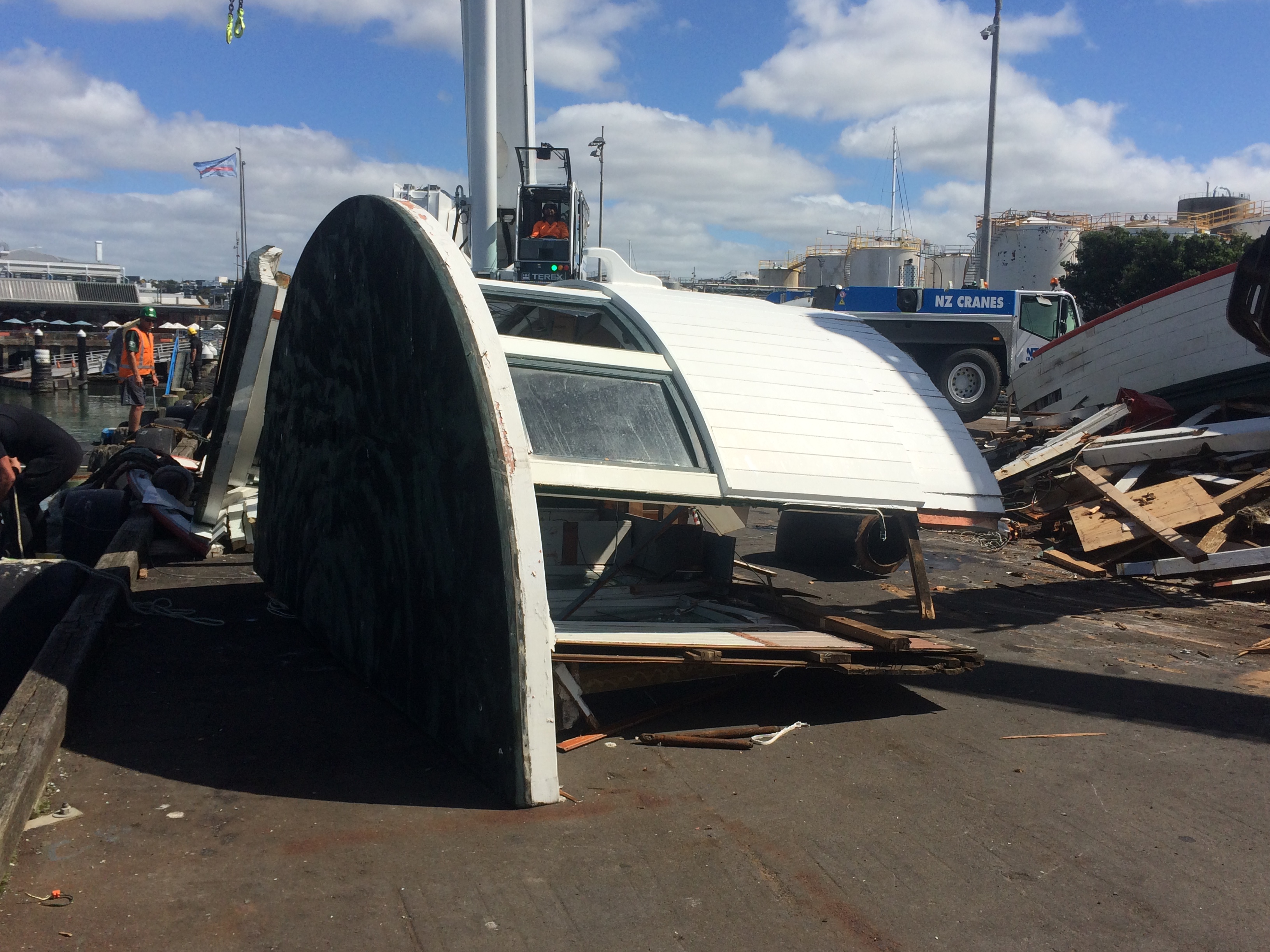
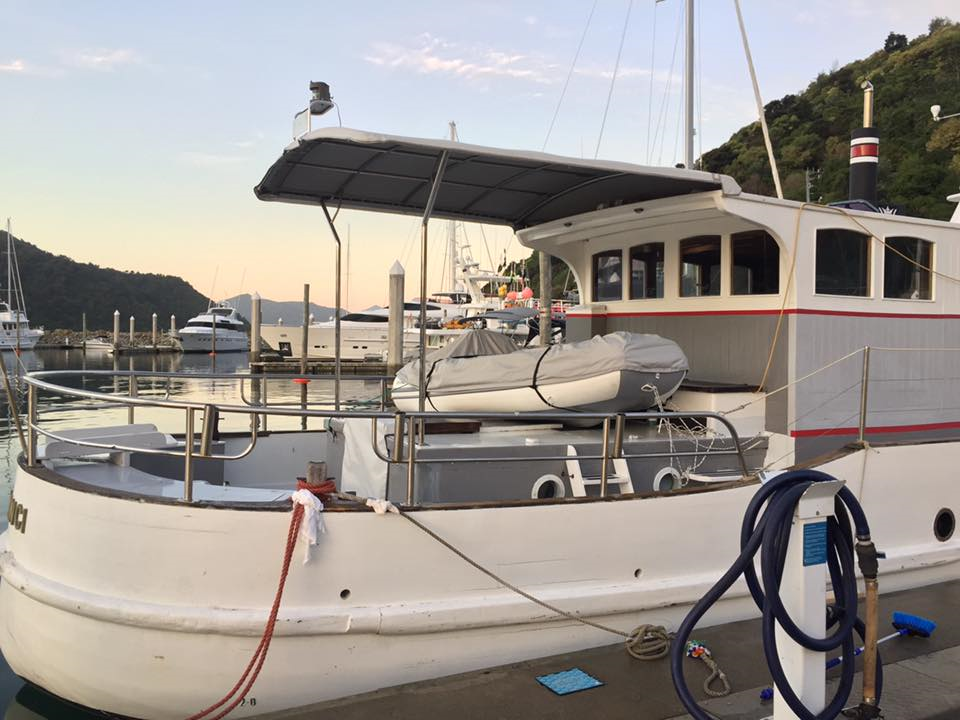
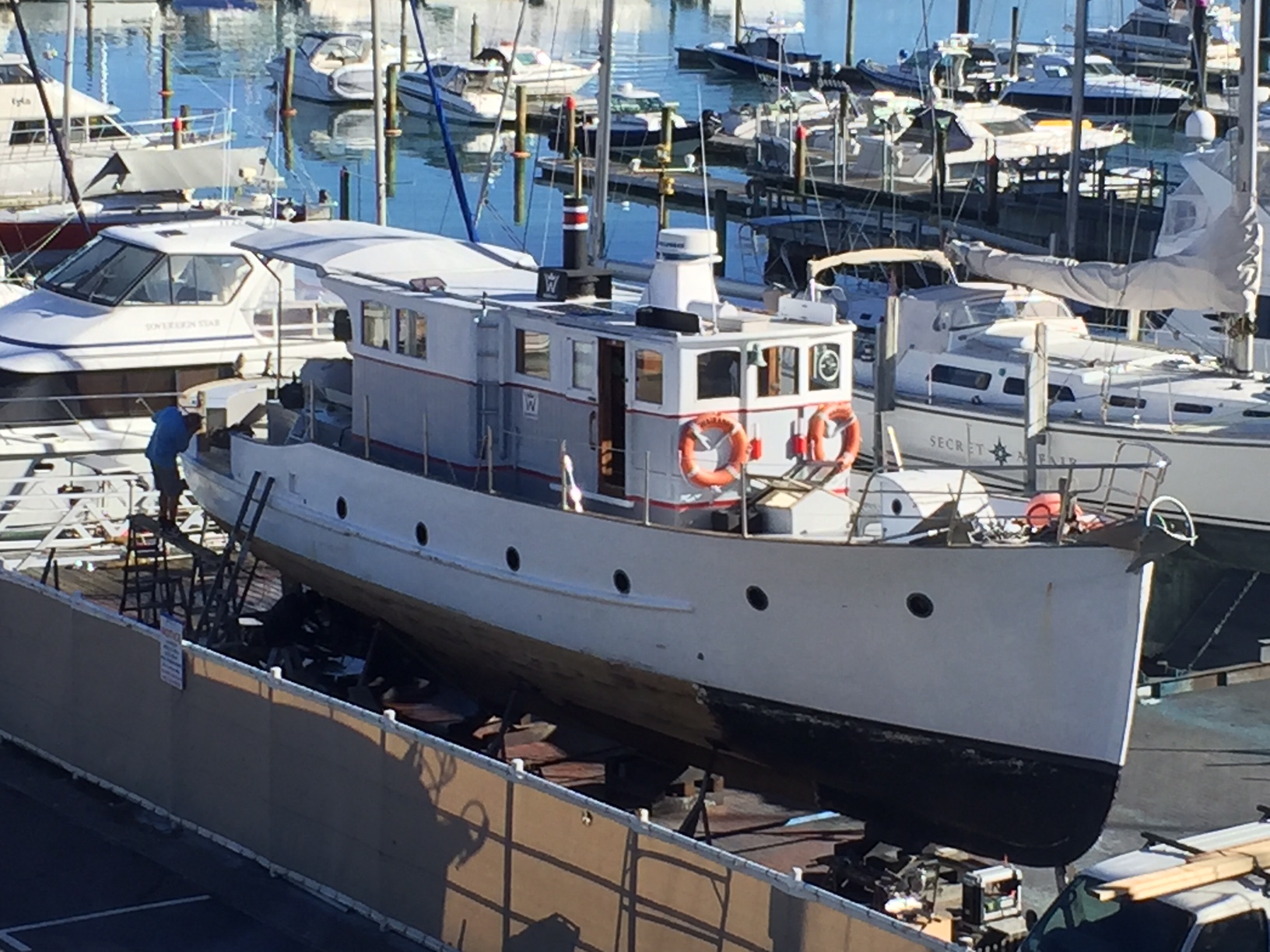
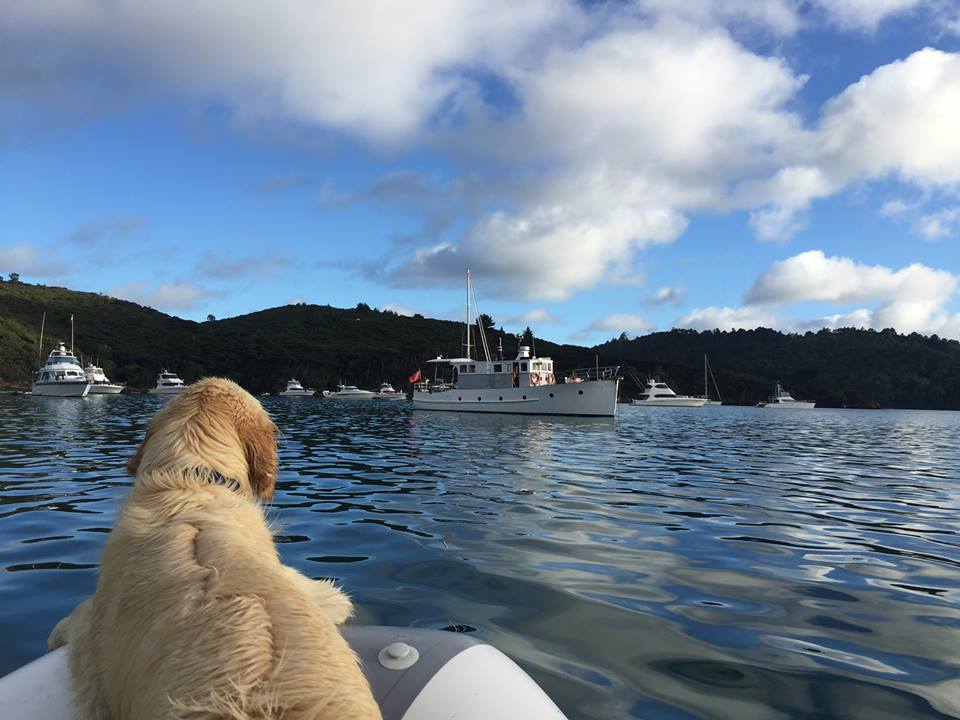
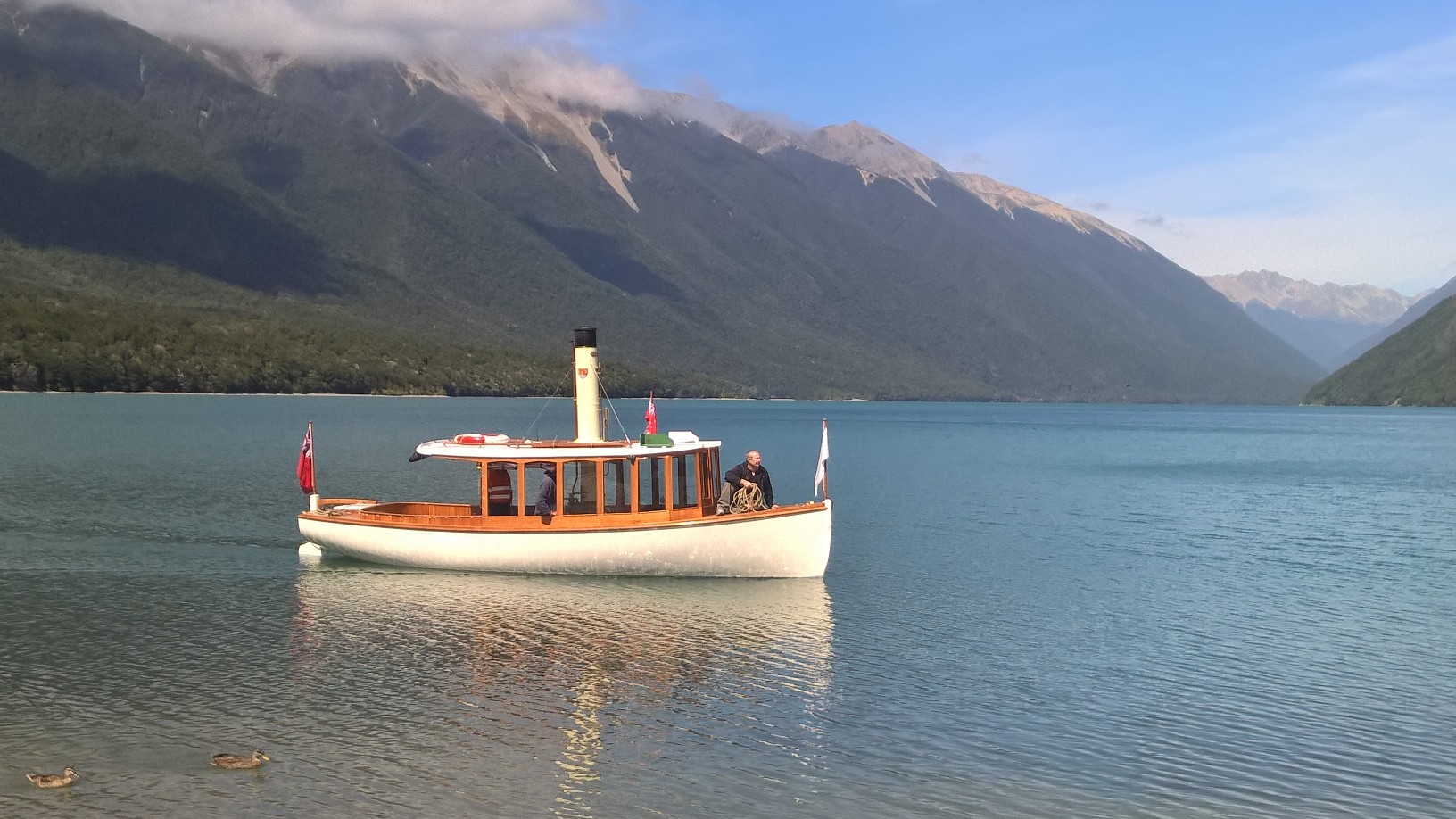
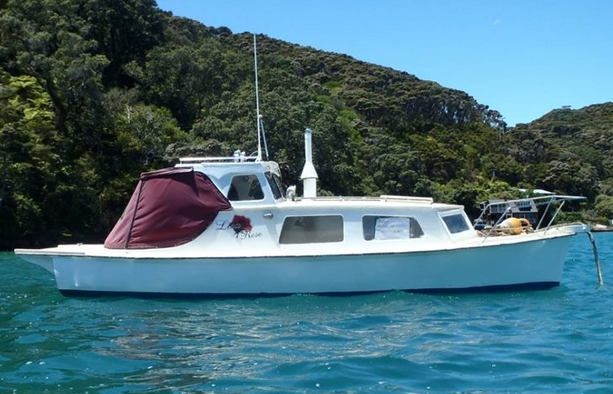
Meola is one of those boats that no matter what angle you view her, she just looks right. Built in 1961 by Miller and Tunnage at Port Chalmers for the Ministry of Works. Her job was the servicing of Marine Dept. & Navy installations around Waitemata Harbour & the Hauraki Gulf. She is 42’6″ LOA with a 12’7″ beam. Her engine is a 4L3 Gardner that sees her comfortably cruise at 7.5>8 knots, using 1L of fuel per mile.

In 1976 she changed hands & was taken over by the NZ Navy.
When decommissioned by the Navy she was converted to a pleasure boat & is now a very salty launch capable of coastal cruising. Her current owner has recently rebuilt the wheelhouse, rewired her, installed new ‘plastic’ water tanks (700L). She carries 600L of fuel (s/s tanks).
Her galley & engine room have also been revamped. As you would expect she sports all the electronic & safety gear needed for coastal passages. Also installed are solar panels & 12v refrigeration to support the engine driven compressor frig / freezer.
Sleeping is a very comfortable 4 berths, being 2 forward bunks, a skippers Queen size bunk & a very cosy ‘winter’ bunk alongside the Gardner.

If you wonder why I’m being a little OTT with details, thats because her owner has decided that sail is really his thing & wants to see Meola move onto a good owner.
You would struggle to find a vessel better suited to either mooching around the gulf or coastal cruising to the Bay of Islands or Marlborough Sounds. Most of you have heard me rabbit on about the concept of the ‘floating bach’ – well Meola is a boat that fits that role perfectly & you could own her for less than a 1/4 the price of a bare coastal section. AND – she is a serious looker 🙂

If any woodys out there are looking for the perfect floating bach or know someone that is – contact Bram Cone at     coneco@xtra.co.nz

01-10-2015 Additional Photos ex Owner

Mason Bay

MASON BAY
photos & details ex Gary Underwood

Mason Bay (originally named San Guisepp) was built by Curnow & Wilson c.1956/57, while she has spent most of her life as a work boat she is now a very comfortable pleasure craft.
Details: LOA 14m, BOA 4m,.DR 1.5m 22Tonnes, 1500l diesel,800l water. Engine is a 6BD1 ISUZU 3 with a  Capitol box, prop = 29in X 17in. The hull is 3 bl. 32mm Kauri copper fastened on 3 stringers/side. Below is a summary in chronological order of her life – her present owner Gary Underwood would like any input to confirm or add to these details.
To view more details on her & the restoration visit gazzabomasonbay.blogspot

HISTORY OF MASON BAY

1956/7   Built Curnow and Wilton, Nelson for Tony Bonica, Island Bay Wellington as a day fisher. Launched as “SAN GUISEPPE”. Powered by a Lister JP3 (tbc)
1974      Ian Boyce went to Napier as she was for sale as “MARY LW”. Owned by Willy Watson. Had a Fordson (6?) and the Capital 3:1
1974      Late 80’s in Port Chalmers.
1978      Big NE blow (see newspapers) and 8 boats caught off the Nuggets, Otago bar closed “SEAWITCH” (sistership to DORADE) lost with 2 crew, Warren Wilson skipper & Les Walker (leadboots) MASON BAY all ok. ( Not sure if those 2 guys were on Mason Bay or Seawitch)
1985     Big refit at Miller and Tunnage. new bulwarks, and the 6BD1 Isuzu was installed with the 3:1 Capitol box. Then sold to a Mr. Hall in Nelson/Motueka. He also had “PEARLY SHELL” I believe
1993     Bought by Ian Boyce (from whom a lot of this info comes). Based in Tauranga with the “SEA BEE” and fished tuna off the west coast of the South IS.
1995     Sold to “Blondie”who had her for 2 years and ended up in Bluff
2001     Seen and photographed fishing in Lyttleton Hbr.
2007     Bought by Russell Keen from a finance company.
2009     Sold to Gary Underwood
2010     Motored north to Whangarei in Jan.
2010     May – hauled at Norsand boatyard for refit/rebuild and conversion to pleasure.  Shipwright was Marcus Raimon
2012     Re-launched and now home port is Whangarei Town Basin.


The Restoration of Akarana

THE RESTORATION OF AKARANA
Details & photos below ex Dick & Colleen Fisher. Edited by Alan Houghton. Above photo ex Dean Wright

Akarana was designed by A.J. Collings & built by W.G. Lowe in 1960 for the Port of Auckland. They sold her 34 years later in December 1994 to Peter McDonald of Whangarei, Peter (deceased) was a long time friend of Dick Fisher & Dick purchased Akarana off Peter in April 2000.
Akarana is built using single skin 1 ¾ inch thick Kauri planking on spotted gum ribs with a hardwood keel & her displacement is 42 ton. W.G. Lowe had the contract to build her & allowed 23,000 man hours for her construction. When Port of Auckland sold her in 1994 she was on engine #6,  having worn out 5 engines while working for the Auckland Harbour Board. From a couple of her log books that Dick has he would estimate that she has traveled somewhere between 600,000 + 700,000 miles during her working life as a pilot boat on Auckland harbour.
The 8L3B Gardner engine which Dick re-built  was originally installed in an oyster dredger based in Bluff. This engine was built by Gardners in 1960. The same year as Akarana. She cruises comfortably at 10 knots.
After purchasing her, Dick took Akarana to his workshop at Kamo & then constructed a shed over her. You will see from the photos that shed is a little bit of an understatement 🙂

The photos below will give you an insight into the scale of the project & the stamina, patience & dedication of Dick Fisher in undertaking this restoration. Akarana is a magnificent vessel & a visit to her engine room normally sees most males gob-smacked at the attention to detail & cleanliness that would equal the finest medical operating theaters.

In additional to being a very skilled artisan, Dick is just a seriously good bloke, he once drove down to Auckland from Whangarei so I could show a visiting classic boater from the USA, who was a Gardner nut, over Akarana. You would struggle to find a more hospitable couple afloat than Colleen & Dick Fisher.
One day I’ll post on ‘Hamel’ the Fisher families other wee ship 😉

I have captioned the images – scroll over to view, also remember you can enlarge a photo by clicking on it.

At the bottom of the post (part two), for your interest I have included some papers that Dick acquired from the old Auckland Harbour Board.

A.       Harbour masters comments prior to letting tenders.
B.       Some of the requirements for the construction of Akarana.
C.       AHB reviewing costs.
D.       Breakdown of building costs.
E.        Copy of daily log, note the totals for the month of July 1982 were 278 pilots, 510 hours running, & 2791 miles.

Photos below during her build at W.G. Lowe in 1960

As sold by Auckland Harbour Board – 1994

The restoration

Rebuilding the engine

Relaunching

Back in her happy place – April 2005

Supporting paperwork

Helm Photos


10-04-2018 Update – Photo below of Akarana on launching day. Photo sent in by Paul Drake, taken by his brother Michael.

Unknown

Update 09-01-2021 – Photos below of Akarana in Kent Passage, Bay of Islands – 6th Jan , sent in by Grant Anson

Beatrice > Edna > Lola – A Waiheke Story

Beatrice > Edna > Lola – A Waiheke Story

Story & photo ex Joyce Fairgray, input from Harold Kidd

Today’s photo & story was prompted by the recent ww post / movie ‘Beautiful Waiheke’. The launch Beatrice was built in 1909 by Bailey & Lowe for Jas, Gordon – I’ll let Joyce tell the story.

“When the Lambournes and other city folk holidayed on Waiheke in the 1920s, they were welcomed by other young ones growing up there, who joined in the fun and friendship. 

One was my father Selwyn Pegler (born 1903), son of John and Nell Pegler of Orapiu. Nell was daughter of Martin and Mary Ann Day of Days Bay; her sister Annie married John’s brother George and they lived not far away at Omaru Bay. Both families were large – double first cousins – so there was always a big crowd ready for fun. Numbers were further swollen by more cousins, because another sister, Jane married Will Connell, and brother Ted Day married Mercie Connell. Ted and Mercie’s daughter-in-law, Dixie Day, was author of “Waiheke Pioneers”.

Grandfather John Pegler farmed at Orapiu, and he and Granny Nell leased the boarding house from William McIntosh. It was a family enterprise with parents and children working together to run the place. All had their jobs, cooking, milking cows, cutting firewood, growing vegetables, caring for poultry and much more.

When Dad was in his teens, his father bought the launch from the Gordon family of Awaawaroa. There were a large number of Gordon girls, (yes, one married a Day!) and the launch was named for one – Beatrice. I think.

When Peglers became owners, the name was changed to that of Pegler daughter Edna, and when eventually it was sold to Connells it was named for Connell daughter Lola.

Teenage Dad was told to learn all about the boat from Mr Gordon, and take over the responsibility of launchman for the boarding house, providing guests with fishing, picnics and other excursions. It was also used for transport to and from the island for the holidaymakers. The Fuller family was often among them, and they and others would want to see any shows that were on at His Majesty’s so Dad would get them to the city. He was given a ticket to see the show, and afterwards would take them all back to Orapiu. There were few lights to be seen round the gulf, but one landmark to watch for was a lone house light at Beachlands. Weather deteriorated one night and Dad decided they would have to sleep on the boat at the launch steps, and wait until morning. One lady was very cross about it.

In 1924 the lease was due for renewal. The two oldest girls had gone nursing, other children were reaching adulthood, and my grandparents decided Waiheke could not provide adequate livelihoods for all. The launch and other possessions were sold; they moved to a dairy farm at Paerata, and Dad’s days as a responsible young skipper were over”.

More details & photos of Lola here https://waitematawoodys.com/2014/08/27/mystery-launch-2708/

Input from Peter Stein
The above article brought back many fond memories.  When our launch “Waitangi” was laid up during the war because of the petrol shortage we relied very much on the “Lola”.  Our only access to Arran Bay was by the Auckland-Cowes Bay ferry.  The usual ferry was the “MV Baroona” but sometimes the “TSS Tangaroa” and “Onewa” were used on the run.  The ferry would stop off at Connell’s Bay and Mr WJ Connell (we knew him as “John Willie”) would bring the Lola alongside  for the passengers to board.  He owned the store in the bay named after him.  He usually had one of his two sons with him.  The elder Eric took over the store after his father died.  The younger son Les managed the farm which included the land behind the houses in Arran Bay.

If my memory serves me correctly the Lola was driven by a two cylinder Lister motor.
During the summer when I was a young boy the family would visit the Pegler’s in Omaru Bay.  It was an opportunity for my father to renew his acquaintance with Mr Pegler and for us to gather fruit from the fine orchard they had.

From the 1920s to the 1980s there would be few boaties that did not visit Connell’s Store for fuel and stores.  My father bought Arran House from WJ Connell in 1924.  Below is a copy of the first account my father received from Mr Connell.

J I Thornycroft Coastal Motor Boat

J I Thornycroft Coastal Motor Boat
photo ex Peter Loughlin ex Historic NZ Photos

Today’s mystery motorboat could be a real challenge – what I can tell you is  (1) its obviously the inner Waitemata with the Devonport Naval Base in the background (2) the launch is fast, very fast (3) the Historic NZ listing says c.1930 but I’d say its earlier than that (4) the seagull above the boat almost definitely had a bowel movement when the boat went by 🙂

All Is Revealed Thanks To Harold Kidd

Harold says that the solution was to identify the cruiser first (REPULSE) and with a little help from Papers Past the rest fell into place. The news clip from the Auckland Star 13 May 1924 below explain all.


19-09-2015 Further reading below (ex Peter Loughlan). The first link is for CMB9 which is under restoration, the second link some specs for the entire series.

http://www.nationalhistoricships.org.uk/register/2430/dcb1

http://www.navypedia.org/ships/uk/brit_c_f_cmb40.htm

Selma

SELMA
photos & details ex Dick Fisher

Today’s post features the Collings & Bell launch Selma which Dick’s grandfather, (H.B.Fisher), had built c1913. Interesting that the ‘photograph’ has had the same enhancement that we saw on the 1911 C & B launch – Dorothy. Refer ww post dated 01-05-2015. C&B must have had the services of a photo re-toucher. All in the days before photoshop 🙂
Dick viewed Selma at Gulf Harbour a while back & reports that she was still in good order.

Now a lot of you will know Dick & his wonderful restored ex Auckland Harbour Board pilot boat – Akarana (photos below ex Dean Wright & yours truly)). Dick is a very clever & talented man & one of his many passions is Gardner engines, he has a collection of 15 Gardner engines ranging in age from 1894 to mid 1980’s. Pictured below is a photo of a Gardner heavy oil marine engine complete with marine gearbox, that Dick is presently restoring. This engine was built by Gardners circa 1913. It is a hot bulb air start 2 stroke developing 24HP at 450 RPM .
FYI – the restoration of Akarana with be featured on ww shortly.

Harold Kidd Input

Sadly, SELMA came ashore at Stanmore Bay on 24th January 2006 and was a total loss. She was 32ft x 8ft and originally had a 3 cylinder 15hp H C Doman marine engine when launched in late 1912 for H.B. Fisher. She was in Mahurangi for several years in the 90’s and early 2000’s with an owner who maintained she was a “Logan”.
Weren’t the WW1 British pocket submarines equipped with Gardners like this?
My Barton rellies in Nottingham had a lot to do with the fortunes of Gardners by fitting the new “high speed” Gardner diesels to their red Bartons’ buses in the Midlands during the Depression. And of course the North Shore Transport Co (owned by the North Shore Ferry Co) fitted 5LX Gardners to their fleet soon afterwards.

Stella

STELLA
details & photos ex Judith Wallath

Stella was built by Lanes of Totara North in the mid 1950s.  Benjamin (Ben) Le Clerc, farmer of Otara, Helena Bay, bought her from Lanes.  Stella was 32 ft, built of kauri, with a petrol motor and set up as a game boat.  Later, while moored at Helena Bay, a petrol explosion occurred which blew out the forward hatch.  She sat on the beach for three months while having a 40 h,p, diesel motor installed.
Disaster struck again on the 21st April 1963 when Ben was returning from a fishing trip with eight men on board, and a catch of 13 hapuka.  The boat hit a rock off the Wide Berth (Limerick, Rimiriki) Islands.  A mayday signal was sent which was picked up at Russell and Port Charles.  In the meantime the boat broke up and the men clambered onto a rock.  The first to answer the mayday call were Jack Foote of Footes Bay and Mr J.D Prestney, manager of Mimiwhangata.  A runabout was sent out, which laboured to the mainland with 11 people on board.  Mr Prestney was off-loaded at Mimiwhangata.  He raced to his Landrover and flashed his headlights to attract the attention of the Kitty Vane which was approaching from Tutukaka.
Meanwhile the other ten proceeded towards Helena Bay where disaster struck again. The runabout struck a submerged reef and began to sink.  All had to abandon ship once again and cling to a small dinghy which was being towed.  It was 3 a.m. before they reached the mainland again.  21 year old Glenys Foote was the heroine of the event.  She rowed the dinghy that transferred the men from the rocks to the runabout, and then later rowed the 8 men to shore while Ben swam.

So woodys can anyone add to the history of Stella. Was she salvaged or slipped away to Davey Jones locker? There is some confusion as to her length some say 32′ others 38′, can anyone confirm?

Harold Kidd Input

STELLA apparently WAS a total loss when she went aground on the Limericks, Wide Berth Island, on 21/4/1963, that is according to Madge Malcolm’s book “Where it all began”, but the wreck doesn’t appear in “Shipwrecks of NZ”. She was then owned by B.C. Le Clerc of Helena Bay and was a 38ft bridgedecker. I think she was probably supplied by Lanes at Totara North but was undoubtedly built by Lanes at Auckland, despite the Sam Ford-type waist windows.

Where is this woodys gathering?

WHERE IS THIS WOODYS GATHERING?
photo ex Harold Kidd

Today’s photo was taken in the period 1895-1905 & is ‘around’ the Waitemata.
What say you woodys – whats the location?

Article ex Paperpast from the NZ Herald 3 Jan 1896 (ex Harold Kidd)

Also a wee bonus today – Martin Turnwald, son of CYA member John Turnwald (MV Robyn Gae), who now resides in Switzerland, has sent in a c.1993 video of the William C Daldy. We see the crew was firing up the boilers to turn the old girl around on the wharf and Martin and then girlfriend, (now wife) were on board to watch.


Woody Trip Report – Inside Passage Cruise

WOODEN BOATS OF THE INSIDE PASSAGE

Story & photos by CYA NZ member Denis O’Callahan (owner of MV Tasman)

Today’s post tells the story of Judy & Denis O’Callahan’s adventure cruise – its a great read, so I’ll let Denis tell the story. Enjoy 🙂

 “In April 2000 I was invited by a Canadian friend to help launch a boat which his brother Wayne had built on Thetis Island in the Strait of Georgia near Vancouver. The “Grail Dancer” is 48’ on the deck, ketch rigged and based on the lines of the “Emma C Berry”, a 150 year old traditional fishing boat now preserved at the Mystic Seaport Museum, Connecticut. Wayne works as a wooden boat builder and restorer who at that time was restoring historic paddle steamers at Fort Dawson and Whitehorse on the Yukon River during the summer. During the winter he worked on the “Grail Dancer” which took him 14 years to complete. This trip was a great experience which gave me an inkling of what a wonderful cruising ground the Inside Passage to Alaska would be. This was further reinforced when I read the great book, “Passage to Juneau” by Johnathan Raban.

Eventually this year my wife Judy and I planned a visit to Vancouver and Alaska, including an adventure cruise of the Inside Passage. Our first stop was Vancouver, from where we took a float plane to Victoria on Vancouver Island to spend a couple of days with friends who live near Nanaimo. On the way north from Victoria we called in at the small fishing port of Cowichan where I was able to see a converted fishing boat, “Morseby III”, which belongs to a guy I know who lives at Mangawhai. We flew back to Vancouver from Nanaimo and had a couple of days there including a visit to the excellent Maritime Museum. Here there is preserved the wooden auxiliary schooner St Roch, built in 1928 in Vancouver and operated by the Royal Canadian Mounted Police. In 1942 St Roch completed the first voyage from the Pacific to the Atlantic through the Northwest Passage, 27 months from Vancouver to Halifax and spending 2 winters in the ice. In Halifax her engine was upgraded from 150hp to 300hp and she made the return journey in 1944 in 86 days.

Next we boarded the Alaska Marine Highway ferry “Columbia” for a 2 night, 1 day voyage from Bellingham to Ketchikan. This was rather like a Cook Strait ferry and while we had a comfortable cabin many hardy souls camped in deck, fixing their tents down with duct tape. We saw a number of other boats during this trip, huge barges laden with containers and trucks, cruise ships, fishing boats, pleasure boats and some of the contestants in the inaugural “Race to Alaska” (R2AK). R2AK is open to any kind of boat without an engine, from kayaks to racing trimarans, 750 miles from Port Townsend to Ketchikan. First prize, $10,000, second prize, a set of steak knives. The ferry passed through many spectacular narrows and channels and at Bella Bella we stopped while the crew lowered the anchors to demonstrate compliance with US Coast Guard requirements.

Ketchikan is a busy port town with floating docks and other marine facilities. However during the summer it is dominated by up to 4 giant cruise ships visiting each day. A large marina (“floats” in the local lingo) accommodates a variety of fishing and pleasure craft. The salmon fishing boats are divided into 3 types, purse seiners which go for large volume, low value fish, gill netters which aim for better quality and trollers which target the top quality product. Long-liners target halibut, a kind of gigantic deep water flounder which can grow up to 200kg.

We took a 10 day adventure cruise on the “Alaska Dream”, a 104’ catamaran, rather like a Waiheke ferry with cabins for 40 passengers and a crew of 17. We strongly recommend this as a way to see the Inside Passage. Activities included walks ashore, railway excursions, kayaking and even swimming. We saw amazing wild life, indigenous culture, glaciers and fishing ports, including Sitka, Skagway, Haines, Juneau, Petersburg, Wrangell, Thorne Bay, Matlakatia and Ketchican. In every port there were numerous classic wooden fishing vessels in varying states of preservation. I would estimate that 90% of the working fishing boats around the Inside Passage are of wooden construction. The plentiful supply of rot resistant old growth Yellow Cedar and Western Red Cedar no doubt accounts for the durability of these vessels”

Swanee

SWANEE
photos & details ex Ralph Weber

While the exact details of who designed & built today’s launch Swanee are unclear, she is rather unique in that she has remained in that same family for over 50 years. Built from kauri she is 33′ long with 8’9″ beam & 2’8″ draft, currently powered by a 60hp Ford diesel.
You can see from the photos that she is very well appointed with everything one needs for comfortable cruising – electric flush toilet, freezer/frig, electric capstan & all the safety gear.
Over their period of ownership the Weber have ensured Swanee remained in great condition with a major 2 year out-of-water refit in 1970 that saw her re-ribbed with pohutukawa (you could back then 🙂 ) & new topsides. In 2004/5 her topsides were glassed & 2 pot painted & she was rewired.

Owner Ralph understands, from his mother, that she was built c.1920 in Auckland for Sanfords. Then later sold to the McLeod family of Helensville. Then she went to Dargaville and then owned by Matich Bros and later by Dr Maurice Matich. The Weber family, Ken & June, bought Swanee in 1961 and now ownership is with their son Ralph Weber of Matakohe. Currently moored at Pahi.
Ralph commented that Harold Kidd had previously mentioned that she may possibly have been the – ‘Sister Lola’ & built by Bailey & Lowe, if so she ‘raced’ with the Ponsonby Cruising Club.

Ralph sent ww photos of Swanee over a year ago & contacted me recently to say that unfortunately life has moved on & the family have had to make the difficult decision to sell Swanee after 50+ years of ownership, so today’s post has a degree of sadness but could offer a lot of happiness to someone looking to buy a classic launch. For a 33′ launch, Swanee is a lot of boat, you can see in the photos that there is no shortage of living area & she comfortably sleeps 5. After 50 years you end up nothing what works best & where on a boat 😉
Boat aesthetics is a very personal thing & with some people practicality is #1, but if I was buying her I would be off to see a good sympathetic wooden boat builder like Geoff Bagnall & returning her cabin windows to a style a little more in keeping with a 1920’s classic. People forget that these old girls are wood & the cost of a wee bit of restoration like this would not be great. After all there is little else that needs doing to her.
She sports rather a racy (flat aft) bottom so with a bigger motor I would imagine she would perform very well.

So woodys – can we find a buyer for Swanee or know something that is looking for a classic wooden launch? Being based currently at Pahi she does present some interesting scenarios e.g. you could keep her there for a few seasons & have a floating family bach. A group of guys could get together & buy a good fishing / man bach on the Kaipara. Or simple put her on a truck & return her to the Waitemata.

Now I do not normally like to talk money in ww posts but the overall 2nd hand boating market is just so soft that when I think something is great value, I will – well woodys someone could own Swanee for less than $30K. , that is real value, you could not build a garage for that.
If you or anyone you know could be interested – contact Ralph, initially via email on weber.bros@xtra.co.nz

Also interested in any info /photos on her past.

Harold Kidd Input

SWANEE was certainly built as SISTER LOLA pre-October 1920, possibly by Harvey or DIck Lang. I don’t know where the Bailey & Lowe reference came in, although Bailey & Tyer did build a 33 footer (unusual dimension) just pre WW1. Lang too had built a 33 footer in 1916 and just could have used those moulds.
I can’t find a direct report of her owner as SISTER LOLA but am pretty sure she’s the boat reported in the Auckland Star of 28th August 1920. If so, her hull was built professionally and she was finished off by her first owners Pavitt brothers and Verran at Bayswater. There again the Verrans were Northcote people and Bailey & Tyer were at Hall’s Beach, Northcote Point.
She was sold to Arthur Sandford of Vine St., Ponsonby in late 1922, early 1923. He changed her name to SWANEE probably after the Al Jolson song “Swanee”. Sandford was, for a time, a professional Vaudeville artist and no doubt sang that song on stage. She had a 6 cylinder Studebaker car engine in 1925.
Sandford sold her to Alfred McLeod some time between 1934 and 1939. McLeod joined the Squadron with her in 1939. She then had a 30hp Hercules engine which he replaced with a 100hp Meadows ohv 6 in 1947/8 (probably a war-surplus engine). The rest of her history on the Kaipara is well-known.
There’s a big dose of conjecture in the above. I’ll check with the Verran family.

Update 30-08-2015

B/W photo added above ex Ian Miller whose wife Rosalind’s late father, Doug Hazard, crewed on Swanee in the 1930’s

Update 06-03-2023 – photo below ex Kauri museum, Matakohe via Diane Wilkinson fb